


CEO Human Capital and Digital Product Innovation: A Dynamic Managerial Capabilities Perspective
Abstract
Manufacturing firms face increasing pressures to digitalize their resource base. Following the notion that adaptive changes hinge on the knowledge of top managers, we examine how the technology- and business-related human capital of chief executive officers (CEOs) drives digital product innovation in distinct environments. Drawing on the dynamic managerial capabilities perspective, we argue that technological knowledge enables CEOs to sense and act on opportunities arising from digital technologies, positively influencing digital product innovation, whereas business knowledge leads CEOs to pursue a more general set of growth opportunities, negatively influencing digital product innovation. We further propose that environmental dynamism moderates these effects, as CEOs’ human capital fosters strategic change in response to shifts in firms’ environments. Our econometric analysis, using a panel data set of 216 U.S. manufacturing firms and examining 8,216 new product announcements, broadly supports our hypotheses. Interestingly, the positive effect of CEO technological knowledge and the negative effect of CEO business knowledge on digital product innovation both weaken and are even reversed in more dynamic environments. Follow-up interviews further illustrate why some CEOs are more adept than others at leveraging digital technologies to reconfigure their firms’ resource base. This research contributes to the information systems literature by extending and contextualizing the specialist human capital perspective in extant digital product innovation research, bridging the gap between scholars who advocate for technological expertise and those who promote business expertise in top management. We also highlight the pivotal role of CEOs as chief innovators in their firms, asserting that the value of CEOs’ human capital extends beyond the expertise of their top management team members. Finally, we deepen the understanding of the distinct approaches CEOs take to initiate, develop, and implement digital product innovation in established firms.
History: Rajiv Kohli, Senior Editor; Torsten Oliver Salge, Associate Editor.
Supplemental Material: The online appendix is available at https://doi.org/10.1287/isre.2021.0553.
Introduction
Amid intensifying digitalization in many industries, firms that have traditionally relied on manufacturing physical products face growing pressure to digitalize their resource base (Vial 2019, Verhoef et al. 2021). In response, many manufacturing firms have begun pursuing digital product innovations to drive their performance, as evidenced by the emergence of products such as connected cars, self-learning heating systems, and smart kitchen appliances (Schulz et al. 2023). However, transitioning their resource base from being rooted in an industrial innovation logic to one that propels digital innovation is a complex endeavor (Yoo et al. 2012, Lyytinen 2021). New physical-digital product infrastructures demand continuous product and feature development (Yoo et al. 2010, Svahn et al. 2017), often pervading firm boundaries (Lee and Berente 2012, Lyytinen et al. 2016), making the products themselves part of the innovation process (Nambisan et al. 2017). Unsurprisingly, literature is full of examples of firm failures during such major technological changes (e.g., Kaplan and Tripsas 2008, Vuori and Huy 2015).
Prior research suggests that the human capital of top executives is vital in the firm’s ability to transform its resource base to support new innovation logics in general (e.g., Eggers and Kaplan 2008) and digital innovation in particular (e.g., Chen et al. 2021, Firk et al. 2022, Bendig et al. 2023). However, existing research is scarce and limited in two important ways. First, empirical research suggests that digital product innovation is driven by technological knowledge often held by the chief information officer (CIO) (e.g., Chen et al. 2021, Bendig et al. 2023). This focus on specialist knowledge is incomplete because digital transformation is “as much about organization[al] change as it is about technology” (Furr et al. 2019, paragraph 12). Second, prior studies tend to implicitly assume that the same type of human capital will drive digital product innovation across different competitive environments. This assumption runs counter to rich management literature that depicts distinct executive knowledge needs for success in different environments (Hambrick et al. 2005). Nadkarni and Chen (2014), for example, demonstrate that chief executive officers (CEOs)’ temporal focus can be either positively or negatively related to innovation performance, depending on environmental dynamism.
Building on these insights, we draw on the dynamic managerial capability perspective to explain how distinct types of CEO human capital benefit digital product innovation depending on environmental conditions. This theoretical perspective is particularly suitable for our study because it aims to explain adaptive outcomes, such as digital product innovation, by considering “the capabilities with which [top] managers create, extend, and modify the ways in which firms make a living” amid changing environmental conditions (Adner and Helfat 2003; Helfat and Martin 2015, p. 1281). This is particularly the case for the CEO, the most powerful and consequential executive in the firm (Nadler and Heilpern 1998, Chen et al. 2014). From a dynamic managerial capabilities perspective, CEO human capital, formed by educational and professional experience (Choi et al. 2021), will shape cognition and patterned behavior, resulting in between-firm heterogeneity in the sensing and seizing of opportunities and the consequential reconfiguration of the firm’s resource base (Teece 2007, Helfat and Martin 2015).
Specifically, based on the debate regarding executive technology versus general business expertise (e.g., Armstrong and Sambamurthy 1999, Gonzalez et al. 2019, Kohli and Melville 2019, Banker et al. 2022), we distinguish between CEO technology- and business-related human capital. We argue that technological knowledge helps CEOs sense and act on opportunities arising specifically from digital technologies, thereby positively affecting the firm’s digital product innovation (Peppard et al. 2011, Firk et al. 2022). Conversely, we posit that CEOs with business knowledge will be more inclined to pursue different growth opportunities given their reconfiguration abilities, thereby negatively affecting the firm’s digital product innovation (Bertrand and Schoar 2003, Jung and Shin 2019). Furthermore, we argue that the pace of change, or dynamism, in the firm’s environment moderates these effects. Greater dynamism renders CEOs’ technological knowledge more conducive to digital product innovation because it elicits CEOs’ ability to recognize paradigm shifts and supports their favorable reasoning toward allocating resources to digital technologies. At the same time, greater dynamism directs CEOs with business knowledge to pursue digital technologies as a means of reconfiguring the firm’s resource base toward evolutionary fitness.
We test our hypotheses using a panel data set of 216 U.S. manufacturing firms and 1,515 firm-year observations from the Standard & Poor’s (S&P) 500 between 2008 and 2017. We examine CEO technological and business knowledge accumulated through both educational and professional experience.1 To capture digital product innovations, we manually assess 8,216 new product announcements using Yoo et al.’s (2010) layered modular architecture concept, refining a recent approach of Bendig et al. (2023). We find general support for our hypotheses. However, the positive effect of CEO technological knowledge on digital product innovation is unexpectedly weakened (and even turns negative) in more dynamic environments. We then conduct 12 follow-up interviews, aiming to not only triangulate our econometric findings but also gain complementary, more granular insights into the causal mechanisms behind our results. The qualitative insights support our theoretical propositions, illustrating how distinct types of CEO knowledge relate differently to digital product innovation in distinct environments because CEOs take different approaches to identifying and seizing opportunities and implementing changes to the firm’s resource base.
Our study makes three theoretical contributions to the information systems (IS) literature. First, extending the specialist human capital perspective in prior studies, we explicate that firms may benefit from both technological and business knowledge to drive digital product innovation, but the value of such human capital is shaped by the firm’s environment. A type of human capital beneficial in one environment may be detrimental to digital product innovation in another. This contextualized human capital perspective of digital product innovation helps reconcile the tension between scholars emphasizing technological expertise in top management (e.g., Chen et al. 2021) and those arguing against technological experts in charge of digital innovation (e.g., Furr et al. 2019). Second, while prior research tends to focus on the CEO’s role in leveraging the technological expertise of the top management team (TMT) (e.g., Firk et al. 2022, Bendig et al. 2023), we demonstrate that the same type of human capital among TMT members and the CEO is additive, meaning that the technological and business knowledge of the CEO is critical in addition to the CEO’s ability to leverage TMT human capital for digital product innovation. This perspective casts CEOs as not only chief leaders but also chief innovators. Third, our dynamic managerial capabilities perspective helps explain why digital product innovation management differs across firms: CEOs’ human capital profiles and the environment shape how firms sense and seize opportunities related to digital technologies and reconfigure their resource base accordingly. By focusing on CEOs’ knowledge profiles and practices in distinct environments, we extend and deepen theory on the different approaches to initiating, developing, and implementing digital product innovation (Nambisan et al. 2017, Kohli and Melville 2019).
Moreover, our study advances the dynamic managerial capabilities literature (Adner and Helfat 2003, Helfat and Martin 2015) by highlighting that certain human capital characteristics underpinning managers’ sensing, seizing, and reconfiguring activities can have contrasting effects on strategic change, depending on the environmental context. We illustrate how the same managerial human capital can either facilitate or impede the reconfiguration of a firm’s resource base toward particular technologies, as reflected in digital product innovation.
Theoretical Background
Digital Product Innovation and the Role of the CEO
During the past two decades, the most meaningful innovations defining the industrial world and people’s everyday lives have been rooted in the digitalization of products and services. For manufacturing firms traditionally producing physical products, digital product innovation involves “the carrying out of new combinations of digital and physical components to produce novel products” (Yoo et al. 2010, p. 725). Such digitally enhanced products rely on a layered modular architecture comprising four primary layers—devices, networks, services, and contents2—and come with three characteristics that depart from the traditional logic of industrial innovation (Yoo et al. 2010). First, digitally enhanced products are reprogrammable; thus, the products themselves become part of the innovation process (Nambisan et al. 2017). Second, the conversion of analog data into binary numbers leads to a homogenization of data that enables distributed innovation and blurs the boundaries of the product and the firm (Nambisan et al. 2017). Third, digitally enhanced products create self-referentiality, leading to network externalities that engender higher competition but also create new ways to generate innovation outside the firm (Yoo et al. 2012).
Unsurprisingly, prior research indicates that the nature of digital and digitally enhanced products necessitates significant changes within the firm (El Sawy et al. 2016, Svahn et al. 2017), rendering the role of the TMT pivotal. While the literature on digital transformation suggests various drivers of digital product innovation (e.g., Porter and Heppelmann 2015, Hanelt et al. 2021), it is becoming clearer that overcoming the complexities of digitalizing a manufacturing firm’s resource base hinges on the knowledge of top managers (El Sawy et al. 2016, Chanias et al. 2019). This notion is consistent with strategy research demonstrating that adaptive changes amid major technological transitions are directly tied to top managers’ human capital (Augier and Teece 2009). Indeed, prior research shows that the presence of CIOs (Bendig et al. 2023), their information technology (IT) knowledge (Chen et al. 2021), and their career variety (Schäper et al. 2025) all contribute to digital innovation success. Moreover, Bendig et al. (2023) suggest that CIO effects can be influenced by CEOs with past experience in IT-related industries. They also report a positive correlation between such CEO experience and firms’ patenting activity related to digital innovation. Similarly, Firk et al. (2022) show that TMT knowledge of digital technologies supports digital innovation.
However, understanding of how top managers shape digital product innovation remains limited, constraining a broader theory of firms’ transition toward new innovation logics. First, studies at the intersection of top management and digital product innovation have focused on specialized IT knowledge, yet digital innovation may require technological and general organizational expertise (Kane et al. 2019). This is particularly problematic given the implicit assumption in most existing research that successful digital product innovation is driven by the same knowledge across industries. We know that different environments place distinct demands on top managers (Hambrick et al. 2005), which may affect the way certain knowledge profiles influence digital product innovation. Finally, digital product innovation research tends to focus on CIOs, casting CEOs in a supporting role, even though the latter exert “disproportionate influence on decision making” (Olie et al. 2012, p. 87), especially in relation to major industrial transitions. CEOs may detect new opportunities and decide whether to pursue them (Elenkov and Manev 2005, Eggers and Kaplan 2008), and they are in charge of resource allocation, making them key actors in organizational transformation (Nadler and Heilpern 1998, Chen et al. 2014).
In summary, the ability of a firm to change its resource base in a way that facilitates digital product innovation is closely tied to the human capital of its top managers, especially the CEO. In the next section, we draw from dynamic managerial capabilities research and the debate regarding executive technology versus general business expertise to provide a framework for our theorizing.
Dynamic Managerial Capabilities and CEO Human Capital
The dynamic managerial capability perspective links heterogeneity in managerial capabilities to “build, integrate, and reconfigure” the firm’s resource base on the one hand (Adner and Helfat 2003, p. 1012) and adaptive organizational outcomes on the other hand, ultimately seeking to explain how top managers drive evolutionary fitness3 in the face of environmental changes (Helfat and Martin 2015). In essence, it is a microfoundational approach. According to this perspective, a key driver of a firm’s ability to adapt its resource base amid environmental changes resides, not only in broader organizational processes, structures, and capabilities (as proposed by the more general dynamic capabilities view (Teece et al. 1997, Eisenhardt and Martin 2000)) but also in the specific skills of top managers. This theoretical lens, established in IS research (Roberts et al. 2016, Li et al. 2018, Bendig et al. 2022), is thus well suited to guide our arguments, consistent with the view that both CEOs’ technological and organizational knowledge are crucial to digital product innovation.
The dynamic managerial capabilities perspective establishes a conceptual relationship between CEO human capital, rooted in education and accumulated experience (Choi et al. 2021) and CEO cognition and patterned behavior4 (Helfat and Martin 2015). Between-CEO differences in cognition and patterned behavior shape how firms sense and seize opportunities and reconfigure their resource base (Teece 2007). This heterogeneity is consequential to digital product innovation: CEO cognition and beliefs may focus attention on and perception of digital technology opportunities, guide reasoning behind strategic decisions about investments in digital product infrastructure, and inform the orchestration of assets and structures to enable such products, including through communications with TMT members and the firm at large.
Furthermore, emanating from the dynamic capabilities view, the dynamic managerial capabilities perspective emphasizes the role of environmental dynamism—that is, the pace of change in technology, competition, and customer preferences (Dess and Beard 1984, Havakhor et al. 2019)—in shaping the value of CEO human capital (Nadkarni and Chen 2014). For example, Helfat and Peteraf (2015, p. 839) note: “Sensing opportunities and threats in an uncertain, complex, and often fast-paced environment calls for acute cognitive capabilities with respect to attention. By focusing on relevant stimuli, attention can facilitate environmental scanning.” This logic is consistent with the notion that digital product innovation may require distinct forms of human capital in different industry environments (Wu et al. 2005, Bragaw and Misangyi 2017, Richard et al. 2019).
Our conceptualization of CEO human capital draws from the ongoing discussion in the IS literature on executive technology versus general business expertise (e.g., Armstrong and Sambamurthy 1999, Gonzalez et al. 2019, Banker et al. 2022) and its relevance to digital product innovation (Kohli and Melville 2019). Specifically, we delineate between technology- and business-related facets of CEO human capital. Prior research indicates that both facets can be accumulated via education and experience. For example, insights gained from formal education persist long after graduation (Priem and Rosenstein 2000), exerting a strong influence on CEOs’ approaches to pursuing adaptation (McMullan and Long 1987, Jung and Shin 2019), including in the digital arena (Volberda et al. 2021). Similarly, work experience in technology versus other business functions is pertinent in adopting new technologies and allocating and reconfiguring firm resources toward new products and markets (Cummings and Knott 2018, Kane et al. 2019).
In the next section, we build on the dynamic managerial capabilities perspective to develop hypotheses linking CEO technology- and business-related human capital with the firm’s digital product innovation, conditional on environmental dynamism.
Hypotheses
CEO Human Capital and Digital Product Innovation
Drawing on the dynamic managerial capabilities perspective, we suggest that CEOs’ human capital, in the form of technological knowledge, affects how they sense opportunities related to digital technologies, seize those opportunities, and reconfigure their firms’ resource base accordingly. First, their technological knowledge naturally inclines CEOs to engage with information flows associated with emerging technologies. Such heightened engagement makes them more attentive to novel technologies in their scanning activity, increasing their awareness of new product opportunities based on digital technologies (Peppard et al. 2011, Ahn et al. 2017). Moreover, CEOs with technological knowledge are better equipped to understand the effect of emerging digital technologies on their industry and the potential value for their organization (Firk et al. 2022). Their expertise comes with openness to new technologies (Daellenbach et al. 1999, Barker and Mueller 2002), which makes them more likely to perceive digital technologies as promising opportunities for new or enhanced products and adaptation, rather than as a threat to the firm.
Second, CEOs with technological knowledge are more likely to act on sensed opportunities rooted in digital technologies. Their expertise shapes a more favorable reasoning toward pursuing digital technologies when making resource allocation decisions or evaluating product proposals from TMT members. Indeed, prior research indicates that such CEOs are more inclined to increase research-and-development (R&D) budgets in general and invest in new technologies in particular (Daellenbach et al. 1999, Barker and Mueller 2002, Choi et al. 2021). For example, CEOs with formal technological education can assist other top managers in interpreting information related to digital technologies and more easily overcome technical challenges during decision-making processes (Buyl et al. 2011, Chen et al. 2021). According to Helfat and Peteraf (2015, p. 841), “decisions to seize opportunities through strategic investments likely call for reasoning and problem-solving capabilities in order to develop investment options and assess their profit potential.” CEOs with technological knowledge are more likely to possess such human capital and thus are better positioned to make considerable investments in digitally enhanced products.
Finally, CEOs with technological knowledge are better equipped to articulate the importance and value of adapting to digital technologies (Firk et al. 2022), which should help overcome organizational resistance to resource base changes intended to support digitally enhanced products (Hanelt et al. 2021, Kaganer et al. 2023). We expect CEOs with technological knowledge to facilitate the transition from industrial to digital innovation logics by not only endorsing the realignment of assets and structures to support technological adaptation but also shaping the social cognition of decision makers throughout the firm. Their experience in product development and management enables them to better understand the technological and organizational challenges associated with new product infrastructures, thereby fostering mutual understanding and trust among decision makers (Helfat and Peteraf 2015). This trust, in turn, facilitates the cooperation required to achieve asset alignment under conditions of technological change (Teece and Pisano 1994, Helfat and Peteraf 2015). Consequently, we expect that the CEO’s technological knowledge will result in systematic changes to the firm’s resource base that will propel digital product innovation. Formally stated,
CEO technological knowledge is positively associated with the firm’s digital product innovation.
We expect CEOs’ human capital stemming from business knowledge to shape their sensing, seizing, and reconfiguring in the context of digital technologies as well, but here, we posit a negative effect on firms’ digital product innovation. First, when CEOs monitor and scan the environment for business opportunities, they interpret information in ways that fit their knowledge base (Finkelstein and Hambrick 1990, Talke et al. 2011), which is closely related to their educational and experiential background (Barker and Mueller 2002, Jung and Shin 2019). In business studies, students typically acquire general management skills rather than specialized technical skills (You et al. 2020). This approach orients attention toward more breadth, meaning that exposure to digital technologies is limited and may be crowded out by other aspects (Banker et al. 2022). Indeed, programs such as a traditional master of business administration (MBA) might not be conducive to fostering innovation by adopting emerging technologies (Barker and Mueller 2002), especially given their emphasis on financial economics (Jung and Shin 2019). Such emphasis, which is also present when working in corporate finance and accounting functions, may impede CEOs’ ability to assess “how technologies will evolve and how and when competitors, suppliers, and customers will respond” in the digital space (Teece 2007, p. 1322).
Second, business knowledge can also affect the CEO’s acting on opportunities related to digital technologies and products. Public debates around the “MBA-ization” of America’s top managers have stressed that such executives may focus more on financials than on product innovation (Thomas 2020, Banker et al. 2022). Business education is critical to CEOs’ reasoning about resource allocation to alternative investment options, and it often informs the ways they solve strategic issues (Bertrand and Schoar 2003, Jung and Shin 2019). Here, we expect CEOs with a business background to be more inclined to rely on corporate strategies, such as mergers and acquisitions and forward and backward integration when pursuing growth opportunities or seeking to position the firm competitively. As such, our assertion is not that business knowledge necessarily makes CEOs less innovative in the general sense (Barker and Mueller 2002) but that such knowledge affects their reasoning about investment decisions, leading to a tendency to reduce the pursuit of digital technologies relative to the pursuit of new competitive advantages through other means (Banker et al. 2022).
Finally, we expect CEOs with business knowledge to be less likely to foster new digital innovation logics when formulating and implementing business strategies. Their educational background emphasizes firms’ traditional functional orientation by structuring classes around specific functions (You et al. 2020). This orientation contrasts with organizing for digital innovation, where functional boundaries blur, and the focus shifts to integrating complementary knowledge to drive product development and operations (Yoo et al. 2010, Nambisan et al. 2017, Svahn et al. 2017). Although their broader approach to forging competitive advantages has value, it is less conducive to the realignment of assets, structures, and top managers necessary for supporting digitally enhanced products. Overall, we posit that CEOs with business knowledge will be less inclined to make systematic changes to the resource base that are geared toward digital product innovation. Formally stated,
CEO business knowledge is negatively associated with the firm’s digital product innovation.
The Moderating Role of Environmental Dynamism
The assertions presented thus far include an implicit assumption that CEO human capital is similarly related to digital product innovation across competitive environments. This assumption is reasonable when the goal is to establish the conceptual mechanisms linking CEO human capital and changes to the resource base that yield digital product innovation. However, the dynamic managerial capabilities perspective suggests that relaxing this assumption is theoretically pertinent and can lead to a more precise understanding of CEOs’ roles in digital transformation. Specifically, the dynamic managerial capabilities perspective was originally proposed in the context of “changing external conditions” (Adner and Helfat 2003), whereby organizational outcomes result from managerial human capital utilized “under conditions of change” (Helfat and Martin 2015). Indeed, the perspective suggests that CEO human capital may foster strategic changes in response to changes in a firm’s environment, reflecting its roots in the evolutionary economics tradition that has informed dynamic capabilities research as a whole (Helfat and Peteraf 2015, Fainshmidt et al. 2016).
Accordingly, environmental dynamism is considered the “central contingency variable in dynamic capabilities theorizing” (Schilke et al. 2018, p. 406) and thus is likely a critical factor in the CEO human capital–digital product innovation relationship. Several studies have demonstrated that the effect of human capital on strategic change is contingent on environmental dynamism (Wu et al. 2005, Bragaw and Misangyi 2017, Richard et al. 2019). These findings align with Hambrick et al.’s (2005, p. 475) observation that “executives vary widely in their abilities and in the suitability of their talents for the specific contexts they face.” In the context of new product innovation, Nadkarni and Chen (2014, p. 1814) maintain that “rapid rates of changes in technologies and market factors render new product opportunities transient and fleeting in dynamic environments.” They further emphasize that executives’ failure to predict and invest early in emerging trends can result in missed opportunities to launch new products. As environmental change accelerates, aspects of CEO human capital that support the ability to anticipate, interpret, and respond to environmental shifts, including those toward digital technologies, may become more valuable (Salvato and Vassolo 2018, Warner and Wäger 2019, Dong 2021). Consequently, we expect the effects of CEO human capital on digital product innovation to vary depending on environmental dynamism.
For CEOs with technological knowledge, we expect the accelerated pace of change in the firm’s environment to strengthen the positive effect of their human capital on digital product innovation. In other words, their human capital is increasingly valuable compared with that of CEOs who lack technological expertise. First, technological education and experience in product development and management entail familiarity with technology life cycles and paradigm shifts (Gal et al. 2022). This familiarity leads to a stronger perception that digital technologies are critical in ensuring evolutionary fitness in the face of rapid environmental change (Kaplan 2008, Kaplan and Tripsas 2008). This awareness and the ability to parse rapidly evolving information about emerging technologies facilitate more effective sensing of fleeting opportunities.
Second, rapid environmental change may strengthen the favorable reasoning of technologically savvy CEOs toward allocating resources to digital technologies in general and developing digitally enhanced products in particular. These CEOs can also use their technological knowledge to help other senior executives navigate through waves of change by evaluating which emerging digital technologies are likely to become industry standards (Hinings et al. 2018). This guidance helps ensure informed decision making toward seizing digital product innovation opportunities.
Finally, in discontinuous environments, managers often seek guidance from their CEO. CEOs with technological knowledge can emphasize narratives that support the continuous realignment of resources toward digital innovation initiatives (Vuori and Huy 2015, Wessel et al. 2021). By leveraging mutual understanding and trust among decision makers in the context of technology adoption, these CEOs can reduce uncertainty and ensure the required cooperation across the firm. In summary, we posit that the human capital that differentiates technologically savvy CEOs from their counterparts is particularly valuable for digital product innovation in dynamic environments. Formally stated,
The positive relationship between CEO technological knowledge and the firm’s digital product innovation will be moderated by environmental dynamism such that the relationship will be stronger for higher levels of dynamism in the firm’s industry.
For CEOs with business knowledge, we expect the accelerated pace of change in the firm’s environment to weaken the negative effect of their human capital on digital product innovation. First, CEOs with business knowledge are more likely to perceive continuous technological enhancements as a general necessity in rapidly changing environments (Wu et al. 2005), which should orient their attention toward digital technologies. In highly dynamic contexts in which emerging technologies and the associated digital product opportunities are more prevalent (Hinings et al. 2018), these CEOs might find sensing such opportunities easier.
Second, business education may nurture a contingency theory–type of thinking, whereby CEOs realize that different strategies might fit different environments (Priem and Rosenstein 2000). Unlike the financial, efficiency-driven competitive advantages CEOs might seek in stable settings, dynamic environments may stimulate the pursuit of differentiation strategies. Even when seeking competitive advantages through corporate strategies such as mergers and acquisitions, CEOs in dynamic environments are more likely to seek strategies that enable the firm to transition from retaining to evolving its technology stack (Dong 2021). Consequently, they may revise their reasoning about technology investment and development, increasingly focusing on digital technologies to create a competitive advantage.
Finally, in response to dynamic environments, CEOs with business expertise are more likely to leverage their strategic implementation skills to cyclically update routines, accelerate learning, and systematically reconfigure the resource base (McMullan and Long 1987). Such changes facilitate the permeation of novel digital technologies within the firm and integration with external digital ecosystems (Volberda et al. 2021). Indeed, prior studies suggest that CEOs with business knowledge are associated with aggressive adaptation strategies (Bertrand and Schoar 2003, King et al. 2016). In dynamic environments, the communication of such aggressive plans can convince decision makers across the firm of the CEO’s commitment to change, paving the way for the realignment of assets, structures, and top managers in support of digitally enhanced products that are likely to promote evolutionary fitness (Hanelt et al. 2020). Overall, we suggest that heightened environmental dynamism alters the nature of how business knowledge affects CEOs’ sensing, seizing, and reconfiguration activities in favor of digital product innovation. Formally stated,
The negative relationship between CEO business knowledge and the firm’s digital product innovation will be moderated by environmental dynamism such that the relationship will be weaker for higher levels of dynamism in the firm’s industry.
Methods
Data and Sample
We conducted an empirical study with secondary data to evaluate the relationship between CEO human capital, rooted in technological and business knowledge, and firms’ digital product innovation. In line with previous IS research, our analysis focused on U.S. manufacturing firms (SIC 2000–3999) listed in the S&P 500 (Kleis et al. 2011, Saldanha et al. 2020), ensuring that the sample included firms that are large enough to have sufficient media coverage and, as producing firms, directly manage the core processes underpinning digital product innovation. We excluded firm years with missing values and lagged relevant variables, which resulted in a sample of 1,515 firm-year observations and 216 firms over a 10-year horizon (2008–2017). The sampling period is pertinent because it begins the year after Apple launched the first iPhone and captures the time when firms were pressured to make critical decisions about integrating emerging digital technologies into their physical products (Yoo et al. 2010, 2012; Svahn et al. 2017). Our study uses a unique data set derived from multiple primary sources: new product announcements manually collected from the online source LexisNexis, hand-collected TMT data from firms’ annual proxy statements with the Securities and Exchange Commission (SEC), and additional publicly available sources such as biographies and public profiles, patent data from the U.S. Patent and Trademark Office (USPTO) received from the PatentsView database, and firm-specific information from Compustat and Execucomp.
We complemented our quantitative work, which was the dominant component of our research design (Johnson et al. 2007), with 12 follow-up interviews with managers from manufacturing firms, guided by two key objectives: triangulation and complementary insights (Venkatesh et al. 2013, 2016). In terms of triangulation, the qualitative insights from managers working closely with the top management helped us corroborate the inferences of our quantitative analyses, including unexpected findings, by “situating the deductions from the qualitative analysis within the results obtained from the quantitative analysis” (Srivastava and Chandra 2018, p. 787). In terms of complementarity, the qualitative data provided richer insights into the theoretical mechanisms at play (Van Angeren and Karunakaran 2022), especially in terms of how differences in human capital shape the way firms sense and seize opportunities and reconfigure their resource base. According to Srivastava and Chandra (2018), an explanatory sequential approach (Creswell 2014) is suitable for our study, as we aimed to expand an established theory, the dynamic managerial capability perspective, in a relatively new context.
Measures
Dependent Variable.
Our dependent variable was an output-oriented measure of firms’ digital product innovation based on the assessment of new product announcements published by the focal firm. Building on the seminal work of Chandy and Tellis (2000) and a recent iteration by Bendig et al. (2023), we hand collected and evaluated 8,216 product announcements of our firm sample between 2008 and 2017. Data came from LexisNexis, with Business Wire and Newswire as the primary sources (e.g., Liu 2006, Mudambi and Swift 2014). To identify relevant articles, we developed a standard search string based on LexisNexis search commands and connectors that contained companies’ names and versions of terms such as “innovation” and “new product.” To ensure data completeness, we included firm subsidiaries and cross-checked our results against press and news archives from the companies’ websites.
We then assessed each product announcement based on the layered modular architecture concept of Yoo et al. (2010). While Bendig et al. (2023) drew on this concept to assess, on a nine-point scale, whether a product is more digitally sophisticated than the market standard, our focus was on detecting whether a new product contains digital technology layers, regardless of market benchmarks. This assessment aligns more closely with Yoo et al. (2010) and our theoretical emphasis on how firms evolve their resource base by integrating digital technologies into their product portfolios. Three experts5 individually evaluated each product innovation, assigning binary indicators corresponding to the device, network, service, and content layer, coded as one if the respective layer was present. Product innovations were classified as digital when at least one of the four digital layers was present. With this classification, we then calculated the share of digital product innovation by company and year as the proportion of digital product innovations among all product innovations. Formally, for firm i and year t, this share is given by
Table 1 lists examples of four sample firms’ product announcements and their respective coding. Among the announcements, Merck & Co. launched a water purification system that could be remotely monitored and controlled. As this system integrates device and network layers, we coded the announcement as a digital product innovation. Based on the three product announcements illustrated for Merck & Co. in 2015, one of which was classified as digital and the other two as nondigital, its resulting share of digital product innovation would be one out of three, or 0.333, for that year.
|

Table 1. Illustrative Coding of the Layers of Digital Product Innovation
| Number of layers | Firm | Year | Short description from product announcement | Device layer | Network layer | Service layer | Content layer | Digital product innovation | Share of digital product innovation |
|---|---|---|---|---|---|---|---|---|---|
| One layer | Hasbro | 2015 | […] Companion Pet Cat is a life-like alternative that can provide the joy and companionship of owning a real pet, without the often cumbersome responsibilities. […] | 1 | 0 | 0 | 0 | 1 | |
| Hasbro | 2015 | […] updated THE GAME OF LIFE game to include new career options based on kids’ feedback. […] | 0 | 0 | 0 | 0 | 0 | 2/3 | |
| Hasbro | 2015 | […] players can also show off their favorite moves with the TWISTER MOVES HIP HOP SPOTS electronic dance game […] | 1 | 0 | 0 | 0 | 1 | ||
| Two layers | Merck & Co. | 2015 | […] New High-Performance Water Purification Systems with 24/7 Real-Time Monitoring and Remote Control […] | 1 | 1 | 0 | 0 | 1 | |
| Merck & Co. | 2015 | […] new kits use the ChIRP method […] (Chromatin Isolation by RNA Purification) to isolate chromatin complexes using RNA as the target, […] | 0 | 0 | 0 | 0 | 0 | 1/3 | |
| Merck & Co. | 2015 | […] compacts dry powder cell culture media into granules, […] | 0 | 0 | 0 | 0 | 0 | ||
| Three layers | Ford Motor | 2008 | […] warns the driver with an authoritative beep […] precharges brakes and engages a brake-assist feature […] | 1 | 0 | 1 | 0 | 1 | |
| Ford Motor | 2008 | […] communicates with specially equipped test vehicles to warn drivers of potentially dangerous traffic situations […] | 1 | 1 | 1 | 0 | 1 | 1 | |
| Ford Motor | 2008 | […] radar-based blind spot detection system with the additional capability to help customers confidently back out of a parking space […] | 1 | 0 | 1 | 0 | 1 | ||
| Four layers | Coca-Cola | 2014 | New App Enhancement Connects Coca-Cola Freestyle with Users to Dispense Their Own Personal Beverage […] | 1 | 1 | 1 | 1 | 1 | |
| Coca-Cola | 2014 | Diet Coke Launches Diet Coke FROST – First Frozen Product Offering In Brand’s History […] | 0 | 0 | 0 | 0 | 0 | 1/3 | |
| Coca-Cola | 2014 | […] These five limited-edition flavors are organic and sweetened with Fair Trade Certified (TM) sugar – a first for the company – and only 70 calories per 8 fl. oz serving. […] | 0 | 0 | 0 | 0 | 0 |
Independent Variables.
To capture CEOs’ technological and business knowledge, we used educational human capital for the primary analyses and experiential human capital for robustness tests. For CEO technological education, we identified the executives holding degrees in technology-related fields by manually reviewing their biographies from Bloomberg. We included degrees in math, physics, engineering, and computer science. To ensure completeness, we also checked various additional online sources, especially when uncovering gaps in the Bloomberg biographies. CEO technological education equals one if the CEO has a degree in one of these fields, and zero otherwise. Similarly, for business education, we searched for management and economics degrees, including finance, accounting, marketing, and human resources. The variable CEO business education is equal to one if the CEO holds one of these degrees, and zero otherwise.
Moderator Variable.
Similar to Dess and Beard (1984), we used a two-step procedure to calculate environmental dynamism. First, we regressed the log of sales in the four-digit SIC code on an index variable of years over five years [t − 4; t]. Second, environmental dynamism was then given by the standard error of the regression coefficient standardized by the mean log of sales (Havakhor et al. 2019).
Control Variables.
Table 2 lists the control variables, including their descriptions and data sources. We acknowledged the critical role of the TMT in digital product innovation (Firk et al. 2022), defining a firm’s TMT as the executive officers of the registrant listed in firms’ annual proxy statements (10-K or DEF 14A), as requested by the SEC (Nath and Bharadwaj 2020). We controlled for TMT technological and business education (similar to the CEO measures), TMT size, TMT throughput share (Cho and Hambrick 2006), TMT experience, and TMT gender diversity (Harrison and Klein 2007). At the CEO level, we controlled for CEO firm background variety, CEO stock compensation, CEO age, CEO gender, CEO tenure, and CEO change. Finally, to account for firm and industry specifics, we incorporated data from Compustat and the PatentsView databases. Our firm-level controls included firm size, firm age, firm capital intensity, firm debt ratio, firm inventory slack, and firm inventory efficiency. Finally, we derived firm technological diversification based on USPTO patent data (Kim et al. 2016) and accounted for industry concentration (Mithas et al. 2013).
|
Table 2. Variable Definitions and Data Sources
| Variable | Description | Data sources |
|---|---|---|
| The firm’s number of digital product innovations (building on Yoo et al. 2010) in a year divided by the total number of product innovations of a firm in the same year | Business Wire, Newswire, company websites |
| Binary variable indicating whether a CEO has a degree in math, physics, engineering, or computer science | Biographies and public profiles |
| Binary variable indicating whether a CEO has a degree in a business or economics discipline, including finance, accounting, marketing, and human resources | Biographies and public profiles |
| The share of senior executives in the TMT, excluding the CEO, with a degree in math, physics, engineering, or computer science | Biographies and public profiles |
| The share of senior executives in the TMT, excluding the CEO, with a degree in a business or economics discipline, including finance, accounting, marketing, and human resources | Biographies and public profiles |
| Total number of senior functional executives in the TMT | SEC proxy filings from EDGAR |
| The share of senior executives in the TMT holding throughput roles (e.g., operations, accounting, and finance) | SEC proxy filings from EDGAR |
| The mean number of years senior executives in the TMT have served in their role in the respective year | Biographies and public profiles |
| Blau’s (1977) index of heterogeneity in genders for senior executives in the TMT | Biographies and public profiles |
| Total number of firms a CEO has worked for prior to their appointment | Biographies and public profiles |
| The share of CEOs’ stock-based compensation (stock award, option award) on total compensation | ExecuComp |
| CEO age in the respective year | Biographies and public profiles |
| CEO gender based on the profile | Biographies and public profiles |
| Time in years that the CEO has spent in the role in the respective year | Biographies and public profiles |
| Binary variable indicating whether the CEO position has changed | SEC proxy filings from EDGAR |
| Natural logarithm of total employees (in thousands) | Compustat |
| Categorical variables grouping firms with age less than 5 years (1), between 5 and 10 years (2), and more than 10 years (3) | Compustat |
| Firm property, plant, and equipment divided by total assets | Compustat |
| Total current liabilities divided by total current assets | Compustat |
| Total inventories over costs of goods sold | Compustat |
| Firm inventory turnover (total sales over total inventories) reduced by industry mean inventory turnover, standardized by the standard deviation of industry inventory turnover based on four-digit SIC code | Compustat |
| Entropy index measuring the spread of a firm’s patenting activity across technological subclasses | USPTO patent data from PatentsView |
| Standard error of the natural logarithm of industry sales by mean within a four-digit SIC industry regressed on an index of years | Compustat |
| HHI based on yearly sales within a four-digit SIC industry | Compustat |
Notes. Senior executives in the TMT were taken from firms’ annual proxy statements (10-K or DEF 14A). EDGAR, Electronic Data Gathering, Analysis, and Retrieval; HHI, Herfindahl–Hirschman index.
Estimation Method
We regressed digital product innovation on the independent variables and controls. In a Hausman test, the consistency of the random-effects specification could not be rejected and had greater statistical efficiency; thus, we used this specification. A fixed-effects model is shown in the robustness checks. We used year dummies to control for year-dependent economic fluctuations. To control for industry-specific levels of digital product innovation, we added industry dummies. We controlled for possible heteroscedasticity and autocorrelation by using standard errors clustered on the firm and year levels. We lagged all independent and control variables by one year to address reverse causality and simultaneity concerns. We also controlled for outliers by winsorizing all continuous variables at the 1% and 99% levels to reduce the impact of outlier observations (Dixon 1960).
Results
Quantitative Findings
Table 3 presents the descriptives and correlations of the variables, excluding year and industry dummies. The pairwise correlations between independent variables and between independent and control variables show values equal to or below |0.36|. The maximum correlation within the control variables is |0.43|. Following Kalnins (2018), we conducted a hierarchical regression approach, adding each independent variable individually to our regression model.
|
Table 3. Sample Summary Statistics and Correlation Matrix
| Variable | (1) | (2) | (3) | (4) | (5) | (6) | (7) | (8) | (9) | (10) | (11) | (12) | (13) | (14) | (15) | (16) | (17) | (18) | (19) | (20) | (21) | (22) | (23) | (24) |
|---|---|---|---|---|---|---|---|---|---|---|---|---|---|---|---|---|---|---|---|---|---|---|---|---|
| (1) Share of digital product innovation | 1 | |||||||||||||||||||||||
| (2) CEO technological education | 0.17 | 1 | ||||||||||||||||||||||
| (3) CEO business education | −0.14 | −0.25 | 1 | |||||||||||||||||||||
| (4) TMT technological education | 0.22 | 0.36 | −0.16 | 1 | ||||||||||||||||||||
| (5) TMT business education | −0.01 | −0.15 | 0.02 | −0.20 | 1 | |||||||||||||||||||
| (6) TMT size | −0.10 | −0.05 | 0.02 | −0.13 | −0.08 | 1 | ||||||||||||||||||
| (7) TMT throughput share | −0.03 | −0.01 | −0.06 | −0.05 | 0.11 | 0.22 | 1 | |||||||||||||||||
| (8) TMT experience | 0.07 | 0.04 | −0.02 | 0.07 | −0.04 | −0.15 | −0.08 | 1 | ||||||||||||||||
| (9) TMT gender diversity | −0.07 | −0.09 | 0.02 | −0.12 | 0.09 | 0.22 | 0.07 | −0.14 | 1 | |||||||||||||||
| (10) CEO firm background variety | −0.01 | 0.09 | −0.08 | 0.05 | −0.04 | 0.03 | 0.02 | −0.03 | 0.04 | 1 | ||||||||||||||
| (11) CEO stock compensation | 0.01 | 0.14 | −0.04 | 0.08 | −0.03 | −0.02 | 0.03 | 0.02 | −0.04 | 0.03 | 1 | |||||||||||||
| (12) CEO age | 0.02 | 0.03 | 0.00 | −0.02 | 0.00 | 0.02 | −0.02 | 0.14 | 0.07 | −0.03 | −0.02 | 1 | ||||||||||||
| (13) CEO gender | −0.05 | 0.00 | 0.10 | −0.05 | −0.01 | 0.08 | −0.10 | −0.13 | 0.20 | −0.03 | −0.01 | 0.03 | 1 | |||||||||||
| (14) CEO tenure | 0.05 | 0.03 | 0.06 | 0.03 | 0.12 | 0.05 | −0.02 | 0.24 | 0.07 | 0.01 | 0.01 | 0.08 | −0.01 | 1 | ||||||||||
| (15) CEO change | −0.04 | 0.00 | 0.01 | −0.04 | 0.00 | 0.00 | −0.02 | −0.14 | 0.05 | −0.01 | 0.03 | −0.16 | 0.02 | −0.19 | 1 | |||||||||
| (16) Firm size | 0.07 | −0.07 | 0.21 | −0.06 | 0.09 | 0.17 | −0.17 | −0.05 | 0.12 | −0.02 | −0.09 | 0.05 | 0.17 | 0.22 | 0 | 1 | ||||||||
| (17) Firm age | 0.09 | 0.06 | −0.07 | 0.02 | −0.04 | 0.00 | −0.04 | 0.16 | −0.05 | −0.07 | −0.04 | 0.00 | −0.03 | 0.27 | 0.02 | 0.07 | 1 | |||||||
| (18) Firm capital intensity | −0.11 | 0.03 | 0.08 | 0.04 | 0.00 | 0.04 | 0.04 | −0.05 | 0.03 | 0.01 | −0.09 | 0.07 | 0.01 | 0.02 | −0.01 | 0.14 | 0.09 | 1 | ||||||
| (19) Firm debt ratio | −0.11 | −0.15 | 0.18 | −0.16 | 0.21 | 0.17 | −0.07 | −0.12 | 0.22 | −0.05 | −0.11 | 0.06 | 0.26 | 0.05 | 0.04 | 0.41 | 0.01 | 0.16 | 1 | |||||
| (20) Firm inventory slack | −0.14 | −0.09 | −0.04 | −0.19 | −0.06 | −0.01 | 0.04 | −0.03 | 0.01 | 0.01 | 0.10 | 0.02 | -0.11 | 0.02 | 0.01 | −0.24 | −0.06 | −0.24 | −0.3 | 1 | ||||
| (21) Firm inventory efficiency | 0.07 | 0.07 | −0.01 | 0.20 | 0.00 | 0.01 | 0.03 | 0.05 | 0.02 | −0.06 | 0.00 | −0.06 | 0.00 | 0.04 | 0.01 | 0.04 | −0.01 | −0.03 | 0.14 | −0.36 | 1 | |||
| (22) Firm technological diversification | 0.21 | 0.17 | 0.04 | 0.23 | −0.03 | 0.08 | −0.16 | 0.04 | 0.01 | 0.01 | −0.03 | 0.10 | −0.02 | 0.18 | −0.04 | 0.43 | 0.09 | −0.05 | 0.09 | −0.15 | 0.09 | 1 | ||
| (23) Environmental dynamism | 0.04 | 0.02 | −0.02 | 0.04 | −0.04 | 0.01 | 0.02 | −0.04 | −0.07 | −0.01 | −0.01 | −0.03 | −0.07 | −0.10 | 0.00 | 0.02 | 0.01 | −0.11 | −0.11 | 0.05 | 0.06 | 0.08 | 1 | |
| (24) Industry concentration | −0.04 | −0.13 | 0.18 | −0.20 | 0.16 | 0.04 | −0.07 | −0.05 | 0.11 | −0.03 | −0.13 | 0.03 | 0.18 | 0.07 | 0.01 | 0.17 | 0.13 | 0.07 | 0.19 | −0.24 | −0.03 | 0.03 | −0.07 | 1 |
| Mean | 0.28 | 0.37 | 0.65 | 0.23 | 0.54 | 4.68 | 0.35 | 3.93 | 0.20 | 2.32 | 0.55 | 56.11 | 0.05 | 4.46 | 0.12 | 3.00 | 2.88 | 0.40 | 0.58 | 0.29 | 0.15 | 2.34 | 0.01 | 0.51 |
| Standard deviation | 0.42 | 0.48 | 0.48 | 0.20 | 0.18 | 1.60 | 0.12 | 2.23 | 0.15 | 0.92 | 0.20 | 5.52 | 0.21 | 2.94 | 0.32 | 1.08 | 0.43 | 0.26 | 0.27 | 0.24 | 0.78 | 1.01 | 0.01 | 0.29 |
| Minimum | 0.00 | 0.00 | 0.00 | 0.00 | 0.12 | 1.00 | 0.00 | 0.44 | 0.00 | 1.00 | 0.00 | 44.00 | 0.00 | 0.00 | 0.00 | 0.41 | 1.00 | 0.06 | 0.14 | 0.02 | −1.51 | 0.00 | 0.00 | 0.13 |
| Maximum | 1.00 | 1.00 | 1.00 | 0.83 | 1.00 | 9.00 | 0.88 | 11.39 | 0.50 | 5.00 | 1.00 | 70.00 | 1.00 | 11.00 | 1.00 | 4.85 | 3.00 | 1.26 | 1.42 | 1.35 | 2.85 | 4.36 | 0.08 | 1.00 |
Note. Bold values represent p < 0.05.
Hypothesis Tests.
Table 4 presents the results of our hierarchically conducted regressions estimating the relationship between CEO human capital and the share of digital product innovation. Models 1–5 sequentially add the individual independent variables and moderated interactions for the CEO. Model 6 contains a post hoc analysis considering the human capital of the TMT. Model 7 contains a post hoc analysis evaluating the results while considering the specific role of the CIO in the TMT.
|
Table 4. Regression Models Predicting the Share of Digital Product Innovation
| Dependent variable | Share of digital product innovation | ||||||
|---|---|---|---|---|---|---|---|
| Model 1 | Model 2 | Model 3 | Model 4 | Model 5 | Model 6 | Model 7a | |
| CEO technological education | 0.038* (0.02) | 0.147** (0.05) | 0.092* (0.04) | 0.103** (0.04) | 0.114** (0.04) | ||
| CEO business education | −0.068*** (0.02) | −0.195*** (0.06) | −0.163** (0.05) | −0.182*** (0.05) | −0.171** (0.06) | ||
| CEO technological education × environmental dynamism | −6.811** (2.27) | −4.085* (1.76) | −4.934** (1.66) | −6.285*** (1.76) | |||
| CEO business education × environmental dynamism | 8.288** (2.94) | 6.375* (2.67) | 7.863** (2.81) | 7.115* (2.90) | |||
| TMT technological education | −0.037 (0.14) | −0.025 (0.13) | |||||
| TMT business education | −0.184*** (0.05) | −0.227*** (0.06) | |||||
| TMT technological education × environmental dynamism | 0.673 (8.65) | −0.083 (8.62) | |||||
| TMT business education × environmental dynamism | 15.208*** (3.61) | 17.346*** (3.85) | |||||
| CIO presence | 0.068* (0.03) | ||||||
| TMT size | −0.002 (0.01) | −0.002 (0.01) | −0.003 (0.01) | −0.004 (0.01) | −0.004 (0.01) | −0.004 (0.01) | −0.010 (0.01) |
| TMT throughput share | −0.018 (0.08) | −0.025 (0.08) | −0.009 (0.08) | −0.022 (0.09) | −0.018 (0.08) | −0.028 (0.09) | 0.023 (0.09) |
| TMT experience | −0.001 (0.00) | −0.001 (0.00) | −0.002 (0.00) | −0.001 (0.00) | −0.001 (0.00) | −0.003 (0.01) | −0.004 (0.00) |
| TMT gender diversity | 0.035 (0.07) | 0.022 (0.07) | 0.039 (0.06) | 0.041 (0.06) | 0.038 (0.06) | 0.041 (0.07) | 0.030 (0.07) |
| CEO firm background variety | 0.009 (0.01) | 0.007 (0.01) | 0.010 (0.01) | 0.008 (0.01) | 0.007 (0.01) | 0.006 (0.01) | 0.006 (0.01) |
| CEO stock compensation | −0.026 (0.04) | −0.016 (0.04) | −0.017 (0.04) | −0.008 (0.04) | −0.008 (0.04) | −0.010 (0.04) | −0.004 (0.04) |
| CEO age | 0.003 (0.00) | 0.003 (0.00) | 0.003 (0.00) | 0.002 (0.00) | 0.002 (0.00) | 0.002 (0.00) | 0.001 (0.00) |
| CEO gender | −0.144* (0.06) | −0.131* (0.06) | −0.157** (0.06) | −0.150** (0.06) | −0.151** (0.06) | −0.143** (0.05) | −0.137* (0.06) |
| CEO tenure | −0.002 (0.00) | −0.001 (0.00) | −0.002 (0.00) | −0.003 (0.00) | −0.002 (0.00) | −0.003 (0.00) | −0.003 (0.00) |
| CEO change | −0.020 (0.03) | −0.018 (0.03) | −0.021 (0.03) | −0.021 (0.03) | −0.022 (0.03) | −0.023 (0.03) | −0.026 (0.03) |
| Firm size | 0.009 (0.01) | 0.014 (0.01) | 0.008 (0.01) | 0.010 (0.01) | 0.011 (0.01) | 0.011 (0.01) | 0.011 (0.01) |
| Firm age | 0.042 (0.03) | 0.037 (0.03) | 0.046 (0.03) | 0.039 (0.03) | 0.039 (0.03) | 0.040 (0.03) | 0.039 (0.03) |
| Firm capital intensity | −0.008 (0.06) | 0.012 (0.06) | 0.001 (0.06) | 0.020 (0.06) | 0.020 (0.06) | 0.015 (0.06) | 0.011 (0.06) |
| Firm debt ratio | −0.023 (0.05) | −0.023 (0.05) | −0.023 (0.05) | −0.032 (0.05) | −0.030 (0.05) | −0.042 (0.05) | −0.041 (0.05) |
| Firm inventory slack | −0.105† (0.06) | −0.103 (0.06) | −0.099 (0.07) | −0.114† (0.06) | −0.107† (0.06) | −0.102† (0.06) | −0.108† (0.06) |
| Firm inventory efficiency | 0.006 (0.01) | 0.005 (0.01) | 0.007 (0.01) | 0.004 (0.01) | 0.005 (0.01) | 0.006 (0.01) | 0.007 (0.01) |
| Firm technological diversification | 0.003 (0.01) | 0.003 (0.01) | 0.003 (0.01) | 0.003 (0.01) | 0.002 (0.01) | 0.002 (0.01) | 0.005 (0.01) |
| Environmental dynamism | 0.331 (1.60) | 0.362 (1.67) | 2.809 (1.96) | −4.077* (1.63) | −1.675 (1.66) | −11.778*** (3.18) | −11.775*** (3.09) |
| Industry concentration | 0.003 (0.06) | 0.012 (0.05) | 0.015 (0.06) | 0.025 (0.06) | 0.031 (0.06) | 0.026 (0.06) | 0.042 (0.06) |
| (Intercept) | −0.226 (0.19) | −0.173 (0.18) | −0.278 (0.20) | −0.031 (0.19) | −0.091 (0.19) | 0.058 (0.19) | 0.116 (0.18) |
| N | 1,515 | 1,515 | 1,515 | 1,515 | 1,515 | 1,515 | 1,515 |
| Adjusted R2 | 0.540 | 0.539 | 0.542 | 0.545 | 0.545 | 0.548 | 0.549 |
| Time and industry dummies | Yes | Yes | Yes | Yes | Yes | Yes | Yes |
Note. Standard errors are displayed in parentheses.
aIn Model 7, the CIO was excluded from the TMT variables TMT technological education and TMT business education.
Significance levels are as follows: †p < 0.1; *p < 0.05; **p < 0.01; ***p < 0.001.
Hypothesis 1 predicted a positive relationship between CEOs’ technological knowledge and the share of digital product innovation. We found support for this link in the results (Hypothesis 1: β = 0.038, p < 0.05, Model 1). Hypothesis 2 predicted a negative relationship between CEOs’ business knowledge and the share of digital product innovation. This hypothesis was also confirmed (Hypothesis 2: β = −0.068, p < 0.001, Model 2). The effect sizes can be interpreted as follows: having a CEO with technological knowledge leads to a 3.8-percentage-point increase in a firm’s share of digital product innovation. Conversely, having a CEO with business education results in a 6.8-percentage-point decrease in a firm’s share of digital product innovation. To put these changes into perspective, our sample’s average share of digital product innovation in product announcements is 27.7 percentage points. The effect sizes are thus considerable.
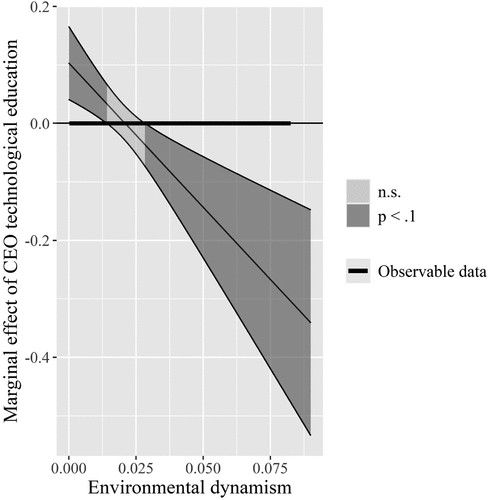
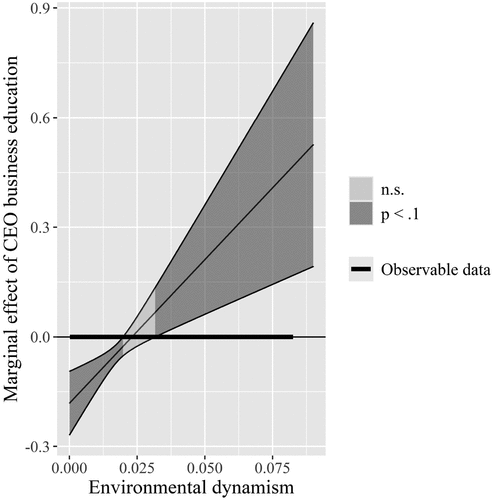
Hypothesis 3 predicted that environmental dynamism would positively moderate the positive relationship between CEO technological knowledge and the share of digital product innovation. However, the interaction term for CEO technological knowledge showed a negative and statistically significant loading (Hypothesis 3: β = −6.811, p < 0.01, Model 3); thus, Hypothesis 3 was not confirmed. Hypothesis 4 predicted a positive moderating effect of environmental dynamism on the negative relation between CEO business knowledge and the share of digital product innovation. The results provide support for this effect (Hypothesis 4: β = 8.288, p < 0.01, Model 4).
The marginal effects are displayed as the relationship between our independent and dependent variables over different values of the moderator in the Johnson–Neyman plots in Figures 1 and 2 (Aguinis et al. 2017, Busenbark et al. 2022). For CEO technological knowledge in Figure 1, the relationship is initially positive but decreases as dynamism increases. It becomes negative and statistically significant for high values, suggesting an attenuating effect of environmental dynamism counter to our prediction in Hypothesis 3. Figure 2 displays the marginal effects of CEOs’ business education. The effect is negative for low environmental dynamism values, positive but statistically nonsignificant for intermediate levels of environmental dynamism, and positive and statistically significant for high values of environmental dynamism. This result is in line with Hypothesis 4.
Additional Analyses: TMT Knowledge and CEO-TMT Interactions.
To assuage concerns that we only observe TMT instead of CEO effects, we included the TMTs’ human capital (excluding the CEO) in the full model (Model 6 in Table 4). Despite incorporating TMT effects, CEOs’ influence remained stable, suggesting that CEO human capital explains digital product innovation above and beyond the human capital of the TMT. As recent research emphasizes the role of the CIO in shaping digital innovation (Chen et al. 2021, Bendig et al. 2023, Schäper et al. 2025), we conducted an additional analysis in which CIO presence was included separately and removed from the calculation of the TMT knowledge characteristics in Model 7 in Table 4. We coded the variable CIO presence as one if we identified a CIO role in the TMT based on keywords such as “chief information officer” in executive titles (Menz 2012), and zero otherwise. The results remained qualitatively unchanged. To be consistent in our conceptual approach of considering the TMT as a whole, we included the CIO in the total TMT in further analyses. Finally, we investigated whether the knowledge profiles of CEOs and TMTs interacted. In unreported analyses, we examined potential interactions between CEO and TMT knowledge in technology and business but found no significant coefficients. Therefore, the technological and business knowledge held by CEOs and their TMTs appear additive rather than complementary or substitutable, supporting the notion that CEO human capital is an independent and influential factor.
Robustness Checks.
We performed several robustness tests. As Model 6 in Table 4 suggests relevant effects at the TMT level, we conducted subsequent analyses on this fully specified model. We began by applying alternative measures and model specifications (see Table 5). To understand whether different types of CEO human capital shape digital product innovation differently, we calculated the results on the basis of CEOs’ technological and business experience rather than their education (Model 1). For CEO technological experience, we recorded work experience in R&D or IT-related functions. To measure CEO business experience, we recorded experience in finance, accounting, marketing, or human resources functions. We coded both variables as one if the CEO had worked in the respective functions. The results remained robust, supporting our claim that the mechanisms linking human capital to digital product innovation are the same for educational and experiential human capital. For our dependent variable, digital product innovation, we also tested models with longer lags to account for the time structure of innovations. The positive effect of CEO technological education and the negative effect of CEO business education were present across both two- and three-year lags (Models 2 and 3). The interaction terms between environmental dynamism and CEO technological education and between environmental dynamism and CEO business education were statistically significant at the 10% level with a two-year lag (Model 2) and consistent but no longer statistically significant with a three-year lag (Model 3). For our moderator variable, environmental dynamism, we applied a three-year instead of a five-year average measure; the results remained stable (Model 4). Last, the results remained robust for the fixed-effects specification (Model 5). To further ensure that our results are not driven by self-selection, in which firms with more digital product innovation also hire more tech-savvy executives, we used an approach based on propensity score matching and confirmed the robustness of our main findings (see Online Appendix A).
|
Table 5. Alternative Measures and Model Specifications for Predicting the Share of Digital Product Innovation
| Dependent variable | Share of digital product innovation | ||||
|---|---|---|---|---|---|
| Model 1 | Model 2 | Model 3 | Model 4 | Model 5 | |
| Experience | 2-year lag | 3-year lag | Average dynamism | Fixed effects | |
| CEO technological education | 0.085* (0.04) | 0.107* (0.05) | 0.074* (0.04) | 0.103** (0.04) | 0.094† (0.06) |
| CEO business education | −0.103** (0.03) | −0.160** (0.05) | −0.096* (0.05) | −0.184*** (0.05) | −0.236*** (0.05) |
| CEO technological education × environmental dynamism | −7.231** (2.61) | −4.352† (2.29) | −1.759 (1.95) | −4.824** (1.74) | −5.742** (2.12) |
| CEO business education × environmental dynamism | 3.577† (1.86) | 6.343† (3.32) | 4.487 (2.93) | 7.825** (2.87) | 11.767*** (3.04) |
| TMT technological education | −0.101 (0.12) | 0.117 (0.15) | 0.185 (0.15) | −0.027 (0.13) | −0.080 (0.16) |
| TMT business education | −0.193** (0.07) | −0.073 (0.09) | −0.039 (0.09) | −0.177*** (0.05) | −0.257*** (0.06) |
| TMT technological education × environmental dynamism | 5.652 (7.57) | −6.255 (7.80) | −6.009 (10.92) | −0.305 (8.33) | −2.278 (10.93) |
| TMT business education × environmental dynamism | 15.805** (5.37) | 9.72† (5.25) | 11.608*** (3.09) | 14.124*** (3.59) | 17.685*** (4.13) |
| TMT size | −0.002 (0.01) | −0.004 (0.01) | −0.002 (0.01) | −0.003 (0.01) | −0.003 (0.01) |
| TMT throughput share | −0.014 (0.08) | 0.015 (0.09) | 0.007 (0.09) | −0.029 (0.09) | −0.021 (0.12) |
| TMT experience | −0.003 (0.00) | −0.002 (0.01) | −0.002 (0.00) | −0.003 (0.01) | −0.002 (0.00) |
| TMT gender diversity | 0.041 (0.07) | 0.044 (0.06) | 0.050 (0.07) | 0.035 (0.07) | 0.027 (0.06) |
| CEO firm background variety | 0.029* (0.01) | 0.006 (0.01) | 0.006 (0.01) | 0.006 (0.01) | 0.011 (0.01) |
| CEO stock compensation | −0.018 (0.04) | −0.021 (0.05) | −0.021 (0.05) | −0.009 (0.04) | −0.002 (0.04) |
| CEO age | 0.003 (0.00) | 0.003 (0.00) | 0.004 (0.00) | 0.002 (0.00) | 0.001 (0.00) |
| CEO gender | −0.170** (0.05) | −0.149** (0.06) | −0.135* (0.06) | −0.142** (0.05) | −0.210*** (0.05) |
| CEO tenure | −0.003 (0.00) | −0.004 (0.01) | −0.002 (0.01) | −0.003 (0.00) | −0.003 (0.00) |
| CEO change | −0.022 (0.03) | −0.027 (0.03) | −0.021 (0.03) | −0.024 (0.03) | −0.020 (0.02) |
| Firm size | 0.005 (0.01) | 0.017 (0.01) | 0.019 (0.01) | 0.011 (0.01) | −0.063*** (0.02) |
| Firm age | 0.047 (0.03) | 0.051 (0.04) | 0.049 (0.05) | 0.040 (0.03) | 0.023 (0.04) |
| Firm capital intensity | 0.003 (0.06) | 0.016 (0.06) | −0.001 (0.06) | 0.013 (0.06) | −0.023 (0.11) |
| Firm debt ratio | −0.029 (0.05) | −0.039 (0.04) | −0.045 (0.05) | −0.041 (0.05) | −0.092† (0.05) |
| Firm inventory slack | −0.087 (0.05) | −0.075 (0.07) | −0.064 (0.07) | −0.104† (0.06) | 0.006 (0.05) |
| Firm inventory efficiency | 0.010 (0.01) | 0.007 (0.01) | 0.007 (0.01) | 0.006 (0.01) | 0.012 (0.01) |
| Firm technological diversification | 0.003 (0.01) | 0.002 (0.01) | 0.004 (0.01) | 0.002 (0.01) | −0.010 (0.01) |
| Environmental dynamism | −9.945† (5.62) | −5.979 (4.90) | −6.685† (3.62) | −11.372*** (3.15) | −14.861*** (3.92) |
| Industry concentration | 0.017 (0.06) | 0.002 (0.06) | −0.009 (0.06) | 0.027 (0.06) | 0.180** (0.06) |
| (Intercept) | −0.088 (0.22) | −0.123 (0.18) | −0.253 (0.20) | 0.061 (0.19) | |
| N | 1,514 | 1,443 | 1,380 | 1,515 | 1,515 |
| Adjusted R2 | 0.546 | 0.540 | 0.531 | 0.547 | 0.614 |
| Time and industry dummies | Yes | Yes | Yes | Yes | Yes |
Note. Standard errors are displayed in parentheses.
Significance levels are as follows: †p < 0.1; *p < 0.05; **p < 0.01; ***p < 0.001.
Qualitative Findings
We undertook additional qualitative analyses to triangulate and corroborate our quantitative results and obtain complementary, finer-grained insights into the underlying mechanisms linking CEO human capital with digital product innovation. Specifically, we carried out 12 semistructured follow-up interviews with managers from manufacturing firms. The selection of the interviewees followed purposeful sampling (Strauss and Corbin 1998, Morse 2007) along two criteria. First, at the firm level, we focused on U.S. manufacturing firms falling within SIC codes 2000–3999. Eight interviews involved representatives of firms that were part of our quantitative sampling, while the others were not part of the S&P 500 and thus were smaller in size. Second, at the key respondent level, we targeted managers connected to the top management who could elaborate on their firm’s strategy in general and digital innovation in particular. Key respondents held management positions in functions such as IT, R&D, or sales and were knowledgeable about management actions and digital product innovation. Online Appendix B gives details on the sample.
Our interview protocol (Online Appendix C) focused on open-ended questions designed to clarify when and how CEOs engage in digital product innovation activities and implement resource changes accordingly. The questions emphasized their technology- and business-related expertise as well as environmental dynamics. All interviews took place online and lasted between 25 and 55 minutes. The conversations were automatically recorded, manually transcribed, and anonymized, thereby providing the basis for our qualitative data analysis. We followed techniques described by Gioia et al. (2013) to identify codes, concepts, themes, and aggregate dimensions and put them into relationships. Using an abductive approach (Reichertz 2007), we constantly iterated between our data and codes and the dynamic managerial capabilities framework. Online Appendix D provides details on the coding process and the data structure. In the following section, we discuss the most relevant inferences from the qualitative analysis and how they relate to the quantitative results.
CEOs with Technological Knowledge.
In terms of CEOs’ technological knowledge, the interviewees indicated that such human capital helps CEOs better understand the firms’ products and services in general and how digital technologies can enhance their offerings in particular, as the following statement illustrates:
The fact that he comes from a technical background […] means that he is also very knowledgeable about how all the products work, how they are structured and, therefore […] how the products can be used and how they actually have to be embedded in [other solutions]. —R&D manager in the semiconductor industry
This finding corroborates our theoretical arguments that technological knowledge influences CEOs’ sensing of opportunities, explicitly shifting their attention to digital technologies in their scanning activities. Further validating our quantitative results, the interviewees repeatedly emphasized that CEOs with technological backgrounds not only tend to commit resources to digital technologies but also stimulate discussions in product development. They grant independence but ask the right questions to detect whether development processes are going in the right direction.
[The CEO] wouldn’t be able to open up a machine learning program and start running it, right? But he is coming from his engineering background. I think he understands. He thinks about [our solutions], and if, maybe, we’re not thinking of them the right way. —IT manager in metal manufacturing
Such actions also help CEOs overcome organizational inertia and convince employees with technical arguments. Complementary to our initial theorizing, the interviewees frequently acknowledged that CEOs with technological expertise capitalize on their positive relationships with engineers. The combination of knowledge and relationships enables them to effectively convey the importance of sophisticated internal processes and systems across all levels of their organization. Such a change in a firm’s resource base is essential in supporting the development and integration of digitally enhanced products.
You really have to justify that some existing techniques don’t work. And I think, like any organization, some people are not going to believe you, and they’re going to think you can do things [in] old-fashioned ways. But it’s your job as […] a technical person to convince that person because [being technical] gives you a stronger argument. —IT manager in consumer electronics
Another previously overlooked way in which CEOs can reconfigure their firms’ resource base to support digital product innovation is to transform the human resource composition. To do so, they must attract and hire tech-savvy talent. However, our interviews highlighted that their ability to do so depends greatly on technological expertise already present in the hiring organization, including that of the CEO.
If you want to attract new talent into an organization in an area which is maybe new to you, you have to convince people coming in that you do know what you’re talking about and that you have a clear kind of goal or clear pathway in terms of utilizing this technology. —IT manager in consumer electronics
Notably, in rapidly changing sectors such as the automotive industry, tech-savvy CEOs might be inclined to initiate too many projects simultaneously. One interviewee noted:
Take Herbert Diess from Volkswagen. Herbert Diess was super tech-savvy. He wanted to transform Volkswagen into a software company within a few years. [But] he failed with this mission. And now they […] build it up step by step. —Strategy manager in the automotive industry
The described overextension of projects related to digital technologies can lead to organizational overload. The lack of focus may, in turn, hamper the successful launch of digitally enhanced products. This insight provides a potential explanation for the unexpected negative moderating effect of environmental dynamism on the relationship between CEO technological knowledge and digital product innovation.
CEOs with Business Knowledge.
Consistent with our theorizing, the respondents perceive CEOs with business knowledge as rather number driven when evaluating strategic opportunities.
They try to tie each one of those [digital product innovation] issues back to its EBIT [earnings before interest and taxes]. And so, I think their business standpoint sometimes gets in the way because they look at that issue and they say, okay, just focus on this.” —IT manager in metal manufacturing
This statement highlights the focus of such CEOs on the core performance attributes of their product and service offerings, which are traditionally unrelated to digital technologies. For example, traditional performance attributes for cars include speed, fuel consumption, and safety. We probed respondents further and found that the customer value and the monetization options for digital product innovations are often unknown. Thus, they do not conform to the usual operating mode, which one manager describes as “KPI [key performance indicator]–driven, [in which] a lot of things are done because we may save money or it’s more profitable.” Our analysis of the interview responses thus triangulates the quantitative inference that CEO business knowledge is negatively associated with digital product innovation.
However, although CEOs with business knowledge may not focus on the digital enhancement of their product portfolio per se, the interviewees confirmed our theoretical argument that CEOs are well aware of the overall transformation of their industries, predominantly driven by digital technologies. In dynamic environments, the emergence of tech-savvy market entrants and competitors shifts their attention to digital technologies, consequently changing their assessment of digital product opportunities.
[Consider what] Tesla is offering in terms of software and in terms of digital innovation. […] People are so used to this. […] They want the same simplicity and seamless experience in their car. —Strategy manager in the automotive industry
Thus, these CEOs find themselves forced, or at least “driven by outside innovation,” to digitally enhance their offerings and mimic their competitors’ behavior. Complementing our theoretical arguments, another interviewee also explained that in such environments, the commoditization of hardware pressures manufacturing companies’ existing business models. “Concerns around shrinking business in the future” lead CEOs with business knowledge to solve this problem with digital product innovation.
[In such] industries, without digital innovation, you will be completely left behind. There will be no way to compete. There’ll be no way to release products which consumers want to buy. So I think it’s either you digitally innovate or you just become nothing. —IT manager in consumer electronics
This quote illustrates the urgency with which such CEOs pursue digital innovation in dynamic environments despite the challenges of quantifying their success through traditional KPIs. Apparently, the hype provides sufficient evidence that digital works. Furthermore, to facilitate digital product innovation, we find that CEOs with business knowledge are then open to partnerships and even mergers and acquisitions, which resonates well with their general preference for such growth options. This idea was echoed by one interviewee: “There are always discussions on who to partner with to build the best solution for the customer.” These insights help us understand why CEOs with business knowledge adjust their approach to digital product innovation in dynamic environments.
When CEOs, regardless of their background and environment, “choose the next battleground,” they often need to restructure their organization, for example, by merging functional units or introducing new tech divisions. However, they may face difficulties here, as many employees are accustomed to traditional structures; indeed, many “still think that this new kind of product […] might be just a hype.” Whether employees support such drastic organizational changes greatly depends on CEOs’ ability to constantly communicate these changes and tie them to specific target outcomes. As two of the interviewees noted:
You would also have regular town halls where our CEO would talk about this. And he would always emphasize we want to go into the software space. We want to go into the services space. We don’t want to stay just like a traditional hardware company. —IT manager in consumer electronics
The biggest top-line commitment really is the 50% of the revenues until 2025. [This] commitment on the top level with the change of a digitalized product portfolio [leads to] strategic steps further down the line under the same umbrella or with the same motivation. —Sales manager in tobacco industry
Notably, in line with the former statement, our interview data reveal that CEOs may act as “chief innovators” in their organizations. Several interviewees highlighted that employees pay close attention to the way CEOs engage with digital technologies. This observation is further evidenced by the inspiration such employees draw from the CEOs’ vision and their admiration for the innovative culture these leaders foster. As such, our qualitative findings not only corroborate and complement the results from our quantitative study but also validate the CEO as the choice of our object of investigation. Overall, our qualitative findings provide a more granular understanding of the way CEOs’ human capital influences how their firms sense and seize opportunities related to digital product innovation and reconfigure their resource bases accordingly, depending on environmental conditions.
Discussion
In this study, we set out to enrich theoretical understanding of the drivers of digital product innovation, focusing on the role of CEO human capital in shaping the product portfolios of manufacturing firms. We found support for our prediction that CEO technological knowledge is positively associated with digital product innovation. In contrast with our theorizing, this relationship was weaker (and even turned negative) in environments characterized by higher levels of dynamism. In addition, we found support for our prediction that CEO business knowledge is negatively related to digital product innovation. As hypothesized, this relationship was attenuated (and even turned positive) in more dynamic environments. These findings suggest that distinct types of CEO human capital shape digital product innovation in dynamic and stable environments because CEOs differ in their approach to identifying and seizing opportunities and implementing changes to their firms’ resource base. Our study, therefore, offers several contributions to research and practice.
Implications for Research
We contribute to the IS literature in three major ways. First, we move beyond the specialist human capital perspective from earlier research (e.g., Chen et al. 2021, Firk et al. 2022, Bendig et al. 2023) by showing that firms require both technological and business expertise to drive digital product innovation, depending on their environment. Adding an environmental dimension to the discourse on evolving executive requirements in the digital era (see Hanelt et al. 2021), we suggest that this conversation should be guided not by the traditional technology-versus-business question (Kohli and Melville 2019) but by the understanding that in one environment, some types of human capital are beneficial, whereas in other environments, the same types might be detrimental for sensing and seizing opportunities related to digital technologies and reconfiguring firms’ resource base accordingly.
Business knowledge, for example, directs CEOs to focus on financial risks and returns tied to digital product innovation in stable environments but stimulates digital product innovation as a means of reconfiguring firms’ resource base toward evolutionary fitness in dynamic environments. Conversely, technological knowledge, which is beneficial for digital product innovation in stable environments, may hinder CEOs from changing their firms’ resource base toward digital innovation in dynamic environments. This unexpected finding raises important questions and opens avenues for future research. Our qualitative findings imply that tech-savvy CEOs can overwhelm their organizations by initiating too many digital projects simultaneously, which, combined with a volatile external environment, may result in scattered focus and execution challenges that lead to more failures. Another explanation could be that these CEOs are particularly aware of the risks linked to commercializing new technologies in uncertain environments (Garms and Engelen 2019), which may redirect their attention toward incremental technological improvements to the existing resource base until uncertainty diminishes. Understanding the deleterious effects of CEO technology-related human capital in dynamic environments and how firms may ameliorate them is a critical avenue for future research toward a more accurate theory of how strategic leaders shape technological evolution. Overall, our findings thus hint at a more temporal-contingent approach to the CEO-digital innovation relationship as industries experience periods of stability and change. This contextualized view of human capital bridges the gap between scholars advocating for technological expertise in TMTs (e.g., Chen et al. 2021) and those cautioning against appointing technological experts to lead innovation (e.g., Furr et al. 2019).
Thus, we provide a fresh perspective on how to conceptualize the role of CEO human capital in digital product innovation. While prior research has typically framed the discussion as a dualism—effective executives being rooted in either technology or business—we suggest shifting more toward a duality view that allows for opposing effects in distinct environments. Future research should further explore the implications of embracing duality, especially the theoretical conundrum of CEOs possessing both types of knowledge to varying degrees.6 For example, tensions that arise when CEOs have similar levels of knowledge in both areas should be investigated. Our approach, which treats technological and business knowledge as dimensions of CEO human capital rather than two opposing sides of a continuum, allows more thoughtful theorizing of the (contingent) effects of each dimension; it also opens new avenues for conceptualizing combinations of human capital dimensions.
Second, our study complements existing research highlighting the role of CEO human capital in managing digital product innovation (e.g., Firk et al. 2022, Bendig et al. 2023). While prior studies have typically focused on aspects of CEO human capital needed to complement, leverage, or integrate TMT knowledge, our findings reveal that in the context of digital product innovation, the same knowledge among TMT members is also valuable at the CEO level, suggesting that such human capital is additive rather than complementary or substitutable across different levels. For example, having technological experience at the very top is not the same as having it within the TMT because CEOs not only shape many of the decisions made by TMT members but also make certain strategic decisions independently. These insights do not contrast with research that highlights other CEO factors complementary to TMT expertise (e.g., Firk et al. 2022, Bendig et al. 2023); however, when considering knowledge profiles, specifically technological and business knowledge, they appear to be additive. Our qualitative findings reveal that this is grounded in CEOs not only shaping the digital vision of their firms but also acting as chief innovators. They influence product development, initiate strategic projects, and serve as role models for their current and future employees. In this capacity, they are key change agents in helping overcome organizational inertia often associated with digital transformation (Kaganer et al. 2023).
Third, our dynamic managerial capabilities perspective helps deepen the understanding of why digital product innovation management differs across firms. This is because CEOs’ knowledge profiles influence how they initiate, develop, and implement digital product innovation in distinct environments. By demonstrating how CEOs process and make sense of digital technologies in their cognition (Nambisan et al. 2017), we inform the “poorly understood” initiation phase (Kohli and Melville 2019, p. 204), showing that CEOs differ in their approaches to opportunity recognition. Our qualitative findings reveal that CEOs with technological knowledge are naturally inclined toward digital technologies and assess the product opportunities they present. In contrast, CEOs with business knowledge tend to assess market conditions and financial prospects, especially in response to competition or shrinking markets. To develop and implement digital product innovation, CEOs with a technological background deeply engage in the product development process and leverage their relationships with engineering teams to facilitate strategic asset alignment, whereas CEOs with business knowledge adopt a more strategic view of product innovation and foster strategic change through partnerships and acquisitions. Our study thus helps explain between-firm heterogeneity in strategic emphasis on generating value through emerging digital technologies (e.g., Schryen 2013, Steininger et al. 2022) and contributes to the growing body of work on how established firms organize for digital product innovation (e.g., Kohli and Melville 2019, Lyytinen 2021, Volberda et al. 2021).
By investigating the different ways in which CEOs may create or destroy value in the context of digital product innovation, we thus hint at their different approaches to managing the balance between running a business and digitalizing their firms’ product portfolios. We demonstrate that the executive in charge of a firm is not necessarily hardwired to think about digital product innovation as the option to adapt the firm but, rather, as one of several viable strategic choices. While digital product innovation is generally considered a necessity in IS research, our study provides a glimpse into how CEOs think about digital product innovation as an optional, rather than the only, path to evolutionary fitness, suggesting that CEOs’ human capital shapes their conceptualization of the evolutionary necessity of championing digital technologies. Research often uses option-based thinking to explain how organizations explore, develop, and selectively implement digital technologies to address uncertainty in digital product innovation (e.g., Rolland et al. 2018, Svahn and Kristensson 2023). Future research could leverage this concept to further explain when digital product innovation is perceived as a strategic option in the first place (Bowman and Hurry 1993) and how strategic leaders’ conceptualization of that option vis-à-vis others shapes intraorganizational dynamics and decisions that ultimately result in tangible value-adding or value-destroying outcomes.
Finally, our study also contributes to the dynamic managerial capabilities literature (Adner and Helfat 2003, Helfat and Martin 2015) by elucidating how specific characteristics of CEOs’ human capital, foundational to their abilities to sense, seize, and reconfigure, can have divergent effects on strategic change, depending on the environmental context. Specifically, we demonstrate that identical attributes of managerial human capital, as reflected in technological and business knowledge, can either facilitate or hinder the reconfiguration of a firm’s resource base toward digital product innovation and, ultimately, evolutionary fitness. This insight contrasts with the prevailing notion in executive background research that “implicitly assumes that executives who have the same background will behave [and bring about organizational outcomes] in more/less consistent ways” (Campbell et al. 2022, p. 37). By relaxing this assumption, we also contribute to the broader question of how external factors influence the effects of human capital on strategic adoption and innovation (Wu et al. 2005, Richard et al. 2019). We call for further research using the dynamic managerial capabilities perspective to examine how human capital drives different pathways to strategic change rather than focusing on strategic change itself.
Implications for Practice
Our findings also offer valuable insights for practitioners. For boards of directors that consider digital product innovation a key driver for success, we emphasize that CEO human capital matters above and beyond the human capital anchored in the TMT. Such human capital in the form of education and experience can be easily checked before the CEO is hired. Boards might consider hiring someone with both technological and business expertise or, more realistically, plan for different CEOs to lead the firm across distinct market environments. For the latter, boards must anticipate environmental changes to initiate changes in the CEO position proactively, rather than responding only after performance declines.
Our study can also guide current CEOs of manufacturing firms on how to be more effective in environments that impede them from fostering digital product innovation. For CEOs with technological knowledge, we recommend implementing structured approaches in dynamic environments to keep them from overloading the system. This could involve clearly defining and prioritizing different projects, initiating them sequentially rather than concurrently. In addition, considering that engineers often seek greater autonomy in such environments, tech-savvy CEOs with a hands-on leadership style should ensure that they grant sufficient independence in development processes rather than overly directing the course of digital solutions. For CEOs with business knowledge, we recommend compensating for their limited experience with digital technologies. To gain a more nuanced understanding of the evolution of emerging technologies and how competitors, suppliers, and customers might react, these CEOs could benefit from serving on boards of digital-first companies or organizations led by tech-savvy CEOs. They could also institute knowledge exchanges with their engineers and/or mentor managers with technological expertise. Such strategies can help them naturally adapt to new technological trends.
Limitations and Avenues for Future Research
Our study has several limitations that suggest opportunities for future research. First, our study is limited to listed U.S. manufacturing firms. Given that the United States is a liberal market economy, technological adaptation is often driven by market pressures. In other institutional contexts, additional or different mechanisms, such as stakeholder coordination norms, may shape how CEOs drive their firms’ digital product innovation. To enhance the generalizability of our findings, future research could repeat our study in other geographic contexts (e.g., Asian countries) and different industries (e.g., the service industry). Similarly, as our study focuses solely on large companies, investigating start-ups or small- and medium-sized companies could reveal valuable insights into potential differences and parallels. Prior research has shown that such firms, especially family-owned businesses, exhibit different innovation and technology adoption patterns than larger organizations (De Massis et al. 2018, Soluk and Kammerlander 2021).
Second, we measured CEO human capital in the form of technological and business knowledge using binary variables for education and experience. Although we used a granular approach to detect CEOs’ technology- and business-related education and experience, there is still room to assess the quality of their backgrounds. In terms of education, future research could, for example, assess the number, quality, or level of degrees. Similarly, for experience, researchers could assess the number of years spent in specific functions and roles or dive into task descriptions to better understand how closely those roles align with technology- or business-related activities, which was beyond the scope of our study. Developing expanded taxonomies for CEO knowledge profiles presents an intriguing opportunity for future research.
Third, while we focused on technology- and business-related human capital, future research could benefit from investigating other dimensions of CEO human capital that may affect their sensing, seizing, and reconfiguring activities in the context of digital product innovation. For example, examining experience in certain firm types (e.g., family-owned businesses) or in entrepreneurial roles (e.g., founder CEOs) might yield novel insights. Following our analyses of knowledge profiles, future research could investigate whether these factors add, complement, or leverage human capital at the TMT level.
Fourth, the concept of dynamic managerial capabilities introduces social capital as a critical managerial resource that affects these mechanisms (Adner and Helfat 2003). Exploring how CEOs’ technology- and business-related social capital shapes their actions toward digital product innovation, either on its own or in combination with human capital, would be valuable. A particularly interesting avenue for future research would be to validate whether social capital in one field can complement or even substitute for human capital in another. In other words, can CEOs’ networks offset their educational and experiential deficiencies? In this regard, investigating CEOs’ vicarious learning—namely, “individual learning that occurs through being exposed to and making meaning from another’s experience” (Myers 2017, p. 610)—may provide a more comprehensive explanation for how CEOs shape digital product innovation.
Fifth, our findings suggest a temporal-contingent perspective on the relationship between CEOs and digital product innovation, recognizing that industries experience phases of dynamism and stability. Although we controlled for CEO changes in our empirical analyses, we did not directly compare the human capital of incoming CEOs with that of their predecessors. Future research could investigate how CEO turnover shapes digital product innovation, especially by employing in-depth longitudinal case studies to explore the dynamics of CEO transitions and their impact on firms’ digital innovation management.
Finally, while our follow-up interviews improved our understanding of the dynamic managerial capabilities linking CEO human capital with digital product innovation, we did not have the opportunity to interview the CEOs themselves. Collecting data directly from CEOs of listed firms can be challenging, so we interviewed executives who were knowledgeable about their CEOs and their specific actions and decisions related to digital product innovation. In the future, researchers could consider conducting longitudinal case studies to gain deeper insights into CEOs’ cognition and patterned behavior.
Conclusion
This study advances understanding of how CEO human capital influences digital product innovation in manufacturing firms. Using a dynamic managerial capabilities lens, we argue that CEOs’ technological and business knowledge affect how they identify opportunities related to digital technologies, seize them, and implement changes to their firms’ resource base. We show that these effects are context dependent: in stable environments, tech-savvy CEOs drive digital product innovation, whereas business-savvy CEOs focus elsewhere. Remarkably, these effects reverse in dynamic environments. By demonstrating that both types of knowledge are valuable, but in different contexts, we help reconcile the long-standing debate on technology versus business expertise in top management. We also position CEOs as distinct innovators beyond the TMT and offer new insights into the diverse strategies they adopt to initiate, develop, and implement digital product innovation. This contextualized human capital perspective opens new avenues for research on how strategic leaders guide the evolution of digital technologies in established firms.
This article is part of the academic legacy of coauthor Johannes Kriebel, who sadly passed away during the final stages of the revision process. His enthusiasm, dedication, and commitment to research are deeply embedded in this work and will continue to inspire the authors. The authors are grateful to the senior editor, associate editor, and reviewers for their thoughtful and constructive feedback. The authors also thank Andreas Pfingsten and Denise Fischer-Kreer for their input. Colin Schulz, David Bendig, and Kathrin Haubner would like to thank the State of North Rhine-Westphalia’s Ministry of Economic Affairs, Industry, Climate Action and Energy as well as the Exzellenz Start-up Center.NRW program at the REACH – EUREGIO Start-up Center for their kind support of their work.
1 Prior research differentiates between educational and experiential human capital. Although we make this distinction empirically, we do not do so conceptually because the arguments and mechanisms linking human capital to digital product innovation in our study are the same for both types.
2 The device layer consists of the product’s hardware and operating system. The network layer contains connectors to firms, other products, and the environment. The service layer represents user applications. The content layer contains data for storage and sharing.
3 Evolutionary fitness refers to the extent to which a firm can “make a living” in its current environment (Helfat et al. 2007, p. 7).
4 The concept of dynamic managerial capabilities also introduces social capital as an underlying managerial resource that affects these mechanisms (Adner and Helfat 2003). However, delving into social capital is beyond the scope of our study.
5 These experts met two criteria: (1) they were either full-time scholars or graduate students, and (2) they had dedicated innovation expertise from courses and/or practice. To ensure equal knowledge among raters, we provided detailed information on relevant technologies and innovations, along with the following guiding questions based on Yoo et al.’s (2010) modular architecture concept. “Device layer: Does the product consist of a physical machine layer as hardware and a logical capability as an operating system, whereby it enables physical machines to connect to other layers? Network layer: Does the product contain a network layer (physical or logical) that facilitates the device to connect to other devices? Service layer: Does the product include a service layer represented by a user application? Content layer: Does the product enable data to be shared or stored?” (Bendig et al. 2023, p. 1499). In the infrequent cases when disagreement among the experts arose, it was resolved in a joint discussion. The raters’ agreement, using pairwise Cohen’s kappa, indicated agreement, with values ranging between 0.824 and 0.889.
6 In our sample, 18.61% (11.82%) of CEOs possess a combination of technological and business education (experience).
References
- (2003) Corporate effects and dynamic managerial capabilities. Strategic Management J. 24(10):1011–1025.Crossref, Google Scholar
- (2017) Improving our understanding of moderation and mediation in strategic management research. Organ. Res. Methods 20(4):665–685.Crossref, Google Scholar
- (2017) Understanding the human side of openness: The fit between open innovation modes and CEO characteristics. R&D Management 47(5):727–740.Crossref, Google Scholar
- (1999) Information technology assimilation in firms: The influence of senior leadership and IT infrastructures. Inform. Systems Res. 10(4):304–327.Link, Google Scholar
- (2009) Dynamic capabilities and the role of managers in business strategy and economic performance. Organ. Sci. 20(2):410–421.Link, Google Scholar
- (2022) Businessperson or technologist: Stock market reaction to the alignment between CIO background and firm strategy. J. Management Inform. Systems 39(4):1006–1036.Crossref, Google Scholar
- (2002) CEO characteristics and firm R&D spending. Management Sci. 48(6):782–801.Link, Google Scholar
- (2022) When and why technology leadership enters the C-Suite: An antecedents perspective on CIO presence. J. Strategic Inform. Systems 31(1):101705.Crossref, Google Scholar
- (2023) Attention to digital innovation: Exploring the impact of a chief information officer in the top management team. MIS Quart. 47(4):1487–1516.Crossref, Google Scholar
- (2003) Managing with style: The effect of managers on firm policies. Quart. J. Econom. 118(4):1169–1208.Crossref, Google Scholar
- (1977) Inequality and Heterogeneity: A Primitive Theory of Social Structure (Free Press, New York).Google Scholar
- (1993) Strategy through the option lens: An integrated view of resource investments and the incremental-choice process. Acad. Management Rev. 18(4):760–782.Crossref, Google Scholar
- (2017) The value of CEO mobility: Contextual factors that shape the impact of prior CEO experience on market performance and CEO compensation. Human Resource Management 56(2):243–265.Crossref, Google Scholar
- (2022) A marginal effects approach to interpreting main effects and moderation. Organ. Res. Methods 25(1):147–169.Crossref, Google Scholar
- (2011) Top management team functional diversity and firm performance: The moderating role of CEO characteristics. J. Management Stud. 48(1):151–177.Crossref, Google Scholar
- (2022) The background on executive background: An integrative review. J. Management 49(1):7–51.Google Scholar
- (2000) The incumbent’s curse? Incumbency, size, and radical product innovation. J. Marketing 64(7):1–17.Crossref, Google Scholar
- (2019) Digital transformation strategy making in pre-digital organizations: The case of a financial services provider. J. Strategic Inform. Systems 28(1):17–33.Crossref, Google Scholar
- (2021) Making digital innovation happen: A chief information officer issue selling perspective. Inform. Systems Res. 32(3):987–1008.Link, Google Scholar
- (2014) CEOs’ transformational leadership and product innovation performance: The roles of corporate entrepreneurship and technology orientation. J. Production Innovation Management 31(S1):2–17.Crossref, Google Scholar
- (2006) Attention as the mediator between top management team characteristics and strategic change: The case of airline deregulation. Organ. Sci. 17(4):453–469.Link, Google Scholar
- (2021) CEO risk-taking incentives and IT innovation: The moderating role of a CEO’s IT-related human capital. MIS Quart. 45(4):2175–2192.Crossref, Google Scholar
- (2014) Research Design: Qualitative, Quantitative and Mixed Methods Approaches, 4th ed. (Sage, Thousand Oaks, CA).Google Scholar
- (2018) Outside CEOs and innovation. Strategic Management J. 39(8):2095–2119.Crossref, Google Scholar
- (1999) Commitment to innovation: The impact of top management team characteristics. R&D Management 29(3):199–208.Crossref, Google Scholar
- (2018) Innovation with limited resources: Management lessons from the German Mittelstand. J. Production Innovation Management 35(1):125–146.Crossref, Google Scholar
- (1984) Dimensions of organizational task environments. Admin. Sci. Quart. 29(1):52–73.Crossref, Google Scholar
- (1960) Simplified estimation from censored normal samples. Ann. Math. Statist. 31(2):385–391.Crossref, Google Scholar
- (2021) Technological choices under uncertainty: Does organizational aspiration matter? Strategic Management J. 42(5):898–916.Crossref, Google Scholar
- (2008) Cognition and renewal: Comparing CEO and organizational effects on incumbent adaptation to technical change. Organ. Sci. 20(2):461–477.Link, Google Scholar
- (2000) Dynamic capabilities: What are they? Strategic Management J. 21(10/11):1105–1121.Crossref, Google Scholar
- (2016) How LEGO built the foundations and enterprise capabilities for digital leadership. MIS Quart. Executive 15(2):141–166.Google Scholar
- (2005) Top management leadership and influence on innovation: The role of sociocultural context. J. Management 31(3):381–402.Crossref, Google Scholar
- (2016) Dynamic capabilities and organizational performance: A meta-analytic evaluation and extension. J. Management Stud. 53(8):1348–1380.Crossref, Google Scholar
- (1990) Top-management-team tenure and organizational outcomes: The moderating role of managerial discretion. Admin. Sci. Quart. 35(3):484–503.Crossref, Google Scholar
- (2022) Top management team characteristics and digital innovation: Exploring digital knowledge and TMT interfaces. Long Range Planning 55(3):102166.Crossref, Google Scholar
- (2019) Don’t put a digital expert in charge of your digital transformation.
Harvard Bus. Rev. (August 5), https://hbr.org/2019/08/dont-put-a-digital-expert-in-charge-of-your-digital-transformation.Google Scholar - (2022) Technology lifecycles and digital technologies: Patterns of discourse across levels of materiality. J. Assoc. Inform. Systems 23(5):1102–1149.Google Scholar
- (2019) Innovation and R&D in the upper echelons: The association between the CTO’s power depth and breadth and the TMT’s commitment to innovation. J. Production Innovation Management 36(1):87–106.Crossref, Google Scholar
- (2013) Seeking qualitative rigor in inductive research: Notes on the Gioia methodology. Organ. Res. Methods 16(1):15–31.Crossref, Google Scholar
- (2019) The CIO stereotype: Content, bias, and impact. J. Strategic Inform. Systems 28(1):83–99.Crossref, Google Scholar
- (2005) Executive job demands: New insights for explaining strategic decisions and leader behaviors. Acad. Management Rev. 30(3):472–491.Crossref, Google Scholar
- (2021) A systematic review of the literature on digital transformation: Insights and implications for strategy and organizational change. J. Management Stud. 58(5):1159–1197.Crossref, Google Scholar
- (2020) Digital M&A, digital innovation, and firm performance: An empirical investigation. Eur. J. Inform. Systems 30(1):3–26.Crossref, Google Scholar
- (2007) What’s the difference? Diversity constructs as separation, variety, or disparity in organizations. Acad. Management Rev. 32(4):1199–1228.Crossref, Google Scholar
- (2019) Relationships between information technology and other investments: A contingent interaction model. Inform. Systems Res. 30(1):291–305.Link, Google Scholar
- (2015) Dynamic managerial capabilities: Review and assessment of managerial impact on strategic change. J. Management 41(5):1281–1312.Crossref, Google Scholar
- (2015) Managerial cognitive capabilities and the microfoundations of dynamic capabilities. Strategic Management J. 36(6):831–850.Crossref, Google Scholar
- (2007) Dynamic Capabilities: Understanding Strategic Change in Organizations (Wiley-Blackwell, Oxford, UK).Google Scholar
- (2018) Digital innovation and transformation: An institutional perspective. Inform. Organ. 28(1):52–61.Crossref, Google Scholar
- (2007) Toward a definition of mixed methods research. J. Mixed Methods Res. 1(2):112–133.Crossref, Google Scholar
- (2019) Learning not to diversify: The transformation of graduate business education and the decline of diversifying acquisitions. Admin. Sci. Quart. 64(2):337–369.Crossref, Google Scholar
- (2023) A process for managing digital transformation: An organizational inertia perspective. J. Assoc. Inform. Systems 24(4):1005–1030.Google Scholar
- (2018) Multicollinearity: How common factors cause type 1 errors in multivariate regression. Strategic Management J. 39(8):2362–2385.Crossref, Google Scholar
- (2019) The Technology Fallacy: How People Are the Real Thing to Digital Transformation (MIT Press, Cambridge, MA).Crossref, Google Scholar
- (2008) Framing contests: Strategy making under uncertainty. Organ. Sci. 19(5):729–752.Link, Google Scholar
- (2008) Thinking about technology: Applying a cognitive lens to technical change. Res. Policy 37(5):790–805.Crossref, Google Scholar
- (2016) Technological diversification, core-technology competence, and firm growth. Res. Policy 45(1):113–124.Crossref, Google Scholar
- (2016) What’s in an education? Implications of CEO education for bank performance. J. Corporate Finance 37:287–308.Crossref, Google Scholar
- (2011) Information technology and intangible output: The impact of IT investment on innovation productivity. Inform. Systems Res. 23(1):42–59.Link, Google Scholar
- (2019) Digital innovation: A review and synthesis. Inform. Systems J. 29(1):200–223.Crossref, Google Scholar
- (2012) Digital innovation and the division of innovative labor: Digital controls in the automotive industry. Organ. Sci. 23(5):1428–1447.Link, Google Scholar
- (2018) Digital transformation by SME entrepreneurs: A capability perspective. Inform. Systems J. 28(6):1129–1157.Crossref, Google Scholar
- (2006) How good is good news? Technology depth, book-to-market ratio, and innovative events. J. Accounting Auditing Finance 21(3):293–321.Crossref, Google Scholar
- (2021) Innovation logics in the digital era: A systemic review of the emerging digital innovation regime. Innovation 24(1):13–34.Crossref, Google Scholar
- (2016) Digital product innovation within four classes of innovation networks. Inform. Systems J. 26(1):47–75.Crossref, Google Scholar
- (1987) Entrepreneurship education in the nineties. J. Bus. Ventures 2(3):261–275.Crossref, Google Scholar
- (2012) Functional top management team members. J. Management 38(1):45–80.Crossref, Google Scholar
- (2013) How a firm’s competitive environment and digital strategic posture influence digital business strategy. MIS Quart. 37(2):511–536.Crossref, Google Scholar
- (2007)
Sampling in grounded theory . Bryant A, Charmaz K, eds. The SAGE Handbook of Grounded Theory (SAGE Publications, London), 229–244.Crossref, Google Scholar - (2014) Knowing when to leap: Transitioning between exploitative and explorative R&D. Strategic Management J. 35(1):126–145.Crossref, Google Scholar
- (2017) Coactive vicarious learning: Toward a relational theory of vicarious learning in organizations. Acad. Management Rev. 43(4):610–634.Crossref, Google Scholar
- (2014) Bridging yesterday, today, and tomorrow: CEO temporal focus, environmental dynamism, and rate of new product introduction. Acad. Management J. 57(6):1810–1833.Crossref, Google Scholar
- (1998)
The CEO in the context of discontinuous change . Hambrick DC, Nadler DA, Tushman M, eds. Navigating Change: How CEOs, Top Teams, and Boards Steer Transformation (Harvard Business School Press, Boston), 3–27.Google Scholar - (2017) Digital innovation management: Reinventing innovation management research in a digital world. MIS Quart. 41(1):223–238.Crossref, Google Scholar
- (2020) Chief marketing officer presence and firm performance: Assessing conditions under which the presence of other C-level functional executives matters. J. Acad. Marketing Sci. 48(4):670–694.Crossref, Google Scholar
- (2012) When do CEOs versus top management teams matter in explaining strategic decision-making processes? Toward an institutional view of strategic leadership effects. Internat. Stud. Management Organ. 42(4):86–105.Google Scholar
- (2011) Clarifying the ambiguous role of the CIO. MIS Quart. Executive 10(1):31–44.Google Scholar
- (2015) How smart, connected products are transforming companies. Harvard Bus. Rev. 93(10):97–114.Google Scholar
- (2000) Is organization theory obvious to practitioners? A test of one established theory. Organ. Sci. 11(5):509–524.Link, Google Scholar
- (2007)
Abduction: The logic of discovery of grounded theory . Bryant A, Charmaz KC, eds. The SAGE Handbook of Grounded Theory (SAGE Publications, London), 214–228.Crossref, Google Scholar - (2019) Top management team demographic-faultline strength and strategic change: What role does environmental dynamism play? Strategic Management J. 40(6):987–1009.Crossref, Google Scholar
- (2016) Using information systems to sense opportunities for innovation: Integrating postadoptive use behaviors with the dynamic managerial capability perspective. J. Management Inform. Systems 33(1):45–69.Crossref, Google Scholar
- (2018) Managing digital platforms in user organizations: The interactions between digital options and digital debt. Inform. Systems Res. 29(2):419–443.Link, Google Scholar
- (2020) Turning liabilities of global operations into assets: IT-enabled social integration capacity and exploratory innovation. Inform. Systems Res. 31(2):361–382.Link, Google Scholar
- (2018) The sources of dynamism in dynamic capabilities. Strategic Management J. 39(6):1728–1752.Crossref, Google Scholar
- (2025) Shaping innovation outcomes: The role of CIOs for firms’ digital exploration. J. Inform. Tech. 40(1):35–54.Crossref, Google Scholar
- (2018) Quo vadis, dynamic capabilities? A content-analytic review of the current state of knowledge and recommendations for future research. Acad. Management Ann. 12(1):390–439.Crossref, Google Scholar
- (2013) Growing with smart products: Why customization capabilities matter for manufacturing firms. Eur. J. Inform. Systems 22(2):139–169.Crossref, Google Scholar
- (2023) Growing with smart products: Why customization capabilities matter for manufacturing firms. J. Production Innovation Management 40(6):794–816.Crossref, Google Scholar
- (2021) Digital transformation in family-owned Mittelstand firms: A dynamic capabilities perspective. Eur. J. Inform. Systems 30(6):676–711.Crossref, Google Scholar
- (2018) Social presence in virtual world collaboration: An uncertainty reduction perspective using a mixed methods approach. MIS Quart. 42(3):779–803.Crossref, Google Scholar
- (2022) Dynamic capabilities in information systems research: A critical review, synthesis of current knowledge, and recommendations for future research. J. Assoc. Inform. Systems 23(2):447–490.Google Scholar
- (1998) Basics of Qualitative Research: Techniques and Procedures for Developing Grounded Theory (SAGE Publications, London).Google Scholar
- (2023) Unpacking digital options thinking for innovation renewal: A Clinical inquiry into car connectivity. Eur. J. Inform. Systems 32(1):23–34.Crossref, Google Scholar
- (2017) Embracing digital innovation in incumbent firms: How Volvo cars managed competing concerns. MIS Quart. 41(1):239–253.Crossref, Google Scholar
- (2011) Top management team diversity and strategic innovation orientation: The relationship and consequences for innovativeness and performance. J. Production Innovation Management 28(6):819–832.Crossref, Google Scholar
- (2007) Explicating dynamic capabilities: The nature and microfoundations of (sustainable) enterprise performance. Strategic Management J. 28(13):1319–1350.Crossref, Google Scholar
- (1994) The dynamic capabilities of firms: An introduction. Indust. Corporate Change 3(3):537–556.Crossref, Google Scholar
- (1997) Dynamic capabilities and strategic management. Strategic Management J. 18(7):509–533.Crossref, Google Scholar
- (2020) Elon Musk decries ‘M.B.A.-ization’ of America.
Wall Street J. (December 9) https://www.wsj.com/articles/elon-musk-decries-m-b-a-ization-of-america-11607548589.Google Scholar - (2022) Anchored inferential learning: Platform-specific uncertainty, venture capital investments by the platform owner, and the impact on complementors. Organ. Sci. 34(3):1027–1050.Link, Google Scholar
- (2013) Bridging the qualitative-quantitative divide: Guidelines for conducting mixed methods research in information systems. MIS Quart. 37(1):21–54.Crossref, Google Scholar
- (2016) Guidelines for conducting mixed-methods research: An extension and illustration. J. Assoc. Inform. Systems 17(7):435–495.Google Scholar
- (2021) Digital transformation: A multidisciplinary reflection and research agenda. J. Bus. Res. 122:889–901.Crossref, Google Scholar
- (2019) Understanding digital transformation: A review and a research agenda. J. Strategic Inform. Systems 28(2):118–144.Crossref, Google Scholar
- (2021) Strategizing in a digital world: Overcoming cognitive barriers, reconfiguring routines and introducing new organizational forms. Long Range Planning 54(5):102110.Crossref, Google Scholar
- (2015) Distributed attention and shared emotions in the innovation process: How Nokia lost the smartphone battle. Admin. Sci. Quart. 61(1):9–51.Crossref, Google Scholar
- (2019) Building dynamic capabilities for digital transformation: An ongoing process of strategic renewal. Long Range Planning 52(3):326–349.Crossref, Google Scholar
- (2021) Unpacking the difference between digital transformation and IT-enabled organizational transformation. J. Assoc. Inform. Systems 22(1):102–129.Google Scholar
- (2005) CEO tenure and company invention under differing levels of technological dynamism. Acad. Management J. 48(5):859–873.Crossref, Google Scholar
- (2010) Research commentary—The new organizing logic of digital innovation: An agenda for information systems research. Inform. Systems Res. 21(4):724–735.Link, Google Scholar
- (2012) Organizing for innovation in the digitized world. Organ. Sci. 23(5):1398–1408.Link, Google Scholar
- (2020) How CEO/CMO characteristics affect innovation and stock returns: Findings and future directions. J. Acad. Marketing Sci. 48(6):1229–1253.Crossref, Google Scholar

