Volatility (Dis)Connect in International Markets
Abstract
Lack of comovement between consumption differentials and real exchange rates is a traditional indicator of a disconnect of foreign exchange markets from economic fundamentals. We present novel empirical evidence for the disconnect between the volatilities, as opposed to the levels, of these variables. The volatility correlations are below one, but they are larger than the level correlations. We discuss the economics of volatility disconnect anomaly in settings with complete and incomplete markets and provide an explanation of our empirical findings based on international risk sharing of expected growth and volatility news shocks.
This paper was accepted by Tomasz Piskorski, finance.
Funding: Y. Liu was supported by the NSFC Excellent Young Scientists Fund [Grant 72422011].
Supplemental Material: The online appendices and data files are available at https://doi.org/10.1287/mnsc.2023.03930.
1. Introduction
The last three decades have been characterized by periods of heightened volatility in macroeconomic fundamentals, from the Global Financial Crisis and trade wars to the COVID-19 pandemic. A natural question to ask is whether increases in macroeconomic uncertainty are systematically related to foreign exchange volatility. Do foreign exchange markets reflect the relative uncertainty about economic fundamentals at home and abroad? Do currency traders separately account for the cross-country differentials in growth versus volatility fundamentals? Can the differences in patterns of level versus volatility risk sharing help assess, discriminate, and discipline the models of foreign exchange risk? Our paper is among the first to provide an empirical and theoretical answer to these questions.
A growing literature in macroeconomics and finance has emphasized the first-order effects of aggregate volatility fluctuations on economic quantities and asset prices, above and beyond shocks to the levels of economic fundamentals. Indeed, in the context of economic growth, Ramey and Ramey (1995) find that countries with higher volatility tend to experience lower growth; in a production setting, volatility shocks lead to a decline in output and economic activity (Bloom 2009, Basu and Bundick 2017, Arellano et al. 2019); and in the context of asset pricing, Bansal and Yaron (2004) show that volatility fluctuations are crucial for the level and time variation in risk premia and asset prices. Most of the existing work, however, focuses on volatility spillovers to real and financial markets in the context of a single economy, and much less is known about the transmission and sharing of volatility risk across country borders.
These questions relate closely to the long-standing debate on the disconnect between exchange rates and economic fundamentals. In a classical international setting with complete markets and time-additive power utility, Kollmann (1991) and Backus and Smith (1993) document a “disconnect” between the levels of foreign exchange rates and economic activity. In this paper, we are the first to document and study the empirical and theoretical significance of such a disconnect between the volatilities of exchange rates and consumption. Our findings suggest that the disconnect extends beyond levels to volatilities, offering new insights into the mechanisms that drive Foreign Exchange (FX) market dynamics.
We present novel empirical evidence for three aspects of the data. First, the correlation of the conditional volatilities tends to be larger than the correlation between the levels of consumption growth differentials and exchange rates. This evidence suggests that the volatility disconnect is smaller than the level disconnect. Second, even though the second moments are more correlated than the levels, their correlation is still small at about 20%. To emphasize our finding of a mild correlation between the volatilities, we use the expression “volatility disconnect” in foreign exchange markets. Third, there is a substantial amount of cross-country heterogeneity in the volatility disconnect. This variation is important because it can be linked to heterogeneous economic fundamentals across country pairs.
We investigate various economic factors that could explain the differences in volatility correlations across countries. We find that neither the relative level of unexpected growth risk nor the relative country size significantly affects the correlation between the conditional volatilities of exchange rate fluctuations and consumption growth differentials. However, both the relative unconditional volatility of expected output growth and the degree of time-varying volatility are important determinants. Specifically, higher expected output growth risk is associated with lower correlations between consumption and exchange rate volatilities, while higher overall volatility risk across countries tends to reduce the volatility disconnect. Lastly, we observe that the volatility disconnect phenomenon is also evident in emerging markets, where volatility correlations are positive and exceed level correlations, although they remain below one.
In order to explain our empirical findings, we investigate a widely adopted approach to modeling market incompleteness by restricting the set of tradable securities in international financial markets (Lustig and Verdelhan 2019). As established in prior literature, this framework can successfully account for the level disconnect between macroeconomic fundamentals and exchange rates. Importantly, we show that this setting is unable to explain the disconnect of second moments. This shortcoming is closely tied to the degree of time variation in the level correlation, which we can directly measure from the data. This finding is significant because it indicates that a richer risk-sharing model, beyond what is implied by power utility, is required to better align the second moments of macroeconomic variables and exchange rates.
The main objective of our subsequent economic analysis is to explain these novel empirical facts through the lens of an equilibrium model that links the volatilities of macroeconomic fundamentals and exchange rates—hence the term (dis)connect. Specifically, we consider a real foreign exchange economy with two countries, each endowed with a stochastic supply of a country-specific good. The domestic and foreign endowments are cointegrated and are subject to expected growth and volatility shocks. The representative agents in the two countries trade in a frictionless manner in the goods and financial markets.
The agents’ preferences are specified by the utility function of Epstein and Zin (1989). They feature a bias for the consumption of home good, and further, are calibrated so that the agents dislike the long-run variance of their consumption streams. When news shocks hit the economy, agents have an incentive to trade to reduce the uncertainty of their future utility. Specifically, a country affected by a positive news shock receives a smaller share of resources and has a lower volatility of continuation utility going forward at a cost of a higher short-run consumption volatility.
When news pertains to future expected growth rates, the international reallocation of resources results in an exchange of short and long-run consumption volatilities across countries, so that the two variances move in the opposite direction. We call this force the reallocation effect. News to output volatility, in contrast, produces a positive comovement in consumption volatilities across all countries: shocks to output volatility propagate in the cross section of countries, with the reallocation channel only partially mitigating the effects of local shocks on home consumption volatility.
Our model can account for a mild positive comovement between the volatility of consumption differentials and the volatility of exchange rate fluctuations due to two opposite forces. Volatility shocks tend to create a positive correlation between the two volatilities because they increase the uncertainty about all the variables in the economy. Long-run shocks, in contrast, generate a large negative comovement. In a model without shocks to output volatility (Colacito and Croce 2013), the correlation between the volatility of the exchange rate and that of the international differential of consumption growth rates is strongly negative because of the dominance of the reallocation channel. In contrast, exogenous output volatility shocks increase the conditional volatility of all macroeconomic aggregates and hence endogenously produce positive comovements. Under our benchmark calibration, these opposite forces end up producing a positive but moderate correlation between the volatilities of consumption differentials and exchange rates.
1.1. Related Literature
Our study is related to a large and growing body of literature that studies macroeconomic foundations for international financial markets’ fluctuations (Lustig and Verdelhan 2007; Pavlova and Rigobon 2007, 2010, 2013; Verdelhan 2010; Hassan 2013; Heyerdahl-Larsen 2014; Della Corte et al. 2016; Farhi and Gabaix 2016; Hassan et al. 2016, 2023; Mueller et al. 2017; Stathopoulos 2017). The emphasis on the importance of long-lasting news for international asset prices is consistent with the international long-run risks literature (Colacito 2008, Bansal and Shaliastovich 2013, Colacito and Croce 2013). Colacito et al. (2022) focus on volatility risk sharing in order to explain volatility pass-through across countries. We adopt a similar model but we highlight a distinct margin of volatility risks in the data: the volatility disconnect.
Additionally, recent research has documented the relevance of second and higher-order moments for currency dynamics and their relation to economic fundamentals. Fernandez-Villaverde et al. (2011) study the role of time-varying volatility in the context of a small open economy setting. Compared with their analysis, we study the comovement of second moments resulting from optimal risk-sharing in a multicountry equilibrium setting. Zviadadze (2017) extracts a common stochastic volatility component in the U.S. macroeconomic and financial market data to analyze the link between the term structure of currency carry trade and U.S. macroeconomic risk. Berg and Mark (2018) show that the cross-country high-minus-low conditional skewness of the unemployment gap is a measure of global macroeconomic uncertainty which is priced in currency excess returns. Liu and Shaliastovich (2021) relate movements in the dollar value and the currency risk premium to policy-related uncertainty in the United States. Farhi et al. (2015), Lettau et al. (2014), and Chernov et al. (2018) study the role of downside risk for currency risk premia, and Gavazzoni et al. (2012) highlight the importance of non-Gaussian dynamics of the stochastic discount factors. Fang and Liu (2021) study the effect of volatility on exchange rates through intermediary value-at-risk constraints. Naturally, these studies are part of a broader research which examines implications of time-varying uncertainty and volatility for the economic growth and asset prices (Justiniano and Primiceri 2008, Bloom 2009, Della Corte et al. 2011, Gilchrist et al. 2014, Jurado et al. 2015, Kollmann 2016). We contribute to this literature by analyzing the disconnect between the volatilities of the exchange rates and the macroeconomic fundamentals.
Finally, in the paper, we focus on a frictionless risk-sharing setting with symmetric countries. We regard the introduction of frictions, heterogeneity, and market incompleteness into our model as an important direction for future research in this area (Lustig et al. 2011, 2014; Gabaix and Maggiori 2015; Maggiori 2017; Ready et al. 2017; Bakshi et al. 2018; Lustig and Verdelhan 2019; Sandulescu et al. 2021). These frictions may be important in addressing the empirical link with international capital flows (Gourinchas and Rey 2007, Gourio et al. 2014).
2. Empirical Evidence
In this section, we examine the empirical evidence on the comovement between the conditional volatilities of exchange rates and of the consumption growth differentials across countries. In the spirit of the literature that investigates a puzzling disconnect between the level of consumption differentials and the exchange rates (Backus and Smith 1993), we refer to our findings as the volatility disconnect in foreign exchange markets.1
2.1. Data Description
For our benchmark empirical analysis, we use the cross section of the following 17 industrialized countries: Australia, Belgium, Canada, Denmark, France, Germany, Italy, Japan, the Netherlands, New Zealand, Norway, Portugal, Spain, Sweden, Switzerland, the United Kingdom, and the United States. These 17 countries are the major advanced economies listed in the Organization for Economic Cooperation and Development (OECD) database. From 1999 onward, the data for the Eurozone countries are collapsed into a single Euro unit. In Section 5.2, we additionally consider data and model implications for a set of emerging markets, such as Brazil, Chile, China, Colombia, Costa Rica, Czech Republic, Hungary, India, Indonesia, Israel, Korea, Mexico, Poland, Russia, South Africa, and Turkey. We collect the macroeconomic data for these countries from the OECD database. The macroeconomic data are seasonally adjusted and real. The exchange rates, quoted as the U.S. dollar price of the foreign currency, are from the Global Financial Database. The price-dividend ratios are from the Morgan Stanley Capital International (MSCI).
The benchmark sample is quarterly from 1971:Q1 to 2019:Q4.2 As is common in the literature, we focus on a period of substantial financial integration across major industrialized countries (Quinn 1997, Obstfeld 1998, Taylor 2002, Quinn and Voth 2008). The sample stops in 2019 to exclude the impact of economic disruptions due to the COVID pandemic. In Online Appendix B, we show that our results are either unchanged or enhanced when we extend the sample to 2022:Q2 to include the pandemic period.
Table 1 provides descriptive statistics for the consumption and gross domestic product (GDP) growth and the real exchange rates against the U.S. dollar across countries. The mean real consumption and output growth rates are about 2.2% per annum, and their volatilities average just under 1.9%. Consistent with the literature, foreign exchange rates are quite volatile, with the average standard deviation of 11.2% on an annual basis.
|

Table 1. Summary Statistics
| Country | Consumption | GDP | Exchange rate | |||
|---|---|---|---|---|---|---|
| Mean | Standard deviation | Mean | Standard deviation | Mean | Standard deviation | |
| Average | 2.15 | 1.87 | 2.17 | 1.88 | 0.30 | 11.17 |
| Australia | 3.13 | 1.51 | 3.01 | 1.77 | 0.25 | 10.45 |
| Belgium | 1.66 | 0.94 | 1.82 | 1.19 | −1.03 | 12.89 |
| Canada | 2.94 | 1.50 | 2.67 | 1.59 | −0.45 | 6.16 |
| Denmark | 1.53 | 3.54 | 1.85 | 2.12 | 0.50 | 11.15 |
| Euro | 1.14 | 0.73 | 1.38 | 1.20 | −0.23 | 9.98 |
| France | 2.08 | 1.31 | 2.05 | 1.09 | 0.81 | 11.48 |
| Germany | 1.79 | 1.79 | 1.88 | 1.89 | 1.16 | 12.65 |
| Italy | 1.74 | 1.50 | 1.59 | 1.68 | 0.46 | 11.01 |
| Japan | 2.20 | 2.36 | 2.28 | 2.21 | 0.98 | 12.28 |
| Netherlands | 1.81 | 1.91 | 2.20 | 2.19 | 1.27 | 12.40 |
| New Zealand | 2.91 | 2.73 | 2.86 | 3.33 | 0.34 | 11.84 |
| Norway | 2.63 | 2.21 | 2.31 | 2.51 | −0.77 | 10.81 |
| Portugal | 2.32 | 2.72 | 2.43 | 2.34 | 1.74 | 11.70 |
| Spain | 1.86 | 1.84 | 2.22 | 1.55 | −0.73 | 11.69 |
| Sweden | 1.83 | 2.62 | 2.07 | 2.22 | −0.80 | 11.05 |
| Switzerland | 1.58 | 0.94 | 1.66 | 1.59 | 1.40 | 12.34 |
| United Kingdom | 2.61 | 2.15 | 2.00 | 1.81 | 0.14 | 10.04 |
| United States | 2.96 | 1.27 | 2.77 | 1.56 | ||
Notes. This table shows summary statistics for consumption growth, GDP growth, and change in real exchange rate, respectively. Average refers to simple averages of key moments for the 17 countries. Macroeconomic variables are real and seasonally adjusted. Exchange rates are real. Means and standard deviations are annualized in percentages. Quarterly observations are from the 1971:Q1–2019:Q4 sample.
2.2. Foreign Exchange Disconnect
To examine the connection between the foreign exchange markets and macroeconomic fundamentals, the literature traditionally considers the correlations between the levels of consumption growth differentials across countries, and the real exchange rates defined as the value of currency j in units of currency i:
Kollmann (1991) and Backus and Smith (1993) find that such correlations are small in the data, contrary to classical models of foreign exchange markets in which exchange rate changes are perfectly correlated with consumption growth differentials. We show the evidence for these bilateral correlations in the right panel of Table 2.
|
Table 2. Foreign Exchange Disconnect
| Country | ||||||
|---|---|---|---|---|---|---|
| Mean | First | Fourth | Mean | First | Fourth | |
| Average | 0.20 | −0.06 | 0.47 | 0.04 | −0.04 | 0.12 |
| Australia | −0.02 | −0.36 | 0.24 | 0.07 | −0.02 | 0.16 |
| Belgium | 0.26 | 0.02 | 0.60 | 0.13 | 0.04 | 0.23 |
| Canada | 0.14 | −0.10 | 0.41 | 0.02 | −0.05 | 0.09 |
| Denmark | 0.31 | −0.03 | 0.59 | 0.16 | 0.08 | 0.22 |
| Euro | 0.28 | 0.18 | 0.45 | −0.11 | −0.23 | 0.05 |
| France | 0.21 | −0.15 | 0.71 | 0.06 | −0.04 | 0.17 |
| Germany | 0.26 | −0.06 | 0.56 | 0.05 | −0.04 | 0.11 |
| Italy | 0.11 | −0.04 | 0.36 | 0.03 | −0.02 | 0.11 |
| Japan | 0.06 | −0.22 | 0.30 | 0.05 | −0.01 | 0.10 |
| Netherlands | 0.27 | −0.03 | 0.62 | 0.01 | −0.07 | 0.08 |
| New Zealand | 0.55 | 0.47 | 0.68 | 0.16 | 0.09 | 0.22 |
| Norway | 0.17 | −0.04 | 0.38 | 0.07 | −0.01 | 0.14 |
| Portugal | 0.29 | −0.10 | 0.53 | 0.10 | 0.04 | 0.17 |
| Spain | −0.13 | −0.42 | 0.05 | −0.04 | −0.11 | 0.04 |
| Sweden | 0.03 | −0.22 | 0.34 | −0.02 | −0.09 | 0.04 |
| Switzerland | 0.35 | 0.08 | 0.66 | 0.06 | −0.02 | 0.15 |
| United Kingdom | 0.24 | 0.02 | 0.43 | 0.04 | −0.03 | 0.09 |
| United States | 0.15 | −0.08 | 0.48 | −0.08 | −0.15 | −0.02 |
Notes. This table shows correlations between the levels () and conditional volatilities () of consumption growth differentials and the change in the real exchange rate, respectively. Mean refers to simple averages of correlations for each country with the remaining ones. First and Fourth show the first and fourth quintiles of the correlations, respectively. Average is the average of the moments across countries. Quarterly observations are from the 1971:Q1–2019:Q4 sample.
Specifically, for every country i in our sample, we tabulate the average of the Backus-Smith correlations with the remaining countries, as well as the first and fourth quintiles of the correlation distributions. Consistent with the literature, the Backus-Smith correlations are essentially zero in our sample.
We take the next step and examine the comovements between the conditional volatilities, as opposed to the levels, of consumption growth differentials and the exchange rates. To measure the conditional volatility of the variable of interest, , we consider the following econometric specification:
The shock represents a Gaussian innovation to the level of , and is the logarithm of its latent stochastic variance. In what follows, we refer to as either log-volatility or volatility interchangeably.3 The parameters and govern the persistence of and , and denote the average level of and , respectively, and captures the volatility of a Gaussian volatility shock .
For any pair of countries i and j, we extract the time-varying volatility of the consumption differentials and the foreign exchange rate and compute the unconditional correlation between the two:
The volatility correlations provide an intuitive measure of the volatility disconnect in foreign exchange markets: Close-to-one correlations indicate a high degree of connectedness between the volatilities of exchange rates and the consumption fundamentals, whereas low correlations suggest the disconnect between the two.
To illustrate our empirical evidence, in Figure 1, we show the scatter plot of our point estimates for the level and the volatility correlation across countries. The figure visually confirms that the volatility disconnect is distinct from the level disconnect in the data. We refer to this observation as the “disconnect of disconnects”: In the cross section of country pairs, heterogeneity in correlation of levels of fundamentals and exchange rates does not fully explain the heterogeneity in correlation of their conditional volatilities. Formally, although the regression of level disconnects on volatility disconnects reveals a positive and statistically significant relationship, the cross-sectional variation in level disconnects can only explain about 10%–20% of the variation in volatility disconnects across country pairs.
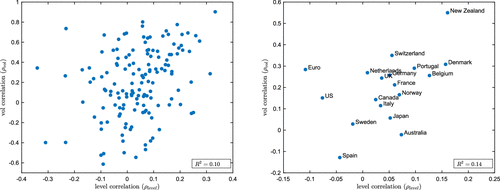
Notes. This figure shows the scatter plot of the average level correlations () and the average volatility correlation () across countries. (Left) N by N country pairs, where N is the number of countries. (Right) We choose a base country and depict the average results across its remaining N − 1 country pairs. As a result, we have only N observations. The estimates of the implied linear regression are reported in the box. All results are based on quarterly observations from the 1971:Q1–2019:Q4 sample.
Our empirical estimates of these correlations across countries are reported in Table 2. We highlight three main findings. First, in the majority of the cases, the correlations between the variances are larger than the correlations between the levels of the consumption growth differentials and the exchange rates; that is, the volatility disconnect is smaller than the level disconnect. The average of all the pairwise volatility correlations is 0.2 relative to 0.04 for the levels. The fourth quintile of the volatility correlations is 0.47 on average, and it can be as high as 0.7 for some countries (France, New Zealand, Switzerland). These estimates are higher than their level counterparts: The fourth quintile of the average level correlation is about 0.1, and it is under 0.3 at the country level.
Second, although the volatility correlations are larger than the level correlations, they are still quite below one. This specific value is an important reference point because typical classical models would predict that exchange rate and consumption differentials should be perfectly correlated. In other words, if foreign exchange rates were proportional to consumption growth differentials in each period and in each state of the world, both the level and volatility correlations would be equal to one. In contrast to this theoretical prediction, the conditional volatility of exchange rates is not perfectly connected to the volatility of the fundamentals in the data. To emphasize the joint findings of a modest but far from perfect correlation between the volatilities, we refer to the evidence as “volatility disconnect” in foreign exchange markets.
Finally, our data show that there is a substantial amount of cross-country heterogeneity in the volatility correlations. Their cross-country first and fourth quintiles are −0.06 and 0.47, respectively. When focusing on the level correlations, we have a smaller range [−0.04; 0.12]. The quintile ranges get even more extreme for individual country estimates. In Section 5.1, we link this cross-sectional heterogeneity in the amount of volatility disconnect to key economic characteristics of our countries as suggested by our equilibrium model.
We implement formal tests to evaluate the statistical significance of our evidence. Specifically, for each country separately, we consider its level and volatility correlations across all the remaining countries. We formally incorporate these moment conditions as a system of equations in a Generalized Method of Moments (GMM) setting and run statistical inference that is sharpened by the cross section.4 For each country, we can thus evaluate the statistical significance of the estimate of the level and volatility disconnect, as well as the difference between the two.
The results for these formal tests are shown in Table 3. Across all the countries, we can reject the null hypothesis of perfect correlation between levels or volatilities of exchange rates and consumption fundamentals. Further, although the level correlations are insignificantly different from zero in half of the cases, the volatility correlations are insignificant only for two countries in our sample, Australia and Sweden, and are below zero only for Australia and Spain. With an exception of Australia, Japan, Spain, and Sweden, the volatility correlations are above the level correlations. These results remain unchanged or are enhanced if we include the COVID shocks (see Online Appendix B).
|
Table 3. Foreign Exchange Disconnect: Statistical Tests
| Country | |||||||||
|---|---|---|---|---|---|---|---|---|---|
| Estimate | Standard error | Estimate | Standard error | ||||||
| Australia | −0.02 | 0.03 | 0.00 | 0.45 | 0.07 | 0.03 | 0.00 | 0.03 | 0.99 |
| Belgium | 0.26 | 0.01 | 0.00 | 0.00 | 0.13 | 0.04 | 0.00 | 0.00 | 0.00 |
| Canada | 0.14 | 0.03 | 0.00 | 0.00 | 0.02 | 0.04 | 0.00 | 0.57 | 0.01 |
| Denmark | 0.31 | 0.02 | 0.00 | 0.00 | 0.16 | 0.04 | 0.00 | 0.00 | 0.00 |
| Euro | 0.28 | 0.03 | 0.00 | 0.00 | −0.11 | 0.03 | 0.00 | 0.00 | 0.00 |
| France | 0.21 | 0.01 | 0.00 | 0.00 | 0.06 | 0.02 | 0.00 | 0.01 | 0.00 |
| Germany | 0.26 | 0.02 | 0.00 | 0.00 | 0.05 | 0.03 | 0.00 | 0.12 | 0.00 |
| Italy | 0.11 | 0.02 | 0.00 | 0.00 | 0.03 | 0.03 | 0.00 | 0.31 | 0.02 |
| Japan | 0.06 | 0.03 | 0.00 | 0.10 | 0.05 | 0.06 | 0.00 | 0.35 | 0.47 |
| Netherlands | 0.27 | 0.02 | 0.00 | 0.00 | 0.01 | 0.03 | 0.00 | 0.79 | 0.00 |
| New Zealand | 0.55 | 0.04 | 0.00 | 0.00 | 0.16 | 0.08 | 0.00 | 0.04 | 0.00 |
| Norway | 0.17 | 0.02 | 0.00 | 0.00 | 0.07 | 0.03 | 0.00 | 0.04 | 0.00 |
| Portugal | 0.29 | 0.04 | 0.00 | 0.00 | 0.10 | 0.05 | 0.00 | 0.06 | 0.00 |
| Spain | −0.13 | 0.02 | 0.00 | 0.00 | −0.04 | 0.03 | 0.00 | 0.13 | 0.99 |
| Sweden | 0.03 | 0.02 | 0.00 | 0.25 | −0.02 | 0.05 | 0.00 | 0.73 | 0.24 |
| Switzerland | 0.35 | 0.02 | 0.00 | 0.00 | 0.06 | 0.03 | 0.00 | 0.10 | 0.00 |
| United Kingdom | 0.24 | 0.02 | 0.00 | 0.00 | 0.04 | 0.04 | 0.00 | 0.42 | 0.00 |
| United States | 0.15 | 0.02 | 0.00 | 0.00 | −0.08 | 0.04 | 0.00 | 0.06 | 0.00 |
Notes. This table shows correlations between the levels () and conditional volatilities () of consumption growth differentials and the change in the real exchange rate, respectively. Estimate refers to the GMM estimate from a system of equations that includes correlations for each country with the remaining ones. Standard error refers to HAC-adjusted standard errors. We report the p-value for the one-sided test of the null against the alternative and the two-sided test of against . Similar tests are performed for the correlation of the levels. In addition, we report the p-value for the one-sided test for the null hypothesis against the alternative . Quarterly observations are from the 1971:Q1–2019:Q4 sample.
3. Insights from No Arbitrage
In this section, we consider a fairly general economic framework that can accommodate elements of market incompleteness and deviations of the preference structure from power utility. Both of these margins have been shown in the prior literature to play an important role to successfully account for the level of disconnect between macroeconomic fundamentals and exchange rates. We use this framework to draw economic insights on the disconnect of the second moments. Specifically, we find that within the power utility framework, the volatility disconnect critically depends on the degree of time variation in the level correlation, which we can measure directly in the data. This finding is significant because it indicates that a richer risk-sharing model, which goes beyond the power utility, is required to align the second moments of macroeconomic variables and exchange rates.
3.1. General Setup
We use and to denote the log stochastic discount factor of the home and foreign country, respectively. We use to denote cross-country differences for our variables of interest; for example, . Let the wedge be a stochastic process that reconciles the log change in the real exchange rate, , with the difference in log stochastic discount factors:
As is well known in the literature, when markets are complete, the exchange rate is pinned down by the difference in the stochastic discount factors at home and abroad, so that To generalize our framework beyond market completeness, we follow Lustig and Verdelhan (2019) and assume that international financial markets are incomplete because international trade of securities is limited to one-period risk-free bonds. Although other forms of market incompleteness could be considered, they are beyond the scope of this analysis. Using the exchange rate definition in (3.1), this assumption implies that the home agent’s Euler equations are
Assuming joint log-normality and combining (3.2) and (3.3) yield the following restrictions on the stochastic wedge 5:
Subtracting (3.5) from (3.4) and using the expression for the exchange rates in (3.1) allows us to derive a no-arbitrage restriction that the exchange rates should be uncorrelated with the wedge:
This condition trivially holds in a complete markets setting, as in this case When markets are incomplete, the wedge is no longer equal to zero in every state and time period. However, tradability of the risk-free bonds restricts the comovement between the foreign exchange rates and the FX wedge to zero.
The equilibrium restriction on the wedge in Equation (3.6) implies that the variance of the exchange rate can be written as
Because the variance on the left-hand side of the equation has to be nonnegative, the amount of variation in the wedge cannot exceed the variance in the difference in the stochastic discount factors at home and abroad:
Similarly, we can show that the covariation between the exchange rate and the difference in log stochastic discount factors is given by
Finally, we define the conditional correlation between the difference in the log stochastic factors and the FX wedge:
The no-arbitrage restriction implies that this correlation is determined by the ratio of the standard deviations of the wedge and the difference in log stochastic factors:
The ratio on the right-hand side of the equation is nonnegative. Hence, the correlation is nonnegative as well:
In the next section, we consider a power utility case and argue that the amount of variation in the level disconnect in the data is insufficient to generate plausible magnitudes of volatility disconnect, even allowing for market incompleteness.
3.2. Case of Power Utility
When preferences are restricted to power utility, the log stochastic discount factor differential is proportional to the difference in consumption growth rates at home and abroad:
In this setting, the conditional Backus and Smith (level) correlation satisfies
Notably, the level correlation is directly related to the correlation between the stochastic discount factors and the wedge Indeed,
Furthermore, the time variations in these correlations directly determine the amount of volatility disconnect. Indeed, we can show that the correlation between the conditional variance of consumption growth differentials and exchange rate fluctuations (vol correlation) in a model with time-additive preferences is equal to
In Online Appendix C, we provide relevant derivations.
Two things are worth noticing in the volatility correlation equation (3.12). First of all, this correlation does not directly depend on . Ceteris paribus, this correlation cannot be altered by increasing the coefficient of risk aversion, unlike other critical moments in the international finance literature, such as the exchange rate volatility. Second, if is constant (equivalently, if is constant), then . In this case, all covariances in Equation (3.12) are equal to zero and , which immediately implies .
This is an important result in the international finance literature because it suggests that if there is not enough time variation in the Backus and Smith level correlation, the power utility cannot reconcile the evidence on the volatility disconnect either in complete markets or with this form of market incompleteness. We consider the empirical evidence on the level correlation next.
3.2.1. Quantity and Time Variation of Market Incompleteness.
Thus far, we have shown that the Backus and Smith level correlation is driven by the extent of market incompleteness, as measured by . In contrast, the volatility correlation reflects the time variation in market incompleteness as captured by . According to Equation (3.12), when the correlation between the wedge and consumption growth rates is nearly constant over time, the volatility correlation is close to one, in contrast to the data. In what follows, we show that is not volatile enough to replicate our empirical evidence on the volatility correlation. Hence, in the next section, we focus on a richer risk-sharing model that departs from power utility.
3.2.2. Can We Reject the Null That Is Constant?
We test this null hypothesis by estimating a dynamic conditional correlation (DCC) model as in Engle (2002). Specifically, we consider the difference between consumption growth rates and the changes in exchange rates and use the corresponding standardized residuals , for all country pairs ) in our sample, to estimate the parameters a and b of the correlation model
Online Appendix A contains additional details of the estimation methodology.
The first four columns in Table 4 present the estimated parameters along with their associated standard errors. Notably, we often cannot reject the null hypothesis that one of the two estimated parameters of the DCC model equals zero. This finding suggests potential misspecification of the correlation model, possibly leading to excessive time variation in the estimated correlation dynamics. We further explore this possibility in the remaining columns of the same table, where we report the frequency with which we reject at the 5% significance level the null hypothesis that the Backus and Smith level correlation estimated over all nonoverlapping subsamples of size 4, 8, 12, 16, and 20 quarters is equal to the unconditional correlation (see Online Appendix A for additional details). A number like 0.04 in the last five columns of Table 4 indicates that we reject the null hypothesis of equal correlations in 4% of the subsamples of the size indicated in the corresponding column header. Consistently low values in these columns imply that the correlations are likely to be constant. Our results suggest that, in the overwhelming majority of cases examined, we tend to reject time-varying correlations, implying that market incompleteness alone may not fully account for the observed volatility correlation.
|
Table 4. Foreign Exchange Disconnect: Model Implications
| Country | DCC model | TV rejection rate | |||||||
|---|---|---|---|---|---|---|---|---|---|
| a | SE(a) | b | SE(b) | 4 | 8 | 12 | 16 | 20 | |
| AUS | 0.493 | (0.000) | 0.511 | (0.000) | 0.047 | 0.032 | 0.038 | 0.033 | 0.034 |
| BEL | 0.678 | (0.031) | 0.157 | (0.041) | 0.125 | 0.118 | 0.063 | 0.000 | 0.000 |
| CAN | 0.545 | (0.047) | 0.000 | (0.000) | 0.016 | 0.048 | 0.032 | 0.039 | 0.006 |
| DEN | 0.356 | (0.050) | 0.000 | (0.000) | 0.021 | 0.042 | 0.043 | 0.022 | 0.017 |
| EUR | 0.642 | (0.024) | 0.315 | (0.028) | 0.025 | 0.000 | 0.000 | 0.000 | 0.000 |
| FRA | 0.750 | (0.036) | 0.000 | (0.000) | 0.037 | 0.019 | 0.000 | 0.000 | 0.032 |
| GER | 0.661 | (0.032) | 0.111 | (0.019) | 0.018 | 0.048 | 0.020 | 0.052 | 0.075 |
| ITA | 0.630 | (0.032) | 0.234 | (0.028) | 0.009 | 0.048 | 0.059 | 0.062 | 0.032 |
| JPN | 0.513 | (0.043) | 0.000 | (0.000) | 0.041 | 0.053 | 0.032 | 0.022 | 0.034 |
| NED | 0.658 | (0.046) | 0.000 | (0.000) | 0.028 | 0.010 | 0.010 | 0.000 | 0.022 |
| NZL | 0.124 | (0.030) | 0.000 | (0.000) | 0.038 | 0.086 | 0.101 | 0.222 | 0.293 |
| NOR | 0.513 | (0.019) | 0.412 | (0.025) | 0.051 | 0.046 | 0.054 | 0.035 | 0.043 |
| POR | 0.601 | (0.034) | 0.269 | (0.029) | 0.037 | 0.029 | 0.089 | 0.113 | 0.172 |
| ESP | 0.656 | (0.038) | 0.049 | (0.011) | 0.028 | 0.074 | 0.000 | 0.000 | 0.018 |
| SWE | 0.328 | (0.000) | 0.672 | (0.000) | 0.031 | 0.048 | 0.054 | 0.050 | 0.040 |
| SWI | 0.695 | (0.026) | 0.117 | (0.017) | 0.031 | 0.011 | 0.005 | 0.006 | 0.000 |
| GBR | 0.364 | (0.039) | 0.009 | (0.003) | 0.047 | 0.016 | 0.000 | 0.000 | 0.000 |
Notes. The first four columns report the estimated parameters a and b of the DCC model, along with their respective standard errors (SEs) in parentheses, for each country. The remaining columns labeled “TV rejection rate” show the proportion of nonoverlapping subsamples (of sizes 4, 8, 12, 16, and 20 quarters) in which we reject, at the 5% significance level, the null hypothesis that the level correlation remains constant over time.
Taking the DCC correlations as given, we can also compute the volatility correlation in a power utility setting according to Equation (3.12). The results are presented in Figure 2, where we display the model-implied volatility correlation for each country (represented by bars), along with our average estimate obtained in the previous section (indicated by the dashed horizontal line).6
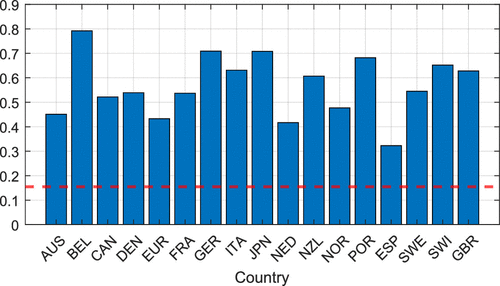
Notes. The figure shows the correlation of the variances of exchange rates and of consumption growth differentials implied by Equation (3.12) for each country pair in our data set when we use the estimates from the Engle (2002) DCC model (see Online Appendix A). The dashed horizontal line refers to our average estimate of the correlation of variances obtained using the methods adopted in Section 2.
Our results imply that the degree of time variation level correlation is insufficient to reduce enough the volatility correlation in a model with power utility. Consistent with this result, we turn our attention to a richer risk-sharing model, potentially in combination with an incomplete markets setting.
3.3. General Setting with News Shocks
Now let us extend the economic setting beyond the power utility case. We write the log stochastic discount factor as
3.3.1. Level Correlation.
Compared with the case analyzed in the previous section, in a general setting, the level and volatility correlations incorporate the variation in the utility wedge For example, the covariance between the growth rate of the exchange rate and the consumption growth differential is
Accounting for the fact that (i) the first covariance term is equal to zero by assumption and (ii) the second covariance term can be rewritten using the no-arbitrage condition in Equation (3.6), we obtain
The variations in stochastic wedges and both contribute to the level disconnect. Notably, the exchange rates are disconnected from the consumption fundamentals even when markets are complete Indeed, in this case the correlation simplifies to
Thus, a model with enough volatility of the term can reduce the amount of Backus and Smith correlation below unity, as in Colacito and Croce (2013).
3.3.2. Volatility Correlation.
The analysis of the volatility disconnect in a general model is quite complex as it needs to account for various covariances between the FX and utility wedges, squared level disconnects, and economic fundamentals. To help develop intuition about the relative roles of the wedges, let us restrict our attention to the case in which the FX wedge correlation with the stochastic discount factor is constant: . We can then show that such forms of market incompleteness do not affect the volatility disconnect, and the utility wedge has to be the main margin to explain its magnitude in the data.
Indeed, when the FX wedge has a constant correlation with the stochastic discount factor differential, we can characterize the covariance between the conditional variances of the exchange rates and the consumption differential as follows:
Further, we can write the unconditional variance of the variance of the exchange rate as
Combining Equations (3.17)–(3.18) implies that
Hence, when is constant over time, the volatility disconnect does not depend on the wedge Although such a form of market incompleteness still affects the level disconnect, its implications for the volatility disconnect are equivalent to a complete markets setting.
Can the introduction of the utility wedge by itself explain the evidence on the volatility disconnect in the absence of richer dynamics for market incompleteness (e.g., allowing to be time varying)? In the context of the long-run risks literature that utilizes recursive utility to generate fluctuations in the answer critically depends on the form of volatility risk faced by the agents. For example, in the model of currency markets of Bansal and Shaliastovich (2013), the exchange rate volatility is related to the time-varying volatility of the wedge However, the innovations to consumption differential are homoscedastic, so that the volatility correlation is zero. Colacito and Croce (2013) feature time-varying volatilities of the consumption differentials and exchange rates, which endogenously arise due to international risk sharing. Their model can explain the level disconnect without relying on market incompleteness. Interestingly, in their model, the correlation between the conditional variance of and the conditional variance of is roughly equal to , in which case the general expression for the volatility correlation in (3.19) simplifies to
In most long-run risk models, the variance of the continuation utility is substantially larger than the volatility of consumption and hence , in contrast to the data. Therefore, a model that can explain the level disconnect does not automatically replicate the volatility disconnect.
More broadly, our volatility correlation evidence imposes a novel regularity restriction on the comovement of the second moments of the components of equilibrium SDFs that challenges traditional models of international markets. In what follows, we propose a frictionless recursive risk-sharing model that is consistent with our empirical facts. We leave the full analysis of market incompleteness, including those with time-varying correlation between the FX wedge and the difference in log stochastic discount factors, to future research.
4. Equilibrium Model with Recursive Preferences
In this section, we propose a model of international risk sharing with recursive preferences and connect it to our novel evidence on volatility correlation. Furthermore, we assess the quantitative performance of our model, demonstrating that a frictionless recursive risk-sharing scheme can rationalize our empirical findings along with other features of the foreign exchange data. For the sake of parsimony, we report only the key aspects of the model in the main text, referring the reader to Online Appendix D for a full description of the calibration, quantitative assessments of model performance, and details on the risk sharing of level and volatility shocks.
4.1. Setup of the Economy
4.1.1. Preferences, Endowments, and Financial Markets.
We consider an economy with two countries labeled home (h) and foreign (f). Each country is populated by a representative agent. Each agent receives a stochastic endowment of their respective goods, denoted for the home good and for the foreign good. The preferences of agents in each country are defined over a consumption bundle comprising both goods. Let and denote the consumption of goods X and Y in country at time t. The consumption aggregates in the home and foreign countries are given by
Agents’ preferences are specified using the Epstein and Zin (1989) utility function, defined as
Here, and denote the coefficients for relative risk aversion (RRA) and intertemporal elasticity of substitution (IES), respectively. This recursive setup, unlike traditional power utility, allows preferences over the timing of the resolution of uncertainty. When , agents have an incentive to balance future expected utility, , against future utility risk, . This unique tradeoff, absent in standard preferences, is essential for analyzing the propagation of risks in our economy. Because utility maps one-to-one with lifetime wealth , we interchangeably refer to utility as wealth.
Following Colacito and Croce (2013), we model endowment dynamics to capture economic risks associated with expected growth and time-varying volatility:
Here, with imposes cointegration across countries’ endowments, ensuring the existence of a well-defined equilibrium. The and terms capture persistent fluctuations in expected growth for home and foreign endowments:
We interpret and as long-run shocks, whereas and represent short-run shocks. Short-run volatility, which is time varying, is specified by
Lastly, we assume that investors in both countries can trade a complete set of state and date contingent securities.
4.1.2. Solution of the Model.
With complete markets, allocations can be derived by solving the social planner’s problem. In the decentralized setting, the home country’s share of wealth, , is
Equilibrium allocations are fundamentally affected by the evolution of the Pareto weights. The dynamics of the ratio determine how resources are distributed between the home and foreign countries. When a country receives good news—whether in the form of a positive level shock or a reduction in uncertainty—its marginal utility declines, leading to a decrease in its relative Pareto weight and, consequently, its share of global consumption.
This characteristic feature of recursive preferences plays a central role in the model: Volatility news directly impacts marginal utilities and, through them, the international distribution of resources. The intuition that we illustrate in the remainder of this section is straightforward: Positive shocks reduce the relative marginal utility of consumption for the affected country, causing a corresponding decline in its Pareto weight. Consequently, the country’s share of global wealth also adjusts. Recursive preferences ensure that volatility shocks are priced, and their effects manifest in the international allocation of resources.
As already established in Section 3, under complete markets, the log growth rate of the real exchange rate equals the log difference of the SDFs: .
4.2. Risk Sharing and the Volatility Disconnect Anomaly
In Table 5, we compare our empirical findings on the disconnect between exchange rates and consumption differentials to our simulation results. In the top panel, we demonstrate that our benchmark model exhibits an imperfect positive correlation between consumption growth differentials and exchange rates, consistent with the data. As in the model with constant volatility, news shocks are sufficient to disrupt the perfect correlation between consumption differentials and exchange rates. Consistent with the observation in Colacito and Croce (2013), in a model with short-run risk, the optimal allocations are very similar for both Epstein-Zin and Constant Relative Risk Aversion (CRRA) preferences. Therefore, the rightmost column in Table 5 can also be interpreted as capturing the case of CRRA preferences. Not surprisingly, in this setting, the anomaly of Backus and Smith (1993) re-emerges.
|
Table 5. Foreign Exchange Disconnect: Model Implications
| Disconnect | Data average | Model | |||
|---|---|---|---|---|---|
| Benchmark | No TVV () | No LRR () | SRR only () | ||
| Levels disconnect | |||||
| 0.04 | −0.03 | −0.04 | 1.00 | 1.00 | |
| [−0.04; 0.12] | |||||
| Volatility disconnect | |||||
| 0.20 | 0.46 | −0.81 | 1.00 | 1.00 | |
| [−0.06; 0.47] | |||||
Notes. This table shows correlations between the levels or conditional volatilities of consumption growth differentials and the change in the real exchange rate, respectively. The Data column refers to the estimates and the first and fourth quintile ranges in the data. The model output is based on the benchmark model and the restrictions of the model to cases of constant volatility (No TVV); excluding the long-run risk (No LRR); and constant volatility and no long-run risk (SRR only). The entries from the model are obtained from 100 repetitions of small samples.
The model with only short-run shocks also delivers a perfect positive correlation between the conditional volatilities of consumption differentials and exchange rates (bottom portion of Table 5, rightmost column). Interestingly, this correlation switches to large and negative in the recursive utility model without time-varying volatilities (“No TVV” case), which is the model analyzed by Colacito and Croce (2013). The predictions of both of these restricted models are inconsistent with the data: Empirical estimates suggest a positive but weak correlation of about 47% at the upper bound of our confidence interval. Our full model, however, delivers a positive and mild correlation of approximately 46%, which aligns closely with the data. These findings underscore the importance of recursive utility and output volatility shocks in resolving the volatility disconnect anomaly. To explain the economic mechanisms underlying these results, we consider the separate impacts of volatility and level shocks on the conditional volatilities of consumption differentials and exchange rates. These responses are illustrated in Figure 3.
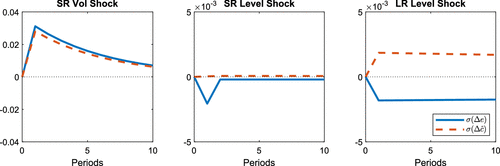
Note. This figure shows the percentage response of the volatility of consumption growth differentials (dashed line) and exchange rate growth rate volatility (thick line) to a volatility shock in the home country (left), a short-run shock in the home country (middle), and a long-run shock in the home country (right).
A volatility shock in the home country produces a positive comovement between the volatility of the exchange rate and the differential of consumption growth rates (Figure 3, left). This occurs because both countries share the risk associated with an increase in macroeconomic uncertainty. We note that short-run shocks are largely irrelevant in this context because they lead to a negligible response in both volatilities, given that investors’ marginal utilities are not particularly sensitive to this type of shock (Figure 3, middle).
In contrast to short-run shocks, in a recursive-utility environment, a long-run shock to the home country generates a significant negative comovement between the two volatilities and reduces their unconditional correlation (Figure 3, right). To explain the origin of this negative comovement, it is useful to decompose the variance of the consumption differential growth rate into its subcomponents:
At equilibrium, the conditional correlation of consumption growth rates is almost time invariant.7 As a result, the dynamics of the variance of consumption differentials are primarily determined by the sum of the variances of the consumption growth rates across countries, as depicted in Figure 4 (left). Because of the convexity of the short-run volatility frontier, the sum of the variances of consumption growth rates is increasing in wealth inequality, meaning that it is U-shaped with respect to the log-ratio of the Pareto weights (Figure 4, left). Consequently, starting from an equal distribution of wealth, increases on the arrival of a long-run shock.
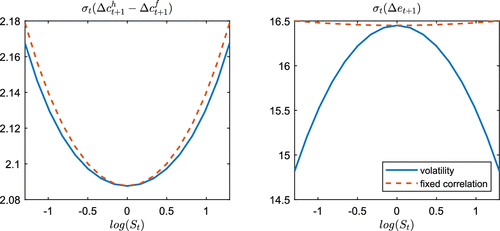
Notes. (Left) Conditional volatility of the difference between the growth rate of consumption in the home and foreign countries, . (Right) Conditional volatility of the growth rate of the exchange rate, . Both volatilities are plotted against the logarithm of the ratio of the pseudo-Pareto weights, . Across all cases, both the exogenous long-run components and the exogenous volatility processes are fixed at their unconditional mean. In each panel, the solid line refers to the conditional volatility obtained at the equilibrium, whereas the dashed line refers to the conditional volatility obtained by holding the correlations fixed at their unconditional mean in Equations (4.8)–(4.9).
Given our assumption of complete markets, the variance of the exchange rate growth can be decomposed as follows:
In a model with long-run growth news, most of the volatility of the stochastic discount rates is driven by the continuation utilities. Colacito et al. (2022) show that the utility variance frontier is linear, meaning that the drop in the conditional volatility of one country’s utility is almost entirely offset by an increase in the volatility of the other country. Consequently, is nearly time invariant, and the conditional volatility of the exchange rate is largely explained by the endogenous time variation in the correlation of the stochastic discount factors (Figure 4, right).
With recursive preferences, the reallocation prompted by long-run shocks keeps the continuation utilities of the two agents aligned, introducing a positive cross-country comovement of continuation utilities and, consequently, stochastic discount factors.8 Because our utility function satisfies Inada’s conditions, the strength of the reallocation channel is enhanced when one of the two countries is small. Equivalently, the correlation of the stochastic discount factors increases with wealth inequality. As a result, exchange rate volatility exhibits an inverse U-shape with respect to the log-ratio of Pareto weights (Figure 4, right). Thus, starting from an equal distribution of wealth, the impulse response of exchange rate volatility is negative, in sharp contrast to the response of the volatility of consumption differentials.
In conclusion, the moderate positive correlation of volatilities observed in our model arises from a compositional effect involving multiple types of shocks. Specifically, short-run shocks contribute only marginally, long-run shocks generate a strongly negative correlation, whereas shocks to the time-varying volatility of endowments produce an even stronger but positive comovement. In equilibrium, these three channels interact to yield a level of correlation that aligns closely with our novel empirical evidence, thereby providing a successful explanation for the volatility disconnect anomaly.
5. Additional Empirical Results
In this section, we further investigate the cross-country drivers of the volatility disconnect. We begin by examining how country-specific attributes, such as country size and heterogeneous growth risk, vary with the volatility correlations and show that the model presented in the previous section successfully replicates these cross-country patterns. We conclude by demonstrating that our findings are robust across a cross section of emerging markets.
5.1. Economic Determinants of the Cross Section
5.1.1. Cross Section in the Data.
Given the key elements in our equilibrium model, we examine the connection between our documented volatility disconnect and four key characteristics of our countries. First, we consider the relative size of the country, defined as the average share of its PPP-adjusted real GDP. Second, we measure the standard deviation of unexpected growth shocks. Our third and fourth characteristics correspond to the country-level standard deviation of expected growth and volatility news shocks, respectively.
To measure expected growth risk, we adopt a standard predictive approach in the literature and project a four-quarter ahead GDP growth in each country on the local and U.S. price-dividend ratio.9 We take the fitted value from the projection as a proxy for the expected GDP growth and its unconditional volatility as a measure of the country’s amount of long-run expected growth risk. The unconditional volatility of the residual of the predictive regression is our proxy for the amount of the unexpected growth risk. To estimate the quantity of volatility risk, we apply our econometric specification (2.2) to the GDP growth in each country. The volatility of the volatility process implied by the estimation, defines our measure of the volatility risk in each country.
Figure 5 presents illustrative evidence about the relation between these factors and the amount of volatility disconnect. Each panel of this figure shows a scatter plot of the average of correlations between the volatilities of the country consumption growth differential and of its foreign exchange rate and each of the four country characteristics. First, the data do not show any size effect: The relationship between the volatility disconnect and country size is effectively flat (Figure 5, bottom right). The same applies to the amount of unexpected growth risk (Figure 5, bottom left). At the same time, the evidence indicates a positive (negative) association between the volatility correlations and the amount of volatility (expected growth) risk (Figure 5, top). The relations of the volatility disconnect to the economic factors constitute novel empirical facts and are important targets for our economic analysis.
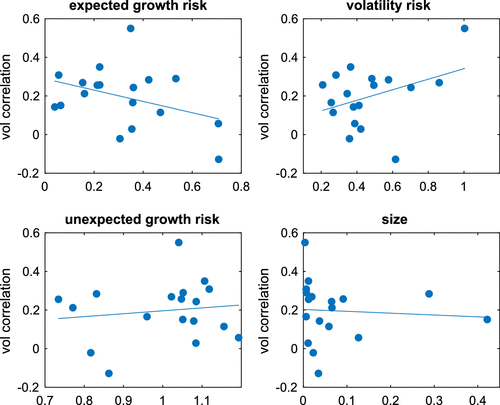
Note. This figure shows scatterplots of the average volatility correlations and each of the following four country characteristics: the long-run expected growth risk; the volatility risk; the unexpected growth risk; and the relative size of the country.
We use statistical regressions to formally assess the connections between the volatility disconnect and both long-run risk and volatility risk. Specifically, we run a cross-sectional regression of the volatility correlations between country i and j on a characteristic of interest f:
In this specification, we use the estimates of the volatility disconnect between all the country pairs and not just the average of each country against all other countries as displayed in Figure 5. This strategy allows us to significantly increase the number of observations. Further, the loadings on country i and j are restricted to be the same because the correlations are symmetric.10
We report the loadings on expected growth and volatility risk in Table 6; we exclude size and unexpected growth risk because they do not feature a significant relation with the volatility disconnect (Figure 5). Consistent with Figure 5, the volatility correlations load negatively on the expected growth risk and positively on the amount of volatility risk. Both effects have a sizeable statistical significance. Our evidence strengthens in the multivariate specification of our regression, that is, when we simultaneously consider long-run and volatility risk. As suggested by the regression results, the amount of expected growth and volatility risk can explain 15% of the volatility disconnect across countries.
|
Table 6. Determinants of Foreign Exchange Disconnect
| Expected growth risk | (t-statistic) | Vol risk | (t-statistic) | |
|---|---|---|---|---|
| Panel A: Vol correlation | ||||
| −0.34 | (−3.04) | 0.07 | ||
| 0.30 | (3.54) | 0.07 | ||
| −0.39 | (−3.55) | 0.35 | (4.31) | 0.16 |
| Panel B: Level correlation | ||||
|---|---|---|---|---|
| −0.04 | (−1.08) | 0.01 | ||
| 0.00 | (0.02) | 0.00 | ||
| −0.04 | (−1.11) | 0.01 | (0.16) | 0.01 |
Notes. Panel A shows cross-sectional regression results of each country pair’s volatility correlations () and the expected growth risk and/or the volatility risk. Panel B shows cross-sectional regression results of each country pair’s Backus-Smith correlation () and the expected growth risk and/or the volatility risk. t-statistics are based on HAC standard errors.
Panel B of Table 6 shows the corresponding evidence for the Backus and Smith (1993) level correlations. The level correlations show much weaker statistical relation to the considered factors. Only a negative effect of expected growth risk has a t-statistic larger than one.
5.1.2. Cross Section in the Model.
Given the way in which we have constructed Figure 5, we analyze the cross-sectional implications of our model by solving it using different values for short-run risk, long-run risk, and volatility risk. This is equivalent to running a comparative statics analysis with respect to the parameters , , and , respectively. The cross section of country size is obtained by initializing the time zero ratio of pseudo-Pareto weights (S) to different values. We compare our empirical regressions with the theoretical ones obtained from our model and depict them in Figure 6.
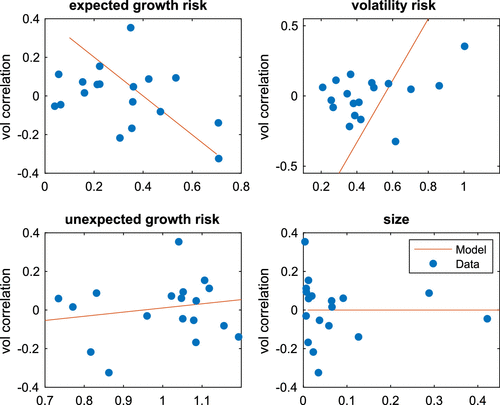
Notes. This figure shows scatterplots of the average volatility correlations and each of the following four country characteristics: the long-run expected growth risk; the volatility risk; the short-run unexpected growth risk; and the relative size of the country. The model fitted line is from model simulations with different parameter values of the expected growth risk (), the volatility risk (), or the unexpected growth risk (), respectively. The cross section of country size is obtained by initializing the time zero ratio of pseudo-Pareto weights (S) to different values. The correlations are expressed in terms of deviations from the median country.
Consistent with our recursive risk-sharing scheme, countries featuring more expected growth risk tend to have a stronger disconnect between their exchange rate conditional volatilities and the volatilities of their consumption differentials, meaning that corr declines. In contrast, countries facing more fundamental volatility risk tend to have a smaller disconnect, meaning that corr increases.
As in the data, both short-run risk, , and our endogenous country size variable, , play no relevant role. Equivalently, even though size is an important endogenous determinant of both exchange rate volatility and consumption differentials volatility, it is irrelevant for their unconditional correlation. In short, size affects conditional second moments to a similar extent, and hence, it does not alter their unconditional correlation.
5.2. Different Cross Section: Emerging Economies
In this section, we explore our volatility disconnect in emerging economies. In Table 7, we report our disconnect results within this new cross section. Our general findings continue to hold, meaning that the disconnect of volatilities is still present, and it is larger than the disconnect in levels.
|
Table 7. Foreign Exchange Disconnect: Emerging Economies
| Country | |||||||||
|---|---|---|---|---|---|---|---|---|---|
| Estimate | Standard error | Estimate | Standard error | ||||||
| Brazil | 0.18 | 0.07 | 0.00 | 0.01 | −0.08 | 0.06 | 0.00 | 0.20 | 0.00 |
| Chile | 0.32 | 0.05 | 0.00 | 0.00 | −0.03 | 0.05 | 0.00 | 0.55 | 0.00 |
| China | 0.33 | 0.03 | 0.00 | 0.00 | −0.05 | 0.05 | 0.00 | 0.29 | 0.00 |
| Colombia | 0.46 | 0.04 | 0.00 | 0.00 | 0.05 | 0.05 | 0.00 | 0.38 | 0.00 |
| Costa Rica | 0.27 | 0.04 | 0.00 | 0.00 | 0.04 | 0.04 | 0.00 | 0.24 | 0.00 |
| Czech Republic | 0.51 | 0.04 | 0.00 | 0.00 | 0.04 | 0.04 | 0.00 | 0.29 | 0.00 |
| Hungary | 0.28 | 0.05 | 0.00 | 0.00 | −0.04 | 0.05 | 0.00 | 0.47 | 0.00 |
| India | 0.28 | 0.02 | 0.00 | 0.00 | 0.07 | 0.04 | 0.00 | 0.05 | 0.00 |
| Indonesia | 0.61 | 0.09 | 0.00 | 0.00 | 0.00 | 0.16 | 0.00 | 0.98 | 0.00 |
| Israel | 0.39 | 0.03 | 0.00 | 0.00 | 0.07 | 0.04 | 0.00 | 0.04 | 0.00 |
| Korea | 0.74 | 0.05 | 0.00 | 0.00 | 0.10 | 0.18 | 0.00 | 0.58 | 0.00 |
| Mexico | 0.49 | 0.03 | 0.00 | 0.00 | −0.02 | 0.07 | 0.00 | 0.79 | 0.00 |
| Poland | 0.21 | 0.05 | 0.00 | 0.00 | 0.03 | 0.05 | 0.00 | 0.61 | 0.00 |
| Russia | 0.49 | 0.06 | 0.00 | 0.00 | 0.01 | 0.05 | 0.00 | 0.80 | 0.00 |
| South Africa | 0.30 | 0.03 | 0.00 | 0.00 | 0.01 | 0.05 | 0.00 | 0.75 | 0.00 |
| Turkey | 0.48 | 0.05 | 0.00 | 0.00 | 0.05 | 0.10 | 0.00 | 0.66 | 0.00 |
Notes. This table shows correlations between the levels () and conditional volatilities () of consumption growth differentials and the change in the real exchange rate, respectively. Estimate refers to the GMM estimate from a system of equations that includes correlations for each country with the remaining ones. Standard error refers to HAC-adjusted standard errors. We report the p-value for the one-sided test of the null against the alternative and the two-sided test of against . Similar tests are performed for the correlation of the levels. In addition, we report the p-value for the one-sided test for the null hypothesis against the alternative . Quarterly observations are from the 1971:Q1–2019:Q4 sample.
Table 7 highlights substantial variation across countries in both levels and volatility correlations. For instance, economies such as Korea and Mexico show strong correlations in volatilities (), suggesting a heightened sensitivity to global financial shocks, possibly due to their greater exposure to international markets. Conversely, countries like Brazil and Chile exhibit weaker correlations, indicating a degree of insulation from external volatility, potentially reflecting structural or policy factors unique to these economies.
Overall, these findings reinforce the broader conclusion that, although emerging markets demonstrate limited connectivity in levels, their volatilities remain closely linked to external conditions.
6. Conclusion
In this paper, we provide new empirical evidence on the disconnect between the volatility of consumption differentials and exchange rates—a puzzling phenomenon under both frictionless models with CRRA preferences and recursive preference models, as posited by Colacito and Croce (2013). By developing a frictionless general equilibrium model with long-run growth news shocks, volatility shocks, and two countries populated by agents with recursive preferences, we demonstrate that our model captures this empirical disconnect.
Our model also replicates critical patterns in the cross section of countries, showing that economies with higher (lower) volatility (long-run risk) display a reduced disconnect between the conditional volatilities of their exchange rates and consumption differentials.
Future research should explore extensions of this framework within international real business cycle models, enhancing our understanding of how international investment flows and frictions shape the transmission of volatility shocks. Investigating the impacts of trading frictions, portfolio diversification, and market incompleteness offers promising avenues to deepen insights into the global dynamics of volatility.
The authors thank the seminar participants at the Midwest Finance Association 2022 Conference, the European Finance Association 2022 Conference, the UNSW 2022 Asset Pricing Workshop, the McGill-HEC Winter Conference 2023, the Western Finance Association 2023 Conference, the Luiss Asset Pricing Conference 2023, CIREQ Montreal, Pennsylvania State University, and Notre Dame University and our discussants Pasquale Della Corte, Ella Patelli, Christian Heyerdahl-Larsen, Ilaria Piatti, and Moritz Lenel.
1 We note that the original Backus and Smith (1993) paper shows evidence for a lack of correlation between the unconditional volatilities of consumption growth differentials and those of the exchange rates. Conceptually and empirically, this is different from the volatility disconnect that we study in this paper. Indeed, the empirical evidence in Backus and Smith (1993) captures an across-country correlation of unconditional variances (cross-sectional dimension), whereas the focus of our analysis is a within-country correlation of conditional volatilities (time series dimension).
2 Because of data availability and quality issues, the data for Belgium, New Zealand, Norway, and Spain start in 1981Q1.
3 Colacito et al. (2022), Cogley and Sargent (2005), and Primiceri (2005), among others, entertain similar econometric specifications for macroeconomic volatility and Della Corte et al. (2009) for financial volatility modeling. We estimate the system of Equations (2.2) using the Bayesian methods in Kim et al. (1998). We fit our volatility specification to each country variable separately, and condition our estimates on the entire history of data. Online Appendix A provides additional details.
4 Using direct first-stage estimates of volatility to conduct subsequent statistical inference is a common approach in this literature. As an alternative, one could estimate a nonlinear state space system (Schorfheide et al. 2018). Unfortunately, in our multicountry setting, this procedure would require high-dimensional Bayesian sequential Monte Carlo methods, which suffer from the curse of dimensionality. We leave the application of these techniques to future research.
5 With stochastic volatility, bonds with maturities beyond one period are not conditionally log-normal. Extending the analysis to longer-maturity bonds with time-varying volatility is left for future research. Here, we adopt the well-established framework of Lustig and Verdelhan (2019) and use exact pricing for one-period bonds.
6 We note that in Table 2, we report a cross-country average of 0.20 for the correlation of the conditional volatilities: . In Figure 2, we focus on the average correlation of the conditional variances, , which is about 0.15.
7 This correlation is driven by the positive comovement between the short-run shock of a country and the adjustment in the share of consumption of the other country. In equilibrium, this correlation increases modestly in wealth inequality.
8 When a country receives good news for the long run, its utility increases immediately, reflecting the total discounted impact of the news. The other country benefits from the international redistribution of resources, which determines an increase in its share of consumption. Given the persistent nature of the consumption shares, the other country also experiences an increase in the present value of its consumption and thus its utility. As a consequence, the extent of comovement of the continuation utilities (and of the stochastic discount factors in general) increases.
9 This is similar to the predictive regression approach in Colacito et al. (2018), Bansal and Shaliastovich (2013), Bansal et al. (2016), and Colacito and Croce (2011).
10 Indeed, . Hence, we restrict the loadings on the domestic and foreign factors to be the same.
References
- (2019) Financial frictions and fluctuations in volatility. J. Political Econom. 127(5):2049–2103. Crossref, Google Scholar
- (1993) Consumption and real exchange rates in dynamic economies with non-traded goods. J. Internat. Econom. 35(3–4):297–316. Crossref, Google Scholar
- (2018) Implications of incomplete markets for international economies. Rev. Financial Stud. 31(10):4017–4062. Crossref, Google Scholar
- (2013) A long-run risks explanation of predictability puzzles in bond and currency markets. Rev. Financ. Stud. 26(1):1–33. Crossref, Google Scholar
- (2004) Risks for the long run: A potential resolution of asset pricing puzzles. J. Finance 59(4):1481–1509. Crossref, Google Scholar
- (2016) Risks for the long run: Estimation with time aggregation. J. Monetary Econom. 82:52–69.Crossref, Google Scholar
- (2017) Uncertainty shocks in a model of effective demand. Econometrica 85(3):937–958. Crossref, Google Scholar
- (2018) Global macro risks in currency excess returns. J. Empirical Finance 45:300–315.Crossref, Google Scholar
- (2009) The impact of uncertainty shocks. Econometrica 77(3):623–685.Crossref, Google Scholar
- (2018) Crash risk in currency returns. J. Financial Quant. Anal. 53(1):137–170. Crossref, Google Scholar
- (2005) Drifts and volatilities: Monetary policies and outcomes in the post-WWII US. Rev. Econom. Dynamics 8(2):262–302.Crossref, Google Scholar
- (2008) Six anomalies looking for a model. A consumption based explanation of international finance puzzles. Working paper, University of North Carolina, Chapel Hill.Google Scholar
- (2011) Risks for the long run and the real exchange rate. J. Political Econom. 119(1):153–181.Crossref, Google Scholar
- (2013) International asset pricing with recursive preferences. J. Finance 68(6):2651–2686.Crossref, Google Scholar
- (2018) Currency risk factors in a recursive multicountry economy. J. Finance 73(6):2719–2756. Crossref, Google Scholar
- (2022) Volatility risk pass-through. Rev. Financial Stud. 35(5):2345–2385. Crossref, Google Scholar
- (2016) Currency premia and global imbalances. Rev. Financial Stud. 29(8):2161–2193.Crossref, Google Scholar
- (2009) An economic evaluation of empirical exchange rate models. Rev. Financial Stud. 22(9):2491–2530.Crossref, Google Scholar
- (2011) Spot and forward volatility in foreign exchange. J. Financial Econom. 100(3):496–513.Crossref, Google Scholar
- (2002) Dynamic conditional correlation. J. Bus. Econom. Statist. 20(3):339–350. Crossref, Google Scholar
- (1989) Substitution, risk aversion and the temporal behavior of consumption and asset returns: A theoretical framework. Econometrica 57(4):937–969.Crossref, Google Scholar
- (2021) Volatility, intermediaries and exchange rates. J. Financial Econom. 141(1):217–233.Crossref, Google Scholar
- (2016) Rare disasters and exchange rates. Quart. J. Econom. 131(1):1–52.Crossref, Google Scholar
- (2015) Crash risk in currency markets. NBER Working Paper No. 15062, National Bureau of Economic Research, Cambridge, MA.Google Scholar
- (2011) Risk matters: The real effects of volatility shocks. Amer. Econom. Rev. 101(6):2530–2561.Crossref, Google Scholar
- (2015) International liquidity and exchange rate dynamics. Quart. J. Econom. 130(3):1369–1420.Crossref, Google Scholar
- (2012) Currency risk and pricing kernel volatility. Preprint, submitted November 24, http://dx.doi.org/10.2139/ssrn.2179424.Google Scholar
- (2014) Uncertainty, financial frictions, and investment dynamics. NBER Working Paper No. 20038, National Bureau of Economic Research, Cambridge, MA.Google Scholar
- (2007) International financial adjustment. J. Political Econom. 115(4):665–703.Crossref, Google Scholar
- (2014) Uncertainty and international capital flows. Working paper, Massachusetts Institute of Technology, Cambridge.Google Scholar
- (2013) Country size, currency unions, and international asset returns. J. Finance 68(6):2269–2308.Crossref, Google Scholar
- (2016) Not so disconnected: Exchange rates and the capital stock. J. Internat. Econom. 99:S43–S57.Crossref, Google Scholar
- (2023) A risk-based theory of exchange rate stabilization. Rev. Econom. Stud. 90(2):879–911.Crossref, Google Scholar
- (2014) Asset prices and real exchange rates with deep habits. Rev. Financial Stud. 27(11):3280–3317.Crossref, Google Scholar
- (2015) Measuring uncertainty. Amer. Econom. Rev. 105(3):1177–1216.Crossref, Google Scholar
- (2008) The time-varying volatility of macroeconomic fluctuations. Amer. Econom. Rev. 98(3):604–641.Crossref, Google Scholar
- (1998) Stochastic volatility: Likelihood inference and comparison with ARCH models. Rev. Econom. Stud. 65(3):361–393.Crossref, Google Scholar
- (1991) Essays on International Business Cycles (University of Chicago, Chicago).Google Scholar
- (2016) International business cycles and risk sharing with uncertainty shocks and recursive preferences. J. Econom. Dynamic Control 72:115–124.Crossref, Google Scholar
- (2014) Conditional risk premia in currency markets and other asset classes. J. Financial Econom. 114(2):197–225.Crossref, Google Scholar
- (2011) Global asset pricing. Annual Rev. Financial Econom. 3:435–466.Google Scholar
- (2021) Government policy approval and exchange rates. J. Financial Econom. 141(1):303–331.Crossref, Google Scholar
- (2007) The cross section of foreign currency risk premia and consumption growth risk. Amer. Econom. Rev. 97(1):89–117.Crossref, Google Scholar
- (2019) Does incomplete spanning in international financial markets help to explain exchange rates? Amer. Econom. Rev. 109(6):2208–2244.Crossref, Google Scholar
- (2011) Common risk factors in currency markets. Rev. Financial Stud. 24(11):3731–3777.Crossref, Google Scholar
- (2014) Countercyclical currency risk premia. J. Financial Econom. 111(3):527–553.Crossref, Google Scholar
- (2017) Financial intermediation, international risk sharing, and reserve currencies. Amer. Econom. Rev. 107(10):3038–3071.Crossref, Google Scholar
- (2017) International correlation risk. J. Financial Econom. 126(2):270–299.Crossref, Google Scholar
- (1998) The global capital market: Benefactor or menace? J. Econom. Perspective 12(4):9–30.Crossref, Google Scholar
- (2007) Asset prices and exchange rates. Rev. Financial Stud. 20(4):1139–1181.Crossref, Google Scholar
- (2010) An asset-pricing view of external adjustment. J. Internat. Econom. 80(1):144–156.Crossref, Google Scholar
- (2013) International macro-finance. Handbook of Safeguarding Global Financial Stability: Political, Social, Cultural, and Economic Theories and Models, vol. 2 (Elsevier Inc., Oxford, UK), 169–176.Crossref, Google Scholar
- (2005) Time varying structural vector autoregressions and monetary policy. Rev. Econom. Dynamics 72(3):821–852.Google Scholar
- (1997) The correlates of change in international financial regulation. Amer. Political Sci. Rev. 91(3):531–551.Crossref, Google Scholar
- (2008) A century of global equity markets correlations. Amer. Econom. Rev. 98(2):535–540.Crossref, Google Scholar
- (1995) Cross-country evidence on the link between volatility and growth. Amer. Econom. Rev. 85(5):1138–1151.Google Scholar
- (2017) Commodity trade and the carry trade: A tale of two countries. J. Finance 72(6):2629–2684.Crossref, Google Scholar
- (2021) Model-free international stochastic discount factors. J. Finance 76(2):935–976.Crossref, Google Scholar
- (2018) Identifying long-run risks: A Bayesian mixed-frequency approach. Econometrica 86(2):617–654.Crossref, Google Scholar
- (2017) Asset prices and risk sharing in open economies. Rev. Financial Stud. 30(2):363–415.Crossref, Google Scholar
- (2002) A century of current account dynamics. J. Internat. Money Finance 21(6):725–748.Crossref, Google Scholar
- (2010) A habit-based explanation of the exchange rate risk premium. J. Finance 65(1):123–145.Crossref, Google Scholar
- (2017) Term structure of consumption risk premia in the cross section of currency returns. J. Finance 72(4):1529–1566. Crossref, Google Scholar