


Acquiring Firm Inventors’ Performance: Exploring the Alignment of Inventors’ Knowledge Base with Firms’ Innovation Trajectories
Abstract
Innovation-sourcing acquisitions provide firms with rapid access to new knowledge, but their success depends on how effectively the acquiring firm integrates this knowledge. Prior research has focused on firm-level absorptive capacity, yet little is known about how such acquisitions affect inventors within acquiring firms who embody much of this capacity. We theorize that acquiring firm inventors’ postacquisition performance will be shaped by the interaction between their own knowledge and the firms’ characteristics, namely (a) the technological distance between the acquiring and target firms and (b) the alignment of the inventors’ knowledge with the firms’ postacquisition innovation trajectory. We argue that, although acquiring firm inventors generally experience a decline in postacquisition innovation performance, generalists face a smaller decline than specialists in distant acquisitions, and specialists experience a smaller decline than generalists in close acquisitions. Our predictions are conditional on whether the inventors continue to patent after the acquisition: inventors will be more likely to continue patenting when their knowledge base aligns with the firm’s postacquisition innovation trajectory. Using panel data on 334 pharmaceutical acquisitions between 1990 and 2007, we find support for our hypotheses.
Supplemental Material: The online appendix is available at https://doi.org/10.1287/stsc.2024.0241.
1. Introduction
Innovation-sourcing acquisitions, in which firms acquire targets with innovation assets such as patents, technologies, research and development (R&D) pipelines, or scientific talent, enable firms to rapidly integrate new resources and capabilities, thereby expanding the scope of their knowledge and technological base (Capron et al. 1998; Karim and Mitchell 2000, 2004, 2017; Karim and Capron 2016; Lee and Lieberman 2010, 2024). The success of such acquisitions partly depends on the similarity of resources shared by the acquiring and acquired firms: Similar resources facilitate the incremental exploitation of existing knowledge (Lee and Lieberman 2024); dissimilar resources encourage exploratory innovation through recombination (Fleming 2001, Karim and Kaul 2015).
Prior research has examined firm-level factors and outcomes of innovation-sourcing acquisitions, emphasizing the importance of knowledge complementarity, absorptive capacity, and integration challenges in managing knowledge distance between firms (Ahuja and Katila 2001, Cloodt et al. 2006, Makri et al. 2010). Yet, this firm-level focus overlooks the inventors who embody much of the tacit and codified knowledge that drives postacquisition innovation. Indeed, because acquisitions can alter a firm’s technological trajectory and knowledge environment, their effects on individual inventors may vary substantially. Understanding inventor-level innovation outcomes is important, as the acquiring firms’ ability to absorb and recombine new knowledge resides not only in organizational routines, but also in their inventors’ ability to absorb external knowledge (Cohen and Levinthal 1990).
To address this gap, we integrate two interconnected ideas from strategy research: the microfoundations of absorptive capacity and the heterogeneity of human capital. According to Cohen and Levinthal (1990), absorptive capacity originates within individuals. At the same time, scholars have emphasized that individuals’ knowledge differs in terms of its depth and breadth: Generalists have a broader and more integrative knowledge base, whereas specialists have deeper expertise in a narrower domain (Becker 1985; Leahey 2006, 2007; Melero and Palomeras 2015). We combine these perspectives to examine how the interaction between inventor characteristics and firm-level factors shapes both the likelihood that acquiring firm inventors continue to patent after an acquisition and their subsequent innovation performance. Distinguishing between distant acquisitions where the overlap between the technologies of the acquiring and acquired firms is low and close acquisitions where there is a high degree of overlap, we examine how inventors’ own knowledge characteristics interact with technological distance between the acquiring and target firms, as well as with the postacquisition innovation trajectory, to shape inventors’ innovation performance.
Our core argument presumes that an innovation-sourcing acquisition will change the knowledge available to the acquiring firm’s inventors. The degree of fit between the inventor’s knowledge base, the acquirer’s technological distance, and the firm’s subsequent innovation trajectory will determine whether inventors’ existing knowledge—cognitive routines and expertise—is reinforced or rendered less relevant. This alignment influences two related outcomes: (1) inventors’ postacquisition innovation performance conditional on patenting for the acquiring firm after the acquisition and (2) whether inventors remain engaged and continue patenting for the acquiring firm, potentially introducing selection effects into observed performance outcomes. We propose that these outcomes will depend on whether inventors are generalists or specialists and on the technological distance between the acquiring and acquired firms.
Our conceptual framework yields three main predictions. First, consistent with prior research on integration complexity and coordination challenges (Ahuja and Katila 2001, Puranam et al. 2006), we expect that innovation-sourcing acquisitions, on average, weaken the innovation performance of acquiring-firm inventors. Second, drawing on the absorptive capacity and human capital literature, we argue that the interaction between inventor specialization and acquisition distance shapes the postacquisition performance of inventors who continue to patent for the acquiring firm. In distant acquisitions, among acquiring firm inventors who continue to patent postacquisition, generalists experience a lower performance decrease than specialists, whereas the reverse is true in close acquisitions. Third, for both knowledge and incentive alignment reasons (Kapoor and Lim 2007, Lee and Lieberman 2010), inventors are more likely to remain engaged and continue patenting for the acquiring firm when their knowledge base aligns with the firm’s postacquisition knowledge environment. Accordingly, in distant acquisitions and in acquisitions where the acquiring firm broadens into new domains, generalist inventors are more likely to continue patenting than specialists, whereas in close acquisitions, specialists are more likely to do so than generalists.
We test our hypotheses using panel data from 334 pharmaceutical industry acquisitions between 1990 and 2007. We find that acquiring-firm inventors experience a decline in innovation performance overall. Using Poisson regressions with individual and year fixed effects, we find that, conditional on continuing to patent for the acquiring firm, generalists experience a smaller decline in performance than specialists in distant acquisitions, whereas specialists experience smaller performance declines in close acquisitions. Further examination reveals that generalists are more likely to continue patenting following distant acquisitions and when the acquiring firm patents in new areas, whereas specialists are more likely to do so after close acquisitions, supporting our alignment hypotheses. In a supplementary analysis, we employ a Heckman selection model, using state-level variation in noncompete enforcement as an exclusion restriction to account for the endogenous likelihood that an inventor continues to patent for the acquiring firm.
The key contribution of the paper is to highlight the importance of alignment of the acquiring inventors’ and target firm’s resources in shaping inventors’ productivity after acquisitions. We theorize across two interrelated ideas in the strategy literature: absorptive capacity and the heterogeneity of human capital. Our contribution bridges the human capital and reconfiguration literatures, providing a microfoundational perspective on absorptive capacity in the context of innovation-sourcing acquisitions. Individual heterogeneity is a source of strength for firms—certain inventors have advantages under certain kinds of acquisitions—but trajectory alignment that leverages this heterogeneity is key to organizational performance. Managerial attention to the interplay between organizational and individual-level factors, particularly the alignment between individuals’ and firms’ strengths, is likely to enhance postacquisition innovation outcomes. We elaborate on these contributions in detail in Section 5.
2. Literature Review and Hypothesis Development
2.1. Innovation-Sourcing Acquisitions and Acquiring Firm Innovators’ Performance
The goal of innovation-sourcing acquisitions is to build on, absorb, and recombine externally acquired knowledge. Yet acquirers often face barriers to achieving this goal, because such acquisitions pose challenges for innovators from both the target and the acquiring firms (Graebner et al. 2010, Bodner and Capron 2018). At the target firm, an acquisition can substantially disrupt inventors’ work lives and motivation (Capron 1999). The uncertainty and organizational shock associated with being acquired can undermine inventors’ sense of autonomy and control, reducing their intrinsic motivation to innovate (Paruchuri et al. 2006). Key inventors may even depart in response to a cultural mismatch or shift in their perceived career prospects (Ernst and Vitt 2000); those who remain often perceive a decline in psychological safety and in their identification with the new parent organization (Ranft and Lord 2002, Nerkar and Paruchuri 2005). Such disruptions make inventors less willing to experiment, share ideas, or take risks, thereby reducing the quantity of their innovative output (Kapoor and Lim 2007) and the quality of their inventions (Valentini 2012).
While the disruptive effects of acquisitions on target-firm inventors are well documented, much less attention has been given to how acquisitions reshape the innovation behavior of inventors within the acquiring firm, who must integrate and exploit the newly acquired knowledge. At the acquiring firm, innovation performance frequently declines after an acquisition, particularly when substantial organizational changes are required (Ahuja and Katila 2001, Graebner et al. 2010, Makri et al. 2010). Although this effect may vary from one individual to another, several mechanisms help explain why inventors at acquiring firms tend to experience a performance decline.
First, integrating new knowledge typically forces inventors to adjust their established routines and collaborative processes (Ranft and Lord 2002), disrupting the cognitive and social structures that previously supported their creativity and problem-solving (Kogut and Zander 1992, Ahuja and Katila 2001). Second, they may find it difficult to locate, interpret, and apply the tacit knowledge embedded in the acquired organization (Szulanski 1996), especially if social boundaries or differing norms constrain their access to key individuals and information (Coff 1999). Early in the integration process, such inventors may lack clarity about where valuable knowledge resides or how to combine it with their own expertise (Graebner 2004), diverting attention from ongoing projects and reducing their innovative focus (Haspeslagh and Jemison 1991). Moreover, as managerial attention and resources shift toward integration and new strategic initiatives (Haspeslagh and Jemison 1991), inventors may lose the resources, autonomy, and support that previously enabled their productivity. Likewise, as management reconfigures units and reallocates resources (Karim and Mitchell 2000), project-level decision making can be slowed, delaying feedback and experimentation, thus further constraining individual inventive output. Accordingly, we predict the following.
On average, the performance of inventors at the acquiring firm will decline following an innovation-sourcing acquisition.
2.2. Inventors’ Postacquisition Performance: Alignment of Inventors’ Knowledge Base with Firms’ Technological Distance
Although acquisitions generally undermine the incumbent inventors’ innovation performance on average, the impact on individual inventors is heterogeneous. Individuals differ in their ability and skills to generate and appropriate value from firm-level resources, including new knowledge acquired through acquisitions (Castanias and Helfat 1991, 2001). A key dimension of this variation is the extent to which their knowledge is either diversified (breadth) or specialized (depth) (Becker 1985, Becker and Murphy 1992, Toh 2014, Melero and Palomeras 2015, Haeussler and Sauermann 2020). Generalists, whose expertise spans multiple technological domains, contrast with specialists who have deeper but also narrower expertise within a particular area. Research on knowledge integration indicates that specialized and generalist inventors have distinct advantages depending on whether the external knowledge they encounter is familiar or novel.
This distinction becomes particularly salient in the context of technological distance between acquiring inventors and target firms. Prior research has shown that acquisitions involving technologically similar firms provide limited access to novel knowledge, whereas acquisitions at high technological distance introduce unfamiliar knowledge into the acquiring firm, thereby increasing integration complexity and reducing the likelihood of performance gains (Puranam et al. 2006). Consequently, postacquisition innovation performance tends to vary with technological distance in an inverted U-shaped pattern, with moderate distance yielding the greatest benefits (Ahuja and Katila 2001).
From a theoretical standpoint, differentiating between close and distant acquisitions is essential for understanding how knowledge novelty interacts with the firm’s capacity to internalize and recombine external knowledge (Karim and Mitchell 2000). The ability of a firm to leverage distant knowledge is often contingent on its absorptive capacity, that is, its ability to recognize, assimilate, and apply external knowledge (Cohen and Levinthal 1990), which resides not only in organizational routines but in the knowledge dimensions (breadth and depth) of individual employees. Accordingly, the breadth of an individual’s prior knowledge becomes a critical determinant of how well they engage with newly acquired knowledge.
We argue that generalist inventors are better positioned to absorb and recombine unfamiliar knowledge, giving them an edge in distant acquisitions. First, they possess greater absorptive capacity than their specialist peers, meaning they are more effective at assimilating external knowledge that is unfamiliar or distant from their own (Moreira et al. 2018, Nagle and Teodoridis 2020). Second, incumbent inventors are often resistant to using and integrating new knowledge when it is made available, whereas generalists, on account of their propensity to engage with new knowledge, can successfully navigate and overcome these barriers to the use of external knowledge (Tong and Lee 2024). Third, because their knowledge base spans multiple domains, they are better able to identify relevant knowledge that can be recombined or utilized to build new knowledge (Tong and Lee 2024); hence, breadth of knowledge (as opposed to specialization) will generate more innovative solutions when the acquired technological knowledge is distant (Fleming 2001, Fleming and Sorenson 2001). Fourth, they have a broader skill set, making it easier for them to redeploy their expertise across various domains (Kim et al. 2024). As a result, when firms expand into new technological areas through the acquisition of technologically distant firms, generalist inventors are better equipped to retool and acquire new skills than their specialized counterparts.
Accordingly, we posit that generalist inventors will be more productive than their specialist peers when the knowledge distance between the acquiring and the target firm is greater, because they tend to mitigate the negative impact of knowledge distance on innovation performance. We therefore propose, conditional on continuing to patent, the following.
In distant innovation-sourcing acquisitions, among inventors at the acquiring firm who continue to patent postacquisition, generalists will experience a smaller decline in performance than specialists.
In contrast to distant acquisitions, close innovation-sourcing acquisitions involve target firms whose technological domains are more closely aligned with the acquiring firm’s existing knowledge base. As such, they are more likely to preserve established innovation routines and generate innovation through the recombination of familiar knowledge elements. Close acquisitions thus reduce the cognitive and coordination burdens associated with integrating novel or unrelated knowledge. This facilitates continuity in work processes and decision making, which benefits specialists whose contributions are embedded in specific technologies or project contexts.
Specialization has been shown to yield productivity advantages in familiar domains, where inventors can exploit accumulated tacit knowledge, established heuristics, and well-developed collaborative routines. Specialists develop a higher level of expertise in a specific domain (Ferguson and Hasan 2013, Chattopadhyay et al. 2026), exhibit strong recall, recognize patterns more quickly within that domain (Chase and Simon 1973), and often cultivate a deeper understanding of their areas of specialization (Dane 2010). When working with familiar knowledge, specialists are typically more efficient than generalists in absorbing and utilizing it (Leahey 2006, 2007; Teodoridis et al. 2019). Because their expertise is more closely aligned with the firm’s ongoing innovation agenda, specialists are likely to experience less disruption to their inventive output following close acquisitions.
In contrast, generalists may not derive the same advantage in these settings as their cross-domain knowledge is less uniquely suited to the incremental recombination of related knowledge. Hence, where technological distance is low, we expect specialists to experience less of a decline in postacquisition performance than generalists, conditional on both groups continuing to patent, because their alignment with the direction of innovation and their knowledge exploitation advantage should allow them to remain productive.
In close innovation-sourcing acquisitions, among inventors at the acquiring firm who continue to patent postacquisition, specialists will experience a smaller decline in performance than generalists.
2.3. Inventors’ Postacquisition Patenting: Alignment of Inventors’ Knowledge Base with Firms’ Technological Distance and Innovation Trajectories
In the earlier section, we developed predictions based on prior literature linking technological distance to inventor performance, conditional on continued patenting. We now turn to mechanisms through which technological distance shapes who continues to patent, focusing on selection effects driven by misalignment between inventor expertise and the acquiring firm’s evolving innovation direction.
Past literature has shown that technological distance shapes the acquiring firm’s postacquisition innovation trajectory by influencing its propensity to recombine existing technologies with new capabilities and to enter new technological domains (Karim and Mitchell 2000). Acquiring firms involved in close acquisitions are less likely to enter new domains and recombine external knowledge, whereas those engaged in distant acquisitions are more likely to do so, with the technological distance between the acquiring and acquired firms shaping the complexity and uncertainty of postacquisition integration and the acquirer’s learning (Lee and Lieberman 2010). The postacquisition innovation trajectory—whether it continues along a path-dependent course or shifts to new areas—will align with inventors’ prior experience to varying degrees and influence the likelihood that they will continue to patent for the acquiring firm.
When acquiring firms engage in distant innovation-sourcing acquisitions, they gain access to novel, nonredundant knowledge components (Ahuja and Katila 2001, Puranam and Srikanth 2007), thereby creating strategic opportunities for knowledge recombination between the acquirer’s existing and the target’s distinct technological capabilities, as well as enabling entry into new knowledge domains (Fleming 2001, Rosenkopf and Nerkar 2001, Lee and Lieberman 2010). An illustration of this is provided by pharmaceutical acquisitions such as AstraZeneca’s acquisition of ZS Pharma, which involved minimal technological overlap: AstraZeneca’s strength lay in cardiovascular and metabolic diseases, while ZS Pharma specialized in hyperkalemia treatment. This distant acquisition expanded AstraZeneca’s technological building blocks, allowing it to enter a new domain, hyperkalemia.
Shifting to new areas involves venturing beyond established knowledge domains, altering the cognitive, social, and organizational environment of innovation within the firm (Levinthal and March 1993, Benner and Tushman 2003). When the firm seeks to recombine external knowledge or enter new domains, effective postacquisition innovation depends less on routine exploitation and more on the ability to identify, integrate, and recombine disparate elements in new configurations (Lane and Lubatkin 1998, Lane et al. 2006). Routines that previously guided inventors’ search may become less reliable, requiring inventors to experiment with new combinations of knowledge inputs to navigate these emerging areas. This creates an environment of heightened uncertainty and weakly structured search, where established templates for technological problem-solving lose their predictive value (Nelson and Winter 1982, Puranam and Swamy 2016).
Such recombinative opportunities, however, have different consequences for different kinds of inventors by placing distinct knowledge demands on them. Exploration in new domains requires what Lane et al. (2006) call “recursive absorptive capacity,” or the ability to continually update and reconfigure prior knowledge bases as the direction of search evolves. Inventors differ substantially in their ability to do so. Generalist inventors, whose experience spans multiple technological domains, possess a broader cognitive schema, enabling them to link and recombine ideas across domains. They are more adept at engaging with new knowledge (Teodoridis et al. 2019, Nagle and Teodoridis 2020, Tong and Lee 2024), drawing analogies across different domains (Gavetti and Levinthal 2000), and bridging structural holes in the firm’s knowledge networks (Burt 2004). Their boundary-spanning capacity (Tushman and Scanlan 1981) enables them to interpret and recombine disparate knowledge components, which is especially valuable when the firm’s technological portfolio becomes more diverse through inventions in new areas (Tiwana 2008). They can interpret diverse knowledge inputs, make cross-domain analogies, and form new connections that specialists may overlook.
When a firm enters a new domain, there is a heightened need to coordinate and transfer knowledge across different domains and inventors. Generalists, with their broader knowledge base, have been shown to have superior coordination abilities than specialized inventors and are better at transferring knowledge (Melero and Palomeras 2015, Haeussler and Sauermann 2020, Chattopadhyay and Won 2024, Chattopadhyay et al. 2026). They are thus likely to be more useful to the acquiring firm after a strategic shift, making them more attractive to firms entering new domains, because they are better positioned to sustain their inventive activity postacquisition.
In contrast, inventors specialized in the acquirer’s prior domains may find it difficult to absorb and integrate unfamiliar knowledge. Their narrower focus enables efficiency in familiar areas but limits their ability to navigate in a heterogeneous knowledge pool and uncertain environment.
Thus, as firms expand into new technological classes with more cognitively distant opportunities, the performance and persistence of inventive activity will increasingly demand cognitive flexibility as is characteristic of generalists. Hence, we propose the following.
In distant innovation-sourcing acquisitions, generalist inventors at the acquiring firm are more likely to continue patenting than specialists.
For acquiring firms patenting in new classes, generalist inventors at the acquiring firm are more likely to continue patenting than specialists.
In close innovation-sourcing acquisitions where the acquiring firm shares high knowledge overlap with the target firm, acquiring firms are less likely to expand into new areas and more likely to continue patenting in the same areas as before the acquisition (Breschi et al. 2003). Such acquisitions primarily augment the firm’s existing knowledge base rather than exposing it to new components that could enable novel recombinations (Puranam et al. 2006). Because the acquired knowledge is technologically proximate, the integration process tends to reinforce established routines and deepen existing technological competencies rather than redirecting search toward new domains (Levinthal and March 1993). As a result, acquiring firms in close acquisitions are more likely to continue inventive activity in familiar technological categories.
Continued innovation in familiar areas has implications for inventors’ patenting. In close acquisitions, specialist inventors whose expertise is concentrated in a few related technological areas are more likely to find alignment between their domain knowledge and the acquiring firm’s ongoing innovation priorities (Song et al. 2003, Kapoor and Lim 2007). Their familiarity with the target firm’s core technologies enables them to leverage synergies with the newly acquired, related knowledge base, yielding productivity gains from cumulative learning (Rosenkopf and Almeida 2003). Accustomed to incrementally building on familiar knowledge to deepen their expertise within a few areas, they generate high productivity gains from specialization.
By contrast, generalist inventors, whose value lies in their ability to integrate diverse knowledge across distant fields, face fewer recombination opportunities when acquisitions reinforce existing technological boundaries (Benner and Tushman 2003). Thus, close acquisitions favor specialists: They are more likely to continue patenting, given their knowledge proximity to the firm’s postacquisition innovation trajectory (Almeida et al. 2003). Therefore, we predict the following.
In close innovation-sourcing acquisitions, specialist inventors at the acquiring firm are more likely to continue patenting than generalists.
3. Methods
3.1. Sample and Data
The context of our study is the pharmaceutical industry. Our sample consisted of acquisitions completed between 1990 and 2007 from the SDC Platinum database, where either the acquiring firm or the target firm belonged to the industry classified as “Drugs.” We chose this particular timeframe because it includes a robust number of acquisitions in a knowledge-intensive industry and provides a long enough time horizon to observe the impact of patenting activity after each acquisition took place.
From this broad set of 6,288 acquisitions, we observed that many were not primarily driven by technology acquisition, such as those made by financial groups (3,019) or where a noninnovative facility was acquired (designated “Miscellaneous Manufacturing,” “Soaps, Cosmetics and Personal-Care Products,” or “WholeSale Trade-Durable Goods,” among others). Therefore, we limited our sample to only those acquisitions in which the acquirer firm was classified as “Drugs” and the target firm was classified as belonging to Drugs, or Health Services, or Chemical and Allied Products, and 100% of the target firm was acquired, resulting in 1,685 acquisitions.
We limited the sample to acquisitions with available financial data on revenue, sales, and the number of employees for both the acquirer and the target firm on an annual basis, from either COMPUSTAT or PrivCo. To focus on the outcomes of innovative firms, we excluded acquisitions where either the acquirer or the acquired firm was inactive in patenting, that is, had less than two patents in three consecutive years, similar to prior studies (Teodoridis et al. 2019). This resulted in a sample of 372 acquisitions.
We observe a time window of seven years prior to the acquisition and seven years after the acquisition. This time window allows us to observe short- to medium-term performance effects of the acquisition while not being long enough to introduce conflating events. Our results are robust to observing a window of three or five years, consistent with past literature (Ahuja and Katila 2001, Kapoor and Lim 2007, Makri et al. 2010).
We then collected information on whether the acquired firm was structurally integrated within the seven years after the acquisition. We identified structural integration by first examining LexisNexis for news items and acquisition announcements about the acquiring firm’s intentions. If we found news indicating that integration would occur, we flagged that along with the relevant year. Where we did not find such evidence, we turned to COMPUSTAT and flagged acquisitions where target firms did not appear after the acquisition, noting the year this discontinuation happened. For any remaining cases we still could not identify, we analyzed patents to determine the last year in which the target firm applied for patents, considering that year as the point of structural integration. Because acquirers may keep targets autonomous if they do not plan to combine the target’s knowledge with their own, we focused on acquisitions where the targets were integrated into the acquirer. This resulted in a final sample of 334 acquisitions.
Next, we identified the inventors working for these 334 acquiring firms from the U.S. Patent Office (USPTO) database. A potential concern with our identification methodology is whether our results may be biased by higher turnover for certain kinds of inventors during certain types of acquisition. For example, in a distant acquisition, are specialized inventors more likely to leave the firm such that the remaining generalists are perceived as more productive? We address this concern by limiting our estimation to inventors employed by the acquirer who were inventing both before and after the acquisition and observing the differences in invention quality for each inventor by including individual fixed effects. Thus, our results are conditional on inventors patenting for the acquirer before and after the acquisition. We take the sample of inventors who patented for the acquirer before the acquisition and observe the differences in each inventor’s patenting after the acquisition, when they may have been exposed to the acquired firm’s knowledge. By including individual fixed effects for these inventors, we account for time-invariant individual-specific additional factors such as their innate ability or motivation; these will be absorbed by the individual fixed effects.
Like prior studies, we retained inventors who held at least two patents1 before the acquisition, showing some ability and affinity to patent (Teodoridis et al. 2019). We removed inventors who first patented for the firm only after the acquisition because we could not compare their patenting activity before and after. We also removed inventors who, after the acquisition, were seen to be patenting for a different firm, because this suggested they had moved to a different employer.
Given these criteria, our final sample consisted of 4,842 unique inventors who held at least two patents for the acquirer before the acquisition and patented at least once for the acquirer afterward. Using this sample, we constructed an inventor-year panel. This database includes each individual’s patenting data, forward citations, patent classes, geographical location, and firm of employment for each year, along with an identifier that uniquely identifies the individual.
3.2. Measures and Analysis
3.2.1. Dependent Variables.
# Citations: To measure the meaningful innovation performance of inventors, we focus on the quality (i.e., impact) of inventions by observing forward citations (Trajtenberg 1990, Karim and Kaul 2015)—the three-year forward citation count for an inventor’s patents generated in year t.
Continue: This is a dummy based on whether the acquiring firm inventor who patented for the firm prior to the acquisition continued to patent for the firm after the acquisition or not.
3.2.2. Independent Variables.
Post: This time variable indicates whether the observation is in a year after the acquisition event. It is coded one if the year is sometime after the acquisition year and zero if it is in the acquisition year or any year prior.
Inventor Knowledge Breadth: This variable represents the extent to which an individual inventor is a generalist. An inventor’s breadth of knowledge is measured each year based on the cumulative patents they hold. Note that this is considered the inverse of knowledge specialization. Knowledge specialization is calculated for each year on the entire base of patents held by an inventor until the year prior to the focal year (i.e., year t − 1 for the observation year t); for robustness, we also calculate knowledge specialization with other time windows, such as until year t − 2 and year t. Therefore, for an inventor-year observation in 2003, knowledge specialization is calculated across all the patents and patent classes held until 2002. The knowledge specialization of an inventor is defined by the Herfindal index (or concentration ratio) of applied patents’ patent classes in the tradition of prior literature that uses similar measures (Hall et al. 2001, Teodoridis et al. 2019, Chattopadhyay and Bercovitz 2020, Nagle and Teodoridis 2020). Inventor specialization is calculated as the sum of the squares of the proportion of patents in each patent class for each inventor, where the patent class is obtained by the IPC code. Inventor knowledge breadth is one minus the inventor specialization value, that is, a fraction that lies between zero and one, where one indicates a fully knowledge-diversified inventor with the most breadth and zero indicates a fully knowledge-specialized inventor (with no breadth, i.e., very narrow expertise).
Inventor Knowledge Distance: This variable is the (preacquisition) distance between the acquirer inventor’s knowledge and the knowledge brought in by the acquired firm; it is measured at the dyad level prior to the acquisition, calculated at the dyad-year level, and varies each year. The degree of distance (or dissimilarity) in patents held between the acquirer inventor and target firm is measured at the inventor-target dyad level for each year before and after the acquisition. Capturing the knowledge distance before and after allows us to estimate within-person changes in outcomes using a before-and-after design. This measure is based on the angular distance (Jaffe 1986) in patent-class experience based on firms’ patenting experience. For both the inventor and the target firm, a class experience vector was constructed based on the proportion of total patents of each in a given technology class in each year. Thus, each entry of the class vector represents a proportion of the patents belonging to that class.
Next, we calculated the angular distance, or the dot product of the two vectors, as the cosine of the angular separation between them (class-patent matrices); this represents the technological similarity between the two vectors. The technological distance measure is the inverse of the similarity measure and ranges from zero to one. A value of zero indicates no technological distance between the acquirer inventor and the acquired firm, meaning their knowledge portfolios completely overlap. A value of one indicates they are entirely distant regarding technology class patenting profiles, meaning they have no knowledge overlap in any technology class that year.
High Inventor Knowledge Distance: This binary variable is used to do a split-sample analysis. We first calculate the knowledge distance between the acquiring and target firms using the cosine similarity measure described above. If the distance between the acquirer and the target firm is higher than the sum of the average and standard deviation of the knowledge distance across the sample, this variable is coded one; if it is equal to or lower than that, it is coded zero.
Proportion of New Classes: This is calculated as the proportion of patents in classes where the acquiring firm did not patent prior to the acquisition but did so after the acquisition.
3.2.3. Control Variables.
We include key inventor-level and firm-level controls that may influence our dependent variable. Because patent citations (measuring the impact of innovations) may be strongly correlated with the number of patents generated by an inventor, we control for the patents held by an inventor. To account for the possibility that older inventors have more knowledge at risk for becoming obsolete, it is important to control for a timing element of their patenting experience; hence, we control for the number of years that the inventor had been patenting (Tenure). Further, the number of collaborators an inventor has worked with over their tenure can influence their productivity and impact. An inventor’s contribution is shaped by the network of collaborators. For example, if an inventor has worked on seven patents with 14 collaborators for those patents, the average contribution may be lower than working with only four collaborators. Furthermore, an inventor with a higher number of collaborators is likely to hold a higher number of patents. To account for an inventor’s network, we control for the number of lifetime collaborators, this variable being calculated each year (Collaborators). Also, we control for the average team size associated with the inventor’s annual patents (Team Size).
At the firm level, we include several time-varying controls that may influence meaningful innovation performance. We control for the breadth of the acquiring firm’s patents by summing the number of classes patented in each year (Acquiring Firm Breadth), the stock of its patents in each year (Acquiring Firm Patents), and that of the target firm (Target Firm Patents). We further control for, at time t, the acquiring firm’s size as the (log of) number of inventors (Acquiring Firm Inventors), and the log of the acquiring firm’s (Log Revenue). Note that the results are robust to the inclusion of the number of employees rather than the number of inventors.
Other potential constructs, such as the number of alliances between the acquiring and acquired firm prior to the acquisition, are time-invariant and drop out of our regressions since they are accounted for by firm fixed effects. We do, however, control for whether the acquired firm was structurally integrated into the acquiring firm in the focal year (Whether Integrated).
3.3. Methodology
We employ a Poisson estimation and report these results. These results are also robust when using a conditional negative binomial estimation, with coefficient sizes being very similar. Standard errors are clustered at the individual level. A challenge with estimating changes in innovation performance within the seven years following an acquisition is the potential existence of unobserved factors that may confound the outcome by introducing bias. For example, at the inventor level, there may be innate differences between specialist and generalist inventors that drive performance differences. Hence, we measure performance before and after the acquisition, and focus our analysis on within-inventor differences rather than across inventors. To do so, we interact the independent variable of interest with the variable Post and include individual fixed effects. This allows us to estimate the outcome for the same inventor before and after the acquisition.
For our inventor-level analyses, the estimation measures the changes in an inventor’s citations before and after the acquisition. This allows us to account for time-invariant heterogeneity such as the innate ability of the inventor, the organizational culture and incentives at the acquirer, geographical location, and whether the acquirer and acquired firms had alliances prior to the acquisition, among other factors.
4. Results
4.1. Core Findings
Table 1 presents summary statistics on the inventors of acquiring firms in our sample. Recall that our time window of observation is seven years prior to the acquisition and seven years after. Inventors have, on average, 2.44 patents and 2.73 annual forward citations. The average inventor’s level of knowledge diversification is 0.47, indicating that, on average, inventors are roughly in the middle of the diversified-to-specialized (i.e., generalist-to-specialist) continuum. Inventors have an average of 6.01 collaborators and an average patenting experience of 11.23 years.2
|

Table 1. Summary Statistics of Acquiring Firms’ Inventors
| Mean | Standard deviation | Inventor forward citations | Inventor patents | Post | High distance | Inventor knowledge distance | Inventor knowledge breadth | Inventor tenure | Inventor no. of collaborators | |
|---|---|---|---|---|---|---|---|---|---|---|
| Inventor forward citations | 2.73 | 7.00 | 1 | |||||||
| Inventor patents | 2.44 | 3.42 | 0.39 | 1.00 | ||||||
| Post | 0.53 | 0.50 | −0.09 | −0.06 | 1.00 | |||||
| High distance | 0.81 | 0.39 | 0.04 | 0.01 | −0.06 | 1.00 | ||||
| Inventor knowledge distance | 0.90 | 0.08 | 0.04 | 0.01 | −0.06 | 0.78 | 1.00 | |||
| Inventor knowledge breadth | 0.47 | 0.13 | −0.04 | −0.01 | 0.02 | −0.02 | 0.02 | 1.00 | ||
| Inventor tenure | 11.23 | 6.76 | 0.09 | 0.06 | −0.11 | −0.01 | −0.01 | −0.03 | 1.00 | |
| Inventor no. of collaborators | 6.01 | 3.30 | −0.02 | 0.02 | 0.10 | 0.05 | 0.05 | 0.02 | −0.12 | 1.00 |
We first test the average change in an acquiring firm inventor’s performance following an acquisition using a Poisson estimation. We find a significant drop in inventors’ citations after the acquisition, as shown in column 1 of Table 2 (β = −0.061, standard error (s.e.) = 0.011, p = 0.01), thus supporting Hypothesis 1.
|
Table 2. Estimation of Acquiring Firm Inventor’s Performance Comparing Pre- and Postacquisition
| Variables | (1) H1: Dependent variable = Inventor Forward Citations | (2) H2a: Dependent variable = Inventor Forward Citations (distant acquisition) | (3) H2b: Dependent variable = Inventor Forward Citations (close acquisition) | (4) First-stage Heckman dependent variable = Continue (distant acquisition) | (5) Second-stage Heckman dependent variable = Inventor Forward Citations (distant acquisition) |
|---|---|---|---|---|---|
| Post | −0.061*** | 24.629*** | −0.553 | 5.167 | |
| (0.011) | (7.552) | (1.375) | (57.822) | ||
| Knowledge Distance | 5.957 | −0.174 | 15.610** | 34.727 | |
| (4.873) | (1.534) | (6.672) | (43.718) | ||
| Post × Knowledge Distance | −26.137*** | 0.858 | −11.496 | ||
| (7.895) | (2.016) | (61.018) | |||
| Inventor Breadth | 7.931 | 2.077 | 27.841** | 32.671 | |
| (8.835) | (2.818) | (13.051) | (87.494) | ||
| Inventor Breadth × Knowledge Distance | −8.635 | −2.487 | −35.413 | ||
| (9.314) | (3.588) | (93.679) | |||
| Post × Inventor Breadth | −44.815*** | 0.687 | −72.456 | ||
| (14.842) | (3.719) | (139.297) | |||
| Post × Kn. Distance × Inventor Breadth | 47.461*** | −1.812 | −38.914 | ||
| (15.566) | (5.027) | (146.795) | |||
| Average Team Size | 0.014*** | 0.015* | 0.015 | −0.013 | −0.690*** |
| (0.002) | (0.008) | (0.025) | (0.011) | (0.072) | |
| Tenure | −0.090*** | −0.087*** | −0.133*** | −0.036*** | 0.177*** |
| (0.001) | (0.006) | (0.016) | (0.004) | (0.040) | |
| Inventor Patents | 0.097*** | 0.157*** | 0.146*** | 0.083*** | 1.148*** |
| (0.001) | (0.012) | (0.030) | (0.009) | (0.068) | |
| Acquiring Firm Patents | 0.006 | 0.071 | 0.008 | 1.30* | |
| (0.005) | (0.049) | (0.018) | (0.709) | ||
| Target Firm Patents | −0.003*** | −0.005*** | −0.001 | 0.080*** | |
| (0.000) | (0.002) | (0.002) | (0.027) | ||
| Acquiring Firm Breadth | −0.017 | −0.180 | −0.049 | 3.60* | |
| (0.021) | (0.179) | (0.090) | (2.029) | ||
| Log Revenue | 0.007*** | 0.023** | −0.000 | 0.230*** | −0.104** |
| (0.002) | (0.011) | (0.021) | (0.017) | (0.049) | |
| Acquiring Firm Inventors | 0.137*** | 0.147*** | 0.204* | 0.401*** | 2.329*** |
| (0.009) | (0.038) | (0.114) | (0.050) | (0.390) | |
| Whether integrated | −0.362*** | −0.243 | −0.456 | 0.114 | −1.447 |
| (0.093) | (0.272) | (0.394) | (1.32) | (3.16) | |
| Enforce | 0.258*** | ||||
| (0.018) | |||||
| Observations | 22,488 | 18,423 | 4,065 | 28,018 | 28,018 |
| No. of InvID | 4,842 | 3,827 | 1,015 | 6,676 | 6,676 |
Note. Robust standard errors are clustered at the individual level and shown in parentheses.
***p < 0.01; **p < 0.05; *p < 0.1.
We then test Hypothesis 2a and Hypothesis 2b to determine how the relationship between acquiring firm inventors’ knowledge distance from the target firm and their innovation performance is influenced by individual-level knowledge specialization (or breadth). We conduct tests on two different samples: high-knowledge-distance (distant) acquisitions and low-knowledge-distance (close) acquisitions. We split the sample of acquisitions accordingly: distant acquisitions being those where the knowledge distance between the acquiring and target firms is higher than average (High Distance), close acquisitions being lower than average (Low Distance). We then use Poisson estimation with fixed effects to estimate the innovation performance of an inventor at the acquiring firm before and after the acquisition by interacting Post with Inventor Breadth.
We test Hypothesis 2a in Model 2 of Table 2, predicting that, in distant acquisitions, among acquiring firm inventors who continue to patent postacquisition, generalist inventors will see less of a decline in postacquisition performance than their more specialized counterparts. Model 3 shows support for Hypothesis 2a; that is, we find a significant moderating effect of knowledge breadth for distant acquisitions (β = 47.461, s.e. = 15.566, p = 0.01). The positive coefficient indicates that for distant acquisitions, an individual’s breadth of knowledge weakens the negative relationship between their performance and distance from the target (β = −26.137, s.e. = 7.895, p = 0.01). This is graphically represented in the first panel of Figure 1, which shows the predicted margins for the regression. As knowledge distance increases, a higher proportion of generalists predicts higher innovation performance, and the difference is wider after the acquisition than before.
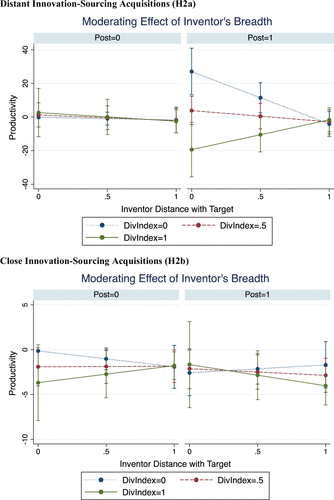
Model 3 of Table 2 and panel B of Figure 1 show that Hypothesis 2b is not supported for the left-hand side (i.e., low-distance acquisitions) of the inverted U-shape. For close acquisitions, we would expect specialists to be better able to absorb and recombine the target firm’s knowledge, so they should suffer less from a postacquisition decline in innovation performance than their generalist peers. We do not find statistical support for Hypothesis 2b (β = −1.812, s.e. = 5.027, p > 0.1). This result does not necessarily invalidate our theorization. In close acquisitions, specialist inventors may exhibit higher absorptive capacity thanks to having a significant overlap with the acquired knowledge. However, this advantage does not clearly translate into an ability to counteract the negative impact of the acquisition on their innovation performance. Other challenges associated with high knowledge base overlap—such as redundancy, status threats, team rivalry, R&D rationalization, and reduced competition in the innovation market—may diminish the incentive to innovate (Cassiman et al. 2005), ultimately offsetting the potential benefits of greater individual absorptive capacity among inventors whose expertise overlaps with the target’s knowledge base.
As a robustness check, we use an alternative measure of innovation performance, namely citation-weighted patents (Teodoridis et al. 2019). Note that, because the dependent variable is no longer forward citations but now includes the citation-weighted number of patents, we exclude inventor patents as a control to avoid multicollinearity bias. The results are robust and are included in Table A.1.
Next, we analyze which inventors are likely to continue patenting after the acquisition and identify the areas they work in—Hypothesis 3a and Hypothesis 4—using logit estimation. The results are presented in Table 3. Note that the sample now includes all 6,676 inventors who belonged to the acquirers before the acquisition, unlike the previous estimation, which only considered those who patented for the acquirers before and after acquisitions. Additionally, unlike earlier regressions, the unit of analysis is the inventor and not the inventor-year. All variables are therefore calculated cumulatively for the year prior to the acquisition, and the estimation is conducted on the cross-section of inventors.
|
Table 3. Logit Estimation on Who Continues to Patent for the Acquiring Firm After the Acquisition
| Variables | (1) H3a | (2) H4 | (3) H3b |
|---|---|---|---|
| Continue (distant acquisitions) | Continue (close acquisitions) | Continue (firm patents in new classes) | |
| Inventor Fwd Citations | −0.017*** | −0.153*** | −0.036*** |
| (0.002) | (0.016) | (0.004) | |
| Inventor Breadth | 1.079*** | −2.732*** | −2.353 |
| (0.185) | (0.443) | (1.727) | |
| Average Team Size | −0.005 | −0.278*** | 0.089*** |
| (0.011) | (0.038) | (0.018) | |
| #Collaborators | −0.018*** | −0.108*** | −0.057*** |
| (0.004) | (0.011) | (0.006) | |
| Inventor #Patents | 0.100*** | 0.189*** | 0.068*** |
| (0.010) | (0.026) | (0.014) | |
| Acquiror Revenue | 0.263*** | 0.802*** | 0.197*** |
| (0.016) | (0.052) | (0.019) | |
| Acquiror #Employees | 0.450*** | 1.260*** | 0.194*** |
| (0.047) | (0.125) | (0.074) | |
| Enforce | 0.270*** | 0.403*** | 0.093*** |
| (0.017) | (0.059) | (0.024) | |
| Whether Integrated | 0.108 | −0.601 | 1.108 |
| (1.171) | (0.843) | (1.051) | |
| Proportion of Patents in New Classes | −1.926** | ||
| (0.902) | |||
| Proportion of New Classes × Inv Breadth | 3.403* | ||
| (1.846) | |||
| Constant | −2.489*** | 2.149*** | 1.336 |
| (0.143) | (0.361) | (0.858) | |
| No. of InvID | 5,173 | 1,503 | 6,676 |
Notes. This is a cross-sectional estimation where variables are calculated cumulatively to the year prior to the acquisition. Standard errors are shown in parentheses.
***p < 0.01; **p < 0.05; *p < 0.1.
The coefficient on Inventor Breadth is positive and significant (β = 1.079, s.e. = 0.185, p < 0.001; Model 1 of Table 3), indicating that for distant acquisitions, a purely generalist inventor with a diversification score of one (meaning their specialization score is zero) is almost twice as likely to continue patenting for the acquiring firm compared with an inventor who is a pure specialist (specialization of one). Given that the average likelihood of continuing patenting across the entire sample is 0.7, this represents a 17-percentage-point increase over the average rate. These findings support Hypothesis 3a. Support for Hypothesis 4 is found in Model 2 of Table 3, which examines close acquisitions. The coefficient on Inventor Breadth is negative and significant (β = −2.732, s.e. = 0.443, p < 0.001), indicating that generalist inventors are substantially less likely to continue patenting when their firms pursued close acquisitions. The corresponding estimate suggests that the odds of continued inventive activity for generalists are only about 6% of those for specialists, representing a 57% reduction from the average patenting rate. When examining all inventors, Model 3 of Table 3 shows support for Hypothesis 3b (β = 3.403, s.e. = 1.846, p < 0.1); for acquiring firms, the higher the proportion of patents in new classes, the greater the likelihood that inventors with higher breadth are more likely to continue patenting for the acquiring firm.
4.2. Supplemental Analysis: Exploring (Mis)Alignment
In the previous section, we proposed that the alignment between a firm’s postacquisition innovation direction and its existing knowledge base will influence whether inventors continue patenting for the acquiring firm and in which areas they do so. In this section, we examine this alignment empirically, analyzing which types of inventors are more likely to continue patenting following a distant versus a close acquisition.3
We acknowledge that whether inventors continue to patent potentially introduces selection bias in our estimates of the relationship between knowledge distance and inventors’ performance. Although the preceding arguments suggest that inventor knowledge breadth interacts with technological distance to shape postacquisition innovation performance, these effects depend on a key filtering mechanism: whether inventors continue to patent before and after joining the acquiring firm. However, if our proposed mechanism, namely that selection into the pool that continues to patent at the firm is influenced by the alignment of an individual’s skills with the firm’s innovation trajectory, is correct, then the selection of who continues or discontinues patenting is nonrandom.
Because the most aligned individuals are more likely to continue patenting after the acquisition, selecting on alignment with the acquiring firm’s innovation direction may induce an upward bias in estimates of the moderating effects of distance and specialization (Hypothesis 2a and Hypothesis 2b), implying that the actual effects may be smaller. Therefore, if selection bias arises because individuals discontinue patenting due to skill misalignment, we expect the actual performance difference between generalists and specialists to be lower than the estimate obtained when selection is not accounted for. A decrease in observed performance estimates after controlling for selection would thus provide evidence of alignment-based selection and support our proposed alignment mechanism.
To explore this, we estimate a two-stage Heckman selection model. Recall that in our earlier estimation, we limited the sample to inventors who patented both before and after the acquisition. To estimate the Heckman model, we reintroduced those previously excluded inventors who patented for the acquiring firm before the acquisition but not after. In the first stage, we model the likelihood that an inventor continues to patent for the acquiring firm postacquisition.
Critically, the first-stage selection equation includes an exclusion restriction: the level of state-level noncompete enforcement. Prior research shows that noncompete enforcement influences inventor mobility in the United States (Marx et al. 2009, Starr et al. 2021), with mobility being higher in low-enforceability states. Although higher noncompete enforcement may slow overall patenting activity (Samila and Sorenson 2011), it is unlikely to directly affect differences in postacquisition innovation performance between generalists and specialists—a condition required to violate the exclusion restriction. In other words, for the exclusion restriction to be invalid, state-level noncompete enforcement would need to affect the innovation performance of generalists and specialists differently. There is no reason to expect this, and therefore we believe state-level noncompete enforcement provides valid identifying variation for the inverse Mills ratio used in the second stage. In the second stage, we estimate postacquisition innovation performance as in Hypothesis 2a and Hypothesis 2b, with the same explanatory variables and controls. The inclusion of the inverse Mills ratio corrects for the potential selection bias arising from differential continuation in patenting across inventor types and acquisition contexts.
By comparing estimates with and without the selection correction, we test a core implication of our theoretical mechanism: If misalignment is associated with selection into patenting, then we expect the corrected estimates of the performance differential between generalists and specialists to be smaller than uncorrected estimates. Observing such attenuation provides some empirical support for the role of alignment in shaping which inventors continue to patent postacquisition.
We test Hypothesis 2a after accounting for selection using the Heckman correction. Following prior literature, we obtain data on state-level enforcement of noncompete measures from Garmaise (2011). The first stage, which estimates the likelihood of continuing to patent based on the inventor’s and firm’s characteristics in the year of the acquisition is shown in Model 4 of Table 2 and the second stage in Model 5. The coefficient of the enforcement score of noncompetes in the state (β = 0.258, s.e. = 0.018, p < 0.001) shown in Model 4 of Table 2 indicates that greater noncompete enforcement is positively and significantly associated with the likelihood of continuing to patent in distant acquisitions. Relative to Model 2, Model 5 in Table 2 shows that the second-stage estimates differ: the coefficient of the interaction term Post × Inventor Breadth × Knowledge Distance (β = −38.914, s.e. = 146.795, p = 0.630) decreases in magnitude and loses significance compared with Model 2 in Table 2. We plot the marginal effects in Figure 2. Because we did not find a significant coefficient for Hypothesis 2b in Model 3, we did not conduct the test on that coefficient, but we expect the same mechanism to be at work in driving the economic magnitude of this coefficient.
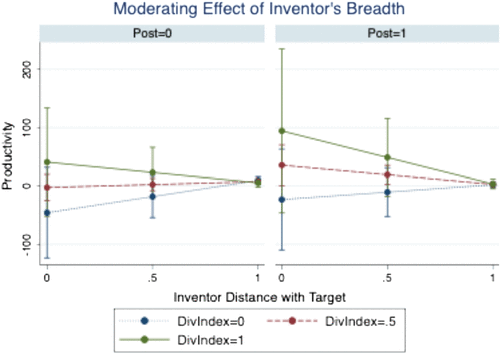
Because the coefficients are no longer significant, we cannot compare them to draw conclusions, but it is possible that, conditional on patenting, alignment-based selection effects may drive some of the observed performance differences between generalists and specialists. Inventors whose skills are most aligned with the postacquisition innovation trajectory may tend to continue patenting for the acquiring firm in both distant and close acquisitions, whereas those with weaker skill alignment are less likely to continue patenting for the acquiring firm. This may induce an upward bias in the estimated performance differences between generalists and specialists and can be interpreted as some evidence that alignment between preacquisition inventors’ skills and the firm’s postacquisition innovation trajectory may influence whether they continue to patent or not. Note that inventors discontinuing to patent at the acquiring firm could have remained at the firm but no longer patent or that they have moved to another firm. We observe that they are no longer patenting at the acquiring firm.
5. Discussion and Conclusion
Firms increasingly rely on external knowledge to supplement their R&D pipelines, with acquisitions playing an ever more central role in this strategy. Because R&D pipelines are critical to profitability, understanding how firms can manage acquisitions more effectively to achieve successful innovation outcomes is essential. This motivates our focus on how to mitigate innovation performance declines at the acquiring firm following innovation-sourcing acquisitions.
Prior research has primarily examined how postacquisition disruptions generate disappointing innovation outcomes, but less attention has been paid to how firms can mitigate such losses. Recent studies, however, have begun to fill the gap. Arroyabe et al. (2020) show that firms can counteract declines in inventive performance by hiring new key inventors, while Kim (2024) and Boyacioglu et al. (2024) emphasize the importance of alignment and integration fit between acquired human capital and firm-level factors.
We extend this literature by examining how heterogeneity among acquiring firm individual inventors can be leveraged to offset the negative consequences of postacquisition disruption, particularly those related to knowledge acquisition. We theorize that following an acquisition, inventors either continue or discontinue patenting for the acquiring firm depending on how well their knowledge aligns with the firm’s postacquisition innovation trajectory. In developing this argument, we also highlight a critical econometric challenge that has been largely overlooked in prior work: the nonrandom selection of inventors who continue to patent after an acquisition. We suggest that observed declines in inventor performance may not solely reflect postacquisition disruption but may also arise from misalignment-driven selection. In other words, acquiring firm inventors whose knowledge is poorly aligned with the firm’s postacquisition innovation knowledge context and direction may be more likely to discontinue patenting, that is, leaving the firm or remain but without patenting, thereby inducing an upward bias in performance estimates among those who stay. Although our evidence in this paper is not conclusive, exploring selection may be insightful in future work. Our observations contribute to the growing literature emphasizing the importance of mobility, redeployment, and knowledge alignment in postacquisition integration (Puranam et al. 2006, Graebner et al. 2017).
Our findings highlight the importance of the interplay between individual-level and firm-level factors in shaping firms’ innovation outcomes. Firms are composed of heterogeneous individuals, and when organizational strategies align with individuals’ strengths, firms can harness this heterogeneity more effectively. Prior research has conceptualized absorptive capacity as residing both in individuals’ knowledge and skills and in the organizational processes and routines that leverage them. Our findings suggest that these processes, strategies, and routines should be structured to complement individuals’ skills and knowledge in order to fully realize a firm’s absorptive capacity.
By examining innovation-sourcing acquisitions and subsequent knowledge recombination, our study contributes to the literature on resource reconfiguration (Karim and Capron 2016, Chatuverdi and Prescott 2022). Although prior research has documented various firm-level challenges associated with acquiring external knowledge, fewer studies have examined the intrafirm context. Research on barriers to individual-level performance has primarily focused on acquired inventors (Ernst and Vitt 2000, Paruchuri et al. 2006, Kapoor and Lim 2007, Hussinger 2012). We complement this literature and build on more recent work (Eisenman and Paruchuri 2019) by shifting the focus to the acquiring firm inventors, highlighting how acquiring firms’ internal resources shape their interaction with newly acquired knowledge and influence their subsequent innovation performance.
Our findings extend the microfoundations literature on strategic human capital that has systematically documented how firms can leverage heterogeneity in their human resources (Elfenbein and Sterling 2018, Chattopadhyay and Karim 2021, Kim 2024, Heydari et al. 2026). We build on this growing body of work by examining the relative advantages of specialists versus generalists (Chen et al. 2021, Kim et al. 2024, Tong and Lee 2024, Chattopadhyay et al. 2026). The strategic human capital perspective emphasizes that individuals’ knowledge, skills, and abilities constitute a heterogeneous resource base that plays a critical role in firms’ competitive advantage (Coff 1999, 2002, Coff and Kryscynski 2011). We draw attention to the individual-level factors that operate in conjunction with firm-level characteristics to shape innovation outcomes, highlighting how these two levels interact in the context of innovation-sourcing acquisitions (Bingham et al. 2024). Our findings underscore the importance of the organizational context in which individual performance occurs and the interaction between firms’ human resources and firm-level factors such as acquisition strategies.
Lastly, our paper offers managerially relevant implications for firms’ innovation-sourcing strategies. Individuals have agency in developing specialist or generalist skills—they can choose which projects to pursue—but firms also play an active role in shaping their inventors’ knowledge base. How knowledge is aggregated within firms is not exogenous but determined by deliberate managerial choices. Whether a firm has more specialist or generalist members depends on factors such as recruitment policies (e.g., whether the firm hires more specialists or generalists to implement innovation) and project allocation (e.g., whether the firm repeatedly assigns individuals to similar projects, fostering knowledge specialization, or rotates them across different projects, fostering generalization), encouraging knowledge diversification. Our findings suggest that the internal distribution of knowledge, and its complementarity with the firm’s innovation direction, should be carefully considered when managers design external innovation-sourcing strategies.
Our paper has certain limitations. Using a Poisson estimation model with fixed effects, we compare within-individual inventor outcomes before and after acquisitions. This approach allows us to rule out the influence of time-invariant confounding variables correlated with both the dependent and independent variables, such as individuals’ innate ability, firm quality, and organizational culture. However, time-varying factors may still bias our estimates. Although this constrains what can be inferred about the overall impact of acquisitions, our methodology aligns with the theoretical focus of the study, namely the interplay between firm-level and individual-level factors. Although we have attempted to account for selection on who continues to patent, our results provide limited insight into these effects. Future research on the effects of acquisitions on human capital could further explore in greater detail the inflow and outflow of inventors, examining how new entrants and departures shape postacquisition innovation dynamics. Likewise, unpacking the temporary routine-disruption costs from longer-term innovation-reorientation benefits could be a fruitful avenue for future research, allowing us to assess the net effects of acquisitions on both innovation outcomes and the innovation workforce, that is, which inventor groups may be disadvantaged and which may be positioned to thrive in the postacquisition integration process. Our paper also cannot account for the role of organizational design in mitigating postacquisition challenges. For example, teams are often structured to combine complementary skills in order to counter pressures on single individuals. We are unable to observe the effects of these measures, and this is a limitation of our paper.
In conclusion, our study suggests that firms can mitigate postacquisition innovation challenges by carefully selecting target firms and proactively managing the alignment of their pool of inventors before and after an acquisition. When the acquired knowledge is distant from their existing expertise, generalist inventors are more likely to continue patenting for the acquiring firm, whereas when the knowledge is similar, specialists are more likely to do so. Our findings show that this nonrandom selection of inventors who continue to patent for the acquiring firm contributes to differences in the innovation performance of generalists and specialists. Accordingly, firms should leverage their specialists’ absorptive capacity while managing potential drawbacks associated with knowledge overlap, such as reduced incentives and disruption to the internal innovation environment. This underscores the importance of strategically assessing whether external knowledge complements or constrains the existing capabilities of individual contributors, as well as contributing to a deeper understanding of how acquisitions can be effectively leveraged in knowledge-based industries.
Appendix
|
Table A.1. Estimation of Acquiring Firm Inventor’s Performance Comparing Pre- and Postacquisition
| Variables | (1) | (3) | (4) |
|---|---|---|---|
| Citation Weighted Patent (H1) | Citation Weighted Patent (H2a: Distant) | Citation Weighted Patent (H2b: Close) | |
| Post | −0.040*** | 19.761*** | −1.842** |
| (0.008) | (4.763) | (0.927) | |
| Distance | 1.199 | −1.617* | |
| (3.708) | (0.855) | ||
| Post × Distance | −21.078*** | 2.761** | |
| (4.981) | (1.338) | ||
| Inventor Breadth | 2.672 | −1.887 | |
| (7.383) | (1.673) | ||
| Inventor Breadth × Distance | −2.440 | 2.596 | |
| (7.706) | (2.061) | ||
| Post × Inventor Breadth | −35.127*** | 4.069* | |
| (9.335) | (2.158) | ||
| Post × Distance × Inventor Breadth | 37.288*** | −6.048** | |
| (9.804) | (2.964) | ||
| Average Team Size | 0.007*** | 0.008 | 0.030** |
| (0.001) | (0.005) | (0.012) | |
| Tenure | −0.053*** | −0.048*** | −0.076*** |
| (0.001) | (0.004) | (0.009) | |
| Acquiring Firm Patents | 0.020*** | 0.040 | 0.010 |
| (0.003) | (0.035) | (0.013) | |
| Target Firm Patents | 0.000 | 0.001 | −0.001 |
| (0.000) | (0.001) | (0.001) | |
| Acquiring Firm Breadth | −0.083*** | −0.102 | −0.026 |
| (0.014) | (0.120) | (0.058) | |
| Log Revenue | 0.000 | 0.002 | 0.005 |
| (0.001) | (0.008) | (0.018) | |
| Acquiring Firm Inventors | 0.068*** | 0.060** | 0.027 |
| (0.007) | (0.029) | (0.073) | |
| Whether integrated | −0.233*** | −0.099 | −0.478*** |
| (0.057) | (0.122) | (0.157) | |
| Distance Squared | |||
| Observations | 22,488 | 18,423 | 4,065 |
| No. of InvID | 4,842 | 3,827 | 1,015 |
Notes. Dependent variable = Inventor Citation-Weighted Patents. Robust standard errors in parentheses were clustered at the individual level.
***p < 0.01; **p < 0.05; *p < 0.1.
1 We use applied patents for all of our measures because we are looking at a limited time window and it may take longer for patents to be granted.
2 Because our sample of inventors consists of those who continue to patent for the acquiring firm after the acquisition, we were interested to see how they differed from the average inventor in the USPTO database. We found that an average inventor within the USPTO database had a mean patenting experience of 9 years with a standard deviation (SD) of 8.13 years and ranged from 1 to 30 years. They had, on average, 2.9 patents (SD = 6.6) with mean citations of 1.3 yearly forward citations (SD = 12.12). Further, their average number of collaborators was 3.11 (SD = 2.33). Comparing inventors in our sample to the universe of USPTO inventors, we concluded that they were similar in terms of number of patents (i.e., 2.44 in our sample and 2.9 USPTO) and patenting experience (11 years in our sample and 9 years in USPTO) but had a significantly higher number of citations (2.73 in our sample and 1.3 in the USPTO) and collaborators (5.34 our sample versus 3.11 USPTO) on average. These differences may possibly stem from the nature of scientific work in the pharmaceutical industry. Pharmaceutical firms tend to build on each others’ inventions and have high interdependencies in their R&D pipelines and therefore tend to have higher patent citations than firms in other industries, such as manufacturing, which have fewer interdependencies. Moreover, given the degrees of complexity, it is perhaps not surprising that the work is also more collaborative; hence, pharmaceutical scientists tend to have more collaborators over their lifetime.
3 We thank our reviewers for suggesting this direction.
References
- (2001) Technological acquisitions and the innovation performance of acquiring firms: A longitudinal study. Strategic Management J. 22(3):197–220.Crossref, Google Scholar
- Almeida P, Dokko G, Rosenkopf L (2003) Startup size and the mechanisms of external learning: Increasing opportunity and decreasing ability? Res. Policy 32(2):301–315.Google Scholar
- (2020) Hiring new key inventors to improve firms’ post‐M&A inventive output. R&D Management 50(4):494–509.Crossref, Google Scholar
- (1985) Human capital, effort, and the sexual division of labor. J. Labor Econom. 3(1, Part 2):S33–S58.Crossref, Google Scholar
- (1992) The division of labor, coordination costs, and knowledge. Quart. J. Econom. 107(4):1137–1160.Crossref, Google Scholar
- (2003) Exploitation, exploration, and process management: The productivity dilemma revisited. Acad. Management Rev. 28(2):238–256.Crossref, Google Scholar
- (2024) How firms cultivate collaboration during postmerger integration of technology acquisitions. Strategy Sci. 9(2):205–228.Link, Google Scholar
- (2018) Post-merger integration. J. Organ. Design 7(1):1–20.Crossref, Google Scholar
- (2024) Acqui-hires: Redeployment and retention of human capital post-acquisition. Strategic Management J. 45(2):203–395.Crossref, Google Scholar
- (2003) Knowledge-relatedness in firm technological diversification. Res. Policy 32(1):69–87. Crossref, Google Scholar
- (2004) Structural holes and good ideas. Amer. J. Sociol. 110(2):349–399.Crossref, Google Scholar
- Capron L (1999) The long‐term performance of horizontal acquisitions. Strategic Management J. 20(11):987–1018.Google Scholar
- (1998) Resource redeployment following horizontal acquisitions in Europe and North America, 1988–1992. Strategic Management J. 19(7):631–661.Crossref, Google Scholar
- (2005) The impact of M&A on the R&D process: An empirical analysis of the role of technological-and market-relatedness. Res. Policy 34:195–220.Crossref, Google Scholar
- (1991) Managerial resources and rents. J. Management 17(1):155–171.Crossref, Google Scholar
- (2001) The managerial rents model: Theory and empirical analysis. J. Management 27(6):661–678.Crossref, Google Scholar
- (1973) Perception in chess. Cognitive Psych. 4(1):55–81.Crossref, Google Scholar
- (2020) When one door closes, another door opens… for some: Evidence from the post‐TRIPS Indian pharmaceutical industry. Strategic Management J. 41(6):988–1022.Crossref, Google Scholar
- (2021) Firms’ innovation trajectories and inventors’ productivity in the context of acquisitions. SSRN Electronic J. 10.Google Scholar
- (2024) How missing markets of managerial talent can lead to generalist careers. J. Developing Areas 58(3):243–255.Crossref, Google Scholar
- (2026) Dynamic demands versus durable skills: Career dilemmas in pharmaceutical R&D. Acad. Management J.Crossref, Google Scholar
- (2022) Resource reconfiguration during technological change. Strategy Sci. 7(3):240–265.Link, Google Scholar
- (2021) Generalist versus specialist CEOs and acquisitions: Two‐sided matching and the impact of CEO characteristics on firm outcomes. Strategic Management J. 42(6):1184–1214.Crossref, Google Scholar
- (2006) Mergers and acquisitions: Their effect on the innovative performance of companies in high-tech industries. Res. Policy 35(5):642–654.Crossref, Google Scholar
- (1999) When competitive advantage doesn't lead to performance: The resource-based view and stakeholder bargaining power. Organ. Sci. 10(2):119–133. Google Scholar
- (2002) Human capital, shared expertise, and the likelihood of impasse in corporate acquisitions. J. Management 28(1):107–128.Crossref, Google Scholar
- (2011) Invited editorial: Drilling for micro-foundations of human capital–Based competitive advantages. J. Management 37(5):1429–1443.Crossref, Google Scholar
- (1990) Absorptive capacity: A new perspective on learning and innovation. Admin. Sci. Quart. 35(1):128–152.Crossref, Google Scholar
- (2010) Reconsidering the trade-off between expertise and flexibility: A cognitive entrenchment perspective. Acad. Management Rev. 35(4):579–603.Crossref, Google Scholar
- (2019) Inventor knowledge recombination behaviors in a pharmaceutical merger: The role of intra-firm networks. Long Range Planning 52(2):189–201.Crossref, Google Scholar
- (2018) (When) Is hiring strategic? Human capital acquisition in the age of algorithms. Strategy Sci. 3(4):668–682.Link, Google Scholar
- (2000) The influence of corporate acquisitions on the behaviour of key inventors. R&D Management 30(2):105–120.Crossref, Google Scholar
- (2013) Specialization and career dynamics: Evidence from the Indian Administrative Service. Admin. Sci. Quart. 58(2):233–256.Crossref, Google Scholar
- (2001) Recombinant uncertainty in technological search. Management Sci. 47(1):117–132.Link, Google Scholar
- (2001) Technology as a complex adaptive system: Evidence from patent data. Res. Policy 30(7):1019–1039.Crossref, Google Scholar
- (2011) Ties that truly bind: Noncompetition agreements, executive compensation, and firm investment. J. Law Econom. Organ. 27(2):376–425.Crossref, Google Scholar
- (2000) Looking forward and looking backward: Cognitive and experiential search. Admin. Sci. Quart. 45(1):113–137.Crossref, Google Scholar
- (2004) Momentum and serendipity: How acquired leaders create value in the integration of technology firms. Strategic Management J. 25(8–9):751–777.Crossref, Google Scholar
- (2010) Success and failure in technology acquisitions. Acad. Management Perspective 24(3):73–92.Google Scholar
- (2017) The process of postmerger integration: A review and agenda for future research. Acad. Management Annals 11(1):1–32. Crossref, Google Scholar
- (2020) Division of labor in collaborative knowledge production: The role of team size and interdisciplinarity. Res. Policy 49(6).Crossref, Google Scholar
- (2001) The NBER patent citation data file: Lessons, insights and methodological tools. NBER Working Paper No. 8498, National Bureau of Economic Research, Cambridge, MA.Google Scholar
- (1991) Managing Acquisitions: Creating Value Through Corporate Renewal (Free Press, New York).Google Scholar
- (2026) Core or periphery: Examining where to allocate heterogeneous inventors and the impact on firms’ innovation. Strategic Management J. 47(2):331–363.Crossref, Google Scholar
- (2012) Absorptive capacity and post-acquisition inventor productivity. J. Tech. Transfer 37:490–507.Crossref, Google Scholar
- (1986) Technological opportunity and spillovers of R&D: Evidence from firms’ patents, profits, and market value. Amer. Econom. Rev. 76(5):984–1001.Google Scholar
- (2007) The impact of acquisitions on the productivity of inventors at semiconductor firms: A synthesis of knowledge-based and incentive-based perspectives. Acad. Management J. 50(5):1133–1155.Crossref, Google Scholar
- (2016) Reconfiguration: Adding, redeploying, recombining, and divesting resources and business units. Strategic Management J. 37(13):E54–E62.Crossref, Google Scholar
- (2015) Structural recombination and innovation: Unlocking internal knowledge synergy through structural change. Organ. Sci. 26(2):439–455.Link, Google Scholar
- (2000) Path-dependent and path-breaking change: Reconfiguring business resources following acquisitions in the US medical sector, 1978–1995. Strategic Management J. 21:1061–1081.Crossref, Google Scholar
- (2004) Innovating through acquisition and internal development. Long Range Planning 37(6):525–547.Crossref, Google Scholar
- (2017) Path-dependent and path-breaking change: Reconfiguring business resources following acquisitions in the US medical sector, 1978–1995. The SMS Blackwell Handbook of Organizational Capabilities, 218–252.Crossref, Google Scholar
- (2024) Startup acquisitions as a hiring strategy: Turnover differences between acquired and regular hires. Strategy Sci. 9(2):118–134.Link, Google Scholar
- (2024) Who gets redeployed? Inventor characteristics and resource redeployment decisions. Strategic Management J. 1–32.Google Scholar
- (1992) Knowledge of the firm, combinative capabilities, and the replication of technology. Organ. Sci. 3(3):383–397.Link, Google Scholar
- (1998) Relative absorptive capacity and interorganizational learning. Strategic Management J. 19(5):461–477.Crossref, Google Scholar
- (2006) The reification of absorptive capacity: A critical review and rejuvenation of the construct. Acad. Management Rev. 31(4):833–863.Crossref, Google Scholar
- (2006) Gender differences in productivity: Research specialization as a missing link. Gender Soc. 20(6):754–780.Crossref, Google Scholar
- (2007) Not by productivity alone: How visibility and specialization contribute to academic earnings. Amer. Sociol. Rev. 72(4):533–561.Crossref, Google Scholar
- (2010) Acquisition vs. internal development as modes of market entry. Strategic Management J. 31(2):140–158.Crossref, Google Scholar
- (2024) Exploration, exploitation, and mode of market entry: Acquisition versus internal development by Amazon and Alphabet. Industrial Corporate Change 33(1):253–267.Crossref, Google Scholar
- (1993) The myopia of learning. Strategic Management J. 14(S2):95–112.Crossref, Google Scholar
- (2010) Complementary technologies, knowledge relatedness and invention outcomes in high-technology mergers and acquisitions. Strategic Management J. 31(6):602–628.Crossref, Google Scholar
- (2009) Mobility, skills, and the Michigan non-compete experiment. Management Sci. 55(6):875–889.Link, Google Scholar
- (2015) The Renaissance Man is not dead! The role of generalists in teams of inventors. Res. Policy 44(1):154–167.Crossref, Google Scholar
- (2018) Knowledge diversity and coordination: The effect of intrafirm inventor task networks on absorption speed. Strategic Management J. 39(9):2517–2546.Crossref, Google Scholar
- (2020) Jack of all trades and master of knowledge: The role of diversification in new distant knowledge integration. Strategic Management J. 41(1):55–85.Crossref, Google Scholar
- (1982) The Schumpeterian tradeoff revisited. Amer. Econom. Rev. 72(1):114–132. Google Scholar
- (2005) Evolution of R&D capabilities: The role of knowledge networks within a firm. Management Sci. 51(5):771–785. Link, Google Scholar
- (2006) Acquisition integration and productivity losses in the technical core: Disruption of inventors in acquired companies. Organ. Sci. 17(5):545–562.Link, Google Scholar
- (2007) What they know vs. what they do: How acquirers leverage technologyacquisitions. Strategic Management J. 28(8):805–825. Crossref, Google Scholar
- (2016) How initial representations shape coupled learning processes. Organ. Sci. 27(2):323–335.Link, Google Scholar
- (2006) Organizing for innovation: Managing the coordination-autonomy dilemma in technology acquisitions. Acad. Management J. 49(2):263–280.Crossref, Google Scholar
- (2002) Acquiring new technologies and capabilities: A grounded model of acquisition implementation. Organ. Sci. 13(4):420–441.Link, Google Scholar
- (2003) Overcoming local search through alliances and mobility. Management Sci. 49(6):751–766.Link, Google Scholar
- (2001) Beyond local search: Boundary‐spanning, exploration, and impact in the optical disk industry. Strategic Management J. 22(4):287–306.Crossref, Google Scholar
- (2011) Venture capital, entrepreneurship, and economic growth. Rev. Econom. Statist. 93(1):338–349.Crossref, Google Scholar
- (2003) Learning-by-hiring: When is mobility more likely to facilitate interfirm knowledge transfer? Management Sci. 49(4):351–365.Link, Google Scholar
- (2021) Noncompete agreements in the US labor force. J. Law Econom. 64(1):53–84.Crossref, Google Scholar
- (1996) Exploring internal stickiness: Impediments to the transfer of best practice within the firm. Strategic Management J. 17(S2):27–43.Crossref, Google Scholar
- (2019) Creativity at the knowledge frontier: The impact of specialization in fast-and slow-paced domains. Admin. Sci. Quart. 64(4):894–927.Crossref, Google Scholar
- (2008) Do bridging ties complement strong ties? An empirical examination of alliance ambidexterity. Strategic Management J. 29(3):251–272.Crossref, Google Scholar
- (1990) A penny for your quotes: Patent citations and the value of innovations. RAND J. Econom. 21(1):172–187.Crossref, Google Scholar
- (2014) Chicken, or the egg, or both? The interrelationship between a firm’s inventor specialization and scope of technologies. Strategic Management J. 35(5):723–738.Crossref, Google Scholar
- (2024) Knowledge catalysts: The role of generalist incumbents in post-hiring knowledge integration. Res. Policy 53(1).Crossref, Google Scholar
- (1981) Boundary spanning individuals: Their role in information transfer and their antecedents. Acad. Management J. 24(2):289–305.Crossref, Google Scholar
- (2012) Measuring the effect of M&A on patenting quantity and quality. Strategic Management J. 33(3):336–346.Crossref, Google Scholar
Shinjinee Chattopadhyay is an assistant professor at the Gies College of Business at University of Illinois Urbana-Champaign. Her research focuses on questions on human capital and innovation. She examines how organizations shape their individuals’ human capital and in turn, how individuals’ knowledge and skills serve as strategic resources for firms. She earned her PhD in Finance and Economics from Columbia Business Schoool.
Samina Karim is a professor at Northeastern University’s D’Amore-McKim School of Business. Her research focuses on corporate strategy and organization design, acquisitions and alliances, and innovation through reconfiguration of resources and activities. She earned degrees from the University of Michigan (PhD in strategy; MA in applied economics), Harvard University (MA in education), and Cornell University (BS in electrical engineering) and worked for Hewlett-Packard Co.
Laurence Capron is a professor of strategy at INSEAD and holds the Paul Desmarais chair in partnership and active ownership. She previously served as dean of faculty at INSEAD and is currently the dean of the fellows of the Strategic Management Society. Her research focuses on corporate strategy, mergers and acquisitions, modes of growth (build, borrow, buy), resource redeployment, divestiture, and corporate governance. She earned her PhD from HEC Paris.

