Setting Strategic Objectives for the Coalition for Epidemic Preparedness Innovations: An Exploratory Decision Analysis Process
Abstract
The Coalition for Epidemic Preparedness Innovations (CEPI) was established in 2016 in response to the West African Ebola epidemic. The vision for CEPI is to develop vaccines to prevent future emerging infectious disease outbreaks from becoming humanitarian crises. Leaders from governments, foundations, industry, and civil society convened earlier that year to formulate strategic objectives to support CEPI’s first business plan. We demonstrate how decision analysis can support a rational and transparent approach to strategy formulation that accounts for and ranks the preferences of multiple stakeholders in an international coalition setting. We use value-focused thinking to identify and structure objectives and we combine this with an explorative discrete-choice experiment to elicit preferences between objectives. Our findings suggest that decision-analytic methodologies can rationalize strategic objective setting in a highly complex global health research and development planning context characterized by strong stakeholder interests and conflicting priorities.
The online supplement is available at https://doi.org/10.1287/inte.2019.1011.
Epidemics of emerging infectious diseases (EIDs) are a growing threat to global health and prosperity. Recent outbreaks of Ebola, Zika, MERS (Middle East respiratory syndrome), and SARS (severe acute respiratory syndrome) have caused significant mortality, morbidity, and socioeconomic disruption across multiple continents (Kieny et al. 2016, Sands et al. 2016). Timely vaccine development can avert humanitarian crises and limit the socioeconomic damage associated with these outbreaks (Coalition for Epidemic Preparedness Innovations 2016). However, safe and effective vaccines for most epidemic infectious disease threats are lacking (Plotkin et al. 2015, Gouglas et al. 2018).
The World Health Organization (WHO) has argued that without coordinated investments, the world will not be able to effectively respond to future epidemics (Kieny et al. 2016). Along similar lines of reasoning, various post-Ebola outbreak reports have called for either vaccine-specific or broader product-focused research and development (R&D) funds (Plotkin et al. 2015, United Nations Secretary General 2016), financing facilities (Moon et al. 2015), partnerships (Norheim et al. 2014), or strategies (Center for Infectious Disease Research and Policy 2015) to improve global preparedness against EIDs in the future.
To address these challenges, leaders from governments, intergovernmental organizations, foundations, industry, and civil society came together in 2016 to explore new ways to drive vaccine R&D for priority EIDs (Brende et al. 2017, Røttingen et al. 2017). Between February and July of 2016, three expert task teams convened to assess problems and potential solutions for (1) pathogen prioritization, product development, and regulatory pathways; (2) partnership models; and (3) financing strategies (Røttingen et al. 2017). Several authors of this article were initially involved in the task team responsible for identifying appropriate partnership models and bringing together all task team policy recommendations into a strategy document to establish the Coalition for Epidemic Preparedness Innovations (CEPI; Coalition for Epidemic Preparedness Innovations 2016).
Task team proceedings revealed the need to identify and agree on a number of well-defined strategic objectives and operating principles for CEPI. Given the large number of stakeholders with diverse perspectives (over 100 stakeholders from industry, government, foundations, and civil society), efforts to generate consensus were at risk for devolving into a social bargaining process that could generate results that were not representative and/or were ambiguous. In an effort to lend transparency, accountability, and clarity to this exercise, we implemented a combination of value-focused thinking (VFT) and an exploratory discrete choice experiment (DCE) to identify, structure, and explore the relative importance of CEPI’s strategic objectives.
An Exploratory Decision-Analytic Approach
VFT is a long-established decision-analytic approach appropriate for identifying and structuring objectives in strategic decision problems (Keeney 1992). Such problems—framed in the management literature as wicked problems of organized complexity (Rittel and Webber 1973, Ackoff 1974, Mason and Mitroff 1981)—reflect states of extreme complexity, whereby the problems and solutions are neither obvious nor easy to agree on (Belton and Stewart 2010); multiple stakeholders are involved with multiple and often conflicting objectives (Montibeller and Franco 2010, Punt 2017); and stakeholder perspectives are negotiated through social bargaining, that is, intense dialogue processes (Thomas 1984, McMillan and Overall 2016).
The premise of VFT is that early and systematic attention to stakeholder values can lead to meaningful descriptions of objectives and justifications on why these are important, including, where possible, associations of their relevance to other objectives. Analytically, VFT defines values within a given decision context as explicit statements of what one wants to achieve (Keeney 1994), distinguishing between two types of objectives: (1) fundamental objectives, which characterize the essential reasons or endpoints for a given decision, and (2) means objectives, which enable the achievement of fundamental objectives (Keeney 1992).
A number of tools and techniques can be applied to distill the relationship between means and end objectives in VFT frameworks, several of which are reviewed in Parnell et al. (2013) and Kunz et al. (2016). Evidence of the method’s application in setting strategic objectives is rich across several domains (Keeney and McDaniels 1992, Keeney 1996, Parnell et al. 1998, McDaniels and Trousdale 1999, Tan et al. 1999, Yoo et al. 2001, Bullock et al. 2008, Morais et al. 2013, Simon et al. 2014, Kunz et al. 2016Abuabara et al. 2017). However, VFT has rarely been explicitly applied in the health space. Its limited application, for example, in evidence-based medicine may be because values have been traditionally seen as sources of bias that can and should be controlled for (Kelly et al. 2015, Neumann and Cohen 2015). This may also be because a great deal of thought has already gone into the concept of value in health, with some consensus as to what values should be achieved (Porter 2010). Consequently, the benefit of using tools to support problem structuring in a priori relatively well-defined problems is expected to be only marginal (Marsh et al. 2016). However, VFT was recently applied to help construct a multicriteria evaluation model for new medicine reimbursement decisions (Angelis and Kanavos 2017), and it has been proposed as an analytical approach to support strategy formulation for healthcare management through means–ends objective structuring (Ginter et al. 2013).
Whereas VFT can help identify and structure objectives for strategic planning, specifying the relative importance of such objectives requires appropriate preference elicitation techniques. There are numerous preference elicitation techniques in the health literature (Marsh et al. 2016). One such methodology is the DCE (Bridges et al. 2011b), which is particularly helpful in the absence of revealed preference data (Mangham et al. 2009). DCEs have become increasingly popular in health valuation (Thokala et al. 2016) and priority setting (Marsh et al. 2012, Franken and Koolman 2013, Grepin et al. 2018). They can be relatively quick preference elicitation instruments (Lagarde and Blaauw 2009), which is an advantage in time-constrained strategic decision-making contexts.
To our knowledge, no explicit VFT approaches have been applied to date to identify and structure strategic objectives of organizations investing in global health R&D. And we are aware of only one other study that has applied a DCE for health systems goal valuation (Franken and Koolman 2013). In combining VFT with DCE, we demonstrate an important role of decision analysis in strategy formulation, where the consideration of multiple objectives and their relative importance can facilitate structured dialogue processes between stakeholders making strategic decisions in global health R&D.
Our article is structured as follows. The methods section provides an overview of the analytical steps—from VFT to DCE methods—undertaken to help CEPI decision makers define and structure strategic objectives as well as determine their relative importance. The results section presents the VFT and DCE findings. Theoretical and practical lessons learnt from the application of the methodology in CEPI context are discussed in the discussion and conclusion sections.
Methods
We undertook four analytical steps to help CEPI decision makers—CEPI task teams, founding partners, and leadership group (Coalition for Epidemic Preparedness Innovations 2016)—define and structure CEPI’s strategic objectives and to determine their relative importance. First, we conducted stakeholder consultations to identify needs, challenges, potential objectives, and benefits of establishing new mechanisms for EID vaccine R&D. Second, we constructed means–ends argument chains from problem statements to fundamental objective concepts relevant to CEPI’s strategy formulation. Third, we refined the results of this objective structuring exercise with CEPI stakeholders through teleconferences and face-to-face group discussions. Fourth, we elicited preferences over alternative strategic objective formulations through a DCE. This section provides an overview of the approach adopted. More details on the methodology can be found in Appendices A and B in the online supplement to this paper.
Stakeholder Consultations
We conducted 31 in-depth, semistructured one-on-one consultations with official representatives of organizations and individual experts comprising members of CEPI task teams. Although there is no correct number as to how many such interviews one should conduct, approximately 30 is the average number of interviews conducted in exploratory, qualitative research before saturation is reached (Mason 2010). The chance of obtaining most possible answers to kick-start the VFT process was maximized by means of a saturation criterion, that is, no new ideas generated after three consecutive interviews per subject-matter expertise or sectoral affiliation (Francis 2010, Saunders et al. 2018). Saturation was reached after 28 interviews. This procedure was intended to increase the baseline content validity of the VFT exercise.
Stakeholders selected for consultation were key partners in the establishment of CEPI and who met at least one of the following criteria:
had subject matter expertise on epidemic infectious pathogens; vaccine R&D, including nonclinical and clinical development aspects, manufacturing capacity, and regulatory pathways; partnership models; and funding strategies;
had sectoral representation (industry, government, philanthropic sectors);
had geographical representation (north–south balance); or
were in a group likely to be affected by decisions on CEPI operations (i.e., industry, WHO, civil society, representatives of regions likely to be affected by EID outbreaks).
The number of interviewees and the criteria considered for stakeholder inclusion in the consultation process allowed us to ensure a sufficiently broad set of perspectives and informed the effort to identify objectives. Following good practices identified elsewhere in the literature (Keeney 1994, Kunz et al. 2016), all interviews followed the same approach (see Appendix A in the online supplement to this paper) and included questions about
lessons for R&D partnership building from experiences with recent EID outbreaks in terms of needs and priorities, opportunities, and roadblocks;
operating principles that should define the space within which CEPI was to operate;
strategic objectives CEPI should aim for and prioritize to address the needs, opportunities, and roadblocks in this field;
partnership model alternatives that CEPI should consider; and
benefits that CEPI should anticipate from the operation of such partnership models.
The questions included in the questionnaire were crafted based on Keeney’s (1992) recommended techniques to identify objectives. Although somewhat redundant in their guidance, these questions were purposefully repetitive to allow us to make implicit objectives more explicit (Keeney 1996) and, in an implicit way, to also test for stakeholder response consistency in a qualitative manner.
In line with good practices (Kunz et al. 2016), we drew, where possible, potentially relevant concepts from the literature to steer discussions with stakeholders toward critical issues previously raised in the literature but that were not addressed adequately during the consultations.
Means–Ends Mapping
The initial consultations generated some results that were not exclusively objectives (e.g., problem statements, preferred partnership models, relevant actors and functions for CEPI, operating principles for CEPI). We separated these concepts and established relationships between them by examining the reasons for each, and, where possible, their implications. This allowed us to determine potentially fundamental objectives and policy values for CEPI, as well as to link these through means–ends argument chains. For a review of means–ends mapping methods, see Belton and Stewart (2002), Montibeller and Belton (2006), Montibeller et al. (2008), and Franco and Montibeller (2011); for further examples of means–ends mapping theory and applications in problem structuring and decision making, see Howard (1988), Belton et al. (1997), Eden and Ackermann (1998, 2013), Bana e Costa et al. (1999), Ensslin et al. (2000), Rosenhead and Mingers (2004), Bryson et al. (2004), Eden (2004), Ackermann et al. (2007), and Rodriguez et al. (2017). We depicted these objectives as a network of concepts connected by links denoting chains of arguments within and between seven reasoning clusters:
Problems: What are the perceived problems for R&D partnership building from experiences with Ebola and other recent EID outbreaks? Why are these problems important, and what are the potential implications if these problems remain unaddressed?
Actors: What actors can address these problems and why?
Functions: What types of functions could and should these actors offer, including resource assets or other types of competencies and capabilities?
Alternative models: What modes of action or partnership approaches could and should these actors establish to provide these functions?
Priorities: Which of these modes of action or partnership approaches are most important and why?
Expected benefits: What are the expected benefits associated with each of these partnership approaches, and why?
Objectives: Why are these anticipated benefits important?
Although the final question listed here may not quite sound like an objectives-focused question, it is important to highlight that one often begins to think hard about fundamental objectives after some benefits become apparent as well as the reasons why these are likely to be important (Keeney 1996). Articulating the features that distinguish revealed benefits provides, therefore, a sound basis for identifying fundamental objectives within a VFT framework, ideally with such a question being logically structured toward the end of the discussion process.
Based on interviews with CEPI stakeholders, we initially identified 464 concepts and 1,274 relationships between these. After clustering the concepts and their relationships into means–ends chains of arguments according to the above procedure, we generated a reasoning map with 62 concepts and 251 means–ends argument chain connections. Redundancies of previously reported concepts were eliminated from this map (see details in Appendix B in the online supplement to this paper). In addition to serving as a practical consistency check between stakeholder responses, this last step also helped us bridge the theoretical gap between strict assumptions on attribute properties commonly required in multiattribute valuation methods versus the desired flexibility in structure and fewer modelling assumptions commonly observed in causal mapping (Montibeller and Belton 2006).
Group Discussions
A series of teleconferences, email exchanges, and face-to-face meetings (Kristensen 2016) took place with a broader set of stakeholders to validate the results of the initial consultation exercise and to clarify CEPI’s potential objectives and policy values, which would determine the context and goal orientation for CEPI’s strategy formulation. These discussions led to the specification of a provisional hierarchy of preferentially independent means–ends objectives as well as a set of policy values—such as operating and governance principles—that set the overall frame within which appropriate definitions of strategic objectives would be obtained.
Discrete-Choice Experiment
A DCE was employed to elicit stakeholder preferences among objectives and to combine these into an overall probability of attractiveness associated with alternative strategic objective formulations. DCE participants were given a series of choice sets in which they were asked to choose between strategies defined by the level of importance by strategic objective. Strategy attractiveness against each strategic objective (attribute in the DCE) was defined as one of three levels, reflecting the level of importance for a strategic objective within the strategy formulation (see Table 2). Given the time constraints on the analysis, the three levels of performance were based on initial stakeholder consultations and definitions that were derived from these. Table 2 summarizes the strategic objective definitions (attributes) and importance levels.
Following good practices in DCE implementation (Ryan et al. 2008, Mangham et al. 2009, Johnson et al. 2013, Hauber et al. 2016), an experimental design of two blocks of 9 choice sets (i.e., 18 choice sets in total) was generated using SAS JMP® Pro 12 software (SAS Institute Inc. 2016). The software generated 1,000 alternative designs so that we could select the most optimal design based on the D-efficiency statistic. The orthogonality of the selected design was assessed based on the correlations in the covariance matrix. The highest correlation in the covariance matrix was 0.5, and the average correlation was 0.003. Manual edits to this design were made to remove any dominant choice sets and, in doing so, to improve the balance of the design.
Two other choice sets were added to each of the two blocks of choice sets: a dominance test and a consistency test. The survey was administered online using Questback Essentials®. The order of the 18 experimental choice sets within these sets was randomized between participants.
The survey was sent to 72 recipients: members of the three CEPI task teams and the leadership group; see “Annex 3: List of CEPI members” in CEPI business plan (Coalition for Epidemic Preparedness Innovations 2016, pp. 57–59). Where multiple persons represented a single organization, a survey invitation was sent once and consolidated responses were requested for these organizations. The survey was completed by 55 respondents, representing over 100 individuals engaged in CEPI’s establishment. Figure 1 shows an example of a question included in the survey.

To assess the contribution of attribute performance to strategic objective preference, a dummy-coded, linear, conditional logistic regression was applied using JMP, version 12 (SAS Institute Inc. 2016). This type of analysis is a well-established and suitable approach for modelling discrete choices through the estimation of the probability of individuals making a particular choice from presented alternatives (McFadden 1974). Here, the utility for each choice option depends on the criterion levels defining that option. Therefore, it is not the characteristics of the DCE participants that are modelled, but the choice options.
The results of the model were used first to estimate the overall statistical significance of the attributes considered in the DCE (i.e., logworth values and likelihood ratios). Conditional on these overall attribute significance findings, the results of the model were then used to estimate the main effects of the different attribute levels; see the parameter coefficients in Table 4. Given the nature of the model and total number of survey responses received, the statistical significance of each attribute level was calculated using the Wald statistic, which is asymptotically distributed as a standard normal distribution (Wasserman 2006). The most desirable strategy formulation was identified as the one with the highest utility, defined as the sum of all statistically significant parameter coefficients associated with attribute levels in the model. Finally, the probability of different strategy formulations being preferred was estimated, for each alternative, as the ratio of the expected utility to the sum of this expected utility and the expected utility of the most preferred strategy (i.e., the baseline comparator).
Results
Our findings demonstrate that the prioritization of preparedness and market predictability objectives is likely to generate the most-supported vaccine R&D strategies against EIDs only if some importance is also placed on equity and response speed objectives.
Table 1 summarizes needs and potential objectives for EID vaccine R&D partnerships as prompted by the literature up to February 2016, aimed to facilitate ideation fluency in stakeholder consultations. For a comprehensive reporting of stakeholder input, see Table B.1 in Appendix B in the online supplement to this paper. Needs range from fully dedicated and centralized approaches to highly flexible coordination approaches between existing actors. Potential objectives vary from increasing the level of R&D preparedness around R&D, manufacturing, and regulatory processes to improving institutional response speeds to EID outbreaks, improving incentives for private sector participation, and ensuring access and trust in vaccines through affordable pricing and regional R&D capability strengthening in countries likely to be affected by EID outbreaks. Figure 2 illustrates constructed means–ends argument chains from perceived problem statements to anticipated benefits that enabled the structuring of stakeholder objectives and values; see Table B.1 in Appendix B in the online supplement to this paper for a full mapping of means–ends argument chains. It demonstrates that CEPI stakeholders perceived the sporadic and unpredictable emergence of EIDs and the lack of coordination and cooperation frameworks to address these as the greatest challenges in efforts to improve global health security associated with EID epidemics. They argue that vaccine R&D can contribute to better EID outbreak preparedness. However, they flagged many problems that would need to be resolved, such as misconceptions about the value of vaccines, lack of interest and infrastructural capacities to support R&D, large R&D complexities and costs, and low willingness for information access and sharing to support vaccine development, testing, and emergency use. Stakeholders predicted different types of actors—such as vaccine developers, funders, governments, regulators, and international expert organizations—could tackle several of these problems by serving different functions. These could include financing and incentivizing R&D, sharing data and know-how, scoping disease threats and setting R&D priorities, managing R&D efforts and building R&D capabilities, raising awareness of the critical issues, and improving global levels of stakeholder engagement in this space. Such functions could be provided through institutional partnerships and networks between product developers, regulators and governments, and clinical trial partners.
|

Table 1. Various Needs and Potential Objectives for EID Vaccine R&D Emerged from Consultations and the Literature
| Needs | Potential objectives for a new institutional response |
|---|---|
| Flexible and sustainable partnership models for EID vaccine R&D (Gronvall et al. 2007, Norheim et al. 2014, Center for Infectious Disease Research and Policy 2015, Moon et al. 2015, Plotkin et al. 2015, World Health Organization 2015, United Nations Secretary General 2016) | • Contain outbreaks of EIDs of epidemic potential, and market failure (World Health Organization 2015) |
| • Accelerate vaccine development as part of outbreak control strategies however epidemics evolve (Castillo-Chavez et al. 2015, World Health Organization 2016b) | |
| • Improve our ability to respond to new threats and prepare with novel R&D paradigms to address future epidemics (Gronvall et al. 2007, World Health Organization 2015) | |
| Platforms that expedite flexible and ethically acceptable vaccine testing and data sharing, as well as promote community trust, accountability and transparency of funding (Cohen and Kupferschmidt 2014, World Health Organization 2015, International Crisis Group 2015, Osterholm et al. 2016) | • Manage international health crises in a collaborative spirit (Tully et al. 2015) |
| • Build trust through research and encourage policy change in countries likely to be affected by EID outbreaks (Silkavute et al. 2013) | |
| Incentives for vaccine developers to proactively develop vaccines, to break regulatory barriers, establish operating principles, improve governance processes, and reduce commercial disincentives (Kamal-Yanni 2015, World Economic Forum 2015, Lucey and Gostin 2016) | • Minimize business disruption for industry by covering costs and rewarding risk (Plotkin et al. 2015) |
| • Reduce the impact of liability exposure (Knobler et al. 2004, Sands et al. 2016) | |
| • Accelerate approval timelines for products developed on novel technology platforms (Institute of Medicine 2010) | |
| Cross-sectoral collaborations to secure vaccine-led preparedness in the absence of other interventions (Knobler et al. 2004, World Health Organization 2010, U.S. Department of Health and Human Services 2012) | • Improve global development and manufacturing capacity for rapid and reliable vaccine production, satisfying biocontainment conditions (U.S. Department of Health and Human Services 2012, Sands et al. 2016) |
| • Streamline the vaccine production process and offer flexible defense strategies (U.S. Department of Health and Human Services 2012, Osterholm et al. 2016) | |
| • Create special regulatory pathways and regulatory science standards (Maher et al. 2012, U.S. Food and Drug Administration 2014) | |
| • Ensure access and distribution of vaccines in response to outbreaks at affordable prices to reach those at greatest risk (Ton 2015, Sands et al. 2016) | |
| Dedicated and centralized management of assets and resources in advance of EID outbreaks (Moss and Michaud 2013, World Economic Forum 2015, Hoyt and Hatchett 2016) | • Advance EID vaccine R&D through the pipeline where funding is the bottleneck (Saito and Takeuchi 2009, Boddie et al. 2014, Boddie 2015) |
| • Stimulate new and more efficient approaches to vaccine development and production (Smith et al. 2003, Gilfillan et al. 2004, Relman 2006, Gronvall et al. 2007) | |
| • Reduce risks of global supply and also support a quick manufacturing scale-up and delivery where needed (Fuerst et al. 2009, Pagliusi et al. 2016, Sands et al. 2016) | |
| Alignment with existing normative bodies and initiatives (World Health Organization 2016a) | • Set R&D priorities and pathogen-specific R&D road maps (World Health Organization 2015; 2016a, b) |
| • Share resources and services around the development of products (Gronvall et al. 2007), the purchasing of products (Global Alliance for Vaccines and Immunisation 2014), and the management of partnerships (Hafer et al. 2010) |
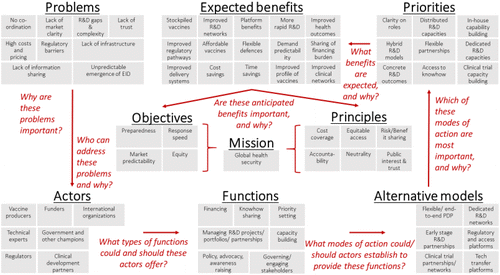
Notes. To reduce the visualisation complexity of the reasoning diagram in this figure, not all means–ends relationships are illustrated among arguments within and between chain blocks. For details, see Table B.2 in Appendix B in the online supplement to this paper.
Clarity on operating principles around equitable access, cost, and risk sharing would be needed regardless of the coordination mechanism chosen. Such an organizational design should aim to generate a pipeline of vaccines for priority EIDs, build technical and institutional capabilities that can accelerate vaccine development and manufacturing in response to newly emerging disease threats in the future, minimize disruptions for vaccine developers, and improve the distribution of R&D capabilities and financing responsibilities across geographical regions. Stakeholders perceived the ultimate objective as securing the world from future EID outbreaks becoming humanitarian and economic crises.
Figure 3 summarizes the strategic objective hierarchy and values for CEPI identified through the objective identification and structuring process. This analysis suggests that to achieve its mission, CEPI should consider four objectives:
improve R&D preparedness through the development of vaccines to the latest R&D stage possible, complemented by other translational R&D milestones and regulatory innovations;
improve the speed of R&D response through the availability of manufacturing capacity on-demand, clinical infrastructure to test vaccine candidates, and rapid-response vaccine platform technologies for EIDs;
improve market predictability through the generation of positive externalities to businesses and to the public, the minimization of disruptions to other business or public health work, and the availability of incentives for vaccine developer engagement in EID vaccine R&D;
improve equity through the availability of vaccines to priority populations, the strengthening of low- and middle-income country (LMIC) capacity, and the promotion of shared responsibility in financing across geographical regions.
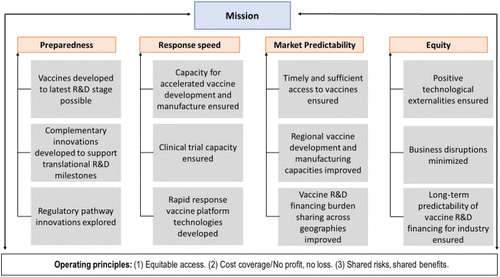
According to stakeholder preferences, equitable access, cost coverage, and risk/benefit sharing are principles, or boundaries within which they would like to see CEPI strategy operationalized; for details, see CEPI business plan (Coalition for Epidemic Preparedness Innovations 2016).
Table 2 presents the criteria definitions and their associated levels of importance considered in the DCE, because these were derived through the objective structuring process.
|
Table 2. A Number of Attributes and Levels of Importance Were Used in the DCE
| Attribute (ends objective) | Indicator (means objective) | Description |
|---|---|---|
| Maximize level of preparedness | Advance vaccines developed to latest stage possible | • A collection of vaccines through end of Phase II and/or stockpiles in the next few years |
| Achieve translational R&D milestones | • A number of complementary innovations such as standardized assays, reagents, and animal models, to support vaccine development | |
| Achieve regulatory innovations | • New or improved decision-making processes for accelerated assessment of safety, efficacy, quality, and performance of EID vaccine candidates by regulators | |
| Maximize response speed | Get facilities ready to manufacture | • Facilities ready to develop and scale up manufacture of vaccines in response to priority disease outbreaks |
| Get clinical infrastructure ready to test | • A network of clinical trial centers brought together and utilized effectively when efficacy testing is needed | |
| Develop rapid response platform technologies | • Vaccine platform technologies ready to use for the rapid development of vaccines against unexpected pathogens | |
| Improve market predictability | Achieve positive externalities | • Benefits from use of platform technologies for vaccine development in other disease areas with different public health impact or commercial use potential |
| Minimize disruptions | • Capacity to redirect R&D efforts to pathogens for which no vaccine is available when need occurs, without disrupting ordinary business and public health work | |
| Secure long-term predictability of financing | • Cost recovery for R&D guaranteed and market size expectations clarified through appropriate incentives established | |
| Improve equity | Promote vaccine access | • Timely and sufficient access to licensed or stockpiled Phase I/II vaccines by countries/populations in need in case of outbreaks, utilizing WHO guidance |
| Promote LMIC capacity benefits | • Increased vaccine development and scale-up manufacturing capacity for local responses to outbreaks, regionally dispersed across LMIC geographies | |
| Increase sharing of responsibilities | • Shared burden of financing vaccine development and rational distribution of governance roles and responsibilities across north- and south-based entities |
Note. The levels of importance used in the DCE are as follows: At the high importance level, the targets for all three indicators must be met. At the low importance level, the targets for at least one indicator may be met. At the no importance level, it does not matter whether targets for any of the three indicators are met or not.
Table 3 presents the overall effect and statistical significance of the strategic objectives (attributes in the DCE) on the attractiveness of CEPI’s strategy. As these figures demonstrate, all four strategic objectives included in the DCE are significant and should be considered in the formulation of an attractive CEPI strategy.
|
Table 3. The DCE Generated a Number of Overall Effects and Statistically Significant Attributes
| Effect summary | Likelihood ratio tests | |||
|---|---|---|---|---|
| Attribute | Logworth | p-value | Likelihood ratio χ2 | Prob. > χ2 |
| Preparedness | 21.078 | 0.000 | 97.066 | <0.0001 |
| Market predictability | 6.186 | 0.000 | 28.487 | <0.0001 |
| Response speed | 5.994 | 0.000 | 27.604 | <0.0001 |
| Equity | 5.874 | 0.000 | 26.637 | <0.0001 |
Table 4 presents the independent effect that different importance levels assigned to each strategic objective would have on the overall attractiveness of CEPI’s strategy, based on the DCE. We define strategy attractiveness as a function of the level of importance placed on preparedness, response speed, market predictability, and equity objectives, and the means objectives’ targets associated with each of these ends and their importance levels. As the parameter estimates in the table suggest, placing low or high importance on preparedness and on market predictability would have a strong positive effect on the attractiveness of CEPI’s strategy. In contrast, placing low importance on equity and on response speed would have a positive effect on strategy effectiveness but a diminishing and statistically uncertain effect if they were given high importance.
|
Table 4. The Relative Importance of Strategic Objectives Varied in CEPI Strategy Choice
| Parameter | Coefficient | Standard error | Lower 95% | Upper 95% | p-value |
|---|---|---|---|---|---|
| Preparedness (low importance) | 1.56 | 0.22 | 1.15 | 2.04 | 0.00 |
| Preparedness (high importance) | 1.16 | 0.29 | 0.59 | 1.75 | 0.00 |
| Market predictability (low importance) | 0.71 | 0.20 | 0.33 | 1.14 | 0.00 |
| Market predictability (high importance) | 1.08 | 0.28 | 0.53 | 1.64 | 0.00 |
| Response speed (low importance) | 0.81 | 0.17 | 0.48 | 1.14 | 0.00 |
| Response speed (high importance) | 0.25 | 0.27 | −0.28 | 0.78 | 0.36 |
| Equity (low importance) | 0.83 | 0.18 | 0.49 | 1.19 | 0.00 |
| Equity (high importance) | 0.21 | 0.25 | −0.28 | 0.71 | 0.39 |
| Model fit criteria | |||||
| Negative log-likelihooda | 470.45 | ||||
| Negative Firth log-likelihooda | 442.78 |
a The values of the negative log-likelihood indicate, overall, a good model fit. However, small sample sizes may also suggest biased parameter estimates, and in order to address this problem, all estimates presented in Table 2 are Firth (1993) bias adjusted.
Based on the dominance and consistency tests included in the survey choice sets, 95% of DCE survey respondents appear to have provided a consistent response and 80% of them correctly addressed the dominance question. When the probability that the dominance question was preferred was modelled based on the choice model (Tervonen et al. 2018), we estimated that only 35% of respondents would be expected to select the dominant option, suggesting that DCE respondents attended to the task.
Figure 4 presents the predicted probabilities associated with formulating a desirable CEPI strategy given different combinations between low and high levels of importance of the strategic objectives and comparing these to a baseline strategy. These results indicate stakeholder preferences for the strategic objectives assessed. Specifically, 16 alternative strategy formulations were ranked based on their likelihood of being considered attractive. The baseline comparator was a strategy that places high importance on preparedness and market predictability, and low importance on response speed and equity. The least attractive strategy is one that places low importance on all strategic objectives. There would be approximately a 61% chance that a CEPI strategy would be desired if high importance was placed on all objectives, ignoring statistical significance values. And there would be a 10% chance that a CEPI strategy would be desired if low importance was placed on all objectives.
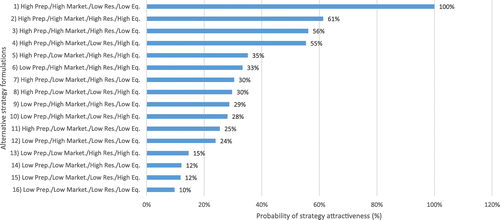
Note. Prep., Preparedness; Market., market predictability; Res., response speed; Eq., equity objectives.
Given the statistical uncertainty around high importance levels preferred for equity and response speed, and accounting for objective definitions (Table 2), the above results suggest that priority should be given to the development of vaccines to the latest phase possible and at least through the end of Phase IIa (i.e., clinical safety and immunogenicity studies in humans), complemented by enabling science and regulatory innovations. Priority should also be given to generating incentives for vaccine developers and minimizing disruptions from engaging in EID vaccine R&D. Furthermore, at least one of the following activities should be prioritized under the response speed objective: developing rapid-response vaccine platform technologies, ensuring the availability of manufacturing capacity, or strengthening clinical infrastructure to test EID vaccines. And at least one of the following activities should be prioritized under the equity objective: ensuring availability of EID vaccines to priority populations, strengthening LMIC capacity for vaccine R&D, or promoting shared responsibility in financing across geographical regions.
Discussion
This study demonstrates how decision analysis can support a rational and transparent approach to strategy formulation that accounts for and ranks the preferences of multiple stakeholders in an international health policy setting. There are three key lessons and implications that can be drawn from the study. First, it is possible to combine rigorous problem structuring and quantitative preference elicitation methods to support strategy development and objective setting in a highly complex R&D planning context with many diverse and strong interests. We show how the VFT approach can be used to identify and structure stakeholder values to clarify strategic objectives in global health R&D when the diversity of stakeholder perspectives and the complexity of decision making are both high. Furthermore, the application of the DCE demonstrates how it can be used to elicit preferences over difficult strategic choices prior to their implementation.
Second, as the global governance structure for outbreak response continues to emerge, it will be important to apply these techniques to elicit clear strategic objectives and means that will frame the desired response, and in doing so, to improve EID mitigation efforts. Given the large number of stakeholders with different and sometimes competing objectives, there is a danger that more widely held values and strategic objectives can be hijacked or lost through an interest-heavy social bargaining process. The application of value-based thinking and choice trade-offs can rationalize and democratize this process in the future.
Third, decision analysis can be implemented in a dynamic way, allowing it to adapt to rapidly changing decision-making contexts. It is important to demonstrate this quality to maintain confidence in its practical, supportive function (Keeney 1996). For example, a new R&D investment strategy to combat antimicrobial resistance would likely require a different set of objectives and would suggest a different structuring of means and ends and their respective trade-offs, even if objectives appeared to be the same in name (imagine how many different meanings equity can have in health; Mooney 1987). This should reduce the generalizability of decision-analytic outcomes across different settings. However, the utility of decision analysis rests mainly on its methods for value structuring and elicitation, which, if applied appropriately, can justify differences in content while ensuring analytical rigor and transparency in a variety of management decisions.
What is Known on This Topic
Decision analysis can enhance transparency and offer an explicit measure of comparison among options to promote rational decision making. This attribute is well documented in the strategic management literature (Montibeller et al. 2006) even when social bargaining processes tend to otherwise dominate (Thomas 1984, Montibeller and Franco 2010). Even though the application of decision analysis for strategic goal setting in health is limited (Franken and Koolman 2013, Ginter et al. 2013), evidence from other sectors suggests that at least half of all strategic decisions fail as a result of poor decision-making processes (Nutt 2002, Bryson 2018). Premature dispute resolution and consensus building approaches can prevent choices from becoming apparent to decision makers and therefore promote inferior, internally inconsistent policy choices, in the absence of decision-analytic approaches that structure and address the relative importance of stakeholder values (McDaniels and Trousdale 1999, Abuabara et al. 2017). Organizations that satisfy key stakeholders’ values are more likely to enhance the legitimacy of their strategies (Ackermann and Eden 2011). However, the impact of decision analysis on commitment to action, it has been argued, cannot be proven easily at an empirical level (Montibeller and Franco 2010). Moreover, decision analysis can lose its meaning if the skills, resources, or commitment of stakeholders are lacking when engaging in deliberative strategic planning (Bryson 2018).
The evidence base from previous research and practice on strategic objectives for EID vaccine R&D is limited. Following the 2015–2016 Ebola outbreak in West Africa, the WHO created a R&D Blueprint for EID preparedness and response coordination at the global level (Kieny et al. 2016). Recent outbreaks (Ebola and subsequently Zika) also revealed that few reward systems are in place to compensate companies for the costs they incur in responding to these outbreaks, lending weight to other preexisting disincentives to private sector participation such as poor commercial prospects, uncertain regulatory pathways, and a lack of preestablished operating principles for coordination (Kamal-Yanni 2015, World Economic Forum 2015, Lucey and Gostin 2016). Equity is an important concept and common objective in global health financing organizations, such as the Bill & Melinda Gates Foundation (2018), Wellcome Trust (2018), and Global Alliance for Vaccines and Immunisation (2018). This principle has been well addressed in strategies of product-development partnerships and global health R&D initiatives in the endemic, poverty, or neglected disease space; examples include the Drugs for Neglected Diseases Initiative (2009), Medicines for Malaria Venture (2017), and Program for Appropriate Technology in Health (2018).
What This Study Adds
Our study attempts to overcome some of the challenges identified in the literature in two ways. First, definitions of preparedness and response objectives were constructed, especially as they relate to vaccine development. Moreover, this is the first time that equity and market predictability concerns for EID R&D have been explicitly addressed at the level of strategic priority setting.
Second, the systematic structuring of values and some quantitative thinking about value trade-offs has brought strategic decisions stemming from CEPI’s social bargaining processes closer to actual commitments for action, as reflected in CEPI business plan and actions taken thereafter. On one hand, CEPI’s leadership group and founding partners endorsed these means–ends strategies as part of CEPI’s business plan launch in late 2016, after numerous formal decision-making forums and deliberations informed by different versions of the decision-analytic findings (Coalition for Epidemic Preparedness Innovations 2016, Kristensen 2016, Brende et al. 2017). Not all quantitative data presented in this article (e.g., Table 4 and Figure 4) were presented in detail to the decision makers, because of both cognitive burden concerns and a perceived risk of diverting too much attention from social bargaining in an extremely time-constrained environment. However, overall analytical outcomes—such as logworth values, likelihood ratio statistics, and overall utility functions of the most preferred strategy formulations (Table 3)—were reported and offered stimuli for discussions around policy values and fundamental objectives.
In addition, since CEPI’s official launch (Reuters 2017), the organization has issued three separate investment opportunities under the just-in-case preparedness and response speed (just-in-time preparedness) objectives: two calls for proposals (CfPs) to support vaccine development against five priority EIDs (Coalition for Epidemic Preparedness Innovations 2017, Christodoulou 2019) and a CfP to support the development of rapid, multipurpose vaccine platform technologies (Coalition for Epidemic Preparedness Innovations 2018). All CfPs are supported by decision-analytic frameworks that are aligned with CEPI’s strategic goals (Gouglas and Marsh 2019, Gouglas et al. 2019). Under the just-in-case preparedness objective, CEPI has also been advancing efforts on standardized assays and regulatory pathways for emergency use through various working groups in close collaboration with the WHO (Gouglas et al. 2019). Under the equity objective, advocacy and resource mobilization efforts are under way to improve the equity in EID vaccine R&D financing across geographic regions. CEPI is working closely with several partners to improve the long-term predictability of financing EID vaccines, including through stockpile commitments, among other examined market incentives (Gouglas et al. 2019). Under the platform technology CfP, CEPI is also working with industry to leverage positive technological externalities to other vaccine areas, thus contributing to CEPI’s commitment to the market predictability objective. Retrospectively, this evidence of CEPI’s commitment to action comes in contrast with the prevailing skepticism in the literature about the lack of impact that decision analysis can have on strategic decisions in practice.
Limitations
VFT is only one of many problem-structuring techniques in decision analysis (Leon 1999, Belton and Stewart 2010, Marttunen et al. 2017). VFT assists with strategy setting because it clarifies stakeholder preferences and objectives in ill-structured decision problems (Keeney 2008, Montibeller and Franco 2010). It does not, however, enhance perceptions of the course of future events that may impact decision making, which other techniques may be better suited to stimulate (Kunz et al. 2016).
The elusive and often conflicting nature of value statements can prevent them from conforming to the classical concept of goal hierarchy that is also used in VFT (Wenstøp and Myrmel 2006). Moreover, VTF can be mentally challenging (Arvai et al. 2001), may require time and effort to be understood (Kunz et al. 2016), and can become complex in its visualization (Becker et al. 1995). A wider range and creative use of problem-structuring tools may therefore be required to identify and understand the interaction of stakeholder values within an overall analytical frame of means–ends objectives (Kunz et al. 2016). The application of a number of tools presented in our study, including evidence drawn from the literature, semistructured interviews, group discussions, and means–ends mapping, demonstrates how their use can help VFT specify and structure the objectives and then use them to inform the decision process.
This study attempted to address several drawbacks associated with DCEs. First, a systematic approach to criteria development in DCEs is generally lacking (Helter and Boehler 2016). When cognitive shortcuts are used or erroneous interpretations are made of criteria and their preferential relationships, DCEs can generate unreliable inputs for policy decisions (Ali and Ronaldson 2012). Our study has attempted to address this limitation through the use of a rigorous method to identify and structure criteria prior to DCE design.
Second, DCEs require precise criteria definitions, and ambiguity in the specification of their assessment levels can lead to less realistic or meaningful analytical outcomes (Hall et al. 2004, Ryan 2004, Mangham et al. 2009). Drawing directly from the results of the problem-structuring process, the specifications of criteria levels in our model reflected the early maturity of the organization. As CEPI strategy becomes more focused over time, future decision-analytic exercises should improve the specificity of criteria descriptions and assessment levels and should consider additional trade-offs between subcriteria where preferential independence between these is observed.
Third, the sample size for the DCE was small in relation to many DCEs commonly found in the literature (de Bekker-Grob et al. 2012, de Bekker-Grob et al. 2015), which may have influenced our findings. Given the sample size, number of choice sets, alternatives, and criteria levels included in the design, the DCE presented here was viewed as explorative (Baltussen et al. 2006). Although there is no agreement on what the minimum sample size or method for calculating this in the DCEs should be (de Bekker-Grob et al. 2015), our working assumption during the DCE design was that as few as 20 respondents should suffice to estimate broadly reliable preference data in exploratory DCE contexts (Orme 2010, Lancsar and Louviere 2008, Bridges et al. 2011a). We received 25 responses to Version 1 and 30 responses to Version 2 of our survey. Using the Johnson and Orme rule of thumb (Johnson and Orme 2003, Orme 2010), which is the most commonly applied minimum sample-size calculation rule in DCEs in healthcare (de Bekker-Grob et al. 2015), the minimum sample size required for both survey versions was met, given the number of attributes and levels included in the design.
Stakeholder preferences varied moderately, as reflected in the standard deviation estimates (Table 4), even after accounting for bias effects in the design of the survey. Preference variation was most evident around placing high importance on market predictability, response speed, and equity objectives. This variation was statistically significant in the case of market predictability but not so for response speed and equity objectives. Perhaps a larger sample size in the future could give a more definitive answer as to the expected coefficients and associated variation on high levels of importance for response speed and equity objectives.
Finally, we should acknowledge some additional, practical limitations with the method’s application. First, while the DCE allowed for a rough ordering of objectives in the face of preference variation, the methodology did not remove this variation, and it was important to engage stakeholders in thoughtful discussion without too much emphasis on quantitative data, given practical time constraints. On one hand, this meant a missed opportunity for validating stakeholders’ preference inputs into the DCE, which is generally considered a good practice in the decision analysis literature (Salo and Hämäläinen 2010, Montibeller and Winterfeldt 2015, Marsh et al. 2016). On the other hand, considering the practical constraints—cognitive burden, sample size, and timeline limitations—strategic decision-making processes are not always amenable to rigorous preference elicitation.
Second, in the context of sample-size limitations, as is often the case when working with expert and decision-making committees, there are limitations on the complexity of the value models that can be characterized by choice models, such as DCEs. However, this will be less of a concern when stakeholders whose values are of interest are a larger group, such as patients or the general population. Nevertheless, a DCE was employed because the expert and decision-making groups were quite representative of the global community relevant to EID mitigation, and logistical limitations meant that it was necessary to elicit preferences using a survey. This decision was vindicated by the results of the choice analysis, which was sufficiently precise to allow us to differentiate preferences associated with many of the levels in the choice sets. Other preference elicitation methods could also be employed, such as workshop-based swing weighting (e.g., Phillips and Bana e Costa 2007); however, such methods are generally restricted by practical constraints of time, location, and availability of stakeholders engaged.
Conclusions
The analysis reported in this study demonstrates the use of an exploratory decision analysis process to support the identification, structuring, and prioritization of strategic objectives of a new organization aimed at improving global R&D preparedness against EID epidemics. The systematic structuring of values and some quantitative thinking about value trade-offs helped CEPI stakeholders explicitly agree on a commonly preferred set of strategic commitments for action, as reflected in CEPI’s business plan, despite differences in their perspectives. In doing so, the analysis has provided a strategic narrative upon which the organization still bases its investment objectives, as reflected by several major funding opportunities issued over the past three years.
More broadly, our study highlights how formal decision analysis supports priority setting for international strategic initiatives with multiple stakeholders. It provides analytical rigor to problem structuring and preference elicitation, increasing the level of transparency and explicitness of complex strategic decision processes and outcomes in global fora. In settings where large numbers of stakeholders with conflicting objectives prevail, negotiations can devolve into social bargaining processes that do not accurately reflect the strategic objectives perceived as important by all stakeholders. As new strategies and governance structures for global health continue to emerge, it will be important to apply such techniques to elicit clear strategic objectives through democratic means. The application of value-based thinking and choice trade-offs can rationalize and balance strategic decision-making processes in the future.
The authors are grateful to all members of the three CEPI task teams and the leadership group (see “Annex 3: List of CEPI members” in the CEPI business plan (Coalition for Epidemic Preparedness Innovations 2016, pp. 57–59)) for generously sharing their time and insights to ensure the relevance and quality of this research leading up to the formulation of CEPI's business plan for the period 2017–2021.
References
- (2017) A systematic framework based on soft OR approaches to support teamwork strategy: An aviation manufacturer Brazilian company case. J. Oper. Res. Soc. 69(2):220–234.Google Scholar
- (2011) Strategic management of stakeholders: Theory and practice. Long Range Planning 44(3):179–196.Google Scholar
- (2007) Reasoning maps for decision aid: An integrated approach for problem-structuring and multi-criteria evaluation. J. Oper. Res. Soc. 59(5):575–589.Google Scholar
- (1974) Redesigning the Future: A Systems Approach to Societal Problems (John Wiley & Sons, New York).Google Scholar
- (2012) Ordinal preference elicitation methods in health economics and health services research: Using discrete choice experiments and ranking methods. British Medical Bull. 103(1):21–44.Google Scholar
- (2017) Multiple criteria decision analysis (MCDA) for evaluating new medicines in health technology assessment and beyond: The advance value framework. Soc. Sci. Medicine 188(September):137–156.Google Scholar
- (2001) Testing a structured decision approach: Value-focused thinking for deliberative risk communication. Risk Anal. 21(6):1065–1076.Google Scholar
- (2006) Toward a multi-criteria approach for priority setting: An application to Ghana. Health Econom. 15(7):689–696.Google Scholar
- (1999) Decision support systems in action: Integrated application in a multi-criteria decision aid process. Eur. J. Oper. Res. 113(2):315–335.Google Scholar
- (1995) Visualizing network data. IEEE Trans. Visualization Comput. Graphics 1(1):16–28.Google Scholar
- (2002) Multiple Criteria Decision Analysis: An Integrated Approach (Springer Science & Business Media, Dordrecht, Netherlands).Google Scholar
- (2010) Problem structuring and MCDA. Ehrgott M, Figueira JR, Greco S, eds. Trends in Multiple Criteria Decision Analysis (Springer, New York), 209–239.Google Scholar
- (1997) Integrated support from problem structuring through to alternative evaluation using COPE and VISA. J. Multi-Criteria Decision Anal. 6(3):115–130.Google Scholar
Bill & Melinda Gates Foundation (2018) Culture & values. Accessed May 14, 2019, https://www.gatesfoundation.org/Careers/Culture-and-Values.Google Scholar- (2015) Federal funding in support of Ebola medical countermeasures R&D. Health Security 13(1):3–8.Google Scholar
- (2014) Federal funding for health security in FY2015. Biosecurity Bioterrorism 12(4):163–177.Google Scholar
- (2017) CEPI—A new global R&D organisation for epidemic preparedness and response. Lancet 389(10066):233–235.Google Scholar
- (2011a) Identifying and prioritizing strategies for comprehensive liver cancer control in Asia. BMC Health Services Res. 11(November):298.Google Scholar
- (2011b) Conjoint analysis applications in health—A checklist: A report of the ISPOR Good Research Practices for Conjoint Analysis Task Force. Value Health 14(4):403–413.Google Scholar
- (2018) Strategic Planning for Public and Nonprofit Organizations: A Guide to Strengthening and Sustaining Organizational Achievement, 5th ed. (John Wiley & Sons, San Francisco).Google Scholar
- (2004) Visible Thinking: Unlocking Causal Mapping for Practical Business Results (John Wiley & Sons, Chichester, UK).Google Scholar
- (2008) Methodology for competitive strategy development. Comput. Oper. Res. 35(6):1865–1873.Google Scholar
- (2015) Beyond Ebola: Lessons to mitigate future pandemics. Lancet Global Health 3(7):e354–e355.Google Scholar
Center for Infectious Disease Research and Policy (2015) Recommendations for accelerating the development of Ebola vaccines. Retrieved May 14, 2019, http://www.cidrap.umn.edu/recommendations-accelerating-development-ebola-vaccines-0.Google Scholar- (2019) CEPI launches call for proposals to develop vaccines against Rift Valley fever and Chikungunya viruses. Accessed May 14, 2019, https://cepi.net/news_cepi/cepi-launches-call-for-proposals-to-develop-vaccines-against-rift-valley-fever-and-chikungunya-viruses/.Google Scholar
Coalition for Epidemic Preparedness Innovations (2016) CEPI—Preliminary business plan 2017–2021. Report, Coalition for Epidemic Preparedness Innovations, Oslo, Norway.Google ScholarCoalition for Epidemic Preparedness Innovations (2017) Call for proposals. Retrieved May 14, 2019, http://cepi.net/CfP.Google ScholarCoalition for Epidemic Preparedness Innovations (2018) Calls for proposals. Retrieved May 14, 2019, http://cepi.net/calls.Google Scholar- (2014) Ebola vaccine trials raise ethical issues. Science 346(6207):289–290.Google Scholar
- (2012) Discrete choice experiments in health economics: A review of the literature. Health Econom. 21(2):145–172.Google Scholar
- (2015) Sample size requirements for discrete-choice experiments in healthcare: A practical guide. Patient 8(5):373–384.Google Scholar
Drugs for Neglected Diseases Initiative (2009) Access policy. Retrieved May 14, 2019, https://www.dndi.org/wp-content/uploads/2018/03/DNDi_Access_Policy.pdf.Google Scholar- (2004) Analyzing cognitive maps to help structure issues or problems. Eur. J. Oper. Res. 159(3):673–686.Google Scholar
- (1998) Making Strategy: The Journey of Strategic Management (Sage Publications, London).Google Scholar
- (2013) Problem structuring: On the nature of, and reaching agreement about, goals. EURO J. Decision Processes 1(1–2):7–28.Google Scholar
- (2000) Constructing and implementing a DSS to help evaluate perceived risk of accounts receivable. Haimes YY, Steuer RE, eds. Research and Practice in Multiple Criteria Decision Making (Springer, Berlin), 248–259.Google Scholar
- (1993) Bias reduction of maximum likelihood estimates. Biometrika 80(1):27–38.Google Scholar
- (2010) What is an adequate sample size? Operationalising data saturation for theory-based interview studies. Psych. Health 25(10):1229–1245.Google Scholar
- (2011) Problem structuring for multicriteria decision analysis interventions. Cochran JJ, Cox LA, Keskinocak P, Kharoufeh JP, Smith JC, eds. Wiley Encyclopedia of Operations Research and Management Science (John Wiley & Sons, Hoboken, NJ).Google Scholar
- (2013) Health system goals: A discrete choice experiment to obtain societal valuations. Health Policy 112(1–2):28–34.Google Scholar
- (2009) Ensuring biologics advanced development and manufacturing capability for the United States government: A summary of key findings and conclusions. Retrieved May 14, 2019, https://apps.dtic.mil/dtic/tr/fulltext/u2/a506569.pdf.Google Scholar
- (2004) Taking the measure of countermeasures: Leaders’ views on the nation’s capacity to develop biodefense countermeasures. Biosecurity Bioterrorism 2(4):320–327.Google Scholar
- (2013) Strategic Management of HealthCare Organizations, 7th ed. (John Wiley & Sons, San Francisco).Google Scholar
Global Alliance for Vaccines and Immunisation (2014) Gavi commits to purchasing Ebola vaccine for affected countries. Retrieved May 14, 2019, http://www.gavi.org/library/news/press-releases/2014/gavi-commits-to-purchasing-ebola-vaccine-for-affected-countries/.Google ScholarGlobal Alliance for Vaccines and Immunisation (2018) Gavi’s strategy. Retrieved May 14, 2019, http://www.gavi.org/about/strategy/.Google Scholar- (2019) Prioritizing investments in new vaccines against epidemic infectious diseases: a multi-criteria decision analysis. J. Multi-Criteria Decision Anal. 26(3–4):153–163.Google Scholar
- (2019) CEPI: Driving progress toward epidemic preparedness and response. Retrieved July 11, 2019, https://www.uniteforsight.org/conference/ppt-2019/Dimitrios%20Gouglas%20PDF.pdf.Google Scholar
- (2018) Estimating the cost of vaccine development against epidemic infectious diseases: A cost minimisation study. Lancet Global Health 6(12):Pe1386–Pe1396.Google Scholar
- (2018) Allocating external financing for health: A discrete choice experiment of stakeholder preferences. Health Policy Planning 33(Suppl 1):i24–i30.Google Scholar
- (2007) Flexible defenses roundtable meeting: Promoting the strategic innovation of medical countermeasures. Biosecurity Bioterrorism 5(3):271–277.Google Scholar
- (2010) The NIAID Radiation Countermeasures Program business model. Biosecurity Bioterrorism 8(4):357–363.Google Scholar
- (2004) Using stated preference discrete choice modelling to evaluate healthcare programs. J. Bus. Res. 57(9):1026–1032.Google Scholar
- (2016) Statistical methods for the analysis of discrete choice experiments: A report of the ISPOR Conjoint Analysis Good Research Practices Task Force. Value Health 19(4):300–315.Google Scholar
- (2016) Developing attributes for discrete choice experiments in health: A systematic literature review and case study of alcohol misuse interventions. J. Substance Use 21(6):662–668.Google Scholar
- (1988) Decision analysis: Practice and promise. Management Sci. 34(6):679–695.Link, Google Scholar
- (2016) Preparing for the next Zika. Nature Biotech. 34(4):384–386.Google Scholar
Institute of Medicine (2010) The Public Health Emergency Medical Countermeasures Enterprise: Innovative Strategies to Enhance Products from Discovery Through Approval: Workshop Summary (National Academies Press, Washington, DC).Google ScholarInternational Crisis Group (2015) The politics behind the Ebola crisis. Report 232, International Crisis Group, Brussels.Google Scholar- (2013) Constructing experimental designs for discrete-choice experiments: Report of the ISPOR Conjoint Analysis Experimental Design Good Research Practices Task Force. Value Health 16(1):3–13.Google Scholar
- (2003) Getting the most from CBC. Report, Sawtooth Software, Sequim, WA.Google Scholar
- (2015) Never again: Building resilient health systems and learning from the Ebola crisis. Retrieved May 14, 2019, https://www.oxfam.org/en/research/never-again-building-resilient-health-systems-and-learning-ebola-crisis.Google Scholar
- (1992) Value-focused Thinking: A Path to Creative Decision Making (Harvard University Press, Cambridge, MA).Google Scholar
- (1994) Using values in operations research. Oper. Res. 42(5):793–813.Link, Google Scholar
- (1996) Value-focused thinking: Identifying decision opportunities and creating alternatives. Eur. J. Oper. Res. 92(3):537–549.Google Scholar
- (2008) Applying value-focused thinking. Military Oper. Res. 13(2):7–17.Google Scholar
- (1992) Value-focused thinking about strategic decisions at BC Hydro. Interfaces 22(6):94–109.Link, Google Scholar
- (2015) The importance of values in evidence-based medicine. BMC Medical Ethics 16(1):69.Google Scholar
- (2016) The need for global R&D coordination for infectious diseases with epidemic potential. Lancet 388(10043):460–461.Google Scholar
- (2004) Learning from SARS: Preparing for the Next Disease Outbreak: Workshop Summary (National Academies Press Washington, DC).Google Scholar
- (2016) CEPI: New vaccines for a safer world. Retrieved August 8, 2019, https://www.imi.europa.eu/sites/default/files/uploads/documents/news-events/events/2016/biopreparedness_roettingen_CEPI_new_vaccines_for_safer_world.pdf.Google Scholar
- (2016) Combining value-focused thinking and balanced scorecard to improve decision-making in strategic management. J. Multi-Criteria Decision Anal. 23(5–6):225–241.Google Scholar
- (2009) A review of the application and contribution of discrete choice experiments to inform human resources policy interventions. Human Resources Health 7(July):62.Google Scholar
- (2008) Conducting discrete choice experiments to inform healthcare decision making. Pharmacoeconomics 26(8):661–677.Google Scholar
- (1999) Value-focused thinking vs. alternative-focused thinking: Effects on generation of objectives. Organ. Behav. Human Decision Processes 80(3):213–227.Google Scholar
- (2016) The emerging Zika pandemic: Enhancing preparedness. JAMA 315(9):865–866.Google Scholar
- (2012) Meeting the challenges of medical countermeasure development. Microbial Biotech. 5(5):588–593.Google Scholar
- (2009) How to do (or not to do)…Designing a discrete choice experiment for application in a low-income country. Health Policy Planning 24(2):151–158.Google Scholar
- (2012) Prioritizing investments in public health: A multi-criteria decision analysis. J. Public Health 35(3):460–466.Google Scholar
- . (2016) Multiple criteria decision analysis for healthcare decision making—Emerging good practices: Report 2 of the ISPOR MCDA Emerging Good Practices Task Force. Value Health 19(2):125–137.Google Scholar
- (2017) Structuring problems for multi-criteria decision analysis in practice: A literature review of method combinations. Eur. J. Oper. Res. 263(1):1–17.Google Scholar
- (2010) Sample size and saturation in PhD studies using qualitative interviews. Forum: Qualitative Soc. Res. 11(3):8.Google Scholar
- (1981) Challenging Strategic Planning Assumptions (John Wiley & Sons, New York).Google Scholar
- (1999) Value-focused thinking in a difficult context: Planning tourism for Guimaras, Philippines. Interfaces 29(4):58–70.Link, Google Scholar
- (1974) Conditional logit analysis of qualitative choice behavior. Zarembka P, ed. Frontiers in Econometrics (Academic Press, New York), 105–142.Google Scholar
- (2016) Wicked problems: Turning strategic management upside down. J. Bus. Strategy 37(1):34–43.Google Scholar
Medicines for Malaria Venture (2017) MMV strategic focus 2017–2021: Treating and eradicating malaria. Retrieved May 14, 2019, https://www.mmv.org/sites/default/files/uploads/docs/publications/MMV_BusinessPlan_Executive%20Summary.pdf.Google Scholar- (2006) Causal maps and the evaluation of decision options—A review. J. Oper. Res. Soc. 57(7):779–791.Google Scholar
- (2010) Multi-criteria decision analysis for strategic decision making. Zopounidis C, Pardalos PM, eds. Handbook of Multicriteria Analysis, Applied Optimization, vol. 103 (Springer, Berlin), 27–48.Google Scholar
- (2015) Cognitive and motivational biases in decision and risk analysis. Risk Anal. 35(7):1230–1251.Google Scholar
- (2006) Combining scenario planning and multi-criteria decision analysis in practice. J. Multi-Criteria Decision Anal. 14(1–3):5–20.Google Scholar
- (2008) Reasoning maps for decision aid: An integrated approach for problem-structuring and multi-criteria evaluation. J. Oper. Res. Soc. 59(5):575–589.Google Scholar
- . (2015) Will Ebola change the game? Ten essential reforms before the next pandemic. The report of the Harvard-LSHTM Independent Panel on the Global Response to Ebola. Lancet 386(10009):2204–2221.Google Scholar
- (1987) What does equity in health mean? World Health Statist. Quart. 40(4):296–303.Google Scholar
- (2013) Using value-focused thinking in Brazil. Pesquisa Operacional 33(1):73–88.Google Scholar
- (2013) The U.S. Department of Defense and global health: Infectious disease efforts. Retrieved May 14, 2019, https://www.kff.org/global-health-policy/report/the-u-s-department-of-defense-and-global-health-infectious-disease-efforts/.Google Scholar
- (2015) Measuring the value of prescription drugs. New England J. Medicine 373(27):2595–2597.Google Scholar
- (2014) Vaccine-based mitigation of the 2014 Ebola viral disease (EVD) epidemic: Gap analysis and proposal for Norwegian initiatives. Report to the Norwegian Ministry of Health, Norwegian Institute of Public Health, Oslo, Norway.Google Scholar
- (2002) Making strategic choices. J. Management Stud. 39(1):67–96.Google Scholar
- (2010) Sample size issues for conjoint analysis. Orme B, ed. Getting Started with Conjoint Analysis: Strategies for Product Design and Pricing Research, 2nd ed. (Research Publishers LLC, Madison, WI), 57–66.Google Scholar
- (2016) The Ebola vaccine team B: A model for promoting the rapid development of medical countermeasures for emerging infectious disease threats. Lancet Infectious Diseases 16(1):e1–e9.Google Scholar
- (2016) Quality vaccines for all people: Report on the 16th annual general meeting of the Developing Countries Vaccine Manufacturers’ Network, 05–07th October 2015, Bangkok, Thailand. Vaccine 34(31):3562–3567.Google Scholar
- (1998) Foundations 2025: A value model for evaluating future air and space forces. Management Sci. 44(10):1336–1350.Link, Google Scholar
- (2013) Invited review—Survey developments and areas for future research. J. Multi-Criteria Decision Anal. 20(1–2):49–60.Google Scholar
- (2007) Transparent prioritisation, budgeting and resource allocation with multi-criteria decision analysis and decision conferencing. Ann. Oper. Res. 154(1):51–68.Google Scholar
- (2015) Establishing a global vaccine-development fund. New England J. Medicine 373(4):297–300.Google Scholar
- (2010) What is value in healthcare? New England J. Medicine 363(26):2477–2481.Google Scholar
Program for Appropriate Technology in Health (2018) Center for vaccine innovation and access. Retrieved May 14, 2019, http://sites.path.org/cvia/about-cvia/.Google Scholar- (2017) Strategic management decision-making in a complex world: Quantifying, understanding, and using trade-offs. ICES J. Marine Sci. 74(2):499–510.Google Scholar
- (2006) Bioterrorism—Preparing to fight the next war. New England J. Medicine 354(2):113–115.Google Scholar
- (2017) Global coalition aims to outpace epidemics with new vaccines. Retrieved May 14, 2019, https://www.reuters.com/article/us-davos-meeting-vaccines/global-coalition-aims-to-outpace-epidemics-with-new-vaccines-idUSKBN15231Y.Google Scholar
- (1973) Dilemmas in a general theory of planning. Policy Sci. 4(2):155–159.Google Scholar
- (2017) Modelling multicriteria value interactions with reasoning maps. Eur. J. Oper. Res. 258(3):1054–1071.Google Scholar
- (2004) Problem structuring methods in action. Eur. J. Oper. Res. 152(3):530–554.Google Scholar
- (2017) New vaccines against epidemic infectious diseases. New England J. Medicine 376(7):610–613.Google Scholar
- (2004) Discrete choice experiments in healthcare. BMJ 328(7436):360–361.Google Scholar
- (2008) Using Discrete Choice Experiments to Value Health and Healthcare (Springer, Dordrecht, Netherlands).Google Scholar
- (2009) Research and development policy on bioterrorism medical countermeasures in the United States. Kansenshogaku Zasshi 83(1):1–6.Google Scholar
- (2010) Multicriteria decision analysis in group decision processes. Kilgour D, Eden C, eds. Handbook of Group Decision and Negotiation, Advances in Group Decision and Negotiation, vol. 4 (Springer, Dordrecht, Netherlands).Google Scholar
- (2016) The neglected dimension of global security—A framework for countering infectious-disease crises. New England J. Medicine 374(March):1281–1287.Google Scholar
SAS Institute Inc. (2016) JMP® 13 Consumer Research (SAS Institute Inc., Cary, NC).Google Scholar- (2018) Saturation in qualitative research: Exploring its conceptualization and operationalization. Quality Quantity 52(4):1893–1907.Google Scholar
- (2013) Sustaining a regional emerging infectious disease research network: A trust-based approach. Emerging Health Threats J. 6(1):19957.Google Scholar
- (2014) A value-focused approach to energy transformation in the United States Department of Defense. Decision Anal. 11(2):117–132.Link, Google Scholar
- (2003) Biodefense R&D: Anticipating future threats, establishing a strategic environment. Biosecurity Bioterrorism 1(3):193–202.Google Scholar
- (1999) Developing a foundation for strategy at Seagate Software. Interfaces 29(6):4–15.Link, Google Scholar
- (2018) Assessing rationality in discrete choice experiments in health: An Investigation into the use of dominance tests. Value Health 21(10):1192–1197.Google Scholar
- . (2016) Multiple criteria decision analysis for healthcare decision making—An introduction: Report 1 of the ISPOR MCDA Emerging Good Practices Task Force. Value Health 19(1):1–13.Google Scholar
- (1984) Strategic decision analysis: Applied decision analysis and its role in the strategic management process. Strategic Management J. 5(2):139–156.Google Scholar
- (2015) Global harmonisation in vaccine price. Lancet Infectious Diseases 15(3):249.Google Scholar
- (2015) Emergency Ebola response: A new approach to the rapid design and development of vaccines against emerging diseases. Lancet Infectious Diseases 15(3):356–359.Google Scholar
United Nations Secretary General (2016) Protecting humanity from future health crises: Report of the High-level Panel on the Global Response to Health Crises. Report, United Nations, New York.Google ScholarU.S. Department of Health and Human Services (2012) An HHS retrospective on the 2009 H1N1 influenza pandemic to advance all hazards preparedness. Retrieved May 14, 2019, https://www.phe.gov/Preparedness/mcm/h1n1-retrospective/Documents/h1n1-retrospective.pdf.Google ScholarU.S. Food and Drug Administration (2014) Regulatory pathways for licensure and use of Ebola virus vaccines during the current outbreak FDA perspective. Retrieved May 14, 2019, http://www.who.int/immunization/diseases/ebola/Finn_WHO_Sept_29_2014.pdf.Google Scholar- (2006) All of Statistics: A Concise Course in Statistical Inference, 2nd ed. (Springer-Verlag, New York).Google Scholar
Wellcome Trust (2018) Wellcome’s approach to equitable access to healthcare interventions. Retrieved May 14, 2019, https://wellcome.ac.uk/wellcomes-approach-equitable-access-healthcare-interventions.Google Scholar- (2006) Structuring organizational value statements. Retrieved May 14, 2019, http://home.bi.no/fag87027/wenstop/value_structure.pdf.Google Scholar
World Economic Forum (2015) Managing the risk and impact of future epidemics: Options for public-private cooperation. Retrieved May 14, 2019, http://www3.weforum.org/docs/WEF_Managing_Risk_Epidemics_report_2015.pdf.Google ScholarWorld Health Organization (2010) Strengthening response to pandemics and other public-health emergencies. Report, World Health Organization, Geneva.Google ScholarWorld Health Organization (2015) Blueprint for R&D preparedness and response to public health emergencies due to highly infectious pathogens. Report, World Health Organization, Geneva.Google ScholarWorld Health Organization (2016a) Implementation of the international health regulations (2005): Report of the review committee on the role of the international health regulations (2005) in the Ebola outbreak and response. Retrieved July 11, 2019, http://apps.who.int/gb/ebwha/pdf_files/WHA69/A69_21-en.pdf?ua=1.Google ScholarWorld Health Organization (2016b) WHO Ebola R&D effort—Vaccines, therapies, diagnostics. Retrieved May 14, 2019, http://www.who.int/medicines/ebola-treatment/ebola_r_d_effort/en/.Google Scholar- (2001) Value-focused thinking about strategic management of radio spectrum for mobile communications in Korea. Telecomm. Policy 25(10–11):703–718.Google Scholar
Verification Letter
Dr. Frederik Kristensen, Deputy CEO, CEPI – Coalition for Epidemic Preparedness Innovations, Marcus Thranes Gate 2, 0473 Oslo, Norway, writes:
“On behalf of CEPI, I hereby confirm that the decision analytic approach presented in the article submitted for your consideration and titled ‘Setting Strategic Objectives for the Coalition for Epidemic Preparedness Innovations: An Exploratory Decision Analysis Process’ was employed in 2016 to inform the establishment of CEPI’s interim Business Plan and strategic objectives.
“The methodology employed was beneficial for structuring a complex dialogue process between multiple stakeholders with conflicting perspectives and helped determine the nature and structure of CEPI’s interim strategic objectives in an analytically rigorous way.”
Dimitrios Gouglas is a portfolio manager at the Coalition for Epidemic Preparedness Innovations and a research fellow at the Norwegian Institute of Public Health and the University of Oslo, Faculty of Medicine, Department of Health Management and Health Economics. His areas of management and research experience are strategy consulting, decision analysis, policy and financing in healthcare, and global health research and development.
Kendall Hoyt is assistant professor at the Geisel School of Medicine and lecturer at the Thayer School of Engineering, Dartmouth College. She studies biodefense policy, global health policy, and biomedical R&D strategy and teaches courses on health system innovation and biosecurity. She is a visiting scholar at the Belfer Center for Science and International Affairs at Harvard Kennedy School. She is the author of Long Shot: Vaccines for National Defense (Harvard University Press, 2012).
Elizabeth Peacocke is a senior advisor at the Norwegian Institute of Public Health. She was seconded to assist in establishing the Coalition for Epidemic Preparedness Innovations. Her areas of management expertise are related to implementation of public health initiatives in high-, middle-, and low-income country settings. She is currently implementing evidence for policy decision support projects in low- and middle-income countries.
Aristidis Kaloudis is professor in the Economics and Management Unit at the Norwegian University of Science and Technology, Faculty of Economics and Management, Department of Industrial Economics and Technology Management, at Gjøvik. His main research interests are economics of industrial innovation and impacts of research and development and innovation, including impacts of research and innovation policy decision making.
Trygve Ottersen is director of the Division for Health Services at the Norwegian Institute of Public Health, working with health services research, systematic reviews and health technology assessments, the dissemination and use of knowledge, and global health. He is also an associate professor at the Department of Community Medicine and Global Health at University of Oslo. His own research focuses on priority setting, universal health coverage, transnational threats, and development assistance.
John-Arne Røttingen is the chief executive of the Research Council of Norway, adjunct professor at the Harvard T. H. Chan School of Public Health, and visiting fellow at the Blavatnik School of Government, Oxford University. He was the founding chief executive officer of CEPI, executive director of infection control and environmental health at the Norwegian Institute of Public Health, and a professor of health policy at the University of Oslo.