Learning by Doing: The Industrial and Applied Mathematics Program at Eindhoven University of Technology
Abstract
The Industrial and Applied Mathematics (IAM) master’s program of the Department of Mathematics and Computer Science at the Eindhoven University of Technology was awarded the INFORMS UPS George D. Smith Prize in 2022. This paper provides an overview of the department’s history, highlights the program’s innovative aspects that led to its recognition, and describes how the program aims at educating operations research (OR) practitioners for today’s society. Eindhoven University of Technology emphasizes collaboration with industry, societal involvement, and scientific excellence. These principles permeate all of its departments and programs. We explain how IAM contributes to this mission, and we explore the educational approaches that are used to prepare skilled OR practitioners.
History: This paper was refereed.
Funding: This work was partially supported by the INFORMS UPS George D. Smith Prize 2022.
Introduction
In 2022, the Industrial and Applied Mathematics master’s program (IAM) of the Department of Mathematics and Computer Science (M&CS) at the Eindhoven University of Technology (TU/e) won the prestigious INFORMS UPS George D. Smith Prize in recognition of the innovative education offered within IAM that graduates effective operations research (OR) practitioners. Ever since the inaugural class of 1960, the program has consistently evolved to incorporate educational advancements, foster and strengthen industrial and societal connections, and align with scientific progress.
This paper explores the components of IAM that meet the needs of students and the demands of industry, society, and science. The goal of this paper is to inspire other programs by sharing the best practices of IAM. The program’s philosophy stems from the university’s founding principles and benefits from the synergistic ecosystem created by regional, national, and European collaborations. We discuss the distinct concepts that underpin the program’s design and their reflection in the curriculum. We believe that our approach is transformative and educationally innovative for both graduates and the regional society. We trust that elements of our philosophy can be inspirational for other programs in operations research and data analytics.
We present basic information on the institute and the department in the remainder of this section. We summarize the “Innovative Aspects of Our Approach,” one of which is the unique ecosystem surrounding IAM. We give more information on how this has shaped the program in “The Unique Ecosystem Surrounding IAM.” The critical factors of the program and its design are highlighted in the subsequent section. In “The Curriculum,” we provide more detailed information on the curriculum, a highlight of which is the flagship “Professional Portfolio Course,” which we present thereafter. We believe that the added value of this course is significant and that it should be incorporated into OR programs. We provide sufficient detail to allow other universities and programs to determine whether they can adapt our approach to meet their requirements. We believe that this is a holistic and systematic model that has enabled us to create an award-winning educational experience for students. The section “Examples of Student Projects” highlights through two examples our involvement with society, the high caliber of student-led research, and its direct link to implementation. In “Conclusion,” we summarize the characteristics of IAM.
The Eindhoven University of Technology
TU/e, one of the four technical universities in The Netherlands, is a young university with strong ties to industry since its establishment in 1956. Founded as a polytechnic institution with support from industry (notably Philips), local government, and academia, TU/e played a crucial role in the growth of Eindhoven as an industrial and educational hub. This was a major contribution to the further growth of the city and to the increasing diversity of its citizens. It was the second institute of its kind in The Netherlands and became a research university in 1986. Illustrious names such as Edsger Dijkstra and Jacques Benders fortified its reputation.
TU/e offers 11 bachelor’s programs and 19 master’s programs, catering to approximately 13,000 bachelor’s and master’s students, 240 students in professional doctorate in engineering programs (a two-year postmaster’s degree with 50% on-the-job training), 2,000 PhD students, and 1,100 postdocs. The university is international and thrives on diversity. For example, the student body encompasses 140 different nationalities. It comprises nine departments and about 1,000 faculty. As suggested by its relatively small scale, TU/e focuses on personalized education, emphasizing the integration of internationally renowned research, strong industry connections, and individualized learning paths through challenge-based learning (CBL). These principles are mirrored in the approach, program, and curriculum of IAM.
The university’s identity is shaped by its synergy with the local industry. Reflecting its roots, it is characterized by its focus on combining fundamental engineering science with a hands-on mentality. This is illustrated by extensive collaboration with industry; more than 15% of scientific output of TU/e is coauthored with industrial partners, leading to a consistent top 10 position over all universities worldwide. In the international CWTS ranking (CWTS 2022), TU/e ranked first out of 350 best-performing universities worldwide regarding scientific output in cooperation with industry for many years. Over all categories, the 2019 QS World University Rankings (QS Quacquarelli Symonds Limited 2019) place TU/e 99th in the world and 34th in Europe. For more historic information, we refer to Bakker and van Hooff (1991).
TU/e is renowned for its research excellence and commitment to addressing real-world challenges through multidisciplinary collaboration. The university has organized its research in research themes that focus on pressing global issues in energy, health, smart mobility, and data science. Each department and institute at TU/e aligns their research efforts with these themes, creating a cohesive and collaborative environment for cutting-edge research. By aligning research efforts with these themes, TU/e aims to have a tangible impact on society and contribute to global advancements, maximizing the potential for practical applications and real-world solutions.
Beyond research, the university’s commitment to innovation in education is evident through initiatives such as the Innovation Space, a dedicated university-wide facility for multidisciplinary student-guided research and education. The Innovation Space is the center of expertise for challenge-based learning and student entrepreneurship at TU/e, a learning hub for education innovation and an open community where students, researchers, industry, and societal organizations can exchange knowledge and develop responsible solutions to real-world challenges. It provides a platform for students and researchers from different disciplines to come together and work on groundbreaking projects. Furthermore, it facilitates collaboration between academia, industry, and society. At the TU/e Innovation Space, there are more than 40 accredited student teams that address challenges in the fields of sustainability, artificial intelligence, health, and mobility. They work on innovative projects like a solar-powered family car, a car made of biocomposite, a drone assistant, future living, and renewable energy resources. Working in a team offers students the opportunity to put their knowledge into practice and develop their personal skills.
In summary, at TU/e, research excellence is complemented by a strong emphasis on education. The university believes that exceptional research and outstanding education go hand in hand. Through its educational programs, TU/e strives to foster a culture of impact and innovation among its students. By integrating the latest research findings into the curriculum and promoting an entrepreneurial mindset, the university equips students with the skills and knowledge needed to make a difference in their respective fields and society. In the realm of education, TU/e prioritizes impact and innovation. By incorporating these values into its educational programs, the institute encourages students to think critically, explore new ideas, and develop innovative approaches to problem-solving. At TU/e, the combination of exceptional research and impactful education creates a culture of innovation and prepares graduates to excel in their careers while making a positive impact on the world.
The Department of Mathematics and Computer Science
The Department of Mathematics and Computer Science has a rich history dating back to its establishment in 1960. Initially, it offered a program in Mathematical Engineering, which served as a precursor to the present-day Industrial and Applied Mathematics program. Its first graduate received a degree in applied mathematics in 1965. Subsequently, in 1981, the department introduced a bachelor’s degree program in computer science.
Today, the department offers a diverse range of educational programs. It confers three bachelor’s degrees: Bachelor of Applied Mathematics, Bachelor of Computer Science and Engineering, and a joint program with Tilburg University, Bachelor of Data Science. Additionally, the department offers five master’s degrees: Industrial and Applied Mathematics, Computer Science and Engineering, Data Science and Artificial Intelligence, Embedded Systems, and (jointly with Tilburg University) Data Science and Entrepreneurship. The department also provides professional doctorate engineering programs in Data Science and in Automotive Systems Design.
The Department of Mathematics and Computer Science has approximately 355 faculty members. This includes 80 assistant professors, 32 associate professors, and 52 full professors. The faculty’s expertise and contributions play a significant role in shaping the department’s academic excellence and research endeavors. The department has a long-standing tradition of strong ties to operations research and data science. Faculty members have consistently contributed to a wide range of research fields such as sports, healthcare, energy, telecommunications, and maintenance and are recognized as belonging to the top of their profession.
The department hosts the Stochastics Workshop Center EURANDOM and participates actively in its administration. Established in 1997 as an independent research center on operations research, EURANDOM was embedded in the department in 2007. It currently organizes about 10 international workshops per year on operations research, stochastics, probability, statistics, and data analytics. This current active research environment enriches the scientific efforts of our graduate students. PhD candidates participate not only as attendants but also as co-organizers of these workshops, thereby also developing their scientific network. MSc students are exposed to the most recent scientific developments and are continuously encouraged to bring this knowledge into application.
The department enshrines these principles upon which the university was founded. Echoing the principles of the university, the department focuses on excellent research, the embedding of research into education, strong ties with industry, the embedding of industry-informed current problems into education, and individualized learning. IAM has been built on these principles. In the following section, we see how these materialize in the program.
Innovative Aspects of Our Approach
It is typical in Europe to separate graduate studies into distinct programs for master’s studies and for doctoral studies. Although our educational philosophy permeates all of our programs, here we focus mainly on the specific framework of the master’s program IAM and present only selected aspects of the PhD graduate program.
As described in the previous section, a forerunner of the master’s program IAM came to existence in 1960. After the introduction of separate bachelor’s and master’s degrees in The Netherlands in 2002, the master’s program IAM started to flourish. Starting as a program taught in Dutch, the courses quickly became English-speaking, thereby changing the curriculum of the program into a completely English program in 2017. IAM has a distinct applied signature, which fits well in a technical university. It is one of the few applied mathematics programs in the country. It gives flexibility to students to develop themselves not only as researchers but also as industrial engineers or professionals in education.
We identify three key characteristics of the program:
Its focus on impact. This is best exemplified by the continuous interaction of the students with industry and the focus of the program on training future-proof professionals.
Its individual approach. Students design individualized study programs that best fit their interests. There is only a single obligatory course in the curriculum before the final thesis.
Learning by doing. Practical learning is part of most courses offered.
Within IAM, several components of the program embody these characteristics. To implement this philosophy, the program employs various innovative concepts. Innovation is important within IAM. Since its inception, the program has been undergoing continuous innovations to keep it at the forefront of educational science, societal and industrial needs, and research developments. First, the program is updated continuously to better reflect research and educational developments and align better with the (future) needs of the students. The latest redesign of IAM was in the 2015 academic year, with continuous minor updates since then, and the next one is planned for the 2024 academic year. Second, research on education is encouraged, with faculty being given time and resources to execute such projects. As a result, there are several teaching innovation projects running within IAM. These pertain to research grants on education, funded by national, institutional, and departmental funds earmarked for educational innovation. As an example, the department has run projects on blended learning, interdisciplinary education, dealing with diversity, future engineering skills, active learning in large groups, education excellence and coaching, and virtual laboratories. Lastly, the department recently established an Educational Innovation group to coordinate all these efforts and consolidate knowledge among all faculty. The outcomes of these innovation projects are not limited to the scope of the project or course involved in a project but are typically immediately reflected in all courses we offer.
Beyond research on innovative education, IAM is designed around several pioneering concepts. IAM’s model of individualized education is unique within the country. With only one single obligatory course other than the final research thesis on a program of 120 ec,1 students can shape their own future. The freedom in the curriculum to select one’s own courses brings the challenges of guiding students to form a coherent study package, of carefully defining interdependencies between our courses, and naturally, of scheduling. We discuss aspects on how we overcome these challenges in “Profiles and Mentorship.” Learning by doing is an integral part of our approach in all our programs. Students start their undergraduate studies by being introduced to mathematical modeling in their second quarter. Modeling and challenge-based learning is introduced in almost all courses in the bachelor’s program and continues to the master-level courses of IAM. During their master’s studies, students work at least once, but typically three times, with industrial partners on actual challenges. We explain how internships give shape to this component in the “Program Design and Critical Factors” section. We focus on impact by keeping multiple levels of involvement with industry and society. To highlight these symbiotic relationships, we point out that nonacademic partners are embedded in the curriculum. Our multitiered involvement with industry is described in “Integral Ties with Industry and Society,” where we elaborate on how this is incorporated into the curriculum. Lastly, the single mandatory “Professional Portfolio Course” is the flagship course of IAM and brings together all three key characteristics of the program. It focuses on impact, allows students to develop their individual portfolio, skills, and network, and gives them hands-on experience with actual industrial problems. This course is central in the curriculum and a concept that we believe should be incorporated in any graduate program educating OR practitioners.
We conclude this section by giving some facts and figures for the IAM program. Figure 1 presents the distribution of the time needed to complete the two-year IAM program and the dropout rates, organized per cohort. IAM offers several double-degree possibilities to its students, notably with the Eindhoven School of Education and partnerships with other European universities. Double degrees lead to an additional semester; the numbers in the figure include double degrees. Figure 2 provides a boxplot for this distribution, excluding students who dropped out. Clearly, the latest redesign of IAM had an impact on the study duration.
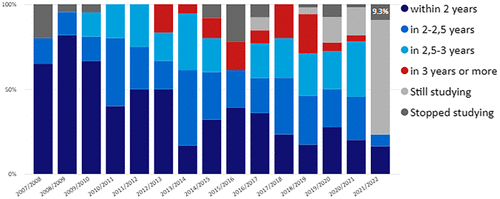
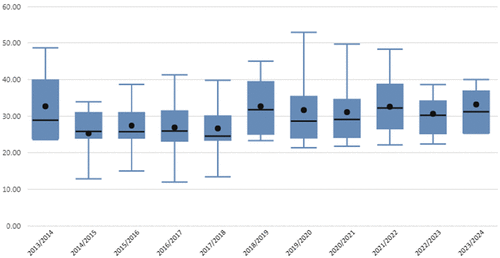
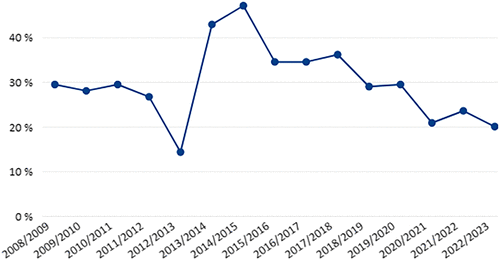
Figure 3 presents the percentage of degrees that are issued with the highest possible distinction (cum laude). The Examination Committee may award the classification “cum laude” to students who (a) have achieved a weighted average above 8.0 (unrounded), with the exception of the graduation project; (b) have a grade of 9.0 or higher for the graduation project; (c) did not have a study component with a final grade lower than 6.0; and (d) completed their final examination within 32 months of the commencement of the degree program. With the institute’s average across all departments being close to 10%, the exceptional results achieved by IAM graduates have been a focal point of analysis and discussion within the institute, with the conclusion being that IAM offers a particularly innovative master’s program that motivates students to excel.
The Unique Ecosystem Surrounding IAM
Innovation in IAM has several facets. Beyond research on innovation education and the concepts of individualized learning paths, the embedding of nonacademic partners in the curriculum, and the repeated practical application of knowledge, IAM benefits from the presence of a unique mix of regional, national, and continental structures.
First, IAM is strongly supported by the outstanding ecosystem of high-tech companies in Eindhoven, known as Brainport Eindhoven (2024), and TU/e forms a crucial entity in this ecosystem. As indicated previously, collaboration with industry starts from the first semester of academic education and continues well after graduation. Being in the Brainport region has shaped IAM and impacts the choices and opportunities of our graduates. This collaboration goes beyond capstone projects; it is part of the IAM curriculum. “Brainport and Involvement of Industry” highlights the role of Brainport in shaping IAM.
Adding to this picture is the geopolitical reality in The Netherlands. The country is one of the smallest geographically in Europe, allowing for easy travel between any two locations, and has an intensive collaboration culture. As a result of this ease of travel and traditional cooperative attitude, academic education at the graduate level in the country is tiered, with courses offered at a local (university) level and also at a central national level in collaboration with all Dutch universities. To the best of our knowledge, this is a unique feature worldwide. Whereas a national level of collaboration may be found in few other countries, within mathematics in The Netherlands, formal structures of collaboration were established more than two decades ago. We participate in all major national graduate research schools and networks. This unparalleled level of national cooperation provides rare opportunities for our graduates. We outline these structures and their role in “National Embedding: Tiered Education.”
Lastly, we take advantage (as many European universities do) of the close collaboration among European universities established and funded by numerous European programs, networks, consortia, and so forth, such as the Erasmus Mundus program that aims to enhance quality in higher education through scholarships and academic cooperation. Free travel and the systematic funding of exchange programs on research and education allow our graduates to experience international cooperation to a degree that is hard outside Europe. Although these opportunities exist for all, we make a point of availing of them all, even at the price of changing the BSc and MSc curricula to be exclusively in English so as to remove language barriers. We sketch their role in “International Embedding: European Structures and International Experience.”
Brainport and Involvement of Industry
TU/e is in the heart of Brainport Eindhoven (2024). This is a technology region in which companies, governments, and educational institutions work together to promote economic activities. It provides the framework that leads to the intensive collaboration of TU/e with industry. Companies in Brainport specialize in the domains of energy, smart mobility, integrated photonics, food engineering, advanced manufacturing, micro- and nanoelectronics and mechatronics, healthcare, digital technologies, and systems engineering. The area hosts companies such as ASML, Philips, OCE (Canon Production Printing), NXP, NTS, Lightyear, DAF Trucks, and DSM, as well as several Dutch R & D institutes, and is the European region with the highest number of patents. To illustrate this ecosystem, we refer to the annual study on “European Cities and Regions of the Future” in the Financial Times (McReynolds 2014). In this study, Eindhoven was ranked third as the European city of the future, after London and Helsinki. Eindhoven was a new entry to this specific list in 2015, thanks in part to the incubation facilities existing at TU/e. Eindhoven was recently named by Forbes as “by far the most inventive city in the world” (Pentland 2013). This specific study was based on patent density, one of the most used metrics for mapping the geography of innovation. The Brainport region was the 2011 winner of the global “Smartest region of the world” competition from the Intelligent Community Forum, an honor it shares with previous winners like Silicon Valley.
Although the professional field has no structural input into the learning outcomes of IAM, the involvement of professionals in the program is intensive through frequent guest lectures throughout most courses, the Modeling Week of IAM, internships and master’s theses, the existing strategic alliances and capstone programs of the department with companies, and other forms of national and international collaboration (e.g., the national Study Group Mathematics with Industry 2024). We provide more information on the various forms of industrial involvement in the program in “Integral Ties with Industry and Society.”
TU/e has extensive experience with industrial collaborations. As such, there is a dedicated office dealing with legal agreements concerning internships and graduation projects, including liability, confidentiality, and intellectual property (IP) rights. Agreements can be tripartite (between the student, the company, and TU/e) or bipartite (between the student and the company), with the latter being an option only for students from countries in the European Union. TU/e has model agreements with companies, which is the typical route followed because it is well accepted by local industry.
This ecosystem also works in the other direction, that is, initiated by industry and targeting the academic community. There are numerous activities organized by companies with their goal being the application of OR (and attracting talented graduates). As an example, we mention the Centre for Quantitative Methods CQM (1992) “Night of Eindhoven.” This is a competition on data science, optimization, and consultancy for student teams of various universities. During the whole night, several challenging assignments are given by the company to the student teams. Since 2011, TU/e teams have won the competition four out of eight times, and typically a second and perhaps third TU/e team also finishes among the top eight national teams. In its 14th edition in May 2023, teams from TU/e won the top three places (Sijtsma 2023).
National Embedding: Tiered Education
A defining characteristic of The Netherlands is our national collaboration on graduate-level education in the areas of mathematics and operations research. Owing to the geography of The Netherlands and investment in transportation, the easy travel between any location motivated the departments of mathematics of all Dutch universities to combine their efforts to enhance their graduate programs. Part of the cooperation is aimed at organizing joint courses in mathematics. These joint courses offer students the highest quality of instruction and open opportunities for interaction with students at other institutes. For master’s courses, the national network “Mastermath” (2003) supports all mathematics directions, including mathematics education. For PhD-level courses, more specialized networks exist. We sketch their function and focus in the following sections.
Mastermath.
The IAM program participates in Mastermath and, as such, is closely connected to other mathematics master’s programs in The Netherlands. The Mastermath program is determined by the teaching directors of the participating mathematics program in collaboration with several national research networks. Based on national agreements, all faculty in mathematics may teach at Mastermath. Currently, Mastermath offers about 60 graduate courses.
Almost all courses are taught either in Amsterdam or in Utrecht, which are the most central locations of the country and the easiest to reach. However, courses exist in all Dutch universities. The locations of the courses are such that students can easily reach them by train within 1.5 hours. Travel expenses are paid for by a grant of the Dutch government so that there is no financial obstacle for students to participate in Mastermath courses. In addition, the master’s program of each university stipulates how many credit points must be earned by taking courses in the national master’s program. Typically, the schedule of all master’s programs is adapted to allow students to participate in Mastermath.
Mastermath allows graduate mathematics students in The Netherlands to be taught by the best specialists in the country on any given subject. It helps them meet peers and lays the cornerstone of their future network. For students who intend to pursue a PhD program after completing their master’s program, the national program increases the range of options open to them. For national departments, Mastermath gives us the opportunity to expand our offer without needing to design courses for a few individual students. For TU/e, Mastermath is the icing on the cake. IAM is excellent as a standalone program, but the courses offered through Mastermath give additional options to our students, allowing them to choose specialized courses that are not offered at TU/e.
National Graduate Networks and Schools.
Whereas Mastermath is clearly focused on master’s level education, all PhD-level education in The Netherlands is organized exclusively at a national level in PhD networks and graduate research schools (Beta Research School for Operations Management and Logistics 2024a). These schools provide specialized education, which would be impossible to replicate at a local level because of, for example, the lack of a cohort interested in any given topic or the high degree of specialization. Most have official accreditation from the Royal Netherlands Academy of Arts and Sciences. Their distinguishing characteristics are their highly specialized focus on one domain of mathematics and the fostering of research collaborations, rather than only providing education.
The list of relevant courses and activities offered by these networks is quite extensive. We thus limit ourselves here to mentioning few that are close to operations research and presenting one of these networks, LNMB, in more detail. The Transport, Infrastructure and Logistics Research School (TRAIL Research School 2024) provides courses in the domain of transport, infrastructure, and logistics. BETA (Beta Research School for Operations Management and Logistics 2024b), established in 1990, is the national research school on operations management (OM) and logistics, uniting the OM groups in The Netherlands. The Erasmus Research Institute of Management (2024) offers an extensive national doctoral program on management science. The NETWORKS program (The Network Center 2024) is hosted by four research institutions, including TU/e, and covers a broad range of topics dealing with stochastic and algorithmic aspects of networks. It offers an extensive PhD training program and specialized workshops and organizes several networking days and major international conferences that offer additional opportunities to network for our graduate students.
Established in 1987, LNMB (2024) is the Dutch Network on the Mathematics of Operations Research. This network is an interuniversity cooperation in which most Dutch universities and the Centre for Mathematics and Computer Science in Amsterdam participate. The tasks of LNMB are twofold. First, LNMB offers courses for master’s and PhD students. The PhD program, which is centered around 18 courses and taught in a two-year cycle, aims at broadening and deepening the knowledge of the PhD students in the mathematics of operations research. Every year, about 250 master’s students and 150 PhD students take part in these courses. Second, LNMB is also a platform for the mathematics of operations research in The Netherlands. Every year, LNMB organizes the national operations research conference. The program includes plenary lectures, given exclusively by outstanding international scientists, and parallel sessions reserved for graduate students in operations research, giving them the opportunity to present their work in a national setting. The last day focuses on the practice of operations research and is organized together with the Dutch OR Society, with the involvement of industry being guaranteed.
The national courses offered in these graduate research networks and schools are freely accessible to all graduate students (thus including master’s students). PhD students, in collaboration with their supervisor, compile an individual program, following courses from any of the national networks, and only as it supports their interests and research. Specifically, for IAM, the implication is that because of this intensive national collaboration on graduate-level education and research, our graduate students can receive highly specialized training and connect with their peers doing research in the same domain.
International Embedding: European Structures and International Experience
In view of the European and global economic context, it is important that IAM students have international experience at graduation. International experience is an integral part of the program, offering students the opportunity to work outside their home university and gain insights into the workings of other organizations. Through this experience, they engage with diverse cultures, languages, and customs and build valuable international networks with peers. Combined with a solid mathematical background, this is an essential step in building up excellent career prospects. Therefore, for students who have no (or not sufficient) international experience, at least 15 ec of their master’s program should have an international dimension. The international experience is gathered by taking courses at a foreign institute, doing an internship abroad, working for part of their master’s thesis abroad, or combining such activities.
Internationalization is facilitated through bilateral Erasmus Mundus exchange agreements, internships, and master’s theses, leveraging the faculty’s extensive international industrial and scientific networks. To aid mobility, the department has bilateral contracts and mobility agreements with 65 universities within Europe and another six universities outside Europe. To encourage students to gather international experience, the IAM International Experience Guide was compiled. It helps students add an international component to their program by outlining the necessary steps. A dedicated IAM International Exchange Officer is available to help students realize their plans for studying abroad during their IAM program.
Recall that IAM is a master’s-level program. Whereas master’s students are given the possibility to have a long-term exchange abroad, all PhD students gain international experience. Ample funds are set aside for international conference visits. In addition, research visits abroad during the PhD program are encouraged, and collaborative funds can be typically found easily. PhD students also have access to a vast European biosphere. As an example, we mention the European Consortium for Mathematics in Industry, which brings together students in focus areas, facilitates technology transfer between academic mathematicians and industry modeling weeks, holds conferences, oversees the European Study Groups with Industry, and provides summer schools and information on courses and student exchanges.
In summary, IAM has incorporated extensively in the program the opportunities afforded by the unique ecosystem we find ourselves in. Internationalization is funded and administratively supported, and flexibility is offered in our program. National collaboration on the graduate level allows us to pool forces and offer a remarkably extensive program with a high degree of specialization. We take full advantage of the vibrant industrial environment in the region and incorporate the contributions of industrial and societal partners in our curriculum. This symbiotic relationship goes both ways because companies offer several activities targeted at graduate students. These activities enrich the professional development of our graduates, help them network, and keep our education continuously focused on current pressing societal and industrial problems.
Program Design and Critical Factors
This section highlights the distinctive characteristics and recognition of IAM, underscoring its value to students. The program is distinguished for small-scale education, focus on professionalization, individual study program schedules, quality rankings above the national average, and hands-on experience throughout the studies. We delve into the program’s emphasis on mentorship, providing students with personalized guidance and support throughout their studies. Lastly, we elaborate on the various ways the program has integral links to society and industry. We explore the internship opportunities available, which enable students to gain experience and establish valuable connections within the field.
Characteristics of the Program
The primary aim of the program is to equip students with comprehensive academic and professional competencies in applied mathematics at the master’s level, with a specific focus on industrial mathematics. This objective is achieved by advancing their mathematical knowledge through accredited learning outcomes and developing their ability to apply this knowledge effectively in real-world contexts, as reflected in the program goals.
The main learning outcomes of the program are to develop the mathematical knowledge and insight of its graduates, mathematical operational proficiencies, proficiencies in research, design, and modeling, academic proficiencies and attitude, and proficiencies in communication. Within the program, attention is paid that all program outcomes are present (to different degrees) in all educational activities. Research, modeling, and professional skills are specifically incorporated into most of the courses offered across all programs. This characteristic builds upon the philosophy of the bachelor’s program, in which research, modeling, and professional skills are credited as a separate five-ec course, with the special characteristic that it is distributed throughout the whole program, being an integral part of core courses.
In addition to the accredited learning outcomes, the IAM master’s program has further defined goals. These goals include providing students with industrial exposure, fostering broad knowledge and skills in industrial and applied mathematics, cultivating an understanding of the demands of both industry and society, enabling effective communication of results to nonmathematicians, fostering advanced expertise in a chosen area, developing the ability to apply mathematics in practical contexts such as industry and government, cultivating proficiency in designing and analyzing mathematical models, fostering scientific research skills, and serving as an excellent foundation for a career in academia or industry. The program provides numerous opportunities for industrial exposure, emphasizes effective communication, offers in-depth courses, and adopts a broad OR approach, which is emphasized within each (specialized) course.
The program is highly valued both by society and by the students. In terms of rankings, the Keuzegids (1988), published annually by the Dutch Higher Education Information Centre, is an independent publication that allows students to compare all programs in The Netherlands. IAM ranks consistently as the highest-ranked program in applied mathematics. In its special issue “De beste studies,” which appears annually in September/October, Elsevier magazine (Roularta Media Nederland 1891) publishes a ranking of Dutch study programs, including student evaluations of each program’s facilities, education, structure, teaching staff, and organization and communication. In this ranking, IAM consistently receives the highest ranking for the quality of its teaching staff. The rankings are based on selected results of the National Student Survey, which is sent to all students in higher education, combined with expert evaluations.
Overall, the IAM master’s program is designed to provide students with a well-rounded education that combines theoretical knowledge with practical skills, preparing them for successful careers in academia or industry while emphasizing the relevance and applicability of mathematics in real-world scenarios. These efforts are recognized and appreciated by society and students at large.
Profiles and Mentorship
The IAM master’s program at TU/e offers students the freedom to shape their own study programs. The program provides a lot of flexibility, having in fact a single mandatory course next to the obligatory final research thesis. This freedom is a core value of the program, but it has the potential to lead to chaotic study programs with little focus, thus jeopardizing the career plans of graduates. IAM employs two measures to help guide this process: profiles and mentorship.
IAM distinguishes itself by offering profiles rather than tracks or specializations with obligatory courses. This means that all courses (i.e., IAM courses, master’s courses from other departments, national Mastermath courses, and national PhD-level courses) are open to all students. To provide guidance, profiles offer a suggestion for a coherent program that is mindful of interdependencies between courses. Within each profile, students have the flexibility to select courses that build upon their previous knowledge and cater to their specific interests. The program’s profiles include Applied Analysis, Mathematical Image Analysis, Scientific Computing, Statistics, Probability Theory, Stochastic Operations Research, Coding Theory and Cryptography, Combinatorial Optimization, Discrete Algebra and Geometry, and Data Science.
To further guide students, IAM has integrated a mentorship program. Mentors play a vital role in the educational process. At the beginning of their studies, each master’s student is paired with a mentor who is a scientific staff member with expertise in the student’s specific field of interest, which students declare in their first semester. The mentor serves as the primary point of contact for composing an individualized study program, addressing content-specific questions, and providing guidance on professional skills and scientific integrity. The academic advisor of the program links students to their mentors and provides the mentors with training on the form and contents of mentorship and resources to fulfill their role.
Through a series of individual meetings, the mentor assists students in developing a customized course program that aligns with their career aspirations. These meetings also provide an opportunity to discuss students’ strengths, ambitions, and desired career path, ensuring that the study plan and course selection are tailored to their individual needs. The responsibility for scheduling these meetings lies with the students themselves, empowering them to take an active role in their academic journey. Professional skills and scientific integrity are discussed as well. Mentors essentially coach students to “find their place” in the field.
In summary, IAM stands out for its mentorship program, which offers students personalized guidance in designing their study programs, its flexible, profile-based curriculum, and its focus on developing analytical skills, modeling capabilities, and real-world implementation. With a diverse student body, emphasis on soft skills, and integration of theoretical and practical aspects, IAM prepares students for successful careers and leadership roles in various domains of applied mathematics and operations research.
Internship
Internships play a crucial role in IAM, providing students with valuable practical experience. IAM allows students to include a 15-ec internship as part of their elective program. The primary objective of the internship is to give students firsthand exposure to real-world applications of applied mathematics and operations research within a company setting. It offers them the opportunity to apply their theoretical knowledge in a practical context, develop relevant skills, and gain insights into the challenges and dynamics of the industry.
Internships are closely monitored. The Examination Committee plays a crucial role in approving internships to ensure their alignment with the program’s objectives and standards. An internship must be supervised by a scientific staff member in addition to, and oftentimes independent of, the supervision offered within the company. This ensures that the internship adds to the scientific development of the student and is strongly aligned with a research question. The supervisor assesses whether the internship is representative for the study program and suitable for the subject regarding content and complexity. Furthermore, the internship can serve as a starting point for the student’s master’s research thesis, offering an extended opportunity to delve deeper into a specific topic or problem. The combination of internship and master’s thesis carries a total of 45 ec, but each component is assessed and evaluated independently, ensuring the integrity and rigor of both experiences.
Although it is an elective part of the program (because the obligatory part is kept at the bare minimum), almost all students who follow profiles in Stochastic Operations Research, Combinatorial Optimization, and Data Science choose to add this component to their program. Internships are administratively supported by standardized IP agreements that ensure a smooth collaboration between industry and the department. These agreements cover patent rights, of which we have several issued annually in collaboration with industry.
It is important to note that internships cannot be internal but have to be undertaken in collaboration with external companies or take place abroad (even at a research institute in this case), allowing students to explore different working environments and cultural contexts. IAM students in the past five years have had internships in several institutions and companies abroad, with Europe, the United States, India, Canada, Australia, and New Zealand being popular destinations. Figure 4 shows the companies and institutions our graduates were placed with in the past five years, with the size of the font being directly proportional to the level of our collaboration, measured in individual projects with each company. In this period, our graduates collaborated with close to 100 different companies or foreign institutions spread through 14 foreign countries and The Netherlands.
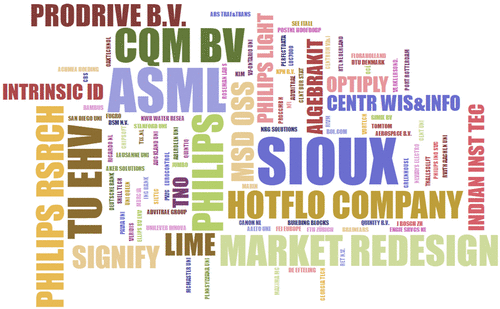
Note. The font size indicates the level of collaboration, measured in the number of individual projects.
Integral Ties with Industry and Society
Experiential learning is a crucial aspect of IAM. Students engage in projects with startups, global firms, and government agencies through the modeling week, internships, and the semester-long final research thesis. These immersive experiences play a vital role in our students’ development because they spend significant time applying their skills in real-world settings. By nurturing strong ties with industry and societal agencies, we ensure the seamless execution of these activities, enabling our students to become immediately productive upon graduation. These partnerships allow us to bridge the gap between academia and the professional world, providing students with valuable opportunities to gain practical knowledge and make meaningful contributions to their respective fields.
IAM is deeply rooted in its strong connections to industrial and societal organizations. Throughout the program, various initiatives link students to industry. First, industry is embedded in the curriculum. Guest lectures, incorporated in most of our courses and delivered by professionals in relevant fields, provide insights into practices and the latest developments. The Modeling Week (which is part of the Professional Portfolio course) serves as an intensive workshop during which students work in groups to tackle problems submitted by companies. This collaborative approach not only enhances their problem-solving skills but also exposes them to the challenges faced by industries in real time. As with internships, master’s theses are also typically in collaboration with industry. Among all graduates, 60% of the master’s theses are done in an external environment. Within the analytics-focused profiles, this percentage approaches 100%.
Other than embedding in the IAM curriculum, the department maintains multiple levels of engagement with companies, including faculty positions held by industry experts, co-funded research projects, and strategic alliances that translate in defining joint research agendas and seeking joint funding. The department’s board has established a “user advisory board” comprising industrial experts who help shape the strategic vision of the department. These connections ensure that the department remains at the forefront of industry trends and actively contributes to advancements in the field. The collaboration extends beyond the master’s program because co-funded PhD projects provide opportunities for in-depth research in partnership with industry. This collaboration serves as a testament to the strong link between academic excellence and knowledge transfer, for which the focus remains on advancing the field while addressing practical industry needs. Lastly, the department participates in several European industrial projects and Marie Curie Industrial Doctorate Programs, which have a mandatory stay at industrial partners.
The collaborative philosophy between industry and academia is further exemplified by national initiatives such as the Study Group Mathematics with Industry (2024). This combined industrial-academic weeklong activity, sponsored by the Dutch Research Council, brings together roughly 70 mathematicians from various academic levels to work on problems submitted by companies. Companies present a selection of problems on Monday. The participants devote the entire week to studying these problems in smaller groups and present their results on Friday. A representative of the company is expected to be available at various moments during the week. This model served as the inspiration for the Modeling Week within the Professional Portfolio course of IAM, which closely follows this setup.
In conclusion, the integral links of IAM to industrial and societal organizations, integrated in the departmental advisory bodies and the program’s curriculum, play a vital role in shaping students’ experiences and preparing them for successful careers.
The Curriculum
IAM places a strong emphasis on providing students with a broad knowledge in operations research. The design and philosophy of the MSc program underwent a significant transformation in 2015 to align with the TU/e Graduate School format. This redesign brought various innovations to the program, including minimal obligatory components, profiles, extensive integration of experiential learning, challenge-based learning elements, and explicit emphasis on professional development and future career perspectives.
The program, depicted in Figure 5, is structured in quarters, with each year consisting of four quarters, totaling 120 credits for the whole program. One credit corresponds to 28 hours of study time. Courses offered at TU/e are five credits each. The scheduling of courses follows predetermined slots, which helps with the logistics of allowing each cohort to follow an individual study program. The IAM curriculum comprises two mandatory study components, core electives, special electives, and free electives. The only obligatory course, besides the final research thesis, is the Professional Portfolio course, which showcases each student’s unique professional development. The final six months are devoted to the master’s thesis, which may be carried out in industry, at a university, or in a governmental organization.
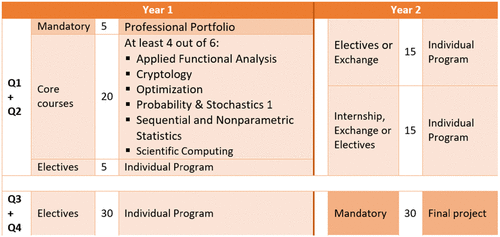
Core courses ensure that students acquire a solid foundation in applied mathematics, in line with the program’s learning outcomes. The curriculum includes a balanced set of six core courses, with two courses corresponding to each of the three main mathematical topics: Analysis, Stochastics, and Discrete Mathematics. Students must choose four of these courses, based on their interests.
We distinguish elective courses in two groups. Special electives enable students to deepen their knowledge and build a T-shaped profile with both a broad foundation and expertise in a particular specialization. To ensure a solid background in mathematics, students are required to choose at least 35 credits from a list of special electives. While following an individualized program, students have the opportunity to specialize in specific areas by following free electives. These may be master-level courses from other disciplines or institutes. IAM students can also choose to take graduate courses at the national level, such as those in Mastermath or LNMB, further expanding their interdisciplinary knowledge and their networking opportunities among graduate students nationwide. All master’s programs at TU/e guarantee that students have at least 15 credits available for free electives. Internships, including opportunities for international placements, may also be selected here.
Professional Portfolio Course
IAM stands out from similar programs because of its unique “Professional Portfolio” course, which was introduced as part of the curriculum redesign in 2015. The course is designed to provide students with a comprehensive understanding of the various aspects related to their academic and professional development. Students receive training in essential soft skills, engage in networking opportunities with companies, participate in research seminars, and ultimately construct their personal professional portfolios prior to graduation. The course has consistently received high praise from students and has become a flagship component of IAM, subsequently being adopted by other master’s programs across the country. This section provides a detailed overview of the course structure and its significance within the program.
IAM sets itself apart as the only program that incorporates mandatory collaboration with industry as an integral part of its curriculum. The Professional Portfolio course is strategically scheduled in the first semester of graduate studies. It aims to equip students with the necessary skills and insights to navigate their career paths, including the decisions they will make regarding the remainder of their time at TU/e. Central to the course is the active engagement of students with the professional field, facilitated through a range of activities such as alumni guest lectures and the highly immersive Modeling Week, during which students collaborate closely with companies to tackle real-world challenges.
The setup of the course encompasses a series of informative lectures, comprising the IAM Seminar. Lectures by representatives from each research group within the department cover the research directions, elective courses, and project opportunities offered by each group. Additionally, students attend focused lectures on studying abroad, double-degree possibilities, and the IAM educational track offered in collaboration with the Eindhoven School of Education. An additional component of the IAM Seminar is guest lectures, typically by alumni. These offer insights by graduates in mathematics, either employed in industry or managing their own corporations, who showcase the role of mathematics in their respective professions and offer advice on essential skills and mathematical profiles relevant to their industries.
The course also emphasizes the importance of soft skills through regularly updated workshops that are incorporated in the course. These focus on areas such as collaboration, ethics, personal leadership, and negotiation styles. Furthermore, students undergo a professional skills assessment known as SkillsLab, which evaluates their collaboration, presentation, writing, and communication skills. Based on the assessment, students receive a personalized development plan to enhance these skills, if necessary, which is further evaluated during their master’s project. Additionally, at the beginning of the course, students are required to write a reflection report outlining their expectations of the program and their plans for future career development.
The Modeling Week is another innovative module of the course. During the Modeling Week, students work in groups, fully immersed in addressing a single problem submitted by companies. Each year, we source new challenges from our industrial partners. The module provides hands-on experience to students, a concrete collaboration with an industry with significant OR needs, and links to all participating companies.
Another module of the Professional Portfolio is the compilation of students’ Individual Professional Portfolio, gathering their research experiences and completed projects, including industrial experience gained during their bachelor’s studies and the Modeling Week.
Lastly, the course incorporates a continuous quality assurance cycle of the program, in which students are encouraged to provide feedback on the IAM core courses they are currently enrolled in. By the end of the course, students have gained familiarity with all of the research groups within the department and established a network within the regional industry. Furthermore, these course activities help the integration of international students and those transitioning to the IAM program from a bachelor’s program other than applied mathematics. In the remainder of the section, we focus on some of these modules individually.
Individual Professional Portfolio
The Individual Professional Portfolio comprises the student’s past achievements and future plans. Students are guided in compiling a professional resumé, which they add to their portfolio together with transcripts, completed industrial projects, and a reflection report. The latter delves into the expectations students had before and during their studies, future possibilities and plans, and a reflection on the company presentations and workshops (e.g., on collaboration, ethics, personal leadership, and negotiating) that they followed within the course.
IAM Seminar
Attending the seminar is obligatory for all IAM students. As such, it serves as a common thread through the first six months of IAM. It aims to enhance the professional development of students by featuring guest speakers from various companies, providing information about the curriculum and future prospects, and showcasing examples of research directions and projects. Within the Professional Portfolio course, career orientation is further facilitated through guest lectures delivered by IAM alumni. The study association GEWIS also actively contributes to this aspect through weekly lunch lectures and organized company visits. To ensure a diverse range of industry presentations, the Professional Portfolio course coordinator collaborates closely with the study association, offering a comprehensive and complementary selection of speakers from different branches.
The seminar purposefully invites speakers from different backgrounds each year. IAM alumni working in industry share insights about their companies, their suggestions for skills to incorporate into a study program, and the career opportunities available to current IAM students. PhD students present their research and discuss which IAM profiles are best suited for this academic path. Alumni who have chosen to pursue a career as high-school mathematics teachers provide information on how to navigate the double degree and this profession. Additionally, faculty members deliver lectures on current research directions within their respective groups.
Students must write a reflection report at the end of this module, which contains a discussion about the choices of courses, honors program, internship, master’s thesis, and the possibility of doing a PhD or educational track.
Modeling Week
IAM is distinguished by its strong emphasis on the practical application of mathematics in real-world industrial and societal contexts. One notable highlight of the program is the Modeling Week, which takes place in the first year. During this intensive week, students collaborate in groups to tackle problems presented by companies, with close interaction and guidance from the problem owners themselves.
The Modeling Week provides students with opportunities to develop their professional skills and prepare for the challenges of the job market. No further study activities are scheduled in the curriculum during that week. The week commences with presentations by representatives from participating companies, who outline the specific problems to be addressed. Students then work throughout the week, applying mathematical techniques to devise solutions. The week culminates in comprehensive presentations on the last day, during which the students showcase their findings and proposed solutions to the problem owners. Meals are shared and provided by IAM, and facilities are continuously available.
This unique experience offers numerous benefits to students:
They gain practical experience in solving real-life problems, enhancing their problem-solving abilities.
They actively engage with the problem owners, effectively communicating and reporting their findings.
They learn the value of collaboration and teamwork, because they work closely with their peers to develop solutions.
They acquire the essential skill of transforming complex practical problems into mathematical models, enabling effective analysis and resolution.
They understand how to extract valuable insights from mathematical modeling, highlighting the applicability of mathematics in various domains.
They cultivate a professional attitude when tackling challenges in the public and industrial sectors.
They gain exposure to diverse cultures, attitudes, and personalities within their collaborative work teams.
The Modeling Week consistently receives high praise from students who appreciate its practical nature and the valuable skills they acquire. It serves as a cornerstone of the curriculum, providing an immersive and enriching experience that prepares students for successful careers in the field.
Professional Skills and SkillsLab
The development of professional skills is a key aspect of the master’s program, building upon the comprehensive training that students have received throughout their bachelor’s program. Recognizing the demands of today’s high-performance workplaces, the program places significant emphasis on enhancing skills essential for professional success, including presentation skills, teamwork skills, and writing skills. In today’s industry, it is crucial for students to effectively present themselves, demonstrate creativity, exhibit leadership qualities, and embrace an entrepreneurial mindset.
To evaluate the students’ skill levels, they are required to complete the TU/e Diagnostic Test of Professional Skills. This assessment comprises four questionnaires that gauge their self-perceived abilities, presentation skills, writing skills, and teamwork capabilities. Based on the results, students develop a personalized Skills Development Plan, outlining the specific steps they will take to further refine and enhance their skills. Additionally, students are provided with information about the TU/e SkillsLab, which offers a wealth of resources, including documents, videos, assignments, and more, to support their skill development journey. A dedicated TU/e website serves as a comprehensive platform that showcases various career orientation and skill development activities aimed at assisting students in achieving their goals.
Distinct from the offerings of the TU/e SkillsLab, the Professional Portfolio course provides students with additional opportunities to strengthen their soft skills. Workshops on “negotiation styles” are available, equipping students with valuable negotiation techniques. Furthermore, workshops focused on group work, personal leadership, and mathematical writing are integrated into the course curriculum. As an integral part of the Professional Portfolio, a specialized ethics workshop, centered around the ethical dimension of mathematics, is also included.
Examples of Student Projects
IAM students often engage in research during their studies, guided by faculty with extensive research experience. To ensure an individual approach, we limit the number of students that faculty supervises simultaneously. These experiences prepare IAM graduates to be able to apply operations research skills in their future career, be it in entrepreneurship, industry, or academia. Here, we give a taste of some of our students’ projects that had tangible impact.
Filling a Theater During the COVID-19 Pandemic
During the COVID-19 crisis, the cultural sector was hit hard. In particular, the local theater, called the “Music Building Eindhoven” (MBE), was facing severe difficulties as a result of the restrictions imposed. MBE, the largest theater in Eindhoven, features a “Grand Room” (1,250 seats) and a “Small Room” (400 seats). In work conducted by an IAM graduate student and supervised by faculty members, the question examined was to what extent large audiences can still be accommodated in a theater when distance rules must be satisfied. The project defined and implemented an optimization problem that, given the layout of the seats in a theater and the distribution of the demand, allows a theater to compute a safe seating arrangement that attains the maximum occupancy. The algorithm played a crucial role for MBE because it enabled the theater to operate at its full legal capacity by accurately identifying and adhering to the continually updated regulations regarding the minimum distance between seated patrons. Thanks to this work, the theater was able to open and adhere to regulations, ensuring the safety and comfort of all attendees. A more extensive description of this work can be found in Blom et al. (2022).
The Traveling Social Golfer Problem: The Case of the Volleyball Nations League
It is well established that extensive traveling has a negative impact on sport performance (see, e.g., Duffield and Fowler 2017 and references therein). The Volleyball Nations League (VNL) is a single-round-robin tournament organized every year by the Federation Internationale de Volleyball (FIVB) for both men and women. In the VNL tournament, 16 international teams play in rounds. In each round, each team is in a group consisting of four teams, meeting all teams in their group once. After four rounds, all teams have played all of the other teams exactly once, and a ranking is made.
All matches in a single group are held at the same venue. However, every round has its four groups play in different venues. Between rounds, travel times to the next venue may exceed 24 hours on the road, after which a team will have to play a series of matches and perhaps face another very long trip. Because it is a disadvantage to have traveled more than your opponent going into a match, the main interest lies in creating a fair schedule by minimizing a measure that captures the imbalance in travel times between opposing teams.
This project by an IAM graduate and faculty (Lambers et al. 2024) showed that minimizing the unfairness can be solved by decomposing the problem into two phases: (a) venue assignment and (b) nation assignment. A main insight is that the unfairness of a schedule follows from solving the venue assignment. The authors solved the known instances of VNL and compared their solution with that of the schedules used in practice. A main conclusion was that whereas the optimal schedule has total travel distance similar to that of the real-life schedules, the imbalance between teams was a factor of six in some instances; these results were shared with FIVB, academia, and the general public.
Conclusion
The latest redesign of the program brought radical changes. We dared give full freedom to students to define their future, putting enough resources on their path to help them make informed choices. We fully embraced experiential learning and challenge-based learning elements by incorporating industrial and societal partners in the curriculum. Their response so far has been overwhelmingly enthusiastic, with the only current limitation now being that we cannot accommodate all companies that wish to contribute to our curriculum. We designed a program with an explicit emphasis on professional development and future career perspectives, making sure that upon graduation, students have not only a firm foundation in mathematics but also the interdisciplinary and soft skills needed to work in a larger realm. In addition, our graduates apply with several completed projects in their arsenal and a large network of contacts in local industry. One notable outcome of this redesign was the creation of the Professional Portfolio course, which plays a vital role in preparing students for their professional endeavors.
Education in operations research is not static. New teaching concepts will continue to be developed to cater to new generations of ambitious students. However, the goal of operations research remains to impact practice and to contribute to realizing the goals of society in an efficient and effective way. We believe that IAM fulfills this goal. We educate students who have the skills to have a positive impact. This paper has described several innovative aspects used in our program IAM, and we hope that some of these can serve as examples to learn from, just as we learned from other examples.
Alessandro Di Bucchianico sadly passed away on July 8, 2024. His coauthors dedicate this paper to his memory.
1 This is the standard study load unit in the European Credit Transfer System (ECTS). One “ec” corresponds to a workload of 25–30; in The Netherlands, this is standardized to 28 hours.
References
- (1991) Gedenkboek Technische Universiteit Eindhoven 1956–1991 (Technische Universiteit Eindhoven, Eindhoven, Netherlands).Google Scholar
Beta Research School for Operations Management and Logistics (2024a) PhD networks and universities. Accessed June 28, 2024, https://onderzoeksschool-beta.nl/phd/phd-networks-and-universities/.Google ScholarBeta Research School for Operations Management and Logistics (2024b) POWERFUL AND EFFECTIVE: Analysis, design and control of operational processes. Accessed June 28, 2024, https://onderzoeksschool-beta.nl/.Google Scholar- (2022) Filling a theatre in times of the COVID-19 pandemic. INFORMS J. Appl. Analytics 52:473–484.Link, Google Scholar
Brainport Development N.V Brainport Eindhoven home of pioneers (2024). Accessed June 28, 2024, https://brainporteindhoven.com/int/.Google ScholarCentre for Quantitative Methods CQM B.V (1992) CQM, 3 9 1992. Accessed July 12, 2023, https://cqm.nl/nl.Google ScholarCWTS (2022) CWTS Leiden ranking. Accessed June 28, 2024, https://www.leidenranking.com/.Google Scholar- (2017)
Domestic and international travel: Implications for performance and recovery in team-sport athletes , chapter 13. Kellman M, Beckmann J, eds. Sport, Recovery and Performance: Interdisciplinary Insights (Oxon, Routledge, London).Google Scholar Erasmus Research Institute of Management (2024) Accessed June 28, 2024, https://www.erim.eur.nl/.Google Scholar- (1988) Keuzegids. Accessed June 28, 2024, https://keuzegids.nl/.Google Scholar
- (2023) How to schedule the Volleyball Nations League. J. Sports Anal. 9(2):157–169.Google Scholar
LNMB (2024) Landelijk Netwerk Mathematische Besliskunde. Accessed June 28, 2024, https://www.lnmb.nl/.Google ScholarMastermath (2003) Accessed July 12, 2023, https://elo.mastermath.nl/.Google Scholar- (2014) European cities and regions of the future 2014/15. fDi Intelligence, 17 2. Accessed June 28, 2024, https://www.fdiintelligence.com/article/52409.Google Scholar
- (2013) World’s 15 most inventive cities. Forbes, 9 7. Accessed June 28, 2024, https://www.forbes.com/sites/williampentland/2013/07/09/worlds-15-most-inventive-cities/.Google Scholar
QS Quacquarelli Symonds Limited (2019) QS world university rankings. Accessed June 28, 2024, https://www.topuniversities.com/.Google ScholarRoularta Media Nederland BV (1891) EW - Achtergronden en commentaren bij het nieuws. EW. Accessed June 28, 2024, https://www.ewmagazine.nl/.Google Scholar- (2023) CQM Nacht van Eindhoven 2023: TU/e oppermachtig, CQM, 30 5 2023. Accessed June 28, 2024, https://cqm.nl/nl/nieuws/nacht-van-eindhoven-2023-tu-e-oppermachtig.Google Scholar
Study Group Mathematics with Industry (2024) SWI. Accessed June 28, 2024, https://www.swi-wiskunde.nl/.Google ScholarThe Network Center (2024) Networks. Accessed June 28, 2024, https://www.thenetworkcenter.nl/.Google ScholarTRAIL Research School (2024) Accessed June 28, 2024, https://rstrail.nl/.Google Scholar
Alessandro Di Bucchianico was an associate professor of statistics in the Eindhoven University of Technology Department of Mathematics and Computer Science. He specialized in industrial statistics, reliability, and statistical computing. His research interests focussed on statistical process control, condition-based maintenance, and big data. He was the program director of the Industrial and Applied Mathematics graduate program at Eindhoven University of Technology.
Frits Spieksma is a full professor of combinatorial optimization in the Eindhoven University of Technology Department of Mathematics and Computer Science. His key field of expertise is operations research, especially combinatorial optimization problems and their applications. Current research interests focus on the (fair) design of sport competitions and the allocation of donor organs to recipients. He is president-elect of the Association of European Operational Research Societies.
Maria Vlasiou is a full professor of stochastic networks in the University of Twente Department of Electrical Engineering, Mathematics, and Computer Science. Her key field of expertise is operations research and particularly the performance evaluation of stochastic processes on interacting networks. Her research interests focus on energy networks, data centers, and high-tech manufacturing. She is the director of the Dutch Network on the Mathematics of Operations Research.