SF Express Revolutionizes Its Operations Planning Strategy Using Operations Research
Abstract
SF Express, China’s leading integrated logistics service provider, is well known for its delivery speed and operational efficiency, and it relies heavily on its integrated logistics network. However, planning its network used to require enormous manual effort from many regional planners. Since 2018, a group of operations research experts has worked to revolutionize this experience-oriented planning procedure into a centralized one that integrates state-of-the-art operations research methods. We identify novel variants of network design and routing problems, each with a larger scale than most of those studied in the literature. We address these challenging problems by combining advanced techniques from the literature, exploiting the problem structures, and drawing inspiration from human experiences. The developed methodologies now guide SF Express’s strategic and operational network planning decisions, such as establishing Asia’s first cargo-focused air hub and daily optimization of vehicle routes. This transformative project has led to financial benefits exceeding $1 billion and reduced millions of tons of carbon dioxide equivalent since 2018.
Introduction
Since 2010, the Chinese express delivery industry has experienced rapid expansion, primarily driven by e-commerce. By 2014, it had become the global leader in parcel volume. In 2021, the industry reached a milestone of delivering over 100 billion parcels, which accounted for approximately 70% of the global total (Pitney Bowes 2022); see Figure 1(a). This trend persisted, with China’s parcel volume reaching 150 billion in 2024 (Luo 2024).
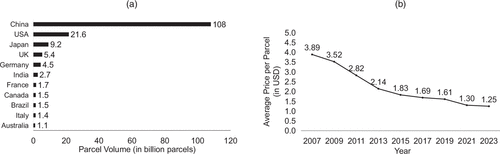
Notes. (a) Parcel volumes of countries in 2021. (b) Price per parcel in China. USD, U.S. dollars.
Meanwhile, the Chinese express delivery industry remains highly competitive, with seven major companies, each handling over 10 billion parcels in 2024 (Log Club 2024). Because of the competition, the price per parcel declined from $3.89 in 2007 to $1.25 in 2023 as shown in Figure 1(b). These surveys are available from the State Post Bureau of the People’s Republic of China (2025). Because transportation costs account for a significant portion of total costs, express delivery companies must optimize their logistics networks to maintain profitability.
In addition to price competition, Chinese express delivery companies seek to enhance delivery speed, where cargo airplanes are vital in ensuring fast logistics. However, as of 2023, China operated only 257 cargo airplanes (Civil Aviation Administration of China 2024), significantly fewer than the United States, which operates over 900 (Mitchell and Hayward 2024). Furthermore, government regulations restrict cargo airplane operations to a designated time window between 10 p.m. and 8 a.m. (Civil Aviation Administration of China 2020). Restricted by the limited capacity of cargo airplanes, express delivery carriers also rely on the belly space of commercial flights to augment their services.
With over 30 years of operations in this growing and competitive market, SF Express (SF) has grown into China’s and Asia’s largest integrated logistics service provider, ranking fourth globally in revenue in 2023 according to an internal Frost & Sullivan report (Frost & Sullivan 2024). Since its establishment, SF has prioritized speed and reliability, earning a reputation for high-quality service and ranking first in customer satisfaction with express delivery services for 15 consecutive years based on State Post Bureau of the People’s Republic of China (2014, 2025) surveys.
Furthermore, SF has led the industry forward with its vision and prospects. SF set up SF Technology aimed at digital transformation in 2009. The same year, SF Airlines was founded as China’s first private cargo airplane company. Anticipating the rising demand for air cargo, SF took a strategic step in 2015 to participate in the construction and planning of the Ezhou Huahu International Airport (the Ezhou Hub) (in Figure 2), Asia’s first cargo-focused air hub. In 2018, SF founded SF Map, which provides accurate freight maps and detailed traffic information to the logistics industry. In 2021, SF set its carbon reduction goals to reduce carbon footprint per parcel by 70% and improve carbon efficiency by 55% by 2030 (SF Holding Co., Ltd. 2021).
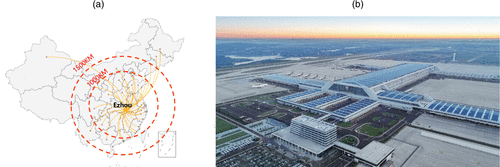
Notes. (a) Ezhou’s central location in China. (b) Photo taken of the Ezhou Hub.
A key factor behind SF’s operational efficiency lies in its complicated logistics network planning, which previously relied on the efforts of many regional human planners. However, as parcel volume increased and network scale expanded, SF executives realized the necessity of employing advanced analytical techniques to support conventional manual network planning procedures. Since 2018, a group of operations research (OR) experts has been working to revolutionize the network planning procedure by integrating advanced OR methods into a centralized process.
Within this procedure, we identified critical and challenging problems: intercity air network, intercity ground network, and intracity network problems. Each problem is larger in scale than most problems studied in the literature, includes a variety of real-world constraints, and therefore, each problem poses a novel set of difficulties. To tackle these problems, we proposed efficient algorithms with a comprehensive combination of advanced techniques from the literature, exploitation of problem structures, and inspiration based on human experiences.
After overcoming numerous challenges, this OR-driven transformation was successfully implemented at SF, delivering substantial improvements in service quality, financial performance, and environmental sustainability. Since 2018, this project has reduced service times for more than 1 billion parcels, saved the company more than $1 billion, and reduced carbon emissions by millions of tons. Furthermore, it has led to the appreciation of OR throughout SF, extending the OR techniques to other applications besides network design.
SF Network Operations
We provide the basics of the network and the manual planning process at SF.
SF Network Structure
The SF network comprises more than 370 gateway hubs (GHs) and 37,000 local hubs (LHs). Each LH directly serves customers via couriers for the first-mile pickup and the last-mile delivery. A GH serves as the entry and exit points of parcels, facilitating connections to other cities. Figure 3(a) shows a representative GH, and Figure 3(b) shows a representative LH. Depending on the demand, a major city in China usually has one or multiple GHs and hundreds of LHs. This structure of LHs and GHs in a city is often referred to as a two-echelon delivery system in the urban logistics literature (Crainic et al. 2009), which is also similar to postal networks worldwide (e.g., the U.S. Postal Service) and the TNT network (Fleuren et al. 2013).
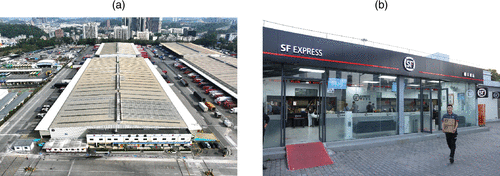
Notes. (a) A gateway hub. (b) A local hub.
On a typical day, over 100 million parcels are transported or sorted in the SF network. Figure 4 illustrates the flow of a parcel from a sender to a recipient through the SF network. A courier picks up a parcel from the sender’s doorstep and transports it to a nearby LH using an e-bike or e-tricycle. The parcel is sorted at the LH and transported to a designated GH. Then, it is transported to the destination GH (via direct delivery or transshipment) and LH. Finally, a courier delivers the parcel to the recipient.
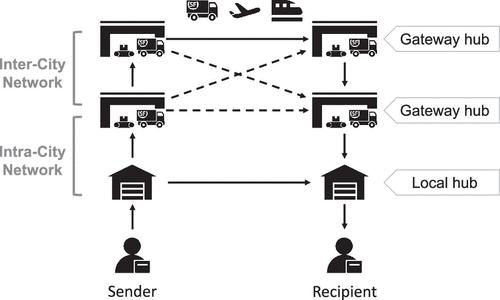
The SF network is broadly divided into intercity and intracity networks. The intercity network facilitates the movements of parcels between GHs, which are usually multimodal, incorporating road, air, and rail options. Among them, air transportation utilizes both self-owned cargo airplanes and the belly capacity of commercial flights. The intracity network focuses on first-mile pickup and last-mile delivery within a city, connecting LHs to the designated GHs via light-duty trucks.
To guarantee its customer experience, SF has pioneered the industry with a multishift scheme related to its network planning. A shift at SF refers to a scheduled time interval during which a specific operation, such as sorting, pickup, or delivery of parcels, is performed at a hub. It is also called a “sort” in express delivery companies in the United States (Herszterg et al. 2022). SF strategically schedules multiple pickup and delivery shifts at LHs and multiple sorting shifts at GHs to achieve aggressive service-level agreements (SLAs). In an LH’s pickup shift, couriers collect parcels from customers and transport them to the LH before the cutoff time. At the LH, parcels are sorted and transported to their next hub by the end of this shift. In an LH’s delivery shift, the LH receives parcels before the cutoff time and sorts parcels based on the parcels that each courier will deliver. Then, couriers deliver parcels to customers to fulfill the prespecified SLA. SF schedules multiple shifts to guarantee that parcels are sorted and transported quickly to the next destination, reducing the waiting time at each hub and improving the customer’s experience.
However, this multishift scheme greatly enhances the complexity of network design because parcels picked up in different shifts are associated with varying SLAs and require differentiated treatment as Figure 5 illustrates. In the origin city, parcels collected in the first shift at the LH are transported to the GH and then, the airport, where they are transported to the destination city via the belly space of a commercial flight. In the second shift, parcels are directly transported from the LH to the airport (which we refer to as a direct pickup) and then, to the destination via a cargo airplane. In the third shift, parcels are transported to the airport of a nearby city to be loaded onto another cargo airplane.
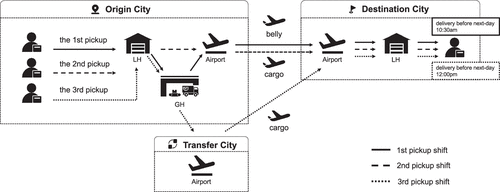
Note. Three distinct routes from the origin city to the destination city, corresponding to three different pickup shifts, are depicted; the first shift is indicated by solid arrows, the second shift is indicated by dashed arrows, and the third shift is indicated by dotted arrows.
Manual Planning Process
Network planning was previously conducted by regional network planning teams as illustrated in Figure 6. These teams designed their own intracity and intercity networks based on the overarching principles of the headquarters network planning team. In cases of conflicts or disagreements on network plans among regions, the headquarters network planning team would intercede to coordinate and decide the final solutions.
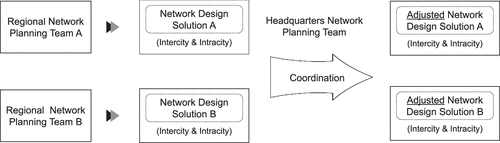
As the volume increased, the numbers of LHs and GHs also increased, challenging manual planning in each region and increasing the cost of communication and coordination among regions. Furthermore, because most planners rely on their own experience to plan the network, the network plans’ quality varied significantly.
Recognizing these challenges, the headquarters planning team sought methods to centralize the process. We participated in the network design centralization project, with the objective of revolutionizing the process and improving network planning consistency and quality across all regions.
Opportunities for Operations Research
In addition to the motivation of designing a centralized network planning procedure, other factors also contributed to the opportunities for OR at SF.
In 2015, SF initiated its Ezhou Hub plan because the existing hub in Hangzhou was anticipated to reach its limit soon. This project required the network planning team to completely replan the network, a highly challenging task using manual methods; therefore, leveraging new technologies to support the strategic planning of the Ezhou Hub was imperative.
In addition, SF completed its internal digitalization, including introducing digital waybills, personal digital assistants, and automatic sorting equipment before 2017. Digitalization transformed SF’s operations and significantly improved operational efficiency. More importantly, the system collected SF operations data, laying a solid foundation for applying advanced data analytics and OR methods.
In 2017, SF began recognizing the advantages of OR methods in addressing the aforementioned network planning issues and started to establish its own OR team (under SF Technology). In the same year, SF embarked on a collaboration project with the Georgia Institute of Technology to study various research topics. During this collaboration, significant progress was made on intracity network design problems, leading to the publication of two academic papers (Wu et al. 2022, 2023).
Although the collaboration ended in early 2020, the OR team at SF continued to tackle the challenging (intercity and intracity) network design problems and independently proposed the framework of a centralized network planning procedure. Studying these challenging network design problems involves strategic decision making across extensive geographical regions, including network structure, transportation schedules, and consolidation strategies. Meanwhile, the team continued to refine and update the intracity modules to incorporate additional problem characteristics and enhance solution efficiency.
Problem Definition
As we explain in Manual Planning Process, the network planning at SF is a complicated multistage process involving various stakeholders (some with conflicting objectives). In the early stages of this project, we invested considerable effort in understanding the entire process in order to transform it into a centralized one with integrated OR models.
First, we provide an overview of SF’s network planning problem and describe our solution framework that involves iteratively solving several critical network design problems, each explained in detail. At the end of this section, we summarize these models and methodologies.
Overview of Network Planning
We introduce basic concepts and terminology related to the optimization models. A common input to all optimization models is the aggregated parcels with key attributes (i.e., the origin hub, the destination hub, the ready time at the origin hub, the due time at the destination hub, the quantity, and the product type), which we also refer to as commodities. Common decisions in these models pertain to the line-hauls and the commodities’ routes. A line-haul refers to a scheduled movement between two hubs, typically associated with a starting hub, an ending hub, a departure time at the starting hub, an arrival time at the ending hub, and a cutoff time at the starting hub. A route is a sequence of line-hauls that connects the origin and destination hubs of the commodity.
The philosophy behind designing the centralized process with OR methods is to balance flexibility, where planners can interact with and apply the models in various scenarios, and accuracy, which requires that all key decisions are made using the OR models. One of the most promising methods involves a sequential approach that decomposes the overall network planning problem into several subproblems. We distinguish the intercity and intracity networks because they are managed by different planners in each region. Furthermore, the planning of intercity air and intercity ground networks is usually decoupled because intercity air network planning involves planning self-owned cargo airplanes, the most critical and scarce resources for SF. In contrast, the intercity ground network mainly relies on outsourced heavy-duty trucks, which are abundant in the market. With a fixed intercity network plan (including air and ground transportation), a key aspect is that intracity network planning can be broken down for each city. Note that SF plans its intercity air and ground network on a monthly/weekly basis, whereas it plans the intracity network on a daily/weekly basis.
Following these observations and based on multiple discussions with the network planning team, we developed a framework sequentially solving critical network design problems employed in SF’s network planning process, which we show in Figure 7. The redesigned process, where the headquarters planning team generates the overall network plan (i.e., the optimization phase) and regional planning teams evaluate the plan with minor adjustments, completely changes the workflow of network planning. A lightweight network simulator evaluates the adjusted plan to demonstrate its service levels and operational costs (i.e., the evaluation phase).
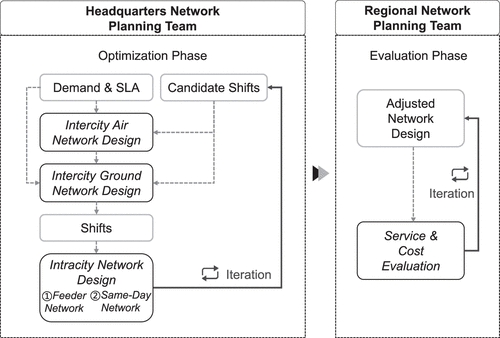
Notes. The headquarters network planning team initiates the planning process, where the OR models determine the intercity air network, intercity ground network, intracity feeder network, and intracity same-day network. The regional network planning teams evaluate the plan with minor adjustments, and a network simulator evaluates the adjusted plan to calculate its service levels and operational costs.
Within the optimization phase, we first solve the intercity air network design problem considering all parcels and their SLAs by making the following decisions: (1) selecting the parcels to be served by air transportation (i.e., cargo airplanes and belly space of commercial flights), (2) determining the routes and schedules of cargo airplanes, and (3) determining line-hauls in the intracity network and intercity ground network that connects the LHs and ground GHs to the air GHs. Then, the remaining parcels are handled by the intercity ground network via road and rail transportation. The intercity ground network design problem determines the line-hauls of trucks based on the number of parcels and their SLAs, respecting those served by the air network. A part of the output of the intercity air and ground plans is GH and LH shifts. Accordingly, the intracity network is designed based on these shifts. After solving the intracity network problems, the headquarters network planning team examines the overall results, and it may make minor changes to the shifts and reoptimize these problems. Note that we are dealing with two optimization problems in the intracity network. One is a feeder network design problem, which concerns the transportation of parcels (mostly intercity parcels) between LHs and GHs, and the other is a same-day network design problem, which designs a separate network for transporting intracity parcels rapidly.
It is also worth noting that among the four optimization problems discussed, three (i.e., the intercity air network, the intercity ground network, and the intracity same-day network) are variants of the service network design problem (SNDP) (Crainic 2000, Boland et al. 2017). In contrast, the feeder routing problem is a variant of the vehicle routing problem (VRP) (Laporte 2007, Toth and Vigo 2014). Because we need to make granular scheduling decisions under various time-related constraints, it is helpful to define these optimization problems on time-expanded networks (or time-indexed networks), which is a common practice in the literature. In a time-expanded network, a node represents a combination of a location and a specific time point. The procedure to generate a time-expanded network based on a flat network is described in Appendix A. Note that the generation of the time-expanded network requires massive travel time calculations between pairs of hubs. In this project, the travel time matrix of trucks is retrieved by SF Map application programming interfaces (APIs), whereas the travel time matrix of airplanes is provided by SF Airlines.
The objective, decision variables, and constraints of each problem are determined based on multiple rounds of discussion and prototyping with senior managers and experienced planners. We want to underscore the modeling of the trade-off between operational costs and service levels in the intercity air and ground networks. We impose a set of constraints with a target SLA that each commodity must achieve. By default, the target SLAs are set to those of the current network, indicating that the modification should not compromise customers’ experiences. However, we also allow planners to customize the target SLAs to conduct what-if analyses. In addition, we add a reward component into the objective function (which minimizes total operational cost) for commodities achieving better service levels to identify opportunities to improve services further.
The scale of all of these problems is much larger than most of those studied in the literature, where off-the-shelf solvers cannot generate high-quality or feasible solutions within the required time limit. Therefore, we seek to design advanced algorithms incorporating mathematical programming and heuristics. The design of the algorithms of each problem is similar. We first investigate methods such as preprocessing and reformulation to improve the efficiency of the mathematical model. The mathematical model provides a good initial solution or solves a partial problem on a smaller scale. We then use heuristics or metaheuristics to decompose the whole problem or iteratively improve the solution. All of these algorithmic designs are inspired by the related literature, the in-depth analysis of problem structures, and planners’ experiences. For example, the metaheuristic for the SNDP considers frameworks and operators introduced in Erera et al. (2013), Lindsey et al. (2016), and Wu et al. (2023), whereas the metaheuristic for the VRP is inspired by Christiaens and Vanden Berghe (2020).
Intercity Air Network Planning
The intercity air network is the basis for SF’s outstanding service performance. It comprises transportation resources, including self-owned cargo airplanes and the belly capacity of commercial flights, and complex route structures (Figure 8). We also incorporate ground transportation, such as trucks and trains, because they are essential to connect the GHs and airports, and truck-air transportation is sometimes more cost effective.
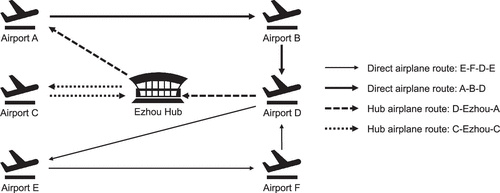
Notes. Four distinct airplane route types are depicted. Direct cyclic airplane routes (e.g., E-F-D-E) are indicated by thin solid arrows, direct noncyclic airplane routes (e.g., A-B-D) are indicated by thick solid arrows, hub-based noncyclic airplane routes (e.g., D-Ezhou-A) are indicated by dashed arrows, and hub-based cyclic airplane routes (e.g., C-Ezhou-C) are indicated by dotted arrows.
Problem.
The design of intercity air networks involves multiple vital decisions, including the design of flights, the schedules of self-owned cargo airplanes, and the routes of express parcels. The primary objective in designing this network is to minimize the total cost while maximizing overall service performance.
In addition to the basic constraints for SNDP, this problem is highly constrained by physical limitations related to air transportation, such as the fleet sizing constraints of each type of cargo airplane, sortation capacity of each GH, apron physical parking capacity (i.e., the number and type of available aircraft parking stands), and aircraft balancing requirements at each airport. The Ezhou Hub is also associated with runway capacity and a sorting time window that defines the latest arrival times and earliest departure times. Civil aviation regulations pose additional constraints, including the types of aircraft available at each airport and restricted operating time windows for cargo airplanes. We note that most of these constraints are common in the air freight industry (Fleuren et al. 2013).
Furthermore, it is crucial to consider specific characteristics of SF Express. Because of SF’s multishift scheme for both pickup and delivery, scheduling an airplane’s departure time (and landing time) is a very delicate task. Parcels at the origin airport may miss an airplane departing too early, although the airplane is able to fulfill the promised SLA to customers. On the other hand, parcels on an airplane departing too late may compromise SF’s SLA. To cope with this difficulty, we have to discretize the time horizon into 10-minute intervals to model cargo airplane schedules accurately. Accordingly, we also aggregate the parcels in granular 10-minute intervals. In the intercity air network, a commodity corresponds to parcels sharing the same origin and destination GHs, with origin hub ready times clustered within 10 minutes. This leads to technical challenges in handling a large number of commodities. The authors are unaware of any literature on air transportation that considers this granular modeling of commodities in the time dimension.
Complexity.
SF’s air network comprises 280 air and ground GHs (a subset of 390 GHs) and the Ezhou Hub. Generally, an air GH connects to LHs through a ground GH. Air GHs may establish direct pickups and deliveries with LHs, bypassing ground GHs to reduce transit time as shown in Figure 5. In SF’s air network, each cargo airplane route must include at least two flight segments, and more than three aircraft types must be available for selection. Combining multisegment routing requirements, a heterogeneous fleet, and fine-grained commodity aggregation creates a highly complex optimization problem. Based on our conservative estimation, directly formulating this problem leads to a mixed-integer program (MIP) involving 1 million commodities, 115 million candidate flights, and 10.1 billion candidate commodity routes.
Technical Solutions.
To tackle the large-scale problem, we incorporate various reformulation methods to reduce the number of decision variables and constraints. Below, we list some of the most effective strategies for reducing the model size without sacrificing optimality.
We first apply a set of domination rules on candidate airplane routes. Given a set of candidate airplane routes with similar schedules, we determine if they share the same delivery service levels and can carry the accumulated parcels. If so, we only keep one route with later departure times. This reduces the number of candidate routes by a factor of 10.
Inspired by the route-splitting strategy in Armacost et al. (2002, 2004), we split airplane routes visiting the Ezhou Hub into inbound and outbound subroutes. This explicit decoupling avoids a massive number of subroute combinations, reducing the number of hub-related airplane routes by 60. Note that the concept of composite path variables described in the literature is not applicable in SF’s intercity air network problem.
We further propose an improved aggregation scheme on commodities. Rather than evenly discretizing the whole time horizon into 10-minute intervals, we adjust the temporal granularity based on the cutoff times of candidate cargo planes and fixed commercial flights. Further, we identify a property where commodities with origin or destination GHs close to each other within a threshold can be aggregated without compromising the optimality. This leads to a reduction in the number of commodities by a factor of 14.
Finally, we propose a novel reformulation technique that exploits the time dimension of commodities. Conventionally, a set of “assignment”-like variables is used to indicate routes of each commodity. Given the fine granularity of the time dimension, it leads to a large number of decision variables. To avoid introducing these additional variables, we propose a set of variables that only track the cumulative number of parcels on each candidate route, whose size is independent of the number of commodities. This reformulation compresses the size of decision variables by a factor of 12.
Our methods significantly reduce the problem size, and we can solve the model using commercial solvers within 10 hours. However, we need to find a solution within two hours to accommodate the rapid evaluation of multiple scenarios required for comprehensive analysis of decision variables in strategic planning (which will be discussed in Technical Challenges). Thus, we further developed advanced matheuristics inspired by Archetti and Speranza (2014) that partially improve the network iteratively to meet this more stringent requirement. Initially, we decompose the network into subnetworks based on resource types to obtain a feasible initial solution. Then, we refine this solution iteratively to improve the network toward optimality.
Intercity Ground Network Planning
The intercity network is the most complex part of the whole network. Planning the intercity ground network involves the cost-effective transshipment of parcels with various product types from numerous candidate options under SLAs.
Problem.
The intercity ground network is similar to a variant of the SNDP: that is, the single-path and in-tree flow planning model (Bakir et al. 2021) for the simplicity of sortation operations. Single path indicates that the commodities are not allowed to split, which is widely considered in the literature (Erera et al. 2013, Lindsey et al. 2016, Boland et al. 2017). Furthermore, the in-tree constraints ensure a more straightforward consolidation plan, where a group of commodities with the same destination is transshipped to a single next GH (Bakir et al. 2021).
This model optimizes commodity routes, the number of vehicles, and load plans on line-hauls to minimize costs (including transportation and sortation costs) while ensuring adherence to SLAs. To accurately reflect the ground transportation network, the model incorporates practical constraints, such as the limited number of docks and sortation capacity associated with each GH. Additionally, it factors in available railways as capacitated and fixed schedule transportation resources. Moreover, the model accounts for the requirement of GH clearance, ensuring that all parcels are dispatched by the last shift of the day.
Complexity.
The entire intercity ground network design problem involves over 300 GHs, 300,000 commodities, and trillions of candidate commodity routes. Furthermore, even from a regional planners’ perspective, designing a tiny region’s intercity ground network involves dispatching commodities from 35 origin GHs to the nationwide 300 GHs, resulting in 25,000 commodities and over a billion candidate commodity routes, which are already more than instances considered in most SNDP literature; for example, in Jarrah et al. (2009), Teypaz et al. (2010), and Wang et al. (2019), the number of commodities is usually less than 1,000.
Technical Solution.
We built a fast and scalable algorithm that integrates methodologies from both intercity air network design and intracity network design to address the issue of large-scale computation. The algorithm consists of two parts: the network reduction and the iterative metaheuristic.
We begin by applying graph theory-based methods to simplify the model. Drawing inspiration from intercity air network strategies, commodities sharing the same origin shift and SLAs are aggregated, reducing the overall commodity size to one third. Additionally, a connectivity analysis is performed to identify and eliminate redundant decision variables associated with candidate commodity routes, resulting in a 99% reduction in these variables. For instance, the size of the regional 35-GH instance is reduced to a mixed-integer programming problem with 2,940,000 variables and 670,000 constraints from an initial problem with over a billion variables.
After that, a two-step batch-based iterative matheuristic is developed to solve the model. Generating batches is critical and challenging, significantly impacting the solution’s quality and efficiency. Building upon the single-hub-based decomposition framework proposed by Wu et al. (2023), we extend the methodology by decomposing the problem into multiple territory-based subproblems. To effectively partition the entire network into distinct territories, we employ a clustering approach that evaluates parcel routes over one week. Specifically, destination GHs with comparable routes are grouped by analyzing route similarities. Once an initial feasible solution is constructed, an iterative local search process is implemented to progressively optimize the solution by reoptimizing selected groups of commodities.
For the regional 35-GH instance, this method finds a solution that improves the objective value by 13% within one hour compared with the solution obtained from Gurobi 9.5.1 with a five-hour time limit. Given the scale of the intercity ground network, this improvement is considered massive, and it approximately translates to an additional savings of $1 million in operational costs per day.
Intracity Network Planning
The feeder network serves as the backbone of SF’s intracity operations, with a GH acting as the central facility for parcel sorting and distribution. The same-day delivery network is established to address the demand for highly time-sensitive intracity services, such as six-hour delivery. Under strict time constraints, the same-day delivery network incorporates the option of transshipment among LHs, an innovative design introduced by SF through collaboration between the network planning and OR teams.
Feeder Network Planning.
In the SF feeder network, parcels are transported between LHs and a central GH.
Problem.
Because of the multishift scheme of SF’s operations, vehicles perform multiple tasks across different shifts, resulting in a multitrip VRP. Furthermore, vehicles are responsible for both pickup tasks (transporting parcels from an LH to the GH) and delivery tasks (transporting parcels from the GH to an LH), referred to as backhaul operations in the literature. Both pickup and delivery demands are splittable. Additionally, the GH typically operates with limited unloading docks, necessitating efficient scheduling of vehicle arrivals to prevent congestion and minimize idle times. Finally, each vehicle serves a fixed set of LHs for deliveries across multiple trips. This “crosstrip consistency” constraint ensures operational stability, simplifies loading-dock-to-hub allocation, and builds route familiarity for drivers. A schematic representation of the feeder network is provided in Figure 9.
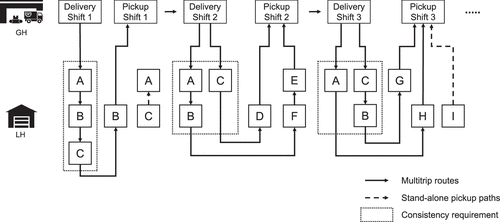
Notes. The routes from the LHs to the GH are the delivery routes, whereas the routes from the LHs back to the GH serve as pickup routes. Delivery routes consistently pass through LHs A, B, and/or C across all shifts because GH’s loading dock assignments to specific hubs remain constant. In contrast, pickup routes are not restricted to particular LHs because GH’s unloading docks can receive shipments from any LH.
Considering the above factors, the planning of the feeder network constitutes a rich vehicle routing problem (Lahyani et al. 2015). To the best of the authors’ knowledge, this problem integrates several key features, such as multitrip vehicle routing, backhaul operations, limited hub capacity, split pickup or delivery, and route consistency, which have not been studied in an integrated manner.
Complexity.
The feeder network can cover a large geographic area. For example, a megacity with one GH covers a service area of over 4,000 square miles and has 200 local hubs with eight (pickup or delivery) shifts, which is considered a large instance in the VRP literature.
Technical Solution.
To address these challenges, we propose a multiphase heuristic framework. This framework decomposes operations into sequential shifts, optimizing each shift individually and integrating solutions across the planning horizon. Delivery routes are established by clustering local hubs based on consistent delivery patterns, whereas routing is optimized using hierarchical set partitioning. For pickups, backhaul paths are constructed to integrate them into return trips, and stand-alone pickup paths are created for unmet demands using integer programming. These partial routes are then integrated into cohesive multitrip schedules.
This framework demonstrates significant improvements in efficiency. Compared with baseline manual scheduling approaches, it reduces total vehicle trips by approximately 15%, balances dock utilization, and adheres to time window constraints. Integrating stand-alone pickups into return trips has proven particularly effective in optimizing fleet utilization (Wu et al. 2022).
Same-Day Network Design.
The same-day delivery network is designed to handle time-sensitive intracity parcels within urban areas through transshipment between LHs.
Problem.
A primary operational challenge in this network is the limited capacity of LHs. Under the same-day delivery model, parcels are sorted and crossdocked at LHs, requiring these facilities to handle processes typically performed at GHs. However, LHs have fewer docks than GHs because of the high cost of urban real estate, which creates potential bottlenecks. These docking constraints represent a challenge rarely discussed in the literature on SNDP, especially in the context of urban delivery.
Complexity.
A critical aspect of this problem is that a feasible solution that serves all origin-destination markets is not always guaranteed because severe hub capacity and time constraints may render specific shipment paths infeasible. Therefore, the objectives are twofold: (1) to maximize the number of origin-destination markets served and (2) to minimize the transportation costs for these markets.
Technical Solution.
To address this challenge, we developed a hybrid algorithm to generate high-quality solutions. It combines an integer programming-based heuristic (IP-H) with a multistart iterated local search (MILS) algorithm. The IP-H sequentially processes LHs, solving a subproblem where only the commodities associated with a specific LH are considered. The MILS algorithm produces feasible solutions through repeated neighborhood searches. The hybrid algorithm combines the strengths of IP-H and MILS by using metaheuristic solutions to dynamically guide the integer programming process (Wu et al. 2023).
The optimization model demonstrates its effectiveness by extending service cutoff times in specific markets by up to two hours and increasing same-day delivery coverage by over 30% in some test instances.
Following the collaboration with the Georgia Institute of Technology, the SF team has continued to refine intracity delivery methods to enhance their efficiency and extend them to more scenarios. Specifically, we have integrated hub location decisions into the intracity same-day network to identify a subset of LHs for expanding sorting capacity. We further extended the feeder routing algorithm to support heterogeneous fleets, simultaneous pickups and deliveries, and transshipment. Additionally, we have implemented state-of-the-art metaheuristics to replace some IP-based modules, further improving computational efficiency.
Summary
We summarize the key constraints and variables of the three network design problems in Table 1. Regarding decision variables, all problems determine the selection of line-hauls and commodities’ routes. The intercity air network uses continuous variables to model the commodities’ routes because commodities can be split and parcels with the same key attributes can be loaded to multiple airplanes. In contrast, the other two problems use binary variables, indicating that commodities are unsplittable to ease the sortation procedure. The intracity same-day network problem considers whether to serve a commodity (the conventional feeder network handles commodities not served by the same-day network via a GH). In contrast, the other two problems must serve all commodities. In addition, the intercity air network explicitly considers the routing of cargo airplanes. We provide a mathematical model based on the intercity ground network in Appendix B.
|

Table 1. Comparison of the Variables and Constraints of the Three Network Design Problems That Constitute SF’s Network Planning Framework
| Model elements | Types of elements | Intercity air network | Intercity ground network | Intracity same-day network |
|---|---|---|---|---|
| Variables | Commodity selection | Binary, whether intercity air network serves a commodity | No selection variables | Binary, whether same-day network serves a commodity |
| Commodity routing | Continuous, the amount of commodities on a route | Binary, whether a commodity route is chosen | Binary, whether a commodity route is chosen | |
| Line-haul selection | Integer, the number of an airplane type traversing an arc | Integer, the number of a vehicle type traversing an arc | Integer, the number of a vehicle type traversing an arc | |
| Resource routing | Binary, whether an airplane route is chosen | No variables | No variables | |
| Constraints | On resources | Limited heterogeneous fleet, aircraft balance constraints | Unlimited heterogeneous fleet, no balance constraints | Unlimited homogeneous fleet, no balance constraints |
| On arcs | Capacity constraints | Capacity constraints | Capacity constraints | |
| On commodities | Splittable commodities, SLA constraints,a no in-tree constraints | Unsplittable commodities, SLA constraints,a in-tree constraints | Unsplittable commodities, SLA constraints,a no in-tree constraints | |
| On nodes | Clearance constraints,a runway capacity, sortation capacity, apron capacity, civil aviation regulations, hub time window | Clearance constraints,a docking capacity, sortation capacity | Clearance constraints,a docking capacity |
aThese constraints are handled implicitly during the generation of the time-expanded network.
We conclude this section by providing the evolution of our solution methods. We started by studying intracity network design problems, focusing on the design of effective decomposition-based heuristics. Later, we addressed the intercity air network problem by significantly improving the mathematical formulation. By utilizing the approaches in those problems, we were finally able to solve the most challenging intercity ground network problem.
Implementation
We first discuss challenges encountered during the process to properly define problems, use the appropriate methodologies, and deploy them to SF network planning.
Challenges
Although the project faced many difficulties, we highlight the most significant organizational and technical challenges.
Organizational Challenges.
At the beginning of this project, the OR team under SF Technology realized that the first challenges were properly identifying the network planning problem of interest, the project’s scope, and the expected deliverables. The members of the newly founded OR team lacked sufficient business background in SF network planning procedures. In contrast, the SF network planning team did not fully understand or accept the OR concept. The SF executives experimented with the OR team joining the network planning team in 2019 to allow both teams to work seamlessly together. The head of the network planning team evaluated the OR team’s performance based on the financial and service benefits generated by the OR techniques developed.
This organizational experiment coincided with the “facilitated mode” in employing OR in organizational interventions in the literature (e.g., Franco and Montibeller 2010). By definition, the facilitated mode “requires the operational researcher to carry out the whole intervention jointly with the client: from helping to structure and define the nature of the problem situation of interest to supporting the evaluation of priorities and development of plans for subsequent implementation” (Franco and Montibeller 2010, p. 489). We have not observed a similar organizational structure to promote OR in Chinese companies and have regarded it as an organizational innovation.
In retrospect, this organizational innovation results in a virtuous circle. Team members from different backgrounds gain valuable insights into each other’s fields. The network planning team helps the OR team understand logistics practice and examine the solutions generated by the OR teams. In turn, the OR team helps the network planning team with the OR basics and can discuss the network planning using OR language. Most senior network planning team managers have stated that they benefit greatly from collaboration and communication with the OR team and have gained a deeper understanding of the complicated network planning problem. In 2024, after five years of cooperation, the OR team returned to SF Technology given that its mission of promoting OR and understanding the details of the operation had been accomplished. Nonetheless, the facilitated mode between the OR and network planning teams has continued, with new recruits to the OR team required to serve a one- to two-month rotation with the network planning team.
Technical Challenges.
A few common technical challenges related to all of the network planning problems have been identified during the project. These challenges are critical for applying OR methods to practice and generating practical impact, but they are rarely discussed in the literature.
Planning Flexibility.
Per the requirements of the network planning team, the OR models should retain their flexibility to support strategic and operational planning so that all network decisions are consistent. The goals for the planning optimization problems change as per the nature of the planning process. In operational planning (e.g., planning the intracity network of next week), the generated network should be similar to the current network to ensure that a set of limited changes can be implemented quickly. In contrast, strategic planning (e.g., planning the intercity air network for next year) has no such limitations.
To ensure this flexibility, we have added several algorithmic parameters to control whether the generation of candidate line-hauls and candidate commodity routes adheres closely to the current network structure or is unrestricted.
Structural Differences Among (Near-)Optimal Solutions.
We have empirically observed that multiple (near-)optimal solutions are structurally different in various scenarios. For example, when assessing whether to invest in a new GH in an area, the algorithm may generate a high-quality network plan using the new GH. However, if we fix some decision variables to exclude this GH, another solution with similar performance in terms of operational cost and service levels is generated.
This issue is commonly faced in the employment of OR techniques to a practical business context. First, it is challenging in strategic planning to derive managerial insights based on one algorithm-generated solution. Second, the solution generated by the algorithm may not be the most desirable from the perspective of the planning team because the OR model may not capture hard-to-quantify attributes, such as ease of implementation or alignment with the company’s strategy.
To address this, we always conduct a comprehensive scenario analysis of important decision variables in strategic planning before rushing to a premature conclusion. To better support the scenario analysis, we allow the users to input a (partial) reference solution so that the generated solution created by the OR algorithm is close to it. Further, we keep improving the efficiency of these methods to reduce the run time to a few hours.
It is worth noting that the OR team first observed this phenomenon when we conducted controlled experiments to analyze key strategic decisions. Previously, planners could not observe or mitigate this difficulty because of the complexity of network planning.
Local Optimality of Solutions.
In the early stages of the project, we observed that even a high-quality network plan developed heuristically could be slightly improved by making minor adjustments using human observations. We refer to this situation as a solution that violates the local optimality property.
Although the difference in the objective function values is negligible, it undermines planners’ trust in the models and their willingness to deploy the solutions. Therefore, we add a postprocessing phase (with a simple local search method) to guarantee the local optimality of the solution. Note that it is extremely challenging to guarantee global optimality for these large-scale network optimization problems. We propose additional postprocessing to guarantee the local optimality to ensure that the generated solutions align with the planner’s intuition.
Regional Service Equity.
The objectives of the models are a combination of cost and service levels; therefore, it is possible to generate a solution in which the service level of one pair of cities decreases significantly. This is unacceptable because if the solution is deployed, it will impact the customer’s experience.
As we discuss in Problem Definition, we tackle this difficulty by imposing hard SLA constraints on each commodity, which usually require the service levels of a commodity not to deteriorate from the current requirements. However, we also include rewards for achieving better service levels in the objective to identify opportunities to improve the service and customer’s experience.
Implementation Journey
The network planning project has transformed the network planning process at SF. Below, we highlight a few representative applications.
Intracity Network Design.
The intracity same-day delivery network planning project has experienced dramatic changes since it was initially considered. In 2017, SF set an ambitious goal to deliver intracity parcels within six hours. The OR team concluded that transshipment via the GH would not be able to achieve this goal and proposed to set up a separate transshipping network among the LHs.
Then, we introduced a hybrid metaheuristic, which considered the docking capacities of each LH and expanded the coverage of the same-day delivery service. After several years of internal trials and iterative improvements, SF officially launched the intracity half-day service in major Chinese cities in 2022.
Ezhou Hub.
One key goal of the network planning project was to support the planning and operations of the Ezhou Hub, where OR had been proven to be an invaluable methodology. In 2019, the OR team helped determine SF Airlines’ fleet size and Ezhou’s cargo throughput, which were critical inputs to determine the sorting capacity of air parcels of the Ezhou Hub. In 2020, the OR team studied the opportunity for multimodal transportation (air, road, and rail) at Ezhou, which helped determine the sorting capacity of ground parcels of the Ezhou Hub. These capacities were some of the most critical parameters for constructing the Ezhou Hub. In 2021, the OR team continued updating the air network plan and analyzing the impact of key parameters, such as the airport runway capacity.
When the Ezhou Hub was constructed in 2022, the OR team started to design the multiphase transition plan from the previous hub to the Ezhou Hub. This was a challenging task with critical constraints necessary for the transition. The network plan needed to satisfy an estimated increasing function of the sorting capacity of Ezhou. Because two national hubs would coexist during the transition, the number of additional cargo airplanes was bounded by the available leasing cargo airplanes in the Chinese market. Most importantly, the service levels should not be compromised.
In 2023, the Ezhou Hub successfully completed a two-month transition, meeting all of the above requirements, and has served as SF’s national hub since then. Meanwhile, the OR team participated in redesigning the ground network to exploit Ezhou’s advantages by providing more air-truck transportation options. By the end of 2023, the Ezhou Hub operated 45 domestic and 10 international cargo routes daily. The cargo volume of Ezhou ranks among the top three airports in China. The Ezhou Hub has leveraged its geographical advantage to achieve an average on-time flight rate of over 92% and significantly improved cargo processing efficiency and service quality (SF Holding Co., Ltd. 2024a).
GH Investment.
We are also involved in strategic decisions regarding GH investments. When a regional organization plans to invest in a new GH, we objectively evaluate the impact on the whole network and each region. Because the evaluation brings different teams together, we serve as the moderator to improve decision-making efficiency. Since 2021, we have evaluated 10–20 GH investments each year, covering the regions related to all megacities (i.e., cities with a population of over 10 million) in China.
System Deployment.
The network planning models have been integrated into the production system of SF, which directly supports monthly/weekly planning of intercity air/ground and intracity networks.
We designed an interactive network planning tool to ease the use of these tools. This tool allows users to adjust routes via a drag-and-drop interface. It also offers real-time route re-evaluation, route visualizations, and the ability to compare multiple scenarios. It empowers users to experiment with different configurations and assess their operational impacts before finalizing decisions. The interactive tool has greatly enhanced planners’ adoption, popularizing OR applications in logistics planning at SF.
According to surveys of system users, over 90% of regional planners actively use this system for various purposes, such as daily improvement of the network plan, conducting what-if analyses, and interactively reoptimizing the network plan. Conventionally, planners tend to reuse the previous month’s/week’s plan and make minor modifications based on forecast demand. Network design models support planners in making more comprehensive changes to the previous network plan to better adapt to varying demands.
Managerial Insights
In addition to developing tools to improve SF’s network, the OR and network planning teams examined the underlying mechanism of the network plans generated by the OR models. This led to managerial insights that were counterintuitive to planners’ experiences. Below, we provide some examples of the advantages of using the OR methods.
Avoid Oversimplified Guidelines.
SF headquarters provided guidelines to regional planners to prioritize various transshipment options. For example, given a commodity associated with an origin GH and a destination GH, the guidelines suggest that direct delivery from the origin to the destination is the top priority for this commodity. The second priority is to transship the commodity to a GH close to the commodity’s destination, and transshipment at a GH close to the commodity’s origin is the third priority. Based on our experimentation, these priorities often lead to suboptimal solutions. Therefore, we suggest that planners employ the OR models rather than relying on the oversimplified guidelines to make such decisions.
Identify Crossregion Transshipment Opportunities.
Conventionally, to minimize the communication efforts, each region determines the commodities routes that only traverse the origin and destination regions, significantly restricting the solution space. The network planning model enables each region to generate better crossregion transshipment options as we illustrate in Figure 10.
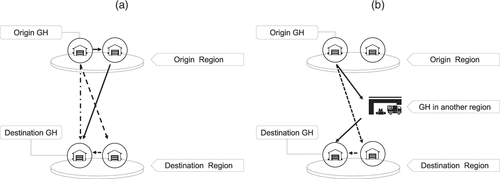
Notes. Panel (a) shows the conventional transshipment options of a commodity, which only include GHs in the origin and destination regions. Panel (b) shows results generated by the OR models, where the optimal transshipment is via a GH in another region. (a) Conventional transshipment options. (b) Crossregion transshipment options.
Impact and Benefits
This project has had significant benefits and impact, including financial benefits, environmental benefits, and organizational benefits. It has implications for strategy, service, and academia. Meanwhile, our approaches can be a reference for other logistics companies and extended to serve more business customers.
Financial Benefits
Measuring the benefits of deployed solutions presents a significant challenge because of the interplay of multiple business teams and the dynamic nature of external factors, such as demand fluctuations and fuel price volatility. To address this complexity, SF’s finance team was engaged early in the project to collaborate with the OR and network planning teams in establishing a standardized procedure for tracking and calculating benefits. As part of this effort, we developed tools, such as dashboards, to automate the process and facilitate continuous monitoring of key performance indicators.
The main idea suggested by the finance team for the benefit calculation is based on the difference in operational cost per unit weight before and after deploying a solution. Operational cost per unit weight is a more robust metric against demand fluctuations than calculating the difference in total operational cost. To be more specific, given a set of dates indicating the time that a solution i is employed, let denote the average daily weight of parcels related to solution I, and is the difference of operational cost per unit weight. The benefits generated by solution i during are . For example, in 2024, 29,000 feeder route optimization solutions were applied, each with a varying application period. Following the calculation above, these solutions translate to a total saving of $27.7 million. Furthermore, these solutions have increased the utilization of intracity vehicles by 7.6% and decreased the proportion of low-utilization intracity vehicles by 6.1% compared with 2023. Note that we are careful about the confounding variables in this calculation. Specifically, the fuel price effect has been adjusted based on year-to-year comparisons. Further, we distinguish different periods, such as weekdays, weekends, and holidays. We also track parcels influenced by each solution and remove duplicate parcels simultaneously influenced by multiple solutions to avoid double counting the financial benefits.
Summing up the financial benefits of all deployed solutions leads to the total benefits. Our project’s implementation generated a total cost savings of $172 million from January 2023 to September 2024. These benefits were primarily derived from two areas: ground network optimization and air network optimization. From January 2023 to June 2024, ground intercity and intracity network optimization generated cost savings of $164 million. From January 2023 to September 2024, air network optimization generated cost savings of $8 million. The benefits above have been reviewed and verified by executives from the finance team and documented in a letter from the SF Chief Financial Officer to the Edelman Award committee (Ho 2025). Extending this calculation back to 2018, we estimate that our project has saved SF over $1 billion.
Environmental Benefits
When calculating the savings in carbon emissions, we adopt a similar method for calculating financial benefits: that is, a method based on the difference in energy consumption per unit weight. To calculate the metric, SF developed a digital carbon management platform—the Fenghe Sustainability Platform (SF Holding Co., Ltd. 2022). This platform helps track vehicles’ daily data, including vehicle types and travel distance, and then, it converts these data to energy consumption (SF Holding Co., Ltd. 2024b). We convert the reduction of energy consumption to the reduction of carbon emissions via a coefficient provided by a Chinese standard (State Post Bureau of the People’s Republic of China 2014).
Based on the aforementioned calculation approach, this project has reduced millions of tons of carbon emissions since 2018. In 2023 alone, SF reduced 1.018 million tons of carbon dioxide equivalent. The environmental benefits have been reviewed and verified by executives from the strategy team and documented in a letter from the SF Chief Strategy Officer to the Edelman Award committee (Wang 2025). These data have also been audited by a third-party institution and publicly disclosed (SF Holding Co., Ltd. 2023).
Organizational Benefits
The OR team has significantly influenced SF’s network planning process. The network planning decisions previously relied heavily on regional planning teams, with the headquarters staff primarily responsible for monitoring and coordination.
Our contribution has enabled the headquarters’ network planning team to adopt a unified approach to overall network planning while allowing regional teams to make necessary adjustments before conducting the final evaluation. Based on our observations, introducing OR techniques has significantly changed the mindsets of planners and their managers. Instead of manually designing the network, they now spend more time analyzing the generated solutions and making minor adjustments to facilitate implementation, boosting their work efficiency. Rapidly calculating and evaluating multiple scenarios, OR models have reduced the decision-making period from weeks to hours.
The impact of OR inside SF continues to grow. The OR techniques have been extended to various applications, including revenue management, staffing, disruption management, and real-time scheduling problems. We illustrate this impact with an initially unexpected example. To track carbon emissions, the Fenghe team initially considered deploying alternative fuel vehicles as the only measure to reduce transportation emissions. We suggested including the emission savings generated from the network planning models. Since 2022, the SF sustainability reports have explicitly included the emission reduction of network planning models under the term “application of green technology.”
Strategic Impact
This project supports SF Express executives in strategically investing in hubs, especially the Ezhou Hub. This helps SF Express maintain its competitiveness in the Chinese express delivery industry. Furthermore, some of these methodologies have been adapted to support SF’s networks in Southeast Asia, which support SF’s current strategy to expand international business.
Service Impact
This project generates continuous improvement in service time, enhancing the customer experience. According to our estimation, this project has reduced the delivery time of over 1 billion parcels to customers. Further, it helped SF Express launch a new service: that is, the half-day delivery service launched in 2022. The intracity half-day service covers over 270 cities in China, serving over 10 million individual customers and over 1 million business customers (SF Express Press Release 2024).
Impact on Academia
Realizing the importance of OR techniques, SF Express actively interacts with multiple universities (mostly domestic) on various optimization and analytics topics, and it has held a few seminars and algorithm competitions for the public. These actions bridge academia and the industry, stimulating new research topics. For instance, collaborating with the Georgia Institute of Technology led to publications in top academic journals (Wu et al. 2022, 2023). We have observed emerging follow-up studies on these topics, especially the intracity network design problem (e.g., He et al. 2022; Liu et al. 2023a, b; Satici 2024; Satici and Dayarian 2024). In addition, five graduate students from various universities with whom we collaborated have studied and included the intracity same-day network design problem in their dissertations. These instances of the same-day network design problem are available upon request for research and educational purposes.
Transportability
According to Allied Market Research (2021), the global express delivery market is projected to reach $484.38 billion by 2030, registering a compound annual growth rate of 6.4% from 2021 to 2030. With this steady growth, many cities worldwide will experience a significantly larger volume of parcels. We anticipate that SF’s two-echelon city logistics system will prevail as express delivery service providers benefit from the increasing customer density in the urban areas. They can use our planning framework or the separate network design methods to build an efficient, time-sensitive network with aggressive service levels. Indeed, some of the methods from this project have been adopted to support SF International’s network design in Southeast Asia.
The OR team, representing SF, has undertaken a project commissioned by the Minister of Transport of China titled Route Optimization and Intelligent Scheduling in Urban Distribution, which is specifically targeted to reduce carbon emissions in urban freight transportation. As one of the deliverables, SF has published a group standard (Guangdong–Hong Kong–Macao Greater Bay Area Standard Innovation Alliance 2024) to demonstrate a standard and minimalist procedure for optimizing urban delivery by logistics companies and an illustrative guideline that summarizes key candidate actions (e.g., off-hour delivery, mobile depots, public transit transportation, and crowdsourced delivery) to reduce carbon emissions for logistics companies. In addition, the two academic papers (Wu et al. 2022, 2023) on intracity network design serve as advanced materials for logistics experts to further improve network efficiency. These documents could serve as references for other logistics or express service providers. We note that some of these algorithms have been integrated into SF’s supply chain solution suite, which allows other corporations using SF’s supply chain solution suite to solve related routing and network design problems, such as milk-run routing, interfacility logistics, and real-time vehicle dispatching.
Lessons Learned from the Project
The network design project has resulted in significant financial and environmental benefits and improved customer experiences. In addition to technical innovations and applying advanced OR methodologies, we want to share some key elements contributing to success during this journey.
Understanding the Business.
Developing a deep understanding of the business has helped the OR team communicate efficiently with the network planning team, properly abstracting the network design problems and promoting the deployment of the developed models.
Learning from Human Experience.
The planners’ experiences and intuitions consistently impressed the OR team during the collaboration. Some of these insights inspired the design of algorithmic refinements integrated into the solution methodology, significantly enhancing solution efficiency.
Prioritizing Solving Correct Problems over Solving Problems Correctly.
Facing complicated network design problems, the OR team insisted on spending a significant amount of time to ensure the validity of the definition of the metathetical problem before beginning the algorithm design phase.
Allowing Perseverance to Prevail.
Over the years, we have continued to make incremental improvements in modeling and algorithms, which have contributed to efficiently solving these challenging problems. These improvements would not have been possible without the persistence of the OR team and the continuous support from the network planning team and the SF executives.
Conclusions
This project demonstrated the significant value of OR and analytics in solving large-scale network planning problems in practice. Although the network planning at SF is a multistage process involving various stakeholders, we invested considerable effort in understanding the entire process to properly identify the critical and challenging problems. In addition, we developed advanced algorithms to efficiently solve these large-scale problems. This project has cumulatively saved SF over $1 billion, decreased the delivery time of over 1 billion parcels, and reduced millions of carbon emissions since 2018.
Motivated by this success, we continue to extend the applications of OR at SF and expect more significant benefits based on the applications of OR. In addition, we anticipate that OR and analytics as well as the trending large language models are the building blocks of intelligent agents to seamlessly support logistics network planning in the future.
The authors thank the executives and the planning team of SF Express for their vision and open minds to continuously support the operations research team, which was key to the success of this project. The authors also express gratitude to Xinhui Zhang, Luciana Buriol, and Layek Abdel-Malek as verifiers in the semifinal of the Franz Edelman Award. Additionally, the authors give special thanks to their coaches Xinhui Zhang, David Fernando Muñoz Negron, and Mikael Rönnqvist for their guidance. The authors are also grateful to the faculty of H. Milton Stewart School of Industrial and Systems Engineering, Georgia Institute of Technology for their support during the collaboration.
Appendix A. Network Construction
The time-expanded network graph consists of time-expanded nodes and time-expanded arcs. A time-expanded node represents a specific hub at a specific time point. A time-expanded arc is a directed connection between two time-expanded nodes. When constructing the time-expanded network, the time points of time-expanded nodes represent delivery time windows for parcels and schedules for line-hauls. Time-expanded arcs represent candidate movements between hubs or holding arcs (i.e., waiting) of the same hub.
Additionally, some real-world constraints are implicitly implemented by adjusting the time-expanded network. For example, to enforce clearance and SLA constraints, limited time-expanded nodes (restricted within time windows) are generated for the origin and destination of commodities.
Appendix B. MIP Formulation
Consider a network , where is the set of GHs and is the set of arcs. Further, let denote the set of GHs associated with parcels’ destinations and denote the set of GHs for transshipment.
We build a time-expanded network based on , which is denoted as . Among them, is the set of time-expanded nodes. Each time-expanded node is associated with a number of docks and a sortation capacity in terms of parcels. Let denote the set of time-expanded arcs, where is the set of candidate line-hauls (or task arcs) and is the set of holding arcs. Let denote the set of time-expanded nodes associated with transshipping GHs. For a time-expanded node , denote , as the set of outbound and inbound time-expanded arcs, respectively. Let , denote the set of road and rail task arcs, respectively. Additionally, each task arc is associated with a free capacity .
Denote as the set of commodities. Each commodity is associated with a tuple , where and are the origin and destination gateway hubs, and are the ready time at the origin and the due time at the destination, is the product type, and is the quantity of parcels. Let denote the set of product types and denote the set of vehicle types. A vehicle type v is associated with a capacity in terms of parcels. Let denote the sortation cost on a task arc or reward of achieving better service levels on a holding arc of commodity k. Let denote the transportation cost of vehicle type v on task arc a, which is proportional to the distance of arc a.
Based on these notations, we define our decision variables as follows:
: whether commodity k selects arc a;
: number of vehicles of vehicle type v in task arc a;
: whether task arc a is selected; and
: whether commodities of product type r and destination d select arc a.
The mathematical formulation of the intercity ground network is shown as follows:
Objective (B.1a) minimizes the total operational cost (i.e., transportation cost and sortation cost) minus the reward of achieving better service levels. Constraints (B.1b) are the classic “flow balance constraints,” ensuring that each commodity finds a feasible route from its origin to its destination within the time windows. Constraints (B.1c) and (B.1d) ensure that the volume on the arc does not exceed its capacity. Constraints (B.1e) and (B.1f) guarantee the docking capacity. Constraints (B.1g) guarantee the sorting capacity. Constraints (B.1h) and (B.1i) restrict the network plan to respect the in-tree property, where a group of commodities with the same destination is transshipped to a single next GH (Bakir et al. 2021).
References
Allied Market Research (2021) Express delivery market size, share, competitive landscape and trend analysis report, by application, end use and destination: Global opportunity analysis and industry forecast, 2021–2030. Accessed January 14, 2025, https://www.alliedmarketresearch.com/express-delivery-market-A12503.Google Scholar- (2014) A survey on matheuristics for routing problems. EURO J. Comput. Optim. 2(4):223–246.Google Scholar
- (2002) Composite variable formulations for express shipment service network design. Transportation Sci. 36(1):1–20.Link, Google Scholar
- (2004) UPS optimizes its air network. Interfaces 34(1):15–25.Link, Google Scholar
- (2021)
Motor carrier service network design . Crainic TG, Gendreau M, Gendron B, eds. Network Design with Applications to Transportation and Logistics (Springer, Cham, Switzerland), 427–467.Google Scholar - (2017) The continuous-time service network design problem. Oper. Res. 65(5):1303–1321.Link, Google Scholar
- (2020) Slack induction by string removals for vehicle routing problems. Transportation Sci. 54(2):417–433.Link, Google Scholar
Civil Aviation Administration of China (2020) Interpretation of the policy on cargo flight schedules. Accessed January 14, 2025, http://www.caac.gov.cn/XXGK/XXGK/ZCFBJD/202008/t20200812_204022.html.Google ScholarCivil Aviation Administration of China (2024) Statistical bulletin on the development of civil aviation industry in 2023. Accessed January 12, 2025, https://www.caac.gov.cn/XXGK/XXGK/TJSJ/202405/t20240531_224333.html.Google Scholar- (2000) Service network design in freight transportation. Eur. J. Oper. Res. 122(2):272–288.Google Scholar
- (2009) Models for evaluating and planning city logistics systems. Transportation Sci. 43(4):432–454.Link, Google Scholar
- (2013) Improved load plan design through integer programming based local search. Transportation Sci. 47(3):412–427.Link, Google Scholar
- (2013) Supply chain–wide optimization at TNT Express. Interfaces 43(1):5–20.Link, Google Scholar
- (2010) Facilitated modelling in operational research. Eur. J. Oper. Res. 205(3):489–500.Google Scholar
Frost & Sullivan (2024) Global logistics market study. Google ScholarGuangdong–Hong Kong–Macao Greater Bay Area Standard Innovation Alliance (2024) Guidelines for route optimization and intelligent scheduling in urban distribution (T/GBA 018—2024). Accessed July 15, 2025, http://szstandard.cn/wp-content/uploads/2023/04/%E9%99%84%E4%BB%B61%EF%BC%9A%E3%80%8A%E5%9F%8E%E5%B8%82%E9%85%8D%E9%80%81%E8%B7%AF%E5%BE%84%E4%BC%98%E5%8C%96%E4%B8%8E%E6%99%BA%E8%83%BD%E8%B0%83%E5%BA%A6%E6%8C%87%E5%8D%97%EF%BC%88%E5%BE%81%E6%B1%82%E6%84%8F%E8%A7%81%E7%A8%BF%EF%BC%89%E3%80%8B%E6%A0%87%E5%87%86%E6%96%87%E6%9C%AC.pdf.Google Scholar- (2022) An exact algorithm for the service network design problem with hub capacity constraints. Networks 80(4):572–596.Google Scholar
- (2022) Near real-time loadplan adjustments for less-than-truckload carriers. Eur. J. Oper. Res. 301(3):1021–1034.Google Scholar
- (2025) The benefit statement of SF network planning intelligent solution. A support letter from the Chief Financial Officer, Alex Ho, of SF Express to the Edelman committee. SF Technology, Shenzhen, China.Google Scholar
- (2009) Large-scale, less-than-truckload service network design. Oper. Res. 57(3):609–625.Link, Google Scholar
- (2015) Rich vehicle routing problems: From a taxonomy to a definition. Eur. J. Oper. Res. 241(1):1–14.Google Scholar
- (2007) What you should know about the vehicle routing problem. Naval Res. Logist. 54(8):811–819.Google Scholar
- (2016) Improved integer programming-based neighborhood search for less-than-truckload load plan design. Transportation Sci. 50(4):1360–1379.Link, Google Scholar
- (2023a) Stochastic service network design: The value of fixed routes. Transportation Res. Part E Logist. Transportation Rev. 174(June):103118.Google Scholar
- (2023b) Service network design with consistent multiple trips. Transportation Res. Part E Logist. Transportation Rev. 171(March):103028.Google Scholar
Log Club (2024) Annual express delivery industry performance report released. Accessed January 14, 2025, https://www.logclub.com/articleInfo/NzUwMDQ=.Google Scholar- (2024) China hits record 150 billion parcel deliveries in 2024. China Daily (November 18), http://www.chinadaily.com.cn/a/202411/18/WS673b4b34a310f1265a1ce269.html.Google Scholar
- (2024) These are the largest five US all-cargo airlines by fleet size. Accessed January 12, 2025, https://simpleflying.com/largest-us-all-cargo-airline-fleets/.Google Scholar
Pitney Bowes (2022) Parcel shipping index 2022. Accessed January 12, 2025, https://www.pitneybowes.com/us/shipping-index.html.Google Scholar- (2024) Innovative operations and network designs for high-velocity intra-city courier services. PhD thesis, University of Alabama, Tuscaloosa.Google Scholar
- (2024) Tactical and operational planning of express intra-city package services. Omega 122(January):102940.Google Scholar
SF Express Press Release (2024) Wider coverage, later cut-off: SF Express launches major upgrade to half-day delivery in Jiangsu–Zhejiang–Shanghai areas. Accessed July 15, 2025, https://www.sf-express.com/chn/sc/news/301.Google ScholarSF Holding Co., Ltd . (2021) Carbon target white paper. Accessed July 15, 2025, https://www.sf-express.com/uploads/carbon_sc_2021_236713c775.pdf.Google ScholarSF Holding Co., Ltd . (2022) Sf express is making steady progress in the “zero carbon future” plan for the industry’s first low-carbon transformation model. Accessed August 28, 2025, http://www.cncarbonneutral.com/News/Detail?Id=1464.Google ScholarSF Holding Co., Ltd . (2023) 2023 sustainability report. Accessed July 15, 2025, https://ir.sf-express.com/media/fsshlnng/2023-esg-e.pdf.Google ScholarSF Holding Co., Ltd . (2024a) 2023 annual report. Accessed January 12, 2025, https://ir.sf-express.com/media/2yldv5tg/2023-annual-report-e.pdf.Google ScholarSF Holding Co., Ltd . (2024b) 2024 sustainability report. Accessed July 13, 2025, https://www.sf-express.com/uploads/2024_3f49679d2c.pdf.Google ScholarState Post Bureau of the People’s Republic of China (2014) Measurement methods of greenhouse gas emissions for express industry (YZ/T 1234-2022). Accessed July 15, 2025, https://www.codeofchina.com/standard/YZT0135-2014.html.Google ScholarState Post Bureau of the People’s Republic of China (2025) Annual statistical bulletin on the development of the postal industry. Report, State Post Bureau of the People’s Republic of China, Beijing.Google Scholar- (2010) A decomposition scheme for large-scale service network design with asset management. Transportation Res. Part E Logist. Transportation Rev. 46(1):156–170.Google Scholar
- (2014) Vehicle Routing: Problems, Methods, and Applications (Society for Industrial and Applied Mathematics, Philadelphia).Google Scholar
- (2025) Explanation on energy conservation and carbon emission reduction of SF network planning intelligent solution. A support letter from the Chief Strategy Officer, Tina Wang, of SF Express to the Edelman committee. SF Technology, Shenzhen, China.Google Scholar
- (2019) A hybrid algorithm for large-scale service network design considering a heterogeneous fleet. Eur. J. Oper. Res. 276(2):483–494.Google Scholar
- (2022) Planning the city operations of a parcel express company. Omega 107(February):102539.Google Scholar
- (2023) Service network design for same-day delivery with hub capacity constraints. Transportation Sci. 57(1):273–287.Link, Google Scholar
Yixiao Huang is the chief operations research scientist at SF Technology. Since joining SF Express in 2018, he has been working on the optimization express delivery network. He has published academic papers in top journals such as Transportation Science. In 2020, he received the Outstanding Paper Award in Urban and Transportation Planning and Modeling from the TSL Society of INFORMS. He holds a PhD in management science and engineering from Tsinghua University.
Ziheng Liu is a director of the SF Network Optimization Team at SF Technology. He is responsible for artificial intelligence (AI) algorithm solutions in network planning and resource scheduling for ground and air transport operations as well as developing AI decision-making tools. He holds a master’s degree from the University of South Florida.
Huan Chen is the vice president of Big Data Intelligence at SF Technology. He obtained his PhD in computer science from University College Dublin.
Yankun Geng is currently the chief marketing officer of SF Group, the chief executive officer of SF Technology, and the chief executive officer of SF Intra-City Technology. He received his MS from Peking University.
Fei Gao is a senior operations researcher at SF Technology. His research focuses on operations research, simulation optimization, and their application in logistics network optimization. He holds a PhD in systems engineering and engineering management from the City University of Hong Kong.
Yiwen Liao is a senior operations researcher at SF Technology. Her main focus is applying operations research to ground network design. She earned a master’s degree in industrial engineering and operations research from the University of California, Berkeley.
Jiaxin Lin is a senior operations researcher at SF Technology. He specializes in the application of operations research in logistics network design. He holds an MS in supply chain engineering from the Georgia Institute of Technology.
Kai Zhang is a senior operations researcher at SF Technology. His research focuses on operations research, machine learning, and their applications in logistics network optimization. He holds a PhD in policy and planning sciences from the University of Tsukuba.
Guangyuan Zhu is a senior operations researcher at SF Technology. His research focuses on urban logistics optimization, particularly vehicle routing and last-mile delivery scheduling. He holds an MS in electrical engineering from Tongji University.