Understanding the Dynamic and Episodic Nature of Technostressors and Their Effects on Cyberdeviance: A Daily Field Investigation
Abstract
Technostress is an emerging topic in the information systems (IS) literature. Prior studies have mostly adopted a static approach to capturing snapshots of technostressors, without considering their dynamic and episodic nature. Daily technostress is often the product of discrete events encountered in the workplace that shape employees’ momentary affect and behaviors in situ. To lay the conceptual foundation for understanding deviant behaviors, this study integrates the self-regulation perspective into the transactional model of stress and conducts a contextualized, longitudinal, and daily investigation of how and when daily perceived technostressors affect employees’ daily cyberdeviant behaviors (i.e., cyberdeviance). In a time-lagged experience sampling study of 188 professionals who completed a survey three times a day for two weeks, we found that employees experiencing daily techno-overload and techno-invasion are likely to engage in daily cyberdeviance to cope with their daily exhaustion. We also examined the cross-level moderating effect of an individual trait (i.e., technology self-efficacy) on the strength of the within-person process model of daily cyberdeviance. Our multilevel analysis results showed that technology self-efficacy alleviated employees’ daily exhaustion induced by daily techno-overload. This study theoretically contributes to the IS literature by providing a theoretical explanation of the underlying mechanisms of techno-overload, techno-invasion, and employees’ cyberdeviance, in addition to using a within-person approach to understand the dynamic and episodic nature of these technostressors.
History: Yulin Fang, Senior Editor; Zhenhui (Jack) Jiang, Associate Editor.
Funding: This work was supported by MOE (Ministry of Education in China) Project of Humanities and Social Sciences [Grant 21YJA630007] and the Government of Spain and the European Regional Development Fund (European Union) [Research Projects PID2021-124725NB-I00, PID2021-124396NB-I00, and TED2021-130104B-I00]. This work was also supported by the Research Grants Council of the Hong Kong Special Administrative Region, China [Grant HKBU12500020].
Supplemental Material: The online appendix is available at https://doi.org/10.1287/isre.2020.0273.
1. Introduction
Technostress is stress experienced by employees because of their inability to cope with the demands of organizational information and communication technologies (ICTs), such as email and instant messaging (Ragu-Nathan et al. 2008).1 It has detrimental and pervasive effects on employees, their work outcomes, and their organizations. A 2020 survey showed that 40% of employees experience mental exhaustion due to technology in the workplace (In Diverse Company 2021). Findings from the mental well-being platform Yerbo indicate that 42% of information technology (IT) professionals want to quit because of excessive stress, exhaustion, and a disrupted work–life balance (Hughes 2022). The cost of replacing an employee can vary between half and double their annual salary (LinkedIn 2023). Qilk and Accenture found that 70% of employees in Singapore experience workplace stress due to data overload; that is, 56.5 hours of productivity are lost per employee each year because of work delays and sick leave due to technology-related stress, which equates to $5.1 billion in lost productivity (Shaina 2020).
Over the past decade, researchers have devoted considerable effort to investigating technostress creators or technostressors. Our literature review (see Table A1 in Online Appendix A) shows that a static approach is generally used in the technostress literature, which can only capture snapshots of technostressors based on cross-sectional and self-reported data (Ayyagari et al. 2011).2 Hence, we lack a fundamental understanding of the dynamic and episodic nature of technostressors. This understanding is essential because technostressors (e.g., a computer freezing or crashing) can be experienced as discrete episodes (i.e., occasional and temporary events) in daily life (D’Arcy and Teh 2019, Benlian 2020). However, emerging evidence suggests that employees may experience more technostress on some days than others (e.g., Addas and Pinsonneault 2018). That is, employees may exhibit more within-person variation (i.e., changes over time in person-level variables) in perceptions of technostress than is observed in comparisons between employees. The technostress literature has mostly adopted between-person paradigms, which cannot capture changes in individuals’ technostressors. This oversight is unfortunate because the effects of these everyday behaviors may extend beyond employees’ performance and well-being (Breevaart and Bakker 2018, Zhang et al. 2019). More empirical evidence is needed to identify the extent to which technostress is detrimental to organizations and individuals (Ragu-Nathan et al. 2008). This includes its relationship to cyberdeviant behaviors (i.e., cyberdeviance), referring to the use of ICTs in a way that violates important information security norms and threatens or harms the well-being of the organization, its members, or both (Weatherbee 2010, Venkatraman et al. 2018). Employees’ responsible behavior at work is essential for their organization; therefore, their cyberdeviance poses serious threats by causing huge costs, legal liabilities, and security risks to their organization, besides reducing its revenue growth and profitability (e.g., Pavlou and Chellappa 2001, Alnuaimi et al. 2010, Khansa et al. 2017, Venkatraman et al. 2018).
To tackle these practical challenges and fill theoretical knowledge gaps, we seek to understand the dynamic and episodic nature of technostressors and provide a theoretical explanation of the relationship between technostressors and cyberdeviance. Specifically, we integrate the self-regulation perspective into the transactional model of stress (TMS) to explain the underlying mechanism of daily technostressors. At the heart of our research model is the idea that daily technostressors may cause employees to experience daily exhaustion, making it difficult for them to avoid engaging in daily cyberdeviance. To this end, we adopt a daily approach combined with the experience sampling method (ESM) in our empirical investigation to capture the dynamic and episodic nature of technostressors and their effects on daily cyberdeviance. We empirically validate our model using a time-lagged ESM with a sample of 188 professionals, who completed a survey three times a day for two weeks.
Our study contributes to the information systems (IS) literature, particularly the literature on technostressors, in several ways. First, unlike most studies of technostress, we examine the dynamic and episodic (i.e., occasional and temporary) nature of technostressors. Specifically, we use the within-person paradigm of technostress to explore the impact of daily technostressors on daily cyberdeviance. Our multilevel path analyses empirically support the relationships between daily technostressors, daily exhaustion, and daily cyberdeviance, in addition to confirming the contingent role of technology self-efficacy in the relationship between daily technostressors and daily exhaustion. Second, we advance our theoretical understanding of technostress by linking technostressors to cyberdeviance through exhaustion, which is a critical indicator of the depletion of self-regulatory resources. Although a few daily studies in the IS literature have attempted to incorporate individuals’ emotions as an explanatory mechanism for technostressor processes (e.g., Benlian 2020), other possible mechanisms (e.g., cognition) have been ignored. By integrating the self-regulation perspective into the TMS, we complement these studies by showing that exhaustion, integrating both emotions and cognitions (Moore 2000a, b), is a critical psychological resource mechanism linking daily technostressors to daily cyberdeviance. We also enrich the conceptualization and operationalization of cyberdeviance by including different forms of cyberdeviance (i.e., product, property, personal, and political deviance) in our analyses.
From a management perspective, this study provides insight into the stress-inducing effects of ICT use on employees’ undesired, deviant, or harmful behaviors (i.e., cyberdeviance) based on a daily field investigation. This work adds to a growing body of evidence showing that employees’ daily experiences have a critical influence on their daily reactions and behaviors at work. Managers can derive important practical benefits from understanding daily technostress and cyberdeviance by knowing when and whether their employees experience daily technostressors and engage in daily cyberdeviance (Venkatraman et al. 2018). Addressing cyberdeviance on a specific day may also be less intimidating and more manageable than eliminating all occurrences of cyberdeviance. We hope that the results of this study will draw the attention of managers to these factors so that they can better manage workers on a daily basis.
2. Theoretical Background
In this section, we review the technostress and cyberdeviance literature and explain how technostressors and cyberdeviance are dynamic and episodic phenomena. We then introduce the self-regulation perspective and the TMS to theoretically explain the relationship between technostressors and cyberdeviance.
2.1. Technostressor Literature
The literature on technostressors has discussed two main conceptualizations of technostressors (see Table A2 in Online Appendix A). The first conceptualization treats technostressors as second-order factors (e.g., Tarafdar et al. 2007, 2011; Ragu-Nathan et al. 2008) and examine their overall effect on outcome variables, such as organizational commitment (Kumar et al. 2013), job stress (Hung et al. 2011), job burnout (Srivastava et al. 2015), and negative affect (Jena 2015). The second conceptualization treats technostressors as decomposed first-order factors and examine how they are related to outcome variables, such as strain (Ayyagari et al. 2011), job satisfaction (Yin et al. 2014), productivity (Tu et al. 2005), and commitment (Ahmad et al. 2014).
Our literature review also shows that previous studies have mostly treated technostressors as stable or chronic variables (for exceptions, see Reinke et al. 2016, Benlian 2020), which are characterized as long-term, consistent, or frequently recurring variables (Beehr et al. 2000). The definition of technostressors in the literature explicitly reflects static assumptions. For example, Ragu-Nathan et al. (2008, p. 418) described technostressors as “stress experienced by individuals due to the use of ICTs and has been defined as ‘a modern disease of adaptation caused by an inability to cope with new computer technologies in a healthy manner’ (Brod 1984, p. 16) and as a state of arousal observed in certain employees who heavily dependent on computers in their work (Arnetz and Wiholm 1997).” Studies viewing technostressors as static have also explained how they lead to long-term strain and reduced productivity among workers (Galluch et al. 2015). Given that technostressors may be closely related to employees’ daily interactions with their supervisors for different tasks, static estimates of technostressors over a long period may mask within-person variation, thus underestimating their consequences (Liu et al. 2017). Researchers have recently investigated discrete and episodic (i.e., periodic or occasional) technostressors and conceptualized them as transient adverse events that occur periodically or are important during particular episodes (e.g., Benlian 2020). These stressors are classified as temporarily dynamic because they exert inconsistent or sporadic pressure on employees’ lives (Beehr et al. 2000). Theoretical and empirical evidence is accumulating to support the perspective that technostressors vary daily (at the within-person level) depending on fluctuating situational factors such as the experience of workplace events (Galluch et al. 2015) and task assignment (Liu et al. 2017). For example, Galluch et al. (2015) argued that technostressors due to ICT-related interruptions are episodic stressors, that is, periodic, transient, and adverse events that produce short-term stress. Echoing this notion, Reinke et al. (2016) captured not only the short-term effects of ICT-based communication events but also how a series of such events occurring over the course of a day cumulatively affects end-of-day strain. Thus, technostressors exhibit within-person variation; that is, individuals will experience different levels of technostress on different occasions, and their experience of technostress also varies daily (Addas and Pinsonneault 2018).
Following previous IS studies (e.g., Benlian 2020, Benlian et al. 2020), we propose that daily techno-overload and techno-invasion are important work events that trigger negative feedback. Daily techno-overload and techno-invasion are two salient dimensions of daily technostressors. Daily techno-overload describes “situations where ICTs force employees to work faster and longer” in a given workday (Ragu-Nathan et al. 2008, p. 427). Daily techno-invasion describes “the invasive effect of ICTs in situations where employees can be reached anytime and feel the need to be constantly connected, thus blurring work-related and personal contexts” in a given workday (Ragu-Nathan et al. 2008, p. 427). In this study, we consider that technostressors (i.e., techno-overload and techno-invasion) differ from general stressors (i.e., work overload and work invasion) in four main ways: (1) a lack of social presence, (2) the expectation of constant connectivity, (3) the expectation of simultaneous responses, and (4) the ability to control technology (see Online Appendix B for details). These two daily technostressors are selected for two main reasons. First, they are the most important technostressors in today’s business world (Choi et al. 2015). For example, Templeton (2022) showed that the pace of technological change causes employees to suffer from technology-related pressures, including overload and invasion of personal life. According to a report by the tech company nBold (Cipriani 2023), 87% of employees spend an average of seven hours per day on their screens. Many workers suffer from depression or fatigue resulting from technology overload. Microsoft’s (2022) Work Trend Index Annual Report reported that compared with March 2020, after-hours and weekend work increased rapidly (28% and 14%, respectively) in February 2022, disturbing employees’ work–life balance. Second, in contrast with the other three technostressors (i.e., technocomplexity, technouncertainty, and technoinsecurity), techno-overload and techno-invasion are perceived as dynamic and episodic (Galluch et al. 2015). A large body of research in psychology (e.g., Barnes et al. 2015) has shown that individuals’ perceptions are not stable over time; that is, individuals may be in a positive mood today but not tomorrow. Based on this premise, we argue that employees may feel that their jobs cause techno-overload and/or are technoinvasive on some days but not on others. We also argue that techno-overload and techno-invasion are episodic (i.e., they occur occasionally or at irregular intervals); that is, they have a greater impact in particular episodes. Techno-overload and techno-invasion are temporary events, and their consequences are expected to be limited over time. Employees may experience techno-overload and techno-invasion, but their effects will change over time (e.g., dynamic changes and uncertain task requirements communicated via instant messages) and are temporary and occasional in nature (e.g., episodic changes in tasks due to infrequent system problems). Techno-overload and techno-invasion require employees to cope with and satisfy their stressful work demands, which prevents them from achieving personal accomplishments. For example, when ICTs are used to force employees to complete work tasks (e.g., video conferences and WeChat messages) whether they are at home or at work, this is likely to threaten their sense of personal achievement (Benlian 2020). These threats are engendered by negative work events related to the characteristics of ICTs, such as constant connectivity and easy access (Galluch et al. 2015), which generate techno-overload and techno-invasion (Tarafdar et al. 2010).
2.2. Cyberdeviance Literature
Our literature review (see Table C1 in Online Appendix C) includes key studies on cyberdeviance from 2000 to 2021 published in leading IS journals: Information & Management, Information Systems Journal, Information Systems Research, Journal of the Association for Information Systems, Journal of Management Information Systems, and MIS Quarterly. These studies have focused on cyberdeviance, ranging from benign behaviors such as cyberloafing (e.g., Khansa et al. 2017) and computer misuse (e.g., Willison and Warkentin 2013) to harmful or illegal behaviors such as malicious insider attacks (e.g., Wang et al. 2015), data breaches (e.g., Gwebu et al. 2018), and IS security policy violations (e.g., Moody et al. 2018). However, many of these studies have evaluated the concept and nature of cyberdeviance in a piecemeal rather than holistic manner (e.g., D’Arcy and Teh 2019, Xu et al. 2020). For example, in a study focusing on IS security policy violations as cyberdeviance, Siponen and Vance (2010) explored the impact of IS neutralization on individuals’ cyberdeviance related to IS security policies. Similarly, in the context of cyberdeviance, previous studies have treated different deviant uses of ICT as different phenomena, leading to a separate body of literature for each form of deviant behavior at work (e.g., Khansa et al. 2017). Accordingly, a systematic conceptualization and operationalization of cyberdeviance using a holistic instrument can help us understand the overall set of such behaviors and investigate their triggers (Venkatraman et al. 2018). Our review of cyberdeviance research also reveals that previous studies have adopted various theoretical foundations and research approaches to investigate cyberdeviance (see Table C2 in Online Appendix C). Accordingly, there is no single framework explaining cyberdeviance.
IS studies have conceptualized cyberdeviance as a stable state (e.g., Aghaz and Sheikh 2016, Moody et al. 2018) but have overlooked its dynamic and episodic nature (D’Arcy and Teh 2019; see Table B1 in Online Appendix B). Most studies have used a cross-sectional design and examined the antecedents of cyberdeviance at the between-person level (e.g., Chatterjee et al. 2015, Khansa et al. 2017). Cross-sectional surveys have been frequently used to examine between-person differences, but within-person variation in short-term cyberdeviance remains underexplored (D’Arcy and Teh 2019). In general, cyberdeviance can vary over a short period depending on dynamic factors, such as mood, self-control, and specific environmental demands (Addas and Pinsonneault 2018, D’Arcy and Teh 2019, Benlian 2020). As cyberdeviance is partly determined by dynamic variables, such as mood and self-control (D’Arcy and Teh 2019), it should vary over time on a similar time scale as these variables. Indeed, Ayyagari et al. (2011) pointed out that field studies using the between-person approach cannot capture the episodic nature of stressful events and the resulting behaviors of employees when dealing with technology at work.
2.3. The Underlying Mechanism Between Technostressors and Cyberdeviance
This study integrates the TMS with the self-regulation perspective to elucidate the underlying mechanism between technostressors and cyberdeviance. The TMS, established by Lazarus (1966), is widely recognized as a practical framework for understanding how individuals manage workplace stress and engage in undesirable behaviors directly related to their organization (Ragu-Nathan et al. 2008, Srivastava et al. 2015). According to the TMS, strain, such as exhaustion (Maier et al. 2019) and negative emotions and cognitions (Benlian 2020), can be conceptualized as an outcome of technostressors (Cooper et al. 2001). Building upon the TMS, the self-regulation perspective posits that exhaustion, unlike other strain-related variables (e.g., negative emotions and cognitions), is a critical indicator of the depletion of self-regulatory resources (D’Arcy and Teh 2019). This depletion subsequently serves as a predictor of subsequent individual behaviors that target not only their organizations but also their colleagues. Consequently, the self-regulation perspective enables us to investigate the psychological resource-based mechanism that connects technostressors to employees’ cyberdeviance toward both their organizations and colleagues, both within individuals and across days. For instance, when individuals experience emotional and cognitive exhaustion, they are less likely to regulate their deviant impulses and may be therefore more prone to engaging in cyberdeviance in the workplace. Thus, cyberdeviance can be construed as the outcome of employees’ inability to self-regulate in the face of constantly tempting behaviors.
2.3.1. The Transactional Model of Stress.
The TMS is an appropriate model for this study because it was developed to understand the strain-based effects of work-related stressors and recognize short-term fluctuations in employees’ strain-related responses as a function of their daily workplace demands. In addition, the TMS considers workers’ subsequent strain-related behaviors toward their organization (Cho and Kim 2022) and has been widely applied to analyze how individuals respond to their environmental demands to accomplish necessary or desirable tasks. Workers feel stressed when their environmental demands or pressures exceed their resources or ability to cope with stress (Srivastava et al. 2015). The use of ICTs at work creates new demands or stress (i.e., technostressors) because ICTs are complex and rapidly changing, thus requiring additional work and leading to excessive multitasking behavior (Ragu-Nathan et al. 2008). At the heart of the TMS is the premise that various demand conditions, including technostressors, generate immediate reactions, which then activate strain-related behaviors as outcomes. We adopt the TMS from organizational psychology as the core research framework to explain technostress following previous IS studies (Ragu-Nathan et al. 2008, Maier et al. 2015).
Studies using the TMS to understand technostress have conceptualized it as a combination of four major components: technostressors, strain, outcomes, and situational variables (Cooper et al. 2001, Ragu-Nathan et al. 2008; see Figure 1). Stressors (i.e., stress creators or stressful conditions) include events, demands, stimuli, or conditions experienced by individuals as factors that create stress in their work environment. When individuals are forced to use ICTs in the workplace, these factors are called “technostressors” or “technostress creators” (Tarafdar et al. 2010, p. 307). In the literature, “strain” (or manifest conditions) refers to individuals’ psychological and physiological responses to external stimuli, such as IT-specific stimuli called “technostrain.” Strain can lead to potential outcomes (e.g., absenteeism and job performance) that are directly related to the organization (Tarafdar et al. 2015). Individuals may perform different behaviors to deal with stressful conditions (Lazarus and Folkman 1984). Hence, these behaviors can be seen as the adaptive outcomes that individuals resort to in response to stressful situations (Srivastava et al. 2015).
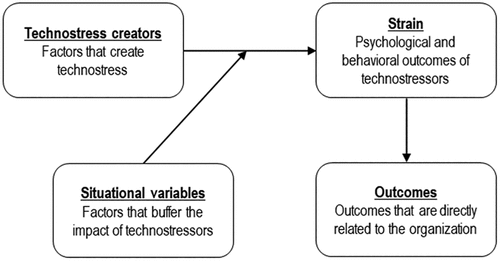
Situational variables are mechanisms that can inhibit or reduce the negative influence of stressors, such as perceived job control and information sharing (Cooper et al. 2001). The literature has defined the factors that buffer the negative impact of technostressors as technostress inhibitors (Ragu-Nathan et al. 2008, Tarafdar et al. 2015). Scholars have discussed the role of technology-related situational variables as technostress inhibitors, such as technology characteristics (Ayyagari et al. 2011), involvement facilitation (Tarafdar et al. 2010), and ICT-enabled primary control (Galluch et al. 2015). Understanding that individuals with different characteristics evaluate and appraise their environmental demands differently (Pinsonneault and Rivard 1998), recent studies have viewed individual characteristics as situational variables and investigated their intervening role in the relationship between technostressors and their manifest conditions (e.g., Maier et al. 2015, Srivastava et al. 2015).
2.3.2. The Self-Regulation Perspective.
The self-regulation perspective describes the relevant emotional and cognitive processes for achieving goals and performance (Baumeister et al. 2000). Extending the TMS, which seldom differentiates the choices of strain-related variables, this perspective suggests that self-regulation of psychological resources is especially essential because it helps employees overcome aversive emotional and cognitive states (e.g., negative emotions and loss of cognitive capacity), redirect their attention to their work, and maintain adequate job performance when experiencing workplace stressors (Muraven and Baumeister 2000). Based on the TMS, this perspective posits that employees’ negative emotions or cognitions induced by (techno)stressors may not necessarily or always result in behaviors detrimental to their organization (e.g., cyberdeviance) if they can access self-regulatory resources (DeWall et al. 2007). Individuals have a limited pool of psychological resources for self-regulation (Muraven and Baumeister 2000); therefore, they are likely to experience a depletion of self-regulatory resources when their demanding environment induces persistently negative emotions and cognitions (i.e., technostressors) that drain their energy and psychological resources (i.e., the social, cognitive, and emotional assets, skills, and intelligence that individual workers use to take care of themselves; Baumeister et al. 2000). Combined with employees’ subsequent concerns when reacting to demanding circumstances, this depletion of resources will make them feel hopeless about achieving their goals, and they will be reluctant to expend mental effort to control their emotions, behaviors, and cognitive states (Baumeister et al. 2000, DeWall et al. 2007). Therefore, they may impulsively adopt deviant behaviors against not only their organization (referred by the TMS) but also their colleagues because of their inability to self-regulate (Lavelle et al. 2007, Mitchell and Ambrose 2007). Integrating the TMS with the self-regulation perspective, we conceptualize exhaustion as an important indicator of the depletion of self-regulatory resources resulting from job stressors (Moore 2000a, b; Srivastava et al. 2015; for a meta-analysis, see Guthier et al. 2020).
3. Research Model and Hypothesis Development
Figure 2 depicts our research model. We integrate the self-regulation perspective into the TMS to explain the underlying mechanism between technostressors and cyberdeviance. Specifically, based on these two theories, we consider daily exhaustion as an important mediator linking daily technostressors (i.e., techno-overload and techno-invasion) to daily cyberdeviance. Experience sampling studies have shown that exhaustion varies considerably from day to day and is positively affected by daily stressors (e.g., Liu et al. 2015). Research has mainly focused on emotional exhaustion experienced by people in human service professions (e.g., healthcare and social services) as an important mechanism linking workplace circumstances to employee behaviors (e.g., Liu et al. 2015). Moore (2000a, b) suggested that work exhaustion, integrating emotional and cognitive exhaustion, is a more comprehensive mechanism that can be generalized to corporate and industrial settings and eliminate references to people as the source of exhaustion. Following this suggestion, this study focuses on daily exhaustion, defined as a psychological state of depletion of emotional and cognitive resources (e.g., attention and cognitive flexibility) caused by the use of ICTs in a given workday (Moore 2000a, b). The TMS posits that when individuals experience work exhaustion, they will perform deviant behaviors that are related to their organizations. In this study, such behaviors include production and property cyberdeviance as these two forms of behaviors are detrimental to individuals’ organizations. Extending this view, with the guidance of the self-regulation perspective, we continue to argue that when individuals drain their energy and psychological resources, they may adopt deviant behaviors against not only their organization (referred by the TMS) but also their colleagues (Lavelle et al. 2007, Mitchell and Ambrose 2007). In this study, such behaviors targeting colleagues include personal and political cyberdeviance. In addition, the TMS suggests that individual characteristics, such as perceived confidence in meeting situational demands, may be critical determinants of stressor appraisal (Li et al. 2018). Extending this view to technostressors, we posit that individuals who are confident in their ability to handle ICT-related tasks may be good at managing their daily exhaustion induced by daily technostressors (Wang et al. 2013). Accordingly, we consider the contingent role of technology self-efficacy, defined as individuals’ judgment of their ability to use ICTs effectively in diverse situations (Bandura 1982, Thatcher and Perrewé 2002). Table 1 defines the core constructs of our research model.3
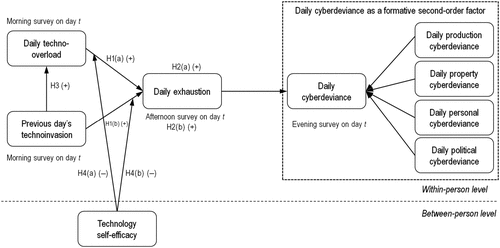
Note. H, Hypothesis.
|

Table 1. Construct Definitions
| Studied constructs | Conceptualization | Illustrative example(s) | Key references |
|---|---|---|---|
| Technostressors | |||
| Daily techno-overload | Situations in which ICTs force employees to work faster and longer in a given workday | Employees must complete a financial analysis using SAP R/3 in a given workday when they typically use Excel—a situation in which using the new system increases their workload instead of reducing it | Ragu-Nathan et al. (2008), Tarafdar et al. (2007) |
| Daily techno-invasion | The invasive effect of ICTs in situations in which employees are reachable at any time and feel the need to always be connected, which blurs their professional and personal contexts in a given workday | Employees are forced to use instant messaging tools (e.g., WeChat) and to be available and respond to after-hours work requests from their leaders in a given workday | Ragu-Nathan et al. (2008), Tarafdar et al. (2007) |
| Strain | |||
| Daily exhaustion | A psychological state of depletion of emotional and cognitive resources caused by the use of ICTs in a given workday | Employees feel drained after performing activities that require them to use ICTs (e.g., multitasking or telecommuting via laptops and smartphones) in a given workday | Moore (2000a, b), Schaufeli et al. (1995) |
| Situational variable | |||
| Technology self-efficacy | Individuals’ judgment of their abilities to use ICT-related technologies effectively in diverse situations | Employees believe that they can solve, handle, and manage the challenges presented by new situations (e.g., their first time using a software program, their first time using a software program after a brief explanation from a coworker, or their first time using a system with remote support from the IT department) | Compeau and Higgins (1995), Shu et al. (2011), Thatcher and Perrewé (2002) |
| Outcome | |||
| Daily cyberdeviance | Employees’ deviant behavior using ICTs in a given workday that violates important ICT security policies of their organization and threatens or results in harm to the well-being of the organization, its members, or both | Employees use ICTs inappropriately at work, which violates their organization’s ICT security policies, such as cyberloafing (e.g., using ICTs for nonwork purposes, playing games, or posting on their personal social media); damaging their organization’s IT resources (e.g., unauthorized access to servers and computers, sharing corporate information without permission); or harming coworkers by sending or forwarding hurtful messages to them or spreading rumors | Robinson and Bennett (1995), Venkatraman et al. (2018), Weatherbee (2010) |
Notes. SAP R/3, SAP is an enterprise resource planning (ERP) product. The “R” was for “Real-time data processing” and “3” was for “3-tier”.
To capture the dynamic and episodic nature of our research model, we first adopt the within-person approach to examine the impacts of daily technostressors and daily cyberdeviance. We then use the between-person approach to understand the moderating role of individual characteristics in our research model.
3.1. Within-Person Effects
The TMS posits that individuals who experience technostressors will respond in terms of strain (Ragu-Nathan et al. 2008, Maier et al. 2015). Echoing this viewpoint, the self-regulation perspective posits that individuals are likely to experience a depletion of self-regulatory resources (e.g., exhaustion) when their demanding environment (e.g., technostressors) drains their energy and psychological resources (Baumeister et al. 2000). Accordingly, we argue that daily techno-overload may lead to daily exhaustion on the same day. For example, employees who fail to manage information overflow on a given day may cope with their changed or increased work requirements by increasing their working hours, which reduces their cognitive functions (Ragu-Nathan et al. 2008) and can lead to fatigue and exhaustion on the same day (D’Arcy and Teh 2019). Despite extensive working hours, daily techno-overload may cause employees struggle to find enough time to accomplish their tasks. They feel overwhelmed because of perceived time pressures and deadlines, excessive work demands, and information overload (Kaufman and Beehr 1989). Dealing with the demands and challenges presented by technology can drain employees’ mental energy and contribute to their overall exhaustion on the same day.
The dynamic and episodic effect of techno-invasion on exhaustion may have occurred yesterday (i.e., when employees are at home) and still positively affect their exhaustion today. Specifically, the daily intrusion of ICTs into employees’ personal lives has fundamentally changed the interface between work and home (García-Montes et al. 2006). For example, Mental Health America (2018) found that 81% of U.S.employees identify work–family conflict caused by techno-invasion as a key factor of workplace stress. In addition, more than half of the respondents rated technology-driven work–family conflict as a key source of workplace stress. Employees’ continuous availability is a constant burden on their psychological well-being. In addition, the possibly unnecessary interruptions caused by emails, instant messages, or social media (Addas and Pinsonneault 2018) can be distracting, slow down work processes, and negatively affect employees’ timely completion of work tasks (Sarker et al. 2018, Benlian 2020). Employees’ subsequent concerns when dealing with techno-invasion compound these problems and make them feel hopeless about accomplishing their goals, which reduces their self-regulatory resources and results in exhaustion the next day. Therefore, we propose the following hypotheses.
(a) On days when employees experience a higher level of techno-overload at work, they experience more exhaustion than on days when they experience a lower level of techno-overload. (b) On days when employees experience a higher level of techno-invasion after hours on previous days, they experience more exhaustion than on days when they experience a lower level of techno-invasion.
Taken together, the combination of the self-regulation perspective with the TMS considers that when employees experience stress in their work environment, they may fail to self-regulate their behavior, which may lead to resource depletion. Thus, employees find it difficult to avoid engaging in deviant behaviors that may not be beneficial to them or their organization because their self-regulatory behaviors require them to expend psychological resources to refrain from adopting deviant behaviors or to conform to social norms (Marcus and Schuler 2004, Liu et al. 2015). These employees are generally unable or unwilling to use these sources of stress as cathartic targets, especially when the initial source of provocation is unavailable or not present in their current environment (Bushman et al. 2005). In these situations, employees tend to attack more available or less threatening targets in their environment (Liu et al. 2015). Extending these arguments to cyberdeviance, we consider that ICT use may facilitate employees’ catharsis on a broader scope (e.g., organizational and interpersonal) compared with their offline behaviors because of the characteristics of ICTs, namely, constant connectivity, anonymity, and virtuality (Galluch et al. 2015). Other than generally deviant behaviors, cyberdeviance may occur when employees direct their reactive behavior to targets that are not technostressors even if they are reluctant to do so.
Drawing on the TMS and the self-regulation perspective and extending these arguments to cyberdeviance, we propose that technostressors (i.e., techno-overload and techno-invasion) can lead to employee exhaustion as an indicator of the depletion of their self-regulatory resources. In addition, we expect techno-overload and techno-invasion to increase cyberdeviance because of the degree of employee exhaustion. Studies have shown that experiencing exhaustion can lead employees to a state of depletion and fatigue (e.g., Moore 2000a, b). As a result, deviant behaviors, as stress-related behaviors, may become an option for these employees to release their frustration and dissatisfaction with technostressors (e.g., Jiang et al. 2021). By extending this view to the context of technostressors, we argue that being exhausted (i.e., the manifest condition suggested by the TMS or the psychological outcome of technostressors) may weaken employees’ self-regulatory behavior of refraining from cyberdeviance (Wright and Cropanzano 1998, Mitchell and Ambrose 2007). In this sense, according to the TMS and the self-regulation perspective, cyberdeviance can be viewed as the strain-related (or intensified, if employees have already engaged in cyberdeviance) behavioral outcome of exhausted and technostressed employees.
In addition, episodes of perceived daily stress due to ICT use (such as daily techno-overload and techno-invasion) may increase regulatory demands on employees and result in a depletion of their self-regulatory resources, manifesting as exhaustion (D’Arcy and Teh 2019). In turn, employee exhaustion leads to difficulty regulating their impulses regarding engagement in cyberdeviance in the workplace. Consequently, these employees are likely to lash out at others (e.g., their organization and coworkers) through daily cyberdeviance, even if they are reluctant to violate social norms (Fox et al. 2001, D’Arcy and Teh 2019). Following the literature (e.g., Robinson and Bennett 1995), we consider organizations and coworkers as two primary targets of employee cyberdeviance. Accordingly, affected by daily techno-overload and techno-invasion on the previous day, exhausted employees have weak self-regulation to transfer their daily cyberdeviance to their organization and coworkers. For example, when treating their organization as their cyberdeviance target, employees may acquire or damage their organization’s ICT property or assets without authorization (property cyberdeviance, i.e., unauthorized access and intrusion into work computers and servers) or violate ICT security policies that delineate the minimum quality and quantity of work to be performed (production cyberdeviance, i.e., communicating online with friends and family for nonwork purposes; Robinson and Bennett 1995). Similarly, exhausted employees may behave in an undesirable manner toward their coworkers as cyberdeviance targets via ICT (personal cyberdeviance, i.e., concealing their online identity and deceiving coworkers) or engaging in social interactions via ICT that put their coworkers at a personal or political disadvantage (political cyberdeviance, i.e., spreading rumors and gossip about coworkers on the internet; Venkatraman et al. 2018). In this way, daily techno-overload and techno-invasion may lead to cyberdeviance by increasing workers’ daily exhaustion. Therefore, we propose the following hypotheses.
(a) Daily exhaustion mediates the within-person relationship between daily techno-overload and daily cyberdeviance. (b) Daily exhaustion mediates the within-person relationship between techno-invasion on the previous day and daily cyberdeviance.
With the constant influx of communication from various ICT sources, such as emails, messages, and notifications, employees may feel pressured to continually be available and respond outside of regular working hours. This persistent connectivity blurs the boundaries between work and personal life by forcing employees to switch between different tasks (Durward and Blohm 2017). Accordingly, employees are likely to experience health problems (such as mental exhaustion, increased anxiety, and insomnia) and distractions (e.g., additional tasks and requests) that they need to complete the next day (Tarafdar et al. 2007), intensifying their feeling of techno-overload at work. When employees are unable to complete all of their tasks in a day, they have to carry them over to the next day. This accumulation of pending tasks adds to their workload and contributes to their feeling of techno-overload. In addition, techno-invasion captures the demands of work tasks, whereas techno-overload shows that individuals’ abilities cannot match these demands. As studies have shown that job demands lead to strain due to a mismatch between abilities and demands (Chen and Karahanna 2018), daily techno-overload can be considered a mechanism of techno-invasion, affecting its impact on strain. Therefore, we propose the following hypothesis.
On days when employees experience a higher level of techno-invasion after hours on previous days, they experience higher techno-overload than on days when they experience a lower level of techno-invasion.
3.2. Between-Person Effects
According to the TMS, the effects of technostressors on psychological and behavioral outcomes may be contingent on individual traits/characteristics as technostress inhibitors, that is, as factors that may mitigate the negative impact of technostressors. Employees’ belief in their ability to use or perceived competence in using ICTs to accomplish their assigned work tasks may increase their ability to self-regulate resources related to ICT use (Muraven and Baumeister 2000). Accordingly, we argue that employees’ technology self-efficacy may act as a technostress inhibitor to moderate the relationships between techno-overload and techno-invasion and exhaustion, such that these relationships may be more positive for employees with low rather than high technology self-efficacy. “Technology self-efficacy” refers to individuals’ judgment of their abilities to effectively use ICT-related technologies in novel, diverse, and experimental situations (e.g., their first time using a software program, their first time using a software program after a brief explanation from a coworker, and their first time using a system with remote support from the IT department; Thatcher and Perrewé 2002, Shu et al. 2011). Employees with technology self-efficacy can solve and manage the challenges posed by new ICTs.
Individuals with high technology self-efficacy can more easily adapt to their changing technological environment than those with low technology self-efficacy (Fagan et al. 2004, Dong et al. 2007). Researchers have found that individuals are more likely to persevere in the face of difficulties if they are confident in their ability to achieve the desired results and avoid negative results (e.g., Bandura 2001). Therefore, employees with high levels of technology self-efficacy typically see themselves as having the ability to handle ICT-related tasks and new challenges (Dong et al. 2007, Wang et al. 2013). As such, these individuals are motivated to devote effort to the pursuit of their goals. When experiencing daily technostressors, employees with high (low) levels of technology self-efficacy are more (less) confident in their ability to handle these technostressors and may be more (less) able to manage their daily exhaustion (e.g., anger and frustration; Wang et al. 2013). In support of this argument, Shu et al. (2011) found that employees’ ICT self-efficacy mitigated the positive relationship between technostressors and negative outcomes. Therefore, we expect employees with high (low) technology self-efficacy to be less (more) likely to experience daily exhaustion in the face of daily technostressors. Therefore, we propose the following hypotheses.
(a) Employees’ technology self-efficacy moderates the within-person relationship between daily techno-overload and daily exhaustion, such that this relationship is more positive for employees with low rather than high technology self-efficacy. (b) Employees’ technology self-efficacy moderates the within-person relationship between techno-invasion on the previous day and daily exhaustion, such that this relationship is more positive for employees with low rather than high technology self-efficacy.
4. Research Methodology
4.1. Participants
The study participants were recruited from three companies located in western China, representing three industries: telecommunication services, internet and value-added services, and graphic design. We invited employees working in teams or departments operating in eight areas (i.e., advertising, design, data analysis, research and development, customer care, online sales, human resource (HR) management, and accounting), as these employees are knowledge workers and are likely to use ICTs to complete their work tasks. These employees were considered suitable for our study because they performed tasks involving the frequent use of ICT tools, which are core enablers of technostressors and cyberdeviance (Ayyagari et al. 2011). Before conducting the survey, our research team and the HR department of each company screened and identified 292 qualified full-time employees for this study. The HR departments then sent letters to these employees inviting them to participate. Those who indicated their interest were asked to sign an informed consent document providing our instructions and assurances of confidentiality. One hundred and ninety-one employees (65.4% of those who met our criteria) signed up to participate in the study. Three participants withdrew from the study because of unexpected unavailability during the data collection period, leaving a final sample of 188 employees. Women made up the majority of our sample (67%), and 73.9% of the study participants had a university degree. The average age range of the participants was 26–35 years old, and their average job tenure was 9.96 years (standard deviation (SD) = 7.38).
We then examined the possibility of response bias because our survey asked the participants to provide self-reported responses. Response bias may significantly influence the validity and reliability of the survey responses because the participants might be biased and not provide accurate responses (Furnham 1986). To mitigate this concern, we checked and controlled for three main types of response bias: demand characteristic bias, acquiescence bias, and social desirability bias (see Online Appendix D).
4.2. Experience Sampling Procedure and Measures
This study was performed in two parts. In the first part, we asked the participants to complete an entry survey to collect data on their demographics and between-person variables (e.g., technology self-efficacy and negative affect). One week after the completion of the first part, we used the ESM to collect data for the following theoretical and empirical reasons. The TMS and the self-regulation perspective tend to be considered dynamic theories because of the ebb and flow of stressors between and within individuals (Liu et al. 2015, Cho and Kim 2022). In this study, we focused on the proximal consequences of technostressors, requiring a daily study design. Therefore, using the ESM was appropriate (Benlian 2020) because we could repeatedly measure the same participants and focus on assessing variables that exhibit substantial within-person variation in the short term (Fisher and To 2012). The ESM allowed us to access the participants in their work environment using constructs to identify their experience of technostressors (Bolger et al. 2003). Unlike a single retrospective survey, the multiple measures design of the ESM helped us to investigate the impact of technostressors on cyberdeviance in the participants’ lives and obtain better results (Benlian 2020). We asked the participants to complete three daily surveys over two consecutive weeks, including 10 weekdays, providing a representative snapshot of an employee’s work–life balance (Trougakos et al. 2014). We used an internet-based survey platform to implement all of the surveys, and the survey links were sent to the participants through a smartphone messaging application. Table 2 presents the details of our data collection procedure.
|
Table 2. Data Collection Procedure
| Measures (internet survey) | Measures (internet survey) | Measures (internet survey) | Measures (internet survey) |
|---|---|---|---|
| Technology self-efficacy (control variables: employee age, gender, education, tenure, negative affect, technology reliance) | Daily techno-overload, techno-invasion on the previous day (control variables: sleep quality) | Daily exhaustion | Daily cyberdeviance |
| Predaily survey (one week before daily data collection) | Morning (9:00 a.m.) | Afternoon (4:00 p.m.) | Evening (8:00 p.m.) |
Two of the three daily surveys were administered during working hours, and the third survey was administered in the evening when the participants were not at work. Following the literature (e.g., Ilies et al. 2017, Cho and Kim 2022), we used a fixed schedule based on the participants’ convenience and work schedule. Each morning of the study at 9:00 a.m., we sent the participants a link to the first daily survey. We asked them to report their sleep quality the previous night in addition to their daily techno-overload and techno-invasion. At 4:00 p.m., we sent the link to the second daily survey, which asked the participants to report their daily exhaustion. Each evening at 8:00 p.m., the participants received the link to the last daily survey, which assessed their daily cyberdeviance. The time lag between the morning, afternoon, and evening surveys established the temporal separation between the predictor and outcome variables (Brewer 2000). Our unit of observation and the nature of daily work assumed that day-specific techno-overload and techno-invasion on the previous day influenced perceived day-specific exhaustion and day-specific cyberdeviance during the workday. These assumptions in our research design have been well established when daily employee data are used in the ESM (Benlian 2020, Wehrt et al. 2020, Gerpott et al. 2022). These assumptions were consistent with the goal of this study, that is, to examine the episodic and dynamic occurrence of technostressors and their impacts on employees’ daily cyberdeviance. To increase participation in our study, we sent a reminder to the participants who failed to complete a survey within 30 minutes. All of the participants were given a one-hour window to complete each daily survey. Each participating employee received a cash remuneration of approximately RMB 200 (approximately USD 31) from the research team as a reward for their participation. The participants completed 1,934 of the 1,960 daily surveys (148 participants × 10 daily surveys + 40 participants × 12 daily surveys).4
We adapted measures used in previous studies to ensure the validity of our surveys (see Online Appendix E), which were conducted in the native language of the Chinese participants. We followed the translation and backtranslation procedures outlined by Brislin (1980) to develop the Chinese version of the surveys. We measured all of the items on a seven-point Likert scale. We adopted the scale of Ragu-Nathan et al. (2008) to measure daily technostressors. We measured daily techno-overload using a four-item scale reflecting situations in which ICT use forces employees to work faster and more intensely and to perform more tasks on tighter schedules each workday. We measured daily techno-invasion using a three-item scale reflecting the invasive effect of ICTs in situations in which employees are reachable anywhere and at any time. In addition, these employees must sacrifice their personal lives and free time to be available outside of working hours. The surveys clarified whether ICT use caused or generated the daily techno-overload and techno-invasion items or whether they occurred because of ICTs or were triggered by ICTs. The questionnaires were administered in Chinese, where these ICT effects were expressed in similar ways. Daily ICT use by the employees in the sample showed that ICTs were the core enabler of techno-overload and techno-invasion; therefore, our measures of techno-overload and techno-invasion were credible. We are therefore confident that the participants understood and answered the questions related to the overload generated by ICT use instead of their overall work overload. Adopting Moore (2000a, b) as a conceptual base for exhaustion, Ayyagari et al. (2011) adapted the exhaustion scale developed by Moore (2000a) to ICT professionals. We thus adopted the four-item strain scale from Ayyagari et al. (2011) to assess the participants’ daily feelings of exhaustion due to their ICT use. Following the TMS and the IS literature on technostressors using the TMS, we defined strain, technostrain, or manifest conditions as individuals’ psychological outcomes and responses to external stimuli (Cooper et al. 2001, Tarafdar et al. 2010). Therefore, technostrain was seen as an overall and more general consequence of technostressors, whereas exhaustion was a specific example of psychological strain. As this study focused on exhaustion, these four items reflected the concept of exhaustion well; therefore, we adopted these items to assess exhaustion. Specifically, these items covered whether an employee felt emotionally and cognitively tired and/or burned out, which was conceptually related to their psychological state after using ICTs during a given workday (i.e., exhaustion). We measured technology self-efficacy with a 10-item scale reflecting employees’ judgments of their ability to use ICTs effectively in a variety of situations. We included additional controls to consider both the heterogeneity of the sample and practices specific to daily cyberdeviance. We controlled for the employees’ gender, education, work tenure, negative affect, and technology reliance. At the within-person level, we controlled for sleep quality during the previous night because it may influence individuals’ exhaustion and daily behaviors (Diestel et al. 2015). We developed a new scale to measure daily cyberdeviance. Online Appendix F presents the scale development procedure in detail. We followed the procedures outlined by Hoehle and Venkatesh (2015), including a literature review, in-depth interviews, face validity check, content validity check, and pilot testing. Our scale development revealed the nature of cyberdeviance in the workplace and indicated that its scope involved four constructs: namely, product deviance, property deviance, personal deviance, and political deviance. Daily cyberdeviance was modeled as a formative second-order construct; therefore, we created a single composite vector score using the weights of the formative model based on Gefen and Pavlou (2012).5
4.3. Analytical Strategy
We implemented our data analysis procedures in terms of three steps. First, we tested the measurement model to ensure construct reliability, convergent validity, and discriminant validity. We then tested our hypotheses using multilevel path analysis (i.e., step 2) and a post hoc test (i.e., step 3).
We conducted multilevel path analysis using Mplus 7.4 to examine the hypothesized model. This method was used to accommodate the multilevel structure of the data (i.e., daily behaviors nested within individuals). This approach allowed us to account for the lack of independence in daily responses and to person-mean-center the participants’ daily responses, such that our analyses revealed how personality or other individual differences introduced daily variations in behavior (Judge et al. 2006). Before conducting these analyses, we group-mean-centered all of the predictors, including the control variables (i.e., previous night’s sleep quality), at level 1 relative to each participant’s mean (Enders and Tofighi 2007) to remove between-person variance. Therefore, the estimates of the level 1 effects represented pure within-person relationships. All of the control variables at level 2 (i.e., employee age, gender, education level, tenure, negative affect, and technology reliance) were grand-mean-centered to reduce confounding effects (Hofmann and Gavin 1998). All of the control variables were specified to have fixed effects on the dependent variables. We also specified the level 1 random effect of daily technostressors on daily exhaustion (Kim et al. 2018). Before testing the cross-level moderating effect of the moderator at level 2 (i.e., technology self-efficacy), we grand-mean-centered it to alleviate potential multicollinearity issues (Hofmann and Gavin 1998).
To test the indirect effects of daily techno-overload and techno-invasion on daily cyberdeviance via daily exhaustion, the indirect effect of daily techno-invasion on daily cyberdeviance via daily exhaustion and techno-overload, and the moderated mediation effects, we conducted Monte Carlo simulations with 20,000 replications and computed the 95% confidence intervals (CIs) using R software (MacKinnon et al. 2004). This procedure accurately reflects the asymmetric nature of the sampling distribution of an indirect effect in multilevel models (Preacher and Selig 2012). We also performed post hoc analyses to test alternative models and our main model with additional data collected.
5. Results
5.1. Descriptive Statistics and Within-Person Variation in Daily Variables
Before testing our hypotheses using multilevel path analysis, we examined the reliability, descriptive statistics (i.e., mean and SD), and correlations (Online Appendix G) of our constructs. All Cronbach alpha values were above the acceptable threshold of 0.70 (Nunnally 1978), demonstrating the reliability of our constructs.
We performed multilevel confirmatory factor analyses (CFAs) to test the convergent validity of our measures. We examined a four-factor CFA model including daily techno-overload, techno-invasion, exhaustion, and technology self-efficacy. Following Hair et al. (2010), we used chi-squared (χ2), the Tucker–Lewis index (TLI), the comparative fit index (CFI), the root-mean-square error of approximation (RMSEA), and the standardized root-mean-square residual at the within-person/between-person level (SRMRw/b) to assess model fit. The model yielded an acceptable fit to the data (χ2(76) = 234.43, p < 0.01; CFI = 0.98; TLI = 0.97; RMSEA = 0.033; SRMRw/b = 0.026/0.067). In addition, all of the measurement items loaded significantly on their corresponding constructs, indicating their convergent validity. We tested the discriminant validity of the three key within-person variables by contrasting the four-factor CFA model against alternative models in which any two within-person variables were combined in a single factor. The results of the model comparisons (see Table 3) showed that the four-factor CFA model fit the data considerably better than the alternative models. Thus, the distinctiveness of the three variables at the within-person level was supported.
|
Table 3. Multilevel CFA Results of Study Variables
| Model | χ2 | df | Δχ2 | TLI | CFI | RMSEA | SRMRw/b |
|---|---|---|---|---|---|---|---|
| Four-factor model | 234.43 | 76 | 0.97 | 0.98 | 0.033 | 0.026/0.067 | |
| Three-factor model 1: Daily techno-overload and previous day’s techno-invasion combined | 1,356.83 | 79 | 1,122.40** | 0.77 | 0.82 | 0.091 | 0.094/0.067 |
| Three-factor model 2: Daily techno-overload and daily exhaustion combined | 1,839.44 | 79 | 1,605.01** | 0.68 | 0.75 | 0.107 | 0.159/0.067 |
| Three-factor model 3: Previous day’s techno-invasion and daily exhaustion combined | 1,775.01 | 79 | 1,540.58** | 0.69 | 0.76 | 0.105 | 0.141/0.067 |
| Two-factor model 4: Daily techno-overload, previous day’s techno-invasion, and daily exhaustion combined | 3,317.05 | 82 | 3,082.62** | 0.44 | 0.54 | 0.143 | 0.192/0.067 |
**p < 0.01 (two-tailed).
Before testing our hypotheses, it was necessary to examine whether there was sufficient within-person variance for the level 1 variables. We used Mplus 7.4 to est several null models. Table 4 presents the proportion of variance for all level 1 variables. The percentage of within-person variance for the level 1 variables ranged from 36% to 43%. In line with our assumption of day-specific fluctuations, the variance decomposition results required the application of multilevel modeling. These within-person variance percentages are consistent with those of other ESM studies in the IS literature (e.g., D’Arcy and Teh 2019, Benlian et al. 2020). Online Appendix H further illustrates the within-person variation of daily technostressors and cyberdeviance.
|
Table 4. Percentage of Within-Person Variance Among Daily Variables
| Daily variable | Within-person variance (e2) | Between-person variance (r2) | % of within-person variance (%) |
|---|---|---|---|
| Daily techno-overload | 0.76 | 1.22 | 38 |
| Previous day’s techno-invasion | 0.92 | 1.44 | 39 |
| Daily exhaustion | 0.67 | 0.90 | 43 |
| Daily cyberdeviance | 0.24 | 0.42 | 36 |
Note. The percentage of within-person variance was calculated as e2/(e2 + r2).
5.2. Hypothesis Testing Results
As shown in Online Appendix G, the pattern of correlations was in line with our expectations. Specifically, daily techno-overload and techno-invasion were significantly correlated with daily exhaustion (daily techno-overload, rwithin = 0.47, p < 0.01; previous day’s techno-invasion, rwithin = 0.43, p < 0.01). Daily exhaustion was significantly correlated with daily cyberdeviance (rwithin = 0.12, p < 0.01). These results provided preliminary support for Hypothesis 1(a) through Hypothesis 2(b).
Table 5 shows the results of our hypothesis testing. Hypothesis 1, (a) and (b) posit the direct effects of daily techno-overload and techno-invasion on daily exhaustion, respectively. The results in Table 5 show that the direct effect of daily techno-overload on daily exhaustion was significant (b = 0.18, standard error (SE) = 0.03, p < 0.01), supporting Hypothesis 1(a). The direct effect of the previous day’s techno-invasion on daily exhaustion was also significant (b = 0.11, SE = 0.03, p < 0.01), supporting Hypothesis 1(b).
|
Table 5. Multilevel Path Analysis Results for Hypotheses 1–4
| Predictor | Daily techno-overload | Daily exhaustion | Daily cyberdeviance | ||||
|---|---|---|---|---|---|---|---|
| Estimate | SE | Estimate | SE | Estimate | SE | ||
| Intercept | 3.72** | 0.07 | 2.50** | 0.14 | 2.14** | 0.05 | |
| Level 2 control variables | |||||||
| Employee age | 0.21* | 0.10 | 0.06 | 0.06 | −0.12 | 0.06 | |
| Employee gender | −0.08 | 0.16 | −0.15 | 0.12 | −0.14 | 0.10 | |
| Employee education | 0.06 | 0.12 | 0.08 | 0.09 | −0.09 | 0.09 | |
| Employee tenure | −0.01 | 0.02 | −0.02 | 0.01 | 0.01 | 0.01 | |
| Employee negative affect | 0.42** | 0.08 | 0.36** | 0.06 | 0.12** | 0.04 | |
| Technology reliance | −0.47** | 0.18 | −0.68** | 0.12 | 0.44** | 0.12 | |
| Level 1 control variable | |||||||
| Previous night’s sleep quality | 0.00 | 0.02 | −0.05 | 0.02 | 0.02 | 0.01 | |
| Level 1 predictors | |||||||
| Daily techno-overload | 0.17** | 0.03 | |||||
| Previous day’s techno-invasion | 0.40** | 0.04 | 0.12** | 0.02 | |||
| Daily exhaustion | 0.12** | 0.03 | |||||
| Level 2 predictor | |||||||
| Technology self-efficacy | 0.12 | 0.11 | |||||
| Cross-level predictors | |||||||
| Daily techno-overload × technology self-efficacy | −0.08** | 0.02 | |||||
| Previous day’s techno-invasion × technology self-efficacy | 0.01 | 0.02 | |||||
| Level 1 residual variance | 0.61** | 0.04 | 0.58** | 0.05 | 0.22** | 0.03 | |
| Level 2 residual variance | 0.94** | 0.10 | 1.16** | 0.24 | 0.37** | 0.05 | |
Notes. The sample size at Level 1 is 1,934. The results in this table are unstandardized path coefficients. All level 1 control variables and predictors were group-mean centered. All level 2 control variables were grand-mean centered.
*p < 0.05; **p < 0.01 (two-tailed).
Hypothesis 2(a) ((b)) posits that daily exhaustion mediates the relationship between daily techno-overload (techno-invasion) and daily cyberdeviance. The results in Table 5 show that the direct effect of daily exhaustion on daily cyberdeviance was significant (b = 0.12, SE = 0.03, p < 0.01). We further used the Monte Carlo bootstrap approach with 20,000 estimates (Preacher et al. 2010) to test the mediating effect of daily exhaustion. We found that the positive indirect relationship between daily techno-overload (previous day’s techno-invasion) and daily cyberdeviance mediated by daily exhaustion was significant (for daily techno-overload, indirect effect = 0.02; 95% CI, [0.01, 0.03] excluding zero; for previous day’s techno-invasion, indirect effect = 0.01; 95% CI, [0.005, 0.03] excluding zero), providing support for Hypothesis 2, (a) and (b).
Hypothesis 3 posits that techno-invasion on the previous day affects daily techno-overload. The results in Table 5 show that the direct effect of the previous day’s techno-invasion on daily techno-overload was significant (b = 0.40, SE = 0.04, p < 0.01), supporting Hypothesis 3. We further used the Monte Carlo bootstrap approach with 20,000 estimates to test the indirect effect of the previous day’s techno-invasion on daily cyberdeviance mediated by daily techno-overload and exhaustion. We found that the positive indirect relationship between the previous day’s techno-invasion and daily cyberdeviance mediated by daily techno-overload and exhaustion was significant (indirect effect = 0.01; 95% CI, [0.003, 0.01] excluding zero).
Hypothesis 4(a) ((b)) posits that employees’ technology self-efficacy interacts with their daily techno-overload (previous day’s techno-invasion) such that the positive relationship between daily techno-overload (previous day’s techno-invasion) and daily exhaustion is stronger (weaker) for employees with low (high) technology self-efficacy. These cross-level moderation effects were tested in a model including the level 2 moderator (i.e., technology self-efficacy) as a predictor of the random slope of the effect of daily techno-overload (previous day’s techno-invasion) on daily exhaustion. The results in Table 5 show that technology self-efficacy was negatively related to the random slope between daily techno-overload and exhaustion (b = −0.08, SE = 0.02, p < 0.01). Following the recommendations of Cohen et al. (2003), we plotted this interaction effect at conditional values of technology self-efficacy (one SD above and below the mean) in Figure 3. Figure 3 and the slope tests show that the relationship between daily techno-overload and exhaustion was stronger when technology self-efficacy was low (−1 SD, b = 0.25, p < 0.01) than when it was high (+1 SD, b = 0.10, p < 0.05). Thus, Hypothesis 4(a) was supported. In contrast, the results show that technology self-efficacy was not significantly related to the random slope between the previous day’s techno-invasion and daily exhaustion (b = 0.01, SE = 0.02, not significant). Thus, Hypothesis 4(b) was not supported. Therefore, the previous day’s techno-invasion, such as ICT interruptions and remote supervision, can reduce employees’ sense of control over their work–family boundaries, leading to emotional and cognitive drain (Cleveland Clinic 2020). However, employees’ level of ICT self-efficacy does not influence this effect.
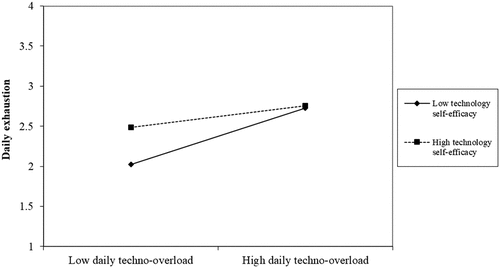
Extending Hypothesis 4(a), we proposed that the indirect relationship between daily techno-overload and cyberdeviance would be stronger (weaker) for employees with low (high) technology self-efficacy. We applied the Monte Carlo bootstrap approach with 20,000 estimates to test this mediated moderation effect. The indirect effect of daily techno-overload on cyberdeviance via daily exhaustion was positive if an employee perceived a low level of technology self-efficacy (−1 SD; indirect effect = 0.03; 95% CI, [0.01, 0.05]). The indirect effect was still significant when an employee’s perceived technology self-efficacy was high (+1 SD; indirect effect = 0.01; 95% CI, [0.001, 0.02]). Furthermore, the difference between the conditional indirect effects was significant (difference = 0.02; 95% CI, [0.005, 0.04]), indicating a significant moderated mediation effect and supporting Hypothesis 4(a).
We continued to implement post hoc empirical analyses to validate our analysis results of the proposed model. Specifically, we tested the direct effect of technology self-efficacy on daily cyberdeviance. We then repeated our data analyses by treating the four dimensions of daily cyberdeviance as dependent variables. We also collected additional daily data to rule out the impacts of general stressors (i.e., work overload and invasion) and truly understand the impact of technostressors on daily exhaustion and cyberdeviance. Finally, we investigated whether negative emotions due to ICT use could explain technostress based on the additional data collected. The results are shown in Online Appendix I.
6. Discussion
This work integrates the self-regulation perspective into the TMS and provides a longitudinal and contextualized investigation of how and when daily perceived technostressors affect employees’ daily cyberdeviant behaviors (i.e., cyberdeviance). Considering cyberdeviance as a form of deviant behavior, we examined the impact of daily technostressors (i.e., daily techno-overload and techno-invasion) on daily cyberdeviance through daily exhaustion. We also investigated how technology self-efficacy moderates the effect of daily techno-overload on daily exhaustion. To understand cyberdeviance from within-person and daily perspectives, we used a daily survey to collect data at three time points from 188 professionals over two weeks. Our multilevel path analysis results confirmed our hypotheses that employees who experience daily techno-overload and techno-invasion are likely to engage in daily cyberdeviance because of daily exhaustion. We also found that employees who experienced techno-invasion the previous day tended to face techno-overload the next day. Exploring the contingent role of individual characteristics in our research model, we found that the impact of daily techno-overload on daily exhaustion was negatively moderated by employees’ technology self-efficacy. However, our results did not show that technology self-efficacy significantly moderated the relationship between the previous day’s techno-invasion and daily exhaustion. One possible explanation for this finding is that when employees feel that technologies are invading their personal lives, they still have to devote resources (e.g., time and energy) to keep up with these technologies, regardless of their level of technology self-efficacy. This is especially true in the Chinese context, which has high levels of power distance and tradition. Most Chinese employees view their work-related issues as acceptable and are used to dealing with them when they are at home (Wong and O’Driscoll 2018). Chinese employees are always ready to respond to any work emergency that requires their contributions, whether or not they can use technology confidently.
6.1. Theoretical Implications for IS Research
Recent studies and practitioner reports have begun to highlight the importance of technostress and examine its impact on cyberdeviance in the workplace. This study makes four contributions to this emerging stream of research. First, it broadens the literature by challenging the dominant static view of technostressors and providing evidence that technostressors are a dynamically fluctuating phenomenon. Recent IS studies have focused on the episodic and dynamic nature of technostressors (e.g., D’Arcy and Teh 2019, Benlian 2020); however, this stream of research has almost solely focused on stressors related to specific technologies and treated them as unique events with their properties and interpretations. For example, D’Arcy and Teh (2019) conceptualized security-related stress and proposed a theoretical model linking this stress to discrete emotions, coping responses, and compliance with information security policies. Addas and Pinsonneault (2018) investigated daily work interruption by email and found that other communication technologies activated salespersons’ perceived workload and mindfulness, in turn affecting their daily performance. Responding to the call to elucidate the intrapersonal nature of technostressors (Ayyagari et al. 2011), our study complements the technostress literature by focusing on the dynamic and episodic nature of general technostressors and investigating their subsequent outcomes. Our findings add to the literature by showing that technostressors can be considered dynamic and episodic, thereby advancing the IS literature on technostress by highlighting the importance of a dynamic and episodic perspective in understanding cyberdeviance. Furthermore, our study complements the technostress literature by showing that when employees are forced by the use of ICTs to be reachable anytime and anywhere, thus affecting their work–family balance, they will feel overloaded by technology the next day. Our findings show that techno-invasion on the previous day affects techno-overload the following workday, which reinforces the importance of conducting daily field investigations in IS research.
In addition, previous cyberdeviance studies have used a relatively static and chronic model of cyberdeviance and examined the antecedents of aggregate, retrospective cyberdeviance (e.g., Venkatraman et al. 2018, Xu et al. 2020). Our findings extend the literature by suggesting that cyberdeviance is an inherently within-person daily phenomenon. Furthermore, most studies have conceptualized cyberdeviance in a piecemeal rather than holistic manner (e.g., D’Arcy and Teh 2019, Xu et al. 2020). Specifically, these studies have treated different deviant uses of ICTs as different phenomena, leading to a separate body of literature for each form of deviant behavior at work (e.g., Khansa et al. 2017, Shi et al. 2023, Venkatesh et al. 2023). Accordingly, our study complements the cyberdeviance literature by introducing and validating an integrative and systematic conceptualization and measurement of cyberdeviance with a holistic instrument and by investigating its antecedents (Venkatraman et al. 2018).
A second important contribution of this study is that it advances the literature by explaining the relationship between daily technostressors and daily cyberdeviance to provide unique and novel insights into their previously untested underlying processes. At the general between-person level, most studies have focused on the consequences of technostressors in terms of individual traits, job characteristics, or social conditions in the workplace (e.g., Ayyagari et al. 2011, Tarafdar et al. 2015). Although a few daily studies in the IS literature have attempted to incorporate the psychology of individuals (e.g., emotions) as an explanatory mechanism for technostressor processes (e.g., Benlian 2020), no study has empirically investigated the impact of daily emotions and cognitions on the relationship between daily technostressors and daily cyberdeviance. By integrating the self-regulation perspective into the TMS, we complement these studies by showing that exhaustion is a critical psychological resource-related mediator linking daily technostressors to daily cyberdeviance. In addition, regarding the literature on the importance of emotional exhaustion (Liu et al. 2015), we extend these studies by further showing that emotional and cognitive exhaustion play a critical role in corporate IS settings, echoing the suggestions of Moore (2000a, b). Our theorization and empirical findings thus have important implications for IS research. The usual theoretical development (and theories) used by this body of IS research present some limitations in explaining cyberdeviance when studying it as a holistic concept. Therefore, our study integrates the TMS into the self-regulation perspective to explain how daily technostressors can lead to employees’ daily cyberdeviance (i.e., an outcome ultimately caused by technostressors) through their exhaustion.
Third, our research contributes to the literature by considering between-person IT-related factors and proposing a contingent model of daily technostressors. We identified technology self-efficacy as an individual trait related to cyberdeviance and empirically tested its role in the relationship between daily technostressors and daily exhaustion. Most studies have concluded that individuals with a high level of technology self-efficacy tend to engage in cyberdeviance (Sheikh et al. 2015, Gökçearslan et al. 2016). Contrary to these findings, our study reveals that technology self-efficacy is a double-edged sword that prevents individuals from engaging in cyberdeviance by reducing the effect of techno-overload on their exhaustion. Specifically, our findings show that technology self-efficacy can reduce the positive influence of daily techno-overload on daily cyberdeviance via daily exhaustion. To the best of our knowledge, this study is the first to test how employee traits can offset exhaustion and subsequent cyberdeviance over the course of a day. Thus, we obtain a complete picture of the impact of employees’ daily technostressors on their tendency to resort to cyberdeviance to cope with daily exhaustion.
Finally, we used a daily investigation to examine the relationships between technostressors, exhaustion, and cyberdeviance. Using an ESM, our daily investigation focused on within-person outcomes in which the participants were asked to complete daily surveys to repeatedly examine their ongoing experiences. We therefore had the opportunity to investigate social, psychological, and physiological processes in everyday situations (Bolger et al. 2003). This method is typically used to capture the “little experiences of everyday life that fill most of our working time and occupy the vast majority of our conscious attention” (Wheeler and Reis 1991, p. 340) and is methodologically free from individual biases (e.g., social desirability bias, rating tendencies, personality effects). We also minimized retrospective bias (Reis and Judd 2000).
6.2. Practical Implications
Our findings have four important practical implications for IT and business executives. First, our results reveal the detrimental impacts of daily technostressors on the functioning of an organization and its employees. Specifically, we demonstrate that the debilitating effects of daily technostressors on employees’ daily emotional and cognitive resources have negative consequences on their work performance (i.e., increasing daily cyberdeviance). Managers should be cognizant of these consequences and create a relaxing work environment or design tools to reduce technostressors. To reduce technostressors’ depletion of employees’ emotional and cognitive resources, managers can institute more daily breaks and ensure that employees have autonomy over when to take breaks and what they do during their break time. We also encourage executives to avoid using ICTs to technologically invade the lives and personal time of employees in the evening after work. The effect of techno-invasion on employee exhaustion (and its indirect effects and negative consequences) can be extended to the next day(s). In other words, the episodic and dynamic effect of techno-invasion can last one or several days. Second, this study highlights the importance of within-person processes and outcomes of perceptions and behaviors in the workplace. Specifically, we provide additional evidence that employees’ daily experiences have a critical effect on their daily work behaviors and that managers should be aware of these factors when managing workers. Third, our findings show that daily emotions and cognitions are also important indicators of whether employees will engage in cyberdeviance. Specifically, we demonstrate that when employees feel drained by their work, they will engage in daily cyberdeviance to regain their daily emotional and cognitive resources. This means that even if adverse factors are present because of technology use, daily cyberdeviance is unlikely unless an employee feels exhausted. To reduce the incidence of daily cyberdeviance, managers should offer assistance programs to their employees to teach them how to control or manage their emotional and cognitive resources and to better cope with techno-overload and techno-invasion. Finally, our findings show that technology self-efficacy, as a between-person moderator, moderates the relationship between daily techno-overload and daily exhaustion. This moderating effect suggests that there are added benefits to selecting and training employees with high technology self-efficacy, as doing so not only helps employees to cope with techno-overload but also enables them to regulate their immediate emotions rather than engage in daily cyberdeviance at work.
6.3. Limitations and Directions for Future IS Research
Despite its theoretical and methodological strengths, this study has several limitations that suggest avenues for future IS research. First, the variables were measured using employees’ self-reports. Therefore, common method variance is a potential concern. However, we separated the between-person measures and daily variables in the data collection process. It is unlikely that the relationships (especially the moderating relationship) found in our study are due to common method variance. Nevertheless, future studies could use objective measures (e.g., employee computer monitoring records) or reports by others (e.g., supervisor-rated job performance and cyberdeviance) to replicate our current findings. We also recommend that future research use less intrusive measures to replicate our findings, although previous studies have largely adopted the same daily data collection procedure as our study (e.g., Cho and Kim 2022, Gerpott et al. 2022).
Second, this study used exhaustion as the mediator between daily technostressors and daily cyberdeviance. Alternative theoretical explanations should be investigated to consider additional potential mediators. For example, employees may perceive their daily tasks as work overload and as an intrusion into their family time, and they may neutralize this feeling of overload by engaging in cyberdeviance in the workplace. We recommend that future IS scholars consider other mediating mechanisms that explain the relationship between technostressors and cyberdeviance. We also recommend that future research use qualitative research methods (e.g., in-depth interviews with employees) to illuminate how employees feel in the face of task saturation and how they react in terms of cyberdeviance.
The third limitation is that although we collected multiwave data to test our model, reverse causality may still be an issue. Daily exhaustion may cause employees to easily perceive techno-overload and techno-invasion; therefore, we checked for reverse causality and examined model fit by comparing the Akaike information criterion (AIC) and Bayesian information criterion (BIC) values of our hypothesized model with those of alternative models (Kline 2011). Smaller values indicate better model fit and greater possibility of replication. The fit indices of our hypothesized model (AIC = 16,227.25, BIC = 16,594.69) were better than those for a model with reversed causal effects, in which daily exhaustion predicted daily techno-overload and techno-invasion (AIC = 16,852.90, BIC = 17,220.34). Nevertheless, longitudinal studies and experiments should be used to verify the causal relationships between the focal variables of our model.
Fourth, this study measured techno-overload in the morning of a given workday because we were informed that all teams at the three interviewed companies met daily each morning to distribute task assignments. In addition, these three companies required their employees to start work at 8:00 a.m. each workday. When we started our data collection at 9:00 a.m., the participants had already received their task assignments and had been working for an hour. We considered that the participants understood the extent to which they would use ICTs to complete their task assignments over the course of the day after the morning meeting. Previous organizational behavior studies of daily stressors have also measured stressors using morning surveys and found no difference between stressors measured in the morning and those measured at noon (e.g., Liu et al. 2017). This design also avoided excessively long measurements and ensured the quality of data collection (Liu et al. 2017). Even though we replicated our hypothesis test results by collecting data on techno-overload in the afternoon (see Online Appendix I), future IS research should continue to generalize our results by measuring techno-overload with participants’ real feelings in terms of diary reports to verify its validity.
Fifth, our study was limited to the scope of the moderator examined. Drawing on the TMS and the self-regulation perspective, we focused on employee characteristics as a moderator related to their emotional and cognitive resources. Future research could extend this self-regulation perspective to examine whether other unit- and organization-level factors may provide additional resources to help employees handle technostressors. For example, employees’ mindfulness may help them persist in their work tasks. Contextual influences such as those that make employees less likely to indulge in cyberdeviance may inform future studies of whether employees engage in negative behaviors toward their organization and colleagues in response to technostressors (Gefen and Pavlou 2012).
Finally, the average age range of the participants in the main study was 26–35 years old. This is reasonable because young people can be considered a specific group of employees who may intensively use new ICTs in the workplace. The average age range of the participants in the additional data collected was 36–40 years old, and the data analysis results supported our hypotheses. To further generalize our results to other age groups, future research should test our model by collecting data from different age groups. In addition, employees’ experiences with ICT use can affect their daily exhaustion and, in turn, their daily cyberdeviance. Future IS research could control for these effects and test our conceptualized model.
7. Conclusion
This study constitutes an important step toward understanding the dynamic and episodic nature of technostressors and the mechanism of exhaustion through which technostressors affect daily cyberdeviance. By integrating the self-regulation perspective into the TMS, we found that daily technostressors (i.e., daily techno-overload and techno-invasion) influence employees’ displaced cyberdeviance via daily exhaustion. In addition, techno-invasion on the previous day was also found to affect daily techno-overload. We also showed that employees’ technology self-efficacy moderates this process and serves as a buffer against their daily exhaustion induced by daily techno-overload. Our findings are highly relevant given that technostressors and cyberdeviance are becoming increasingly common with the pervasiveness of ICTs in the workplace.
The second and third authors contributed equally.
1 In this study, we follow the literature (e.g., Laudon and Laudon 2017, Benlian 2020) and adopt a broad scope for ICT that includes “all computer and network hardware/infrastructure and software as well as the various services and applications associated with them that, in combination, allow people and organizations to interact in the digital world” (Benlian 2020, p. 1260).
2 All the appendices can be accessed and downloaded with the link https://osf.io/4ntyg/?view_only=cfe9ad329011473e9c2f00b1d01bf57b.
3 In this study, technostressors include ICT-induced stressors (i.e., ICTs as the primary stimuli, motivation, or source of stress, such as system failure) or ICT-mediated stressors (i.e., ICTs as tools or media that shape the experience of workplace stress, such as receiving more tasks via instant messages). This is consistent with previous IS studies investigating the combined effects of ICT-induced and ICT-mediated stressors (Addas and Pinsonneault 2018, Benlian 2020). Accordingly, this study considers the critical role of ICTs in ICT-induced and ICT-mediated stressors as essential in generating workplace stress, which may subsequently induce employee cyberdeviance (Benlian 2020).
4 The 40 participants were legally allowed to work on Saturdays during the data collection period; therefore, we collected 12 workdays of data.
5 Ycyberdeviance = 0.38 × Yproduction + 0.26 × Yproperty + 0.32 × Ypersonal + 0.33 × Ypolitical, where Ycyberdeviance was modeled as a single vector created by the weighted first-order constructs of daily cyberdeviance; Yproduction = daily production deviance, Ypersonal = daily personal deviance, Ypolitical = daily political deviance, and Yproperty = daily property deviance.
References
- (2018) Email interruptions and individual performance: Is there a silver lining? MIS Quart. 42(2):381–406.Crossref, Google Scholar
- (2016) Cyberloafing and job burnout: An investigation in the knowledge-intensive sector. Comput. Human Behav. 62(part C):51–60.Crossref, Google Scholar
- (2014) Moderating effect of technostress inhibitors on the relationship between technostress creators and organisational commitment. J. Teknology 67(1):51–62.Google Scholar
- (2010) Team size, dispersion, and social loafing in technology-supported teams: A perspective on the theory of moral disengagement. J. Management Inform. Systems 27(1):203–230.Crossref, Google Scholar
- (1997) Technological stress: Psychophysiological symptoms in modern offices. J. Psychosomatic Res. 43(1):35–42.Crossref, Google Scholar
- (2011) Technostress: Technological antecedents and implications. MIS Quart. 35(4):831–858.Crossref, Google Scholar
- (1982) Self-efficacy mechanism in human agency. Amer. Psych. 37(2):122–147.Crossref, Google Scholar
- (2001) Social cognitive theory: An agentic perspective. Annual Rev. Psych. 52(1):1–26.Crossref, Google Scholar
- (2015) “You wouldn’t like me when I’m sleepy”: Leaders’ sleep, daily abusive supervision, and work unit engagement. Acad. Management J. 58(5):1419–1437.Crossref, Google Scholar
- (2000) Ego depletion: A resource model of volition, self-regulation, and controlled processing. Soc. Cognition 18(2):130–150.Crossref, Google Scholar
- (2000) Work stressors and coworker support as predictors of individual strain and job performance. J. Organ. Behav. 21(4):391–405.Crossref, Google Scholar
- (2020) A daily field investigation of technology-driven stress spillovers from work to home. MIS Quart. 44(3):1259–1300.Crossref, Google Scholar
- (2020) Mitigating the intrusive effects of smart home assistants by using anthropomorphic design features: A multimethod investigation. Inform. Systems Res. 30(6):1010–1042.Google Scholar
- (2003) Diary methods: Capturing life as it is lived. Annual Rev. Psych. 54(1):579–616.Crossref, Google Scholar
- (2018) Daily job demands and employee work engagement: The role of daily transformational leadership behavior. J. Occupational Health Psych. 23(3):338–349.Crossref, Google Scholar
- (2000)
Research design and issues of validity . Reis HT, Judd CM, eds. Handbook of Research Methods in Social and Personality Psychology (Cambridge University Press, New York), 3–16.Google Scholar - (1980)
Translation and content analysis of oral and written materials . Triandis HC, Berry JW, eds. Handbook of Cross-cultural Psychology (Allyn & Bacon, Boston), 389–444.Google Scholar - (1984) Technostress: The Human Cost of the Computer Revolution (Addison Wesley, Reading, MA).Google Scholar
- (2005) Chewing on it can chew you up: Effects of rumination on triggered displaced aggression. J. Personality Soc. Psych. 88(6):969–983.Crossref, Google Scholar
- (2015) The behavioral roots of information systems security: Exploring key factors related to unethical IT use. J. Management Inform. Systems 31(4):49–87.Crossref, Google Scholar
- (2018) Life interrupted: The effects of technology-mediated work interruptions on work and nonwork outcomes. MIS Quart. 42(4):1023–1042.Crossref, Google Scholar
- (2022) Does a healthy lifestyle matter? A daily diary study of unhealthy eating at home and behavioral outcomes at work. J. Appl. Psych. 107(1):23–39.Crossref, Google Scholar
- (2015) Embarrassing exposures in online social networks: An integrated perspective of privacy invasion and relationship bonding. Inform. Systems Res. 26(4):675–694.Link, Google Scholar
- (2023) What is digital overload and how to prevent it? Accessed September 23, https://nbold.co/what-is-digital-overload-and-how-to-prevent-it/.Google Scholar
Cleveland Clinic (2020) The benefits employees value most. Accessed March 10, https://www.bravowell.com/resources/benefits-packages-to-engage-the-workforce.Google Scholar- (2003) Applied Multiple Regression/Correlation Analysis for the Behavioral Sciences (Erlbaum, Mahwah, NJ).Google Scholar
- (1995) Computer self-efficacy: Development of a measure and initial test. MIS Quart. 19(2):189–211.Crossref, Google Scholar
- (2001) Organizational Stress: A Review and Critique of Theory, Research, and Applications (Sage, Thousand Oaks, CA).Crossref, Google Scholar
- (2019) Predicting employee information security policy compliance on a daily basis: The interplay of security-related stress, emotions, and neutralization. Inform. Management 56(7):103–151.Google Scholar
- (2007) Violence restrained: Effects of self-regulation and its depletion on aggression. J. Experiment. Soc. Psych. 43(1):62–76.Crossref, Google Scholar
- (2015) Sleep quality and self-control capacity as protective resources in the daily emotional labor process: Results from two diary studies. J. Appl. Psych. 100(3):809–827.Crossref, Google Scholar
- (2007) Do perceived leadership behaviors affect user technology beliefs? An examination of the impact of project champions and direct managers. Comm. Assoc. Inform. Systems 19(1):655–664.Google Scholar
- Durward D, Blohm I (2017) I am a crowd worker – How individuals identify with a new form of digital work. Europ. Conf. Inform. Systems (Guimarães, Portugal), 1–11.Google Scholar
- (2007) Centering predictor variables in cross-sectional multilevel models: A new look at an old issue. Psych. Methods 12(2):121–138.Crossref, Google Scholar
- (2004) An empirical investigation into the relationship between computer self-efficacy, anxiety, experience, support and usage. J. Comput. Inform. Systems 44(2):95–104.Google Scholar
- (2012) Using experience sampling methodology in organizational behavior. J. Organ. Behav. 33(7):865–877.Crossref, Google Scholar
- (2001) Counterproductive work behavior (CWB) in response to job stressors and organizational justice: Some mediator and moderator tests for autonomy and emotions. J. Vocational Behav. 59(3):291–309.Crossref, Google Scholar
- (1986) Response bias, social desirability and dissimulation. Personality Individual Differences 7(3):385–400.Crossref, Google Scholar
- (2015) Interrupting the workplace: Examining stressors in an information technology context. J. Assoc. Inform. Systems 16(1):1–47.Google Scholar
- (2006) Changes in the self-resulting from the use of mobile phones. Media Culture Soc. 28(1):67–82.Crossref, Google Scholar
- (2012) The boundaries of trust and risk: The quadratic moderating role of institutional structures. Inform. Systems Res. 23(3):940–959.Link, Google Scholar
- (2022) Stop and go, where is my flow? How and when daily aversive morning commutes are negatively related to employees’ motivational states and behaviour at work. J. Appl. Psych. 107(2):169–192.Crossref, Google Scholar
- (2016) Modelling smartphone addiction: The role of smartphone usage, self-regulation, general self-efficacy and cyberloafing in university students. Comput. Human Behav. 63(part C):639–649.Crossref, Google Scholar
- (2020) Reciprocal effects between job stressors and burnout: A continuous time meta-analysis of longitudinal studies. Psych. Bull. 146(12):1146–1173.Crossref, Google Scholar
- (2018) The role of corporate reputation and crisis response strategies in data breach management. J. Management Inform. Systems 35(2):683–714.Crossref, Google Scholar
- (2010) Multivariate Data Analysis (Pearson Education, Upper Saddle River, NJ).Google Scholar
- (2015) Mobile application usability: Conceptualization and instrument development. MIS Quart. 39(2):435–472.Crossref, Google Scholar
- (1998) Centering decisions in hierarchical linear models: Implications for research in organizations. J. Management 24(5):623–641.Google Scholar
- (2022) Tech workers face a “burnout crisis” unless employers act now. Accessed September 12, 2023, https://www.zdnet.com/article/tech-workers-face-a-burnout-crisis-unless-employers-act-now/.Google Scholar
- (2011) Managing the risk of overusing mobile phones in the working environment: A study of ubiquitous technostress. Proc. 15th Pacific Asia Conf. Inform. Systems 2011 (Queensland University of Technology and Queensland University, Brisbane, Australia).Google Scholar
- (2017) Why do employees have better family lives when they are highly engaged at work? J. Appl. Psych. 102(6):956–970.Crossref, Google Scholar
In Diverse Company (2021) How modern technology at the workplace affects mental health and what to do about it. Accessed September 12, 2023, https://www.indiversecompany.com/how-modern-technology-can-affect-mental-health-at-the-workplace-and-what-to-do-about-it/.Google Scholar- (2015) Technostress in ICT enabled collaborative learning environment: An empirical study among Indian academician. Comput. Human Behav. 51(B):1116–1123.Crossref, Google Scholar
- (2021) Coping with workplace ostracism: The roles of emotional exhaustion and resilience in deviant behavior. Management Decision 59(2):358–371.Crossref, Google Scholar
- (2006) Hostility, job attitudes, and workplace deviance: Test of a multilevel model. J. Appl. Psych. 91(1):126–138.Crossref, Google Scholar
- (1989) Occupational stressors, individual strains, and social support among police officers. Human Relations 42(2):185–197.Crossref, Google Scholar
- (2017) To cyberloaf or not to cyberloaf: The impact of the announcement of formal organizational controls. J. Management Inform. Systems 34(1):141–176.Crossref, Google Scholar
- (2018) Daily micro-breaks and job performance: General work engagement as a cross-level moderator. J. Appl. Psych. 103(7):772–786.Crossref, Google Scholar
- (2011)
Convergence of structural equation modeling and multilevel modeling . Williams M, Vogt WP, eds. Handbook of Methodological Innovation (Sage, London), 562–589.Crossref, Google Scholar - (2013) Technostress in relation to job satisfaction and organisational commitment among IT professionals. Internat. J. Sci. Res. 3(12):1–3.Google Scholar
- (2017) Management Information Systems: Managing the Digital Firms (Pearson Education, Harlow, UK).Google Scholar
- (2007) Taking a multifoci approach to the study of justice, social exchange, and citizenship behavior: The target similarity model. J. Management 33(6):841–866.Crossref, Google Scholar
- (1966) Psychological Stress and the Coping Process (McGraw-Hill, New York).Google Scholar
- (1984) Stress, Appraisal, and Coping (Springer, New York).Google Scholar
- (2018) How does a reward for creativity program benefit or frustrate employee creative performance? The perspective of transactional model of stress and coping. Group Organ. Management 43(1):138–175.Crossref, Google Scholar
LinkedIn (2023) What is the cost of replacing an employee? Accessed September 12, https://www.linkedin.com/pulse/what-cost-replacing-employee-jim-stroud.Google Scholar- (2017) Eating your feelings? Testing a model of employees’ work-related stressors, sleep quality, and unhealthy eating. J. Appl. Psych. 102(8):1237–1258.Crossref, Google Scholar
- (2015) Work-family conflict, emotional exhaustion, and displaced aggression toward others: The moderating roles of workplace interpersonal conflict and perceived managerial family support. J. Appl. Psych. 100(3):793–808.Crossref, Google Scholar
- (2004) Confidence limits for the indirect effect: Distribution of the product and resampling methods. Multivariate Behav. Res. 39(1):99–128.Crossref, Google Scholar
- Maier C, Laumer S, Weinert C, Weitzel T (2015) The effects of technostress and switching stress on discontinued use of social networking services: A study of Facebook use. Inform. Systems J. 25(3): 275–308.Google Scholar
- (2019) Technostress and the hierarchical levels of personality: A two-wave study with multiple data samples. Eur. J. Inform. Systems 28(5):496–522.Crossref, Google Scholar
- (2004) Antecedents of counterproductive behavior at work: A general perspective. J. Appl. Psych. 89(4):647–660.Crossref, Google Scholar
Mental Health America (2018) Eye opening new report shines spotlight on impact of workplace stress, mental health. Accessed May 8, 2020, https://www.mhanational.org/eye-opening-new-report-shines-spotlight-impact-workplace-stress-mental-health.Google ScholarMicrosoft (2022) Great expectations: Making hybrid work work. Accessed September 23, 2023, https://www.microsoft.com/en-us/worklab/work-trend-index/great-expectations-making-hybrid-work-work.Google Scholar- (2007) Abusive supervision and workplace deviance and the moderating effects of negative reciprocity beliefs. J. Appl. Psych. 92(4):1159–1168.Crossref, Google Scholar
- (2018) Toward a unified model of information security policy compliance. MIS Quart. 42(1):285–311.Crossref, Google Scholar
- (2000a) One road to turnover: An examination of work exhaustion in technology professionals. MIS Quart. 24(1):141–168.Crossref, Google Scholar
- (2000b) Why is this happening? A causal attribution approach to work exhaustion consequences. Acad. Management Rev. 25(2):335–349.Crossref, Google Scholar
- (2000) Self-regulation and depletion of limited resources: Does self-control resemble a muscle? Psych. Bull. 126(2):247–259.Crossref, Google Scholar
- (1978) Psychometric Theory (McGraw-Hill, New York).Google Scholar
- (2001) The role of perceived privacy and perceived security in the development of trust in electronic commerce transactions. Inform. Systems Res. 11(1):18–36.Google Scholar
- (1998) Information technology and the nature of managerial work: From the productivity paradox to the Icarus paradox? MIS Quart. 22(3):287–311.Crossref, Google Scholar
- (2012) Advantages of Monte Carlo confidence intervals for indirect effects. Comm. Methods Measures 6(2):77–98.Crossref, Google Scholar
- Preacher KJ, Zyphur MJ, Zhang Z (2010) A general multilevel SEM framework for assessing multilevel mediation. Psychol. Methods 15(3):209–233.Google Scholar
- (2008) The consequences of technostress for end users in organizations: Conceptual development and empirical validation. Inform. Systems Res. 19(4):417–433.Link, Google Scholar
- Reinke K, Gerlach G, Tarafdar M, Stock RM (2016) ICT-based communication events as triggers of stress: A mixed methods study. Proc. 37th Internat. Conf. Inform. Systems (Association for Information Systems, Dublin, Ireland).Google Scholar
- (2000) Handbook of Research Methods in Social and Personality Psychology (Cambridge University Press, New York).Google Scholar
- (1995) A typology of deviant workplace behaviors: A multidimensional scaling study. Acad. Management J. 38(2):555–572.Crossref, Google Scholar
- (2018) Work-life conflict of globally distributed software development personnel: An empirical investigation using border theory. Inform. Systems Res. 29(1):103–126.Link, Google Scholar
- Schaufeli WB, Leiter MP, Kalimo R (1995) The general burnout inventory: A self-report questionnaire to assess burnout at the workplace. Proc. Work, Stress Health 95: Creating Healthier Workplaces (Washington, DC), 10–23.Google Scholar
- Shaina T (2020) About 56.5 hours lost per employee due to technology-related stress. Singapore Business Review (March 30), https://sbr.com.sg/hr-education/news/about-565-hours-lost-employee-due-technologyrelated-stress.Google Scholar
- (2015) The antecedents of cyberloafing: A case study in an Iranian copper industry. Comput. Human Behav. 51(part A):172–179.Crossref, Google Scholar
- (2023) How technostressors influence job and family satisfaction: Exploring the role of work–family conflict. Inform. Systems J. 33(4):953–985.Crossref, Google Scholar
- (2011) The impact of computer self-efficacy and technology dependence on computer-related technostress: A social cognitive theory perspective. Internat. J. Human Comput. Interaction 27(10):923–939.Crossref, Google Scholar
- (2010) Neutralization: New insights into the problem of employee information systems security policy violations. MIS Quart. 34(3):487–502.Crossref, Google Scholar
- (2015) Technostress creators and job outcomes: Theorising the moderating influence of personality traits. Inform. Systems J. 25(4):355–401.Crossref, Google Scholar
- (2015) Technostress: Negative effect on performance and possible mitigations. Inform. Systems J. 25(2):103–132.Crossref, Google Scholar
- (2010) Impact of technostress on end-user satisfaction and performance. J. Management Inform. Systems 27(3):303–334.Crossref, Google Scholar
- (2007) The impact of technostress on role stress and productivity. J. Management Inform. Systems 24(1):301–328.Crossref, Google Scholar
- (2011) Crossing to the dark side: Examining creators, outcomes, and inhibitors of technostress. Comm. ACM 54(9):113–120.Crossref, Google Scholar
Templeton (2022) 130+ best digital transformation statistics for 2023 and beyond. Accessed September 23, 2023, https://www.templeton-recruitment.com/tech-news/130-best-digital-transformation-statistics-for-2023-and-beyond.Google Scholar- (2002) An empirical examination of individual traits as antecedents to computer anxiety and computer self-efficacy. MIS Quart. 26(4):381–396.Crossref, Google Scholar
- (2014) Lunch breaks unpacked: The role of autonomy as a moderator of recovery during lunch. Acad. Management J. 57(2):405–421.Crossref, Google Scholar
- (2005) Computer-related technostress in China. Comm. ACM 48(4):77–81.Crossref, Google Scholar
- (2023) Cyberslacking in the workplace: Antecedents and effects on job performance. MIS Quart. 47(1):281–316.Crossref, Google Scholar
- (2018) The “Darth” side of technology use: An inductively derived typology of cyberdeviance. J. Management Inform. Systems 35(4):1060–1091.Crossref, Google Scholar
- (1997) It’s about time: A study of hours worked and work spillover among law firm lawyers. J. Vocational Behav. 50(2):227–248.Crossref, Google Scholar
- (2015) Insider threats in a financial institution: Analysis of attack-proneness of information systems applications. MIS Quart. 39(1):91–112.Crossref, Google Scholar
- (2013) The contingent effect of personal IT innovativeness and IT self-efficacy on innovative use of complex IT. Behav. Inform. Tech. 32(11):1105–1124.Crossref, Google Scholar
- (2010) Counterproductive use of technology at work: Information & communications technologies and cyberdeviancy. Human Resource Management Rev. 20(1):35–44.Crossref, Google Scholar
- (2020) Beyond depletion: Daily self-control motivation as an explanation of self-control failure at work. J. Organ. Behav. 41(9):931–947.Crossref, Google Scholar
- (1991) Self-recording of everyday life events: Origins, types, and uses. J. Personality 59(3):339–354.Crossref, Google Scholar
- (2013) Beyond deterrence: An expanded view of employee computer abuse. MIS Quart. 37(1):1–20.Crossref, Google Scholar
- (2018) Work antecedents, Confucian work values, and work-to-family interference in Hong Kong: A longitudinal study. Internat. J. Stress Management 25(1):60–71.Crossref, Google Scholar
- (1998) Emotional exhaustion as a predictor of job performance and voluntary turnover. J. Appl. Psych. 83(3):486–493.Crossref, Google Scholar
- (2020) Anger or fear? Effects of discrete emotions on employee’s computer-related deviant behavior. Inform. Management 57(3):103180.Crossref, Google Scholar
- (2014) The sources and consequences of mobile technostress in the workplace. Proc. 18th Pacific Asia Conf. Inform. Systems 2014 (Chengdu, China).Google Scholar
- (2019) Epistemic motivation, task reflexivity, and knowledge contribution behavior on team wikis: A cross-level moderation model. J. Assoc. Inform. Systems 70(5):448–461.Google Scholar