Data Donations for Digital Contact Tracing: Short- and Long-Term Effects of Monetary Incentives
Abstract
Data donations promise to unlock the social benefits of personal data. Recently, contact-tracing apps were developed to collect contact and health data from individuals to fight the COVID-19 pandemic. Compared with commercial apps, the adoption of contact-tracing apps involves a unique cost-benefit calculus. The prosocial motives to engage in data donations, a mix of short- and long-term costs, and the need for continuous, yet mostly passive, app usage render digital contact tracing a novel information systems adoption setting. Because the effectiveness of contact-tracing apps hinges on widespread adoption and continuous data collection, we use a randomized controlled online experiment to evaluate the effectiveness of different monetary incentive mechanisms at promoting verified installations of the German Corona-Warn-App and short- and long-term data donations. We find that monetary incentives are effective in the short term, with no evidence of a crowding-out of prosocial motivations: Monetary incentives significantly increase app installations and short-term data donations, tripling the number of data donors after 14 days compared with a no-compensation treatment. However, the positive stimulus of monetary incentives vanishes in the long term: After eight months, installers in treatments with monetary incentives are significantly more likely to have stopped donating data than intrinsically motivated installers who did not receive monetary incentives, as a consequence of experienced opportunity costs and a lack of perceived benefits. Consequently, long-term data donation rates are not significantly higher in treatments with monetary incentives. This suggests that one-time payments are ineffective at promoting long-term data donations, as the short-term crowding-in of less intrinsically motivated installers is difficult to sustain when passive app usage limits opportunities for habit formation and convincing users of contact-tracing benefits. Finally, we present experimental evidence that empirical analyses based on hypothetical scenarios without verified actions are prone to overestimating individuals’ prosocial behavior in data donation contexts.
History: Alessandro Acquisti, Senior Editor; Choon-Ling Sia, Associate Editor.
Funding: Financial support from the Bavarian Research Institute for Digital Transformation, an institute of the Bavarian Academy of Sciences and Humanities; and the Bavarian State Ministry of Science and the Arts is gratefully acknowledged.
Supplemental Material: The online appendix is available at https://doi.org/10.1287/isre.2021.0575.
1. Introduction
Disclosing personal data can not only personally benefit individuals, but also yield substantial social benefits (e.g., Ghose et al. 2020, Rockenbach et al. 2020). Especially in the health domain, data donations are considered a promising approach to obtaining individual-level data and enabling new insights based on artificial intelligence (Hillebrand et al. 2023). This has been highlighted more generally by the European Commission’s (2020) Data Governance Act aimed at promoting data altruism—that is, “data voluntarily made available by individuals or companies for the common good” (p. 8).
One example in this context is contact-tracing apps, which have been launched by governments worldwide for individuals to donate contact and health information in the fight against the COVID-19 pandemic. By continuously recording users’ close physical contacts, these apps collect “passive data donations” to facilitate the tracing of infection chains. In the case of an infection, app users can make “active data donations” by manually sharing their health status, allowing for targeted isolation and warnings about exposure to contagious people.1 Although contact-tracing apps provide benefits at any adoption rate, their effectiveness increases exponentially. Hinch et al. (2020) suggest that at least 56% of a population must use a contact-tracing app to stop the spread of COVID-19. However, adoption in many countries has remained rather low, at 10%–30% (Rehse and Tremöhlen 2022).
This produces questions regarding whether and how additional measures can promote the adoption of digital contact tracing and data donations. Whereas some countries have mandated the use of contact-tracing apps, most countries rely on voluntary adoption by citizens. Notably, such adoption decisions are characterized by a unique cost-benefit calculus (Carlsson Hauff and Nilsson 2023) that involves more than just personal benefits for the users and one-time adoption costs: in particular, the social benefits and positive externalities of digital contact tracing may encourage data donations by people who engage in prosocial behavior (Rockenbach et al. 2020), but also trigger free riding by people who share the social benefits without contributing themselves (Riemer et al. 2020). Moreover, a mix of adoption costs, including transaction costs for installation (Hillebrand et al. 2023), opportunity costs for usage (Trang et al. 2020), and (perceived) privacy costs (Chan and Saqib 2021), may present barriers to widespread adoption. Hence, to maximize the social benefits from digital contact tracing, there is a strong normative rationale to offer individuals additional incentives to promote voluntary app adoption (de Montjoye et al. 2021). In particular, monetary incentives may serve as a simple mechanism for increasing the benefits to individuals (see also the proposal of a tax bonus for adopters of contact-tracing apps; Financial Times 2020).
Although monetary incentives have an intuitive economic appeal, previous research on prosocial behavior in related contexts has raised concerns that such extrinsic incentives can crowd out intrinsic motivation, ultimately reducing overall contribution (e.g., Mellström and Johannesson 2008). Thus, monetary incentives may also induce negative effects on app adoption and data donations (Anderson and Agarwal 2009). Moreover, the long-term effects of monetary incentives on data donations have not been analyzed yet. This is of particular concern because the social value of data donations for digital contact tracing hinges on individuals’ continuous and sustained contributions. At the same time, the benefits and some costs of app adoption, such as a shorter smartphone battery life, may only become clear to users over a longer period of usage. Theoretically, short-term monetary incentives could have positive spillover effects for long-term adoption if a higher initial uptake induces more users to continue donating data in the long term because of sampling of app features or user inertia. This further raises questions about how to structure the monetary incentive mechanism. In particular, it is unclear whether incentives should be front-loaded to maximize uptake or should be paid as an ex post bonus contingent on individuals’ donations to give them a sustained economic incentive. Therefore, to help policymakers identify effective measures for promoting the adoption of contact-tracing apps, it is vital to isolate the causal effects of incentives on the actual behavior of individuals.
To this end, we conduct a randomized controlled online experiment with university students to evaluate the effectiveness of different incentives at promoting the installation and usage of the Corona-Warn-App (CWA), the official German contact-tracing app. The experiment took place one month after the launch of the CWA, when a large majority (85%) of Germans already knew about the app but were skeptical about its impact: while only every fifth person believed that “through the app, public life can return to normal,” half of the people in a survey stated that “the app will not change anything” (Initiative D21 2020). Only 29% of the survey respondents stated that they were using the CWA. Although policymakers and health experts considered the CWA to be much more effective than manual contact tracing by the local public health authorities, there was no legal obligation to use the CWA. In this context, we compare the effectiveness of the following four incentive mechanisms at promoting the adoption of the CWA: (i) no monetary compensation; (ii) front-loaded payments contingent on app installation, where subjects receive immediate monetary compensation for installing the app; (iii) ex post bonus payments contingent on short-term data donations, where subjects receive deferred monetary compensation for installing the app and leaving the contact-tracing feature activated for 14 days; and (iv) a choice between monetary compensation and donating the money to charity. In contrast to many previous studies on contact-tracing apps, we elicit subjects’ verified decisions instead of stated intentions in hypothetical scenarios. Moreover, we investigate the long-term effects on data donation behavior based on a surprise follow-up study with the same participants eight months after the initial experiment.
Our results show that monetary incentives are effective at significantly increasing app installations and short-term data donations 14 days after installation, up to tripling the number of data donors compared with the no-compensation treatment. Giving subjects the additional choice to donate the money to a charity instead of receiving the money for themselves does not further increase app installations or data donations beyond outcomes of pure monetary incentives. This suggests that there is no crowding-out of intrinsic motivations in the short term, despite the social benefits that subjects in our experiment attribute to the contact-tracing app. For the alternative payment structures, we find no significant difference in short-term data donations between front-loaded and ex post bonus payments. Whereas front-loaded payments are more effective at motivating subjects to initially install the app, bonus payments are more effective at motivating subjects to continue donating data in the short term once they have decided to install the app. These two effects are shown to offset each other, engendering similar effectiveness in terms of promoting short-term data donations.
However, short-term monetary incentives are found to be ineffective in significantly increasing data donations over the long term. This is because adopters in treatments with monetary compensation are significantly more likely to have stopped donating data eight months after installation than intrinsically motivated adopters who did not receive monetary compensation. Hence, the effectiveness of monetary incentives at “crowding-in” additional installers and data donors in the short term has important implications on app installers’ willingness to incur the costs of long-term app adoption and, thus, their propensity to engage in sustained data donation in the long term. In particular, once the monetary compensation is paid out, installers motivated by money are more likely to stop donating data in the long term, as a consequence of experienced opportunity costs and a lack of perceived benefits, compared with intrinsically motivated installers in the treatment without compensation. This indicates that passive data donations can be particularly prone to churn of extrinsically motivated users over longer periods of usage. Altogether, these findings suggest that although monetary incentives can serve as an effective policy instrument to encourage app adoption and data donations in the short term, one-time payments are insufficient for long-term promotion. Therefore, composite and recurrent payment schemes should be considered.
Our research contributes to several strands of research. First, it adds to the emerging literature on data donations by analyzing the effectiveness of monetary incentives in a novel information systems (IS) adoption setting. In particular, the prosocial motives of individuals to engage in data donations and the need for long-term, continuous, and mostly passive app usage distinguish contact-tracing apps from commercial apps. We show that monetary incentives can be effective, at least in the short term, when app installation and passive data donations incur low transaction costs for users. Moreover, we demonstrate that an additional choice for users to forego monetary compensation does not promote data donations any further, thus providing empirical evidence against a crowding-out effect. These findings contribute to the broader literature on prosocial behavior and suggest that intrinsic motives for the donation of contact-tracing data can be effectively complemented by extrinsic incentives. This finding diverges from previous findings for other contexts of prosocial behavior, such as donations of blood or genetic data, which may be explained by alternative motives for different types of prosocial behavior. Furthermore, we add new insights to the IS adoption literature by evaluating how prosocial app benefits and different costs of adoption interact over the long term. We show that the special characteristics of (passive) data donations, especially the nonnecessity of interacting with an IS and the special cost-benefit calculus involving social benefits, as well as a mix of different short-term and long-term costs, have important ramifications for long-term adoption. In particular, our findings demonstrate that sustaining long-term donations of contact-tracing data among extrinsically motivated installers is particularly challenging, as the passive usage associated with these data donations presents only limited opportunities for habit formation and convincing users of the benefits of contact tracing. In consequence, opportunity costs associated with data donations can outweigh the limited benefits of app sampling and inertia, especially for users who exhibited less intrinsic motivation for app adoption in the first place. Therefore, the short-term crowding-in of less altruistic installers is unlikely to be sustained in the long term without additional interventions. Finally, our study makes a methodological contribution by demonstrating that stated intentions can significantly overestimate actual installation decisions in the context of digital contact tracing. Thus, empirical analyses of actual behavior, instead of hypothetical decisions, are especially important if app adoption involves prosocial behavior that is prone to social desirability bias.
2. Research Background and Hypotheses
This study relates to several literature strands:2 First, recent studies investigate user acceptance of digital contact tracing by analyzing different app specifications (e.g., Kaptchuk et al. 2020) and privacy concerns (e.g., Chan and Saqib 2021). These studies emphasize that the adoption of digital contact tracing is characterized by a unique cost-benefit calculus (Carlsson Hauff and Nilsson 2023), as contact tracing can yield both personal and social benefits, but also involves transaction costs for installation (Hillebrand et al. 2023), opportunity costs for usage such as battery draining or disk storage (Trang et al. 2020), and heterogeneous (perceived) privacy costs (Chan and Saqib 2021).
Second, because contact-tracing apps can yield substantial social benefits, they involve prosocial behavior (Rehse and Tremöhlen 2022)—that is, “activities that are costly to [individuals] themselves and that primarily benefit others” (Bénabou and Tirole 2006, p. 1652). Whereas many health apps (e.g., fitness apps) are designed to personally benefit users, contact-tracing apps aim at promoting public-interest goals (Trang et al. 2020). Hence, even if users experience some personal benefits (such as infection warnings), social benefits are possibly magnitudes larger, as widespread adoption of digital contact tracing could avoid large-scale lockdowns and incapacitated health systems (Ferretti et al. 2020). To achieve these social benefits, app installation must be followed by uninterrupted (mostly passive) use, such that contact-tracing data are being donated continuously (Trang et al. 2020). Relatedly, recent studies have started to explore individuals’ motives and concerns regarding data donations (e.g., Skatova and Goulding 2019, Hillebrand et al. 2023), building on related research on prosocial behavior in digital contexts, such as online reviews (e.g., Burtch et al. 2018, Khern-am-nuai et al. 2018) and volunteer contributions to online IS (e.g., Qiao et al. 2021). Third, our study also draws on past research on motivation and incentives for prosocial behavior. The effectiveness of monetary incentives at fostering prosocial actions has been prominently studied in the context of blood donations (Lacetera et al. 2013). Although the overall findings are mixed, studies highlight the risk of crowding-out intrinsic motivation when providing extrinsic incentives to altruistic donors (Mellström and Johannesson 2008). More closely related, Anderson and Agarwal (2009) find a crowding-out of intrinsic motivation for donations of genetic data.
Finally, with respect to the long-term adoption of IS, previous research has emphasized the importance of app sampling (Lee and Tan 2013), habit formation (Limayem et al. 2007), and user inertia (Polites and Karahanna 2012). However, to our knowledge, these aspects have not yet been considered in app adoption settings that involve prosocial motives of users and mostly passive app usage.
Despite this related work, there remains a research gap at the intersection of these four research streams on how to effectively promote prosocial data donations that feature a unique cost-benefit calculus and that require continuous and mostly passive app usage. This study therefore integrates the different theoretical perspectives described above to analyze whether one-time monetary incentives can promote app adoption in the novel context of contact-tracing data donations.
2.1. Derivation of Hypotheses
Our study focuses on the special cost-benefit calculus of donating contact-tracing data and the need for continuous, passive donations to achieve the intended social benefits. We investigate whether and how monetary compensation can complement prosocial motivations to promote short-term app adoption (i.e., app installations and data donations 14 days later) and long-term data donations (i.e., after eight months), while users face different types of short-term costs (such as transaction costs for app installation) and long-term costs (such as opportunity and perceived privacy costs). To derive hypotheses that can guide our analysis in this unique context, we draw from a set of theories from the related strands of literature described above. For the short-term effects of monetary incentives, we primarily consider economic theories on goods with social externalities and on motivational crowding-out (see Hypothesis 1 and Hypothesis 2). For our investigation of long-term outcomes, we draw on IS adoption and IS continuance literature and especially on theories of habit formation, app sampling, and user inertia (see Hypothesis 4). As our empirical findings reveal, the interplay between these different theoretical lenses is particularly relevant to explain the effects and outcomes of monetary incentives in the context of data donations. Motivated by recent calls for research and competing theoretical predictions, we additionally investigate the relative effectiveness of alternative payment structures of monetary incentives (see Hypothesis 3) and test whether stated intentions align with actual behavior when adoption of an IS promises significant social benefits, as in the case of contact tracing (see Hypothesis 5).
2.1.1. Short-Term Effects of Monetary Incentives on Installations and Data Donations.
To investigate the short-term effects of monetary incentives, we consider their impact on both app installations and short-term data donation behavior. In our study, we therefore measure the installation rate—that is, the share of subjects who newly install the CWA out of all subjects who had not installed the app before the experiment—as well as the short-term data donation rate—that is, the share of subjects who install the app and continue to donate data for at least two weeks.3 For Hypothesis 1 and Hypothesis 2, we focus on front-loaded payments that are contingent on subjects’ app installation. For Hypothesis 3, we consider an alternative payment scheme that offers subjects an ex post bonus payment in return for their short-term data donations and compare the relative effectiveness of the two schemes.
Economic theory predicts that without additional incentives, data donations are likely to be undersupplied relative to the social optimum because individuals are expected to maximize their own utility but do not internalize positive social externalities (Rockenbach et al. 2020). In consequence, the effectiveness of digital contact tracing is threatened by free riding (Riemer et al. 2020), as individuals can enjoy social benefits without donating data themselves. From a theoretical perspective, offering individuals additional monetary compensation for prosocial actions can promote contributions because this changes the cost-benefit calculus for individuals (Rehse and Tremöhlen 2022). It is expected that individuals engage more in a prosocial activity, when a monetary incentive reduces the relative price of that prosocial activity through a utility increase, everything else being equal. This positive relative price effect (Meier 2007) has been demonstrated for more general digital contexts (Burtch et al. 2018, Qiao et al. 2021), suggesting that monetary incentives can increase the contributions per individual as well as motivate more people to contribute. Research on extrinsic incentives in hypothetical digital health settings (e.g., Stepanovic and Mettler 2020) and on contact-tracing apps (e.g., Frimpong and Helleringer 2021) has mostly identified positive effects of monetary incentives on app installations. However, the insights from these latter studies derive mostly from stated intentions in hypothetical scenarios, which may be prone to overestimating actual adoption decisions (see also Hypothesis 5).
We hypothesize that monetary compensation for app installations also leads to increased short-term data donations. In particular, we expect that there are people who would generally be willing to donate their contact-tracing data, but their intrinsic motivation is not sufficient to overcome the transaction costs for app installation. If the costs of installation are offset by monetary compensation, these people can be expected to continue using the app when data donations are passive and do not require much effort on the part of the user.4 This reasoning extends to people who are indifferent about the app and their social benefits, but who are willing to install the app in exchange for money, because these installers would otherwise need to deliberately deactivate or deinstall the CWA, which requires some manual user effort and thus entails transaction costs. From a theoretical perspective, a positive effect on short-term data donations is therefore supported by user inertia and status quo bias (cf. Polites and Karahanna 2012). Moreover, in the short term, users may not yet notice potential opportunity costs for donating data (such as a shorter battery life), which could become apparent only over a longer time of usage. In the extreme case, users may even forget about the app and continue to donate data after installation before experienced opportunity costs could make them aware of potential downsides. Altogether, we thus hypothesize that a positive effect of front-loaded payments will persist for data donations in the short term, even though subjects could simply deinstall the app immediately after app installation when receiving their monetary compensation.
(
Despite the potential positive effects of monetary incentives on prosocial activities, there remain concerns that extrinsic incentives may backfire because they can undermine intrinsic motives for prosocial behavior (Meier 2007, Gneezy et al. 2011). In particular, monetary incentives may lead to a motivational crowding‐out effect (Frey and Jegen 2001) that could dampen or even offset the hypothesized positive relative price effect. For example, Anderson and Agarwal (2009) find that monetary incentives diminish subjects’ intrinsic motivation to disclose genetic data to hospitals, although monetary and nonmonetary incentives yield positive effects when offered independently.
From a theoretical perspective, a crowding-out of intrinsic motivation in the context of contact-tracing apps can arise from people’s desire to preserve a positive self-image (Rehse and Tremöhlen 2022), meaning a favorable assessment of their own conduct through the eyes of an imagined impartial spectator (Bénabou and Tirole 2006). This preservation of a positive self-image is more difficult when individuals perceive monetary compensation as a substitute to intrinsic motivation (Gneezy et al. 2011). In particular, people may participate in digital contact tracing because this behavior signals a conformity between their actions and a positive self-image to themselves. Monetary incentives may undermine such self-signaling, depending on the primary motive for the prosocial behavior (Bénabou and Tirole 2006).
Given that people exhibit different levels of intrinsic motivation to donate contact-tracing data, we also expect them to be differently susceptible to a motivational crowding-out. We therefore test for a crowding-out effect by analyzing a distinct incentive mechanism that gives subjects the option to donate the money that they would receive for app installation to a charity. Following Mellström and Johannesson (2008), this mechanism retains intrinsic motivation by offering each individual subject the choice to forego monetary compensation to preserve a positive self-image, while still maintaining the extrinsic option for those who prefer the monetary compensation for themselves. In particular, a pure monetary incentive could interfere with the desire of some subjects to preserve a positive self-image, as it undermines their ability to convincingly assert to themselves that their data donation is driven by prosocial motives. Thus, with the choice mechanism, we can account for the possible heterogeneity in motivations for app installation among subjects, while testing for effects that significantly affect average app adoption. Hence, this mechanism should more effectively promote app installation and, as a consequence, short-term data donations than pure monetary incentives if compensation does induce a crowding-out effect. This holds even when the net outcome of the relative price effect and the crowding-out effect is positive (as in Hypothesis 1).
(
Offering monetary incentives raises the question of when and how such incentives should be paid out to individuals. In particular, the timing of and the condition for receiving compensation must be specified. For Hypothesis 1 and Hypothesis 2, we have considered front-loaded payments contingent on app installation. For Hypothesis 3, we additionally consider ex post bonus payments contingent on short-term data donations and derive theoretical predictions on the relative short-term effectiveness of the two payment schemes.
Concerning app installations, front-loaded payments offer individuals an immediate utility gain from additional compensation in return for present behavior and without any requirement on future data donations. In contrast, with ex post bonus payments, the utility gain only occurs in the future and is contingent on additional data donations, while subjects need to already decide in the present about app installation. Because of the fewer demands that front-loaded payments impose on subjects, they can be expected to be more effective at promoting app installations. Furthermore, individuals not only rationally discount future utility gains, but also frequently demonstrate bias toward immediate compensation and benefits (Frederick et al. 2002). People often overvalue present benefits while undervaluing future gains due to present bias and the need for immediate gratification (e.g., Acquisti 2004). These arguments support the hypothesis that front-loaded payments should encourage present behavior and be more effective in promoting app installations than ex post bonus payments.
Concerning short-term data donations, however, front-loaded payments do not offer any sustained economic incentive to donate data after app installation. Nonetheless, behavioral effects, especially inertia due to status quo bias (Samuelson and Zeckhauser 1988), together with low transaction costs for engaging in passive data donations, could lead to the continued activation of contact-tracing functions, even after app installation (see also our derivation of Hypothesis 1). In contrast, ex post bonus payments tie the monetary compensation directly to data donations, providing people with an incentive to leave the contact-tracing function continuously activated until compensation is received. This renders ex post bonus payments a commitment device (Bryan et al. 2010) that provides individuals with a sustained economic incentive to change their behavior (Loewenstein et al. 2007).
Although there are theoretical arguments that support the effectiveness of front-loaded payments in generating data donation besides mere app installation, we conjecture that the sustained incentive provided by ex post bonus payments can ultimately be more effective in promoting short-term data donations. However, it is important to note that, given the competing theoretical predictions, the relative effectiveness of the two schemes is a priori unclear. This is emphasized more generally by Gneezy et al. (2020), who call for more analyses, as “only a small number of empirical studies have explicitly examined the efficacy of different timing and structure of incentives, and the evidence they provide is inconclusive” (p. 530).
(
2.1.2. Long-Term Effects of Monetary Incentives on Data Donations.
The social value of digital contact tracing accrues over time and depends on users’ continuous data donations, suggesting that incentives should ultimately be assessed based on their effectiveness at promoting long-term data donation behavior. In our study, we therefore measure the long-term data donation rate, which denotes the share of subjects who install the app and continue to donate data eight months after the start of the experiment. Theories on IS adoption offer contrasting predictions on whether incentives that promote short-term data donations can achieve this long-term goal.
On the one hand, habit formation has been identified as an important factor for long-term IS adoption (Limayem et al. 2007). However, digital contact tracing relies mostly on passive app usage that entails minimal user interaction. Consequently, short-term app adoption may not sufficiently foster the development of a “capital stock” of behavior (Gneezy et al. 2020), which could lead to habitual use and impede user attrition. Furthermore, opportunity costs of using a contact-tracing app (such as quicker battery draining) may become more apparent and inconvenient over a longer time of app usage. Such long-term and continuous costs may be particularly annoying to users with a lower intrinsic motivation who installed the app mainly because of the monetary compensation. Therefore, the initial crowding-in of additional data donors in the short term by monetary incentives may have important implications for the long-term retention of these users because of the special benefit structure of contact-tracing apps. In consequence, this could undermine the long-term effectiveness of monetary incentives for data donations, especially when benefits from app usage and data donations remain opaque and intangible to users after installation due to rare interactions with the app.
On the other hand, inertia from status quo bias may not only promote short-term data donations after app installation (as discussed for Hypothesis 1), but also lead to continued data donations in the long term. This is because status quo bias toward “doing nothing or maintaining one’s current or previous decision” (Samuelson and Zeckhauser 1988, p. 7) could carry over to the long term, if subjects were becoming accustomed to having the contact-tracing app installed and donating data over an initial period (such as the 14 days considered in our experiment). User inertia could be further reinforced by the small, albeit positive, transaction costs associated with deinstalling a contact-tracing app. These transaction costs due to manual effort for deinstallation could outweigh privacy and opportunity costs associated with digital contact tracing, also because transaction costs for continuing usage and donating data are minimal. In addition, people may develop some form of psychological commitment due to perceived sunk costs (Kim and Kankanhalli 2009), which have been shown to promote status quo bias in other IS adoption contexts (Polites and Karahanna 2012). These arguments suggest that people will continue donating data in the long term once they have started doing so.
In principle, an initial data donation period allows individuals to sample a contact-tracing app (cf. Lee and Tan 2013). Hence, people can become more familiar with the app and potentially experience the actual benefits of digital contact tracing (e.g., receiving notification of exposure to infected people). In traditional IS contexts, such sampling strategies are frequently exploited by “freemium” apps that offer a free version with limited features or a free trial period to entice users to sign up for paid (long-term) subscriptions (Koch and Benlian 2017). For consumers, sampling can reduce uncertainty about the features, benefits, and costs of an app; this uncertainty may otherwise inhibit adoption. Thus, the theory on app sampling suggests that incentives can positively impact long-term data donation rates if they are effective at promoting data donations in the short term and if the app can indeed reach the attention of users to inform them about app benefits and features.
Because user inertia and app sampling suggest that positive short-term effects of incentives can extend into the long term, we derive the following hypothesis, although we acknowledge that the lack of habit formation and experience of opportunity costs could countervail these positive effects, especially for subjects that installed the app mainly because of monetary incentives.
(
2.1.3. Stated Intentions and Actual Decisions.
Finally, following calls for more experimental research on actual behavior (Lowry et al. 2017, Gupta et al. 2018, Hulland and Houston 2021), we compare subjects’ stated intentions to install a contact-tracing app in a hypothetical scenario to subjects’ verified installation decisions. This allows us to test whether stated intentions coincide with actual decisions, which is implicitly assumed by many studies that investigate adoption of contact-tracing apps based on hypothetical scenarios. From a theoretical perspective, this is problematic, as the social desirability of prosocial app adoption may lead to significant upward bias in self-reported installation intentions. In particular, subjects have an incentive to overreport prosocial behavior that makes them look good if they do not have to incur the actual costs associated with such behavior (Kwak et al. 2021).
Although the theoretical rationale for a social desirability bias is straightforward, Larsen et al. (2020) find no such bias for survey estimates of the public’s compliance with COVID-19 regulations. Therefore, the context-specific significance of a social desirability bias can only be answered empirically. Furthermore, by testing for a social desirability bias, we can quantify the potential upward bias, which, in turn, may be used to recover unbiased estimates from hypothetical analyses.
(
3. Methodology and Data Collection
3.1. Experimental Design
To investigate the causal effects of different incentive mechanisms on subjects’ decision to install the CWA and to donate contact-tracing data in the short and long term, we conducted a randomized controlled online experiment involving the CWA with university students about one month after the app’s launch. Adopting a between-subjects design meant that each subject participated in one of the following four treatments with a distinct incentive mechanism:
No compensation (NC): Subjects receive neither monetary compensation nor nonmonetary compensation for installing the contact-tracing app or donating data.
Front-loaded payment contingent on app installation (FP): Subjects receive immediate monetary compensation (10 EUR) for installing the contact-tracing app.
Ex post bonus payment contingent on short-term data donations (BP): Subjects receive deferred monetary compensation (10 EUR) for installing the contact-tracing app and leaving exposure logging activated for at least 12 out of the first 14 days.
Choice between payment and a charitable donation for app installation (CH):5 Subjects can choose between an immediate monetary compensation for themselves (10 EUR) and a donation to charity (10 EUR) if they install the contact-tracing app. When opting to donate to charity, subjects can choose between two charitable organizations (UNICEF and Médecins Sans Frontières) to avoid any confounding effects produced by subject preferences.
The amount of 10 EUR in treatments FP, BP, and CH was determined such that subjects could obtain an additional payoff that was similar to the average participation fee for laboratory experiments at the university. To avoid any confusion in the experiment, we were careful to choose a different amount for the monetary incentive than for the flat participation fee (see Section 3.2). Furthermore, this monetary compensation reflected Germany’s minimum hourly wage at that time, so we consider this amount a nontrivial compensation for most people that remains scalable to nationwide application.6
Treatments were randomized at the session level. Participants were fully informed about the experiment’s procedures, with the exception of two follow-up questionnaires (see Figure 1 for the experimental protocol and Online Appendix C.1 for a detailed description), and received explicit information about their respective treatment condition and incentive mechanism at the beginning of the experimental session and again before their installation decision. Hence, subjects were aware of their particular treatment condition (as confirmed by manipulation checks in Online Appendix C.2) but did not know about other treatment conditions. To ensure incentive compatibility and truth-telling for all participants, subjects who had installed the CWA before the experiment could receive the compensation associated with the respective treatment but were excluded from our main analysis in Section 4.
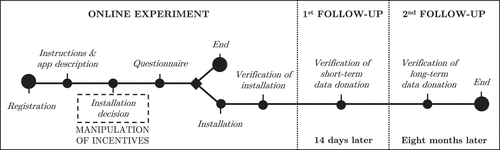
The experimenters verified subjects’ installation decisions and data donations: Subjects had to demonstrate via webcam or authenticated screenshot that they had installed the CWA on their smartphone and had activated exposure logging. To verify short-term data donations, subjects were invited to a follow-up questionnaire two weeks after the experiment. To investigate long-term data donations, we invited subjects to a second follow-up questionnaire eight months after the experiment.7
3.2. Sample
Experimental sessions were conducted between July 15 and August 3, 2020, with students of the University of Passau, who were recruited from the PAULA-Pool via the ORSEE platform (Greiner 2015). Invitations to the online experiment did not mention the topic of contact-tracing apps to avoid self-selection. The first follow-up took place between July 30 and August 21, 2020, and the second follow-up took place between March 12 and March 16, 2021. In total, 376 subjects participated in 27 sessions with approximately 14 subjects per session. Sessions lasted about 65 minutes, and participants earned an average of 23 EUR, including fixed participation fees of 12 EUR for the main experiment and 4 EUR for each follow-up questionnaire. Thus, the minimum payoff was 12 EUR, and the maximum payoff with monetary incentives was 30 EUR. After omitting subjects who failed one or both of the two attention checks during the experiment () and subjects who were not living in Germany at the time of the experiment (), the total sample size included 367 subjects (see Table 1), of which 173 subjects met the conditions of our main analysis (see Table 2).8
|

Table 1. Total Sample Descriptives
| Treatment | Subjects | Mean age | Female (%) | Preinstallations (%) | Mean prior app knowledge | Incompatible smartphone (%) | Participation follow-up 1 (%) | Participation follow-up 2 (%) |
|---|---|---|---|---|---|---|---|---|
| NC | 91 | 22.90 | 78 | 32 | 4.59 | 11 | 91 | 82 |
| FP | 91 | 22.84 | 73 | 57 | 4.62 | 4 | 86 | 86 |
| BP | 92 | 22.63 | 67 | 51 | 4.98 | 8 | 91 | 84 |
| CH | 93 | 22.75 | 75 | 44 | 4.69 | 4 | 84 | 84 |
| Total | 367 | 22.78 | 73 | 46 | 4.72 | 7 | 87 | 84 |
|
Table 2. Sample Descriptives Without Preinstallations and Incompatible Smartphones
| Treatment | Subjects | Mean age | Female (%) | Mean prior app knowledge | Participation follow-up 1 (%) | Participation follow-up 2 (%) |
|---|---|---|---|---|---|---|
| NC | 52 | 22.90 | 75 | 4.46 | 87 | 80 |
| FP | 35 | 22.74 | 74 | 3.86 | 76 | 88 |
| BP | 38 | 22.76 | 66 | 4.89 | 86 | 79 |
| CH | 48 | 22.79 | 81 | 4.54 | 73 | 78 |
| Total | 173 | 22.81 | 75 | 4.46 | 79 | 81 |
4. Analysis of Extrinsic Incentives for App Adoption
Our main analysis focuses on the effectiveness of the different incentive mechanisms at increasing app installations and data donations among new installers. Thus, we consider the subsample of 173 subjects (see also Online Appendix D.2) that had not installed the CWA on their smartphone prior to the experiment () and did not have an incompatible smartphone ().
4.1. Installation Rates
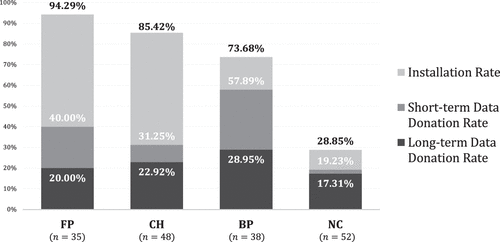
Overall, two-thirds of subjects decided to install the CWA, but installation rates differ considerably between treatments, as Figure 2 shows. Treatment NC demonstrates the smallest share of new installations, with all treatments featuring monetary incentives achieving higher installation rates, which supports Hypothesis 1(a). In line with Hypothesis 3(a), the installation rate is higher for treatment FP (front-loaded payments) than for treatment BP (ex post bonus payments). Negating Hypothesis 2(a), the additional choice of a charitable donation in treatment CH does not lead to a higher installation rate than the pure monetary compensation offered in treatment FP.
We investigate treatment effects based on linear probability models with subjects’ binary installation decisions as the dependent variable and treatment FP as the baseline.9 Alongside dummy variables for treatment effects, we include age and gender, as well as subjects’ self-reported internet privacy concerns (Dinev and Hart 2006) and perceived information sensitivity (Dinev et al. 2013) as explanatory variables elicited during the experiment’s questionnaire. Estimated coefficients for Model (1) in Table 3 confirm the insights from descriptive installation rates. Providing subjects with immediate monetary compensation (FP) leads to a significantly higher propensity of app installation than providing no incentive ( percentage points (pp) for treatment NC, p < 0.01) or ex post bonus payments ( pp for treatment BP, p < 0.01). Offering an additional option of a charitable donation does not increase subjects’ installation propensity relative to treatment FP: The coefficient for treatment CH is negative and not statistically significant. Notably, neither demographic variables nor privacy concerns demonstrate a significant effect on the installation decision, but subjects that consider the data collected by the CWA to be more sensitive are significantly less likely to install the app ( pp, p < 0.01).
|
Table 3. Linear Regressions of Subjects’ Installation Decisions, Short-Term Data Donations, and Long-Term Data Donations
| Dependent variable | |||
|---|---|---|---|
| Installation | Short-term data donation | Long-term data donation | |
| Independent variable | (1) | (2) | (3) |
| Treatment NC | −0.662*** | −0.213** | −0.029 |
| (0.072) | (0.102) | (0.086) | |
| Treatment BP | −0.208*** | 0.178 | 0.098 |
| (0.079) | (0.121) | (0.101) | |
| Treatment CH | −0.098 | −0.091 | 0.026 |
| (0.064) | (0.111) | (0.090) | |
| Privacy concerns | −0.008 | −0.000 | 0.011 |
| (0.021) | (0.024) | (0.019) | |
| Information sensitivity | −0.063*** | −0.038* | −0.059*** |
| (0.019) | (0.020) | (0.018) | |
| Female | 0.016 | −0.003 | 0.054 |
| (0.065) | (0.089) | (0.076) | |
| Age (above 18) | 0.010 | 0.014 | −0.003 |
| (0.012) | (0.015) | (0.013) | |
| Constant | 2.126*** | 1.460*** | 1.306*** |
| (0.102) | (0.164) | (0.134) | |
| Observations | 173 | 173 | 173 |
| R2 | 0.379 | 0.112 | 0.070 |
Notes. Baseline: Treatment FP. Robust standard errors are in parentheses.
*p < 0.1; **p < 0.05; ***p < 0.01.
(
4.2. Short-Term Data Donation Rates
Without compensation, the short-term data donation rate after 14 days amounts to 19% in treatment NC, meaning that providing subjects with information about the CWA in the experiment encourages about every fifth subject to install the app and continue donating data for at least 14 days. Figure 2 indicates that monetary incentives are effective at improving this outcome, with short-term data donation rates doubled in treatment FP and nearly tripled in treatment BP. The descriptive results suggest that ex post bonus payments (BP) are most effective at promoting short-term data donations, yielding a data donation rate of about 58%. In particular, ex post bonus payments are most effective at incentivizing new installers to continue donating data, whereas, for front-loaded payments, more than half of the subjects stop donating data within the first 14 days. The choice of a charitable donation (CH) does not increase data donations beyond the rate observed for front-loaded payments.
The effectiveness of monetary compensation at promoting data donations in the short term is confirmed by the regression analysis (see Table 3, Model (2)) and additional pairwise tests. Relative to the baseline treatment FP, the coefficient for treatment NC in Model (2) is negative ( pp) and statistically significant (p < 0.05). Moreover, the coefficients of treatments BP and NC are statistically significant different, according to a Wald test (χ2(1) = 16.005, p < 0.001), confirming a significant difference in short-term data donation rates between the two treatments. Comparing front-loaded and ex post bonus payments, the coefficient for treatment BP in Model (2) is positive ( pp), in line with the descriptive results, but not statistically significant. We also observe no statistically significant effects of treatment CH (relative to treatment FP), demographics, or privacy concerns on short-term data donations. In contrast, higher information sensitivity significantly decreases the short-term data donation rate ( pp, p < 0.1).
(
4.3. Long-Term Data Donation Rates
In comparison with initial installations and short-term data donation rates, long-term data donation rates after eight months diminish considerably, as illustrated by Figure 2. Although the long-term data donation rate remains the lowest in treatment NC without compensation (17%), treatments involving monetary compensation only reach a rate of about 20% in treatment FP and 29% in treatment BP. This is because in these treatments with monetary compensation, subjects who have installed the app are more likely to stop donating data in the long-term compared with subjects who have installed the app in treatment NC (χ2(1, N = 48) = 5.3, p = 0.021).10 We further investigate this long-term behavior and its underlying motivations in Section 6.1.
In line with the preceding analysis, we estimate linear probability models to investigate treatment effects on long-term data donation rates (see Table 3, Model (3)). In particular, the estimated coefficient for treatment NC indicates no statistically significant difference in subjects’ long-term data donations when compared with the treatment FP. Additionally, the largest descriptive difference in long-term data donation rates between treatment BP and treatment NC is not statistically significant, according to a Wald test between the two corresponding regression coefficients (χ2(1) = 1.917, p = 0.166). Furthermore, there are no significant effects of demographics or subjects’ privacy concerns, whereas the negative impact of information sensitivity persists in the long term ( pp, p < 0.01).
(
5. Comparing Stated Installation Intentions and Verified Decisions
In an additional experimental treatment, NC-HYP, we compare subjects’ stated intentions to install the CWA in a hypothetical scenario to subjects’ actual installation decisions in treatment NC. The subject recruitment and experimental procedures for treatment NC-HYP were identical to treatment NC (see Online Appendix C.1), with the exception that the step “installation and verification of installation” was not included in the experimental protocol, and no follow-up questionnaires were conducted. In total, 94 additional subjects who had not participated in any of the other treatments participated in this treatment. Details about the procedures and samples appear in Online Appendix F.
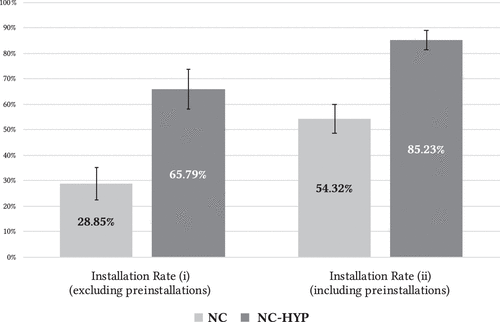
Figure 3 compares installation rates for treatments NC and NC-HYP. Two alternative measures for the installation rate are considered for robustness: (i) the share of new installers among subjects with a compatible smartphone that had not installed the CWA before the experiment; and (ii) the share of all installers among subjects with a compatible smartphone, regardless of preinstallation status (i.e., preinstallations are treated as positive installation decisions equal to new installations).11 For both measures, the installation rate is higher in treatment NC-HYP. Considering only new installations, the installation rate in the hypothetical setting of treatment NC-HYP is more than twice (2.3 times) that observed in the verified setting of treatment NC. Differences in installation rates are statistically significant based on two-sample tests (excluding preinstallations: χ2(1, N = 90) = 10.7, p < 0.001 and including preinstallations: χ2(1, N = 169) = 17.9, p < 0.001), as well as regression analyses controlling for individual characteristics (see Online Appendix F), thus supporting Hypothesis 5.
Note. Error bars represent standard errors.
(
6. Discussion and Conclusions
6.1. Discussion of Empirical Findings
Our findings demonstrate that monetary incentives can significantly promote app installations and data donations in the short term, with ex post bonus payments most effective in terms of incentivizing people to donate data after they have installed the app but less effective than front-loaded payments in terms of generating initial installations. This suggests a key trade-off in the design of monetary incentive schemes. Because neither of the two schemes is found to ultimately outperform the other, this reinforces calls to combine ex post incentives with immediate benefits (Loewenstein et al. 2007). However, the positive effect of monetary incentives vanishes in the long term, with subjects who receive monetary compensation more likely to stop donating data. For front-loaded payments, almost four out of five new installers stop donating data within eight months. In contrast, in the treatment without compensation, only two out of five new installers stop donating data over the same period. As a result, donation rates no longer differ significantly in the long term between treatments with and without monetary incentives.
The strong decline in long-term data donation rates is rather surprising because deactivation or deinstallation of the CWA requires more manual effort from users than simply keeping the app on their smartphones. Given past evidence of user inertia in other IS adoption contexts (Kim and Kankanhalli 2009, Polites and Karahanna 2012), we expected that more of the installations incentivized by short-term benefits would translate into long-term (passive) data donations. However, especially in the treatments with monetary compensation, a significant number of installers actively decided to deactivate or deinstall the app. In the second follow-up, the most cited reasons for this were the need to keep the Bluetooth function permanently activated (indicated by 24 subjects) and little or no associated benefit with CWA usage (20 subjects). This suggests that over the long term, a significant share of subjects were becoming aware of and annoyed by the continuous opportunity costs of using the contact-tracing app, such as a shorter battery life due to Bluetooth activation. Moreover, the second reason shows that app sampling (Lee and Tan 2013) can backfire, with several subjects unconvinced of the app’s benefits after using it. This indicates that opportunity costs and a lack of perceived benefits can become more apparent over time, such that they may eventually exceed inertia and transaction costs for app deinstallation. Furthermore, contact-tracing apps may be particularly prone to user attrition because predominantly passive app usage can limit the formation of user habits, which may otherwise foster long-term usage (Limayem et al. 2007).12
Because monetary incentives promote uptake among less altruistic and prosocially motivated people, these installers have, on average, lower levels of intrinsic motivation compared with subjects who installed the app even without monetary compensation. This difference in intrinsic motives is confirmed by an analysis of self-reported personality characteristics of installers across treatments. In particular, installers in treatment NC are, on average, significantly more altruistic () than installers in treatments BP (m = 4.95, p = 0.013), FP (m = 5.22, p = 0.06), and CH (m = 5.28, p = 0.071), respectively. In summary, subjects who installed the app in return for monetary compensation were more likely to deinstall the app as a consequence of experienced opportunity costs, insufficient benefits, and/or a lack of habit formation than subjects with higher intrinsic motivation.
More generally, our complementary survey analysis indicates that the adoption of contact-tracing apps involves prosocial behavior (Bonardi et al. 2020), with subjects who install the CWA identifying social benefits () as the most important reason and significantly more important for their installation decision than personal benefits (m = 4.71, p < 0.001).13 This adds empirical support that data donations represent a promising approach to encouraging individual contributions to digital public goods (Hillebrand et al. 2023). Despite the important role of social benefits for subjects’ decision to engage in data donations, we find no evidence for a crowding-out of intrinsic motivations when offering monetary incentives (Anderson and Agarwal 2009, Rehse and Tremöhlen 2022), as the additional choice of a charitable donation does not increase app installations or data donations. In fact, only 12% of subjects in treatment CH even chose to donate the monetary compensation to a charity. Moreover, short- and long-term data donation rates do not differ significantly between subjects who chose to donate and those who chose monetary compensation for themselves.
Our finding of no short-term crowding-out deviates from previous studies on data donations (Anderson and Agarwal 2009). A possible ex post explanation for these diverging findings is provided by Bénabou and Tirole (2006), who theorize that a crowding-out effect is unlikely to occur if individuals’ prosocial behavior is primarily driven by the desire to avoid stigma—that is, to distinguish themselves from the behavior of social outliers. In contrast, crowding-out is more likely to occur if prosocial behavior is motivated by the pursuit of distinction, meaning individuals’ desire to set themselves apart from commonplace conduct. Accordingly, our results suggest that donations of contact tracing data are driven primarily by the motivation to avoid stigma,14 whereas donations of genetic data are considered more exceptional actions.
Finally, as previous studies on user acceptance of contact-tracing apps have emphasized the role of privacy attitudes and privacy-related app specifications (e.g., Trang et al. 2020), it is noteworthy that we find no significant impact of subjects’ privacy concerns on app installation and data donation behavior. This may stem directly from the decentralized, privacy-preserving architecture of the CWA (Ahmed et al. 2020). Nonetheless, perceived information sensitivity (Dinev et al. 2013) has a significant and consistent negative effect on installation rates and data donations. Thus, our findings suggest that perceived discomfort of data collection and disclosure remains a potential barrier for user acceptance, even when technical privacy-preserving measures are implemented.
6.2. Practical Implications
The results of this study yield several important insights for policymakers regarding the promotion of prosocial behavior in data-related contexts and IS adoption during public health emergencies. Monetary compensation and financial subsidies should generally be considered additional measures to promote the adoption of contact-tracing apps and data donations, as they can promote app installations and short-term data donations. However, because one-time payments are found to be ineffective at sustaining data donations in the long term, compensation should be distributed over time, with repeated payments contingent on verified data donations. In this vein, the app design could be adapted to support extrinsic and intrinsic incentives: for example, apps could implement features that anonymously monitor and verify data donations to confirm that a user should receive the agreed-upon compensation. Furthermore, the attrition of data donors may be mitigated by displaying informational messages when users attempt to deactivate data collection functions or the entire app. For targeted ads, Schumann et al. (2014) show that reciprocity appeals can increase user acceptance when personal data are collected for private benefit. Emphasizing reciprocity may be even more effective when data are collected for social benefits.
Our findings further highlight that policymakers must consider the long-term implications of short-term monetary incentives on the user base of data donation apps and their associated behavior. This is particularly important for digital contact tracing, which requires continuous and sustained data donations over longer periods to achieve significant health benefits. A short-term crowding-in of less intrinsically motivated people via monetary incentives implies that the installed user base will be, on average, less willing to incur additional (intangible) costs of app usage or to engage in additional downstream prosocial activities (such as active data donations) than if only people had adopted the app without monetary incentives. This could have negative effects on the quantity and quality of donated data in the long term, creating bigger challenges for monetary incentives to be effective.
6.3. Theoretical Contributions
Our study makes several theoretical contributions to the emerging research on data donations and digital contact tracing by analyzing the effectiveness of monetary incentives in this novel IS adoption setting. First, our research contributes to the literature on user acceptance of digital contact tracing and the literature on prosocial behavior by evaluating the short- and long-term effects of monetary incentives in an adoption setting that is characterized by a unique cost-benefit calculus (Carlsson Hauff and Nilsson 2023) involving social benefits, as well as a mix of different short-term and long-term costs (Trang et al. 2020, Hillebrand et al. 2023). We show that monetary incentives can be effective, at least in the short term, when app installation and passive data donations incur low transaction costs for users. Moreover, we provide evidence against a crowding-out effect, which suggests that intrinsic motives for the donation of contact-tracing data can be effectively complemented by extrinsic incentives in the short term. This finding diverges from previous findings for other contexts of prosocial behavior, such as for blood donations or the donation of genetic data (Anderson and Agarwal 2009), which may be explained ex post by alternative motives for different types of prosocial behavior (Bénabou and Tirole 2006).
Furthermore, we add new insights to the IS adoption literature (Kim and Kankanhalli 2009, Polites and Karahanna 2012) by evaluating how prosocial app benefits and different costs of adoption interact over the long term. We show that the special characteristics of (passive) data donations, especially the nonnecessity of interacting with an IS and the special cost-benefit calculus, have important ramifications for long-term adoption. In particular, our findings demonstrate that sustaining long-term donations of contact-tracing data among extrinsically motivated installers is particularly challenging, as the passive usage associated with these data donations presents only limited opportunities for habit formation (Limayem et al. 2007) and convincing users of the benefits of contact tracing. In consequence, opportunity costs associated with data donations can outweigh user inertia (Polites and Karahanna 2012) and limited benefits of app sampling (Lee and Tan 2013), especially for users who exhibited less intrinsic motivation for app adoption in the first place. In this vein, our study points to the causes and underlying theories of why short-term monetary incentives are likely to be ineffective at promoting long-term data donations without additional interventions. In turn, these theoretical insights can be leveraged to improve the app design for promoting data donations in the long term and to better understand how monetary incentives affect long-term user behavior and adoption of IS that involve significant social benefits.
In addition, we contribute to the open empirical question of how to optimally structure monetary incentives to promote a change in continuous behavior (Gneezy et al. 2020). By considering two alternative payment schemes, we demonstrate that both front-loaded payments and ex post bonus payments can significantly increase prosocial data donations in the short term. In this vein, we show that a positive stimulus of data donations can be achieved in the short term through alternative mechanisms with similar effectiveness, which suggests that both mechanisms can be combined to maximize the effect. In particular, we show that front-loaded payments can offset initial transaction costs for app installation and promote data donations in the short term, as long as experienced opportunity costs are low. This further suggests that present bias (Frederick et al. 2002) can be exploited to promote data donations. In contrast, ex post bonus payments are shown to achieve a positive effect through their role as commitment devices (Bryan et al. 2010), even though they impose more demands on users to receive their monetary compensation.
Finally, our findings show that stated intentions can significantly overestimate actual installation decisions in the context of digital contact tracing by a factor of 1.5–2.3 (see Figure 3). This implies that empirical analyses of actual behavior complementing hypothetical scenarios (see also Lowry et al. 2017, Gupta et al. 2018, and Hulland and Houston 2021) are especially important if app adoption contexts involve prosocial behavior that is prone to social desirability bias.
6.4. Limitations and Future Research
Our findings are based on a student sample that may not be representative of the overall population, limiting generalizability. First, students are younger than the average person and, therefore, less susceptible to serious health effects from COVID-19. Second, students may be more likely to be enticed by monetary incentives and more willing to donate to charity than the general public. In general, we would expect the former to possibly induce a downward bias and the latter to produce an upward bias. Furthermore, the share of preinstallations in our study was higher than for the general public at this time. Hence, future work may corroborate the robustness of our findings, especially in samples with older (representative) demographics. Nonetheless, given that our student sample represents a significant demographic group within the overall population, we expect the qualitative effects to also appear in a broader sample. In particular, the decline in long-term data donations is so significant that we expect the corresponding effects to translate to more representative samples. Moreover, young adults represent a particularly relevant group in the context of digital contact tracing of COVID-19 infections: although especially socially active and highly mobile, they were last in line to receive vaccinations. Finally, the student sample allowed us to achieve high response rates for our follow-up questionnaires (87% and 84%), which were crucial for measuring short- and long-term data donations. In addition, we avoided preselection of subjects at online crowdworking platforms or recruiting services, which might have excluded people with strong privacy concerns.
Given the limited number of subjects who opted for a charitable donation in treatment CH, we cannot completely rule out the possibility of crowding-out effects in other populations. However, the low number of charitable donations can also support the finding of no crowding-out, particularly when the primary motive for donating data is the avoidance of stigma. More specifically, our study design precludes ruling out the possibility of a crowding-out of very early adopters with strong intrinsic motivation that had installed the CWA before our experiment, although we did attempt to minimize this bias by running the study shortly after the app’s launch. However, additional empirical analyses show that early adopters were at least not demotivated by receiving monetary compensation ex post. Most importantly, long-term data donation rates for subjects with a preinstallation do not differ between treatments where they received monetary compensation and treatments where they could donate to charity or did not receive compensation. Finally, we did not investigate whether participants used the CWA to make active data donations, such as sharing COVID-19 test results. Thus, future research may explore the effects of incentives, nudges, and app design specifications on individuals’ decisions to engage in active data donations.
The authors are grateful to the senior editor, the associate editor, and two anonymous reviewers for constructive comments and guidance throughout the review process. The authors also thank Jan Krämer, Nikolai Sachs, Andreas Schauer, and participants at the Workshop on Networks and Information Systems, the Diginomics Seminar at the University of Bremen, the Conference on Experimental Insights from Behavioural Economics on Covid-19, the Association for Computing Machinery Special Interest Group on Management Information Systems Computers and People Research Conference 2021, the Munich Summer Institute 2021, the European Association for Research in Industrial Economics 2021 conference, the Conference on Information Systems and Technology 2021 conference, and the International Telecommunications Society 2022 conference for valuable feedback on earlier versions of this paper.
1 See Online Appendix B for a discussion of the distinction and relationship between active and passive data donations. This study focuses on passive donations of contact-tracing data.
2 See Online Appendix A for a detailed literature overview.
3 Short-term (and long-term) data donations required that the exposure-logging function of the CWA must have been activated for at least 12 of the previous 14 days. See Online Appendix C for details and photos of the verification procedure. In treatment FP, subjects had to initially activate the function during installation to receive the monetary incentive.
4 For the CWA, donation of contact-tracing data required only the activation of the exposure logging function and the Bluetooth interface but no further interaction with the app. See Online Appendix B for more information on the CWA.
5 Considering a charitable donation as an additional option allows us to directly test for a potential crowding-out effect (see derivation of Hypothesis 2). The same approach has been used in previous empirical studies (Mellström and Johannesson 2008) and has been highlighted in theoretical analyses of the crowding-out effect (Bénabou and Tirole 2006). We do not consider a distinct treatment with a sole charitable donation because that analysis would surpass the scope of our study, which primarily focuses on the effectiveness of monetary compensation mechanisms.
6 The amount is also within the range of incentives in related studies on the adoption of contact-tracing apps with 1, 2, and 5 EUR offered in Munzert et al. (2021) and 10, 50, and 100 EUR offered in Frimpong and Helleringer (2021).
7 In Online Appendix E.7, we describe how we deal with no-shows (i.e., subjects who installed the CWA for the first time in the experiment but did not participate in a follow-up component) and provide additional analyses for robustness.
8 Pairwise tests in Online Appendix D indicate no significant differences across treatments between shares of preinstallations, prior app knowledge, incompatible smartphones, and participation in both follow-ups, with the exception of a significantly lower share of preinstallations in treatment NC. Although an unbalanced share of preinstallations could bias treatment effects, in Online Appendix D, we argue that our findings are robust, even if one accounts for this specific bias.
9 In Online Appendix E.2, we discuss our choice of linear regressions and conduct binomial logistic regressions to corroborate robustness. In Online Appendices E.4 and E.5, we consider alternative model specifications that account for prior app knowledge, failed manipulation checks, and an alternative baseline. All our main findings hold qualitatively, with effects remaining similar in size. Online Appendix E.6 reports pairwise tests of treatment differences for all evaluation measures.
10 Note also that for treatments with a monetary incentive, the attrition rate from short-term to long-term donors was lowest in treatment CH. This may be indicative of a higher prosocial motivation among short-term data donors in treatment CH as a consequence of the choice mechanism. We further investigate the relationship between short-term and long-term data donation more generally in Online Appendix E.3.
11 By testing for differences based on both measures, we verify that our results are robust when considering preinstallations, which differ in terms of relative share between the two treatments.
12 This is supported by subjects’ self-reported usage intensity that we elicited in the second follow-up questionnaire, according to which 84% of long-term data donors open the app at least once a week.
13 The importance of motives for app installation, as well as altruism scores, were measured by using seven-point Likert scales. Subjects’ mean importance ratings of installation motives are summarized in Table C2 in Online Appendix C.4.
14 This is supported by responses that individual subjects gave to an open-ended questionnaire item, which revealed, for example, that subjects decided to install the CWA because they considered it the “duty of every informed citizen.”
References
- (2004) Privacy in electronic commerce and the economics of immediate gratification. Proc. 5th ACM Conf. Electronic Commerce (Association for Computing Machinery, New York), 21–29.Google Scholar
- (2020) A survey of COVID-19 contact tracing apps. IEEE Access 8:134577–134601.Crossref, Google Scholar
- (2009) Genetic information altruists: How far and to whom does their generosity extend? Proc. 30th Internat. Conf. Inform. Systems ICIS (Association for Information Systems (AIS), Phoenix), 1–18.Google Scholar
- (2006) Incentives and prosocial behavior. Amer. Econom. Rev. 96(5):1652–1678.Crossref, Google Scholar
- (2020) Digital proximity tracing—The view from economics (Policy Brief, Swiss National COVID-19 Science Task Force (NCS-TF), Switzerland).Google Scholar
- (2010) Commitment devices. Annu. Rev. Econom. 2(1):671–698.Crossref, Google Scholar
- (2018) Stimulating online reviews by combining financial incentives and social norms. Management Sci. 64(5):2065–2082.Link, Google Scholar
- (2023) Individual costs and societal benefits: The privacy calculus of contact-tracing apps. J. Consumer Marketing 40(2):171–180.Crossref, Google Scholar
- (2021) Privacy concerns can explain unwillingness to download and use contact tracing apps when COVID-19 concerns are high. Comput. Human Behav. 119:106718.Crossref, Google Scholar
- (2021) Privacy, adoption, and truthful reporting: A simple theory of contact tracing applications. Econom. Lett. 198:109676.Crossref, Google Scholar
- (2006) An extended privacy calculus model for e-commerce transactions. Inform. Systems Res. 17(1):61–80.Link, Google Scholar
- (2013) Information privacy and correlates: An empirical attempt to bridge and distinguish privacy-related concepts. Eur. J. Inform. Systems 22(3):295–316.Crossref, Google Scholar
European Commission (2020) Proposal for a regulation on European data governance (Data Governance Act). Accessed March 28, 2024, https://eur-lex.europa.eu/legal-content/EN/TXT/?uri=celex%3A52020PC0767.Google Scholar- (2020) Quantifying SARS-CoV-2 transmission suggests epidemic control with digital contact tracing. Science 368(6491):eabb6936.Crossref, Google Scholar
Financial Times (2020) Contact-tracing apps raise privacy concerns in Germany. Accessed March 28, 2024, https://www.ft.com/content/32b6a360-3e22-47a3-ace5-60f42cc6b42d.Google Scholar- (2002) Time discounting and time preference: A critical review. J. Econom. Lit. 40(2):351–401.Crossref, Google Scholar
- (2001) Motivation crowding theory. J. Econom. Surveys 15(5):589–611.Crossref, Google Scholar
- (2021) Strategies to increase downloads of COVID-19 exposure notification apps: A discrete choice experiment. PLoS One 16(11):e0258945.Crossref, Google Scholar
- (2020) Trading privacy for social good: Did America unite during COVID-19? Proc. 41st Internat. Conf. Inform. Systems ICIS (Association for Information Systems (AIS), India), 1–17.Google Scholar
- (2020)
Incentive-based interventions . Hagger MS, Cameron LD, Hamilton K., Hankonen N, Lintunen T, eds. The Handbook of Behavior Change (Cambridge University Press, Cambridge, UK), 523–536.Crossref, Google Scholar - (2011) When and why incentives (don’t) work to modify behavior. J. Econom. Perspect. 25(4):191–210.Crossref, Google Scholar
- (2015) Subject pool recruitment procedures: Organizing experiments with ORSEE. J. Econom. Sci. Assoc. 1(1):114–125.Crossref, Google Scholar
- (2018) Economic experiments in information systems. MIS Quart. 42(2):595–606.Crossref, Google Scholar
- (2023) The social dilemma of big data: Donating personal data to promote social welfare. Inform. Organ. 33(1):100452.Crossref, Google Scholar
- (2020) Effective configurations of a digital contact tracing app: A report to NHSX (NHSX Report). Accessed March 28, 2024, https://cdn.theconversation.com/static_files/files/1009/Report_-_Effective_App_Configurations.pdf.Google Scholar
- (2021) The importance of behavioral outcomes. J. Acad. Marketing Sci. 49(3):437–440.Crossref, Google Scholar
Initiative D21 (2020) Corona-Warn-App: Einstellungen und Akzeptanz der Bevölkerung. Accessed March 28, 2024, https://initiatived21.de/publikationen/egovernment-monitor/2020/corona-warn-app.Google Scholar- (2020) How good is good enough for COVID19 apps? The influence of benefits, accuracy, and privacy on willingness to adopt. Preprint, submitted May 18, https://arxiv.org/abs/2005.04343.Google Scholar
- (2018) Extrinsic versus intrinsic rewards for contributing reviews in an online platform. Inform. Systems Res. 29(4):871–892.Link, Google Scholar
- (2009) Investigating user resistance to information systems implementation: A status quo bias perspective. MIS Quart. 33(3):567–582.Crossref, Google Scholar
- (2017) The effect of free sampling strategies on freemium conversion rates. Electronic Markets 27(1):67–76.Crossref, Google Scholar
- (2021) When does social desirability become a problem? Detection and reduction of social desirability bias in information systems research. Inform. Management 58(7):103500.Crossref, Google Scholar
- (2013) Economic rewards to motivate blood donations. Science 340(6135):927–928.Crossref, Google Scholar
- (2020) Do survey estimates of the public’s compliance with COVID-19 regulations suffer from social desirability bias? J. Behav. Public Admin. 3(2):1–9.Google Scholar
- (2013) Effects of different types of free trials and ratings in sampling of consumer software: An empirical study. J. Management Inform. Systems 30(3):213–246.Crossref, Google Scholar
- (2007) How habit limits the predictive power of intention: The case of information systems continuance. MIS Quart. 31(4):705–737.Crossref, Google Scholar
- (2007) Asymmetric paternalism to improve health behaviors. JAMA 298(20):2415–2417.Crossref, Google Scholar
- (2017) Why security and privacy research lies at the centre of the information systems (IS) artefact. Eur. J. Inform. Systems 26(6):546–563.Crossref, Google Scholar
- (2007)
A survey of economic theories and field evidence on pro-social behavior . Frey BS, Stutzer A, eds. Economics and Psychology: A Promising New Cross-Disciplinary Field (MIT Press, Cambridge, MA), 51–87.Crossref, Google Scholar - (2008) Crowding out in blood donation: Was Titmuss right? J. Eur. Econom. Assoc. 6(4):845–863.Crossref, Google Scholar
- (2021) Tracking and promoting the usage of a COVID-19 contact tracing app. Nat. Human Behav. 5(2):247–255.Crossref, Google Scholar
- (2012) Shackled to the status quo: The inhibiting effects of incumbent system habit, switching costs, and inertia on new system acceptance. MIS Quart. 36(1):21–42.Crossref, Google Scholar
- (2021) Mitigating the adverse effect of monetary incentives on voluntary contributions online. J. Management Inform. Systems 38(1):82–107.Crossref, Google Scholar
- (2022) Fostering participation in digital contact tracing. Inform. Econom. Policy 58:100938.Crossref, Google Scholar
- (2020) Digital contact-tracing adoption in the COVID-19 pandemic. Eur. J. Inform. Systems 29(6):731–745.Crossref, Google Scholar
- (2020) Providing personal information to the benefit of others. PLoS One 15(8):e0237183.Crossref, Google Scholar
- (1988) Status quo bias in decision making. J. Risk Uncertainty 1(1):7–59.Crossref, Google Scholar
- (2014) Targeted online advertising: Using reciprocity appeals to increase acceptance among users of free web services. J. Marketing 78(1):59–75.Crossref, Google Scholar
- (2019) Psychology of personal data donation. PLoS One 14(11):e0224240.Crossref, Google Scholar
- (2020) Financial incentives and intention to subscribe to data-driven health plans. Proc. 41st Internat. Conf. Inform. Systems ICIS (Association for Information Systems (AIS), India), 1–17.Google Scholar
- (2020) One app to trace them all? Examining app specifications for mass acceptance of contact-tracing apps. Eur. J. Inform. Systems 29(4):1–14.Crossref, Google Scholar