


The Double-Edged Roles of Generative AI in the Creative Process: Experiments on Design Work
Abstract
Generative artificial intelligence (GenAI) mimics human creativity by producing novel and complex content solutions, which redefine human-AI collaboration across various creative domains. Despite this transformative potential, the existing GenAI literature largely examines creativity as an end product, overlooking the intricate dynamics of the human-GenAI cocreative process. Addressing this gap, our research conceptualizes creativity as a process encompassing two distinct stages: an ideation stage and an implementation stage. Drawing on theories of creativity and expertise fixation, we theorize that GenAI influences the two stages differently, depending on the expertise level of the human creators. Our Study 1 (a laboratory experiment) demonstrates that GenAI tremendously enhances work creativity in the ideation stage by mitigating cognitive fixation for all designers. However, during the implementation stage, the impacts diverge: low-expertise designers with GenAI continue to experience improvements in work creativity, whereas high-expertise designers with GenAI show no gains in their work creativity and suffer a significant reduction in their work efficiency. Further video analyses reveal that expertise fixation underpins these impacts. That is, as GenAI introduces work approaches that deviate from high-expertise designers’ established approaches in implementation, cocreation with GenAI leads to counterproductive outcomes. Building on these findings, Study 2 (a field experiment) further validates the impact of GenAI and the role of expertise fixation among professional designers, and rules out alternative explanations. This study also employs a cutting-edge GenAI model to ensure the robustness of our findings against technological advancements. Our findings provide a nuanced understanding of GenAI’s role in the cocreative process and elucidate its heterogeneous effects based on creators’ expertise levels. This research advances the literature on human-AI collaboration and offers actionable insights for optimizing the use of GenAI in creative work.
History: Min Ding, Ram Gopal, Ulrike Schultz, D. J. Wu, Senior Editors; Guodong (Gordon) Gao, Associate Editor.
Funding: S. Yang was supported by the National Natural Science Foundation of China [Grants 72372023 and 71972035].
Supplemental Material: The online appendix is available at https://doi.org/10.1287/isre.2024.0937.
In the beginner’s mind there are many possibilities, but in the expert’s there are few.
—Shunryū Suzuki
1. Introduction
Generative artificial intelligence (GenAI) is revolutionizing creative work by enabling machines to produce original content solutions, from graphic designs to product prototypes—domains traditionally seen as exclusive to humans (De Cremer et al. 2023). Unlike conventional AI tools that assist tasks with clearly defined outcomes and end goals (Fügener et al. 2021), GenAI tools can assist human users as cocreators with truly novel, intricate, and boundary-less content solutions that mimic human creativity (Noy and Zhang 2023). As creative workers increasingly integrate GenAI into their work process, an emerging research stream has begun to investigate human-AI collaboration in the creative domain (Boussioux et al. 2024, Chen and Chan 2024). Although extant studies provide valuable insights into optimal ways to team with GenAI, their focus centers on final production outcomes, such as content effectiveness and work productivity. Limited research seeks to understand the cocreative process with GenAI in creative work, a notable gap that we aim to address.
Creativity refers to the ability to develop ideas and solutions that are both novel and useful out of a creative process (Sternberg and Lubart 1996). We contend that cocreation with GenAI has the potential to transform creative work at the process level by integrating human creativity with computational creativity to accomplish a creative task. Thus, our research departs from recent research on GenAI in creative work that views creativity merely as an end product (Eloundou et al. 2023, Chen and Chan 2024, Zhou and Lee 2024). Instead, we adopt a more comprehensive approach by conceptualizing creativity as a logical process informed by the creativity literature (Kittur et al. 2019, Ding 2020). Creativity entails a complex cognitive process, known as the creative process, that involves both divergent and convergent thinking to achieve successful outcomes (Eysenck 2003, Sawyer 2012). In graphic design, for example, the creative process begins with an ideation stage, referred to as the divergent thinking stage, where designers brainstorm a wide range of potential solutions. This is followed by the implementation stage, or the convergent thinking stage, where designers execute and refine a concrete solution that meets the design requirements. However, innate obstacles, known as cognitive fixation, can impede both divergent and convergent thinking, posing distinct challenges to the successful completion of the creative process (Lu et al. 2017, Ramos 2020). Conceptualizing creativity as a process, our first goal is to contribute a process-level understanding of human-GenAI cocreation by unpacking its nuanced impact(s) on creative work in the two-stage process (i.e., ideation and implementation).
Furthermore, human creators are active users who ultimately determine the usage of GenAI, and their roles should be accounted for in understanding its impact(s). With millions of users worldwide, GenAI tools bring a transformative force to creative endeavors by tremendously lowering the barrier to using sophisticated AI models, allowing laypeople to easily interact with GenAI via natural language prompts and generate complex content with minimal expertise. Although evidence suggests the impact of teaming with GenAI varies based on user expertise, with novices often benefiting more than experts (Peng et al. 2023, Chen and Chan 2024, Brynjolfsson et al. 2025), two significant gaps remain. First, the definition of expertise is vague, often proxied by different measures such as task experience, job seniority, or age (Peng et al. 2023, Chen and Chan 2024). Second, the mechanisms driving the differential impacts of expertise in the cocreative process remain underexplored (Brynjolfsson et al. 2025). We define expertise as the possession of deep knowledge and well-practiced methods in a specific domain, acquired through extensive education and training (Benner 1984). Drawing on the concept of expertise fixation—a type of fixation where well-established methods and routines hinder creativity—also known as the Einstellung effect (Luchins 1942), we posit that cocreation with GenAI may invoke different dynamics for designers. Specifically, GenAI could alleviate or exacerbate creative challenges, depending on the designer’s level of expertise. Hence, our second goal is to advance the current understanding of the differing impacts of GenAI for human creators with different expertise levels in the cocreative process.
Together, recognizing the significant gaps in the extant research, we strive to add a more nuanced and comprehensive understanding of cocreation with GenAI by addressing the following key questions:
Research Question 1: How does using GenAI affect creative work, particularly in the two stages of the creative process?
Research Question 2: How does such impact differ as a function of the designers’ level of expertise?
To answer these questions, we build on creativity and cognitive fixation research to theorize a systematic framework that elucidates the impact(s) of GenAI on work creativity and work efficiency in the cocreative process. We test our hypotheses through two experimental studies, where designers work with GenAI to create solutions for specific graphic design tasks. We operationalize work creativity using an established definition, measured by the novelty, relevance, and complexity of the design work (Ameen et al. 2022), and define work efficiency as the time spent on the design work.
In Study 1, we designed a laboratory experiment to unpack the differing impacts of GenAI on work creativity and efficiency across the two stages of the creative process. We recruited design majors from a university renowned for its graphic design and visual art programs, and defined them as experts in our study. Similarly, we recruited nondesign majors from the same institution as the novice counterparts. Our results showed that in the ideation (divergent thinking) stage, cocreation with GenAI tremendously enhanced work creativity for both expert and novice designers. This significant improvement came at the cost of only a slight reduction in work efficiency. Interestingly, in the implementation (convergent thinking) stage, GenAI continued to improve work creativity for novices. However, for experts, cocreation with GenAI turned out to be substantially counterproductive. Experts using GenAI spent 57% more time completing their designs, yet only reached creativity levels comparable with their expert peers who worked without GenAI. In Study 2, a field experiment, we extended our investigation to focus on expert designers who are working professionals. This field study, conducted as part of a low-income region promotion initiative, involved a real-world design task that closely resembled the work professional designers undertake in their real-life jobs. We also utilized a cutting-edge GenAI tool, which allows us to assess the robustness of our findings against advancements in AI technology. The results consistently demonstrated that whereas cocreation with GenAI enhanced experts’ work creativity during the ideation stage, it introduced significant inefficiencies during the implementation stage.
Our additional video analyses further reveal that GenAI’s unparalleled capability in ideation significantly alleviates cognitive fixation and facilitates divergent thinking for all human designers, thereby enhancing work creativity in the ideation stage. However, in the implementation stage, expert designers engage in significantly more revisions and rework before converging on a final production, indicating that experts encounter challenges in integrating the work of GenAI with their own. Thus, using GenAI may not easily fit in with, or may even disrupt, the established converging approach that experts rely on, requiring them to invest additional time and effort to adapt their workflow to incorporate GenAI effectively. A novel and key implication of our findings is that when using GenAI for tasks or subtasks that align with humans’ work approach, nearly all creators can derive substantial value from GenAI. Conversely, when GenAI introduces work approaches that deviate from or disrupt humans’ work approach, cocreation with GenAI can be counterproductive. Notably, this pattern remains consistent even with technological advancements of AI models. Together, our work is among the first to uncover that cocreation with GenAI could be a double-edged sword, and to elucidate when, why, and how this is the case.
Our work makes several notable contributions. First, whereas recent research examining the impact of GenAI on creative work views creativity as an end product, we take a more comprehensive approach by conceptualizing creativity as a process. Drawing on creativity and cognitive fixation theories, we provide a process-level understanding of the impacts of GenAI on creative work in the cocreative process and the underlying mechanisms driving these impacts. Second, although previous work explores the heterogeneous effects of GenAI across different characteristics of human creators, we introduce a novel theoretical lens that emphasizes the role of expertise fixation. This perspective highlights how varying levels of expertise shape interactions with GenAI, leading to distinct outcomes in the creative process. To that end, our findings offer valuable insights into the intricate dynamics experienced by human creators when working with GenAI, revealing both its beneficial and detrimental consequences. Third, our finding that GenAI can be a double-edged sword has meaningful implications for managers and organizations. Organizations may need to assess their existing talent resources and work approaches when deciding to adopt and utilize GenAI for specific tasks or subtasks. Although our investigation is in the context of graphic design, we expect our findings to be generalizable to other creative domains. These insights can inform broader research and managerial strategies for optimizing AI usage in creative work.
2. Literature and Theory
2.1. Creativity and a Cocreative Process with GenAI
Creativity, an advanced expression of human intelligence, is broadly defined as the ability to develop novel and practical ideas, solutions, and products (Sternberg and Lubart 1996). In the context of creative work, creativity refers to the development of ideas or solutions that are both original and useful, and is considered critical to individual and organizational success (Lu et al. 2017). GenAI enables the creation of original and diverse content solutions, such as text, images, and programming code, based on user-provided prompts. The remarkable capability of GenAI to efficiently generate new content on a large scale has attracted scholarly interest. Peng et al. (2023) investigated the impact of GitHub Copilot and found that programmers equipped with Copilot completed coding tasks 55.8% faster than those without the tool, with the greatest benefits observed for programmers with less experience, older age, and heavier coding workloads. Zhou and Lee (2024) analyzed panel data from an art-sharing platform that tracks artists’ adoption of GenAI tools, and found that GenAI adoption led to a substantial increase in artists’ productivity, showing a 25% growth in work production. Chen and Chan (2024) examined the use of large language models (LLMs) in assisting human writers to compose commercial advertisements. They observed that the ads attracted more clicks on social media when writers created the ads using LLMs as a content polisher instead of a content creator, especially for nonexpert writers.
Nevertheless, extant work has primarily focused on examining the impact of GenAI use on final production outcomes, particularly content effectiveness and productivity, whereas theoretical analyses and empirical investigations on the creative process itself have been limited. Powered by machine learning (ML) algorithms, GenAI wields a certain level of autonomy in creating new content. It thus assumes a role as a cocreator in the creative process, rather than simply as a traditional instrument of work enhancement (Garcia 2024). We contend that this shift introduces a transformation to creative work at the process level, and therefore, a monolithic examination focusing on creative outcomes offers limited insights into the intricate dynamics of this human-GenAI cocreative process. As professionals and organizations increasingly weave AI into their creative work processes (Iansiti and Lakhani 2020), the notions of human-guided AI partnerships (Boussioux et al. 2024) or human-AI cocreativity (Karimi et al. 2020) emphasize the integration of human creativity and computational or algorithmic creativity throughout the work process to accomplish a creative task. Yet, it is still largely understudied how the cocreation with GenAI unfolds and how this creative partnership might redefine the nature of creative work itself. Our work aims to address this gap.
Importantly, this fundamental transformation necessitates a theoretical lens that goes beyond a conventional digital tool paradigm to one that sheds light on a process-level understanding of creative work. In the following section, we discuss theories of creative process and cognitive fixation, which offer a process-level perspective on the dynamics of human-AI cocreation.
2.2. Creative Process and Cognitive Fixation
The literature on creativity and creative production (Eysenck 2003, Sawyer 2012) suggests that a creative work process generally involves two fundamental stages: the ideation stage and the implementation stage. In the ideation stage, designers aim to brainstorm a wide array of ideas, solutions, and possibilities within a certain search space. This stage entails divergent thinking, which is one of the two principal forms of creativity, and thus is also known as the divergent thinking stage. In the implementation stage, designers focus on narrowing down and refining the solutions previously generated to converge toward a final solution that meets specific design requirements. This stage necessitates the second principal form of creativity—convergent thinking (Woodman et al. 1993, Eysenck 2003). Producing creative work is not an easy task for most people (Camarda et al. 2017). In particular, cognitive fixation has been documented as a central roadblock to creativity in the literature of creative cognition (Lu et al. 2017), constraining both divergent thinking and convergent thinking (Smith et al. 1993, Storm and Angello 2010, Lu et al. 2017).
Cognitive fixation is a mental state in which an individual becomes fixated on a particular idea, approach, or ways of doing things, which hinders her ability to generate original, creative alternatives (Smith and Blankenship 1991, Smith 2003). This fixation often occurs when a person is unwilling or unable to consider alternative perspectives and becomes overly attached to the initial idea or solution that one has come up with or worked on. Prior research suggests that recognizing and overcoming cognitive fixation is critical for fostering creativity (Lu et al. 2017, Smith et al. 2017). For instance, Lu et al. (2017) found that taking a break, or setting a task aside and switching to an unrelated activity, can reduce cognitive fixation and enhance creativity, because switching can refresh the mind and propel individuals to approach the focal task in a new way. Okada and Ishibashi (2017) demonstrated that in-depth interaction with the external world, a method to enhance creativity, is often taken by artists to mitigate cognitive fixation when conceptualizing their artwork. Open innovation literature offers a similar perspective, suggesting that creative solutions often do not emerge from the relatively fixed internal knowledge and capabilities alone. Rather, true innovations are typically unlocked through breaking established boundaries and being open to external resources and approaches (Lakhani et al. 2012).
Although cognitive fixation is universal and challenges everyone, experts are particularly susceptible to a type of fixation known as the Einstellung effect (Luchins 1942, Chi 2006). Next, we introduce this effect, and then move on to the discussion about how cognitive fixation provides a useful theoretical framework to understand the cocreative process with GenAI for designers of different levels of expertise.
2.3. Expertise and the Einstellung Effect
A source of cognitive fixation, known as the Einstellung effect or expertise fixation, explains how and why expertise might sometimes become a hindrance to creativity (Luchins 1942, Chi 2006). Psychologist Abraham Luchins in 1942 first described this fixation phenomenon with the term “Einstellung,” a German word meaning set, approach, as well as attitude. According to the Einstellung effect, expertise is defined by deep knowledge and repeatedly practiced methods for problem-solving in a specific domain, developed through extensive education, training, and practice (Benner 1984, Dane 2010). It represents a well-learned and repeatedly practiced set of thought patterns, methods, and ways of doing things that individuals have acquired to solve creative problems (Bilalić et al. 2008). Such a thinking pattern is typically rigid, or becomes a fixation, because it predicts higher success for an outcome. Ironically, it is because these well-rehearsed approaches typically work well for solving similar problems that these “good” and trusted solutions can inadvertently blind experts to better ones.
As experts repeatedly solve similar tasks in a certain way, they tend to rely on familiar formulas or approaches. When some aspects of a task change, experts tend to continue using their familiar, usual approach, even if better and more effective solutions may be available (Luchins 1942, Dane 2010). For example, studies investigating the Einstellung effect with expert chess players showed that when given chess problems where both a well-known five-step sequence (“smothered mate”) and a less familiar three-step sequence (the novel but optimal solution) could lead to the solution, most expert players defaulted to the familiar five-step sequence and overlooked the three-step sequence as a better alternative (Saariluoma 1992, Bilalić et al. 2008, Sheridan and Reingold 2013). The findings also suggest that experts are often unaware of the influences from their past familiar procedures and believe that they are searching for better solutions. Thus, even if experts desire creative solutions, overcoming the Einstellung effect is challenging (Bilalić et al. 2008). Expertise fixation also aligns with the observation in management research showing how task routinization—characterized by work behavior with a high level of familiar routine and repetition—can become an inhibitor of employee creativity and organizational innovation (Ford and Gioia 2000, Choi et al. 2009). Together, the above research shows that experts’ ability to find creative solutions in a particular domain could be hampered by their expertise.
In the following section, we discuss the distinct properties and approaches of GenAI in producing creative work and propose how cocreation with GenAI might facilitate or interfere with human creators at the two stages of the creative process—ideation and implementation—and form hypotheses accordingly.
3. Hypothesis Development
Besides theories of creative process and cognitive fixation, our rationale also builds on the inherent properties of GenAI systems and algorithms. Generative text-to-image tools, such as Stable Diffusion, DALL·E, and Midjourney, create images based on textual descriptions, or prompts, through iteratively sampling a latent space trained on millions of text-image pairs, which encode associations between the words in the descriptions and visual features in the images. Although some may doubt whether GenAI embodies genuine creativity or merely reassembles existing ideas in new associations (Atkinson and Barker 2023), it is reasonable to argue that GenAI possesses distinct capabilities and computational methods different from humans to approach creative production. We next analyze how the different capabilities and approaches of humans and GenAI in producing creative work could lead to unprecedented dynamics in the cocreative design process, through the theoretical lens of cognitive fixation.
3.1. The Ideation Stage Hypothesis
We propose that cocreation with GenAI tools could reduce cognitive fixation and enhance creative work during the ideation stage. Divergent thinking, or coming up with new ideas and unexpected solutions, can be impeded by cognitive fixation (Storm and Angello 2010). When searching for creative ideas and solutions, humans tend to search locally and explore within their existing knowledge, ideas, or solutions (Cyert and March 1963), which can severely block their ability to brainstorm a diverse pool of ideas. In this stage, GenAI can quickly expand the solution space for individual designers by producing a quasi-infinite variety of genuinely original ideas. This makes using GenAI tools distinct from the traditional techniques in the ideation stage, where designers typically seek inspiration by browsing extant examples created by other designers. Meanwhile, GenAI tools demand only some textual prompts from designers to function, and even identical prompts yield unique and diverse outputs because of the inherent randomness within the text-to-image models. Furthermore, GenAI can facilitate imaginative exploration by directly visualizing unique combinations of remotely related elements, styles, and themes (Garcia 2024), allowing designers to further expand their solution space in previously less explored directions. For instance, a prompt like “a flying tiger with butterfly wings” can generate a set of cohesive visual pieces that might be difficult for humans to conceive without the aid of GenAI.
Hence, cocreation with GenAI enables designers to generate a wide set of original ideas and solutions beyond their existing search space with significantly less time and effort, tremendously breaking fixation that has historically posed challenges for human ideation. From a role switching perspective, this cocreative process fundamentally redefines the role of human designers in the divergent thinking stage. Using GenAI tools switches the role of individual designers from creators to cocreators in this human-guided cocreation partnership. That is, in the ideation stage, designers are no longer merely the creators, but also the evaluators of a range of original drafting sketches or prototyping solutions cocreated with GenAI (Magni et al. 2024). Traditionally, designers invest considerable effort and build emotional attachments to their initial ideas and solutions, which can make it challenging for designers to let go of them and consider alternatives. This GenAI-enabled role transformation could help reduce the individual’s tendency to get overly attached to a particular idea and encourage experimentation with diverse alternatives at little cost to the human designers. This shift increases the likelihood of discovering more innovative, superior solutions (Storm and Angello 2010). As such, cocreation with GenAI can help overcome human designers’ cognitive fixation and enhance creative work in divergent thinking.
Notably, because GenAI’s unprecedented ability to expand designers’ solution space at scales and speeds is overwhelmingly more powerful than the capabilities of any human being, we anticipate that GenAI’s role in mitigating cognitive fixation would benefit all designers, regardless of their design expertise, in the divergent thinking stage. Our proposition is supported by recent research showing that ChatGPT exceeds the average ability of a large human sample in verbal divergent thinking tasks (Cropley and Cropley 2023). Together, we expect that using GenAI in the ideation stage will improve creative work, increasing work creativity and work efficiency, regardless of the designers’ expertise level. Thus, we hypothesize:
(
3.2. The Implementation Stage Hypothesis
In the second stage of the creative process, convergent thinking involves selecting and refining the most promising ideas into practical solutions (Kagan et al. 2018). Thus, the main task for designers in the implementation stage is to eventually converge on a final idea and achieve the materialization of a single, concrete, and effective solution. GenAI can assist in this stage to refine a design by taking care of many detailed task components, such as stretching, filling colors, augmenting linework, and adjusting stroke size automatically or semiautomatically. It also helps to expedite the production of prototypes or mock-ups and enables much more efficient materialization of a solution that usually demands considerable skill, time, and effort from humans. As such, working with GenAI could free up human cognitive resources and allow designers to focus on additional creative endeavors, such as employing human intuition and critical thinking, which remain crucial for producing high-quality creative works. In this stage, humans are good at putting social context, meaning, and intention into their creative work, and making judgments whether the final production output is appropriate to the specific task. Thus, it is reasonable to expect that cocreation with GenAI would improve creative work as human designers can focus on the task components that humans do better, while delegating some task components to GenAI during implementation.
Designer Expertise.
We further reason that cocreation with GenAI in the implementation stage might be less beneficial—and potentially counterproductive—for designers with advanced expertise because of the Einstellung effect discussed earlier (Luchins 1942, Dane 2010). During the implementation, specific design methods, techniques, and procedures are employed to materialize a final product, such as initial hand sketching, coloring and shading, refining linework, and final presentation. Designers with advanced expertise often have established their work procedure in this stage, developed through years of formal education, repeated practice, and professional experience. As discussed, expert designers tend to get fixated on their well-learned and practiced approach for design work, even when better, more efficient alternatives are available (Jansson and Smith 1991, Dane 2010). GenAI materializes graphic design by utilizing deep neural network models that encode a textual prompt into a latent space and then decode it to generate an image. This production approach fundamentally differs from experts’ well-rehearsed and trusted approach to materializing their design work. We propose that the distinct approach by which GenAI implements design work may not fit in with, or may even pose disruptions to, expert designers’ established approaches. As a result, expert designers may need to devote additional time and effort to reconcile GenAI’s methods with their established ones. They may even opt to partially abandon or extensively revise the outputs from GenAI to fit in with their own methods and techniques.
Our proposition—that cocreation with GenAI may be counterproductive for expert designers—is related to, but distinct from, existing research on the heterogeneous effects of AI adoption on worker performance, particularly studies showing that (Gen)AI-based tools tend to disproportionately benefit certain groups of workers (Noy and Zhang 2023, Peng et al. 2023, Wang et al. 2023, Brynjolfsson et al. 2025). For instance, Brynjolfsson et al. (2025) find that productivity gains from GenAI assistance accrue primarily to less-experienced and lower-performing customer-support workers. Similarly, Noy and Zhang (2023) and Peng et al. (2023) show that GenAI compresses the distribution of productivity, with lower-performing workers driving most of the improvements. In the healthcare domain, Wang et al. (2023) demonstrate that a nongenerative, machine-learning-based AI tool for medical chart coding improves productivity, with larger gains for workers with greater task experience, defined by accumulated task volume. However, the authors also find that senior workers, defined by longer tenure in the job, benefit less from AI compared with their junior colleagues, because seniors are more likely to spot mistakes in AI outputs, and therefore exhibit greater resistance to AI use. Unlike heterogeneity driven by technology-skill complementarity or algorithm aversion, we propose a distinct mechanism rooted in expertise fixation.
We note that expertise fixation is particularly influential in the implementation stage for expert designers, because GenAI’s convergent methods and approaches can be unmanageable or distracting or even directly interfere with the well-established approach within their expertise domain (Chi 2006, Dane 2010). In contrast, designers with little expertise, who are generally not subject to the influence of expertise fixation, can benefit from cocreation with GenAI in this stage. Because these designers do not have an established convergent approach to materializing a final design, they are more open to any methods that could help them accomplish the task. Hence, we anticipate that cocreation with GenAI in the implementation stage will improve the creative work for designers with limited expertise, but not for designers with advanced expertise.
Specifically, we hypothesize that cocreation with GenAI during the implementation stage will enhance creative work for designers with limited expertise, thereby increasing both creative work and work efficiency.
(
In contrast, designers of advanced expertise tend to adhere to their well-rehearsed methods, which typically lead to successful creative design work; thus, using GenAI may not significantly help experts improve the creativity of their design work. Meanwhile, GenAI’s implementation approaches can be unmanageable or pose disruptions to expert designers; thus, using GenAI may take more time and effort to implement experts’ creative work. As such, we hypothesize that cocreation with GenAI in the implementation stage will hurt work efficiency while not increasing work creativity for designers with advanced expertise.
(
3.3. Empirical Overview
As illustrated in the empirical overview (Figure 1 below), we conducted two experimental studies to test our hypotheses. In Study 1, we designed a laboratory experiment—in the form of a graphic design task with an ideation stage followed by an implementation stage—to assess the impact(s) of using GenAI in the creative process for designers of both high and low expertise levels. We have two outcomes of interest: work creativity and work efficiency. Following the established research on creativity, we operationalize work creativity as novelty, relevance, and complexity of a design work (Cropley et al. 2011, Diedrich et al. 2015, Dow 2022). Specifically, novelty captures the originality and uniqueness of a design work, indicating that the work presents something new and different from existing or typical ideas (Sternberg and Lubart 1996, Ameen et al. 2022). Relevance denotes how appropriate and meaningful a design work is in relation to its intended purpose, context, or audience. For creative work to be relevant, it needs to address the specific needs, themes, or objectives it aims to fulfill (Cropley et al. 2011). Complexity, as adopted from Lysyakov and Viswanathan (2023), refers to the aesthetic perception of art and design images, and thus is particularly relevant for assessing graphic designs in our studies. We operationalize work efficiency by measuring the time taken to complete the design tasks.
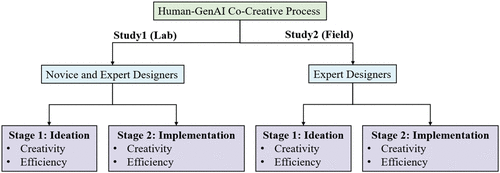
In Study 2, we extended our investigation in three major ways. First, we focused on expert designers who are working professionals. This extension allows us to delve deep into the underlying mechanism(s) of GenAI’s impact on experts, including examining additional alternatives. Second, as GenAI models evolve with increasingly sophisticated algorithms and higher-quality training data to produce realistic and nuanced images, it is unclear whether our findings would be sensitive to the rapid advancements in GenAI technology. Study 2 utilized the latest GenAI tool, allowing us to demonstrate the robustness of our findings against advancements in AI technology. Third, Study 2 was a field experiment that involved a real-world design task to promote local products from low-income regions. This task resembled what professional designers do in their real-life jobs and helps us to evaluate the ecological validity of our findings.
4. Study 1: Impact(s) of GenAI in the Creative Process in a Laboratory Experiment
Study 1 aims to test the impacts of using GenAI on the two stages of the creative process for designers of both high and low expertise levels through a laboratory experiment.
4.1. Experimental Design and Procedure
4.1.1. Participants and the Design Task.
We recruited 192 students from a top-tier university renowned for its programs in graphic design and visual arts, as well as its commitment to the education of professional designers. Among those 192 students, 84 were from the design major (thus serving as our high-expertise designers), and the rest were from other majors (i.e., communication and marketing, serving as low-expertise designers). The design task asked participants to design a graphic poster to promote a small rural county located in the southeast of China. It is worth noting that identical information about the design task and this rural county (e.g., some photos, and news articles), as well as examples of poster ideas, was presented to all participants prior to the experiment. Participants reported their gender, grade point average (GPA),1 school year, their self-reported design expertise, and their familiarity and attitude toward GenAI in a pretest questionnaire, S1_Q1 (see Online Appendix F for the details of all the main constructs used in this study).
This experiment was conducted individually; each participant worked on the design task in isolation to avoid any peer influence. The poster design process unfolded in two stages. In the first stage (ideation or divergent thinking), participants were instructed to brainstorm ideas, consider various styles and colors for the poster, and sketch preliminary design concepts. In the second stage (implementation or convergent thinking), participants were instructed to continue with their preferred ideas from the ideation stage, refine the details, and produce one final design for submission. In real-life contexts, creative design could be much more complex than the controlled task we had, and the ideation and implementation stages could occur concurrently or iteratively. In our controlled laboratory experiment, we purposefully kept the two stages constant (i.e., one round of ideation followed by one round of implementation). This setting limits potential confounding factors and makes it possible to clearly identify and compare the impacts of GenAI on both stages. The design task lasted an average of 37 minutes, with approximately 10 minutes spent on ideation and 27 minutes on implementation.
4.1.2. Experiment Design and Data Collection.
Our laboratory experiment followed a one-way between-subject design with four groups, to each of which participants were randomly assigned: (1) in the first treatment group (T1), GenAI was provided in the ideation stage only (Stage 1); (2) in the second treatment group (T2), GenAI was provided in the implementation stage only (Stage 2); (3) in the third treatment group (T3), GenAI was provided in both stages; and (4) in the control group (T0), GenAI was not provided. When GenAI was provided, a short tutorial was given to ensure that participants knew how to use GenAI. See Figure 2 for the treatment assignment and the design of Study 1.
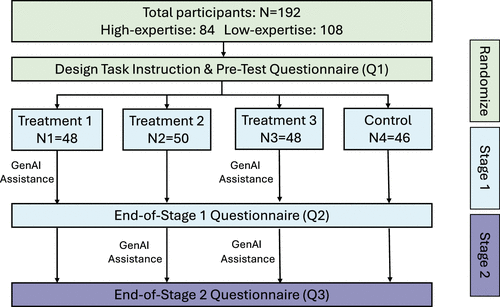
All participants worked on their design using our laboratory computer. We screen-recorded the entire design process for each participant and used these video data for subsequent analyses. Once the ideation stage was completed, the questionnaire S1_Q2 (in Online Appendix F) was distributed to each participant. For each participant, we documented all the utilized prompts, the generated images, and the time spent. There was no restriction on the number of designs each participant could retain at the end of this stage. However, most participants chose to proceed with only one design into the next stage. During the implementation stage, we continued to record the design process, collecting data that included the time spent and the final submission from each participant. At the end, another questionnaire, S1_Q3 (in Online Appendix F), was distributed.
4.2. Randomization Check and Descriptive Statistics
We performed randomization checks using a series of analysis of variance (ANOVA) tests on participants’ expertise (high versus low), gender, GPA, school year, familiarity with GenAI, and attitude toward GenAI. Results in Table A.1 in the Online Appendix demonstrate that no significant differences were observed across the four groups (see details in Online Appendix A). As mentioned, we coded participants’ design major (versus other major) as indicating high (versus low) expertise. To further verify this classification, we measured participants’ self-reported design expertise. As expected, design-major participants reported having a significantly higher level of design expertise than other-major participants (t = 8.87, p < 0.001).
We examined two focal outcomes in this study—work creativity and work efficiency. To capture a participant’s work creativity, following extant research (Baer and McKool 2009), we invited an expert panel of three design professionals, who were blind to the purpose of the study, to rate all the submissions from each stage along the three dimensions of work creativity, that is, novelty, relevance, and complexity of the design work on a scale from one to 7seven. The overall interrater reliability of the three professional raters is 0.842, confirming the ratings are highly consistent. It also added credibility to the evaluation process and gave us confidence that the analyses made based on these ratings are valid. To capture a participant’s work efficiency, we measured the time spent on the ideation stage (Stage 1) and the implementation stage (Stage 2). Table 1 provides the definitions of all the key variables and their summary statistics.
|

Table 1. Study 1—Variable Definitions and Summary Statistics
| Variables | Definition | Mean | Std Dev | Min | Max |
|---|---|---|---|---|---|
| Outcomes in the ideation stage (Stage 1) | |||||
| Novelty1 | The score on the novelty of the design work | 1.74 | 0.86 | 1 | 4.33 |
| Relevance1 | The score on the relevance of the design work | 1.62 | 0.66 | 1 | 3.83 |
| Complexity1 | The score on the complexity of the design work | 1.82 | 0.90 | 1 | 4.50 |
| TimeSpent1 | The time spent (minutes) in Stage 1 | 9.15 | 6.45 | 1 | 50 |
| Outcomes in the implementation stage (Stage 2) | |||||
| Novelty2 | The score on the novelty of the design work | 2.49 | 1.04 | 1 | 6.00 |
| Relevance2 | The score on the relevance of the design work | 2.54 | 0.78 | 1 | 5.33 |
| Complexity2 | The score on the complexity of the design work | 2.61 | 0.95 | 1 | 5.67 |
| TimeSpent2 | The time spent (minutes) in Stage 2 | 26.41 | 17.16 | 1 | 94 |
| Controls | |||||
| Expertise | A dummy variable, with high-expertise designers = 1 and low-expertise designers = 0 | 0.44 | 0.50 | 0 | 1 |
| Female | A dummy variable, with female = 1 and male = 0 | 0.78 | 0.42 | 0 | 1 |
| GPA | A categorical variable to capture participants’ GPA | 3.57 | 1.47 | 1 | 6 |
| School year | A categorical variable to describe participants’ year of school (1/2/3/4/5 for freshman/sophomore/junior/senior/graduate) | 2.73 | 1.20 | 1 | 5 |
| Familiarity with GenAI | A 7-point Likert scale with not at all familiar with GenAI tools = 1, extremely familiar = 7 | 2.68 | 1.31 | 1 | 6 |
| Attitude toward GenAI | A 7-point bipolar scale with a negative attitude toward GenAI = 1, positive attitude = 7 | 4.71 | 1.01 | 1 | 7 |
4.3. Empirical Analysis and Results
In this section, we report our analysis on (1) the average treatment effect (ATE) of GenAI on work creativity and efficiency in the ideation stage (Stage 1), (2) the heterogeneous treatment effects (HTEs) across expertise levels in Stage 1, (3) the ATE, and (4) the HTE in the implementation stage (Stage 2).
4.3.1. Results for the Ideation Stage (Stage 1).
First, we present model-free evidence for Stage 1. The means and standard errors of work novelty and work efficiency are plotted in Figure 3. Participants with (versus without) GenAI in Stage 1 (T1 and T3) scored significantly higher on their work novelty. Similarly, participants also scored higher on relevance and complexity. We provide the plots of work relevance and work complexity in Online Appendix B. In addition, participants with (versus without) GenAI spent a longer time on their design work in Stage 1.
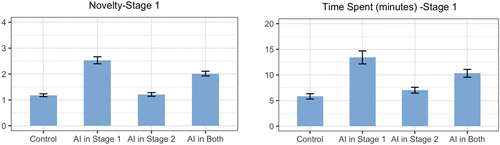
To further validate these observations, we specified a linear regression model to distill the ATEs while controlling the other covariates.
|
Table 2. Study 1—Average Treatment Effect for Stage 1
| Dependent variable | Novelty | Relevance | Complexity | Time spent |
|---|---|---|---|---|
| T1 | 1.315*** | 0.272** | 1.435*** | 7.557*** |
| (0.138) | (0.131) | (0.136) | (1.199) | |
| T2 | 0.031 | −0.150 | −0.030 | 1.141 |
| (0.134) | (0.126) | (0.131) | (1.158) | |
| T3 | 0.834*** | 0.408*** | 1.039*** | 4.352*** |
| (0.136) | (0.128) | (0.133) | (1.174) | |
| Controls | Included | Included | Included | Included |
| N | 192 | 192 | 192 | 192 |
| Adjusted | 0.425 | 0.118 | 0.495 | 0.232 |
Notes. Standard errors are in parentheses. DV, dependent variable.
†p < 0.1; **p < 0.05; ***p < 0.01.
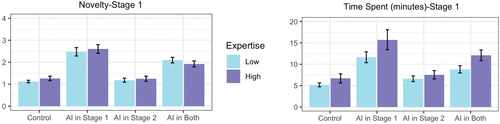
To understand the impact of GenAI for designers with different expertise levels, we first plotted the means and standard errors of the outcome measures for these two groups in Figure 4. This model-free evidence shows no difference between the two groups in terms of work novelty, but high-expertise designers with GenAI seemed to spend a longer time (lower efficiency) on ideation. To formally analyze the specific heterogeneous impact of GenAI across designers with different expertise levels, we consider Expertise as the moderator and specify the regression model as
To quantify the HTEs on the other outcomes of interest, we again replaced the dependent variable of Equation (2) with , , and . The model includes the three two-way interaction terms of . Table 3 summarizes the results of HTE analyses.
|
Table 3. Study 1—Heterogeneous Treatment Effect for Stage 1
| DV | Novelty | Relevance | Complexity | Time spent |
|---|---|---|---|---|
| T1 | 1.328*** | 0.424** | 1.416*** | 6.650*** |
| (0.182) | (0.171) | (0.178) | (1.573) | |
| T2 | 0.099 | −0.024 | 0.031 | 1.190 |
| (0.178) | (0.168) | (0.174) | (1.544) | |
| T3 | 0.957*** | 0.502*** | 1.165*** | 3.756** |
| (0.182) | (0.171) | (0.178) | (1.576) | |
| T1 × Expertise | −0.031 | −0.366 | 0.041 | 2.084 |
| (0.277) | (0.260) | (0.271) | (2.396) | |
| T2 × Expertise | −0.161 | −0.300 | −0.142 | −0.044 |
| (0.274) | (0.258) | (0.268) | (2.374) | |
| T3 × Expertise | −0.279 | −0.230 | −0.283 | 1.389 |
| (0.277) | (0.261) | (0.270) | (2.397) | |
| Controls | Included | Included | Included | Included |
| N | 192 | 192 | 192 | 192 |
| Adjusted | 0.420 | 0.114 | 0.491 | 0.224 |
Note. Standard errors are in parentheses.
†p < 0.1; **p < 0.05; ***p < 0.01.
The treatment dummies capture the treatment effect on participants with low expertise. With GenAI, low-expertise designers significantly improved their work creativity; they also spent a longer time in the ideation process. The two-way interactions of quantify the additional effect on high-expertise designers. No significant difference was observed between the low- and high-expertise designers on novelty, relevance, complexity, and time spent in Stage 1. These results showed that in the ideation stage, using GenAI improved creative work equally well for both designers with limited and advanced expertise, supporting Hypothesis 1a. Additionally, using GenAI slightly extended the time spent on the ideation stage for both novice and expert designers; thus, Hypothesis 1b was not supported.
4.3.2. Results for the Implementation Stage (Stage 2).
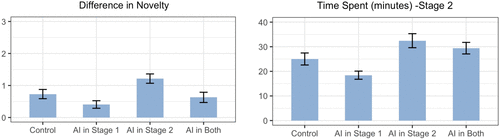
Note that simply using work creativity measures on the final output at the end of Stage 2 is problematic, as it would also contain the GenAI’s impact on the output in Stage 1. To clearly quantify the impact of GenAI in Stage 2 only, we used the differences/improvements between the two stages for all measures of work creativity (e.g., ). Figure 5 visualizes the means and standard errors of the measures for work novelty (difference) and work efficiency in the implementation stage (visualizations of relevancy and complexity were consistent with that of novelty and are presented in Online Appendix B). A significant boost of work creativity was observed in Stage 2 among T2 participants with GenAI.
Further, we specify a linear regression model to distill the ATEs while controlling the other covariates.
|
Table 4. Study 1—Average Treatment Effect for Stage 2
| Dependent variable | ΔNovelty | ΔRelevance | ΔComplexity | Time spent |
|---|---|---|---|---|
| T1 | −0.316 | −0.011 | −0.353† | −12.897*** |
| (0.207) | (0.188) | (0.191) | (3.537) | |
| T2 | 0.465** | 0.342† | 0.668*** | 6.333** |
| (0.200) | (0.182) | (0.185) | (3.099) | |
| T3 | −0.072 | 0.043 | 0.017 | −0.063 |
| (0.203) | (0.184) | (0.188) | (3.250) | |
| Controls | Included | Included | Included | Included |
| N | 192 | 192 | 192 | 192 |
| Adjusted | 0.093 | 0.005 | 0.142 | 0.227 |
Note. Standard errors are in parentheses.
†p < 0.1; **p < 0.05; ***p < 0.01.
The mean differences between the T2 group and the control group were significant and positive. Compared with the control participants without GenAI in both stages, T2 participants, who only used GenAI in Stage 2, produced design work of significantly higher novelty, relevance, and complexity. For work efficiency, T2 participants spent 6.3 more minutes in the implementation stage than the control participants, after controlling the time spent in Stage 1.
We then provide the model-free evidence in Figure 6, comparing high-expertise (versus low-expertise) designers in Stage 2. To quantify the impacts, we conducted the HTE analysis for the heterogeneous impact on the improvement of creativity and efficiency in Stage 2 across expertise levels. We consider Expertise as the moderator and specify the regression model as
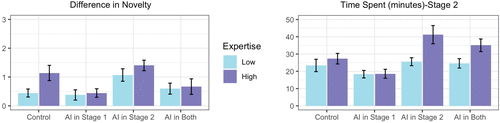
Table 5 summarizes the results of the HTE analyses. First, low-expertise designers in T2 benefited tremendously in their work creativity when using GenAI in Stage 2. Specifically, compared with their control counterparts without GenAI, their improvements were notably higher: ΔNovelty increased by 0.622, ΔRelevance by 0.523, and ΔComplexity by 1.010. In contrast, high-expertise designers in T2 showed limited gains from GenAI in work creativity, with nonsignificant improvements of 0.239 for ΔNovelty, 0.091 for ΔRelevance, and 0.210 for ΔComplexity. These results revealed that, in the implementation stage, GenAI enhanced work creativity for low-expertise designers but had minimal impact on high-expertise designers, supporting Hypothesis 2a and Hypothesis 3a. Additionally, the time spent in the implementation stage by the low-expertise designers in T2 was not significantly different from that of the low-expertise designers in the control group; thus, Hypothesis 2b was not supported. However, high-expertise designers in T2 spent significantly more time working on their designs than high-expertise designers in the control group. Hypothesis 3b was supported.
|
Table 5. Study 1—Heterogeneous Treatment Effect for Stage 2
| Dependent variable | ΔNovelty | ΔRelevance | ΔComplexity | Time spent |
|---|---|---|---|---|
| T1 | −0.033 | 0.174 | −0.200 | −11.080** |
| (0.271) | (0.246) | (0.249) | (4.328) | |
| T2 | 0.622** | 0.523** | 1.010*** | 0.961 |
| (0.266) | (0.242) | (0.245) | (4.198) | |
| T3 | 0.167 | 0.280 | 0.196 | −2.189 |
| (0.271) | (0.247) | (0.250) | (4.198) | |
| T1 × Expertise | −0.671 | −0.443 | −0.388 | −4.190 |
| (0.412) | (0.375) | (0.380) | (6.293) | |
| T2 × Expertise | −0.383 | −0.432 | −0.800** | 12.196** |
| (0.408) | (0.372) | (0.376) | (6.222) | |
| T3 × Expertise | −0.563 | −0.552 | −0.432 | 4.677 |
| (0.412) | (0.375) | (0.380) | (6.288) | |
| Controls | Included | Included | Included | Included |
| N | 192 | 192 | 192 | 192 |
| Adjusted | 0.094 | 0.002 | 0.150 | 0.246 |
Note. Standard errors are in parentheses.
†p < 0.1; **p < 0.05; ***p < 0.01.
Note that at the end of Stage 2, all participants submitted their final design, and the entire design process was completed. As supplementary analyses, we report the impacts of GenAI use on the overall work creativity and efficiency of the final design in Online Appendix C. We further discuss these overall impacts in the discussion section.
4.4. Analyses on the Underlying Mechanism of the Impact(s)
4.4.1. Expertise Fixation.
According to our theorizing, GenAI facilitates divergent thinking for all designers in the ideation stage, yet in the implementation stage, cocreation with GenAI may interfere with the established work approaches of high-expertise designers because of expertise fixation. With extensive education, training, and practice, experts tend to rely on their well-rehearsed methods and approaches to solve work problems in their domain of expertise (Dane 2010). Importantly, experts are often unaware of the influence of expertise fixation on themselves, making this fixation hard to overcome (Bilalić et al. 2008). Because of the unconscious influence of expertise fixation, it is not suitable to measure expertise fixation through participants’ self-reported surveys. Instead, we follow prior work to capture expertise fixation through objective measures (Bilalić et al. 2008, Sheridan and Reingold 2013).
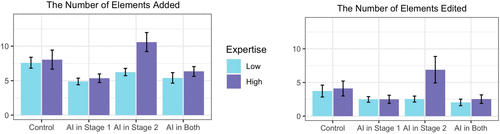
In our context, when expert designers tend to rely on their own methods in the implementation stage, they are likely to encounter more challenges in integrating the work of GenAI and that of their own. This process should manifest as additional time and effort devoted by experts to adapt the GenAI’s output at this stage. Thus, the extent to which an individual designer engaged in revisions and rework before converging on a final product in implementation should serve as an indication of expertise fixation. We processed our video data to track the revisions that participants made during the implementation process before the final production. Specifically, we categorized revisions in Stage 2 into two types: revising by adding new elements, and revising by editing existing ones. Beyond being objective, the measures of the two types of revisions have two advantages: (1) by focusing on the adding new and editing existing elements,3 we covered all the possible changes made in Stage 2, and (2) these two measures can be applied to other GenAI tasks (e.g., ChatGPT) so that the construct is not constrained in the text-to-image domain. We thus quantified the revision efforts by participants in this stage by constructing the number of total revisions, which comprises the number of elements added and the number of elements edited. We found that expert designers in T2 made significantly more revisions than their counterparts in T0 (17.500 versus 12.158, p = 0.079).4 The model-free evidence in Figure 7 below further shows the same patterns for the number of elements added and the number of elements edited. These results provided evidence for expertise fixation as the underlying mechanism using objective data.
4.4.2. Choice Overload.
Our main findings suggest that GenAI improves work creativity in the ideation stage. A possible concern is that using GenAI in ideation may lead to greater choice overload, because as GenAI facilitates the generation of a wide range of ideas, the influx of too many alternative ideas may overwhelm the participants, which in turn can influence their subsequent work in the implementation stage, such as making it more difficult to converge on a final production. We examine this plausible mechanism by coding our video data that screen-recorded the whole design process. These second-by-second nuanced data allowed us to construct objective measures to capture the number of ideas being tried during the ideation stage. We also measured the number of ideas being saved at the end of the ideation stage, that is, the ideas that participants continued to work on in the next stage. Our results showed that, with GenAI, both high- and low-expertise designers tried significantly more ideas in the ideation stage (Table 6). However, no significant difference was detected in the number of ideas saved. At the end of the ideation stage, designers all saved approximately one design idea going forward. Therefore, the results suggest that choice overload does not appear to be a severe concern in our study.
|
Table 6. The Impact of GenAI on the Number of Ideas in Stage 1
| Dependent variable | High expertise | Low expertise | ||||
|---|---|---|---|---|---|---|
| No-GenAI (T0 and T2) | GenAI (T1 and T3) | Diff | No-GenAI (T0 and T2) | GenAI (T1 and T3) | Diff | |
| # of ideas tried | 1.902 | 2.907 | 1.005*** | 1.564 | 2.321 | 0.756*** |
| (1.908) | (1.211) | (0.977) | (1.268) | |||
| # of ideas saved | 1.098 | 1.209 | 0.111 | 1.145 | 1.098 | −0.043 |
| (0.374) | (0.559) | (0.524) | (0.374) | |||
Notes. Standard deviations are in parentheses. Diff, difference.
†p < 0.1; **p < 0.05; ***p < 0.01.
4.4.3. Additional Analyses.
We report several supplementary analyses in Online Appendix C. Our analysis of participants’ perceived ease-of-effort showed that in the ideation stage, irrespective of the expertise level, using GenAI helps to save the effort that designers spend on brainstorming. However, when expert designers used GenAI in the implementation stage, they perceived that they invested more effort than their novice counterparts. In addition, we measured participants’ self-reported confidence in performing their design work, and our results ruled out the alternative mechanism that using GenAI may boost participants’ confidence. Together, the additional analyses on the underlying impact mechanism provided further support to our theorization.
In sum, our findings of Study 1 showed that in the ideation stage, GenAI led to significant increases in work creativity (by 76% in novelty, 24% in relevance, and 97% in complexity), and a slight increase in work completion time (by less than six minutes). GenAI’s impact did not differ significantly for designers with high or low expertise levels at this stage. In sharp contrast, in the implementation stage, GenAI continued to improve creative work for low-expertise designers. Yet, for expert designers, a significant reduction in work efficiency was observed compared with their expert counterparts who do not use GenAI (indicated by 12 minutes longer in the task completion time).
5. Study 2: Expert Designers in a Randomized Field Experiment
Study 2 extends our investigation by focusing on expert designers in a randomized field experiment. We also utilized a cutting-edge GenAI model, Midjourney V6.1, which has several improvements over its predecessor, Stable Diffusion V1.1 used in Study 1, particularly in terms of producing more coherent, realistic, and precise images.
5.1. Experimental Design and Procedure
Participants and the Design Task.
We recruited 120 creative design professionals who currently hold a job in the graphic or visual design sector. Our creative design task was a real-world competition where participants were instructed to create an advertisement for a local agricultural product in a low-income rural area. Information about the design competition and the local product (e.g., photos and news articles) was presented to all participants prior to the experiment. Similar to Study 1, participants reported their gender, design ability, familiarity with GenAI, and GenAI attitude in a pretest questionnaire, S2_Q1.
The experiment design was a replication of that in Study 1. All participants worked on the design task individually and went through the two-stage process. As in Study 1, we randomly assigned participants to T1 (GenAI in Stage 1), T2 (GenAI in Stage 2), T3 (GenAI in both stages), or the control group without GenAI. Participants worked on their own computer, and we screen-recorded the whole design process for each participant. All the prompts and the generated images were documented, and the time spent on each stage was recorded. During this experiment, participants completed questionnaire S2_Q2 at the end of the ideation stage, and questionnaire S2_Q3 at the end of the implementation stage. The three questionnaires used in Study 2 are provided in Online Appendix G. We also collected additional self-report measures to further examine the mechanism underlying of GenAI’s impact (to be discussed in the results section).
Randomization checks using a series of ANOVA tests confirmed that no significant differences were observed across the four experimental groups (see details in Online Appendix D). The two outcomes of interest—work creativity and work efficiency—were operationalized in the same way as in Study 1. For work creativity, an expert panel of three design professionals rated novelty, relevance, and complexity of the design work from each stage; the overall interrater reliability was 0.872. For work efficiency, the time spent on each stage was measured. The definitions of these variables are the same as Study 1, as shown in Table 1, and the summary statistics of these variables are presented in Table D.2 of Online Appendix D.
5.2. Empirical Analysis and Results
5.2.1. Results for the Ideation Stage.
The model-free evidence for the ideation stage is presented in Figure E.1 in Online Appendix E. It revealed that compared with participants without GenAI (T2 and control), participants with GenAI in Stage 1 (T1 and T3) scored significantly higher on work novelty, relevance, and complexity, and they spent a longer time on their design work in Stage 1. We then followed the regression model specified in Equation (1) to identify the ATE and included the control variables defined in Table D.3 in the Online Appendix. The estimation results are summarized in Table 7. The results showed that participants using GenAI in the first stage (T1 and T3) produced design work of significantly higher novelty, relevance, and complexity, indicating that cocreation with GenAI in ideation enhanced work creativity. Using GenAI also significantly extended the time spent in the ideation stage. The results are consistent with those in Study 1; Hypothesis 1a was supported, but Hypothesis 1b was not.
|
Table 7. Study 2—Average Treatment Effect for Stage 1
| DV | Novelty | Relevance | Complexity | Time spent |
|---|---|---|---|---|
| T1 | 2.708*** | 2.313*** | 2.499*** | 12.040*** |
| (0.384) | (0.384) | (0.375) | (3.085) | |
| T2 | 0.275 | −0.108 | 0.134 | −0.326 |
| (0.384) | (0.384) | (0.375) | (3.085) | |
| T3 | 2.636*** | 2.275*** | 2.512*** | 12.618*** |
| (0.385) | (0.385) | (0.380) | (3.092) | |
| Controls | Included | Included | Included | Included |
| N | 120 | 120 | 120 | 120 |
| Adjusted | 0.410 | 0.380 | 0.399 | 0.186 |
Note. Standard errors are in parentheses.
†p < 0.1; **p < 0.05; ***p < 0.01.
5.2.2. Results for the Implementation Stage.
As in Study 1, we used the differences/improvements between the two stages for the three creativity measures here. The model-free evidence for Stage 2 is presented in Figure E.2 in Online Appendix E. It revealed that participants with GenAI only in Stage 2 (T2) appeared to have similar improvement in work creativity, but spent a longer time on their work than participants in the control group. We then followed the regression model specified in Equation (3) to identify the ATE and included the control variables defined in Table D.2 in the Online Appendix. The estimation results are summarized in Table 8. The results showed that when expert designers used GenAI in the implementation stage only (T2), using GenAI did not bring significant improvement for novelty, relevance, or complexity of experts’ work, supporting Hypothesis 3a. However, expert designers spent a significantly greater amount of time on their work when using GenAI in implementation only, as compared with their expert counterparts in the control group. Hypothesis 3b was supported. Thus, we observed results consistent with the HTE results in Study 1.
|
Table 8. Study 2—Average Treatment Effect for Stage 2
| DV | ΔNovelty | ΔRelevance | ΔComplexity | Time spent |
|---|---|---|---|---|
| T1 | −1.077*** | −1.329*** | −1.010*** | −0.988 |
| (0.373) | (0.384) | (0.340) | (4.535) | |
| T2 | 0.603 | 0.359 | 0.524 | 14.579*** |
| (0.373) | (0.384) | (0.340) | (4.255) | |
| T3 | −1.049*** | −1.189*** | −0.963*** | 6.508 |
| (0.373) | (0.385) | (0.341) | (4.570) | |
| Controls | Included | Included | Included | Included |
| N | 120 | 120 | 120 | 120 |
| Adjusted | 0.165 | 0.173 | 0.172 | 0.159 |
Note. Standard errors are in parentheses.
†p < 0.1; **p < 0.05; ***p < 0.01.
5.3. Analyses on the Underlying Mechanism of the Impacts
5.3.1. Expertise Fixation.
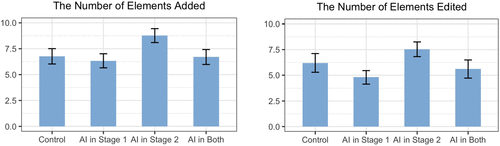
Following Study 1, we again coded our video data for the extent to which each expert designer engaged in revisions during the implementation stage. We constructed the same two objective measures—the number of elements added and the number of elements edited. Consistently, we found that expert designers in T2 made significantly more revisions than their counterparts in T0 (16.300 versus 12.967, p = 0.02). Figure 8 indicates that T2 experts were involved in extensive revision work during implementation, both in terms of adding new and changing existing elements. Specifically, the number of elements added in the T2 group was significantly higher than that in the control group (8.77 versus 6.77, p = 0.02), and a similar result was found for the number of elements edited (7.53 versus 6.20, p = 0.05).
5.3.2. Work Routinization.
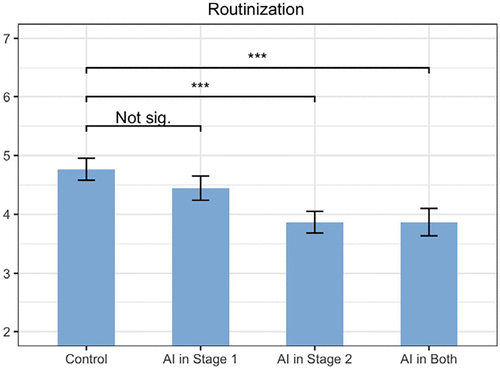
In Study 2, we used another theoretical lens—work routinization—to further test our proposed mechanism of expertise fixation. According to our theorizing, cocreation with GenAI may disrupt the established work approach and routines of expert designers in the implementation stage. If this is the case, we expect that experts will perceive cocreation with GenAI to deviate from their familiar work routine. To test this prediction, we adopted a three-item five-point scale adapted from Choi et al. (2009) to measure work routinization (α = 0.81): “This design work aligns with the repetitive routine that I usually follow,” “For this design work, there is something different from what I do daily” (reverse coded), and “The procedure of this design work is the same as that of my routine work.” Figure 9 presents our results: Experts using GenAI in the ideation stage did not perceive their work routine as being significantly changed (T0 versus T1, p = 0.25). However, experts using GenAI in the implementation stage perceived a significant change to their established work routine compared with the experts in the control group (T0 versus T2, p < 0.001; T0 versus T3, p = 0.004). This finding lends further support for expertise fixation as the underlying mechanism for why cocreation with GenAI in the implementation stage could be counterproductive for designers with advanced expertise.
5.3.3. Choice Overload.
As in Study 1, we further tested the potential concern that using GenAI in ideation may lead to choice overload. First, we again coded the video data of Study 2 for the number of ideas tried and saved by participants in the ideation stage. On average, participants with GenAI (T1 and T3) tried more ideas than those without GenAI (No-GenAI = 1.85, GenAI = 3.67, p < 0.01), suggesting that cocreation with GenAI facilitates divergent thinking for expert designers in the ideation stage. However, there was no significant difference in the number of ideas saved (No-GenAI = 1.08, GenAI = 1.15, p = 0.24), and most experts kept one design idea to work on in the next stage, either with or without GenAI. Second, in addition to the objective measures, we collected participants’ self-reported experience with choice overload (α = 0.78) (Iyengar and Lepper 2000) and their experience with cognitive stimulation (α = 0.82) (Hofstetter et al. 2021) in the ideation stage (see S2_Q2). The results indicated that participants with GenAI felt more stimulated in brainstorming ideas (No-GenAI = 4.74, GenAI = 5.29, p < 0.001), but there was no significant difference in their experience of choice overload during ideation (No-GenAI = 3.96, GenAI = 3.95, p = 0.93). Together, the results based on both the objective and subjective measures ruled out choice overload as a potential confounder in our study.
6. General Discussion
GenAI has emerged as a transformative technology across creative work domains. Our research investigates how the integration of GenAI into human creative processes can give rise to new fundamental opportunities and challenges. We address this cocreation dynamic through two studies: (1) a laboratory experiment involving designers with varying levels of design expertise (Study 1) and (2) a randomized field experiment focusing on expert designers in a real-world design task (Study 2).
In Study 1, we examine the creative design process that comprises an ideation stage followed by an implementation stage. In the ideation stage, the results showed that nearly all designers who used GenAI experienced improvements in the creativity of their graphic design work. These enhancements were substantial and consistent across designers with varying levels of expertise. However, the implementation stage revealed differing impacts. Low-expertise designers with GenAI continued to improve in all aspects of their work creativity. In contrast, high-expertise designers did not experience significant gains from cocreation with GenAI. In fact, high-expertise designers who used GenAI spent 57% more time completing their design work compared with their expert peers who did not use GenAI. This finding suggests that whereas low-expertise designers seem to always benefit from using GenAI in their creative work, cocreation with GenAI can hurt high-expertise designers by taking them additional time and effort during the refinement and production stage, without corresponding improvements in work creativity. Further analyses, based on measures derived from recorded video data, provide evidence supporting expertise fixation as the underlying mechanism driving these effects. Additionally, we evaluate the overall impact of GenAI use on final design outcomes at the end of the two stages (details reported in Online Appendix C). These results show the overall enhancement of the final design creativity through GenAI assistance, while highlighting the reduction in overall work efficiency when GenAI is used at Stage 2 by high-expertise designers.
Building on the experimental design of Study 1, Study 2 further validates the impact of GenAI and the role of expertise fixation by focusing on professional designers working on a real-world task. Notably, we utilize a cutting-edge GenAI tool in this study to ensure that our findings are robust to technological advancements in GenAI. The results of Study 2 corroborate the findings in Study 1, showing that expert designers benefit from GenAI primarily during the ideation stage, but gain little in the implementation stage because of expertise fixation. Additional analyses, drawing from both subjective self-reported data and objective video data, lend further evidence for expertise fixation as the key mechanism underlying the findings. These analyses also help rule out alternative explanations, such as choice overload.
Altogether, our findings highlight the differentiated impacts of GenAI on work creativity and work efficiency during the human-GenAI cocreative process, contingent on the designers’ expertise levels. Markedly, designers with high expertise encounter disruptions in cocreation with GenAI, resulting in decreased work efficiency in the implementation stage.
6.1. Research and Practical Implications
6.1.1. Research Implications.
Powered by foundation models (e.g., large language models and large vision models), GenAI represents a leap forward capable of creating entirely original content. Acting as cocreators, GenAI tools are reshaping how human creators approach their work at the process level. However, existing research on human-AI collaboration predominantly focuses on final production outcomes, overlooking the cocreative process itself. Therefore, our direct implication is to offer initial, yet more nuanced, insights into the role of GenAI within the creative process. We provide a comprehensive theoretical framework that explains the puzzling observations in the current GenAI literature for why using GenAI can sometimes backfire—particularly for experienced professionals who often derive less value from it (Peng et al. 2023, Chen and Chan 2024).
Taking a closer examination of the two stages of the creative process, our findings indicate that a backfire impact of using GenAI might occur during the implementation phase, which aims to execute a final concrete solution. Our research contributes to the GenAI literature by revealing a potential hurdle for experienced professionals: expertise fixation, a type of cognitive fixation where individuals tend to adhere to certain methods or approaches that they have honed through extensive training and practice (Dane 2010). Expertise fixation may lead to a potential mismatch or conflict between the way GenAI produces design work and the ingrained work methods of expert designers. As a result, using GenAI could introduce disruptions in the creative process of expert designers, thus hurting their work efficiency. As such, we identify a novel influence mechanism—rooted in users’ expertise fixation—that drives heterogenous effects of AI use, one that is distinct from technology-skill complementarity, or algorithm aversion documented in extant literature (Wang et al. 2023, Brynjolfsson et al. 2025).
Our work sheds light on the potential double-edged impact of GenAI as both a facilitator and a disruptor, adding to our understanding of the intricacies at play when integrating GenAI into creative processes. In the ideation stage, GenAI’s unparalleled capabilities for idea generation can serve as a powerful enabler for divergent thinking and boost work performance for all human designers. Hence, individuals at this stage of the creative process benefit immensely from GenAI. In contrast, the implementation stage requires converging thinking and the associated implementation methods to achieve the final production that meets specific design requirements. The integration of GenAI at this stage could disrupt expert designers’ established converging process and interfere with their standard, familiar methods and approaches because of GenAI’s unconventional implementation methods. Our findings underscore that the successful integration of GenAI requires a careful assessment of its strengths and drawbacks in handling the specific tasks at hand, and potential strategies that could counteract the drawbacks brought by GenAI, such as better aligning GenAI’s work approach with that of humans.
In addition, our research suggests that the decision to incorporate GenAI into creative work is not a simple binary choice—adopting GenAI or not. Instead, it requires a thoughtful evaluation of the creative process, established work approaches and methods, and the specific tasks and subtasks within the work. Such findings raise broad questions regarding when and how to know whether to rely on GenAI and to what degree, as well as what factors might aid in acquiring such strategic understanding. For instance, AI tool development and user interaction should aim to enhance a sense of autonomy among users (Hou et al. 2025), allowing designers to effectively determine their own way to utilize AI according to their expertise background. Our research adds a nuanced perspective to the current discussion about optimizing human-AI collaboration (Jain et al. 2021, Lyytinen et al. 2021), emphasizing the need of more intricate collaboration dynamics to enhance the creative process.
6.1.2. Practical Implications.
Our findings, highlighting the roles of GenAI in the cocreative process and its varying impacts on designers with different levels of expertise, offer important implications for firms. First, we find that GenAI improves creativity for all levels of designers during the ideation stage. This suggests that companies in the graphic design industry should consider incorporating GenAI at this stage to foster divergent thinking, leading to more innovative and diverse design ideas. We expect the benefits of GenAI to apply to many work domains, in which the foundation models, such as large language models and large vision models, well exceed the capabilities of most human beings in expanding the solution space and alleviating cognitive fixation.
Second, our insight into the differentiated impact of GenAI on different levels of designers during the implementation stage suggests the need for tailored GenAI tools to cater to different expertise levels. Businesses should consider developing specialized GenAI modules to help expert designers overcome their fixation challenges while fully leveraging the capabilities of GenAI. Such customization could also improve user experience by aligning user interface and user experience (UI/UX) design with the unique needs of specific user groups (Hou et al. 2025). For instance, Adobe Photoshop may adjust its AI functionalities (e.g., generative fill) to be less prominent during the implementation stage of design, catering to the workflows of professional designers. In contrast, platforms like Canva could prioritize making AI features more accessible and offering a broad selection of GenAI-driven templates to assist novice designers.
Third, from a deployment strategy perspective, maximizing final creative outcomes would involve prioritizing GenAI cocreation during ideation, while adopting a selective or adaptive approach during implementation, particularly for expert designers. This implication is consistent with recent discussion on the human-in-the-loop framework in human-AI collaboration (De-Arteaga et al. 2020, Chen and Chan 2024). In our context, redesigning the implementation workflow—such that GenAI serves as a semiautomated assistant, or as a designer-initiated tool, rather than a full generator—could be effective. Granting expert designers greater control over the timing of GenAI use and the parameters of GenAI’s outputs, such as specifying which aspects of implementation as well as the level of details that GenAI may assist with, may help reduce the friction between GenAI’s production methods and experts’ established approaches and improve the overall work efficiency.
Last but not least, our work, conducted in the context of real-world design projects aimed at promoting social development and well-being, highlights the substantial potential of GenAI to drive societal impact. The two experimental studies involved creating marketing materials to support rural and low-income regions, such as promoting local communities and agricultural products. By providing a scalable solution for regions with limited marketing budgets, GenAI enhances their visibility and competitiveness in broader markets. Therefore, firms and governments can utilize GenAI to empower underrepresented communities by providing greater access to creative resources and opportunities, contributing to more inclusive growth.
6.2. Limitations and Future Research
Our research, while providing valuable insights, also opens avenues for future exploration. First, our experiments were purposefully designed to control the creative process to include two phases: initial ideation and subsequent implementation. However, in reality, the creative process may involve a couple of iterations before reaching a design solution. Whereas our controlled setting allows us to reveal the differing impacts of GenAI in the ideation versus the implementation stages, future research can delve into more complex creative processes across various domains, such as industrial and architectural design. Second, whereas our study underscores the varying impact of GenAI as a function of the designers’ expertise level, future research could explore other crucial factors that may influence GenAI’s impact on creativity, such as designers’ professional fields, work environments (e.g., team-based versus solitary work), and personality traits (Amabile 1983). Third, our Study 2, utilizing a cutting-edge GenAI tool, shows the robustness of our findings. However, considering the rapid development of GenAI technologies, including artificial general intelligence (AGI), future research could explore whether our proposed impact mechanism extends to the context of these emerging technologies. This investigation would contribute to our understanding of the ever-evolving landscape of human-GenAI cocreativity.
J. (J.) Hou and L. Wang are co-first authors.
1 We collected their GPAs on six levels to protect students’ privacy.
2 As shown in Table 2, T1 participants scored higher than T3 participants on two creativity measures (novelty and complexity). Although this pattern may in part reflect random variation, we also acknowledge the possibility that T3 participants might have anticipated continued access to GenAI in both stages, and thus may not have valued the opportunity to use GenAI in Stage 1 as much as T1 participants did. This potential issue was addressed and did not arise in Study 2.
3 Note that the “editing existing elements” includes deleting an existing element.
4 We caution against overinterpretation of the results because of limited sample size for expert designers (about 20 for each group) in this study. As described in Section 5.3, we conducted the same analysis using a larger sample size in Study 2 and found consistent results.
References
- (1983) The social psychology of creativity: A componential conceptualization. J. Personality Soc. Psych. 45(2):357–376.Crossref, Google Scholar
- (2022) Toward advancing theory on creativity in marketing and artificial intelligence. Psych. Marketing 39(9):1802–1825.Crossref, Google Scholar
- (2023) AI and the social construction of creativity. Convergence 29(4):1054–1069.Crossref, Google Scholar
- (2009)
Assessing creativity using the consensual assessment technique . Schreiner CS, ed. Handbook of Research on Assessment Technologies, Methods, and Applications in Higher Education (IGI Global Scientific Publishing, Hershey, PA), 65–77.Crossref, Google Scholar - (1984) From Novice to Expert: Excellence and Power in Clinical Nursing Practice (Addison-Wesley Publishing Company, Boston).Crossref, Google Scholar
- (2008) Why good thoughts block better ones: The mechanism of the pernicious Einstellung (set) effect. Cognition 108(3):652–661.Crossref, Google Scholar
- (2024) The crowdless future? Generative AI and creative problem solving. Organ. Sci. 35(5):1589–1607.Link, Google Scholar
- (2025) Generative AI at work. Quart. J. Econom. 140(2):889–942.Crossref, Google Scholar
- (2017) The role of expertise in design fixation: Managerial implications for creative leadership. 24th Innovation Product Development Management Conf. (European Institute for Advanced Studies in Management, Brussels).Google Scholar
- (2024) Large language model in creative work: The role of collaboration modality and user expertise. Management Sci. 70(12):9101–9117.Link, Google Scholar
- (2006)
Two approaches to the study of experts’ characteristics . Ericsson KA, Charness N, Feltovich PJ, Hoffman RR, eds. The Cambridge Handbook of Expertise and Expert Performance (Cambridge University Press, Cambridge, UK), 21–30.Crossref, Google Scholar - (2009) Contextual inhibitors of employee creativity in organizations: The insulating role of creative ability. Group Organ. Management 34(3):330–357.Crossref, Google Scholar
- (2023) Creativity and the cyber shock: The ultimate paradox. J. Creative Behav. 57(4):485–487.Crossref, Google Scholar
- (2011) Measuring creativity for innovation management. J. Tech. Management Innovation 6(3):13–30.Crossref, Google Scholar
- (1963) A Behavioral Theory of the Firm (Prentice Hall/Pearson Education, Upper Saddle River, NJ).Google Scholar
- (2010) Reconsidering the trade-off between expertise and flexibility: A cognitive entrenchment perspective. Acad. Management Rev. 35(4):579–603.Crossref, Google Scholar
- (2020) A case for humans-in-the-loop: Decisions in the presence of erroneous algorithmic scores. Proc. 2020 CHI Conf. Human Factors Comput. Systems (Association for Computing Machinery, New York), 1–12.Google Scholar
- (2023) How generative AI could disrupt creative work. Harvard Bus. Rev. (April 13), https://hbr.org/2023/04/how-generative-ai-could-disrupt-creative-work.Google Scholar
- (2015) Are creative ideas novel and useful? Psych. Aesthetics Creativity Arts 9(1):35–40.Crossref, Google Scholar
- (2020) Logical Creative Thinking Methods, 1st ed. (Routledge, London).Crossref, Google Scholar
- (2022)
Defining creativity . Plucker JA, ed. Creativity and Innovation: Theory, Research, and Practice, 2nd ed. (Routledge, London), 5–22.Crossref, Google Scholar - (2023) GPTs are GPTs: An early look at the labor market impact potential of large language models. Preprint, submitted March 17, https://arxiv.org/abs/2303.10130.Google Scholar
- (2003)
Creativity, personality and the convergent-divergent continuum . Runco MA, ed. Critical Creative Processes (Hampton Press, New York), 95–114.Google Scholar - (2000) Factors influencing creativity in the domain of managerial decision making. J. Management 26(4):705–732.Crossref, Google Scholar
- (2021) Will humans-in-the-loop become Borgs? Merits and pitfalls of working with AI. MIS Quart. 45(3):1527–1556.Crossref, Google Scholar
- (2024) The paradox of artificial creativity: Challenges and opportunities of generative AI artistry. Creativity Res. J., ePub ahead of print May 30, https://doi.org/10.1080/10400419.2024.2354622.Crossref, Google Scholar
- (2021) Constraining ideas: How seeing ideas of others harms creativity in open innovation. J. Marketing Res. 58(1):95–114.Crossref, Google Scholar
- (2025) Enhancing AI-assisted purchase decisions: The role of the sense of autonomy. MIS Quart. Forthcoming.Crossref, Google Scholar
- (2020) Competing in the Age of AI: Strategy and Leadership When Algorithms and Networks Run the World (Harvard Business Review Press, Boston).Google Scholar
- (2000) When choice is demotivating: Can one desire too much of a good thing? J. Personality Soc. Psych. 79(6):995–1006.Crossref, Google Scholar
- (2021) Editorial for the Special Section on Humans, Algorithms, and Augmented Intelligence: The future of work, organizations, and society. Inform. Systems Res. 32(3):675–687.Link, Google Scholar
- (1991) Design fixation. Design Stud. 12(1):3–11.Crossref, Google Scholar
- (2018) Ideation–execution transition in product development: An experimental analysis. Management Sci. 64(5):2238–2262.Link, Google Scholar
- (2020) Creative sketching partner: An analysis of human-AI co-creativity. Proc. 25th Internat. Conf. Intelligent User Interfaces (Association for Computing Machinery, New York), 221–230.Google Scholar
- (2019) Scaling up analogical innovation with crowds and AI. Proc. Natl. Acad. Sci. USA 116(6):1870–1877.Crossref, Google Scholar
- (2012) Open innovation and organizational boundaries: The impact of task decomposition and knowledge distribution on the locus of innovation. Preprint, submitted January 8, https://doi.org/10.2139/ssrn.1980118.Google Scholar
- (2017) “Switching on” creativity: Task switching can increase creativity by reducing cognitive fixation. Organ. Behav. Human Decision Processes 139:63–75.Crossref, Google Scholar
- (1942) Mechanization in problem solving: The effect of Einstellung. Psych. Monographs 54(6):i–95.Crossref, Google Scholar
- (2023) Threatened by AI: Analyzing users’ responses to the introduction of AI in a crowd-sourcing platform. Inform. Systems Res. 34(3):1191–1210.Link, Google Scholar
- (2021) Metahuman systems = humans + machines that learn. J. Inform. Tech. 36(4):427–445.Crossref, Google Scholar
- (2024) Humans as creativity gatekeepers: Are we biased against AI creativity? J. Bus. Psych. 39(3):643–656.Crossref, Google Scholar
- (2023) Experimental evidence on the productivity effects of generative artificial intelligence. Science 381(6654):187–192.Crossref, Google Scholar
- (2017) Imitation, inspiration, and creation: Cognitive process of creative drawing by copying others’ artworks. Cognitive Sci. 41(7):1804–1837.Crossref, Google Scholar
- (2023) The impact of AI on developer productivity: Evidence from GitHub Copilot. Preprint, submitted February 13, https://arxiv.org/abs/2302.06590.Google Scholar
- (2020)
Cognitive fixation and creativity . Carayannis EG, ed. Encyclopedia of Creativity, Invention, Innovation and Entrepreneurship (Springer International Publishing, Cham, Switzerland), 319–320.Crossref, Google Scholar - (1992) Visuospatial and articulatory interference in chess players’ information intake. Appl. Cognitive Psych. 6(1):77–89.Crossref, Google Scholar
- (2012) Explaining Creativity: The Science of Human Innovation, 2nd ed. (Oxford University Press, Oxford, UK).Google Scholar
- (2013) A further examination of the lexical-processing stages hypothesized by the E-Z Reader model. Attention Perception Psychophysics 75(3):407–414.Crossref, Google Scholar
- (2003)
The constraining effects of initial ideas . Paulus PB, Nijstad BA, eds. Group Creativity: Innovation through Collaboration (Oxford University Press, New York), 15–31.Crossref, Google Scholar - (1991) Incubation and the persistence of fixation in problem solving. Amer. J. Psych. 104(1):61–87.Crossref, Google Scholar
- (2017) Alternating incubation effects in the generation of category exemplars. J. Creative Behav. 51(2):95–106.Crossref, Google Scholar
- (1993) Constraining effects of examples in a creative generation task. Memory Cognition 21(6):837–845.Crossref, Google Scholar
- (1996) Investing in creativity. Amer. Psych. 51(7):677–688.Crossref, Google Scholar
- (2010) Overcoming fixation: Creative problem solving and retrieval-induced forgetting. Psych. Sci. 21(9):1263–1265.Crossref, Google Scholar
- (2023) Friend or foe? Teaming between artificial intelligence and workers with variation in experience. Management Sci. 70(9):5753–5775.Google Scholar
- (1993) Toward a theory of organizational creativity. Acad. Management Rev. 18(2):293–321.Crossref, Google Scholar
- (2024) Generative artificial intelligence, human creativity, and art. PNAS Nexus 3(3):pgae052.Crossref, Google Scholar

