


When Should the Off-Grid Sun Shine at Night? Optimum Renewable Generation and Energy Storage Investments
Abstract
Globally, 1.5 billion people live off the grid, with their only access to electricity often limited to operationally expensive fossil fuel generators. Solar power has risen as a sustainable and less costly option, but its generation is variable during the day and nonexistent at night. Thanks to recent technological advances, which have made large-scale electricity storage economically viable, a combination of solar generation and storage holds the promise of cheaper, greener, and more reliable off-grid power in the future. Still, it is not yet well understood how to jointly determine optimal capacity levels for renewable generation and storage. Our work aims to shed light on this question by developing a model of strategic capacity investment in both renewable generation and storage to match demand with supply in off-grid use cases while relying on fossil fuel as backup. Despite the complexity of the underlying model, we are able to extract two general results. First, we find that solar capacity and storage capacity are strategic complements, except in cases with very high investment in generation capacity, when they surprisingly turn into strategic substitutes with implications for long-term investment decisions. Second, we develop a simple heuristic to determine which storage technology, within a given portfolio, can turn a profit in the broadest set of market conditions and thus, is likely to be adopted first. We find that currently, low-efficiency, cheap technologies, such as thermal, can more easily turn a profit in off-grid applications than high-efficiency, expensive ones, such as lithium-ion batteries. We then develop two newsvendor-like approximations of the general model that are analytically tractable, yield precise values for the optimal investment decisions and profit in some cases, and provide bounds to the optimal investment decisions and profits in all other cases. To conclude, we calibrate our models to measure the accuracy of our solutions utilizing real-life data from three geographically-diverse islands, and then, we use our approximations to provide high-level insights on the role that large-scale storage will play in the years ahead as technology improves, carbon taxes are levied, and solar becomes cheaper.
This paper was accepted by Beril Toktay, Special Section of Management Science on Business and Climate Change.
Funding: This work was supported by the Mack Institute for Innovation Management at the Wharton School as well as the Kleinman Center for Energy Policy at the University of Pennsylvania.
Supplemental Material: The data files and online appendix are available at https://doi.org/10.1287/mnsc.2021.04129.
1. Introduction
About 1.5 billion people worldwide live without connection to modern electricity grids and usually rely on diesel or gasoline generators for their electricity needs, which not only generate dirty energy but are also very expensive to operate (Lam et al. 2019). This problem is quite common in developing countries but is also present in the developed world; whether one looks at islands in Europe or remote villages in the Americas, off-grid power is typically provided through burning fossil fuels, with the same drawbacks of cost and pollution everywhere. Although solar has become the cheapest source of electricity in most parts of the world (Lazard 2020) and may seemingly constitute an ideal solution to replace fossil fuel generators in such settings, the sun does not always shine, and electricity demand cannot be backlogged. Hence, shifting off-grid energy provision toward renewable generation inevitably means finding ways to match demand with an intermittent supply.
The solution could be the storage of excess generation to be used at a later time when needed. This is not a new idea. Pumped hydro systems have been utilized in mature energy grids since the late nineteenth century. However, they are prohibitively expensive for smaller off-grid applications, they require locations with specific geographic qualities that are rather uncommon, and even then, they only provide a small fraction of the total demand in energy. Thankfully, four concurrent developments in recent years have made multihour storage for off-grid applications sought after, technically feasible, and potentially profitable.
The first trend is the ever-decreasing cost of fossil-free technologies, with wind generation costs down 40% and photovoltaic prices down by 70%–80% compared with 2009 (IRENA 2017), rendering renewables increasingly competitive and making the problem of intermittency increasingly pressing.
Second, the cost of nonpumped hydro energy storage has also been decreasing steadily over the past several years. Additionally, as technology matures and the cost-benefit ratio improves, more people will take advantage of energy storage solutions. A recent examples of this is an island in American Samoa replacing oil imports with a combination of solar and storage.1
The third development is political in nature, with many national and regional governments enacting regulation that requires minimum renewable energy generation ratios in future decades. The island nation of the Maldives aims for 70% renewables by 2030 (World Bank 2020), and the European Union (EU) targets 40% by 2030 (EU Commission 2018). Using a different metric, India, home to the world’s largest off-grid population, aims for 450 GW of renewable generation by 2030 (Frangoul 2021).
The last element, which compounds the previous three, is that carbon emissions are under scrutiny in international treaties, such as the Paris and Katowice climate accords (EU Commission 2015), and further environmental regulations are investigated by economic scholars and (non-)governmental institutions (Nordhaus 1994, World Bank 2017).
Taken together, these trends make the provision of renewable-based off-grid energy and storage not only politically desirable but also, economically attainable while potentially offering simultaneously both lower long-term costs and sustainability. Thus, managing the operational aspect of supplying customers with renewable electricity, especially with intermittent generation, is of utmost relevance.
In this paper, we propose a two-stage stylized model to study the capacity investment decision in storage and renewable generation. In the first stage, a utility provider decides on a combination of renewable generation and storage capacity to serve demand, whereas we assume that fossil-powered generators already exist as the current generating technology and can be used as a backup. In the second stage, generation and storage utilization happen over the lifetime of the investment. This model is novel and unique in the literature as it approaches storage differently than traditional time series and computational approaches (Salas and Powell 2018, Cruise et al. 2019). Our analysis offers insights on the strategic relation between generation and storage investment decisions. Specifically, we find that the firm’s investment decisions are strategic complements when renewable generation or storage capacities are low but interestingly, turn into strategic substitutes when generation capacity becomes large. This finding challenges the notion that such investment decisions always support each other.
Some researchers (Diouf and Pode 2015, Kittner et al. 2017) and policy makers (Tsiropoulos and Tarvydas 2018) suggest that lithium batteries, with their high efficiency and market penetration, may be the future technology of choice. By contrast, we find that technologies, such as thermal, that are less efficient but cheaper than lithium batteries stand to gain the upper hand. Furthermore, we derive a simple heuristic that can be used to determine which storage technology within a given portfolio can turn a profit in the broadest set of market conditions and thus, is likely to be adopted first.
Because in a model that keeps track of the energy stored across all periods—henceforth referred to as the “tracking” model—the firm’s capacity investments solutions are analytically intractable, we employ two simplifying assumptions and develop two corresponding simplified models for which analytical characterization is possible. In the first of those models, called the full-discharge model, we assume that all the energy stored during the day is discharged within the following 24 hours. In the second model, called the partial-discharge model, we assume that energy stored in a period is lost if it is not used by the end of the following period. Thanks to either of these assumptions, the T periods of the model under study, which are temporally linked by the stored energy carryover in the tracking model, can be disjoint into T temporally independent periods (or pairs of periods) with important implications for tractability. In particular, when the cost of fossil fuel backup energy is lower than a given threshold, we are able to derive closed-form solutions for the firm’s capacity investment decisions. Beyond this threshold, the solution to our models provided bounds for the optimal storage decision in the “tracking” model. Furthermore, we show via simulation that one of our approximations—the partial-discharge model—constitutes a reasonable proxy for both generation and storage investment decisions across a fairly wide range of realistic problem parameters.
Our model also helps sketch high-level trends regarding the role of storage in the coming years. As storage technologies gradually become cheaper, we find that investment in renewable storage will not happen gradually; rather, there will be a no-investment period followed by a period of rapid adoption. However, the need for fossil/nuclear energy will likely remain in the medium to long term because of the need of complementing renewables with some amount of nonintermittent generation.
Lastly, we investigate the case in which the backup generator is downsized following the installation of solar capacity, and therefore, it cannot fulfill all of demand by itself. In this case, it is optimal for the firm to employ a policy where the generator is run preemptively to ensure that the charge at the end of each period does not fall below a threshold level. Numerical simulation leads to further insights on emissions and renewable investments. For example, reducing backup capacity by as much as 30%–40% often leads to no decrease in emissions and may even increase them; the smaller size of the backup generator increases the risk of not meeting all future demand and induces the firm to run it more often (see Section 5.4 for a full discussion).
To summarize, our paper develops a model to jointly determine solar generation and storage for off-grid use cases in the presence of a backup generator and uses it to (i) solve for the optimal investment decisions and/or derive bounds thereof; (ii) characterize the strategic interaction between generation and storage investments; (iii) derive a simple and effective heuristic to compare different storage technologies; (iv) uncover the consequences of curbing fossil generation on renewable investments, costs, and most importantly, emissions; and (v) obtain high-level insights on the role of storage over the coming decades. Overall, our results provide both theoretical and practical insights for policy makers, utilities, and technology start-ups operating in this space.
2. Literature Review
Given the broad relevance of renewable energy and storage, our paper is at the intersection of multiple research streams. At its core, the investment decision deals with the intricacies of capacity management under uncertainty, an area for which Van Mieghem (2003) provides an excellent review. This stream includes the classic decision of long-term investment, facing market variability (Arrow 1968), but also, how decisions change when different options of fulfilling demand are available (Shumsky and Zhang 2009) and how financing impacts such capacity choice (Boyabatlı and Toktay 2011). Wang et al. (2013) point out that such investment decisions are increasingly common as many industries are changing production and distribution practices to become more sustainable.
Thematically, this paper relies on energy research that includes work by Wu and Kapuscinski (2013) and Kök et al. (2020) on the role of renewable intermittency for electricity systems, the impact of emission cost on profitability and technology choice (Drake et al. 2016), the optimal design of feed in tariffs (Alizamir et al. 2016), the effect of net-metered energy on a utility’s profitability (Sunar and Swaminathan 2021), and the capacity effects of different renewable ownership structures (Agrawal et al. 2022) and energy storage policies (Wu et al. 2012). Additionally, there is a broad field of research on the technical feasibility of renewable grids from comparing different types of storage (Dunn et al. 2011) over cost-minimal combinations of technologies to achieve high renewable penetration (Budischak et al. 2013) to the long-term impact of large-scale wind energy deployment (Miller and Keith 2018). Beyond this literature, storage investment has also been studied by various papers in economics (Neetzow et al. 2018).
Most papers in the field approach the inherent complexity of storage investment like Jiang et al. (2014), who employ large-scale models and efficient algorithms to optimize over large parameter spaces in order to establish lower bounds on algorithmic solutions. Similarly, Kim and Powell (2011) use parametric models to derive optimal energy commitment conditions in the electricity market. However, it is difficult to extract high-level managerial insights from such computer-guided analyses given that there are multiple charge/discharge periods, that there is at least one source of stochasticity, and that one must also keep track of the “inventory” of the storage unit (i.e., the charge). Even if solutions are obtainable in closed form in these papers, they typically do not easily lend themselves to interpretations and make it difficult to develop intuition.
Alternatively, Aflaki and Netessine (2017) employ a higher level of abstraction and aim to derive generalizable, strategic investment insights for renewables using a newsvendor approach. They conclude that, in the presence of renewable intermittency, an increasing renewable generation share might even increase carbon emissions because of carbon-intensive backup plants. Analogously, Kök et al. (2020) use a newsvendor-style model to solve a capacity investment problem between conventional and renewable energy sources. They find that flexible, conventional sources and renewables are complements. We use a similarly stylized approach in the context of off-grid energy storage.
To the best of our knowledge, there are currently no papers that consider the strategic role of storage investments. Although there are some operational papers on storage in the context of renewable energy, they have a different scope. Qi et al. (2015) look at the combination of grid interconnection and storage to improve dispatchability of an individual wind farm. They are able to show the existence of lower and upper bounds for storage sizes, but they focus more on the grid and deployment aspect than the storage itself, and they do not investigate the impact of storage on the overall market. Zhou et al. (2019) study a similar scenario and derive heuristics for storage decisions obtained from an Markov Decision Problem model. Yang and Nehorai (2014) provide an intricate Lagrangian optimization approach to reduce the complexity of planning generation and storage investments for microgrids but only obtain numerical results without generating analytical insights. Luo et al. (2015) calculate the optimal battery capacity in a similar wind-park setting, but the paper is simulation based and focuses on using storage to bridge the gap between actual and forecasted renewable generation. Schill and Kemfert (2011) focus on the effect of pumped hydro in the German oligopoly market. They find that pumped hydro does not affect a participant’s market power and that its storage capacity is generally underutilized. Strategic investment analysis was not a part of the paper. Lastly, Song et al. (2012) discuss storage on an individual project level, with emphasis on the state of charge of a battery, but they do not consider an entire energy market, backup costs, or the existence of alternative generation technologies. Avci et al. (2014) analyze storage capacity in the context of an electric vehicle charging station focusing not on the combined or total charge but on the optimal number of replacement batteries for a recharge station. The authors employ a repair model to capture the recharging process, as is typical in the spare-parts literature (Muckstadt 2004).
This paper, therefore, expands the existing operations literature on energy storage by presenting a way to jointly model energy storage and intermittent renewable generation capacity investment while considering backup capacity, charging/discharging efficiency, and emission prices.
3. Model
We aim to capture the strategic trade-off between intermittent renewables combined with storage on one hand and fossil fuel backup on the other. Operationally, this means making a decision between two technologies: a cheaper and less predictable (renewable) technology and a more expensive yet always available alternative. Storage can then be thought of as a costly means of reducing the variability of the former option.
3.1. Model Setup
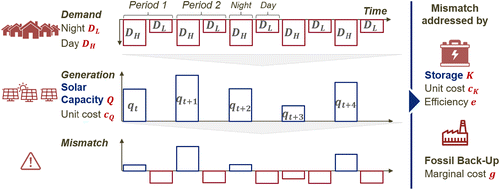
We formulate the problem as a two-stage, two-variable newsvendor-like model (but with uncertainty in supply rather than demand). In stage 1, the utility makes joint capacity decisions on renewable generation and energy storage. In stage 2, demand and generation are realized over T stochastically identical periods; demand is met by employing the capacities from stage 1, whereas supply shortages are met through fossil fuel backup. Figure 1 provides a graphical illustration of the model elements and their relation to each other.
3.1.1. Demand Structure.
When modeling storage, the need to consider at least two periods to allow for charging and discharging to occur is inherent. Each of the T periods in the model represents a 24-hour cycle that is further subdivided into two subperiods, day and night, each lasting 12 hours. This night/day distinction captures the main source of variation in electricity consumption, aligns with the solar generation profile, and simultaneously provides structure to the storage decisions. During the day subperiod, deterministic demand DH occurs, which is followed by the night, in which deterministic demand DL occurs. Although this is a simplification of real demand patterns, the most important factor governing storage usability is not the absolute level of supply or demand but the difference between the two, which allows for charging and discharging. We focus on this mismatch by assuming two deterministic demands and variable solar generation motivated by the fact that in practice, variability in supply is much higher than variability in demand. Alternative day/night split lengths can also be accommodated by adding another parameter to the model and adapting the demand accordingly.
3.1.2. Generation Technology.
We assume solar generation in this model as it is the cheapest generation source in expectation and in many off-grid use cases, the only feasible renewable solution because of geographical/physical restrictions. In addition, solar panels are more modular than wind turbines, the other frequently built renewable technology, and can therefore be sized according to the specific needs of the use case.
Generation during the day is uncertain and is a function of installed generation capacity, Q, whereas it does not depend on previous period generation or demand. Specifically, we assume for simplicity that daily generation in each period qt is distributed uniformly . Generation from solar panels at night is naturally zero. This dichotomous nature is the core source of the aforementioned difference between supply and demand and the reason why we focus on two 12-hour subperiods for the strategic investment case. Because solar generation will always be lower than energy demand during the night, if any storage charge is to be accumulated for subsequent discharge, the storage unit must be charged by generating more electricity than is demanded during the day. The unit costs cQ are linear, average per-period costs of generation capacity. They are obtained by splitting the unit capacity cost across the T days of the assumed investment lifetime. We assume that, as is the case in reality, . That is, in expectation (given the uniform distribution of generation), solar is cheaper than the backup technology, as otherwise, one would never invest in any solar. Marginal generation costs are zero. Potential renewable subsidies can be priced into the model by calculating the expected subsidies over the lifetime and adjusting the unit costs accordingly.
3.1.3. Storage Technology.
Let K be the size of the storage measured in energy, which is power over time (e.g., megawatt hours (MWh)) it can discharge. The storage exhibits cycle efficiency , where units of energy are lost in each charging/discharging cycle. This efficiency is a core metric for storage technologies, as a perfect system would not lose any energy in the charging/discharging process and return 100% of the originally stored energy. However, among other things, secondary reactions in a battery and mechanical losses in thermal systems lead to energy dissipation in real-world installations. Next to unit cost, this factor is of utmost importance when choosing a storage solution, and it ranges from 20% to almost 100% in practice depending on technology and scale (Koohi-Fayegh and Rosen 2020). Unit costs cK are linear in MWh and are distributed equally across all T periods. Because we measure storage in dischargeable units, we adjust the unit cost as to account for the fact that less efficient storage technologies need more capacity to be able to discharge the same amount of energy (to discharge 100 units, a 50% efficient technology needs a capacity of 200).
3.1.4. Brief Discussion.
Given the fast-paced nature of the energy storage industry, we built the model to capture virtually any type of technology. Advancements in storage technology mostly revolve around three key performance features: unit cost, cycle efficiency, and the number of discharge cycles. Cost and efficiency are directly captured through parameters in the model, whereas discharge life cycles are indirectly captured by splitting the investment cost over the respective number of days/periods that correspond to the anticipated lifetime.
3.1.5. Backup Technology.
The backup capacity is assumed to already exist, typically in the form of a diesel or gasoline generator that traditionally represents the main source of electricity generation in many off-grid scenarios. As this backup burns fossil fuel, we assume a marginal generation cost of g per unit of energy, whereas the generator has the ability to quickly respond to changes in demand. We assume this technology to be able to generate enough electricity to satisfy demand and to be always available (this will be relaxed in Sections 3.3 and 5.4).
3.1.6. Application.
This model is applicable to every energy market where solar generation is possible and generation costs by conventional generators can be estimated.2 For example, the model can be applied to any off-grid location—islands using diesel generators to fulfill inhabitants’ electricity needs, remote mines burning gas to power operations, villages and small towns in underdeveloped countries, etc. The reason is that such off-grid locations exhibit known, constant backup costs as they typically have only one type of generator as backup, no merit ordering, and no capacity or energy auctions. As a consequence, the value of solar is easy to compute and equal to the cost of the backup generation it replaces. Lam et al. (2019) estimate that globally 20–30 million of such off-grid sites exist—millions of locations that represent the use cases we model and that could benefit from the insights we develop.
REIDS, a Singapore-based project, focuses on exactly the energy transition we describe by providing it for islands around Asia and Oceania (Choo 2017). Their business model centers on electrifying or repowering off-grid islands with renewable microgrids that only rely on diesel generators as a last resort. In a similar vein, the European Union spearheaded the Tilos project on the eponymous Greek island, where it tests the integration of renewable energy and a natrium-based battery solution (Kaldellis and Zafirakis 2020).
3.2. Objective Functions
The setup we are considering is that of a utility firm simultaneously investing in generation and storage. In Section 3.2.1, we present a model, henceforth referred to as the tracking model, that keeps track of the energy stored over time as a function of realized generation. This model is useful to tie together the various elements of the model and derive some structural properties, but it is in general too complex to be solved analytically. For this reason, in Sections 3.2.2 and 3.2.3, we introduce two simplified versions of the tracking model that are easier to study and provide useful approximations to the investment decisions from the tracking (time series) model. The quality of these approximations will be numerically investigated in Section 5.
3.2.1. The Tracking Model.
We begin by describing the charging and discharging process. Let xt denote the energy stored at the end of period t (and hence, the charge at beginning of period t + 1). We can compute storage at the end of time t using the following expression:
The objective function that the firm wants to maximize can be written as the sum of cost savings from solar and storage across the T periods minus the capacity cost. Because fossil generation is always available but costly, the economic benefit of each unit of renewable generation, which has zero marginal cost, is equal to the cost g of the fossil backup it replaces. Cost savings are thus simply equal to the total demand that can be fulfilled, by direct generation or through storage, multiplied by g. To avoid confusion between cost savings and capacity cost, we will subsequently refer to cost savings as revenue as it captures the economic benefit that is derived from investing in solar and storage capacity. Equation (2) captures all revenues earned during the day across the T periods:
The first term in the minimum in Equation (2) is the total renewable energy that is available either through generation qt in that subperiod or by discharging storage . The second term DH is the demand during the day, which is the maximum amount of energy to be fulfilled during the day subperiod.
At night, there is no generation, so any replacement of the backup occurs by discharging stored energy, as captured in Equation (3):
That is, the firm can fulfill demand equal to the minimum of the charge at the end of the day and the nightly demand DL. Note that, as with the definition for xt, the charge cannot be negative or exceed storage capacity K.
Lastly, the firm has to pay cQ for the solar generation capacity Q and for the storage unit capacity K each period (total cost divided by all periods), which leaves us with the following objective function for the tracking model, where is defined as per Equation (1):
The objective function of the tracking model is intractable, and no closed-form solution for the investment decisions can be derived. The main source of complexity comes from adjacent periods being linked to each other through the energy carryover terms xt. There is, in other words, a positive probability that a unit of charge from period 1 (or any other period) would get discharged in any subsequent period up to the last one.
Despite not having closed-form results for the tracking model, we can still obtain several insights from it by indirectly leveraging some of its properties. We present these insights in the following subsections.
3.2.1.1. Strategic Complements or Substitutes?
In this subsection, we aim to understand if there is a strategy relation between generation and storage capacity. In other words, we study whether investing in either capacity affects the value of investing in the other (see Online Appendix A.1).
(Strategic Interaction Between Investment Decisions). In the tracking model, renewable generation and energy storage are as follows.
Strategic complements at lower levels of capacity investment. Formally, if or , where .
Strategic substitutes at higher levels of generation capacity when storage exceeds nightly demand. Formally, s.t. .
At low levels, capacities in the tracking model are strategic complements because for storage to be profitable, it must occur frequently enough that generation outstrips demand; otherwise, the storage does not get charged often and thus, cannot justify its cost. An increase in generation therefore leads to an increase in storage because the higher odds of observing excess generation means that a larger battery is needed to store it; we have strategic complementarity.
However, at high-enough levels of generation, we have strategic substitutability. The reason is that for storage to be profitable, it is not sufficient that generation outstrips demand frequently—which ensures that the storage gets charged often; at the same time, it is also important that demand outstrips generation frequently. Otherwise, stored energy is rarely put to use—as it happens when generation is very high. For example, imagine a scenario in which renewable generation capacity is thousands of times higher than demand; there would (nearly) always be more energy generated than demanded, removing any need for storage beyond that of covering nightly demand.
For more details and the strategic investment results for the simplified models, we direct the interested reader to Online Appendix A.1 (particularly Equations (16) and (18) in Online Appendix A.1).
3.2.1.2. Comparing Storage Technologies.
Even with the rapid advances in storage technologies over the last years, storage of renewable energy is not yet a profitable investment in all scenarios. However, current trends in many parts of the world (e.g., emission targets issued by governments, increasing calls for a carbon tax) signal that energy storage will likely become a sizeable market in the near future. This means that the storage technologies that exist or are being developed today will soon compete for the storage market of tomorrow. Hence, a question of interest is as follows. Which of these technologies is likely to be adopted first? It would thus be useful to establish a criterion that, for any given set of non-Pareto-dominated technologies (i.e., a set where no technology is both cheaper and more efficient than another), could determine which technology can turn a profit in the broadest set of market conditions and is thus more likely to be adopted first. To this end, we first formalize the discussion and then present our result.
Storage technology A is preferred to storage technology B if and only if , where is the set of nonstorage parameters for which the firm finds it optimal to invest in strictly positive storage capacity under storage technology .
In order to investigate conditions that render one technology preferable over another under Definition 1, we employ a result from the full-discharge model, which we will introduce subsequently and which is equivalent to the tracking model for the parameter space we consider (Theorems 3 and 4). The next lemma (see Online Appendix A.4 for derivation) will prove useful.
(Storage Profitability).
The optimal storage investment is positive if and only if the backup cost is higher than the threshold . Formally, .
The threshold g0 is strictly increasing in the ratio for any DH, DL, and cQ.
Interestingly, the lemma shows that the backup cost threshold below which storage becomes profitable, g0, depends on storage technology parameters cK and e only through their ratio, . We call such a ratio the storage-cost-to-efficiency ratio. We have the following result.
(Comparison of Storage Technologies).
Storage technology is preferred to if and only if .
A given storage technology can profitably be invested in if and only iff .
Theorem 2 provides a necessary and sufficient condition for one storage technology to be preferred over another (point (a)); a lower cost-to-efficiency ratio renders a technology preferred to other technologies with a higher ratio. Moreover, this ratio can also be employed to determine whether a given technology is altogether profitable (point (b)). Overall, the results in Theorem 2 highlight that it is the storage-cost-to-efficiency ratio that governs the suitability of a given technology as a profitable investment and that such a ratio can be a simple yet quite effective criterion to rank-order technologies from most to least preferred, in the sense of Definition 1.
We now move from these structural properties to the second objective of our work—the development of simple, tractable solutions for the optimal capacity investments into solar and storage. To this end, we develop two simplified models in the next subsections that approximate the profit and the investment decisions of the tracking model and allow for closed-form investment results. These models will be henceforth referred to as the full- and partial-discharge models. We examine the quality of these approximations numerically in Section 5.
3.2.2. The Full-Discharge Model.
The full-discharge model rests on Assumption 1.
In the full-discharge model, all the energy stored in a period is profitably discharged by the end of the period.
Under this assumption, each unit of stored energy is discharged and earns revenue equal to g regardless of whether there was enough demand to be served. An important implication of this assumption is that the full-discharge model does not require tracking of stored energy from one period to the next. This approach removes the interdependence between subsequent periods, meaning that we can solve the firm’s problem as if the firm had to serve only one period (or more appropriately, T identical periods). The objective function of the full-discharge model becomes
For the objective function, all partial derivatives and the Hessian can be signed (see Online Appendix A.3), leading to the following result on the optimal investment decisions.
(Optimal Decisions Under the Full-Discharge Model). Under the full-discharge model, the objective function is globally concave over its domain. The optimal investment choices are given by
We discuss the results from Theorem 3 after Theorem 4, which relates the full-discharge capacities to that of the tracking model.
(Comparison Between Full-Discharge and Tracking Models).
If , the backup cost is too low for the firm to invest in any storage. In that case, the full-discharge model’s investment decisions from Theorem 3 and the profit coincide with the tracking model’s. Formally, if , and , where g0 is given by
If , the firm’s storage investment is positive, and the full-discharge model’s investment decisions and profit coincide with the tracking model’s. Formally, and , where gF is given by
If , storage investment is strictly positive, larger than what is needed to meet nightly demand, and the full-discharge model’s storage investment decisions and profit are strictly higher than the tracking model’s. Formally, , and if .
Theorem 4 contains three elements. First, it establishes the existence of a backup cost threshold, g0, below which investing in storage is not profitable. Such a threshold increases in storage cost cK as well as in generation cost cQ and decreases in storage efficiency e. In this parameter space, the full-discharge model’s investment decisions are exact; that is, they match the tracking model (Online Appendix A.4). Second, if the backup costs are between g0 and gF, storage investment is positive, and the full-discharge model’s investment decisions coincide with the tracking model. Third, if the backup cost is beyond the threshold gF, it is optimal for the firm to build at least enough storage capacity to serve all nightly demand; the full-discharge model then is no longer an exact approximation of the tracking model. In this regime, the full-discharge model is still useful, as its investment decisions constitute an upper bound to the tracking model’s optimal investment decisions.
With this context established, we return to insights previously obtained in Theorem 3 regarding the drivers of generation and storage investments. The optimal generation investment is proportional to daily demand, decreasing in solar cost, and it has nonlinear relationships with efficiency as well as storage cost. The optimal storage investment also scales with daily demand and is higher when the difference between cK and g is low enough relative to the storage technology’s efficiency e, as this roughly measures the relative cost of serving demand with stored renewables versus fossil backup capacity. If this difference () is insufficient, optimal storage capacity is zero. Further note that the storage capacity is affected by the same radical expression as generation; this is the indirect impact of solar on storage.
In combination, Theorem 3 shows that a firm may find it optimal to serve demand with renewable generation without investing in storage but that storage deployment cannot be optimal in the absence of renewable generation.
3.2.3. The Partial-Discharge Model.
When , the full-discharge model does not provide an exact solution to the tracking model but rather, an upper bound to the investment decisions of the firm. Thus, in this section, we develop a second model that can supply additional information regarding optimal investment when the backup cost g is higher than gF.
The partial-discharge model rests on the following two assumptions.
In the partial-discharge model, energy charged in period t expires (i.e., is lost forever) if not used by the end of period t + 1.
In the partial-discharge model, demand is met by employing the most recently generated energy first.
Note that Assumption 3 entails an LIFO use of energy, meaning that the firm serves demand in a period using energy generated in that period if available, then energy stored in that period if any, and then energy stored in the previous period—in this order of priority. Note also that the need to specify a priority order in the use of energy arises because of Assumption 2; when energy does not expire, there is no need to treat the energy stored at different times differently.
The use of an LIFO rule for energy consumption, whereby energy that expires at the end of the period is given the lowest priority, may appear suboptimal, and in fact, it is. Using older energy first would indeed be preferable profit wise, yet our assumption does the opposite. The advantage of such an approach is not to proxy profit as much as possible but to make the problem more tractable, as we are about to explain.
Under Assumptions 2 and 3, revenues in period t are a function of storage at the end of period t − 1, (which is important for the accuracy of the partial-discharge model), but are not a function of storage at the end of period t − 2, ; they are also not a function of storage in any previous periods. This ensures that revenues in a period are only a function of events occurring in that period and the previous period. This is in stark contrast with the tracking model, where revenues in a period are a function of events occurring in that period and all previous periods. Because of this feature, as we are going to show, our assumptions greatly simplify the objective function.
More specifically, Assumption 2 prevents from directly affecting revenues in period t because such energy expires at the end of period t − 1. However, may still affect revenues in period t indirectly (i.e., it may affect , which in turn, affects revenues in period t). This can happen in two ways. First, some demand in period t − 1 may be served using instead of the energy generated in period t − 1, , and this alone renders a function of . Alternatively, may occupy storage capacity and prevent energy generated in excess during the day, in period t − 1, to be stored in the battery, which again affects .
Assumption 3 breaks the indirect dependency between and because the use of has the lowest priority. It is used to meet demand in period t − 1 only if is not sufficient, and it is kept in storage only if this does not prevent newly generated energy from also being stored when needed.
Together, Assumptions 2 and 3 imply that the energy available at the beginning of period t, , is given by
To further improve tractability, we modify the revenue terms that capture the energy generated in a period and discharged in the following period by replacing them with a weakly lower term (see Equation (89) in Online Appendix B.1). The resulting objective function of the partial-discharge model can thus be written as
Theorem 5 characterizes the optimal investment decisions for the firm under the assumption that storage capacity is not excessively higher than demand, . This condition is made for tractability, always holds for e = 1, and is confirmed in all of our numerically simulated scenarios (see Online Appendix A.5 for more details).
(Optimal Decisions Under the Partial-Discharge Model). Under the partial-discharge model:
if , the border solution is optimal: that is, , ,
if , the interior solution is optimal: that is, , ,
where gP is defined aswhere and c and d are defined in Equations (32) and (33) in Online Appendix A.5.
Theorem 5 characterizes the optimal decisions of the firm under the partial-discharge model. When g is moderately low (), the firm builds only enough storage capacity to fulfill nightly demand. When , the firm builds more storage capacity than that, potentially allowing excess solar energy during one period to fulfill unmet demand during the next period.
The next theorem compares the investment decisions obtained from the partial-discharge model with those of the tracking model.
(Comparison Between Partial-Discharge and Tracking Models).
The optimal profit under the tracking model, , is always bounded below by its equivalent in the partial-discharge model, .
The optimal storage capacity investment under the tracking model for a given value of generation, , is always bounded below by its equivalent in the partial-discharge model, . When , the optimal storage capacity investment under the tracking model, , is always bounded below by its equivalent in the partial-discharge model, .
The partial-discharge model always underestimates the marginal value of storage compared with the tracking model. For this reason, the partial-discharge model’s storage investment decision provides a lower bound to the investment decision of the tracking model. This bound holds analytically for , and it holds numerically in all other cases but is elusive to prove for because of the interplay between the two decision variables. The reason for the lower bounding is that both assumptions underlying the partial-discharge model reduce the value of stored energy, which has a lower duration (Assumption 2) and is employed suboptimally (Assumption 3), leading the firm to build less storage capacity compared with the tracking model. The decision on generation capacity obtained from the partial-discharge model is, instead, not always lower than the one obtained from the tracking model. We provide a more detailed analysis of this in Section 5.
Taken together, the full- and partial-discharge models provide important information that can be employed to make investment decisions. At lower backup costs, the full-discharge model is exact, whereas for higher backup costs, the full-discharge and partial-discharge models, respectively, provide an upper bound and a lower bound for firm profit and storage investment in the tracking model. We test the accuracy of our two models in Section 5.1.
3.3. Strategic Usage of the Capacity-Limited Backup Generator
So far, we always assumed that the backup generator has sufficient capacity to fulfill all demand. However, it is conceivable that there exist off-grid use cases in which the backup generation is performed by several combined generators. In those cases, once the solar and storage investment has been made, it may be desirable to retire some of the former backup generators and use the remaining capacity strategically.
We study this problem for the tracking model by employing a dynamic programming setup for which we introduce the following notation. Let G denote the backup generator capacity in each subperiod for which we assume . Running said generator incurs cost g per unit of energy, but not fulfilling demand incurs cost αg. We assume , so that running the generator in combination with storage is at least profitable if meeting demand is guaranteed (i.e., charge storage with the generator during the day to serve demand at night). We thus have to make two decisions each day—how much to run the generator during the day GHt and how much to run it during the night GLt. The state of the model consists of the charge at the beginning of the period and the amount of solar generation in the period qt. Together, we have the two-dimensional state per period with time-invariant state space . For this setting, we take renewable generation and storage capacity as given.
The objective in the capacity-limited generator scenario is to trade off the cost of running the generator against not meeting demand. Let UHt and ULt denote the unmet demand during the day and the night. The per-period cost and unmet demands are shown in Equation (8):
Clearly, the unmet demands are decreasing in storage charge, generation, and the backup decision quantities GHt, GLt. Also, given the efficiency loss of the storage solutions, running the generator during the day to fulfill demand at night costs g/e per unit of nightly demand met, making it more expensive than regular backup operations to meet demand. Crucially, the storage term xt is what links the state variables and decisions from one period to the next, as we show in Equation (9):
The terms in the first minimum account for the storage charge at the end of the day subperiod, whereas the outer minimum tracks the charge from the end of the day subperiod to the end of the night subperiod. We show in Online Appendix A.7 that because all periods are linked through storage, rather than looking at the two generator decisions GHt, GLt separately for every period, it suffices to consider what the charge at the end of the period xt is supposed to be. We can thus denote the optimal action in each period as the target charge xt. Conceptually, this works because once the starting charge and the solar generation realization qt are known, there is no more uncertainty in period t.4 Our action space is , and it is state and time invariant.
Because the periods are linked in this fashion—like an extended version of the tracking model—we can denote the optimal, multiperiod cost from t to T with using the recursion equation shown in Equation (10):
An important quantity to consider for the optimal generator decision is , the maximum amount of energy that, beyond a target charge xt, one can end the night subperiod with, leading to our next theorem.
(Optimal Policy in the Capacitated Generator Setting). In the off-grid setting with a capacitated generator, we have the following.
There exists a unique, optimal policy that is a threshold policy that aims to end a period with an optimal storage charge .
For any starting charge and solar realization qt, the optimal generator policy is
where and are defined in Online Appendix A.7.The optimal end-of-period charge can be lower bounded in closed form (see Equation (75) in Online Appendix A.7).
The intuition for the optimal policy is that generating and storing a unit of charge have a constant cost, g/e, and decreasing marginal returns, thus making it optimal to target the end-of-period storage for which the benefit equals the cost.
In Section 5.4, we leverage results from Theorem 7 to provide important insights on the use of a downsized generator and its impact on emissions and renewable investments.
4. Data
After studying the theoretical properties of our model in the previous section, we now use empirical data from differently sized islands around the world to complement our analytical findings. We chose islands as the studied scenario in this paper because they are off-grid use cases, are found in most countries, and are clearly geographically isolated from any interconnection or neighboring generation. We use the real-life data to calibrate our model to (i) analyze the quality of the approximation of our full- and partial-discharge models (Section 5.1); (ii) derive insights on how changes in technology and policy may impact storage and generation capacity investments over the coming years (Sections 5.2 and 5.3 and Online Appendix B.6); and (iii) numerically investigate the emission and investment impact of reducing the capacity of the generator (Section 5.4). We begin by describing our data.
4.1. Market Data
As islands typically do not have full-fledged utilities, obtaining reliable power data for them is notoriously difficult. We gathered our energy demand and price data from different partners that work with these communities. For La Palma (PAL), we obtained the data from La Palma Renovable, an EU-backed non-governmental organization pursuing the energy transition on the island. For Astypalaia (AST), the time series was shared by Nikos Mamassis, who had previously researched the stochasticity of the island’s natural resources (Klousakou et al. 2018). For Weno (WEN), the data came from an energy consultancy that was tasked by the state of Micronesia to map a trajectory for future power generation in the country. These islands are characterized by different population sizes and varied ratios of day-to-night demands (see Table 1). The backup cost is rather high in all cases as it is driven by the inefficient generation based on imported oil (but governments typically heavily subsidize electricity prices for consumers). For carbon emissions, we use data from the Spanish Register of Emissions and Pollutant Sources for La Palma’s power plant (for lack of better data, we assume pollution intensity to be the same for all other islands’ generators). The data have 10-minute or hourly granularity and consist of time series varying in duration from several days to a few years.
|

Table 1. Historic Energy Demand and Price Data from Islands
| Unit | La Palma | Astypalaia | Weno | |
|---|---|---|---|---|
| Demand day (DH) | Kilowatt hour | 407,800 | 7,600 | 22,900 |
| Demand night (DL) | Kilowatt hour | 327,100 | 9,600 | 14,400 |
| Demand ratio (m = DH/DL) | Numeral | 1.25 | 0.79 | 1.59 |
| Population | Number of people | 85,000 | 1,400 | 14,400 |
| Backup cost (g) | Dollars per megawatt hour | 229 | 200 | 205 |
| Backup CO2 | Tons per megawatt hour | 0.72 | 0.72 | 0.72 |
Note. Demands are averages across all observations (day subperiod from 8 a.m. to 8 p.m. in La Palma, 7 a.m. to 7 p.m. in Astypalaia, and 6 a.m. to 6 p.m. in Weno), and the backup costs are the average generation costs.
4.2. Storage and Renewable Data
For storage technology, we will consider two options. Lithium-ion batteries will be the high-cost, high-efficiency technology we analyze. One alternative to batteries is thermal energy storage—systems in which energy is stored as heat in various conductive materials ranging from sand over concrete or salt to oils. Typically, these storage solutions have lower levels of efficiency than batteries, but they are also less expensive to build. We obtained parameter estimates for the storage technologies from the proprietary research of Kraftblock, a German energy storage start-up. We validated these data against publicly available sources, such as Fu et al. (2018) and reports of contemporary storage installations as well as Larcher and Tarascon (2015) for storage manufacturing emissions. The solar generation assumptions contain the up-front investment costs and maintenance costs, and they are in line with the high end of photovoltaic costs in Lazard’s Levelized Cost of Energy Analysis as the equipment has to be imported by ship (Lazard 2020). To make the two technologies under study comparable, we adjust the cost for the expected lifetime of the technology. Tables 2 and 3 summarize storage and renewable generation data.
|
Table 2. Storage Technology Data
| Battery | Thermal | |
|---|---|---|
| Dollars per megawatt hour | 330,000 | 100,000 |
| Lifetime in days | 5,475 | 10,950 |
| Dollars per megawatt hour per day | 60 | 9 |
| Efficiency, % | 90 | 45 |
| Tons of CO2 per megawatt hour in production | 150 | 80 |
| Tons of CO2 per megawatt hour per day | 0.030 | 0.005 |
|
Table 3. Renewable Generation Data
| Solar | |
|---|---|
| Dollars per megawatt | 1,560,000 |
| Lifetime in days | 10,950 |
| Dollars per megawatt hour per day | 11.9 |
| Capacity factor (r), % | 25 |
5. Numerical Analysis
5.1. On the Quality of the Partial- and Full-Discharge Approximations
We begin our numerical analysis with an evaluation of the full- and partial-discharge models developed in Section 3.2. We want to understand how good of an approximation each of these models provides relative to the tracking model, whose solution is obtained through a computer simulation.5 For all three models, generation patterns are drawn across 10,950 day/night periods (30 years). We benchmark the models across 342 different sets of parameters for different markets and storage technologies and with varying storage cost, generation cost, and backup cost from 50% to 200% of their current values as well as demand ratios from 100% to 200%.
Table 4 summarizes the model deviations across all 342 benchmark cases broken down by storage technology, and it reports the average, median, and largest deviation (in magnitude) for each. Deviations for both simplified models are calculated relative to the tracking model.
|
Table 4. Percentage Deviation of Partial- and Full-Discharge Model Profit and Capacities Compared with the Tracking Model
| Deviation, n = 342 | Profit | Generation | Storage | |||
|---|---|---|---|---|---|---|
| Thermal | Battery | Thermal | Battery | Thermal | Battery | |
| Partial discharge, % | ||||||
| Average | −4 | 0 | 1 | 2 | −27 | −2 |
| Median | −4 | 0 | 1 | 2 | −28 | −1 |
| Largest (magnitude) | −6 | −2 | −8 | −1 | −35 | −23 |
| Full discharge, % | ||||||
| Average | 39 | 47 | 76 | 42 | 18 | 196 |
| Median | 39 | 51 | 79 | 43 | 10 | 209 |
| Largest (magnitude) | 49 | 70 | 95 | 102 | 130 | 281 |
The most important finding is that profit wise, the partial-discharge model is very accurate and only a few percentage points off relative to the tracking model (worst-case deviations are only −6% and −2% for thermal and battery technologies, respectively). The full-discharge model is not nearly as good, with average deviations around 40%–50%. This suggests that the full-discharge model, despite being exact for a certain range of game parameters (as per Theorem 3), becomes fairly imprecise outside of that range.
The accuracy of the partial-discharge model carries over from profit to generation, with average and median deviations from the tracking model on the order of 1%–2% and worst-case deviation of −8% and −1% for thermal and battery technologies, respectively. Gaps increase slightly for storage decisions, with average and median around −30% for thermal and from −1% to −2% for battery, but even the worst-case deviations are within −35% and −23%, respectively.
Overall, our numerical analyses confirm how well the partial-discharge model approximates the tracking model across the wide range of parameters considered. These observations also confirm that the partial- and full-discharge models provide a lower bound and an upper bound, respectively, for the tracking model’s storage capacity investment, as discussed in Theorems 4 and 6. For a more detailed discussion of the model’s approximations, see Online Appendix B.5.
5.2. Improving Storage Technologies
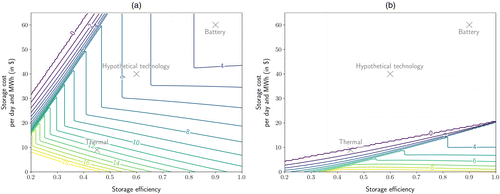
In this section, we employ our partial-discharge model to characterize the optimal storage investment decision under changing technology. One driver of increasing storage penetration is technology improvement—that is, lower capacity cost or higher efficiency. We compared hundreds of hypothetical storage technology combinations of efficiency (30%–100% in 1% increments) and unit costs ($1–$65 in $1 increments) for La Palma with and without subsidies (results for AST and WEN are similar to PAL). For each of these hypothetical technologies, we calculated the profit-maximizing capacity investment. Figure 2 plots isocurves for the optimal storage investment as a function of capacity cost and efficiency while also marking where lithium batteries and thermal technologies are positioned.6 Importantly, these isocurves plot storage capacity in the amount that can be charged (K/e) rather than the amount that can be discharged, which highlights the investment dynamics as efficiency changes. Three observations are worth noting from these plots.
Notes. (a) PAL. (b) SUB.
The first observation pertains to the complex dynamics of how storage capacity changes as technology improves. Initially, as technology improves (moving from the top left toward the bottom right of the plot in Figure 2(a)), capacity stays equal to zero; the firm does not invest in any storage (the white area above the zero-storage line). As technology further improves and the zero-storage isocurve is crossed, storage becomes profitable. From this point onward, storage grows rapidly in response to small improvements in technology (isocurves are increasingly close to each other) until it reaches the capacity to fully cover nightly demand. From this level onward, storage capacity dynamics change. In particular, a decrease in cost has no consequences on storage (isocurves are vertical in the plot) until the cost drops below a certain threshold, which makes it profitable to build enough storage to carry energy into the following day. From this point onward, lower costs do increase storage, whereas higher efficiency has a dual effect. On the one hand, more efficiency makes storage attractive, resulting in more capacity investment, and on the other hand, more efficiency means that less storage capacity is needed to fulfill the same amount of demand, resulting in less capacity. The net effect of those two drivers can go both ways as evidenced by the different slopes of the isocurves to the right of their vertical parts.
The second observation pertains to the zero-storage isocurve, which identifies all technologies (combinations of capacity cost and efficiency) that would make a firm break even when investing in a small amount of storage. This isocurve closely matches a line equation of the form , providing empirical support to the finding in Theorem 2 that comparing technologies based on their storage-cost-to-efficiency ratio constitutes a simple yet powerful way to determine which one can more easily turn a profit (and is, thus, likely to be adopted first).
The third observation pertains to the usefulness of identifying the zero-storage isocurve. Consider, for example, a storage company developing a new technology aimed at markets like the subsidized island case depicted in Figure 2(b). Suppose, for illustrative purposes, that the company had, so far, developed a hypothetical storage technology with a cost of $40/MWh per day and 60% efficiency. Based on Figure 2(b), the company could easily realize that further efforts to boost efficiency alone would never lead to investment, no matter how large the improvement. The company would then conclude that achieving a lower unit cost should become the priority.
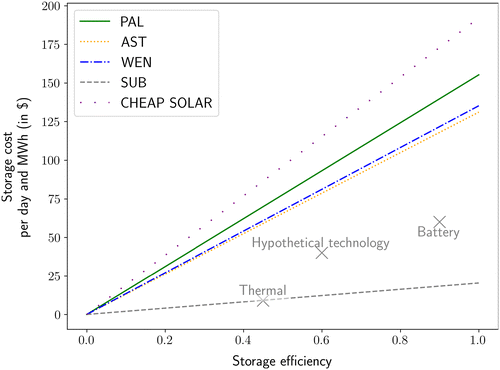
To illustrate the last point in more detail, we plot the zero-storage isocurves for all three islands and two hypothetical islands in Figure 3. The two hypothetical islands are (i) an island with the subsidized electricity rate (SUB) that end customers on the islands pay (after accounting for a 75% subsidy), which is closer to backup costs in major grids and therefore, allows some high-level insights for (off-grid) scenarios with cheaper, nonrenewable options as well; and (ii) a hypothetical island with solar generation cost at 25% of current values. Two dynamics are worth mentioning in Figure 3. First, one can view these zero-storage isocurves as technology efficiency frontiers for each island. Given a market with its backup and renewable costs, only storage technologies below the frontier are in the investment consideration set; storage technologies above the frontier are dominated by the choice to not invest in storage. Second, this graph shows how removing the backup cost subsidies in La Palma would be equal to reducing technology costs by 83%; graphically, the subsidy removal is equivalent to shifting the grey (lowest) line of the subsidized island up to the green (second-highest) line of La Palma, thereby increasing the space below the line (i.e., the space of profitable technologies). In comparison, a fourfold reduction in solar costs would only shift the frontier upward by 24% (equivalent to shifting the green line up to the purple line). This quantifies the magnitude of difference that policy changes can make in investment outcomes relative to the incremental technological progress.
5.3. Carbon Prices and Their Impact on the Adoption of Storage Technologies
In the next two sections, we use the partial-discharge model to derive high-level insights on practically relevant issues that surround the use of renewables. The following strategic insights are to be taken as characterizations of first-order effects rather than precise estimates of future developments. As evidenced in Theorems 4 and 5, the backup energy cost g has a significant effect on capacity investments. So far, the numerical value for g used in our analysis is based on the average generation cost on the studied islands. However, increasing numbers of intergovernmental organizations, federal regulators, and local administrations are vowing to impose or increase some form of carbon taxes in order to reduce carbon emissions and curb global warming. It is therefore of interest to understand the impact of increased carbon prices (e.g., through a direct tax) on optimal renewable generation and storage capacities because these directly affect emission savings. To this end, we calculate which carbon tax levels would be required to reach enough storage capacity (a) for nightly demand (12 hours), (b) for nightly and daily demand (24 hours), and (c) for two nights and one daily demand (36 hours). SUB in the table refers to the island with the subsidized backup costs. Although intuitively, any duration of storage can be achieved through a sufficiently high carbon price, Table 5 shows that, depending on the specific market and technology, the tax levels that are required to achieve the same relative capacities differ vastly.
|
Table 5. Carbon Price to Reach Storage Capacity to Cover Demand for a Certain Time Period (Dollars per Ton of CO2)
| Market | Technology | >12 hours, $ | >24 hours, $ | >36 hours, $ |
|---|---|---|---|---|
| PAL | Thermal | 0 | 0 | >200 |
| AST | Thermal | 0 | 0 | >200 |
| WEN | Thermal | 0 | 7 | >200 |
| SUB | Thermal | 34 | >200 | >200 |
| PAL | Battery | 0 | >200 | >200 |
| AST | Battery | 0 | >200 | >200 |
| WEN | Battery | 0 | >200 | >200 |
| SUB | Battery | 97 | >200 | >200 |
Consider, for example, the level of carbon prices needed for 12 hours of storage to be profitable for different markets. For unsubsidized islands, no carbon prices are needed, whereas for the subsidized island, carbon prices are substantial.
Similarly, consider the level of carbon prices needed for 24 hours of storage to be profitable for different technologies. Thermal storage needs zero or very-low carbon prices in unsubsidized islands, whereas battery storage is still not profitable even when carbon prices are as high as $200.
These findings point to the fact that it is very important for regulators to consider the implications of carbon pricing or storage subsidies with respect to their idiosyncratic market/technology situation, as these are by no means one-size-fits-all tools.
Another related question is when the technologies will become cheap enough (at current improvement rates) to serve a high share of demand by renewable generation and storage. We investigate this question in Online Appendix B.6 and find that (i) at the subsidized electricity prices of the islands, 70% renewables could be achieved in around five years. (ii) Without the fossil fuel subsidies, 80% renewable generation would be profitable today. (iii) Reaching, for example, 95% renewable share is decades away as replacing backup capacity becomes increasingly expensive as the renewable share increases. For more details, see Online Appendix B.6.
5.4. Strategic Usage of Capacity-Limited Backup Generators—Optimal Policy and Carbon Emissions
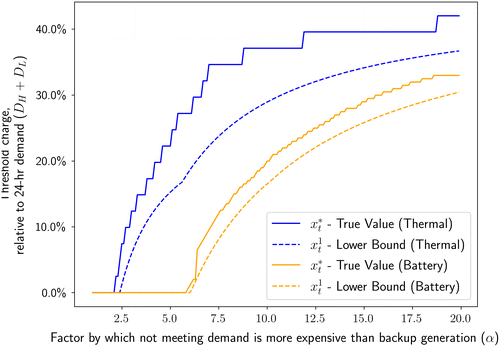
We start the numerical analysis of the capacitated generator problem by analyzing the policy threshold and the lower bound for which we have an analytical solution. Two parameter choices that have to be made for this scenario are the size of the backup generator capacity G as well as the factor α that captures how costly it is to fail to meet demand, compared with running the generator.7 In Figure 4, we plot the value for the optimal generator policy threshold, which we obtained numerically, for increasing levels of α and compare it with our analytical lower bound from Theorem 7. For this figure, we have assumed (the figure is qualitatively similar for other values of G). Intuitively, the threshold is increasing in α. If α was exactly equal to one, not meeting demand would incur as much cost as running the generator, so it would be suboptimal to use the generators to achieve a “buffer” charge in order to increase the odds of meeting future demand. However, as α becomes larger, so does , and running the generator to create at least some buffer charge becomes cheaper than potentially not serving demand. As it can be observed in Figure 4, the analytical lower bound is slightly conservative for thermal when α is in the range from five to eight, but it rapidly catches up for higher α values. For batteries, it is remarkably close to the optimal generator threshold regardless of the value of α. Baik et al. (2020) estimate U.S. customers’ willingness to pay for electricity during an outage at around $2 per 1 kWh, which equals an α of 15 when assuming an average electricity price of 13 cents per 1 kWh, suggesting a narrow gap between our lower bound and the optimal generator threshold for realistic values of α.
Having assessed the quality of the analytical lower bound for the optimal threshold policy, in the rest of this subsection we aim to understand how the decision to reduce the backup generator capacity affects emission savings, costs, and capacity investments. Figure 5 shows the impact of curtailing generator capacity on emissions, total costs, solar capacity, and generation capacity using Weno’s demands and thermal technology. We compare the case in which the generator is run strategically (in the sense of Theorem 7) to minimize total cost, including the cost of unmet demand (Figure 5(a)) with the case in which the generator is used myopically (i.e., to simply serve unmet demand without creating a buffer charge) (Figure 5(b)). Note that the two cases are identical when generator capacity is either abundant (there is no point in running the generator preemptively) or zero. Note also that emissions are (trivially) minimized in the latter case (far right in the panels). We want to highlight six observations from Figure 5 (the effects that we are about to discuss persist across all simulations we have run, unless otherwise specified). First, as one would expect, a comparison of Figure 5(a) with Figure 5(b) shows that a strategic use of the backup generator leads to lower cost (red line) and higher emissions (black line) compared with a myopic use. This is because the strategic use of the backup generator aims to minimize costs, and its preemptive use (as per Theorem 7) leads to it being used more often compared with a myopic (i.e., passive) use.
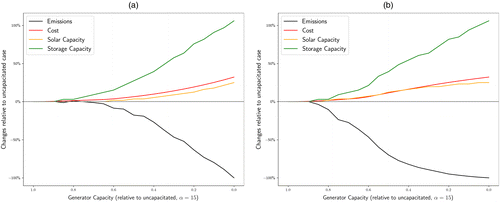
Notes. (a) Strategic generator use. (b) Myopic generator use.
Second, even accounting for the consideration, emission reductions under the strategic use (black line in Figure 5(a)) are surprisingly low for a wide range of generator capacity. For example, reducing generator capacity by 35% has basically no impact on emissions. Moreover, a reduction in generator capacity may actually increase emissions. The reason is that a smaller generator is less able to meet unexpected energy shortages, increasing the risk of future unmet demand and thus, the need to stock energy preemptively in the sense of Theorem 7.
Third, the way of operating a backup generator affects not just the absolute magnitude of emission levels but also, when backup capacity reductions reduce emissions levels (the shape of the black line). For example, under the strategic use of the generator (Figure 5(a)), more than half of the reduction in emissions is achieved by reducing backup generator capacity from 30% down to zero (i.e., no backup generator). That is, substantial reductions in emissions are obtained only with very substantial reductions in backup capacity. By contrast, in the myopic case (Figure 5(b)), most of the emission savings are obtained by cutting backup capacity in half, whereas reducing it from 30% of demand to zero has nearly no effect on emissions.
Fourth, as the capacity of the backup generator is further reduced, the optimal storage capacity increases a lot faster and farther than solar capacity. For example, getting rid of the generator altogether causes approximately a doubling in storage capacity and only a 20% increase in solar capacity (regardless of how the generator is used). The exact effect sizes differ by market, technology, and α, but the general trend persists; additional storage, not additional solar, is the capacity investment of choice when facing a limited backup generator.
Fifth, the cost increase associated with a reduction in backup generator capacity, even a sizeable one, is not unreasonably high (e.g., in our simulations, the cost increase remains below 25%–30% for thermal as shown in Figure 5 but goes up to 45%–50% for batteries). Thus, achieving a substantial reduction in emissions at a somewhat reasonable increase in cost is possible, provided that the reduction in backup capacity is replaced by an appropriate increase in storage (and to some extent, generation) capacity.
Lastly, if we look at investment decisions as a function of generation capacity, we observe that storage capacity is quite similar in the strategic versus myopic use of the generator. By contrast, solar capacity is higher in the myopic case. This is because a myopic use of a downsized backup generator renders the firm more vulnerable to unexpected energy shortages, and thus, it prompts the firm to install more solar generation in the first place (yellow line).
5.4.1. Practical Takeaway.
In principle, a moderate downsize of backup capacity could seem like a good first step to achieve lower emissions while maintaining sound operations, especially because capacity tends to exhibit decreasing marginal returns. Instead, we find that a moderate downsize of backup capacity (30%–40%) has near-zero impact on emissions, and in some cases, it may even increase emissions—and costs. If a meaningful decrease in emissions is to be achieved, the recommended course of action is a strong reduction in backup capacity accompanied by a substantial increase in storage capacity and a modest increase in generation capacity in order to preserve good service levels and keep overall costs in check.
6. Discussion
Our paper provides the first tractable methodological approach in the operations literature to study large-scale storage capacity investment that is used to shift intermittent solar electricity across time, especially between night and day, for off-grid applications. Our results yield several practical takeaways. We show how an investor can use information on demand, cost, and technology to decide on the optimal level of fossil-free generation and storage. We find that these capacity investments are strategic complements at lower capacity levels, but interestingly, they turn into strategic substitutes when renewable generation increases. We then develop two simple models, the full- and partial-discharge models, which provide upper and lower bounds for profit and optimal storage investment decisions, with the former yielding exact solutions when the backup cost is low enough and the latter yielding a pretty good approximation in all other cases. We also establish a simple condition based on the storage-cost-to-efficiency ratio to determine which of the two storage technologies can more easily turn a profit and is, thus, likely to be adopted sooner—an approach that can be used by firms to support strategic technology decisions.
Our models also help us derive insights on the role of storage in the coming years. As storage technologies become gradually cheaper, we find that investments in off-grid renewable storage will not happen gradually; rather, there will be a zero-investment period followed by a period of rapid adoption that is followed again by a slower period. Despite the sudden increase in the short to medium term, we find that the need for nonintermittent fossil energy (e.g., on islands) will likely remain in the long term because of the need for complementing solar power with some amount of flexible, nonintermittent generation. Lastly, our analytical and numerical results show how an off-grid community interested in reducing its emissions can reduce fossil backup capacity and adjust its renewable investment decisions to maintain high service levels and keep costs in check.
However, it must be noted that these findings are based on a stylized model, which tries to identify the overarching dynamics driving renewable investment choices but cannot necessarily replicate them in detail. Although designed to provide quick estimates on optimal capacities, the models presented in this paper simplify the demand and generation dynamics observed in practice. Additional layers of complexity could be added by considering stochastic demand and/or costs, higher granularity to compute supply-demand mismatch, and consumption changes among electricity customers over time as well as constraints on location choices or other geographic limitations. Likewise, the engineering and design challenges for storage installations are glanced over as we treat them as a modular investment with known capabilities. These limitations simultaneously present ample opportunities for future research. Understanding how existing fossil generation and social factors impact the adoption of storage capacity, where to locate said investments, and how to size the individual modular components of the combined storage system are all relevant, challenging, and open questions.
2 A benefit of using this model is that all parameters can be easily derived from historic knowledge of demand patterns (average electricity consumption) and publicly available sources (technology and cost parameters).
3 We ignore start-up effects (i.e., storage in the very first period would be empty) because they have negligible impact on the overall revenues given that the expected life of a solar panel is 30 years—more than 10,000 days.
4 We will at times write to indicate that the action in period t is dependent on the storage charge at the beginning of the period , the generation realization qt, and the generator decisions.
5 We investigate the simulation for storage capacities (upper limit equals max discharge in the partial-discharge model) and generation capacities . For each parameter set, we run the simulation in an evenly spaced 100 × 100 capacity grid and select the run with the highest profit.
6 As discussed in Section 3.1, these two parameters are enough to capture the key features of any storage technology.
7 Technically, is not stationary, but in practice, it is the same for all periods (as the solar randomness is independently identically distributed) except the final days before terminal period T. In those final periods, is lower as the future value is lower when carrying xt through to the terminal period becomes more likely. For all calculations in this section, we use and report the average over 10,950 periods (i.e., 30 years).
References
- (2017) Strategic investment in renewable energy sources: The effect of supply intermittency. Manufacturing Service Oper. Management 19(3):489–507.Link, Google Scholar
- (2022) Non-ownership business models for solar energy. Manufacturing Service Oper. Management 24(4):2048–2063.Google Scholar
- (2016) Efficient feed-in-tariff policies for renewable energy technologies. Oper. Res. 64(1):52–66.Link, Google Scholar
- (1968)
Optimal capital policy with irreversible investment . Value Capital Growth 1.Google Scholar - (2014) Electric vehicles with a battery switching station: Adoption and environmental impact. Management Sci. 61(4):772–794.Link, Google Scholar
- (2020) Estimating what us residential customers are willing to pay for resilience to large electricity outages of long duration. Nature Energy 5(3):250–258.Crossref, Google Scholar
- (2011) Stochastic capacity investment and flexible vs. dedicated technology choice in imperfect capital markets. Management Sci. 57(12):2163–2179.Link, Google Scholar
- (2013) Cost-minimized combinations of wind power, solar power and electrochemical storage, powering the grid up to 99.9% of the time. J. Power Sources 225:60–74.Crossref, Google Scholar
- (2017) Renewable energy integration demonstrator. Technical report, Nanyang Technological University, Singapore.Google Scholar
- (2019) Control of energy storage with market impact: Lagrangian approach and horizons. Oper. Res. 67(1):1–9.Link, Google Scholar
- (2015) Potential of lithium-ion batteries in renewable energy. Renewable Energy 76:375–380.Crossref, Google Scholar
- (2016) Technology choice and capacity portfolios under emissions regulation. Production Oper. Management 25(6):1006–1025.Crossref, Google Scholar
- (2011) Electrical energy storage for the grid: A battery of choices. Science 334(6058):928–935.Crossref, Google Scholar
EU Commission (2015) The Paris protocol: A blueprint for tackling global climate change beyond 2020. Technical report, EU Commission, Brussels.Google ScholarEU Commission (2018) Directive (EU) 2018/2001 of the European Parliament and of the Council of 11 December 2018 on the promotion of the use of energy from renewable sources. Official J. Eur. Union 5:82–209.Google Scholar- (2021) India hails milestone for its renewables capacity, but challenges remain. Accessed August 10, 2023, https://www.cnbc.com/2021/08/13/india-hails-milestone-for-its-renewables-capacity-challenges-remain.html.Google Scholar
- (2018) 2018 US utility-scale photovoltaics-plus-energy storage system costs benchmark. Technical report, National Renewable Energy Laboratory, Golden, CO.Google Scholar
IRENA (2017) Electricity storage and renewables: Costs and markets to 2030. Technical report, International Renewable Energy Agency, Abu Dhabi.Google Scholar- (2014) A comparison of approximate dynamic programming techniques on benchmark energy storage problems: Does anything work? 2014 IEEE Sympos. ADPRL (IEEE, Piscataway, NJ), 1–8.Google Scholar
- (2020) Prospects and challenges for clean energy in European islands. The Tilos paradigm. Renewable Energy 145:2489–2502.Crossref, Google Scholar
- (2011) Optimal energy commitments with storage and intermittent supply. Oper. Res. 59(6):1347–1360.Link, Google Scholar
- (2017) Energy storage deployment and innovation for the clean energy transition. Nature Energy 2(9):17125.Crossref, Google Scholar
- (2018) A preliminary stochastic analysis of the uncertainty of natural processes related to renewable energy resources. Adv. Geosciences 45:193–199.Crossref, Google Scholar
- (2020) Investments in renewable and conventional energy: The role of operational flexibility. Manufacturing Service Oper. Management 22(5):925–941.Link, Google Scholar
- (2020) A review of energy storage types, applications and recent developments. J. Energy Storage 27:101047.Crossref, Google Scholar
- (2019) The dirty footprint of the broken grid: The impacts of fossil fuel back-up generators in developing countries. Technical report, International Finance Corporation, Washington, DC.Google Scholar
- (2015) Toward greener and more sustainable batteries for electrical energy storage. Nature Chemistry 7(1):19–29.Crossref, Google Scholar
Lazard (2020) Levelized cost of energy analysis 14.0. Technical report, Lazard, New York.Google Scholar- (2015) Coordinated operational planning for wind farm with battery energy storage system. IEEE Trans. Sustainable Energy 6(1):253–262.Crossref, Google Scholar
- (2018) Climatic impacts of wind power. Joule 2(12):2618–2632.Crossref, Google Scholar
- (2004) Analysis and Algorithms for Service Parts Supply Chains (Springer Science & Business Media, New York).Google Scholar
- (2018) Electricity storage and transmission: Complements or substitutes? Energy Econom. 76:367–377.Crossref, Google Scholar
- (1994) Managing the Global Commons: The Economics of Climate Change, vol. 31 (MIT Press, Cambridge, MA).Google Scholar
- (2015) Joint planning of energy storage and transmission for wind energy generation. Oper. Res. 63(6):1280–1293.Link, Google Scholar
- (2018) Benchmarking a scalable approximate dynamic programming algorithm for stochastic control of grid-level energy storage. INFORMS J. Comput. 30(1):106–123.Link, Google Scholar
- (2011) Modeling strategic electricity storage: The case of pumped hydro storage in Germany. Energy J. 32(3):59–87.Crossref, Google Scholar
- (2009) Dynamic capacity management with substitution. Oper. Res. 57(3):671–684.Link, Google Scholar
- (2012) Development of a Markov-chain-based energy storage model for power supply availability assessment of photovoltaic generation plants. IEEE Trans. Sustainable Energy 4(2):491–500.Crossref, Google Scholar
- (2021) Net-metered distributed renewable energy: A peril for utilities? Management Sci. 67(11):6716–6733.Google Scholar
- (2018) Li-ion batteries for mobility and stationary storage applications. Technical report, European Commission, Luxembourg.Google Scholar
- (2003) Commissioned paper: Capacity management, investment, and hedging: Review and recent developments. Manufacturing Service Oper. Management 5(4):269–302.Link, Google Scholar
- (2013) Dynamic capacity investment with two competing technologies. Manufacturing Service Oper. Management 15(4):616–629.Link, Google Scholar
World Bank (2017) State and trends of carbon pricing 2017. Technical report, World Bank, Washington, DC.Google ScholarWorld Bank (2020) Maldives: Building back better through clean energy. Technical report, World Bank, Washington, DC.Google Scholar- (2013) Curtailing intermittent generation in electrical systems. Manufacturing Service Oper. Management 15(4):578–595.Link, Google Scholar
- (2012) Seasonal energy storage operations with limited flexibility: The price-adjusted rolling intrinsic policy. Manufacturing Service Oper. Management 14(3):455–471.Link, Google Scholar
- (2014) Joint optimization of hybrid energy storage and generation capacity with renewable energy. IEEE Trans. Smart Grid 5(4):1566–1574.Crossref, Google Scholar
- (2019) Managing wind-based electricity generation in the presence of storage and transmission capacity. Production Oper. Management 28(4):970–989.Crossref, Google Scholar

