


The Emergence of Novel Product Uses: An Investigation of Exaptations in IKEA Hacks
Abstract
Exaptation refers to the emergence of novel functionalities in existing products. Exaptations frequently arise in the context of users who creatively modify (or hack) existing products to accommodate new needs. Here, we examine how product-first (compared with problem-first) search affects the occurrence of exaptations. In a product-first search, the user identifies the product to be hacked before seeking a viable need. In a problem-first search, the user has a defined problem before seeking a viable solution. We argue that users are more likely to achieve exaptations following a problem-first (compared with a product-first) search. Indeed, with problem-first search, they are less likely to face functional fixedness, and they can leverage their greater awareness of problems that may not have readily adaptable solutions, which leads them to generate exaptations. Using a novel data set comprising user hacks of IKEA products, we present evidence that hacks originating from a product-first search are less likely to generate exaptations than hacks originating from a problem-first search. We also show that this difference is mitigated when the user has hacking experience or when the IKEA product being hacked is more modular. We also explore how the mitigation happens. Increased hacking experience appears to reduce functional fixedness; meanwhile, increased product modularity increases the likelihood that users will make serendipitous discoveries leading to exaptations. We contribute to the growing literature on exaptation as a source of novelty and discuss the implications of this phenomenon for managing user innovation.
This paper was accepted by Sridhar Tayur, entrepreneurship and innovation.
Funding: Financial support from the Singapore Ministry of Education Academic Research Fund [Tier 1 Grant 251RES1907] is gratefully acknowledged.
Supplemental Material: The data and online appendix are available at https://doi.org/10.1287/mnsc.2022.4486.
1. Introduction
Many users engage in designing, developing, and modifying products to obtain products that better fit their needs (von Hippel 2011). In doing so, users have developed many important and novel products in a variety of fields. For example, users’ developments and modifications have been responsible for about 80% of the most renowned scientific instrument innovations (Urban and von Hippel 1988). This phenomenon has been observed in contexts that range from open-source software (Lakhani and von Hippel 2003) to new LEGO products (Majchrzak and Malhotra 2019).
We examine when users’ creative modifications (i.e., hacks) of existing products lead to exaptation. Originally developed in the context of evolutionary biology (Gould and Vrba 1982), exaptation is used in the product-evolution literature to refer to a product being leveraged to serve some function other than that for which it was originally designed (see, e.g., Mokyr 2000, Dew et al. 2004, Cattani 2005, 2006, Andriani and Cattani 2016, Ching 2016, Garud et al. 2016, Mastrogiorgio and Gilsing 2016, Andriani et al. 2017, and Andriani and Kaminska 2021). Exaptation can be contrasted with adaptation, whereby creative modifications to the product result in relatively minor changes to the product’s originally intended function. One example of exaptation is Nintendo’s co-opting the accelerometers (previously used in automotive airbags to detect sudden motion) for its Wii gaming controllers (Verganti 2009).
Despite recognizing that users’ creative modifications frequently lead to novel product functions (Riggs and von Hippel 1994), the link between user innovation and generating exaptations is not fully understood. Specifically, exaptations can occur following a creative search process, in which a user–innovator begins with a product he wishes to hack and then seeks other purposes for which that product can be modified to serve. This dynamic is what we call a product-first search process (Cromwell et al. 2018). Exaptations can also occur via problem identification and formulation that occur before the search for a product, which could be modified to address the problem at hand; here, we have the classic problem-first search process (Erat and Krishnan 2012, Posen et al. 2018, Sommer et al. 2020).
The extant research on the role of exaptation in innovation has recognized the inherent difficulty of generating exaptations through a product-first search process. For a given product, the innovator must imagine and list possible alternative uses of the product to generate exaptations. Indeed, various cognitive limits prevent us from doing so capably. Among other cognitive factors, functional fixedness implies that users who begin with a clear product in mind may also be fixated in their understanding of its potential uses, thus preventing conceptions of how the product could be used in a novel way (Maier 1931, Duncker 1945, Jansson and Smith 1991, Finke 1996, Andriani and Cattani 2016, Felin et al. 2016, von Hippel and von Krogh 2016). Absent the ability to effectively perceive and state upfront the myriad alternative uses of a given product, scholars have proposed that exaptations may emerge from a product-first process through serendipitous encounters—as users discover new uses through, for example, experimentation during search (Garud et al. 2016, Mastrogiorgio and Mastrogiorgio 2020, Andriani and Kaminska 2021) or observations of novel interactions among products, users, and the environment (Andriani and Carignani 2014, Felin et al. 2016).
In contrast, we argue that user–innovators are likely to be less constrained by functional fixedness when engaged in problem-first search because they do not begin with a clear product in mind, but, rather, a clear problem. More importantly, user–innovators face a wide variety of problems that often do not have readily adaptable solutions—a result of difficulties that manufacturers or designers have in perceiving, understanding, and meeting those needs (von Hippel 1994, 1998, Franke and von Hippel 2003). These two factors—reduced functional fixedness and user awareness of a variety of problems with no readily adaptable solutions—favor the generation of exaptations under problem-first search, particularly in user-innovation contexts.
We test our theory by leveraging a novel data set based on users’ creative modifications, or hacks, of IKEA products described on the website IKEAHackers.net. As one of the most recognized home-furnishing companies with a global reach, IKEA is known for standardized, low-cost, and assemble-it-yourself products (Jarrett and Huy 2018). These features make IKEA products suitable and popular for users’ creative modifications (Rosner and Bean 2009). Users, who are often amateur designers, have made adaptive modifications (e.g., adding surface decorations to tables or modifying chairs to fit children) and exaptive modifications (e.g., converting a curtain rod into a paper dispenser).
We find that IKEA products are frequently subject to exaptation. Among the more than 3,000 hacks analyzed, nearly half were exaptive. Furthermore, authors on IKEAHackers.net frequently mention their reasons for a hack, which allows us to examine how the search trigger—problem-first or product-first—can lead to adaptive versus exaptive outcomes. Importantly, we find strong empirical support for our theory: Whereas a hack that originates from a product-first search has a 42% likelihood of becoming an exaptation, this probability increases to 55% when the hack originates from a problem-first search.
Nonetheless, product-first search is not expected to be uniformly disadvantaged in generating exaptations. We theorize and show that the probability of product-first search generating exaptations catches up to that of problem-first search when the user–innovator has hacking experience or when the IKEA product being hacked is more modular. Further exploration suggests that the pathways through which such mitigations occur may differ. Increased hacking experience appears to increase hackers’ ability to perceive a wider range of uses (i.e., reduce functional fixedness); meanwhile, increased product modularity increases the likelihood of users making serendipitous discoveries that lead to exaptations.
Our insights are robust to various modeling assumptions. First, we attempted to explicitly measure (and account for) heterogeneities at the hacker and product levels that could confound our estimates. Next, we considered models that include hacker random effects, product random effects, or two-stages (a recursive bivariate probit model)—these account for possible unobserved confounders, at the cost of distributional assumptions, which we test where possible. Finally, we also leveraged two matching approaches (entropy and propensity score) to test our theory on comparable subpopulations of product-first and problem-first hacks.
The present study makes three contributions to the literature. First, we offer a novel empirical analysis of exaptations in the user-innovation context. In doing so, we engage with the growing body of research that is focused on exaptive processes (e.g., Ching 2016, Mastrogiorgio and Gilsing 2016, and Andriani et al. 2017) by documenting that exaptations occur frequently and, thus, play a leading role in user innovation. Second, our work answers the call for research to identify the conditions in user innovation, under which firms and users “can enhance innovation by fostering exaptive processes” (Andriani and Cattani 2016, p. 126). Toward that end, our results highlight the need to pay attention to how search triggers (product- or problem-first) affect the likelihood of exaptation. Specifically, we argue and find that user–innovators are more likely to generate exaptations after a problem-first than after a product-first search. Finally, the present paper stipulates conditions—namely, the user’s hacking experience and the product’s modularity—under which product-first search has a reduced probability gap (relative to problem-first search) in generating exaptations. Thus, our study contributes to the user-innovation literature by empirically validating the notion that problem-solving before problem formulation can generate novelty in the user-innovation context (von Hippel and von Krogh 2016, Cromwell et al. 2018).
2. Theory Development
2.1. Exaptation and Adaptation of Products in the Context of User Innovation
Scholars have noted many cases of exaptation in the history of technology innovation and markets (Mokyr 2000, Dew et al. 2004). For example, STMicroelectronics developed the technological basis for three-dimensional movement sensors in the late 1970s, with their intended applications in the areas of computers, home appliances, and automobiles (Cromwell et al. 2018). Yet, the breakthrough use for this technology did not arrive until 2006, when Nintendo integrated it into the Wii gaming console—delivering a novel gaming experience and transforming the gaming industry (Verganti 2009). Another example is the drug Marsilid; it was originally designed to fight tuberculosis, but was observed to greatly improve patients’ mood. As such, it became the first antidepressant (Andriani et al. 2017). And, yet, only limited discussions of exaptation have ensued, despite its far-reaching ramifications. Research has, instead, focused on adaptation: the result of search activities that progressively adjust and improve products or technologies to achieve a better fit to user needs (Dew et al. 2004).
There are two reasons why, in the user-innovation context, both exaptations and adaptations can occur as the result of hacks. First, users face a variety of environments (Felin et al. 2016, Andriani et al. 2017). Those environments generate a variety of needs, for which manufacturers can seldom economically deliver custom solutions. Hence, few sizes-fit-all products are delivered, which leaves user–innovators with the task of customizing the products so they will better fit their individual needs (von Hippel 2005). Second, even when custom manufacturing is possible, manufacturers are not perfectly cognizant of customers’ needs, because user needs are not easily conveyed to the manufacturer (von Hippel 1998). This difficulty in transferring need information may lead users to develop functionally novel alternatives of the original product that better leverage their own knowledge and context (von Hippel 2005). For example, divers began to innovate ways to waterproof a camera before the waterproof camera became commercially available (Schweisfurth 2019). Another example is the invention of the jogging stroller: A father modified a stroller with bicycle wheels in his garage and, thus, created the first three-wheeled baby jogger (Shah and Tripsas 2007).
The above examples illustrate how heterogeneous user needs can drive the creative modification of products to take on different functions, which can lead to different innovation trajectories compared with manufacturers. In a case study involving 64 creative modifications that both users and manufacturers made to scientific instruments, Riggs and von Hippel (1994) documented that fewer than 10% of manufacturer-developed modifications contained “new functional capability” (p. 466), whereas half of all user-developed modifications did.
To illustrate the difference between adaptations and exaptations, we consider four hacks of the IKEA Frosta stool pictured in the center of Figure 1. An adaptive hack is illustrated in part (a) of the figure, where the user–innovator modified and decorated the original Frosta stool so that it became shorter and better suited for children. In this case, functional continuity is maintained in the transformation: After the hack, the stool remains functionally a stool, as is the original product. In contrast, the right-hand side of Figure 1 illustrates exaptive outcomes. In these cases, the original Frosta stool is now being used to serve different functions—a swing in part (b) of Figure 1, a clothes rack in part (c), and a bicycle in part (d)—that were not intended functions of the original IKEA product.

Notes. (a) An example of adaptation (minimal functional change). (b)–(d) Examples of exaptations (functional change).
2.2. Product-First vs. Problem-First Search
Research in the problem-solving field usually assumes that a problem must be identified and formulated before a solution can be found; that is, the user first has a problem that is solved by hacking an existing product (Simon 1973, Mintzberg et al. 1976). The organizational search model similarly assumes that search is problem-centric (Posen et al. 2018, Brunswicker et al. 2019). This assumption is echoed in the product-design literature, as in Alexander’s (1964) definition of design: “the process of inventing physical things which display new physical order, organization, form, in response to function” (p. 1, emphasis added). For example, the literature on design thinking sets up understanding and identification of user–innovators’ needs as its first steps (see Beckman 2020). For problem-solving, the user’s needs—or the product’s desired function—should precede the manifestation of a product that can serve that function.
However, the innovation process can also happen in reverse—that is, when the solution precedes the problem (Andriani et al. 2017). Problem-solving can happen without initial problem formulation. Upon observing a particular product, a user can “scan one’s mind” (von Hippel and von Krogh 2016, p. 213) for possible needs, some of which might be met by modifying a focal product. Novel uses can also emerge when a product is exposed to different environments (Felin et al. 2014, Andriani et al. 2017) or during experimentation or tinkering, which can help uncover different properties of the product (Andriani and Carignani 2014, Andriani and Kaminska 2021, Felin and Kauffman 2021).
In the context of product design, the focus on a product-first search stems from the notion of affordances: that a product exhibits a (possibly infinite) set of uses, depending on how users perceive it (Gibson 1979). Krippendorff and Butter (2007) illustrated this idea with an example from the 1984 movie The Gods Must Be Crazy, in which a pilot crossing the Kalahari Desert finishes a Coke and tosses the empty glass bottle out the window. Upon finding the bottle, the local Bushmen—who had never seen anything like it—proceeded to use it for ingenious applications: as a pestle to smash roots, as a tool to flatten and stretch snake skins, and using its opening as a stamp to decorate a garment with circles. Thus, a product can be a source of enormous creative potential, especially in the hands of users with heterogeneous needs.
We can visualize the difference between these two approaches through the need versus solution space analogy of von Hippel and von Krogh (2016). A product that initiates problem-solving involves putting initial constraints on the product with which the solver is working, but allows for greater flexibility in terms of searching for a need that the product might satisfy (Cromwell et al. 2018). Put differently, the user–innovator is clear on what product to hack, but is figuring out what to hack it into. Therefore, product-first search entails searching in the “need space” for needs that the product could conceivably satisfy (see Figure 2(a)). By contrast, a problem-first search places upfront constraints on the problem; that is, problem formulation involves defining and placing constraints on the need space in terms of the kind of functionalities and features desired, while allowing for greater flexibility with respect to searching in the solution space. Thus, problem-solving that begins by first formulating a problem involves a search in the “solution space” for viable solutions to that problem (see Figure 2(b)).

Notes. (a) Product-first problem-solving. (b) Problem-first problem-solving. The area shaded in gray represents the range of uses that a solver can perceive upfront.
We can, therefore, view a hack as a novel link between a point in a problem space and a solution space. Such a link can be either adaptive or exaptive. Consider panel (a) in Figure 2 (“product-first” solving). Here, the user–innovator can creatively modify a product s to serve a need na that is similar to the function for which s was designed originally, or she can modify s to serve functionally more distant needs ne1 (the affordance of which lie within the gray area, representing possible uses of the product that a solver can perceive clearly upfront). Notice that she might also achieve exaptation on a need ne2—a use of which lies outside her area of perception, meaning she may not be initially aware that product s can be used in this way. Such an outcome can be derived serendipitously in the process of tinkering with the product, whereby a solver may discover unanticipated product properties and effects—that is, novel affordances (Mastrogiorgio and Mastrogiorgio 2020). Put differently, “search [can lead to] unintended discovery” (Dew 2009, p. 735), and it is possible that one may “find something that is unknown while searching for what is known” (Garud et al. 2016, p. 159).
Consider panel (b) in Figure 2 (“problem-first” solving). A user–innovator who creatively modifies a functionally similar product sa to fit his specific need n would be engaging in adaptation, although she may decide that the creative modification of a functionally more distant product se1 would better serve her need n. The user–innovator may also achieve exaptation on a product se2 that might initially fall outside her perception of what is possible to fit her need n. For example, a user–innovator searching for a way to childproof a gap between furniture pieces may not initially perceive a viable way to do so until she accidentally spots a solution while wandering through the house or a showroom (Yi et al. 2017).
It is clear, then, that both product-first and problem-first searches can theoretically lead to novel need–solution pairs—that is, to exaptations. With regard to the Nintendo Wii example discussed earlier, a product-first approach would involve STMicroelectronics scanning for outside opportunities to leverage their 3D movement-sensing technology (Cromwell et al. 2018), whereas a problem-first approach would involve Nintendo seeking a technological solution that enables physically interactive gaming. These same dynamics are evident in our example of the IKEA Frosta stool. The transformation of this stool into a swing could arise from the product as the starting point of a search process. For example:
S1. Identifying a product. I have an old IKEA Frosta stool that I no longer need.
S2. Let me search through my possible needs for which the stool could be used.
S3. I think (or found) that the stool might be able to serve as a swing.
Alternatively, it may emerge from first-stage problem identification, as follows:
P1. Forming a needs statement. I need a swing for my child. The swing must be affordable and safe and must last for a year or two until my child outgrows it.
P2. I search for possible solutions.
P3. I decide on (or stumble upon) hacking an IKEA Frosta stool into a swing as the solution that will satisfy my needs.
2.3. Functional Fixedness and Heterogeneous User Needs
Our central research question is this: For a given user hack, would product-first search be more, less, or equally likely than problem-first search to generate exaptations? Andriani and Kaminska (2021, p. 5) alluded to this question when they contrasted “two different views,” as to how the surgeon Henri Laborit discovered an exaptation of chlorpromazine (the first antipsychotic drug) from methylene blue (a dye). Theoretically, it could have emerged from either a problem-first approach (Laborit searching for a drug to alleviate or cure psychosis) or from a product-first approach (Laborit experimenting with the compound for alternative uses and observing its antipsychotic effects).
Consider the product-first search: The extant research on the role of exaptation in innovation has recognized that the set of potential uses of a given product is vast (Kauffman 2000, Felin et al. 2014). Returning to panel (a) in Figure 2, this implies that the number of points on the need-space that a product s can viably match is potentially infinite. No one, however, can state upfront all the possible uses of a given artifact (Longo et al. 2012). Indeed, the cognitive ability of humans to recognize such uses can be quite limited (Andriani et al. 2017).
One such cognitive limit is termed functional fixedness, a characteristic of cognition that can severely impair the creative product-first search process. Functional fixedness is a type of cognitive bias, whereby the individual has conflated an object’s form with its archetypical function and is therefore unable to view the object as serving any other dissimilar purpose (Maier 1931, Duncker 1945). This phenomenon has been documented widely in the product-design literature. Jansson and Smith (1991) showed that when an example of an existing solution is presented to designers during idea generation, they often copy features and principles from such examples—which leads to the inappropriate reuse of the examples—instead of imagining alternative possibilities. Such persistent reuse of existing products in familiar ways, whether in the long-term or situationally induced, is known as “design fixation” in the product-design literature (Jansson and Smith 1991, Cardoso and Badke-Schaub 2011). Design fixation, like functional fixedness, constricts thinking about the product to its originally intended function, hides affordances from the perceiver, and creates an obstacle to problem-solving (Jansson and Smith 1991).
At its extreme, we can think of functional fixedness as imposing a strict mapping between points in the need and solution landscapes in Figure 2 (e.g., a solution s is viewed as being “fixed” to a need n). More generally, we can visualize the effect of functional fixedness as constraining the width of the gray region in panel (a) of Figure 2—only the points on the need-space within the gray region (representing the range of possible uses of a product that humans can perceive upfront) can be the initial targets of search.
One must bear in mind that, by the foregoing argument, the constraining effect results from observing solutions in use to solve existing problems. The Bushmen in our earlier example were, therefore, able to devise ways to use the Coke bottle precisely because they had never observed how a Coke bottle is used in its modal setting (viz., as a container for drinks). Thus, the constraining effect of a product-first search derives not from the product itself, but, rather, from the users’ understanding of that product. Such understanding is based on observations of the product in carefully designed settings that illustrate its intended use (e.g., IKEA showrooms) or from previously owning the product. These experiences, crafted by product manufacturers and later reinforced by owners through use, sustain the product’s familiar affordances and suppress the user–innovator’s ability to imagine the product being used in a different way (Heft 2003). In the context of physical product design, a product’s appearance exerts a strong effect on the perceiver’s understanding of its functionality (Bloch 1995, Veryzer and Hutchinson 1998, Chan et al. 2021). In fact, experimental results suggest that viewing pictures of products is enough to induce functional fixedness (Jansson and Smith 1991); indeed, such effects are greater with respect to products that are more familiar (Purcell et al. 1993).
Although cognitive limits, such as functional fixedness, prevent users from perceiving and, thus, initially targeting a range of alternate uses for a product, exaptations that reach needs not initially perceivable can still happen serendipitously (Garud et al. 2016, Andriani and Kaminska 2021). In other words, in the process of tinkering with a product, users may learn of new properties or identify unanticipated new uses of products. In this way, “search” could be better thought of as a multistep process whereby initial tinkering can lead to additional insights and discoveries to novel affordances (Mastrogiorgio and Mastrogiorgio 2020, Felin and Kauffman 2021). Put differently, the gray region of panel (a) in Figure 2 that represents the range of possible uses of a product can shift as the user tinkers with the product.
Overall, the preceding arguments suggest that user–innovators engaging in product-first search suffer from cognitive limits, such as functional fixedness, which may prevent them from (upfront) identifying a wide range of possible product uses. However, they may still achieve exaptations beyond that initial range of perceived possibilities through serendipity.
By contrast, much of the preceding arguments’ points regarding functional fixedness are less applicable for a user following problem-first search. In this case, the user has a clear need, but is flexible on which product to modify to serve that need (Cromwell et al. 2018). By not being exposed upfront to any specific product, we may expect individual users to experience fewer cognitive constraints, such as functional fixedness (and, thus, a broader region of perceived possibilities in terms of hackable products) when engaging in problem-first search. This idea is reflected in panel (b) of Figure 2, in terms of a wider gray area, where the user can perceive viable need–solution matches upfront.
By itself, the ability to perceive a larger set of viable need–solution matches does not assure the higher occurrence of exaptations under problem-first search. That is, although users may perceive a range of possible products to modify in order to solve a given problem, users may still opt to pick a product close in functionality and adapt from there (that is, pick sa from the different options that could be modified to serve need n in panel (b) in Figure 2). Indeed, sa is arguably the most obvious option. This brings us back to an important argument made in Section 2.1 regarding the vast heterogeneity in environments that users face (Felin et al. 2016, Andriani et al. 2017). Those environments generate many novel and unique user needs that either are uneconomic to satisfy or may even be unfathomable and difficult to communicate to designers and inventors (von Hippel 1994, 1998). As a result, users are often driven by problems where there are no products sufficiently similar to be readily adapted (that is, sa itself may be unavailable). This factor, alongside reduced functional fixedness, drives exaptation in problem-first search.
Consider orphan diseases (or rare diseases), which both the user-innovation and exaptation literatures have highlighted as an area with great potential for exaptations (Oliveira et al. 2015, Andriani et al. 2017) and that generate unique needs that may admit to few readily available solutions. As an example of problem-first exaptation, Oliveira et al. (2015) documented how the mother of a child with cerebral palsy (which, among other symptoms, caused the child to hypersalivate) suffers from problems of discomfort and social exclusion. This problem triggered her to develop a “Cute Turtle Collar,” which joins absorbent materials to soak up the drool into a collar that is also stylish, to help her son socialize more easily.
The above arguments—reduced functional fixedness and user awareness of a variety of problems with no readily adaptable solutions—lead us to expect that user–innovators would be more likely to generate exaptations following a problem-first search. Put in reverse, user–innovators engaged in product-first search may see a reduced likelihood of exaptations relative to problem-first search. Formally, we have the following hypothesis:
User–innovators are less likely to generate exaptive hacks via a product-first search than via a problem-first search.
Note that Hypothesis 1 emphasizes “user–innovators” as an important boundary condition. The theory behind Hypothesis 1 invokes arguments about the users’ ability to clearly perceive their own needs, allowing them to pursue exaptations in a problem-first manner. Such problems, although apparent to individual users, may be difficult for designers and inventors to perceive. For example, it may be difficult for a designer or inventor to appreciate all the difficulties that a mother with a child with cerebral palsy experiences. This asymmetry implies that designers or inventors may find it difficult to achieve exaptations via problem-first search because these n’s are unknown or not fully appreciated (Afuah and Tucci 2012). For inventors, a product-first approach may play a larger role in generating exaptations (Andriani and Kaminska 2021).
2.4. How Hacking Experience Moderates the Effect of Functional Fixedness
The exaptation literature, however, has highlighted important moderating factors, specifically, prior experience (Cattani 2005, Garud et al. 2016) and product modularity (Andriani and Carignani 2014, Mastrogiorgio and Gilsing 2016), that can affect the tendency of the product-first approach in achieving exaptations. First, we examine the role of users’ hacking experience on functional fixedness.
If experience with a product induces functional fixedness that prevents the user–innovator from searching widely, then experience with hacking (i.e., associating products with different needs) should help reduce such functional fixedness. Crilly (2015, p. 74) described this effect—of designers reducing fixation by amassing experience with “tinkering”—in an interview with a designer:
…[T]hat can be enough to give them exposure to different solutions for fixing problems. And the more you see, the more options you have … So I think the range of mechanisms for solving problems has probably got better as I’ve picked up more experience.
So user–innovators who hack more are then more likely to gain “transferable skills” (Cattani 2005, p. 564) useful in generating exaptations, even in other domains. Such transferable skills include not only improved mechanical skills to effect such a transformation, as noted in the interview (Crilly 2015), but also an improved understanding of product properties (e.g., weight, strength, and texture), which is crucial for users to “see” alternative uses of the product (Andriani and Carignani 2014). Such skills and knowledge are generic and can be transferred easily across different domains and categories of hacks.
It is noteworthy that hacking requires the user–innovator to associate need–solution pairs that depart from the focal product’s original design; this statement applies not only to the small changes in adaptive hacks, but also to larger changes in exaptive ones. Therefore, transferrable skills also include the cognitive capacity to envision alternative representations of a product and its functions (Linsey et al. 2010). This increases the hackers’ sensitivity to the opportunities (for problems and problem-solving) in the environment, as well as to be more discerning of affordances (Bonnardel and Marmèche 2004, Linsey et al. 2010, Nayak et al. 2020). As such experiences expand, user–innovators can better disassociate a product from its originally intended function(s), which increases the user–innovators’ ability to generate hacks that are functionally more distant (Heft 2003). For example, Linsey et al. (2010) reported laboratory experimental evidence that functional fixedness can be mitigated among engineering design faculty when they are exposed to additional functions of a product. Mastrogiorgio and Gilsing (2016) argued that this ability allows individuals to generate a richer representation of the problem’s architecture and interdependencies, thus allowing them to see and more readily exploit the potential for exaptation. Garud et al. (2016) argued similarly that such an accumulation of experiences helps break one’s rigid ideas about a product, allowing one to find “a productive use for… anomalous junk” (p. 162). Thus, hacking experience can heighten user–innovators’ sensitivity to the range of possibilities in a particular environment (Nayak et al. 2020), which may allow them to reduce functional fixedness.
In sum, hacking experience helps a hacker accumulate useful knowledge, as well as mechanical and cognitive skills that are often transferable across situations. This allows them to see and capitalize on opportunities for exaptation under product-first search more effectively. We, thus, expect that a user–innovator with more hacking experience suffers less from functional fixedness when generating hacks by way of a product-first search (that is, hacking experience helps expand the gray region in panel (a) in Figure 2). These considerations lead to our second hypothesis, which follows:
Hacking experience moderates the effect of search trigger on the likelihood of exaptation, so that a user–innovator is increasingly likely to generate exaptive hacks via a product-first search than via a problem-first search when the user–innovator has more hacking experience.
2.5. How Product Modularity Increases the Chance of Serendipitous Encounters
Next, we switch our focus from the user–innovator to the product itself and ask whether its characteristics could help increase the chances of exaptation. Recall our arguments in Section 2.2 that a user, even if unable to effectively perceive upfront various alternative uses of a product in a product-first search, can reach exaptation as they discover new uses through tinkering. Here, we offer arguments concerning why a product’s modularity could appreciably increase the ability of user–innovators to tinker and improve the chance of having serendipitous encounters that expand the product’s potential for being creatively hacked.
Modularity describes a product’s internal structure. Whereas modular products can be easily decomposed and reconfigured to serve different functions, integral products cannot (Simon 1969, Ulrich 1995, Sanchez and Mahoney 1996, Baldwin and Clark 2000, Schilling 2000, Ethiraj and Levinthal 2004). Manufacturers often adopt modular designs so that different products can share components, which allows the firm to offer variety at a low cost (Ramdas and Randall 2008).
Examining modularity as an enabler of exaptation is a natural next step, given the large set of exaptive possibilities created by potentially decomposing and recombining the components of a modular product (Fleming and Sorenson 2001, Afuah and Tucci 2012, Andriani and Carignani 2014, Mastrogiorgio and Gilsing 2016, Kamrad et al. 2017). Consider the transformation of IKEA’s Frosta stool into a clothes rack, shown in part (b) of Figure 1. Recombining the stool’s components would not have been possible if it had been an integrally made piece (e.g., a stool that is 3D-printed or welded to form a single object). Clearly, modularity aids the decomposition of a product into its parts, so that mechanical recombination becomes easier. Another benefit of modularity is that the risk of breakage or causing irreversible changes to the product is reduced, which would lead to waste. If a hack does not succeed, then a user–innovator can reverse the process or adjust a modular product more easily. The empirical evidence that these factors lead to more effective search is borne out in the experimental study by Sadler et al. (2016) of the Maker Movement; the authors show that product modularity helps amateur designers feel more confident and have more success in creating novel prototypes.
Beyond enhancing a hacker’s confidence in tinkering, the tinkering process itself may yield novel information that aids generating exaptations in a product-first search. Particularly, the process of decomposing a product into its components can help uncover novel properties of the components themselves, which aids exaptation (Andriani and Carignani 2014, Carignani 2021). More importantly, the process of recombining those components involves dealing with a large set of combinatorial possibilities—see, for example, the various combinations of the parts of the Frosta stool in Figure 1 (Andriani and Carignani 2014, Andriani et al. 2020). Recombination can help a user–innovator gain a new understanding of both the product’s structure and properties. It also increases the chances of serendipitously discovering new ways in which the product interacts with the user and wider environment. All of these factors significantly improve the chances of a user achieving exaptations serendipitously in the process of tinkering (Felin et al. 2016, Mastrogiorgio and Gilsing 2016).
Such new understandings can be gained, even with “mental tinkering” of modular products. Paralleling the benefits of discovering novel aspects of components when engaged in physically decomposing modular products, the engineering-design literature has shown how the “generic-parts technique” (McCaffrey 2012, p. 215) or “product dissection” activities (Grantham et al. 2010, p. 1) can improve the ability of subjects to see previously obscure features of the product (without actually dissecting the product). Paralleling the benefits of recombination, Finke (1996, p. 383) discussed experimental evidence of how subjects can generate creative discoveries (often unanticipated) by engaging in “combinatorial play” of those components in their imagination.
In sum, higher product modularity enhances the confidence of user–innovators to engage in tinkering. The tinkering process itself (either physically or mentally) can reveal novel aspects of the product’s components or structure, allowing the generation of exaptations based on that new knowledge. Consistent with the above ideas, Mastrogiorgio and Gilsing (2016) showed empirical evidence, based on a large sample of U.S.-based technology patents, that increasing (technological) modularity also tends to increase the likelihood that the patent is exaptive in nature.
However, they also showed that such effects have an upper limit—excessive modularity can lead, instead, to a decline in the likelihood of exaptation. Focusing on our context of user innovation of furniture and home-furnishing products, which tend to be technologically simpler than the universe of technology patents (Dell’Era et al. 2010, Chan et al. 2018), we may not hit that upper limit. In other words, we may see a positive moderation effect between product modularity and the likelihood of exaptation through product-first search, and not the levels of extreme modularity that would dampen the effects of modularity on exaptation. Or, in our context, we may recover the left-hand side of the inverted U-shape effect that Mastrogiorgio and Gilsing (2016) established. We thus present our third hypothesis:
Product modularity moderates the effect of search trigger on the likelihood of exaptation, so that a user–innovator is increasingly likely to generate exaptive hacks via a product-first search than via a problem-first search when working on more modular products.
3. Methods
3.1. Empirical Context
IKEA is a Swedish multinational firm that designs and sells home furnishings. The firm has more than 100 stores worldwide and accounts for nearly 5% of the $500 billion global market for furniture (Cavallo et al. 2014). The firm is known as a one-stop shop for home furnishings and is famous for its low-cost, assemble-it-yourself furniture (Jarrett and Huy 2018).
The pervasiveness of IKEA’s household products has engendered a community of hackers, or user–innovators, who seek to repurpose those products for their individual needs and who share the results of these efforts online. Such user–innovators often enjoy the creative process itself (Lakhani and von Hippel 2003, Rosner and Bean 2009, Norton et al. 2012). Furthermore, a global audience of IKEA product users exist who appreciate the hackers’ efforts and can easily locate the same parts to mimic a hack (Rosner and Bean 2009). Because IKEA products tend to be low-cost, they are “psychologically and financially easier to tinker with” (Rosner and Bean 2009, p. 420). The website IKEAHackers.net was established in 2006 in response to the emerging hacker fan base, and it serves as a global repository for more than 5,000 hacks that are shared.
The data with which we test our theory are derived from the IKEAHackers.net platform. In addition to observing and classifying hack outcomes (i.e., as adaptive or exaptive), IKEAHackers.net has several essential elements that inform our research question. In particular, we are interested in information about: (1) how the hacker was initially motivated to hack, triggers that we classify as either product-first or problem-first; (2) which IKEA product was used in the hack; and (3) photographs and descriptions of the hacked product (see Online Appendix A for a sample hack).1
Furthermore, we argue that the information presented in the posts likely reflects the actual process through which a hacker arrived at the hack. The basis of the argument is a motivational one: As Rosner and Bean (2009) documented, and coinciding with our conversations with the owner of IKEAHackers.net, the hackers’ motivations often involve people enjoying the process of hacking and wanting to share the fruits of their ideas. Put differently, there are few incentives or pressures (e.g., reputation or money at stake) that might lead a hacker to misrepresent or lie about the origins of their hacks. In fact, we argue that low-stakes settings, such as ours, suffer less from this specific confounding problem than other contexts, where such pressures may otherwise be present.
We scraped all the blog posts on IKEAHackers.net from its inception in June 2006 to June 2019. In this process, we excluded (1) posts that were not hacks (namely, update posts of, for example, the hacker giving updates on herself, IKEA, events, or services, as well as Hacker’s Help posts consisting of questions and/or answers about specific issues); (2) feature posts that involve multiple hacks or hacks listed in previous posts (e.g., 10 best IKEA and LEGO storage ideas or hack of the year); and (3) hacks involving either non-IKEA products or combining pieces from different IKEA products.2 The scraping process yielded 3,356 posts. Finally, among these posts, we excluded those where either the hacker’s motivation to hack was unstated or where the hackers’ initial trigger was to modify a hack seen elsewhere.3 Our final sample comprises 3,029 hacks in unstructured text (blog posts) format.
3.2. Measuring Exaptation
Our dependent variable is a measure of whether the hack involved changing the IKEA product’s original intended function. This information is fairly easy for an observer to obtain by comparing the original product with the hacked outcome; however, making this distinction algorithmically is extremely difficult absent a database of “functions” or an existing sample of hacks with labeled outcomes. We therefore relied on Amazon’s Mechanical Turk (MTurk) to supply online observers capable of providing, on a large scale, responses to this question (cf. Kittur et al. 2008).
We first asked MTurk observers to examine a (randomly chosen) hack. We then presented an image of the original IKEA product alongside the hacked outcome and posed the following yes/no question: “Did the hack change the original intended usage of the main IKEA product?” (See Online Appendix B for the detailed instructions of the survey shown to observers.)
We collected at least three responses for each hack (we received more than three responses to a small portion of hacks due to the randomization process of presenting hacks to MTurk observers). Obtaining at least three responses was a conscious decision to balance fidelity (more data afford a greater degree of robustness if observers make mistakes) with costs: Three is the minimum number of responses that will allow a third observer to break a tie in cases where the first two observers disagree. It is, therefore, a common setup that Amazon’s Mechanical Turk (Amazon Mechanical Turk 2017) recommends. Multiple responses have the additional benefit of allowing us to calculate the pairwise agreement between participants, which is moderately high (70%) for this question. Our binary dependent variable, Exaptation, is set to one if a majority of the responses to the question were “yes,” and set to zero otherwise.
3.3. Measuring our Independent Variables
3.3.1. Product-First vs. Problem-First.
We followed a three-step approach to identify whether a hack followed a product-first or a problem-first approach. The approach, detailed below, helped create a ProductFirst variable that is set to one if the hack is initially motivated by a product or to zero if it is initially motivated by a problem.
As our first step, a research assistant examined all the posts to identify the hacker’s motivations in each hack. We elected to employ a research assistant for this initial task because the question is cognitively taxing enough to be unsuitable for MTurk (see Paolacci and Chandler 2014). The key reason is that, despite most hacks following a product-first or a problem-first search, there are several posts where the initial motivation is absent or where the hacker’s initial motivation comes from other sources—for instance, a desire to mimic other hacks (as mentioned in Section 3.1).
As our second step, we performed a validation check by posing two yes/no questions to MTurk observers regarding the existence of a product or problem trigger: (1) Did the hacker mention that he/she owned or saw a specific IKEA product and was inspired to hack it? and (2) Did the hacker mention a specific problem for undertaking the hack? Following our approach in Section 3.2, we again obtained at least three responses for every hack for each question (see Online Appendix B for the detailed instructions). Given the answers to these questions, we created an alternative to our ProductFirst measure by recording whether the number of positive answers to question (1) were strictly greater than the number of positive answers to question (2). That is, we checked to see whether MTurk observers were more likely to identify the product motivation than the problem motivation (or the reverse). This measure yielded a moderate (68%) agreement with our research assistant’s output.
Finally, as step 3, we performed another validation check by going through all the posts to which the research assistant and MTurk observers did not agree (32% of the hacks) to develop an independent assessment of the hacker’s motivation. On this subset of hacks, our assessments achieve high agreement (80%) with our research assistant’s output; in the remaining cases, where our assessments differ from our research assistant’s (about 20% × 32% = 6% of hacks), we updated the ProductFirst variable based on our assessments.
3.3.2. User’s Hacking Experience.
To measure the user’s hacking experience, we first identify the name of the user (posted toward the end of the hack; see Online Appendix A). We then count the number of hacks the user has previously posted on the website and define the (log of) the number as LogHackExperience.4
3.3.3. Product Modularity.
In the household-furnishings context, the dimension of modularity we should consider is a spatial/physical one, or the dimension that relates to the physical alignment and orientation of parts for product assembly or disassembly (Ulrich 1995, Browning 2001, Sosa et al. 2004, Ramachandran and Krishnan 2007). In engineering design, modularity can be conceptualized as the extent to which a product can be disassembled into its components to be reassembled into different configurations (see, e.g., Schmidt and Cagan 1998, Siddique and Rosen 1999, and Gershenson et al. 2004).
IKEA products exhibit a range in modularity. A highly modular product (e.g., a KALLAX storage unit) tends to comprise standardized components (e.g., boards) and common interfaces (e.g., fasteners), allowing IKEA to offer the product in multiple, yet distinct, configurations (e.g., as a shelf-unit or a buffet table). By contrast, less modular products that IKEA sells, such as a floor mat, can be neither broken easily into components nor offered in alternative configurations.
A straightforward approach to capture the modularity of an IKEA product, therefore, is to measure the number of distinct configurations with which the IKEA product is associated. Such information is made available by IKEA’s organization of its products into categories. Specifically, IKEA organizes its products in a hierarchical manner—from broad categories, such as Storage & Organization, to fine categories nested within those broad categories. The KALLAX storage unit, for example, can be found in three fine categories (or configurations)—as a shelf-unit, a bookcase, or a buffet table; a TOFTBO bathmat, by comparison, can only be found under the bathmat fine category.
Leveraging the number of fine categories of the hacked IKEA product, we therefore create the variable LogProdModularity to capture (the log of) the number of configurational variants of a given product. In Online Appendix C, we summarize the distribution of hacks and the average modularity of the original IKEA products using this measure in each broad category.
3.4. Control Variables
We also measure and include the following product-level control variables to minimize the likelihood of bias due to omitted variables. Here, we are concerned mainly with the possibility of our results being confounded by hackers’ varying economic motivations. For example, one can imagine that pricier products are less likely to undergo exaptation due to the risk of breakage (Rosner and Bean 2009). In addition, one could plausibly argue that products with a larger user base may also deter hackers from exaptations because the reuse or resale of the unhacked versions is more probable than for products with a smaller user base. Finally, products that are bulky or heavy may be less likely to undergo exaptation because of the greater effort involved or the risk of causing injury.
Our models therefore control for the product’s (logged) price (LogProdPrice in U.S. dollars), the number of raters who left a rating of or a comment on the product on ikea.us (as a proxy for the size of the user base, LogProdUserBase), and the (logged) total weight of the product (LogProdWeight in pounds). Finally, we also apply fixed effects on (1) the broad product category of the hacked product and (2) the year in which the hack was posted on IKEAHackers.net to ensure that unobserved variations across product categories and time do not overly influence our results. All the product-level data are available from the ikea.us website (accessed February 2020). Table 1 presents the detailed definitions of our variables, and Table 2 reports the summary statistics and correlations of those variables.
|

Table 1. Definition of Variables
| Variable | Definition |
|---|---|
| Exaptation | Dependent variable: set to one if most MTurk users indicated the hack is exaptive or to zero otherwise (i.e., if the hack is adaptive). |
| ProductFirst | Set to one if the hack was motivated first by a product or to zero otherwise (i.e., if motivated first by a problem). |
| LogHackExperience | Log plus one of the number of times the hacker has previously posted a hack on the IKEAHackers.net website. |
| LogProdModularity | Log of the number of fine categories with which the product is associated. |
| LogProdPrice | Log of the product’s price in US dollars. |
| LogProdUserBase | Log plus one of the product’s user base, measured as the number of users who left a comment on or star rating of the product on IKEA’s website. |
| LogProdWeight | Log of the product’s weight. |
| Product-category | The broad product-category of the hacked product. |
| Year | Year in which the hack was posted on IKEAHackers.net. |
|
Table 2. Summary Statistics and Correlations (N = 3,029 Hacks)
| Variable | Mean | S.D. | (1) | (2) | (3) | (4) | (5) | (6) | |
|---|---|---|---|---|---|---|---|---|---|
| 1 | Exaptation | 0.50 | 0.50 | 1.00 | |||||
| 2 | ProductFirst | 0.42 | 0.49 | −0.16 | 1.00 | ||||
| 3 | LogHackExperience | 0.06 | 0.26 | 0.00 | 0.00 | 1.00 | |||
| 4 | LogProdModularity | 0.53 | 0.68 | 0.03 | −0.05 | −0.04 | 1.00 | ||
| 5 | LogProdPrice | 3.62 | 1.41 | −0.07 | −0.02 | −0.06 | 0.50 | 1.00 | |
| 6 | LogProdUserBase | 2.86 | 1.45 | −0.03 | 0.07 | 0.00 | −0.25 | −0.15 | 1.00 |
| 7 | LogProdWeight | 2.22 | 1.75 | −0.06 | 0.01 | −0.07 | 0.39 | 0.88 | 0.12 |
Half of the hacks in our data led to changes in the product’s original function (the mean of our Exaptation variable is 0.50 in Table 2). The proportion of exaptations is close to what has been observed in other settings. Specifically, Andriani et al. (2017) showed that 42% of emergent uses in drugs were exaptive. Riggs and von Hippel (1994) showed that 50% of user innovations of scientific instruments contained functional novelty. Moreover, in the present study, nearly half of the hacks resulted from a product-first search (the mean of our ProductFirst variable is 0.42). Thus, there is wide variation both in the outcomes and in the independent variables used to examine our research question.
We observe the absence of a strong correlation among any of the independent variables (ProductFirst, LogHackExperience, and LogProdModularity) and between the independent and the control variables; the highest correlation is 0.50, which is that between product modularity and product price. However, a high correlation exists between two control variables: the product’s price, as expected, is highly correlated with its weight. As the analysis will show, all our insights are robust to the inclusion or exclusion of control variables.
4. Results
Given that our dependent variable is binary (whether a hack results in exaptation), we adopt a logit model that is specified as follows:
We summarize the results of our analysis in Table 3. Models (1) and (2) are used to test Hypothesis 1, the effect of product-first versus problem-first triggers on hack outcomes. Model (1) excludes all controls, except for the year and broad product–category fixed effects; model (2) includes all the controls. Because the results are so similar, we focus on model (2)—in which the coefficient for ProductFirst is significantly negative at −0.56 (p < 0.001). Thus, we find support for Hypothesis 1, that users are less likely to generate exaptations from a product-first search.
|
Table 3. Logistic Regression Analysis of the Tendency to Create Exaptive Hacks (N = 3,029 Hacks)
| Variable | Model (1) | Model (2) | Model (3) | Model (4) | Model (5) | Model (6) |
|---|---|---|---|---|---|---|
| ProductFirst(dm) | −0.57*** | −0.56*** | −0.56*** | −0.56*** | −0.57*** | −0.57*** |
| (0.11) | (0.12) | (0.11) | (0.12) | (0.12) | (0.12) | |
| ProductFirst(dm) × LogHackExperience(dm) | 0.69** | 0.70** | 0.72** | |||
| (0.23) | (0.23) | (0.23) | ||||
| ProductFirst(dm) × LogProdModularity(dm) | 0.21* | 0.23* | 0.22* | |||
| (0.10) | (0.09) | (0.10) | ||||
| Control variables | ||||||
| LogHackExperience(dm) | −0.05 | −0.10 | −0.05 | −0.08 | −0.09 | |
| (0.16) | (0.14) | (0.16) | (0.14) | (0.14) | ||
| LogProdModularity(dm) | 0.03 | 0.04 | 0.04 | −0.05 | 0.04 | |
| (0.08) | (0.08) | (0.08) | (0.06) | (0.08) | ||
| LogProdPrice | −0.13 | −0.13 | −0.13 | −0.13 | ||
| (0.10) | (0.10) | (0.10) | (0.10) | |||
| LogProdUserBase | −0.06 | −0.06 | −0.06 | −0.06 | ||
| (0.04) | (0.04) | (0.04) | (0.04) | |||
| LogProdWeight | −0.05 | −0.05 | −0.05 | −0.05 | ||
| (0.08) | (0.09) | (0.08) | (0.08) | |||
| Year FE | Yes | Yes | Yes | Yes | Yes | Yes |
| Product-category FE | Yes | Yes | Yes | Yes | Yes | Yes |
| Log-likelihood | −1,981.3 | −1,968.5 | −1,965.8 | −1,966.9 | −1,976.2 | −1,964.0 |
| Pseudo-R2 | 0.056 | 0.062 | 0.064 | 0.063 | 0.059 | 0.065 |
Notes. Standard errors (in parentheses) are clustered by product category. FE, fixed effects.
*p < 0.05; **p < 0.01; ***p < 0.001.
Given the logit setting, our interpretation of the coefficient is that a product-first hack reduces the log odds (i.e., the quantity ) of achieving exaptation by 0.56, relative to a problem-first hack. Translated into probabilities, the model implies that a product-first hack has a 42% probability of resulting in an exaptation; in contrast, a problem-first hack has a 55% probability of resulting in an exaptation. Thus, a product-first hack (relative to a problem-first hack) would lead to a 13% reduction (p < 0.001) in the likelihood of an exaptive outcome (these probabilities were estimated using postestimation marginal analysis based on model (2)).
Models (3)–(6) are used to test Hypothesis 2 and Hypothesis 3. Models (3) and (4) aim to test these two hypotheses separately, and model (5) (respectively, model (6)) tests them in a single model, while excluding the control variables (respectively, with all the controls included). Our results are robust across these models. Focusing on model (6), we see that ProductFirst still has a significantly negative coefficient (−0.57, p < 0.001). Given our demeaning of the variables, this result is interpreted as a reduction in the log-odds of exaptation for a product-first hack by a hacker with average experience working on a product of average modularity. Thus, we continue to find support for Hypothesis 1.
We also see a significantly positive coefficient for ProductFirst × LogHackExperience (0.72, p < 0.01). This result supports Hypothesis 2, that hacking experience helps a hacker achieve exaptation, especially after a product-first search. To facilitate the interpretation of these results, we plot the marginal effects of ProductFirst (that is, the risk difference, or the change in probabilities of exaptation going from a problem-first search to a product-first search) at different levels of hacking experience in panel (a) of Figure 3. The first bar shows that hackers with no prior hacking experience exhibit a 14% (p < 0.001) reduction in the probability of creating exaptive hacks when following a product-first search (versus a problem-first search). However, we detect no difference in the probabilities of exaptation for hackers who have some prior experience. More specifically, hackers with one prior hacking experience have a mean risk difference of −2% (p = 0.62), whereas hackers with more hacking experience (two or more previous hacks) have a mean risk difference of 10% (p = 0.25). Therefore, functional fixedness is a problem mostly for hackers who are hacking for the first time, and such fixedness tends to disappear with increased hacking experience.
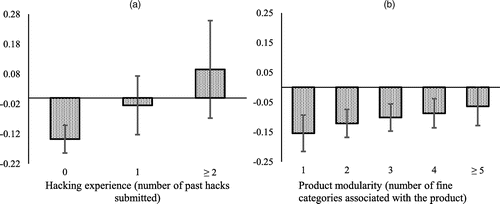
Notes. (a) The effect of hacking experience on the risk difference of exaptation. (b) The effect of product modularity on the risk difference of exaptation. Error bars represent 95% confidence intervals.
Model (6) in Table 3 reports a significantly positive coefficient (0.22, p < 0.05) for ProductFirst × LogProdModularity. Thus, we find support for Hypothesis 3, that working on modular products helps a hacker achieve exaptation, especially when following a product-first search. We similarly plot the marginal effects of ProductFirst at different levels of product modularity, from less modular products occupying their own fine category to products exhibiting greater modularity (associated with multiple fine categories), in panel (b) of Figure 3. We again find a significant negative risk difference (−15%, p < 0.001) when hackers work on a nonmodular product (those associated with only a single fine category). This difference decreases gradually as product modularity increases. As an example, the risk difference reduces to −6% (p = 0.05) for products with five or more fine categories associated with it.
Finally, we see a monotonically increasing effect in panel (b) in Figure 3. We would be careful not to extrapolate the effect to very high levels of product modularity, as extreme levels of modularity can hurt exaptation (Mastrogiorgio and Gilsing 2016). Within the range of products that user–innovators hack (which tend not to reach those levels), modularity broadly aids exaptation.
5. Robustness Tests
We now present analyses that address various assumptions made in our baseline model. In Section 5.1, we test for possible confounding due to unobserved variables at the hacker or product level. Section 5.2 leverages matching methods to ensure that our results are not due to systematic differences in covariates across populations. We also tested our models against product and hacker random effects, as well as a recursive bivariate probit model—these models help handle omitted variable issues, at the cost of some distributional assumptions (which we test where possible). We discuss them in more detail in Online Appendix D. All our results are robust to these alternatives.
5.1. Hacker and Product Characteristics
One variable we did not model directly was the hacker’s motivation. One could argue that the distant search underlying exaptation required more effort and entailed more risks (Nelson and Winter 1982, Helfat 1994, Laursen 2012). As such, distant searching should occur more frequently when the hacker is more strongly motivated. The missing motivation factor could be a confounder if, for example, hacks triggered by problems are also associated with greater motivation (perhaps because the hacker has a current problem that he must solve).
We measured and controlled for the possibility of heterogeneous motivation in three ways. First, we measured the tone of the hack content. The idea was that greater motivation should be reflected in more enthusiasm and, thus, in a more positive tone in the hacker’s text description of the hack. To assess tone, we used the Linguistic Inquiry and Word Count (LIWC) program to analyze hack descriptions and determine their emotional tone (Tausczik and Pennebaker 2010). For each hack description, the program returned a number between zero and 100; higher numbers correspond to text that reflects greater positivity (Pennebaker et al. 2015). We divided the score by 100 to obtain a score that ranged between zero and one (to increase comparability with our next measure). The variable thus created was SentimentScore, and model (7) in Table 4 presents the results for a regression model that includes this variable.
|
Table 4. Alternative Models to Account for Possible Misspecifications at the Product Level (N = 3,029 Hacks)
| Variable | Model (7): Controlling for sentiment (LIWC) | Model (8): Controlling for sentiment (MS Analytics) | Model (9): Controlling for aesthetic motivation | Model (10): Dimensions of experience | Model (11): Interaction with price | Model (12): Interaction with user base size | Model (13): Interaction with product weight | ||
|---|---|---|---|---|---|---|---|---|---|
| ProductFirst(dm) | −0.57*** | −0.57*** | −0.52*** | −0.56*** | −0.56*** | −0.56*** | −0.56*** | ||
| (0.12) | (0.12) | (0.11) | (0.12) | (0.11) | (0.11) | (0.10) | |||
| ProductFirst(dm) × LogHackExperience(dm) | 0.73*** | 0.72*** | 0.72*** | 1.37*** | 0.70** | 0.72*** | 0.69** | ||
| (0.23) | (0.23) | (0.24) | (0.41) | (0.22) | (0.22) | (0.22) | |||
| ProductFirst(dm) × LogExpDiversity(dm) | −0.61 | ||||||||
| (0.47) | |||||||||
| ProductFirst(dm) × LogProdModularity(dm) | 0.22* | 0.22* | 0.22* | 0.22* | 0.31* | 0.18+ | 0.30** | ||
| (0.10) | (0.10) | (0.10) | (0.10) | (0.13) | (0.10) | (0.11) | |||
| Control variables | |||||||||
| LogHackExperience(dm) | −0.09 | −0.09 | −0.08 | 0.03 | −0.09 | −0.10 | −0.09 | ||
| (0.13) | (0.14) | (0.13) | (0.31) | (0.13) | (0.14) | (0.13) | |||
| LogExpDiversity(dm) | −0.12 | ||||||||
| (0.28) | |||||||||
| LogProdModularity(dm) | 0.04 | 0.04 | 0.05 | 0.04 | 0.04 | 0.04 | 0.04 | ||
| (0.08) | (0.08) | (0.08) | (0.08) | (0.07) | (0.08) | (0.07) | |||
| LogProdPrice | −0.13 | −0.13 | −0.13 | −0.13 | −0.13 | −0.13 | −0.13 | ||
| (0.10) | (0.10) | (0.10) | (0.10) | (0.10) | (0.10) | (0.10) | |||
| LogProdUserBase | −0.06 | −0.06 | −0.05 | −0.06 | −0.06 | −0.06 | −0.06 | ||
| (0.04) | (0.04) | (0.04) | (0.04) | (0.04) | (0.04) | (0.04) | |||
| LogProdWeight | −0.05 | −0.05 | −0.05 | −0.05 | −0.04 | −0.05 | −0.05 | ||
| (0.08) | (0.09) | (0.08) | (0.08) | (0.08) | (0.09) | (0.08) | |||
| SentimentScore | −0.22+ | −0.01 | |||||||
| (0.12) | (0.18) | ||||||||
| AestheticMotivation | −0.48*** | ||||||||
| (0.17) | |||||||||
| ProductFirst(dm) × LogProdPrice(dm) | −0.09 | ||||||||
| (0.06) | |||||||||
| ProductFirst(dm) × LogProdUserBase(dm) | −0.09+ | ||||||||
| (0.05) | |||||||||
| ProductFirst(dm) × LogProdWeight(dm) | −0.08+ | ||||||||
| (0.04) | |||||||||
| Year FE | Yes | Yes | Yes | Yes | Yes | Yes | Yes | ||
| Product–category FE | Yes | Yes | Yes | Yes | Yes | Yes | Yes | ||
| Log-likelihood | −1,962.9 | −1,964.0 | −1,948.5 | −1,963.6 | −1,963.1 | −1,962.8 | −1,962.7 | ||
| Pseudo-R2 | 0.065 | 0.065 | 0.072 | 0.065 | 0.065 | 0.065 | 0.065 | ||
Notes. Standard errors (in parentheses) are clustered by product category. FE, fixed effects.
+p < 0.10; *p < 0.05; **p < 0.01; ***p < 0.001.
The LIWC is based on a word-count approach; that is, tone is measured by counting the relative frequency of positive and negative words (Pennebaker et al. 2015). This approach is transparent, validated, and widely used—yet one could argue that it ignores the words’ context in the text. As an alternative, we employed Microsoft’s Sentiment Analysis tool, which analyzes individual words and how they are sequenced. The model is pretrained to measure sentiments against a data set of texts with established sentiment labels (Kotzias et al. 2015) and yields a score that ranges from zero to one.5 Model (8) uses SentimentScore, which is created using this approach. Our findings remain robust to both models.
Second, we tried not only to measure the tone of the hack’s description, but also to devise a more granular categorization of the kinds of motivations that would lead an individual to hack. Here, the concern is less about the strength of a hacker’s motivation (as modeled by our preceding approaches) and more about the type of motivation. Because products serve a utilitarian function and cater to the user’s aesthetic tastes, one might argue that hackers whose activity is driven by aesthetic motivations may be less inclined (than other types of hackers) to create functionally exaptive hacks.
We therefore asked a research assistant to help identify aesthetic motivations by finding hackers who complained about a product looking too dull or plain or who expressed a desire to make its appearance look nicer. In this way, we created an indicator variable, AestheticMotivation, that was set to one if it could be applied to the focal hack and set to zero otherwise. We controlled for this variable in model (9). As expected, the coefficient for AestheticMotivation was significantly negative (−0.48, p < 0.001). We concluded that hackers with identified aesthetic motivations do tend to focus less than other hackers on creating exaptive hacks. Nonetheless, all our findings remain robust.
Third, with respect to Hypothesis 2, one can argue that a hacker’s experience hacking different kinds of products (i.e., experience diversity) can provide additional benefits to reducing functional fixedness, beyond his general hacking experience, by expanding the hacker’s cognitive flexibility in seeing alternatives. We examine this thesis in model (10) of Table 4, by first measuring the hacker’s experience diversity. This is operationalized as the log of the number of broad categories of products in which the hacker has hacked previously; denoted as LogExpDiversity) and included in the model LogExpDiversity alongside the interaction term ProductFirst × LogExpDiversity.
Note that neither the coefficients of LogExpDiversity nor ProductFirst × LogExpDiversity turned out to be statistically significant, whereas all our results remain robust. Thus, consistent with Cattani (2005), who showed evidence of how firms with strong prior domain experience can effectively move into different markets, our results suggest that a hacker’s experience, even in narrow domains, can help improve his transferable skills—for example, mechanical capabilities, understanding material properties, and the cognitive ability to recognize exaptive opportunities. These skills improve the range of feasible and perceivable transformations and can be applied to other kinds of products.
Whereas the above analyses focus on modeling potentially confounding hacker characteristics, our second set of analyses focus on modeling potentially confounding product characteristics. Specifically, we ask whether the true interaction relationship might lie not between a product-first search and the product’s modularity, but, instead, between that search and other product dimensions (e.g., price, user base, and weight). In models (11)–(13) of Table 4, we test for the existence of these additional relationships by adding, one by one, the interaction terms ProductFirst × LogProdPrice, ProductFirst × LogProdUserBase, and ProductFirst × LogProdWeight. We observe a significant and negative interaction (−0.09, p < 0.10) between product-first search and the product’s user base. In other words, hackers engaging in a product-first search may be disinclined to create an exaptive hack when the product’s user base is large. We also find a significantly negative interaction (−0.08, p < 0.10) between product-first search and the product’s weight. Even so, all our results and insights are robust across these models.
5.2. Matching Models
Our empirical results might also be compromised if the distribution of covariates across groups were very uneven. In that case, our results might be driven by extrapolation. Thus, our final analysis involves using matching approaches to ensure that groups are comparable.
A first analysis checked for whether the distribution of covariates differed markedly between the subpopulations of product-first hacks and problem-first hacks. The first two columns of Table 5 report the means and standard deviations of the covariates across these two populations. We can see that problem-first hacks have a higher average LogProdModularity, t(3,029) = 2.94 (p < 0.01), but a lower average LogProdUserBase, t(3,029) = −3.60 (p < 0.01), compared with the population of product-first hacks. That said, other control variables do not seem to be statistically different across the two populations.
|
Table 5. Covariate Distribution Similarity Before and After Matching
| Variable | Before matching | After entropy matching | After PSM matching | |||
|---|---|---|---|---|---|---|
| Product-first | Problem-first | Product-first | Problem-first | Product-first | Problem-first | |
| LogHackExperience | 0.06 | 0.06 | 0.06 | 0.06 | 0.06 | 0.05 |
| (0.28) | (0.24) | (0.28) | (0.28) | (0.28) | (0.25) | |
| LogProdModularity | 0.48 | 0.56 | 0.48 | 0.48 | 0.48 | 0.51 |
| (0.66) | (0.69) | (0.66) | (0.66) | (0.66) | (0.66) | |
| LogProdPrice | 3.59 | 3.65 | 3.59 | 3.59 | 3.59 | 3.63 |
| (1.35) | (1.44) | (1.35) | (1.35) | (1.35) | (1.37) | |
| LogProdUserBase | 2.97 | 2.78 | 2.97 | 2.97 | 2.97 | 2.94 |
| (1.43) | (1.45) | (1.43) | (1.43) | (1.43) | (1.43) | |
| LogProdWeight | 2.24 | 2.21 | 2.24 | 2.24 | 2.24 | 2.32 |
| (1.73) | (1.77) | (1.73) | (1.73) | (1.73) | (1.71) | |
| Year | — | — | Matched | Matched | Includeda | Includeda |
| Product category | — | — | Matched | Matched | Matcheda | Matcheda |
| N | 1,273 | 1,756 | 1,273 | 1,273 | 1,273 | 1,273 |
Note. Reported values are the mean of the population; standard deviation of the population is given in parentheses.
aThe PSM model is estimated by product category, thus ensuring that each product-first hack would be matched to a problem-first hack within the same product category. Year effects on the propensity to engage in product-first hacks are included in the score model.
Given the differences vis-à-vis LogProdModularity and LogProdUserBase, we executed two statistical matching models to ensure covariate balance across the populations. Our first approach was the “entropy balancing” matching method (Hainmueller 2012). Thus, we assigned weights to hacks in the control group (here, problem-first hacks) so that, after this assignment, the population of hacks in the control group would be distributionally similar to hacks in the treatment group (product-first hacks) with regard to the covariates. Our second approach was the “propensity score” matching (PSM) method (Rosenbaum and Rubin 1983). In PSM, we first construct a logit model predicting the propensity or probability of a hack receiving treatment (that is, becoming a product-first hack). Then, for each product-first hack, the approach identifies a hack in the control group that is closest to the product-first hack in its propensity score. Both approaches enabled us to achieve a good balance of covariates (i.e., similarity in the controls) without omitting a large number of observations, which would otherwise be required, but could result in a greater estimation bias in the case of close one-to-one matches (Stuart 2010).
The last four columns of Table 5 present the means and standard deviations for each covariate after matching. After entropy matching, we can see that the matched subpopulations of product-first hacks and problem-first hacks have effectively the same means and standard deviations with respect to the covariate distributions. Matching is not as close using PSM, but it has also eliminated all mean differences between the subpopulations. We present regression results using matched samples in models (14) and (15) (Table 6); all our results are robust to these alternatives.
|
Table 6. Results of Matching Models (N = 2,546 Observations)
| Variable | Model (14) | Model (15) |
|---|---|---|
| Entropy matching | PSM matching | |
| ProductFirst(dm) | −0.56*** | −0.55*** |
| (0.12) | (0.11) | |
| ProductFirst(dm) × LogHackExperience(dm) | 0.99*** | 0.68* |
| (0.31) | (0.29) | |
| ProductFirst(dm) × LogProdModularity(dm) | 0.23* | 0.17+ |
| (0.10) | (0.10) | |
| Control variables | ||
| LogHackExperience(dm) | −0.26+ | −0.12 |
| (0.14) | (0.19) | |
| LogProdModularity(dm) | 0.04 | 0.10 |
| (0.08) | (0.07) | |
| LogProdPrice | −0.17+ | −0.15 |
| (0.09) | (0.13) | |
| LogProdUserBase | −0.08+ | −0.02 |
| (0.04) | (0.04) | |
| LogProdWeight | −0.01 | −0.02 |
| (0.08) | (0.11) | |
| Year FE | Yes | Yes |
| Product–category FE | Yes | Yes |
| Log-likelihood | −1,640.5 | −1,654.2 |
| Pseudo-R2 | 0.068 | 0.061 |
Notes. Standard errors (in parentheses) are clustered by product category. FE, fixed effects. Both samples consist of the entire 1,273 product-first hacks matched to different sets of 1,273 (total weight) of problem-first hacks.
+p < 0.10; *p < 0.05; ***p < 0.001.
6. Perceived Upfront vs. Serendipitously Discovered?
6.1. Exploring the Effects of Hacking Experience and Product Modularity
Our work thus far has laid out conditions (that is, combinations of search triggers, user hacking experience, and product modularity) that yield exaptations in user-innovation settings. Such exaptations can arrive via a search of upfront perceived possibilities or via serendipitous events and unexpected discoveries during the search process that opened earlier unseen possibilities (see Section 2.2). Here, we provide some exploratory evidence on how hacking experience and product modularity affect the search (versus serendipitous) pathways toward achieving exaptations.
To do so, we need to first identify exaptations that were achieved with elements of serendipity, versus those without (i.e., achieved via search). We leverage a keyword/phrase approach to do so. First, the authors read through the descriptions of a sample of a thousand hacks to identify keywords and phrases that indicate elements of serendipity. These words and phrases included items such as “surprise,” “stumble,” “never imagined,” and so on.6
We then labeled exaptive hacks that contained in their text any such words or phrases indicating serendipity as “serendipitous exaptations” (213 exaptive hacks were identified as such, out of 1,514 exaptive hacks); by contrast, the remaining exaptive hacks were labeled “nonserendipitous exaptations.” In this way, we establish a finer measure of our dependent variable into one of three types—serendipitous exaptations, nonserendipitous exaptations, and adaptations. Given that this new dependent variable is categorical with three types, we applied the multinomial logit model (see, e.g., Gulati and Singh 1998 for a similar application). The specification of the multinomial logit model is as follows:
The multinomial logit is an extension of the logit model to deal with dependent variables with more than two types. The binary logit model (our main model) contrasts the probability of exaptations against adaptations (and, thus, have a single set of coefficients, as indicated in Equation (1)). However, we can think of the multinomial logit model as separately contrasting the probability of serendipitous exaptations against the probability of adaptations (Equation (2)) and the probability of nonserendipitous exaptations against the same baseline probability of adaptations (Equation (3)). The multinomial model, thus, produces two sets of coefficients.
We report the results in Table 7. We see significantly negative coefficients for ProductFirst, both when comparing nonserendipitous exaptations versus adaptations (–0.56, p < 0.001) and serendipitous exaptations versus adaptations (–0.61, p < 0.001). Therefore, the probability of achieving exaptations (of either kind) is lower under product-first search. We therefore establish robust support for Hypothesis 1.
|
Table 7. Multinomial Logistic Regression Analysis of the Tendency to Create Serendipitous and Nonserendipitous Exaptive Hacks (Both Against Adaptive Hacks) (N = 3,029 Hacks)
| Variable | Model (18) | |
|---|---|---|
| Nonserendipitous exaptations | Serendipitous exaptations | |
| ProductFirst(dm) | −0.56*** | −0.61** |
| (0.11) | (0.22) | |
| ProductFirst(dm) × LogHackExperience(dm) | 0.69** | 1.00 |
| (0.24) | (0.65) | |
| ProductFirst(dm) × LogProdModularity(dm) | 0.17 | 0.52* |
| (0.11) | (0.27) | |
| Control variables | ||
| LogHackExperience(dm) | −0.05 | −0.45 |
| (0.15) | (0.34) | |
| LogProdModularity(dm) | 0.05 | −0.04 |
| (0.09) | (0.07) | |
| LogProdPrice | −0.15 | −0.05 |
| (0.11) | (0.14) | |
| LogProdUserBase | −0.04 | −0.16*** |
| (0.04) | (0.05) | |
| LogProdWeight | −0.04 | −0.08 |
| (0.09) | (0.10) | |
| Year FE | Yes | Yes |
| Product–category FE | Yes | Yes |
| Log-likelihood | −2,557.2 | |
| Pseudo-R2 | 0.058 | |
Notes. Standard errors (in parentheses) are clustered by product category. FE = fixed effects.
*p < 0.05; **p < 0.01; ***p < 0.001.
For Hypothesis 2, we find that the coefficient for the interaction term ProductFirst × LogHackExperience is significantly positive for nonserendipitous exaptations (0.69, p < 0.01), but not for serendipitous exaptations (p = 0.13). Therefore, as we argue in Section 2.4, experience largely counters the effect of functional fixedness by expanding the range of functional possibilities that a user sees upfront—it aids search when triggered first by a product. We see statistically weaker evidence of hacking experience improving the chance of making serendipitous encounters during tinkering.
By contrast, for Hypothesis 3, we find that the coefficient for the interaction term ProductFirst × LogProdModularity is not significant for nonserendipitous exaptations (p = 0.13), but is significantly positive for serendipitous exaptations (0.52, p = 0.05). We therefore find support for our arguments in Section 2.5 that increased product modularity increases the probability of making serendipitous encounters during tinkering. We also see statistically weaker evidence that increased product modularity helps reduce functional fixedness.
Overall, the results here suggest that our moderators follow different pathways to increase exaptations under product-first search. Specifically, whereas hacking experience appears to increase hackers’ abilities to perceive a wider range of uses (i.e., it reduces functional fixedness), increased product modularity increases the likelihood of users making serendipitous discoveries during tinkering. All these are valid pathways to achieve novelty.
6.2. Novelty of Different Kinds of Exaptations
Finally, we ask whether the different kinds of exaptations (product versus problem-first and serendipitous versus nonserendipitous) are systematically different in their novelty. To answer this question, we engaged a separate group of MTurk observers to help assess the novelty of the different kinds of exaptations, following a similar setup as described in Section 3.2 (see Online Appendix B for details). We first asked the MTurk observers to examine a randomly chosen hack. We then presented an image of the original IKEA product alongside the hacked outcome and posed the following question: “Rate the degree to which you think the hack is novel (that is, the degree to which you find the idea rare, ingenious, imaginative, or surprising).” The observer rated based on a three-level Likert scale, with 1 = low, 2 = medium, and 3 = high. We collected a total of 8,629 ratings regarding the hacks in our data (average of 2.9 ratings per hack). We then averaged the novelty ratings for each hack to create a measure of novelty for the presented hack.
We tabulated the average novelty ratings of these different kinds of exaptations in Table 8. Notice that, although the group of serendipitous product-first exaptations has the highest average novelty rating (mean novelty = 2.01, standard deviation (S.D.) = 0.56), the differences with the other groups are all small. All the differences between groups are, in fact, not statistically significant. For example, the largest difference we see—between the group of serendipitous product-first exaptations (mean novelty = 2.01) and nonserendipitous product-first exaptations (mean novelty = 1.96)—is not statistically significant (t = 0.68, p = 0.49). By contrast, all these different groups of exaptations are rated to be significantly more novel than the group of adaptive hacks (mean novelty = 1.78, S.D. = 0.52). These results provide support for the argument that user–innovators can generate novel exaptations not only via product-first searching, but also via problem-first searching. They can do so serendipitously or nonserendipitously.
|
Table 8. Rated Novelty of the Different Kinds of Exaptations (N = 1,510 Exaptive Hacks)
| Type of hacks | Product-first | Problem-first | Overall |
|---|---|---|---|
| All exaptations | 1.97 | 1.98 | 1.98 |
| (0.55) | (0.51) | (0.52) | |
| Serendipitous exaptations | 2.01 | 1.99 | 2.00 |
| (0.56) | (0.50) | (0.52) | |
| Nonserendipitous exaptations | 1.96 | 1.98 | 1.97 |
| (0.55) | (0.51) | (0.52) |
Notes. Numbers represent group means, and numbers in parentheses represent group standard deviation. Four hacks are missing novelty ratings due to the randomization of hacks presented to observers.
7. Discussion
Exaptation has been responsible for serendipitous discoveries, for the bifurcation of technologies into new trajectories, and for the creation of new markets (see, e.g., Levinthal 1998 and Meyers 2011). Despite its importance, exaptation remains one of the “little studied evolutionary mechanisms in the history of species, ecosystems, and artifacts (e.g., technologies)” (Andriani and Cattani 2016, p. 115). The present study examines the interactions among search triggers, hacking experience, and product modularity to theorize about the microfoundations of this phenomenon in the user-innovation context.
The results confirm our first hypothesis of a relationship between search triggers and exaptation. Specifically, users, with reduced functional fixedness when engaging in problem-first search and a heightened awareness of various problems that may have no readily adaptable solutions, would imply that they are more likely to generate exaptations following problem-first (compared with product-first) search.
Our second hypothesis concerns how user–innovators’ experience with hacking can overcome the hindrance of functional fixedness when engaging in product-first search. Findings are consistent with the notion that hacking experience can increase a hacker’s set of “transferable skills” (Cattani 2005, p. 564). Those skills—from a deeper knowledge of material properties, the cognitive ability to perceive a wider range of alternative product uses, and the mechanical adeptness to affect modifications—are non-domain-specific and can be beneficial across different settings.
Finally, we find statistical support for our final hypothesis that product modularity moderates the product-first trigger’s effect on exaptation. Product modularity gives users a greater propensity to achieve exaptations under product-first search. Further analysis suggests that, instead of improving the range of perceived uses (i.e., reduced functional fixedness) that comes with greater hacking experience, the benefits of product modularity come more from its “tinkerability,” which enhances the chances of serendipitous discoveries of new component properties or novel structures as the hacker tinkers with the product.
7.1. Implications
The present paper offers several contributions to understanding exaptation. First, we shed light on how search triggers affect exaptive outcomes in user–innovation. Prior research (e.g., Andriani and Cattani 2016) has not clearly distinguished between product- versus problem-first searching and has tended to focus on exaptations originating from product-first search. Grounding our theorization in the user-innovation literature, which has highlighted important asymmetries in perceiving and understanding needs between users vis-à-vis inventors and designers, we present evidence that both triggers can be viable paths in the user-innovation context. Our work reveals that, in the context of user innovation, one should not uncritically assume that exaptive hacks are achieved by “pushing” a product to fit different needs. Instead, we find that exaptation is more often achieved by “pulling” different products to serve the user’s needs.
This result is likely specific to the user-innovation context and arises in large part due to the vast heterogeneity in needs that user–innovators face. The clarity of problems to user–innovators, and lack of easily adaptable commercial solutions because such needs can be unfathomable or unperceived by producers (von Hippel 1998), means that user–innovators can engage in problem-first search to reach exaptations. Producers’ inability to perceive user needs clearly also implies that such a path toward exaptation may be unfeasible to designers and inventors. Indeed, Andriani and Kaminska’s (2021) in-depth investigation of how coal-tar-based exaptations occur shows that many inventors’ exaptations may have a product-first origin. Our results, however, do have implications for firms. Echoing the importance of discovering latent needs in product design (Beckman 2020), firms should capitalize on this asymmetry (that is, leverage the user-innovation community to inform their blind spots on needs; Afuah and Tucci 2012) to gain the “requisite diversity of exaptive innovation” (Andriani et al. 2017, p. 334) if they desire greater rates of exaptation.
Second, we delve deeper into the relationship between hacking experience and exaptation. Researchers have started to theorize ways to encourage foresight and sensitivity to opportunities for exaptation (see, e.g., Cattani 2005, Garud et al. 2016, and Cattani and Mastrogiorgio 2021) through organizational practices or the design of knowledge repositories. The present study confirms that hacking experience matters; indeed, exaptations are more likely to be made by hackers who have developed experience in creative product modification and gained transferable skills. Although our setting does not allow us to explore fully questions about the kind of experience that matters (Crilly 2015), we lend support to the idea that makerspaces (Lou and Peek 2016) that offer user–innovators a space to tinker is a crucial step toward building hands-on experience and fostering novel user-innovation outcomes.
Third, we augment the discussion on how modularity affects exaptation (cf. Andriani and Carignani 2014 and Mastrogiorgio and Gilsing 2016). More specifically, prior research shows that a high degree of product modularity facilitates product recombination and reassembly (e.g., Fleming and Sorenson 2001). The present work shows that product modularity increases the frequency of exaptations under product-first search. The ability to cognitively and physically decompose and reconfigure modular products enhances the likelihood of serendipitous encounters during the hacking process.
Finally, our work adopts a behavioral view of search, whereby users can be constrained upfront by varying degrees of functional fixedness in their perceptions of hack possibilities, but can also discover new possibilities by further tinkering and experimenting with the product. Our work, thus, deviates from strong “rational search” assumptions typically embedded in classical search models. In such models, actors are assumed to be able to visualize the level of ruggedness of the search landscape, allowing them to account for the uncertainties when engaging in search (Cattani and Mastrogiorgio 2021) or even to adopt optimal search strategies toward viable novel outcomes (see Felin and Kauffman 2021). With this deviation, we join the increasing push in both the exaptation and the new-product-development literature to consider search less as a rational process, but one that can be hindered by perceptual limitations; that is, not all opportunities can be “known beforehand” (Loch 2017, p. 591), and many remain as “shadow options awaiting recognitions” (Cattani and Mastrogiorgio 2021, p. 181).
7.2. Limitations
Although our research has generated several notable findings, we must acknowledge some limitations. First, we recognize that our data set does not include a complete list of hacking and exaptation possibilities. Like prior papers based on field studies of user innovation, our analysis is constrained to the set of hacks that users decide to share and for which they leave a digital trail (in our case, on IKEAHackers.net). Therefore, our work also shares the limitation with prior work that our insights might not generalize to unposted hacks. Indeed, analyzing the processes through which less mature ideas (that are likely represented in unposted hacks) to see when and how they transform into concrete hacks can provide important corroborative evidence to behavioral theories of innovation and exaptation (our work and, e.g., Loch 2017 and Felin and Kauffman 2021).
Relatedly, like prior studies of user innovation, we do not have detailed measures of the hackers’ characteristics. Although we test the robustness of our insights to the presence of unobserved confounders with a hacker-level random-effects model, identification from the model carries distributional assumptions. Additional studies across different contexts can help further validate our insights or expose how other dimensions of user characteristics affect exaptation probabilities.
Finally, our measure of exaptation is limited; we opted for a simple, yet robust, indicator variable to capture whether a hack is exaptive, and we buttress our findings with measures of whether those exaptations entail serendipity or are perceived as novel. Nonetheless, finer conceptions of the dimensions of exaptations would be possible if each hacked product’s bundle of functions could be identified and calibrated. We leave these opportunities for refinement to future research. We hope that the work reported in the present study will spur users to undertake future research on exaptation.
7.3. Conclusion
In sum, our paper presents a clear conceptual demarcation between product-first and problem-first search. In the former, a user identifies the product to be hacked before seeking out a viable need. In the latter, the user defines the problem before seeking out a viable solution.
Doing so allows us to theorize and empirically test whether product-first or problem-first search is more likely to lead to exaptations. Drawing insights from engineering product design (Jansson and Smith 1991, Cardoso and Badke-Schaub 2011) and the user-innovation literature (von Hippel 2005), we theorize and show that users are likelier, on average, to generate exaptations through problem-first search. Such a result, although not fully anticipated by existing theories of exaptation, is more apparent when seen from the angle of design theory, which emphasizes identification of user needs (Beckman 2020), or from the angle of user innovation, which emphasizes the rich heterogeneity of those needs (von Hippel 2005).
On the flip side, our work carries implications for product-design and user-innovation research as well. Leaning on exaptation research on the role of actor experience and product modularity, we theorize and show conditions where product-first searching becomes equally adept at generating exaptation. This implies that a heavy focus on problem-first in the existing product-design and user-innovation research may be ignoring conditions that may favor a product-first approach and would likewise miss out on significant opportunities for generating exaptations.
Our work, therefore, illuminates important links between these different strands of research and contributes to them. We believe that our demarcation of the two paths (and showing that both are viable ways to generate exaptation) will open doors to future research that can help to integrate views from different bodies of the literature to advance our understanding on the interactions between users, firms, products, and the environment in the generation of exaptation.
The authors benefited greatly from the constructive comments from Department Editor Sridhar Tayur, the anonymous associate editor, and three reviewers. The authors thank Jules Yap for discussions and allowing them to use data from IKEAhackers.net; Yuwei Wu, Fangshi Lin, Jialin Liu, and Ronald Harris for research assistance; and Eric von Hippel, who provided suggestions to early drafts. Remaining errors are their own.
2 The IKEA product used in the hack was identified by two research assistants, who read the posts and labeled the product (e.g., EXPEDIT bookcase). We then relied on keyword matching and Google search to locate products on IKEA’s U.S. website. This approach allowed us to exploit Google search’s ability to correct for minor spelling errors and to identify rebranded products. For example, Google pointed to the KALLAX bookcase when searching for EXPEDIT, which is an older, but nearly identical, version of KALLAX (Rodriguez 2014).
3 In Section 3.3, we describe how the hacker’s initial trigger to hack is obtained.
4 We use a “log plus one” formulation to avoid taking a log of zero when variables have a zero lower bound. The exact log formula used is given in Table 1.
5 https://docs.microsoft.com/en-us/machine-learning-server/python/samples-microsoftml-python
6 Where possible, we used the root words to capture variants—for example, surprise, surprises, surprising, etc. The full list of phrases that we used to indicate serendipitous elements are those that indicate surprise (e.g., surprise / shock / revelation / discovery / serendipity / lucky / by chance); those that indicate that the idea was originally unanticipated (e.g., never thought of / never imagined / turned out to be / got an idea / inspiration / got me thinking / then I remembered / idea came); and those that indicate suddenness of the idea arrival (e.g., aha / sudden / immediately saw / lightning struck / bulb went off / dawned on me / idea struck / idea was born).
References
- (2012) Crowdsourcing as a solution to distant search. Acad. Management Rev. 37(3):355–375.Crossref, Google Scholar
- (1964) Notes on the Synthesis of Form (Harvard University Press, Cambridge, MA).Google Scholar
Amazon Mechanical Turk (2017) Tutorial: Reconciling worker responses. Accessed February 6, 2021, https://blog.mturk.com/tutorial-reconciling-worker-responses-280c96f1a696.Google Scholar- (2014) Modular exaptation: A missing link in the synthesis of artificial form. Res. Policy 43(9):1608–1620.Crossref, Google Scholar
- (2016) Exaptation as source of creativity, innovation, and diversity: Introduction to the special section. Indust. Corporate Change 25(1):115–131.Crossref, Google Scholar
- (2021) Exploring the dynamics of novelty production through exaptation: A historical analysis of coal tar-based innovations. Res. Policy. 50(2):104171.Crossref, Google Scholar
- (2017) Measuring exaptation and its impact on innovation, search, and problem solving. Organ. Sci. 28(2):320–338.Link, Google Scholar
- (2020)
Exaptation and beyond: Multilevel function evolution in biology and technology . La Porta CAM, Zapperi S, Pilotti L, eds. Understanding Innovation Through Exaptation, The Frontiers Collection (Springer, Cham, Switzerland), 69–84.Crossref, Google Scholar - (2000) Design Rules: The Power of Modularity. (MIT Press, Cambridge, MA).Crossref, Google Scholar
- (2020) To frame or reframe: Where might design thinking research go next? California Management Rev. 62(2):144–162.Crossref, Google Scholar
- (1995) Seeking the ideal form: Product design and consumer response. J. Marketing 59(3):16–29.Crossref, Google Scholar
- (2004) Evocation processes by novice and expert designers: Toward stimulating analogical thinking. Creativity Innovation Management 13(3):176–186.Crossref, Google Scholar
- (2001) Applying the design structure matrix to system decomposition and integration problems: A review and new directions. IEEE Trans. Engrg. Management 48(3):292–306.Crossref, Google Scholar
- (2019) Optimizing and satisficing: The interplay between platform architecture and producers’ design strategies for platform performance. MIS Quart. 43(Fall):1249–1277.Google Scholar
- (2011) Editorial: Fixation or inspiration: Creative problem solving in design. J. Creative Behav. 45(2):77–82.Crossref, Google Scholar
- (2021)
On the origins of the airframe revolution . Cattani G, Mastrogiorgio M, eds. New Developments in Evolutionary Innovation: Novelty Creation in a Serendipitous Economy (Oxford University Press, Oxford, UK), 28–54.Crossref, Google Scholar - (2005) Preadaptation, firm heterogeneity, and technological performance: A study on the evolution of fiber optics, 1970-1995. Organ. Sci. 16(6):563–580.Link, Google Scholar
- (2006) Technological pre-adaptation, speciation, and emergence of new technologies: How Corning invented and developed fiber optics. Indust. Corporate Change 15(2):285–318.Crossref, Google Scholar
- (2021)
Organizing for unprestateability: An option-based approach . Cattani G, Mastrogiorgio M, eds. New Developments in Evolutionary Innovation: Novelty Creation in a Serendipitous Economy (Oxford University Press, Oxford, UK), 169–184.Crossref, Google Scholar - (2014) Currency unions, product introductions, and the real exchange rate. Quart. J. Econom. 129(2):529–595.Crossref, Google Scholar
- (2021) Anchored differentiation: The role of temporal distance in the comparison and evaluation of new product designs. Organ. Sci. 32(6):1523–1541.Link, Google Scholar
- (2018) On styles in product design: An analysis of US design patents. Management Sci. 64(3):1230–1249.Link, Google Scholar
- (2016) Exaptation dynamics and entrepreneurial performance: Evidence from the Internet video industry. Indust. Corporate Change 25(1):181–198.Crossref, Google Scholar
- (2015) Fixation and creativity in concept development: The attitudes and practices of expert designers. Design Stud. 38:54–91.Crossref, Google Scholar
- (2018)
An integrated model of dynamic problem solving within organizational constraints . Reiter-Palmon R, Kennel VL, Kaufman JC, eds. Individual Creativity in the Workplace, Explorations in Creativity Research (Academic Press, New York), 53–81.Crossref, Google Scholar - (2010) Mastering technologies in design-driven innovation. Res. Tech. Management 53(2):12–23.Crossref, Google Scholar
- (2009) Serendipity in entrepreneurship. Organ. Stud. 30(7):735–753.Crossref, Google Scholar
- (2004) The economic impact of exaptation. J. Evolutionary Econom. 14(1):69–84.Crossref, Google Scholar
- (1945)
On problem-solving . Dashiell JF, ed. Psychological Monographs (The American Psychological Association, Inc., Washington, DC), 58(5):1–113.Crossref, Google Scholar - (2012) Managing delegated search over design spaces. Management Sci. 58(3):606–623.Link, Google Scholar
- (2004) Modularity and innovation in complex systems. Management Sci. 50(2):159–173.Link, Google Scholar
- (2021)
The search function and evolutionary novelty . Cattani G, Mastrogiorgio M, eds. New Developments in Evolutionary Innovation: Novelty Creation in a Serendipitous Economy (Oxford University Press, Oxford), 113–143.Crossref, Google Scholar - (2014) Economic opportunity and evolution: Beyond landscapes and bounded rationality. Strategic Entrepreneurship J. 8:269–282.Crossref, Google Scholar
- (2016) Factor markets, actors, and affordances. Indust. Corporate Change 25(1):133–147.Crossref, Google Scholar
- (1996) Imagery, creativity, and emergent structure. Consciousness Cognition 5(3):381–393.Crossref, Google Scholar
- (2001) Technology as a complex adaptive system: Evidence from patent data. Res. Policy 30:1019–1039.Crossref, Google Scholar
- (2003) Satisfying heterogeneous user needs via innovation toolkits: The case of Apache Security Software. Res. Policy 32:1199–1215.Crossref, Google Scholar
- (2016) Technological exaptation: A narrative approach. Indust. Corporate Change 25(1):149–166.Crossref, Google Scholar
- (2004) Product modularity: Measures and design methods. J. Engrg. Design 15(1):33–51.Crossref, Google Scholar
- (1979) The Ecological Approach to Visual Perception (Houghton Mifflin, Boston).Google Scholar
- (1982) Exaptation—A missing term in the science of form. Paleobiology 8(1):4–15.Crossref, Google Scholar
- (2010) A study on situated cognition: Product dissection’s effect on redesign activities. Proc. ASME Design Engrg. Tech. Conf., vol. 6 (American Society of Mechanical Engineers, New York), 617–626.Google Scholar
- (1998) The architecture of cooperation: Managing coordination costs and appropriation concerns in strategic alliances. Admin. Sci. Quart. 43(4):781–814.Crossref, Google Scholar
- (2012) Entropy balancing for causal effects: A multivariate reweighting method to produce balanced samples in observational studies. Polit. Anal. 20(1):25–46.Crossref, Google Scholar
- (2003) Affordances, dynamic experience, and the challenge of reification. Ecol. Psych. 15(2):149–180.Crossref, Google Scholar
- (1994) Evolutionary trajectories in petroleum firm R&D. Management Sci. 40(12):1720–1747.Link, Google Scholar
- (1991) Design fixation. Design Stud. 12(1):3–11.Crossref, Google Scholar
- (2018) IKEA’s success can’t be attributed to one charismatic leader. Harvard Bus. Rev. 1–5. Accessed September 17, 2020, https://hbr.org/2018/02/ikeas-success-cant-be-attributed-to-one-charismatic-leader.Google Scholar
- (2017) In pursuit of product modularity: Impediments and stimulants. Calif. Management Rev. 59(4):97–113.Crossref, Google Scholar
- (2000) Investigations (Oxford University Press, New York).Crossref, Google Scholar
- (2008) Crowdsourcing user studies with Mechanical Turk. Proc. 26th Annu. SIGCHI Conf. Human Factors Comput. Systems CHI ’08 (Association for Computing Machinery, New York), 453–456.Google Scholar
- (2015) From group to individual labels using deep features. KDD’15 Proc. 21st ACM SIGKDD Internat. Conf. Knowledge Discovery Data Mining (Association for Computing Machinery, New York), 597–606.Google Scholar
- (2007)
Semantics: Meanings and contexts of artifacts . Schifferstein HNJ, Hekkert P, eds. Product Experience (Elsevier, New York), 353–376.Google Scholar - (2003) How open source software works: “Free” user-to-user assistance. Res. Policy 32(6):923–943.Crossref, Google Scholar
- (2012) Keep searching and you’ll find: What do we know about variety creation through firms’ search activities for innovation? Indust. Corporate Change 21(5):1181–1220.Crossref, Google Scholar
- (1998) The slow pace of rapid technological change: Gradualism and punctuation in technological change. Indust. Corporate Change 7(2):217–248.Crossref, Google Scholar
- (2010) A study of design fixation, its mitigation and perception in engineering design faculty. J. Mechanical Design 132:041003.Crossref, Google Scholar
- (2017) Creativity and risk taking aren’t rational: Behavioral operations in MOT. Production Oper. Management 26(4):591–604.Crossref, Google Scholar
- (2012) No entailing laws, but enablement in the evolution of the biosphere. Soule T, ed. GECCO’12 Proc. 14th Internat. Conf. Genet. Evolutionary Comput. Companion (Association for Computing Machinery, New York), 1379–1392.Google Scholar
- (2016) By the numbers: The rise of the makerspace. Popular Sci. (February 23), https://www.popsci.com/rise-makerspace-by-numbers/.Google Scholar
- (1931) Reasoning in humans. J. Comparative Psych. 12(2):181–194.Crossref, Google Scholar
- (2019) Unleashing the Crowd: Collaborative Solutions to Wicked Business and Societal Problems (Palgrave Macmillan, Cham, Switzerland).Google Scholar
- (2020)
The role of affordance landscapes in exaptive innovations . La Porta CAM, Zapperi S, Pillotti L, eds. Understanding Innovation Through Exaptation, Frontiers Collection (Springer, Cham, Switzerland), 85–92.Crossref, Google Scholar - (2016) Innovation through exaptation and its determinants: The role of technological complexity, analogy making & patent scope. Res. Policy 45(7):1419–1435.Crossref, Google Scholar
- (2012) Innovation relies on the obscure: A key to overcoming the classic problem of functional fixedness. Psych. Sci. 23(3):215–218.Crossref, Google Scholar
- (2011) Happy Accidents: Serendipity in Major Medical Breakthroughs in the Twentieth Century (Arcade, New York).Google Scholar
- (1976) The structure of “unstructured” decision processes. Admin. Sci. Quart. 21(2):246–275.Crossref, Google Scholar
- (2000)
Evolutionary phenomena in technological change . Ziman J, ed. Technological Innovation as an Evolutionary Process (Cambridge University Press, New York), 52–65.Google Scholar - (2020) Noncognitive microfoundations: Understanding dynamic capabilities as idiosyncractically refined sensitivities and predispositions. Acad. Management Rev. 45(2):280–303.Crossref, Google Scholar
- (1982) An Evolutionary Theory of Economic Change (The Belknap Press of Harvard University Press, Cambridge, MA).Google Scholar
- (2012) The IKEA effect: When labor leads to love. J. Consumer Psych. 22(3):453–460.Crossref, Google Scholar
- (2015) Innovation by patients with rare diseases and chronic needs. Orphanet J. Rare Dis. 10(1):1–9.Crossref, Google Scholar
- (2014) Inside the Turk: Understanding Mechanical Turk as a participant pool. Current Directions Psych. Sci. 23(3):184–188.Crossref, Google Scholar
- (2015) Linguistic Inquiry and Word Count (LIWC). (Pennebaker Conglomerates, Austin, TX).Google Scholar
- (2018) Renewing research on problemistic search—A review and research agenda. Acad. Management Ann. 12(1):208–251.Crossref, Google Scholar
- (1993) Fixation effects: Do they exist in design problem solving? Environ. Planning B Planning Design 20(3):333–345.Crossref, Google Scholar
- (2007) Design architecture and introduction timing for rapidly improving industrial products. Manufacturing Service Oper. Management 10(1):149–171.Link, Google Scholar
- (2008) Does component sharing help or hurt reliability? An empirical study in the automotive industry. Management Sci. 54(5):922–938.Link, Google Scholar
- (1994) Incentives to innovate and the sources of innovation: The case of scientific instruments. Res. Policy 23(4):459–469.Crossref, Google Scholar
- (2014) IKEA discontinues Expedit shelf, launches slimmed-down version that saves resources. Accessed September 17, 2020, https://inhabitat.com/ikea-slims-down-and-renames-popular-expedit-shelving-system/.Google Scholar
- (1983) The central role of the propensity score in observational studies for causal effects. Biometrika 70(1):41–55.Crossref, Google Scholar
- (2009) Learning from IKEA hacking: “I’m not one to decoupage a tabletop and call it a day.” CHI’09 Proc. SIGCHI Conf. Human Factors Comput. Systems (Association for Computing Machinery, New York), 419–422.Google Scholar
- (2016)
Building blocks of the maker movement: Modularity enhances creative confidence during prototyping . Plattner H, Meinel C, Leifer L, eds. Design Thinking Research: Understanding Innovation (Springer, Cham, Switzerland), 141–154.Crossref, Google Scholar - (1996) Modularity, flexibility, and knowledge management in product and organization design. Strategic Management J. 17(Special Issue: Knowledge and the Firm):63–76.Crossref, Google Scholar
- (2000) Toward a general modular systems theory and its application to interfirm product modularity. Acad. Management Rev. 25(2):312–334.Crossref, Google Scholar
- (1998) Configuration design: An integrated approach using grammars. J. Mechanical Design 120(1):2–9.Crossref, Google Scholar
- (2019) Most innovation originates from customers, not companies. Conversation. Accessed November 5, 2020, https://theconversation.com/most-innovation-originates-from-customers-not-companies-122663.Google Scholar
- (2007) The accidental entrepreneur: The emergent and collective process of user entrepreneurship. Strategic Entrepreneurship J. 1:123–140.Crossref, Google Scholar
- (1999) Product platform design: A graph grammar approach. Proc. ASME 1999 Design Engrg. Tech. Conf., vol. 3 (American Society of Mechanical Engineers, New York), 211–222.Google Scholar
- (1969) The Sciences of the Artificial, 3rd ed. (The MIT Press, Cambridge, MA).Google Scholar
- (1973) The structure of ill structured problems. Artificial Intelligence 4(3–4):181–201.Crossref, Google Scholar
- (2020) How do you search for the best alternative? Experimental evidence on search strategies to solve complex problems. Management Sci. 66(3):1395–1420.Link, Google Scholar
- (2004) The misalignment of product architecture and organizational structure in complex product development. Management Sci. 50(12):1674–1689.Link, Google Scholar
- (2010) Matching methods for causal inference: A review and a look forward. Statist. Sci. 25(1):1–21.Crossref, Google Scholar
- (2010) The psychological meaning of words: LIWC and computerized text analysis methods. J. Language Soc. Psych. 29(1):24–54.Crossref, Google Scholar
- (1995) The role of product architecture in the manufacturing firm. Res. Policy 24(3):419–440.Crossref, Google Scholar
- (1988) Lead user analyses for the development of new industrial products. Management Sci. 34(5):569–582.Link, Google Scholar
- (2009) Design-Driven Innovation (Harvard Business Press, Boston).Google Scholar
- (1998) The influence of unity and prototypicality. J. Consumer Res. 24(4):374–385.Crossref, Google Scholar
- (1994) “Sticky information” and the locus of problem solving: Implications for innovation. Management Sci. 40(4):429–439.Link, Google Scholar
- (1998) Economics of product development by users: The impact of “sticky” local information. Management Sci. 44(5):629–644.Link, Google Scholar
- (2005) Democratizing Innovation (MIT Press, Cambridge, MA).Crossref, Google Scholar
- (2011)
Innovation by users . Uldall A, ed. Innovation: Perspectives for the 21st Century (Banco Bilbao Vizcaya Argentaria, S.A, Madrid), 181–197.Google Scholar - (2016) Problem solving without problem formulation. Organ. Sci. 27(1):207–221.Link, Google Scholar
- (2017) Designing for diagnosticity and serendipity: An investigation of social product-search mechanisms. Inform. Systems Res. 28(2):413–429.Link, Google Scholar

