


Private Equity, Consumers, and Competition: Evidence from the Nursing Home Industry
Abstract
This paper studies how product market competition shapes the impact of private equity (PE) acquisitions on consumers. We examine nursing home buyouts and observe that PE-owned facilities exhibit greater competitive sensitivity: competing more aggressively when competitive incentives are strong and exploiting market power more aggressively when competitive incentives are weak. We find that PE-owned facilities are more sensitive to local market competition—even when comparing effects only across facilities purchased as part of the same acquisition—and are more responsive to a pro-competitive policy helping consumers compare facilities. This suggests that regulators should attend to the competitive sensitivity of acquirers and the concentration of markets where acquisitions occur, as well as consider pro-competitive policies to mitigate or even reverse PE’s potentially adverse consequences.
This paper was accepted by Carrie Chan, healthcare management.
Funding: This work was supported by the UCLA Price Center for Entrepreneurship and Innovation and the UCLA Fink Center for Finance and Investment.
Supplemental Material: The online appendix and data files are available at https://doi.org/10.1287/mnsc.2023.01486.
1. Introduction
The private equity (PE) industry has grown more than eightfold in the last two decades, reaching a record $3.9 trillion of asset value in 2019 (McKinsey and Company 2020). This growth has persisted in spite of an overwhelmingly negative public perception that PE firms prioritize short-term returns over the welfare of other stakeholders such as customers and employees. The narrative of PE as insidious pervades media coverage, with headlines such as “This Is Your Life, Brought to You by Private Equity” (Daniel et al. 2016) and “What Is Private Equity, and Why Is It Killing Everything You Love?” (Stewart 2020). Many legislators and regulators share these concerns. For example, in November 2019, the House Financial Services Committee held a hearing entitled “America for Sale? An Examination of the Practices of Private Funds” to discuss “whether Congress should take action to prevent the predatory practices of some private equity firms.”
In contrast to the public consensus, the academic literature offers mixed evidence regarding the impact of PE on non-financial stakeholders. Prior work has shown PE ownership to improve food safety (Bernstein and Sheen 2016), workplace safety (Cohn et al. 2021), and product offerings (Fracassi et al. 2022). Although PE firms often do destroy jobs, losses are largely offset by productive reallocation and new job creation (Davis et al. 2014). On the other hand, PE firms have also been shown to raise prices (Chevalier 1995) and lower quality (Matsa 2011) in supermarkets, as well as in higher education, an industry where firms can exploit large government subsidies and the opacity of product quality (Eaton et al. 2020). In this paper, we revisit the question of whether PE investments harm other stakeholders and demonstrate that competition shapes the impact of PE ownership on consumers.
Unlike the literature examining consumer outcomes, the literature studying the impact of PE ownership on operating performance is in greater agreement. PE owners have been consistently shown to improve targets’ productivity (Lichtenberg and Siegel 1990, Harris et al. 2005, Davis et al. 2014), valuation (Kaplan 1989), performance metrics (Bergström et al. 2007, Boucly et al. 2011), innovation success (Lerner et al. 2011), and management practices (Bloom et al. 2015).
Distinct from the operational effectiveness typically studied in the PE literature, another important dimension of managerial quality is responsiveness to competitive incentives. Recent literature has shown that many managers inadequately adjust their policies in response to competition (DellaVigna and Gentzkow 2019, Arcidiacono et al. 2020). Given PE’s aptitude for managing operations, we may also expect that PE owners exhibit greater sensitivity to competition, improving performance by better tailoring targets’ policies to the level of competition they face.
Indeed, we find that PE owners exhibit greater “competitive sensitivity,” responding more aggressively to variation in competitive incentives across both geography and time. This induces significant heterogeneity in the impact of PE ownership on consumers, even within the same industry. In fact, in our setting, consumers benefit from PE ownership in competitive markets but are harmed in concentrated ones. We therefore explore how pro-competitive policy interventions can be used to regulate the impact of PE acquisitions. We examine a policy intervention that strengthened the salience of product quality and find that it elicited much larger quality improvements from PE-owned firms than non-PE firms. These results suggest that by stimulating greater competition, regulators can mitigate or even reverse the potential detrimental effects of PE ownership on consumers.
We perform our analysis by studying PE acquisitions in the nursing home industry. Dramatic increases in healthcare buyouts in recent decades have sparked concern from regulators (U.S. Government Accountability Office 2010), legislators (U.S. House of Representatives 2007, U.S. Senate 2008, Cumming 2019), and the press (Duhigg 2007a, Whoriskey and Keating 2018, Elk 2019, Sanger-Katz et al. 2019, Kolhatkar 2020). For a number of reasons, these concerns have been particularly strong in the nursing home industry, where PE firms acquired 12% of the nation’s nearly 16,000 facilities (U.S. Government Accountability Office 2010).
Nursing homes serve a population of over 1.3 million elderly and infirm residents who may be particularly vulnerable if PE-owned facilities prioritize profits over patient care. Moreover, as the vast majority of nursing care is publicly financed through Medicare and Medicaid, taxpayers share a vested interest in the quality of patient care. Chairman of the Subcommittee on Health, Rep. Pete Stark (D-CA) articulated these sentiments in a 2007 congressional hearing that largely regarded the prominent PE acquisition of major nursing home chain HCR ManorCare:
The industry is publicly supported, and therefore must be held accountable to the public for the care it provides. The nursing home chains should be striving to improve care and not cut corners to increase profits at the expense of the seniors and people with disabilities.—Rep. Pete Stark
More than a decade later, scrutiny of PE ownership in the industry persists. In 2019, members of Congress sent letters to the executives of several PE firms with investments in the nursing home industry (including Carlyle Group, Formation Capital, Fillmore Capital Partners, and Warburg Pincus LLC) to request additional information about the transactions. More recently, media outlets and academic researchers have asked whether PE firms exacerbated the death toll of COVID-19 (Braun et al. 2020, Gandhi et al. 2020, Goldstein et al. 2020), and the Biden Administration has highlighted PE ownership as a key driver of poor-quality care (The White House 2022).
In examining these concerns, we focus on whether the effect of PE ownership on quality varies with competitive incentives. We emphasize competition in quality rather than prices because nursing home reimbursement rates are largely set unilaterally by the government (Gaynor 2006, Lu et al. 2021). As nursing home markets are highly localized, we utilize local market concentration as a source of geographic variation in the strength of competitive incentives.
We measure each facility’s quality of care by its level of staffing per patient-day. There are three primary types of nursing staff: registered nurses (RNs), licensed practical nurses (LPNs), and certified nursing assistants (CNAs). RNs receive the most training prior to certification and command the highest wages, whereas CNAs receive the least training and the lowest wages. Direct care from these staff represents the primary service that patients receive at nursing homes. Correspondingly, it also constitutes the largest fraction of facilities’ expenditures. Academics (Institute of Medicine 2004, Clarke and Donaldson 2008, Castle and Anderson 2011, Harrington et al. 2016) and policymakers (Centers for Medicare and Medicaid Services 2019) alike have emphasized the importance of adequate staffing at nursing homes, as staffing levels—especially RN staffing levels—have been shown to substantially impact patient health (Friedrich and Hackmann 2021, Lu and Lu 2022).
We use a matched difference-in-differences approach to estimate the impact of PE ownership on staffing for facilities facing different levels of local market concentration. At all levels, PE owners shift the composition of staffing toward highly trained registered nurses. The magnitudes of these effects, however, are not uniform: PE owners increase the share of RN staffing by 20.4% of the mean in highly-competitive markets and by only 8.2% of the mean in less-competitive markets. These shifts in composition do not necessarily signify increased expenditure on staffing: in less-competitive markets, the additional expenditure on RNs is entirely offset by reductions in expenditure on LPNs and CNAs. In highly-competitive markets, however, total expenditure increases by $2.08 per patient-day, an amount sufficient to increase RN care by 16.1% of the mean. To demonstrate that our results are not driven by PE investors differentially selecting facilities across levels of market competition, we also isolate the effects of PE ownership within the largest multi-facility acquisitions. By estimating separate treatment effects within each deal, we show that the impact of PE ownership differs by local market competition even when comparing effects only across facilities purchased as part of the same acquisition. Taken together, these results suggest that PE’s impact on consumers depends on the concentration of the market in which an acquisition occurs. Therefore, policymakers concerned about potential adverse effects on consumer stakeholders should be attentive to whether PE targets are located in concentrated or non-concentrated markets.
We extend this analysis by considering whether policy tools can take advantage of PE managers’ heightened responsiveness to competitive incentives. To do this, we examine how PE-owned facilities responded differently to the introduction of the Five-Star Quality Rating System (“five-star system”) by the Centers for Medicare and Medicaid Services (CMS) in December 2008. The five-star system presented consumers with a set of digestible quality ratings on a five-point scale for each facility. By allowing consumers to quickly and easily evaluate quality, the CMS endeavored to both guide patients to better facilities and encourage facilities to compete on quality (Zhao 2016). Staffing was one of three primary measures published by the system. This staffing rating took into account both a facility’s RN staffing level and its total staffing level (i.e., total hours from RNs, LPNs, and CNAs together). In counting RN hours toward both measures, the system placed particular emphasis on RNs. Moreover, the rating system required high levels of RN staffing to receive a high overall rating, even with high total staffing levels. The system also implicitly de-emphasized LPNs by treating them equivalently to CNAs, who are less costly to employ.
We find that PE-owned facilities were acutely responsive to the incentives of the five-star system and increased their share of RN staffing by 1.8 percentage points (16.7% of the mean share) more than comparable non-PE facilities did. Consistent with strategic behavior from PE owners, this shift was driven by an increase in RNs (17.2% of the mean) and a reduction in LPNs (5.2% of the mean). Overall, PE-owned facilities differentially increased their staffing expenditure by $45,074 at the typical facility, enough to increase RN staffing by 9.1% of the mean. Moreover, PE’s strong response to the five-star system was not restricted to staffing. We likewise find that PE-owned facilities improved more on health inspections and other quality measures that were also evaluated by the five-star system.
As demand is likely more elastic to ratings where consumers have many facilities to compare, one might expect that PE-owned facilities in competitive markets were the most responsive to the incentives of the five-star system. Consistent with this, PE-owned facilities in the least-concentrated markets differentially increased their RN share of staffing by 3.3 percentage points (30.4% of the mean), whereas PE-owned facilities in the most concentrated markets increased their RN share by just 1.7 percentage points (15.4% of the mean).
That competitive incentives shape the effect of PE ownership on consumers is most apparent when contrasting our most- and least-competitive settings. The effect of PE ownership on total staffing expenditure is more favorable by 10.3% of the mean in the least-concentrated markets after the introduction of the five-star system relative to the earliest PE acquisitions in the most-concentrated markets. For the typical facility, this difference amounts to $243,793, or enough to increase RN staffing by 49.3% of the mean.
Our results suggest PE’s heightened competitive sensitivity as a potential resolution to seemingly conflicting evidence in the literature on the impact of PE on non-financial stakeholders. This may explain, for example, why PE-induced operational changes benefit consumers in the restaurant industry (Bernstein and Sheen 2016)—where competition is fierce and product quality is easily discernible—but harms consumers in higher education (Eaton et al. 2020)—where quality is opaque and switching costs are high. In essence, the differing results across previous studies may be because of differing competitive incentives in the industries they study. Rather than performing a meta-analysis of PE acquisitions in multiple industries, we exploit the large degree of spatial and temporal variation in competitive incentives within the nursing home industry. Studying a single industry allows us to ensure that the variation in our measures of competition is not confounded by other industry-specific factors.
Our study is not unique in examining PE acquisitions in the nursing home industry or among healthcare providers more broadly.1 Most notably, contemporaneous work by Gupta et al. (2024) considers acquisitions between 2004 and 2015 and finds that PE ownership increased the short-term mortality of Medicare patients. These findings complement our own: whereas we do find that PE owners often reduce quality of care, this occurs primarily when competitive incentives are weak, whereas PE owners improve quality of care when competitive incentives are strong.2 Our findings caution against an overly simplified portrayal of PE as either uniformly beneficial or uniformly harmful to consumers, even within a single industry. Moreover, they demonstrate the potential for competition as a tool to mitigate or even reverse the adverse impacts of PE ownership on consumers. Concerned policymakers should therefore pay careful attention to existing competitive incentives and consider encouraging competition as a means to regulate, or even harness, PE.
Whereas we specifically analyze PE acquisitions, our finding that acquiring firms may demonstrate different competitive sensitivity than their targets has important broader implications for competition policy. Federal guidelines (U.S. Department of Justice and Federal Trade Commission 2023), case law (New York v. Deutsche Telekom AG 2020), and academic research (Baker 2002, Kaplow and Shapiro 2007) already provide a basis for considering a firm’s “maverick” inclination toward competition. Our findings complement other work on managers’ varying “strategic sophistication” (Goldfarb and Xiao 2011, Hortaçsu et al. 2019) in suggesting that regulators should also consider competitive sensitivity. Unlike maverick firms, competitively sensitive firms are not necessarily strong competitors. Rather, they are more likely to exploit available market power to the detriment of consumers, but they are also more likely to compete aggressively to the benefit of consumers when competition is strong. Consequently, antitrust regulators might update guidelines already highlighting the importance of financial resources and managerial aptitude (e.g., U.S. Department of Justice 2020) to consider the relative competitive sensitivities of acquirers and targets.
2. Industry Background
We examine the impact of PE ownership on nursing homes—facilities certified by the CMS to provide a variety of healthcare services, including skilled nursing, rehabilitative therapy, and other medical care requiring an institutional setting (42 U.S.C. §1395i and §1396r). Facilities are broadly certified and therefore serve a broad range of patients, from short-stay patients requiring exclusively post-acute rehabilitative therapy to long-stay patients requiring treatment for chronic conditions such as Alzheimer’s disease and related dementia. There are approximately 15,600 nursing homes in the United States serving 1.3 million residents (Harris-Kojetin et al. 2019). In this section, we describe a few key features of the industry that are relevant to our study, including public financing, concerns about quality, and the increasing prevalence of PE acquisitions.
2.1. Public Expenditure on Nursing Homes
Nursing home care is largely paid for by the government. In our data, Medicare and Medicaid, respectively, cover 11.9% and 67.9% of patient-days. Moreover, these figures understate Medicare’s share of expenditures, as Medicare typically covers costly post-acute rehabilitative therapy care, which it reimburses at a significantly higher rate than Medicaid and private-pay per-diems. Medicaid’s large share of patient-days is due to the fact that all patients over the age of 65 qualify for Medicaid coverage of their nursing home care once their private financial resources are exhausted. Long-term care insurance is uncommon (Brown and Finkelstein 2007), and private-pay rates are substantial: Loomer et al. (2021a) estimate a national average per-diem of $224 for a private room between 2008 and 2010. As a result, long-stay patients are extremely likely to become eligible for Medicaid during their stay (Hackmann 2019).
There are a few important implications of Medicare and Medicaid funding the vast majority of nursing home care. First, firms are largely unable to compete on price, as Medicare and Medicaid reimbursement rates are set unilaterally by the government. Consequently, we expect facilities to compete on quality rather than price. The second implication is that the public has a vested interest in the quality of care in nursing homes. This interest, in conjunction with the fact that nursing homes serve a particularly vulnerable population, has led to significant public scrutiny, especially surrounding private equity acquisitions. We discuss these concerns in the sections below.
2.2. Concerns About Quality
Quality of care has long been a concern in the nursing home industry. In 1960, the newly established Subcommittee on the Problems of the Aged and Aging summarized “the condition of American nursing homes” (U.S. Senate 1960):
Every troubled son or daughter, anxious to find a good nursing home for a father or mother, is dismayed, and often shocked, by the inadequacy, the hopelessness, inherent in most nursing homes. Those who have wandered from home to home seeking decent facilities, a therapeutic environment, and a life-restoring force pulsing through its system too often have given up in frustration. Or with no other solution feasible or possible, they may consign a parent or relative to an inadequate nursing home, but with troubled conscience and feelings of guilt.
Similar sentiments have been expressed regularly over the last 60 years by regulators (U.S. Government Accountability Office 2003, 2019), legislators (U.S. Senate 1974, 2008), academics (Pillemer and Moore 1989, Harrington et al. 2016), and the media (Duhigg 2007a, Davies 2018). Regulators have taken numerous steps to improve quality of care, which have been met with mixed success. These include mandating minimum staffing levels (Lin 2014), raising Medicare and Medicaid reimbursement rates (Hackmann 2019, Gandhi et al. 2024), surveying facilities annually (Gandhi et al. 2025), and establishing ombudsman programs (Berish et al. 2019). We examine a quality rating system implemented by CMS to help guide consumers to higher-quality facilities and induce competition between facilities on quality.
2.2.1. Five-Star Quality Rating System.
In an attempt to help prospective residents make informed decisions when choosing between nursing homes, CMS began publishing characteristics and health survey statistics online for each facility in October 1998. The tool was aptly titled “Nursing Home Compare,” as it allowed consumers the opportunity to compare facilities on key dimensions of quality. In June 2000, CMS added staffing data to their website, and between April 2002 and November 2004, other quality measures—including frequencies of infections, pain, pressure sores, loss of activities of daily living, use of physical restraints, and excessive weight loss—were introduced to the website as well. Whereas these data were detailed and easily available online, estimates from previous studies suggest that these preliminary efforts to inform consumers had little impact on where they actually chose to receive care (Stevenson 2006, Grabowski and Town 2011, Werner et al. 2012).
One reason that the Nursing Home Compare website initially failed to steer consumers to higher-quality facilities may have been that the provided information was too complex for many consumers to understand. On December 18, 2008, CMS introduced the “Five-Star Quality Rating System” (henceforth, “five-star system”), which synthesized the quality of care data into a few easy-to-interpret measures. The five-star system assigned scores to each facility along a five-point scale in three domains—nursing staff hours per patient-day, results from health inspection surveys, and other quality measures—as well as a single overall score. This new presentation was significantly easier for consumers to digest, and Werner et al. (2016) find that the five-star system greatly increased the salience of these measures for consumers: “After the star-based rating system was released, 1-star facilities typically lost 8% of their market share and 5-star facilities gained over 6% of their market share.” This shift in consumer elasticity of demand with respect to five-star ratings motivated many facilities to compete on these measures (Zhao 2016). In addition, Brickley et al. (2021) suggest that the new system influenced nursing home governance, finding administrator turnover to be increasingly sensitive to ratings. Most strikingly, they find the ratings effect on administrator exits to be larger in more competitive markets. Analogously, if PE-managed facilities are more attuned to the competitive pressures induced by consumer salience, then they should respond particularly aggressively to the introduction of the five-star system.
2.3. Private Equity Acquisitions
Private equity acquisitions in the healthcare industry have grown more prevalent and consequential in recent decades (Figure 1(a)). According to PitchBook, PE firms were investing just $356 million of capital in 10 U.S. healthcare deals in 1990. By 2019, those figures had ballooned to $67.5 billion and 951 deals, respectively. These 2019 deals represent 15.9% of PE capital investments, up from 8.5% in 1990. PE deals are now pervasive and extend to virtually all facets of the healthcare industry, including physician practices, dialysis clinics, pharmaceuticals, medical devices, skilled nursing facilities, and home health, to name a few (e.g., Robbins et al. 2008, Gondi and Song 2019, Tan et al. 2019, Zhu et al. 2020, Singh et al. 2022).
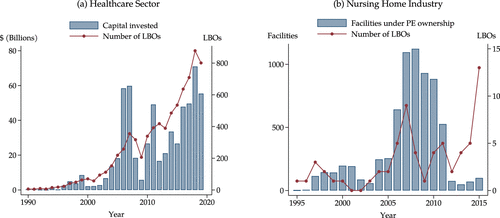
Notes. Counts of healthcare deals and levels of corresponding capital investments are computed using PitchBook. Nursing deals are identified using a combination of PitchBook, Irving Levin, Preqin, Capital IQ, and SDC Platinum. In keeping with our subsequent regression analysis, a facility’s PE ownership is assumed to last four years to avoid bias from unobserved PE exits (see Section 4.1).
Whereas PE deals regularly draw public scrutiny, their healthcare acquisitions have been particularly salient because of their prevalence, size, and potential adverse effects on stakeholders. Nowhere are these concerns more clear than with PE acquisitions in the nursing home industry, owing to a public perception that PE firms are likely to exploit aging and infirm patients and provide low-quality care financed by the government.
Scrutiny of such PE acquisitions accelerated during the mid-2000s, when buyout activity in the industry grew rapidly (Figure 1(b)). The most prominent of these leveraged buyouts (LBOs) was the Carlyle Group’s $6.3 billion acquisition of the nation’s largest nursing home operator, HCR ManorCare. Less than three months after the deal was announced, the New York Times reported that earlier PE investments in nursing chains led to significant cost-cutting at the expense of patient care (Duhigg 2007a). This report and the subsequent public outcry—including protests from Service Employees International Union, the nation’s second-largest labor union—prompted both congressional investigations and inquiries by state regulators.
In recent decades, academic researchers have also scrutinized the impact of private equity acquisitions on healthcare providers. The findings are quite mixed, with some studies finding positive effects (Bruch et al. 2020, Gandhi et al. 2020, Bruch et al. 2023, Gao et al. 2025, La Forgia and Bodner 2025), others finding negative effects (Pradhan et al. 2015, Braun et al. 2021, Gupta et al. 2024), and quite a few finding positive effects in some dimensions but negative effects in others (Stevenson and Grabowski 2008, Cerullo et al. 2022, Richards and Whaley 2024). Our paper most aligns with this third strand of literature by emphasizing the heterogeneity in the impact of PE ownership owing to competitive incentives.
3. Data, Measures, and Sample Construction
We construct a detailed facility-year panel of all CMS-certified skilled nursing facilities from 1993 to 2017. We obtain nursing home data from various CMS data sets incorporating information from annual surveys, resident assessments, and provider filings.3 These detail key facility characteristics, including occupancy, bed size, ownership type, reshospitalization rates, and chain affiliation, as well as staffing levels and aggregated resident demographics and characteristics. An important caveat to these rich data is that some are, notably, self-reported by facilities.4 For example, resident assessments used in some quality measures are filled out by nursing home staff. Likewise, CMS data on staffing are self-reported based on staffing levels in the weeks immediately prior to unannounced health inspections.
Starting from these nursing home data, we take the following steps to construct our sample.
3.1. Identifying Private Equity Acquisitions
To identify PE deals in the nursing home industry, we perform targeted searches in Capital IQ, PitchBook, Preqin, and SDC Platinum. These databases are frequently used by researchers and practitioners to identify private equity transactions. In addition, we supplement these sources with the Deal Search Online platform from Irving Levin Associates, which reports M&A deals in senior care and healthcare markets. In order to ensure at least one pre- and one post-acquisition year of data, we require that deals be completed between 1994 and 2016. We also perform independent searches to identify and exclude deals miscategorized as PE or corresponding to providers other than nursing homes (e.g., assisted living facilities). Most facilities are acquired by PE firms as part of larger chains, but some are acquired in standalone transactions or purchases of several independent facilities at once. Online Appendix A.1 provides additional details on how we identify and verify our sample of private equity acquisitions.
We link these deals to our nursing home data by matching on facility and chain names. As target facilities sometimes experience multiple PE acquisitions during our sample period, we include only the first transaction for each target. Applying these restrictions results in a sample of 69 deals and 1,455 facilities.
3.2. Local Demographics and Measures of Market Concentration
Much of the literature on nursing homes defines markets and constructs controls at the level of county or hospital referral region (Hackmann 2019, Begley and Weagley 2022, Gupta et al. 2024). However, nursing home markets are much more localized than that: the median resident chooses a facility within seven kilometers of her home (Hackmann 2019), and demand is very elastic to distance (Gandhi 2023). We advance the existing literature by constructing both controls and measures of local market competition that better respect the demographic and competitive topology implied by this high degree of elasticity to distance.
3.2.1. Local Demographic Controls.
Private equity is financially incentivized to be attentive to market forces that could affect the financial performance of their acquisitions. One such factor might be demographic trends near a facility. For example, if a neighborhood’s population is aging, this might lead to an increase in local demand for nursing homes, making nearby facilities more attractive as acquisition targets. To address this, we construct controls for the local demographics near each facility to include in our regressions.
We use tract-level data from the U.S. Census Bureau to construct measures of local demographics that aggregate over Census tracts with centroids within 10 kilometers of a facility. Our first measure is the total Medicare-age population within these nearby tracts because these older Americans represent the vast majority of potential nursing home residents. Our second measure is the weighted average of the median income for these nearby tracts, weighting each tract by its Medicare-age population. Finally, our third measure is the analogously-weighted average of the percentage of the population that is non-White for the nearby tracts.
3.2.2. Market Concentration.
We eschew the norm of constructing a Herfindahl–Hirschman Index (HHI) at the county level (Grabowski and Town 2011, Hackmann 2019) and instead develop a customized facility-level competition measure reflecting the highly localized nature of nursing home competition. To do this, we follow a two-step process. In the first step, we construct HHIs for each Census tract, capturing the competition over tract residents by facilities within 10 kilometers. In the second step, we measure the intensity of competition that each facility faces (i.e., a “facility-level HHI”) by taking the population-weighted average of the HHIs in the tracts where the facility competes. Figure 2 depicts the key steps in constructing our measure. Online Appendix A.2 elaborates on our methodology by providing the underlying equations and additional details.
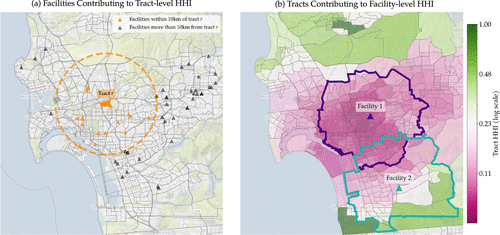
Notes. (a) A hypothetical Census tract r (in orange), with nearby facilities marked by triangles. Dashed lines indicate the 10-kilometer radius surrounding the tract centroid. Facilities within the 10-kilometer boundary (in orange) are included in the tract-level HHI measure. (b) The tracts contributing to a facility-specific HHI measure. Tracts with centroids less than 10 kilometers from a facility are included in that facility’s market. Color-coded outlines illustrate the sets of included tracts for two example facilities.
3.3. Outcome Measures
3.3.1. Staffing.
Our primary outcome of interest is facilities’ staffing decisions. As facilities vary in capacity and occupancy, academics and regulators typically measure staffing in hours of care provided per patient-day. All hours of care, however, are not equal, as nursing staff can vary substantially in their certification and corresponding compensation. In decreasing order of training and certification, there are three types of nursing staff: registered nurses, licensed practical nurses, and certified nursing assistants. As of May 2019, the national mean hourly wages for RNs, LPNs, and CNAs were $37.24, $23.32, and $14.77, respectively (U.S. Bureau of Labor Statistics 2020). To ease interpretation of changes in staffing composition, we scale hours of nurse staffing into dollar-denominated expenditures using these hourly wages. See Online Appendix C.10 for alternative scalings using local nursing wages. In addition to examining staff levels, we also examine the fraction of care provided by RNs. This ratio is often called “skill mix” and is commonly used to measure the emphasis that a facility places on employing highly skilled caregivers.
We emphasize staffing as a primary measure of quality for a number of reasons. First, staffing may be the single most important proxy for facility quality, with recent CMS guidance reinforcing this view: “[n]urse staffing has the greatest impact on the quality of care nursing homes deliver…” (Centers for Medicare and Medicaid Services 2019). The importance of staffing levels is also supported by a large literature (e.g., Clarke and Donaldson 2008), with RN care being the most important for clinical care (Lin 2014, Friedrich and Hackmann 2021). Furthermore, nursing homes provide residential care, and staff affect the quality of life for residents beyond clinical outcomes. Additional staff may therefore also improve patient well-being in ways that are difficult to measure.
Second, staffing also represents one of the largest expenses for nursing homes: providing the national average level of nursing care in 2000 would have cost $42.34 per patient-day in wages alone, which was 37% of Medicaid’s average reimbursement rate.5 Even this likely understates the magnitude of staffing costs, as it excludes benefits, overtime, and other costs. Given the weight of staffing costs on a facility’s income statement, staffing decisions are likely the most financially impactful choices made by a nursing home.
Practical considerations also lead us to prioritize staffing as our outcome of interest. Most importantly, staffing levels are directly adjustable, so observed changes in staffing reflect decisions on the part of the facility owner, rather than random chance. Whereas facilities may adjust their efforts to improve along other dimensions of quality—such as patient health outcomes—the actual realizations of these other measures are stochastic. Another practical consideration is that staffing data are available for our full sample period (1993–2017), whereas many other quality measures are available only from 2005 onward.
3.3.2. Other Measures of Quality.
Although staffing measures are our primary outcomes of interest, we also assess the effects of PE acquisitions on two sets of non-staffing measures that correspond to the non-staffing dimensions of the five-star quality ratings: health inspections and quality measures.
The first set of non-staffing measures derives from a facility’s performance in health inspections. These include unannounced health inspections that occur approximately annually (“standard inspections”) and health inspections initiated by resident complaints (“complaint inspections”). Health inspections are used to determine whether a facility is deficient in any of more than 150 federal requirements for care. The most common deficiency citation is for infection control violations (Loomer et al. 2021b). Examples of other deficiency citations include failure to minimize the risk of accidents and failure to respond appropriately to reports of resident mistreatment. The five-star system also assigns points to each deficiency, depending on severity, scope, and the number of times the inspector must revisit a facility to confirm correction. We aggregate these points into health inspection outcomes at the facility-year level. Online Appendix B.2 provides additional details on these health inspection scores.
Our second set of non-staffing outcome measures derive from the health-based “quality measures” (QMs) component of the five-star rating system. Each quarter since 2005, CMS has used resident assessment and claims data to compute and publish key health outcomes statistics for each facility’s short- and long-stay residents as quality measures. Examples include the percentage of long-stay residents with new or worsening pressure ulcers and the percentage of short-stay residents who were rehospitalized. With the introduction of the five-star system, CMS began converting performance on seven long-stay and three short-stay QMs into point values that could be added together and ultimately aggregated into star ratings. In our empirical analysis, we examine overall performance on these QMs underlying the initial five-star rating, as well as performance disaggregated by long- and short-stay measures. Online Appendix B.3 includes the full list of quality measures used and describes how CMS converts the quality measures to points.
3.3.3. Star Ratings.
With the introduction of the five-star system, CMS began publishing staffing, health inspection, and QM star ratings online and updating them monthly. To the extent possible, we also use these ratings as dependent variables in our analysis. To match the frequency of other facility-level variables, we aggregate to the facility-year level. Importantly, as the published ratings are only available from 2009 onward, we impute the corresponding ratings for prior years using the 2009 rating formulas. See Online Appendix B.5 for details on imputation.
The staffing star rating is comprised of two subcomponent star ratings. The first is the “RN staffing rating,” which evaluates a facility’s hours of RN care per patient-day. The second is the “total staffing rating,” which evaluates a facility’s total hours of care per patient-day across RNs, LPNs, and CNAs. CMS aggregates these two sub-component star ratings to construct an “overall staffing rating.” This comprehensive evaluation is the primary measure of staffing on Nursing Home Compare. Note that, consistent with their emphasis on RNs, CMS also publishes RN staffing ratings online, but, notably, does not publish total staffing ratings. Section 5.1 and Online Appendix B.1 describe the construction of five-star ratings in greater depth.
3.4. Constructing the Matched Control Group
Our primary empirical strategy contrasts the evolution of PE-acquired facilities with comparable nonacquired facilities using a difference-in-differences approach. Accordingly, it is important to choose an appropriate control group. A natural candidate might be the set of all nursing homes never acquired by PE. However, PE firms do not randomly acquire facilities, raising concerns that targets are substantially different than other facilities. We examine this in Online Appendix A.4 and observe few, if any, striking differences between the groups. Target and non-target facilities appear fairly similar along most dimensions, including facility-level HHI, with the most notable difference being that targets utilize fewer CNA hours. This implies that PE is not systematically acquiring facilities in ways that are easily discernible. One explanation for this is that a substantial selection of target facilities on observable characteristics may be difficult because many acquisitions are of chains with many facilities of varying size, location, and quality. In fact, acquisitions are often of large healthcare companies whose holdings span the healthcare sector, including hospitals, surgery centers, assisted living facilities, outpatient rehabilitation clinics, hospice centers, and home health agencies.
Nonetheless, to mitigate concerns regarding selection into treatment, we follow the PE literature in comparing each acquired facility to a control group of observably similar non-buyout facilities (Boucly et al. 2011, Bernstein et al. 2019, Cohn et al. 2021, Fracassi et al. 2022). We construct a control group by matching (with replacement) each target facility with up to five similar facilities that never experienced PE ownership in our sample. A target’s matches are its nearest neighbors from among candidate control facilities, based on observed similarity (Mahalanobis distance) in RN, LPN, and CNA hours of care per patient-day in the year prior to buyout. We also require all matches to satisfy certain minimum standards. First, a control facility must be observed at least once prior to and after the LBO date of the associated target. This ensures that we can always measure the change surrounding the acquisition date for control facilities. Second, control facilities must be within a standard deviation of the target facility for all match variables. Third, control facilities must be for-profit and fall within the same tercile of local market concentration (Online Appendix A.2) as the target to which they are matched. Fourth, we limit our sample to facilities that have staffing levels that exceed the federal minimums imposed by the Omnibus Budget Reconciliation Act (OBRA) of 1987 by 5% of the sample standard deviation. This restriction ensures that the facilities in our sample have the ability to lower staffing levels without running afoul of federal minimum staffing rules. We also require that each matched cohort has a target facility and at least three matched control facilities. Finally, we exclude any facilities from our analysis that were ever not-for-profit or government-run. This ensures that our analysis only compares profit-motivated facilities between the treatment and control groups.
Our matched sample includes 1,001 target facilities from 58 PE deals and 4,461 matched control facilities. Of the 1,001 PE-acquired facilities in our sample, we are able to pair 596 (59.5%) with a full set of five matched controls. Whereas our panel is not perfectly balanced, we observe the full event window for the vast majority of facilities (Online Appendix A.5.3).
Table 1 reports summary statistics for our matched sample in the year of matching.6 PE targets and their matched controls are similar along many characteristics, despite matching taking place only based upon measures of staffing. For example, the two groups have similar capacities and similar patient acuity, where the latter measures the extent to which the patients at nursing homes need care. Likewise, PE targets and their matched controls are located in communities with similar demographics, as measured by Medicare-age population, income, and racial composition. Along some dimensions, such as occupancy and the share of Medicaid residents, the mean of the PE sample is statistically distinguishable from the mean of the matched sample. However, such differences are small in magnitude relative to the means and standard deviations. Moreover, in comparing the two samples across many dimensions, we expect some may be statistically different by random chance. Table A.5.2 in the Online Appendix breaks these statistics out separately by tercile of local market concentration. Within the tercile of market competition, buyout and matched control facilities are again largely comparable.
|

Table 1. Comparing Buyout and Control Facility Characteristics Pre-LBO
| PE sample (1,001 facilities) | Matched sample (4,461 facilities) | |Difference|/ Standard deviation | |||||
|---|---|---|---|---|---|---|---|
| Mean | Median | Standard deviation | Mean | Median | Standard deviation | ||
| Total beds | 122.63 | 120.00 | 43.83 | 122.35 | 119.00 | 51.16 | 0.01 |
| Occupancy % | 88.10 | 91.03 | 10.17 | 86.89 | 90.48 | 11.55 | 0.10* |
| RN expenditure | 12.74 | 11.12 | 7.08 | 12.70 | 11.20 | 6.93 | 0.01 |
| LPN expenditure | 18.17 | 17.49 | 5.61 | 18.12 | 17.58 | 5.38 | 0.01 |
| CNA expenditure | 30.09 | 29.14 | 7.15 | 30.17 | 29.26 | 6.83 | 0.01 |
| Staffing expenditure | 61.01 | 58.37 | 13.86 | 60.99 | 58.87 | 13.41 | 0.00 |
| RN hours % | 10.79 | 9.87 | 4.96 | 10.75 | 9.88 | 4.83 | 0.01 |
| Acuity index | 9.94 | 11.24 | 4.01 | 9.88 | 11.15 | 3.98 | 0.02 |
| Medicaid share | 61.53 | 65.63 | 18.97 | 64.94 | 67.74 | 18.28 | 0.19* |
| Rehospitalization % | 20.15 | 19.63 | 5.73 | 20.48 | 20.00 | 5.86 | 0.06 |
| HHI | 0.31 | 0.21 | 0.28 | 0.30 | 0.20 | 0.27 | 0.05 |
| Population 65+ | 26.76 | 16.91 | 29.13 | 29.10 | 15.49 | 41.65 | 0.06 |
| Income (thousands) | 74.04 | 62.65 | 41.93 | 72.00 | 62.80 | 35.76 | 0.06 |
| % Non-white | 22.38 | 17.59 | 18.69 | 22.34 | 17.54 | 18.93 | 0.00 |
Notes. This table summarizes facility characteristics for PE and non-PE nursing homes in the year prior to acquisition. The RN, LPN, and CNA expenditure variables are measured in dollars per patient-day and are scaled from the corresponding hours per patient-day using 2019 average hourly wages from the Bureau of Labor Statistics.
*, statistical significance at the 5% level.
That our targets and controls are observably similar supports (but does not guarantee) our key identifying assumption: that absent PE ownership, the staffing expenditures of the two groups would have evolved similarly over time. We discuss this assumption further and present supporting evidence in Section 4.3.
4. PE’s Heightened Sensitivity to Local Market Concentration
In this section, we study whether PE managers interact differently with local market competition than their non-PE counterparts. We find evidence that PE-owned facilities demonstrate greater competitive sensitivity when investing in quality. Specifically, PE-owned facilities increase quality in highly competitive markets while doing little or even decreasing quality in non-competitive ones.
4.1. The Average Impact of Private Equity Ownership
Though our primary interest lies in testing whether PE owners respond differently to local market competition, it is still valuable to start by assessing the average impact of PE ownership on nursing home quality. To do this, we use a matched difference-in-differences estimator. In other words, we estimate the impact of PE ownership by comparing changes surrounding PE acquisition in the quality of target facilities to contemporaneous changes in the quality of control facilities. The following regression formalizes this intuition:
Our regression specification also includes a number of controls. First, is a vector of local demographic controls as described in Section 3. Second, is a cohort-year fixed effect that non-parametrically controls for common time series variation within each cohort. Importantly, unlike simple year fixed effects, cohort-year fixed effects can control for time-varying trends that differ across match cohorts. For example, temporal variation in RN wages is likely to differentially affect facilities according to their levels of RN staffing. Insofar as our matching ensures similar RN staffing for all facilities within a match cohort, is sufficiently flexible to absorb this variation. Third, is a facility-cohort fixed effect that controls for facility-level differences within each cohort. This ensures that is identified by comparing within-facility changes over the event window for the cohort’s target facility to within-facility changes over the same window for its matched control facilities. Note that because our fixed effects are cohort-specific and our matched controls are never under PE ownership, our two-way fixed effects estimator is insulated from concerns about variation in treatment timing (Goodman-Bacon 2021). We cluster our standard errors at the chain-level because acquisitions frequently encompass entire chains (Abadie et al. 2023).
We use facility staffing measures as our dependent variables (). Panel A of Table 2 presents the estimates of from estimating Equation (1). Our estimates suggest moderate reductions in LPN expenditure per patient-day and CNA expenditure per patient-day (3.0% and 2.1% of the means, respectively). The estimates also indicate a substantial (13.7% of the mean) increase in RN expenditure per patient-day. Correspondingly, the RN percentage of staffing increases on average by 1.5 percentage points, which is 13.9% of the mean. The overall effect on total staffing expenditure per patient-day, however, is small (0.9% of the mean) and statistically insignificant. Taken together, these results suggest that on average, PE owners don’t dramatically reduce or increase staffing expenditure. Rather, we find that on average, they shift staffing toward highly-certified RNs and away from less-certified LPNs and CNAs. We show in Section 5 that this shift in staff composition likely reflects PE’s heightened sensitivity to the incentives of the five-star system.
|
Table 2. Staffing and Market Concentration
| Expenditure | Composition | ||||
|---|---|---|---|---|---|
| RN | LPN | CNA | Total | RN % | |
| Panel A: Specification 1 | |||||
| 1.767 | −0.541 | −0.647 | 0.583 | 1.511 | |
| (0.772) | (0.178) | (0.254) | (0.755) | (0.563) | |
| Panel B: Specification 2 | |||||
| 2.902 | −0.230 | −0.594 | 2.078 | 2.213 | |
| (0.930) | (0.367) | (0.541) | (0.961) | (0.702) | |
| 1.248 | −0.809 | −0.853 | −0.403 | 1.262 | |
| (0.705) | (0.175) | (0.355) | (0.693) | (0.564) | |
| 0.937 | −0.572 | −0.406 | −0.040 | 0.887 | |
| (0.541) | (0.217) | (0.428) | (0.837) | (0.369) | |
| Observations | 42,616 | 42,616 | 42,613 | 42,613 | 42,611 |
| 0.74 | 0.72 | 0.60 | 0.70 | 0.71 | |
| Mean | 12.91 | 18.18 | 30.44 | 61.53 | 10.86 |
| Standard deviation | 7.81 | 6.01 | 8.10 | 14.38 | 5.73 |
Notes. The variable RN represents the approximate cost corresponding to the number of RN hours of care that a facility provides per patient per day. Observed hours of care are translated to expenditures using 2019 mean hourly wages. Analogously, LPN and CNA measure LPN and CNA dollars of care provided per patient per day. The outcome Total measures the cost of providing the total observed level of care (in dollars per patient per day) based on 2019 hourly staff wages. The composition variable RN % is the percentage of total care hours provided by RNs. Controls include the three local demographic controls described in Section 3.2. All specifications include cohort-year fixed effects (controlling for common time series variation within each matched cohort) and cohort-facility fixed effects (controlling for facility-level differences within each matched cohort). Standard errors are provided in parentheses and are clustered by nursing home chain. In each specification, an observation is a facility-year.
4.2. Differential Response of PE Managers to Market Concentration
We next examine whether PE-managed facilities exhibit heightened sensitivity to competitive incentives. To do this, we take advantage of spatial variation in local market concentration. As discussed in Section 3, we measure the level of local competition that each facility faces by defining a “facility-level HHI” as the weighted average HHI from Census tracts within 10 kilometers of the facility. Intuitively, this facility-level HHI represents the average product market concentration faced by a facility’s potential consumers living in the surrounding 10 kilometers. We then partition facilities into three terciles—high competition (low-HHI), medium competition (medium-HHI), and low competition (high-HHI)—and compare the impact of PE ownership in each of these terciles.
A large literature has demonstrated that firms in many industries systematically under-adjust their pricing policies to spatial (Nakamura 2008, Cavallo 2017, DellaVigna and Gentzkow 2019) and temporal (Arcidiacono et al. 2020, Gagnon and López-Salido 2020) variation in local market competition. DellaVigna and Gentzkow (2019) highlight “managerial inertia”—encompassing agency and behavioral frictions—as the most important explanation for this phenomenon. In settings such as the nursing home industry, where firms must compete on quality because of price regulation (Gaynor 2006), we expect such managerial inertia to manifest in the form of under-adjustment of quality to local market competition.
In addition, a large literature has shown that even for-profit firms in the healthcare industry are not necessarily profit-maximizing (Arrow 1963, McGuire 2000, Godager and Wiesen 2013, Kolstad 2013). For example, non-PE managers may target a level of quality they deem clinically appropriate, even if it deviates from the profit-maximizing level. This need not imply that non-PE facilities always over-provide quality relative to the profit-maximizing level, however. In particular, if non-PE managers overlook the impact that local competitors have on consumers’ quality elasticity of demand, they may under-provide quality relative to the profit-maximizing levels in markets with strong competition.
A number of factors might make private equity managers more sensitive to local market competition. First, PE managers may be more profit-motivated, whether intrinsically or because of the high-powered financial incentives created by a leveraged buyout. Second, PE managers may have greater aptitude for measuring and responding to competition, analogous to the greater aptitude for operations demonstrated in the literature (Bernstein and Sheen 2016, Eaton et al. 2020, Cohn et al. 2021, Fracassi et al. 2022). Finally, PE managers’ operational expertise and outsider perspective may allow them to overcome managerial inertia and prevailing frictions, such as by renegotiating contracts, reassessing personnel, and tailoring product strategy to local market conditions.
If PE managers are indeed more responsive to competition, then we expect them to adjust their staffing levels based on local market concentration more than do non-PE managers. We test this by comparing the estimated impact of PE acquisitions on facilities facing different levels of local competition. To do so, we estimate a difference-in-difference-in-differences (“triple difference”) regression:
The coefficient gives a difference-in-differences estimate of the impact of private equity ownership on acquired facilities in markets with high competition. Similarly, the coefficients and are difference-in-differences estimates of the impact of PE ownership in medium- and low-competition markets, respectively.
Because we are interested in how PE managers respond differently to competition than non-PE managers, we focus on the differences between these difference-in-difference estimates (i.e., the triple differences). These differences represent how the impact of PE ownership varies depending on the level of local market competition. For example, measures the difference in impact of PE ownership in low-competition markets relative to high-competition markets. Insofar as the differential impact of PE ownership widens the gap in quality between facilities in more and less competitive markets, we infer that PE owners are more responsive to local market competition.
Panel B of Table 2 presents the estimates from Regression (2). Consistent with panel A, we find that PE ownership results in a shift toward RN staffing and away from LPN and CNA staffing. However, panel B indicates that these effects differ substantially by level of local market competition. Most notably, the effect of PE ownership on RN expenditure per patient-day is largest in highly-competitive (least-concentrated) markets. Here, PE owners increase RN expenditure by 22.5% of the mean relative to non-PE-owned facilities, which amounts to $111,238 in annual RN expenditure for a target facility with the median (105) number of patients. In contrast, the effects are smaller in medium- and low-competition markets, at 9.7% and 7.3% of the mean, respectively. This disparity by market competition is further reflected in PE’s effects on skill mix. Our estimates indicate that PE increases the RN percentage of staffing hours by 20.4% of the mean in highly-competitive markets, more than twice its effect in the least-competitive markets.
Unlike with RN staffing, PE-induced changes in LPN and CNA staffing are not greater in highly-competitive markets. As a result, the estimated decreases in expenditure on LPNs and CNAs in highly-competitive markets do not fully offset the increase in RN staffing. Thus, PE ownership increases overall staffing expenditure by $2.08 per patient-day (3.4% of the mean) in highly-competitive markets. This increase represents an additional $79,651 for the median PE facility, or enough to hire 1.1 additional full-time RNs (2,000 hours per year) and increase RN staffing by 16.1% of the mean. In contrast, the impact of PE ownership on total expenditure is negative but statistically insignificant in less-competitive markets. That PE ownership appears to increase expenditure in competitive markets but not concentrated ones highlights the importance of PE’s heightened competitive sensitivity in determining its likely impact on consumers.
4.3. Identification and Robustness
Our identifying assumption is that of parallel trends: absent PE ownership, staffing levels at the target and the control facilities would have evolved similarly. A natural concern is that this assumption may fail because the PE firms selected nursing homes that were poised to shift staffing to RNs, even absent their ownership. If so, our estimates may reflect selection rather than PE-induced operational changes. However, several of our findings suggest this type of selection to be unlikely.
First, in Table 1, we compare target and matched control facilities in the year prior to PE acquisition and find them to be observably similar. This suggests that any bias-inducing selection would likely need to occur on unobserved characteristics. Second, we test the plausibility of the parallel trends assumption by examining whether treatment and control facilities evolved similarly in the pre-period. Figure 3(a) plots event study coefficients for the RN percentage of staffing and shows no evidence of differential trends prior to the acquisition. Therefore, any violations of parallel trends would need to derive from sharp differential changes that are unrelated to the acquisition but coincidentally occur around the year of acquisition.
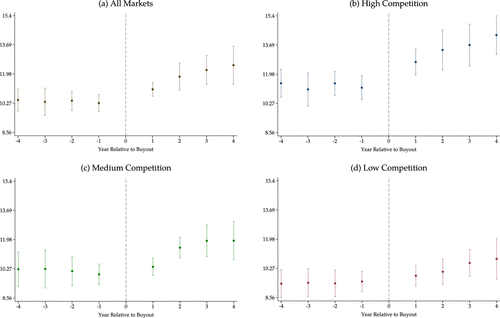
Notes. These figures present the estimates of , , , , respectively, as described in Online Appendix C.1. The values have been shifted up by the match-year mean of the dependent variable to provide scale. See Table C.1.1 in the Online Appendix for numerical estimates from event year 4. Section C.1 presents additional event studies and statistical tests.
Note that our identification is even tighter when we estimate Equation (2), our triple-difference regression examining whether the effect of PE ownership varies with local market competition. Importantly, the selection of facilities on unobserved trends does not necessarily bias these estimates. Even if, on average, PE firms selected targets that are poised to undergo staffing changes, as long as the violations in parallel trends do not systematically vary with market concentration, the bias differences out when estimating and . In other words, unless selection into private equity systematically differs by local market competition, the differences in estimates from panel B of Table 2 still identify the desired relative effects. If our results were driven by such differential selection, we might expect to see differing pre-trends across terciles of competition. Reassuringly, Figure 3, (b)–(d), shows no indication of pre-trends, let alone differential pre-trends. We provide additional event study figures in Online Appendix C.1.
An important stylized fact is that the vast majority of PE treatment occurs because of large nursing chain acquisitions, which typically include many facilities across markets with varying levels of concentration. Therefore, in Online Appendix C.2, we assess whether the effect of PE ownership varies with market concentration across targets in the same large chain acquisitions. In other words, we compare the effect of PE ownership on facilities in more- and less-competitive markets within the same acquired chain. Such a test discards variation across acquisitions but may be particularly robust given that any bias because of differential selection would require that PE investors acquire entire chains based on chain-specific shocks that impact the same chain’s facilities differently in more- and less-concentrated markets. We perform this analysis in two ways: first, by running regressions separately for each chain, and second, by estimating chain-specific coefficients within a single regression. For both methods, we aggregate effects using the inverse-variance weighted average. Figure C.2.1 presents our estimates, which suggest that the effect of PE acquisitions on expenditure are noticeably more positive in highly-competitive markets than in less-competitive markets.
Even if our coefficients are unbiased, one might still be concerned that the treatment effect heterogeneity is driven by other market characteristics correlated with HHI. We show in Online Appendix C.9 that treatment effect heterogeneity by local market concentration persists—and is often stronger—when also allowing treatment effects to vary with other correlated local demographics. We further show that treatment effect heterogeneity across levels of market concentration persists even when estimating effects using only comparisons of facilities in similarly-sized markets.
We also conduct a host of other robustness tests. These include demonstrating robustness to matching without replacement (Online Appendix C.12), matching at the start of the event window (Online Appendix C.3), using county-based HHI (Online Appendix C.11), and incorporating geographic variation in wages (Online Appendix C.10).
Finally, we examine the effect of PE ownership on health inspection scores and a composite of other quality measures in Online Appendix C.8. Consistent with our findings on staffing outcomes, we estimate that the effect of PE acquisitions on health inspection scores is 4.38 points (8.4% of the mean) worse in the least-competitive markets than in the most-competitive markets. Our estimates of the effect of PE ownership on other quality measures are very imprecise, potentially reflecting their limited availability and inconsistent measurement over our sample period.
5. Competitive Sensitivity and Pro-competitive Regulation
Section 4 demonstrates that PE-owned facilities were more responsive to spatial variation in local market competition than non-PE-owned facilities. This suggests that regulators and policymakers concerned about the impact of PE ownership on consumer stakeholders should pay careful attention to whether PE targets are in concentrated or non-concentrated markets.
In this section, we use variation in the strength of competitive incentives over time to study whether PE managers are more responsive to changes in competitive incentives than non-PE managers. If true, this suggests an important policy implication of PE’s heightened competitive sensitivity: pro-competitive policies and regulations may be more effective at encouraging quality improvements in PE-owned establishments than in non-PE ones. We test this hypothesis by comparing the responses of PE- and non-PE-owned facilities to the competitive incentives introduced by the CMS Five-Star Quality Rating System.
5.1. Strategic Incentives from the Five-Star Quality Rating System
The Centers for Medicare and Medicaid Services implemented the Five-Star Quality Rating System in December 2008. This five-star system presented consumers with easy-to-understand measures of quality on a five-star scale. By making quality more salient and digestible, CMS hoped to help guide consumers toward higher-quality facilities (Werner et al. 2016) and spur competition between facilities on quality (Zhao 2016). The five-star system summarized a nursing home’s quality along three dimensions: staffing, health inspections, and outcomes-based quality measures. Online Appendix B describes each of these measures in detail. As in Section 4.1, we focus on facility staffing as our primary measure of analysis.
5.1.1. Incentives from Five-Star Staffing Ratings.
The five-star staffing rating evaluates each facility based on its level of nurse staffing per patient-day.8 Each facility receives an “overall staffing rating” that is based on two sub-component ratings for RN staffing and total staffing (i.e., RN, LPN, and CNA in aggregate). These sub-component ratings are determined by whether a facility’s RN and total staffing, respectively, exceed certain federally established thresholds. They are then combined to construct the overall staffing rating. See Online Appendix B.1 for details.
We study two features of the five-star system that create strategic incentives for staffing policy. First, long-standing concerns regarding insufficient levels of highly skilled nursing staff led CMS to heavily emphasize RNs in designing the rating system: hiring RNs raises staffing levels for both component measures, whereas additional LPNs and CNAs contribute only to the total staffing measure. For this reason, the rating system disproportionately rewards RN hours. Sophisticated managers hoping to increase their staffing five-star rating may especially increase the facility’s RN staffing levels or shift the composition of staff toward RNs. Note that we would not expect facilities to shift entirely to RNs, both because RNs are the most expensive type of staff and because different types of staff are likely imperfect substitutes.
This emphasis on RN staffing extends beyond the formula for the ratings. Both historically and today, consumers viewing a facility’s staffing levels on Nursing Home Compare are presented with the facility’s overall staffing and RN staffing five-star ratings, but not its total staffing five-star rating.
A second, more subtle, implication of the staffing rating design is based on its equal treatment of LPN and CNA staffing. As the total staffing component does not distinguish between types of staffing, care provided by LPNs and CNAs is recognized equivalently. However, LPNs cost approximately 60% more than CNAs ($23.32 per hour versus $14.77 per hour). Savvy managers may therefore try to shift away from employing LPNs and toward employing either CNAs—who provide the same ratings benefit at lower cost—or RNs—who count toward both the RN staffing and total staffing ratings.
5.1.1.1. A Motivating Example: HCR ManorCare.
To illustrate how the five-star system may have differentially impacted the staffing behavior of PE-owned facilities, we consider the Carlyle Group’s high-profile acquisition of HCR ManorCare in 2007. Figure 4 contrasts the evolution of staffing at both HCR ManorCare facilities and their matched controls between 2003 and 2012. We observe that Carlyle increased both RN and LPN staffing at HCR ManorCare facilities after the 2007 acquisition. Because the acquisition grabbed headlines and sparked protests, the increase in staffing levels may have partly been a response to the heightened scrutiny from politicians, regulators, and the public. More importantly, the staffing changes following the December 2008 launch of the five-star system suggest that Carlyle-owned HCR ManorCare facilities were substantially more responsive than control facilities to the strategic incentives introduced by the staffing rating. First, RN hours increased more strongly at HCR ManorCare facilities than at control facilities. Second, LPN hours at HCR ManorCare facilities fell, reversing their previous trend, whereas LPN hours held steady at control facilities. We show similar findings for other large PE acquisitions and cohorts in Online Appendix C.4.
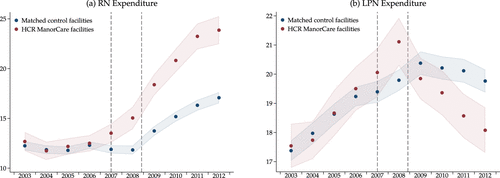
Notes. The vertical lines correspond to the acquisition announcement date (July 2007) and the implementation of the five-star system (December 2008). Staffing expenditures are measured in dollars per patient-day.
5.1.2. Incentives from Other Five-Star Ratings.
The five-star system also evaluates facilities according to their performance on two non-staffing measures: health inspections and quality measures. Health inspection ratings incorporate results from standard unannounced health inspections that occur once per year on average, as well as additional inspections triggered by patient complaints. The score is computed based on the severity and scope of a facility’s deficiencies identified during the three most recent health inspection survey cycles. Quality ratings aggregate 10 total measures (seven based on long-stay residents and three based on short-stay residents) derived from resident health assessments and claims. For additional details, see Section 3.3 and Sections B.2 and B.3 in the Online Appendix.
By increasing awareness and salience of the rated measures, the five-star system may have strengthened competitive incentives to improve quality along these dimensions. Correspondingly, we might expect the health inspection scores and quality measures to improve more for PE-owned facilities than for comparable non-PE facilities after the introduction of the five-star system.
Note that unlike staffing levels, which can be set precisely by management, health inspection outcomes and quality measures are not straightforward to adjust and can be highly stochastic. Health inspection outcomes can vary according to the strictness of the inspector or the exact timing of the inspection (e.g., Loomer et al. 2021b). Likewise, some quality measures can vary with purely random changes in residents’ health. Thus, whereas we do anticipate that managers’ operational decisions can affect these scores, we also expect any such relationship to be measured with substantial noise. Finally, it is important to note that these alternative quality measures may be more susceptible to manipulation than staffing measures. In particular, some quality measures are constructed from resident assessments filled out by nursing staff. Whereas unannounced health inspections by third parties are more difficult to manipulate, some facilities may be able to cheat by obtaining private information about when their inspection may occur.
5.2. Competitive Sensitivity of PE to the Five-Star Rating System
In this section, we examine whether PE-owned facilities were more sensitive to the competitive incentives introduced by the five-star rating system. A natural way of doing so is to follow Bernstein et al. (2019) by restricting the analysis to acquisitions that occurred in the few years prior to the introduction of the five-star system and examine how those facilities already under PE ownership differentially responded to the policy. We extend their approach to include all acquisitions, allowing for inference from additional comparisons, including between acquisitions for which the event window occurs entirely before the policy and those for which the event window occurs entirely after. We show in Online Appendix C.6 that both approaches yield similar results.
This approach also has the advantage of allowing us to explicitly incorporate the considerable scrutiny that PE firms faced from both regulators and the media following the highly publicized acquisition of HCR ManorCare by the Carlyle Group in 2007. As a result of this scrutiny, PE owners may have been especially careful not to risk drawing further ire by reducing quality. For example, Duhigg (2007b) wrote of HCR ManorCare’s attempt to assuage residents’ and regulators’ concerns about its acquisition by Carlyle:
To counter such criticisms, Manor Care began sending letters to regulators and officials in the 32 states where its facilities are located, pledging to maintain staff levels and other quality standards. The company has also sent letters to residents and their families criticizing the article in The Times and the union’s efforts.
To avoid conflating such caution with responsiveness to the five-star rating system, we control directly for the heightened scrutiny of PE deals beginning in 2007:
Here, gives the baseline estimate of the impact of PE ownership, and and show how that effect changed with heightened scrutiny and the introduction of the five-star rating system, respectively.
Our regression is conservative in assuming heightened scrutiny from 2007 onward. Insofar as media and regulatory spotlighting of facility quality did not persist indefinitely, our results may understate the positive responses of PE-owned facilities to the five-star rating system.
We also test whether the differential effects of the five-star rating system were stronger in competitive markets, where consumer demand is plausibly more elastic to ratings. To do this, we estimate the following regression exploring heterogeneity in effects across differing levels of market concentration:
Note that one can equivalently think of this regression as estimating how the competitive sensitivity of PE managers to market concentration changed over time. An important caveat is that the regression asks much from the data in allowing treatment effects to vary with all combinations of competitive incentives across both geography and time.
5.2.1. Competitive Sensitivity to Staffing Ratings.
Table 3 presents our estimates of Regression (3) for staffing outcomes. We find that the impact of PE ownership on staffing changed substantially over time. Prior to both heightened scrutiny and the five-star system, PE ownership was associated with a $1.25 per patient-day (2.0% of the mean) reduction in total staffing expenditure that was primarily concentrated in CNA staffing.
|
Table 3. Staffing and the Five-Star System
| Expenditure | Composition | Staffing star ratings (1–5) | ||||||
|---|---|---|---|---|---|---|---|---|
| RN | LPN | CNA | Total | RN % | RN | Total | Overall | |
| −0.077 | −0.251 | −0.925 | −1.253 | 0.225 | 0.011 | −0.138 | −0.071 | |
| (0.404) | (0.258) | (0.338) | (0.679) | (0.303) | (0.056) | (0.059) | (0.062) | |
| 0.901 | 0.236 | 0.409 | 1.547 | 0.457 | 0.095 | 0.093 | 0.131 | |
| (0.606) | (0.346) | (0.512) | (1.099) | (0.436) | (0.067) | (0.072) | (0.076) | |
| 2.215 | −0.945 | −0.099 | 1.176 | 1.816 | 0.144 | −0.213 | −0.045 | |
| (0.401) | (0.321) | (0.452) | (0.572) | (0.308) | (0.048) | (0.078) | (0.059) | |
| Observations | 42,616 | 42,616 | 42,613 | 42,613 | 42,611 | 41,228 | 41,219 | 41,228 |
| 0.74 | 0.72 | 0.60 | 0.70 | 0.72 | 0.71 | 0.68 | 0.68 | |
| Mean | 12.91 | 18.18 | 30.44 | 61.53 | 10.86 | 2.55 | 2.00 | 2.30 |
| Standard deviation | 7.81 | 6.01 | 8.10 | 14.38 | 5.73 | 1.12 | 1.16 | 1.15 |
Notes. The staffing expenditure and composition variables are as described in Table 2. Of the staffing star rating variables, RN, Total, and Overall are the respective five-star ratings described in Section 3. All specifications include the controls and the fixed effects described in Table 2. Standard errors are clustered by chain. Table C.7.1 in the Online Appendix provides estimates split by competition tercile.
As anticipated, we find that the heightened scrutiny of private equity following the acquisition of HCR ManorCare may have resulted in greater investments in staffing. Although not statistically significant at conventional levels, the point estimates indicate that PE-owned facilities likely responded by increasing the level ($0.90 per patient-day; 7.0% of the mean) and share (0.46 percentage points; 4.2% of the mean) of RN staffing relative to non-PE control facilities. Total staffing expenditure at PE-owned facilities rose by 2.5% of the mean, driven primarily by the increase in RNs. That this offsets the previously-negative impact of LBOs suggests an important role for transparency and public scrutiny in governing the impact of PE.
Most importantly, our estimates of indicate that PE-owned facilities were extremely responsive to the incentives created by the five-star rating system. First, PE-owned facilities differentially increased their RN expenditure by $2.21 per patient-day (17.2% of the mean), consistent with PE-owned facilities attending more closely to the emphasis placed on RN staffing by its inclusion in both the RN and total staffing star ratings. Likewise, PE-owned facilities were more attentive to the de-emphasis of LPN staffing: even as they were increasing RN expenditure, PE-owned facilities were also differentially decreasing LPN expenditure by $0.95 per patient-day (5.2% of the mean). Thus, the primary differential effect of the five-star system on PE-owned facilities was to induce a dramatic change in their composition of staffing toward RNs (1.8 percentage points; 16.7% of the mean). On net, PE-owned facilities increased their total expenditure on staffing by a modest-but-meaningful $1.18 per patient-day (1.9% of the mean) relative to control facilities.
PE’s strategic responses did result in changes to their staffing star ratings: RN staffing ratings at PE-owned facilities differentially increased by 0.14 stars, whereas total staffing ratings differentially decreased by 0.21 stars. This relative emphasis on RN staffing ratings may represent PE managers exploiting consumers’ inattention to total staffing ratings, as they are not displayed on the Nursing Home Compare website.
Table 4 presents our estimates of Regression (4). We first consider the impact of PE ownership in the period before the HCR ManorCare acquisition elevated scrutiny of nursing home buyouts. In low-competition (i.e., concentrated) markets, PE owners considerably reduced staffing relative to comparable non-PE facilities. On average, this amounted to a reduction in total staffing expenditure of $3.40 per patient-day (5.5% of the mean), or roughly $130,213 per year. In high-competition (i.e., unconcentrated) markets, the effect of PE ownership was distinctly less negative, with insignificant point estimates that suggest a slight shift toward RN staffing without a detectable change in total staffing expenditure. This heterogeneity in the effect of PE ownership by level of market competition persisted even as the average impact of PE acquisitions improved because of heightened scrutiny.
|
Table 4. Staffing, Five-Star System, and Market Concentration
| Expenditure | Composition | ||||
|---|---|---|---|---|---|
| RN | LPN | CNA | Total | RN % | |
| Panel A: Low scrutiny, pre-policy (≤2006) | |||||
| 0.932 | 0.000 | −0.439 | 0.493 | 1.002 | |
| (0.837) | (0.572) | (0.610) | (1.500) | (0.575) | |
| −0.510 | −0.439 | −0.854 | −1.802 | −0.218 | |
| (0.494) | (0.413) | (0.521) | (1.018) | (0.342) | |
| −1.154 | −0.410 | −1.833 | −3.398 | −0.437 | |
| (0.530) | (0.401) | (0.634) | (1.044) | (0.389) | |
| Panel B: High scrutiny, pre-policy (2007–2008) | |||||
| 1.762 | 0.391 | −0.359 | 1.795 | 1.248 | |
| (0.841) | (0.495) | (0.574) | (1.321) | (0.642) | |
| 0.258 | −0.368 | −0.317 | −0.423 | 0.343 | |
| (0.454) | (0.299) | (0.529) | (0.993) | (0.308) | |
| 0.450 | −0.006 | −1.024 | −0.580 | 0.438 | |
| (0.406) | (0.239) | (0.552) | (0.866) | (0.315) | |
| Panel C: High scrutiny, post-policy (≥2009) | |||||
| 4.436 | −0.677 | −0.795 | 2.964 | 3.300 | |
| (0.856) | (0.460) | (0.755) | (0.797) | (0.749) | |
| 2.422 | −1.193 | −1.166 | 0.081 | 2.300 | |
| (0.830) | (0.247) | (0.517) | (0.674) | (0.688) | |
| 2.041 | −0.986 | 0.527 | 1.583 | 1.673 | |
| (0.751) | (0.289) | (0.567) | (1.091) | (0.500) | |
| Observations | 42,616 | 42,616 | 42,613 | 42,613 | 42,611 |
| 0.74 | 0.72 | 0.60 | 0.70 | 0.72 | |
| Mean | 12.91 | 18.18 | 30.44 | 61.53 | 10.86 |
| Standard deviation | 7.81 | 6.01 | 8.10 | 14.38 | 5.73 |
As in Table 3, we again find that PE-owned facilities were dramatically more responsive to the specific staffing incentives of the five-star system. Specifically, when comparing the effects of PE ownership after the policy (panel C) to the effects immediately before (panel B), we find that PE-owned facilities at all levels of market concentration differentially responded to the policy by increasing RN staffing and decreasing LPN staffing. As a result, after the policy, an overwhelming effect of PE ownership is to shift staffing toward RNs: 3.3, 2.3, and 1.7 percentage points (30.4%, 21.2%, and 15.4% of the mean) in high-, medium-, and low-competition markets, respectively.
In summary, Table 4 demonstrates that because of PE’s heightened competitive sensitivity, both spatial and temporal variation in competitive incentives lead to meaningful differences in the effect of PE ownership. Correspondingly, the implications of PE ownership for consumers are highly contingent on these spatial and temporal factors. This is most conspicuous when contrasting the impact of PE acquisitions in the settings with the strongest and weakest competitive incentives. When competitive incentives are strongest—in unconcentrated markets following the introduction of the five-star system—PE owners increased staffing expenditure by 4.8% of the mean ($113,580 per year) more than their non-PE counterparts. In contrast, in concentrated markets prior to both the five-star system and public scrutiny, PE acquisitions differentially lowered staffing expenditure by 5.5% of the mean ($130,213 per year). Thus, we find that the average impact of PE ownership can vary by as much as 10.3% of the mean, depending on the incentives that PE owners face. This difference represents $243,793 for the median facility, or enough to hire 3.3 additional full-time RNs and increase RN staffing by 49.3% of the mean.
5.2.1.1. Robustness.
In the Online Appendix, we also conduct several additional analyses and robustness checks. First, in Table C.8.2, we examine whether PE-owned facilities benefited from their aggressive response and find that they experienced an increase in patients after the introduction of the five-star rating system. Second, to mitigate the concern that our results are driven by differential impacts of the financial crisis, Online Appendix C.5 shows that our results are robust to splitting the sample according to the size of contemporaneous local unemployment or housing price shocks. Third, Online Appendix C.12 confirms that our results are robust to constructing the control group by matching without replacement. Finally, Online Appendix C.6 shows robustness to adhering more closely to the Bernstein et al. (2019) method described earlier.
5.2.2. Competitive Sensitivity to Other Ratings.
Our previous analysis highlights how PE-owned facilities were more responsive in adjusting staffing according to the strategic incentives set by the five-star system. However, the five-star system also sought to increase consumer awareness of health inspection results and resident health outcomes using two additional ratings. In this section, we briefly examine whether PE-owned facilities reacted more strongly than non-PE facilities to these other ratings as well. To do so, we re-estimate Equation (3) with health inspection scores and outcomes-based quality measures as dependent variables and present our findings in Table 5. Specifically, our outcomes of interest include the metrics underlying these star ratings: a facility’s health inspection score (broken into infractions from routine unannounced inspections and those from complaint-initiated inspections) and its quality measure score (broken into short-stay and long-stay components). We also examine 30-day rehospitalization rates as an important health outcome not originally included in the five-star system. A key caveat to our analysis in this section is that many of these outcomes are only available for a limited number of years, and our estimates are correspondingly imprecise.
|
Table 5. Non-Staffing Measures and the Five-Star System
| Health inspections | Quality measures | Rehospitalization | |||||
|---|---|---|---|---|---|---|---|
| Total | Standard | Complaint | Total | Long-stay | Short-stay | 30 Days (%) | |
| −0.353 | 0.106 | −4.647 | −3.027 | −2.257 | −0.770 | 0.491 | |
| (3.265) | (2.786) | (4.249) | (2.145) | (1.930) | (0.665) | (0.367) | |
| 5.983 | 2.945 | 7.331 | 0.668 | −0.311 | 0.979 | −0.037 | |
| (4.667) | (3.391) | (3.557) | (1.217) | (0.940) | (0.646) | (0.354) | |
| −4.456 | −2.687 | −0.866 | 2.267 | 2.728 | −0.461 | −0.353 | |
| (2.908) | (2.225) | (1.108) | (1.608) | (1.257) | (0.459) | (0.212) | |
| Observations | 40,978 | 40,978 | 21,682 | 25,844 | 25,844 | 25,844 | 30,180 |
| 0.50 | 0.50 | 0.49 | 0.69 | 0.70 | 0.61 | 0.71 | |
| Mean | 52.32 | 43.05 | 16.55 | 69.88 | 50.02 | 19.86 | 20.34 |
| Standard deviation | 55.18 | 41.50 | 35.85 | 18.02 | 15.26 | 7.07 | 5.90 |
Notes. The first three outcomes are based on the facility-year health inspection score. Total is the total health inspection score, Standard is the score from routine, unannounced surveys, and Complaint is the score from complaint-initiated surveys. Note that data on complaint surveys were not available prior to 2006, and the health inspections columns are therefore not additive. The second three outcomes are based on quality measure (QM) point allocations. Total is the total value of QM points, Long-stay is the points awarded to a facility across the seven quality measures for long-stay residents, and Short-stay is the points for the three short-stay measures. See Online Appendix B for more on how we calculate inspection scores and QM points. Rehospitalization is the share of patients admitted to the nursing facility who were rehospitalized directly from the facility within 30 days of hospital discharge. This variable is available starting from 2000 and is sparsely populated through 2010. All specifications include the controls and the fixed effects described in Table 2. Standard errors are clustered by nursing home chain.
In the baseline period preceding both the HCR ManorCare acquisition and the five-star system, we find no statistically significant effects of PE ownership on health inspection outcomes. Following heightened scrutiny, however, the effect of PE ownership on health inspections becomes more negative (i.e., results in higher scores). Specifically, the impact of PE ownership worsens by 44.3% of the mean for infractions attributable to complaint-initiated inspections. This dramatic increase in complaints may be explained by the heightened awareness of patients and their families to PE ownership and public concerns regarding facility quality following the media attention drawn by the HCR ManorCare acquisition. In contrast, the introduction of the five-star system may have improved the effect of PE ownership on health inspection outcomes. Our point estimates suggest that the introduction of the policy improved the effect of PE ownership on facilities’ total inspection score by 4.46 points (8.5% of the mean). However, this effect is imprecisely estimated.
The evidence is similar when examining quality measures. Prior to the five-star system, the effects of PE ownership on quality measures were statistically insignificant and were generally, if anything, slightly negative. After the introduction of the five-star system, however, the effect of PE ownership on long-stay measures improves by 5.5% of the mean.9
Finally, we examine 30-day rehospitalization rates and find a similar pattern. Prior to the five-star system, PE ownership, if anything, increased rehospitalization rates. Our point estimates suggest this effect improved by 1.7% of the mean with the introduction of the five-star system. However, once again, the effect is imprecisely estimated. Although far from conclusive, this suggests that PE’s heightened sensitivity to the pro-competitive policy may have benefited patient health in ways not directly rewarded by the ratings.
6. Discussion
Policymakers, academics, and the public have long expressed concerns about the impact of private equity acquisitions on stakeholders such as consumers. These concerns are perhaps most pronounced in the healthcare industry, given its economic importance, the high degree of public subsidy, and a consumer population that is typically infirm and vulnerable to exploitation. We study the impact of PE investments in nursing homes, where these factors are particularly relevant.
Our principal finding is that, consistent with PE exhibiting heightened competitive sensitivity, the effect of PE ownership varies substantially with competitive incentives. First, we find that PE owners increase staffing expenditure and skill-mix more aggressively in highly-competitive markets than in less-competitive ones. Then, we find that PE-owned facilities responded more aggressively to the competitive incentives introduced by a ratings system intended to make quality more salient and comprehendible to patients. Both results imply that the strength of competitive incentives crucially determines the effect of PE ownership on consumers. Indeed, our estimates indicate that PE owners reduce staffing expenditure by 5.5% of the mean in the least competitive settings but increase staffing expenditure by 4.8% in the most competitive settings.
Regulators should therefore pay careful attention to the concentration of markets where PE acquisitions occur, even when the acquisition doesn’t increase market power. For example, when PE acquisitions involve multiple markets, regulators could use measures of competition to identify where the acquisition is more likely to harm or help consumers. In settings with weak competitive incentives, regulators might benefit consumers by limiting PE acquisitions or by employing pro-competitive policies to improve the impact of PE ownership on consumers. Such guidance would complement recent White House mandates (Office of Information and Regulatory Affairs 2023, The White House 2023) for agencies to “better account for how potential regulatory alternatives shape markets, affect firms’ opportunities and incentives to compete with one another, and have different effects depending on the degree of market competitiveness.”
The authors thank Manuel Adelino, Samuel Antill, John Asker, Victor Bennett, Paul Eliason, David Grabowski, John Graham, Martin Hackmann, Manuel Hermosilla, Nathan Hipsman, Josh Lerner, Alex MacKay, Filippo Mezzanotti, Manju Puri, and David Robinson for valuable discussions. In addition, the authors appreciate helpful feedback and comments from seminar participants at Duke’s Fuqua School of Business, UCLA, UCSD, FDIC, Census Bureau SEHSD, and the Harvard-MIT-BU Health Economics Seminar, as well as participants at the Private Equity Research Symposium, Volatility Institute at NYU Shanghai Annual Conference, Eastern Finance Association Meeting, Annual Conference of the American Society of Health Economists, Mannheim Centre for Competition and Innovation Annual Conference, Becker Friedman Institute Health Economics Initiative Annual Conference, and the International Industrial Organization Conference. Chase McDonald, Yoon Sang Moon, Fuman Xie, Huizi Yu, Yan Bo Zeng, and Zhijian Li provided excellent research assistance. The views and conclusions expressed herein are those of the authors and do not purport to represent the views of the United States Department of Labor, the United States government, or the National Bureau of Economic Research.
1 Other studies examine PE ownership in nursing homes (Grabowski and Stevenson 2008, Stevenson and Grabowski 2008, Pradhan et al. 2013, Pradhan et al. 2015, Bos and Harrington 2017, Huang and Bowblis 2019, Braun et al. 2020, Braun et al. 2021), hospitals (Bruch et al. 2020, Liu 2021, Cerullo et al. 2022, Richards and Whaley 2024), and physician practices (Gondi and Song 2019, Tan et al. 2019, Zhu et al. 2020, Singh et al. 2022, Bruch et al. 2023, Gao et al. 2025).
2 These findings contribute to an existing body of research examining nursing home quality, especially regarding the salience of quality metrics (Stevenson 2006, Werner et al. 2012) and the introduction of the five-star system (Konetzka et al. 2015, Werner et al. 2016, Zhao 2016, Brickley et al. 2021). We also relate to an extensive literature studying how competition influences quality of care in nursing homes (Nyman 1985, Gertler 1989, Grabowski and Town 2011, Hackmann 2019, Lu et al. 2021) and healthcare service providers more generally (Ho and Hamilton 2000, Kessler and McClellan 2000, Capps 2005, Gaynor 2006, Cooper et al. 2011, Hayford 2012, Gaynor et al. 2013, Cooper et al. 2018). In addition, our work contributes to a broader literature examining the financing and management of healthcare (Cooper et al. 2020, Gupta 2021, La Forgia 2023, Duggan et al. 2024, Antill et al. 2025, Gandhi and Olenski 2025, La Forgia and Bodner 2025).
3 CMS provides (or has provided) various nursing home data sets online over time. These data typically derive from unannounced health inspections (i.e., OSCAR/CASPER data), Medicare claims, and minimum data set assessments, as well as from annual provider filings. We obtained these data from a mixture of CMS.gov, Brown University’s LTC Focus, and commercial vendors.
4 It is important to note that, although self-reported, explicit fabrications of these measures are illegal. Even so, in interpreting our estimates on both geographic and intertemporal heterogeneity in treatment effects, we implicitly assume that the extent to which PE is more (or less) able to manipulate its reports is not systematically related to measures of competition.
5 This figure is computed using the national average RN, LPN, and CNA staffing levels for 2000 in our data and multiplying by the nationwide hourly wages for each staffing role from the Occupational Employment Statistics program files at the Bureau of Labor Statistics. Harrington et al. (2007) provide a nationwide daily average Medicaid reimbursement rate of $115.
6 Note that we winsorize a number of variables—such as staffing and acuity measures—at the 2.5% level.
7 As buyouts typically do not occur on January 1, the year of LBO incorporates only partial treatment. We address this by excluding observations corresponding to the year of PE acquisition (for both target and associated match control facilities).
8 Specifically, CMS ranks facilities based on their staffing levels relative to a target determined by the acuity of their patients. See Online Appendix B.1 for details. We exclude this normalization because it is only available after the introduction of the five-star system.
9 A number of factors might explain PE’s particular responsiveness to long-stay measures. First, the gain in ratings from improving long-stay care may have been larger: the majority of quality measures are long stay, and long-stay scores have greater variance, which suggests they may be more adjustable. Second, long-stay patients plausibly rely more heavily on Nursing Home Compare, as many are cognitively impaired and lack family assistance to aid in gathering additional information about facility quality.
References
- (2023) When should you adjust standard errors for clustering? Quart. J. Econom. 138(1):1–35.Google Scholar
- (2025) Healthcare provider bankruptcies. NBER Working Paper No. 33763, National Bureau of Economic Research, Cambridge, MA.Google Scholar
- (2020) The competitive effects of entry: Evidence from supercenter expansion. Amer. Econom. J.: Appl. Econom. 12(3):175–206.Crossref, Google Scholar
- (1963) Uncertainty and the welfare economics of medical care. Amer. Econom. Rev. 53(5):941–973.Google Scholar
- (2002) Mavericks, mergers, and exclusion: Proving coordinated competitive effects under the antitrust laws. New York Univ. Law Rev. 77(1):135–203.Google Scholar
- (2022) Firm finances and the spread of COVID-19: Evidence from nursing homes. Rev. Corporate Finance Stud. 12(1):1–35.Crossref, Google Scholar
- (2007) The operating impact of buyouts in Sweden: A study of value creation. J. Private Equity 11(1):22–39.Crossref, Google Scholar
- (2019) The impact of long-term care ombudsman presence on nursing home survey deficiencies. J. Amer. Medical Directors Assoc. 20(10):1325–1330.Crossref, Google Scholar
- (2016) The operational consequences of private equity buyouts: Evidence from the restaurant industry. Rev. Financial Stud. 29(9):2387–2418.Crossref, Google Scholar
- (2019) Private equity and financial fragility during the crisis. Rev. Financial Stud. 32(4):1309–1373.Crossref, Google Scholar
- (2015) Do private equity owned firms have better management practices? Amer. Econom. Rev.: Papers Proc. 105(5):442–446.Crossref, Google Scholar
- (2017) What happens to a nursing home chain when private equity takes over? A longitudinal case study. Inquiry 54:1–10.Google Scholar
- (2011) Growth LBOs. J. Financial Econom. 102(2):432–453.Crossref, Google Scholar
- (2021) Association of private equity investment in US nursing homes with the quality and cost of care for long-stay residents. JAMA Health Forum 2(11):e213817.Crossref, Google Scholar
- (2020) Comparative performance of private equity-owned US nursing homes during the COVID-19 pandemic. JAMA Network Open 3(10):e2026702.Crossref, Google Scholar
- (2021) Association of private equity investment in US nursing homes with the quality and cost of care for long-stay residents. JAMA Health Forum 2(11):e213817.Crossref, Google Scholar
- (2021) Five-star ratings and managerial turnover: Evidence from the nursing home industry. J. Law Econom. Organ. 37(2):278–313.Crossref, Google Scholar
- (2007) Why is the market for long-term care insurance so small? J. Public Econom. 91(10):1967–1991.Crossref, Google Scholar
- (2020) Changes in hospital income, use, and quality associated with private equity acquisition. JAMA Internal Medicine 180(11):1428–1435.Crossref, Google Scholar
- (2023) Workforce composition in private equity–acquired versus non–private equity–acquired physician practices. Health Affairs 42(1):121–129.Crossref, Google Scholar
- (2005) The quality effects of hospital mergers. Economic Analysis Group Discussion Paper No. 05-6, Economic Analysis Group, Washington, DC.Google Scholar
- (2011) Caregiver staffing in nursing homes and their influence on quality of care: Using dynamic panel estimation methods. Medical Care 49(6):545–552.Crossref, Google Scholar
- (2017) Are online and offline prices similar? Evidence from large multi-channel retailers. Amer. Econom. Rev. 107(1):283–303.Crossref, Google Scholar
Centers for Medicare and Medicaid Services (2019) CMS improving nursing home compare in April 2019. CMS (March 5), https://www.cms.gov/newsroom/press-releases/cms-improving-nursing-home-compare-april-2019.Google Scholar- (2022) Association between hospital private equity acquisition and outcomes of acute medical conditions among Medicare beneficiaries. JAMA Network Open 5(4):e229581.Crossref, Google Scholar
- (1995) Do LBO supermarkets charge more? An empirical analysis of the effects of LBOs on supermarket pricing. J. Finance 50(4):1095–1112.Crossref, Google Scholar
- (2008)
Nurse staffing and patient care quality and safety . Hughes RG, ed. Patient Safety and Quality: An Evidence-Based Handbook for Nurses. Advances in Patient Safety (Agency for Healthcare Research and Quality, Rockville, MD).Google Scholar - (2021) Private equity buyouts and workplace safety. Rev. Financial Stud. 34(10):4832–4875.Crossref, Google Scholar
- (2018) Does competition from private surgical centres improve public hospitals’ performance? Evidence from the English National Health Service. J. Public Econom. 166:63–80.Crossref, Google Scholar
- (2020) Surprise! Out-of-network billing for emergency care in the United States. J. Political Econom. 128(9):3626–3677.Crossref, Google Scholar
- (2011) Does hospital competition save lives? Evidence from the English NHS patient choice reforms. Econom. J. 121(554):F228–F260.Google Scholar
- (2019) Private equity tries to beat back new wave of criticism. Wall Street J. (September 13), https://www.wsj.com/articles/private-equity-tries-to-beat-back-new-wave-of-criticism-11568387076.Google Scholar
- (2016) This is your life, brought to you by private equity. New York Times (August 2), https://www.nytimes.com/interactive/2016/08/02/business/dealbook/this-is-your-life-private-equity.html.Google Scholar
- (2018) Profit-hungry firms are gambling on social care. Are the stakes too high? Guardian (February 28), https://www.theguardian.com/society/2018/feb/28/profit-hungry-firms-gambling-care-homes-stakes-too-high.Google Scholar
- (2014) Private equity, jobs, and productivity. Amer. Econom. Rev. 104(12):3956–3990.Crossref, Google Scholar
- (2019) Uniform pricing in U.S. retail chains. Quart. J. Econom. 134(4):2011–2084.Crossref, Google Scholar
- (2024) The impact of privatization: Evidence from the hospital sector. NBER Working Paper No. 30824, National Bureau of Economic Research, Cambridge, MA.Google Scholar
- (2007a) At many homes, more profit and less nursing. New York Times (September 23), https://www.nytimes.com/2007/09/23/business/23nursing.html.Google Scholar
- (2007b) Nursing homes owned by private equity face US inquiries. New York Times (October 24), https://www.nytimes.com/2007/10/24/business/worldbusiness/24iht-nursing.4.8037461.html.Google Scholar
- (2020) When investor incentives and consumer interests diverge: Private equity in higher education. Rev. Financial Stud. 33(9):4024–4060.Crossref, Google Scholar
- (2019) Private equity’s latest scheme: Closing urban hospitals and selling off the real estate. Amer. Prospect. (July 11), https://prospect.org/2019/07/11/private-equity-s-latest-scheme-closing-urban-hospitals-selling-real-estate/.Google Scholar
- (2022) Barbarians at the store? Private equity, products, and consumers. J. Finance 77(3):1439–1488.Crossref, Google Scholar
- (2021) The returns to nursing: Evidence from a parental-leave program. Rev. Econom. Stud. 88(5):2308–2343.Crossref, Google Scholar
- (2020) Small price responses to large demand shocks. J. Eur. Econom. Assoc. 18(2):792–828.Crossref, Google Scholar
- (2023) Picking your patients: Selective admissions in the nursing home industry. Preprint, submitted June 19, 2020, http://dx.doi.org/10.2139/ssrn.3613950.Google Scholar
- (2025) Tunneling and hidden profits in health care. NBER Working Paper No. 32258, National Bureau of Economic Research, Cambridge, MA.Google Scholar
- (2025) Predictably unpredictable inspections. NBER Working Paper No. 34491, National Bureau of Economic Research, Cambridge, MA.Google Scholar
- (2020) Have private equity owned nursing homes fared worse under COVID-19? Preprint, submitted August 31, https://doi.org/10.2139/ssrn.3682892.Google Scholar
- (2024) Alleviating worker shortages through targeted subsidies: Evidence from incentive payments in healthcare. Rev. Econom. Statist., ePub ahead of print October 29, https://doi.org/10.1162/rest_a_01530.Google Scholar
- (2025) Private equity in the hospital industry. J. Financial Econom. 171:104107.Google Scholar
- (2006) Competition and quality in health care markets. Foundations Trends Microeconomics 2(6):441–508.Crossref, Google Scholar
- (2013) Death by market power: Reform, competition, and patient outcomes in the National Health Service. Amer. Econom. J.: Econom. Policy 5(4):134–166.Crossref, Google Scholar
- (1989) Subsidies, quality, and the regulation of nursing homes. J. Public Econom. 38(1):33–52.Crossref, Google Scholar
- (2013) Profit or patients’ health benefit? Exploring the heterogeneity in physician altruism. J. Health Econom. 32(6):1105–1116.Crossref, Google Scholar
- (2011) Who thinks about the competition? Managerial ability and strategic entry in US local telephone markets. Amer. Econom. Rev. 101(7):3130–3161.Crossref, Google Scholar
- (2020) Push for profits leaves nursing homes struggling to provide care during coronavirus pandemic. New York Times (May 7), https://www.nytimes.com/2020/05/07/business/coronavirus-nursing-homes.html.Google Scholar
- (2019) Potential implications of private equity investments in health care delivery. J. Amer. Medical Assoc. 321(11):1047–1048.Crossref, Google Scholar
- (2021) Difference-in-differences with variation in treatment timing. J. Econom. 225(2):254–277.Crossref, Google Scholar
- (2008) Ownership conversions and nursing home performance. Health Services Res. 43(4):1184–1203.Crossref, Google Scholar
- (2011) Does information matter? Competition, quality, and the impact of nursing home report cards. Health Services Res. 46(6 Pt 1):1698–1719.Crossref, Google Scholar
- (2021) Impacts of performance pay for hospitals: The readmissions reduction program. Amer. Econom. Rev. 111(4):1241–1283.Crossref, Google Scholar
- (2024) Owner incentives and performance in healthcare: Private equity investment in nursing homes. Rev. Financial Stud. 37(4):1029–1077.Crossref, Google Scholar
- (2019) Incentivizing better quality of care: The role of Medicaid and competition in the nursing home industry. Amer. Econom. Rev. 109(5):1684–1716.Crossref, Google Scholar
- (2007) Nurse staffing levels and Medicaid reimbursement rates in nursing facilities. Health Services Res. 42(3 Pt 1):1105–1129.Crossref, Google Scholar
- (2016) The need for higher minimum staffing standards in U.S. nursing homes. Health Services Insights 9:13–19.Crossref, Google Scholar
- (2005) Assessing the impact of management buyouts on economic efficiency: Plant-level evidence from the United Kingdom. Rev. Econom. Statist. 87(1):148–153.Crossref, Google Scholar
- (2019) Long-term care providers and services users in the United States, 2015-2016. Vital Health Statist. 3(43):1–78.Google Scholar
- (2012) The impact of hospital mergers on treatment intensity and health outcomes. Health Services Res. 47(3 Pt 1):1008–1029.Crossref, Google Scholar
- (2019) Does strategic ability affect efficiency? Evidence from electricity markets. Amer. Econom. Rev. 109(12):4302–4342.Crossref, Google Scholar
- (2000) Hospital mergers and acquisitions: Does market consolidation harm patients? J. Health Econom. 19(5):767–791.Crossref, Google Scholar
- (2019) Private equity ownership and nursing home quality: An Instrumental variables approach. Internat. J. Health Econom. Management 19:273–299.Crossref, Google Scholar
Institute of Medicine (2004) Keeping Patients Safe: Transforming the Work Environment of Nurses (The National Academies Press, Washington, DC).Google Scholar- (1989) The effects of management buyouts on operating performance and value. J. Financial Econom. 24(2):217–254.Crossref, Google Scholar
- (2007)
Antitrust . Polinsky AM, Shavell S, eds. Handbook of Law and Economics, vol. 2 (North-Holland, Amsterdam), 1073–1225.Google Scholar - (2000) Is hospital competition socially wasteful? Quart. J. Econom. 115(2):577–615.Crossref, Google Scholar
- (2020) How private-equity firms squeeze hospital patients for profits. New Yorker (April 9), https://www.newyorker.com/business/currency/how-private-equity-firms-squeeze-hospital-patients-for-profits.Google Scholar
- (2013) Information and quality when motivation is intrinsic: Evidence from surgeon report cards. Amer. Econom. Rev. 103(7):2875–2910.Crossref, Google Scholar
- (2015) Nursing home 5-star rating system exacerbates disparities in quality, by payer source. Health Affairs 34(5):819–827.Crossref, Google Scholar
- (2023) The impact of management on clinical performance: Evidence from physician practice management companies. Management Sci. 69(8):4646–4667.Link, Google Scholar
- (2025) Getting down to business: Chain ownership and fertility clinic performance. Management Sci. 71(6):5022–5044.Google Scholar
- (2011) Private equity and long-run investment: The case of innovation. J. Finance 66(2):445–477.Crossref, Google Scholar
- (1990) The effects of leveraged buyouts on productivity and related aspects of firm behavior. J. Financial Econom. 27(1):165–194.Crossref, Google Scholar
- (2014) Revising the relationship between nurse staffing and quality of care in nursing homes: An instrumental variables approach. J. Health Econom. 37:13–24.Crossref, Google Scholar
- (2021) Bargaining with private equity: Implications for hospital prices and patient welfare. Preprint, submitted August 17, http://dx.doi.org/10.2139/ssrn.3896410.Google Scholar
- (2021a) Secret shopper data on private prices in the nursing home industry from 2008 to 2010. Medical Care Res. Rev. 78(4):449–457.Crossref, Google Scholar
- (2021b) Association between nursing home staff turnover and infection control citations. Health Services Res. 57(2):322–332.Crossref, Google Scholar
- (2022) Does nonprofit ownership matter for firm performance? Financial distress and ownership conversion of nursing homes. Management Sci. 68(7):5127–5145.Link, Google Scholar
- (2021) Does competition improve service quality? The case of nursing homes where public and private payers coexist. Management Sci. 67(10):6493–6512.Link, Google Scholar
- (2011) Running on empty? Financial leverage and product quality in the supermarket industry. Amer. Econom. J.: Microeconomics 3(1):137–173.Crossref, Google Scholar
- (2000)
Physician agency . Culyer AJ, Newhouse JP, eds. Handbook of Health Economics, vol. 1 (Elsevier Science, Amsterdam), 461–536.Google Scholar McKinsey and Company (2020) A new decade for private markets: McKinsey Global Private Markets Review 2020. Report, McKinsey & Company, Chicago.Google Scholar- (2008) Pass-through in retail and wholesale. Amer. Econom. Rev. Papers Proc. 98(2):430–437.Crossref, Google Scholar
New York v. Deutsche Telekom AG (2020) 19 Civ. 5434 (VM). U.S. District Court for the Southern District of New York.Google Scholar- (1985) Prospective and ‘cost-plus’ Medicaid reimbursement, excess Medicaid demand, and the quality of nursing home care. J. Health Econom. 4(3):237–259.Crossref, Google Scholar
Office of Information and Regulatory Affairs (2023) Guidance on accounting for competition effects when developing and analyzing regulatory actions. Report, Office of Management and Budget, Washington, DC.Google Scholar- (1989) Abuse of patients in nursing homes: Findings from a survey of staff Gerontologist 29(3):314–320.Crossref, Google Scholar
- (2015) Private equity ownership of nursing homes: Implications for quality. J. Health Care Finance 42(2).Google Scholar
- (2013) Private equity ownership and nursing home financial performance. Health Care Management Rev. 38(3):224–233.Crossref, Google Scholar
- (2024) Hospital Behavior over the Private Equity Life Cycle (RAND Corporation, Santa Monica, CA).Google Scholar
- (2008) Private equity investment in health care services. Health Affairs 27(5):1389–1398.Crossref, Google Scholar
- (2019) Mystery solved: Private-equity-backed firms are behind ad blitz on ‘surprise billing.’ New York Times (September 13), https://www.nytimes.com/2019/09/13/upshot/surprise-billing-laws-ad-spending-doctor-patient-unity.html.Google Scholar
- (2022) Geographic variation in private equity penetration across select office-based physician specialties in the US. JAMA Health Forum 3(4):e220825.Crossref, Google Scholar
- (2006) Is a public reporting approach appropriate for nursing home care? J. Health Politics Policy Law 31(4):773–810.Crossref, Google Scholar
- (2008) Private equity investment and nursing home care: Is it a big deal? Health Affairs 27(5):1399–1408.Crossref, Google Scholar
- (2020) What is private equity, and why is it killing everything you love? Vox (January 6), https://www.vox.com/the-goods/2020/1/6/21024740/private-equity-taylor-swift-toys-r-us-elizabeth-warren.Google Scholar
- (2019) Trends in private equity acquisition of dermatology practices in the United States. JAMA Dermatology 155(9):1013–1021.Crossref, Google Scholar
The White House (2022) Protecting seniors and people with disabilities by improving safety and quality of care in the nation’s nursing homes. Fact sheet, The White House, Washington, DC.Google ScholarThe White House (2023) Promoting competitive markets through regulatory design. The White House, Washington, DC.Google ScholarU.S. Bureau of Labor Statistics (2020) May 2020 national occupational employment and wage estimates. https://www.bls.gov/oes/2020/may/oes_nat.htm.Google ScholarU.S. Department of Justice (2020) Merger Remedies Manual (U.S. Department of Justice, Antitrust Division, Washington, DC).Google ScholarU.S. Department of Justice, Federal Trade Commission (2023) Merger Guidelines (U.S. Department of Justice, Antitrust Division, Washington, DC).Google ScholarU.S. Government Accountability Office (2003) Prevalence of serious problems, while declining, reinforces importance of enhanced oversight. Report to Congressional Requesters GAO-03-561, U.S. Government Accountability Office, Washington, DC.Google ScholarU.S. Government Accountability Office (2010) Complexity of private investment purchases demonstrates need for CMS to improve the usability and completeness of ownership data. Report to Congressional Requesters GAO-10-710, U.S. Government Accountability Office, Washington, DC.Google ScholarU.S. Government Accountability Office (2019) Improved oversight needed to better protect residents from abuse. Report to Congressional Committees GAO-19-433, U.S. Government Accountability Office, Washington, DC.Google ScholarU.S. House of Representatives (2007) Trends in nursing home ownership and quality: Hearing before the Subcommittee on Health of the Committee on Ways and Means. 110th Congress, Subcommittee on Health of the Committee on Ways and Means 110-66, Government Printing Office, Washington, DC.Google ScholarU.S. Senate (1960) The condition of American nursing homes: A study by the Subcommittee on Problems of the Aged and Aging. 86th Congress, Committee on Labor and Public Welfare, Washington, DC.Google ScholarU.S. Senate (1974) Nursing home care in the United States: Failure in public policy: Introductory report prepared by the Subcommittee on Long-Term Care. 93rd Congress, Special Committee on Aging 93-1420, Washington, DC.Google ScholarU.S. Senate (2008) Nursing home transparency and improvement: Hearing before the Special Committee on Aging. 110th Congress, Special Committee on Aging 110-17, U.S. Government Printing Office, Washington, DC.Google Scholar- (2016) Changes in consumer demand following public reporting of summary quality ratings: An evaluation in nursing homes. Health Services Res. 51(S2):1291–1309.Crossref, Google Scholar
- (2012) Do consumers respond to publicly reported quality information? Evidence from nursing homes. J. Health Econom. 31(1):50–61.Crossref, Google Scholar
- (2018) Overdoses, bedsores, broken bones: What happened when a private-equity firm sought to care for society’s most vulnerable. Washington Post (November 25), https://www.washingtonpost.com/business/economy/opioid-overdoses-bedsores-and-broken-bones-what-happened-when-a-private-equity-firm-sought-profits-in-caring-for-societys-most-vulnerable/2018/11/25/09089a4a-ed14-11e8-baac-2a674e91502b_story.html.Google Scholar
- (2016) Competition, information, and quality: Evidence from nursing homes. J. Health Econom. 49:136–152.Crossref, Google Scholar
- (2020) Private equity acquisitions of physician medical groups across specialties, 2013-2016. J. Amer. Medical Assoc. 323(7):663–665.Crossref, Google Scholar

