Sometimes, Always, Never: Regulatory Clarity and the Development of Digital Financing
Abstract
This study examines how the level of detail in legal regulations impacts crowdfunding. We find that clear, explicit regulations significantly boost crowdfunding volumes in a global sample of digital finance. Using proxies to measure regulatory detail in three types of countries—countries that sometimes, always, or never had regulation—in a series of difference-in-difference regressions, we show a significant positive relation between regulatory clarity and the level of debt crowdfunding. There is little effect on the level of equity crowdfunding. Clear regulations appear to encourage the creation of new crowdfunding platforms rather than concentrating activity in existing ones.
This paper was accepted by Will Cong, finance.
Supplemental Material: The online appendix and data files are available at https://doi.org/10.1287/mnsc.2023.01538.
1. Introduction
The law and finance literature (beginning with La Porta et al. 1998) has argued that a country’s legal system shapes its financial development. In this paper, we examine whether having clear rules, what we call regulatory clarity, affects financial innovation within the country. Regulatory clarity clarifies the limits on what is permissible and what is not. We show that the level of regulatory clarity in a country increases the volume of a particular type of financial innovation, online digital capital raising (also referred to as crowdfunding).
Specifically, drawing on a unique global database of hand-collected data on crowdfunding, developed and hand-collected by the Cambridge Centre for Alternative Finance (CCAF), which includes information from over 1,603 crowdfunding platforms across 202 countries from 2015 to 2020, we find that detailed and clear crowdfunding regulations lead to a notable increase in online debt crowdfunding. This database, a first of its kind, shows that when a country introduces specific rules for crowdfunding, the number of debt crowdfunding platforms grows significantly. This growth is mainly due to new platforms starting up, not because existing platforms are raising more funds. These regulatory changes do not have much effect on equity crowdfunding.
We use online crowdfunding as a measure of financial innovation for three main reasons. First, crowdfunding is a highly innovative business model, differing substantially from both traditional bank or debt market borrowing and venture capital equity funding. In most online crowdfunding platforms, the funders are usually geographically distributed and loosely organized, if at all. Almost all communication occurs in online open communities characterized by relatively high levels of asymmetric information. Crowdfunding typically does not offer deposit insurance, so if a borrower fails to pay the lender back, the lender often has no safety net. Hence, Diamond (1984) implies that in the absence of financial intermediaries, crowdfunding is unlikely to be successful because the free-riding problem and duplication costs in monitoring are especially severe. The fundamental innovation that online crowdfunding facilitates is to substantially scale up the willingness and ability of retail investors to fund potential strangers without any certification by traditional financial intermediaries.1
Second, the growth of crowdfunding volume has been one of the fastest of any type of financial innovation documented in recent history. From around $0.5 billion of transaction values executed through crowdfunding platforms in 2011, the volume grew to over $419 billion by 2017 (Ziegler et al. 2020). Crowdfunding is now a global phenomenon with finance available in almost every country in the world. In several major economies, crowdfunding activities have overtaken banks to become the leading source of finance for small and medium enterprises.2 However, there is considerable cross-country and time-series fluctuation in crowdfunding volume over the sample period.
Third, and most important, there is a considerable degree of variation in the level of regulatory requirements on crowdfunding, both cross-sectionally and over time, during the sample period. These regulatory requirements lay out definitions, disclosure requirements, and limits and guidelines on permitted or prohibited activities. Specifically, there are three types of countries in the sample. A few countries always had regulations during the sample period—8 and 12 countries or territories had explicit regulations on debt and equity crowdfunding, respectively. In addition, some of these countries changed the level of regulatory requirements over the period. Several countries switched regulatory status from unregulated to regulated—45 countries or territories published explicit regulations for both debt and equity crowdfunding investment between 2015 and 2020. Eleven more countries or territories published only one type of crowdfunding regulation, either debt or equity, but not the other for 2015–2020. The remainder never had regulations—they did not introduce explicit regulations on crowdfunding over the sample period. In addition, country regulations also display a substantial amount of variation in their levels of detail, with some countries specifying up to 16 different types of regulatory dimensions, whereas other countries only issue guidance on one. All these differences in regulatory environments allow us to conduct staggered difference-in-difference (DiD) analyses to document the impact of regulatory clarity on crowdfunding.
A priori, it is unclear how regulatory clarity will affect the volume of crowdfunding. On the platform supply side, clear rules could influence whether new crowdfunding platforms decide to start up. Past research has shown that uncertain policies can deter investments, especially when they are irreversible (Bernanke 1983, Bloom et al. 2007, Bhattacharya et al. 2017). If the legal rules are not clear, potential platforms might hesitate to enter the market, fearing problems like their businesses being undervalued, changes in management, or high legal costs (Leftwich 1980; Healy and Palepu 1993; Skinner 1994; Healy and Palepu 1995, 2001). Clear regulations might encourage the entry of new crowdfunding platforms, suggesting a positive link between regulatory clarity and crowdfunding volume. However, it is also possible that clear regulations could have a negative effect. Spatt (2010) and Kroszner and Strahan (2011) discuss how unclear regulations can lead to regulatory arbitrage, where businesses take advantage of loopholes. Clearer rules could prevent crowdfunding platforms, which used to operate like nonbanks to avoid strict banking rules, from using these loopholes. This could reduce crowdfunding volume. Finally, many crowdfunding platforms use advanced algorithms to quickly process and share information. If regulations require them to disclose more information publicly, it might slow them down, potentially countering any positive effects of clearer information (Healy et al. 1999).
Similarly, on the investor demand side, the public interest theory of regulation (Pigou 1938) argues that regulations help to keep out low-quality or unwanted players in the market. If investors believe that regulators have carefully checked crowdfunding platforms and these platforms meet clear standards, they might be more willing to invest more money in them. Having rules that require more information to be shared can make it easier for investors to understand what they are investing in, whether they are experienced or not. This could lead to higher stock prices and more trading (Diamond and Verrecchia 1991, Bloomfield and Wilks 2000). When platforms have to share detailed information, such as any weaknesses in their internal controls, investors can use this to avoid overpaying for risky investments (Hammersley et al. 2008, Chen et al. 2010, Campbell et al. 2014). This suggests that clear regulations might increase investor interest in crowdfunding. However, if regulations force platforms to share too much information, it could lead to them sharing less useful information with investors overall (Bailey et al. 2003, Sidhu et al. 2008). This might result in a decrease in investor demand following new regulation requirements.
We start by documenting overall trends in how much money is raised through crowdfunding and the different types of crowdfunding business models. The CCAF database is the first worldwide database on online crowdfunding. Except for Rau (2020), it has not been studied in academic studies. It is important to understand these large-scale trends in crowdfunding because, generally, we do not have much information about the overall crowdfunding market. Academics usually see crowdfunding as a niche area of financing. There is increasing research on why investors choose to fund certain projects on specific online platforms,3 but to the best of our knowledge, there is no research on whether the platforms examined in these studies are, in any way, representative of the general population. Theoretical studies on crowdfunding also often only look at specific types of crowdfunding. For instance, Strausz (2017) focuses on modeling reward-based crowdfunding where the entrepreneur’s consumers become funders of the projects. It is unclear to what extent results from these specialized crowdfunding models can be generalized to draw broader conclusions on the population.
Previous studies often view crowdfunding platforms as similar, focusing on just one kind at a time. However, crowdfunding platforms can be classified into four main types. First, debt platforms focus on lending money. Second, equity platforms let businesses, usually not listed on stock exchanges, raise equity financing from investors. Third, reward-based platforms offer backers nonmonetary rewards, but there is little guarantee that these rewards will be delivered. Finally, donation platforms let people give money without expecting anything in return, except perhaps the satisfaction of helping. The first two focus on financial returns, whereas the last two do not. Some platforms combine elements of both financial and nonfinancial returns. In addition, these platforms have many subtypes that serve different specific needs, as shown in Table 1.4 In our paper, we mainly examine the two financial return platforms—the debt and equity platforms. We do not focus on the nonfinancial platforms because they handle much less money5 and are usually not regulated.
|

Table 1. Crowdfunding Business Models
| Crowd financing business model | Subcategory | Description | Examples (major country, business model) |
|---|---|---|---|
| Panel A: Financial return models | |||
| A.1. Debt financing | |||
| Business lending | Balance sheet Business Lending (B/S) or P2P/marketplace business lending (MPL) | Individuals or institutional funders provide a loan to a business borrower, usually a small or medium enterprise. | OnDeck (U.S., both); Kabbage (U.S., B/S); Funding Circle (UK/U.S.,MPL) |
| Consumer lending | Balance sheet Business Lending (B/S) or P2P/marketplace business lending (MPL) | Individuals or institutional funders provide a loan to a consumer borrower. Most are unsecured personal loans. | Prosper (U.S., MPL); Lending Club (U.S., MPL); Sofi (U.S., MPL); Ratesetter (UK, MPL) |
| Property lending | Balance sheet Business Lending (B/S) or P2P/marketplace business lending (MPL) | Individuals or institutional funders provide a loan, secured against a property, to a consumer or business borrower. | LendingHome (U.S., both); Lendinvest (UK, both) |
| Debt-based securities | Individuals or institutional funders purchase debt-based securities, typically a bond or debenture, at a fixed interest rate. | Abundance (UK); Clubfunding (France) | |
| Invoice trading | Individuals or institutional funders purchase invoices or receivable notes from a business at a discount. | Marketinvoice (UK); Cumplo (Chile) | |
| Mini-bonds | Nontransferable, usually unsecured retail bonds traded on equity-based crowdfunding platforms | Crowdcube (UK); The UK Bond network (UK) | |
| A.2. Equity financing | |||
| Equity-based crowdfunding | Sale of registered security by mostly early stage, usually private, firms to investors. | Seedrs (UK) | |
| Real estate crowdfunding | Individuals or institutional funders provide equity or subordinated-debt financing for real estate. | Crowdrealty (Japan) | |
| Panel B: Nonfinancial return models | |||
| Reward-based crowdfunding | Backers provide finance to individuals, projects, or companies in exchange for nonmonetary rewards or products. | Kickstarter (multiple countries) | |
| Donation-based crowdfunding | Donors provide funding to individuals, projects, or companies based on philanthropic or civic motivations with no expectation of monetary or material return. | GivenGain (multiple countries) | |
| Panel C: Both | |||
| Community shares | Community shares refer to the sale of shares in social enterprises serving a community purpose in a particular locality. | Lendwithcare (UK) | |
| Panel D: Other | |||
| Crowd-led microfinance | Microfinance refers to the lending of small sums to entrepreneurs who are often economically disadvantaged and financially marginalized. There is a debt obligation incurred, but the amounts lent are very small. | Kiva (multiple countries) | |
| Pension-led funding | Business owners use their pensions to provide funding for their own businesses with interest being paid back to the pension | Clifton Asset Management (UK) | |
| Royalty-based crowdfunding | Equity funding platform earning royalties from games developers, artists, or authors | Gambitious (UK) | |
Note. This table describes the major types of crowdfunding business models over the period 2015–2020.
In both developed and emerging markets, the most common type of crowdfunding is debt-based. This usually involves straightforward fixed-interest loans where the borrower agrees to pay back the loan with interest. However, there is a considerable degree of variation between countries. On average, during our study period, in developed countries, about 62% of crowdfunding is through debt financing, and around 8% is through equity financing. In emerging markets, these numbers are lower, with 49% being debt financing and only 4% equity financing.
How does regulatory clarity affect crowdfunding volume? To answer this question, we hand-collect data on the regulations issued by each country in the sample that relate to crowdfunding. We classify the regulations on up to 16 dimensions. These dimensions range from definitions of crowdfunding, licensing, prudential, reporting, and disclosure requirements; to regulations on financial promotions allowed; to prohibited activities; and to platform usage limitations. In addition, each category is subdivided on the level of detail in the rules on up to 12 subdimensions.
From these data, we create two key variables. The first is a regulatory clarity index, which is just a count of how many different areas the regulations cover. The second is an adjusted regulatory clarity index, which is a weighted average of the number of regulatory dimensions, with the weights being how many detailed subcategories each dimension has. Both of these measures help us understand how detailed and clear the regulations in a country are, specifically, what is allowed and what is not. For instance, two important dimensions of regulatory clarity are the restrictions imposed on the listing requirements on the platform and the presentation of the borrowers’ financial statements. Some countries that always had regulation (for example, the United States) changed the level of regulatory detail (and therefore index values) over the sample period.
Next, we analyze how the total amount of crowdfunding in each country (scaled by the country’s gross domestic product (GDP) per capita) relates to our two regulatory clarity measures, using a staggered DiD (difference-in-differences) approach. Even after controlling for other factors that might influence crowdfunding, we find that both our regulatory clarity index and the adjusted index are almost always significantly positively related to the volume of debt crowdfunding following the introduction of clear regulations. However, these indexes do not seem to have much effect on equity crowdfunding. One reason for this may be that debt differs from equity in that many of the postissuance contractual rights of lenders in debt markets are written in terms of financial statement variables alone (Ball et al. 2008). Regulatory requirements on hard quantifiable information to be provided are, hence, more likely to be useful to lenders. In contrast, shareholders are likely to be interested in more subjective data, such as the degree of growth opportunities available to the firm, information that is less likely to be affected by regulatory requirements.
One major issue with our baseline results is that, because of omitted variable or reverse causality concerns, they do not clearly show if regulatory clarity directly causes the growth in the crowdfunding industry. For example, the positive link we observe might be due to how strict the rules are, not just how clear they are. Alternatively, it might be because regulators believe that crowdfunding will grow, so they make more detailed rules. To address these issues, we perform three tests.
First, for each country in our study that brought in explicit rules in a specific year, we use a propensity score matching (PSM) method to compare each of these countries with a similar country that did not introduce such rules in the same year. Then, we examine how the amount of money raised through crowdfunding was affected by the regulations and other factors in these pairs of countries. Our analysis shows that in almost all cases, clearer regulations were linked to an increase in crowdfunding. This is true for both of our measures of regulatory clarity.
Second, to address the concern that an omitted regulatory stringency variable drives the observed results, we directly measure the level of regulatory stringency using a Generative Pretrained Transformer (GPT) model, GPT 3.5. Leveraging a deep multilayer neural network based on the Transformer architecture and an extensive training data set, GPT has been shown to surpass other language models (LM) like Bidirectional Encoder Representations from Transformers (BERT) in carrying out complex tasks and comprehending financial markets. These tasks include decoding communications made by the Federal Reserve, identifying credible news sources, and even predicting stock market returns (Hansen and Kazinnik 2023, Lopez-Lira and Tang 2023, Yang and Menczer 2023). In particular, Choi et al. (2023) showcase GPT’s ability to comprehend legal doctrines and accurately interpret facts and findings in specific legal cases and assert that its proficiency is sufficient to earn a JD from a highly selective law school. We use GPT 3.5 to conduct a semantic analysis of individual crowdfunding regulations and directly assess their respective stringency levels. By comparing the clarity and strictness of the regulations, we show that the increase in crowdfunding we saw is due to how clear the rules were, not just how strict.
Third, to tackle reverse causality concerns, we implement an instrumental variable strategy. Drawing on the CCAF regulatory survey (CCAF and World Bank 2019), which examined the regulatory stance on crowdfunding across 111 global jurisdictions, and Rau (2020), we create two instrumental variables for our regulatory clarity index: a Regional Peer Regulation Index and a Crowdfunding Peer Regulation Index. These indices average out the regulation scores of countries that are, respectively, either geographically close or have similar crowdfunding markets. The CCAF survey documents that countries often adjust their rules to match their neighbors or countries with similar crowdfunding markets. It is unlikely that a neighboring country’s rules would directly affect another country’s crowdfunding market, other than through its own regulations. Hence, the instruments effectively meet both the relevance and exclusion restrictions. In both first-stage and second-stage regression, we also incorporate control variables related to peer country characteristics. These variables comprise the natural logarithm of the average debt crowdfunding volume (adjusted for GDP per capita), the natural logarithm of the count of debt crowdfunding platforms, the average annual growth rate in debt crowdfunding volume (adjusted for GDP per capita), and the average annual growth rate in the number of debt crowdfunding platforms. We continue to observe a positive and significant influence of (instrumented) regulatory clarity on the growth of the crowdfunding market.
What causes the rise in crowdfunding volume? We show that the increase is mainly due to factors on the supply side—specifically, the entry of new platforms into the market. After explicit regulations are introduced, there is a significant rise in the number of debt crowdfunding platforms. However, the average amount of money raised by each platform and the distribution of market share among these platforms does not change because of these new rules. Simply put, introducing clear regulations seems to encourage the start of new debt crowdfunding platforms in a country, but it does not lead to more business for the already existing platforms.
Lastly, across countries, we find that the benefit of having clear and straightforward regulations is more pronounced in countries where it is expensive to start a business, where the government is less stable, and where there is a higher predatory litigation risk from existing businesses. This suggests that clear rules are especially important for prospective platform owners who are making substantial investments that they might now be able to take back, and in places where there is a higher chance of sudden changes in policies.
To the best of our knowledge, our paper is the first to map out global patterns in a relatively new financial innovation, online crowdfunding, and to demonstrate how clear regulations positively influence the amount of debt crowdfunding. This research is important for several reasons. First, it adds to an ongoing discussion about how financial growth relates to overall economic growth. There is a considerable body of research suggesting that when a country’s financial sector develops, its economy also grows (for instance, see King and Levine 1993, Jayaratne and Strahan 1996, Demirgüç-Kunt and Maksimovic 1998, Rajan and Zingales 1998). Our study helps understand how clear financial regulations can boost the financial sector’s growth, which, in turn, might help explain economic growth in the country.
Second, one of the central themes in economics is how private agents respond to government policies. Kydland and Prescott (1977) argue that policies need to be flexible, but they also need to be clear, especially when dealing with the private sector. The best policies are those with clear rules, predictability, credibility, and consistency. Governments cannot make effective policies by misleading the market. A large number of studies have shown that businesses tend to invest less when political uncertainty is high (for example, see Julio and Yook 2012, Baker et al. 2016, Gulen and Ion 2016, and Jens 2017). Easley and O’Hara (2009) argue that clear and straightforward regulations can boost investor participation in financial markets. Our study supports this idea, showing that clear rules positively influence financial innovation by encouraging new crowdfunding platforms to start up. This could also give us insight into the future of other financial innovations affected by regulations, like Decentralized Finance (DeFi) products, including Initial Coin Offerings (ICOs). These industries have been looking for clear rules,6 especially since the Securities and Exchange Commission (SEC) started taking action against some crypto projects7 in 2017, but there has not been much progress in setting clear regulations for them. Our findings might help predict how these industries will evolve once explicit regulations are established.
Third, our paper adds to research about how rules for corporate disclosure and financial reporting affect the financial market. Although previous studies have focused on traditional financial markets, such as those involving debt and equity securities traded through stock exchanges or banks (see, for example, Leftwich 1983, Hammersley et al. 2008, and Bischof and Daske 2013), there has not been much research on how these kinds of regulations impact the crowdfunding market. We cannot assume that what applies to traditional markets will also apply to crowdfunding because they are quite different. For instance, Tang (2019) shows that peer-to-peer (P2P) loans, a key part of crowdfunding, are often taken alongside bank loans for smaller amounts. If investors who do not have much to invest are also not very good at understanding financial information, making this information clearer and more accessible could help them make better investment choices (Indjejikian 1991).
Finally, prior research suggests that having access to credit and savings can help people exit poverty (for examples, see Banerjee and Newman 1993, Aghion and Bolton 1997, and Banerjee 2004). Usually, to make it easier for people to get financing or to reduce poverty, governments step in through official banks, often state-owned. For instance, Burgess and Pande (2005) show how expanding state-run banks impacted rural poverty in India. Our paper suggests that clear regulations could be key to growing crowdfunding as an alternative way to develop the financial sector. This could be especially useful in places where traditional banking is not enough or does not reach everyone.
2. Data
Our data on crowdfunding volume comes from yearly surveys conducted by the CCAF at the University of Cambridge.8 The CCAF started these surveys in the United Kingdom in 2014, expanded them to cover Europe in 2015, and has been surveying worldwide since 2016. These surveys collect data on transaction values specific to each country and the crowdfunding model. They obtain this information from individual platforms in regions like Europe, the United Kingdom, North America, Latin America, the Caribbean, Asia-Pacific (including China), the Middle East, and Africa. The surveys were designed to measure the size and type of crowdfunding on each platform from 2013 to 2020. However, there is a potential for survivorship bias in the data for 2013–2014 because it was reported later on by platforms that existed in 2015. Hence, in our study, we focus on a panel data set of yearly crowdfunding volumes for each country from 2015 to 2020. This data set includes all countries and jurisdictions covered by the CCAF surveys and has at least one data point for each country during this period. If there was no reported crowdfunding volume in a country for a certain year, we recorded it as zero in our data set. Section OA.1 in the online appendix provides details on how the database was constructed.
We only collect data from online digital platforms that bring together fund-raisers and funders. This is because our study examines whether clear regulations affect a particular kind of financial innovation. This innovation is about making it easier for everyday investors to fund people they don’t know, without needing an intermediary to vouch for them. The CCAF crowdfunding benchmarking surveys uniquely let us track where each platform’s main office is located every year. This helps us calculate the total crowdfunding amount in a country, including both domestic and international platforms. This allows us to examine how a country’s regulations affect crowdfunding from within the country and from abroad. Additionally, the CCAF surveys provide information on how much of the funding on each platform comes from institutional investors each year. This helps us understand how crowdfunding regulations might affect different types of investors differently.
We construct several dependent variables from this data. First, we aggregate the crowdfunding amounts from individual platforms to get totals for each country. We convert all amounts into U.S. dollars using the average annual exchange rates from the OANDA historic currency calculator. Then, we scale the crowdfunding volumes by each country’s GDP per capita and apply a logarithmic transformation to lessen the impact of any extreme values.9 We also separate the total crowdfunding volume into debt and equity crowdfunding categories. Using information about the rate of institutional funding and the location of each platform’s headquarters, we further break down the volume by investor type, either retail or institutional, and by the source, either domestic or international.
We hand-collect the explicit regulation variables from the published regulations available on various country regulator websites and other sources. Most of the other independent variables we use are from World Bank (WB) databases. The appendix of our paper includes definitions of all these independent variables and explains how we created them.
3. Global Patterns in Crowdfunding
Table 1 in our paper lists the main types of business models used by crowdfunding platforms around the world. We categorize these models into two groups. The first group is financial return models, where investors put in money expecting to get back more money as a return on their investment. The second group is nonfinancial return models. In this group, people fund projects expecting something other than money in return. This could be a nonmonetary reward like a T-shirt or a product (often an early or discounted version of what the project is aiming to sell), or they might invest for charitable or community reasons without expecting any money or physical items in return.
Financial return models are split into debt and equity financing. In debt financing, there are business lending models where loans are provided to businesses, often small and medium-sized enterprises, and consumer lending models where loans are given to individual consumers, usually as unsecured personal loans. For example, Prosper, a well-known consumer lending platform, allows investors to either lend directly to individual borrowers or invest through the platform’s balance sheet. However, there is usually no way to get money back if a borrower defaults, except for any guarantees the platform might offer. More specialized debt financing models include property lending, where loans are secured by property; online crowd-led invoice trading, where funders buy business invoices at a discount; and mini-bond markets, where companies issue bonds with limited disclosure. We do not look at company-specific platforms that are privately hosted and not available to the general public. Equity or profit-sharing models involve selling securities by mostly early stage firms. In real estate crowdfunding, investors provide equity or debt financing for real estate projects.
There are two major types of nonfinancial return models—reward-based crowdfunding and donation-based crowdfunding. Reward-based crowdfunding involves backers funding projects or companies in exchange for nonmonetary rewards or products, like Kickstarter. Donation-based crowdfunding is where funding is given based on philanthropic reasons without expecting any return. We exclude these models from our study, as they are small in volume. More important, they are largely unregulated in most countries. There is no regulation specific to these platforms because they are not selling a financial asset or security.
Some models blend financial and nonfinancial returns. For instance, community share models offer shares in social enterprises for local community purposes. Investors in these models often seek both financial returns and the satisfaction of contributing to their community.
Finally, some models do not fit neatly into financial or nonfinancial categories. Crowd-led microfinance is one such model. Platforms like Kiva allow investors to lend small amounts to poor entrepreneurs. The lenders usually get their capital back, but no additional return, lending mostly for social reasons. Even though there is a debt obligation, the amounts lent are typically small.10
Over the sample period, 1,603 platforms provided data to the CCAF. The survey started in the United Kingdom in 2014 with data from 47 platforms, then expanded to Europe in 2015 to include an additional 194 platforms. It became global after 2015. Although the 2015 survey asked platforms for data from the previous three years, we focus on data from 2015 to 2020 to avoid backfilling bias. Our follow-up hand-collection process ensures that we include data from all the largest platforms in each country.
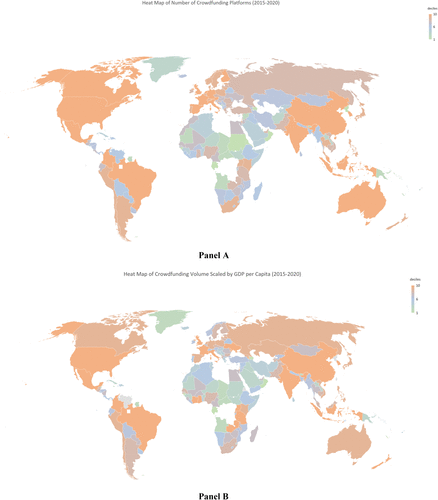
Table 2 presents data on the number of platforms, total volume, retail and institutional volume, debt and equity financing, and domestic and international volume, categorized by market type. This data are an average across all platforms and years. About 33% of the platforms are in developed markets. China alone recorded 22.3% of all platforms globally during this period. The transaction volume on these platforms is more concentrated. Before 2018, almost all crowdfunding in emerging markets was in China, which had 68.3% of total crowdfunding volume, 70.2% of debt financing, and 9.2% of equity financing. Following strict new regulations, crowdfunding volumes in China decreased dramatically in 2019 and almost disappeared in 2020. We see significant variation across countries when we scale crowdfunding volume by GDP per capita and apply a logarithmic transformation. Figure 1 uses a heat map to show the average number of platforms and volume in each country from 2015 to 2020, scaled by GDP per capita.
|
Table 2. Crowdfunding Volumes and Proportions: Crowdfunding Volumes Across All Countries and Years
| Markets | Number of countries | Number of platforms | Crowdfunding volume (in $millions) | Retail volume (in $millions) | Institutional volume (in $millions) | Debt finance volume (in $millions) | Equity finance volume (in $millions) | Domestic finance volume (in $millions) | International finance volume (in $millions) |
|---|---|---|---|---|---|---|---|---|---|
| (1) | (2) | (3) | (4) | (5) | (6) | (7) | (8) | (9) | |
| Totals | |||||||||
| All markets | 202 | 1,603 | 241,646 | 207,076 | 34,570 | 233,915 | 3,987 | 234,875.83 | 6,770.49 |
| All developed markets | 41 | 529 | 61,013 | 33,942 | 27,070 | 56,702 | 2,860 | 57,279.09 | 3,733.55 |
| All emerging markets | 161 | 1,074 | 180,634 | 173,134 | 7,499 | 177,213 | 1,128 | 177,596.74 | 3,036.94 |
| All emerging markets (excluding China) | 160 | 717 | 15,491 | 10,183 | 5,308 | 13,089 | 762 | 12,660.17 | 2,831.24 |
Notes. This table and Table 3 report the total number of platforms reporting nonzero volume of crowdfunding volume over the period 2015–2020. This table further classifies the total volume of business into retail and institutional platforms, domestic and international platforms, and contractual type (debt or equity), all reported in US$millions, as of 2020. All data are aggregated by country and averaged across the years of the sample, 2015–2020.
Notes. Volume is scaled by GDP per capita. (a) Event-study plot for the effect of regulation on debt crowdfunding volume. (b) Event-study plot for the effect of regulation on the number of debt crowdfunding platforms.
Table 3 reports proportions of crowdfunding across different dimensions, averaged yearly for each country, with averages of these proportions by country. Columns (1)–(3) show that there is a considerable degree of heterogeneity across financing patterns globally. In developed markets, the main crowdfunding method is through fixed-interest loans, with 62.54% being pure debt financing and 8.39% pure equity financing.11 In emerging markets, 49.27% is pure debt financing and 4.06% equity financing. Other platforms use mixed financing models or are reward- and donation-based.12 In developed markets, 78% of crowdfunding volume comes from retail investors, compared with 90% in emerging markets. Also, 44% of crowdfunding volume in developed markets is from domestic platforms, but only 21% in emerging markets.
|
Table 3. Crowdfunding Volumes and Proportions: Crowdfunding Proportions Across All Countries and Years
| Markets | Retail proportion of total alternative finance volume (%) | Debt proportion of total alternative finance volume (%) | Equity proportion of total alternative finance volume (%) | Domestic proportion of total alternative finance volume (%) |
|---|---|---|---|---|
| (1) | (2) | (3) | (4) | |
| Totals | ||||
| All markets | 87.75 | 51.90 | 4.92 | 25.89 |
| All developed markets | 78.17 | 62.54 | 8.39 | 44.01 |
| All emerging markets | 90.11 | 49.27 | 4.06 | 21.39 |
| All emerging markets (excluding China) | 90.06 | 48.95 | 4.09 | 20.89 |
Notes. This table and Table 2 report the total number of platforms reporting nonzero volume of crowdfunding volume over the period 2015–2020. This table reports univariate statistics on various proportions of types of financing, respectively, averaged by country and year.
4. Does Explicit Regulatory Clarity Affect Crowdfunding?
4.1. Crowdfunding Regulations Across the World
We hand-collect data on regulations from regulators and other websites in each country, classifying them by the year they were published.13 Sometimes, regulations come into effect later than their publication date. In such cases, we mark the enforcement year as the year when the regulation legally takes effect, whereas the publication year is when the details were first released. For example, Argentina published its General Resolution 717-E/2017 on December 29, 2017, but it did not take effect until 2018. Similarly, the United States announced changes to its crowdfunding rules (Regulation Crowdfunding) in October 2015, but these rules were enforced in May 2016. It is not clear whether the market reacts to the year of publication or enforcement. However, for most countries, these years are the same, and our results are similar whether we use the publication or enforcement year.
From these data, we develop our first independent variable—the Regulatory Clarity Index. This index measures how specifically a country’s regulations define what actions are allowed and what are not. To gauge a regulation’s clarity, we check whether it provides clear definitions for activities, licensing, safety measures, reporting, and disclosure requirements. We also assess whether it clearly explains how client assets should be handled, sets out responsible investing practices, manages conflicts of interest, details the process for closing down a platform, and identifies banned activities or platform usage limits. In essence, we categorize each regulation across 16 dimensions, identified by the existing literature as the most critical in addressing the interests of crowdfunding platforms, issuers, and investors, ensuring compliance with legal requirements.14 We note that this is an empirical definition we introduce that may not exactly match to existing theoretical constructs. Our dimensions address four major concerns.
First, a key issue in offering securities is clearly setting out what is expected and required from all parties involved (Djankov et al. 2002). This clarity helps everyone easily understand the rules that apply to their activities, which greatly reduces the chance of accidentally breaking these rules. There is a lot of variation in how regulators view and standardize practices within the crowdfunding sector. For instance, in a survey by CCAF and World Bank (2019), about 80% of regulators identified “fraud” and “money laundering” as major risks in digital lending and equity crowdfunding, but only a quarter saw “misuse of customer data” and “fundraiser over-indebtedness” as high risks. These varying perspectives affect the specific regulations introduced. By making rules clearer, especially in areas like licensing, safety measures, and operational controls, regulators can help platform operators use their resources more effectively. This ensures that they meet all necessary requirements and prepare for potential issues, increasing their chances of successfully starting and running their platforms.
A second issue is disclosure. In traditional security markets, countries like the Unite States, Poland, and the Czech Republic focus heavily on making sure both new and existing issuers provide detailed information. They also concentrate on licensing and closely overseeing financial intermediaries. In other countries, securities can be sold after filing a prospectus with the authorities, without having to distribute it to potential investors. Therefore, new players in the crowdfunding market would expect clearer guidance from regulators on how crowdfunding rules differ from traditional securities laws in these areas. This clarity is important because a global regulatory survey shows that accuracy in customer communication and including essential information is a major focus, with 95% of regulators seeing this as necessary (CCAF and World Bank 2019). The specific requirements for this vary, from occasional reports to the regulator to regularly making financial statements public. In countries like Mexico and Russia, financial intermediaries must have auditors verify the information they disclose in the crowdfunding market. A better understanding of these disclosure rules is likely to help crowdfunding firms adjust to changes in regulations and get a clearer sense of their potential legal responsibilities (La Porta et al. 2006, Djankov et al. 2007).
A third issue is liability. It is crucial for those issuing securities and running crowdfunding platforms to understand their role in promoting securities and to minimize the risks of selling poor-quality securities to the public. This problem, known as the “promoter’s problem,” involves the risks and negative outcomes of distributing inferior securities (see, for example, La Porta et al. 1997, 1998, 2000, 2006; Djankov et al. 2007, 2008). For instance, La Porta et al. (2000) demonstrate that in traditional securities, better liability standards for people inside the company can better protect external investors by preventing misuse of their investment. In crowdfunding, clear rules about managing client funds, such as separating funds, using trust or escrow accounts, setting conditions for giving out money, and defining the liability of issuers and intermediaries when investors seek to recover damages from companies, can make it clearer for investors when they are making investment decisions. Simultaneously, it helps platform owners and issuers reduce the risks of mishandling funds.
The final concern is about how sophisticated investors are and how conflicts of interest are managed. Crowdfunding stands out from the traditional securities market because it uses the internet to quickly reach a wide range of investors. To balance making crowdfunding accessible to more people and protecting investors, regulators often make it easier for people to invest compared with traditional markets, but they still set some basic criteria for how promoters can interact with these investors. For instance, countries like Canada, China, and the Netherlands require crowdfunding platforms to ensure that their investors understand the risks involved. Countries such as Bahrain, Brunei, Malaysia, and Mexico stop platform employees and their relatives from getting involved in lending or borrowing on the platform or having any financial interest in borrowers or lenders. These varied approaches to protecting investors are also seen in differing views among regulators, as reported in a post-COVID-19 global fintech regulator survey by CCAF and World Bank (2022). In this survey, about a third of regulators saw issues like lack of protection, limitations on transferring investments, or bias in data and algorithms as high risks, whereas around a fifth considered these to be low risks. Therefore, it is very important for platform owners and issuers to fully understand the rules about the kinds of investors they can work with, how they can engage with them, and any restrictions on raising funds from the public.
Each of the 16 primary dimensions discussed above is then subdivided into up to 12 subdimensions. Each (sub)dimension in the regulatory clarity index represents a type of restriction imposed by a specific clause in a bespoke regulation. These dimensions are detailed in Table 4.
|
Table 4. Regulations
| Major dimensions | Number of subdimensions | Subdimensions |
|---|---|---|
| Expectations and obligations for stakeholders | ||
| Definitions | 4 | Crowdfunding, types of investors, platform, loan/equity crowdfunding agreements |
| Licensing | 3 | Requirements to hold a license, services permitted, eligibility |
| Prudential requirements | 3 | Capital, liquidity requirements; obligation to purchase liability insurance cover |
| Systems and controls | 9 | Risk management standards, complaint handling, cybersecurity; transaction records, privacy; the availability of fit and proper test before appointing directors, and other corporate governance requirements; whether obligated to educate investors, or provide a discussion forum |
| Disclosure | ||
| Reporting requirements | 5 | Platform reporting to the authority (ad hoc/incident reporting, periodic reporting), issuer reporting to the authority (ad hoc/incident reporting, periodic reporting, reporting when applying for offering) |
| Disclosure requirements | 6 | Platform disclosures (ad hoc/incident, periodic, continuous); issuer disclosures (ad hoc/incident, periodic, continuous) |
| Audit | 1 | Control audit requirements for the platform |
| Liability | ||
| Client Assets | 3 | Segregation of client funds, trust/escrow account requirements, conditions for disbursement of funds to issuers |
| Execution of contracts/agreements | 2 | Required elements of platform-issuer and -investor agreements |
| Outsourcing | 1 | Platform obligations if outsourcing services |
| Winding down process | 2 | Obligation to display postcessation plan of action or to arrange administration of assets |
| Investor sophistication and conflict of interest management | ||
| Responsible investing | 12 | Eligibility criteria for borrowers or investors, loan recovery service, codes of conduct, self-attestation requirements, client due diligence, the availability of a secondary market, a risk warning when advertising the security, investor cooling-off rights, a lock-up period, an oversubscription clause, and an undersubscription clause |
| Financial promotions | 2 | Investor categorization; prohibited advertising |
| Conflict of interest management | 2 | Restrictions on platform employees as clients, whether obligated to establish conflict of interest management framework |
| Prohibited activities | 2 | Activities prohibited for either platforms or issuers |
| Platform usage limitations | 3 | Limits on funds raised, investment caps, fundraising periods |
Notes. This table classifies the different types of regulations in effect across countries. It reports the number of broad dimensions and subdimensions of regulations.
The unadjusted regulation clarity index is a simple sum of the indicator variables for each subdimension. As an example, the United States first addressed crowdfunding in the 2012 Jumpstart Our Business Startups (JOBS) Act under Title II and Rule 506 of Regulation D. This act includes several subcategories, like eligibility criteria for investors and issuers, categorization of investors, and general disclosure requirement for issuers. For example, it addresses four elements of responsible investment criteria—outlining the qualifications necessary for both issuers and investors, the obligations for due diligence, and the limitations on the resale of securities. Moreover, the United States enforces rules in additional areas: it earns two points for the criteria on financial promotion, by enacting specific rules for accredited investors and defining the conditions under which general solicitation (like advertising through newspapers, online, etc.) can be used to promote securities offerings; another point for restricting platform use, by setting a maximum limit on the number of securities buyers; one point for the development of systems and controls, requiring that each investor has sufficient understanding to evaluate the investment’s risks; and two points for the requirements on disclosures, including the necessity to disclose any previous incidents involving “bad actors” and to present financial statement information. As a result, from 2012 onward, the United States has a clarity index of 10.
In the second regulation variable, we weight each dimension by the number of subdimensions. For example, in 2014 (for publication) and 2015 (for enforcement), the United States had an adjusted score of 2.01 (2/3 + 1/5 + 3/12 + 2/9 + 1/2 + 1/6). The clarity index increased to 37 and the adjusted index to 9.46 from 2015 onward after the final form of Regulation Crowdfunding was published, clarifying the rules further. In 2020, the United States updated its Regulation Crowdfunding in response to the COVID-19 pandemic, further increasing the clarity index to 38 and the adjusted index to 9.79.
We note that most countries in our sample do not differentiate between types of financing, such as debt and equity; they just refer to financing in general. In these cases, the regulatory clarity index is the same for both debt and equity crowdfunding. However, in countries that do distinguish between different types of financing, the regulatory clarity indices have separate values for debt and equity.
Table OA1 in the Online Appendix lists all the regulations that specifically address crowdfunding for each jurisdiction from 2012 to 2020. This table includes the year each regulation was published, along with its regulatory clarity index and adjusted index right after it was introduced. We categorize countries into three types: those that always had regulations during our study period (France, New Zealand, the United Kingdom, and the United States for debt crowdfunding; Italy, Lebanon, New Zealand, Japan, the United Kingdom, and the United States for equity crowdfunding), those that adopted explicit crowdfunding regulations (either for debt or equity) during this period (40 countries or territories), and those that never had any regulations. The main focus of our paper is to examine whether the countries that adopted regulations saw an increase in crowdfunding volume after the switch using a staggered DiD regression approach. Table OA2 in the Online Appendix lists the first document each country issued regarding crowdfunding regulations.15
Table 5 presents univariate statistics for all the variables used in our DiD regressions. There is a monotonic trend in these variables across different types of countries: those that had regulations throughout our study period (shown in column (2)), those that introduced regulations during this time (column (3)), and those that never had regulations (column (4)). For instance, factors like the rule of law, GDP, the strength of legal rights, and the ease of resolving insolvency all decrease noticeably as we go from column (2) to column (4). Similarly, the number of days it takes to start a business and the cost of starting up a business, which are indicators of the ease of doing business, gradually increase from column (2) to column (4). Overall, the countries in column (2), which always had regulations, are wealthier, more developed, and more business-friendly compared with those that never introduced regulations. The countries that introduced their first regulation during the 2015–2020 period, known as switchers, fall in between these two groups.
|
Table 5. Univariate Summary Statistics
| Variables | All countries | Countries that added regulation before 2015 | Switchers: Countries that added regulation during 2015–2020 | Countries that never had regulation until 2020 | Differences (p-values) | |
|---|---|---|---|---|---|---|
| (1) | (2) | (3) | (4) | (3)–(2) | (3)–(4) | |
| Number of countries | 202 | 8 | 50 | 144 | ||
| Regulation index (debt crowdfunding) | 4.11 | 30.15 | 28.04 | 0.00 | 0.61 | 0.00 |
| Adjusted regulation index (debt crowdfunding) | 1.12 | 7.97 | 7.66 | 0.00 | 0.77 | 0.00 |
| Debt crowdfunding volume (domestic; retail + institutional) ($ mil) | 1,134.34 | 6,876.34 | 1,896.23 | 25.49 | 0.34 | 0.08 |
| Debt crowdfunding volume (domestic; retail) ($ mil) | 971.49 | 3,467.46 | 1,860.57 | 20.69 | 0.73 | 0.09 |
| Debt crowdfunding volume (domestic; institutional) ($ mil) | 162.86 | 3,408.89 | 35.65 | 4.80 | 0.00 | 0.03 |
| Rule of law | 0.00 | 1.34 | 0.62 | −0.34 | 0.04 | 0.00 |
| GDP ($ billion) | 486.11 | 3,200.92 | 732.49 | 223.71 | 0.03 | 0.00 |
| Time required to start a business (days) | 21.57 | 3.92 | 12.11 | 25.04 | 0.06 | 0.03 |
| Cost of business start-up procedures (% of GNI per capita) | 24.05 | 0.65 | 6.96 | 31.86 | 0.07 | 0.01 |
| Taxes on income, profits, and capital gains (% of revenue) | 24.25 | 41.60 | 25.35 | 23.05 | 0.02 | 0.30 |
| Strength of legal rights index | 43.13 | 75.67 | 40.74 | 41.25 | 0.00 | 0.92 |
| Depth of credit information index | 61.08 | 92.50 | 84.26 | 51.58 | 0.36 | 0.00 |
| Resolving insolvency | 45.88 | 80.76 | 62.61 | 36.88 | 0.07 | 0.00 |
| Bank capital to assets ratio (%) | 9.48 | 6.74 | 8.72 | 9.92 | 0.18 | 0.04 |
| Domestic credit to private sector by banks (% of GDP) | 55.51 | 107.92 | 72.49 | 46.81 | 0.08 | 0.00 |
| Commercial bank branches (per 100,000 adults) | 16.15 | 31.04 | 20.25 | 13.69 | 0.20 | 0.00 |
| Bank bad-debt ratio (%) | 6.71 | 1.76 | 4.79 | 7.47 | 0.32 | 0.04 |
| Mobile cellular subscriptions (per 100 people) | 109.51 | 108.89 | 126.50 | 103.95 | 0.09 | 0.00 |
Notes. This table reports the univariate statistics for all variables included in the regression of Table 6. The table classifies countries into (1) all countries, (2) countries that added debt crowdfunding regulation during 2015–2020, (3) countries that added debt crowdfunding regulation before 2015, and (4) countries that never had debt crowdfunding regulation during 2015–2020. Statistics are averaged across the whole period 2015–2020, except that, for countries that added debt crowdfunding regulation after 2015, statistics are reported as of the value in the year of introducing the first explicit debt crowdfunding regulation.
4.2. Does Regulatory Clarity Affect the Volume of Debt Crowdfunding?
Table 6 reports coefficients from a diff-in-diff regression specification of the log of total domestic debt crowdfunding volume by country. The dependent variable is the log(debt crowdfunding volume (in U.S.$) scaled by GDP per capita+1) by country.
|
Table 6. Impact of Regulation on Domestic Debt Crowdfunding
| Variables | Raw regulation clarity index | Adjusted regulation clarity index | ||||||
|---|---|---|---|---|---|---|---|---|
| (1) | (2) | (3) | (4) | (5) | (6) | (7) | (8) | |
| Legal system within country | ||||||||
| Regulation index (debt) | −0.0244 | −0.0306*** | −0.0261** | −0.0269* | −0.0893 | −0.116*** | −0.101** | −0.0992* |
| (−1.390) | (−3.174) | (−2.305) | (−1.882) | (−1.392) | (−3.256) | (−2.458) | (−1.897) | |
| Regulation index (debt) × Switcher | 0.0780*** | 0.0914*** | 0.0828*** | 0.0883*** | 0.281*** | 0.327*** | 0.295*** | 0.307*** |
| (3.265) | (4.363) | (3.798) | (3.347) | (3.212) | (4.223) | (3.677) | (3.117) | |
| Rule of law | 0.847** | 1.463** | 1.970** | 2.455** | 0.843** | 1.451** | 1.961** | 2.437** |
| (1.979) | (2.091) | (2.368) | (2.485) | (1.968) | (2.072) | (2.353) | (2.453) | |
| Size of economy | ||||||||
| Ln(GDP) | 0.355 | 0.0220 | −0.163 | 2.220* | 0.351 | 0.0183 | −0.166 | 2.202* |
| (0.777) | (0.0257) | (−0.179) | (1.832) | (0.769) | (0.0213) | (−0.182) | (1.814) | |
| Business-friendly environment | ||||||||
| Time required to start a business | 0.00711 | 0.00559 | 0.00901 | 0.00687 | 0.00537 | 0.00856 | ||
| (0.867) | (0.671) | (0.638) | (0.829) | (0.637) | (0.601) | |||
| Cost of business start-up procedures | 0.00511 | 0.00665 | −0.00724 | 0.00528 | 0.00682 | −0.00699 | ||
| (0.797) | (1.018) | (−0.984) | (0.822) | (1.044) | (−0.951) | |||
| Taxes on income, profits, and capital gains | 0.0664*** | 0.0634** | 0.0555* | 0.0665*** | 0.0632** | 0.0556* | ||
| (2.752) | (2.443) | (1.786) | (2.744) | (2.431) | (1.781) | |||
| Getting credit | ||||||||
| Strength of legal rights | 0.0290* | 0.0503*** | 0.0288* | 0.0500*** | ||||
| (1.824) | (2.766) | (1.817) | (2.747) | |||||
| Depth of credit information | −0.00491 | 0.00324 | −0.00494 | 0.00313 | ||||
| (−0.763) | (0.377) | (−0.765) | (0.362) | |||||
| Resolving insolvency | 0.0230 | −0.00830 | 0.0222 | −0.00919 | ||||
| (0.772) | (−0.256) | (0.739) | (−0.282) | |||||
| Financial system efficiency | ||||||||
| Bank capital to assets ratio | −0.0120 | −0.0119 | ||||||
| (−0.176) | (−0.173) | |||||||
| Domestic credit to private sector by banks | −0.0392** | −0.0390** | ||||||
| (−2.492) | (−2.480) | |||||||
| Bank branches per 100k adults (log) | −2.544** | −2.579** | ||||||
| (−2.489) | (−2.514) | |||||||
| Bank bad-debt ratio | 0.0505 | 0.0496 | ||||||
| (0.911) | (0.894) | |||||||
| Fintech access | ||||||||
| Mobile cellular subscriptions (per 100 people) (log) | −1.327 | −1.270 | ||||||
| (−0.883) | (−0.841) | |||||||
| Constant | −6.519 | 0.289 | 2.942 | −41.47 | −6.427 | 0.392 | 3.066 | −41.12 |
| (−0.583) | (0.0135) | (0.129) | (−1.353) | (−0.575) | (0.0183) | (0.135) | (−1.339) | |
| Observations | 1,093 | 747 | 707 | 530 | 1,093 | 747 | 707 | 530 |
| Adjusted R2 | 0.805 | 0.808 | 0.806 | 0.804 | 0.805 | 0.807 | 0.805 | 0.803 |
| Recipient country fixed effects | Yes | Yes | Yes | Yes | Yes | Yes | Yes | Yes |
| Year fixed effects | Yes | Yes | Yes | Yes | Yes | Yes | Yes | Yes |
| M1: Effect on switching relative to unregulated countries | 1.152 | 1.306 | 1.219 | 1.319 | 1.135 | 1.247 | 1.152 | 1.233 |
| (p = 0.002) | (p = 0.003) | (p = 0.005) | (p = 0.011) | (p = 0.002) | (p = 0.005) | (p = 0.009) | (p = 0.021) | |
| M2: Effect on always regulated countries that changed the level of regulation | −0.426 | −0.534 | −0.455 | −0.469 | −0.431 | −0.560 | −0.488 | −0.479 |
| (p = 0.165) | (p = 0.002) | (p = 0.022) | (p = 0.060) | (p = 0.164) | (p = 0.001) | (p = 0.014) | (p = 0.059) | |
| M3: Effect on switching relative to always regulated countries | 1.578 | 1.84 | 1.674 | 1.788 | 1.566 | 1.807 | 1.639 | 1.712 |
| (p < 0.001) | (p < 0.001) | (p < 0.001) | (p = 0.001) | (p < 0.001) | (p < 0.001) | (p < 0.001) | (p = 0.002) | |
Notes. This table and Table 7 report DiD tests to examine how domestic debt crowdfunding volume is impacted by changes in regulation. The dependent variable is the log of debt crowdfunding volume (contributed by both retail and institutional investors in this table, by retail investors and by institutional investors in Table 7 for domestic platforms scaled by GDP per capita by country. The independent variables, Raw Regulation index from Models (1)–(4) and Adjusted regulation index from Models (5)–(8), are, respectively, the raw and adjusted measures of the regulatory clarity in the country using indicator variables for different regulation provisions. The independent variable, Switcher, is one if the country introduces its first regulation between 2015–2020, and zero otherwise. All independent variables are described in the appendix and are lagged by a year. All data are aggregated by country and year separately from the 2015–2020 global surveys of crowdfunding. Heteroscedasticity-consistent robust standard errors are used. M1, M2, and M3 are computed, respectively, using Equations (3), (4), and (6). t-statistics are reported in parentheses.
*p < 0.1; **p < 0.05; ***p < 0.01.
|
Table 7. Impact of Regulation on Domestic Debt Crowdfunding Contributed by Retail and Institutional Investors Separately
| Variables | Raw regulation clarity index | Adjusted regulation clarity index | ||||||
|---|---|---|---|---|---|---|---|---|
| Retail investors | Institutional investors | Retail investors | Institutional investors | |||||
| (1) | (2) | (3) | (4) | (5) | (6) | (7) | (8) | |
| Legal system within country | ||||||||
| Regulation index (debt) | −0.0259 | −0.0267* | −0.0133 | −0.0210 | −0.0943 | −0.0997* | −0.0500 | −0.0790 |
| (−1.449) | (−1.828) | (−1.564) | (−1.410) | (−1.444) | (−1.871) | (−1.630) | (−1.383) | |
| Regulation index (debt) × Switcher | 0.0777*** | 0.0881*** | 0.0596*** | 0.0687** | 0.280*** | 0.310*** | 0.203*** | 0.221* |
| (3.203) | (3.355) | (2.740) | (2.140) | (3.145) | (3.160) | (2.599) | (1.848) | |
| Rule of law | 0.913** | 2.422** | −0.136 | 0.190 | 0.908** | 2.401** | −0.139 | 0.194 |
| (2.230) | (2.553) | (−0.374) | (0.187) | (2.218) | (2.521) | (−0.382) | (0.190) | |
| Size of economy | ||||||||
| Ln(GDP) | 0.260 | 2.086* | −0.193 | −0.608 | 0.256 | 2.066* | −0.192 | −0.603 |
| (0.593) | (1.771) | (−0.499) | (−0.565) | (0.585) | (1.750) | (−0.498) | (−0.559) | |
| Business-friendly environment | ||||||||
| Time required to start a business | 0.0118 | −0.0145 | 0.0114 | −0.0153 | ||||
| (0.854) | (−1.037) | (0.819) | (−1.073) | |||||
| Cost of business start-up procedures | −0.00458 | −0.00622 | −0.00436 | −0.00582 | ||||
| (−0.673) | (−0.809) | (−0.640) | (−0.756) | |||||
| Taxes on income, profits, and capital gains | 0.0489 | 0.0494* | 0.0490 | 0.0495* | ||||
| (1.522) | (1.727) | (1.518) | (1.715) | |||||
| Getting credit | ||||||||
| Strength of legal rights | 0.0486*** | 0.0125 | 0.0483*** | 0.0123 | ||||
| (2.932) | (0.688) | (2.911) | (0.678) | |||||
| Depth of credit information | −0.00199 | −0.00383 | −0.00209 | −0.00408 | ||||
| (−0.302) | (−0.374) | (−0.316) | (−0.398) | |||||
| Resolving insolvency | −0.0222 | 0.0263 | −0.0231 | 0.0257 | ||||
| (−0.799) | (0.749) | (−0.827) | (0.728) | |||||
| Financial system efficiency | ||||||||
| Bank capital to assets ratio | −0.0192 | −0.0811 | −0.0193 | −0.0786 | ||||
| (−0.274) | (−1.304) | (−0.274) | (−1.254) | |||||
| Domestic credit to private sector by banks | −0.0372** | 0.0114 | −0.0370** | 0.0117 | ||||
| (−2.369) | (1.197) | (−2.357) | (1.235) | |||||
| Bank branches per 100k adults (log) | −2.012** | −4.684*** | −2.044** | −4.745*** | ||||
| (−2.114) | (−4.636) | (−2.139) | (−4.647) | |||||
| Bank bad-debt ratio | 0.0583 | −0.0661*** | 0.0574 | −0.0669*** | ||||
| (1.065) | (−2.673) | (1.048) | (−2.683) | |||||
| Fintech access | ||||||||
| Mobile cellular subscriptions (per 100 people) (log) | −1.788 | 0.878 | −1.734 | 0.953 | ||||
| (−1.259) | (0.556) | (−1.215) | (0.599) | |||||
| Constant | −4.319 | −36.38 | 5.981 | 23.96 | −4.229 | −35.97 | 5.982 | 23.70 |
| (−0.403) | (−1.229) | (0.632) | (0.807) | (−0.394) | (−1.213) | (0.631) | (0.798) | |
| Observations | 1,093 | 530 | 1,093 | 530 | 1,093 | 530 | 1,093 | 530 |
| Adjusted R2 | 0.804 | 0.800 | 0.687 | 0.694 | 0.804 | 0.799 | 0.686 | 0.692 |
| Recipient country fixed effects | Yes | Yes | Yes | Yes | Yes | Yes | Yes | Yes |
| Year fixed effects | Yes | Yes | Yes | Yes | Yes | Yes | Yes | Yes |
| M1: Effect on switching relative to unregulated countries | 1.113 | 1.321 | 0.994 | 1.024 | 1.24 | 1.247 | 0.838 | 0.841 |
| (p = 0.002) | (p = 0.010) | (p = 0.021) | (p = 0.102) | (p = 0.005) | (p = 0.018) | (p = 0.103) | (p = 0.186) | |
| M2: Effect on always regulated countries that changed the level of regulation | −0.452 | −0.465 | −0.232 | −0.367 | −0.707 | −0.481 | −0.241 | −0.381 |
| (p = 0.148) | (p = 0.068) | (p = 0.118) | (p = 0.159) | (p = 0.016) | (p = 0.062) | (p = 0.104) | (p = 0.167) | |
| M3: Effect on switching relative to always regulated countries | 1.565 | 1.786 | 1.226 | 1.391 | 1.947 | 1.729 | 1.145 | 1.222 |
| (p < 0.001) | (p = 0.001) | (p = 0.007) | (p = 0.037) | (p < 0.001) | (p = 0.002) | (p = 0.011) | (p = 0.074) | |
Notes. This table and Table 6 report DiD tests to examine how domestic debt crowdfunding volume is impacted by changes in regulation. The dependent variable is the log of debt crowdfunding volume (contributed by both retail and institutional investors in Table 6, by retail investors and by institutional investors in this table for domestic platforms scaled by GDP per capita by country. The independent variables, Raw Regulation index from Models (1)–(4) and Adjusted regulation index from Models (5)–(8), are, respectively, the raw and adjusted measures of the regulatory clarity in the country using indicator variables for different regulation provisions. The independent variable, Switcher, is one if the country introduces its first regulation between 2015–2020, and zero otherwise. All independent variables are described in the appendix and are lagged by a year. All data are aggregated by country and year separately from the 2015–2020 global surveys of crowdfunding. Heteroscedasticity-consistent robust standard errors are used. M1, M2, and M3 are computed, respectively, using Equations (3), (4), and (6). t-statistics are reported in parentheses.
*p < 0.1; **p < 0.05; ***p < 0.01.
The regression specification is as follows:
Apart from the two regulatory indices, we also use the World Bank’s general measure for the rule of law as the other relevant control for a country’s legal system. This rule of law measure is used to gauge how effectively a country’s laws are regulated and enforced. Campello et al. (2024) examine how regulatory uncertainty impacts fintech innovation by proposing a theoretical model where fintech firms, incumbent companies, and regulators interact strategically under uncertain conditions. In their model, the rate of fintech innovation depends on the regulatory body’s budget and skills, the private benefits to innovators, and the number of fintechs with access to new technology. They argue that greater regulatory budgets and skills, which in our model is correlated with the rule of law, encourage more innovation, whereas insufficient resources and poor regulatory skills lead to outright bans or less effective interventions, thereby stifling innovation. The rule of law measure includes submeasures like control of corruption, government effectiveness, and regulatory quality. However, because these submeasures are closely linked to each other, we only report regression results using the overall rule of law variable in our study, though our results stay qualitatively similar to using these submeasures in isolation.
We also include controls for various economic and financial indicators in each country. These include the size of the country’s economy, which we measure by the logarithm of its gross domestic product, and several indicators of how easy it is to do business and access financial services. For ease of doing business, we use the time and cost needed to start a business. The efficiency of the financial system is measured using indicators such as the ratio of bank capital to assets, the percentage of domestic credit provided to the private sector by banks, the ratio of bad debts (nonperforming loans to total gross loans) in banks, and the number of bank branches per 100,000 adults, adjusted for log scale. To assess how easy it is to get credit, we use the strength of legal rights, the depth of credit information, and how straightforward it is to resolve insolvency. We also measure access to fintech services by the number of mobile phone subscriptions per 100 people.16 Finally, we account for fixed effects related to each country and time period in all our regression analyses to account for unique characteristics that might affect each country and changes over time that could influence our results.
Ex ante, it is unclear how these variables will impact the amount of money raised through crowdfunding. Although high economic returns in a country could attract more crowdfunding, incumbents might lobby to prevent new competitors from entering the market (Kroszner and Strahan 1999, Rajan and Zingales 2003). Although strong protection for creditors in the traditional financial sector might encourage people to explore alternative financial options like crowdfunding, the uncertainties and risks associated with crowdfunding, which are not always covered by existing laws, could also deter investors.
Without changing the estimation results, the above specification17 can be equivalently written as
The marginal change in the dependent variable (e.g., crowdfunding volume or number of platforms) attributable to the introduction of crowdfunding regulation for country at time is if the country is a switcher. Therefore, the expected difference in the marginal effect of introducing a regulation for country from introducing regulation relative to countries that were never regulated is . We compute this measure using its sample estimator, where and are replaced by their sample ordinary least squares (OLS) estimators and is proxied by the sample average of regulation index of switcher countries.
The marginal change in the dependent variable attributable to the introduction of crowdfunding regulation for country at time is if the country has always been regulated over the period 2015–2020. We compute this measure using its sample estimator, where is replaced by its sample OLS estimator and is proxied by the change in the level of the index for countries that are always regulated over the period.
Finally, the third measure quantifies the expected difference in the marginal growth in the crowdfunding industry in the switcher country from introducing the regulation, controlling for contemporaneous changes in regulation by countries that always had regulation. We also account for the case where countries that have always been regulated changed the level of regulatory clarity over the period. This measure, therefore, can be proxied by
Table 6, Model (1) analyzes the total volume of debt crowdfunding in a country. We examine how it is influenced by the lagged clarity index, the interaction between this index and the switcher indicator, along with the rule of law, GDP, and controlling for country and year-specific factors. We find that although the raw and adjusted clarity indices themselves do not relate to crowdfunding levels, the interaction between the regulation index and the switcher indicator is significantly positive. The combined effect of the index and the interaction term also shows a significant positive impact.18 This suggests that regulatory clarity positively influences the growth of the debt crowdfunding industry, especially in countries that adopted explicit debt crowdfunding regulations during our study period. According to M1 and M3, introducing new regulation lets a country’s domestic debt crowdfunding volume grow by 115% compared with countries that never regulated and 158% compared with always-regulated countries. Interestingly, M2 suggests that further tightening regulations in always-regulated countries could suppress the growth of the debt crowdfunding industry by 43% compared with never-regulated countries, although this decrease is not statistically significant.
When we add controls for the ease of doing business (Model (2)), ease of getting credit (Model (3)), and financial system efficiency and fintech access (Model (4)), we find that although the level of the debt regulatory clarity index is generally negatively related to crowdfunding volume, the interaction term always remains significantly positive at the 1% level. This indicates that countries introducing regulations within our study period experience significant increases in debt crowdfunding volume.
Among the control variables in our study, the general level of the rule of law in a country consistently shows a positive relationship with the amount of crowdfunding, consistent with the model in Campello et al. (2024). This relationship is statistically significant, at the 5% level, across all models where the rule of law is included.19 The factors that make doing business easier in a country generally correlate positively with the development of debt crowdfunding. However, only the income tax level shows significance across the models. The strength of legal rights for creditors also has a positive correlation with the volume of debt crowdfunding in a country (Model (4)). Among the variables measuring financial system efficiency, the proportion of domestic credit to the private sector by banks is significantly and negatively related to debt crowdfunding volume, implying a substitution effect happening between the traditional financial sector and the crowdfunding industry. Furthermore, based on M1, M2, and M3, the positive impact of introducing explicit regulatory regimes on the growth of the domestic debt crowdfunding industry in countries that switched to such regulations is strong and consistent, even after including all the covariates. Additionally, M2 indicates that tightening regulations in countries that always had them is significantly and negatively related to debt crowdfunding volume, as shown across all three Models (2)–(4). Models (5)–(8) use the adjusted clarity index as the main independent variable and show results that are qualitatively similar to the previous findings.
Table 7 reports OLS regression coefficients when we further distinguish the domestic debt crowdfunding volume by the investor type—retail and institutional investors. Consistently across all models, the interaction between the regulatory clarity index (whether raw or adjusted) and the switcher indicator (countries that introduced regulations during our study) is significantly and positively related to the crowdfunding volume from both retail and institutional investors. Based on the p-values in M1 and M3, the sum of the interaction term and the regulation index is significantly positive. This suggests that the introduction of explicit regulations has a strong impact on the level of crowdfunding from both retail and institutional investors in countries that recently regulated crowdfunding. However, increasing regulatory detail in countries that have always had regulations significantly decreases the volume of debt crowdfunding in platforms serving retail investors, but this is not the case for platforms serving institutional investors, as shown in M2.
We also examine whether the clarity of regulations in the borrower’s country affects the volume of debt crowdfunding from foreign platforms. Foreign platforms are defined as those headquartered in a different country. Our findings show that regulatory clarity indeed impacts foreign debt crowdfunding volume. The results, presented in Table OA3 in the Online Appendix, show that regulatory clarity is significantly and positively related to the volume of debt crowdfunding from foreign platforms. This effect is particularly strong for platforms serving institutional investors (M1) and for those serving either institutional or retail investors (M3) when we compare countries that switched to regulations compared with those without regulations or with longstanding regulations, respectively. However, increasing regulatory requirements in countries that already have regulations tends to negatively impact international platforms targeting retail investors (M2).
4.3. Do Regulations Drive the Volume of Equity Crowdfunding?
In many countries, equity crowdfunding is the second most common type after debt crowdfunding. There is also variation within countries in how they introduce regulations for debt and equity crowdfunding. For instance, 3 countries have explicit regulations for debt crowdfunding but not for equity, whereas 10 others introduced specific regulations for equity crowdfunding but not for debt. Hence, we now examine the impact of equity-specific crowdfunding regulation on equity crowdfunding volumes. The dependent variable is the logarithm of the volume of equity crowdfunding, adjusted for the GDP per capita of each country, as the dependent variable. We also differentiate between volumes coming from domestic and international platforms. The main independent variables are the level of clarity in equity regulation and the adjusted clarity index, measured after the regulation is published.
Using similar regression specifications as in Table 6, Models (4) and (8), Table 8 reports coefficients from diff-in-diff regressions of equity crowdfunding volume. We modify some of the control variables used for debt volume. Specifically, for equity crowdfunding, we use WB proxies for the protection of minority shareholders, including the extent of disclosure, the extent of director liability, the ease of shareholder lawsuits, and the level of corporate transparency. When measuring financial system efficiency, we use the total value of stocks traded as a percentage of GDP, the turnover ratio of domestic shares, the log-transformed total value of stocks, and the log-transformed number of listed domestic firms.
|
Table 8. Impact of Regulation on Equity Crowdfunding
| Variables | Raw regulation clarity index | Adjusted regulation clarity index | ||||||
|---|---|---|---|---|---|---|---|---|
| Domestic platforms | Foreign platforms | Domestic platforms | Foreign platforms | |||||
| (1) | (2) | (3) | (4) | (5) | (6) | (7) | (8) | |
| Legal system within country | ||||||||
| Regulation index (equity) | 0.00707 | 0.00661 | −0.0416 | −0.130*** | 0.0327 | 0.0241 | −0.157* | −0.472*** |
| (0.636) | (0.356) | (−1.619) | (−2.659) | (0.792) | (0.358) | (−1.698) | (−2.659) | |
| Regulation index (equity) × Switcher | 0.0204 | 0.00963 | 0.0574** | 0.150*** | 0.0690 | 0.0392 | 0.216** | 0.552*** |
| (1.240) | (0.391) | (2.064) | (2.935) | (1.148) | (0.430) | (2.138) | (2.960) | |
| Rule of law | −0.0209 | 2.022 | 0.0872 | 1.190 | −0.0256 | 2.013 | 0.0883 | 1.176 |
| (−0.0597) | (1.385) | (0.291) | (1.149) | (−0.0730) | (1.379) | (0.294) | (1.135) | |
| Size of economy | ||||||||
| Ln(GDP) | 0.196 | 0.745 | 0.333 | −0.519 | 0.196 | 0.748 | 0.333 | −0.512 |
| (0.626) | (0.470) | (0.978) | (−0.471) | (0.626) | (0.473) | (0.978) | (−0.466) | |
| Business-friendly environment | ||||||||
| Time required to start a business | 0.0180 | 0.0253 | 0.0179 | 0.0252 | ||||
| (0.908) | (1.165) | (0.904) | (1.164) | |||||
| Cost of business start-up procedures | −0.0420 | 0.0230 | −0.0418 | 0.0233 | ||||
| (−1.300) | (0.964) | (−1.296) | (0.978) | |||||
| Taxes on income, profits and capital gains | 0.00966 | −0.00304 | 0.00931 | −0.00333 | ||||
| (0.128) | (−0.0389) | (0.124) | (−0.0428) | |||||
| Protection of minority shareholders | ||||||||
| Corporate transparency | −0.0332 | −0.00376 | −0.0331 | −0.00366 | ||||
| (−1.494) | (−0.199) | (−1.489) | (−0.194) | |||||
| Extent of disclosure index | 0.0466 | −0.0661* | 0.0458 | −0.0671* | ||||
| (1.289) | (−1.929) | (1.258) | (−1.969) | |||||
| Extent of director liability index | −0.0562 | 0.155*** | −0.0556 | 0.156*** | ||||
| (−1.563) | (2.997) | (−1.544) | (3.015) | |||||
| Ease of shareholder suits index | −0.0419 | 0.0338 | −0.0414 | 0.0345 | ||||
| (−1.471) | (1.401) | (−1.441) | (1.439) | |||||
| Financial system efficiency | ||||||||
| Stocks traded, total value (% of GDP) | −0.00521 | 0.00123 | −0.00524 | 0.00121 | ||||
| (−0.568) | (0.199) | (−0.572) | (0.196) | |||||
| Stocks traded, turnover ratio of domestic shares | 0.0133 | −0.00435 | 0.0133 | −0.00435 | ||||
| (1.470) | (−0.705) | (1.472) | (−0.704) | |||||
| Stocks traded, total value ($) (log) | 0.201 | −0.137 | 0.197 | −0.143 | ||||
| (0.576) | (−0.387) | (0.565) | (−0.403) | |||||
| Number of listed domestic companies (log) | −0.902 | 0.491 | −0.897 | 0.496 | ||||
| (−0.597) | (0.461) | (−0.593) | (0.465) | |||||
| Fintech access | ||||||||
| Mobile cellular subscriptions (per 100 people) (log) | −5.931*** | 0.830 | −5.915*** | 0.852 | ||||
| (−3.073) | (0.529) | (−3.060) | (0.545) | |||||
| Constant | −3.715 | 15.19 | −7.342 | 4.997 | −3.715 | 15.10 | −7.342 | 4.803 |
| (−0.485) | (0.371) | (−0.880) | (0.185) | (−0.486) | (0.370) | (−0.880) | (0.178) | |
| Observations | 1,093 | 285 | 1,093 | 285 | 1,093 | 285 | 1,093 | 285 |
| Adjusted R2 | 0.794 | 0.729 | 0.460 | 0.515 | 0.794 | 0.729 | 0.461 | 0.515 |
| Recipient country fixed effects | Yes | Yes | Yes | Yes | Yes | Yes | Yes | Yes |
| Year fixed effects | Yes | Yes | Yes | Yes | Yes | Yes | Yes | Yes |
| M1: Effect on switching relative to unregulated countries | 0.662 | 0.391 | 0.383 | 0.479 | 0.658 | 0.409 | 0.376 | 0.511 |
| (p = 0.015) | (p = 0.346) | (p = 0.157) | (p = 0.262) | (p = 0.012) | (p = 0.333) | (p = 0.159) | (p = 0.239) | |
| M2: Effect on always regulated countries that changed the level of regulation | 0.099 | 0.092 | −0.580 | −1.819 | 0.532 | 0.093 | −0.603 | −1.810 |
| (p = 0.525) | (p = 0.722) | (p = 0.106) | (p = 0.008) | (p = 0.094) | (p = 0.721) | (p = 0.090) | (p = 0.008) | |
| M3: Effect on switching relative to always regulated countries | 0.564 | 0.299 | 0.963 | 2.298 | 0.125 | 0.317 | 0.979 | 2.322 |
| (p = 0.082) | (p = 0.531) | (p = 0.031) | (p = 0.004) | (p = 0.429) | (p = 0.511) | (p = 0.026) | (p = 0.003) | |
Notes. This table reports DiD tests to examine how domestic equity crowdfunding volume is impacted by changes in regulation. In columns (1) and (2) and columns (5) and (6), the dependent variable is the log of equity crowdfunding volume (contributed by both retail and institutional investors) for domestic platforms scaled by GDP per capita by country. In columns (3) and (4) and columns (7) and (8), the dependent variable is the log of equity crowdfunding volume (contributed by both retail and institutional investors) for foreign platforms scaled by GDP per capita in the recipient country. The independent variables, Raw regulation clarity index from Models (1)–(4) and Adjusted regulation clarity index from Models (5)–(8), are, respectively, the raw and adjusted measures of the regulatory clarity in the country using indicator variables for different regulation provisions. The independent variable, Switcher, is one if the country introduces its first regulation between 2015 and 2020, and zero otherwise. All independent variables are described in the appendix and are lagged by a year. All data are aggregated by country and year separately from the 2015–2020 global surveys of crowdfunding. Heteroscedasticity-consistent robust standard errors are used. M1, M2, and M3 are computed, respectively, using Equations (3), (4), and (6). t-statistics are reported in parentheses.
*p < 0.1; **p < 0.05; ***p < 0.01.
In our analysis, except for Model (1), where we consider only the rule of law and the size of the economy, the clarity of equity crowdfunding regulations does not show a significant relationship with either domestic or international equity crowdfunding volumes. This lack of significance is evident from the χ2 test, which checks the combined importance of the regulatory clarity index and its interaction with the switcher indicator (M1) for Models (2)–(4) and (6)–(8). Although the interaction term’s coefficient is significantly positive for international volumes, M1 consistently shows no significant relationship, except in the initial model. Additionally, the control variables, including the rule of law and the size of the economy, do not consistently impact the level of equity crowdfunding. Other factors, like the ease of doing business and financial system efficiency, do not seem to predict future equity crowdfunding volumes effectively. However, the degree of director liability index does seem to significantly forecast the growth of equity crowdfunding. The impact varies, depending on whether we look at domestic or international volumes. In countries with less strict director liability, a larger portion of equity crowdfunding volume tends to come from domestically headquartered platforms.
One reason for the difference in how regulatory clarity affects debt and equity crowdfunding might be that debt and equity work differently. In debt markets, the rights that lenders have after issuing a loan are often defined just by financial statement variables (Ball et al. 2008, Glushkov et al. 2018). This means that regulations requiring specific, measurable financial information are more helpful to lenders. In contrast, shareholders usually care about less concrete information, like a company’s potential for growth, which regulations might not impact as much. Another factor could be the relative size of equity crowdfunding compared with debt crowdfunding. Equity crowdfunding makes up a small portion of the market (an average of 5% per country-year), whereas debt crowdfunding is much larger (52% on average per country-year), as shown in Table 3. This size difference might mean that our analysis does not have enough sensitivity to detect changes in equity crowdfunding volumes over the short period of our study.
4.4. Do Regulations in the Platform’s Headquarters Country Matter?
A possible concern with our study is that the results might be influenced not by changes in the borrower’s country’s regulations, but by simultaneous regulations in the country where the crowdfunding platform is based. For instance, if a borrower’s country enacts regulations coincidently as the platform’s home country, platforms might expand their services to other countries to avoid stricter rules at home. We address this concern in two ways. First, in Tables 6 and 7 we focus on the volume of debt crowdfunding from domestic platforms. This approach helps reduce worries about international regulatory arbitrage, as we only examine volumes where both the borrower and the platform’s headquarters are in the same country. Second, we construct a variable to track the total debt crowdfunding volume generated by platforms based in a particular country (the source country) and invested in other countries. If the volume is influenced by regulations in the platforms’ home countries, the sum of the regulatory clarity index and its interaction term should significantly predict the total international debt crowdfunding by platforms in the source country. Using the same control variables as in Tables 6 and 7, Table OA4 in the Online Appendix analyzes the volume of international debt crowdfunding in the source country. Across all models, neither the χ2 test for joint significance at the bottom of Table OA4 nor the coefficient of the interaction term suggests that the changes we see in crowdfunding volumes are driven by regulations in the platforms’ home countries.
4.5. What Changes Following the Publication of an Explicit Regulation?
Our findings so far show that debt crowdfunding volumes increase significantly after a country introduces explicit regulations for debt crowdfunding. In this section, we explore why this happens. There are three possible, nonexclusive reasons for this increase in volume after explicit regulations are published. First, the number of platforms might change. It is uncertain whether this number will go up or down. New regulations might cause some platforms to close, reducing the number of platforms and possibly leading to more business for the remaining ones. However, clearer regulations might encourage the entry of new platforms. Second, the market share concentration among platforms might shift. If investors feel more confident in the platforms that remain after regulations are introduced, these platforms might gain a larger share of the market. Finally, the average volume per platform could change. This would happen if investors, trusting in the regulated environment, decide to invest more money in the platforms that are still operating.
To investigate how new regulations affect the number of crowdfunding platforms, Table 9, Panel A reports the results from DiD regressions using the log-transformed number of domestic debt crowdfunding platforms in each country by year as the dependent variable. In all models, the interaction term between regulatory clarity indices and the switcher indicator consistently predicts the number of domestic platforms, at better than the 1% level of significance. The introduction of explicit regulation and its clarity seems to increase the number of platforms serving retail investors after the regulations are published. The combined effect of the regulatory clarity indices and the interaction term is also significant, as shown by the p-values of M1 in the models. When we examine debt crowdfunding volumes from foreign platforms in Table 9, Panel B, we find similar patterns. Regulatory clarity is significantly and positively related to the number of foreign debt crowdfunding platforms operating in the country in most model specifications. Regulations in the borrower’s country appear to encourage the entry of foreign platforms into the market.
|
Table 9. Impact of Regulation on Number of Debt Crowdfunding Platforms
| Variables | Raw regulation clarity index | Adjusted regulation clarity index | ||||
|---|---|---|---|---|---|---|
| All investors | Retail investors only | Institutional investors only | All investors | Retail investors only | Institutional investors only | |
| (1) | (2) | (3) | (4) | (5) | (6) | |
| Panel A: Dependent variable: Number of Domestic Debt Crowdfunding Platforms | ||||||
| Regulation index (debt) | −0.0275*** | −0.0279*** | −0.0327*** | −0.101*** | −0.102*** | −0.119*** |
| (−3.981) | (−3.584) | (−5.043) | (−4.013) | (−3.614) | (−5.010) | |
| Regulation index (debt) × Switcher | 0.0370*** | 0.0366*** | 0.0348*** | 0.133*** | 0.132*** | 0.121*** |
| (4.555) | (4.184) | (2.999) | (4.469) | (4.139) | (2.823) | |
| M1: Effect on switching relative to unregulated countries | 0.203 | 0.187 | 0.046 | 0.191 | 0.180 | 0.007 |
| (p = 0.034) | (p = 0.043) | (p = 0.812) | (p = 0.053) | (p = 0.058) | (p = 0.971) | |
| M2: Effect on always regulated countries that changed the level of regulation | −0.48 | −0.487 | −0.571 | −0.486 | −0.492 | −0.577 |
| (p < 0.001) | (p < 0.001) | (p < 0.001) | (p < 0.001) | (p < 0.001) | (p < 0.001) | |
| M3: Effect on switching relative to always regulated countries | 0.683 | 0.674 | 0.617 | 0.677 | 0.672 | 0.584 |
| (p < 0.001) | (p < 0.001) | (p = 0.009) | (p < 0.001) | (p < 0.001) | (p = 0.014) | |
| Panel B: Dependent variable: Number of Foreign Debt Crowdfunding Platforms | ||||||
| Regulation index (debt) | −0.0104 | −0.0167** | −0.0184*** | −0.0400* | −0.0623** | −0.0684*** |
| (−1.637) | (−2.381) | (−3.166) | (−1.652) | (−2.373) | (−3.087) | |
| Regulation index (debt) × Switcher | 0.0189*** | 0.0233*** | 0.0293*** | 0.0721*** | 0.0885*** | 0.107*** |
| (2.604) | (2.979) | (4.122) | (2.650) | (3.053) | (4.006) | |
| M1: Effect on switching relative to unregulated countries | 0.182 | 0.143 | 0.234 | 0.190 | 0.155 | 0.226 |
| (p = 0.034) | (p = 0.097) | (p = 0.010) | (p = 0.025) | (p = 0.064) | (p = 0.011) | |
| M2: Effect on always regulated countries that changed the level of regulation | −0.182 | −0.291 | −0.321 | −0.193 | −0.301 | −0.33 |
| (p = 0.102) | (p = 0.018) | (p = 0.002) | (p = 0.099) | (p = 0.018) | (p = 0.002) | |
| M3: Effect on switching relative to always regulated countries | 0.364 | 0.434 | 0.556 | 0.383 | 0.456 | 0.556 |
| (p = 0.007) | (p = 0.003) | (p < 0.001) | (p = 0.006) | (p = 0.002) | (p < 0.001) | |
Notes. This table reports DiD tests to examine how the number of debt crowdfunding platforms is impacted by changes in regulation. The dependent variable is the log of number of debt crowdfunding platforms (with funding contributed by both retail and institutional investors in columns (1) and (4), by retail investors in columns (2) and (5), and by institutional investors in columns (3) and (6)). Panel A focuses on number of domestic debt crowdfunding platforms, whereas Panel B focuses on the number of international debt crowdfunding platforms. The independent variables, Raw Regulation index from Models (1)–(4) and Adjusted regulation index from Models (5)–(8), are, respectively, the raw and adjusted measures of the regulatory clarity in the country using indicator variables for different regulation provisions. The independent variable, Switcher, is one if the country introduces its first regulation between 2015 and 2020, and zero otherwise. Every model controls for all variables as in Model (4) of Table 6. All independent variables are described in the appendix and are lagged by a year. All data are aggregated by country and year separately from the 2015–2020 global surveys of crowdfunding. Heteroscedasticity-consistent robust standard errors are used. M1, M2, and M3 are computed, respectively, using Equations (3), (4), and (6). t-statistics are reported in parentheses.
*p < 0.1; **p < 0.05; ***p < 0.01.
We next examine whether the average platform-level volume in the country changes after the publication of explicit regulation in the country. The dependent variable here is the platform’s debt crowdfunding volume in the country by year. The model specifications are similar to those in Table 6, Model (8). The results are reported in Table 10. Across all specifications, regulatory clarity does not appear to affect the platform-level volume of crowdfunding in the country after the regulation, implying that the increase in volume is not likely to be an investor demand effect, wherein investors invest more in platforms after the introduction of explicit regulation.
|
Table 10. Impact of Regulation on Platform-Level Debt Crowdfunding
| Variables | Raw regulation clarity index | Adjusted regulation clarity index | ||||||
|---|---|---|---|---|---|---|---|---|
| Domestic platforms | Foreign platforms | Domestic platforms | Foreign platforms | |||||
| (1) | (2) | (3) | (4) | (5) | (6) | (7) | (8) | |
| Legal system within country | ||||||||
| Regulation index (debt) | −0.00134 | 0.0142 | −0.00910 | −0.0300** | −0.00910 | 0.0437 | −0.0356 | −0.109** |
| (−0.0758) | (0.660) | (−0.630) | (−2.545) | (−0.142) | (0.572) | (−0.700) | (−2.512) | |
| Regulation index (debt) × Switcher | 0.00251 | 0.00295 | 0.00935 | 0.0226* | 0.00737 | 0.00783 | 0.0455 | 0.0897* |
| (0.205) | (0.234) | (0.598) | (1.785) | (0.165) | (0.174) | (0.827) | (1.917) | |
| Rule of law | 0.119 | 4.734** | 0.461 | 0.703 | 0.159 | 4.739** | 0.456 | 0.703 |
| (0.122) | (2.330) | (1.197) | (1.416) | (0.163) | (2.341) | (1.182) | (1.415) | |
| Controls for | ||||||||
| Size of economy | Yes | Yes | Yes | Yes | Yes | Yes | Yes | Yes |
| Business friendly environment | No | Yes | No | Yes | No | Yes | No | Yes |
| Getting credit | No | Yes | No | Yes | No | Yes | No | Yes |
| Financial system efficiency | No | Yes | No | Yes | No | Yes | No | Yes |
| Fintech access | No | Yes | No | Yes | No | Yes | No | Yes |
| Constant | Yes | Yes | Yes | Yes | Yes | Yes | Yes | Yes |
| Observations | 6,023 | 5,062 | 4,480 | 3,119 | 6,023 | 5,062 | 4,480 | 3,119 |
| Adjusted R2 | 0.439 | 0.456 | 0.083 | 0.077 | 0.439 | 0.456 | 0.083 | 0.077 |
| Recipient country fixed effects | Yes | Yes | Yes | Yes | Yes | Yes | Yes | Yes |
| Year fixed effects | Yes | Yes | Yes | Yes | Yes | Yes | Yes | Yes |
| M1: Effect on switching relative to unregulated countries | 0.025 | 0.368 | 0.005 | −0.158 | −0.010 | 0.305 | 0.059 | −0.117 |
| (p = 0.903) | (p = 0.433) | (p = 0.968) | (p = 0.306) | (p = 0.961) | (p = 0.498) | (p = 0.664) | (p = 0.460) | |
| M2: Effect on always regulated countries that changed the level of regulation | −0.023 | 0.247 | −0.159 | −0.523 | −0.044 | 0.211 | −0.172 | −0.528 |
| (p = 0.940) | (p = 0.510) | (p = 0.529) | (p = 0.011) | (p = 0.887) | (p = 0.568) | (p = 0.484) | (p = 0.012) | |
| M3: Effect on switching relative to always regulated countries | 0.049 | 0.121 | 0.164 | 0.365 | 0.034 | 0.095 | 0.231 | 0.411 |
| (p = 0.813) | (p = 0.645) | (p = 0.563) | (p = 0.120) | (p = 0.872) | (p = 0.710) | (p = 0.404) | (p = 0.086) | |
Notes. This table reports DiD tests to examine how platform-level domestic debt crowdfunding volume is impacted by changes in regulation. The dependent variable is the log of crowdfunding volume (contributed by both retail and institutional investors) per platform scaled by GDP per capita by country. The independent variables, Raw regulation clarity index from Models (1)–(4) and Adjusted regulation clarity index from Models (5)–(8), are, respectively, the raw and adjusted measures of the regulatory clarity in the country using indicator variables for different regulation provisions. The independent variable, Switcher, is one if the country introduces its first regulation between 2015 and 2020, and zero otherwise. All independent variables are described in the appendix and are lagged by a year. All data are aggregated by platform and year separately from the 2015–2020 global surveys of crowdfunding. Heteroscedasticity-consistent robust standard errors are used. M1, M2, and M3 are computed, respectively, using Equations (3), (4), and (6). t-statistics are reported in parentheses.
*p < 0.1; **p < 0.05; ***p < 0.01.
Finally, to examine whether the market share of platforms becomes more concentrated, we compute the Herfindahl index for platforms in each country by year as the sum of squared market shares for each platform in the country. Table 11 reports coefficients from Probit regressions, using maximum likelihood estimation, where the dependent variable is the Herfindahl index of platform market share in the debt crowdfunding market. Across all specifications, the regulation variables are never significant in predicting the market concentration of platform volume after the publication of explicit regulation. Regulatory clarity does not appear to affect the market share of platforms extant in the country after the regulation.
|
Table 11. Impact of Regulation on Debt Crowdfunding Market Competitiveness
| Variables | Raw regulation clarity index | Adjusted regulation clarity index | ||||||
|---|---|---|---|---|---|---|---|---|
| (1) | (2) | (3) | (4) | (5) | (6) | (7) | (8) | |
| Legal system within country | ||||||||
| Regulation index (debt) | 0.00709 | 0.00564 | 0.00487 | −0.00558 | 0.0246 | 0.0192 | 0.0166 | −0.0201 |
| (0.920) | (0.673) | (0.579) | (−0.707) | (0.870) | (0.627) | (0.540) | (−0.703) | |
| Regulation index (debt) × Switcher | −0.00827 | −0.0138 | −0.0113 | −0.00183 | −0.0311 | −0.0515 | −0.0419 | −0.00645 |
| (−0.935) | (−1.466) | (−1.184) | (−0.207) | (−0.972) | (−1.495) | (−1.195) | (−0.201) | |
| Rule of law | −0.239 | −0.513 | −0.495 | −0.823* | −0.234 | −0.503 | −0.488 | −0.816* |
| (−0.621) | (−1.293) | (−1.220) | (−1.823) | (−0.607) | (−1.267) | (−1.201) | (−1.804) | |
| Controls for | ||||||||
| Size of economy | Yes | Yes | Yes | Yes | Yes | Yes | Yes | Yes |
| Business friendly environment | No | Yes | Yes | Yes | No | Yes | Yes | Yes |
| Getting credit | No | No | Yes | Yes | No | No | Yes | Yes |
| Financial system efficiency | No | No | No | Yes | No | No | No | Yes |
| Fintech access | No | No | No | Yes | No | No | No | Yes |
| Constant | Yes | Yes | Yes | Yes | Yes | Yes | Yes | Yes |
| Observations | 419 | 375 | 375 | 314 | 419 | 375 | 375 | 314 |
| Country fixed effects | Yes | Yes | Yes | Yes | Yes | Yes | Yes | Yes |
| Year fixed effects | Yes | Yes | Yes | Yes | Yes | Yes | Yes | Yes |
| M1: Effect on switching relative to unregulated countries | −0.025 | −0.176 | −0.139 | −0.159 | −0.039 | −0.191 | −0.15 | −0.158 |
| (p = 0.854) | (p = 0.202) | (p = 0.329) | (p = 0.321) | (p = 0.775) | (p = 0.167) | (p = 0.297) | (p = 0.322) | |
| M2: Effect on always regulated countries that changed the level of regulation | 0.124 | 0.098 | 0.085 | −0.097 | 0.119 | 0.093 | 0.08 | −0.097 |
| (p = 0.357) | (p = 0.501) | (p = 0.563) | (p = 0.479) | (p = 0.384) | (p = 0.531) | (p = 0.589) | (p = 0.482) | |
| M3: Effect on switching relative to always regulated countries | −0.149 | −0.275 | −0.224 | −0.062 | −0.158 | −0.284 | −0.230 | −0.06 |
| (p = 0.379) | (p = 0.125) | (p = 0.219) | (p = 0.720) | (p = 0.351) | (p = 0.115) | (p = 0.212) | (p = 0.727) | |
Notes. This table reports Probit estimates of DiD tests to examine how the debt crowdfunding market competitiveness is impacted by changes in regulation in the recipient country. The dependent variable is Herfindahl–Hirschman Index (HHI) of the recipient country’s debt crowdfunding market (with funding contributed by both retail and institutional investors). The independent variables, Raw Regulation index from Models (1)–(4) and Adjusted regulation index from Models (5)–(8), are, respectively, the raw and adjusted measures of the regulatory clarity in the country using indicator variables for different regulation provisions. The independent variable, Switcher, is one if the recipient country introduces its first regulation between 2015 and 2020, and zero otherwise. All independent variables are described in the appendix and are lagged by a year. All data are aggregated by recipient country and year separately from the 2015–2020 global surveys of crowdfunding. M1, M2, and M3 are computed, respectively, using Equations (3), (4), and (6). Heteroscedasticity-consistent robust standard errors are used. t-statistics are reported in parentheses.
*p < 0.1; **p < 0.05; ***p < 0.01.
Our results are more consistent with the hypothesis that the introduction of explicit regulation in a country increases the number of platforms in that country—a platform-supply effect—than with the hypothesis that investors invest more in regulated platforms—a demand-side effect.
4.6. Comparing Switching Countries to Nonswitching Countries
We next investigate whether our findings are consistent when we separately compare countries that switched to explicit regulation with those that always had regulations and those that never had any. In Online Appendix Table OA5, Panels A and B, we use a modified DiD approach, using countries that always had regulations and those that never had any as control groups. In Panel A, the interaction term between the regulatory clarity index and the switcher indicator is consistently significant and positive in all models. This holds true whether the platform is domestic or whether we adjust our regulatory clarity index. M3 indicates that the effect on countries that introduced new regulations is significantly positive compared with those that always had regulations.
Panel B focuses on comparing switchers to countries that never introduced regulations. Because the interaction term between the regulatory clarity index and the switcher indicator suffers from a perfect multicollinearity issue, we drop it from the regressions. Here, the coefficients of the clarity index are consistently significant and positive, confirming that our earlier results hold for switching countries compared with those without regulations. Online Appendix Table OA6, which uses the number of debt crowdfunding platforms as the dependent variable, shows similar results. There is a noticeable increase in the number of debt crowdfunding platforms in countries that switched to regulations, compared with those that either always had or never introduced regulations. We find no significant increase in the volume at the platform level or in the market concentration of the platforms (results not tabulated).
4.7. Cross-Country Variation
After establishing that explicit regulations lead to an increase in debt crowdfunding volume and more crowdfunding platforms, we next explore how the impact of regulatory clarity varies across different countries and over time. The effect of reducing uncertainty in crowdfunding regulations likely depends on the worst possible investment outcome and the chance of imminent policy changes. Bernanke (1983) argues that during times of high uncertainty, it is better to delay investment decisions, especially if they are irreversible. In the crowdfunding sector, if starting a platform involves significant, nonrecoverable costs, potential platform owners might prefer to wait until regulatory uncertainties are lessened. This is because violating unwritten rules, as interpreted by regulators, can lead to substantial losses. Entrepreneurs face uncertainty in how existing laws are applied until explicit regulations are set.
To examine this, we use three measures from the World Bank Doing Business Database to assess the irreversibility and costliness of starting a crowdfunding platform. These include the country’s percentile ranking in the number of startup procedures, the number of days needed to start a business, and the cost of business start-up procedures. We then estimate the following model:
|
Table 12. Impact of Regulation on Debt Crowdfunding: Variation Across Countries
| Variables | Country characteristic | |||||||||
|---|---|---|---|---|---|---|---|---|---|---|
| Raw regulation clarity index | Adjusted regulation clarity index | |||||||||
| (1) | (2) | (3) | (4) | (5) | (6) | (7) | (8) | (9) | (10) | |
| Number of Start-up Procedures to Register a Business Rank [0,1] | Time Required to Start a Business Rank [0,1] | Cost of Business Start-up Procedures Rank [0,1] | Political Instability Rank [0,1] | Corruption Vulnerability Rank [0,1] × Bank Opposition to Competition | Number of Start-up Procedures to Register a Business Rank [0,1] | Time Required to Start a Business Rank [0,1] | Cost of Business Start-up Procedures Rank [0,1] | Political Instability Rank [0,1] | Corruption Vulnerability Rank [0,1] × Bank Opposition to Competition | |
| Panel A: Dependent variable: Domestic Debt Crowdfunding Volume | ||||||||||
| Regulation Index (debt) × Country Characteristic | 0.177*** | 0.180** | 0.165* | 0.133* | 0.115* | 0.667*** | 0.699** | 0.625* | 0.483* | 0.424* |
| (2.833) | (2.377) | (1.778) | (1.778) | (1.667) | (2.915) | (2.454) | (1.75) | (1.693) | (1.744) | |
| Observations | 530 | 530 | 530 | 530 | 306 | 530 | 530 | 530 | 530 | 306 |
| Panel B: Dependent variable: Number of Domestic Debt Crowdfunding Platforms | ||||||||||
| Regulation Index (debt) × Country Characteristic | 0.0432*** | 0.0554*** | 0.0304* | 0.0278** | 0.0224** | 0.169*** | 0.220*** | 0.118* | 0.111** | 0.0780* |
| (3.484) | (3.252) | (1.73 | (1.997) | (2.339) | (3.839) | (3.717) | (1.779) | (2.172) | (1.866) | |
| Observations | 530 | 530 | 530 | 530 | 306 | 530 | 530 | 530 | 530 | 306 |
Notes. This table reports DiD tests to examine how the impact of explicit regulations on the domestic debt crowdfunding volume and the platform number vary across different country characteristics. In Panel A, the dependent variable is the log of debt crowdfunding volume contributed by both retail and institutional investors for domestic platforms scaled by GDP per capita by country. In Panel B, the dependent variable is the log of number of domestic debt crowdfunding platforms. The main independent variables, Raw Regulation index from Models (1)–(4) and Adjusted regulation index from Models (5)–(8), are, respectively, the raw and adjusted measures of the regulatory clarity in the country using indicator variables for different regulation provisions. We also add different country-specific characteristics and their interaction terms with the regulatory clarity index. The country-specific characteristic is the percentile of a country’s number of start-up procedures to register a business in Models (1) and (6), the percentile of number of days required to start a business in Models (2) and (7), the percentile of cost of business start-up procedures in Models (3) and (8), the percentile of the inverse of the political stability score from the World Bank Governance Database in Models (4) and (9), and the percentile of the inverse of the control of corruption score from the World Bank Governance Database with the difference between bank lending rate and deposit rate in Models (5) and (10). All specifications include control variables as in Table 6, Model (4), as well as country and year fixed effects. All independent variables are described in the appendix and are lagged by a year. All data are aggregated by recipient country and year separately from the 2015–2020 global surveys of crowdfunding. Heteroscedasticity-consistent robust standard errors are used. t-statistics are reported in parentheses.
*p < 0.1; **p < 0.05; ***p < 0.01.
Clearly defined regulations are likely more beneficial for prospective crowdfunding platforms in countries with higher political instability. This is because clear regulations provide a sense of stability and predictability, helping entrepreneurs to handle political risks better. To assess this hypothesis, we use a government stability measure from the World Bank Governance Database, which reflects the likelihood of political instability and violence over the period of our study. Specifically, we use the percentile value from the inverse of the political stability score in our country-specific analysis in Equation (7). The results, shown in Table 12, columns (4) and (9), confirm that resolving regulatory uncertainty has a more significant effect in countries with higher political instability.
Crowdfunding platforms, as an emerging option for financing compared with traditional banks, often operate more efficiently due to their technological advantages. For instance, Valle and Zeng (2019) find that lending marketplaces like Lending Club use their position as intermediaries in a two-sided market to balance loan prescreening and the information provided to investors, aiming to maximize loan volumes. Similarly, Tang (2019) uses a quasi-natural experiment from 2011 in the United States that affected bank lending criteria and shows that debt crowdfunding platforms can act as alternatives to banks, especially in serving borrowers who are just on the margin of qualifying for bank loans. Hence, crowdfunding platforms might face resistance from established banks, particularly in countries where banks are highly profitable and have strong pricing power. This resistance could take the form of predatory litigation, where banks might use legal actions to hinder or block competition from new entrants like crowdfunding platforms. The risk of such litigation is higher in countries with weaker control of corruption, as established players can more easily influence regulatory decisions and push for stricter actions against new competitors. We hypothesize that explicit regulations can reduce policy uncertainty and ambiguity, which is particularly helpful in countries where there is significant opposition from incumbents and where corruption control is weaker. To analyze this effect, we use the difference between the bank lending rate and deposit rate, sourced from the World Bank Global Financial Development Database, as a measure of incumbent opposition. We also assess the vulnerability to corruption using the percentile value of the inverse of the Control of Corruption score from the World Bank Governance Database. We include these variables, their interactions, and the regulatory index in our estimation in Equation (7). Table 12, columns (5) and (10) show that the coefficient for the interaction term, which combines Corruption Vulnerability, Bank Opposition to Competition, and the Regulation Index, is significantly positive. This finding means that a 10-percentile increase in corruption vulnerability, along with a rise equivalent to one standard deviation in the difference between bank lending and deposit rates, leads to a more substantial impact of regulatory clarity on both crowdfunding volume and the number of crowdfunding platforms. Specifically, this effect translates to a 0.1 × 7.5 × 0.115 = 0.08625 increase for log crowdfunding volume and a 0.1 × 7.5 × 0.0224 = 0.0168 increase for the log number of platforms. The results suggest that resolving regulatory uncertainty is particularly important in countries with higher risks of predatory litigation. We obtain qualitatively similar results when we measure banks’ opposition to competition using the total assets of the five largest banks as a proportion of total commercial banking assets (results not reported for brevity).
5. Robustness Checks
5.1. Do Countries Introduce Regulation Because Crowdfunding Is Becoming More Important?
Our results so far suggest that introducing legal regulations in a country is linked to an increase in crowdfunding volume. However, it is unclear whether the parallel trends assumption is satisfied. For example, it is possible that countries introduce regulations in response to the growing significance of crowdfunding platforms, believing the industry needs regulation. To address this issue, we use a propensity score model. We match each country that published explicit regulations during our study with a peer country that did not introduce such regulations that year. Our matching is based on factors that might influence a regulator’s decision to introduce regulations. These include the previous year’s debt crowdfunding volume and the number of platforms, which can plausibly indicate the significance of this new financial innovation. Additionally, wealthier countries (measured by GDP) might be more capable of implementing regulations. Because the rule of law is positively related to crowdfunding volume, countries with higher rule-of-law scores might be more inclined to regulate crowdfunding. Also, countries with more business-friendly environments might face less industry pressure to introduce regulations that could reduce financing costs. Following Kroszner and Strahan (1999), we consider interest group factors, such as the balance of power between big banks (potential winners) and small banks or rival firms (potential losers) in regulatory changes. We also account for factors related to ease of getting credit, as borrowers in efficient financial systems with lower financing costs might lobby less for access to crowdfunding. Moreover, advanced e-commerce technologies, like widespread mobile cellular coverage, might lead regulators to expect fewer obstacles in stimulating the crowdfunding industry. Lastly, we include time fixed effects to control for global trends, such as the introduction of inclusive finance-related regulations during the COVID-19 pandemic.
We first conduct a logit regression where the dependent variable is whether an explicit debt crowdfunding regulation has been introduced in a country, prior to matching using a PSM approach with optimal fixed ratio matching. The pooling logit regression for 2015–2020, with results in Table 13, shows that the total volume and the number of debt crowdfunding platforms, both lagged, are significantly negatively and positively related to the introduction of explicit regulation, respectively. This suggests that regulators are more likely to introduce regulations when they expect significant growth in the crowdfunding industry due to a large number of active platforms. For the PSM-matched samples, we find a control country (without any debt crowdfunding regulation between 2015 and 2020) that has a propensity score closest to the treated country’s score in the year the treated country introduced its regulation. This includes the country’s first regulation and any subsequent ones. The results are consistent, even if we match only based on the year the first regulation was introduced. We allow a minimum distance of 0.066 (0.2 of the standard deviation of the estimated propensity score) between the matched control and treated countries.20 We identify 11 control countries for 10 treated countries, with Malaysia being matched to 2 control countries for its two separate regulations (introduced in 2016 and 2020). Among the treated countries, two introduced regulations in 2015, four in 2016, and one each in 2017, 2018, 2019, and 2020. Panel B reports univariate comparisons and t-statistics from difference-in-means tests between treatment and control countries. The data for treated countries are from the year they first introduced the regulation. After matching, as shown in Table 14, all t-statistics for differences in control variables between treated and nontreated countries become insignificant, indicating a balanced covariate distribution across variables.
|
Table 13. Propensity Score Matching and Debt Crowdfunding Development: Prematch Propensity Score Regression
| Variables | Coefficients |
|---|---|
| Crowdfunding industry development | |
| Aggregate debt crowdfunding volume (log) | −0.165* |
| (−1.669) | |
| Number of debt crowdfunding platforms (log) | 2.333*** |
| (5.394) | |
| Legal system within country | |
| Rule of law | 0.779** |
| (2.435) | |
| Size of economy | |
| Ln(GDP) | 0.250 |
| (1.570) | |
| Business-friendly environment | |
| Time required to start a business | −0.0337** |
| (−2.407) | |
| Cost of business start-up procedures | −0.0384 |
| (−1.489) | |
| Taxes on income, profits and capital gains | −0.00635 |
| (−0.445) | |
| Getting credit | |
| Strength of legal rights | −0.0428*** |
| (−4.074) | |
| Depth of credit information | 0.00323 |
| (0.319) | |
| Resolving insolvency | 0.0250** |
| (1.964) | |
| Financial system efficiency | |
| Bank capital to assets ratio | 0.0727 |
| (0.934) | |
| Domestic credit to private sector by banks | −0.0238*** |
| (−3.184) | |
| Bank branches per 100k adults (log) | 0.0366 |
| (0.128) | |
| Bank bad-debt ratio | 0.0313 |
| (1.105) | |
| Fintech access | |
| Mobile cellular subscriptions (per 100 people) (log) | 4.169*** |
| (3.591) | |
| Constant | Yes |
| Year fixed effects | Yes |
| Observations | 532 |
| Pseudo R2 | 0.569 |
Notes. This table and Tables 14 and 15 report results from propensity score matching and causal treatment analysis of crowdfunding volume. This table presents estimates from the Logit model used to estimate propensity scores for countries in the treatment and control groups, after removing countries that have introduced debt crowdfunding regulation before 2015. The dependent variable is whether an explicit debt crowdfunding regulation has been introduced in a country, prior to matching using a PSM approach with optimal fixed ratio matching. The Logit regression is conducted for the time period 2015–2020. All independent variables are described in the appendix. They are all lagged by a year. All regressions include both country and year fixed effects. Heteroscedasticity-consistent robust standard errors are used for country-level regressions and are clustered at the country-by-year level for platform-level regressions. M1 is computed using Equation (3). t-statistics are reported in parentheses.
*p < 0.1; **p < 0.05; ***p < 0.01.
|
Table 14. Propensity Score Matching and Debt Crowdfunding Development: t-Tests: Covariate Balance
| Prematch | Postmatch | |||||||
|---|---|---|---|---|---|---|---|---|
| Regulation | Introduced | Not introduced | Difference | t-test | Introduced | Not introduced | Difference | t-test |
| Number of countries | 50 | 144 | 10 | 10 | ||||
| Number of regulations | 63 | 0 | 11 | 0 | ||||
| Aggregate debt crowdfunding volume (log) | 6.5132 | 2.0334 | 4.4798 | 9.85*** | 5.9321 | 5.4942 | 0.4379 | 0.25 |
| Number of debt crowdfunding platforms (log) | 1.6553 | 0.31558 | 1.33972 | 15.58*** | 1.2758 | 1.2187 | 0.0571 | 0.13 |
| Rule of law: Estimate | 0.76112 | −0.33453 | 1.09565 | 9.48*** | 0.37549 | 0.7169 | −0.34141 | −0.86 |
| Ln(GDP) | 26.368 | 23.911 | 2.457 | 9.43*** | 26.745 | 25.792 | 0.953 | 1.23 |
| Time required to start a business | 13.977 | 25.25 | −11.273 | −2.9*** | 15.164 | 12.682 | 2.482 | 0.51 |
| Cost of business start-up procedures | 5.4081 | 32.736 | −27.3279 | −4.39*** | 7.000 | 13.391 | −6.391 | −1.5 |
| Taxes on income, profits and capital gains | 25.6 | 23.225 | 2.375 | 1.41 | 29.972 | 33.985 | −4.013 | −0.6 |
| Strength of legal rights | 45.218 | 40.66 | 4.558 | 1.36 | 53.029 | 41.668 | 11.361 | 1.12 |
| Depth of credit information | 82.582 | 50.149 | 32.433 | 6.07*** | 88.636 | 79.545 | 9.091 | 1.01 |
| Resolving insolvency | 65.43 | 36.704 | 28.726 | 10.43*** | 66.293 | 59.872 | 6.421 | 0.78 |
| Bank capital to assets ratio | 8.2894 | 9.8778 | −1.5884 | −3.12*** | 8.6216 | 9.4018 | −0.7802 | −0.69 |
| Domestic credit to private sector by banks | 76.914 | 44.799 | 32.115 | 6.3*** | 68.905 | 79.248 | −10.343 | −0.53 |
| Bank branches per 100k adults (log) | 2.8838 | 2.3636 | 0.5202 | 4.57*** | 2.7198 | 2.9894 | −0.2696 | −1.05 |
| Bank bad-debt ratio | 4.324 | 7.2721 | −2.9481 | −2.79*** | 5.0607 | 3.8554 | 1.2053 | 0.62 |
| Mobile cellular subscriptions (per 100 people) (log) | 4.8263 | 4.5536 | 0.2727 | 4.60*** | 4.8509 | 4.8756 | −0.0247 | −0.35 |
Notes. This table and Tables 13 and 15 report results from propensity score matching and causal treatment analysis of crowdfunding volume. This table reports univariate comparisons between the treatment and control countries and the corresponding t-statistics from difference-in-means tests. The observations of treated countries are from the year of introducing a new regulation, including the first and subsequent regulations. All independent variables are described in the appendix. They are all lagged by a year. All regressions include both country and year fixed effects. Heteroscedasticity-consistent robust standard errors are used for country-level regressions and are clustered at the country-by-year level for platform-level regressions. M1 is computed using Equation (3). t-statistics are reported in parentheses.
*p < 0.1; **p < 0.05; ***p < 0.01.
Table 15 reports the estimation results based on the PSM-matched samples, which consist of the full time series (2015–2020) of PSM-matched countries. In Panel A, across all three specifications, the regulation variables remain significantly positively related to the volume of debt crowdfunding and the number of debt crowdfunding platforms, usually at better than the 5% level, irrespective of whether the platform caters to retail or institutional investors.
|
Table 15. Propensity Score Matching and Debt Crowdfunding Development: Regression Results, Postmatch
| Raw regulation clarity index | Adjusted regulation clarity index | |||||
|---|---|---|---|---|---|---|
| All investors | Retail investors only | Institutional investors only | All investors | Retail investors only | Institutional investors only | |
| Regulation variable | (1) | (2) | (3) | (4) | (5) | (6) |
| Panel A: Impact of regulatory clarity, unconditional | ||||||
| Dependent variable: Domestic Debt Crowdfunding Volume (n = 107) | ||||||
| Regulation index (debt) | 0.129*** | 0.120*** | 0.0821** | 0.456*** | 0.420*** | 0.283** |
| (4.372) | (3.704) | (2.387) | (4.381) | (3.616) | (2.239) | |
| M1: Effect on switching relative to unregulated countries | 2.778 | 2.589 | 1.764 | 2.705 | 2.487 | 1.68 |
| (p < 0.001) | (p < 0.001) | (p = 0.020) | (p < 0.001) | (p < 0.001) | (p = 0.028) | |
| Dependent variable: Number of Domestic Debt Crowdfunding Platforms (n = 107) | ||||||
| Regulation index (debt) | 0.0186** | 0.0180** | 0.0229*** | 0.0681*** | 0.0656** | 0.0826*** |
| (2.608) | (2.485) | (2.876) | (2.694) | (2.549) | (2.811) | |
| M1: Effect on switching relative to unregulated countries | 0.399 | 0.386 | 0.493 | 0.404 | 0.389 | 0.49 |
| (p = 0.011) | (p = 0.015) | (p = 0.005) | (p = 0.009) | (p = 0.013) | (p = 0.006) | |
| Impact of Regulatory Clarity, Conditional on Being Regulated | ||||||
| Dependent variable: Domestic Debt Crowdfunding Volume (n = 107) | ||||||
| Regulation indicator (debt) | −4.725*** | −5.289*** | 0.705 | −3.516** | −3.739*** | 1.164 |
| (−2.846) | (−2.771) | (0.328) | (−2.647) | (−2.717) | (0.563) | |
| Regulation index (debt) | 0.335*** | 0.350*** | 0.0515 | 0.994*** | 0.991*** | 0.106 |
| (3.975) | (3.679) | (0.473) | (3.924) | (3.727) | (0.284) | |
| M1: Effect on switching relative to unregulated countries | 2.464 | 2.237 | 1.811 | 2.374 | 2.135 | 1.789 |
| (p < 0.001) | (p < 0.001) | (p = 0.012) | (p < 0.001) | (p = 0.002) | (p = 0.012) | |
| Dependent variable: Number of Domestic Debt Crowdfunding Platforms (n = 107) | ||||||
| Regulation indicator (debt) | −0.744** | −0.706* | 0.0630 | −0.683** | −0.633* | 0.0456 |
| (−2.046) | (−1.954) | (0.121) | (−2.029) | (−1.891) | (0.0908) | |
| Regulation index (debt) | 0.0509*** | 0.0486*** | 0.0202 | 0.172*** | 0.162*** | 0.0757 |
| (2.906) | (2.787) | (0.776) | (2.851) | (2.700) | (0.828) | |
| M1: Effect on switching relative to unregulated countries | 0.35 | 0.339 | 0.497 | 0.339 | 0.329 | 0.494 |
| (p = 0.020) | (p = 0.027) | (p = 0.004) | (p = 0.025) | (p = 0.033) | (p = 0.004) | |
| Panel B: Impact of regulatory clarity on old and new platforms | ||||||
| Dependent variable: Platform-Level Domestic Debt Crowdfunding Volume (n = 935) | ||||||
| Regulation indicator (debt) | −2.302 | −2.735 | −0.467 | −4.171** | −3.239** | −1.453 |
| (−1.157) | (−1.614) | (−0.288) | (−2.300) | (−2.118) | (−0.919) | |
| Regulation index (debt) | 0.113 | 0.130 | 0.0353 | 0.715** | 0.546** | 0.289 |
| (1.213) | (1.628) | (0.461) | (2.357) | (2.185) | (1.140) | |
| New Platform Indicator | −4.764*** | −4.492** | −1.849** | −6.299*** | −6.201*** | −3.075*** |
| (−2.659) | (−2.339) | (−2.243) | (−4.389) | (−4.317) | (−3.099) | |
| Regulation index (debt) × New Platform Indicator | 0.203** | 0.205** | 0.0586* | 0.985*** | 1.023*** | 0.421*** |
| (2.476) | (2.278) | (1.745) | (3.620) | (3.755) | (2.704) | |
| M1: Effect on switching relative to unregulated countries | ||||||
| for old platforms | 0.128 | 0.05 | 0.291 | 0.068 | 0.001 | 0.261 |
| (p = 0.699) | (p = 0.868) | (p = 0.320) | (p = 0.810) | (p = 0.999) | (p = 0.354) | |
| for new platforms | 4.481 | 4.448 | 1.551 | 5.906 | 6.061 | 2.756 |
| (p = 0.017) | (p = 0.026) | (p = 0.048) | (p < 0.001) | (p < 0.001) | (p = 0.005) | |
| Dependent variable: Ln(1 + Platform-Level Number of Funders) (n = 293) | ||||||
| Regulation indicator (debt) | 15.28 | −15.20 | ||||
| (1.054) | (−1.126) | |||||
| Regulation index (debt) | −0.745 | 2.402 | ||||
| (−1.071) | (1.107) | |||||
| New Platform Indicator | 0.837 | −1.442 | ||||
| (0.658) | (−0.906) | |||||
| Regulation index (debt) × New Platform Indicator | −0.0746 | 0.137 | ||||
| (−1.310) | (0.477) | |||||
| M1: Effect on switching relative to unregulated countries | ||||||
| for old platforms | −0.734 | −0.959 | ||||
| (p = 0.353) | (p = 0.283) | |||||
| for new platforms | −2.336 | −0.149 | ||||
| (p = 0.115) | (p = 0.937) | |||||
| Dependent variable: Ln(1 + Platform-Level Number of Fundraisers) (n = 521) | ||||||
| Regulation indicator (debt) | 1.143 | 1.642 | ||||
| (0.880) | (1.360) | |||||
| Regulation index (debt) | −0.0332 | −0.201 | ||||
| (−0.580) | (−1.163) | |||||
| New Platform Indicator | −5.573*** | −6.021*** | ||||
| (−4.121) | (−5.268) | |||||
| Regulation index (debt) × New Platform Indicator | 0.236*** | 0.911*** | ||||
| (3.738) | (4.694) | |||||
| M1: Effect on switching relative to unregulated countries | ||||||
| for old platforms | 0.43 | 0.451 | ||||
| (p = 0.033) | (p = 0.064) | |||||
| for new platforms | 5.491 | 5.852 | ||||
| (p < 0.001) | (p < 0.001) | |||||
| Panel C: Impact of supply-side regulatory clarity, conditional on being regulated | ||||||
| Dependent variable: Domestic Debt Crowdfunding Volume (n = 107) | ||||||
| Regulation indicator (debt) | −4.275** | −4.998** | 0.710 | −2.793* | −3.398** | 1.309 |
| (−2.620) | (−2.632) | (0.296) | (−1.956) | (−2.233) | (0.554) | |
| Supply-related index | 0.704* | 0.589 | 0.0554 | 2.954 | 1.917 | 0.499 |
| (1.867) | (1.403) | (0.0704) | (1.588) | (0.895) | (0.165) | |
| (Regulation index Supply-related index) (debt)) | 0.284*** | 0.317*** | 0.0509 | 0.763** | 0.882*** | 0.0591 |
| (3.349) | (3.289) | (0.312) | (2.585) | (2.819) | (0.109) | |
| M1: Effect on switching relative to unregulated countries | 2.521 | 2.274 | 1.811 | 2.571 | 2.228 | 1.829 |
| (p < 0.001) | (p < 0.001) | (p = 0.010) | (p < 0.001) | (p = 0.005) | (p = 0.009) | |
| Dependent variable: Number of Domestic Debt Crowdfunding Platforms (n = 107) | ||||||
| Regulation indicator (debt) | −0.337 | −0.349 | 0.212 | −0.230 | −0.240 | 0.322 |
| (−0.912) | (−0.943) | (0.391) | (−0.520) | (−0.545) | (0.567) | |
| Supply-related index | 0.384*** | 0.341** | 0.142 | 1.401* | 1.226* | 0.824 |
| (2.707) | (2.413) | (0.814) | (1.901) | (1.675) | (1.146) | |
| (Regulation index Supply-related index) (debt)) | 0.00492 | 0.00832 | 0.00331 | 0.0277 | 0.0368 | −0.0126 |
| (0.207) | (0.351) | (0.0931) | (0.264) | (0.354) | (−0.0992) | |
| M1: Effect on switching relative to unregulated countries | 0.401 | 0.384 | 0.516 | 0.463 | 0.436 | 0.569 |
| (p = 0.008) | (p = 0.014) | (p = 0.003) | (p = 0.008) | (p = 0.015) | (p = 0.001) | |
| Panel D: Impact of demand-side regulatory clarity, conditional on being regulated | ||||||
| Dependent variable: Domestic Debt Crowdfunding Volume (n = 107) | ||||||
| Regulation indicator (debt) | −4.676*** | −5.173*** | 0.520 | −3.869** | −4.228** | 1.461 |
| (−2.954) | (−3.008) | (0.299) | (−2.359) | (−2.437) | (0.749) | |
| Demand-related index | 0.283*** | 0.229** | 0.244* | 0.590** | 0.431 | 0.447 |
| (2.797) | (2.106) | (1.708) | (2.306) | (1.470) | (0.971) | |
| (Regulation index Demand-related index) (debt)) | 0.457 | 0.638* | −0.405 | 2.716 | 3.379* | −1.348 |
| (1.447) | (1.745) | (−1.073) | (1.638) | (1.838) | (−0.696) | |
| M1: Effect on switching relative to unregulated countries | 2.602 | 2.561 | 1.298 | 2.802 | 2.728 | 1.428 |
| (p = 0.001) | (p = 0.004) | (p = 0.105) | (p = 0.002) | (p = 0.004) | (p = 0.093) | |
| Dependent variable: Number of Domestic Debt Crowdfunding Platforms (n = 107) | ||||||
| Regulation indicator (debt) | −0.747** | −0.709** | −0.00591 | −0.718* | −0.668* | 0.158 |
| (−2.083) | (−1.997) | (−0.0157) | (−1.872) | (−1.737) | (0.358) | |
| Demand-related index | 0.0546 | 0.0520 | 0.0919*** | 0.132 | 0.121 | 0.204* |
| (1.502) | (1.512) | (2.770) | (1.223) | (1.178) | (1.908) | |
| (Regulation index Demand-related index) (debt)) | 0.0420 | 0.0407 | −0.150* | 0.345 | 0.337 | −0.473 |
| (0.469) | (0.471) | (−1.809) | (0.771) | (0.780) | (−1.053) | |
| M1: Effect on switching relative to unregulated countries | 0.34 | 0.33 | 0.306 | 0.382 | 0.372 | 0.358 |
| (p = 0.047) | (p = 0.056) | (p = 0.089) | (p = 0.042) | (p = 0.048) | (p = 0.074) | |
| Panel E: Controlling for the level of regulatory stringency | ||||||
| Dependent variable: Domestic Debt Crowdfunding Volume (n = 107) | ||||||
| Regulation indicator (debt) | −5.218*** | −5.863*** | 0.786 | −3.370** | −3.213** | 0.701 |
| (−3.076) | (−3.020) | (0.348) | (−2.646) | (−2.525) | (0.310) | |
| Regulation index (debt) | 0.406*** | 0.434*** | 0.0397 | 0.931*** | 0.766** | 0.303 |
| (3.947) | (3.755) | (0.299) | (3.309) | (2.585) | (0.661) | |
| High-stringency (above median) indicator | −1.339* | −1.558* | 0.220 | 0.315 | 1.136 | −0.998 |
| (−1.856) | (−1.987) | (0.188) | (0.289) | (0.907) | (−0.910) | |
| Effect of low-stringency regulation on switching relative to unregulated countries | 3.515 | 3.461 | 1.638 | 2.15 | 1.327 | 2.5 |
| (p < 0.001) | (p = 0.001) | (p = 0.158) | (p = 0.026) | (p = 0.221) | (p = 0.007) | |
| Effect of high-stringency regulation on switching relative to unregulated countries | 2.177 | 1.903 | 1.858 | 2.465 | 2.462 | 1.501 |
| (p < 0.001) | (p = 0.001) | (p = 0.017) | (p < 0.001) | (p = 0.002) | (p = 0.085) | |
| Dependent variable: Number of Domestic Debt Crowdfunding Platforms (n = 107) | ||||||
| Regulation indicator (debt) | −0.867** | −0.846** | 0.113 | −0.805** | −0.725** | −0.256 |
| (−2.307) | (−2.261) | (0.209) | (−2.328) | (−2.144) | (−0.456) | |
| Regulation index (debt) | 0.0688*** | 0.0690*** | 0.0129 | 0.225*** | 0.202** | 0.205* |
| (3.057) | (3.098) | (0.398) | (2.741) | (2.504) | (1.742) | |
| High-Stringency (above median) indicator | −0.335 | −0.380 | 0.136 | −0.265 | −0.199 | −0.651*** |
| (−1.352) | (−1.561) | (0.430) | (−0.798) | (−0.614) | (−2.761) | |
| Effect of low-stringency regulation on switching relative to unregulated countries | 0.612 | 0.637 | 0.39 | 0.528 | 0.471 | 0.957 |
| (p = 0.019) | (p = 0.014) | (p = 0.194) | (p = 0.079) | (p = 0.115) | (p < 0.001) | |
| Effect of high-stringency regulation on switching relative to unregulated countries | 0.278 | 0.258 | 0.526 | 0.263 | 0.272 | 0.307 |
| (p = 0.063) | (p = 0.087) | (p = 0.005) | (p = 0.125) | (p = 0.114) | (p = 0.095) | |
Notes. This table and Tables 13 and 14 report results from propensity score matching and causal treatment analysis of crowdfunding volume. This table reports the estimation results based on the PSM-matched samples, which consist of the full time series (2015–2020) of PSM-matched countries. To obtain PSM-matched samples, we find a matched control country for a treated country if the control country has not introduced any debt crowdfunding regulation from 2015 to 2020 and has its propensity score being closest to the treated country’s propensity score in the year during which the treated country introduced a new debt crowdfunding regulation. We set 0.066 as the smallest distance allowed in propensity score between matched control and treated countries. The standard deviation of estimate propensity score is 0.33. We identify 11 matched control countries for treated countries, with 10 unique matched treated countries, because one treated country is matched with two control countries for two regulations, respectively. Specifically, amongst matched treated countries, two introduced their regulation in 2015, four introduced their first regulation in 2016, one in 2017, one in 2018, one in 2019, and one in 2020. In this table, two sets of dependent variables are used. In the first set, we focus on debt crowdfunding volume: the dependent variable is the domestic debt crowdfunding volume contributed by both retail and institutional investors (Models (1) and (4)), retail investors (Models (2) and (5)), and institutional investors (Models (3) and (6)), respectively. In the second set, we focus on the number of debt crowdfunding platforms: the dependent variable is the number of domestic debt crowdfunding platforms serving both retail and institutional investors (Models (1) and (4)), retail investors (Models (2) and (5)), and institutional investors (Models (3) and (6)), respectively. The regulation variables include the regulation indicator, the level of the regulatory index, and the adjusted regulatory index, respectively. The level and adjusted level of the regulatory index are measures of the regulatory clarity in the country as weighted sums of indicator variables in Table 4. In Panel A, we investigate the unconditional impact of regulatory clarity. We also examine the impact of an incremental regulatory clarity conditional on the presence of a crowdfunding regulation. In Panel B, we construct a new platform indicator, which equals one for those domestic platforms that entered the market at least one year after the enactment of the crowdfunding explicit regulation, and zero otherwise. We then investigate the extent to which platform-level debt crowdfunding volume, number of funders, and number of fundraisers are affected by the regulatory clarity and whether the effects differ across new and old platforms. Specifically, the first dependent variable we examine is the log of crowdfunding volume (contributed by both retail and institutional investors) per platform scaled by GDP per capita by country. The second and third dependent variables are the log of number of, respectively, funders and fundraisers per platforms. In Panels C and D, we decompose the regulatory clarity index into supply-, demand-side, and disclosure-related regulatory clarity indices and examine whether any of the three components of a regulation is driving the observed crowdfunding growth. The detailed construction of supply-, demand-side, and disclosure-related regulatory clarity indices can be found in Table OA7 in the Online Appendix. In Panel E, we run a horse race between the clarity and stringency level of a regulation by adding a high stringency indicator as an additional independent variable. The high stringency indicator is assigned a value of one if a country’s raw (Models (1)–(4)) or adjusted (Models (5)–(8)) stringency score exceeds the median for a specific year; it is assigned a value of zero if the score is below the median or the country lacks regulation. The raw and adjusted stringency scores are measures of the regulatory stringency in the country using stringency scores using GPT-3.5-Turbo API service for different regulatory dimensions, as documented in Table 4. The raw stringency score is the cumulative stringency score across dimensions, whereas the adjusted score is calculated by first computing the equally weighted average for subdimensions within each primary dimension and then summing these averages across primary dimensions. Tables OA10 and OA11 in the Online Appendix provide examples of how stringency scores are assigned for each subdimension. All independent variables are described in the appendix. They are all lagged by a year. All regressions include both country and year fixed effects. Heteroscedasticity-consistent robust standard errors are used for country-level regressions and are clustered at the country-by-year level for platform-level regressions. M1 is computed using Equation (3). t-statistics are reported in parentheses.
*p < 0.1; **p < 0.05; ***p < 0.01.
To visually represent our results, we divide crowdfunding regulations into two groups based on their regulatory clarity index: those above and those below the median value across all regulations. This allows us to assess how the impact of introducing a regulation varies between regulations with higher and lower clarity. In Figure 2, we present the estimated impact of these regulations over time, including their 95% confidence intervals. The graph shows that regulators in our propensity score-matched sample do not seem to predict future industry growth rates. The effect of introducing a regulation is noticeably greater for regulations with high clarity (those with an index above the median) compared with those with low clarity (index below the median). Overall, our findings indicate that the influence of legal regulation on debt crowdfunding volume is strong and remains consistent, even after accounting for the possibility that countries might introduce regulations in anticipation of high growth rates in the crowdfunding industry.
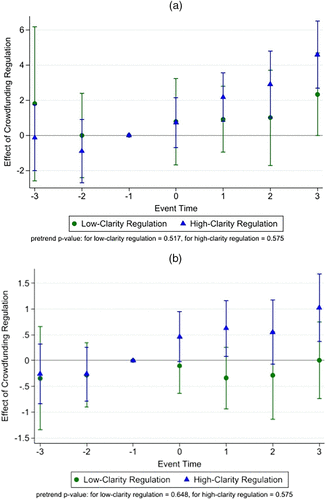
Notes. The panels illustrate the dynamic effect of introducing a regulation for those above (High-Clarity Regulation) and below the median (Low-Clarity Regulation) on the logarithm of domestic debt crowdfunding volume in panel (a) and the logarithm of the number of domestic debt crowdfunding platforms in panel (b). The panels plot the estimated in the following equation: to test whether a change in the policy at time leads to a change in the outcome years before and year after. denotes the first difference operator. indicates whether country adopted a crowdfunding regulation exactly years before year . indicates whether country adopted a regulation at least years before year and whether country will adopt more than years after year . We assume . We also set , such that the plotted coefficients denote effects relative to the effect of a one-unit change in the regulation indicator one period ahead. The x-axis is k, and the y-axis is and its corresponding 95% pointwise confidence intervals. Below each panel, we show the p-value of the pretrend test of the null hypothesis : for all . We use the identical sample, control variables, and fixed effects as those employed in Table 15, Panel A. Heteroscedasticity-consistent robust standard errors are used.
The positive impact of regulatory clarity might just be reflecting the general effect of all crowdfunding regulations on industry development, irrespective of the varying levels of clarity in these regulations. To address this, we add a control for the presence of any crowdfunding regulation in our Propensity Score Matching matched regressions. This control, called the regulation indicator, is set to one for years when a jurisdiction is regulated, and zero otherwise. As shown in Table 15, Panel A even after accounting for the existence of a regulation, we find that an improvement in regulatory clarity significantly and positively affects both the volume of debt crowdfunding and the number of debt crowdfunding platforms. Notably, this impact seems to be mainly driven by increases in retail investment and the growth of the number of platforms. This finding confirms that the positive effect we observe is not just a general impact of regulation, but is specifically linked to the clarity of the regulation itself.
5.2. Does the Regulatory Index Work Through a Platform Supply or Investor Demand Channel?
Although we observe an increase in the number of crowdfunding platforms following the introduction of explicit regulations, this does not automatically mean that the rise in a country’s total crowdfunding volume is only due to platform supply-side changes. It is plausible that the number of projects per platform stays the same, but there is a spike in investor demand met by new platforms. If regulators recognize this growing demand and encourage new platforms through regulations, then the increased crowdfunding activity after regulatory changes might be due to investor demand-side factors. To examine this possibility, we conduct platform-level analyses in Table 15, Panel B. The results show that the growth in total crowdfunding volume is mainly due to new platforms established at least a year after explicit regulations are implemented. We also investigate how the number of lenders and borrowers on both old and new platforms reacts to these regulations. Our results show that the regulations do not significantly affect the number of lenders across platforms. However, there is a marked increase in the number of projects, especially on new platforms. This supports the idea that the regulation-induced growth in borrower participation then drives up lender investment.21 These results align with the concept of positive borrowers’ cross-network effects being more influential than lenders’ cross-network effects, particularly in the early stages of platforms (Cong et al. 2024).
In unreported analyses, we measure excess demand by looking at the average funding success rate on platforms in a country, lagged to account for past performance. We choose this measure to consider the possibility that explicit regulations might be introduced in response to increasing demand, even if the total volume does not grow due to limits on how much can be funded. Interestingly, our findings show that this measure of demand is, if anything, negatively (though not significantly so) related to a country’s decision to introduce explicit regulations. Moreover, our main findings regarding the effect of regulatory clarity on crowdfunding activity remain solid, even after accounting for this measure of demand.
To determine if the platform supply or investor demand side of regulations is influencing our results, we categorize regulations into two types: those impacting the quality of firms listing on platforms (affecting the projects offered) and those influencing investor safety (ensuring that platforms handle funds honestly). We call these the supply- and demand-related regulatory clarity indices, respectively. The method for creating these indices is detailed in Table OA7 in the Online Appendix. Out of 60 subdimensions of regulatory clarity, we categorize 4 as supply-related and 41 as demand-related. In Table 15, Panel C, we report results from Propensity Score Matching matched regressions, considering both supply- and non-supply-related regulatory requirements. The findings indicate that the positive impact of regulatory clarity on domestic debt crowdfunding volume is not driven by supply-related aspects of the regulations, as indicated by the typically insignificant coefficients on the supply-related index. However, the formation of new domestic debt crowdfunding platforms is primarily influenced by new supply-related regulations. This suggests that when the regulatory environment for potential security issuers becomes clearer, there is an increased demand for better financial intermediation services, which motivates the creation of new platforms.
In Table 15, Panel D, we analyze results using Propensity Score Matching matched samples and include both demand- and non-demand-related regulatory clarity indices as independent variables, along with other controls. The results show that the demand-related index largely explains the positive effects of regulatory clarity on debt crowdfunding volume. When this index is added, the regulation index that excludes demand-related requirements becomes insignificant. From these findings, it seems clear that regulations aimed at suppliers have encouraged new platforms to form, but simply having more crowdfunding projects is not enough to attract more investor funding. What appears to be crucial is the assurance and transparency about investor protection measures. As regulations become stricter in evaluating platforms’ listed firms and structuring their internal governance, investors are drawn to crowdfunding securities, expecting reduced information asymmetries and litigation costs. In essence, clear regulations are vital for establishing cross-network effects, linking borrowers’ involvement to lenders’ investments, and are important for both supply and demand sides. However, it is challenging to distinctly separate supply from demand effects, as anticipated investor demand might also prompt the supply of new borrowers on platforms.
Requirements for firms to report to authorities or disclose information to the public can affect both the supply and demand sides of crowdfunding. These requirements are not easily classified as purely supply- or demand-related. Increased disclosure by security issuers and crowdfunding platforms can reduce issues like undervaluation, management turnover risk, and litigation costs (Leftwich 1980; Healy and Palepu 1993; Skinner 1994; Healy and Palepu 1995, 2001), while also boosting demand by helping investors avoid overpaying for securities (Diamond and Verrecchia 1991, Bloomfield and Wilks 2000). However, the additional costs of meeting higher disclosure standards might deter platforms with less initial capital from entering the market.
To explore the impact of disclosure-related regulatory clauses on crowdfunding, we include a disclosure-related index in our regression analysis, along with a non-disclosure-related index and other control variables (as detailed in Table OA8 in the Online Appendix). We find that more disclosure-related regulatory clauses do not significantly affect domestic debt crowdfunding volume when controlling for non-disclosure-related clauses (results not reported for brevity). This could be due to the interplay of disclosure effects on investment. However, we observe a statistically negative effect of increased disclosure requirements on the number of new crowdfunding platforms. Further analysis suggests that this effect is mainly due to additional disclosure requirements for platforms, not security issuers. This suggests that increased public disclosure by new issuers does not reduce investor demand for information from crowdfunding platforms. The results support the idea that stricter disclosure requirements might deter new entrants with limited initial capital or push out lower-quality incumbents.
In Online Appendix Table OA9, Panel A, we also conduct a horse race using four broad categories of regulatory clarity, namely: (1) expectations and obligations for stakeholders, (2) disclosure requirements, (3) liability issues, and (4) management of investor sophistication and conflicts of interest. We find that regulations clearly defining “stakeholder expectations and obligations” along with “management of investor sophistication and conflicts of interest” significantly and positively influence future crowdfunding volumes. Panel A also indicates a significant, negative impact of disclosure mandates on platform quantity, aligning with our observations in Table OA8. The other three main categories are not statistically significant. This is likely because those factors all jointly explain the growth in the number of platforms, as they tend to be highly correlated with each other.
We next examine the specific impact of each key factor within the main dimensions by examining up to 16 primary factors across these dimensions. The findings from these detailed analyses are reported in Table OA9, Panels B, C, D, and E . We show that, across all examined regulatory clarity index constituents, three factors consistently and positively influence crowdfunding volume and platform numbers: (1) the “client asset” index, (2) the “winding-down process” index, and (3) the “responsible investing” index. This is plausible, as these elements are directly relevant to investors’ concerns about the potential worst-case scenarios for their investments in a setting marked by unclear regulations. Similarly, they align with platform operators’ concerns about the greatest legal risks they encounter while managing their platforms. Although enhancing measures for investor protection may boost investor interest, it could also substantially raise the administrative workload for the platform, particularly when there is uncertainty about the necessity of mandating such measures.
5.3. Is It the Permissibility, Rather than Clarity, of the Crowdfunding Regulation that Drives our Results?
In our paper, we use a hand-collected index to represent regulatory clarity in crowdfunding regulations. This index increases in value when a regulation adds more detailed clauses about what is allowed or restricted in crowdfunding. It is possible that our findings are influenced by the specific content of these clauses, such as their permissibility or strictness, rather than just the clarity of the regulations. For instance, the increase in crowdfunding capital might be due to regulations adding clauses that make crowdfunding more permissible over time. An example is the significant rise in the United States’ Regulation Index after the introduction of Reg CF in 2015, which allowed nonaccredited investors to participate in crowdfunding, previously restricted under the Securities Act of 1933. Increasing the pool of potential investors in this way would have a mechanical effect on capital raised.
However, anecdotal evidence suggests that an increase in the regulation index does not always correlate with more permissive regulations. For example, the United Kingdom’s first explicit crowdfunding regulation in March 2014, following policy statement PS14/4, added clauses across various dimensions, such as prudential requirements and reporting for loan-based platforms. In June 2019, the United Kingdom revised these regulations with policy statement PS 19/14, further increasing the regulation index by adding more dimensions, including official definitions, licensing conditions, disclosure rules, and requirements for contingency funds. Most of these additions imposed new restrictions, rather than exemptions. For instance, new disclosure rules specified how platforms should communicate financial offers to potential retail clients, including mandatory disclosures about borrowers and the terms of the credit offered. The regulation also introduced requirements for platforms to maintain client records, implement corporate governance measures, and establish risk-management policies. These additions to the regulation increased both its clarity and strictness. This pattern of increasing the regulation index by adding clauses, rather than removing them, applies to other countries in our study as well.
To ensure that the stringency of regulations is not the factor driving the increase in crowdfunding volume, we use the Generative Pretrained Transformer 3.5 model by OpenAI for semantic analysis of each regulation, assessing their stringency. GPT 3.5 is an advanced language model that uses deep-learning algorithms and a multilayer neural network based on a Transformer architecture. It has significantly evolved from its first version, with an increase in parameters from 117 million to 175 billion in GPT 3.5. GPT’s effectiveness comes from its ability to parse and understand lengthy text sequences, focusing on relevant parts of the input through self-attention mechanisms. It has been pretrained on an extensive array of text data, including 8 million web pages, books, and articles, enabling it to grasp the nuances of natural language. Additionally, its accuracy is enhanced through Reinforcement Learning from Human Feedback, involving iterative interactions with humans who manually select the best responses generated by the model. We detail the steps involved in creating our GPT-based measure of regulatory stringency in Table OA10 in the Online Appendix.
GPT 3.5 excels in various natural language processing tasks, including translation and text summarization. Its efficacy is highlighted in studies like Hansen and Kazinnik (2023), which shows GPT’s superior performance in interpreting communications from the Federal Reserve compared with other models like BERT. Yang and Menczer (2023), and Lopez-Lira and Tang (2023) demonstrate GPT’s capabilities in identifying credible news sources and predicting stock market trends. Furthermore, Choi et al. (2023) show that GPT can accurately understand legal doctrines and analyze specific legal cases, suggesting that it has the proficiency to pass a law school degree program.
To run a horse race between regulatory clarity and regulatory stringency, we compare the impact of regulatory clarity and stringency on crowdfunding growth using a matched sample of countries. To differentiate between these two factors, we add both as separate variables in our regression analysis. To avoid overlap between clarity and stringency, we use a binary indicator for stringency. This indicator assigns a score of one to regulations above the median strictness level and zero to those below the median or in countries without regulation. The results, as presented in Table 15, Panel E, show that the regulatory clarity index consistently predicts an increase in debt crowdfunding volume and the number of crowdfunding platforms. This suggests that clear regulations are crucial for the growth of crowdfunding. In contrast, the stringency indicator usually has a negative coefficient. This implies that stricter regulations, especially those that make it harder to enter the market, tend to be associated with smaller official economies, supporting previous research by Djankov et al. (2002).
In unreported analysis, these results remain robust to using the average stringency of regulations, rather than just the cumulative score. Additionally, we explore the effect of linguistic complexity on regulations. For this, we use ChatGPT 3.5 to create a linguistic complexity score, using a method similar to how we calculated the stringency score.22 Our results reveal a significant negative correlation between linguistic complexity and both the volume of debt crowdfunding and the number of crowdfunding platforms. This suggests that as regulations become linguistically more complex, they negatively impact crowdfunding growth. Interestingly, the regulatory clarity index’s significance becomes even more pronounced in these analyses. This indicates that the positive effects of regulatory clarity on crowdfunding are not merely due to the content or strictness of the regulations.
5.4. Instrumental Variable Estimates
Although our findings strongly suggest that clearer regulations positively impact the growth of the crowdfunding industry, there is a chance that regulators might introduce these clear rules anticipating a rise in crowdfunding activities. For instance, in a growing economy, there might be more pressure on regulators to set definitive guidelines for emerging industries. This economic growth could also create a conducive environment for the expansion of crowdfunding platforms.
To address reverse causality, we use an instrumental variable approach to isolate a component of regulatory clarity that is likely unaffected by other factors. Specifically, we employ two instruments based on the 2019 Cambridge Centre for Alternative Finance regulatory survey, which reports that over 90% of regulators worldwide tend to model their crowdfunding regulations on those of similar countries. As Rau (2020) notes, countries often align their regulations with geographically close nations or those at similar stages in crowdfunding market development. For example, Lithuania based its regulations on the United Kingdom’s, Malaysia on Singapore’s, the United Arab Emirates on New Zealand’s, and Mexico on those of Italy, Spain, the United Kingdom, and New Zealand. These instruments help us understand how the regulatory clarity in similar countries positively influences the regulatory framework of the country we are studying. We can reasonably expect that the regulatory clarity in these peer countries, which are ex ante randomly assigned, will not directly affect the domestic crowdfunding market of the country in question.
To ensure that the growth in a country’s crowdfunding market following new regulations isn’t influenced by factors common among similar countries, we include characteristics of these peer countries in our analysis. This includes factors like the average size of the debt crowdfunding market relative to GDP, the number of crowdfunding platforms, and the growth rates of both the market size and the number of platforms. We measure these characteristics in terms of natural logarithms and average annual growth rates, adjusting for the country’s GDP. This approach helps us understand if the growth in crowdfunding after new regulations is truly due to the regulations themselves and not because of similar trends in countries they often compare themselves with.
To create the first instrumental variable, the Regional Peer Regulation Index, we start by grouping countries within the same geographical region, like Southern Europe or Western Africa. Then, for each country and year, we calculate the index as an average of the regulation indices from countries in the same region. The second variable, the Crowdfunding Peer Regulation Index, involves a three-step process. First, we rank countries yearly based on the total number of their debt crowdfunding platforms. Then, we consider countries within ±10 percentiles of a specific country as its peers in crowdfunding. Finally, we average the regulation indices of these peer countries for each year to form the Crowdfunding Peer Regulation Index for every country.
Table 16 shows the first-stage regression results with the raw and adjusted regulatory clarity indices as dependent variables. In addition to using the same independent variables and industry-year fixed effects as in Table 6, Model (4), we focus on the Regional Peer Regulation Index and Crowdfunding Peer Regulation Index. Both instruments are strongly and positively correlated with the country’s crowdfunding regulatory clarity, indicated by high F-statistics and significant t-statistics for each instrument. This suggests that weak instruments are not a concern in our study (Staiger and Stock 1997).
|
Table 16. Two-Stage Least-Square (2SLS) Estimations with Two Peer Regulation Indices as IVs: First Stage: (n = 518)
| Variables | Raw regulation clarity index (1) | Adjusted regulation clarity index (2) |
|---|---|---|
| Instrumental variables | ||
| Regional peer regulation index | 0.572** | 0.510* |
| (2.271) | (1.889) | |
| Crowdfunding peer regulation index | 0.647** | 0.640** |
| (2.146) | (2.069) | |
| Controls for peer country characteristics | ||
| Regional peer debt crowdfunding volume | Yes | Yes |
| Crowdfunding peer debt crowdfunding volume | Yes | Yes |
| Number of regional peer debt crowdfunding platforms | Yes | Yes |
| Number of crowdfunding peer debt crowdfunding platforms | Yes | Yes |
| Growth in regional peer debt crowdfunding volume | Yes | Yes |
| Growth in crowdfunding peer debt crowdfunding volume | Yes | Yes |
| Growth in number of regional peer debt crowdfunding platforms | Yes | Yes |
| Growth in number of crowdfunding peer debt crowdfunding platforms | Yes | Yes |
| Controls for domestic country characteristics | ||
| Rule of law | Yes | Yes |
| Size of economy | Yes | Yes |
| Business friendly environment | Yes | Yes |
| Getting credit | Yes | Yes |
| Financial system efficiency | Yes | Yes |
| Fintech access | Yes | Yes |
| Country and year fixed effects | Yes | Yes |
| First-stage F-test statistics | 13.111 | 10.547 |
Notes. This table and Tables 17 and 18 present estimates using the instrumental variables method based on two-stage least squares (2SLS) panel regressions. The comparison is made between countries that switched to explicit regulation and those that have never been regulated. This tables presents the first-stage regression results, in which dependent variables are the Raw and Adjusted Regulation Indices for Models (1) and (2), respectively. The level and adjusted level of the regulatory index are measures of the regulatory clarity in the country as weighted sums of indicator variables in Table 4. The instrumental variables are as follows. Regional Peer Regulation Index is the average regulation index of countries located in the same region of continent as the country of interest. Examples of such regions include Southern Europe and Western Africa. Crowdfunding Peer Regulation Index is the average regulatory index of countries within ±10 annual percentiles of the number of debt crowdfunding platforms with respect to the country of interest. When the dependent variable is the raw (adjusted) regulation index, the instrumental variables are correspondingly computed using the raw (adjusted) regulation index of peer countries. All specifications include control variables as in Table 16, Model (4), as well as country and year fixed effects. In both first-stage and second-stage regressions, we also control for peer country characteristics, including the log of average domestic debt crowdfunding volume (scaled by GDP per capita), the log of number of domestic debt crowdfunding platforms, the average annual growth rate in domestic debt crowdfunding volume (scaled by GDP per capita), and the average annual growth rate in the number of domestic debt crowdfunding platforms. For brevity, we do not report the estimated parameters of the controls. All independent variables are described in the appendix. They are all lagged by a year. All regressions include both country and year fixed effects. Cragg-Donald F-tests for instruments are performed in the first stage to test the null hypothesis that, controlling for the domestic and peer country characteristics, a country’s regulatory clarity do not correlate with peer countries’. The critical value is 10 (Staiger and Stock 1997). Kleibergen-Paap rk Wald F-statistics are 11.457 and 9.07, respectively, for the Raw and Adjusted regulation indices. M1 is computed using Equation (3). The Hansen-Sargan test is used for testing overidentifying restrictions. Heteroscedasticity-consistent robust standard errors are clustered at the continent-by-year level. t-statistics are reported in parentheses.
Table 17 reports the second-stage regression results, focusing on domestic crowdfunding volume and the number of domestic crowdfunding platforms. Because we have more instruments than endogenous regressors, we use the Hansen-Sargan test of overidentification. The test results across all six models in Panel B, using two different dependent variables, support the hypothesis that our instrumental variables are exogenous. Given our comprehensive set of control variables, this reinforces the validity of the instruments. The second-stage regression findings are consistent with our baseline results, indicating a significant and positive effect of the instrumented regulation index on both domestic crowdfunding volume and the number of platforms. The results remain consistent, even when we adjust the proximity of the crowdfunding peer window, add an extra instrument based on total debt crowdfunding volume percentiles, or include a new instrument based on rule-of-law estimates from the World Bank Governance Database.
|
Table 17. Two-Stage Least-Square (2SLS) Estimations with Two Peer Regulation Indices as IVs: Second Stage: (n = 518)
| All investors | Retail investors only | Institutional investors only | All investors | Retail investors only | Institutional investors only | |
|---|---|---|---|---|---|---|
| Regulation variable | (1) | (2) | (3) | (4) | (5) | (6) |
| Dependent variable: Domestic Debt Crowdfunding Volume | ||||||
| Regulation index (debt) | 0.172** | 0.173** | 0.170*** | 0.700** | 0.695** | 0.679** |
| (2.212) | (2.094) | (2.744) | (2.108) | (1.998) | (2.533) | |
| Controls for peer country characteristics | Yes | Yes | Yes | Yes | Yes | Yes |
| Controls for domestic country characteristics | Yes | Yes | Yes | Yes | Yes | Yes |
| M1: Effect on switching relative to unregulated countries | 3.687 | 3.719 | 3.652 | 4.15 | 4.118 | 4.025 |
| (p = 0.027) | (p = 0.036) | (p = 0.006) | (p = 0.035) | (p = 0.046) | (p = 0.011) | |
| Hansen-Sargan test statistics | 0.289 | 0.004 | 0.035 | 0.034 | 0.079 | 0.106 |
| (p = 0.591) | (p = 0.951) | (p = 0.851) | (p = 0.853) | (p = 0.778) | (p = 0.745) | |
| Dependent variable: Number of Domestic Debt Crowdfunding Platforms | ||||||
| Regulation index (debt) | 0.0406*** | 0.0373*** | 0.0391** | 0.167*** | 0.151** | 0.149* |
| (2.708) | (2.609) | (2.027) | (2.663) | (2.541) | (1.798) | |
| Controls for peer country characteristics | Yes | Yes | Yes | Yes | Yes | Yes |
| Controls for domestic country characteristics | Yes | Yes | Yes | Yes | Yes | Yes |
| M1: Effect on switching relative to unregulated countries | 0.873 | 0.801 | 0.841 | 0.99 | 0.895 | 0.886 |
| (p = 0.007) | (p = 0.009) | (p = 0.043) | (p = 0.008) | (p = 0.011) | (p = 0.072) | |
| Hansen-Sargan test statistics | 0.009 | 0.254 | 0.690 | 0.244 | 0.681 | 1.253 |
| (p = 0.923) | (p = 0.614) | (p = 0.406) | (p = 0.622) | (p = 0.409) | (p = 0.263) | |
Notes. This table and Tables 16 and 18 present estimates using the instrumental variables method based on two-stage least squares (2SLS) panel regressions. The comparison is made between countries that switched to explicit regulation and those that have never been regulated. This table reports the second-stage regression results. Two sets of dependent variables are used. In the first set focusing on debt crowdfunding volume, the dependent variable is the domestic debt crowdfunding volume contributed by both retail and institutional investors (Models (1) and (4)), retail investors (Models (2) and (5)), and institutional investors (Models (3) and (6)), respectively. In the second set, focusing on the number of debt crowdfunding platforms, the dependent variable is the number of domestic debt crowdfunding platforms serving both retail and institutional investors (Models (1) and (4)), retail investors (Models (2) and (5)), and institutional investors (Models (3) and (6)), respectively. All specifications include control variables as in Table 16, Model (4), as well as country and year fixed effects. In both first-stage and second-stage regressions, we also control for peer country characteristics, including the log of average domestic debt crowdfunding volume (scaled by GDP per capita), the log of number of domestic debt crowdfunding platforms, the average annual growth rate in domestic debt crowdfunding volume (scaled by GDP per capita), and the average annual growth rate in the number of domestic debt crowdfunding platforms. For brevity, we do not report the estimated parameters of the controls. All independent variables are described in the appendix. They are all lagged by a year. All regressions include both country and year fixed effects. Cragg-Donald F-tests for instruments are performed in the first stage to test the null hypothesis that, controlling for the domestic and peer country characteristics, a country’s regulatory clarity do not correlate with peer countries’. The critical value is 10 (Staiger and Stock 1997). Kleibergen-Paap rk Wald F-statistics are 11.457 and 9.07, respectively, for the Raw and Adjusted regulation indices. M1 is computed using Equation (3). The Hansen-Sargan test is used for testing overidentifying restrictions. Heteroscedasticity-consistent robust standard errors are clustered at the continent-by-year level. t-statistics are reported in parentheses.
To test whether the relationship significantly depends on the materiality and irreversibility of platform owners’ investment and the potential political risk, we use panel regressions of the following form:
|
Table 18. Two-Stage Least-Square (2SLS) Estimations with Two Peer Regulation Indices as IVs: Second Stage: Variation across Countries
| Country characteristic | ||||||||||
|---|---|---|---|---|---|---|---|---|---|---|
| Variables | Raw regulation clarity index | Adjusted regulation clarity index | ||||||||
| (1) | (2) | (3) | (4) | (5) | (6) | (7) | (8) | (9) | (10) | |
| Number of Start-up Procedures to Register a Business Rank [0,1] | Time Required to Start a Business Rank [0,1] | Cost of Business Start-up Procedures Rank [0,1] | Political Instability Rank [0,1] | Corruption Vulnerability Rank [0,1] × Bank Opposition to Competition | Number of Start-up Procedures to Register a Business Rank [0,1] | Time Required to Start a Business Rank [0,1] | Cost of Business Start-up Procedures Rank [0,1] | Political Instability Rank [0,1] | Corruption Vulnerability Rank [0,1] × Bank Opposition to Competition | |
| Dependent variable: Domestic Debt Crowdfunding Volume | ||||||||||
| Regulation index (debt) × Country characteristic | 0.270*** | 0.376*** | 0.570*** | 0.330** | 0.404*** | 1.025*** | 1.456*** | 2.258*** | 1.264** | 1.448*** |
| (4.666) | (3.275) | (3.546) | (2.017) | (2.667) | (4.596) | (3.147) | (3.409) | (2.122) | (2.811) | |
| Controls for | ||||||||||
| Peer country characteristics | Yes | Yes | Yes | Yes | Yes | Yes | Yes | Yes | Yes | Yes |
| Domestic country characteristics | Yes | Yes | Yes | Yes | Yes | Yes | Yes | Yes | Yes | Yes |
| Observations | 518 | 518 | 518 | 518 | 307 | 518 | 518 | 518 | 518 | 307 |
| Hansen-Sargan test statistics | 1.369 | 0.575 | 4.311 | 1.506 | 4.225 | 0.728 | 0.38 | 3.709 | 1.253 | 4.163 |
| (p = 0.504) | (p = 0.750) | (p = 0.116) | (p = 0.471) | (p = 0.376) | (p = 0.695) | (p = 0.827) | (p = 0.157) | (p = 0.534) | (p = 0.384) | |
| Dependent variable: Number of Domestic Debt Crowdfunding Platforms | ||||||||||
| Regulation index (debt) × Country characteristic | 0.0633*** | 0.0861*** | 0.135*** | 0.0942** | 0.0557** | 0.240*** | 0.337*** | 0.537*** | 0.352** | 0.216*** |
| (3.253) | (2.923) | (3.118) | (2.120) | (2.497) | (3.281) | (3.045) | (3.059) | (2.167) | (2.577) | |
| Controls for | ||||||||||
| Peer country characteristics | Yes | Yes | Yes | Yes | Yes | Yes | Yes | Yes | Yes | Yes |
| Domestic country characteristics | Yes | Yes | Yes | Yes | Yes | Yes | Yes | Yes | Yes | Yes |
| Observations | 518 | 518 | 518 | 518 | 307 | 518 | 518 | 518 | 518 | 307 |
| Hansen-Sargan test statistics | 1.179 | 0.83 | 3.08 | 0.526 | 4.066 | 0.885 | 0.299 | 2.365 | 0.29 | 4.543 |
| (p = 0.555) | (p = 0.660) | (p = 0.214) | (p = 0.769) | (p = 0.397) | (p = 0.642) | (p = 0.861) | (p = 0.306) | (p = 0.865) | (p = 0.337) | |
Notes. This table and Tables 16 and 17 present estimates using the instrumental variables method based on two-stage least squares (2SLS) panel regressions. The comparison is made between countries that switched to explicit regulation and those that have never been regulated. In this table, we additionally add different country-specific characteristics and their instrumented interaction terms with the regulatory clarity index. The instruments now include the two peer regulation indices, as well as the interaction terms between peer regulation indices and the country characteristic of interest. The country-specific characteristic is the percentile of a country’s number of start-up procedures to register a business in Models (1) and (6), the percentile of number of days required to start a business in Models (2) and (7), the percentile of cost of business start-up procedures in Models (3) and (8), the percentile of the inverse of the political stability score from the World Bank Governance Database in Models (4) and (9), and the percentile of the inverse of the control of corruption score from the World Bank Governance Database with the difference between bank lending rate and deposit rate in Models (5) and (10). All specifications include control variables as in Table 16, Model (4), as well as country and year fixed effects. In both first-stage and second-stage regressions, we also control for peer country characteristics, including the log of average domestic debt crowdfunding volume (scaled by GDP per capita), the log of number of domestic debt crowdfunding platforms, the average annual growth rate in domestic debt crowdfunding volume (scaled by GDP per capita), and the average annual growth rate in the number of domestic debt crowdfunding platforms. For brevity, we do not report the estimated parameters of the controls. All independent variables are described in the appendix. They are all lagged by a year. All regressions include both country and year fixed effects. Cragg-Donald F-tests for instruments are performed in the first stage to test the null hypothesis that, controlling for the domestic and peer country characteristics, a country’s regulatory clarity do not correlate with peer countries’. The critical value is 10 (Staiger and Stock 1997). Kleibergen-Paap rk Wald F-statistics are 11.457 and 9.07, respectively, for the Raw and Adjusted regulation indices. M1 is computed using Equation (3). The Hansen-Sargan test is used for testing overidentifying restrictions. Heteroscedasticity-consistent robust standard errors are clustered at the continent-by-year level. t-statistics are reported in parentheses.
*p < 0.1; **p < 0.05; ***p < 0.01.
5.5. Staggered Treatment Design Estimators
Our study adopts a staggered treatment design, analyzing how different countries introduced crowdfunding regulations over the years 2015–2020. Baker et al. (2022) caution that staggered DiD regression estimators can be biased, especially when treatment timing varies significantly and few observations remain untreated. However, our study likely avoids such biases for several reasons.
First, the introduction of regulations in our sample varies over time. In our sample of 50 countries, 8 introduced regulations in 2015; 7 in 2016; 4 in 2017; 5 in 2018; 5 in 2019; and 21 in 2020. We account for this by using a one-year lag of our main independent variable, the crowdfunding regulation index. This approach effectively treats countries introducing regulations in 2020 as control countries, smoothing out the timing variations among those treated. Second, out of 202 countries in our sample, 144 never introduced regulations during 2015–2020. This means 71.3% of our observations are from never-treated countries, providing a substantial control group. Third, we use the doubly robust estimator by Callaway and Sant’Anna (2021), known as the CS estimator, which Baker et al. (2022) recommend for staggered treatment designs. The CS estimator is flexible, allowing for parallel trends assumptions after factoring in covariates. It also includes simultaneous confidence intervals to handle multiple-testing of relative-time indicators. This estimator offers additional robustness against model misspecifications compared with methods that rely solely on modeling either the conditional treatment probability or outcome evolution.
However, because the CS estimator is designed for a setting where the treatment is a binary variable, we do not use it in our main tests. In this robustness test, we adapt the Callaway and Sant’Anna (CS) estimator in three steps: (1) We calculate the average of the regulation index over time for each country that implemented regulations, focusing on the period after they introduced these regulations. (2) We divide these average index values into two groups: one with countries having a regulation index below the median and another with those above the median. (3) We then use the CS estimator to calculate the effect of regulation for each group of countries based on their time exposed to the treatment. We average these effects across all exposure durations to get a final measure of the regulation’s impact in the postregulation period. Our hypothesis is that if regulatory clarity significantly influences the crowdfunding industry, there should be a positive link between the estimated effect and countries with a higher regulation index.
When applying the CS estimator, we also account for the possibility that the assumption of parallel trends, which underpins the estimator’s accuracy, might only be valid after accounting for certain pretreatment factors. We use the logarithm of the number of domestic debt crowdfunding platforms as this covariate. Because the CS estimator requires this covariate to be consistent over time, we set its value to what it was in the “base period.” For posttreatment periods, this base period is right before a group (defined by the year they first introduced regulations) became treated. For pretreatment periods, it is the period just before the current one.
We make two additional adjustments to better fit our research setting. First, we exclude countries that implemented regulations in 2015 or earlier. For these countries, we lack a preceding base period to accurately estimate the effect of the regulations. Second, we also remove countries that introduced regulations in 2020 or later. We do this because we believe that it usually takes at least a year for the market to fully adjust to new regulations. This aligns with previous studies that explore how legal reforms enhancing legal rights impacted private credit markets (Djankov et al. 2007). Additionally, excluding these countries is consistent with our main analysis approach, where we consider the impact of regulations with a one-year lag.
After making these adjustments and sorting the remaining countries by their adjusted regulation index, we end up with two distinct groups. The lower half includes 11 countries with an average regulation index of 4.4968, while the upper half has countries with an average index of 8.0422. Relative to the upper half, the lower half has more countries that introduced regulations earlier in our study period. This suggests that countries which implemented regulations later might have learned from the early adopters, thereby increasing their initial regulatory clarity based on the experiences of these early regulating countries. The specific breakdown of each group by their year of regulation introduction is detailed in Table 19.
|
Table 19. The Callaway and Sant’Anna (2021) Estimator: Summary Statistics
| Sorted by adjusted index | Aggregate | Lower half | Upper half |
|---|---|---|---|
| Average regulation index | 6.1851 | 4.4968 | 8.0422 |
| Standard deviation | (2.2845) | (1.2412) | (1.6031) |
| Number of countries | 21 | 11 | 10 |
| Treatment year | |||
| 2016 | 7 | 6 | 1 |
| 2017 | 4 | 2 | 2 |
| 2018 | 5 | 2 | 3 |
| 2019 | 5 | 1 | 4 |
Notes. This table and Table 20 report sample estimates of the Callaway and Sant’Anna (2021) estimator for the regulation effect on the development of domestic crowdfunding industry. This table reports the summary statistics of our sample in aggregate and in two halves separated by the level of time-series average adjusted regulation index. The “Lower Half” (“Upper Half”) group contains countries with average adjusted regulation index below (above) the median. The summary statistics include the sample mean and standard deviation of regulation index inside each group, as well as the number of countries included in each group of countries. This table also shows the composition of each group by the year in which the first debt crowdfunding regulation was introduced in a country.
|
Table 20. The Callaway and Sant’Anna (2021) Estimator: Estimation Results
| Sorted by adjusted index | Dependent variable: Crowdfunding Volume | Dependent variable: Number of Platforms | ||
|---|---|---|---|---|
| (1) | (2) | (3) | (4) | |
| Pretest | The CS estimator | Pretest | The CS estimator | |
| Aggregate | 0.6594 | 1.8266* | 0.1996 | 0.5353* |
| (−0.2006, 1.5194) | (0.5685, 3.0847) | (−0.1305, 0.5296) | (0.2212, 0.8494) | |
| [−0.1873, 1.5061] | [0.5055, 3.1477] | [−0.1682, 0.5673] | [0.2137, 0.8568] | |
| Group of countries | ||||
| Lower half | 0.1030 | 1.9094* | −0.0188 | 0.5136* |
| (−2566, 0.4625) | (0.3915, 3.4273) | (−0.1439, 0.1064) | (0.1208, 0.9063) | |
| [−0.2879, 0.4939] | [0.2168, 3.602] | [−0.1528, 0.1153] | [0.1184, 0.9088] | |
| Upper half | 0.9597 | 2.2915* | −0.3154 | 0.6282* |
| (−0.1861, 2.1055) | (0.8807, 3.7022) | (−0.1122, 0.7431) | (0.2210, 1.0354) | |
| [−0.2760, 2.1954] | [0.7679, 3.8151] | [−0.1505, 0.7814] | [0.1868, 1.0697] | |
Notes. This table and Table 19 report sample estimates of the Callaway and Sant’Anna (2021) estimator for the regulation effect on the development of domestic crowdfunding industry. This table reports the estimates of the Callaway and Sant’Anna (2021) estimator under the parallel trend assumption after conditioning on the pretreatment number of debt crowdfunding platforms. When estimating the effect on domestic debt crowdfunding volume, we use the doubly-robust estimator (i.e., columns (1) and (2)). When estimating the effect on the number of domestic debt crowdfunding platforms, the inverse probability weighting estimator is utilized (i.e., columns (3) and (4)) to avoid adding the lagged dependent variable as an independent variable in the outcome regression. Columns (1) and (3) report the estimate of the average treatment effect one year before the treatment becomes effective, serving as a plausible test statistic of whether the conditional parallel trend assumption holds. Columns (2) and (4) report estimates of the summary parameter computed as a time-series average of estimated average treatment effect by event time in the postregulation period. In this table, 95% confidence intervals computed based on analytical standard errors are reported in parentheses, whereas 95% confidence intervals measured based on bootstrapped standard errors clustered at the country level are reported in brackets.
*The CS estimate has a 95% confidence interval above zero.
Table 20 presents the results on how regulatory changes affect debt crowdfunding in different countries. We compare countries in the lower half (with less regulatory detail) with those in the upper half (with more regulatory detail). Columns (2) and (4) show the impact on domestic debt crowdfunding volume and the number of platforms, respectively. The results, including 95% confidence intervals, indicate that introducing regulation in countries in the lower half leads to a 191% increase in crowdfunding volume, a statistically significant effect. For countries in the upper half, the increase is even more substantial, at around 230%. When examining the number of crowdfunding platforms, we observe similar trends. In the lower half of our sample, the introduction of regulation results in a 51% increase in platforms, and in the upper half, this increase is about 63%, both statistically significant at the 5% level.
An important assumption behind the consistency of the CS estimator is the conditional parallel trend assumption. Although we cannot test this directly, we can examine trends before countries implement regulations. This “pretest” is also recommended by Callaway and Sant’Anna (2021). The results, shown in columns (1) and (3), suggest that our approach does not violate the parallel trends assumption.
Lastly, our findings are consistent, even when sorting countries based on the raw regulation index instead of the adjusted one. Dividing the sample into three equal parts, each containing roughly seven countries, also yields similar results.
6. Conclusions
In its purest state, online crowdfunding is a financial innovation where investors fund projects or businesses they do not know personally, without the involvement of traditional financial intermediaries. This study investigates the impact of explicit legal regulations on crowdfunding volumes, using data from a unique, hand-collected sample of 1,603 crowdfunding platforms worldwide. We focus on a period marked by legal changes in various countries and construct a regulatory clarity index based on these legal regulations. This index quantifies the specificity of regulations in defining permissible and prohibited crowdfunding activities.
Using a staggered difference-in-differences approach, we show that regulatory clarity is extremely significant in explaining debt crowdfunding volumes. Both our raw and adjusted regulatory clarity indices significantly influence debt financing volume, though not equity crowdfunding volume. Additionally, we find a strong positive relationship between crowdfunding and the rule of law, as well as the efficiency of the banking system in a country.
These results hold firm across different analytical methods, including Propensity Score Matching, where each country introducing regulations is paired with a similar country that did not. We also control for regulatory stringency using the advanced GPT 3.5 model and use an instrumental variable approach based on a global regulatory survey. This survey indicates that countries often model their regulations on those of geographically or developmentally similar nations. Our findings suggest that crowdfunding thrives not only in countries with underdeveloped financial systems, but also in those with efficient banking systems.
Some caveats to these conclusions are in order. The matching process assumes similarities between paired countries, which might not fully account for endogenous factors. For instance, two economies might be on similar developmental paths but at different stages, complicating the interpretation of the matching results. Despite these challenges, the stability of our findings across various methods, including fixed effects, PSM, and instrumental variables (IV) analyses, adds confidence to our conclusions. Finally, countries might use other nonregulatory means to promote crowdfunding, like innovation offices or regulatory sandboxes, which our study does not account for. A more comprehensive analysis of the regulatory environment and these nonregulatory measures over a longer period could provide further insights.
Overall, this paper contributes to the literature that examines the nexus between legal changes and financial innovation in a country. It sheds light on how current financial activities, like cryptocurrencies and decentralized finance, evolve under new regulations. The study also adds to public policy discussions on how improved access to credit and saving facilities can help individuals escape poverty. Typically, such public policy efforts focus on government-led interventions via formal banking channels, often state-owned. Our research highlights that clear, explicit regulatory guidelines can significantly benefit the development of the financial sector. By providing detailed rules, regulatory clarity helps shape a more robust financial landscape, influencing both emerging financial technologies and traditional banking practices.
The authors thank David Chambers, Stijn Claessens, Doug Cumming, Claudia Custodio, Albert Dente, Elroy Dimson, Jon Frost, Alexandre Garel, Jens Hilscher, Yi Huang, Chris James, Andrew Karolyi, Peter Limbach, Kai Li, Alberto Manconi, Adair Morse, N. R. Prabhala, Emmanuel Schizas, Jun Yang, Tianyi Wu, Hongyi Peng, Yinfeng Zeng, Virginia Gianinazzi, and seminar participants at Audencia Business School, Cornell University, the Federal Reserve Bank of Cleveland, the Federal Reserve Bank of Philadelphia, INSEAD, King’s College, Luohan Academy, Michigan State University, the Nova School of Business and Economics, Prometeia, the University of Calgary, the University of California (UC) Berkeley, UC Davis, the University of Florida, and the University of Texas San Antonio for helpful comments; Aditi Vadakath for research assistance; and the Cambridge Centre for Alternative Finance, especially Ana Fiorella Carvajal, Kieran Garvey, Simon Huang, Philip Rowan, and Rui Zhao, for data collection.
Appendix
|
Appendix. Definition of Variables
| Variable | Source | Variable name | Description |
|---|---|---|---|
| Regulatory variables | |||
| Regulation index | Hand-collected | Sum of indicator variables for each regulatory dimension mentioned in the regulation publication notice by country. It can have a maximum value of 60 and a minimum value of 0. | |
| Adjusted regulation index | Hand-collected | Sum of weighted indicator variables, where each regulatory dimension is weighted by the number of subdimensions available. It can have a maximum value of 16 and a minimum value of 0. | |
| Size of economy | |||
| GDP | WB WDI | NY.GDP.MKTP.CD | GDP at purchaser’s prices converted using official exchange rates into current U.S.$ |
| Total population | WB WDI | SP.POP.TOTL | Total population as of midyear estimates (used in regressions of crowdfunding volume as a proportion of country GDP) |
| Legal system within the country | |||
| Rule of law: Estimate | WB Gov | RL.EST | Rule of law captures perceptions of the extent to which agents have confidence in and abide by the rules of society, and in particular the quality of contract enforcement, property rights, the police, and the courts, as well as the likelihood of crime and violence. It ranges from approximately −2.5 (weak) to 2.5 (strong) governance performance. |
| Political Stability and Absence of Violence/Terrorism: Percentile Rank | WB Gov | PV.PER.RNK | Political Stability and Absence of Violence/Terrorism measures perceptions of the likelihood of political instability and/or politically motivated violence, including terrorism. Percentile rank indicates the country’s rank among all countries covered by the aggregate indicator, with 0 corresponding to lowest rank, and 100 to highest rank. Percentile ranks have been adjusted to correct for changes over time in the composition of the countries covered by the WGI. |
| Control of Corruption: Percentile Rank | WB Gov | CC.PER.RNK | Control of Corruption captures perceptions of the extent to which public power is exercised for private gain, including both petty and grand forms of corruption, as well as “capture” of the state by elites and private interests. Percentile rank indicates the country’s rank among all countries covered by the aggregate indicator, with 0 corresponding to lowest rank, and 100 to highest rank. Percentile ranks have been adjusted to correct for changes over time in the composition of the countries covered by the WGI. |
| Business-friendly environment | |||
| Time required to start a business | WB WDI | IC.REG.DURS | Time required to start a business is the number of calendar days needed to complete the procedures to legally operate a business. If a procedure can be speeded up at additional cost, the fastest procedure, independent of cost, is chosen. |
| Cost of business start-up procedures | WB WDI | IC.REG.COST.PC.ZS | Cost to register a business is normalized by presenting it as a percentage of gross national income (GNI) per capita. |
| Taxes on income, profits and capital gains | WB WDI | GC.TAX.YPKG.RV.ZS | Taxes on income, profits, and capital gains are levied on the actual or presumptive net income of individuals, on the profits of corporations and enterprises, and on capital gains, whether realized or not, on land, securities, and other assets. Intragovernmental payments are eliminated in consolidation. |
| Procedures required to start a business | WB WDI | IC.REG.PROC | Number of start-up procedures, which are those required to start a business, including interactions to obtain necessary permits and licenses and to complete all inscriptions, verifications, and notifications to start operations. Data are for businesses with specific characteristics of ownership, size, and type of production. |
| Financial institutions efficiency | |||
| Bank capital to assets ratio | WB WDI | FB.BNK.CAPA.ZS | Bank capital to assets ratio is the ratio of bank capital and reserves to total assets. Capital and reserves include funds contributed by owners, retained earnings, general and special reserves, provisions, and valuation adjustments. Capital includes tier 1 capital (paid-up shares and common stock), which is a common feature in all countries’ banking systems, and total regulatory capital, which includes several specified types of subordinated debt instruments that need not be repaid if the funds are required to maintain minimum capital levels (these comprise tier 2 and tier 3 capital). Total assets include all nonfinancial and financial assets. |
| Domestic credit to private sector by banks | WB WDI | FD.AST.PRVT.GD.Z | Domestic credit to private sector by banks refers to financial resources provided to the private sector by other depository corporations (deposit-taking corporations except central banks), such as through loans, purchases of nonequity securities, and trade credits and other accounts receivable, that establish a claim for repayment. For some countries, these claims include credit to public enterprises. |
| Bank branches per 100k adults | WB WDI | FB.CBK.BRCH.P5 | Commercial bank branches are retail locations of resident commercial banks and other resident banks that function as commercial banks that provide financial services to customers and are physically separated from the main office but not organized as legally separated subsidiaries. |
| Bank bad-debt ratio | WB WDI | FB.AST.NPER.ZS | Bank bad-debt ratio is the bank nonperforming loans to total gross loans, measuring the value of nonperforming loans divided by the total value of the loan portfolio (including nonperforming loans before the deduction of specific loan-loss provisions). The loan amount recorded as nonperforming should be the gross value of the loan as recorded on the balance sheet, not just the amount that is overdue. |
| Stocks traded, total value (% of GDP) | WB WDI | CM.MKT.LCAP.GD.ZS | Market capitalization (also known as market value) is the share price times the number of shares outstanding (including their several classes) for listed domestic companies. Investment funds, unit trusts, and companies whose only business goal is to hold shares of other listed companies are excluded. Data are end-of-year values. |
| Stocks traded, turnover ratio of domestic shares | WB WDI | CM.MKT.TRNR | Turnover ratio is the value of domestic shares traded divided by their market capitalization. The value is annualized by multiplying the monthly average by 12. |
| Stocks traded, total value ($) | WB WDI | CM.MKT.TRAD.CD | The value of shares traded is the total number of shares traded, both domestic and foreign, multiplied by their respective matching prices. Figures are single counted (only one side of the transaction is considered). Companies admitted to listing and admitted to trading are included in the data. Data are end-of-year values converted to U.S. dollars using corresponding year-end foreign exchange rates. |
| Number of listed domestic companies | WB WDI | CM.MKT.LDOM.NO | Listed domestic companies, including foreign companies which are exclusively listed, are those which have shares listed on an exchange at the end of the year. Investment funds, unit trusts, and companies whose only business goal is to hold shares of other listed companies, such as holding companies and investment companies, regardless of their legal status, are excluded. A company with several classes of shares is counted once. Only companies admitted to listing on the exchange are included. |
| Bank lending-deposit spread | WB Global Financial Development Database | GFDD.EI.02 | Difference between lending rate and deposit rate. Lending rate is the rate charged by banks on loans to the private sector, and deposit interest rate is the rate offered by commercial banks on three-month deposits. |
| Fintech access | |||
| Mobile cellular subscriptions (per 100 people) | WB WDI | IT.CEL.SETS.P2 | Mobile cellular telephone subscriptions are subscriptions to a public mobile telephone service that provide access to the PSTN using cellular technology. The indicator includes (and is split into) the number of postpaid subscriptions and the number of active prepaid accounts (i.e., that have been used during the last three months). The indicator applies to all mobile cellular subscriptions that offer voice communications. It excludes subscriptions via data cards or USB modems, subscriptions to public mobile data services, private trunked mobile radio, telepoint, radio paging, and telemetry services. |
| Getting credit | |||
| Score - Depth of credit information | WB DB | The depth of credit information index measures rules affecting the scope, accessibility, and quality of credit information available through public or private credit registries. Higher values indicate the availability of more credit information, from either a public registry or a private bureau, to facilitate lending decisions. | |
| Score - Strength of legal rights | WB DB | The strength of legal rights index measures whether certain features that facilitate lending exist within the applicable collateral and bankruptcy laws. | |
| Score - Resolving insolvency | WB DB | The score for Resolving insolvency is the simple average of the scores for each of the component indicators: the recovery rate of insolvency proceedings involving domestic entities, as well as the strength of the legal framework applicable to judicial liquidation and reorganization proceedings. | |
| Protection of minority shareholders | |||
| Corporate transparency | WB DB | The “Extent of corporate transparency index” measures the level of information that companies must share regarding their board members, senior executives, annual meetings, and audits. This index ranges from 0 to 100. It is the percentage form of the original index, which ranges from 1 to 10 and has 10 components, each from 0 to 1: (i) whether Buyer must disclose direct and indirect beneficial ownership stakes representing 5%; (ii) whether Buyer must disclose information about board members’ primary employment and directorships in other companies; (iii) whether Buyer must disclose the compensation of individual managers; (iv) whether a detailed notice of general meeting must be sent 21 calendar days before the meeting; (v) whether shareholders representing 5% of Buyer’s share capital can put items on the general meeting agenda; (vi) whether Buyer’s annual financial statements must be audited by an external auditor; (vii) whether Buyer must disclose its audit reports to the public; (viii) assuming that Buyer is a limited company, whether members must meet at least once a year; (ix) assuming that Buyer is a limited company, whether members representing 5% can put items on the meeting agenda; and (x) assuming that Buyer is a limited company larger than a threshold set by law, whether its annual financial statements must be audited by an external auditor. | |
| Score - Extent of disclosure index | WB DB | The Extent of disclosure index measures the approval and disclosure requirements of related-party transactions. This index ranges from 0 to 100. It is the percentage form of the original index, which ranges from 1 to 5 and has five components, each from 0 to 1: (i) whether it is the managing director alone, the board of directors, or the general meeting of shareholders the corporate body who can provide legally sufficient approval for the transaction (points are assigned depending on whether interested directors are permitted to vote or not); (ii) whether an external body (an independent auditor, for example) must review the transaction before it takes place; (iii) whether disclosure to the board of directors or the supervisory board is required; (iv) whether immediate disclosure of the transaction to the public, the regulator, or the shareholders is required; and (v) whether disclosure in periodic filings (for example, annual reports) is required. | |
| Extent of director liability index | WB DB | The “Extent of director liability index” measures when can board members be held liable for harm caused by related-party transactions and what sanctions are available. This index ranges from 0 to 100. It is the percentage form of the original index, which ranges from 1 to 10 and has 10 components, each from 0 to 1: (i) whether shareholders can sue directly or derivatively for the damage the transaction causes to the company (0–1); (ii) whether a shareholder plaintiff can hold a particular director liable for the damage the Buyer-Seller transaction causes to the company (0–2); (iii) whether a shareholder plaintiff can hold other executives and directors (the CEO, members of the board of directors, or members of the supervisory board) liable for the damage the transaction causes to the company (0–2); (iv) whether the director pays damages for the harm caused to the company upon a successful claim by the shareholder plaintiff (0–1); (v) whether the director repays profits made from the transaction upon a successful claim by the shareholder plaintiff (0–1); (vi) whether the director is disqualified upon a successful claim by the shareholder plaintiff (0–1); and (vii) whether a court can void the transaction upon a successful claim by a shareholder plaintiff (0–2). | |
| Ease of shareholder suits index | WB DB | The “Ease of shareholder suits index” measures how likely are plaintiffs to access internal corporate evidence. This index ranges from 0 to 100. It is the percentage form of the original index, which ranges from 1 to 10 and has six components: (i) whether shareholders owning 10% of the company’s share capital have the right to inspect the Buyer-Seller transaction documents before filing a suit (0–1); (ii) whether shareholders owning 10% of the company’s share capital can request that a government inspector investigate the Buyer-Seller transaction without filing a suit (0–1); (iii) what range of documents is available to the shareholder plaintiff from the defendant and witnesses during trial (0–4); (iv) whether the plaintiff can obtain categories of relevant documents from the defendant without identifying each document specifically (0–1); (v) whether the plaintiff can directly examine the defendant and witnesses during trial (0–2); and (vi) whether the standard of proof for civil suits is lower than that for a criminal case (0–1). | |
1 In contrast, offline crowdfunding is not a new innovation. Charities have long relied on donor drives that aggregate small donations to fund their causes. A frequently cited example is Joseph Pulitzer’s campaign to fund the pedestal of the Statue of Liberty in 1885, described in BBC News Magazine (The Statue of Liberty and America’s crowdfunding pioneer, April 25, 2013).
2 For example, Financial Times reports that “Funding Circle (a United Kingdom (UK) based online crowdfunding platform) carried out £114m of net new lending in the three months to September, exceeding for the first time the £95m of net new lending to small businesses by the main high-street banks that make up at least three-quarters of the UK market.” (See Arnold and Martin 2017, UK fintechs take market share from dominant high-street banks, Financial Times (November 1)).
3 The most investigated platforms in the literature are those that provide data online amenable to webscraping. Examples include Prosper.com, a large P2P lending website in the United States; Funding Circle, a large online marketplace in the United Kingdom; and Kickstarter, a reward-based platform in the United States. Papers that study Prosper.com data include Michels (2012), Zhang and Liu (2012), Lin et al. (2013), Iyer et al. (2016), Hildebrand et al. (2017), and Wei and Lin (2017). Franks et al. (2021) use data from Funding Circle, whereas Mollick (2014), Li and Martin (2019), and Mollick and Nanda (2016) use data from Kickstarter.
4 The CCAF survey (Ziegler et al. 2020) provides a detailed taxonomy of each of these models.
5 Over the sample period, the total crowdfunding volume over the 202 countries in our sample is $241,646 million. Of this, nonfinancial return volumes are around 1.55% of the total volume ($3,744 million). In developed markets, they contribute about 2.38% of total volume, whereas in developing markets, they contribute around 1.27% of total volume.
6 As an example, BlockFi, a DeFi company, settled with the SEC and state investigators for $100 million after the firm was sued for offering high-yield accounts to customers without registering with the SEC. The SEC argued that these accounts were akin to securities that should be registered with regulators. Unlike bank accounts, the crypto-interest accounts were not federally insured. After the settlement, BlockFi announced that it would seek SEC approval for offering the same accounts after registration. Kristin Smith, the executive director of the Blockchain Association, said her trade group is “committed to working with Washington to establish common-sense guardrails for industry in which to operate.” She called the BlockFi settlement “a step forward toward that goal.” (see Robinson and Versprille (2022), BlockFi submitting to rules shows SEC tightening grip on crypto, Bloomberg (February 14)).
7 For an example involving ICOs, see “SEC Emergency Action Halts ICO Scam,” SEC Press Release 2017-219.
8 The data are freely available from the authors on request.
9 The results are qualitatively similar when we scale the level of crowdfunding by the GDP of the country and the population of the country.
10 Because of the financial nature of the transaction, we classify these platforms as financial return platforms, but the results are qualitatively unaffected if we classify them as non-financial return models.
11 The proportions in Table 3 are not derived from the numbers in Table 2. Table 3 proportions are computed as time-series averages by country and then averaged across countries. Table 2 reports totals across all countries. The totals in Table 2 are dominated by China, the United States, and the United Kingdom.
12 Interestingly, although Islamic law prohibits acceptance of specified interest or fees for loans of money (known as riba, or usury), Islamic law countries also report a greater proportion of debt (31.31%) than equity financing (6.41%) volume (not reported in tables). It is noteworthy, however, that the relative proportion of debt financing volume in Islamic countries is substantially lower than in other areas around the world.
13 Although the regulatory database is also available from the authors on request, it can also be recreated from Table OA1.
14 For example, dimensions like Licensing, Prudential Requirements, Client Assets, Financial Promotions, Outsourcing, Systems and Controls, Audit, Conflict of Interest Management, and Winding-down processes set rules for crowdfunding platforms to follow certain operational standards. For instance, they might require platforms to manage client assets through a trust account or prevent platform employees from using their own platform as clients. Other dimensions are mixed because they apply to either platforms or borrowers. For example, if an borrower has to submit a document to the authority before offering their security, it is counted under Reporting Requirements. If they need to regularly publish their financial statements, it falls under Disclosure Requirements. However, if a platform needs to present its financial records when applying for a license, this also counts as a point in Reporting Requirements, but in a different subarea. If a platform must make its financial statements public, the score for Disclosure Requirements increases. Finally, some rules focus on investors. For example, under Platform Usage Limitations, a subsection records whether the regulation sets a limit on the amount each type of investor can put into the platform.
15 Table OA2 in the Online Appendix lists all the jurisdiction-level crowdfunding regulations that were used as references to construct the regulatory clarity index during the period 2012–2020. The scoring was based on specific clauses featuring in the specific legal texts in the bespoke regulation.
16 Other variables proxying for general financial system access (such as the number of bank branches or the number of ATMs in the country) or internet access, in particular (the proportion of individuals using the internet) are correlated with the number of mobile phone subscriptions, and the results are similar if we use them in place of the number of mobile phones.
17 We note that the conventional diff-in-diff approach to estimate how changes in regulatory clarity affects crowdfunding capital raised is typically expressed as , where Posti,t is the dummy variable denoted by Di,t in specification 2 above. In this model, a positive coefficient on the Regulation index would suggest that greater regulatory clarity is positively associated with capital raised in the crowdfunding market, on average. In addition, a positive coefficient on the interaction term would imply that this positive association should be further amplified following a change in regulation that increases regulatory clarity. However, because the regulatory clarity index takes on a positive value only after the first introduction of a crowdfunding regulation in a switching country, this specification is essentially the same as writing . One major problem of employing this model is that, for those countries that introduced crowdfunding regulations prior to the start of our sample period, such as the United States, their equals one throughout the sample period. This makes the interpretation of the results especially difficult. now cannot be interpreted as the (unconditional) average effect of introducing a regulation as, for those always-regulated countries, only represents the difference in their average crowdfunding volume relative to unregulated countries (after controlling for control variables) during the sample period, which occurs much later than the year of introducing their first crowdfunding regulation. As a potential remedy for this problem, we estimate this conventional model using only switching countries and unregulated countries. The results are reported in Tables OA5 and OA6 in the Online Appendix and are discussed in Section 4.6.
18 The p-value for the chi-squared test examining the joint significance of the index and the interaction term is the same as the p-value of testing M1 (Equation (3)) because they are essentially the same null hypothesis: Testing (β1 + β3) × regulation index = 0 is the same as testing (β1 + β3) = 0.
19 A priori, an indicator for an explicit crowdfunding regulation could act either as a substitute or complement to the general level of the rule of law in explaining crowdfunding volume. In countries with a high level of the rule of law, it is plausible that crowdfunding need not be explicitly regulated. Alternatively, it is plausible that crowdfunding regulation is especially valuable in countries where other legal regulations are enforced and clear. However, an interaction term between rule of law and explicit regulation is never significant in any of the regression specifications.
20 The standard deviation of the estimated propensity score is 0.33. Austin (2011) argues that the optimal PSM caliper width is equal to 0.2 × the standard deviation of the estimated propensity score. Our results hold, even if we specify 0.033 as the caliper width.
21 In unreported analyses, we also show that, subsequent to the introduction of clear regulations, there tends to be an increase in the platform-level funding success rate. This supports the idea that increased borrower participation drives up lender investment, thereby making it easier to be funded. We thank the referee for this suggestion.
22 We thank the referee for this suggestion.
References
- (1997) A theory of trickle-down growth and development. Rev. Econom. Stud. 64(2):151–172.Crossref, Google Scholar
- (2011) Optimal caliper widths for propensity‐score matching when estimating differences in means and differences in proportions in observational studies. Pharm. Statist. 10(2):150–161.Crossref, Google Scholar
- (2003) Regulation fair disclosure and earnings information: Market, analyst, and corporate responses. J. Finance 58(6):2487–2514.Crossref, Google Scholar
- (2022) How much should we trust staggered difference-in-differences estimates? J. Financial Econom. 144(2):370–395.Crossref, Google Scholar
- (2016) Measuring economic policy uncertainty. Quart. J. Econom. 131(4):1593–1636.Crossref, Google Scholar
- (2008) Is financial reporting shaped by equity markets or by debt markets? An international study of timeliness and conservatism. Rev. Accounting Stud. 13(2–3):168–205.Crossref, Google Scholar
- (2004)
Contracting constraints, credit markets and economic development. Dewatripont M, Hansen LP, Turnovsky S, eds. Advances in Economics and Econometrics, Eighth World Congress, vol. 3 (Cambridge University Press, Cambridge, UK), 1–46.Google Scholar - (1993) Occupational choice and the process of development. J. Polit. Econom. 101(2):274–298.Crossref, Google Scholar
- (1983) Irreversibility, uncertainty, and cyclical investment. Quart. J. Econom. 98(1):85–106.Crossref, Google Scholar
- (2017) What affects innovation more: Policy or policy uncertainty? J. Financial Quant. Anal. 52(5):1869–1901.Crossref, Google Scholar
- (2013) Mandatory disclosure, voluntary disclosure, and stock market liquidity: Evidence from the EU bank stress tests. J. Accounting Res. 51(5):997–1029.Crossref, Google Scholar
- (2007) Uncertainty and investment dynamics. Rev. Econom. Stud. 74(2):391–415.Crossref, Google Scholar
- (2000) Disclosure effects in the laboratory: Liquidity, depth, and the cost of capital. Accounting Rev. 75(1):13–41.Crossref, Google Scholar
- (2005) Do rural banks matter? Evidence from the Indian social banking experiment. Amer. Econom. Rev. 95(3):780–795.Crossref, Google Scholar
- (2021) Difference-in-differences with multiple time periods. J. Econometrics 225(2):200–230.Crossref, Google Scholar
- (2014) The information content of mandatory risk factor disclosures in corporate filings. Rev. Accounting Stud. 19(1):396–455.Crossref, Google Scholar
- (2024) Regulatory uncertainty and FinTech innovation. Preprint, submitted June 25, https://dx.doi.org/10.2139/ssrn.4867378.Google Scholar
CCAF and World Bank (2019) Regulating alternative finance: Results from a global regulator survey. Report, Cambridge Centre for Alternative Finance, University of Cambridge, Cambridge, UK.Google ScholarCCAF and World Bank (2022) The 3rd global Fintech regulator survey. Report, Cambridge Centre for Alternative Finance, University of Cambridge, Cambridge, UK.Google Scholar- (2010) Regulation fair disclosure and the cost of equity capital. Rev. Accounting Stud. 15(1):106–144.Crossref, Google Scholar
- (2023) ChatGPT goes to law school. Preprint, submitted January 25, https://dx.doi.org/10.2139/ssrn.4335905.Google Scholar
- Cong L, Tang K, Xie D, Zhao W (2024) FinTech platforms and asymmetric network effects: Theory and evidence from marketplace lending. Preprint, submitted November 10, http://dx.doi.org/10.2139/ssrn.3461893.Google Scholar
- (1998) Law, finance, and firm growth. J. Finance 53(6):2107–2137.Crossref, Google Scholar
- (1984) Financial intermediation and delegated monitoring. Rev. Econom. Stud. 51(3):393–414.Crossref, Google Scholar
- (1991) Disclosure, liquidity, and the cost of capital. J. Finance 46(4):1325–1359.Crossref, Google Scholar
- (2007) Private credit in 129 countries. J. Financial Econom. 84(2):299–329.Crossref, Google Scholar
- (2002) The regulation of entry. Quart. J. Econom. 117(1):1–37.Crossref, Google Scholar
- (2008) The law and economics of self-dealing. J. Financial Econom. 88(3):430–465.Crossref, Google Scholar
- (2009) Ambiguity and nonparticipation: The role of regulation. Rev. Financial Stud. 22(5):1817–1843.Crossref, Google Scholar
- (2021) Marketplace lending, information aggregation, and liquidity. Rev. Financial Stud. 34(5):2318–2361.Crossref, Google Scholar
- (2018) Why do firms go public through debt instead of equity? Crit. Finance Rev. 7:85–110.Crossref, Google Scholar
- (2016) Policy uncertainty and corporate investment. Rev. Financial Stud. 29(3):523–564.Google Scholar
- (2008) Market reactions to the disclosure of internal control weaknesses and to the characteristics of those weaknesses under Section 302 of the Sarbanes Oxley Act of 2002. Rev. Accounting Stud. 13(1):141–165.Crossref, Google Scholar
- (2023) Can ChatGPT decipher Fedspeak? Preprint, submitted April 7, https://dx.doi.org/10.2139/ssrn.4399406.Google Scholar
- (1993) The effect of firms’ financial disclosure strategies on stock prices. Accounting Horizons 7(1):1–11.Google Scholar
- (1995) The challenges of investor communication—The case of CUC International, Inc. J. Financial Econom. 38(2):111–140.Crossref, Google Scholar
- (2001) Information asymmetry, corporate disclosure, and the capital markets: A review of the empirical disclosure literature. J. Accounting Econom. 31(1–3):405–440.Google Scholar
- (1999) Stock performance and intermediation changes surrounding sustained increases in disclosure. Contemp. Accounting Res. 16(3):485–520.Crossref, Google Scholar
- (2017) Adverse incentives in crowdfunding. Management Sci. 63(3):587–608.Link, Google Scholar
- (1991) The impact of costly information interpretation on firm disclosure decisions. J. Accounting Res. 29(2):277–301.Crossref, Google Scholar
- (2016) Screening peers softly: Inferring the quality of small borrowers. Management Sci. 62(6):1554–1577.Link, Google Scholar
- (1996) The finance-growth nexus: Evidence from bank branch deregulation. Quart. J. Econom. 111(3):639–670.Crossref, Google Scholar
- (2017) Political uncertainty and investment: Causal evidence from US gubernatorial elections. J. Financial Econom. 124(3):563–579.Crossref, Google Scholar
- (2012) Political uncertainty and corporate investment cycles. J. Finance 67(1):45–83.Crossref, Google Scholar
- (1993) Finance and growth: Schumpeter might be right. Quart. J. Econom. 108(3):717–737.Crossref, Google Scholar
- (1999) What drives deregulation? Economics and politics of the relaxation of bank branching restrictions. Quart. J. Econom. 114(4):1437–1467.Crossref, Google Scholar
- (2011) Financial regulatory reform: Challenges ahead. Amer. Econom. Rev. 101(3):242–246.Crossref, Google Scholar
- (1977) Rules rather than discretion: The inconsistency of optimal plans. J. Polit. Econom. 85(3):473–491.Crossref, Google Scholar
- (2006) What works in securities laws? J. Finance 61(1):1–32.Crossref, Google Scholar
- (1997) Legal determinants of external finance. J. Finance 52(3):1131–1150.Crossref, Google Scholar
- (1998) Law and finance. J. Polit. Econom. 106(6):1113–1155.Crossref, Google Scholar
- (2000) Investor protection and corporate governance. J. Financial Econom. 58(1–2):3–27.Crossref, Google Scholar
- (1980) Market failure fallacies and accounting information. J. Accounting Econom. 2(3):193–211.Crossref, Google Scholar
- (1983) Accounting information in private markets: Evidence from private lending agreements. Accounting Rev. 58(1):23–42.Crossref, Google Scholar
- (2019) Capital formation and financial intermediation: The role of entrepreneur reputation formation. J. Corporate Finance 59(6):185–201.Crossref, Google Scholar
- (2013) Judging borrowers by the company they keep: Friendship networks and information asymmetry in online peer-to-peer lending. Management Sci. 59(1):17–35.Link, Google Scholar
- (2023) Can ChatGPT forecast stock price movements? Return predictability and large language models. Preprint, submitted April 15, https://arxiv.org/abs/2304.07619.Google Scholar
- (2012) Do unverifiable disclosures matter? Evidence from peer-to-peer lending. Accounting Rev. 87(4):1385–1413.Crossref, Google Scholar
- (2014) The dynamics of crowdfunding: An exploratory study. J. Bus. Venturing 29(1):1–19.Crossref, Google Scholar
- (2016) Wisdom or madness? Comparing crowds with expert evaluation in funding the arts. Management Sci. 62(6):1533–1553.Link, Google Scholar
- (1938) The Economics of Welfare, 4th ed. (Macmillan and Co., London).Google Scholar
- (1998) Financial dependence and growth. Amer. Econom. Rev. 88(3):559–586.Google Scholar
- (2003) The great reversals: The politics of financial development in the twentieth century. J. Financial Econom. 69(1):5–50.Crossref, Google Scholar
- (2020) Law, trust, and the development of crowdfunding. Working paper, University of Cambridge, Cambridge, UK.Google Scholar
- Robinson M, Versprille A (2022) BlockFi submitting to rules shows SEC tightening grip on crypto. Bloomberg (February 14), https://www.bloomberg.com/news/articles/2022-02-14/blockfi-s-plans-to-register-with-sec-augurs-new-era-for-crypto.Google Scholar
- (2008) Regulation fair disclosure and the cost of adverse selection. J. Accounting Res. 46(3):697–728.Crossref, Google Scholar
- (1994) Why firms voluntarily disclose bad news. J. Accounting Res. 32(1):38–60.Crossref, Google Scholar
- (2010) An informal perspective on the economics and regulation of securities markets. Annu. Rev. Financial Econom. 2(1):127–143.Crossref, Google Scholar
- (1997) Instrumental variables regression with weak instruments. Econometrica 65(3):557–586.Crossref, Google Scholar
- (2017) A theory of crowdfunding: A mechanism design approach with demand uncertainty and moral hazard. Amer. Econom. Rev. 107(6):1430–1476.Crossref, Google Scholar
- (2019) Peer-to-peer lenders vs. banks: Substitutes or complements? Rev. Financial Stud. 32(5):1900–1938.Crossref, Google Scholar
- Vallee B, Zeng Y (2019) Marketplace lending: A new banking paradigm? Rev. Financial Stud. 32(5):1939–1982.Google Scholar
- (2017) Market mechanisms in online peer-to-peer lending. Management Sci. 63(12):4236–4257.Link, Google Scholar
- (2023) Large language models can rate news outlet credibility. Preprint, submitted April 1, https://arxiv.org/abs/2304.00228.Google Scholar
- (2012) Rational herding in microloan markets. Management Sci. 58(5):892–912.Link, Google Scholar
- (2020) The global alternative finance market benchmarking report. Report, Cambridge Centre, Cambridge, UK.Google Scholar