


Escaping Product Market Rivalry Through Innovation
Abstract
This study leverages advanced text-analysis techniques to investigate how increased product market rivalry, induced by Chinese import competition, affects innovation among incumbent U.S. firms in the electronic and electrical appliance industry. We measure the similarity between the product descriptions of U.S. firms and those of Chinese importers, thus capturing firm-level competitive pressure. Employing a continuous difference-in-differences framework, we compare innovation outcomes of U.S. firms more directly competing with Chinese importers to those facing lower competitive pressure over a five-year period before and after initial Chinese market entry. We find that incumbent U.S. firms significantly increase their quality-weighted patent production, create more new-product patents, and strategically diversify into new technological and business segments when confronted with heightened competition. Our findings highlight the role of import-driven rivalry in stimulating strategic innovation and illustrate how text-based similarity measures can effectively quantify firm-level competition, providing novel methodological tools for strategy scholars.
This paper was accepted by Maria Guadalupe, business strategy.
Funding: B. Cassiman acknowledges financial support from the Fonds Wetenschappelijk Onderzoek [Grants G010324N and G071417N]. D. Wehrheim acknowledges financial support from Grant Ref. PID2024-155952NB-I00, funded by MCIN/AEI/10.13039/501100011033 and by ESF+, ERDF “A way of making Europe”, European Union.
Supplemental Material: The online appendix and data files are available at https://doi.org/10.1287/mnsc.2024.08304.
1. Introduction
Does increased competition stimulate innovation? The existing literature provides diverse—and sometimes conflicting—theoretical predictions regarding the relationship between competition and innovation (Aghion et al. 2005, Vives 2008, Cohen 2010). These theoretical models suggest that firms respond to the competitive actions of direct product-market rivals by either increasing or decreasing their innovation efforts. However, empirical studies typically overlook the specific competitive pressures experienced by individual firms, relying instead on industry-level measures as proxies for the intensity of firm-level rivalry. As a result, these analyses reveal substantial heterogeneity in individual firms’ responses to changes in industry-level competition. In this paper, we propose an alternative approach by using a firm-specific measure of product market rivalry, which captures heterogeneity in the level of competition faced by different firms within the same industry based on the similarity between a firm’s products and those of potential competitors in the environment (Hoberg and Phillips 2016). Such an approach aligns more closely with a strategic perspective on competition and better matches the assumptions underlying theoretical models.
This study examines these competitive pressures through the lens of the U.S. electronic and electrical appliance industry, a sector characterized by rapid technological advancement and significant reliance on product innovation. Electronics firms operate within a highly innovative environment, where competition is driven not only by cost, but also by differentiation and technological progress. Furthermore, this industry experienced considerable competitive shifts following China’s accession to the World Trade Organization (WTO) in 2001, leading to increased import competition from Chinese firms (Khandelwal et al. 2013). Since then, Chinese firms have exported increasingly large volumes of goods worldwide, with the U.S. serving as a key destination.1 Several studies have analyzed the industry-level effects of increased competition due to rising imports from China, revealing contrasting results: in Europe, innovation tended to increase following heightened import competition (Bloom et al. 2016), whereas in the United States, innovation generally declined after an import shock (Autor et al. 2020).
Although firms within the same industry may experience varying levels of competition in their product markets, the existing literature has primarily examined the effects of industry-wide shocks, such as those stemming from import competition. In contrast, this study measures import competition at the firm level, investigating how individual firms respond to specific competitive pressures. We identify direct competitor pairs between U.S. firms and Chinese importers operating within the U.S. electronic and electrical appliance industry by employing a text similarity analysis of their respective product descriptions. Specifically, we leverage a Chinese firm’s initial entry into the U.S. market, following China’s accession to the WTO, as an exogenous source of variation in import competition faced by U.S. firms.
Our findings diverge from prior research, notably Autor et al. (2020), which also examines the U.S. context, thereby contributing to the broader debate on the relationship between competition and innovation. Although we can replicate their industry-level results, our analysis shows that U.S. firms directly impacted by the entry of Chinese competitors increase their innovative output relative to less affected counterparts. By capturing firm-level variation in competitive pressure, our approach uncovers heterogeneity that industry-level measures obscure. Consequently, our findings align more closely with the European evidence from Bloom et al. (2016). Moreover, we offer a richer characterization of firms’ strategic responses to heightened product-market competition. The observed increase in innovation is primarily reflected in product-related patents. In addition, firms facing direct competition tend to develop technologies in previously unexplored domains and expand into entirely new business areas. Anecdotal evidence supports these findings. For example, the 10-K reports of two firms from the U.S. electronic and electrical appliance industry, Valpey Fisher and Affinia Group, explicitly state:
[…] In addition, foreign competitors, particularly those from the Far East, continue to dominate U.S. markets. However, Valpey Fisher asserts it can maintain a competitive position based on its quality, robust design, and application engineering capabilities […]. —Valpey-Fisher Corporation, 2004 10-K filing, accessed from SEC Edgar.
[…] We are subject to increasing pricing pressure from imports, particularly from lower labor cost countries. […] Our continued success depends on our ability to maintain advanced technological capabilities, machinery and knowledge necessary to adapt to changing market demands as well as to develop and commercialize innovative products […]. —Affinia Group Intermediate Holdings Inc., 2009 10-K filing, accessed from SEC Edgar.
As highlighted by these quotes, U.S. firms clearly recognize the intensified competitive pressures from international sources, particularly from Chinese importers—a phenomenon that has grown in recent years. To navigate this significant challenge, firms are increasingly compelled to adopt strategic measures, notably by intensifying innovation efforts in their product offerings. Such adaptive responses not only provide a defense against competitive encroachment, but also enable firms to differentiate themselves and achieve industry leadership.
This study makes several contributions to the strategy literature. First, we identify the product market rivalry faced by U.S. firms at the firm level within the same industry through a product similarity analysis. Prior research in this area has primarily focused on competition experienced by industries as a whole. Our approach directly reveals product market rivalry among individual firms, providing valuable insights that traditional industry classification methods often fail to capture (Hoberg et al. 2014, Chen et al. 2016, Hoberg and Phillips 2016, Breitung and Müller 2025, Pellegrino 2025). Second, this research contributes to the literature on the impact of product market rivalry on firm innovation and performance. Our methodology explicitly accounts for the heterogeneity of competitive pressures arising from Chinese imports within industries. This novel approach provides compelling evidence relevant to the ongoing debate regarding mixed responses to trade liberalization. Strategic responses to increased product market rivalry can take various forms, such as cost reduction, increased horizontal or vertical differentiation, or shifting resources and sales to related or unrelated businesses (Aghion et al. 2005, Hombert and Matray 2018, Becerra et al. 2020, Morandi et al. 2020). Our findings suggest that affected firms respond strategically by differentiating their product offerings, developing new technologies, and entering new business domains.
2. Related Literature
2.1. Impact of Import Competition on Firm Innovation
The relationship between product market competition and innovation remains ambiguous and is frequently debated in the economics literature (Cohen 2010, Shu and Steinwender 2019). On one hand, intensified product market competition may erode firms’ profit margins, thereby diminishing incentives to invest in innovation (Dasgupta and Stiglitz 1980, Vives 2008). On the other hand, firms facing increased competition might intensify their innovation efforts to outperform rivals and escape competitive pressures, as competition reduces current profits relative to future profits achievable in a less competitive environment after successful innovation (Arrow 1962, Aghion et al. 2005). Moreover, heightened competition could reduce the opportunity cost of innovation and free up previously stranded resources, redirecting them toward innovative activities (Leibenstein 1978, Schmitz 2005, Bloom et al. 2021). Consequently, innovation activity and productivity may rise as firms reallocate existing resources toward more productive uses. In equilibrium, the incentive to innovate to escape competition could lead to an inverted-U relationship between competition and innovation. Firms anticipate that, at very high competition levels, rivals will also innovate, potentially resulting in continued competitive pressures, despite their own innovation efforts (Aghion et al. 2005).
Empirically, changes in industry-level imports are often used as a source of variation in product market competition to estimate effects on firm performance and strategic decisions. Increased import exposure has been found to reduce sales, profitability, R&D expenditures, and patenting among U.S. firms (Hombert and Matray 2018, Autor et al. 2020). It also negatively affects labor force participation and wages in local labor markets (Autor et al. 2013, Acemoglu et al. 2016, Pierce and Schott 2016). Similarly, in Belgian manufacturing, import competition from China has impeded employment growth, though it simultaneously induced skill upgrading in low-tech industries (Mion and Zhu 2013). However, other studies suggest positive outcomes, showing that firms facing higher import competition experience improvements in plant productivity (Pavcnik 2002), introduce more new products (Gorodnichenko et al. 2010), generate more patents, and invest more in information technology (Bloom et al. 2016, Fieler and Harrison 2023). Firms exposed to international trade also expand their product ranges by leveraging newly available imported inputs (Goldberg et al. 2010) or upgrading product quality (Medina 2024). Additionally, U.S. manufacturing firms frequently adjust their product portfolios and are more likely to switch industries when confronted with increased imports from low-wage countries (Bernard et al. 2006). Finally, intensified competition influences firms’ innovation search processes, leading to a shift away from technological exploration toward greater technological exploitation (Morandi et al. 2021).
In what follows, we focus on import competition from China as a key source of increased rivalry in the U.S. market. In the U.S. context, Autor et al. (2020) found that heightened competition, measured by the import share of Chinese goods at the industry level, reduces innovation. Conversely, Bloom et al. (2016), using a similar measure of competition, found that European firms increased innovation in response to intensified import competition. These contrasting findings have been explained through the theoretical insights of Aghion et al. (2005), who propose an inverted-U relationship between competition and innovation. According to this perspective, increased competition reduces innovation when firms already face high competitive pressures but stimulates innovation when initial competition levels are lower (see also the discussions in Bloom et al. 2016 and Autor et al. 2020). However, existing empirical studies predominantly rely on industry-level measures of competition, potentially overlooking significant heterogeneity in competitive pressures experienced by individual firms within the same industry. We propose that explicitly considering this firm-level heterogeneity may further explain these divergent empirical findings.
2.2. Heterogeneous Responses of Firms
From a strategic perspective, what is more interesting is that the impact of import competition is heterogeneous: the most productive firms tend to innovate more (Iacovone et al. 2011, Aghion et al. 2024), enhance product quality (Amiti and Khandelwal 2013), broaden their patent portfolios (Bombardini et al. 2017), and increase labor productivity and R&D expenditure (Iacovone 2012). In contrast, laggard firms often become discouraged from innovating (Aghion et al. 2005, Cusolito et al. 2023). Additionally, firms with higher initial levels of R&D capital tend to be less adversely affected by import competition, as their prior R&D investments allow them to better differentiate their products (Hombert and Matray 2018). Firms that are initially more differentiated and survive intensified competition typically exhibit superior subsequent performance (Melitz 2003, Yang et al. 2021). Larger firms generally have higher total factor productivity (Muendler 2004) and file more patents (Ahn et al. 2018) when facing increased import competition. Other firm characteristics, such as being an importer (Chakravorty et al. 2024) or being capital-intensive (Amiti and Konings 2007), can also influence how firms respond to import competition.
The existing literature on this topic typically identifies import competition at the industry level, implicitly assuming that U.S. firms within the same industry face similar levels of competitive pressure. However, this assumption may not hold when firms differ significantly in terms of their products and capabilities or when submarkets within industries operate relatively independently. Indeed, standard industry classifications often capture similarities in production technology rather than product-market overlap (Hoberg et al. 2014, Chen et al. 2016, Hoberg and Phillips 2016, Breitung and Müller 2025, Pellegrino 2025). Therefore, our study explicitly aims to capture the heterogeneity of import competition at the firm level within a given industry. Rather than attributing heterogeneous responses among firms to similar competitive pressures, we investigate how varying levels of firm-specific rivalry influence innovation strategies. Specifically, we argue that U.S. firms whose products are more similar to imported Chinese goods experience greater competitive exposure, resulting in a higher level of import competition compared with other firms within the same industry.
3. Empirical Setup and Data
3.1. Empirical Strategy
As a source of variation in import competition within a given product market, we use the entry of Chinese firms into the U.S. market. Following China’s accession to the WTO in 2001, the number of Chinese firms exporting to the U.S. increased dramatically (Khandelwal et al. 2013). We define U.S. firms as treated if their products exhibit high similarity to these newly imported Chinese goods, as these firms are most directly affected by the competitive shock. In contrast, control firms within the same industry have products least similar to the imported goods. We then compare innovation outcomes between treated and control firms over a period spanning five years before and after the initial market entry of Chinese firms.
To implement this strategy, we identify Chinese firms that began exporting to the U.S. for the first time between 2001 and 2003—the immediate period following China’s WTO accession—in the electronics and electronic appliances industry. This industry has experienced significant competition from Chinese imports and is characterized by rapid technological change and substantial patent activity (Bloom et al. 2016). We define the year a Chinese firm first exports to the U.S. as an entry event. In the year prior to each entry event, we calculate pairwise similarity scores between the product descriptions of the entering Chinese firms and U.S. firms operating within the same industry. Our text-based analysis closely follows the methodology introduced by Hoberg and Phillips (2016) for U.S. firms, while taking advantage of recent advancements in computational linguistics. Moreover, Pellegrino (2025) demonstrates that representing competitive rivalry through a firm’s centrality in a product-similarity network yields cross-price elasticity measures closely aligned with empirical estimates from existing firm-level studies.
In our main empirical specification, we employ the continuous similarity scores as a measure of treatment intensity. This continuous, “dose-response” approach provides a more nuanced causal interpretation compared with a binary treatment indicator (Callaway et al. 2024). We then analyze the innovation output of U.S. firms over the five-year intervals before and after the entry events, relating these outcomes directly to their intensity of exposure to competition from Chinese entrants. As an additional robustness check, we classify U.S. firms for each entry year based on their average similarity scores into two groups—the top 33% (the most similar firms) and the bottom 33% (the least similar firms)—and examine whether our findings remain consistent.
3.2. Sample Construction
To construct our sample, we collect product descriptions from the annual 10-K reports of U.S. firms, which are publicly available on the U.S. Securities and Exchange Commission (SEC) Edgar website. We employ web-crawling and text-parsing algorithms to ensure accurate and up-to-date product descriptions for the focal fiscal year of each firm. To obtain additional firm-level characteristics, we match the product descriptions to Compustat data using the Central Index Key. We then restrict the sample to observations with nonmissing and positive values for assets and sales (Billett et al. 2017). To measure firm-level innovation outcomes, we rely on the number of patents from the updated patent database by Stoffman et al. (2022), and we match these data to our firm data set using the Permanent Company Number from the Compustat/Center for Research in Security Prices merged database. Additionally, we use patent counts weighted by forward citations as a proxy for innovation. Tables 1 and 2 provide definitions and summary statistics for the main variables used in the paper.
|

Table 1. Variable Definitions
| Variable | Definition | Source |
|---|---|---|
| Import competition variables | ||
| NTRG | The gap between Most Favored Nation (MFN) and non-MFN tariff rates in 1999, calculated at the four-digit SIC industry level. | Pierce and Schott (2016) |
| SIM | The average cosine similarity between a U.S. firm’s product description (from its 10-K filing, business description item 1) in the year preceding a given entry year and the product descriptions (HS Chapter 85) of first-time entrant Chinese firms exporting to the United States in the entry year. | SEC Edgar, China Trade Database |
| SIM (D) | An indicator variable equal to one if a given firm-event observation belongs to the top SIM 33% and zero if it belongs to the bottom SIM 33%. The distribution is calculated for each entry year. | |
| SIMEU+ | The average cosine similarity between a U.S. firm’s product description (from its 10-K filing, business description item 1) in the year preceding a given entry year and the product descriptions (HS Chapter 85) of first-time entrant Chinese firms exporting to Australia, Denmark, Finland, Germany, Japan, New Zealand, Spain, and Switzerland in the entry year. Chinese firms that had previously exported to, or began exporting in the same year to, the U.S. market are excluded. | SEC Edgar, China Trade Database |
| AFTER | An indicator variable equal to one if a firm-year observation is from the entry year onward, and zero otherwise. | |
| Innovation variables | ||
| PAT | The total number of patents filed by the firm in a given year. | Stoffman et al. (2022) |
| LN_PAT | The natural logarithm of (one plus) PAT. | |
| CIT | The total number of citations received on the patents filed by the firm in a given year. | Stoffman et al. (2022) |
| LN_CIT | The natural logarithm of (one plus) CIT. | |
| LN_PAT_NTEC | The natural logarithm of (one plus) the number of patents filed in technological classes that are new to the firm in the current year, where new technological classes are those not present in the firm’s patent portfolio in any of the seven preceding years. | Stoffman et al. (2022) |
| LN_PAT_ETEC | The natural logarithm of (one plus) the number of patents filed in existing technological classes of the firm in the current year, where existing technological classes are those present in the firm’s patent portfolio in any of the seven preceding years. | Stoffman et al. (2022) |
| SHR_PAT_PRD | The share of product patents filed by the firm in a given year, defined as the number of patents with over 50% of the claims being product claims divided by the total number of patents. Following Bena et al. (2022), the value is set to zero when the focal firm has no patents in a given year. | Stoffman et al. (2022), Ganglmair et al. (2022) |
| SHR_PAT_PRC | The share of process patents filed by the firm in a given year, defined as the number of patents with over 50% of the claims being process claims divided by the total number of patents. Following Bena et al. (2022), the value is set to zero when the focal firm has no patents in a given year. | Stoffman et al. (2022), Ganglmair et al. (2022) |
| Controls and other variables | ||
| LN_K/L | The natural logarithm of net property, plant & equipment divided by the number of employees. | Compustat Annual |
| LN_SALE | The natural logarithm of net sales. | Compustat Annual |
| LN_AGE | The natural logarithm of the number of years since the firm’s inclusion in Compustat. | Compustat Annual |
| LN_RDSTK | The natural logarithm of (one plus) the R&D stock, where with . | Compustat Annual |
| ROA | Earnings before extraordinary items plus total interest and related expenses divided by total assets (winsorized at 1%). | Compustat Annual |
| SALE | Net sales divided by total assets (winsorized at 1%). | Compustat Annual |
| RD | R&D expenditures divided by total assets (winsorized at 1%). | Compustat Annual |
| NSIC | An indicator variable equal to one if a firm’s primary four-digit SIC code changes from the prior year to the current year, and zero otherwise. | Compustat Annual |
| SEF | The cosine similarity between a U.S. firm’s product descriptions (from its 10-K filing, business description item 1) in the current and prior year. | Hoberg et al. (2014) |
| CNF | The average cosine similarity between a U.S. firm’s product description (from its 10-K filing, business description item 1) in the current year and the product descriptions (HS Chapter 85) of first-time entrant Chinese firms exporting to the U.S. in the entry year. | SEC Edgar, China Trade Database |
Note. This table provides variable definitions and lists their sources.
|
Table 2. Summary Statistics
| Variable | 5% | 25% | Median | Mean | 75% | 95% | SD | N |
|---|---|---|---|---|---|---|---|---|
| NTRG | 0.280 | 0.343 | 0.343 | 0.347 | 0.367 | 0.417 | 0.062 | 14,949 |
| SIM | 0.087 | 0.126 | 0.153 | 0.155 | 0.184 | 0.224 | 0.042 | 14,999 |
| SIM (D) | 0.000 | 0.000 | 1.000 | 0.554 | 1.000 | 1.000 | 0.497 | 9,580 |
| SIMEU+ | 0.088 | 0.124 | 0.152 | 0.154 | 0.182 | 0.228 | 0.042 | 1,541 |
| AFTER | 0.000 | 0.000 | 1.000 | 0.512 | 1.000 | 1.000 | 0.500 | 14,999 |
| PAT | 0.000 | 0.000 | 0.000 | 26.344 | 6.000 | 85.000 | 138.026 | 14,999 |
| LN_PAT | 0.000 | 0.000 | 0.000 | 1.135 | 1.946 | 4.454 | 1.586 | 14,999 |
| CIT | 0.000 | 0.000 | 0.000 | 488.192 | 103.000 | 1,538.000 | 2,760.370 | 14,999 |
| LN_CIT | 0.000 | 0.000 | 0.000 | 2.271 | 4.644 | 7.339 | 2.773 | 14,999 |
| LN_PAT_NTEC | 0.000 | 0.000 | 0.000 | 0.894 | 1.386 | 4.357 | 1.546 | 14,999 |
| LN_PAT_ETEC | 0.000 | 0.000 | 0.000 | 0.756 | 1.386 | 3.526 | 1.243 | 14,999 |
| SHR_PAT_PRD | 0.000 | 0.000 | 0.000 | 0.304 | 0.643 | 1.000 | 0.379 | 14,999 |
| SHR_PAT_PRC | 0.000 | 0.000 | 0.000 | 0.093 | 0.125 | 0.500 | 0.193 | 14,999 |
| LN_K/L | 1.848 | 2.793 | 3.399 | 3.377 | 3.981 | 4.885 | 0.938 | 14,999 |
| LN_SALE | 0.935 | 3.141 | 4.617 | 4.597 | 6.014 | 8.116 | 2.101 | 14,999 |
| LN_AGE | 1.609 | 2.197 | 2.639 | 2.659 | 3.219 | 3.784 | 0.704 | 14,999 |
| LN_RDSTK | −0.086 | 1.638 | 3.342 | 3.183 | 4.763 | 6.995 | 2.402 | 14,999 |
| ROA | −0.949 | −0.082 | 0.014 | −0.103 | 0.075 | 0.172 | 0.402 | 14,999 |
| SALE | 0.179 | 0.619 | 0.955 | 1.017 | 1.318 | 2.092 | 0.583 | 14,999 |
| RD | 0.000 | 0.018 | 0.067 | 0.109 | 0.131 | 0.359 | 0.161 | 14,999 |
| NSIC | 0.000 | 0.000 | 0.000 | 0.041 | 0.000 | 0.000 | 0.198 | 14,999 |
| SEF | 0.505 | 0.728 | 0.827 | 0.795 | 0.898 | 0.962 | 0.142 | 12,019 |
| CNF | 0.131 | 0.280 | 0.334 | 0.311 | 0.369 | 0.413 | 0.084 | 9,184 |
Note. This table presents summary statistics.
For product descriptions from Chinese firms, we obtained data from China Customs, using the Harmonized Commodity Description and Coding System (HS code). The customs data include detailed information on all products exported from China to the United States. We aggregate these data at the firm‐year level by compiling and analyzing text descriptions of product categories (at the eight-digit level) exported by each Chinese firm in a given year. The observation period for the customs data spans from 2001 onward, with the electronic and electrical appliance industry corresponding to HS code 85. To identify the corresponding U.S. firms, we use the concordance provided in Pierce and Schott (2012), which links the four-digit Standard Industrial Classification (SIC) codes to this industry.2
The trend in innovation outcomes in the U.S. electronic and electrical appliance industry, as measured by the number of patent applications filed each year by firms that are eventually granted, aligns well with that of the entire U.S. patent universe, as shown in Figure 1, (a) and (b). Similarly, the trend in the quantity of imported goods in this industry resembles that of all industries. Additionally, Figure 1(c) indicates that the cumulative number of first-time entering Chinese firms increased dramatically during these years.
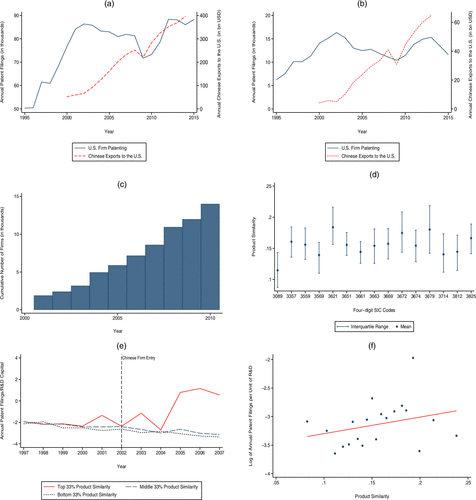
Notes. (a) Total U.S. firm patenting and total Chinese exports to the United States. (b) U.S. firm patenting and Chinese exports to the United States in the electronics and electrical appliances industry. (c) Cumulative number of first-time Chinese firm entries into the U.S. electronics and electrical appliances industry. (d) Variation in product similarity across selected four-digit SIC codes. (e) U.S. firm patenting in the electronics and electrical appliances industry by different levels of product similarity for the entry year 2002. (f) Bin scatterplot of U.S. firms patenting in the electronics and electrical appliances industry by treatment intensity bins for entry year 2002.
3.3. Measurement of Product Similarity
To compute the similarity of the product portfolios between U.S. and Chinese importing firms, we adopt a methodology inspired by Hoberg and Phillips (2016) and Arts et al. (2018, 2021), in which we compare the product descriptions of U.S. firms with those of Chinese importing firms. First, we use Natural Language Processing techniques and the “Sentence Transformer” model to convert text data into numerical embeddings for further analysis. These embeddings capture semantic meaning and enable comparison across product categories from both Chinese firms and U.S. firms. The products for each firm-year are represented by a vector, which serves as the firm’s unique representation in the product market.3
To quantify the similarity between these two bodies of text, we calculate the cosine similarity between their vector representations. For each entry year, we compute pairwise similarity scores between Chinese firms entering the U.S. market for the first time and all U.S. firms from the previous fiscal year within the same industry. We select U.S. firms from the fiscal year prior to the entry of Chinese firms because firms may adapt and modify their products once faced with new competition.4 By using data from the preceding fiscal year, we capture the characteristics of U.S. firms before the entry event occurs. After calculating the pairwise similarity between a focal U.S. firm and all entering Chinese firms in a given year, we compute the average similarity of that U.S. firm with the entrants for that year.5
3.4. Validation of Product Similarity as Rivalry
We validate our text-based similarity measure of competition using 10-K reports. Specifically, we examine whether U.S. firms facing higher import competition from China (i.e., those with higher similarity scores to Chinese importing firms in terms of product descriptions) discuss import competition from China more frequently in their 10-K reports. Following the approach of Hoberg and Maksimovic (2015), Hoberg and Phillips (2016), and Hoberg et al. (2021), we identify 10-K reports in our baseline sample that contain at least one word from each of the following three word lists: the country name list (“China,” “Chinese,” or “PRC”), the competition word list (“compete,” “rival,” “challenge,” “opponent,” or “contest“ and their lexical families), and the import word list (“import” and its lexical family). The results, presented in Online Appendix Table AT2, show that firms with higher similarity scores to Chinese entrants in a given entry year are more likely to mention intense competition from China in their 10-K reports.
Importantly, we also show that our firm-specific import competition measure is not systematically correlated with other firm-level drivers of innovation. Although we follow prior research by treating the overall entry of Chinese firms into the U.S. market as being driven by the exogenous accession of China to the WTO, one may worry that Chinese entrants target specific product markets in the U.S. based on factors correlated with innovation, either directly or through other channels. To explore this, we regress our similarity measure on several U.S. firm-level characteristics—all measured in the year prior to entry—including the growth in the number of patents, sales growth, gross margins, Tobin’s Q (as a proxy for growth opportunities), and total factor productivity. The results are reported in Online Appendix Table AT3. We find no statistically or economically significant relationships between our similarity measure and any of these variables, suggesting that Chinese firms do not target specific product markets in the United States with higher innovation potential.6
3.5. Descriptive Evidence of Heterogeneity in Rivalry
In our empirical tests, we examine firm-level variation in exposure to competition from Chinese entrants. Figure 1(d), which displays the average product similarity across four-digit SIC codes, reveals a substantial interquartile range in similarity scores. This indicates that even within narrowly defined industry segments, there is significant heterogeneity in the degree of competitive exposure faced by U.S. firms. Such variation underscores the advantage of our firm-level measure—it captures differences in how closely individual U.S. firms’ products align with Chinese imports, rather than assuming uniform exposure within a four-digit SIC industry, as typically done by prior research.
Figure 1(e) shows the natural logarithm of the average number of patents per R&D dollar for the top, middle, and bottom 33% of the sample’s similarity scores over a 10-year window for the entry year 2002 (the middle entry year we consider). The trends, which are slightly declining (consistent with Figure 1, (a) and (b), as well as those observed in earlier studies), are similar across the three groups during the five years leading up to the entry year, suggesting that there are no significant pretrends in the data. In the five years following the entry of Chinese firms, the bottom and middle 33% of U.S. firms continue along the prior trend. In contrast, the top 33% break from this pattern, substantially increasing patent filings between 2004 and 2005 and maintaining this higher level thereafter. We interpret this as initial evidence that U.S. firms increase innovation in response to heightened import competition from China.
In Figure 1(f), we plot the natural logarithm of the average number of patents per R&D dollar between 2005 and 2007 (the years when U.S. firms from Figure 1(e) significantly increased their patent filings following the entry of Chinese firms in 2002) against the similarity scores for entry year 2002, using a bin scatter plot with similarity scores grouped into 20 equal-sized bins. We find a visually positive relationship between innovation and firms’ exposure to import competition from China.
3.6. Model Specification
Because Chinese firms entered the U.S. market at varying points between 2001 and 2003 and with differing intensities of competitive pressure, we adopt a continuous treatment Difference-in-Differences (DiD) specification using a stacked regression approach—akin to the methodologies in Gormley and Matsa (2011), Cengiz et al. (2019), Deshpande and Li (2019), Heath et al. (2022), or Baruffaldi et al. (2024). In our implementation, we construct event-specific data sets for each entry cohort that include the outcome variable, a continuous measure of treatment intensity (reflecting the degree of exposure to Chinese competition), and an event identifier. These data sets are then combined into a single stacked panel, and we estimate a continuous treatment DiD model that incorporates event-specific unit and time fixed effects to flexibly control for heterogeneity in treatment timing and intensity. The regression model is specified as follows:
This specification compares U.S. firm innovation outcomes before and after the entry of Chinese competitors. Firm‐by‐entry event fixed effects () absorb any time-invariant firm characteristics—such as baseline innovation capacity or product mix—whereas the event-year fixed effects () capture shocks specific to each relative year for each entry cohort. As a result, these fixed effects eliminate confounding influences that might correlate with both the outcome variable and our measure of competitive exposure. The identifying variation comes from within-firm changes over time in the intensity of competitive exposure captured by our continuous similarity score. This differential intensity, which reflects how strongly each firm experiences the competitive shock, is what we use to estimate the impact on innovation.
We also account for time-varying firm characteristics, represented by , in our empirical framework to capture potential heterogeneity between firms that changes over time. Following previous literature on the relationship between import competition and innovation (Chakravorty et al. 2024), we select these controls based on a simplified knowledge production function (Griliches 1998). These include the firm’s capital-to-labor ratio, (calculated as the natural logarithm of net property, plant, and equipment divided by the number of employees); size, (measured as the natural logarithm of net sales); R&D capital, (defined as the natural logarithm of (one plus) the firm’s current R&D expenditure plus past depreciated expenditure); and age, (measured as the natural logarithm of the number of years the firm has been listed on Compustat).
4. Innovation and Heterogeneity in Rivalry
4.1. Industry-Level Import Competition Effects
As a preliminary step to our main analysis, we verify that the negative industry-level relationship between Chinese import competition and innovation—as estimated in prior studies—also holds for our sample and empirical approach. To do so, we follow the approaches of Pierce and Schott (2016) and Autor et al. (2020) and construct an industry-level exposure measure using the gap between Most Favored Nation (MFN) and non-MFN tariff rates in 1999, measured at the most fine-grained four-digit SIC industry level. This measure serves as a proxy for the degree to which industries were affected by the competitive shock following China’s accession to the WTO and the subsequent granting of favorable trade status by the United States. Table 3, columns (1)–(4) present results from estimating Equation (1) with the similarity measure replaced by the industry-level tariff gap measure using a varying set of fixed effects and control variables. Our results are consistent with prior studies such as Autor et al. (2020), suggesting that industries with larger tariff gaps experience a decline in patenting activity.
|
Table 3. Impact of Industry-Level Import Competition from China on Innovation
| Dependent variable: LN_PAT | (1) | (2) | (3) | (4) | (5) | (6) |
|---|---|---|---|---|---|---|
| NTRG AFTER | −0.148*** | −0.159*** | −0.424* | −0.420* | −1.061*** | −0.388 |
| (0.055) | (0.053) | (0.238) | (0.240) | (0.317) | (0.242) | |
| NTRG AFTER SIM | 4.723*** | |||||
| (1.664) | ||||||
| SIM AFTER | 1.706*** | |||||
| (0.596) | ||||||
| LN_K/L | 0.067*** | 0.059** | 0.060** | 0.058** | 0.056** | 0.056** |
| (0.024) | (0.024) | (0.024) | (0.024) | (0.024) | (0.024) | |
| LN_SALE | 0.181*** | 0.146*** | 0.145*** | 0.145*** | 0.144*** | 0.143*** |
| (0.031) | (0.030) | (0.030) | (0.030) | (0.029) | (0.029) | |
| LN_AGE | 0.360*** | 0.298*** | 0.298*** | 0.300*** | 0.347*** | 0.350*** |
| (0.108) | (0.107) | (0.107) | (0.108) | (0.110) | (0.111) | |
| LN_RDSTK | 0.137*** | 0.138*** | 0.135*** | 0.132*** | 0.132*** | |
| (0.032) | (0.032) | (0.032) | (0.031) | (0.031) | ||
| Event FE | Yes | Yes | No | No | No | No |
| Firm FE | Yes | Yes | Yes | No | No | No |
| Year FE | Yes | Yes | No | No | No | No |
| Event-firm FE | No | No | No | Yes | Yes | Yes |
| Event-year FE | No | No | Yes | Yes | Yes | Yes |
| Adjusted | 0.867 | 0.868 | 0.868 | 0.861 | 0.861 | 0.861 |
| N | 14,949 | 14,949 | 14,949 | 14,949 | 14,949 | 14,949 |
| Firms | 668 | 668 | 668 | 668 | 668 | 668 |
Notes. This table presents stacked DiD results from ordinary least squares (OLS) regressions of U.S. firm innovation on industry-level import competition from China and its interaction with firm-specific competition, with varying fixed effects (FE) and control variables. The estimation period is 1996–2008, with entry events from 2001 to 2003. Robust standard errors are clustered by firm (reported in parentheses). Variable definitions are provided in Table 1.
*; **; ***.
4.2. Beyond Industry Averages: Firm-Specific Rivalry and Innovation
Although the replication confirms that, on average, greater industry exposure to Chinese import competition is associated with reduced innovation, such aggregate measures can mask important heterogeneity among individual firms. Standard industry-level measures assume uniform competition, even within the more fine-grained four-digit SIC industry; however, differences in product portfolios and market positioning imply that firms can face very different levels of competitive pressure, as industry classifications are based on production process similarities rather than product substitutability (Hoberg and Phillips 2016, Pellegrino 2025). Table 3, column (5) extends the replication by examining whether the average industry effect depends on firm-level exposure. To do so, we augment the specification by including, in addition to the industry-level tariff gap measure, its interaction with our firm-specific similarity scores.
Column (5) shows that the coefficient on the industry-level tariff gap measure remains negative, confirming that industries with greater exposure to Chinese imports generally experience a decline in innovation. However, the additional interaction term is positive and statistically significant. This result suggests that, within an industry, firms that are more similar to Chinese entrants (and thus face higher direct competitive pressure) tend to counteract the negative industry-level effect by increasing their innovation output. In other words, whereas the aggregate industry effect indicates that increased competition dampens innovation, the positive interaction implies that for firms directly exposed to this competitive pressure, the stimulus to innovate is stronger. This finding is consistent with the descriptive evidence from Figure 1(e).
Column (6) sheds further light on this dynamic by comparing the isolated impacts of industry-level and firm-specific competition. In this specification, once the influence of firm-level competitive pressure is taken into account, the average industry-level effect remains negative, but loses its significance. Together, these results show that the impact of import competition on innovation is not uniform across firms; rather, it is moderated by firm-specific factors, with those facing more direct competitive pressure exhibiting a robust, positive innovation response. In what follows, we develop this result on the importance of measuring firm-level competitive pressure further.
5. Escaping Competition
5.1. Baseline Effect
Table 4 presents the results from estimating Equation (1) using only the firm-specific similarity measure. Columns (1)–(5) present results for the continuous similarity measure, whereas columns (6) and (7) use a discrete similarity measure, comparing the top 33% of firms (treated) to the bottom 33% (controls), defined separately within each entry year. Across all specifications, the estimated treatment effects are positive and significant, suggesting that greater import competition from China stimulates U.S. firm innovation rather than reducing it when firm-level heterogeneity in import competition is taken into account. In our preferred specification from column (4), an increase in import competition from China from the 25th percentile (0.126) to the 75th percentile (0.184) raises U.S. firm innovation by 9.90 percentage points, corresponding to an 9.27% increase relative to the pre-entry average (1.068).
|
Table 4. Impact of Firm-Level Import Competition from China on Innovation
| Dependent variable: LN_PAT | (1) | (2) | (3) | (4) | (5) | (6) | (7) |
|---|---|---|---|---|---|---|---|
| SIM AFTER | 0.352** | 0.329* | 1.412*** | 1.707*** | 1.395** | ||
| (0.170) | (0.169) | (0.496) | (0.591) | (0.594) | |||
| SIM (D) AFTER | 0.166*** | 0.151** | |||||
| (0.063) | (0.063) | ||||||
| LN_K/L | 0.061*** | 0.054** | 0.052** | 0.050** | 0.032 | ||
| (0.024) | (0.023) | (0.023) | (0.023) | (0.025) | |||
| LN_SALE | 0.177*** | 0.142*** | 0.141*** | 0.140*** | 0.140*** | ||
| (0.031) | (0.029) | (0.029) | (0.029) | (0.030) | |||
| LN_AGE | 0.371*** | 0.310*** | 0.344*** | 0.356*** | 0.305*** | ||
| (0.108) | (0.107) | (0.109) | (0.110) | (0.115) | |||
| LN_RDSTK | 0.136*** | 0.134*** | 0.131*** | 0.105*** | |||
| (0.031) | (0.031) | (0.031) | (0.031) | ||||
| Event FE | Yes | Yes | No | No | No | No | No |
| Firm FE | Yes | Yes | Yes | No | No | No | No |
| Year FE | Yes | Yes | No | No | No | No | No |
| Event-firm FE | No | No | No | Yes | Yes | Yes | Yes |
| Event-year FE | No | No | Yes | Yes | Yes | Yes | Yes |
| Adjusted | 0.867 | 0.868 | 0.869 | 0.861 | 0.854 | 0.867 | 0.861 |
| N | 14,999 | 14,999 | 14,999 | 14,999 | 14,999 | 9,580 | 9,580 |
| Firms | 668 | 668 | 668 | 668 | 668 | 553 | 553 |
Notes. This table presents stacked DiD results from OLS regressions of U.S. firm innovation on firm-level import competition from China with varying fixed effects (FE) and control variables. The estimation period is 1996–2008, with entry events from 2001 to 2003. Robust standard errors are clustered by firm (reported in parentheses). Variable definitions are provided in Table 1.
*; **; ***.
Column (5) repeats the specification of column (4) without any control variables. The inclusion of control variables has a relatively limited impact on the estimated treatment effect, suggesting that the increase in U.S. firm innovation due to the import competition shock from China is unlikely due to omitted variable bias.9 The final two columns of Table 4 repeat the specifications of the previous two columns using a discrete treatment definition. The results are consistent with those from the continuous treatment case. For example, the estimate from column (6) implies that innovation in U.S. firms experiencing a large import competition shock from China rises by 16.55 percentage points, an effect that is economically larger—equal to 16.50% of the variable’s pre-entry average (1.003).10
5.2. Firm-Time Treatment Effects, Event-Specific Estimates, and Dynamics
In our setting, every U.S. firm faces Chinese import competition to varying degrees. Instead of comparing treated to never-treated units, our estimates compare firms experiencing different intensities of competition. To mitigate concerns about dynamic treatment effects contaminating our estimates (de Chaisemartin and D’Haultfœuille 2020, Callaway and Sant’Anna 2021, Goodman-Bacon 2021, Baker et al. 2022), we focus on a narrow window—the entry years 2001 to 2003, immediately following China’s accession to the WTO. For each of these entry years, we examine a five‐year window before and after the event. This approach limits the extent to which treatment effects can evolve over time and reduces the risk that comparisons between cohorts with substantially different treatment durations drive our results (Baker et al. 2022).11
To further assess robustness, we conduct two additional tests. First, we restrict the sample to first-time treated firms—that is, we include each firm only in the first entry-year cohort in which it appears and drop it from subsequent cohorts, thereby eliminating repeated exposures. Second, we estimate the model separately for each entry year. This allows us to assess treatment effects cohort by cohort and ensures that our results are not driven by pooling across entry years. The results, reported in Online Appendix Table AT4, show that treatment coefficients remain positive and statistically significant in all cases, with magnitudes very similar to those in Table 4. This suggests that the concerns raised by Baker et al. (2022) and others—in particular, bias arising from dynamic treatment effects and inappropriate comparisons—are unlikely to drive our findings.
Figure 2 shows the dynamic effects of the entry of Chinese competitors on U.S. firm innovation. Figure 2, (a) and (b) display the dynamics using both the continuous and discrete treatment measures for the full sample, whereas Figure 2, (c) and (d) present similar graphs for the restricted sample of first-time treated firms. In each panel, the y-axis represents the effect on U.S. firm innovation, and the x-axis indicates the time relative to the entry of Chinese competitors, with the benchmark group comprising observations from the year prior to entry. The vertical lines denote cluster-robust 95% confidence intervals for each yearly point estimate.
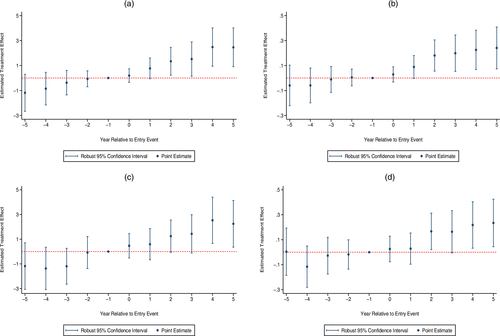
Notes. (a) Continuous treatment. (b) Discrete treatment. (c) Continuous treatment for first-time-treated firms. (d) Discrete treatment for first-time-treated firms.
Across all panels of Figure 2, the pre-entry coefficients are not statistically different from zero, suggesting no clear evidence of differential trends prior to treatment. Thus, we find no indication that the parallel trends assumption is violated in our setup. Moreover, there is no significant change in U.S. firm innovation in the entry year or the year immediately following it. A significant increase in innovation emerges in the second or third year postentry—again, consistent with the descriptive evidence from Figure 1(e)—and strongly suggests that U.S. firms respond only after the entry of Chinese competitors.12
5.3. Other Robustness Checks
Table 5 presents several additional robustness tests for our findings. In column (1), we augment our main specification by including event-by-industry-by-year fixed effects to account for potential industry-level changes (at the four-digit SIC code level) that might affect our inferences. The inclusion of these fixed effects has little impact on the treatment coefficient, further suggesting that industry-level factors play a relatively minor role compared with firm-specific factors in driving the innovation response. In column (2), we examine whether the baseline results hold when using quality-weighted patent counts. The estimated effect is similar in economic magnitude to our baseline result in Table 4, column (4), indicating that U.S. firms are not simply patenting lower-quality innovations to shield themselves from Chinese entrants, but are enhancing their overall innovation efforts.
|
Table 5. Other Robustness Tests
| Test | Import value weighted similarity | Chinese firms exporting >2 years | Single-segment firms | Firms in SIC 367 | ||
|---|---|---|---|---|---|---|
| LN | LN | LN | LN | LN | LN | |
| Dependent variable | PAT | CIT | PAT | PAT | PAT | PAT |
| (1) | (2) | (3) | (4) | (5) | (6) | |
| SIM AFTER | 1.867*** | 3.289*** | 0.458*** | 1.665*** | 2.601*** | 2.071* |
| (0.655) | (1.181) | (0.163) | (0.586) | (0.808) | (1.238) | |
| Controls | Yes | Yes | Yes | Yes | Yes | Yes |
| Event-firm FE | Yes | Yes | Yes | Yes | Yes | Yes |
| Event-year FE | No | Yes | Yes | Yes | Yes | Yes |
| Event-industry-year FE | Yes | No | No | No | No | No |
| Adjusted | 0.863 | 0.776 | 0.861 | 0.861 | 0.813 | 0.884 |
| N | 14,422 | 14,999 | 14,999 | 14,999 | 4,900 | 4,631 |
| Firms | 655 | 668 | 668 | 668 | 245 | 210 |
Notes. This table presents several robustness tests for the stacked DiD results from OLS regressions of U.S. firm innovation on firm-level import competition from China. The estimation period is 1996–2008, with entry events from 2001 to 2003. In column (1), we include event-by-industry-by-year fixed effects (FE) while dropping event-by-year fixed effects to control for changes at the four-digit SIC code level that could impact our inference. In column (2), the dependent variable is the natural logarithm of (one plus) firm patents weighted by forward citations. In column (3), the text-based similarity measure is weighted by the import value of Chinese products. In column (4), the similarity measure is calculated based only on Chinese firms that entered the U.S. market for the first time and remained for at least two consecutive years. In column (5), the sample is restricted to U.S. firms with a single business segment, as identified in Compustat Segment data, independently of their SIC code classification. In column (6), the sample is restricted to U.S. firms in SIC code 367, which contains the most firms in our sample (see Online Appendix Table AT1). Robust standard errors are clustered by firm (reported in parentheses). See Table 1 for variable definitions and Table 4 for control variables.
*; **; ***.
In our main specification, we treat each new entry by a Chinese firm equally, yet U.S. firms may respond differently based on the credibility of the entrant. High-import-value Chinese entrants, or those that demonstrate a commitment to remain in the market, may be viewed as more credible threats by U.S. firms (Autor et al. 2020). To account for this, in column (3), we adjust our similarity scores by weighting them according to the import value of the Chinese firms. Under this specification, the estimated effect on patenting implies a larger economic magnitude than in the baseline, suggesting that firms respond more strongly to competition from higher-import-value entrants. In column (4), we calculate similarity scores using only Chinese firms that remain active for at least two years after entry; the effect in this case is very similar to that in column (3).13
Next, although our baseline sample is restricted to firms whose main activity is in the electronics and electrical appliances industry, some of these firms also operate in other industries, and Morandi et al. (2020) show that diversified firms often respond to competitive shocks by reallocating resources across business units. To ensure that our findings are not simply driven by such cross-segment redeployment, column (5) restricts the sample to U.S. firms with only one business segment reported in the Compustat Segment data.14 The estimated treatment effect in this single-segment subsample is larger than in the baseline, suggesting that the observed innovation response is not merely an artifact of internal resource shifting. Finally, in column (6), we further restrict the sample to the electronic components and accessories industry (SIC 367), which contains most of the observations within the electronics and electrical appliances sector (see Online Appendix Table AT1). The estimated effect in this subsample is similar to our main results, reinforcing the robustness of our findings within the core industry.
We conduct a set of additional robustness checks, reported in Online Appendix Tables AT5–AT8. First, we rerun our baseline specification on a balanced panel to address potential attrition bias; the results are very similar to those from the unbalanced panel. Second, we cluster standard errors at the entry-event and entry-event–firm levels and find that this has little effect on our estimates. Third, we show that our findings remain consistent when estimated using a Poisson model instead of a log-linear model or when applying the inverse hyperbolic sine transformation to account for zeros and outliers in the patent distribution. Fourth, we perform two falsification tests: estimating the model on pre-entry years yields a treatment effect that is small and statistically insignificant, and randomly assigning similarity scores also produces no significant effect. Lastly, we implement a matching estimator using the discrete treatment definition, matching treated and control firms on pre-entry characteristics. The results remain statistically similar to our baseline but imply somewhat larger economic magnitudes.
5.3.1. China Supply Shock or U.S. Demand and Technology Shocks?
We are concerned that the observed positive relationship between import competition from China and U.S. firm innovation might reflect endogenous shifts in U.S. demand or domestic technology trends within a given product market, rather than an exogenous supply shock originating in China. However, validation tests discussed in Section 3.4 suggest that this is unlikely: we do not find any systematic relationship between our firm-specific competition measure and pre-entry U.S. firm characteristics, such as innovation and sales growth. Moreover, prior research by Bloom et al. (2016) and Becerra et al. (2020), among others, suggests that treating the entry of Chinese firms into a given product market as exogenous, if anything, likely leads us to underestimate the impact of import competition.
In this section, we provide two additional tests to address this concern. First, we draw on the literature on exporting firms, which finds that increases in productivity are a key determinant of a firm’s decision to enter export markets (see Cassiman and Golovko 2018 for a review). The underlying rationale is that more productive firms possess the capabilities required to remain competitive internationally. To ensure that our competition measure reflects predominantly supply-side shocks, rather than U.S. market conditions, we construct an alternative version by restricting the sample to Chinese exporters with high labor productivity prior to entry. These firms, being more likely to enter due to supply-side factors and inherent competitiveness, provide a more exogenous source of import competition. Table 6, column (1) shows that using this modified measure yields an economic impact almost identical to our baseline estimate.
|
Table 6. Chinese Supply Shock vs. U.S. Demand and Technology Shocks
| Test | Most productive Chinese firms | IV (First stage) | IV (Second stage) | IV (Second stage) |
|---|---|---|---|---|
| LN | LN | LN | ||
| Dependent variable | PAT | SIM | PAT | PAT |
| (1) | (2) | (3) | (4) | |
| SIM AFTER | 1.495*** | |||
| (0.548) | ||||
| SIMEU+ | 0.968*** | |||
| (0.007) | ||||
| AFTER | 1.405** | 1.749*** | ||
| (0.601) | (0.598) | |||
| Controls | Yes | No | No | Yes |
| Firm FE | No | Yes | No | No |
| Year FE | No | Yes | No | No |
| Event-firm FE | Yes | No | Yes | Yes |
| Event-year FE | Yes | No | Yes | Yes |
| Adjusted | 0.861 | 0.989 | 0.854 | 0.861 |
| N | 14,999 | 1,541 | 14,999 | 14,999 |
| Firms | 668 | 668 | 668 | 668 |
Notes. This table presents stacked DiD results from OLS regressions of U.S. firm innovation on firm-level import competition from China when the similarity measure is calculated based only on the most productive Chinese entrants and when using the similarity with Chinese entrants in other high-income countries as an instrumental variable for the similarity with Chinese entrants in the U.S. In columns (1), (3), and (4), the estimation period is 1996–2008, with entry events from 2001 to 2003. In column (2), the estimation period is 2001–2003. The most productive Chinese firms are defined as those exporting firms in the top 20% in terms of labor productivity in the year prior to entry into the U.S. market, measured as sales per employee. Robust standard errors are clustered by firm (reported in parentheses). See Table 1 for definitions of other variables and Table 4 for control variables. FE, fixed effects.
*; **; ***.
Second, we construct an instrument for the product markets that Chinese firms target in the U.S. Specifically, we instrument each U.S. firm’s product similarity with Chinese firms that entered the U.S. market between 2001 and 2003 using its similarity with Chinese firms that made their initial entry into other high-income markets—but not the United States—over the same period. Following Autor et al. (2013), Bloom et al. (2016), Hombert and Matray (2018), and Autor et al. (2020), identification hinges on the assumption that common components in firm-level similarity across these advanced economies reflect supply-side shocks originating in China, while demand and technology shifts remain uncorrelated across countries.
To construct this instrument, we first identify Chinese firms that began exporting to a group of eight high-income countries (Australia, Denmark, Finland, Germany, Japan, New Zealand, Spain, and Switzerland) between 2001 and 2003, excluding any firms that had already entered—or were entering in the same year—the U.S. market. We then compute pairwise product similarities between these Chinese firms and U.S. firms, aggregating the scores at the firm level to create each U.S. firm’s instrument. Figure 3 plots U.S. firms’ similarity with Chinese entrants in 2002 against their similarity with Chinese firms entering other high-income markets that year. The figure suggests that Chinese firms tend to target the same product niches across advanced economies, consistent with a supply-driven entry process.
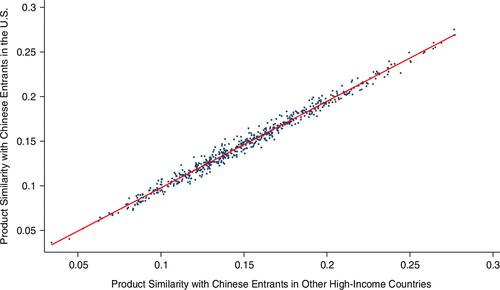
Table 6, column (2) presents the first-stage regression, where we regress U.S. firms’ product similarity with Chinese entrants in the United States on their similarity with entrants in the eight other high-income countries, including a full set of firm and year fixed effects. We obtain a positive and statistically significant coefficient of 0.968 (standard error of 0.007) on the similarity with entrants in other high-income countries. Following Hombert and Matray (2018), we then use the predicted values from this regression as our instrument for U.S. firms’ similarity with Chinese entrants. Table 6, columns (3) and (4) report the second-stage results, without and with controls, respectively. The import competition coefficient remains positive and significant, closely matching our main estimate in Table 4, column (4), further supporting the interpretation that our results reflect a supply-side shock from China rather than United States-specific demand or technology trends.
5.4. Rivalry and Other Firm-Level Outcomes
5.4.1. Profitability, Sales, and R&D Expenses.
Import competition from China is expected to negatively affect U.S. firms’ short-term profitability and sales (Hombert and Matray 2018, Autor et al. 2020). In Table 7, column (1), the dependent variable is return on assets (ROA) in the current year. We find that U.S. firms in our sample indeed experience a significant decline in profitability.15 Table 7, column (2) examines whether this decline can be partly attributed to lower sales. The results confirm that firms facing greater import competition from China experience a significant reduction in sales. Column (3) investigates whether firms reduce their R&D expenditures in response to increased import competition. Our findings indicate that this is not the case: the treatment coefficient is small and statistically insignificant. Thus, despite declines in profitability and sales, firms maintain their R&D investments.
|
Table 7. Other Firm-Level Outcomes
| LN | LN | SHR | SHR | |||||||
|---|---|---|---|---|---|---|---|---|---|---|
| PAT | PAT | PAT | PAT | |||||||
| Dependent variable | ROA | SALE | RD | NSIC | NTEC | ETEC | PRD | PRC | SEF | CNF |
| (1) | (2) | (3) | (4) | (5) | (6) | (7) | (8) | (9) | (10) | |
| SIM AFTER | −0.356** | −0.760** | −0.012 | 0.327** | 1.440** | 0.631 | 0.627*** | 0.089 | −0.187* | −0.626*** |
| (0.167) | (0.347) | (0.082) | (0.140) | (0.685) | (0.766) | (0.187) | (0.092) | (0.111) | (0.039) | |
| Controls | No | No | No | No | No | No | No | No | No | No |
| Event-firm FE | Yes | Yes | Yes | Yes | Yes | Yes | Yes | Yes | Yes | Yes |
| Event-year FE | Yes | Yes | Yes | Yes | Yes | Yes | Yes | Yes | Yes | Yes |
| Adjusted | 0.581 | 0.630 | 0.655 | 0.108 | 0.760 | 0.615 | 0.492 | 0.283 | 0.243 | 0.953 |
| N | 14,999 | 14,999 | 14,999 | 14,999 | 14,999 | 14,999 | 14,999 | 14,999 | 12,019 | 9,184 |
| Firms | 668 | 668 | 668 | 668 | 668 | 668 | 668 | 668 | 567 | 616 |
Notes. This table presents stacked DiD results from OLS regressions of various other U.S. firm-level outcomes on firm-level import competition from China. The estimation period is 1996–2008, with entry events from 2001 to 2003. The dependent variables include U.S. firms’ profitability in column (1); sales in column (2); R&D expenditures in column (3); entry into new business segments in column (4); the number of patents filed in new technological areas in column (5); the number of patents filed in existing technological areas in column (6); the share of product patents filed in column (7); the share of process patents filed in column (8); the similarity between U.S. firms’ current and prior year’s product descriptions in column (9); and the similarity between U.S. firms’ current product descriptions and those of Chinese entrants at the entry year in column (10). See Table 1 for detailed definitions of these variables and Table 4 for control variables. Robust standard errors are clustered by firm (in parentheses). FE, fixed effects.
*; **; ***.
In Online Appendix Table AT9, we also examine whether U.S. firms’ selling, general, and administrative expenses; advertising expenses; capital expenditures; and employment levels are significantly affected by increased import competition. The results reveal no significant changes in these variables. Finally, we find that in the longer term, firms initially exposed to greater import competition appear to recover from the initial decline in profitability; after five years, there is no longer a significant difference in profitability relative to firms not facing increased competition. We attribute this recovery to increased innovation efforts.
5.4.2. Product Diversification and Technology Diversification.
Firms experiencing a greater impact from Chinese imports may choose to enter other submarkets within their industries to redirect production away from direct competition. For example, when Chinese firms enter specific submarkets, affected firms face declining customer demand, prompting them to pursue diversification strategies (Wu 2013). Studies have also shown that plants switching industries tend to move toward capital- and skill-intensive sectors with lower exposure to imports (Bernard et al. 2006). Furthermore, diversification allows firms to reallocate strategic resources to less competitive areas, potentially enhancing their value (Sakhartov and Folta 2014, Becerra et al. 2020). Table 7, column (4) examines whether U.S. firms respond to increased import competition by diversifying into new business segments. We define diversification as a change in a firm’s primary four-digit SIC code in a given year. The results confirm this prediction: firms exposed to rising import competition from China are more likely to shift their business focus into a different industry segment.
Hombert and Matray (2018) show that U.S. firms differentiate their products under competitive pressure from imports. To develop these new products, firms may also diversify into new technologies. Table 7, column (5) examines whether firms enter more new technological areas in response to competition. We measure technological diversification by taking the natural logarithm of (one plus) the number of patents filed in technological classes that are new to the firm in a given year, based on the U.S. Patent and Trademark Office’s Cooperative Patent Classification (CPC) scheme. We find that firms facing significant increases in import competition from China also increase their technological diversification. Thus, our results support the argument that firms also diversify technologically to mitigate the effects of import competition.16
One potential explanation for the increase in patenting documented throughout this paper is that U.S. firms may be using intellectual property as a defensive mechanism to protect their existing products from imported Chinese competition. However, our findings in Section 5.3, which document an increase in patent quality, cast doubt on defensive patenting as the primary explanation. In Table 7, column (6), we further examine the impact of increased import competition on U.S. firms’ patenting activities within their existing technological domains. If our findings were predominantly driven by defensive patenting, we would expect a significant increase in the number of patents filed within firms’ existing technological areas. However, the coefficient in column (6) is smaller than that in column (5) and statistically insignificant. Thus, although defensive patenting might still partly explain the observed increase in patenting, the results strongly indicate that the bulk of patenting activity is occurring in new technological fields rather than in existing ones.
5.4.3. Product and Process Innovation.
Next, we examine the types of patents U.S. firms file in response to increased import competition, distinguishing between product and process innovation. Following Hombert and Matray (2018), we expect firms facing greater competitive pressure to prioritize product differentiation over cost reduction. To test this, we adopt the classification from Ganglmair et al. (2022), who define product (process) patents as those with more than 50% of claims relating to product (process) innovation. Consistent with Argente et al. (2020) and Danzer et al. (2024), we measure product and process innovation as the share of product and process patents, respectively, in a firm’s annual patent portfolio, assigning zeros in years with no patent filings.
Table 7, columns (7) and (8) present the results. Column (7) shows that firms facing increased import competition from China raise the share of product patents in their portfolios, indicating a strategic shift toward product innovation. This finding supports the view that firms under competitive pressure focus on differentiation to sustain market position. Column (8) shows no significant change in process innovation, suggesting that cost-reduction efforts are not the primary margin of adjustment.
Finally, we examine changes in product descriptions disclosed in firms’ annual reports. Column (9) uses the measure from Hoberg et al. (2014) to capture how dissimilar a firm’s current product description is from its own description in the prior year. Firms exposed to higher import competition are more likely to revise their product offerings, as reflected in increased dissimilarity. Column (10) analyzes the similarity between U.S. firms’ product descriptions and those of Chinese entrants at the time of entry. We find that U.S. firms’ products become more distinct from those of their Chinese competitors. Together, these results underscore a broader pattern of product repositioning and strategic differentiation as firms adapt to heightened import competition.
6. Conclusion
This study examines how product market rivalry, induced by Chinese imports, affects innovation outcomes among U.S. firms in the electronics and electrical appliance industry. By analyzing detailed text-based similarity between the products of U.S. firms and imported Chinese goods, we identify which U.S. firms are most directly exposed to this competitive pressure. Leveraging the initial entry of Chinese firms into the U.S. market following China’s accession to the WTO as a quasinatural experiment, we compare subsequent innovation outcomes between the most and least directly competing U.S. firms before and after these entry events.
Our empirical analysis reveals that import competition stimulates patent production among U.S. firms. Although import competition poses short-term challenges, it serves as a long-term driver of technological upgrading and product innovation. Thus, our findings align with prior studies documenting that firms respond to increased industry-level competition by developing more new products (Gorodnichenko et al. 2010) and generating more patents (Bloom et al. 2016). Moreover, we document strategic firm responses, such as reallocating resources toward new technological areas to enhance their competitive advantage and differentiate their products (Hombert and Matray 2018). By adjusting their product portfolios, these firms effectively mitigate competitive pressures.
Our results may help reconcile conflicting findings in prior work examining the impact of import competition in Europe and the United States (Bloom et al. 2016, Autor et al. 2020). By explicitly focusing on firm-specific, rather than industry-averaged, responses, we show that firms most exposed to import competition strategically shift into technological areas and product categories that are less directly affected by imports. As a result, innovation may decline at the industry level, even as directly affected firms increase their innovation efforts. These patterns may also reflect different competitive margins: whereas industry-level measures primarily capture the increase in entry and quantity of Chinese firms in a particular industry, our text-based similarity measure identifies product-level overlap. Vives (2008) formally shows that these different measures of competitive pressure can, under certain conditions, lead to different innovation responses. Nevertheless, this does not fully explain the conflicting results in the literature between Europe and the United States when using industry-level measures. Although industry-level indicators remain useful for tracking aggregate outcomes or studying homogeneous goods, our results underscore the importance of firm-level variation in competitive pressure and strategic response. Understanding how these different margins interact therefore offers a promising avenue for future research.
An important limitation of our approach to measuring rivalry is that it relies exclusively on U.S. firms filing 10-K reports with the SEC. Ideally, a comprehensive measure of firm-level rivalry based on product similarity would include all firms operating within the relevant product market. Additionally, data restrictions prevent us from applying our rivalry measure to European firms. Furthermore, our empirical analysis specifically focuses on the electronics and electrical appliance industry, chosen because of its clear exposure to import competition and substantial innovation activity. Although we believe the broader insight of our study—that firm-level heterogeneity in rivalry is crucial for understanding differences in firm responses—extends beyond our specific empirical context, future research could beneficially apply our analysis to other industries and competitive environments. Replicating our analysis in European contexts, for instance, could provide additional validation and help reconcile the differences in empirical findings observed across regions.
The authors thank Maria Guadalupe (the editor), the associate editor, three anonymous reviewers, Andrea Fosfuri, Ricard Gil, Eduardo Melero, Neus Palomeras, Desirée Pacheco, Giovanni Valentini, and seminar participants at KU Leuven, Frankfurt School of Finance and Management, Imperial College Business School, IE Business School, ETH Zurich, the University of the Balearic Islands, the Autonomous University of Barcelona, and CUNEF, as well as participants at the DRUID and SMS Conferences for their valuable comments and suggestions.
1 See https://comtradeplus.un.org/.
2 The four-digit SIC codes corresponding to HS code 85 are listed in Table AT1 of the Online Appendix.
3 Specifically, we employ the “all-MiniLM-L6-v2” model, which is part of the Sentence Transformers library and is built on the MiniLM architecture. This model excels at text similarity tasks by generating embeddings that reflect the underlying semantics of sentences or phrases. It is pretrained on a large corpus of text data and fine-tuned for sentence-level tasks. Further details can be found at https://huggingface.co/sentence-transformers/all-MiniLM-L6-v2. This language model has also been employed in scholarly work such as Brynjolfsson et al. (2025).
4 To do this, we use the historical SIC codes from the Compustat files that correspond to HS code 85. Following common practice, missing historical SIC codes are replaced with the current SIC codes from the Compustat file. For fiscal years prior to the entry of Chinese firms, about 14% of firms in the entire Compustat universe have changed their SIC codes (i.e., the historical SIC code for that fiscal year differs from the current SIC code reported in Compustat).
5 We also experimented with using the maximum and total similarity measures, both of which yielded results similar to those obtained with the average similarity measure presented here.
6 To address the concern that longer product descriptions might mechanically inflate similarity scores, in additional analyses, we also regress our firm-level similarity measure on the number of words in the 10-K product description. If anything, the correlation is weakly negative.
7 We prefer a log-linear model over a Poisson or negative binomial model because the latter, when estimated with fixed effects, often exclude firms without within-firm variation in patenting, reducing statistical power and introducing estimation noise. Nevertheless, our findings are robust across multiple specifications, including Poisson models (see robustness checks). The normalization method has also been critiqued by Campbell and Mau (2021), who show it can introduce bias when initial patent counts are very low—as in Bloom et al. (2016), where pretreatment patent counts averaged 0.71 in China-competing sectors and 1.97 in noncompeting sectors. Such biases are less concerning in our setting, where pre-entry patent levels are substantially higher (24 patents for the top 33% most similar U.S. firms and 27 patents for the bottom 33%). Consequently, results from log-linear and count-data models remain consistent in our context.
8 In the robustness tests, we also experiment with alternative clustering methods, which produce consistent results.
9 For robustness, we also included various measures of domestic product market competition in our baseline specification, including product market similarity from Hoberg and Phillips (2016), product market fluidity from Hoberg et al. (2014), and product market centrality from Pellegrino (2025). In all cases, the coefficient on our Chinese import competition measure remains positive and statistically significant, with nearly identical magnitudes.
10 Although our discrete treatment definition is based on comparing the top and bottom 33% of firms within each entry year, as an additional robustness test, we also employed an alternative definition based on comparisons within each entry year and four-digit SIC code. This alternative approach yielded very similar results to those reported throughout this paper.
11 Regarding the direction of potential bias, consider the following simplified scenario: suppose a firm in the 2001 cohort has been treated and its innovation response increases over time. By 2002, that cohort will have accumulated a larger effect than the newly treated firms in the 2002 cohort, which are still in the early response phase. If the 2001 cohort is used as a control for the 2002 cohort, the larger accumulated effect of the former will be subtracted from the smaller effect of the latter. This produces a downward bias—implying that the positive and statistically significant coefficients we report may be, if anything, conservative.
12 In robustness checks shown in Online Appendix Figure AF1, we also examine these dynamics separately for each entry year and find the same pattern.
13 Importantly, in additional tests, we replicated all other results documented throughout the paper using either import-value-weighted similarity scores or similarity measures based only on Chinese firms that remained active for at least two consecutive years. These analyses yielded robust results consistent with those reported here. However, weighting by import value or selecting persistent entrants introduces additional endogeneity concerns, as these measures incorporate endogenous factors such as market acceptance, demand conditions, or competitive responses.
14 This filter is stricter than SIC-based alternatives because it relies on segment-level financial reporting. However, using SIC-based definitions (as in Morandi et al. 2020) at the four-, three-, two-, or one-digit level yields similar results.
15 We present the results without control variables, although estimates remain very similar when controls are included.
16 To some extent, this result differs from Morandi et al. (2021), who report that greater competition from imports leads U.S. firms to decrease technological exploration and increase exploitation, as measured by novel versus repeated backward citations. However, and as the authors explain in detail, their citation-based metric tracks the knowledge search process, whereas our CPC-class metric reflects the technological domain in which the invention is ultimately filed. A firm may enter a new CPC class, suggesting technological diversification, while still relying on familiar prior knowledge. Thus, the two indicators need not move together, and the apparent divergence in findings may reflect differences in what each measure is designed to capture.
References
- (2016) Import competition and the great U.S. employment sag of the 2000s. J. Labor Econom. 34(S1):S141–S198.Crossref, Google Scholar
- (2005) Competition and innovation: An inverted-U relationship. Quart. J. Econom. 120(2):701–728.Google Scholar
- (2024) Opposing firm-level responses to the China shock: Output competition versus input supply. Amer. Econom. J. Econom. Policy 16(2):249–269.Crossref, Google Scholar
- (2018) Trade with benefits: New insights on competition and innovation. Working paper, The Graduate Institute Geneva, Geneva.Google Scholar
- (2013) Import competition and quality upgrading. Rev. Econom. Statist. 95(2):476–490.Crossref, Google Scholar
- (2007) Trade liberalization, intermediate inputs, and productivity: Evidence from Indonesia. Amer. Econom. Rev. 97(5):1611–1638.Crossref, Google Scholar
- (2009) Mostly Harmless Econometrics: An Empiricist’s Companion (Princeton University Press, Princeton, NJ).Crossref, Google Scholar
- (2020) Patents to products: Product innovation and firm dynamics. CEPR Discussion Paper No. DP14692, Centre for Economic Policy Research, Paris.Google Scholar
- (1962)
Economic welfare and the allocation of resources for invention . Nelson RR, ed. The Rate and Direction of Inventive Activity (Princeton University Press, Princeton, NJ), 609–626.Crossref, Google Scholar - (2018) Text matching to measure patent similarity. Strategic Management J. 39(1):62–84.Crossref, Google Scholar
- (2021) Natural language processing to identify the creation and impact of new technologies in patent text: Code, data, and new measures. Res. Policy 50(2):104–144.Crossref, Google Scholar
- (2013) The China syndrome: Local labor market effects of import competition in the United States. Amer. Econom. Rev. 103(6):2121–2168.Crossref, Google Scholar
- (2020) Foreign competition and domestic innovation: Evidence from U.S. patents. Amer. Econom. Rev. Insights 2(3):357–374.Crossref, Google Scholar
- (2022) How much should we trust staggered difference-in-differences estimates? J. Financial Econom. 144(2):370–395.Crossref, Google Scholar
- (2024) Asymmetric information and R&D disclosure: Evidence from scientific publications. Management Sci. 70(2):1052–1069.Link, Google Scholar
- (2020) The effect of import competition on product diversification revisited. Strategic Management J. 41(11):2126–2152.Crossref, Google Scholar
- (2022) Shielding firm value: Employment protection and process innovation. J. Financial Econom. 146(2):637–664.Crossref, Google Scholar
- (2006) Survival of the best fit: Exposure to low-wage countries and the (uneven) growth of U.S. manufacturing plants. J. Internat. Econom. 68(1):219–237.Crossref, Google Scholar
- (2017) The effect of asymmetric information on product market outcomes. J. Financial Econom. 123(2):357–376.Crossref, Google Scholar
- (2016) Trade induced technical change? The impact of Chinese imports on innovation, IT and productivity. Rev. Econom. Stud. 83(1):87–117.Crossref, Google Scholar
- (2021) Trapped factors and China’s impact on global growth. Econom. J. 131(633):156–191.Google Scholar
- (2017) Import competition and innovation: Evidence from China. Working paper, University of British Columbia, Vancouver.Google Scholar
- (2025) Global business networks. J. Financial Econom. 166:104007.Crossref, Google Scholar
- (2025) Generative AI at work. Quart. J. Econom. 140(2):889–942.Crossref, Google Scholar
- (2021) Difference-in-differences with multiple time periods. J. Econom. 225(2):200–230.Crossref, Google Scholar
- (2024) Difference-in-differences with a continuous treatment. NBER Working Paper No. 32117, National Bureau of Economic Research, Cambridge, MA.Google Scholar
- (2021) On “Trade induced technical change? The impact of Chinese imports on innovation, IT and productivity”. Rev. Econom. Stud. 88(5):2555–2559.Crossref, Google Scholar
- (2018)
Internationalization, innovation, and productivity . Grifell-Tatjé E, Lovell CK, Sickles RC, eds. The Oxford Handbook of Productivity Analysis (Oxford University Press, Oxford, UK), 437–462.Crossref, Google Scholar - (2019) The effect of minimum wages on low-wage jobs. Quart. J. Econom. 134(3):1405–1454.Crossref, Google Scholar
- (2024) Firm innovation under import competition from low-wage countries. World Econom. 47(5):2063–2093.Crossref, Google Scholar
- (2016) Industry window dressing. Rev. Financial Stud. 29(12):3354–3393.Crossref, Google Scholar
- (2010)
Fifty years of empirical studies of innovative activity and performance . Hall BH, Rosenberg N, eds. Handbook of the Economics of Innovation (North-Holland, Amsterdam), 129–213.Crossref, Google Scholar - (2023) Proximity to the frontier, markups, and the response of innovation to foreign competition: Evidence from matched production-innovation surveys in Chile. Amer. Econom. Rev. Insights 5(1):35–54.Crossref, Google Scholar
- (2024) Labor supply and automation innovation: Evidence from an allocation policy. J. Public Econom. 235:105136.Crossref, Google Scholar
- (1980) Industrial structure and the nature of innovative activity. Econom. J. 90(358):266–293.Google Scholar
- (2020) Two-way fixed effects estimators with heterogeneous treatment effects. Amer. Econom. Rev. 110(9):2964–2996.Crossref, Google Scholar
- (2019) Who is screened out? Application costs and the targeting of disability programs. Amer. Econom. J. Econom. Policy 11(4):213–248.Crossref, Google Scholar
- (2023) Escaping import competition in China. J. Internat. Econom. 145:103835.Crossref, Google Scholar
- (2022) The rise of process claims: Evidence from a century of U.S. patents. Working paper, University of Mannheim, Mannheim, Germany.Google Scholar
- (2010) Imported intermediate inputs and domestic product growth: Evidence from India. Quart. J. Econom. 125(4):1727–1767.Crossref, Google Scholar
- (2021) Difference-in-differences with variation in treatment timing. J. Econom. 225(2):254–277.Crossref, Google Scholar
- (2011) Growing out of trouble? Corporate responses to liability risk. Rev. Financial Stud. 24(8):2781–2821.Crossref, Google Scholar
- (2010) Globalization and innovation in emerging markets. Amer. Econom. J. Macroeconom. 2(2):194–226.Crossref, Google Scholar
- (1998)
R&D and productivity: The unfinished business . R&D and Productivity: The Econometric Evidence (University of Chicago Press, Chicago), 269–283.Crossref, Google Scholar - (2022) Do index funds monitor? Rev. Financial Stud. 35(1):91–131.Crossref, Google Scholar
- (2015) Redefining financial constraints: A text-based analysis. Rev. Financial Stud. 28(5):1312–1352.Crossref, Google Scholar
- (2016) Text-based network industries and endogenous product differentiation. J. Political Econom. 124(5):1423–1465.Crossref, Google Scholar
- (2021) U.S.-China innovation competition. Working paper, University of Southern California, Los Angeles.Google Scholar
- (2014) Product market threats, payouts, and financial flexibility. J. Finance 69(1):293–324.Crossref, Google Scholar
- (2018) Can innovation help U.S. manufacturing firms escape import competition from China? J. Finance 73(5):2003–2039.Crossref, Google Scholar
- (2012) The better you are the stronger it makes you: Evidence on the asymmetric impact of liberalization. J. Development Econom. 99(2):474–485.Crossref, Google Scholar
- (2011) Innovation responses to import competition. Working paper, The World Bank, Washington, DC.Google Scholar
- (2013) Trade liberalization and embedded institutional reform: Evidence from Chinese exporters. Amer. Econom. Rev. 103(6):2169–2195.Crossref, Google Scholar
- (1978) On the basic proposition of X-efficiency theory. Amer. Econom. Rev. 68(2):328–332.Google Scholar
- (2024) Import competition, quality upgrading, and exporting: Evidence from the Peruvian apparel industry. Rev. Econom. Statist. 106(5):1285–1300.Crossref, Google Scholar
- (2003) The impact of trade on intra-industry reallocations and aggregate industry productivity. Econometrica 71(6):1695–1725.Crossref, Google Scholar
- (2013) Import competition from and offshoring to China: A curse or blessing for firms? J. Internat. Econom. 89(1):202–215.Crossref, Google Scholar
- (2021) A bird in the hand is worth two in the bush: Technology search strategies and competition due to import penetration. Strategic Management J. 42(8):1516–1544.Crossref, Google Scholar
- (2020) Product-market competition and resource redeployment in multi-business firms. Strategic Management J. 41(10):1799–1836.Crossref, Google Scholar
- (2004) Trade, technology, and productivity: A study of Brazilian manufacturers, 1986-1998. Working paper, University of California San Diego, La Jolla, CA.Google Scholar
- (2002) Trade liberalization, exit, and productivity improvements: Evidence from Chilean plants. Rev. Econom. Stud. 69(1):245–276.Crossref, Google Scholar
- (2025) Product differentiation and oligopoly: A network approach. Amer. Econom. Rev. 115(4):1170–1225.Crossref, Google Scholar
- (2009) Estimating standard errors in finance panel data sets: Comparing approaches. Rev. Financial Stud. 22(1):435–480.Crossref, Google Scholar
- (2012) A concordance between ten-digit U.S. harmonized system codes and SIC/NAICS product classes and industries. J. Econom. Soc. Measurement 37(1–2):61–96.Crossref, Google Scholar
- (2016) The surprisingly swift decline of U.S. manufacturing employment. Amer. Econom. Rev. 106(7):1632–1662.Crossref, Google Scholar
- (2014) Resource relatedness, redeployability, and firm value. Strategic Management J. 35(12):1781–1797.Crossref, Google Scholar
- (2005) What determines productivity? Lessons from the dramatic recovery of the U.S. and Canadian iron ore industries following their early 1980s crisis. J. Polit. Econom. 113(3):582–625.Crossref, Google Scholar
- (2019) The impact of trade liberalization on firm productivity and innovation. Innovation Policy Econom. 19:39–68.Crossref, Google Scholar
- (2022) Small innovators: No risk, no return. J. Accounting Econom. 74(1):101492.Crossref, Google Scholar
- (2008) Innovation and competitive pressure. J. Indust. Econom. 56(3):419–469.Crossref, Google Scholar
- (2013) Opportunity costs, industry dynamics, and corporate diversification: Evidence from the cardiovascular medical device industry, 1976–2004. Strategic Management J. 34(11):1265–1287.Crossref, Google Scholar
- (2021) The impact of emerging market competition on innovation and business strategy: Evidence from Canada. J. Econom. Behav. Organ. 181:117–134.Crossref, Google Scholar

