


Does Privacy Matter? Evidence from a Legal Reform
Abstract
We investigate the impact of a unique legislative reform that granted anonymity to plaintiffs in court rulings for personal injury claims. Prior to the reform’s implementation in August 2015, claimants who rejected settlement offers faced the risk that court proceedings would publicly disclose sensitive information regarding their health and earnings. By eliminating this source of privacy loss, the reform provides an opportunity to examine how privacy considerations affect outcomes in a real-world setting. Our analysis measures changes in payments for personal injury versus property damage claims (which were not affected by the reform) for car accident cases handled by the major insurance firms in Israel between 2011 and 2020. Using a difference-in-differences framework, we find that the reform led to a 12%–17% increase in payments for personal injury claims. We interpret this estimate as the implicit cost claimants were previously willing to bear, in the form of lower settlements, to avoid the disclosure of private information through court rulings. This result underscores the economic value individuals place on privacy, revealing that concerns about public exposure can significantly influence decision making and negotiation outcomes. Our findings demonstrate the importance of privacy considerations in customer interactions where sensitive information is often involved.
This paper was accepted by Dorothea Kübler, behavioral economics and decision analysis.
Funding: This work was supported by the Ministry of Justice of Israel [Grant 88/2024], The Falk Institute [Grant 24.03], and the Israel Science Foundation [Grant 1224/24].
Supplemental Material: The online appendix and data files are available at https://doi.org/10.1287/mnsc.2025.00107.
1. Introduction
The emergence of firms such as Google and Meta, which utilize personal information, has raised growing concerns regarding privacy protection. Data that were previously unavailable or could have been obtained only through significant investments are now often accessible or can be exposed with minimal effort. In response, legislators, regulators, and courts have devised various rules aimed at enhancing the protection of personal information.
But are these concerns justified? Existing research presents a complex picture. Surveys that investigate people’s attitudes to privacy-related policies indicate that privacy protection is broadly supported. At the same time, however, findings from laboratory experiments have revealed inconsistencies in privacy valuations (Tomaino et al. 2023), leading some scholars to conclude that individuals often ascribe minimal value to safeguarding their privacy.1 This gap between stated privacy preferences and actual behavior, known as the privacy paradox, has led policymakers and researchers to question the need for extensive privacy protection.2
In this paper, we examine the implications of a unique legislative reform in Israel that granted protection of litigants’ privacy. The names of parties involved in court-resolved legal disputes and the relevant ruling are conventionally publicly available. Simple (and often free) online search allows members of the public to trace and then read court decisions containing personal information on the litigants. The reform we study represents a significant departure from the entrenched principle of public legal proceedings. This legislation, which was passed in July 2014 and came into effect in August 2015, stipulated that in all lawsuits involving personal injury, the plaintiff would remain anonymous.
We were able to obtain proprietary data from the top five insurance companies in Israel. These data contain all payments for personal injury and property damage claims made through a settlement or following a court judgment between the years 2011 and 2020. In our analysis, we focus on claims arising from traffic accidents because they provide two advantages. First, traffic accidents constitute the main category of personal injury claims. Second, traffic accidents give rise to both personal injury and property damage claims. Although the reform grants anonymity to plaintiffs in personal injury lawsuits, similar lawsuits for property damage remain under the traditional rule in which the parties’ names are not concealed. Thus, property damage claims resulting from road accidents provide a natural control group.
We examine how the legal reform affected payments from insurance companies to claimants in personal injury cases due to car accidents relative to payments from these same insurance companies in property damage cases. We find that the reform resulted in a significant and consistent 12%–17% increase in the payments made by insurance companies for personal injury claims. Given that the vast majority (98%) of personal injury claims result in a settlement, the increase in payments is driven by an increase in settlement amounts and not by a change in court rulings.
Personal injury claims often contain sensitive personal information, both regarding claimants’ income (before and after the accident) and their health status. If privacy is important, one may expect the new anonymity regime to strengthen claimants’ bargaining leverage vis-à-vis their insurer, resulting in more favorable settlements. As court rulings no longer include the plaintiff’s name, claimants who have been offered low settlement amounts may now credibly threaten to proceed with their claim to a judgment. On the other hand, if privacy is not a central value, as some of the literature on the privacy paradox suggests, settlement amounts would be unaffected by the reform. We thus interpret our primary finding as indicating that privacy has a real impact.
Following this interpretation, we analyze the reform’s impact on claimants who face different levels of privacy disclosure. First, we find that the change in payments is mainly driven by claimants of working age. These claimants are likely to be sensitive to privacy disclosure for two key reasons: fear that information about their physical injury would negatively impact their career and desire to keep their income information confidential. Both concerns are of limited relevance for older, retired claimants. Second, we find that the overall effect is more pronounced when claimants are represented by more prestigious lawyers and when the time it takes for payments to be made is longer. One plausible interpretation of this result is that both factors are correlated with the severity of claimants’ injury.3 These findings are thus consistent with the view that privacy matters more when the injuries are severe. Finally, we do not find the overall effect to systematically vary by gender or income, but we find a more pronounced (albeit not statistically significant) effect of the reform on non-Jews and ultra-Orthodox Jews. Although this finding may suggest that privacy valuations are similar across the population, the presence of intermediaries (lawyers) in 95% of personal injury cases who influence claimants’ behavior makes it more difficult to identify differences in privacy preferences.
This paper contributes to the ongoing debate on the advantages and disadvantages of privacy regulation, including recent legislation such as the General Data Protection Regulation (GDPR) and the California Consumer Privacy Act (CCPA). Much of the literature has focused on the costs of such legislation, documenting reductions in advertising effectiveness, innovation, and competition across firms (Goldfarb and Tucker 2011, Jia et al. 2021, Peukert et al. 2022, Johnson et al. 2023, Wang et al. 2024). These costs are often weighed against evidence suggesting that consumers place relatively little value on privacy. We provide robust empirical evidence on the substantial economic value individuals assign to privacy protection in a high-stakes real-world setting. Our estimates of how much consumers are willing to forgo to protect their privacy are significantly higher than those reported in prior research, with important implications for evaluating the tradeoffs involved in privacy regulation.
The empirical literature on privacy is predominantly predicated on the results of survey questionnaires and laboratory experiments (Preibusch 2013, Kokolakis 2017). Surveys exploring public sentiments toward privacy-related policies consistently reveal broad support for policies safeguarding privacy (Rainie et al. 2013, Morey et al. 2015, Acquisti et al. 2020).4 Laboratory experiments, however, have revealed substantial instability and context dependence in privacy valuations.5 Some studies interpret these findings, together with evidence that individuals sometimes disclose personal information for small rewards, as suggesting that privacy valuations are often low.
One suggested explanation for this privacy paradox is that privacy breaches explored in the experimental literature may not align with the types of privacy-related policies analyzed in the survey literature. In other words, perhaps the findings that suggest that individuals place minimal value on privacy relate primarily to the exposure of nonmeaningful information. Thus, for example, Athey et al. (2017) study concerns the disclosure of names of students’ friends which may be of little value in the eyes of students. However, other experimental studies have also reported low values of privacy even when focusing on more meaningful information, such as their home address or monthly income (Spiekermann et al. 2001, Beresford et al. 2012). Additionally, recent work in a nonexperimental setting on GDPR regulation suggests that most users ascribe little weight to keeping their browsing history private, despite it being used to elicit detailed information on their economic and health status (Aridor et al. 2023). This finding is also supported in work by Kummer and Schulte (2019), who studied the market for mobile apps, and Johnson et al. (2020), who consider data collection by advertising agencies. Kummer and Schulte conclude that consumers’ revealed valuations for privacy are so low that offering privacy protection would not be profitable for most businesses. Johnson et al. document the low opt-out rates of consumers in allowing advertising agencies to collect their data.
Another explanation for the privacy paradox is that the valuation individuals give to privacy is context dependent. A field experiment by Acquisti et al. (2013) found that the amount individuals are willing to pay for privacy protection is highly sensitive to endowment and ordering effects. Despite previous work in the mobile app market showing that individuals are unwilling to pay for privacy, Bian et al. (2022) find that when Apple required app developers to release a privacy “nutrition” label, it resulted in a 14% decrease in downloads compared with downloads of the Android app where this information remained hidden. Additionally, in a randomized controlled trial (RCT) run on a Chinese Fintech lending platform, Tang (2021) finds that when loan applicants are required to provide their social network ID (or employer contact information), they are 11% (7%) less likely to complete a loan application. In a back-of-the-envelope calculation, she concludes that individuals value this information at $33. Our analysis complements this literature by providing findings that are based on the behavior of individuals concerning critical private information, over an extended period, and in a context with direct significant economic incentives.
We are aware of one other empirical paper that examines the implications of granting anonymity to litigants. Arrington (2019) shows that victims of hepatitis C–tainted blood products in Japan were more likely to take part in litigation attempts than in Korea, where the rules regarding plaintiffs’ anonymity were stricter. This study primarily relies on interviews and suggests that anonymity may impact litigant behavior. Our paper also relates to studies exploring variations in attitudes concerning the value of privacy. Prior studies have demonstrated that contingencies such as wealth and gender may affect people’s attitudes to privacy protection, suggesting that privacy might be a primary concern to some, but not all, social groups (Sheehan 1999, Park 2015).
There is also a body of theoretical literature in management and economics that focuses on privacy in market interactions. This literature analyzes how firms use private consumer information to extract surplus through price discrimination (Farboodi and Veldkamp 2020, Jones and Tonetti 2020, Cong et al. 2021, Fainmesser et al. 2023). Ke and Sudhir (2023) argue that because collecting consumer information enables personalization, which can benefit consumers, privacy legislation such as GDPR may inadvertently harm consumers. Similarly, Casadesus-Masanell and Hervas-Drane (2015) examine the tradeoffs firms face in markets where revenue depends on both consumer purchases and selling consumer information to third parties. These studies differ from the current study as, in our context, the party triggering the disclosure of private information (insurance companies) is not interested in selling it to a third party. Instead, the concern lies in the risk that such information could become accessible to third parties (e.g., future employers, and social acquaintances) who might exploit it, thereby granting the firm power over the consumer. Our paper seeks to empirically establish the value of privacy that includes, but is not limited to, concerns about future market interactions.
Finally, our study contributes to the law and economics literature on litigation incentives. The question of whether, and under what circumstances, parties’ names in legal proceedings should be anonymized has resulted in conflicting decisions among courts (Ressler 2004, Balla 2010, Volokh 2022). Our study demonstrates the economic significance of this judicial debate, specifically its impact on claimants’ bargaining power during settlement negotiations. U.S. courts have recently suggested that “allowing plaintiffs to proceed anonymously tends to put defendants at a significant disadvantage, especially in terms of settlement leverage, as plaintiffs may hold out for a larger settlement” (Doe v MacFarland 2019, Doe v McLellan 2020). Similarly, courts have speculated that defendants might resist granting anonymity to plaintiffs in order to exert pressure for accepting less-favorable settlements.6 In cases involving personal injuries, protecting plaintiffs’ anonymity may hold specific significance due to the extensive details about their physical condition and income present in court rulings.7 Although the economics literature has extensively analyzed factors influencing settlements (Shavell 2004, Kobayashi 2017), it has not yet considered the potential influence of the right to privacy.
In most prior work, the consequences of revealing personal data are often unclear, as in the case of targeted advertising or the sharing of friends’ contact information. Even when more sensitive information is collected, individuals may trust that it will remain confidential. In contrast, our setting involves a well-defined and highly visible privacy risk in a real-world setting: court proceedings that publicly disclose private health and income details. Here, the privacy loss has immediate and tangible consequences, impacting future job opportunities and personal relationships.8 By analyzing behavior in this context, we provide evidence on privacy preferences when individuals are more clearly aware of the risks. More broadly, our findings suggest that the low privacy valuations observed in other settings may reflect individuals’ underestimation of the likelihood or consequences of information disclosure rather than their true economic valuation of privacy protection.
The remainder of the paper is organized as follows. The next section provides institutional background on the insurance claims process in Israel and an overview of the claims database created for this project. In Section 3, we outline our empirical strategy. Section 4 estimates the average impact of the reform and explores heterogeneity in the response of claimants to the reform, as well as robustness tests. Section 5 concludes.
2. Setting and Data
2.1. Institutional Background
2.1.1. Car Insurance.
Under Israeli law, car owners must carry insurance for bodily injury, which is legally required and covers all individuals harmed in an accident (drivers, passengers, and pedestrians), regardless of fault. Property damage, by contrast, is insured through an optional comprehensive policy that covers both the insured vehicle and third-party property. Many vehicle owners obtain these two policies from different insurers.
2.1.2. Processing Claims.
The procedural framework in Israel for initiating a claim subsequent to a traffic accident, whether concerning property damage or personal injury, closely parallels that of the United States. The claimant typically engages with their insurer and presents substantiating evidence of the incident. Subsequently, the insurance company decides whether to make an offer. If an offer is extended and accepted, prompt resolution of the claim ensues. However, in the absence of an offer or if the proposed amount is deemed insufficient by the claimant, the involved parties enter into a negotiation phase. At any juncture, the claimant can take the case to court. Following the initiation of legal proceedings, negotiations may continue until the court issues its final judgment.
Claimants may opt for legal representation. As in many other countries, the majority of claimants who suffer personal injury seek legal counsel. In cases of personal injury, attorneys’ payment is in the form of a contingent fee and is subject to statutory regulation (capped at 13% of total payments). In instances of property damage, legal representation is significantly less common. One contributing factor is that when claimants sue in a small-claims court, they are mandated to personally advocate their position, with legal representation precluded.
Claimants’ payments, whether for property damage or personal injury, follow the rules for calculating damages in tort law. The underlying principle is to restore the claimant to their preharm position. In property damage cases, this is done by an appraiser who determines the cost of fixing or replacing the damaged property. In personal injury cases, damages are based on three major categories: lost earnings, medical expenses, and nonpecuniary losses (e.g., pain and suffering). This requires the claimant to provide data on their income before and after the incident, as well as information about their physical and mental condition following the incident. Consequently, claimants are compelled to disclose information that is often considered private.
2.1.3. Privacy in Legal Proceedings.
Courts have long emphasized that the public nature of legal proceedings, including the disclosure of parties’ names, constitutes a fundamental characteristic of democratic legal systems.9 It is thus not surprising that in Western countries, courts’ decisions are accessible. With the emergence of online services, interested parties such as employers or potential social acquaintances can now readily search and find this information.
Yet the principle of public legal proceedings combined with the availability of information on litigants comes at a price. Litigants may be deterred from pursuing their claims in court in order to protect private information, such as their income and health status. Specifically, plaintiffs concerned about their privacy may agree to settle for lower amounts in order to avoid the costs associated with disclosing their personal data in a court ruling. The Israeli Supreme Court, in a personal injury case adjudicated a few weeks prior to the enactment of the reform, noted the concerns that “insurance companies or defendants may pressure plaintiffs to settle in order to prevent their names and personal affairs from being exposed on the front pages of newspapers or on Internet websites” (Ploni v Hapool 2014). Similarly, U.S. courts have acknowledged the potential impact of anonymity on the bargaining power of litigants during settlement negotiations. For example, a U.S. federal judge recently noted that “naming [the defendant] may pressure him into a settlement. If the defendant were named, he would likely feel significant pressure to settle this case regardless of the merits of the plaintiff’s allegations” (Doe v Doe 2020).
Similar to the United States, litigants in Israel have the option to file a motion requesting the court to keep their names concealed. Although the granting of such motions is at the judge’s discretion, they are typically allowed only in special circumstances, adhering to the principle of public legal proceedings. Prior to the reform, anonymity was primarily granted in personal injury cases involving minors.
2.1.4. Legal Reform.
In April 2013, a decision by Justice Zylbertal suggested the potential value of permitting litigants to sue anonymously under specific circumstances (Eliyahu Insurance Co. v Plonit 2013). This decision prompted the legislature to introduce a bill aimed at providing anonymity to all plaintiffs filing a personal injury claim. The legislative process was expedited. Introduced in parliament by an opposition member on February 19, 2014, the bill’s details were first circulated on June 23, 2014, and it passed unanimously with broad cross-party support on July 28, 2014. According to the new law, the names of all plaintiffs filing a personal injury claim after August 1, 2015, were to be kept confidential. Claims filed before that date continued under the old regime, where anonymity was subject to the judge’s discretion. The rule for claims concerning property damage remained unchanged. Figure 1 provides a timeline of the key events leading to the implementation of the reform.
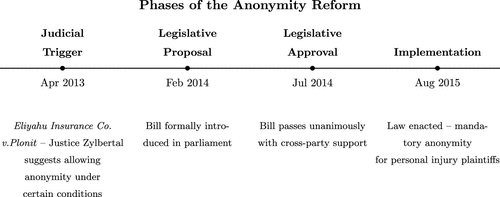
Figure 2(a) presents the change in anonymity rates for closed cases regarding both personal injury and property damage incidents.10 Although prior to the legislation, only 10%–20% of personal injury cases with court rulings were granted anonymity, beginning in 2016 (once the reform was implemented), this rate jumped to more than 40% and reached almost 100% by the end of the sample period. The reason the anonymity rate grew over time for personal injury cases after the reform is the gradual expansion of the reform’s coverage.11 Throughout the entire period of our data, anonymity rates for property damage remained constant at below 5%.
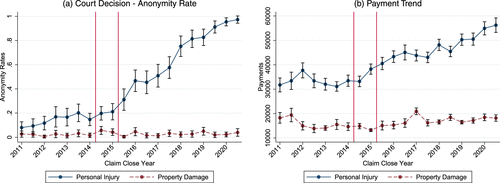
Notes. (a) Fraction of anonymous court cases out of total court rulings for personal injury and property damage cases over time. (b) Average payments for all claims submitted to the top five insurance companies in Israel that were resolved by a settlement or court judgment. The two vertical lines delineate the announcement of the legal reform (July 2014) and its implementation (August 2015).
2.2. Data
We collaborated with the Israeli Capital Market, Insurance, and Savings Authority to gain access to data on all disputed car accident claims submitted to any of the five major insurance providers in Israel.12 Each of the five firms provided a database with a separate distinct record of all disputed claims that closed between January 1, 2011, and December 31, 2020.13 A disputed claim is defined as one where the insured did not accept the initial payment provided by the insurance company. Whether a case becomes disputed is primarily driven by the complexity of the case. Personal injury cases are often disputed by insurance providers because they tend to rely on medical diagnosis that can vary from specialist to specialist, as well as a loss in future earnings that can be difficult to calculate. The property damage cases appearing in our data are primarily cases where the insured chose to use their own appraiser to assess the damage resulting from the incident as opposed to an appraiser who is recognized by the insurance company. Another common factor driving disputes in property damage cases is disagreements on the size of the deductible owed.
Our database includes information on type of claim (personal injury or property damage), date of incident, whether the claim was litigated in court, whether the claimant was represented by a lawyer (and if so, the lawyer’s name), date of settlement or judgment, amount of settlement or judgment, and claimant’s address, age, and gender.14 We define a claim as “postreform” if the date of settlement or judgment occurred on or after July 1, 2014, the month in which the legislative reform was debated and passed in Parliament.15 The reason we focus on the month of legislation is that the claimants bargaining power may have changed as soon as it became public knowledge that the claimant could take the insurance company to court without facing the risk of privacy loss once the reform was enacted.16
We collect additional data on lawyer prestige from the Dun’s 100 ranking of the top 100 Israeli law firms between 2013 and 2023 (Duns100 2013–2023). Similar to many other countries, Israeli law restricts lawyer fees in personal injury claims to a fixed percentage (13%) of the claimant’s payment. As noted in the literature, this payment structure creates an equilibrium where claimants with severe injuries are typically represented by top personal injury lawyers (Zamir et al. 2014). Thus, lawyer prestige can serve as a proxy for case severity.
Lastly, we accessed data from the Israeli Central Bureau of Statistics on demographic characteristics of the population by statistical areas (CBS 2008).17 We matched addresses to statistical areas and pulled in information on income, ethnicity, education, and degree of religiosity in the area where the individual resides. Although these demographic variables are important, they are available only for a subset of observations due to missing data and limitations in address matching. We provide summary statistics and sample sizes for each of these variables in Table A1 in the Online Appendix.18
Table 1 summarizes claim characteristics for personal injury and property damage cases before and after the reform. Generally, the payments from personal injury cases are more than double that of property damage cases. The primary reason for this is that payments from personal injury cases cover the medical expenses from physical injuries, lost earnings, and pain and suffering. Thus, personal injury payments are a direct function of earnings and age. These higher, more complicated to calculate payments could also explain the high rate of lawyer representation in personal injury cases (more than 95%) versus property damage cases (roughly 45%). On average, personal injury cases close roughly 2.5 years after they are opened, whereas property damage cases close closer to 1.5 years after they are opened.
|

Table 1. Summary Statistics
| Personal injury | Property damage | |||||
|---|---|---|---|---|---|---|
| Pre | Post | Difference | Pre | Post | Difference | |
| Payment (1,000s of NIS) | 33.0 | 45.3 | 12.3 | 15.4 | 16.5 | 1.2 |
| (152.8) | (165.0) | [0.6] | (63.0) | (49.0) | [0.4] | |
| Represented by Lawyer (%) | 95.7 | 95.1 | −0.6 | 40.7 | 51.1 | 10.4 |
| (20.4) | (21.6) | [0.1] | (49.1) | (50.0) | [0.3] | |
| Top Law Firm (%) | 3.6 | 3.5 | 0.0 | 3.6 | 3.3 | −0.3 |
| (18.5) | (18.5) | [0.1] | (18.7) | (17.9) | [0.1] | |
| Case Duration (Years) | 2.5 | 2.5 | 0.0 | 1.4 | 1.6 | 0.2 |
| (2.4) | (2.2) | [0.0] | (1.3) | (1.3) | [0.0] | |
| Claim Litigated in Court (%) | 23.7 | 32.5 | 8.8 | 81.2 | 85.7 | 4.6 |
| (42.6) | (46.9) | [0.2] | (39.1) | (35) | [0.3] | |
| Settlement (%) | 97.6 | 98.7 | 1.1 | 61.2 | 49.4 | −11.8 |
| (15.4) | (11.5) | [0.0] | (48.7) | (50.0) | [0.3] | |
| Claimant Age | 33.8 | 34.6 | 0.8 | 44.0 | 46.2 | 2.2 |
| (18.3) | (19.0) | [0.1] | (14.8) | (14.8) | [0.3] | |
| Male (%) | 55.9 | 50.8 | −5.2 | 74.1 | 75.7 | 1.6 |
| (49.6) | (50.0) | [0.3] | (43.8) | (42.9) | [0.7] | |
| Avg. Income Locality (1,000s of NIS) | 71.5 | 70.4 | −1.1 | 74.3 | 74.6 | 0.3 |
| (24.1) | (23.1) | [0.2] | (25.9) | (25.7) | [0.6] | |
| Socioeconomic Rank of Locality | 832.4 | 807.3 | −25.1 | 923.1 | 926.0 | 3.0 |
| (421.2) | (418.5) | [3.3] | (431.8) | (436.6) | [10.4] | |
| Jewish Locality (%) | 81.7 | 77.8 | −3.8 | 89.4 | 91.5 | 2.0 |
| (38.7) | (41.6) | [0.3] | (30.8) | (28.0) | [0.6] | |
| Ultra-Orthodox Locality (%) | 10.9 | 11.9 | 1.0 | 7.7 | 9.2 | 1.5 |
| (31.1) | (32.3) | [0.3] | (26.7) | (28.9) | [0.6] | |
| College Educated at Locality (%) | 39.0 | 37.6 | −1.4 | 40.2 | 39.8 | −0.4 |
| (16.0) | (16.0) | [0.1] | (17.1) | (16.5) | [0.4] | |
| Observations | 91,865 | 232,823 | 324,688 | 32,697 | 70,709 | 103,406 |
Notes. The table displays the average characteristics of personal injury cases and property damage cases both before and after the legislative reform, along with their standard deviation. The post-reform period includes all cases closed on or after July 1, 2014. The Difference column reports the difference in means between the pre- and post-reform periods, along with the standard error of the difference.
Table 1 illustrates a significant increase in payments made by insurance companies for personal injury claims after the legislative change was introduced in parliament. In the first column, we observe that in the preperiod, the average payment from a personal injury claim was 33,000 NIS (roughly $8,950). This payment increased by almost 40% in the postreform period and grew to 45,300 NIS (roughly $12,280). During this same period, payments from property damage increased by only 8% or 1,200 NIS ($325). In order for these numbers to provide some indication of the implications of the reform, we must ensure that prior to the legislation, the gap in payments between personal injury cases and property damage cases remained relatively constant. We explore this in the next section.
3. Empirical Strategy
Our analysis focuses on how the protection of litigant privacy impacted the payment that litigants received in personal injury cases following the announcement of the reform (July 2014). Thus, we model case outcome in a car accident involving individual i who submitted a claim to insurance provider c, that was closed on date t using the following regression model:
The vector includes individual characteristics of the claimant that may be correlated with payment outcomes such as gender, age, and age squared; also includes characteristics at the statistical area level as defined by the Central Bureau of Statistics such as income, ethnicity, education, and degree of religiosity. The coefficient on the interaction term estimates the change in payments that was driven by the legislative privacy reform as long as we are able to control for general trends in insurance payments occurring over time. This difference-in-differences (DID) strategy provides an unbiased estimate of the effect of the reform as long as property damage claims provide a valid control group for personal injury claims during this period.
Figure 2(b) illustrates the rise in payments for personal injury claims (marked by the solid line) following the announcement of the reform. This increase closely mirrors the trend observed in anonymity (see Figure 2(a)), albeit with an earlier response. Specifically, as anonymity was expected to become more common due to the announced change in legislation, payments in personal injury claims surged. Importantly, the payment trend observed for property damage cases closely resembles that of personal injury cases prereform and remains relatively stable postreform.
To account for the fact that the reform did not result in immediate anonymity for all cases but instead took effect gradually, as more cases fell under the jurisdiction of the reform, we also estimate an event study specification:
We control for changes in payments over time by including a set of time fixed effects (), specifically including dummy variables for each six-month period between January 2011 and December 2020. The first half of 2014 (the period immediately preceding the announcement of the reform) serves as the baseline period. The estimated coefficients allow us to separately measure the effect of the reform as anonymity rates evolved over time. This specification also provides a direct test of the plausibility of the parallel trends assumption, which is critical for the causal interpretation of our DID analysis. If the coefficients for the prereform periods are close to zero and statistically insignificant, this supports the assumption that, in the absence of the reform, trends in payments would have evolved similarly across property damage and personal injury claims.
3.1. Sample Selection
Our database includes only disputed claims, raising concerns of sample selection if prior to the legislative change insurers disputed more personal injury claims on the premise that claimants would likely accept reduced payments out of fear of privacy breaches. Figure A2 in the Online Appendix shows the yearly density of disputed cases (panel (a)) and the difference between property damage and personal injury cases (panel (b)). We find no significant decrease in the relative fraction of disputed personal injury cases.
Another concern is that our database is constructed based on case closure dates rather than submission dates. For each year, we observe all disputed cases closed by Israel’s five major insurers. An argument could be made for focusing on submission dates, given that the reform stipulated that only claims filed after August 2015 were required to be anonymous. In practice, however, we observe that cases closed after the reform’s implementation were often granted anonymity, even when they were submitted earlier (Figure A1 in the Online Appendix). Additionally, if we were to focus on case submission dates, we would observe a mechanical decline in payments, particularly in personal injury cases, because higher-payment cases generally take longer to close and therefore would not appear in later years. To address these concerns, we analyze cases based on their closure dates.19
Lastly, the reform may have impacted case duration (from submission to payment) if, before the reform, insurers took longer to settle claims by offering low initial payments due to unclear privacy valuations. Specifically, if insurance providers were applying a trial-and-error technique, starting with very low offers that prior to the reform incorporated a noisy estimate for the claimants value of privacy, this could increase case lengths in the preperiod. Because our database is structured based on closed cases, this could raise the concern that we would observe more cases in the postperiod than in the preperiod. However, we observe no change in the annual closure rate of personal injury cases (Figure A2 in the Online Appendix) or in the duration of personal injury cases that average roughly 2.5 years pre- and postreform (Table 1).
3.2. Strategic Withholding of Claims
The legislative reform was passed in July 2014 and enacted in August 2015, mandating anonymization of personal injury cases filed after August 1, 2015. In Figure A3 in the Online Appendix, we find no evidence that claimants delayed filing to benefit from the new rule. Importantly, the announcement itself may have resulted in a shift in power, because the threat of future privacy loss to the insured decreased significantly. To the extent that this information shock affected negotiations immediately, we define the postreform period as beginning July 1, 2014.20
3.3. Stable Unit Treatment Value Assumption
A car accident can involve both a property damage claim and a personal injury claim. Although these claims arise from separate insurance policies (see discussion of Institutional Background in Section 2.1), with disconnected court proceedings one could be concerned that the decision to pursue a larger payment from the insurance provider on a personal injury claim as a result of better privacy protection may also impact behavior regarding a property damage claim. In this case, Stable Unit Treatment Value Assumption (SUTVA) would be violated because payment on property damage claims may also respond to the reform. To assess the magnitude of SUTVA-related bias, we rerun our analysis excluding observations where a property damage claim and a personal injury claim were both filed for the same incident (see robustness tests in Section 4.3) Removing these potentially contaminated controls yields larger estimated privacy effects, which suggests that our baseline results may underestimate the true privacy effect.21
3.4. Other Changes
We also consider whether other changes during this period could bias our estimates from Equation (1). One concern is the capitalization rate set by the courts: the rate at which future lost earnings are discounted to a current lump sum. This rate plays a crucial role in determining payments for personal injury cases. Although Israeli courts historically maintained a capitalization rate of 3%, the low-interest rates of the early 2010s prompted some courts to reconsider. Notably, between 2016 and 2019, some trial courts ruled that the capitalization rate in personal injury cases should be adjusted to 2%, thereby raising victims’ compensations for personal injuries which discounts future lost earnings to a current lump sum.22 Because the capitalization rate has limited impact on property damage compensation, there is concern that this could bias our estimates upward. To address this, in robustness tests, we constrain the sample to periods with a constant capitalization rate and find no evidence that changes in this rate affect our results.
Another potential concern is that an increase in wages in the postreform period could mechanically drive up personal injury payments (which partially reflect lost wages), independent of the reform. Indeed, there was an increase in real wages in Israel that coincided with the timing of the reform, so that wages were roughly 11% higher in the postreform period (Finance Ministry 2019). To address this, in robustness tests, we reweight personal injury payments to account for changes in the wage distribution over time.23 The reweighted results show that the estimated effect of the reform decreases by four percentage points to a 12.5% increase in payments after the reform and remains significant at the 1% level.
4. Results
In this section, we first discuss the payment trends observed over the period of our analysis and the extent to which the parallel trends assumption holds. We then estimate Equation (1) both for the full data and different subgroups that we might expect to be differentially affected by the reform. We also run a series of robustness tests to ensure that our results measure the effect of the legislative change regarding anonymity.
4.1. Baseline Results
Figure 3 shows the event study results (Equation (2)), tracking changes in the payment gap between personal injury and property damage cases over time, relative to early 2014 (immediately prior to the announcement of the legislative change). The gap remained stable from 2011 to 2014 but increased by 13% about six months after the reform was announced, continuing to grow until late 2020, when it reached a 35% increase compared with 2014. By this period, anonymity rates in court rulings for personal injury claims had risen to nearly 100%, up from 20% in 2014 (Figure 2(a)).
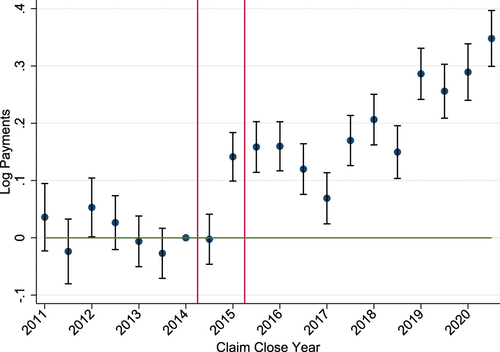
Notes. This event study figure maps the change in the log payment gap between personal injury and property damage cases relative to the gap observed in the first six months of 2014 (prior to the announcement of the reform). The figure displays the coefficients on the interaction terms Personal Injury × 6-Month-Period and their 95% confidence interval for all claims closed between January 2011 and December 2020. An indicator for the first six months of 2014 is excluded from the regression and thus serves as a baseline. The two vertical lines delineate the announcement of the legal reform (July 2014) and its implementation (August 2015).
In Table 2, we summarize our results from a DID analysis as outlined in Equation (1). In specification (1), we report the results of the DID analysis without introducing additional controls. In specification (2), we measure a slightly larger response to the legislative privacy reform when including additional controls for claimants’ age and gender, and the specific insurance firm making the payment. We find that generally payments are 16% higher for men than women and payments from claims increase with age. The likely explanation for this is that wages play a significant role in determining insurance payments, either directly in personal injury cases, where payments may reflect lost earnings, or indirectly in property damage cases, where wages are correlated with vehicle value. Since wages are higher among men and more experienced workers, this could drive higher payments. The coefficient on when including location fixed effects, as well as claim characteristics in specification (3), suggests that after the reform, the increase in payments made by insurance companies for personal injury claims was roughly 17% higher than the increase in payments observed for property damage claims. Prior to the reform, the average payment from a personal injury case was 33,000 NIS; thus, a 17% increase translates to roughly 5,610 NIS or 1,520 USD. Our analysis suggests that protecting plaintiffs’ privacy led to a significant increase in the payments made by insurance companies for personal injury claims.
|
Table 2. Effect of Privacy Legislation on Payments
| (1) | (2) | (3) | |
|---|---|---|---|
| Personal Injury × Post | 0.132*** | 0.160*** | 0.166*** |
| (0.008) | (0.008) | (0.008) | |
| Personal Injury | 0.335*** | 0.411*** | 0.403*** |
| (0.007) | (0.008) | (0.008) | |
| Male | 0.157*** | 0.153*** | |
| (0.006) | (0.006) | ||
| Claimant Age | 0.027*** | 0.027*** | |
| (0.000) | (0.000) | ||
| Claimant Age Squared | −0.000*** | −0.000*** | |
| (0.000) | (0.000) | ||
| Socioeconomic Rank of Locality | 0.000 | ||
| (0.000) | |||
| Jewish Locality | 0.002*** | ||
| (0.000) | |||
| Ultra-Orthodox Locality | 0.068*** | ||
| (0.017) | |||
| Higher Education Attainment at Locality | −0.002*** | ||
| (0.000) | |||
| Year fixed effects | Yes | Yes | Yes |
| Firm fixed effects | No | Yes | Yes |
| Location fixed effects | No | No | Yes |
| Mean payments | 35,641.981 | 35,641.981 | 35,641.981 |
| Observations | 428,094 | 428,094 | 428,094 |
| Adjusted R2 | 0.044 | 0.092 | 0.098 |
Notes. The dependent variable is log(payment). Column (1) contains a personal injury case indicator, year fixed effects, and the interaction between the personal injury case indicator and postreform announcement (July 2014). Column (2) adds controls for claimant gender, age, and age squared, as well as the insurance company where the claim was submitted and characteristics of the locality where the claimant resides such as socioeconomic rank, Jewish/Arab, ultra-Orthodox, and average education attainment. Column (3) adds location fixed effects. Robust standard errors reported in parentheses.
*; **; ***.
4.2. Heterogeneity in Response to the Privacy Reform
We might expect the value of private information to differ across individuals, because the sensitivity of information disclosure could hinge on specific characteristics of the claim or accident. Additionally, differences may arise among claimants based on factors such as gender, education, or religion. To examine whether the reform had heterogeneous effects, we estimate Equation (1) separately for different claimant groups (defined by age, gender, income, etc.). In addition, we report the coefficient and standard error on the triple interaction term from a pooled regression including both groups. This allows us to formally test whether the reform had a significantly different impact across claim characteristics.24
In Panel A of Table 3, we first compare the response of retired (over 60) versus working age (ages 21–60) claimants to the privacy reform.25 The level of privacy exposure from a court decision was much higher for younger workers. In order to determine the payment received by the litigant, the litigant must reveal both the full extent of their injuries and the perceived loss of future earnings due to the injury. For younger workers, publicizing the extent of an injury can have implications for future opportunities in terms of their career and personal life. Additionally, previous paychecks must be submitted for the courts to calculate perceived loss of future earnings for working-age individuals. Both concerns are largely irrelevant for retirees. Retirees, for obvious reasons, have little concern about future career prospects or promotions and are therefore less sensitive to injury disclosure. Additionally, because retirees’ income typically comes from pensions, personal injuries do not affect their earnings. As a result, filing a claim does not require them to reveal private salary information. The reform increased insurance payments by 21% (standard error, 2.4) for working-age individuals (see column (3)), but had no significant effect on workers over age 60 (see column (2)), with an estimated increase of 3.4% (standard error, 5.2).
|
Table 3. Effect of Privacy Legislation on Payments: Heterogeneity Results
| (1) | (2) | (3) | (4) | |
|---|---|---|---|---|
| Baseline | No | Yes | Difference | |
| Panel A: Working age | ||||
| Personal Injury Post | 0.174*** | 0.034 | 0.205*** | 0.204*** |
| (0.022) | (0.052) | (0.024) | (0.056) | |
| Observations | 190,186 | 27,353 | 162,833 | 190,186 |
| Panel B: Represented by top lawyer | ||||
| Personal Injury Post | 0.270*** | 0.260*** | 0.385*** | 0.105** |
| (0.012) | (0.012) | (0.050) | (0.047) | |
| Observations | 354,881 | 340,126 | 14,755 | 354,881 |
| Panel C: Long case duration | ||||
| Personal Injury Post | 0.166*** | −0.009 | 0.270*** | 0.264*** |
| (0.008) | (0.009) | (0.015) | (0.018) | |
| Observations | 428,094 | 214,309 | 213,785 | 428,094 |
| Panel D: Male | ||||
| Personal Injury Post | 0.213*** | 0.214*** | 0.226*** | 0.010 |
| (0.019) | (0.037) | (0.023) | (0.043) | |
| Observations | 190,510 | 87,046 | 103,464 | 190,510 |
| Panel E: High income | ||||
| Personal Injury Post | 0.182*** | 0.210*** | 0.163*** | −0.035 |
| (0.025) | (0.037) | (0.034) | (0.050) | |
| Observations | 94,388 | 47,338 | 47,050 | 94,388 |
| Panel F: Jewish | ||||
| Personal Injury Post | 0.182*** | 0.259*** | 0.158*** | −0.092 |
| (0.025) | (0.078) | (0.026) | (0.083) | |
| Observations | 94,388 | 18,766 | 75,622 | 94,388 |
| Panel G: Ultra-Orthodox | ||||
| Personal Injury Post | 0.158*** | 0.156*** | 0.207** | 0.042 |
| (0.026) | (0.027) | (0.090) | (0.093) | |
| Observations | 75,622 | 67,136 | 8,486 | 75,622 |
Notes. The dependent variable is log(payment). All regressions include a personal injury indicator interacted with a postreform indicator (July 2014), controls for claimant gender and age (and age squared), and year, insurer, and location fixed effects. Each panel reports results for a subsample defined by the panel title. Column (1) shows the baseline estimate; columns (2) and (3) report estimates for observations without and with the characteristic, respectively; and column (4) reports their difference (triple-difference estimate). Standard errors are in parentheses.
*; **; ***.
Another factor that is likely to impact the value of privacy protection is injury severity. If the physical injury did not impact an individual’s ability to work, then the litigant would not need to provide information on their earnings to the court. Thus, we might expect that in these cases involving less severe injuries, loss of privacy is less of a concern both in terms of employment disclosure and injury disclosure. Although we do not have data on the severity of the injury, we are able to identify the name of the lawyer pursuing the case. If more prominent lawyers are more likely to argue more severe cases, lawyer expertise can serve as a proxy for severity. As noted, lawyer fees in personal injury claims stemming from car accidents are limited to 13% of the payment received by the claimant. As pointed out by the literature, this payment structure leads to an equilibrium where claimants with severe injuries are usually represented by top personal injury lawyers (Zamir et al. 2014). We therefore use the Dun’s data on the top 100 law firms in Israel to determine the expertise of the lawyer arguing the case in an effort to differentiate between cases where the loss of privacy after a court decision may be more detrimental.
Panel B of Table 3 illustrates the growth in payments after the legislative privacy reform in cases represented by lawyers in top-ranked firms versus other firms.26 In column (2), we observe that payments increased by roughly 26% in personal injury cases argued by law firms below the top 100 ranking after the change in privacy legislation. The effect is significantly larger in column (3) for cases argued by lawyers in the 100 top-ranked firms (a 39% increase in payments for personal injury cases). This could suggest that the monetary value of privacy is highest specifically in cases that would have faced the largest privacy loss absent the reform.
An alternative explanation for the results involving top law firms is that both types of claimants valued privacy similarly, but more experienced lawyers were more aware of the reform and its impact on their bargaining power. In Table A4 in the Online Appendix, we observe that the largest payment gap between top lawyers and other lawyers occurred directly after the reform was implemented. In 2016, personal injury cases handled by top lawyers saw a 50% increase in payments compared with 17% for other lawyers. Although this gap narrows over time, payments in cases argued by top law firms remain 20 percentage points higher at the end of our period, suggesting that differences in the expected cost of privacy loss contributed to the large effects observed in cases argued by more prominent law firms.
In Panel C of Table 3, we provide heterogeneity results across cases that remained open for different durations of time. If more severe injury cases responded more to the privacy legislation than other cases, we might expect to find a larger impact on cases that took longer to be resolved. We find that cases taking more than 18 months to close saw a 27% increase in payments after the reform (see column (3)). By contrast, cases that closed more quickly showed no significant change in payments (see column (2)).
Previous research has investigated the potential correlation between gender and income with respect to privacy valuations.27 In Panels D–G of Table 3, we run our analysis when splitting the sample by gender, income, and religion.28 We find that men and women benefit similarly from the privacy protection added after the reform. When splitting the data by income levels, we see a slightly larger difference where individuals residing in areas with above median income gain a 16% increase in payments from personal injury cases after the reform (see column (3)), whereas those below median income gain a 21% increase (see column (2)). Although this could suggest that less affluent people put a higher valuation on privacy (i.e., accepted lower settlements prior to the reform than those in more affluent areas), the difference is not statistically significant.29 These findings suggest that privacy is an interest that transcends social sectors.
Panels F and G of Table 3 examine heterogeneity across religious groups.30 Indeed, the difference we observe in privacy payments between high- and low-income neighborhoods mimics the results we observe when comparing Jewish ultra-Orthodox neighborhoods to other Jewish neighborhoods. Although the difference is not statistically significant, we find a larger impact in ultra-Orthodox neighborhoods than in other Jewish neighborhoods. The most notable difference was between Jewish and non-Jewish neighborhoods, with individuals in non-Jewish neighborhoods seeing a 26% payment increase after the reform (see column (2)): 10 percentage points higher than those in Jewish neighborhoods. Although not statistically significant, these findings may be linked to the significance placed on privacy, especially regarding health-related impairments within traditional communities (Rosen et al. 2008, Ciftci et al. 2013).31
These findings contrast with prior research suggesting that women and higher-income individuals are more concerned about privacy. A distinguishing feature of our setting is the role of intermediaries, specifically lawyers, who advise their clients. These lawyers may attenuate the effect of personal characteristics on attitudes regarding privacy protection. Although attributes such as gender, income, and religion may affect individuals’ sensitivity to the exposure of private information, their impact may diminish when decisions regarding privacy are made following the advice of professional intermediaries (i.e., lawyers).
4.3. Robustness Tests
In Table 4, we provide additional specifications to ensure the robustness of our main results. In Panel A of Table 4, we examine whether outliers in the sample of the treatment versus control groups can be driving our results. In column (1), we constrain our sample to only include incidents submitted by individuals over age 21, because these younger drivers are almost nonexistent in property damage cases (Figure A4 in the Online Appendix). Excluding younger individuals from our sample results in a slightly higher estimate of the effect of the reform (19%; standard error, 0.9). In column (2), we exclude all claimants from the data who submitted more than five claims over the duration of 2011–2020. Because the property damage data are submitted by the insured, these claims can also be submitted by leasing firms or companies that may have different norms or capabilities in terms of insurance payments. When excluding these cases, we continue to find that the reform resulted in an 18% increase in payments for personal injury cases.
|
Table 4. Robustness Tests
| Panel A: Alternative samples | ||||
|---|---|---|---|---|
| (1) | (2) | (3) | (4) | |
| Age >21 | <5 claims | 2,120 < Payments < 114,288 | Excluding dual claims | |
| Personal Injury Post | 0.187*** | 0.179*** | 0.121*** | 0.244*** |
| (0.009) | (0.009) | (0.007) | (0.009) | |
| Observations | 368,814 | 424,215 | 385,281 | 314,684 |
| Panel B: Alternative periods | ||||
|---|---|---|---|---|
| (1) | (2) | (3) | (4) | |
| 2015 cutoff | Excluding 2014–2015 | Period = 2011–2016 | Excluding 2016–2019 | |
| Personal Injury Post | 0.144*** | 0.243*** | 0.115*** | 0.177*** |
| (0.007) | (0.008) | (0.011) | (0.010) | |
| Observations | 428,094 | 312,210 | 215,017 | 271,053 |
| Panel C: Reweighting payments | ||||
|---|---|---|---|---|
| (1) | (2) | (3) | (4) | |
| Average wage | Private sector | Wages (40% of payments) | Wage (60% of payments) | |
| Personal Injury Post | 0.125*** | 0.120*** | 0.132*** | 0.113*** |
| (0.008) | (0.008) | (0.008) | (0.008) | |
| Observations | 428,094 | 428,094 | 428,094 | 428,094 |
Notes. The dependent variable in all specifications is log(payment). The right-hand side variables contain a personal injury case indicator, year fixed effects, and the interaction between the personal injury case indicator and the postreform announcement (July 2014). Additional controls include claimant gender, age, age squared, a fixed effect for the insurance company where the claim was submitted, and location fixed effects. Each column of Panel A defines a different subsample of the population on which the regression is run. Each column of Panel B defines a different time period on which the regression is run. Each column of Panel C defines a different reweighting formula for personal injury payments. Average wage refers to reweighting payments by the average wage as constituting 47% of payments (Biton 2023). Private sector reweights according to private sector wages. Wages (40% (60%) of payments) uses averages wages as constituting 40% (60%) of payments. The coefficient on the interaction term between personal injury and postreform is reported for each specification. Robust standard errors reported in parentheses.
*; **; ***.
Column (3) of Panel A in Table 4 focuses on payment size. To address concerns about the control group’s validity at the extremes, because personal injury payments are generally higher than property damage payments, we exclude the top and bottom 5% of cases. Although we continue to find a significant effect at the 1% level, it is smaller in magnitude (a 12% increase in payments following the reform). The observed decrease stems from the exclusion of large payments (exceeding 114,288 NIS) and is consistent with our previous findings that the impact of the reform is most pronounced in high-cost cases, which are likely to involve heightened privacy concerns.
The final specification of Panel A addresses the concern that some property damage claims may have been indirectly affected by the privacy reform (see the discussion of SUTVA in Section 3). Although property damage claims and personal injury claims are covered by separate insurance policies and processed independently, even when they arise from the same car accident, we cannot fully rule out the possibility of spillover effects. For example, individuals who feel more empowered to dispute a personal injury claim due to increased privacy protection after the reform may also negotiate more aggressively in their property damage claims. This could lead to higher payments for those claims, violating SUTVA and potentially biasing our estimates downward. To address this concern, we exclude all cases involving both a property damage and personal injury claim. In this restricted sample, we estimate that the reform increased personal injury payments by 24%, suggesting that our baseline estimate may understate the effect of the privacy reform. We interpret this result cautiously, however, because excluding dual-claim accidents removes the property damage cases most comparable to personal injury claims in timing, claimant characteristics, and accident circumstances, and may therefore affect the comparability of treated and control observations. For this reason, we continue to focus our main analysis on the full-sample estimates.
In Panel B of Table 4, we examine whether the time periods defined as pre- and post-reform are driving our results. In our main specification, any cases that were closed on or after July 1, 2014, the month the legislative reform was debated and passed in parliament, are defined as postreform.32 This definition is based on the assumption that, once both the claimants and the insurance companies were aware that privacy loss would cease to be a risk for claimants in the future, this would immediately impact the negotiation process. In column (1) of Panel B, we run our analysis with the alternative cutoff point of August 2015 once privacy was mandated for all personal injury cases. We find a slightly smaller effect of the reform (14%; standard error, 0.7) compared with the 17% increase in payments that we report in Table 2. An alternative way to address this period of ambiguity when defining pre- versus post-reform is to drop cases that were opened pre-reform but closed afterward. When excluding these cases in column (2), we estimate that the privacy reform resulted in a 24% increase (standard error, 0.8) in payments for personal injury cases.
This definition reflects the fact that, following the announcement, judicial practice evolved such that anonymity was frequently granted in court even for cases that had been filed prior to the reform’s formal implementation, as we document in Figure A1 in the Online Appendix. As a result, once both claimants and insurance companies became aware that privacy loss was increasingly unlikely in court, this change in expected anonymity could immediately affect settlement negotiations, including for ongoing cases.33
In column (3) of Panel B in Table 4, we run our analysis when dropping periods where trial courts made rulings that lowered the capitalization rates (see discussion on capitalization rates in Section 3). The first ruling of this type occurred in a local Tel Aviv court in May 2016, where the court decreased the capitalization rate to 2%. Thus, we run our analysis when constraining the post period to end before May 2016. We continue to find a significant 12% (standard error, 1.1) increase in payments for personal injury cases as a result of the reform. The ambiguity regarding the capitalization rate was resolved in August 2019 when the Supreme Court determined it should remain at 3%. Our dataset extends to December 2020, 14 months after the Court’s ruling. In column (4), we run our analysis when dropping all cases that were ruled on during this intermediate capitalization period (May 2016 through August 2019). We estimate an even larger effect of the privacy reform on payments for personal injury cases of 18% (standard error, 1).
Panel C of Table 4 addresses the concern that rising wages in the postreform period may increase personal injury payments (which partially reflect lost earnings) while leaving property damage payments unaffected (see discussion in Section 3). To account for this, in column (1), we reweight personal injury payments using average real wages in each year, assuming that lost wages account for 47% of total personal injury compensation, based on estimates from Biton (2023). In column (2), we use real wage growth in the private sector, which experienced higher growth in this period, again assuming a 47% wage share. In both cases, the estimated effect of the reform decreases to roughly 12% (standard error, 0.8), remaining significant at the 1% level. To further test the sensitivity of our results, columns (3) and (4) of Panel C reweight personal injury payments using average real wages and vary the assumed wage share to 40% and 60%, respectively. These adjustments alter our estimated effect of the reform by one percentage point in either direction. Taken together, the results in Panel C suggest that a change in wages on its own cannot explain the significant increase in personal injury payments observed during the postreform period.
In Figure A5 in the Online Appendix, we implement the Callaway and Sant’Anna (Callaway and Sant’anna 2021) approach and compare these outcomes to our event study results in Figure 3. Although staggered treatment timing is not a concern in our setting (because the event time is the same for all submitted claims), the Callaway and Sant’Anna approach can account for heterogeneity in claim characteristics submitted in different periods. Specifically, we condition on gender, age, and characteristics of the locality where the claimant resides (such as socioeconomic rank, Jewish/Arab, ultra-Orthodox, and average education attainment). This relaxes the standard parallel trends assumption and helps isolate the effect of the reform from changes in the population of claimants. We find very similar results across these two specifications.
Our analysis thus far documents an increase in payments for personal injury claims following the reform, which we attribute to a reduction in the value of privacy that insurance firms were previously able to extract from claimants. Under this interpretation, the reform should not affect the magnitude of payments in cases resolved by a court ruling, as these payments are determined by judges and should not be sensitive to claimants’ privacy concerns. Consistent with this, Figure A6 in the Online Appendix shows no significant increase in payments for personal injury claims resolved by a court ruling after the reform.
There remain two potential channels through which the reform could increase payments for personal injury claims: an increase in the number of cases resolved in court or an increase in settlement amounts offered by insurance firms. Panel (a) of Figure A7 in the Online Appendix shows that, although the fraction of personal injury claims brought to court increased gradually over the sample period, there is no obvious discontinuous break at the reform dates. Panel (b) shows that the share of claims resolved through settlements remain relatively stable throughout the sample period. Figure A8 in the Online Appendix further shows that the pattern of high settlement rates both before and after the reform also holds for claimants residing in non-Jewish localities, ultra-Orthodox localities, and low-income localities. Taken together, these findings are consistent with the reform primarily operated through changes in settlement behavior, reducing the privacy tax that insurance companies were previously able to levy on claimants.
5. Conclusion
The privacy paradox has long been a central theme in the literature, fostering uncertainty about the true value of privacy. Analyzing the impact of a large-scale legislative change in privacy protection provided a unique opportunity to investigate the importance of privacy in a high-stakes real-world context.
Our findings indicate that the elimination of privacy risks related to claimants’ health status and income led to a 12%–17% increase in payments from insurance companies for personal injury cases. Given an average prereform payment of 33,000 NIS, this implies that claimants valued keeping their injury and earnings information private at 3,960–5,610 NIS (approximately $1,070–$1,520), which is equivalent to 42%–60% of the average monthly salary in Israel during this period. This is a substantial implied valuation, especially compared with prior work. For example, individuals in laboratory or survey contexts have relinquished private information for minimal incentives: a slice of pizza in exchange for friends’ email addresses (Athey et al. 2017), more personalized shopping (Spiekermann et al. 2001), or a modest price discount (Beresford et al. 2012). Among existing field studies, only Tang (2021) finds comparably high valuations, with Chinese loan applicants willing to forgo $33, roughly 70% of daily income, to protect information about their employer and social network.
The significant amount of money that claimants are willing to forgo to protect their privacy is consistent across different population segments. Both men and women, along with individuals residing in both more and less affluent neighborhoods, were similarly affected by the reform. We also identified that the primary mechanism driving the increase in payment was insurance companies offering higher settlement amounts.
The high valuation of privacy that we measure is likely a result of the context we study. Publicized information on physical injuries and income may carry long-term reputational or financial consequences, such as influencing access to future employment, insurance, or credit. This likely intensifies individuals’ aversion to exposure and increases their willingness to pay for privacy. In lower-stakes contexts, where disclosure has fewer or less tangible consequences, or high-stakes contexts where the consequences are harder to grasp, privacy valuations may be far lower. Additionally, the presence of a third party, lawyers in this context, may both make individuals more aware of the cost of privacy disclosure and decrease heterogeneity across claimant groups.
Our results suggest that the privacy reform increased the costs faced by insurance providers, who could no longer use the threat of public exposure to reduce settlement amounts. In a recent study conducted on the car insurance market in Israel, Weiss and Belfer analyze trends in Israel’s car insurance market between 2013 and 2022 (Weiss and Belfer 2024). They document that underwriting revenues from the mandatory insurance (which covers personal injury claims) rose between 2013 and 2015, but fell sharply in 2016: the first full year after the privacy reform came into effect. Their study also shows that, although premiums for the mandatory insurance had been declining between 2013 and 2017, in 2018 these premiums stabilized. These patterns are consistent with a shift in insurance pricing strategies in response to increased claimant bargaining power. Although we do not directly estimate pass-through effects, the timing and direction of these industry trends supports the conclusion that the privacy reform had economic consequences for both consumers and insurers.
Existing studies on privacy protection primarily focus on how firms exploit information leakage to their advantage, often through practices of price discrimination. This study sheds light on a distinct context where information privacy carries significant economic implications. Insurance companies leverage individuals’ concerns regarding potential personal information leaks. Contrary to adjusting policy premiums based on this information, insurers capitalize on claimants’ worries that exposure might harm future relationships with third parties. This dynamic enables insurers to offer lower settlement amounts, demonstrating the significant power that firms with access to private information hold over their consumers. Our findings suggest that privacy protection could yield more extensive benefits than conventionally assumed.
The authors acknowledge outstanding research assistance from Yonatan Rahimi. The authors thank Dorothea Kübler, the editor, the anonymous associate editor, and the anonymous referees for their insightful comments and suggestions. The authors also thank participants at the Hebrew University Rationality Center Annual Retreat, the 42nd Annual Conference of the European Association of Law & Economics, the Tel Aviv University Law and Economics Seminar, the Hebrew University Applied Economics Seminar, the Bar-Ilan Business School Seminar, and the SITE 2026 Economics of Transparency Session for their helpful comments.
1 This view of empirical research as providing consistent evidence of low privacy valuations is strongly debated in Acquisti (2023) and further discussed in our review of the literature.
2 Based on the privacy paradox, Joshua Wright, a former FTC commissioner, noted that the “FTC’s enforcement posture is likely to be too aggressive by failing to consider this empirical evidence…. FTC is using its bully pulpit to cajole companies into supplying too much privacy” (Cooper and Wright 2018). See also Fuller (2019).
3 As prior literature has suggested, victims with more severe injuries tend to be represented by higher-quality lawyers (Zamir et al. 2014).
4 In line with these privacy attitudes, Goldfarb and Tucker (2012) find that between 2001 and 2008, survey respondents have become more cautious in releasing their private information.
5 See Norberg et al. (2007) for an overview of this privacy paradox and Tomaino et al. (2023) and Lee and Weber (2025) for evidence of preference reversals when individuals set monetary prices for disclosing personal information.
6 The Israeli Supreme Court, in a personal injury case decided a few months prior to the enactment of the reform, noted the concerns that “insurance companies or defendants may pressure plaintiffs to settle in order to prevent their names and personal affairs from being exposed on the front pages of newspapers or on internet websites” (Ploni v The Israeli Motor Insurers Bureau 2014).
7 Judge Richard Posner has famously observed that litigants “are reluctant to disclose their net worth in any circumstances” (Kemezy v Peters 1996).
8 Court decisions may publicly disclose sensitive information about a claimant’s physical or psychological injuries sustained in a car accident. Because such decisions are searchable and can be accessed by third parties, this disclosure may affect future employment prospects or personal relationships.
9 See, for example, Doe v Village of Deerfield (2016), “Anonymous litigation runs contrary to the rights of the public to have open judicial proceedings and to know who is using court facilities and procedures funded by public taxes,” and Gibson v Pfizer, Inc. (2020), “The Court is a public institution and the public has a right to look over our shoulders and see who is seeking relief in public court.”
10 To measure the rate of anonymous court rulings between the years 2011 and 2020, we utilized extensive data from Nevo (Anidjar et al. 2020). Nevo is the Israeli equivalent of Westlaw & Lexis: a database collecting court decisions over time (Nevo 2011–2020).
11 The reform stipulated that only claims filed after August 2015 were required to be anonymized. Accordingly, court rulings in personal injury cases issued after the reform that were filed beforehand could still expose the plaintiff’s name. As time progressed, the reform’s coverage expanded, leading to a higher rate of claims falling under its purview. Consequently, more personal injury disputes became subject to the rule of anonymity.
12 This authority audits the business activities of all insurance providers who are active in Israel.
13 A case is defined as closed after a payment is made from the insurance company to the claimant. The size of the payment can be determined by a settlement or a court hearing.
14 All NIS and dollar figures are reported in real 2023 terms. The average exchange rate during our sample period is 3.69 NIS to 1 USD.
15 The reform required anonymization only for claims filed after August 1, 2015. In practice, however, some judges applied the standard more broadly, granting anonymity regardless of the filing date. Figure A1 in the Online Appendix demonstrates an increase in anonymity rates for claims filed prior to the reform’s implementation.
16 An alternative approach is to define the postreform as beginning when the reform came into effect (August 1, 2015) or to exclude cases that closed after the reform but were initiated prior to its enactment. In Section 4.3, we show that our results are robust to alternative definitions of the cutoff date of the reform.
17 These statistical areas were defined by the Central Bureau of Statistics to create areas that are relatively homogeneous in terms of the characteristics of the population residing within them. Israel is divided into 1,624 statistical areas with roughly 3,000–5,000 residents in each.
18 See Table A2 in the Online Appendix for a list of variables in our database and their definitions.
19 In Section 4, we also show that the estimated privacy effect is larger when we exclude cases filed before July 2014 but closed after the reform, because these cases were not formally subject to the reform. We further provide estimates from a submission date–based specification that limits the sample to cases closed within three years and continue to find a significant effect of the reform on payments.
20 We also consider different alternatives for defining the pre- and post-reform periods in Section 4 and obtain very similar results.
21 Because these joint claims constitute roughly 25% of the sample and may provide especially relevant comparisons across personal injury and property damage claims, we continue to include them in our main analysis.
22 The first decision was made in August 2016 by the Tel Aviv district court and was followed by courts in three other districts between 2016 and 2019. For a detailed account of these decisions, as well as opposing rulings by other trial courts, see the Supreme Court decision in The Israeli Motor Insurers Bureau (the “Pool”) Hapool v. Ploni (2019).
23 We apply findings from a recent study of personal injury payments in Israeli court rulings on car accidents, which shows that, on average, 47% of personal injury payments are driven by lost wages (Biton 2023).
24 In our main analysis (Table 3), we restrict the sample to observations for which the relevant panel characteristic is observed. Table A1 in the Online Appendix reports the number of observations available for each characteristic. Results are similar when we estimate the model on the full sample and include controls for missing information (Table A3 in the Online Appendix).
25 We were only able to receive data on age of litigant for roughly 45% of our sample of cases. Claimants under age 21 are excluded from the analysis because most Israelis complete two to three years of mandatory military service after high school, which postpones higher education and entry into the labor force.
26 These specifications exclude cases without lawyer representation from the analysis.
27 Blank et al. (2014) provide a review of research relating demographic characteristics to privacy valuations. Much of this work has focused on surveys based on evidence (O’Neil 2001; Sheehan 2002, 1999; Park 2015; Johnson et al. 2020). Additionally, Lewis et al. (2008) document that women are more likely than men to keep their profile’s private on Facebook.
28 These specifications are limited to subsamples for which the relevant data are recorded. Gender is observed for 45% of the full sample (roughly 240,000 observations). Information on earnings and religion is available for a subsample of approximately 100,000 observations for which we were able to obtain address-level data.
29 This finding is robust to alternative definitions of high- and low-income localities (e.g., the 25th percentile or 10th percentiles of income). We consistently find that lower income localities seem to respond more to increased privacy protection, but the difference is not statistically significant.
30 When exploring heterogeneity between individuals residing in ultra-Orthodox neighborhoods and those in other Jewish neighborhoods, we exclude individuals who are missing address level data and claimants residing in Arab neighborhoods from the analysis.
31 An alternative explanation could be that anonymity improved minority groups’ access to legal representation, resulting in higher payments. However, we find no evidence that the reform increased minority claimants’ representation by top lawyers.
32 Results are very similar when defining the cutoff as June 23, 2014, when the bill was first circulated for debate, or as July 28, 2014, the date the bill was passed in parliament.
33 In Table A5 in the Online Appendix, we run our analysis by claim submission date, restricting the sample to cases closed within three years, to ensure balance in cases observed pre- and post-reform. We view the resulting 6% increase in payments as conservative because the anonymity rate rose for pre-reform submissions closed afterward, and because the three-year restriction excludes more severe cases, for which the reform’s effects were largest.
References
- (2020) Secrets and likes: The drive for privacy and the difficulty of achieving it in the digital age. J. Consumer Psych. 30(4):736–758.Crossref, Google Scholar
- (2013) What is privacy worth? J. Legal Stud. 42(2):249–274.Crossref, Google Scholar
- (2023)
The economics of privacy at a crossroads . Economics of Privacy (University of Chicago Press, Chicago).Google Scholar - (2020) Enforced performance in common law versus civil law systems: An empirical study of a legal transformation. Amer. J. Comparative Law 68(1):1–54.Crossref, Google Scholar
- (2023) The effect of privacy regulation on the data industry: Empirical evidence from GDPR. RAND J. Econom. 54(4):695–730.Crossref, Google Scholar
- (2019) Hiding in plain sight: Pseudonymity and participation in legal mobilization. Comparative Political Stud. 52(2):310–341.Crossref, Google Scholar
- (2017) The digital privacy paradox: Small money, small costs, small talk. Technical report, National Bureau of Economic Research, Cambridge, MA.Google Scholar
- (2010) John doe is alive and well: Designing pseudonym use in American courts. Arkansas Law Rev. 63(4):691–740.Google Scholar
- (2012) Unwillingness to pay for privacy: A field experiment. Econom. Lett. 117(1):25–27.Crossref, Google Scholar
- (2022) The supply and demand for data privacy: Evidence from mobile apps. Preprint, submitted February 6, https://doi.org/10.2139/ssrn.3987541.Google Scholar
- (2023) “Injury” minus “discrimination” equals “bias”: On bias and discrimination in the compensation of road accident victims in Israel. Hamishpat, Law Review of the College of Management Academic Studies, Israel, https://hamishpat.colman.ac.il/?p=4080.Google Scholar
- (2014) A new privacy paradox: Young people and privacy on social network sites. Preprint, submitted August 15, http://dx.doi.org/10.2139/ssrn.2479938.Google Scholar
- (2021) Difference-in-differences with multiple time periods. J. Econom. 225(2):200–230. Crossref, Google Scholar
- (2015) Competing with privacy. Management Sci. 61(1):229–246.Link, Google Scholar
CBS (2008) Table 8.1: Worked in 2008 and employees by income deciles, median wage and religion, in localities numbering 2,000 residence and over statistical areas and regional councils. Accessed April 18, 2024, https://www.cbs.gov.il/he/publications/DocLib/2019/%D7%9C%D7%95%D7%97%D7%95%D7%AA%20%D7%AA%D7%9C%D7%95%D7%A9%D7%99%D7%9D/mesukam1.xls.Google Scholar- (2013) Mental health stigma in the Muslim community. J. Muslim Mental Health 7(1):17–32.Crossref, Google Scholar
- (2021) Knowledge accumulation, privacy, and growth in a data economy. Management Sci. 67(10):6480–6492.Link, Google Scholar
- (2018)
The missing role of economics in FTC privacy policy . Selinger E, Polonetsky J, Tene O, eds. The Cambridge Handbook of Consumer Privacy (Cambridge University Press, Cambridge, UK), 465–488.Crossref, Google Scholar Doe v Doe (2020) No. 20-CV-5329 (KAM) (CLP), WL 6900002, at *1–*5 (E.D.N.Y. November 24).Google ScholarDoe v MacFarland (2019) 66 Misc. 3d 604, 117 N.Y.S.3d 476, N.Y. Slip Op. 29380 (Sup. Ct., Rockland County December 10) (Marx, J.). Accessed August 14, 2026, https://www.nycourts.gov/REPORTER/3dseries/2019/2019_29380.htm.Google ScholarDoe v McLellan (2020) No. CV 20-5997 (GRB) (AYS), WL 7321377, at *3 (E.D.N.Y. December 10). Google ScholarDoe v Village of Deerfield (2016) 819 f.3d 372, 377, 7th cir. 2016 WL 1425854. Accessed August 14, 2026, https://law.justia.com/cases/federal/appellate-courts/ca7/15-2069/15-2069-2016-04-12.html.Google ScholarDuns100 (2013–2023) Law firms. Accessed March 26, 2023, https://www.duns100.co.il/en/rating/Law_Firms/Law_Firms/2023.Google ScholarEliyahu Insurance Co v Plonit (2013) LCA 482/13 (Isr. April 23). Accessed August 14, 2026, https://www.law.co.il/media/computer-law/ploni_almoni_eZc7xBw.pdf.Google Scholar- (2023) Digital privacy. Management Sci. 69(6):3157–3173.Link, Google Scholar
- (2020) Long-run growth of financial data technology. Amer. Econom. Rev. 110(8):2485–2523.Crossref, Google Scholar
Finance Ministry (2019) Real wages in the years 1980-2018: Indexed to 2018 prices. Accessed May 29, 2025, https://www.gov.il/BlobFolder/generalpage/salary-data-general/he/SalaryDataGeneral_graphsachar_1980-2018.pdf.Google Scholar- (2019) Is the market for digital privacy a failure? Public Choice 180(3):353–381.Crossref, Google Scholar
Gibson v Pfizer, Inc (2020) No. 3:20-cv-03870 WHA (N.D. Cal. October 28, 2020). Google Scholar- (2011) Privacy regulation and online advertising. Management Sci. 57(1):57–71.Link, Google Scholar
- (2012) Shifts in privacy concerns. Amer. Econom. Rev. 102(3):349–353.Crossref, Google Scholar
- Hapool v. Ploni (2019) CA 3751/17, CA 4268/17 (Isr. August 8). Accessed August 14, 2026, https://he.afiklaw.com/caselaw/9641.Google Scholar
- (2021) The short-run effects of GDPR on technology venture investment. Marketing Sci. 40(4):661–684.Link, Google Scholar
- (2020) Consumer privacy choice in online advertising: Who opts out and at what cost to industry? Marketing Sci. 39(1):33–51.Link, Google Scholar
- (2023) Privacy and market concentration: Intended and unintended consequences of the GDPR. Management Sci. 69(10):5695–5721.Link, Google Scholar
- (2020) Nonrivalry and the economics of data. Amer. Econom. Rev. 110(9):2819–2858.Crossref, Google Scholar
- (2023) Privacy rights and data security: GDPR and personal data markets. Management Sci. 69(8):4389–4412.Link, Google Scholar
Kemezy v Peters (1996) 79 f.3d 33, 36 (7th Cir.). Accessed August 14, 2026, https://openjurist.org/79/f3d/33/kemezy-v-peters.Google Scholar- (2017)
Economics of litigation . Parisi F, ed. The Oxford Handbook of Law and Economics: Volume 3: Public Law and Legal Institutions (Oxford University Press, Oxford), 201–228.Google Scholar - (2017) Privacy attitudes and privacy behaviour: A review of current research on the privacy paradox phenomenon. Comput. Security 64:122–134.Crossref, Google Scholar
- (2019) When private information settles the bill: Money and privacy in Google’s market for smartphone applications. Management Sci. 65(8):3470–3494.Link, Google Scholar
- (2025) Revealed privacy preferences: Are privacy choices rational? Management Sci. 71(3):2657–2677.Link, Google Scholar
- (2008) The taste for privacy: An analysis of college student privacy settings in an online social network. J. Comput.-Mediated Comm. 14(1):79–100.Crossref, Google Scholar
- (2015) Customer data: Designing for transparency and trust. Harvard Bus. Rev. 93(5):96–105.Google Scholar
Nevo (2011–2020) Adjudication database. Accessed April 18, 2024, https://www.nevo.co.il.Google Scholar- (2007) The privacy paradox: Personal information disclosure intentions versus behaviors. J. Consumer Affairs 41(1):100–126.Crossref, Google Scholar
- (2001) Analysis of internet users’ level of online privacy concerns. Soc. Sci. Comput. Rev. 19(1):17–31.Crossref, Google Scholar
- (2015) Do men and women differ in privacy? Gendered privacy and (in) equality in the internet. Comput. Human Behav. 50:252–258.Crossref, Google Scholar
- (2022) Regulatory spillovers and data governance: Evidence from the GDPR. Marketing Sci. 41(4):746–768.Link, Google Scholar
Ploni v Hapool (2014) CA 438/14 (Isr. February 6). Accessed August 14, 2026, https://www.law.co.il/computer-law/2014/02/06/ploni-v-the-pool.Google Scholar- (2013) Guide to measuring privacy concern: Review of survey and observational instruments. Internat. J. Human-Comput. Stud. 71(12):1133–1143.Crossref, Google Scholar
- (2013) Anonymity, privacy, and security online. Technical report, Pew Research Center, Washington, DC.Google Scholar
- (2004) Privacy, plaintiffs, and pseudonyms: The anonymous doe plaintiff in the information age. Univ. Kansas Law Rev. 53:195–256.Google Scholar
- (2008) Stigma of mental illness, religious change, and explanatory models of mental illness among Jewish patients at a mental-health clinic in north Jerusalem. Mental Health, Religion Culture 11(2):193–209.Crossref, Google Scholar
- (2004) Foundations of Economic Analysis of Law (Harvard University Press, Cambridge, MA).Crossref, Google Scholar
- (1999) An investigation of gender differences in on-line privacy concerns and resultant behaviors. J. Interactive Marketing 13(4):24–38.Crossref, Google Scholar
- (2002) Toward a typology of internet users and online privacy concerns. Inform. Soc. 18(1):21–32.Crossref, Google Scholar
- (2001) E-privacy in 2nd generation e-commerce: Privacy preferences versus actual behavior. Proc. 3rd ACM Conf. Electronic Commerce (EC’01) (ACM, New York), 38–47.Google Scholar
- (2021) The value of privacy: Evidence from online borrowers. Preprint, submitted July 14, https://ssrn.com/abstract=3880119.Google Scholar
- (2023) Intransitivity of consumer preferences for privacy. J. Marketing Res. 60(3):489–507.Crossref, Google Scholar
- (2022) The law of pseudonymous litigation. Hastings Law J. 73:1353–1460.Google Scholar
- (2024) The early impact of GDPR compliance on display advertising: The case of an ad publisher. J. Marketing Res. 61(1):70–91.Crossref, Google Scholar
- (2024) Car insurance in Israel: International comparisons and market structure issues. Accessed August 14, 2026, https://coller.tau.ac.il/centers/harel/capital-markets/12march-24.Google Scholar
- (2014) Who benefits from the uniformity of contingent fee rates? Rev. Law Econom. 9(3):357–387.Crossref, Google Scholar

