Searching, Shaping, and the Quest for Superior Performance
Abstract
This article has three premises. First, much strategy work has tended to focus more on search than shaping the business context. Second, prior research has yet to precisely define and elucidate conceptually what it means to shape the business context. We argue that shaping entails creating or changing the payoff structure—the mapping between the choices that firms make and the payoffs to them—for all firms in a particular business context. Third, research has paid limited attention to the interdependencies between search and shaping, and to what we call the “paradox of shaping.” That is, firms face the paradox that although they can improve their performance by shaping the business context or landscape, the more often other firms reshape the landscape and the more elements of the landscape that other firms alter, the less sustainable are any competitive advantages derived from shaping. Taken together, these premises highlight an important gap–that most theories and formal models of firm performance, strategic opportunities, and competitive advantage, miss an important component of the profitability equation—and addressing it is precisely what this article aspires to do.
Introduction
People often think of strategy as a game of chess. The game has a prescribed number of players and a board with preset features, a set of game pieces with prescribed rules for the types of moves that each piece can make and the order in which players can move, and a prescribed objective that a player must meet to win the game, namely, capturing the other player’s queen. As players take turns moving their pieces, they search for the best positioning to ultimately capture the queen. But suppose that players could change the number of spaces on the board, the game pieces, or the available moves for each piece, among other possibilities? Then the players playing the game would also be shaping the very nature of the game itself.
Not all strategy is a game of chess of course, but the analogy helps to motivate the distinction between searching and shaping in business strategy. Firms often search for ways to improve profits and gain competitive advantage within an established business context. If the context changes due to exogenous shifts in factors such as technological change and consumer tastes, firms then adapt by again searching for ways to improve their profits and attain competitive advantage. Some firms succeed in part or in whole, and others do not, closing shop or selling out. In this way, firms co-evolve with the industries and sectors in which they compete. But sometimes firms introduce innovations (in technology, products, resources, and the like) that not only benefit themselves but also fundamentally transform the business context for all firms. These creative and novel approaches reshape the business landscape, introducing a new dynamic into the co-evolution of firms and industries. That is, the business landscape within which firms search for improved performance and competitive advantage is endogenous to the firms themselves. And yet, firms face the paradox that although they can improve their performance by shaping the landscape, the more often other firms reshape the business landscape and the more elements of the landscape that other firms alter, the less sustainable are any competitive advantages derived from shaping. Given this paradox, firms might reasonably ask: under what conditions do they benefit from reshaping the business landscape relative to a strategy that relies on search within an established business landscape?
Against this backdrop, the analysis in this article has three premises. First, much strategy work, especially work inspired by theories of evolution (but the statement has more general validity), has tended to focus more on search than shaping the business context. Second, prior research has yet to precisely define and elucidate conceptually what it means to “shape” the business context. Third, research has paid limited attention to the interdependencies between search and shaping. These behaviors in combination may have far-reaching implications for performance. These premises highlight an important gap—that most theories and formal models of firm performance, strategic opportunities, and competitive advantage, miss an important component of the profitability equation—and addressing it is precisely what this article aspires to do.
Let us unpack. The search for knowledge and innovation plays a critical role in firms’ efforts to achieve growth, profitability, and competitive advantage. For example, in the evolutionary economics paradigm of strategy research (Nelson and Winter 1982; for a review, see Gavetti and Levinthal 2004), firms are viewed as boundedly rational entities that focus on search for improved profits. Firms may rely on internal search, such as through research and development (R&D), or they may search for knowledge and resources from external sources. As firms search complex combinatorial spaces incrementally for better profit opportunities, performance heterogeneity within a given population of competing firms arises from a combination of happenstance (i.e., how favorable initial conditions were) and local search processes. Critical to this image is a business context, an exogenous selection regime that determines the profitability of firms’ strategic choices, and penalizes the least fit organizations.
As previously argued, this picture is fundamentally incomplete. Firms do not limit themselves to search in exogenously-determined business contexts. The strategy literature is replete with examples in which firms attempt to shape the contexts in which they do business to their advantage, such as by developing new technologies or altering relevant audience perceptions. Moreover, these actions can have long-lasting consequences for the subsequent performance of all firms operating in a particular business context. That is, the selection criteria that determine whether organizations survive and prosper are endogenous. Yet, relatively little research has theorized about what constitutes shaping the business context by the firms in it, the interplay between shaping and search, and the resulting impact on firm performance. Without this understanding, it is difficult to fully answer one of the fundamental questions of strategy—namely, why some firms have better performance than their competitors (Rumelt et al. 1994).
In this paper, we analyze the interplay of shaping and searching, and the consequences for firm performance over time. Inspired by research in evolutionary biology that has advanced the idea that organisms can alter the selection criteria for themselves and their offspring, we provide a clearer conceptualization of what shaping means in strategy. In particular, we argue that shaping entails creating or changing the payoff structure—the mapping between the choices that firms make and the payoffs to them—for all firms in a particular business context. In the parlance of NK modeling, shaping creates or alters the topology of the business landscape—but by the firms on it. In game theoretic terms, the structure of payoffs to particular actions and potentially the set of available actions are generated or transformed by the firms playing the game in the first place.
Understanding what shaping means also entails understanding what shaping is not. Shaping is not simply having an effect on the actions of, and payoffs received by, actors outside of the firm such as buyers, suppliers, competitors, or complementors. We have many models in which firms have an impact on other actors in a particular business context. For example, firms can affect what their competitors earn by undertaking competitive moves in a noncooperative game in which the payoff structure is exogenous to those playing the game. Because the moves have no impact on the payoff structure, competitive moves of this type constitute search for improved positioning within an established business context. The critical distinction between shaping and search is whether firms create or alter the payoff structure for all firms in a given business context: search takes place within an exogenously-determined payoff structure, whereas shaping endogenously generates or transforms a payoff structure.
We use this conceptualization of shaping to inform an NK model that captures the interplay of shaping and search, extending prior NK models of local search (e.g., Levinthal 1997), and cognitive search on rugged landscapes (e.g., Gavetti and Levinthal 2000). By incorporating shaping into an NK model, we add to the NK toolkit in the strategy literature in a way that facilitates qualitatively new types of analyses. In particular, the model makes it possible to analyze endogenous transformation of the landscape and associated shaping of the payoff structure, in combination with an analysis of search within an exogenously-determined landscape and payoff structure.
The model also has implications for the sustainability of competitive advantage that differ from those of previous NK models. Prior models capture the emergence of persistent heterogeneity in firm performance as firms search rugged landscapes for improved performance and end up on different local peaks. In these models, exogenous shocks that reform the landscape and the associated payoff structure may interrupt this persistence, after which firms adapt by again searching for improved performance until persistent heterogeneity of performance re-emerges. By modeling endogenously-generated changes in the landscape along with the interplay between shaping and search, we analyze not only persistence but also shifts in competitive advantage, as well as conditions under which competitive advantage may be more or less sustainable. In this way, the model helps us to more precisely understand the conditions under which firms can achieve sustainable competitive advantage when they and other firms have the opportunity to shape the business context—and begin to answer the question posed at the outset of this article about the paradox of shaping.
This article makes several contributions. First, we provide a precise conceptualization of what it means for firms to shape their business contexts. We also contribute to NK modeling in the strategy literature by introducing a new technique that makes it possible to incorporate shaping into the analysis together with search. Then in an initial analysis we show how the interplay between search and shaping may affect sustainable versus shifting competitive advantage in light of the paradox of shaping.
The analysis begins with a discussion of shaping and offers a precise conceptualization of shaping as it applies to strategy. We also provide illustrative evidence from prior research with respect to shaping of the business landscape by individual firms in particular. Turning to theoretical work, we review different classes of models and argue that relatively little theoretical work has modeled endogenous change in the payoff structure. This lays the groundwork for a parsimonious general NK model of shaping, searching, and endogenous selection. After presenting the model and simulation results, we draw implications for sustainable competitive advantage and firm strategy more generally, including with respect to research in related areas such as entrepreneurship, ecosystems and value-based strategy, behavioral strategy, dynamic capabilities, disruptive change, and collective action.
Shaping, Searching, and Endogenous Selection
Research on search for improved profits pervades strategic management, typified by studies of search for new knowledge, technology, and innovation (e.g., Katila and Ahuja 2002, Rosenkopf and Nerkar 2001). In these types of analyses, the payoffs to firms’ actions are implicitly determined by an exogenous business context within which firms search for higher-valued alternatives. But other research has highlighted that firms also purposely seek to shape and create industries to their advantage (e.g., Luksha 2008, Ozcan and Eisenhardt 2009, Felin et al. 2014), sectors (Jacobides et al. 2006), strategic groups (Porac et al. 1995, Peteraf and Shanley 1997, Cattani et al. 2017), and ecosystems (e.g., Teece 2007, Adner 2017, Brandenburger and Stuart 2007). The term “shaping,” however, is often used broadly and is open to interpretation. In seeking to model the interplay between search and shaping with precision, we must consider the question of what shaping really means. To address this question, we first make a very brief digression into evolutionary biology, which provides useful analogies.
Niche Alteration in Evolutionary Biology
In its fundamental traits, the conventional theory of natural selection in evolutionary biology is anchored in Darwin’s concept of “descent with modification.” The story is well-known—the natural environment (the selection regime) acts upon the gene pool of populations of diverse phenotypes (observable traits and characteristics), and determines which genes are inherited through selection of organisms whose genes fit the natural environment well enough to enable the organisms to survive. In the next time period, the selection environment acts upon the inherited gene pool, which may have undergone random mutations, and the process of evolution through natural selection continues. Importantly, the characteristics of the selection environment are exogenous to the organisms that inhabit it.
Today, evolutionary biology incorporates the potential for endogenous change in the selection environment through niche-changing behavior by inhabitants of the niche (see Dawkins 2004), where a niche refers to the local environment of an organism. One strand of this research has come from proponents of a biological theory of niche construction, which “refers to the activities, choices, and metabolic processes of organisms, through which they define, choose, modify, and partly create their own niches” (Laland et al. 2000, pp. 132–133). The characteristics of the resulting niche are then inherited in much the same way as genes are inherited, in what niche construction theory refers to as a process of ecological inheritance. That is, in addition to inheriting genes, each offspring inherits a modified natural environment and selection criteria from its ancestors, and the process of evolution continues. Whether niche construction theory constitutes a Darwinian explanation of natural selection is contested (see, e.g., Laland 2004, Dawkins 2004). However, even critics such as Dawkins (2004) agree that endogenous and difficult-to-reverse niche alteration occurs and has repercussions for the survival of subsequent generations. It is this aspect of evolutionary biology in which we are interested.
A canonical example of biological niche construction is the case of Kwa-speaking yam cultivators in West Africa (Odling-Smee et al. 2003). In contrast to neighboring non-yam-cultivating populations, some 2000 years ago a large portion of Kwa-speaking yam cultivators shifted from hunting and gathering to agriculture. The initiation of the practice (unique to this population) of cutting clearings in the rain forest to grow yams propelled this change. Absent this practice, the domestication of plants in the rain forest would have been impossible due to the absence of direct sunlight. The clearings created large areas of land that enabled yam crops to receive adequate amounts of both water and sun. Clearing the land of trees also had the inadvertent effect of increasing the amount of standing water when it rained, which increased the breeding ground for malaria-carrying mosquitoes. As a result, selection for the sickle-cell allele intensified because of its malaria protection properties (Durham 1991): the practice of cutting clearings in the forest generated an endogenous shift in the selection regime, which over time had the effect of changing the genetic makeup of the members of this population (whether they had transitioned to agriculture or were still gathering or hunting)—with effects that are still visible today in comparisons of the genetic makeup of the descendants of this and neighboring populations.
Shaping the Business Context
For purposes of understanding shaping in strategy, the idea that organisms can alter their selection environments and those of their descendants has obvious appeal. In drawing an analogy from biological theories of niche alteration to shaping in strategy, it is useful to consider the example of Apple’s introduction of the iPhone in 2007. Relative to the competition (PDAs and standard cellular phones, which represented the great majority of the market in 2007), the iPhone broke many conventions. In essence, the iPhone provided strong aesthetic appeal1 and Apple’s traditional easy-to-use interface, followed a year later by access to Apple’s multimedia world, a combination of entertainment and communication functionalities.
The success of the iPhone, accompanied by Apple’s hugely successful marketing campaign, quickly shifted the determinants of profitability (the selection criteria) in the cellular phone industry away from phone functionality, pocketability, and barebones enterprise communication, precisely the selection criteria that had made companies such as Motorola, Nokia, and RIM leading forces in the industry. These firms were slow to recognize and adapt to the change in criteria for success. In terms of the prior example, they neither had the analogue of a sickle cell allele that could protect them against Apple (the malaria virus in the prior example), nor did they manage to develop it. The key point here is that Apple’s new product introduction was not a mere fitness-enhancing move in an exogenously-determined market environment. Instead, it created a long-lasting shift in the selection regime so that well-oiled and highly successful business models, which used to be the target of benchmarking from other firms, quickly lost their value because Apple led customers to look for very different functionalities. In this way, Apple modified the payoff structure for all firms in the industry.
The cases of the Kwa-speaking yam cultivators and Apple’s iPhone are of course very different. In one case, a collective effort resulted in the modification of the selection regime; in the other, the change came from a new member of the population of cell phone companies. In one case, the shift in selection criteria was the inadvertent effect of a fitness-increasing cultural change; in the other, it was arguably part of a deliberate strategy. The biological theory, however, can serve as a useful basis for orienting the analysis of firm strategy (see Luksha 2008, Andriani and Cattani 2016).
In drawing an analogy between niche alteration in biology and business strategy, we focus on a self-contained business context relevant to a particular set of firms such as an industry, industry submarket, or industrial sector. We also allow for purposeful changes to the business context by the firms in it.2 Two other features of the biology of niche alteration are relevant for the analysis of shaping in strategy. First, we draw an analogy to ecological inheritance in evolutionary biology in which organisms bequeath the new selection environment to the population as a whole in the next period. Thus, strategic shaping of the business context is not immediately reversible, in the sense that firms cannot immediately revert back to the business context that had applied just prior to an instance of shaping. Later shaping by firms, of course, may end up counteracting earlier shaping in part or in full. However, as in biology, this occurs as part of a path dependent process in which current choices begin where prior choices left off and firms cannot completely redesign their business contexts from scratch.
A final conceptual issue concerns what it is that firms seek to shape. In biology, organisms shape elements of the selection environment that affect survival. But in strategy, firms generally have a different proximate goal—they seek profits—and they take action directed toward this goal. Thus, for firms, the relevant selection criteria are those that determine profits and payoffs to specific courses of action. We can think of the selection criteria for profit-seeking firms as encoded in the payoff structure that maps particular firm actions or decisions or attributes (e.g., activities, resources, and capabilities) to the payoffs that ensue. In this sense, shaping the selection environment in strategy means shaping the payoff structure for all firms operating in that environment. In NK terms, firms generate or modify the “fitness function,” which lies behind the topology of the fitness landscape that all firms climb in search of profit opportunities. Similarly, in the context of strategic interactions, shaping the business context means that a firm or firms playing a competitive game endogenously generate or modify the payoff structure for all firms in the game, such as by altering the payoffs to particular moves or the types of moves available.
To provide greater specificity to the idea of shaping the payoff structure, it is helpful to consider ways in which firms might do so and how this compares with search. One way to conceptualize search is as the pursuit of improved profits by firms in an existing market with a known set of policy choices (e.g., specific types of advertising, product features, production methods, and the like), with specific alternatives available within each policy choice (e.g., high or low advertising of a particular type), and an exogenously determined structure of payoffs to the various choices and alternatives (and combinations thereof). For example, a firm might decide to increase its advertising in an effort to raise demand for its product in light of an exogenously-determined payoff structure that links the amount of advertising to profits. In this setting, other firms might decide to respond to this action as part of their search for improved profits, given an exogenously-determined payoff structure for a menu of competitive responses. Firms might also search for improved profits by expanding production. For example, a firm might decide to build a new plant to increase capacity for an existing product using known production techniques, with the return on investment determined by an exogenous payoff structure.
In contrast, when a firm engages in shaping, it alters the payoff structure for all firms operating in a particular business context. For example, a firm might change which policy choices are available, such as by introducing a new-to-the-world product, thereby altering the product choice set that all firms face along with the associated payoff structure. A firm might also change the alternatives available within a policy choice, such as by introducing new-to-the-world features for an existing product. And firms might take actions that change the payoffs to existing choices and alternatives, such as by using marketing to reframe consumer perceptions of the value of an existing product, thereby altering consumer willingness-to-pay for all firms making the product.
As just argued, the crucial distinction between shaping and search has to do with whether an action results in a change in the payoff structure for all firms in the market.3 It is important to note that firms may affect the business context in which they operate without changing the payoff structure. For example, as noted earlier, firms may search for improved profits by undertaking different types of competitive moves. Firms regularly take actions that may affect competitors such as changing product prices, but only if these actions alter the payoff structure for all firms would such actions constitute shaping.
In addition, whether an action constitutes shaping is independent of the type of activity involved. As an example, consider R&D, which firms may undertake to either search or shape the business landscape. If the payoff to a successful outcome of R&D is exogenous, such R&D would be considered search. Thus, R&D directed toward improving the quality of existing products or the efficiency of existing production processes would constitute search if the payoff structure for these improvements has already been set. For example, this might be the case when a technological trajectory for product improvements is well established, such as the technological trajectory encapsulated in Moore’s Law that the number of transistors on a semiconductor chip doubles every 18–24 months (Moore 1965, 1975). R&D would also be considered search if it is directed toward introducing products or processes that are new to the firm but not new to the market, and the payoff structure has already been set as a result. Other R&D, however, may shape the payoff structure for all firms, such as R&D that leads to new-to-the-world products, product features, product architectures (which specify how components are combined with one another), or production processes.
The foregoing conceptual analysis provides a starting point for modeling strategic shaping, and the relationship between shaping, search, and performance. To further motivate the formal modeling, we next provide examples from academic research that illustrate these ideas.
Evidence from Prior Literature
The following examples are ones in which firms have arguably altered the payoff structure for all firms in the relevant business context, the performance consequences for all firms are straightforward enough to enable us to summarize them briefly, and the means through which firms shaped the business context are reasonably clear. Some of the clearest and well-documented examples of shaping come from the study of legitimation, in which collective action by firms early in the life of an industry affects the selection environment through an impact on customers and resource suppliers, as part of a process of building cognitive legitimacy for a new product category (Lant 2003, Mezias and Kuperman 2001). When firms introduce a new-to-the-world product category, there is no preexisting payoff structure. Through a process of legitimation, firms in the industry influence the perceptions of relevant constituencies such as potential customers, thereby shaping the payoff structure. For example, Mezias and Kuperman (2001) documented how collective action by movie producers and distributors shaped the early movie industry. Lant (2003) also showed how firms in the early new media business in New York City worked through formal industry organizations to structure the perceptions of customers and resource suppliers regarding categories of new products and services. In addition, firms jointly sponsored and organized events such as conferences that helped the industry and the firms in it gain cognitive legitimacy with customers and resource suppliers.
Legitimation provides an example of shaping by a group of firms that shares knowledge and coordinates activities. However, we are particularly interested in the role of individual firms in shaping the business landscape, because NK models simulate the actions of individual firms. A notable example of shaping by individual firms comes from the early Japanese cotton-spinning industry (Braguinsky 2015, Braguinsky and Hounshell 2016). In the late 19th century, a new entrant to the industry recruited a Japanese student, who was already in Britain, to study the cotton spinning technology used there. When the student returned to Japan, he brought with him knowledge of British production techniques. Three other new entrants to the industry also independently sent engineers to Britain to learn about the technology, which relied on a different and superior technological paradigm for cotton spinning that had much higher minimum efficient scale of production (Braguinsky and Hounshell 2016). These characteristics provided the foundation for rapid industry growth in Japan by enabling higher quality and lower cost output at much larger scale per firm. Through learning from sources outside of the country and introducing the new technology in Japan, these firms individually helped to shape the business environment. They introduced a new production process for an existing product, with a new payoff structure (including essentially a new supply curve with a different relationship between cost per unit output and the quantity and quality of output).
This story also features more than shaping by individual firms acting independently. Due to social norms in the Japanese cotton spinning industry, the firms that obtained the new technical knowledge worked together to develop the technology, further shaping the payoff structure. In addition, the innovating firms subsequently shared the technology with other firms through an industry association. Sharing the technology with laggard firms made the search for improved profits by these firms under the new payoff structure much easier, diffusing the innovation more quickly. Thus, shaping by the initial firms both singly and as a group, followed by successful search for improved profits by follower firms, led the new production process to became standard in the industry. As new firms subsequently entered the industry, they too adopted this technology, which persisted as the primary production process available to firms for many years, in an example of ecological inheritance. Moreover, the firms that introduced the new technology in the first place subsequently became the most prosperous in the industry—not only shaping the business context but also providing the basis for their own competitive advantage.
Another example of shaping the business context by an individual firm comes from the haute cuisine segment of the restaurant industry, involving the introduction of a new-to-the-world product along with the shaping of customer preferences and demand. In a gourmet restaurant, the executive chef makes the critical decisions that form the core of the business, including the food offered for sale, the underlying cooking philosophy and techniques, and the ingredients used. Chef Ferran Adrià of El Bulli restaurant in Spain developed an entirely new approach to haute cuisine in the early to mid-1990s, creating a “conceptual cuisine” that departed radically from the reigning nouvelle cuisine (Rao and Giorgi 2006). During Adrià’s first years at the restaurant, he created and served traditional nouvelle cuisine dishes. When he began to develop his new conceptual cuisine, Adrià conducted methodical and extensive experimentation with new dishes, eventually establishing what he called a “laboratory workshop.” This learning provided the basis for his new haute cuisine product. As customers began to flock to and rave about his restaurant, and the Michelin Guide awarded his restaurant three stars, other top chefs began to visit El Bulli and incorporate some of Adrià’s innovations into their own offerings. These factors, together with Adrià’s prior acceptance as a top chef in traditional nouvelle cuisine and his network of friendships with other top chefs, helped Adrià to build legitimacy for the new product (Rao and Giorgi 2006). By introducing a qualitatively new type of product and working to alter perceptions of what constituted haute cuisine, Adrià reshaped standards in the gourmet restaurant industry that persist to this day in another example of ecological inheritance.
Although cotton spinning and gourmet restaurants are very different industries, these two examples of shaping have striking similarities. In both industries, individual firms reshaped the payoff structure by introducing qualitatively new products or production processes. In the Japanese cotton spinning industry, this was accompanied by social transmission of knowledge among the innovating firms about the new technology. Shaping in both industries was also followed by social transmission of knowledge to other firms searching for improved profits, who then adopted the new techniques and products under the transformed payoff structure. In modeling search and shaping, we concentrate on the choices of individual firms and the dynamics of shaping followed by search when new payoff structures arise, but remain cognizant that incorporating social processes into shaping is an important avenue for future research.
Theoretical Research on Shaping and Endogenous Selection
Although empirical research shows that firms can and do shape their business landscapes, there are few formal theoretical models in which one or more firms shape the payoff structure for all firms. Closed-form equilibrium economic models tend to rely on exogenously-determined payoff structures. For example, although economic models of nonmarket strategy focus on the influence of firms on actors such as regulators and politicians (e.g., Laffont and Tirole 1991), the payoff structures in these models typically are exogenously-determined. Closed-form economic models concerned with the evolution of firms and industries, such as models of entry into new markets (e.g., Klepper and Sleeper 2005) or the impact of R&D on industry evolution and market structure (e.g., Klepper 1996), generally have exogenously-determined payoff structures as well. The same is true of noncooperative game theoretic models in which firms’ actions affect the payoffs to their rivals. Models of cooperative games come closer to the conception of shaping advanced here, although the payoff structure is exogenous to some extent.4 In an analysis involving bi-form games, Brandenburger and Stuart (2007) suggest that a firm can shape the competitive environment by strategically choosing (in a noncooperative game) which cooperative game it prefers to play given an exogenously-determined range of payoffs to different players available in each game. In this setup, one firm endogenously determines the payoff structure for all firms by choosing which cooperative game the firms will play.
Research in strategy, evolutionary economics, and organizations has also used simulation models to analyze firm and industry change over time. Generally these are models of search and have exogenously-determined payoff structures. Much of this work takes as its starting point the simulations of Nelson and Winter (1982). Nelson and Winter (1982) observed that path dependence in the development of firms’ routines, and in which routines become dominant, affects the production choices subsequently available to firms in a particular industry, essentially shaping the payoff structure. However, in Nelson and Winter’s (1982) formal modeling, the selection environment is exogenous to firms’ actions. For example, in a model of firm and industry response to altered business conditions, an exogenous change in output price leads firms to search for improved production techniques among exogenously-given alternatives (Nelson and Winter 1982).
Evolutionary economic models often incorporate feedback effects of past performance on future performance as well. For example, firms that initially have superior capabilities may obtain larger market shares, which enables them to further improve their capabilities through learning, which leads to additional market share and subsequent improvement in their capabilities (see e.g., Dosi et al. 1995); however, the payoff structure that links capabilities to market share is exogenous.5 In history-friendly simulation models of industry evolution, the payoff structure is also exogenous. For example, in models of the computer and pharmaceutical industries, firms undertake search to improve their competence in existing technologies through R&D, but the introduction of new technologies is exogenous (Malerba et al. 1999, 2008; Malerba and Orsenigo 2002). Firms can also use advertising to increase brand loyalty, and thereby increase their market shares. However, the payoff structure (in this case, the functional form of the demand curve) that determines the return to advertising is exogenous to the firms’ actions.
Closely related theoretical models in the NK tradition also feature boundedly-rational firms that search for improved profit opportunities over time. In a canonical model, Levinthal (1997) showed that firms that search locally on rugged landscapes end up at local peaks of profitability rather than at the global optimum, consistent with the predictions of evolutionary economics. Gavetti and Levinthal (2000) then demonstrated that firms could improve on this outcome by using cognitive search, mitigating but not eliminating the persistence of profitability on local peaks. Some NK models of search have also incorporated change in the selection environment by specifying an exogenous change in the landscape, to which firms adapt through renewed search (e.g., Levinthal 1997, Siggelkow and Levinthal 2003).
In a few NK analyses, the actions of some firms affect the payoffs that other firms receive; however, the payoff structures in these models are exogenous as well. Coupled fitness landscape (NKC) models (Kauffman 1993, 1995) have been used to model such interactions, in which each organization searches on its own landscape (or sublandscape of a larger landscape) but its payoffs are altered by search of other organizations on their respective landscapes according to an exogenous payoff structure. For example, Levinthal and Warglien (1999) analyzed a common pool problem in which the payoff to one player of exploiting a common resource depends on the other player’s exploitation of that resource. Ganco and Agarwal (2009) also used an NKC model with an exogenous payoff structure to simulate industry evolution in a setting in which one firm’s decisions affects those of other firms. Using a different approach to modeling interdependence of payoffs, Lenox et al. (2006, 2007) combined an NK model of search by individual firms with a separate Cournot-type model of competition. As in standard noncooperative game theoretic models, the payoff structure is exogenous.
As this survey of the formal theoretical literature indicates, relatively few models have analyzed shaping as endogenous generation or transformation of the payoff structure by firms operating within a particular business context. In what follows, we develop a model of this type using the theoretical tools of NK modeling.
A Model of Shaping and Searching
The gist of our argument so far is that firms can achieve their goals by both searching and shaping; and that the focus of strategy scholarship to date has been skewed toward the former despite evidence that the latter also plays a primary role, which necessarily limits our understanding of competitive advantage and its sustainability. Part of what has prevented progress, we think, is the lack of a shared conceptualization and terminology regarding what shaping means relative to searching, which we have sought to address in the first part of this article. A formal model makes such a common conceptual and terminological basis more precise, in addition to helping explore the adaptive properties of searching, shaping, and their interplay. In this section, we propose a model in which firms can both search for improved performance from a menu of policy choices given an exogenously-determined payoff structure and make policy choices that shape the payoff structure, endogenously modifying the business context for all firms.
The model that we propose is grounded in the NK analytical apparatus. There are three reasons for this modeling choice. First, in the past two decades NK models have been used to good effect to illuminate a variety of central strategic questions, which makes them a common and well-known analytical platform. They are thus part of our shared conceptual apparatus and vocabulary, an important property given our goal to foster a conversation. Second, NK models lend themselves naturally to modeling the interplay of searching and shaping. Indeed, their analytical core is a mapping between all possible configurations of policy choices that firms can make and payoffs to these choices, which finds its metaphorical expression in the imagery of the performance landscape or surface. This mapping or “payoff function” is the formal counterpart of what we have called the “payoff structure,” and it is the very object of shaping. Third, as noted earlier, NK models have been used largely to capture the search side of the equation, with a first generation of models anchored in traditional views of problemistic local search (e.g., Levinthal 1997, Rivkin 2000, Rivkin and Siggelkow 2003), and a second generation of models that give agents the ability to form imperfect cognitive representations of the landscape, which in turn can be the basis for semi-intelligent distant foresight (e.g., Gavetti and Levinthal 2000, Gavetti et al. 2005). We think the natural third step of this analytical progression, which has featured an increasingly more expansive (but still behaviorally realistic) concept of agency, is giving economic agents not only the intelligence to react to an exogenously-determined landscape, but also the ability to alter it.
The key analytical innovation of the model is that individual firms, in addition to searching the landscape as in traditional NK models, can also make policy choices that transform it. Stated differently, firms can make choices that alter the fitness function and therefore the topology of the fitness landscape, thereby altering the payoff structure for all firms at that point in time. These changes are then inherited in the next period, in an analogy to ecological inheritance.
Next we outline the key features of the model with a focus on how the model differs from the standard NK setup.
Model Setup
Landscape ConstructionThe model is very similar to the so-called NKES model (Suzuki and Arita 2005), which in turn is a variation of the coupled fitness landscape (NKC) model (Kauffman 1993, 1995). In our model, a firm’s policy space has N + Z dimensions. In this space, N dimensions are the standard policy choices of the conventional NK model of search: when a firm makes any one of these N choices, its performance can increase or decrease, but the overall payoff function remains unchanged. Let us call them “search” dimensions. It is with respect to the remaining Z policy choices that our model departs from the conventional specification. When a firm makes any of these policy choices, the payoff function changes for all firms. Let us call them “shaping” dimensions. Search dimensions can be characterized by a binary string of length N:
Shaping dimensions are characterized by a binary string of length Z:
In contrast to the conventional NK specification, our model includes two types of interdependencies among firms’ policy choices. First, as in the standard NK approach, the model includes K (with 1 ≤ K ≤ N)6 interdependencies among the N search dimensions, which is typically interpreted as the complexity of the problem that firms face—the extent to which the contribution to overall performance of any given choice depends on other choices. Specifically, the contribution to overall performance of any gi depends on the value of gi itself (0 or 1), and the value of K other randomly selected g’s (0 or 1). For instance, suppose N = 10 and K = 3. In this case, the contribution to overall performance of, say, g1 depends on the value of g1 and on the value of two other randomly drawn policies, say, g3 and g9.
To this standard formulation, we add interdependencies between the search and shaping dimensions. The extent of these interdependencies is summarized by the parameter E (with 0 ≤ E ≤ Z); E works in the same way as K, but E operates on shaping policies. That is, E indicates how many e’s (the shaping variables) are linked to every search variable g. Specifically, the contribution to overall performance of any gi also depends on the value of E randomly selected e’s. For instance, consider a situation in which E = 1, Z = 5, and N = 10. In this case, any particular variable gi has a 1/5 or 20% probability that it is linked to a particular ei, since Z = 5. In addition, any particular ei would be expected (statistically) to be linked to two gi’s given that N = 10 in this case, so a change in a single shaping variable is expected to change the contribution to overall performance of two searchdimensions.
In this formulation, an increase in E would be expected to increase the number of search dimensions affected by each shaping variable. Stated differently, E could be seen as tuning the sensitivity of the performance landscape to changes in the shaping dimensions. Thus, we could interpret E as a proxy for the malleability or shapeability of the performance landscape or business context. A low level of E means that companies can act on any particular shaping dimension and modify the landscape, but the impact on the landscape will be limited, because the impact of shaping is confined to a small subset of search policy choices. The business context here is fairly rigid. In contrast, a high level of E means that the same change in a shaping dimension has an impact on a large set of search policy choices. The context is therefore more malleable because a change in a single shaping dimension can transform the landscape more radically. Because this is a new approach to analyzing the interplay between shaping and searching using NK modeling, we explore the impact of shaping in very general terms and do not make assumptions about the precise structure of the E variable. In future modeling efforts, it could be interesting to investigate specific patterns in E. For instance, some shaping choices (i.e., some e’s) might have a stronger impact than others on the fitness surface, or there may be interdependencies among shaping choices themselves.
The basic mechanics of the model can be explained as follows. We first preset N, K, Z, and E. We then randomly assign an initial set of N search policy choices to each firm, a string g1g2 … gN, and an initial set of shaping policy choices, a string e1e2 … eZ, which is common to all firms. Suppose, for instance, that N = 6, Z = 4, K = 3, and E = 2. In this example, building the fitness landscape requires a matrix of 2K+E × N (i.e., 32 × 6) individual fitness contributions. As usual in NK models, the fitness contributions are random numbers drawn from a uniform distribution within the unit interval [0, 1]. Consider, for instance, firm j whose first bit g1 is linked to g3, g5, e2, and e4 and suppose the current configurations are 011001 for its search dimensions and 1100 for shaping dimensions. To determine the fitness contribution of g1, we form a string with the bits linked to it. In this example, g1 = 0, g3 = 1, g5 = 0, e2 = 1, and e4 = 0 gives the string 01010, i.e., the decimal 10. Thus, the current fitness contribution of the first bit f1 is the number in the 10th row and 1st column in the matrix. We use the same procedure to determine the fitness contributions of the other bits and compute the total fitness of the string 011001 (given the environment 1100) as the average:
Of course, when E = 0, we are back in the usual NK landscape where shaping the selection environment is not modeled directly (or is immaterial for the fitness values of the agents).
Searching and ShapingOur operationalization of search conforms to what is most common in the NK literature: search is local, and “off-line.” That is, a firm considers a change in one of the g’s (the search policy choices), and implements the change only if the change enhances performance. Firms are fully rational and do not make evaluative mistakes when considering and assessing a policy change; they are also myopic in that they consider only immediate changes in performance, one at a time. So, the firms in our model can be viewed as myopically rational agents. Our operationalization of shaping is identical, the only difference being that shaping involves changing a policy choice that alters the performance landscape. That is, at any given point in time a firm considers making a change in one of the e’s that, if changed, alters the landscape. The firm then evaluates the policy choice, and undertakes it only if the choice is performance-enhancing.
In our simulations, we consider two typologies of firms: searchers and shapers. Searchers are akin to the typical agent featured in most NK models: they are unable to modify e’s, and therefore focus on search only. Shapers on the other hand can both search and shape. So, they evaluate changes in both g’s and e’s, and decide how to proceed depending on what they evaluate as the most profitable choice.7
The detailed mechanics of searching and shaping can be explained by returning to the previous example of the mechanics of modeling the performance landscape. Specifically, in each iteration a random permutation of all the firms is chosen that determines the order in which firms receive the opportunity to improve individual fitness. For instance, suppose that it is firm j’s turn (i.e., the firm that we considered in the previous example) and suppose that the firm’s configuration of search policies is currently 011001, the current configuration of shaping policies is 1100, and the firm’s fitness is 0.67. The firm first considers a one-bit random mutation of a search policy choice, and learns what the performance of the new configuration under consideration would be (holding the landscape and payoff structure constant). For instance, the firm might pick at random the policy in position 3, which if altered would lead to the new configuration 010001. Holding the configuration of shaping policy choices constant, this change would produce a new fitness value fg. If firm j is a searcher, and fg > 0.67, the firm will adopt the new policy choice for position 3.
If firm j is a shaper, it also considers a one-bit random mutation of the configuration of shaping policies (holding the configuration of search policy choices constant at its initial value). Suppose it picks e4. If the firm adopts this policy choice, the firm would have the following string of policy choices: 011001 (initial configuration of search policies) and 1101 (new configuration of shaping policies as the result of changing e4). This configuration would produce a new and different performance value fe.
At this point, firm j compares 0.67, the original fitness level fg, and fe, and adopts the policy choice that maximizes performance. If 0.67 is the highest value of the three, the firm does not undertake any policy changes. If fg has the highest value, the firm adopts 010001 as its new configuration of search policy choices, and the e’s remain unaltered. Finally, if fe is the highest value, the firm keeps its initial configuration of search policy choices, and alters the configuration of shaping policy choices instead. The new state of e’s therefore becomes 1101 for the focal firm and for all other firms in the population (whose fitness will change as well).8
Simulation Analyses and Results
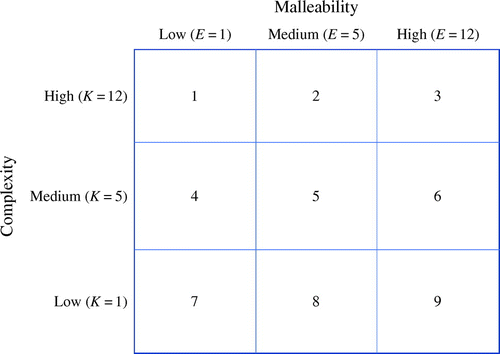
The endogenization of the landscape makes for a considerably larger parameter space, which we cannot explore exhaustively in a single paper. We thus pursue a targeted simulation plan, which the matrix in Figure 1 portrays. In essence, we compare the performance of searchers and shapers under different assumptions about the complexity (K) and malleability (E) of the landscape. More specifically, the nine boxes in Figure 1 correspond to the particular combinations of E and K that we use in our simulations. For each of them, we keep track of the performance of shapers and searchers over 1,000 periods, with an average of 20 repetitions.9 In each of these simulations, we analyze populations of 40 organizations—20 shapers and 20 searchers—with N = 12 and Z = 12. We begin with the percentage of searchers and shapers each set to 50%, and then explore whether varying the proportion of searchers and shapers in the population has implications for the relative performance of the two types of organizations. The simulation program is written in MATLAB. Given space constraints, we only show the analyses corresponding to the central row and column of this matrix, which are sufficient to display the key properties of the model.10
Note. Box numbers indicated above.
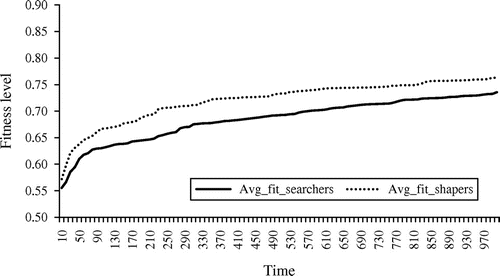
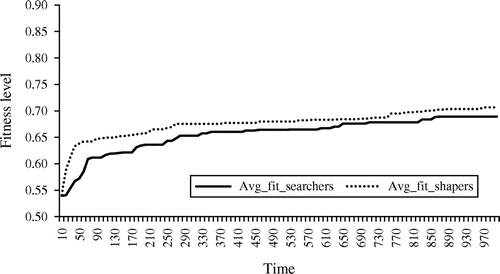
We first consider situations of medium malleability (E = 5), and observe what happens as the complexity of search policy choices changes. In other words, we first consider boxes 2, 5, and 8 of Figure 1. The results are displayed in Figures 2(a)–2(c).
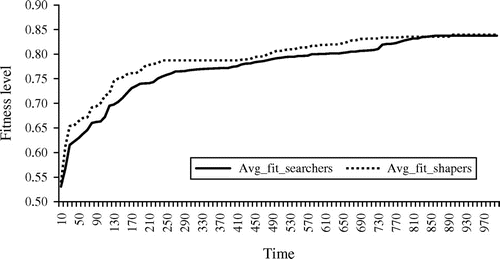
The first, perhaps not surprising, pattern that stands out in these analyses is that, in relatively malleable environments, shaping can be quite powerful. But there are important qualifications to this finding. Consider how the advantage of shapers changes as complexity increases. In relatively smooth landscapes of low complexity (e.g., K = 1 in box 8), shaping has only a transient advantage that disappears in the long run. The reason is simple. As is well-known, in the conventional NK model the power of local search or hill climbing is inversely related to the complexity of the landscape. In the extreme case of minimum K, the landscape has a single peak and no matter where the firm is on the landscape, local search always leads it to the global peak (Levinthal 1997). More generally, in NK models, low complexity means smooth surfaces—few peaks and large basins of attraction.11 These peaks might differ in height, but no matter where the agent is positioned on the landscape, hill climbing offers ample opportunities for improvement. The same logic applies here. In situations of relatively low complexity, shapers can bump searchers off a peak or its surroundings, thereby causing a possible decrease in their performance (if the firm was in a “good” basin of attraction, i.e., in the proximity of a high peak). But searchers can still catch up due to the smoothness of the landscape, and indeed they do so as shown in Figure 2(a). In this situation, the advantage of shaping is short-lived.
This picture changes in situations of intermediate complexity. As the landscape gets more rugged (e.g., K = 5 in box 5), local search loses some of its power: given myopia, local search often leads agents to get stuck on modest local peaks. Here, as Figure 2(b) shows, the advantage of shapers is more marked and it does not vanish in the long run: shaping allows firms to escape the myopia of local search by altering the surface of the landscape to their advantage (i.e., their locations on the landscape rise). At the same time, shaping actions can set other firms back. The peaks they were climbing might shrink or implode, and searchers facing such setbacks may find themselves stuck in less attractive basins of attraction. Indeed, the Japanese cotton spinning industry that we previously discussed provides a salient example of this. Prior to the introduction of new production technology, firms had incrementally searched unsuccessfully to improve the available technology. In addition, policy choices with respect to technology entailed at least moderate complexity; the evidence shows that changing the technology required changing other policy choices related to the method of production and hiring procedures (Braguinsky and Hounshell 2016). In this business context, the “shaping” firms not only introduced production technology that did not exist in Japan before; they also rendered obsolete the earlier production technology. As a result, the peak on which the firms using the older technology had been sitting collapsed. In this case, the efforts of the shapers had negative implications for the sustainability of other firms’ competitive advantage. Moreover, even though the laggard firms subsequently adopted the new technology (through search), they did not perform as well as the shapers (Braguinsky and Hounshell 2016), consistent with the advantage to shaping displayed in Figure 2(b).
As complexity increases further (Figure 2(c)), the landscape becomes more rugged, and the variance in height among peaks decreases. Here, shaping still plays the same role as it does in situations of intermediate complexity, but given the changed morphology of the landscape with greater similarity among the peaks, the magnitude of the effect of shaping is naturally more limited. After each iteration of shaping, searchers can begin to climbing toward peaks that are more similar in height to that occupied by a shaper.
We then considered situations of medium complexity (K = 5), and varied E (boxes 4, 5, and 6 of Figure 1). We already presented the results for the case of E = 5 and K = 5 (Figure 2(b)). In this case, shaping gives firms a substantial advantage, both in the short and long run. Figures 3(a) and 3(b) display, respectively, what happens with a significant decrease (3a) and increase (3b) in the malleability of the landscape relative to the case of E = 5 and K = 5. As Figure 3(a) shows, a decrease in malleability does not significantly decrease the performance gap between searchers and shapers. That is, even if shaping has a more modest impact on the payoff surface, firms that pursue shaping opportunities still enjoy handsome rewards. The effect is somewhat less marked than in the case of E = 5 and K = 5, especially in the short run, but it is clear and robust.
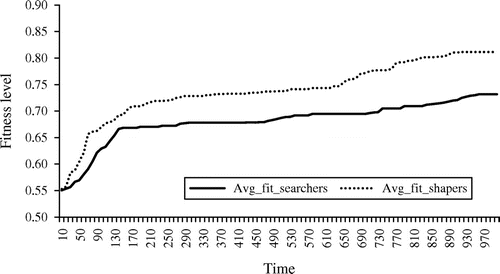
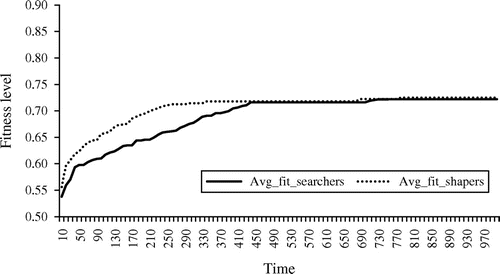
In contrast, Figure 3(b) shows that a significant increase in malleability results in only a short term advantage for shapers. In the long run, the performance of searchers and shapers is indistinguishable. What explains these results? The key is that as E increases, so does shaping activity. In extremely malleable contexts (those of Figure 3(b)), the payoff function is highly sensitive to changes in shaping dimensions—any shaping event can cause a significant transformation of the performance landscape. One of the byproducts of this fluidity is that firms will be motivated to revisit prior choices often: what was appropriate yesterday may no longer be appropriate today if another firm has radically reshaped the landscape in the interim—thereby bumping firms off peaks or surrounding areas in the landscape into potentially unattractive basins of attraction. Under these conditions, when shapers have a choice between searching and shaping, it is more likely that a shaping opportunity will improve their position relative to search. Thus, when malleability is high, firms have a strong incentive to shape and they are more likely to do so, including revisiting prior shaping choices. When many shapers exist in the population, this property can create a situation of “overshaping” in the sense that such frequent shaping can lead to long-run instability in performance. That is why, in the long run, extremely fluid contexts may fail to return clear winners—shapers and searchers are all overwhelmed by highly dynamic landscapes.
Taken together, these results clearly suggest a paradox of shaping. Malleability has clear benefits to shapers: it gives firms the possibility of transforming the business landscape to their advantage. But malleability also has a dark side: extreme malleability can lead to frequent shaping and high volatility of performance. Even though firms independently make rational choices to shape, they cannot sustain the performance advantages of shaping. Thus, what we might call “overshaping” results from the collective effect of individually rational choices.
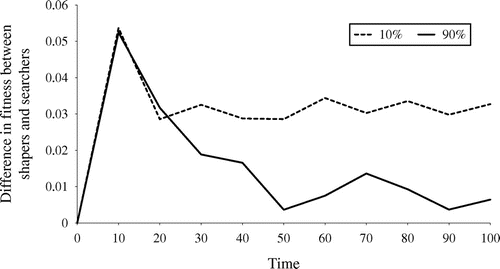
Given that the frequency of shaping affects the sustainability of performance advantages, it is possible that the proportion of firms that are shapers may play an important role in the results. That is, the higher the percentage of shapers in a given population, the higher the probability that a shaping event will occur at any given point in time (all else equal), which in turn may put other firms at a disadvantage. This should be true at any level of E. To test this conjecture, we performed additional analyses in which we varied the percentage of searchers and shapers. We performed these analyses for several combinations of E and K. Space constraints prevent us from showing them all, but Figure 4 displays prototypical results. The focus here is on the case of E = 5 and K = 1. The dashed curve displays, for 100 periods, the difference in fitness between shapers and searchers when shapers are 10% of the population; the solid curve displays the same difference, but when shapers are 90% of the population. As it is clear from these analyses, as the proportion of shapers increases, the advantages associated with shaping tend to decrease.
Discussion and Conclusion
The foregoing model, in which individual organizations can directly shape some characteristics of the business context in addition to undertaking search, incorporates several features of the conceptual framing presented earlier. Changes to the business landscape occur as firms endogenously modify the payoff structure via policy choices that they make. The model captures the concept of ecological inheritance from evolutionary biology, in which shaping actions by organizations in one period bequeath an altered selection environment—a business landscape—to organizations in the next period. In addition, shaping is path dependent in that current shaping actions depend on where a previous round of shaping left off.
At a minimum, the discipline imposed by the model offers a parsimonious intellectual structure for investigating the interplay of firm search and shaping of the business landscape. The idea that some choices that firms make will have a direct impact on all firms through alterations in the business environment, whereas other choices will not, is a simple one. However, as our analyses suggest, it has important consequences for our understanding of firm performance. In sum:
Shaping can have major direct effects on the performance of a shaper and its position on the business landscape, i.e., its competitive advantage.
As a corollary, shaping can also have direct implications for the competitive advantage of competitors. In addition to improving the focal firm’s position, shaping can directly undermine other firms’ positions on the landscape by affecting the bases of their competitive advantage.
Highly malleable business landscapes may hide subtle dangers for shapers because high malleability leads to more frequent shaping. Although firms may be individually rational when shaping the business context in an effort to improve their performance, their independent actions may collectively lead to overshaping and long-run instability in performance for all firms.
Overshaping is not independent of the number of firms of the shaping type in the population. Unless shaping involves joint action by a group of firms (a case that the model does not contemplate), ceteris paribus the fewer the number of shapers, the greater the benefits from shaping activity.
The sustainability of competitive advantage is likely to be highest in situations of moderate to high complexity (K) combined with a low to moderate number of dimensions available for shaping (E). Under these conditions, any advantage obtained through shaping is less likely to be undermined by shaping on the part of other firms and is more likely to be sustained due to complexity.
At a higher level of abstraction, what are the main insights that we can derive from our model and analyses? We emphasize three, as follows.
First, and most fundamentally, firm performance and sustainability of competitive advantage are not only a function of a firm’s search for “better ways of doing things,” which is the emphasis of much work on organizational adaptation, learning, and capabilities. They are also a function of the ability of firms to shape their business context. Further, although this is not a new idea, the prior analyses show that the interplay between shaping and searching is a complex one, and the outcome of shaping and searching may critically depend on contingencies captured by the model: the extent of interdependencies among policy choices involved in searching and shaping (K and E in the model), and the proportion of firms in a given population that pursue shaping strategies.
Second, past research has shown that firms can engage in distant search and use cognitive representations to jump to different areas of the landscape (Gavetti and Levinthal 2000). Cognition allows agents to spot promising distant areas of the landscape, thereby indicating a direction to pursue that is not confined to the firm’s immediate neighborhood. Shaping, at least as we have modeled it, has the same property of allowing firms to escape poor local peaks (in this case by changing the very nature of the business landscape). In this sense, there is an interesting parallel between the function of cognitive search and shaping—both can be viewed as strategic weapons that firms can use to counter myopic tendencies. However, in addition to and different from cognitive search, shaping can also change the payoffs of other firms. Stated differently, shaping can have direct implications for the sustainability of competitors’ competitive advantage, more so than cognitive search does. Although the acquisition of appropriate cognitive representations can permit firms to see promising new opportunities (Levinthal 2011, Helfat and Peteraf 2015, Gavetti and Menon 2016), foresight, in and of itself, may have only diffuse consequences for competitors: unless strategic games are strictly zero-sum, jumping to a new position on a landscape does not necessarily decrease the profitability (absolute or relative) of other positions. The same cannot be said for shaping, which can have more direct disruptive effects on other firms’ profits.
Third, although shaping can be a powerful strategic weapon, its effects on performance are highly sensitive to a series of conditions that our model begins to highlight and that, to our knowledge, prior research has yet to examine. A critical point here is that high malleability, while obviously appealing in that it enables firms to more extensively shape their business contexts, can attract overshaping that results in high volatility of performance and hard-to-sustain advantages. This paradox of shaping, as we have called it, clearly emerges from our analyses and we think it can explain many real-life situations. For instance, in the very early days of Internet portals, arguably a very malleable context, a slew of firms (e.g., Magellan, Galaxy, Architext, Global Network Navigator, and Infoseek) proactively attempted to shape different conceptions of the business and associated business models. All of them failed, except for Yahoo!. One of the few companies that refused to participate in this early shaping game was Lycos, which instead sought to remain flexible and nimble. When it became clear that the peak Yahoo! was working hard to create had some resilience, Lycos immediately jumped on it, a move that allowed it to prosper until it was acquired by Terra.
The initial model employed here can be readily modified to incorporate other aspects of shaping and search by individual firms. Certainly the model can be made more realistic on a number of dimensions. This very general and atheoretical specification of some key variables (especially E) generates intriguing results, and provides a solid analytical platform that future work can refine and bring in closer proximity to strategy problems.
Our hope is that this first step can draw interest, stimulate debate, and provide some useful theoretical foundations on which a larger research program can flourish. We have introduced a new modeling approach to the NK literature in strategy that can be used in a variety of ways to analyze the interplay between shaping and search. The conceptualization of shaping as a change in the payoff structure, as well as the findings of our initial modeling, can also inform empirical research. Such a research program may be of interest to scholars in several areas. Entrepreneurship is an obvious area of application, as research has documented numerous efforts by firms to shape their business contexts early in a nascent industry. Ecosystems, including specific types of ecosystems such as multisided platforms, along with value-based strategy are another potential area of application for studying how firms shape their business environments and the interplay with search. In addition, dynamic capabilities are likely to be important for the study of shaping, since dynamic capabilities are often integral to efforts to shape the business context. The literature on disruptive change is also relevant, given that disruption is often the goal of shaping. Behavioral strategy has a role to play as well; firms’ cognitive representations and mental processes surely affect how firms make decisions to shape as well as search their business contexts. As noted earlier, social processes of knowledge transmission and collective action are likely to affect both shaping and search. These are but a few of the avenues for future research on shaping, search, and the quest for superior performance.
This paper benefited from comments received at the Stanford Conference on Evolutionary Perspectives on Strategy, the MOC-TIM Conference at ETH Zurich, the TOM conference at MIT, during faculty seminars at Bocconi University, Boston University, Columbia University, Duke University, INSEAD, and the University of Chicago, and from the editors, Dan Levinthal and Bill Barnett. A special thank you goes to Joe Porac for introducing the authors to the literature on niche construction.
1 When he unveiled the iPhone 4, Steve Jobs (2010) compared it to the iconic Leica M camera, a symbol of design perfection and craftsmanship: “You’ve gotta see this thing in person. This is beyond a doubt the most precise thing, one of the most beautiful things we’ve ever made: glass on the front and rear, and stainless steel running around, and the precision of which this is made is beyond any consumer product we’ve seen. It’s closest kin is like a beautiful old Leica camera.”
2 We note that purposeful changes may not always be fitness-enhancing for the firms that introduce them. For example, if firms have imperfect information, their choices may unexpectedly harm rather than help the firms.
3 From this perspective, a Red Queen lens on competition (Barnett and Hansen 1996) might be interpreted either as search or shaping. In Red Queen competition, a firm responds to its competitors by seeking ways to improve performance, which results in learning that makes the firm a stronger competitor, to which competitors then respond through learning and the process continues. Whether this constitutes shaping depends on whether the payoff structure for all firms changes each time that a firm learns.
4 Players often use free-form bargaining to obtain payoffs in these games, but the range of payoffs to different courses of action within which bargaining occurs is exogenously-determined, and in some instances the payoff structure is such that little or no bargaining is needed to allocate payoffs (see, e.g., Brandenburger and Stuart 2007).
5 Relatively recent models of interacting firms using a tangled nature simulation model rather than an agent-based model also incorporate changes in the payoff structure (which determines firm survival) through exogenous shifts (Arthur et al. 2017). Other theoretical models of search in the evolutionary economics tradition include that of Denrell et al. (2003), who analyzed the discovery of unexploited opportunities for the use of firms’ existing resources in the external environment. Again, the payoffs to discovery are set exogenously.
6 We use the convention of assuming that K is at least equal to 1 (the fitness contribution of the bit gi depends at least on its own value) and at most equal to N (the fitness contribution of a single bit depends on the value taken by all N bits).
7 This distinction between searchers and shapers is intended to reflect distinctions in the real world where some firms never attempt to shape the business landscape, whereas other firms do. Factors outside of the model, such as mental representations in which some firms never discern possible payoffs to shaping, could explain why some firms only or mainly search. The management literature contains many examples of searchers blindsided by shapers who have disrupted an industry.
8 Note that to keep the analysis as simple as possible, we do not introduce a mortality mechanism—a positive probability of exit as a function of relative fitness. Adding a mortality mechanism to the analysis does not change the substance of the results reported here.
9 The very large combinatorial parameter space made the simulations extremely time consuming, so we did not perform a larger number of repetitions.
10 The interested reader can obtain all of these simulations from the authors, in addition to a series of robustness checks and other preliminary analyses that we conducted to test the properties of the model.
11 Basins of attraction are defined as the totality of points (i.e., areas of the landscape) from which hill-climbing (local search) leads to a peak.
References
- (2017) Ecosystem as structure: An actionable construct for strategy. J. Management 43(1):39–58.Crossref, Google Scholar
- (2016) Exaptation as source of creativity, innovation, and diversity: Introduction to the special section. Indust. Corporate Change 25(1):115–131.Crossref, Google Scholar
- (2017) The tangled nature model for organizational ecology. Computational Math. Organ. Theory 23(1):1–31.Crossref, Google Scholar
- (1996) The Red Queen in organizational evolution. Strategic Management J. 17(S1):139–157.Crossref, Google Scholar
- (2015) Knowledge diffusion and industry growth: The case of Japan’s early cotton spinning industry. Indust. Corporate Change 24(4):769–790.Crossref, Google Scholar
- (2016) History and nanoeconomics in strategy and industry evolution research: Lessons from the Meiji-era Japanese cotton spinning industry. Strategic Management J. 37(1):45–65.Crossref, Google Scholar
- (2007) Biform games. Management Sci. 53(4):537–549.Link, Google Scholar
- (2017) Categories and competition. Strategic Management J. 38(1):64–92.Crossref, Google Scholar
- (2004) The extended phenotype—But not too extended. A reply to Laland, Turner, and Jablonka. Biol. Philos. 19(3):377–396.Crossref, Google Scholar
- (2003) The economics of strategic opportunity. Strategic Management J. 24(10):977–990.Crossref, Google Scholar
- (1995) Learning, market selection and the evolution of industrial structures. Small Bus. Econom. 7(6):411–436.Crossref, Google Scholar
- (1991) Coevolution: Genes, Culture, and Human Diversity (Stanford University Press, Stanford, CA).Crossref, Google Scholar
- (2014) Economic opportunity and evolution: Beyond landscapes and bounded rationality. Strategic Entrepreneurship J. 8(4):269–282.Crossref, Google Scholar
- (2009) Performance differentials between diversifying entrants and entrepreneurial start-ups: A complexity approach. Acad. Management Rev. 34(2):228–252.Crossref, Google Scholar
- (2000) Looking forward and looking backward: Cognitive and experiential search. Admin. Sci. Quart. 45(1):113–137.Crossref, Google Scholar
- (2004) The strategy field from the perspective of Management Science: Divergent strands and possible integration. Management Sci. 50(10):1309–1318.Link, Google Scholar
- (2016) Evolution cum agency: Toward a model of strategic foresight. Strategy Sci. 1(3):207–233.Link, Google Scholar
- (2005) Strategy making in novel and complex worlds: The power of analogy. Strategic Management J. 26(8):691–712.Crossref, Google Scholar
- (2015) Managerial cognitive capabilities and the microfoundations of dynamic capabilities. Strategic Management J. 36(6):831–850.Crossref, Google Scholar
- (2006) Benefiting from innovation: Value creation, value appropriation and the role of industry architectures. Res. Policy 35(8):1200–1221.Crossref, Google Scholar
- (2010) Steve Jobs introduces iPhone & Face Time - WWDC (2010).
Worldwide Developer Conf. ,San Francisco, CA .Google Scholar - (2002) Something old, something new: A longitudinal study of search behaviour and new product introduction. Acad. Management J. 45(6):1183–1194.Crossref, Google Scholar
- (1993) The Origins of Order: Self-Organization and Selection in Evolution (Oxford University Press, Oxford, UK).Crossref, Google Scholar
- (1995) At Home in the Universe: The Search for Laws of Self-Organization and Complexity (Oxford University Press, Oxford, UK).Google Scholar
- (1996) Entry, exit, growth, and innovation over the product life cycle. Amer. Econom. Rev. 86(3):562–583.Google Scholar
- (2005) Entry by spinoffs. Management Sci. 51(8):1291–1306.Link, Google Scholar
- (1991) The politics of government decision-making: A theory of regulatory capture. Quart. J. Econom. 106(4):1089–1127.Crossref, Google Scholar
- (2004) Extending the extended phenotype. Biol. Philos. 19(3):313–325.Crossref, Google Scholar
- (2000) Niche construction, biological evolution, and cultural change. Behavioral Brain Sci. 23(1):131–175.Crossref, Google Scholar
- (2003) Strategic capabilities in emerging fields: Navigating ambiguity, leveraging social capital, and creating identity in Silicon Alley. Helfat CE, ed. The SMS Blackwell Handbook of Organizational Capabilities (Blackwell Publishing, Malden, MA), 110–118.Google Scholar
- (2006) Interdependency, competition, and the distribution of firm and industry profits. Management Sci. 52(5):757–772.Link, Google Scholar
- (2007) Interdependency, competition, and industry dynamics. Management Sci. 53(4):599–615.Link, Google Scholar
- (1997) Adaptation on rugged landscapes. Management Sci. 43(7):934–950.Link, Google Scholar
- (2011) A behavioural approach to strategy—What’s the alternative? Strategic Management J. 32(13):1517–1523.Crossref, Google Scholar
- (1999) Landscape design: Designing for local action in complex worlds. Organ. Sci. 10(3):342–357.Link, Google Scholar
- (2008) Niche construction: The process of opportunity creation in the environment. Strategic Entrepreneurship J. 2(4):269–283.Crossref, Google Scholar
- (2002) Innovation and market structure in the dynamics of the pharmaceutical industry and biotechnology: Towards a history-friendly model. Indust. Corporate Change 11(4):667–703.Crossref, Google Scholar
- (1999) “History-friendly” models of industry evolution: The computer industry. Indust. Corporate Change 8(1):3–40.Crossref, Google Scholar
- (2008) Vertical integration and disintegration of computer firms: A history-friendly model of the coevolution of the computer and semiconductor industries. Indust. Corporate Change 17(2):197–231.Crossref, Google Scholar
- (2001) The community dynamics of entrepreneurship: The birth of the American film industry, 1895–1929. J. Bus. Venturing 16(3):209–233.Crossref, Google Scholar
- (1965) Cramming more components onto integrated circuits. Electronics 38(8):114–117.Google Scholar
- (1975) Progress in digital integrated electronics.
Tech. Digest. Internat. Electron Devices Meeting (IEEE, New York), 11–13.Google Scholar - (1982) An Evolutionary Theory of Economic Change (Belknap Press of Harvard University Press, Cambridge, MA).Google Scholar
- (2003) Niche Construction: The Neglected Process in Evolution (Princeton University Press, Princeton, NJ).Google Scholar
- (2009) Origin of alliance portfolios: Entrepreneurs, network strategies, and firm performance. Acad. Management J. 52(2):246–279.Crossref, Google Scholar
- (1997) Getting to know you: A theory of strategic group identity. Strategic Management J. 18(Special Issue):165–186.Crossref, Google Scholar
- (1995) Rivalry and the industry model of Scottish knitwear producers. Admin. Sci. Quart. 40(2):203–227.Crossref, Google Scholar
- (2006) Code breaking: How entrepreneurs exploit cultural logics to generate institutional change. Res. Organ. Behav. 27:269–304.Crossref, Google Scholar
- (2000) Imitation of complex strategies. Management Sci. 46(6):824–844.Link, Google Scholar
- (2003) Balancing search and stability: Interdependencies among elements of organizational design. Management Sci. 49(3):290–311.Link, Google Scholar
- (2001) Beyond local search: Boundary-spanning, exploration, and impact in the optical disk industry. Strategic Management J. 22(4):287–306.Crossref, Google Scholar
- (1994). Fundamental issues in strategy. Rumelt RP, Schendel DE, Teece DJ, eds. Fundamental Issues in Strategy: A Research Agenda (Harvard Business School Press, Boston), 9–47.Google Scholar
- (2003) Temporarily divide to conquer: Centralized, decentralized, and reintegrated organizational approaches to exploration and adaptation. Organ. Sci. 14(6):650–669.Link, Google Scholar
- (2005) How niche construction can guide coevolution. Capcarrere MS, Freitas AA, Bentley PJ, Johnson CG, Timmis J, eds. Adv. Artificial Life: 8th Euro. Conf., ECAL 2005. Canterbury, UK (Springer-Verlag, Berlin), 373–382.Crossref, Google Scholar
- (2007) Explicating dynamic capabilities: The nature and microfoundations of (sustainable) enterprise performance. Strategic Management J. 28(13):1319–1350.Crossref, Google Scholar
Giovanni Gavetti is Associate Professor of Business Administration at the Tuck School of Business at Dartmouth, which he joined in 2012. Previously, from 2000 to 2012, he was an associate professor at Harvard Business School. He holds a PhD in management from the Wharton School at the University of Pennsylvania and a BA in economics from Bocconi University. Professor Gavetti’s research focuses on the cognitive foundations of strategic leadership. His teaching and consulting have focused on a broad range of strategy topics such as strategic innovation and inertia, behavioral strategy, competitive strategy, and strategy process. He teaches Tuck’s core strategy course Competitive and Corporate Strategy.
Constance E. Helfat is the J. Brian Quinn Professor in Technology and Strategy at the Tuck School of Business at Dartmouth. Her research focuses on firm capabilities, technological innovation, and strategic change. She has also conducted research on corporate executives, including women executives. Professor Helfat is a Fellow of the Strategic Management Society, and received the Distinguished Scholar Award from the Technology and Innovation Management Division of the Academy of Management. Professor Helfat received her undergraduate degree from the University of California, Berkeley and her PhD from Yale University.
Luigi Marengo is Professor of Economics and director of the Department of Business and Management at LUISS University in Rome. His main research areas include organizational studies, economics of innovation and technological change, industrial economics, and evolutionary theory. He is widely published, and managing editor of the journal Structural Change and Economic Dynamics. He graduated from the University of Torino (Italy) and received his PhD from the Science Policy Research Unit (SPRU), Sussex University, UK.