Collective Action Problems and Resource Allocation During Market Formation
Abstract
Collective action is critical for successful market formation. However, relatively little is known about how and under what conditions actors overcome collective action problems to successfully form new markets. Using the benefits of simulation methods, we uncover how collective action problems result from actor resource allocation decisions interacting with each other and how the severity of these problems depends on central market- and actor-related characteristics. Specifically, we show that collective action problems occur when actors undervalue the benefits of market-oriented resource allocation and when actors contribute resources that are imperfectly substitutable. Furthermore, we show that collective action problems occur when actors are embedded in networks with others sharing a similar role in market formation. Collectively, our findings contribute new insights to organization theory regarding collective action and market formation and to strategy on value creation and strategic decision making regarding resource allocation.
Introduction
New market formation is critical for innovation, growth, and societal progress, and scholars increasingly recognize the central role of collective action in this process (Hannah and Eisenhardt 2018, Lee et al. 2018). Collective action can be defined as any action aimed at the construction of some collective good (Marwell and Oliver 1993). Yet, although much is known about collective action, less is known about the nature of collective action problems that arise during market formation. Collective action problems occur when actors refrain from allocating resources that are necessary for the construction of a collective good, even when a majority has an interest in its development. Collective action problems can be mitigated when actors are willing to collaborate and when they have confidence that others will reciprocate and repeat such actions on similar principles (Ostrom 1998). However, during early market formation, achieving such reciprocity is challenging because actors often do not know each other, may fulfill distinct roles, and cannot anticipate others’ efforts.
Although work in organization theory acknowledges that collective action is critical for successful market emergence (Rao et al. 2000, Lounsbury et al. 2003, Sine and Lee 2009), much of this literature either takes for granted the existence of a shared collective rationale for action (Carroll and Swaminathan 2000, Lounsbury et al. 2003, Greve et al. 2006, Wry et al. 2011) or focuses on the role of social movements in facilitating market formation (Hiatt et al. 2009, Sine and Lee 2009, Pacheco et al. 2014, Durand and Georgallis 2018). As a result, little is known about how market actors use their resources to overcome both subtle and significant collective action problems related to market formation (but see Van De Ven 1993, Lee et al. 2018). Furthermore, given that the bulk of these studies are idiosyncratic case studies of successful instances of market formation, they are burdened with selection bias and lack the generalizability necessary to articulate a broader range of collective action problems associated with market formation. Consequently, questions regarding how resource allocation decisions by independently operating actors impact these problems remain unanswered.
The strategy literature, by contrast, deliberately focuses on resource allocation. It highlights the characteristics of strategic resources (i.e., valuable, rare, inimitable, or nonsubstitutable) (Wernerfelt 1984, Barney 1991, Peteraf 1993) and how actors can deploy and leverage these to gain competitive advantage (Bingham and Eisenhardt 2008). Although this literature makes important contributions to understanding resource allocation, the focus is primarily on firms operating in existing markets and therefore, assumes the existence of established and recognized markets, competitive rivals, consumer demand, and articulated strategies. Such assumptions pervade extant strategic management scholarship, with the environment of a firm generally conceptualized as “an exogenous selection regime that determines the profitability of firms’ strategic choices, and penalizes the least fit organizations” (Gavetti et al. 2017, p. 195). Consequently, most of the extant strategic management literature conceptualizes firm action as responsive to environmental change rather than precipitating it.
A few scholars address this gap by showing how individual firms may shape new markets by allocating resources to particular activities that define the competitive landscape or establish industry boundaries (Santos and Eisenhardt 2009, Gavetti et al. 2017, Pontikes 2018). However, this literature largely glosses over the fact that the successful formation of many markets tends to require resource contributions beyond those of a single actor. Such omission is noteworthy because the absence of collective action negatively impacts not only individual actors but also, market formation prospects. For example, the development of a global market for mobile payments required multiple and distinct contributions from many actors. Given disagreement over what market infrastructure to build and how to build it, critical players withheld resource allocation, despite the existence of readily usable technology and demonstrated consumer interest. As a result, the players fell into a “vicious cycle of resource allocation deferment” (Ozcan and Santos 2015, p. 1487), which led to the failure of a global mobile payments market.
Taken together, organization theory and strategy literatures suggest that, in the context of new market formation, resource allocation on the part of actors plays a powerful yet understudied role. Specifically, questions about how actors’ focus on allocating resources to the development of their own firm and/or to the development of market infrastructure1 impacts market formation are unanswered. Furthermore, the conditions that shape these resource allocation decisions are not well understood. For example, what impact does the relative value of resources that contribute to developing market infrastructure (versus one’s firm) have on resource allocation decisions and collective outcomes? How should actors allocate resources when their resources are more or less substitutable for those of others? How does heterogeneity in resource allocations affect these outcomes? How does a firm’s ability to anticipate the resource allocations of others impact both individual and collective resource allocation levels? To what extent does competitive pressure affect early stages of market formation? Such questions are important both practically and theoretically.
From a practical perspective, if specific resource allocation decisions or market- and actor-related characteristics facilitate market formation, whereas others prevent it, our findings have immediate implications for executives and entrepreneurs operating in nascent industries. From a theoretical perspective, a lack of understanding about collective action problems is consequential because the concept of collective action is central in organization studies and frequently invoked but without detailed understanding of how it is achieved and what might prevent its realization. Overall, research on collective action problems during market formation is both critical and critically underdeveloped. Our core contribution is to establish collective action problems as a useful construct and focus in market formation research.
In this paper, we rely on simulation methods because they are particularly useful when some theory exists on the subject but where the underlying logic and internal validity of the theory are limited (Davis et al. 2009). Simulation is also particularly well suited for a phenomenon, like market formation, that may be nonlinear (Rudolph and Repenning 2002) and when theoretical refinement requires consideration of interactions between constructs (Zott 2003). Given that theory on collective action problems in market formation exists but is underdeveloped, further elaboration of its assumptions through such experimentation is fruitful. Finally, simulation is particularly helpful for research questions that entail longitudinal process phenomena like ours, where empirical data over an extended period of time may be difficult to gather and assess (Davis et al. 2007). For example, simulation enables us to more precisely explore the impact of resource characteristics and competitive pressures on collective action thresholds that may be difficult to assess in actual environments.
The results from our study contribute to the literature in four ways. First, we show that, in new markets where formation depends heavily on the building of market infrastructure, actors tend to allocate private-oriented resources rather than market-oriented resources. This bias toward investing in firm capabilities instead of market infrastructure leads to collective action problems and runs counter to research in strategy on new markets that advocates building private resources to get big fast (Schilling 2002, Santos and Eisenhardt 2009). Second, we find that, when resources are less substitutable, there is greater likelihood of collective action problems. This is an important finding because prevailing theory on collective action assumes that contributions across actors are highly substitutable, yet many new markets require resources that exhibit low substitutability. Third, our results suggest a nuanced impact of resource heterogeneity on collective action problems. Although existing literature maintains that resource heterogeneity reduces collective action problems, our results show that, when actors make allocation decisions about resources that involve low substitutability, resource heterogeneity actually increases (rather than reduces) collective action problems. Fourth, our simulation study opens the black box of how actor decision making and perceptions shape collective action problems in new market settings. Specifically, we examine the role of actors’ anticipation of others’ contributions and of competitive pressure on collective action. Our findings also advance existing theory by showing that, when actors are embedded in networks with others occupying the same role in the new market, their anticipation of others’ allocations may exacerbate collective action problems. Collectively, the results from our study have important implications for both organization theory and strategy.
Collective Action Problems During Market Formation
During market formation, actors face significant supply-side and demand-side uncertainty regarding their individual prospects as well as those of the market as a whole (Agarwal et al. 2017, Lee et al. 2018). Actors in seeking stable, repeated, and valuable exchange allocate resources in new markets. In turn, if their resource allocation enables them to create valuable outputs and capture value, this market formation uncertainty may decrease. Although actors generally focus on their own prospects and therefore, seek to develop their own private capabilities in the new market, actors’ outcomes also depend on the presence of nonprivate, market-related infrastructure, such as agreed-on categories, legitimacy of offerings, product prototypes, norms of exchange, property rights, or technology standards that guide and stabilize transactions and enable ongoing investment (Lee et al. 2018). Many new markets reflect situations in which market infrastructure is lacking or ineffective in mitigating market formation uncertainty (Santos and Eisenhardt 2009). Market infrastructure is critical for the ability of actors to extract value from their private capabilities, and it is, therefore, crucial for successful market formation. However, it is rare that market infrastructure results from the efforts of a single actor. It typically requires resource contributions from different actors who engage in intentional,2 market-oriented (rather than private-oriented) efforts.
Because successful market infrastructure development generally requires collective action and because it benefits most actors (although to different degrees), we conceptualize market infrastructure as a collective good. The decisions of whether and how to allocate market-oriented resources are, therefore, tied to collective action problems. During market formation, uncertainty about whether sufficient resources will accrue for the market to form creates a potential startup collective action problem (Marwell and Oliver 1993). This collective action problem occurs when actors that face uncertainty about the resources required for their market to succeed decide to withhold contributions because with an underdeveloped collective good, they do not perceive that their individual efforts create value (Marwell and Oliver 1993).
Figure 1 shows our conceptual model of collective action during market formation and constitutes the basis for our simulation. The core of the model consists of two feedback loops involving resource allocation (Figure 1, left side), value creation (Figure 1, right side), and perceived benefits (Figure 1, top). Resource allocation involves decisions about private- and market-oriented resource allocations. Private-oriented resources combine with market-oriented resources to create actor-specific value. The degree of value that is created influences actors’ perception of the benefits from allocating resources and informs their subsequent resource allocation decisions. During market formation, these feedback loops can be self-reinforcing. They may work in a virtuous direction that leads to market formation or in a vicious one that results in the market failing to form. For a market to form, collective efforts must accumulate in a way that the market becomes sufficiently attractive so that actors will contribute more resources (both private and market oriented). However, if these feedback loops operate in a vicious direction, then resource allocations remain low or dwindle to the point that the market fails to form. This means that resources must surpass a collective action threshold (Zimmerman and Zeitz 2002, Soublière and Gehman 2019) for the market to form (illustrated in Figure 1, right panel). In other words, the collective action threshold is the level of resources above which actors perceive it beneficial to continue to allocate additional resources and that sustains the ongoing functioning of the market. If this level of resources is not achieved, then the market fails to form. Collective action problems during market formation are more likely to arise when individual actors perceive limited benefits from developing early market infrastructure. Because actors also need to capture private value, their decisions revolve not only around how much to allocate but also, around what share of resources to allocate privately versus to the market. These decisions about allocating private-oriented (versus market-oriented) resources have a large effect on the collective action threshold.

Although the allocation of resources (and how those allocations are split between private- and market-oriented efforts) is critical for successful market formation, its efficacy in facilitating market formation is conditional on the presence of other market- and actor-related characteristics that influence collective action dynamics (Lee et al. 2018). We explain each in turn.
Market-Related Characteristics
Market-related characteristics influence collective action problems. Extant literature (Marwell and Oliver 1993, Gurses and Ozcan 2015, Lee et al. 2018, Soublière and Gehman 2019) suggests that returns to contributions, degree of collective benefits, and degree of resource substitutability influence value creation, and they may be particularly important in shaping collective action in new markets (Figure 1, market-related characteristics).
Returns to Contributions
Collective action problems depend on the returns to contributions during early market formation (Marwell and Oliver 1993). Many efforts in new market settings provide few early returns to contributions, with returns from contributions increasing as additional resources are contributed. This holds true for both private-oriented efforts (e.g., early-stage product research and development) and market-oriented efforts (e.g., legitimation of a new product category). However, after they begin to accumulate, subsequent resources help overcome initial resistance in new markets because they make it easier and less risky for all actors to generate working products or to build legitimacy. Such early market formation situations characterized by low but increasing returns to contributions give rise to startup collective action problems because they increase the level of resources beyond which actors perceive allocations to be beneficial (Marwell and Oliver 1993). The presence of increasing returns suggests that a collective action problem can be overcome after contributions accumulate and returns to individual contributions are sufficiently high that actors believe that the market will succeed and become more eager to allocate additional resources.
Degree of Collective Benefits
How and how much one’s resource allocations benefit others influence collective action problems (Marwell and Oliver 1993). The nature of collective goods means that benefits from resources are shared across actors. In contrast to more commonly cited instances of collective action, such as strikes and social movement mobilization, market formation settings are more complex. In market formation settings, although spillovers are important, actors also allocate resources that have private benefits. In fact, market actors often focus on such private resources to address the well-known collective action problem of freeriding. Freeriding occurs when the benefits of contributing actors spill over to noncontributing actors (Olson 1965). An actor may mitigate freeriding from spillovers by obtaining intellectual property protection (Arrow 1962), developing tacit knowledge (Argote and Ingram 2000), leveraging scale economies from assets (Teece 1986), or achieving network effects (Katz and Shapiro 1994). However, given the uncertainties that actors face during early market formation, these mitigating actions may be premature because value creation possibilities are often still ambiguous and therefore, less knowable. As a result, spillovers may be especially prevalent during early market formation (Lee et al. 2018, Soublière and Gehman 2019). We refer to these spillovers from actors’ efforts as the degree of collective benefits in a market. The degree of collective benefits is a double-edged sword. High collective benefits imply that multiple actors can contribute to and benefit from building market infrastructure by focusing on market-oriented contributions. However, market-oriented contributions may also suppress the ability of individual actors to capture private value. Consequently, actors may be less likely to allocate resources.
Degree of Resource Substitutability
Another important market-related characteristic affecting collective action problems is the substitutability of actors’ contributions. High substitutability means that neither the particular combination nor the sequence of contributions are critical for market formation. Research on collective action assumes that contributions to collective action efforts are perfectly substitutable (Granovetter 1978, Marwell and Oliver 1993). For situations such as strikes and social movements, this may be true, and in some market formation contexts, substitutability may be high. For example, sustained advertising and education efforts by any actor can increase the legitimacy and awareness of a new product category. However, assumptions of perfect substitutability are generally not realistic for market formation where contributions can play a very specific role or are sequence dependent (Monge et al. 1998, Gurses and Ozcan 2015, Lee et al. 2018). For example, market formation may require multiple distinct and ordered contributions from actors to organize a market (Garud and Karnoe 2003, Weber et al. 2008), to induce compatibility between distinct products within a value chain (David and Greenstein 1990), to mobilize actors to support a common technology (Garud et al. 2002), or to jointly invest in complementary technologies (Adner and Kapoor 2010, Moeen and Agarwal 2017). When market formation requires actors to make distinct contributions, actors must coordinate to ensure that contributions align. Coordination costs may be higher, whereas perceived benefits from efforts may be lower in cases where there are strong needs for alignment across different contributions to market infrastructure (Ansari and Garud 2009).
Actor-Related Characteristics
In addition to market-related characteristics, actor-related characteristics influence collective action problems during market formation. The literature (Marwell and Oliver 1993, Hannah and Eisenhardt 2018, Lee et al. 2018) suggests that actor heterogeneity, actor ability to anticipate resource allocation by others, and competitive pressure influence perceived benefits and resource allocation, and therefore, they influence collective action thresholds (see Figure 1, upper left).
Actor Heterogeneity
Actor heterogeneity is manifest in individually held attributes. Such heterogeneity can exist in actors’ interests or motivation (Georgallis and Lee 2020) or in their resource endowments (Marwell and Oliver 1993). Actor heterogeneity influences collective action problems because it creates unevenness in the benefit that actors perceive in committing additional resources (Olson 1965, Granovetter 1978, Oliver et al. 1985, Marwell and Oliver 1993). This, in turn, alters the accumulation of total resources and through that, collective action thresholds. For example, initial allocations made by a few early actors for different reasons (e.g., intrinsic interest, privileged information, or access to capital) may reduce the risk for other actors because early actors lower the thresholds for later actors to participate. For example, pioneering organic producers made significant investments into early market infrastructure in the organic food market by developing certification standards and procedures with little initial return. This, in turn, motivated more risk-averse actors to enter the market (Lee et al. 2017). As more actors participate, a self-reinforcing cycle is set in motion. The absence of such heterogeneity can stall collective action and prevent markets from forming (Granovetter 1978).
Actor Ability to Anticipate
Market formation is affected by actors’ ability to anticipate the effect of others’ efforts. Because future allocations by other actors affect market infrastructure, they also influence each actor’s future gains (Beckert 1996). Considering the extent to which actors may anticipate the actions of others is important. If actors cannot determine whether others will allocate resources, they will be less likely to allocate those themselves, leading to a collective action problem. However, actors rarely have the capacity to scan the entire landscape and learn about the efforts and actions of all actors. Actors’ relational ties with other actors participating in the market can mitigate this uncertainty regarding the potential contributions of others. Ties serve as conduits for learning about others’ identities and intentions and therefore, about their likely future contributions (Coleman 1990, Ibarra et al. 2005). Thus, the ability of actors to anticipate depends on the social environment in which they operate and is strengthened when they have previous ties to and experience with one another (Van De Ven 1993). Consequently, network ties shape anticipation, which impacts collective action problems.
Competitive Pressure
Competition during market formation is often overlooked in strategy research because rivals are not always identifiable, consumer demand is limited, and producers often work together to legitimate a new market (Carroll and Swaminathan 2000, Navis and Glynn 2010). Nevertheless, competition may shape collective action problems during market formation by inducing market participants to take actions to prevent others from benefiting from the contributions that they make to develop the market (Helfat and Lieberman 2002, Santos and Eisenhardt 2009), such as obtaining intellectual property protection to exclude others from appropriating value from their efforts (Arrow 1962, Peteraf 1993). Although such pressure leads to increased resource allocations among competing actors, in early markets, such exclusionary actions in response to perceived competitive pressure may partially or severely limit contributions to market infrastructure, thus reducing value creation. Likewise, competition between actors fulfilling similar roles implies that actors can capture less value from the resources that they allocate. Both reduce perceived benefits from future resource allocations and may, therefore, increase collective action problems.
A Model of Collective Action Problems During Market Formation
To formally analyze collective action problems in market formation, we develop a computational model. We rely on the system dynamics simulation methodology (i.e., using differential equation modeling and continuous time simulation) because this approach is especially helpful for examining questions, like our question, that involve complex causality and timing (Davis et al. 2007). Furthermore, system dynamics is well suited for modeling behavioral decision making and for exploring the conditions that lead to tipping points, such as collective action thresholds.
In our model, a pool of N actors enters the market at time 0, with each actor coming equipped with initial resources (reflecting one’s initial interest/motivation/endowments). Actors then make ongoing resource allocation decisions by assessing how additional resources impact their ability to create value. If actors perceive that allocating additional resources yields positive benefits, they will do so. By allocating additional resources, individual actors may also create general value for others actors because some of their resources, within one of Mresource types (or actor roles) also become embodied in the market infrastructure.
We model collective action problems in line with the conceptual description as a collective action threshold, the minimum amount of resources that need to have accumulated before actors perceive it to be beneficial to allocate more resources. In other words, after the collective action threshold is reached, feedback loops 1 and 2 in Figure 1 work in a virtuous way.
We now operationalize this process, which is depicted at high level in Figure 1, starting with resource allocation (Figure 1, left side) and rotating counterclockwise to value creation (Figure 1, right side) and then, to perceived benefits (Figure 1, top). We describe the full working of the model here. In addition, the online appendix contains a table listing all equations in the same logical order of our discussion as well as a figure visualizing how all model variables relate to each other (see Online Appendix A.I.1).
Resource Allocation
The left side of Figure 1 depicts resource allocations that actors make as they try to create value for themselves. Our model variables and their relations capture how “private-oriented” or “market-oriented” allocations are based on actors’ perceived benefit of allocating additional resources. Because existing resources cannot be changed immediately, resources are modeled as a stock variable. Furthermore, given market formation uncertainty, actors allocate resources incrementally using an anchoring and adjustment heuristic. The current level of resources forms the anchor, which is then adjusted in response to perceived benefits. Key parameters that affect resource allocation outcomes are the percentage of privately oriented resources (versus market oriented) as well as actor heterogeneity in initial resources.
Formally, at any point in time t, actor adjusts resources , , to a desired amount , over adjustment time :
Finally, our modeling of resource allocation incorporates actors’ initial interests, motivation, and/or resource endowments (resources at time 0). Actors’ initial resources across private- or market-oriented allocations equal a share of their total initial resources, with shares indicated by parameter , in the same way as shown. Actors’ total initial resources are set exogenously within the simulation and drawn from a left-truncated normal distribution with average initial resources and variance , . Here, parameter represents heterogeneity across actors’ initial resources.
Value Creation
The right side of Figure 1 depicts value creation. Consistent with other collective action models (Granovetter 1978, Marwell and Oliver 1993), we use a production function to transform actors’ resources into value-creating outputs. In the case of market formation, the inputs into the production function involve both private- and market-oriented resources from different actors. Although privately oriented resources do not spill over to other actors, market-oriented resources do spill over because their outputs contribute to market infrastructure. Market infrastructure, in turn, contributes value for each actor. The three market-related characteristics (returns to contributions, degree of collective benefits, and degree of resource substitutability) shape value creation outcomes.
The value production function, which results in value creation for actors, has two resource-related inputs: private resource outputs that result from one’s own private resources and market infrastructure that results from market-oriented allocations that spill over across actors. Value creation forms a nonlinear sum of these two inputs conditioned by two market-related characteristics. First, the degree to which market-oriented resources are more or less valuable than one’s private resources is captured by the degree of collective benefits, parameter Second, the importance of different types of resources for value creation is captured by the degree of resource substitutability parameter . Then, with being the unit value of resource outputs, value creation equals
The private resource outputs scale with an actor’s private-oriented resources depending on the returns to contributions exponent (the final market-related characteristic affecting value creation). Thus,
A value of the returns to contributions parameter greater than one implies that the higher the current resources, the more valuable subsequent resource allocations become.
The derivation of market infrastructure involves several steps. First, market infrastructure aggregates market-related resource outputs, , across M different resource types. Because they are potentially imperfectly substitutable, we formalize this like Equation (3): . Furthermore, similar to private-oriented resourceoutputs (Equation (4)), market-oriented outputs scale with total market-oriented resources depending on the returns to contributions exponent ; thus, . Finally, total market-oriented resources captures normalized market-oriented resources from each of actors within actor role m. Because within-role resources are highly substitutable for one another, these resources are linearly additive: .4
Perceived Benefits
The top of Figure 1 depicts perceived benefits from allocating resources. Actors’ expected benefits from allocating resources depend on value creation . Because of market formation uncertainty, actors in our model cannot assess the long-term consequences of market developments. Additionally, they cannot anticipate what other actors are likely to do (at least in the base model). Furthermore, in the base model, there are no competitive interactions. Therefore, the value that an actor may capture is equal to the value that it creates. As a whole, our model assumes that actors determine whether allocating additional resources improves or reduces the value that they may create and capture given the present market infrastructure. Actors do this by assessing the marginal benefit of resource allocation (in terms of value creation). We operationalize this through the derivative of actor i’s net gains with respect to actor i's total resources and net gains being value creationVi minus the cost of allocated resources . Then, letting unit costs be normalized to 1, perceived benefits of allocating resources equal
Our model thus allows actors to anticipate the varying impact of their own near-future allocations to their own net gains. The benefits that actors receive from resource allocations depend on benefits from market-oriented resources as well as benefits from their private-oriented resources. If actors realize that market-oriented resources affect their gains, their assessment of marginal benefits involves knowing how the market infrastructure changes as they adjust resource allocations. For example, a producer in a new product market will likely determine that educating consumers is an effective way to build demand for the product category when consumer familiarity is very low and when it has products available for sale. However, if consumers are familiar with the new product, the media already highlight its merits, and few other competing products are available, this producer will expend little effort in educating consumers. Finally, in our model, a returns to contribution parameter greater (smaller) than one implies that, as overall resources grow, actors are more (less) willing to allocate resources. This is because actors see that value creation grows faster (slower) than resources (see the definition of value creation). Hence, perceived benefits increase (decrease) with resources allocated.
We use the model formulation described to examine collective action thresholds during market formation. Consistent with simulation methods, we then alter some of the base model assumptions to experiment and extend theory (Davis et al. 2007). Specifically, we explore the role of the two remaining actor-related characteristics that did not appear in the base model: anticipation of resource allocation by others and competitive pressure.
Analysis
The key output variable for our analysis is collective action threshold, . We first examine collective action thresholds in a set of baseline simulations (Figure 2). In this simulation, because a value of the returns to contribution parameter greater (smaller) than one implies that perceived benefits increase (decrease) with resources allocated, this parameter is critical for the potential existence of a collective action threshold. Because our analysis focuses on such market formation situations, we set this value at , which we hold constant throughout the analysis. A second condition for the existence of a collective action problem (rather than merely a market formation problem) is a sufficient degree of collective benefits. To achieve this in our baseline simulations, we set the degree of collective benefits to . We assume perfect resource substitutability and zero heterogeneity in initial resources (; therefore, we also omit actor indices i) (For all parameter settings, see Table 1.)
|

Table 1. Parameter Values: Baseline and Figure-Specific Values
| Parameter | Parameter name | Baseline (Fig. 2) | Exp. 1 (Fig. 3) | Exp. 1 (Fig. 4) | Exp. 2 (Fig. 5) | Exp. 2 (Fig. 6) | Exp. 3 (Fig. 7) | Exp. 3 (Fig. 8) | Description |
|---|---|---|---|---|---|---|---|---|---|
| γ | Percentage resources allocated privately | 5 | [0,100] | [0,100] | B | [0,100] | 10 | [0,100] | Percentage of resource allocations an actor makes that generate solely private rather than market infrastructure value. |
| Market-related characteristics | |||||||||
| ρ | Degree of resource substitutability | 1 | 1 | {0.1,1} | {0.1,0.9} | {0.1,1} | {0.1,0.5,0.9} | {0.1,1} | Degree of substitutability between actors’ resource commitments. |
| Degree of collective benefits | 0.5 | {0.1,0.7} | 0.7 | B | 0.7 | 0.7 | 0.7 | Relative unit value of resource inputs that generate market infrastructure-related value compared with unit value of resource inputs that generate solely private value. | |
| Actor-related characteristics | |||||||||
| σ | Heterogeneity in initial resources allocated | — | — | — | [0,4] | {0,2} | 2 | 2 | Normalized standard deviation of actors’ initial resources allocated, R0i, holding their average, R0, constant. |
| α | Anticipation of resource allocations by others | — | — | — | — | [0,1] | — | Degree to which actor i anticipates resource allocations by actors in one’s network; a value of 0 implies no anticipation (base model), and a value of 1 implies full anticipation of resource allocation. | |
| ς | Competitive pressure | — | — | — | — | [0,1] | Degree of competitive pressure across actors within roles; a value of 0 implies no competitive pressure (0% correlation between actor value created, base model), and a value of 1 is full competitive pressure (100% correlation among actor value created). | ||
Notes.B indicates baseline setting. Other parameters that are held constant throughout are number of actorsN = 50; number of resource types (or actor roles) M = 5 (hence, there are n = N/M = 10 actors per role); returns to contributions (market-related characteristic); unit value of resource outputs (see Online Appendix A.II.1.2 for normalization: of with ); time to adjust resources; and sensitivity to perceived benefits. Exp., Experiment; Fig., Figure.
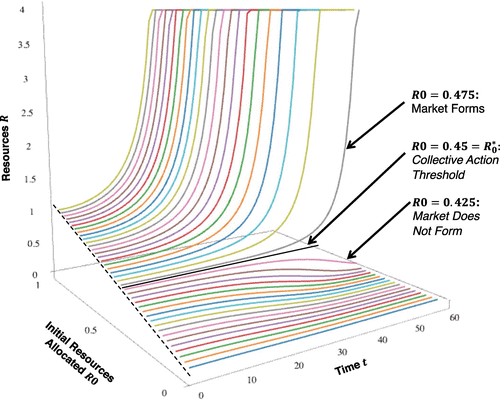
In Figure 2, each line represents a separate over-time simulation of actors’ resourcesR (vertical axis), with time ranging from 0 to 60 (right axis). Across these simulations, we gradually increase actors’ initial resources allocatedR0 (left axis) ranging from zero (bottom simulation) to one (top simulation). (Although R0 can take any value greater than or equal to zero, we limit this to one in Figure 2 for visual purposes.) Figure 2 shows that, for low initial resources allocated, actors reduce resources over time and that the market does not form (all simulations with . Actors reduce resources because when initial resources are low, perceived benefits are negative. By contrast, for sufficiently high initial resources allocated (all simulations with , markets successfully form because actors increasingly allocate resources. When markets successfully form, actors allocate additional resources given that initial resources are high enough that perceived benefits are positive. The collective action threshold is the lowest level of initial resources allocated at which the market forms. (Formally, ) By extension, this is the value directly above the highest resource level at which the market does not form. From the graph, we can see that the collective action threshold falls between 0.425 and 0.475.5
More generally, increasing returns to contributions and high degree of collective benefits form necessary conditions for the existence of a collective action threshold. Low early but increasing returns to contributions ensure the need for multiple contributions before actors experience benefits. This means that the feedback loops of Figure 1 may act in either a vicious way (low resource allocations leading to low value creation, low perceived benefits, and therefore, fewer subsequent resource allocations) or a virtuous way (sufficiently high resource allocations leading to high value creation, high perceived benefits, and therefore, more subsequent resource allocations). A sufficiently high degree of collective benefits implies that overcoming such a resource allocation threshold involves the building of market infrastructure. Therefore, to overcome the threshold, different actors need to allocate resources. Because in early-stage market formation, initial resources allocated tend to be low, the collective action threshold represents the challenge that actors face absent coordination. When analyzing how different parameters affect collective action problems in the remainder of the paper, rather than presenting results in the form of Figure 2 by showing multiple simulations over time with different initial conditions, we simply report the key outcome being the derived collective action threshold value .
In what follows, we perform three experiments to identify what factors affect the collective action threshold. In experiment 1, we explore how actors’ resource allocation decisions affect collective action problems. In experiments 2 and 3, we focus on important theory-driven, actor-related characteristics that moderate collective action problems. In experiment 2, we examine the role of heterogeneity in actors’ initial allocations because heterogeneity is claimed to reduce collective action problems. In experiment 3, we relax assumptions about actors’ perceptions of other actors. We first consider the impact of actors’ ability to anticipate others’ resource allocations to the market infrastructure, and then, we consider implications of when actors partially compete with one another within their respective roles.
Experiment 1: Private- vs. Market-Oriented Resource Allocation
In the first experiment, we examine how actor resource allocation decisions influence the existence of collective action problems. We explore how the degree of collective benefits and the degree of substitutability interact with resource allocation decisions to affect collective action thresholds. In new markets, actors can choose to allocate resources that contribute privately, or they can allocate resources that develop market infrastructure (or some combination of the two). We provide a comparative baseline to ensure that the difficulty of market formation arises from collective action problems rather than from value creation problems owing to unfavorable conditions generally. To do so, we compare the results from resource allocation choices by multiple independently operating actors with resource allocation choices by one integrated actor singlehandedly building the market. In both cases, all actors knowingly capture all value from the existing market infrastructure. The integrated actor has the same resource allocation possibilities as the independent actors do collectively. Likewise, independent actors and the integrated actor all face uncertainty about whether their efforts will succeed, and therefore, all act based on the same heuristic centered on the marginal benefit of allocating resources. However, what is different between multiple independent actors and a single integrated actor is that the actors’ goals and information differ across the two cases. Whereas the multiple independently operating actors allocate resources based on the expected benefit to their private value, the single integrated actor cares about creating the market because it will capture all of the value generated from its creation and ongoing functioning. Furthermore, the integrated actor considers the benefits from all spillovers of market-oriented resource contributions because the integrated actor has control over all resource types. Given this difference, the integrated actor always produces a better or at least equal outcome for market formation.
To provide intuition for this first experiment, we offer a stylized example. Recall that for this simulation we assume high resource substitutability (ρ = 1). Therefore, consider a market formation situation in which the market formation challenge involves building product category legitimacy. Increasing returns to contributions implies that resource allocation becomes more favorable as resources accumulate. The imperative to promote and legitimize a new product category is well established in the literature, with examples ranging from the minivan (Rosa et al. 1999) to satellite radio (Navis and Glynn 2010) to modern Indian art (Khaire and Wadhwani 2010). In such markets, a firm could allocate resources to raise awareness and legitimacy of the overall category through education efforts, or it could allocate resources to more privately oriented efforts, like building its own within-category brand through advertising and promotion (or some combination of both market- and privately oriented efforts). We assume that these types of resources are highly substitutable, meaning that both types of resource inputs are valued and can be substituted for one another at a fixed but not necessarily equal unit value. Although high substitutability represents an extreme case in market formation settings, its analysis is instructive for deriving baseline results consistent with extant theoretical assumptions (Davis et al. 2007) and to contrast those with situations of low substitutability.
Figure 3 illustrates the key results from this first analysis, showing the collective action thresholds for independently operating actors (left vertical axis) and the collective action thresholds for an integrated actor (right vertical axis) as a function of the percentage of resources privately allocated rather than being market-oriented (horizontal axis). The threshold levels indicate the degree of difficulty to form the market. Hence, the higher the threshold, the more difficulty that actors face in successfully forming the market.

Notes. High substitutability (ρ = 1) for (a) low and (b) high collective benefits. Dots represent the lowest threshold. CA, collective action.
The left (Figure 3(a)) and right (Figure 3(b)) graphs differ in terms of market infrastructure importance. Figure 3(a) represents a situation in which the importance of the market infrastructure to creating actor value is fairly low, and therefore, the degree of collective benefits is much lower (μ = 0.1). (For all parameter settings, see Table 1.) In terms of our stylized example, Figure 3 represents a situation where consumers’ understanding of the nature, function, and purpose of the product is fairly clear and partially accepted as legitimate but where consumers may not be easily persuaded to switch to the new product. By contrast, Figure 3(b) represents a situation in which market infrastructure is important to value creation, and therefore, there is a relatively higher degree of collective benefits (μ=0.7), suggesting that consumers do not necessarily view the product category as legitimate. In such situations, market actors may have to expend significant resources to educate or convince consumers about the legitimacy, value, utility, and/or reliability of the product category itself. For example, early automobile enthusiasts established races with the intent to “promote, encourage and stimulate the invention, development, and perfection and general adoption of motor vehicles” (quoted in Rao 1994, p. 34).
Across both scenarios (Figure 3), the collective action threshold for independent actors tends to be massively higher than the collective action threshold for the integrate actor (note that the axis scale for the independent operating actors is 1,000 times that of the integrate actor). Where there is a low degree of collective benefits (Figure 3(a)), the collective action threshold for independent actors is lowest at 100% privately allocated resources (blue dot in Figure 3(b)). For an integrated actor, by contrast, the threshold is lowest at the market-oriented resource allocation (red dot in Figure 3(a)). Where there is a high degree of collective benefits (Figure 3(b)), independent and integrated actors both experience the lowest collective action threshold when 100% of resources are allocated to the market (both dots in Figure 3(a)).
Although both independent and integrated actors allocate resources without knowing that the market will form, the independent actors lack important information about the collective value creation occurring across all actors. The integrated actors’ threshold is much lower across Figure 3 because it realizes the spillover benefit across all resource contributions (not just one, like independent actors) and because these spillovers contribute to market value creation. Moreover, independent actors’ undervaluation of market-oriented resource allocation leads them to favor private-oriented resource allocation.6 For this reason, they may favor private-oriented resource allocation, whereas the integrated actor favors market-oriented resource allocation (as can be seen in Figure 3(a)). This allocation bias further increases collective action thresholds above what they otherwise would have been because any allocation that does not correspond with the lowest threshold for the integrated actor produces value lower than it could be. For example, if new market creators do not recognize the value of consumer education and for that reason, consider only product promotion, they will hesitate to enter the market because they recognize the limited returns from product promotion under existing market conditions. By contrast, the integrated actor will allocate to the market even in a scenario of low degree of collective benefits where the direct unit value of doing this is lower than for private resources because the value of spillovers is still larger. If the degree of collectivebenefits becomes smaller, integrated actors would also favor private resources. At zero collective benefits, thresholds for integrated and independent actors are identical. As the degree ofcollective benefits becomes larger in Figure 3(b), actors recognize (to a greater degree than those actors modeled in Figure 3(a)) the importance of contributing to the development of the market infrastructure. For example, early automobile producers likely recognized the limited value of only investing in advertising for their offering if consumers were skeptical of the entire product category/technology. Similarly, investing in the promotion of an Indian modern artist would have ostensibly resulted in lower returns when there was no recognized category of Indian modern art than when that category was recognized and accepted. Because in this case, collective benefits are so important and because independent actors undervalue this, collective action thresholds are higher.
In summary, Figure 3 highlights several key points that together add nuance to the existing literature. First, collective action thresholds depend on the percentage of resources allocated privately (versus to the market). Second, independent actors tend to undervalue market-oriented resources. This results in higher collective action thresholds and resource misallocation (favoring private-oriented resources), further increasing collective action thresholds. Collective action problems are thus more likely in market formation situations when some market infrastructure is not already in existence and when actors do not sufficiently take their interdependencies into account. Given the challenges that these collective action problems pose for the prospects of market formation, our results underscore the importance of expanding a focus beyond firm capability development in nascent markets (Helfat and Lieberman 2002) to consider the nature of market-oriented contributions and the conditions that necessitate such contributions. Collectively, these insights lead us to our first proposition.
In market formation settings, independent actors favor private-oriented (versus market-oriented) resource allocation, which leads to collective action problems.
Having established this baseline, we now explore the effect of low resource substitutability. Low resource substitutability is a more realistic representation of market formation situations requiring market infrastructure buildup than high resource substitutability. For example, consider the market in the United States for the use of unmanned aircraft systems (UASs) or drones. Although drones are widely commercially available, regulation in the United States has hampered their commercial use and widespread adoption. A recent study of the regulatory approval process suggested that the Federal Aviation Administration is too conservative in their approach, concluding that “[t]here is too little recognition that new technologies brought into the airspace by UAS could improve the safety of manned aircraft operations or may mitigate, if not eliminate, some nonaviation risks” (National Academies of Sciences, Engineering, and Medicine 2018, p. 2). In other words, the regulatory approval process is slowing development and use of UASs. Investing large amounts of time and money into product research and development cannot compensate for the lack of effort to reform the regulatory approval process at the FAA. This suggests that resource inputs may not easily be substituted for one another in the development of a new market.
In Figure 4, we show the effect of low substitutability on collective action problems. The collective action threshold for independent actors in a market setting characterized by a low degree of resource substitutability (ρ = 0.1) (all other conditions are identical to those represented in Figure 3(b); see Table 1) is represented by the red curve in Figure 4. For comparison, we include the collective action threshold curve for independent actors in a market characterized by high degree of resource substitutability (ρ = 1) (the same curve displayed in Figure 3(b)).

Note. Low substitutability (red line; ρ = 0.1) compared with high substitutability (blue line; ρ = 1) (see also Figure 3).
Rather than directly comparing the thresholds of these two cases, we compare how both collective action thresholds change as a function of resource allocation decisions.7 The two collective action thresholds are similar when the percentage of allocated resources is more market oriented (thresholds on the left in Figure 4) (low private share). The thresholds begin to diverge markedly after the percentage of resources privately allocated exceeds 50%. Thereafter, the collective action threshold under conditions of low substitutability increases dramatically. This divergence comes from the fact that, under low substitutability, actors must contribute sufficient resources for the market infrastructure to form. Hence, when actors allocate mostly private resources, the actors are unable to create sufficient value, they tend to reduce contributions, and the market does not form. This finding is consistent with the example given where ever greater amounts of research and development fail to solve the slow regulatory approval issue for drones. This finding strengthens our findings underpinning Proposition 1 because most market formation situations involve low rather than high substitutability. It is in those settings that collective action problems are worse. Thus, we have Proposition 2.
In market formation settings with low resource substitutability, private-oriented (versus market-oriented) resource allocation by independent actors increases collective action problems.
Experiment 2: Resource Heterogeneity
Generally, resource heterogeneity is considered an important factor that helps reduce collective action problems (Granovetter 1978, Oliver et al. 1985, Marwell and Oliver 1993). To examine this, we manipulate initial resource allocations across the different actors (Table 1, experiment 2). In the base model, we analyze the role of resource heterogeneity in initial resource allocations. Such variation is manifest in interest, motivation, access to capital, previous experience, or risk aversion. Our analysis is agnostic about the underlying source of heterogeneity. We vary initial resource allocations across actors based on a standard deviation .8
Figure 5 shows collective action thresholds (vertical axis) as a function of heterogeneity (heterogenity in initial resources; horizontal axis) for two market situations: high substitutability (; blue lower line) and low substitutability (red upper line; ). The error bars indicate a one-standard deviation range for the collective action threshold across 20 simulations for each datapoint. For Figure 5, we use the baseline simulation settings (Table 1), but results hold across a wide range of parameter settings.
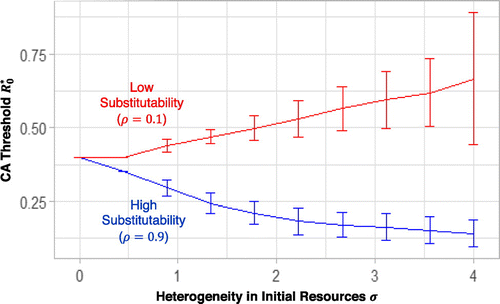
Figure 5 reveals a considerable difference in the collective action thresholds between the case of high substitutability and that of low substitutability under resource heterogeneity. Consistent with extant theory, we find that, for high substitutability, collective action thresholds decline with heterogeneity in initial resource allocations. By contrast, under conditions of low substitutability, collective action thresholds increase substantially. The reason for this difference is that, under low substitutability, each actor experiences a “cost” of misaligned resources across resource types. That is, if some inputs are in oversupply and others are in undersupply, the market infrastructure provides less value to actors than in the case of high substitutability. Compare this with the situation of moderate resources dedicated to educating consumers about a new product category (high substitutability). Although more resources are needed to sufficiently educate the consumer on the utility or functionality of the product, any market actor could improve its prospects by making additional allocations, even when few others have yet undertaken such effort.
By contrast, consider when actors occupy specific roles in market settings, such as in the electric vehicle (EV) market. To be a viable electric vehicle provider, one needs to build on preexisting efforts from automotive and battery producers, charging infrastructure from providers, and dedicated communication technology developments. The market also benefits from favorable regulation and from nongovernmental organizations and movements that work with producers to promote and change norms around the use of the product. Without these elements in place (or only partially so), few consumers consider EVs, and those who do experience a low product value. Under such misaligned market infrastructure, companies in the market face ambiguous opportunities and high risks, resulting in reluctance to allocate the resources critical to successful market formation. The company Better Place found itself in this situation around 2010 when it embarked on a mission to rid personal transportation of oil by 2020 (Etzion and Struben 2014). Better Place proposed a revolutionary business model built around EVs with a sophisticated charging infrastructure that swapped an empty EV battery in just two minutes. However, because many market components were missing, Better Place was unable to persuade other actors to partner or invest.
Distinct resource allocation decisions facing each individual actor are also important. Those actors contributing a large share of resources experience greater contribution misalignment. Under conditions of low substitutability, actors making large initial resource allocations may discover that the market infrastructure is underdeveloped relative to their large amount of resource allocated. Because high contributors cannot create the market individually under conditions of low substitutability, they soon reduce resources, which increases collective action problems. This is precisely what happened to Better Place. The company used all of its cash and filed for bankruptcy within two years after launch, despite large venture capital funding and favorable media attention. Although low contributors may experience a positive stimulus from this misalignment, this effect is suppressed because of increasing returns to contributions. In addition, they also experience the general cost of current infrastructure misalignment.9
Whereas existing literature suggests that heterogeneity in initial resource allocations reduces collective action problems (Granovetter 1978, Oliver et al. 1985, Marwell and Oliver 1993), our model suggests that, under conditions of low substitutability, heterogeneity in initial resource allocations can exacerbate (not reduce) collective action problems because of resource misalignment. An important implication is that early committers may be less likely to expand their resources under conditions of low substitutability. Collectively, these arguments lead to our third proposition.
In market formation settings with low resource substitutability, heterogeneity in actors’ initial resource allocations increases resource misalignment, leading to collective action problems.
Our simulation results regarding heterogeneity suggest further implications related to resource allocation. Figure 6 compares collective action thresholds (vertical axis) for high versus low substitutability (blue versus red lines, respectively) as a function of the percentage of resources allocated privately (horizontal axis) just as in Figure 4, but Figure 6 shows how those same curves shift under conditions of resource heterogeneity ( = 2) represented by the dashed lines in corresponding colors. Not only does resource heterogeneity increase the gap between thresholds under high versus low substitutability, but also, it does so much more for private resource allocation (compare the continuous double arrow with the dashed double arrow at 60% of resources allocated privately in Figure 6). In fact, under high substitutability, greater percentages of resources allocated privately now result in the lowest collective action threshold. Heterogeneity implies that there are some pioneering actors willing to make high initial resource allocations. In the case of high substitutability, those pioneering actors can focus on private resource allocation because this reinforces their private value creation and helps overcome the collective action threshold. These results are consistent with the claim that pioneering firms can shape markets to their advantage while simultaneously developing firm-level advantages, such as economies of scale, scope, or network effects (Gavetti et al. 2017).

Notes. Heterogeneity (σ = 2; low substitutability (red dashed line; ρ = 0.1) and high substitutability (blue dashed line; ρ = 1)) compared with no heterogeneity (see also Figure 4) (low substitutability (red line; ρ = 0.1) and high substitutability (blue line; ρ = 1)). The green arrows indicate gaps between CA threshold for low and high substitutability at 60% resource allocated private for heterogeneity and for no heterogeneity.
However, under conditions of low substitutability, pioneers’ value creation depends on others’ contributions. Therefore, a focus on private resource allocation leads to resource misallocation, low marginal benefits, and underinvestment, ultimately increasing the collective action threshold. Thus, under conditions of low substitutability and the presence of pioneering firms engaging in private resource allocation, other actors will follow suit—moving away from market-oriented resource allocation to aggressively pursue private value creation. Although this approach lowers the collective action threshold under conditions of high substitutability, it has the opposite effect under conditions of low substitutability. The case of the failed global mobile payments illustrates this point. The attempt to establish a global mobile payments market involved established players from telecommunications and financial services along with many other players that needed to contribute their particular resources for the market infrastructure to be established (e.g., handset makers, software developers, and network providers). Ongoing disagreements between the banks and the mobile operators (two major critical and interdependent actors) resulted in each withholding their respective contributions and set off a “vicious cycle of resource allocation deferment” (Ozcan and Santos 2015, p. 1487). Our findings and this anecdote are consistent with recent research that calls for greater attention to emergent interdependencies and the recognition of low resource substitutability in forming markets (Adner and Kapoor 2010, Hannah and Eisenhardt 2018). This leads to our fourth proposition, which combines insights from Propositions 2 and 3.
In market formation settings with low resource substitutability, pioneers favoring private-oriented resource allocation worsen collective action problems.
Experiment 3: Assumptions About Actors’ Perceived Benefits
In this final experiment, we relax two important assumptions related to perceived benefits: actors’ anticipation of others’ contributions and competitive pressure.
Actor Anticipation of Resource Allocation by Others
So far, we have assumed that actors do not consider the impact of others’ future efforts on market formation when they make resource allocations. However, the anticipation of additional future resource allocations by other actors should make it more appealing for an actor to contribute more resources because of increasing returns to contributions. Greater resource allocation reduces other actors’ individual thresholds, setting in motion a positive feedback of allocations, which reduces collective action thresholds.
Research suggests that, as social tie density between actors increases, collective action problems decrease (Marwell et al. 1988). Intuitively, if actors can anticipate efforts by others, the independent actors may collectively behave more like an integrated actor who controls all resources. However, it is less clear how the anticipation of resource allocation by others affects collective action problems when resources are less substitutable. Social networks are conduits through which information flows and enables actors to better anticipate others’ contributions (Podolny 2001), and they can influence how uncertainty is reduced, particularly in contexts where resource allocation across actor roles differs. Experiments 1 and 2 highlighted the sensitivity of collective action outcomes to varying resources across actor roles. However, because actors may only observe and anticipate efforts from a limited number of peers, outcomes may also depend on the distribution of the actor’s connections.
We explore this issue by altering the base model as follows. We model the ability of actors to anticipate the resource allocations of other actors and how this anticipation impacts their own resource allocation. We capture this relational aspect of actors through social network representations.10 That is, the presence of a tie between actor i and j is a sufficient and necessary condition for i learning about j’s perceived benefit of allocating resources that contribute to market infrastructure. Conditional on there being a tie to j in i’s networkNi, i adjusts his assessment of total resources within a resource type because of anticipated allocations by j. The adjustment amount corresponds with a value that is proportional to j’s marginal value creation multiplied by α, a parameter that measures actors’ ability to anticipate others’ efforts (). See Online Appendix A.II.3.1 for the formalization.
To capture the network of ties across actors, we generate a social network structure of density d = K/N, with K being the number of ties per actor, using standard network typologies. To better understand how social network structure matters in contexts of market formation with low(-er) resource substitutability, we focus on whether and how collective action outcomes depend on random ties with respect to actor role. We consider two cases. In the first, ties are random across actor roles. Here, actors exhibit relatively few ties within their role. In the second case, we concentrate ties within actor roles. That is, there exist network communities—dense, nonoverlapping structural groups within a network (Sytch and Tatarynowicz 2014)—organized around particular actor roles. In this case, producers are much more familiar with what other producers do than with what retailers do, and therefore, they only anticipate producers’ efforts. The same holds true within and across the other respective role types.
In Figure 7(a), we vary the strength of actors' anticipation of resource allocations by othersα for network density d = 0.1 and for three different degrees of substitutability (low, medium, and high). Figure 7(a) shows that an actor’s network configuration influences the anticipation of others’ efforts and therefore, exerts a major influence on collective action thresholds. The dashed lines in Figure 7(a) show simulations in which ties are randomly distributed across actor roles. When actor behavior does not depend on social influence (, results are identical to simulations that do not involve social ties (for other parameter settings, see Table 1).
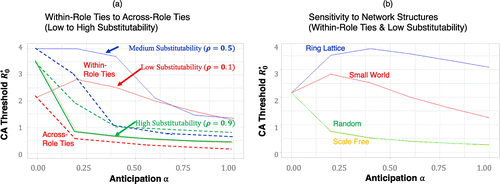
In examining the graph, we compare between-tie configurations for different degrees of substitutability.11 In the case of random ties across actor roles, as anticipation of others’ efforts increases, collective action thresholds decrease. This occurs irrespective of the degree of substitutability and is consistent with expectations and earlier findings. Anticipation of resource allocation by others within underallocated resource types exerts a strong positive influence on an actor’s assessment of marginal value creation. If many actors believe that this is the case, this reduces the misalignment problem. In addition, high-contributing actors contributing to otherwise underallocated resource types may now believe that their relatively high resource allocations reduce the misalignment problem. Therefore, they are less likely to downward adjust resource allocations. For example, if electric vehicle manufacturers observe that cities, retailers, utilities, and others are creating many charging stations, their allocations may increase. This may, in turn, be observed by others across actor roles and drive a virtuous cycle of actor allocations. Both have the effect of increasing actors’ resource allocations and increasing the probability of successful market formation. Thus, for low substitutability, anticipation of other’s efforts reduces alignment problems because actors see more contributions from those that provide critical complementary resources, thus reducing the gap between high and low substitutability.
However, when ties are concentrated within an actor role, collective action thresholds are higher. This is particularly true when there is a low degree of substitutability (Figure 7(a), ρ = 0.1; compare the dashed line with the continuous line). For low substitutability, anticipation of contributions to the market infrastructure increases one’s perceived marginal benefit from contributing. When anticipation of resource allocations by others is weak but positive (small nonzero α), thresholds increase rather than decrease compared with situations without anticipation of others (compare α>0 with α=0 in Figure 7(a) for ρ = 0.1). To understand why, consider the extreme case of actor networks in which ties only exist among actors in the same role. Here, actors anticipate increased efforts by others in the same role, whereas contributions from actors in other roles are not considered. Given the low-substitutability condition facing all actors, committing additional resources is considered of little value. For example, why would a particular producer of plant-based protein keep investing heavily in product development if this producer can only observe efforts by other producers but does not have confidence that retailers and restaurant owners are educating consumers and developing demand for nonbeef options? Indeed, research on the mobile payment market reveals that ongoing disagreements between critical and interdependent actors that provided distinct resources led to little knowledge and trust across actor roles. This lack of understanding and trust had effects for other players. One handset executive stated, “I wish that [banks and operators] could finally collaborate ’cause then I would know that I am going to sell phones” (quoted in Ozcan and Santos 2015, p. 1496). Ultimately, handset manufacturers refused to mass produce mobile payment-enabled handsets because disagreements between the telecommunications companies and the banks meant that the critical market infrastructure was not in place. Approximately three years later, Apple also refused to participate because of “the lack of a clear industry standard” (Ozcan and Santos 2015, p. 1498).
Consistent with existing understandings within sociology and strategy literatures (Katz and Shapiro 1985, Marwell et al. 1988), we find that, when actor ties are random across actor roles, the anticipation of other actors’ allocations leads to increased efforts. However, in settings characterized by low resource substitutability, when actor ties are concentrated primarily within actor roles, we find that anticipation of others’ allocations does not reduce collective action problems and may even exacerbate collective action problems. Hence, we propose the following proposition.
In market formation settings with low resource substitutability, higher anticipation of future resource allocations by those within one’s actor roles increases perceptions of resource misalignment, increasing collective action problems.
To assess whether results are dependent on the specific choice of the network structure, we also compare results for the network the typology used in Figure 7(a) (a small-world (SW) network with mostly nearest neighbor ties, but some that are random) with those for three other widely used network typologies: a ring lattice (RL) having only nearest neighbor ties, a fully random or “Erdös–Rényi” (ER) network, and a scale-free (SF) network, with ties heavily clustered around a few central actors (see Online Appendix A.II.3.2 for more details). These different network types can be related to different market types. For example, whereas RL effectively captures geographically dispersed clusters of economic activities, SW is representative of actors occupying the same geographical innovation cluster, and SF maps to markets that are born online. Figure 7(b) reveals the impact of each network structure on collective action thresholds as α increases (for low substitutability and ties concentrated within an actor role). We observe two main patterns. First, under ring lattice structures, anticipation of other actors’ efforts has an weaker ability to reduce thresholds compared with small-world structures. Second, the random (ER) and SF networks are very effective in reducing collective action thresholds.
Our explanation for this variation across network types lies in a network’s efficiency in transporting information across actors’ diverse actors. Whereas RL structures exhibit very high clustering—actors have many redundant network ties but also, high average path length—in ER and SF networks, a few actors are particularly well connected, yielding very low average path length. Low average path length implies high efficiency. (See Online Appendix II.3.3 for the formal definition.) Because of their large number of ties, these central actors are also more likely to have at least some ties with actors in other actor roles. Hence, central actors in these networks are more willing to allocate resources. As they do so, their reduction of misalignment “spreads” to others that are observing their behavior, inducing additional allocations, which results in lower collective action thresholds. This effect improves as more actors receive information about the efforts by all actors, including both low and high contributors, and by those within other actor roles. This efficiency seems important because the threshold-reducing effect of increased anticipation of other actors’ efforts results from a perceived reduction of misalignment across all actors. Taken together, our results add theoretical texture regarding the differential impact of information efficiency across network types. Although the information efficiency of a network aids collective action, some network structures may be more effective than others.
Competitive Pressure
Competition during market formation is an underexplored topic. One reason is that most strategy research is left censored, focusing on competition and the gaining of advantage in established markets, but in so doing, it overlooks early formation of markets (Gavetti et al. 2017). However, during early market formation, rivals are often not present (or do not compete), and the nature and extent of consumer demand are still uncertain. Nevertheless, a focus on the role of competition during market formation is important because any competitive pressure may influence an actor’s ability to capture value. This, in turn, may affect actors’ resource allocation and subsequently, market formation problems. One important form of competition to consider during early market formation is one of within-actor roles. In this case, actors vie for the same resources (for example, potential consumers). Therefore, the value that actors capture may differ from the value that they create, affecting their perceived benefit of allocating resources. To examine how such competition affects collective action during market formation, we simulate this form of competition assuming that actors perceive the presence of competition and respond to it when making resource allocation decisions. We do this to examine whether and how competition alters insights from the previous experiments.
To analyze within-role competitive pressure, we alter the base model by simply correcting the perceived benefit expression (Equation (5)) by considering the difference between the value that actors create and the value that they actually may capture because of competition. Furthermore, we let actors’ ability to capture value drive perceived benefit of resource allocation. To do this, let individual actor i capture a share of totalwithin-role value creation. Thus, i’s value capture. In turn, the role-specific value creation depends nonlinearly on value creation (as defined in the base model) across all actors within resource type m. When there is no competitive pressure, value capture must equal value creation (identical to the previous experiments); thus, in this case, . Instead, under full competitive pressure, the actor with the largest value creation should capture all of its value created (whereas the other actors capture nothing). Thus, if , where is the largest within role m and otherwise, . In between these extremes, must decrease with competitive pressure, whereas individual share increases disproportionally with (relative to that of others).
The nonlinear relation with
Figure 8 shows the sensitivity of collective action thresholds to competitive pressure. It shows collective action thresholds (vertical axes) as a function of competitive pressure (horizontal axes) for both high substitutability (Figure 8(a)) and low substitutability (Figure 8(b)) and for three different values of resource allocation. (For all other parameter settings, see Table 1.) For high substitutability (Figure 8(a)), we show results for 100% private resource allocation (, 100% market-oriented resource allocation (, and an in-between case (. Competitive pressure has little to no influence on collective action thresholds for 100% private-oriented resource allocation. However, for other values of resource allocation (low and moderate competitive pressure), collective action thresholds increase (except for very high competitive pressure, which is uncommon during early market formation). Indeed, for moderate competitive pressure, collective action thresholds are lower when resources are allocated 100% privately than when resources are allocated 100% to the market. The effect of competitive pressure does little to affect private-oriented resource allocation because high contributors’ behavior and advantages are less influenced by competitive pressure. When actors focus on private resources, those allocating high initial resources benefit more from their initial advantage. Those high contributors face less competition and can build the market, especially when resources are substitutable. However, in situations of high interdependency, actors not only compete with one another, but they also benefit from each other’s contributions.
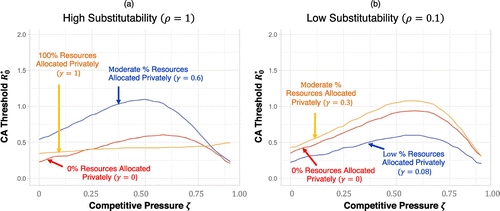
Under low substitutability (Figure 8(b)), low to moderate competitive pressure increases collective action thresholds differently than under high substitutability. Low to moderate competitive pressure has a relatively large effect on thresholds when resources are moderately misallocated ( = 0 and = 0.3). This relatively large negative effect of competitive pressure under low substitutability results from actors having to allocate resources to the market, which suppresses heterogeneity (see also Figure 7). As a result, an actor’s opportunity to achieve competitive advantage is reduced. Allocating more resources privately also reduces advantage by increasing collective action thresholds because resources are misaligned (Propositions 2 and 3).
Thus, competitive pressure within actor roles increases collective action problems under conditions of low resource substitutability but not necessarily under conditions of high resource substitutability. This is important because competitive pressure likely increases actors’ propensity to focus on private (versus market) resources. As a whole, our simulation results lead to our final proposition.
In market formation settings with high interdependency and low resource substitutability, competitive pressure within actor roles increases collective action problems.
Discussion
The challenges that collective action problems pose for market formation merit greater theoretical and empirical attention. Although organization theory documents instances of both collective action success and failure (Van De Ven 1993, Rao et al. 2000, Ozcan and Santos 2015), relatively little is known about how and under what conditions collective action problems occur during market formation (Lee et al. 2018).
Using the precision of simulation, we provide a parsimonious starting point for investigating the dynamics of actor resource allocation and collective action problems. Our results suggest several insights. First, we find that collective action problems arise as actors tend to favor private-oriented resource allocation over market-oriented resource allocation because they tend to undervalue the collective benefits that come with the latter. Hence, although focusing on private-oriented resources may help firms in established markets differentiate themselves in a competitively advantageous way, we provide needed boundary conditions about such benefits in forming markets. Second, we find that lower resource substitutability gives rise to misalignment problems, which increases collective action problems. This finding is important because the formation and scaling of many markets require the contribution of less than perfectly substitutable contributions. Thus, we add to and extend prevailing theory on collective action that assumes that contributions across actors are often perfectly substitutable.
Third, we demonstrate how the impact of heterogeneity on collective action problems is contingent on the degree of resource substitutability. Consistent with classic collective action problems (Granovetter 1978), actor heterogeneity facilitates market formation in situations where the requisite resources are perfectly substitutable. We find that these assumptions are reasonable for some types of market formation dynamics. For example, Lee et al. (2018) suggest that these conditions approximate most closely demand-side uncertainties and challenges, where resource allocations are needed to help educate and stimulate consumer demand but where their source is less important.
However, unlike others, we add to the literature by showing that, when contributions are imperfectly substitutable, market formation becomes more difficult because of resource misalignment. Hence, our analysis contributes to and goes beyond extant theorizing by showing not only how resource misalignment is a problem to be observed during market formation but also, how it is a fundamental cause of collective action problems. Misalignment occurs when actors contribute distinct resources in lopsided quantities (e.g., when entrepreneurs heavily promote a new product category before the requisite product standards have been established or when a producer manufactures a large amount of product before viable distribution channels have been established). Such misalignment hinders market formation by reducing the value that actors can extract from the allocated resources for the same investment. Lower perceived value, in turn, makes actors less willing to allocate additional resources. Our simulation analysis further highlights that misalignment creates a perception problem among high-resource contributors that their contributions are less effective. This is critical because high-contributing actors generally help resolve uncertainty in market formation. We thus spotlight resource misalignment as a fundamental but often overlooked collective action problem for market formation because underallocations from single critical resource providers may prevent the market from forming. For instance, misalignment hindered mass adoption of the Segway because of a lack of road infrastructure (as it exists for bicycles); low mobilization of targeted consumers; scant supportive regulation; and few applications for parking, charging, and transportation. Overall, more work on how misalignment increases uncertainty and friction regarding market formation is needed.
Several key findings of our simulation relate to and reveal fresh insights about actor perceptions and decision making. Specifically, we examine the role of actor perceptions in collective action, and we explore whether market formation is more likely when actors can anticipate others’ actions and how this depends on social network types. Although actors cannot always anticipate the actions of others, under some conditions they may be more likely to form expectations about potential contributions from others. The extent to which such expectations help (or hurt) efforts to overcome collective action problems depends heavily on whose contributions the actors anticipate. Anticipation may reduce the misalignment problem when actors are able to learn about the contributions from critical resource providers. By contrast, when actors are embedded in networks with others that share the same role in the market formation process, their anticipation of others’ allocations may exacerbate collective action problems. This finding further illustrates how collective action problems may involve individual actors making choices that seem to propel progress in the short term but may prevent it in the long term. Thus, although the market formation literature stresses the importance of collective identity (Navis and Glynn 2010), our findings suggest that too much of a focus on collective identity may limit actors’ sensitivity and awareness of the actions, efforts, and intentions of others that may be hold contributions critical to the future success of the market. These results on the role of imperfect anticipation across interdependent actors suggest potential value in taking an information design point of view to study such interactions in new market settings—something that is already common in organizations (Puranam et al. 2012). In addition to these more specific findings and insights from our simulation, our results have important implications for organization theory and strategy.
Contributions to Organization Theory
Our findings contribute to organizational theory on market formation. Despite a wealth of empirical analyses of a wide range of market types, there is no general theory of market formation (Fligstein 2001). Although a substantial body of theoretical and empirical work documents the critical importance of collective action for the creation of new organizational forms, niches, markets, and industries (Carroll and Swaminathan 2000, Rao et al. 2000, Lounsbury et al. 2003, Sine and Lee 2009), it generally leaves underspecified its nature, associated boundary conditions, and how distinct sets of actors coordinate efforts. Little is known about the emergence and nature of collective action problems in new market settings. More fundamentally, prior work has not conceptualized market emergence as an instance of a collective action threshold where success hinges on coordination among resource allocations from many distinct, heterogeneous actors. The findings in this study address these issues by showing that, for some markets to form, resource allocations from many distinct actors are required because of their fundamentally distinct contributions. Here, contributions are not only heterogeneous but also, limited in their degree of substitutability. Because actors in new markets must undertake new activities and lack not only structure but also, credibility and familiarity with each other, coordination is needed but difficult to achieve (Aldrich and Fiol 1994, Kogut and Zander 1996).
Our model also contributes to the literature on collective action by identifying a new class of collective action problems. Specifically, we add to extant perspectives that assume perfect substitutability of contributions across actors (Granovetter 1978, Marwell and Oliver 1993). To assume that actors’ contributions are perfectly substitutable glosses over the reality of many common cases of collective action. We show that relaxing the assumption of perfect substitutability strongly alters the nature of collective action. Thus, although others show that collective action problems arise because of the underprovision of public good resources that result in startup costs (Oliver et al. 1985), we show that they also occur because of the misalignment of allocated resources. By explicitly considering the nature of interdependency, we address a central puzzle in the case of markets. Whereas all extant models of collective action predict that heterogeneity reduces collective action thresholds, we show that successful collective action is notoriously difficult.
Contributions to Strategy
Our study also adds to strategy. From the perspective of the resource-based view of the firm, competitive advantage in existing markets stems from the building and leveraging of resources that are valuable, rare, inimitable, and nonsubstitutable (Barney 1991). Although value, rarity, and nonsubstitutability are important, inimitability of resources is central to achieving and sustaining competitive advantage in current markets because it mitigates the effects of competitors over time (Bingham and Eisenhardt 2008). Hence, inimitability is often highlighted and discussed as the key resource attribute to achieving firm competitive advantage in existing markets. Yet, although the resource-based view is helpful, it tends to be left censored in the sense that competitive advantage is generally considered only after the challenging work of market formation is already complete. As a result, we have less understanding of key resource attributes that are important during the formation of new markets (Gavetti et al. 2017). Our study highlights the relevance of substitutability (not inimitability) during new market formation. Our results show that, because low substitutability often exists across different actor roles, actors are less likely to allocate additional resources. This can lead to startup problems and as a result, to higher threshold levels for collective action. Although higher substitutability may exist within a particular actor role, this may also make actors less likely to allocate additional resources because actors within a role can benefit from the contributions of other actors within the same role. This can lead to freeriding problems that also inhibit market formation. In sum, the characteristic of substitutability is central to the resolution of collective action problems and by extension, to market formation. We encourage more research on the nature and effects of substitutability during market formation.
Our work also extends a long stream of strategy research that has moved away from a competitive focus of value capture toward one that includes value creation by exploiting complementarities within the broader ecosystem, often jointly with complementing actors (Nalebuff and Brandenburger 1997, Hannah and Eisenhardt 2018, Jacobides et al. 2018). Our view extends such work by focusing on new market settings where the ecosystem has yet to emerge. Furthermore, there are synergies with recent progress in characterizing the different types of complementarities that exist in such ecosystems, building on research on industry architecture (Jacobides et al. 2006) and bottlenecks (Baldwin 2015). Our operationalization of market settings in terms of returns to contributions, degree of collective benefits, and degree of substitutability offers a novel route for examining different dynamic implications of different types of interdependencies.
Finally, we contribute by providing fresh insights regarding strategic decision making and learning from experience. Past research describes the benefits of making decisions based on prior outcomes (positive or negative) (Kim and Miner 2007, Madsen and Desai 2010). Importantly, most of this research examines learning from actual outcomes. By contrast, we contribute to the strategic decision-making literature by highlighting the prevalence of learning from the anticipation of outcomes rather than actual outcomes. Our model provides a means to understand how anticipatory learning might occur. We show how anticipation of others’ resource allocations is influenced by different network configurations and ties within those configurations as well as how the anticipation of others’ resource allocations in turn influences collective action decisions. We also show how the anticipation of others’ resource allocations in some types of network configurations lowers collective action thresholds while raising them in others. Depending on the network and nature of ties between actors, anticipation of others’ actions may either dampen or heighten collective action problems. More broadly, our results suggest that the anticipation of contributions is a blended process of “backward-looking” and “forward-looking” search, emphasizing both what an actor has experienced in the past and what an actor may experience in the future. This differs from extant work on learning that primarily highlights a decision-making process based on “backward looking” (Gavetti and Levinthal 2000). Overall, our study adds to recent work (Bingham and Kahl 2013) by suggesting how anticipation may be a primary form (versus a special case) of learning and a basis for decision making during new market formation, where prior outcomes may be difficult to measure and where the anticipation of outcomes (versus actual outcomes) can be useful for starting and sustaining searches that can lead to action and the creation of improved market solutions.
Implications for Future Work
Our framework lays the groundwork for addressing open questions about the processes of market formation and the roles of individual decision making and of collective decisions about resource allocation. Relaxing some of the simplifying assumptions in this study can further improve a theory of collective action during market formation in ways that are difficult to accomplish with empirical analysis alone. First, we assumed that actors select ex ante into a particular actor role and network structure, which they maintained throughout the simulation. As actors (co-)create new opportunities, they evolve in their roles and relations. Because structure emerges endogenously from and coevolves with individual actor decisions (Sytch and Tatarynowicz 2014), attending to role and network dynamics in the context of market formation is an important next step. By extension, it would be valuable to better understand the consequences of actors’ shifting resource allocation from market to private over time as well as when and under what conditions this becomes effective for market formation. Second, in terms of individual heterogeneity, we focus on the role of initial resource allocations. Future research could explore the implications of actors exhibiting different behaviors, strategies, ideologies/values, or perceptions/expectations (Camerer et al. 2004). For instance, in considering heterogeneity in market- and private-oriented resources, an important question to ask is as follows: under what conditions does the joint presence of ideological and economic actors facilitate or inhibit market formation? Third, our paper examines novel questions regarding relational heterogeneity. Where we characterized the network as a conduit of information that informs actors about potential efforts by others, future work could contribute by considering the role of social structure in building necessary trust, developing a shared cognitive schema across different actors, or serving as a strategic resource to be leveraged during market formation.
There are also opportunities for future empirical work and agenda setting. For example, the constructs that we rely on to develop our theory can be measured and are, therefore, subject to empirical testing. Our findings are based on the construct of market infrastructure and three other key market-related constructs: increasing returns to contributions, degree of collective benefits, and degree of substitutability. Each of these constructs is associated with observable factors. For instance, low early returns to contributions are associated with factors, such as capital intensity, and the absence of core competencies, such as a trained workforce, that can be observed and measured. Additionally, the degree of substitutability can be identified by the number of nonoverlapping connection points between activities of market formation. Although the importance of these constructs to market formation (and a more fine-grained understanding of their roles) will only be borne out through additional empirical investigations across a range of market formation situations, given their relative absence from extant market formation literature, it behooves scholars to attend to them more systematically. Furthermore, although it may be difficult to find matched settings of low versus high resource substitutability, the prediction of alignment problems in the case of low substitutability suggests that we would expect more collaborative efforts in the case of market success for low versus high substitutability.
Market formation is an increasingly important topic. Research suggests that market formation generally involves collective action. Yet, despite its importance, most research overlooks the nature and emergence of collective action problems. Using the analytical precision of simulation, our study offers needed insight into how collective action problems occur during market formation as distinct actors make resource allocation decisions. Subsequent research must focus on empirical validation and theoretical extension.
The authors thank Mahka Moeen; Tim Ott; Ruthanne Huising; and participants at the Vienna Conference on Strategy, Organizational Design, and Innovation for reading the manuscript and providing helpful comments.
1 We follow Lee et al. (2018) by defining market infrastructure as “material and sociocognitive elements supporting the functioning of a stable market that benefits market actors” (Lee et al. 2018, p. 243). Such infrastructure includes but is not limited to agreed-on categories, product prototypes, norms of exchange, or technology standards that must exist to guide and stabilize transactions and enable ongoing investment.
2 In some cases, market infrastructure may simply develop as a spillover from private-oriented actions. For example, legitimacy may build as more firms of the same new organizational form enter the market, providing similar offerings (Hannan and Freeman 1989, Pontikes 2018). Likewise, de facto categorical prototypes may coalesce even as actors invest in their own capabilities (White 1981).
3 The parameter differs from but is directly related to the “degree of collective benefits” parameter , capturing the relative unit value of one’s own private- versus market-related resources. The latter parameter is the one that we vary in our analysis. Footnote 4 shows how relates to .
4 Using the number of within-role contributors n as normalization implies that, when = 0.5, resource outputs for each of the M market-oriented resource types provide the same unit contribution to private value creation Vi as do private-oriented resource outputs. Furthermore (see footnote 3), because of this normalization, .
5 We can derive the collective action threshold analytically because here, resource allocations are uniform across actors. Deriving this yields (Online Appendix A.II.1.2), with the uniform value contribution share to marginal benefits being . Filling in the parameters, we find . Later in our analysis, we provide more intuition about the collective action thresholds by exploring this analytical expression.
6 Because in Figure 3, resource allocation is uniform across all actors, we derived the thresholds analytically (as with Figure 2). The resulting expression (Online Appendix A.II.1.2) shows why integrated and independent actors perceive different benefits from allocating resources. Integrated and independent actors experience the same value creation from the existing market infrastructure (value creation term ). However, the value contribution share term , being equal to one for the integrated actor, is much smaller for the independent actors. For independent actors, the right-hand side of the numerator in (capturing the value of contributions to the market infrastructure) equals rather than . This reflects that independent actors only consider their own contributions and not the potential spillovers from other contributing actors. The larger the degree of collective benefits, the more this bias suppresses independent actors’ perceived benefit of allocating resources to the market and as a whole.
7 It is not meaningful to directly compare thresholds between these two cases because the unit resource value v0 normalizes value creation for different market-related characteristics at 50% private resource share (Online Appendix II.1.1), and thresholds at different degrees of collective benefits respond differently to changes in private resource allocation shares.
8 Under resource heterogeneity, the collective action threshold R0* results from the average resources across the N actors (see Online Appendix A.II.2.1 for details).
9 This intuition can be grounded in the key terms of the analytical solutions of collective action thresholds under uniform resource allocation (footnotes 5 and 6). Although those solutions do not hold here because of resource heterogeneity, these terms do reflect individual actor thresholds for allocating resources. Here, under low resource substitutability, all actors experience a lower relative value creation (VCi in Equation (6)) than under uniform resource allocation because of suppressed market infrastructure. In addition, larger contributors experience a low value of their own contribution share ( in Equation (6)) because having contributed more than others, they cannot easily further expand their own value creation. Hence, perceived benefits are even more reduced for those actors.
10 Others focus on networks for building trust through mechanisms, such as interpersonal contact and reputation, and within established institutional contacts (Coleman 1990). However, in novel market settings, actors from distinct backgrounds cannot rely on established institutions to provide such trust. Hence, for the purpose of this paper, it is useful to think in terms of networks for “spreading information” or “building confidence” rather than the dynamically more complex “trust.”
11 It is not meaningful to directly compare thresholds between cases with different market-related characteristics for the same reason as pointed out in footnote 7.
References
- (2010) Value creation in innovation ecosystems: How the structure of technological interdependence affects firm performance in new technology generations. Strategic Management J. 31(3):306–333.Crossref, Google Scholar
- (2017) Athena’s birth: Triggers, actors, and actions preceding industry inception. Strategic Entrepreneurship J. 11(3):287–305.Crossref, Google Scholar
- (1994) Fools rush in? The institutional context of industry creation. Acad. Management Rev. 19(4):645–670.Crossref, Google Scholar
- (2009) Inter-generational transitions in socio-technical systems: The case of mobile communications. Res. Policy 38(2):382–392.Crossref, Google Scholar
- (2000) Knowledge transfer: A basis for competitive advantage in firms. Organ. Behav. Human Decision Processes 82(1):150–169.Crossref, Google Scholar
- (1962) Economic welfare and the allocation of resources for invention. National Bureau Committee for Economic Research, ed. The Rate and Direction of Inventive Activity: Economic and Social Factors (Princeton University Press, Princeton, NJ), 609–626.Crossref, Google Scholar
- (2015) Bottlenecks, modules, and dynamic architectural capabilities. Teece, DJ, Heaton S. eds. The Oxford Handbook of Dynamic Capabilities (Oxford University Press, Oxford, UK).Google Scholar
- (1991) Firm resources and sustained competitive advantage. J. Management 17(1):99–120.Crossref, Google Scholar
- (1996) What is sociological about economic sociology? Uncertainty and the embeddedness of economic action. Theory Soc. 25(6):803–840.Crossref, Google Scholar
- (2008) Position, leverage and opportunity: A typology of strategic logics linking resources with competitive advantage. Management Decision Econom. 29(2–3):241–256.Crossref, Google Scholar
- (2013) The process of schema emergence: Assimilation, deconstruction, unitization and the plurality of analogies. Acad. Management J. 56(1):14–34.Crossref, Google Scholar
- (2004) A cognitive hierarchy model of games. Quart. J. Econom. 119(3):861–898.Crossref, Google Scholar
- (2000) Why the microbrewery movement? Organizational dynamics of resource partitioning in the U.S. brewing industry. Amer. J. Sociol. 106(3):715–762.Crossref, Google Scholar
- (1990) Foundations of Social Theory (Harvard University Press, Cambridge, MA).Google Scholar
- (1990) The economics of compatibility standards: An introduction to recent research. Econom. Innovation New Tech. 1(1–2):3–41.Crossref, Google Scholar
- (2007) Developing theory through simulation methods. Acad. Management Rev. 32(2):480–499.Crossref, Google Scholar
- (2009) Optimal structure, market dynamism, and the strategy of simple rules. Admin. Sci. Quart. 54(3):413–452.Crossref, Google Scholar
- (2018) Differential firm commitment to industries supported by social movement organizations. Organ. Sci. 29(1):154–171.Link, Google Scholar
- (2014) Better place: Shifting paradigms in the automotive industry. Pirson M, ed. Case Studies in Social Entrepreneurship: The Oikos Collection, vol. 4 (Greenleaf Publishing, Sheffield, UK), 180–216.Google Scholar
- (2001) The Architecture of Markets: An Economic Sociology of Capitalist Societies (Princeton University Press, Princeton, NJ).Crossref, Google Scholar
- (2003) Bricolage vs. breakthrough: Distributed and embedded agency in technology entrepreneurship. Res. Policy 32(2):277–300.Crossref, Google Scholar
- (2002) Institutional entrepreneurship in the sponsorship of common technological standards: The case of Sun Microsystems and Java. Acad. Management J. 45(1):196–214.Crossref, Google Scholar
- (2000) Looking forward and looking backward: Cognitive and experiential search. Admin. Sci. Quart. 45(1):113–137.Crossref, Google Scholar
- (2017) Searching, shaping, and the quest for superior performance. Strategy Sci. 2(3):194–209.Link, Google Scholar
- (2020) Toward a theory of entry in moral markets: The role of social movements and organizational identity. Strategic Organ. 18(1):50–74.Crossref, Google Scholar
- (1978) Threshold models of collective behavior. Amer. J. Sociol. 83(6):1420–1443.Crossref, Google Scholar
- (2006) Vox populi: Resource partitioning, organizational proliferation, and the cultural impact of the insurgent micro radio movement. Amer. J. Sociol. 112(3):802–837.Crossref, Google Scholar
- (2015) Entrepreneurship in regulated markets: Framing contests and collective action to introduce pay TV in the US. Acad. Management J. 58(6):1709–1739.Crossref, Google Scholar
- (2018) How firms navigate cooperation and competition in nascent ecosystems. Strategic Management J. 39(12):3163–3192.Crossref, Google Scholar
- (1989) Organizations and social structure. Hannan MT, Freeman J, eds. Organizational Ecology (Harvard University Press, Cambridge, MA), 3–27.Crossref, Google Scholar
- (2002) The birth of capabilities: Market entry and the importance of pre‐history. Indust. Corporate Change 11(4):725–760.Crossref, Google Scholar
- (2009) From Pabst to Pepsi: The deinstitutionalization of social practices and the creation of entrepreneurial opportunities. Admin. Sci. Quart. 54(4):635–667.Crossref, Google Scholar
- (2005) Zooming in and out: Connecting individuals and collectivities at the frontiers of organizational network research. Organ. Sci. 16(4):359–371.Link, Google Scholar
- (2018) Toward a theory of ecosystems. Strategic Management J. 39(8):2255–2276.Crossref, Google Scholar
- (2006) Benefiting from innovation: Value creation, value appropriation and the role of industry architectures. Res. Policy 35(8):1200–1221.Crossref, Google Scholar
- (1985) Network externalities, competition, and compatibility. Amer. Econom. Rev. 75(3):424–440.Google Scholar
- (1994) Systems competition and network effects. J. Econom. Perspect. 8(2):93–115.Crossref, Google Scholar
- (2010) Changing landscapes: The construction of meaning and value in a new market category—modern Indian art. Acad. Management J. 53(6):1281–1304.Crossref, Google Scholar
- (2007) Vicarious learning from the failures and near-failures of others: Evidence from the U.S. commercial banking industry. Acad. Management J. 50(2):687–714.Crossref, Google Scholar
- (1996) What firms do? Coordination, identity, and learning. Organ. Sci. 7(5):502–518.Link, Google Scholar
- (2017) Market mediators and the trade-offs of legitimacy-seeking behaviors in a nascent category. Organ. Sci. 28(3):447–470.Link, Google Scholar
- (2018) Collective action and market formation: An integrative framework. Strategic Management J. 39(1):242–266.Crossref, Google Scholar
- (2003) Social movements, field frames and industry emergence: A cultural-political perspective on U.S. recycling. Socio-Econom. Rev. 1(1):71–104.Crossref, Google Scholar
- (2010) Failing to learn? The effects of failure and success on organizational learning in the global orbital launch vehicle industry. Acad. Management J. 53(3):451–476.Crossref, Google Scholar
- (1993) The Critical Mass in Collective Action: A Micro-Social Theory (Cambridge University Press, New York).Crossref, Google Scholar
- (1988) Social networks and collective action: A theory of the critical mass. III. Amer. J. Sociol. 94(3):502–534.Crossref, Google Scholar
- (1995) Complementarities and fit strategy, structure, and organizational change in manufacturing. J. Accounting Econom. 19(2–3):179–208.Crossref, Google Scholar
- (2017) Incubation of an industry: Heterogeneous knowledge bases and modes of value capture. Strategic Management J. 38(3):566–587.Crossref, Google Scholar
- (1998) Production of collective action in alliance-based interorganizational communication and information systems. Organ. Sci. 9(3):411–433.Link, Google Scholar
- (1997) Co-opetition: Competitive and cooperative business strategies for the digital economy. Strategy Leadership 25(6):28–33.Crossref, Google Scholar
National Academies of Sciences, Engineering, and Medicine (2018) Assessing the Risks of Integrating Unmanned Aircraft Systems into the National Airspace System (National Academies Press, Washington, DC).Google Scholar- (2010) How new market categories emerge: Temporal dynamics of legitimacy, identity, and entrepreneurship in satellite radio, 1990–2005. Admin. Sci. Quart. 55(3):439–471.Crossref, Google Scholar
- (1985) A theory of the critical mass. I. Interdependence, group heterogeneity, and the production of collective action. Amer. J. Sociol. 91(3):522–556.Crossref, Google Scholar
- (1965) The Logic of Collective Action (Harvard University Press, Cambridge, MA).Crossref, Google Scholar
- (1998) A behavioural approach to the rational choice theory of collective action: Presidential address, American Political Science Association, 1997. Amer. Political Sci. Rev. 92(1):1–22.Crossref, Google Scholar
- (2015) The market that never was: Turf wars and failed alliances in mobile payments. Strategic Management J. 36(10):1486–1512.Crossref, Google Scholar
- (2014) The coevolution of industries, social movements, and institutions: Wind power in the United States. Organ. Sci. 25(6):1609–1632.Link, Google Scholar
- (1993) The cornerstones of competitive advantage: A resource‐based view. Strategic Management J. 14(3):179–191.Crossref, Google Scholar
- (2001) Networks as the pipes and prisms of the market. Amer. J. Sociol. 107(1):33–60.Crossref, Google Scholar
- (2018) Category strategy for firm advantage. Strategy Sci. 3(4):620–631.Link, Google Scholar
- (2012) Organization design: The epistemic interdependence perspective. Acad. Management Rev. 37(3):419–440.Crossref, Google Scholar
- (1994) The social construction of reputation: Certification contests, legitimation, and the survival of organizations in the American automobile industry: 1895–1912. Strategic Management J. 15(suppl 1):29–44.Crossref, Google Scholar
- (2000) Power plays: Social movements, collective action and new organizational forms. Staw BM, Sutton RI, eds. Research in Organizational Behavior, vol. 22 (Elsevier, New York), 239–282.Crossref, Google Scholar
- (1999) Sociocognitive dynamics in a product market. J. Marketing 63(4 suppl 1):64–77.Google Scholar
- (2002) Disaster dynamics: Understanding the role of quantity in organizational collapse. Admin. Sci. Quart. 47(1):1–30.Crossref, Google Scholar
- (2009) Constructing markets and shaping boundaries: Entrepreneurial power in nascent fields. Acad. Management J. 52(4):643–671.Crossref, Google Scholar
- (2002) Technology success and failure in winner-take-all markets: The impact of learning orientation, timing, and network externalities. Acad. Management J. 45(2):387–398.Crossref, Google Scholar
- (2009) Tilting at windmills? The environmental movement and the emergence of the U.S. wind energy sector. Admin. Sci. Quart. 54(1):123–155.Crossref, Google Scholar
- (2019) The legitimacy threshold revisited: How prior successes and failures spill over to other endeavors on Kickstarter. Acad. Management J., ePub ahead of print March 25, https://doi.org/10.5465/amj.2017.1103.Crossref, Google Scholar
- (2014) Exploring the locus of invention: The dynamics of network communities and firms’ invention productivity. Acad. Management J. 57(1):249–279.Crossref, Google Scholar
- (1986) Profiting from technological innovation: Implications for integration, collaboration, licensing and public policy. Res. Policy 15(6):285–305.Crossref, Google Scholar
- (1993) The emergence of an industrial infrastructure for technological innovation. J. Comparative Econom. 17(2):338–365.Crossref, Google Scholar
- (2008) Forage for thought: Mobilizing codes in the movement for grass-fed meat and dairy products. Admin. Sci. Quart. 53(3):529–567.Crossref, Google Scholar
- (1984) A resource‐based view of the firm. Strategic Management J. 5(2):171–180.Crossref, Google Scholar
- (1981) Where do markets come from? Amer. J. Sociol. 87(3):517–547.Crossref, Google Scholar
- (2011) Legitimating nascent collective identities: Coordinating cultural entrepreneurship. Organ. Sci. 22(2):449–463.Link, Google Scholar
- (2002) Beyond survival: Achieving new venture growth by building legitimacy. Acad. Management Rev. 27(3):414–431.Crossref, Google Scholar
- (2003) Dynamic capabilities and the emergence of intraindustry differential firm performance: Insights from a simulation study. Strategic Management J. 24(2):97–125.Crossref, Google Scholar
Brandon Lee is an associate professor at Melbourne Business School. He received his PhD from Cornell University. His research interests include market formation, social movements, the regulation of new markets, and certification processes in industries. His recent work has been published in Strategic Organization, Organization Science, and Strategic Management Journal.
Christopher B. Bingham is the Philip Hettleman Distinguished Scholar, Professor and Area Chair of Strategy and Entrepreneurship at the Kenan-Flagler Business School, University of North Carolina at Chapel Hill. His research focuses on strategy and organization in entrepreneurial settings. He is now studying strategy as simple rules, founder dynamics, and effective growth and scaling. His PhD is from Stanford University.
Jeroen Struben is an associate professor of strategy and system dynamics at emlyon business school. He studies market formation processes, focusing on markets for sustainable consumption and production. He received his PhD from MIT Sloan School of Management.