


Governance Structures and Coordination Trade-offs: A Discriminating Alignment Theory of Innovation Ecosystem Architectures
Abstract
The architecture of innovation ecosystems—the distribution of productive activities and the structure of exchanges that integrate outputs—varies widely, and it has major implications for how ecosystems create value and which participants capture value. Existing strategy research lacks a framework for explaining why different ecosystem architectures arise in different contexts. In this paper, I argue that ecosystem architectures can align with market contexts. I show that architectures differ in how well they handle environmental dynamism, systemic uncertainty, and demand heterogeneity. By integrating Williamson’s foundational work on hybrid governance arrangements with the game-theoretic approach to technical coordination, I uncover a coordination trade-off, between speed and scope, and an architectural trilemma in which a given architecture can provide at most two out of three adaptation attributes. The discriminating alignment framework I develop produces a map that predicts which architectures are aligned with which configurations of environmental parameters. The paper contributes to strategic management by situating ecosystems in the markets-and-hierarchies framework of institutional economics with greater granularity than prior work and by developing a novel approach for analyzing how governance structures and architectures facilitate coordination among ecosystem participants.
Funding: This article draws on research supported by the Social Sciences and Humanities Research Council of Canada and the Strategy Research Foundation.
1. Introduction
A large and growing share of economic activity takes place in innovation ecosystems, industry structures in which complementary components are produced without hierarchical governance (Adner and Kapoor 2010, Jacobides et al. 2018, Ganco et al. 2020). Phenomena as diverse as digital platforms, open source software communities, high-tech manufacturing industries, and communication and transportation service providers are all studied under the rubric of innovation ecosystems (Altman et al. 2022).
Innovation ecosystems exhibit a wide variety of different architectures, a term that refers to the distribution of productive activities and the structure of exchanges that integrate outputs (Jacobides et al. 2006, Thomas et al. 2014). Some ecosystems consist of a central platform and a set of complementary modules, whereas other ecosystems lack a central platform (Shipilov and Gawer 2020). Among platform-based ecosystems, some are tightly controlled by a single firm, whereas others are governed in a decentralized way by a coalition of participants (Lee and Cole 2003, Toh and Miller 2017, Hsieh and Vergne 2023, Reineke et al. 2025). Architecture has dramatic implications for how ecosystem participants collectively create value and which participants capture value (Jacobides and Tae 2015, Hannah and Eisenhardt 2018, Uzunca et al. 2022, Toh and Agarwal 2023). Consequently, technology strategy researchers have begun to develop a systematic understanding of how and why ecosystem architectures vary (Baldwin 2024, Jacobides et al. 2024, Schmidt and Foss 2025).
Existing research on architectures primarily addresses vertical scope, that is, the question of why some industries exhibit a vertically integrated architecture and others have a nonintegrated architecture (Jacobides and Billinger 2006, Zenger et al. 2011, Bremner and Eisenhardt 2022). Theories of vertical scope tend to emphasize environment-level contingencies such as the frequency of shocks (Williamson 1991). Vertical integration is more likely when market exchanges involve high transaction hazards (Williamson 1985, Cuypers et al. 2021) and when hierarchy provides superior capacity for coordination (Langlois and Robertson 1995, Zhang and Tong 2021). Nonintegration is more likely when product architecture is modular (Baldwin and Clark 2000, Argyres and Bigelow 2010). In turn, modular product architecture works well in dynamic environments because it facilitates flexibility (Sanchez and Mahoney 1996, Schilling 2000, Pil and Cohen 2006).
Extant research on architectural variety among ecosystems provides descriptive accounts of several architectures as well as analyses of the consequences of architecture (e.g., Helfat and Raubitschek 2018, Teece 2018, Jacobides et al. 2024, Schmidt and Foss 2025). However, strategy research thus far lacks a detailed account of the environment-level antecedents of ecosystem architectures (i.e., architecture–environment fit). Consequently, it is unclear why some industries take on an ecosystem form in the first place, why ecosystem boundaries lie where they do, and why firms in ecosystems select certain cooperative strategies over others (Zenger et al. 2011, Leiblein et al. 2018). Although consensus is emerging that innovation ecosystems are hybrid forms, that is, forms that lie somewhere between a market and a hierarchy on the Williamsonian markets–hierarchies continuum (McIntyre et al. 2021, Altman et al. 2022, Kretschmer et al. 2022), a detailed theory that situates ecosystems within institutional economics has remained elusive.
In addition, understanding architecture–environment fit is important for strategy practice. A theory of architecture–environment fit will complement research on how firms’ strategic choices influence the evolution of their ecosystems (Adner and Lieberman 2021, Khanagha et al. 2022). Managers in emerging industries need to make choices about what architectural vision to pursue (Dattée et al. 2018, Ozcan and Hannah 2020, van der Geest and van Angeren 2023). Managers need to decide which activities should be internalized versus outsourced, whether to pursue a platform strategy, and whether to relinquish ecosystem governance rights to a coalition of actors or attempt to retain control (Boudreau and Hagiu 2009, Barach et al. 2019, O’Mahony and Karp 2022). But, if managers’ architectural vision is mismatched with the broader environment, the firm’s strategy is likely to fail.
In this paper, I advance theory on ecosystem architecture by integrating Williamson’s foundational work on hybrid governance arrangements (Williamson 1991) with the game-theoretic perspective on technological coordination (e.g., Simcoe and Watson 2019). Williamson (1991) argues that hierarchies provide high coordinated adaptation (with low autonomous adaptation), markets provide high autonomous adaptation (with low coordinated adaptation), and hybrids lie in between the two, facilitating intermediate levels of both coordinated and autonomous adaptation.
I propose that, to understand architectural variety in ecosystems, we need to reconceptualize coordinated adaptation as two distinct constructs: coordination speed and coordination scope. Below, I define these concepts precisely by drawing on the game-theoretic approach to technical coordination. Building on these concepts, I argue that, to understand architectural variety in ecosystems, we need to differentiate between three hybrid governance structures: opt-in governance, reciprocal governance, and consensus-based governance. With these two theoretical steps as the core assumptions in the framework, I show that ecosystem architectures can be conceptualized as assemblages of governance structures (i.e., an architecture is a set of interconnected dyadic or multilateral governance structures). I develop a typology of four ideal-type ecosystem architectures: firm-controlled platforms, shared-governance platforms, hub-and-spoke alliance networks, and symmetric populations ecosystems. I then outline how each ideal-type architecture aligns with different configurations of contextual conditions.
The theoretical framework in the paper yields two main results. First, the theory identifies an architectural trilemma: different architectures provide different mixes of coordination speed, coordination scope, and autonomous adaptation, but a given architecture can offer a high level of at most two out of these three. Second, the theory produces a map that predicts which economic architectures are aligned with which configurations of environmental parameters. The framework helps explain why certain ecosystem architectures work well in one setting but poorly in another, thus answering the call by Chen et al. (2022a, p. 169) for research “identifying contingency factors affecting optimal governance and design choices.” The framework sheds light on why established firms sometimes fail to launch novel ecosystems despite possessing relevant capabilities. It also provides a novel explanation for why, in some industries, multiple architectures coexist in parallel.
Whereas the central contribution of the paper is a descriptive, configurational theory explaining why some architectures fit certain environmental configurations (Cornelissen 2017), the framework also has prescriptive value for strategists who are planning to launch new ecosystems. In industries at an emergent stage, such as generative artificial intelligence or the metaverse, managers often have competing visions for the industry’s future architecture (Clough and Wu 2024). The framework in this paper offers some simple rules of thumb for ecosystem architects. In settings with high environmental dynamism, centralized governance structures outperform the alternatives because they offer higher coordination speed. In settings with high systemic uncertainty (aka low visibility), decentralized governance is more likely to be effective because it offers broad coordination scope. Vertical integration can work well under environmental dynamism or systemic uncertainty, but it sacrifices one of the crucial benefits of nonintegrated ecosystem architectures, which is the capacity to deliver massive product variety. More generally, the framework highlights the importance of analyzing the environment when entering a new market, then tailoring the firm’s architectural strategy to that context rather than simply applying an architectural blueprint that has worked well for the firm in the past.
1.1. Key Definitions: Ecosystems, Architecture, and Platforms
In existing literature, two key attributes distinguish innovation ecosystems from other structures of economic production (Adner and Kapoor 2010, Adner 2017, Jacobides et al. 2018). First, the economic actors in an innovation ecosystem exhibit complementary interdependence, meaning they produce components that are jointly used by a customer (Adner and Kapoor 2010). The complementary interdependence is nongeneric, which means that some level of mutual adaptation between the components’ producers is needed (Jacobides et al. 2018, Chatain and Plaksenkova 2026).
Second, relations between economic actors in an innovation ecosystem are characterized by an absence of authority-based hierarchy (Jacobides et al. 2018). The locus of integration of ecosystem components lies with the end user, meaning the user—rather than one of the upstream suppliers—selects which complementary components to use jointly in a bundle (Kapoor 2018, Ganco et al. 2020). To manage their complementary interdependence, the participants within an innovation ecosystem often adopt nonhierarchical mechanisms through which to coordinate their decisions (Adner 2017).
In this paper, I refer to economic actors in an ecosystem as participants. Ecosystem participants could be organizations (e.g., corporations) or individuals (e.g., gig workers, software developers). I refer to the sets of participants making components in an ecosystem as the sides of the ecosystem, using capital letters to denote specific sides (e.g., side A, side B). Definitionally, an ecosystem has at least two sides. The architecture of an economic system refers to a “sector-wide template” for the distribution of productive activities among participants and the structure of exchanges that integrate participants’ outputs (Jacobides et al. 2006, p. 1200). Architecturally speaking, a platform refers to a stable component that is part of a modular technological system and that controls the interface(s) others use to connect with it (Gawer 2014, Chen et al. 2022b). To receive value from a platform, an end user can adopt complements to the platform that are produced by complementors (Baldwin and Woodard 2009).1 In this paper, I use platform as shorthand for “external platform” (Baldwin and Woodard 2009, p. 26), meaning that a platform has at least one public-facing interface to which complementors may connect.2 Some ecosystems have platforms and others do not—a topic I address in detail below (see also Jacobides et al. 2018, 2024).
To provide a road map of this paper’s logical flow, the theoretical framework I develop has two main parts. The first part (consisting of Sections 2 and 3) engages in two acts of conceptual splitting: I separate coordinated adaptation into coordination speed and coordination scope, and I split hybrid governance into three different governance structures: opt-in, reciprocal, and consensus-based governance. The second part (consisting of Sections 4 and 5) engages in a conceptual step of aggregation: governance structures act as building blocks that let me define four ideal-type architectures and analyze what exchange contexts align with each architecture. The discussion section (Section 6) situates the framework in the broader context of institutional economics and develops several theoretical implications and directions for future extensions.
2. Coordination Challenges in Innovation Ecosystems
To create value for end users, the complementary components in an ecosystem need to be compatible with each other, connecting through some kind of interface.3 During the emergence of a novel ecosystem, the participants need to coordinate on the interface’s initial specification. In more mature ecosystems, participants often need to coordinate over how to adapt the interface over time as the environment changes (e.g., because of evolution in underlying technologies, consumer demand, or the regulatory environment). To provide a foundation for theorizing about coordination in ecosystems, I briefly review how prior research has applied game theory to analyze technological coordination.
Economic models of technology standards often treat interface selection as a coordination game (e.g., Farrell and Saloner 1988, Simcoe and Watson 2019). Table 1 depicts the payoff matrix of a pure coordination game, sometimes referred to as a Schelling game because it corresponds to the vignettes that Schelling (1980) uses to introduce the concept of focality. The game has two Nash equilibria, one in which both players pick left and one in which they both pick right. If the players are able to explicitly coordinate their choices, they can guarantee a payoff of one from picking left or right. If they are unable to coordinate at all, the best they can do is make a choice at random, in which case they end up picking the same choice half of the time. The ability to coordinate, therefore, doubles the players’ expected payoff. Table 2 depicts a mixed-motive coordination game, sometimes referred to as the Battle of the Sexes. In this game, each player prefers a different choice, but players prioritize coordinating their choices over getting their preferred choice.
|

Table 1. Illustrative Payoff Matrix for the Pure Coordination Game
| Player 2 | |||
|---|---|---|---|
| Left | Right | ||
| Player 1 | Left | (1, 1) | (0, 0) |
| Right | (0, 0) | (1, 1) | |
|
Table 2. Illustrative Payoff Matrix for the Mixed-Motive Coordination Game
| Player 2 | |||
|---|---|---|---|
| Left | Right | ||
| Player 1 | Left | (2, 1) | (0, 0) |
| Right | (0, 0) | (1, 2) | |
These simple coordination games provide several intuitions that are useful for thinking about technology strategy. The choices in the games can be interpreted as distinct (incompatible) interface designs. A pair of players create value when they use the same interface. For a given pair of players, access to an institutional mechanism that facilitates pairwise coordination enhances their ability to create value. The presence of multiple equilibria shows that, even when separate pairs of players coordinate in a pairwise fashion, multiple incompatible interfaces can still arise in the broader ecosystem (Simcoe and Watson 2019). Illustrative examples of incompatible interfaces include VHS and Betamax for video media or USB-C and Lightning for mobile device charging.
We can incorporate communication into the coordination game framework in order to analyze when and how communication enables coordination. If the players are allowed to send messages to one another prior to making their choice in the coordination game, these messages can help them arrive at a coordinated equilibrium even if the content of the messages is nonbinding (i.e., it is cheap talk) (Farrell and Rabin 1996). In each round of pre-game cheap talk communication, each player sends a message to the other one indicating an intended choice (left or right). If the choices in the two messages coincide, then that choice becomes focal and players proceed from communication to actually select the focal choice. With pre-game cheap talk communication, a longer duration of communication raises the likelihood of arriving at a coordinated equilibrium (Farrell and Saloner 1988).4
Although their simplicity makes them tractable to analyze, the pure and mixed-motive coordination games abstract away many features of real-world ecosystems that make coordination challenging. First, the payoffs for investing in new ecosystem technologies are not generally known with certainty ahead of time (Dattée et al. 2018, Clough and Wu 2024). Participants in a nascent ecosystem may have beliefs about what the payoffs would be, and participants may invest in market research to gather information about expected payoffs, but the ultimate outcomes of different choices remain subject to uncertainty. Game theorists refer to uncertainty about the payoffs of different choice combinations as structural uncertainty (Brandenburger 1996). Table 3 depicts a coordination game with structural uncertainty. In this game, players’ interests are aligned, but the payoffs, α and β, are ex ante unknown. Let us assume that each player invests in market research that independently provides a noisy signal about the values of α and β. In this case, if players share the results of their market research through cheap talk pre-game communication, they can coordinate on the choice with higher expected value, thus partially mitigating the structural uncertainty in the game.
|
Table 3. Illustrative Payoff Matrix for the Pure Coordination Game with Structural Uncertainty
| Player 2 | |||
|---|---|---|---|
| Left | Right | ||
| Player 1 | Left | (α, α) | (0, 0) |
| Right | (0, 0) | (β, β) | |
Note. α, β are random variables drawn independently from a uniform distribution in the interval (1, 2).
Second, an ecosystem participant might not be fully confident that other participants will make an optimal choice (i.e., selecting a welfare-maximizing equilibrium). The field of experimental game theory places human participants in choice situations represented in various games. Experiments show that humans often deviate from what the rational actor model predicts (Crawford 2019). Even when their choices are rational in the limited sense of being consistent with a Nash equilibrium outcome, human players often deviate from the socially optimal equilibrium (Cooper and Weber 2020). Game theorists refer to uncertainty about other players’ behavior as strategic uncertainty (Brandenburger 1996).
The two-player coordination game known as Stag Hunt helps illustrate strategic uncertainty. Table 4 depicts the payoff matrix for Stag Hunt. In this game, both choices—hare and stag—are Nash equilibria, but there is an asymmetry between the two choices in the costs of miscoordinating. The socially optimal equilibrium is for both players to choose stag and receive a payoff of five. However, if one player picks stag and the other picks hare, the stag player receives zero, whereas the hare player receives two. In other words, if a player is not confident that the player’s counterpart will pick stag, the player may be better off picking hare because it provides a guaranteed payoff. More generally, the game illustrates an asymmetry between a risky choice with a high potential payoff and a lower risk, lower reward choice (Agarwal et al. 2010). Firms in innovation ecosystems frequently encounter such an asymmetry. For example, trying to be first to market in a new technology generation is a risky choice with a high potential payoff, requiring coordination between numerous autonomous players (Adner and Kapoor 2010). In comparison, a late-mover strategy is a lower risk, lower reward choice.
|
Table 4. Illustrative Payoff Matrix for Stag Hunt
| Player 2 | |||
|---|---|---|---|
| Hare | Stag | ||
| Player 1 | Hare | (1, 1) | (2, 0) |
| Stag | (0, 2) | (5, 5) | |
|
Table 5. Illustrative Payoff Structure for the Weak-Link Game
| Smallest value of X chosen by any player | |||||
|---|---|---|---|---|---|
| 4 | 3 | 2 | 1 | ||
| Player i’s choice of X | 4 | 1.30 | 1.10 | 0.90 | 0.70 |
| 3 | — | 1.20 | 1.00 | 0.80 | |
| 2 | — | — | 1.10 | 0.90 | |
| 1 | — | — | — | 1.00 | |
Note. Cell values contain player i’s payoff; all players face the same payoff structure.
A game called the weak-link game generalizes the asymmetric structure of Stag Hunt to more than two players and more than two choices. Table 5 depicts an illustrative payoff structure for a player in the weak-link game. The weak-link game can act as a representation of a strategic situation in which multiple complementary inputs are all jointly needed to create value; therefore, any component can be the bottleneck (Knez and Camerer 1994, Adner and Feiler 2019). In the weak-link game, players independently choose an effort level, and expending effort incurs some cost. The gross payoff that players receive depends on the lowest effort level selected by any of the players, and a player’s net payoff equals the gross payoff minus the cost of the player’s own effort. In the weak-link game, any outcome in which all players pick the same effort level is a Nash equilibrium because no player can do better by unilaterally deviating from that choice. The socially optimal equilibrium is the one in which all players expend maximum effort. However, for a given player, selecting the maximum effort level involves high strategic uncertainty. Experiments show that human players exposed to the payoff structure of the weak-link game often select a low or intermediate effort level rather than the (socially optimal) maximum level (Van Huyck et al. 1990, Cooper and Weber 2020). Having outlined some of the coordination challenges that arise in innovation ecosystems, I now proceed to examine how governance structures in ecosystems can help participants achieve coordination.
3. Governance Structures, Coordination Speed, and Coordination Scope
In institutional economics, a governance structure refers to a social structure and a set of accompanying legal instruments that facilitate some kind of exchange between two or more parties (Williamson 1985, 1991; Nickerson and Zenger 2004). When parties transact, the governance structure determines how disputes between them are resolved (e.g., courts, arbitration, fiat, etc.). Governance structures are often conceptualized as institutions that mitigate contracting problems (especially information asymmetry and moral hazard) by setting incentives for effort and establishing methods for ex post monitoring and dispute resolution (Williamson 1985). In this section, I develop a complementary perspective that treats governance structures as communication channels that allow ecosystem participants to coordinate on initial interface specifications and adapt the interface in response to environmental changes. I theorize an inherent trade-off between two desirable properties of a governance structure: the coordination speed and the coordination scope that the governance structure facilitates.
By coordination speed, I refer to how quickly the complementary ecosystem participants arrive at a coordinated choice for the interface that connects their modules.5 For a totally new ecosystem, higher coordination speed allows a set of participants to move more swiftly toward launching their ecosystem. For a mature ecosystem, higher coordination speed allows the participants to adapt more quickly when there is some exogenous environmental shift (e.g., new regulations, a shift in customer demand) or when technological progress allows the ecosystem participants to launch a new technology generation. The coordination scope of a governance structure refers to its capacity to coordinate choices when interdependent ecosystem participants face structural uncertainty and/or strategic uncertainty in their decision-making context. Coordination scope can be low, moderate, or high. When coordination scope is low, either structural or strategic uncertainty derails an attempt to coordinate. At a moderate level of coordination scope, a governance structure can handle one or the other type of uncertainty. At a high level of coordination scope, a governance structure can handle the simultaneous presence of strategic and structural uncertainty.
The three governance structures that appear frequently in prior research are markets, hierarchies, and hybrid governance (Williamson 1985, 1991). To understand ecosystem architecture, I unpack hybrid governance, splitting it into three distinct governance structures: opt-in governance, reciprocal governance, and consensus-based governance. I argue that opt-in governance maximizes coordination speed but offers limited coordination scope, consensus-based governance maximizes coordination scope but offers limited coordination speed, and reciprocal governance offers intermediate levels of coordination speed and scope. Table 6 summarizes the advantages and disadvantages that characterize each governance structure.
|
Table 6. Coordination Attributes of Governance Structures
| Nonecosystem governance | Hybrid governance structures in ecosystems | Nonecosystem governance | |||
|---|---|---|---|---|---|
| Governance structures | Hierarchy | Opt-in governance | Reciprocal governance | Consensus-based governance | Market |
| Legal instruments | Employment contracts | Terms of service, user agreement, end-user license agreement | Neoclassical contracting | Neoclassical contracting, bylaws, blockchains | Classical contracting |
| Basis of coordination | Hierarchical authority | Unilateral coordination | Bilateral coordination | Multilateral coordination | Prices |
| Adaptation attributes | |||||
| Coordination speed | + + | + + | + | 0 | 0 |
| Coordination scope | + + | 0 | + | + + | 0 |
| Autonomous adaptation | 0 | + | + | + | ++ |
Notes. This table expands on table 1 in Williamson (1991), splitting hybrid governance into three categories and “coordination (C)” into coordination speed and coordination scope. Autonomous adaptation in this table corresponds to Williamson’s “coordination (A).” + + = strong adaptation capacity; + = intermediate adaptation capacity; 0 = weak adaptation capacity.
3.1. Opt-in Governance and Unilateral Coordination
Under opt-in governance, one party states the terms of a potential transaction, and other parties can either accept the terms or decline them (i.e., take it or leave it). Many end users’ relationships with technology providers have this character. The end user purchases a product or service at a prespecified price and agrees to a set of legal terms and conditions (e.g., an end-user license agreement) that governs their ongoing relationship with the technology provider. The use of opt-in governance in end-user relationships is common and is not generally related to the architecture under which the product or service was created.
Separate from its use to govern end-user relationships, opt-in governance is commonly used in platform-based ecosystems to govern a platform’s relationships with its complementors. Rather than make tailored agreements with every complementor, the platform offers one standardized contract to which complementors need to agree in order to join the ecosystem. The contract is laid out in a document called the platform’s terms of service, terms of use, user agreement, or something similar (Lemley 2006, Karhu et al. 2018). Complementors often assent to a platform’s terms of service with a simple click of a button on a web page or a mobile phone app. The individual agreeing to the terms of service may not perceive their agreement with the platform as contractual in nature, perhaps because they do not literally sign their name on a dotted line, but courts have generally found the contents of terms of use to be legally binding (Lemley 2006).
Under opt-in governance, the platform generally retains complete control over the interface that complementors use to connect to it. The platform owner has the sole, unilateral right to modify the interface or even to shut it down; the complementor generally has no legal recourse if the platform owner takes those steps. At first glance, the asymmetry that opt-in governance embodies might seem unfair, but we shall see that this asymmetry has several important advantages. This structure enables unilateral coordination, by which the platform chooses the interface, and complementors in the ecosystem game either adapt to the platform’s choice or exit the ecosystem altogether.
A principal advantage of unilateral coordination is that it can resolve coordination dilemmas quickly. The preceding section introduces pure coordination games and mixed-motive coordination games as simultaneous choice games. If we view a governance structure as a communication structure, under opt-in governance, the platform uses pre-game communication to tell complementors its preferred choice. A one-directional communication channel helps players reach a coordinated equilibrium (Schelling 1980, Cooper et al. 1989).6 In fact, the absence of a communication channel from a complementor to platform is a virtue from the perspective of simple coordination games: bidirectional communication could result in confusion if both players send conflicting messages (Cooper et al. 1989).
The downside of unilateral coordination becomes apparent if we introduce structural or strategic uncertainty to the coordination game. Under structural uncertainty, the payoffs associated with different choices are uncertain, meaning the platform may not know which equilibrium gives it the highest payoff. Information about the choice with the highest payoff might be widely distributed, but unilateral coordination has no communication channel through which complementors can influence the platform’s choice. Under strategic uncertainty, ecosystem participants might hesitate to commit to a risky but ambitious choice. Experiments show that unilaterally communicating a preferred choice in a weak-link game has only a modest impact on players’ ability to coordinate on a high-effort equilibrium (Cartwright et al. 2013). Opt-in governance, therefore, offers a high level of coordination speed but a low level of coordination scope.
3.2. Reciprocal Governance and Bilateral Coordination
Under reciprocal governance, a pair of participants from different sides of an ecosystem coordinate with one another bilaterally. Reciprocal governance could be formalized in an alliance contract (Lee 2007, Soh 2010, Mantovani and Ruiz-Aliseda 2016), or it could operate on a less formal basis, such as information sharing between the pair of ecosystem participants (Kapoor 2013). In contrast to opt-in governance, in which one party communicates unilaterally to another, reciprocal governance sets up bidirectional communication between the two parties. Reciprocal governance, therefore, enables bilateral coordination. Reciprocal governance can arise between an isolated pair of ecosystem participants, or the governance ties can form part of a broader network structure. I consider that network structure to be part of an ecosystem’s architecture, and so I address network structure below when I introduce the ideal-type ecosystem architectures.
The coordination speed of reciprocal governance is generally faster than consensus-based governance but slower than opt-in governance. Two parties may need several rounds of pre-game communication to establish on which choice to coordinate (Farrell and Saloner 1988), making bilateral coordination slower than unilateral coordination in which a market leader makes a choice to which other participants adapt (Farrell and Saloner 1988).7 However, because communication is bidirectional, the coordination scope of reciprocal governance is broader than that of opt-in governance. In coordination games with structural uncertainty, two-way communication allows players to communicate distributed information about the uncertain payoffs of different choices. In coordination games with strategic uncertainty, two-way communication allows players to reassure one another that they intend to select the risky but ambitious choice (Van Huyck et al. 1990).
3.3. Consensus-Based Governance and Multilateral Coordination
I use consensus-based governance to refer to social structures through which a group of ecosystem participants combine their efforts to collectively develop an interface, and sometimes also a functional module, for the ecosystem. A variety of prevalent collaboration structures fall into this category, including standard-setting committees (Simcoe 2012); multiparty alliances (West and Wood 2013); open source communities (O’Mahony 2007); and decentralized, blockchain-based platforms (Chen et al. 2021, Hsieh and Vergne 2023). Whereas these collaboration structures vary in their particulars, the theoretical framework in this paper focuses on qualities they have in common. I use the term “coalition members” to refer to the ecosystem participants that are part of the group collectively governing the interface. Unlike opt-in and reciprocal governance, which are dyadic in nature, consensus-based governance involves a minimum of three participants, and it involves multilateral coordination among them.
Consensus-based governance requires an institutional mechanism that defines how the coalition makes collective decisions (Joseph and Gaba 2020). For example, a multiparty alliance might be set up as a distinct legal entity with alliance members joining the entity’s board of directors (Reuer et al. 2011). An open source software project might choose a self-governing structure based on committees with voting privileges allocated to individuals based on which committees they are members of (O’Mahony and Ferraro 2007). Blockchain-based platforms might employ algorithmic governance procedures that aggregate choices based on votes with one vote per token owned (Chen et al. 2021). One element of the institutional structure for consensus-based decision making is a communication channel that connects coalition members and facilitates knowledge exchange (Nickerson and Zenger 2004). Communication structures such as standard-setting committees and email lists act as forums in which members of the coalition discuss proposals (Simcoe 2012, He et al. 2020).
Reaching consensus as a committee can be notoriously slow. Farrell (1987) and Farrell and Saloner (1988) model the process of committee coordination as pre-game cheap talk in a two-party coordination game. Even when two parties prefer to reach a coordinated outcome over an uncoordinated one, coordination is not always assured, and participants take longer to reach consensus the longer their time horizon (Farrell 1987). Adding more parties to a coordination game with pre-game communication slows the coordination process down further.
However, the open nature of the communication that occurs enables broad coordination scope. The communication forums used in consensus-based governance involve what game theorists refer to as public communication: when one player sends a message, each player receives it, and each player is aware that every other player receives the same messages. This communication structure allows players to pool distributed information, which helps to mitigate structural uncertainty. It also helps to mitigate strategic uncertainty, enabling players to coordinate on risky but ambitious choices. In laboratory experiments that investigate the weak-link game, public pre-game communication improves the likelihood that players coordinate on an equilibrium with a higher collective payoff (Cooper et al. 1992, Cooper and Weber 2020). The open nature of public communication provides players with reassurance that selecting the risky choice leads to a better payoff.
To summarize, the three prevailing governance structures found in ecosystems involve a trade-off between coordination speed and coordination scope. In the following section, I analyze how governance structures aggregate into ecosystem architectures, and I contrast the three ecosystem governance structures with hierarchical governance used inside vertically integrated firms.
4. From Governance Structures to Ideal-Type Ecosystem Architectures
Governance structures are building blocks of ecosystem architecture, and—just as a building can be made of more than one type of brick—an ecosystem architecture can incorporate more than one governance structure. Furthermore, governance relationships can exhibit a network structure that imbues the architecture with emergent properties, that is, attributes that are not reducible to dyadic relationships alone.
The variety of architectures that could hypothetically exist is vast. I argue here that most real-world ecosystems belong to one of four ideal-type architectures that correspond to the quadrants defined by two principal dimensions. First, some ecosystems are organized around a platform, whereas other ecosystems lack a platform (Shipilov and Gawer 2020, Jacobides et al. 2024). Platform-based ecosystems are the subject of rich research streams across multiple disciplines (McIntyre and Srinivasan 2017, Rietveld and Schilling 2021). Research on ecosystems without platforms has flourished since 2010 though earlier research on value networks and systems competition often captures the same underlying architecture (Brandenburger and Nalebuff 1996, Farrell et al. 1998).
The second dimension captures whether ecosystem governance is centralized (i.e., orchestrated by a single firm) or decentralized (i.e., governance is shared across multiple ecosystem participants). Despite lacking authority-based hierarchy, innovation ecosystems still have rules or policies to which participants are expected to conform (Wareham et al. 2014). The rules set out who may join the ecosystem, what behaviors are required or proscribed among ecosystem members, and how infractions are handled (Cusumano et al. 2019). Ecosystem governance refers to the process for setting those rules and the mechanisms used to enforce the rules (Boudreau and Hagiu 2009, Chen et al. 2022a).
Figure 1 depicts a two-by-two matrix with these dimensions; the quadrants represent ideal-type ecosystem architectures. A firm-controlled platform has a platform and centralized governance, a shared-governance platform has a platform and decentralized governance, a hub-and-spoke alliance network lacks a platform but has centralized governance, and a symmetric populations ecosystem lacks a platform and has decentralized governance. The following subsections describe some key features of these four ideal-type ecosystem architectures as well as a vertically integrated architecture to which the ecosystem architectures can be compared. I use the phrase “economic architecture” when I refer collectively to all five architectures together (four ecosystem architectures and one vertically integrated architecture).
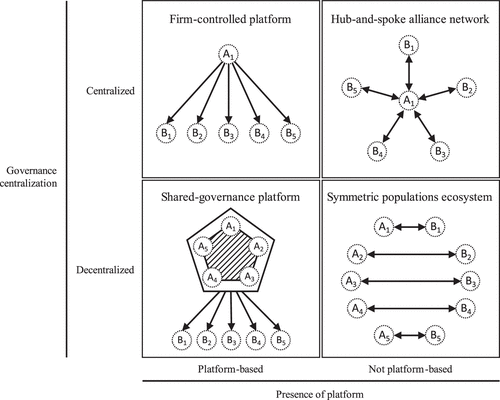
Notes. Letters A and B denote participants producing components on side A and side B of the ecosystem, respectively. Single-headed arrows represent an opt-in governance structure (with unilateral coordination). Two-headed arrows represent a reciprocal governance structure (with bilateral coordination). The shaded box in the lower left quadrant represents a consensus-based governance structure (with multilateral coordination). Dotted lines denote boundaries of residual rights.
4.1. The Firm-Controlled Platform
The firm-controlled platform architecture refers to a platform-based ecosystem governed by a single firm. In the firm-controlled platform architecture, the relationship between platform and complementor rests on opt-in governance. Some canonical examples of firm-controlled platforms (and their corresponding complementors) include Microsoft’s Windows operating system (Windows application developers) (Economides and Katsamakas 2006), Apple’s iOS Appstore (app developers) (Yin et al. 2014, Agarwal and Kapoor 2023, Wang et al. 2024), Amazon’s marketplace (third-party sellers) (Zhu and Liu 2018, Wang and Miller 2020), and video game consoles (video game developers) (Zhu and Iansiti 2012, Ozalp et al. 2018). When the complement is a piece of software (as in Windows, iOS), the platform–complement interface consists of a software developer kit and a set of application programming interfaces (Ye and Kankanhalli 2018). The interface might incorporate a proprietary technical standard that the complementor requires a license in order to use (Toh and Miller 2017). At the simpler end of the spectrum, the interface on a transaction platform (e.g., Amazon, eBay) tends to be an app or a web page.
Complementors are in a take it or leave it relationship with the platform.8 This makes the platform the de facto gatekeeper of ecosystem entry and the writer and enforcer of ecosystem rules (Boudreau and Hagiu 2009, Chen et al. 2022b). Complementors have their own residual profit rights, providing high-powered incentives for investing in innovation (Clough and Wu 2022, Kretschmer et al. 2022). If the complementor disagrees with governance choices that the platform owner makes, the complementor has no recourse to alter those choices but retains the option to exit the ecosystem.
4.2. The Shared-Governance Platform
The shared-governance platform architecture refers to a platform-based ecosystem in which the platform is governed collectively by a coalition of ecosystem participants. The shared-governance platform is, therefore, a composite of two distinct governance structures: the platform itself is managed by a coalition of ecosystem participants under a consensus-based governance structure, whereas the platform’s relationships with its complementors are managed through opt-in governance.
Shared-governance platforms are relatively common, but they receive less attention in strategy research than firm-controlled platforms. Shared-governance platforms include open source operating systems, such as Debian, and open source software with third-party libraries, such as python or R (O’Mahony 2007); blockchain-based platforms, which are controlled collectively by token owners (Chen et al. 2021, Hsieh and Vergne 2023); and platforms managed by multiparty alliances, such as mobile operating system Symbian from 1998 to 2008 (West and Wood 2013). The terms of service in a shared-governance platform might be more permissive than in a firm-controlled platform; for example, the platform might allow complementors to modify the software code of the platform itself by creating their own forked version of an open source project (Karhu et al. 2018). The license terms still tend to be set unilaterally by the platform’s governing coalition, and complementors can take it or leave it though some shared-governance platforms welcome complementors as prospective members of the coalition.
4.3. The Hub-and-Spoke Alliance Network
A set of relationships managed through reciprocal governance can exhibit various network structures. One common network structure is a hub-and-spoke structure, in which one firm (the hub) acts as the ecosystem orchestrator and forms reciprocal governance ties with the other ecosystem participants (Ozcan and Eisenhardt 2009, Adner 2017).9 Customers tend to interact with the hub firm, which allows them to select among bundles of complementary components. I refer to this ideal-type ecosystem architecture as a hub-and-spoke alliance network. The automotive industry uses this architecture: auto manufacturers act as hubs, forming alliances with firms that provide complements (e.g., in-car entertainment, insurance, financing, maintenance) (Pierce 2009, Adner and Lieberman 2021); a car buyer selects a configuration of complements from the menu offered by the auto manufacturer. In the travel industry, a tour operator uses a portfolio of partnerships to assemble bundles of complements (e.g., flights, hotels, bus transfers, and organized excursions) to sell to tourists, acting as a one-stop shop for their travel needs.
Although each tie in the hub-and-spoke structure is bidirectional, the presence of a hub orchestrator creates an asymmetry between the ecosystem’s participants. As in the firm-controlled platform architecture, the orchestrator can communicate a preferred Nash equilibrium choice to the peripheral participants (the spokes), and for the spokes, it is rational to follow the hub’s choice. However, unlike in the platform case, the hub is open to receiving pre-game communication from the spokes prior to making a choice. This pre-game communication becomes valuable in a context with structural uncertainty, distributed information about choice payoffs, and sufficiently well-aligned preferences among players. Under these contingencies, the spokes communicate their local information to the hub, which then aggregates the information to make a collective choice. The hub-and-spoke structure of reciprocal governance can, therefore, help mitigate structural uncertainty when participants’ preferences are sufficiently well-aligned. If players’ preferences are not sufficiently aligned, then cheap talk pre-game communication is no longer credible, and the hub discards information communicated by spokes. Thus, this architecture’s coordination scope is less broad than architectures with consensus-based governance.
4.4. The Symmetric Populations Ecosystem
I define a symmetric populations ecosystem architecture as one in which complementary modules are made by separate sets of producers, and neither side’s module is consistently more central and stable than the other’s; thus, there is no single module around which ecosystem participants organize. Symmetric populations ecosystems can occur when multiple ecosystem sides have an oligopolistic market structure that prevents one player from emerging as the industry’s platform or hub. Examples of this structure include the semiconductor manufacturing industry in which lithography tools, mask, and resist are complementary components (Henderson and Clark 1990, Adner and Kapoor 2010) and the mobile telecommunications ecosystem consisting of mobile network operators and mobile handset manufacturers (Clough 2018).
Symmetric populations ecosystems can also arise when multiple ecosystem sides exhibit low concentration with numerous competing producers. This market structure similarly inhibits the emergence of a single platform or hub. In the residential solar industry, for example, panels, racking, installation, sales, and finance are complementary components; each has relatively low concentration, and different players in the ecosystem are integrated across different sets of activities (Hannah and Eisenhardt 2018). Transportation ecosystems tend to consist of complementary stationary and mobile components (e.g., ports and ships (Greve 2008), airports and aircraft). These ecosystems tend to take on a symmetric populations architecture because the geographically dispersed nature of the stationary infrastructure means the ecosystems lack a platform or hub firm.
Because neither side of the symmetric populations ecosystem is able to unilaterally set terms for the other side to accept or reject, coordination between the two sides tends to rely on reciprocal governance through bilateral social ties. Among the four ideal-type architectures, this one is the least centralized with participants’ residual rights, ecosystem governance, and the network structure of ecosystem interdependences all having a decentralized character.
4.5. The Vertically Integrated Architecture
A vertically integrated architecture is the baseline against which I contrast the four nonintegrated ecosystem architectures. In a vertically integrated architecture, the complementary modules of the ecosystem are produced within one firm. The separability of the modules may or may not be apparent to end users; in some cases, the end users experience the product as a single, tightly integrated artifact (Pil and Cohen 2006, Argyres and Bigelow 2010). In the early days of both the personal computing industry (in the 1970s) and smartphone industry (in the late 1990s), initial entrants developed hardware and software under vertically integrated architectures. In the entertainment industry, Ticketmaster illustrates a vertically integrated architecture through its ownership of concert venues, event promoters, and ticketing services. In the civilian drone ecosystem, DJI employs a vertically integrated strategy that contrasts with the less integrated approach taken by its main competitor, 3DR (Bremner and Eisenhardt 2022).
Under the vertically integrated architecture, complementary modules are produced by subunits of the same firm, and the subunits are connected via hierarchical relationships (Farrell et al. 1998, Hoetker 2006, Kapoor and Lee 2013). Analytically, I assume there are two subunits producing modules A and B, and I treat these as two subsidiaries that report to a corporate headquarters. Residual profits from both subunits flow to the owners of the company as a whole: the headquarters unit takes decisions to maximize profit across the whole firm. Under vertical integration, any disagreement between the two subunits can be resolved through fiat: managers use authority relationships defined by the organizational hierarchy to achieve coordination between different subunits within a firm (Williamson 1991). In other words, governance of the subunits is centralized within the corporate headquarters.
5. Discriminating Alignment Between Architecture and Exchange Context
Williamson (1991) uses the term “discriminating alignment” to refer to congruence between the attributes of a transaction and the institutional structure that governs the transaction: “The discriminating alignment hypothesis…holds that transactions, which differ in their attributes, are aligned with governance structures, which differ in their costs and competencies, in a discriminating (mainly, transaction-cost-economizing) way” (Williamson 1991, p. 277).
The term captures the idea of a contingent fit between an institutional structure, such as a market, hierarchy, or hybrid, and attributes of an exchange context (Makadok and Coff 2009). In this section, I analyze variation among ecosystem architectures through a discriminating alignment lens. I characterize dimensions of the exchange context, and I theorize the relative strengths and weaknesses of each ideal-type architecture along each dimension. Formally, I consider an architecture to be aligned with an exchange context when, all else being equal, the focal architecture is expected to create as much or more value than alternative architectures would. Table 7 summarizes the alignment of each ideal-type architecture with different exchange context dimensions.
|
Table 7. Discriminating Alignment Between Ideal-Type Architectures and Exchange Contexts
| Exchange context dimensions Relevant adaptation attribute | |||
|---|---|---|---|
| Environmental dynamism Coordination speed | Systemic uncertainty Coordination scope | Demand heterogeneity Autonomous adaptation | |
| Firm-controlled platform | ✓✓ | 0 | ✓✓ |
| Hub-and-spoke alliance network | ✓✓ | ✓ | ✓ |
| Symmetric populations ecosystem | ✓ | ✓✓ | ✓ |
| Shared-governance platform | 0 | ✓✓ | ✓✓ |
| Vertically integrated firm | ✓✓ | ✓✓ | 0 |
Note. ✓✓ = strong alignment; ✓ = partial alignment; 0 = weak alignment.
5.1. Dimensions of the Exchange Context
An innovation ecosystem exists within an exchange context that can be characterized along various dimensions (Dess and Beard 1984). Because architectures vary in coordination capacity, to understand architectural variety, I analyze three contextual dimensions that create coordination challenges for ecosystem participants: environmental dynamism, systemic uncertainty, and demand heterogeneity.
5.1.1. Environmental Dynamism.
Environmental dynamism refers to the pace at which environmental changes arise that require adaptation by ecosystem participants. The relevant environmental changes include discrete shocks that alter market conditions (Argyres et al. 2019) and secular trends to which firms must adjust (Dess and Beard 1984). Dynamism arises from many sources, such as shifts in consumer tastes, regulatory changes, geopolitical events, and advances in basic science that open up new technological possibilities. Environmental dynamism varies widely between exchange contexts (Davis et al. 2009, Tatarynowicz et al. 2016). Some markets are inherently fast paced with consumer demands or industry regulations shifting regularly and requiring rapid adaptation from ecosystem participants.
5.1.2. Systemic Uncertainty.
Uncertainty, broadly, refers to an absence of information about the state of the world (Townsend et al. 2018). I use systemic uncertainty to refer to an absence of information relating to choices or payoffs that are interdependent.10 The game-theoretic concepts of structural and strategic uncertainty, defined earlier, are both instances of systemic uncertainty. Systemic uncertainty tends to be high in the nascent phase of new ecosystems, especially those developing generative technologies, because the lack of an ecosystem template leaves participants in a state of low visibility (Dattée et al. 2018, Fang et al. 2021). The emergence of the internet in the 1980s and early 1990s helps illustrate systemic uncertainty: the technology was radically new, technical choices for the system’s design were highly interdependent, and the potential of different technological paths to create value was ex ante unclear (Greenstein 2015). In a contemporary analogue, the emergence of the metaverse in the 2020s exhibits a similarly high level of systemic uncertainty (Clough and Wu 2024, Kaplan and Haenlein 2024).
5.1.3. Demand Heterogeneity.
Markets vary in the extent to which consumer tastes exhibit heterogeneity. In markets for commodities, such gasoline or broadband internet, demand is largely homogeneous. Other markets exhibit an intermediate level of taste heterogeneity: consumers’ tastes vary and a typical consumer purchases just one unit of the product, such as an automobile or a refrigerator. In other markets still, tastes are heterogeneous, and a single consumer values variety for its own sake. For example, consumers of cultural goods such as books, music, movies, dining experiences, craft beers, and video games often value variety in their own consumption patterns (Carroll and Swaminathan 2000).
5.2. Environmental Dynamism and Coordination Speed
When an important market condition shifts, participants in an ecosystem often need to coordinate on their response to the change (Langlois and Robertson 1995, Schmidt and Foss 2025). A product on one side of the ecosystem might need to be updated, for example, to serve emerging customer needs, conform to new regulations, or embrace a novel technology. The technical interdependence between the multiple sides of the ecosystem implies that a corresponding change is often needed to the products on the other sides of the ecosystem. Thus, ecosystem participants need to engage in some form of coordination to adapt to changes (Adner 2012, Kapoor and Lee 2013). The speed with which an architecture allows ecosystem participants to adapt, therefore, matters more when environmental dynamism is higher. The following propositions, and those that follow below, state explicitly how exchange context aligns with architecture.
An economic architecture’s total value creation is weakly increasing in its coordination speed.
As environmental dynamism increases, the marginal difference that coordination speed makes to an economic architecture’s total value creation increases.
As discussed in some detail above, coordination speed depends on an architecture’s governance structure(s).11 Three of the ideal-type economic architectures exhibit high coordination speed: the firm-controlled platform, hub-and-spoke alliance network, and vertically integrated firm. For a firm-controlled platform, high coordination speed results from the centralization of decision making within the platform-owning firm coupled with the unilateral governance of complementors via an opt-in governance structure.
In a hub-and-spoke alliance network, the key attribute that generates fast coordination speed is the network structure of the alliances. When an isolated dyad coordinates using reciprocal governance, coordination can be slowed down when the parties propose different choices (Farrell and Saloner 1988). The hub-and-spoke alliance network, however, breaks the symmetry present in the isolated dyad. The participant at the ecosystem’s hub acts as an ecosystem orchestrator, and if the hub communicates a preferred choice for a new equilibrium design, it is generally rational for the spoke players to match the hub’s choice. The centralized structure of the ecosystem’s communication network acts as a source of power for the hub firm even without assuming any substitutability between the spoke firms (cf. Bae and Gargiulo 2004). Thus, the centralized network structure allows for fast coordination.
Bilateral coordination in a symmetric populations ecosystem is slower than unilateral coordination or hub-and-spoke coordination. The shared-governance platform tends to be slower still because even more parties need to multilaterally coordinate a response to an environmental change. In the multilateral coordination process, there is greater potential for diverging preferences to surface, which can lead to lengthy negotiations about where an appropriate compromise lies.
In a vertically integrated firm, coordination can, in principal, be fast: subunits can transmit recommendations to a corporate headquarters unit, the headquarters unit aggregates that information, and the headquarters unit communicates its preferred choice to the subunits. The headquarters unit’s choice is backed by the weight of hierarchical authority, preventing deadlock from slowing the selection of a coordinated choice.
5.3. Systemic Uncertainty and Coordination Scope
In technological coordination problems, there are often numerous possible equilibrium solutions. Systemic uncertainty makes it challenging for participants to identify and coordinate upon the socially optimal equilibrium solution. A governance structure that enables broad coordination scope helps the participants identify the socially optimal equilibrium by pooling their distributed information, and it helps mitigate the strategic uncertainty inherent in picking a risky but ambitious choice, such as moving early into a new technology generation. The following propositions summarize this argument.
An economic architecture’s total value creation is weakly increasing in its coordination scope.
As systemic uncertainty increases, the marginal difference that coordination scope makes to an economic architecture’s total value creation increases.
Coordination scope also rests on the architecture’s governance structure(s). Three of the ideal-type economic architectures provide broad coordination scope: the shared-governance platform, symmetric populations ecosystem, and the vertically integrated firm. For a shared-governance platform, broad coordination scope derives from the consensus-based governance of the ecosystem. Shared-governance platforms create avenues for complementors’ interests to be reflected in the decision-making process. Although consensus-based governance tends to be slow, it allows information to be pooled from a broad set of ecosystem participants, and the public nature of communication within coalitions helps offset strategic uncertainty. In a symmetric populations ecosystem, reciprocal governance between two firms provides a communication structure analogous to consensus-based governance, hence symmetric populations ecosystems also allow for broad coordination scope.
The vertically integrated architecture internalizes decision-making authority relating to the complementary sides of an ecosystem within firm boundaries (Langlois and Robertson 1995, Helfat and Campo-Rembado 2016). The headquarters unit can, therefore, ensure broad coordination takes place between subunits, making vertical integration a viable architecture in contexts with high systemic uncertainty (Argyres and Bigelow 2010).
5.4. Demand Heterogeneity and Product Variety
Markets with highly heterogeneous tastes are best served by ecosystem architectures that can efficiently deliver massive product variety. Modular systems theory helps us understand the two main ways in which ecosystem architecture can achieve this (Baldwin and Clark 2000, Schilling 2000, Pil and Cohen 2006). First, modular product architecture allows for the division of innovative labor in an ecosystem: generating product variety can fall to one side of the ecosystem (e.g., side B); meanwhile, providing a baseline set of technical capabilities and a marketing channel for the product bundle falls to the other side of the ecosystem (e.g., side A). Second, variety can arise from the combinatorial mathematics of bundling a set of components together. When components are additive and interoperable, a set of n components can generate 2n − 1 distinct, nonempty bundles. For example, with just 10 different cocktail ingredients, a mixologist can generate more than 1,000 distinct beverages using different combinations of ingredients. The generation of variety in a modular architecture rests on autonomous adaptation (Tajedin et al. 2019), which refers to module producers designing distinctive products targeted at specific niches and/or deploying their unique set of skills to make a differentiated product. The following propositions summarize this argument.
An economic architecture’s total value creation is weakly increasing in the level of autonomous adaptation it enables.
As demand heterogeneity increases, the marginal difference that autonomous adaptation makes to an economic architecture’s total value creation increases.
The two platform-based ideal-type architectures—the firm-controlled platform and the shared-governance platform—can deliver massive product variety through the division of innovative labor. The platform itself delivers a foundational set of technical capabilities on which complementors can build. For example, in the video game industry, consoles provide hardware, a programming framework, and graphics processing tools, while game developers (i.e., complementors) deliver massive product variety through thousands of video game titles (Ozalp et al. 2018). Because this division of innovative labor applies in both the firm-controlled platform and the shared-governance platform architectures, I designate both of these architectures as possessing a high capacity for delivering product variety.
Concentrating the generation of variety on one side of an ecosystem allows that side to draw on the heterogeneous capabilities of a large number of autonomous complementors (Toh and Agarwal 2023). The complementors can specialize in creativity: the proverbial “thousand flowers” that bloom (Boudreau 2012). Because they are geographically and organizationally dispersed, they possess heterogeneous knowledge about market niches they can serve, thus enabling them to create products to meet the long tail of heterogenous demand (Brynjolfsson et al. 2011, Afuah and Tucci 2023). In addition, because their creative decisions are decentralized, different complementors might explore overlapping creative niches so that multiple products arise to serve each niche. This contrasts with the scenario in which a central coordinator under a hierarchical structure takes steps to prevent duplication of effort.
Because it uses standardized contracts, opt-in governance is efficient from the perspective of mundane contracting costs, that is, the administrative expenses associated with writing legal contracts (Coase 1937, Baldwin and Clark 2000, Langlois 2006). Legal fees for customized contracts can run into hundreds of dollars (or more) even for simple contracts. In comparison, a terms of service agreement requires some legal expenses for the platform to draft, but it can be reused at zero marginal cost, and many complementors, therefore, face near-zero mundane contracting costs. From a contracting standpoint, opt-in governance creates high economies of scale (Lemley 2006).
Hub-and-spoke alliance networks and symmetric populations ecosystems can facilitate an intermediate level of product variety: less than the platform-based ecosystem architectures but more than the vertically integrated firm. These two architectures generate variety through mix-and-match complementarity. Each consumer needs a product bundle consisting of one component from each side of the ecosystem (Kapoor 2018). The number of possible combinations is, therefore, the product of the number of options available on each side (Baldwin and Clark 2000). Consider an electric guitarist who chooses one guitar model from a set of five alternatives and one amplifier from a set of five alternatives (so there are 10 components in total from which to choose). The guitarist can create 25 possible guitar-plus-amplifier combinations, each of which might have a distinct sound.
The vertically integrated architecture, in which both complementary sides of the ecosystem are produced in-house, is the least suited to generating massive product variety. Vertically integrated firms tend to coordinate innovative effort to avoid the duplication of product development activity; firms produce limited variety to prevent one product from cannibalizing sales of another (Church and Gandal 1992). For example, one major movie studio might release one movie in each main genre in each season, whereas the long tail of heterogeneous demand is served by numerous, small independent studios making lower budget films (Mezias and Mezias 2000, Anderson 2007). When multiple directions are available for a technology’s development trajectory, integrated firms that pursue multiple paths in parallel suffer from incentive and coordination penalties that hinder their innovative output (Eggers 2012).
5.5. Results from Analyzing the Theoretical Framework
5.5.1. The Economic Architecture Trilemma.
The theoretical framework developed in this paper leads to two main results. The first result is that economic architecture exhibits a trilemma, that is, a three-way trade-off in which at most two out of three desirable outcomes can be realized at once. Coordination speed, coordination scope, and autonomous adaptation are all desirable properties of an economic architecture, as Propositions 1a, 2a, and 3a all point out. For the ideal-type economic architectures in this paper’s framework, there exists a trilemma in which only two of these three can be realized.12Figure 2 visualizes this trilemma. The three-way trade-off follows as a consequence of combining Williamson’s (1991) trade-off between autonomous and coordinated adaptation with the trade-off between coordination speed and coordination scope developed in this paper. Crucially, in a nonintegrated architecture, autonomous adaptation can coexist with either coordination speed or coordination scope but not both. In a vertically integrated architecture, coordination speed and scope can coexist, but autonomous adaptation is absent.
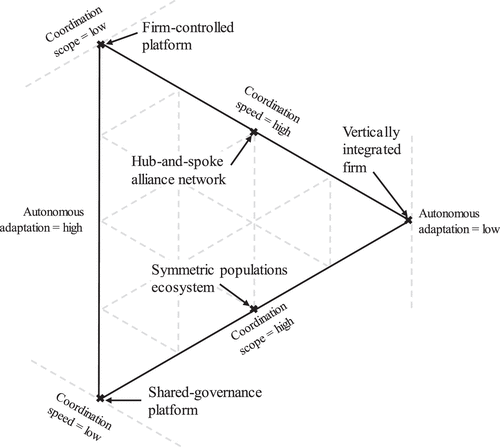
Note. The economic architecture trilemma visualizes how any given economic architecture can provide at most two out of the three adaptation attributes.
5.5.2. Mapping Architectures to Exchange Context Configurations.
The exchange context is characterized by three parameters that collectively form a three-dimensional space of potential configurations. This paper’s second result is a mapping that identifies the best aligned architecture(s) in different regions of that three-dimensional space. Rather than attempt to depict the whole three-dimensional space in one figure, I visualize the space using two-dimensional slices at low and high values of demand heterogeneity. Figure 3 depicts this visualization. The axes on each two-dimensional slice are environmental dynamism and systemic uncertainty. For ease of visual interpretation, I separately plot configurations aligned with the two platform architectures (Figure 3, (a) and (d)), the two nonplatform ecosystem architectures (Figure 3, (b) and (e)), and the vertically integrated architecture (Figure 3, (c) and (f)).
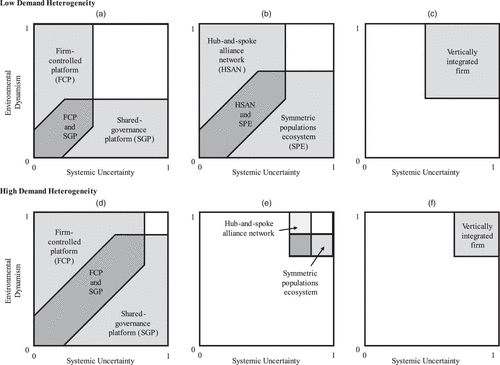
Figure 3 should be interpreted as a set of qualitative predictions about which architectures are most likely to occur, or co-occur, in each exchange context configuration.13 Three predictions in Figure 3 follow intuitively from Table 7: the firm-controlled platform is the sole architecture best aligned with high dynamism, high demand heterogeneity, and low systemic uncertainty; the shared-governance platform is the sole architecture best aligned with low dynamism, high demand heterogeneity, and high systemic uncertainty; and the vertically integrated firm is the sole architecture best aligned with high dynamism, low demand heterogeneity, and high systemic uncertainty.
An interesting result in Figure 3(a) is that firm-controlled platforms and shared-governance platforms can align with contexts that display low demand heterogeneity. This result is counterintuitive if our imagery of platforms focuses exclusively on their potential for generating massive product variety. Firm-controlled platforms offer high coordination speed, which is advantageous under high environmental dynamism even when services are relatively homogeneous (e.g., markets for peer-to-peer lending; see Rietveld et al. 2021). Shared-governance platforms offer high coordination scope, which is useful for resolving systemic uncertainty even when the goods being exchanged are homogeneous (e.g., consortia that set standards for encoding or transferring data).
Other predictions in Figure 3 relate to configurations in which more than one architecture aligns with the exchange context. Under these configurations, one possible outcome is that multiple architectures end up coexisting in parallel in a competitive relationship with one another.14 For example, the framework predicts that contexts with high demand heterogeneity, coupled with low-to-moderate environmental dynamism and systemic uncertainty, align with both firm-controlled platforms and shared-governance platforms (see Figure 3(d)) because both these architectures facilitate massive product variety. Consistent with this prediction, multiple markets exist in which a firm-controlled platform and a shared-governance platform coexist and compete with one another, such as PC operating systems (Windows and Linux), statistical software (Stata and R), mobile operating systems (iOS and early Android), and mapping platforms (Google Maps and OpenStreetMap) (Economides and Katsamakas 2006, Nagaraj and Piezunka 2024).
Multiple architectures can also coexist in parallel in a synergistic relationship with one another. As Figure 3 shows, the contextual configuration with low demand heterogeneity and low-to-moderate environmental dynamism aligns with both shared-governance platforms and symmetric populations ecosystems. This pair of architectures sometimes coexists within different institutional layers within the same broader industry. An example of this is the mobile telecommunications ecosystem. During upstream technology development, ecosystem participants engage in joint standard-setting processes mediated by standard-setting organizations (Simcoe 2012, Ranganathan and Rosenkopf 2014, Jones et al. 2021), an example of a shared-governance platform. Meanwhile, downstream product market competition is largely decoupled from the standard-setting process. During the product market competition phase, firms collaborate through bilateral strategic alliances. Thus, the mobile telecommunication industry can be understood as a combination of a shared-governance platform and a symmetric populations ecosystem. The two layers of the industry are necessarily decoupled for antitrust reasons to prevent the standard-setting organization being used to organize anticompetitive behavior.
6. Discussion
Innovation and platform-based ecosystems account for an ever-increasing proportion of the global economy (Altman et al. 2022). Understanding ecosystem architecture is a high priority for strategy research because architecture has a major impact on value creation and value capture in the ecosystem (Jacobides et al. 2006, Uzunca et al. 2022). In this paper, I first establish that, across three common ecosystem governance structures—opt-in governance, reciprocal governance, and consensus-based governance—a trade-off exists between coordination speed and coordination scope. I then develop a typology of ecosystem architectures, and I analyze why certain architectures fit with certain exchange contexts. The resulting framework yields two main results. First, it identifies an architectural trilemma in which an architecture can provide at most two out of coordination speed, coordination scope, and autonomous adaptation. Second, it generates a discriminating alignment map that predicts which economic architectures are aligned with which configurations of environmental parameters.
In this discussion section, I first outline two high-level theoretical contributions the paper makes to strategic management: it situates ecosystems in the markets-and-hierarchies framework of institutional economics with greater granularity than prior work, and it demonstrates a novel approach to analyzing ecosystem-level coordination as the basis for architecture–environment fit. I then discuss some of the framework’s broader implications for ecosystem architecture research, highlighting blended architectures and transitions between architectures as topics on which it sheds light.
6.1. Theoretical Contributions
6.1.1. Situating Ecosystems in the Markets-and-Hierarchies Framework.
Existing research characterizes platforms and ecosystems as hybrids that lie somewhere between markets and hierarchies in the Williamsonian framework of transaction cost economics (Williamson 1991, Kretschmer et al. 2022). Within this framework, existing research analyzes ecosystem heterogeneity in terms how tightly an orchestrator, such as a platform owner, controls what happens in the ecosystem (Boudreau 2010, Altman et al. 2022, Chen et al. 2022a). Ecosystems lie on a spectrum with heavy-handed orchestration at one end (making the ecosystem closer to a hierarchy), and light-touch orchestration at the other end (making the ecosystem closer to a market). In line with Williamson (1991), the basic trade-off on this spectrum is between coordinated adaptation and autonomous adaptation.
In this paper, I split Williamson’s coordinated adaptation into coordination speed and coordination scope. I also split hybrid governance into three qualitatively distinct governance structures: opt-in governance, reciprocal governance, and consensus-based governance. Table 6 summarizes how these hybrid governance structures are each based on different legal instruments, and each offers a distinctive set of adaptation attributes. These two steps, by themselves, constitute a useful step forward in theorizing about ecosystem governance. They also allow me to introduce a novel dimension into the conceptual space of ecosystem heterogeneity. I show that, rather than lying on a one-dimensional spectrum, ecosystem architectures lie in a two-dimensional space. The architectural trilemma (i.e., Figure 2) depicts this two-dimensional space. The horizontal dimension in Figure 2 corresponds to a spectrum going from greater autonomous adaptation on the left to greater coordinated adaptation on the right. The vertical dimension in Figure 2 captures the trade-off between coordination speed and coordination scope. When coordinated adaptation is most limited (on the left side of Figure 2), the trade-off between coordination speed and scope is most acute.
6.1.2. Ecosystem-Level Coordination as the Basis for Architecture–Environment Fit.
This paper introduces a new approach for analyzing ecosystem-level coordination and demonstrates its potential by applying it to the question of architecture–environment fit. The two distinctive elements of this new approach are (i) treating governance structures as channels for pre-game cheap talk communication in a coordination game and (ii) treating ecosystem architectures as assemblages of governance structures.
The first distinctive element of my approach is a departure from prior research, which tends to analyze governance structures as vehicles for establishing cooperation, resolving prisoners’ dilemma-type games by reducing the payoff for opportunistic behavior (Parkhe 1993, Agarwal et al. 2010). Governance structures can establish cooperation through binding contracts or through “shadow of the future” and reputational mechanisms over the course of repeated interactions (Jones et al. 1997, Zhelyazkov and Gulati 2016). Akin to a study by Agarwal et al. (2010), I treat interfirm governance structures as communication channels. Unlike their study, I focus on the role of communication in resolving coordination problems rather than cooperation dilemmas, a choice predicated on the idea that technical coordination in ecosystem settings is challenging (Simcoe and Watson 2019).
The second distinctive element of my approach—treating ecosystem architectures as assemblages of governance structures—extends the logic of the microstructural approach to organization design to the ecosystem level (Puranam 2018). I propose that we can usefully treat governance structures as building blocks, or microstructures, of ecosystem architecture. We can then analyze an architecture as a network of governance structures, in which the network’s topology can imbue the architecture with emergent properties, such as rapid coordination capacity in a hub-and-spoke network. I thus answer Shipilov and Gawer’s (2020) call for greater integration between network and ecosystem theories.
Together these two distinctive elements allow us to better understand variety among ecosystem architectures and explain which architectures align with which environments. Considerable past research links environmental attributes to vertical scope, pinpointing contexts under which vertically integrated or nonintegrated architectures are more viable (Jacobides and Billinger 2006, Cuypers et al. 2021). This paper expands on that research to explain how environmental attributes influence which out of an array of ecosystem architectures fits with a given set of contextual conditions.
6.2. Theoretical Implications and Potential Extensions
6.2.1. Blended Architectures.
The paper develops a deductive typology of ideal-type ecosystem architectures, thus helping advance how we understand the theoretical underpinnings of ecosystems. Because the typology focuses on ideal-type architectures, not all real-world ecosystems neatly fit a single ideal type (Doty and Glick 1994). Blended architectures combine features of more than one ideal-type architecture; for example, a platform that offers first-party complements is a blend of firm-controlled platform and vertical integration (Hagiu and Spulber 2013, Zhu and Liu 2018). From a coordination standpoint, both the firm-controlled platform and vertical integration offer high coordination speed, so any synergy derived from blending them is likely to arise in a highly dynamic environment. Vertical integration offers high coordination scope, so a platform-owning firm might rely more on first-party complements when systemic uncertainty is high, for example, when launching a new platform or facing a radical technological discontinuity for an existing platform (Anderson and Tushman, 1990, Ozalp et al. 2018, Wu et al. 2019).
Other blended architectures await systematic research. For example, the blended architecture in which a pair of firm-controlled platforms ally with one another has received relatively little research attention. To illustrate, Uber operates a ride-sharing service as a firm-controlled platform (managing drivers through an opt-in governance structure), also partnering with Spotify to provide in-vehicle music to its riders (through a reciprocal governance structure). Similarly, the blended architecture by which a firm-controlled platform participates in an open source community deserves greater scrutiny (Alexy et al. 2013, 2018). The microstructural approach in this paper provides a grammar that we can use to discuss and analyze such blended architectures as composites of multiple different governance structures.
6.2.2. Ecosystem Dynamics and Transitions Between Architectures.
Innovation ecosystems are inherently dynamic, and ecosystems may transition between architectures over time (O’Mahony and Karp 2022, Baldwin 2024). Discriminating alignment theories are sometimes critiqued for having a static character, and this would raise questions over whether this paper’s theory applies to ecosystems in flux. To the contrary, I believe the theory of architecture–environment fit can apply to dynamic settings, not just to equilibrium settings. An important implication of the framework is that, as environmental parameters shift over time, the architectures that align with the environment change as well. The framework can thereby help explain ecosystem dynamics and transitions between architectures.
Consider a new technology that emerges under high systemic uncertainty and high environmental dynamism. The framework suggests that vertical integration aligns with these circumstances because of the broad coordination scope and high coordination speed it provides. Over time, systemic uncertainties might resolve and/or environmental dynamism might decline. The theory suggests that this allows a nonintegrated ecosystem architecture to emerge, consistent with Baldwin’s (2024) concept of centrifugal forces leading to vertical separation of ecosystem activities. The theory of architecture–environment fit further predicts that the path along which the architecture evolves depends on the balance between systemic uncertainty and environmental dynamism in the shifting market context.
If there is latent demand heterogeneity in a market and environmental dynamism outweighs systemic uncertainty, the theory predicts that, at first, a hub-and-spoke alliance network emerges, and then, later, a firm-controlled platform architecture is likely to emerge. This architectural pathway retains coordination speed—to handle high environmental dynamism—as vertical integration gives way to vertical separation. This dynamic transition, depicted by trajectory A in Figure 4, is consistent with the early history of computing in the 1970s and the early history of smartphones in the 2000s. In both cases, early entrants were vertically integrated (e.g., Apple, BlackBerry). As the industries evolved, a few firms emerged as hubs, sourcing software from third parties through alliance ties (e.g., IBM, NTT DoCoMo). Later still, firm-controlled platforms came to dominate both ecosystems (e.g., Windows, iOS).
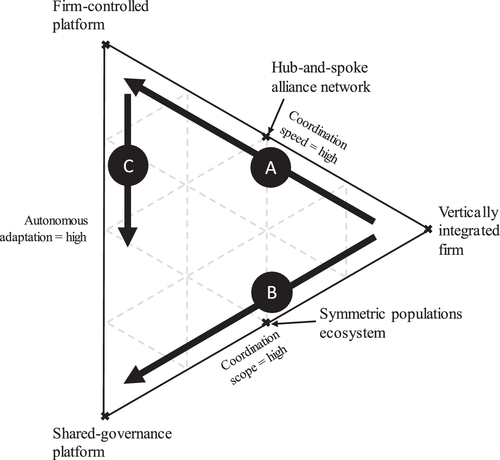
If there is latent demand heterogeneity in a market, but systemic uncertainty does not decline, the theory predicts that ecosystem participants advance the technology by establishing bilateral relationships and building a shared-governance platform. This architectural pathway facilitates broad coordination scope in a systemically uncertain environment, also drawing more participants into a coalition that supports the technology. This dynamic transition, depicted by trajectory B in Figure 4, is consistent with the early history of the internet. Early internet technologies were developed inside large, integrated organizations (the United States’ DARPA and Europe’s CERN). Early ecosystem joiners (e.g., university-based and corporate research labs) were brought into a decentralized network structure (rather than a hub-and-spoke structure). Technical specifications underlying the internet were later formally defined and incorporated into standards governed under a shared-governance platform architecture.
At a smaller scale, architectural transitions can occur when managers in a single firm choose to shift the governance structures they use to manage the firm’s relationships with its complementors. For example, as depicted in trajectory C in Figure 4, managers might choose to involve complementors in the governance of the firm’s proprietary platform, shifting the architecture away from a pure firm-controlled platform by incorporating elements of a shared-governance platform (O’Mahony and Karp 2022). This paper’s framework suggests that these firm-level architectural transitions are a possible way for a firm to achieve alignment between its ecosystem’s architecture and its market context.
6.2.3. Architectures, Capabilities, and Competition.
This paper’s framework is not totally deterministic: multiple architectures align with the environment in many parts of the parameter space in Figure 3. In this sense, I am proposing that the environment circumscribes a set of architectures that are potentially effective; firm-level strategies—which are informed by firm-level capabilities—could then guide which architecture a firm attempts to orchestrate in a given ecosystem. The paper, thus, complements research that studies how managers develop architectural strategies for the ecosystems in which they participate (e.g., Adner and Lieberman 2021).
When a diversified technology company operates across multiple ecosystems, the paper’s framework implies that it ought to pursue different architectural visions in different exchange contexts in order to achieve architecture–environment fit. Microsoft provides a vivid example of this approach: it participates in some ecosystems as a firm-controlled platform (e.g., Windows); others as part of a shared-governance platform (e.g., GitHub); and in still other ecosystems, it is pursuing vertical integration (e.g., the acquisition of Activision Blizzard in its videogame business).15 Along the same lines, a diversified technology company that attempts to operate multiple ecosystems using the same architecture without regard to differences in market context is likely to have mixed success at best.16
When different sets of ecosystem participants pursue different architectural visions, multiple architectures might compete head to head. The theoretical framework in this paper can predict whether the two architectures are likely to coexist or whether one outcompetes the other because it is a better fit with the environment. As I note, firm-controlled platforms and shared-governance platforms often co-occur (e.g., iOS and early Android). The coordination trade-off theorized in this paper allows us to make predictions over how competition between these two architectures plays out. Firm-controlled platforms have an advantage in coordination speed, meaning they might enter new markets earlier than shared-governance platforms. Meanwhile, shared-governance platforms offer broader coordination scope. In a nascent ecosystem, a firm-controlled platform is, therefore, expected to take an early lead in market share with a shared-governance platform catching up later. An initial comparison of iOS and Android market share in the 2009–2012 period provides evidence consistent with the coordination trade-off (Parker et al. 2017); future work could test this more systematically.17
6.3. Conclusion
In this article, I argue that ecosystem architectures can align with market contexts; specifically, architectures differ in how well they handle environmental dynamism, systemic uncertainty, and demand heterogeneity. Integrating Williamson’s foundational work on hybrid governance arrangements with the game-theoretic approach to technical coordination, I introduce a novel distinction between the coordination speed and coordination scope that ecosystem governance structures provide, and I uncover an architectural trilemma in which a single architecture is well-aligned to at most two out of these three contextual dimensions.
The framework in this paper offers some simple rules of thumb for ecosystem architects. In settings with high environmental dynamism, centralized governance structures outperform the alternatives because they offer higher coordination speed. In settings with high systemic uncertainty (aka low visibility), decentralized governance is more likely to be effective because it offers broad coordination scope. Vertical integration can work well under environmental dynamism or systemic uncertainty, but it sacrifices one of the crucial benefits of nonintegrated ecosystem architectures, which is the capacity to deliver massive product variety.
The framework developed in this article sheds light on what makes ecosystems distinctive as institutional arrangements for economic activity. It provides tools for analyzing how governance structures, and the network structures in which they appear, facilitate ecosystem coordination. Future research could expand this perspective further by studying processes that result in alignment, or misalignment, between ecosystem architectures and environments. Lastly, the microstructural approach to ecosystem architecture, introduced in this paper, could act as a promising foundation for future research on increasingly complex economic architectures.
The author wishes to thank Oliver Alexy, Chaitanya Kaligotla, Tommy Pan Fang, and Andy Wu for providing detailed comments on earlier versions of this paper and senior editor Gwendolyn Lee and two anonymous reviewers for their excellent feedback during the review process. The paper benefited tremendously from feedback the author received at the Decentralization in Organizations Conference at Imperial College London in 2023. The author especially thanks Carliss Baldwin, Michael Jacobides, Catherine Maritan, PK Toh, and Chris Tucci for feedback and conversations that influenced the paper’s development. Many ideas in this paper derive from the PhD dissertation the author completed at INSEAD. The author wishes to acknowledge the formative conversations he had about ecosystems and industry architecture with Philip Anderson, to whom he dedicates this paper. The author is grateful for developmental input on his dissertation provided by Vikas Aggarwal, Jason Davis, Vibha Gaba, Henrich Greve, Xiaowei Rose Luo, Henning Piezunka, Balagopal Vissa, other colleagues at INSEAD, and the many scholars with whom he interacted when attending conferences and workshops as a doctoral student. Any errors remain the author’s own.
1 In platform literature, the two sides of a two-sided platform are complementors and end users. I depart from that terminology here in order to situate platforms alongside other ecosystem structures. Taking the end user’s perspective, the platform is one side of the ecosystem (side A), and the complementor is the other side (side B).
2 Early platform research focuses on internal product platforms within firms, whereas the later architectural definition of platform encompassed “internal” and “external” platforms (Baldwin and Woodard 2009, p. 26). Because this paper focuses on the ecosystem as its primary level of analysis, I restrict my focus to external platforms. This approach is consistent with the idea that a platform ecosystem is vertically nonintegrated by definition.
3 Compatibility between at least one pair of complementary components (e.g., X1 and Y1) is, by definition, necessary for value creation in an ecosystem. Competing components (e.g., X1 and X2) may or may not be compatible with the same complements. The (in)compatibility of competing components is sometimes dictated by the ecosystem’s architecture, and at other times, the firms themselves choose whether to make their components compatible.
4 In the pure coordination game, the optimal approach to sending cheap talk messages is to use a mixed strategy, sending left or right with equal probability. In a given round of communication, there is, thus, a 50% chance that two players’ messages coincide, resolving the coordination problem. Each round of communication, therefore, reduces the overall probability of miscoordination by 50%. In a mixed-motive coordination game, the optimal approach to sending cheap talk messages is still to use a mixed strategy, but the odds of picking left and right to send are no longer equal, and the probability of players’ messages coinciding in a given round of communication is less than 50% (and gets smaller the more divergent the players preferences) (Farrell and Saloner 1988).
5 In terms of the coordination games introduced above, I conceptualize coordination speed as the number of rounds of pre-game cheap talk communication it takes for one choice to become the consensus choice among the players (i.e., become focal).
6 To be precise, one-directional communication leaves complementors with two options: they either coordinate with the platform, or they can exit the ecosystem altogether. If the payoff structure is such that complementors prefer to exit the ecosystem rather than adopt the platform’s preferred interface, then coordination fails and the ecosystem collapses (Clough and Zhong 2026).
7 In the pure coordination game in Table 1, each round of bilateral pre-game communication has a 50% chance of establishing one choice (left or right) as focal, so in expectation, two periods of communication are needed to achieve coordination. If communication is unilateral, one period of communication is sufficient.
8 In a few cases, superstar complementors, such as flagship titles for consoles, might be able to negotiate favorable license terms (Binken and Stremersch 2009), but most complementors are offered a standard set of license terms.
9 Conceptually, I draw a distinction between a hub and a platform. As outlined above, I define a platform as a stable component in a modular technological system that has at least one external, public-facing interface with which complementors can connect. Although a hub is also a stable component, the interfaces that connect the hub’s component to its partners’ components are not public-facing. Hubs sometimes make the strategic choice to open an interface that was previously private (Stonig et al. 2022). In this paper’s framework, such a move represents an attempt to transition from a hub-and-spoke alliance network architecture to a firm-controlled platform architecture.
10 Systemic uncertainty contrasts with localized uncertainty, which refers to an absence of information about choices or payoffs that are independent. Localized uncertainty relates to peripheral modules in a decomposable system. Rather than treat localized uncertainty as a distinct parameter, I view it as underpinning demand heterogeneity. If demand for peripheral modules is ex ante uncertain, an ecosystem that provides product variety creates more value.
11 For an architecture that is a composite of multiple governance structures (e.g., the shared-governance platform), the architecture’s coordination speed depends on the slowest governance structure.
12 To be clear, the theoretically maximal levels of coordination speed, coordination scope, and autonomous adaptation that are associated with a given architecture are not always realized. The realized level of each adaptation attribute can fall behind the efficient frontier if participants do not execute the architecture well.
13 A full account of how discriminating alignment between architecture and context arises in practice is beyond the scope of this article. However, to sketch an outline that could guide future research, two processes are likely central. First, a firm that launches a novel ecosystem under an aligned architecture is more likely to succeed than a firm that launches an ecosystem under a misaligned architecture. Second, managers with high strategic foresight are more likely to select aligned architectures than misaligned architectures when crafting a template for a new ecosystem. Future research could shed light on these two processes although doing so requires more studies of unsuccessful ecosystem launch attempts (e.g., Ozcan and Santos 2015), a genre of paper that is relatively uncommon at present.
14 Another possible outcome when a context aligns with multiple architectures is that a secondary set of contingencies ends up determining which architecture comes to dominate a market. Such secondary contingencies could include regulatory restrictions, power asymmetries between ecosystem actors, firms’ preexisting capabilities, and the architectural choices of early movers in an emerging ecosystem.
15 I am grateful to an anonymous reviewer for sharing this theoretical implication and example.
16 Future work could investigate whether this theoretical explanation accounts for failures such as Alphabet’s string of abandoned attempts to launch firm-controlled platforms across various markets (e.g., Stadia (cloud gaming) and Google Glass (wearable hardware)).
17 Android also helps to illustrate a transition from an ideal type to a blended architecture. Android, in effect, made a transition from a shared-governance platform at launch to a blended architecture in which Google operates Android as a firm-controlled platform, also acting as the hub in a hub-and-spoke alliance network in which smartphone manufacturers install customized versions of Android on their devices (Chen et al. 2022b).
References
- (2012) The Wide Lens: A New Strategy for Innovation (Penguin, New York).Google Scholar
- (2017) Ecosystem as structure: An actionable construct for strategy. J. Management 43(1):39–58.Crossref, Google Scholar
- (2019) Interdependence, perception, and investment choices: An experimental approach to decision making in innovation ecosystems. Organ. Sci. 30(1):109–125.Link, Google Scholar
- (2010) Value creation in innovation ecosystems: How the structure of technological interdependence affects firm performance in new technology generations. Strategic Management J. 31(3):306–333.Crossref, Google Scholar
- (2021) Disruption through complements. Strategy Sci. 6(1):91–109.Link, Google Scholar
- (2023) Reflections on the 2022 AMR decade award: Crowdsourcing as a solution to distant search. Acad. Management Rev. 48(4):597–610.Crossref, Google Scholar
- (2023) Value creation tradeoff in business ecosystems: Leveraging complementarities while managing interdependencies. Organ. Sci. 34(3):1216–1242.Link, Google Scholar
- (2010) The role of incentives and communication in strategic alliances: An experimental investigation. Strategic Management J. 31(4):413–437.Crossref, Google Scholar
- (2013) Cui bono? The selective revealing of knowledge and its implications for innovative activity. Acad. Management Rev. 38(2):270–291.Crossref, Google Scholar
- (2018) Surrendering control to gain advantage: Reconciling openness and the resource-based view of the firm. Strategic Management J. 39(6):1704–1727.Crossref, Google Scholar
- (2022) The translucent hand of managed ecosystems: Engaging communities for value creation and capture. Acad. Management Ann. 16(1):70–101.Crossref, Google Scholar
- (1990) Technological discontinuities and dominant designs: A cyclical model of technological change. Admin. Sci. Quart. 35(4):604–633. Crossref, Google Scholar
- (2007) The Long Tail: How Endless Choice Is Creating Unlimited Demand (Random House, New York).Google Scholar
- (2010) Innovation, modularity, and vertical deintegration: Evidence from the early US auto industry. Organ. Sci. 21(4):842–853.Link, Google Scholar
- (2019) Strategic responses to shocks: Comparative adjustment costs, transaction costs, and opportunity costs. Strategic Management J. 40(3):357–376.Crossref, Google Scholar
- (2004) Partner substitutability, alliance network structure, and firm profitability in the telecommunications industry. Acad. Management J. 47(6):843–859.Crossref, Google Scholar
- (2024) Design Rules, Volume 2: How Technology Shapes Organizations (MIT Press, Cambridge, MA).Crossref, Google Scholar
- (2000) Design Rules, Volume 1: The Power of Modularity (MIT Press, Cambridge, MA).Crossref, Google Scholar
- (2009)
The architecture of platforms: A unified view. Gawer A, ed. Platforms, Markets and Innovation (Edward Elgar Publishing, Cheltenham, UK), 19–44.Crossref, Google Scholar - (2019) Strategic redundancy in the use of big data: Evidence from a two-sided labor market. Strategy Sci. 4(4):298–322.Link, Google Scholar
- (2009) The effect of superstar software on hardware sales in system markets. J. Marketing 73(2):88–104.Crossref, Google Scholar
- (2010) Open platform strategies and innovation: Granting access vs. devolving control. Management Sci. 56(10):1849–1872.Link, Google Scholar
- (2012) Let a thousand flowers bloom? An early look at large numbers of software app developers and patterns of innovation. Organ. Sci. 23(5):1409–1427.Link, Google Scholar
- (2009)
Platform rules: Multi-sided platforms as regulators . Gawer A, ed. Platforms, Markets and Innovation (Edward Elgar Publishing, Cheltenham, UK), 163–191.Crossref, Google Scholar - (1996)
Strategic and structural uncertainty in games . Zeckhauser RJ, Keeney RL, Sebenius JK, eds. Wise Choices: Decisions, Games, and Negotiations (Harvard Business School Press, Boston), 221–232.Google Scholar - (1996) Co-Opetition (Doubleday, New York).Google Scholar
- (2022) Organizing form, experimentation, and performance: Innovation in the nascent civilian drone industry. Organ. Sci. 33(4):1645–1674.Link, Google Scholar
- (2011) Goodbye Pareto principle, hello long tail: The effect of search costs on the concentration of product sales. Management Sci. 57(8):1373–1386.Link, Google Scholar
- (2000) Why the microbrewery movement? Organizational dynamics of resource partitioning in the U.S. brewing industry. Amer. J. Sociol. 106(3):715–762.Crossref, Google Scholar
- (2013) Leadership by example in the weak-link game. Econom. Inquiry 51(4):2028–2043.Crossref, Google Scholar
- (2026) Incentive alignment in ecosystems: The role of complementarity types and multi-sided bargaining. Strategic Management J. 47(1):228–256.Crossref, Google Scholar
- (2021) Decentralized governance of digital platforms. J. Management 47(5):1305–1337.Crossref, Google Scholar
- (2022a) Governance and design of digital platforms: A review and future research directions on a meta-organization. J. Management 48(1):147–184.Crossref, Google Scholar
- (2022b) Platform governance design in platform ecosystems: Implications for complementors’ multihoming decision. J. Management 48(3):630–656.Crossref, Google Scholar
- (1992) Integration, complementary products, and variety. J. Econom. Management Strategy 1(4):651–675.Crossref, Google Scholar
- (2018) Coordination and interorganizational networks in innovation ecosystems. Unpublished doctoral dissertation, INSEAD, Fontainebleau, France.Google Scholar
- (2022) Artificial intelligence, data-driven learning, and the decentralized structure of platform ecosystems. Acad. Management Rev. 47(1):184–189.Crossref, Google Scholar
- (2024) Metaverse management as urban planning: Lessons from Paradise (Nevada). California Management Rev. 66(4):121–139.Crossref, Google Scholar
- (2026)
When platforms aren’t forever: What drives established platform-based ecosystems into decline? Huang P, Mithas S, eds. Research Handbook on Platform Ecosystems (Edward Elgar Publishing, Cheltenham, UK).Google Scholar - (1937) The nature of the firm. Economica 4(16):386–405.Crossref, Google Scholar
- (2020)
Recent advances in experimental coordination games . Capra CM, Croson RTA, Rigdon ML, Rosenblat TS, eds. Handbook of Experimental Game Theory (Edward Elgar Publishing, Cheltenham, UK), 149–183.Crossref, Google Scholar - (1989) Communication in the battle of the sexes game: Some experimental results. RAND J. Econom. 20(4):568–587.Crossref, Google Scholar
- (1992) Communication in coordination games. Quart. J. Econom. 107(2):739–771.Crossref, Google Scholar
- (2017) Editor’s comments: Developing propositions, a process model, or a typology? Addressing the challenges of writing theory without a boilerplate. Acad. Management Rev. 42(1):1–9.Crossref, Google Scholar
- (2019) Experiments on cognition, communication, coordination, and cooperation in relationships. Annual Rev. Econom. 11(1):167–191.Crossref, Google Scholar
- (2019) The Business of Platforms: Strategy in the Age of Digital Competition, Innovation, and Power (Harper Business, New York).Google Scholar
- (2021) Transaction cost theory: Past progress, current challenges, and suggestions for the future. Acad. Management Ann. 15(1):111–150.Crossref, Google Scholar
- (2018) Maneuvering in poor visibility: How firms play the ecosystem game when uncertainty is high. Acad. Management J. 61(2):466–498.Crossref, Google Scholar
- (2009) Optimal structure, market dynamism, and the strategy of simple rules. Admin. Sci. Quart. 54(3):413–452.Crossref, Google Scholar
- (1984) Dimensions of organizational task environments. Admin. Sci. Quart. 29(1):52–73.Crossref, Google Scholar
- (1994) Typologies as a unique form of theory building: Toward improved understanding and modeling. Acad. Management Rev. 19(2):230–251.Crossref, Google Scholar
- (2006) Two-sided competition of proprietary vs. open source technology platforms and the implications for the software industry. Management Sci. 52(7):1057–1071.Link, Google Scholar
- (2012) Falling flat: Failed technologies and investment under uncertainty. Admin. Sci. Quart. 57(1):47–80.Crossref, Google Scholar
- (2021) Platform diffusion at temporary gatherings: Social coordination and ecosystem emergence. Strategic Management J. 42(2):233–272.Crossref, Google Scholar
- (1987) Cheap talk, coordination, and entry. RAND J. Econom. 18(1):34–39.Crossref, Google Scholar
- (1996) Cheap talk. J. Econom. Perspect. 10(3):103–118.Crossref, Google Scholar
- (1988) Coordination through committees and markets. RAND J. Econom. 19(2):235–252.Crossref, Google Scholar
- (1998) The vertical organization of industry: Systems competition versus component competition. J. Econom. Management Strategy 7(2):143–182.Crossref, Google Scholar
- (2020) From rugged landscapes to rugged ecosystems: Structure of interdependencies and firms’ innovative search. Acad. Management Rev. 45(3):646–674.Crossref, Google Scholar
- (2014) Bridging differing perspectives on technological platforms: Toward an integrative framework. Res. Policy 43(7):1239–1249.Crossref, Google Scholar
- (2015) How the Internet Became Commercial: Innovation, Privatization, and the Birth of a New Network (Princeton University Press, Princeton, NJ).Crossref, Google Scholar
- (2008) Bigger and safer: The diffusion of competitive advantage. Strategic Management J. 30(1):1–23.Crossref, Google Scholar
- (2013) First-party content and coordination in two-sided markets. Management Sci. 59(4):933–949.Link, Google Scholar
- (2018) How firms navigate cooperation and competition in nascent ecosystems. Strategic Management J. 39(12):3163–3192.Crossref, Google Scholar
- (2020) Resolving governance disputes in communities: A study of software license decisions. Strategic Management J. 41(10):1837–1868.Crossref, Google Scholar
- (2016) Integrative capabilities, vertical integration, and innovation over successive technology lifecycles. Organ. Sci. 27(2):249–264.Link, Google Scholar
- (2018) Dynamic and integrative capabilities for profiting from innovation in digital platform-based ecosystems. Res. Policy 47(8):1391–1399.Crossref, Google Scholar
- (1990) Architectural innovation: The reconfiguration of existing product technologies and the failure of established firms. Admin. Sci. Quart. 35(1):9–30.Crossref, Google Scholar
- (2006) Do modular products lead to modular organizations? Strategic Management J. 27(6):501–518.Crossref, Google Scholar
- (2023) The future of the web? The coordination and early-stage growth of decentralized platforms. Strategic Management J. 44(3):829–857.Crossref, Google Scholar
- (2006) Designing the boundaries of the firm: From “make, buy, or ally” to the dynamic benefits of vertical architecture. Organ. Sci. 17(2):249–261.Link, Google Scholar
- (2015) Kingpins, bottlenecks, and value dynamics along a sector. Organ. Sci. 26(3):889–907.Link, Google Scholar
- (2018) Towards a theory of ecosystems. Strategic Management J. 39(8):2255–2276.Crossref, Google Scholar
- (2024) Externalities and complementarities in platforms and ecosystems: From structural solutions to endogenous failures. Res. Policy 53(1):104906.Crossref, Google Scholar
- (2006) Benefiting from innovation: Value creation, value appropriation and the role of industry architectures. Res. Policy 35(8):1200–1221.Crossref, Google Scholar
- (1997) A general theory of network governance: Exchange conditions and social mechanisms. Acad. Management Rev. 22(4):911–945.Crossref, Google Scholar
- (2021) The evolution of cooperation in the face of conflict: Evidence from the innovation ecosystem for mobile telecom standards development. Strategic Management J. 42(4):710–740.Crossref, Google Scholar
- (2020) Organizational structure, information processing, and decision-making: A retrospective and road map for research. Acad. Management Ann. 14(1):267–302.Crossref, Google Scholar
- (2024) To be or not to be: Will virtual worlds and the metaverse gain lasting traction? California Management Rev. 66(4):5–22.Crossref, Google Scholar
- (2013)
Collaborating with complementors: What do firms do . Adner R, Oxley JE, Silverman BS, eds. Collaboration and Competition in Business Ecosystems (Emerald Group Publishing, Bingley, UK), 3–25.Crossref, Google Scholar - (2018) Ecosystems: Broadening the locus of value creation. J. Organ. Design 7(1):12.Crossref, Google Scholar
- (2013) Coordinating and competing in ecosystems: How organizational forms shape new technology investments. Strategic Management J. 34(3):274–296.Crossref, Google Scholar
- (2018) Exploiting and defending open digital platforms with boundary resources: Android’s five platform forks. Inform. Systems Res. 29(2):479–497.Link, Google Scholar
- (2022) Mutualism and the dynamics of new platform creation: A study of Cisco and fog computing. Strategic Management J. 43(3):476–506.Crossref, Google Scholar
- (1994) Creating expectational assets in the laboratory: Coordination in “weakest-link” games. Strategic Management J. 15(S1):101–119.Crossref, Google Scholar
- (2022) Platform ecosystems as meta-organizations: Implications for platform strategies. Strategic Management J. 43(3):405–424.Crossref, Google Scholar
- (2006) The secret life of mundane transaction costs. Organ. Stud. 27(9):1389–1410.Crossref, Google Scholar
- (1995) Firms, Markets and Economic Change: A Dynamic Theory of Business Institutions (Routledge, London).Crossref, Google Scholar
- (2007) The significance of network resources in the race to enter emerging product markets: The convergence of telephony communications and computer networking, 1989–2001. Strategic Management J. 28(1):17–37.Crossref, Google Scholar
- (2003) From a firm-based to a community-based model of knowledge creation: The case of the Linux kernel development. Organ. Sci. 14(6):633–649.Link, Google Scholar
- (2018) What makes a decision strategic? Strategy Sci. 3(4):558–573.Link, Google Scholar
- (2006) Terms of use. Minnesota Law Rev. 91(2):459–483.Google Scholar
- (2009) Both market and hierarchy: An incentive-system theory of hybrid governance forms. Acad. Management Rev. 34(2):297–319.Crossref, Google Scholar
- (2016) Equilibrium innovation ecosystems: The dark side of collaborating with complementors. Management Sci. 62(2):531–549.Google Scholar
- (2017) Networks, platforms, and strategy: Emerging views and next steps. Strategic Management J. 38(1):141–160.Crossref, Google Scholar
- (2021) Multisided platforms as new organizational forms. Acad. Management Perspect. 35(4):566–583.Crossref, Google Scholar
- (2000) Resource partitioning, the founding of specialist firms, and innovation: The American feature film industry, 1912–1929. Organ. Sci. 11(3):306–322.Link, Google Scholar
- (2024) The divergent effect of competition on platforms: Deterring recruits, motivating converts. Strategy Sci. 9(3):277–296.Link, Google Scholar
- (2004) A knowledge-based theory of the firm—The problem-solving perspective. Organ. Sci. 15(6):617–632.Link, Google Scholar
- (2007) The governance of open source initiatives: What does it mean to be community managed? J. Management Governance 11:139–150.Crossref, Google Scholar
- (2007) The emergence of governance in an open source community. Acad. Management J. 50(5):1079–1106.Crossref, Google Scholar
- (2022) From proprietary to collective governance: How do platform participation strategies evolve? Strategic Management J. 43(3):530–562.Crossref, Google Scholar
- (2018) Disruption in platform-based ecosystems. J. Management Stud. 55(7):1203–1241.Crossref, Google Scholar
- (2009) Origin of alliance portfolios: Entrepreneurs, network strategies, and firm performance. Acad. Management J. 52(2):246–279.Crossref, Google Scholar
- (2020) Forced ecosystems and digital stepchildren: Reconfiguring advertising suppliers to realize disruptive social media technology. Strategy Sci. 5(3):193–217.Link, Google Scholar
- (2015) The market that never was: Turf wars and failed alliances in mobile payments. Strategic Management J. 36(10):1486–1512.Crossref, Google Scholar
- (2017) Platform ecosystems: How developers invert the firm. MIS Quart. 41(1):255–266.Crossref, Google Scholar
- (1993) Strategic alliance structuring: A game theoretic and transaction cost examination of interfirm cooperation. Acad. Management J. 36(4):794–829.Crossref, Google Scholar
- (2009) Big losses in ecosystem niches: How core firm decisions drive complementary product shakeouts. Strategic Management J. 30(3):323–347.Crossref, Google Scholar
- (2006) Modularity: Implications for imitation, innovation, and sustained advantage. Acad. Management Rev. 31(4):995–1011.Crossref, Google Scholar
- (2018) The Microstructure of Organizations (Oxford University Press, Oxford, UK).Crossref, Google Scholar
- (2014) Do ties really bind? The effect of knowledge and commercialization networks on opposition to standards. Acad. Management J. 57(2):515–540.Crossref, Google Scholar
- (2025) Decentralization in organizations: A revolution or a mirage? Acad. Management Ann. 19(1):298–342.Crossref, Google Scholar
- (2011) Bringing corporate governance to international joint ventures. Global Strategy J. 1(1–2):54–66.Crossref, Google Scholar
- (2021) Platform competition: A systematic and interdisciplinary review of the literature. J. Management 47(6):1528–1563.Crossref, Google Scholar
- (2021) Market orchestrators: The effects of certification on platforms and their complementors. Strategy Sci. 6(3):244–264.Link, Google Scholar
- (1996) Modularity, flexibility, and knowledge management in product and organization design. Strategic Management J. 17(S2):63–76.Crossref, Google Scholar
- (1980) The Strategy of Conflict (Harvard University Press, Cambridge, MA).Google Scholar
- (2000) Toward a general modular systems theory and its application to interfirm product modularity. Acad. Management Rev. 25(2):312–334.Crossref, Google Scholar
- (2025) Modularity, adaptation problems, and the governance and problem-solving capabilities of core firms in ecosystems. J. Management 51(4):1484–1513.Google Scholar
- (2020) Integrating research on interorganizational networks and ecosystems. Acad. Management Ann. 14(1):92–121.Crossref, Google Scholar
- (2012) Standard setting committees: Consensus governance for shared technology platforms. Amer. Econom. Rev. 102(1):305–336.Crossref, Google Scholar
- (2019) Forking, fragmentation, and splintering. Strategy Sci. 4(4):283–297.Link, Google Scholar
- (2010) Network patterns and competitive advantage before the emergence of a dominant design. Strategic Management J. 31(4):438–461.Crossref, Google Scholar
- (2022) From product system to ecosystem: How firms adapt to provide an integrated value proposition. Strategic Management J. 43(9):1927–1957.Crossref, Google Scholar
- (2019) A theory of digital firm-designed markets: Defying knowledge constraints with crowds and marketplaces. Strategy Sci. 4(4):323–342.Link, Google Scholar
- (2016) Environmental demands and the emergence of social structure: Technological dynamism and interorganizational network forms. Admin. Sci. Quart. 61(1):52–86.Crossref, Google Scholar
- (2018) Profiting from innovation in the digital economy: Enabling technologies, standards, and licensing models in the wireless world. Res. Policy 47(8):1367–1387.Crossref, Google Scholar
- (2014) Architectural leverage: Putting platforms in context. Acad. Management Perspect. 28(2):198–219.Crossref, Google Scholar
- (2023) The option value in complements within platform-based ecosystems. Strategic Management J. 44(2):576–609.Crossref, Google Scholar
- (2017) Pawn to save a chariot, or drawbridge into the fort? Firms’ disclosure during standard setting and complementary technologies within ecosystems. Strategic Management J. 38(11):2213–2236.Crossref, Google Scholar
- (2018) Uncertainty, knowledge problems, and entrepreneurial action. Acad. Management Ann. 12(2):659–687.Crossref, Google Scholar
- (2022) Governance rigidity, industry evolution, and value capture in platform ecosystems. Res. Policy 51(7):104560.Crossref, Google Scholar
- (2023) Architectural generativity: Leveraging complementor contributions to the platform architecture. California Management Rev. 65(2):71–92.Crossref, Google Scholar
- (1990) Tacit coordination games, strategic uncertainty, and coordination failure. Amer. Econom. Rev. 80(1):234–248.Google Scholar
- (2020) Complementors’ engagement in an ecosystem: A study of publishers’ e-book offerings on Amazon Kindle. Strategic Management J. 41(1):3–26.Crossref, Google Scholar
- (2024) The entry-deterring effects of synergies in complementor acquisitions: Evidence from Apple’s digital platform market, the iOS app store. Strategic Management J. 45(13):2791–2817.Crossref, Google Scholar
- (2014) Technology ecosystem governance. Organ. Sci. 25(4):1195–1215.Link, Google Scholar
- (2013)
Evolving an open ecosystem: The rise and fall of the Symbian platform . Adner R, Oxley JE, Silverman BS, eds. Collaboration and Competition in Business Ecosystems (Emerald Group Publishing, Bingley, UK), 27–67.Crossref, Google Scholar - (1985) The Economic Institutions of Capitalism (Simon and Schuster, New York).Google Scholar
- (1991) Comparative economic organization: The analysis of discrete structural alternatives. Admin. Sci. Quart. 36(2):269–296.Crossref, Google Scholar
- (2019) Nascent Platform Strategy: Overcoming the Chicken-or-Egg Problem (Harvard Business Review Press, Boston).Google Scholar
- (2018) User service innovation on mobile phone platforms. MIS Quart. 42(1):165–188.Crossref, Google Scholar
- (2014) Entrepreneurial innovation: Killer apps in the iPhone ecosystem. Amer. Econom. Rev. Papers Proc. 104(5):255–259.Crossref, Google Scholar
- (2011) Theories of the firm–market boundary. Acad. Management Ann. 5(1):89–133.Crossref, Google Scholar
- (2021) How vertical integration affects firm innovation: Quasi-experimental evidence. Organ. Sci. 32(2):455–479.Link, Google Scholar
- (2016) After the break-up: The relational and reputational consequences of withdrawals from venture capital syndicates. Acad. Management J. 59(1):277–301.Crossref, Google Scholar
- (2012) Entry into platform‐based markets. Strategic Management J. 33(1):88–106.Crossref, Google Scholar
- (2018) Competing with complementors: An empirical look at Amazon.com. Strategic Management J. 39(10):2618–2642.Crossref, Google Scholar
David R. Clough is an assistant professor in the organizational behaviour & human resources division at the University of British Columbia’s Sauder School of Business. He received his PhD from INSEAD. His research addresses how managers and entrepreneurs draw on information from their social surroundings to decide who to work with and how to coordinate on interdependent technology choices. His work employs behavioral and network theories to study innovation ecosystems and industry architectures.

