


Unique Strategies and Average Treatment Effects
Abstract
What explains the increasing disconnect between empirical strategy research and real-world strategy? Although empirical methods have evolved, notably in the use of techniques that support causal identification, we argue that empirical strategy’s focus on estimating well-identified average treatment effects from a population-level model of performance is fundamentally misaligned with the strategist’s need for firm-specific insights about how to build firm-specific models that guide strategic decision making. This misalignment poses a critical problem because strategic decisions are typically one-shot, nondiversifiable, and deeply interconnected with other firm-specific choices. Thus, strategists require localized, firm-specific models and estimates rather than population-level average treatment effects. Through an extended empirical example, this paper demonstrates the limits of strategy’s current approach of ever-more-precise identification and offers guidance about methodological approaches that can help bridge the relevance gap.
Most people regard clarity and precision as more or less the same. But in my opinion, there is a big difference between the two…. The clash between clarity and precision means that as you become more and more precise, fewer and fewer people will be able to understand what you are saying. —Karl Popper1
Introduction
The strategy field today confronts a growing chorus of complaints that its research output has become irrelevant to strategy practice. These complaints are not new. As early as 2001, Michael Porter claimed that “strategy had lost its intellectual currency” and was “losing adherents” (Hammonds 2001). More recent complaints argue the field has “lost its way…[and] has strayed from its primary focus on efficient and effective management practice” (Drnevich et al. 2020). What may seem surprising is that this decline in real-world application coincides with significant growth in empirically sophisticated causal estimation methods—approaches that, in other fields such as labor economics, development economics, and finance, have helped fuel a surge of real-world impact and popular press attention. But in the field of strategy, this pattern is not evident, perhaps even inverted with no clear evidence that the trend toward causal identification has increased real-world application.
Although there are potentially many ways to address the application challenge, such as adding managerial translations that make findings more accessible and understandable, this paper focuses on the fundamental disconnect between the attributes of strategic choices and the empirical methods the field of strategy increasingly deploys. Although efforts to add manager-focused abstracts, translations, podcasts, and video summaries that elevate the accessibility of our work are laudable, the problem the field confronts is more endemic and arguably unaddressed by such remedies. The essence of the problem is that population-level causal estimates of average treatment effects obtainable through causal estimation methods mask substantial heterogeneity in those treatment effects. This heterogeneity is potentially so large that the average treatment effects pervasive in the strategy literature offer limited guidance about what any given firm and strategist should do.
To illustrate the unique challenge faced in empirical strategy, consider a causal empirical finding from a field like development economics. In this literature, it is well known that financial subsidies for a life-saving product like bed nets increase consumers’ long-term willingness to pay for the product (Dupas 2014). Although such subsidies work on average, researchers also recognize that a subsidy will not increase willingness to pay for everyone. For some people, the subsidy works and for others it does not. But when policy makers look at the evidence, they know a subsidy will, on average, encourage purchases and increase bed net usage. Also, if increasing bed net usage saves lives, then subsidies make sense. Therefore, a well-identified empirical estimate that shows this policy shift changes individual willingness to pay on average is highly useful to policy makers.
In contrast to the policy maker who cares about shaping a broad population, the strategist seeks information about firm-specific strategic decisions—that is, decisions that are often one-shot, nondiversifiable, and must be orchestrated to complement a host of other decisions inherent to that organization (Leiblein et al. 2018).2 Accordingly, strategists have limited interest in the average treatment effect of an intervention or policy change on performance within a population of organizations. Instead, their real interest is in the hyper-local effect of an intervention or choice on the performance of their specific organization. Unlike other fields where policy makers are treating populations, in strategy, the strategist’s decision focuses on a population of one. Each policy decision is generally nondiversifiable and interacts with a host of other decisions. Consequently, unlike other fields, efforts toward greater causal identification do not solve strategy’s relevance problem. Indeed, as we will later discuss, the trend in empirical strategy toward ever more accurate identification and estimation of average treatment effects may actually exacerbate strategy’s relevance problem. These papers, although accurate in their estimates, are unable to provide a strategic roadmap to firms. In a field where the core insight is that unique strategies drive heterogeneous performance, an estimated population-level average treatment effect is necessarily of only limited practical use to the strategist.
This paper proceeds as follows. First, we examine the unique empirical challenges inherent to generating strategy research and the central questions strategists face. We then review advancements in causal identification widely embraced by the strategy field and highlight their unintended limitations for practical application. Against this backdrop, we illuminate the disconnect between developing causal results and the strategist’s central question. Here we articulate a paradox—efforts to increase causality often undermine, rather than elevate, practical relevance. In a final section, we offer pathways forward, illuminating how the field of strategy can both continue to elevate empirical rigor while also elevating the practical relevance to strategists of the research that the field conducts.
What Is Strategy and the Empirical Challenge in Exploring It?
To illuminate the strategy field’s dilemma, it is useful to briefly review what strategy as a field is. Like other fields, strategy has expanded into a wide range of topics, as scholars have specialized and focused their attention. Although this evolution makes describing the field a moving target, the field’s core questions remain closely linked to those of interest to strategy practitioners. What explains heterogeneous performance across firms? How can strategists craft decisions that deliver sustained advantage and sustained valuable growth?
What then has the field learned from exploring its central questions? One conclusion is that valuable strategies are unique and firm specific. They generate valuable distinctiveness from competitors (Porter 1985). Such valuable uniqueness is achieved as managers make insightful strategic decisions and choices (Leiblein et al. 2018). Strategic decisions differ from other routine managerial decisions along at least two key dimensions. First, as Leiblein et al. (2018) observe, strategic decisions differ in their interdependence with other decisions, including decisions by other stakeholders, as well as future decisions. Said another way, strategic decisions are a class of managerial decisions that are important in shaping all other decisions (Van den Steen 2017) because decisions, if they are to be consequential in elevating performance, must fit with one another (Siggelkow 2002, Rivkin and Siggelkow 2007). When choices are highly interdependent in this way, population estimates of the causal influence of any given choice offer only limited guidance to a strategist. Second, with strategic decisions, the strategist often has only one shot to get it right (Rumelt et al. 1991). In other words, there is seldom a sequence of decisions of a given type across which the strategist can diversify any given choice.
For both of these reasons, elevating the likelihood of getting strategic decisions right requires building well-composed, firm-specific theories (Felin and Zenger 2017)—theories that illuminate how choices about assets, resources, and activities can be orchestrated in unique, complementary ways to compose value (Rumelt 1984; Porter 1985, 1996; Barney 1986, 1991; Montgomery and Wernerfelt 1988; Brandenburger and Stuart 1996; Rivkin 2000; Rajan 2012).
What real-world strategists ultimately seek from the academic field of strategy is insight about how to compose these unique, firm-specific theories or models that provide clear guidance about how to orchestrate choices about assets, activities, and resources into value creating patterns. The guidance strategists seek is not how to treat a population but rather how to make a very specific decision (or a set of decisions) about their own organizations. This central objective of the strategy practitioner has profound implications for the type of research practitioners find relevant. They seek information that will support their efforts to build and validate their firm-specific theories or models. With this framing in mind, we now turn to evaluating whether the substantive empirical trends that have transformed economics—and more recently, the field of strategy—provide useful input to the strategist’s efforts.
Exporting the Credibility Revolution in Economics to Strategy
Providing useful empirical guidance to any decision maker from available data requires generating estimates that the decision maker can use to reliably predict the causal effects of their given choices. Thus, a large literature in economics now seeks to develop causal estimates of the wage elasticities of labor supply, fiscal multipliers, aggregate productivity estimates, and many other policy relevant parameters. The importance of reliable estimation of these econometric models cannot be overstated, as sound economic policies hinge on their accuracy. Yet, despite the clear importance of causal precision in these estimates, prior to the late 1980s and 1990s, the credibility and accuracy of these estimates were the subject of considerable doubt—in particular, by those most familiar with them (Leamer and Leonard 1983).
Beginning in the late 1980s and early 1990s, the field of economics made significant progress in the reliability of causal estimates of economic parameters, often dubbed the “credibility revolution” (Angrist and Pischke 2010). Central to advances in parameter estimation was the application of quasi-experimental methods to nonexperimental data. Difference-in-differences, regression discontinuity, and instrumental variables were among the methods that gained widespread use. These methods were applied to critical public policy questions, such as the relationship between increases in minimum wage and employment levels.
Within the sphere of public policy, the impact of quasi-experimental approaches in estimating economic parameters was profound. For instance, the paper of Card and Krueger (1995) on minimum wage increases that convincingly showed no significant relationship between minimum wage increases and employment called into question longstanding economic policy logic. This paper, and a host of others employing these quasi-experimental methods, catalyzed sustained interest by policy makers in nonexperimental methods that allowed economists to make recommendations with much greater confidence about the causal effects of policy choices (Finkelstein and Hendren 2020, Findley et al. 2021, Glied 2021, Jackson and Mackevicius 2024).
Over the past 20 years, the use of these quasi-experimental methods in strategy has also gained substantial popularity. With these tools, strategy scholars are generating reliable causal estimates of the influence of various managerial choices on performance. Thus, the field of strategy tests its theories by seeking to estimate how a specific organizational choice—after controlling for a host of factors including firm and industry characteristics—correlates with, or ideally causes, differences in performance. This average treatment effect paradigm estimates an equation that looks like this:
Much of the attention in empirical strategy focuses on leveraging the innovations spawned from the “credibility revolution” in economics to develop increasingly precise and causal estimates of β. Therefore, which audiences value insights generated from Equation (1)? To answer that question, let’s briefly return to the field of public policy—the birthplace of the “credibility revolution” and the methodological rootstock for modern empirical strategy. In public policy, further refinements in estimating β are—and will likely remain—quite valuable. This is due to the nature of the decisions policy makers face. Public policy decisions have the luxury of their implications being diversifiable across populations. Policy makers are interested in how a policy choice affects an entire economy or a sector of that economy. Accordingly, public policy finds great value in understanding the average treatment effect on a population because the public policy field can use that information to guide optimal decision making.
Consider the public policy question “Does a year of additional education cause an increase in wages?” Using a variety of methods and settings, economists can persuasively show that the answer to this question is “yes.” On average, an additional year of education causes wages to increase by 10%. This well-established association between education and wages is likely not driven solely by self-selection—it is, as modern econometrics persuasively show, causal. Yet, what this means is that for some individuals, an additional year of education increases wages by perhaps 25%, and for others it reduces wages by 5%. Nonetheless, a policy maker simply sees the average treatment effect of 10% and concludes to use public policy instruments to encourage investments in education. Given the large number of potential students in a state or country, the policy maker diversifies the individual risk associated with an education-encouraging policy change across this population and can sleep well knowing that, although not all students are being helped, on average there is a 10% increase in wages for each additional year of education.
The strategy field is not this lucky, as there is a critical difference between public policy and firm-specific strategy making. In contrast to such policy decisions, the strategic decisions critical to a firm’s success are generally one-shot and in an important sense not diversifiable. Accurate firm-specific causal estimates are central to generating actionable insight from findings in empirical strategy. Although public policy makers are well informed by estimates of average treatment effects, strategists who seek to compose unique, firm-specific strategies must seek to understand what explains the variance of estimates.
Findings generated from Equation (1) are of more limited value to most real-world strategy makers because for their most consequential strategic decisions, they are not interested in the average effect of their choices across a sample of firms. Rather, they seek to know the impact of a particular policy choice on their unique firm as defined by their unique, firm-specific model. To use the example above, in strategy the decision maker is not the policy maker trying to decide how to motivate educational investments, but rather an individual trying to decide whether an additional year of education would add to their personal income. Put differently, real-world strategists are interested in an Equation (2) substantively different from Equation (1):
Equation (2) is a firm-specific model, derived from a firm-specific theory about how to elevate performance.3
In fields like finance or public policy, decisions are often made with the understanding that their impact can be spread or diversified across a broad population of actors or perhaps a broad set of investments, allowing for more generalized conclusions. For example, in finance, portfolio theory allows for diversification across a range of assets, mitigating the risk associated with any single decision. Indeed, the field of finance has not experienced a “crisis of relevance” in the way the field of strategy has, precisely because estimates of Equation (1) are generally sufficient to create value for its audience of consumers—those seeking to draw insights from empirical conclusions. But in empirical strategy, efforts to more precisely estimate Equation (1) will typically not make the findings any more valuable to strategists.
Strategists seek firm-specific insights that can usefully guide their firm-specific strategic decisions. In fact, as we will argue, chasing perfection in Equation (1) may make findings from empirical strategy even less relevant to the firm-specific strategist. And as we later discuss, a strategist is arguably at least as interested, if not more interested, in understanding the distribution of firm-specific treatment effects as in understanding the global average. For instance, discovering a wide distribution of firm-specific treatment effects may signal a choice of substantial strategic importance, because getting the choice right has profound performance implications.
Building and Estimating Common Models
It is notable that when industrial organization (IO) economics was imported into a newly emerging strategy field decades ago by Porter (1981, 1985, 1996), great efforts were taken to ensure that the resulting tools informed a firm-specific strategy formation process. In direct contrast to this, the econometric tools of the “credibility revolution” have been air-dropped into the field of strategy without sufficient attention paid to the implications of doing so. Modern empirical strategy has largely left unaddressed and unanswered the question of precisely how methodological improvements to estimating the average treatment effects advance the field both in addressing strategy’s most pressing questions and in resolving the growing relevance gap.
The fundamental challenge in elevating the relevance of empirical strategy rests on a rather simple fact. Our empirical work by implicit assumption essentially aims to build and test a common model, one that is applicable to all firms and all strategic decision makers—a model that provides a common population-wide prediction of outcomes for various strategic choices and treatments. Tom Sargent comments on the challenge this common model approach presents in the field of economics, something he calls the “communism of models” problem, wherein “All agents inside the model, the econometrician, and God share the same model” (Evans and Honkapohja 2005, p. 566). We face this same problem in strategy, where our implicit empirical modeling assumption is that, although strategic actors across firms may differ in resources or information, they all share a common model through which information is processed, decisions are reached, resources are priced, and performance is determined. But if strategic management is concerned with heterogeneous beliefs and models (Gavetti and Levinthal 2000, Amit and Zott 2001), differing awareness and theories (Tripsas and Gavetti 2000, Felin and Zenger 2017, Zhang and Barney 2026), and ongoing learning and experimentation (Denrell et al. 2003)—a world in which advantage often stems from believing or knowing what others do not (Ehrig and Zenger 2024)—then Sargent’s common model critique has profound implications, because it implies a world in which agents share a common model of the environment, leaving little room for persistent disagreement or belief-based advantage and largely abstracting from learning about the model itself. As a field of strategy scholars, we are often focused, whether we realize it or not, on estimating the structure and parameters of a grand common model—a model that estimates the performance implications of choices for all firms in all contexts.4 Yet this common model assumption abstracts away from precisely the features—heterogeneous beliefs, bounded rationality, experimentation, and learning—that make strategic management a distinctive field of inquiry.
To more clearly illustrate the problem and its implications for the field of strategy, consider the following empirical illustration. Suppose an entrepreneur-strategist seeks to uncover the causal effect on long-term profitability of eponymous entrepreneurship, that is, an entrepreneur’s decision to use their own name to label the firm. This is an important decision, one that is hard to reverse and is nondiversifiable. The entrepreneur has one chance to get it right and lacks the luxury of simultaneously naming multiple new ventures. Thankfully, relevant research has been done that estimates the performance effects of this choice. The paper of Belenzon et al. (2017) on eponymous entrepreneurship speaks directly to this question. They find that self-naming a firm is causally connected to improved performance within a large sample of European firms. By all standards of research, this study is extremely well executed. By employing rigorous econometric techniques, the authors isolate the relationship between eponymy and firm performance through robust controls for confounding factors. Although the authors are cautious in their willingness to describe the results as causal, the estimated parameter on eponymy is a precisely (if not perfectly) identified average treatment effect. Using their data, we replicate the main finding of the paper in column (1) of Table 1. Column (1) suggests that eponymous entrepreneurship relates to a three-percentage-point increase in a firm’s return on assets. The t-statistic on this finding is 49.43, suggesting very strong confidence in the estimated effect.
|

Table 1. Replication of Belenzon et al. (2017)
| Dependent variable: Return on Assets | (1) | (2) |
|---|---|---|
| Eponymy dummy for main specification | 0.030*** | 0.024*** |
| (49.43) | (24.57) | |
| Log(total assets) | 0.011*** | 0.013*** |
| (50.74) | (65.86) | |
| Log(shareholder count) | −0.025*** | −0.026*** |
| (−69.64) | (−34.94) | |
| Equity dispersion | −0.020*** | −0.021*** |
| (−32.95) | (−16.37) | |
| Adjusted R2 | 0.091 | 0.069 |
| Country fixed effects | Yes | Yes |
| SIC3 digit fixed effects | Yes | No |
| SIC1 digit fixed effects | No | Yes |
| Year fixed effects | Yes | Yes |
| Sample | 2002–2012 | 2010 |
| Observations | 6,193,610 | 916,642 |
Notes. This table replicates the key result of Belenzon et al. (2017). Column (1) shows the positive association between eponymy and return on assets, controlling for total assets, shareholder count, equity dispersion, time, location, and industry fixed effects. Consistent with Belenzon et al. (2017), the specification is estimated on a repeated cross section. Column (2) restricts the analysis to the year 2010, the year with the most observations in the data. The results for eponymy are consistent with those in column (1). This restriction is used to make the computation of the generalized random forest more tractable. t-statistics in parentheses.
*p < 0.10; **p < 0.05; ***p < 0.01.
Yet the precision of the effect and their credible claim of it being causal does not mean that the treatment effect for all firms is positive. Consider the following simple example: Suppose there are only five firms, and we somehow know that the treatment effect of eponymy is 0.4 for three of the firms, and −0.1 for two of the firms. The average of these individual firm treatment effects is 0.2 with an associated standard error of 0.12. Now suppose instead that there are 300,000 firms with a firm-specific treatment effect of 0.4 and 200,000 firms with a firm-specific treatment effect of −0.1. This large sample dramatically increases the precision of the estimated average treatment effect, reducing the standard error around the estimate to 0.0003. The precision of the estimated average treatment effect increases as the sample size increases, but this elevated precision does nothing to reduce the fact that 40% of the firms still have a negative individual firm treatment effect.5
Although the authors provide strong evidence of a positive, causal effect of eponymy, what precisely should the entrepreneur-strategist do with this well-identified causal result? These very strong average treatment effects mask the substantial heterogeneity in the individualized, firm-specific treatment effects. Fortunately, there are techniques to estimate such individualized treatment effects, allowing us to examine firm-specific heterogeneity in this estimate. To explore this, we utilize the generalized random forest method (Athey et al. 2016, Wager and Athey 2018), which uses machine learning approaches to estimate the treatment effect of eponymy for each firm in the sample, the firm-specific beta.6 To limit the computational burden of the generalized random forest, we take a single-year cross-sectional sample from the data. We chose 2010 because it was the year with the most observations in the data set, reducing the industry codes from three digits to single digits and eliminating industries or countries where fewer than 100 firms were present to reduce the computational burden. The results were re-estimated and are presented in column (2) of Table 1. This 2010 subsample shows that eponymy is correlated with a 2.4-percentage-point increase in return on assets (ROA) in this 2010 cross section and again is highly significant. Using this subsample with the generalized random forest technique we estimate the treatment effect of eponymy for each individual firm in the 2010 subsample. Figure 1 shows the distribution of individualized firm-specific betas and the relationship between eponymy and ROA.
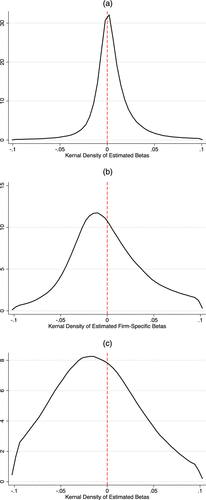
Notes. (a) Distribution of firm-specific betas estimated from the generalized random forest using the baseline specification. (b) and (c) Corresponding distributions when the dependent variable in Table 1, column (2), is redefined as an indicator for the top 25% and bottom 25% of the 2010 ROA distribution, respectively.
Although Figure 1(a) shows that, on average, this effect is positive, using our best techniques to estimate the firm-specific betas from the original data from Belenzon et al. (2017), we also find that there is a broad distribution of outcomes—both positive and negative. Approximately 39% of the firm-level betas are negative and 61% are positive. The heterogeneity in Figure 1(a) is large and meaningful; getting the eponymy decision right is likely important for firm performance, at least from the data in Belenzon et al. (2017). If entrepreneurs only had this paper to rely on for advice on whether to eponymously name the firm, they would self-name the firm. However, given that 39% of the time, the firm-level estimates are negative, the information available to the firm-level strategist is of limited usefulness. Much of the valuable information for making that decision would be context specific, something for the entrepreneur to discover on their own. Our ability to advise the entrepreneur on their eponymy decision is therefore quite limited. Entrepreneurs reading Belenzon et al. (2017) would likewise be skeptical that the result applies to their context. Finally, Figure 1, (a) and (b), shows that, if we change the dependent variable to examine the extremes of the ROA distribution, little changes substantively. The value of Figure 1 is not that it tells any firm what to do, but that it tells the strategist that the decision is important to performance.
For this result to be turnkey applicable to an entrepreneur, strategy researchers would need to be able to predict with reasonable accuracy from the moderators available, which firms would have a positive firm-specific beta, and which would have negative firm-specific betas. The strategy econometrician may infuse the model with moderators to explain such heterogeneity, but the challenge remains that unless moderators can capture a significant portion of the variation in Figure 1, we as empirical strategists are left unable to provide comprehensive, accurate advice.
Although it is impossible to say paper by paper how much of the variation in the distribution of treatment effects is explained by the available moderators, within the context of this eponymy exercise, very little of the variation in the treatment effect of eponymy is explained by the available moderators. Column (1) of Table 2 predicts the individualized firm-specific betas based on the control (and potential moderating) variables, showing that less than 5% of the variation in firm-specific betas is explained by these moderators. This is likely an upper bound on the variation explained as the individualized treatment effects are estimated with error, and the regression that generated Table 2 assumes away any error in the dependent variable. In the case of Belenzon et al. (2017), it is unlikely that we could meaningfully predict which firms will have positive or negative firm-specific betas. From the entrepreneur’s perspective what they might like to see is a roadmap, if I am in X industry in Y country, I should name my firm after myself; otherwise, I should not. It is very unlikely that this roadmap could be created using these data. It would seem to be a rare case where there are sufficient control variables to meaningfully predict the heterogeneity in the treatment effect.7 Even if we could, the result would be confined to a particular data set, and any entrepreneur outside of the data would be understandably skeptical. Finally, in the rare occurrence that a roadmap was produced and believed, these data would likely create widespread behavior change so as to render the roadmap much less useful.
|
Table 2. Predicting Firm-Specific Betas
| Dependent variable: Firm-Specific Beta | (1) |
|---|---|
| Log(total assets) | −0.000039 |
| (−0.83) | |
| Log(shareholder count) | 0.00057*** |
| (3.25) | |
| Equity dispersion | −0.00037 |
| (−1.21) | |
| Adjusted R2 | 0.042 |
| Country fixed effects | Yes |
| SIC3 digit fixed effects | No |
| SIC1 digit fixed effects | Yes |
| Observations | 916,642 |
Notes. This table uses data from Belenzon et al. (2017). The table predicts the firm-specific betas estimated in the generalized random forest using total assets, shareholder count, equity dispersion, time, location, and industry fixed effects as predictors. The predictor variables predict approximately 4.2% of the variation in the firm-specific betas, providing little guidance for when the firm should name the enterprise after itself. t-statistics in parentheses.
*p < 0.10; **p < 0.05; ***p < 0.01.
Note that this observation is not because the research by strategy scholars is poorly done or even that the entrepreneur is unaware of relevant research. The results in the eponymy paper (and much of our empirical work in strategy) are indeed valuable, but not for the purpose of informing the entrepreneur (or more generally the practitioner-strategist) about what the causal effect of a strategy on their firm will be. The findings of Belenzon et al. (2017) have been used by other scholars as an important means of measuring changes in the quality of new ventures started in the United States—leading to other relevant findings for policy makers.8 However, for our entrepreneur seeking guidance on naming the firm, the findings of Belenzon et al. (2017) have only limited practical application precisely because the study uses a public policy method rather than an individualized, context-specific method.
All the above leads to the central conclusion that empirical strategy faces a relevance problem precisely because it seeks to estimate a common model—one that informs a population of firms about how they might collectively elevate performance rather than providing firm-specific guidance to individual strategists. Although our conventional empirical work seeks to address relevant variance in response through moderators or discussions of boundary decisions, the fundamental assumption is, as Tom Sargent has articulated, that all agents are inside the model and share the same model with the econometrician, under the implicit belief that somehow this common model can capture all relevant variation in the effect of strategic choices.
Our contention is that this approach is necessarily destined to provide practitioners limited insight. Before turning to a discussion of how strategy might address its relevance gap, we first review what we see as the entrepreneur-strategist’s aspirational task—to build a highly firm-specific model. Elevating the practical relevance of empirical strategy requires that we assist managers with this task.
Building Firm-Specific and Problem-Specific Models
Although empirical strategy seeks to build a common causal model of strategic choices applicable across firms, a strategist’s central task is to build a firm-specific causal model—one that enables the strategist to predict how various decisions and choices will affect performance for their business (Nickerson and Zenger 2004; Felin and Zenger 2016, 2017; Wuebker et al. 2023). Thus, although the empirical strategy scholar seeks to build and then estimate a general estimate, the strategist seeks to build, use, and validate a firm-specific equation—a firm-specific model.
Of course, for any model to be useful, it must simplify the world and provide direction and focus to a set of relevant choices. The model that a strategist seeks to build is neither a model that predicts how all firms will perform, nor likely even a general model that predicts the outcome of all possible strategy choices for any given firm. Rather, the model the strategist seeks to build and test is quite focused. It often begins with identifying a particular problem deemed as valuable to solve and proceeds to problem formulation, and then a theory of how to solve it (Rumelt 2011). At a high level, a strategist believes that solving this problem will enable the firm to achieve higher performance. The model that results reflects a firm- and problem-specific theory and presents a hypothesized causal path to solving the problem—essentially a firm-specific model of the path to value creation. The problem finding and problem-solving literature in strategy closely links to this approach, as it examines how economic actors identify and formulate problems as a path to value creation (Nickerson and Zenger 2004, Gavetti 2012, Felin and Zenger 2016). This work particularly emphasizes the initial diagnostic phase as crucial in the strategy-making process, suggesting that problem identification is not merely a precursor to problem-solving but a significant part of the strategizing process itself (Leiblein and Macher 2009; Nickerson et al. 2012, 2017; Cummings and Nickerson 2024). The aspirational result is a model that focuses and guides strategic decision making.
This type of problem-specific model building also resonates with the practitioner-oriented work of Richard Rumelt, who observed that “a great deal of strategy work is trying to figure out what is going on. Not just deciding what to do, but the more fundamental problem of comprehending the situation” (Rumelt 2011, p. 79). In many ways, this process of diagnosis for the strategist is analogous to approaches employed by other knowledge-intensive professions like medicine or engineering. Just as a doctor cannot prescribe a treatment without first understanding a patient’s condition, a strategist or entrepreneur must first diagnose the current state—the environment, competition, internal capabilities, and unique challenges faced by a particular firm—before making informed decisions about how to proceed. With a well-diagnosed problem, the physician or engineer composes a theory or model about how to solve it. We see this as the central task of strategic actors—to build targeted models about how to solve focused problems that thereby elevate performance.
How Can Strategy Research Contribute to Firm-Specific Model Building?
Given that building a firm-specific model is the focus of a practitioner strategist, how can strategy researchers most effectively contribute to this model building process and thereby elevate their contribution to strategy practice? In the discussion below we highlight four forms of strategy research that are of notable value to this firm-specific, model-building manager. These are meant to be exemplary, not exhaustive. First is research that develops and empirically validates the efficacy of firm-specific model building tools and processes. Second is research that estimates the firm-specific heterogeneity of estimated effects and provides a deep understanding of the mechanisms that causally drive or shape this heterogeneity. Third is empirical research that reveals the structure of the complexity that underlies strategic decisions, helping managers understand which choices are complements and which are substitutes or where paradoxes or tradeoffs in strategic decision making lie. Fourth is empirical case work that explores firm-specific model building efforts or uncovers historical roots of superior performance. We briefly discuss each of these forms of research and provide examples.
Firm-Specific Model-Building Tools and Processes
Research that crafts model-building tools, techniques, and frameworks and establishes their efficacy are of considerable value to the strategist. Our field has a history of developing such tools—tools that have proved highly impactful to practice (Porter 1981, Barney 1991, Christensen and Bower 1996, Rivkin 2000). Many of these frameworks are featured in classrooms and deployed in case discussions, serving as conceptual latticework that helps structure the diagnostic process and offers a lens through which to analyze competitive dynamics and organizational positioning. Popular press books that elaborate on these frameworks are regularly cited by real-world strategists as having influenced their thinking (Porter 1985, 2008; Prahalad and Hamel 1990; Christensen 1997; Rumelt 2011; Christensen et al. 2016; Helmer 2016). These tools have frequently been built from foundational academic theories such as IO economics, rational expectations, or Schumpeterian innovation and are then translated for practitioner application.
That said, these tools remain largely diagnostic—they capture particular elements of a firm-specific theory or aspects of industry dynamics, and as such provide useful inputs to model building rather than a model-building process itself. Despite the enduring value of many classic frameworks, the field of strategy has seen little progress on framework development since the late 1990s. Instead, the field’s attention has shifted to generating fine-grained insights about these classic frameworks without challenging or evolving the underlying theoretical assumptions that guide them. This shift is not merely intellectual—it reflects the incentive structure of the field itself. The credibility revolution has created strong publication incentives that privilege clean identification of average effects, and evaluation systems reward tractable identification more consistently than they reward heterogeneity mapping, model-building tools, or carefully executed case-based research. Early-career researchers are accordingly nudged toward safe, data-driven projects that may result in precise, but ultimately narrow, contributions to the literature, rather than encouraged to develop new frameworks. The development of new strategy frameworks is admittedly a high-risk career choice, but when well grounded theoretically, it can yield high returns for both the field and real-world strategists.
We want to encourage this type of translational or practitioner-focused work as a means to help managers make diagnoses and progress toward developing firm-specific theories. We also applaud the burgeoning empirical work from scholars (and their associates) that both trains founders to build theories and conduct theory-guided experiments and then empirically explores the efficacy of these treatments (Camuffo et al. 2020, 2024b; Coali et al. 2024; Novelli and Spina 2024a). We also applaud studies like Yang et al. (2024) that use strong causal methods to document how the adoption of specific strategy practices, including problem formulation and hypothesis development, elevates performance. This style of research, which uses strong causal empirical methods to test the efficacy of tools or various forms of conceptual training in firm-specific model building, seems highly relevant to practicing managers.
As noted, the development of firm-specific model building tools is of course also quite valuable to strategists. Nickerson and colleagues’ tools on framing and formulating problems (Heiman et al. 2009; Baer et al. 2013; Nickerson et al. 2017, 2012; Cummings and Nickerson 2024), Rumelt’s work on diagnosing the crux of problems and formulating firm strategy (Rumelt 2011, 2022), and frameworks and other tools designed for model and theory-building for both established firms (Zenger 2013, Felin and Zenger 2017, Sorenson 2024) and new ventures (Felin et al. 2021, 2024) are all focused on providing this model-building guidance. Tools that help managers examine their firm-specific context and move from diagnosis to model building also resonate deeply with managers. What we might call a theory or a model (and what Rumelt (2011) might describe as a guiding policy) acts as a bridge between a firm’s diagnosis of its environment and the concrete actions it takes. These theories, models, or guiding policies are not detailed plans. Rather, they provide an underlying causal logic that helps managers make consistent, adaptive decisions that steer the firm toward its strategic goals. They also provide a principled approach that helps managers make coherent decisions about a host of “downstream” choices (Nickerson et al. 2017, Wuebker et al. 2023, Novelli and Spina 2024b).
Another type of empirical work of particular interest to the strategic model builder is research that estimates parameters for choices that inform the selection of firm-specific strategies. As an example, Conti and Santaló (2023) show that decreases in the Apple and Google app store royalty rates for small developers encourage entry of low-quality, imitative apps onto their respective app stores. The strategy practitioner is then left to decipher whether the Apple and Google app store context is relevant for their specific firm and context. Findings like these direct attention to changes in the competitive environment and underlying mechanisms essential for informing firm-specific strategies. More generally, one could interpret these findings as illustrating mechanisms which strategists might consider in their own firm-specific model building efforts.
Regardless of whether empirical strategy scholars estimate effects with economy-wide or firm-specific data, elevating the practical relevance of the work is helped by remembering that the demonstrated effects in a study are likely at best an input to a firm-specific model building exercise. Therefore, elevating practical relevance requires helping the strategist adeptly explore the circumstances under which the results have application.
Estimating the Magnitude and Structure of Heterogeneity in Effects
We also believe there are ways to make causal work in strategy based on populations of firms of greater use to the model-building practitioner. A first step would be to focus not merely on average treatment effects, but on estimating the magnitude of heterogeneity in firm-specific treatment effects, as this magnitude is arguably correlated with strategic importance. To make this idea concrete, consider the following thought experiment: suppose we estimate the impact of a firm not paying its taxes on performance. With a well-identified regression, it is almost certain that not paying taxes would have a strong causal negative effect on firm performance. It is also likely that the cross-firm variation in this effect would be rather small, since tax evasion should certainly harm the long term performance of nearly all firms. A strategist might conclude from this that, although paying taxes is not a strategic decision that interacts in complex ways with many other decisions, it is an important choice to get right. But of course, other decisions, such as the eponymy choice previously discussed, or decisions to advertise, cut costs, or elevate research and development (R&D) spending may have more heterogeneous firm-specific effects on performance. Estimating the magnitude of this heterogeneity is therefore of strategic interest to the practitioner strategist.
Alcácer et al. (2018) highlight the value of using random coefficient models to estimate the heterogeneous performance effects of strategy. These models can produce estimates of precisely how the performance impact of a strategy varies across firms. Wide variation suggests that strategies operate in nuanced and context-dependent ways, whereas narrow variation implies a more uniform relationship between a choice and performance. As Alcácer et al. (2018) note, it is precisely a choice with “a differential effect that may be attached to a source of competitive advantage” (p. 537). One could argue that if there is little variation in a strategy’s relationship to performance, the choice, such as whether to pay taxes, is not strategic. Documenting cases where there is substantial heterogeneity in a decision’s impact is therefore especially useful to practitioners—and likely more valuable than only an estimated average treatment effect. Of course, what makes any decision particularly strategic is the degree to which a decision interacts with other decisions in shaping performance (Leiblein et al. 2018).
Recent work by Gelman et al. (2024) advocates for a better understanding of what drives treatment effects, which is linked to Alcácer et al. (2018). Gelman et al. (2024) offer a conceptual and visual complement to empirical techniques such as the generalized random forest and random coefficient models discussed above. The authors demonstrate that estimated treatment effects with similar magnitudes and precision can be generated from dramatically different data patterns and advocate for a visualization approach called causal quartets that exposes these patterns. For example, an average treatment effect could be relatively uniform across all treated observations, or the average treatment effect could be driven by a mere handful of observations. This perspective highlights that statistical estimation alone cannot reveal the substantive meaning of heterogeneity. Rather, visualizations of effects and conceptual framing are essential for revealing sources of heterogeneity in treatment effects.
Structural causal modeling (SCM) and directed acyclic graphs (DAGs) offer an additional approach to understanding heterogeneity in treatment effects. Lee and Ryall (2024) and Ryall and Sorenson (2025) argue that strategy research must more explicitly articulate and visualize its assumed causal structures and call for the use of these tools. Although tools such as random coefficient models, generalized random forests, and causal quartets help quantify and visualize variation in effects, by explicitly mapping hypothesized causal pathways, confounders, mediators, and colliders, DAGs enable scholars to distinguish genuine sources of heterogeneity from artifacts of model specification or improper control. This level of causal transparency not only strengthens empirical identification but also assists strategists in interpreting which causal mechanisms are most relevant for their specific context. In this way, DAGs function as both a diagnostic and theory-building tool—linking empirical estimation to the strategist’s task of constructing and testing firm-specific causal models. However, it is unlikely that the DAG will provide complete strategic guidance to firms when using population-level data as its foundation. Although DAGs in this setting may be useful in better understanding the world in which a strategy is crafted, they are unlikely to provide a compelling substitute for firm-specific theories and models.
Although progress in elevating the practical relevance of strategy research is unlikely to emerge solely from the field’s focus with causal identification, greater attention to understanding firm-specific heterogeneity and the structure behind it will. Progress requires leveraging the field’s empirical toolkit to support strategists’ efforts to formulate and refine theories of value. Real-world strategists who are interested in shaping their firms in ever more sophisticated ways benefit from empirical work that reveals the scope and sources of heterogeneous effects and offers direct guidance as to how and when to apply empirical strategy’s insights.
Complements, Substitutes, Tradeoffs, and Paradoxes in Internal Choices
Research that reveals relevant interdependencies and complementary patterns among choices is also of considerable relevance to the strategic model builder. Productive strategic action demands orchestrated choices. Firm-specific theories or models must highlight coordinated, complementary actions, as interlocking moves that will reinforce each other and collectively strengthen the firm’s position or drive value creation (Zenger 2013, Felin and Zenger 2016, Camuffo et al. 2024a). Strategy theories should therefore guide sequences of choices or treatments (Van den Steen 2017)—choices and treatments that are interdependent or complementary in generating performance. Strategists are therefore interested in empirical work that highlights the structure of interrelated choices. Therefore, rather than the average treatment effect of an isolated choice on firm performance, strategists are interested in the structure of interdependence that underlies entire sets of choices. There is interest in distinguishing between choices that are complements from those which are substitutes. Strategists must decipher whether choices are simply additive (and therefore nonstrategic) or choices that are superadditive (complements) or subadditive (negative complements).
Fortunately, there is abundant work in the strategy and organization theory fields that hypothesizes and tests principles of fit. Much of the work in transaction cost economics is fundamentally about highlighting principles of fit and how fit elevates performance (Williamson 1975, 1985; Nickerson and Silverman 2003; David and Han 2004). This literature describes principles to guide sets of decisions. For instance, this work suggests that decisions to pursue strategies that demand cospecialized asset investments benefit from organizational design choices that feature vertical integration or close alliances (Dyer 1997, Argyres and Zenger 2012, Wuebker et al. 2023). Milgrom and Roberts’ theoretical work and descriptive empirics (1990, 1992, 1995) that highlight inherent complementarities among choices are also useful to firm-specific model builders. The management practices literature (Bloom et al. 2010, 2012, 2014; Bandiera et al. 2011) is similarly of clear relevance to the model builder, as is the work of Ichinowski et al. (1997) highlighting clusters of practices within steel firms that affect productivity outcomes. These efforts need not compromise empirical rigor. Empirical methods by Athey and Stern (1998) to document evidence of complementarities are highly useful. As evidenced by the work of Blader et al. (2020), Hong et al. (2019), and Sandvik et al. (2020), studies providing evidence of complementarity among choices need not sacrifice the use of strong causal methods. Documenting complementarities among choices that support elevated performance is of value to the model builder, who can use this information to develop a deeper understanding of how bundles of factors may shape the performance of their own enterprise.
Empirical work that documents tradeoffs or paradoxes is also of value to the model builder. For instance, the literature on organizational ambidexterity that explores both the complementary relationship between exploration and exploitation and the tradeoffs and tensions that exist in attempting to generate both at once through organizational design and leadership is highly useful (Raisch et al. 2009). Again, although such research does not deliver precise guidance, it provides the strategist with a clearer understanding of tradeoffs and relationships among strategic choices. Similarly, work that explores the tradeoffs that model builders face in strategically pursuing uniqueness can also be useful. Uniqueness in positions or resources is central to essentially all stories of value creation, so understanding the tradeoffs that uniqueness presents in both creating unique value but also imposing higher information costs or requiring the payment of a higher cost of capital (Litov and Zenger 2011, Fan et al. 2026) is also highly relevant to the model-builder. Again, what the model builder seeks is to understand the underlying complementarity and tradeoffs inherent to strategy-relevant choices.
Case Work That Supports Firm-Specific Model Building
The development and exploration of cases and case histories may also be insightful for the model-building strategist. There are at least three ways in which such work may be useful. First, cases may reveal analogous logic or insight that has application to the strategic modeler’s context—that is, capturing broad archetypes that aid strategists in developing analogical reasoning and pattern matching skills. Second, cases may reveal examples of the model building process itself from which strategists may draw process lessons and learnings. Third, cases perhaps retold in a shortened form may prove a valuable complement and companion to empirical work in strategy. Historical case research embedded in a larger statistical study may inspire a reader’s confidence (including a practitioner-strategist) that the causal mechanisms claimed in an empirical paper are convincing and credible (Pillai et al. 2020, 2024). Cases illuminate potential analogies for model building. As previously noted, building a theory or model often begins with a diagnostic process aimed at identifying and framing an organization’s core challenge, perhaps borrowing or extrapolating this framing from a case or case-based analogy deemed relevant (Rumelt 2011, 2022). Analogical reasoning based on case illustrations allows the modeler to draw parallels between seemingly unrelated situations to inform their own decision making (Gavetti et al. 2005, Lovallo et al. 2012, Gavetti and Menon 2016, Schilling 2018). Indeed, managers can use insights from the lessons elucidated in the case to develop their own firm-specific model and thus engage in firm-specific diagnosis that is tuned to their particular setting.9
The famous Lincoln Electric case reveals a particular set of complementary choices: In this case, internal ownership of tasks, internal promotion, high bonuses, and flexible work rules that fostered significant productivity and performance gains. Similarly, Porter (1996) highlights how Ikea and Southwest Airlines employed strategies built on a different set of coherent, interdependent choices that achieved sustained competitive advantage. Siggelkow (2002) provides a comparable example with Vanguard, where a low-cost structure is bolstered by complementary choices, including conservatively managed index and fixed-income funds, direct distribution channels, and transparent customer communications. The examination of Siggelkow (2017) of Liz Claiborne also offers insight into how a set of interdependent choices—when aligned properly—creates a superadditive effect. Although none of these cases will likely precisely match the context that a particular strategist confronts, both the specific complementary patterns revealed, as well as the process of assembling them, may be of value to the strategist.
Case-based research insights need not stem solely from qualitative analysis but can instead use causal statistical methods to test a model of a single firm’s success. Thus, rather than focusing on aggregate patterns across multiple firms, empirical work might present firm-specific results as a use case and then offer guidance about application or perhaps guidance about how firms can gather their own data, test their own hypotheses, and interpret results within their context.
To illustrate this point, consider the well-crafted, causally estimated study by Blake et al. (2015) in the marketing field. The authors show that in the context of eBay, the choice to eliminate spending on paid search ads on major search engines in certain markets had no causal impact on eBay’s profitability. For a decision maker at eBay, this research is important, supported by clear causal evidence. Of course, it is much less clear that this precise estimate using eBay data produces findings that apply anywhere other than eBay (and, perhaps, only this version of eBay and not a past or future version). In evaluating the usefulness of these results, any other firm is left to consider how close its setting is to the circumstances at eBay. The paper provides useful guidance to estimate the firm-specific effect at eBay, but it would be foolish for other firms to think that the eBay estimates directly apply to their own circumstances, without analysis and comparison outside the results presented. Of course, an additional challenge is deciding whether this is really a strategic question that is highly interdependent with other choices. Conducting randomized control trials on more strategic choices than this becomes much more difficult.
As Blake et al. (2015) demonstrate, using statistical tools like the randomized control trial on firm-level questions can generate considerable value to managers. Broadly speaking, this research opens up the possibility of applying a broader set of tools and approaches to firm-level questions of strategy. Classical econometric techniques as discussed in Heckman (2000) or Heckman and Pinto (2024) are plausibly applicable to these firm-level strategy questions, as are the use of DAGs and classical statistical approaches such as the potential outcomes framework. All these approaches have the potential to make significant contributions to strategy but are unlikely to do so by solely looking at population-level data seeking generalizable solutions. By refining methods that support firm-specific experimentation, hypothesis testing, and iterative problem-solving (Camuffo et al. 2024b, Coali et al. 2024, Agarwal et al. 2025), strategy research can offer valuable guidance not only on what works in general but also on how individual firms can achieve their unique goals through coordinated and mutually reinforcing actions.
Conclusion
Unlike labor or development economics, where the policy-making practitioners seek advice on designing interventions intended to help a broad swath of the population, the strategy practitioner has a different aim. In contrast to broad interventions informed by the average treatment effect paradigm, the strategist is singularly focused on building sets of complementary choices that uniquely position a particular firm to create and capture more value relative to its competitors. For a real-world strategist, estimating a population-level average treatment effect of a singular choice or treatment provides little value to the strategy practitioner. The strategist is not interested in average treatment effects, but highly localized firm-specific treatments—treatments that interact with many sets of other treatments and choices that in many cases have yet to be made and thus depend on how other choices are made. It is this feature of strategic actors and strategic decision making that complicates the empirical challenge faced in rendering strategy research useful to the strategist.
We recognize that the field of strategy encompasses a range of definitions and orientations. For some scholars, the field is principally about managerial decision-making related to performance outcomes. For others, it centers on value capture and competitive positioning more broadly. Under some of these definitions, the empirical challenges we raise may be less acute. For example, a scholar studying routine operational decisions that recur across many firms may find population-level estimates quite useful. The argument in this paper applies most forcefully when the field’s questions concern what this paper and prior work has identified as genuinely strategic decisions—choices that are one-shot, nondiversifiable, and deeply interdependent with other firm-specific choices. We believe these are the questions that most sharply distinguish the field of strategy from adjacent disciplines, and it is precisely here that the disconnect between our empirical methods and the needs of practitioners is most consequential.
Our contention is that there is little hope of providing firm-specific guidance from papers that only estimate population-level treatment effects. In this paper we have argued that the field of strategy’s pursuit of empirical precision explains—at least in part—its lack of relevance to real-world strategists. This perspective implies a dramatically different conception of empirical strategy than the one on which the field has converged—an approach that we argue is fundamentally incapable of solving the relevance problem. In our view, the field’s proposed remedy—an increased commitment to empirical precision—only exacerbates the problem, because this approach represents a fundamental misalignment with the needs of practitioners. Even if an estimate of the effect of such a choice on performance is precise and well identified, those estimates are only more of what they were—weighted averages of massively varying firm-specific treatment effects. In a field where the core insight is that unique strategies drive heterogeneous performance, estimating population-level average treatment effects is of limited usefulness. Indeed, our view is that the trend in empirical strategy toward ever more accurate identification and estimation can only exacerbate the problem.
We suggest that progress in elevating practical insights from strategy research will not directly come from the field’s current fixation with causal identification. Rather, progress will occur through leveraging strategy’s empirical toolkit to help strategists formulate and refine their own theories that accurately describe the reality that these strategists face. The strategy field will still face the challenge of communicating these results in ways accessible to strategists, but an important first step in elevating relevance is generating the types of findings that are of potential use to the strategist as a firm-specific model builder.10
If the empirical strategy researcher cares whether their work reaches practitioners, they must ask the following: How will the estimates I generate inform the practitioner strategist’s decision making? Confronted with the typical empirical strategy paper in journals like this one, the practitioner strategist will likely be—justifiably—skeptical. It is incumbent on us as a field to create knowledge the practitioner needs rather than hope that what we continue to produce, however rigorous, will somehow become valuable to the audience we care so much about.
1 Drawn from Lecture 1, “Introduction to the Scientific Method,” Karl Popper’s first-year lectures at London School of Economics, transcribed and organized by Notturno (2012).
2 In a letter to Amazon shareholders, Jeff Bezos characterized this attribute of strategic decision making as a one-way door: “Some decisions are consequential and irreversible or nearly irreversible–one-way doors–and these decisions must be made methodically, carefully, slowly, with great deliberation and consultation. If you walk through and don’t like what you see on the other side, you can’t get back to where you were before” (APA: Bezos 2016).
3 Similar themes were discussed by Simcoe (2024), Bennett (2024) and Pillai et al. (2024) at the 2024 Strategy Summit. In particular, Simcoe and Bennett noted the distinction between treating populations and treating firms. Guzman (2021) also highlights a closely related idea.
4 Leiblein et al. (2018) allude to this point in their paper on what makes decisions strategic: “All of this has interesting implications for strategy research. It highlights in particular the reason why looking at the average effects of strategy choices—the fundamental basis of commonly used regression analysis—is problematic. In a world where all strategic decisions depend on many other choices, average effects offer rather little value to the decision maker. Therefore, the existence of these decision interdependencies, including higher order interactions and feedback loops, calls regression approaches into question…. In a world where all strategic decisions depend on many other choices, average effects offer rather little value to the decision maker” (p. 563). In comments at the Utah Strategy Summit, Brent Goldfarb also highlights this point (Pillai et al. 2024).
5 We re-ran our results estimating the top and bottom quartile of performance. Visually comparing these results to Figure 1, we see that the dispersion in the performance effect of eponymy is likely larger than when we estimate the effect on ROA.
6 The generalized random forest builds many decision trees that adaptively partition the feature space so that local neighborhoods capture variation in parameters of interest (like treatment effects or quantiles). In essence, generalized random forests use machine learning to perform flexible, data-driven local estimation of causal parameters in a way that is more flexible than, for example, propensity score estimation.
7 Importantly, there are a host of reasons to be cautious about the firm-specific model even if we had sufficient controls. Causal inference depends critically on not violating the stable unit treatment value assumption (SUTVA). Ultimately, our paper argues that estimating firm-specific regressions and applying them out of sample will be heroic at best and that we should be looking for different approaches to address questions relevant to the firm-specific strategist.
8 Guzman and Stern (2020) find that high-growth potential ventures may be concentrated in certain periods, driven by favorable institutional and economic conditions. The research underscores the role of institutional and regional conditions in shaping both the quality and quantity of entrepreneurship and contributes to a literature that points to the need for targeted policies that can foster high-quality entrepreneurial ventures, rather than merely increasing the number of startups (Stenholm et al. 2013).
9 Rumelt’s case-based diagnostic process has been described as “process of inquiry leading to trenchant observations” (Hoopes et al. 2022, p. 13). However, as noted by Teece, one of the challenges of this ground-up, “Rumeltian” case-specific approach is that you have to be as clever as Dick to get full purchase from it. A framework, on the other hand, provides more guidance” (Hoopes et al. 2022, p. 13).
10 Furthermore, it is worth thinking carefully about the market for valuable but freely distributed strategic insights. One view holds that if you build something valuable, those who need it will find it; another holds that without deliberate dissemination, good ideas will languish. We do not take a strong position either way, but we note that if empirical strategy begins generating research that is genuinely useful to practitioners, we should not assume it will be adopted without some effort to disseminate it.
References
- Agarwal R, Bacco F, Camuffo A, Coali A, Gambardella A, Msangi H, Sonka ST, Temu A, Waized B, Wormald A (2025) Does a theory-of-value add value? Evidence from a randomized control trial with Tanzanian entrepreneurs. Organ. Sci. 36(2):601–625.Google Scholar
- (2018) Applying random coefficient models to strategy research: Identifying and exploring firm heterogeneous effects. Strategy Sci. 3(3):533–553.Link, Google Scholar
- (2001) Value creation in e-business. Strategic Management J. 22(6–7):493–520.Crossref, Google Scholar
- (2010) The credibility revolution in empirical economics: How better research design is taking the con out of econometrics. J. Econom. Perspect. 24(2):3–30.Crossref, Google Scholar
- APA: Bezos JP (2016) 2015 letter to shareholders. Amazon.com, Inc. https://s2.q4cdn.com/299287126/files/doc_financials/annual/2015-Letter-to-Shareholders.PDF.Google Scholar
- (2012) Capabilities, transaction costs, and firm boundaries. Organ. Sci. 23(6):1643–1657.Link, Google Scholar
- (1998) An Empirical Framework for Testing Theories about Complimentarity in Organizational Design (National Bureau of Economic Research, Cambridge, MA).Crossref, Google Scholar
- (2016) Solving heterogeneous estimating equations with gradient forests. Preprint, submitted October 5, https://arxiv.org/abs/1610.01271.Google Scholar
- (2013) Microfoundations of strategic problem formulation. Strategic Management J. 34(2):197–214.Crossref, Google Scholar
- (2011) What do CEOs do? Preprint, submitted February 9, https://doi.org/10.2139/ssrn.1758445.Google Scholar
- (1986) Strategic factor markets: Expectations, luck, and business strategy. Management Sci. 32(10):1231–1241.Link, Google Scholar
- (1991) Firm resources and sustained competitive advantage. J. Management 17(1):99–120.Crossref, Google Scholar
- (2017) Eponymous entrepreneurs. Amer. Econom. Rev. 107(6):1638–1655.Crossref, Google Scholar
- (2024) How far can we push toward causal identification in a field focused on novelty, uniqueness, and complementarity? Accessed August 12, 2026, https://tinyurl.com/vbennett2024.Google Scholar
- (2020) The contingent effect of management practices. Rev. Econom. Stud. 87(2):721–749.Google Scholar
- (2015) Consumer heterogeneity and paid search effectiveness: A large-scale field experiment. Econometrica 83(1):155–174.Crossref, Google Scholar
- (2010) Recent advances in the empirics of organizational economics. Annu. Rev. Econom. 2(1):105–137.Crossref, Google Scholar
- (2012) Management practices across firms and countries. Acad. Management Perspect. 26(1):12–33.Crossref, Google Scholar
- (2014) JEEA-FBBVA Lecture 2013: The new empirical economics of management. J. Eur. Econom. Assoc. 12(4):835–876.Crossref, Google Scholar
- (1996) Value-based business strategy. J. Econom. Management Strategy 5(1):5–24.Crossref, Google Scholar
- (2024a) Theory-driven strategic management decisions. Strategy Sci. 9(4):382–396.Link, Google Scholar
- (2020) A scientific approach to entrepreneurial decision making: Evidence from a randomized control trial. Management Sci. 66(2):564–586.Link, Google Scholar
- , Spina C (2024b) A scientific approach to entrepreneurial decision-making: Large-scale replication and extension. Strategic Management J. 45(6):1209–1237.Crossref, Google Scholar
- (1995) Time-series minimum-wage studies: A meta-analysis. Amer. Econom. Rev. 85(2):238–243.Google Scholar
- (1997) The Innovator’s Dilemma: When New Technologies Cause Great Firms to Fail (Harvard Business Review Press, Boston).Google Scholar
- (1996) Customer power, strategic investment, and the failure of leading firms. Strategic Management J. 17(3):197–218.Crossref, Google Scholar
- (2016) Competing Against Luck: The Story of Innovation and Customer Choice (HarperCollins, New York).Google Scholar
- (2024) Scientific decision-making, project selection and longer-term outcomes. Res. Policy 53(6):105022.Crossref, Google Scholar
- (2023) The hidden costs of fairness in platform markets: The dynamics of lowering developer royalty rates. Preprint, submitted April 12, https://doi.org/10.2139/ssrn.4403845.Google Scholar
- (2024) A protocol mechanism for solving the “right” strategic problem. Strategic Management Rev. 5(3):273–312.Crossref, Google Scholar
- (2004) A systematic assessment of the empirical support for transaction cost economics. Strategic Management J. 25(1):39–58.Crossref, Google Scholar
- (2003) The economics of strategic opportunity. Strategic Management J. 24(10):977–990.Crossref, Google Scholar
- (2020) Has strategic management research lost its way? Strategic Management Rev. 1(1):35–73.Crossref, Google Scholar
- (2014) Short-run subsidies and long-run adoption of new health products: Evidence from a field experiment. Econometrica 82(1):197–228.Crossref, Google Scholar
- (1997) Effective interim collaboration: How firms minimize transaction costs and maximise transaction value. Strategic Management J. 18(7):535–556.Crossref, Google Scholar
- (2024) Competing with theories: Using awareness and confidence to secure resources and rents. Strategy Sci. 9(4):416–432.Link, Google Scholar
- (2005) An interview with Thomas J. Sargent. Macroeconom. Dynamics 9(4):561–583.Crossref, Google Scholar
- (2026) The technological uniqueness paradox. Strategic Management J. 47(5):1211–1243.Google Scholar
- (2016) Strategy, problems, and a theory for the firm. Organ. Sci. 27(1):222–231.Link, Google Scholar
- (2017) The theory-based view: Economic actors as theorists. Strategy Sci. 2(4):258–271.Link, Google Scholar
- (2021) Value lab: A tool for entrepreneurial strategy. Management Bus. Rev. 1(2):68–77.Google Scholar
- (2024) A scientific method for startups. J. Management 50(8):3080–3104.Google Scholar
- (2021) External validity. Ann. Rev. Political Sci. 24(1):365–393.Google Scholar
- (2020) Welfare analysis meets causal inference. J. Econom. Perspect. 34(4):146–167.Google Scholar
- (2012) Toward a behavioral theory of strategy. Organ. Sci. 23(1):267–285.Link, Google Scholar
- (2000) Looking forward and looking backward: Cognitive and experiential search. Admin. Sci. Quart. 45(1):113–137.Crossref, Google Scholar
- (2016) Evolution cum agency: Toward a model of strategic foresight. Strategy Sci. 1(3):207–233.Link, Google Scholar
- (2005) Strategy making in novel and complex worlds: The power of analogy. Strategic Management J. 26(8):691–712.Crossref, Google Scholar
- (2024) Causal quartets: Different ways to attain the same average treatment effect. Amer. Statist. 78(3):267–272.Google Scholar
- (2021) Price transparency—Promise and peril. JAMA 325(15):1496–1497.Google Scholar
- (2021) Treatment effects in managerial strategies. Preprint, submitted October 4, https://doi.org/10.2139/ssrn.3915606.Google Scholar
- (2020) The state of American entrepreneurship: New estimates of the quantity and quality of entrepreneurship for 32 US States, 1988–2014. Amer. Econom. J. Econom. Policy 12(4):212–243.Crossref, Google Scholar
- (2001) Michael Porter’s big ideas. https://www.fastcompany.com/42485/michael-porters-big-ideas/.Google Scholar
- (2000) Causal parameters and policy analysis in economics: A twentieth century retrospective. Quart. J. Econom. 115(1):45–97.Crossref, Google Scholar
- (2024) Econometric causality: The central role of thought experiments. J. Econom. 243(1–2):105719.Google Scholar
- (2009) Governing knowledge creation: A problem-finding and problem-solving perspective. Foss NJ, Michailova S, eds. Knowledge Governance: Processes and Perspectives (Oxford University Press, Oxford, UK), 25–46.Google Scholar
- (2016) 7 Powers: The Foundations of Business Strategy (Deep Strategy LLC, Menlo Park, CA).Google Scholar
- (2019) Complementarity of performance pay and task allocation. Management Sci. 65(11):5152–5170.Link, Google Scholar
- (2022) Introduction to the special issue honoring Richard Rumelt: The foundations for understanding fundamental issues in strategy. Strategic Management Rev. 3(2):187–199.Google Scholar
- (1997) The effects of human resource management practices on productivity: A study of steel finishing lines. Amer. Econom. Rev. 87(3):291–313.Google Scholar
- (2024) What impacts can we expect from school spending policy? Evidence from evaluations in the United States. Amer. Econom. J. Appl. Econom. 16(1):412–446.Google Scholar
- (1983) Reporting the fragility of regression estimates. Rev. Econom. Statist. 65(2):306–317.Google Scholar
- (2024) Duty to elaborate one’s causal theory: Toward a new norm for empirical reporting in strategy. Working paper, University of Florida, Gainesville.Google Scholar
- (2009)
The problem solving perspective: A strategic approach to understanding environment and organization . Nickerson JA, Silverman BS, eds. Economic Institutions of Strategy, Advances in Strategic Management, vol. 26 (Emerald Group Publishing Limited, Bingley, UK), 97–120.Google Scholar - (2018) What makes a decision strategic? Strategy Sci. 3(4):558–573.Link, Google Scholar
- (2011) Do investors value uniqueness in corporate strategy? Evidence from mergers and acquisitions. Preprint, submitted March 16, http://dx.doi.org/10.2139/ssrn.1787795.Google Scholar
- (2012) Robust analogizing and the outside view: Two empirical tests of case-based decision making. Strategic Management J. 33(5):496–512.Crossref, Google Scholar
- (1990) Rationalizability, learning, and equilibrium in games with strategic complementarities. Econometrica 58(6):1255–1277.Google Scholar
- (1995) Complementarities and fit strategy, structure, and organizational change in manufacturing. J. Accounting Econom. 19(2–3):179–208.Crossref, Google Scholar
- (1988) Diversification, Ricardian rents, and Tobin’s q. RAND J. Econom. 19(4):623–632.Crossref, Google Scholar
- (2003) Why aren’t all truck drivers owner-operators? Asset ownership and the employment relation in interstate for-hire trucking. J. Econom. Management Strategy 12(1):91–118.Crossref, Google Scholar
- (2004) A knowledge-based theory of governance choice—A problem-solving approach. Organ. Sci. 15(6):617–632.Google Scholar
- (2017) Problems, theories, and governing the crowd. Strategic Organ. 15(2):275–288.Crossref, Google Scholar
- (2012) Exploring the problem-finding and problem-solving approach for designing organizations. Acad. Management Perspect. 26(1):52–72.Google Scholar
- (2012) Karl Popper’s introduction to scientific method, as constructed by Mark A. Notturno. Unpublished manuscript, December, http://www.the-rathouse.com/Intro-Philos-Sci/Introduction.html.Google Scholar
- (2024a) How do entrepreneurs benefit from acting like scientists in business model development? Strategic commitments, uncertainty and economic performance. Strategic. Management J.Google Scholar
- (2024b) Making business model decisions like scientists: Strategic commitment, uncertainty, and economic performance. Strategic Management J. 45(13):2642–2695.Crossref, Google Scholar
- (2024) Lovely and likely: Using historical methods to improve inference to the best explanation in strategy. Strategic Management J. 45(8):1539–1566.Crossref, Google Scholar
- (2020) The origins of firm strategy: Learning by economic experimentation and strategic pivots in the early automobile industry. Strategic Management J. 41(3):369–399.Crossref, Google Scholar
- (1981) The contributions of industrial organization to strategic management. Acad. Management Rev. 6(4):609–620.Crossref, Google Scholar
- (1985) Competitive Advantage: Creating and Sustaining Superior Performance (Free Press, New York). Google Scholar
- (1996) What is strategy? Harvard Bus. Rev. 74(6):61–78.Google Scholar
- (2008) On Competition, updated and expanded ed. (Harvard Business Press, Boston).Google Scholar
- (1990) The core competence of the corporation. Harvard Bus. Rev. 68(3):79–91.Google Scholar
- (2009) Organizational ambidexterity: Balancing exploitation and exploration for sustained performance. Organ. Sci. 20(4):685–695.Link, Google Scholar
- (2012) Presidential address: The corporation in finance. J. Finance 67(4):1173–1217.Crossref, Google Scholar
- (2000) Imitation of complex strategies. Management Sci. 46(6):824–844.Link, Google Scholar
- (2007) Patterned interactions in complex systems: Implications for exploration. Management Sci. 53(7):1068–1085.Link, Google Scholar
- (1992) Economics, Organization and Management (Prentice-Hall, Englewood Cliffs, NJ).Google Scholar
- (1984) Towards a strategic theory of the firm. Competitive Strategic Management 26(3):556–570.Google Scholar
- (2011) Good Strategy, Bad Strategy: The Difference and Why It Matters (Crown Publishing Group, New York).Google Scholar
- (2022) The Crux: How Leaders Become Strategists (Profile Books, London).Google Scholar
- (1991) Strategic management and economics. Strategic Management J. 12(S2):5–29.Crossref, Google Scholar
- (2025) The causal inference problem: When can managers use data to inform decisions and how can organization design help them? Acad. Management Rev.Google Scholar
- (2020) Workplace knowledge flows. Quart. J. Econom. 135(3):1635–1680.Crossref, Google Scholar
- (2018) The cognitive foundations of visionary strategy. Strategy Sci. 3(1):335–342.Link, Google Scholar
- (2002) Evolution toward fit. Admin. Sci. Quart. 47(1):125–159.Crossref, Google Scholar
- (2017)
Change in the presence of fit: The rise, the fall, and the renaissance of Liz Claiborne . Chakravarthy B, Mueller-Stewens G, Lorange P, Lechner C, eds. Strategy Process: Shaping the Contours of the Field (Wiley-Blackwell, Oxford, UK), 45–73.Google Scholar - (2024) How far can we push toward causal identification in a field focused on novelty, uniqueness, and complementarity? https://tinyurl.com/simcoe2024.Google Scholar
- (2024) Theory, search, and learning. Strategy Sci. 9(4):372–381.Link, Google Scholar
- (2013) Exploring country-level institutional arrangements on the rate and type of entrepreneurial activity. J. Bus. Ventures 28(1):176–193.Crossref, Google Scholar
- (2000) Capabilities, cognition, and inertia: Evidence from digital imaging. Strategic Management J. 21(10–11):1147–1161.Crossref, Google Scholar
- (2017) A formal theory of strategy. Management Sci. 63(8):2616–2636.Link, Google Scholar
- (2018) Estimation and inference of heterogeneous treatment effects using random forests. J. Amer. Statist. Assoc. 113(523):1228–1242.Crossref, Google Scholar
- (1975) Markets and Hierarchies: Analysis and Antitrust Implications (Free Press, New York).Google Scholar
- (1985) The Economic Institutions of Capitalism: Firms, Markets, Relational Contracting (Free Press, New York).Google Scholar
- (2023) The theory-based view: Entrepreneurial microfoundations, resources, and choices. Strategic Management J. 44(12):2922–2949.Crossref, Google Scholar
- (2024) How Do CEOs Make Strategy? (National Bureau of Economic Research).Google Scholar
- (2013) What is the theory of your firm. Harvard Bus. Rev. 91(6):72–78.Google Scholar
- (2026) Invisible firms, competitive neglect, and sustained profit generation. Working paper, Harvard Business School, Boston.Google Scholar
Jason Snyder is professor and vice chair of the Department of Entrepreneurship & Strategy at the David Eccles School of Business, University of Utah. He received his PhD in business administration from the University of California, Berkeley. His research interests include strategy, political economy, and entrepreneurship.
Robert Wuebker is associate professor in the Department of Entrepreneurship & Strategy at the David Eccles School of Business, University of Utah. He received his PhD in management from Rensselaer Polytechnic Institute. His research interests include entrepreneurship theory and venture capital.
Todd Zenger is presidential professor and the N. Eldon Tanner chair in strategy and strategic leadership at the David Eccles School of Business, University of Utah. He received his PhD in organization and strategy from University of California, Los Angeles. He serves as editor in chief of Strategy Science. His research interests include corporate strategy, organization design, and strategic leadership.

