

Request Username
Can't sign in? Forgot your username?
Enter your email address below and we will send you your username

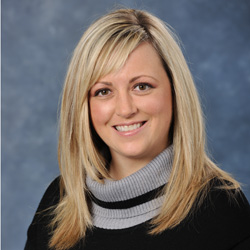
AUTHOR SPOTLIGHT
INFORMS member since 1995
Co-author with Anahita Khojandi, Oleg A. Prokopyev, Mark S. Roberts, and Samir F. Saba of "Dynamic Abandon/Extract Decisions for Failed Cardiac Leads,"in Management Science
INFORMS: What inspired you to research this particular topic?
MAILLART : I’ve been an active researcher in both maintenance optimization and medical decision making for many years. Although these areas of application have a lot in common, my work in these two areas was mostly in parallel. Looking at the optimal maintenance of implanted medical devices seemed like the perfect intersection of these two areas of interest.
INFORMS: Did any of your results surprise you?
MAILLART : Yes—the optimal policies exhibited some nice structure that we didn’t anticipate. We observed that whether or not to extract a failed lead is largely independent of the exact ages of the other leads, given the age-rank of the lead in question.
INFORMS: What is the most important take-away you hope readers will learn from your paper?
MAILLART : Our results were able to fairly strongly support the “think before you pull” side of the ongoing extract/abandon debate in the medical community.
INFORMS: Tell us about the process of writing this paper.
MAILLART : It took a while to find the right electrocardiology collaborator that had an appreciation for mathematical modeling. Once the right team was brought together, this problem rose to the top of everyone’s interest. It’s been a fun challenge both from a modeling and computational perspective.
INFORMS: Why was it important for you to publish in Management Science?
MAILLART : This paper is focused on lead management for individual patients and hence seemed like a good fit. Our novel application of OR methods in this setting is also consistent with Management Science’s focus on research in emerging domains.
INFORMS: How do you yourself keep up-to-date on the latest research in your field?
MAILLART : INFORMS PubsOnline.
INFORMS: What about your career might surprise us?
MAILLART : I’ll be spending the rest of 2017 on sabbatical in the Netherlands at the Eindhoven University of Technology!
INFORMS: Tell us a little bit about what you’re working on?
MAILLART : I’m currently working with nonprofit donor milk banks to improve the way that they collect, process, and dispense donor milk to NICU and outpatient babies in need. It’s truly my most rewarding work to date.
INFORMS: What do you think are the most significant barriers for women in OR/MS careers? How could they be remedied?
MAILLART : Awareness of opportunities and possibilities. Articles like this one certainly help.
INFORMS: How has being a member of the Health Applications Society (or any INFORMS community) impacted your professional life?
MAILLART : Most recently, it has provided me the opportunity as President-Elect to organize the HAS Cluster for the Annual Meeting in Houston. Doing so has given me a unique glimpse into everyone’s most recent work, which has been really enjoyable.
INFORMS: As coeditor of an upcoming Service Science Special Issue on Advancing Health Services, tell us what we can expect to see in that issue.
MAILLART : We hope to publish an issue of diverse, high quality papers that demonstrate improvements in accessibility, delivery, and quality of healthcare services.
INFORMS: When you’re not using your OR superpowers to try to make the world a better place, what are some of the ways you like to spend your time?
MAILLART : Being a mama to my little boy; home beautification projects; live music.
INFORMS: As an INFORMS member, what benefit do you find most useful?
MAILLART : The opportunities to serve the academic community and the resulting connections.
INFORMS: What advice would you give to your younger self?
MAILLART : Reflect more on the big picture.
INFORMS: Which celebrity do you get mistaken for?
MAILLART : Virginia Madsen.
INFORMS: Which social network do you use most and why?
MAILLART : Facebook because it seems to be the most cross-cutting. I can interact with everyone from my parents, to my high school friends, to my colleagues and my communities.