

Request Username
Can't sign in? Forgot your username?
Enter your email address below and we will send you your username

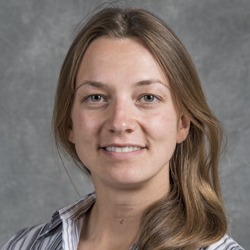
AUTHOR SPOTLIGHT
INFORMS member since 2011
Author of "SOCEMO: Surrogate Optimization of Computationally Expensive Multiobjective Problems," in INFORMS Journal on Computing
INFORMS: What inspired you to research this particular topic?
MÜLLER: I was inspired by a domain scientist here at Berkeley Lab who faced an optimization problem where multiple objectives have to be optimized at the same time and where computationally expensive simulation runs are part of the function evaluations. He told me about the difficulty of finding suitable methods to efficiently tackle his problem.
INFORMS: Did any of your results surprise you?
MÜLLER: Not really actually. I developed a method with the thought in mind that function evaluations are expensive to compute, and it is therefore bound to outperform methods developed for cheaply available objective function values. What did surprise me is that so little work had been done in this area.
INFORMS: What is the most important take-away you hope readers will learn from your paper?
MÜLLER: I hope that readers will understand how important it is that the type of optimization problem they encounter has to determine which solution algorithm they employ. It pays off to do some additional research to find more efficient methods, and sometimes this requires collaborating with optimization researchers to develop new methods.
INFORMS: Tell us about the process of writing this paper.
MÜLLER: I had previously worked on multiobjective optimization (for my master’s thesis), so I already had some background knowledge of solution approaches for computationally cheap problems. Then I researched what others had done for computationally expensive multiobjective problems, but I couldn’t find much. Thus, I devised an algorithm that combines my expertise in expensive single objective optimization with multiobjective ideas from the literature. I sanity-checked my approach by using analytic test problems from the computationally cheap multiobjective optimization literature and I assessed how well my algorithm could deal with all the different characteristics multiobjective problems can have. It performed really well and I tried to push the limits regarding the number of optimization variables and the number of objective functions. The use of analytic test problems was a proof of concept, and I used two engineering-related application problems that showed how well the method works on actual black-box functions.
INFORMS: Why was it important for you to publish in INFORMS Journal on Computing?
MÜLLER: INFORMS Journal on Computing is a highly regarded journal and an excellent venue for the paper since it focuses on the computational aspect of solving difficult optimization problems. Computationally expensive simulations are the crux of the problem, and computational optimization algorithms that use sophisticated adaptive sampling fall right into that category.
INFORMS: Tell us a little about what you are working on now.
MÜLLER: In one of my projects, I am working on solving problems whose objective function evaluations may fail to return a value—how do we deal with that? In another project, I am developing an algorithm for multifidelity optimization, i.e., where we have simulation models of several levels of fidelity/accuracy.
INFORMS: How do you yourself keep up-to-date on the latest research in your field?
MÜLLER: I travel to conferences and I attend talks of colleagues in my field. I have the Google Scholar alerts that send emails to my inbox whenever some keywords appear in publications. At the same time, I’m eager to learn new things, so I also go to talks outside of my area, anything that sounds interesting. You never know what methods from other areas might give you ideas for advancing your own research.
INFORMS: What about your career might surprise us?
MÜLLER: I actually never planned to go into research and I never made a solid plan for my future, I just took the opportunity whenever it presented itself. I started my Applied Math master’s in Germany at TU Freiberg, the oldest university of mining and metallurgy in the world. Toward the end of my studies I decided on a whim to go for ERASMUS exchange for a few months to Tampere University of Technology (TUT) in Finland, just to see something else. I really liked it there, I decided to finish my master’s remotely and never went back to Germany. I managed to get a paid grad school position at TUT. I applied for a grant from a Finnish foundation to go to Cornell University for a research visit—and again, I stayed longer than I originally intended. After finishing my PhD, I came back to Cornell for a postdoc, and then I applied for the Alvarez Postdoctoral Fellowship at Berkeley Lab, and I took the opportunity to experience research at a DOE National Lab. Here I am, three years later, a research scientist who never planned on a career in research and now I am trying to establish an optimization group at Berkeley Lab.
INFORMS: What do you think are the most significant barriers for women/minorities in OR/MS careers? How could they be remedied?
MÜLLER: I think bias is still the biggest hurdle for women and minorities in OR/MS (as in other STEM fields). Bias has negative effects not only in hiring decisions, but it also negatively influences the performance of employees whose supervisors have (unconscious) biases. In my opinion, Berkeley Lab’s Diversity and Inclusion Office does a great job educating the lab community about bias. Everyone has biases, but it’s a question of what you do about it. I think it is important for everyone to repeatedly explore one’s own biases, to recognize as they arise in a situation, and then effectively deal with them. Of course, this is only a shallow scratch at the surface and this topic goes much deeper than I can elaborate on in this venue.
INFORMS: It looks like you are a member of several INFORMS communities, including the Computing Society, Optimization Society, and Simulation Society. Tell us which community you are most involved with and why.
MÜLLER: I follow these societies primarily through their email newsletters. It’s a convenient way to stay up to date with what’s going on in my areas of interest, which conferences are coming up, and other opportunities.
INFORMS: How do you like to relax?
MÜLLER: I go out to explore nature and go rock climbing (bouldering to be precise). I go to Lake Tahoe or Yosemite almost every weekend for bouldering. The sport requires creativity; it’s like solving a puzzle—figure out what holds you can make use of, and then have the physical and mental strength to do the problem ground up. It requires a certain clarity of the mind and it teaches me to accept failure and learn from it. In a sense, it helps me grow and at the same time it keeps me grounded. And in between attempts, I get to lounge on the crash pad, where I watch the birds and trees and mountains, and I am happy to just live in the moment and eat snacks.
INFORMS: What advice would you give to your younger self?
MÜLLER: First, be yourself—it doesn’t matter what others think about you. Second, don’t be afraid to question the status quo—just because we have always done things this way doesn’t mean we should keep doing it, there’s always room for improvement and change is the most exciting thing.