

Request Username
Can't sign in? Forgot your username?
Enter your email address below and we will send you your username

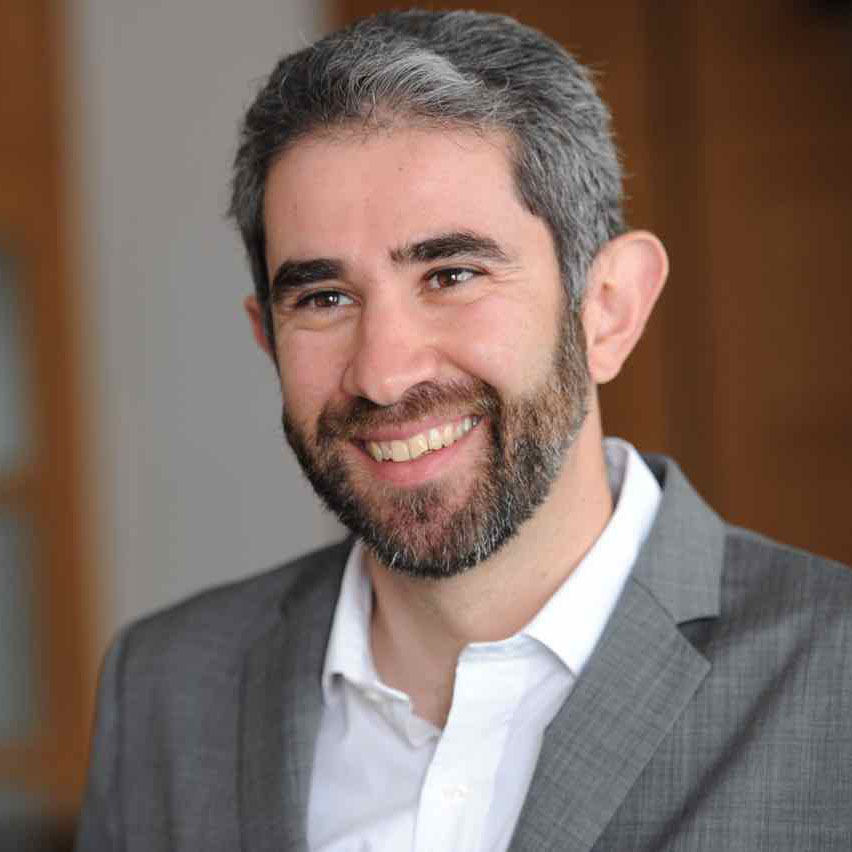
AUTHOR SPOTLIGHT
INFORMS member since 2005
Co-author with Michael Freeman and Stefan Scholtes of "Gatekeepers at Work: An Empirical Analysis of a Maternity Unit," in Management Science
INFORMS: What inspired you to research this particular topic?
SAVVA: The lead clinician of the maternity unit in question was concerned that more often than not his staff had too much work—the number of women delivering often exceeded the number of midwives present. He was worried that this had an impact on patient experience and ultimately patient safety. He expressed this concern in a meeting with me and my co-authors and the paper was the result of our investigation.
INFORMS: Did any of your results surprise you?
SAVVA: Yes, I would have thought that personal preferences, along with medical indications, would be the most important factors in explaining whether a delivering mother would receive epidural pain relief. Instead, organizational workload (i.e., how many other mothers are delivering at the same time) turns out to be as important, at least for simple deliveries.
INFORMS: What is the most important take-away you hope readers will learn from your paper?
SAVVA: The paper offers insights to both academics and practitioners. Operations management academics have long been concerned with the management of gatekeepers in referral systems. Our paper shows that referral behaviour has a significant state-dependence, suggesting that simplistic models that neglect this aspect are likely to offer misleading advice. For clinicians and hospital managers, our paper’s findings suggest that there may be overprovision of services at both high and low workload levels, albeit for different types of services and patients.
INFORMS: Tell us about the process of writing this paper.
SAVVA: The first draft of the paper had almost nothing to do with the final draft that was accepted for publication. The rigorous, demanding, and always supportive review team helped to substantially improve the paper. Nothing would have been possible without my excellent co-authors, Michael Freeman and Stefan Scholtes.
INFORMS: Why was it important for you to publish in Management Science?
SAVVA: Many academics (including myself) would consider MS to be the flagship journal of our field—the process of getting a paper through theMS review ensures that this is the case. As such, work published in MS is most likely to make an impact, at least on the way other academics think.
INFORMS: How do you yourself keep up-to-date on the latest research in your field?
SAVVA: Attending and organizing sessions in conferences (including the INFORMS Annual Meeting and MSOM conference); subscribing toManagement Science and a few other journals; and increasingly with my reviewing/editorial work.
INFORMS: What is something you learned in the last week?
SAVVA: To use the conditional mixed processes routine in STATA to estimate four simultaneous equations. (Thanks to Isabel Smith-Nino (LBS PhD student) for showing me how.)
INFORMS: How have you seen the OR field change since you first entered it?
SAVVA: I haven’t been in the field for a long time, but even in the 10 years or so that I have been involved with the field I am glad to see that the quantity and quality of empirical research has increased substantially.
INFORMS: What do you see to be the greatest challenge/opportunity facing the management sciences?
SAVVA: Engagement with practice—we could do a lot more to ensure that we work on relevant problems and that our findings make an impact on the way people outside our field think/work.
INFORMS: Tell us a little about what you are working on now.
SAVVA: I am working on an economic theory piece on how to redesign hospital reimbursement to provide incentives for wait-time reduction. I hope to submit to Management Science soon!
INFORMS: What project have you been involved in that you are most proud of?
SAVVA: My very first research project while I was a PhD student—it involved working with a biotech firm based at Cambridge, UK. The models I helped develop were used for negotiating a multimillion dollar deal with a pharmaceutical firm, and I got to write an academic paper about it and a teaching case study, which I still use today.
INFORMS: What about your career might surprise us?
SAVVA: That at some point I wanted to become a physicist (working on theoretical condensed matter) and that at some other point I wanted to become an accountant (I had an offer from a Big Four firm).
INFORMS: When you’re not using your OR superpowers to try to make the world a better place, what are some of the ways you like to spend your time?
SAVVA: Ski, windsurfing, family (not necessarily in that order).
INFORMS: Speaking of superpowers, who would win in a fight between Batman and Superman?
SAVVA: Warner Bros (by about $870M at the box office).
INFORMS: As an INFORMS member, what benefit do you find most useful?
SAVVA: Being in the company of like-minded people.
INFORMS: What has been your most memorable INFORMS experience to date?
SAVVA: Attending my first INFORMS Annual Meeting in 2005 in San Francisco. It was only my second time in the United States (and first time on the West Coast) and the first conference with more than 100 attendees that I had ever attended.
INFORMS: What advice would you give to your younger self?
SAVVA: Grow a beard and don’t stress out too much.
INFORMS: Tell us something that not many people know about you.
SAVVA: I am a qualified sommelier (WSET level 2).