

Request Username
Can't sign in? Forgot your username?
Enter your email address below and we will send you your username

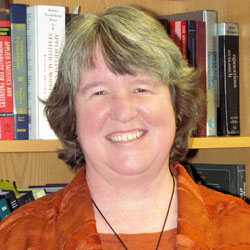
AUTHOR SPOTLIGHT
INFORMS member since 1983
Co-author with Brian L. Morgan, Harrison C. Schramm, Jerry R. Smith, Thomas W. Lucas, Mary L. McDonald, Paul J. Sánchez, and Stephen C. Upton of "Improving U.S. Navy Campaign Analyses with Big Data," in Interfaces
INFORMS: What inspired you to research this particular topic?
SANCHEZ: Co-author CDR Harrison Schramm, who at the time was the Campaign Analysis Section Head on the Navy Staff, initially proposed this research project. When he saw the call for papers for the special issue on applications of analytics and OR in big data analysis, he suggested that we submit a summary of our work.
INFORMS: Did any of your results surprise you?
SANCHEZ: It surprised me how much output was being obtained from single runs, and how challenging it was to communicate the findings to analysts and decision makers.
INFORMS: What is the most important take-away you hope readers will learn from your paper?
SANCHEZ: I hope they recognize that “thinking big” in the context of real-world problems can be fascinating. Practitioners should go beyond asking simple questions of their computational models and instead seek insights about broader and deeper questions. Researchers now have many new and exciting avenues for exploration where their work can make a tangible difference.
INFORMS: Tell us about the process of writing this paper.
SANCHEZ: This was a collaborative effort. Most of my work is co-authored, and I like it that way. It’s invigorating to be able to share thoughts and develop new ideas for what to work on next. I find that in co-authored work, everyone typically puts in most of the work they would do for a solo-authored paper, but that the end result can be a stronger paper than any of us would have done individually.
INFORMS: Why was it important for you to publish in Interfaces?
SANCHEZ: Interfaces is a natural outlet for this article because we are trying to change OR practice.
INFORMS: You serve as the co-director for the SEED Center for Data Farming at the Naval Postgraduate School (NPS), which your bio notes was established in 2006 “to advance the development and use of simulation experiments and efficient designs to provide decision-makers with timely insights.” Can you tell us a bit more about the SEED Center? What are some of the Center’s accomplishments for which you are most proud?
SANCHEZ: I’m very proud of the team, the students, and the impact that we’ve had. Our core team (including co-director Tom Lucas) has been together for over a decade, and was instrumental in setting up and participating in a NATO Technical Activity that received a NATO Scientific Research Award. We have worked with over 200 graduate students who finished theses that use a data farming approach or dissertations that advance data farming methodologies. Our students have won dozens of awards, and been co-authors on over 30 peer-reviewed publications.
INFORMS: Tell us a little about what you are working on now.
SANCHEZ: I continue to do research on data farming methods — better ways of designing and analyzing large-scale simulation experiments. The data farming metaphor is used to emphasize that we “grow” the data from simulation experiments in deliberate ways, rather than sifting through observational data or making a series of ad hoc simulation runs. I am particularly interested in adaptive sequential procedures for multi-objective problems, because I believe those are the types of methods that will help us address many of the big, complex problems the world faces.
INFORMS: How do you yourself keep up-to-date on the latest research in your field?
SANCHEZ: Reading articles and attending conferences.
INFORMS: What first attracted you to the field of simulation?
SANCHEZ: My husband Paul Sanchez and I met in graduate school. His specialty within OR was simulation, mine was applied statistics. He pointed out some of the opportunities for research involving statistical techniques in simulation, and I’ve never looked back. We still co-author papers, including the article in this “Author Spotlight.”
INFORMS: What about your career might surprise us?
SANCHEZ: My career has had several twists and turns. I initially chose engineering instead of math because I thought that was more practical. In retrospect, I find it amusing that during my last year as an undergrad I dropped a simulation elective to take a history of architecture course. I planned to go to industry when I finished grad school, but gravitated toward academia instead. After three degrees from OR/engineering programs, my first two academic positions were in business schools. I came to NPS for what I initially thought was a one-year sabbatical, but have now been here for 18 years.
INFORMS: When you’re not using your OR/MS superpowers to try to make the world a better place, what are some of the ways you like to spend your time?
SANCHEZ: I enjoy reading mysteries and science fiction, and architecture has long been an interest of mine. I also like walking along Monterey’s beautiful coast and seeing how it changes.
INFORMS: As an INFORMS member, what benefit do you find most useful?
SANCHEZ: The network of people is key. I deeply value the professional friendships I have developed over the years.
INFORMS: You are also involved in the INFORMS Forum on Education (INFORM-ED), Women in OR/MS (WORMS), the Military Applications Society (MAS), and the INFORMS Simulation Society. How have these involvements impacted your professional life?
SANCHEZ: These are woven into my professional life. I was chair of an ad hoc ORSA committee on Women in OR/MS that led to the establishment of WORMS as an official Forum. This happened at a time during which there was a generational change in faculty demographics, as women pursued academic careers — and had children before tenure — in much greater numbers than previously. Male junior faculty also were more often part of two-career families, so overall there was a need to reexamine diversity and work/life balance issues. I think WORMS’ mission of encouraging and supporting women in OR/MS has been a steady and positive influence on our profession. I was also an officer in the INFORMS College on Simulation for six years, and during my last year as President we put in the paperwork to become the INFORMS Simulation Society. These and other service activities strongly influenced my career and gave me a real sense of community.
INFORMS: In addition to your INFORMS memberships, your vita notes memberships with the American Statistical Association and the Society for Modeling and Simulation International. What are some of the ways your memberships in INFORMS and these other professional societies have complemented each other?
SANCHEZ: It is fun to collaborate with others from a variety of backgrounds and viewpoints to address a common goal. For example, when setting up conferences, it has been interesting to share “best practices” from different professional communities and then blend some of those aspects together.
INFORMS: What is the best advice you can give to students in your field?
SANCHEZ: I’ll pass along a favorite quote: “To love what you do and feel that it matters, how could anything be more fun?” (Katherine Graham, American publisher). Actively discover what you love to do — take a wide variety of courses, talk to your professors even if (or especially if) you’re doing well on the subjects, and be open to new opportunities. OR can and should change the way you think about the world. If you are passionate about the work you do, good things will follow.
INFORMS: Tell us something that not many people know about you.
SANCHEZ: I write light-hearted poetry and prose for special occasions.
INFORMS: What would you name the autobiography of your life?
SANCHEZ: "The Joy of Discovery"