

Request Username
Can't sign in? Forgot your username?
Enter your email address below and we will send you your username

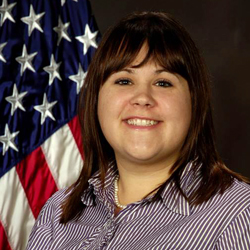
AUTHOR SPOTLIGHT
INFORMS member since 2010
Co-author with Rebecca S. Widrick and Matthew J. Robbins of "Optimal Policies for the Management of an Electric Vehicle Battery Swap Station," in Transportation Science
INFORMS: What inspired you to research this particular topic?
NURRE: While in graduate school, I worked for a summer at Los Alamos National Laboratory and worked on my first project concerned with electric vehicle swap stations. I became interested in this topic and had my M.S. student Rebecca Widrick extend the work.
INFORMS: Did any of your results surprise you?
NURRE: In the paper, we prove that there exist optimal decision rules that are nonincreasing in the state space when demand is governed by a nonincreasing, discrete distribution. It was surprising to me that this structure only applies to nonincreasing distributions. For a long time, we thought there was an error in the proof and that it must work for distributions such as Poisson, but it does not always apply.
INFORMS: What is the most important take-away you hope readers will learn from your paper?
NURRE: That electric vehicle swap stations can be a viable alternative to charging stations. Unfortunately, companies such as Tesla have piloted these swap stations and are instead exploring charging stations, which are a great alternative, but there are many advantages to swap stations.
INFORMS: Tell us about the process of writing this paper.
NURRE: This paper was a collaborative effort with Matthew (J.D.) Robbins and my previous M.S. student Rebecca Widrick. Initially, I thought we would use either stochastic programming or robust optimization, but found using MDP to be very fitting. Rebecca was a great student and led the project with limited guidance. We started by developing and refining the model, and then in parallel, performed computational experiments and proved the structure of the optimal policies. We even corresponded on Thanksgiving Day about last minute changes before a December 1 deadline.
INFORMS: Why isn’t everyone using electric vehicles and other forms of renewable energy?
NURRE: I believe the lack of sufficient charging or swapping infrastructure that enables longer trips is a major barrier to electric vehicle adoption.
INFORMS: Why was it important for you to publish in Transportation Science?
NURRE: Transportation Science is an excellent journal full of high-quality research that is well regarded. It is important to publish in this outlet to promote new work on electric vehicles and reach a broad audience of experts in transportation.
INFORMS: How do you yourself keep up-to-date on the latest research in your field?
NURRE: Attending conferences, reading blog posts by various authors in the field, reading new research articles, and volunteering to review and evaluate potential articles for publication.
INFORMS: What is something you learned in the last week?
NURRE: I learned how to make pretty Gantt charts in LaTeX.
INFORMS: As the President-Elect, tell us how your involvement with WORMS (Women in OR/MS) has impacted your life/career.
NURRE: WORMS is a great support group for women within INFORMS. My involvement with WORMS has allowed me to meet senior members of INFORMS, find mentors, and participate in programs that benefit women.
INFORMS: What do you think are the most significant barriers for women/minorities in OR/MS careers? How could they be remedied?
NURRE: Overall, I think the OR community is generally accepting of women and minorities. However, I think it often only takes one person to doubt the abilities or change an environment for a woman or minority. To remedy these situations, we need to enable people to know who to reach out to for support and educate everyone on how their actions are perceived by all.
INFORMS: Tell us a little about what you are working on now.
NURRE: I am working on a variety of projects including optimizing truck parking, routing problems, infrastructure restoration, and more work on electric vehicles.
INFORMS: What is your least favorite mode of transportation? Can you apply a routing problem to make it better?
NURRE: My favorite mode is definitely walking. I walk to work every day and really enjoy this portion of my day. All modes of transportation have pros and cons, so I don’t have a least favorite.
INFORMS: What project have you been involved in that you are most proud of?
NURRE: I am very proud of the project published in this paper. Rebecca was one of the first students I advised and it is a great feeling seeing her excel and collaboratively conduct high-quality research.
INFORMS: What about your career might surprise us?
NURRE: I worked in industry at Progressive Insurance for two years between undergraduate and graduate school.
INFORMS: When you’re not using your OR superpowers to try to make the world a better place, what are some of the ways you like to spend your time?
NURRE: Hiking, camping, bike riding, making crafty stuff.
INFORMS: As an INFORMS member, what benefit do you find most useful?
NURRE: Being able to surround yourself with people passionate about O.R.
INFORMS: What has been your most memorable INFORMS experience to date?
NURRE: Meeting lots of great colleagues and friends at INFORMS conferences.
INFORMS: What advice would you give to your younger self?
NURRE: Don’t be afraid of writing. Writing organization is like logic.
INFORMS: Tell us something that not many people know about you.
NURRE: I tap dance.