

Request Username
Can't sign in? Forgot your username?
Enter your email address below and we will send you your username

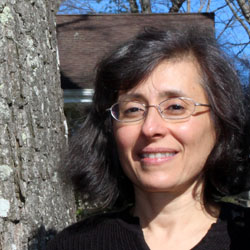
AUTHOR SPOTLIGHT
INFORMS member since 1997
Co-author with Hadi El-Amine and Douglas R. Bish of "Robust Postdonation Blood Screening Under Prevalence Rate Uncertainty," in Operations Research
INFORMS: What inspired you to research this particular topic?
BISH: This work is part of a broader multi-year research effort that is ongoing, in collaboration with the American Red Cross. There are many established infections, such as the human immunodeficiency virus (HIV), hepatitis viruses — as well as many emerging infections — that are transmittable through blood transfusion. In fact, the American Association of Blood Banks has a large set of emerging infections on their current “watch list.” Therefore, an effective donated blood screening policy can save lives and improve health outcomes. However, for many emerging infections, disease dynamics and prevalence rates are highly uncertain, and there is a lack of understanding of optimal screening policies. The screening decision has a huge impact on society, and this problem seemed like a perfect match for my interests in stochastic optimization.
INFORMS: Did any of your results surprise you?
BISH: Yes, the optimal policies had a nice structure that we did not anticipate at first. We were also surprised by the potential improvements in the safety of blood transfusion that can be achieved by introducing lab-based screening practices for some emerging infections such as babesiosis, a tick-borne disease endemic in parts of the United States.
INFORMS: What is the most important take-away you hope readers will learn from your paper?
BISH: Stochastic optimization modeling and methodologies can prove to be very useful for many problems arising in public policy and healthcare systems, and optimal policies can make a big difference on the safety of healthcare delivery.
INFORMS: Tell us about the process of writing this paper.
BISH: This paper came out of a collaborative effort, within an interdisciplinary team of researchers from the American Red Cross and operations researchers. While we did not speak the same language, we learned a great deal from each other, and the results made sense to all of us. This problem also formed the basis of the dissertation of one of my PhD students, Dr. Hadi El-Amine, who is now a faculty member at George Mason University, Systems Engineering and Operations Research Department.
INFORMS: Why was it important for you to publish in Operations Research?
BISH: Operations Research is the flagship journal of our society, and is highly respected. This paper provides both new insights into an important healthcare problem, and novel mathematical formulations, structural properties, and algorithms. Therefore, it was a great fit for the Public Policy Modeling and Public Sector OR Area of Operations Research.
INFORMS: Tell us a little about what you are working on now.
BISH: I collaborate a great deal with Dr. Douglas Bish (a.k.a., my husband). Currently, we are working on different applications of public health screening. One application that is very exciting for me is newborn screening. We are currently focusing on newborn screening for cystic fibrosis, which is one of the most prevalent genetic disorders in the United States. Early detection of cystic fibrosis can substantially improve health outcomes, but testing resources are limited, so we are working on finding optimal state-level newborn screening policies for cystic fibrosis, considering the characteristics of the state’s population and testing resources.
INFORMS: How do you keep yourself up-to-date on the latest research in your field?
BISH: INFORMS PubsOnline and conferences.
INFORMS: What first attracted you to the field of stochastic modeling and optimization?
BISH: It was the first probability course that I took as an undergraduate student, in my sophomore year as an IE major. Probability has always been my favorite subject. Then, a semester later in my undergraduate studies, I discovered optimization, and I really enjoy their combination.
INFORMS: What about your career might surprise us?
BISH: My career choices were between music and math. I ended up choosing engineering as my professional career (with the goal of becoming an academician), but I remain an enthusiastic classical guitarist. I practice classical guitar every single day, and perform regularly, both as a soloist and as part of a guitar duo.
INFORMS: When you’re not using your OR/MS superpowers to try to make the world a better place, what are some of the ways you like to spend your time?
BISH: I am an avid classical guitar player. (Many of my creative research ideas come as I play music.) I also enjoy practicing yoga, hiking, baking bread, and cooking with my kids.
INFORMS: As an INFORMS member, what benefit do you find most useful?
BISH: INFORMS PubsOnline, INFORMS conferences, and the many networking opportunities that INFORMS provides.
INFORMS: You are also involved in the INFORMS Health Applications Society (HAS), Public Sector Operations Research Section (PSOR), Junior Faculty Interest Group (JFIG), and Women in OR/MS (WORMS). How have these involvements impacted your professional life?
BISH: I find it very rewarding to interact with my colleagues who have similar research interests, and to learn about new and exciting research problems that the INFORMS society is working on. This is all possible due to involvement with the INFORMS sections and societies.
INFORMS: What is the best advice you can give to students in your field?
BISH: Choose a research problem that you are passionate and curious about, own your problem, and think about the big picture. Also, remember that in most cases, research does not progress in a linear fashion, you may have setbacks, many of your ideas may not work as you had anticipated, but keep an open mind and keep at it. It is important to enjoy the process. In my opinion, curiosity, creativity, patience, and persistence are key to good research work. Also keep in mind that you and your PhD advisor are on the same team. As a professor, my greatest reward is to see my PhD students grow into independent researchers.
INFORMS: Tell us something that not many people know about you.
BISH: I am very interested in learning about and making fermented food, such as sourdough bread and yogurt.