


Rethinking Salt Supply Chains: Cost and Emissions Analysis for Coproduction of Salt and Fresh Water from U.S. Seawater
Abstract
Is it feasible to build desalination plants for the coproduction of salt and fresh water from U.S. seawater that could lead to a restructuring of supply chains for salt imports? As it is predicted that climate change will increase water stress worldwide, an increasing number of countries are using desalination plants to generate fresh water. In most such cases, residual concentrates must be disposed of, and the disposal cost is increasing as countries are becoming more environmentally conscious. Selective salt recovery can help to alleviate this issue as it reduces the need for concentrate disposal and generates additional revenue. To gain some insights into the costs and benefits of coproduction plants, we have collected data on current desalination practices and salt imports in the United States along with the manufacturing costs and energy requirements for coproduction plants. We have used this data to build an optimization model to determine an optimal number and location of coproduction plants in the United States and their potential markets for the sale of coproduced salt. In our analysis, we consider a different total number of coproduction facilities, and for each configuration, we evaluate the resulting net water cost and carbon emissions impact. Our results indicate that there exists the potential for building several coproduction plants in the United States that would be both financially competitive with existing desalination plants and lead to a reduction in carbon emissions. This information might be of use to both governments and businesses when they make decisions about the type of desalination facilities built and the implemented “polluter pays” policies.
This paper was This paper was accepted by Beril Toktay, Special Section of Management Science on Business and Climate Change.
Supplemental Material: Data are available at https://doi.org/10.1278/mnsc.2021.4109.
1. Introduction
Water scarcity has been an increasing problem for many countries around the world. According to a United Nations (2018) report, more than two billion people live in countries experiencing high water stress.1 United in Science 2020 (World Meteorological Organization 2020) predicts that climate change will increase the number of water-stressed regions and further intensify shortages in already water-stressed regions. Although the global average water stress is currently at 11%, which may not seem that high, 31 countries experience water stress between 25% and 70%, and 22 countries rank above 70% and are considered to be seriously stressed. Hidden significant differences also exist among countries and regions behind those averages as water-stress values at the national level can hide contrasts between wet and dry areas of a country. For example, the World Bank (2014) estimates that the United States has a water-stress level of 22.61%. However, within the United States, New Mexico, California, Arizona, Colorado, and Nebraska have water-stress levels of 40% or higher (World Resources Institute 2005).
As the world population continues to grow and temperatures rise, water availability is becoming ever more critical, and conventional water supplies that rely on easily accessible groundwater, rainfall, and snowfall are not sufficient to meet population needs. The World Bank report on the impact of climate change on water and the economy (World Bank 2016, p. 40) states,
If current water management policies persist, and climate models prove correct, water scarcity will proliferate to regions where it currently does not exist, and will greatly worsen in regions where water is already scarce. Simultaneously, rainfall is projected to become more variable and less predictable, while warmer seas will fuel more violent floods and storm surges. Climate change will increase water-related shocks on top of already demanding trends in water use. Reduced freshwater availability and competition from other uses—such as energy and agriculture—could reduce water availability in cities by as much as two thirds by 2050, compared to 2015 levels.
1.1. Why U.S.-Based Desalination?
In this work, we focus on the U.S.-based potential of desalination as a solution for water scarcity; we elaborate on our reasons for this choice.
Desalination is becoming the most acceptable alternative water supply source. Several unconventional water sources, such as fog water harvesting, cloud seeding, water treatment and reuse, iceberg towing, desalination, and deep groundwater, are receiving more attention in recent years. The United Nations–Water Analytical Brief on Unconventional Water Resources (United Nations 2020) aimed to aid in better understanding the potential of unconventional water resources and to enhance understanding of their main challenges and opportunities. It predicts that a consistent downward trend of desalination costs and the increasing costs of conventional water treatment and water reuse (because of stricter regulatory requirements) will accelerate the reliance on the ocean as a competitive water source and concludes that desalination “…is on a path to where it is likely to be the most acceptable alternative water supply source in the majority of arid and semi-arid regions in the world.” Although, at present, desalination provides about 10% of the municipal water supply of the urban world centers, it expects this number to reach 30% by 2030.
There is significant potential for growth in the number of U.S. desalination facilities. In 2019, cumulative installed desalination capacity worldwide exceeded 28 billion gallons per day (bgd) (International Desalination Association 2019). Two of the biggest feedwater categories worldwide are seawater (at 61%) and brackish water (at 21%) (Jones et al. 2019). On average, salinities in the open ocean range from about 34 to 37 parts per thousand (ppt) or 3.4%–3.7% (Duxbury et al. 2018), and brackish water can be defined as water containing between 1 and 15 ppt (or 0.1%–1.5%)2 (Wetterau and Mickley 2019).
In the United States, however, 97% of desalination plants use brackish water, and only 3% of facilities treat seawater. This is even more interesting when observing that about two thirds of the U.S. desalination capacity is located in three coastal states: Florida (40%), California (14%), and Texas (13%) (Mickley 2018). The proportion of total freshwater consumption that comes from desalination in the United States is slightly below 1%.3
The cost of conventional water treatment in the United States has increased, and the cost of desalination has decreased. A variety of desalination technologies have been developed over time, including primarily thermal (multistage flash evaporation (MSF), multiple effect evaporation, and vapor compression) and membrane processes (reverse osmosis (RO), electrodialysis (ED), and nanofiltration). MSF and RO processes dominate the market for both seawater and brackish water desalination with about 88% of the total installed capacity (Yuan and Tol 2005). Desalination facilities have been historically focused on minimizing costs because of the high costs of equipment and energy consumption. However, technological advances in recent years have led to a significant cost reduction in water produced by desalination, making this option more attractive. At the same time, more stringent regulatory requirements have led to the increase in cost of conventional water treatment and reuse. For instance, in 2011, most of the water utilities in Southern California purchased imported water from the Bay Delta and Colorado River at a rate of US$2.30 to $2.45/1,000 gallons ($0.61–$0.65/m3), and the desalinated water cost was estimated as US$2.91 to $3.7/1,000 gallons ($0.77–$0.98/m3) (WateReuse Association 2012). Porse et al. (2018) estimates the current cost of imported water in the Los Angeles area to be US$2.88 to $3.52/1,000 gallons ($0.76–$0.93/m3) with an annualized4 cost in the range from US$4.65 to $5.49/1,000 gallons ($1.23–$1.45/m3). According to the United Nations (2020), desalination costs have dropped from more than $5/m3 to around $0.5–$0.6/m3 in recent years, and desalination of brackish water in the city of Cape May (New Jersey) is currently cost-effective. The United Nations (2020) also explored similarities between the advancements in RO desalination technology and computer technology and estimates that the cost of freshwater production from seawater will decrease by 25% by 2022 and by up to 60% by the year 2030. Although high energy requirements of desalination processes are among the drawbacks of desalination from an environmental viewpoint, we should note that climate change impacts the availability of water supplies and may require water providers to pump groundwater from greater depths or move it over longer distances. For example, the Colorado Southern Delivery System is expected to deliver 52,900 acre-feet (AF) of water per year and use 246,038 MWh of energy or 4.4651 MWh/AF, and the California Carlsbad Desalination Plant is expected to deliver 56,000 AF of water per year and use 260,680 MWh of energy or 4.655 MWh/AF (Skaggs et al. 2012).5 Thus, both facilities have almost identical energy requirements. The Central Arizona Project in Tucson pumps water uphill and is estimated to have even higher energy requirements at about 5 MWh/AF.
1.2. Why Coproduction of Salt and Fresh Water?
The growth in desalination has highlighted the need for cost-effective and environmentally acceptable techniques for freshwater extraction and residual concentrate management. Most coastal desalination facilities discharge residual concentrate to the ocean, and inland locations use surface water discharge, deep-well injections, or zero liquid discharge (ZLD) technologies, among others. All of these methods have potentially negative environmental impacts, and action needed to reduce this impact could be quite costly.
However, there exists a market opportunity that, at the same time, reduces the negative environmental impacts of residue disposal: transforming the residuals into saleable salt.6 More than 290 million tons of salt are produced worldwide annually. In the United States, production in 2019 was about 42 million tons, and more than 16 million tons were imported. The biggest sources of imported salt were Chile (36%), Canada (25%), and Mexico (12%). Salt consumption spreads across several categories, including highway deicing (43%), the chemical industry (37%), and food processing (4%) (U.S. Geological Survey 2020).
Salt manufacturers have been trying to find more efficient and sustainable ways to manufacture salt. Depending on the type, salt production costs can vary significantly. Solar salt production uses seawater in evaporation ponds, which then leaves behind salt. Although this methodology requires large land areas for evaporation ponds, its energy requirements are low and reflected in the production cost of only $5–$10/ton of salt (Nayar et al. 2019b). Vacuum salt production sends a brine solution to evaporators and crystallizers to evaporate water and produce salt. Such a method is the costliest as it requires higher equipment and energy costs with production costs of $30–$50/ton of salt (Nayar et al. 2019b). To obtain actual customer costs, these values have to be augmented by transportation costs, which vary significantly with respect to the method being used: 2.94 cents per ton-mile by water, 4.23 cents per ton-mile by rail, and 18.83 cents per ton-mile by truck (Bureau of Transportation Statistics 2020).
As such, the United States imports about 29% of the salt it uses. At the same time, only 3% of the U.S. desalination facilities treat seawater, which is a natural source of salt with a virtually inexhaustible capacity, and most of the desalination facilities are located in coastal states. We then ask two logical questions: Why do we not see more seawater desalination facilities in the United States? Why do we not see more selective salt recovery from desalination facilities?
There are several possible explanations for the current status quo. First, we note that, when the focus is the generation of fresh water, brackish water seems to be a better choice as it has lower salinity and its desalination requires less energy, making the process less costly. However, although desalination of brackish water implies lower production and concentrate disposal costs, it is not likely to be the main source for new desalination projects. The total volume of brackish water is limited and has been almost fully utilized in most arid regions (World Bank 2019).
Another possible reason for limited selective salt recovery is its perceived high cost. As environmental impacts have gained more importance in recent years, additional laws and regulations have been implemented in various jurisdictions. As a result, some of the options for concentrate disposal have become more costly. The concept of ZLD—that is, the elimination of liquid waste from a water treatment residual stream—has received more attention in recent decades. Its main benefits are yield maximization of desalinated water and a concentrate management treatment when no other option exists. However, its drawbacks are high cost and the need to landfill the residual solids. Although the WateReuse Association (2012) estimates construction costs for concentrate disposal to range between $24 and $105/m3/day for sewer disposal, the cost range is $650–$1,600/m3/day for deep-well injection and $1,455–$3,970/m3/day for ZLD. A natural remedy for this problem would be to harvest salt during the desalination process, which would create additional income streams, decrease concentrate disposal costs, and decrease environmental impact (Mickley 2008). This would also be in line with current trends toward a circular economy, which aims to minimize waste and recycle or reuse products. The United Nations (2020) states that extracting minerals from seawater is more environmentally friendly than terrestrial mining. In addition, many countries with large desalination plants, such as Saudi Arabia, Spain, and Israel, have recently started implementing comprehensive programs for green desalination, which aim to reduce both the amount and types of chemicals used in the production of desalinated water.
In this paper, we analyze existing desalination operations in the United States, current U.S. supply chains for imported salt, and potential supply chains for the coproduction of salt and fresh water from U.S. seawater. As previously mentioned, transportation costs can be a significant factor in the total cost of purchased salt, and locations that are further away from salt sources face higher salt prices. In this study, we focus on imported salt that must be transported over longer distances, which, thus, implies higher costs, making it a potential candidate for replacement with coproduced salt. Nayar et al. (2019a) estimate that coproduced salt is expected to be 99.8% pure, which makes it a good substitute for most uses of imported salt.7 We compare the energy requirements, costs, and greenhouse gas (GHG) emissions of the status quo and potential coproduction alternatives to assess the feasibility of salt–freshwater coproduction in the United States. For instance, as previously discussed, with the growing population and high cost of imported water in California, desalination is becoming a more attractive option for this state. At the same time, two of the U.S. states with the largest number of desalination facilities, California and Florida, have very limited salt production. As a result, it appears that salt production coupled with desalination could be financially justified. Moreover, in addition to costs, we also want to address the environmental impact of such salt and freshwater coproduction.
Several papers have explored the coproduction of salt and seawater; see, for instance, Ohya et al. (2001), Davis (2006), and Jiang et al. (2014). However, these studies either did not consider elements such as energy use and different underlying costs or the underlying process model was not disclosed in detail. More recently, Nayar et al. (2019a, b) study cost and energy needs for joint freshwater and salt production during the seawater desalination process. They provide detailed models of the underlying processes and analyze costs and performances under different parameter configurations. Nayar et al. (2019b) focuses on salt production and its feasibility, and Nayar et al. (2019a) focuses on freshwater production and its feasibility (primarily in the Middle East region). We believe that this is the first paper evaluating both the financial and environmental aspects of salt-freshwater coproduction processes as well as the first paper in the operations management literature that analyzes desalination and supply chains for salt.
The paper is organized as follows. In Section 2, we provide an overview of water desalination operations in the United States, and Section 3 presents an overview of supply chains for salt importation in the United States. Both sections analyze costs and GHG emissions of underlying processes and operations. In Section 4, we present a model for coproduction of salt and fresh water introduced in Nayar et al. (2019a) and analyze transportation costs and GHG emissions related to the possible coproduction of salt and fresh water in the United States. In Section 5, we use results from Nayar et al. (2019a) and our analysis in Sections 2 and 3 to build a model for determining the optimal locations of coproduction plants in the United States and their associated salt markets and discuss our findings. We conclude in Section 6.
2. Water Desalination in the United States
We first discuss current water desalination operations in the United States. As of 2017, there were 406 municipal desalination plants in the United States sized 95 m3/day or greater with 167 facilities located in Florida, 58 in California, and 52 in Texas. Although more than 75% of plants use RO, only 13 use seawater RO (Mickley 2018). The average plant capacity of the U.S. desalination facilities is given in Table 1.
|

Table 1. Average Desalination Plant Size by Location
| Location | Average capacity (m3/day) |
|---|---|
| All states | 14,042 |
| California | 26,874 |
| California without Carlsbad | 13,323 |
| Florida | 21,082 |
| Texas | 5,299 |
| Texas without San Antonio | 3,747 |
Source. Mickley (2018).
The average U.S. desalination plant size tends to be rather small although there are several exceptions, most notably plants in Carlsbad, California, and San Antonio, Texas. The Carlsbad plant, which launched in 2015, is a seawater desalination plant with a capacity of 189,250 m3/day, which makes it the largest U.S. desalination facility. The desalination process converts two gallons of seawater to one gallon of drinking water and one gallon of water with twice the salinity of seawater. The concentrated seawater is diluted before it is disposed in the ocean. The San Antonio facility, which launched in 2016, is a brackish water desalination plant with a capacity of 45,420 m3/day, and it disposes of the concentrate by using three deep-injection wells.
2.1. Water Costs and GHG Emissions
As a majority of the U.S. desalination plants uses RO, our analysis focuses on that technology. Al-Karaghouli and Kazmerski (2013) evaluate energy consumption and costs for different desalination processes; we summarize some of their results for RO facilities in Table 2.
|
Table 2. Energy Consumption and Water Cost for RO Desalination Plants
| Type of water | Typical capacity, m3/day | Electricity consumption, kWh/m3 |
|---|---|---|
| Seawater | up to 128,000 | 4–6 |
| Brackish water | up to 98,000 | 1.5–2.5 |
| Type of Water | Capacity (m3/day) | Cost of water, $/m3 |
| Seawater | 1,000–4,800 | 0.70–1.72 |
| Seawater | 15,000–60,000 | 0.48–1.62 |
| Seawater | 100,000–320,000 | 0.45–0.66 |
| Brackish water | 20–1,200 | 0.78–1.33 |
| Brackish water | 40,000 | 0.26–0.54 |
2.1.1. Water Costs.
The previously mentioned Carlsbad plant estimates that it costs less than 0.7 cents to produce a gallon of water,8 which corresponds to $1.85/m3. The Santa Barbara desalination facility, also located in California, produces 11,360 m3 of water per day, and it is estimated to cost $2.23 to produce one cubic meter of water.9Cooley and Phurisamban (2016) estimate the cost of water in California for various sources. They study three small and five large seawater desalination plants and find the price for small plants (up to 34,000 m3/day) to be $2.19–$3.50/m3 and for the large ones to be $1.70–$2.03/m3.10 The California Public Utilities Commission (2016) estimates desalination costs in California to be $1.92–$4.14/m3 with an average value of $2.75/m3. We notice that all of these prices exceed the data from Table 2. As the average capacity of desalination plants in California is 13,323 m3/day, we adjust the values from Table 2 by taking the aforementioned costs into account. Thus, later in our analysis (see Section 5), we assume the cost of $2/m3 of water and use some of the other aforementioned values for a sensitivity analysis.
The Tampa Bay water desalination plant, located in Florida, has a capacity of 94,635 m3 of water per day, and it is estimated to cost $0.58–$1.06 to produce one cubic meter of water (Texas Water Development Board 2018). The average capacity of desalination plants in Florida is 21,082 m3/day, and by adjusting the values from Table 2, we assume the cost of $1.5/m3 of water.
In Texas, the statewide weighted average (the average of values scaled by the relative volume of each strategy) groundwater desalination unit cost of projects recommended by the 2017 State Water Plan is estimated to be $0.58/m3, and for seawater desalination, it is estimated to be $1.16/m3 (Texas Water Development Board 2018). Both of these numbers are in line with data in Table 2. As we are considering coproduction from seawater, in Section 5, we assume the cost of $1.16/m3 of water in Texas.
2.1.2. Manufacturing Emissions.
In order to evaluate GHG emissions, we need to know the energy requirements for water production. The Carlsbad desalination plant has prepared a detailed environmental impact report11 that estimates an average of 29.76 MWh of electrical power would be required to operate the plant. As the plant has a capacity of 189,250 m3/day and operates 24/7,12 its capacity is 7,885.42 m3/hour. This implies a power need of about 3.77 kWh/m3, which is in line with data from Table 2. Hence, we assume that water desalination needs about 4 kWh/m3.
In the United States, the average GHG emission intensity for electricity generation in 2018 was 0.429 kg CO2e/kWh13 with significant differences across states: in California, it was 0.225 kg CO2e/kWh, and in Florida and Texas, it was 0.422 kg CO2e/kWh.14 Using the previous estimate of 4 kWh/m3, emissions for RO water desalination in California would be 0.9 kg CO2e/m3, and emissions in Florida and Texas would be 1.7 kg CO2e/m3. We use these values in Section 5.
3. Supply Chains for U.S. Salt Imports
In 2019, U.S. states imported 16.35 million tons of salt at an average price of $38.36/ton (U.S. Census Bureau 2020). The biggest sources were Chile with 5.3 million tons at an average price of $21.26, Canada with 3.78 million tons at an average price of $50.74, and Mexico with 1.07 million tons at an average price of $45.66. In Table 3, we present total imported quantities and values for the top 12 U.S. salt importers in 2019, responsible for almost 80% of imported salt. “Vessel SWT” refers to the gross weight in kilograms of shipments made by seafaring vessels.
|
Table 3. Salt Imports by Top 12 Importing U.S. States
| Rank | State | Total value, ’000 $US | Vessel SWT, tons | Average cost, $/ton |
|---|---|---|---|---|
| 1 | New York | 47,664 | 1,741,769 | 27.37 |
| 2 | Louisiana | 40,545 | 1,512,386 | 26.81 |
| 3 | Massachusetts | 44,064 | 1,300,101 | 33.89 |
| 4 | Wisconsin | 51,354 | 1,299,150 | 39.53 |
| 5 | Michigan | 51,167 | 1,135,470 | 45.06 |
| 6 | Kansas | 30,866 | 1,014,176 | 30.43 |
| 7 | Illinois | 32,655 | 868,454 | 37.60 |
| 8 | New Jersey | 22,135 | 826,537 | 26.78 |
| 9 | Rhode Island | 21,556 | 781,801 | 27.57 |
| 10 | Pennsylvania | 21,330 | 761,769 | 28.00 |
| 11 | Maryland | 25,558 | 757,260 | 33.75 |
| 12 | Florida | 26,736 | 629,839 | 42.45 |
| Total | 437,147 | 12,991,931 |
Source. U.S. Census Bureau (2020).
Table 3 indicates that all the top U.S. salt importers are located rather far from California, one potential location for coproduction plants. As one of our goals is to evaluate the overall feasibility of coproduction of salt and fresh water in the United States, we want to ensure that coproduced salt has a market in the United States, which implies that it must be competitive price-wise with imported salt. As shipping costs from California to most of the states in Table 3 might be too high to make coproduced salt competitive with salt imports in those states, we also investigated imports to western U.S. states, which might be better candidates for receiving their salt from California. Unfortunately, the amount of salt imported to these states is rather low as illustrated in Table 4—California and Washington are the only states in the group that import a somewhat significant amounts of salt (California is ranked 16th and Washington 20th on the list of U.S. salt importers).
|
Table 4. Salt Imports by Western U.S. States
| State | Vessel SWT, tons |
|---|---|
| Arizona | 80 |
| California | 363,219 |
| Colorado | 163 |
| Idaho | 23,892 |
| Montana | — |
| Nebraska | — |
| Nevada | 14 |
| New Mexico | — |
| North Dakota | — |
| Oklahoma | 78 |
| Oregon | 68 |
| South Dakota | — |
| Utah | 5,067 |
| Washington | 168,856 |
Source. U.S. Census Bureau (2020).
3.1. Salt Costs and GHG Emissions
We next evaluate the status quo shipping costs and carbon emissions of imported salt for states identified in Table 3, augmented by California and Washington. We have identified the Bahamas, Canada, Chile, and Mexico as the main sources of imported salt for these states. In our analysis, we assume that imports from the Bahamas, Chile, and Mexico arrive by ocean, and rail was used for Canadian imports.
3.1.1. Salt Costs.
In Table 5, we present monetary values,15 quantities,16 and average prices for salt imports from countries that are the biggest salt sources for states under consideration with corresponding distances17 and transportation costs.18 The weighted average cost19 paid for a ton of imported salt was $26.84 with a shipping cost of $67.78, totaling $94.62 per ton of salt.
|
Table 5. Salt Imports by State from Their Largest Supplying Countries
| State | Country | Value, ’000 $US | SWT, tons) | Cost, $/ton | Origin | Destination | Distance, miles | Shipping cost, $/ton | Total cost, $/ton |
|---|---|---|---|---|---|---|---|---|---|
| (1) | (2) | (3) | (4) | (5) | (6) | (7) | (8) | (9) | (10) |
| California | Chile | 4,173 | 185,485 | 22.50 | Iquique | Los Angeles | 4,288 | 77.04 | 99.54 |
| California | Mexico | 1,476 | 60,950 | 24.22 | Manzanillo | Los Angeles | 1,206 | 52.56 | 76.78 |
| Florida | The Bahamas | 9,297 | 260,166 | 35.73 | Nassau | Miami | 258 | 49.04 | 84.77 |
| Florida | Chile | 1,757 | 104,100 | 16.88 | Iquique | Miami | 3,219 | 86.70 | 103.58 |
| Illinois | Canada | 16,086 | 516,243 | 31.16 | Toronto | Chicago | 436 | 30.60 | 61.76 |
| Illinois | Chile | 5,025 | 237,524 | 21.16 | Iquique | Chicago | 6,286 | 104.46 | 125.62 |
| Kansas | Canada | 28,627 | 973,603 | 29.40 | Toronto | Wichita | 1,025 | 71.92 | 101.32 |
| Louisiana | Chile | 15,052 | 685,264 | 21.97 | Iquique | New Orleans | 3,422 | 88.13 | 110.10 |
| Louisiana | Mexico | 5,782 | 121,546 | 47.57 | Manzanillo | New Orleans | 3,167 | 88.80 | 136.37 |
| Maryland | Chile | 8,282 | 360,746 | 22.96 | Iquique | Baltimore | 3,923 | 86.91 | 109.87 |
| Maryland | Mexico | 4,643 | 158,708 | 29.25 | Manzanillo | Baltimore | 3,668 | 133.76 | 163.01 |
| Massachusetts | Chile | 20,300 | 728,559 | 27.86 | Iquique | Boston | 4,155 | 84.72 | 112.58 |
| Massachusetts | Mexico | 7,278 | 111,106 | 65.51 | Manzanillo | Boston | 3,900 | 64.00 | 129.51 |
| Michigan | Canada | 18,559 | 588,398 | 31.54 | Toronto | Detroit | 207 | 14.48 | 46.02 |
| Michigan | Mexico | 1,799 | 66,000 | 27.26 | Manzanillo | Detroit | 5,482 | 128.48 | 155.74 |
| New Jersey | Chile | 11,028 | 542,449 | 20.33 | Iquique | Newark | 3,991 | 86.70 | 107.03 |
| New York | Canada | 2,742 | 93,270 | 29.40 | Toronto | New York | 551 | 24.00 | 53.40 |
| New York | Chile | 18,007 | 988,951 | 18.21 | Iquique | New York | 3,991 | 84.73 | 102.94 |
| New York | Mexico | 1,718 | 100,874 | 17.03 | Manzanillo | New York | 3,736 | 97.20 | 114.23 |
| Pennsylvania | Chile | 3,280 | 194,321 | 16.88 | Iquique | Philadelphia | 3,965 | 86.91 | 103.79 |
| Rhode Island | Chile | 1,165 | 68,513 | 17.00 | Iquique | Providence | 4,155 | 84.72 | 101.72 |
| Washington | Chile | 1,100 | 55,000 | 20.00 | Iquique | Seattle | 5,384 | 84.80 | 104.80 |
| Washington | Mexico | 4,117 | 101,163 | 40.70 | Manzanillo | Seattle | 2,312 | 98.20 | 138.90 |
| Wisconsin | Canada | 36,682 | 1,189,585 | 30.84 | Toronto | Milwaukee | 431 | 30.20 | 61.04 |
| Total | 227,975 | 8,492,524 | |||||||
| Weighted average | 26.84 | 67.78 | 94.62 |
3.1.2. Manufacturing Emissions.
To evaluate the environmental impact of salt imports, we first consider energy requirements for salt manufacturing and corresponding emissions. The average GHG emission intensity for electricity generation in Canada in 2017 was 0.14 kg CO2e/kWh (Government of Canada 2017). In Chile, the average GHG emission intensity for electricity generation in 2011 was 0.412 kg CO2e/kWh, and in Mexico, the average was 0.440 kg CO2e/kWh.20 We were not able to find the emission data for electricity generation in the Bahamas; however, we found that oil is the dominant fuel for electricity generation21 there, which implies emissions of 0.957 kg CO2e/kWh.22 The weighted average GHG emissions for electricity generation in countries from which salt is imported, as described in Table 5, are then 0.323 kg CO2e/kWh. Sedivy (2009) estimates that salt production by either vacuum crystallization or vapor recompression requires approximately 450 kWh of electricity per ton of salt, which corresponds to 145.54 kg CO2e/ton of salt.
3.1.3. Transportation Emissions.
We also evaluate emissions from salt transportation. The European Chemical Transport Association (2011) estimates GHG emissions to be 8.4 g CO2e/ton-km for deep-sea container shipping and 22g CO2e/ton-km for rail transportation. As one mile corresponds to 1.609 km, and one nautical mile corresponds to 1.852 km, the total emissions for shipping of imported salt presented in Table 5 are 369,180,503 kg CO2e, which corresponds to 43.47 kg CO2e per ton. Hence, the average total emissions from manufacturing and shipping a ton of imported salt to the United States are 189.01 kg CO2e/ton of salt. We use these values in Section 5.
4. Coproduction of Salt and Fresh Water from Seawater
In this section, we first introduce the model and data from Nayar et al. (2019a) that analyzes the coproduction of salt and fresh water and estimates its cost and required energy needs. We use this data in Section 5 to evaluate the financial feasibility of building coproduction facilities in California, Florida, and Texas and to analyze their environmental impact.
We then evaluate distances of such coproduction facilities from their potential markets along with manufacturing and transportation emissions for all three proposed locations. In addition, as most desalination facilities are located in the southern parts of these states, we selected Los Angeles, California; Miami, Florida; and Houston, Texas, for our analysis of distances. We also note that all three cities are located in areas with a high (40%–80% ratio of withdrawal to supply) or very high (more than 80% ratio of withdrawal to supply) water stress.23
4.1. Model and Data from Nayar et al. (2019a)
Nayar et al. (2019a) study the costs and energy needs of coproduction systems, focusing on fresh water as the main product. They assume that a seawater feed with salinity of 35 ppt first flows into an RO system, in which fresh water and desalination brine are produced. The brine, with a 60 ppt salinity, is then concentrated via an ED system to a salinity of 200 ppt. The concentrate is sent to the crystallizer, in which it is separated to pure salt, water, and purge. This flow is illustrated in Figure 1.
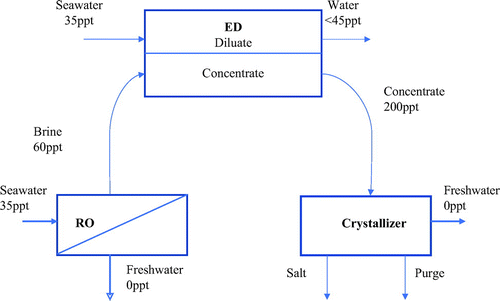
The authors assume that the RO water production volume is about 150,000 m3/day, which totals 164,777 m3/day when the crystallizer water is added. Under the assumption that the current density is 300 A/m2, they find that the energy consumption is 10.1 kWh/m3 of water produced; with an electricity price of 10 cents/kWh, this implies $3.5/m3 of water.24 When the current density is increased to 600 A/m2, they find that the overall cost decreases to $3/m3, and the energy consumption increases to 12.7 kWh/m3. In our analysis in Section 5, we use the case with higher current density as it minimizes system cost when the electricity price is 10 cents/kWh (see figure 10 in Nayar et al. 2019a), which is close to the U.S. average cost of 13 cents/kWh.25
Under the assumptions made here, salt production was found to be 3,555 tons/day or 1.17 million tons/year, which is comparable with existing vacuum salt operations and represents about 7% of the current U.S. salt import. We observe that we would need about seven such facilities to cover imports from Table 5. The aforementioned water desalination costs do not include salt revenues, which the authors estimate can vary from $10 to $140/ton of salt (corresponding to $0.22–$3/m3 of water produced), depending on purity, cost of production, and cost of transportation, among other factors Thus, the net water cost after including salt revenue can range between $0 and $2.8.
We previously mentioned that coproduction could lead to significant reductions in requirements for concentrate disposal. To gain a better understanding of these changes, we first note that RO applied to seawater typically has a recovery ratio 0.42 (Jones et al. 2019).26 In other words, when using RO, the concentrate that amounts to 58% of the intake volume must be disposed of. This is consistent with the flow of seawater through the RO system as described: with a recovery ratio of 0.42, we have 35 ppt/(1 − 0.42) = 60 ppt salinity entering the ED system. In order to increase concentration from 60 ppt to 200 ppt—the salinity obtained through the ED system concentrate channel—we need to remove 70% of the water; hence, we are left with about 17.4% of the original volume (35 ppt/0.174 = 201 ppt). Nayar et al. (2019a) estimate the effective purge ratio27 for the crystallizer to be 9.6%, and hence, only 1.67% of the intake volume needs to be disposed of. Although RO seawater desalination requires proper disposal of about 58% of the intake volume in the form of concentrate, coproduction requires disposal of only 1.67% of the intake volume or about 35 times less.
4.2. Transportation
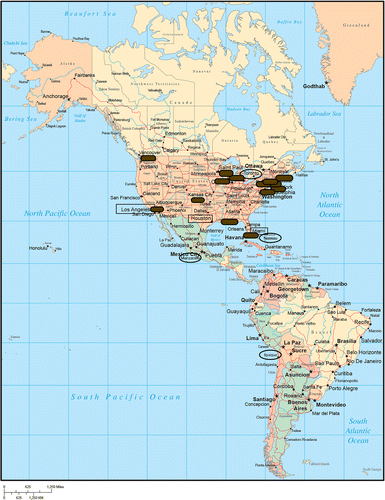
Figure 2 depicts the origins of the U.S. salt imports, salt import locations, and potential coproduction plant locations. Note that Los Angeles and Miami represent both salt import locations and potential coproduction plant locations.
In Table 6, we provide distances and costs for rail shipping28 from Los Angeles, Miami, and Houston to cities considered in Table 5. As a comparison, we have also included (in the last column) the current weighted average total costs of imported salt in those states. We can see that Los Angeles is the most expensive option for all states except California and Washington; Miami is the cheapest option for states on the East Coast—Florida, Maryland, Massachusetts, New Jersey, New York, Pennsylvania, and Rhode Island; and Houston is the cheapest option for the central states—Illinois, Kansas, Louisiana, Michigan, and Wisconsin. As can be seen from Table 6, the lowest cost for shipping to Michigan is higher than the total average cost of imported salt in that state, and thus, we do not consider Michigan further in our analysis.
|
Table 6. Shipping Distances and Corresponding Costs from California, Florida, and Texas to Salt Importing States
| State | City | Distance from Los Angeles, miles | Cost, $/ton | Distance from Miami, miles | Cost, $/ton | Distance from Houston, miles | Cost, $/ton | Current cost, $/ton |
|---|---|---|---|---|---|---|---|---|
| (1) | (2) | (3) | (4) | (5) | (6) | (7) | (8) | (9) |
| California | Los Angeles | — | — | 2,336 | 127 | 1,371 | 74 | 93.91 |
| Florida | Miami | 2,336 | 127 | — | — | 967 | 68 | 90.15 |
| Illinois | Chicago | 1,742 | 95 | 1,192 | 84 | 942 | 51 | 81.88 |
| Kansas | Wichita | 1,297 | 91 | 1,297 | 91 | 559 | 30 | 101.32 |
| Louisiana | New Orleans | 1,670 | 91 | 669 | 47 | 318 | 17 | 114.06 |
| Maryland | Baltimore | 2,315 | 126 | 958 | 67 | 1,251 | 88 | 126.11 |
| Massachusetts | Boston | 2,591 | 141 | 1,259 | 88 | 1,604 | 113 | 114.82 |
| Michigan | Detroit | 1,980 | 107 | 1,156 | 81 | 1,106 | 78 | 57.09 |
| New Jersey | Newark | 2,437 | 132 | 1,091 | 77 | 1,411 | 99 | 107.03 |
| New York | New York | 2,446 | 133 | 1,092 | 77 | 1,418 | 100 | 100.00 |
| Pennsylvania | Philadelphia | 2,389 | 130 | 1,023 | 72 | 1,340 | 94 | 103.79 |
| Rhode Island | Providence | 2,575 | 140 | 1,217 | 85 | 1,572 | 110 | 101.72 |
| Washington | Seattle | 961 | 52 | 2,732 | 192 | 1,890 | 102 | 126.89 |
| Wisconsin | Milwaukee | 1,742 | 94 | 1,271 | 89 | 1,006 | 55 | 61.04 |
| Weighted average | 1,946 | 108 | 1,141 | 79 | 1,086 | 70 | 94.62 |
4.3. GHG Emissions
Recall that a coproduction plant with an RO water production capacity of 150,000 m3/day produces a total of 164,777 m3/day along with 3,555 tons of salt, requiring 12.7 kWh of energy per cubic meter of water. In Section 2.1, we find that GHG emission intensity for electricity generation in 2018 was 0.225 kg CO2e/kWh in California and 0.422 kg CO2e/kWh in Florida and Texas. Thus, emissions required for generating 1 m3 of fresh water would be 2.86 kg CO2e for a California plant and 5.36 kg CO2e for a plant in Florida or Texas. Recall further that we find in Section 3.1 that GHG emissions from shipping are estimated to be 22 g CO2e/ton-km (35.4 g CO2e/ton-mile) for rail transportation. We use this data in the next section when we compare status quo emissions with emissions from coproduction.
5. Our Model and Results
In this section, we develop a model for identifying the optimal locations of desalination plants and for allocation of demand markets to those plants. We compare the resulting net water costs (production costs adjusted by salt revenues) and emission changes of different scenarios with the status quo. In our analysis, we first determine optimal facility locations and their corresponding markets based on the total number of plants being constructed (between one and eight) under the assumption that we can choose optimally among all three locations. We then provide a similar analysis if we assume that only one state is being considered as a potential plant location. The first case mimics the environment in which plant locations are determined optimally on the federal level, and the second set of cases assumes that only a single state is pursuing construction of coproduction facilities.
5.1. The Optimization Model
We denote by States the set of main salt importing states,
Let us first consider the status quo; the relevant variables for this case are described in Table 7. Using the notation from Table 7, the weighted average cost for a ton of salt imported by state j can be expressed as
|
Table 7. Variables Required to Evaluate U.S. Salt Imports
| Variable | Description |
|---|---|
| Total demand for imported salt in state j (in tons) | |
| Amount of salt produced in country i and shipped to state j in tons (column (4) in Table 5) | |
| Distance for shipping salt from country i to state j in miles for rail, in nautical miles for ocean (column (8) in Table 5) | |
| Total cost for obtaining a ton of salt from country i in state j in $, including product cost and shipping cost (column (10) in Table 5) | |
| CO2 emissions for electricity generation in countries from which saltis imported in kg CO2e/kWh |
This value is used to determine the maximum revenue that can be obtained when coproduced salt is sold to state j (see Table 8).
|
Table 8. Variables Required to Evaluate Coproduction of Salt and Freshwater
| Variable | Description |
|---|---|
| Number of coproduction plants in state i | |
| Total capacity for salt coproduction in state i in tons | |
| Manufacturing cost for one cubic meter of fresh water in state i | |
| Amount of salt coproduced in state i and shipped to state j in tons | |
| Cost of shipping a ton of salt coproduced in state i to state j in $ (columns (4), (6), and (8) in Table 6) | |
| Distance for shipping salt from state i to state jin miles (columns (3), (5), and (7) in Table 6) | |
| Maximum net revenue that can be obtained by coproducingone ton of salt in state i and shipping it to state j in $ | |
| CO2 emissions for electricity generation in states in which desalination plants are located in kg CO2e/kWh |
We next consider our proposed alternative with coproduction plants. Recall that a coproduction plant can manufacture 1.17 million tons of salt annually. In addition, to assure feasibility of our model, the total price that an importing state pays for coproduced salt (including salt cost and transportation cost) should not exceed the current total price paid per ton by that state. We introduce relevant variables in Table 8.
In Section 4.1, we introduce a result from Nayar et al. (2019a) estimating that it costs $3/m3 of fresh water when we use 12.7 kWh/m3 of manufactured fresh water and the electricity cost is 10 cents/kWh. In August 2020, the commercial electricity rate in California was 21.23 cents/kWh, in Florida 9.01 cents/kWh, and in Texas 7.78 cents/kWh.29 Using this data, we adjust the manufacturing cost for one cubic meter of fresh water in California to $4.43, in Florida to $2.87, and in Texas to $2.72.
We can now build our optimization model. We assume utilization of the total capacity of coproduction plants that we build. Recall that in Section 4.1, we find that annual production of 164,777 m3 of water leads to production of 3,555 tons of salt. Thus, if we want to obtain one ton of salt, we need to produce
For each ton of salt made in plant i, we spend Kwi, and we can sell it in state j for rij. Note that we could also assume a lower selling price, which might increase demand for salt in some states. However, as our goal is to explore feasibility of coproduction plants, we want to focus on the lowest possible net cost for coproduced water, which is obtained if we sell salt at the highest possible price.
Our optimization problem, which minimizes net cost with k coproduction plants, can be written as
Constraint (1) defines the total capacity for salt coproduction in each state, Constraint (2) ensures that we utilize all existing salt coproduction capacity, Constraint (3) ensures that we do not ship to a state more than its existing demand, Constraint (4) ensures that we only ship salt to states from which we can obtain a positive net revenue, Constraint (5) ensures that we have an integer number of plants at each location, and Constraint (6) ensures that we have exactly k plants. For the case in which we want to build plants only in state i0, we add constraint
The net cost of one cubic meter of coproduced fresh water is
5.2. GHG Emissions
We next compare carbon emissions under the two scenarios, the status quo versus coproduction. We consider two sources of emissions: the electricity required for manufacturing and transportation.
We start by analyzing the status quo. Recall that in Section 3.1, we find that salt production requires 450 kWh of electricity per ton of salt. As we may not replace the entire demand for imported salt in a given state by coproduction, let us denote by the fraction of demand for imported salt in state j satisfied through coproduction,
Then, the emissions for manufacturing imported salt that is replaced by coproduced salt can then be expressed as
Further, recall that we find in Section 3.1 that emissions from ocean transportation are 0.0156 kg CO2 per ton-nautical mile, and for rail transportation we have 0.0354 kg CO2 per ton-mile. The emissions that would be generated by shipping the portion of imported salt that is replaced by coproduction can then be expressed as
We next perform a similar calculation for coproduction. For manufacturing emissions, recall that Section 4.1 indicates that we need 12.7 kWh/m3 of manufactured fresh water. Thus, the total emissions from the coproduction of salt and fresh water are given by
However, as coproduction also generates fresh water, to obtain numbers that are compatible with the status quo case, we deduct from (7) emissions from the water manufacturing (so that we only compare emissions from salt manufacturing and transportation for the two cases). Recall that we find in Section 2.1 that water desalination needs about 4 kWh/m3. The emissions from water manufacturing can, therefore, be expressed as
Thus, the net emissions for salt manufacturing can be obtained as
We assume that all shipping from desalination plants uses railroads, so shipping emissions can be calculated as
By combining the expressions calculated here, we can evaluate the percentage of changes in emissions between the two scenarios as
5.3. Optimal Configurations When All Coproduction Plant Locations Are Considered
We first analyze the case in which we assume a federal-level decision maker is choosing locations for coproduction facilities and finds optimal configurations for different numbers of plants under consideration, ranging from a single plant to eight possible plants. Our analysis indicates the maximum number of plants that are feasible in this case is six as can be seen in Table 9 (if we want to sell all coproduced salt with more than six plants, we have negative revenue for some plant–market pairs). California is never chosen as a coproduction plant location as it is located further from demand points than the remaining two states, thus leading to less competitive shipping rates. In addition, no salt is shipped to Rhode Island, which is a feasible destination for shipping from Florida, but the state’s capacity was already fully utilized by other more profitable options.
|
Table 9. Optimal Manufacturing and Shipping Configurations When All Plant Locations Are Considered (in Tons of Salt), and Carbon Tax and Coproduction Cost Reduction Required for Achieving Cost Parity
| Total plants | Variables | 1 | 2 | 3 | 4 | 5 | 6 |
|---|---|---|---|---|---|---|---|
| Texas | yTX | 1 | 1 | 2 | 2 | 2 | 3 |
| Florida | yFL | 0 | 1 | 1 | 2 | 3 | 3 |
| Market | |||||||
| California | — | — | — | — | — | 246,435 | |
| Florida | — | 364,266 | 364,266 | 364,266 | 364,266 | 364,266 | |
| Illinois | — | — | 559,587 | 559,587 | 559,587 | 753,767 | |
| Kansas | 363,190 | 649,470 | 973,603 | 973,603 | 973,603 | 973,603 | |
| Louisiana | 806,810 | 806,810 | 806,810 | 806,810 | 806,810 | 806,810 | |
| Maryland | — | 519,454 | 519,454 | 519,454 | 519,454 | 519,454 | |
| Massachusetts | — | — | — | 719,510 | 839,665 | 839,665 | |
| New Jersey | — | — | 91,959 | 542,449 | 542,449 | 542,449 | |
| New York | — | — | — | — | 1,049,845 | 1,049,845 | |
| Pennsylvania | — | — | 194,321 | 194,321 | 194,321 | 194,321 | |
| Washington | — | — | — | — | — | 156,163 | |
| Wisconsin | — | — | — | — | — | 573,222 | |
| Net coproduced water cost per m3, $ | 0.80 | 1.14 | 1.31 | 1.55 | 1.71 | 1.83 | |
| Current desalinated water cost per cubic meter | 1.16 | 1.33 | 1.273 | 1.33 | 1.364 | 1.33 | |
| Cost reduction for parity, % | n/a | n/a | 3 | 14 | 20 | 27 | |
| Emissions change, tons CO2e | 609 | −71,144 | −8,506 | −48,236 | −77,859 | 2,788 | |
| Emissions change, % | 0.28 | −13.88 | −1.25 | −4.98 | −6.26 | 0.20 | |
| Carbon tax for parity, $/ton CO2e | n/a | n/a | 706 | 989 | 1,218 | infeasible |
5.3.1. Net Water Costs.
Recall that we estimate in Section 2.1 the cost of desalinated water at $2/m3 in California, $1.5/m3 in Florida, and $1.16/m3 in Texas. As a result, building one facility in Texas with the net coproduced water cost of $0.80/m3 implies a lower cost than our status quo estimate of its desalination cost. Building two plants, one in Florida and one in Texas, with the net coproduced water cost of $1.14/m3, still leads to the water cost below the current average cost of Florida and Texas, $1.33/m3. However, once we build more plants, the lowest net coproduced water cost is $1.31/m3, which exceeds the current desalination cost of $1.273 (obtained as the weighted averages of the costs in Florida and Texas with respect to the number of plants in each state). As the ocean has an almost unlimited capacity for desalination, these options might become attractive as water becomes even scarcer and water prices increase, and at the same time, coproduction costs might decrease because of technology advancements and/or potential implementation of a carbon tax. We discuss these situations in more detail as follows.
5.3.2. Transportation Costs.
The analysis of transportation costs is based on prices from June 2020. Clearly, an increase in rail transportation cost coupled with a reduction in ocean freight costs would lead to different conclusions. To obtain additional insights into transportation price trends, we looked at historical price indices for these two industries from 2015 until today. The results, based on data from the U.S. Bureau of Labor Statistics and the St. Louis FED,30 are presented in Table 10. The two transportation modes behaved similarly during the first three years under consideration. However, after reaching record low prices in 2016, deep-sea freight transportation started to decelerate its fleet capacity growth during 2017, which led to an increase in transportation prices.31 Although the deep-sea freight industry this year faced lower demand because of the ongoing pandemic (since March 2020), which reduced the demand for services and decreased rates, we do not believe that this is a permanent situation as the industry continues to monitor fleet capacity and exhibits a trend toward consolidation (United Nations Conference on Trade and Development 2018). Thus, there are indications that transportation costs for coproduction might become even more favorable.
|
Table 10. Producer Price Index by Industry (October 2015 = 100)
| Date | Rail transportation | Deep sea freight transportation |
|---|---|---|
| October 2015 | 100 | 100 |
| October 2016 | 100 | 99 |
| October 2017 | 104 | 104 |
| October 2018 | 111 | 120 |
| October 2019 | 112 | 120 |
| October 2020 | 112 | 114 |
One critical assumption of our model is the use of rail transportation for shipments of coproduced salt. Recall that in the introduction, we quoted a shipping cost of 4.23 cents per ton-mile by rail and 18.83 cents per ton-mile by truck. If we assume that trucks are used instead of rail, the shipping cost for coproduction configurations and for salt imports from Canada could increase more than four times. Under this assumption, the only feasible configuration would be to build a single coproduction plant in Texas and use it to supply total demand for imported salt in Kansas and about a quarter of such a demand in Louisiana.
5.3.3. GHG Emissions.
Observe that almost all of the configurations in Table 9 (except the first and the last configuration) lead to some level of GHG emissions reduction. As a result, introduction of federal carbon penalty legislation can lead to a further decrease in net water prices. However, once we build three or more plants, a very high carbon tax would be required to induce cost parity.
It is interesting to note that the emissions do not change in a monotonic way. This is directly related to the states that would obtain coproduced salt and their current sources of salt. When we move from one to two plants, we are adding shipments to Florida and Maryland along with additional shipments to Kansas that are all supplied from Florida. Although Kansas, representing 24% of new deliveries, imports salt only from Canada (which has electricity emissions of 63 kWh/ton compared with 90.7 kWh/ton in Florida), the remaining two states import from the Bahamas, Mexico, and Chile, where emissions are higher (430, 185.4, and 198 kWh/ton, respectively) compared with those in Florida. Thus, when moving from one to two plants, we see a drop in emissions. Similarly, when we move from five plants to six plants, about one half of the coproduced salt from the new plant is targeted for Wisconsin, which imports salt from Canada. Because Canada has very low emissions (63 kWh/ton), we experience an increase in total emissions again. In addition, as we add more plants, we are supplying states that are further away from coproduction plants and cause an increase in transportation emissions.
5.3.4. Salt Demand Magnitude.
Another important factor in our analysis is that the total demand for imported salt considered is about 8.5 million tons (see Table 5), slightly above one half of current U.S. imports (16.35 million tons; see Section 3). Extending the analysis by considering total imports to all states from all countries may indicate that even more coproduction plants might be currently feasible. However, as the main goal of this study is to just evaluate the feasibility of building coproduction plants in the United States, and it is very unlikely that construction of more than two such coproduction plants will soon begin, we decided not to pursue the options of adding further country–state pairs.
5.3.5. Salt Inventory Levels.
One important element not included in our analysis is the change in required inventory levels if imported salt is replaced by coproduced salt. Although demand for many salt types can be rather stable, this is usually not the case for road salt. For this reason, many states have quantity flexibility contracts with their salt suppliers that require the suppliers to keep extra inventory. At the same time, the states have the option to not purchase the entire contracted quantity. As an example, salt users in New York State are obligated to take at least 70% of their order quantity, and contractors are obligated to deliver up to 150% of the order quantity.32 Similarly, users in Michigan have to take at least 80% of their order quantity, and contractors must deliver up to 130% of the order quantity.33 In addition, contracted quantities must be delivered within a specified time window. For instance, New York State requires deliveries of orders of 600 tons or less within three business days or less, and for larger quantities, a minimum of 200 tons per day must be delivered after the initial 600-ton delivery.
Our analysis of ocean shipments from Chile and Mexico to the U.S. East Coast indicates that the ocean portion of the trip itself takes 17–21 days. Thus, to fulfill the contract requirements, suppliers in states that rely heavily on imported salt from Mexico and Chile may need to keep high inventory levels because of the long lead times. When considering rail shipments of coproduced salt from Houston, the travel time varies from three days (New Orleans) to 18 days (Seattle); the average distance for locations served from Houston is 1,020 miles (from Table 6), which corresponds to an average travel time of 10 days. Similarly, the travel time from Miami to locations served from Miami varies from six days (New Orleans) to 12 days (Wichita), and the average distance of 1,006 miles (from Table 6) corresponds to an average travel time of 10 days. Hence, the use of coproduced salt can lead to lower inventory levels (on average, 30%–40%). Recall that, in the introduction, we mention that 43% of U.S. salt is used for deicing; thus, this inventory reduction can further reduce the underlying costs of the coproduction option and make it more attractive.
5.3.6. Water Scarcity Cost.
Our model does not incorporate water scarcity cost as estimates of such a calculation must account for numerous features of a specific location, such as direct, indirect, and induced monetary impact on the region; additional power purchase cost; and job losses, among others, which lie beyond the scope of this paper. The Texas Water Development Board (2018) analyzes the impact of water shortages in the Lower Colorado Water Planning Group (also known as region K). As a baseline, they use the data from 2011 adjusted to 2013 dollars, when the region’s income was $88.344 billion, and the number of jobs was 975,269. Their analysis indicates that, in 2020, the loss of income resulting from water shortages would be about $1.6 billion (or 1.77%), increasing to $3.6 billion (or 4%) in 2070. The region would lose about 9,900 jobs (or 1%) in 2020, and by 2070, that number would increase to about 45,000 (4.6%). Thus, desalination can provide additional benefits through prevention of loss of income and loss of jobs, which indirectly reduces the cost of desalinated water.
5.3.7. Desalination Costs.
As previously mentioned, the United Nations (2020) discusses several advances in RO desalination technology that led to a reduction in desalination costs. They predict that the advances are likely to make seawater RO a cost-competitive process for freshwater production by reducing the cost by 25% by 2022 and by up to 60% by the year 2030. Clearly, this will have an impact on both current desalination costs and the cost of fresh water obtained through coproduction and will bring the cost of desalinated water closer to the cost of water obtained through traditional sources.
5.4. Optimal Configurations When a Single Plant Location Is Considered
We next individually analyze each of the three states that we identified as potential locations of coproduction plants, assuming that it is the only state that is considering coproduction plant construction. In other words, we assume that coproduction plants are being built in a single state and that this state can ship salt to any state currently importing salt.
5.4.1. California.
We start our analysis with California and present our results in Table 11. Recall that the cost of coproduced water in California is $4.43/m3 (see Section 5.1), and the current desalinated water cost is $2 (see Section 2). For the sensitivity analysis, we also consider the average cost from the California Public Utilities Commission (2016), $2.75/m3. As previously discussed, California is located far from the biggest markets for imported salt, and as such, feasibility allows us to build at most two coproduction plants there. Both of these facilities would incur higher costs than our current estimate of desalination costs in California because of the state’s high energy cost. It is worth noticing that the highest cost for seawater desalination in both Cooley and Phurisamban (2016) ($3.50/m3) and California Public Utilities Commission (2016) ($4.14/m3) exceed at least one of the net coproduced water costs in Table 11. Thus, a case could be made for building one coproduction facility in California in the near future as the state experiences water-stress levels of more than 40% and the ocean represents a bountiful source of water.
|
Table 11. Optimal Manufacturing and Shipping Configurations for California (in Tons of Salt) and Carbon Tax and Coproduction Cost Reduction Required for Achieving Cost Parity
| Total plants in California | yCA | 1 | 2 |
|---|---|---|---|
| Market | |||
| California | 246,435 | 246,435 | |
| Kansas | — | 973,603 | |
| Louisiana | 767,402 | 806,810 | |
| Maryland | — | 156,989 | |
| Washington | 156,163 | 156,163 | |
| Net coproduced water cost per cubic meter, $ | 3.46 | 3.84 | |
| Cost reduction for parity at $2/m3, % | 42 | 48 | |
| Cost reduction for parity at $2.75/m3, % | 20 | 28 | |
| Emissions change, tons CO2e | −120,061 | −85,632 | |
| Emissions change, % | −43.36% | −20.96% | |
| Carbon tax for parity at $2/m3, $/ton CO2e | 658 | 2,331 | |
| Carbon tax for parity at $2.75/m3, $/ton CO2e | 320 | 1,382 |
In addition, building coproduction facilities in California would lead to significant emissions reduction compared with the status quo because of the state’s investment in clean energy, and a carbon tax could help bring the coproduced water cost closer to the status quo.
5.4.2. Texas.
Because of its central location, if we consider only Texas as the potential location for coproduction plants, it is feasible to build up to five such facilities as shown in Table 12. Recall that the cost of coproduced water in Texas is $2.72/m3 (see Section 5.1), and the current desalinated water cost is $1.16 (see Section 2).
|
Table 12. Optimal Manufacturing and Shipping Configurations for Texas (in Tons of Salt) and Coproduction Cost Reduction Required for Achieving Cost Parity
| Total plants in Texas | yTX | 1 | 2 | 3 | 4 | 5 |
|---|---|---|---|---|---|---|
| Market | ||||||
| California | — | — | — | 246,435 | 246,435 | |
| Florida | — | — | 300,203 | 364,266 | 364,266 | |
| Illinois | — | 40,133 | 753,767 | 753,767 | 753,767 | |
| Kansas | 363,190 | 973,603 | 973,603 | 973,603 | 973,603 | |
| Louisiana | 806,810 | 806,810 | 806,810 | 806,810 | 806,810 | |
| Maryland | — | 519,454 | 519,454 | 519,454 | 519,454 | |
| Massachusetts | — | — | — | — | 103,147 | |
| New Jersey | — | — | — | 542,449 | 542,449 | |
| Pennsylvania | — | — | — | 194,321 | 194,321 | |
| Washington | — | — | 156,163 | 156,163 | 156,163 | |
| Wisconsin | — | — | — | 122,732 | 1,189,585 | |
| Net coproduced water cost per m3, $ | 0.80 | 1.16 | 1.48 | 1.73 | 1.90 | |
| Cost reduction for parity, % | n/a | n/a | 22 | 33 | 39 | |
| Emissions change, tons CO2e | 609 | 28,146 | 31,760 | −2,486 | 141,039 | |
| Emissions change, % | 0.28 | 6.66 | 4.79 | −0.26 | 13.43 |
With a single plant, we have the same cost analysis as we present in Section 5.3; with two plants, the net cost of coproduced water is equal to the current desalinated water cost. However, once we build more than two plants, the net cost of coproduced water becomes higher than the current desalination costs in Texas (the lowest cost is $1.48 versus the status quo of $1.16). In addition, building multiple facilities results in an increase in GHG emissions compared with the status quo in all but one case; thus, implementation of a carbon tax in this case generally leads to a further increase in water costs and makes coproduction less competitive. It is interesting to note that the emissions change is not monotonic, which is directly related to the states that would be supplied from Texas and their current sources of salt. When we move from three to four plants, we are adding shipments to California, New Jersey, Pennsylvania, and Wisconsin. Although Wisconsin represents 11% of new deliveries and imports salt only from Canada, which has electricity emissions of 63 kWh/ton compared with 170 kWh/ton in Texas, the remaining three states import from Mexico and Chile, where emissions are higher (185.4 and 198 kWh/ton, respectively) compared with those in Texas. When we move from four to five plants, we replace all Wisconsin salt imports (from low-emissions Canada) with coproduced salt, and emissions rise again.
5.4.3. Florida.
Our results for Florida are presented in Table 13. Recall that the cost of coproduced water in Florida is $2.87/m3 (see Section 5.1), and the current desalinated water cost is $1.50 (see Section 2).
|
Table 13. Optimal Manufacturing and Shipping Configurations for Florida (in Tons of Salt) and Carbon Tax and Coproduction Cost Reduction Required for Achieving Cost Parity
| Total plants in Florida | yFL | 1 | 2 | 3 | 4 |
|---|---|---|---|---|---|
| Market | |||||
| Florida | 364,266 | 364,266 | 364,266 | 364,266 | |
| Kansas | — | — | — | 161,427 | |
| Louisiana | 805,734 | 806,810 | 806,810 | 806,810 | |
| Maryland | — | 519,454 | 519,454 | 519,454 | |
| Massachusetts | — | — | 839,665 | 839,665 | |
| New Jersey | — | 455,149 | 542,449 | 542,449 | |
| New York | — | — | 243,035 | 1,183,095 | |
| Pennsylvania | — | 194,321 | 194,321 | 194,321 | |
| Rhode Island | — | — | — | 68,513 | |
| Net coproduced water cost per m3, $ | 1.27 | 1.61 | 1.84 | 1.99 | |
| Cost reduction for parity, % | n/a | 7 | 18 | 24 | |
| Emissions change, tons CO2e | −113,699 | −149,120 | −170,490 | −198,795 | |
| Emissions change, % | −34.26 | −24.50 | −19.39 | −17.23 | |
| Carbon tax for parity, $/ton CO2e | n/a | 78 | 324 | 520 |
It is feasible to build up to four coproduction plants when only Florida is considered. With a single facility, the net cost of coproduced water is competitive with the status quo ($1.27 versus $1.50), but once we build more than one plant, the net cost of coproduced water becomes higher than the current desalination costs in Florida (the lowest value is $1.61), and a significant carbon tax is required to achieve cost parity with the status quo of $1.50/m3 in all but the two-plant case.
6. Concluding Remarks
Although coproduction of salt and freshwater from seawater could lead to environmental benefits by reducing the need for disposal of residual concentrates and reduced GHG emissions, at the moment, it is generally not used in the United States. The main reason for this is likely the perceived high cost that would make the fresh water produced through coproduction not competitive with the water produced through a pure desalination process. Our analysis indicates that this reasoning is not necessarily true as building a small number of strategically located coproduction plants in the United States that would sell coproduced salt to states that are currently importing salt from foreign countries would actually result in a decrease of the net cost of desalinated freshwater. The results become even more positive if we account for a potential reduction in inventory levels of road salt and if a federal carbon tax is implemented in the United States, in which case building more plants could be both feasible and financially more attractive. This fact is even more important when we take into account freshwater scarcity and seawater abundance. We hope that our findings are useful for government and corporate decision makers when considering the type and location of desalination facilities to build as well as the environmental policies that are implemented. For instance, although building coproduction facilities in California is not financially justified at the moment, it would be environmentally beneficial as it leads to a reduction in GHG emissions. Moreover, it might become financially attractive in the near future because of increased water scarcity in the region. On the other hand, because of its central location, Texas is the state that achieves the lowest net water cost from coproduction, but building such facilities in Texas increases GHG emissions and has a negative environmental impact. At this point in time, locating coproduction plants in both Texas and Florida leads to both environmental and financial benefits.
The author is grateful to the department editor, the associate editor, and two anonymous referees for suggestions that substantially improved the paper.
1 Water stress occurs when the demand for water exceeds the available amount during a certain period or when poor quality restricts its use.
2 Sometimes waters with salinity up to 35 ppt are referred to as brackish.
3 In the United States, estimated freshwater use in 2015 was 281 bgd (U.S. Geological Survey 2018). In 2011, desalination capacity in the United States was 2.2 bgd (Wetterau and Mickley 2019), and it has been estimated that about 10 desalination plants have been added annually with an average capacity of about 3.7 mgd (Mickley 2018), which would put the estimated desalination capacity in 2015 at around 2.35 bgd or about 0.84% of the total freshwater use.
4 This is considered over a period of 20 years that includes future rate estimates based on historic increases.
5 Both facilities were under construction when the report was prepared.
6 We note that, in addition to salt recovery, new technologies are being developed for extraction of materials from residual concentrate. For example, lithium can be recovered from seawater-desalination brine in contrast to its present extraction through water-intensive mining operations that can impact the environment through release of toxic effluents.
7 Table salt requires a purity of 97% or more. One exception that requires higher purity, as noted by Nayar et al. (2019a), is direct use in an electrolyzer for chloralkali production.
8 See https://www.carlsbaddesal.com/desal-101.html (accessed August 11, 2021).
9 See https://www.santabarbaraca.gov/gov/depts/pw/resources/system/sources/desalination/default.asp (accessed August 11, 2021).
10 For brackish water, they analyzed 16 plants, 11 small and 5 large ones, and found the price for small plants to be $0.81–$1.46/m3 and for large ones to be $0.77–$1.05/m3.
11 See https://www.carlsbaddesal.com/eir.html (accessed August 11, 2021).
12 See https://www.poseidonwater.com/desal-101.html (accessed August 11, 2021).
13 CO2e denotes carbon dioxide equivalent. The impact of different greenhouse gases is expressed in terms of the amount of CO2 that would create the same amount of global warming.
14 See https://emissionfactors.com/ (accessed August 11, 2021).
15 See U.S. Census Bureau (2020).
16 See U.S. Census Bureau (2020).
17 Distances are estimated using websites http://sea-distances.org (ocean, in nautical miles) and http://railrates.com/freight (rail, in miles) (accessed August 11, 2021).
18 Costs are estimated by using websites https://www.icontainers.com, https://globalforwarding.com, https://www.hapag-lloyd.com, and http://railrates.com/freight (accessed August 11, 2021).
19 Weighted average is calculated as the average of values scaled by the relative volume of each origin–destination pair.
20 See OECD.Stat, https://co2scorecard.org/countrydata/ (accessed August 11, 2021).
21 See https://gb-power.com/company/bringing-electricity-to-you/ and https://www.bplco.com/building-for-better/ (accessed August 11, 2021).
22 See https://www.eia.gov/tools/faqs/faq.php?id=74&t=11 (accessed August 11, 2021).
23 See the World Resource Institute, https://wriorg.s3.amazonaws.com/s3fs-public/uploads/us_water_stress_map.png (accessed August 11, 2021).
24 This cost also includes capital costs and operating expenses, such as labor, parts, maintenance, and chemicals; for details see Nayar et al. (2019a). The cost, however, does not include packaging, iodizing, and storage facilities.
25 See https://www.chooseenergy.com/electricity-rates-by-state/ (accessed August 11, 2021).
26 When RO is applied to brackish water, the recovery rate is 0.65, which implies lower disposal costs for brackish water desalination.
27 This is the ratio of the purge stream leaving the crystallizer (the stream that needs to be disposed of) to the crystallizer’s feed stream.
28 See http://railrates.com/freight (accessed August 11, 2021).
29 See https://www.chooseenergy.com/electricity-rates-by-state/ (accessed August 11, 2021).
30 See https://fred.stlouisfed.org/series/PCU48214821, https://fred.stlouisfed.org/series/PCU4831114831115 (accessed August 11, 2021).
31 If we consider an even longer time period, starting in December 1996, rail transportation has index 197 as of October 2020, and deep-sea freight has index 295, indicating a significantly faster growth in deep-sea freight rates.
32 See https://online.ogs.ny.gov/purchase/spg/pdfdocs/0180023134ra.pdf (accessed August 11, 2021).
33 See https://www.michigan.gov/dtmb/0,5552,7-358-82550_85753_26872-139815–,00.html (accessed August 11, 2021).
References
- (2013) Energy consumption and water production cost of conventional and renewable-energy-powered desalination processes. Renewable Sustainable Energy Rev. 24:343–356.Crossref, Google Scholar
Bureau of Transportation Statistics (2020) National transportation statistics. Accessed August 11, 2021, https://www.bts.gov/content/average-freight-revenue-ton-mile.Google Scholar- (2016) The Cost of Alternative Water Supply and Efficiency Options in California (Pacific Institute, Oakland, CA).Google Scholar
California Public Utilities Commission (2016) What will be the cost of future sources of water for California? Accessed August 11, 2021, https://www.deepwaterdesal.com/userfiles/file/CPUCStudy-CostofFutureWater.pdf.Google Scholar- (2006)
Zero discharge seawater desalination: Integrating the Production Of Freshwater, Salt, Magnesium, And Bromine . DWPR Program Report No. 111, U.S. Bureau of Reclamation, Denver, CO.Google Scholar - (2018) Seawater, Encyclopædia Britannica. Accessed August 11, 2021, https://www.britannica.com/science/seawater.Google Scholar
European Chemical Transport Association (2011) Guidelines for measuring and managing CO2 emission from freight transport operation. Accessed August 11, 2021, https://www.ecta.com/wp-content/uploads/2021/03/ECTA-CEFIC-GUIDELINE-FOR-MEASURING-AND-MANAGING-CO2-ISSUE-1.pdf.Google ScholarGovernment of Canada (2017) Canada energy regulator. Accessed August 11, 2021, https://www.cer-rec.gc.ca/nrg/sttstc/lctrct/rprt/2017cndrnwblpwr/ghgmssn-eng.html.Google ScholarInternational Desalination Association (2019) The IDA water security handbook 2019–2020. Accessed August 11, 2021, https://globalwaterintel-info.com/p/36G3-5U3/idahandbooksample.Google Scholar- (2014) Electrodialysis of concentrated brine from RO plant to produce coarse salt and freshwater. J. Membrane Sci. 450(15):323–330.Crossref, Google Scholar
- (2019) The state of desalination and brine production: A global outlook. Sci. Total Environ. 657:1343–1356.Crossref, Google Scholar
- (2008)
Treatment of concentrate plants . DWPR Program Report No. 155, U.S. Bureau of Reclamation, Denver, CO.Google Scholar - (2018)
Updated and extended survey of U.S. municipal desalination plants . DWPR Program Report No. 207, U.S. Bureau of Reclamation, Denver, CO.Google Scholar - (2019a) Cost and energy needs of RO-ED-crystallizer systems for zero brine discharge seawater desalination. Desalination 457:115–132.Crossref, Google Scholar
- (2019b) Cost and energy requirements of hybrid RO and ED brine concentration systems for salt production. Desalination 456:97–120.Crossref, Google Scholar
- (2001) Integrated system for complete usage of components in seawater. Desalination 134(1–3):29–36.Crossref, Google Scholar
- (2018) The economic value of local water supplies in Los Angeles. Nature Sustainability 1:289–297.Crossref, Google Scholar
- (2009) Environmental balance of salt production speaks in favor of solar saltworks. Global NEST J. 11(1):41–48.Google Scholar
- (2012) Climate and energy-water-land system interactions. Technical Report PNNL-21185 to the U.S. Department of Energy in Support of the National Climate Assessment. Accessed August 11, 2021, https://www.pnnl.gov/main/publications/external/technical_reports/PNNL-21185.pdf.Google Scholar
Texas Water Development Board (2018) The future of desalination in Texas. Accessed August 11, 2021, https://www.twdb.texas.gov/innovativewater/desal/doc/2018_TheFutureofDesalinationinTexas.pdf?d=1546638725773.Google ScholarUnited Nations (2018) Sustainable development goal 6—Synthesis report 2018 on water and sanitation. Accessed August 11, 2021, https://www.unwater.org/publications/sdg-6-synthesis-report-2018-on-water-and-sanitation/.Google ScholarUnited Nations (2020) UN-water analytical brief on unconventional water resources. Accessed August 11, 2021, https://www.unwater.org/publications/un-water-analytical-brief-on-unconventional-water-resources/.Google ScholarUnited Nations Conference on Trade and Development (2018) Freight rates and maritime transport costs, review of maritime transport, United Nations Conference on Trade and Development. Accessed August 11, 2021, https://unctad.org/system/files/official-document/rmt2018_en.pdf.Google ScholarU.S. Census Bureau (2020) USA trade online, Reports: State imports by HS commodities. Source: U.S. import and export merchandise trade statistics. Accessed August 11, 2021, https://usatrade.census.gov/index.php.Google ScholarU.S. Geological Survey (2018) Estimated use of water in the United States in 2015. Accessed August 11, 2021, https://pubs.usgs.gov/circ/1441/circ1441.pdf.Google ScholarU.S. Geological Survey (2020) Mineral commodities summaries 2020. Accessed August 11, 2021, https://pubs.usgs.gov/periodicals/mcs2020/mcs2020.pdf.Google ScholarWateReuse Association (2012) Seawater desalination costs, White Paper. Accessed August 11, 2021, https://watereuse.org/wp-content/uploads/2015/10/WateReuse_Desal_Cost_White_Paper.pdf.Google Scholar- (2019)
Overview of inland desalination . Inland Desalination and Concentrate Management, chap. 1. He C (chair), Bond RG (vice chair), eds. (American Water Works Association, Denver, CO), 1–12.Google Scholar World Bank (2014) Level of water stress: Freshwater withdrawal as a proportion of available freshwater resources. Accessed August 11, 2021, https://data.worldbank.org/indicator/ER.H2O.FWST.ZS.Google ScholarWorld Bank (2016) High and dry: Climate change, water, and the economy. Accessed August 11, 2021, https://www.worldbank.org/en/topic/water/publication/high-and-dry-climate-change-water-and-the-economy.Google ScholarWorld Bank (2019) The role of desalination in an increasingly water-scarce world. Accessed August 11, 2021, https://openknowledge.worldbank.org/bitstream/handle/10986/31416/W18059.pdf?sequence=5&isAllowed=y.Google ScholarWorld Meteorological Organization (2020) United in science, section water and cryosphere. Accessed August 11, 2021, https://public.wmo.int/en/resources/united_in_science.Google ScholarWorld Resources Institute (2019) Aqueduct 3.0: Updated decision-relevant global water risk indicators. Accessed August 11, 2021, https://www.wri.org/publication/aqueduct-30.Google Scholar- (2005) Evaluating the cost of desalination and water transport. Water Resources Res. 41(3). https://doi.org/10.1029/2004WR003749.Google Scholar

