Strategies for LinkedIn-Based Guest Speaker Recruitment and Establishment of Engaging and Comfortable Classroom Discussions: A Case Study from an Operations Management Course
Abstract
This article describes workable strategies for instructors to introduce highly interactive question and answer (Q&A) sessions with accomplished guest speakers from industry. Two innovative strategies serve as the key factors behind the series’ success: (1) using LinkedIn to partner with guest speakers, especially university alumni, who possess expertise in specific operations management disciplines, and (2) implementing a novel structured Q&A approach that enables alignment with learning objectives while maximizing quality student engagement. Our approach accesses the resumes of tens of thousands of college alumni listed on LinkedIn and utilizes free cloud-based services such as Google Forms and Google Sheets for question submission (by students), review (by instructors), and selection (by the guests). These successfully implemented strategies (1) match qualified speakers to relevant course content, (2) boost student engagement by ensuring the participation of all students, (3) promote content alignment by first filtering out irrelevant student questions, and (4) increase speaker preparation and comfort level.
1. Introduction
Many college instructors bring guest speakers into the classroom because of the numerous benefits of supplementing traditional classroom lecturing with a practitioner perspective. Guest speakers often introduce expertise and real-world insights that can complement the theoretical aspects of a course, allowing students to bridge the gap between disciplinary knowledge and its practical applications. Speakers also provide an opportunity for educators to diversify the learning environment, exposing students to a broader range of viewpoints, which can be particularly beneficial when addressing complex topics. This creates a dynamic learning environment that can enhance students’ overall educational outcomes.
Despite these benefits, planning for regular guest speaker appearances introduces significant uncertainties such as (1) aligning the guest speakers’ presentation with the course content and learning objectives, (2) relying on the guest speakers’ pedagogical and communication skills, and (3) achieving quality engagement with students (Fawcett and Fawcett 2011). Moreover, instructors with limited connections can face challenges in identifying and recruiting guest speakers, which is particularly true if the guest speakers are required to have expertise in a specific area or possess a certain level of experience.
We describe a guest speaker program designed as part of a six-week core undergraduate course in operations management held during the summer. We strove to facilitate periodic engaging discussions among students and industry professionals based on the classroom material most recently covered. This endeavor proved to be an uphill task, however, because of the lack of alumni and local business contacts of the instructor, the need to find guest speakers to supplement specific course modules, and potential speakers’ resistance to preparing and delivering a classroom presentation on a topic provided to them. These factors hindered our ability to regularly attract high-quality guest speakers with specific expertise from well-known companies. Employing innovative strategies to overcome these challenges, we designed highly interactive 60-minute weekly question and answer (Q&A) sessions between students and alumni guest speakers possessing highly specific expertise aligned with course modules. The course followed the outline presented in Table 1. Because of our rural location, the guest speakers joined class sessions via videoconference. However, the strategies we outline in this article are applicable to face-to-face and virtual guest speaker sessions alike.
|

Table 1. Sample Course Outline
| Topic | Guest speaker position (organization) |
|---|---|
| Introduction to operations management and operations strategy | |
| Forecasting | General Manager (Hilton Airport Hotel & Conference Center) |
| Total quality management | General Manager (Tesla) |
| Statistical process control | |
| Process and capacity design | Operations Manager (Amazon Fulfillment) |
| Scheduling and planning | Senior Project Engineer (controls) (Bechtel Corporation) |
| Deterministic demand inventory theory | Director, Supply Chain Operations (Alaska Airlines) |
| Stochastic demand inventory theory | |
| Facility layout and location | Facilities Planning Manager (Boeing) |
| JIT and lean systems | |
Note. JIT, just in time.
Through this guest speaker series, we introduce two innovations that may enhance the effectiveness of guest speaker engagements in higher education. First, we leverage the vast networking capabilities of LinkedIn to streamline the process of identifying and recruiting appropriate guest speakers. Employing LinkedIn’s built-in tools for filtering alumni of an institution by factors such as graduation year, company affiliation, job function, geographical location, and software skills, our approach facilitates the identification and recruitment of alumni guest speakers with a high degree of relevance to course modules. Second, we introduce a novel Q&A format designed to foster engaging classroom sessions with guest speakers. After thoroughly researching the speaker, students submit questions that are reviewed by the instructor, who forwards appropriate ones to the speaker for review and selection. The instructor moderates the session based on the chosen questions, ensuring a dynamic and informative dialogue.
The LinkedIn-based guest speaker recruitment strategies introduced in this study offer instructors several advantages. These strategies empower instructors to identify and connect with alumni guest speakers who precisely align with their predefined criteria. This includes speakers with specialized subject matter expertise, affiliations with specific renowned companies, preferred levels of professional experience, or even geographical preferences, whether local or international. More critically, these strategies extend capabilities to instructors who might otherwise lack extensive local or alumni networks, thereby making it feasible for them to secure guest speakers that fit specific profiles.
Prior research has acknowledged LinkedIn’s effectiveness in connecting current students with alumni groups, identifying guest speakers, and facilitating mentorship. Building upon this foundation, we advance the field by providing educators with a precise methodology for conducting comprehensive searches on LinkedIn to identify ideal guest speaker candidates. Our approach entails utilizing diverse built-in filters and leveraging alumni networks through the official university LinkedIn page, thereby furnishing educators with a strong framework for guest speaker recruitment.
Moreover, the innovative Q&A format significantly enhances the comfort level of guest speakers while reducing the preparation burden on their part. In this format, guest speakers are only required to review and select questions from the pool curated by the instructor, focusing on those they are most comfortable elaborating upon. This streamlined approach minimizes the speaker’s time commitment and allows the speaker to share insights without being surprised by an unexpected or inappropriate question, thus creating a more relaxed and engaging environment. For both instructors and students, this format fosters a thought-provoking and interactive learning atmosphere, supplementing course materials with practical and relevant insights from guest speakers on specific topics. Furthermore, this Q&A format goes beyond traditional classroom interactions to promote inclusivity, enabling students who are typically less likely to be vocal in class to actively participate and contribute to the discussion. This inclusivity, driven by the diversity of student perspectives, ultimately results in a richer and more multifaceted classroom dialogue.
After reviewing related literature in Section 2, the rest of the paper provides a framework for contacting and scheduling alumni guest speakers, soliciting student questions, obtaining guest speaker question selection, and conducting an engaging Q&A session. We follow up by describing our experience and insights from implementing the program and by addressing challenges to be expected in replicating this effort in the future.
2. Literature Review
Many institutions have traditionally invited guest speakers to present classroom concepts in an alternative and more relatable format to students (Phillips 2003, Hartmus et al. 2006, Bell 2007, Anderson et al. 2009, Kydd and Ferry 2009). The traditional guest speaker experience has been extended in some cases via telephonic visits (Ballard 2008), course management software (Eveleth and Baker-Eveleth 2009), structured storytelling (Fawcett and Fawcett 2011), structured interviews (Duening and Markiewicz 2013), recorded interviews (Li and Guo 2014), and sponsored classroom projects (Behara and Davis 2010, Aserkar 2013, Konrad 2018). Furthermore, programs such as the University of Michigan’s Living Business Leadership Experience (Michigan Ross 2019), Wharton’s Retail Supply Chain Management course (Van Woensel et al. 2010), and Northwestern University’s Real Estate Executive Speaker Series (Kellogg School of Management 2019) aim to provide highly interactive experiences by creating face-to-face platforms for students to meet in person, work side by side, and informally exchange ideas with industry executives. Such programs complement regular classroom discussions by facilitating student interaction with practitioners applying the same concepts.
In this section, we explore two key areas of the pedagogical literature that are relevant to our article: (1) innovative applications of LinkedIn in higher education, and (2) unique guest speaker series formats. Furthermore, we highlight our contributions to the literature by expanding upon these existing applications and combining both aspects.
2.1. Use of LinkedIn in Higher Education
In recent years, the integration of LinkedIn into higher education has gained attention as educators explore innovative ways to improve student engagement and postgraduation outcomes. However, the current literature only scratches the surface of LinkedIn’s full potential. Here, we present a review of key pedagogical studies that have utilized LinkedIn and also discuss how our innovative application of the platform represents a step toward unlocking LinkedIn’s full potential in the realm of education.
Conlon (2017) explores the potential of LinkedIn in higher education by describing a project that encouraged undergraduates to join the university’s alumni group on the platform. This project aimed to bridge the gap between disconnected students and alumni activities. The project demonstrated the remarkable potential of LinkedIn to actively connect students with experienced alumni who can serve as role models and mentors. Notably, the initiative also attracted increased numbers of alumni and business partners to engage with the LinkedIn group. As a result, students, alumni, and industry professionals congregated on this platform, fostering a vibrant sense of community and facilitating valuable mentorship opportunities.
In a similar fashion, Olsen (2021) recognizes the potential power of LinkedIn to strengthen the bond between recent graduates and their alma mater. Amid the challenges posed by the COVID-19 pandemic, Olsen employed recent alumni as virtual guest speakers in information systems classes. Leveraging the connectivity of LinkedIn, the author accessed alumni networks to invite recent graduates to participate in online classes. The presence of these recent graduates played a pivotal role in enhancing student engagement. The use of LinkedIn groups and posts facilitated the recruitment of guest speakers, creating a dynamic learning environment.
Bliemel (2013) emphasizes the significance of experiential learning in entrepreneurship education and how LinkedIn can serve as a powerful tool to achieve this mission. The paper highlights the importance of mentors in providing students with real-world insights, and it demonstrates how LinkedIn can play a central role in identifying mentors and connecting students with them. The author further describes utilizing LinkedIn to establish a network for students who had completed entrepreneurship courses, enabling them to maintain connections and share updates on their entrepreneurial journeys. This article underscores how LinkedIn can foster long-lasting relationships among students and serve as a platform for ongoing learning and collaboration.
Brown and Del Russo (2022), while not employing LinkedIn for guest speaker recruitment, propose LinkedIn as a valuable avenue for professors facing financial constraints when seeking guest speakers. When financially compensating guests is not feasible, the authors suggest writing testimonies or recommendations for speakers’ LinkedIn profiles or websites as a means of fostering meaningful connections and acknowledging the speakers’ contributions to education.
Our work stands out from the existing literature because we uniquely conduct thorough searches on LinkedIn to identify ideal guest speaker candidates based on specific criteria. Compared to some previous applications that have focused on connecting current students with alumni speakers, our approach is systematic, utilizing numerous built-in filters and alumni connections on the official university LinkedIn page. This enables us to furnish other instructors with a well-defined roadmap to achieve comparable success in recruiting guest speakers, regardless of the extent of their personal local and alumni networks. To the best of our knowledge, we provide the first attempt in the literature to delve into the intricacies of applying LinkedIn in this manner.
2.2. Guest Speaker Series Configurations
Innovative guest speaker formats in higher education have evolved to cater to various needs and objectives, ranging from structured interactions to distance learning to semester-long industry engagement. These approaches not only enhance student learning but also provide valuable opportunities for guest speakers to share their expertise and insights effectively.
The literature identifies several key factors that underscore the need for novel guest speaker formats in higher education. Even though students often enjoy traditional guest speaker visits, such interactions may not always prove challenging or effective in terms of learning impact (Dalakas 2016). Some students with specific learning styles may struggle to see the value of guest speakers, particularly if the integration of their insights into the course experience is unclear (Morrison et al. 2003, Taylor et al. 2004). Additionally, instructors must balance students’ preferences for hearing entertaining anecdotes and real-world stories with the need for substantive teaching (McCleary and Weaver 2009). Guest speaker content should be aligned with specific course objectives (Griffith et al. 2022). Notably, Haley and Blakeman (2008) emphasize the importance of thorough student and speaker preparation, realistic expectations, and speaker content relevance.
To achieve these outcomes and foster greater student engagement, previous innovative guest speaker sessions have introduced structured alternatives to traditional speaker presentations. For example, Sage (2013) describes an approach that involves meticulous preparation on multiple fronts. First, the instructor meets with the guest speaker to address software and hardware issues while familiarizing the speaker with students’ expectations and interactions. Second, students are provided with guidelines that encourage them to maintain focused and nondisruptive interactions during the speaking portion. Third, students receive a preview of the topic and the speaker’s background, with acknowledgment of potential emotional triggers during the discussion. This structured approach promotes a conducive environment for learning and engagement, ensuring that students are well prepared and receptive to the guest speaker’s insights.
Dalakas (2016) exemplifies a different structured approach by having the instructor guide the guest speaker through a predetermined series of topics or by assigning students the task of researching the speaker and composing questions in advance of the visit. This structured preparation process requires students to undertake comprehensive research on the speaker’s organization and industry, culminating in the creation of thoughtful questions that are due a few days before the speaker’s appearance. These questions are then graded based on their depth of background knowledge, connection to course material, and overall significance. The instructor shares the questions with the guest speaker before the session, and students actively engage by posing their questions during the session.
Innovative approaches to guest speaker experiences in higher education have expanded beyond the traditional single-session format, offering students more immersive and multifaceted learning opportunities. Lu and Jacobs (2022) underscore the importance of continuous learning by providing students with contact information for industry practitioners to facilitate ongoing engagement. This approach includes the use of videoconferencing technologies, promoting interaction through class discussions, group work, and virtual tours. Critically, the content covered in these extended sessions becomes an integral part of the students’ evaluation, with exams, quizzes, and homework reinforcing the practical relevance of the subject matter. Riley et al. (2021) introduce a structured four-step process, including presentations, student assignments, collaborative labs, and final presentations to both the guest speaker and the class. Konrad (2018) suggests a competition-based model in which a single industry partner engages with multiple student teams on a project, emphasizing the development of project framing, data management, and communication skills. Robertson (2022) proposes three unconventional approaches for incorporating in-class and out-of-class interactions into the traditional guest speaker experience. These approaches involve question-and-answer sessions, student-conducted interviews, and online breakout rooms, fostering research and communication skills and motivating students for further study and civic engagement. Finally, Zheng et al. (2018) advocate for student-centered guest lecturing that combines themed guest presentations, hands-on workshops, and small group conversations, providing students with a comprehensive and ongoing learning experience.
Schumann (2019) illustrates the value and practicality of one-directional guest speaker delivery via archives. This approach involves utilizing a comprehensive library of audiotapes to create a virtual guest speaker series. These tapes provide access to a diverse range of expert insights, surpassing what traditional in-person engagements can offer. Students actively engage in this experience by copresenting with executives, pairing the taped messages with their own presentation visuals. This unique methodology not only enhances student engagement but also fosters critical thinking and presentation skills, ultimately enriching the learning experience.
Furthermore, in the pedagogical literature, we observe three overarching strategies specifically aimed at ensuring that guest speakers feel prepared and comfortable in the classroom. These strategies encompass (1) providing preparatory materials to enhance guest speakers’ readiness, (2) offering coaching and guidance on techniques proven to elevate session quality, and (3) strategically selecting guest speakers with an established ability to engage with students effectively. We present a summary of this literature in Table 2.
|
Table 2. Literature on Strategies for Enhancing Guest Speaker Preparation and Comfort
| Strategy | Description | References |
|---|---|---|
| Sharing preparatory material | Ahead of the presentation, communicate with the guest speaker and share the course teaching objectives, possible assignments on the topic the speaker is presenting, reading materials, and course syllabus. Assign students to research the speaker and write questions that are then forwarded to the speaker in advance of the visit. Provide the speaker with the students’ educational backgrounds and any industry experience among them. Communicate with the speaker about the logistics issues of the session and dos and don’ts in the classroom as needed. | McCleary and Weaver (2009) Dalakas (2016) Michael et al. (2018) Ji et al. (2021) |
| Coaching and guidance on improving session quality | Send guidelines to instruct speakers to provide a general overview of their topic, including practical applications, to help students grasp its significance in professional practice and its relevance to other disciplines. The guidelines also encourage speakers to include active learning components in their presentations to enhance student engagement. Meet with speakers before the event to comprehensively explain the presentation’s requirements. Underscore the importance of incorporating personal examples and sharing professional insights that align with the course objectives. Students value when guest speakers complement learning objectives through specific examples. Encourage speakers to utilize storytelling as a teaching method. It is also beneficial to coach invited guests on effective communication strategies (e.g., encouraging speakers to employ narratives to convey content and developing narratives specifically designed for classroom use). Inform speakers about students’ expectations for interaction and connection. This includes addressing students by name when responding to questions, providing contact information for follow-up queries, staying after class for direct conversations with interested students, and actively participating in the class’ online discussion board. | Goldberg et al. (2014) Merle and Craig (2017) Riebe et al. (2013) Casper and Balgopal (2020) Jablon-Roberts and McCracken (2023) |
| Strategically selecting experienced guest speakers | For online-only courses, efforts are made to select industry guests with significant prior experience in live videoconferencing, even if not exclusively within classroom settings. This choice is driven by the belief that guest speakers less familiar with the technology might inadvertently hinder student learning. Industry professionals who have served as guest speakers believe that larger class sizes are associated with reduced levels of engagement with individual students, which hinders the learning experience. Most speakers prefer an optimal class size ranging between 60 and 75 students. Adopt a unique two-person model. Expert 1, possessing decades of experience and prior teaching experience with the module, extends an invitation to an early-career colleague (expert 2), who is a mentee of the former. Expert 2 delivers the initial session, whereas expert 1 conducts the follow-up session. | Ghalebeigi and Gharaie (2021) Robert and Hanton (2021) Oliver and Oliver (2022) |
Our guest speaker format introduces a novel dimension to the existing literature by addressing an often-overlooked aspect. Compared to previous formats that primarily prioritize student learning and utility, our approach uniquely combines this with guest speaker comfort and control, all while upholding instructor oversight. Our innovation hinges on the integration of technology, allowing instructors to review and modify submitted questions, thereby ensuring alignment with course objectives and maintaining narrative control. Simultaneously, it empowers guest speakers to select final questions from a pool, fostering their sense of control and comfort. Moreover, our format is adaptable for both face-to-face and virtual guest speaker interactions. We provide a blueprint for balancing student learning, instructor control, and guest speaker peace of mind.
3. Execution of the Speaker Series
We believe that proper student incentives and evaluation mechanisms are crucial elements for the successful implementation of a program such as this. Because of the Q&A format we adopted, the success of the entire experience hinges largely on generating considerable student and guest speaker interest as well as the quality of the questions posed. Therefore, we decided to award students 12% of the final grade based on the following criteria:
Open-endedness of questions: Assessing the extent to which students’ questions invite exploration and discussion rather than eliciting a simple response. Questions should encourage critical thinking and allow for multiple perspectives.
Thought-provoking nature of questions: Evaluating the level of depth and insight demonstrated in students’ questions. Questions should stimulate intellectual curiosity, challenge assumptions, or prompt reflection on the topic being discussed.
Integration of the guest’s background and course content: Examining how effectively students connect the guest speaker’s professional experiences with the overarching course material covered in each session. Questions should thoughtfully engage with both the practical aspects of the guest’s work and the theoretical framework of the course.
Active participation in sessions: Assessing students’ engagement during each session, including their interactions with the guest speaker, their ability to build on others’ ideas, and their willingness to ask additional questions or seek clarification.
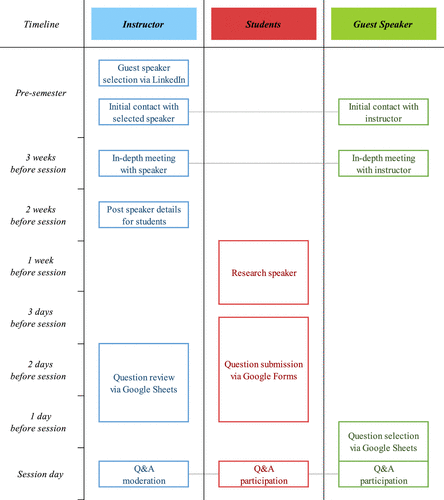
Figure 1 depicts the actions detailed in the remainder of Section 3 as performed for a single guest speaker session. They are presented in a timeline leading up to the day of the Q&A session, organized by activities pertaining to the instructor, students, and guest speaker.
3.1. Contacting and Scheduling Alumni via LinkedIn
Our method focuses attention on alumni as potential guest speakers; however, it can easily be applied to recruit nonalumni speakers as well. We believe that soliciting alumni often works well, as this opportunity allows them to give back to their school without having to open their checkbooks or travel if the session is conducted via Zoom. Potential alumni speakers generally have more interest in student success, and they are often more likely to accept speaking invitations. Figure 2 outlines the speaker recruitment process described in this section.
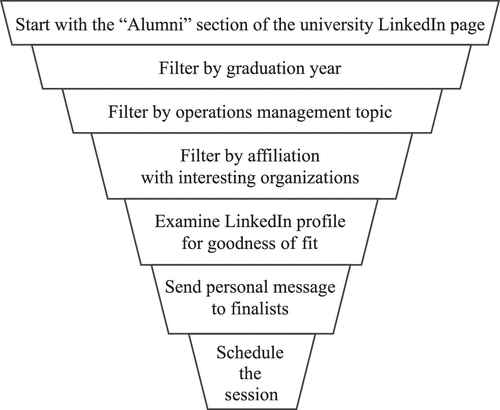
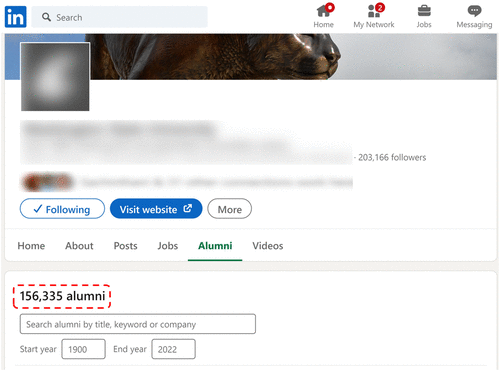
Because we conducted the series over a six-week summer course, we held six Q&A sessions (one per week) upon completion of several important topics in the course. As it was vital to contact appropriate guest speakers who could substantially contribute to the classroom discussion on specific OM topics, we used LinkedIn to search for and contact speakers who aligned with our expertise criteria. As we decided to restrict the search to our university’s alumni, the first step was navigating to our university’s official LinkedIn page and clicking on the “Alumni” tab, which revealed more than 150,000 LinkedIn alumni profiles (see Figure 3).
Because of the large number of alumni listed, we used several LinkedIn filters to narrow our choices (see Figure 4). We first applied graduation year filters to limit our search to only alumni who graduated on or before the year 2000 (i.e., with work experience generally exceeding 15 years). We then used specific keyword filters such as “inventory management” or “facility planning” to specify the area of expertise depending on each week’s course plan. Finally, we shortlisted the resulting candidates based on their affiliation with large firms having high name recognition, preferably with a notable presence in the region served by our university. This helped students form interesting questions (often driven by personal experiences with such brands) because of their relatability to the firms. For example, most students in the classroom had a sound understanding of the operations and challenges faced by Alaska Airlines, as its main hub is located in the region.
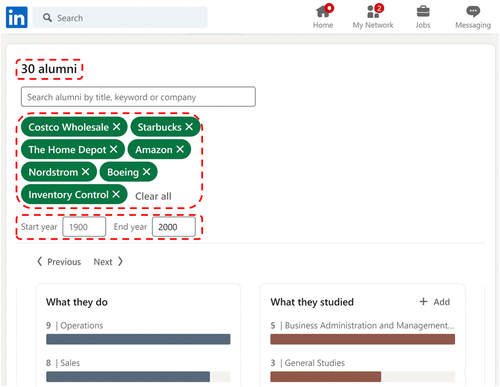
In addition to the filters we used for this task, LinkedIn provides various other filtering options that can be beneficial in different situations. These include the capability to filter alumni by their current geographical location (important for organizing an in-person speaker series), listed skills (useful when seeking speakers with specific software expertise), and major field of study (helpful when looking for alumni who majored in the same area as the students).
The filtering process reduced the list of 150,000 alumni to a more manageable group of 35–50 candidates for each week’s subject area. After assembling this shortlist, we examined each candidate’s LinkedIn profile (and detailed resume if available) to study that candidate’s work history and determine goodness of fit for a given session. We then sent personal messages to the top candidates through LinkedIn to explore their potential participation interest. This approach resulted in an impressive list of alumni for the speaker series from well-known firms: Hilton Hotels (forecasting), Tesla (quality management and Six Sigma), Amazon (process and capacity analysis), Bechtel (scheduling and planning), Alaska Airlines (inventory management), and Boeing (facility layout planning). As seen in Table 1, the speakers were typically scheduled immediately after the completion of the classroom discussion on the relevant subject matter.
3.2. Preparing for and Conducting Each Session
We employed an innovative, highly structured question submission and selection process using Blackboard, Google Forms, and Google Sheets to create an interactive Q&A student experience. The structured nature of these sessions is a vital feature behind their success. When executives are simply invited to speak in a typical college classroom, students may not pay attention and may not care because that session’s information is “not on the test.” However, by requiring students to research the presenter ahead of time and submit questions that comprise a significant portion of their grade, students inevitably become engaged.
3.2.1. Question Submission via Google Forms.
We used the course learning management system, Blackboard, as the starting point for question submission by creating a question-submission portal for each session. The portal contained essential details about the session, such as the guest speaker’s name and current position, as well as links to the guest speaker’s LinkedIn page and detailed resume. We strongly encouraged students to use these resources to develop high-quality, open-ended questions that would be suitable for the Q&A based on that week’s designated topic. For example, throughout regular class discussions on inventory management, we reminded students of the relevant guest speaker’s background as a top executive in supply chain operations at Alaska Airlines and possible inventory-related issues at such a firm. Furthermore, we always encouraged them to go through the guest’s profile as a decades-long member of the airline industry overseeing a variety of functions such as quality, materials, shipping, maintenance, repairs, and printing. These steps successfully guided many students to form firm-relevant questions that were closely related to the inventory management concepts discussed in class.
Students then submitted their questions via a Google Form by 4:00 p.m. on the eve of the session (see Figure 1). Students needed to submit three to five questions each.
3.2.2. Question Selection via Google Sheets.
Using Google Forms for question submission enables the questions to be redirected to a cloud-based spreadsheet in Google Sheets. We used this feature to observe submitted questions in real time and make necessary changes before sharing them with the guest. The primary filtering of questions by the instructor is based on the criterion of relevance to the week’s designated course area. Some students may submit intriguing questions about the guest speaker’s organization or career that do not directly pertain to the course content covered in the current session. Often, these questions address overarching strategic topics or current news-related subjects. In such instances, the instructor adjusts the questions by linking their underlying premise to a specific decision within the targeted content area (e.g., realigning a question about macroeconomic trends to reflect how the company’s inventory practices may be affected).
Following such realignment (if applicable), the instructor proceeds to correct grammar errors and make the questions more open-ended and relevant to the class material and the guest’s background. We often made such changes to questions with an interesting premise that just needed better alignment with the fundamental theoretical framework of the topic. Other times, we adjusted questions that were more theoretically inclined but lacked practical relevance to the guest speaker’s background. These alterations were vital, as it was the final opportunity for the instructor to exert significant control over the content quality of the Q&A session before the questions were released to the guest speaker. At the end of this process, we shared a total of 45 to 60 questions with each guest speaker via another Google Sheet.
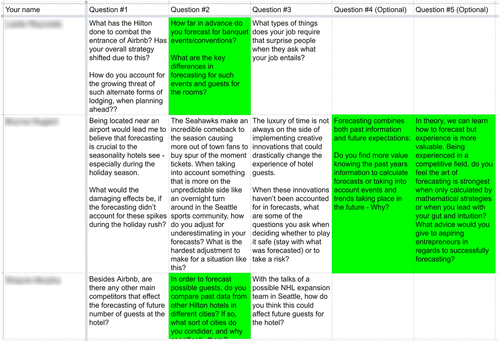
The guest speakers then proceeded to select 15 to 20 questions that they felt they would be most comfortable elaborating on during the Q&A session the following day. The questions chosen by guest speakers typically fell into four main categories: (1) short-term operational considerations, (2) long-term strategic decisions, (3) market and industry-specific developments, and (4) career advice and professional development. Because of the cloud-based nature of this spreadsheet, guests often engaged in an ongoing dialogue with the instructor while going through this process as to which questions would be most suitable. At times, guest speakers preferred to request an instructor-suggested shortlist of questions, which, again, the cloud-based technology facilitated. Figure 5 shows an excerpt from the Google Sheet used for question selection of the session on forecasting. The guest speaker highlights selected questions. Table 3 provides a classification of the questions submitted and subsequently chosen, segmented by category, for each guest speaker session.
|
Table 3. Classification of the Questions Submitted and Subsequently Chosen
| Session | Number of questions submitted (selected) by category | |||
|---|---|---|---|---|
| Operational considerations | Strategic decisions | Market and industry developments | Career development | |
| Guest speaker 1 (forecasting) | 19 (9) | 13 (6) | 6 (0) | 1 (0) |
| Guest speaker 2 (quality management) | 18 (9) | 20 (10) | 2 (1) | 5 (2) |
| Guest speaker 3 (process analysis) | 23 (8) | 9 (4) | 8 (2) | 3 (0) |
| Guest speaker 4 (scheduling) | 19 (4) | 20 (4) | 2 (1) | 7 (2) |
| Guest speaker 5 (inventory) | 17 (6) | 18 (5) | 4 (1) | 2 (1) |
| Guest speaker 6 (facility planning) | 22 (11) | 18 (10) | 3 (3) | 2 (0) |
Before each session, students received the final selection of 15 to 20 questions (for a 60-minute session) on a printed sheet. The students whose questions were included in the final list read them aloud when called upon during the session, along with posing follow-up questions and engaging in any resulting discussion.
This question-selection process was a key reason why the highly accomplished alumni felt comfortable agreeing to participate in this program despite the relatively small size of the student audience. They found the format attractive because (1) it did not require guest alumni to spend significant time preparing as they would have to for a 60-minute speech, and (2) it was not as spontaneous and impromptu as a traditional Q&A experience. This balanced format retained the general ambiance of a Q&A session while putting the guests at ease by giving them control of the process of selecting the questions of interest. This process created an unscripted, yet content-rich, set of remarks by each speaker because of their general preparedness. As a result, guests often cited interesting examples and anecdotes to address student questions. Table 4 displays a sample of questions chosen for each speaker.
|
Table 4. Sample of Student Questions Used for Each Guest Speaker
| Topic (guest speaker) | Sample student questions |
|---|---|
| Forecasting (General Manager, Hilton Airport Hotel & Conference Center) | Being located near an airport would lead me to believe that forecasting is crucial to the seasonality hotels see, especially during the holiday season. What would the damaging effects be if the forecasting didn’t account for these spikes during the holiday rush? How much do occupancy levels and revenue per room play into forecasting, as opposed to things such as events in the city and seasonal changes? How do you strike a balance between these? |
| Total quality management (General Manager, Tesla) | In your experience, where do you find companies need to adjust their practices most to increase cost savings and provide better quality? How do companies strike this balance? What are the commonalities between Six Sigma management concepts and the Japanese Kaizen concept about change for the better? Can these two methods be used in the same management model; for example, can they both apply to your supply chain operations management? |
| Process and capacity design (Operations Manager, Amazon Fulfillment) | What types of improvements have you seen since you began working at Amazon in 2014? What has changed since you helped launch the Houston facility that has improved fulfillment times? In your experience, what is the ratio of usage between short-term and long-term capacity expansion practices? And in which situations would you favor one over the other? |
| Scheduling and planning (Senior Project Engineer, Controls, Bechtel Corporation) | It is difficult to control the process of construction management on large projects, as uncontrollable factors may cause projects to not finish on time. How do you replan midproject to avoid not being able to complete the project on time? What sort of authority do you have as a scheduler for such actions? When Boeing falls behind schedule for plane delivery, what method would they use to resolve the problem? Also, how is the impact of such an issue felt in divisions that are way before the final assembly (such as the testing facilities you worked at)? |
| Inventory management (Director, Supply Chain Operations, Alaska Airlines) | From a supplies point of view, what sort of challenges/waste does unexpected underbooking result in? Do you work with forecasting teams in minimizing these sorts of instances? For Alaska Airlines, how does the percentage of inventory compare between nontechnical items such as catering items or print media and technical items such as aircraft? How do such practices vary among different airlines? |
| Facility layout and location (Facilities Planning Manager, Boeing) | What are the differences between how Boeing optimizes the manufacturing process of planes in its Everett and Renton plants? What external factors are behind these differences? What sort of software and techniques do you use to help you plan facilities? Would you recommend any program or techniques for us as students to start learning about? |
3.2.3. Moderating the Session.
The instructor began each session by warmly welcoming the guest speaker and providing some opening remarks regarding the guest’s college days and successful career path. The guest speakers subsequently added some of their own introductory comments, usually referencing how excited they were to be back at their alma mater (albeit virtually). Depending on their schedule that day, guests called in from their offices, conference rooms, homes, and, on one occasion, a Starbucks while commuting from work.
After introductions, the instructor’s primary role was to facilitate the discussion by calling on students to pose their selected questions, ask follow-up questions, and encourage the students to do the same. We allowed students to ask up to two additional questions unconfined to the OM topic of the week, which they mostly used to seek career-related advice from the guest speakers. The sessions typically culminated with such questions. One speaker expressed his pleasure by remarking, “I appreciate the time, and if I helped you in any way, this was the highlight of my day. Good luck to you guys in your careers!”
Immediately after each session, the students wrote and signed thank-you cards that expressed their appreciation for the guest alum taking time for the session. They often incorporated anecdotes from the session in these messages in addition to thanking the guests for giving back to their alma mater in this manner. We shipped the cards along with college merchandise as tokens of appreciation to each guest. Gifts included golf balls, stuffed mascots, keychains, ornaments, and shotglasses.
4. Experience and Insights
4.1. General Advantages
4.1.1. Benefits to Students.
Our LinkedIn-based guest speaker recruitment approach grants students access to a diverse pool of guest speakers who possess specialized subject expertise, affiliations with renowned companies, and various levels of professional experience. This diversity enriches the learning experience, exposing students to a wide range of perspectives and real-world insights that are directly relevant to their coursework. Moreover, the novel Q&A format promotes a more engaging and interactive classroom environment. Students become more invested and engaged in the visit by first researching the speaker and generating questions. They are encouraged to submit questions that reflect their unique interests and personal experiences, providing an opportunity to distinguish themselves and increase the likelihood of their questions being selected by the guest speaker. This exercise not only enriches their learning experience but also empowers them to cultivate a distinct professional identity.
4.1.2. Benefits to Instructors.
Our approach provides instructors with a streamlined and efficient way to identify and connect with guest speakers, especially university alumni. This process not only saves instructors time and effort but also ensures that selected guest speakers are highly relevant to the course content. Instructors can focus on curating and refining student questions, ensuring that the session is well structured and insightful. Sessions run smoothly because students and speakers come prepared, and speakers are not thrown off by difficult or irrelevant questions. This format encourages a more relaxed and engaging atmosphere during guest speaker sessions, allowing instructors to facilitate meaningful discussions that supplement course material.
4.1.3. Creating a Comfortable Environment for Guest Speakers.
Our Q&A format creates a comfortable and inviting environment for guest speakers. By simplifying the guest speaker’s role to reviewing and selecting questions, their preparation burden significantly reduces compared with a traditional guest speaker presentation. This streamlined approach ensures that guest speakers can focus on sharing their insights and expertise without the added stress of extensive preparation. Moreover, the format encourages guest speakers to engage in a more conversational and interactive manner, fostering a relaxed atmosphere during the session. This comfortable environment enhances the guest speakers’ experience of contributing to the educational processes, making them potentially more willing to participate in future engagements and strengthening the connection between the university and its alumni network.
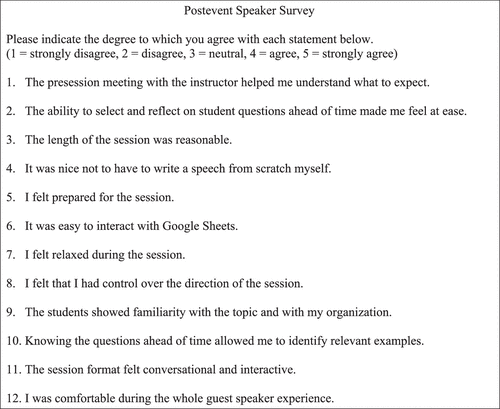
We did not formally survey our speakers after participation, although we recommend doing so to facilitate continuous improvement. Figure 6 presents a potential sample survey.
4.2. Inclusivity in the Classroom
Numerous studies recognize the importance of fostering inclusivity in the classroom, highlighting the profound impact of diverse peer interactions, which promote multiperspective thinking, cognitive growth, and stronger intergroup relations (Hurtado et al. 1999). Hurtado et al. (1999) underscore the pivotal role of peer contact in learning, a cornerstone of our approach. Our guest speaker format facilitates this contact, enabling many voices to enhance classroom dialogue. Locks et al. (2008) underscore the importance of a sense of belonging in fostering student participation within a pluralistic, interdependent community. We actively pursue this goal by leveraging technology for question submission and evaluation. Morrison and Lowther (2010) further highlight the benefits of technology-intensive settings, which nurture student-centered learning, cooperation, and higher-order thinking.
DeLuca (2012) discerns three interpretations of inclusivity across participant groups: integrative, dialogical, and transgressive. Our approach intentionally structures classroom engagement, with a strong focus on promoting deeper learning and dialogical inclusivity. Moreover, our approach aligns with Coxon et al.’s (2020) emphasis on the transformative potential of online tools in education in overcoming geographical, social, and structural barriers, thus empowering students who may find engaging with face-to-face settings challenging.
The Q&A format proposed in this study facilitates a dynamic and engaging learning environment and champions inclusivity on multiple fronts. By offering an online platform for question submission and evaluation, the system provides an equitable opportunity for all students, especially those who may be less vocal in traditional classroom settings, such as minority and international students. This leveled playing field encourages students to actively participate in the discourse and contribute to the learning experience.
Moreover, the grading criteria actively encourage students to pose unique questions based on their individual experiences and perspectives. By equipping all students with the same background information about the guest speaker, the questions naturally diversify, reflecting the varied life experiences and worldviews of the student body. This diversity of questions enriches the ensuing classroom discussion, offering a broader range of viewpoints and insights. To provide additional motivation, student effort in preparing for and participating in the speaker sessions constituted 12% of the final grade.
Furthermore, the instructor’s role in reviewing and refining questions serves to address any language barriers or issues, ensuring that the questions are effectively articulated. This linguistic support is especially beneficial for students who may struggle with the language, which ensures that no questions are excluded by the guest speaker purely because of language issues. This further fosters an inclusive environment by preventing the guest speaker from unnecessarily excluding a student’s questions because of language concerns.
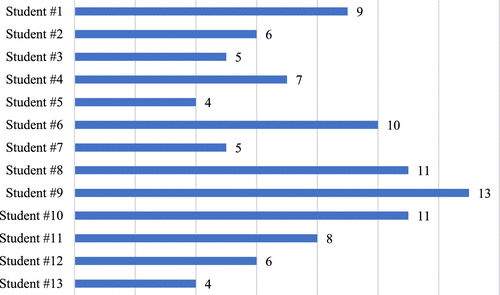
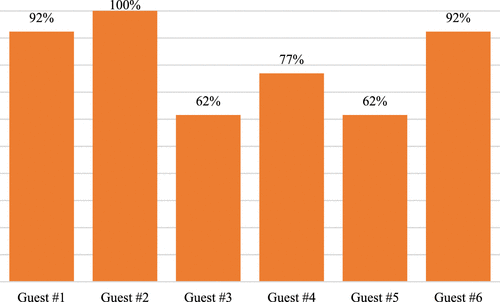
Our analysis, as depicted in Figures 7 and 8, showcases the representation of students’ questions in the selections made by guest speakers throughout the semester. These figures primarily demonstrate the distribution of questions selected by speakers from individual students, rather than directly addressing inclusivity criteria. Notably, 38% of students had at least one of their questions chosen in every session. These figures demonstrate to operations management instructors how effective the guest speaker sessions can be in encouraging student participation, thereby ensuring that diverse perspectives are represented in classroom discussions.
4.3. Learning Outcomes
The literature provides many different potential student learning outcomes stemming from the use of guest speakers in the classroom (Burns and Chopra 2017). Examples among many include understanding the workplace environment (Rodrigues 2004), learning about effective teamwork (Goldberg et al. 2014), hearing about applied problem solving and social responsibility (Riebe et al. 2013), clarifying job interviewing (Metrejean et al. 2002), and linking real-world issues to class concepts (Dalakas 2016).
Whereas guest speaker programs can address a number of different learning outcomes, we focus on three primary student learning outcomes from our approach:
Connect course content to industry practice.
Promote communication and interaction with industry professionals.
Appreciate a wide range of perspectives that may differ from one’s own.
The first learning outcome directly connects to the operations management–specific topical learning outcomes for our introductory operations management course, for example, “Design and control manufacturing and services processes.” The second outcome directly ties in with our college of business outcome to “communicate persuasively, both orally and in writing” and the university-level “communication” learning goal. The third outcome relates to the college of business outcome to “gain a global business perspective and be sensitive to and respectful of cultural differences” and the university-level “diversity” learning goal.
4.4. Student Feedback
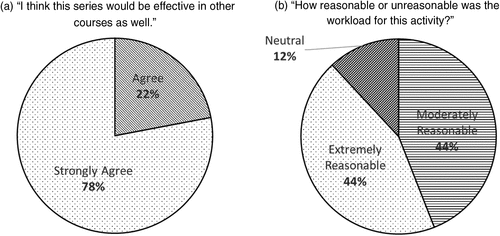
We solicited student feedback following the six-week summer session. When asked if they thought a similar series would be useful in other courses, the majority of students (78%) responded “strongly agree,” with no neutral or negative responses. We also asked the students to gauge the required workload as they had to conduct significant research to generate questions and actively participate during sessions. Their responses spanned “extremely reasonable” (44%), “moderately reasonable” (44%), and “neutral” (12%). We summarize these responses in Figure 9.
When asked what features they found most attractive about the guest speaker series, student comments included:
“Seeing what it is like to apply the things we learned in the classroom to real jobs.”
“Listening to actual professionals talk about what their job is like.”
“Ability to interact and talk with the guests freely.”
“When some of the guest speakers would give us advice.”
Students also commented on some features they did not like about the series:
“Sometimes, it was hard to create quality questions.”
“Technical difficulties when the screen would freeze, or audio wouldn’t work.”
“Sometimes, the speakers wouldn’t be as good and wouldn’t go into as much detail as others.”
Table 5 compares the average evaluation scores over two sections of the operations management course (only one holding a speaker series) taught by the same instructor over back-to-back sessions. The data corresponding to a variety of measures of learning effectiveness, enumerated in Table 5, suggest that the inclusion of the guest speaker series appears to have improved the quality of the learning experience. We sought to ascertain the impact of the speaker series on student evaluations while holding other pertinent factors constant. Therefore, we implemented the following controls: the same instructor, the same textbook, identical material coverage, uniform exam structures, and consistent homework assignments were applied to both the class with guest speakers and the class without. Regarding academic performance, the average grade in both classes was a B. These course similarities suggest that the primary discernible difference between the two classes was the presence of guest speakers.
|
Table 5. Average Student Perceptions of Learning in the Operations Management Course Taught in Adjacent Sessions by the Same Instructor With and Without the Guest Speaker Series
| Measure of learning effectiveness | Student evaluation | Welch’s t-test p-values | |
|---|---|---|---|
| Without speakers | With speakers | ||
| This course was well organized, with detailed objectives and goals. | 4.42 | 4.67 | 0.192 |
| Grading criteria were clearly defined in the syllabus. | 4.34 | 4.83 | 0.001*** |
| This course enhanced my ability to understand and/or analyze business problems. | 4.37 | 4.50 | 0.282 |
| This was an informative class. I learned a great deal. | 4.38 | 4.50 | 0.361 |
| The workload for this course was about right given the subject matter and course level. | 4.36 | 4.75 | 0.0098*** |
| The level of difficulty for this course was about right given the subject matter and course level. | 4.36 | 4.58 | 0.084** |
| The instructor was effective in guiding learning. | 4.59 | 4.83 | 0.105* |
| The instructor was fair and consistent in grading. | 4.59 | 4.75 | 0.277 |
| The instructor delivered course content in a way that was interesting and held my attention. | 4.45 | 4.83 | 0.010** |
Note. 1 = strongly disagree, 2 = disagree, 3 = neutral, 4 = agree, 5 = strongly agree.
*p < 0.15; **p < 0.10; ***p < 0.01.
One factor that was not fully controlled between the two groups was class size. The class sizes for the groups with and without guest speakers were 14 and 81 students, respectively. (Figure 7 only depicts 13 students because one student withdrew from the first class before the first guest speaker session.) Consequently, the sample sizes for the results displayed in Table 5 were 12 and 59, respectively. We acknowledge that class size can influence the learning environment; however, we opted for a smaller cohort of students in the class with guest speakers because of the number and open-ended nature of the questions we required them to submit. Nevertheless, by lowering the number of questions assigned to each student and defining a specific question scope for each student, our approach can be readily adapted for larger classes.
In addition to this post-course feedback, constant dialogue with students after each session helped make vital adjustments to the original format as the series progressed. These included increasing the session duration to 60 minutes from an originally planned 30 minutes, as well as the inclusion of a short general career advice Q&A portion to end each session.
4.5. Addressing Key Challenges
Although LinkedIn listed more than 150,000 alumni, getting in touch with any specific graduate proved challenging because a large number of senior-level professionals were not active on LinkedIn on a daily or even monthly basis, despite their active listing. We contacted over 50 alumni to confirm appearances by six, as almost none of the others logged into LinkedIn over the search period of approximately two months. Instructors using free LinkedIn accounts could circumvent this issue by checking the “activity” section of prospective alumni to determine if they are regular users. Alternatively, they may upgrade to a premium LinkedIn account to gain the ability to message members with whom they are not connected directly. Such steps could significantly speed up the process of getting in touch with an appropriate speaker.
Scheduling difficulties presented another major issue that arose, as participating alumni oversaw large departments, and class times usually conflicted with their working hours. Although the initial point of contact was several weeks before the session date, we often underwent last-minute changes to accommodate certain guests. Time and date changes occurred because of business meetings, a spouse’s surgery, switching jobs, interviewing for jobs, and traveling over long weekends. With volunteer participation, it was incumbent on us to be mindful of such possibilities and accommodate changes by being flexible with the course plan. A modular course design effectively facilitates such adjustments. Because ours was an introductory course with limited interdependencies between topics, this task was relatively straightforward. Accordingly, we structured the summer session for each week to be largely independent from other weeks by choosing topics to relate to that week’s guest speaker session. This made it easier to manage minor scheduling issues within the week and address larger concerns by swapping entire weeks, along with the corresponding speaker sessions. In regular-length semesters, accommodating such changes would be even more manageable because of the extended duration of the semesters.
Finally, a critical issue raised by students was the challenge of forming quality questions for every guest. This was mainly a symptom of the topic for a given Q&A session being overly specific or being practically unrelatable for a student. For example, students were able to create better questions (following classroom discussions) for the broader topic of forecasting than for the more specific topic of Six Sigma. Instructors should carefully select topics at the initial stages of planning the course material that are to be covered by each guest speaker. This is a key reason why a series of this nature, in its exact form, is most appropriate for survey courses that involve many topics while still accommodating deeper discussion of certain topics. Nevertheless, the structure we outline in this article could be used to create focused, yet engaging, individual guest speaker appearances in courses of any type.
5. Concluding Remarks
Incorporating guest speakers into classroom settings is a well-established practice, appreciated in both business and nonbusiness education for its capacity to infuse real-world perspectives into traditional lectures. However, this approach introduces challenges, including recruiting suitable guest speakers, aligning guest speaker presentations with course content and objectives, relying on guests’ teaching and communication skills, and ensuring meaningful student engagement. Instructors with limited networks may encounter difficulties when seeking speakers with specific subject expertise or a requisite level of experience.
In this article, we present a guest speaker program integrated into an undergraduate operations management course that addresses the above challenges. Our objective for the course was to foster engaging discussions between students and industry professionals aligned with course modules completed each week. Our approach introduces two novel strategies that instructors can utilize when designing similar engagements. These innovations mark meaningful contributions to the pedagogical literature on the use of guest speakers, as well as applications of LinkedIn in education as follows:
Capitalizing on LinkedIn’s extensive alumni networks linked to universities, we outline a systematic approach that streamlines the identification and recruitment of alumni guest speakers highly applicable to course modules. We achieve this by effectively employing LinkedIn’s built-in tools, which permits filtering an institution’s alumni based on factors such as firm affiliation, subject expertise, graduation year, company affiliations, job function, geographical location, and software skills. Of course, even though we recommend seeking alumni because of their potential increased inclination to “give back” to their alma mater by participating, the LinkedIn approach can certainly be expanded to include nonalumni guests.
We introduce an innovative Q&A format aimed at cultivating captivating classroom sessions with guest speakers. This novel approach follows a well-structured timeline, beginning with the initial contact of the guest speaker via LinkedIn. Subsequently, students submit their questions through Google Forms, which are then reviewed and refined by the instructor using Google Sheets. Finally, 24 hours before the session, the guest speaker has the opportunity to select the questions that the speaker feels most at ease discussing.
The LinkedIn-based guest speaker recruitment strategies outlined in this study offer instructors a range of benefits, empowering them to recruit alumni speakers who precisely match their criteria, such as specialized subject expertise, affiliations with specific companies, preferred levels of professional experience, and geographical locations. Importantly, these strategies expand the capabilities of instructors who may lack extensive local or alumni networks, granting them the ability to secure guest speakers that align with specific profiles. Furthermore, the instructor question-filtering step mitigates the risk of a mismatch of topical coverage. Additionally, the innovative Q&A format enhances guest speakers’ comfort and reduces their preparation workload while ensuring that they are, in fact, properly prepared. Guest speakers only need to select questions from a curated pool, minimizing their time commitment and enabling more spontaneous sharing of insights, fostering a relaxed and engaging environment. This format creates an interactive and thought-provoking learning atmosphere for both instructors and students, supplementing course materials with practical insights. Moreover, our use of online tools for the question submission and selection process promotes inclusivity, encouraging students who are typically less vocal to actively participate, thus enriching classroom discussions with diverse perspectives. It is noteworthy that the strategies we outline in this article could be adopted for face-to-face and virtual guest speaker experiences alike.
Running multiple guest speaker sessions not only necessitates time-consuming preparation but also pulls a significant amount of regular class time away from standard lecture presentations of topics. In the spirit of a flipped classroom format, instructors could record certain more technical lectures for viewing outside the classroom while devoting some of the freed-up class time to these dynamic interactions with industry executives, creating more memorable learning experiences for students stemming from practical insights delivered by highly accomplished industry professionals. Even if a little less textbook material gets covered, we believe this is a worthwhile trade-off because a more in-depth and real-world connection of fewer topics will likely resonate with students more than extra theoretical coverage of additional topics.
References
- (2009) Teaching revenue management at the Cornell University School of Hotel Administration. INFORMS Trans. Ed. 9(3):109–116.Link, Google Scholar
- (2013) Learning through industry interface projects. INFORMS Trans. Ed. 13(2):93–101.Link, Google Scholar
- (2008) Extending the classroom: The telephonic visit. Decision Sci. J. Innovative Ed. 6(1):173–177.Crossref, Google Scholar
- (2010) Active learning projects in service operations management. INFORMS Trans. Ed. 11(1):20–28.Link, Google Scholar
- (2007) Bringing research to introductory chemistry classes. FASEB J. 21(5):A39.Crossref, Google Scholar
- (2013) Getting entrepreneurship education out of the classroom and into students’ heads. Entrepreneurship Res. J. 4(2):237–260.Crossref, Google Scholar
- (2022) Called, committed and inspiring activism: How black PR guest speakers experienced the PR classroom during the COVID-19 and racial reckoning academic year of 2020/2021. J. Public Relations Ed. 8(2):42–77.Google Scholar
- (2017) A meta-analysis of the effect of industry engagement on student learning in undergraduate programs. J. Tech. Management Appl. Engrg. 33(1):1–20.Google Scholar
- (2020) How guest experts tell stories about environmental socio-scientific issues in an undergraduate class. Internat. J. Sci. Ed. 42(9):1568–1584.Crossref, Google Scholar
- (2017) Connecting students, alumni and employers?: There’s an app for that. NiTRO, the online publication of the Australian Council of Deans and Directors of Creative Arts. 9 (August), https://creativematters.edu.au/2017-8-17-connecting-students-alumni-and-employers-theres-an-app-for-that/.Google Scholar
- (2020)
Accessibility and inclusivity in online teaching . McKenzie S, Garivaldis F, Dyer KR, eds. Tertiary Online Teaching and Learning: TOTAL Perspectives and Resources for Digital Education (Springer, Singapore), 169–175.Crossref, Google Scholar - (2016) Turning guest speakers’ visits into active learning opportunities. Atlantic Marketing J. 5(2):93–100.Google Scholar
- (2012) Promoting inclusivity through and within teacher education programmes. J. Ed. Teaching 38(5):551–569.Crossref, Google Scholar
- (2013) Efficacy of the guest speaker-learner interface in entrepreneurship instruction: A suggested new approach. VentureWell Proc. Open Annual Conf. (National Collegiate Inventors & Innovators Alliance, Hadley, MA), 1–9.Google Scholar
- (2009) Student dialogue with online guest speakers. Decision Sci. J. Innovative Ed. 7(2):417–421.Crossref, Google Scholar
- (2011) The “living” case: Structuring storytelling to increase student interest, interaction, and learning. Decision Sci. J. Innovative Ed. 9(2):287–298.Crossref, Google Scholar
- (2021)
Online learning and engagement with the business practices during the pandemic . COVID-19 and Education: Learning and Teaching in a Pandemic-Constrained Environment (Informing Science Press, Santa Rosa, CA), 129–141.Google Scholar - (2014) Benefits of industry involvement in multidisciplinary capstone design courses. Internat. J. Engrg. Ed. 30(1):6–13.Google Scholar
- Griffith H, Flores J, Larweck A (2022) Towards the effective selection of guest speakers within an introductory electrical and computer engineering course. 2022 IEEE Integrated STEM Education Conf. (ISEC) (IEEE, Piscataway, NJ), 256–259.Google Scholar
- (2008) Lessons from ad educators’ experiences with guest speakers. J. Advertising Ed. 12(2):25–30.Crossref, Google Scholar
- (2006) Enriching student understanding of trial courts through service learning. J. Criminal Justice Ed. 17(1):23–43.Crossref, Google Scholar
- (1999) Enacting diverse learning environments: Improving the climate for racial/ethnic diversity in higher education. ASHE-ERIC Higher Education Report No. 8, vol. 26, ERIC Clearinghouse on Higher Education, Washington, DC.Google Scholar
- (2023) Virtual guest speakers in textile and apparel courses: Student experiences and expectations. Clothing Textiles Res. J. 41(1):43–56.Crossref, Google Scholar
- (2021) Student perceptions of guest speakers in strategic communication courses. Public Relations Educ. 7(1):40–79.Google Scholar
Kellogg School of Management (2019) Executive speaker series, Kellogg School of Management, Northwestern University. Retrieved August 25, 2019, https://www.kellogg.northwestern.edu/departments/real-estate/events-activities/executive-speaker-series.aspx.Google Scholar- (2018) Effectively engaging industry partners within the classroom. INFORMS Trans. Ed. 18(3):174–182.Link, Google Scholar
- (2009) Exploring business issues in high-tech fields using collaborative electronic meeting tools. Decision Sci. J. Innovative Ed. 7(1):155–161.Crossref, Google Scholar
- (2014) A student-centered guest lecturing: A constructivism approach to promote student engagement. J. Instructive Pedagogies 15:1–7.Google Scholar
- (2008) Extending notions of campus climate and diversity to students’ transition to college. Rev. Higher Ed. 31(3):257–285.Crossref, Google Scholar
- (2022) An innovative teaching model: Involvement of industry practitioners in the teaching of construction management curriculum. 2022 ASEE Annual Conf. Exposition (American Society for Engineering Education, Washington, DC), 1–19.Google Scholar
- (2009) The effective use of guest speakers in the hospitality and tourism curriculum. J. Teaching Travel Tourism 8(4):401–414.Crossref, Google Scholar
- (2017) Be my guest: A survey of mass communication students’ perception of guest speakers. College Teaching 65(2):41–49.Crossref, Google Scholar
- (2002) Guest speakers: Reflections on the role of accountants in the classroom. Accounting Ed. 11(4):347–364.Crossref, Google Scholar
- (2018) A case study of developing leadership and creativity skills in higher education (HE) students. e-Rev. Tourism Res. 15(4/5):282–313.Google Scholar
Michigan Ross (2019) LBLE - living business leadership experience. Retrieved August 25, 2019, https://michiganross.umich.edu/courses/lble-living-business-leadership-experience-11103.Google Scholar- (2010) Educational technology research past and present: Balancing rigor and relevance to impact school learning. Contemporary Ed. Tech. 1(1):17–35.Google Scholar
- (2003) Learning styles of on-campus and off-campus marketing students: The challenge for marketing educators. J. Marketing Ed. 25(3):208–217.Crossref, Google Scholar
- (2022) Innovative online learning in entrepreneurship education: The impact of embedding real-life industry practice in the virtual learning environment. Indust. Higher Ed. 36(6):756–767.Crossref, Google Scholar
- (2021) Using recent graduates as five-minute guest speakers to provide professional socialization and topical context for students. Comm. Assoc. Inform. Systems 48(1):15.Google Scholar
- (2003) Teaching pricing and revenue optimization. INFORMS Trans. Ed. 4(1):1–10.Link, Google Scholar
- (2013) Impact of industry guest speakers on business students’ perceptions of employability skills development. Indust. Higher Ed. 27(1):55–66.Crossref, Google Scholar
- (2021) Engaging the experts to embrace the future: An interactive professional learning experience. Issues Accounting Ed. 36(4):41–58.Crossref, Google Scholar
- (2021) Collaborating with industry to improve undergraduate real estate education: Recommendations to enhance guest speaking activities. J. Real Estate Practice Ed. 23(1):10–19.Crossref, Google Scholar
- (2022) Making the most of guest experts: Breakout rooms, interviews, and student discussants. J. Political Sci. Ed. 18(3):362–378.Crossref, Google Scholar
- (2004) The importance level of ten teaching/learning techniques as rated by university business students and instructors. J. Management Development 23(2):169–182.Google Scholar
- (2013) Distance guest speakers in online synchronous classrooms: Practical and legal considerations. J. Teaching Soc. Work 33(4–5):385–392.Crossref, Google Scholar
- (2019) The use of student-copresented virtual guest speakers in entrepreneurial education. J. Ed. Bus. 94(6):418–422.Crossref, Google Scholar
- (2004) Business student preferences: Exploring the relative importance of web management in course design. J. Marketing Ed. 26(1):42–49.Crossref, Google Scholar
- (2010) Teaching retail operations in business and engineering schools. INFORMS Trans. Ed. 11(1):29–34.Link, Google Scholar
- (2018) From the source: Student-centred guest lecturing in a chemical crystallography class. J. Appl. Crystallography 51(3):909–914.Crossref, Google Scholar