An Agile Approach to Student Consulting Projects: Iteration and Communication to Improve Decision Making, Presentations, and Teamwork
Abstract
Embedding consulting projects into the curriculum presents an effective means of providing students with experiential applied learning opportunities. However, creating, planning, and managing such projects can be challenging. This paper introduces a unique approach to managing consulting projects: Agile Project Management with Scrum. By incorporating a commitment to iteration and communication as the core of the project experience, Agile with Scrum fosters an impactful, realistic, and engaging student consulting experience. This approach enhances decision making, presentations, and team dynamics. This article discusses how one supply chain management course embedded Agile with Scrum into a client consulting project to convert a mediocre experiential learning opportunity into a transformative one. After describing Agile with Scrum and explaining its potential in the classroom, this paper discusses the consulting project before and after Agile; the results; the lessons learned; and the value created for students, clients, and faculty.
Supplemental Material: The online appendix is available at https://doi.org/10.1287/ited.2023.0057.
1. Introduction
In 2014, the School of Business at a small American university received feedback from local employers that graduates demonstrated limited capacity to convert data analysis into effective managerial decisions and deliver impactful presentations. In response, the school incorporated student consulting projects into their supply chain management course. As a growing trend in experiential education, student consulting projects have received growing attention in the pedagogical literature. Articles discuss ways to streamline and improve project components, such as how to solicit projects, create value for stakeholders, and assess students effectively (c.f. Weintraub et al. 2020). However, successful processes for managing these projects, which can be quite complex, have received less attention (Sciglimpaglia and Toole 2009, Kilgo et al. 2015, Desai and DeArmond 2021). Although some articles offer suggestions about project scoping and scaling (c.f. Gorman 2018, Konrad et al. 2018), the literature could better address how to remedy a wide range of challenges that arise.
This case study illustrates one such example of a consulting project implementation that initially failed. However, the subsequent adoption of a new process management tool vastly improved the student learning experience and project outcomes. The case is drawn from a small public university (referred to here as “ABC University”) in the southeastern United States. With an undergraduate enrollment of 3,600, many upper-level classes are small, often fewer than 15 students, which is conducive to implementing consulting projects that can be relatively labor intensive. However, ABC University is in a town of fewer than 45,000 people that is an hour from the nearest metropolitan area and therefore, removed from a critical mass of employers. This can make it challenging to find a broad array of consulting project clients. With over 1,600 small (under 5,000 students) four-year degree-granting colleges in the United States (UnivStats 2023) and over 800 rural or small town four-year degree granting campuses (SSTAR-Laboratory 2021), our case sheds light on the advantages and challenges of implementing consulting projects in the context of colleges with small class sizes and limited local employers.
The first version of the student consulting project, referred to here as Consulting Project 1.0 (CP 1.0), was a semester-length project using corporate data publicly available online that culminated in a presentation. The efforts yielded disappointing results, including unrealistic decision making, limited improvement in presentation skills, and dysfunctional team processes.
In response to the challenges of CP 1.0, the faculty developed a second iteration of the consulting project, Consulting Project 2.0 (CP 2.0), that incorporated two key changes. First, they incorporated an industry-proven solution into the classroom setting. Agile, a process for managing projects that was initially developed in the software industry and later adopted in project management, offered numerous advantages for student consulting projects that were comparable with its benefits for professionals. This process adoption directed students to test their decisions repeatedly, give more frequent presentations, and practice accountability. Second, the faculty partnered with a large local employer to provide real-word problems and data. As a live and engaged client, the employer ensured that the students’ decisions were realistic. Thus, the failures of CP 1.0 were overcome using Agile and a live client.
Given the pedagogical possibilities that Agile presents, research on the application of Agile principles to education other than in information systems and information technology pedagogy research (c.f. Sharp and Lang 2018) is surprisingly spare. This paper showcases the process, results, and benefits of Agile Project Management in student consulting projects, highlighting the transformative impact on students’ learning experiences and client engagement. Through this case study, we aim to shed light on the potential of Agile principles in enhancing experiential learning across various educational disciplines.
This article first presents relevant literature on (1) the benefits of experiential learning in business school courses, (2) the limitations of conventional methods, (3) the Agile methodology, and (4) the application of Agile methodology in college teaching and learning. Next, the paper details the two versions of ABC University’s consulting projects and their increased emphasis on iteration and communication. Finally, the paper assesses the significant value created for all stakeholders and addresses potential limitations and adaptations.
2. Literature Review
2.1. Experiential Learning in the Business School Classroom
Concrete practical experiences have long been associated with deep student learning (Walters and Marks 1981, Gaidis and Andrews 1990). Hands-on active experiences that allow students to apply concepts in real time and then reflect on their experiences provide multiple avenues of learning (Kolb 1984). Experiential learning, prevalent in fields like medicine and health sciences, allows students to apply classroom concepts in real-world settings, fostering expertise (Alexander et al. 2005, Yardley et al. 2012). However, such connections between classroom learning and business practice are not as common in business education (Hart and Mrad 2013).
To inject experiential learning into business school curricula, proponents discuss various methods, including case studies, simulations (Tompson and Tompson 1995), internships (Dillon et al. 2010), student-run businesses (Tompkins and Schlesinger 2010), and student consulting projects (Kunkel 2002, Sciglimpaglia and Toole 2009). Each method varies in its success in facilitating deep student learning.
First, McCarthy and McCarthy (2006) argue that case studies, although useful for demonstrating the application of business concepts and engaging student thinking, are still comparatively abstract. Furthermore, the classroom environment and central role of a faculty member in class discussions can dampen students’ active engagement. Also, cases do not allow students to grapple with the ambiguity present in real-world decisions because ultimately, they tend to unveil a “right answer” (Gloeckler 2008, Hillon et al. 2012).
Second, internships add a professional edge to students’ learning experiences when they allow for initiative and involve decision-making responsibilities. However, unless carefully designed to include well-structured reflective components, such as class discussions, faculty coaching, and writing assignments, internships do not complete the experiential learning cycle (Kosnik et al. 2013). They are also time consuming and require an extensive network of host organizations and dedicated staff (Sanders Jones et al. 2021). Furthermore, internships may not be feasible for small or rural schools.
Third, student-run businesses require significant resources, and they require institutional-level support beyond the resources of an individual professor or a discipline given their degree of risk (Sanders Jones et al. 2021).
In contrast, student consulting projects offer consistent and explicit academic value, addressing challenges present in other methods. They provide real-world, ambiguous scenarios; involve reflection along with action; and pose minimal financial risks. Despite these benefits, implementing consulting projects can be challenging because of data- and process-related issues. To overcome these challenges, the faculty at ABC University partnered with a local company and embraced Agile with Scrum, drawing from their experience in the software development context, which resulted in compelling outcomes.
2.2. Agile Project Management with Scrum
Agile Project Management developed from the Agile Software Development movement, which was inspired by a 1986 Harvard Business Review article by Takeuchi and Nonaka (1986) and codified by Schwaber (1997) at a 1995 conference. Proponents argued that traditional software development methods, such as “waterfall” and “spiral,” were not suitable for the empirical, unpredictable, and unique nature of software development processes. Beck et al. (2001) condensed the movement’s claims into the Agile Manifesto (see Figure 1), an exposition of four foundational principles highlighting the new priorities (Cervone 2011):
individuals and interactions over processes and tools,
working software over comprehensive documentation,
customer collaboration over contract negotiation, and
responding to change over following a plan (see Figure 1).
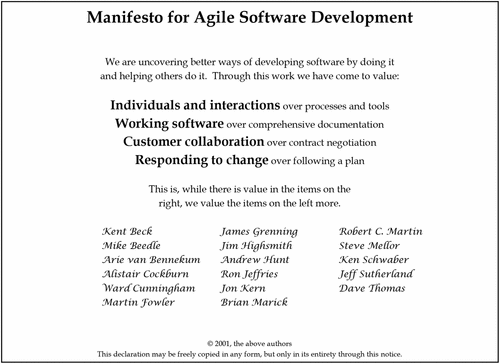
Source. Krehbiel et al. (2017, p. 92).
These four principles shifted software development’s focus from a rigid, static process with fixed requirements to a more dynamic process that embraces change and regularly integrates client input. See Figure 1 for the Manifesto for Agile Software Development (Krehbiel et al. 2017, p. 92).
Agile Project Management (Agile) is rooted in the four Agile Software Development principles Beck et al. (2001), but it was modified for a project management environment. It emphasizes two important additional concepts:
minimize risk by focusing on short iterations with clearly defined deliverables and
communicate directly with partners in the development process instead of creating excessive documentation (Cervone 2011).
These two concepts, iteration and communication, enable project teams to adapt quickly to the unpredictable and rapidly changing requirements often encountered in project life cycles.
As Agile evolved over time, variations, such as Kanban and Crystal, emerged, all following an iterative approach and placing emphasis on communication, simplicity, and regular feedback. Agile with Scrum, the variation selected by FMU faculty for the supply chain management course CP 2.0, has its namesake in rugby, where a scrum is a way for a team to win the ball after an interruption (Cervone 2011). In project management, Scrum is an Agile process for managing and controlling product development in rapidly changing environments. It is intentionally iterative and incremental, relying upon a team-based approach (Cervone 2011). These key elements and the faculty’s familiarity with Agile with Scrum in an industry setting made it a potentially useful way to address CP 1.0’s flaws.
Agile with Scrum or “Scrum” has its own jargon for its unique roles and processes. A scrum team is a self-managing team that includes a scrum master, a product owner, and developers. The scrum master is accountable for guiding, coaching, teaching, and assisting a scrum team. The product owner defines the business and functional expectations for a product to the developers. Sprints are defined as set amounts of time, often a week, during which the team works toward achieving a specific goal based on user needs. Scrum advocates breaking a project down into sprints and only planning and managing one sprint at a time. This results in improved communication, maximizing cooperation and protecting the team from disruptions and impediments (Cervone 2011). We discuss how these were implemented in the consulting project below.
2.3. Agile Project Management and Student Consulting Projects
Agile Project Management’s grounding in iteration and communication makes it a potentially transformational tool for college experiential learning projects because it promotes the crucial team dynamics of collaboration, responsiveness, and accountability.
Supporting this hypothesis is a study from a team of faculty at Miami University that spent two years learning, experimenting, and assessing Agile principles across various disciplines. Ultimately, the team developed an Agile Manifesto for Teaching and Learning (see Figure 2). This manifesto incorporates principles elevating student-driven inquiry, applied learning, and continuous improvement into the original Agile Manifesto’s four tenets. Coursework conducted with students based on this manifesto yielded positive outcomes, including increased student engagement, ownership, collaboration, and quality of deliverables (Krehbiel et al. 2017).

Source. Krehbiel et al. (2017, p. 96).
To effectively implement Agile on campus, project groups should be student directed, with faculty acting as coaches rather than experts and with constant communication and feedback between the coach and groups (Benton and Radziwill 2011). Projects should be divided into phases, with each phase requiring goal setting, regular check-ins, opportunities for feedback from team members and faculty, and reflection (Pope-Ruark 2012, Krehbiel et al. 2017, Hulshult and Krehbiel 2021, Marder et al. 2021). This iterative cycle should be repeated for each project phase.
Although introducing students to the general Agile methodology or mindset is crucial, the adoption of specific Agile components is less essential (Briggs 2014). It is more important to ensure that the components used are well explained than to focus on using Agile vocabulary (Krehbiel et al. 2017). Either way, the results will be student-centered projects and collaborative groups (Stewart et al. 2009, Krehbiel et al. 2017). Additionally, employing Agile can enhance students’ sense of psychological safety and reduce issues related to free riding (Peha 2013, Marder et al. 2021).
By integrating Agile principles into student consulting projects, educators can create a dynamic and adaptive learning environment that empowers students to take ownership of their learning, collaborate effectively, and continuously improve their skills. The iterative nature of Agile combined with the emphasis on communication and collaboration aligns perfectly with the goals of experiential learning, resulting in more engaged, capable, and well-prepared students ready to face the challenges of real-world business scenarios.
3. Methods
We used the case study method to understand and provide insight into the experience of adopting Agile with Scrum in consulting projects. Case studies allow for the exploration of complex issues in their realistic context. By focusing on a specific case, the approach provided rich, detailed insights into the nuances of the question being studied (Eisenhardt 1989, Yin 1989). The longitudinal nature of the case enabled us to examine the use of Agile and its challenges, benefits, and outcomes (Yin 1989).
We conducted 18 semistructured interviews to capture the perspectives of stakeholders involved in CP 2.0. We interviewed 16 undergraduate students (of 20 total participants who completed CP 2.0) between the fall of 2020 and the spring of 2023 (nine males and seven females) after they had completed the supply chain management course and received their final grades. Additionally, we interviewed two industry partners in the spring of 2023 who collaborated with the consulting teams from 2018 to 2023. All interviews were conducted and recorded using Zoom. The recordings were imported into otter.ai for initial transcription and then cleaned manually by listening to the original recordings. We reviewed the transcripts using the recursive process of “analytic induction,” in which researchers search for patterns and relationships, develop hypotheses, and refine the interview questions in an ongoing cycle (Goetz and LeCompte 1984). Next, we coded transcripts using a combination of deductive and inductive coding, with multiple codes then assembled into themes (Miles and Huberman 1984). Two of the researchers discussed the interviews and coding throughout the research process, amending and refining codes and themes as the data required.
4. Implementing a Consulting Project into the Supply Chain Analytics Course
The Supply Chain Analytics course is a mandatory component of the undergraduate supply chain management program at ABC University that is taken by junior and senior students. The classes are small, typically consisting of around eight students. The supply chain management major was established in 2010, and the consulting project was introduced in 2014 in response to feedback from local employers regarding students’ deficiencies in converting data analysis into managerial decision making and presentation skills.
In the course, students are introduced to network and location modeling using linear programming, time series forecasting (including simple moving average, weighted moving average, exponential smoothing, trend and seasonality-corrected exponential smoothing, static forecasting using regression, and forecasting errors), and aggregate planning using linear programming. Work is done in Microsoft Excel using the Data Analysis Toolpak and Excel Solver.
The deliverables for the class are (1) Excel spreadsheets that contain forecasting and an aggregate plan with the what-if analysis, (2) a PowerPoint presentation, and (3) a final report submitted by the project teams. The final project is evaluated by the faculty member. Each client also gives written feedback about each student. (See the Online Appendix for the syllabus, the student feedback form, and the client feedback form.) The faculty member then adjusts the final grades of each student based on the feedback from the client and their teammates.
4.1. Consulting Project 1.0
The consulting project was developed in 2014 to respond to employers’ frustration with graduates’ poor decision making and presentation skills. In its first iteration (2014–2017), CP 1.0 had students apply course concepts to public corporate data, culminating in a report. CP 1.0 unfolded alongside academic content over the semester in four distinct modules (see Figure 3).

Students were organized into teams. They were tasked with selecting a well-known company and product, such as Apple, General Motors, or Chick-fil-A. Students gathered demand data from publicly available documents using the internet and databases, including IBISWorld, for estimating costing data. Focused on a specific product, they researched the company’s corporate strategy, gathered five to eight years of demand data, and created a forecasting model using time series forecasting methods from textbooks, like Supply Chain Management by Chopra (2017).
Once the forecast was generated, each team utilized linear programming to construct an optimization model for the product’s aggregate plan, aiming to minimize the cost of meeting demand. They also developed multiple scenarios to facilitate what-if analysis for the production plan. They used Microsoft Excel© (Excel 2018) for data analysis for forecasting, and the linear programming model for aggregate planning was implemented. More details of the course structure and schedule can be found in the syllabus (see the Online Appendix).
4.2. Challenges from Consulting Project 1.0
CP 1.0 did not successfully improve the key objectives that industry partners had pinpointed of high-quality managerial decision making and presentation skills. In fact, rather than addressing these weaknesses, it highlighted them. Additionally, the introduction of a team project exposed weaknesses in managing team processes.
First, students’ poor decision making was evident in the unrealistic recommendations made in their consulting reports. Students’ academic training often focuses on seeking a single “right” solution or optimizing for a single objective. However, real-world problems in the workplace often involve complex trade-offs and conflicting objectives, which are not adequately addressed in academic assignments (Hillon et al. 2012). A commitment to single solutions in academia generates discomfort for students when faced with ambiguity and the incomplete information that is present in real industry projects. They struggle to connect knowledge acquired across different courses and its application to practical situations, leading to difficulties in problem-solving within a broader context. As a result, student solutions in CP 1.0 often focused solely on cost reduction without considering the feasibility or unintended consequences of such recommendations. For instance, some students proposed producing all required units in the first month and then laying off the entire workforce for the remainder of the production cycle, which is impractical and unrealistic. Moreover, despite receiving feedback from the instructor during early phases, these flawed solutions were not rectified in the final presentations.
Additionally, CP 1.0 brought to light the students’ weak presentation skills. College students often struggle with effective presentations as evidenced by various suggested approaches for improvement (c.f. McCorkle et al. 1999, Clark 2014, Dixon and Beverly 2015). In CP 1.0, students lacked confidence and employed a “divide and conquer” mentality, dividing up project tasks among themselves. Effective teamwork requires collaboration and understanding of each other’s contributions to ensure a comprehensive understanding of the project as a whole (McCorkle et al. 1999). However, in CP 1.0, students worked in isolation on their assigned parts, leading to poor communication, limited appreciation for peers’ contributions, and a lack of understanding of the project holistically. Furthermore, because students divided up work, rarely did anyone take ownership of feedback and required changes.
Moreover, the consulting project exposed weak team skills among the students. Issues like free riding were prevalent, where some group members shirk their responsibilities and rely on others’ efforts (Dommeyer 2007, Aggarwal and O’Brien 2008), leading to a poor overall experience. Furthermore, students struggled with time management and coordination within their teams, despite help. They often faced challenges in maintaining steady progress, resulting in rushed work and poor-quality deliverables when deadlines approached.
4.3. Consulting Project 2.0: Changes Introduced
To address the concerns raised in CP 1.0, in 2018, the faculty developed a second version of the consulting project (CP 2.0) by changing both the project data source and the process.
4.3.1. Date Source Change: Live Data to Improve Decision Making.
In CP 2.0, the faculty introduced realism and context by shifting from publicly available online data to a live corporate partnership. The faculty established a collaboration with a large multinational firm located near the university and recruited managers from four corporate divisions to serve as clients for student teams. During the introductory meeting, these managers provided information about the real-world challenges in their respective divisions, product portfolios, and specific products for which they sought forecasting and aggregate production planning. They also assisted students in creating various what-if scenarios for the aggregate production plan.
To further support the students, the faculty involved various resources to address unrealistic decision making and improve project outcomes. These included the active involvement of the company’s Director of the Supply Chain Division in 2018 and 2019, who engaged division heads to partner with the students. After retiring in 2020, the director continued to contribute as an external consultant, offering valuable insights and guidance. Thus, students had access to the professor, the live client (managers from the corporate divisions), and the consultant, all of whom could provide necessary data, facilitate communication, offer reality checks, and assist in scenario testing.
4.3.2. Process Change: Agile with Scrum to Improve Decision Making, Presentations, and Team Processes.
A significant redesign was necessary to address the issues related to poor presentations, team dynamics, and deliverable quality in CP 1.0. Leveraging their experience and familiarity with software development methods, they adopted Agile Project Management with Scrum (Schwaber 1997, 2004). Key to choosing this approach was its emphasis on iteration and communication, utilizing components such as weekly sprints and a designated scrum master (the course professor).
Using Agile with Scrum, CP 2.0 was implemented as follows.
Scrum master. The professor assumed the role of the scrum master, acting as each scrum team’s project manager. Unlike traditional group projects where the professor is often a passive resource, in CP 2.0, the professor actively facilitated the team’s effectiveness and progress. The scrum master’s responsibilities included overseeing the team’s work, ensuring efficient collaboration, and promoting adherence to Agile principles.
Product owners. Each corporate manager or “client” served as the product owner for the respective scrum team. The product owner also played a crucial role in providing feedback on the scenarios that the teams developed, ensuring alignment with real-world challenges. In CP 2.0 the product owner did not need much knowledge about the scrum methodology as the role was to impart necessary data during regular meetings and clearly communicate the expectations. After working on multiple projects over the years, the clients have concluded that bimonthly meetings with the scrum teams were ideal.
Preplanning phase. The scrum master (faculty) and product owners (clients) were involved in preplanning before the start of the semester. The faculty member discussed with the client(s) the data required for the project and the client’s role as the product owner. The faculty and the client had four meetings before the first implementation and shared examples of the data files used in CP 1.0. Subsequently, the faculty member worked with the same client repeatedly and needed only one meeting virtually every year.
Scrum team. Each project team was a scrum team, taking ownership of the project’s goals and planning for each sprint. The scrum team regularly adapted its plans based on feedback and progress, completed deliverables, and held each team member accountable. Although the project was a group effort, students knew they would be graded individually based on their contributions and performance.
Planning phase. The planning phase occurred in the first week of the semester. The product owners (clients) would meet with the scrum master and scrum teams on the first day of class to introduce the company, the divisions, and the products for which they need forecasts and aggregate plans developed. In CP 1.0, the faculty member had allowed students to choose their own teams; however, in CP 2.0, the faculty member allocated team members based on multiple criteria, including dividing top performers among teams. In this planning phase (week 1), scrum teams selected a division and product, and they established a weekly meeting time with the scrum master. The scrum master introduced the product owners (clients) to their scrum team via email. Scrum teams held their first meeting with the product owner (clients) during the second week of the semester.
Sprints or development, testing, and review phase. The project was divided into weekly sprints, weeklong periods during which each scrum team worked toward the specific goals they set for the sprint (Schwaber 1997).
Weekly scrums. Each team scheduled a mandatory weekly appointment—called a “scrum”—with the scrum master (faculty) outside of class time either via zoom or in person to wrap up one weekly sprint and begin the next. During this meeting, the scrum team would go over the project increment completed during the previous week. Any pending or incomplete work was discussed. Each team member reported their current and upcoming tasks. The scrum master reviewed all deliverables and provided feedback. Teams were expected to incorporate and present resulting modifications at the following scrum meeting.
Retrospective phase. The retrospective phase was wrapped into the weekly scrums when teams answered the following questions. (1) What did we do well this week? (2) What did we not do well this week? (3) How can we improve?
Release phase. The release phase occurred when the final project was presented during examination week. Final deliverables included all Excel files, the PowerPoint presentation, and the final report. Afterward, each student was interviewed about the experience.
5. CP 2.0: Intended Outcomes
Adopting Agile was intended to improve student learning outcomes by addressing the three specific problems that the faculty experienced with CP 1.0: managerial decision making, presentation skills, and team processes (see Table 1).
|

Table 1. CP 1.0 Problems and Proposed CP 2.0 Solutions and Outcomes
| CP 1.0 problem | CP 2.0 solution | Intended outcome |
|---|---|---|
| Unrealistic decision making | Live client; Agile with Scrum | Increased comfort with real-world decision-making trade-offs |
| Poor presentations | Agile with Scrum | Improved presentation skills, including confidence and familiarity with content |
| Dysfunctional team processes | Agile with Scrum | Increased team communication, accountability |
5.1. Managerial Decision Making
Adopting Agile could help students learn to make more realistic managerial decisions in the face of ambiguity. Because Agile requires an iterative cycle of problem-solving, feedback, and revision, students would have frequent opportunities to review and refine their solutions (Benton and Radziwill 2011, Hulshult and Krehbiel 2021). Feedback from project peers, clients, and the instructor is constant, increasing decision-making competency (Beccaria et al. 2019). Indeed, Agile’s focus is on the continuous improvement of a project rather than full completion (Neumann and Baumann 2021). As students would have the opportunity to revise their decisions based on constant feedback, decision making could become more realistic.
5.2. Presentation Skills
Second, through multiple project iterations and regular check-ins and presentations, students would have ample opportunities to improve their presentation skills. Regular meetings (check-ins) and rounds of presentations at the end of each sprint would provide students with frequent chances to share ideas, receive feedback and coaching, and hone their presentation skills (Mahnič 2015, Neumann and Baumann 2021). Additionally, the constant cycle of engaging with data, producing suggestions, and checking in with the client would increase student familiarity with the content, which could also increase confidence and facility with the concepts during formal presentations.
5.3. Team Processes
Finally, group projects are often challenging because of problematic dynamics, such as free riding, lack of coordination, and general lack of motivation (Marder et al. 2021). Agile could address and alleviate these team process challenges. Self-governing small groups could improve communication and collaboration, and regular member check-ins would promote ownership of work and individual accountability. Psychological safety would increase (Marder et al. 2021). These processes also would expose free riders early and provide them with coaching (Krehbiel et al. 2017). As group cohesion developed, final deliverables would be better integrated, reflective of a unifying experience.
By combining a live client experience with Agile Project Management principles, CP 2.0 sought to create a more transformative and effective student consulting project, overcoming the challenges encountered in the previous version and fostering better learning outcomes for students.
6. Results
Key outcomes included more realistic decision making, improved presentations, better team dynamics, and benefits to the client (see Table 2).
|
Table 2. Outcomes Associated with CP 2.0
| Stakeholder | Benefit | Quote |
|---|---|---|
| Students | Realistic managerial decision making | “When we did the forecasting in class, yes. I understood what was forecasting. If you ask me the definition, I understood what MAP stands for. MAP all that. I knew all that … But I didn’t know like, in reality, why we do it? What’s the point? So when we did the project, I understood. Oh, now I see how it applies to real world. On the exam, I just pull up [numbers] and calculate and move on. But this time [for the project], no, you have to calculate. And it’s wrong. Well, you got to start over and keep doing it until the result you get is realistic. It’s not just for papers.” (Student 6) “During the first year, there weren’t so many questions that came up from the students, it was more at the presentations at the end [when we would ask] questions where maybe the data wasn’t aligning with the real world. And as time has progressed, you can see that as we go through each step of the process, questions are being asked at that point. So, where data doesn’t look right. Or where there’s a question about certain practices, the students are asking those intermittently throughout the process.” (Client A) |
| Improved presentations | “I’ve always had a hard time impressing my teachers back home, so that always stopped me and gave me anxiety. So I think this helped, because we did so many presentations and worked on our skills.” (Student 7) “The level of comfort they have with the material is far superior.” (Client B) | |
| Functional team processes | “I’ve learned communication and time management are the most important things from this class. Being able to communicate with not only you [professor] and our classmates, but with our contacts as well was the only way we’re really going to succeed in this project. Because if you didn’t have communication, nothing was going to get done.” (Student 8) “The increased interaction … it’s just taking it to another level.” (Client B) | |
| Clients | Curricular insights | “We see what the younger generations are learning as they’re in school.” (Client A) |
| Recruitment | We can “identify potential talent.” (Client A) | |
| Validation | Students are a “third party” and “checkpoint.” (Client B) |
Note. MAPE, mean absolute percentage error.
6.1. More Realistic Decision Making and Solutions
One result of using a live client and Agile with Scrum was an improvement in the quality of student decision making and recommendations. Communication with the scrum master and product owners (clients) over multiple iterations led students to demonstrate a more realistic understanding of the context and impact of their solutions. For example, over multiple conversations, clients explained workforce norms, labor market realities, training costs, and corporate values when students suggested arbitrary hiring and firing for cost savings. As a result, final recommendations focused on long-term realities rather than short-term cost-cutting measures.
A recreated conversation the scrum master overheard a team having with the client after preparing their initial forecast shows these benefits.
Scrum team: [T]herefore, if we allow hiring and firing of workers, we can lay off “X” workers in months 2, 4 and 6 and hire “Y” workers in months 3 and 9. This will save us “Z” million dollars.
Client: Your forecast predicted a surge in demand because of everyone staying at home with [coronavirus disease 2019] restrictions and ordering more of the product. Is that correct?
Scrum team: Yes, that’s correct. Our forecast indicates that demand will increase by “A”% and our Mean Absolute Percentage Error is “B”%.
Client: Given that we are anticipating this huge surge in demand and that we have difficulty hiring skilled workers, do you think hiring and firing workers monthly is a realistic scenario?
Conversations with the client brought context to the numbers in a way that professors could not in CP 1.0, fostering deeper-level learning. Continual exchanges allowed students to test assumptions and refine options. One client commented that before using Agile, what students “would present and what they recommended didn’t necessarily make sense. It wouldn’t be what we would do” (Client A).
After adopting Agile, Client B noted:
The biggest evidence of [better decision making] is the different scenarios that they’re presenting. [Students now say] “Hey, here are four or five scenarios. And here is the one we recommend for these reasons. And if you were to choose, say, scenario 3, then here are the pros and cons” … It’s their ability to take the conversations they’re having with us, and develop a range of options, and then apply those. [Students say] “So scenario 3 is the best for the business because of X. X fits the strategy, this is a short-term market concern, so therefore you should go with this scenario.” So, the depth and breadth of the scenarios that they’re able to speak to [are] perfect evidence of what they’re getting out of the interactions.
One student stated succinctly, “We had to change our model like 16 different times in order to fit the aggregate planning scenarios and work with the error rates and everything” (Student 1). As Client B described it, the students learned what he calls “NRA”: that there are no single right answers. Instead, they learned to embed data in its context to discern potential options—each with pros and cons.
6.2. Improved Presentations
Using Agile with Scrum, teams’ final presentations improved significantly on three dimensions: higher-quality content, student comfort with the content, and student confidence. Where previous presentations had been thin and choppy, now problem-solving in weekly scrums and with clients contributed to nuanced and practical recommendations in the final presentation. Additionally, the process of refining their recommendations led to a new comfort with the material when presenting. Clients noted presenters’ new capacity to ground their recommendations in real-world examples. Also, the problem of asymmetric information between team members lessened.
Finally, this comfort created confidence that persisted through the formal presentation to the question and answer (Q&A) component. Students’ strong grasp of scenarios allowed them to shine in these unscripted moments. “When the final presentation was done, they could answer—and answer with confidence,” Client A noted. Although clients noted the clarity and realism of student responses, students expressed pride in their own grasp of the material that they projected in the Q&A. Weekly scrums with the project manager had given students practice in articulating and integrating content spontaneously. Student 2 explained the confidence felt: “It’s like the moment when you really know something and you’re able to explain it to someone else.”
6.3. Improved Team Processes
CP 2.0’s adoption of Agile with Scrum also addressed the process challenges experienced in CP 1.0, leading to more functional and cohesive teams. Team member accountability and communication improved by using Agile. In the weekly scrums, the scrum master held students responsible for regular contributions, intervened early in problems, and offered timely advice. Meetings provided instant feedback on student engagement and comprehension, so the scrum master could investigate and respond as needed. Students quickly learned that all members were expected to participate each week, which alleviated the free-rider problem.
Through the constant touchpoints that Agile provided, students recognized the importance of consistent team communication and its impact on the consulting project, such as getting everyone on the same page and clearly delegating responsibilities. The clients also noted students’ increased facility with project management skills, including how to coordinate with a client and interact professionally.
The consistent involvement of the scrum master was pivotal in organizing responsibilities and deadlines, ensuring accountability, and even initiating team communications. Problems that arose within the team were either explicitly brought to the scrum master for help or became evident during weekly scrums. Improved team processes were tied to or even dependent on proactive and consistent scrum master involvement. It is not clear that students would have established these improved team dynamics autonomously.
6.4. Benefits to the Company
Clients identified three main benefits accrued from their work with student consulting teams for their company: curricular insight, recruitment, and validation opportunities (see Table 2).
First, clients gained insight into the skills and knowledge that business students currently learn in college, some of which had evolved significantly from their own time in school. Second, clients identified and could recruit talent. As Client A explained, “When you can find someone who would be a good fit, who asks the right questions … can work well with others, communicates well, [it’s an advantage over] just hiring someone because they have the degree.” Last, the student consultants were a “third party to rerun and test that data” (Client A) to verify the company’s own conclusions or to have the client “reconsider something that we had just written off” (Client A). The depth of the connection that clients developed with students from the high-touch nature of the Agile process meant that clients valued this input.
7. Discussion
Business school educators have been enhancing learning outcomes through experiential learning, with the student consulting project gaining attention. This study addresses critical challenges in effectively implementing this pedagogical tool.
First, our experience aligns with existing research and shows that incorporating live clients and their real-world problems as data sources as opposed to relying solely on publicly available online data enhances student learning. After assessing student learning outcomes and soliciting industry opinions about graduates’ skills, the faculty chose to partner with a locally situated multinational company. The value of the live source of data and feedback was evident in students’ increased understanding of ambiguity and more realistic decision making.
Second, the study addresses the process by which consulting projects are managed in the classroom. Often, students are taught the necessary course material at the beginning of the course and then introduced to the project or the material and the project unfold concurrently throughout the semester. However, these linear approaches have limitations that have been addressed in the software and project management industries but have not yet been fully integrated into pedagogy. In industry, linear project management can lead to issues with the final product as it may be based on outdated data or requirements and may not adequately address contradictions that emerge between proposed solutions and reality. In contrast, Agile with Scrum rejects this linear approach and fosters more responsive and iterative outcomes, aligning better with the demands of real-world projects.
By embracing key Agile components, such as weekly sprints, a designated scrum master, sprint goals, and others, the issues that had surfaced in the initial version of the consulting project were effectively mitigated. Unrealistic solutions, lackluster presentations, and team conflicts gave way to more refined and nuanced recommendations, confident presenters delivering comprehensive and well-structured presentations, and cohesive teams.
Third, the study highlighted the significance of iteration and communication in shaping student consulting projects. Regular meetings, discussions, and interactions ensure that everyone is on the same page, understands project goals, and contributes their perspectives and expertise to the project. When all team members are informed, engaged, and actively contributing to the project’s success, a more collaborative and responsive approach to problem-solving occurs. The exchange of information, ideas, and feedback among all stakeholders involved in the student consulting project fosters collaboration, understanding, and alignment among team members, faculty, and clients.
The importance of iteration was evident not only within the consulting project but also in the process of improving the project over time. Regular postsemester interviews with students and clients were invaluable for improving the project. For instance, during the postcoronavirus disease 2019 period, the faculty observed a preference among students for Zoom meetings over in-person weekly scrums. In response, they introduced the option for students to choose between virtual and in-person Scrums. Interestingly, face-to-face interactions were preferred when addressing team conflict, fostering open communication and resolution. Conversely, Zoom meetings proved beneficial for facilitating screen demonstrations and interactions with the scrum master.
Adopting Agile ensures that projects progress in small, manageable increments, allowing for regular feedback and adjustments. By embracing the power of iteration and communication, the consulting project evolved into a dynamic and responsive educational experience, ultimately leading to enhanced learning outcomes for students and strengthened collaboration with industry partners. The iterations of this project have been summarized in Table 3.
|
Table 3. Student Consulting Project Overview
| Original course | Intervention 1 | Course with CP 1.0 | Intervention 2 | Course with CP 2.0 | |
|---|---|---|---|---|---|
| Content transmission | Lectures only | Experiential learning: Consulting Project 1.0 Focus: Final product | Lectures + experiential learning | Experiential learning: Consulting Project 2.0 Focus: Iteration + communication | Lectures + experiential learning |
| Content application | N/A | Process: Linear Data: Online sources | Process: Agile with Scrum Data: Real client | ||
| Issues | Decision making: Poor | Decision making: Singular recommendation No connections between concepts and context Unrealistic | Decision making: Multiple recommendations Integrated into context Trade-offs + constraints noted | ||
| Presenting: Poor | Presenting: Low confidence Choppy Feedback not incorporated | Presenting: Increased confidence Smooth/whole Feedback incorporated | |||
| Teams: N/A | Teams: Free riders Poor time management | Teams: Free riding decreased Better time management |
Note. N/A, not applicable.
8. Limitations and Possible Solutions
Implementing Agile with Scrum in student consulting projects presents certain challenges and constraints that need to be carefully addressed to ensure its successful adoption. This section discusses these challenges, their mitigation, and potential strategies for future implementations.
Project solicitation. The significant work of soliciting clients and projects is often a barrier to incorporating consulting projects into the curriculum. We recognize that this is a substantial hurdle to tackle. The existing literature suggests that there are multiple potential entry points for soliciting projects (c.f. Gorman 2018, Weintraub et al. 2020). These include asking or partnering with a state or region’s Small Business Development Center or similar office (Hillon et al. 2012, Brockman and Soydon 2019), the college’s community engagement coordinator or center (Nikolova and Andersen 2017), alumni (Sanders Jones et al. 2021), college advisory boards and other professional contacts (Desai and DeArmond 2021), the faculty’s and the program directors’ own contacts (Speier-Pero 2018), or clients found through advertising (Watkins et al. 2008). In this case study, the faculty member in charge of the project approached the School of Business Advisory Board, of which the Director of Supply Chain of the client company was a member. The faculty member explained in detail the data needed for this project in the Supply Chain Analytics class. The client then recruited three other managers from other divisions of the company to provide the data. These projects were not randomly assigned by the client but were created through conversations about the course content. The focus of these projects was primarily student learning and secondarily benefit the company. The managers involved in the project were enthusiastic about regularly gaining access to supply chain students who were in their junior and senior years. Because they saw it as an opportunity for relationship building and recruitment, the same client has remained involved since 2018, although the client introduces new data and products. The clients have been eager to participate in these projects and have also added valuable input to the material taught in the class.
Scaling for larger classes. This case study involved small classes of 8–12 students using a single large local employer to provide all projects, making it possible for the professor to act as scrum master for all project groups. We offer this case to show a consulting project management method that addresses the resources and opportunities of this specific context. Applying Agile in large classes or across multiple sections might present a significant challenge to this method. Other scholarship offers ideas for managing many teams at once when expert leadership or Agile is not required, including using self-managed teams (Nikolova and Andersen 2017), graduate students (Brockman and Soydon 2019), or course assistants or advisors (Weintraub et al. 2020). Our research highlights the importance of the faculty member as a highly engaged scrum master when using Agile to achieve key learning outcomes of improved decision making, presentations, and team dynamics. One suggestion is that institutions could consider recognizing the consulting project as a key role for instructional academics, providing appropriate incentives for their commitment. Whether the scrum master role can be played by those other than faculty so that Agile is more easily adapted to large classes deserves future research.
Engaging multiple external clients. Engaging live corporate clients in student projects can be challenging, especially when coordinating schedules and ensuring ongoing commitment. In this case study, the faculty leveraged existing relationships with a locally based multinational firm, but in other contexts, institutions may need to establish strong partnerships with multiple clients to accommodate multiple student teams. A strong relationship between the college/faculty and client and a clear corporate point person preempted problems that might arise with new clients.
Client satisfaction. Involving live clients brings the challenge of meeting their expectations and maintaining their engagement throughout the project. Regular communication and feedback cycles, as demonstrated in CP 2.0, can help ensure client satisfaction. Faculty should continuously communicate with clients to assess their needs, incorporate their feedback, and address any concerns.
Training and familiarity with Agile. Introducing Agile principles to students and faculty may require training and orientation. In CP 2.0, the faculty with software industry experience facilitated the process. In other contexts, training workshops for both students and instructors could aid in the successful adoption of Agile with Scrum.
By acknowledging and preparing for potential constraints, institutions can optimize the integration of Agile principles in their experiential learning initiatives, leading to improved student outcomes and enhanced client engagement.
9. Conclusion
Student consulting projects work successfully in a variety of contexts—small or large class sizes, introductory or Capstone level, content heavy or application based; however, what approach works best in what context and how to address the obstacles that arise have been minimally explored in business school pedagogical research. In this case study, we assess the use of a student consulting project in a supply chain analytics course. The context had specific features that shaped the choice and type of methodology that was used. This course covered content as well as application. The faculty and client created a new project each semester, but the client remained constant over time. Classes were small, the town is relatively rural with limited employers, and local employers had noted student deficits in managerial decision making and presentation skills. In this context, the incorporation of Agile Project Management with Scrum in the consulting project experience and the involvement of a live client yielded multiple positive outcomes. By using a faculty member as the scrum master and a real company as the client, students’ decision making, presentation skills, and teamwork significantly improved.
First, the emphasis on iteration and communication within Agile contributed to better managerial decision making in the consulting project. Through regular interactions with the client and continuous feedback from the scrum master during sprints, students gained a deeper understanding of real-world contexts and the impact of their proposed solutions. This led to more realistic and thoughtful recommendations, considering long-term implications rather than solely focusing on short-term cost-cutting measures.
Second, the project’s iterative nature and regular interactions empowered students to enhance their presentation skills. As they refined their solutions and engaged in comprehensive discussions with clients and the scrum master, students developed greater confidence and familiarity with the material. Consequently, their final presentations were more robust, articulate, and reflective of a broader understanding of the subject matter.
Third, the accountability fostered by the focus on iteration and communication significantly improved team interactions. Reduced free riding, improved time management, and cohesive team dynamics contributed to more productive collaborations. Continuous touchpoints via weekly scrum meetings allowed students to recognize the importance of consistent team communication and its impact on the overall success of the consulting project.
Throughout the process, the Agile with Scrum framework played a pivotal role in driving these improvements. The emphasis on iteration and communication created an environment of continuous learning and adaptability, enabling students to excel in various aspects of the project. Furthermore, the professor’s role as scrum master demonstrated to students how a project should be approached, offering valuable insights and guidance not commonly found in traditional classroom learning.
Lastly, the benefits extended beyond the students as the clients also derived value from the engagement. They gained valuable insights into the curriculum and current business education, identified potential recruits, and received meaningful reflections on their internal processes through the student consulting projects.
The incorporation of Agile Project Management with Scrum coupled with live client involvement has proven to be a transformative approach to student consulting projects. By focusing on iteration and communication, students experienced remarkable growth in their decision making, presentation skills, and teamwork. This study offers valuable insights for educators seeking to enhance experiential learning opportunities and lays the groundwork for future research and broader applications of Agile principles in education.
References
- (2008) Social loafing on group projects: Structural antecedents and effect on student satisfaction. J. Marketing Ed. 30(3):255–264.Crossref, Google Scholar
- (2005) If we teach them to fish: Solving real nursing problems through problem-based learning. Oermann MH, Heinrich KT, eds. Annual Review of Nursing Education, vol. 3 (Springer Publishing Company, New York), 109–124.Google Scholar
- (2019) Using “just in time” online feedback to improve first year undergraduate nursing students’ essay writing performance. J. Univ. Teaching Learn. Practice 16(4):71-18.Google Scholar
- (2001) Manifesto for Agile software development. Accessed September 27, 2024, https://agilemanifesto.org/.Google Scholar
- (2011) A path for exploring the agile organizing framework in technology education. 2011 Agile Conf. (IEEE Computer Society, Washington, DC), 131–134.Google Scholar
- (2014) Agile based learning: What is it and how can it change education? Open Colleges (February 22), https://www.opencolleges.edu.au/blogs/articles/agile-based-learning-what-is-it-and-how-can-it-change-education.Google Scholar
- (2019) Solution scholars: An interdisciplinary student consulting model. Bus. Ed. Innovation J. 11(1):99–106.Google Scholar
- (2011) Understanding agile project management methods using Scrum. OCLC Systems Services 27(1):18–22.Crossref, Google Scholar
- (2017) Supply Chain Management, 7th ed. (Pearson Education, Boston).Google Scholar
- (2014) Assigning students a TED-style talk. NspireD2: Learning Technology in Higher Education (August 6), https://ltlatnd.wordpress.com/2014/08/06/assigning-students-a-ted-style-talk/.Google Scholar
- (2021) Differences in consulting experiences with for-profit and non-profit clients: Implications for practice and research. Internat. J. Management Ed. 19(3):100554.Google Scholar
- (2010) MBA internships: More important than ever. J. Ed. Bus. 86(1):44–49.Crossref, Google Scholar
- (2015) Improving undergrad presentation skills. 2015 ASEE Annual Conf. Exposition (Seattle), 26–933.Google Scholar
- (2007) Using the diary method to deal with social loafers on the group project: Its effects on peer evaluations, group behavior, and attitudes. J. Marketing Ed. 29(2):175–188.Crossref, Google Scholar
- (1989) Building theories from case study research. Acad. Management Rev. 14(4):532–550.Crossref, Google Scholar
Excel (2018) Microsoft Excel (Microsoft Corporation, Redmond, WA).Google Scholar- (1990) An experiential approach for integrating ethical analysis into marketing coursework. J. Marketing Ed. 12(2):3–9.Crossref, Google Scholar
- (2008) The case against case studies. Bloomberg Businessweek (January 24), https://www.bloomberg.com/news/articles/2008-01-23/the-case-against-case-studies.Google Scholar
- (1984) Ethnography and Qualitative Design in Educational Research, 1st ed. (Academic Press, New York).Google Scholar
- (2018) A survey of research in field-based education: A summary of process, best practices, and lessons learned. INFORMS Trans. Ed. 18(3):145–161.Link, Google Scholar
- (2013) Student-led consulting projects succeed as experiential learning tool for MBA marketing strategy. Bus. Ed. Innovation J. 5(2):75–82.Google Scholar
- (2012) A brief guide to student projects with industry. INFORMS Trans. Ed. 13(1):10–16.Link, Google Scholar
- (2021) View point (editorial). Amer. J. Bus. 36(2):105–108.Crossref, Google Scholar
- (2015) The link between high-impact practices and student learning: Some longitudinal evidence. Higher Ed. 69(4):509–525.Crossref, Google Scholar
- (1984) Experiential Learning: Experience as a Source of Learning and Development (Prentice Hall, Englewood Cliffs, NJ).Google Scholar
- (2018) Are our students prepared? The impact of Capstone design pedagogical approaches on student skill development during industry-sponsored fieldwork. INFORMS Trans. Ed. 18(3):183–193.Link, Google Scholar
- III (2013) Transformational learning in business education: The pivotal role of experiential learning projects. Amer. J. Bus. Ed. 6(6):613–630.Google Scholar
- (2017) Agile manifesto for teaching and learning. J. Effective Teaching 17(2):90–111.Google Scholar
- (2002) Consultant learning: A model for student-directed learning in management education. J. Management Ed. 26(2):121–138.Google Scholar
- (2015) Scrum in software engineering courses: An outline of the literature. Global J. Engrg. Ed. 17(2):77–83.Google Scholar
- (2021) “Going agile”: Exploring the use of project management tools in fostering psychological safety in group work within management discipline courses. Internat. J. Management Ed. 19(3):100519.Google Scholar
- (2006) When case studies are not enough: Integrating experiential learning into business curricula. J. Ed. Bus. 81(4):201–204.Crossref, Google Scholar
- (1999) Undergraduate marketing students, group projects, and teamwork: The good, the bad, and the ugly? J. Marketing Ed. 21(2):106–117.Crossref, Google Scholar
- (1984) Qualitative Data Analysis (SAGE Publishing, Beverly Hills, CA).Google Scholar
- (2021) Agile methods in higher education: Adapting and using eduScrum with real world projects. 2021 IEEE Frontiers Ed. Conf. (FIE) (IEEE, Piscataway, NJ), 1–8.Google Scholar
- (2017) Creating shared value through consulting. J. Management Ed. 41(5):750–780.Crossref, Google Scholar
- (2013) Steve Peha on Agile and education. InfoQ. Agile Alliance. Accessed January 1, 2024, https://www.infoq.com/interviews/agile-education/.Google Scholar
- (2012) We Scrum every day: Using Scrum project management framework for group projects. College Teaching 60(4):164–169.Crossref, Google Scholar
- (2021) Kaizen events at the University of St. Thomas: Experiential learning for students. INFORMS Trans. Ed. 21(3):115–129.Link, Google Scholar
- (1997)
SCRUM development process . Sutherland J, Casanave C, Miller J, Patel P, Hollowell G, eds. Business Object Design and Implementation (Springer, London), 117–134.Crossref, Google Scholar - (2004) Agile Project Management with Scrum (Microsoft Press, London).Google Scholar
- (2009) Use of student field-based consulting in business education: A comparison of American and Australian business schools. J. Ed. Bus. 85(2):68–77.Crossref, Google Scholar
- (2018) Agile in teaching and learning: Conceptual framework and research agenda. J. Inform. Systems Ed. 29(2):45–52.Google Scholar
- (2018) Leveraging experiential field projects—Discovery learning in a Masters in Analytics program. INFORMS Trans. Ed. 18(3):162–173.Link, Google Scholar
SSTAR-Laboratory (2021) Mapping rural colleges. Accessed January 1, 2024, https://mappingruralcolleges.wisc.edu/.Google Scholar- (2009) Evaluating Agile principles in active and cooperative learning. Proc. Student-Faculty Res. Day CSIS Pace Univ., B3.Google Scholar
- (1986) The new new product development game. Harvard Bus. Rev. 64(1):137–146.Google Scholar
- (2010) Integrating real world entities into an academic curriculum. J. Instructional Pedagogies 4(October):1–16.Google Scholar
- (1995) Using computer simulations for group projects in business school education. J. Ed. Bus. 71(2):97–101.Crossref, Google Scholar
UnivStats (2023) Summary of U.S. colleges by enrollment. Accessed January 1, 2024, https://www.univstats.com/corestats/student-population/college-demographics-by-enrollment/.Google Scholar- (1981) Experiential Learning and Change: Theory, Design, and Practice (John Wiley, New York).Google Scholar
- (2008) Can students in technology entrepreneurship courses help foster start‐ups by the unemployed? J. Small Bus. Enterprise Development 15(2):348–364.Crossref, Google Scholar
- (2020)
Evaluation, learning, virtual teams and recommendations . How to Manage Student Consulting Projects (Edward Elgar Publishing, Cheltenham, UK), 100–128.Crossref, Google Scholar - (2012) Experiential learning: AMEE guide no. 63. Medical Teacher 34(2):e102–e115.Crossref, Google Scholar
- (1989) Case Study Research: Design and Methods, 2nd ed. (SAGE, Beverly Hills, CA).Google Scholar