


In Their Own Words: Student Perceptions of Technical Poetry Writing in Discipline-Specific Undergraduate Engineering Courses: Opportunities and Challenges
Abstract
Although some studies have incorporated poetry into engineering courses, no studies exist that explore the use of writing poetry about technical topics to develop creative thinking skills in undergraduate engineering education. This study explores engineering students’ perceptions of incorporating poetry writing within an upper-level discipline-specific engineering course. Two research questions are considered: (RQ1) Do students think that the poetry assignments will be beneficial to their careers? (RQ2) What beneficial gain, if any, do students report from the poetry assignments? Sixty-one students from an industrial and systems engineering course at the University of Florida completed a four-question, open-ended survey. Data were qualitatively coded and analyzed. For RQ1, 63.3% of participants considered the assignment beneficial to their future engineering careers, 13.3% did not see it as beneficial, and 23.3% were uncertain. For RQ2, 11 code categories and four themes emerged; three themes addressed benefits related to professional skills (creative thinking, problem-solving, communication) and one theme suggested the enhancement of technical skills via deepened conceptual knowledge acquisition. Poetry writing on technical topics has the potential to cultivate creative thinking skills in upper-level discipline-specific courses in undergraduate engineering education. Additional research is warranted.
Funding: This work was supported by the University of Florida Creative Campus Program as well as The Cottmeyer Family Innovative Frontiers Faculty Fellowship awarded to E. Akçalı.
Supplemental Material: The e-companion is available at https://doi.org/10.1287/ited.2023.0284.
1. Introduction
In 1995, the Accreditation Board for Engineering and Technology (ABET) developed Engineering Criteria 2000 (EC2000) to help ensure the professional preparedness of graduating engineers (Lattuca et al. 2006). EC2000 provided guidance regarding professional skills that engineering graduates should possess in addition to their technical skills. These professional skills include the ability to function on multidisciplinary teams, communicate effectively, possess a knowledge of contemporary issues, engage in lifelong learning, know professional and ethical responsibilities, as well as understand the global, economic, environmental, and societal impacts of engineering solutions. Since the mid-1990s, EC2000 standards have provided guidance to engineering education programs on how to develop new or modify existing curricula, adopt new or develop current instructional practices, develop faculty, and perform other key functions needed to ensure professional skill competency among engineering graduates.
In 2002, The Partnership for 21st Century Learning, a nonprofit educational coalition that included representatives from the U.S. Department of Education, experts from the National Education Association (NEA), as well as executives from companies such as Apple and Microsoft among others, identified the set of learning and innovation skills needed to thrive in the 21st century known as the Four Cs—creativity, critical thinking, collaboration, and cooperation (NEA 2010, Partnership for 21st Century Learning 2015). In its 2004 report, The Engineer of 2020: Visions of Engineering in the New Century, the National Academy of Engineering (NAE) emphasized the importance of strong technical and professional skills and expanded the scope of required professional skills to include creativity and innovation, as well as business intelligence, high ethical standards, and adaptive leadership (NAE 2004), highlighting the relevance of the Four Cs in the context of engineering education.
In 2010, when IBM surveyed over 1,500 chief executive officers from 33 different industries operating in 60 different countries, creativity was identified to be the most important skill to successfully plot a course through an increasingly complex business environment (IBM 2010). In 2012, Adobe surveyed over 5,000 adults in industrialized countries including the United States. The results of this survey indicate that at the individual level, creatives are significantly more accomplished, driven, and productive than their noncreative counterparts (Adobe 2012). Furthermore, at the company level, organizations that enable and cultivate creativity perform better than their competitors in several performance measures, such as revenue growth and market share. Extant research indicates that employers recognize creativity as an important and desired skill (Casner-Lotto and Barrington 2006, Trilling and Fadel 2009, American Management Association 2012, Soulé and Warrick 2015, Zhao 2015, World Economic Forum 2016), and there is a need to cultivate creativity in university education (Kivunja 2014, Snyder et al. 2019). Also, in its 2018 report, Understanding the Educational and Career Pathways of Engineers, the NAE noted that an increasing number of employers include creativity as a professional-area experience and competence that engineering graduates should possess (NAE 2018). It is clear: creativity is an important skill that warrants attention and cultivation in undergraduate engineering education.
Both the ability to imagine (i.e., conceptualize or form an abstract idea) and the ability to create (i.e., produce or build a physical artifact) are critical for engineers to design, develop, and implement engineered products, processes, infrastructures, and systems to address problems encountered by individuals, communities, and the society. A variety of activities and exercises can be incorporated into undergraduate engineering education to enhance imaginative and creative thinking skills. This study investigates the incorporation of creative-writing assignments into a required upper-level course in the industrial and systems engineering program at the University of Florida. In particular, poetry writing is integrated into a course that focuses on the modeling and analysis of inventory and supply chain systems as a homework assignment to foster the imaginative and creative thinking skills of students.
2. Related Literature
Social sciences, education, and psychology utilize art-based methods to discover and generate knowledge (Cahnmann-Taylor 2008, Barone and Eisner 2012). Arts-based inquiry can be employed in a learning and teaching setting where relevant complex knowledge can be generated using rigorous, methodical, and imaginative inquiry. Furthermore, artifacts that expand, deepen, and/or demonstrate understanding can serve as tools for learning rather than merely as aesthetic objects (Sullivan 2006, Marshall 2014, Leavy 2020).
Numerous studies have investigated the use of poetry writing as both a learning tool (Freeman and Bays 2007) and student learning/knowledge assessment (e.g., Peck 1993, Smith 1996) in STEM fields. Poetry, in particular, has been employed to engage critical thinking, creativity, communication skills, emotional intelligence, and empathy in nursing education (e.g., Saunders et al. 2017), medicine (e.g., Brown 2019), science education (e.g., Barbosa et al. 2014), neuroscience (e.g., Pollack and Korol 2013), biology (e.g., Ostrom et al. 2020), and conservation science (e.g., Januchowski-Hartley et al. 2018).
There is also a stream of literature that focuses on the use of poetry in engineering education. Table 1 presents a summary of this line of work and provides the engineering discipline of focus, the level of students, the topic and poetic forms considered, the content of poetry-writing training provided, the context in which students were asked to write poetry, and how the student-written poems were evaluated. A careful examination of the literature reveals that, except for two studies (Mourtos 1999, Akçalı et al. 2021), the incorporation of poetry writing in upper-level technical courses is limited. Furthermore, evidence as to the potential benefits of poetry writing in engineering education is lacking. For instance, although Graf and Christy (2006) appear to have conducted a survey with student participants, no results are published that provide an analysis of students’ responses to the use of poetry in undergraduate engineering education. To address this gap, the present study poses the following two research questions (RQs):
RQ1: Do students think that the required poetry assignments will be beneficial to their careers?
RQ2: What beneficial gain, if any, do students report from the required poetry assignments?
|

Table 1. An Overview of the Use of Poetry-Writing in Undergraduate Engineering Education
| Paper | Engineering discipline | Level | Topic | Form | Poetry writing training provided | Submission mechanism | Assessment mechanism |
|---|---|---|---|---|---|---|---|
| Millan (1996) | General | First-year student | An engineered product | No form enforced | Reading poetry and participate in poetry writing workshop to receive feedback | Course requirement | Graded as pass/fail. |
| Mourtos (1999) | Aerospace | Junior | Aerodynamic concept or artifact of choice | No information available | Student learning portfolio element | No information available. | |
| Gunn (2003) | College | All | No topic enforced | No form enforced | No information available | Poetry contest | Winning works curated as a show. Not clear who judged the poems. |
| Christy (2004); Graf and Christy (2006); Christy and Graf (2005); Christy et al. (2007) | Agricultural and Biological | All (including members of the faculty, staff, and alumni) | No topic enforced | No information available | No information available | Poetry contest | Judged by professors from Department of English. |
| Akçalı et al. (2021) | Industrial and Systems | Junior/senior level | Inventory and supply chain systems topic | “I am” poem | Not necessary | Course requirement | Graded by the course instructor for completeness and technical accuracy. |
3. Data Collection
3.1. Course
This study was conducted within the context of a three-credit hour required junior/senior level undergraduate course, which is offered in multiple sections in each academic year (one section in fall and two sections in spring) with an average enrollment of 45 students per section. The course centers around the modeling and analysis of inventory and supply chain systems. Specific topics covered in the course include models for inventory, transportation, logistics, and supply chain systems along with demand forecasting (see Table 2). Technical content focuses on model conceptualization, model development, and model analysis, as well as the use of analytical results obtained from the models to address decision-making problems that arise in practical settings. Assigned readings from current news media along with some business, trade, and scientific publications are used to supplement lecture content throughout the semester.
|
Table 2. An Overview of Course Topics
| Topic | Subtopics |
|---|---|
| Deterministic inventory models | ABC analysis. Economic order quantity model. Lot sizing models. |
| Stochastic inventory models | Newsvendor (single- and multi-period) model. policies. Service levels. |
| Transportation | Mode selection. Shipment size selection. Carrier selection. |
| Logistics | Warehousing. Network design. Milk runs and crossdocking. Consolidation. |
| Supply chain management | The Bullwhip Effect. Coordination. Contracting. Contemporary issues. |
| Forecasting | Stationary, linear trend, and seasonal demand models. Forecasting error. |
3.2. Assignment
Poetry-writing was included in the course as a required creative-writing component. This component included three elements: two poetry-writing assignments and a reflection questionnaire. The first poetry-writing assignment asked students to write an “I am” poem about themselves. This assignment allowed students to experiment and gain some experience with the specific poetic form on a topic that is personal and well-known to them. The second poetry-writing assignment asked students to write an “I am” poem about a technical topic learned during the course. This assignment asked students to use the poetic form on a topic that is not personal and likely not very well-known to them. Finally, the reflection questionnaire invited students to (i) think about their experience of writing poems in an upper-level technical discipline-specific course, (ii) reflect on their reaction to the experience, and (iii) express their opinions on the relevance of such an experience to their education and future career. This questionnaire also included closed-ended demographic questions. The instructions for both poem-writing assignments and the questionnaire are provided in Appendix A.
While the first poem-writing assignment was due at the beginning of the semester, the second poem-writing assignment and reflection questionnaire were both due at the end of the semester. Using the on-line course interface, the poem-writing assignments were set up as assignment links that required students to upload their poems. Both assignment links were made available at the beginning of the semester. The reflection questionnaire was set up using the quiz feature of the on-line course interface. The students had seven days to provide their responses for the questionnaire.
Each element of the creative writing assignment was graded out of 10 points. Both poem-writing assignments were graded based on completeness (e.g., Are all lines included?) and linguistic correctness (e.g., Are there any spelling mistakes? Are there any grammatical errors?). The reflection questionnaire that was presented as a quiz was graded on a pass/fail basis; taking the quiz and responding to the prompts earned students full credit, whereas failure to take the quiz resulted in zero points earned. Each element of the creative-writing assignment counted as 1% of the total 100 points possible for the final course grade.
3.3. More on the “I am” Poem
In its original form, an “I am” poem invites a writer to describe themselves through several prompts (see Appendix A). The simple structure of the poem is easy to describe to engineering students. Furthermore, the basic instructions for the poem are clear. Essentially, each line of the poem is a “fill-in-the-blank” type question. Hence, an engineering student can easily use this poetic structure to write a poem regardless of their level of experience with and/or degree of interest in poetry or any form of creative writing. A simple yet powerful idea is to use the prompts embedded in the poem to imagine how an abstract concept would respond to these prompts, as well as to give the concept its own voice to describe itself from its own point of view.
Next, a brief critical examination of the “I am” poem is provided to demonstrate how the poem structure can support the development of imaginative and creative thinking skills when the subject of poem is any person, object, or abstract concept other than the writer themselves. The line that contains the verb be invites the writer to highlight two distinguishing characteristics of the subject. Lines that contain the verbs understand, say, and try refer to cognitive and/or physical actions and invite the writer to think of envisioned actions of the subject. Similarly, lines that contain the verbs hear, see, feel, and touch refer to senses and invite the writer to conjure imagined sensory experiences for the subject. Finally, lines that contain the verbs wonder, want, pretend, worry, cry, dream, and hope refer to human emotions and invite the writer to summon invented emotional occurrences for the subject.
When the subject of the poem is the individual writer, as in the first poem-writing assignment, only the lines that refer to the senses explicitly invite the writer to think about imaginary sounds, sights, touches, and feelings about an imagined object. The rest of the lines can rely on the actual experience of the individual. However, when the subject of the poem is a topic in the course, as in the second poem-writing assignment, all the lines require the writer to rely on imagined experiences of the topic. Therefore, students are invited to exercise imaginative thinking skills to a limited degree in the first, and to a more extensive degree in the second, poetry-writing assignment. Both poem-writing assignments ask students to create an artifact, and, hence, serve as opportunities to exercise creative thinking skills.
3.4. Subjects
Study data were collected in two sections in the spring of 2020. One of the researchers (EA) taught one section (with 37 students) and another instructor in the department taught the other section (with 40 students) using the researcher’s lecture notes. The semester began with in-person instruction, which had to be replaced with remote instruction midsemester due to the COVID-19 pandemic. While the researcher (EA) delivered remote class sessions in a live online modality, the other instructor delivered recorded class session using an asynchronous modality. The researcher (EA) graded the poems and the reflection questionnaires anonymously throughout the semester in their section, whereas the other instructor graded the poems and the reflection questionnaires in their section.
The research team received approval from the University of Florida’s Institutional Review Board (IRB201903008). A video introducing the study and discussing the specifics of the consent form was posted on the course delivery interface. It was clearly described to the students that the poem-writing assignment and reflection questionnaire were required elements of the course but participation in the study was voluntary. Consent forms were also collected online during the last week of the classes.
At the end of the semester, after the final letter grades for the students were finalized, the consent forms were processed by the graduate research assistants for the course to identify the subset of students (n = 61) who gave their consent to participate in the study. The poems written by these students and their responses to the reflection questionnaire were de-identified and included as data for the study. Several student-written poems are provided in Appendix B. For de-identification, a three-digit number was used to represent each respondent. The first digit signifies the respondent’s course section (either 1 or 2). Then, each respondent was assigned a two-digit number between 10 and 99 randomly. In the remainder of this document, when we make a reference to a particular response of a participant to one of the four reflection questions, we include a fourth digit that takes a value between 1 and 4 to designate the response to a particular prompt in the reflection questionnaire. For example, 256-4 indicates the response to question 4 by the participant in section 2 with ID 56.
Table 3 provides summary statistics on the demographic characteristics of the study participants. Although 60 out of 61 of the participants responded to the questionnaire prompts, of those 60 only 57 responded to the demographic questions.
|
Table 3. Data for Participants in Each of the Sections and the Overall Course Who Answered Demographic Questions (n = 57)
| Category | Responses | Section 1 | Section 2 | Overall Course |
|---|---|---|---|---|
| Count | Count | Count | ||
| Gender | Female | 15 | 17 | 32 |
| Male | 12 | 12 | 24 | |
| Prefer Not to Say | 0 | 1 | 1 | |
| Total | 27 | 30 | 57 | |
| Race | White | 15 | 9 | 24 |
| Hispanic or Latino | 9 | 8 | 17 | |
| Asian or Pacific Islander | 1 | 8 | 9 | |
| Black or African American | 1 | 1 | 2 | |
| Native American or American Indian | 0 | 0 | 0 | |
| Other | 1 | 4 | 5 | |
| Total | 27 | 30 | 57 | |
| Age | 20 | 2 | 0 | 2 |
| 21 | 6 | 8 | 14 | |
| 22 | 14 | 15 | 29 | |
| 23 | 3 | 7 | 10 | |
| 24 | 1 | 0 | 1 | |
| 27 | 1 | 0 | 1 | |
| Total | 27 | 30 | 57 |
Throughout this paper, the terms participant, respondent, and student are used interchangeably to refer to our study subjects.
4. Data Analysis
Data analysis for this study occurred in two steps. First, the responses to Prompt 4 were analyzed solely for the purpose of investigating RQ1. Next, the responses to all four question prompts were analyzed to probe RQ2.
4.1. Data Analysis to Investigate RQ1
To investigate RQ1, “Do students think that the required poetry assignments will be beneficial to their careers,” responses to Prompt 4, “Do you think this experience will be beneficial to your career as an engineer and why,” were coded and then quantitatively scored as detailed below.
Participant responses to Prompt 4 were independently coded by five coders (AA, EA, MB, RB, JW) using an etic approach consisting of three coding options, each corresponding to a given value, as follows: “no” (i.e., a negative response) received a score of 1; “maybe/neutral/don’t know” (i.e., a response that is neither positive nor negative) received a score of 2; and “yes” (i.e., a positive response) received a score of 3. The coders convened weekly to discuss independent coding results. Coding discrepancies were managed by discussing explanations and alternatives for each option. In instances where consensus could not be reached, responses containing coding discrepancies were maintained in the data set and accounted for during scoring.
Here, a few examples are provided to demonstrate the coding and the corresponding scoring process followed. For instance, a participant (111-4) stated, “I believe that the I am poem is a great tool to use in the real world as an engineer. If we are given something to analyze, we can use this technique to gain a better understanding of what we are looking at and how to solve it.” This response was assessed to be a positive response by all coders and received a total score of 15. Similarly, another participant (285-4) remarked, “I don’t see it as massively beneficial to my career, but it could be a technique that can be used to learn things easier in the future.” This response was interpreted to be negative by two coders and neither positive nor negative by the remaining three, receiving a total score of 8. Finally, another participant (271-4) noted, “No, because I didn’t see any aspect of poetry that applies to engineering; other creative outlets are much more equipped to be integrated with engineering.” This response was interpreted to be negative by all coders and received a total score of 5.
4.2. Data Analysis to Investigate RQ2
To investigate RQ2 “What beneficial gain, if any, do students report from the required poetry assignments,” all data from Prompts 1 through 4 were qualitatively coded and analyzed using open and axial coding and constant comparison (Saldaña 2021). Specifically, three coders (AA, RB, JW) independently coded the data and convened weekly to compare, discuss, and modify emerging codes, categories, and themes.
5. Findings
5.1. Summary of Total Scores
The average total score is observed to be 12.35 with an associated sample standard deviation of 3.49. However, the median total score is 15. About 52% of responses had the highest possible score of 15 (n = 31), whereas approximately 10% of the sample had the lowest possible score of 5 (n = 6). Note that a score of 13 corresponds to a response that the majority of the coders (i.e., three out of five) assigned a score of 3 interpreting the response as being positive. Similarly, a score of 7 corresponds to a response that the majority of the coders gave a score of 1 interpreting the response as being negative. Figure 1 provides a breakdown of total scores for each of the individual sections as well as the overall course (see the Supplementary File for the data). Although about 64% (38 out of 60) considered the assignment to be beneficial, 23% (14 out of 60) of the respondents were ambivalent toward the potential benefit of the assignment on their future careers as engineers. Also, 13% (8 out of 60) did not see the assignment as beneficial. A careful examination of the negatively leaning responses reveal, however, that some of these participants indeed recognized the creative aspect of the assignment (e.g., 130-4; 173-4) but did not think it was either helpful to their learning (e.g., 150-4; 151-4) or the most suitable form of creative activity to be integrated with engineering (e.g., 192-4; 271-4), and, hence, deemed the activity to be not beneficial to their future careers as engineers.
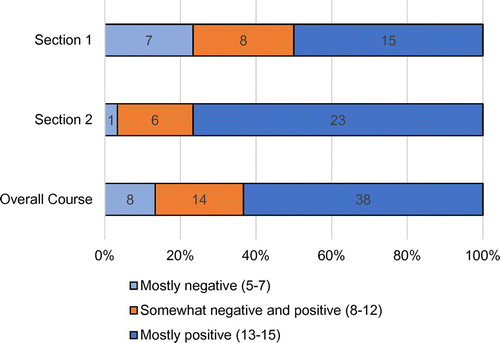
Notes. The percentage of total score categories of mostly negative (5–7), somewhat negative and somewhat positive (8–12), and mostly positive (13–15) in each gender identification category of the participants in sections 1, 2, and overall course. The number of observations in each score category is included as data labels.
There appears to be a difference in the distribution of scores between the two sections of the course. Although 50% (15 out of 30) of the students in Section 1 saw some benefit in the assignment, about 77% (23 out of 30) of the students in Section 2 deemed the assignment beneficial. Similarly, although about 23% (7 out of 30) of the students in Section 1 did not see the assignment as beneficial, only about 3% (1 out of 30) of the students in Section 2 deemed the assignment not beneficial.
There appears to be no gender-identification based differences regarding the positive reception of the assignment. Figure 2 presents the breakdown of total scores based on gender identification of the participants (see the Supplementary File for the data). Although 65% (20 out of 31) of the female-identifying students saw some benefit in the assignment, about 60% (15 out of 25) of the male-identifying students in Section 2 deemed the assignment beneficial. Similarly, although 66% (2 out of 3) of the students who did not respond to demographic questions saw some benefit in the assignment, 100% (1 out of 1) of the students who selected “Prefer Not to Say” for their gender identification saw the assignment beneficial. Hence, in all gender-identification based categories, the majority of the respondents find the assignment beneficial. In contrast, although 13% (4 out of 31) of the female identifying respondents deemed the assignment not beneficial, only 10% (3 out of 30) of the male-identifying respondents deemed the assignment not beneficial.
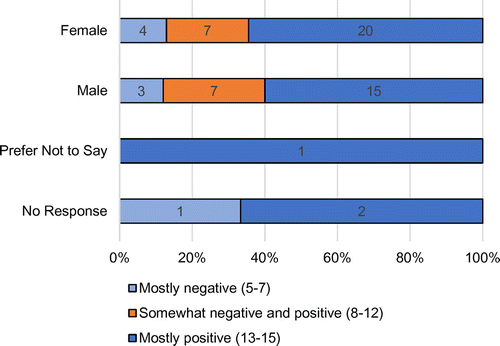
Notes. The percentage of total score categories of mostly negative (5–7), somewhat negative and somewhat positive (8–12), and mostly positive (13–15) in each gender identification category of the participants including female (F), male (M), prefer not to say (PNtS), and no response (NR). The number of observations in each score category is included as data labels.
There appears to be no racial-identification based differences in perceptions regarding the benefits of the assignment. Figure 3 shows a comparison of the percentages of perception categories for each racial-identification based category (see the Supplementary File for the data). In most racial-identification based categories, the majority of students find the assignment to be beneficial, specifically 89% (8 out of 9) of Asian/Pacific Islander, 100% (2 out of 2) of Black or African American, and 71% (12 out of 17) of Hispanic or Latino. Of White-identifying participants, 50% (12 out of 14) find the assignment beneficial.
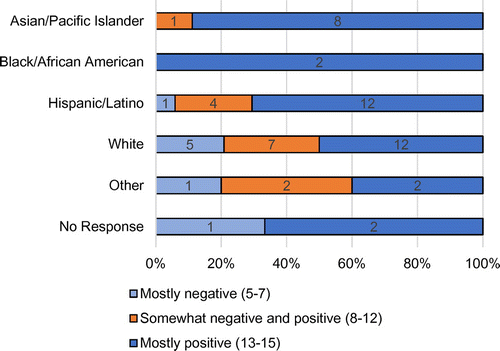
Notes. The percentage of total score categories of mostly negative (5–7), somewhat negative and somewhat positive (8–12), and mostly positive (13–15) in each racial identification category of the participants including Asian/Pacific Islander (A/PI), Black or African American (B/AA), Hispanic or Latino (H/L), White (W), other (O), and no response (NR). The number of observations in each score category is included as data labels.
5.2. Code Categories
Data analysis and interpretation of all responses from Prompts 1 through 4 yielded 11 major code categories. Table 4 lists these categories and presents the associated sources and frequency.
|
Table 4. Frequency of Code Categories and Sources
| Code category | Q1 | Q2 | Q3 | Q4 | Total |
|---|---|---|---|---|---|
| Creative and out-of-the-box thinking | 8 | 23 | 17 | 36 | 84 |
| Understanding | 21 | 10 | 27 | 9 | 67 |
| Perspective-taking and empathizing | 19 | 10 | 19 | 17 | 65 |
| Student experience | 9 | 24 | 9 | 6 | 48 |
| Going beyond math | 12 | 10 | 10 | 14 | 46 |
| Learning, reviewing, and studying | 10 | 9 | 22 | 4 | 45 |
| Communicating: explain, describe, and translate | 0 | 18 | 10 | 14 | 42 |
| Linking to the real world | 13 | 4 | 16 | 7 | 40 |
| Student suggestions | 2 | 6 | 6 | 8 | 22 |
| Problem solving | 3 | 2 | 5 | 10 | 20 |
| Critical thinking | 2 | 4 | 4 | 1 | 11 |
In what follows, these categories are described in the order presented in Table 4 and provide representative examples in participants’ own words.
5.2.1. Category 1: Creative and Out-of-the-Box Thinking.
The poetry assignments in some students’ words “allowed” (e.g., 219-4; 288-4) and in others “forced” (e.g., 111-2; 257-4; 263-4) them to think creatively. Analysis suggested that participants recognized the creative nature of the poetry assignments. Many associated creative thinking with out-of-the-box thinking, stating that the poetry-writing exercise “made me think a little outside my comfort zone” (181-4) and “allow[ed] me to think outside of the box” (219-4). Most, including those who indicated “no” or “Maybe/I don’t know” to Prompt 4, acknowledged the value of creativity to engineering. One participant who wrote, “I think it’s important to encourage creativity among engineers, and assignments like this help to bolster it,” went on to say about the assignment, “I feel as though that spark to begin thinking creatively, even in a mathematical/engineering setting, was ignited” (263-2). Another student asserted that “it is important to find a balance between our analytical side and our creative side” (266-4), whereas another wrote of the use of creative thinking skills in engineering, as follows:
As an engineer, I can use this idea to allow myself to think outside of the box, to take a step back from a problem and try various alternatives. I believe that this experimenting to find the best, or simply just new, solutions is what truly makes an engineer so valuable to the technical world. (288-4)
5.2.2. Category 2: Understanding.
Students reported developing a deeper understanding of the course material. Several participants said that the activity helped them understand “the topic more” (168-2) as it “simplified a complex topic in my head” (168-3) or helped them understand “on a deeper level” (184-3). Several students noted that their conceptual understanding improved because the assignment invited them to think more deeply (e.g., 179-1; 248-1) about a technical topic, noting the ability to “separate myself from all of the math concepts that are usually associated with difficult topics and really focus on the characteristics and descriptive words to understand the topic fully” (142-3). Similarly, some noted that they had to “have a real understanding” (192-3) and “demonstrate deep understanding of the knowledge matter, to be able to provide details on the subject at hand” (267-3) or that they needed “a strong understanding to produce a valuable poem” (210-3). In addition, some students felt the need to conduct further research to improve their understanding of the technical material (e.g., 248-3). Furthermore, two respondents provided specific examples of the verbs that helped them understand the material better, and pointed out to “feel, understand, and imagine” (220-1) as well as “hope, hear, or see” (223-1). One respondent summarized this as follows:
The “I AM” poem assignment is relevant because it involved further research on the supply chain topic that I chose. There are a lot of verbs that were used in the poem that are never used in regular engineering language. This led to deeper investigation of a previously learned topic to be able to satisfy each line of the poem, while ensuring a factual depiction of the topic. (223-3)
5.2.3. Category 3: Perspective-Taking and Empathizing.
Perspective-taking was common within the data. Students reported the ability to see issues from other people’s perspectives as a useful tool practiced through this assignment. One participant writes that it can “[help] you understand a process from the users’ view, from the producers’ good, and sometimes even a middle man” (264-4). Another states, “I can see the poem being relevant and applicable because it really puts you in a different frame of mind to think about a process or idea in a different way. It makes you think of sides of things you hadn’t considered” (278-3) and that “the ‘I AM’ poem demonstrated how necessary it is to engineering to seek new perspectives” (298-3).
Students acknowledged potential value of the tasks required by the writing activity, specifically putting themselves in the place of the topic/concept, as well as personifying and empathizing with technical concepts or ideas. One participant described a “juxtaposition of formulas and emotions” that “forced me to consider the equations in an entirely different light” (117-1). Another participant wrote, “I feel it really makes you learn because you are putting yourself in the place of whatever it is that you wrote about” (219-2). Of technical concepts, one student states that it “makes it a much more tangible concept when you personify it” (278-3). Further, the following student mentions empathizing with technical concepts, as such:
I found both I AM poems to be challenging, as I had to think in a different way to describe both myself and an abstract topic. However, I actually found it easier to “empathize” or inhabit the personality of the abstract topic, which surprised me (122-2)
5.2.4. Category 4: Student Experience.
Data analysis revealed insights into what the participants thought about their experience of writing poems in an engineering class in general, as well as their own accounts of their individual experiences. Foremost, it was clear that that the experience of writing poems in an engineering class about one’s self as well as about a technical poem was novel. For example, one student said that they had “never done that before for a class in engineering” (181-1). Other respondents said that this assignment or experience was “rather refreshing to do amongst my usual studying or work” (248-4), a “nice break from my usual engineering assignments” (155-2), “a large deviation from a normal assignment than we would receive” (176-2), and “an unusual assignment for a STEM class” (184-2). Additionally, the fact that this assignment was in a higher-level discipline-specific course was a pleasant surprise, as one said, “I was impressed with the idea of writing a poem for one of my higher-level engineering courses” (246-2).
Second, the assignment was pleasurable. The respondents said that the assignment was “fun” (e.g., 139-4; 155-2; 261-4; 298-1; 119-1), “stress free” (e.g., 223-2), “interesting” (e.g., 139-4; 298-1), and “helpful” (e.g., 114-2; 160-2). While some said that they “enjoyed” (e.g., 111-2; 223-2; 234-2; 288-2) the experience, others indicated that they “loved” (e.g., 114-1; 121-2; 264-2) it. They found the experience pleasurable either because the assignment required them to understand the technical material (e.g.,111-2), allowed them to exercise their creativity (e.g., 159-2), or allowed them to have fun (e.g., 119-2). They used words such as “cool” (e.g., 283-2), “nice” (e.g., 159-4), “good” (e.g., 114-2), and “great” (e.g., 119-2) to describe the assignment, or the purpose of the assignment, or their experience of the assignment.
Third, the second poem-writing assignment was challenging for the students. They used words such as “thought was going to be difficult” (e.g., 184-2), “hard” (e.g., 220-2), “confused at first” (e.g., 168-2), “blocked” (e.g., 114-2), and “challenging” (e.g., 139-1) to describe their experiences. For some, it was challenging because it was an unusual or unfamiliar exercise that required them to exercise their creative thinking skills within the context of their technical education. One respondent said “…it challenged me mentally to create a story about an engineering concept which I had never done before” (297-2); another one noted, “I thought it was interesting how hard it was for me to write a poem, which is creative, and combine it with technical concepts. I thought it helped me be able to combine these two sides of the brain in one assignment” (227-2). For others, the challenge appeared to be specifically due to the “I am” poem itself, which required them to personify a technical topic (e.g., 261-1; 278-3). One respondent explained the positive as well as challenging aspects of the experience as follows:
My impression was that it was fun to learn which topic was one of the most interesting real life issues that was related to this class. It was also a little hard to do the poem about myself in the beginning. It took me a while to think about what I wanted to write about, but I realized I enjoy seeing how what we learn is used and how it impacts the world. My reaction was surprised at first because I have never had to write poetry in an engineering class. It was more difficult than I expected as well because I had to think more critically. (233-2)
5.2.5. Category 5: Going Beyond Math.
Students indicated that the second poem-writing assignment asked them to go beyond simply learning to use mathematical models and algorithms to solve technical problems (i.e., procedural knowledge) and truly understanding how and why these models and algorithms work, how they could apply in practice, and what they would imply for practice (i.e., conceptual knowledge). Several respondents highlighted that the poem-writing assignment helped them contextualize the technical material better by inviting them to “participate in different activities and not only solve problems and do math” (114-2), “consider the equations in an entirely different light” (117-1), and “think of life outside of mathematics in an engineering course” (117-4). For instance, one respondent said:
Writing the second “I am” poem about the newspaper model made it very easy to understand the reasoning and assumptions behind the model, instead of just learning the math behind it. By writing the poem, it allowed me to better understand why and when using the newspaper model would be beneficial. [I] reviewed the model assumptions and was able to visualize what scenarios would apply [to] the newspaper model. (155-1)
5.2.6. Category 6: Learning, Reviewing, and Studying.
Our analysis revealed that several students viewed the poem-writing assignment as a pedagogical tool that helped them to “study,” (e.g., 129-4), “review” (e.g., 285-3), “learn more” (e.g., 285-3; 270-1), and “reinforce” (e.g., 140-3) the material. Students recognized the potential of the poem-writing activity as an effective active-learning mechanism that could support their learning. Several in fact suggested repeated use of poem writing activities throughout the course (e.g., 129-4), or “after finishing a chapter” (285-3), or “after an exam” (140-3). For instance, one student wrote, “I can see it as a fun and quick way to review material learned in class” (285-3), and another stated:
I think it can be useful after an exam to help reinforce some of the material on the exam, because rather than studying for an exam, you are asked to apply some of the material you learned about in a different way and it might stick better with some students. (140-3)
5.2.7. Category 7: Linking to the Real World.
Participants noted that the assignment helped them to interpret and analyze the technical material covered in class in the context of the “real world” (159-3). Responses suggested that the assignment enabled students to establish links between the technical material and the applications of the technical material in practice, allowing “students to draw real world connections to the topics they learn about in class” (122-3) and to see “how what we learn is used and how it impacts the world” (233-2), which is further illustrated in the excerpt below:
I learned that what we learned this semester can be looked at through a larger scope than simply this inventory and supply chain class or the engineering field. I think this is especially true when considering the times that we are in now. The assignment allowed me to consider how these topics apply to the world at large and how they can effect, alter, or improve the world around us. (288-1)
5.2.8. Category 8: Communicating: Explain, Describe, and Translate.
Students reported having to explain, describe, and translate technical course concepts into “everyday language.” Participants recognized that this activity could help “with my soft skills” (227-4) to communicate ideas to others in their careers. As illustrated in the following response, “It lets us take a step back and see how we might talk about something we learned in this class to someone who does not have the same technical background as us” (257-4). Another student described the career benefit of “creative writing and storytelling” as “useful communication skills” in engineering (122-4). Further, an international student reported the value of the poetry assignment to both understanding the concepts and communicating ideas, as follows:
I definitively love this specifically because, since I am not an English native speaker. I like activities that made me think beyond just numbers and equations because I know that in the future I will need to be able to explain the concepts and deliver my ideas, and I think this activity really forced us to do a good explanation of the concept or definition that we chose. (114-1)
5.2.9. Category 9: Student Suggestions.
Several participants made observations that relate to the use of “I am” poems in particular or poem writing in general for the promotion of creative thinking. Although the participants welcomed the idea of an activity that bolsters creativity in an engineering course (e.g., 125-4; 133-4; 223-2), a few questioned the suitability of poetry writing as an activity to promote creative thinking. For instance, one student noted, “I personally don’t think the I am poem works very well, maybe some other form of writing or creative take on the subject would work better” (202-3), whereas another described creative activities completed in other classes as more immediately applicable to engineering when compared with poetry writing (122-4). Additionally, one student opposed the idea of poetry in engineering, saying that “Combining a poem and supply chain topics felt very forced and incompatible, when other creative/engineering ventures can work well together” (271-1) and “that it was an unnatural way to combine arts and engineering” (271-2). The student continues:
Personally, I enjoy creative ventures, and I’ve seen creative outlets in my other engineering classes in the forms of dioramas, or dynamic presentations; however, this felt like a very forced way to impart arts and engineering. Because it was so forced and awkward, it made me think arts and engineering were incompatible when I know, from other experiences, that they aren’t. Also, personally, I enjoy other creative outlets such as arts, crafts, and design rather than poetry, and would have appreciated an option other than poetry. (271-2)
Some participants noted that the repeated practice of activities that promote creative thinking throughout the course could lead to higher gains for the students. For instance, while one participant said:
This was only one assignment and there wasn’t anything else like this in this course to reinforce the learning experience this assignment had to offer. Perhaps if creative thinking assignments or exercises were regularly done throughout the course, it would have a greater impact. (263-4)
Further, some participants expressed enthusiasm to see broader adoption of assignments or exercises that promote creative thinking throughout the curriculum within the program and college. One student wrote:
I’d love to see this idea of creative thinking be applied to my other courses. If this sort of thinking was widespread in the college of engineering and we used it more frequently, I can definitely see it being beneficial in the long run. (220-4)
5.2.10. Category 10: Problem-Solving.
Analysis further revealed a close connection between creative thinking and problem-solving. Specifically, many of the responses suggested that participants recognize creative thinking as a means “to be more creative in thinking of solutions to real life scenarios” (227-3). In simple terms, one student wrote, “Sometimes a creative, unique solution is exactly what is required to fix the problem; the answer is not always evident” (119-4). Another participant echoed a similar sentiment by claiming that “engineering upholds the value of creating feasible/creative solutions of tomorrow. Those projects and answers most of the times don’t come from a textbook” (121-3). This idea of thinking through a creative rather than strictly “analytic lens” (288-4) was seen frequently in the data and was often associated with “creating innovative solutions down the road” (223-4), as further exemplified here:
I believe I will come across challenges that have solutions that aren’t concrete and may have to use some “out of the box” thinking. This experience has shown me that sometimes you have to think abstractly about solutions. You may sometimes have to have different ideas that aren’t “normal” or “easy” for the best solution. (297-4)
5.2.11. Category 11: Critical Thinking.
Data analysis suggested that the poetry assignments required respondents to engage in critical thinking. Respondents noted that it made them think “more critically about the topics” learned in class (e.g., 179-2; 220-2). Several participants acknowledged that the assignments were more challenging than anticipated, stating, “It was more difficult than I expected as well because I had to think more critically” (233-2). Students acknowledged different types of critical thinking as beneficial to their future careers, for example:
This experience is beneficial as an engineer because not often are engineers given this opportunity to critically think in this manner. Critically thinking over a numerical problem in comparison to critically thinking over figurative writing is different but [both are] necessarily skills (284-4).
5.3. Distribution of Code Categories
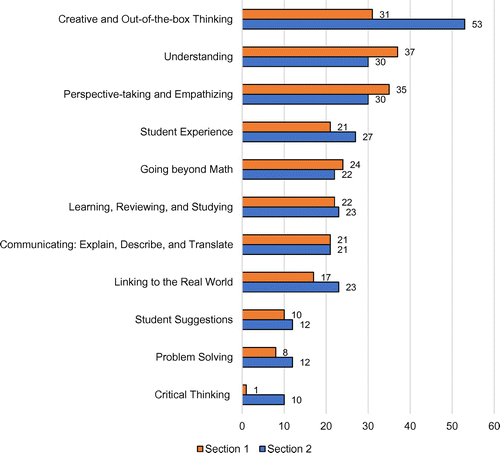
Figure 4 shows how the overall count of code categories for the course are distributed between the two sections (see the Supplementary File for the data). All code categories emerge in student responses from both sections. Although the counts of code categories from the individual sections appear to be similar for most code categories, noticeable differences appear for Creative/Out-of-the-box Thinking and Critical Thinking.
5.4. Themes
When we further examined the data within each category and the relationships between categories with respect to our research questions, four dominant themes emerged: creativity, understanding, problem-solving, and communication. We discuss each below.
5.4.1. Theme 1: Creativity.
Creativity is the overarching dominant theme of this study, as it is interwoven across all code categories and themes. Students attribute the experiences behind their responses to the creative nature of the poetry assignment. Thus, for example, the creative nature of the assignment provided students with the opportunity for novel, out-of-the-box thinking, problem-solving, perspective-taking, a deeper understanding of course topics, and so on. Additionally, creative thinking is central to students’ experiences of the remaining themes.
5.4.2. Theme 2: Understanding.
Understanding is a second theme that emerged from our analysis. Students reported gaining a deeper understanding of the course topics selected for Poem 2. To complete the assignment, students felt they needed to know/learn more about the topic than they would without the assignment. Linking to real world and going beyond math helped students to establish more connections with the technical knowledge and deepened their understanding. Analysis also reveals a strong connection between creativity, perspective-taking, and understanding. Thinking creatively promoted looking at the topics from different perspectives, which increased overall understanding. Critical thinking was also connected with understanding, as the assignment “forced” or in some cases “allowed” students to think more critically about the topic thus leading to increased understanding. Further, students reported that the creative nature of the assignment provided new/novel approaches to studying and reviewing course material, thus perhaps aiding in knowledge acquisition and recall.
5.4.3. Theme 3: Problem-Solving.
Problem-solving is a third theme that emerged from the data. Students acknowledged the value of creative problem-solving in engineering and recognized activities that promote creative thinking—such as the poetry assignment—as useful to practicing creative thinking and problem-solving skills. Additionally, both creative and critical thinking combine to deepen understanding of the issues and expand potential for creative solutions. Finally, problem-solving is also connected with perspective-taking, as the ability to view an issue from multiple angles is recognized as aiding the creative problem-solving process. In fact, the very act of writing the poem was an unusual problem-solving exercise for them in itself. In their accounts of the experience, they offered glimpses into how they approached this novel problem of writing poetry about a technical topic, thus utilizing their problem-solving skills in an unconventional manner.
5.4.4. Theme 4: Communication.
Communication is the fourth theme that emerged from the data. At its most basic level, the poetry assignment required students to put ideas into language. To achieve technical accuracy of the poem content, the assignment necessitated students’ focus on word choice—to select the most accurate words to convey the most accurate message. This task lies at the heart of message production, specifically, and competent communication, generally. Students further reported that they felt the need to rephrase technical information into language suitable for nontechnical audiences—an essential component of tailoring messages to target audiences, generally, and of engineering communication, specifically. Equally important, empathy and perspective-taking (particularly as relates here, the ability to take the perspective of other people and things) are integral skills associated with emotional intelligence and communication competence.
6. Discussion
6.1. Relationship of the Themes to Engineer of 2020 Attributes and ABET Criteria
NAE mapped The Engineer of 2020 attributes to the ABET’s EC2000 Criteria (NAE 2004). Although a detailed discussion of this mapping is beyond the scope of our study, we updated this mapping to the revised ABET criteria (using ABET (2018)) as demonstrated in Table 5 to contextualize the relevance of our findings to the set of abilities that an engineering graduate should have as identified by both the NAE and ABET. The details of the mapping process are provided in the Supplementary File.
|
Table 5. A Revised Mapping of The Engineer 2020 Attributes Set Forth by the NAE Engineer of 2020 Committee Mapped to ABET Criteria
| NAE attributes | Mapping | ABET criteria |
|---|---|---|
| 1, 6 1, 2 3 5 4 5, 6, 7 7 2, 4 5 |
|
Sources. Table 2-1 in NAE (2018), chapter 2. Mapping of EAC Criteria (a)–(k) to EAC Criteria 1–7 in ABET (2018).
Based on Table 5 and the discussion in Section 5.3, the following observations can be made:
Creativity (Theme 1) corresponds to NAE Attribute II, and, hence, ABET Criteria 1 and 2.
Understanding (Theme 2) corresponds to NAE Attributes I as well as VIII, and, hence, ABET Criteria 1, 2, 4, and 6.
Problem-solving (Theme 3) corresponds to NAE Attributes I as well as II, and, hence, ABET Criteria 1, 2, and 6.
Communication (Theme 4) corresponds to NAE Attribute III, and, hence, ABET Criterion 3.
In summary, the poem-writing assignment appears to have the potential to support the development of four out of nine of the NAE Attributes and five out of seven of ABET Criteria.
6.2. Potential Opportunities
An important revelation of the study is that engineering students are eager to exercise their creative thinking skills in the context of their specific engineering discipline. Although not all of the participants in the current study were particularly keen on the use of poetry, in general, or the use of the “I am” poem (a personification poem), in particular, they communicated the belief that creativity was an important skill for engineering that needed to be institutionalized at a broader scope by not only providing multiple exercises or activities within a particular course, but throughout their specific program and entire college, as well. Creativity skills training does not have to be an addition to technical training. A multitude of opportunities exists to integrate creativity skills training meaningfully into undergraduate engineering education, and poem writing is just one such mechanism.
Another important implication of the study is that simple poem-writing exercises (requiring minimal to no training on the poetic form) can be used to enhance technical knowledge acquisition in undergraduate engineering education, as well as to support the development of robust analytical skills that build not only on a strong analytical understanding but also draw from a deep conceptual understanding. Although existing engineering education pedagogies are effective in training students on how to use and apply engineering tools and principles, nontraditional exercises and activities appear to have the potential to offer students alternative modes to work with and use the technical material and make undergraduate engineering education more inclusive by offering multimodal educational practices.
Finally, a critical examination of NAE Attributes and ABET Criteria that do not appear to be addressed by the current form of the poem-writing exercise used in this study offers insight into how these attributes and criteria can, in fact, be addressed. For example, students could be instructed to write poems in groups during class under a time constraint, whereby students are asked to write lines one at a time in a robin-round fashion. This would allow students to exercise their skills in agility (i.e., ability to think and understand quickly), flexibility (i.e., willingness to change and compromise), and teamwork, as well as to practice competent communication skills. Alternately, students could write poems on a topic that is related to a current/future technology/business trend that of the discipline that is not necessarily covered in the course (e.g., I am a block-chain enabled supply chain, I am a sustainable last-mile delivery operation) to exercise their skills in acquiring and apply new knowledge.
6.3. Potential Challenges
A fundamental challenge to the incorporation of exercises/activities that cultivate creative thinking skills in undergraduate engineering education relates to the type of the exercise or activity. A poem is an abstraction. A mathematical model is an abstraction. The course is centered around developing and analyzing mathematical models. Hence, writing a poem is not too far from building a model by extracting the essence, that is, delineating the most important characteristics, of the underlying system. A similar approach can be used to (i) think critically about fundamental engineering principles and tools that are emphasized in a course, (ii) identify an analogous task in a different field that encompasses or necessitates creative thinking, and (iii) design an exercise or activity based on the task that is suitable for the course. For instance, other examples that use of choreography to tell the story a research study, such as the “Dance Your PhD” (Joose 2022) or a senior design project (Akçalı et al. 2015) exist. However, as these other examples demonstrate, several fundamental challenges remain in regard to assessment, student acceptance, and faculty member interest and/or development.
Assessment presents an obvious challenge. It is not easy to grade creative artifacts. However, with repeated use of such exercises and activities over time, the instructor can devise useful ways to provide feedback to students on their creative artifacts and assess their learning of the technical material, the development of their creative thinking skills, or both. What appears to be most important is that activities designed to cultivate creative thinking are (i) appropriately contextualized in the discipline so that the students can see the relevance of these activities to their discipline and (ii) repeated multiple times throughout an individual course and/or a specific program so that the students can develop the desired competencies.
Another potential challenge relates to student acceptance. Although the majority of the students appeared to welcome and enjoy exercising their creative thinking skills within the context of poetry writing, there were shadows of discontent as well, as one student insightfully noted:
I appreciate the experience as a whole. I know that many others in the class have expressed negative attitudes in regards to the assignment because they oppose anything that doesn’t directly involve what we learn in lecture, but I disagree. I think it’s important to encourage creativity among engineers, and assignments like this help to bolster it. Even if students didn’t particularly enjoy the assignment, I feel as though that spark to begin thinking creatively, even in a mathematical/engineering setting was ignited. (263-2)
As noted earlier, appropriate contextualization and consistent repetition of activities and exercises that cultivate creative thinking skills could help the students to recognize the importance and relevance of such activities in their engineering education.
Lastly, the faculty member’s interest/development can be a barrier against cultivating creative thinking skills of students in their own discipline-specific courses. If an individual faculty member does not have the personal interest, then they do not, and there is not much to do anything about it. But those faculty members who may have hobbies or personal interests in some form of creative endeavor—including but not limited to contemporary dance, sequential art, film making, or sculpting—should be encouraged and even empowered to adopt and adapt exercises and activities to cultivate creative thinking skills of students in their courses. Each such attempt should be treated as an experiment, which may fail or succeed. Through repeated experiments, however, authentic and meaningful activities and exercises that are suitable to the discipline can be developed. To this end, institutions could provide internal grants to their faculty members to run such experiments. This would signal the institution’s commitment to developing creative thinking skills of their students and serve as an invitation to their faculty members to help in this endeavor.
7. Limitations
There were several limitations of this study that should be taken into consideration when generalizing the findings and implications of the discussion to a broader scope (Roberts 2010). First, in the context of qualitative educational research, the researcher, who is also knowledgeable of educational practices, facilitates the implementation of the intervention. Student researchers (AA and RB) from the department of psychology coded the data under the supervision of one of the researchers (JW) who has expertise in communication studies to identify the code categories. Furthermore, the interpretations are those of the researchers. Also, while one group of the participants had one of the researchers (EA) as their instructor, the other group had an instructor who is not a part of the research team. Therefore, the potential for researcher bias exists.
This study involves participants from the Department of Industrial and Systems Engineering in the Herbert Wertheim College of Engineering (with 13 departments) at the University of Florida. The demographics and culture of the department, the college as well as the university are unique, and cannot be generalized to other industrial and systems engineering departments, or engineering colleges, or public universities around the country.
This study involves an engineering department that is ABET accredited. Prior to 2018, assessment data were being collected on student outcomes related to life-long learning and knowledge of contemporary issues from the course of interest in this study. Hence, some of the code categories that have been identified (e.g., “linking to real world”) were designed into the course previously. Although no assessment data are currently being collected in this course, the course has some such elements by design.
All participants in the study had to complete the creative writing assignments as a required component of their education, but participation in the study was voluntary, as mentioned previously. The participants were assumed to be truthful in their responses. However, additional educational, professional, and personal obligations (particularly during the COVID-19 pandemic) may have interfered with their focus as they reflected on their experience. Also, since the reflection questionnaire was a graded element of the course, the students may have been compelled to respond more positively.
A limitation of this study that warrants further research relates to the differences in the frequency of code categories that are observed in the two sections of the course. For some code categories (i.e., Creative/Out-of-the-box Thinking and Critical Thinking), there appears to be differences in the emergence of these code categories in student differences. This may be due to the differences in how the two instructors presented the assignment in their courses or how often they mentioned the importance of creative and critical thinking in the context of decision making for supply chain management or both.
A limitation of this study pertains to the lack of a control group. That is, a similar survey was not given to assess student perceptions for a more ordinary assignment in the course. Administering the survey both for the technical poetry writing and another more conventional writing assignment can allow for comparison of the code categories and themes that emerge from both types of survey responses. Another related limitation of this study is the lack of direct assessment of students’ understanding of the topics about which the technical poems were written. Future research that utilizes standardized assessments to evaluate students’ conceptual understanding of the technical material is warranted.
8. Conclusions
This paper describes a study that incorporates poem writing into an upper-level discipline-specific engineering course to develop imaginative and creative thinking skills of students in undergraduate engineering education. Students in an upper-level discipline-specific course in industrial and systems engineering were required to write a poem on a technical topic and were also asked to respond to four reflection prompts about their experience. Student responses were analyzed using open and axial coding, from which emerged 11 code categories and four themes related to our research questions. Our findings demonstrate that the poem writing assignment has the potential to not only support the development of several critical professional skills—including creative thinking, communication skills, and problem solving—but also contribute to the development of technical skills by deepening students’ conceptual knowledge. This study provides an exemplar for the incorporation of activities and exercises to cultivate creative and imaginative thinking skills of students in upper-level discipline-specific course in undergraduate engineering education. Continued research, such as a carefully designed experiment with control group, is suggested to provide evidence on the generalizability of the approach. Furthermore, the use of standardized tests is recommended in future studies to assess conceptual knowledge acquisition from technical poetry writing assignments. Finally, additional testing with other forms of creative activities in undergraduate engineering education is warranted.
The first author would like to express her gratitude to Dr. Jenny Baxley Lee for introducing her to the “I am” poetry form. The entire research team is grateful to Dr. Mengyu Li, the instructor of one of the course sections, who facilitated data collection, as well as Dr. Farnaz Babaie and Mr. Tobias Lodemann, the graduate teaching assistants, who processed the consent forms, de-identified the data, and created the data set for the study. The authors are grateful to the two anonymous referees and the associate editor whose feedback helped improve the presentation of the paper.
References
Accreditation Board for Engineering and Technology (ABET) (2018) Changes in criteria 3: Student outcomes. Accessed February 9, 2023, https://www.abet.org/wp-content/uploads/2018/03/C3_C5_mapping_SEC_1-13-2018.pdf.Google ScholarAdobe (2012) State of create study: Global benchmark study on attitudes and beliefs about creativity at work, home and school, April 23, 2012. Accessed February 9, 2023, https://news.adobe.com/news/news-details/2012/Study-Reveals-Global-Creativity-Gap/default.aspx.Google Scholar- (2021) Poetry writing in engineering education: Preliminary results and insights from an exploratory study. Proc. 2021 Amer. Soc. Engrg. Ed. Virtual Conf. Accessed February 9, 2023, https://peer.asee.org/37585.Google Scholar
- (2015) Creative storytelling and choreography laboratory for senior design. Proc. 2015 Amer. Soc. Engrg. Ed. Southeast Section Conf. (ASEE, Washington, DC), http://se.asee.org/proceedings/ASEE2015/papers2015/32.pdf.Google Scholar
American Management Association (AMA) (2012) AMA 2012 critical skills survey: Executive summary. American Management Association. Accessed February 9, 2023, http://www.amanet.org/uploaded/2012-Critical-Skills-Survey.pdfGoogle Scholar- (2014) Teaching science education with poetry. Creat. Ed. 5(19):1745–1749.Crossref, Google Scholar
- (2012) Arts-based Research (Sage Publications, Inc., Los Angeles).Crossref, Google Scholar
- (2019) Poetic science: Bidirectional reflection in science and medicine. Perm. J. 23:17–177.Crossref, Google Scholar
- (2008)
Arts-based research: Histories and new directions . Cahnmann M, Siegesmund R, eds. Arts-Based Research in Education (Routledge, New York), 3–15.Google Scholar - (2006) Are they really ready to work? Employers’ perspectives on the basic knowledge and applied skills of new entrants to the 21st century U.S. workforce. United States: Conference Board: Partnership for 21st Century Skills: Corporate Voices for Working Families: Society for Human Resource Management. Accessed February 9, 2023, https://files.eric.ed.gov/fulltext/ED519465.pdf.Google Scholar
- (2004) Renaissance learning and poetry contests in biological and agricultural engineering. Proc. 2004 Amer. Soc. Engrg Ed. (ASEE) Annual Conf. Exposition (ASEE, Washington, DC).Google Scholar
- (2005) Departmental to inter-collegiate engineering poetry contests. Proc. 2005 Amer. Soc. Engrg Ed. Annual Conf. Exposition (ASEE, Washington, DC).Google Scholar
- (2007) Student portfolios, business communications, engineering poetry contests, and grading multiple drafts of technical writing documents. ASABE Meeting Presentation Paper No. 078001 (ASABE, St. Joseph, MI).Google Scholar
- (2007) Using literature and the arts to teach nursing. Internat. J. Nurs. Ed. Scholarsh. 4(1):15.Google Scholar
- (2006) Assessing perceptions of education: a case for increased interdisciplinarity. ASABE Meeting Presentation Paper No. 068001 (ASABE, St. Joseph, MI).Google Scholar
- (2003) Engineers as poets: The need for poetry contests in colleges of engineering. Proc. 2003 Amer. Soc. Engrg. Ed. (ASEE) Annual Conf. Exposition (ASEE, Washington, DC).Google Scholar
IBM (2010) Capitalizing on complexity insights from the global chief executive officer study. Accessed February 9, 2023, https://www.ibm.com/downloads/cas/1VZV5X8J.Google Scholar- (2018) Poetry as a creative practice to enhance engagement and learning in conservation science. Bioscience 68(11):905–911.Google Scholar
- (2022) Watch the winners of this year’s “Dance Your Ph.D.” contest. February 24, 2022. Accessed February 9, 2023, https://www.science.org/content/article/watch-winners-year-s-dance-your-ph-d-contest.Google Scholar
- (2014) Innovative pedagogies in higher education to become effective teachers of 21st century skills: Unpacking the learning and innovations skills domain of the new learning paradigm. Internat. J. High. Ed. 3(4):37–48.Google Scholar
- (2006) Engineering Change: A Study of the Impact of EC2000 (ABET, Inc., Baltimore). Accessed February 9, 2023, https://www.abet.org/wp-content/uploads/2015/04/EngineeringChange-executive-summary.pdfGoogle Scholar
- (2020) Method Meets Art: Art-Based Research Practice, 3rd ed. (Guilford Press, New York).Google Scholar
- (2014) Transdisciplinarity and art integration: Toward a new understanding of art-based learning across the curriculum. Stud. Art Ed. 55(2):104–127.Crossref, Google Scholar
- (1996) Poetry in engineering education. J. Engrg. Ed. 85:157–162.Crossref, Google Scholar
- (1999) Portfolio assessment in aerodynamics. J. Engrg. Ed. 88:223–229.Crossref, Google Scholar
National Academy of Engineering (NAE) (2004) The Engineer of 2020: Visions of Engineering in the New Century (The National Academies Press, Washington, DC).Google ScholarNational Academy of Engineering (NAE) (2018) Understanding the Educational and Career Pathways of Engineers (The National Academies Press, Washington, DC).Google ScholarNational Education Association (NEA) (2010) Preparing 21st Century Students for a Global Society: An Educator’s Guide to the “Four Cs”. Accessed February 9, 2023, https://dl.icdst.org/pdfs/files3/0d3e72e9b873e0ef2ed780bf53a347b4.pdf.Google Scholar- (2020)
Poetry in biology: Enhancing science education with creative writing . But JC, ed. Teaching College-Level Disciplinary Literacy (Palgrave Macmillan, London), 147–166.Crossref, Google Scholar Partnership for 21st Century Learning (2015) P21 Framework Definitions. Accessed February 9, 2023, https://static.battelleforkids.org/documents/p21/P21_Framework_DefinitionsBFK.pdf.Google Scholar- (1993) Monitoring student learning with poetry writing. J. Nurs. Ed. 32:190–191.Crossref, Google Scholar
- (2013) The use of haiku to convey complex concepts in neuroscience. J. Undergrad. Neurosci. Ed. 12(1):A42–A48.Google Scholar
- (2010) The Dissertation Journey: A Practical and Comprehensive Guide to Planning, Writing, and Defending your Dissertation (Corwin, Thousand Oaks, CA).Google Scholar
- (2021) The Coding Manual for Qualitative Researchers. 4th ed. (Sage Publications, Thousand Oaks, CA).Google Scholar
- (2019) Creativity measurement in undergraduate students from 1984–2013: A systematic review. Psychol. Aesthet. Creat. Arts 13(2):133–143.Crossref, Google Scholar
- (2017) Students’ perceptions of a poem to evaluate learning: A qualitative study. J. Nurs. Ed. 56(10):628–632.Crossref, Google Scholar
- (1996) The use of poetry to test nursing knowledge. Nurse Ed. 21(5):20–22.Crossref, Google Scholar
- (2015) Defining 21st century readiness for all students: What we know and how to get there. Psychol. Aesthet. Creat. Arts 9(2):178–186.Crossref, Google Scholar
- (2006) Research arts in art practice. Stud. Art Ed. 48(1):19–35.Crossref, Google Scholar
- (2009) 21st Century Skills: Learning for Life in Our Times (Jossey-Bass, San Francisco).Google Scholar
World Economic Forum (2016) The future of jobs: Employment, skills and workforce strategy for the fourth industrial revolution. January 18, 2016. Accessed February 9, 2023, https://www3.weforum.org/docs/WEF_Future_of_Jobs.pdf.Google Scholar- (2015) A world at risk: An imperative for a paradigm shift to cultivate 21st century learners. Society 52(2):129–135.Crossref, Google Scholar

