


Why Context Influences Preferences Elicited with Willingness to Pay Less Than Preferences Elicited with Choice
Abstract
Normative theories assume that people have stable preferences across logically equivalent decision contexts. Preference reversals, cases where preferred options vary across decision contexts, violate this assumption and suggest that preferences are constructed during the decision-making process. We contribute to this literature by identifying a boundary condition for these context effects. We theorize that monetary preference elicitations, such as willingness to pay (WTP) and willingness to accept (WTA), evoke comparisons to external out-of-context standards, such as the market price of similar goods. These out-of-context comparisons should weaken the influence of the local context. Our theory predicts that context effects will be weaker for (1) monetary versus nonmonetary preference elicitations (e.g., WTP/WTA versus choice) and when (2) options differ on attributes highly correlated with market prices of similar goods and services. Across 22 studies, we find support for these predictions using three canonical decision context effects (intertemporal tradeoffs, framing effects, and attraction effects), incentive-compatible and stated preferences, and different response formats (binary, continuous, and mixed). Preferences for a wide range of goods and services—including baked goods, apartments, and lotteries—exhibit these patterns. Our theory explains substantial variance in context effects and offers testable predictions for when context effects will arise in research and practice.
This paper was accepted by George Wu, behavioral economics and decision analysis.
Funding: This work was supported by Connaught Fund.
Supplemental Material: The online appendix and data files are available at https://doi.org/10.1287/mnsc.2023.00913.
Normative economic theories assume that people have stable preferences, that is, that preferences are invariant across logically equivalent decision contexts (von Neumann and Morgenstern 1974, Read 2007). If people prefer option A to option B now, with all else equal, they should prefer A to B later. However, many cases have been identified where preference inconsistencies and even preference reversals1 occur across decision contexts: cases where more people prefer option A over B in one decision context but prefer option B over A in another decision context. We refer to changes in preferences because of factors associated with such structural characteristics of decisions as decision context effects. In this paper, we use the terms decision context effect and context effect interchangeably. These context effects include when options are realized, whether options are presented as gains or losses, or whether additional options are included in a consideration set (see, e.g., Ainslie 1975, Huber et al. 1982, Payne et al. 1993, and Shafir 1993). Context effects are important for theories of consumer preferences and practice. A decoy effect, for instance, can influence consumer preferences in markets ranging from diamonds to pork hindquarters (Wu and Cosguner 2020, Wu et al. 2020) and has been used to increase the utilization of healthcare services like colorectal screening and gun safety practices that reduce the risk of suicide (Stoffel et al. 2019, Bauer et al. 2021).
Understanding when decision contexts will induce preference reversals remains a challenge (for a review, see Spektor et al. 2021). Context effects such as the attraction effect and acquisition versus forfeiture framings have failed to replicate (Yang and Lynn 2014, Bird et al. 2021, Chandrashekar et al. 2021, Xiao et al. 2021), and the circumstances to which they apply have been debated (Frederick et al. 2014, Huber et al. 2014). This confusion hinders their application in business, medicine, law, and policy, fields that attempt to use context effects to nudge human decision-making at scale in the field (see e.g., Amir and Lobel 2008; Johnson et al. 2012; White et al. 2019; Milkman et al. 2021, 2022; and Mazar and Soman 2022). Understanding when context influences preferences is critical for science and practice. We propose a theory that helps predict an important boundary condition—when context effects will not induce preference reversals.
We theorize that monetary evaluations evoke comparisons to external out-of-context standards, such as the prices of similar goods and services, and this comparison with out-of-context standards weakens context effects. Our theory predicts that if options within a decision (e.g., apartments) have attributes that are highly correlated with the market price of similar goods and services (e.g., square footage), then preferences elicited with monetary evaluations like willingness to pay and willingness to accept (WTP/WTA) will be less susceptible to context effects than preferences elicited with nonmonetary evaluations like choice. We limit our prediction to cases where attributes are correlated with market prices, because when they are not, market prices will not meaningfully inform preferences. We test our theory in six everyday consumption contexts across 22 studies comparing the influence of decision context on preferences elicited with WTP/WTA and choice across intertemporal tradeoffs (Ainslie and Haendel 1983), gain and loss frames (Shafir 1993), and two-option and three-option consideration sets designed to create an attraction effect (Huber et al. 1982).
We focus on WTP/WTA and choice because they are the most common preference elicitation methods in the decision-making literature (Payne et al. 1993, Read 2007). Consumers may more frequently make choices about what to purchase or consume, but WTP/WTA measures are used in large markets. Residential real estate sales in the United States totaled $3.09 billion in 2023, and the global market for online auctions was valued at $7.42 billion. Auctions are common internationally, with one-third of American Internet users participating in online auctions (e.g., Ebay alone had 50 million visitors in 2023), and auctions account for 10% of total sales in China.
In our experiments that tested our focal prediction—the weaker influence of context effects on WTP/WTA versus choice—all options were defined by two attributes, and at least one attribute was highly correlated with the market price of similar goods and services. In our experiments that tested our process account—that WTP/WTA is more likely than choice to evoke consideration of out-of-context comparators—we systematically manipulated the presence and absence of attributes highly correlated with the market prices of similar goods and services. We also tested our process account by modulating the market value of out-of-context comparators.
Theoretical Foundations
Decision contexts can powerfully influence the perceived value of attributes and choice options (see, e.g., Kahneman and Miller 1986, Hsee et al. 1999, and Spektor et al. 2021). Whether a gain, wage, or house is perceived to be large or small is, in part, a function of how it compares to alternatives in its present context (see, e.g., Kahneman and Miller 1986, Mellers et al. 1997, Stewart et al. 2006, and Morewedge 2015). Preferences for gambles differ when evaluated from the perspective of a potential buyer or seller (Shafir 1993), and the relative attractiveness of a smaller versus larger reward depends on whether rewards are realized in the near or distant future (Ainslie 1975).
Methods used to elicit preferences can similarly influence preferences for options. Preference elicitation procedures can affect how people compare options within a decision context. One example is the scale compatibility effect. People place greater weight on attributes of options that are more compatible with the measure used to elicit their preferences (Lichtenstein and Slovic 1971, Slovic et al. 1990, Tversky et al. 1990, Moon and Nelson 2020). People are more likely to consider the cost of producing a concert (i.e., a monetary attribute) when asked how much they are willing to pay for a concert ticket than how much they would enjoy it (Amir et al. 2008). Whether measures are binary or continuous can influence preferences (Fischer and Hawkins 1993) and can elicit methods that require people to directly compare options or require them to rate options separately (Nowlis and Simonson 1997). Attributes that are easily compared (e.g., attributes presented in numbers) can influence preferences elicited by choosing options (e.g., “Would you buy A or B?”) more than preferences elicited by rating options separately (e.g., “How likely would you be to buy A?,” “How likely would you be to buy B?;” Nowlis and Simonson 1997).
We explore how preference elicitation procedures affect comparison with options outside a decision context. Options in many decision contexts share attributes with similar goods and services available outside those contexts that can serve as comparison standards (see, e.g., Stewart et al. 2006, Morewedge et al. 2009, and Catapano et al. 2022). People evaluate the size of diamonds by comparison with the size of jewelry worn by their neighbors (Hsee et al. 2009) and the size of gambling payouts by comparison with the prices of their recent purchases (Ungemach et al. 2011). We suggest that the method used to elicit preferences affects the propensity to compare options to out-of-context comparators, which should weaken decision context effects.
We theorize that people are more likely to consider out-of-context comparison standards in monetary than in nonmonetary preference elicitation procedures, such as more often with WTP/WTA than choice. Imagine considering two similar used cars for sale: a 2019 Honda CRV and a 2020 Toyota RAV4. If your preferences were elicited with choice, you would most likely compare these two cars to each other. If your preferences were elicited with WTP, however, we posit that you would be more likely to also compare the cars to the market prices of other cars of the same make and model of similar years, mileage, and trim levels (e.g., other Honda CRVs and other Toyota RAV4s). Our theory draws from research showing that people can make choices without consciously considering information outside a decision context (O’Donnell and Evers 2019). When people evaluate the price of a good or service, however, they consider the information in the present context (e.g., its attributes and the price of other goods and services sold in that context) and call to mind related information from memory (e.g., prices at which it was previously purchased, sold, or advertised; see Mazumdar et al. 2005, Mazar et al. 2014, Catapano et al. 2022, and Evangelidis et al. 2022).
Considering additional out-of-context comparators should reduce context effects for at least two reasons. One reason is the larger number of comparators. Comparing options to more alternatives could dilute potential biasing effects of other in-context options (Noguchi and Stewart 2018), increase the consistency of evaluations of an attribute (Hsee et al. 1999), create a more representative norm to which attribute values are compared (Kahneman and Miller 1986, Morewedge et al. 2005), or rank attribute values more consistently across decision contexts (Stewart et al. 2006, Walasek and Stewart 2015). Indeed, when research participants sequentially consider two opposing anchors before making a numerical judgment (a high and then low anchor or a low and then high anchor), the influence of the initial anchor is reduced (Bahníket al. 2019; also see Lee and Morewedge 2022).
A second reason that is increasing the number of contexts in which attributes are considered should dilute biasing context effects on attribute weights (e.g., timing, framing effects). If one considers similar goods through loss and gain frames (e.g., regularly buying and selling shares of a company), then the effect of gain and loss frames on their value may be diminished. Indeed, the endowment effect that a person exhibits when setting reservation prices as a seller can decrease if he or she also regularly considers purchasing similar goods as a buyer (List 2003). Because monetary preference elicitation procedures such as WTP/WTA are likely to evoke consideration of out-of-context comparison standards, they should then be less susceptible to decision context effects than nonmonetary preference elicitation procedures such as choice.
Of course, evaluating options by comparison with market values requires that options have attributes that are correlated with the market price of similar goods and services (e.g., quality, quantity). We define an attribute’s market price correlation as the degree to which changes in the level of that attribute predict changes in the market price of goods and services with that attribute. In the Boston real estate market, the average rental price of an apartment is approximately $4.25 per square foot, and the average sale price fluctuates around $1,000 per square foot. Square footage is thus an attribute that predicts considerable variance in rental apartment prices (e.g., rental price ≈ square footage × $4.25) and the listing prices of homes (e.g., list price ≈ square footage × $1,000). By contrast, architectural styles (e.g., Federalist, Greek Revival, Colonial Revival) predict little variance in rental apartment prices or home listings. We note this critical boundary condition because out-of-context comparison standards should be useful when evaluating attributes only if there is some signal that informs those evaluations. Vertical attributes like quality and quantity provide more useful information for yogurt pricing, for instance, than horizontal attributes like flavor (Draganska and Jain 2006). Whereas most people are willing to pay more for a larger or better yogurt, few people are willing to pay more for blueberry than cherry yogurt, or vice versa. Market prices are not synonymous with reference prices; the market price of a good can include other information like production costs (Amir et al. 2008), the type of seller (Thaler 1985, Shah et al. 2015), and transaction and holding costs (Lamberton and Rose 2012).
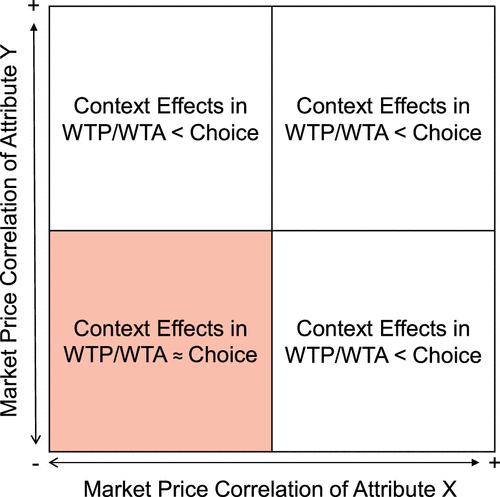
The difference in context effects on preferences between WTP/WTA and choice, as predicted by our theory, is illustrated in Figure 1. The x- and y-axes represent the market price correlations of attributes X and Y. Higher values of X and Y indicate stronger market price correlations for each attribute. The shaded quadrant represents decisions where all attributes have no or weak correlations with market prices. In that region, context effects should similarly influence WTP/WTA and choice because out-of-context comparators do not provide information that reduces context effects. The unshaded quadrants represent decisions where attributes X, Y, or both attributes highly correlate with market prices. In unshaded quadrants, decision context effects should be weaker on WTP/WTA than choice because out-of-context comparators provide information that reduces context effects.
Summary of Experiments
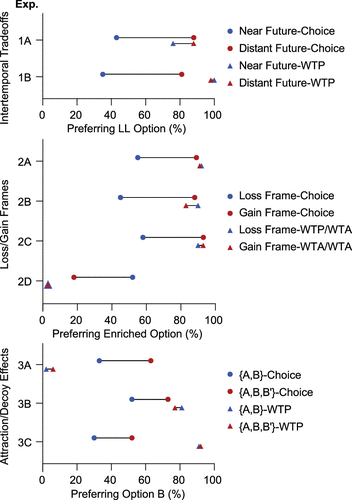
In the first half of our experiments, we compare the influence of three classic context effects on preferences elicited in choice and WTP/WTA: preference reversals in intertemporal tradeoffs (Experiments 1A and 1B), loss versus gain framing effects (Experiments 2A–2D), and the attraction effect (Experiments 3A–3C). As shown in Figure 2, we find that context effects consistently have a weaker influence on preferences elicited through WTP/WTA than through choice. This pattern holds across a variety of stimuli, option attributes, incentive-compatible and stated-response designs, and response measures (e.g., continuous scales, binary metrics, and price lists).
In Experiments 4A and 4B, we directly test predictions of our process account (Figure 1) by manipulating attribute-market price correlations of option attributes, which moderates the difference in context effects on preferences between choice and WTP/WTA. SOM B1 includes a manipulation check verifying market-price correlations for the attributes of all stimuli used in our experiments. Experiment 5 tests predictions of our process account against those made by alternative explanations of the effect.
In total, we report 22 studies in the paper and appendices. All studies were approved by the Institutional Review Boards at Boston University or the University of Toronto for human subjects research.
Open Science Practices
Experiments 2C, 2D, 3A, 3C, and 4B were preregistered. All preregistrations, stimuli, and data are available at https://osf.io/y468w/?view_only=fb5a025640b742de8b01248084671351.
Experiments 1A and 1B: Intertemporal Tradeoffs
Experiments 1A and 1B used an intertemporal tradeoff paradigm to test whether decision contexts are less likely to influence preferences elicited with WTP/WTA than choice. People discount the value of future rewards more steeply when rewards are realized in the near versus distant future (Hoch and Loewenstein 1991, Loewenstein and Prelec 1992, Soman et al. 2005). This time discounting leads people to prefer smaller/sooner rewards in near-future contexts and larger/later rewards when rewards are temporally distant. Ainslie and Haendel (1983), for instance, compared choices between (1.X) $50 realized today or (1.Y) $100 realized in six months with choices between (2.X) $50 realized in three months or (2.Y) $100 realized in nine months. Normative theories assume that people should prefer the same option in both contexts (i.e., always preferring option X or Y). Many people who chose option 1.X in the temporally proximal decision context, however, chose option 2.Y in the temporally distant decision context. We compared preferences for smaller/sooner (SS) and larger/later (LL) options across near-future and distant-future contexts. We predicted that temporal context would have a weaker influence on preferences elicited with WTP than choice.
Experiment 1A: Baked Goods
In Experiment 1A, we compared the order of preferences between two macarons delivered earlier (SS) and three macarons delivered later (LL). We manipulated decision context by comparing preferences in a near-future condition (SS now versus LL in 1 week) and a distant-future condition (SS in 51 weeks versus LL in 52 weeks). The option attributes were quantity (high market price correlation) and delivery speed (low market price correlation).
Method
Participants.
We requested 400 U.S. residents from Amazon Mechanical Turk; 400 participants completed the experiment (54% female; Mage = 37.94 years, SD = 11.99). We determined sample sizes from studies in prior literature or from pilot studies; for an example, see this footnote.2
Design and Procedure.
The experiment used a 2 (preference elicitation: choice, WTP) × 2 (decision context: near future, distant future) between-subjects design. Half of the participants chose between the SS and LL options. Half reported their WTP for both the SS and LL options by entering a number in a text box.
Results
We first converted WTP to rank orderings. The option for which participants were willing to pay more was recoded as their preferred option (i.e., SS or LL). Ties in WTPs were classified as indifferences and excluded prior to analyses (as in Lichtenstein and Slovic 1971, 1973; Tversky et al. 1990; O’Donnell and Evers 2019; Woolley and Liu 2021), resulting in a final sample of 341 participants.
We then examined preferences (DV: SS = 0, LL = 1) in a linear probability model with preference elicitation (choice = 0, WTP = 1), decision context (near-future = 0, distant-future = 1), and their interaction as independent variables. The analysis revealed significant effects of preference elicitation (b = 0.33, SE = 0.06, t = 5.20, p < 0.001) and context (b = 0.46, SE = 0.06, t = 7.73, p < 0.001). Most important, it revealed the predicted significant preference elicitation × context interaction (b = −0.34, SE = 0.09, t = 3.67, p < 0.001), suggesting that temporal distance was less likely to influence preferences elicited with WTP than choice. As illustrated by Figure 2, when preferences were elicited with choice, participants were significantly more likely to prefer the LL option in the distant-future context (88%) than the near-future context (43%; t = 7.73, p < 0.001). When preferences were elicited with WTP, there was a marginal difference in preferences between the distant-future context (88%) and near-future context (76%; F1, 337 = 2.89, p = 0.09).3 For completeness, we compared preferences within decision contexts. In the near-future context, preferences for the LL option were higher in WTP than choice conditions (t = 5.20, p < 0.001). In the distance future context, preferences were similar in the WTP and choice conditions (F1, 337 < 0.01, p = 0.93).
Experiment 1B: Home-Cleaning Services
One alternative explanation of the effect is the different exclusion criteria for indifferent participants in the WTP condition. Following precedent (see, e.g., Lichtenstein and Slovic 1971, 1973; O’Donnell and Evers 2019), we excluded cases in WTP where preferences were tied (i.e., equal WTP for both options). However, indifference was not a response option available in choice conditions. We addressed this by adding an indifference response option in the choice elicitation procedure for Experiment 1B (SS, LL, indifference). In Experiment 1B, we compared the order of preferences for home-cleaning services, which (SS) performed three services but were available sooner and which performed (LL) six services but were available later. In the near-future context, the SS option was available tomorrow and the LL option was available in four weeks. In the distant-future context, the SS and LL options were available in 12 and 16 weeks, respectively. The option attributes were quantity of services (high market price correlation) and earliest availability (low market price correlation).
Method
Participants.
We recruited 200 residents of the United Kingdom from Prolific; 200 participants completed the experiment (74% female; Mage = 35.24 years, SD = 12.26).
Design and Procedure.
We randomly assigned participants to one of four conditions in a 2 (preference elicitation: choice, WTP) × 2 (decision context: near future, distant future) between-subjects design. All participants saw two home-cleaning service options (i.e., an SS option and an LL option) in a near-future or distant-future context. Half of the participants chose between the SS, LL, and indifference options. The other half of the participants reported their WTP for each option by entering a number in a text box; ties were classified as indifference. We report a direct replication of Experiment 1B without an indifference option in SOM A2 with similar results.
Results
We first excluded indifferent participants (9 in the choice and 5 in WTP conditions), resulting in a final sample of 186 participants. A linear probability model (DV: SS = 0, LL = 1) with preference elicitation (choice = 0, WTP = 1), context (near future = 0, distant future = 1), and their interaction revealed significant effects of preference elicitation (b = 0.65, SE = 0.07, t = 9.95, p < 0.001) and context (b = 0.46, SE = 0.07, t = 6.92, p < 0.001). Moreover, it yielded the predicted significant preference elicitation × context interaction (b = −0.48, SE = 0.09, t = 5.21, p < 0.001), suggesting that temporal distance was less likely to influence preferences elicited with WTP than choice. In choice, participants were significantly more likely to prefer the LL option in the distant-future context (81%) than in the near-future context (35%, t = 6.92, p < 0.001). In WTP, participants preferred the LL option in near- (100%) and distant-future contexts (98%; F1, 182 = 0.11, p = 0.74). We also compared preferences within decision contexts. In the near-future context, participants were more likely to prefer the LL option in the WTP than in the choice condition (t = 9.95, p < 0.001). In the distant-future context, participants were more likely to prefer the LL option in the WTP than in the choice condition (F1, 182 = 6.76, p = 0.01).
Discussion
In Experiments 1A and 1B, temporal contexts had a weaker effect on preferences elicited through WTP than choice. When preferences were elicited with choice, there were preference reversals. More participants preferred the smaller/sooner options in near-future contexts and the larger/later options in distant-future contexts. By contrast, when preferences were elicited with WTP, most participants preferred the larger/later options in the near- and distant-future contexts. These results suggest that context effects are weaker when stated preferences are elicited with WTP than with choice, even when choice includes an indifference option.
Experiments 2A–2D: Loss vs. Gain Framing
People often consider decisions through the lens of gain or loss frames; they sometimes decide which option to acquire and sometimes decide which option to forfeit. Normative theories assume that if a person prefers to acquire option X rather than option Y, they should prefer to keep option X and forfeit option Y. However, people exhibit preference reversals in the options they prefer to gain and lose (Shafir 1993, Wedell 1997, Dhar and Wertenbroch 2000, Chernev 2009, Sokolova and Krishna 2016, Chen and Proctor 2017, Reijnen et al. 2019). For example, Shafir (1993) suggested that in gain frames, people tend to prefer enriched options—options with extreme positive and negative features. In loss frames, people tend to prefer impoverished options—options with moderate positive and negative features. In Experiments 2A–2D, we compared the influence of gain and loss frames on preferences for impoverished and enriched options when preferences were elicited with WTP or WTA versus choice. Participants chose one of two options to acquire/forfeit or reported their WTP to buy/WTA to sell both options. We predicted that gain and loss frames would have a weaker influence on preferences elicited with WTP/WTA than choice.
Experiment 2A: Lotteries
In Experiment 2A, we tested our predictions with enriched and impoverished lotteries developed by Shafir (1993, problem 4). The option attributes were “payout” (high market price correlation) and “odds” (low market price correlation).
Method
Participants.
Two-hundred fifty-four undergraduate business majors from a private university in the United States completed the experiment.
Procedure.
Participants considered gambles in the choice paradigm used by Shafir (1993, problem 4). We added two conditions in which participants expressed their preferences by reporting their WTP (acquisition) or WTA (forfeiture) for each gamble.
Lottery I (impoverished): “You have a 50% chance to win $50, otherwise nothing.”
Lottery E (enriched): “You have an 80% chance to win $150 and a 20% chance to lose $10.”
In the acquisition context, half of the participants chose for which lottery they preferred to receive a ticket. The other half stated their WTP for a ticket to each lottery. In the forfeiture context, participants imagined owning tickets to the two lotteries. Then, half chose which ticket they would give up. The other half stated their WTA for each lottery ticket by entering a number in a text box.
Results
We classified cases where participants indicated a higher WTP/WTA for lottery I than for lottery E as a preference for lottery I. Ties in WTPs/WTAs were classified as indifferences and excluded from additional analyses, resulting in a final sample of 252 participants.
A linear probability model (DV: lottery I = 0, lottery E = 1) with preference elicitation (choice = 0, WTP/WTA = 1), decision context (forfeiture = 0, acquisition = 1), and their interaction revealed significant effects of preference elicitation (b = 0.37, SE = 0.06, t = 5.78, p < 0.001) and decision context (b = 0.34, SE = 0.06, t = 5.38, p < 0.001). Moreover, it revealed the predicted significant interaction between preference elicitation and context (b = −0.36, SE = 0.09, t = 3.95, p < 0.001). When preferences were elicited with choice, replicating Shafir (1993), participants were more likely to prefer the enriched lottery in the acquisition (89%) than in the forfeiture context (55%; t = 5.38, p < 0.001). When preferences were elicited with WTP/WTA, participants exhibited similar preferences for the enriched lottery in the acquisition (91%) and forfeiture contexts (92%; F1, 248 = 0.04, p = 0.84). We also compared preferences within decision contexts. In forfeiture, preferences for lottery E were greater in WTA than choice (t = 5.78, p < 0.001). In acquisition, preferences were similar in WTP and choice (F1, 248 = 0.06, p = 0.80).
Experiment 2B: Binary Measure of WTP/WTA
One alternative explanation of the effect is that decision context influences continuous measures of preferences less than binary measures of preferences (see, e.g., Fischer and Hawkins 1993). Another alternative explanation is that decision context influences relative ratings more than separate ratings (Nowlis and Simonson 1997). We tested these alternative accounts against our theory in Experiment 2B with binary and relative measures of both choice and WTP/WTA. In WTP/WTA conditions, participants indicated for which of two lotteries they would be willing to pay more or charge a higher price.
Method
Participants.
We requested 200 U.S. residents from Amazon Mechanical Turk; 204 participants (Mage = 37.62 years, SD = 10.08; 38% female) completed the experiment.
Design and Procedure.
We randomly assigned participants to one of four conditions in a 2 (preference elicitation: choice, WTP/WTA) × 2 (decision context: acquisition, forfeiture) between-subjects design. We used the same two lotteries as in Experiment 2A.
In the acquisition context, participants chose one of the two lottery tickets or reported which lottery ticket they would pay more to buy (i.e., WTP). In the forfeiture context, participants first imagined that they owned tickets to play the two lotteries. They then chose one ticket to give up or which lottery ticket they would charge more to sell (i.e., WTA).
Results
We examined lottery preferences (DV: lottery I = 0, lottery E = 1) in a linear probability model, with preference elicitation (choice = 0, WTP/WTA = 1), decision context (forfeiture = 0, acquisition = 1), and their interaction as independent variables. The analysis revealed significant effects of preference elicitation (b = 0.45, SE = 0.08, t = 5.96, p < 0.001) and decision context (b = 0.43, SE = 0.08, t = 5.65, p < 0.001), which were qualified by the predicted significant preference elicitation × context interaction (b = −0.51, SE = 0.11, t = 4.75, p < 0.001). As in Experiment 2A, participants in the choice conditions were significantly more likely to prefer the enriched lottery in the acquisition context (88%) than in the forfeiture context (45%; t = 5.65, p < 0.001). In the WTP/WTA conditions, there was no difference in their preference for the enriched lottery between acquisition (83%) and forfeiture contexts (90%; F1, 200 = 1.05, p = 0.31). Within the forfeiture context, participants were thus significantly more likely to prefer the enriched lottery in WTA than in choice (t = 5.96, p < 0.001). Within the acquisition context, there was no difference in preferences between the WTP and choice conditions (F1, 200 = 0.54, p = 0.46).
Experiment 2C: Incentive-Compatible Lotteries
Experiment 2C conceptually replicated Experiment 2A in an incentive-compatible design.
Method
Participants.
We requested 600 U.S. residents from Prolific; 604 participants (Mage = 40.27 years; 56% female) completed the experiment.
Procedure.
The experiment used a 2 (preference elicitation: choice, WTP/WTA) × 2 (decision context: acquisition, forfeiture) between-subjects design. All participants were first endowed with $1.10. They then considered two real lotteries.
Lottery I (impoverished): “You have a 50% chance to win $0.50, otherwise nothing.”
Lottery E (enriched): “You have an 80% chance to win $1.50 and a 20% chance to lose $0.10.”
In the choice conditions, participants in the acquisition context chose for which of the two lotteries they preferred a ticket. Participants in the forfeiture context first received one ticket to play each lottery and then chose which ticket to give up.
In the WTP/WTA conditions, participants in the acquisition context indicated their WTP for a ticket to each lottery by entering a number between $0.00 and $1.00 in a text box. We told participants that they would play the lottery for which they stated they had a higher WTP. In the forfeiture context, participants first received a ticket to play each lottery and then indicated their minimum WTA for selling each lottery ticket. Participants would play the lottery for which they stated a higher WTA. If participants stated the same WTPs/WTAs for both lotteries, then they were randomly assigned one lottery to play. Outcomes were realized at the end of the experiment. Note that in SOM A3, we conceptually replicate Experiment 2C with a Becker-DeGroot-Marschak bidding procedure in WTP/WTA conditions.
Results
We excluded participants who were indifferent between the two lotteries, resulting in a final sample of 564 participants. A linear probability model (DV: lottery I = 0, lottery E = 1) with preference elicitation (choice = 0, WTP/WTA = 1), decision context (forfeiture = 0, acquisition = 1), and their interaction revealed significant effects of the preference elicitation (b = 0.32, SE = 0.04, t = 7.82, p < 0.001) and context (b = 0.35, SE = 0.04, t = 8.97, p < 0.001). More importantly, it revealed the predicted significant interaction between preference elicitation and context (b = −0.32, SE = 0.06, t = 5.59, p < 0.001). When preferences were elicited with choice, participants were significantly more likely to prefer lottery E over lottery I in the acquisition (93%) than forfeiture context (58%; t = 8.97, p < 0.001). When preferences were elicited with WTP/WTA, there was no difference in their preference for lottery E between acquisition (93%) and forfeiture contexts (90%; F1, 560 = 0.52, p = 0.47). We also compared preferences within decision contexts. In forfeiture, preferences for lottery E were greater in WTA than choice (t = 7.82, p < 0.001). In acquisition, preferences were similar in WTP and choice (F1, 560 < 0.01, p = 0.94).
Experiment 2D: Cereal Bars
Experiment 2D examined the influence of gain and loss frames on preferences for impoverished and enriched cereal bars (adapted from Reijnen et al. 2019). The enriched option was a 40-g cereal bar with high levels of fat and sugars but low levels of saturates and salts. The impoverished option was an 80-g cereal bar with medium levels of fat, sugar, saturates, and salts (hereafter, bar E and bar I; Figure 3). To further test the generalizability of the effect across different response formats, we used price lists to elicit preferences in WTP/WTA conditions.
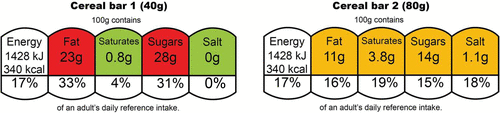
Notes. Cereal bar 1 is the enriched option (E). Cereal bar 2 is the impoverished option (I). Cereal bar 1 contains more sugar/fat but less saturates/salt per gram than Cereal bar 2, whose attribute values are less extreme (Reijnen et al. 2019).
Method
Participants.
We requested 200 residents of the United Kingdom from Prolific; 200 participants (Mage = 42.90 years; 56% female) completed the experiment.
Procedure.
The experiment used a (preference elicitation: choice, WTP/WTA) × 2 (decision context: acquisition, forfeiture) between-subjects design. All participants saw abbreviated nutrition labels for two cereal bars (Figure 3), adapted from Reijnen et al. (2019).
In the acquisition context, participants chose the cereal bar they preferred or reported their WTP for each cereal bar. In the forfeiture context, participants imagined that they owned both cereal bars. They then chose which bar to give up or reported their WTA for each cereal bar. We elicited WTP/WTA by having participants choose between buy and do not buy options (WTP) or sell and do not sell options (WTA) for each cereal bar at different prices. Prices varied from £0.20 to £2 in £0.20 increments.
Results
We excluded 34 indifferent participants, resulting in a final sample of 166 participants. We examined preferences in a linear probability model (bar I = 0, bar E = 1) with preference elicitation (choice = 0, WTP/WTA = 1), decision context (forfeiture = 0, acquisition = 1), and their interaction as predictors. The analysis revealed significant effects of preference elicitation (b = −0.49, SE = 0.08, t = 6.14, p < 0.001) and decision context (b = −0.34, SE = 0.07, t = 4.63, p < 0.001). More importantly, it revealed the predicted significant preference elicitation × context interaction (b = 0.35, SE = 0.12, t = 2.96, p < 0.01).
Replicating Reijnen et al. (2019), when preferences were elicited with choice, participants were significantly less likely to prefer bar E in the acquisition context (18%) than in the forfeiture context (52%; t = 4.63, p < 0.001). When preferences were elicited with WTP/WTA, however, participants were as likely to prefer bar E in the acquisition (3%) as in the forfeiture context (3%; F1, 162 < 0.01, p = 0.95). We also compared preferences within decision contexts. In the forfeiture context, participants were more likely to prefer bar E in choice than WTA (t = 6.14, p < 0.001). In the acquisition context, participants were marginally more likely to prefer bar E in choice than WTP (F1, 162 = 3.00, p = 0.08).
Discussion
In Experiments 2A–2D, gain and loss frames influenced preferences elicited with choices, replicating earlier work by Reijnen et al. (2019) and by Shafir (1993). By contrast, gain and loss frames did not influence preferences elicited through WTP/WTA, whether those elicitations were stated preferences or incentive compatible, and whether they were measured with continuous or binary metrics or price lists (see also SOM A3). The generalization of this difference across binary and continuous response formats suggests that the different influence of decision context on preferences elicited with choice and WTP/WTA is due to the monetization of preferences in the latter method, not to differences in format or number of scales used to report choice and WTP/WTA (see, e.g., Fischer and Hawkins 1993, Nowlis and Simonson 1997).
Experiments 3A–3C: Attraction Effect
Preferences between two options, such as X and Y, should be the same whether they are the only two options available {X, Y} or if additional options are available {X, X’, Y}. Adding additional options to a consideration set, however, can change which of the original two options people prefer (Huber et al. 1982, Evangelidis et al. 2018, Reich et al. 2021). Huber et al. (1982) showed that adding a relatively inferior option (a “decoy”) to an existing consideration set increased preferences for the most similar superior option. A decoy effect occurs when people are more likely to choose option X (target) over option Y (competitor) when their choice is made from the set {X, X’, Y}, where option X’ is relatively inferior compared with option X than when their choice is made from the core set of two options {X, Y}4. In Experiments 3A–3C, we tested our predictions across two- and three-option sets with or without a decoy (Table 1). We predicted that a decoy option would have a weaker effect on preferences elicited with WTP than choice.
|

Table 1. Stimuli in Experiments 3A and 3B
| Attributes | Option A (competitor) | Option B (target) | Option B’ (decoy) |
|---|---|---|---|
| Experiment 3A: Restaurants | |||
| Star rating (0–5)HIGH | 5 | 4 | 1 |
| Driving distance (min)LOW | 25 | 15 | 15 |
| Experiment 3B: Apartments | |||
| Size (Sq. ft.)HIGH | 475 | 650 | 700 |
| Walk to work (min)LOW | 5 | 15 | 35 |
| Experiment 3C: Restaurants | |||
| Star rating (0–5)HIGH | 4 | 5 | 5 |
| Driving distance (min)LOW | 5 | 25 | 45 |
Note. HIGH/LOW = high/low market price correlation.
Experiment 3A: Restaurants
In Experiment 3A, consideration sets consisted of two or three restaurants (adapted from Huber et al. 1982, Yang and Lynn 2014). Option attributes were “star rating” (high market price correlation) and “driving distance” (low market price correlation; Table 1).
Method
Participants.
We requested 400 residents of the United Kingdom from Prolific; 400 participants (Mage = 42.25 years, SD = 13.31; 62% female) completed the experiment.
Procedure.
We used a 2 (preference elicitation: choice, WTP) × 2 (decision context: {A, B}, {A, B, B’}) between-subjects design. Half of the participants chose which restaurant they preferred for dinner. Half indicated their WTP for a dinner for each restaurant by entering a number in a text box.
Results
Using the classification and exclusion criteria in Experiment 3A, 29 ties in WTP (between A and B) were classified as indifferences and excluded prior to analysis, resulting in a final sample of 371. We analyzed restaurant preferences (restaurant A (competitor) = 0, restaurant B (target) = 1) with a linear probability model with preference elicitation (choice = 0, WTP = 1), decision context (set {A, B} = 0, set {A, B, B’} = 1), and their interaction as independent variables. This analysis revealed significant effects of preference elicitation (b = −0.31, SE = 0.06, t = 5.45, p < 0.001) and decision context (b = 0.30, SE = 0.05, t = 5.63, p < 0.001). Moreover, the predicted preference elicitation × context interaction was significant (b = −0.27, SE = 0.08, t = 3.42, p < 0.001). In choice, participants were more likely to prefer restaurant B in the context with a decoy {A, B, B’} (63%) than in the context without a decoy {A, B} (33%; t = 5.63, p < 0.001). In WTP, preferences for restaurant B did not significantly differ between the context with a decoy {A, B, B’} (6%) and without a decoy {A, B} (2%; F1, 367 = 0.30, p = 0.58; Figure 2). We also compared preferences within decision contexts. Both with {A, B, B’} and without a decoy {A, B}, preferences for restaurant B were lower in WTP than choice (ps < 0.001).
Experiment 3B: Rental Apartments
In Experiment 3B, consideration sets consisted of two or three apartments (adapted from Huber et al. 1982, Reich et al. 2021). Option attributes were “square footage” (high market price correlation) and “walking distance to work” (low market price correlation; Table 1). We used a continuous scale to elicit choice (O’Donnell and Evers 2019) to test the generalizability of the effect across different response formats.
Method
Participants.
We requested 400 U.S. residents from Amazon Mechanical Turk; 401 participants (Mage = 39.77 years, SD = 12.62; 51% female) completed the experiment.
Design and Procedure.
We randomly assigned participants to one of four conditions in a 2 (preference elicitation: choicecontinuous, WTP) × 2 (decision context: {A, B}, {A, B, B’}) between-subjects design. All participants imagined that they were moving alone into a new apartment. They were shown a set of two or three options (Figure 2).
We manipulated the method used to elicit preferences. We adapted a continuous choice scale from O’Donnell and Evers (2019). Half of the participants indicated how likely they would be to choose each apartment (“Imagine that you are choosing between these two (or three) apartments, how likely would you be to choose each apartment?”) on a nine-point scale ranging from 1 (extremely unlikely) to 9 (extremely likely). The other half of the participants indicated their WTP for each apartment (“What is the highest rent you would be willing to pay for each apartment?”) by entering a number in a text box. Ties in choice likelihood and WTP were classified as indifferences.
Results
We excluded participants who were indifferent between apartments A and B (14 and 26 ties in the continuous choice and WTP conditions, respectively) prior to analysis, resulting in a final sample of 361 participants. Next, we analyzed apartment preferences (DV: apartment A (competitor) = 0, apartment B (target) = 1) in a linear probability model with preference elicitation (continuous choice = 0, WTP = 1), decision context (set {A, B} = 0, set {A, B, B’} = 1), and their interaction as independent variables. This analysis revealed significant effects of preference elicitation (b = 0.29, SE = 0.07, t = 4.43, p < 0.001) and decision context (b = 0.22, SE = 0.06, t = 3.38, p < 0.001). Moreover, it revealed the predicted preference elicitation × decision context interaction (b = −0.25, SE = 0.09, t = 2.70, p < 0.01). Consistent with our previous findings, in continuous choice, participants were significantly more likely to prefer apartment B in the decoy context (73%) than in the no-decoy context (52%; t = 3.38, p < 0.001). By contrast, in WTP, there was no significant difference in apartment preference between the decoy (77%) and no-decoy (81%) contexts (F1, 357 = 0.26, p = 0.61).
We compared preferences elicited through continuous choice and WTP within decision contexts. Within the no-decoy context {A, B}, participants were significantly more likely to prefer apartment B in the WTP condition than in the continuous choice condition (t = 4.43, p < 0.001). However, within the decoy context {A, B, B’}, there was no difference in apartment preference between the continuous choice and WTP conditions (F1, 357 = 0.31, p = 0.58).
Experiment 3C: Restaurants
In Experiment 3C, we conceptually replicated Experiment 3A with different stimulus values and used price lists to elicit WTP.
Method
Participants.
We requested 400 residents of the United Kingdom from Prolific; 401 participants (Mage = 43.17 years, SD = 13.29; 59% female) completed the experiment.
Procedure.
We used a 2 (preference elicitation: choice, WTP) × 2 (decision context: {A, B}, {A, B, B’}) between-subjects design. Half of the participants chose which restaurant they preferred for dinner. Half indicated their WTP for a dinner at each restaurant. We elicited WTP via price lists, whereby participants made a series of choices between being willing to pay and not willing to pay at different prices for a dinner at each restaurant. The price varied from £10 to £100 in £10 increments.
Results
Using the classification and exclusion criteria in Experiment 3A, 49 ties in WTP (between A and B) were classified as indifferences and excluded prior to analysis, resulting in a final sample of 352.
We analyzed restaurant preferences (restaurant A (competitor) = 0, restaurant B (target) = 1), with a linear probability model with preference elicitation (choice = 0, WTP = 1), decision context (set {A, B} = 0, set {A, B, B’} = 1), and their interaction as independent variables. This analysis revealed significant effects of preference elicitation (b = 0.61, SE = 0.06, t = 9.84, p < 0.001) and decision context (b = 0.23, SE = 0.06, t = 3.96, p < 0.001). Moreover, the predicted preference elicitation × decision context interaction was significant (b = −0.22, SE = 0.09, t = −2.46, p = 0.01). In choice, participants were more likely to prefer restaurant B in the decoy {A, B, B’} context (52%) than in the no-decoy {A, B} context (30%; t = 3.96, p < 0.001). By contrast, in WTP, preferences for restaurant B did not significantly differ between the decoy {A, B, B’} (92%) and no-decoy {A, B} contexts (91%; F1, 348 = 0.03, p = 0.87).
We also compared preferences within contexts. In both the decoy {A, B, B’} and no-decoy {A, B} contexts, preferences for apartment B were higher in WTP than choice conditions (F1, 348 = 39.71, p < 0.001 and t = 9.84, p < 0.001, respectively).
In SOM A4, we replicated Experiment 3C, with half of the participants choosing which restaurant they preferred for dinner and half indicating their WTP for a dinner at each restaurant by entering a number in a text box.
Discussion
Whether choice was elicited with a binary or continuous scale, and whether WTP was elicited with open-ended responses or price lists, the presence of a decoy option had a weaker effect on preferences elicited with WTP than choice (Experiments 3A–3C, SOM A4). When preferences were elicited with choice, the preferences were influenced by adding a decoy option, as shown in earlier work (Huber et al. 1982). By contrast, when preferences were elicited with WTP, they were not influenced by adding a decoy option.
Taken together, the results of Experiments 1A–3C and SOM A1–A4 show that context effects have a weaker influence on preferences elicited through WTP/WTA than choice. Replicating earlier work, preferences elicited with choice were influenced by contexts that included time (near or distant future), frame (loss or gain), and consideration set (with and without a decoy). By contrast, effects of decision contexts on preferences elicited with WTP/WTA were weaker or nonexistent. Experiments 1A–3C test the robustness of our findings across different response formats, including binary and price list measures of WTP/WTA, and continuous measures of choice. Experiments 2B, 2D, 3B, and 3C also rule out alternative accounts such as strategy compatibility (Fischer and Hawkins 1993) and attribute-task compatibility (Nowlis and Simonson 1997). The strategy compatibility account proposes that the difference in preferences between choice and WTP is due to disparities in scale formats (i.e., binary versus continuous scales). The attribute-task compatibility account proposes that the difference in preferences between choice and WTP occurs because choice elicitation is a comparative measure of options, whereas WTP elicitation uses separate measures for options. Both accounts predict that a) there should be no difference in context effects on preferences between the choice and WTP conditions in Experiments 2B, 2D, and 3C because preferences were elicited using binary measures in both choice and WTP, and b) there should be no difference in context effects on preferences between the choice and WTP conditions in Experiment 3B because preferences were elicited using continuous measures in both choice and WTP. Contrary to these predictions, context consistently had a greater effect on choice than WTP, regardless of the scale format.
We also compared our results with predictions of the theory that preferences weigh utilitarian attributes more in WTP/WTA and hedonic attributes more in choice because consumers are more likely to deliberate when estimating WTP/WTA than when choosing (O’Donnell and Evers 2019). In a posttest (n = 157), undergraduate business majors in the United States rated each attribute of the options in Experiments 1A (macarons), 2A (lotteries), and 3B (apartments) on 11-point scales with endpoints (−5) totally utilitarian; not at all hedonic and (5) totally hedonic; and not at all utilitarian (as in O’Donnell and Evers 2019; see SOM B2). We found that participants rated the number of macarons in a package to be a more hedonic attribute (M = 1.04, SD = 2.99) than its delivery speed (M = −0.39, SD = 2.80; t = 3.77, p < 0.001) and an apartment’s size to be a more hedonic attribute (M = 0.37, SD = 2.65) than its distance from work (M = −0.62, SD = 2.72; t = 2.96, p < 0.01). There was no difference in utilitarian-hedonic ratings between the payouts and probabilities of lotteries (ts < 1.52, ps > 0.13). Preferences exhibited by participants in Experiments 1A and 3B directly contradict the hedonic/utilitarian attribute account. Furthermore, the hedonic/utilitarian attribute account does not make a clear prediction about relative preferences for lotteries in Experiment 2A.
Experiments 4A and 4B: Manipulating Market Price Correlation
Our theory suggests that context effects have a weaker effect on preferences elicited with WTP/WTA than choice because monetary preference elicitations evoke comparison between options and the market price of similar out-of-context alternatives. Our theory also predicts that if no attribute of options is highly correlated with market prices, then this comparison with out-of-context alternatives should not provide information that would dilute context effects. When no attributes are highly correlated with market prices, context effects should similarly influence preferences elicited with WTP/WTA and choice. We tested this predicted boundary condition in Experiments 4A and 4B. We manipulated the decision context through the presence or absence of a decoy option and the preference elicitation procedure (i.e., WTP versus choice). Most important, we also manipulated the correlation of option attributes with market prices. In one condition, one of two attributes was highly correlated with market prices. In the other condition, neither attribute was highly correlated with market prices. We predicted that when at least one attribute was highly correlated with market prices, decision contexts would have a weaker influence on preferences elicited with WTP than choice. By contrast, when no attribute was highly correlated with market prices, we predicted that decision contexts would similarly influence preferences elicited with WTP and choice. In Experiment 4A, we used stimulus values from Experiment 3B in the low/high market price correlation conditions and new attributes and different stimulus values in the low/low market price correlation conditions. In Experiment 4B, we used the same numerical values in both conditions and changed the attributes considered (Table 2).
|
Table 2. Stimuli in Experiments 4A and 4B
| Attributes | Option A (competitor) | Option B (target) | Option B’ (decoy) |
|---|---|---|---|
| Low/low market price correlation (Experiments 4A and 4B) | |||
| Distance to supermarket (min)LOW | 20 | 10 | 8 |
| Commute to work (min)LOW | 5 | 15 | 35 |
| Low/high market price correlation (Experiment 4A) | |||
| Size (Sq. ft.)HIGH | 475 | 650 | 700 |
| Commute to Work (Min)LOW | 5 | 15 | 35 |
| Low/high market price correlation (Experiment 4B) | |||
| Last renovation (months)HIGH | 20 | 10 | 8 |
| Commute to work (min)LOW | 5 | 15 | 35 |
Experiment 4A
Method
Participants.
We requested 800 U.S. residents from Prolific; 802 participants (Mage = 39.37 years, SD = 13.85; 53% female) completed the experiment.
Procedure.
The experiment used a 2 (preference elicitation: choice, WTP) × 2 (decision context: {A, B}, {A, B, B’}) × 2 (attribute market price correlation: low/low, low/high) between-subjects design. In the low/low market price correlation condition both apartment attributes were low in market price correlation (i.e., distance to supermarket and commute; Table 2), whereas in the low/high market price correlation condition one of the apartment attributes was low in market price correlation, and the other one was high in market price correlation using the same option attributes and values as in Experiment 3B (i.e., commute and apartment size; Table 2). Half of the participants chose which apartment they would prefer. Half indicated their WTP to rent each apartment by entering a number in a text box.
Results
Fifty-three ties in WTPs for apartments A and B were classified as indifferences and were excluded prior to analysis. Nine participants in the choice condition who chose apartment B’ were excluded, resulting in a final sample of 740 (Mage = 38.95 years, 52% female).
We analyzed apartment preferences for apartment B (apartment A = 0, apartment B = 1), with a linear probability model with preference elicitation (choice = 0, WTP = 1), decision context (set {A, B} = 0, set {A, B, B’} = 1), attribute market price correlation (low/low = 0, low/high = 1), and the interactions between these factors as independent variables. The analysis revealed a significant effect of decision context (b = 0.16, SE = 0.07, t = 2.48, p = 0.01) and an interaction between preference elicitation and attribute market price correlation (b = 0.33, SE = 0.10, t = 3.47, p < 0.001). Most important, there was a significant interaction between preference elicitation, decision context, and attribute market price correlation (b = −0.29, SE = 0.14, t = 2.08, p = 0.038). No other effects were significant (ps > 0.18).
To decompose the observed three-way interaction, we analyzed apartment preferences, with a separate linear probability model with preference elicitation, decision context, and their interaction as independent variables. In the low/high market price correlation conditions, the analysis revealed significant effects of preference elicitation (b = 0.32, SE = 0.06, t = 5.07, p < 0.001) and decision context (b = 0.29, SE = 0.06, t = 4.70, p < 0.001). Consistent with Experiment 3B, there was a significant preference elicitation × decision context interaction in the low/high correlation condition (b = −0.31, SE = 0.09, t = 3.47, p < 0.001), whereby context effects were significantly greater in choice than in WTP. As illustrated by Figure 4 [Low/High rows of panel (a)], in choice, people’s preferences for apartment B were significantly greater in the decoy {A, B, B’} context (79%) than in the no-decoy {A, B} context (51%; t = 4.70, p < 0.001). In WTP, preferences for apartment B were similar in the decoy{A, B, B’} (80%) and no-decoy {A, B} contexts (82%; F1, 374 = 0.10, p = 0.75).
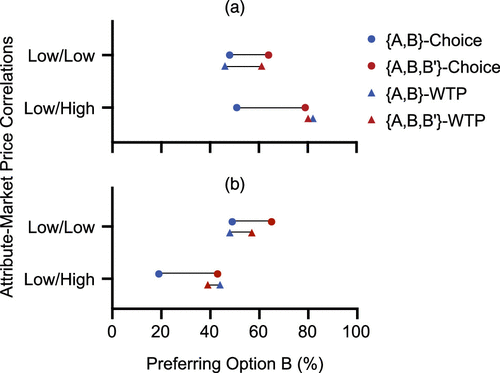
In the low/low market price correlation conditions [Low/Low rows of Figure 4, panel (a)], the analysis revealed a significant effect of decision context (b = 0.16, SE = 0.07, t = 2.32, p = 0.021) but no effect of preference elicitation (b = −0.02, SE = 0.07, t = 0.21, p = 0.83) and no significant preference elicitation × decision context interaction (b = −0.02, SE = 0.11, t = 0.21, p = 0.83). Context effects were found in both preference elicitations conditions. In choice, people’s preferences for apartment B were significantly greater in the decoy {A, B, B’} context (64%) than in the no-decoy {A, B} context (48%; t = 2.32, p = 0.02). In WTP, preferences for apartment B were marginally significantly greater in the decoy {A, B, B’} context (61%) than in the no-decoy {A, B} context (47%; F1, 358 = 3.24, p = 0.07). No preference elicitation × decision context interaction suggested that the context effect on preferences elicited with choice and WTP did not differ.
Experiment 4B
In Experiment 4B, we tested our prediction by manipulating attributes’ market price correlations while using different attributes with the same stimulus values.
Method
Participants.
We requested 1,600 U.S. residents from Prolific; 1,601 participants (Mage = 37.06 years, SD = 12.63; 57% female) completed the experiment.
Procedure.
The experiment used a 2 (preference elicitation: choice, WTP) × 2 (decision context: {A, B}, {A, B, B’}) × 2 (attribute market price correlation: low/low, low/high) between-subjects design. In the low/low market price correlation condition, both apartment attributes and values were the same as in Experiment 4A. In the low/high market price correlation condition, one attribute was low in market price correlation, and the other one was high in market price correlation (i.e., commute and months since last renovation; Table 2), but the numeric values of those attributes were the same as in the low/low market price correlation condition. Half of the participants chose which apartment they would prefer. Half indicated their WTP to rent each apartment by entering a number in a text box.
Results
As preregistered, 142 ties in WTPs for apartments A and B were classified as indifferences and excluded prior to analysis. Seventeen participants in the choice condition who chose apartment B’ were excluded, resulting in a final sample of 1,442 (Mage = 36.79 years, 56% female). We first analyzed apartment preferences for apartment B (apartment A = 0, apartment B = 1) with the same linear probability model as in Experiment 4A. The analysis revealed significant effects of decision context (b = 0.16, SE = 0.05, t = 3.34, p < 0.001), attribute market price correlation (b = −0.30, SE = 0.05, t = 6.21, p < 0.001), and the interaction between preference elicitation and attribute market price correlation (b = 0.26, SE = 0.07, t = 3.66, p < 0.001). Most important, there was a significant interaction between preference elicitation, decision context, and attribute market price correlation (b = −0.22, SE = 0.10, t = 2.19, p = 0.028). No other effects were significant (ps > 0.25).
We then decomposed the observed three-way interaction with a separate linear probability model, with preference elicitation, decision context, and their interaction as independent variables. In the low/high market price correlation condition [Low/High rows, Figure 4, panel (b)], the analysis revealed significant effects of preference elicitation (b = 0.25, SE = 0.05, t = 5.07, p < 0.001) and decision context (b = 0.24, SE = 0.05, t = 5.14, p < 0.001). Moreover, there was a significant preference elicitation × decision context interaction (b = −0.29, SE = 0.07, t = 4.15, p < 0.001), suggesting that the context effect was significantly greater in choice than in WTP. In choice, people’s preferences for apartment B were significantly greater in the decoy {A, B, B’} context (43%) than in the no-decoy {A, B} context (19%; t = 5.14, p < 0.001). In WTP, preferences for apartment B in the decoy {A, B, B’} (39%) and no-decoy {A, B} contexts (44%) did not differ significantly (39%; F1, 718 = 0.94, p = 0.33).
In the low/low market price correlation condition [Low/Low rows, Figure 4, panel (b)], the analysis revealed a significant effect of decision context (b = 0.16, SE = 0.05, t = 3.25, p = 0.001) but no effect of preference elicitation (b = −0.01, SE = 0.05, t = 0.23, p = 0.82). As in Experiment 4A, there was no significant preference elicitation × decision context interaction (b = −0.07, SE = 0.07, t = 0.92, p = 0.36). Context effects were found in both preference elicitations conditions. Preferences for apartment B were significantly greater in the decoy {A, B, B’} context in choice (65%) and in WTP (57%) than in the no-decoy {A, B} context, significantly so in choice (49%; t = 3.25, p = 0.001) and marginally in WTP (48%; F1, 716 = 2.98, p = 0.08). The absence of a preference elicitation × decision context interaction suggests that context effects on preferences elicited with choice and WTP did not differ in the low/low market price correlation condition.
Discussion
As predicted, the correlation between option attributes and market prices determined whether context effects were weaker when preferences were elicited with WTP than choice. When at least one attribute was highly correlated with market prices (i.e., square footage; months since last renovation), adding a decoy option to the consideration set influenced preferences for apartments elicited with choice but not WTP. When no attribute was highly correlated with market prices (i.e., commuting times, distance to the nearest supermarket), adding a decoy similarly influenced preferences for apartments elicited with choice and WTP. To map the entire attribute space illustrated in Figure 1, in an ancillary experiment SOM B3, we also tested the influence of context ({A, B} versus {A, B, B’}) on preferences elicited with WTP and choice when both option attributes were highly correlated with market prices (i.e., apartment size and years since last renovation). Because both attributes should then be compared with external, that is, out-of-context market price information in WTP but not in choice, decision contexts should influence preferences elicited with WTP less than with choice. Indeed, when preferences were elicited with choice, participants were more likely to prefer apartment B in the decoy {A, B, B’} context (68%) than in the no-decoy {A, B} context (41%; p < 0.001). When preferences were elicited with WTP, preferences for apartment B were similar in the decoy {A, B, B’} context (76%) and in the no-decoy {A, B} context (71%; p = 0.44). Taken together, the results of these experiments are consistent with nuanced predictions of our process account and show important boundary conditions that determine when preference elicitations will diverge and converge in their sensitivity to context.
Experiment 5: Market Price Comparisons
In Experiment 5, using an attraction effect paradigm, we tested our theory by directly manipulating the average market price per square foot of apartments. If, as we predict, people are more likely to compare attributes to market prices in WTP than choice, then two key results should emerge. First, and most important, at both higher and lower market prices, adding a decoy option should have a weaker impact on preferences elicited with WTP than choice. Second, absolute WTP for all apartments should be higher in the high market price condition compared with the low market price condition, whereas preferences in choice should not be sensitive to market price information. For example, when apartments are more expensive, if participants were sensitive to market prices in choice, the increased disutility of higher prices might shift preferences toward the cheaper, smaller apartment in the high market price condition (Hanushek and Quigley 1980). However, if participants are not sensitive to market prices in choice, then their preferences for the smaller cheaper apartment should remain similar across high and low market price conditions.
Method
Participants.
We requested 400 residents of the United Kingdom from Prolific; 402 participants completed the experiment (72% female; Mage = 37.67 years, SD = 13.08).
Procedure.
The experiment used a 2 (preference elicitation: choice, WTP) × 2 (decision context: {A, B}, {A, B, B’}) × 2 (market price: $1.50/sq. ft., $3.00/sq. ft.) between-subjects design and stimuli from Experiment 3B (Table 1). Britons imagined moving to an American city alone for a job. They were told that the average monthly rental price for apartments in this American city was either $1.50 or $3.00 per square foot. Half of the participants chose which apartment they would prefer. The other half indicated their WTP to rent each apartment by entering a number in a text box.
Results
Nineteen ties in WTP between A and B were excluded prior to all analyses, and eight participants who chose apartment B’ were excluded. The final sample was 375 participants.
We first analyzed apartment preference orderings (apartment A = 0, apartment B = 1) with a linear probability model. We used three dummy variables to examine the main and interaction effects––one captured the preference elicitation (0 = choice, 1 = WTP), one captured the decision context (0 = {A, B}, 1 = {A, B, B’}), and the other one captured the market price information (0 = $1.50, 1 = $3.00). The model included all interaction terms for preference elicitation, decision context, and market price information. The analysis revealed significant effects of preference elicitation (b = 0.46, SE = 0.08; t = 5.49, p < 0.001) and decision context (b = 0.29, SE = 0.08; t = 3.66, p < 0.001). The interaction of preference elicitation and decision context was significant (b = −0.27, SE = 0.12; t = 2.23, p = 0.03; see Figure 5). No other effects were significant (ps ≥ 0.21).
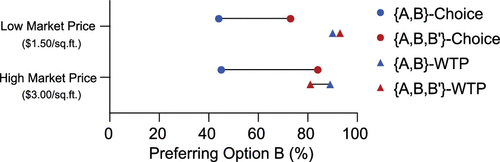
In the low market price condition, when preferences were elicited through choice, participants were more likely to prefer apartment B in the decoy {A, B, B’} context (73%) than in the no-decoy {A, B} context (44%; t = 3.68, p < 0.001). When preferences were elicited through WTP, preferences for apartment B were similar in the decoy {A, B, B’} context (93%) and no-decoy {A, B} context (90%; F1, 181 = 0.10, p = 0.75). We observed a similar pattern of results in the high market price condition. When preferences were elicited through choice, people’s preferences for apartment B were significantly greater in the decoy {A, B, B’} context (84%) than in the no-decoy {A, B} context (45%; t = 4.77, p < 0.001). In WTP, preferences for apartment B were similar in the decoy {A, B, B’} context (81%) and no-decoy {A, B} contexts (89%; F1, 186 = 0.90, p = 0.35).
Most critically, higher market prices did not increase choice shares of the smaller apartment A in the no-decoy {A, B} and decoy {A, B, B’} contexts (p = 0.93 and p = 0.19, respectively; see Figure 5). As predicted, market prices significantly influenced absolute WTP. Participants were willing to pay more for both apartments in the $3.00 condition (WTPA: MLog($x+1) = 3.02, median = $1,425; WTPB: MLog($x+1) = 3.13, median = $1,725) than in the $1.50 condition (WTPA: MLog($x+1) = 2.88, median = $712.50; WTPB: MLog($x+1) = 2.97, median = $950; t = 3.10, p < 0.01, d = 0.46 and t = 3.58, p < 0.001, d = 0.53).
Discussion
As in the previous studies, a decoy influenced preferences elicited with choice but not WTP. Most important, the results suggest that participants were more sensitive to market prices when preferences were elicited with WTP than when preferences were elicited with choice. If participants compared option attributes to out-of-context market prices in choice, then they should have chosen the smaller apartment more frequently when prices were higher because of price elasticity of demand (see, e.g., Hanushek and Quigley 1980). Market prices affected absolute WTP for both larger and smaller apartments, whereas doubling market prices did not affect their relative choice share. Participants in Experiment 5 were equally likely to choose the larger apartment across both market price conditions.
One alternative explanation of these results is that participants were not attentive to market price information in choice. They may have approached choices more intuitively than WTP decisions (O’Donnell and Evers 2019). Although this could account for the lack of a market price effect in choice, our study reported in SOM B2 suggests that this explanation does not parsimoniously account for the results of our other studies. We encourage future research to explore this interesting phenomenon further.
General Discussion
Important preference reversals occur across decision contexts. Marketers, firms, and policymakers alike have begun to use these context effects to influence consumer preferences and improve consumer welfare in a host of domains (for reviews, see Amir and Lobel 2008, Johnson et al. 2012, and White et al. 2019). Predicting under what conditions context effects will work and successfully translate into practice, however, has remained challenging for the field (Milkman et al. 2021, DellaVigna and Linos 2022, Mazar and Soman 2022). Indeed, some have argued that the effects of decision context and other nudges on individual choice are so weak that behavioral science should redirect its focus from interventions influencing individuals (e.g., increasing retirement savings by pushing investment decisions into the distant rather than the near future) toward a focus on structural reforms achieved by overhauling systems (e.g., increasing retirement savings by reverting to defined pension plans; see Chater and Loewenstein 2023).
Our findings help predict when context effects affect preferences (Figure 1). Context effects, including the timing of intertemporal choices, framing of a decision as a loss or gain, and the presence or absence of a decoy option, were weaker when preferences were elicited with WTP/WTA than with choice (Figure 2). This difference between WTP/WTA and choice was generalized across participant samples drawn from the United States and the United Kingdom and across product categories, including home services, baked goods, snacks, gambles, apartment rentals, and restaurants. It was generalized across stated preferences elicited with binary choices, continuous measurements, and price lists as well as incentive-compatible measurements.
Our findings have direct applications to research and practice. Our theory and findings help academics predict when context effects are more and less likely to replicate, an ongoing concern in the decision-making literature (Frederick et al. 2014, Huber et al. 2014, Yang and Lynn 2014, Bird et al. 2021). Our theory helps practitioners such as marketers and policymakers understand when context effects will influence preferences (Amir and Lobel 2008, Johnson et al. 2012, White et al. 2019, Mazar and Soman 2022). Realtors are unlikely to benefit from including a decoy option in the homes they show to home buyers who tend to bid on homes, for instance, but may benefit in rental markets where renters tend to choose among fixed price options.
We propose that context effects are weaker when preferences are elicited in WTP/WTA than in choice because WTP/WTA is more likely to evoke comparison between the attributes of options and the value of similar out-of-context comparison standards (e.g., market prices for similar goods), which weakens decision context effects. We find evidence of this comparison process in two ways. First, as predicted (and illustrated in Figure 1), modulating the correlation of option attributes with market prices moderated the difference in the effects of decision contexts on preferences between choice and WTP/WTA. If one or more attributes were highly correlated with market prices, then participants were more likely to exhibit context effects in choice than in WTP (Experiments 1A–5, SOM A1–A4, B3). If no attributes were highly correlated with market prices, then participants were as likely to exhibit context effects in choice and WTP (Experiments 4A and 4B). Furthermore, whereas doubling market prices influenced how much participants were willing to pay for options (Experiment 5), it did not affect preferences for the smaller apartment when preferences were elicited with choice, contrary to what would be predicted by the price elasticity of demand. Taken together, the findings suggest that the difference in context effects between preference elicitation procedures arises from their propensity to evoke comparison with out-of-context comparators.
Our results rule out several alternative process accounts of the different influence of context effects on choice and WTP. They cannot be explained by the difference in cognitive effort required by choice and willingness to pay, or attention to different attributes in unimodal versus cross-modal evaluations, or the construal level at which information is processed (see, e.g., Amir et al. 2008, Cubitt et al. 2018, and O’Donnell and Evers 2019). Additional evidence against the possibility of the difference being due to WTP/WTA affecting construal levels (e.g., as speculated by Cubitt et al. 2018) is the use of WTP as a dependent variable in other research that manipulated construal levels and found effects of those construal level manipulations on WTP (Pham et al. 2011, Maier and Wilken 2014, Luan and Phan 2024). The results of Experiments 4A and 4B suggest that preference elicitation procedures are not simply modulating attention. Participants were insensitive to context when preferences were elicited with WTP and at least one attribute was highly correlated with market prices but exhibited sensitivity to context when all attributes were weakly correlated with market prices.
We also conducted an ancillary experiment SOM B4 to further address this potential issue. We presented all participants with two apartments, one with a shorter commuting time and the other with a larger square footage. In a decoy condition, we included a third apartment, which was the largest and had the longest commute. In control conditions, participants saw both attributes and reported their WTP for each apartment (most were willing to pay more for the larger apartment). In choice-first or WTP-first conditions, we first showed only participants’ commuting times and had them choose or report their WTP for the apartments. Both choice-first and WTP-first manipulations should direct attention to the commuting time attribute (Chang and Cikara 2018). In a second round, we then gave these participants the same information about commutes and new information about apartment sizes and solicited their WTP for all apartments. Whereas directing attention to commuting times via the choice-first manipulation marginally increased preferences for the smaller apartment relative to the control condition, having participants first give WTPs based on commuting times alone significantly increased preferences for the smaller apartment beyond levels in the control and choose-first condition. The different effects of the choice-first and WTP-first manipulations suggest that the WTP elicitation is not merely increasing or decreasing attention to a subset of attributes (see, e.g., Amir et al. 2008 and Cubitt et al. 2018).
A ceiling effect as an alternative explanation for the weaker context effect on preferences elicited through WTP is not supported by the data. For example, in Experiment 4B, the percentage of participants preferring apartment B in the low/high condition was significantly greater than 0% and less than 100%. However, preferences for apartment B in WTP did not differ between contexts.
We assume that WTP is informed by market prices but also reflects the internal preferences of participants. In SOM B5, using a decoy effect paradigm, we directly compared preferences elicited with WTP and market price estimates to confirm that WTP and market prices are distinct constructs. Participants were presented with two apartments {A, B} or the same two apartments plus a decoy {A, B, B’}. We asked participants either to state their WTP for each apartment or to estimate its market price (i.e., its rental price). The results showed that, across contexts, participants were willing to pay more for the apartment with the higher market price estimate (i.e., the larger apartment B), but their WTP for the apartments was significantly lower than their market price estimates. Adding a decoy option did not influence preferences elicited through WTP or market price estimates.
It is important to note that our theory pertains to the ordering of preferences across decision contexts. We do not propose that the absolute levels of WTP/WTA are insensitive to decision contexts. Whether the absolute levels of WTP/WTA are influenced by decision context depends on the nature of the context effect. Consistent with prior research on the endowment effect (Kahneman et al. 1991; for a review, see Morewedge and Giblin 2015), participants in Experiment 2C stated a higher WTA than WTP for both the impoverished and enriched lotteries. By contrast, a decoy did not influence how much participants were willing to pay for a dinner at restaurants A and B in Experiment 3A.
One may wonder about the effect of decision context if preferences are elicited not through WTP but through other scales or assessments informed by an attribute-market price correlation, such as the amount of time and effort someone is willing to invest in acquiring one option. We suggest that similar out-of-context comparisons should occur in assessments if there is a correlation between levels of the attribute and its evaluation by the population from which the judge is drawn (e.g., high interrater reliabilities). At a narrow level, this should be true for assessments like WTP/WTA that are also informed by market prices. For instance, when people think about how much time they would spend or invest to acquire a thing (e.g., “Willingness to spend time”), they are likely to think about the market price of the good and how long they would need to work at their current job to afford the item (e.g., market price/their hourly pay). Indeed, market prices are not only informed by reference prices; they can include other information like wages and production costs (Amir et al. 2008).
We explored this in experiment SOM B6, where we assigned 1,202 participants to one of two consideration set conditions from Experiment 3B and one of three preference elicitation methods (choice, WTP, or WTS). Participants in the WTS condition indicated the largest number of hours of community service they would be willing to perform each month in exchange for living in each apartment. Consistent with the results of Experiment 3B, in the choice condition, participants were significantly more likely to prefer the larger apartment B to the closer apartment A in the {A, B, B’} context than in the {A, B} context (80% versus 62%; p < 0.001). In contrast, in the WTP condition, participants did not differ in their preference for apartment B over apartment A between the {A, B, B’} and {A, B} contexts (84% versus 84%; p = 0.88). Extending those findings, we find that in the WTS condition, the preference for apartment was also not significantly different between the {A, B, B’} context and the {A, B} context (70% versus 74%; p = 0.46). Preference reversals between the contexts did not occur when preferences were elicited with WTP and WTS. Note that the scale compatibility account would not predict this result (Lichtenstein and Slovic 1971, Slovic et al. 1990, Tversky et al. 1990, Moon and Nelson 2020). It would predict that participants in the WTS condition should prefer the closer apartment A because the time scale would lead people to put more weight on convenience than apartment size. However, the results show that most people in the WTS condition prefer the larger apartment.
Theoretical Contributions
Our work provides a new theoretical perspective on violations of procedural invariance in one single context (e.g., preference reversals between choice and WTP; see Lichtenstein and Slovic 1971, Tversky et al. 1990, and O’Donnell and Evers 2019). In several cases, we observed preference reversals between choice and WTP in one decision context (e.g., Experiments 1A, 2A–2C, and 3B) but not in the other decision context (e.g., near-future context but not distant-future context in Experiment 1A). These findings suggest that preference reversals between choice and WTP/WTA might best be characterized as an interaction between decision contexts and preference elicitation procedures—usually as a context effect on choice rather than on both choice and WTP/WTA. These findings refine and extend our understanding of preference reversals between choice and WTP/WTA (see, e.g., O’Donnell and Evers 2019). Such reversals are likely to occur when (1) decision contexts modulate the prominence of attributes, (2) there are attributes highly correlated with market prices, and (3) preferences are elicited with choice and WTP/WTA.
Most importantly, our findings provide a framework to predict when context effects occur based on elicitation methods and the attributes that people consider (see Figure 1). Consider a case where research Team A finds a context effect on employee 401k investment fund choices differing in basis points and average returns. Team B fails to replicate it in a setting where individual investors pay for investment funds by purchasing them through a brokerage account. Does this failure to replicate invalidate Team A’s work? Our framework and findings suggest no. We suggest that the preference elicitation method matters because it moderates context effects.
By contrast, our theory does suggest that context effects should replicate across choice and WTP in cases like the Asian Disease Problem (Tversky and Kahneman 1981), where all attributes (i.e., probabilities and human lives) are weakly or not correlated with market prices. Indeed, we tested this prediction with 203 Amazon Mechanical Turk workers residing in the United States. All participants saw the same options, stimuli, and frames as in the original Asian Disease Problem. Half of the participants then chose which option they preferred; half chose what percent of its budget a government should be willing to pay for each option. We observed a significant effect of frame (b = −0.36, SE = 0.09, t = 3.94, p < 0.001); participants more often preferred the risky program in the loss frame (63%) than the gain frame condition (29%). The effect of preference elicitation was not significant (b = 0.13, SE = 0.10, t = 1.29, p = 0.20). Most importantly, there was no preference elicitation × frame interaction (b = 0.06, SE = 0.14, t = 0.46, p = 0.65), suggesting a replication of the context effect across WTP and choice. We encourage future research to continue exploring generalizations to other context effects identified in the literature. For example, our theory predicts that preference reversals between joint and separate evaluation modes (Hsee et al. 1999) are less likely to occur in WTP than in choice (choice measured on a continuous scale) when at least one attribute is highly correlated with market prices. When the market price of an attribute is evaluable only in joint evaluations, however, preference reversals between evaluation modes should occur in choice and WTP.
Recent work proposes the assumption of value incommensurability to explain preference reversals between contexts in choice (Walasek and Brown 2024). This framework suggests that there is no single, universal scale of value or utility when decision-makers determine the weighting of an option’s attributes. Instead, options are evaluated based on a “covering value” that varies according to factors such as the decision-maker’s goals and context. Based on our findings, future research may consider the possibility that context effects in choice reflect the relative use of different incommensurable “covering values” (e.g., the location and size of an apartment), whereas WTP/WTA suggests a common “covering value” that reduces the influence of context on the objective that decision-makers seek to maximize—market prices. Future research could use qualitative measures to further explore the underlying processes of preferences revealed through choice and WTP/WTA.
Substantive Contributions
Modern markets have created a variety of scenarios in which preferences are elicited through choice and WTP/WTA. People may choose between options (e.g., online retailers, subscription services, government-funded vaccines) and make purchase decisions by assessing whether their WTP exceeds selling prices (e.g., online auctions, à la carte pricing platforms, drugs with no or partial insurance coverage). Our findings have implications for strategies in platform design, pricing, sales techniques, product assortments, and information display (Amir and Lobel 2008, Johnson et al. 2012, White et al. 2019, Mazar and Soman 2022). Assortment designs that optimize consumer choice of drugs in a single-payer system (e.g., Canada) may fail when applied to privately insured markets (e.g., the United States). Similarly, in real estate markets ($3.06 billion in 2023 in the United States), context effects may influence the housing choices of renters but have less impact on how much buyers bid to purchase homes.
Coda
Decision contexts and preference elicitation methods are often treated separately in the constructed preferences literature (Payne et al. 1993). Integrating these research streams, our findings illuminate how decision contexts and elicitation methods intersect in the construction of preferences. We demonstrate that decision context effects on preferences are modulated by the preference elicitation methods employed. Our framework provides researchers and practitioners with tools to better predict when and how decision contexts will influence preference construction, ultimately enhancing understanding in both theoretical and applied settings.
1 We note that preference inconsistencies are a superordinate category that includes preference reversals but refer to both as preference reversals to follow the most common nomenclature.
2 We first requested 200 MTurkers to participate in a pilot study. Consistent with our prediction, the analysis revealed a significant preference elicitation method × context interaction (t = 2.82, p < 0.01). In choice, participants were significantly more likely to prefer the LL option in the distant-future context (72%) than in the near-future context (29%, p < 0.001). In WTP, however, the difference in preference for the LL option between the near-future context (74%) and distant-future context was not significant (76%, p = 0.83). We report this pilot study in SOM A1.
3 Across experiments, we use the linear hypothesis test to test the simple effect of contexts in the WTP condition, controlling for the preference elicitation × context interaction (using F-statistics; see Pennycook et al. 2021).
4 Following Huber and Puto (1983), we used decoys that were less desirable because they represented relatively worse tradeoffs on attributes compared with the options in the core set {A, B}.
References
- (1975) Specious reward: A behavioral theory of impulsiveness and impulse control. Psychol. Bull. 82(4):463–509.Crossref, Google Scholar
- (1983) The Motive of Will. Etiologic Aspects of Alcohol and Drug Abuse (Thomas, Springfield, IL), 119–139.Google Scholar
- (2008) Stumble, predict, nudge: How behavioral economics informs law and policy. Columbia Law Rev. 108(8):2098–2137.Google Scholar
- (2008) The dissociation between monetary assessment and predicted utility. Marketing Sci. 27(6):1055–1064.Link, Google Scholar
- (2019) Variations on anchoring: Sequential anchoring revisited. Judgment Decision Making 14(6):711–720.Crossref, Google Scholar
- (2021) Altering preferences for suicide crisis resources using the decoy nudge: Evidence of context-dependent effects in suicide prevention decision making. J. Consulting Clin. Psych. 89(1):11–20.Crossref, Google Scholar
- (2021) Nudging at scale: Experimental evidence from FAFSA completion campaigns. J. Econom. Behav. Organ. 183:105–128.Crossref, Google Scholar
- (2022) Preference reversals between digital and physical goods. J. Marketing Res. 59(2):353–373.Crossref, Google Scholar
- (2021) Accentuation and compatibility: Replication and extensions of Shafir (1993) to rethink choosing versus rejecting paradigms. Judgment Decision Making 16(1):36–56.Crossref, Google Scholar
- (2018) Social decoys: Leveraging choice architecture to alter social preferences. J. Personality Soc. Psych. 115(2):206–223.Crossref, Google Scholar
- (2023) The i-frame and the s-frame: How focusing on the individual-level solutions has led behavioral public policy astray. Behav. Brain Sci. 46:e147. Google Scholar
- (2017) Role of accentuation in the selection/rejection task framing effect. J. Experiment. Psych. General 146(4):543–568.Crossref, Google Scholar
- (2009) Choosing versus rejecting: The impact of goal-task compatibility on decision confidence. Soc. Cognition 27(2):249–260.Crossref, Google Scholar
- (2018) Time matters less when outcomes differ: Unimodal vs. cross-modal comparisons in intertemporal choice. Management Sci. 64(2):873–887.Link, Google Scholar
- (2022) RCTs to scale: Comprehensive evidence from two nudge units. Econometrica 90(1):81–116.Crossref, Google Scholar
- (2000) Consumer choice between hedonic and utilitarian goods. J. Marketing Res. 37(1):60–71.Crossref, Google Scholar
- (2006) Consumer preferences and product-line pricing strategies: An empirical analysis. Marketing Sci. 25(2):164–174.Link, Google Scholar
- (2022) When willingness-to-pay seems irrational: The role of perceived market price. Preprint, submitted December 11, http://dx.doi.org/10.2139/ssrn.4294247.Google Scholar
- (2018) The asymmetric impact of context on advantaged versus disadvantaged options. J. Marketing Res. 55(2):239–253.Crossref, Google Scholar
- (1993) Strategy compatibility, scale compatibility, and the prominence effect. J. Experiment. Psych. Human Percept. Performance 19(3):580–597.Crossref, Google Scholar
- (2014) The limits of attraction. J. Marketing Res. 51(4):487–507.Crossref, Google Scholar
- (1980) What is the price elasticity of housing demand? Rev. Econom. Stat. 62(3):449–454.Crossref, Google Scholar
- (1991) Time-inconsistent preferences and consumer self-control. J. Consumer Res. 17(4):492–507.Crossref, Google Scholar
- (1999) Preference reversals between joint and separate evaluations of options: A review and theoretical analysis. Psych. Bull. 125(5):576–590.Crossref, Google Scholar
- (2009) Wealth, warmth, and well-being: Whether happiness is relative or absolute depends on whether it is about money, acquisition, or consumption. J. Marketing Res. 46(3):396–409.Crossref, Google Scholar
- (1983) Market boundaries and product choice: Illustrating attraction and substitution effects. J. Consumer Res. 10(1):31–44.Google Scholar
- (1982) Adding asymmetrically dominated alternatives: Violations of regularity and the similarity hypothesis. J. Consumer Res. 9(1):90–98.Google Scholar
- (2014) Let’s be honest about the attraction effect. J. Marketing Res. 51(4):520–525.Crossref, Google Scholar
- (2012) Beyond nudges: Tools of a choice architecture. Marketing Lett. 23(2):487–504.Crossref, Google Scholar
- (1986) Norm theory: Comparing reality to its alternatives. Psych. Rev. 93(2):136–153.Crossref, Google Scholar
- (1991) Anomalies: The endowment effect, loss aversion, and status quo bias. J. Econom. Perspect. 5(1):193–206.Crossref, Google Scholar
- (2012) When is ours better than mine? A framework for understanding and altering participation in commercial sharing systems. J. Marketing 76(4):109–125.Crossref, Google Scholar
- (2022) Noise increases anchoring effects. Psych. Sci. 33(1):60–75.Crossref, Google Scholar
- (1971) Reversals of preference between bids and choices in gambling decisions. J. Experiment. Psych. 89(1):46–55.Crossref, Google Scholar
- (1973) Response-induced reversals of preference in gambling: An extended replication in Las Vegas. J. Experiment. Psych. 101(1):16–20.Crossref, Google Scholar
- (2003) Does market experience eliminate market anomalies? Quart. J. Econom. 118(1):41–71.Crossref, Google Scholar
- (1992) Anomalies in intertemporal choice: Evidence and an interpretation. Quart. J. Econom. 107(2):573–597.Crossref, Google Scholar
- (2024) The effect of emotion type and similarity of experience on consumers’ willingness to pay for cause‐related products: Construal level perspective. J. Consumer Behav. 23(2):808–824.Crossref, Google Scholar
- (2014) The impact of stress on consumers’ willingness to pay. Psych. Marketing 31(9):774–785.Crossref, Google Scholar
- (2022) Behavioral Science in the Wild (University of Toronto Press, Toronto).Crossref, Google Scholar
- (2014) True context-dependent preferences? The causes of market-dependent valuations. J. Behav. Decision Making 27(3):200–208.Crossref, Google Scholar
- (2005) Reference price research: Review and propositions. J. Marketing 69(4):84–102.Crossref, Google Scholar
- (1997) Decision affect theory: Emotional reactions to the outcomes of risky options. Psych. Sci. 8(6):423–429.Crossref, Google Scholar
- (2022) A 680,000-person megastudy of nudges to encourage vaccination in pharmacies. Proc. Natl. Acad. Sci. USA 119(6):e2115126119.Crossref, Google Scholar
- (2021) A megastudy of text-based nudges encouraging patients to get vaccinated at an upcoming doctor’s appointment. Proc. Natl. Acad. Sci. USA 118(20):e2101165118.Crossref, Google Scholar
- (2020) The uncertain value of uncertainty: When consumers are unwilling to pay for what they like. Management Sci. 66(10):4686–4702.Link, Google Scholar
- (2015) Utility: Anticipated, experienced, and remembered. Keren G, Wu G, eds. The Wiley Blackwell Handbook of Judgment and Decision Making, vol. 1 (John Wiley, Hoboken, NJ), 295–330.Crossref, Google Scholar
- (2015) Explanations of the endowment effect: An integrative review. Trends Cognitive Sci. 19(6):339–348.Crossref, Google Scholar
- (2005) The least likely of times: How remembering the past biases forecasts of the future. Psych. Sci. 16(8):626–630.Crossref, Google Scholar
- (2009) Duration sensitivity depends on stimulus familiarity. J. Experiment. Psych. General 138(2):177–186.Crossref, Google Scholar
- (2018) Multialternative decision by sampling: A model of decision making constrained by process data. Psych. Rev. 125(4):512–544.Crossref, Google Scholar
- (1997) Attribute–task compatibility as a determinant of consumer preference reversals. J. Marketing Res. 34(2):205–218.Crossref, Google Scholar
- (2019) Preference reversals in willingness to pay and choice. J. Consumer Res. 45(6):1315–1330.Crossref, Google Scholar
- (1993) The Adaptive Decision Maker (Cambridge University Press, Cambridge, UK).Crossref, Google Scholar
- Pennycook G, Epstein Z, Mosleh M, Arechar AA, Eckles D, Rand DG (2021) Shifting attention to accuracy can reduce misinformation online. Nature 592(7855):590–595.Google Scholar
- (2011) Relaxation increases monetary valuations. J. Marketing Res. 48(5):814–826.Crossref, Google Scholar
- (2007) Experienced utility: Utility theory from Jeremy Bentham to Daniel Kahneman. Thinking Reasoning 13(1):45–61.Crossref, Google Scholar
- (2021) Evolving choice sets: The effect of dynamic (vs. static) choice sets on preferences. Organ. Behav. Human Decision Processes 164:147–157.Crossref, Google Scholar
- (2019) Choosing or rejecting a food item, does framing matter? And what has sugar to do with it! Appetite 143:104410.Crossref, Google Scholar
- (1993) Choosing versus rejecting: Why some options are both better and worse than others. Memory & Cognition 21(4):546–556.Crossref, Google Scholar
- (1990)
Compatibility effects in judgment and choice . Hogarth RM, ed. Insights in Decision Making: Theory and Application: A Tribute to Hillel J. Einhorn (University of Chicago Press, Chicago), 5–27.Google Scholar - (2016) Take it or leave it: How choosing versus rejecting alternatives affects information processing. J. Consumer Res. 43(4):614–635.Crossref, Google Scholar
- (2005) The psychology of intertemporal discounting: Why are distant events valued differently from proximal ones? Marketing Lett. 16(3):347–360.Crossref, Google Scholar
- (2015) Scarcity frames value. Psych. Sci. 26(4):402–412.Crossref, Google Scholar
- (2021) The elusiveness of context effects in decision making. Trends Cognitive Sci. 25(10):843–854.Crossref, Google Scholar
- (2006) Decision by sampling. Cognitive Psychol. 53(1):1–26.Crossref, Google Scholar
- (2019) Testing the decoy effect to increase interest in colorectal cancer screening. PLoS One 14(3):e0213668.Crossref, Google Scholar
- (1985) Mental accounting and consumer choice. Marketing Sci. 4(3):199–214.Link, Google Scholar
- (1981) The framing of decisions and the psychology of choice. Science (1979) 211(4481):453–458.Crossref, Google Scholar
- (1990) The causes of preference reversal. Amer. Econom. Rev. 80(1):204–217.Google Scholar
- (2011) How incidental values from the environment affect decisions about money, risk, and delay. Psych. Sci. 22(2):253–260.Crossref, Google Scholar
- (1974) Theory of Games and Economic Behavior (Princeton University Press, Princeton, NJ).Google Scholar
- (2024) Incomparability and incommensurability in choice: No common currency of value? Perspect. Psych. Sci. 19(6):1011–1030.Google Scholar
- (2015) How to make loss aversion disappear and reverse: Tests of the decision by sampling origin of loss aversion. J. Experiment. Psych. General 144(1):7–11.Crossref, Google Scholar
- (1997) Another look at reasons for choosing and rejecting. Memory & Cognition 25(6):873–887.Crossref, Google Scholar
- (2019) How to SHIFT consumer behaviors to be more sustainable: A literature review and guiding framework. J. Marketing 83(3):22–49.Crossref, Google Scholar
- (2021) How you estimate calories matters: Calorie estimation reversals. J. Consumer Res. 48(1):147–168.Crossref, Google Scholar
- (2020) Profiting from the decoy effect: A case study of an online diamond retailer. Marketing Sci. 39(5):974–995.Link, Google Scholar
- (2020) Decoy effect in food appearance, traceability, and price: Case of consumer preference for pork hindquarters. J. Behav. Experiment. Econom. 87:101553.Crossref, Google Scholar
- (2021) Revisiting the decoy effect: Replication and extension of Ariely and Wallsten (1995) and Connolly, Reb, and Kausel (2013). Comprehensive Results Soc. Psychol. 4(2):164–198.Crossref, Google Scholar
- (2014) More evidence challenging the robustness and usefulness of the attraction effect. J. Marketing Res. 51(4):508–513.Crossref, Google Scholar

