


Service Quality Implications of Long Periods of Consecutive Working Days: An Empirical Study of Neonatal Intensive Care Nursing Teams
Abstract
Problem definition: We examine the effects of prolonged consecutive working days without breaks on care quality and explore its association with daily staffing levels in neonatal intensive care nursing teams. Academic/practical relevance: Healthcare organizations typically base staffing guidelines on safe daily metrics like nurse-to-patient ratios. However, in response to unforeseen demand spikes or staff shortages, managers often depend on staff working additional consecutive days to bridge staffing gaps. This approach, although addressing immediate staffing needs, can inadvertently impact care quality and safety, potentially undermining the benefits of higher staffing levels. Methodology: Using longitudinal data from 62 German neonatal units, we analyze the effect of nursing teams’ consecutive working days on the time from admission to full enteral feeding for 847 low-birth-weight babies, considering nurse-to-patient ratios and patient complexity. Results: Longer consecutive working periods harmfully affect care quality, especially during staffing shortages. The detrimental impact on days with low staffing is particularly pronounced in patients with less complex medical needs. Limiting the team-average number of consecutive working days to two days would have reduced the time to full enteral feeding in our study by 6.4%. Shifting from half a day less to half a day more than the average number of consecutive working days has an impact equal to 20% of the difference in time taken to reach full enteral feeding between low- and high-birth-weight babies. Managerial implications: Limiting consecutive working days could significantly improve intensive care outcomes. Management should monitor consecutive working days alongside daily staffing levels. Policy makers should consider introducing limits on the number of consecutive working days for intensive care nurses.
Funding: This work was supported by the Federal Ministry of Education and Research in Germany [Grant 01GY1152].
Supplemental Material: The online appendix is available at https://doi.org/10.1287/msom.2022.0021.
1. Introduction
In the wake of COVID-19, intensive care units saw unprecedented surges in demand, whereas staff were overstretched and fell ill. Such situations are not unique to pandemics but common in healthcare, in particular, during winter periods and flu seasons. How should operations managers respond to such mismatches between service demand and labor supply? In this paper, we study the tradeoff between an “all hands on deck” response, ensuring staffing levels remain sufficiently high, and the need to ensure that staff do not have overly long periods of consecutive working days, which may lead to stress and exhaustion. This tradeoff is particularly pertinent in healthcare because, unlike other safety-critical industries, the working time of healthcare professionals remains poorly regulated. To our best knowledge there is no legal limit on the number of consecutive days a nurse can work in the United States. In Germany, the context of our empirical study, nurses, including intensive care nurses, are allowed to work up to 19 consecutive days without a break day (Herkert 2022). This paper provides empirical evidence regarding the tradeoff between ensuring appropriate staffing levels on a given day at the cost of long periods of consecutive working days for individual nurses.
We study the service quality effect of prolonged periods of consecutive working days in the context of neonatal intensive care units (NICUs). These organizations are a particularly appropriate study context because NICU patients have a long length of stay, allowing us to observe cumulative effects of consecutive working days at the patient level. In addition, in contrast to adult intensive care units, the range of diagnoses in NICUs is relatively narrow, and case mix variation over time is less pronounced. For this study, we have followed 3,447 nurses in 62 German NICUs over a period of six months and matched their actual daily staffing records with clinical data of 847 very-low-birth-weight (VLBW) babies that these nursing teams cared for over the same period.
Our main variables of interest are the team-averaged number of consecutive working days (ACDW) worked by the nursing team on a given observation day and the staffing level, measured as nurse-to-patient ratio (NPR) on that day. We apply observation day-based discrete survival analysis to estimate the impact of these time-varying variables and their interaction on the daily hazard that a patient’s feeding is switched from parenteral nutrition (intravenous) to fully enteral feeding (feeding methods that use the gastrointestinal tract) (Patole and De Klerk 2005). This event is an important outcome measure for VLBW patients and regularly used in the medical literature. The risk of severe complications increases with the duration that a VLBW patient is fed parenterally (Oddie et al. 2017, Riskin et al. 2017). In contrast to other clinical decisions, such as discharge from NICU, the decision to switch to enteral feeding is heavily influenced by nurses, making it a particularly useful outcome for this study. We further investigate to what extent the effect of ACDW and its interaction with NPR vary with complexity of the patient, with birth weight as a marker of complexity. We test for endogeneity using an instrumental variable model.
The data and analysis support three findings. First, ACDW has a statistically significant and clinically relevant negative impact on the hazard of switching to fully enteral feeding that is independent of staffing levels. Second, this negative effect of ACDW is amplified when staffing levels are low. Third, the moderating impact of staffing levels on the strength of the ACDW effect is particularly pronounced for noncomplex patients, suggesting that nursing teams seek to protect complex patients from the combined impact of low staffing levels and high ACDWs. We discuss managerial implications of these findings for nurse rostering policies.
2. Contribution to the Literature
Multiple studies in the medical and operations management literature provide consistent evidence that high staff workload during a hospital day has a negative effect on care quality and patient outcomes (Aiken et al. 2002, Needleman et al. 2002, KC and Terwiesch 2009, Needleman et al. 2011, Aiken et al. 2014, Kuntz et al. 2015, Berry Jaeker and Tucker 2016). As a consequence, staffing targets have rightly become an important quality control tool in hospitals (NICE 2018). Recent research in operations management also analyzed other relevant short-term factors like emotions (Altman et al. 2021) and the occurrence of critical incidents (Bavafa and Jónasson 2021). However, longer-term factors that relate to the ability of staff to cope with high workload have received comparatively less attention.
One easily measurable longer-term factor is the number of consecutive working days that the members of a team have already been working. This metric has not received much attention in the healthcare operations literature, despite its importance for effective staffing decisions. In fact, although short-term day-by-day variations of demand and staff absence are difficult to predict and control by managers, longer-term team-level metrics such as the average number of consecutive working days of a team can be more tightly controlled in advance by appropriate rostering policies. Focusing on the team-averaged number of consecutive working days, this paper is, to our best knowledge, the first to provide evidence of the quality effect of this longer-term team characteristics and its interplay with short-term (daily) staffing levels and the complexity of the team’s workload.
The effect of long periods of consecutive working days has been studied in the medical and occupational health literature, following Estryn-Behar et al. (1990), who introduced it as an index of “strain caused by schedule.” This literature provides evidence that a high level of consecutive working days is associated with fatigue and sleepiness (Boivin and Boudreau 2014), decreased process speed (Gershengorn et al. 2020) and cognitive functioning (Proctor et al. 1996), occupational injuries (Garde et al. 2020, Ropponen et al. 2022), increased feelings of depression and confusion (Proctor et al. 1996), headache, migraine, or pain (Matre et al. 2022), and physical and emotional exhaustion (Gaines and Jermier 1983, Welp et al. 2016, Liu et al. 2020, Sagherian et al. 2020, González-Gil et al. 2021). By connecting this literature with the healthcare operations literature on staffing levels and daily workload management, we contribute to our understanding of the interplay between the level of ACDW and daily team workload, measured by NPR on the day.
Beyond healthcare operations, we contribute to the general operations management literature on workload by studying its interplay with team “freshness.” Using service time as the main performance variable, KC and Terwiesch (2009) study the effect of within-shift variation of workload and show that instantaneous workload bursts during a shift are compensated by the team speeding up but that sustained high workload during a shift (“overwork”) leads to a deterioration of service times. Our study complements these results but differs in important ways. First, instead of service time effects we focus on quality effects, using a clinical marker (the duration of intravenous nutrition) that is highly specific to nursing care. Second, as mentioned previously, we do not examine within-shift effects of workload variation but the effects of consecutive working days as a measure of baseline stress and exhaustion as nurses start their working day. Although within-shift variations of workload are more likely to be exogenous and therefore difficult to manage, the length of periods of consecutive working days, in particular, at the level of a team average, can be directly managed through the rota system.
3. Hypothesis Development
In this section, we develop three hypotheses for the expected directional effects that the team ACDW is likely to have on patient outcomes and how this effect is moderated by staffing levels (NPR) and patient complexity. We specify and test the hypotheses in terms of team averages because professional teams are likely to respond when team members are perceived to be overworked, for example, by assigning specific tasks to fresher team members. These endogenous responses are rarely observable in data.
3.1. Baseline Effect of the Number of Consecutive Working Days
The number of consecutive working days has been used in the literature as an index of “stress caused by the schedule” (Estryn-Behar et al. 1990), and this literature supports the hypothesis that an increase in the number of consecutive working days reduces service quality. As mentioned in Section 2, an increase of consecutive working days has been associated with depression and confusion (Proctor et al. 1996), occupational injuries (Ropponen et al. 2022), headache and pain (Matre et al. 2022), impaired cognitive effectiveness (James et al. 2021), and chronic fatigue and sleepiness (Boivin and Boudreau 2014, Elfering et al. 2021), which has been demonstrated to affect worker performance negatively (Veasey et al. 2002, Tsafrir et al. 2015, Schwartz et al. 2021).
At the physiological level, long working hours act as a stressor (Sluiter et al. 1998) with a cumulating effect over days (Marchand et al. 2013), leading to elevated stress hormone levels, specifically those of cortisol (Dickerson and Kemeny 2004, Sonnentag and Fritz 2006), which impairs workers’ cognitive abilities, especially memory and attention, and the quality of decision making (Lupien et al. 2007). At the team level, studies have shown that a drop in motivation and attentiveness due to stress can be contagious to other team members (Piquette et al. 2009), a phenomenon that is also referred to as “ripple effect” (Barsade 2002). The consequent negative impact of stress on clinical outcomes is well documented in the medical literature (Dugan et al. 1996). This research therefore provides strong a priori support for our baseline hypothesis.
An increase in the average number of consecutive days worked by a nursing team has a negative impact on patient outcomes.
3.2. Interaction of the Number of Consecutive Working Days with Staffing Levels
The healthcare operations literature provides robust evidence that an increase in short-term (daily) workload does impact patient outcomes, including error rates, readmission, and mortality (KC and Terwiesch 2009; Powell et al. 2012; KC 2014; Kim et al. 2015; Kuntz et al. 2015; Berry Jaeker and Tucker 2016; Freeman et al. 2016, 2020). These findings are corroborated by the medical literature, and specifically the research on nurse staffing levels (NPR) and patient outcomes. Low nurse staffing has been associated with increased readmission rates (Tubbs-Cooley et al. 2013), elevated risk of complications (Needleman et al. 2002), and higher mortality (Tarnow-Mordi et al. 2000, Aiken et al. 2002, Needleman et al. 2011, Aiken et al. 2014).
The negative effect of a high level of a team’s average number of consecutive working days (Hypothesis 1) can be expected to worsen on days with low staffing levels. First, although high levels of team consecutive working days increase stress, fatigue, and exhaustion in a cumulative chronic manner, low staffing levels add an acute lack of time and resources to complete all required tasks during the working day. Both high daily workload (NPR) and high cumulative workload (ACDW) act as stressors, leading to a modulation effect of NPR on ACDW. Elfering et al. (2021) have shown that fatigue increases with consecutive working days but accumulates faster at higher levels of daily stress. Second, we expect individual responses to high daily workload to vary with the number of consecutive days they have worked in the past. Oliva and Sterman (2001), Hopp et al. (2007), and Freeman et al. (2016) argue that when individuals experience high workload, they reduce the service they provide (“cutting corners”).
The medical literature confirms that nurses tend to leave care activities undone when nurse staffing levels are low (Ball et al. 2014). This has a direct detrimental effect on care quality (Aiken et al. 2002; Needleman et al. 2002, 2011; Aiken et al. 2014), but it also amplifies the effect of exhaustion. When exhausted nurses face high workload, they may not be as capable at rationing their increasingly limited time and deciding which tasks to prioritize.
As mentioned in Section 2, KC and Terwiesch (2009) provide evidence that bursts of workload increases during a shift are often compensated by workers speeding up. However, more prolonged periods of high workload lead to them slowing down. It is likely that this point of slowing down occurs earlier when nurses are more exhausted at the start of the shift due to a longer period of consecutive working days. Some evidence of this effect is provided by Dai et al. (2015), who show that rule compliance decreases over the course of a shift, with a stronger effect as individuals accumulate more total work hours in the preceding week.
Finally, the team’s ability to compensate for lapses in performance of a team member with a long period of consecutive working days relies on the availability of spare time for support by fresher team members. However, the higher the workload, the less likely they are able to support a struggling team member. These arguments provide a priori reasons that the negative effects of high team-average consecutive working days are more pronounced when staffing levels are low.
The negative impact of an increase in the average number of consecutive days worked by a nursing team on patient outcomes (Hypothesis 1) is more pronounced when staffing levels are low.
3.3. Complexity of the Work
Resource allocation in healthcare often depends on the patients’ needs, with higher and more urgent needs getting priority (Zupancic and Richardson 1998). We therefore expect that nursing teams will take the complexity of patient needs into account when they respond to high ACDW on days with low staffing levels. Specifically, the vulnerability and needs of NICU patients differ depending on their maturity at the time of birth. Less mature babies need longer respiratory and parenteral nutrition periods (Knight et al. 2018) and have elevated mortality, complication, and infection risks (Stoll et al. 2002, Tsai et al. 2014). Any lack of attentiveness affects complex patients more as they need closer undivided attention. We therefore expect that the strength of the interaction between the long-term and short-term workload measures (Hypothesis 2) will depend on the complexity of the patients.
A specific aspect of the critical care context is that complex patients require 1–1 nursing. This is easier to arrange when staffing levels are sufficiently high. When staffing levels are low, the limited nursing capacity has to be rationed. In this context, needs-based resource allocation can be achieved in two ways: The team may (i) protect nursing time required for complex patients and/or (ii) allocate fresher nurses to complex patients. The first response leads to even lower staffing levels for noncomplex patients, which will further amplify the negative effect of high levels of consecutive working days for these patients, in accordance with the arguments that led to Hypothesis 2. The second response exposes the noncomplex patients more to nurses with high levels of consecutive working days with a direct negative effect for these patients, in accordance with Hypothesis 1. In both cases, the negative impact of high levels of consecutive working days on days with low staffing levels will be more pronounced for noncomplex patients.
The amplifying impact of low staffing levels on the negative effect of the average number of consecutive days worked by a nursing team on patient outcomes is more pronounced for less complex patients.
4. Empirical Context, Data, and Variables
Our database consists of data from 3,447 nurses in 62 German NICUs, covering a period of six months (May 1–October 31, 2013). The data were collected as part of a prospective multicenter study conducted in German NICUs between 2012 and 2015. The study was funded by the Federal Ministry of Education and Research, is registered in the German Clinical Trial Register, and has received ethical approval.
Our empirical study combines three data sets. First, we manually collected nurse staffing data for every nursing shift over the observation period. These data therefore reflect actual rather than planned team composition and is of higher quality than staffing rotas that are determined four to six weeks ahead of a shift and are subject to changes as team members are absent or swap shifts. Second, we use clinical data on 847 patients who were admitted to one of the NICUs during the study period, had a full record of medical outcomes data, and had a birth weight less than 1,500 g, referred to as VLBW infants. Third, we use daily operational data, providing information on all patients (not only the VLBW infants) that were treated in each of the NICUs for each day during the study period. We use the daily midnight patient count as the basis for NPR calculations.
4.1. Dependent Variable: Daily Hazard of Switching to Full Enteral Feeding
Using daily patient records, we perform an event study with the change from parenteral to fully enteral feeding as the event of interest. The estimated outcome measure is the daily hazard of event occurrence, that is, the probability of full enteral feeding at the end of day t, conditional on parenteral feeding prior to day t.
Parenteral feeding is the delivery of fluid, calories, and nutrients into a vein, whereas enteral feeding is any feeding method that uses the gastrointestinal tract. Full enteral feeding is defined as an enteral feeding volume greater than 150 ml/kg/day (Riskin et al. 2017). After birth, VLBW infants usually receive at least partial parenteral nutrition for the first days. The proportion of enterally delivered colostrum, breast milk, donor breast milk, or formula is usually increased from day to day following standard protocols (Senterre 2014), and once an enteral feeding volume of 150 ml/kg/day has been reached, the patient is only fed enterally (either drinks and/or is fed through a tube by gravity or a pump). Full enteral feeding is a target criterion that each NICU patient must achieve prior to considering discharge to a ward.
We choose the switch to full enteral feeding as the event of interest because it is a well-recognized marker of care quality, and its occurrence is likely affected by the nursing team’s capability on the day. Delayed enteral feeding of VLBW patients is strongly associated with complications that increase mortality and morbidity and negatively affect the overall physical and mental development of these patients (Stoll et al. 2002, Stephens et al. 2009, Abbott et al. 2013, Embleton et al. 2015, Oddie et al. 2017). The risk of such complications increases with every day that a VLBW infant is fed parenterally. For example, the rate of necrotizing enterocolitis (NEC), the most common serious gastrointestinal disorder in VLBW infants and a major cause of mortality, falls by half for infants who achieve full enteral feedings one day earlier (Patole and De Klerk 2005, Riskin et al. 2017).
Although the decision on the daily enteral feeding increment (increase in the proportion of enteral feeding) is usually made in consultation between a physician and the nurses, nurses play the decisive role in raising and informing this decision. They closely monitor how the patients are coping with any changes in feeding and are best informed about the patients’ current condition and their progress with regard to food intake. In addition, the nurses are responsible for the implementation of any changes of the proportion of enteral feeding volume that is, to some extent, at their discretion. Deciding whether a patient is ready for an increase in the enteral feeding volume requires careful observation (Senterre 2014). Finishing intravenous feeding too early involves risks associated with feeding intolerance (Lucchini et al. 2011), and therefore the changeover to full enteral feeding requires close observation of the patient. At this time, the nurse’s alertness and their capability and willingness to spend effort is critical.
4.2. Independent Variable: Average Consecutive Working Days (ACDW)
The independent variable of interest is ACDW across the nursing team members on the observation day, including this observation day (i.e., ACDW ≥1). We use this variable as a time-varying predictor of the hazard of switching to full enteral feeding within a discrete time survival model; that is, patient i is exposed to an ACDW-level ACDWit on day t of their NICU stay. In calculating ACDWit, we only consider nurses who work the daytime shifts because a switch to fully enteral feeding is very rare during the night. For the purpose of estimation, we demeaned the ACDW variable across the observed patient days in the sample to facilitate the interpretation of interaction effects.
4.3. Moderators: Staffing Levels and Patient Complexity
The nurse-to-patient ratio NPRit that patient i experiences on day t of their NICU stay is measured in the usual way as the number of nurses who work on that day divided by the total number of patients in the NICU at midnight at the start of the day. The median NPR of one with an interquartile range between 0.73 and 1.08 is in line with recommendations on NPR targets in NICUs in several healthcare systems, including Germany (GBA 2022) and the United States (AAP 2017). Following earlier studies (Needleman et al. 2011, Kuntz et al. 2015), we expect daily workload effects to be nonlinear and most pronounced at high workload levels. We estimated spline models similar to Kuntz et al. (2015) and found support for a NPR tipping point effect on the dependent variable in our data. To facilitate the interpretation of moderation effects, we therefore use a binary variable “days with low NPR” (LNPRit) that takes the value of one if the NPR experienced by patient i on day t of their stay falls below the NICU-specific 15th percentile of the NPR over the six-month observation period of the NICU. We perform robustness checks with different percentiles.
We measure patient complexity using the patient’s birth weight as a proxy. The birth weight is strongly associated with the risk of death and other complications such as infections (Stoll et al. 2002, Tsai et al. 2014). Specifically, we use a binary variable, LBWi, which is equal to one if patient i’s birth weight is below the median birth weight of all patients in our sample (1,160 g). We call these patients complex patients.
5. Econometric Specification
We estimate the daily hazard hit of event occurrence, that is, the probability that a patient’s feeding is switched to fully enteral on day t of patient i’s stay, conditional on not being switched before t:
We expand Model (2) with appropriate interaction terms to test the moderation hypotheses Hypotheses 2 and 3. In view of the difficulty of interpreting the sign and significance of coefficients of interaction terms in probit models, we report both coefficient estimates and estimates of average partial effects (APEs) (Wooldridge 2010) and illustrate the moderation effects using appropriate graphs (Greene 2010).
6. Results
Table 1 contains summary statistics of the key variables for the 847 patients and 10,605 patient days prior to the switch to full enteral feeding. Figure 1 shows (a) the uncontrolled daily event hazard over a period of four weeks and (b) the distribution of the independent variable of interest (ACDW) over all NICU days in the sample.
|

Table 1. Descriptive Statistics of Main Variables
| Observations | Minimum | Maximum | Mean | Median | Standard deviation | |
|---|---|---|---|---|---|---|
| Event: Switch to full enteral feeding | ||||||
| Time to event (days) | 847 | 3 | 133 | 14.97 | 12 | 10.90 |
| Daily hazard of event occurrence | 10,605 | 7.6% | ||||
| Time-varying predictors | ||||||
| Average number of consecutive days worked | 10,605 | 1 | 7 | 2.43 | 2.33 | 0.72 |
| Nurse-to-patient ratio (number of nurses/ number of patients) | 10,605 | 0.26 | 7 | 0.98 | 1 | 0.39 |
| Time-invariant patient characteristics | ||||||
| Birth weight (g) | 847 | 320 | 1,495 | 1,103 | 1,160 | 295 |
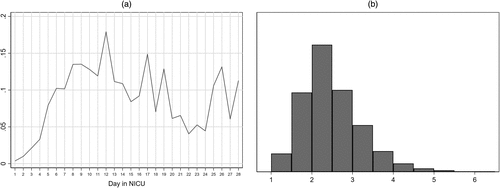
Notes. (a) Hazard of switching to enteral feeding. (b) Distribution of ACDW over sample NICU days.
6.1. Regression Results
Tables 2 and 3 contain coefficient estimates and APE estimates, respectively, for the daily hazard of event occurrence for the three model specifications that are relevant for the hypotheses. Recall that the measured level of ACDW has been demeaned; that is, a value of one refers to a situation where the average number of consecutive days worked by the nursing team is one day more than the team average across all NICU days in the sample. Figure 2 illustrates the effect sizes related to the hypotheses.
|
Table 2. Coefficient Estimates of Daily Hazard of Event Occurrence
| (1) | (2) | (3) | |
|---|---|---|---|
| ACDW in nursing team | −0.082** | −0.048 | 0.026 |
| (0.031) | (0.036) | (0.053) | |
| Low NPR (≤15th percentile) | −0.115* | −0.109* | −0.102 |
| (0.055) | (0.053) | (0.087) | |
| Complex patient (birth weight ≤ median) | −0.509*** | −0.508*** | −0.506*** |
| (0.059) | (0.060) | (0.065) | |
| ACDW × low NPR | −0.123* | −0.248* | |
| (0.059) | (0.097) | ||
| ACDW × complex patient | −0.135+ | ||
| (0.076) | |||
| Complex patient × low NPR | −0.008 | ||
| (0.124) | |||
| ACDW × complex patient × low NPR | 0.222+ | ||
| (0.129) | |||
| Dummies for first 28 days of stay | Yes | Yes | Yes |
| Time (linear for day of stay > 28) | −0.004 | −0.004 | −0.004 |
| (0.008) | (0.008) | (0.008) | |
| NICU fixed effects | Yes | Yes | Yes |
| Constant | −0.711* | −0.701* | −0.723* |
| (0.328) | (0.327) | (0.325) | |
| Log-likelihood | −2,458.51 | −2,456.72 | −2,454.34 |
| Pseudo-R2 | 0.142 | 0.142 | 0.143 |
| Patient-days | 10,605 | 10,605 | 10,605 |
| Number of patients | 847 | 847 | 847 |
| Number of NICUs | 62 | 62 | 62 |
Note. Standard errors are in parentheses (clustered at NICU level).
***p < 0.001; **p < 0.01; *p < 0.05; +p < 0.1.
|
Table 3. Average Partial Effect Estimates of Daily Hazard of Event Occurrence
| Number of observations | (1) | (2) | (3) | |
|---|---|---|---|---|
| Hypothesis 1 | ||||
| ACDW in nursing team | 10,605 | −0.010** | ||
| (0.004) | ||||
| Hypothesis 2 | ||||
| ACDW when NPR is low (NPR ≤ 15th percentile) | 3,151 | −0.020** | ||
| (0.006) | ||||
| ACDW when NPR is high | 7,454 | −0.006 | ||
| (0.005) | ||||
| Difference | −0.014* | |||
| Hypothesis 3 | ||||
| ACDW for noncomplex patients when NPR is high | 2,691 | 0.004 | ||
| (0.009) | ||||
| ACDW for noncomplex patients when NPR is low | 1,165 | −0.031* | ||
| (0.012) | ||||
| Difference for noncomplex patients | 0.036* | |||
| ACDW for complex patients when NPR is high | 4,763 | −0.012* | ||
| (0.006) | ||||
| ACDW for complex patients when NPR is low | 1,986 | −0.013* | ||
| (0.007) | ||||
| Difference for complex patients | 0.002 | |||
Note. Standard errors are in parentheses (clustered at NICU level).
***p < 0.001; **p < 0.01; *p < 0.05; +p < 0.1.

Notes. These graphs show the density of the different levels of ACDW in our patient-day data set and the predicted hazard of event occurrence by ACDW level, together with 95% confidence intervals. In Graph H1, the predicted hazards for different ACDW levels are averaged over all patient-days in the data set. Graph H2 differentiates between days with high and days with low NPRs. Graph H3 differentiates between four classes: Complex patients when NPR is low (Complex, low NPR), Noncomplex patients when NPR is low (Noncomplex, low NPR), Complex patients when NPR is high (Complex, high NPR) and noncomplex patients when NPR is high (Noncomplex, high NPR).
The significant negative coefficient (−0.082, p < 0.01) and APE estimate (−0.010, p < 0.01) of the ACDW variable in model (1) supports Hypothesis 1: The hazard of changing to full enteral feeding decreases with increasing ACDW. Graph H1 in Figure 2 illustrates that the effect size is practically meaningful. Moving from 0.5 days less than the average ACDW (24th percentile) to 0.5 days above (78th percentile) it decreases the predicted risk from 8.19% to 7.16%. This represents a relative reduction of 12.6% and is equivalent to 20.3% of the average partial effect observed when transitioning from low to high birth weight (APE = 0.064).
Graph H2 in Figure 2 splits the APE of ACDW into group-specific effects for low NPR (NPR below the 15th percentile of days in the patient’s NICU) and high NPR days (NPR above the 15th percentile). The interaction coefficient in model (2) in Table 2 is significant (−0.123, p < 0.05), and there is a statistically significant difference in the APEs between these groups (−0.014, p < 0.05) with a stronger ACDW effect for observation days with low NPR. The data therefore support Hypothesis 2.
Finally, graph H3 in Figure 2 splits the ACDW effect into four groups, by NPR and patient complexity. The estimates were obtained using a three-way interaction (model (3) in Table 2). The graph shows different amplifying impacts of low staffing levels on the effect of ACDW for complex and noncomplex patients. For noncomplex patients there is no significant ACDW effect when staffing levels are high (NPR high; APE = 0.004, p > 0.1). However, the effect becomes significant for these patients when NPR is low (APE = −0.031, p < 0.05). By contrast, for complex patients the ACDW effects remain significant, independently of staffing levels, and the effects are very similar for high NPR (APE = −0.012, p < 0.05) and low NPR (APE = −0.013, p < 0.05). Although for noncomplex patients, the difference in the APEs of ACDW between high and low NPR days is significant (=0.036, p < 0.05), the data do not provide evidence of a significant difference in the APEs between high and low NPR days for complex patients (=0.002, p > 0.1). The data and the graphical illustration therefore provide support for Hypothesis 3.
In summary, the data provide evidence that:
ACDW adversely affects the timing to reach full enteral feeding.
This negative impact occurs primarily on days with insufficient staffing.
The impact intensifies for noncomplex patients on these understaffed days.
The latter effect suggests that, although nursing staff can safeguard complex patients against the heightened challenges of high ACDW and low staffing, this often leads to a reduced standard of care for patients with less complex conditions.
It seems likely that the harmful effects of ACDW manifest themselves mainly at higher levels, suggesting a “tipping point” similar to what Kuntz et al. (2015) described. This phenomenon implies that ACDW’s impact increases significantly past a certain threshold. We have explored this effect by re-estimating the primary models, as depicted in Figure 2, using quartiles of ACDW as categorical variables. The results, presented in section 4 of the online appendix, lend initial support to a tipping point hypothesis, revealing pronounced effects primarily at high workload and high ACDW levels (Hypothesis 2) and, in accordance with Hypothesis 3, predominantly among less complex patients. The limited sample size of our study constrains our ability to further explore a tipping point hypothesis with our data.
6.2. Testing for Endogeneity
The outcome measure, switching to enteral feeding on day t of a patient’s stay in the NICU, is a decision taken by the multiprofessional NICU team. We have interviewed NICU nurses, nursing managers and senior clinicians, who have confirmed that nurses play the decisive role in this process because they observe their assigned babies most closely throughout the shift. Following clear guidelines and protocols, nurses form an opinion whether their patient is ready for the change. If so, they initiate the decision process and it is likely that the NICU doctors will affirm their recommendation. This suggests that the two critical factors for the event occurrence are the patient’s health status on the day and the nursing team’s capability to make this decision on the day.
We have argued that two team variables affect this capability: the nursing team’s workload (NPR) and freshness (ACDW) on the day. ACDW is the independent variable of interest in this study, whereas NPR is a moderator; its coefficient will not be interpreted causally. To interpret the probit estimate for ACDW causally, we have to assume that the error term in the probit equation is uncorrelated with the ACDW on the day. Recall that the model controls for NPR, so any correlation between these two variables is already accounted for. The error term will therefore capture the patient’s health status on the observation day and any other unobserved factors that affect a patient’s propensity of event occurrence on the day. Such factors include patient- and mother-level variables (e.g., clinical markers, comorbidities, alcohol consumption, socio-economic factors) and nurse- and doctor-level variables (e.g., experience and education level). These variables are unlikely to be correlated with our main variable of interest, ACDW on a given observation day, which is a consequence of nurse-scheduling decisions that are taken weeks in advance without accounting for specific patient characteristics. Although team characteristics, such as experience mix, are taken into account, nursing managers have confirmed that they do not explicitly consider ACDW when they roster the nursing teams. We therefore believe that in our context the exogeneity assumption that, after controlling for NPR and NICU fixed effects, the ACDW of the nursing team can be considered as randomly assigned to a patient on any given observation day is justified. Section 1.4 of the online appendix includes a model with a richer control structure. The estimates show that patient-level variables are highly significant predictors for the outcome. However, the coefficient of ACDW in these models is not significantly different from the coefficient in the main models of this paper. This provides some evidence for the exogeneity assumption.
To further strengthen the evidence for causality, we have tested endogeneity of ACDW using an instrumental variable model. We use the fact that ACDW varies systematically over the course of a week, following rota patterns, and use days-of-the-week as instruments. Figure 3(a) shows that most nurses start their working week on Mondays, with a steady flow of fresh nurses during the week but fewer nurses starting on Sundays. This weekly pattern translates into significant ACDW variation by day-of-the-week, as demonstrated in Figure 3(b).
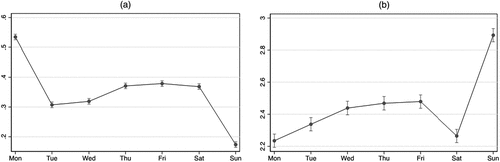
Notes. (a) Share of new nurses on the team. (b) ACDW.
To use this variation as instrument, we assume that day of the week is uncorrelated with uncontrolled factors that may affect the patient’s propensity for changing its feeding status. We already argued previously that the capability of the nursing team, and specifically its workload (NPR) and freshness (ACDW), is the main organizational determinant and both variables are part of the model. The error term will therefore contain unobserved factors, in particular, all residual information on the patient’s health status on the day, which by the random nature of birth dates and the 24/7 operation of NICUs, we assume to be uncorrelated with day of the week.
We use a control function approach to test for endogeneity of the continuous variable ACWD in the probit models. As argued by Wooldridge (2015), control functions are particularly appropriate for interaction models. In a first stage, the potential endogenous regressor ACDWit is regressed on the full set of controls and the instrumental variables (IVs): six binary variables for days of the week with one weekday as omitted category. This splits the variation in ACDWit that is not explained by the control structure into the variation explained by the IVs and the residual unexplained variation. Because the IVs are assumed to be uncorrelated with the error term in the outcome equation, any unobserved factors that might correlate ACDWit with the error term in the outcome equation are captured in this first-stage residual. Therefore, if we include this first-stage residual as an additional control in the outcome equation, we control, in an aggregate manner, for all unobserved potential confounders. Specifically, a nonzero coefficient of the first-stage residual in the outcome equation is evidence for endogeneity. This allows us to test for endogeneity, with exogeneity as null hypothesis.
We conducted this test for all models in Table 2 using day of the week as IV. The first-stage F value of 221 alleviates concerns regarding weak instruments (Stock and Yogo 2005). The coefficients of the residual in the outcome equation were close to zero in all cases, with p values >0.75, thus providing no evidence of endogeneity. The coefficients of ACDWit and its interactions with low NPR (LNPRit) and patient complexity (LBWi) were close to the original probit estimates (estimations are shown in section 3 of the online appendix). As expected, standard errors were larger than in the original probit model, rendering most coefficients insignificant. This is because the variation of ACDWit that is not explained by the IVs is effectively removed from ACDWit in the control function model because it contains the first-stage residual as an additional control. However, the lack of evidence for endogeneity, together with our a priori argument for random assignment, suggests that we can interpret the estimates of the more efficient original probit models as causal.
6.3. Robustness Checks
We estimated different model specifications to examine the robustness of the results. All estimations can be found in the online appendix.
First, we changed the model of the baseline hazard in (2), which uses binary variables for the first 28 days and a linear effect for days beyond this four-week window. We re-estimated the survival model with alternative continuous time specifications and found that the results are robust toward using linear, quadratic, and cubic time specifications of the baseline hazard.
Second, we tested the proportional hazard assumption that underlies Model (2), assuming the effect of ACDWit to be the same for all observation days t of the patient. We relaxed this assumption by estimating models that interact ACDWit with time t. We first tested whether the ACDW effect is different during the early patient stay than later and also allowed the effect to differ on each of the first 28 days. We tested the difference between functional forms by comparing deviance statistic (Singer and Willett 2003) and found no evidence that the proportionality assumption is violated.
Third, we tested the robustness of our results toward changes in the threshold for low staffing, which we assumed at the 15th percentile of the NPR in the NICU over the six-month observation period. Varying this threshold around the 15th percentile did not change the results.
Fourth, we estimated models including further patient characteristics as control variables. This study is a subproject of a large interdisciplinary research project that was set up to examine the impact of various human and organizational factors on performance and medical outcomes in NICUs. These data provide access to additional patient characteristics, including morbidities, which are not included in our main analyses. It is a priori unlikely that any of these factors are correlated with the main ACDW variable. This was confirmed by including morbidity information in the models, which provided very similar estimations. Finally, we added a control variable that captures potential preferences of individual nurses for longer or shorter periods of consecutive working days, which might confound the results. For example, younger, less experienced nurses might prefer longer periods to increase their income. If so, a larger ACDW would be a marker for less experienced nurses, and the effect we measure could be an experience mix effect of the nursing team rather than an effect of having worked longer periods of consecutive days. To account for this, we have calculated for each nurse n an individual variable Ln as the average of the lengths of the periods of consecutive days they had worked during the six-month observation period. Using Ln, we then calculated a new control variable for observation in the data as the average of the variable Ln across all nurses n on the nursing team of the day. We added this variable as an additional control to the models and found no significant effect of this variable and no change of the main results. All robustness checks are explained in more detail in the online appendix.
6.4. Limitations and Generalizability
The main limitation of this analysis is its relatively small sample size (n = 847 patients) and low statistical power that requires large differential effect sizes for a moderation analysis. The main reason why we were not able to increase the sample size is that our analysis relies on actual rather than planned staffing levels, and these data had to be manually collected. Another limitation is the lack of data on individual experiences of nursing team members. However, recent findings indicate that increased experience only slightly mitigate parameters like fatigue (Bavafa and Jónasson 2023). Despite these limitations, our results are a priori plausible, and the evidence on significance and size of the overall average effect of ACDW (Hypothesis 1) and the differential effect by workload for noncomplex patients (Hypothesis 3) provides useful information for managers.
There are specific aspects of NICU nursing that limit the generalizability of our results. NICUs are safety-critical environments with a time-varying mix of task complexity. The most safety-critical tasks are typically allocated to individual team members, such as 1-1 nursing for the most complex patients, whereas other tasks can be shared. This limits the ability of the nursing team to respond to high levels of ACDW by allocating exhausted nurses to less safety-critical tasks, in particular, when staffing levels are low and when the patient mix is complex. The same team response challenges occur in adult ICUs and arguably in operating theaters and in emergency rooms. We therefore believe that our results translate to these safety-critical hospital environments. Their translation to safety-critical environments in other industries, where one might have nonhuman support mechanisms that can help reduce the effects of team exhaustion, is less obvious. However, our findings are relevant for industries where effective teamwork is critical for safety. This is evident in sectors like mining (Komljenovic et al. 2017), forest harvesting (Albizu-Urionabarrenetxea et al. 2013), firefighting (Wolkow et al. 2019), and medical emergency teams (Hillman et al. 2005), where effective collaboration is key to mitigating risks.
7. Counterfactual Effects of ACDW Caps
Minimum nurse-to-patient staffing ratios are well established quality tools in clinical practice. Our results suggest that they should be complemented by maximum ACDW targets for nursing teams. In our sample, the median ACDW of the nursing teams was 2.33 days. We use the fitted probit model (corresponding to model 1 in Table 2) to estimate the counterfactual time to enteral feeding under maximum ACDW targets of 2 and 1.75 days, respectively. Table 4 shows the median and 90th percentile of the duration to the feeding change for the ACDW in the data (baseline) and both counterfactual scenarios. If the ACDW is limited to a maximum value of two days, the 90th percentile shifts by 6.42%, or approximately two days. This is a clinically very significant effect as each day by which parenteral nutrition is delayed has important implications for morbidity and mortality in VLBW infants (Section 4.1). Further information on the methodological procedure to investigate the effect of restricting ACDW levels can be found in the online appendix.
|
Table 4. Predicted Duration to Enteral Feeding
| Percentage of patients with full enteral feeding | Baseline duration (days) | Counterfactual scenario | |||
|---|---|---|---|---|---|
| Maximum ACDW level: 1.75 | Maximum ACDW level: 2.00 | ||||
| Duration (days) | Change (%) | Duration (days) | Change (%) | ||
| 50 | 11.38 | 10.86 | 4.57 | 10.98 | 3.51 |
| 90 | 27.24 | 24.36 | 10.57 | 25.49 | 6.42 |
8. Conclusions and Managerial Implications
Although the previous healthcare operations management literature has mainly focused on short-term measures like daily workload (KC and Terwiesch 2009; Powell et al. 2012; KC 2014; Kim et al. 2015; Kuntz et al. 2015; Berry Jaeker and Tucker 2016; Freeman et al. 2016, 2020) or daily staff-to-patient ratios (Tarnow-Mordi et al. 2000; Aiken et al. 2002, 2014; Needleman et al. 2002, 2011; Tubbs-Cooley et al. 2013) as standard levers to improve quality of care and patient outcomes, we provide evidence that ACDW as a longer-term measure and its interplay with daily staffing levels (NPR) plays an important complementary role in safeguarding nursing quality. Our findings have implications for rota planning and workload management. Specifically, rota policies and staffing regulations should complement the existing focus on daily staffing levels (NPR) with appropriate limits on ACDW levels. Our study suggests that limiting periods of consecutive working days at the level of team averages is an appropriate first step.
By exploring patient heterogeneity, we shed light on nursing team responses when both ACDWs are high and NPRs are low. The data suggests that in this situation, nursing teams shift attention and resources more to complex patients, thus exposing less complex patients most to the effects of a combination of high ACDW and low staffing levels. As a consequence, traditional workload management based on avoiding low staffing levels is effective for safeguarding service quality for less complex patients. As long as NPR can be kept high enough, variation in ACDW is less relevant for these patients, whereas when the NPR is very low, the effect of ACDW is strongest for this group of patients. It is particularly striking that on days with very low NPR and high ACDW levels, the hazard that a patient’s feeding is switched to completely enteral is as low for noncomplex patients as for complex patients (H3 in Figure 2). For complex patients, however, high NPRs does not compensate for ACDW effects; increased ACDW has a significant negative impact on patient outcomes under both low and high NPRs. In particular, an “all hands on deck” strategy that keeps the NPR high at the cost of higher ACDW does not safeguard quality and safety. The level of ACDW in nursing teams that care for predominantly complex patients must be kept low as well.
This study is registered in the German Clinical Trial Register (DRKS00004589) and was approved by the corresponding Ethics Commission, Faculty of Medicine, University of Cologne (Approval 12-228). For the purpose of Open Access, the authors have applied a Creative Commons Attribution (CC BY) license to any author accepted manuscript version arising from this submission.
References
AAP (2017) Guidelines for perinatal care. Accessed May 24, 2023, https://www.acog.org/clinical-information/physician-faqs/-/media/3a22e153b67446a6b31fb051e469187c.ashx.Google Scholar- (2013) Early enteral feeding strategies for very preterm infants: Current evidence from Cochrane reviews. Arch. Disease Children Fetal Neonatal Ed. 98(6):F470–F472.Crossref, Google Scholar
- (2002) Hospital nurse staffing and patient mortality, nurse burnout, and job dissatisfaction. JAMA 288(16):1987–1993.Crossref, Google Scholar
- (2014) Nurse staffing and education and hospital mortality in nine European countries: A retrospective observational study. Lancet 383(9931):1824–1830.Crossref, Google Scholar
- (2013) Safety and health in forest harvesting operations. Diagnosis and preventive actions. A review. Forest Systems 22(3):392–400.Crossref, Google Scholar
- (2021) Do customer emotions affect agent speed? An empirical study of emotional load in online customer contact centers. Manufacturing Service Oper. Management 23(4):854–875.Link, Google Scholar
- (2014) ‘Care left undone’ during nursing shifts: Associations with workload and perceived quality of care. BMJ Qual. Safety 23(2):116–125.Crossref, Google Scholar
- (2002) The ripple effect: Emotional contagion and its influence on group behavior. Admin. Sci. Quart. 47(4):644–675.Crossref, Google Scholar
- (2021) Recovering from critical incidents: Evidence from paramedic performance. Manufacturing Service Oper. Management 23(4):914–932.Link, Google Scholar
- (2023) The distributional impact of fatigue on performance. Management Sci., ePub ahead of print July 21, https://doi.org/10.1287/mnsc.2023.4855.Google Scholar
- (2016) Past the point of speeding up: The negative effects of workload saturation on efficiency and patient severity. Management Sci. 63(4):1042–1062.Link, Google Scholar
- (2014) Impacts of shift work on sleep and circadian rhythms. Pathology Biology (Paris) 62(5):292–301.Crossref, Google Scholar
- (2015) The impact of time at work and time off from work on rule compliance: The case of hand hygiene in healthcare. J. Appl. Psych. 100(3):846–862.Crossref, Google Scholar
- (2004) Acute stressors and cortisol responses: A theoretical integration and synthesis of laboratory research. Psych. Bull. 130(3):355–391.Crossref, Google Scholar
- (1996) Stressful nurses: The effect on patient outcomes. J. Nursing Care Qual. 10(3):46–58.Crossref, Google Scholar
- (2021) Battery discharge from Monday to Friday: Background social stress at work is associated with more rapid accumulation of fatigue. Sleep Vigil 5(1):49–60.Crossref, Google Scholar
- (2015) Balancing the risks and benefits of parenteral nutrition for preterm infants: Can we define the optimal composition? Arch. Disease Children Fetal Neonatal Ed. 100(1):F72–F75.Crossref, Google Scholar
- (1990) Stress at work and mental health status among female hospital workers. British J. Industry Medicine 47(1):20–28.Google Scholar
- (2020) Gatekeeping, fast and slow: An empirical analysis of referral errors in the emergency department. Management Sci. 67(7):4209–4232.Link, Google Scholar
- (2016) Gatekeepers at work: An empirical analysis of a maternity unit. Management Sci. 63(10):3147–3167.Link, Google Scholar
- (1983) Emotional exhaustion in a high stress organization. Acad. Management J. 26(4):567–586.Crossref, Google Scholar
- (2020) How to schedule night shift work in order to reduce health and safety risks. Scandinavian J. Work Environment. Health 46(6):557–569.Crossref, Google Scholar
GBA (2022) Qualitätssicherungs-Richtlinie Früh- und Reifgeborene: QFR-RL. Accessed May 24, 2023, https://www.g-ba.de/downloads/62-492-3004/QFR-RL_2022-10-20_iK-2023-01-01.pdf.Google Scholar- (2020) Association between consecutive days worked by intensivists and outcomes for critically lll patients. Critical Care Medicine 48(4):594–598.Crossref, Google Scholar
- (2021) Nurses’ perceptions and demands regarding COVID-19 care delivery in critical care units and hospital emergency services. Intensive Critical Care Nursing 62:102966.Crossref, Google Scholar
- (2010) Testing hypotheses about interaction terms in nonlinear models. Econom. Lett. 107(2):291–296.Crossref, Google Scholar
Herkert (2022) Arbeitsrecht in der Pflege: Was regelt das Arbeitsrecht für Pflegekräfte? Accessed September 15, 2021, https://www.akademie-herkert.de/neuigkeiten-fachwissen/85-medizin-pflege/2977-arbeitsrecht-in-der-pflege-arbeitsrecht-pflege.Google Scholar- (2005) Introduction of the medical emergency team (MET) system: A cluster-randomised controlled trial. Lancet 365(9477):2091–2097.Crossref, Google Scholar
- (2007) Operations systems with discretionary task completion. Management Sci. 53(1):61–77.Link, Google Scholar
- (2021) The effects of three consecutive 12-hour shifts on cognition, sleepiness, and domains of nursing performance in day and night shift nurses: A quasi-experimental study. Internat. J. Nursing Stud. 123:104–141.Crossref, Google Scholar
- (2014) Does multitasking improve performance? Evidence from the emergency department. Manufacturing Service Oper. Management 16(2):168–183.Link, Google Scholar
- (2009) Impact of workload on service time and patient safety: An econometric analysis of hospital operations. Management Sci. 55(9):1486–1498.Link, Google Scholar
- (2015) ICU admission control: An empirical study of capacity allocation and its implication for patient outcomes. Management Sci. 61(1):19–38.Link, Google Scholar
- (2018) Relationship between epigenetic maturity and respiratory morbidity in preterm infants. J. Pediatrics 198:168–173.Crossref, Google Scholar
- (2017) Organization: A new focus on mine safety improvement in a complex operational and business environment. Internat. J. Mining Sci. Tech. 27(4):617–625.Crossref, Google Scholar
- (2015) Stress on the ward: Evidence of safety tipping points in hospitals. Management Sci. 61(4):754–771.Link, Google Scholar
- (2020) The experiences of health-care providers during the COVID-19 crisis in China: A qualitative study. Lancet Global Health 8(6):e790–e798.Crossref, Google Scholar
- (2011) Feeding intolerance in preterm infants. How to understand the warning signs. J. Maternal-Fetal Neonatal Medicine 24(supp 1):72–74.Crossref, Google Scholar
- (2007) The effects of stress and stress hormones on human cognition: Implications for the field of brain and cognition. Brain Cognition 65(3):209–237.Crossref, Google Scholar
- (2013) Work hours and cortisol variation from non-working to working days. Internat. Arch. Occupational Environment. Health 86(5):553–559.Crossref, Google Scholar
- (2022) Extended work shifts increase subjective pain complaints among cabin crewmembers, but not among airline pilots or healthcare workers: A repeated-measures study. J. Occupational Environment. Medicine 64(6):e381–e386.Crossref, Google Scholar
- (2002) Nurse-staffing levels and the quality of care in hospitals. New England J. Medicine 346(22):1715–1722.Crossref, Google Scholar
- (2011) Nurse staffing and inpatient hospital mortality. New England J. Medicine 364(11):1037–1045.Crossref, Google Scholar
NICE (2018) National Institute for Health and Care Excellence. Accessed September 15, 2021, https://www.nice.org.uk/guidance/ng94/evidence/39.bed-occupancy-pdf-172397464704.Google Scholar- (2017) Slow advancement of enteral feed volumes to prevent necrotising enterocolitis in very low birth weight infants. Cochrane Database Systematic Rev. 8:CD001241(8).Google Scholar
- (2001) Cutting corners and working overtime: Quality erosion in the service industry. Management Sci. 47(7):894–914.Link, Google Scholar
- (2005) Impact of standardised feeding regimens on incidence of neonatal necrotising enterocolitis: A systematic review and meta-analysis of observational studies. Arch. Diseases Children Fetal Neonatal Ed. 90(2):F147–F151.Crossref, Google Scholar
- (2009) Stressful intensive care unit medical crises: How individual responses impact on team performance. Critical Care Medicine 37(4):1251–1255.Crossref, Google Scholar
- (2012) Physician workload and hospital reimbursement: Overworked physicians generate less revenue per patient. Manufacturing Services Oper. Management 14(4):512–528.Link, Google Scholar
- (1996) Effect of overtime work on cognitive function in automotive workers. Scandinavian J. Work Environment. Health 22(2):124–132.Crossref, Google Scholar
- (2017) The impact of routine evaluation of gastric residual volumes on the time to achieve full enteral feeding in preterm infants. J. Pediatrics 189:128–134.Crossref, Google Scholar
- (2022) Working hours, on-call shifts, and risk of occupational injuries among hospital physicians: A case-crossover study. J. Occupational Health 64(1):128–134.Crossref, Google Scholar
- (2020) Insomnia, fatigue and psychosocial well-being during COVID-19 pandemic: A cross-sectional survey of hospital nursing staff in the United States. J. Clinical Nursing 32(15–16):5382–5395.Google Scholar
- (2021) Fatigue in surgical residents an analysis of duty-hours and the effect of hypothetical naps on predicted performance. Amer. J. Surgery 221(5):866–871.Crossref, Google Scholar
- (2014) Practice of enteral nutrition in very low birth weight and extremely low birth weight infants. Nutritional Care Preterm Infants 110:201–214.Crossref, Google Scholar
- (2003) Applied Longitudinal Data Analysis: Modeling Change and Event Occurrence (Oxford University Press, Oxford, UK).Crossref, Google Scholar
- (1998) Work stress and recovery measured by urinary catecholamines and cortisol excretion in long distance coach drivers. Occupation Environment. Medicine 55(6):407–413.Crossref, Google Scholar
- (2006)
Endocrinological processes associated with job stress: Catecholamine and cortisol responses to acute and chronic stressors . Employee Health, Coping and Methodologies (Emerald Group Publishing Limited, Leeds, UK), 1–59.Crossref, Google Scholar - (2009) First-week protein and energy intakes are associated with 18-month developmental outcomes in extremely low birth weight infants. Pediatrics 123(5):1337–1343.Crossref, Google Scholar
- (2005) Testing for weak instruments in linear IV regression. Andrews DWK Identification and Inference for Econometric Models (Cambridge University Press, New York), 80–108.Google Scholar
- (2002) Late-onset sepsis in very low birth weight neonates: The experience of the NICHD neonatal research network. Pediatrics 110(2):285–291.Crossref, Google Scholar
- (2000) Hospital mortality in relation to staff workload: A 4-year study in an adult intensive-care unit. Lancet 356(9225):185–189.Crossref, Google Scholar
- (2015) CRIB II: Effects of fatigue on residents’ performance in laparoscopy. J. Amer. College Surgery 221(2):564–570.Crossref, Google Scholar
- (2014) Incidence, clinical characteristics and risk factors for adverse outcome in neonates with late-onset sepsis. Pediatrics Infectious Disease J. 33(1):e7–e13.Crossref, Google Scholar
- (2013) An observational study of nurse staffing ratios and hospital readmission among children admitted for common conditions. BMJ Qual. Safety 22(9):735–742.Crossref, Google Scholar
- (2002) Sleep loss and fatigue in residency training: A reappraisal. JAMA 288(9):1116–1124.Crossref, Google Scholar
- (2016) The interplay between teamwork, clinicians’ emotional exhaustion, and clinician-rated patient safety: A longitudinal study. Critical Care 20:1–10.Crossref, Google Scholar
- (2019) Associations between sleep disturbances, mental health outcomes and burnout in firefighters, and the mediating role of sleep during overnight work: A cross-sectional study. J. Sleep Res. 28(6):e12869.Crossref, Google Scholar
- (2010) Econometric Analysis of Cross Section and Panel Data (MIT Press, Cambridge, MA).Google Scholar
- (2015) Control function methods in applied econometrics. J. Human Resources 50(2):420–445.Crossref, Google Scholar
- (1998) Characterization of the triage process in neonatal intensive care. Pediatrics 102(6):1432–1436.Crossref, Google Scholar

