


Firm-Sponsored Online Communities: Building Alignment Capabilities for Participatory Governance
Abstract
Firm-sponsored online communities face governance challenges because of differences in the goals and values between the community and the sponsor. This study focuses on better understanding how these communities combine firm-based and community-based governance to achieve participatory governance, balancing firm goals with the autonomy and participation of volunteer members. Through a case study of Mayo Clinic Connect, an online patient community sponsored by Mayo Clinic, we uncover how firm and community stakeholders jointly align firm- and community-based governance. We introduce the concept of a governance alignment capability, which helps avoid and resolve governance tensions, contributing to the success of participatory governance. We specifically uncover two governance alignment mechanisms: informalizing the formal and formalizing the informal. These mechanisms adapt firm-based governance to align more closely with community norms and standardize community-based governance within the firm’s governance structure. The study contributes to both the nascent literature on firm-sponsored online communities and the broader literature on governance by highlighting the importance of participatory governance capabilities in balancing effectiveness and legitimacy in firm-sponsored online communities and emphasizing governance as a dynamic, rather than a static, system.
History: Manju K. Ahuja, Senior Editor; Choon-Ling Sia, Associate Editor.
Funding: H. Safadi acknowledges financial support from the Terry-Sanford Research Award.
Supplemental Material: The online appendix is available at https://doi.org/10.1287/isre.2021.0578.
1. Introduction
Today, many thriving online communities are sponsored by firms to engage volunteer members and elicit their contributions (Reischauer and Mair 2018, Fisher 2019). These firm-sponsored online communities rely on organizational support and foresight. Examples of firm-sponsored online communities include innovation communities such as OpenIDEO (Lakhani et al. 2012, Majchrzak and Malhotra 2016), brand communities such as LEGO Fans (Wiertz and de Ruyter 2007, Ind et al. 2013, Berg-Jensen et al. 2015, Claffey and Brady 2017), and sponsored open-source software communities (Fitzgerald 2006, Watson et al. 2008). Unlike grassroots online communities that grow organically, reflecting their members’ interests and goals, firm-sponsored online communities are designed to achieve some strategic goals of the sponsoring organization (Reischauer and Mair 2018). These goals typically include creating new kinds of knowledge and business value (Kallinikos and Tempini 2014, Barrett et al. 2016). For example, by allowing users to post open innovation challenges and solicit solutions, firms can identify new ideas for their business models from these online communities. Achieving these goals requires firms to elicit volunteer participation and invest financial, human, and organizational resources (West and Gallagher 2006, Dahlander et al. 2008). Because firm-sponsored online communities enlist both community and firm resources, firms must balance achieving their strategic mission with ensuring volunteer member participation.
How should these firm-sponsored online communities be governed to accomplish these goals? Extant research on governance in strategy and organization science has traditionally focused on the firm-based view of governance (Williamson 1973, Madhok 1996). Seminal work (i.e., transaction cost economics and agency theory) has endeavored to explain how organizations can implement structure, rules, and procedures to promote the cooperation of organizational members to achieve organizational goals (Mahoney 2005, Klein et al. 2019, Altman et al. 2022). Meanwhile, a community-based view of governance suggests a different approach to governing communities, one that recognizes the autonomy of community participants and the importance of a just and fair system for distributing rewards (Ostrom 1990).
Within the scholarship of online communities, most work on governance has naturally adopted the community-based view and has focused on grassroots online communities (Markus 2007, O’Mahony 2007). Prior work has examined how online communities motivate members to contribute (von Krogh et al. 2012), coordinate contributions (Arazy et al. 2016), and manage tensions among members and their contributions, as well as from engagement processes (Kane et al. 2014). As firms have become interested in online communities (Gruner et al. 2014, Claffey and Brady 2017, Majchrzak et al. 2018), a few studies have examined governance and governance-related issues in firm-sponsored online communities (Reischauer and Mair 2018, Priharsari et al. 2020). These studies have found that firm-sponsored online communities are challenging to govern because of the disparities between firm- and community-based approaches to governance (Shah 2006, West and O’Mahony 2008, Shah and Nagle 2020). Whereas firms govern in a goal-directed way, pursuing effective structures and strategies, community governance is guided by an emphasis on participation and ensuring the legitimacy of the structures and strategies employed (Ostrom 1990).
As an example of these challenges of governing a firm-sponsored community, consider the collapse of Digg (Newell et al. 2016). In 2010, the company managing Digg changed the community site’s design and voting algorithm without seeking adequate input from members, making many feel alienated, reject the new design, and abandon the site. Thus, theoretically and practically, understanding how firm-sponsored online communities can be successfully governed is important. Theoretically, the governance of firm-sponsored online communities combines community- and firm-based governance (Auray 2012). Investigating how these communities draw upon these two governance approaches can help pinpoint the incompatibilities that may cause governance to break down (O’Mahony and Bechky 2008, West and O’Mahony 2008). Practically, firms need to understand how they can generate value from their investments in online communities (Barrett et al. 2016, Shah and Nagle 2020). Thus, our overarching question is: how can firm-sponsored online communities combine firm-based governance and community-based governance?
Because the governance of firm-sponsored communities is a relatively new topic, we draw from the literature on the governance of online communities, ecosystems, and collective goods (Fung 2006, Auray 2012, Altman et al. 2022). Prior work examining firm-sponsored communities has been mostly in the context of open-source development (West and O’Mahony 2008) as well as marketing and brand communities (Ind et al. 2013, Sibai et al. 2015). This body of work provides some guidance on how firms can collaborate with communities (Shah 2006, O’Mahony and Bechky 2008, Priharsari et al. 2020) and manage ecosystems (Altman et al. 2022). Prior studies on governing public and collective goods suggest that governance should be participatory to represent all stakeholders’ interests, enhance governance effectiveness, and improve the quality of its decisions (Fung 2015, Mindel et al. 2018, Palmer et al. 2022).
Building on these streams of work, we develop two arguments. First, creating a participatory governance system implicitly requires adopting firm- and community-based governance. These two approaches to governance, however, have incompatibilities outlined in extant work on governance (Olson 1965, Ostrom 1990) as well as in specific studies of online communities (Shah 2006, Dahlander and O’Mahony 2011, He et al. 2020). Second, many studies focus on governance structures and mechanisms, and few examine governance capabilities (e.g., Aaltonen and Lanzara 2015, Altman et al. 2022). A missing piece of the puzzle in understanding the successful governance of firm-sponsored online communities is identifying how these communities can create participatory governance capabilities that enable firm and community stakeholders to participate in governance and adapt the governance system to changing needs without stirring up the tensions that typically result from drawing upon the corresponding approaches to governance.
We conduct a case study of a leading firm-sponsored online community using interviews, observational data, and documents. We identify how firm and community stakeholders jointly align firm- and community-based governance. We show how a set of alignment capabilities contributes to avoiding and resolving governance tensions and achieving participatory governance. This finding contributes to both the nascent literature on firm-sponsored online communities and the upstream literature on governance. Within the context of firm-sponsored online communities, participatory governance capabilities are an important element in creating a balance between effectiveness and legitimacy, leading to a successful governance system. Contributing to the upstream literature on governance, identifying capabilities contributes to expanding the scope of governance from static structures and mechanisms to a dynamic system that adapts to stakeholders’ evolving needs.
2. Literature Review and Theory Development
Governance refers to the set of rules and procedures that regulate the behavior of individuals within organizations. It can be defined as the decision-making authority and decision rights within a project or organization, manifesting through allocating responsibilities and power among various entities (Jensen and Meckling 1976, Tiwana 2009). Governance serves the functions of directing and coordinating members of an organization, resolving their disputes, and designing structures to avoid direct supervision and minimize such disputes (Srikanth and Puranam 2014). It has been extensively studied across disciplines, resulting in various perspectives. As we investigate the governance of firm-sponsored online communities, it is important to define key concepts for this study: a governance system and its constituent parts (structures, mechanisms, and capabilities) and a governance approach.
A governance system specifies various formal and informal structures, which, in turn, define the roles and formal authority of participants and outline mechanisms to promote the desired behavior of participants through the exercise of authority, negotiation, and mediation (Kirsch 1997, Felin and Zenger 2014). Both structures and mechanisms facilitate the efficient and effective management of resources, the resolution of conflicts, and the achievement of common goals (O’Mahony and Bechky 2008). Mechanisms are implemented through practices by stakeholders with roles in the overarching structure.
Governance systems must prioritize the needs of their stakeholders, leading to different approaches depending on who those stakeholders are. A governance approach is the general set of principles that guide the selection of a governance system’s specific structures and mechanisms. In firms, these general principles—centered around members’ direction, control, and cooperation—coordinate members’ actions and behaviors toward achieving the organization’s goals (Ouchi 1979, Kirsch 1997). Specifically, control relies on creating economic incentives and sanctions, setting up monitoring, reporting, and delegation structures and establishing mechanisms for resource allocation and conflict resolution (Klein et al. 2019). In contrast, community governance attempts to reduce extrinsic influence on a community by decentralizing power to lower levels of stakeholders (O’Mahony 2007). Accordingly, community governance promotes diverse member representation, plurality, and active participation (De Laat 2007, Sibai et al. 2015).
Although prominent theories such as transaction cost economics and agency theory offer solutions to the problem of governance, these solutions are far from complete, mainly because they often ignore the intrinsic motivations that lead many to contribute to collective work (Madhok 1996). These limitations are especially evident in collective and voluntary organizations (i.e., communities), where decentralization and plurality strain preplanned governance structures and mechanisms (Hardin 1968, Olson 1965). Indeed, prior work on community and ecosystem governance focused mainly on these structures and mechanisms; our work, meanwhile, builds on recent studies (e.g., Aaltonen and Lanzara 2015, Shah and Nagle 2020) and contributes capabilities as the third component of a governance system.
We define a governance capability as the general capacity of a governance system to adapt its structures and mechanisms to address the changing needs of its stakeholders while working toward a specific goal. We then review existing work on the governance of firm-sponsored online communities to develop the overarching proposition that without a governance capability that recognizes the autonomy of community members and the collective nature of governance decisions, tensions between participants from the firm and participants from the community are likely to arise (Ostrom 1990, Cox et al. 2010), even when the governance system is participatory. We then expand on the nascent work on participatory governance (e.g., Fung 2015, Palmer et al. 2022) and governance capabilities to propose how building capability for participatory governance promises to continuously resolve tensions as they arise and achieve successful governance of firm-sponsored online communities. Using a case study, we identify governance alignment as one participatory governance capability and discuss how this capability contributes to the successful governance of the community.
2.1. Governance of Online Communities
Early research on online community governance has examined grassroots communities. This prior work has identified several governance structures and mechanisms as well as the characteristics of governance systems in online communities. For instance, O’Mahony and Ferraro (2007) studied the governance of the Debian Linux community. They tracked the evolution of the community’s governance system from an authority-based system with a de facto leader to a meritocratic system that combines authority with democratic mechanisms such as voting. Their findings suggest the inability of autocratic governance to sustain itself in an online community and the need for governance to enroll a broad set of members to make decisions.
Demil and Lecocq (2006), meanwhile, compared the well-known market, hierarchy, and network governance structures to what they characterize as the “bazaar” governance structure in open-source projects. In their study, bazaar governance is characterized by two key mechanisms: low levels of control and weak incentives. In many open-source projects, participants are volunteers who are not obligated to contribute but cannot be excluded from benefiting from others’ contributions either. Such unexpectedly low control mechanisms are compensated with coordination and selection mechanisms that center participants’ freedom to pursue work tasks that interest and benefit them (Lakhani and von Hippel 2003, von Krogh et al. 2012).
Like self-selection into participation, coordination among members of online communities is largely voluntary. Although the success of collaborative work depends on participants taking on different complementary roles, community participants often switch between different tasks (Howison and Crowston 2014). The sustainability of the community depends on the number of contributors such that enough are needed to fulfill different tasks (Arazy et al. 2016). Further, whereas community governance is decentralized, over time, communities develop governance hierarchies with various roles assigned to their participants (Joyce et al. 2013). Founders and leaders are often given the initial decision-making power, but decision making becomes more distributed over time (O’Mahony and Ferraro 2007, Shaikh and Vaast 2016).
Prior work has also pointed out that community governance mechanisms are often emergent rather than predetermined (Faraj et al. 2011). For example, Aaltonen and Lanzara (2015) show how mechanisms to coordinate contributions in Wikipedia are developed by participants and later diffused to the rest of the community. Thus, the collective learning of what works is channeled over time into creating new governance mechanisms shared across the community. Similarly, Shaikh and Vaast (2016) show how members of the Linux Kernel community create coordination spaces to respond to work demands without and often against the consensus of the community’s leadership. Finally, disputes arise during collaborative work. Governance mechanisms for dispute resolution dictate how disputes are addressed. Like in firms, authority plays a role in resolving disputes in online communities. For instance, members of formal roles in Wikipedia arbitrate in “edit wars” (Kane et al. 2014). Exercising authority for resolving disputes, however, is constrained by the preference for participative dispute resolution involving other participants as much as possible (Auray 2012).
In summary, studies of online community governance draw primarily from community-based governance. Community governance structures and mechanisms recognize the diversity and autonomy of community members and the collective nature of governance decisions. Online community governance does not place a premium on control via rewards and sanctions but, rather, values broadening member participation in task coordination and dispute resolution. As such, many community governance mechanisms evolve from participation rather than from the vision of community leadership at the outset.
2.2. Governance of Firm-Sponsored Online Communities
Today, organizations recognize the capacity of online communities to create value and generate knowledge. Many organizations are experimenting with new business models with communities and crowds (Watson et al. 2008, Majchrzak and Malhotra 2019). All of these sponsorship forms feature organizational involvement, direction, and foresight elements. Organizations manage ownership and intellectual property for the communities they support, orchestrate interactions with community members, and modify their institutional logic in response to new strategies and transitions (Altman et al. 2015). That is, organizations provide communities with valuable human, organizational, and financial resources (e.g., Barrett et al. 2016).
Taking into account the broad spectrum of firm-community engagement (Priharsari et al. 2020, Altman et al. 2022), we adopt a definition of firm-sponsored communities that aligns with recent shifts in community- and crowd-based business models (Majchrzak and Malhotra 2019). We define a firm-sponsored community as an online community organized by a firm to engage community members outside the firm to generate value for the firm and the community. This definition reflects the three essential characteristics of firm-sponsored online communities. First, firm sponsorship implies a substantial investment in financial, human, and organizational resources and differentiates firm-sponsored communities from other arm’s-length collaborations with crowds and ecosystems (Nickerson et al. 2017, Altman et al. 2022). Second, the community engages members outside the firm, differentiating firm-sponsored communities from firm-hosted communities where the community brings together organizational members (Haas et al. 2015, Hwang et al. 2015). Third, the community generates value for the firm, which justifies the firm’s investment in the community. This feature differentiates firm-sponsored online communities from firm collaborations with thriving online communities such as in commercial open-source projects (O’Mahony and Bechky 2008).
PatientsLikeMe, founded in 2004, presents an example of a firm-sponsored online community that involves members sharing health data (Kallinikos and Tempini 2014). For PatientsLikeMe, a firm operates the community platform, and members from outside the firm are invited to engage with others in the community. This means that community members, not the firm, produce content; in turn, the content generated by the community creates value for both the firm and the community (Gupta and Riis 2011).
These characteristics of firm-sponsored communities suggest that the firm adopts firm-based governance structures and mechanisms for the sponsored community. The firm may need to enact strong control and centralized decision making to guide community participation toward the firm’s goal of generating value (Reischauer and Mair 2018). A firm may control community membership by approving or rejecting applicants, make decisions to promote high-quality contributors (Dahlander and Wallin 2006), or remove or ban members who engage in prohibited behavior. The firm may make decisions about content, too, such as whether to publish or delete user-generated content. Finally, the firm may use financial incentives to motivate community participation and content generation (Ho and Rai 2017).
At the same time, engagement in the community by members from outside the firm suggests that the firm adopts community-based governance for managing voluntary participation (Priharsari et al. 2020). Promoting voluntary participation requires respecting members’ autonomy and their desire to self-select how they participate (Ind et al. 2013). Accordingly, the firm needs to delegate decision-making authority to members and allow the community to develop its own rules and norms. For example, the community may be responsible for electing leaders, moderators, and managers and for developing its system for approving or rejecting content (Johnson et al. 2015). Yet whether such delegation can guarantee that community members will work toward the firm’s goal and generate value for the firm remains unclear.
In dealing with this uncertainty, some firms carefully draw a boundary between the community and the firm regarding the value they create (Reischauer and Mair 2018). For example, the community can focus on the ideation and design phases, where community members are more likely to have the relevant expertise and novel knowledge (Jeppesen and Lakhani 2010, Fayard et al. 2016). The firm can then sort ideas, select the best ones, and further develop them (Dahlander and Piezunka 2014). Another approach, which we focus on in this study, is to employ a mix of firm- and community-based governance structures and mechanisms to govern the community in accordance with the firm’s specific goals. Ostrom (1990) thoroughly discusses key considerations for this situation, such as the focus of governance, decision-making processes, autonomy vis-à-vis external control, the role of institutions, adaptability, and conflict resolution. In adopting a mixed approach to governance, the resulting system draws from two diverging and often incompatible approaches to governance, which can, in turn, create conflict (Figure 1).
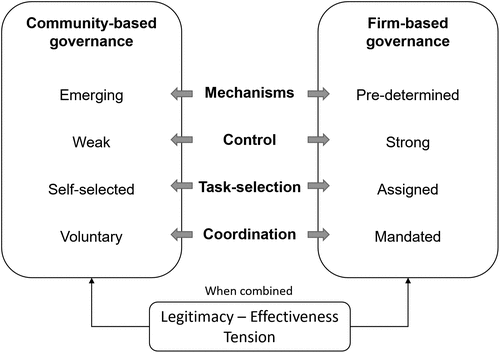
The Digg collapse example presented earlier highlights the challenges of governing a firm-sponsored online community. Specifically, from the firm’s perspective, control is the norm; however, “communities defy managerial control” (Fournier and Lee 2009, p. 7), and because participation is voluntary, the firm may risk losing participation when exercising excessive control. Another example that highlights less extreme challenges is that of the LEGO Fans community (Hatch and Schultz 2010, Krishnan 2013). In 2005, LEGO was restructuring its technology applications. Among new changes was the creation of online communities to involve fans and elicit their contributions. Whereas the LEGO company succeeded in eliciting and implementing products based on fan input, it had to invest substantial financial and organizational capital in its online communities (Krishnan 2013). From community members, LEGO managers learned that the more users became involved with the brand, the more important it became for the company to understand its boundaries and not manage the community the way they manage the company (Hatch and Schultz 2010, Ind et al. 2013).
These examples illustrate the tension between governing a community effectively from the firm’s perspective and enacting a legitimate governance system from the community’s perspective (Figure 1).
2.3. Governance Tensions in Firm-Sponsored Online Communities: Effectiveness and Legitimacy
Although communities and organizations are both collated groups of people, they face different challenges because of their different characteristics (O’Mahony and Lakhani 2011, Puranam et al. 2014). In turn, governance approaches in firms and communities are different because they respond to these different challenges. Yet despite these differences, common evaluation criteria can be used to assess a governance system: effectiveness and legitimacy (Fung 2015).1 Effectiveness refers to the capacity of the governance system to serve its functions and meet the needs of its stakeholders. That is, “[g]overnance is effective to the extent that governance arrangements are capable of solving the substantive problems that they are set to address” (Fung 2015, p. 517). Legitimacy, meanwhile, refers to the recognition of the governance system by its stakeholders or their majority. Legitimacy often stems from the participation of the governed in governance through voting, representation, and holding governments accountable (Przeworski et al. 1999).
In firms, the effectiveness of governance depends on how much it enables the firm to reach its organizational goals. These goals are ascribed to the organization and may differ from the personal goals of organizational members (March and Simon 1993). As a result, firm-based governance centers on control (Ouchi 1979, Kirsch 1997). Control enables organizations to coordinate members so they can achieve together the organization’s collective goals, mainly through rewards and sanctions. Whereas legitimacy is important in organizations, it is understood that an employment contract implies the acceptance of authority and that employees are compensated for setting aside their personal goals to pursue the goals and related subgoals established by the organization (Barnard 1938).
In communities, collective goals are often implicit. They are defined as the goals the community members are working together to accomplish. Because members’ goals are mostly aligned with the community goal, the need for control is low in community-based governance; members are self-motivated to contribute to the community and coordinate their work. At the same time, absent explicit contracts, rewards, and sanctions, legitimacy becomes an important principle of the governance system because the community relies on voluntary participation and its low barrier to exit (Dietz et al. 2003). For a large collective such as a community, legitimacy reflects members’ recognition of the governance system (Galegher et al. 1998). Such recognition depends on how the governance system represents the community’s values (von Krogh et al. 2012), especially when those values are transparency, openness, and meritocracy (Shah 2006, West and O’Mahony 2008). Further, online community governance garners legitimacy from being enacted by its members. Whereas founders initially play a role in governing, meritocracy broadens governance to encompass members at various levels of participation and tenure (O’Mahony and Ferraro 2007, Joyce et al. 2013).
As firm-sponsored online communities draw from firm- and community-based approaches to governance, tensions can arise around the system of governance (He et al. 2020). Firm-sponsored online communities are decentralized, and participation is voluntary; as a result, members may not necessarily share the norms, aspirations, and goals of the sponsoring firms (Ind et al. 2013). Therefore, imposing an organizational vision on these communities can backfire (Fournier and Lee 2009). At the same time, the sponsoring firm needs to impose such a vision to create and extract value from the community, and disseminating such a vision can require a substantial investment from the firm. In other words, governance promoting the firm’s desire for effectiveness may not be compatible with the community’s perception of its legitimacy.
When sponsoring a community, the firm invests in supporting its own goals. Accordingly, balancing volunteer members’ autonomy and steering their collective contributions represent fundamental trade-offs in firm-sponsored online communities. More specifically, delegating governance to the community results in weak control (Demil and Lecocq 2006). In addition, online communities tend to favor mediation rather than sanctions (Auray 2012), and, as a result, establishing a stable leadership consensus can take time (Jemielniak 2016). From the firm perspective, such a governance system is ineffective because it is dissipative—many individuals must be mobilized to make the most productive ones emerge (David and Rullani 2008)—and highly deliberative—most decisions are heavily debated, and even commonly agreed upon decisions will likely be criticized anyway (Kane et al. 2014, Jemielniak 2016). Such ineffectiveness compounds when the community and the firm do not share the same goals or have misaligned goals (Dahlander et al. 2008). At the same time, exercising control can create conflict in communities with strong communal norms (Galegher et al. 1998) and dampen members’ motivation to engage and their contributions (Shah 2006, Dahlander and O’Mahony 2011).
In summary, firm-sponsored communities can draw from firm-based governance to promote effectiveness and community-based governance to promote legitimacy, but they need to resolve the incompatibilities between these two approaches to maintain both legitimacy and effectiveness. Given the fundamental tension between the firm seeking effectiveness and the community maintaining legitimacy, establishing and sustaining such a governance system represents a fundamental challenge for these communities.
2.4. Participatory Governance: From Structure and Mechanisms to Building Capabilities
Extant work on governance in politics and administrative science highlights the importance of widening participation in governing the public and collectives, referred to as “participatory governance” (Fung 2006, 2015). Participatory governance involves engaging various participants in governance through the choice of participant selection, methods of communication, and decision making (Fung 2015). Fung’s work (Fung 2006, 2015) suggests that participatory governance can address democratic deficiencies and advance values of good governance, including legitimacy, effectiveness, and justice. For example, more inclusive participant selection in governance considers participants across all groups of stakeholders and opens up participation through mechanisms such as random and self-selection. Participatory governance also employs less authority in making decisions and communicating those decisions. Instead, decision making and communication can be implemented through aggregation and bargaining mechanisms, delegation, and communicative influence whereby participants develop preferences toward decisions they favor (Fung 2006). Similarly, in discussing the principles of the polycentric governance of the information commons, Mindel et al. (2018) propose the principles of boundary regulation, incremental adaption, shared accountability, and provider recognition.
Prior work in online community governance shows evidence of participatory governance in firm-sponsored crowds and communities and other private-public engagements (West and O’Mahony 2008). For example, in open-source sponsorships, a common practice is to ask key developers to join and work with the parent organization (Fitzgerald 2006, Ho and Rai 2017) or vice versa to encourage organizational members to become active contributors (Baldwin et al. 2003). The participation structure can be more elaborate, especially when firms engage with mature communities, such as when a boundary organization jointly holds the firm’s and the community’s interests and representation (O’Mahony and Bechky 2008).
What is not clear is how a participatory structure can serve the competing goals of the firm’s desire for effectiveness and the community’s emphasis on legitimacy. Offering skilled members leadership roles is one solution, providing a constitutional basis of authority with democratic mechanisms to ensure control by the majority (West and O’Mahony 2008). This structure widens participation in governance and shows the firm’s willingness to accept a less effective governance system to realize its goals for the community. Yet addressing authority in participatory governance is only one step; considering how participants from various backgrounds can engage in joint decision making and realize the benefits of an effective governance system is the next. Whereas a participatory structure is necessary for governing communities (e.g., Demil and Lecocq 2006), it alone is insufficient without considering the governance mechanisms it enables.
Earlier, we made a distinction between the structure of the governance system—constituting the roles of participants as well as their formal authority and the relationship between their authority and their expertise—and the mechanisms of enacting governance through the exercise of authority, negotiation, and mediation (e.g., He et al. 2020). These mechanisms are often prenegotiated; however, a governance system needs to adapt to the community’s evolving interests and needs (Shaikh and Henfridsson 2017). Thus, a firm cannot design a participatory governance system in advance. Participants from both the firm and the community must collaborate to create and evolve a participatory system of governance.
Recent work on governance, including the governance of communities and ecosystems, signaled the importance of capabilities for firms to effectively manage and control activities, resources, and relationships within a specific governance structure. Some identified capabilities include how an organization interacts with contributors, participants, complementors, and other community members to promote its goals (Altman et al. 2022) and how an organization integrates distributed knowledge resources toward the joint production of value (Aaltonen and Lanzara 2015). Building on this work, which discusses capabilities without providing a clear definition, we define a governance capability as the overall capacity of a governance system to adapt its structures and mechanisms to fit the changing needs of its stakeholders toward a specific goal. Nascent work on the governance of collectives and public goods has started to examine how participatory governance capabilities can be built (Palmer et al. 2022). This work highlights the participatory nature of building capabilities through stakeholders’ joint practices such as coknowing, colistening, cospeaking, coplanning, coinfluencing, and codeciding. For grassroots online communities, extant work highlights the emergent and fluid nature of these communities (Faraj et al. 2011, 2016). In the case of a firm-sponsored community, then, we expect participatory governance to require capabilities to adapt its structures and mechanisms to represent both the community and the sponsoring firm. More specifically, stakeholders must agree on and adapt the governance mechanisms once the participatory governance structure is established. Thus, building on the prior work emphasizing the participatory nature of governance, studying capabilities promises to show how participants can jointly adapt a participatory governance system. We rearticulate the overarching research question as how can firm-sponsored online communities build capabilities for participatory governance?
3. Methods
Given the lack of theoretical perspectives and empirical evidence on building capabilities for participatory governance in firm-sponsored online communities, we undertake an in-depth case study of a firm-sponsored online community that relies on both firm- and community-based governance approaches to develop a rich understanding of a participatory governance system (Eisenhardt 1989).
3.1. Research Context
We study Mayo Clinic Connect (referred to as Connect hereafter), a leading online patient community sponsored by Mayo Clinic, a top-ranked American nonprofit academic medical center. Connect was designed by Mayo Clinic to “connect patients with each other and with those interested in learning more about Mayo Clinic or a particular health interest.”2 Connect aims to promote the values of Mayo Clinic, attract patients to Mayo Clinic, and enhance Mayo Clinic’s reputation (Skousen et al. 2020). To meet these goals, Connect leaders manage community participation accordingly. Notwithstanding Mayo Clinic’s sponsorship, membership in Connect is not restricted to patients at Mayo Clinic, and the community attracts diverse members from around the world. These members bring in many experiences, ideas, and perspectives on health. As of September 2022, Connect had 147,000 registered members and around 1,500 active, unique posters per month.
Online patient communities enable anyone to ask medical questions, share stories, gain peer support, and search for medical information (Brubaker et al. 2010, Kallinikos and Tempini 2014, Yan et al. 2015). They create valuable knowledge and are associated with better health outcomes and health behavior for their members (Goh et al. 2016). Yet healthcare is an institutionalized field with strict expectations for sharing and disseminating medical knowledge. For example, sharing medical information online can raise a number of concerns (McKee 2013), one of which involves the accuracy of what is shared online (Marrie et al. 2013). These concerns are exacerbated when a reputable healthcare organization sponsors the online community, as inaccurate content may tarnish the brand of the organization.
A healthcare community such as Connect highlights the inherent challenges of participatory governance, as the norms and goals of community members and the norms and goals of the healthcare sponsor may differ, revealing an effectiveness and legitimacy tension in the community. In Connect, firm-based governance is enacted by its management team of Mayo Clinic employees. This management team consists of a director and five managers, who are referred to as moderators in the nomenclature of Connect. Moderators strive to maintain and promote the values of Mayo Clinic, including safety, support, inclusiveness, and respect. Moderators set and follow guidelines to protect members, including providing instructions for sharing medical advice, demonstrating respect, and avoiding commercial content. Moderators intervene in necessary situations and have administrative abilities to implement processes and features. At the same time, Connect leverages participation from its members. In addition to contributing content, many members feel a need to give back to the community based on the support they have received, take on leadership positions, and contribute to moderating content. Many of these emerging leaders are selected by management to participate in governing the community and are given the formal title of mentor. Mentors rely on their individual experiences with and goals pertaining to their participation in Connect to structure their participation, which adds community-based beliefs and goals to the governance structure. Once selected, volunteer mentors are trained and guided by moderators to consistently act according to the community’s guidelines. A clear distinction between these two roles is reflected in the community’s design, making it a relevant case to examine how stakeholders from the firm and the community partake in a participatory governance system.
3.2. Data Collection
Following the recommendation of Dubé and Paré (2003), we collected multiple primary data sources to achieve a rich and internally valid understanding of firm-sponsored online community governance. Table 1 presents a summary of the data sources.3
|

Table 1. Data Sources
| Data source | Description | Purpose for collection | Analysis strategy |
|---|---|---|---|
| Semistructured interviews | 20 interviews (phone and face-to-face) that were transcribed verbatim, yielding 205 pages of text | Interviews provided first-hand, detailed descriptions of the directors, moderators, mentors, and members’ experiences and roles in the community. | Systematic open coding (Strauss and Corbin 1990) Combing the open codes in more thematic second-round codes that revealed patterns in the data (Miles and Huberman 1994) |
| Posts from the mentors and moderators’ discussion group | Web scrape of the private discussion group of the mentors and moderators 370 discussion threads and 11,682 posts | The private posting provided evidence about the interactions between moderators and mentors. | Systematic coding of the private group with selective a priori codes identified in the interviews to explore the findings of the governance alignment processes (Saldaña 2009) |
| Complete community posts | Web scrape of all the public community postings 67 groups, 14,997 threads, and 452,937 total posts | The public postings provided longitudinal evidence of governance alignment. | Quantitative and graphical analysis of the community posts on specific events (e.g. CBD) using queries of keywords |
First, we conducted semistructured interviews with four moderators and the majority of the mentors in the community. The initial interview was with the director of the community and was instrumental in guiding the subsequent rounds of interviews (Glaser 2002, Charmaz 2006). The first round of interviews was collected over the phone, and the second was collected at an on-site Mayo Clinic social media conference. Overall, we obtained 20 interviews, each lasting 30 to 45 minutes. The interviews were comprised of broad questions involving the interviewee’s experiences, participation, and roles in Connect (see Online Appendix A for a full interview guide). Because of the semistructured format, we followed up and questioned further on responses that appeared to be important (Brinkmann 2014). This additional inquiry often led to responses about motivations for participating in the community and ways in which challenges are addressed and overcome. Additionally, whereas the interviewers did not use the term “governance,” many responses revealed the structures and mechanisms in place to help govern the community and moderate participation.
Second, we were granted access by Connect’s director to a private discussion group for moderators and mentors and read interactions in 370 discussion threads. This private group discusses governance-related issues, trains mentors, raises concerns about management, builds unity, establishes new initiatives, and conducts administrative housekeeping. Reading through these discussions allowed us to examine direct interactions between the community’s formal management (moderators) and emerging leadership (mentors).
Third, to better understand governance system outcomes in terms of effectiveness, we leveraged public posts since Connect’s founding in 2011. For each post, we collected the username, the formal role of the poster, the post’s date, and the post’s content. At the time of data collection, Connect had 67 groups with 14,997 threads and 452,937 total posts. Moreover, given that governance actions in online communities often involve removing posts harmful to the community, we worked with Connect to obtain all deleted posts that no longer exist on the community’s site to ensure a complete history of the community. The postings enabled us to gain a better understanding of governance outcomes over time.
3.3. Case Analysis
We first systematically analyzed the interviews using inductive, open coding techniques, as described by Strauss and Corbin (1990). We selected an open coding strategy because of the relatively few and different perspectives undertaken in prior work on firm-sponsored governance, as well as the potential novelty of our case. Open coding allowed us to generate a more context-specific theory closer to the data. Coding was done using MAXQDA software. Two of the authors conducted line-by-line open coding on the first five interviews. After completing this initial coding round, the findings were discussed to identify agreement and differences. One author coded the remaining interviews, and we followed a constant comparative process throughout our analysis, frequently comparing codes and findings in discussion (Charmaz 2006). After coding the 20 interviews, we generated an extensive list of first-level open codes.
Based on these first-level codes, we created second-level codes that focused on and organized the original list of first-level codes (Miles and Huberman 1994). We discussed relationships between these second-level codes and referred to community documents, attendance at meetings, and community observations to create a process model of Connect’s participatory governance with high-level categories and relationships between those categories. A list of first-level and second-level codes can be found in Online Appendix B.
Next, we relied on the postings in the private mentor-moderator group to confirm our newly generated participatory governance process model. We used selective coding to analyze each thread in the private group with a set of a priori codes relating to the core variables of our process model (Saldaña 2009). Each code assignment was influenced by a definition stemming from our emergent understanding of the data. For every code applied, we wrote memos to document our observations.
To assess the impact participatory governance has on legitimacy, we reviewed qualitative excerpts discussing members’ opinions toward the governance system and specific governance actions. However, the desired outcome of effectiveness cannot be evaluated properly with interview excerpts alone. Therefore, to understand the impact of participatory governance on the effectiveness of the governance system, a more thorough analysis using quantitative data was needed. We quantitatively examined effectiveness by selecting from the public postings and focusing on a topic with discordant governance goals for the firm and the community, namely cannabidiol (CBD), a compound found in marijuana. We selected all posts with any of the following keywords: CBD, medical marijuana, cannabidiol, THC, or cannabis. To ensure we were not missing relevant posts that may not have included one of these keywords, we included all posts from a discussion thread if at least 25% of the posts in the thread contained one of the keywords. In these posts, we identified instances (e.g., director-led training or community suggestion) where the governance approach shifted, creating periods of distinct governance approaches. We then established multiple quantitative measures derived from the public CBD posts, such as the deleted posts in a thread, the length of threads, the number of total and unique posters in a thread, and the ratio of mentors to members in a thread. By longitudinally overlaying these measures in connection to the periods of different governance approaches, we could compare how participation outcomes varied based on the governance approach employed.
4. Findings
4.1. Participatory Governance of Mayo Clinic Connect
Connect represents a firm-sponsored online community with a predesigned participation structure. We label specific participation activities in the community as practices. We identify firm-based governance mechanisms as a compilation of specific practices systematically enacted by the director and moderators. Meanwhile, moderators enlist volunteer members as mentors to help govern the community, so, in turn, mentors’ specific practices comprise community-based governance mechanisms. We present our findings to show how Connect built an alignment capability for a successful participatory governance system, integrating firm- and community-based governance approaches. We first present the firm- and community-based governance approaches individually, and then we discuss why and how they align to form a participatory governance system that resolves the tension between legitimacy and effectiveness.
4.1.1. Firm-Based Governance Mechanisms.
Representing the firm’s perspective, the director and moderators’ goal for Connect is to be a “brand builder by having the community under the banner of Mayo Clinic” (moderator 1). To maintain the image and brand of Mayo Clinic, the firm strives to maintain adherence to Mayo Clinic guidelines (see Online Appendix A). Moderators of the community are primarily incentivized to accomplish this work by their employment contracts. From the interview responses, we identified three high-level groups of governance mechanisms enacted by moderators: policing, expanding, and supporting. Excerpts supporting each of these mechanisms can be found in Online Appendix B.
Policing is aimed at resolving disputes through practices such as intervening, muting members, and taking down posts. When facing disputes, posts that violate community guidelines, and sensitive content, moderators respond quickly with these practices to avoid negative consequences.
Expanding involves implementing new features in the community to make it more dynamic and engaging. For example, the director initiated a program called “member spotlight,” a section that highlights and celebrates mentors and members. Another example is the creation of blogs, pages, and different community features designed to synthesize and share member-generated knowledge.
Supporting is comprised of the practices community managers take to share resources with the community and provide the support that would otherwise be unavailable without firm sponsorship. For example, moderators can request to have doctors participate in the community.
4.1.2. Community-Based Governance Mechanisms.
Mentors and members are individuals who join the community organically and thus represent the community-based structure. Motivations for joining and volunteering to be a mentor in this community include sharing experiences with similar others, gaining medical insights, and having an opportunity to serve others. Thus, the continuing goal for Connect members is to ensure that other members feel welcome, not alone, and able to take control of their health journey. Incentives for members (especially mentors) to participate in community governance are to repay the benefits they have received and to ensure that the community’s future meets their needs.
Like with firm-based governance, we identified three high-level governance mechanisms primarily enacted by community mentors: shepherding, connecting, and instructing. These mechanisms are typically carried out through shared content in the discussion threads.
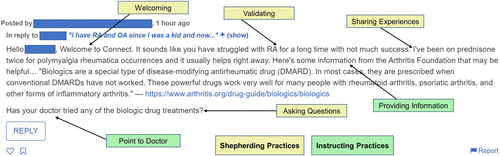
Shepherding ensures new members feel welcome and are aware of the community’s norms. Some of the specific practices associated with shepherding include welcoming, asking questions to promote further discussion and identify needs, sharing personal experiences to connect with members, validating concerns to create a safe space, and giving positive reinforcement in responses.
Connecting establishes relationships and builds a community of support. This mechanism supports coordination, as members with specific knowledge and experience can be connected to specific conversations. Some identified practices include tagging members (a common social media practice), bringing private conversations to the public so that all members may participate, and proactive follow-up with members who have stopped participating.
Instructing occurs when mentors and members share informative material with other members, such as specific advice on how to act in a doctor’s office, evidence-based research that responds to a member’s question, and instructions on when to go see a doctor.
We highlight an example of instructing and shepherding in a redacted post (Figure 2).
4.2. Legitimacy-Effectiveness Tension in Mayo Clinic Connect
A governance system is legitimate when community members participate in making governance decisions. Thus, having volunteer mentors as part of Connect’s leadership structure was crucial to enhancing members’ perception of legitimacy. The director said, “A mentor responding means more to a member than it does when a moderator or myself responds.”4 The transfer of norms to new members through shepherding was more successful when guidance was given by those with shared experience. One mentor shared, “It’s been a good move by Mayo to establish the mentors to help people understand a little more what Connect is, what our goals are, who some of the other people are, and the kinds of things we talk about.” With instructing, members listened when mentors shared effective methods for leveraging the community. Another mentor explained, “We have mentors who have been alcoholics, and drug users, and who share their struggles, and it makes all the difference in the world for people to know that we’re not just giving empty advice.”
From the firm’s perspective, formal and standardized practices increase the effectiveness of governance to provide the firm value. Whereas mentors are aware of the values and goals of other members, their lack of power and authority to execute quick measures weakens their governing influence. Often, quick and effective governance practices are needed, especially because Connect is considered an “extension of a patient’s care on top of a marketing vehicle.” One moderator described their role: “Members are free to express their views, but when they instruct their discussion group to stop taking traditional medications and go for homeopathy or herbal things, that’s when we have to step in.”
Connect’s community-based governance approach focuses on increasing participation and spaces for learning, and their firm-based governance approach focuses on maintaining a product that will benefit the brand and outcomes for the firm. In many scenarios, these governance approaches alone can address the needs of stakeholders; however, “gray issues” may arise when firm- and community-based approaches to governance differ and need to be reconciled, creating a middle ground. These gray issues highlight the tension between legitimacy and effectiveness. One example of a gray issue is the sharing of medical advice. Connect encourages members to share personal experiences that may assist those facing similar difficulties but clearly states that anything shared on the forum is “not medical advice.” When a member’s post appears to be medical advice, the firm typically prefers to remove it. Navigating this gray issue of what is and is not medical advice is not straightforward, however, and can create tension between the community and the firm.
4.3. Creating an Alignment Capability for Participatory Governance
When analyzing the interviews, we observed a set of practices distinct from those implementing firm- and community-based governance, which we identified earlier. These practices were jointly enacted by stakeholders from both the firm and the community and emerged through the interview codes characterized by interactions between mentors (community-based governance) and moderators (firm-based governance). These practices comprise a new set of mechanisms that work together to form a governance alignment capability, influencing how the governance system balances firm-based objectives, goals, and representations with community-based objectives, goals, and representations. This governance alignment capability, with its associated mechanisms (Figure 3), supports adapting the participatory governance system so it continues to serve all stakeholders. Online Appendix B shows interview excerpts that prompted these governance alignment codes.

Whereas governance alignment mechanisms were identified in the interviews, they occurred during annual mentor meetups, the private forum only available to mentors and moderators, and private training sessions between the director and new volunteer members. Thus, we searched the private forum to identify occurrences of governance alignment. In some scenarios, alignment was achieved by the community-based governance approach adapting to firm-based governance to improve the effectiveness of the participatory governance system. Conversely, other situations called for the firm-based governance approach to adapt to community-based governance to enhance legitimacy. Thus, we identified two types of mechanisms creating the governance alignment capability: informalizing the formal mechanisms, which include the specific mechanisms of training, selecting, and demonstrating, and formalizing the informal mechanisms, which include standardizing, modifying, and collaborating (Table 2).
|
Table 2. Definitions and Excerpts for Governance Alignment Capabilities
| Mechanism type | Mechanism | Definition | Example excerpts |
|---|---|---|---|
| Informalizing the formal | Training | Evidence of a moderator giving instructions to mentors on how they should act in responding to other community members’ posts. | Director: “It is essential that we present evidence-based information to the community and offer where possible context in plain language about the meaning and implications of clinical studies. For example, the source of the video you shared does not meet the standard critique that I would use to evaluate a web resource. A resource should be from a trustworthy source, and be credible, current, relevant and accessible.” |
| Selecting | Evidence of the moderators identifying and recruiting high-performing and guideline-following community members to be volunteer mentors. | Mentor: “I was very impressed by member @[member1] response to @[member2]. She has the gift to write well and is very compassionate. @[director] & all other moderators, she may make for a good mentor.” | |
| Demonstrating | Evidence of giving proper examples by moderators posting in the community. In this context, highlighting model posts of the moderator’s participation in the community. | Director: “I thought maybe you guys get these questions too. So, I wrote a blog post that you can use to help answer such questions. ‘Don’t Let These 3 Common Fears Stop You from Creating a Vibrant Patient Community’ It goes without saying that the mentors and moderators are instrumental in keeping Connect welcoming, safe, respectful and trustworthy.” | |
| Formalizing the informal | Collaborating | Evidence of the mentors participating in giving feedback to the moderators, making community-level decisions with them, and debating community issues. | Moderator: “We welcome any critique, suggestions and of course accolades you might have. What do you like about the pages? What could be better?” |
| Modifying | Evidence of the moderators changing guidelines or processes to match community needs and concerns. | Director: “You now have access to view the Moderators’ weekend schedule here: [website]. It has also been added to the RESOURCES tab in this group. You expressed that you would like to know which moderator is on duty on the weekend in case of emergencies, reporting messages or asking questions. Thank you for your diligence.” | |
| Standardizing | Evidence of the creation of standard community artifacts and procedures, influenced by members’ suggestions and actions. | “During the meetup planning we discussed creating a document to collect our areas of interest and experience, either personal experience or that of someone in our circles of care. We had started a document a while back. Please update your interests and experience, as well as groups and secondary groups, in this spreadsheet.” |
4.3.1. Informalizing the Formal.
Informalizing the formal mechanisms shift or replace interventive firm-based governance mechanisms with more preventive community-based governance mechanisms to achieve a similar function. Mayo Clinic moderators are wary of excess firm governance—such as policing, posting, or editing many comments—because such practices may lead to one prevailing ideology and deter members’ motivation to contribute, thereby decreasing the legitimacy of firm-based governance practices. For instance, the director stated in a mentor meetup that more “community moderation” and less moderator influence would be preferred. We identified three such mechanisms.
Selecting: Moderators identify community members who actively participate and act according to community guidelines. Then, moderators select these members to serve as volunteer mentors, increasing participation from these outstanding individuals and symbolizing to the rest of the community what good conduct looks like. Mentor recruitment has been critical to Connect’s success and the primary factor for successful participatory governance. One moderator shared, “I think the mentors are really special… All of them came from being super users, people that were super active, and the benefit of having them, is that we can coach them, and then they begin to emulate our behavior.”
Training: Once selected as a mentor, moderators consistently train mentors on desired behaviors. This designed structure of training can spread social norms that are not engendered from the ground up but, rather, fostered by formal management. From one mentor’s experience, “When you are first invited, you spend time with the director, a one-to-one, doing screen shares and discussing different scenarios, and there are some basic guidelines.”
Demonstrating: Whereas moderators have handed much of the community’s responsibility to mentors, their posts still have influence. What they post can be seen as demonstrating to mentors (and members) the behaviors to emulate. Demonstrating leads by example and proactively promotes other positive community governance practices rather than requiring policing interventions later.
In sum, whereas mentors are not endowed with the privileges to execute formal governance, they are asked and trained to exemplify firm-based values while still participating as normal members with unique experiences, abilities, passions, and goals. This collection of mechanisms that utilize mentors to informalize the formal addresses the effectiveness-legitimacy tension in three ways. First, it increases effectiveness by reducing moderators’ workload, which is becoming infeasible with the continuous growth of the community, now receiving around 8,000 posts per month. Second, governance is more legitimate as uniquely qualified mentors assist other members because of their shared experience, an experience the moderators often do not have. Third, it facilitates work coordination, thus improving effectiveness by enabling moderators and mentors to specialize in different tasks. Moderators can focus on resolving time-sensitive disputes, executing administrative duties, and enhancing community design to improve community success and growth. Mentors, meanwhile, can focus on patient success and support within the daily operation of the community without worrying about violating community norms. Because others consider mentors to be fellow members, disseminating best practices through mentors has legitimacy, not the stigma of enforcement by community management. Therefore, the firm equipping mentors with standard governance practices enables both legitimate and effective governance.
4.3.2. Formalizing the Informal.
As Connect’s community grew and developed, its guidelines and firm-based governance mechanisms needed to be adapted to match the community’s and its members’ needs. Formalizing the informal mechanisms shift or replace emergent community-based governance mechanisms with more formal firm-based mechanisms. In other words, the unique participation and specific governance practices of the community members that moderators believe could benefit the entire community are adopted into a more standardized format. This increases the effectiveness of future governance. For example, mentors ask questions in posts to shepherd in new members and spur further participation. Asking questions, generally, is an organic practice; however, in the mentor orientation document, mentors are specifically instructed to “[a]sk questions to get to know a bit about the member who has posted. At first, ask one simple question that gets them talking.” Example questions are even provided in a shared document to make it easier for mentors to find and ask questions. Accordingly, asking questions is no longer just a community-based practice but a recommended standard for sharing content coming from the firm. The interviews revealed three mechanisms for formalizing the informal.
Standardizing: This mechanism occurs when emergent, informal, and sporadic actions stemming from the community are made standard by the firm. For example, if a mentor uses a well-worded welcome message, the moderators will save that as a template for future use. Connect has incorporated templates for welcoming new members, resolving conflicts, giving information about Mayo Clinic, etc. In addition to templates, certain practices can become standardized, such as the requirement to start a post with the disclaimer “this is not medical advice” when sharing medical information.
Collaborating: This mechanism works in conjunction with standardizing. Community members provide input to the director and moderators to influence the firm’s governance strategies. For example, mentors pass along members’ experiences and the community’s emerging issues to Connect’s management. Through face-to-face meetups, private online conversations, and online group meetings, community mentors brainstorm together, offer feedback, and share unique ideas with firm-appointed moderators. This feedback can be adopted by moderators and made into formal practices. Frequent collaboration ensures that firm moderators are quickly aware of the state of the community, its goals, and its challenges.
Modifying: This mechanism is a result of collaboration and requires formal management to be willing to adapt current practices and features to match the needs of the community. In Connect, the director and moderators are extremely open to feedback and willing to modify guidelines and practices to meet the needs of the community. For example, the director had no guidelines for addressing religious posts at the outset of the community, so religion-focused posts generated confusion, debates, and inefficiencies at first in terms of how they should be handled. Based on the behaviors of members, a guideline for how to address religious posts was created.
Like informalizing the formal mechanisms, formalizing the informal mechanisms also addresses the effectiveness-legitimacy tension. For the Connect community, the formalized and more effective practices are made more legitimate by developments that stem from community-based mentors. Therefore, these alignment mechanisms make governance not just effective but legitimate as well.
How Connect continuously formalizes the informal and informalizes the formal (a) creates a governance alignment capability that supports a participatory governance system for firm and community stakeholders to engage in governance as an ongoing process, and (b) helps to avoid the legitimacy-effectiveness tension resulting from the incompatibility of firm- and community-based approaches to governance. Connect’s case presents a model for how firm-sponsored communities can create a successful participatory governance system. An alignment capability, as we see with Connect, is critical to leveraging a participatory structure for governance.
4.3.3. Governance Alignment and Outcomes of Participatory Governance.
After using the interviews to understand Connect’s governance alignment capability and its participatory system of governance, we sought to illustrate the model using observations from the moderator-mentor private discussion group. Additionally, we assessed the outcomes of participatory governance using archival community data. We identified multiple demonstrative examples of how governance alignment addressed the tension between effectiveness and legitimacy in Connect’s participatory governance system.5
One detailed example that demonstrated a need for participatory governance and exhibited a response to the effectiveness-legitimacy tension involves CBD-related discussions posing as medical advice. When first introduced in 2017, CBD discussions were problematic for the community because medical research on CBD was scarce, the CBD industry was unregulated, the legality of CBD was in question, and its inclusion in the forum questioned Mayo Clinic’s stance on CBD. On the one hand, discussing CBD topics in a legitimate manner was helpful to many individuals: “I have been using CBD since April 2017…it really is helping my arthritic knee!” On the other hand, Connect needed to effectively address members using CBD in a manner that could harm the community. Even a community mentor remarked, “That medical marijuana topic is definitely my least favorite topic, and I am the worst at understanding it. Very difficult topic for me and always turns to chaos quickly.” The director summed it up in an early discussion with the mentors: “While there is promise and ongoing research into CBD effectiveness in managing pain, anxiety, inflammation and sleep, the jury is still out.”
With such an ambiguous situation, appeasing all stakeholders in the community was improbable. A firm-based governance approach would be inclined to effectively remove these CBD-related discussions to maintain the brand’s image. Community-based governance would appeal to the community’s stakeholders, many of whom found success using CBD products. Ultimately, how Connect addressed CBD discussions exhibits how the community aligned its governance modes to resolve the tension between effectiveness and legitimacy surrounding a medical “gray issue” and demonstrates how the source and attitude of governance toward these potential issues can shift. In this account, we denote the specific mechanisms of governance alignment in parentheses.
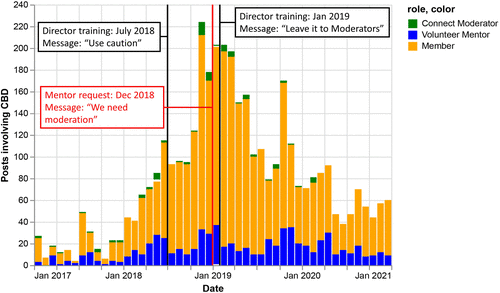
The original concern for Connect’s director came from posts advocating and commercializing CBD oil. The director shared with the mentors in the private group, “We are getting increasing numbers of discussions about CBD and medical marijuana. This, in itself, is not a problem; however, these discussions attract MANY bad actors, sellers, and people looking for commercial gain in one way or another.” Initial attempts to address these posts by mentors were ineffective. When the community started to see an increase in posts about the use of CBD oil, the director trained mentors on how to deal with these discussions (training). At first, in July of 2018, the director’s training was to “not encourage conversation in the CBD related discussions, be extra vigilant for sellers posing as regular members, use caution when countering a member’s opinion, and flag or private-message a moderator to post balanced evidence where clarification is needed.” The tone of this instruction suggested being careful and asking for clarification. Here, the director sought to maintain legitimacy while also providing mentors with tools to enhance effectiveness. The mentors started to post evidence and collaborate on good research that could help them respond to posts (collaborating), in turn increasing the legitimacy of the director’s training.
One mentor, however, wrote to the director in August 2018 and shared her feelings about the need for a more effective moderator response (collaborating). The director thanked her, responding, “Thanks goes to @mentor for alerting me to the need for a moderator response given a member’s enthusiasm in advocating access to illegal sources,” and subsequently modified the current message shared with mentors (modifying). In January 2019, mentor training shifted toward not responding to CBD-related posts, staying away as much as possible, and leaving it to moderators to handle bad actors in the CBD discussions (training). With this new direction, the director shifted the focus toward more effective measures, but because the suggestion came from community feedback, community mentors and members viewed it as legitimate (see Online Appendix B).
To provide further evidence about the effectiveness of the governance system resulting from alignment, we outline the quantitative analysis of community postings that discussed CBD-related content. The example covered three distinct periods of participatory governance produced by governance alignment: the period prior to the first training (January 2017–July 2018), the period until the second training (July 2018–January 2019), and the period after that training (January 2019–December 2020). Our quantitative analysis examined how CBD-related participation outcomes shifted across these three periods. To show a change in community processes and outcomes, we use various measures across the three time periods. First, we look at the number of deleted posts and expect that more posts will be deleted in the third period because of an emphasis on control by the firm’s employees. Second, we expect that the thread length and number of unique posters in CBD-related threads would be higher when a more community-based governance approach was in place because less interventive firm governance would result in more community dialogue surrounding the issue. Finally, mentors were trained to change their behavior in the second training; therefore, we expect that mentor participation will shift toward discussions not involving CBD after that training.
Consistent with our expectations, after the first training, which still relied on community-based governance responses, CBD postings continued to increase (see Figure 4). In the third period, after the modified views toward responding and the associated retraining by the director, CBD posts waned as moderators implemented more interventive firm-based governance practices. Therefore, governance in period 3 was characterized by greater effectiveness. All other results for how thread dynamics changed (e.g., a decrease in length for CBD-related threads, a decrease in the number of posters, a decrease in the mentor-member participation ratio, and an increase in deleted posts) also followed our expectations (see Table 3).
|
Table 3. CBD Quantitative Results by Period
| Measure | Reason for examination | Results by period | ||
|---|---|---|---|---|
| 1 | 2 | 3 | ||
| Total deleted posts | In period 3, we would expect that there will be more deleted posts because the moderators were instructed to address potentially harmful content. | 0 | 4 | 12 |
| Average length of threads that include CBD | The thread length and number of posters are proxies for interest and dialogue between individuals. More collaborative and community-based governance requires more dialogue. In period 3, after mentors were asked to step back, we would expect shorter threads with fewer posters involved. | 77.13 | 34.24 | 10.66 |
| Average number of unique posters | 19.31 | 9.71 | 4.52 | |
| Mentors’ ratio of CBD discussion posts | In period 3, we would expect mentors to stay out of CBD discussions and not mention CBD in their posts. The numbers outside parentheses are the ratios of mentors’ CBD discussion posts to all mentor posts in the period. The numbers in parentheses are the ratios of mentors’ CBD discussion posts to all CBD discussion posts. | 0.017 | 0.021 | 0.003 |
| (0.16) | (0.20) | (0.15) | ||
Thus, by aligning firm- and community-based governance, the community adapted its participatory governance system, and this capability fostered distinct outcomes on participation. As the community changed in relation to the topic of CBD, the community’s governance dynamically oscillated between effective and legitimate resolutions to achieve balance in governing CBD discussions and meet the needs of both the community and the firm. Looking forward, this governance alignment capability will enable Connect to continue to adapt its participatory governance system to address future changes and challenges.
5. Discussion
Governing firm-sponsored online communities is challenging because of the different logics undergirding communities and organizations (Demil and Lecocq 2006, Zammuto et al. 2007, O’Mahony and Lakhani 2011). Prior research on the governance of firm-sponsored online communities has emphasized the need for creating a participatory governance structure that brings together stakeholders from the community and the organization (Dahlander and Wallin 2006, O’Mahony 2007, Mindel et al. 2018). Our study shows that creating participatory governance requires capabilities to complement the participatory structures and mechanisms, adapting them to changing needs and emerging issues. Our study shows how a governance alignment capability can be built in a firm-sponsored community and how it addresses the legitimacy-effectiveness tension that occurs when firm- and community-based approaches to governance are combined.
5.1. Building Capabilities for Participatory Governance in Firm-Sponsored Online Communities
Connect’s system of governance brings together community managers (moderators) and community members (mentors). This participatory structure incorporates emerging community leaders and endows them with formal privileges and roles to participate in the community’s management. Mentors are independent of moderators and can operate mostly autonomously. Each group contributes differently to the community’s governance; however, mutual feedback is available through a private forum for mentors and moderators, monthly online meetings, and annual in-person meetings. These opportunities enable mentors to provide feedback to community management and the management to provide training and guidance to mentors. Governance alignment happens through these opportunities.
Whereas prior work has focused on the structure of participatory governance (Mahony 2005, O’Mahony and Bechky 2008), how participatory governance systems can enact appropriate mechanisms and adapt them to suit stakeholders’ needs remains unclear. Our literature review identified governance capabilities as a lesser-studied aspect of governance (e.g., Aaltonen and Lanzara 2015, Altman et al. 2022). Our case study adds to this body of work, showing how a firm-sponsored online community can build capabilities for participatory governance and, in turn, enact mechanisms that successfully combine firm- and community-based governance. In particular, the governance alignment capability ensures that firm- and community-based governance mechanisms continuously reinforce each other. Firm-based governance mechanisms are profoundly shaped by prescribed organizational goals and are enforced by the firm’s authority to allocate decision-making rights and impose sanctions. Through alignment, however, these firm-based mechanisms reflect the emerging community needs and are shaped by member input, thus enabling new people, ideas, and experiences to inform the community’s management. Community-based governance mechanisms promote shared norms and beliefs. They enable the community to grow organically and reflect members’ interests. Alignment ensures that the firm and community members jointly shape governance mechanisms.
5.2. Contributions to Firm-Sponsored Online Community Governance
The case of Connect demonstrates how a community can resolve the tensions associated with employing both firm- and community-based governance mechanisms. Firm sponsorship can bring value to grassroots communities when these tensions are successfully resolved (Galegher et al. 1998, Demil and Lecocq 2006). On the one hand, informalizing the formal enables the dissipation of firm control through community participation, which achieves effectiveness without triggering adverse reactions. The management’s selection of exemplary members and their consistent training and coaching instill the firm’s norms without the costly monitoring and evaluation of members’ participation. Participatory governance promotes members’ commitment to the objectives of the organization.
At the same time, the key finding in this study is that alignment ensures the continuous success of participatory governance. Formalizing the informal enables the firm to effectively address the community’s legitimate reactions to emerging challenges. This involves standardizing practices that emerge organically within the community and integrating them into the firm’s formal governance framework. This mechanism also ensures that firm-based mechanisms adapt to reflect the community’s genuine needs and best practices. Informalizing the formal diffuses formal governance throughout established community’s practices.
Building on studies that examine the tension between legitimacy and effectiveness (O’Mahony and Ferraro 2007, Joyce et al. 2013), we show how participatory governance can be both effective and legitimate. Prior work presents this balance as a fundamental trade-off between expanding resources to sustain the governance system—such as hiring professional management at the expense of diminishing members’ autonomy (Galegher et al. 1998, Shah 2006, Halfaker et al. 2013)—and leveraging volunteer members’ contributions to governing the community at the expense of less effective convergence (Demil and Lecocq 2006, Aaltonen and Lanzara 2015). We show that such a trade-off is not a definite outcome in firm-sponsored communities when a participatory structure is created and maintained by enrolling multiple stakeholders and utilizing capabilities that align firm- and community-based governance. For instance, in Connect, governance is mostly enacted by mentors, not moderators. Because mentors relate to community members, their influence emphasizes the grassroots nature of the community. Then, when challenges arise, escalation enables mentors to enlist moderators who can exercise swift and more effective governance. By actively recruiting and involving influential members as mentors, the management ensures that governance reflects members’ needs and primarily occurs through the “behavior emulation” of members rather than management intervention. As the director explains, “By modeling desired behavior, tensions are largely avoided. There is, by far, more support and camaraderie that takes place than tension.”
Governance of firm-sponsored online communities is challenging because communities and firms adhere to different organizing logics (Demil and Lecocq 2006, Zammuto et al. 2007, O’Mahony and Lakhani 2011). For firm-sponsored communities, successful governance leverages emergent community-based governance and effective, directed firm-based governance. The participatory governance that results presents an organizational duality such that the two poles are desirable but often incompatible (Gulati and Puranam 2009). A governance alignment capability enables firm- and community-based governance approaches to coexist and thus create a “compensatory fit” (Gulati and Puranam 2009). When properly aligned, these two approaches compensate for each other by realizing dissimilar but jointly valuable outcomes. By exploring how participatory governance capabilities are built, we contribute a process for understanding how community members and sponsoring firms can actively participate in decision-making processes, cocreate, and adapt the structures and mechanisms of their participatory system of governance.
With this study, we also theoretically develop the concept of governance capabilities hinted at in prior work (e.g., Aaltonen and Lanzara 2015, Altman et al. 2022). Studies from other disciplines have identified some participatory governance capabilities (e.g., Palmer et al. 2022) without clearly defining and theoretically grounding the notion of a governance capability. Palmer et al.’s (2022) work within the context of landscape restoration focuses on the joint nature of these capabilities (e.g., coknowing, colistening, cospeaking). Our contribution lies in explicating how such joint capabilities can be created through two types of mechanisms: informalizing the formal and formalizing the informal.
5.3. Contributions to Governance Literature
Existing literature has largely focused on the structures and mechanisms of governance (Williamson 1973, Zeckhauser and Pratt 1985), often neglecting the fluid, evolving capabilities that underpin a successful governance system. Governance capabilities underscore the dynamic aspect of governance. Governance capabilities facilitate adaptation to stakeholders’ evolving interests, needs, and abilities, which is particularly important in today’s rapidly changing technological and social environments. Second, extant work in strategy and organization science suggests that the alignment of goals, representations (beliefs and values), and incentives is critical for successful collaborative organizational work (March and Simon 1993, Shapiro 2005). Transaction cost economics and agency theory focus on the alignment of incentives to solve governance problems (Williamson 1973, Zeckhauser and Pratt 1985). At the same time, the behavioral theory of the firm emphasizes the alignment of representation among organizational members (Simon 1947, Cyert and March 1963). Our findings contribute to this upstream work by showing that aligning incentives and aligning representations complement each other. The legitimacy-effectiveness tension stems primarily from the differing incentives of community members and firm stakeholders. A common representation enables them to work together. Finally, our findings illustrate how such alignment is a continuous process rather than an ex ante activity typically considered during the contracting phase (e.g., Williamson 1973) or an ex-post distribution of rewards and sanctions (e.g., Ostrom 1990).
Specifically, we show that governance adaptation requires (a) stakeholder engagement, which was implemented with the private governance forum as well as the online and offline meetings in the firm-sponsored community, (b) iterative feedback and adaptation, in the Connect case through the iteration of formalizing the informal and informalizing the formal, and (c) balancing legitimacy and effectiveness, as the leadership was aware of this tension when making governance decisions (e.g., CBD case).
6. Conclusion
In conclusion, we examined the governance in firm-sponsored online communities, presenting a nuanced understanding of how such communities can navigate the challenges of combining firm-based and community-based governance approaches. By delving into the case of Mayo Clinic Connect, we uncovered and demonstrated the critical role of governance alignment capabilities in fostering participatory governance that balances the strategic goals of the sponsoring firm with the motivations and participation of community members. This balance is pivotal not only for maintaining the legitimacy and effectiveness of the governance system but also for ensuring the community’s sustainability and creating value for the sponsoring firm.
The insights from this research contribute to the broader discourse on governance in online communities, suggesting that the successful governance of firm-sponsored online communities hinges on continuous adaptation and alignment. As online communities continue to evolve, our study underscores the importance of participatory governance capabilities, offering a framework that can guide firms and community leaders in cultivating vibrant, collaborative, and successfully governed online communities. The case of Mayo Clinic Connect exemplifies how alignment capabilities can mitigate tensions and harness the synergies between firm and community goals, providing a blueprint for other organizations seeking to leverage online communities for innovation, engagement, and value creation.
We have focused on one exemplary case of a firm-sponsored, discussion-based online community. Single case studies generate theory by extracting the case’s unique, particular, local, and timely elements (Eisenhardt 1989). Two boundary conditions are important. First, Connect operates within the healthcare sector, which is subject to unique regulatory, ethical, and societal considerations that may not be present in other industries or community contexts. Second, Connect is a discussion community centered on sharing experiences, support, and information. Whereas the overarching principles of balancing firm-based and community-based governance approaches might apply to both discussion and production-focused communities (e.g., wikis and open-source), the specific mechanisms and capabilities required to achieve participatory governance will likely differ. Specifically, governance in production communities often requires more elaborate mechanisms to coordinate contributions to the produced artifact. Further work is needed to understand governance alignment in other types of firm-sponsored online communities.
The authors thank the senior editor, associate editor, and reviewers for their valuable feedback during the review process. The authors are thankful for the assistance and support provided by Mayo Clinic and Mayo Clinic Connect, with special recognition to Director Colleen Young.
1 Other criteria of the governance system, such as efficiency and compatibility with some norms and values, exist. Legitimacy and effectiveness are the most relevant in firm-sponsored communities because they highlight the tension between what community governance prioritizes (legitimacy) and what firm governance prioritizes (effectiveness).
2 See https://connect.mayoclinic.org/page/about-connect/tab/aboutconnect/.
3 Our investigation was also informed by the following activities: attending two community annual meetings, observing several online meetups, and accessing a community improvement survey.
4 The interview quotes highlight the legitimacy of the mentors in the community. A community improvement survey was conducted by the director of Mayo Clinic Connect and shared with the author team. Whereas most of the data were not related to the study, a few of the open-ended responses revealed insights that validated the quotes asserting the legitimacy of governance by the mentors. Excerpts from this survey can be found in Online Appendix A.
5 Another example of governance alignment capabilities resulting in participatory governance can be found in Online Appendix C.
References
- (2015) Building governance capability in online social production: Insights from Wikipedia. Organ. Stud. 36(12):1649–1673.Crossref, Google Scholar
- (2015)
Innovating without information constraints: Organizations, communities, and innovation when information costs approach zero . Shalley CE, Hitt MA, Zhou J, eds. The Oxford Handbook of Creativity, Innovation, and Entrepreneurship (Oxford University Press, New York), 353–379.Google Scholar - (2022) The translucent hand of managed ecosystems: Engaging communities for value creation and capture. Acad. Management Ann. 16(1):70–101.Crossref, Google Scholar
- (2016) Turbulent stability of emergent roles: The dualistic nature of self-organizing knowledge coproduction. Inform. Systems Res. 27(4):792–812.Link, Google Scholar
- (2012)
Online communities and governance mechanisms . Brousseau E, Marzouki M, Méadel C, eds. Governance, Regulation and Powers on the Internet (Cambridge University Press, New York), 211–231.Crossref, Google Scholar - (2003) IBM and Linux (A). Harvard Business School Case 903083, Harvard Business School, Boston.Google Scholar
- (1938) The Functions of the Executive (Harvard University Press, Cambridge, MA).Google Scholar
- (2016) Creating value in online communities: The sociomaterial configuring of strategy, platform, and stakeholder engagement. Inform. Systems Res. 27(4):704–723.Link, Google Scholar
- (2015) Drivers of positive attention on firm-hosted user design platforms. Acad. Management Proc. 2015(1):10601.Crossref, Google Scholar
- (2014)
Unstructured and semi-structured interviewing . Leavy P, ed. The Oxford Handbook of Qualitative Research (Oxford University Press, New York), 277–299.Google Scholar - (2010) PatientsLikeMe: Empowerment and representation in a patient-centered social network. CSCW ‘10: Proc. 2010 ACM Conf. Comput. Supported Cooperative Work (ACM Press, New York).Google Scholar
- (2006) Constructing Grounded Theory: A Practical Guide Through Qualitative Analysis (Sage Publications, London).Google Scholar
- (2017) Examining consumers’ motivations to engage in firm-hosted virtual communities. Psych. Marketing 34(4):356–375.Crossref, Google Scholar
- (2010) A review of design principles for community-based natural resource management. Ecology Soc. 15(4):38.Crossref, Google Scholar
- (1963) A Behavioral Theory of the Firm (Prentice-Hall, Englewood Cliffs, NJ).Google Scholar
- (2011) Progressing to the center: Coordinating project work. Organ. Sci. 22(4):961–979.Link, Google Scholar
- (2014) Open to suggestions: How organizations elicit suggestions through proactive and reactive attention. Res. Policy 43(5):812–827.Crossref, Google Scholar
- (2006) A man on the inside: Unlocking communities as complementary assets. Res. Policy 35(8):1243–1259.Crossref, Google Scholar
- Dahlander L, Frederiksen L, Rullani F, eds. (2008) Online communities and open innovation: Governance and symbolic value creation. Indust. Innovation 15(2):115–123.Google Scholar
- (2008) Dynamics of innovation in an open source collaboration environment: Lurking, laboring, and launching FLOSS projects on SourceForge. Indust. Corporate Change 17(4):647–710.Crossref, Google Scholar
- (2007) Governance of open source software: State of the art. J. Management Governance 11(2):165–177.Crossref, Google Scholar
- (2006) Neither market nor hierarchy nor network: The emergence of bazaar governance. Organ. Stud. 27(10):1447–1466.Crossref, Google Scholar
- (2003) The struggle to govern the commons. Science 302(5652):1907–1912.Crossref, Google Scholar
- (2003) Rigor in information systems positivist case research: Current practices, trends, and recommendations. Management Inform. Systems Quart. 27(4):597–636.Crossref, Google Scholar
- (1989) Building theories from case study research. Acad. Management Rev. 14(4):532–550.Crossref, Google Scholar
- (2011) Knowledge collaboration in online communities. Organ. Sci. 22(5):1224–1239.Link, Google Scholar
- (2016) Online community as space for knowledge flows. Inform. Systems Res. 7047:1–17.Google Scholar
- (2016) Framing innovation opportunities while staying committed to an organizational epistemic stance. Inform. Systems Res. 27(2):302–323.Link, Google Scholar
- (2014) Closed or open innovation? Problem solving and the governance choice. Res. Policy 43(5):914–925.Crossref, Google Scholar
- (2019) Online communities and firm advantages. Acad. Management Rev. 44(2):279–298.Crossref, Google Scholar
- (2006) The transformation of open source software. Management Inform. Systems Quart. 30(3):587–598.Crossref, Google Scholar
- (2009) Getting brand communities right. Harvard Bus. Rev. 87(4):105–111.Google Scholar
- (2006) Varieties of participation in complex governance. Public Admin. Rev. 66(Suppl. 1):66–75.Crossref, Google Scholar
- (2015) Putting the public back into governance: The challenges of citizen participation and its future. Public Admin. Rev. 75(4):513–522.Crossref, Google Scholar
- (1998) Legitimacy, authority, and community in electronic support groups. Written Comm. 15(4):493–530.Crossref, Google Scholar
- (2002) Conceptualization: On theory and theorizing using grounded theory. Internat. J. Qualitative Methods 1(2):23–38.Crossref, Google Scholar
- (2016) The creation of social value: Can an online health community reduce rural-urban health disparities? Management Inform. Systems Quart. 40(1):247–263.Crossref, Google Scholar
- (2014) Firm-hosted online brand communities and new product success. J. Acad. Marketing Sci. 42(1):29–48.Crossref, Google Scholar
- (2009) Renewal through reorganization: The value of inconsistencies between formal and informal organization. Organ. Sci. 20(2):422–440.Link, Google Scholar
- (2011) PatientsLikeMe: An online community of patients. Harvard Business School Marketing Unit Case No. 511-093, Harvard Business School, Boston.Google Scholar
- (2015) Which problems to solve? Online knowledge sharing and attention allocation in organizations. Acad. Management J. 58(3):680–711.Crossref, Google Scholar
- (2013) The rise and decline of an open collaboration system. Amer. Behav. Sci. 57(5):664–688.Crossref, Google Scholar
- (1968) The tragedy of the commons. Science 162(3859):1243–1248.Crossref, Google Scholar
- (2010) Toward a theory of brand co-creation with implications for brand governance. J. Brand Management 17(8):590–604.Crossref, Google Scholar
- (2020) Resolving governance disputes in communities: A study of software license decisions. Strategic Management J. 41(10):1837–1868.Crossref, Google Scholar
- (2017) Continued voluntary participation intention in firm-participating open source software projects. Inform. Systems Res. 28(3):603–625.Link, Google Scholar
- (2014) Collaboration through open superposition: A theory of the open source way. Management Inform. Systems Quart. 38(1):29–50.Crossref, Google Scholar
- (2015) Knowledge sharing in online communities: Learning to cross geographic and hierarchical boundaries. Organ. Sci. 26(6):1593–1611.Link, Google Scholar
- (2013) Building brands together: Emergence and outcomes of co-creation. California Management Rev. 55(3):5–26.Crossref, Google Scholar
- (2016) Wikimedia movement governance: The limits of a-hierarchical organization. J. Organ. Change Management 29(3):361–378.Crossref, Google Scholar
- (1976) Theory of the firm: Managerial behavior, agency costs and ownership structure. J. Financial Econom. 3(4):305–360.Crossref, Google Scholar
- (2010) Marginality and problem-solving effectiveness in broadcast search. Organ. Sci. 21(5):1016–1033.Link, Google Scholar
- (2015) The emergence of online community leadership. Inform. Systems Res. 26(1):165–187.Link, Google Scholar
- (2013) Rules and roles vs. consensus: Self-governed deliberative mass collaboration bureaucracies. Amer. Behav. Sci. 57(5):576–594.Crossref, Google Scholar
- (2014) Patient data as medical facts: Social media practices as a foundation for medical knowledge creation. Inform. Systems Res. 25(4):817–833.Link, Google Scholar
- (2014) Emergent life cycle: The tension between knowledge change and knowledge retention in open online coproduction communities. Management Sci. 60(12):3026–3048.Link, Google Scholar
- (1997) Portfolios of control modes and IS project management. Inform. Systems Res. 8(3):215–239.Link, Google Scholar
- (2019) Organizational governance adaptation: Who is in, who is out, and who gets what. Acad. Management Rev. 44(1):6–27.Crossref, Google Scholar
- (2013) LEGO products: Building customer communities through technology. Harvard Business School Case W93C26, Harvard Business School, Boston.Google Scholar
- (2003) How open source software works: “Free” user-to-user assistance. Res. Policy 32(6):923–943.Crossref, Google Scholar
- (2012) OpenIDEO. Harvard Business School Case 612066, Harvard Business School, Boston.Google Scholar
- (1996) The organization of economic activity: Transaction costs, firm capabilities, and the nature of governance. Organ. Sci. 7(5):577–590.Link, Google Scholar
- (2005) Economic Foundations of Strategy (SAGE Publications, Thousand Oaks, CA).Crossref, Google Scholar
- (2005)
Nonprofit foundations and their role in community-firm software collaboration . Feller J, Fitzgerald B, Hissam SA, Lakhani KR, eds. Perspectives on Free and Open Source Software (MIT Press, Cambridge, MA), 393–414.Crossref, Google Scholar - (2016) Effect of knowledge-sharing trajectories on innovative outcomes in temporary online crowds. Inform. Systems Res. 27(4):685–703.Link, Google Scholar
- (2019) Unleashing the Crowd: Collaborative Solutions to Wicked Business and Societal Problems (Springer Nature, Cham, Switzerland).Google Scholar
- (2018) Catalyst organizations as a new organization design for innovation: The case of hyperloop transportation technologies. Acad. Management Discoveries 4(4):472–496.Crossref, Google Scholar
- (1993) Organizations, 2nd ed. (Wiley-Blackwell, Cambridge, MA).Google Scholar
- (2007) The governance of free/open source software projects: Monolithic, multidimensional, or configurational? J. Management Governance 11(2):151–163.Crossref, Google Scholar
- (2013) Preferred sources of health information in persons with multiple sclerosis: Degree of trust and information sought. J. Medical Internet Res. 15(4):e67.Crossref, Google Scholar
- (2013) Ethical issues in using social media for health and healthcare research. Health Policy 110(2–3):298–301.Crossref, Google Scholar
- (1994) Qualitative Data Analysis: An Expanded Sourcebook (Sage Publications, Thousand Oaks, CA).Google Scholar
- (2018) The sustainability of polycentric information commons. Management Inform. Systems Quart. 42(2):607–631.Crossref, Google Scholar
- (2016) User migration in online social networks: A case study on Reddit during a period of community unrest. 10th Internat. AAAI Conf. Web Soc. Media (AAAI, Palo Alto, CA).Google Scholar
- (2017) Problems, theories, and governing the crowd. Strategic Organ. 15(2):275–288.Crossref, Google Scholar
- (2007) The governance of open source initiatives: What does it mean to be community managed? J. Management Governance 11(2):139–150.Crossref, Google Scholar
- (2008) Boundary organizations: Enabling collaboration among unexpected allies. Admin. Sci. Quart. 53(3):422–459.Crossref, Google Scholar
- (2007) The emergence of governance in an open source community. Acad. Management J. 50(5):1079–1106.Crossref, Google Scholar
- (2011) Organizations in the shadow of communities. Communities Organ. 33:3–36.Crossref, Google Scholar
- (1965) The Logic of Collective Action: Public Goods and the Theory of Groups (Harvard University Press, Cambridge, MA).Crossref, Google Scholar
- (1990) Governing the Commons: The Evolution of Institutions for Collective Action (Cambridge University Press, Cambridge, UK).Crossref, Google Scholar
- (1979) A Conceptual Framework for the design of organizational control mechanisms. Management Sci. 25(9):833–848.Link, Google Scholar
- (2022) Engaging society and building participatory governance in a rural landscape restoration context. Anthropocene 37:100320.Crossref, Google Scholar
- (2020) Value co-creation in firm sponsored online communities. Internet Res. 30(3):763–788.Crossref, Google Scholar
- (1999) Democracy, Accountability, and Representation (Cambridge University Press, Cambridge, UK).Crossref, Google Scholar
- (2014) What’s “new” about new forms of organizing? Acad. Management Rev. 39(2):162–180.Crossref, Google Scholar
- (2018) How organizations strategically govern online communities: Lessons from the sharing economy. Acad. Management Discoveries 4(3):220–247.Crossref, Google Scholar
- (2009) The Coding Manual for Qualitative Researchers (Sage, London).Google Scholar
- (2006) Motivation, governance, and the viability of hybrid forms in open source software development. Management Sci. 52(7):1000–1014.Link, Google Scholar
- (2020) Why do user communities matter for strategy? Strategic Management Rev. 1(2):305–353.Crossref, Google Scholar
- (2017) Governing open source software through coordination processes. Inform. Organ. 27(2):116–135.Crossref, Google Scholar
- (2016) Folding and unfolding: Balancing openness and transparency in open source communities. Inform. Systems Res. 27(4):813–833.Link, Google Scholar
- (2005) Agency theory. Annual Rev. Sociol. 31:263–284.Crossref, Google Scholar
- (2015) Social control in online communities of consumption: A framework for community management. Psych. Marketing 32(3):250–264.Crossref, Google Scholar
- (1947) Administrative Behavior: A Study of Decision-Making Processes in Administrative Organization, 1st ed. (Macmillan, New York).Google Scholar
- (2020) Successful moderation in online patient communities: Inductive case study. J. Medical Internet Res. 22(3):e15983.Crossref, Google Scholar
- (2014) The firm as a coordination system: Evidence from software services offshoring. Organ. Sci. 25(4):1253–1271.Link, Google Scholar
- (1990) Basics of Qualitative Research: Grounded Theory Procedures and Techniques (Sage Publications, Newbury Park, CA).Google Scholar
- (2009) Governance-knowledge fit in systems development projects. Inform. Systems Res. 20(2):180–197.Link, Google Scholar
- (2012) Carrots and rainbows: Motivation and social practice in open source software development. Management Inform. Systems Quart. 36(2):649–676.Crossref, Google Scholar
- (2008) The business of open source. Comm. ACM 51(4):41–46.Crossref, Google Scholar
- (2006) Challenges of open innovation: The paradox of firm investment in open-source software. R & D Management 36(3):319–331.Crossref, Google Scholar
- (2008) The role of participation architecture in growing sponsored open source communities. Indust. Innovation 15(2):145–168.Crossref, Google Scholar
- (2007) Beyond the call of duty: Why customers contribute to firm-hosted commercial online communities. Organ. Stud. 28(3):347–376.Crossref, Google Scholar
- (1973) Markets and hierarchies, some elementary considerations. Amer. Econom. Rev. 63(2):316–325.Google Scholar
- (2015) Network dynamics: How can we find patients like us? Inform. Systems Res. 26(3):496–512.Link, Google Scholar
- (2007) Information technology and the changing fabric of organization. Organ. Sci. 18(5):749–762.Link, Google Scholar
- (1985) Principals and Agents: The Structure of Business (Harvard Business School Press, Boston).Google Scholar

