


Counter-orchestration in Platform Ecosystems: How Complementors Forced Apple to Change Platform Rules
Abstract
Platform owners with substantial market power can set rules with unfavorable terms for complementors and restrict standard market-based strategies for opposing or circumventing those rules. Although complementors have limited recourse in the market domain, platform owners remain vulnerable to nonmarket challenges—ranging from public advocacy campaigns to litigation. We examine how complementors can leverage nonmarket strategies to effect platform rule changes in their favor. Drawing on a historical analysis of Apple’s iOS ecosystem (2009–2024), we develop a process model of complementor-driven rule change that highlights the pivotal roles of both large, influential complementors—referred to as “complementor giants”—as instigators and orchestrators of change and the legitimizing and amplifying responses of other complementors, users, regulators, media, and the platform owner. The model identifies three interlinked mechanisms—the Collective Action, Exposure, and Long-Term Accumulation Cycles—that explain how complementor giants’ deliberately designed and timed nonmarket attacks invite legitimizing responses from diverse actors, which amplify the original attack and, over time, accumulate into collective efficacy—the jointly held capacity to generate sustained pressure—creating momentum for rule change. By explaining how complementors can drive rule changes against the platform owner, our study recasts platform governance as a multidirectional process shaped by the interdependent agency of many actors rather than by a single entity. We extend research on complementor mitigation by moving beyond accommodation within owner-set rules to theorize how complementors directly confront structural disadvantages by changing the rules that reproduce them. We also advance nonmarket strategy research by revealing mechanisms of change distinctive to platform ecosystems.
History: Eivor Oborn, Senior Editor; Ning Su, Associate Editor.
Supplemental Material: The online appendix is available at https://doi.org/10.1287/isre.2023.0491.
1. Introduction
Value cocreation in platform ecosystems entails collaboration between platform owners who provide digital platforms, development tools, and distribution channels, and complementors—legally independent third-party developers that use platform resources to offer products or services to joint customers (Huber et al. 2017, McIntyre and Srinivasan 2017, Foerderer et al. 2018). Although legally independent, complementors heavily depend on the platform owner’s resources (Huber et al. 2017, Cutolo and Kenney 2021, Hurni et al. 2022), because the platform is both a foundation for complementor innovation and a distribution channel for their offerings (Jacobides et al. 2024). Conversely, the platform owner’s success is tied to the ecosystem’s collective output, making it less dependent on any single complementor (Boudreau 2012, Cennamo and Santaló 2019). This asymmetric resource dependence grants platform owners substantial power (Pfeffer and Salancik 1978, Hurni et al. 2022), enabling them to unilaterally set the rules for all complementors (Huber et al. 2017, Hurni et al. 2022). Moreover, winner-take-all tendencies generated by network effects produce highly concentrated, often oligopolistic, markets in which platform owners wield considerable market power (Thomas et al. 2014, Cutolo and Kenney 2021, Jacobides and Lianos 2021, Hurni et al. 2022, Jacobides et al. 2024). Such power allows platform owners to design rules that impose unfavorable terms on complementors (Shapiro and Varian 1999). Apple’s 30% commission in the iOS App Store—derisively known as the “Apple Tax” (Manjoo 2021)—is emblematic of these contentious platform rules.
Prior research has examined strategies complementors employ to cope with unfavorable rules, including reducing dependency through multihoming (Cennamo et al. 2018, Kude and Huber 2025) or securing situational exceptions (Huber et al. 2017, Hurni et al. 2022). Although such mitigation can soften negative effects, the market power of platform owners may limit the effectiveness of this strategy. Platform owners have little incentive to accommodate complementors beyond the minimum needed to sustain their contributions to the ecosystem, given the complementors’ limited outside options. In fact, abandoning an ecosystem is often not viable for complementors, particularly under oligopolistic conditions where the business at stake is too important (Scott Morton et al. 2019). Moreover, platform rules frequently prohibit or undercut typical moves to circumvent unfavorable terms. For instance, firms facing excessive distribution fees in traditional settings might seek alternative channels or build their own, but platform rules often force app developers to sell their apps (exclusively) through an app store they control (Cutolo and Kenney 2021, Jacobides et al. 2024). Thus, these rules operate as instruments that reproduce structural asymmetries, motivating a shift from mitigation within the rules to contestation of the rules themselves.
While complementors face virtually insurmountable barriers to secure rule changes through market strategies, calls for regulatory intervention have intensified among researchers, policymakers, and journalists (Economist 2018, Scott Morton et al. 2019, Wu 2020, Cutolo and Kenney 2021). We therefore start from the observation that platform owners remain vulnerable to challenges arising from broader social and political contexts. In this “beyond-the-market” environment of formal laws, regulations, social pressures, and public expectations, smaller companies can use nonmarket strategies to contest powerful rivals (Baron 2016, Lyon 2018). For example, influence campaigns can raise public awareness and draw regulatory attention to problematic practices (King and Soule 2007, Baron 2016, Chen 2018). Despite their relevance for challenging dominant firms (King and Soule 2007, Baron 2016, Chen 2018), nonmarket strategies have received little attention in platform research. Accordingly, we ask: How can complementors leverage nonmarket strategies to effect platform rule changes in their favor?
To address this question, we present a historical analysis of how complementors’ nonmarket strategies pressured Apple into changing key rules of its iOS ecosystem. Drawing on extensive primary and secondary source material (Porra et al. 2014), we develop a process model of complementor-driven platform rule change that highlights the pivotal role of both complementor giants as instigators and orchestrators of change as well as the legitimizing and amplifying responses of other complementors, users, regulators, the media, and the platform owner. By explaining how complementors can effect rule changes despite the owner’s unwillingness to change the rules, our study recasts platform governance as a multidirectional process shaped by the interdependent agency of many actors. The model moves beyond accommodation within owner-set rules to theorize how complementors directly confront structural disadvantages by changing the rules that reproduce them. Finally, we advance nonmarket strategy by revealing mechanisms of change particularly effective in platform ecosystems.
We first review the platform literature, focusing on centralized orchestration and the limitations of traditional complementor mitigation strategies in highly concentrated markets. We then turn to nonmarket strategy literature to explore how less powerful companies can challenge dominant entities. Next, we describe our research methodology and present a rich historical narrative from which we develop our process model. The final section discusses the implications of our findings for research on platforms and nonmarket strategies.
2. Theoretical Background
2.1. Platform Owner Orchestration and Complementor Mitigation
Platform owners orchestrate ecosystems through centralized platform governance, setting the rules that all complementors must follow1 (Thomas et al. 2014, Wareham et al. 2014, Möhlmann et al. 2021, Rietveld and Schilling 2021). In innovation platforms like Apple iOS, this includes design rules that regulate production within the ecosystem (Jacobides et al. 2024) such as technical standards, application programming interfaces (APIs) specifications, or development resources with embedded design principles (Ghazawneh and Henfridsson 2013, Wareham et al. 2014). In transaction platforms like the Apple App Store or Amazon Marketplace, it involves setting rules that govern distribution to consumers (Jacobides et al. 2024), including membership criteria and revenue sharing agreements (Boudreau 2010, Rietveld and Schilling 2021).
These rules play an important role in balancing platform governance tensions (Wareham et al. 2014, Jacobides et al. 2018), such as complex trade-offs between maintaining control and consistency and granting complementors the autonomy needed to drive innovation (Wareham et al. 2014, Jacobides et al. 2018). The uniform nature of the rules fosters interoperability, coherent user experiences (van de Kaa et al. 2022), and minimum quality standards (Wareham et al. 2014, Jacobides et al. 2018), which are critical in large ecosystems with heterogeneous complementors (Gulati et al. 2012, Eaton et al. 2015, Kapoor and Agarwal 2017). Yet, in highly concentrated markets, powerful platform owners can deploy these mechanisms for self-serving ends, by imposing restrictive, unfavorable terms on other market participants (Shapiro and Varian 1999, Gawer 2022), thereby reproducing the structural asymmetries inherent to platform ecosystems (Hurni et al. 2022). This includes rules that require complementors to sell their products and services exclusively through the platform owner’s distribution channels (Cutolo and Kenney 2021, Gawer and Srnicek 2021), to rely exclusively on platform-controlled components (Scott Morton et al. 2019, Recker et al. 2024), and to pay high fees for doing so (Cutolo and Kenney 2021, Jacobides et al. 2024). Such rules allow platform owners to capture outsized value (Dattée et al. 2018, Rietveld and Schilling 2021, Jacobides et al. 2024). Online Appendix A provides illustrative examples of such platform rules.
In light of these imbalances, prior research examined complementor mitigation strategies, that is, actions aimed at reducing the harm or risks associated with unfavorable platform rules. On the one hand, these actions include evasion strategies such as divesting (Wen and Zhu 2019, Kude and Huber 2025) and multihoming (Cennamo et al. 2018). On the other hand, complementors can address these imbalances within the boundaries of existing rules. In this context, prior work has largely focused on how complementors address challenges arising from the rules’ standardized nature rather than from the goal conflicts embedded in their self-serving design. Uniform rules often fail to meet specific complementor needs, which can undermine (Sarker et al. 2012, Huber et al. 2017) or even destroy (Sahaym et al. 2022) synergistic modes of cocreation—particularly in enterprise software ecosystems, where adaptation to localized requirements is crucial (Huber et al. 2017, Engert et al. 2025, Kude and Huber 2025). Related mitigation strategies identified in prior work include seeking situational exceptions (Huber et al. 2017, Hurni et al. 2022) or participating in the “distributed tuning of boundary resources” (Eaton et al. 2015, p. 217; Engert et al. 2025). Although these strategies may offer temporary relief for a select few, exceptions are sparingly granted by platform owners, as widespread use would undermine scalability (Wareham et al. 2014, Huber et al. 2017, Hurni et al. 2022). Moreover, as platform owners tighten control over ecosystems (Scott Morton et al. 2019), distributed tuning becomes increasingly difficult. For instance, “Cydia” once provided a jailbreak-based alternative to Apple’s official App Store (Ghazawneh and Henfridsson 2013, Eaton et al. 2015), but Apple has since consolidated distribution exclusively through its official store (Scott Morton et al. 2019).
Although prior studies have examined complementor agency within the rules set by the platform owner—for example, in developing mitigation strategies (Huber et al. 2017, Hurni et al. 2022) or in contributing to generativity (Cennamo and Santaló 2019, Fürstenau et al. 2023)—less is known about whether and how complementors can exercise agency to change the rules themselves. Therefore, we shift focus to nonmarket strategies and the unconventional attacks that may allow complementors to challenge platform rules.
2.2. Nonmarket Strategies for Complementors
At the heart of strategy lies an organization’s pursuit of superior performance in creating and capturing value, while optimizing costs (Porter 1980, Drnevich and Croson 2013, Baron 2016). Achieving superior performance requires making and executing choices that align an organization’s objectives with its internal resources and capabilities as well as its external environment (Grant 1996, Porter 2008). This external environment comprises two distinct domains—market and nonmarket—each addressed through corresponding strategies that operate via different mechanisms but jointly shape organizational performance (Baron 2016).
Market strategy focuses on the choices that directly shape how an organization engages in market transactions with suppliers, customers, and competitors. Its action repertoire includes product differentiation, innovation, make-or-buy decisions, and building resources and capabilities that are costly or difficult to imitate (Grant 1996, Drnevich and Croson 2013). These choices both shape and are shaped by an organization’s bargaining power, determined by the relative dependence of one actor on another: The more dependent one actor is, the greater the power of the other to impose terms of exchange—such as quality, quantity, timing, and price (Pfeffer and Salancik 1978).
In contrast, nonmarket strategies target the external environment beyond direct market exchanges, including norms, regulations, legal systems, and public opinion. Whereas market strategy treats these factors as exogenous, nonmarket strategies consider them endogenous and amenable to deliberate shaping (Baron 2016, Lyon 2018). Nonmarket strategies are thus defined as “the choice of actions to affect outcomes in the nonmarket environment and in conjunction with a market strategy to affect outcomes in the market environment” (Baron 2016, p. 3).
Nonmarket strategies can serve both prosocial and firm-centric goals. Prior research has shown how activists mobilize such strategies to advance causes like human rights or labor protections (King and Soule 2007, Clarke and Boersma 2017, Chen 2018). Yet, firms themselves also deploy nonmarket strategies to further their business goals, including gaining an edge over rivals (Baron 2016). Such strategies are typically implemented through a repertoire of nonmarket attacks, which can be categorized into five types: (1) corporate political activity, (2) litigation and legal challenges, (3) publicity and advocacy campaigns, (4) coalition-building, and (5) confrontation-seeking. Corporate political activity involves engaging with government bodies to shape policies and regulations that benefit the firm or disadvantage rivals (Doh et al. 2012, Baron 2016). Examples include lobbying for laws that restrict rivals, seeking antitrust scrutiny of competitors’ practices, or providing expertise to influence policymaking in their favor. Litigation and legal challenges directly target rivals through the legal system (Doh et al. 2012). This can include filing lawsuits for alleged violations of law, seeking injunctions to disrupt competitors’ operations, or filing regulatory complaints. Publicity and advocacy campaigns aim to sway public opinion and stakeholder perceptions to pressure competitors to revise unfavorable policies or practices (Baron and Diermeier 2007, King and Soule 2007). These campaigns often involve public criticism or framing rivals’ practices as unethical to impose reputational costs. Coalition-building entails establishing ties among independent actors to collectively influence policies, norms, or public opinion (McDonnell et al. 2015, Briscoe and Gupta 2016), for example, by forming industry bodies or coordinating joint advocacy efforts. Finally, confrontation-seeking involves deliberately entering disputes with competitors—often high-profile ones—to heighten sensitivity to certain issues (King and Soule 2007).
A key feature of nonmarket strategies is their potential to empower smaller, resource-constrained entities to challenge larger, more powerful organizations on which they depend (King and Pearce 2010, Baron 2016, Briscoe and Gupta 2016). Smaller firms gain influence by leveraging political opportunities—moments of heightened attention enabling a recalibration of existing structures (McDonnell et al. 2015). Beyond such opportunities, the ability to influence the nonmarket domain also hinges on a firm’s legitimacy, defined as the “generalized perception or assumption that the actions of an entity are desirable, proper or appropriate within some socially constructed system of norms, values, beliefs and definitions” (Suchman 1995, p. 574). High legitimacy magnifies a firm’s influence, enabling smaller firms to wield far greater clout than their size or resources would suggest (King and Soule 2007).
Early nonmarket strategy research typically examined nonmarket influence from the focal firm’s perspective and focused on its purposive actions. By contrast, more recent work shows that lasting change often arises from movement-like grassroots dynamics that span multiple actors—rather than from singular “great-man” interventions (Rao et al. 2000). Such movements often develop in liminal spaces, that is, hidden or culturally coded arenas (e.g., back rooms or religious festivals) where actors meet and organize with reduced oversight (Rao and Dutta 2012). In these spaces, adherents negotiate shared understandings of key issues, attribute blame, and propose solutions and, in doing so, build readiness for coordinated action (Benford and Snow 2000, Rao and Dutta 2012).
Although the distributed nature of platform ecosystems—many complementors and users governed by the same owner-set rules—creates conducive conditions for such movement-like, collective action dynamics, systematic evidence on such dynamics remains limited. A notable exception is the work of Engert et al. (2025) on self-organization and governance in platform ecosystems, which shows that complementors participate in platform owner-supported or self-organized coalitions to communicate unmet customer demands to the platform owner. However, this work focuses on the role of bottom-up dynamics in mitigating information asymmetries rather than on situations where platform owners and complementors are in direct conflict over the rules. Hence, this study investigates how complementors can leverage nonmarket strategies to effect platform rule changes in their favor.
3. Method
To achieve our research goals, we conducted a longitudinal investigation within Apple’s iOS ecosystem. Our study covers the history of this ecosystem from 2009 to 2024, with a particular focus on the 2015–2022 period, when complementors were actively pushing for rule change and ultimately succeeded. We selected this setting purposefully for its excellent fit with our research goals (Yin 2009): The iOS ecosystem features a pronounced one-to-many structure, where hundreds of thousands of developers offer more than 1.8 million apps for the iPhone (Statista 2024)—creating asymmetrical resource dependencies and a need for scalable rules. Moreover, Apple owns both the innovation platform (iOS) and the transaction platform (App Store), giving it control over the rules governing app production and distribution (Jacobides et al. 2024). The broader mobile industry is also highly concentrated, with Apple wielding significant market power (Statista 2024), enabling it to design self-serving rules (Gawer 2022). Apple has been at the center of court trials and regulatory probes, revealing a wealth of internal company documents (e.g., emails, memos, presentations, contracts) that were originally not intended for public view but entered the public domain as unsealed trial exhibits. These 767 documents (see Table 1) promise revelatory insights (Yin 2009) and form the cornerstone of our study, which follows established guidelines for historical analysis in information systems (IS) (Mason et al. 1997, Porra et al. 2014) and qualitative data analysis (Strauss and Corbin 1990). This approach assumes that an external reality exists but accessing it requires interpretation, highlighting the importance of triangulating evidence across sources and perspectives (Porra et al. 2014).
|

Table 1. Analyzed Data—Overview of Primary and Secondary Source Material
| Documents | Description | Main role in data analysis | ||
|---|---|---|---|---|
| Type | No. | Pages | ||
| Primary source material | ||||
| Court documents, Apple versus Epic | 767 | 20,684 | Exhibits presented during trial, transcripts of witness testimonies and examinations (incl. from key executives from Apple and Epic), internal documents from Apple and Epic (presentations, internal communication, etc.) | Identifying actions of complementor giants, platform owner, and other ecosystem participants (complementors, users) |
| Other court cases | 12 | 169 | Indictments from Spotify, CAF, German ZAW | |
| CAF official communication | 16 | 104 | Official documents about the demands, members, goals of the Coalition for App Fairness, and a variety of resources problematizing Apple’s business practices | |
| Sworn testimonies | 14 | 112 | Sworn testimonies from David Heinemeier Hansson (Basecamp, founder), senior executives from Epic, Spotify, CAF members, and representatives given during antitrust investigations (US, EU, UK, Japan) | |
| Regulatory investigations | 40 | 533 | Official communication from government regulators regarding antitrust investigations (press releases about initiation, milestones, and findings of investigations; statements of objections; rulings) | Identifying actions of government regulators (i.e., judiciary bodies, lawmakers, regulatory bodies) |
| Regulatory proposals | 7 | 166 | Proposed regulatory acts from lawmakers in US and EU: Digital Markets Act, Platform Competition and Opportunity Act, Ending Platform Monopolies Act, Augmenting Compatibility and Competition by Enabling Service Switching Act, American Innovation and Choice Online Act, Merger Filing Fee Modernization Act, Open App Markets Act | |
| App Store Review Guidelines | 16 | 263 | Guidelines and complete change history of guidelines | Identifying and understanding changes in rules |
| Sworn testimonies | 5 | 45 | Sworn testimonies from senior Apple executives (e.g., Tim Cook) given during antitrust investigations (US, EU, UK, Japan) | |
| Apple official | 12 | 81 | Press releases, official statements | |
| France Digitale | 7 | 24 | Two in-depth interviews with two key executives from France Digitale, press releases and official statements from France Digitale | Identifying and understanding actions of other complementors |
| Complementor statements | 27 | 54 | Public statements from smaller complementors via social media, blogs, and official company channels such as press releases | |
| Internal surveys | 2 | 12 | Apple-internal surveys of the satisfaction of their complementors | |
| Sum | 925 | 22,247 | ||
| Secondary source material | ||||
| In-depth analysis of press articles | 100+ | 400+ | Articles in major newspapers, major blogs about Apple, tech blogs, newsletters, industry press (only articles directly used for case story) | Triangulating insights from primary source material (e.g., dates, major events) and identifying primary source material |
| Time-series data on media coverage | 34,642 | n/a | Number of published media articles covering different topics over a 10-year period, with 34,642 observations (articles) collected at quarterly intervals using LexisNexis | Tracing changes in media attention/support (see Online Appendix D for details) and establishing temporal order |
Note. incl., including; n/a, not applicable; US, United States; UK, United Kingdom.
3.1. Formulating Focusing Questions for the Historical Analysis
Beginning in 2015, Apple became embroiled in public disputes with certain complementors. Hence, our initial focusing questions (Mason et al. 1997, Porra et al. 2014) aimed at understanding the issues fueling these conflicts. We noticed that a few complementors played pivotal roles in the conflicts. These firms had sizeable businesses outside the App Store (e.g., apps on other platforms or the open web), large user bases, and substantial financial resources, which they used to push for rule changes. We began referring to these companies as complementor giants, and the activities of two of those giants—Spotify and Epic—became the focal point of our analysis (see Online Appendix B for key figures on Spotify and Epic). We also observed that actions by these giants drew support from participants of the ecosystems (users and complementors) and external stakeholders (media outlets and government regulators), and occasionally elicited direct responses from Apple that began with stricter enforcement and later evolved into rule changes. Accordingly, our final focusing question concentrated on understanding how the interrelated actions of these actors drove rule changes. Refining these questions iteratively helped define our study boundaries and guided data collection.
3.2. Data Collection
We first collected primary source material, that is, first-hand material that came into existence during the time period under study (Porra et al. 2014). This included 20,684 pages of private records—internal correspondence, project plans, emails among and between top executives from Apple and complementors, memos, contracts, and plans—along with official communications (press releases, white papers, and public statements) from Apple, complementor giants, smaller complementors (e.g., Basecamp), relevant industry bodies (e.g., France Digitale and the Coalition for App Fairness (CAF)), and government regulators. To address gaps in court documents, we conducted two interviews with senior executives from France Digitale about its confrontations with Apple, which occurred after the end of the legal discovery phase. Further, we created a history of rule changes using the App Store Review Guidelines (referred to as “guidelines” subsequently) valid between 2011 and 2024. Table 1 details our primary source material; Online Appendix C lists and describes key documents referenced in our findings section using “[Dx]”—for example, [D1] for the first document we quote.
A faithful reconstruction of historical events requires high-quality source material, and our data meet established criteria (Mason et al. 1997, Porra et al. 2014). First, all primary source material is deemed authentic as it was created contemporaneously with the investigated events (e.g., confidential personal communication, project documentation) or as a direct record of the events (e.g., legal documents presented to courts, official statements, press releases, and rule changes) (Porra et al. 2014). Second, we ensured internal coherence by incorporating perspectives from complementor giants, Apple, regulators, lawmakers, and the media. Third, we prioritized evidence corroborated by multiple primary sources or a mix of primary and secondary sources (see Table 1 for details).
In addition, we used Nexis Data Laboratory® to create time-series data on media coverage for specific themes (e.g., “Apple versus Spotify”). Online Appendix D provides methodological details on each query, which collectively resulted in 34,642 observations (published articles) from January 1, 2009, to October 30, 2021. By plotting quarterly interval time-series diagrams for each theme, we were able to systematically track the evolution of media attention to the issues criticized by complementors.
3.3. Data Analysis
Our data analysis combines historical analysis with process theorizing techniques (Langley 1999, Porra et al. 2014, Cloutier and Langley 2020). To identify relevant text segments in our large document corpus (Mason et al. 1997), we constantly iterated between three steps. First, the first author skimmed every document for overall meaning, pausing to copy-paste, highlight, or screenshot any passage directly related to our focusing questions (Mason et al. 1997). Each excerpt, together with its provenance (file name, date, author, page), was moved into a running extraction file that we updated after every reading (Langley 1999). Second, the first author executed corpus-wide full-text searches using carefully selected sets of keywords (e.g., “30%”, “Apple tax”, “commission*”, “Epic”, “Spotify”, names of executives). Every hit prompted a focused rereading of the surrounding pages; newly relevant passages were again transferred to the extraction file. Third, we continually monitored media coverage of the disputes. Articles that highlighted exhibits or testimony we had not yet captured triggered further searches and readings, thereby triangulating our identification of salient documents and passages. The continual back-and-forth among close reading, keyword querying, and media-driven triangulation ensured both breadth (no major item overlooked) and depth (nuanced, context-sensitive understanding of relevant passages) in our identification process (Langley 1999). Guided by our focusing questions, we then recorded relevant data in a timeline chronicling actions of complementor giants, Apple, ecosystem participants, and external stakeholders.
Our abductive analysis of the actions of complementor giants blended “both inductive (data-driven) and deductive (theory-driven) approaches” (Langley 1999, p. 708), following canonical multistage coding procedures widely used in qualitative research (Strauss and Corbin 1990, Saldaña 2021). During initial coding, we read the source material and assigned descriptive, in vivo codes that remained close to the data (Strauss and Corbin 1990, Saldaña 2021). We then conducted focused coding (Strauss and Corbin 1990, Saldaña 2021), categorizing the observed attacks by complementors on Apple according to the five types of nonmarket attacks identified in the literature (see Section 2.2). Where passages resisted neat classification, categories were adjusted, ensuring sensitivity to contextual idiosyncrasies (Strauss and Corbin 1990); the resulting codes and indicators appear in Table 2.
|
Table 2. Types of Nonmarket Attacks by Complementor Giants
| Definition | Codes (instantiations) |
|---|---|
| Corporate political activity |
|
| The activities by which complementor giants engage with government bodies to shape policies and regulations that disadvantage the platform owner or favor complementors | |
| Litigation and legal challenges |
|
| The activities by which complementor giants use the legal system to challenge the platform owner’s rules | |
| Publicity and advocacy campaigns |
|
| The activities by which complementor giants influence public opinion and stakeholder perceptions against the platform owner and the rules | |
| Coalition-building |
|
| The activities by which complementor giants form, maintain, and expand coalitions against the platform owner | |
| Confrontation-seeking |
|
| The activities by which complementor giants enter direct disputes with the platform owner |
Next, we examined how ecosystem participants, external stakeholders, and Apple responded to these nonmarket attacks, using constant comparison to sharpen emerging concepts until they represented the empirical complexities accurately (Strauss and Corbin 1990). This step produced three types of responses to the complementor giants’ attacks: regulatory and media scrutiny, complementor and user opposition, and platform owner overreach. Definitions and operationalizations of these concepts are given in Table 3 in the Findings section; Online Appendices E and F provide illustrations tracing our chain-of-evidence from raw data to key concepts, and Online Appendix G summarizes our analytic journey from descriptive codes to the final theoretical model.
|
Table 3. Core Concepts
| Definition | Codes |
|---|---|
| Complementor giant counter-orchestration: |
|
| The deliberately designed and timed use of nonmarket attacks to mobilize actors and create an environment conducive to rule changes | |
| Regulatory and media scrutiny: |
|
| The actions through which regulators exercise oversight and enforcement, and media allocate attention | |
| Complementor and user opposition: |
|
| The actions through which complementors and users express dissent with the platform owner or endorse the complementor giant’s positions | |
| Platform owner overreach: |
|
| The rule enforcement actions by platform owners that are perceived as excessive because they deprioritize the collective interest of the ecosystem in favor of the platform owner’s own interests |
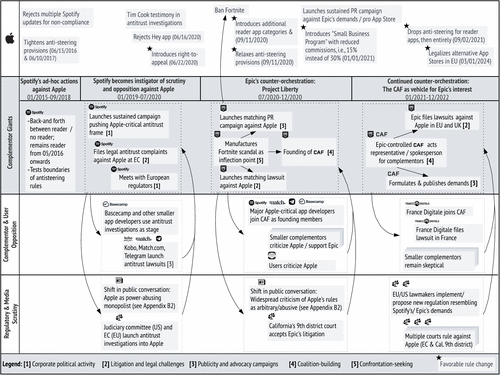
Throughout these steps, we continually updated the timeline and case narrative (Langley 1999). We also mapped the time-series data on media attention into this timeline to assess whether the chronicled activities preceded and thus might have contributed to shifts in public discourse (Langley 1999). Figure 1 in the Findings section shows the final timeline.
3.4. Theorizing Mechanisms of Complementor-Driven Rule Change
To move from the historical record toward explanation of the observed dynamics, we sought to identify mechanisms, understood as “sequences of actions and/or events unfolding in time that contribute to the transition from an initial state to an observed outcome” (Avgerou 2013, p. 409). These mechanisms represent nondeterministic explanations—their purpose is not to predict outcomes, but to elicit the causal logic that generates (change in) a phenomenon (Avgerou 2013, Cloutier and Langley 2020). To construct these mechanisms, we narratively traced the sequence of actions by relevant entities (e.g., nonmarket attacks by complementor giants, responses by regulators and other complementors), events (e.g., court rulings), and formative contextual conditions that contributed to rule changes (Langley 1999, Avgerou 2013, Cloutier and Langley 2020). Through diachronic comparison (Langley 1999, Porra et al. 2014), we noted that counter-orchestration by complementor giants triggered reactions from users, fellow complementors, regulators, and the media, and that those reactions in turn legitimized and amplified the original attacks (Cloutier and Langley 2020). We then abstracted the theoretical glue between these action-reaction links into four stocks (see Table 4 for definitions), allowing us to construct high-order mechanisms in the form of cycles. These cycles “concatenate” (Avgerou 2013, p. 409) to form our process model of complementor-driven platform rule change.
|
Table 4. Components of Collective Efficacy
| Component | Definition |
|---|---|
| Public opportunities | The extent to which visible occasions or forums are available for actors to express support for complementor giants or voice concerns about and act against the platform owner |
| Issue confluence | The extent to which actors converge—or credibly appear to converge—on problem definition, attribution of responsibility, motivation to act, and/or proposed solutions |
| Salience of tensions | The extent to which the conflict between the platform owner’s private interests and the collective interests of ecosystem participants is perceived as noticeable, pressing, and/or urgent |
| Legitimacy | The extent to which the complementor giant’s claims or positions are perceived as valid, based on their demonstrated merit and/or the breadth of support from other actors |
| System-level capacity emerging from accumulating growth in public opportunities, issue confluence, salience of tensions, and legitimacy | |
| Collective efficacy | The jointly held belief and capacity of ecosystem participants and external stakeholders to generate sustained pressure on the platform owner |
4. Findings
4.1. Case Context and Background
In 2008, Apple introduced the iOS APIs, allowing third-party developers to create apps for the iPhone. Concurrently, it launched the App Store as the exclusive distribution channel for iOS apps. To be listed, apps must pass the App Store review process, necessitating compliance with rules related to an app’s design, technical architecture, content, and distribution—including three monetization-related provisions that became the nucleus of conflicts between Apple and its complementors. Table 5 summarizes those rules.
|
Table 5. Three App Store Rules as the Nucleus of Conflicts
| Rule | Description |
|---|---|
| Apple tax | All transactions of digital goods in the app or App Store must exclusively use Apple’s payment system (“IAP”), with a commission—usually 30%—on all such transactions. |
| Reader app exemption | Apps displaying approved content purchased outside the app (“reader apps”) are exempt from IAP and the commission but cannot offer direct transactions or account creation. |
| Anti-steering provisions | Apps are prohibited from informing users about alternative payment options outside the App Store (no links, buttons, or notifications). |
Note. The source is the App Store Review Guidelines.
A central element of Apple’s monetization rules is the in-app purchase (IAP) system, requiring all transactions of digital2 goods to use Apple’s payment infrastructure and incur a commission fee—usually 30%—known as the “Apple tax.” This fee applies to initial app purchases, subscription charges, and various in-app sales including premium features and in-game currencies. Although Apple established a reader app exemption for apps displaying approved, externally purchased content (e.g., eBooks and streaming subscriptions), the exemption was tightly constrained by anti-steering provisions that prohibit these apps from directing users to external purchase options, leading Apple employees to internally label these apps as “dumb readers” (internal Apple communication, [D6]).
By 2015, as Apple’s market dominance in the mobile app market had solidified, tensions over these rules began to surface more prominently, particularly after it launched its own music streaming service that competed directly with third-party streaming apps. Complementors with large user bases, public attention, and significant resources—such as Spotify and later Epic—began challenging Apple’s rules using nonmarket attacks. We referred to these influential challengers as complementor giants and started to systematically trace their attacks over time. Our analysis reveals that although their early attacks were reactive, they evolved into coordinated campaigns designed not only to challenge Apple but also to instigate responses from a diverse set of actors both within and beyond the ecosystem. Table 3 introduces the core concepts used to capture these interrelated actions.
The following case narrative reconstructs how complementors, users, regulators, media, and even Apple itself became entangled in a coordinated and ultimately successful push for rule changes, driven by the counter-orchestration of complementor giants. The timeline in Figure 1 maps the rich descriptions from the case story onto the core concepts introduced above. Beyond giving readers a structured overview of who used which tactic, and when, this figure serves as a crucial intermediate step in our theorizing, linking the narrative to the process theory developed later in the paper.
4.2. Spotify’s Ad Hoc Actions Against Apple
Shortly after Apple launched Apple Music in June 2015 for USD 9.99 per month, Spotify transformed its app into a “dumb reader.” This change meant that only users who had already subscribed outside the app (e.g., via Spotify’s website) could access their premium subscription within the app, and that it became subject to anti-steering provisions. The advantage for Spotify was that the revenue from those users was exempt from the 30% commission.
Over the following months, Apple repeatedly found Spotify’s app to be noncompliant with its anti-steering rules and rejected related updates before they reached users ([D14]). Spotify insisted it had not violated any guidelines, but its claims received little sympathy—neither from Apple nor from the public. Although many news outlets acknowledged the significance of the 30% commission, they also questioned the legitimacy of Spotify’s discontent considering its minimal royalty payments to musicians (e.g., [D9], [D10]). Commentators also noted that Apple had driven large numbers of customers to Spotify and that charging commissions for customer acquisition is standard practice (e.g., [D9]). Apple did not back down either, instead expanding and tightening the anti-steering provisions (see guideline updates 06/13/2016 and 06/10/2017) and continuing to reject Spotify updates over violations of this expanded rule.
4.3. Spotify Becomes Instigator of Scrutiny of and Opposition to Apple
4.3.1. Spotify Starts Mobilizing Complementors, Users, Regulators, and the Media.
Following a series of app rejections in 2018, Spotify’s attacks against Apple became more systematic. Spotify began changing the narrative by reframing Apple’s rules as a wider antitrust issue and portraying Apple as a monopolist that unlawfully restricted complementors and engaged in self-preferencing. For instance, in public statements, Spotify accused Apple of “anticompetitive conduct” and using “the App Store approval process as a weapon to harm competitors” ([D15]). In March 2019, some months after another rejection over alleged steering, Spotify filed a formal complaint with the European Commission (EC), claiming that the mandatory use of IAP and anti-steering provisions should be prohibited for limiting competition. After filing the complaint, Spotify met multiple times with European policymakers who were working on new tech regulation and bolstered its legal complaint with a public relations (PR) campaign that framed Apple’s business practices as unlawful and detrimental to innovation and consumer welfare. For example, Spotify’s CEO Daniel Ek released an official blog post and press statement in which he accused Apple of “discriminatory tariffs” and “unfair restrictions” ([D17]). Moreover, Spotify launched timetoplayfair.com, a site dedicated to criticizing Apple’s “anticompetitive behavior” that would distort the “level playing field” and deprive consumers of “true choice” ([D18]).
4.3.2. Media Scrutiny, Regulatory Scrutiny, and Complementor Support Amplify Spotify’s Claims.
As media coverage of the conflict between Apple and Spotify rose (see Online Appendix D, time-series diagram for Theme 1), the public conversation began to shift. Media critically assessed the IAP mandate and anti-steering provisions and depicted Apple as a powerful monopolist (see, e.g., [D19] and [D20]), and coverage of App Store antitrust issues surged (see Online Appendix D, Themes 2 and 3). Regulators around the globe also began to exert scrutiny. The European Commission followed up on Spotify’s complaint and opened an antitrust investigation focusing on two practices, that is, (1) “the mandatory use of Apple’s own proprietary in-app purchase system” (including the 30% commission) and (2) the anti-steering rules forbidding “developers to inform… users of alternative cheaper purchasing possibilities outside of apps” ([D24]). In the United States, the U.S. House of Representatives initiated an investigation3 into “competition problems in digital markets” and whether “dominant firms are engaging in anticompetitive conduct” ([D21]) that included a hearing with Apple CEO Tim Cook. The questioning centered on Apple’s App Store policies, specifically the “Apple tax” and whether Apple used its “power to dictate the terms for app developers” ([D22]).
Smaller complementors also voiced opposition. David Heinemeier Hansson, cofounder of Basecamp—a company known for its project management software and a web development framework—used the hearing to express grave concerns about Apple’s anticompetitive App Store policies, echoing complaints Spotify had publicized through its “time to play fair” campaign:
Businesses are required to hand over 30% of their revenue… 30%! Most mobsters would not be so brazen as to ask for such an exorbitant cut… If you choose to opt out of this regime, you are subject to a truly draconian set of rules… if we dare to mention that it’s possible to sign up for our service using the open web, Apple’s retaliation is swift and brutal. They will simply ban our app from the App Store, until we comply. (David Heinemeier Hansson, [D23])
4.3.3. An App Rejection in an Antitrust-Aware Climate Triggers Additional Scrutiny and Support Pushing Apple into First Concessions.
During his congressional testimony, Heinemeier Hansson had expressed a “constant fear” that Basecamp’s apps “may have violated… [Apple’s] vague rules, and that the next update to our applications will be blocked by Apple” ([D23]). Until then, Apple had categorized Basecamp’s new email service “Hey” as a reader app, exempting it from the 30% commission. However, when Basecamp submitted an update, Apple revoked the exemption, arguing that “Hey” would be a consumer service that did not meet the reader app criteria ([D25]). Although not explicit in the App Store rules, Apple had used the “approved services” clause to allow apps aimed at enterprise customers into the reader category. Phil Schiller, Apple’s head of marketing, defended the rejection, insisting that mandating IAP leads to a better user experience, because without it “you download the app and it doesn’t work” ([D26]). This stance was met with criticism from notable app developers, bloggers, and podcasters close to Apple’s developer community ([D27]):
I feel like this is recursive logic. The app does this [i.e., look as if it does not work] because they had to bend over backward to not tell the user how to sign up. They did that because of existing App Store rules [i.e., anti-steering provisions] that force them to not help the user here. (Matt Bircher, iOS developer and blogger, [D27])
Prominent Apple blogger John Gruber similarly noted that the real difference was “not so much between what is and is not a ‘reader’ app… but between companies which are too big for Apple to push around and those they can” ([D28]). The wider public debate followed suit, increasingly criticizing Apple’s 30% tax and anti-steering provisions (see Online Appendix D, Theme 3). Additionally, a series of lawsuits initiated by complementors accused Apple of stifling competition within the App Store (Match.com on May 29, 2020; Rakuten on June 16, 2020; and Telegram on July 30, 2020). Though Apple did not lower commissions or relax anti-steering provisions, it did introduce the “right to appeal,” allowing developers to formally challenge Apple’s guideline violation ruling (see guidelines, 06/22/2020). This concession meant Apple would no longer reject bugfix updates for guideline violations—as it had done with the “Hey” app. More substantive reforms occurred only after another complementor giant, Epic, started organizing its own nonmarket campaign.
4.4. Epic’s Counter-orchestration: Project Liberty
Epic, creator of Fortnite—at the time the highest-grossing game on the App Store—sensed that “the tide is turning against Apple” and that “the time is now” to pressure Apple into changing the rules in its favor (see [D29], internal slide deck). Because Epic’s free-to-play apps rely on in-game purchases (e.g., Fortnite’s virtual currency), they did not qualify for the reader app exemption. Epic’s goals thus included ending “the 30% tax” and gaining permission to use “its own alternative payment system.” Epic also saw an opportunity to push Apple into accepting an “alternative Epic Appstore that has the same technical rights and privileges as Apple’s” ([D31], internal communication). Already operating its own “Games Store” and payment system on other platforms (e.g., Windows), Epic would be among the few companies capable of operating such a store, an opportunity most complementors could not realistically pursue.
4.4.1. Epic Designs and Times Project Liberty to Expose Apple as Self-Serving.
To achieve these goals, Tim Sweeney, CEO of Epic, launched a secret initiative called “Project Liberty.” Its mission was to create a wrong that required “correct[ion]… + media interest + sustained public attacks [on Apple]” ([D35], contract). What distinguished Project Liberty from earlier attacks was its careful orchestration—Epic meticulously planned, timed, and integrated multiple nonmarket attacks (see Online Appendix E for rich coding examples). At its center was the creation of a “manufactured inflection point” ([D35], contract), designed to highlight how Apple’s IAP mandate and “Apple tax” harmed users. Epic prepared an update that would equip Fortnite with its own payment system (Epic Direct Payment (EDP))—offering a 20% discount over Apple’s system. The challenge for Epic was that such clear violations of the App Store rules were usually caught in the App Store review process and rejected before they reached users. Therefore, Epic’s senior management decided to hide EDP as a dormant functionality within an ostensible routine update:
We did not want that to be part of the evaluation… If we had enabled multiple payment providers … Apple would have rejected it. (Joseph Kreiner, Epic VP Business Development, [D32], sworn testimony)
Additionally, Project Liberty developed a comprehensive plan that included (1) a detailed communications strategy with tailored messaging points for different escalation levels, (2) a massive media campaign (press releases, blog posts, anti-Apple commercials), and (3) a lawsuit to be launched once Apple retaliated against Epic.
With Project Liberty fully prepared, Epic strategically timed the activation of EDP to coincide with peak download times. If users made in-app purchases via EDP, they saved 20%, corroborating the claimed advantages of “player choice” and “player savings” ([D56]). Apple set a deadline for compliance; Epic escalated the dispute by publicly challenging the deadline and refusing to deactivate EDP. This maneuver placed Apple in a dilemma: Banning Fortnite would turn users into victims, by depriving them of a highly popular game and EDP-associated savings, whereas tolerating Epic’s violation would compromise both Apple’s revenue and its principle of uniform rules. Having closely analyzed Apple’s earlier responses to Spotify and Basecamp, Epic expected Apple to take the first option ([D31], [D56], and Online Appendix H).
As expected, Apple blocked Fortnite and Epic responded by swiftly launching a media campaign aimed at exposing Apple’s actions as harmful: Epic ran commercials reminiscent of Apple’s famous “1984” campaign—but with Apple taking the role of the powerful oppressor and Epic as the defiant liberator. Epic’s messaging highlighted that it had brought “choice… [and] saving benefits for players,” which Apple then had unjustly eliminated ([D30]).
4.4.2. Epic Launches a Lawsuit and the CAF to Mobilize Widespread Support and Scrutiny.
Another stream of Project Liberty aimed at mobilizing both support from ecosystem participants (users, complementors) and scrutiny from external stakeholders (regulators, media). Therefore, Epic promptly filed its preplanned antitrust lawsuit and arranged the creation of the “Coalition for App Fairness.” Epic hand-picked 13 “reputable, knowledgeable… third parties [to] bring legitimacy” ([D35]) as founding members, including Basecamp, Spotify, Rakuten, and the Match group—firms with known grievances against Apple. The CAF presented itself as an advocate for app developers, challenging Apple’s “monopolistic control” ([D33]). Although nominally backed by 13 founders, Epic controlled the CAF behind the scenes ([D34]). Officially, the coalition was “separate and independent,” but operational control was in Epic’s hands with “day-to-day operations… managed by the Consultant with direct reporting into Epic” (see [D35], contract). The CAF helped Epic to hide its agenda behind an impartial entity:
When it is large company vs large company, these writers will defer to… Apple and defend them. The way that changes is if you go to that table with their friends. Epic is not sympathetic. But for all of the developers that suffer from those [Apple’s] attacks, they are sympathetic… We have employed the firm who can run the strategy for us and build the coalition for us. (Matt Weissinger, Epic VP of Marketing, [D34], internal email)
Forming a “broad coalition” ([D30]) helped make Epic’s demands appear aligned with the collective good:
When you look at the specs of an ecosystem, players like Spotify and Epic are certainly big, as they have a lot of power, resources, etc. but compared with Apple, they are small. And Apple must take into account the interests of the large as well as small ones, because the rules are similar for everyone. (France Digitale, top executive 2)
The perception of broad support generated by the CAF “allow[ed] the press to write the monopoly story on their own” ([D56]), amplifying worldwide, often supportive media attention for Epic’s issues and demands (see Online Appendix D, Theme 4).
4.4.3. Apple Makes Concessions.
Confronted with coordinated criticism from developers, media, and users, Apple made key concessions, especially to smaller developers. First, Apple clarified eligibility criteria for the “approved services” category, which is exempted from the IAP mandate. Ambiguities in these criteria had been at the center of the rejection of Basecamp’s “Hey” app, and Apple removed it by creating new app categories with clear qualifying criteria and specific IAP rules (see guidelines, 9/11/2020). Second, Apple relaxed its anti-steering provisions, ending its policy of regulating complementor communication outside the app; anti-steering rules would now only apply in-app. This revision was seen as particularly beneficial for smaller developers, which, because of their lower visibility, were disproportionately affected by the prior constraints. Apple’s third concession was the launch of the “App Store Small Business Program” ([D36]), reducing the commission from 30% to 15% for developers earning under USD 1 million annually.
4.4.4. Amidst Apple’s Concessions, Complementors and the Public Remain Skeptical.
Although these changes aided smaller developers, they did not address the key demands of complementor giants like Epic, whose games still could not use alternative payment systems and app stores. Apple also countered Epic’s demands, launching a dedicated website (timetoplayfair.com, [D37]) and a white paper ([D38]), tying the App Store’s security, privacy, usability, and trust advantages directly to its stringent guidelines, thorough review processes, and secure payment system. Moreover, Apple described Epic’s actions as “deceitful” and argued its recent rule changes evidenced its responsiveness to the developer community’s wishes:
Well, the App Store is not cast in concrete, you know? And so, we’ve changed over time… with our recent move with small developers, developers… pay 15%… that’s the vast majority of developers. (Tim Cook, [D39])
Despite these concessions and justification efforts, many developers continued to question Apple. Even the small indie developers that arguably gained most from the rule changes saw Apple’s rulemaking as arbitrary and opportunistic rather than principled ([D40]):
… an undeniable and important undercurrent to this story is that the business model policies of the App Store have resulted in a tremendous amount of resentment. This spans the entire gamut from one-person indies all the way up to the handful of large corporations… this deep widespread resentment among developers large and small is a serious problem for Apple. (John Gruber, Apple blogger, [D41])
Public skepticism also persisted, as media coverage of Apple’s antitrust issues continued to rise (see Online Appendix D, Theme 3).
4.5. Continued Counter-orchestration: The CAF as a Vehicle for Epic’s Interests
Building on the prevailing atmosphere of resentment, Epic leveraged the CAF to sustain pressure on Apple across multiple fronts.
4.5.1. Mobilizing European Complementors by Forging an Alliance.
Initially seen as dominated by large, United States-based firms, the CAF broadened its reach in February 2021 when France Digitale—a leading European startup association representing over 2,000 entrepreneurs—joined. Although it viewed the CAF as being “biased” and “very transatlantic,” France Digitale acknowledged the coalition’s success in mobilizing a “backlash against Apple” (France Digitale, top executive 2) and saw an opportunity to stand up against Apple and tip regulation in favor of smaller complementors.
… we noticed that the start-ups couldn’t just go there, they couldn’t go there in their own name, except to risk being delisted by Apple. So, the idea was that we wanted to be a kind of firewall… to do on behalf of our members what they could not do on their own. It is also a way… of representing the interests of French or European companies, at least the smallest ones. Kind of a David against Goliath fight. (Interview, France Digitale, top executive 2)
It’s very important to us because otherwise the regulator is going to regulate us the same way it is regulating the Big Tech and, this, we don’t want. (Interview, France Digitale, top executive 1)
4.5.2. Epic Uses the CAF to Amplify Legal Pressure and Interweave Regulators.
By partnering with France Digitale, the CAF gained “a lot of press coverage” (France Digitale, top executive 2) in a key market (see Online Appendix D, Theme 5) and established a foothold with French and European Union (EU) regulators. At the time, France was widely regarded as leading tech-regulation initiatives in Europe.
I don’t think it’s obnoxious or arrogant to say that we have a direct line with the Commissioner Breton,4 and with the ministry “Bercy”5 in France… [We are] the most influential tech industry group in Brussels.6 (Interview, France Digitale, top executive 1)
France Digitale and the CAF began to act in close coordination:
We talked a lot with CAF to get feedback from companies like Epic, etc. We had fairly regular debriefings on what was going on. (Interview, France Digitale, top executive 2)
One area of coordination was litigation, where the CAF and its members carried out a multifront legal campaign: Epic filed complaints (similar to Spotify’s earlier complaint) with the European Commission (February 21, 2021) and the UK “Competition Appeal Tribunal” (January 21, 2021). France Digitale spearheaded litigation efforts in France, accusing Apple of imposing standard contracts on third parties that create “significant imbalance” ([D42]).7 Regardless of the outcome, the CEO of France Digitale was optimistic: “We will either have a very clear condemnation of Apple’s violation of existing competition law, or proof that the current law does not allow digital giants to be touched” ([D43]).
4.5.3. Court Rulings: Legal Support for the Demands of Complementor Giants.
In April 2021, two years after Spotify had filed its complaint against Apple, the EU Commission was the first authority to rule that Apple had indeed violated antitrust law. The ruling specifically concerned the “high commission fees” and anti-steering provisions.
The Commission takes issue with the mandatory use of Apple’s own in-app purchase mechanism… The Commission is also concerned that Apple applies certain restrictions on app developers preventing them from informing iPhone… users of alternative, cheaper purchasing possibilities. (Official Statement from EC, [D44])
When the ruling was confirmed, Apple criticized the ruling, insinuating undue influence of European companies:
The primary advocate for this decision—and the biggest beneficiary—is Spotify, a company based in Stockholm, Sweden. Spotify …has met with the European Commission more than 65 times during this investigation. ([D60])
Regulators from non-EU countries also increased scrutiny: Competition authorities in the United Kingdom and Japan intensified their investigations into concerns similar to those condemned in the EU ([D45], [D46]). These investigations probed whether Apple’s business practices violated existing laws, whereas in the United States and the EU, legislators proposed new laws that would considerably curb Apple’s control over the App Store. The disputes between Apple and complementor giants had evidently drawn legislative attention, as noted by European Commissioner Margarethe Vestager: “We follow, for instance, the hearings on the Epic’s case very close” ([D47]). During the legislative process, representatives of the European Commission met with Spotify and their public statements supporting the proposals echoed the grievances aired by complementor giants, a testament that their efforts were paying off. For example, European Commissioner Vestager specifically mentioned Epic when arguing that a viable solution would be “allowing a second App Store” and she referred to Spotify when she bemoaned anti-steering provisions:
And also, if for instance, you’re then Spotify, you cannot tell your subscribers that you can get it without the commission fee if you sign up via the Spotify website… (Margarethe Vestager, [D47])
The legislative proposal incorporated the key demands that Epic, Spotify, and the CAF had advocated for years. The EU’s “Digital Markets Act” ([D48]) and the United States’ “Open App Market Act” ([D49]) would require Apple to permit alternative app stores and payment systems, while banning anti-steering provisions. The joining of forces appeared to benefit every complementor involved: “Overall, everyone benefits. Whatever the size and for different reasons. It is the collective game.” (France Digitale, top executive 2)
4.5.4. Apple Makes Important Concessions.
In fall 2021, Apple conceded to the increased public and regulatory pressure by relaxing anti-steering provisions in two ways. First, Apple announced that it had reached a settlement with the Japanese authorities according to which “developers of all app categories would now be permitted to communicate with consenting customers outside their app… about purchasing methods other than in-app purchase” ([D50]). Second, Apple legalized what had been at the center of its conflict with Spotify, that is, linking out from within the app for account creation and payment:
Apple will let developers of “reader” apps around the world link to an external website to set up or manage an account beginning early next year. ([D51])
In late September, the verdict in Apple versus Epic ruled that Apple had not reached “the status of monopoly power in the mobile gaming market” ([D52]). The court sided with Apple in noting that the obligatory use of its App Store and payment system would indeed result in security benefits for users, acknowledged the value users found in the App Store distribution model, and recognized Apple’s right to charge a fee for creating and operating these services. However, the court sided with Epic on one important issue—it ruled the anti-steering provisions to be illegal:
[Apple is] hereby permanently restrained and enjoined from prohibiting developers from (i) including in their apps and their metadata buttons, external links, or other calls to action that direct customers to purchasing mechanisms, in addition to In-App Purchasing.… ([D52], court ruling)
In October 2021, Apple appealed the verdict ([D53]), but subsequent rulings by the U.S. appeals court ([D54]), the U.S. Supreme Court, and the EU Commission ([D55]) reaffirmed the ban on anti-steering provisions. In January 2024, Apple filed a notice of compliance adopting a new guideline that expressly permits all developers with apps on the U.S. iOS storefront “to include buttons or external links with calls to action within their apps that direct users to alternative, out-of-app purchasing mechanisms” ([D57], p. 4). Although developers still had to pay commissions, fees on these linked transactions were lower than those for IAP. In March 2024, the EU Digital Markets Act took effect, forcing platform owners like Apple to allow third-party app stores. These decisions reflected key demands that complementor giants like Epic had long advocated. A few days later, Epic announced that it was “bringing the Epic Games Store to iOS in Europe” ([D58]).
4.6. Case Synthesis: Three Mechanisms of Complementor-Driven Platform Rule Change
This study investigated how complementors instigated rule changes against a powerful platform owner over multiple years. Our analysis shows that carefully planned nonmarket attacks by complementor giants—what we call counter-orchestration—served as the engine of a wider push for rule change that enrolled actions from diverse actors both within and beyond the ecosystem. Through deliberate design and timing, complementor giants mobilized responses from a broad and diverse set of actors, which amplified the original attack. For instance, with Project Liberty, Epic’s media campaign and its litigation efforts were created as interdependent components that supported each other, and it deliberately launched these attacks at a moment of peak user engagement, which generated opposition and scrutiny across complementors, users, regulators, and media—responses that were essential to mounting a credible challenge to Apple’s rules (see Online Appendices E and F for rich illustrations).
We synthesize this complex and dynamic interplay into three mechanisms: the Collective Action Cycle, the Exposure Cycle, and the Long-Term Accumulation Cycle. Each cycle unpacks and explains how the counter-orchestration of complementor giants instigates responses from external stakeholders (regulators and media), ecosystem participants (complementors and users), and the platform owner. These responses, in turn, reinforce the complementor giant’s original attack and shape subsequent moves. Changes in four accumulating conditions— public opportunities, issue confluence, salience of tensions, and legitimacy (see Table 4 for definitions)—interlink these move-response dynamics into recurring, self-reinforcing cycles. We next detail the cycles and their interplay, before synthesizing them in our model of complementor-driven platform rule change.
4.6.1. The Collective Action Cycle.
The Collective Action Cycle explains how complementor giants enroll diverse actors into a seemingly unified front, whose actions in turn amplify the giant’s challenges to platform rules. The cycle unfolds through interactions between complementor giants and two groups: ecosystem participants (users and other complementors) and external stakeholders (regulators and media).
The nonmarket attacks by complementor giants set the cycle in motion by mobilizing opposition from ecosystem participants and scrutiny from external stakeholders through two constituent mechanisms. First, they create issue confluence so that actors converge—or credibly appear to converge—on problem definition, attribution of responsibility, motivation, and/or proposed solution. For instance, by filing a complaint with the European Commission, Spotify initiated a formal antitrust process that brought EU regulators into its contestation of Apple’s rules. While EU regulators retained agency over whether to investigate and how to rule, Spotify’s complaint shaped the direction of these actions by specifying which rules were problematic (problem), attributing responsibility to Apple on the basis of its market power (attribution), and articulating the legal grounds for remedy (solution). Similarly, by founding the CAF, carefully selecting its founding members, securing the inclusion of France Digitale (and the many complementors it represented), adding additional firms and industry bodies, and then using the CAF to coordinate legal action across jurisdictions, Epic aligned the actions of many others and provided an organizational umbrella under which numerous independent complementors could project alignment. Moreover, the Epic-controlled CAF was instrumental in advancing a grassroots narrative that served as the connective tissue between expressions of discontent voiced independently by complementors and users, creating the appearance that these actions were part of a broader movement. CAF-circulated “messaging materials including talking points” ([D35]) reinforced this appearance by steering complementor communications toward the CAF’s problem definitions, attribution of responsibility, motivation to act, and remedies.
Second, the attacks create public opportunities, that is, visible stages for external stakeholders and ecosystem members to express support for complementor giants or to voice concerns about and act against the platform owner. In fact, a central component of Epic’s Project Liberty was to smuggle an alternative payment system (“EDP”) through App Store review undetected, with the explicit aim of pulling the IAP mandate into public view. Similarly, Spotify’s and Epic’s legal mobilization and public influence campaigns focused public attention on key complementor grievances, thereby providing visible occasions and public forums (e.g., hearings) in which parallel concerns could be aired.
The resulting regulatory and media scrutiny, together with the opposition from complementors and users, in turn raise the legitimacy of the complementor giant’s claims by demonstrating their substantive merit and/or the breadth of support. For example, the European Commission’s decision to launch an antitrust investigation into Apple’s App Store rules—sparked by Spotify’s earlier complaint—substantiated Spotify’s narrative that Apple’s rules harm complementors and users. Likewise, the rising media scrutiny that Apple received—as demonstrated by the increasing and increasingly critical media coverage of antitrust issues in the App Store (see Online Appendix D, Themes 2–4)—lent support to this narrative. Legitimacy also stems from expressions of scrutiny exerted by large numbers of complementors and users, as demonstrated when multiple complementors echoed Spotify’s complaints in antitrust hearings, and Fortnite players voiced disdain after Apple removed the game. Thus, in the Collective Action Cycle, complementor giants mobilize ecosystem participants and external stakeholders by creating public opportunities and issue confluence; those responses, in turn, amplify the complementor giant’s original attack by lending greater legitimacy to it.
4.6.2. The Exposure Cycle.
The Exposure Cycle captures the self-reinforcing process through which complementor giants provoke specific platform owner behaviors that reveal the owner’s motives and priorities as self-serving, thereby validating the complementor giants’ claims and inviting further opposition and scrutiny. This cycle centers on interactions between complementor giants and the platform owner, and it triggers additional opposition and scrutiny from ecosystem participants and external stakeholders.
The cycle begins with nonmarket attacks by a complementor giant that render the tension between the platform owner’s private interests and the collective interests of ecosystem participants more salient, thereby forcing the platform owner into difficult decisions. Complementor giants can intentionally manufacture such situations to provoke platform owner behaviors that backfire by reflecting poorly on the platform owner. For example, Epic’s introduction of an alternative payment system—a calculated violation of App Store rules—confronted Apple with a dilemma: Enforcing compliance with the rules required actions that also harmed Epic’s and Apple’s shared user base (e.g., depriving users of lower prices and access to a popular game). In doing so, Epic sought to turn users against Apple.
The cycle becomes self-reinforcing as the platform owner’s disproportionate response appears to corroborate and thus legitimize the complementor giant’s claims. For example, Apple’s banning of Fortnite exposed a prioritization of its own commercial interests over the ecosystem’s collective well-being. This platform owner overreach also serves as a rallying point mobilizing further opposition and scrutiny. The removal of Fortnite, for example, spurred users to publicly express discontent, complementors to endorse Epic’s demands, media outlets to criticize Apple (see Online Appendix D, Theme 3), and regulators to launch investigations (see Figure 1). In this way, the Exposure Cycle feeds directly into the Collective Action Cycle by creating public opportunities that prompt opposition from ecosystem participants and scrutiny from external stakeholders, further strengthening the legitimacy of the complementor giant’s claims.
4.6.3. The Long-Term Accumulation Cycle.
The Long-Term Accumulation Cycle explains how growth in public opportunities, issue confluence, salience of tensions, and legitimacy build a system-level belief and capacity that enable broader participation and more sophisticated follow-up attacks, thereby escalating pressure for rule change. As shown above, each pass through the Collective Action and Exposure Cycles leaves enduring conditions: The Collective Action Cycle generates public opportunities and issue confluence among ecosystem participants and external stakeholders, whereas the Exposure Cycle heightens the salience of tensions between complementors and the platform owner. These cycles—both individually and together—build legitimacy for the complementor giants’ claims. As these conditions accumulate, complementors, users, media, and regulators develop a jointly held belief and capacity to generate sustained pressure on the platform owner—what we, following Rao and Dutta (2012), call collective efficacy.
As collective efficacy grows, participation thresholds fall and participation widens, yielding coordinated efforts by evolving constellations of actors. For example, the formation of the CAF and its expansion into key jurisdictions subsequently facilitated a global, coordinated legal campaign with diverse plaintiffs placing Apple under regulatory scrutiny in the EU, United Kingdom, United States, and Japan, further strengthening the complementors’ case for reform. Collective efficacy also enables more sophisticated follow-up attacks. Spotify’s early antitrust narrative, for example, established a set of legitimate claims that Epic and other complementors could extend and refine to bolster their own cases against Apple, thereby intensifying pressure for rule change.
4.7. Process Model of Complementor-Driven Rule Change in Platform Ecosystems
Figure 2 synthesizes the three cycles into a model that explains how the interdependent actions of many independent actors progressively build the collective efficacy needed to successfully press for rule change. Agency in this model is interdependent: Multiple actors act intentionally and autonomously, yet their actions and the effects of these actions mutually condition one another; outcomes therefore emerge from their concatenation over time rather than from any single actor’s will. The model operates across two interwoven time horizons: iterations and long-term trajectories. An iteration represents a discrete, shorter time frame during which a complementor giant launches nonmarket attacks against the platform owner. These attacks instigate immediate responses from actors within and beyond the ecosystem and strengthen the four components of collective efficacy. Long-term trajectories comprise multiple model iterations in which short-term changes in these components accumulate into collective efficacy, enabling a larger set of actors to generate sustained pressure via increasingly sophisticated follow-up attacks, thereby creating momentum for change.
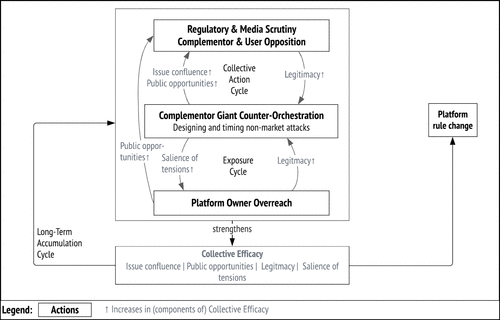
At the iteration level, the model foregrounds how the complementor giant’s moves interlock with the responses of ecosystem participants (complementors, users), external stakeholders (regulators, media), and the platform owner. On the one hand, complementor giants act intentionally as instigators of change, that is, the entities that initiate and sustain the Collective Action and Exposure Cycles. They strategically design and time their attacks to create public opportunities, generate issue confluence, and render tensions salient—thereby inviting and provoking responses. On the other hand, the other actors involved in these cycles retain discretion over whether and how to respond: Complementors and users decide independently on the opposition they express, regulators and media on the scrutiny they exert, and platform owners on whether to change or enforce the rules. Importantly, no single actor controls the full set of interlocking capabilities required for rule change: Complementor giants provide audience reach and large user bases and can deploy substantial technical and legal resources, regulators contribute investigatory and sanctioning authority, media allocate attention, and users and complementors confer legitimacy and amplification.
Whereas causality in these mechanisms is relatively immediate, the Long-Term Accumulation Cycle represents a structural mechanism, in which the outcomes of prior actions feed back over time, gradually reshaping the context for future moves (Avgerou 2013). Repeated passes through the Collective Action and Exposure Cycles expand public opportunities, strengthen issue confluence, intensify tensions, and bolster legitimacy. From this accumulation emerges collective efficacy, enabling more actors to participate and to mount increasingly sophisticated, sometimes coordinated, waves of contestation by evolving constellations of actors (the same giant, other giants, smaller complementors, users, media, and regulators). What begins as isolated actions that do not yet generate rule changes evolves into a systemic shift as each loop strengthens the conjoint capacity to generate pressure, creating momentum for rule change. Thus, although our model foregrounds the intentionality of complementor giants as instigators of change, rule change arises from the reinforcing interplay of actions enacted by multiple agentic actors—rather than from any single trigger or actor.
5. Discussion
The goal of this study was to address how complementors in platform ecosystems can leverage nonmarket strategies to effect rule changes in their favor. Drawing on a historical analysis of rule change in Apple’s iOS ecosystem, we developed a process model of complementor-driven platform rule change that highlights the pivotal role of both complementor giants as instigators and orchestrators of change as well as the legitimizing and amplifying responses of other complementors, users, regulators, media, and the platform owner. This model has three major implications. It unveils counter-orchestration as an adversarial counterpart to platform owner orchestration, recasting platform governance as multidirectional. It explains how complementors move from mitigation to structural change. And it reveals mechanisms of nonmarket contestation distinctive to platform ecosystems.
5.1. From Platform Orchestration to Counter-orchestration
Our process advances a theory of platform ecosystem dynamics for settings in which a platform owner wields sufficient market power to impose contentious rules unilaterally on complementors (Shapiro and Varian 1999, Gawer 2022). Prior research has often depicted platform governance as a one-way, owner-led process (Boudreau 2010, Gulati et al. 2012, Thomas et al. 2014, Wareham et al. 2014, Kapoor and Agarwal 2017), in which the platform owner dictates terms and designs resources that set the boundaries in which complementors operate (Dattée et al. 2018, Foerderer et al. 2018). In contrast, our process model unpacks the counter-orchestration mechanisms that explain how complementor giants instigate and align responses from a variety of actors to build momentum for rule change.
At the root of platform owner power in multisided markets is their role as intermediaries that harness reinforcing interactions between supply and demand sides—so-called network effects (Constantinides et al. 2018, Rietveld and Schilling 2021, Fürstenau et al. 2023). Our study extends this view by showing how complementors can turn the very interaction patterns behind network effects—typically a source of platform owner power—into levers to contest the rules. First, the Collective Action Cycle unpacks how complementor giants construct an intermediary position of their own. They do so by creating public opportunities and generating or projecting issue confluence, which enables them to enroll shared users (demand side) and fellow complementors (supply side) into a connected push for rule change against the platform owner, thereby orchestrating both sides of the platform. Second, the Exposure Cycle unpacks how complementor giants erode the platform owner’s intermediary role. By deliberately provoking rule enforcement that harms actors on one or both sides of the market, they publicly expose the platform owner’s practices as self-serving, eroding its credibility as a neutral intermediary and thereby mobilizing opposition. Over time, these effects accumulate through the Long-Term Accumulation Cycle, strengthening the collective capacity of actors across and beyond both sides of the platform to press for rule change.
By foregrounding the criticality of creating publicly visible opportunities and rendering tensions salient to mobilize other actors, our model also advances the innovation platform perspective, which has so far highlighted the enabling role of modular platforms and boundary resources for complementor innovation (Tiwana et al. 2010, Yoo et al. 2010, Ghazawneh and Henfridsson 2013, Hurni et al. 2022). The comparison of Spotify and Epic reveals an additional, largely overlooked function: Modular platforms and boundary resources can also serve as mechanisms for silencing dissent. Specifically, Apple’s control over key boundary resources shaped which conflicts reached public visibility and which were quietly neutralized. For example, Spotify repeatedly attempted to steer users to web payments, but Apple detected these violations of anti-steering provisions during review, so the protest remained invisible to users. Epic, by contrast, was able to make the disadvantages of Apple’s rules visible and felt to millions of players—but only by deliberately exploiting a weak point in Apple’s control of the App Store (its lack of control over externally hosted server logic allowed Epic to introduce a payment system through the “backdoor”). Because platform owners can use design and control of key resources to obscure grievances, creating visibility through public opportunities and exposure is a viable counterstrategy.
Our insights on complementor giants as counter-orchestrators offer a more nuanced account of platform governance dynamics. Whereas the digital platforms literature emphasizes the importance of centralized orchestration by the platform owner at the core of a star-shaped network (Tiwana et al. 2010, Constantinides et al. 2018, Jacobides et al. 2024), our findings indicate a more complex structure, where multiple hubs—including complementor giants—exercise orchestration power. We conceptualize this adversarial form of orchestration through our notion of counter-orchestration, capturing how complementor giants deliberately instigate and coordinate actors and actions to change the rules of engagement. This entails repurposing elements typically controlled by the platform owner—such as rules and technical resources—as tools for contestation. Thus, platform governance is not as centralized as it may appear; it is multidirectional, with powerful complementors orchestrating from the periphery to contest and reshape owner-set rules.
5.2. From Mitigation to Structural Change—Complementor Giants as Instigators of Rule Change
Our study extends the literature on mitigation strategies by introducing complementor giant counter-orchestration as a distinct response to the structural disadvantages complementors face vis-à-vis platform owners (Kude et al. 2012, Jacobides et al. 2018, Cutolo and Kenney 2021, Hurni et al. 2022). Although prior work has documented heterogeneity among complementors (Qiu et al. 2017, Rietveld and Schilling 2021), and a few studies have acknowledged the existence or potential relevance of particularly large and influential complementors (Cutolo and Kenney 2021, Schweitzer and Mai 2025), these studies have not examined how such actors actively instigate change. Addressing this gap, our findings show that counter-orchestration differs from previously documented mitigation strategies in both goal and means. Its goal is not to mitigate harm by evading the platform owner (Wen and Zhu 2019, Kude and Huber 2025), reducing information asymmetries, or mediating global-local tensions (Eaton et al. 2015, Huber et al. 2017, Hurni et al. 2022, Engert et al. 2025). Instead, the goal is to directly tackle structural disadvantages by changing the rules that reproduce them.
To pursue this more ambitious goal, counter-orchestration also relies on different means. Instead of merely adapting to existing conditions, complementor giants confront the platform owner head-on. Prior work shows that confrontation tactics—such as framing or striking8—can shape public discourse and heighten sensitivity for the grievances of ecosystem participants (Möhlmann et al. 2021, Schweitzer and Mai 2025). Our findings show that such tactics can shape rule change more directly when they are woven into an integrated campaign. In our case, framing operated as one thread embedded within a broader sequence that also involved confrontation-seeking, coalition-building, legal challenges, and a synchronized public influence effort. More generally, our model shows that counter-orchestration becomes effective when complementor giants deliberately enroll a broad cast of independent actors (users, media, regulators, other complementors) through a coherent, multipronged campaign; such enrollment both amplifies individual attacks and builds the collective efficacy needed to sustain subsequent waves of contestation.
These insights on complementor giants as central orchestrators of a change process that enrolls regulators and other complementors also allow us to revisit the two main remedies to overwhelming platform owner power proposed in prior literature—government intervention and collective action (Economist 2018, Scott Morton et al. 2019, Wu 2020, Cutolo and Kenney 2021). Regarding government intervention, our findings show in fact that some of the concessions Apple made happened only after courts ruled against Apple, and therefore, one might argue that certain regulators were already predisposed to act against platform owners and thus the influence of complementor giants might not be as significant as it appears. For instance, EU authorities may have sought to protect European startups or firms like Spotify from United States-based platforms. Although we cannot entirely dismiss such motivations, our findings also show that not only EU courts took action against Apple, but also courts in Japan, the United Kingdom, and the United States. It seems unlikely that their agendas were fully aligned—and yet all of them targeted the same subset of Apple’s rules. What these decisions shared, however, was a direct link to preceding actions by Spotify, Epic, or members of the CAF. These complementor giants defined the problems, established the legal grounds for challenge, and strategically selected jurisdictions. Thus, although our model does not claim to fully explain the decisions of these courts—nor that the observed rule changes would have occurred in the absence of regulatory involvement—it underscores the pivotal role of complementor giants in creating momentum for and shaping the nature and direction of these interventions.
Turning to the second remedy—collective action—we observe that it similarly did not emerge organically; it was meticulously orchestrated by complementor giants. The CAF, for example, although presented as grassroots, was initiated, funded, and directed by influential complementors to maximize pressure on the platform owner. Our study thus shows how, by designing and timing nonmarket attacks, complementor giants can actively shape collective action to gain leverage over the platform owner. This raises the question of whether similar collective dynamics would have been possible without the enrollment of regulators, media, other complementors, and users by large, resourceful firms whose interests may diverge from those of smaller players. On the one hand, smaller firms can draw attention, as seen when Basecamp briefly became a focal point of contention with Apple. Although much smaller than Spotify or Epic, Basecamp’s products and technologies were widely adopted among developers, likely explaining why its dispute garnered visibility and why Apple made concessions that addressed Basecamp’s issues (e.g., clarifying eligibility categories for the reader app exemption). On the other hand, these changes were far more limited than those secured through the systematic counter-orchestration by Spotify and Epic. Thus, although our findings underscore the importance of collective action (Economist 2018, Stigler Committee on Digital Platforms 2019, Wu 2020, Cutolo and Kenney 2021), they also suggest that truly transformative change is unlikely to emerge from pure grassroots efforts. Smaller complementors can sue the platform owner or publish blog posts, but complementor giants uniquely command a critical mass of users and media reach, capabilities that appear essential for generating the pressure required for more fundamental rule changes. Thus, although our findings underscore the importance of collective action (Economist 2018, Stigler Committee on Digital Platforms 2019, Wu 2020, Cutolo and Kenney 2021), they also suggest that truly transformative change is unlikely to emerge from pure grassroots efforts or from giants acting alone. Rather, it depends on the interdependent agency of complementor giants—as instigators and organizers—and of the many ecosystem participants and external stakeholders, who provide necessary scrutiny and opposition.
5.3. Nonmarket Strategies in Platform Ecosystems
Our process model advances nonmarket strategy research (Baron and Diermeier 2007, King and Soule 2007, Doh et al. 2012) by specifying how counter-orchestration operates as a distinctive form of nonmarket contestation in platform ecosystems. Although prior work has shown that small entities can prevail in nonmarket arenas (Baron 2016, Lyon 2018), it also emphasizes how larger firms can outspend smaller entities, leading to regulatory capture that favors large-firm interests (Oliver and Holzinger 2008, Stigler 2021). For example, in the platform context, platform owners use nonmarket strategies to shape regulations in new markets (see Khan et al. 2023 for an overview), and public data indicate that the five largest digital platform owners—Google (Alphabet), Apple, Facebook (Meta), Amazon, and Microsoft—spent over $74 million on U.S. federal lobbying in 2023 (OpenSecrets 2024), a financial commitment few, if any, complementors can match. Against such imbalances, it may seem unlikely that complementor giants could successfully challenge owner-imposed rules. Indeed, the Long-Term Accumulation Cycle implies that first movers may bear outsized costs while reaping only partial and delayed returns, as favorable conditions established in early waves often benefit later actors rather than those who initiated them.
Despite these resource imbalances, our findings show that complementors can successfully contest platform rules. We theorize, however, that the organizational form of platform ecosystems makes the mechanisms of such contestation operate differently from those documented in traditional nonmarket settings. Rather than seeking influence through resource parity, complementor giants exploit contradictions in the platform owner’s dual role—which simultaneously acts as regulator (setting rules and controlling technical infrastructure) and market participant (Boudreau and Hagiu 2008, Jacobides et al. 2024). Epic and Spotify leveraged this inherent conflict of interest by framing their private demands as efforts to restore fairness for the broader ecosystem—thus aligning them with collective welfare (Collective Action Cycle)—while exposing Apple’s behavior as self-interested and anticompetitive (Exposure Cycle), thereby delegitimizing the platform owner’s regulatory authority. Moreover, whereas prior research highlights the importance of creating liminal, hidden spaces in which grassroots organizing can emerge unseen (Rao and Dutta 2012), our evidence indicates that, when contesting powerful platform owners, public visibility operates as the key mobilization mechanism. Public hearings, open letters and complaints, and high-profile disputes provide low-cost “stages” for expression of discontent, and deliberately provoking rule enforcement in public converts abstract grievances into salient, directly experienced tensions. In short, visibility lowers participation thresholds, increasing the likelihood that independent actors will join the action and push for change.
5.4. Future Research
By establishing complementor giant counter-orchestration as a mechanism for platform rule change, our study opens several promising avenues for future research. First, scholars could examine heterogeneity in nonmarket attacks—for example, whether a complementor acts as an initiator or follower—and then analyze the antecedents of that heterogeneity. Our evidence indicates that first movers incur higher costs and capture delayed or partial benefits, raising the question of which complementor-specific variables explain this variation—a question that intersects with ongoing debates on complementor heterogeneity (Qiu et al. 2017, Rietveld and Schilling 2021) and variation in firms’ nonmarket postures (Oliver and Holzinger 2008, Baron 2016). Furthermore, the effectiveness of counter-orchestration is likely contingent on institutional preconditions—free press, due process and transparent courts, inclusive lawmaking, and protections for association and protest—pointing to the need for comparative research across ecosystems and regulatory contexts. In liberal democracies, where these conditions are stronger, complementors may more readily mobilize public support, leverage media scrutiny, and engage policymakers; by contrast, in authoritarian regimes, media control, opaque judicial processes, and constraints on collective action raise participation costs. Framed in terms of our model, future research should examine how institutional conditions modulate the Collective Action, Exposure, and Long-Term Accumulation Cycles.
A second line of inquiry concerns whether smaller complementors can spearhead counter-orchestration. We found little evidence that they have assumed such a role, and—consistent with our model—their limited demand-side reach makes it inherently difficult to generate the cross-side mobilization that successful campaigns demand. Nevertheless, smaller complementors might still devise innovative ways to create the momentum needed for effective rule change, for example, by mobilizing supply- and demand-side actors through niche-community networks or consumer advocacy. Work on self-organization in platform ecosystems (Engert et al. 2025) and platform-dependent entrepreneurship (Cutolo and Kenney 2021) offers promising starting points for investigating these dynamics.
Lastly, our findings raise important questions for future studies from a platform owner perspective, particularly regarding their responses to counter-orchestration. Although complementors have succeeded in pushing for more favorable rules, the broader struggle between platform owners and complementors over the rules is ongoing. For instance, although Apple relaxed some rules, observers have referred to these adjustments as “malicious compliance” ([D61]), suggesting varying degrees of genuine accommodation—an aspect our study did not explicitly address. Additionally, platform owners may adopt strategies such as public pushback or retaliation (Benford and Snow 2000), potentially undermining recent complementor wins. Although we have begun to identify these dynamics, future research should systematically analyze the trade-offs and strategic considerations that shape these responses. Although existing research examines how platform owners compete with complementors (Foerderer et al. 2018) and govern ecosystems (Boudreau and Hagiu 2008, Wareham et al. 2014), the question of how they respond to sustained nonmarket contestation remains largely unexplored.
Our findings also carry implications for how regulators approach platform governance. Rather than prescribing what platform owners can and cannot do—an approach that risks imposing simplistic and static rules on a complex and dynamic environment—regulators could focus on strengthening the conditions under which complementors can advocate for themselves: for example, by extending protections for complementor collectives, inviting them into legislative processes, and prohibiting practices that interfere with their formation.
The authors thank senior editor Eivor Oborn and associate editor Ning Su, as well as three anonymous reviewers, for their constructive guidance throughout the review process. The authors also thank the participants of the First Euro-IS Workshop, the HEC-ESSEC-INSEAD Management Seminar, ESSEC’s “Yes, We Qual” group, the ESSEC internal brownbag, research seminars at IESEG, the University of Passau, and Nova Business School, and Veronika Korom for their valuable feedback on earlier versions of this paper.
1 Centralized platform governance does not imply that complementors lack autonomy altogether; rather, the scope and nature of their autonomy are defined and constrained by the platform owner.
2 The IAP mandate does not apply to apps selling physical goods and services consumed outside the app (e.g., train tickets or Uber rides). These apps must provide alternative payment systems and are not subject to the 30% commission. Developers of ad-supported free apps are also not subject to this fee because they do not generate direct revenue.
3 We do not claim that these investigations were only initiated because of Spotify’s actions. However, the part of the investigation focused on app stores was largely concerned with issues that Spotify had problematized earlier ([D21]).
4 Thierry Breton was the “Internal Market” EU commissioner, that is, the head of the regulation body responsible for establishing a level playing field across the EU single market. Thierry Breton is French.
5 “Bercy” is a colloquial term for the French Ministry of Economy and Finance, the key government entity for the regulation of the economy including the regulation of competition and small businesses.
6 Brussels is the de facto capital of the European Union.
7 The German advertising lobbying group ZAW filed a similar lawsuit at the German competition authority (April 16, 2021).
8 In innovation platform ecosystems, complementors are not employees and are not paid by the platform owner for their work; a labor strike is therefore not a plausible tactic in this context. We reference “striking” as a canonical confrontational tactic from “gig work” settings, not as an observed mechanism in our case.
References
- (2013) Social mechanisms for causal explanation in social theory based IS research. J. Assoc. Inform. Systems 14(8):399–419.Google Scholar
- (2016)
Strategy beyond markets: A step back and a look forward . De Figueiredo JM, Lenox M, Oberholzer-Gee F, Vanden Bergh RG, eds. Strategy Beyond Markets (Emerald Group Publishing, Leeds, UK), 1–54.Crossref, Google Scholar - (2007) Strategic activism and nonmarket strategy. J. Econom. Management Strategy 16(3):599–634.Crossref, Google Scholar
- (2000) Framing processes and social movements: An overview and assessment. Annual Rev. Sociol. 26:611–639.Crossref, Google Scholar
- (2010) Open platform strategies and innovation: Granting access vs. devolving control. Management Sci. 56(10):1849–1872.Link, Google Scholar
- (2012) Let a thousand flowers bloom? An early look at large numbers of software app developers and patterns of innovation. Organ. Sci. 23(5):1409–1427.Link, Google Scholar
- (2008)
Platform rules: Multi-sided platforms as regulators . Gawer A, ed. Platforms, Markets and Innovation (Edward Elgar, Cheltenham, UK), 163–191.Google Scholar - (2016) Social activism in and around organizations. Acad. Management Ann. 10(1):671–727.Crossref, Google Scholar
- (2019) Generativity tension and value creation in platform ecosystems. Organ. Sci. 30(3):617–641.Link, Google Scholar
- (2018) Platform architecture and quality trade-offs of multihoming complements. Inform. Systems Res. 29(2):461–478.Link, Google Scholar
- (2018) Multinational corporate power, influence and responsibility in global supply chains. J. Bus. Ethics 148(2):365–374.Crossref, Google Scholar
- (2017) The governance of global value chains: Unresolved human rights, environmental and ethical dilemmas in the Apple supply chain. J. Bus. Ethics 143(1):111–131.Crossref, Google Scholar
- (2020) What makes a process theoretical contribution? Organ. Theory 1(1):1–32.Google Scholar
- (2018) Introduction—Platforms and infrastructures in the digital age. Inform. Systems Res. 29(2):381–400.Link, Google Scholar
- (2021) Platform-dependent entrepreneurs: Power asymmetries, risks, and strategies in the platform economy. Acad. Management Perspect. 35(4):584–605.Crossref, Google Scholar
- (2018) Maneuvering in poor visibility: How firms play the ecosystem game when uncertainty is high. Acad. Management J. 61(2):466–498.Crossref, Google Scholar
- (2012) Advancing nonmarket strategy research: Institutional perspectives in a changing world. Acad. Management Perspect. 26(3):22–39.Crossref, Google Scholar
- (2013) Information technology and business-level strategy: Toward an integrated theoretical perspective. MIS Quart. 37(2):483–509.Crossref, Google Scholar
- (2015) Distributed tuning of boundary resources: The case of Apple’s iOS service system. MIS Quart. 39(1):217–244.Crossref, Google Scholar
Economist (2018) Taming the titans The Economist 426(9075):11–12.Google Scholar- (2025) Self-organization and governance in digital platform ecosystems: An information ecology approach. MIS Quart. 49(1):91–122.Crossref, Google Scholar
- (2018) Does platform owner’s entry crowd out innovation? Evidence from Google Photos. Inform. Systems Res. 29(2):444–460.Link, Google Scholar
- (2023) Extended generativity theory on digital platforms. Inform. Systems Res. 34(4):1686–1710.Link, Google Scholar
- (2022) Digital platforms and ecosystems: Remarks on the dominant organizational forms of the digital age. Innovation 24(1):110–124.Crossref, Google Scholar
- (2021) Online Platforms: Economic and Societal Effects (Panel for the Future of Science and Technology (STOA), European Parliament, Brussels).Google Scholar
- (2013) Balancing platform control and external contribution in third‐party development: The boundary resources model. Inform. Systems J. 23(2):173–192.Crossref, Google Scholar
- (1996) Toward a knowledge-based theory of the firm. Strategic Management J. 17(S2):109–122.Crossref, Google Scholar
- (2012) Meta‐organization design: Rethinking design in interorganizational and community contexts. Strategic Management J. 33(6):571–586.Crossref, Google Scholar
- (2017) Governance practices in platform ecosystems: Navigating tensions between cocreated value and governance costs. Inform. Systems Res. 28(3):563–584.Link, Google Scholar
- (2022) Power dynamics in software platform ecosystems. Inform. Systems J. 32(2):310–343.Crossref, Google Scholar
- (2021) Regulating platforms and ecosystems: An introduction. Indust. Corporate Change 30(5):1131–1142.Crossref, Google Scholar
- (2018) Towards a theory of ecosystems. Strategic Management J. 39(8):2255–2276.Crossref, Google Scholar
- (2024) Externalities and complementarities in platforms and ecosystems: From structural solutions to endogenous failures. Res. Policy 53(1):104906.Crossref, Google Scholar
- (2017) Sustaining superior performance in business ecosystems: Evidence from application software developers in the iOS and Android smartphone ecosystems. Organ. Sci. 28(3):531–551.Link, Google Scholar
- (2023) Non-market strategies and disruptive innovation in the platform economy. J. Internat. Management 29(5):101047.Crossref, Google Scholar
- (2010) The contentiousness of markets: Politics, social movements, and institutional change in markets. Annual Rev. Sociol. 36:249–267.Crossref, Google Scholar
- (2007) Social movements as extra-institutional entrepreneurs: The effect of protests on stock price returns. Admin. Sci. Quart. 52(3):413–442.Crossref, Google Scholar
- (2025) Responding to platform owner moves: A 14-year qualitative study of four enterprise software complementors. Inform. Systems J. 35(1):209–246.Crossref, Google Scholar
- (2012) Why do complementors participate? An analysis of partnership networks in the enterprise software industry. IEEE Trans. Engrg. Management 59(2):250–265.Crossref, Google Scholar
- (1999) Strategies for theorizing from process data. Acad. Management Rev. 24(4):691–710.Crossref, Google Scholar
- (2018)
Non-market strategy and social movements research: What are the gains from trade ? Briscoe F, King BG, Leitzinger J, eds. Social Movements, Stakeholders and Non-Market Strategy (Emerald Publishing, Leeds, UK), 349–367.Crossref, Google Scholar - (2021) The Apple tax is rotten. New York Times (May 26), https://www.nytimes.com/2021/05/26/opinion/apple-app-store-fortnite-lawsuit.html.Google Scholar
- (1997) An historical method for MIS research: Steps and assumptions. MIS Quart. 21(3):307–320.Crossref, Google Scholar
- (2015) A dynamic process model of private politics: Activist targeting and corporate receptivity to social challenges. Amer. Sociol. Rev. 80(3):654–678.Crossref, Google Scholar
- (2017) Networks, platforms, and strategy: Emerging views and next steps. Strategic Management J. 38(1):141–160.Crossref, Google Scholar
- (2021) Algorithmic management of work on online labor platforms: When matching meets control. MIS Quart. 45(4):1999–2022.Crossref, Google Scholar
- (2008) The effectiveness of strategic political management: A dynamic capabilities framework. Acad. Management Rev. 33(2):496–520.Crossref, Google Scholar
OpenSecrets (2024) Apple Inc.—Summary. Retrieved May 15, https://www.opensecrets.org/orgs/apple-inc/summary?id=D000021754.Google Scholar- (1978) The External Control of Organizations: A Resource Dependence Perspective (Harper & Row, New York).Google Scholar
- (2014) The historical research method and information systems research. J. Assoc. Inform. Systems 15(9):536–576.Google Scholar
- (1980) Competitive Strategy: Techniques for Analyzing Industries and Competitors (Free Press, New York).Google Scholar
- (2008) Competitive Advantage: Creating and Sustaining Superior Performance (Simon and Schuster, New York).Google Scholar
- (2017) Logic pluralism in mobile platform ecosystems: A study of indie app developers on the iOS app store. Inform. Systems Res. 28(2):225–249.Link, Google Scholar
- (2012) Free spaces as organizational weapons of the weak: Religious festivals and regimental mutinies in the 1857 Bengal native army. Admin. Sci. Quart. 57(4):625–668.Crossref, Google Scholar
- (2000) Power plays: How social movements and collective action create new organizational forms. Res. Organ. Behav. 22:237–281.Crossref, Google Scholar
- (2024) iRepair or I repair? A dialectical process analysis of control enactment on the iPhone repair aftermarket. MIS Quart. 48(1):321–346.Crossref, Google Scholar
- (2021) Platform competition: A systematic and interdisciplinary review of the literature. J. Management 47(6):1528–1563.Crossref, Google Scholar
- (2022) Value destruction in information technology ecosystems: A mixed-method investigation with interpretive case study and analytical modeling. Inform. Systems Res. 34(2):508–531.Link, Google Scholar
- (2021) The Coding Manual for Qualitative Researchers (SAGE Publications, Thousand Oaks, CA).Google Scholar
- (2012) Exploring value cocreation in relationships between an ERP vendor and its partners: A revelatory case study. MIS Quart. 36(1):317–338.Crossref, Google Scholar
- (2025) Social justice narratives in platform governance battles: Can peer support fend off hypocrisy accusations? Acad. Management Perspect., ePub ahead of print April 2, https://doi.org/10.5465/amp.2023.0407.Crossref, Google Scholar
- (1999) Information Rules: A Strategic Guide to the Network Economy (Harvard Business Press, Boston).Google Scholar
Statista (2024) iPhone. Statistics report on Apple iPhone. Statista, Hamburg, Germany.Google ScholarStigler Committee on Digital Platforms (2019) Final report (September 16), https://www.chicagobooth.edu/research/stigler/news-and-media/committee-on-digital-platforms-final-report.Google Scholar- (2021)
The theory of economic regulation . Ferguson T, Rogers J, eds. The Political Economy: Readings in the Politics and Economics of American Public Policy (Routledge, New York), 67–81.Crossref, Google Scholar - (1990) Basics of Qualitative Research (SAGE, Newbury Park, CA).Google Scholar
- (1995) Managing legitimacy: Strategic and institutional approaches. Acad. Management Rev. 20(3):571–610.Crossref, Google Scholar
- (2014) Architectural leverage: Putting platforms in context. Acad. Management Perspect. 28(2):198–219.Crossref, Google Scholar
- (2010) Research commentary—Platform evolution: Coevolution of platform architecture, governance, and environmental dynamics. Inform. Systems Res. 21(4):675–687.Link, Google Scholar
- (2022) Standardization for platform ecosystems. Electronic Markets 32(4):1807–1811.Crossref, Google Scholar
- (2014) Technology ecosystem governance. Organ. Sci. 25(4):1195–1215.Link, Google Scholar
- (2019) Threat of platform‐owner entry and complementor responses: Evidence from the mobile app market. Strategic Management J. 40(9):1336–1367.Crossref, Google Scholar
- (2020) The Curse of Bigness: How Corporate Giants Came to Rule the World (Atlantic Books, London).Google Scholar
- (2009) Case Study Research: Design and Methods (Sage, London).Google Scholar
- (2010) Research commentary—The new organizing logic of digital innovation: An agenda for information systems research. Inform. Systems Res. 21(4):724–735.Link, Google Scholar
Thomas L. Huber is associate professor of information systems and academic director of the Executive Masters in AI and Digital Transformation at ESSEC Business School. His research theorizes change processes in modern technology creation contexts, with a focus on governance dynamics in platform ecosystems and IS outsourcing. His work has been published in ISR, JMIS, JAIS, EJIS, and ISJ. He has received the AIS SIG Sourcing Early and Mid Career Award and the AIS Award for Innovation in Teaching.
Thomas Kude is a professor at the University of Bamberg, where he holds the Chair of Information Systems and Platform Economy. He received his PhD from the University of Mannheim and was previously an associate professor at ESSEC Business School. His research focuses on digital innovation produced by collectives of organizations and individuals, such as digital platform ecosystems or software development teams. His work has been published in ISR, MISQ, and other outlets.
Jan Lepoutre is a professor of entrepreneurship and innovation strategy at ESSEC Business School and academic director of its Institute for Entrepreneurship and Innovation. His research focuses on the emergence of breakthrough technologies (deep tech and cleantech) and the market dynamics associated with their diffusion. In the past years his work has focused on innovations in the automotive industry, finance, digital platforms, and university spin-offs.
Julien Malaurent is a professor of information systems at ESSEC Business School and executive vice president and dean of Post Experience Programs. His research focuses on the adoption of technologies in organizations. He has been associate and senior editor of the Information Systems Journal, and his work has been published in JMIS, JAIS, EJIS, JIT, and ISJ.

