


Agency Configurations in Generative AI Ideation: How Textual and Visual Idea Concretizations Shape Idea Creativity and Ideator Effort
Abstract
Ideators increasingly turn to generative artificial intelligence (GenAI) to improve the creativity of their ideas and reduce the cognitive effort required to refine them. This collaboration is based on fine-grained configurations of human-artificial intelligence (AI) agency that allow for partial automation and augmentation of the creative ideation process. In this study, we examine how representational differences in AI-generated inputs into human ideation in the form of textual and visual concretizations influence the creativity of the jointly produced ideas and the effort that ideators must expend. These AI-generated concretizations transform initial raw ideas into more mature representations that ideators can inspect, interpret, and evaluate. In an online experiment, we found that AI-generated textual concretizations improved idea creativity by 18% relative to AI-generated visual concretizations but required 30% greater effort from ideators. This effect was most pronounced for more mature ideas (i.e., specific and actionable). For very immature ideas, visual concretizations enhanced idea creativity without increased effort. We explain these differences through different configurations of human-AI agency in ideation. Textual concretizations correspond to augmentation. GenAI produces coherent textual concretizations that ideators must interpret and complete with their imagination. The material agency of GenAI is matched by human agency, increasing idea creativity but requiring greater effort. As ideas mature, richer textual concretizations provide greater substance for creative elaboration, boosting both idea creativity and ideator effort. In contrast, the use of visual concretizations follows an automation logic. GenAI exerts material agency by autonomously specifying all required details for a visual concretization. Although this can boost creativity for very immature ideas by offering stimulating details for creative exploration, these details become constraining as ideas mature. This constrains human agency and ideators’ abilities to integrate novel elements into ideation. As its main contribution, our paper shows that representational differences in AI-generated concretizations shape idea creativity and ideator effort by producing distinct configurations of human-AI agency.
History: Ulrike Schulze, Senior Editor; Mingfeng Lin, Associate Editor. This paper has been accepted for the Information Systems Research Special Issue on Analytical Creativity.
Funding: The authors acknowledge funding from the Swiss National Science Foundation [Grant 248164].
Supplemental Material: The online appendix is available at https://doi.org/10.1287/isre.2024.0952.
CORRECTED VERSION OF RECORD; SEE END OF ARTICLE
1. Introduction
Generative artificial intelligence (GenAI) is increasingly used to support creative ideation. Ideators turn to GenAI to generate more creative ideas and to reduce the effort required to develop ideas (Noy and Zhang 2023, Rafner et al. 2023). Indeed, turning vague ideas into mature concepts is hard work that may require generating variants, evaluating boundaries, or mentally simulating usage scenarios. Not surprisingly, ideators gravitate toward strategies that reduce this workload. GenAI provides such support by enabling ideators to externalize parts of the process and build on artificial intelligence (AI)-generated inputs to enhance creativity. In fact, up to 13% of queries on ChatGPT in work contexts are related to “thinking creatively” (Chatterji et al. 2025).
Prior research has examined different ways of integrating GenAI into creative ideation. One stream focuses on automation—humans’ use of GenAI to carry out ideation or parts of it (e.g., Just et al. 2024, Meincke et al. 2024). This research emphasizes the agency of AI-based information systems (IS), which is GenAI’s capacity to autonomously perform tasks without human involvement (Ågerfalk 2020, Baird and Maruping 2021, Kuss and Meske 2025). Prior evidence suggests that GenAI can generate innovative outputs that are more useful, although not necessarily more original, than human-generated ones (Meincke et al. 2024, Zhou and Lee 2024).
Other studies examine GenAI’s capacity to augment human creativity and emphasize human-AI collaboration in the joint production of ideas (Rafner et al. 2023). This stream highlights human agency as ideators iteratively build on AI-generated inputs while steering the creative process (De Freitas et al. 2025, Rafner et al. 2025). Such collaboration may yield more creative outcomes than either humans or GenAI could produce independently (e.g., Boussioux et al. 2024, Hou et al. 2025), but the iterative interaction with GenAI requires effort from human ideators (Fügener et al. 2022, Memmert et al. 2025).
Both streams of research largely focus on whether humans or AI should perform creative tasks and have left the question of how AI contributions shape automation and augmentation in creative tasks unanswered. This question is the focus of this study.
To address this issue, we must clarify how automation and augmentation relate to representational differences in AI-generated materials (e.g., texts or visualizations) in human-AI ideation. To do so, we draw on multiple theoretical perspectives. Work on automation and augmentation highlights how human-AI collaboration configures agency between humans and AI-based IS, which may have consequences for ideators’ creativity and effort (e.g., Raisch and Krakowski 2021, Rafner et al. 2025). Research on information representation (e.g., Vessey 1991, Speier and Morris 2003), prototyping (e.g., Goldschmidt 1991, Lim et al. 2008), and creative ideation (e.g., Palmiero et al. 2015, Ceylan et al. 2023) suggests that textual and visual concretizations evoke different cognitive processes that can either stimulate or constrain creativity. By “concretizations,” we mean representations of an idea, such as textual scenarios or visual sketches, that ideators can inspect, interpret, and evaluate (Lim et al. 2008). GenAI can produce such concretizations from an initial idea description, thereby externalizing work that ideators would otherwise do themselves (Finke et al. 1996).
Building on these perspectives, we argue that representational differences in AI-generated inputs into human ideation produce distinct configurations of human and material agency, which can be described as automation and augmentation. We define human agency as the human creator’s intentional enactment of the creative ideation process (Rafner et al. 2025) and material agency as GenAI’s capability to autonomously carry out tasks within this process (Leonardi 2011). Visual and textual concretizations differ in the material agency that they convey. Visual concretizations provide more fully specified representations of an idea, externalize more of the concretization work through GenAI-generated materials, and thus, approximate automation (Raisch and Krakowski 2021). Textual concretizations, in contrast, are less fully specified and require ideators’ interpretations and elaborations. As such, they preserve more human agency and approximate augmentation (Rafner et al. 2025).
To test these predictions, we conducted an online experiment focused on ideation with AI-generated idea concretizations. In our study, participants iteratively refined ideas using AI-generated textual concretizations, AI-generated visual concretizations, or no AI support. We found that textual concretizations increased idea creativity relative to visual concretizations but also, required greater effort. These effects were contingent on idea maturity—that is, the extent to which an idea contained specific, actionable details for implementation. Visual concretizations tended to enhance creativity for ideas of very low maturity, whereas textual concretizations yielded the strongest creativity gains for mature ideas.
These results reflect distinct configurations of human and material agency in iterative ideation. The material agency of GenAI to construct detail-rich visual concretizations constrains human agency. The ideator’s role is reduced to inspecting and evaluating a seemingly completed idea produced by GenAI, which corresponds to automation. In contrast, the material agency of verbalizing less detail-rich textual concretizations preserves human agency as they leave more room for human ideators to further elaborate and interpret the idea. Therefore, this configuration corresponds to augmentation.
Our study makes three contributions. First, we contribute to the literature on the complementarity of automation and augmentation (e.g., Baird and Maruping 2021, Jussupow et al. 2021, Raisch and Krakowski 2021) by showing how representational differences produce distinct configurations of human and material agency and how these configurations influence creativity and effort in human-AI ideation. Second, we extend the creative ideation literature by investigating how GenAI-generated texts and visualizations can externalize concretization during human ideation (e.g., Finke et al. 1996). Third, we add to the prototyping literature by identifying conditions under which AI-generated visual and textual concretizations can be effectively and efficiently used in early-stage innovation (e.g., Goldschmidt 1991, Bilgram and Laarmann 2023).
In the following, we first review related work and develop our hypotheses. We then describe our method and results, and we conclude with a discussion of our study’s theoretical and practical implications.
2. Theoretical and Conceptual Background
In this section, we conceptualize how AI-generated textual and visual concretizations shape human-AI ideation by linking research on information representation and prototyping to work on automation, augmentation, and creative ideation.
2.1. Information Representation
IS research has a long tradition of investigating the effects of different representations of information, especially in the graph versus table tradition. Studies show that visual representations promote rapid, holistic processing of patterns and relationships, whereas textual representations promote more analytic, sequential processing of detailed information (Vessey 1991, Speier and Morris 2003). This research posits that these cognitive processes are moderated by task demands (Tan and Benbasat 1990, Vessey 1991, Speier and Morris 2003). The argument is that decision quality improves when information representation aligns with the cognitive operations required by the task and that effort and error rates increase when people must mentally process information representations that do not suit the task (Vessey 1991). For instance, inferring exact numerical values from visual representations (e.g., graphs) requires greater effort and is more error prone than reading the same numbers in a text (Vessey and Galletta 1991, Speier and Morris 2003). In short, this literature suggests a representation task contingency principle; no representation is universally superior, and the value of visual versus textual representation depends on the cognitive processes as well as information properties, such as the level of detail (Tan and Benbasat 1990, Vessey 1991).
We apply this contingency perspective to GenAI-enabled creative ideation by focusing on how ideas are represented after they are rendered into a form that ideators can inspect and refine. Analogous to the level of detail of information, the degree of idea maturity functions as a key information property that interacts with these representations (Vessey 1991, Speier and Morris 2003). This implies that the relative effects of alternative idea representations (e.g., textual and visual concretizations) on idea creativity and effort may depend on idea maturity (Lim et al. 2008).
2.2. Textual and Visual Prototyping
The effectiveness of information representation has also been discussed in the prototyping literature. Prototyping makes ideas tangible by turning them into representations that enable early validation and the alignment of different stakeholder groups (Goldschmidt 1991, Lawson 2006). In the context of ideation, such representations are also referred to as concretizations.1 Generally, prototype developers favor visual concretizations (e.g., sketches or storyboards) because they depict ideas in perceptually rich ways that stimulate exploration and discussion (e.g., Goldschmidt 1991, Lawson 2006). However, textual concretizations (e.g., personas or user stories) can also help clarify requirements and provide context by prompting stakeholders to imagine concrete use situations (Carroll 1999, Miaskiewicz and Kozar 2011).
Insights into the relative effectiveness and efficiency of textual and visual concretizations are limited as studies rarely distinguish between or compare how prototypes represent information. Furthermore, prototyping is typically used when ideas are already well developed. However, in the early phases of creative ideation, ideas are often vague. Before the advent of GenAI, the translation of immature ideas into visual sketches or textual scenarios that could be meaningfully evaluated and improved was a challenge for many ideators (Lim et al. 2008, Gonsher 2023). Therefore, how textual and visual concretizations shape idea refinement in early ideation is unclear (Gonsher 2023) as is how they influence agency, automation, and augmentation in human-GenAI ideation.
2.3. Automation, Augmentation, and Agency in Ideation
Automation and augmentation are two primary modes of human-AI collaboration covered in IS research. Automation refers to the transfer of task execution and decision authority from humans to AI-based IS, whereas augmentation refers to the joint contributions of humans and AI to task accomplishment (e.g., Jussupow et al. 2021, Raisch and Krakowski 2021). The two approaches differ not only in the allocation of tasks between humans and AI but also, in their configurations of human and material agency.
Agency has been defined as the capability for action (Giddens 1984). Although agency was originally considered a human property because it requires intention (Giddens 1984, Leonardi 2011), Leonardi (2011) distinguished between human and material agency. Human agency is the capacity to formulate and achieve goals (Leonardi 2011), whereas material agency is the “capability of nonhuman entities to act on their own, apart from human intervention” (Leonardi 2011, p. 148). Although this view implies the primacy of human agency (Leonardi 2011, Kuss and Meske 2025), material agency is central because an IS’s capabilities enable and constrain how human actors can use an IS to pursue their goals. Therefore, the configuration of human and material agency is a precondition for effective IS usage. When humans retain a central role in aligning technology use with their goals and adapting it accordingly, this agency configuration aligns well with augmentation (Leonardi 2011, Kuss and Meske 2025).
However, with the proliferation of AI, recent research has argued that IS can become agentic. AI-based IS can “adaptably achieve complex goals in dynamic environments with limited supervision” (Shavit et al. 2023, p. 4). The delegation of tasks to such IS aligns well with automation and calls the primacy of human agency into question (Baird and Maruping 2021, Fügener et al. 2022). This automation does not eliminate human agency but reorients it toward different activities and goals. Human actors become more involved in overseeing, evaluating, and integrating the results from AI-based IS (Baird and Maruping 2021, Fügener et al. 2022). In ideation, this distinction from augmentation is particularly important as instead of producing creative raw material, ideators gravitate toward inspecting and evaluating AI-generated materials.
On the one hand, prior studies focused on automation show that GenAI can produce results similar to those of human creativity, but those results tend to be less novel and more useful than human-generated ideas (Chen and Chan 2024, Meincke et al. 2024, Zhou and Lee 2024). On the other hand, augmentation approaches in which humans and AI work together have been shown to outperform human-only teams on creative outcomes (Noy and Zhang 2023, Boussioux et al. 2024, Hou et al. 2025). However, these studies have mostly focused on instructing GenAI to produce creative products (Boussioux et al. 2024, Chen and Chan 2024, Meincke et al. 2024) or on investigating the creativity outcomes of augmenting human ideators (Chen and Chan 2024, Zhou and Lee 2024). For instance, researchers have studied zero-shot versus few-shot prompting techniques (Meincke et al. 2024) as well as different GenAI roles, such as “ghostwriter” and “feedback provider” (Chen and Chan 2024), but they have stayed agnostic in relation to representations in visual or textual form.
Nevertheless, automation and augmentation invoke the question of agency configuration in ideation. Both approaches not only differ in their material agency, but also, they change human agency and alter how ideators engage with their ideas. Instead of producing creative raw material, ideators now gravitate toward evaluating, filtering, and differentiating among AI-generated concretizations. Notably, this change is stronger for automation than for augmentation. As a result, extant studies treat AI-generated materials as generic creativity aids and pay little attention to how their representations (e.g., visual or textual) influence the configuration of human and material agency in human-AI ideation or to the consequences for creativity and human effort (Rafner et al. 2023, Boussioux et al. 2024, Chen and Chan 2024). However, distinguishing between visual and textual concretizations may have nuanced consequences for human-AI (as opposed to human-only) ideation.
2.4. Conceptualizing Human-Only and Human-AI Creative Ideation
Human-only ideation is an iterative process in which ideators alternate between generating and evaluating ideas (see panel (a) of Figure 1) (Finke et al. 1996). The trigger is usually a problem for which new solutions are sought. Such triggers spark the ideator’s imagination—that is, their ability to construct novel mental representations by retrieving and recombining prior knowledge, memories, and external cues to explore novel possibilities (Finke et al. 1996, Palmiero et al. 2015). Imagination enables ideators to generate initial ideas, which can range from vague initial thoughts to mature proposals.
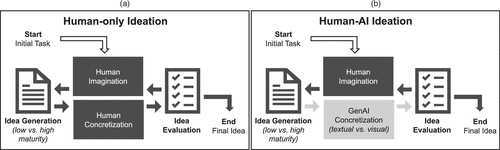
Notes. This is based on the Finke et al. (1996) Geneplore framework. Ideators engage in multiple cycles of generating and evaluating ideas, which require imagination and concretization. This concretization can unfold in thought or be externalized to GenAI. (a) Human-only ideation. (b) Human-AI ideation.
Regardless of initial maturity, these ideas must undergo a process of concretization so that they can be expressed in a more structured and inspectable form (Finke et al. 1996, Lim et al. 2008). Concretization is a cognitive process in which ideators organize vague initial ideas into more coherent mental representations. Finke et al. (1996) referred to initial ideas as preinventive structures, which are cognitive constructions that are not fully specified but sufficiently structured for idea evaluation. After evaluation, ideators either start a new ideation cycle to further refine their idea or stop ideation.
When GenAI is used (see panel (b) of Figure 1), idea concretization occurs externally (Finke et al. 1996, Lim et al. 2008). GenAI can automate or augment the process of turning more or less mature idea descriptions into visual or textual concretizations, thereby relieving ideators of the burden of creating mental representations from scratch. Instead, ideators can focus on evaluating the AI-generated concretizations and iteratively integrate them into their ideas’ mental representations.
Most ideation studies focus on initial, human-only idea generation and analyze how specific stimuli, like sketches or textual descriptions, affect people’s creativity (Hofstetter et al. 2021, Hou et al. 2025). These studies generally do not examine later concretization of ideas, and they offer limited insights into how the representation of AI-generated stimuli and the maturity of the initial idea jointly determine ideators’ creativity and the effort that ideators must expend in subsequent idea refinement.
3. Theory: How Textual and Visual Idea Concretizations Influence Human-AI Ideation
Our core theoretical argument is that representational differences in textual and visual concretizations produce two configurations of human and material agency that correspond to augmentation and automation, which in turn, influence idea creativity and ideator effort. Table 1 synthesizes the literature that we reviewed to develop this argument.
|

Table 1. Related Research Streams
| Stream | Core thesis | Textual concretizations | Visual concretizations | Role of idea maturity |
|---|---|---|---|---|
| Automation/ augmentation | Human-AI collaboration builds on automating and augmenting human activities, and it is based on fine-grained configurations of human and material agency (Leonardi 2011, Baird and Maruping 2021, Raisch and Krakowski 2021). | Textual concretizations correspond to augmentation. GenAI’s material agency produces coherent but underspecified concretizations; ideators interpret and elaborate on the gaps, preserving human agency (Chen and Chan 2024, Rafner et al. 2025). | Visual concretizations correspond to automation. GenAI’s material agency autonomously specifies fully formed concretizations; ideators inspect and evaluate, constraining human agency (Raisch and Krakowski 2021, Rafner et al. 2025). | As ideas mature, augmentation through textual concretizations provides richer material for ideators to elaborate on, preserving human agency, whereas automation through visual concretizations constrains human agency regardless of idea maturity (De Freitas et al. 2025, Huang et al. 2026). |
| Information representation | Representation of information influences cognitive processing and task performance (Vessey 1991, Speier and Morris 2003). | Textual formats support the processing of nuanced details, precise retrieval, and comparison (Vessey 1991, Vessey and Galletta 1991). | Visual formats support holistic, perceptual processing of structural relationships (Tan and Benbasat 1990). | Idea maturity is an information property that affects the effectiveness of information representation (Vessey and Galletta 1991). |
| Prototyping | Prototypes concretize ideas into tangible artifacts that allow for concepts to be inspected and support evaluation and iterative refinement (Carroll 1999, Lim et al. 2008). | Usage scenarios or user stories verbalize actors, goals, and interaction sequences and guide analytic reasoning about requirements and use (Carroll 1999, Miaskiewicz and Kozar 2011). | Sketches or storyboards depict rich perceptual detail that can be grasped and compared quickly (Goldschmidt 1991, Lawson 2006, Lim et al. 2008). | Less mature ideas are hard to turn into prototypes, whereas more maturity enables meaningful concretization (Lim et al. 2008, Gonsher 2023). |
| Creative ideation | Imagination drives creativity, whereas external concretizations may stimulate or constrain creativity based on cue richness (Nijstad and Stroebe 2006, George and Wiley 2020). | Text requires ideators to fill in missing elements, leaving cognitive space for imagination and enabling analytical processing (Paivio 2007, Ceylan et al. 2023). | Visuals provide rich detail that can restrict imaginative expansion and induce fixation (Jansson and Smith 1991, Ezzat et al. 2020). | When ideas are mature, visuals explicitly depict details and leave little space for further imaginative elaboration (Jansson and Smith 1991, Ezzat et al. 2020). |
3.1. Representational Differences and Agency Configurations in Human-AI Ideation
In human-AI ideation, GenAI exercises material agency—its capability to act on its own apart from human intervention—by rendering initial idea descriptions into more concrete concretizations that ideators can inspect, interpret, and evaluate. Depending on whether GenAI produces textual or visual concretizations, this exercise of material agency results in two distinct configurations of human and material agency.
The generation of a perceptually coherent image requires specification of attributes that an initial idea description often leaves undescribed, such as form, color, spatial arrangement, or context (Ramesh et al. 2021). When producing visual concretizations, GenAI specifies these attributes on its own, depicting the idea in rich perceptual detail. In doing so, this material agency allows GenAI to create visual concretizations going beyond the idea description that the ideator provided. The resulting visual concretizations convey to the ideator that GenAI has autonomously completed the idea. The ideator’s role is reduced to inspecting and evaluating what the visual concretization depicts, constraining human agency. This configuration corresponds to automation.
In contrast, the generation of a coherent text does not require every detail of the idea to be specified. When producing textual concretizations, GenAI enacts material agency by verbalizing actors, goals, or interaction sequences, but unlike images, the results leave interpretive gaps. The resulting gaps, ambiguities, and underspecified elements invite interpretation, and ideators elaborate on aspects that the textual concretization leaves open. Ideators thus retain a central role in shaping the idea, fostering human agency (Rafner et al. 2025). This configuration corresponds to augmentation. This augmentation versus automation of representation work through idea concretization has important implications for human creativity and effort in human-AI ideation.
3.2. Automation, Augmentation, and Creative Outcomes
When GenAI visually concretizes an idea, ideators are less likely to actively use their imagination during idea refinement. Moreover, they are likely to expend less effort and settle on a less creative idea (Finke et al. 1996, Nijstad and Stroebe 2006). Notably, imagination is a critical requirement for creativity as it allows for the activation of knowledge structures and the generation of novel alternatives (Finke et al. 1996, Nijstad and Stroebe 2006). Cognitive theories of information processing show that images are processed more holistically and faster than text, so humans can grasp the full picture in seconds with little effort (Pieters and Wedel 2004, Barsalou 2008). However, this speed has a price; human ideators struggle to disengage from externally generated visual stimulation during ideation (George and Wiley 2020, Hou et al. 2025).
Especially in human-AI ideation, cognitive fixation because of AI-created visual concretizations may hamper human creativity. Visual concretizations contain rich detail, which can reduce the level of active mental visualization in which ideators engage (Ceylan et al. 2023). Furthermore, the existence of a visually concretized form of an idea may lead ideators to feel that GenAI autonomously completed the idea and that they do not need to elaborate on it (Rafner et al. 2025). In other words, the human’s role shifts from imagining a solution to inspecting and evaluating the depicted details. As a result, human agency in the ideation process is constrained because of the partial automation of that process (Rafner et al. 2025). This constrained human agency reduces ideators’ invested effort and idea creativity in the ideation process.
In contrast, AI-generated textual concretizations are likely to stimulate imagination and creativity because they enable active imagination and thus, preserve human agency. When reading a text, people engage actively in picturing and sequentially processing the information (Paivio 2007). Thus, reading and interpreting textual concretizations necessitate an active imagination, thereby encouraging creative exploration and elaboration (Ceylan et al. 2023). This human agency in shaping an idea requires more mental work but also, might foster more creativity. Taken together, this augmentation of the ideator’s ideation process through AI-generated textual concretizations requires more human effort but is likely to result in a more creative final idea.
This discussion leads to our first two hypotheses.
Textual concretizations increase idea creativity more than visual concretizations.
Textual concretizations increase ideator effort more than visual concretizations.
3.3. The Moderating Role of Idea Maturity
Although textual concretizations rely on more human agency, their advantage relative to visual concretizations depends on the maturity of the idea that ideators bring into the collaboration. For instance, when developing an idea to increase comfort in overnight train travel, “adding something soft” is a less mature idea than “adding a bed” (Ezzat et al. 2020). Less mature ideas generally include less detail and have more gaps that must be resolved during concretization (Gonsher 2023).
Idea maturity fundamentally shapes the extent to which textual concretizations support ideation. When ideas are immature, they provide relatively little information that GenAI can use to produce a textual concretization. The resulting textual concretization lacks the details needed to stimulate the ideator’s imagination and interpretation because it offers little substance (Finke et al. 1996).
As idea maturity increases, GenAI’s material agency allows it to autonomously develop the description further, generating a more developed textual concretization (Lin 2024, Meincke et al. 2024, De Freitas et al. 2025). Importantly, these richer textual concretizations do not displace human agency but extend room for human interpretation and effort. Richer textual concretizations enable the ideator to effectively build on them while leaving space for imagination (Paivio 2007). In other words, because human ideators obtain more helpful stimulation in the form of GenAI-based textual concretizations when they provide more mature ideas (Carroll 1999), their creativity and effort should increase (Huang et al. 2026).
In contrast, GenAI always produces perceptually coherent and specified visual concretizations, regardless of idea maturity. The generation of a coherent image requires the model to fill in attributes that the idea description leaves open, such as form, color, spatial arrangement, or context, even if the ideator has not envisioned them. Material agency, therefore, operates the same way at every level of maturity. The same is true for human agency as the generated concretization appears complete to the ideator in both high- and low-maturity conditions. Consequently, idea maturity should have limited influence on how visual concretizations shape idea creativity and ideator effort. Therefore, the advantages of augmentation through textual concretizations relative to automation with visual concretizations should be most pronounced when ideas are relatively mature. Formally, we have Hypotheses 3 and 4.
The increase in idea creativity associated with textual concretizations is more pronounced for more mature ideas.
The increase in ideator effort associated with textual concretizations is more pronounced for more mature ideas.
Figure 2 depicts our conceptual framework.

Note. H, hypothesis.
4. Methodology
4.1. Experimental Design, Task, and Procedure
We tested our hypotheses in a three-cell, between-subjects online experiment in which we manipulated whether ideators received a textual or visual concretization. The control group served as the baseline for human-only ideation. The experiment mirrored a public, real-world innovation challenge from an open-innovation platform. Ideators were asked to answer a broad question (for U.S. $2 in compensation) that required little domain knowledge: “What improvements could be made to a crowded train to enhance the experience from boarding to alighting?” We gave the respondents providing the 10 best ideas a bonus of U.S. $4.
We conducted this experiment on a platform that employed a text model (gpt-3.5-turbo-0613) and an image model (DALL-E 3) for idea concretizations. Both models received the descriptions of ideators’ initial ideas in textual form and were then prompted to represent those ideas in text or images. Figure 3 outlines how our platform supported an iterative, human-AI ideation process (see Online Appendix A for exemplary interaction flows). After seeing the task (step 1 in Figure 3), participants imagined an initial solution (step 2 in Figure 3) and described it in text (step 3 in Figure 3). They then received an AI-generated textual or visual concretization (step 4 in Figure 3).2 After ideators received the concretization, they were encouraged to refine the textual description of their idea. Ideators could continue iterating with the platform until they felt that the concept was fully developed (step 5 in Figure 3). Ideators in the control group followed the same process. However, instead of a visual or textual concretization, they received instructions to imagine their ideas and their outcomes in a usage context. We considered this a valid control condition because it required ideators to mentally concretize their idea to better understand their ideas and infer potential improvements (Zhao et al. 2011).
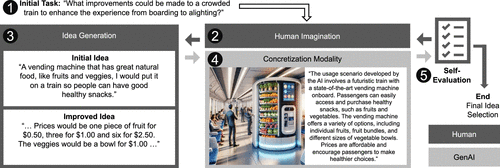
Note. Each participant provided one idea, and GenAI created its concretizations.
4.2. Participants
We recruited 276 U.S.-based participants through Prolific (mean age = 41.3 years old, 43.8% female, 77.8% with at least a bachelor’s degree, and 74.2% working full or part time) who contributed a total of 428 idea refinements. There were no systematic differences in terms of demographics across conditions. In line with Compeau et al. (2012), we argue that this sample is appropriate because it provides sufficient congruence among the ideators, the task, and the overall setting, thereby supporting ecological validity and generalization to theory. Individuals engaging in ideation or more specifically, using GenAI for creative ideation were our target population. In terms of sociodemographic characteristics, our sample corresponded well to this population, especially to individuals using GenAI to “think creatively” in the workplace (Chatterji et al. 2025, Bick et al. 2026). Furthermore, Prolific is well suited for creativity research (Oppenlaender et al. 2020), and the open nature of the task reflected an accessible but unfamiliar challenge for which ideators might also seek support in practice.
4.3. Measures and Control Variables
4.3.1. Experimental Conditions.
We contrast coded our experimental conditions using backward difference coding. The contrast textual concretization compared the textual and visual concretization conditions. Similarly, visual concretization compared visual concretizations with the control group.
4.3.2. Idea Creativity.
As our study required scoring the creativity of each idea’s individual refinement, we opted for an automated approach3 to measuring the subdimensions of novelty and usefulness (Dean et al. 2006) in a corpus of textual ideas (Meincke et al. 2024, Zhou and Lee 2024). To measure novelty, we followed Just et al. (2024), who used embeddings of textual ideas generated by a large language model to measure novelty (i.e., they compared the distance of each idea to the most similar ideas; the greater the distance, the higher the novelty).4
To measure usefulness, we relied on an “LLM-as-a-judge” approach (Zheng et al. 2023) and utilized gpt-4o-2024-05-13 to evaluate the feasibility (technological and economic realism), elaboration (clear and well-written idea description), and inclusivity (accessibility for varying customer groups) of each idea iteration. Feasibility and elaboration are common dimensions of usefulness (Dean et al. 2006), whereas inclusivity was central to the innovation task. We improved the prompt (Online Appendix B) until we obtained reasonable results. Each iteration was scored three times, and we used the average. We obtained similar results for other models (e.g., Llama 70B: r = 0.73, p ≤ 0.01). We aggregated usefulness as the mean of feasibility, elaboration, and inclusivity. Thus, idea creativity reflects the average of novelty and usefulness.
4.3.3. Ideator Effort.
We quantified effort by the number of keystrokes and time spent. The number of keystrokes not only measured the length of the final idea but also, delete operations and edits of the idea descriptions before submission. Time spent measured the time span between the first and last keystrokes. We scaled both indicators and aggregated them by arithmetic mean. As this measure was skewed (skewness = 2.24, kurtosis = 12.02), we employed a log transformation.
4.3.4. Idea Maturity.
Idea maturity reflects where an idea description falls on a range from vague notion to specific proposal with actionable details for implementation (Gochermann and Nee 2019). We measured it using a text-scoring approach (Yeomans 2021) that rated textual descriptions of plans, which are conceptually close to ideas, in terms of their specificity and actionability.
4.3.5. Controls.
We controlled for various alternative explanations, including ideator differences and platform configurations. First, we included trait creativity following Rosengren et al. (2013). Trait creativity is a stable personality characteristic, meaning that some people are simply more creative than others. Second, we recorded age in years because it is correlated with GenAI adoption and prior usage experiences, thereby potentially influencing idea creativity and effort (Chatterji et al. 2025, Bick et al. 2026). Third, iterations captured differences in how often ideators passed through generation-concretization-refinement loops. It counted the number of idea refinements made by ideators (Finke et al. 1996). Fourth, we measured perceived mental outcome simulation—that is, the ability to imagine an idea’s outcome after implementation (Zhao et al. 2011). This accounted for differences in how well ideators could connect textual or visual concretizations to their ideas (see the scale items in Online Appendix C). This control ensured that potential preferences for one concretization (text versus image) did not confound their estimated effects. Fifth, perceived ease of use is tied to technology use. We used it to control for cognitive effort related to the platform rather than the processing of concretizations (Davis 1989). Apart from iterations, we measured all control variables using a survey, which we conducted within the scope of the experiment. We report all scales in Online Appendix C.
5. Results
We measured the separate effects of visual and textual idea concretizations beyond the initially submitted ideas. First, we verified whether the creativity of the initial ideas diverged across conditions. We then applied ordinary least squares regressions. As ideators could engage in multiple refinement cycles after their initial idea, our unit of analysis referred to the iteration level rather than the ideator level. This allowed us to examine how each refinement influenced an idea’s subsequent development.5 To capture differences at the ideator level and to account for potential autocorrelations at the idea level (e.g., idea refinements that reflected variations of the idea in the previous iteration), we employed clustered robust standard errors. We used z-standardized factors and variables for all measures except contrasts and ideator effort.
After confirming that initial idea creativity did not differ significantly across conditions (see Online Appendix A for examples), we tested Hypothesis 1 in a stepwise fashion (Table 2). Model (1a) in Table 2 tested the main effects of our manipulations, and Model (1b) in Table 2 included controls, whereas Model (1c) in Table 2 added interaction effects (see Online Appendix D for descriptives and scale validation). In Model (1a) in Table 2, we found that textual concretizations had a positive effect on idea creativity (β = 0.29, p ≤ 0.01), indicating that ideators who received textual concretizations generated more creative ideas than those working with visual concretizations. This represents an improvement in creativity of 18%.6 Textual concretizations produced a 30% increase in idea creativity compared with the control condition, which is a statistically significant difference. This effect held after adding the controls in Model (1b) in Table 2. Therefore, we find support for Hypothesis 1.
|
Table 2. Regression Results
| Variable | Idea creativity | Ideator effort | ||||
|---|---|---|---|---|---|---|
| Model (1a) | Model (1b) | Model (1c) | Model (2a) | Model (2b) | Model (2c) | |
| Visual Concretization | 0.13 (0.10) | 0.17† (0.10) | 0.14 (0.10) | −0.26*** (0.07) | −0.16*** (0.05) | −0.16*** (0.04) |
| Textual Concretization | 0.29** (0.11) | 0.23* (0.10) | 0.20* (0.08) | 0.24** (0.08) | 0.17** (0.06) | 0.16*** (0.04) |
| Trait Creativity | −0.06 (0.05) | −0.05 (0.04) | −0.05† (0.02) | −0.04† (0.02) | ||
| Perceived Mental Outcome Simulation | 0.14† (0.07) | 0.13* (0.06) | 0.08† (0.04) | 0.07† (0.04) | ||
| Perceived Ease of Use | 0.01 (0.08) | 0.01 (0.06) | −0.04 (0.04) | −0.03 (0.03) | ||
| Iterations | 0.04 (0.03) | 0.03† (0.02) | −0.17** (0.06) | −0.18** (0.06) | ||
| Ideator Age | 0.01 (0.06) | 0.01 (0.06) | 0.00 (0.02) | −0.01 (0.02) | ||
| Idea Maturity | 0.27*** (0.05) | 0.09** (0.03) | ||||
| Visual Concretization × Idea Maturity | 0.04 (0.13) | 0.03 (0.04) | ||||
| Textual Concretization × Idea Maturity | 0.24** (0.09) | 0.23** (0.08) | ||||
| R2 | 0.03 | 0.04 | 0.12 | 0.03 | 0.10 | 0.13 |
| Delta R2 | 0.01 | 0.08** | 0.07** | 0.03** | ||
| AIC | 1,209.43 | 1,212.35 | 1,182.98 | 916.71 | 894.64 | 885.76 |
| F-statistic | 6.14** | 2.76** | 5.68*** | 6.38*** | 6.61*** | 6.23*** |
Notes. N = 428. Standard errors are in parentheses. AIC, Akaike information criterion.
*p ≤ 0.05; **p ≤ 0.01; ***p ≤ 0.001; †p ≤ 0.10.
After adding the controls, we detected a slight improvement for visual concretizations relative to the control group (β = 0.17, p ≤ 0.1). In Model (1c) in Table 2, the interaction between textual concretization and idea maturity was positive (β = 0.24, p ≤ 0.01), indicating that performance differences between those receiving textual and visual concretizations increased with idea maturity.
We visualized these results to explore the interaction (see Figure 4). When ideators began with less mature ideas, differences between the two types of concretizations were almost negligible. However, for mature ideas, textual concretizations yielded more creative ideas than visual concretizations and the no-concretization control condition. This result is in line with our theorizing that when an idea is mature, textual concretizations leave more room for imagination and human agency. In contrast, for visual concretizations, additional details may reinforce an ideator’s tendency to cognitively fixate, which may limit the resulting idea’s creativity. These results support Hypothesis 3.
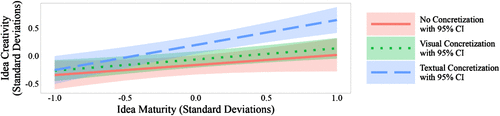
Note. CI, confidence interval.
We tested Hypotheses 2 and 4 in similar ways. In Model (2a) in Table 2, visual concretizations reduced ideator effort (β = −0.26, p ≤ 0.001), whereas textual concretizations increased it (β = 0.24, p ≤ 0.01). More specifically, visual concretizations reduced ideator effort by 24% relative to the control group, whereas textual concretizations required 30% more effort than visual concretization. We did not find differences between ideators receiving textual concretizations and the control group.
These results held when controls were added (Model (2b) in Table 2), which supports Hypothesis 2. In Model (2c) in Table 2, the interaction between textual concretization and idea maturity was positively associated with effort (β = 0.23, p ≤ 0.01). In other words, the increase in effort associated with textual concretizations compared with visual concretizations was greater for mature ideas.
Figure 5 shows that for less mature ideas, textual concretizations required slightly more effort than visual concretizations. For higher levels of idea maturity, these differences were amplified. For visual concretizations, ideator effort increased only marginally as idea maturity grew. The results support Hypothesis 4.
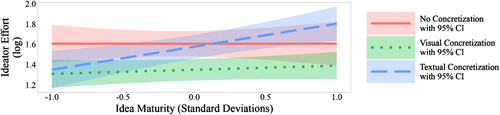
Note. CI, confidence interval.
We tested our results’ robustness in three ways. First, we performed a bootstrapping analysis. We investigated whether visual and textual concretizations led to significant differences in idea creativity and ideator effort at low levels of idea maturity because our analysis did not offer a clear interpretation in this condition (see Online Appendix E1). Going beyond our theoretical predictions, the results indicated that visual concretizations significantly increased idea creativity for very low levels of idea maturity (i.e., more than one SD below the mean). Interestingly, this boost in idea creativity was not associated with higher ideator effort. In line with our main results, for ideas with maturity above this threshold, we found that textual concretizations allowed humans to generate more creative ideas, albeit with greater effort.
Second, to assess ecological validity, we asked a separate Prolific sample to complete the same ideation task while freely using ChatGPT (see Online Appendix E2). The ideas produced with unguided ChatGPT use were less creative than those generated with our textual and visual concretizations. Effort measures could not be obtained because of the proprietary interface.
Third, we checked that our results were robust with respect to alternative operationalizations of our measures and modeling approach (see Online Appendix E3).
6. Discussion
We conceptualized and assessed an iterative human-AI ideation process and highlighted the configuration of human and material agency as well as its implications for idea creativity and ideator effort in conditions of high and low idea maturity. Collaboratively ideating with either type of AI-generated concretization yielded benefits. Compared with ideators working without GenAI support, ideators using textual concretizations produced more creative ideas, whereas ideators using visual concretizations generated more creative ideas with less effort. However, a comparison of relative idea creativity and ideator effort between groups working with textual concretizations and visual concretizations led to a more nuanced picture; textual (versus visual) concretizations improved idea creativity by 18% but also, increased effort by 30%. In adopting a contingency perspective, we found that greater idea maturity accentuated these differences. However, for very immature ideas, visual concretizations outperformed textual concretizations without increasing effort.
6.1. Theoretical Implications
6.1.1. Agency Configurations in Augmented and Automated Human-AI Ideation.
Our results improve our understanding of automation and augmentation in human-AI ideation by disentangling the roles of human and material agency. They extend existing research by showing that effective augmentation and automation depend not only on how tasks are distributed between humans and AI-based IS but also, on how representational differences in AI-generated concretizations shape the configuration of human and material agency in human-AI teams (Baird and Maruping 2021, Jussupow et al. 2021, Raisch and Krakowski 2021, Fügener et al. 2022, Gopal et al. 2025).
Textual concretizations correspond to an augmentation configuration because human agency is matched by a material agency that produces coherent concretizations of ideas without specifying all the details. The resulting concretizations leave interpretive and imaginative work to the ideator. Ideators elaborate on the gaps and ambiguities in the textual concretizations, which results in richer idea descriptions that feed into the next iteration. In turn, GenAI produces more elaborated concretizations that ideators engage with further. These compounding creative gains are amplified by idea maturity as more mature ideas provide GenAI with richer material from which to produce textual concretizations that stimulate further imagination (i.e., a “virtuous cycle of textual concretization”).
In contrast, visual concretizations correspond to an automation configuration because human agency is constrained by a material agency that to produce a perceptually coherent image, autonomously fills in details that the ideator has not envisioned, such as form, color, spatial arrangement, or context. These detail-rich visual concretizations induce cognitive fixation, especially when they strongly overlap with what the ideator has already envisioned (i.e., for very mature ideas). Very low-maturity ideas may be an exception to this mechanism; as ideators are less likely to fixate on a vague idea, they may more flexibly integrate new details into their ideation. The very property that makes this configuration effective for immature ideas—full visual specification—becomes constraining as ideas mature (i.e., a “self-defeating cycle of visual concretization”).
Our results also offer a more fine-grained perspective on the effort that humans must invest to make augmentation and automation efficient. Going beyond measuring creative outputs (e.g., Boussioux et al. 2024, Chen and Chan 2024), our study shows that the invested effort depends on how humans and AI collaborate (i.e., representational differences and idea maturity), offering a more nuanced understanding of offloading effort to GenAI (Noy and Zhang 2023, Hou et al. 2025, Memmert et al. 2025).
Finally, we add to the emerging literature on enhancing human creativity through GenAI (Boussioux et al. 2024, Chen and Chan 2024, Zhou and Lee 2024) by introducing the contingency perspective of information representation (e.g., Vessey 1991, Speier and Morris 2003) and by looking at how representational differences affect human-AI ideation (Lu and Zhang 2025).
6.1.2. Cognitive Fixation vs. GenAI-Enabled Ideation.
We also contribute to the creative ideation literature, which tests the effects of receiving others’ input during ideation (e.g., in offline brainstorming or on online platforms). This stream of literature agrees that imagination is important for ideation, yet it is divided about whether external stimulation causes cognitive fixation (Jansson and Smith 1991) or stimulates imagination and creativity (Nijstad and Stroebe 2006). However, most studies focus on external stimulation before initial idea generation, examine human-generated input, and center on textual information representation (Aggarwal et al. 2021).
We extend this work by offering insights into the conditions under which fixation and stimulation occur in human-GenAI collaboration. In contrast to prior research (George and Wiley 2020, Meincke et al. 2024), we focus on a setting in which GenAI input is received after initial ideas have been generated. In this situation, the ideator’s initial idea and its maturity matter, which shows that external stimulation and its effectiveness crucially depend on when GenAI input is received. Based on our findings, we also conclude that GenAI-human collaborations for creative ideation should take into account potential dynamics throughout this highly iterative and interactive process of joint ideation rather than focus on only one input.
6.1.3. Boundary Conditions of GenAI-Based (Visual) Prototyping.
We also enhance our understanding of relative effectiveness and efficiency of textual and visual prototypes (e.g., Goldschmidt 1991, Carroll 1999, Lawson 2006, Lim et al. 2008, Miaskiewicz and Kozar 2011). First, although prototypes are typically researched as means to facilitate interaction, communication, and agreement among multiple stakeholders (e.g., Goldschmidt 1991, Lawson 2006, Miaskiewicz and Kozar 2011), we suggest that individuals can employ GenAI as a “prototype designer” that creates visual and textual concretizations of their ideas. Second, in contrast to research highlighting the effectiveness of visual prototypes (Goldschmidt 1991, Lawson 2006), we show that textual concretizations can be more effective, at least in human-AI ideation and for mature ideas.
Finally, we show that GenAI-based prototypes can be helpful in the early phases of the ideation process. In this regard, we extend the perspective of earlier prototype literature, which has focused on later stages (Bilgram and Laarmann 2023).
6.2. Practical Implications
Our research suggests that ideators should use GenAI not primarily as a substitute for human labor or to offload effort in ideation but as a technology that can be calibrated to optimize where and when effort should be invested to improve their creativity. If ideators struggle to imagine the details of a generic idea in a specific context (e.g., where a vending machine might be installed in a train) (see Figure 3) or if they lack the means to make their ideas tangible, a low-effort visual concretization can be helpful. Visual concretizations can help ideators quickly explore an idea in a real-life context with little effort.
However, when an idea is more mature, such as when ideators develop specific features for an existing product, AI-generated textual concretizations are likely to more effectively stimulate the imagination needed to improve the ideas than visual concretizations. For example, after clarifying the broad direction for a vending machine, an ideator might want to elaborate on this idea by, for instance, improving their understanding of different usage scenarios (e.g., how customers might interact with the machine during busy mornings or late-night commutes). In such situations, textual concretizations are more likely to augment the ideator’s creativity. Notably, unlocking this additional creativity comes at the price of increased effort.
6.3. Limitations and Future Research
The goal of this study was to improve our understanding of how representational differences in AI-generated idea concretizations shape the automation and augmentation of ideation. We focused on individual-level creativity and a generic ideation task centered on written, early-stage innovation ideas. We relied on ideators from an online panel to test our predictions. Thus, our work is not without limitations.
First, we employed an experimental task that targeted the general public and required no specific knowledge. Such tasks are broadly applied in practice (Aggarwal et al. 2021, Hofstetter et al. 2021), but our hypotheses are tested among a sample of novices for the task (Chen and Chan 2024, Hou et al. 2025). Experts or professional designers might need other types of support. Future research can address this possibility by analyzing how knowledge and expertise influence the configuration of human and material agency in human-AI collaboration. In addition, we tested only one task and focused on early-stage ideas. Our results might not be generalizable to more or less complex tasks (e.g., analytical tasks) (Lu and Zhang 2025), later innovation stages (e.g., product design) (Bilgram and Laarmann 2023), or other creative products (e.g., visual sketches) (Hou et al. 2025). Additional research is needed to explore these conditions.
Second, our study focused on a single instance of using a specific creativity tool. We did not account for repeated use and learning effects (Zhou and Lee 2024), and our ideators had no choice regarding the use of visual or textual concretizations. Moreover, although we randomly assigned ideators to experimental groups, ideators’ preferences or their prior GenAI experiences might have influenced our results. Future research might extend our findings in this respect.
Third, given the nature of the online panel, we paid ideators for participation. Although this is somewhat relatable to solving creative tasks with GenAI in professional contexts (Oppenlaender et al. 2020), submitting creative or noncreative ideas had limited consequences for ideators. The results might be different in real-world contexts in which individuals could be more motivated or voluntarily opt in to innovation challenges. Nevertheless, ideators engaging in creative tasks on platforms such as Prolific might also have been attracted by intrinsic motives, such as a desire for novelty, learning, or intellectual stimulation (Oppenlaender et al. 2020), such that our sample was sufficient for providing generalizable theoretical insights.
Fourth, we see potential to advance our understanding of augmentation and automation by addressing heterogeneity on the ideator or GenAI-model levels. Both have specific traits that could change their degree of agency and how they enact it (Baird and Maruping 2021). It would be interesting to research how ideators’ cognitive styles or prior GenAI experience influence human agency and interactions with GenAI. Similarly, we used proprietary GenAI models for which many technical details are not disclosed (e.g., the composition of training data). Thus, we could not explore how technical differences between text and image models affect agency configuration. Open-source models might allow researchers to open this technological black box and facilitate more fine-grained research on automation and augmentation.
7. Conclusion
Ideators increasingly use GenAI to reduce the effort required for creative ideation. Yet, whether this collaboration augments or automates ideation depends on the way in which GenAI presents ideas to ideators—that is, as text or in visual form. Our study shows that textual and visual concretizations produce distinct configurations of human and material agency, thereby shaping idea creativity and ideator effort depending on idea maturity. As GenAI becomes embedded in creative ideation, understanding these representational choices will be central to designing human-AI collaboration in a way that amplifies rather than constrains human creativity.
The authors thank Martin Eppler, Olivier Toubia, Johann Füller, Katja Hutter, Julian Just, Christine Legner, Yash Raj Shrestna, Ali Sunyaev, and Alexander Mädche for their valuable feedback on earlier drafts of this manuscript. The authors are also grateful to the anonymous reviewers, the associate editor, and the special issue editors for their constructive feedback throughout the review process.
1 To improve readability, we speak about visual and textual concretizations throughout the remainder of the manuscript, although the information representation literature considers them visual and textual representations of concretizations (Vessey 1991).
2 To create the visual concretizations, we utilized the GPT model to transform the provided idea and challenge into a prompt for DALL-E 3. The created prompt was then forwarded to DALL-E 3, and the generated visual was displayed to the participant. We used the default settings, which resulted in the vivid representations typical of GenAI-created content. To create the textual concretization, we used a similar prompt for the GPT model but displayed the textual concretization directly to the ideator. Small adaptations were made. For instance, the textual concretization should start with “The usage scenario by the AI,” whereas the prompt for the visual concretization was limited to 50 words to account for the DALL-E 3 specifications. See Online Appendix B for the prompts.
3 To validate the automated scoring, we compared the large language model (LLM)-based idea ratings with human ratings. We recruited through Prolific 88 workers to rate 158 ideas, with each idea being evaluated at least six times. The human evaluators were blind to the LLM scores and achieved an average intraclass correlation coefficient (ICC) of 0.6. We observed significant correlation between our creativity score and human evaluation (Pearson r = 0.27, p ≤ 0.001; Spearman r = 0.24, p ≤ 0.001; and Kendall’s tau = 0.16, p ≤ 0.01), similar to Just et al. (2024).
4 We used the model all-mpnet-base-v2 to calculate embeddings for all ideas and their refinements as well as the three-nearest-neighbor similarity as a novelty score (Just et al. 2024). We calculated the novelty for each idea iteration by comparing only ideas at the same refinement iteration stage. First, all initial ideas were scored, marking the starting point for the collaboration. Next, we scored the first refinement of all ideas. For the subsequent iterations, we used the latest available version of the idea. This approach allowed us to calculate the novelty within a pool of equivalent received inputs and explore whether additional inputs led to further improvement in the novelty score. We standardized all idea creativity scores at the iteration level.
5 Therefore, the N in our regression results represents the total number of idea refinements submitted across all ideators.
6 Given the standardization of our idea creativity score, the use of a textual concretization improved idea creativity by 0.29 standard deviations (SDs) when compared with the use of a visual concretization. To facilitate the interpretation of this result, we followed King et al. (2000). When simulating adjusted predictions, average ideators receiving visual concretizations generated ideas with an idea creativity score 0.06 SDs below the mean (i.e., the 51st percentile). Ideators receiving textual concretizations created ideas that were 0.23 SDs above the mean (i.e., the 60th percentile). This reflects an idea creativity increase of nine percentiles or approximately 18% ((60 − 51)/51).
References
- (2020) Artificial intelligence as digital agency. Eur. J. Inform. Systems 29(1):1–8.Crossref, Google Scholar
- (2021) Learning to be creative: A mutually exciting spatiotemporal point process model for idea generation in open innovation. Inform. Systems Res. 32(4):1214–1235.Link, Google Scholar
- (2021) The next generation of research on IS use: A theoretical framework of delegation to and from agentic IS artifacts. MIS Quart. 45(1):315–341.Crossref, Google Scholar
- (2008)
Grounding symbolic operations in the brain’s modal systems . Semin GR, Smith ER, eds. Embodied Grounding: Social, Cognitive, Affective, and Neuroscientific Approaches (Cambridge University Press, Cambridge, UK), 9–42.Crossref, Google Scholar - (2026) The rapid adoption of generative AI. Management Sci., ePub ahead of print January 20, https://doi.org/10.1287/mnsc.2025.02523.Google Scholar
- (2023) Accelerating innovation with generative AI: AI-augmented digital prototyping and innovation methods. IEEE Engrg. Management Rev. 51(2):18–25.Crossref, Google Scholar
- (2024) The crowdless future? Generative AI and creative problem-solving. Organ. Sci. 35(5):1589–1607.Link, Google Scholar
- (1999) Five reasons for scenario-based design. Proc. Hawaii Internat. Conf. System Sci. (IEEE, Piscataway, NJ).Google Scholar
- (2023) From mentally doing to actually doing: A meta-analysis of induced positive consumption simulations. J. Marketing 88(2):21–39.Crossref, Google Scholar
- (2025) How people use ChatGPT. NBER Working Paper No. 34255, National Bureau of Economic Research, Cambridge, MA.Google Scholar
- (2024) Large language model in creative work: The role of collaboration modality and user expertise. Management Sci. 70(12):9101–9117.Link, Google Scholar
- (2012) Research commentary—Generalizability of information systems research using student subjects: A reflection on our practices and recommendations for future research. Inform. Systems Res. 23(4):1093–1109.Link, Google Scholar
- (1989) Perceived usefulness, perceived ease of use and user acceptance of information technology. MIS Quart. 13(3):319–340.Crossref, Google Scholar
- (2006) Identifying quality, novel, and creative ideas: Constructs and scales for idea evaluation. J. Assoc. Inform. Systems 7(10):646–699.Google Scholar
- (2025) Ideation with generative AI—In consumer research and beyond. J. Consumer Res. 52(1):18–31.Crossref, Google Scholar
- (2020) Specificity and abstraction of examples: Opposite effects on fixation for creative ideation. J. Creative Behav. 54(1):115–122.Crossref, Google Scholar
- (1996) Creative Cognition: Theory, Research, and Applications (MIT Press, Cambridge, MA).Google Scholar
- (2022) Cognitive challenges in human–artificial intelligence collaboration: Investigating the path toward productive delegation. Inform. Systems Res. 33(2):678–696.Link, Google Scholar
- (2020) Need something different? Here’s what’s been done: Effects of examples and task instructions on creative idea generation. Memory Cognition 48(2):226–243.Crossref, Google Scholar
- (1984) The Constitution of Society (University of California Press, Berkeley).Google Scholar
- (2019) The idea maturity model—A dynamic approach to evaluate idea maturity. Internat. J. Innovation Tech. Management 16(5):1950030.Google Scholar
- (1991) The dialectics of sketching. Creativity Res. J. 4(2):123–143.Crossref, Google Scholar
- (2023) The dialectics of creativity: The abstract and the concrete. Jones D, Borekci N, Clemente V, Corazzo J, Lotz N, Merete Nielsen L, Noel L-A, eds. 7th Proc. Internat. Conf. Design Ed. Res. (Design Research Society, London).Google Scholar
- (2025) Inventing with machines: Generative AI and the evolving landscape of IS research. Inform. Systems Res. 36(4):1949–1967.Link, Google Scholar
- (2021) Constraining ideas: How seeing ideas of others harms creativity in open innovation. J. Marketing Res. 58(1):95–114.Crossref, Google Scholar
- (2025) The double-edged roles of generative AI in the creative process: Experiments on design work. Inform. Systems Res., ePub ahead of print October 3, https://doi.org/10.1287/isre.2024.0937.Link, Google Scholar
- (2026) Human-GenAI collaboration across creative phases: Cognitive mechanisms shaping novelty and usefulness. Internat. J. Inform. Management 86:102986.Crossref, Google Scholar
- (1991) Design fixation. Design Stud. 12(1):3–11.Crossref, Google Scholar
- (2021) Augmenting medical diagnosis decisions? An investigation into physicians’ decision-making process with artificial intelligence. Inform. Systems Res. 32(3):713–735.Link, Google Scholar
- (2024) AI-based novelty detection in crowdsourced idea spaces. Innovation 26(3):359–386.Crossref, Google Scholar
- (2000) Making the most of statistical analyses: Improving interpretation and presentation. Amer. J. Political Sci. 44(2):347–361.Crossref, Google Scholar
- (2025) From entity to relation? Agency in the era of artificial intelligence. Comm. Assoc. Inform. Systems 56:633–674.Google Scholar
- (2006) How Designers Think (Routledge, London).Crossref, Google Scholar
- (2011) When flexible routines meet flexible technologies: Affordance, constraint, and the imbrication of human and material agencies. MIS Quart. 35(1):147–167.Crossref, Google Scholar
- (2008) The anatomy of prototypes: Prototypes as filters, prototypes as manifestations of design ideas. ACM Trans. Comput. Human Interaction 15(2):1–27.Crossref, Google Scholar
- (2024) How to write effective prompts for large language models. Nature Human Behav. 8(4):611–615.Crossref, Google Scholar
- (2025) 1+ 1 > 2? Information, humans, and machines. Inform. Systems Res. 36(1):394–418.Link, Google Scholar
- (2024) Using large language models for idea generation in innovation. Preprint, submitted August 2, https://dx.doi.org/10.2139/ssrn.4526071.Google Scholar
- (2025) From effort reduction to effort management: An expectancy theory perspective on professionals’ work practices with generative AI. Bus. Inform. Systems Engrg. 67(5):615–635.Crossref, Google Scholar
- (2011) Personas and user-centered design: How can personas benefit product design processes? Design Stud. 32(5):417–430.Crossref, Google Scholar
- (2006) How the group affects the mind: A cognitive model of idea generation in groups. Personality Soc. Psych. Rev. 10(3):186–213.Crossref, Google Scholar
- (2023) Experimental evidence on the productivity effects of generative artificial intelligence. Science 381(6654):187–192.Crossref, Google Scholar
- (2020) Creativity on paid crowdsourcing platforms. Proc. Conf. Human Factors Comp. Systems (ACM, New York), 1–14.Google Scholar
- (2007) Mind and Its Evolution: A Dual Coding Theoretical Approach (Psychology Press, New York).Google Scholar
- (2015) Domain-specificity of creativity: A study on the relationship between visual creativity and visual mental imagery. Frontiers Psych. 6:1870.Google Scholar
- (2004) Attention capture and transfer in advertising: Brand, pictorial, and text-size effects. J. Marketing 68(2):36–50.Crossref, Google Scholar
- (2023) Creativity in the age of generative AI. Nature Human Behav. 7(11):1836–1838.Crossref, Google Scholar
- (2025) Agency in human-AI collaboration for image generation and creative writing: Preliminary insights from think-aloud protocols. Creativity Res. J., ePub ahead of print December 1, https://doi.org/10.1080/10400419.2025.2587803.Crossref, Google Scholar
- (2021) Artificial intelligence and management: The automation-augmentation paradox. Acad. Management Rev. 46(1):192–210.Crossref, Google Scholar
- (2021) Zero-shot text-to-image generation. Meila M, Zhang T, eds. Proc. 38th Internat. Conf. Machine Learn., vol. 139 (PMLR, New York), 8821–8831.Google Scholar
- (2013) Think outside the ad: Can advertising creativity benefit more than the advertiser? J. Advertising 42(4):320–330.Crossref, Google Scholar
- (2023) Practices for governing agentic AI systems. Research paper, OpenAI, San Francisco.Google Scholar
- (2003) The influence of query interface design on decision-making performance. MIS Quart. 27(3):397–423.Crossref, Google Scholar
- (1990) Processing of graphical information: A decomposition taxonomy to match data extraction tasks and graphical representations. Inform. Systems Res. 1(4):416–439.Google Scholar
- (1991) Cognitive fit: A theory‐based analysis of the graphs versus tables literature. Decision Sci. 22(2):219–240.Crossref, Google Scholar
- (1991) Cognitive fit: An empirical study of information acquisition. Inform. Systems Res. 2(1):63–84.Link, Google Scholar
- (2021) A concrete example of construct construction in natural language. Organ. Behav. Human Decision Processes 162:81–94.Crossref, Google Scholar
- (2011) Mental simulation and product evaluation: The affective and cognitive dimensions of process versus outcome simulation. J. Marketing Res. 48(5):827–839.Crossref, Google Scholar
- (2023) Judging LLM-as-a-judge with MT-Bench and Chatbot Arena. Oh A, Naumann T, Globerson A, Saenko K, Hardt M, Levine S, eds. Adv. Neural Inform. Processing Systems, vol. 36 (Curran Associates, Inc., Red Hook, NY), 46595–46623.Crossref, Google Scholar
- (2024) Generative artificial intelligence, human creativity, and art. PNAS Nexus 3(3):pgae052.Crossref, Google Scholar
Philipp Gordetzki is an artificial intelligence engineer and associated researcher at the University of St. Gallen, Switzerland. He received his PhD from the University of St. Gallen in 2026.
Ivo Blohm is an associate professor of information systems and business analytics at the Institute of Information Systems and Digital Business at the University of St. Gallen. He studied at Technische Universität München, from which he also obtained a doctorate. His research focuses on leveraging business analytics in organizations to improve decision making, collaboration, work, and innovation processes.
Melanie Clegg is an assistant professor of digital marketing at the Faculty of Business and Economics (HEC) at the University of Lausanne. Prior to joining HEC Lausanne, she was an assistant professor at the Vienna University of Economics and Business. She completed her PhD at the University of Lucerne in Switzerland in 2022.
Felix Schakols is a postdoctoral researcher at the University of St. Gallen, Switzerland. He received his PhD in management from the University of St. Gallen in 2026.
Reto Hofstetter is a professor of executive education and marketing at the University of St. Gallen, Switzerland, where he also serves as the Academic Director of the Executive MBA Programs. He received his PhD in marketing from the University of Bern, Switzerland. His research focuses on consumer behavior, digital marketing, artificial intelligence, influencer marketing, and emerging technologies, such as augmented reality and blockchain.
CORRECTION
In this article, “Agency Configurations in Generative AI Ideation: How Textual and Visual Idea Concretizations Shape Idea Creativity and Ideator Effort” by Philipp Gordetzki, Ivo Blohm, Melanie Clegg, Felix Schakols, and Reto Hofstetter (first published in Articles in Advance, July 15, 2026, Information Systems Research, DOI:10.1287/isre.2024.0952), the Acknowledgments on page 13 have been updated.

