How Has the COVID-19 Pandemic Affected Students’ Online Social Presence?
Abstract
The coronavirus disease 2019 pandemic has affected higher education institutions worldwide as they had to switch from face-to-face to online teaching almost overnight. This abrupt change made a huge impact on teaching, learning, and particularly, student engagement. This paper focuses on online social presence as an element of student engagement, which represents how students feel under synchronous online teaching. A survey was conducted among 244 first-year students to evaluate the impact of online social interaction, online collaboration, online contact with staff, online engagement, and online active learning on online social presence. Structural equation modeling was used to test and evaluate these multivariate relationships. Our study illustrates that all variables have a significant positive relationship with online social presence. In particular, online social interaction and online collaboration show a more powerful relationship with student online social presence. Thus, digital technologies should be adopted in a way that encourages students to actively interact with their peers.
1. Higher Education and the Pandemic
The coronavirus disease 2019 (COVID-19) pandemic posed great challenges to higher education systems worldwide. Higher education institutions were forced, almost overnight, to replace face-to-face teaching with online/virtual teaching, switching from physical classrooms to digital platforms, such as Zoom, Microsoft Teams, and BigBlueButton. Statistics show that daily active Zoom users in the United Kingdom increased by 4356% from January to November 2020 (Airnow 2020). However, despite adopting a wide range of digital facilities and technologies, student engagement in online classes has been low (Office for National Statistics 2020). Students are reluctant to turn their cameras on or unmute their microphones to ask a question or to participate in an in-class discussion, preferring the option of interacting via the provided chat box. “Zoom fatigue,” a concept that emerged in 2020 (Fosslien and Duffy 2020), might be one of the reasons for the lack of student engagement.
Student engagement is a buzzword in higher education, with growing evidence of its key role in achievement and learning (Kahu 2013). Despite the abundant literature on student engagement, there is no consensus regarding its definition and antecedents (Baron and Corbin 2012, Ferrer et al. 2020). In our paper, we define student engagement as student involvement, participation, and interaction in learning activities within the university environment to enhance student experience and development and improve student performance. Lack of student engagement and responsiveness can be challenging for academics in any course delivery context (West and Turner 2016). Lack of preparation for seminars or tutorial classes, poor attendance, and reluctance to other learning activities are all outcomes of student disengagement and lead to students’ poor performance in higher education (Baron and Corbin 2012). Previous studies reveal that students’ disengagement could be associated with various factors, such as cultural shocks regarding the new environment, stress, and emotional challenges, which directly influence students’ performance (Christie et al. 2008).
Technology advancements and the prevalence of distance/online education can pose challenges to student engagement and their interaction with their tutors or their peers (Cui et al. 2013). Online social presence (OSP) has been described as the student’s ability to engage socially with an online learning community (Joksimović et al. 2015). We define online social presence as the degree of feeling, perception, and reaction to being connected online to another person through a text-based encounter (Tu and McIsaac 2002). Online social presence is an important factor of effective learning, as it positively affects academic performance (Liu et al. 2009, Hostetter 2013, Joksimović et al. 2015, Al-dheleai and Tasir 2020, Guo et al. 2021). The literature also indicates that there is a direct positive link between online social presence and student retention as well as student motivation and satisfaction (Liu et al. 2009, Joksimović et al. 2015). Therefore, greater online social presence is a desirable feature in a virtual learning environment as it improves student outcomes. On this basis and building on the work of Joksimović et al. (2015), we suggest that an online course design that promotes interaction between students and their teachers as well as their peers increases online student engagement, which in turn, increases online social presence and thus, improves student academic performance.
Challenges with respect to student engagement are not uniform throughout the years of study in higher education. Coertjens et al. (2017) believe that the first year of higher education is a major hurdle for students to adapt to the new learning context. However, previous research has shown that the first year at university is the most crucial phase of studies (Korhonen et al. 2017), and its significance in terms of student engagement is decisive (Korhonen et al. 2019). Thus, this research addresses the following research objective: to identify the student engagement factors that impact the online social presence of first-year students during the COVID-19 pandemic.
The remainder of the paper is organized as follows. Sections 2 and 3 discuss the relevant literature of student engagement in higher education and online social presence, respectively. Section 4 provides the necessary information regarding our hypothesized model. Our research design and methodology are discussed in Section 5. Section 6 presents a summary of our results, which are discussed and analyzed in Section 7.
2. Student Engagement in Higher Education
Higher education institutions and educational policy makers consider student engagement as a prerequisite for student success. Researchers advocate that student engagement has a clear relationship with student retention and academic performance (Kuh et al. 2008). Krause and Coates (2008) indicated that the concept of student engagement requires a proper understanding of the relationship between institutions and students. Institutions and academic staff are responsible for providing an environment to make learning possible and encourage students’ involvement. In the meantime, interested students should connect with institutions, classes, and peers to enhance learning and engagement (Axelson and Flick 2010).
Despite student engagement being a well-researched area, there is a lack of consensus on the student engagement definition and its aspects (Evans et al. 2015, Macfarlane and Tomlinson 2017). Table 1 provides an overview of the different definitions of student engagement found in the literature, indicating that there are similarities between the varying definitions for student engagement. These similarities suggest that student engagement includes student involvement, participation, and interaction in learning activities within the university environment to enhance student experience. Therefore, in our paper, we have adopted the following definition for student engagement; student engagement is student involvement, participation, and interaction in learning activities within the university environment to enhance student experience and development and improve student performance.
|

Table 1. Definitions of Student Engagement
| Author (year) | Definition |
|---|---|
| Coates (2007, p. 122) | “[B]road construct intended to encompass salient academic aspects, such as participation in challenging academic activities, active and collaborative learning, and involvement in enriching educational experiences as well as nonacademic aspects, like formative communication with academic staff and feeling legitimated and supported by university learning communities” |
| Kuh (2009a) | “[T]he time and effort students devote to activities that are empirically linked to desired outcomes of college and what institutions do to induce students to participate in these activities” |
| Axelson and Flick (2010, p. 38) | “[H]ow involved or interested students appear to be in their learning and how connected they are to their classes, their institutions, and each other” |
| Trowler (2010, p. 3) | “Interaction between the time, effort and other relevant resources invested by both students and their institutions intended to optimise the student experience and enhance the learning outcomes and development of students and the performance, and reputation of the institution” |
| Henrie et al. (2015) | “[C]ommitment, participation, and involvement in learning” |
| Maskell and Collins (2017, p. 227) | “[S]tudent engagement is defined as the antecedents for and the consequences of behavioural, psychological, sociocultural and holistic aspects of a student’s higher education experience” |
Given the definitions provided in Table 1, we can conclude that student engagement is a multifaceted construct. A number of frameworks have been developed to assess student engagement (Krause and Coates 2008, Zhock et al. 2019). In our paper, we utilize the constructs developed by Coates (2006). Coates (2006) presented a number of elements for assessing student engagement in campus-based and online education. We adopted five of the constructs, which were thought to be the most relevant to online social presence and are exhibited in Table 2.
|
Table 2. Measuring Student Engagement (Coates 2006)
| Constructs | Definitions |
|---|---|
| Online social interaction | Use of online learning systems to support general forms of social interaction |
| Online contact with staff | The level and quality of students’ online contact with staff |
| Online active learning | Key ways in which students use online systems to enhance learning |
| Online collaboration | Students’ use of online systems to work collaboratively with peers |
| Online engagement | The extent to which students use online learning systems to enrich their study |
With technological advancement and rapid changes to broadband internet accessibility, online learning is the fastest growing sector in higher education (Paulsen and McCormick 2020). Existing literature reinforces the importance of online education because it provides more opportunities for a wide range of students to pursue their education (Redmond et al. 2018). Tech-savvy students elect to study online because of its convenience and balance between work, life, and study commitments (Thompson et al. 2013). There are various factors that are required for online education, such as instructors possessing technology-related skills, students having knowledge and skills on digital technology, students and instructors having access to digital equipment, institutional equipment and infrastructure being available, and students and instructors having a positive attitude toward digital technology (Hofer et al. 2021, Lohr et al. 2021). Even though online education is widely adopted, student engagement in this type of education is complex because there is no physical or face-to-face contact between individuals (Groccia 2018, Redmond et al. 2018). If online education does not satisfy the students’ unique needs, it may exacerbate the gap between the student and the institution, which leads to student disengagement (Dumford and Miller 2018).
To sum up, student engagement is traditionally defined as face-to-face class involvement that has been measured by observing the student involvement in learning. With the rapid development of technology affecting education, online class engagement has become a major concern for educators. Student engagement in an online class is a broad and complicated phenomenon that has been quantified based on a variety of skills/emotional/participation/interaction performance variables. The idea behind online class engagement is that students get emotionally, presently, academically, and practically involved in their learning (Handelsman et al. 2005).
The COVID-19 pandemic helped educators to reduce their apprehension toward online education, whereas student engagement and responding to student needs became a central challenge during this period (Müller et al. 2021). Several studies evaluated engagement during the COVID-19 pandemic. Ali et al. (2020) provide insight into student engagement during the COVID-19 pandemic in two large New Zealand universities. They consider both synchronous and asynchronous approaches to provide student support as success factors for online education, whereas frustrations with online technologies and obstacles in personal connections with students are challenges for online teaching. Aladsani (2021) investigates promoting student engagement during the COVID-19 pandemic in Saudi Arabia and reports various elements that may impact student engagement, including different teaching strategies and assessments. Our paper contributes to the existing literature by evaluating various student engagement factors of first-year students in a UK university during the COVID-19 pandemic and their impact on online social presence, which is discussed in the next section.
3. Online Social Presence
The social presence concept was developed based on interpersonal communication and symbolic interactionism theories (Biocca et al. 2003). With the wide adoption of online technologies in education, this concept has evolved into online social presence, which according to Tu (2000), consists of three dimensions: social context, online communication, and interactivity in the online learning environment. The social context comprises different variables, such as task types, perceptions of privacy, topics, social relationships, and social processes. Online communication refers to the attributes of the language used online and the application of online language. The literature suggests that teaching students to be comfortable using the medium of online communication is crucial to the success of collaborative learning. Interactivity in the online learning environment includes the activities in which online participants engage and the communication styles they use. In addition to these dimensions, privacy is a factor that affects how comfortable students feel during online learning, and research has shown that online social presence decreases with the lack of privacy (Tu 2000). In our paper, we define the level of online social presence as the degree of feeling, perception, and reaction of being connected online to another intellectual entity through a text-based encounter (Tu and McIsaac 2002).
Different researchers have developed various measures for online social presence, either subjective or objective (Cui 2013). There is a consensus that online social presence is vital for the online learning experience as it has been linked to important aspects of online learning. It positively affects students’ online communication behavior, perceived learning, student satisfaction and motivation, academic performance, online course retention, and online social interaction (OSI) (Liu et al. 2009, Hostetter 2013, Joksimović et al. 2015, Weidlich and Bastiaens 2017, Al-dheleai and Tasir 2020, Sharma et al. 2020, Guo et al. 2021). Research in education has confirmed that students engage in learning when they feel connected with others and when they play an active role in their learning process. Therefore, social presence is considered to be an important factor of effective learning in both face-to-face and online learning environments. For this reason, in our paper, we investigate whether online student engagement factors increase online social presence of first-year students. However, educators should be cautious as it is not a panacea. There are cases where more online social presence could result in unsatisfactory outcomes (Biocca et al. 2003) or be infeasible because of the lack of system infrastructure, technical illiteracy of online tutors, and personalities of online participants (Cui et al. 2013).
Existing research has focused on online social presence and how students feel online under the viewpoint of asynchronous teaching and potential inadequate communication between tutors and students (Cui et al. 2013). However, the COVID-19 pandemic resulted in most higher education institutions either adopting a blended learning approach or delivering their programs fully online, incorporating synchronous online teaching techniques. Thus, our paper fills this gap by examining online student social presence in the synchronous virtual class environment.
4. Hypothesized Model
Our literature review showcases that student engagement and online social presence are key success factors in the learning process. They both have a clear and direct positive link with student retention and academic performance (Kuh et al. 2008, Liu et al. 2009, Joksimović et al. 2015). Therefore, student engagement and online social presence are highly desirable characteristics in a virtual learning environment as they improve student performance. On this basis and building on the work of Joksimović et al. (2015), we suggest that a highly interactive online course design increases online student engagement, which in turn, increases online social presence and thus, improves student academic performance. The aforementioned framework is presented in Figure 1 and shows the relationship between student engagement, online social presence, and student performance.
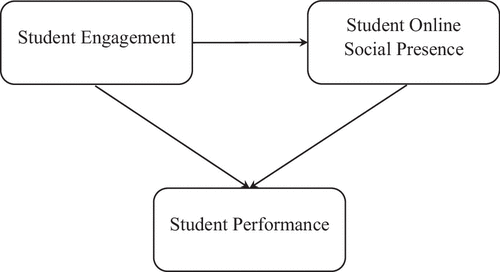
Thus, in our paper, we investigate the impact of online student engagement on online social presence (i.e., whether online student engagement factors increase online social presence). To this end, we used the student engagement questionnaire of Coates (2006) that measures online student engagement. The student engagement questionnaire was created to give a quick and accurate assessment of online and general engagement among campus-based students. In particular, we have adopted five factors/scales of online class engagement that have been used in previous established studies (Coates 2006, Dixson 2015): OSI, online contact with staff, online active learning, online collaboration (OC), and online engagement. Thus, our survey included two subscales: (1) online class engagement, which comprises the aforementioned five scales, and (2) OSP.
Online social interaction consists of five items that assess students’ experiences with a variety of salient interactions with others. Online contact with staff, with four components, covers the extent to which students communicate with academic staff online. Online active learning consists of four components that guarantee that students completely understand and engage in the module outlines and assignments that will help them study more successfully. Online collaboration includes seven questions that assess student participation and cooperation using Canvas, Zoom, and Microsoft Teams. Online engagement consists of eight items that measure how successfully students have integrated the usage of study materials (e.g., instructors’ presentations, lectures, videos, and other additional materials) to facilitate learning. Online social presence addresses attitudes in which the instructor supported student social presence. We present all the aforementioned items in Table 3.
|
Table 3. Central Tendency Results
| Scales/indicators | M | SD |
|---|---|---|
| 1. Online class engagement | ||
| 1.1. Online social interaction (mean: 3.2, SD: 0.9) | ||
| Online sessions help me to … | ||
| Interact with other students | 3.60 | 1.23 |
| Share my thoughts in discussions | 3.47 | 1.09 |
| Participate in discussions with my classmates | 3.42 | 1.13 |
| Ask questions | 3.08 | 1.24 |
| Improve my understanding of a module topic | 2.44 | 1.07 |
| 1.2. Online contact with staff (M: 2.6, SD: 0.78) | ||
| In the Operations & Technology Management module … | ||
| I use online sessions to contact the module teaching staff | 2.99 | 1.01 |
| I found it easy to form a group for the module assessments in the online sessions | 2.76 | 1.31 |
| I find it easy to communicate with the module teaching staff | 2.53 | 1.10 |
| I use online platforms to work on my group assessments with other teammates | 2.12 | 0.96 |
| 1.3. Online active learning (M: 2.4, SD: 0.74) | ||
| I find out … | ||
| What I have to do for the module assessments using the marking rubric | 2.70 | 1.06 |
| Lectures and seminars challenge me to learn | 2.61 | 0.99 |
| What I have to do for the module assessments using the online drop-in sessions | 2.41 | 1.00 |
| What I have to do for the module assessments using the coursework explanation session | 2.06 | 0.91 |
| 1.4. Online collaboration (M: 2.4, SD: 0.72) | ||
| Based on my experience in this module … | ||
| I use Canvas, Zoom, Microsoft Teams, and LJMU email to communicate with other students | 2.84 | 1.24 |
| Canvas and Zoom help me to interact with the module staff effectively | 2.48 | 1.07 |
| Module staff discuss interesting issues in the online sessions | 2.45 | 0.88 |
| Module staff use Canvas and Zoom in ways that improve the overall teaching | 2.42 | 0.97 |
| Module staff communicate well with students in the online sessions | 2.32 | 0.98 |
| I can easily find what I am looking for in the module Canvas site | 2.28 | 1.08 |
| The module content seems relevant to my program and future career | 2.25 | 0.85 |
| 1.5. Online engagement (M: 2.3, SD: 0.7) | ||
| In the online sessions … | ||
| Reading the list helps me to understand the module content | 2.73 | 0.94 |
| Reading the list improves my learning of the module | 2.68 | 0.97 |
| Additional videos and other supplementary materials help me to understand the module content | 2.38 | 0.89 |
| Additional videos and other supplementary materials improve my learning of the module | 2.33 | 0.93 |
| Lecture slides improve my learning of the module | 2.22 | 0.93 |
| Lecture slides help me to understand the module content | 2.18 | 0.92 |
| Lecture and seminar recordings improve my learning of the module | 2.14 | 1.03 |
| Lecture and seminar recordings help me to understand the module content | 2.09 | 0.91 |
| 2. Dependent variable: Online social presence (average M: 3.25, SD: 0.78) | ||
| Based on my online experience … | ||
| I feel comfortable turning on my camera and participate in the online sessions | 4.01 | 1.13 |
| Online teaching and learning made me feel part of the university | 3.70 | 1.17 |
| Getting to know other classmates and academic staff gives me a sense of belonging in my program | 3.28 | 1.28 |
| I feel comfortable asking questions in the online sessions | 3.25 | 1.19 |
| Online communication is an excellent medium for social interaction | 3.18 | 1.23 |
| The lectures’ and seminars’ content helped me put my study in real-world contexts | 3.05 | 1.03 |
| I feel more comfortable attending the online sessions | 3.03 | 1.25 |
| I feel my points either in chat box or verbally are acknowledged by my classmates and teaching staff | 2.53 | 1.00 |
Note. LJMU, Liverpool John Moores University; M, mean; SD, standard deviation.
On this basis, our hypotheses are the following.
Online social interaction positively affects online social presence.
Online contact with staff positively affects online social presence.
Online active learning positively affects online social presence.
Online collaboration positively affects online social presence.
Online engagement positively affects online social presence.
In the next section, we will discuss our research design and methodology.
5. Research Design and Method
5.1. Data Collection and Participants
In this section, we describe in detail our research design and methodology. An online survey was conducted to measure first-year students’ perspectives on (1) the extent of their engagement in the Operations & Technology Management module and (2) the degree to which their Operations & Technology Management module instructors promote their engagement. Because of the COVID-19 pandemic, data were obtained via a close-ended online questionnaire using the Qualtrics platform from 244 students at Liverpool Business School, Liverpool John Moores University. The information gathered from these questions was examined utilizing coding techniques. Purposive sampling was used to choose the population for this study. First-year business management students who enrolled in the Operations & Technology Management module in the second semester of the 2020–2021 academic year met the eligibility criteria. The survey link was shared via the Qualtrics platform, and the survey was ended after two weeks.
5.2. Analysis Method
Data analysis was performed using SPSS 26 and AMOS 24 to apply structural equation modeling (SEM). Following the SEM guidelines provided by statistical resources (Verkuilen 2011), the theory-driven hypothesized model was first specified, followed by data collection and preparation for testing it through data screening and missing data treatment. Next, a confirmatory factor analysis (CFA) was run, and a fit model was evaluated based on the measurement model.
AMOS software was used in this study to perform CFA based on the variance-covariance matrix to examine the construct validity (CR) of the suggested measurement derived from the literature. Convergence and discriminant validity were assessed to determine the measurement model’s validity or CFA. Convergent validity is achieved when the variance of items used to measure a concept is convergent. In the case of strong convergent validity, items measuring latent variables should have a high factor loading of more than 0.5 (ideally more than 0.7) and be statistically significant (Hair et al. 2009). Average variance extracted (AVE) and CR were calculated to test discriminant validity, as Hair et al. (2009) recommended that AVE be greater than 0.4 and CR be greater than 0.7 (Rhee et al. 2009). For this research, following the validation of the model, the total measurement model was built and modified utilizing the modification indices suggestions. Figure 2 presents the steps that were followed to produce the final model used in this paper.
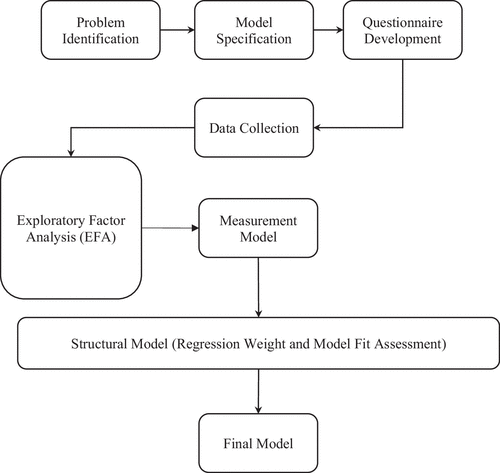
Fit indices were used to evaluate the model’s ability to reproduce data. The model fit compares the estimated covariance matrix (a theory) with the observed covariance matrix (researchers’ data) after the model has been defined. The smaller the difference between the estimated and observed matrices, the fitter the model (Kenny 2020). Model fit indices can be divided into three broad categories: (1) absolute indices evaluating the overall discrepancy between observed and implied covariance matrices (e.g., standardized root mean square residual (SRMR), chi-squared test, and goodness of fit index); (2) parsimonious indices that assess the overall difference between observed and implied covariance matrices, subjected to the complexity of a model (e.g., root mean square error of approximation (RMSEA), Akaike information criterion, and adjusted goodness of fit index); and (3) incremental indices that evaluate absolute or parsimonious fit in comparison with a baseline model, typically the null model (a model that specifies no relationships between measured variables; e.g., comparative fit index (CFI), normed fit index (NFI), and non-NFI) (Morrison et al. 2017).
Despite the fact that researchers are interested in reporting fit indices to test how well the model fits the proposed theory, there is no widely accepted threshold of good and poor fitting models. The chi-square test, Tucker-Lewis Index (TLI), and RMSEA, on the other hand, are very popular fit indices based on this old-fashioned ratio (Kenny 2020). Although it is argued that fit index cutoffs should be met (Garnier-Villarreal and Jorgensen 2020), others (Yaşlıoğlu and Yaşlıoğlu 2020) believe that the fit model is not always valid when arguing the results. Barrett (2007) stated that fit indices add nothing to the analysis except chi square, but others claimed that for models with 75–200 cases, the chi-squared test may be a reasonable measure of fit. However, for models with 400 or more cases, chi square is almost always statistically significant (Kenny and McCoach 2009).
Chi square is also affected by changes in correlation quantity in the model; as correlations increase, the model fit improves. Considering all the points discussed, as a minimum requirement, one index from each category is reported for this study to assess how data are fitted with the proposed model. Modification indices are one of the AMOS software outputs that allows users to treat covariance between indicators as a free parameter, reducing the fall in discrepancy and achieving a better fit, and decrease a model’s chi square. Based on the number of changes that occur after the modification, the researcher must decide whether to combine indicators or exclude them from further analysis. The modification index is an output that includes an estimate of how much the parameter would change if covariance between indicators was treated as a free parameter or excluded. The researcher should decide whether to combine or exclude indicators from further analysis.
These actions must be carried out one by one until the model fit indices reach the threshold. AMOS presents a parameter’s modification index together with an estimate of how much the parameter would change if it was modified, making the decision easier. For this study, several steps were taken to modify the measurement and structural models. Given that AMOS is sensitive to even minor changes, modifications were implemented cautiously and step by step. Based on the researchers’ experience, taking modification actions will sometimes increase the fit indices but decrease the value of regression weight and R2. One explanation is that data in some studies do not fit the theory, but the effects are highly significant.
6. Results Summary
This section discusses the results obtained from our survey. First, we will focus on our respondents’ demographic distribution. The majority of the respondents in this research (67%) are 18–23 years old. At the time of the poll, 53.7% were unemployed, 38.5% worked part time, and 5.3% worked full time. Most students (91%) reported using their own laptop/personal computer (PC) for online classes, followed by their smartphone (6.7%), sharing a laptop/PC with someone else (1.2%), and borrowing from the university (0.85%). The majority of the students (89.8%) accessed the internet via their home broadband, followed by 5% who accessed the internet via mobile data. Tables 4–7 present the respondents’ demographic distribution.
|
Table 4. Student Ages
| Age, years | Percentage | Frequency |
|---|---|---|
| 18–19 | 67.36 | 161 |
| 20–21 | 26.78 | 64 |
| 22–23 | 2.51 | 6 |
| 23 and older | 3.35 | 8 |
|
Table 5. Students’ Employment Status
| Working status | Percentage | Frequency |
|---|---|---|
| Part time | 39.50 | 94 |
| Full time | 5.46 | 13 |
| I do not work | 55.04 | 131 |
|
Table 6. Students’ Medium to Attend Classes
| Medium for class attendance | Percentage | Frequency |
|---|---|---|
| Own laptop/PC | 91.10 | 215 |
| Smartphone | 6.78 | 16 |
| Share laptop/PC | 1.27 | 3 |
| Loan university laptop | 0.85 | 2 |
|
Table 7. Students’ Internet Access to Attend Classes
| Internet connection | Percentage | Frequency |
|---|---|---|
| Home broadband | 89.83 | 212 |
| Work broadband | 0.42 | 1 |
| Mobile data/network | 5.08 | 12 |
| Other | 4.66 | 11 |
Table 3 presents the central tendency of our results, with indicators listed in descending order of mean value (one: strongly agree to five: strongly disagree). The reported central tendency reveals that the means for the level of online social interaction and online social presence are 3.2, that the mean for online contact with staff is 2.6, that the means for online collaboration and online active learning are 2.4, and that the mean for online engagement is 2.3. Furthermore, Table 3 illustrates that students rated their online involvement as average or slightly lower than average.
Individual responses were utilized to assess each student’s degree of engagement in an online class, with each of the five dimensions containing between four and eight items. A pilot study of 20 randomly selected students demonstrates high measurement reliability (0.7–0.89) for these constructs. Cronbach’s alpha varied from 0.9 to 0.97 for the actual research after data screening and replacing missing data (Table 8), demonstrating the reliability of the collected data. Cronbach’s alpha for each construct in the actual study was higher than the one in the pilot study, indicating that the greater the number of respondents who answered items measuring a specific concept, the more reliable the measurement.
|
Table 8. Reliability Results
| Variables | Number of items | Cronbach’s alpha (pilot study) | Cronbach’s alpha (actual study) | After data screening |
|---|---|---|---|---|
| Predictors | ||||
| Online social interaction | 5 | 0.86 | 0.95 | 0.9 |
| Online contact with staff | 4 | 0.71 | 0.92 | 0.95 |
| Online active learning | 4 | 0.7 | 0.95 | 0.93 |
| Online collaboration | 7 | 0.85 | 0.98 | 0.97 |
| Online engagement | 8 | 0.89 | 0.9 | 0.91 |
| Outcome | ||||
| Online social presence | 8 | 0.85 | 0.95 | 0.94 |
Data screening is an important step in the data analysis process, as it ensures the quality and accuracy of the data and helps to produce reliable and valid statistical results. If a variable has a large number of missing values, the researcher may decide to exclude that variable from the analysis or impute the missing values using a suitable method. Similarly, if there are extreme values or outliers in the data, the researcher may decide to exclude them or transform the data using a suitable method. Therefore, the “after data screening” column in Table 8 refers to the reliability results after checking for missing values in our data set.
6.1. Structural Equation Model: Assessing the Measurement Model’s Validity
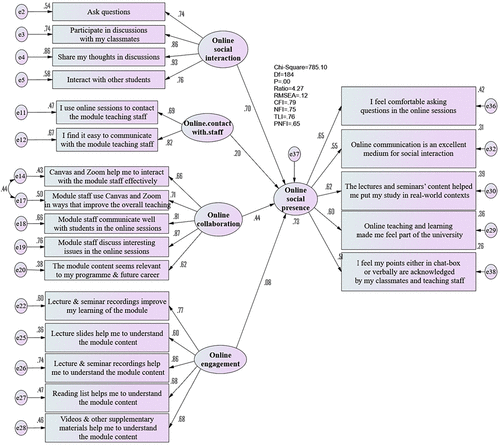
The proposed measurement model’s validity was evaluated using the guidelines discussed in Section 5. The six unobserved latent factors with sets of observed variables (indicators/manifests) specified an estimated measurement model (Figure 3). To achieve the convergent validity requirement, the model was modified several times using modification indices (covariance indicators) and deleting indicators with a factor loading less than 0.5. One factor (online active learning) was removed from the five online class engagement predictors because of insufficient factor loading. Because the factor loading of three indicators measuring online active learning was below the recommended threshold of 0.5, they were subsequently removed from the model one by one using a stepwise approach. When the first indicator with a factor loading of 0.34 was removed and the model was run again, the factor loading for the other three indicators decreased until only one indicator remained that was not applicable for SEM, leading to the factor’s elimination.
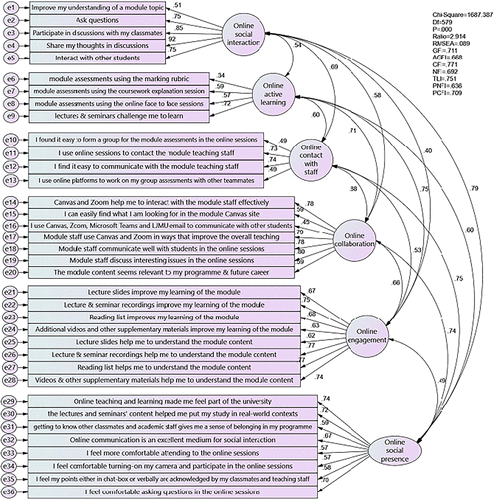
Note. AGFI, adjusted goodness of fit index; Df, degrees of freedom; GFI, goodness of fit index; LJMU, Liverpool John Moores University; PCFI, parsimonious comparative fit index; PNFI, parsimonious normed fit index; TLI, Tucker-Lewis index.
We report only the initial and modified models for parsimony. One indicator measuring online social interaction, one indicator measuring online contact with staff, two indicators measuring online collaboration, and three indicators measuring online engagement and online social presence were deleted from the model because their factor loading values were less than 0.6. The last column in Table 9 displays the deleted items marked by “Del.” The modified model, as depicted in Figure 4, is accompanied by Table 9, which outlines the factor loadings before and after the modifications were made. The indicators measuring the latent variables have been arranged in descending order of their factor loadings.
|
Table 9. The Standardized Factor Loading for Initial and Modified (Final) Measurement Models of the Study
| Latent variables | Indicators | Initial | Modified |
|---|---|---|---|
| Online social interaction | |||
| Online.Social.Interaction4 | Share my thoughts in discussions | 0.92 | 0.93 |
| Online.Social.Interaction3 | Participate in discussions with my classmates | 0.86 | N.C. |
| Online.Social.Interaction2 | Ask questions | 0.75 | N.C. |
| Online.Social.Interaction5 | Interact with other students | 0.75 | N.C. |
| Online.Social.Interaction1 | Improve my understanding of a module topic | 0.51 | Del |
| Online active learning | |||
| Online.Active.Learning4 | Lectures and seminars challenge me to learn | 0.72 | Del |
| Online.Active.Learning2 | Module assessments using the coursework explanation session | 0.59 | Del |
| Online.Active.Learning3 | Module assessments using the online face-to-face sessions | 0.57 | Del |
| Online.Active.Learning1 | Module assessments using the marking rubric | 0.34 | Del |
| Online contact with staff | |||
| Online.Contact.with.Staff1 | I find it easy to communicate with the module teaching staff | 0.74 | 0.78 |
| Online.Contact.with.Staff2 | I use online sessions to contact the module teaching staff | 0.73 | 0.72 |
| Online.Contact.with.Staff3 | I use online platforms to work on my group assessments with other teammates | 0.49 | Del |
| Online.Contact.with.Staff4 | I found it easy to form a group for the module assessments in the online sessions | 0.49 | Del |
| Online collaboration | |||
| Online.Collaboration6 | Module staff discuss interesting issues in the online sessions | 0.80 | 0.83 |
| Online.Collaboration4 | Module staff use Canvas and Zoom in ways that improve the overall teaching | 0.79 | 0.75 |
| Online.Collaboration5 | Module staff communicate well with students in the online sessions | 0.78 | 0.80 |
| Online.Collaboration1 | Canvas and Zoom help me to interact with the module staff effectively | 0.78 | 0.73 |
| Online.Collaboration2 | I can easily find what I am looking for in the module Canvas site | 0.59 | Del |
| Online.Collaboration7 | The module content seems relevant to my program and future career | 0.59 | 0.61 |
| Online.Collaboration3 | I use Canvas, Zoom, Microsoft Teams, and LJMU email to communicate with other students | 0.45 | Del |
| Online social engagement | |||
| Online.Engagement6 | Lecture and seminar recordings help me to understand the module content | 0.77 | 0.87 |
| Online.Engagement7 | Reading list helps me to understand the module content | 0.77 | 0.66 |
| Online.Engagement2 | Lecture and seminar recordings improve my learning of the module | 0.75 | 0.77 |
| Online.Engagement8 | Videos and other supplementary materials help me to understand the module content | 0.74 | 0.66 |
| Online.Engagement3 | Reading list improves my learning of the module | 0.68 | Del |
| Online.Engagement1 | Lecture slides improve my learning of the module | 0.67 | Del |
| Online.Engagement4 | Additional videos and other supplementary materials improve my learning of the module | 0.63 | Del |
| Online.Engagement5 | Lecture slides help me to understand the module content | 0.62 | 0.61 |
| Online social presence | |||
| Online.Social.Presence1 | Online teaching and learning made me feel part of the university | 0.74 | 0.65 |
| Online.Social.Presence2 | The lectures’ and seminars’ content helped me put my study in real-world contexts | 0.73 | 0.67 |
| Online.Social.Presence8 | I feel comfortable asking questions in the online sessions | 0.70 | 0.74 |
| Online.Social.Presence4 | Online communication is an excellent medium for social interaction | 0.67 | 0.63 |
| Online.Social.Presence3 | Getting to know other classmates and academic staff gives me a sense of belonging in my program | 0.59 | Del |
| Online.Social.Presence7 | I feel my points either in chat box or verbally are acknowledged by my classmates and teaching staff | 0.58 | 0.60 |
| Online.Social.Presence6 | I feel comfortable turning on my camera and participate in the online sessions | 0.57 | Del |
| Online.Social.Presence5 | I feel more comfortable attending to the online sessions | 0.57 | Del |
Notes. Initial indicates the standardized factor loading for the initial measurement model. Modified indicates the standardized factor loading after the stepwise measurement model modification. Del, indicator deleted for low factor loading; LJMU, Liverpool John Moores University; N.C., factor loading remained unchanged after modifications.
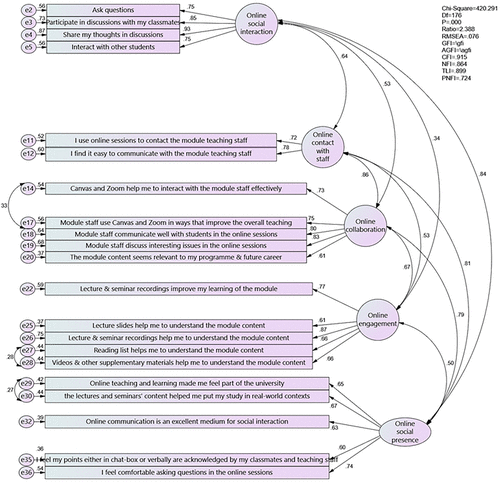
Note. AGFI, adjusted goodness of fit index; Df, degrees of freedom; GFI, goodness of fit index; PNFI, parsimonious normed fit index; TLI, Tucker-Lewis index.
The construct reliability and validity of the five online social presence predictors were calculated using James Gaskin’s Master Validity plug-in for AMOS (Gaskin 2021) (Table 10). The internal consistency test for online engagement was 0.84, for online social interaction was 0.89, for online contact with staff was 0.72, for online collaboration was 0.86, and for online social presence was 0.8, all of which were judged highly reliable. AVE and interitems correlation were used to test discriminant validity (Table 10). Online engagement had an AVE of 0.52, online social interaction had an AVE of 0.62, online contact with staff had an AVE of 0.6, online collaboration had an AVE of 0.6, and online social presence had an AVE of 0.5, all of which were below the applicable criterion for this study, as indicated in Section 5. Each indicator’s factor loading is higher on its own construct than on other constructs in this study, and the average variance shared between constructs and their indicators is greater than the variance shared between the constructs themselves, demonstrating that the assumption of discriminant validity has been fulfilled.
|
Table 10. Master Validity Report for the Modified Measurement Model
| CR | AVE | 1 | 2 | 3 | 4 | 5 | |
|---|---|---|---|---|---|---|---|
| 1. Online engagement | 0.84 | 0.52 | 0.72 | ||||
| 2. Online social interaction | 0.89 | 0.62 | 0.34 | 0.82 | |||
| 3. Online contact with staff | 0.72 | 0.6 | 0.53 | 0.64 | 0.75 | ||
| 4. Online collaboration | 0.86 | 0.6 | 0.67 | 0.53 | 0.86 | 0.74 | |
| Online social presence | 0.80 | 0.5 | 0.5 | 0.81 | 0.79 | 0.78 | 0.6 |
Figure 3 shows the initial measurement model, which consists of five latent variables and 28 indicators to measure them, whereas Figure 4 presents the final measurement model, which includes four latent variables and 16 indicators to measure them. The modified measurement model was found to be fit and valid. There are three different categories for fit indices. However, in this paper, we just reported one index from each category (see Section 5.2). The measurement model fit measures were used to assess the overall goodness of fit of the measurement model (Table 11), and all values were within their respective common acceptance levels.
|
Table 11. Model Fit for the Modified Measurement Model
| Measure | Estimate | Threshold | Interpretation |
|---|---|---|---|
| CMIN | 420.291 | — | — |
| DF | 176.000 | — | — |
| CMIN/DF | 2.388 | Between 1 and 3 | Excellent |
| CFI | 0.915 | >0.95 | Acceptable |
| SRMR | 0.069 | <0.08 | Excellent |
| RMSEA | 0.076 | <0.06 | Acceptable |
Note. CMIN, chi-square minimum; Df, degrees of freedom.
6.2. Structural Model
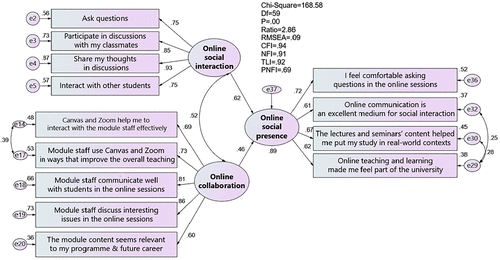
Following confirmation of the modified measurement model, a structural model was prepared to test the stated research hypotheses (Figure 5). Figure 6 presents the final and modified structural model with estimated standardized coefficients, and Table 12 demonstrates the hypotheses’ estimation findings. The impact of online social contact (=0.621, p = 0.00) and online cooperation (=0.460, p = 0.00) on online social presence was shown to be significant (Table 13). Because online engagement and online contact with staff were not significant, they were removed from the model. The structural model fit decisions also produced a good fit (Table 12).
|
Table 12. Model Fits for the Structural/Path Model (Gaskin 2021)
| Measure | Estimate | Threshold | Interpretation |
|---|---|---|---|
| CMIN | 168.579 | — | — |
| DF | 59.000 | — | — |
| CMIN/DF | 2.857 | Between 1 and 3 | Excellent |
| CFI | 0.940 | >0.95 | Acceptable |
| SRMR | 0.072 | <0.08 | Excellent |
| RMSEA | 0.087 | <0.06 | Not acceptable (very sensitive to sample size) |
| CFI | 0.94 | >0.9 | Acceptable |
| NFI | 0.91 | >0.9 | Acceptable |
| TLI | 0.92 | >0.9 | Acceptable |
Note. CMIN, chi-square minimum; Df, degree of freedom; TLI, Tucker-Lewis index.
|
Table 13. Regression Weights
| Estimate | S.E. | p | |
|---|---|---|---|
| Effect of OSI on OSP | 0.621 | 0.070 | *** |
| Effect of OC on OSP | 0.460 | 0.130 | *** |
Note. S.E., standard error.
***p < 0.001.
In addition to observing the regression significance and fit indices, R2 was calculated to determine how much of the variance of endogenous variables is explained by exogenous variables. According to the structural model (Figure 6), online social interaction and online collaboration explain 89% of the variance for online social presence, which is extremely powerful in the social science discipline, specifically in the education field.
In summary, this study found that of the five online class engagement predictors (online social interaction, online contact with staff, online active learning, online collaboration, and online engagement), only two (online social interaction and online collaboration) are significant factors in increasing students’ online social presence levels. The final model for online social presence is shown in Table 14 with indicators measuring the three constructs sorted from highest to lowest standardized factor loading. Results illustrate that the best representative of indicators for online social interaction was “online sessions help me to share my thoughts in discussions,” that the best representative for online collaboration was “based on my experience, module staff discuss interesting issues in the online sessions,” and that the best representative for online social presence was “based on my online experience, I feel comfortable asking questions in the online sessions.”
|
Table 14. The Standardized Factor Loading for Modified and Final Measurement Models of the Study
| Predictors | Standardized factor loading |
|---|---|
| Online social interaction | |
| Online sessions help me to … | |
| Share my thoughts in discussions | 0.93 |
| Participate in discussions with my classmates | 0.85 |
| Ask questions | 0.75 |
| Interact with other students | 0.75 |
| Online collaboration | |
| Based on my experience in this module … | |
| Module staff discuss interesting issues in the online sessions | 0.86 |
| Module staff communicate well with students in the online sessions | 0.81 |
| Module staff use Canvas and Zoom in ways that improve the overall teaching | 0.73 |
| Canvas and Zoom help me to interact with the module staff effectively | 0.69 |
| The module content seems relevant to my program and future career | 0.60 |
| Outcome | |
| Online social presence | |
| Based on my online experience … | |
| I feel comfortable asking questions in the online sessions | 0.72 |
| The lectures’ and seminars’ content helped me put my study in real-world contexts | 0.67 |
| Online teaching and learning made me feel part of the university | 0.62 |
| Online communication is an excellent medium for social interaction | 0.61 |
7. Discussion on Operations Management Online Teaching
Our findings indicate that a high percentage of the variation in the response online social presence construct is explained by the predictor constructs online social interaction and online collaboration and that both these predictors are significant. Online social interaction refers to student perception in terms of the extent that online learning systems support online interaction with others (i.e., their peers and their tutors). Therefore, having a supportive learning management system that provides online interaction among students would help enhance the online social presence of students in online classes/education and improve student engagement. The literature illustrates that students are greatly influenced by the adopted learning management system over their first year (Chyr et al. 2017, Dong et al. 2019). Thus, providing a supportive learning management system from the beginning of their online studies is key for online social presence and student engagement.
During the COVID-19 pandemic, one of the issues we faced was the lack of student interaction not only in the live sessions but also, in postclass activities. Students had difficulties in choosing an online means/tool to communicate with each other, particularly for group activities. Using different online tools for different modules can confuse students. Therefore, a more standardized approach may help students become familiar with an online tool and use it more confidently to interact with their peers and their tutors. For this reason, a decision should be made at the university/faculty/program level to have a consistent approach regarding the online learning and communication tools to be used by students. Moreover, our findings showed that the indicator with the best representation regarding online social interaction was “online sessions help me to share my thoughts in discussions.” This indicates that creating a friendly virtual environment where students feel comfortable discussing and sharing their thoughts, either verbally by using their camera and/or microphone or in writing by using a chat box, can enhance online social interaction and subsequently, can enhance online social presence and student engagement.
Furthermore, our findings indicate that online collaboration has a significant positive relationship with online social presence. In online education, students need to use online systems to collaborate with peers to construct academic knowledge (Coates 2007). This means that providing effective online systems for students to collaborate with their peers online would support online social presence and increase student engagement. Various studies report that emotional engagement is key to student engagement and active learning (Finn and Zimmer 2012, Molinillo et al. 2018). Thus, it is suggested that online collaboration within a social virtual environment would help students to emotionally engage with peers and consequently, enhance student engagement (Molinillo et al. 2018, Salam and Farooq 2020, Oluwajana et al. 2023). Building on this, we believe that encouraging students to communicate and collaborate with their peers via online platforms and applications, such as Skype, Zoom, WhatsApp, and Snapchat, would work well because they are familiar with the software and use it on a daily basis.
Another interesting finding is that the indicator with the best representation regarding online social presence was “based on my online experience, I feel comfortable asking questions in the online sessions.” This demonstrates that if students feel comfortable interacting with their tutors and asking questions, then their online social presence is enhanced. Online social presence is the degree of feeling, perception, and reaction of being connected online to another intellectual entity. Thus, when students feel comfortable interacting with their tutors and asking questions, they feel connected to them. This reiterates the point discussed that creating a friendly virtual environment, where students feel free to interact, share their thoughts, and ask questions, enhances online social presence and student engagement.
Overall, education will change dramatically after the pandemic, and we believe that higher education institutions will adopt a blended learning approach to be flexible for any unpredictable situations in the future. However, because student engagement and online social presence are considered as two of the main indicators for student performance, we suggest that digital technologies should be adopted in a way that encourages students to interact actively with their peers and their tutors.
References
Airnow (2020) Daily active users (DAU) of the Zoom app on Android and iOS devices in the United Kingdom (UK) from January to November 2020. Statista. Accessed March 13, 2020, https://www.statista.com/statistics/1118860/zoom-daily-active-users-uk/.Google Scholar- (2020) Online social presence “OSP” patterns correlation with students’ academic performance among master of education program students. Internat. J. Instruction 13(2):493–506.Crossref, Google Scholar
- (2021) A narrative approach to university instructors’ stories about promoting student engagement during COVID-19 emergency remote teaching in Saudi Arabia. J. Res. Tech. Ed. 54(S1):S165–S181.Crossref, Google Scholar
- (2020) Adapting to COVID-19 disruptions: Student engagement in online learning of accounting. Accounting Res. J. 34(3):261–269.Crossref, Google Scholar
- (2010) Defining student engagement. Change Magazine Higher Learn. 43(1):38–43.Crossref, Google Scholar
- (2012) Student engagement: Rhetoric and reality. Higher Ed. Res. Development 31(6):759–772.Crossref, Google Scholar
- (2007) Structural equation modelling: Adjudging model fit. Personality Individual Differences 42(5):815–824.Crossref, Google Scholar
- (2003) Toward a more robust theory and measure of social presence: Review and suggested criteria. Presence Teleoperators Virtual Environ. 12(5):456–480.Crossref, Google Scholar
- (2008) ‘A real rollercoaster of confidence and emotions’: Learning to be a university student. Stud. Higher Ed. 33(5):567–581.Crossref, Google Scholar
- (2017) Exploring the effects of online academic help-seeking and flipped learning on improving students’ learning. Educational Tech. Soc. 20(3):11–23.Google Scholar
- (2006) Student Engagement in Campus-Based and Online Education: University Connections (Routledge, London).Crossref, Google Scholar
- (2007) A model of online and general campus-based student engagement. Assessment Evaluation Higher Ed. 32(2):121–141.Crossref, Google Scholar
- (2017) The growth trend in learning strategies during the transition from secondary to higher education in Flanders. Higher Ed. 73(3):499–518.Crossref, Google Scholar
- (2013) Evaluating online social presence: An overview of social presence assessment. J. Ed. Tech. Development Exchange 6(1):13–30.Google Scholar
- (2013) Building modern online social presence: A review of social presence theory and its instructional design implications for future trends. Ed. Inform. Tech. 18(4):661–685.Crossref, Google Scholar
- (2015) Measuring student engagement in the online course: The Online Student Engagement scale (OSE). Online Learn. 19(4):n4.Crossref, Google Scholar
- (2019)
The effects of an online learning management system on students’ academic socialization: A qualitative study on a Chinese graduate course . Meunier F, Van de Vyver J, Bradley L, Thouësny S, eds. CALL and Complexity—Short Papers from EUROCALL 2019 (Research-publishing.net, Voillans, France), 118–123.Crossref, Google Scholar - (2018) Online learning in higher education: Exploring advantages and disadvantages for engagement. J. Comput. Higher Ed. 30(3):452–465.Crossref, Google Scholar
- Evans C, Muijs D, Tomlinson M (2015) Engaged Student Learning: High Impact Strategies to Enhance Student Achievement (Higher Education Academy, York, UK).Google Scholar
- (2020) Students’ motivation and engagement in higher education: The importance of attitude to online learning. Higher Ed. 83:317–338.Crossref, Google Scholar
- (2012)
Student engagement: What is it? Why does it matter ? Christenson SL, Reschly AL, Wylie C, eds. Handbook of Research on Student Engagement (Springer, New York), 97–131.Crossref, Google Scholar - (2020) How to combat zoom fatigue. Harvard Bus. Rev. (April 29), https://hbr.org/2020/04/how-to-combat-zoom-fatigue.Google Scholar
- (2020) Adapting fit indices for Bayesian structural equation modeling: Comparison with maximum likelihood. Psych. Methods 25(1):46–70.Crossref, Google Scholar
- (2021) James Gaskin’s Master Validity plugin. AMOS plugin software for Validity calculation. YouTube video. Accessed April 12, 2021, https://www.youtube.com/watch?v=JqySgMU_qMQ.Google Scholar
- (2018) What is student engagement? New Directions Teaching Learn. 2018(154):11–20.Crossref, Google Scholar
- (2021) The community of inquiry perspective on students’ social presence, cognitive presence, and academic performance in online project-based learning. J. Comput. Assisted Learn. 37:1479–1493.Crossref, Google Scholar
- (2009) Multivariate Data Analysis: A Global Perspective, 7th ed. (Pearson, London).Google Scholar
- (2005) A measure of college student course engagement. J. Ed. Res. 98(3):184–192.Crossref, Google Scholar
- (2015) Measuring student engagement in technology-mediated learning: A review. Comput. Ed. 90:36–53.Crossref, Google Scholar
- (2021) Online teaching and learning in higher education: Lessons learned in crisis situations. Comput. Human Behav. 121:106789.Crossref, Google Scholar
- (2013) Community matters: Social presence and learning outcomes. J. Scholarship Teaching Learn. 13(1):77–86.Google Scholar
- (2015) Social presence in online discussions as a process predictor of academic performance. J. Comput. Assisted Learn. 31:638–654.Crossref, Google Scholar
- (2013) Framing student engagement in higher education. Stud. Higher Ed. 38(5):758–773.Crossref, Google Scholar
- (2020) Measuring model fit. Accessed November 24, 2022, http://www.davidakenny.net/cm/fit.htm.Google Scholar
- (2009) Effect of the number of variables on measures of fit in structural equation modeling. Structural Equation Model. Multidisciplinary J. 10(3):333–351.Crossref, Google Scholar
- (2017)
Student engagement and the transition from the first to second year in higher education . Kyndt E, Donche V, Trigwell K, Lindblom-Ylänne S, eds. Higher Education Transitions (Routledge, London), 113–134.Crossref, Google Scholar - (2019) Understanding the multidimensional nature of student engagement during the first year of higher education. Frontiers Psych. 10:1056.Crossref, Google Scholar
- (2008) Students’ engagement in first-year university. Assessment Evaluation Higher Ed. 33(5):493–505.Crossref, Google Scholar
- (2009a) The national survey of student engagement: Conceptual and empirical foundations. New Directions Institutional Res. 141:5–20.Crossref, Google Scholar
- (2008) Unmasking the effects of student engagement on first-year college grades and persistence. J. Higher Ed. 79(5):540–563.Crossref, Google Scholar
- (2009) Community college online course retention and final grade: Predictability of social presence. Ed. Foundations Leadership Faculty Publications 10:165–182.Google Scholar
- (2021) On powerpointers, clickerers, and digital pros: Investigating the initiation of digital learning activities by teachers in higher education. Comput. Human Behav. 119:106715.Crossref, Google Scholar
- (2017) Critiques of student engagement. Higher Ed. Policy 30(1):5–21.Crossref, Google Scholar
- (2017) Measuring student engagement in UK higher education: Do surveys deliver? J. Appl. Res. Higher Ed. 9(2):226–241.Crossref, Google Scholar
- (2018) Exploring the impacts of interactions, social presence and emotional engagement on active collaborative learning in a social web-based environment. Comput. Ed. 123:41–52.Crossref, Google Scholar
- (2017) Best practice recommendations for using structural equation modelling in psychological research. Psychology 8(9):1326–1341.Crossref, Google Scholar
- (2021) COVID-19 emergency e-learning and beyond: Experiences and perspectives of university educators. Ed. Sci. 11(1):19.Google Scholar
- (2023) Does the use of a web-based collaborative platform reduce cognitive load and influence project-based student engagement? Current Psych. 42:8265–8278.Crossref, Google Scholar
Office for National Statistics (2020) Coronavirus and the impact on students in higher education in England: September to December 2020. Report, UK Office for National Statistics, London.Google Scholar- (2020) Reassessing disparities in online learner student engagement in higher education. Ed. Res. 49(1):20–29.Crossref, Google Scholar
- (2018) An online engagement framework for higher education. Online Learn. 22(1):183–204.Crossref, Google Scholar
- (2009) Self-efficacy in information security: Its influence on end users’ information security practice behavior. Comput. Security 28(8):816–826.Crossref, Google Scholar
- (2020) Does sociability quality of web-based collaborative learning information system influence students’ satisfaction and system usage? Internat. J. Ed. Tech. Higher Ed. 17:1–39.Google Scholar
- (2020) Effectiveness of online presence in a blended higher learning environment in the Pacific. Stud. Higher Ed. 45(8):1547–1565.Crossref, Google Scholar
- (2013) Comparing online and face-to-face learning experiences for nontraditional students: A case study of three online teacher education candidates. Quart. Rev. Distance Ed. 14(4):233–251.Google Scholar
- (2010) Student engagement literature review. Higher Ed. Acad. 11:1–15.Google Scholar
- (2000) On-line learning migration: From social learning theory to social presence theory in a CMC environment. J. Network Comput. Appl. 23(1):27–37.Crossref, Google Scholar
- (2002) The relationship of social presence and interaction in online classes. Amer. J. Distance Ed. 16(3):131–150.Crossref, Google Scholar
- (2011) Book review: A comparative review of four structural equation modeling books. J. Ed. Behav. Statist. 36(6):832–834.Crossref, Google Scholar
- (2017) Explaining social presence and the quality of online learning with the SIPS model. Comput. Human Behav. 72:479–487.Crossref, Google Scholar
- (2016) Enhancing the assessment experience: Improving student perceptions, engagement and understanding using online video feedback. Innovations Ed. Teaching Internat. 53(4):400–410.Crossref, Google Scholar
- (2020) How and when to use which fit indices? A practical and critical review of the methodology. Istanbul Management J. 88:1–20.Crossref, Google Scholar
- (2019) Higher education student engagement scale (HESES): Development and psychometric evidence. Res. Higher Ed. 60:219–244.Crossref, Google Scholar