Filling the Gap: The Consequences of Collaborator Loss in Corporate R&D
Abstract
We examine how collaborator loss affects the individual productivity of knowledge workers in corporate research and development (R&D). Specifically, we argue that the effect of such loss depends on whether the lost collaborator was internal or external to the organization, which may have compensatory measures in place to maintain the continuity of R&D efforts. To empirically investigate the effect of internal and external collaborator loss, we leverage 845 unexpected deaths of active inventors. We find a substantial negative effect on inventive productivity for the loss of external collaborators, particularly when the collaborator was of presumably high relevance to the remaining inventor. In contrast, the effect for the loss of internal collaborators is virtually zero. We show that the organization’s knowledge management and hiring capabilities are instrumental in explaining the muted effect of internal collaborator loss.
This paper was accepted by Toby Stuart, entrepreneurship and innovation.
Funding: This work was supported by the Deutsche Forschungsgemeinschaft [Grant 329144242 and Collaborative Research Center TRR 190] and the Agencia Estatal de Investigacion [Grants CEX2019-000915-S and RYC2022-038012-I].
Supplemental Material: The online appendix and data files are available at https://doi.org/10.1287/mnsc.2022.03045.
1. Introduction
Knowledge generation is increasingly pursued through collaboration (Wuchty et al. 2007, Wu et al. 2019), where novel insights often arise from the combined inputs of different individuals (Kogut and Zander 1992). Consequently, a knowledge worker’s productivity benefits from collaboration with others (Akcigit et al. 2018). Supporting this, several studies have shown that the loss of a collaborator (e.g., due to death or visa denial) lowers individual productivity, and have examined various characteristics of the lost collaborator and the collaborative relationship that moderate the negative effect on productivity (Azoulay et al. 2010, Oettl 2012, Jaravel et al. 2018, Khanna 2021, Mohnen 2022, Bernstein et al. 2022, Choudhury et al. 2024). However, these studies have not paid much attention to the fact that most knowledge workers (e.g., corporate inventors) are embedded into organizations whose boundaries, delineating internal from external collaborators, and actions may matter for the consequences of collaborator loss.
In this paper, we argue that the effect of collaborator loss on individual productivity depends on whether the lost collaborator is internal or external to the remaining knowledge worker’s organization. Specifically, we suggest that, ceteris paribus, internal collaborator loss has a less negative effect on a remaining knowledge worker’s productivity because of organizational measures designed to maintain the continuity of research and development (R&D) efforts. These measures often involve knowledge management efforts, such as codification and sharing among employees, to counteract knowledge loss (Davenport and Prusak 1998, Alavi and Leidner 2001), as well as efforts in hiring and team reconfiguration to “fill the gap” created by the lost collaborator (Lecuona and Reitzig 2014, Åstebro et al. 2023). Although such compensatory measures can help organizations reduce the negative consequences of internal collaborator loss, they remain rather ineffective in the case of external collaborator loss. Consequently, external collaborator loss is likely to have a more substantial negative effect on a remaining knowledge worker’s productivity than internal collaborator loss.
We empirically investigate the effects of internal and external collaborator loss among corporate inventors, whose collaborative networks often span organizational boundaries (Agrawal et al. 2006, Fleming et al. 2007). Specifically, we study the impact on inventive productivity, measured in patent output, of inventors who experienced the unexpected death of a prior co-inventor either from the same or a different organization. To precisely delineate collaborations along organizational boundaries, we use the INV-BIO data set (Dorner et al. 2018). This data set is based on social security records and tracks the exact employment status as well as patent output of more than 150,000 inventors in Germany from 1980 to 2014. Within this data set, we identify 845 plausibly exogenous deaths of co-inventors and treat these as instances of collaborator loss for approximately 3,500 inventors who had patented with them at least once in the 10 years prior to the inventor’s death. As control group, we draw on inventors who had patented with 845 carefully matched “pseudo-deceased” co-inventors. Using a difference-in-differences (DiD) design, we investigate the effect of collaborator loss on individual inventive productivity.
In line with prior research, we find a moderate but imprecisely estimated negative effect of collaborator loss on inventive productivity. Over an eight-year period following collaborator loss, the inventive productivity of treated inventors is about 4% lower compared with the control group. This negative effect increases to about 6% when inventive productivity is measured using a quality-weighted patent count.
We find a substantially stronger negative effect on inventive productivity for the loss of external collaborators—with a decrease of 8% in simple patent counts and 14% in quality-weighted patent counts—whereas the effect for the loss of internal collaborators is virtually zero. These differences become even more pronounced when focusing on collaborators with high relevance for productivity, as argued in the prior literature. Specifically, the loss of an external collaborator has a particularly detrimental effect on inventive productivity if the collaborator held complementary knowledge, had a large network, or the collaboration with the remaining inventor was intensive. In contrast, the loss of internal collaborators with such characteristics still shows no negative effect on inventive productivity.
We present indicative evidence that the muted consequences of internal collaborator loss on inventive productivity are due to compensatory measures by the remaining inventor’s organization. First, we find that the impact of internal collaborator loss varies with the organization’s knowledge management and hiring capabilities. In organizations with low knowledge management and hiring capabilities, the effect of internal collaborator loss on inventive productivity is negative and sizable, whereas in organizations with high capabilities, the effect of internal collaborator loss turns even positive. This effect heterogeneity by organizational capabilities does not exist for external collaborator loss, suggesting that knowledge management and “filling the gap” efforts are less effective in addressing collaborator loss beyond organizational boundaries. Second, taking a closer look at the remaining inventor’s patent output following internal collaborator loss, we find that the organization’s compensatory measures appear to help sustain the remaining inventor’s inventive productivity by providing access to internal knowledge and new collaborators. In organizations with high knowledge management capabilities, the loss of an internal collaborator increases the remaining inventor’s patent output that relies on internal knowledge. Likewise, in organizations with high hiring capabilities, the loss of an internal collaborator increases the remaining inventor’s patent output that involves new or newly hired internal collaborators.
Notably, further results suggest that an organization’s compensatory measures can reach their limits when tasked with filling the substantial gaps left by highly productive collaborators. The effect of internal collaborator loss varies with the lost collaborator’s prior performance. Although the loss of a low-performing internal collaborator can even enhance inventive productivity, the loss of a high-performing internal collaborator has a significant negative effect.
Our study contributes to the literature in several ways. First, we extend previous research on collaborator loss among knowledge workers by highlighting the importance of organizational boundaries. This distinction is critical for understanding the consequences of collaborator loss; especially given that knowledge worker networks frequently include internal as well as external collaborators (Breschi and Lissoni 2004, Agrawal et al. 2006, Fleming et al. 2007).
Second, our study contributes to the literature on peer effects in the workplace. Thus far, this literature does not agree on whether peer effects affect the productivity of coworkers (Marshall 1890, Mas and Moretti 2009, Waldinger 2012, Cornelissen et al. 2017). Following this literature, one might infer from a null effect of collaborator loss within an organization that direct colleagues do not matter for a knowledge worker’s productivity. However, our findings suggest that this can be an oversimplification. The muted effects of internal collaborator loss likely reflect compensating measures taken by the organization.
Third, our study adds to the literature on knowledge production in firms (Kapoor and Adner 2012, Aggarwal et al. 2020, Argyres et al. 2020, Chang 2023) by emphasizing the organization’s role in managing collaborations. Our findings suggest that organizations’ proactive and reactive strategies, such as knowledge management and “filling the gap,” can effectively mitigate the impacts of collaborator loss on individual productivity—an important insight given that the most productive knowledge workers, who are also the most mobile, often depart sooner than the organization would prefer (Ng et al. 2007). However, our findings also reveal limitations in these strategies when it comes to external knowledge workers, whose contribution can be crucial for a firm’s R&D efforts.
2. Conceptual Framework
2.1. Collaborator Loss and Knowledge Worker Productivity
The prior literature provides ample evidence for the negative effect of collaborator loss on knowledge worker productivity, typically assessed through publication output for scientists and patent output for inventors. Although collaborator loss can manifest in multiple ways, the death of a collaborator is most frequently analyzed in the prior literature, as other forms of loss introduce greater complexity from an econometric perspective.
The loss of a collaborator can have a long-lasting detrimental effect on productivity, particularly when the collaborator held complementary knowledge that is difficult to replace from other sources and where the collaborator was particularly productive. For example, Azoulay et al. (2010) find that the death of star scientists decreases the coauthors’ productivity in the long run, attributing this decline to the permanent loss of knowledge the coauthors do not hold themselves or can access otherwise. Oettl (2012) shows that the death of a star scientist who contributed “helpful” knowledge significantly reduces productivity. Bernstein et al. (2022) observe that the death of inventors with a diverse (i.e., foreign) knowledge base disproportionately affects their colleagues’ productivity. Similarly, the loss of a collaborator can severely affect productivity if the collaborator’s network provided unique access to complementary knowledge. Mohnen (2022) investigates how the death of biomedical scientists affects productivity in their coauthor network. She discovers that the effect on coauthor productivity is particularly detrimental when the deceased scientist provided connections to otherwise inaccessible scientists and their knowledge, that is, when the deceased scientist was part of a large otherwise inaccessible network.
Moreover, the collaboration intensity between the knowledge worker and the collaborator can moderate the effect of collaborator loss on productivity. Jaravel et al. (2018) observe that collaborator loss has a particularly severe negative effect on inventor productivity when prior collaborations were frequent, suggesting that substantial investments in the collaborative relationship enhance its effectiveness. Similarly, Choudhury et al. (2024) demonstrate that productivity (proxied through performance ratings) suffers most when the lost collaborator and the knowledge worker share a common language and culture, facilitating communication and understanding.
However, the literature to date has not fully taken into account the role of the boundaries of the organization for the consequences of collaborator loss. A knowledge worker’s collaborative network often extends beyond organizational boundaries, including both internal and external collaborators. Internal collaborators may include colleagues from the same or different divisions within the organization (Argyres et al. 2020, Aggarwal et al. 2020). External collaborators typically work in different organizations such as (other) subsidiaries, industry partners, competitors, or academic institutions. Often, these external collaborators are former colleagues with whom the knowledge worker has stayed in contact. The distinction between internal and external collaborator loss is relevant because, as we argue below, organizations can better compensate for the loss of an internal than an external collaborator.
2.2. How Organizations Compensate for Collaborator Loss and the Role of Organizational Boundaries
Knowledge workers are valuable assets of organizations whose ability to generate new insights is crucial for a firm’s R&D efforts and for maintaining competitive advantage (Grant 1996). To address this, organizations implement ex ante and ex post measures designed to compensate for the loss of collaborators, such as employee mobility or the death of an employee.
Ex ante, organizations can mitigate the knowledge loss associated with collaborator loss by promoting knowledge management. Active knowledge management encompasses processes and mechanisms such as documentation, databases, and knowledge repositories that disseminate and codify employee knowledge. This ensures that valuable information remains within the organization even after individuals leave (Kogut and Zander 1992, Davenport and Prusak 1998, Alavi and Leidner 2001, Renzl 2008). By codifying knowledge and creating redundancy, knowledge management efforts help preserve knowledge (Mårtensson 2000, Heaton and Taylor 2002, Lecuona and Reitzig 2014), thereby minimizing the negative impact of collaborator loss on the productivity of remaining knowledge workers.
Ex post, organizations can fill the gap created by collaborator loss through hiring and internal reconfiguration (Åstebro et al. 2023). By actively recruiting and onboarding a new knowledge worker with a similar profile, organizations can replenish lost knowledge and maintain the diversity needed for effective knowledge generation (Mercan and Schoefer 2020). Alternatively, organizations may reassign a current employee to affected R&D projects to replace a lost collaborator (Hatch and Dyer 2004). Either approach ensures that filling the gap with a suitable replacement mitigates the impact of collaborator loss on the productivity of remaining knowledge workers.
Although organizations can mitigate the negative consequences of internal collaborator loss through compensatory measures, they fall short when it comes to external collaborator loss. Knowledge management efforts typically focus on maintaining knowledge generated within the organization, that is, by internal collaborators (Cohen and Levinthal 1990, López-Sáez et al. 2010). Moreover, finding a suitable replacement to fill the gap often depends on the (internal) labor market conditions and budget constraints specific to the organization of the lost collaborator (Campbell et al. 2012, Mawdsley and Somaya 2016). Vice versa, knowledge workers do not necessarily benefit from the compensatory measures of the external collaborator’s organization. Knowledge workers can hardly draw on the knowledge management of other organizations or immediately build a tie to the individual filling the gap created by the lost collaborator (Burt 1992, Droege and Hoobler 2003).
2.3. Summary and Empirical Roadmap
To summarize, we expect that collaborator loss negatively affects knowledge worker productivity at the individual level, where the effect’s magnitude differs between internal and external collaborator loss. More specifically, we expect that internal collaborator loss ceteris paribus has a less negative effect on knowledge worker productivity than external collaborator loss. This is because, within organizational boundaries, organizations can compensate for collaborator loss through internal measures. However, these measures are hardly effective in mitigating the effect on a knowledge worker’s productivity if the lost collaborator is from a different organization.
In the empirical part of this study, we will examine the effect of internal and external collaborator loss on knowledge worker productivity within a corporate R&D setting. We will specifically examine how an inventor’s productivity changes following the death of a co-inventor, who may have been either an internal or external collaborator at the time of death. To better understand these results, we will analyze variations in these effects by focusing on collaborators with presumably higher relevance for the inventor’s productivity, such as those with high knowledge complementarity, a large network, and intense collaboration. Moreover, we will investigate organizational compensatory measures—knowledge management and filling the gap—to determine their role in the presumed effect differences between internal and external collaborator loss.
3. Data and Empirical Strategy
3.1. Outline
We focus our empirical analysis on corporate inventors, as they provide a suitable setting for examining the effect of internal and external collaborator loss on knowledge worker productivity. This focus stems primarily from the fact that both inventive productivity and collaborations are readily observable among corporate inventors. Specifically, we use patent information to measure their inventive productivity through patent counts and to construct their collaborative networks from the co-inventors listed on these patents. To differentiate co-inventors as either internal or external collaborators, we use detailed employment information from administrative data. Section 3.2 provides details on data sources and key variables.
Following the prior literature, we use the death of a previous co-inventor as a proxy for collaborator loss. The main challenge in estimating the effect of collaborator loss on the inventive productivity of the remaining inventors is that the effect may be confounded by other factors, such as the employer’s R&D strategy. To isolate the effect of collaborator loss from confounders, we follow a twofold strategy that mirrors Jaravel et al. (2018) and Bernstein et al. (2022). First, we leverage the natural experiment of unexpected (i.e., exogenous) deaths among inventors. Although collaborator losses may take various forms in real life, we focus on unexpected deaths to ensure that the loss of a collaborator is not driven by factors that may also explain changes in inventive productivity.1 Second, we employ a matching approach where we assign each deceased co-inventor to one pseudo-deceased co-inventor. To guarantee comparability between the deceased and pseudo-deceased co-inventors in terms of inventive productivity, career stage, and available resources, we base this match on a rich set of inventor and employer characteristics, detailed in Section 3.3. Figure 1 provides an overview of our research design.
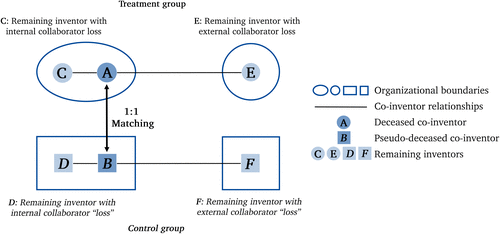
We analyze how a remaining inventor’s productivity is affected by the co-inventor death in a DiD framework. More specifically, we examine inventive productivity differences between remaining inventors with a deceased co-inventor (the “treatment group”) and remaining inventors with a pseudo-deceased co-inventor (the “control group”) before and after the (pseudo-)death. With this framework, we obtain average treatment effects of co-inventor death that allow a causal interpretation. We further provide event study estimates to investigate effect dynamics and to examine the validity of the common trend assumption. Section 3.4 discusses details.
3.2. Data and Variables
3.2.1. Data Sources.
We use a linked employer-employee panel data set (INV-BIO ADIAB 1980-2014), which combines labor market biographies and patenting information of 152,350 German inventors from 1980 until 2014. These inventors represent the de facto population of individuals listed in the administrative labor market data and who filed at least one patent application with the European Patent Office (EPO) between 1999 and 2011 and resided in Germany at the time of the patent filing. For these inventors, we obtain patent records between 1980 and 2014 from the EPO and the German Patent and Trademark Office (DPMA).2
The data set comprises a rich set of variables concerning inventors’ sociodemographic characteristics, patents, and employment records based on social security data. We use this combination of administrative labor market data and patent data, as both contain complementary information that we leverage in our empirical analysis.3 The labor market data allow us to track the inventors’ careers more precisely than possible with patent data. In particular, we have information on the inventors’ employer at the fine-grained establishment level, which we use to define organizational boundaries.4 We further observe day-specific changes in inventors’ employment status (e.g., due to death, retirement, or mobility), whereas the patent data inform us about the inventors’ productivity, knowledge base, and co-inventors (i.e., the inventors’ collaborators).
3.2.2. Inventive Productivity.
Inventor productivity can be assessed using various metrics, such as work output, peer evaluations, salary, and promotions. We focus on inventive productivity because it likely provides the most direct measure for assessing the impact of changes in collaborative input.
Patents.
In line with the literature, we use the inventor’s simple and citation-weighted annual patent counts as a proxy for inventive productivity (Lanjouw and Schankerman 2004, Jaravel et al. 2018). To this end, we consider the inventor’s European (EP) and national (DE) patents deduplicated at the patent family level.5 We take the earliest filing (priority) date within the patent family as the reference point, which is closest to the actual date of invention. For the citation-weighted patent counts, we consider all EP citations the focal patent has received in the first five years after the earliest filing date.6 In our default linear specification, we winsorize all count variables at the 95th percentile to reduce the inefficiency in the estimator introduced due to extreme values.7
Patents with New Collaborators.
We use subsets of patent counts to delineate the contribution of new collaborators to inventive productivity. Specifically, we consider patents with at least one new co-inventor—individuals with whom the remaining inventor had not previously collaborated—to capture the importance of new collaborations. We further narrow down the set of patents to those with at least one co-inventor who was recently hired (within the last two years).
Patents Relying on Organization Knowledge.
Finally, we analyze patents that include backward citations to earlier patents by inventors in the same organization at the time of filing. Although the use of patent citations as indicators of knowledge inputs can be contentious (Alcacer and Gittelman 2006), citations to patents from the same organization likely indicate that the focal patent relies on pre-existing knowledge within the organization.
3.2.3. Collaborator Loss
Co-Inventor Death.
We use unexpected deaths as plausibly exogenous collaborator losses. The labor market data report inventor deaths accurate to the day based on a specific notification in the underlying social security data. These death notifications are mandatory and appear unrelated to employer and employee characteristics (Jaeger and Heining 2022). We only consider the deaths of co-inventors who died aged 60 or younger.8 The average deceased co-inventor in our sample died at the age of 49, with fewer than 2% of co-inventors dying before their 30th birthday.9
3.2.4. Characteristics of the Lost Collaborator.
In our empirical analysis, we leverage several characteristics of the lost collaborator, outlined below. Online Appendix A2 offers a detailed account of these and additional variables.
Internal vs. External Collaborator.
We distinguish between internal and external collaborator losses depending on whether the deceased co-inventor worked within the inventor’s organization at the time of death. We delineate organizational boundaries at the establishment level as defined in employment records, where establishments are defined by administrative procedures and delineate “regionally and economically delimited unit[s] in which employees work” (Ganzer et al. 2023, p. 12). An external collaborator may thus work either for a different firm or for a different organizational unit within the same multiestablishment firm.10 There are two ways a collaborator may be classified as external: either the inventor and the deceased co-inventor previously collaborated within the same organization, but at least one has since moved to a different one (approximately 60%), or they collaborated on an R&D project that involved inventors from different organizations (approximately 40%). Slightly more than 50% of the inventors in our sample experienced the (pseudo-)death of an internal collaborator.
Knowledge Complementarity.
We measure the knowledge complementarity of the collaborator and the remaining inventor at the time of death by the inverse similarity between their patent portfolios. To this end, we compute the cosine similarity between the four-digit technology classes (IPC) of their patents (Jaffe 1986).11
Collaborator Network Size.
We measure the collaborator network size by counting the number of co-inventors listed on the same patent documents as the deceased co-inventor, excluding any co-inventors shared with the remaining inventor. This approach is based on the premise that the most relevant network ties are those to which the remaining inventor does not have direct access (Mohnen 2022).12
Collaboration Intensity.
We operationalize collaboration intensity using the recency of co-patenting, measured by the years since the last joint patent between the lost collaborator and the remaining inventor. We thereby assume that more recent or renewed collaborations indicate a higher intensity of collaboration (Jaravel et al. 2018).13
Collaborator Inventive Productivity.
We measure the inventive productivity of the deceased co-inventor by the number of lifetime patents at the time of death.14
3.2.5. Characteristics of the Inventor’s Organization.
We further consider the characteristics of the remaining inventor’s organization, specifically its capabilities related to knowledge management and hiring practices.15
Knowledge Management Capabilities.
Effective knowledge management is essential for facilitating knowledge transfer within organizations, particularly across space and time where personal interaction may not be possible. Organizations achieve this through codification routines and knowledge-sharing practices (Zander and Kogut 1995). However, directly capturing the diverse ways organizations foster knowledge management internally is challenging without traditional survey-based measures. Instead, we rely on an output-oriented measure to gauge knowledge management capabilities. Specifically, we posit that citations to patents from the same organization (self-citations) without inventor overlap are an indicative measure of the organization’s ability to transmit or utilize knowledge without direct personal connections.16
The sets of patents in the formula for codification are cumulative, that is, all patents of the organization f until year t. In our analysis, we use codification from the predeath year. The measure is undefined for organizations without any self-citations.
Hiring Capabilities.
Finding, hiring, and training new inventors is typically challenging, costly, and time-consuming (Siegel and Simons 2010, Campbell et al. 2012, Mawdsley and Somaya 2016). However, despite these challenges, the mobility rates of inventors vary across markets, and certain organizations excel at drawing in and retaining new talent, either due to their inherent attractiveness or through deliberate actions (Chatterji and Patro 2014, Bhaskarabhatla et al. 2021). Given the difficulty in directly observing these aspects, we proxy an organization’s hiring capabilities by their rate of new inventor hires. Specifically, we measure the hiring capabilities of an organization by the inflow of new inventors in the last pretreatment year relative to the total number of inventors in the organization at that time. The rationale for our measure of hiring capabilities is that organizations with extensive recent hiring relative to their total inventor workforce are likely to have well-developed recruitment processes and experience.
3.2.6. Control Variables.
We control for the inventors’ age fixed effects to account for life cycle patterns in inventive productivity. The inventors in our sample are 46 years old on average. We further include inventor fixed effects to control for time-invariant characteristics. Finally, we control for time-specific shocks and time trends across match groups by including deceased co-inventor times relative year fixed effects.
3.3. Co-Inventor Matching
We match each deceased co-inventor to a pseudo-deceased co-inventor drawn from the 150,000 inventors in our data set. We do so iteratively and draw pseudo-deceased co-inventors without replacement by death year cohort in chronological order. To minimize violations of the stable unit treatment value assumption, we exclude from the matching pool all inventors in the same organization and all inventors who also collaborated with the deceased co-inventor.17
In line with the prior literature (Cohen et al. 2000, Rosenkopf and Almeida 2003, Nakajima et al. 2010), we select pseudo-deceased co-inventors based on the following matching variables18 observed at the time of death: (1) gender, (2) age, (3) lifetime patent count (the coarsened number of patent applications the inventors produced since starting their careers), (4) technology focus (inventor’s modal technology field), and (5) organization size group (the coarsened number of full-time employees an establishment employs). In case of multiple matches per deceased co-inventor, we select the match most similar to the deceased co-inventor in terms of tenure (years of employment), years since last patenting (the time since the inventor filed her last patent), and the uncoarsened number of patent applications, in that order.19 We assign the death date of the corresponding deceased co-inventor to each matched pseudo-deceased co-inventor.
We successfully match 845 of the 866 deceased co-inventors in our data to pseudo-deceased co-inventors with similar characteristics. Both matched and unmatched characteristics are well balanced between deceased and pseudo-deceased co-inventors. In particular, the levels and trends of productivity are similar between deceased and pseudo-deceased co-inventors. Figure 2 shows that predeath levels and trends are comparable between the two groups of co-inventors, both for simple patent counts and citation-weighted patent counts. However, as expected, the inventive productivity of the deceased co-inventors drops to practically zero in the year after their death. This drop corroborates that the deaths were unexpected and unrelated to inventive productivity.
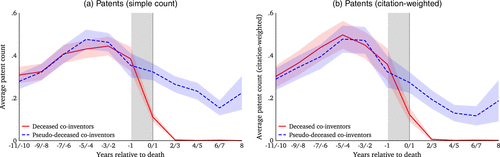
Notes. The two graphs show the yearly average for deceased co-inventors’ simple (left) and citation-weighted patent counts (right). Shaded areas reflect 95% confidence bands around the yearly means. Inventor life-cycle effects and right-hand truncation explain the general downward trends over time.
We are interested in how a remaining inventor’s productivity is affected by the death of a co-inventor. To this end, we consider as the unit of observation inventors who copatented with a (pseudo-)deceased co-inventor in the last ten years prior to the (pseudo-)death.20 In total, there are 3,471 (3,215) inventors with a deceased (pseudo-deceased) co-inventor.21 Note that our regressions are based on a slightly smaller sample due to singleton observations, which represent remaining inventors who perfectly correlate with some of the included fixed effects.
Overall, inventors with a deceased co-inventor have similar characteristics as inventors with a pseudo-deceased co-inventor (see Table A3.2 in the Online Appendix). The small relative differences in means (and medians) provide strong support for the quality of our match.22
3.4. Econometric Models
We employ a DiD framework for our empirical analyses. For each remaining inventor i, we consider years to around the year of death—denoted by k. In line with the literature (Jaravel et al. 2018, Bernstein et al. 2022), we account for the full set of leads and lags around the death year. For remaining inventors with a deceased co-inventor, we denote leads and lags with . For the full sample—remaining inventors with a deceased co-inventor or with a pseudo-deceased co-inventor—we denote leads and lags with . Full-sample leads and lags are specific to the match group s, which contains all remaining inventors linked to the same deceased co-inventor, as well as all remaining inventors linked to the corresponding pseudo-deceased co-inventor.
The DiD specification is given as follows:
In other words, we add deceased co-inventor times relative year fixed effects, allowing for flexible trends within each set s of inventors in a matched pair of deceased and pseudo-deceased co-inventors.23 As this set of fixed effects is colinear with year fixed effects, the latter are omitted. In contrast, captures the treatment effect for inventors with a (real) deceased co-inventor relative to inventors with a pseudo-deceased co-inventor, within their match group. We further include individual fixed effects and age fixed effects . We cluster standard errors at the level of the employer of the (pseudo-)deceased co-inventor, but results are robust to alternative choices (see Table A5.6 in the Online Appendix).
The validity of this analysis rests on the common trend assumption: Absent co-inventor death, the inventive productivity of the treated inventors would have followed the same path as the productivity of the control inventors in the treatment period.
Most of our analysis focuses on the treatment effect in various subsamples. We estimate full-sample models with interactions of (equivalent to ) and (equivalent to post), interacted with a binary variable, , indicating observations with a given collaborator or organization characteristic:
To simplify exposition, we report the treatment effect for the subsamples . For subsamples defined by multiple variables (e.g., internal loss and high organizational capabilities), the same logic applies, but for the full set of variable combinations.
In the event study specification, we normalize the dynamic effects to pretreatment period . This setup then expands to the following equation:
As the baseline specification, we report a linear dependent variable, winsorized at the 95% level. With this, we accommodate the features of our dependent variable, which is characterized by many zeros and a highly right-skewed distribution. We show the robustness of our main results to alternative specifications, such as a binary, differently winsorized, Poisson, or /inverse hyperbolic sine transformations, in the Online Appendix.
4. Descriptive Statistics
We briefly describe our empirical setting of corporate inventors in Germany, followed by summary statistics of the key variables in our analysis.
4.1. Context Description
In our sample, nearly 80% of the inventors work in the manufacturing sector, particularly in electrical engineering (24%), chemicals and plastics (22%), mechanical engineering (14%), and car manufacturing (11%). This sectoral distribution is reflected in the patents’ technology areas, with 35% in mechanical engineering being the most prevalent, followed by chemistry (33%), electrical engineering (17%), and instruments (11%). About 60% of the inventors are employed by large organizations with at least 1,000 employees. On average, inventors in our sample have worked for 3.7 different organizations during their careers. The average patent lists three inventors from 1.3 different organizations.
4.2. Summary Statistics
Table 1 presents the descriptive statistics for the variables utilized in our analysis.24 Consistent with our DiD framework, we measure annual inventive productivity from 11 years prior to 8 years after the (pseudo-)death year. On average, the remaining inventors in our sample have 0.65 patents and receive 0.68 citations annually. Moreover, 0.42 patents are filed with at least one new collaborator, and 0.27 patents rely on knowledge originating from within the same organization.
|

Table 1. Summary Statistics
| Variable | Mean | Standard deviation | 10% | 50% | 90% |
|---|---|---|---|---|---|
| Characteristics of the inventor | |||||
| Patents (simple counts) | 0.65 | 1.18 | 0.00 | 0.00 | 3.00 |
| Patents (citation-weighted counts) | 0.68 | 1.65 | 0.00 | 0.00 | 3.00 |
| Patents with at least one new collaborator | 0.42 | 0.93 | 0.00 | 0.00 | 2.00 |
| Patents relying on organization knowledge | 0.27 | 0.78 | 0.00 | 0.00 | 1.00 |
| Age | 44.03 | 10.65 | 31.00 | 43.00 | 59.00 |
| Characteristics of the lost collaborator | |||||
| Internal collaborator | 0.52 | 0.50 | 0.00 | 1.00 | 1.00 |
| Knowledge similarity | 0.70 | 0.29 | 0.23 | 0.79 | 0.99 |
| Collaborator network size | 11.29 | 15.75 | 0.00 | 5.00 | 32.00 |
| Collaboration intensity (recency) | 4.61 | 2.81 | 1.00 | 4.00 | 9.00 |
| Collaborator inventive productivity | 17.83 | 23.76 | 1.00 | 9.00 | 45.00 |
| Characteristics of the inventor’s organization | |||||
| Knowledge management capabilities | 0.86 | 0.18 | 0.67 | 0.92 | 1.00 |
| Hiring capabilities | 0.11 | 0.20 | 0.00 | 0.05 | 0.18 |
Notes. Summary statistics in the estimation data set (N = 70,308) for 3,574 remaining inventors and 3,409 remaining inventors of pseudo-deceased co-inventors. Detailed summary statistics for all variables are listed in Table A3.1 in the Online Appendix.
We distinguish between two sets of variables characterizing the context of the collaborator loss. The first set refers to the characteristics of the collaborator, serving as moderator variables to investigate potential heterogeneity in the effect of collaborator loss. Most importantly, we differentiate between whether the collaborator was employed by the same organization as the remaining inventor at the time of death (internal collaborator) or a different organization (external collaborator). About 52% of the lost collaborators are internal ones. We further consider three characteristics the prior literature highlights as relevant to the impact of collaborator loss: knowledge complementarity, network size, and collaboration intensity. On average, the lost collaborator’s knowledge complementarity (as the inverse of knowledge similarity) is 0.7, and network size is 11.29 inventors. The last patent between a lost collaborator and the remaining inventors is filed on average 4.61 years prior to death. We also measure the lifetime productivity of the lost collaborator. The average lost collaborator has 17.83 lifetime patents.
The second set of variables relates to the characteristics of the inventor’s organization. Knowledge management capabilities average 0.82 (in other words, 82% of self-citations do not relate to the inventor’s own patents) and range from 0.67 (10th percentile) to 1 (90th percentile). The hiring capabilities of organizations are on average 0.11 (in other words, 11% of the employed inventors joined the organization in that year), ranging from 0 (10th percentile) to 0.18 (90th percentile).
Internal and external collaborators exhibit distinct differences in their characteristics (Table 2). Internal collaborators show a higher knowledge similarity (inverse of knowledge complementarity, 0.74 versus 0.65, ) and possess a similar, if slightly smaller, network of noncommon co-inventors (11.28 versus 11.78, ), with a statistically insignificant difference. They exhibit a higher collaboration intensity in terms of recency (4.16 versus 5.26 years ago, ) but a similar lifetime productivity (17.88 versus 18.65, ). These findings align with the expectation that inventors within the same organization are more likely to hold similar knowledge (Jaffe et al. 1993, Grimpe and Kaiser 2010), have more cohesive networks (Guler and Nerkar 2012), and engage in more frequent interactions (Audretsch and Feldman 2004). These findings further suggest that R&D collaborations across organizational boundaries are not random but result from selective processes.25 We examine the relevance of these differences for the consequences of collaborator loss in Section 5.2.
|
Table 2. Internal and External Collaborator Characteristics
| Characteristics of the lost collaborator | Internal collaborators | External collaborators | ||||||
|---|---|---|---|---|---|---|---|---|
| Mean | Median | Standard deviation | Mean | Median | Standard deviation | Difference | p-value | |
| Knowledge similarity | 0.74 | 0.83 | 0.26 | 0.65 | 0.73 | 0.30 | 0.10 | 0.000*** |
| Collaborator network size | 11.28 | 5.00 | 16.66 | 11.78 | 6.00 | 15.13 | −0.49 | 0.196 |
| Collaboration intensity (recency) | 4.16 | 4.00 | 2.78 | 5.26 | 5.00 | 2.74 | −1.10 | 0.000*** |
| Collaborator inventive productivity | 17.88 | 8.00 | 24.67 | 18.65 | 9.00 | 24.93 | −0.77 | 0.194 |
Notes. Summary statistics of predeath characteristics of inventors experiencing internal collaborator loss (N = 3,379) and inventors experiencing external collaborator loss (N = 3,604). The unit of observation is at the remaining inventor level. Reported p-values based on an unpaired t-test. For an extended version, see Table A3.5 in the Online Appendix. For a balancing table between deceased and pseudo-deceased co-inventors and the respective remaining inventors, see Table A3.2 in the Online Appendix. For balancing tables within the subgroups of external and internal inventors, see Tables A3.3 and A3.4 in the Online Appendix.
*p < 0.1; **p < 0.05; ***p < 0.01.
5. Results
In this section, we examine the effects of internal and external collaborator loss on inventive productivity, investigate heterogeneity in these effects based on collaborator characteristics, and explore organizational measures that may compensate for the loss of internal collaborators. We conclude with a discussion of alternative mechanisms.
5.1. Internal and External Collaborator Loss
We find that collaborator loss has a moderate but imprecisely estimated negative effect on overall inventive productivity. Table 3 presents the DiD results of collaborator loss, proxied by co-inventor death, on inventive productivity, measured by (citation-weighted) patent counts. Collaborator loss has a negative effect of approximately () on inventive productivity over an eight-year period (Table 3, columns 1 and 3). These estimates correspond to a 4% (8%) reduction of the average inventive productivity compared with inventors with a pseudo-deceased co-inventor. The event study results depicted in Figure 3(a) illustrate the effect dynamics over time and are informative in two ways. First, the absence of significant pretrends solidifies the validity of our research design. Second, the negative effect, which gradually intensifies and reaches conventional thresholds of statistical significance, peaks around five years after the co-inventor death. These results suggest that collaborator loss leads, on average, to a decline in inventive productivity—which replicates the negative (albeit considerably larger) effect found in the prior literature for corporate inventors in the United States (Jaravel et al. 2018, Bernstein et al. 2022).26
|
Table 3. Impact of Collaborator Loss on Inventive Productivity: Simple and Citation-Weighted Patent Counts (DiD Estimates)
| Patents (simple counts) | Patents (citation-weighted) | |||
|---|---|---|---|---|
| (1) | (2) | (3) | (4) | |
| Collaborator loss | −0.027 | −0.054* | ||
| (0.022) | (0.030) | |||
| Internal collaborator loss | 0.024 | 0.028 | ||
| (0.029) | (0.038) | |||
| External collaborator loss | −0.081** | −0.141*** | ||
| (0.034) | (0.044) | |||
| Internal loss External loss | 0.105** | 0.169*** | ||
| (0.045) | (0.057) | |||
| Inventor fixed effects | Yes | Yes | Yes | Yes |
| Inventor age fixed effects | Yes | Yes | Yes | Yes |
| Match group rel. year fixed effects | Yes | Yes | Yes | Yes |
| Clusters | 856 | 856 | 856 | 856 |
| Observations | 124,168 | 124,168 | 124,168 | 124,168 |
| Adjusted R2 | 0.37 | 0.37 | 0.30 | 0.30 |
| Dependent variable mean | 0.65 | 0.65 | 0.69 | 0.69 |
Notes. This table reports the estimates for from a linear regression with inventor, inventor age, and deceased co-inventor times relative year fixed effects. The dependent variables (simple and citation-weighted patent counts) are winsorized at the 95% level. The unit of observation is at the inventor-year level. Standard errors clustered at the level of the (pseudo-)deceased co-inventor’s organization are in parentheses. Each reported estimate stands for the treatment effect for the relevant subgroup (e.g., ) or their difference (row Internal loss External loss reports ).
*p < 0.1; **p < 0.05; ***p < 0.01.
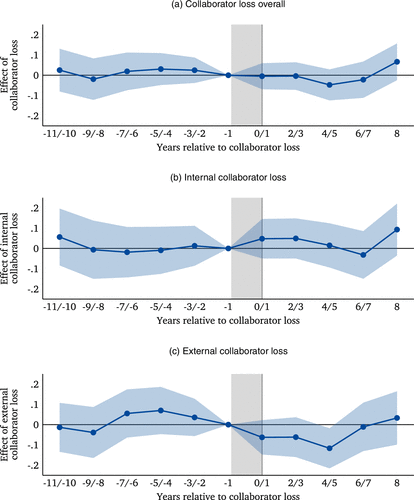
Notes. The graph presents point estimates and 95% confidence intervals for for the full sample (a) and from a regression covering subgroups of inventors with internal (b) and external (c) collaborator loss, following Equation (3). The dependent variable is the simple patent count. It includes inventor fixed effects, inventor age fixed effects, and deceased co-inventor times relative year fixed effects. The unit of observation is at the inventor-year level. Standard errors are clustered at the level of the (pseudo-)deceased co-inventor’s organization. The baseline year is , and the remaining coefficients, except , group two years. The graph corresponds to the coefficients reported in Table A4.1 in the Online Appendix.
We observe a substantial difference in the effect on inventive productivity when distinguishing between internal and external collaborator losses. In Table 3, column 2, we provide the distinct coefficients of internal and external collaborator loss obtained from a triple DiD regression. We find no negative effect of internal collaborator loss on inventive productivity; with a coefficient of 0.02, the effect is even slightly positive, albeit statistically indistinguishable from zero. Conversely, we find a negative and statistically significant effect of external collaborator loss on inventive productivity. The coefficient is about (or ), almost three times as large as the one for collaborator loss overall, and statistically significantly different from the one for internal collaborator loss. Figure 3, (b) and (c), presents the event study results for internal and external collaborator loss separately. We observe no significant pretrends for either kind of collaborator loss. Moreover, although internal collaborator loss does not reduce inventive productivity in any year of the treatment period, external collaborator loss affects inventive productivity in a pattern similar to, but more pronounced than, that of collaborator loss in general. Altogether, these results indicate that the overall effect on inventive productivity is almost exclusively driven by the loss of external collaborators.
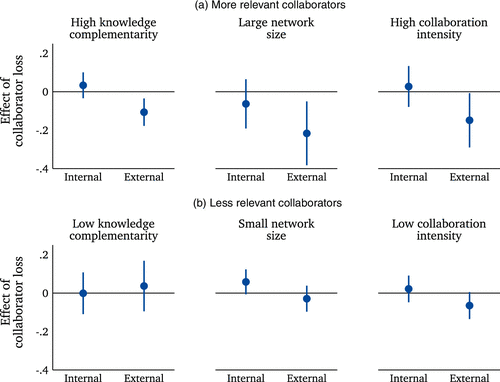
Notes. The graph presents point estimates and 95% confidence intervals for in the relevant subgroups. We proxy knowledge complementarity with (the inverse of) patent class similarity and split at the 75th percentile of similarity. More relevant collaborators are such with higher complementarity, that is, lower similarity. We proxy network size with the number of co-inventors of the lost collaborator, excluding those common with the remaining inventor. We split at the 75th percentile. More relevant collaborators are such with larger network size. We proxy collaboration intensity with the years since the last joint patent between the lost collaborator and the remaining inventor. We split at the 25th percentile, and more relevant collaborators are such with fewer years. For estimation results and alternative proxies, see Table A4.2 in the Online Appendix.
The observed differences in the effects of internal and external collaborator loss on inventive productivity are robust to a large set of methodological choices (see Online Appendix A5). First, we find the same pattern of results with different measures of inventive productivity, including granted patent counts, family-weighted patent counts, breakthrough patent counts, fractional patent counts, and patent counts excluding those with the respective collaborator. Likewise, the results are consistent when choosing alternative variable transformations (binary, different winsorization, inverse hyperbolic sine, and log transformation). Second, we find the results unchanged when narrowing the sample to collaborator losses that are more likely to be truly exogenous (e.g., co-inventors with full-time employment until death and co-inventors aged 55 or younger at the time of death). Third, we can corroborate the effect pattern using a different estimator (Poisson instead of OLS), alternative model specifications (i.e., fewer fixed effects), and alternative clustering of standard errors (e.g., at either the (pseudo-)deceased co-inventor level or alternative organizational levels). Fourth, we find a very similar effect pattern when using different control groups, either by applying alternative matching approaches or by changing the matching pool to inventors from the same organization as the deceased co-inventor. Finally, we find that the effects remain robust after applying inverse probability weighting to the estimation sample to balance the predeath characteristics of treated and control inventors.
We can further confirm that the difference in the effects of internal and external collaborator loss is independent of the size of the inventor’s organization and whether the external collaborator previously worked in the inventor’s organization. Inventors in small organizations may be more likely to engage in external collaborations due to fewer colleagues. A positive correlation between organization size and inventive productivity may thus explain the observed effect pattern. However, we find, across organizations of varying sizes, consistently more negative point estimates for external than for internal collaborator loss (Table A5.9 in the Online Appendix). Furthermore, an inventor’s collaborative network may include more external collaborators if former colleagues have left the inventor’s organization. If these departures were triggered by a downward trend in the inventor’s productivity, this could also explain the observed pattern. Reassuringly, we find that the negative effect of external collaborator loss is practically identical irrespective of whether the deceased co-inventor never worked in the inventor’s organization or worked there but subsequently moved on (Table A5.1 in the Online Appendix).27
To summarize, internal collaborator loss has a substantially less negative effect on inventive productivity than external collaborator loss. This pattern is robust to various methodological choices and does not appear to be driven by other factors that might positively correlate with external collaborator loss and negatively with inventive productivity.
5.2. Heterogeneity by Collaborator Characteristics
In this section, we investigate whether our finding that internal collaborator loss has a substantially less negative effect on inventive productivity could be due to inherent differences between external and internal collaborators. Indeed, the prior literature has shown that the loss of presumably more relevant collaborators results in a larger negative effect on productivity. Key characteristics that indicate such higher relevance are a high knowledge complementarity, a large network size, and a high collaboration intensity. Our descriptive findings in Section 4 suggest that some of these characteristics are less frequent among internal than external collaborators, underscoring the need for a more thorough examination.
By focusing on the loss of collaborators with presumably higher relevance, we can assess potential effect differences on inventive productivity more clearly. We interact both internal and external collaborator loss with another binary variable, which indicates more relevant collaborators, characterized by a high knowledge complementarity, a large network size, or a high collaboration intensity. If the estimates for internal collaborator loss within this more relevant subset become more negative—thus approximating those for external collaborator loss—we could infer that the aforementioned null effect is due to a large share of internal collaborators with little relevance for inventive productivity in our sample. Although this approach does not equate to a true ceteris paribus analysis, observing changes in the relative size of the estimates can still be informative.
We find the difference in effects between internal and external collaborator loss confirmed when focusing on presumably more relevant collaborators. Figure 4(a) reports the estimates of internal and external collaborator loss on inventive productivity among collaborators with characteristics indicating a high relevance for the remaining inventors.28 The effect of internal collaborator loss remains statistically insignificant and near zero, regardless of whether the focus is on collaborators characterized by a high knowledge complementarity, large network size, or high collaboration intensity. In contrast, the negative effects of external collaborator loss become more pronounced for collaborators with such characteristics, which aligns well with the findings in the prior literature (Jaravel et al. 2018, Bernstein et al. 2022, Mohnen 2022). Taken together, we find the difference in effects between internal and external collaborator loss to be even larger among presumably more relevant collaborators than in the full sample. Figure 4(b) reports corresponding estimates for collaborators presumed to have lower relevance, characterized by low knowledge complementarity, small network size, and low collaboration intensity. Here, the impact of external collaborator loss is significantly less pronounced, leading to a much smaller difference in the effects between internal and external collaborator loss, which loses its statistical significance.
These findings are supported by an additional robustness check, in which we apply inverse probability weighting to balance differences in observable characteristics between internal and external collaborators. If such differences were driving the heterogeneity in the effects of collaborator loss, the estimated effects should converge once the characteristics between the two groups are balanced. However, the results remain highly consistent regardless of whether we use weighted or unweighted samples (Table A6.4 in the Online Appendix).
Taken together, these results speak against inherent differences between internal and external collaborators in driving the substantially smaller effect observed for internal collaborator loss. Other factors must be at play. Against this backdrop, we next turn to our analysis of organizational capabilities as the proposed mechanism. According to our theoretical framework, organizations can mitigate the negative consequences of internal collaborator loss through ex ante and ex post compensatory measures, which may explain the muted effect on inventive productivity. We will explore this explanation in the subsequent section.
5.3. Compensating Measures by the Organization
In what follows, we investigate whether organizational measures designed to maintain the continuity of R&D efforts mitigate the negative consequences of internal collaborator loss for the remaining inventors. Specifically, we focus on two key measures: knowledge management, aimed at preventing knowledge loss through codification and sharing among employees, and hiring efforts to “fill the gap” created by the lost collaborator. We argue that organizations vary in their capabilities to implement these measures effectively—a variation we can measure and leverage in our analysis as moderators of the effect. Ultimately, this analysis aims to demonstrate how organizational measures can explain the observed effects of internal collaborator loss on inventive productivity.
The effect of internal collaborator loss on the inventive productivity of the remaining inventors varies with the organization’s knowledge management and hiring capabilities. Figure 5 reports the estimates of internal collaborator loss on inventive productivity in organizations with varying knowledge management or hiring capabilities. In organizations with low capabilities overall, internal collaborator loss has a sizable and statistically significant negative effect on inventive productivity. In contrast, organizations with high capabilities experience a substantial positive effect from internal collaborator loss. This effect order aligns with our argument that effective organizational strategies can mitigate—or even reverse—the negative consequences of losing internal collaborators by preventing knowledge loss in the first place and efficiently filling the gap created by the lost collaborator.29
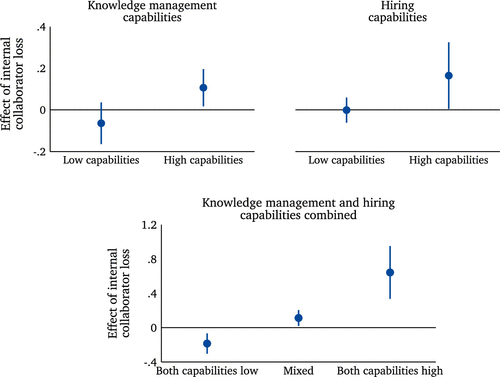
Notes. The graph presents point estimates and 95% confidence intervals for in the relevant subgroups. We distinguish between remaining inventors by their organization’s knowledge management and hiring capabilities. Subsamples are split at the median (knowledge management capabilities) and the 75th percentile (hiring capabilities). “Combined capabilities” refers to organizations with both high knowledge management and hiring capabilities, both low knowledge management and hiring capabilities, compared with the remainder. For estimation results, including for external collaborator loss, see Tables A4.3 (column 1), A4.4 (column 1), and A4.5 in the Online Appendix.
To establish a closer link between the organization’s capabilities and the benefits from compensatory measures, we repeat the previous analysis based on modified versions of the patent count as the dependent variable. First, we consider only patents that rely on knowledge from within the organization. If knowledge management constitutes a relevant mechanism, we expect to see that, after internal collaborator loss, the remaining inventor’s inventive productivity increasingly benefits from knowledge from within the organization. This expectation is confirmed (Figure 6(a)). In organizations with high knowledge management capabilities, the loss of an internal collaborator increases the remaining inventor’s patents that rely on internal knowledge. Second, we consider only patents involving new collaborators. If hiring capabilities allow the organization to effectively fill the gap created by the lost internal collaborator, we expect to see that the remaining inventor’s inventive productivity relies increasingly on new collaborations within the organization. Indeed, we find this to be the case (Figure 6(b)): In organizations with high hiring capabilities, the loss of an internal collaborator increases the remaining inventor’s patents that involve new or newly hired internal collaborators.
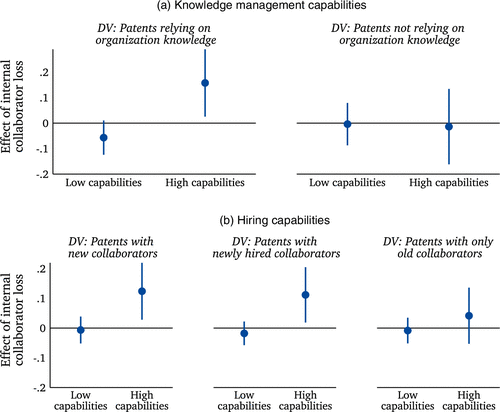
Notes. The graph presents point estimates and 95% confidence intervals for in the relevant subgroups. We distinguish between remaining inventors by their organization’s knowledge management and hiring capabilities. Subsamples are split at the median (knowledge management capabilities) and the 75th percentile (hiring capabilities; but excluding values of one, which are more likely cases of ID changes or other organizational reconfiguration). Results are comparable for higher thresholds. For estimation results, including for external collaborator loss, see Tables A4.3 (columns 6 and 7) and A4.4 (columns 2, 4, and 5) in the Online Appendix.
5.4. Limits to “Filling the Gap”
If the organization takes compensatory measures to mitigate the negative effect of internal collaborator loss, why do we find also statistically significant positive effects on inventive productivity? One explanation for this may be that the organization fills the gap with a new collaborator who turns out to be more conducive to inventive productivity than the lost collaborator. To explore this, we leverage variation in a so far unused collaborator characteristic: their productivity before death. If inventors indeed benefit from new collaborators filling the gap, we would expect this benefit to be particularly pronounced if the lost collaborator had a low inventive productivity (“low-performing collaborator”). Conversely, we would expect the positive effect of internal collaborator loss to diminish or reverse if the lost collaborator had a high inventive productivity (“high-performing collaborator”).
We find negative effects on inventive productivity when high-performing internal collaborators are lost, and positive effects when low-performing internal collaborators are lost (Figure 7). This pattern of results is informative in two important ways. First, it supports the idea that filling the gap with a relatively more productive new collaborator can explain why the loss of low-performing internal collaborators increases inventive productivity. Second, it highlights the limits of the organization’s compensatory measures. The gaps left by high-performing internal collaborators are not easily filled, resulting in a substantial negative effect on inventive productivity, which is otherwise only found for the loss of collaborators beyond the organizational boundaries.
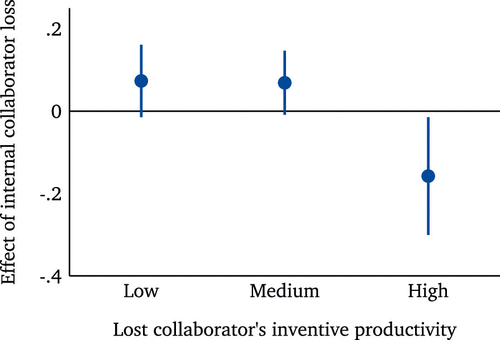
Notes. The graph presents point estimates and 95% confidence intervals for in the relevant subgroups. Subsamples are the first, second through fourth, and fifth quintile of lifetime patenting at the death of the (pseudo-)deceased co-inventor. Results are comparable for alternative thresholds. For estimation results, including for external collaborator loss and for life cycle–adjusted inventive productivity, see Table A4.6 in the Online Appendix.
Do these findings imply that organizations have a dominant strategy in systematically removing low-performing inventors from their workforce? We strongly caution against this interpretation for several reasons. First, investing in relevant capabilities is costly, and uncertainty remains about whether an organization can successfully fill the gaps created by laid-off employees. Second, low-performing inventors may still be valuable to the organization in ways that remain unaccounted for in our analysis. Finally, inventors might be deterred from joining or fully engaging with an organization if they perceive a high risk of being sidelined or made redundant.
5.5. Alternative Explanations
In the following, we briefly discuss the merits of three alternative explanations for the observed effect pattern of collaborator loss on inventive productivity: changes in bargaining power, career effects, and emotional stress relief.
Inventors who lost an internal collaborator may experience a less negative productivity effect than those who lost an external collaborator due to increased bargaining power over their employer, resulting in improved working conditions and a more favorable allocation of internal resources (Dencker 2009, Sevcenko et al. 2022). This alternative explanation rests on two assumptions: (i) labor market frictions increase the employer’s dependence on the remaining inventors to fill the gap, increasing the latter ones’ bargaining power, and (ii) the increase in bargaining power materializes in productivity-increasing resource allocation. To test the first assumption, we examine differences in the effect of internal collaborator loss on inventive productivity depending on the availability of other suitable inventors in the local labor market who could fill the gap (Table A6.1 in the Online Appendix). We find weak evidence that internal collaborator loss has a more negative effect when there are other suitable inventors in the local labor market, which should make the employer less dependent on the focal inventor. However, a similar pattern is observed for external collaborator loss, which is inconsistent with the argument that changes in bargaining power should primarily concern the employer specifically needing to fill the gap. To test the second assumption, we investigate whether internal collaborator loss leads to an increase in the remaining inventor’s team size; we do not find this to be the case (Table A6.2 in the Online Appendix). Taken together, these findings suggest that a pure bargaining power explanation is unlikely.
Inventors may also benefit from internal collaborator loss in terms of career changes with a positive effect on their inventive productivity. For instance, recent research has shown that collaborator loss increases the likelihood of vacancy-driven promotions (Anderson 2024) and mobility (Liu et al. 2023). If these career changes come with access to more attractive projects and research autonomy, this could explain why remaining inventors with internal collaborator loss fare better than those with external collaborator loss. To assess the relevance of such career events, we examine how the effects of internal and external collaborator loss change when excluding remaining inventors that moved or were promoted during the treatment period (Table A6.3 in the Online Appendix). We confirm the differential effects of internal and external collaborator loss on inventive productivity based on subsamples excluding inventors with career changes. This renders career changes an unlikely explanation of our findings.
Finally, emotional stress following the death of an internal collaborator may be managed more effectively by the organization than in the case of an external collaborator, potentially explaining the less negative impact on inventive productivity. However, if emotional stress were the primary explanation behind the productivity effects observed after collaborator loss, we would expect an immediate impact. Contrarily, the negative effect of external collaborator loss peaks after several years, suggesting that emotional stress alone can hardly account for the long-term trends observed.
This discussion highlights that, although alternative explanations cannot be entirely dismissed, organizational compensatory measures align most consistently with our findings. We believe these measures are the most plausible explanation for the observed effects on productivity.
6. Discussion and Conclusion
We argue that the loss of an internal collaborator carries less detrimental consequences for the remaining knowledge workers than the loss of an external collaborator, given that the directly affected organization has a vested interest in maintaining R&D continuity and accordingly implements ex ante and ex post compensatory measures. Leveraging a comprehensive employer-employee data set linked to patent data, we examine the effects of internal and external collaborator loss, operationalized as co-inventor death, on the inventive productivity of the remaining inventors.
We find that the loss of a collaborator leads to a moderate decline in the inventive productivity of the remaining inventors, supporting findings from previous studies (Jaravel et al. 2018, Bernstein et al. 2022). The effect is markedly stronger for the loss of external collaborators, particularly when the collaborator was of presumably high relevance to the remaining inventor. In contrast, the loss of internal collaborators shows virtually no negative effect, which we attribute to compensatory measures implemented by the inventor’s organization. Indeed, our findings suggest that remaining inventors in organizations with high knowledge management and hiring capabilities increasingly rely on internal knowledge sources and new collaborators, sustaining their productivity despite collaborator loss. However, the loss of a high-performing internal collaborator results in a substantial decline in inventive productivity, suggesting that organizational compensatory measures have their limits.
These findings enhance our understanding of collaborator loss among knowledge workers, a topic that was initially concentrated on academic scientists (Azoulay et al. 2010, Oettl 2012, Khanna 2021, Mohnen 2022). More recently, this focus has expanded to include corporate inventors (Jaravel et al. 2018, Bernstein et al. 2022). Notably, these studies have, for various reasons, not paid much attention to the significance of organizational boundaries, which delineate internal from external collaborators within an inventor’s collaborative network. We demonstrate that the impact of collaborator loss on inventive productivity strongly depends on whether the loss occurs within or outside these organizational boundaries. That said, our findings on the distinct effects across organizational boundaries might also apply within firms. Given localized knowledge spillovers (Zucker et al. 1998, Audretsch and Feldman 2004, Balsmeier et al. 2023), the effects observed for external collaborators could similarly manifest within large organizations, where R&D activities are increasingly decentralized into autonomous units across different locations (Argyres and Silverman 2004, Lerner and Wulf 2007).
Furthermore, our study contributes to the ongoing discourse on peer effects in the workplace. The literature is divided on whether peer effects significantly influence coworker productivity (Marshall 1890, Mas and Moretti 2009, Waldinger 2012, Cornelissen et al. 2017). Empirical studies in this literature often rely on negative shocks (i.e., collaborator losses) to quantify the contribution of peers to productivity (Waldinger 2012). Following this literature, one might conclude that muted effects of internal collaborator loss imply a negligible contribution of direct colleagues on a knowledge worker’s productivity. However, our results suggest that such effects are likely masked by the organization’s endogenous response to mitigate potential productivity losses.
Finally, our research contributes to the literature on knowledge production within firms (Kapoor and Adner 2012, Aggarwal et al. 2020, Argyres et al. 2020) by emphasizing the role that organizations play in managing collaborative relationships. Although the existing literature acknowledges the organization’s role, we provide a deeper understanding of how this role manifests in situations of actual or potential knowledge loss. This insight likely extends beyond the specific case of unexpected deaths. Although an employee’s departure to another organization does not necessarily sever all ties, it does create a vacancy and often implies loss of tacit knowledge for the focal organization (Kaiser et al. 2015, Sharoni 2023). As a matter of fact, organizational compensatory measures, such as knowledge management and filling the gap, are more likely designed for the frequent event of employee mobility than for the rare incidence of unexpected deaths.
Our study is not without limitations. First, our research design allows for a causal interpretation of collaborator loss but does not provide exogenous variation in the organizational boundaries. In other words, whether a lost collaborator is internal or external to the knowledge worker’s organization is not random. Based on the literature, we address relevant factors distinguishing internal and external collaborators, but there may still be additional nuances beyond the scope of our analysis. Relatedly, our data do not contain precise information on collaborative relationships. Future research based on other data could shed more light on the collaborations themselves. Second, we rely on proxies of the organization’s ability to engage in effective knowledge management and hiring practices instead of directly measuring such activities. A worthwhile path for future research could be a more granular examination of what specific actions organizations undertake and which of these are most effective in sustaining productivity in the face of collaborator loss. Finally, we use data on corporate inventors in contemporary Germany. Future research could seek to replicate our findings for knowledge workers in other countries and time windows.
Our findings suggest the following managerial implications. First, our results indicate that organizations with capabilities that help maintain the continuity of R&D processes can buffer and compensate for unanticipated disruptions. In particular, managers should systematically invest in knowledge management, hiring, and related capabilities and avoid creating points of failure through overly extensive specialization and division of labor. Second, our results show that organizations fail to compensate for the loss of external collaborators, which can play a critical role in knowledge worker productivity. Managers should not only encourage their knowledge workers to foster and expand their external ties but also develop robust contingency plans. These plans should consider to what extent employees rely on external knowledge sources and support knowledge workers who encounter unforeseen changes in their collaborative network.
Authors are listed in increasing order of academic seniority. This paper previously circulated as “Filling the Gap: Firm Strategies for Human Capital Loss.” The authors thank Jörg Heining and the Research Data Centre of the Institute for Employment Research for their continuous support. The authors are also grateful to the editorial team, the reviewers, Britta Glennon, Stuart Graham, Simon Jäger, Astrid Marinoni, Bram Timmermans, and Stefan Wagner for their valuable comments. Finally, the authors thank participants at the Academy of Management Meetings (2020, 2022) and at research seminars at Utrecht University, Katholieke Universiteit Leuven, the University of Rotterdam, the University of Amsterdam, Bocconi University, Goethe University Frankfurt, and Ludwig-Maximilians University Munich.
1 In this way, we can also exclude the possibility that the inventor can still access the knowledge of the “lost” co-inventor (e.g., the inventors stay in touch) or expect that the knowledge becomes accessible again (e.g., the “lost” co-inventor returns).
2 Online Appendix A1 contains a description of the different steps leading to our data set and extensive checks of the data quality. For a detailed account of the data set construction, see Dorner et al. (2018).
3 Social security data on labor market careers in Germany have been used extensively in research on productivity and human capital of workers and firms (Dustmann et al. 2009, 2017; Card et al. 2013; Bender et al. 2018; Fuest et al. 2018; Jaeger and Heining 2022).
4 Two establishments are distinct in at least one of the following characteristics: location (municipality), industry (three-digit NACE), or firm. To illustrate, two bakeries operated by the same firm in the same city would be reported as one establishment. In contrast, a bakery and a mill operated by the same firm would be classified as different establishments even when they are located in the same city. Crucially, it is the establishment’s economic activity that determines the distinction, not the employed inventor’s industry or technology focus.
5 Patent families refer to different patent documents that protect a single invention, that is, the identical technical content. According to the DOCDB family definition, patent family members all have the same priority date (date of first application). A patent family typically contains patent documents protecting an identical invention in different jurisdictions, that is, countries (see https://www.epo.org/searching-for-patents/helpful-resources/first-time-here/patent-families/docdb.html, accessed September 17, 2022). We extracted the citations received by all members of a patent family and removed the duplicates. The resulting number of citations corresponds to the number of unique patent documents that refer to the inventions in our sample as prior art.
6 We consider alternative patent quality measures, specifically the patent family size, the number of granted patents, and the number of “breakthrough” patents, which are in the top 10% of their technology-year cohort in terms of citations. We also consider alternative patent count measures that focus on the inventor’s contribution, by counting each patent fractionally according to the number of inventors listed on the patent. Similarly, we isolate the subset of patents that are not joint work with the lost collaborator.
7 Without winsorizing, the point estimates become larger but lose precision (Figure A5.1 in the Online Appendix). Our results are robust to higher winsorization thresholds and to a binary dependent variable. With this, we follow the advice of Chen and Roth (2024) for right-skewed variables with many zero values and separate the intensive from the extensive margin.
8 In our population of inventors, a large fraction is still employed after reaching 60 and contributes to patents. The retirement age in the period in question slowly rises from 65 years (cohort of 1946 and earlier) to 67 years (cohort of 1964 and later). We also focus on deaths occurring in 2013 or earlier to guarantee at least two years of treatment in our analysis. The results are robust to various subsets of deaths, see Section 5.1 and Table A5.8 in the Online Appendix.
9 Figure A3.1 in the Online Appendix shows the distribution of ages at death for the sample of deceased co-inventors. Two reasons explain why the frequency of deaths increases with inventor age. First, some causes of unexpected death (e.g., heart attacks) become more likely with age. Second, the likelihood that an individual has filed at least one patent before death (and thus enters our data) increases with career length.
10 Inventor dyads who worked in different establishments at the time of death events typically worked in different locations and distinct industries: 21% worked in the same district, 25% worked in the same three-digit industry, and 61% at the one-digit level.
11 In robustness checks, we measure knowledge complementarity not by the inverse similarity but the inverse overlap between the technology class shares in the respective portfolios.
12 In robustness checks, we first consider the total number of co-inventors of the deceased, and second the number of inventors with similar specializations (same modal four-digit IPC class) as the lost co-inventor in the co-inventor’s organization—individuals with whom the lost co-inventor was likely in contact, even if no direct collaborations occurred.
13 In robustness checks, we also use the number of joint patents and the joint job tenure (for internal collaborator loss) as alternative measures.
14 Alternatively, we consider the collaborator’s residualized number of lifetime patents, which is the deviation of realized from the expected number of lifetime patents according to a regression including age, year, firm size, and modal main technological area.
15 It is important to note that by “capabilities,” we refer to the organization’s existing skills and resources, not to “dynamic capabilities,” which involve adapting to changing environments.
16 This measure rests on two reasonable premises. First, self-citations are a meaningful proxy for an organization’s use of internal knowledge in the invention process. Second, the lack of inventor overlap indicates that the inventor team behind the cited patent was not directly involved in the subsequent invention. Accordingly, our measure should capture an organization’s ability to utilize internal knowledge without needing the direct involvement of its original creators. We believe organizations are more likely to achieve such transfer if they have knowledge management capabilities, such as codification routines and knowledge-sharing practices, in place.
17 Our key findings hold in a robustness check where only inventors from the same organization as the deceased co-inventor are considered as matching candidates (Table A5.7, columns 5 and 6, in the Online Appendix). To minimize contamination, we ensure that the matched pseudo-deceased co-inventor is not part of the deceased co-inventor’s collaborative network despite being from the same organization.
18 A more detailed description of these variables is included in Table A2.1 in the Online Appendix.
19 The reason for the additional weak matching criteria is to strike a balance between stable matching and retaining a high number of successful matches. The classification into strict and weak matching variables results from a manual optimization of the matching. Our key findings remain robust when we select either a random match among candidates with strict matching variables, or the match with the smallest Mahalanobis distance based on strict and weak matching criteria (Table A5.7, columns 7–10, in the Online Appendix).
20 The results are robust to focusing on co-inventors with a joint patent in the last four years (Table A5.7, columns 3 and 4, in the Online Appendix).
21 We thereby exclude inventors who died themselves during the sample period, which applies to 23 (19) units of observation. We further restrict our sample to remaining inventors with only one (pseudo-)deceased co-inventor. This excludes 195 (146) units of observation. Another 175 inventors have both deceased and pseudo-deceased co-inventors. We drop these from both pools as well. Overall, we exclude approximately 11% of the observations.
22 We further provide a balancing of inventors with internal and external collaborator loss separately (see Tables A3.3 and A3.4 in the Online Appendix).
23 The reasons to include these fixed effects are twofold. First, capture trends of specific match groups s, which may arise from the data generation and matching process. Second, as discussed in Bernstein et al. (2022), this additional set of fixed effects rectifies the issues with two-way fixed effects estimators highlighted by the recent literature on DiD estimators (Roth et al. 2023). We show estimation results without this set of fixed effects in Table A5.7, columns 1 and 2, in the Online Appendix.
24 For an overview of all variables and their pairwise correlations, see Table A3.1 in the Online Appendix.
25 For instance, given that external collaborators hold, on average, less similar knowledge than internal collaborators, they may be more likely to be selected for exploratory research projects.
26 Compared to Jaravel et al. (2018), our analysis faces reduced statistical power due to a smaller sample size and the inclusion of more stringent fixed effects. The smaller magnitude of our estimates relative to those reported by Jaravel et al. (2018) may stem from differences in sample construction, matching approach, regression specification, or the institutional context. For example, our study focuses on German inventors, whereas Jaravel et al. (2018) analyze data from the United States. Institutional differences between these countries—such as labor market regulations, R&D investment levels, and collaboration practices—could influence the effect of collaborator loss on inventive productivity.
27 Interestingly, we observe no significant effect on inventive productivity for the subset of external collaborator losses involving inventors who had moved organizations. This null effect is plausible, anticipating our findings in subsequent sections, as these inventors likely maintain multiple connections to their former organizations and benefit from the compensatory measures of those organizations.
28 In this section, we discuss estimation results following our main operationalization of the heterogeneity variables. In the Online Appendix (Table A4.2), we present estimation results using alternative proxies. Specifically, we use (i) patent class overlap instead of patent class similarity; (ii) the full network size of the lost collaborator and the number of inventors in the same organization, and narrow technology instead of the network size excluding common inventors with the remaining inventor; and (iii) the number of joint patents, the number of recent joint patents, and joint tenure instead of collaboration recency. Similar to the main results, we find null effects for internal collaborator loss and negative effects for external collaborator loss.
29 Notably, we do not observe this pattern of organizational capabilities moderating the effects of external collaborator loss (Tables A4.3 and A4.4 in the Online Appendix).
References
- (2020) Organizing knowledge production teams within firms for innovation. Strategy Sci. 5(1):1–16.Link, Google Scholar
- (2006) Gone but not forgotten: Knowledge flows, labor mobility, and enduring social relationships. J. Econom. Geography 6(5):571–591.Crossref, Google Scholar
- (2018) Dancing with the stars: Innovation through interactions. NBER Working Paper No. 24466, National Bureau of Economic Research, Cambridge, MA.Google Scholar
- (2001) Knowledge management and knowledge management systems: Conceptual foundations and research issues. MIS Quart. 25(1):107–136.Crossref, Google Scholar
- (2006) Patent citations as a measure of knowledge flows: The influence of examiner citations. Rev. Econom. Statist. 88(4):774–779.Crossref, Google Scholar
- (2024) Left behind? Understanding the career consequences of collaborator exits. Acad. Management J. 67(2):526–553.Crossref, Google Scholar
- (2004) R&D, organization structure, and the development of corporate technological knowledge. Strategic Management J. 25(8–9):929–958.Crossref, Google Scholar
- (2020) Organizational change and the dynamics of innovation: Formal R&D structure and intrafirm inventor networks. Strategic Management J. 41(11):2015–2049.Crossref, Google Scholar
- (2023) Death and turmoil in R&D teams. CEPR Discussion Paper 18578:1–44.Google Scholar
- (2004)
Knowledge spillovers and the geography of innovation . Vernon Henderson J, Thisse J-F, eds. Handbook of Regional and Urban Economics, vol. 4 (Elsevier, Amsterdam), 2713–2739.Google Scholar - (2010) Superstar extinction. Quart. J. Econom. 125(2):549–589.Crossref, Google Scholar
- (2023) Isolating personal knowledge spillovers: Co-inventor deaths and spatial citation differentials. Amer. Econom. Rev. Insights 5(1):21–34.Crossref, Google Scholar
- (2018) Management practices, workforce selection, and productivity. J. Labor Econom. 36(S1):S371–S409.Crossref, Google Scholar
- (2022) The contribution of high-skilled immigrants to innovation in the United States. NBER Working Paper No. 30797, National Bureau of Economic Research, Cambridge, MA.Google Scholar
- (2021) Are inventors or firms the engines of innovation? Management Sci. 67(6):3899–3920.Link, Google Scholar
- (2004)
Knowledge networks from patent data . Moed H, Glänzel W, Schmoch U, eds. Handbook of Quantitative Science and Technology Research: The Use of Publication and Patent Statistics in Studies of S&T Systems (Springer, Dordrecht, Netherlands), 613–643.Crossref, Google Scholar - (1992) Structural Holes (Harvard University Press, Cambridge, MA).Crossref, Google Scholar
- (2012) Rethinking sustained competitive advantage from human capital. Acad. Management Rev. 37(3):376–395.Crossref, Google Scholar
- (2013) Workplace heterogeneity and the rise of West German wage inequality. Quart. J. Econom. 128(3):967–1015.Crossref, Google Scholar
- (2023) Cascading innovation: R&D team design and performance implications of mobility. Strategic Management J. 44(5):1218–1253.Crossref, Google Scholar
- (2014) Dynamic capabilities and managing human capital. Acad. Management Perspectives 28(4):395–408.Crossref, Google Scholar
- (2024) Logs with zeros? Some problems and solutions. Quart. J. Econom. 139(2):891–936.Crossref, Google Scholar
- (2024) Loss of peers and individual worker performance: Evidence from h-1b visa denials. Organ. Sci. 35(6):1957–2332.Link, Google Scholar
- (1990) Absorptive capacity: A new perspective on learning and innovation. Admin. Sci. Quart. 35(1):128–152.Crossref, Google Scholar
- (2000) Protecting their intellectual assets: Appropriability conditions and why US manufacturing firms patent (or not). NBER Working Paper No. 7552, National Bureau of Economic Research, Cambridge, MA.Google Scholar
- (2017) Peer effects in the workplace. Amer. Econom. Rev. 107(2):425–456.Crossref, Google Scholar
- (1998) Working Knowledge: How Organizations Manage What They Know (Harvard Business Press, Boston).Google Scholar
- (2009) Relative bargaining power, corporate restructuring, and managerial incentives. Admin. Sci. Quart. 54(3):453–485.Crossref, Google Scholar
- (2018) Linked Inventor Biography Data 1980-2014 (Institute for Employment Research, Nuremberg, Germany).Google Scholar
- (2003) Employee turnover and tacit knowledge diffusion: A network perspective. J. Managerial Issues 15(1):50–64.Google Scholar
- (2009) Revisiting the German wage structure. Quart. J. Econom. 124(2):843–881.Crossref, Google Scholar
- (2017) Labor supply shocks, native wages, and the adjustment of local employment. Quart. J. Econom. 132(1):435–483.Crossref, Google Scholar
- (2007) Collaborative brokerage, generative creativity, and creative success. Admin. Sci. Quart. 52(3):443–475.Crossref, Google Scholar
- (2018) Do higher corporate taxes reduce wages? Micro evidence from Germany. Amer. Econom. Rev. 108(2):393–418.Crossref, Google Scholar
- (2023)
Establishment history panel 1975-2022 . FDZ-Datenreport. Documentation on Labour Market Data (Institute for Employment Research, Nuremberg, Germany).Google Scholar - (1996) Toward a knowledge-based theory of the firm. Strategic Management J. 17(S2):109–122.Crossref, Google Scholar
- (2010) Balancing internal and external knowledge acquisition: The gains and pains from R&D outsourcing. J. Management Stud. 47(8):1483–1509.Crossref, Google Scholar
- (2012) The impact of global and local cohesion on innovation in the pharmaceutical industry. Strategic Management J. 33(5):535–549.Crossref, Google Scholar
- (2004) Human capital and learning as a source of sustainable competitive advantage. Strategic Management J. 25(12):1155–1178.Crossref, Google Scholar
- (2002) Knowledge management and professional work: A communication perspective on the knowledge-based organization. Management Comm. Quart. 16(2):210–236.Crossref, Google Scholar
- (2022) How substitutable are workers? Evidence from worker deaths. NBER Working Paper No. w30629, National Bureau of Economic Research, Cambridge, MA.Google Scholar
- (1986) Technological opportunity and spillovers of R&D: Evidence from firms’ patents, profits, and market values. Amer. Econom. Rev. 76(5):984–1001.Google Scholar
- (1993) Geographic localization of knowledge spillovers as evidenced by patent citations. Quart. J. Econom. 108(3):577–598.Crossref, Google Scholar
- (2018) Team-specific capital and innovation. Amer. Econom. Rev. 108(4–5):1034–1073.Crossref, Google Scholar
- (2015) Does the mobility of R&D labor increase innovation? J. Econom. Behav. Organ. 110:91–105.Crossref, Google Scholar
- (2012) What firms make vs. what they know: How firms’ production and knowledge boundaries affect competitive advantage in the face of technological change. Organ. Sci. 23(5):1227–1248.Link, Google Scholar
- (2021) Aftermath of a tragedy: A star’s death and coauthors’ subsequent productivity. Res. Policy 50(2):104159.Crossref, Google Scholar
- (1992) Knowledge of the firm, combinative capabilities, and the replication of technology. Organ. Sci. 3(3):383–397.Link, Google Scholar
- (2004) Patent quality and research productivity: Measuring innovation with multiple indicators. Econom. J. 114(495):441–465.Google Scholar
- (2014) Knowledge worth having in ‘excess’: The value of tacit and firm-specific human resource slack. Strategic Management J. 35(7):954–973.Crossref, Google Scholar
- (2007) Innovation and incentives: Evidence from corporate R&D. Rev. Econom. Statist. 89(4):634–644.Crossref, Google Scholar
- (2023) The effect of inventor collaboration on mobility: The role of technological complexity and obsolescence rate. https://www.liliu.net/files/LILIU_JMP_The%20Effect%20of%20Collaboration%20on%20Inventor%27s%20Mobility%20Quasi-experimental%20Evidence%20From%20Inventors%E2%80%99%20Death.pdf.Google Scholar
- (2010) External knowledge acquisition processes in knowledge-intensive clusters. J. Knowledge Management 14(5):690–707.Crossref, Google Scholar
- (1890) Principles of Economics (MacMillan and Co, London and New York).Google Scholar
- (2000) A critical review of knowledge management as a management tool. J. Knowledge Management 4(3):204–216.Crossref, Google Scholar
- (2009) Peers at work. Amer. Econom. Rev. 99(1):112–145.Crossref, Google Scholar
- (2016) Employee mobility and organizational outcomes: An integrative conceptual framework and research agenda. J. Management 42(1):85–113.Crossref, Google Scholar
- (2020) Jobs and matches: Quits, replacement hiring, and vacancy chains. Amer. Econom. Rev. Insights 2(1):101–124.Crossref, Google Scholar
- (2022) Stars and brokers: Knowledge spillovers among medical scientists. Management Sci. 68(4):2513–2532.Link, Google Scholar
- (2010) The effect of collaboration network on inventors’ job match, productivity and tenure. Labour Econom. 17(4):723–734.Crossref, Google Scholar
- (2007) Determinants of job mobility: A theoretical integration and extension. J. Occupation Organ. Psych. 80(3):363–386.Crossref, Google Scholar
- (2012) Reconceptualizing stars: Scientist helpfulness and peer performance. Management Sci. 58(6):1122–1140.Link, Google Scholar
- (2008) Trust in management and knowledge sharing: The mediating effects of fear and knowledge documentation. Omega 36(2):206–220.Crossref, Google Scholar
- (2003) Overcoming local search through alliances and mobility. Management Sci. 49(6):751–766.Link, Google Scholar
- (2023) What’s trending in difference-in-differences? A synthesis of the recent econometrics literature. J. Econometrics 235(2):2218–2244.Crossref, Google Scholar
- (2022) Surplus division between labor and capital: A review and research agenda. Ann. Management Rev. 16(1):334–390.Google Scholar
- (2023) The effect of inventor mobility on network productivity. https://bpb-us-e1.wpmucdn.com/sites.harvard.edu/dist/c/534/files/2023/11/JMP_BritSharoni.pdf.Google Scholar
- (2010) Assessing the effects of mergers and acquisitions on firm performance, plant productivity, and workers: New evidence from matched employer-employee data. Strategic Management J. 31(8):903–916.Crossref, Google Scholar
- (2012) Peer effects in science: Evidence from the dismissal of scientists in Nazi Germany. Rev. Econom. Stud. 79(2):838–861.Crossref, Google Scholar
- (2019) Large teams develop and small teams disrupt science and technology. Nature 566(7744):378.Crossref, Google Scholar
- (2007) The increasing dominance of teams in production of knowledge. Science 316(5827):1036–1039.Crossref, Google Scholar
- (1995) Knowledge and the speed of the transfer and imitation of organizational capabilities: An empirical test. Organ. Sci. 6(1):76–92.Link, Google Scholar
- (1998) Geographically localized knowledge: Spillovers or markets? Econom. Inquiry 36(1):65–86.Crossref, Google Scholar