


On-Site Inspecting Zombie Lending
Abstract
“Zombie lending” remains a widespread practice by banks around the world. In this paper, we exploit a series of large-scale on-site inspections made on the credit portfolios of several Portuguese banks to investigate how these inspections affect banks’ future lending decisions. We find that an inspected bank becomes 20% less likely to refinance zombie firms, immediately spurring their default. Overall, banks seemingly reduce zombie lending because the incentives to hold these loans disappear once they are forced to recognize losses.
This paper was accepted by Tomasz Piskorski, finance.
Funding: D. Bonfim and G. Cerqueiro acknowledge financial support from Fundação para a Ciência e a Tecnologia [Grants PTDC/EGE-OGE/30314/2017 and UID/GES/00407/2013]. H. Degryse acknowledges financial support from Fonds Wetenschappelijk Onderzoek. S. Ongena acknowledges financial support from the Horizon 2020 European Research Council [Grant ERC ADG 2016 - GA 740272 lending].
Supplemental Material: The data files and online appendix are available at https://doi.org/10.1287/mnsc.2022.4452.
1. Introduction
Banking crises are associated with prolonged declines in financial intermediation and economic activity. Laeven et al. (2020) document that more than half of the banking crises in high-income countries lasted at least five years and generated a median cumulative output loss of 35% of Gross Domestic Product (GDP). An important driver is that banks continue lending to nonviable firms, henceforth called “zombie firms.” Banks may do so in order to avoid or delay the recognition of credit losses. An open question is whether and how the enforcement of regulation remedies the problem of banks’ zombie lending. In this paper, we address this question by studying “unconventional supervision” stemming from two special on-site inspection programs that reflect a coordinated effort of bank supervisors.
The importance of zombie lending and its implications for the economy have been discussed by policy makers and academics alike. Zombie lending affects the allocation of credit. Through its impact on product market competition, it can have important effects on productivity and economic growth (Peek and Rosengren 2005, Caballero et al. 2008, Adalet McGowan et al. 2018, Schivardi et al. 2020).1 Regulators and supervisors have been struggling to deal with loan evergreening (in which banks “revive” a loan close to default by granting further credit to the same firm) by banks that keep refinancing zombie firms. Giannetti and Simonov (2013), for example, show that bank bailouts with sufficiently large recapitalizations may mitigate evergreening. However, recent evidence in Blattner et al. (2021) shows that the imposition of stricter capital requirements in Portugal did not curb zombie lending because this gave banks greater incentives to avoid recognizing losses. More generally, recent evidence documents that in spite of the stricter regulatory environment in Europe, zombie lending became widespread following the global financial crisis (see, for example, Acharya et al. 2019). We ask whether bank supervisory on-site inspection programs may offer part of the solution in case banks adjust their behavior when facing stricter supervisory scrutiny.
We show that more stringent supervision of banks ex post turns out to be an effective tool in mitigating zombie lending. The “unconventional supervision” episode we study captures a combined effort of the Troika (i.e., the International Monetary Fund, the European Central Bank, and the European Commission), the banks’ usual supervisor (Banco de Portugal), and hired external auditors. In particular, employing granular microdata, we exploit actual on-site bank inspections of the credit portfolios of the largest Portuguese banks to investigate how such inspections affect banks’ behavior toward the refinancing of zombie firms. The main goal of the inspections was to validate the quality of assets that the banks were using as inputs for their regular risk assessments. These validation exercises implied an unprecedented level of intrusion because the inspectors analyzed a large number of individual credit files of the inspected banks and had the freedom to collect additional information from the borrowers themselves. The timing and the intrusiveness of the inspection program came largely as a surprise to the banking sector.
We study two special inspection programs to investigate to which extent unconventional bank supervision can mitigate zombie lending by banks.2 The first, which took place in the middle of 2012, focused on the construction and real estate sectors (referenced to as the “sectoral inspection”). The second took place in the middle of 2013 and comprised all sectors (referenced to as the “general inspection”). We analyze the effect of those inspections on a bank’s willingness to refinance a zombie firm using quarterly data and triple-difference regressions, which we saturate with firm × year-quarter, bank × year-quarter, and firm × bank fixed effects. Our identification thus comes from comparing the triple difference in lending (i) to the same firm by an inspected versus a noninspected bank, (ii) by the same bank to zombie versus nonzombie firms, and (iii) for the same firm-bank pair before versus after the inspections. Our main results stem from within-bank comparisons but remain valid in less saturated specifications.
We find that an inspected bank is about four percentage points less likely to refinance a zombie firm after the inspection (relative to a noninspected bank, to a nonzombie firm, and to the preinspection period). The estimated effect holds across different specifications and for different definitions of a zombie firm, and it is quantitatively similar for the two inspection episodes we analyze. Moreover, it is economically important as it represents 20% of the unconditional probability that a zombie firm is refinanced.3
We next question why inspected banks are changing their lending behavior. The inspected banks were forced to recognize the lower quality of their credit portfolios (and bear the corresponding capital costs). Consequently, one possibility is that banks reduce zombie lending because the cost of maintaining those loans just went up. A second possibility is that the breadth and intrusiveness of the inspections have a broader disciplining effect on banks. That is, banks may be reducing zombie lending in order to reduce the likelihood and supervisory implications of future inspections.
Our evidence points to the former explanation. To distinguish between the two mechanisms, we focus on the sectoral inspections, which enable us to compare how inspected banks changed their lending behavior in inspected (construction and real estate) and noninspected sectors. If the inspections had a general disciplining effect, we should also see a significant drop in banks’ propensity to refinance zombie firms in noninspected sectors. However, we find that banks reduce their propensity to refinance zombie firms only in the inspected sectors. Our results suggest that inspecting banks across all sectors is, therefore, necessary to modify banks’ behavior across the board. Further, encouraging a prompt recognition of losses decreases incentives for zombie lending.
We also investigate how the inspections affect firm default. A bank that refinances a zombie borrower is preventing this firm from defaulting on its outstanding debt. We find that within a year after the inspection of their bank, zombies are one to two percentage points more likely to default.
Finally, we test whether the inspections had any macroeffects by estimating regressions at the industry level. We find that, following the inspections, industries with a higher exposure to the inspections experienced a higher rate of firm creation and increases in average productivity. Therefore, these results suggest that the inspections had a cleansing effect in the economy.
Although direct bank supervision is a crucial pillar of regulatory oversight, prior empirical evidence on how it affects (future) bank credit decisions at the loan level is, to the best of our knowledge, scant.4 The studies closest to ours are Granja and Leuz (2019) and Haselmann et al. (2019), who study transitions across different supervisors. Granja and Leuz (2019) find that stricter bank supervision following the Dodd–Frank Act leads to an increase in small business loans and higher entry and exit rates.5 Haselmann et al. (2019) find that banks under direct supervision of the Single Supervisory Mechanism (SSM) in Europe report higher risk weights, higher probability of default, and lower collateral ratios relative to non-SSM banks lending to the same firm. Our paper adds to this literature by studying the impact of actual bank supervisory on-site inspections that aim to assess whether banks’ provisioning levels were adequate. Ivanov and Wang (2019) find that banks reduce loan commitments, increase monitoring, and adversely revise their internal risk estimates for borrowers under increased supervisory scrutiny. Our analysis deals with the impact of heterogeneous supervisory scrutiny at the bank-firm level on zombie lending. Angelini et al. (2020) find that banks that are subject to supervisory inspections become more likely to recognize loans as nonperforming. This leads to a temporary contraction in credit but also, to a change in portfolio composition toward more productive firms. We contribute to this literature by showing how large-scale, highly intrusive bank inspections can mitigate a pervasive problem in banking (i.e., zombie lending). Our results show that encouraging the prompt and encompassing recognition of losses mitigates the likelihood that zombie firms continue to be refinanced, thereby contributing to a better allocation of resources in the economy.
Other related work considers the impacts of bank stress tests on bank lending behavior. Cortés et al. (2020) find that stress-tested U.S. lenders reduce the supply of credit to smaller and riskier businesses, but the slack is picked up by nonstress-tested banks. Large banks, which are often better able to influence the action of supervisors and regulators, do not receive preferential treatment in these stress tests (Schneider et al. 2022). Pierret and Steri (2019) show that higher capital requirements are not a substitute for supervisory scrutiny when aiming for prudent lending in the United States. Our paper deals with coordinated supervision for a subset of banks in specific sectors. This allows us to compare bank lending behavior toward inspected and noninspected sectors.
2. Conceptual Framework: Origins, Consequences, and Remedies
2.1. Origins of Zombie Lending
Zombie lending may occur in an economy for several reasons. If we consider a zombie to be an unviable firm that is artificially kept alive by banks, the existence of zombie lending can arise from both borrower and bank characteristics. Furthermore, our empirical strategy examines the role supervisors might also play in shaping this phenomenon. In this section, we discuss these possible drivers of zombie lending in order to anchor our empirical analysis.
We start with the borrowers’ side. Borrowers may face debt overhang problems as in Myers (1977), implying that income generated from new projects is partially appropriated by previous debtholders. Although the debt overhang problem can occur for highly indebted but solvent firms, it tends to be even more severe for insolvent firms. In both cases, newly issued debt makes the debt overhang problem more severe in the absence of concessions from existing debtholders or the injection of equity by new shareholders. Although firms’ shareholders have incentives to issue debt, creditors may not necessarily step in. As we explain in Section 4, we employ negative equity as our main indicator of zombie firms but also consider alternative measures.
We now turn to the banks’ side. Banks could engage in zombie lending for three reasons. First, as Hu and Varas (2021) point out, banks optimally continue lending to sufficiently reputable firms after learning bad news about them because of the prospect of these firms accessing market or uninformed finance. Second, banks may engage in zombie lending to specific firms to preserve valuable relationships stemming from information or cross-selling possibilities to the firm itself (e.g., Bolton et al. 2016) or to prevent disruptions of supply chains toward other bank customers (e.g., Giannetti and Saidi 2019, Gourinchas et al. 2020). Third, banks can lend to zombie firms to keep their own book equity unaffected by preventing distressed zombie borrowers from going into loan default. Banks could do so by increasing their loan exposure to those borrowers such that previously granted loans do not go into default status (i.e., evergreening of loans) (e.g., Peek and Rosengren 2005, Caballero et al. 2008, Giannetti and Simonov 2013, Bruche and Llobet 2014, Acharya et al. 2019, Schivardi et al. 2020). Such behavior is eventually reflected in a lower ability to repay these loans. A bank’s capital buffer plays a key role because lower capitalized banks have greater incentives to keep their book equity unaffected relative to better capitalized banks (Andrews and Petroulakis 2019). Because our goal is to isolate the effect of the inspections on banks’ lending behavior, our empirical analysis will need to mute any potential differences across banks in their capital levels.
Finally, we turn to the supervisory incentives in handling zombie lending by their supervised banks. Banks’ possibilities to engage in zombie lending depend upon the scrutiny and supervisory forbearance. The degree of optimal regulatory forbearance of zombie lending by national regulators is modeled in Acharya (2003) and Steinkamp et al. (2021). In Acharya (2003), there is too much regulatory forbearance compared with the first best because of externalities among regulators and their supervised banks. A greater degree of forbearing in one country negatively affects the competitive position of banks in less forbearing countries, leading to greater regulatory forbearance in equilibrium. Steinkamp et al. (2021) further point to the common pool problem of a monetary union. National regulators have incentives to be lenient regarding “loan performance” as “performing loans” can be pledged as collateral to the Eurosystem of central banks. The potential costs of bank failures are then partially shifted to the Eurosystem. Our empirical setting focuses on a treatment where regulatory forbearance is reduced for the inspected banks because of the joint inspection by the International Monetary Fund, the European Commission, and the Banco de Portugal.
2.2. Consequences of Zombie Lending
The firm-, bank-, and supervisory-specific reasons for zombie lending may impact the macroeconomic allocational efficiency in an economy. This happens when there are drops in productivity that stem from credit misallocation. As Laeven et al. (2020) note, the credit misallocation has an indirect and direct channel. The indirect channel takes place when zombie lending leads to distorted competition in the product and input markets (Schivardi et al. 2020). The direct channel reduces aggregate productivity by keeping low-productivity firms alive and by imposing credit constraints on the high-productivity firms (Banerjee and Hofmann 2018, 2020; Acharya et al. 2019; Andrews and Petroulakis 2019; Blattner et al. 2021). These distributional issues are important to evaluate the effects of inspections on capital allocation in an economy. Therefore, in our paper, we not only quantify the effect of inspections on lending behavior of banks, but we also investigate the effect of the inspections on firm entry and aggregate productivity.
2.3. Remedies for Zombie Lending
The crucial question is, therefore, how can regulators tackle zombie lending. There is evidence that requiring banks to hold more capital can be an effective tool because low-capitalized banks are more prone to zombie lending (e.g., Caballero et al. 2008, Giannetti and Simonov 2013, Acharya et al. 2019, Schivardi et al. 2020). However, recent work by Blattner et al. (2021) shows that the imposition of stricter capital requirements in Portugal did not curb zombie lending because the steeper capital requirements gave banks greater incentives to avoid recognizing losses.
The evidence in Blattner et al. (2021) supports the use of alternative ways to avoid the emergence of zombie lending, such as the inspections analyzed in this paper. We note, however, that the on-site inspections were costly in several dimensions. First, they were unexpectedly intrusive in the sense that auditors had the freedom not only to analyze the credit books but also, talk to borrowers, possibly eroding reputational capital of the banks. Second, banks had to mobilize resources to host the inspecting teams and satisfy their requests. Third, the ex post costs imposed by supervisors in terms of loan provisioning were not only high but also concentrated in a short time frame. Finally and perhaps more importantly, these inspections are very intensive in human capital, substantially increasing the costs of bank supervision. The inspections we discuss in this paper involved a total of 58 employees of the Banco de Portugal and 289 external auditors who combined spent 153,000 working hours (if remunerated between around €20 and €100 per hour, implying a potential total cost of around €10 million) going through individual credit files, which covered loans amounts equal to €92 billion (about 43% of the Portuguese GDP in 2019).
3. Institutional Setting
The Portuguese Government signed in May of 2011 a financial assistance program with the International Monetary Fund, the European Commission, and the European Central Bank. At that time, several European countries, including Spain and Ireland, were dealing with extensive crises in their banking sectors. For this reason, the national supervisory authority (Banco de Portugal) was called to implement a program of special on-site inspections to assess the health of the banking sector in Portugal.
The main goal of the inspection program was to assess the credit portfolios and validate the quality of assets that these banking groups were using as inputs for their risk assessment. The inspections were carried out in the eight largest national banking groups, which altogether represented about 80% of the total assets of the banking system. The selection was imposed by supervisors and based only on bank size. It would not be feasible to inspect all banks at once, as intrusive inspection programs are very costly in terms of both the coordination effort between the many parties involved and the human resources used.6
These inspections were unconventional in at least three dimensions. The first is the level of granularity, as the auditors had to analyze selected loans one by one. Second, banks had to mobilize resources to host the inspecting teams and satisfy their information requests promptly, facilitating the information flow. Third, the inspections were unexpectedly intrusive in the sense that auditors had the freedom not only to analyze the credit books and talk to loan officers but also, to seek additional information directly from borrowers and to perform on-site visits.
There were three inspection waves. The first was carried out between the end of July and the end of November of 2011 and targeted loans to households. The second and third inspections targeted corporate loans and are the focus of our analysis. We describe these two inspections.
3.1. Sectoral Inspection
The construction and real estate sectors were particularly hit during the Great Recession and the ensuing European sovereign debt crisis (Azevedo et al. 2022). Because the Portuguese banks were considerably exposed to these sectors, Banco de Portugal carried out a special on-site inspection program directed at the construction and real estate sectors. We refer to this inspection as the sectoral inspection.7
The inspections involved the eight largest banking groups and were carried out between July and November of 2012. The reference period is June 2012, meaning that only loans granted up to this point were eligible for inspection.8 The inspections focused not only on loans granted to firms operating in the construction and real estate sectors but also, on firms in sectors with close links to the construction sector (mainly suppliers and the tourism sector). For the eight banking groups as a whole, the total exposure eligible amounted to €69 billion, which accounts for around 40% of their corporate lending portfolio. A sample of 2,856 firms that accounted for a total of €39 billion in loans (or 56% of the eligible portfolio) was audited. Although most firms were randomly assigned to the inspected portfolios, a few large borrowers were handpicked for inspection.
The final report was released on December 3, 2012. The report concluded that the eight banking groups inspected needed to reinforce impairments by €861 million (around 2.2% of the overall amount of exposures assessed). Importantly, the inspected banks were not instructed to stop lending to any particular firm; they were simply forced to recognize the lower quality of their credit portfolios and bear the corresponding costs in the form of higher impairments. Given that supervisors and auditors were working with a sample, the final outcome of the inspection was the extrapolation, for the total loan portfolio, of additional impairments that banks had to recognize. Therefore, any changes in lending behavior we observe are ultimately the decision of the bank and not the forceful recognition of individual inspected exposures.
3.2. General Inspection
The same eight banking groups were subject to another inspection in the second and third quarters of 2013. The reference period for this second inspection is April 2013, meaning that only loans granted up to this point were eligible for inspection. The purpose of this inspection was again to assess the adequacy of these banks’ provisioning levels.
In contrast to the sectoral inspection, all corporate loans (except mortgages and loans granted to public entities) were eligible. To minimize any potential overlap between the two inspections, we drop from the analysis all firms in the construction and real estate sectors because these sectors were already covered by the previous inspection.
The total exposure covered was €93 billion, including off-balance sheet exposures such as guarantees conceded and committed credit lines. A sample of 2,206 firms that accounted for a total of €53 billion in loans (or 50% of the eligible portfolio) was audited. In this case, the random selection of firms was complemented with an analysis of credits for which it was estimated a high likelihood of impairment deviation.
The final report was released on August 2, 2013. The report concluded that the eight banking groups inspected needed to reinforce impairments by €1.1 billion (around 2.1% of the overall amount of exposures assessed).9 As before, the banks were not mandated to target any individual loans or firms.
4. Data and Variables
4.1. Data Sources
Our analysis uses three comprehensive data sets. First, we obtain from the Central Credit Register (maintained by the Banco de Portugal) nearly all loans granted to nonfinancial firms in Portugal. It has nearly full coverage because the reporting threshold is set at a minimum of €50, and reporting is mandatory for all banks and credit institutions. For each reported exposure, there is monthly information on loan amounts, loan types, and loan status.
We aggregate the credit register data at the quarterly frequency and match these loan-level data to both firm-level and bank-level data. Firm-level data include detailed balance sheet and financial statements as well as location, employment, and age for all firms operating in Portugal. All Portuguese firms are required to file this information on an annual basis. Bank-level data include accounting and prudential information for all banks operating in Portugal. Our final data set is a panel at the firm-bank-quarter level that covers all loans granted in Portugal.
4.2. Sample Period
Our main sample period is from 2011:Q3 to 2014:Q3. For each of the two inspections analyzed, we build a sample with 10 quarters: the 4 quarters before the inspection, the 2 quarters during which the inspection takes place, and the 4 quarters after the inspection. For the sectoral inspection, the corresponding time line is 2011:Q3 to 2012:Q2 (preinspection), 2012:Q3 to 2012:Q4 (inspection), and 2013:Q1 to 2013:Q4 (postinspection). For the general inspection, the time line is 2012:Q2 to 2013:Q1 (preinspection), 2013:Q2 to 2013:Q3 (inspection), and 2013:Q4 to 2014:Q3.
4.3. Variables
We define our variables in Table 1. Zombie lending (or evergreening) consists of repeated lending to firms that are insolvent, through which the bank attempts to postpone losses or eventually hope for a possible recovery of the firm. To capture this behavior, we focus on new loans being granted to existing borrowers. We define New loan as an indicator of whether the bank strictly increases its supply of credit to an existing borrower, including lines of credit (that is, it includes both drawn and undrawn loan amounts).
|

Table 1. Description of Variables
| Variable | Definition |
|---|---|
| Main variables | |
| New loan | = 1 if there is strictly positive loan growth from quarter t − 1 to t within a firm-bank pair; = 0 otherwise; loans include outstanding effective exposures and undrawn lines of credit (i.e., the total exposure of a bank to a firm) |
| Zombie firm | = 1 if the firm had negative equity in t − 1; = 0 otherwise |
| Inspected bank | = 1 if the bank is subject to the mandatory on-site inspections |
| Default | = 1 if the firm is in default with the bank (over 90 days credit overdue); = 0 otherwise |
| Other variables | |
| Duration | Duration of relationship (in years) |
| Main bank | = 1 if bank has at least 75% of total loans |
| Small firm | = 1 if the firm employs < 50 workers and has annual turnover or assets < € 10 million; = 0 otherwise |
| Age | Years since firm incorporation |
| Employment | Number of employees |
| Leverage | = Total liabilities/assets |
| Profitability | = Net income/assets |
Note. The table defines the main variables used in the paper.
We define Zombie firm as one with negative equity in the previous year.10 Interestingly, our definition of zombie firms has become widely used during 2020 and 2021 to evaluate the viability of firms affected by the coronavirus disease 2019 pandemic (see, for example, Carletti et al. 2020). The economic rationale behind our definition is that this is a firm that is technically insolvent.11 It is quite risky for a lender to refinance such highly levered firms. Although one may argue that banks can price in this risk, charging a high loan rate would raise financing costs and thus, make these firms even more financially distressed. The available empirical evidence suggests that the opposite actually happens, as banks grant loans at soft terms to zombie firms (Caballero et al. 2008, Acharya et al. 2019). Although this is our main definition of a zombie firm, we show that our results hold when we employ multiple alternative definitions.
As mentioned in Section 2, the inspection programs applied only to the eight largest banks in Portugal. The variable Inspected bank indicates whether the bank was subject or not to the inspections. Default is an indicator for whether the firm is in default with a current lender. Loan default is defined as overdue principal and/or interest for more than 90 days.
The four variables discussed form the backbone of our empirical analysis. We also provide information about some additional variables that, although not directly used in estimation, help us to understand our data and sample characteristics. First, we compute two relationship measures: the duration of the relationship (in years) and an indicator of whether the firm has a main bank (i.e., a bank that concentrates at least 75% of the firm’s loans). Second, we collect some firm characteristics: an indicator of whether the firm is small (with the number of employees below 50 and an annual balance sheet total below €10 million), the age of the firm defined as number of years since incorporation, the number of employees, the firm’s leverage ratio (total liabilities scaled by assets), and the firm’s profitability (measured by its return on assets).
4.4. Summary Statistics
Table 2 presents the summary statistics of the data. Our data offer three sources of variation: across firms, across banks, and across time (year-quarters). The sample period is from 2011:Q3 to 2014:Q3 and comprises the two inspection events. In Online Appendix Table A2, we provide separate descriptive statistics for the two inspections. As explained, our estimation sample only uses firms that borrow from multiple banks because we employ firm × year-quarter fixed effects.
|
Table 2. Descriptive Statistics
| Variable | Mean | Standard deviation | Percentile 25 | Median | Percentile 75 |
|---|---|---|---|---|---|
| Main variables | |||||
| New loan | 0.184 | 0.387 | 0 | 0 | 0 |
| Zombie firm | 0.146 | 0.353 | 0 | 0 | 0 |
| Inspected bank | 0.622 | 0.485 | 0 | 1 | 1 |
| Default | 0.105 | 0.306 | 0 | 0 | 0 |
| Other variables | |||||
| Duration | 5.99 | 4.56 | 2.17 | 4.83 | 9.33 |
| Main bank | 0.154 | 0.361 | 0 | 0 | 0 |
| Small firm | 0.905 | 0.293 | 1 | 1 | 1 |
| Employment | 27 | 209 | 3 | 6 | 16 |
| Leverage | 71.4 | 32.2 | 49.6 | 69.5 | 87.2 |
| Profitability | 2.36 | 11 | 3.57 | 0.399 | 2.65 |
Notes. The statistics are based on quarterly data for the period 2011:Q3 to 2014:Q3 and cover the two bank inspections. The number of observations is 2,525,984.
The unconditional probability that a bank refinances an existing borrower in a given quarter is 18.4%. The fraction of zombie firms in our sample is almost 15%. More than 62% of the loans in our sample were granted by one of the eight banks that were subject to the inspections. The fraction of firms in default with a current lender is 10.5%. These four variables are the key ingredients of our regressions.
Concerning the other variables, average relationship duration is 6 years, and only 15.4% of the firms have a main lender (i.e., at least 75% of their loans were granted by one bank). The remaining variables show that firms are on average small, highly leveraged, and unprofitable.
5. Empirical Methodology
We want to measure the causal impact of the inspections on a bank’s propensity to refinance a zombie firm.12 We estimate separate regressions for each of the two inspections using eight quarters of data: the four quarters before the inspection and the four quarters after the inspection. We omit the two quarters during which the inspections are taking place in order to identify clear before and after changes. We estimate triple-differences regression, which in its most saturated specification, is
The two-way fixed effects account for time-varying unobserved heterogeneity both across firms (such as changes in credit demand as in Khwaja and Mian 2008) and across banks (such as changes in credit supply) and control for potential biases because of firm-bank matching. Our identification thus comes from comparing the change in lending (i) for the same firm from an inspected bank relative to a noninspected bank, (ii) by the same bank to zombie firms relative to nonzombie firms, and (iii) for the same firm-bank pair before and after the inspections.15
One final point that merits discussion is the comparison between inspected and noninspected banks. Because the inspected banks are substantially larger than the noninspected banks, one could argue that they are also likely to differ in other relevant dimensions, such as their lending policies. We note, however, that the regression in Equation (1) is performing a within-bank comparison. In order to address any lingering concerns regarding potential differences between inspected and noninspected banks, we perform two additional tests. First, we test for the plausibility of the parallel trends assumption by investigating the period by period adjustment of our dependent variable during the inspection windows. That is, we examine whether before the inspections the inspected and noninspected banks changed their exposures to zombie (relative to nonzombie) firms at similar rates. Second, we reestimate Equation (1) using only the four smallest banks that are inspected and compare them with the four largest banks that are not inspected. This sample restriction should improve our estimate of the counterfactual, as it helps balance the inspected and noninspected banks in terms of size (and presumably other relevant unobservable characteristics).
6. Results
6.1. Evidence from the General Inspection
We start by showing results for the general inspection because this was the broadest and most penalizing inspection for banks.16 The estimation window for the general inspection is as follows. The inspection period was during the second and third quarters of 2013. We thus focus on the four quarters preceding the inspection (2012:Q2 to 2013:Q1) and on the four quarters following the inspection (2013:Q4 to 2014:Q3). We include all sectors except construction and real estate to avoid overlap with the sectoral inspection. Including those sectors does not alter our results.
We present the results in Table 3. The estimation sample contains firms with outstanding loans from at least two banks. The coefficient of interest is the triple-interaction term, which measures how the propensity of an inspected bank (relative to a noninspected bank) to refinance a zombie firm (relative to a nonzombie firm) changes after the inspection (relative to the preinspection period).
|
Table 3. General Inspection and Zombie Lending
| Dependent variable: New loan from existing lender | ||||
|---|---|---|---|---|
| (1) | (2) | (3) | (4) | |
| Inspected Zombie Post | 0.034*** | 0.024* | 0.028** | 0.037*** |
| [2.787] | [1.912] | [2.191] | [5.216] | |
| Inspected Zombie | 0.007 | 0.020** | 0.019** | |
| [1.050] | [2.428] | [2.335] | ||
| Inspected Post | 0.026*** | 0.031*** | ||
| [4.464] | [5.338] | |||
| Zombie Post | 0.001 | |||
| [0.161] | ||||
| Year-quarter FE | Yes | — | — | — |
| Firm FE | Yes | — | — | — |
| Firm Year-quarter FE | — | Yes | Yes | Yes |
| Bank FE | Yes | Yes | — | — |
| Bank Year-quarter FE | — | — | Yes | Yes |
| Firm Bank FE | — | — | — | Yes |
| Number of observations | 986,795 | 986,795 | 986,795 | 986,795 |
| R2 | 0.175 | 0.412 | 0.414 | 0.584 |
Notes. The regressions use quarterly data for the period 2012:Q2 to 2014:Q3 excluding the two inspection quarters (2013:Q2 and 2013:Q3). The sample includes firms from all sectors except construction and real estate. Standard errors are clustered at the bank-year-quarter level. FE stands for Fixed Effects.
*Significance at the 10% level; **significance at the 5% level; ***significance at the 1% level.
We estimate four specifications. Model (1) is a standard three-way fixed effects model that controls for time, firm, and bank fixed effects. Model (2) adds firm × year-quarter fixed effects that force the model to compare relative lending by inspected and noninspected banks to the same firm. Model (3) adds bank × year-quarter fixed effects that force the model to compare relative lending by the same bank to zombie and nonzombie firms. Model (4) is Equation (1), which further includes firm × bank fixed effects that force comparison within a lending relationship. Models (1)–(3) allow us to estimate (some of the) double-interaction terms. In Model (4), these double-interaction terms are completely absorbed by the fixed effects.
Table 3 shows that the estimated coefficient for the triple interaction is negative and statistically significant across all specifications, indicating that inspected banks became less likely to refinance zombie firms after the inspections. The estimated coefficient is economically relevant as it indicates a 3.7 percentage points drop in their refinancing propensity. This corresponds to 20% of the unconditional likelihood of a zombie firm being refinanced during our sample period (which equals 18%).
The estimated coefficients for the remaining double-interaction terms are also interesting. The negative estimates in Models (1)–(3) for the variable Inspected × Zombie show that, before the inspections, inspected banks were less likely than the noninspected banks to refinance zombie firms. The positive estimates obtained in Models (1) and (2) for Inspected × Post suggest that the behavior of the inspected banks toward healthier firms also changes. In particular, the inspections lead to a reallocation of credit from zombie to healthy firms. The insignificant estimate in Model (1) for the variable Zombie × Post suggests that the noninspected banks did not pick their zombie borrowers that were discarded by the inspected banks. The perception of a more intrusive and permanent supervisory action might have changed even the behavior of the banks that were not so closely under the radar of the supervisors.
The next question we ask is which types of firms were primarily affected by the inspections. In Table 4, we present estimates from split regressions based on two firm characteristics: age and size. Columns (1) and (2) compare younger with older firms using a 10-year cutoff. Columns (3) and (4) compare small with large firms. Small firms have less than 50 employees and an annual turnover or balance sheet total below €10 million. The empirical specification is analogous to our baseline Model (4) in Table 3, which controls for firm × year-quarter, bank × year-quarter, and firm × bank fixed effects.
|
Table 4. Exploring Firm Heterogeneity
| Dependent variable: New loan from existing lender | ||||
|---|---|---|---|---|
| Firm type: Young | Firm type: Mature | Firm type: Small | Firm type: Large | |
| (1) | (2) | (3) | (4) | |
| Inspected Zombie Post | 0.033*** | 0.037*** | 0.038*** | 0.106* |
| [3.218] | [4.200] | [5.309] | [1.775] | |
| Year-quarter FE | — | — | — | — |
| Firm FE | — | — | — | — |
| Firm Year-quarter FE | Yes | Yes | Yes | Yes |
| Bank FE | — | — | — | — |
| Bank Year-quarter FE | Yes | Yes | Yes | Yes |
| Firm Bank FE | Yes | Yes | Yes | Yes |
| Number of observations | 296,361 | 667,073 | 860,791 | 16,436 |
| R2 | 0.634 | 0.570 | 0.599 | 0.497 |
Notes. The regressions use quarterly data for the period 2012:Q2 to 2014:Q3 excluding the two inspection quarters (2013:Q2 and 2013:Q3). The sample includes firms from all sectors except construction and real estate. Young firms are 10 years or less of age, whereas Mature firms have more than 10 years. Firm age is defined as years since incorporation. Small (Large) firms have less (more) than 50 employees and an annual turnover or balance sheet total below (above) €10 million. Standard errors are clustered at the bank-year-quarter level. FE stands for Fixed Effects.
*Significance at the 10% level; ***significance at the 1% level.
The first two columns show that inspected banks became less likely to refinance both firms that are younger than 10 years (by 3.3 percentage points) and firms that are older than 10 years (by 3.7 percentage points). The difference between the two coefficients is economically small. This finding addresses the concern that our definition of zombie firm might pick up young firms with high growth opportunities. Regarding size, the large firms exhibit a much larger estimated effect than the small firms. However, the former coefficient is estimated more imprecisely because of the small number of large firms in our sample.
6.2. Identification Tests
6.2.1. Parallel Trends Assumption.
One potential concern could be that before the inspections, the inspected banks are already reducing their exposure to zombie firms more aggressively than the noninspected banks, which would be a direct violation of the parallel trends assumption. To assess the plausibility of this concern, we investigate the dynamic behavior of our dependent variable over our sample window.
In Figure 1, we plot the series of coefficients and corresponding 95% confidence intervals from estimating regressions analogous to Model (4) of Table 3, in which we replace Post by a sequence of time dummies spanning our entire estimation period. The shadowed region indicates the period during which the inspections were taking place.17
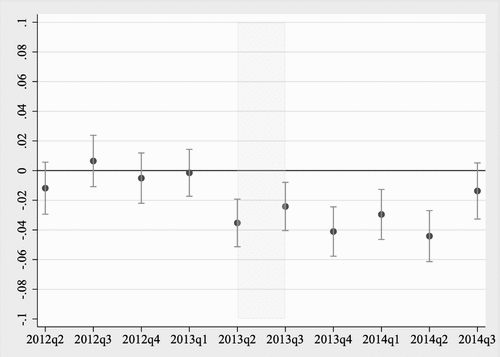
Notes. The figure uses quarterly data for the period 2012:Q2 to 2014:Q3. The shadowed region corresponds to the two inspection quarters (2013:Q2 and 2013:Q3). The graph plots period by period coefficients and 95% confidence intervals that we obtain by replacing in Equation (1) the variable Post in the triple interaction by a sequence of period dummies spanning all periods used in the estimation window. Standard errors are clustered at the bank-year-quarter level.
The timing evidence corroborates a causal interpretation of our results. The plot shows no evidence of pretrends, meaning that inspected and noninspected banks were changing their exposure to zombie firms roughly at the same rate before the inspectors arrived. Right after the inspections start, we see that inspected banks become less likely to refinance zombie firms relative to noninspected banks. The speed of adjustment is also interesting. Although the final report was released only in December, the inspected banks started reducing their exposure to zombie firms right away. This suggests that inspected banks knew that they were overestimating the quality of their credit portfolios and precautionarily decided to start cleaning their balance sheets in advance to spread such costs over a longer period.
6.2.2. Inspected Vs. Noninspected Banks.
The inspected banks are larger than—and thus, necessarily different from—the noninspected banks. We attempt to improve our counterfactual estimate with two matching procedures.
First, we select the four smallest inspected banks and compare them with the four largest noninspected banks. This procedure brings us one step closer toward balancing our inspected and noninspected banks in terms of size (and presumably other relevant unobservable characteristics). Table 5 repeats the analysis of Table 3 using this smaller but more balanced sample of banks. Consistent with our previous results, we obtain negative and statistically significant estimates for our triple-interaction variable. The point estimate we obtain for our coefficient of interest in Model (4) is actually larger. It indicates that an inspected bank becomes 4.8 percentage points less likely to refinance a zombie firm after the inspection. This figure is economically relevant because it equals 26% of the unconditional likelihood of a zombie firm being refinanced during our sample period. The results in Table 5 show that the difference in size between inspected and noninspected banks cannot explain our previous results.18
|
Table 5. Inspected Vs. Noninspected Banks: Matching Inspected and Noninspected Banks on Asset Size
| Dependent variable: New loan from existing lender | ||||
|---|---|---|---|---|
| (1) | (2) | (3) | (4) | |
| Inspected Zombie × Post | 0.024** | 0.027 | 0.030* | 0.049*** |
| [2.407] | [1.566] | [1.759] | [2.919] | |
| Inspected Zombie | 0.014** | 0.004 | 0.005 | |
| [2.097] | [0.382] | [0.438] | ||
| Inspected Post | 0.035*** | 0.036*** | ||
| [6.917] | [4.573] | |||
| Zombie Post | 0.000 | |||
| [0.027] | ||||
| Year-quarter FE | Yes | — | — | — |
| Firm FE | Yes | — | — | — |
| Firm Year-quarter FE | — | Yes | Yes | Yes |
| Bank FE | Yes | Yes | — | — |
| Bank Year-quarter FE | — | — | Yes | Yes |
| Firm Bank FE | — | — | — | Yes |
| Number of observations | 276,746 | 276,746 | 276,746 | 276,746 |
| R2 | 0.296 | 0.514 | 0.516 | 0.666 |
Notes. The regressions use quarterly data for the period 2012:Q2 to 2014:Q3 excluding the two inspection quarters (2013:Q2 and 2013:Q3). The sample includes firms from all sectors except construction and real estate. The sample is also restricted to the four smallest inspected banks and the four largest noninspected banks. Standard errors are clustered at the bank-year-quarter level. FE stands for Fixed Effects.
*Significance at the 10% level; **significance at the 5% level; ***significance at the 1% level.
Second, we match inspected and noninspected banks on their level of capitalization as bank capital has been shown to be an important determinant of zombie lending (e.g., Andrews and Petroulakis 2019). To control for this alternative mechanism, we match each of the eight inspected banks with one noninspected banks with a similar capital ratio measured as of 2010:Q4 (i.e., right before the Troika intervention).19
We present the results in Table 6. The results we obtain with this alternative matching strategy remain economically relevant and statistically significant. Moreover, the estimates obtained are comparable with those we discussed in Table 5. Because there are no significant differences in bank capital between the inspected and noninspected banks, we therefore conclude that the supervisory channel in mitigating zombie lending is at work.
|
Table 6. Inspected Vs. Noninspected Banks: Matching Inspected and Noninspected Banks on Capital Ratio
| Dependent variable: New loan from existing lender | ||||
|---|---|---|---|---|
| (1) | (2) | (3) | (4) | |
| Inspected Zombie × Post | 0.063*** | 0.040*** | 0.043*** | 0.051*** |
| [9.488] | [3.757] | [4.097] | [4.610] | |
| Inspected Zombie | 0.005 | 0.027*** | 0.026*** | |
| [1.224] | [3.935] | [−3.789] | ||
| Inspected Post | 0.031*** | 0.039*** | ||
| [8.766] | [7.422] | |||
| Zombie Post | 0.027*** | |||
| [5.473] | ||||
| Year-quarter FE | Yes | — | — | — |
| Firm FE | Yes | — | — | — |
| Firm Year-quarter FE | — | Yes | Yes | Yes |
| Bank FE | Yes | Yes | — | — |
| Bank Year-quarter FE | — | — | Yes | Yes |
| Firm Bank FE | — | — | — | Yes |
| Number of observations | 743,864 | 743,864 | 743,864 | 743,864 |
| R2 | 0.192 | 0.442 | 0.443 | 0.599 |
Notes. The regressions use quarterly data for the period 2012:Q2 to 2014:Q3 excluding the two inspection quarters (2013:Q2 and 2013:Q3). The sample includes firms from all sectors except construction and real estate. The sample includes all eight inspected banks plus eight noninspected banks with similar capital ratio (measured as of 2010:Q4) using a one-to-one matching procedure. Standard errors are clustered at the bank-year-quarter level. FE stands for Fixed Effects.
***Significance at the 1% level.
6.2.3. Classification of Zombie Firms.
In our main definition, a zombie firm has negative equity. In Tables 7 and 8, we consider alternative definitions of zombies. In Table 7, we analyze other dimensions of financial distress, whereas in Table 8, we compare firms that ended up as zombies via the asset or liability side. We obtain all estimates from our baseline regression model that controls for firm × year-quarter, bank × year-quarter, and firm × bank fixed effects (Equation (1) and Model (4) of Table 3). As in our baseline specification, standard errors are clustered at the bank-year-quarter level.
|
Table 7. Classification of Zombie Firms: Alternative Definitions of Zombie Firms
| Dependent variable: New loan from existing lender | ||||
|---|---|---|---|---|
| Zombie measure: 2 years of negative equity | Zombie measure: Low interest coverage (3 years) | Zombie measure: High probability of default | Zombie measure: Subsidized credit | |
| (1) | (2) | (3) | (4) | |
| Inspected Zombie × Post | 0.028*** | 0.032*** | 0.031*** | 0.018* |
| [3.918] | [4.223] | [4.870] | [1.886] | |
| Year-quarter FE | — | — | — | — |
| Firm FE | — | — | — | — |
| Firm Year-quarter FE | Yes | Yes | Yes | Yes |
| Bank FE | — | — | — | — |
| Bank Year-quarter FE | Yes | Yes | Yes | Yes |
| Firm Bank FE | Yes | Yes | Yes | Yes |
| Number of observations | 759,498 | 985,055 | 985,055 | 985,055 |
| R2 | 0.594 | 0.581 | 0.582 | 0.581 |
Notes. The regressions use quarterly data for the period 2012:Q2 to 2014:Q3 excluding the two inspection quarters (2013:Q2 and 2013:Q3). The sample includes firms from all sectors except construction and real estate. A firm with low interest coverage is in the first quartile of the distribution of interest coverage, computed as net profits over interest expenses, during three consecutive years. A firm with a high probability of default is in the top quartile of the previous year’s distribution of default probabilities estimated using Banco de Portugal’s internal credit risk model (see Antunes et al. 2016). A firm has subsidized credit if in a given year, (i) it has an estimated probability of default in the top quartile of the previous year’s distribution, and (ii) the actual interest expenses paid by the firm are below the interest expenses paid by the most creditworthy firms in the sample (defined as those with probability of default in the bottom quartile). Standard errors are clustered at the bank-year-quarter level. FE stands for Fixed Effects.
*Significance at the 10% level; ***significance at the 1% level.
|
Table 8. Classification of Zombie Firms: Operational Vs. Financial Zombies
| Dependent variable: New loan from existing lender | ||||
|---|---|---|---|---|
| Type of zombie: Any | Type of zombie: Operational | Type of zombie: Financial | Type of zombie: Operational and financial | |
| (1) | (2) | (3) | (4) | |
| Inspected Zombie Post | 0.037*** | 0.024** | 0.045*** | 0.037*** |
| [5.216] | [2.490] | [3.706] | [3.853] | |
| Year-quarter FE | — | — | — | — |
| Firm FE | — | — | — | — |
| Firm Year-quarter FE | Yes | Yes | Yes | Yes |
| Bank FE | — | — | — | — |
| Bank Year-quarter FE | Yes | Yes | Yes | Yes |
| Firm Bank FE | Yes | Yes | Yes | Yes |
| Number of observations | 965,640 | 965,640 | 965,640 | 965,640 |
| R2 | 0.584 | 0.580 | 0.580 | 0.580 |
Notes. The regressions use quarterly data for the period 2012:Q2 to 2014:Q3 excluding the two inspection quarters (2013:Q2 and 2013:Q3). The sample includes firms from all sectors except construction and real estate. Column (1) replicates column (4) of Table 4. Operational zombie is a firm that fell into negative equity in year t − 1 because of a decrease in assets between t − 2 and t − 1 (and that did not experience an increase in liabilities). Financial zombie is a firm that fell into negative equity in year t − 1 because of an increase in liabilities between t − 2 and t − 1 (and that did not experience a decrease in assets). Firms in the last column experienced both a decrease in assets and an increase in liabilities in the year they became zombies. Standard errors are clustered at the bank-year-quarter level. FE stands for Fixed Effects.
**Significance at the 5% level; ***significance at the 1% level.
We start with Table 7. Model (1) defines a zombie firm when it has negative equity for at least two years. This is a more stringent definition than in our baseline model, which defines zombie firms as having negative equity for at least one year. Adalet McGowan et al. (2018) and Acharya et al. (2019) identify low-quality firms as those with low ability to service existing debt. Following the definitions used in these studies, Model (2) employs low interest coverage over the past three years as a proxy for zombie firm. A firm with low interest coverage is in the first quartile of the distribution of interest coverage, computed as net profits over interest expenses. In Model (3), we employ a measure based on default risk. In particular, a zombie is a firm with an estimated probability of default in the top quartile of the previous year’s distribution.20 Our results should not be interpreted as evidence of risk shifting because we are analyzing a bank’s decision to refinance an existing borrower.21
Caballero et al. (2008) and Acharya et al. (2019) identify zombie firms as low-quality firms that receive subsidized credit. We follow this approach in Model (4) and label a firm as zombie if in a given year, (i) the average interest rate paid by the firm is below the interest paid by the most creditworthy firms in our sample (proxied by the interest rate paid by the firms with a probability of default in the bottom quartile) and (ii) it has an estimated probability of default in the top quartile of the previous year’s distribution.22 The only dimension in which our interest rate subsidy measure cannot match that used by Acharya et al. (2019) is the split between short- and long-term debt as we lack information on this in our data set. The trade-off is that the data set used covers the entire universe of firms in a country, including the very small ones. This concern is alleviated by the low-rate environment prevailing in 2012 and the very low slope of yield curves, which should lead to very small differences in short- and long-term interest rates.
The estimated coefficient for the triple interaction is negative across all specifications shown and statistically significant. In terms of economic magnitude, the point estimates indicate that inspected banks became 1.8 to 3.2 percentage points less likely to refinance zombie firms than noninspected banks after the inspection.
We now turn to Table 8. Because we define a zombie firm as one with negative equity, it is important to understand whether the firm became a zombie because of asset write-downs or because of an increase in liabilities. First, operational zombies are those firms that fell into negative equity because of a decrease in assets (and that did not experience an increase in liabilities). Second, financial zombies fell into negative equity because of an increase in liabilities (and did not experience a decrease in assets). We also consider a third category that combines the previous two types (i.e., firms that ended up with negative equity because of both a reduction in assets and an increase in liabilities). Using these definitions, our zombie firm sample contains 39.7% operational zombies, 24.4% financial zombies, and 35.9% that are both operational and financial zombies. We compute these statistics using data for the four quarters before the general inspection.
In column (1), we replicate our baseline result (column (4) of Table 3), in which a zombie firm is any firm with negative equity. Column (2) focuses on financial zombies, column (3) focuses on operational zombies, and column (4) focuses on firms that are both operational and financial zombies. All three coefficients in columns (2)–(4) are statistically significant and economically relevant, indicating that all three types of zombie help explain our results. We note, however, that the drop in the likelihood that a zombie firm is refinanced by an inspected bank is almost twice as large for financial zombies (−4.5 percentage points) than for operational zombies (−2.4 percentage points).
6.3. Why Do Inspected Banks Change Their Lending Behavior?
The results so far show that unconventional supervision through more intrusive bank supervision helps mitigate zombie lending. Our next question is why. We propose two possible mechanisms. The first is that banks are less likely to refinance zombie firms simply because the benefit of doing so was taken away by supervisors. Evergreening arises in the first place because banks want to avoid recognizing losses on their bad borrowers. However, the main outcome of the inspections was precisely to make banks build additional provisions against these loans. As it becomes costly for a bank to keep zombie firms in its portfolio, the bank has less incentives to refinance them. The second mechanism is that the inspections are disciplining banks. That is, banks may be reducing zombie lending in order to reduce the likelihood of future inspections and thus, to avoid the costs associated with such inspections.
We employ the sectoral inspection in an attempt to distinguish between these two mechanisms. Recall that the sectoral inspection focused on loans granted to firms operating in the construction and real estate sectors. We can thus compare how an inspected bank changed its lending behavior in inspected and noninspected sectors.
If inspected banks reduce zombie lending because these loans are costlier to keep, we should see no significant change in their propensity to refinance zombie firms in uninspected sectors. In other words, taking a “small bath” through the inspected sectors might mitigate zombie lending in the inspected sectors only. In contrast, if banks worry about the possibility of future inspections and the actions associated with them, then we should also see a significant drop in their propensity to refinance zombie firms in uninspected sectors. In the latter case, a “big bath” as implemented by the general inspection would not be required as banks would already modify their behavior toward zombie firms in uninspected sectors.
We investigate how inspected banks change their lending behavior to zombie firms in the inspected and noninspected sectors. Our empirical model is again Equation (1). The estimation window for this sectoral inspection is as follows. The inspection period was during the third and fourth quarters of 2012, which we omit from the estimation sample. Consistent with our analysis of the general inspection, we take one year before the inspections started and one year after they ended. The resulting estimation period is 2011:Q3 to 2012:Q2 (preinspection) and 2013:Q1 to 2013:Q4 (postinspection).
First, we focus on the inspected sectors. We present the results in Table 9. The estimation sample contains all firms in the construction and real estate sectors with outstanding loans from at least two banks. All variables and specifications are otherwise similar to Table 3. The estimated coefficient for the triple interaction is negative across all specifications and similar to those obtained in the general inspection. According to the point estimate in Model (4), inspected banks became 4.4 percentage points less likely to refinance zombie firms in the construction and real estate sectors after this sectoral inspection.23
|
Table 9. Sectoral Inspection and Zombie Lending in the Inspected Sectors
| Dependent variable: New loan from existing lender | ||||
|---|---|---|---|---|
| (1) | (2) | (3) | (4) | |
| Inspected Zombie Post | 0.051*** | 0.028** | 0.030** | 0.044*** |
| [4.222] | [2.159] | [2.261] | [3.320] | |
| Inspected Zombie | 0.006 | 0.023** | 0.021** | |
| [0.918] | [2.540] | [2.345] | ||
| Inspected Post | 0.001 | 0.002 | ||
| [0.095] | [0.193] | |||
| Zombie Post | 0.027*** | |||
| [3.646] | ||||
| Year-quarter FE | Yes | — | — | — |
| Firm FE | Yes | — | — | — |
| Firm Year-quarter FE | — | Yes | Yes | Yes |
| Bank FE | Yes | Yes | — | — |
| Bank Year-quarter FE | — | — | Yes | Yes |
| Firm Bank FE | — | — | — | Yes |
| Number of observations | 220,315 | 220,315 | 220,315 | 220,315 |
| R2 | 0.203 | 0.437 | 0.444 | 0.622 |
Notes. The regressions use quarterly data for the period 2011:Q3 to 2013:Q4 excluding the two inspection quarters (2012:Q3 and 2012:Q4). The sample includes only firms from the construction and real estate sector. Standard errors are clustered at the bank-year-quarter level. FE stands for Fixed Effects.
**Significance at the 5% level; ***significance at the 1% level.
The spillovers of the sectoral inspections to other banks and firms are now different from those seen in the general inspection. On the one hand, the positive estimate in Model (1) for the variable Zombie × Post suggests that the noninspected banks may have picked up some of the zombie borrowers that were cut loose by the inspected banks. On the other hand, the insignificant estimates obtained in Models (1) and (2) for Inspected × Post suggest that inspected banks did not change their lending behavior vis-à-vis healthy firms in the construction and real estate sectors.
Second, we repeat the analysis using the uninspected sectors. We select two sectors with limited direct links to the construction and real estate sectors. The accommodation and food services sectors are appropriate candidates because they have similar characteristics to the real estate and accommodation sectors in terms of being nontradeable sectors, being equally downstream, and having similar loading to the economy (see Figure 2). Because these sectors were not the object of inspection, we use them to perform a within-bank comparison that allows to discriminate between the two possible mechanisms at play (forced recognition of losses versus disciplining effects). The results reported in Table 10 show that the estimates for the variable of interest are always insignificant and economically small. This demonstrates that the reduction in zombie lending was indeed driven by the inspections, and the “small bath” inspection does not induce banks to modify their lending toward zombie firms in unrelated sectors in a different way than other noninspected banks do.
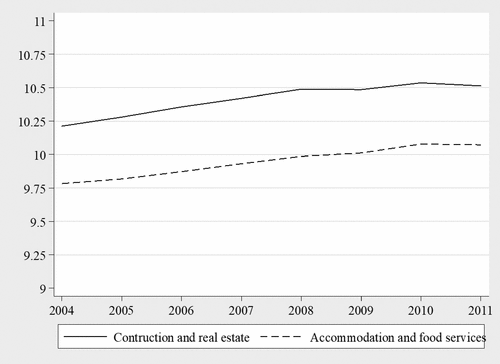
Notes. The figure plots average revenue in the two following sectors: construction and real estate (inspected sector) and accommodation and food services (noninspected sector). Annual data are from Statistics Portugal.
|
Table 10. Sectoral Inspection and Zombie Lending in Noninspected Sectors
| Dependent variable: New loan from existing lender | ||||
|---|---|---|---|---|
| (1) | (2) | (3) | (4) | |
| Inspected Zombie × Post | 0.001 | 0.005 | 0.007 | 0.008 |
| [0.036] | [0.271] | [0.376] | [0.454] | |
| Inspected Zombie | 0.011 | 0.011 | 0.012 | |
| [1.097] | [0.973] | [1.021] | ||
| Inspected Post | 0.001 | 0.012 | ||
| [0.085] | [1.079] | |||
| Zombie Post | 0.002 | |||
| [0.201] | ||||
| Year-quarter FE | Yes | — | — | — |
| Firm FE | Yes | — | — | — |
| Firm Year-quarter FE | — | Yes | Yes | Yes |
| Bank FE | Yes | Yes | — | — |
| Bank Year-quarter FE | — | — | Yes | Yes |
| Firm Bank FE | — | — | — | Yes |
| Number of observations | 70,524 | 70,524 | 70,524 | 70,524 |
| R2 | 0.197 | 0.453 | 0.464 | 0.647 |
Notes. The regressions use quarterly data for the period 2011:Q3 to 2013:Q4 excluding the two inspection quarters (2012:Q3 and 2012:Q4). The sample includes only firms from the accommodation and food services sector. Standard errors are clustered at the bank-year-quarter level. FE stands for Fixed Effects.
In Figure 3, we investigate the period by period behavior of our coefficients of interest over our sample window for the inspected (upper panel) and noninspected (lower panel) sectors. The timing evidence corroborates a causal interpretation of our results. The plot in the upper panel shows that inspected and noninspected banks were changing their exposure to zombie firms in the construction and real estate sectors roughly at the same rate before the inspectors arrived. The plot in the lower panel displays only insignificant coefficients both prior to and after the inspection for the uninspected sectors. These results suggest that the prevailing mechanism explaining the contraction of zombie lending after the inspections comes from the forced recognition of losses, as banks do not change their behavior in sectors that were not under the radar of the supervisors.24
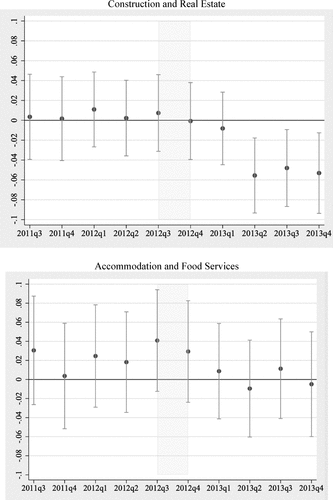
Notes. The figure uses quarterly data for the period 2011:Q3 to 2013:Q4. The shadowed region corresponds to the two inspection quarters (2012:Q3 and 2012:Q4). Each graph plots period by period coefficients that we obtain by replacing in Equation (1) the variable Postt in the triple interaction by a sequence of period dummies spanning all periods used in the estimation window. The upper panel includes firms from the construction and real estate sector, and the lower panel includes firms from the accommodation and food services sector. Standard errors are clustered at the bank-year-quarter level.
6.4. Bank Inspections and Firm Default
A bank that “evergreens” loans to its zombie borrowers is essentially preventing these firms from defaulting on their outstanding debt. If inspections are reducing banks’ incentives to evergreen outstanding loans, then the affected firms should become more likely to default after the inspections. Table 11 tests this where the dependent variable is an indicator of whether the firm defaults on that particular lender in that particular quarter. Models (1) and (2) focus on the general inspections, whereas Models (3) and (4) focus on the sectoral inspections. We follow the same methodology and use the same estimation samples as in Table 3 (for the general inspection) and Table 9 (for the sectoral inspection).
|
Table 11. Bank Inspections and Firm Default
| Dependent variable: Firm defaults on current lender | ||||
|---|---|---|---|---|
| Inspection: General | Inspection: Sectoral | |||
| (1) | (2) | (3) | (4) | |
| Inspected Post | 0.002 | 0.009* | ||
| [1.151] | [1.729] | |||
| Inspected Zombie × Post | 0.009* | 0.016* | ||
| [1.936] | [1.662] | |||
| Year-quarter FE | — | — | — | — |
| Firm FE | — | — | — | — |
| Firm Year-quarter FE | Yes | Yes | Yes | Yes |
| Bank FE | Yes | — | Yes | — |
| Bank Year-quarter FE | — | Yes | — | Yes |
| Firm Bank FE | — | Yes | — | Yes |
| Number of observations | 986,960 | 986,960 | 260,479 | 260,479 |
| R2 | 0.680 | 0.864 | 0.690 | 0.860 |
Notes. The regressions in columns (1) and (2) use quarterly data for the period 2012:Q2 to 2014:Q3 excluding the two inspection quarters (2013:Q2 and 2013:Q3), and the estimation sample includes firms from all sectors except construction and real estate. The regressions in columns (3) and (4) use quarterly data for the period 2011:Q3 to 2013:Q4 excluding the two inspection quarters (2012:Q3 and 2012:Q4), and the estimation sample includes only firms from the construction and real estate sector. Standard errors are clustered at the bank-year-quarter level. FE stands for Fixed Effects.
*Significance at the 10% level.
For each inspection, we present estimates from two specifications. In the first specification (Models (1) and (3)), we estimate an average effect across all firms while controlling for bank and firm × year-quarter fixed effects. We use this specification to test whether firms became more likely to default on an inspected bank (relative to the noninspected banks) after the inspections. The estimated coefficients are positive and statistically significant for both inspections, confirming that firms are on average more likely to default on banks that were inspected.
In the second specification (Models (2) and (4)), we further differentiate between zombie and nonzombie firms. This enables us to also control for bank × year-quarter and firm × bank fixed effects. The coefficient of interest is the same triple-interaction term that we analyzed in all our previous estimation tables. We obtain positive and statistically significant estimates for both inspections, showing that there is an incremental increase in the likelihood of default for a zombie firm relative to a nonzombie. That is, within a year after the inspections, a zombie firm is more likely to default, by one to two percentage points, on a lender that is inspected. This is consistent with our prior evidence that inspected banks become less likely to refinance these zombie firms after the inspections.
6.5. Economic Effects of the Inspections
Zombie firms impose costs on the economy because they prevent “creative destruction.” By staying alive, they congest markets and therefore, prevent some good firms from entering. In this subsection, we test whether the inspections had positive real effects. To this end, we estimate regressions at the industry level to assess aggregate effects of the general inspections.
We focus on three outcome variables: the rate of firm entry in the industry, average labor productivity, and average capital productivity. The productivity measures equal the industry’s gross value added scaled by either the number of employees or capital stock. Gross added value is defined as output minus intermediate consumption. In order to minimize the effects of other confounding macroshocks, we analyze the within-industry change of each of these three variables over a short period: from 2012 (the year before the inspection) to 2014 (the year after the inspection). This means, for example, that our measure of firm entry is computed as the number of firms created in 2014 divided by the number of firms operating in the same sector in 2012. We compute the two productivity measures as the within-industry relative changes from 2012 to 2014.
Next, we measure how exposed a given industry is to the inspections through their banks. We create the variable Industry exposure as the product of two variables. The first is the fraction of outstanding loans by inspected banks to firms in a given sector in 2012, capturing the importance of inspected banks for that sector right before the general inspections. The second is the fraction of zombie firms in that sector in 2012. We should see a cleansing effect of the inspections mainly if the sector is populated by zombie firms. We standardize the variable Industry exposure with a standard deviation of one.
Using the variables described, we run in Table 12 regressions at the sector level (two-digit Nomenclature statistique des activités économiques dans la Communauté européenne (NACE) codes). In order to obtain estimates that are meaningful from an aggregate perspective, we use as weights the number of firms in each sector in 2012. We find that, following the inspections, industries with a higher exposure to the inspections experienced a higher rate of firm creation and increases in average productivity; a one-standard deviation increase in Industry exposure increases firm entry rate by 32%, labor productivity by 62%, and capital productivity by 80%. Therefore, these results suggest that the inspections had a cleansing effect in the economy.
|
Table 12. Macroeffects of the General Inspection
| Firm creation | Productivity | ||
|---|---|---|---|
| Dependent variable: Entry rate | Dependent variable: Labor | Dependent variable: Capital | |
| (1) | (2) | (3) | |
| Industry exposure | 0.002* | 0.023** | 0.159* |
| [1.670] | [2.148] | [1.917] | |
| Number of observations | 79 | 79 | 79 |
| R2 | 0.035 | 0.057 | 0.046 |
Notes. The unit of analysis is the two-digit industry (NACE) code. All industries are included except construction and real estate. For each dependent variable, we computed within-industry changes from 2012 (the year before the inspection) to 2014 (the year after the inspection). The dependent variable in column (1) is the number of firms created in 2014 divided by the number of firms operating in the same sector in 2012. The dependent variables in columns (2) and (3) are the within-sector relative changes between 2012 and 2014 in average labor and capital productivity, respectively. The productivity measures equal the gross value added divided by either the number of employees or capital stock in the same sector. Industry exposure equals the fraction of outstanding loans by inspected banks to firms in a given sector in 2012 times the fraction of firms with negative equity in the same sector and year. The variable is standardized with a standard deviation of one. The regressions are weighted by the number of firms in the industry in 2012.
*Significance at the 10% level; **significance at the 5% level.
7. Conclusion
Zombie lending remains a widespread practice by banks in developed countries in spite of growing regulatory pressure. We exploit large-scale intrusive on-site inspections made on the credit portfolios of several Portuguese banks to investigate how these inspections affect banks’ future lending decisions.
We find that following this unconventional supervision, an inspected bank becomes 20% less likely to refinance a zombie firm. This finding holds for two different inspection episodes for different definitions of a zombie firm and is not driven by differences between inspected and noninspected banks. Consistent with the view that banks evergreen loans to prevent their zombie borrowers from defaulting, we find that zombie firms more likely default on an inspected lender after the inspections.
Finally, we question why banks are changing their lending behavior. If the inspections have a disciplining effect on banks, then we should see a significant drop in their propensity to refinance zombie firms in all sectors. However, we find that banks change their lending decisions only in the inspected sectors and not in uninspected sectors. Therefore, banks seem to reduce zombie lending because these loans are costlier to maintain. Inspecting banks across a wide array of sectors seems, therefore, necessary to modify banks’ behavior across the board. However, these inspections are costly and cannot be repeated permanently.
The mechanisms at play are thus crucial to advice policy makers. The mechanism we uncover is the recognition of losses rather than a more general disciplining effect. Policies that promote an encompassing and prompt recognition of losses, as those adopted by the SSM, can effectively mitigate zombie lending in the aftermath of a crisis.
The authors thank an anonymous associate editor, two anonymous referees, Tobias Berg (discussant), Ralph de Haas, Olivier De Jonghe (discussant), Giovanni Dell'Ariccia, Mark Dijkstra, Christian Effinger, Analisa Ferrando, Luís Costa Ferreira, Miguel García-Posada (discussant), Linda Goldberg, João Granja, Boris Hofmann (discussant), Artashes Karapetyan, Christian Leuz (discussant), Florencio Lopez-de-Silanes, Elena Loutskina, Tânia Marçal, Mike Mariathasan, David Martinez-Miera, Robert Marquez, João Mestre, Mark Mink (discussant), Klaas Mulier, Lars Norden (discussant), Diane Pierret (discussant), Tomasz Piskorski (editor), Maximiano Pinheiro, Andrea Polo, Andrea Presbitero, Lev Ratnovski, Farzad Saidi, Pedro Santos, Carola Schenone (discussant), Enrico Sette, Daniel Streitz, Javier Suarez, Oren Sussman (discussant), Anjan Thakor, and Razvan Vlahu as well as seminar participants at Banco de Portugal, International Monetary Fund, Institut für Wirtschaftsforschung Halle, Lancaster, Manchester Business School, Utrecht University, Universidad Carlos III, De Nederlandsche Bank, École Supérieure des Sciences Économiques et Commerciales, the Second Banco de España-Center for Monetary and Financial Studies Financial Stability Conference, the 10th European Banking Center Workshop, Financial Intermediation Research Society 2019, the Eighth Money and Finance Research Workshop, the Sixth Monetary Policy Committee Task Force on Banking Analysis for Monetary Policy Workshop, the Munich Workshop on Banking and Institutions, the 11th Swiss Winter Conference on Financial Intermediation, the School of Knowledge Economy and Management–Nice workshop on “Economic Growth, Innovation, and Finance,” European Finance Association 2019 Meetings, the Ninth Center for Institutional Studies Banking Workshop “Banking in Emerging Markets: Challenges and Opportunities,” Danmarks Nationalbank Conference on the Use of the Credit Register for Financial Stability Purposes, the Third Annual Workshop of the European System of Central Banks Research Cluster 3 on “Financial Stability, Macroprudential Regulation and Microprudential Supervision,” the Bundesbank–Institut für Wirtschaftsforschung Halle–ECONtribute–Centre for Economic Policy Research Conference on “Financial Intermediation in a Globalized World,” the Seventh Bordeaux Workshop in International Economics and Finance, and the Second Annual Conference of the Joint Research Center Community of Practice in Financial Research Capital Markets Union: Unlocking Europe’s Economic Potential (Community of Practice in Financial Research Award for the Best Policy-Relevant Research Paper). The authors also thank Francisca Rebelo for research assistance. The paper previously was circulated under the title “‘Inspect what you expect to get respect.’ Can bank supervisors kill zombie lending?” These are the views of the authors and do not necessarily reflect those of the Banco de Portugal or the Eurosystem.
1 The Financial Times writes in its February 23, 2018 edition that “[o]n average, across the US, Japan, Australia and western Europe, the proportion of firms that are zombies has risen five-fold since 1987, from 2 to 10 percent.” See https://www.ft.com/content/40c44992-17c3-11e8-9376-4a6390addb44. Banerjee and Hofmann (2018) study the importance of publicly listed zombie firms in 14 countries. They show that their presence has ratcheted up since the late 1980s.
2 Zombie lending in Portugal has been documented, for example, by Azevedo et al. (2022), Gouveia and Osterhold (2018), and Blattner et al. (2021). In Online Appendix Section 1, we characterize zombie lending in our sample.
3 We address concerns about potential differences between inspected banks and noninspected banks in our robustness section.
4 Agarwal et al. (2014) find that federal regulators are systematically tougher than state regulators, downgrading supervisory ratings almost twice as frequently, and that banks consequently report worse asset quality, higher regulatory capital ratios, and lower return on assets. Delis et al. (2018) find that regulatory interventions in the United States promote bank accounting quality, especially during periods of crisis. Gropp et al. (2019b) study banks' incentives to engage in regulatory arbitrage to increase their capital ratios and find that arbitrage is more pronounced in countries where national supervisors have more discretion to engage in regulatory forbearance.
5 A few studies have looked at the impact of the intrusiveness of bank supervision on bank-level outcomes. These studies found that supervision reduces the probability of bank failure and increases bank profitability (Rezende and Wu 2014, Fuster et al. 2018, Hirtle et al. 2019). Eisenbach et al. (2020) exploit unique data on the working hours of Federal Reserve System bank supervisors to find that supervision exhibits large economies of scale and that increased supervision reduces bank distress. Kok et al. (2021) present empirical evidence that the intrusiveness of the supervisory scrutiny associated with stress testing has a disciplining effect on bank risk.
6 The inspection program was monitored by a committee that included experts from Banco de Portugal but also from the International Monetary Fund, the European Central Bank, the European Commission, and three additional European central banks (Banco de España, the National Bank of Belgium, and Banque de France).
7 For additional details, see https://www.bportugal.pt/sites/default/files/anexoscombp20121203_en.pdf.
8 The European Banking Authority’s Capital Exercise was held in November 2011 and could be a potential confounding event taking place in the preevent window (e.g., Gropp et al. 2019a and Degryse et al. 2021 for Portugal). Another event in the preinspections window was the implementation of the very long-term refinancing operations by the European Central Bank in December 2011 (also see Jasova et al. 2021 for Portugal). The set of banks that could be affected by these two events does not coincide with the set of inspected banks in our analysis. More importantly, as we explain when describing our empirical methodology, our within-bank comparison of loans to different firms and sectors mitigates such concerns.
9 For additional details, see https://www.bportugal.pt/en/comunicado/credit-portfolio-impairment-review-exercise-confirms-resilience-and-robustness-national.
10 As mentioned in Sections 3.1. and 3.2., most inspected firms were randomly selected. A few firms were added to the inspection pool based on their economic importance (sectoral inspection) or high expected impairment deviation (general inspection). In both cases, having negative equity was not part of the selection process.
11 We acknowledge that this measure is better suited for market rather than for book values. We note, however, that Portugal adopted in 2010 the International Financial Reporting Standards accounting standards, which require most assets to be marked to market.
12 In Online Appendix Section 2, we present difference-of-means comparisons between zombie and nonzombie firms, and in Online Appendix Section 3, we validate our definition of zombie firm.
13 In the online appendix, we report the main results instead using credit growth as dependent variables (Online Appendix Tables A4–A6). The results remain broadly consistent.
14 Our standard errors do not change significantly if we additionally cluster at the firm level.
15 The high number of fixed effects may limit the external validity of our results. In fact, Equation (1) uses variation only from firms that borrow from at least two banks and in which one of them is inspected and the other is not. For this reason, we also present results from less restrictive regression models with one-way effects (firm, bank, and time).
16 On the one hand, this inspection covered corporate loans from all sectors (except mortgages and loans granted to public entities). The fact that it covered all economic sectors is important from an external validity viewpoint (recall that the sectoral inspection focuses only on the construction and real estate sectors). On the other hand, the general inspection was responsible for the largest increase in bank losses (more than €1 billion).
17 In Online Appendix Figure A2, we provide separate time series plots using raw data. The figure shows that, prior to the inspections, inspected banks were increasing their refinancing rate roughly at the same rate for zombie and nonzombie firms. Following the inspections, inspected banks reduced new lending substantially more to zombie than to nonzombie firms. At the same time, noninspected banks do not appear to change substantially their new lending behavior vis-à-vis zombie firms.
18 The results show that using the full sample of banks may lead to underestimation of the effects of the inspections. This downward bias is consistent with our earlier finding (in Table 3) that inspected banks were less likely than the noninspected banks to refinance zombie firms beforehand. Table 5 confirms that using the subsample of banks improves our estimate of the counterfactual. In particular, the insignificant estimates we obtain in Models (2) and (3) for the variable Inspected × Zombie show that the subsample of inspected banks is no longer less likely to refinance zombie firms than the noninspected banks prior to the inspections.
19 The set of uninspected banks contains many banks that are very small and thus, hardly comparable with our inspected banks. Therefore, we dropped all these very small banks and considered only the 20% largest uninspected banks or 14 banks in total. We then matched each of the eight inspected banks with one uninspected bank with the closest capital ratio. Therefore, our final estimation sample contains 16 banks. The difference in average bank capital between the inspected and noninspected banks is only 0.003 (10.9% versus 10.6%, respectively).
20 The risk model was developed by Banco de Portugal, and it estimates one-year-ahead default probabilities. The model uses two of the data sets used in our paper: the loan-level data and the firm-level accounting data. A firm is considered to be in default if it has 2.5% or more of its total outstanding loans overdue (defined as missing payments for more than 90 days). The model uses several firm-level indicators on leverage, profitability, liquidity, and size as well as macroeconomic variables (see Antunes et al. 2016 for details). The model does not include negative equity as an input, but it includes financial leverage.
21 Because one of the inputs in the risk model is financial leverage, this induces a mechanical correlation between a firm having negative equity and a high default probability. We note, however, that the correlation is not perfect. For the sample used in this table, 84% of the observations are classified in the same way using the two definitions (10% of the firms are zombies in both definitions, and 74% are not zombies in either). Five percent of the observations have negative equity but are not amongst the top quartile of the default probability distribution; 12% of the firms have high default probabilities but do not have negative equity.
22 Acharya et al. (2019) impose the additional condition that the firm must have previously borrowed from the same bank. This condition is already incorporated in our baseline definition because we analyze a bank’s decision to refinance an existing borrower.
23 In Online Appendix Table A7, we analyze in the same regression how firms in the construction and real estate sectors were affected in the two inspections. Focusing on the most saturated specification in column (4), we find that the first inspection (sectoral) led to a larger reduction in the refinancing of zombie firms than the second inspection (general).
24 In Figure 3, we can see that there is virtually no response by banks during the sectoral inspection period. This contrasts with the evidence in Figure 1, which shows a prompt response by inspected banks right at the start of the general inspection. Recall that the sectoral inspection was the first inspection in chronological terms. So, the pattern observed in Figure 3 is consistent with a wait and see strategy until the banks received the final report for the first time. The prompt response by banks in Figure 1 is unsurprising because banks already went through a similar process in the past and know what lies ahead (i.e., recognizing the lower quality of their loan portfolios and reinforcing impairments accordingly).
References
- (2003) Is the international convergence of capital adequacy regulation desirable. J. Finance 58(6):2745–2782.Crossref, Google Scholar
- (2019) Whatever it takes: The real effects of unconventional monetary policy. Rev. Financial Stud. 32(9):3366–3411.Crossref, Google Scholar
- (2018) The walking dead? Zombie firms and productivity performance in OECD countries. Econom. Policy 33(96):685–736.Crossref, Google Scholar
- (2014) Inconsistent regulators: Evidence from banking. Quart. J. Econom. 129(2):889–938.Crossref, Google Scholar
- (2019) Breaking the shackles: Zombie firms, weak banks and depressed restructuring in Europe. ECB Working Paper No. 2240, European Central Bank, Frankfurt am Main, Germany.Google Scholar
- (2020) The real effects of bank supervision: Evidence from on-site bank inspections. Working Paper No. 1349, Bank of Italy, Rome.Google Scholar
- (2016) Firm default probabilities revisited. Banco Portugal Econom. Stud. 2(April):21–45.Google Scholar
- (2022) Bank credit allocation and productivity: Stylized facts for Portugal. Stud. Econom. Finance. Forthcoming.Google Scholar
- (2018) The rise of zombie firms: Causes and consequences. BIS Quart. Rev. (September):67–78.Google Scholar
- (2020) Corporate zombies: Anatomy and lifecycle. BIS Working Paper No. 882, Bank for International Settlements, Basel, Switzerland.Google Scholar
- (2021) When losses turn into loans: The cost of weak banks. Banco de Portugal Working Paper No. 16, Banco de Portugal, Lisbon, Portugal.Google Scholar
- (2016) Relationship and transaction lending in a crisis. Rev. Financial Stud. 29(10):2643–2676.Crossref, Google Scholar
- (2014) Preventing zombie lending. Rev. Financial Stud. 27(3):923–956.Crossref, Google Scholar
- (2008) Zombie lending and depressed restructuring in Japan. Amer. Econom. Rev. 98(5):1943–1977.Crossref, Google Scholar
- (2020) The COVID-19 shock and equity shortfall: Firm-level evidence from Italy. Rev. Corporate Finance Stud. 9(3):534–568.Crossref, Google Scholar
- (2020) Stress tests and small business lending. J. Financial Econom. 136(1):260–279.Crossref, Google Scholar
- (2021) To ask or not to ask? Bank capital requirements and loan collateralization. J. Financial Econom. 142(1):239–260.Crossref, Google Scholar
- (2018) Accounting quality in banking: The role of regulatory interventions. J. Banking Finance 97(December):297–317.Crossref, Google Scholar
- (2020) The economics of bank supervision. FRB of NY Staff Report No. 769, Federal Reserve Bank of New York, New York.Google Scholar
- (2018) Does CFPB oversight crimp credit? FRB of NY Staff Report No. 857, Federal Reserve Bank of New York, New York.Google Scholar
- (2019) Shock propagation and banking structure. Rev. Financial Stud. 32(7):2499–2540.Crossref, Google Scholar
- (2013) On the real effects of bank bailouts: Micro evidence from Japan. Amer. Econom. J. Macroeconomics 5(1):135–167.Crossref, Google Scholar
- (2020) Covid-19 and SME failures. NBER Working Paper No. 27877, National Bureau of Economic Research, Cambridge, MA.Google Scholar
- (2018) Fear the walking dead: Zombie firms, spillovers and exit barriers. Banco de Portugal Working Paper No. 11, Banco de Portugal, Lisbon, Portugal.Google Scholar
- (2019) The death of a regulator: Strict supervision, bank lending and business activity. NBER Working Paper No. 24168, National Bureau of Economic Research, Cambridge, MA.Google Scholar
- (2019a) Bank response to higher capital requirements: Evidence from a quasi-natural experiment. Rev. Financial Stud. 32(1):266–299.Crossref, Google Scholar
- (2019b) Supranational rules, national discretion: Increasing versus inflating regulatory bank capital? Swiss Finance Institute Research Paper No. 20-112, Zurich, Switzerland.Google Scholar
- (2019) Supra(national) supervision. Working paper, Goethe University of Frankfurt, Frankfurt, Germany.Google Scholar
- (2019) The economics of bank supervision. FRB of NY Staff Report No. 768, Federal Reserve Bank of New York, New York.Google Scholar
- (2021) A theory of zombie lending. J. Finance 76(4):1813–1867.Crossref, Google Scholar
- (2019) The impact of bank supervision on corporate credit. Working paper, Federal Reserve Board, Washington, DC.Google Scholar
- (2021) Policy uncertainty, lender of last resort and the real economy. J. Monetary Econom. 118(C):381–398.Crossref, Google Scholar
- (2008) Tracing the impact of bank liquidity shocks: Evidence from an emerging market. Amer. Econom. Rev. 98(4):1413–1442.Crossref, Google Scholar
- (2021) The disciplining effect of supervisory scrutiny in the EU-wide stress test. ECB Working Paper No. 2551, European Central Bank, Frankfurt am Main, Germany.Google Scholar
- (2020) Zombification in Europe in times of pandemic. VoxEU.org, London. Accessed October 11 2021, https://voxeu.org/article/zombification-europe-times-pandemic.Google Scholar
- (1977) Determinants of corporate borrowings. J. Financial Econom. 5(2):147–175.Crossref, Google Scholar
- (2005) Unnatural selection: Perverse incentives and the allocation of credit in Japan. Amer. Econom. Rev. 95(4):1144–1166.Crossref, Google Scholar
- (2019) Stressed banks. Swiss Finance Institute Research Paper No. 17-58, Swiss Finance Institute, Zurich.Google Scholar
- (2014) The effects of supervision on bank performance: Evidence from discontinuous examination frequencies. Working paper, Federal Reserve Board, Washington, DC.Google Scholar
- (2020) Identifying the real effects of zombie lending. Rev. Corporate Finance Stud. 9(3):569–592.Crossref, Google Scholar
- (2022) Bank stress testing: Public interest or regulatory capture? Rev. Finance. Forthcoming.Google Scholar
- (2021) Evergreening in the Euro area: Evidence from survey data and a conceptual framework. CESifo Econom. Stud. 67(1):1–34.Crossref, Google Scholar

