


Can Reward Uncertainty Encourage Social Referrals? Evidence from a Large-Scale Field Experiment
Abstract
Social referral programs, in which individuals recommend products or services within their networks in return for rewards, have been widely adopted across digital platforms. This study explores the impact of incorporating uncertainty into the rewards of such programs, focusing on how senders and recipients perceive and react to uncertain rewards. We run a randomized experiment involving more than 160,000 users of a telecommunications operator in China and examine the effectiveness of different referral reward schemes. We find that referral programs are most successful when senders are incentivized with uncertain rewards and recipients are guaranteed certain rewards. Specifically, introducing uncertainty in the sender’s reward leads to a 20.9% increase in total referrals with recipients of these invitations more likely to engage in subsequent referrals and profitable in-app activities. In contrast, uncertainty in the recipient’s reward results in a 12.3% decrease in total referrals with invited recipients showing a lower propensity to make further referrals and reduced postreferral engagement. Additional online experiments identify distinct mechanisms driving these asymmetric effects: For senders, the uncertainty alleviates feelings of guilt, enhancing referral sharing and, thus, increasing the total number of referrals. For recipients, the adverse effects of uncertainty stem primarily from diminished perceptions of fairness and social pressure, and these deter engagement in the referral process. Our study sheds light on the complex dynamics of reward uncertainty in referral programs, offering novel insights into how it can be optimized to foster more engaged referral networks.
This paper was accepted by Anindya Ghose, information systems.
Funding: A.T. Li acknowledges support from the National Natural Science Foundation of China [Grants 72301269 and 72332007] and the Fundamental Research Funds for the Central Universities [Grant WK2040000085]. R. Belo acknowledges funding by Fundação para a Ciência e a Tecnologia (UID/00124/2025, UID/PRR/124/2025, Nova School of Business and Economics, DOI: https://doi.org/10.54499/UID/00124/2025) and LISBOA2030 (DataLab2030 - LISBOA2030-FEDER-01314200). T. Li acknowledges support from the Erasmus Research Institute of Management (ERIM) Convergence AI, Data & Digitalisation (Convergence AI Lab – Immersive Tech) Gravitation Program Public Values in the Algorithmic Society (AlgoSoc).
Supplemental Material: The online appendix and data files are available at https://doi.org/10.1287/mnsc.2024.05685.
1. Introduction
Social referral programs incentivize individuals to make and accept recommendations via their social connections in exchange for rewards, creating a win–win situation for both the sender and the recipient. The sender receives rewards for successful referrals, whereas the recipient gains rewards for accepting the invitation. The recipient then becomes a new sender and can invite others, creating a virtuous cycle of referrals. Such programs have gained widespread adoption across digital platforms as a cost-effective strategy to acquire new customers, boost engagement, and harness network effects (Ghose et al. 2007, Jung et al. 2020, Burtch et al. 2021). They are also shown to attract high-value users and contribute to overall platform growth (Schmitt et al. 2011, Garnefeld et al. 2013, Van den Bulte et al. 2018).
Recently, platforms have begun experimenting with introducing uncertainty in referral rewards, a strategy that is not limited to just one context but is implemented in diverse ways across industries. This approach involves offering uncertain rewards to the sender, the recipient, or both with the aim of increasing referrals and boosting user engagement, often at a lower cost. For instance, some platforms provide senders and recipients with uncertain rewards, such as chances to win specific products, redeemable points, cash, or even random stocks or mystery gifts, thereby creating a game-like experience that can increase users’ willingness to share referrals (Goldsmith and Amir 2010, Wang et al. 2018, Shen et al. 2019). These uncertainty-driven strategies are common: investment platforms, for example, have adopted different schemes. Webull gives uncertain rewards to senders (random stock) and certain rewards to recipients ($100 voucher), whereas Robinhood, Public, and Tornado offer uncertain rewards (random stocks) to both parties. Conversely, M1 Finance provides certain rewards ($100) to both sender and recipient without any uncertainty.1
Despite extensive research on uncertainty across the fields of economics (e.g., Rabin and Thaler 2001, Gneezy et al. 2006), psychology (e.g., Gibson and Sanbonmatsu 2004, Hsee and Ruan 2016), marketing (e.g., Goldsmith and Amir 2010, Ruan et al. 2018), and decision sciences (e.g., Weber and Chapman 2005, Wakker 2010), little is known about the behavioral and economic consequences of incorporating uncertainty into referral reward design. Specifically, there is no research on how senders and recipients perceive and react to uncertainty in rewards within a referral context. The complexity arises from the nature of referrals, in which decisions are shaped not only by individual preferences but also by the anticipated reactions from others. For example, senders not only consider their own rewards and related uncertainty but also anticipate the reactions of recipients to the rewards and uncertainty faced by senders and recipients, leading to a rich interplay of factors that have not been studied in the literature.
Whereas prior literature generally finds that individuals are risk-averse, preferring certain over uncertain rewards of equal expected value (e.g., Gneezy et al. 2006), the referral context introduces additional considerations. Specifically, senders may experience social discomfort or guilt when receiving a reward as a result of someone else’s actions (Ryu and Feick 2007, Jung et al. 2021), and this can reduce their willingness to share referrals. Introducing uncertainty may alleviate this discomfort as it can make the referral process feel more like a game (Shen et al. 2019), shifting the focus from the sender’s extrinsic motivation to the enjoyment of the uncertainty resolution. Thus, the overall effect of uncertain versus certain rewards on senders’ referral behavior remains an empirical question.
As for recipients, although previous studies suggest that people are reluctant to impose uncertainty on others (Reynolds et al. 2009, Bolton and Ockenfels 2010, Exley 2016), it is unclear how these findings apply to social referral contexts, in which mutual benefit and future reciprocal behaviors are expected. Furthermore, reward uncertainty between the sender and recipient might influence perceptions of fairness, a key consideration for both parties in social exchange (Hong et al. 2017).
In this study, we empirically analyze different referral reward schemes involving uncertainty, providing deeper insights into the topic. Specifically, we address the following questions: How does reward uncertainty for both the sender and recipient affect the behavior of both parties involved in referrals? What are the underlying mechanisms through which reward uncertainty influences the sender’s and recipient’s decisions throughout the referral process? What are the effective boundaries for these effects, such as different kinds of users and reward sizes?
To answer these questions, we conducted a randomized experiment in collaboration with a telecommunications operator in China, involving more than 160,000 users over two months, to identify the causal effects of uncertain rewards on social referrals and their underlying mechanisms. We focus on referrals in which both the sender and recipient receive immediate rewards upon the recipient’s acceptance. In the first phase, we implemented a two-by-two between-subjects design in which both sender and recipient were offered rewards of equal expected value: either certain (50 points) or uncertain (500 points with a 10% probability). Users were randomly assigned to one of the four possible referral schemes: certain reward for both sender and recipient (CC), uncertain reward for both sender and recipient (UU), certain reward for sender and uncertain reward for recipient (CU), or uncertain reward for sender and certain reward for recipient (UC). In the second phase, we extended this design by incorporating an additional factor—the expected reward size—at three levels (10, 50, and 500 points), resulting in a two-by-two-by-three full-factorial design with 12 conditions.
We find that the most effective referral scheme combines uncertain rewards for senders with certain rewards for recipients. This effect is driven by the joint behavior of both parties: senders send more invites when (i) they are incentivized with an uncertain reward and when (ii) the recipients of their invites are assured with a certain reward. In turn, recipients are more likely to accept invitations when they face a certain reward conditional on receiving an invite.
This behavioral asymmetry raises a key question: Why do senders and recipients, when exposed to the same uncertainty, respond so differently? Specifically, why do senders act as risk seekers concerning their own reward, adopting a risk-averse stance when it comes to recipients’ rewards, and why do recipients behave generally risk averse? To further investigate the underlying mechanisms driving these behaviors, we conducted two additional online experiments with 995 participants in the role of sender and 991 in the role of recipient, replicating the conditions of the field experiment. We measured participants’ referral and acceptance intentions along with psychological constructs, such as guilt, fairness, curiosity, and social pressure, drawing from the referral and decision-making literature (Ryu and Feick 2007, Hong et al. 2017, Hsee and Ruan 2020, Jung et al. 2020).
Results show that the behavioral divergence in response to uncertain rewards between senders and recipients arises from the distinct motivations inherent to each role instead of their distinctions in risk preferences. Both groups place a higher value on certain rewards; however, senders exhibit a reduced willingness to share invites when their rewards are assured. This reluctance stems from senders’ discomfort when their invitation clearly benefits them. Conversely, providing senders with an uncertain reward diminishes their sense of guilt and increases their likelihood of sharing. In contrast, the negative impact of uncertainty in recipients’ rewards is partly due to a decrease in the recipient’s perceived fairness and social pressure, discouraging them from accepting invitations.
We also examine spillover effects on referral quality. Our results show that recipients, initially referred under the UC (uncertain sender, certain recipient) scheme, are more likely to refer others and demonstrate stronger postacceptance engagement, measured via app retention, login activity, loyalty point redemptions, and transactions, compared with other reward schemes. Finally, our heterogeneity analyses shed light on the effective boundaries of these effects and provide directions for further optimization. We find that users who joined the program through referrals show a stronger response to uncertain rewards compared with those from organic traffic. Moderation analyses regarding reward size suggest that larger rewards amplify the effects of reward uncertainty. In addition, reward uncertainty plays a stronger role when sharing occurs through private messages rather than broadcasting posts.
Our research advances the literature and practice in several ways. First, to our knowledge, we are the first to analyze the distinct behaviors of senders and recipients under reward uncertainty in social referrals, clarifying how uncertainty affects individuals differently based on their roles. We systematically examine how introducing uncertainty into referral rewards—varying by reward size and traffic type—shapes referral behaviors. Using a field experiment with more than 160,000 users, we find that sender-side uncertainty increases referral activity, whereas recipient-side uncertainty reduces acceptance. These effects depend on contextual factors such as reward magnitude, traffic source, and sharing channel. Importantly, sender-side uncertainty not only boosts referral volume but also attracts more engaged, higher quality users, supporting long-term platform growth. Second, we contribute to the literature by revealing the psychological mechanisms underpinning these effects. Whereas prior work attributes risk seeking to optimism or curiosity, we show that, in social contexts, senders prefer uncertain rewards to reduce guilt when benefiting from others. For recipients, aversion to uncertainty is driven by lower valuation, fairness concerns, and social pressure, making them more likely to accept referrals. Our findings also extend fairness theory to the context of asymmetric uncertainty, in which senders and recipients face different levels of risk. Overall, our study is the first to demonstrate that reward uncertainty can be a powerful lever for social referrals not because senders inherently value risk but because uncertainty acts as a psychological buffer against guilt—an insight previously undocumented in the literature.
2. Related Literature
2.1. Social Referral Programs
The literature in information systems and marketing shows that social referral programs provide strategic and economic benefits for platforms by capitalizing on participants’ social networks and the associated network effects to attract new customers and boost user engagement (Jung et al. 2020, Sun et al. 2021a). Users acquired through referrals tend to be more valuable, on average, with higher contribution margins (Van den Bulte et al. 2018), increased retention rates (Schmitt et al. 2011), higher engagement (Fernández-Loría et al. 2023), and greater customer lifetime value (Schmitt et al. 2011, Garnefeld et al. 2013). Some studies on social referral programs also focus on optimal program design for maximizing value. These include (i) identifying ideal target consumers (e.g., Hinz et al. 2011, Adamopoulos et al. 2018), (ii) defining the most effective types of connections (e.g., Ryu and Feick 2007), (iii) determining optimal timing for referral link dissemination (e.g., Burtch et al. 2021), (iv) developing viral features that foster social contagion (e.g., Aral and Walker 2011, Belo and Ferreira 2022), (v) optimizing incentive designs and their distribution between senders and recipients (e.g., Hong et al. 2017, Sun et al. 2021b, Belo and Li 2022), and (vi) identifying the most effective call-to-action messages for referrals (e.g., Jung et al. 2020). Research shows that equal-split referral rewards and prosocial message framing tend to yield the best outcomes across various contexts (Hong et al. 2017, Jung et al. 2020, Sun et al. 2021b).
2.2. Uncertainty in Rewards
Research across economics and psychology generally shows a preference among individuals for certain rewards over uncertain ones even when their expected values are the same (Rabin and Thaler 2001, Gneezy et al. 2006). However, exceptions exist, such as in low-stakes decisions in which individuals may display risk-seeking behaviors, valuing uncertain rewards more than certain equivalents (Weber and Chapman 2005, Goldsmith and Amir 2010). This can be attributed to optimism, by which individuals focus on the potential for the higher reward, discounting its likelihood (Goldsmith and Amir 2010), or curiosity, by which individuals view the resolution of uncertainty as rewarding in itself (Ruan et al. 2018, Xu et al. 2020). Optimism bias, a well-documented phenomenon in psychology and behavioral economics, influences both microeconomic and macroeconomic activities (Sharot 2011), such as repeated decisions to gamble (Gibson and Sanbonmatsu 2004). Curiosity results from an information gap when rewards are uncertain, stimulating individuals to seek resolution (Loewenstein 1994), which can lead to positive utility upon resolving uncertainty (Ruan et al. 2018, Shen et al. 2019), especially when people focus more on the process than the outcomes (Shen et al. 2015, Hsee and Ruan 2016).
2.3. Uncertainty in Social Referral Rewards
Whereas many platforms incorporate uncertainty in referral rewards, such as mystery gifts, random discounts, sweepstakes, games of chance, and instant-win games (Goldsmith and Amir 2010), the actual effect of uncertain referral rewards in practice is rarely investigated. Wang et al. (2018) is the only study we know that examines the impact of uncertainty in referral rewards, finding that adding uncertainty to the sender’s reward can increase share intention. However, their study does not account for the recipient’s reward uncertainty or its impact on referral quality. Our study fills this gap by examining the effects of uncertainty on both the sender’s and the recipient’s rewards through a large-scale field experiment and exploring the underlying mechanisms. We also investigate the heterogeneity in the effects of reward uncertainty across different reward sizes and traffic types.
In social referrals, beyond their own attitudes toward risk, senders are concerned about their friends’ satisfaction with their recommendations (Ames et al. 2004, Kornish and Li 2010) and perceive their actions as altruistic, expecting the recipients to view it similarly (Wirtz et al. 2013, Jung et al. 2021). Previous research indicates that the anticipation of monetary rewards for someone else’s actions might cause senders to feel guilty (Jung et al. 2020). In particular, when claiming referral rewards, senders anticipate that recipients perceive this referral as being driven by a desire to get an extrinsic reward rather than for the intrinsic joy of sharing (Wirtz et al. 2013). This guilt can deter users from making referrals, thus diminishing the benefits of referral rewards (Ryu and Feick 2007, Jung et al. 2020). Therefore, an effective reward scheme should minimize the sender’s psychological cost of feeling guilty about gaining referral rewards (Jung et al. 2020, 2021). Introducing uncertainty into the sender’s referral reward could mitigate this guilt perception as the uncertainty can make the activity seem more like a game (Shen et al. 2019). This game-like feature of uncertainty may shift recipients’ attention from the sender’s pursuit of extrinsic rewards to the excitement of the uncertainty resolution, reducing extrinsic motivation (Silver and Silverman 2022) and enhancing perceptions of the sender’s altruism and trustworthiness (Capraro and Kuilder 2016, Jordan et al. 2016). Such perceptions can be anticipated by senders, thereby alleviating their psychological burden of guilt. In this study, we run online experiments to investigate whether uncertainty in referral rewards can alleviate the sender’s guilt perception and increase the likelihood of sharing referrals.
Regarding the recipient’s reward, behavioral economics shows that individuals often make more conservative choices for others than for themselves (Reynolds et al. 2009, Bolton and Ockenfels 2010). Several mechanisms have been proposed to explain this phenomenon. Charness (2000) finds this effect in the context of gift exchange and identifies “responsibility alleviation” as the underlying mechanism. When making decisions on behalf of others, individuals often experience heightened concerns about responsibility, leading them to adopt more cautious and risk-averse choices to reduce the burden of responsibility (Charness 2000, Charness and Jackson 2009, Lu et al. 2018). Similarly, Selten (2001) discusses “blame avoidance,” suggesting that decision makers prefer safer options to avoid being blamed for any unfavorable outcomes (Baumeister et al. 2001). Moreover, research by Exley (2016) indicates that introducing outcome uncertainty for others can negatively impact prosocial behaviors. In line with these findings, transferring uncertainty to recipients in referral programs might amplify the sender’s perception of guilt, potentially deterring their willingness to make referrals.
Alleviating the sender’s guilt perception points to an asymmetric uncertainty arrangement in which senders face uncertain rewards for successful referrals, whereas recipients are assured of receiving certain rewards upon accepting the referral. However, this asymmetric reward configuration might influence perceptions of fairness for both the sender and the recipient (Hong et al. 2017, Bassellier and Ramaprasad 2023). Fairness is often perceived when both parties receive equal rewards, encouraging more users to make referrals (Hong et al. 2017, Jung et al. 2021). Introducing uncertainty could diminish the perceived fairness because the realized rewards may vary between senders and recipients. This fairness concern becomes more prominent in an asymmetric uncertainty arrangement, in which one party, facing uncertainty, observes that the other is guaranteed a certain reward. This situation presents a challenge in balancing the benefits of reduced guilt against the risks of reduced fairness. In this study, we further investigate how recipients perceive uncertainty in both senders’ and recipients’ rewards and how this perception affects their referral acceptance decisions.
In sum, there are countervailing forces regarding the effectiveness of incorporating uncertainty into the rewards for senders and recipients with no clear consensus on the optimal reward scheme. Senders and recipients may exhibit risk-seeking or risk-averse behavior regarding their reward uncertainty. Meanwhile, reducing the sender’s guilt perception through asymmetric uncertainty allocation could compromise the fairness perceived by both parties. Reconciling these differing viewpoints is challenging without a robust, randomized experimental design. To address this gap, our work provides an empirical analysis of different referral reward schemes involving uncertainty, contributing to a broader understanding and a greater consensus on this ongoing debate.
3. Field Experiments and Data Description
3.1. Research Context and Experimental Design
We conducted a large-scale randomized field experiment in partnership with a leading telecommunications operator in China. We ran the experiment in the company’s mobile app: a platform that allows users to check bill details, make payments, install home internet, monitor data usage, and manage subscription plans. To increase user retention and engagement, the app incorporates various gamification features. A notable feature is a loyalty point system, in which users earn points by performing certain actions such as daily logins, inviting new users, participating in promotional activities, making bill payments, and adjusting data plans. The points can be exchanged for goods and services at a rate of approximately 100 points to one Chinese Renminbi with redemption options including electronics, toys, household items, outdoor accessories, jewelry, lottery entries, and mobile top-up credits. The company aims to encourage off-line users to online services and increase activity among current online users. This strategy involves promoting new services through the app, also reducing operational costs by diminishing the reliance on traditional call center support.
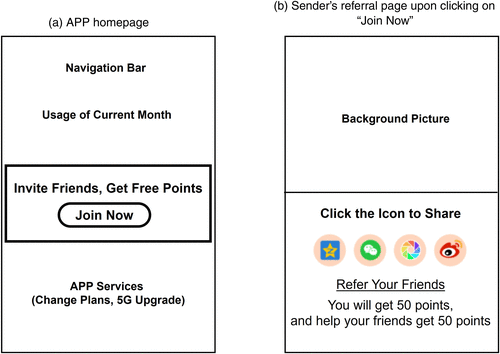
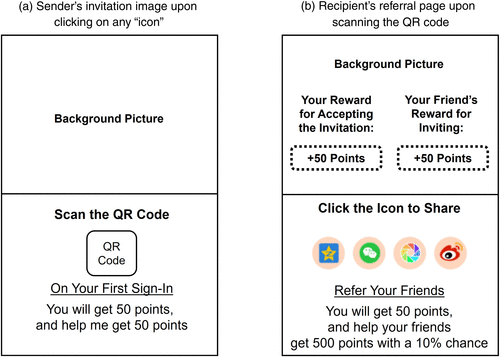
Panel (a) of Figure 1 showcases the app’s home page as it appeared during the experimental period. When users open the app, they see a prominent banner on the home page promoting a reward for referring friends. Clicking this banner opens a pop-up window that directs users to the referral page as shown in panel (b) of Figure 1. The referral page customizes the referral message based on the user’s group information as detailed in Table 1. It also displays icons of major Chinese social networks—QQ Zone, WeChat Message, WeChat Moment, and Weibo—enabling users to share the referral. Clicking an icon generates a personalized invitation image that includes a QR code with encrypted referral information, and this can be shared as a draft post on the chosen platform. Panel (a) of Figure 2 depicts an example of invitation image. For instance, choosing the Weibo icon directs users to a precomposed, unpublished post on Weibo. The system supports multiple shares, generating unique QR codes for each instance, and these codes can be scanned multiple times by different recipients. Upon accepting an invitation by scanning the QR code, new users are directed to the app’s referral page as illustrated in panel (b) of Figure 2. If they have not installed the app, they are prompted to do so and then register. The app then displays a customized referral message encouraging new users to make further referrals and outlines potential rewards.
|

Table 1. Experimental Design
| Sender uncertainty | Recipient uncertainty | Reward messages to senders | Reward messages to recipients |
|---|---|---|---|
| No | No | You will get 50 points and help your friends get 50 points. | You will get 50 points and help me get 50 points. |
| No | Yes | You will get 50 points and help your friends get 500 points with a 10% chance. | You will get 500 points with a 10% chance and help me get 50 points. |
| Yes | No | You will get 500 points with a 10% chance and help your friends get 50 points. | You will get 50 points and help me get 500 points with a 10% chance. |
| Yes | Yes | You will get 500 points with a 10% chance and help your friends get 500 points with a 10% chance. | You will get 500 points with a 10% chance and help me get 500 points with a 10% chance. |
We conducted the field experiment from November 5 to December 31, 2021. Participants included any app users who visited the referral page at least once during this time frame. Some users encountered the referral page organically by clicking the in-app banner, whereas others were directed there through a referral link. We investigate the effects of reward uncertainty and its variation across different reward sizes by dividing the experiment into two periods. Initially, from November 5 to November 30, we conducted two-by-two between-subjects randomization at the user level for both senders and recipients, maintaining a constant expected reward value (i.e., 50 points for senders and 50 points for recipients).
Upon their first visit to the referral page during the experiment, all users—including invited recipients—were randomly assigned to one of four groups: (i) sender certain reward + recipient certain reward: both the sender and the recipient received 50 points for each successful referral; (ii) sender certain reward + recipient uncertain reward: the sender received 50 points for each successful referral, whereas the recipient had a 10% chance of receiving 500 points; (iii) sender uncertain reward + recipient certain reward: the sender had a 10% chance of receiving 500 points for each successful referral, whereas the recipient received 50 points; and (iv) sender uncertain reward + recipient uncertain reward: both the sender and the recipient had a 10% chance of receiving 500 points for each successful referral. Table 1 outlines the specific referral messages for senders and the corresponding invitation messages for recipients in each group.
During the second period, from December 1 to December 31, we explored how varying the reward size influenced user behavior. This period introduced reward expectations set at 10, 50, and 500 points, expanding the study into a two-by-two-by-three design. Each original group from the first period was further segmented into three, creating 12 distinct experimental groups. We retained the 10% winning chance for uncertain rewards, maintaining consistency across the study periods. We utilize user historical data from the app before the experiment and conduct backward-looking analyses as randomization checks, demonstrating balanced in-app behaviors across different groups. Detailed randomization checks can be found in Online Appendix B.
A successful referral is determined when a new user (recipient) follows an invitation link, leading to the first app login during the study. Rewards are allocated based on the originating sender’s assigned group with immediate disclosure of any achieved rewards for both parties upon the recipient’s first app entry. Because the recipient is redirected to the app, the recipient can immediately see the rewards both the recipient and the sender have obtained as shown in panel (b) of Figure 2. For the sender, the app sends a notification and details the rewards at the next login.
3.2. Data and Summary Statistics
In our experiment, 162,266 valid users participated with a roughly equal sample size between two experimental periods: 49.2% in the first and 50.8% in the second period.2 Table 2 provides variable descriptions and summary statistics; 50.2% of users encountered uncertainty in sender rewards (Sender Uncertainty), and 49.4% faced uncertainty in recipient rewards (Recipient Uncertainty), indicating well-balanced group sizes. About 10.8% of users shared the program at least once (If Share), and each user, on average, shared 0.206 times (Number of Shares); 3.9% of users successfully referred at least one friend (If Refer). Then, we calculate the number of referrals directly invited by the focal user (Direct Referrals), and on average, users made 0.183 direct referrals to the app during the experiment.
|
Table 2. Variable Description and Summary Statistics
| Variable | Description | Mean | Standard deviation | Minimum | Maximum |
|---|---|---|---|---|---|
| Panel A: All users (N = 162,266) | |||||
| Sender Uncertainty | = 1 if the sender’s reward is uncertain | 0.502 | 0.500 | 0 | 1 |
| Recipient Uncertainty | = 1 if the recipient’s reward is uncertain | 0.494 | 0.500 | 0 | 1 |
| If Share | = 1 if the user shared the program at least once | 0.108 | 0.311 | 0 | 1 |
| Number of Shares | The number of shares that the user had during the experiment | 0.206 | 0.885 | 0 | 49 |
| If Refer | = 1 if the user invited at least one recipient | 0.039 | 0.194 | 0 | 1 |
| Direct Referrals | The number of successful referrals directly invited by the user | 0.183 | 2.131 | 0 | 274 |
| Total Referrals | All the user’s descendants in the referral tree, including child nodes, grandchild nodes, etc. | 0.386 | 9.357 | 0 | 1,325 |
| Indirect Referrals | The number of referrals who are indirectly invited by the user | 0.203 | 8.345 | 0 | 1,256 |
| From Referral | = 1 if the user joined the program via referral | 0.231 | 0.421 | 0 | 1 |
| Panel B: The successful referrals (i.e., users from the referral traffic) (N = 37,414) | |||||
|---|---|---|---|---|---|
| Inviter’s Sender Uncertainty | = 1 if the inviter’s self reward is uncertain | 0.553 | 0.497 | 0 | 1 |
| Inviter’s Recipient Uncertainty | = 1 if the inviter’s recipient reward is uncertain | 0.328 | 0.470 | 0 | 1 |
| Lucky Inviter | = 1 if the inviter’s realized reward is large | 0.052 | 0.222 | 0 | 1 |
| Lucky Recipient | = 1 if the recipient’s realized reward is large | 0.029 | 0.167 | 0 | 1 |
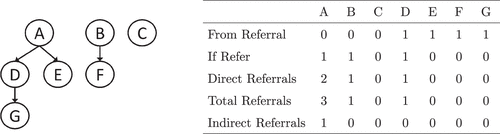
We also trace all referrals that were directly or indirectly invited by the focal user (i.e., all descendants of the focal user in the referral tree) and compute the total number of referrals (Total Referrals), averaging 0.386 (Total Referrals includes the focal user’s direct referrals, the direct referrals of recipients, the direct referrals of recipients’ recipients, etc.). Finally, we calculate the number of referrals that have been indirectly invited by the focal user, which is 0.203 on average (expressed as Indirect Referrals = Total Referrals − Direct Referrals). Indirect Referrals represents the cumulative number of subsequent referrals made by all recipients invited by the focal user, serving as a proxy for the quality of referrals and indicating whether invited recipients actively engaged in referring others. Figure 3 showcases a referral network and illustrates the computation of key variables. In this example, users A–C come from organic traffic, whereas users D–G are acquired through referrals.
We categorize users into two groups: those referred by others (From Referral) and those who joined organically. Among all participants, 76.9% joined organically, whereas 23.1% were referred; that is, 37,414 users were referred to open the app. As shown in panel B of Table 2, among these referrals, 55.3% were invited by users facing uncertainty in their own rewards (Inviter’s Sender Uncertainty).3 This percentage is higher than the remaining 44.7%, who were invited by users facing certainty in their own rewards, suggesting that uncertain rewards for senders may encourage more successful referrals. Upon the recipient accepting the invitation, the reward uncertainty was resolved for the 55.3% inviters, and in practice, 5.2% inviters received the large reward (Lucky Inviter), approximating the 10% threshold in our setting. Orthogonally, among these referrals, 32.8% were invited by users who faced uncertain rewards for the recipient (Inviter’s Recipient Uncertainty), lower than the remaining 67.2%, indicating that users dislike referring when incorporating uncertainty into the recipient’s referral reward. Regarding the resolution of uncertain rewards faced by 32.8% recipients, 2.9% recipients were fortunate to receive the large reward (Lucky Recipient).
4. Main Results: Effect of Reward Uncertainty on Referrals
4.1. Model-Free Evidence
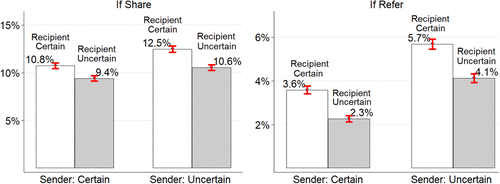
We start by presenting model-free evidence of the impact of reward uncertainty on referrals. We look at the effects of reward uncertainty on a user’s likelihood of sharing (If Share?), likelihood of successfully referring someone (If Refer?), number of shares (Shares), and number of direct referrals (Direct Referrals). We also take into account the subsequent referrals made by these recipients and assess the impact on total referrals (Total Referrals). Figures 4 and 5 depict the effects of uncertainty on both senders and recipients among the four treatment groups, pooling users from both experimental periods.4 These figures show that senders faced with uncertainty in their own rewards are more likely to share and successfully refer more friends compared with those with certain rewards. In contrast, senders facing uncertainty in their recipients’ rewards are less likely to share and refer less. These results are confirmed by t-tests comparing the referral rates and referral quantities between certain and uncertain rewards for senders and recipients, respectively (see Table A4 in Online Appendix C).
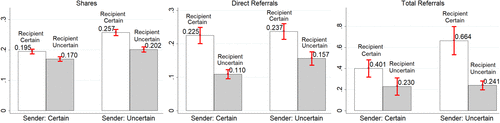
4.2. Empirical Results
To test the effect of reward uncertainty on social referrals, we model the referral outcomes of an individual i as follows:
Table 3 presents our key findings, using the condition with certain rewards for both senders and recipients as the baseline for comparison. Columns (1) and (2) show the effect on the sender’s sharing behaviors. Compared with users in the control group (certain reward for senders and recipients), those with uncertainty about their own rewards (Sender Uncertainty) show a significant 18.2% increase in the odds of sharing () and a 16.7% increase in the number of shares (0.059 additional shares over a baseline of 0.354 shares). Conversely, compared with users in the baseline group, users facing uncertain reward for recipients (Recipient Uncertainty) experience a significant 12.3% decrease in the odds of sharing () and a 5.1% decrease in the number of shares (0.018 fewer shares over a baseline of 0.354 shares). Columns (3) and (4) demonstrate the impact of reward uncertainty on referrals. Sender Uncertainty significantly heightens the odds of successfully referring others by 66.7% () and insignificantly increases the number of direct referrals by 1.2% (0.007 additional referrals over a baseline of 0.583),5 whereas Recipient Uncertainty significantly diminishes the odds of successfully referring others by 37.3% () and the number of direct referrals by 18.2% (0.106 fewer referrals over a baseline of 0.583). In columns (5) and (6), incorporating recipients’ further referrals, we explore the effect of reward uncertainty on total referrals and indirect referrals. Sender Uncertainty substantially amplifies the number of total referrals by 20.9% (0.253 additional total referrals over a baseline of 1.210) and the number of indirect referrals by 39.2% (0.246 additional indirect referrals over a baseline of 0.628). Conversely, Recipient Uncertainty significantly decreases total referrals by 12.3% (0.149 fewer total referrals over a baseline of 1.210) and indirect referrals by an insignificant 6.8% (0.043 fewer indirect referrals over a baseline of 0.628).
|
Table 3. Effect of Reward Uncertainty on the Referrals
| (1) | (2) | (3) | (4) | (5) | (6) | |
|---|---|---|---|---|---|---|
| If Share (Logit) | Number of Shares (OLS) | If Refer (Logit) | Direct Referrals (OLS) | Total Referrals (OLS) | Indirect Referrals (OLS) | |
| Sender Uncertainty | 0.167*** | 0.059*** | 0.511*** | 0.007 | 0.253*** | 0.246*** |
| (0.02) | (0.01) | (0.04) | (0.01) | (0.07) | (0.06) | |
| Recipient Uncertainty | −0.131*** | −0.018** | −0.466*** | −0.106*** | −0.149* | −0.043 |
| (0.02) | (0.01) | (0.04) | (0.01) | (0.07) | (0.06) | |
| Sender Uncertainty Recipient Uncertainty | −0.039 | −0.029*** | 0.143* | 0.037+ | −0.249** | −0.286*** |
| (0.03) | (0.01) | (0.06) | (0.02) | (0.09) | (0.08) | |
| From Referral | 0.727*** | 0.201*** | 1.509*** | 0.276*** | 0.651*** | 0.375*** |
| (0.02) | (0.01) | (0.04) | (0.02) | (0.08) | (0.07) | |
| Constant | −2.115*** | 0.354*** | −3.366*** | 0.583*** | 1.210*** | 0.628*** |
| (0.04) | (0.01) | (0.07) | (0.02) | (0.10) | (0.09) | |
| Experimental period fixed effect | Yes | Yes | Yes | Yes | Yes | Yes |
| Reward size fixed effect | Yes | Yes | Yes | Yes | Yes | Yes |
| Observations | 162,266 | 162,266 | 162,266 | 162,266 | 162,266 | 162,266 |
| /pseudo | 0.091 | 0.053 | 0.213 | 0.021 | 0.006 | 0.002 |
| UU – CC | −0.002 | 0.011+ | 0.188*** | −0.062*** | −0.145* | −0.083 |
| p-value | 0.922 | 0.065 | 0.026 | 0.154 | ||
| UU – CU | 0.129*** | 0.029*** | 0.654*** | 0.044** | 0.003 | −0.040 |
| p-value | 0.003 | 0.961 | 0.494 | |||
| UU – UC | −0.170*** | −0.048*** | −0.323*** | −0.069*** | −0.398*** | −0.329*** |
| p-value | ||||||
| UC – CU | 0.298*** | 0.077*** | 0.977*** | 0.113*** | 0.401*** | 0.289*** |
| p-value |
Notes. Standard errors in parentheses. CC, certain sender, certain recipient; CU, certain sender, uncertain recipient. UC, uncertain sender, certain recipient; UU, uncertain sender, uncertain recipient.
+; *; **; ***.
We further examine the differences between other conditions in Table 3. UU – CC shows that compared with the baseline condition, introducing uncertainty for both senders and recipients produces mixed outcomes: it increases the number of shares (0.011, p = 0.065) and the likelihood of successfully referring others (0.188, ) and decreases Direct Referrals (−0.062, ) and Total Referrals (−0.145, p = 0.026). UU – CU indicates that, when the recipient’s reward is uncertain, introducing uncertainty into the sender’s reward yields benefits for immediate actions, such as the likelihood of sharing (0.129, ), the number of shares (0.029, ), the likelihood of successful referral (0.654, ), and Direct Referrals (0.044, p = 0.003), but these benefits do not extend to Total Referrals (0.003, p = 0.961) or Indirect Referrals (−0.040, p = 0.494). Conversely, UU – UC shows that, when the sender’s reward is uncertain, adding uncertainty to the recipient’s reward has consistently negative effects on all the sharing and referral indicators. Finally, when comparing the most effective reward scheme (UC) to the least effective scheme (CU), we find that the former significantly outperforms the latter across all measures of sharing and referral behavior.
4.3. Robustness
We conduct several robustness checks to ensure the reliability of our results. We show that our results are robust to different model specifications. First, we use the Heckman selection model to incorporate the share decision into the estimation of their subsequent referral behaviors (Lee et al. 2021). Second, given that multiple referral outcomes are countable variables (i.e., Shares, Direct Referrals, Total Referrals, Indirect Referrals) and exhibit overdispersion, we take a log transform to mitigate the overdispersion and skewness. We also incorporate the overdispersion into the model estimation and use the negative binomial model for countable variables as well as the linear probability model for dummy variables (i.e., If Share, If Refer). Third, we implement winsorization to ensure that our results are not influenced by outliers. Specifically, we winsorize users whose referrals fall outside of three standard deviations, and we consistently observe similar results. Fourth, we account for the potential carryover effect from users participating in both experimental periods by conducting analyses that exclude such users. Fifth, we employ an alternative measure for referrals, encompassing all recipients who have accepted invitations, even those who may have already been referred by other users. This approach provides assurance that the results are not limited by a single measure. Overall, the findings are consistent across all robustness checks. For a detailed description of the robustness checks, please refer to Online Appendix D.
4.4. Heterogeneity Analyses
Gaining insight into the conditions under which positive effects can be amplified offers valuable guidance for platform practitioners seeking to optimize uncertain referral design. Specifically, we examine how the results vary by reward size, sharing channel, and traffic type in Online Appendix E, demonstrating robustness across different conditions and delineating the effective boundaries of our findings, thereby offering insights for further optimizing the reward scheme. First, the moderating effect of reward size, detailed in Online Table A13, indicates that the positive effect of the UC reward scheme becomes more pronounced as the reward size increases. Second, Online Table A14 shows that the positive effect of the UC reward on referrals is stronger in private sharing channels (e.g., WeChat messages) than in public broadcasting channels (e.g., Weibo posts). Third, we explore how reward uncertainty affects referral behaviors differently between users from referral and organic traffic. As shown in Online Table A15, users from referral traffic experience a more positive effect from sender uncertainty and a more pronounced negative effect from recipient uncertainty. This implies that the UC reward scheme is more effective for users acquired through referrals than for those from organic traffic.
5. Effect of Reward Uncertainty on Referral Quality
Upon accepting the invitation, the recipient transitions into a new sender and can invite others, thus fostering a positive cycle of referrals. We investigate the nuanced dynamics between users originating from organic traffic and those from referrals. We find that the act of referring perpetuates itself: recipients who were themselves referred are more likely to invite others. For example, an invited recipient generates an average of 0.659 referrals, a substantial increase compared with the average of 0.04 referrals by organic users. The sustained referral network, as illustrated in Table A16 of Online Appendix F, extends beyond mere sharing, fostering a continuous cycle of invitations and subsequent referrals. In contrast to organic traffic, in which user engagement is spontaneous, recipients of referrals are selectively chosen by the senders, who are likely to identify an audience receptive to the referral program. The recipient’s self-selection in accepting the referral invitation filters out disinterested individuals, leaving a pool of users inherently more engaged with the referral program and, consequently, more likely to refer others (Schmitt et al. 2011). Furthermore, upon accepting the invitation, recipients are redirected to the referral page displaying the rewards earned by both parties, potentially encouraging them to initiate subsequent referrals.
5.1. Spillover Effect on the Invited Recipient’s Further Referrals
To further explore the dynamics of referral networks and the cascading impact of reward schemes, we examine how reward uncertainty experienced by inviters spills over to their invited recipients. Specifically, we investigate how an inviter’s reward scheme influences recipients’ decisions to refer additional people. The findings in column (6) of Table 3 show that reward uncertainty affects indirect referrals, indicating that it influences the invited recipients’ subsequent referrals. However, because Indirect Referrals is an aggregate measure that includes not only the number of subsequent referrals generated by each recipient but also the number of recipients invited by the sender, it does not isolate the effect on individual behavior. To address this, we focus on each invited recipient’s own referral actions, allowing us to assess how the inviter’s reward scheme shapes the recipient’s decision to refer others. Thus, we model the determinants of an invited recipient’s subsequent referral behaviors, denoted as as follows:
Table 4 presents the results of 37,414 invited recipients. The positive impact of Sender Uncertainty and the negative impact of Recipient Uncertainty validate our findings within the subsample of invited recipients, affirming the consistency of our results. Results support that reward uncertainty from the inviter influences recipients’ referral decisions. Specifically, compared with users with certainty in their own rewards, users facing uncertainty in their own rewards (Inviter’s Sender Uncertainty) tend to invite recipients who generate more follow-up referrals. Conversely, when comparing users with uncertain recipient rewards to those with certain recipient rewards (Inviter’s Recipient Uncertainty), the former tend to invite recipients with less likelihood to further refer (−0.216, ) and insignificantly fewer follow-up referrals.
|
Table 4. Effect of Reward Uncertainty on the Invited Recipient’s Further Referrals
| (1) | (2) | (3) | (4) | (5) | (6) | |
|---|---|---|---|---|---|---|
| If Share (Logit) | Number of Shares (OLS) | If Refer (Logit) | Direct Referrals (OLS) | Total Referrals (OLS) | Indirect Referrals (OLS) | |
| Sender Uncertainty | 0.240*** | 0.152*** | 0.498*** | −0.032 | 0.865** | 0.897*** |
| (0.03) | (0.02) | (0.04) | (0.06) | (0.27) | (0.24) | |
| Recipient Uncertainty | −0.166*** | −0.068** | −0.367*** | −0.379*** | −0.549+ | −0.170 |
| (0.04) | (0.02) | (0.05) | (0.06) | (0.28) | (0.25) | |
| Sender Uncertainty Recipient Uncertainty | −0.028 | −0.058* | 0.102 | 0.181* | −0.905* | −1.085** |
| (0.05) | (0.03) | (0.07) | (0.08) | (0.39) | (0.35) | |
| Inviter’s Sender Uncertainty | 0.539*** | 0.243*** | 0.725*** | 0.603*** | 1.450*** | 0.847*** |
| (0.03) | (0.02) | (0.04) | (0.05) | (0.25) | (0.22) | |
| Inviter’s Recipient Uncertainty | −0.006 | −0.010 | −0.216*** | −0.019 | 0.260 | 0.278 |
| (0.04) | (0.02) | (0.06) | (0.07) | (0.32) | (0.29) | |
| Inviter’s Sender Uncertainty Inviter’s Recipient Uncertainty | −0.485*** | −0.207*** | −0.503*** | −0.675*** | −1.973*** | −1.298*** |
| (0.05) | (0.03) | (0.07) | (0.09) | (0.42) | (0.38) | |
| Lucky Sender | 0.119* | 0.091** | 0.210*** | 0.263** | 0.110 | −0.153 |
| (0.05) | (0.03) | (0.06) | (0.10) | (0.45) | (0.41) | |
| Lucky Recipient | 0.330*** | 0.120** | 0.519*** | 0.138 | −0.045 | −0.183 |
| (0.07) | (0.05) | (0.09) | (0.13) | (0.61) | (0.54) | |
| Constant | −2.187*** | 0.292*** | 0.040 | 1.545*** | 3.019*** | 1.474** |
| (0.09) | (0.05) | (0.09) | (0.13) | (0.62) | (0.55) | |
| Experiment period fixed effect | Yes | Yes | Yes | Yes | Yes | Yes |
| Reward size fixed effect | Yes | Yes | Yes | Yes | Yes | Yes |
| Observations | 37,414 | 37,414 | 37,414 | 37,414 | 37,414 | 37,414 |
| /pseudo | 0.020 | 0.015 | 0.083 | 0.012 | 0.004 | 0.002 |
| Inviter’s UU – Inviter’s CC | 0.048 | 0.026 | 0.005 | −0.091 | −0.264 | −0.173 |
| p-value | 0.216 | 0.238 | 0.918 | 0.161 | 0.378 | 0.519 |
| Inviter’s UU – Inviter’s CU | 0.054 | 0.036 | 0.221*** | −0.072 | −0.523 | −0.451 |
| p-value | 0.227 | 0.164 | 0.001 | 0.339 | 0.133 | 0.148 |
| Inviter’s UU – Inviter’s UC | −0.491*** | −0.217*** | −0.719*** | −0.694*** | −1.714*** | −1.020*** |
| p-value | ||||||
| Inviter’s UC – Inviter’s CU | 0.546*** | 0.253*** | 0.941*** | 0.622*** | 1.190*** | 0.569* |
| p-value | 0.042 |
Notes. Standard errors in parentheses. CC, certain sender, certain recipient; CU, certain sender, uncertain recipient. UC, uncertain sender, certain recipient; UU, uncertain sender, uncertain recipient.
+; *; **; ***.
We also find significantly negative interactions between Inviter’s Sender Uncertainty and Inviter’s Recipient Uncertainty, which means that incorporating uncertain reward for recipients has a significantly more negative impact on subsequent referrals when the inviter’s sender reward is uncertain compared with when the inviter’s reward is certain. Such results are also demonstrated by the significant difference between inviter’s UU and inviter’s UC. Meanwhile, the resolution of reward uncertainty has a significant impact on recipients’ further referral behaviors. Lucky outcomes for both the sender’s (Lucky Sender) and the recipient’s (Lucky Recipient) rewards positively impact the recipient’s decision to make further shares and direct referrals. However, this impact is not significant when considering the total referrals and indirect referrals made by recipients. In other words, whereas lucky rewards encourage immediate shares and direct referrals, their effect does not extend to the broader network of referrals that happen indirectly through recipients.
Two possible mechanisms might explain how reward uncertainties spill over and influence the subsequent referrals made by the invited recipients. From the sender’s perspective, the way senders target recipients might explain how reward uncertainty affects the referral network. Senders benefiting from a desirable reward scheme may choose recipients who are more likely to appreciate the app and, thus, are more likely to refer it to others. Considering that feeling guilty can deter people from making online referrals, those who feel less burdened by this guilt might engage in more effective advocacy. This could manifest in a more thoughtful selection of potential app users among their peers, greater effort in explaining the app’s benefits, or a combination of both (Jung et al. 2020). From the recipient’s perspective, the reward scheme in the invitation message could also impact their willingness to refer others. As senders who invite others despite uncertain outcomes for themselves are seen as altruistic and trustworthy (Capraro and Kuilder 2016, Jordan et al. 2016), recipients may perceive their invitations as driven by a genuine attempt to share something of value rather than a mere self-interested action. As a result, recipients might be more likely to share the app with others, reciprocating the original sender’s intent.
5.2. Effect on the Value Generation of Both Senders and Recipients
To further assess the broader impact of the UC reward scheme, we examine its effects on value generation for both senders and recipients. We collected their log-in stamps and in-app activities throughout the experimental period. In our context, users can purchase goods and services within the app by either fully redeeming loyalty points or partially paying with loyalty points and covering the remainder with monetary payment. To capture consumption behavior, we retrieved three key metrics for each user: the total amount of loyalty points redeemed, the number of transactions completed, and the number of unique products purchased during the experimental period.
On the sender side, columns (1) and (2) of Table 5 indicate that users randomly assigned to the UC scheme demonstrate higher retention rates and longer participation periods. This sustained engagement is likely influenced by the app’s push notifications, which inform users of referral rewards earned after each successful referral. The UC scheme motivates senders to generate more referrals, resulting in more frequent notifications and a greater likelihood of reengaging with the app to track their rewards. Additionally, as senders redeem their accumulated loyalty points, the increase in referrals translates to more profitable activities—including higher rates of point redemption, more transactions, and greater product purchases—as shown in columns (3)–(5).
|
Table 5. Effect of Referral Reward Uncertainty on User Engagement
| (1) | (2) | (3) | (4) | (5) | |
|---|---|---|---|---|---|
| Retention (logit) | Participation days | Points redemption | Number of transactions | Purchased products | |
| Sender Uncertainty | 0.120*** | 0.076*** | 39.347*** | 0.352*** | 0.169*** |
| (0.03) | (0.02) | (3.96) | (0.02) | (0.01) | |
| Recipient Uncertainty | −0.012 | −0.038* | −18.164*** | −0.177*** | −0.115*** |
| (0.03) | (0.02) | (3.99) | (0.02) | (0.01) | |
| Sender Uncertainty Recipient Uncertainty | −0.044 | −0.012 | 2.119 | −0.013 | 0.021* |
| (0.04) | (0.02) | (5.63) | (0.02) | (0.01) | |
| From Referral | 1.233*** | 1.084*** | 30.680*** | 1.002*** | 0.497*** |
| (0.03) | (0.02) | (4.74) | (0.02) | (0.01) | |
| Constant | −3.669*** | 0.076** | 289.728*** | 1.614*** | 0.812*** |
| (0.04) | (0.03) | (6.32) | (0.02) | (0.01) | |
| Experiment period fixed effect | Yes | Yes | Yes | Yes | Yes |
| Reward size fixed effect | Yes | Yes | Yes | Yes | Yes |
| N | 162,266 | 162,266 | 162,266 | 162,266 | 162,266 |
| /pseudo | 0.034 | 0.025 | 0.003 | 0.064 | 0.091 |
Note. Standard errors in parentheses.
+; *; **; ***.
On the recipient side, we conducted two analyses to assess whether invited recipients—particularly under the UC scheme—generate greater value. First, we compared the user engagement between organic users and invited recipients in Table A17 of Online Appendix F. As invited recipients generate more referrals, we found this increase spills over into greater postacceptance engagement: invited recipients exhibit significantly higher retention, longer participation, and more in-app purchases than organic users.6 These patterns underscore the added value of acquiring users through referrals.
Second, we conducted further analyses to compare in-app activities among recipients acquired by different reward schemes as shown in Table 6. The results collectively show that Inviter’s Sender Uncertainty positively influences, whereas Inviter’s Recipient Uncertainty negatively influences, recipients’ postacceptance engagement. Recipients acquired through the UC scheme demonstrate significantly higher engagement and commercial value than those invited under alternative reward structures. On average, recipients invited via the UC scheme exhibit approximately a 50% increase in spending behaviors—for example, redeeming 117.832 more points over a baseline of 249.044. The UC design not only increases the volume of successful referrals but also attracts high-value users who actively engage in both cascade referrals and revenue-generating activities, thereby fostering a vibrant ecosystem with sustained user growth and long-term value creation.
|
Table 6. Effect of Referral Reward Uncertainty on Invited Recipient’s Subsequent Engagement
| (1) | (2) | (3) | (4) | (5) | |
|---|---|---|---|---|---|
| Retention (logit) | Participation days | Points redemption | Number of transactions | Purchased products | |
| Sender Uncertainty | 0.118** | 0.137*** | 54.634*** | 0.470*** | 0.192*** |
| (0.04) | (0.04) | (4.32) | (0.03) | (0.02) | |
| Recipient Uncertainty | −0.063 | −0.117** | −26.468*** | −0.238*** | −0.150*** |
| (0.05) | (0.04) | (4.44) | (0.03) | (0.02) | |
| Sender Uncertainty Recipient Uncertainty | −0.024 | 0.041 | −0.714 | −0.027 | 0.039+ |
| (0.06) | (0.05) | (6.22) | (0.05) | (0.02) | |
| Inviter’s Sender Uncertainty | 0.119** | 0.058+ | 117.832*** | 0.991*** | 0.516*** |
| (0.04) | (0.03) | (3.88) | (0.03) | (0.01) | |
| Inviter’s Recipient Uncertainty | −0.086 | −0.086* | −33.503*** | −0.222*** | −0.113*** |
| (0.05) | (0.04) | (5.04) | (0.04) | (0.02) | |
| Inviter’s Sender Uncertainty Inviter’s Recipient Uncertainty | −0.338*** | −0.156** | −18.455** | −0.185*** | −0.122*** |
| (0.07) | (0.06) | (6.67) | (0.05) | (0.02) | |
| Lucky Sender | 0.338*** | 0.243*** | 111.350*** | 1.004*** | 0.501*** |
| (0.07) | (0.06) | (7.17) | (0.06) | (0.03) | |
| Lucky Recipient | 0.691*** | 0.434*** | 254.550*** | 1.913*** | 0.915*** |
| (0.09) | (0.08) | (9.59) | (0.07) | (0.04) | |
| Constant | 0.646*** | 9.129*** | 249.044*** | 2.016*** | 1.038*** |
| (0.08) | (0.08) | (9.75) | (0.08) | (0.04) | |
| Experiment period fixed effect | Yes | Yes | Yes | Yes | Yes |
| Reward size fixed effect | Yes | Yes | Yes | Yes | Yes |
| N | 37,414 | 37,414 | 37,414 | 37,414 | 37,414 |
| /pseudo | 0.106 | 0.323 | 0.085 | 0.097 | 0.106 |
Note. Standard errors in parentheses.
+; *; **; ***.
We further conducted a back-of-the-envelope calculation to approximate the annual revenue generated by invited recipients from a revenue–cost perspective as detailed in Online Appendix F.2. In summary, (i) each new customer brings approximately $75 in annual revenue; (ii) for existing off-line users transitioning to the mobile app via referrals, the digital shift yields about $31 in annual revenue and reduces call center costs by about $1 per user per year. Given the higher engagement levels observed under the UC scheme, these are likely conservative estimates. Nonetheless, the results underscore the significant value that increased referrals—especially under the UC condition—can create for the company.
6. Mechanism Explorations
In this section, we explore the underlying mechanisms through which reward uncertainty impacts social referrals. Senders and recipients may evaluate uncertain rewards differently: as more attractive because of optimism bias (Weber and Chapman 2005, Goldsmith and Amir 2010) or less desirable because of risk aversion (Rabin and Thaler 2001, Gneezy et al. 2006). They may also consider feelings of guilt or fairness regarding the other party’s reward or anticipate how the other party perceives the party’s own rewards (Hong et al. 2017, Jung et al. 2020). Because successful referrals require mutual agreement between sender and recipient, we conducted two follow-up online experiments to examine how reward uncertainty impacts the sender’s decisions to share and the recipient’s decision to accept.
6.1. How Does Reward Uncertainty Affect a Sender’s Sharing Decision?
We start by examining how reward uncertainty impacts the sender’s decision to share. As shown in column (1) of Table 3, our main results from the field experiment show that the sender’s likelihood of sharing increases under Sender Uncertainty but decreases with Recipient Uncertainty. To further investigate the mechanisms behind these differing intentions, we conducted a follow-up experiment with 995 participants randomly assigned to one of four groups, mirroring the experimental conditions in the field experiment. After viewing their assigned referral messages, participants reported their intentions to share and explained their reasoning. Online Appendix G provides details of the experimental design and measured constructs.
Table 7 reveals that guilt perception mediates the effects of reward uncertainty on sharing intentions. Column (1) replicates the field experiment findings: sender uncertainty increases whereas recipient uncertainty decreases the likelihood of sharing. Columns (2) and (4) show that sender’s guilt perception significantly hinders sharing intention (−0.196, ), and sender uncertainty significantly reduces guilt perception (−0.805, ), resulting in a higher share intention (−0.196 −0.805 = 0.157, ).7 On the other hand, recipient uncertainty increases the sender’s guilt perception (1.340, ), leading to lower share intention (−0.196 1.340 = −0.262, ).
|
Table 7. Mediation Effect of Guilt and Fairness Perceptions on Sender’s Share Intention
| (1) | (2) | (3) | (4) | |
|---|---|---|---|---|
| Share intention | Guilt | Fairness | Share intention | |
| Sender Uncertainty | 0.273** | −0.805*** | −0.238+ | 0.228** |
| (0.09) | (0.12) | (0.14) | (0.09) | |
| Recipient Uncertainty | −0.981*** | 1.340*** | −0.465** | −0.593*** |
| (0.09) | (0.12) | (0.14) | (0.09) | |
| Sender Uncertainty Recipient Uncertainty | 0.132 | 0.091 | 0.482* | 0.038 |
| (0.13) | (0.17) | (0.20) | (0.12) | |
| Guilt | −0.196*** | |||
| (0.02) | ||||
| Fairness | 0.152*** | |||
| (0.02) | ||||
| Constant | 5.828*** | 2.982*** | 4.950*** | 4.618*** |
| (0.33) | (0.44) | (0.52) | (0.34) | |
| Other mediators | No | No | No | Yes |
| Covariates | Yes | Yes | Yes | Yes |
| N | 995 | 995 | 995 | 995 |
| 0.202 | 0.261 | 0.017 | 0.353 |
Notes. For brevity, coefficients for mediators other than guilt and fairness are omitted from column (4). For the full set of coefficients, please refer to column (5) of Table A25 in Online Appendix G. Standard errors in parentheses.
+; *; **; ***.
Fairness perceptions also mediate the effect of reward uncertainty on the sender’s intention to share. A higher perceived level of fairness significantly increases share intention (0.152, ). Column (3) indicates that introducing uncertainty on one side, particularly on the recipient’s side, significantly reduces perceived fairness (−0.465, ), whereas introducing uncertainty on both sides helps mitigate this effect (0.482, ). The mediation analysis confirms that the reduced fairness perception caused by recipient-side uncertainty leads to a significant reduction in share intention (0.152 −0.465 = −0.071, ). In contrast, although sender-side uncertainty marginally reduces fairness perception (−0.238, ), the resulting indirect effect on share intention is not statistically significant (0.152 −0.238 = −0.036, n.s.).
We also explore alternative mechanisms that might explain the impact of reward uncertainty on the sender’s share intention. Specifically, we investigate the sender’s risk preferences related to both the sender’s own rewards and those of the recipient as detailed in Table A25 of Online Appendix G. Our findings reveal that senders are generally risk averse, perceiving uncertain rewards as less valuable than certain rewards with the same expected value. This risk aversion applies to both self- and other-directed rewards. Although prior literature suggests that people may engage in risk-seeking behavior because of optimism bias, that is, overestimating favorable outcomes (Gibson and Sanbonmatsu 2004), our findings do not support this mechanism in the context of social referrals. Specifically, the lower perceived value of uncertain rewards indicates that optimism does not drive the increased share intention observed under sender-side uncertainty.
Furthermore, we investigate whether curiosity plays a role in mediating the effect of reward uncertainty. Prior studies suggest that uncertainty can provoke curiosity, potentially leading to positive utility once the uncertainty is resolved (Ruan et al. 2018, Shen et al. 2019). Whereas our results show that reward uncertainty indeed evokes curiosity, the increase in curiosity does not significantly explain their variation in sharing intentions. Thus, curiosity does not function as a valid mediating mechanism in this context.
In sum, our experimental evidence shows that senders are more likely to share when their own rewards are uncertain, not because they value uncertainty, are more optimistic, or driven by curiosity, but because they feel less guilt. In contrast, when the recipient’s reward is uncertain, senders report greater guilt and lower perceptions of fairness, and these together reduce their willingness to share.
6.2. How Does Reward Uncertainty Affect Recipients’ Acceptance Decision?
To better understand recipients’ decision-making process and to rule out concerns regarding sender selection bias, we conducted a second online experiment. This study examined how recipients respond to invitation messages under different reward schemes. Following the design of our field experiment, participants were randomly assigned to one of four treatment groups, each receiving an invitation message consistent with the conditions described in Table 1. In addition to the 2 × 2 reward design, we varied the referral channel (private message versus public post) and the inviter’s social power (high versus low) to explore how these contextual factors influence recipient responses. After viewing the invitation, participants rated their likelihood of accepting it and explained their reasoning. More details on the experiment can be found in Online Appendix H.
Prior research suggests that fairness perception plays a pivotal role in shaping responses to referral invitations (Hong et al. 2017). Moreover, receiving an invitation from a friend can induce social pressure, aligning with theories of social conformity (Asch 1955, Bond and Smith 1996). Specific reward schemes can amplify this pressure and increase recipients’ willingness to comply (Bernheim 1994, Sun et al. 2021a). Given these insights, we also explore how social pressure mediates the impact of reward uncertainty on recipient’s acceptance decisions.
Table 8 reports our key results. In column (1), we find that recipient uncertainty significantly reduces recipients’ intention to accept the invitation, whereas sender uncertainty has no significant effect. Additionally, invitations sent through a public channel are less likely to be accepted compared with those sent via private messages (−0.308, ), whereas invitations from senders with high social power significantly increase acceptance rates (0.230, ).
|
Table 8. Mediation Tests of Fairness and Social Pressure on Recipient’s Intention to Accept the Invitation
| (1) | (2) | (3) | (4) | |
|---|---|---|---|---|
| Accept intention | Fairness | Social pressure | Accept intention | |
| Inviter’s Sender Uncertainty | 0.062 | −0.103 | 0.298* | 0.033 |
| (0.11) | (0.13) | (0.13) | (0.11) | |
| Inviter’s Recipient Uncertainty | −0.290** | −0.677*** | −0.525*** | −0.145 |
| (0.11) | (0.13) | (0.13) | (0.11) | |
| Inviter’s Sender Uncertainty Inviter’s Recipient Uncertainty | 0.108 | 0.074 | −0.108 | 0.132 |
| (0.15) | (0.18) | (0.18) | (0.15) | |
| Public channel | −0.308*** | 0.156+ | −0.212* | −0.297*** |
| (0.08) | (0.09) | (0.09) | (0.08) | |
| High social power | 0.230** | 0.031 | 0.181* | 0.190* |
| (0.08) | (0.09) | (0.09) | (0.08) | |
| Fairness | 0.097*** | |||
| (0.03) | ||||
| Social pressure | 0.126*** | |||
| (0.03) | ||||
| Constant | 3.690*** | 4.421*** | 4.280*** | 1.628*** |
| (0.31) | (0.37) | (0.36) | (0.43) | |
| Other mediators | No | No | No | Yes |
| Covariates | Yes | Yes | Yes | Yes |
| Observations | 991 | 991 | 991 | 991 |
| 0.050 | 0.055 | 0.060 | 0.105 |
Notes. For brevity, coefficients for mediators other than guilt and fairness are omitted from column (4). For the full set of coefficients, please refer to column (5) of Table A32 in Online Appendix H. Standard errors in parentheses.
+; *; **; ***.
To better understand why recipient uncertainty discourages acceptance, we analyze recipients’ attitudes after viewing the invitation. Two mechanisms emerge as significant: fairness perception and social pressure. Fairness perception positively influences acceptance (0.097, ). However, recipient uncertainty significantly diminishes fairness perception (−0.677, ), leading to a negative indirect effect on acceptance (−0.677 0.097 = −0.066, ).
Meanwhile, social pressure also significantly promotes acceptance (0.126, ). When recipients perceive uncertainty about their own rewards, their perceived social pressure drops (−0.525, ), producing a similar negative indirect effect on acceptance (−0.525 × 0.126 = −0.066, ). Interestingly, sender-side uncertainty has the opposite effect: it increases the recipient’s perceived pressure to conform (0.298, ), resulting in a positive indirect effect on acceptance (0.298 × 0.126 = 0.038, ). One plausible explanation is that, when the invitation clearly benefits the recipient but not the sender, it may be interpreted as a selfless gesture, intensifying the social obligation to reciprocate by accepting.
We also investigate alternative mechanisms that might clarify how reward uncertainty influences the recipient’s willingness to accept an invitation, including the recipient’s risk preferences and the potential curiosity induced by uncertainty. We report detailed analyses in Table A32 of Online Appendix H. Consistent with findings on senders, recipients exhibit risk aversion, generally perceiving uncertain rewards as less valuable than certain ones. This reduced perceived value significantly lowers their likelihood of accepting the invitation. In contrast, curiosity about the recipient’s reward does have a direct positive effect on acceptance intentions (0.069, ). However, mediation analysis indicates that curiosity does not explain the negative effect of reward uncertainty on acceptance.
7. Discussion
This study explores the influence of reward uncertainty on user referrals. By combining large-scale field experiments, user historical data, and follow-up experiments, we find uncertainty plays different roles from the sender’s and recipient’s perspectives. Senders are more inclined to initiate a referral when faced with uncertainty regarding their own rewards, yet they are less likely to invite recipients if the recipients’ rewards are uncertain. Moreover, recipients are more likely to accept a referral invitation if it offers a certain reward. The apparent inconsistency comes from the fact that users, in the role of a sender, prefer an uncertain reward despite the lower valuation as it reduces feelings of guilt associated with claiming referral rewards rather than being driven by optimism or curiosity. However, because recipients do not experience guilt—as they are not asked to share the referrals with others—they prefer certain rewards because of risk aversion. This preference is somewhat anticipated by senders, making them less willing to invite others when they are required to pass the uncertainty to the recipients. We, thus, suggest the UC (uncertain sender, certain recipient) reward scheme to encourage more referrals, particularly for users acquired through referrals, with larger rewards in private sharing channels further amplifying its advantages.
Invited recipients—particularly those acquired through the UC scheme—are more likely to refer others, triggering a cascading chain reaction that significantly expands the customer base. Moreover, the increased referrals driven by the UC scheme spill over into prolonged participation and greater engagement in revenue-generation activities by both original senders and invited recipients, thereby fostering the creation of a dynamic and commercially valuable ecosystem.
To estimate the economic impact of the referral scheme, we performed a conservative back-of-the-envelope calculation of the economic value per referral and used this to approximate the company’s total revenue gain over the two-month experiment. The UC scheme resulted in an additional $79,108 in annual revenue from the 41,202 users in the UC group compared with the control group. If extended to all 162,266 experimental users, the projected revenue gain would be approximately $311,551. For more details, see Online Appendix F.
7.1. Theoretical Implications
Our research significantly advances existing literature in two main ways. First, we extend the social referral literature by rigorously examining how incorporating uncertainty into referral reward design affects referral behaviors, considering variations in reward size and traffic type. Leveraging a large-scale field experiment with more than 160,000 users, we causally identify that introducing uncertainty for senders increases referral activity, whereas uncertainty for recipients decreases acceptance. These effects are further moderated by contextual factors such as reward magnitude, traffic source, and sharing channel. Critically, we demonstrate that sender-side uncertainty not only boosts referral volume but also draws higher quality, more engaged users, supporting long-term platform growth.
Second, we contribute to the literature by revealing the psychological mechanisms underpinning these effects. Whereas prior studies attribute risk seeking to optimism or curiosity, we show that, in social contexts, senders prefer an uncertain reward because it reduces guilt associated with benefiting from someone else’s action. For recipients, aversion to uncertainty is driven not only by a lower valuation but also by fairness concerns. Certain rewards also exert higher social pressure, increasing the recipients’ likelihood of accepting the referrals. Our findings also extend fairness theory by exploring asymmetric uncertainty, in which sender and recipient face different levels of risk.
Overall, our study is the first to demonstrate that reward uncertainty can be a powerful lever for social referrals, not because senders inherently value risk, but because uncertainty acts as a psychological buffer against guilt—an insight previously undocumented in the literature.
7.2. Practical Implications
Our findings have important managerial implications. First, our findings recommend the use of a UC reward scheme in referral programs. This configuration significantly increases referral volume without increasing unit costs by reducing the psychological barrier of guilt for senders and satisfying recipients’ preference for certainty. In addition, this scheme not only drives initial referral activity but also promotes sustained behavior, by which invited users are more likely to refer to others, leading to a cascading referral chain. This self-reinforcing dynamic can serve as a powerful tool for cost-effective user acquisition and long-term network growth.
The impact of the UC reward scheme extends beyond referral quantity. We find that recipients acquired through this scheme are not only more likely to accept the initial invitation but are also significantly more likely to refer others, further amplifying the cascading network effect. These users also show higher postreferral engagement, including app usage, retention, and transactions, and this could translate into greater financial value for the company. Thus, the UC reward scheme offers a rare combination of high conversion and high quality, helping firms attract users who are both active and valuable over time—critical for sustained growth.
Our study also provides guidance on tailoring referral policies to specific conditions. The benefits of the UC reward scheme are most effective when rewards are sizable, when users choose to share via private channels, and when users are originally acquired through referrals rather than organic traffic. These findings suggest that, when faced with budget constraints, firms should avoid spreading small, uniform rewards across all users. Instead, they should target certain user segments, particularly those more likely to spread referrals, and allocate larger, uncertain rewards accordingly.
Understanding the underlying behavioral mechanisms behind referral behavior can help firms better design, position, and communicate their referral incentives. By recognizing that guilt, fairness, and social pressure, rather than just risk preferences or self-interest, shape users’ actions, marketers can craft referral messages that reduce psychological friction and encourage prosocial behavior. Additionally, making customers aware that uncertain rewards are part of a fair and thoughtfully designed strategy (e.g., “You may win a high reward for helping a friend”) can increase perceived transparency and trust. For customers, this means a referral program that feels less transactional and more socially acceptable, ultimately creating stronger engagement with both the company and their own network.
7.3. Limitations and Future Research
We acknowledge several limitations in this study that suggest directions for future research. First, we focus on reward uncertainty within a risk framework, in which participants know the possible rewards and their probabilities. Alternatively, uncertainty could be introduced through ambiguity when some information is withheld. Decision-making theory indicates that people respond differently to risk and ambiguity; thus, future research could explore how different levels of information disclosure shape perceptions and responses to uncertain referral rewards.
Second, beyond reward size, another important consideration is reward distribution. In our design, there is no guaranteed minimum reward. Future studies could investigate whether introducing a small assured reward changes user perceptions and improves acceptance of uncertain rewards.
Third, an important boundary condition is that the referral program is not purely altruistic; senders receive a reward upon a successful referral. Our study focuses on referral programs offering extrinsic incentives, such as monetary rewards, with equal expected value for both sender and recipient, a structure known to enhance fairness and effectiveness (e.g., Hong et al. 2017, Jung et al. 2021). However, we do not consider intrinsic rewards, such as reputational gains, or unequal reward structures. Whether our findings extend to these alternative designs remains an open question.
Fourth, our data set limits the analysis of user value. We rely on proxies such as in-app activities but lack individual-level data on actual spending, including cash for high-value products or services such as 5G upgrades. As such, we cannot definitely quantify the economic impact of referral strategies. Whereas our back-of-the-envelope estimate provides a conservative benchmark, a more comprehensive revenue analysis is a valuable direction for future research.
Fifth, future research could explore how the uncertainty in referral rewards affects the sender’s selection of recipients. Factors such as the potential recipient’s demographics or the closeness of their relationship with the sender could play a significant role, especially when the rewards are uncertain. Because of privacy constraints, we could not collect data on recipients who declined invitations. Future studies could compare accepted and rejected invitations across reward schemes, ideally in a controlled laboratory environment.
Finally, whereas our findings are robust across two experimental periods and two follow-up online experiments, they are confined to a telecommunications app. Generalizability to other platforms (e.g., hedonic versus utilitarian platforms) and other reward types is an important avenue for future research. In addition, our field experiments spanned only two months, limiting our ability to assess long-term effects. As noted by Fernández-Loría et al. (2023), referral program effectiveness may decrease over time as the eligible invitee pool diminishes.
The authors thank the department editor, Anindya Ghose, the anonymous associate editor, and three anonymous reviewers for their constructive feedback, which greatly strengthened the paper. The authors also appreciate the participants of WISE 2023, especially Heeseung Andrew Lee, the discussant of our paper, for their valuable comments on earlier versions of the manuscript.
1 Other contexts in which reward uncertainty is prevalent include fashion retailers, news platforms, and automotive companies. For example, Pretty Little Thing and Morning Brew offered lottery chances to both senders and recipients, whereas Tesla provided a lottery chance for senders to win a Cybertruck with recipients receiving Tesla credits. For a broader review and additional examples of how different platforms implement uncertain reward schemes, see Online Appendix A.
2 In our experiment, 162,266 users represent approximately 1.6% of the app’s active user base during the experimental period. In addition, among experimental users, approximately 1.7% of them took part in both periods with the uncertainty group remaining the same but the expected reward size varying in the second period. We conduct a robustness check by removing the overlapping users in the analyses and find consistent results in Table A10 of Online Appendix D.
3 To distinguish the recipient’s role as a new sender in subsequent referral decisions, we use the term “inviter” to denote the user who invited the recipient.
4 The results look the same if we consider users from the first or the second experimental period separately.
5 The insignificance in Direct Referrals is primarily attributed to its skewness distribution. To address this issue, we conducted multiple robustness checks—including log transformation, outlier removal, and negative binomial regression—all of which yield consistently significant results as reported in Online Appendix D.
6 The positive effects of From Referral in Table 5 also support the spillover effect in postacceptance participation and spending.
7 The p-value indicates the significance of the conditional indirect effect in the mediation test. Please refer to Online Appendix G.4 for detailed calculations.
References
- (2018) The impact of user personality traits on word of mouth: Text-mining social media platforms. Inform. Systems Res. 29(3):612–640.Link, Google Scholar
- (2004) It’s the thought that counts: On perceiving how helpers decide to lend a hand. Personality Soc. Psych. Bull. 30(4):461–474.Crossref, Google Scholar
- (2011) Creating social contagion through viral product design: A randomized trial of peer influence in networks. Management Sci. 57(9):1623–1639.Link, Google Scholar
- (1955) Opinions and social pressure. Sci. Amer. 193(5):31–35.Crossref, Google Scholar
- (2023) All external reference prices are not the same: How magnitude, source, and fairness shape payment for digital goods. Inform. Systems Res. 34(4):1761–1774.Link, Google Scholar
- (2001) Bad is stronger than good. Rev. General Psych. 5(4):323–370.Crossref, Google Scholar
- (2022) Free riding in products with positive network externalities: Empirical evidence from a large mobile network. MIS Quart. 46(1):401–430.Crossref, Google Scholar
- (2022) Social referral programs for freemium platforms. Management Sci. 68(12):8933–8962.Link, Google Scholar
- (1994) A theory of conformity. J. Political Econom. 102(5):841–877.Crossref, Google Scholar
- (2010) Betrayal aversion: Evidence from Brazil, China, Oman, Switzerland, Turkey, and the United States: Comment. Amer. Econom. Rev. 100(1):628–633.Crossref, Google Scholar
- (1996) Culture and conformity: A meta-analysis of studies using Asch’s (1952b, 1956) line judgment task. Psych. Bull. 119(1):111–137.Crossref, Google Scholar
- (2021) Referral timing and fundraising success in crowdfunding. Manufacturing Service Oper. Management 23(3):676–694.Link, Google Scholar
- (2016) To know or not to know? Looking at payoffs signals selfish behavior, but it does not actually mean so. J. Behav. Experiment. Econom. 65:79–84.Crossref, Google Scholar
- (2000) Responsibility and effort in an experimental labor market. J. Econom. Behav. Organ. 42(3):375–384.Crossref, Google Scholar
- (2009) The role of responsibility in strategic risk-taking. J. Econom. Behav. Organ. 69(3):241–247.Crossref, Google Scholar
- (2016) Excusing selfishness in charitable giving: The role of risk. Rev. Econom. Stud. 83(2):587–628.Crossref, Google Scholar
- (2023) Evolution of referrals over customers’ life cycle: Evidence from a ride-sharing platform. Inform. Systems Res. 34(2):698–720.Link, Google Scholar
- (2013) Growing existing customers’ revenue streams through customer referral programs. J. Marketing 77(4):17–32.Crossref, Google Scholar
- (2007) The impact of internet referral services on a supply chain. Inform. Systems Res. 18(3):300–319.Link, Google Scholar
- (2004) Optimism, pessimism, and gambling: The downside of optimism. Personality Soc. Psych. Bull. 30(2):149–160.Crossref, Google Scholar
- (2006) The uncertainty effect: When a risky prospect is valued less than its worst possible outcome. Quart. J. Econom. 121(4):1283–1309.Crossref, Google Scholar
- (2010) Can uncertainty improve promotions? J. Marketing Res. 47(6):1070–1077.Crossref, Google Scholar
- (2011) Seeding strategies for viral marketing: An empirical comparison. J. Marketing 75(6):55–71.Crossref, Google Scholar
- (2017) On the role of fairness and social distance in designing effective social referral systems. MIS Quart. 41(3):787–810.Crossref, Google Scholar
- (2016) The pandora effect: The power and peril of curiosity. Psych. Sci. 27(5):659–666.Crossref, Google Scholar
- (2020)
Curiosity and its implications for consumer behavior . Iacobucci D, ed. Continuing to Broaden the Marketing Concept, vol. 17 (Emerald Group Publishing Limited, Bingley, UK), 223–239.Crossref, Google Scholar - (2016) Uncalculating cooperation is used to signal trustworthiness. Proc. Natl. Acad. Sci. USA 113(31):8658–8663.Crossref, Google Scholar
- (2020) Words matter! Toward a prosocial call-to-action for online referral: Evidence from two field experiments. Inform. Systems Res. 31(1):16–36.Link, Google Scholar
- (2021) Impact of incentive mechanism in online referral programs: Evidence from randomized field experiments. J. Management Inform. Systems 38(1):59–81.Crossref, Google Scholar
- (2010) Optimal referral bonuses with asymmetric information: Firm-offered and interpersonal incentives. Marketing Sci. 29(1):108–121.Link, Google Scholar
- (2021) Reviewing before reading? An empirical investigation of book-consumption patterns and their effects on reviews and sales. Inform. Systems Res. 32(4):1368–1389.Link, Google Scholar
- (1994) The psychology of curiosity: A review and reinterpretation. Psych. Bull. 116(1):75–98.Crossref, Google Scholar
- (2018) Self–other differences in decision-making under risk. Experiment. Psych. 65(4):226–235.Crossref, Google Scholar
- (2001) Anomalies: Risk aversion. J. Econom. Perspect. 15(1):219–232.Crossref, Google Scholar
- . (2009) Risky shift versus cautious shift: Determining differences in risk taking between private and public management decision-making. J. Bus. Econom. Res. 7(1):63–78.Google Scholar
- (2018) The teasing effect: An underappreciated benefit of creating and resolving an uncertainty. J. Marketing Res. 55(4):556–570.Crossref, Google Scholar
- (2007) A penny for your thoughts: Referral reward programs and referral likelihood. J. Marketing 71(1):84–94.Crossref, Google Scholar
- (2011) Referral programs and customer value. J. Marketing 75(1):46–59.Crossref, Google Scholar
- (2001)
Blame avoidance as motivating force in the first price sealed bid private value auction . Debreu G, Neuefeind W, Trockel W, eds. Economics Essays: A Festschrift for Werner Hildenbrand (Springer, Berlin, Heidelberg), 333–344.Crossref, Google Scholar - (2011) The optimism bias. Current Biol. 21(23):R941–R945.Crossref, Google Scholar
- (2015) The motivating-uncertainty effect: Uncertainty increases resource investment in the process of reward pursuit. J. Consumer Res. 41(5):1301–1315.Crossref, Google Scholar
- (2019) The fun and function of uncertainty: Uncertain incentives reinforce repetition decisions. J. Consumer Res. 46(1):69–81.Crossref, Google Scholar
- (2022) Doing good for (maybe) nothing: How reward uncertainty shapes observer responses to prosocial behavior. Organ. Behav. Human Decision Processes 168:104113.Crossref, Google Scholar
- (2021a) Creating social contagion through firm-mediated message design: Evidence from a randomized field experiment. Management Sci. 67(2):808–827.Link, Google Scholar
- (2021b) Designing promotional incentive to embrace social sharing: Evidence from field and lab experiments. MIS Quart. 45(2):789–820.Crossref, Google Scholar
- (2018) How customer referral programs turn social capital into economic capital. J. Marketing Res. 55(1):132–146.Crossref, Google Scholar
- (2010) Prospect Theory: For Risk and Ambiguity (Cambridge University Press).Crossref, Google Scholar
- (2018) The impact of uncertain rewards on customers’ recommendation intention in social networks. Internet Res. 28(4):1029–1054.Crossref, Google Scholar
- (2005) Playing for peanuts: Why is risk seeking more common for low-stakes gambles? Organ. Behav. Human Decision Processes 97(1):31–46.Crossref, Google Scholar
- (2013) The role of metaperception on the effectiveness of referral reward programs. J. Service Res. 16(1):82–98.Crossref, Google Scholar
- (2020) Inhibition or facilitation? A review of research on the effects of uncertainty stimuli on user psychology and behavior. Amer. J. Indust. Bus. Management 10(9):1586–1604.Google Scholar

