Request Username
Can't sign in? Forgot your username?
Enter your email address below and we will send you your username

AUTHOR SPOTLIGHT

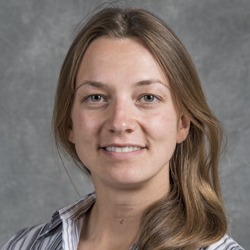
Was Angelina Jolie Right? Optimizing Cancer Prevention Strategies Among BRCA Mutation Carriers
Eike Nohdurft, Elisa Long, Stefan Spinler
Published Online:
Published Online:
Published Online:
Published Online:
Published Online:
Published Online:
Published Online:
Published Online:
Published Online:
Published Online:
Published Online:
Published Online:
Published Online:
Published Online:
Published Online:
JOURNAL SPOTLIGHT
“Mathematics of Operations Research (MOR) publishes excellent foundational articles having significant mathematical contents and relevance to operations research and management science.
To highlight the rich history of MOR within the mathematics community, in 2016, the journal created its own Author Spotlight series, “In Conversation With…”, focusing on thought-leaders who have had a significant impact on the field and the journal.”
In the latest edition, INFORMS interviews 2016 Khachiyan Prize winner Aharon Ben-Tal:
When trying to solve complex, real-world problems in which the data are uncertain, the field of robust optimization plays a significant role in determining the optimal outcome. Conceived and developed extensively by Aharon Ben-Tal, Arkadi Nemirovski, and Laurent El Ghaoui in the 1990s, robust optimization (RO) addresses “optimization problems in which a certain measure of robustness is sought against uncertainty that can be represented as deterministic variability in the value of the parameters of the problem itself and/or its solution.” The applicability of RO to daily life is widespread, yet unrealized by the lay public. From applications in medical imaging to civil and structural engineering, RO helps resolve many intractable, everyday problems.
Ben-Tal has been a visionary leader in optimization in general and in RO in particular. He and Nemirovski authored the seminal paper “Robust convex optimization" which appeared in Mathematics of Operations Research in 1998. This paper laid the foundation of RO and was the first in a long series of publications resulting in the creation of this new area of optimization.
Over the decades, Ben-Tal has authored more than 130 papers (which have to date received more than 19,000 citations), received 14 significant awards, and served on editorial boards for 10 journals (including Mathematics of Operations Research, Management Science, and Operations Research).
INFORMS interviewed Ben-Tal in spring 2017 to see what fuels his intellectual fire these days, ask about his predictions for the future of operations research, and garner some advice for students entering the field.
READ MORE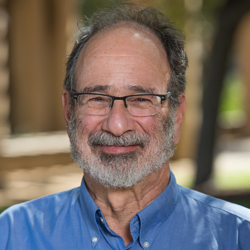
Improving the human condition may not be the first thing most people think of when they ponder game theory and complex algorithms. But Al Roth is not most people. Raised by parents who were schoolteachers in New York, Roth was bored in high school, to the point where he dropped out after his junior year. Undaunted by an unchallenging school system, Roth had enrolled in classes at Columbia University where he ultimately earned his undergraduate degree in operations research in the engineering school. Prodded by one of his professors (Cyrus Derman), he applied to and was accepted at Stanford University, where he went on to earn his doctorate in operations research. That was the first inkling of good things to come…
READ MORE
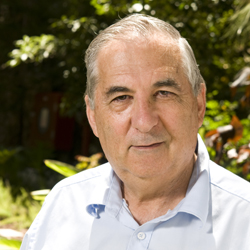
Although he’s won two significant awards and a coveted European Research Council grant since 2014, Jean Lasserre is not resting on his laurels. With the grade of “Directeur de Recherche” at the Laboratory for Analysis and Architecture of Systems at the acclaimed National Center for Scientific Research in Toulouse, France, Lasserre is avidly studying the Generalized Problem of Moments to show how the SOS (Sum of Squares) hierarchy (or some of its variants) can help solve such problems, particularly as applied to nonconvex problems. Lasserre’s name is synonymous with the moment-SOS approach; indeed many people might be more familiar with the common name associated with this numerical scheme—the Lasserre Hierarchy. Lasserre’s research has been seminal to the optimization field, in particular to the specific issue of polynomial optimization.
READ MORE