How Inclusive Are Degree Programs in Operations Research and Analytics in the United States?
Abstract
Academic programs in colleges and universities in the United States have increasingly embraced principles of equity and inclusion to support student success and diversity within professions. Innovations in diversity, equity, and inclusion (DEI) in university programs require baseline data on students, faculty and administrators, curricula, and programmatic support. A review of data shows that underrepresented groups in the U.S. workforce have limited visibility in operations research (OR) and analytics. A review of DEI-related research reveals some relevant insights, including a gap in studies specific to OR and analytics. To provide evidence in support of DEI initiatives in OR/analytics, we describe a survey project to collect baseline data on participants in university programs in OR/analytics, on DEI-related characteristics of curricula, and of DEI-related programmatic supports. Most OR/analytics programs have limited diversity, with proportionately small African American, Hispanic, and female student and faculty presence. However, despite the limited DEI content in curricula, many programs offer support services for underrepresented students. These results provide initial evidence in support of initiatives in university programs in OR/analytics to strengthen the presence of underrepresented groups among students, faculty, and administrators; increase DEI-related content in curricula; and ensure that programmatic supports for DEI result in intended outcomes.
Funding: Research for this paper received support from the INFORMS Diversity Ambassadors Program [Grant 2022–2023]. This work was also supported by the McCormack Graduate School Dean’s Office Student Success Summer Fellowship program [Grant 2022–2023].
Supplemental Material: The online appendix is available at https://doi.org/10.1287/ited.2023.0050.
1. Introduction
Higher education has been undergoing a transformation in recent years aimed at making its curriculum and institutional practices more equitable and inclusive (Russell et al. 2021). To respond to this call to action, many universities have implemented diversity, equity, and inclusion (DEI) requirements into their curricula to better prepare students for their communities and the workforce (Carleton 2021). Although the idea of DEI is not new in higher education, it is increasingly being incorporated into the culture of institutions of higher education (Barnett 2020, Hilton et al. 2021). These efforts can result in improved educational outcomes (Barnett 2020, Lewis et al. 2022). Developing a knowledge of DEI from a broader viewpoint of structural inequities and intersecting identities (such as women, Indigenous groups, people with disabilities, and poor socioeconomic position) may support innovations in curriculum, pedagogy, research, and program administration (Castillo-Montoya et al. 2023, Kroll 2023). Furthermore, the promotion of DEI may also result in more diverse individuals being retained within the field (Dudu 2023). These factors have led to initiatives to promote DEI in academic fields in recent years. The motivation for creating these initiatives includes increasing self-awareness, encouraging dialogue, educating people about bias and oppression, and promoting better understanding (Applebaum 2019, Love et al. 2019, Decker and Simpson 2023).
The goal of this paper is to build evidence regarding the presence and profile of DEI in university programs in operations research (OR) and analytics. We do this in two ways. First, we review administrative data on sociodemographic characteristics of the U.S. labor force, including operations research and related fields, and perform a systematic analysis of the research literature on DEI characteristics of university academic programs based on surveys. Second, we construct and deploy an original survey of university programs in operations research and analytics to collect baseline data on sociodemographic characteristics of students, faculty, and administrators; DEI-related characteristics of curricula; and DEI-related programmatic supports.
As a Science, Technology, Engineering and Mathematics (STEM) field, OR/analytics embodies a social/technical duality in which technical details of models and algorithms are often understood to be distinct from the social, economic, and political contexts in which they are applied (Faulkner 2007; Trevelyan 2010, 2014; Cech 2013; Ozkan and Andrews 2022). Increasingly, students have voiced a growing desire for their technical courses to demonstrate the interaction between DEI and technical considerations (Leydens and Lucena 2017, Ozkan and Andrews 2022). However, there are limited opportunities for them to develop these sociotechnical modes of thinking in academic settings. Although research indicates that a more diverse curriculum is linked to student retention, a significant portion of the work done in STEM education until recently has tried to merely raise the proportion of minorities enrolled in STEM programs without necessarily changing the STEM curriculum, course design, and implicit value systems undergirding them (Thomas 2002, Crosling et al. 2008, Lewis et al. 2022).
STEM education, generally speaking, has often ignored scientific history and the “many ways in which scientific knowledge and systems of racist authority have coconstructed one another historically and in the present” (Vakil and Ayers 2019, p. 452). Hence, students may be left without the means to incorporate their subjectivity and lived experiences into their STEM identities. Being a “STEM person” has, until recently, meant one specific kind of identity (Vakil and Ayers 2019). To combat this rigidity, Vakil and Ayers (2019) recommend that STEM educators encourage synergistic identity development for students, particularly minority students. To contextualize dominant representations of “settler” science and engineering, educators can bring different ways of knowing in STEM to the fore (Haraway 1991, Star 1999, Kimmerer 2013, Medin and Bang 2014, Ozkan and Andrews 2022). Recent work has attempted to articulate the presence of DEI in the OR/analytics literature (Johnson et al. 2019); to establish principles for addressing DEI in OR/analytics research, teaching, and practice (Johnson and Chichirau 2020); and to understand how DEI principles may be infused into introductory courses in decision science (Johnson and Fabusuyi 2023b).
Although one justification for DEI in STEM has been to increase the number of underrepresented students to enhance the nation’s competitiveness, a more fundamental justification is to redress unequal allocations of resources among different populations in the United States. However, doing this requires knowledge about the presence and representation of various groups within various fields. We will show that in contrast to competitor fields, like economics, business, and computer science, not as much is known in OR/analytics about these baseline facts. Thus, there is an opportunity to collect and analyze these data.
This paper describes a project whose goal is to assess the current state of DEI in OR/analytics academic programs across three dimensions: (a) the presence of traditionally underrepresented groups among students, faculty, and administrators; (b) the level of engagement with DEI principles in required academic coursework; and (c) the institutional orientation and commitment to DEI principles. Our research to perform this assessment includes a survey of 317 university programs in OR/analytics in the United States. We pose three research questions, which we will answer based on a review of the literature, analysis of labor workforce and professional society data, and responses to this survey.
What progress has been made to document DEI-related characteristics of OR/analytics university programs as compared with competitor fields through surveys?
How do the sociodemographic characteristics of OR/analytics university programs differ from the OR/analytics profession, competitor fields, the STEM profession, and the U.S. workforce overall?
What appears to be the relationship between the level of underrepresented groups in OR/analytics university programs and the presence of institutional support for and commitment to DEI-related policies and programs?
We acknowledge that diversity, equity, and inclusion as a domain of university administration, instruction, and research is currently under threat because of anti-DEI laws passed in many U.S. states (Fernando 2023, Johnson and Fabusuyi 2023a). As a result, in popular culture and politics, there is intense disagreement about the validity and social importance of DEI as an area of inquiry and practice. In this paper, however, we will rely on the literature cited above and throughout as a justification for our inquiry.
Our study offers a number of key takeaways regarding the state of diversity, equity, and inclusion within OR and analytics programs. First, we find a critical lack of research on DEI characteristics in OR and analytics programs compared with other academic fields. Second, our review of the sociodemographic characteristics of OR/analytics and related fields demonstrates substantial underrepresentation by gender and Black, Indigenous, and people of color groups in certain professions, including OR/analytics. Third, the results of our study show significant gender imbalances and low representation of traditionally underrepresented groups within OR/analytics programs. Last, our survey’s open-ended questions also indicate that although there is reported institutional support for DEI initiatives, these do not appear to be associated with improved diversity among students and curricula, indicating a need for more effective implementation.
Our paper proceeds as follows. Section 2 reviews the literature related to diversity, equity, and inclusion in higher education and establishes a rationale for a survey-based inquiry of OR/analytics university programs in the United States. Section 3 reviews the demographic characteristics of OR/analytics and related fields. Section 4 describes the design of the survey. Section 5 presents preliminary descriptive results from the survey. Section 6 contains responses to our research questions based on literature review and survey results, and it evaluates our efforts to date. Section 7 concludes and identifies areas for further analysis and research extensions.
2. Importance and Prevalence of DEI in University Academic Programs
In the past three decades, improving diversity, equity, and inclusion—evolving to embrace a variety of programs and concerns on college campuses—has been one of the constant missions in higher education (Abrams 2022). As a result, many higher education institutions in the United States, especially those that have historically or primarily served white students (referred to as historically white institutions or predominantly white institutions), see DEI as essential to their institutional missions and established programs and departments devoted to fostering DEI. These departments then incorporate gender equity strategies among others (Milem et al. 2012, Abrams 2022).
To better prepare students for their communities and the workforce, many colleges have included DEI requirements in their curricula (Carleton 2021). Because of a lack of progress in curriculum reform in STEM fields and the STEM curriculum’s social/technical duality, students are ill prepared to tackle genuine technical challenges in their social, economic, and political contexts (Faulkner 2007; Trevelyan 2010, 2014; Cech 2013; Ozkan and Andrews 2022). In recent years, especially after the 2020 murder of George Floyd, the rise in anti-Asian sentiment during the coronavirus disease 2019 pandemic, and the prevalence of the Black Lives Matter movement, students have expressed an increasing need for their technical courses to show how DEI and technical factors interact (Leydens and Lucena 2017, Ozkan and Andrews 2022). However, there are few opportunities for students to cultivate these sociotechnical modes of thought (i.e., values, attitudes, and abilities that combine the social and technical) in academic contexts.
Many students have expressed a desire for STEM faculty members to provide increased emphasis on the culture of instruction and evaluation and their own diversity, equity, and inclusion competency in the curriculum (Ramiah et al. 2022). As Naylor and James (2016) point out, equity cannot be attained by simply admitting students who are unlikely to thrive in the name of social inclusion. A crucial factor in achieving this objective is the existing instructional environment, which has historically shown a tendency to better meet the needs and preferences of certain subsets of the student population over others. This issue is particularly well documented within computer science programs. Nonetheless, there have been intentional efforts to rectify this imbalance. A notable example is the initiative taken by Carnegie Mellon University’s School of Computer Science. Alarmed by the extremely low representation of female students in their undergraduate program, the school made substantial investments to create a more supportive and inclusive environment for women. As a result, the representation of women in incoming undergraduate classes has improved from approximately 7% at the turn of this century to nearly achieving gender parity among freshmen starting from the 2016 cohort (Lin-Arlow 2016, Frieze and Quesenberry 2019).
The success of a larger, more diverse set of students can be supported by inclusive curriculum design. Curricula for STEM fields, particularly OR/analytics, must develop students as persons rather than “just introduce learners to existing techniques, practices, structures, and ways of knowing” (McGowan and Bell 2020, p. 981). In other words, for curriculum design to be considered a tool for inclusion, it is critical to reflect upon current curricula and ask (Ramiah et al. 2022, p. 35) “whose curriculum and for whom?” Addressing this question through curriculum design in STEM fields, particularly OR/analytics, can foster an environment of understanding and acceptance of all backgrounds and identities. Ultimately, this can help to create a safer and more inclusive space for students’ voices to be heard and encourage productive dialogue within their courses (Busch-Vishniac and Jarosz 2004, Litchfield and Javernick-Will 2015, Puritty et al. 2017, Joyce et al. 2018, Pearson and Simmons 2018, Nakamura 2022, Shields 2023).
We have examined the literature from multiple domains to assess progress in documenting DEI-related characteristics in higher education, including OR/analytics, through surveys. Our systematic review has identified 14 articles in the healthcare sector that concentrated on the DEI survey of residency program directors and students. Although residency programs differ somewhat from academic degree programs in OR/analytics, their findings point to the necessity for a greater emphasis on DEI in this field’s educational preparation. We have also identified seven business pieces, three STEM articles, and three additional articles in the social sciences that discussed DEI surveys of program directors, faculty, and students. We know of no similar empirical research documenting DEI characteristics in OR/analytics university programs. We believe that this gap in the literature is worth addressing because of the unique nature of operations research and analytics, which combines quantitative and qualitative knowledge and analytic methods, understanding of human factors and environments, and engineering-based approaches to complex business and social problems that use retrospective and prospective modeling and analysis. Although OR/analytics reflects some elements of medicine, business, STEM, and social sciences, studies of DEI characteristics of university programs in these areas are likely to overlook important characteristics of OR/analytics. This shortcoming provides the rationale for the present study (for details of our systematic review, see Online Appendix I).
3. Demographic Characteristics of U.S. STEM and Disciplinary Fields
The U.S. population according to the U.S. Bureau of Labor Statistics (2023a, d) is about 340 million persons (Table 1). Females are a slight majority of the population at 50.6%. Most of the population (75.3%) is non-Hispanic white followed by 13.7% of the population that is non-Hispanic Black, 6.4% that is non-Hispanic Asian, and 4.6% that is in other groups, including American Indian, Alaska Native, Native Hawaiian, Middle Eastern, and other Pacific Islander. About 19.1% of Americans identify as Hispanic. The U.S. Bureau of Labor Statistics (2023c) estimates that the total U.S. workforce, about 161 million persons, has a racial/ethnic composition similar to that of the U.S. population, although males are a majority (53.1%) of this population.
|

Table 1. Demographic Compositions of the 2023 U.S. Population, U.S. Workforce, STEM Professions, Economists, Computer Scientists, Industrial Engineers, Operations Research Analysts, and 2022 INFORMS Members
| U.S. population | U.S. workforce | STEM professions | Economists | Computer scientists | Industrial engineers, including those in health and safety | Operations research analysts | INFORMS membersa | |
|---|---|---|---|---|---|---|---|---|
| Total | 339,997 | 161,037 | 10.7 | 441 | 1,738b | 298 | 138 | 3.1 |
| By gender (%) | ||||||||
| Male | 49.4 | 53.1 | 52.0 | 56.9 | 78.8 | 75.4 | 45.0 | 73.9 |
| Female | 50.6 | 46.9 | 48.0 | 43.1 | 21.2 | 24.6 | 55.0 | 25.7 |
| By race/ethnicity (%) | ||||||||
| White | 75.3 | 76.5 | 67.0 | 58.8 | 64.2 | 78.4 | 68.0 | 46.5 |
| Black | 13.7 | 12.8 | 9.0 | 9.2 | 4.2 | 6.1 | 16.1 | 2.7 |
| Asian | 6.4 | 6.9 | 13.0 | 29.7 | 18.8 | 12.6 | 13.0 | 36.1 |
| Other | 4.6 | 3.8 | 3.0 | 2.3 | 5.9 | 2.9 | 2.9 | 8.7 |
| Hispanic | 19.1 | 18.8 | 8.0 | 7.5 | 6.9 | 10.3 | 8.7 | 6.0 |
Sources. For the U.S. population, see U.S. Bureau of Labor Statistics (2023a, d). For the U.S. workforce, see U.S. Bureau of Labor Statistics (2023c). For STEM professions, see U.S. Bureau of Labor Statistics (2023b). For economists, see U.S. Bureau of Labor Statistics (2023c). For computer scientists, see U.S. Bureau of Labor Statistics (2022) and the Zippia website (Zippia 2022). For industrial engineers, see U.S. Bureau of Labor Statistics (2023c). For operations research analysts, see U.S. Bureau of Labor Statistics (2023c). For INFORMS membership (survey data), see INFORMS (2022).
Notes. Numbers are in thousands. In some columns, percentages of race and ethnicity do not add up to 100; categories are incomplete and are not mutually exclusive.
aThe total numbers provided for INFORMS members are based on the completed surveys from 2022 and do not reflect the overall count of INFORMS members.
bThe U.S. Bureau of Labor Statistics (2022) reports that 62% of 2,805,020 employees in computer and information technology were computer scientists. We derived the total number of computer science professionals from this percentage. All of the percentages based on gender and race were retrieved from the Zippia website from 2022 website (Zippia 2022).
According to the U.S. Bureau of Labor Statistics (2023b), approximately 10.7 million people work in STEM occupations. Similar to the general workforce, 67% of these employees are non-Hispanic white, although the STEM fields have a higher proportionate representation of Asians (13%) and a lower representation of Black individuals (9%) and other races (3%). Notably, women have a slightly higher representation in STEM professions (48%) as compared with 46.9% in the broader workforce. Simultaneously, about 441,000 persons of the total workforce are employed in economics occupations (U.S. Bureau of Labor Statistics 2023c). Employees in these occupations, although majority male (56.9%), are somewhat less likely to be non-Hispanic white (58.8%) and more likely to be Asian (29.7%). About 1.74 million Americans are working in the field of computer science (U.S. Bureau of Labor Statistics 2023c); we see that males are even more highly represented (78.8%) than in the STEM or economics professions. Asians are less well represented in this field than in the economics profession but more represented than in the STEM professions overall. Hispanics are less represented in the computer science profession than in economics or the STEM professions overall. Additionally, the representation of Black individuals in the computer science field is lower than in economics but higher compared with in other STEM professions. Around 298,000 persons are employed in industrial engineering-related fields (U.S. Bureau of Labor Statistics 2023c), and there is lower representation of Blacks, Asians, and other individuals and somewhat higher representation of Hispanics. About 138,000 Americans are classified as “operations research analysts” (U.S. Bureau of Labor Statistics 2023c). This field shows more diversity across multiple measures than other STEM fields examined here; over half of OR analysts are women, the greatest proportion in any STEM field listed. Also, non-Hispanic Blacks have a larger presence (16.1%) than in any other STEM field listed.
As the premier professional society for operations research and analytics, we provide details on the Institute for Operations Research and the Management Sciences (INFORMS). INFORMS plays a leading role in defining the field and setting the research agenda for OR/analytics; therefore, it is appropriate to identify any discrepancies between the makeup of INFORMS and the job classification “operations research analysts.” The composition of INFORMS is based on a recent member and diversity climate survey (INFORMS 2022). Results indicate that women only make up 25.7% of the society’s membership. White members make up the majority of INFORMS members (46.5%) followed by Asian members (36.1%), members who self-identify as other (8.7%), Hispanic members (6.0%), and Black members (2.7%). INFORMS appears to most closely resemble computer scientists and industrial engineers in terms of gender and race/ethnic composition.
Data available to us indicate that women, Blacks, and Hispanics are underrepresented in INFORMS compared with the general U.S. population. This underrepresentation is also more noticeable in INFORMS than in related fields, including professions in STEM areas such as economics and operations research analysts, and more similar in this respect to industrial engineering and computer science. The evidence presented here underscores the need for policies that will improve the participation by women and people of color in OR/analytics who are traditionally underrepresented in the STEM fields. This finding and the outcomes of our keyword search of articles in different fields demonstrate that survey-based research on academic programs in OR/analytics may help establish baseline data on the sociodemographic makeup of stakeholder groups, the presence of DEI-related content in the curriculum, and institutional support for DEI. It may also help explain the contrast between the sociodemographic composition of INFORMS as compared with the operations research profession.
4. Study Design
Our survey seeks to provide insight into the DEI-related characteristics of STEM-designated university programs in operations research and analytics. The DEI-related characteristics that our survey focuses on are race, ethnicity, and gender. The unit of analysis for this study is the academic program (e.g., MS in data science or PhD in operations research) rather than the department (e.g., Department of Industrial Engineering and Management Science).
We have chosen the unit of analysis to be the academic program for three reasons. First, as Posselt (2016) argued, departments often offer multiple programs covering a wide variety of disciplines. As these programs are distinct, we may not learn as much as we would like to about them by grouping them with others in a department-level analysis. Second, recording faculty and student data at the program level may provide a more detailed picture of faculty teaching missions and student educational experiences as these are contingent upon their degree level—bachelor’s, master’s, or doctorate—as well as the program’s subject—such as analytics, operations research, or data science. Third, different programs within a department may have distinct curriculum requirements, educational goals, disciplinary emphases, and STEM designations.
However, program-level analysis is challenging. Program staff may know a lot about the sociodemographic characteristics of students but not as much about the sociodemographic characteristics of faculty or the DEI-related characteristics of the curriculum. In turn, program faculty may know a lot about their program’s curriculum and the sociodemographic characteristics of their program colleagues but not so much about the sociodemographic characteristics of the students who they teach. Although knowledge about instructors, students, and curricula is commonly documented through accreditation reviews, this information is not widely available publicly. As discussed in Online Appendix II, we performed a review of a sample of 75 operations research and analytics programs of the 317 that formed the population for our survey and found very limited sociodemographic data at the program level for department and university websites. These facts provide support for a survey-based analysis of university programs in OR/analytics.
STEM-designated programs are those that provide academic degrees in science, technology, engineering, and math (Granovskiy 2018). We have decided to focus on STEM-designated programs in operations research and analytics because doing so will produce a more homogeneous sample of academic programs with similar goals and administrative and academic characteristics. This will enable us to compare outcomes and examine trends, patterns, and best practices among various institutions.
Our decision to focus in our survey on race, ethnicity, and gender for DEI-related characteristics arises from the fact that discrimination on the basis of race and gender has long been a deeply rooted problem in the United States that persistently shapes individual’s experiences and opportunities (Connor and Storper 2020, Lang and Spitzer 2020).1 Disparities in race and gender have long hindered social progress, sustained inequity, and afflicted marginalized populations (Smith and Sinkford 2022). Although there have been notable changes in the demographic makeup of the U.S. educational attainment population throughout the past 20 years, disparities based on gender, race, and ethnicity persist in U.S. higher education, despite efforts to broaden access to higher education for students from all backgrounds (Black et al. 2020). (A detailed explanation of our rationales for our focus on race, ethnicity, and gender as primary DEI characteristics, choosing STEM-designated academic programs in operations research and analytics, and performing a survey rather than relying on publicly available data on operations research and analytics programs is contained in Online Appendix II.)
Thus, we have designed a survey to collect program data in four areas: demographic characteristics of students, demographic and career characteristics of faculty, presence of DEI-related content in courses, and institutional data related to DEI programming and outreach resources for underrepresented students. The result was a survey containing 53 questions: 5 questions of data about the program administrator and academic program that are the focus of the survey, 17 questions about the faculty who teach in the program, 10 questions about students in the program, and up to 21 questions about curriculum and student supports (depending on how many courses that respondents identify that have DEI-related content).
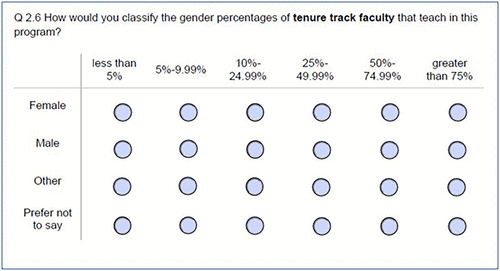
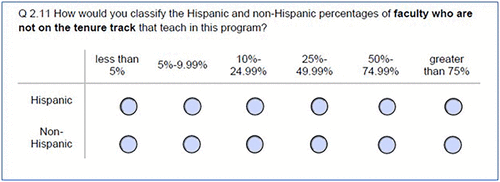
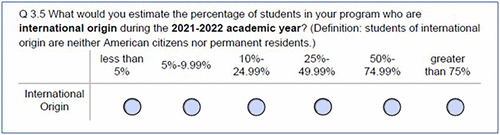
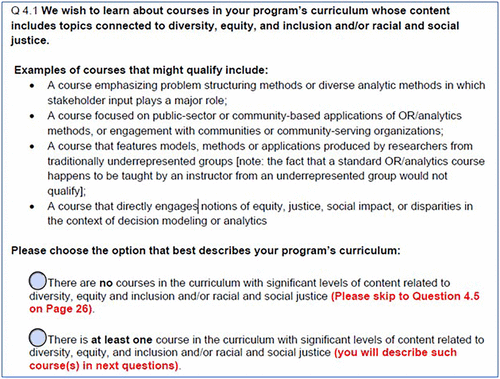
For ease of completion of the survey, we chose not to ask for specific percentages or counts related to students or faculty but instead, for percentage ranges for faculty and student representation in various categories. We distinguished in our questions between all faculty, untenured tenure-track faculty, nontenure-track faculty, and tenured faculty, believing that there might be meaningful variation in the demographic composition of faculty according to rank and employment classification. We allowed respondents to define whether courses in their program had DEI content. The wording for the relevant question reads as follows.
We wish to learn about courses in your program’s curriculum whose content includes topics connected to diversity, equity, and inclusion and/or racial and social justice.
Examples of courses that might qualify include
a course emphasizing problem structuring methods or diverse analytic methods in which stakeholder input plays a major role;
a course focused on public sector or community-based applications of OR/analytics methods or engagement with communities or community-serving organizations;
a course that features models, methods, or applications produced by researchers from traditionally underrepresented groups (note that a standard OR/analytics course that happens to be taught by an instructor from an underrepresented group would not qualify); and
a course that directly engages notions of equity, justice, social impact, or disparities in the context of decision modeling or analytics.
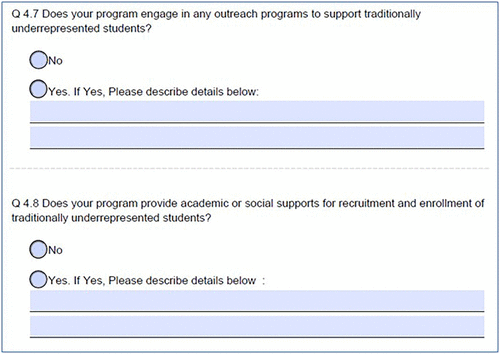
See Figure 1 for a survey excerpt related to tenure-track faculty, Figure 2 for a survey excerpt related to nontenure-track faculty, Figure 3 for an excerpt related to international students, Figure 4 for an excerpt related to DEI-associated student outreach and supports, and Figure 5 for a survey excerpt related to DEI-associated curricular content.
We received approval for this survey from the Institutional Review Board of the University of Massachusetts Boston. We piloted the survey at one university in Massachusetts and another university in Connecticut. The complete survey is available in Online Appendix III.
The population for our survey comes from STEM-designated academic programs in operations research, management science, operations management, supply chain management, data analytics, data science, and related fields but not solely industrial engineering. Our population was initially drawn from three sources (Figure 6): 126 programs from the INFORMS academic program database2 (40% of the total), 25 programs from the North Carolina State University (NCSU) analytics database (Bowers et al. 2018) (8% of the total), and 71 programs from investigator knowledge of the OR/analytics discipline (22% of the total). In addition, we manually identified 95 qualifying OR/analytics university programs in Massachusetts, New York, Florida, Texas, and California as the fourth source per the above (30% of the total). In total, we identified 317 OR/analytics bachelor’s, master’s, and doctoral programs in the United States.
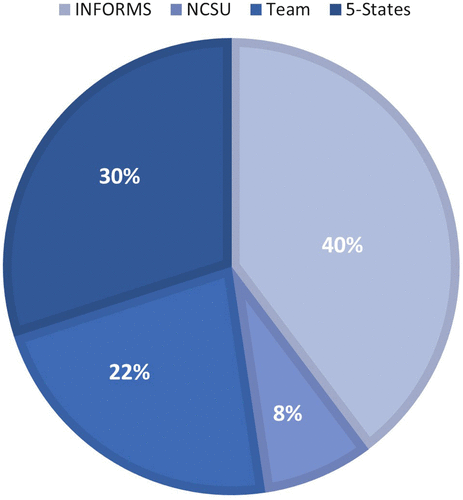
Note. NCSU, North Carolina State University database (Bowers et al. 2018).
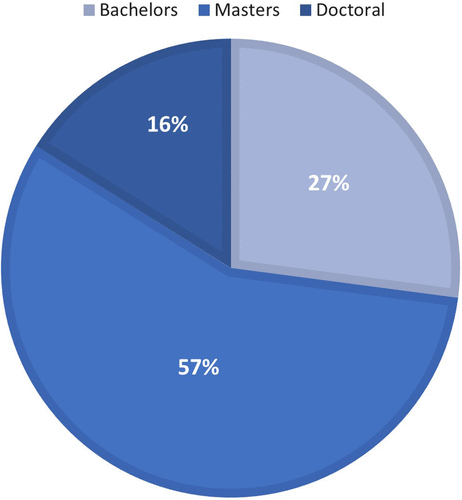
Of the 317 OR/analytics programs identified, the majority of programs provide master’s degrees (57%), with bachelor’s degrees (27%) and doctoral degrees (16%) comprising the remaining programs (Figure 7).
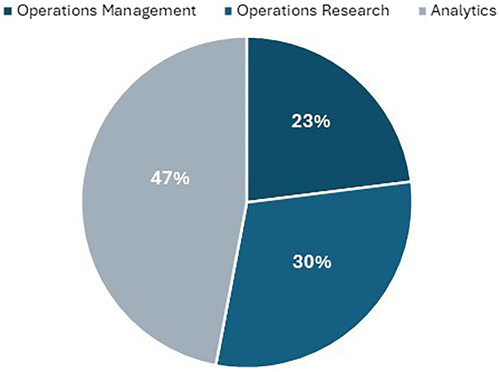
Of the 317 OR/analytics programs identified, the plurality of programs train scholars in analytics (47%) followed by operations research (30%) (Figure 8).
5. Preliminary Findings
The survey was initially administered on August 1, 2022, to a total of 222 deans, department chairs, and program directors of operations research, management science, industrial and operations engineering, and analytics-related programs in the United States. The survey was distributed in multiple ways. Some who received an invitation to complete the survey received a link to a preliminary survey that allowed them to provide an email contact, the source of reference to the survey, and the choice to complete an online version of the survey through Qualtrics or to complete an editable PDF version of the survey and send the completed file back to the researchers. Others, typically when doing follow-ups to potential respondents identified directly by the researchers, were told by email that they could receive a link to an online version of the survey or receive an editable PDF version of the survey. We expanded the initial population of 222 recipients by manually identifying 95 qualifying OR/analytics university programs in Massachusetts, New York, Florida, Texas, and California.
Recipients were initially given a month to complete the survey, but reminder notices were sent out every three weeks. We sought to have a geographically representative list of respondents by targeting specific programs. To increase the number of respondents, we publicized our survey through INFORMS communities, such as the Association of Chairs of Operations Research Departments, as well as through direct requests at INFORMS conferences. The survey was closed on July 31, 2023.
We received 31 survey responses. Twenty-seven of these surveys were completed, and four were incomplete. Summary statistics of the responses are reported in these categories: respondents’ demographics, faculty and student body composition, presence of DEI-related curricular content, and DEI-enrichment activities.
5.1. Program and Respondents’ Summary Statistics
The distribution of OR/analytics programs across various colleges/schools shows a significant concentration in the college of engineering, with the highest number of programs at 17, followed by school of business with 7 programs. Meanwhile, the school of computer and mathematics contributes three programs, and both the school of management and the school of arts and sciences provide two programs each. Of the 31 surveys collected, 13 or 42% of all responses have an analytics/data science focus, whereas the balance of the programs surveyed is split almost equally between those with an industrial and operations engineering label and those with an operations research/management science designation. Fifteen or 48% of the responses analyzed by degree are master’s programs, whereas only one offers a professional certification. The balance of the programs is made up of 11 PhD programs and four undergraduate degree programs. Table 2 provides more information on the programs and the demographics of the respondents.
|
Table 2. Program and Respondent Summary Statistics
| Panel A: College/school (n = 31) | Count | Percentage |
|---|---|---|
| College of Engineering | 17 | 55 |
| School of Business | 7 | 23 |
| School of Management | 2 | 6 |
| School of Art and Sciences | 2 | 6 |
| School of Computer & Math | 3 | 10 |
| Panel B: Program- and respondent-related variables | |||||
|---|---|---|---|---|---|
| Program-related variables | Count | Percentage | Respondent-related variables | Count | Percentage |
| Program name (n = 31) | Job title (n = 31) | ||||
| Analytics/Data Science | 13 | 42 | Program Director | 13 | 42 |
| IE/IOE/ISE | 9 | 29 | Program Administrator | 2 | 6 |
| OR/MS | 8 | 26 | Other | 16 | 52 |
| Other | 1 | 3 | Gender (n = 31) | ||
| Program type (n = 31) | Male | 15 | 48 | ||
| BS | 4 | 13 | Female | 16 | 52 |
| MS | 15 | 48 | Race (n = 30) | ||
| PhD | 11 | 35 | Asian | 7 | 23 |
| Professional | 1 | 3 | White | 19 | 64 |
| Region (n = 31) | Others | 4 | 13 | ||
| Northeast | 13 | 42 | Ethnicity (n = 31) | ||
| Midwest | 5 | 16 | Hispanic | 5 | 16 |
| South | 10 | 32 | Not Hispanic | 26 | 84 |
| West | 3 | 10 | |||
Note. IE, industrial engineering; IOE, industrial and operations engineering; ISE, industrial and systems engineering; MS, management science.
The geographical area is defined based on U.S. Census regions. Each of these regions is well represented in the survey, with the West, which includes all of the Mountain and Pacific states, having the least representation. The gender of the respondents is nearly equally split; white respondents account for 64% of all respondents. About one of every five respondents self-reports as Hispanic.
5.2. Student and Faculty Composition
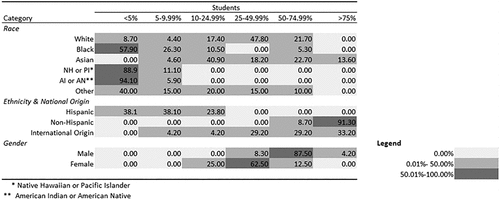
The population of students across the programs surveyed ranges from a low of 5 to 584. These figures exist only for the 27 surveys completed. The average enrollment figure is 150, with a standard deviation of 167. Breakdown by race shows appreciable variation. About 58% of respondents reported having less than 5% of the student body made up of Black students. Ninety-four percent of programs have less than 5% American Indians/Pacific Islanders. Nearly 48% of the 23 responses analyzed report that white students make up between 25% and 49.99% of the student body in their program. Forty-one percent of respondents report that the percentage of Asian students in their program is between 10% and 24.99%. Over 91% of respondents estimated that non-Hispanic students comprised more than 75% of all students enrolled. Over 87% of respondents report that the percentage of male students in their program is between 50% and 75%. A visualization of the distribution of student demographic characteristics as estimated by survey respondents is shown in Figure 9.
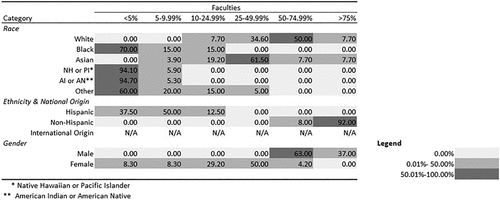
Across the programs surveyed, the number of faculty members associated with each program ranges from 5 to 65. The mean faculty size is 22.7, with a standard deviation of 16.8. Most respondents estimate that Black, Native Hawaiian/Pacific Islander, and American Indian/American Native faculty members are less than 5% of the total, whereas non-Hispanic faculty members are more than 75% of the total. With regard to gender composition, the majority of the faculty members are men in all of the programs surveyed. Men comprise more than 75% of all faculty members in 10 of the 27 responses collected. In half of the programs surveyed and where responses were collected, women account for between 25% and 49% of the faculty strength. A visualization of the distribution of faculty demographic characteristics as estimated by survey respondents is shown in Figure 10.
Note. N/A, not applicable.
5.3. DEI Enrichment Activities
The survey also asked questions about the DEI content of program curricula. Instructions were provided on courses that will qualify, and for those that do, questions were asked about the class format, the modality by which instruction is delivered, course type (for example, lecture, practicum, capstone, experiential learning, etc.), and if the course is required or an elective.
Only 11 of the 25 programs that responded offered courses with DEI content. According to Table 3, for respondents at public and private universities, the median and mode were both equal to zero, and the average of courses in the curricula with DEI content was 2.75 for public schools and 0.40 for private schools or 2.46 over all schools. We received survey responses indicating that at a university offering undergraduate, master’s, and PhD programs, students in each of these programs can enroll in 16 DEI-related courses. The 16 DEI courses referenced are an outlier; no other program offers more than three DEI-related courses. Programs whose curricula included courses with DEI content exhibited variety in course type (required and elective) and modality (in person, online, and hybrid).
|
Table 3. Summary Statistics of DEI Courses in Curricula
| Type of university | Average | Median | Mode | Minimum | Maximum |
|---|---|---|---|---|---|
| Public | 2.75 | 0.00 | 0.00 | 0.00 | 16.00 |
| Private | 0.40 | 0.00 | 0.00 | 0.00 | 1.00 |
Our survey inquired about a range of enrichment and/or supporting activities beyond DEI-related courses. Such activities mentioned indicate some level of DEI that is supported by these programs, although we were unable to ascertain the quality or fidelity with which these activities were carried out. Less than 50% of the programs have a DEI strategic plan.
Questions featured on these enrichment activities include outreach programs to support traditionally underrepresented students; 19 of the 24 (79%) respondents reported having enrichment activities, such as outreach programs, to support traditionally underrepresented students. Eighteen of 24 (75%) respondents provide support for recruitment and enrollment of traditionally underrepresented students, and 17 of 23 respondents have programs that provide support for retention and graduation for traditionally underrepresented students. Furthermore, 14 of 22 programs or 64% responded that their programs pursue engagement activities with organizations serving traditionally underrepresented students, and 13 of 20 or 65% of responding programs indicate the presence of affinity groups that support traditionally underrepresented students.
Several themes arose from our open-ended questions regarding supporting traditionally underrepresented students or offering academic or social support for recruiting and enrolling traditionally underrepresented students. We discuss these themes briefly here and in more detail in Online Appendix IV. The first theme is the existence of a racial equity-minded action plan and student chapters of professional societies. Some schools have made substantial efforts to promote diversity in all areas and an inclusive and equitable environment that allows all community members to flourish and reach their full potential. “Action plan” and “student chapter” are among the themes that are employed. The second theme is the availability of fellowships, monetary support, and grants to support traditionally underrepresented students. The third theme is alternative means to support master’s students with financial need. The fourth theme is the availability of a diversity, equity, and inclusion office to support the DEI mission in their academic programs. The last theme related to a program’s intent to create new courses with a DEI focus.
6. Discussion
We return to the research questions that have motivated this paper. Our review of the literature in Section 2 has revealed that although there is a well-developed literature on diversity, equity, and inclusion characteristics and policy initiatives associated with some university academic programs, especially in medicine and health professions and business, there is not to our knowledge any similar work in operations research, analytics, and related fields. Therefore, we find that little progress has been made to document DEI-related characteristics of OR/analytics university programs. We conclude that there appears to be an opportunity to do so using a survey, a strategy common in other fields and disciplines.
Our review of sociodemographic data in Section 3 has shown that the U.S. STEM workforce is demographically unbalanced as compared with the U.S. population overall and that gender imbalances and high levels of underrepresentation of Black, Hispanic, and “other” race/ethnicity categories are even more extreme for the computer scientist and industrial engineer job categories. Although the job category of operations research analyst as documented through U.S. Government data is in contrast quite gender balanced, with ethnic/racial composition more closely resembling the STEM professions overall, this is not the case for the membership of INFORMS, which has gender imbalances and low levels of traditionally underrepresented groups similar to those of the job categories of economist and industrial engineer. Our attempts to describe the demographic characteristics of operations research and analytics STEM degree programs through publicly available data faced substantial barriers to access, making it difficult to conclude, without a survey, whether the data on INFORMS membership indicated that INFORMS is representative of university programs in OR/analytics or if the data on the job category of operations research analysts are representative of university programs in OR/analytics.
Preliminary results of our survey of university academic programs in OR/analytics indicate that these programs have gender imbalances and low levels of traditionally underrepresented groups. These programs are demographically more similar to INFORMS and the economics, computer science analysts and industrial engineer job categories than to the operations research analyst job category. This is an indication that there is much work to be done to redress gender imbalances and race/ethnicity underrepresentation in OR/analytics university programs. Interestingly, our preliminary data seem to indicate that OR/analytics faculty show somewhat less gender imbalance than the students who they teach, although Black, Hispanic, Native Hawaiian/Pacific Islander, and American Indian/Native American representation appears quite low in both populations. There was a low presence of courses with DEI content in OR/analytics university curricula across public and private schools.
Finally, our preliminary survey results indicate that there appears to be widespread institutional support among our respondents for and stated commitment by university programs in OR/analytics to DEI-related policies and programs. Such policies and programs include outreach to underrepresented communities, associations with affinity groups, and programs to support retention and graduation of students from underrepresented groups. However, these administrative supports and resources stand in contrast to the high gender imbalance and low levels of traditionally underrepresented groups in these programs and the generally low numbers of courses in OR/analytics program curricula with meaningful DEI content.
It will be interesting to learn about the reasons for this apparent discrepancy between administrative resources and support and the evidence of diverse students and curricula. Perhaps many of these administrative supports are a recent result of organizational changes to support racial and social justice in the wake of the 2020 murder of George Floyd, and more time will be needed for the results of these initiatives to be visible in program enrollments and graduation rates.
Our experience with designing and implementing the survey has shown us that there is an opportunity to develop a more comprehensive database of university academic programs in operations research, analytics, and related fields; our survey population was drawn not only from the INFORMS academic programs database but also, from the North Carolina State University database of master’s programs in analytics and the authors’ own knowledge of and exploration of OR/analytics programs. Subsequent research could benefit from a comprehensive database of OR/analytics programs in higher education.
We also observed a response rate for our survey that was lower than we desired. We suspect that the goal of the survey (to establish baseline data on faculty and student demographics, DEI content in curricula, and DEI-related resources and supports in OR/analytics university programs) was more ambitious than we understood initially, especially in light of evidence that we have identified that no similar research had been done in these programs previously. Although these sorts of data are commonly requested and reported in accreditation-type studies, it is asking quite a lot for university administrators and administrative staff as well as faculty to have at the ready a wide range of data on their programs that are typically well known, in part, primarily to faculty or in part, primarily to administrators. As a result, we cannot claim at this time that our survey results are representative of the population of operations research and analytics degree programs in the United States.
A larger goal of our research program is to identify connections between DEI characteristics of university programs in OR/analytics and educational outcomes. Although our paper is not designed to meet this goal, recent research by Nock et al. (2025) and Vogiatzis and Kontou (2025) provides preliminary evidence in support of a connection between DEI characteristics of curriculum and student performance.
7. Conclusion and Next Steps
The goal of this paper was to learn about the presence and profile of diversity, equity, and inclusion in university programs in operations research and analytics with respect to the demographic composition of faculty and students, the level of DEI-related content in curricula, and the presence of institutional supports for DEI initiatives. We achieved this goal through multiple means. We first performed a systematic review of survey-based research on DEI characteristics of university academic programs, which established a gap in such studies for OR/analytics university programs. Next, we performed a review of sociodemographic data on the U.S. population, labor force, STEM professions, and multiple job categories. This review provides meaningful contrasts to OR/analytics, including the OR analyst job category itself and the INFORMS society, establishing evidence of gender imbalance and the low presence of traditionally underrepresented racial/ethnic groups. Then, having established a lack of publicly available data on university programs in OR/analytics in the United States, we developed and deployed a survey on sociodemographic characteristics of faculty and students, the presence of DEI content in curricula, and the presence of DEI-related programmatic supports to 317 university programs in OR/analytics. We received 31 responses for a response rate of 10%. We acknowledge the possibility of response bias in our survey; administrators of more diverse programs, those with more DEI content, or those with a stronger interest in DEI issues may have been more likely to respond to the survey. However, the presence of response bias does not mean that survey respondents are unreliable or that valuable insights could not be obtained from respondents.
Although no claim can be made of the representativeness of our survey responses, we observe that gender imbalances and low levels of traditionally underrepresented groups among faculty and students are similar in kind to those observed in the INFORMS member survey; publicly available data on STEM professions generally; and the economist, computer scientist, and industrial engineer job categories. (As noted by Johnson and Chichirau (2020) and in this paper, government data on the job category of operations research analyst as distinct from data on professional societies, such as INFORMS, indicate a lower level of racial/ethnic underrepresentation and greater gender balance.)
In spite of our low response rate, we observe a wide diversity of program characteristics among our responses: degree type (undergraduate, master’s, and doctorate), program subject (operations research, operations management, analytics, and others), geography, enrollment levels, and number of courses with DEI content. We also observed promising themes in responses to open-ended questions related to supporting traditionally underrepresented students or offering academic or social support for recruiting and enrolling traditionally underrepresented students. Future work with this data set will include crosstabulations according to dimensions of program type, program subject, geography, and size; detailed descriptions of courses with DEI content indicated by survey respondents; and detailed descriptions of DEI initiatives and plans. There is also an opportunity to perform interviews with faculty and staff from institutions that responded to our survey to learn more about their programs’ DEI journey and goals so as to identify a range of policy recommendations that will reflect and respond to the needs of different university programs in OR/analytics.
There is also an opportunity to develop sequel surveys of university programs in OR/analytics that will be narrower in scope so as to generate a higher response rate and thus, stronger evidence of statistical representativeness of the larger population of OR/analytics university programs.
We thank the universities that helped pilot the survey and the doctoral students in the Public Policy PhD Program at the University of Massachusetts Boston who helped design and distribute the survey and analyze survey results.
1 We acknowledge here that historically, our language has focused on “race” and “gender” as primary identity characteristics that have been the basis for discrimination. However, ethnicity and national origin, such as Latino/Hispanic, are also important identifiers and indeed, intersect with race.
2 See https://www.informs.org/Resource-Center/INFORMS-Academic-Program-Database.
References
- (2022) Commitment to diversity, equity, and inclusion in higher education: Exploring DEI elements across institutions. Doctoral dissertation, University of South Alabama, Mobile.Google Scholar
- (2019) Remediating campus climate: Implicit bias training is not enough. Stud. Philos. Ed. 38(2):129–141.Crossref, Google Scholar
- (2020) Leading with meaning: Why diversity, equity, and inclusion matters in U.S. higher education. Perspect. Ed. 38(2):20–35.Crossref, Google Scholar
- (2020) Apply yourself: Racial and ethnic differences in college application. Ed. Finance Policy 15(2):209–240.Crossref, Google Scholar
- (2018) The evolution of analytics and implications for industry and academic programs. Interfaces 48(6):487–499.Link, Google Scholar
- (2004) Can diversity in the undergraduate engineering population be enhanced through curricular change? J. Women Minorities Sci. Engrg. 10(3):255–281.Crossref, Google Scholar
- (2021) The importance of diversity in higher education. Accessed December 2, 2024, https://www.northeastern.edu/graduate/blog/importance-diversity-higher-education/.Google Scholar
- (2023)
Reimagining faculty development: Activating faculty learning for diversity, equity, and inclusion . Perna LW, ed. Higher Education: Handbook of Theory and Research, vol. 38 (Springer International Publishing, Cham, Switzerland), 415–481.Crossref, Google Scholar - (2013) Culture of disengagement in engineering education? Sci. Tech. Human Values 39(1):42–72.Crossref, Google Scholar
- (2020) The changing geography of social mobility in the United States. Proc. Natl. Acad. Sci. USA 117(48):30309–30317.Crossref, Google Scholar
- (2008) Improving Student Retention in Higher Education: The Role of Teaching and Learning (Routledge, London).Crossref, Google Scholar
- (2023) Implementing Project READY at an academic library: Survey analysis of a DEI training experience. J. Academic Librarianship 49(2):102634.Crossref, Google Scholar
- (2023) Impact of targeted diversity, equity, and inclusion (DEI) initiatives on the retention and graduation rates of students of color at community colleges. Doctoral dissertation, Hamline University, Saint Paul, MN.Google Scholar
- (2007) “Nuts and bolts and people”: Gender-troubled engineering identities. Soc. Stud. Sci. 37(3):331–356.Crossref, Google Scholar
- (2023) Will “critical race theory” attacks undermine urban planning education? Shelterforce (August 22), https://shelterforce.org/2023/08/16/will-critical-race-theory-attacks-undermine-urban-planning-education/.Google Scholar
- (2019) How computer science at CMU is attracting and retaining women. Comm. ACM 62(2):23–26.Crossref, Google Scholar
- (2018) Science, technology, engineering, and mathematics (STEM) education: An overview. CRS Report No. R45223, Version 4, Updated, Congressional Research Service, Washington, DC.Google Scholar
- (1991) Simians, Cyborgs and Women: The Reinvention of Women (Free Association Press, London).Google Scholar
- (2021) Initiatives to address diversity, equity, and inclusion within a higher education ABA department. Behav. Soc. Issues 30(1):58–81.Crossref, Google Scholar
INFORMS (2022) 2022 INFORMS members and diversity climate survey: Summary of findings to date.Google Scholar- (2020)
Diversity, equity and inclusion in operations research and analytics: A research agenda for scholarship, practice and service . Druehl C, Elmaghraby W, eds. Tutorials in Operations Research 2020: Pushing the Boundaries: Frontiers in Impactful OR/OM Research (INFORMS, Catonsville, MD), 1–38.Link, Google Scholar - (2023a) Op-ed: New laws are putting the well-being of university faculty, staff, and students, and our institutions, at risk: Here’s what we can do. ORMS Today (September 13), https://pubsonline.informs.org/do/10.1287/orms.2023.03.12/full/.Google Scholar
- (2023b) Spencer Foundation, “University education in analytics and decision science: Diversity, inclusion, social and racial justice and community engagement,” February 1, 2024–December 31, 2026. Requested at $388,422. Unfunded.Google Scholar
- Johnson MP, Khojandi A, Keskinocak P, eds. (2019) INFORMS editor’s cut: Diversity & inclusion: Analytics for social impact. Accessed December 2, 2024, https://pubsonline.informs.org/editorscut/diversity.Google Scholar
- (2018) Engaging STEM ethics education. Engaging Sci. Tech. Soc. 4:1–7.Crossref, Google Scholar
- (2013) Braiding Sweetgrass: Indigenous Wisdom, Scientific Knowledge and the Teachings of Plants (Milkweed Editions, Minneapolis).Google Scholar
- (2023)
Improved learning outcomes through a theme of leadership for social justice & equity in core courses at a higher education institution . Schultz NP, ed. Revising the Curriculum and Co-Curriculum to Engage Diversity, Equity, and Inclusion (Routledge, New York), 111–121.Crossref, Google Scholar - (2020) Race discrimination: An economic perspective. J. Econom. Perspect. 34(2):68–89.Crossref, Google Scholar
- (2022) Embedding diversity, equity, and inclusion into a kinesiology curriculum: A detailed report of a curriculum redesign. Soc. Sci. 11(7):271.Crossref, Google Scholar
- (2017) Engineering Justice: Transforming Engineering Education and Practice (John Wiley & Sons, New York).Crossref, Google Scholar
- (2016) How Carnegie Mellon increased the proportion of women in computer science from 7% to 42%. Medium (July 6), https://medium.com/inspire-creation/how-carnegie-mellon-increased-the-proportion-of-women-in-computer-science-from-7-to-42-2c26e2306a35.Google Scholar
- (2015) “I am an engineer AND”: A mixed methods study of socially engaged engineers. J. Engrg. Ed. 104(4):393–416.Crossref, Google Scholar
- (2019) Engaging diversity training without engaging resistance: Provocative approaches with majority-culture counselors-in-training. Internat. J. Organ. Diversity 19(1):19–28.Crossref, Google Scholar
- (2020) Engineering education as the development of critical sociotechnical literacy. Sci. Ed. 29(4):981–1005.Crossref, Google Scholar
- (2014) Who’s Asking? Native Science, Western Science, and Science Education (MIT Press, Cambridge, MA).Crossref, Google Scholar
- (2012) Making Diversity Work on Campus: A Research-Based Perspective (American Association of Colleges and Universities, Washington, DC).Google Scholar
- (2022) Fostering diversity and inclusion and understanding implicit bias in undergraduate chemical engineering. J. Chemical Ed. 99(1):331–337.Crossref, Google Scholar
- (2016)
Systemic equity challenges: An overview of the role of Australian universities in student equity and social inclusion . Shah M, Bennett A, Southgate E, eds. Widening Higher Education Participation (Chandos Publishing, Waltham, MA), 1–13.Crossref, Google Scholar - (2025) Investigating how social justice framing for assessments impacts technical learning. INFORMS Trans. Ed. 25(2):136–151.Link, Google Scholar
- (2022) Perspectives of seven minoritized students in a first-year course redesign toward sociotechnical engineering education. 2022 ASEE Annual Conf. Exposition (Minneapolis). Google Scholar
- (2018) Diversity and inclusion in civil and environmental engineering. J. Professional Issues Engrg. Ed. Practice 144(4):02018001.Crossref, Google Scholar
- (2016) Inside Graduate Admissions: Merit, Diversity, and Faculty Gatekeeping (Harvard University Press, Cambridge, MA).Crossref, Google Scholar
- (2017) Without inclusion, diversity initiatives may not be enough. Science 357(6356):1101–1102.Crossref, Google Scholar
- (2022) Tertiary STEM for all: Enabling student success through teaching for equity, diversity, and inclusion in STEM. Internat. J. Innovation Sci. Math. Ed. 30(3):32–45.Google Scholar
- (2021) Demonstrating equitable and inclusive crisis leadership in higher education. Kinesiology Rev. 10(4):383–389.Crossref, Google Scholar
- (2023) Justice, equity, diversity, and inclusion curriculum within an introductory bioengineering course. Biomedical Engrg. Ed. 3(1):39–49.Crossref, Google Scholar
- (2022) Gender equality in the 21st century: Overcoming barriers to women’s leadership in global health. J. Dental Ed. 86(9):1144–1173.Crossref, Google Scholar
- (1999) The ethnography of infrastructure. Amer. Behavioral Scientist 43(3):377–391.Crossref, Google Scholar
- (2002) Student retention in higher education: The role of institutional habitus. J. Ed. Policy 17(4):423–442.Crossref, Google Scholar
- (2010) Reconstructing engineering from practice. Engrg. Stud. 2(3):175–195.Crossref, Google Scholar
- (2014) The Making of an Expert Engineer (CRC Press, London).Crossref, Google Scholar
U.S. Bureau of Labor Statistics (2022) Field of degree: Computer and information technology. Accessed April 12, 2025, https://www.bls.gov/ooh/field-of-degree/computer-and-information/computer-and-information-technology-field-of-degree.htm.Google ScholarU.S. Bureau of Labor Statistics (2023a) Age and sex composition in the United States: 2023. Accessed November 30, 2024, https://www.census.gov/data/tables/2023/demo/age-and-sex/2023-age-sex-composition.html.Google ScholarU.S. Bureau of Labor Statistics (2023b) Employment in STEM occupations. Accessed November 30, 2024, https://www.bls.gov/emp/tables/stem-employment.htm.Google ScholarU.S. Bureau of Labor Statistics (2023c) Labor force statistics from the current population survey. Accessed November 30, 2024, https://www.bls.gov/cps/cpsaat11b.htm.Google ScholarU.S. Bureau of Labor Statistics (2023d) National population by characteristics: 2020–2023. Accessed November 30, 2024, https://www.census.gov/data/datasets/time-series/demo/popest/2020s-national-detail.html.Google Scholar- (2019) The racial politics of STEM education in the U.S.A.: Interrogations and explorations. Race Ethnicity Ed. 22(4):449–458.Crossref, Google Scholar
- (2025) Case—Racial bias in automated traffic law enforcement and the price of unjustness. INFORMS Trans. Ed. 25(2):128–135.Link, Google Scholar
Zippia (2022) Computer scientist demographics and statistics in the US. Accessed April 12, 2025, https://www.zippia.com/computer-scientist-jobs/demographics/.Google Scholar