Enabling Conversations About Privilege and Discrimination in Engineering Classrooms Through an Inequitable Decision-Making Activity
Abstract
Having conversations in the classroom about privilege, discrimination, prejudice, and how these issues impact decision making can be difficult. This article presents an activity designed to simulate voter and voice suppression in the classroom. The activity, titled “The Energy Table Who Didn’t Get a Seat,” started by asking students to use concepts from class to decide where to invest money to mitigate the effects of a winter storm on vulnerable communities. Then, the instructor simulated voice suppression, discrimination, macroaggressions, and prejudice in class by excluding certain groups from being able to submit their proposals for consideration. Throughout the class, students were given opportunities to advocate for themselves, yet they rarely did. At the beginning of the activity, students voted for which of their classmates’ proposals they believed was the best. However, by the end of the voter and voice suppression activity, 24%–46% of the students abstained from voting, highlighting the frustration they felt during the simulation. The class concluded with a discussion about how biases impact decision making. After the instructor revealed that the discrimination was part of a simulation, many expressed shock and surprise that they had not advocated for themselves during the activity.
Funding: This work was supported by the National Science Foundation [Grants 2121730 and 2315029], the Wimmer Faculty Fellowship from Carnegie Mellon University, and the Division of Civil, Mechanical and Manufacturing Innovation [Grant 2053856].
Supplemental Material: The online appendix is available at https://doi.org/10.1287/ited.2023.0053.
1. Introduction
Researchers have argued that “at the heart of a curriculum that is meaningfully multicultural lie[s] principles of equity and social justice—purposeful attention to issues like racism, homophobia, sexism, and economic inequality” (Gorski and Swalwell 2015). Prior antidiscrimination and antiprejudice training and instruction have been targeted toward reducing racism, homophobia, ageism, and other negative feelings toward marginalized groups (Paluck and Green 2009). Teaching students about discrimination, prejudice, and the impact that privilege (or lack of privilege) has on diverse communities is difficult because of instructor discomfort with the topic, the lack of conclusive evidence on the effectiveness of these strategies (Paluck and Green 2009), and the time-intensive nature of the training (Peters 1987). This paper details an activity that can be delivered in under two hours and used to connect classroom technical decision-making discussions to a broader context surrounding discrimination (i.e., unjust treatment of different categories of people), prejudice (i.e., preconceived opinions that are not based on experience), macroaggressions (i.e., systematic oppression of certain groups), and privilege (i.e., special advantages granted to a particular person or group). For additional information regarding definitions, examples, historical context, and relevance of these terms, see Online Appendix A.
The difficulty of teaching these concepts is compounded in technical classrooms, where students often view social justice considerations as external to engineering and technical decision making. Each class has limited time, and students may resist conversations they do not believe are relevant to course content. Often, traditional theory-based engineering education promotes disengagement with social issues (Cech 2014, Nasser and Romanowski 2016, Morgan et al. 2020), leaving students ill-prepared to recognize the role bias and privilege play in technical decision making. In addition, when educating students, it is imperative to train them to engage with people from different backgrounds, cultures, and identities (Tatum 1997). Thus, engineering professors have the added challenge of showing students how discrimination, prejudice, and privilege impact their lives and decision-making processes in engineering.
Methods of teaching about discrimination, prejudice, and privilege in classrooms have been through lecture-style presentations, case studies, and reflection activities (Messner 2011, Kossek et al. 2022). Lectures and case studies have limitations because listeners to these presentations may believe they would not include biases in their decision making and approach bias, privilege, and social justice discussions as external observers. Some members of nonvulnerable or nonmarginalized groups may be limited in their view of what it is like to belong to a marginalized or vulnerable group because of a lack of lived experience or lack of interaction with minority populations (Tatum 1997). There is evidence that instructors who hold critical conversations about institutionalized forms of privilege and oppression can be successful in helping students learn how to act as agents of change (Vetter et al. 2021), and some classroom activities have been reported to have a positive impact on the level of awareness about prejudice and the way it affects people (Peters 1987). There are limited investigations about teaching about bias and discrimination in college classrooms. However, a recent review explores racial microaggressions in higher education settings (Ogunyemi et al. 2020). It highlights the prevalence of microaggressions and the challenges they create in learning environments, as well as strategies for addressing these issues, such as multicultural curricula and intervention strategies to reduce psychological stress and enhance awareness.
Within college engineering classrooms, students have been taught about social justice through homework assignments (Nock et al. 2024). Some researchers have investigated the influence of social justice education on decision preferences among students tasked with planning electricity systems (Van-Hein Sackey et al. 2023, Van-Hein Sackey et al. 2025). These authors have found that an interactive social justice education module was effective in increasing equality preferences among non-U.S. citizen students by 22% (Van-Hein Sackey et al. 2025), yet they did not look at how the social justice education module influenced privilege perceptions among students. Thus, more is needed to understand how teaching college students about bias and macroaggressions in decision making improves their understanding of systemic issues.
This paper details an activity titled “The Energy Table Who Didn’t Get a Seat” that professors and instructors can use to simulate voter and voice suppression in an inequitable decision-making environment. The activity separates students into teams of three to six and tasks them with designing a disaster management solution for an upcoming winter storm based on the Texas blizzard of 2021 (Castellanos et al. 2023). The students must propose solutions for reducing negative impacts in communities during a large-scale blackout and freezing temperatures. Throughout the activity, the instructor simulates discrimination and prejudice at key intervals. This provocation provides an opportunity to see if students will stand up for themselves, opening the possibility for conversations surrounding self-advocacy at the end of the activity. Upon completing the activity, students should discuss how privilege and bias may impact their careers and the technical solutions they design.
Other activities used to educate students and professionals about discrimination and bias are detailed in Section 1.1. “The Energy Table Who Didn’t Get a Seat” activity is designed to focus on simulated inequities in the class environment because previous studies have reported that when discussion focuses on the lived experiences of the participants, it is possible that instead of productive conversations, the participants may get defensive (Wijeyesinghe et al. 1997, Candelario and Huber 2002). It is based on the idea that games successfully convey difficult topics to students in ways that are engaging and fun (Bodnar et al. 2016, Braghirolli et al. 2016, Nock 2020). While simulating voter and voice suppression, the teacher will simulate macroaggressions (i.e., large‐scale systematic oppression of a target group) in the classroom. Note that macroaggressions differ from microaggressions (i.e., behavioral manifestations of unconscious bias or implicit bias that reinforce a power dynamic difference between groups). For more details about bias, discrimination, prejudice, microaggressions, macroaggressions, and privilege, see Online Appendix A.
This activity was implemented in a course that introduces fundamental principles and quantitative methods for engineering systems, focusing on economic decision-making tools such as decision trees, benefit-cost analysis, and advanced methods such as sensitivity analysis and simulations. The course emphasizes incorporating uncertainty into estimates and is designed for first-year graduate engineering students. This activity was conducted in three graduate engineering classes at a private midwestern university in fall 2021, 2022, and 2023. Student participation included 49 in 2021, 35 in 2022, and 31 in 2023, with most majoring in civil and environmental engineering.
1.1. Activities Used to Teach Students About Discrimination, Prejudice, and Privilege
“Blue Eyes/Brown Eyes” is a widely known diversity training exercise in which a third-grade teacher educated her students about discrimination by giving special privileges to a select group (blue-eyed students) and encouraged them to discriminate against a newly formed inferior group (brown-eyed students) (Peters 1987). The students were explicitly told they were given privileges based on their eye color. The roles were reversed the following day to allow students to experience both sides of discrimination. A program evaluation of this training exercise revealed that there were white students who felt mixed emotions after the eye exercise, showing more positive attitudes toward Asian and Latino/a/x populations but a lesser positive attitude toward African Americans (Stewart et al. 2003). One gap in a diversity training exercise where participants are segregated by eye color is that students may be less likely to perceive eye color groups as receiving preferential treatment, as opposed to skin color or gender groups. Additionally, in a virtual environment, it can be difficult to view eye color quickly.
Another study instituted a discrimination experiment in an elementary classroom over two days. On the first day, the teacher educated the students about prejudice and discrimination and told the classroom that they would experience these phenomena (Weiner and Wright 1973). One challenge of this study is that the students knew it was a simulation of discrimination, so there is uncertainty about how the preinformation about being on the receiving end of bias impacted their interpretation of the experiment.
A review of studies aimed to reduce prejudice (i.e., the negative attitudes toward one group or related phenomena such as stereotyping, discrimination, intolerance, and negative emotions toward another group) (Paluck and Green 2009) found that the causal effects of many widespread prejudice-reduction interventions (e.g., media campaigns and workplace diversity training) were nonconclusive. Although the causal effects were undetermined, the review concluded that intergroup contact and cooperation interventions were more promising than activities where participants were passive observers (Paluck and Green 2009). The authors did not include sex-based inequality programs (i.e., discrimination based on gender) in their assessment.
In the book Why Are All the Black Kids Sitting Together in the Cafeteria, the author notes that young children in racially mixed elementary schools seem to make friendships and cross racial barriers with ease. However, by middle school, self-segregation begins and can be seen even in schools where students have known each other since kindergarten (Tatum 1997). This self-segregation can result from coping strategies when students realize adults and authority figures treat them differently or when they seek out connections with other children who have similar life experiences (e.g., if they notice other children also experiencing discrimination).
A study analyzed 260 different training activities to assess the effects of diversity training across multiple outcomes (Bezrukova et al. 2016). They found that the positive effects of diversity training appeared greater when training targeted both awareness and skills development, was conducted over an extended period of time, and was not a standalone diversity activity.
One method of educating students about voter suppression has been to give students literacy tests that were used in the Jim Crow era to prevent nonwhite citizens from voting (Tripp 2024). Through an in-class simulation, students explored the role that “literacy tests,” which often included questions unrelated to literacy, played in segregation and voter suppression efforts. While the lesson plan provided information about how students could critically examine voter suppression, two challenges with using these literacy tests in college engineering classrooms are that students may not see how modern-day voter suppression continues to affect their everyday lives and international students may not connect with this critical information about American history. In addition, at the beginning of the lesson, the teacher informed the students that they would participate in a simulation to highlight the inequalities of the Jim Crow era. Highlighting that the activity is designed to educate a person about segregation may hinder the student’s understanding of covert bias, discrimination, and prejudice. Thus, the exercise misses an opportunity to see if students will stand up for themselves when an authority figure acts in a discriminatory way.
1.2. Background Information for Instructors on Voter and Voice Suppression
Voter suppression is any action that intends to reduce the likelihood that an eligible voter’s ballot would be cast or counted (Manheim and Porter 2019). It occurs when competing people in power believe that the benefits they will accrue by excluding their opponents outweigh the costs of voter suppression (Epperly et al. 2020). In the classroom simulation, eligible voters are the individual students who will vote (i.e., cast ballots) on solutions to mitigating a winter storm disaster in class. The actions taken in class to discourage participation in the voting process involve behaviors that erode students’ trust in the system, such as unjustly discriminating against certain groups of students. In the United States, voter suppression can be overt or covert. Some examples of voter suppression include stricter voting requirements such as requiring government-issued photo IDs, polling stations being far from public transit, intimidation via threats of incarceration and deportation, and voter deception tactics (Parker et al. 2018, Daniels 2020).
Voice suppression can take many different forms and can differ in terms of severity. In the class context, voice suppression occurs when someone in a position of power excludes a group of students from the decision-making process or conversation based on unjustifiable reasons. In the classroom simulation, voice suppression occurs when student groups who have proposed solutions for mitigating the negative impacts on communities caused by a winter storm are excluded from having their submissions considered based on external factors that have nothing to do with the quality of their proposed solution.
1.3. Learning Outcomes and Goals of the Activity
The purpose of the activity is to help students (a) become aware of discrimination, prejudice, and unfairness in decision-making processes, and (b) speak up for themselves and advocate for others when they feel that things are unfair. Specifically, there were several learning outcomes related to the class’s social justice components (i.e., discrimination, prejudice, and privilege), as seen in Table 1.
|

Table 1. The Connection Between Game Concepts and Social Justice Components
| Concept | Social justice component | Target level of understanding |
|---|---|---|
| Decision making during a disaster: Students are asked to decide what to invest in to reduce impacts on communities during a power outage in a winter storm. They must decide how to allocate 10 million dollars to reduce suffering during a winter storm in Texas. | Engineering failures impact communities differently depending on the community’s level of preparedness. | Have students understand that the goal of disaster mitigation is complex, and often there is not enough money for the community’s needs. Highlight that engineering and social justice are linked because engineering technology failures (i.e., power outage) can lead to human suffering (e.g., lack of water, reduced hospital access). |
| Physical attribute group designation: Students are intentionally separated into groups based on external criteria. | Certain groups will get privileges for moving their plans forward to be considered. Different groups will receive high, medium, and low privileges, but the students will not be explicitly warned about what group they belong to. | Sometimes, biases that affect us are based on things outside our control (e.g., race, gender) However, it is important to voice concerns when issues arise. |
| Voter suppression mini-lecture: Students are provided background on voter suppression so they know it exists. (This is done before the actual voter suppression in class.) | Students are provided background on how and why some authority figures may want to exclude certain populations from the decision-making process. | Understand that voter and voice suppression often occurs when authority figures want to stay in power. This can harm marginalized groups because they do not have a say in things that affect them. |
| Portrayal of an incompetent authority figure: A wrong answer is provided to one quiz question. | Misdirection for the students occurs when the authority figure in the class (i.e., the professor) puts a wrong answer to a quiz question on the board. | Display that if one person speaks up and the rest of the class agrees, then the students can advocate for change even when they are not the highest-ranking people in the room. |
| Portrayal of a biased authority figure: The passing grade for the quiz changes based on group number. | Privilege often does not come from what we have earned but may be based on external factors we were born into (e.g., race, class, parent connections). | Advocating against systematic bias is difficult and feels different depending on whether one is on the winning or losing side of privilege. After the activity, the students in each group will be asked whether they thought the activity was fair and why they did or did not stand up for themselves. |
| Unfair participation requirements (e.g., voice suppression): Students in certain groups are asked to pay a poll tax. | Students in low- and medium-privileged groups are asked to pay a poll tax (i.e., a voting fee) for their plan to move forward. At the beginning of class, only a few groups would have gotten the type of fake money the professor accepts. Usually, the professor gives this fake money to groups who will be excluded from the quiz grading portion. | Sometimes, people are excluded from the decision-making process because of insufficient capabilities to participate in the system. |
| Demonstration of how inequitable systems lead to mistrust: Students vote on the best disaster mitigation plan before and after the voter suppression game. | Identify how many people abstained from participating in the voting process because they felt it was unfair. Also, discuss which solutions were excluded that could have benefited society. | Understand that when people do not participate in the voting process, sometimes this occurs because they have lost trust in the system after being on the receiving end of bias and voter suppression tactics. |
2. Methods
2.1. Method of Deploying the Activity
Integrating this teaching strategy in the classroom will require the instructor to devote care and time preparing the class to have tough conversations. Privilege and inequities can be a sensitive topic, meaning students (and instructors) may feel discomfort when being required to reflect on how privilege has affected their success in education and their overall life. Here, an energy justice active learning activity is used to teach technical and engineering students how inequities in decision making lead to inequitable outcomes. The instructor will also give an example of how to have tough conversations regarding the intersection of social justice and engineering, which instructors can use for any decision-making activity. To implement this activity, instructors will need paper, sticky notes, and pens. Estimated time for this activity is one lecture period (approximately 60–90 minutes).
Figure 1 details a flowchart for deploying the voter and voice suppression activity. For a copy of how the activity was deployed in class, please refer to the supplemental information.
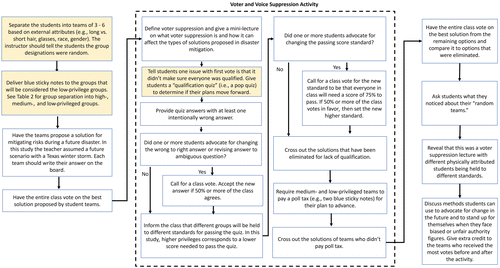
Notes. Orange boxes indicate opportunities for instructors to institute bias in the classroom or mislead students. The high-, medium-, and low-privileged groups are defined in Table 2.
The instructor should begin by telling the students they will be sorted into random groups. This is the first time the instructor will mislead the students because the groups will not, in fact, be random. The actual sorting of students should be based on some external characteristic (e.g., hair length, racial group, gender, clothing), as seen in Table 2.
|
Table 2. Possible Methods for Sorting Groups Based on External Factors and How This Corresponds to the Privilege Level and Grade Needed to Pass the Qualification Quiz
| Privilege level that groups will have in the game | Examples for separating groups | Minimum grade required to pass qualification quiz | Item given at start of class for poll tax portion | ||
|---|---|---|---|---|---|
| Race and gender | Hair length and eyesight | Last name | |||
| High | Minority | Wears glasses | Last name begins with A–L | 25% | Nonblue sticky notes |
| Medium | Non-minority | Hair touches shoulders, no glasses | Last name begins with M–S | 50% | Nonblue sticky notes |
| Low | Non-minority | Hair doesn’t touch shoulders, no glasses | Last name begins with T–Z | 80% | Blue sticky notes |
Notes. A high-privileged group will have the easiest time passing the qualification quiz. As a note, all groups should be mutually exclusive.
After the class is sorted into groups, students are given background information about the Texas winter storm in 2021 and the associated infrastructure-related failures (see Doss-Gollin et al. (2021) for additional background information on the Texas 2021 winter storm and the supplemental information for the slides of the mini-lecture). Then, students are tasked with designing strategies to mitigate a winter storm disaster by advising the government on investments to reduce the number of at-risk households. Specifically, students play the role of consultants who are tasked with investing 10 million dollars into strategies for mitigating the negative impacts of the next winter storm disaster. In infrastructure decision-making classes, this activity is presented as a review of the estimation and time value of money equations the class had covered in previous lectures. In other classes, the winter storm disaster scenario can be adapted to focus on equitable resource distribution. For example, operations research classes might use optimization models to allocate energy resources fairly, whereas supply chain management students could examine how bias affects resource flow. More classroom alterations are discussed in Section 5.2.
Students have 30 minutes to develop a plan for mitigating the disaster, and teams are given eight minutes to write their proposals on the board. Afterward, students cast individual votes for the best solution (they are not allowed to vote for their own), and the instructor records the number of votes each team’s proposal receives.
The second instance of authoritative deception begins when the instructor notes that despite the voting, a step was missed. Instructors should point out if some groups used incorrect equations (only if this is actually the case; the instructor should never give students incorrect equations). The instructor then suggests verifying whether each group is qualified to submit a proposal. After no one objects, the instructor proceeds with a mini-lecture on voter suppression (see the supplemental information), explaining how those in power can exclude people from voting, which limits the policy solutions that reach the government and are distributed to communities. If someone objects, the instructor should take a poll requiring 90% of the students to agree that they should bypass the qualification test. If over 90% of the class votes to include everyone, the instructor can skip to the poll tax portion of the activity.
Following the voter suppression mini-lecture, the instructor gives a pop quiz the students must complete individually (note that this quiz will not impact their actual class grade). For a discussion about moving from a lecture to a simulation portion of the class, see Section 5.2. The pop quiz should include topics from class related to the activity as well as random topics that the class should know (e.g., grading scale from the syllabus, names of the instructor and teaching assistants). Example questions from the pop quiz are shown below:
What is the time value of money equation for converting from future to present value?
What does a high discount rate in the time value of money equation mean?
What is the profit equation for a company?
What is the difference between the convolution and similarity estimation techniques?
What is the name of the disaster we are preparing for?
Where is the mental health services building located on campus?
How much is classwork worth according to the syllabus?
What is the name of the professor? Note that spelling matters.
What are the names of the teaching assistants (TAs)? Note that spelling matters.
Note that questions 1–5 are directly related to the class activity, whereas questions 6–9 are items the students should know but do not directly impact the quality of their proposed disaster mitigation solutions. It is also possible that the students will find question 8 ambiguous because it is not specified if they need to state both the first and last names.
The instructor reveals the answer key and has students grade their own quizzes, noting that these quizzes do not affect final grades. As a note, the instructor does not collect the quizzes, so there is no check for whether the students have graded correctly. The focus of this step is not to measure quiz accuracy but, instead, to highlight students’ decision-making power when determining what constitutes a correct answer for a quiz question. In this activity, the instructor should intentionally include a wrong answer for the disaster name, allowing students to correct it if more than 50% of the class votes to change the answer. Additionally, students can propose further adjustments, such as correcting spelling errors or addressing ambiguous questions, giving them opportunities to influence the grading process.
After finalizing the correct answers, the instructor asks the students if they passed. The students respond, “How do we know if we passed?” This begins the first voice suppression exercise. The instructor then reveals that different groups are held to different standards but does not explain that group assignments are based on external factors. Each group is assigned a number, and the instructor states the required grade for each group to pass. The grading system defines high, medium, and low privileges, illustrating discrimination among the groups. An example of the discrimination placed upon high-, medium-, and low-privileged groups is as follows:
High-privileged: Groups 1–2 need at least one person to get 25% of the questions right to pass the quiz.
Medium-privileged: Groups 3–5 need at least two people to get 50% of the questions right to pass the quiz.
Low-privileged: Groups 6 and above need all their members to get 80% of the questions right to pass the quiz.
Following this step, the instructor goes around the room, asking each group if they passed. For groups that did not pass, the instructor crosses out their solutions on the board. Next, the class moves into a voice suppression exercise where medium- and low-privileged groups must pay a poll tax (two blue sticky notes) to advance their solution. This is during the “define voter suppression” step in Figure 1. During this exercise, the instructor delivers a mini-lecture on voter and voice suppression, explaining how requiring government-issued IDs (e.g., driver’s licenses or passports) can act as a modern poll tax because of the underlying costs involved (Parker et al. 2018, Daniels 2020).
Note that the low-privileged group received blue sticky notes (Table 2), which could be used to pay the poll tax. However, by this time in the activity, the low-privileged groups’ proposals will most likely be excluded from the activity. Because the high-privileged group did not need to pay a poll tax, the medium-privileged group would have to ask the low-privileged groups to give them the excess blue sticky notes. If groups refuse to share the blue sticky notes, then this part of the activity could be used to highlight that when people feel that a system is harming them, it is often the case that they do not see the need to help others.
Once groups pay the blue sticky note tax, the instructor goes to the board and crosses out the proposals from the low- and medium-privileged teams that did not pay the poll tax. At this point, typically only the high-privileged groups’ solutions remain. The instructor then leads a discussion on what was excluded from the final proposals. At this stage, students may appear frustrated. Afterward, students revote on the remaining proposals, and the instructor records the votes and announces the winning solution. By this time, 50 to 70 minutes have passed.
Before the class ends, the instructor asks students what they noticed about their groups. This is usually when students comment that they did not realize the groups were divided by gender and race. The instructor follows up by asking, “What did you notice about the different standards your groups were held to?” and “Which groups had the toughest time getting their proposal through?” Then, the instructor has the low-privileged group (typically nonminority men) stand. The instructor then prompts a discussion on fairness and why many (if not all) students did not advocate for themselves.
Next, the instructor asks the medium-privileged group (nonminority women) to stand, questioning whether they found the poll tax and standards fair and why they did not challenge the system. Finally, the high-privileged group stands, and the instructor asks if they believed the process was fair and why they had not spoken out against it. This conversation helps illustrate how people in privileged positions might accept unfairness if it benefits them.
Students sometime mention they did not realize they could change things in the classroom. The instructor should use this moment to remind them of the earlier activity, where they successfully changed the quiz answer key by banding together. The instructor concludes by emphasizing the importance of standing up against unfairness, even when it is difficult to challenge authority figures like the instructor.
In the class wrap-up, depending on the remaining time, the instructor leads a discussion on the effect that privilege has on decision making and who gets a seat at the decision-making table. Some possible discussion questions are as follows:
What are some ways that bias, macroaggressions, or privilege can appear in energy decision making?
Why do you think it was hard to voice when things in the classroom were unfair?
How might we lower the barriers to entry into the decision-making process for groups who have historically been excluded?
How might your lived experiences impact the way you stand up for yourself? What makes standing up to authority figures hard?
Why do you think it was easy to go along with the status quo and accept the different passing score standards for different groups?
Why do you think more students advocated for changing the answer key on the pop quiz than for changing the passing score requirements?
Before the class leaves, the instructor reiterates that they value the students’ opinions and encourages them to stand up for themselves when things seem unfair. The instructor then assigns a reflection for homework, asking students to discuss how the activity impacted them, how they view the connection between social justice and engineering, and what the key takeaways from the activity were. For a full classroom example, the instructor’s PowerPoint slides are provided in the supplemental information.
2.2. Methods for Evaluating Student Engagement with the Activity
To evaluate student engagement, the instructor should document participation throughout the activity. The instructor should record (a) the number of students who declared parts of the activity fair and unfair during the voter and voice suppression simulations, and (b) the number of students who voted on the best plan before and after the voter suppression activity. The number of students who voted before and after the voter suppression activity can be used to gauge the degree of unhappiness the students felt during class. Lack of participation can be an indication that students lost trust in the voting process and a signal of their frustration with the activity.
2.3. Methods for Evaluating the Learning Outcomes
To identify the achievement of learning outcomes following the activity the instructor should give a reflection assignment to the students to complete outside of class. The reflection questions used in this evaluation were as follows:
How is social justice linked to engineering?
What was surprising about the class activity?
What was the main takeaway from today’s activity?
Any recommendations or other feedback for the professor?
Following the completion of the assignment, the instructor should investigate the textual reflection answers and the level of critical thinking displayed on the assignment. The student’s ability to think critically about the implications of engineering decisions and tease out social justice factors can then be evaluated using a modified Bloom’s taxonomy scale (Nock et al. 2024). Table 3 details the modified Bloom’s taxonomy scale used to evaluate reflection question A (how is social justice linked to engineering?).
|
Table 3. Modified Bloom’s Taxonomy Scale for Evaluating Inclusion of Social Justice Factors in Technical Decision Making
| Bloom’s taxonomy level | Description | Evaluation criteria for reflection question |
|---|---|---|
| 0 | Devoid of social justice | The response has no mention of social justice in the text. |
| 1 | Remembers and recalls facts | The social justice discussion in the question response mimics the classroom discussion and mentions a social factor to be considered but lacks a sufficient explanation about how the investment decision may impact society. |
| 2 | Explains ideas and concepts well | The answer to the problem mentions an impact previously discussed in a class lecture and provides an explanation for how the technology or investment decision could impact society. |
| 3 | Applies and uses information in new situations | The student applies a new or previously discussed social justice topic to a new technical topic. The response acknowledges that social justice implications will vary for different communities. |
| 4 | Analyzes and draws connections to social justice concepts not mentioned in class | Social justice discussion describes communities not previously discussed in class and provides support and reasoning for how the technology or investment decision would impact different members of society. |
2.4. Possible Student Reactions and Suggested Instructor Responses
Within the classroom activity simulation where students develop community plans to improve energy security during a winter storm disaster, several types of student responses may arise, particularly as the class dives into issues of bias, privilege, and both micro- and macroaggressions in the context of deploying resources such as diesel generators and solar panels. The instructor should anticipate a wide range of reactions based on individual perspectives, lived experiences, and varying levels of understanding of these concepts. Below is a discussion of potential student responses and strategies for guiding the conversation in a fruitful direction.
2.4.1. Students May Avoid the Systemic Issues and Focus on the Technical Aspects.
Some students may focus solely on the technical or logistical aspects of energy security, such as how to deploy the generators efficiently or the pros and cons of using diesel versus solar energy. These students might overlook social dynamics, such as who has access to resources and who benefits from the energy solutions. If this arises, instructors should encourage these students to think beyond logistics by prompting them to consider who might be left out or who might face additional barriers in accessing the energy solutions. Questions such as “Who will have the easiest access to these resources?” and “How does privilege affect decision making in emergencies?” can shift the focus from technology and logistics to equity and inclusion.
2.4.2. Students Acknowledge Bias and Privilege But Struggle to Apply It.
During the activity, students may recognize that bias and privilege exist in theory but struggle to apply these concepts within the classroom activity. For example, students might acknowledge that wealthier neighborhoods have better access to energy resources but not fully grasp how bias impacts decision making and deployment of technology during disaster recovery. When interacting with these students, the instructor should provide real-world examples where bias and privilege shaped disaster responses (e.g., the impact that Hurricane Katrina had on low-income communities). Instructors should guide students with questions such as, “In what ways might privilege impact who receives generators first?” or “How might existing biases influence where resources are deployed?”
2.4.3. Students May Become Defensive in Discussions About Privilege.
Within the class, some students may become defensive when privilege is discussed, particularly if they feel they are being personally accused. They may push back with responses like, “I’ve worked hard for everything I have.” Instructors should acknowledge defensiveness as a common response and steer the conversation toward systemic privilege rather than personal blame. Encourage empathy by asking students to consider how structural advantages (such as access to homeownership, education, or personal vehicles that allow families to evacuate) might shape the ability to respond to disasters. For example, the instructor could say, “Let’s explore how societal structures grant some communities easier access to resources, regardless of individual effort.”
2.4.4. Students May Acknowledge Microaggressions and Bias.
Some students might be attuned to how microaggressions and bias can affect resource distribution and community planning. For instance, they might bring up how certain minority communities could be stereotyped as “unprepared” or “needing more oversight” during disaster relief efforts. Instructors should validate these insights and delve deeper by asking students to consider the long-term impact of such microaggressions. For example, one could ask, “How might these subtle biases affect community trust in relief efforts?” or “What are the consequences of these assumptions in a long-term recovery plan?”
2.4.5. Students Could Highlight Macroaggressions or Structural Inequities.
Students within the class may recognize macroaggressions or systemic disparities, such as how poorer, more racially diverse communities are often the last to receive aid or infrastructure improvements, which can exacerbate energy insecurity during crises. Instructors can expand the conversation by linking this recognition to practical solutions. Questions to ask include, “What are some ways we can ensure that marginalized communities have equal access to resources?” or “How do we address structural barriers when planning for energy security in a disaster?”
2.4.6 Students May Suggest Egalitarian Solutions Without Recognizing or Acknowledging Privilege.
Well-meaning students may advocate for seemingly egalitarian solutions, such as distributing resources equally, without acknowledging that not all communities start from the same position. They might argue that “everyone should just get the same number of generators” without considering how different communities have different needs. Here, the instructor’s strategy should be to gently challenge these students by asking them to consider equity rather than equality. For example, the instructor could ask, “Does everyone need the same number of resources, or do some communities need more support because of existing disparities?” This can open a conversation about how fairness might require distributing resources based on need rather than equal amounts.
2.4.7. Students Focus on Short-Term Solutions and Miss Long-Term Equity.
Students may focus on short-term responses, such as deploying diesel generators for immediate relief, while overlooking the long-term sustainability of solutions such as solar panels, which could help alleviate systemic inequities in energy access. Here, instructors should encourage students to think about short- and long-term outcomes. Sample questions include, “How do we balance the immediate need for energy with the long-term goal of energy security?” or “How can sustainable solutions like solar panels address the root causes of energy inequality?”
3. Classroom Implementation
This activity was implemented in three graduate classroom settings in the fall 2021, 2022, and 2023 semesters. All the graduate classes are in an engineering department at a private university in the midwestern United States. The total number of students participating in the activity each semester was as follows: 49 students in fall 2021, 35 students in fall 2022, and 31 students in fall 2023. Whereas the majority of the students were majoring in civil and environmental engineering (because of the department), there were also students from the architecture department and technology management.
The activity was delivered toward the second half of the semester in all classes. There were two major differences between the semesters. The first was related to the stakes associated with the assignment. In fall 2021, there were no stakes (i.e., having their solution chosen would not positively impact a student’s grade), whereas in fall 2022 and 2023, extra credit points were offered to the teams whose solutions were chosen. At the start of the activity, the instructor stated that only the teams whose decisions moved forward would win the extra credit points. However, at the end of the activity, the instructor awarded extra credit points to the team proposals that received the highest class votes before and after the voter and voice suppression activities.
The second difference was related to the class sorting. In fall 2021 and 2022, the students were separated by perceived minority status and gender. In fall 2023, the instructor did not identify enough minorities to make sizable groups and thus separated the groups by long versus short hair. As a note, long hair (i.e., hair that touches a person’s shoulders) tends to be biased toward women.
The students were separated into groups of three to six students. Specifically, groups 1 and 2 (minorities in both race and gender) would receive high privileges, groups 3–5 (women) would receive medium privileges, and groups 6 and above (nonminority men) would receive low privileges. The classroom bias simulation was designed in such a way that students from marginalized groups would be on the receiving end of more benefits. Additionally, in one class, there were not enough students belonging to the nonbinary or gender-neutral category to place them in their own group. Thus, this group distinction is not a primary focus of this paper.
These high-, medium-, and low-privileged distinctions were not revealed to the students until after they completed “The Energy Table Who Didn’t Get a Seat” activity.
During the pop quiz portion of the activity, the instructor intentionally wrote the wrong answer to the following question: “What is the name of the disaster we are preparing for?” In the instructor’s PowerPoint, the instructor titled the disaster “Texas Deep Freeze 2021.” However, she stated that the answer was “Texas Winter Storm of 2021.” The students were allowed to voice disagreement, and if they advocated for change, the instructor permitted them to “fix” the answer key if more than 50% of the class voted to accept the new answer. In certain classes, there was a second opportunity to alter the answer key if many of the students misspelled the names of the teaching assistants or if a student in the class declared that a question was ambiguous and could have two answers.
After the correct answers were finalized, the instructor asked the students if they passed, to which the students replied, “How do we know if we passed?” This started the first voice suppression exercise. The instructor revealed that different groups would be held to different standards. The instructor did not reveal that the student groups were based on external factors. Instead, each group had a number, and the instructor stated the group numbers and the corresponding grade their team members needed to pass the quiz. The high, medium, and low privileges are defined by the grading system. An example of the discrimination placed upon high-, medium-, and low-privileged groups is as follows:
High privilege: Groups 1–2 need at least one person to get 25% of the questions right to pass the quiz.
Medium privilege: Groups 3–5 need at least two people to get 50% of the questions right to pass the quiz.
Low privilege: Groups 6 and above need all their members to get 80% of the questions right to pass the quiz.
Following this step, the instructor went around the room asking if each group passed. For groups that did not pass, the instructor crossed out their solutions on the board.
Next, the class moved into a voice suppression exercise. Here, the medium- and low- privileged groups were required to pay a poll tax (i.e., two blue sticky notes) for their solution to move forward. The instructor then went around the classroom and crossed out the proposals of each of the low- and medium-privileged teams that did not pay the poll tax. At this stage, the only proposed solutions left for consideration were those from the high-privileged groups. The instructor then led a class discussion about what items were left out of the final proposed solutions. At this point in the classroom, students were often upset. Although the frustration from certain groups was apparent, they seldom stated that the different standards were unfair.
The students then revoted on the best solution for only the remaining proposals. The instructor recorded the number of votes and how many students did not vote and congratulated the winning proposal. At this point, 50–70 minutes had elapsed.
Before the class ended, the instructor asked the students what they noticed about their groups. This is often when the class notices that the groups were segregated by gender and race. Following this question, the instructor asked, “What did you notice about the different standards your groups were held to?” The instructor then asked the group number corresponding to the low-privileged category to stand up (in the instructor’s class, these were all the nonminority men). This usually received chuckles from the groups when the instructor stated, “Interesting that all of you were in the same group and held to a really hard standard. It was almost as if there was some reverse racism going on.” The instructor then asked whether the groups thought the passing standard was fair and, if not, why did they not stand up for themselves. The instructor then asked the groups in the medium-privileged category to stand up (in the instructor’s class, this was the nonminority women). The instructor then asked whether the groups thought the passing standard and poll taxes were fair and, if not, why they did not stand up for themselves. Lastly, she asked the group numbers corresponding to the high-privileged category to stand up, asked if they believed the process was fair, and, if not, why they had not advocated for change.
Before the class concluded, the instructor reiterated that she cared about the students’ opinions and that they should stand up for themselves when things seem unfair.
Lastly, the instructor gave a reflection for the class to be completed for homework so that students could discuss how the activity affected them, how they viewed social justice as being linked to engineering, and what the main takeaways of the activity were.
4. Results
Within the classroom implementations, the students were surprised by the voice suppression activity. Their reactions are detailed in Sections 4.1–4.3. In two out of three semesters, the instructor was able to show the students that often inequities in decision making led to inequitable outcomes. In the fall 2021 and 2023 semesters, the proposals that received the most votes before the voice suppression activity were not included in the list of possible options by the end of the activity.
4.1. Number of Students Advocating for Change
When the instructor gave the intentionally wrong answer, the students were visibly upset. The students voiced disagreement with the answer key, and the instructor allowed the students to vote on whether to accept both answers as correct. The majority of students agreed to accept the new answer, and many were happy with the small win.
Figure 2 illustrates the level of advocacy students exhibited during the grading portion of the activity. Each year, at least one student advocated changing the incorrect quiz answer to the correct one, and this position gathered a majority of support from classmates (over 80% agreement in all semesters; seen on the orange dashed bar in Figure 2). However, when students advocated changing answers to ambiguous quiz questions, there were mixed levels of support from classmates. For example, students advocated changing the answer to the question that asked the names of the teaching assistants because it was not initially required to provide first and last names. In fall 2021, less than 50% of students voted to accept multiple answers to ambiguous questions, whereas in fall 2022 and fall 2023, over 55% of students voted to accept multiple answers. Interestingly, across all semesters, more students favored altering incorrect answers than accepting multiple answers.
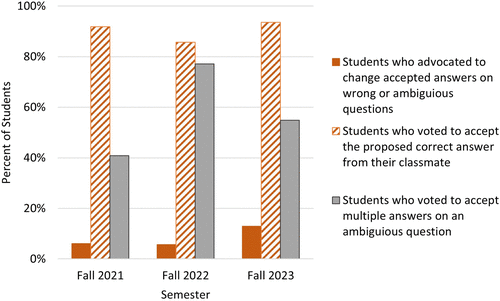
By having an intentionally wrong answer, the instructor was hoping students would see that if they combined forces, they could advocate for change against decision makers (i.e., the instructor), yet in the classroom deployments, none of the students advocated for changing the standards the different groups were held to. During the unequal grading scale and poll tax portion of the voter suppression activity, the instructor noticed multiple students upset and heard them whispering to each other. However, no student asked the instructor to change the grading scale or the required poll tax. If the students had, the instructor would have proposed a higher passing standard for all groups. This elevated threshold, intentionally set by the instructor, would likely result in failure for many groups and thus would not appeal to the high- and medium-privileged groups. However, this never occurred in any of the class simulations.
Figure 3 shows the proportion of students voting at the end of class. Across all semesters, the number of students voting on solutions decreased by at least 20%. Given that all students voted on their colleagues’ solutions at the beginning of class, the reduction of students voting (ranging from 24%–46% across the semesters) illustrates that many students felt discomfort or frustration during the activity. It is noted that students were not explicitly given the option to abstain from voting, but the ones who did not vote independently decided to do so out of protest.
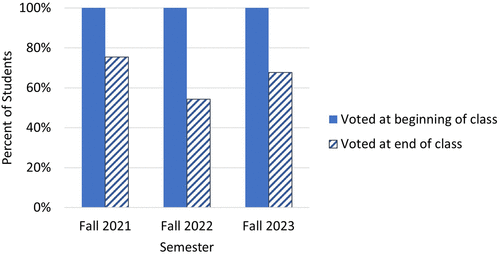
Note. Fall 2021, n = 49; Fall 2022, n = 35; Fall 2023, n = 31.
4.2. Measuring the Students’ Views of Ties to Social Justice Using Modified Bloom’s Taxonomy Scale
This study used a modified Bloom’s taxonomy scale (Nock et al. 2024) to evaluate students’ critical thinking skills after the game had been played. The students were required to complete a reflection after class (graded based on completion) with one of the questions asking them how social justice was linked to engineering. The reflections were analyzed to identify the level of critical thinking the students exhibited when answering the question, as seen in Figure 4. Examples of student responses corresponding to the different Bloom’s taxonomy levels can be found in Online Appendix B.
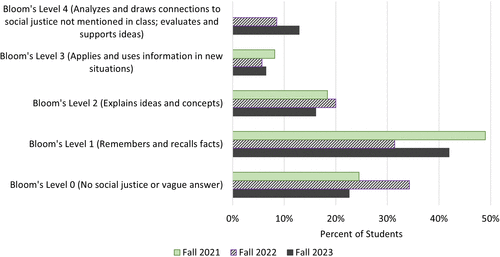
Note. Fall 2021, n = 49; Fall 2022, n = 35; Fall 2023, n = 31.
In the fall 2022 and 2023 classes, 17% and 19% of the class, respectively, reached higher levels of critical thinking skills (Bloom’s levels 3 and 4), whereas only 8% of the fall 2021 class reached Bloom’s level 3. In all classes, over 60% of the students achieved at least Bloom’s level 1 (recalling and remembering social justice facts) in their reflections. As a note, the reflections were graded for completion, so students may not have felt the need to dive deep into their answers.
4.3. Individual Student Reflections About Surprising Parts of the Activity
In the after-class reflections, students were asked to comment on what surprised them about the activity and what the main takeaway of the activity was. Some key student responses are detailed in the following subsections. Semesters are not identified for most of the student responses in order not to expose the identity of students, given limited class sizes.
4.3.1. What Surprised Students About the Activity.
In the reflections from the three classes, many of the students commented that they were surprised no one said anything about the unfair treatment of certain groups. For example, a female student in the medium-privileged group stated, “I find it surprising that no one said anything about the unfair distribution of people when they lost their ability to vote. Also, I found it surprising that the professor noticed our common ethnicities even when I was not aware of that.”
In the class, the instructor’s discrimination across the different groups was clearly noticed, and multiple students commented that the differing standards were surprising. However, interestingly, some students in the low-privileged group commented about the limited experience they had with being on the receiving end of discrimination. For example, a white male student from the fall 2021 class stated that he “felt like [the activity] was unfair, which was surprising, as I haven’t noticed any unfairness toward me since being at school. I also didn’t complain (neither did anyone else). Looking back, it wasn’t surprising, but before this activity, I always felt like I would stand up for myself if needed! I think the lack of stakes had something to do with it, but it was still unexpected.”
The lack of stakes is something that was unique to fall 2021 because the instructor did not offer extra credit to the team with the winning proposal. However, even when the instructor offered extra credit for winning teams in the fall 2022 and 2023 semesters, there was still a lack of advocacy from the students during the passing score portion of the activity. Note that at the end of the activity, extra credit was given to the teams that received the most votes before and after the voice suppression activity.
Surprise was also felt by students in the high-privileged groups. A minority student in the high-privileged group commented, “One thing which was surprising to me was that it was really easy to forget/ignore the fact that the rules were unfair. Most often, the victims of classism, sexism just accept the outcomes with minimal resistance.”
After-class discussions revealed one reason for the students’ surprise. Having students propose solutions aimed at reducing inequities stemming from a system-wide power outage during a winter storm made them believe that the social justice and voter suppression mini-lectures were related to that disaster. Not informing them they would be going through a bias and discrimination simulation added to their shock.
4.3.2. The Main Takeaways for Students.
Whereas many of the students mentioned being shocked by the intentional bias during the activity, this seemed to have fed into their main takeaways.
A student from the low-privileged group openly acknowledged in his reflection that the academic system usually benefits him. Specifically, he stated, “It was really interesting being on the other side of the issue (being discriminated against compared with being in a system that benefits me). Obviously, an in-class exercise isn’t like real life, but this provided a glimpse into that perspective. The overall takeaway always revolves around experiences like this in the real world like voter suppression and how negotiating (or taking a stand) can be important.” The instructor took this as a positive because admitting that a person is in a position of privilege is a sign of self-awareness.
A student from the medium-privileged group commented that people “should question things that look like a normality to us. Also, we need to think about the inclusiveness of our decision-making groups. [Just] because a group was assigned to us, [it does not mean we] should…[assume] it is fine to make decisions with them only.” Understanding who is or is not included in the decision-making process is an important step in creating an equitable decision-making process.
4.4. Other Results
One piece of the activity that did not come up in discussion during the three classroom deployments was the blue sticky notes. In the classroom, the low-privileged group received blue sticky notes to see whether students would redistribute the “wealth” (i.e., blue sticky notes) once the low-privileged groups were excluded and did not need them anymore. During the poll tax portion of the activity, the medium-privileged group needed blue sticky notes to move forward. However, in all the classroom deployments where sticky notes were distributed, none of the low-privileged groups elected to provide their sticky notes to other classmates. If participants from the low-privileged groups had given their sticky notes to the medium-privileged group after not needing them, the instructor would have commented about the benefits of helping others even when you feel excluded.
5. Important Considerations
This activity involves the simulation of macroaggressions and microaggressions in the classroom. For this reason, it is extremely important that it be completed in one classroom or workshop setting before students leave the activity. This is because the goal of the activity is to make sure students know that while advocating for themselves and others may be difficult, it is needed. Additionally, the instructor should acknowledge that the process for including and excluding students’ proposals for the problem presented at the beginning of class was unfair and that the instructor did this intentionally.
5.1. Considerations for the U.S. Context
In the United States, where 76% of professors identify as white (Davis and Fry 2019), having racial discussions can be even more difficult. However, these difficult conversations may be aided by feeling a bond with older students such as the teaching assistants (Kaplowitz et al. 2018). In other words, students may be more willing to open up to their peers than an authority figure. In future iterations of the activity, it may be useful to involve teaching assistants in the activity and have them suggest to one of the student groups to advocate for change. Separating students based on race and gender may make some professors uncomfortable. If this is the case, the instructor should consider using external factors to separate the groups rather than race and gender. This could be people wearing long- versus short-sleeve shirts, those with and without hair touching their shoulders (hidden bias toward women), or people with and without glasses. The instructor could also sort the students by the first letters of their names. Discussing controversial topics also requires the instructor to build strong, positive relationships with the students throughout the semester (Washington and Humphries 2011). Effective strategies for building positive relationships with students include allowing students to be active participants in their learning (Bovill 2020), fostering distinctiveness, using inclusive language, speaking from one’s own experiences (Bennett et al. 2023), and using a student-centered approach in the classroom design (Grossman et al. 2016). More strategies for guiding tough conversations are presented in Online Appendix C.
5.2. From Awareness to Action: Simulating Real-World Injustices in the Classroom
At certain points in the lesson, the instructor transitions from a mini-lecture to actively simulating the concept being discussed (e.g., demonstrating voter suppression through a qualification quiz or illustrating voter and voice suppression with a simulated poll tax). To make this transition effective, it is important for the instructor to have a clear rationale for the shift.
This lecture, followed by a simulation approach, helps students move beyond understanding these concepts in theory to recognizing how such practices might manifest in real-life scenarios. The goal is to ensure students not only understand these systemic issues on an intellectual level but also develop the skills to identify when such injustices are happening to them or others. Clear guidance on framing this transition—such as explaining the purpose of the activity at the start of class and connecting it explicitly to the historical or contemporary context—can help instructors avoid any confusion or discomfort students might feel about “acting out” these harmful practices in class.
5.3. Implementing the Activity in Other Classrooms
Although the data are from three graduate classes, it is noted that this activity has been presented to high school students, undergraduates, and other instructors at a conference. Thus, the activity is versatile and can be given to various age groups. The winter storm disaster example is flexible and can be applied across a range of industrial engineering classes. However, depending on the course, the disaster scenario could be shifted to better align with course content.
In an operations research class, students can use optimization models to determine the most efficient allocation of energy resources during a disaster. The winter storm scenario could be shifted to focus on having students optimize resource distribution (i.e., generators, solar panels) based on constraints such as geographic location, population density, and energy consumption. They could also consider factors such as ensuring equitable access to resources for disadvantaged communities (Grymes et al. 2024). Within operations research classes, students could explore how bias or privilege might affect the allocation algorithm—such as prioritizing wealthy neighborhoods—and how they can create a more equitable distribution system (Gautam et al. 2024). This could involve minimizing bias in the decision-making process or creating algorithms that account for social justice factors.
In a supply chain management course, students could focus on managing the flow of resources (e.g., power plant upgrades, generators, and solar panels) during a disaster. Whereas the winter storm scenario could still be applicable, this course might benefit from examples of supply chain disruptions because of events such as hurricanes, earthquakes, or global pandemics, where infrastructure is severely affected. Students could examine how bias or privilege impacts supply chain decisions, such as which communities receive resources first. They could discuss macroaggressions in the form of systemic neglect of rural or low-income areas in supply chain strategies and how to design supply chains that are both efficient and equitable.
In a human factors course, students could focus on how people interact with emergency systems during a disaster and who decides what type of emergency equipment is used. Whereas the winter storm scenario could work well, the real-world context could also be adjusted to address disasters where human behavior plays a key role, such as wildfires. This would allow students to study the ergonomics of using emergency equipment or interacting with evacuation protocols. Discussions could center around how privilege affects the design of emergency systems. For example, students could explore how privileged groups may have easier access to information or equipment during a disaster, whereas marginalized groups might face barriers because of language, physical ability, or technology access. Microaggressions could be examined in the design of public safety messaging that unintentionally excludes certain populations.
In a lean manufacturing class, students could focus on how to create efficient, waste-free processes for deploying energy solutions during a disaster. In this class, the winter storm scenario could be retained, but the focus could shift toward optimizing emergency manufacturing processes, such as the production of solar panels or portable power units for disaster relief. Here, students could explore how bias in process design might lead to certain groups being underserved. For example, they could discuss how lean principles might be applied in ways that prioritize the needs of wealthier communities. A reflection or homework activity could involve thinking about how lean methodologies could be reimagined to ensure fairness and equity in resource distribution.
In sustainability or renewable energy classes, the winter storm disaster could be used to examine the deployment of diesel generators versus solar panels and the trade-offs between immediate and long-term energy solutions. Other examples could include posthurricane rebuilding efforts or drought scenarios where water scarcity affects energy production. Bias and privilege could be discussed in terms of who benefits from renewable energy projects. Students could explore how wealthier communities may have better access to solar panel installations, whereas marginalized communities may rely on less sustainable energy sources. The role of systemic privilege in energy policy and infrastructure planning could be a key area of exploration.
Regardless of the specific scenario, integrating discussions of bias, privilege, and both microaggressions and macroaggressions is crucial for ensuring that students learn not only the technical aspects of disaster response but also the social and ethical considerations involved in equitable resource distribution. This approach prepares students to be mindful of systemic inequalities as they enter professional fields that impact communities in times of crisis.
6. Conclusions
This paper has presented an activity for simulating voter and voice suppression in engineering classrooms, which can be used to discuss how discrimination, prejudice, and privilege impact decision making in students’ lives. Interestingly, for all the activity deployments, none of the students commented or noticed that the groups were separated by perceived race and gender (prior to the instructor revealing that this was the case), nor did they recognize that the standards for groups were designed by external factors. Despite first hearing a lecture on what voter suppression meant before the simulation of microaggressions and biases, students were still surprised by how hard it was to recognize. This led to rich discussions in the classroom about how privilege and bias can be hard to identify, feel deserved, and benefit or harm different groups of people. The activity was specifically designed to allow students to discuss privilege and bias without having to talk about their lived experiences (unless they volunteered to add that to the discussion). In addition, following the activity, the instructor saw some level of critical thinking from the majority of students regarding how social justice is linked to engineering.
One suggestion for future work is for instructors to include anonymous surveys in the class to gauge the level of discomfort and frustration that the students may have had during the activity. There was a risk of priming students for specific answers because of the students knowing that this activity indicated the instructor values social justice. To mitigate the risk of priming, students were told their reflections would be graded by the teaching assistant and for completion only. On an anonymous survey, the instructor could ask the extent to which the activity made them more comfortable standing up for themselves in this class and standing up for themselves in other classes (perhaps on a Likert scale). The timing of this survey would also be critical because students may not connect this one activity with being more confident, particularly if the instructor does more than one social justice–based activity in class. Additionally, it is noted that there was no control group in this analysis. Future studies should include a control group or before/after analysis to evaluate the effectiveness of the exercise further.
Another suggestion for future work is to use an online assessment to quickly grade the students’ quiz scores. For example, a Google Form feeds directly into a spreadsheet, and instructors could set up a spreadsheet to automatically detect which groups pass or fail based on the stated criteria (without showing individual responses or indicating which member(s) were below the passing threshold). This can increase the comfort students feel if they do not pass the quiz. However, there could be complications if the answer key changes substantially during class discussion.
In future deployments of the activity, if students ask for fairer standards, the instructor will have the entire class vote on whether they will change the standard so that each group will need to get a 75% on the quiz to pass. It is expected that the medium- and high-privileged groups (who are required to get >50% to pass) will not vote for the fair standard. This can lead to a rich discussion about why giving up privilege or acknowledging that certain biases work in our favor feels like a loss of power.
By having the discrimination and privilege discussion focus on the simulated voter and voice suppression (as opposed to the lived experience of students), the instructor found that students were more likely to open up to each other about how upset they were with the instructor during the activity. Once the instructor revealed to the students that the biases were intentional for the purposes of the activity and that she had hoped the class would stand up for themselves, the students were often shocked and relieved. This is why it is vital that the instructor complete the activity in one setting. The intention of the simulated voter and voice suppression is to show students that (a) discrimination, prejudice, and privilege affect everyone, but it can be hard to identify if someone is on the losing or winning side, (b) they should stand up for themselves when they feel things are unfair, and (c) the first step in creating an equitable decision-making environment is to look around and see if certain groups of people have been excluded from the decision-making process.
Adapting this activity to your classroom will lead to tough conversations. At the end, it is vital to remind students that their opinions matter and that the instructor values them.
References
- (2023) Developing positive relationships: Strategies for building strong teacher/student relationships. Strategies 36(4):22–26.Crossref, Google Scholar
- (2016) A meta-analytical integration of over 40 years of research on diversity training evaluation. Psych. Bull. 142(11):1227–1274.Crossref, Google Scholar
- (2016) Engineers at play: Games as teaching tools for undergraduate engineering students. J. Engrg. Ed. 105(1):147–200.Crossref, Google Scholar
- (2020) Co-creation in learning and teaching: The case for a whole-class approach in higher education. Higher Ed. 79(6):1023–1037.Crossref, Google Scholar
- (2016) Benefits of educational games as an introductory activity in industrial engineering education. Comput. Human Behav. 58:315–324.Crossref, Google Scholar
- (2002) A school‐based group experience on racial identity and race relations. Smith College Stud. Soc. Work 73(1):51–72.Crossref, Google Scholar
- (2023) A synthesis and review of exacerbated inequities from the February 2021 winter storm (Uri) in Texas and the risks moving forward. Progress Energy 5(1):012003.Crossref, Google Scholar
- (2014) Culture of disengagement in engineering education? Sci. Tech. Human Values 39(1):42–72.Crossref, Google Scholar
- (2020) Uncounted: The Crisis of Voter Suppression in America (NYU Press, New York).Crossref, Google Scholar
- (2019) College faculty have become more racially and ethnically diverse but remain far less so than students. Pew Research Center (July 31), https://www.pewresearch.org/short-reads/2019/07/31/us-college-faculty-student-diversity/.Google Scholar
- (2021) How unprecedented was the February 2021 Texas cold snap? Environ. Res. Lett. 16(6):064056.Crossref, Google Scholar
- (2020) Rule by violence, rule by law: Lynching, Jim Crow, and the continuing evolution of voter suppression in the US. Perspect. Politics 18(3):756–769.Crossref, Google Scholar
- Gautam A, Nock D, Pandey A (2024) Grid-Aware Tradeoff Analysis for outage mitigation microgrids at emerging Resilience Hubs. IEEE Trans. Energy Markets, Policy Regulation 2(2):186–199.Google Scholar
- (2015) Equity literacy for all. Ed. Leadership 72(6):34–40.Google Scholar
- (2016) A student-centered approach to the business school management science course. INFORMS Trans. Ed. 16(2):42–53.Link, Google Scholar
- Grymes J, Newman A, Cranmer Z, Nock D (2024) Optimizing microgrid deployment for community resilience. Optim. Engrg. 25(3):1297–1331.Google Scholar
- (2018) Looking to near peers to guide student discussions about race. Phi Delta Kappan 99(5):51–55.Crossref, Google Scholar
- (2022) Implementing diversity training targeting faculty microaggressions and inclusion: Practical insights and initial findings. J. Appl. Behav. Sci. 60(1):50–86.Crossref, Google Scholar
- (2019) The elephant in the room: Intentional voter suppression. Supreme Court Rev. 2018(1):213–255.Crossref, Google Scholar
- (2011) The privilege of teaching about privilege. Sociol. Perspect. 54(1):3–13.Crossref, Google Scholar
- (2020) Engineering political fluency: Identifying tensions in the political identity development of engineering majors. J. Engrg. Ed. 109(1):107–124.Crossref, Google Scholar
- (2016)
Social justice and the engineering profession: Challenging engineering education to move beyond the technical . Abdulwahed M, Hasna M, Froyd J, eds. Advances in Engineering Education in the Middle East and North Africa: Current Status, and Future Insights (Springer, Cham, Switzerland), 409–428.Crossref, Google Scholar - (2020) “Let’s Bid!”-A modular activity to promote interest in engineering economy. Engrg. Econom. 65(3):195–212.Crossref, Google Scholar
- (2024) Investigating how social justice framing for assessments impacts technical learning. INFORMS Trans. Ed. 25(2):136–151.Link, Google Scholar
- (2020) Microaggressions in the learning environment: A systematic review. J. Diversity Higher Ed. 13(2):97–119.Crossref, Google Scholar
- (2009) Prejudice reduction: What works? A review and assessment of research and practice. Annual Rev. Psych. 60:339–367.Crossref, Google Scholar
- (2018) Using microaggression theory to examine US voter suppression tactics. Negro Ed. Rev. 69(1–4):101–143.Google Scholar
- (1987) A Class Divided: Then and Now (Yale University Press, New Haven, CT).Google Scholar
- (2003) Do the “eyes” have it? A program evaluation of Jane Elliott’s “Blue‐Eyes/Brown‐Eyes” diversity training exercise. J. Appl. Soc. Pysch. 33(9):1898–1921.Crossref, Google Scholar
- (1997) “Why Are All the Black Kids Sitting Together in the Cafeteria?” and Other Conversations About Race (Basic Books, New York).Google Scholar
Tripp (2024) “Literacy tests” (simulation) lesson plan. http://americancivilrightsera.weebly.com/literacy-tests-simulation.html.Google Scholar- (2025) Infrastructure decision preferences and the influence of social justice education. INFORMS Trans. Ed., Forthcoming.Link, Google Scholar
- (2023) Incorporating elicited preferences for equality into electricity system planning modeling. Sustainability 15(23):16351.Crossref, Google Scholar
- (2021) Critical talk moves in critical conversations: Examining power and privilege in an English Language Arts classroom. English Ed. 55(4):313–336.Crossref, Google Scholar
- (2011) A social studies teacher’s sense making of controversial issues discussions of race in a predominantly white, rural high school classroom. Theory Res. Soc. Ed. 39(1):92–114.Crossref, Google Scholar
- (1973) Effects of undergoing arbitrary discrimination upon subsequent attitude toward a minority group. J. Appl. Soc. Pysch. 3:94–102.Crossref, Google Scholar
- (1997)
Racism curriculum design . Adams M, Bell LE, Griffin P, eds. Teaching for Diversity and Social Justice: A Sourcebook (Routledge, New York), 82–109.Google Scholar