From Range Anxiety to Charge Anxiety: Operations Scholars’ Reflections on the State of Electric Vehicles’ Public Charging Infrastructure
Abstract
Prior research identified range anxiety as a major factor limiting the adoption of electric vehicles (EVs). However, by driving over 15,000 kilometres (∼10,000 miles) in various electric vehicles in Canada, United States, and Europe and relying on public charging, we observed that today’s EV drivers have charge anxiety instead. Charge anxiety comes from five factors: hardware issues: will the charger’s plug fit my vehicle and, overall, “does it work”; software factors: will my app/card work at the specific charger; location issues: is a charger conveniently located; time issues: how long will charging take; and price issues: how much will it cost. Motivated by these observations, we present three empirically grounded analytical models, each fitted to real data from industry partners, to analyze key issues that we, as operations management scholars, see in the current state and potential trajectory of public charging infrastructure. The first is a discrete-event simulation (a “digital twin”) to assess the realistic speed of fast charging. The second is a back-of-the-envelope Little’s Law calculation to estimate the scale of a fast-charging station needed to match the throughput of a typical gas station. The third is another discrete-event simulation that incorporates realistic driver arrival patterns across different types of days in a year. We conclude with insights and research opportunities stemming from our observations and models.
Funding: A. Ovchinnikov acknowledges the support from Canada’s Social Sciences and Humanities Research Council (SSHRC) [Insight Grant 435-2023-0466].
1. Introduction
Electrification of transportation is rightfully considered as one of the pillars of deep decarbonization. Transportation accounts for approximately 15% of the global carbon emissions (IPCC, Dhakal et al. 2022) and the cost-efficient technologies for mass-scale deployment of electric vehicles (EVs) are available. However, numerous studies suggested that their adoption is lagging, and among other reasons like high costs, range anxiety was commonly highlighted as a major factor impeding adoption, for example, Avci et al. (2014), Lim et al. (2015), Pevec et al. (2020), Naumov et al. (2021); this list is by no means exhaustive.
Range anxiety refers to a psychological (as opposed to technical or economical) concern that the driving range of the EV may be insufficient to meet the needs of drivers. Two approaches were proposed to deal with range anxiety. One involved EV battery swapping (e.g., see Avci et al. 2014), yet the majority of modern EVs have integrated, nonswappable batteries, and this approach is not practical as of today (it may, however, become practical in the future). Another involved the development of a network of public charging stations. This approach seems to be currently winning, fuelled by the government incentives to buy EVs and incentives and programs to install public chargers; see Raz and Ovchinnikov (2015), Cohen et al. (2015), Lim et al. (2015), Qi and Shen (2019), Naumov et al. (2021), Wu et al. (2021), Zhang and Dou (2022); this list is by no means exhaustive either.
The reliability of such a public charging infrastructure, however, is far from perfect. A 2025 study by Consumer Reports1 indicates that over 20% of EV charging episodes involve some sort of a problem, with some charging networks being unreliable nearly half the time. The prevalence of such problems leads to charge anxiety, which is distinctly different from range anxiety. Range anxiety is the aversion to the risk of driving beyond the EV’s range. Charge anxiety is the aversion to the risk of the charging infrastructure’s functionality falling short, conditional on needing to use it.
This article is a thought piece that uses multiple methods to study the current state of public EV charging infrastructure and to stimulate research on scaling EV adoption. The first method is case research. During 2023 the authors took multiple EV road trips, totalling over 15,000 kilometers (∼10,000 miles) and covering parts of the Northeast of the United States and Canada (in own and rented EVs) and a sizeable part of Western Europe (in rented EVs), and relying almost completely on public charging infrastructure. Our first insight from case research is that range anxiety was not really a concern. However imperfect or unreliable, numerous public chargers were available everywhere all along these trips. In contrast, the anxiety was about charging; specifically, about how smoothly one would be able to add the needed driving range to reach the next charging destination. Charge anxiety applies to individuals who already own EVs, while range anxiety may be more relevant for those considering a switch to EVs. Studying the latter falls outside the scope of this paper but understanding how charge and range anxiety interact—and how they jointly influence EV adoption—is an interesting topic for future research. That said, our primary point is that charge anxiety emerged as a significant concern during our field research, yet it remains largely absent from the operations management literature.
In Section 2 we decompose charge anxiety into five factors: hardware, software, location, time, and cost, with detailed and specific examples for each. In our analysis, we purposefully draw parallels to the gas-powered drivers’ experiences. Indeed, filling up a gas or diesel tank is a service operation of extending the driving range—same, in principle, as the operation of extending the driving range of an EV through charging. That the former is much smoother suggests that the operations management community has a large potential to contribute to the societal wellbeing through the design of flawless EV charging experiences. Our case research documents the roadblocks to be removed and calls for operations scholars to explore the ways to remove them. While we focus is on the private drivers, such roadblocks also impede commercial EV adoption (e.g., see Abouee-Mehrizi et al. 2021).
The second method is simulation modeling. Utilizing empirical data from two industry partners, we build a series of discrete event simulation models (aka “digital twins”) to illustrate how various service science tools and concepts can apply to EV charging. Before describing these models and their insights, we make two disclaimers to help readers understand what we do and why.
First, public EV charging stations can be of three types, or levels. Level 1 (∼2 kW—charging an EV from essentially a regular household electric plug), Level 2 (∼6–20 kW—charging an EV from a power source akin to that used for a home’s electric oven or air-conditioner), and Level 3 chargers (50 kW+, reaching 150–350 kW2—industry-grade machines requiring specialized wiring and installation). With rare exception, public chargers are of Level 2 or Level 3, to which we will refer as “slow” and “fast,” respectively. For completeness, EVs are also of two types. Battery Electric Vehicles (BEVs) draw all their power from an electric battery and use only the electric motor to operate the vehicle. Plug-in Hybrid Electric Vehicles (PHEVs) combine the electric battery and motor with an in Internal Combustion Engine (ICE). Some of our arguments hold for both, but most analyses imply BEVs.
Second, we focus on public charging and do not consider private, at home charging. This by no means diminishes the importance of home charging in electrifying transportation, but home charging is largely orthogonal to the issues we discuss in the paper. First, while many early EV adopters had access to home charging, scaling EVs would rely on public charging. For example, a study for Norway, which currently leads global EV adoption, estimates that 40% of charging in 2030 will be public and only 25% will be home (McKinsey & Company 2023). Second, even the drivers with access to home charging will take long trips that will require public charging; aforementioned road trips by the authors are of this kind. That said, interaction of private and public charging is clearly of interest for future research.
In this context, we use data from two industry partners to build a series of simulation models of the charging processes. The first partner is Fastned, a charge network operator from the Netherlands, who provided us with the data on charge curves for various EV models currently on the road. The second partner is Canadian Tire Petroleum (CTP), part of the Canadian Tire Corporation’s group of businesses and one of Canada’s largest independent gasoline retailers, pumping more than 1 billion litres of gasoline each year. With 1,800 Gas+ and Petro-Canada locations across the country, CTP also operates a network of gas stations at ONroute service centres along Ontario’s 401 highway, North America’s busiest roadway and one of the busiest auto routes in the world.3
In Section 3 we use the Fastned data to explore how fast “fast charging” is, especially if the utilization of chargers (which is currently rather low) might increase as the number of EVs on the roads grows. Our main insight is that fast charging is substantially, 1.5 to 2 times, slower than a naïve calculation might suggest. The truly fast charging occurs only over a very limited range of battery charge percentages (“state of charge”, SoC) and can usually be achieved within ∼5–6 minutes. Consequently, most of the time an EV is plugged into a fast charger, it is charging at much slower rate than a charger can provide.
Such “slow fast charging” however, has an important implication: fast chargers can effectively share power supply with only a small impact on the charging times, and performance largely unaffected by the utilization of the charger. We use the model in Section 3 to illustrate these effects and compute metrics of the charging system in various settings and situations, including sharing power between several ports and coupling the charger with an on-site battery to provide temporary boost in power supply.
In Sections 4 and 5 we use this model to understand how many fast chargers one might need to match the throughput of an existing gas-station infrastructure; specifically, we consider a prototypical highway service center. In Section 4 we present a simple calculation based on Little’s law and the results are unsettling—an EV equivalent of a regular-size highway gas station should have over 100 fast charging ports and a power supply of a midsize town. For comparison, most of the chargers we experienced in our case research have less than 10 ports—an order of magnitude difference.
In Section 5 we utilize data provided by CTP to construct distributions of vehicle arrival rates to the ONroute centers by the time of day and type of day. We then extend the simulations from Section 3 to account for such nonstationary arrivals to understand how many fast chargers one might need given the realistic arrival patterns (as opposed to the maximal throughput assumed in the Little’s law analyses in Section 4). We observe three types of days, to which we refer as “regular”, “weekend”, and “peak.” Our analyses lead to several insights. On a regular day, one gas-station pump is equivalent to a “base-line” 150 kW 2-port fast charger, much like at the ONroute and most other fast chargers we observed. On a weekend day, such a charger is theoretically feasible, but practically not: the wait-times to charge would extend to several hours. On a peak day a gas pump is equivalent to two such chargers. We also examine various extensions, such as more power supply, more powerful (300 kW) chargers, and vehicles that can charge at higher rates. A simple “rule of thumb” is that if vehicles can charge at max 300 kW, a 300-kW 2-port charger with a small battery is generally equivalent to a single gas pump.
Extending these analyses to measure the size of required system, a typical 12-pump gas station is equivalent to a 12-charger/24-port installation that will require the power supply of ∼3.6 MW. These are still large numbers, but far more manageable than the Little’s law analysis would suggest.
The rest of the paper is organized as follows: in Section 2 we present observations from case research that highlight charge anxiety, in addition to previously extensively studied range anxiety, as a major factor that may impede EV adoption. In Sections 3–5, motivated by this case research, we present our empirically grounded simulation models to understand the charging operations. Section 6 summarizes insights from our work and highlights new research opportunities in EV charging operations management.
2. General Reflections: From Range Anxiety to Charge Anxiety
Our main reflection is that the range anxiety, defined as the fear that an EV will not have enough battery charge to reach its destination, and a topic of numerous operations management studies cited above, was not a major issue during our case research trips. On the cold February nights in Canada and hot summer days in the south of France, the vehicles we drove provided real-time estimates of the remaining range that subsequently proved to be accurate. Instead, the anxiety was about the charge—whether one will be able to charge, how long will it take, and how much it will cost.
Charge anxiety is fueled by the shocking unreliability of current charging infrastructure. A study by Consumer Reports4 identified that as of March 2025, 21% of all charging sessions in America involved some sort of a problem, with great variance across charging networks. Vertically integrated proprietary networks like that of Tesla favored best with only 4% charging sessions involving an issue. Network aggregators, like Shell Recharge and EVgo favored worst with over 40% sessions laced with problems. Perhaps most shockingly, 19% of problems involved the charger not starting even though payment was accepted (meaning EV users paid for a service they did not receive). Not surprisingly, this leads to significant anxiety, which we decompose into five factors.
2.1. Hardware Factors
We observed two kinds of hardware issues. First is a situation where a charging port just does not work. The aforementioned Consumer Reports study finds this to be the most common problem: 76% of the issues in their study involved dead touchscreens or those displaying cryptic error messages. Interestingly, during our case research trips this was less of an issue: while we occasionally faced such problems, we resolved them by calling the chargers’ support line and operators rebooting the charger remotely. Similarly, a charging port that “just does not work” is not fundamentally dissimilar from one of the pumps at a gas station being out of order, which is a situation well familiar to ICE drivers.
A far more daunting issue that we faced involved physical plugs. There are multiple physical connectors (“plugs”) that are being used across the vehicles, some of them are depicted on Figure 1. Not all of them are simultaneously present in all markets: Tesla plug in North America, for example, is different from Tesla plug in Europe. Likewise, some of them can operate through adapters: Type 1 connector has an “easy” adapter to a North America Tesla plug. A CHAdeMO adapter to Tesla also exists but it is very bulky and heavy (∼5 kg/11 lb). The adapters we experienced also limit the charging power (more on this later).
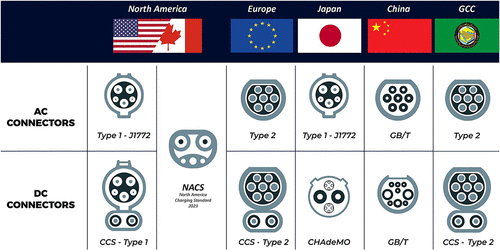
Source. https://maas-middleeast.com/ev-charging-connectors-a-comprehensive-guide/.
Nevertheless, on several occasions in Canada/United States we faced situations where the most convenient charging port had a plug that did not fit the vehicle or was not compatible with the set of adapters on hand. The situation is drastically better in Europe, where the plugs and adapters are standardised. Per the EU 2014 directive on the deployment of alternative fuels infrastructure5 all providers of public chargers to include a Type 2 connector where Level 2 or fast AC charging is made available, and a CCS-Type 2 connector where Level 3 DC charging is provided.
In the United States, in mid-2023 the Biden-Harris administration set new national standards for EV chargers,6 according to which all “Federally-funded fast chargers are required to include Combined Charging System (CCS) connectors, which are used by the majority of automakers today, but may also offer other connector types such as the North American Charging Standard (NACS) developed by Tesla.” However, just a few weeks after that, multiple auto manufacturers, including Ford, General Motors, Mercedes-Benz, Nissan, and Volvo announced the gradual shift to Tesla’s NACS standard.7 NACS was also supported8 by the Society of Automotive Engineers (SAE). Subsequently, BMW, Kia, Toyota/Lexus, and essentially all other auto-manufacturers also confirmed adopting NACS starting from 2025.
In certain other countries, like Canada, there is no standard for fast (Level 3) charging, but an SAE J1772 (Type 1) could be required at any Level 1 or Level 2 EV charger.9 A simple, functional, and easy to use J1772-to-NACS adapter is available; we used it on multiple occasions, although only for “slow” charging.
In sum, multiple hardware standards currently exist and create significant mismatch potential; however, in both North America and Europe active efforts are underway to standardize hardware (de-jure, as in Europe, or de-facto, as in the North America), and we anticipate that these efforts will significantly reduce anxiety due to hardware issues over the next 3–5 years.
This situation is perhaps not that dissimilar to the early day of gasoline-powered automobiles, but it is drastically different from the current state of gas-powered driving, where drivers face no uncertainty whether the nozzle at a gas station they visit will fit into the opening of their tank (apart from a diesel nozzle not fitting into a gas tank on purpose).
2.2. Software Factors
Having the charger plug physically connected to a vehicle is necessary but not sufficient to charge, as most charging providers operate proprietary software and billing systems. Their respective apps or/and RFID charge cards are required to start and end the charge and to pay for one. Tesla’s own chargers, both fast (superchargers) and slow (destination) chargers are an exception since they connect to a vehicle, which in turn is connected to an app-like payment processing.
Between the coauthors, we have six different charging apps and four physical RFID cards, yet multiple times ran into situations where none of the “charge methods” work. One was in an underground parking lot, and the author had to go above ground to get cellphone reception and download and install the app, create a profile, etc.—only to realize that once they get back underground, the app requires Internet to communicate to the charger. The author was not able to charge then. On another occasion the charger did not accept any of the apps or RFID cards, but it was possible to pay with a contactless credit card.
Two trends are emerging to combat the software issues. First, aggregators like Shell ReCharge create charging superapps which give members access to chargers of different providers. In our experience, the challenge this creates is a potential discrepancy in pricing and charge power (more on this below): that is, a charger may be capable of charging at 50 kW if accessed via its own app, but through aggregator only an 11-kW charging is available. Second, the recent EU regulations10 requires that chargers along the main auto routes should allow drivers to charge just with a contactless credit card.
Nevertheless, contrasting this to the ICE drivers’ experience at gas stations, that a driver may not be able to pay for charging with the generally accepted methods of payment is certainly an unnecessary source of anxiety that does not exist for gas car drivers.
2.3. Location Issues
During our travels, we noticed two kinds of location issues for EV chargers. First, while some of them are conveniently located at the service stations along the auto routes, others may require inconvenient detours. Tesla Superchargers are in the latter category. More so, they are frequently collocated with small hotels or restaurants, which is perhaps intuitive as this reduces the cost of providing power supply, while simultaneously allowing the drivers to rest, eat, etc. while their vehicles are charging. The problem, however, is that, for example, on several occasions the chargers were collocated with McDonald’s, which indirectly forces drivers and their families to dine there, even though that would not be their first (or even second) choice. Both detours and questionable lifestyle colocations are problems of the current charging network.
At the same time, the second location issue we would like to note is an advantage of electric charging. Unlike traditional gas stations, charging is environmentally clean, and chargers could be located at places where a gasoline station would be undesirable: at a hotel, restaurant, in an underground parking lot, or on a historical city street. Those are usually “slow” Level 2 chargers, but they allow charging as a by-product of other activity. For example, one of the authors once stayed at a hotel with a charger, and woke up in the morning to a “full tank.” On another occasion, a lunch at a restaurant also simultaneously resulted in a quarter-“tank” of charge. Such slow chargers attract traffic to the respective businesses.
How much could the network of such convenience chargers grow is outside of the scope of this article, but fast chargers’ locations could be further optimized to minimize unnecessary detours. The aforementioned EU regulation, in fact, demands that by 2025, 150 kW fast-chargers are available on major auto routes every 60 km (∼40 miles), and that by 2030 those are upgraded to 300 kW chargers.11
2.4. Charging Speed Issues
How long will it take to charge the car, or, equivalently, how fast will it charge, is another source of anxiety. Conceptually, two things determine the speed of charge: “supply”—how much power can a charger provide to the vehicle, and “demand”—how much charge can a vehicle take given the condition of the battery and environmental factors, such as the temperature of the battery.
The interplay between supply and demand differs significantly between the “slow” and “fast” chargers. For slow chargers, demand issues rarely matter—that is, the vehicle can “take” as much power as the charger can provide. For fast chargers demand issues matter a lot as we explore in Section 3.
For now, consider Figure 2 that present screenshots from slow charging (left) and fast charging (right). Observe that the slow session screenshot depicts two charging sessions on consecutive days, in fact, at the same 6 kW Level 2 charger in the same parking garage. They lasted approximately the same time (∼90 minutes), but one added 25 miles of charge, while another added 48—nearly twice as much. Why?
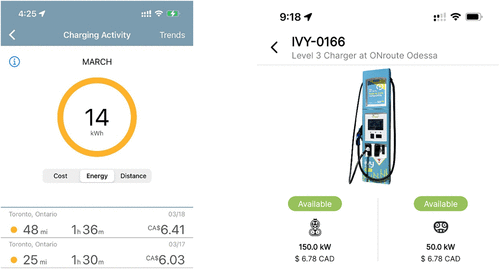
This is because most public chargers share power supply between several charging ports. In that specific case, a 6-kW charger has two ports, and it so happened that in the first charging session, shortly after one of the authors arrived and plugged into one port, another driver arrived and plugged into another. Since slow charging sessions are limited by power supply, the author’s vehicle charged only half as much as they anticipated it would. In the second charging session, the author’s vehicle was the only one plugged in, and hence it charged at full speed (of 6 kW/h) as anticipated.
At fast chargers, sharing of power also happens, but as we show in Section 3, somewhat surprisingly, it creates much less of a problem due to the intricate supply-demand relationship. However, hardware issues discussed above add to the charging speed anxiety. As the fast-charging screenshot on Figure 2 shows, a driver of a vehicle with a CCS port could charge at 150 kW, while a driver with a NACS (Tesla) port, can only charge at 50 kW—that is, three times slower. This is because the charger uses an adapter for NACS, which limits charge. Genuine Tesla Superchargers can charge at 150 kW and some of the newer ones even at 250 kW. The authors’ top charging speed record is nearly 1,500 km (∼1,000 miles) per hour, which lasted for just a few minutes, see Section 3 for more details.
Taken together, speed of charge is a yet additional source of anxiety, which is not existing for the gasoline vehicles. It would be unheard of for a gasoline car driver to start filling the tank but only fill half of it if another driver pulls over, or for some vehicles to fill-up at much faster rates than others.
2.5. Pricing Issues
Perhaps the most daunting source of anxiety is the cost of charging. Figure 2 already illustrates this with two slow charging sessions that each cost roughly six dollars, yet one session yielded twice the added driving range of the other. In effect, the driver received only half the energy they expected, while paying twice as much per added mile. The fast-charging screenshot reveals an even starker contrast: both the 50 kW and the 150 kW chargers are priced identically, $6.78 per 15 minutes, despite a threefold difference in power. This translates to a 3× difference in added miles per dollar spent. (Note: the screenshot is from Spring 2023; by Spring 2025, pricing has shifted to a flat rate per kWh.)
In both examples, users were charged based on the time spent plugged in, which may seem counterintuitive. A more natural approach would be to charge per kWh of energy delivered, as done by Tesla Superchargers and some other networks. However, pricing by time can serve a behavioral purpose: it encourages drivers to unplug their vehicles promptly once charging is complete, thus freeing up chargers for others. Two-part tariffs—which combine charges based on both time and kWh—have proven effective in other operational settings. They may offer a promising solution here as well, and such hybrid pricing models are beginning to be adopted in certain regions (see below).
Table 1 presents the summary statistics from five charging sessions in France in August 2023 for a Tesla model Y vehicle. As can be seen, the price differs from 0.45 to 1.85 EUR per kWh—a four-fold difference! Table 1 also translates these differences into the implied fuel economy of a vehicle. At 45 cents per kWh an EV driver is achieving the cost per mile that is unattainable with any ICE vehicle, but at 1.85 EUR per kWh, the author’s Tesla was akin to some of the largest and fuel(cost)-inefficient vehicles on the planet.
|

Table 1. Data for Five Charging Sessions in France in August 2023
| ID | Start | Duration | Energy (kWh) | Cost (EUR) | EUR/kWh | Added kma | L/100 km equiva | Equivalent ICE vehicle |
|---|---|---|---|---|---|---|---|---|
| 1 | August 7, 2023 14:13 | 12 h 33 min 2 s | 65.2 | 34.5 | 0.529 | 383.53 | 4.50 | Subcompact hybrid, Toyota Prius C |
| 2 | August 8, 2023 06:39 | 26 min 1 s | 16.041 | 7.35 | 0.458 | 94.36 | 3.89 | N/A |
| 3 | August 13, 2023 01:31 | 2 h 38 min 38 s | 18.989 | 11.47 | 0.604 | 111.70 | 5.13 | Standard hybrid, Toyota Prius |
| 4 | August 14, 2023 14:25 | 28 min 50 s | 3.52 | 4.82 | 1.369 | 20.71 | 11.64 | Large truck, Ford Explorer |
| 5 | August 16, 2023 12:39 | 1 h 42 min 20 s | 3.223 | 5.98 | 1.855 | 18.96 | 15.77 | Very large truck, Chevrolet Suburban |
aCalculation assumptions: Tesla Model Y with energy consumption 170 wh/km, Cost of conventional fuel 2 EUR/Litre.
Such an extreme price volatility is driven in part by the software issues discussed earlier. A situation is conceptually like the “in the network” versus “out of the network” pricing in the U.S. healthcare system. Charging aggregator apps provide its users access to many charging stations, but often on unfavorable conditions and at higher prices that one could obtain by subscribing to a local station’s app. We specifically investigated the last (most expensive) session, and two factors contributed to its very high cost: first, the aggregator app limited charging to only 3 kW (making it very slow) while the two-part tariff charged also for the time the vehicle was plugged in. Further, the tariff ended up being a “two-part” for the local app users, but for the “out of the network” users there also was a one-time connection fee, making it a “three-part-tariff”. While that was likely written somewhere (e.g., in small font) most drivers would find searching for such information and factoring it into their charging to be excessively troublesome. Especially if we contrast this with a near certainty in the cost of fueling a gasoline car.
We lastly note that there is much less price variability at Tesla’s own Superchargers or destination chargers. They charge per kWh, the prices are displayed on the car screen, and while they vary somewhat by the time of day and day of week (lower in the evenings and weekends), the variability is within several cents; for example, they were between 33 and 39 cents per kWh during the trip depicted in Table 1. Extrapolating the calculations from Table 1 this indeed makes the cost of driving a Tesla noticeably smaller than driving even the most fuel-efficient ICE vehicles.
To summarize, our experiences in driving EVs and charging them at the public charging stations in North America and Europe reveal a significant charge anxiety, which comes from five factors. (1) hardware issues: does the charger work and will the plug fit my vehicle, (2) software factors: will my app/card work at a specific charger, (3) location issues: is the charger conveniently located, (4) time issues: how long will it take to charge, and (5) price issues: how much will it cost to charge. Significant uncertainties exist on all five elements, and their combinations exacerbate the anxiety further.
Importantly, none of these uncertainties are present for the ICE (gasoline, diesel, etc.) vehicle drivers, and therefore they significantly impede the mass adoption of electric vehicles. Standardization of charging hardware and software, and system-wide planning to increase the convenient reliable access to charging infrastructure are necessary to overcome the anxiety.
Service science scholars already contributed to multiple aspects of electric vehicles adoption, and there are several additional questions that we explore next with the help of three data-driven analytical models. These questions help better understand charge anxiety, and assess the scale of the challenge that scholars, industry professionals and government officials face as they embark on reducing it.
3. Model 1: How Fast is Fast Charging?
As stated previously, time anxiety and, by association, also price anxiety, are driven by the interplay between demand (aka “acceptance rate”)—at what rate can the vehicle’s battery take power, and supply—at what rate can the charger provide it. For slow charging, the former is not an issue, and the anxiety is driven solely by supply. For fast charging, the situation is more intricate.
To start, imagine that a driver of an EV with a 75-kWh battery (think of a Tesla Model Y or a Long-Range Tesla Model 3) arrives at a 150-kW charger with 20% of charge and wants to charge up to 80%—a situation typically mentioned in automakers commercials. A naïve calculation would suggest that since the charger is providing 150/60 = 2.5 kW of power per minute, and the driver wants to charge (0.8 − 0.2) × 75 = 45 kW of power, this should take 45/2.5 = 18 minutes. The real number is about 50%–100% higher, even under the ideal conditions (temperature, etc.). Two factors contribute to this: one related to the battery technology and the vehicle itself, another related to the typical power-sharing design of charging stations.
3.1. Battery Technology Factors
Figure 3 plots the OEM-approved charge speeds from the experiments by Fastned, a charge network operator from Netherlands, for several representative vehicles. Other sources, authors, and models show conceptually similar results.12 With one noticeable exception (Ford Mach-E), the pattern is nearly identical: the maximum charging power (speed of charge, “demand rate,” etc.) is obtained only for a relatively narrow range of battery charge (“state of charge,” SoC) percentages, typically between 5% and 40% of charge. The speeds of charge outside this range are declining to zero essentially linearly.
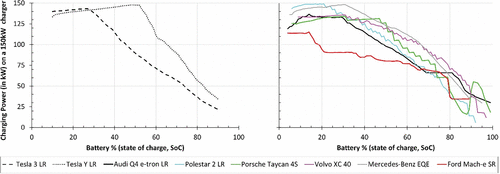
Note. Replotted using data from Fastned: https://support.fastned.nl/hc/en-gb/sections/4428932764573-Vehicles.
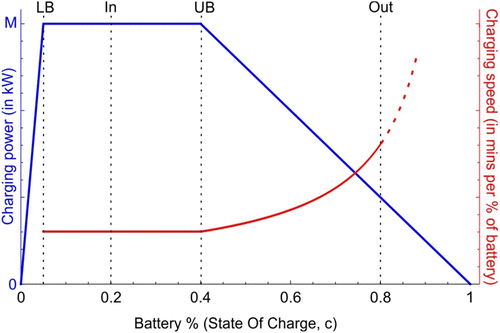
The left axis of Figure 4 formalizes this observation. The maximum charging power, , (speed of charge, acceptance rate, demand rate, etc.) is obtained between the lower and upper bounds, and , respectively, and is linear in SoC, , outside this range. Formally:
Then, the average charging power for a vehicle that arrived at the charger with of the battery and would like to charge up to is:
In our example, with , , and the average charging power is 116.67 kW—noticeably smaller than the nominal capacity of the charger of 150 kW. In contrast with slow charging, an important feature of fast charging is that the car may not be able to take all the power the charger is able to provide, and charging may be limited by the demand rate.
This observation has a direct implication on the time of charging. For a vehicle with the battery of kWh, the per-minute charging time is illustrated on the right axis of Figure 4 and the total charging time is given by:
In our example, with this integral returns the total time from 20% to 80% of ∼26 minutes, or nearly 50% more than the nominal charging time of 18 minutes. More so, of these 26 minutes, only 6 minutes are spent on charging at the nominal maximal rate of 150 kW. From earlier calculations, a 150-kW charger is supplying 2.5 kW per minute, and from Figure 4, the vehicle can take this rate of charge only from to , that is, for (0.4 − 0.2) × 75 = 15 kW of power, which are charged in 15/2.5 = 6 minutes. Equivalently, for 20 out of the 26 minutes that the vehicle charges, the speed of charge is not limited by supply, but rather by the “demand”—a striking contrast to slow charging where demand played no role.
3.2. Power Sharing Factors
We now turn to the second factor related to the typical design of charging stations: same as slow chargers, fast chargers share supply. A typical 150-kW charger would have between two and four ports, meaning that if multiple vehicles are plugged-in simultaneously, they do not get 150 kW each, but rather, they have the total of 150 kW shared between them. A naïve calculation might suggest that this should reduce the charging power proportionally. For example, with two vehicles—half the power, and hence double the charging time—as it was the case with slow charging (recall the left panel on Figure 2).
Fortunately, because of the supply-demand relationship discussed above, this is not the case. Intuitively, since most of the time a vehicle is plugged-in to the charger it demands less power than the charger’s nominal capacity, reducing the available supply has a smaller effect on the average charging speed and the total charging time.
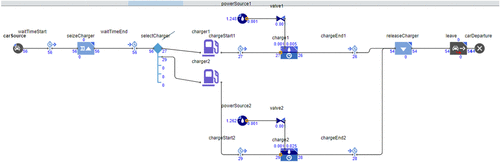
To analyze the charging operation, we created a discrete event simulation (a “digital twin”) of a charger with the total power supply of 150 kW that faces an arrival stream of EVs with 75 kWh batteries and charge curves as per Figure 4 and the previous example. We sampled each arriving vehicle’s battery percentage from and we similarly sampled each vehicle’s battery percentage from . The simulation was implemented in AnyLogic (https://www.anylogic.com/), the technical details are provided in the code appendix at the authors GitHub page at https://github.com/danforestell9/charge-anxiety. Figure 5 presents the schematic of a model with two charging ports (the schematic of the simulation logic is presented in the Appendix).
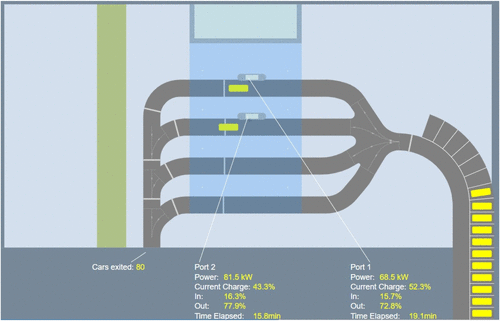
For the benchmark, we first simulated a one-port charger as due to Jensen’s inequality the analyzes of the average scenario above would give an under-estimate of the charging time with variable and percentages (intuitively, since charging from 80% to 90% takes more time than from 70% to 80%, the average would be higher). We observed that the average charging time indeed increased to ∼27 minutes with the 90% confidence interval (CI) of 19–37 minutes.
Next, we consider multiport charger(s). In all simulations, vehicles arrive, and wait in a FIFO queue. We assume that is takes a total of ∼4.5 minutes to drive to an available port, park, plug, pay, and then unplug and drive out once the charging is complete. See Figure 5 for the schematic.
3.3. Base-Case Model: Static vs. Dynamic Power Sharing
We first investigated two power sharing regimes in the context of a 2-port charger. A “static” sharing means that the total 150 kW supply is split into two 75-kW power supply provided exclusively to each port. A “dynamic” power sharing means that the charger splits the available power in proportion to the demands placed by the two ports. For example, if one port demands 150 kW and another demands 100 kW, then the total available supply of 150 kW will be spit such that port 1 receives 150/(150 + 100) = 60% of supply, or 90 kW, and port 2 receives 40%, or 60 kW. Importantly, the demands depend on the battery percentages (SoC) of the vehicles at the two ports and they change dynamically as the charging progresses per the relationship on Figure 4.
We increase the arrival rate of the vehicles up to a point when the system becomes overloaded. The arrival rate is assumed to be constant (an extension when arrival rates vary by the time-of-day is provided in Section 5) throughout the simulation run, where each iteration lasts 24 hours with a warmup period of 6 hours. Fifty iterations were run for arrival rates in the increments of 0.05.
Figure 6 presents the charging and waiting times as a function of arrival rate. That the waiting times skyrocket as the utilization reaches 100% is expected. It is likewise intuitive that the dynamic power sharing will outperform static; the effect size, though, is surprising—dynamic power sharing results in charges that are 33%–50% faster, and therefore accommodates ∼25% higher arrival rates. The least expected result is that with dynamic power sharing being fully-loaded has rather small impact on charging time. At near-zero utilization, when the entire 150-kW supply is available to one vehicle, the charging time is ∼27 minutes on average, but at 100% utilization, or when the 150 kW is split between two charging ports the charging time grows only by about a fifth, to ∼33 minutes. The variance of the charging time also stays essentially unchanged.13 The following observations summarize the results.
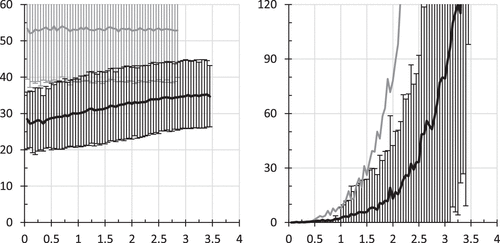
Dynamic power sharing in a 2-port fast charger dramatically reduces average charge times versus static power sharing.
Figure 7 presents the utilization of the charger, which (for dynamic sharing) one can view in two ways. First is the probability of whether a charging port is occupied when a new vehicle arrives (akin to the fill-rate in inventory problems); nonsurprisingly, as utilization grows, it increases. Second is the power drawn from the charger.
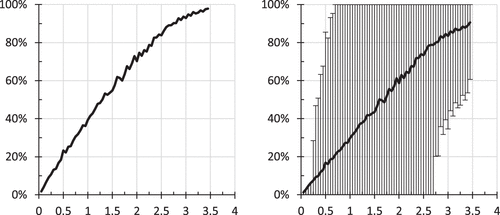
At full utilization, a 2-port charger with dynamic sharing uses ∼90% of nominal power.
To summarize this subsection: fast charging is significantly slower than the nominal speed, and this is driven by both the demand and supply effects. On the demand side, the physics and chemistry are such that a battery can charge at the nominal rate only over a rather narrow range of charging percentages, and the majority of charge time is spent at significantly slower charging powers and speeds. On the supply side, the charger’s advertised nominal power is usually shared between several charging ports; however, the demand effect makes such sharing less detrimental to the charging time at fast chargers as at slow chargers discussed earlier. The first effect makes realistic “fast” charging ∼50% slower than the nominal speed, but dynamically sharing fast charger power supply between two charging ports slow it further by only ∼25% even when the system is at full capacity, in which situation the average power drawn (by two ports) is still ∼10% below the charger’s nominal capacity.
3.4. Extensions: 2-Port vs. 4-Port Chargers, and the Role of Charger-Side Battery
Motivated by the last observation, that is, that a fully loaded 2-port charger still leaves ∼10% of power supply unused, on average, we next study two extensions.
Extension 1 is a situation when the same power supply of 150 kW is shared between 4 rather than 2-ports. Intuitively, a 4-port charger could better utilize the ∼10% of power left unused by a 2-port one.
Extension 2 is a situation where the charger is paired with a battery. Intuitively, the battery could supply additional power when the total demand exceeds supply, yet from the earlier observations, even at full utilization, due to demand effects, supply occasionally exceeds demand and such extra supply could be used to charge the battery. For an example of such system, consider the ChargeBox System14 by ADS-TEC Energy, a German firm that develops and produces battery-based platform solutions for the energy industry. The system, shown on Figure 8, consists of a 140-kWh battery (“box”) that can be connected to one 320-kWh or two 160-kWh charging ports (“dispensers”).
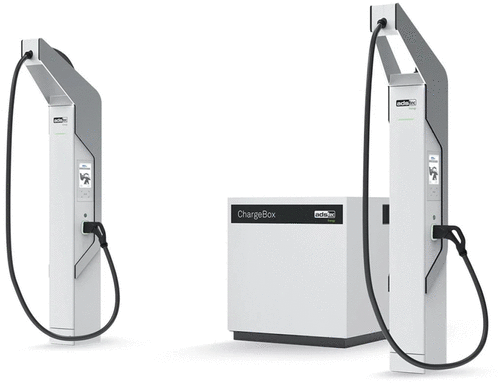
Source. Accessed April 6, 2025. ads-tec Energy plc, https://www.ads-tec-energy.com/products/charging/system.
An important parameter of such a battery-supported charger is the so-called “c-factor” (aka c-ratio) measuring how fast a battery discharges; a c-factor of 1 means that the battery can fully discharge within one hour; for example, see 5.6.1 in Linden’s Handbook of Batteries (Beard and Reddy 2019). Depending on the battery use-case, c-factors range from 0.1 (e.g., long-term grid-scale storage) to over 5 or more (e.g., power tools). For illustrative purposes we assume a c-factor of 2; while this is not explicitly stated, from ADS-TEC Energy’s website we infer that their system has a c-factor of ∼1.5. Further, we considered a “small” 25-kWh battery and a “large” 75-kWh battery; at c = 2, they can provide 50 and 150 kW of power, respectively, for 30 minutes. For simplicity, we also assume that the battery can charge with a c = 2 and that it follows the charging curve as on Figure 4 (in other words, it charges like the car battery in our simulation). We assume that only the excess power not demanded by the vehicles can be used to charge the battery.
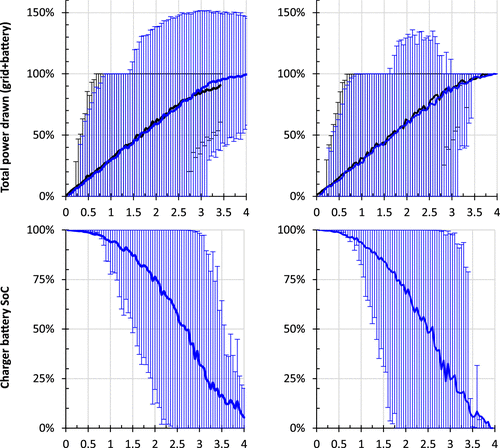
Taken together, we consider six configurations: 2- versus 4-port systems and no, small, or large batteries. For conciseness we exclude the small battery results from the figures, but comment on them in text when suitable. Figure 9 presents the customer-facing metrics of the system: charging time and waiting time (the total service time = charging + waiting times is not shown). Figure 10 presents the back-end metrics: the power drawn (from the grid and the battery, when available) and the battery state-of-charge (SoC).
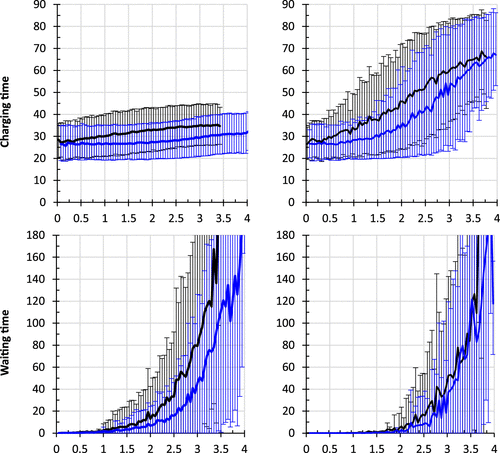
Battery “flattens” the charge times curves and extends the range of feasible arrival rates.
The effects are more pronounced for the 2-port system; for the 4-port system, flattening is only observed at lower arrival rates. Batteries can be a useful solution to boost peak capacity during (irregular) charging events; at high arrival rates, the 4-port system has little excess power supply which leaves little power to keep the battery well-charged and consequently a battery makes little difference, see also Observations 5 and 6. Overall, the battery has less impact in the 4-port system.
Charging times are lower for the 2-port system, waiting times are lower for the 4-port system, total service times are lower for the 4-port system.
The first two effects are intuitive; the third one occurs because the 4-port system has a higher effective demand and hence utilizes more of the available power; see Observation 5. The waiting and, consequently, the total times, are highly volatile. Battery reduces volatility, especially at low arrival rates, when it is well-charged, but has less of an impact at high arrival rates, see Observation 6.
Equipping a charger with a battery or increasing the number of ports allows to fully utilize the available power supply at high arrival rates.
As can be seen on the top panel of Figure 10, while the base-line 2-port no battery system shown on Figure 7 (and duplicated by the black line on Figure 10), draws only about 90% of the nominal power supply, on average, the amount is close to 100% at high utilization with battery or 4 ports. With battery, we observe plateaus at over 100%, corresponding to situations when the both the grid and the battery power supply are fully used. Such plateaus disappear at high arrival rates as the battery is frequently empty.
With 4-ports, the excess power is insufficient to charge the battery at high arrival rates.
As can be seen on the bottom panel of Figure 10, at high arrival rates, the battery is less than 25% charged even on average. Further, while for consistency, we plot 90% CI, data show that the battery has zero charge in more than 40% of instances in such cases.
To summarize this section, using data about EV charge curves provided by an industry partner, we built a simulation model to analyze the performance of a fast charger. Observations 1 and 2 summarize the findings from the base-case model: fast charging is significantly slower than the nominal rates suggest, but such “slow fast charging” enables dynamic power sharing of power supply which drastically reduces charging and waiting times, while underutilizing the available power. Observations 3–6 explore two extensions aimed at better utilizing the available power: sharing power with more ports, and coupling a charger with a battery. Our findings suggest that while a battery generally helps to “flatten the curve,” these two approaches are somewhat in conflict. At high arrival rates a system with more ports leaves little available power to charge the battery, making the battery less useful.
4. Model 2: How Many Fast Chargers Do We Need to Match the Highway Gasoline Refueling Infrastructure (and How Close to That Are We Now)?
In the previous section we established an average charging power and time at a fast charger. We now ask: how many of them might we need? We answer this question in two ways: first, in this section, using a “back-of-the-envelope” Little’s Law calculation based on the nominal throughput; second, in the next section using the data from an industrial partner based on the actual throughput learned from data.
For both questions, consider a typical highway service station that are common in Canada and in Europe, and in some U.S. states (e.g., on the I-95 highway in Maryland). Such service stations typically contain a gas station, a rest area with several restaurants, and, as of recently, they also have EV chargers. We emphasize that our analysis considers highways and does not extend to the neighbourhood charging infrastructure: EVs can charge at home, work, restaurants or shopping centers which naturally reduces the need for centralized charging infrastructure for local commute. But for long intercity trips, the centralized fast charging that we analyze is critical.
As a prototypical example, consider ONroute service centers along highway 401 in Ontario, Canada. They have 8–16 pumps per station; for illustrative purposes we consider 12. On average, it takes 5 minutes to fill a gas tank,15 and an average car’s tank is 55 litres.16 Further, an average North American car has a fuel economy of 8.6 litres/100 km,17 meaning that in 5 minutes a driver can refuel an equivalent of 55/8.6 × 100 = ∼640 km of driving range. At the peak load and 100% utilization, each pump can do 60/5 = 12 times that, or 7,680 km/h, and the entire 12-pump station refuels 92,160 km per hour.
From the analyses in Section 3, at full-utilization, the “base-line” 2-port 150-kW charger draws power at a rate of ∼135 kW/h. An average EV consumes 196 Wh per km18 (Tesla Model 3 and Y are somewhat better, with consumption of ∼150–170 Wh/km), meaning that the base-line charger supplies on average 135/196 × 1,000 = ∼690 km of driving range per hour (technically, this range is split between multiple vehicles, which will be in important in the next section, but is not important here).
By Little’s Law, to obtain an hourly throughput of ∼90,000 km/h representative of a typical 12-pump gas station, one would need 92,160/690 = ∼130 “base-line” 2-port 150-kW chargers.
The ONroute stations currently have … four. In other words, the scale of the current EV infrastructure is two orders of magnitude behind the gasoline one. This observation is consistent with other similar studies. A 2023 MIT Technology Review report states19 that “[t]here are only about 130,000 public chargers currently installed across the [US], and just a small fraction of them are fast chargers” and that while “[t]hat’s a 40% increase since 2020 … it’s still not enough. We’ll need to build millions of new chargers within a decade.” S&P Global estimates20 that “2.13 million Level 2 and 172,000 Level 3 public chargers will be required—all in addition to the units that consumers put in their own garages” (their number is estimated21 to be 17 million). Curiously, Tesla’s largest Supercharger is expected to have over 160 stalls.22 To our knowledge, only one such station is planned; 12-pump gas stations are commonplace.
130 chargers each delivering 135 kW of power on average require a total supply of ∼17.6 megawatts (MW) of power.
Various sources suggest that 1 MW is equivalent to the average power consumption of 400 and 900 homes,23 making one highway charging station’s peak electricity demand equivalent to the average of ∼20–40,000 homes, a small town.
Connecting this to the earlier discussion of location issues, such a bewildering power supply and infrastructure would need to be available anywhere highway gas stations currently are—as they have evolved into an equilibrium between the demand for gas and the profits from supplying it and the related services, such as peripheral sales in convenience stores and food & beverage outlets. An alternative is to reconsider the equilibrium: EV drivers will respond to the availability of charging infrastructure and should it become overly congested, the benefits of owning an EV will decline, impeding the transition to electrified transport. Studying such an equilibrium is of interest for future research.
At the same time, this analysis considers the maximum throughput (peak-load) situation. Next, we extend this analysis to the realistic vehicle arrival patterns estimated from the industry partner data.
5. Model 3: What Size of the System One Would Need and What Performance Can One Expect Under Realistic Arrival Patterns?
First in Section 5.1 we estimate realistic arrival patterns from the industry partner data. Then, in Section 5.2 we present the analyses with the “base-case” settings from the previous sections, that is, when vehicles with 75-kWh batteries and change curves as per Figure 4 with M = 150 kW arrive to a 2-port charger that dynamically splits the available 150-kW power supply with or without a 75-kWh charger battery. Finally, in Section 5.3 we present extensions that depict a likely progression of the charging infrastructure and vehicle technology in the near future when chargers have a 300-kW power supply that is dynamically allocated to vehicles with M = 300 kW, and the arrival patterns are adjusted for the home and destination charging, and an emerging proliferation of fast chargers at highway rest-stops.
5.1. Data Analyses: Estimating Realistic Arrival Patterns
As stated earlier, we partnered with Canadian Tire Petroleum (CTP), which operates a network of gas stations at the ONroute service centers along Ontario Highway 401. CTP provided us data about all ONroute refueling transactions in 2023 and 2024. The data contain: station and pump IDs, number of transactions, litres, and kind of fuel (e.g., diesel, regular, etc.) for each 10-minute interval of these two years. The data are confidential, but sharing results presented below has been approved by CTP.
The ONroute stations are located at different points along Highway 401 and the arrival patterns they experience are similar with two exceptions. First, some stations are larger than others and hence see more transactions, both in total and per pump. Second, the arrival patterns may be shifted in time; for example, a station an hour further away from a major city may start peaking an hour later than a closer one. Given this similarity we performed the analyzes for a single randomly-selected station.
Figure 11 depicts the time-series for the number of transactions per pump for December 2024 at that station (correlation between transactions and litres is essentially 100%). Two effects are evident: (i) the natural daily seasonality is observed (very few arrivals at night, peak in the afternoon), and (ii) the number of arrivals per day differs significantly. Given the latter, to balance practicality and realism of our analyses we clustered days by their arrival patterns. We tried two methods: (i) time-series clustering using dynamic time warping (DTW; Sakoe and Chiba 1978), and (ii) k-means clustering based on a five-dimensional vector of percentiles of daily arrivals. Both methods gave similar insights; the results below are for k-means. With both methods, using elbow plots, the optimal number of clusters was three.24
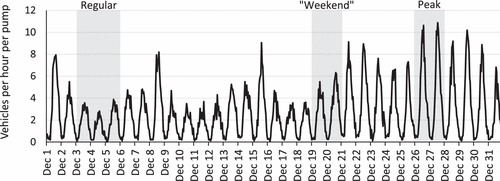
For the ease of explosion, we labeled the three clusters as “Regular” (∼41% of days in a year) “Weekend” (∼37%) and “Peak” (∼21%) days; see Figure 11 for examples. Three observations stood-out: (i) in many weeks, the “Weekends” also include Fridays, (ii) Peak days do not occur in isolation; streaks of up to four peak days were observed, (iii) since clustering is done on a five-dimensional vector of percentiles of arrivals, a sharp isolated spike in arrivals (like on December 1525 on Figure 11) may not necessarily classify a day as “Peak”.
Our data contain arrival rates for each 10-minute interval of each day. However, running a simulation with that granular of a data seemed impractical, and we therefore fit our data to a three-rate hourly arrival pattern (L/M/H) for each day type so that to minimize the sum-of-squares difference between the actual and fitted values. Figure 12 presents the results. The starts, ends, and consequently also the durations of each of the rates are the same for all day types. “Low” arrivals are observed from 22 h (10 p.m.) the day before to 7 h in the morning of the day after, “High” arrivals are observed 10–18 h, and “Medium” arrivals are observed otherwise. Day types differ in the arrival rates during the L, M, H hours, which are also shown on Figure 12.
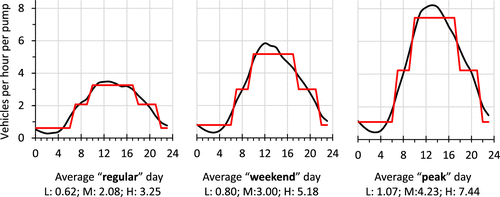
Note that the high arrivals “regime” lasts for 8 hours, which is quite different from other peak arrival environments such as lunch hours or rush hours. More so, the arrival rate could reach ∼8 vehicles per hour per pump on a peak day. Remembering that fueling a vehicle takes on average about 5 minutes (meaning that the theoretical throughout of a pump is about 12 vehicles per hour not including parking, paying, and identifying an available pump at a busy gas station), this suggests that on peak days ONroute gas stations are very highly utilized, and for significant stretches of time. As we will see next, this will have significant implications for the operation of fast charging stations.
5.2. Base-Case Analyses Using Current Arrival Patterns
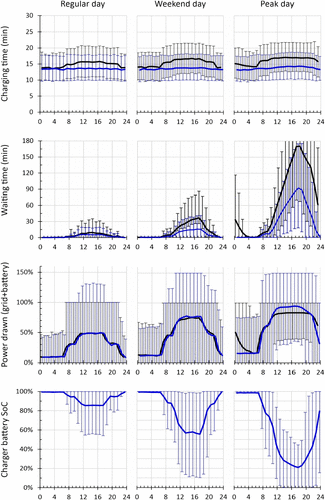
We now extend the simulation developed in Section 3 for time-homogeneous arrival rates to time-dependent arrival rates estimated above. An implicit assumption so far is that the arrivals of EV drivers will show the same time-pattern as of the ICE drivers; whether that will be the case is an interesting question for future research. 500 days of each type were simulated with six hours of low arrivals warm-up preceding data collection. Figure 13 presents the results, which we summarize below:
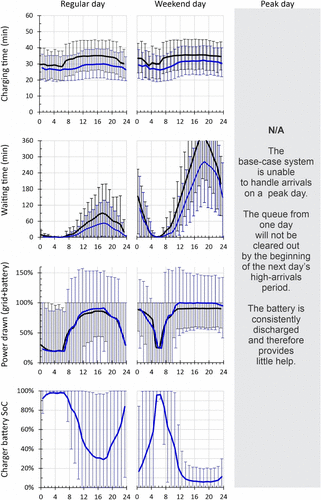
Note. Blue lines refer to the system with the battery, and black to the system without.
A 2-port “base-case” charger (that mimics a typical current fast-charger) will be:
able to accommodate arrivals to a regular day, but with impractically long wait and queue
able to accommodate arrivals on a weekend day, but with unacceptably long wait and queue
unable to accommodate arrivals on a peak day (technically, the queue from one day will not be cleared out by the beginning of the next day’s high-arrivals period)
For a 2-port “base-case” charger, the battery is of limited use, especially on the weekend day when it is mostly discharged (i.e., the excess power supply is insufficient to keep it charged).
5.3. Extensions: More Power, Faster Charging, Home, Destination and Rest-Stop Chargers
Given the inability of the base-case charger to mirror a single gas-station pump during peak days, we analyzed three nested extensions which gradually progress from the base-case situation in Section 5.2 to one depicting a likely evolution of the charging infrastructure and vehicle technology in the near future.
First is the case, when instead of a shared 150-kW power supply, each of the two ports receives its own 150 kW of power. The total power supply to the charger is 300 kW in this case but because each vehicle demands at most M = 150 kW, power sharing and the battery are redundant in this case. We note that such a dedicated power supply is required in some markets (e.g., UAE; source: industry contacts). The results (not shown on figures) are qualitatively similar to the base-case Figure 13.
Providing dedicated 150 kW of power to each port (while vehicles can still demand up to M = 150 kW) improves regular and weekend day performance, but still cannot handle peak days.
The wait-time for the weekend days is essentially halved to 180 minutes at the maximal value; further, the queue clears by midnight. Overall, while the performance improves dramatically, such a system is still impractically slow on the weekend days.
Second is a case when the charger’s supply is 300 kW but the vehicles can also demand up to M = 300 kW; the supply is dynamically shared between the two ports, and the battery matters. Figure A2 in the Appendix presents the results and two observations are in order:
300kW power and charging make regular and weekend charging experiences comparable to gas refueling, and can handle peak days, although with impractically-long wait-times.
A battery noticeably improves performance of the system. With 300 kW supply, the occasional “under-demanded” power (incl. during the park-and-plug “breaks” between arriving vehicles) is sufficient to keep the battery charged enough to be useful.
Third, is the case when we also adjust the current arrival rates (of the ICE drivers) to account for home and other forms of charging which reduce the effective load on the highway service centers.
We obtain the distribution of driving distances from the U.S. Bureau of Transportation Statistics’ (BTS) National Household Travel Survey.26 For example, the data show that 47.7% of all trips are between 50 and 99 miles (approximately 80–159 km), with an average of 120 km. The survey reports only minor differences—typically within a few percentage points—between holiday and nonholiday travel, which we disregard for the purpose of this simulation.
Next, we calculate the average driving range between refuels for an ICE vehicle. Assuming an average fuel tank capacity of 55 litres, an average fuel consumption of 8.6 L/100 km, and a 10% safety buffer, the range equals 55/8.6 × 100 × 0.9 = 576 km.
Combining these two data points and assuming that ICE drivers typically start trips without refueling—given the abundance and convenience of gas stations—we estimate that for 47.7% of all trips, drivers would refuel 120/576 = ∼0.21 times. Repeating this logic across the full distribution of driving distances, we compute that the average number of refueling stops per ICE-vehicle trip is 0.663; see Figure 14(a).
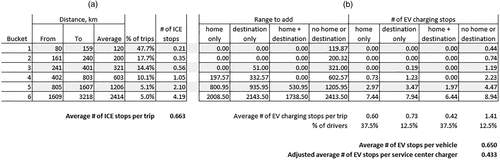
Notes. (a) Calculations for ICEs. (b) Calculations for EVs.
To perform a similar, in-spirit calculation for EVs, we incorporate two additional types of data. First, because EV charging is less frictionless and less ubiquitous than refueling for ICE vehicles, we assume that EV drivers who can do so will charge at home and/or at their destination, when available. In the absence of BTS–quality data on the prevalence of these charging options, we adopt what we believe are reasonable assumptions: 75% of EV drivers have access to home charging, 50% of destinations offer destination charging, and the two are independent. We vary these parameters for sensitivity analysis; see Figure A3 in the Appendix.
Second, EV chargers can be installed in more diverse locations than gas stations. As a result, the effective arrival rates at highway service centers (which typically coincide with gas stations) will be lower, since EV drivers can also charge at additional facilities. While precise data on the average availability of such facilities are limited, an example from VINCI, a major highway operator in France, indicates that along the A10 autoroute, the number of additional chargers outside gas-station service centers corresponds to approximately 50% of those located at service centers.27
We next combine these data with the assumptions used throughout the paper for EV driving and charging: a highway range of 450 km, a 10% safety buffer, a fast-charging depth of 60%, and an equivalent added range of 270 km. Together, these assumptions imply that the average number of charging stops at highway service centers (colocated with gas stations) is 0.433; see Figure 14(b).
Interestingly, before adjusting for the availability of non-gas-station chargers, the number of charging stops was 0.650—nearly identical to that of ICE drivers. In other words, the presence of home and destination chargers effectively offsets the shorter range of EVs across the entire trip distribution. The EV drivers who rely on highway service centers for charging are therefore disproportionately those taking longer trips and those without access to home or destination charging.
We finally adjust the arrival rates from Figure 12 by 0.433/0.663 = ∼65% and rerun the simulation. Figure 15 presents the results, which are summarised in the following observation:
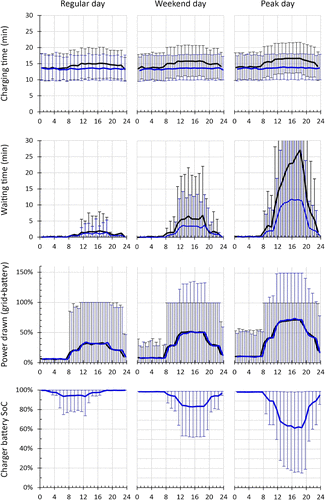
Note. Blue lines refer to the system with the battery, and black to the system without.
After accounting for home, destination, and off-service-center charging, a 300-kW power and charging make charging experiences on all day types generally comparable to gas refueling; with occasional waits on the order of 30 minutes on peak days. In line with Observation 14, battery continues to noticeably improve system performance.
To conclude this section, we extrapolate the results obtained here (by drawing an analogy between a single gas pump and a 2-port charger) to the station-level takeaways. Based on Little’s law, Observation 7 states that to match the a typical 12-pump gas station one would need 130 2-port 150-kW chargers with the average power drawn of ∼17.6 MW. That, however, refers to the theoretically maximal throughout of the station. The analyses in this section show that practically-relevant arrival rates require fewer pumps and less power.
With 300 kW charging, a two-port charger is generally equivalent to a single gas pump for all days. Taking the average power drawn on each day type from Figure 15 as 40%, 28%, and 19% on the peak, weekend, and regular day, respectively, and weighing by the relative frequency of such days (21%, 37%, and 41%), the global average power drawn would be ∼80 kW and the station would require 80 × 12 = 0.92 MW of power on average, with the maximal power drawn of 300 × 12 = 3.6 MW.
These numbers are approximately three-to-four times smaller than the Little’s Law-based results from Section 4. This is not surprising—the average “implied” arrival rate at the theoretically-maximal gas station throughput is ∼12 vehicles per hour per pump, while the average arrival rate even on a peak day is ∼4 which is further adjusted down to ∼3 to account for home, destination and off-service-center charging. Allowing for occasional queues and utilizing the excess power for the charger’s battery further smooth demand and thus reduce the required scale of the installation and maximal power supply to a more manageable level.
6. Discussion and Opportunities for Future Research
In this paper, we use a multimethod approach to study the state of public EV charging infrastructure. First, we conduct case research by documenting our own experiences from multiple EV trips across North America and Europe. Second, we develop simulation models (aka “digital twins”) that incorporate insights from the case research and data provided by two industry partners. We summarize our findings in six key insights, each offering opportunities for future research.
Insight 1: Charge anxiety, not range anxiety, may be the dominant concern among current EV drivers. While range anxiety has been the focus of many early operations management studies, we find that drivers surrounded by multiple public chargers worry less about range and more about the experience of charging itself. This infrastructure-centric reframing of the EV adoption challenge opens new questions for service science. We also observe that range and charge anxiety apply at different stages: range anxiety may deter potential adopters, while charge anxiety affects those who already drive EVs. How significant a deterrent is charge anxiety for adoption? How can realistic expectations around charging be communicated to prospective buyers? And so on.
Insight 2: Charge anxiety has five dimensions. (1) hardware compatibility, (2) software/payment interoperability, (3) charger location convenience, (4) time required to charge, and (5) charging cost. Reducing anxiety along each of these axes is a promising direction for research. For instance, how can we design reservation systems, price mechanisms, or information interfaces to improve the reliability and usability of the charging experience? Etc.
Insight 3: Fast charging is fast only in a narrow state-of-charge window. Outside that range, charging speeds fall off significantly. This calls for smart charging policies. Should we, for example, “burst charge” vehicles that can absorb power rapidly and then rotate power back to others? Should pricing reflect actual charging speed? Could behavioral insights guide better scheduling and pricing? And so on.
Insight 4: Power-sharing and charger-side battery can significantly improve system performance. Since EVs do not consistently draw peak power, fast chargers often operate below capacity. Sharing power dynamically between ports can significantly reduce charging times. Supplementing this with small on-site batteries further flattens demand peaks, making system performance more robust. Future research could explore optimal power-sharing protocols, charger-battery integration, and scaling strategies for such hybrid infrastructure (e.g., should such batteries be installed locally or at a utility). Etc.
Insight 5: Replicating gas station throughput would require massive infrastructure expansion. Matching the throughput of a today’s gas station would demand one or even two orders of magnitude more chargers—and more dauntingly, a vast increase in power supply. This raises feasibility issues and operational challenges that urban planners and utilities must address; additional research can focus on balancing operational requirements of the charging infrastructure with realistic constraints and limitations of the grid.
Insight 6: Accounting for real driver behavior offers a more nuanced picture. Our analysis suggests that a single next-generation 2-port fast charger (at the cutting edge of what is available today, and about twice as fast as most current ones) is approximately equivalent to one gas pump—though with somewhat longer wait times. While typical delays will remain small, peak-day congestion could lead to half-an-hour waits. Mechanisms to shift charging demand out of peak windows are essential questions for future research. More broadly, we may need to rethink the mobility equilibrium: today’s infrastructure and behaviors evolved under ICE conditions. As charging alters key cost-benefit parameters, a new equilibrium will likely emerge—affecting driving habits, vehicle ownership, and infrastructure design. During the transition, however, society may experience a temporary welfare dip due to the inefficiencies of operating dual infrastructures, possibly triggering public resistance. Synchronizing infrastructure deployment with EV adoption rates is therefore a critical challenge for policymakers and a fruitful research direction.
Finally, future research should also explore how charging infrastructure might evolve alongside changing user behavior. For example, since EV charging takes longer than fueling, station operators may need to redesign retail environments to capitalize on longer customer wait times. The timing of charging may also shift: commuters may prefer evening sessions over morning ones, while professional drivers may favor off-peak charging. These behavioral patterns will shape charger demand and present rich questions for both researchers and practitioners.
In sum, transitioning to electric mobility is essential for deep decarbonization, and EV charging plays a pivotal role. We hope our observations, models, and insights will inspire further research and help accelerate this transition. At the same time, alternative pathways—such as hydrogen vehicles and autonomous charging—also deserve attention. Designing infrastructure with these future technologies in mind is likewise a promising area for future research.
The authors thank the following individuals and organizations: (1) Luc Bronk and Georg Schmidt-Holzmann from Fastned, an Amsterdam-based operator of a renewable energy-powered EV charging network, for providing the charge curve data; (2) Canadian Tire Petroleum (CTP), a retail company that operates a network of gas stations at the ONroute service centers along Ontario’s Highway 401, for the vehicle arrival data; and (3) Klaas Mantel, COO of ADNOC Distribution and former leader of McKinsey’s Mobility Retail Service Line, for the insightful conversations and feedback on the article.
Appendix
Note. Blue lines refer to the system with the battery, and black to the system without.
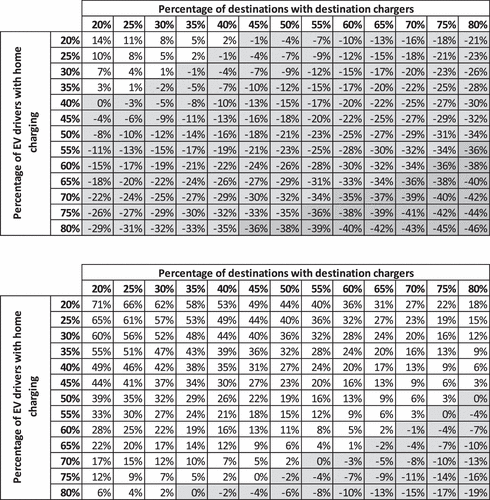
Notes. The light-gray shaded area represents negative numbers, when the effective arrival rates of EVs are smaller than ICEs, meaning that the system performance will be better than that on Figure A2. The dark-gray shaded area represents numbers less than −35%, meaning that the system performance will be better than that on Figure 15.
2 In March 2025, BYD, a Chinese automotive company introduced a megawatt (1,000 kW) charger, but its availability is very small, as is the set of EVs that can charge at such speeds. https://www.byd.com/mea/news-list/byd-unveils-super-e-platform-with-megawatt-flash-charging.
4 Accessed March 27, 2025, https://www.consumerreports.org/cars/hybrids-evs/most-common-ev-charging-problems-and-how-to-avoid-them-a1108537217/.
5 https://eur-lex.europa.eu/legal-content/EN/TXT/PDF/?uri=CELEX:32014L0094&from=en.
7 https://www.digitaltrends.com/cars/ev-companies-using-tesla-nacs-charging-connector/.
8 https://www.sae.org/news/press-room/2023/06/sae-international-announces-standard-for-nacs-connector.
10 See (1) https://www.consilium.europa.eu/en/press/press-releases/2023/07/25/alternative-fuels-infrastructure-council-adopts-new-law-for-more-recharging-and-refuelling-stations-across-europe/?utm_source=dsms-auto&utm_medium=email&utm_campaign=Alternative+fuels+infrastructure%3a+Council+adopts+new+law+for+more+recharging+and+refuelling+stations+across+Europe (2) https://data.consilium.europa.eu/doc/document/PE-25-2023-INIT/en/pdf (3) https://www.theverge.com/23806690/eu-ev-fast-charger-60km-law-regulation-requirements.
11 The regulation mandates that charging stations along the TEN-T “core” road network—the most important roads linking major cities and nodes—should be capable of at least 400 kW of total output by December 31, 2025. This includes having at least one charging point capable of an individual output of at least 150 kW. By December 31, 2027 the regulation requires at least 600 kW of total output and the same individual charging point requirement of at least 150 kW. https://www.theverge.com/23806690/eu-ev-fast-charger-60km-law-regulation-requirements.
12 For example see: (1) https://www.gridserve.com/2023/02/17/what-is-an-electric-car-charging-curve/ (2) https://www.fastcharge.email/p/ev-charging-curves-and-why-they-are and (3) https://conormclaughlin.net/2023/02/visualizing-electric-vehicle-ev-charging-curves/.
13 More precisely, there are two sources of variance: the characteristics of the focal vehicle at a given charging port and the state of the other vehicle plugged into the paired port (with which the power is shared). A high IN SoC and a low OUT SoC, coupled with no vehicle at the other port, will result in shorter charge times; the opposite configuration will lead to longer ones. The variance due to the focal vehicle is constant, but the variance due to the second port depends on the arrival rate: it is minimal at low arrival rates (the second port is usually free) and also minimal at high arrival rates (the second port is always occupied). As a result, the combined variance peaks at intermediate arrival rates.
14 See: https://www.ads-tec-energy.com/products/charging/system (Accessed April 6, 2025).
15 https://www.api.org/oil-and-natural-gas/consumer-information/consumer-resources/staying-safe-pump#:∼:text=It%20may%20be%20a%20temptation,be%20discharged%20at%20the%20nozzle and https://gasanswer.com/how-long-take-refuel-gasoline-car/.
18 https://ev-database.org/cheatsheet/energy-consumption-electric-car.
20 https://press.spglobal.com/2023-01-09-EV-Chargers-How-many-do-we-need.
22 https://electrek.co/2024/02/12/tesla-plans-new-worlds-largest-supercharger-future-of-charging/.
23 (1) https://www.betterhomelab.com/how-many-homes-can-1-mw-power/ (2) https://www.nrc.gov/docs/ML1209/ML120960701.pdf (3) https://www.globaldata.com/data-insights/macroeconomic/average-household-size-in-canada-2096121/#:∼:text=Size%20in%20Canada-,Canada%20had%20an%20average%20household%20size%20of%202.51%20people%20in,2021%2C%20between%202010%20and%202021.
24 For the overall data, the optimal number of clusters was five, however, some clusters are present predominantly at a subset of stations; for example, station X might mostly have clusters 1, 2, 3, while Y might have mostly 3, 4, 5, etc.
25 The December 15 spike might be an artifact of an accident that restricted the flow of vehicles along the highway and hence resulted in a temporal smaller than usual arrivals to the “next” station followed by a likewise temporal spike once the accident scene cleared and the flow resumed.
26 Accessed November 7, 2025, https://www.bts.gov/topics/national-household-travel-survey.
27 Accessed November 7, 2025, https://www.vinci-autoroutes.com/fr/actualites/services-et-aires/bornes-electriques-autoroute-a10/.
References
- (2021) Adoption of electric vehicles in car sharing market. Production Oper. Management 30(1):190–209. Crossref, Google Scholar
- (2014) Electric vehicles with a battery switching station: Adoption and environmental impact. Management Sci. 61(4):772–794.Link, Google Scholar
- Beard KW, Reddy TB, eds. (2019) Linden’s Handbook of Batteries, 5th ed. (McGraw-Hill, New York).Google Scholar
- (2015) The impact of demand uncertainty on consumer subsidies for green technology adoption. Management Sci. 62(5):1235–1258.Link, Google Scholar
- (2022) Climate Change 2022: Mitigation of Climate Change. Contribution of Working Group III to the Sixth Assessment Report of the Intergovernmental Panel on Climate Change. IPCC: Intergovernmental Panel on Climate Change.Google Scholar
- (2015) Toward mass adoption of electric vehicles: Impact of the range and resale anxieties. Manufacturing Service Oper. Management 17(1):101–119.Link, Google Scholar
McKinsey & Company (2023) What Norway’s experience reveals about the EV charging market. https://www.mckinsey.com/industries/automotive-and-assembly/our-insights/what-norways-experience-reveals-about-the-ev-charging-market.Google Scholar- (2021) Accelerating vehicle fleet turnover to achieve sustainable mobility goals. J. Oper. Management 69(1):36–66.Crossref, Google Scholar
- (2020) A survey-based assessment of how existing and potential electric vehicle owners perceive range anxiety. J. Cleaner Production 276(2020):122779.Crossref, Google Scholar
- (2019) A smart-city scope of operations management. Production Oper. Management 28(2):393–406.Crossref, Google Scholar
- (2015) Coordinating pricing and supply of public interest goods using government rebates and subsidies. IEEE Trans. Engrg. Management 62(1):65–79.Crossref, Google Scholar
- (1978) Dynamic programming algorithm optimization for spoken word recognition. IEEE Trans. Acoustics Speech Signal Processing 26(1):43–49.Crossref, Google Scholar
- (2021) Smart charging of electric vehicles: An innovative business model for utility firms. Manufacturing Service Oper. Management 24(5):2481–2499.Link, Google Scholar
- (2022) Coping with spatial mismatch: Subsidy design for electric vehicle and charging markets. Manufacturing Service Oper. Management 24(3):1595–1610.Link, Google Scholar