“Who Are You?…I Really Wanna Know”: Product Meaning and Competitive Positioning in the Nascent Synthesizer Industry
Abstract
It is well established that firms make a series of positioning choices that shape how they compete within an industry. However, much of this work has examined competition within established industries where performance attributes are well understood. By contrast, we know little about how firms position their products within nascent industries, which often are characterized by extreme uncertainty about what the product even is. We address this gap through an inductive study of the emergence of the music synthesizer, drawing upon a unique data set of four leading firms’ complete product offerings and advertisements from 1975 through 1986 as well as interviews with professional musicians over the same time period. We discover that conventional dimensions of competitive positioning, such as features and price, do not capture important distinctions in how firms framed their products. Rather, firms projected two distinct meanings for the synthesizer: a new instrument that enables a musician to create and/or play new “synth” sounds, or an emulator of acoustic instruments. These meanings were also salient amongst professional musicians. The fundamental differences in meaning were distinct from both the product label as well as the technical “reality” of each synthesizer, and shaped the ways in which firms positioned and thus differentiated their products. Specifically, our analysis reveals three meaning-based strategies for positioning new products: meaning-focusing, meaning-spanning, and meaning-mixing. We also consider the implications of our findings for the literatures on emergent categories and on the social construction of technology.
I’ve heard orchestral sounds my entire life, and now I can do it myself because of a machine …. [But] I should emphasize that electronic instruments may not mean the same thing to me that they do to other players …. What they do sounds mostly electronic to me. I’d say what I’m doing sounds mostly unelectronic.
—Josef Zawinul, Weather Report (1977)
I approach it [the synthesizer] as a totally unique keyboard instrument.
—Kevin Livgren, Kansas (1977)
To competitively position their products, firms typically optimize a mix of product features and price in order to best attract a target market (Porter 1980, Rosen 1974, Smith 1956). When the product type or category itself is new to the world, however, competitive positioning presents firms with a key quandary: How can firms develop positions when there is no shared understanding of what the product “is” and to which category it belongs?
The literature on emergent categories posits that the solution to this quandary lies in temporal separation: Firms first collectively define the new category, ensuring that their products conform to at least the minimal criteria for this category. Then, they work to distinguish their offerings from one another (Navis and Glynn 2010, Zuckerman 1999, 2016). Social-constructivist studies of emergent technologies, however, suggest that this process may be more complicated. In these studies, periods of technological emergence are accompanied by a fundamental lack of consensus around the product category itself: what is it (Pinch and Bijker 1987, Garud and Rappa 1994)? While this work suggests that category emergence may be marked by conflicting interpretations rather than conformity, it has not explored how firms themselves may advance different interpretations as part of their competitive strategy in an emergent market. Our work explores this possibility.
We base our analysis upon an examination of advertisements by four leading firms in the nascent musical synthesizer industry and interviews with professional musicians published in the magazine in which the ads ran. We find that even though the ads used the same label (synthesizer), appeared in the same publication with the same target audience, and highlighted products with comparable technical capabilities, features and prices, they appealed to different conceptualizations of the synthesizer itself: as a new instrument capable of making novel, creative sounds; as an acoustic emulator recreating traditional instrument sounds; and as a hybrid of both a unique, new instrument and an acoustic emulator. These differences in meaning were also reflected in the perceptions conveyed by professional musicians in interviews. We find that these different conceptualizations of the synthesizer sowed diversity in the emergent category and served as the primary basis of positioning, and thus differentiation, for the products and firms within this category.
Our work contributes to the literature on competitive positioning by showing how the conceptualization of the product itself—which we term “product meaning”1—can serve as a key element of positioning in emerging categories. Specifically, we unpack three meaning-based strategies of competitive positioning: meaning-focusing, meaning-spanning, and meaning-mixing. We also contribute to the literature on categories by delineating between a shared category label and the different meanings that may be attached to this label. Finally, our work suggests potential fruitful interactions between social-constructivist studies of technology, which rarely focus on firms and competitive interactions, and mainstream strategy.
Differentiation and Emerging Product Categories
Much of competitive strategy focuses on how firms carve out a unique, defensible position in an industry relative to their competitors. This position is based on low-cost or on differentiation, in which there are a set of relevant product attributes that have trade-offs (Porter 1980). These trade-offs can be represented by a productivity frontier and, in this view, strategy involves choosing a location on the frontier (Porter 1996).
The vast majority of studies on competitive positioning are set in contexts of established industries with settled meaning. In these industries, there exists a shared understanding of the product category, including who uses the product and what performance criteria are relevant, such that different product attributes serve as the basis of positioning (Lancaster 1966, Adner et al. 2014). Although some work exists on strategy-making in novel settings (e.g., Gavetti et al. 2005, Porter 1980), this work still assumes the existence of an industry with common policy choices upon which to search—it just happens to be an industry that is novel to managers.
New product categories, however, challenge this approach to competitive positioning since, by definition, shared understandings are still emerging (Kahl and Grodal 2016, Kennedy and Fiss 2013, Khaire and Wadhwani 2010, Rosa et al. 1999, Suarez et al. 2015, Vergne and Wry 2014). The categories literature thus posits a two-stage process. First, firms collaborate to establish a category, whose members are directly comparable and bound by shared features, labels, and identities (Hsu and Hannan 2005, Lounsbury and Rao 2004, Porac et al. 1995, Pólos et al. 2002). For example, examining the emergence of the computer workstation category, (Kennedy 2008, p. 271) finds that firms must strive to be “embedd[ed] in an emerging category,” which they can accomplish by referencing rivals to help mutually establish the category members and boundaries. Later, once category boundaries are established and the category itself is legitimated, firms strive to differentiate themselves from one another (Zuckerman 1999, 2016). Navis and Glynn (2010) offer one example of this approach in their study of emergence of satellite radio. In their case, Sirius and XM first worked collectively to legitimate the category to audience members. Later, they differentiated themselves within the new category—Sirius as providing sports events and sports talk, and XM as a musical purist.
Social constructivist studies of emergent technologies, however, suggest that this process is more complicated and may not be marked by early conformity. In these studies, periods of technological emergence are accompanied by a fundamental question around associated products themselves: what are they? For example, Bingham and Kahl (2013) describe how early computer users in the insurance industry interpreted the computer as a “brain” or a “machine.” Similarly, Orlikowski and Gash (1994) highlight how technologists and consultants within the same organization interpreted the capabilities, functionality and use of the same communications software differently, according to their functional areas.
These different interpretations of what a new technology “is” extend to the firms producing products. For example, Garud and Rappa (1994) show that two researchers and their supporting institutions had different interpretations of the cochlear implant: one believed it should improve users’ sense of environmental cues, while the other believed it was meant to help users understand speech. In turn, the two groups developed cochlear implants with different technological capabilities. Similarly, Benner and Tripsas (2012) show that firms producing early digital cameras held different views of what a digital camera represented, depending on their prior industry affiliation. Studies of the early automotive industry likewise illustrate how firms drew upon different analogies, such as a “horseless carriage” or a “road locomotive,” and how these different perceptions shaped their product offerings (Clark 1985, Langlois and Robertson 1989).
Social constructivist studies thus provide evidence that the emergence of a new technology or product may be accompanied by different interpretations as to what the product is. Rather than adhering to a shared understanding of a category, firms might instead advance different interpretations. Unfortunately, these same social constructivist studies rarely focus on competitive positioning of firms and, therefore, they have not explored the competitive implications of these different interpretations. Our work explores this possibility by asking how different firms interpret a new technology and how these interpretations shape their positioning and differentiation strategies in an emergent market.
Data and Methods
Research Setting
Given the lack of prior research on competitive positioning in nascent industries, we take an inductive approach (Eisenhardt 1989, Strauss and Corbin 1998), focusing on the emergence of the sound synthesizer as a new category of musical instrument. This setting is ideal for studying competitive positioning in a nascent category for multiple reasons. First, the musical synthesizer introduced radically new technology to an industry that had historically experienced little innovation. As noted by sociologist Becker (1995), the world of music is subject to strong inertial forces that make changes in musical instruments extremely rare events. Thus, the musical synthesizer was not only a new product, but also a new product in a context where novelty itself is a foreign experience. As a consequence, there was a tremendous amount of sense-making around this new instrument, both by those making early synthesizers and by musicians themselves (Pinch and Trocco 2002). Second, the synthesizer was evolving technologically as the category was still nascent. Thus, this setting enhances our ability to disentangle technical features and firm interpretations.
A sound synthesizer (or “synth”) is “a self-contained electronic music system for the generation, modification, and playing of electronically produced sounds” (Holmes 2002, p. 162). Although independent inventors and firms developed a number of electric instruments in the late 1800s and the first part of the 1900s—including the Telharmonium (1897), the Theremin (1920), and the Hammond organ (1934)—most observers trace the modern synthesizer’s origins to Harald Bode’s 1961 paper describing a transistor-based musical instrument (Holmes 2002, Manning 2004). Inventors Robert Moog and Donald Buchla each seized upon Bode’s ideas and developed the first commercial synthesizers; Buchla released his first instrument in 1966 and Moog released the “Modular Moog” that same year, first adopting the label “synthesizer” (Pinch and Trocco 2002). Still, Pinch and Trocco note in their history of Moog that it wasn’t until the “mid-1970s” that the term “synthesizer” was used consistently and that the synthesizer “had become a portable instrument with a keyboard controller” (Pinch and Trocco 2002, p. 8).
Although the starting point of the synthesizer category can be traced to the mid-1960s, the market for synths emerged somewhat later. In the 1960s and into the 1970s, electronic music existed primarily in a handful of academic labs, which constructed specialized instruments oriented towards art music; commercial uses and non-institutional customers remained scarce (Nelson 2015). In fact, by the end of the 1960s, the commercial synthesizer industry consisted of just four manufacturers, the most famous of which, by far, was Moog (Manning 2004, p. 102). Musical instrument stores, for their part, did not carry any of these products until the early 1970s (Pinch and Trocco 2002, Pinch 2001) and Robert Moog himself recalled, “At first we didn’t think of ourselves as being part of the music industry” (Milano 1975, p. 45), instead considering the synthesizer as primarily an engineering product, not a musical one.
Thus, while the origins of the music synthesizer as a product and category may lie in the 1960s, there was no market per se until the 1970s. It wasn’t until 1973 that the music instrument trade association (the National Association of Music Merchants, or NAMM) tracked synthesizer sales, noting that the synthesizer moved that year from an “electronic curiosity” to a potential “viable market” (National Association of Music Merchants 1974, p. 4). At the same time, other important manufacturers, such as Korg and Yamaha, moved into the synthesizer industry from the organ industry. The first trade publication to focus on the synthesizer industry, Keyboard, was established in fall 1975, and in the inaugural issue, one contributor wrote, “Despite its sophistication … the synthesizer is still in its childhood” (Milano 1975, p. 14). For all of these reasons, we consider the mid-1970s to be a sound starting point from which to trace firms’ interpretations of the synthesizer and how these interpretations may have shaped competitive interactions—late enough that a market and competition existed in some sense, yet early enough to capture potential differences in interpretations.
Figure 1 illustrates annual U.S. synthesizer sales between 1973 and 1990. These data indicate a maturing industry by 1987, as the sales growth rate slows. Thus, our analysis runs through 1986.
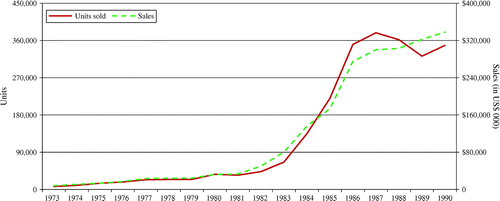
A number of technological innovations were introduced while the synthesizer industry was emerging. Early synthesizers were monophonic, meaning they could play only one note at a time, like a flute or oboe. In 1975, manufacturers introduced the first polyphonic synthesizers, which could play multiple notes simultaneously like a piano or organ. Early synthesizers also had no memory, so each time they were played, musicians had to re-adjust an array of knobs associated with different sound parameters, and the settings associated with different sounds could not be saved. When memory was first introduced in 1975, some models allowed musicians to store sounds they had created, other models were equipped with “preset” sounds that manufacturers preloaded on the instrument, and some models had both. Finally, digital synthesis, in which the method to generate the sound waveform shifted from using analog components to using digital components, moved from high-end specialized use (as in academic labs) to the mainstream market in 1982. See Table 1 for descriptions of synthesizer technical characteristics.
|

Table 1: Descriptions of Synthesizer Technical Features
| Feature | Description |
|---|---|
| Voicing | Monophonic instruments can only play one note at a time. |
| Polyphonic instruments can play multiple notes at the same time, like a chord. | |
| Memory | Instruments without memory have no saved sounds. Players must make real-time adjustments to the synthesizer’s controls every time they play to create or change sounds. |
Instruments with memory are able to store sounds.
| |
| Sound generation | Analog synthesis generates sound electronically using analog circuits and signals. |
| Digital synthesis generates sound using digital signal processing. | |
Sample
Our analysis focuses on four firms: Moog, Oberheim, Yamaha, and Korg. These firms and their founders/executives played central roles in the emergent meaning of the synthesizer, and their synthesizer models were used by many professional musicians from the time period of 1975 through 1986. Collectively, they also introduced many of the most important technological innovations in the industry, including the keyboard interface (Moog), polyphony (Oberheim), and digital synthesis (Yamaha). Two of our firms (Korg and Yamaha) survive in their original form today, while Moog went bankrupt in 1986 (reemerging again in 2002) and Oberheim ran into financial trouble and was acquired in 1985. Our intention in this paper, however, is not to explain an individual firm’s success or failure, but rather to draw upon key firms from the period of industry emergence to learn how they interpreted the synthesizer and positioned their products. Put differently, our “outcome” is not success, but positioning. Thus, we purposefully sampled these four firms since they are well-suited to inductively build theory (Eisenhardt and Graebner 2007) on competitive positioning in nascent industries. Table 2 provides an overview of these four firms.
|
Table 2: Overview of Sampled Manufacturers
| Moog | Oberheim | Yamaha | Korg | |
|---|---|---|---|---|
| Year founded | 1953 | 1969 | 1887 | 1962 |
| Headquarters | New York | California | Japan | Japan |
| Prior industry experience | Theramin | Founded to create and manufacture synthesizers | Pianos and Organs | Organs |
| Exit | Bankrupt, 1986 | Acquired, 1985 | N/A | N/A |
| First commercial synthesizer | 19701 | 1974 | 1974 | 1973 |
| First polyphonic synthesizer | 1975 | 1975 | 1977 | 1976 |
| First synthesizer with memory | 1973 | 1975 | 1974 | 1975 |
| First digital synthesizer | NA | NA2 | 1982 | 1985 |
| No. of analog/digital models advertised (1975–1986) | 14/— | 14/— | 11/8 | 20/2 |
| No. of observations in our sample | 82 | 92 | 74 | 150 |
1Moog began shipping custom-ordered modular synthesizers in 1964.
2Oberheim made a digital rackmount sample player in 1986.
Data
We gathered a comprehensive data set that includes industry, firm, and product-level data from the date of the first commercial synthesizers through 1986. Industry-level data, such as overall sales, came from the National Association of Music Merchants. Background information about firms and their founders is based on a combination of articles and interviews in industry periodicals from the time period (in particular Keyboard magazine), handbooks published during the time period (e.g., Colbeck 1985), prior histories of the industry (Pinch and Trocco 2002, Nelson 2015), company websites, and synthesizer enthusiast websites. Product-level data, including timing, features, and pricing for all synthesizers offered by our four firms, came from a combination of product manuals, online databases compiled by synthesizer enthusiasts (VintageSynth and Syntharc), industry handbooks from the period (Colbeck 1985, 1996; Crombie 1984), and historical reviews of the industry (Vail 1993).
The core of our data consists of advertisements and interviews found in Keyboard magazine, the leading and longest-running trade publication for professional and semi-professional keyboard musicians.2 We collected every synthesizer advertisement run by each of our four firms from the inception of Keyboard, in 1975, through 1986, for a total of 358 advertisements. When advertisements contained multiple synthesizers with different technical features and/or meaning (as was the case with 36 of our advertisements), we created a separate observation for each model, for a total of 398 advertised synthesizer models. Advertisements signal manufacturers’ positioning and framing choices by highlighting particular features, designs and use-case scenarios and by employing particular linguistic and visual approaches. Our use of advertisements thus mirrors data sources used in other studies of industry emergence, including item descriptions at auctions (Khaire and Wadhwani 2010) and advertisements for watches (Raffaelli 2013).
Finally, to understand the perspective of the target consumers of synthesizers, we analyzed 166 interviews with professional musicians published in Keyboard from 1975 through 1986. These interviews enable us to compare the meaning of the synthesizer projected in manufacturers’ advertisements against the perceptions of the audience for those advertisements at the same moment in time. This approach has a number of distinct advantages (cf. Nelson 2016): First, historical interviews gave us access to a population of professional musicians from the 1970s and 1980s that would otherwise be unavailable, as many are deceased or retired. In addition, we avoid retrospective bias by using interviews published during those years. Finally, since we did not devise the interview questions, the salience of synthesizer meaning and use was not a result of any influence we may have had on the responses.
Analysis
To analyze the meaning associated with each firms’ products, the authors independently read every advertisement and noted the various dimensions along which they varied. These included, for instance, the physical appearance of the synthesizer itself; the specific sounds mentioned in the ad; the adjectives used to describe these sounds; and the technical language employed. In regular author-team meetings, we discussed our individual coding. Codes that were common across researchers, such as the mention of acoustic instrument sounds, were included in our codebook. We discussed codes that were not common, and returned to the data to reconcile differences. For example, rather than simply code whether an advertisement mentioned synthesizer sounds, we decided to distinguish between mentions of “lead synthesizer,” manufacturer-specific (e.g., Moog), and other synthesizer sounds. We iterated between the data and our collective codes, settling on ten core codes to analyze each advertisement. See Table 3 for definitions of the codes and examples from our data.
|
Table 3: Code Definitions and Examples
| Code | Description | Examples from advertisements |
|---|---|---|
| Manufacturer sounds | Mention of manufacturer sound | “Moog filter, Moog sound” “rich, original sound of Korg” |
| Synth sounds | Mention of synthesizer sound | “fat synthesizer sounds” “Much richer, more interesting polyphonic sounds” |
| Lead synth sounds | Instrument highlighted as a means for playing “lead” lines or “soloing.” “Lead synth” included on a list of preset instrument sounds available | “variable synthesizer section for … lead synthesizer” “fat six-voice soloing playing modes” “screaming lead voices” |
| User creates sounds | Mention of synthesizer enabling the user to create new sounds | “has a rainbow of variable effect controls which let you fly places no musician has ever been before” “give every creative musician the tools to invent original sounds, without compromise” |
| Programmable | Mention of the ability to program or save the users own sounds | “your patches can be saved in the Poly 800’s memory” “extraordinary programmability” “stores patches of your own creative design” |
| Creativity | Emphasis on the creativity and expression of the user—not necessarily sound specific | “vehicle for creative expression” “use Korg to expand your mind and explore endless possibilities” “keys to creation” |
| Real-time controls | Ad highlights real-time performance controllers—includes modulation and pitch wheels, ribbons, aftertouch, and continuous pedals | “freedom to express your inner most musicianship with the famous MOOG ribbon …” “Like the built-in ribbon controller. Slide your finger up the ribbon and the pitch slides up. Slide it down, the pitch slides down. And the sound snaps back to the key you’re playing the moment you release your finger. It’s a simple little work of genius” |
| Acoustic sounds | Claims of instrument making acoustic sounds (for example, piano, violin, oboe) | “trumpet, clarinet, oboe, electric piano, cello, piccolo, and 16 other instrument voices” “a stretched guitar string, a bending saxophone reed, or a soaring violin vibrato” |
| Realistic sounds | Claims of instrument making realistic acoustic instrument sounds | “realistic instrument sounds: piano, organ, strings, brass, harpsichord, flute, etc.” “the most natural string articulation” |
| Simplicity | Emphasis on ease of use, easy to play, simple to use | “doesn’t take an engineer to play” “at the push of a button” “concentrate on being a musician, not a programmer … no oscillators to tune, no envelopes or filters to adjust” |
When analyzing the coded advertised models for patterns, we found that certain codes tended to appear together. For example, mentions of lead synthesizer sounds, real time controls, and creativity would often co-occur. Similarly, codes pertaining to realistic sounds, acoustic instrument sounds, and simplicity of use typically coincided. We systematically assessed which codes appeared within the same advertisement and developed a set of broader codes, from which two different meanings of the synthesizer emerged: the synthesizer as a new instrument, and the synthesizer as emulating existing acoustic instruments. Figure 2 details our core codes, our broader codes, and the two product meanings that emerged from our analysis.
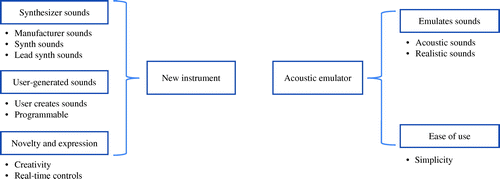
Using the coding structure articulated in Figure 2, we then classified the meaning portrayed by each advertisement (or for each advertised synthesizer, if multiple instruments were included). Roughly 60% of our observations clearly fell into either a new-instrument or acoustic-emulation meaning. To code the remaining 40% of our advertisements, we re-read each advertisement to determine whether additional content or context allowed us to assess the implied or dominant meaning. For instance, we considered the visual content: pictures of traditional acoustic musical instruments suggested an emulation meaning. Or, if “lead synth” was included along with a long list of acoustic instrument sounds the synthesizer could make, and the advertisement emphasized realism of acoustic sounds and ease of use, we coded the meaning as emulation. Conversely, if “flute effect” was mentioned in passing, but the advertisement contained several creativity and synthesizer-sound codes, we coded the meaning as a new instrument. This assessment enabled us to code an additional 28% of observations into one of the two meanings.
Seven percent of the sample explicitly advanced both new instrument and acoustic emulation meanings. We coded these advertisements as having hybrid meaning. Finally, 5% of the observations did not have enough content to code and were classified as having no clear product meaning.
To analyze our interview data, we first captured all remarks that the interviewees made about what they used synthesizers for, which manufacturer models they used and why, and other reflections relevant to their interpretation of the synthesizer. Of the 166 interviews, 104 offered such commentary, and these formed our sample. Next, we coded these remarks as emphasizing the use of synthesizers for playing new synthesizer sounds, for the emulation of acoustic sounds, or for doing both. Table 4 provides examples of our interview coding.
|
Table 4: Examples of Audience Product Meaning Coding
| Synthesizer product meaning | Examples from interviews |
|---|---|
| New instrument | “Even though it has the ability to sound like other things, the synthesizer is very much an instrument unto itself, and I try to approach it as such. When I first got the thing, I knew what I wanted to do with it, how I wanted to make it sound …. I like to get that really rich, warm sound.” —David Sancious (Snow and Milano 1977, p. 12) |
| “The synthesizer I accept as an instrument on its own. Originally, when I first got it, my intention was for it to imitate other instruments, but I soon realized that it could be its own instrument.” —Peter Nero (Doerschuk 1980a, p. 48) | |
| “I think every instrument has a purpose. The synthesizer was not made to replace an orchestra. You would never try to copy a violin with a guitar. The synthesizer is an independent instrument, and should be played that way.” —Klaus Schulze (Dilberto 1983, p. 52) | |
| Acoustic emulator | “A synth is not an actual instrument … it has sounds of its own, but mostly it’s based on the sounds of other instruments.” —Steve Winwood (Doerschuk June 1981, p. 50) |
| “You hear a synthesizer sound, and it takes you away from the music instead of bringing you into it …. So we don’t use the synthesizer as an instrument per se, but to imitate something as closely as possible.” —Roy Bittan, (Davis 1981, p. 23) | |
| “We try to make almost every single sound as acoustic as possible. If we knew how to play those acoustic instruments well enough, we’d drop synthesizers altogether. I much prefer the sound of traditional instruments. We’re merely using synthesizers to create that.” —Richard Barbieri (Doerschuk 1982, p. 17) | |
| Some new instruments and some acoustic emulators | “I imagine, though, that in synthesizer orchestration, imitative and nonimitative sounds will continue to exist side by side. Take the paintings of Salvador Dali, for instance. In certain paintings, you will have an image as realistic as a photograph placed next to another that isn’t so together. The same thing can also be said with music.” —Isao Tomita (Yoshino 1977, pp. 26–28) |
| “We used to have a Yamaha CS-80 that we tried to get a string sound from, but the sound just wasn’t right, and anyway we didn’t use it for anything else … I’ve played Minimoog before on my solo albums, but that was my music, so I could get whatever sound I wanted and it couldn’t be criticized.” —Rabbit Bundrick (Doerschuk 1980b, p. 72) | |
| “When you’re playing piano, you’re doing what they expect; everybody knows what a piano does. But with a synthesizer, every day when you show up for work, you don’t really know what they’re going to ask you to do …. When someone says, ‘Rob, we want you to create the greatest French horn sound,” that’s a challenge. Or if they say, “We want you to create the sound of dwarfs making cookies with Santa Claus,” that’s a challenge.” —Robbie Kondor (Greenwald 1986b, p. 69) | |
Finally, we examined the prevalence of each product meaning for the entire sample and for each manufacturer. To explore the relationship between product meaning and technical features, we partitioned the sample and compared product meaning for models with the same technical features. We also broke our sample into two time periods, 1975–1981 and 1982–1986, so that we could assess potential changes in product meaning over time.
Findings
In the following sections, we first elaborate on each of the product meanings that emerged from the manufacturer advertisements and show that these same meanings were reflected in the interpretations of the primary user audience, professional musicians. Second, we examine patterns over time and find that, despite the use of a common label (“synthesizer”), multiple meanings persisted throughout the emergence of the industry. We next show that these distinct meanings were for the most part divorced from the “reality” of the actual technical characteristics of the synthesizer, with firms advancing different meanings for technically-similar products. Finally, we examine how meaning was reflected in the positioning and differentiation choices of each of the four firms, and by comparing firms, propose three different types of meaning-based positioning strategies: meaning-focusing, meaning-spanning, and meaning-mixing.
Synthesizer Product Meanings
New Instrument MeaningThe foundation of this meaning was the instrument’s ability to produce novel sound textures that were unlike those of any other musical instrument. For instance, a Moog advertisement emphasized that users could “make music that’s full and rich and harmonic and expressive … all with the almost limitless electronic sound potential of a Moog synthesizer” (1977). By emphasizing “electronic sound potential,” the advertisement distinguishes the synthesizer from a traditional acoustic instrument. Advertisements also sometimes described the synthesizer as having a “lead synth sound,” meaning that the synthesizer made a unique, non-acoustic sound that was to be used to play the solo/melody line in a composition—another signal that the synthesizer was considered a distinct instrument.
The ability of users to invent novel “synth” sounds also contributed to the new instrument meaning. For example, Moog claimed that their synthesizers allowed users to “start from scratch and build your own synthesized sounds” (1976), Oberheim emphasized the ability of users to “store patches of your own creative design” (1976), and Korg emphasized how users could “create your own sounds” (1977), and that “the possibilities are virtually unlimited” (1979). When playing traditional instruments, musicians have expectations of what sound will be generated, so by emphasizing the ability to create new sounds, these ads are distancing the synthesizer from those musical instruments and making clear that it is new and distinct.
Advertisements also included richly evocative language about the creative expression that synthesizers enabled. Oberheim claimed that with its synthesizers, “the possibilities are limitless, yet only as complex as your imagination” (1978). Moog’s model had “more sound and musical expressiveness than any instrument of its kind” (1983), and Korg allowed users “to explore new fields of musical possibilities.” In particular, advertisements often placed emphasis on the expressive potential of real-time controls that enabled entirely new ways of modifying sounds while performing. For instance, a “pitch bend controller” enabled the player to sweep a sound’s pitch up-and-down with both greater range and faster speed than a traditional acoustic instrument. Moog boasted that the Micromoog’s ribbon controller allowed users to “shine on stage:” “With a slide of your finger, you can glide up and down and bend pitch as bluesy as B.B. King” (1977). Similarly, a “modulation wheel” could be used to add vibrato to a sound, but with far more “warble” than on a traditional instrument. In other words, sounds modified by pitch-bending and modulation sounded distinctly unnatural, so emphasizing these controls distanced the synthesizer from traditional instruments. The creation of new sounds as well as the modification of sounds required that musicians master a new set of skills beyond simply playing a traditional keyboard (e.g., a piano or organ).
Acoustic Emulation MeaningOther advertisements framed the synthesizer primarily in terms of acoustic emulation, emphasizing the synthesizer’s ability to realistically recreate the sounds of acoustic instruments. These advertisements mentioned the specific acoustic instruments that could be emulated, and often emphasized the breadth of acoustic instrument sounds offered. For instance, a 1982 Yamaha advertisement highlighted its offering of “trumpet, clarinet, oboe, electric piano, cello, piccolo, and 16 other instrument voices.” Advertisements also often emphasized the quality of the emulation through explicit claims, such as Korg’s 1977 advertisement with the headline, “the most realistic sound under the thumb.” This advertisement continued by pointing out that the Korg synthesizer “recreates the rich brilliant timbres of seven instruments instantly,” has “thicker, lusher, more natural sound,” and has “the truest of string sections.”
Finally, acoustic emulation advertisements did not emphasize creativity or real-time modification of sounds with sophisticated controls. Instead, they emphasized simplicity. For instance, in a 1983 advertisement, Yamaha highlighted how easy it was to program its synthesizers: “If it sounds simple, once you get used to it, it really is” (1983). Another Yamaha advertisement claimed that sounds were easily accessible during performances, as each voice was “made easily accessible for live and recorded performance by an ingeniously simple switching system” (1985).
Hybrid MeaningAdvertisements with hybrid meaning explicitly claimed elements of both new instrument and acoustic emulation meanings. For instance, Korg claimed a model was “like having two of today’s most desirable synthesizers in one … a rich String section … plus a variable synthesizer section” (1980). Similarly, a Yamaha model had an “automatic preset when you need it,” but could also be used to “explore the unknown” (1976). Another Yamaha advertisement claimed both that “voicing and settings are easy,” and that users could engage in sophisticated creation of sounds by “adjust[ing] envelope characteristics, filters and equalizations, vibrato, pitch and touch response” (1979). Hybrid advertisements also tended to list both synthesizer and acoustic sounds, such as a Yamaha advertisement that mentioned “solo synthesizer” and “Poly Synth” sounds, as well as “organ” and “strings” sounds (1981).
Musician Perceptions of Synthesizers
The audience for these advertisements, professional musicians, also articulated the new instrument and acoustic emulation product meanings. Of the 104 musician interviews analyzed, 38% of the interviewees viewed the synthesizer as a new instrument, 41% viewed it as emulating acoustic instruments, and less than 1% viewed synthesizer models as hybrids that embodied both meanings simultaneously. Though interviewees did not associate both meanings with single models, 20% viewed some synthesizers as appropriate for playing synthesizer sounds and other models as appropriate for emulating acoustic sounds.
Musicians who considered the synthesizer to be a completely new instrument emphasized the novelty of the sound. For example, when asked about how he used the synthesizer, Edgar Winter from the band The Edgar Winter Group responded “… I intend to get more into new sounds—things that I haven’t heard before.” The interviewer pressed the point, asking if Winter was “into mimicking the sound of other instruments with the synthesizer.” Winter replied, “I don’t think that’s what I want to do …. There’s no way you can use an electronic instrument to mimic acoustic instruments perfectly because it leaves out the human element of imperfection.” Winter goes on to describe his use of the synthesizer for “spacey, weird sounds” (Bivona and Milano 1976, p. 20).
In contrast, other musicians considered the synthesizer as primarily an acoustic-instrument replacement. Josef Zawinul, of the band Weather Report, commented in an interview, “I’d need a whole orchestra … at least thirty people on acoustic instruments to make the Heavy Weather album. I’ve heard orchestral sounds my entire life, and now I can do it myself because of a machine.” He continued noting, “I should emphasize that electronic instruments may not mean the same thing to me that they do to other players. Not to diminish other players’ good qualities, but what they do sounds mostly electronic to me. I’d say what I’m doing sounds mostly unelectronic” (Lyons 1977, pp. 26–27).
Still, other musicians acknowledged the validity of both meanings, using some synthesizer models to emulate acoustic instruments and others for unique synthesizer sounds. For example, Robin Lumley from the Band-X (as well as the late great David Bowie’s band, Spiders from Mars) used a Roland for acoustic emulation and a Moog as a new instrument. He explained, “I can get an enormous range of sound from the Roland, like church organs, harpsichord effects, and this beautiful muted viola sound when you just use the brass selector.” Yet, switching to a description of his Moog, he notes, “I’ve always been a Minimoog fan …. I like the way the Minimoog sounds; it’s so fat [meaning a sound that seems warm and deep]. Somehow it is laid out better for soloing” (Milano 1978a, p. 49). In other words, Lumley appealed to different synthesizers for different purposes.
In summary, the product meanings we discovered in synthesizer advertisements were confirmed with musician interviews during the same time period. Together, this evidence demonstrates that the very fundamental question of “what is it?” sustained multiple answers during the synthesizers’ nascent stage: it is a new instrument, and it is an emulator of acoustic instruments.
Meaning as Competitive Positioning
Typically, competitive positioning is reflected in a product’s mix of features and price, such that products with similar features and prices directly compete against one another. Our analysis of synthesizers, however, found that this view of competitive positioning is incomplete. Specifically, models that appeared similar in terms of features and prices, and that employed the same label, might nonetheless not directly compete when they promoted different product meanings.
To illustrate this point, Table 5 presents the specifications for three models comparable in price and features and then compares the meaning that was projected in three advertisements for these models (shown in Figure 3). Despite their similar “objective” features and prices, the Korg ES-50 was framed as an acoustic emulator (e.g., “doesn’t sound synthetic,” “real”), the Oberheim OB-SX was framed as a new instrument (e.g., “FAT Oberheim sound”), and the Moog Opus 3 was framed as a hybrid (e.g., “realistic brass voice” and “synth effects”). Thus, the instruments were positioned to appeal to different conceptualizations of the synthesizer.
|
Table 5: Comparison of Meaning in Ads for Technically Similar Models (See Ads in Figure 3)
| Firm | Korg | Oberheim | Moog |
|---|---|---|---|
| Model | ES-50 | OB-SX | Opus 3 |
| Year | 1981 | 1980 | 1980 |
| Price | $1,700–$2,300 | $2,500–$3,000 | $2,000–$2,500 |
| Technical Features | |||
| Synthesis type | Analog | Analog | Analog |
| Voicing | Polyphonic | Polyphonic | Polyphonic |
| Memory | Yes | Yes | Yes |
| Preprogrammed sounds | Yes | Yes | Yes |
| User can create and store sounds | No | No | No |
| Keyboard | 48 note | 48 note | 49 note |
| Product meaning projected in the ad | Acoustic emulator | New instrument | Hybrid |
|---|---|---|---|
| Sounds made by the synthesizer | “A synthesizer that doesn’t sound synthetic” “makes instruments sound real” “strings that sound like strings” “a genuine vibes piano sound. And real-sounding acoustic, clavi, and celeste piano effects” | “with the same FAT Oberheim Sound” | “can produce strings, organ and brass and still be variable enough to be used as a lead synth” “realistic brass voice … also … allow the player to program filter contour…to create some powerful polyphonic synth effects” |
| Novelty and expression | “pitch bend and modulation levers” | “include a pitch wheel for bending notes or chords” | |

To be clear, no two instruments were exactly alike in features and capabilities. However, all synthesizers are capable of both emulation and new sounds. The key point that emerged from our analysis is that differences in features and capabilities did not explain differences in meaning. In fact, in one of the interviews we examined, conducted with keyboardist Jim Gilmour of Saga in 1983, he described how the Yamaha CS-80 synthesizer that he used to emulate acoustic instruments broke down too often to take on the road. Gilmour explained, “I took the Memorymoog home, and tried to program it to sound as close to the CS-80 as I could, especially for a nice French horn sound I had on the CS-80” (Doerschuk 1983a, p. 12). Although Gilmour earlier associated the Moog with a “new instrument” meaning, it had the capability to be used in either role.
Reinforcing this point, Table 6 groups together technically-similar instruments and compares their meaning. Although the first rows show that monophonic synthesizers and synthesizers without memory almost all had the same meaning (the synthesizer as a new instrument), polyphonic instruments with similar features displayed widely disparate framing. For example, analog polyphonic instruments with only manufacturer preset sounds were framed as new instruments (23% of cases), acoustic emulators (50% of cases), and hybrids (27% of cases). Similarly, digital polyphonic instruments with both manufacturer presets and storage of user-created sounds were almost evenly split between new instrument and acoustic emulation meanings. Again, meaning emerges as a key element for positioning, and thus differentiating, otherwise similar instruments.
|
Table 6: Synthesizer Technical Features vs. Product Meaning
| Technical features | Ads with new instrument meaning (%) | Ads with acoustic emulation meaning (%) | Ads with a hybrid meaning (%) |
|---|---|---|---|
| Analog and monophonic (97 observations) | 96 | 2 | 2 |
| Analog with no memory (93 observations) | 98 | 2 | 0 |
Analog and polyphonic
| 23 | 50 | 27 |
Analog and polyphonic
| 79 | 13 | 7 |
Digital and polyphonic
| 48 | 52 | 0 |
It is important to note, too, that these differences in meaning were not tied to differences in the label associated with the product. Throughout the period of our study, synthesizer manufacturers used a common label: 86% of the advertised models included an explicit category label, and of those, 94% used the word “synthesizer.” Yet, despite agreement on a label, both the new instrument and acoustic emulation meanings persisted throughout the emergence of the industry (see Table 7). Thus, nearly three-quarters of advertisements projected a new instrument meaning, a proportion that remains consistent over time. The proportion of advertisements with an acoustic emulation meaning was low in the first period at only 12%, but rose to 27% in the second period. Finally, advertisements promoting a hybrid meaning constituted 13% of advertisements in the first period, yet fell to just 1% in the second period. Since musicians did not recognize the hybrid meaning, the fact that manufacturers stopped framing instruments in this way is consistent with their audience. In sum, we find that product meaning is distinct from the category label.
|
Table 7: Synthesizer Product Meaning Over Time
| Firm | All firms | Moog | Oberheim | Yamaha | Korg | ||||||
|---|---|---|---|---|---|---|---|---|---|---|---|
| Years | 1975–1986 | 1975–1981 | 1982–1986 | 1975–1981 | 1982–1986 | 1975–1981 | 1982–1986 | 1975–1981 | 1982–1986 | 1975–1981 | 1982–1986 |
| New instrument (%) | 73 | 74 | 72 | 75 | 97 | 100 | 94 | 57 | 18 | 71 | 70 |
| Acoustic emulation (%) | 20 | 12 | 27 | 16 | 0 | 0 | 4 | 3 | 82 | 21 | 30 |
| Hybrid (%) | 7 | 13 | 1 | 10 | 3 | 0 | 2 | 40 | 0 | 9 | 0 |
| Total observations (N) | 378 | 187 | 191 | 51 | 29 | 33 | 54 | 35 | 34 | 68 | 74 |
Note. This table does not include 20 ads that had no clear meaning.
In the paragraphs that follow, we examine how each of the four firms at the heart of our investigation positioned their products along the dimension of meaning.
MoogFor Moog, the synthesizer was a brand new musical instrument that made novel, unique sounds. This meaning reflected how the founder and other Moog executives conceived of the synthesizer. In an introductory letter to a product manual from 1972, the synthesizer was described as “this century’s contribution to the development of musical instruments” (Rhea 1972). Even more explicitly, when Keyboard Magazine was first launched in 1975, Robert Moog, the inventor of the Moog synthesizer and founder of Moog, wrote:
What is a synthesizer? … A musical instrument … true synthesizers are designed not to imitate existing instruments, but to utilize contemporary technology to extend the tonal resources available to musicians.
(1975, p. 45)
The meaning of the synthesizer as a brand new instrument capable of expanding musical sounds was initially entwined with the features of Moog’s monophonic instruments. Synthesizers were portrayed as being like other instruments that played the melody or lead line. This view was articulated in a 1976 advertisement that described “lead synths” that could “play one note at a time—like a clarinet.” Similarly, the monophonic Rogue had “screaming lead voices” (1981). Moog’s affinity for the synthesizer as a solo instrument was strong enough that it framed a polyphonic synthesizer as playable like a monophonic synthesizer: “All this doesn’t mean you can’t play Polymoog monophonically. You can. It even has a center-positioned ribbon controller that lets you play leads with either hand and bend pitch with the other” (1977). Given this positioning, it is not surprising that Moog continued to produce and advertise monophonic synthesizers for much longer than any other firm: while Oberheim shipped its last monophonic instrument in 1978, and Yamaha and Korg did so in 1979, Moog continued to introduce new monophonic synthesizers, the Source and Rogue, as late as 1981 and to advertise them as late as March 1984.
For Moog, the technological shift from monophonic to polyphonic synthesizers was initially associated with a shift to an acoustic emulator meaning. Though Moog consistently positioned its monophonic synths as new instruments, it initially positioned its polyphonic synths as acoustic emulators appropriate for playing background chords with piano, organ, or string sounds. For instance, Moog’s first polyphonic model was equated with a piano:
[T]he Polymoog has a true piano touch …. Play two keys on a grand piano and listen closely. You’ll hear a rich, literally moving sound. The Polymoog is the first fully electronic keyboard to give you those “moving frequencies.”
(1976)
Similarly, the Polymoog Keyboard was described as putting “14 instant polyphonic instruments at your fingertips. And the realism is another breakthrough altogether” (1978). Yet Moog’s flirtation with an acoustic emulator meaning, which was limited to its early polyphonic synthesizers, was short-lived, and the firm returned to its focused new instrument positioning. While 16% of its advertisements from 1975–1981 framed synthesizers as acoustic emulators, fully 97% of advertisements from 1982 forward framed them as new instruments—including the polyphonic models (see Table 7).
Consistent with positioning synthesizers as new instruments, Moog differentiated its products along two dimensions: the unique, Moog sound, and real time controls that enabled creativity. Thus, Moog continuously emphasized the “famous Moog ‘fat sound’ ” (1977) and “tone color determined by the patented Moog filter” (1980), and the unique “Moog sound” was considered one of the quintessential synthesizer sounds by many musicians (Colbeck 1985). Moog’s positioning was so driven by the Moog synthesizer sound that from 1979 to 1981, it ran two advertisements that had a picture of a Moog synthesizer with just one line of text and no mention of the firm. The first advertisement read, “You know what this is because you hear it everywhere,” and the second stated, “When you’ve got the sound, you don’t have to talk about it so much.”
Moog also differentiated its synthesizers by claiming they enabled novelty and expression through Moog’s real time controls. For instance, Moog referred to its unique “Moog ribbon” to manipulate sounds. Even ads for Moog’s preprogrammed synthesizers, which did not allow users to create and store their own sounds, still contained extended descriptions of real-time controls: “While your right hand plays the lead, your left hand lends the special effects. Modulation moves the music several directions. A glide slider. Filter sliders to play tricks with the highs—like any wah wah you want, any treble texture you care to weave” (1976).
OberheimOberheim, like Moog, framed the synthesizer as a new instrument that created a distinct sound. This meaning no doubt reflected founder Tom Oberheim’s interpretation. In a 1977 interview, he stated:
What makes real instruments interesting is that they’ve got very complex sound structures. And that’s what I want to see in synthesizers—machines that will produce magnificent sounds … sounds that are more magnificent than what’s been heard before.
(Milano 1977, p. 34)
Oberheim thus compared the synthesizer to “real instruments” with “complex sound structures,” yet also emphasized that it was unique by contrasting synthesizer sounds with “what’s been heard before.” The belief that the synthesizer was meant to create different, new, “magnificent” sounds was at the heart of Oberheim’s projection of the instrument’s meaning. This view was echoed in Oberheim’s positioning of its synthesizers: 97% of its advertisements framed their models as new instruments (see Table 7).
Oberheim also positioned its synthesizers as lead synths, even though it produced only two monophonic synthesizers. Thus, it positioned its polyphonic synthesizers as capable of playing solo lead lines. In fact, to clarify that its synthesizers were appropriate for solo lines even though they were polyphonic, Oberheim labeled two of its models as “polyphonic lead synthesizers,” not just polyphonic synthesizers.
Similar to Moog, Oberheim differentiated its synthesizers based on the novelty of their sound. They claimed their synthesizers had “sounds not achievable on any other synthesizer on the market,” with “Much richer, more interesting polyphonic sounds” that were “probably the most popular new synthesizer sound heard on records today” (1979). A 1985 advertisement boasted of “the most amazing synthesizer voices you’ve ever heard” (1985). The firm also branded its sound with the Oberheim name, using phrases such as the “sound of all Oberheim Synthesizers—considered the world’s finest” (1977), the “fat Oberheim sound” (1980), and the “famous Oberheim sound” (1985, 1986). Finally, after digital synthesizers emerged, Oberheim began contrasting the sound of its analog models with the sound of others’ digital synthesizers, claiming that their models embodied “what analog synthesis was meant to be” (1986), and provided “fat analog sound” (1986).
YamahaYamaha’s positioning of its synthesizers evolved throughout the period we study, and it was the only firm to frame a significant proportion of its models as hybrids. Through 1981, 57% of Yamaha ads had a new instrument meaning, and fully 40% had a hybrid meaning (see Table 7). Thus, while other firms framed the vast majority of analog monophonic synthesizers as new instruments, a 1976 advertisement for Yamaha’s analog monophonic SY-2 explicitly claimed both positions with the headline, “Put it on automatic. Or fly it yourself.” The advertisement emphasized both “realistic preset voices at your fingertips for a wide range of orchestral flexibility” and “a rainbow of variable effect controls which let you fly places no musician has ever been before” with “the capacity for unlimited expression.” Similarly, Yamaha’s polyphonic synthesizers attempted to claim both positions. A 1979 advertisement claimed “you get your taste, not somebody else’s,” yet simultaneously noted that the synthesizer comes with “22 internal preprogrammed voices, including Strings, Brass, Clavichord, Organ, Electric Piano, Electric Bass and Guitar” (1979).
Yamaha also framed the same model in different ways over time. For example, the Yamaha CS01 was initially framed as an acoustic emulator making “many instrument sounds” (1982). Later that same year, however, Yamaha ran an advertisement for the CS01 with a new instrument meaning that described it as a “highly sophisticated, fully-programmable miniature music-making machine” with real time controls like “pitch bend and modulation wheels, white noise generator, glissando, even a unique Breath Controller for unheard of expressive capabilities” and no mention of acoustic instrument sounds.
With the emergence of digital synthesis, however, Yamaha shifted its positioning strategy and heavily promoted the synthesizer as an emulator of existing acoustic instruments. Thus, 82% of Yamaha ads from 1982–1986, and all Yamaha ads for digital synthesizers, had an acoustic emulator meaning. In addition, Yamaha emphasized how easy it was to access these sounds, claiming “the technology itself is not simple. But getting the voice you want is. Just press a button. No complicated control settings, no hassles. Just true acoustic sound” (1982, 1983, 1984).
Yamaha’s emulation of acoustic instruments with their sound was also mirrored in the physical design of their early digital synthesizers. For example, the GS1, Yamaha’s first digital instrument, was physically fashioned to look like a piano, with a wooden case, wooden legs and three brass foot pedals, just like a piano. Yamaha featured pictures of the instrument prominently in its advertisements and highlighted the aesthetic of the instrument within the text, noting, for example, “The GS1’s especially rich wood and strikingly harmonious design are but a hint of the beauty that lies within” (1982).
In turn, the shift in Yamaha’s positioning of its synthesizers—from new instrument and hybrid, to acoustic emulation—was associated with a shift in how Yamaha differentiated its offerings. The acoustic emulation framing coincided with attempts by Yamaha to differentiate their synthesizers on the basis of the realism of its acoustic emulations. Yamaha advertisements, for example, claimed that their synthesizers could “precisely recreate the harmonic structure of acoustically produced sounds” (1982, 1983, 1984), and had “incredible accuracy” (1983), “voice authenticity” (1983) and “vast and realistic sound spectrum[s].” The result of this realism and accuracy were what Yamaha claimed to be “the true sound of a trumpet, clarinet, oboe, electric piano, cello, piccolo, and 16 other instrument voices” (1983). Thus, Yamaha came to position its synthesizers as substitutes for acoustic instruments and to differentiate its synthesizers on the basis of how realistic these emulations were.
KorgKorg consistently positioned some synthesizers as new instruments (about 70% in both time periods) and others as acoustic substitutes (increasing from 21% in the first period to 30% in the second). By offering products with both meanings, the firm claimed it provided the full range of solutions to musicians. A broad product line, based on product meaning, was thus a basis for competing. For instance, a 1978 advertisement that included multiple models with different meanings highlighted that:
There are 10 Korg models of exceptional value, ranging from the Professional Laboratory Systems group to the new Micro Preset, which puts 315 instant voice combinations at your fingertips. Whether you’re looking for a preset, a polyphonic, or a dynamic portamento, you’ll find a Korg synthesizer that meets your exacting requirements.
Korg’s emphasis on its “diversified line of outstanding products” (1982) was also reflected in its taglines. From 1981 to 1985, Korg ran advertisements with “we put it all together” next to its logo. This was especially prevalent in 1982 through 1984, when 84% of Korg’s advertisements included this tagline.
Korg’s commitment to both meanings was clearly exemplified by its positioning of two technically similar models, the Poly-61 and Poly 800, with different meanings. Both models were analog, polyphonic, had presets, and also allowed users to create and store their own sounds. Further, they were both in the $800–$1,000 price range, and were advertised for two overlapping years (1984 and 1985). However, the Poly-61 was positioned as a new instrument and the Poly 800 as emulating acoustic sounds. For the Poly-61, Korg highlighted its “full, rich sounds” which are the “famous sounds … that have made Korg the number one” (1983, 1984). In contrast, the Poly 800 had the “organ, piano, and clav sounds that any professional would expect,” and “individual articulation circuitry [that] lends realism to sounds such as flute, other wind instruments” which can be called up “instantaneously” (1984, 1985). In 1985, both models were promoted in the same ad, and Korg continued to frame them differently: the Poly-61 had a “varied repertoire of warm analog sounds,” while the Poly 800 had “64 professional-sounding programs.”
The basis for differentiation in Korg advertisements depended on the product meaning. Ads that projected an acoustic emulation meaning attempted to differentiate based on realism. In these ads, Korg described specific instruments as capable of “realistic sound reproduction” which “recreates the rich brilliant timbres of seven instrument instantly,” including “the truest string sections, chorus, brass, [and] pipe organ” (1977). In fact, Korg even altered the tagline in its logo for synthesizers with an acoustic substitute meaning to emphasize the “realness” of its acoustic sounds. From 1979 through 1981, Korg’s ads for the ES-50 Polyphonic ensemble included the tagline “Does it for real” next to its logo. Reinforcing the role of product meaning, this tagline only ran on ads with an acoustic emulation frame; synthesizers that were framed as new instruments during these same years simply had no logo. For models with a new instrument meaning, Korg did not claim a unique manufacturer-branded sound (e.g., the “Moog sound”), but instead promoted its sound more generally, as with its use of the “Superstar of sound” tagline. In 1977 and 1978, this tagline appeared alongside every advertisement that had a new instrument framing.
Musician Perceptions of Manufacturers
Musician perceptions of manufacturers were consistent with those projected in advertisements: musicians tended to perceive of Moog and Oberheim models as new instruments, Yamaha digital models as acoustic emulators, and different Korg models as either new instruments or emulators. For instance, Kevin Livgren, a member of the band Kansas, was asked in a 1977 interview, “So you don’t play guitar lines, for example, on the Minimoog?” and responded, “No, I do not. I approach it as a totally unique keyboard instrument” (Doerschuk 1977, p. 34). Similarly, Eduardo del Barrio said he preferred the Minimoog for soloing because “it is the clearest, and the attacks have more impact than on other synthesizers …. Mostly I used sounds in those songs that complemented, rather than imitated” (Davis 1980, p. 9). Musicians were also particular about Oberheim’s sounds. When asked about how he writes music using the synthesizer, Lyle Mays said, “There are things that the Oberheim Four-Voice can do that no other synthesizer can do …. If I hear it on the Oberheim Four-Voice, it’s got to be that. If you write for [a] cello section, you don’t want it played on harp or kazoo” (Greenwald 1986a, p. 113). Likewise, when asked what he uses his Oberheim synthesizer for, Jan Hammer said “The Oberheim is completely from Neptune. It’s unlike anything that’s ever been here before. You just don’t attempt to imitate anything with it, you go for brand new sounds” (Milano 1978b, p. 30).
Musicians that used multiple instruments also viewed different manufacturers’ models as having different meanings. Mark Stein, of the group Vanilla Fudge, was asked, “Do you still use the Minimoog in your setup?” He replied, “Yeah. I don’t use it for anything but solos.” He was then asked, “How do you use your [Yamaha] CS-80?” and he explained, “I’m using it for a lot of really strong brass and string effects” (Doerschuk 1983b, p. 34). Similarly, when asked about his use of Yamaha’s GS1, jazz musician Chick Corea explained that “the timbres that the instrument produces are … very rich and workable. The string and brass sounds are very thick.” The interviewer then asked “How did you get into the Memorymoog?” Corea responded “I wanted another polyphonic instrument to sit on top of the GS-1 …. I had tried the Memorymoog and I liked the quality of its sound, so I got it.” (Darter and Doerschuk 1983, p. 54). Effectively Chick Corea used his GS1 to imitate acoustic instrument sounds and his Memorymoog for its unique sound.
Strategies of Competitive Positioning
Our analysis of Moog, Oberheim, Yamaha, and Korg during the nascent stage of the synthesizer product category reveals three meaning-based strategies for positioning new products when plural meanings and interpretations of these products exist: meaning-focusing, meaning-spanning, and meaning-mixing.
Meaning-focusingWe define meaning-focusing as the consistent and sustained positioning of a new product as embodying a single meaning. This strategy is one that effectively “doubles down” on one interpretation. In our case, this was evident in the consistent framing of synthesizer models across a firm’s advertisements as either new instruments or acoustic emulators. For instance, Moog and Oberheim both positioned their synthesizers as new instruments throughout the emergence of the industry, and across technological changes. Yamaha adopted this positioning strategy later in the nascent period, when almost all of its synthesizers, in particular its digital models, were framed as acoustic emulators.
Meaning-spanningWe define meaning-spanning as the simultaneous embracing of multiple meanings by associating some models with one interpretation and other models with another. In our data, meaning-spanning was most clearly displayed by Korg, which positioned technologically similar synthesizers as both new instruments and as substitutes for acoustic instruments. Moog also briefly experimented with this strategy when it initially positioned its polyphonic synthesizers as acoustic emulators while continuing to position its other models as new instruments.
Meaning-spanning may appear inconsistent or confusing to some consumers. Yet if the same consumer is interested in products with different meanings, then this approach maximizes sales to that individual. In addition, meaning-spanning allows firms to target a broader set customers if individuals hold different interpretations of the emerging product. Finally, when there is uncertainty about whether multiple meanings will persist, there is option value to a meaning-spanning strategy since the firm holds multiple positions.
Meaning-mixingMeaning-mixing combines multiple meanings within a single product. In our sample, Yamaha’s pre-1982 positioning of many synthesizers as hybrids reflects a meaning-mixing strategy. Like meaning-spanning, this strategy allows firms to target audiences that may hold varying beliefs of what the new product is; however, since both meanings are combined in the same product, this approach runs a higher risk of creating a muddled meaning. Although we do not have systematic performance data, anecdotal data suggests that Yamaha did not do well during the early period when it followed this strategy. Further, as discussed earlier, musicians rarely offered interpretations of one synthesizer model as being both a new instrument and an acoustic emulator. Thus, we might infer that meaning-mixing as a competitive positioning strategy did not resonate with targeted users in this instance.
These different meaning-based strategies underscore that new technologies present firms with a fundamental challenge of how to frame these technologies so that consumers will actually buy them—and how to leverage these frames to call attention to the particular dimensions on which firms wish to compete. Thus, product meaning can be central to a firm’s competitive strategy, its success in the industry and, presumably, the growth and success of the industry as a whole.
Discussion
Product Meaning as Competitive Positioning
By tracing the ways in which four leading firms framed specific products in an emerging industry, as well as the interpretations held by members of the target market for these products, our study highlights product meaning as a key dimension of competitive positioning and it identifies three specific meaning-based strategies: meaning-focusing, meaning-spanning, and meaning-mixing. Traditional views of strategy propose that firms develop competitive positions by choosing among a set of product attributes that have tradeoffs (Porter 1980). A great deal of work since then has examined how an individual firm’s unique characteristics and capabilities lead them to identify and pursue positions that confer a competitive advantage (e.g., Barney 1991, Peteraf 1993). Our work suggests that this view of competition yields a partial and potentially misleading picture of positioning in nascent industries that originate with new technologies. As we demonstrate, firms can position products on the basis of the meaning that they attach to the emergent category itself. Thus, cognitive interpretations, not technical features, shape competition. Put differently, simply comparing performance across a set of features does not necessarily reveal positioning strategy, as in classic studies of competitive positioning. Rather, the same features can be positioned and thus interpreted differently depending on meaning. For example, in our study, all music synthesizers were capable of both emulation and the creation of new sounds. However, models positioned as acoustic emulators did not compete directly with models positioned as new instruments, even when the models’ technical features were similar.
To be clear, features still play an important role. In fact, we show how new technology and features can be associated, at times, with shifts in competitive positioning. Yet critically, this relationship is not deterministic. For example, among the four firms at the center of our study, the emergence of digital synthesis led to a shift in positioning for one (Yamaha), a continued meaning-spanning strategy for another (Korg), and a doubling-down on a meaning-focusing strategy for two others (Moog and Oberheim). Thus, features and meaning can influence one another; but they are distinct and a particular technological shift does not lead to a particular sense of meaning or positioning.
By illuminating this unique and important role for product meaning, our work thus builds on other efforts to integrate cognition with strategy (e.g., Kaplan 2008, Tripsas and Gavetti 2000). We add to this body of work by linking the interpretation of what a technology is and does to the way in which firms position it in a competitive market. For instance, Gavetti and Rivkin (2007, p. 428) note the importance of firm-level cognitive representations in guiding strategy and show how, in the early days of the Internet, Lycos, “a technology company,” had different heuristics for improving performance than Yahoo, “a media company.” We extend this work by showing how product-level meaning guides managerial heuristics. For instance, when synthesizers were positioned as acoustic emulators, it resulted in a heuristic to maximize the realism of acoustic sounds. Other work focuses on how managers construct strategic groups based on managerial perceptions of competition as opposed to a more traditional economic rationale (e.g., Porac et al. 1995, Reger and Huff 1993, Peteraf and Shanley 1997). Following this stream of work, we show that groups of competing products can be defined by meaning-based positioning rather than conventional dimensions based on price and technical capabilities. Our work thus goes beyond beliefs about competitive groups to include beliefs about competing products.
Multiple Meanings
It is notable that we do not witness convergence on a single meaning over the course of our study. Rather, we find that there is settling around two distinct meanings: the synthesizer as a new instrument and the synthesizer as an acoustic emulator. The persistence of, and even clarification around, multiple meanings for the synthesizer shared by both producers and consumers stands in contrast to the literature on technological and industry evolution, which has assumed that a dominant design involves both technological convergence and cognitive convergence on a collective technological frame or meaning (Kaplan and Tripsas 2008, Suarez et al. 2015). Our study suggests that certain industries and markets may not tend towards convergence on a single meaning, and that competing interpretations or meanings remain a key element of positioning even as an industry matures. Future research might explore the conditions under which this dynamic holds. For example, the users of the musical machines at the heart of our study make their living in an inherently creative industry. In such industries, convergence can mark a lack of individual creativity (e.g., DeFillippi et al. 2007), such that the industry itself thrives on the very existence of a multitude of interpretations. One might expect that technologies tied to other creative industries, such as film making (Elsbach and Kramer 2003), photography (Tripsas 2009), and architecture (Jones and Livne-Tarandach 2008), may exhibit similar dynamics.
At the same time, we do witness the disappearance over time of the “hybrid” meaning, which appeals to both meanings simultaneously for a given product. However, this dynamic need not always hold true and players in other emerging categories, such as the tablet (Watkiss 2016), might benefit from meaning-mixing positioning. For instance, Apple’s success in becoming the category referent with the iPad might be linked to the positioning of the product as both an ebook reader and an entertainment device, whereas the meaning-focusing strategies of Barnes and Noble and Amazon, which positioned the NOOK tablet and Kindle Fire tablets as primarily e-Readers, might have limited the reach of these products. In fact, some research indicates that firms can dominate from a hybrid or “middle” position (Adner et al. 2016, Barney 1997). Our research suggests that one explanation for these differences may lie in the compatibility (or not) between the different meanings; whereas the iPad can serve as a capable e-Reader even as it fills other roles, our interviews indicate that musicians themselves may have been skeptical that a single synthesizer could create both kinds of sounds well. Our distinction between meaning-mixing within a single product (as Yamaha pursued in early years) versus meaning-spanning across a product line (as Korg pursued) also may be crucial towards understanding how hybrid approaches play out over time. Clearly, additional research on the performance implications of different meaning-based strategies would be valuable.
Categories Without Consensus
Our study also contributes to the growing literature on categories and categorization. The dominant model in this literature contends that firms first establish the meaning of a category before differentiating from one another, typically on the basis of specific features (Hiatt and Carlos 2016, Navis and Glynn 2010, Zuckerman 2016). By contrast, our work highlights how firms might not cooperate initially, instead promoting a cacophony of meanings to advance their individual strategic interests. Prior work theorizes that such an approach risks dampening broad acceptance of the category because it confuses potential adopters and critics alike (Hsu 2006, Khaire and Wadhwani 2010, Rosa et al. 1999). Our data, however, suggest that the approach might instead hold both risks and opportunities: On one hand, plurality of meaning may indeed sow confusion that dampens adoption (see also Grodal et al. 2015, Wry et al. 2011). In fact, the disappearance of the hybrid meaning is associated with a sales uptick in our data, though we are cautious to read this association as causal. On the other hand, plurality of meaning may in fact drive more adoption if different consumers value a technology for different reasons. Thus, our industry experiences rapid growth during a period in which two clear meanings of the synthesizer remain. Given these opposing forces, further research on the category-level effects of individual firms’ efforts is needed.
As these efforts proceed, our study also suggests that scholars should be careful to delineate between a shared category label and the different meanings that may be attached to this label. In defining a market category, Navis and Glynn (2010, p. 440) claim that it has two basic properties: “(1) constituent members, whose inclusion is defined by rules or boundaries pertaining to a common type of product or service, and (2) a concept, label, or identity that reflects the commonalities that link together the members of the category.” Some research suggests that the elements contained in the second property—a concept, a label and an identity—are tightly coupled and co-emergent. For example, Rosa et al. (1999) find that once the label “minivan” exists, the label also captures a shared sense of meaning as to what a minivan is and does. Similarly, (Kennedy 2008, p. 272) writes, “As the media continue to apply a new category label to a nascent market, audiences arrive abductively at a shared interpretation of its meaning.” Again, the label and a shared meaning are closely tied.
We show, however, that a common label, such as “synthesizer,” need not imply a common understanding of that label. Or, more precisely, while players may agree on some attributes of the label—for example, a synthesizer should make musical sounds and be operable by a set of piano-style keys—other key attributes tied to product meaning may still display significant variation. Although pronounced in the case of the synthesizer, such variation in meaning might still exist in how firms position their products and how consumers imagine the meaning of the product for their specific use. For instance, though there is settling on the label “minivan” and a shared understanding of the features of the minivan held by both producers and consumers (Rosa et al. 1999), the meaning of a large trunk to a “soccer mom” and to an electrician will vary, and firms might position the same feature differently to each of these two groups with different imagined uses.
From a methodological perspective, this distinction also suggests that other studies of categories must be careful not to assume that convergence on a label, as might be identified through bibliographic approaches, necessarily implies convergence on dimensions of meaning. While much can be learned from the shared use of a label between groups, such as producers, consumers, and critics, a deeper look into how a label is used can reveal multiple attached meanings, and in our case, the use of meaning in competitive positioning and customer segmentation. Convergence on a label might signal a shared knowledge structure allowing for market exchange between producers and consumers (Kennedy 2008, Rosa et al. 1999), but it does not necessarily signal a shared single meaning.
Social Constructivism and Strategy
Finally, our work suggests potential fruitful interactions between social-constructivist studies of technology and mainstream strategy. Stemming from the philosophy and sociology of science, constructivist accounts emphasize the ways in which scientific and technological developments both shape and are shaped by their interactions with social forces (Bijker et al. 2012, Law and Callon 1988, Leonardi and Barley 2010). A major tenet of this approach is that technological artifacts have “interpretive flexibility,” meaning that the applications and value of technologies are not embedded in the artifacts themselves but rather depend upon how different social groups interpret these applications and value (Pinch and Bijker 1987, Star 2010). For example, Pinch and Bijker (1987) discuss the example of the first air-filled tires on bicycles. To hobbyists, this technology enabled a smoother ride; to racers, it was valuable because it permitted higher speeds; to engineers, it was dangerous because of “side slippage;” to repairmen, it was inconvenient because of tire punctures. Each group, in other words, brought its own interpretation to the technology. Subsequent studies have built upon this view by exploring how different kinds of groups interpret the same technology differently. For example, Orlikowski and Gash (1994), Bailey et al. (2012), and Nelson and Irwin (2014) each focus on the ways in which occupational affiliations shape technology interpretations. Bingham and Kahl (2013) focus on both occupational groups and trade associations in their investigation of the different meanings attached to early computers.
Conspicuously absent from this body of work, however, are firms. Thus, while some studies do incorporate the perspective of firms (e.g., Benner and Tripsas 2012), they have not linked firms’ different interpretations to questions of competition, differentiation and strategy. Our study demonstrates the fruitfulness of such links. Specifically, by showing that individual firm interpretations shape the basis of these firms’ differentiation and positioning strategies in a competitive market, we highlight not only how technology is subject to different interpretations but also how these interpretations can hold strategic consequences. Moreover, our results suggest that these interpretations may shape the subsequent technological trajectory of an industry as firms draw upon their unique interpretations to develop new products and as firms may succeed or fail as their particular interpretations align (or not) with the market as a whole. In this way, our results reinforce the core constructivist claim that the technological and the social are intertwined, while also exploring the strategic consequences of this claim.
Of course, we have only scratched the surface of this approach. For example, a major thrust of the constructivist literature concerns when and how groups reach “closure,” as interpretive flexibility gives way to a shared understanding (Clayton 2002, Pinch and Bijker 1987). A significant opportunity exists, therefore, to explore how firms may influence “closure” around their preferred interpretations, along with the industry-level consequences of these actions. Such work would complement existing research on dominant designs (e.g., Anderson and Tushman 1990, Suarez and Utterback 1995), which focuses on closure around technical standards, by exploring the meaning-based strategies that firms pursue.
This future work also could explore the antecedents of the meaning-based competitive positioning strategies identified in our study. For instance, Moog and Oberheim’s meaning-focusing positioning could reflect their founders’ belief that the synthesizer was a brand new instrument, marking an important innovation in musical instruments. For established firms such as Yamaha and Korg, managerial interpretations of the new product category may have been influenced by beliefs about the relationship to existing product portfolios. Thus, future work could consider how founders’ and managers’ beliefs might shape and be shaped by strategies of competitive positioning.
Ultimately, our work illuminates how product meaning plays a critical role in competitive strategy, especially in nascent technology-based industries. Given the importance of these processes not only to firm growth but also to overall economic well-being, our hope is that this paper is but one statement in a broader conversation at the intersection of strategy and meaning.
The authors thank Dan Levinthal and three anonymous reviewers for their constructive and thoughtful feedback. Simona Giorgi, Mary Ann Glynn, Colby Green, Suntae Kim, Wesley Koo, Mike Lee, Christian Mealey, Zachariah Rodgers, Metin Sengul, Tieying Yu, and participants at the BYU/U of U Strategy Conference, the Wharton Technology and Innovation Conference, the Kauffman Emerging Scholars conference and seminars at Boston College, the University of Michigan, the University of Oregon, and the University of Utah also provided helpful comments. The authors thank Nate Schlein and Anthony Troja for their excellent research assistance, and the Kauffman Foundation for financial support.
† The authors contributed equally and are listed alphabetically.
1 We borrow the term “product meaning” from Rosa and colleagues (1999), although it is much like other concepts discussed in work that takes cognitive and interpretivist approaches to technology, such as technology concept (Leonardi 2011), technological frame (Kaplan and Tripsas 2008, Orlikowski and Gash 1994), and beliefs about technology (Garud and Rappa 1994).
2 Contemporary Keyboard launched in fall 1975. Initially, the magazine advertised pianos, organs, and synthesizers, though ads for the first two categories of instruments steadily declined through the 1970s and were largely gone by 1980. The publication changed its name to Keyboard in 1977.
References
- (2014) Positioning on a multiattribute landscape. Management Sci. 60(11):2794–2815.Link, Google Scholar
- (2016) Specialist versus generalist positioning: Demand heterogeneity, technology scalability and endogenous market segmentation. Strategy Sci. 1(3):184–206.Link, Google Scholar
- (1990) Technological discontinuities and dominant designs: A cyclical model of technological change. Admin. Sci. Quart. 35(4):604–633.Crossref, Google Scholar
- (2012) The lure of the virtual. Organ. Sci. 23(5):1485–1504.Link, Google Scholar
- (1991) Firm resources and sustained competitive advantage. J. Management 17(1):99–120.Crossref, Google Scholar
- (1997) Gaining and Sustaining Competitive Advantage (Addison-Wesley, Reading, MA).Google Scholar
- (1995) The power of inertia. Qualitative Sociol. 18(3): 301–309.Crossref, Google Scholar
- (2012) The influence of prior industry affiliation on framing in nascent industries: The evolution of digital cameras. Strategic Management J. 33(3):277–302.Crossref, Google Scholar
- (2012) The Social Construction of Technological Systems: New Directions in the Sociology and History of Technology (MIT Press, Cambridge, MA).Google Scholar
- (2013) The process of schema emergence: Assimilation, deconstruction, unitization and the plurality of analogies. Acad. Management J. 56(1):14–34.Crossref, Google Scholar
- (1976) Edgar Winter: Expanding rock horizons. Keyboard (December) 20–22, 24.Google Scholar
- (1985) The interaction of design hierarchies and market concepts in technological evolution. Res. Policy 14(5):235–251.Crossref, Google Scholar
- (2002) SCOT: Does it answer? Tech. Culture 43(2):351–360.Crossref, Google Scholar
- (1985) Keyfax: The Guide to Electronic Keyboards (Virgin Books, Ltd., London).Google Scholar
- (1996) Keyfax: Omnibus Edition (MixBooks, Emeryville, CA).Google Scholar
- (1984) The Synthesizer and Electronic Keyboard Handbook (Alfred K. Knopf, New York).Google Scholar
- (1983) Chick Corea: A conversation with a chameleon. Keyboard (July), 54–63.Google Scholar
- (1980) Eduardo del Barrio: Caldera keyboardist launches solo career. Keyboard (May) 8–10, 66.Google Scholar
- (1981) Rockin’ on E Street with Bruce Springsteen: Roy Bittan and Danny Federici. Keyboard (July) 20–24.Google Scholar
- (2007) Introduction to paradoxes of creativity: Managerial and organizational challenges in the cultural economy. J. Organ. Behav. 28(5):511–521.Crossref, Google Scholar
- (1983) Klaus Schulze. Keyboard (May) 44–46, 48, 51–52, 54–55.Google Scholar
- (1977) Kerry Livgren and Steve Walsh of Kansas. Keyboard (August) 18, 34.Google Scholar
- (1980a) Peter Nero. Keyboard (February) 42–62.Google Scholar
- (1980b) Rabbit Bundrick: Keyboards with the Who. Keyboard (November) 64, 68, 70–74.Google Scholar
- (1981) Steve Winwood: British rock’s retiring renaissance man returns. Keyboard (June) 48–50, 52, 55–60.Google Scholar
- (1982) The new synthesizer rock. Keyboard (June) 11–18.Google Scholar
- (1983a) Mark Stein: The rebirth of Vanilla Fudge. Keyboard (May) 11–12, 14, 16–19.Google Scholar
- (1983b) Jim Gilmour: Around the world with Saga. Keyboard (July) 10, 12, 16, 17.Google Scholar
- (1989) Building theories from case study research. Acad. Management Rev. 14(4):532–550.Crossref, Google Scholar
- (2007) Theory building from cases: Opportunities and challenges. Acad. Management J. 50(1):25–32.Crossref, Google Scholar
- (2003) Assessing creativity in Hollywood pitch meetings: Evidence for a dual-process model of creativity judgments. Acad. Management J. 46(3):283–301.Crossref, Google Scholar
- (1994) A socio-cognitive model of technology evolution: The case of cochlear implants. Organ. Sci. 5(3): 344–362.Link, Google Scholar
- (2007) On the origin of strategy: Action and cognition over time. Organ. Sci. 18(3):420–439.Link, Google Scholar
- (2005) Strategy making in novel and complex worlds: The power of analogy. Strategic Management J. 26(8):691–712.Crossref, Google Scholar
- (1986a) Lyle Mays: At the horizons of jazz with and without Pat Methaney. Keyboard (July) 76–78, 81–82, 84, 88, 90, 92, 94, 96, 98, 100, 102, 105–106, 108, 110, 113, 115.Google Scholar
- (1986b) Uses and abuses of synthesizers: Pulling sonic rabbits out of producers’ hats. Keyboard (September) 69, 148–149, 152–154.Google Scholar
- (2015) The co-evolution of categories and designs during industry emergence. Acad. Management Rev. 40(3):423–445.Crossref, Google Scholar
- (2016) From farms to fuel tanks: Differential effects of collective action on firm entry in the emergent U.S. biodiesel sector. Working paper No. MOR, Marshall School of Business, University of Southern California, Los Angeles.Google Scholar
- (2002) Electronic and Experimental Music: Pioneers in Technology and Composition, 2nd ed. (Routledge, London).Google Scholar
- (2006) Evaluative schemas and the attention of critics in the US film industry. Indust. Corporate Change 15(3):467–496.Crossref, Google Scholar
- (2005) Identities, genres, and organizational forms. Organ. Sci. 16(5):474–490.Link, Google Scholar
- (2008) Designing a frame: Rhetorical strategies of architects. J. Organ. Behav. 29(8):1075–1099.Crossref, Google Scholar
- (2016) Discursive strategies and radical technological change: Multilevel discourse analysis of the early computer (1947–1958). Strategic Management J. 37(1):149–166.Crossref, Google Scholar
- (2008) Framing contests: Strategy making under uncertainty. Organ. Sci. 19(5):729–752.Link, Google Scholar
- (2008) Thinking about technology: Applying a cognitive lens to technical change. Res. Policy 37(5):790–805.Crossref, Google Scholar
- (2008) Getting counted: Markets, media, and reality. Amer. Sociol. Rev. 73(2):270–295.Crossref, Google Scholar
- (2013) An ontological turn in categories research: From standards of legitimacy to evidence of actuality. J. Management Stud. 50(6):1138–1154.Crossref, Google Scholar
- (2010) Changing landscapes: The construction of meaning and value in a new market category—Modern Indian art. Acad. Management J. 53(6):1281–1304.Crossref, Google Scholar
- (1966) A new approach to consumer theory. J. Political Econom. 74(2):132–157.Crossref, Google Scholar
- (1989) Explaining vertical integration: Lessons from the American automobile industry. J. Econom. History 49(2):361–375.Crossref, Google Scholar
- (1988) Engineering and sociology in a military aircraft project: A network analysis of technological change. Soc. Problems 35(3):284–297.Crossref, Google Scholar
- (2011) Innovation blindness: Culture, frames, and cross-boundary problem construction in the development of new technology concepts. Organ. Sci. 22(2):347–369.Link, Google Scholar
- (2010) What’s under construction here? Social action, materiality, and power in constructivist studies of technology and organizing. Acad. Management Ann. 4(1):1–51.Crossref, Google Scholar
- (2004) Sources of durability and change in market classifications: A study of the reconstitution of product categories in the American mutual fund industry, 1944–1985. Soc. Forces 82(3):969–999.Crossref, Google Scholar
- (1977) Josef Zawinul: Keyboard magician. Keyboard (September) 26–28, 38, 40.Google Scholar
- (2004) Electronic and Computer Music (Oxford University Press, Oxford, UK).Crossref, Google Scholar
- (1975) Bob Moog: From Theremin to synthesizer. Contemporary Keyboard (September/October):14–15, 24–25, 37.Google Scholar
- (1977) Tom Oberheim: Designer of synthesizers. Keyboard (May) 20–21, 32, 34.Google Scholar
- (1978a) Robin Lumley: A CK poll winner discusses his multi-faceted keyboard career—From David Bowie to Brand X. Keyboard (March) 28, 40, 48–49, 53.Google Scholar
- (1978b) Jan Hammer. Keyboard (October) 20–22, 28, 30, 34, 36.Google Scholar
- (1975) What is a synthesizer? Keyboard (September/October) 45.Google Scholar
National Association of Music Merchants (1974) Review of the music industry and amateur music participation. The American Music Conf., Music USA, Kalamazoo, MI.Google Scholar- (2010) How new market categories emerge: Temporal dynamics of legitimacy, identity, and entrepreneurship in satellite radio, 1990–2005. Admin. Sci. Quart. 55(3): 439–471.Crossref, Google Scholar
- (2015) The Sound of Innovation: Stanford and the Computer Music Revolution (MIT Press, Cambridge, MA).Crossref, Google Scholar
- (2016) How to share “a really good secret”: Managing sharing/secrecy tensions around scientific knowledge disclosure. Organ. Sci. Forthcoming.Link, Google Scholar
- (2014) “Defining what we do—all over again”: Occupational identity, technological change, and the librarian/internet-search relationship. Acad. Management J. 57(3): 892–928.Crossref, Google Scholar
- (1994) Technological frames: Making sense of information technology in organizations. ACM Trans. Inform. Systems (TOIS) 12(2):174–207.Crossref, Google Scholar
- (1993) The cornerstones of competitive advantage: A resource-based view. Strategic Management J. 14(3):179–191.Crossref, Google Scholar
- (1997) Getting to know you: A theory of strategic group identity. Strategic Management J. 18(1):165–186.Crossref, Google Scholar
- (2001) Why do you go to a music store to buy a synthesizer: Path dependence and the social construction of technology. Garud R, Karnøe P, eds. Path Dependence and Creation (Lawrence Erlbaum Associates, London), 381–400.Google Scholar
- (1987) The social construction of facts and artifacts: Or how the sociology of science and the sociology of technology might benefit each other. Bijker WE, Hughes TP, Pinch TJ, eds. The Social Construction of Technological Systems: New Directions in the Sociology and History of Technology (MIT Press, Cambridge, MA), 17–50.Google Scholar
- (2002) Analog Days: The Invention and Impact of the Moog Synthesizer (Harvard University Press, Cambridge, MA).Google Scholar
- (2002) Foundations of a theory of social forms. Indust. Corporate Change 11(1):85–115.Crossref, Google Scholar
- (1995) Rivalry and the industry model of Scottish knitwear producers. Admin. Sci. Quart. 40(2):203–227.Crossref, Google Scholar
- (1980) Competitive Strategy: Techniques for Analyzing Industries and Competitors (Free Press, New York).Google Scholar
- (1996) What is strategy? Harvard Bus. Rev. 74(6):61–78.Google Scholar
- (2013) Mechanisms of technology re-emergence and identity change in a mature field: Swiss watchmaking, 1970–2008. Harvard Business School Working Paper 14-048, Harvard University, Cambridge, MA.Google Scholar
- (1993) Strategic groups: A cognitive perspective. Strategic Management J. 14(2):103–123.Crossref, Google Scholar
- (1972) The Moog Sonic 6 Operation Manual (Moog Music, Inc., Williamsville, NY).Google Scholar
- (1999) Sociocognitive dynamics in a product market. J. Marketing 63:64–77.Crossref, Google Scholar
- (1974) Hedonic prices and implicit markets: Product differentiation in pure competition. J. Political Econom. 82(1):34–55.Crossref, Google Scholar
- (1956) Product differentiation and market segmentation as alternative marketing strategies. J. Marketing 21(1):3–8.Crossref, Google Scholar
- (1977) David Sancious: Progresive multikeyboardist. Keyboard (January) 12, 34, 39.Google Scholar
- (2010) This is not a boundary object: Reflections on the origin of a concept. Sci., Tech., Human Values 35(5):601–617.Crossref, Google Scholar
- (1998) Basics of Qualitative Research: Procedures and Techniques for Developing Grounded Theory (Sage, Thousand Oaks, CA).Google Scholar
- (1995) Dominant designs and the survival of firms. Strategic Management J. 16(6):415–430.Crossref, Google Scholar
- (2015) Perfect timing? Dominant category, dominant design, and the window of opportunity for firm entry. Strategic Management J. 36(3):437–448.Crossref, Google Scholar
- (2009) Technology, identity, and inertia through the lens of “The Digital Photography Company.” Organ. Sci. 20(2): 441–460.Link, Google Scholar
- (2000) Capabilities, cognition, and inertia: Evidence from digital imaging. Strategic Management J. 21(10–11): 1147–1161.Crossref, Google Scholar
- (1993) Vintage Synthesizers (Miller Freeman Books, San Francisco).Google Scholar
- (2014) Categorizing categorization research: Review, integration, and future directions. J. Management Stud. 51(1):56–94.Crossref, Google Scholar
- (2016) Apple’s iPad: The co-emergence of a novel product and product category. Unpublished dissertation, Boston College, Chestnut Hill, MA.Google Scholar
- (2011) Legitimating nascent collective identities: Coordinating cultural entrepreneurship. Organ. Sci. 22(2):449–463.Link, Google Scholar
- (1977) Isao Tomita: Electronic synthesist. Keyboard (August) 24–26, 28.Google Scholar
- (1999) The categorical imperative: Securities analysts and the illegitimacy discount. Amer. J. Sociol. 104(5):1398–1438.Crossref, Google Scholar
- (2016) Optimal distinctiveness revisited: An integrative framework for understanding the balance between differentiation and conformity in individual and organizational identities. Pratt M, Schultz M, Ashforth B, Ravasi D, eds. The Oxford Handbook of Organizational Identity (Oxford University Press, Oxford, UK).Google Scholar
Callen Anthony is a doctoral student in the Management and Organizations group at Boston College. She studies the emergence and use of technologies, cognitive framing, and knowledge work.
Andrew J. Nelson is an associate professor of management at University of Oregon. He received his Ph.D. from Stanford. His research explores technical work and the emergence of new technologies and technology-based fields.
Mary Tripsas is an associate professor of management and organizations at Boston College. She received her Ph.D. from the MIT Sloan School of Management. Her research interests include technological innovation, emerging industries, entrepreneurship, and managerial cognition.
This article appears in INFORMS Analytics Collections Vol. 15: 25 Years of INFORMS.
Visit this collection for free access to more articles showcasing the evolution of INFORMS over the past 25 years.