Operations Management Curriculum Development Under Uncertain Situations: Lessons Learned From the Pandemic
Abstract
The COVID-19 pandemic caused a major disruption to higher education as face-to-face teaching had to shift to distance teaching overnight. In this paper, we describe the adaptation of an operations management undergraduate core module, taught to first-year students, from face-to-face delivery to emergency online delivery. In our online version, we used a mix of traditional and flipped classroom techniques. We adopted a “live” online lecture, where students were encouraged to interact with their instructors and ask questions, and flipped live online tutorials, where students and instructors discussed case studies. In addition, we used a web-based simulation game as a learning and assessment tool. After the simulation game was complete, we assessed our students using a reflective group presentation regarding the decisions they made throughout the game. Based on student feedback, the curriculum design and the module adaptations that we adopted for its emergency online delivery can be considered successful. In particular, students were satisfied with the module quality and structure. Following our experience from adapting our face-to-face module for emergency online delivery, we provide a framework for switching to emergency online teaching along with some useful insights and recommendations to operations management educators.
1. Introduction
The COVID-19 pandemic has caused a major disruption on education systems and higher education institutions (HEIs) worldwide, affecting more than 1.5 billion learners in more than 170 countries (Marinoni et al. 2020). HEIs have been forced to cease face-to-face teaching and shift to distance teaching and learning, with a few days’ notice, which brought about unprecedented challenges. Therefore, the need to innovate and develop pedagogies and assessment strategies for distance learning was imperative (Pokhrei and Chhetri 2021). In contrast to effective online teaching and learning that is planned and designed from the beginning to be delivered online, the COVID-19 crisis circumstances led to emergency online teaching (Murphy 2020, Hofer et al. 2021, Adedoyin and Soykan 2023). Emergency online teaching refers to the use of online teaching solutions for education that would otherwise be delivered face-to-face (or in a blended mode) and will return to that format as soon as the emergency has diminished. E-learning tools and digital platforms have been vital during this pandemic, assisting HEIs to facilitate emergency online teaching and learning. However, there is no one-size-fits-all strategy, as different students have different needs and different subjects have different requirements and characteristics.
Operations management as a subject is distinctively challenging to teach, but at the same time, it has exceptional potential to provoke students and promote their knowledge (Brandon-Jones et al. 2012). Furthermore, over the past years, the nature of the discipline has changed significantly, shedding light to the necessity of bringing forward digital pedagogic approaches. A glance at the corresponding literature reveals that more applied methods of teaching are suited for operations management. These methods should focus on the application of the subject theory to real-life situations and problems via a variety of different learning methods and techniques. In specific, teaching methods that are recommended to replace or complement traditional lectures are business simulations, experiential teaching methods (such as games), role-plays, group exercises, live cases and virtual reality-aided learning environments (Brandon-Jones et al. 2012, Miyaoka et al. 2018, Tortorella et al. 2021, Hines and Netland 2022). As suggested by the literature, the focus has now shifted from just disseminating established knowledge to teaching the ability to apply this knowledge to real-life problems and situations.
This paper discusses the adaptation of an operations management undergraduate core module, taught to first-year students in semester 2 as part of a generic business management program, from face-to-face delivery to online delivery as a result of emergency online teaching. The main contribution of our paper is that we provide a framework to operations management educators to develop the curriculum for their modules if they need to change from face-to-face to online delivery with immediate effect. This is timely and relevant in cases of teaching disruption due to uncertain and unforeseen circumstances, for example, epidemics, ongoing conflicts, or natural disasters. One of the key components of this module is the use of a web-based simulation game. The innovation in this case is that the simulation game is used in the first year (most papers report that simulation games for teaching operations management are used in the second or third year of studying), whereas this simulation does not focus on a specific operations management area, such as supply chain coordination (Beer Game), production management (Littlefield), or project management (SimProject), but it gives a more holistic overview to students while requiring application of a variety of operations management theories relating to supplier selection, quality management, logistics, demand forecasting, and inventory management. Therefore, an additional minor contribution of our paper is that we present the use of a web-based simulation game featuring a variety of operations management decisions rather than specific areas in the first year of studying, and we provide guidance on administering this.
The structure of our paper is as follows. We provide a literature review on operations management teaching, with an emphasis on experiential learning due to the use of the simulation game as a key part of the learning and assessment process. Next, we present the adaptations that we followed as a result of the module’s online delivery. Here we provide a step-by-step approach to operations management educators if they are required to switch from face-to-face to online teaching with immediate effect. Moreover, we discuss the use of a web-based simulation game as part of our module. Based on our experience, we provide some key points for adapting to online delivery and guidance on administering web-based simulations during the first year of studying. The effectiveness of our teaching approach is demonstrated through the acquired student feedback. Finally, we discuss what we learned from adopting our operations management module from face-to-face to online and adopting a web-based simulation game within our first-year module and provide some useful insights and recommendations to educators.
2. Literature Review
Different teaching methods are adopted in different levels of operations management education. This is directly linked to the different expectations and skills required at different levels. In undergraduate or postgraduate taught programs, student numbers are usually larger than MBA programs or other executive postgraduate programs, and students have less or no relevant experience and prior knowledge. Thus, traditional instructor-centered and individual-learning strategies are usually used (Ulrich 2005). On the contrary, in MBA and executive postgraduate programs, more interactive and experiential-learning strategies are usually adopted (Tortorella and Cauchick-Miguel 2018). In specific, in MBA and executive postgraduate programs worldwide, a variety of teaching methods are used in conjunction with the traditional lectures, case studies, and videos. These teaching methods include factory visits, guest speakers, business simulation games, role-plays, and live cases. Literature demonstrates that these methods have been used in MBAs and other executive postgraduate programs for a long time (Goffin 1998, Piercy et al. 2012).
Case studies are a key and widely used teaching method in operations management education. As operations management is a discipline of applied nature, the different techniques and concepts used in it can be well demonstrated using real-life business situations. In addition, case studies are able to depict the complexity of several problems and solution methods that are applied in operations management. Case studies are usually paired with presentations that introduce the relevant concepts and class discussions. The students may be asked to make a presentation regarding their thoughts and conclusions (Drake 2019). One advantage of case studies is that they can easily be used, without any adaptation, in both face-to-face and online teaching.
Videos show the technologies and production layouts and are helpful to students that do not have any experience of material or customer processing operations and especially back-office operations. Apart from videos, operations managers’ interviews on specific problems or issues can be also used as short case studies (Goffin 1998). Recently, an innovative use of videos was presented by Sharkey and Nurre (2016). They supplemented their traditional lectures with online video tutorials, in which they provided additional examples and applications of models and techniques discussed in class, creating a blended learning environment. Apart from discussing the benefits of this novelty, the authors reported two drawbacks: the first being creating a student expectation all taught materials to be supported by a video tutorial and the second being affecting negatively student in class attendance. However, because of the COVID-19 pandemic, shifting to online “live” or prerecorded lectures and tutorials was necessary.
Visits to factories or other venues such as warehouses or distribution centers can also be organized as part of operations management teaching to enrich student experience and stimulate the students’ interest by allowing them to get a first-hand view of real-life operations and practices (Goffin 1998). Guest speakers may also be used instead of or complementary to visits for the same reasons. In a similar manner as discussed previously, due to the COVID-19 pandemic, factory visits have been replaced by virtual tours and videos.
Simulation games are used in operations management education in an effort to increase student understanding via demonstrating operations management techniques rather than just describing them. There is a dearth of literature discussing the use of simulation games for business education. Business simulation games are a popular learning method in business schools due to their positive effect on various areas, such as student engagement, performance, and satisfaction (Pasin and Giroux 2011, Huang et al. 2022). Research demonstrates that experiential learning simulation games are powerful education tools that give students the opportunity to actively process information, experience real-life scenarios, and get real-time feedback on their decisions (Snider and Balakrishnan 2013). In business management studies, this relates to making decisions about customers, products, employees, and competitors. In addition to being a powerful learning tool, simulation games are praised for developing soft skills such as communication skills, decision making, and teamwork (Pasin and Giroux 2011, Huang et al. 2022). Overall, business simulation games offer students a holistic perspective of an organization’s operations and help them understand how real-world decisions are made in a safe and realistic environment.
Many papers mention and provide details for the usability of simulation games in teaching operations management, analyzing the many benefits from their adoption (Miyaoka 2005, Wood 2007, Costa Santos et al. 2012, Yalabik et al. 2012, Snider and Balakrishnan 2013, Riley et al. 2016). Research largely advocates the use of simulation games in operations management teaching as they promote both active and experiential learning. According to Snider and Balakrishnan (2013), case study discussions also enhance active learning; however, they cannot be categorized as an experiential learning technique as they only provide the opportunity to think and analyze the hypothetical decisions that would have been made in fictitious or real situations/scenarios. On the contrary, a simulation game provides a direct experience of making decisions and experiencing the corresponding results. For this reason, the adoption of a simulation game is now a commonly used tool in operations management teaching and a number of simulation game software/web-applications have been specifically developed for operations and supply chain management students. However, most of the simulation games discussed in the literature focus on specific operations management areas, such as supply chain coordination (Beer Game) or production management (Littlefield). In our paper, we present the use of a simulation game that provides a more holistic view to students by asking them to make decisions regarding a variety of operations management aspects like supplier selection, quality management, logistics, demand forecasting, and inventory management. Even though the relevant literature analyzes the benefits of using simulation games in operations management courses, the instructors should take extra care when defining the learning objectives prior to designing/adopting a simulation game (Goffin 1998). Simulation games can be used in both face-to-face and online teaching, as well as across all years of teaching. However, instructors need to administer simulations differently depending on the mode of delivery and/or the study year. Thus, in our paper, we provide some tips to educators on how to manage simulation games when teaching first-year students online.
A truly innovative approach to teaching operations management is to get students with previous operations management experience to present a topic/concept to their classmates and share their own experience (Goffin 1998). This teaching approach can easily work in both face-to-face and online delivery but can mainly be used in MBAs and executive programs where some students have prior knowledge and experience on the subject. It may also be used in the final year of undergraduate programs in which students have been on industrial placements and can share their experience in class. All the aforementioned teaching methods can also be used in undergraduate programs, modifying their complexity according to the year of teaching.
Unfortunately, according to Piercy et al. (2012), in most undergraduate or taught postgraduate programs, the large-lecture format is the main teaching method. This instructor-centered method is preferred in these types of programs as it is more convenient for teaching large classes with minimal staff requirements by transmitting subject knowledge and by closing the knowledge gap between the instructor and the students. It is also a “risk-free” learning method allowing the instructor to have maximum control (this is why it is considered as an instructor-centered strategy). However, lectures as a teaching method offer limited assessment on student understanding and assume that all students learn at the same pace and in the same way, by listening. In addition, lectures dictate a passive student learning, whereas literature demonstrates that student involvement in the learning process increases knowledge retention and applicability (Piercy et al. 2012, Snider and Balakrishnan 2013).
The use of the flipped or inverted classroom paradigm is on the rise and is becoming increasingly popular in higher education globally (O’Flaherty and Phillips 2015). Even though, as a concept, it has emerged from secondary education (Bergmann and Sams 2009), it is now being widely adopted in the higher education sector due to its many merits. Flipping the classroom means that activities that would traditionally take place inside the classroom now take place outside the classroom and vice versa (Lage et al. 2000). In this way, students can learn at their own pace and the time spent in class can be used for more active learning tasks and knowledge application. Literature indicates that the flipped classroom framework enhances the student learning experience, increases student engagement and satisfaction, and improves student outcomes (O’Flaherty and Phillips 2015, Awidi and Paynter 2019). In the operations management context, Asef-Vaziri (2015) demonstrated that students performed better in the flipped version of his module compared with the traditional one. However, at the same time, the flipped classroom model poses a number of challenges to both students and educators. In contrast to the traditional instructor-led approach, in the flipped classroom environment, students are required to take a more active role and ownership of their learning and complete some preparatory work before class, which they may find overwhelming. For this reason, student expectations should be managed in advance regarding the preparation time required to attend class and be reminded on multiple occasions throughout the semester (Dean 2020). Prashar (2015) reported that the flipped classroom pedagogical approach may not be appropriate for introductory classes as students need a more structured learning approach in the beginning when familiarizing with concepts. Similarly, implementing a flipped classroom requires a well-integrated network of material, resources, and learning processes, demanding a significant upfront time investment from educators. Thus, an incremental approach of gradually” flipping” the module topics could be more educator friendly, providing less risk and time investment (Drake 2019).
The COVID-19 pandemic has challenged the existing traditional teaching and learning paradigms and imposed the introduction of digital teaching and learning. Thus, in the following section, this paper discusses our experiences on adopting our operations management module from face-to-face to emergency online delivery and provides a useful framework to educators that have to switch to online delivery with immediate effect.
3. Emergency Online Teaching
In this section, we will discuss the adaptations we did to our operations management module as a result of the emergency online delivery imposed by the COVID-19 pandemic. In addition, we will present how we use a simulation game that emphasizes on the variety and breadth of decisions made by the students rather than focusing on one area, enabling them to apply different operations management theories. Finally, we develop a framework that depicts the changes that operations management educators should consider if they have to switch from face-to-face to online delivery overnight.
3.1. Adapting an Operations Management Undergraduate Core Module for Emergency Online Delivery
As discussed previously, teaching purely online differs significantly from teaching face-to-face. Our operations management module had been originally designed for on-campus delivery and that was the delivery method that we used until the pandemic struck. During the pandemic, we had to do a number of adaptations to the original module, and these will be discussed here.
In the online version of our operations management module, we used a mix of the traditional and flipped classroom techniques. Because of teaching first-year students, who had never been to the university campus, we wanted to provide the experience of attending a traditional lecture but also to enhance student engagement with the use of active and experiential learning approaches. For this reason, we adopted a live online lecture where fundamental operations management theories were introduced, along with examples to further explain these. The lecture was live to enhance student interaction, as students were encouraged to ask questions but also in some cases provided examples from their own part-time working experience. In addition, the lecture was recorded, so students who could not attend the lecture would not miss on the introduced theory, but also the ones who attended could go back and watch again either the whole lecture or the parts they had not understood.
During each week, we focused on specific operations management topics; we introduced the topics in our lectures, and we expanded on these by adopting a case study and supplementary videos of a well-known company that is a pioneer in using these concepts. In our online tutorials, we used the flipped classroom framework by providing the case studies to be discussed and the accompanying YouTube videos before the tutorial session. Thus, the online session time was used exclusively to discuss the case study to enhance active learning and deepen the student understanding on the application of operations management theories/concepts to real life. In line with the literature, we decided to use a mixed approach with our first-year module rather than a fully flipped classroom framework. Table 1 provides an overview of our lectures and tutorials schedule to showcase the structure of the discussed module. It presents the proposed structure for a typical 11-week semester of a UK university that can easily be adopted to fit the semester length and structure of any university in any country. As shown in Table 1, apart from the live recorded lectures and flipped tutorials, we used a guest lecture as part of the module assessment and a simulation game. These will be discussed later.
|

Table 1. Lectures and Tutorials Schedule
| Week | Lectures | Tutorials |
|---|---|---|
| 1 | Introduction to operations management | Online case study |
| 2 | Lean Management | Online case study |
| 3 | Operation Strategy, Processes and Life Cycle | Online case study |
| 4 | Locating, Designing and Managing Facilities | British car manufacturer guest speaker |
| 5 | Managing Supply Chain Relationships | Online case study |
| 6 | Managing Materials and Inventory Performance | Online case study |
| 7 | Managing Capacity and Demand | Simulation game (trial) |
| 8 | Managing Queuing and Customer Satisfaction | Simulation game |
| 9 | Managing Quality | Simulation game |
| 10 | Spring Break | |
| 11 | Assessment explanation session | Simulation game |
| 12 | Assessment assistance session (drop-in) |
This module uses two assessment types: group coursework and group presentation. The reason for using group work to assess this module is to enhance our students’ group work skills. The group presentation will be discussed in the following section as it is linked to the web-based simulation game. The group coursework is a written report consisting of a literature review section and a case study section, including four topics. In the literature review, the students need to discuss and analyze the theory around the given four topics, whereas in the case study section, they need to discuss how a given organization applies these topics in practice to its operations. In the past years, we have used a well-known British car manufacturer as the case study company. When our module ran face-to-face, we would organize a factory visit where students could witness the company’s operations and production line and ask any questions to the tour guides, who were retired company employees. However, in the online version of our module, we replaced the car plant visit with a virtual tour and a guest lecture. We organized a guest lecture, where one of the company’s tour guides presented information regarding the company’s operations and showed videos where he explained the company’s production line. Apart from online teaching, using guest lecturers and virtual tours is a good alternative and can substitute factory visits if the student cohort size is too large to allow factory visits to be arranged.
3.2. Simulation Game
A key learning and assessment tool for our module is the ProSim Advanced simulation by Edumundo. ProSim Advanced is a web-based business simulation developed in 2011 by the Dutch company Edumundo. Since then, the ProSim Advanced simulation has been annually updated to keep up with the latest business theories. It is currently available in English and Dutch. Edumundo’s simulation games are well known and currently used by more than 40 universities in the United Kingdom and more than 300 universities worldwide. The costs for the ProSim Advanced simulation range from approximately £20 to 40 per student depending on the size of the cohort. The simulation runs on Edumundo’s server and is accessed via standard Internet browsers, eliminating the need for any software installation.
In the ProSim Advanced simulation, students manage a business selling sports products to customers, that is, a sporting goods retailer. The learning objective of this simulation game is for students to understand the complexity of the decision making in business and the interconnectivity between these decisions, that is, how one decision can directly or indirectly affect another. Obviously, the main focus of the game is operations management related. In the version we used, the available products were footballs, skis, Nordic walking sticks, and tennis rackets. It should be highlighted that ProSim Advanced is the most customizable simulation game of Edumundo, currently offering 36 different options of product sets. Therefore, instructors can choose the ones that are more suitable for their students. The goal of each student group is not only to maximize their company’s profitability but to collect as many points as possible in a number of areas. The balanced scorecard tool is used for the point collection and includes areas relating to finance (such as profit and turnover), customers (such as market share and brand image), internal objectives (such as sold inventory and staff loyalty), and learn and growth (such as research and development (R&D) investment and innovation). All the participating student groups are ranked in decreasing order in a “stock exchange” dashboard on the basis of their points. As a rule of thumb, each student group comprises four students (depending on student numbers, exceptions can be made, and some groups can have three or five students), and students are required to make various decisions. Students are encouraged to be assigned specific manager roles and make decisions both individually and collectively as a group in a real-like business environment.
Initially, they need to choose and define their operations strategy and the order winning factors that will differentiate their business from their competitors. It should be noted that their competitors are the other companies/student groups that compete in the same market. Each market includes up to eight different companies, all competing for the same audience. Thus, the decisions made by one group affect both their and their competitors’ performance. For example, if one team fails to forecast customer demand and mismanages their inventory, the customers they cannot serve will buy products from their competitors and increase their market share, respectively. In this way, the students learn firsthand the inherent complexities involved in the decision-making process. To ensure fairness, all teams start from the same point in terms of their financial position, market share, and inventory levels. Each round simulates a year of business activity. Usually, in our module, the students play the ProSim Advanced simulation game for three or four rounds; each round takes place during one week. To ensure that all students participate and contribute to their team’s decisions, when our module ran in a face-to-face mode, all teams had to play the game in class during the module’s tutorials. In this way, the module instructors were able to answer any student questions and, at the same time, monitor student engagement with the game. However, in the online adaptation of our module, this rule was discarded, and the teams were able to play the simulation game whenever they wanted. Nevertheless, all teams were given the flexibility to play the simulation game during a dedicated slot, during which module instructors were available online to answer any questions raised by the students. The results for each round are calculated and released on a specific date and time that has been announced to all students in the beginning of the simulation game. In our online delivery, this was set on Friday evening (at 2000 hours UK time). Thus, students could manage their online meetings accordingly and ensure they had input their group’s decisions in time. It is noteworthy that students were encouraged to report any group work issues to their module instructors and had to submit a group meeting log at the end of the simulation game.
In the beginning of the simulation game, students are provided with historical records (customer demand, inventory levels, product prices, supplier selection, staffing) for two years to base their decisions. They need to make various decisions including supplier selection, inventory ordering quantity, inventory levels and management, product pricing, logistics, quality management, queuing management, and staff numbers. They can also decide whether they will buy market research to monitor customer satisfaction, product quality, and information regarding their competitors. A dummy company is included in each market to provide students with a benchmark. It is worth highlighting that different scenarios concerning market disruptions can be added by the instructors to make the game more realistic. Because our module is taught to first-year undergraduate students, the timing of the simulation sessions within the module schedule is key to its success. In contrast to the suggestion of Snider and Balakrishnan (2013) regarding scheduling the simulation early in the semester, we choose to introduce the simulation game as late as possible in the semester to have already covered some of the required topics and ensure that our students will be able to understand and benefit from playing the game. Toward this direction, an employee from Edumundo presents and explains the simulation game to our students, whereas they get to play a trial round a week before they start playing the game “officially.” Before COVID-19, the presentation and trial round would take place in class, whereas in the online version of the module they took place during a scheduled online session. Table 1 showcases the timing of the simulation game within the module structure. Figures 1 and 2 provide some screen shots of the interface that students use to play the Edumundo ProSim Advanced simulation game. Figure 1 shows the main interface that students see when logging into the game, and Figure 2 provides an example of the interface in the more specific areas of the simulation game; in this case, we show the purchasing area where students are asked to decide which supplier they will use for each of the products they are selling and how many items will order from them.
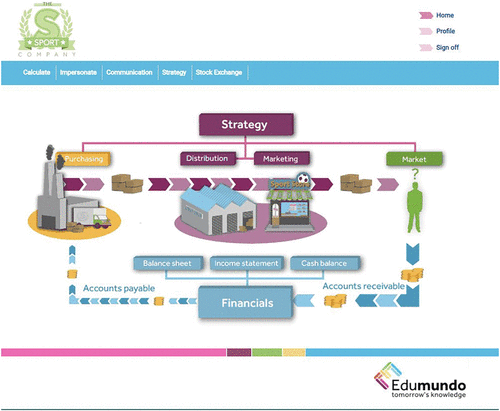
Notes. Students interact with this main screen during the simulation. Students can click on each icon and be directed to the corresponding area for their decision making.
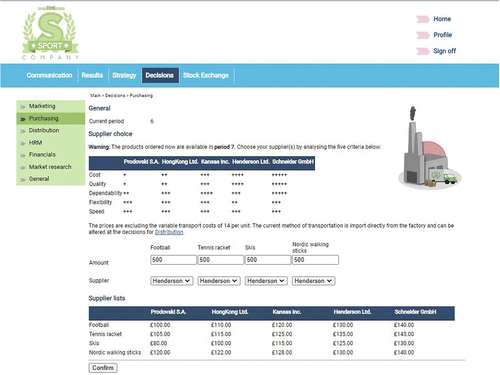
Note. In this part of the game, students can make decisions regarding supplier selection and inventory ordering.
As far as the assessed group presentation is concerned, this is based on the decisions made throughout the simulation game. Traditionally, it took place in class at the end of the semester; however, during the pandemic, the students had to record their presentation either as a group or individually and then a group member had to collate all the parts in one video and submit this. In their presentation, the students are asked to describe their decisions during the simulation. They have to justify these and link them to the corresponding operations management theory taught in class, present and analyze the results of their decisions, and reflect on what they should have done differently if their results were not good. The instructors made it clear in the beginning of the simulation game that students would be marked based on their contribution to their group’s decisions, and any group work issues should be reported either via email to the instructor or in the meeting log submitted at the end of the presentation (not marked). Therefore, in case of group work discrepancies, individual marks would be given based on the evidence provided in the recorded video and/or meeting log. Additionally, examples of good and bad practice were shared with students in terms of the presentation content and style. Pasin and Giroux (2011) discuss that a potential drawback of using a simulation game as an assessment method is that students may be concerned with how heavily their grade will depend on the simulation and may become frustrated if they feel that they have done their best but yet failed to “win the game” This frustration can be compounded by team management problems, such as free riders or divergent opinions on decisions that have to be made. To overcome the aforementioned issues, we assess our students in terms of the decisions they made and the justification why they made these decisions rather than their performance on the simulation game. Furthermore, to minimize group work issues, the students can pick their own groups rather than being assigned to groups randomly by their instructors. Finally, to offer additional incentives to engage with the simulation game, we offer a £25 Amazon voucher prize to each member of the best performing team of each market.
Haruna et al. (2021) report that using a combination of game elements, such as a leader-board, points system, competition, badges, levels, and immediate feedback can serve as a recipe for interactive learning, hence improving learning outcomes. In our case, a number of these aspects (leaderboard stock exchange, points system, balanced scorecard, competition, same market, badges, Amazon vouchers, immediate feedback, weekly results release) are incorporated in the adopted simulation game, enhancing interactive learning.
3.3. Emergency Online Teaching Framework
Based on our experience from adapting our operations management module for emergency online delivery, we developed a useful teaching framework for educators to follow in similar occasions.
Figure 3 illustrates the contrasting design aspects of the operations management curriculum in face-to-face and emergency online teaching scenarios. Although the learning outcomes, the online materials and online resources remain consistent across both approaches, they serve as a foundation for adapting the curriculum. In face-to-face instruction, assessments are tailored to suit in-person delivery and specific module learning objectives. However, transitioning to emergency online teaching necessitates modifications in terms of submission and evaluation methods. Delivery styles differ significantly between the two approaches. Face-to-face instruction relies on verbal communication, using class announcements and interactive dialogues with students. Conversely, emergency online teaching relies on written communication through announcements within the Learning Management System. Face-to-face lectures are delivered directly in the classroom, whereas online instruction uses asynchronous methods and recorded lecture sessions. In the face-to-face mode, field trips and visits can be organized to enhance student learning. However, in emergency online teaching, they can be substituted by online presentations or virtual tours. In the face-to-face version, tutorial classes are conducted face-to-face, providing direct instruction. During emergency online teaching, a flipped model can be adopted for online tutorial sessions. As far as the simulation game is concerned, in the face-to-face format, students engaged with the game during tutorial classes, with the instructor assuming a facilitator role and offering guidance when needed. Conversely, during emergency online teaching, students are able to participate in the game within or outside online tutorials, collaborating with their teammates at their own time. Instructors can provide personalized instruction upon individual student requests and offer increased support during the game. Additionally, instructors should be responsible for monitoring student attendance and participation in the simulation game within this pedagogical approach.

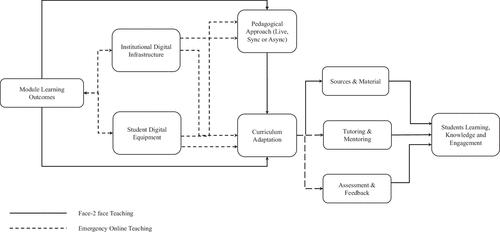
Figure 4 presents the proposed conceptual framework outlining the transition from face-to-face teaching to emergency online teaching. The diagram illustrates the key steps involved in this transition and highlights the factors that directly impact the pedagogical approach and curriculum adaptation. The framework emphasizes the significance of module learning outcomes as the starting point for both face-to-face and emergency online teaching. In both approaches, the initial step is to carefully consider the module learning outcomes. These learning outcomes serve as a foundation for determining the appropriate pedagogical approach and adapting the curriculum, especially in the context of the operations management module. Subsequently, material development, including the creation of module materials and sourcing relevant resources, becomes crucial. To enhance student learning, knowledge acquisition, and engagement, the framework incorporates two important components: mentoring the students and assessment and feedback. These elements contribute significantly to creating an effective learning environment, regardless of the teaching mode. However, when transitioning to emergency online teaching, two specific conditions come into play, which directly impact the pedagogical approach and curriculum adaptation. The first condition is the institutional digital infrastructure, which refers to the technological capabilities and resources available within the educational institution. The second condition is student digital equipment, which refers to the accessibility of the students to digital devices such as laptops, tablets, and so on. Both these lateral factors have a direct influence on the pedagogical approach and curriculum adaptation, shaping the strategies employed to ensure effective teaching and learning in the emergency online setting (Hofer et al. 2021).
4. Student Feedback
To evaluate the effectiveness of our curriculum design, we asked our students to provide us with their feedback. Thus, we asked for student feedback both verbally during the online sessions and through two surveys: the typical module survey that students have to complete at the end of teaching during each semester and an additional survey that we created and gave out to our students to complete online. As far as the module survey is concerned, this is designed centrally by the university for all the offered programs across all faculties and intends to look into student satisfaction in terms of module quality, teaching quality, online information accessibility, instructor support, and clarity of assessment tasks. In addition to the aforementioned standard questions, instructors can choose up to five extra questions from a pool of given questions that they think are relevant to their taught module. Because our module was taught solely online, we wanted to investigate the following aspects: (a) whether our students felt they could approach us to ask questions and help, (b) if we communicated well via email or the university’s virtual learning environment, that is, Canvas, (c) whether they have contributed fully in our module’s group work assessments, and (d) whether they perceived there was a good balance between lectures and tutorials. At the end, there were two open questions, where students were asked to comment on the most interesting aspect of our module and suggest how this module could be improved. A five-point Likert scale with one representing “strongly disagree” and five representing “strongly agree” was used for all the questions. The survey was available during the last weeks of the semester and was open for 12 days; 136 students responded. The survey questions along with the corresponding results are presented in Table 2. Almost 80% of students were satisfied with the module quality, whereas more than 80% felt that the instructors were easily approachable and communicated well online (either via email or Canvas). Table 2 presents the survey results, reporting the mean score for each question and the percentages of positive/neutral/negative responses.
|
Table 2. Module Survey Results
| Question | Likert scale | Mean | − (%) | (%) | + (%) | ||||
|---|---|---|---|---|---|---|---|---|---|
| 1 | 2 | 3 | 4 | 5 | |||||
| 1. Overall, I am satisfied with the quality of this module | 1 | 9 | 20 | 76 | 30 | 3.93 | 7 | 15 | 78 |
| 2. The module is well taught, whether face to face or online | 0 | 9 | 20 | 84 | 23 | 3.87 | 7 | 15 | 78 |
| 3. I find it easy to access the information I need from the module’s Canvas site | 2 | 10 | 11 | 84 | 29 | 3.97 | 8 | 8 | 84 |
| 4. Assessment tasks for this module are clear | 4 | 19 | 35 | 67 | 11 | 3.46 | 17 | 26 | 57 |
| 5. I felt I could approach my lecturer(s) and ask for help if I did not understand something | 2 | 7 | 18 | 77 | 32 | 3.98 | 6 | 13 | 81 |
| 6. Module team/leader communicated well with students via Canvas/email | 2 | 4 | 17 | 77 | 36 | 4.07 | 3 | 13 | 84 |
| 7. There was a good balance between tutorials and lectures/lectures and practical sessions | 2 | 7 | 34 | 74 | 19 | 3.76 | 6 | 25 | 69 |
| 8. I have contributed fully to the group work on this module | 0 | 2 | 11 | 59 | 64 | 4.37 | 1 | 8 | 91 |
Table 2 results demonstrate that, overall, our students were satisfied with the module design and teaching quality. Specifically, more than two-thirds of students thought that there was a good balance between lectures and tutorials/practical sessions, whereas around 85% reported that they could easily access the information they were looking for on the module’s Canvas site. Additionally, around 80% of students felt the module was well taught, and more than 80% expressed a nonnegative opinion regarding the assessment criteria clarity. Finally, 91% of students reported that they had fully contributed to the group work in this module.
In addition to the module survey, we created an online questionnaire to evaluate online student engagement for our module. We adopted the questions reported by Coates (2006) for this purpose. Data were obtained via a close-ended online questionnaire using the Qualtrics platform. A five-point Likert scale with one representing “strongly disagree” and five representing “strongly agree” was used for all the questions. The survey was made available to students during one of the online live lectures and was open for two weeks; 244 students responded. Table 3 presents the survey results, reporting the mean score for each question and the percentages of positive/neutral/negative responses.
|
Table 3. Online Student Engagement Results
| Question | Likert scale | Mean | − (%) | (%) | + (%) | ||||
|---|---|---|---|---|---|---|---|---|---|
| 1 | 2 | 3 | 4 | 5 | |||||
| 1. Lecture and seminar recordings improve my learning of the module | 4 | 21 | 50 | 78 | 73 | 3.86 | 11 | 22 | 67 |
| 2. Additional videos and other supplementary material improve my learning of the module | 3 | 19 | 69 | 91 | 44 | 3.68 | 10 | 30 | 60 |
| 3. Lecture and seminar recordings help me understand the module content | 1 | 16 | 53 | 90 | 66 | 3.90 | 7 | 23 | 70 |
| 4. Additional videos and other supplementary material help me understand the module content | 3 | 14 | 83 | 88 | 38 | 3.64 | 7 | 37 | 56 |
| 5. I find out what I have to do for the module assessments using the coursework explanation sessions | 3 | 13 | 42 | 102 | 66 | 3.95 | 7 | 19 | 74 |
| 6. Online sessions help me improve my understanding of a module topic | 8 | 33 | 55 | 85 | 45 | 3.56 | 18 | 24 | 58 |
| 7. Online sessions help me interact with other students | 67 | 68 | 43 | 35 | 13 | 2.38 | 60 | 19 | 21 |
| 8. I found it easy to form a group for the module assessments in the online sessions | 29 | 42 | 51 | 59 | 45 | 3.22 | 31 | 23 | 46 |
| 9. I use online platforms to work on my group assessments with other teammates | 6 | 16 | 36 | 112 | 56 | 3.87 | 9 | 16 | 75 |
| 10. Module staff discuss interesting issues in the online sessions | 5 | 21 | 71 | 106 | 23 | 3.54 | 11 | 31 | 58 |
| 11. The module content seems relevant to my programme & future career | 4 | 11 | 62 | 110 | 39 | 3.75 | 6 | 27 | 67 |
Table 3 results show that students have a high level of agreement about online class satisfaction in general, as evidenced by the high percentages for all forms of student engagement elements. In specific, around 90% of students expressed a nonnegative opinion regarding the usefulness of live lectures, flipped seminars, and additional videos and material provided in their learning. They also reported that the majority of them (around 75%) used the dedicated coursework explanation sessions to familiarize with the module assessment requirements. Furthermore, 82% of students expressed a nonnegative opinion regarding the usefulness of the online live module sessions. Moreover, the majority of the students saw the relevance of the module to their future (94% nonnegative) and found the module interesting (89% nonnegative). Overall, these findings emphasize that students had a high engagement with the module and were satisfied with the module curriculum.
When analyzing the comments regarding the most interesting aspect of the module and the suggested improvements, we came across a few interesting findings. It is noteworthy that 72 students provided comments regarding the most interesting aspects of the module, whereas 60 students provided comments for module improvements. Qualitative feedback revealed that there were three main themes regarding the areas that the students liked the most and found most interesting: (1) the module as a whole and especially the lean management concept, (2) the integration of the virtual factory tour and guest lecture in the assessment, and (3) the simulation game. It should be highlighted that the two latter themes have constantly been the most interesting aspects of the module over time either in face-to-face or online delivery, whereas the curriculum design and structure emerged as a theme in the online delivery. This indicates that the module adaptations we adopted for its online delivery can be considered successful. We provide some indicative examples of the written comments in the module survey regarding the aforementioned aspects:
“The most interesting aspect of this module is the [British car manufacturer] presentation which gave me an understanding of lean manufacturing and helped me gain knowledge on how big companies run their business successfully. This was also the most interesting as it contained videos etc which was a good learning technique different from the lectures.”
“The resource of the simulation is interesting and brings light to more complex problems I will need to tackle in the future (in university or beyond).”
“The assignments are very different to others (the online simulation) and has been very enjoyable to complete.”
“I really enjoyed the aspect of Lean manufacturing as it is a topic I previously studied loosely and it was nice to work on that. Also, the insight into [British car manufacturer] was a great experience.”
“Learning about different aspects of Operations and the second assessment as it differs from just writing a report or essay.”
Our results regarding the students’ views on the use of the simulation game are in line with the literature. Miyaoka (2005) and Snider and Balakrishnan (2013) describe that their findings demonstrate that students have a positive attitude and view regarding the use of simulation games in operations management teaching. In particular, they discuss that students showed an increased interest in operations management and felt that playing a simulation game improved their understanding of operations management concepts.
As far as negative feedback and suggestions for improvement are concerned, students criticized the use of group work for assessing a module that was taught solely online and during lockdown because they did not know their classmates, they could not meet in person as a group, and they had difficulties in communication. This was reiterated in the online student engagement survey results as the majority of students reported that they did not use the module online sessions to interact with their classmates (60% responded negatively to this statement), even though 75% of students responded that they used online platforms to work on their group assessments with their teammates. This demonstrates that students were reluctant to interact with each other in the online module sessions, mostly interacting with the module staff, whereas they chose to interact with their teammates/classmates using alternative platforms of communication rather than the ones provided by the university. Students also reported that they had difficulty in forming a group for the module assessments (31%). When the module assessments were designed, in the beginning of the academic year, we made the assumption that because our module would be taught in semester 2, students would be familiar with their classmates, and thus, they would be in a position to choose and communicate effectively with their group mates. However, our students were very reluctant to turn on their cameras and interact with their classmates during both semesters, increasing the difficulty in getting to know and communicating with each other. It should be highlighted that students acknowledged that when the pandemic restrictions would be lifted, it would be much easier to communicate with their classmates, and they reiterated that point when we asked for verbal feedback regarding the group work assessments during our online sessions. Thus, based on our experience, we suggest that educators ensure that students are familiar with each other before setting any group work assessments, especially in first-year modules. In the following section, we provide some additional insights based on our experience.
5. Implications for Operations Management Educators
The following section provides an overview of the lessons learned from adapting our operations management module for emergency online teaching and using a web-based simulation game in first-year teaching. As far as emergency online teaching for operations management is concerned, we learned the following:
Communication is vital when delivering an online module. Good communication among the instructors and between the students and the instructors is equally important for an online module’s success. Teaching solely online poses challenges to the teaching team. Thus, the module team has to be well coordinated, and the instructors need to act as a unity. Therefore, very often meetings should be scheduled to ensure that all instructors are up-to-date and on the same page regarding the module requirements. Furthermore, communication between the students and the teaching team needs to be as frequent as possible to enhance the student learning experience. This is in line with the literature, as Tang et al. (2023) report that effective communication is one of the most important elements of a successful online course. Technology advancement is key in this area as instructors and students can use a variety of different platforms and means to communicate as frequently as required.
Appropriate pedagogical approaches should be used. At present, educators worldwide can choose to follow one or more teaching and learning tool(s) from a plethora of available tools in the pedagogical literature. In an effort to try to make an online module interesting for students, it is very tempting to choose to adopt the most innovative, revolutionary, and state-of-the-art teaching approaches. For example, Tang et al. (2023) reported that in times of disruption, such as during the COVID-19 pandemic or other emergency situations, online teaching can be empowered by integrating nontraditional teaching approaches such as flipped learning, showing a positive effect on students’ learning, attention, and evaluation of learning. However, this approach might not be appropriate for all students’ requirements, and the correct mix of traditional and innovative teaching and learning approaches has to be followed, depending on the student needs and educational maturity. Therefore, for less educationally independent students, such as foundation or first-year students, more traditional approaches should be used or at least a combination of innovative and traditional approaches, as students need a more structured learning approach when familiarizing with fundamental concepts and learning in higher education (Prashar 2015). As far as more educationally independent students are concerned, such as final year or postgraduate students, more radical approaches can be used to stimulate and enhance the student learning experience.
Group work management. When relying only on online teaching, using an experienced teaching team is key to the module’s success, as the module instructors need to manage student groups from a distance. Therefore, when using group work assessments in an online module, the group work assignment task needs to be very well defined, providing very detailed instructions and a rigid marking scheme. Additionally, the assignment task has to be explained in detail to the students, providing good and/or bad examples of previous student work. In this way, student perceptions regarding assessment requirements as well as student expectations regarding marking are managed. Finally, instructors should be in frequent contact with the student groups to monitor any group work issues and have the experience to act upon these sooner rather than later.
As far as the simulation game is concerned, based on our experience from using this for a number of years, we suggest the following:
Teaching and administering the simulation game. As far as the simulation game is concerned, the module instructor in face-to-face teaching acts as a facilitator in the classroom, supporting the different student groups while playing the game and answering their questions. In the online version of the module, this was not possible, as the students played the simulation game mainly outside classroom hours and, in some cases, in different time zones. Thus, students were more independent and the support from the simulation game provider helpdesk can prove key to the success of the game. As far as the timing of the simulation game is concerned, in contrast to the suggestion of Snider and Balakrishnan (2013), there is no one-size-fits-all strategy. Different parameters should be taken into account, such as the level of the module (postgraduate or undergraduate), the year of study, and the students’ background knowledge and familiarity with operations management concepts. In cases where students are familiar with operations management, the simulation game can be scheduled in the first sessions of the module to improve student engagement and learning experience, whereas in cases where students do not have any relevant background knowledge, it is better to slot the simulation game later in the module schedule, so as to allow the students to familiarize with some of the required concepts first.
Provide a performance incentive to students. Literature suggests trying to offer students incentives to be more actively engaged with the simulation game. Snider and Balakrishnan (2013) report that they provided performance bonus marks to incentivize their students to actively participate in their simulation game. However, based on our experience, students tend to be very competitive every year, as they get to see the performance of every group in the stock exchange dashboard of the simulation game. Thus, if instructors can share the performance of each group after every round and students are able to see how well they have done compared with their classmates, this can increase student engagement with the simulation game. To further enhance this, apart from using the stock exchange dashboard, the best performing team from each market receives Amazon vouchers as a prize. Therefore, rather than offering extra marks, instructors can use alternative techniques to engage students with the module’s simulation game.
6. Conclusions
In this paper, we discussed the adaptation of our operations management module from face-to-face delivery to emergency online delivery due to the COVID-19 pandemic. We provided a literature review on operations management teaching, emphasizing on experiential learning, followed by describing the adaptations we did resulting from the module’s online delivery. In the online version of our operations management core module taught to first-year students, we used a mix of traditional and flipped classroom pedagogical approaches. The lecture was live to enhance student interaction, as students were encouraged to ask questions but also in some cases provide examples from their own part-time working experience. Moreover, the lecture was recorded, so students who could not attend the lecture would not miss on the introduced theory, but also the ones who attended could go back and watch again either the whole lecture or the parts they had not understood. In our online tutorials, we used the flipped classroom framework by providing the case studies to be discussed and the accompanying YouTube videos before the tutorial session. Thus, the online session time was used exclusively to discuss the case study to enhance active learning and deepen the student understanding on the application of operations management theories/concepts to real life. In addition, we used a web-based simulation game as a key learning and assessment tool. The aforementioned simulation game emphasizes the variety and breadth of decisions made by the students rather than focusing on one area, enabling them to apply different operations management theories. Based on our experience, we provided a framework for operations management educators to use in case they have to switch from face-to-face teaching to emergency online teaching. Furthermore, we discussed the student feedback, both qualitative and quantitative, regarding our module, including evidence that our students were satisfied with the module design and teaching quality, and thus, the module adaptations we adopted for its emergency online delivery can be considered successful. Finally, we presented some useful insights for operations management educators based on our experience from teaching our module online within an emergency and disruption setting. In particular, we suggest that good communication among the instructors and between the students and the instructors is vital when delivering a module within a disruption setting. For this reason, an appropriate pedagogical approach or combination of approaches should be used that is fit for the year of teaching and the special disruption circumstances. If group work activities and/or assessments are incorporated as part of an operations management module delivered in the emergency online teaching context, the group work task needs to be very well defined, providing very detailed instructions and a rigid marking scheme, whereas instructors should be in frequent contact with the student groups to monitor any group work issues. As far as the simulation game is concerned, based on our experience from using this for a number of years, the timing of the game is crucial for its success, and this depends on a number of factors, such as the year of study and students’ familiarity with operations management theory. Moreover, providing performance incentives adds a competitive element, enhancing the student engagement with the simulation game. It is noteworthy that the experiences and practices described in this paper are working well in a large undergraduate business school compulsory operations management module taught to first-year students. They are not necessarily best practices for every operations management module ran in an emergency online context. Therefore, further research investigating operations management modules in lower (foundation year) or higher (second year, third year, or postgraduate) years during the pandemic or other emergency situations is suggested.
We thank the associate editor and two anonymous referees for constructive comments and suggestions.
References
- (2023) Covid-19 pandemic and online learning: The challenges and opportunities. Interactive Learn. Environment 31(2):863–875.Crossref, Google Scholar
- (2015) The flipped classroom of operations management: A not-for-cost-reduction platform. Decision Sci. J. Innovative Ed. 13(1):71–89.Crossref, Google Scholar
- (2019) The impact of a flipped classroom approach on student learning experience. Comput. Ed. 128:269–283.Crossref, Google Scholar
- (2009) Remixing chemistry class: Two Colorado teachers make vodcasts of their lectures to free up class time for hands-on activities. Learn. Lead. Tech. 36(4):22–27.Google Scholar
- (2012) Bringing teaching to life: Exploring innovative approaches to operations management education. Internat. J. Oper. Production Management 32(12):1369–1374.Crossref, Google Scholar
- (2006) Student Engagement in Campus-Based and Online Education: University Connections (Routledge, London).Crossref, Google Scholar
- (2012) Simulation of assembly operations using interchangeable parts for OM education: A hands-on activity with water pipe fittings. Internat. J. Oper. Production Management 32(12):1427–1440.Crossref, Google Scholar
- (2020) Using the learning assistant model in an undergraduate business analytics course. INFORMS Trans. Ed. 20(3):125–133.Link, Google Scholar
- (2019) Teaching OR/MS with cases: A review and new suggestions. INFORMS Trans. Ed. 19(2):57–66.Link, Google Scholar
- (1998) Operations management teaching on European MBA programs. Internat. J. Oper. Production Management 18(5):424–451.Crossref, Google Scholar
- (2022) Teaching a Lean masterclass in the metaverse. Internat. J. Lean Six Sigma., ePub ahead of print September 20, https://doi.org/10.1108/IJLSS-02-2022-0035.Crossref, Google Scholar
- (2021) Improving instruction and sexual health literacy with serious games and gamification interventions: An outlook to students’ learning outcomes and gender differences. Interactive Learn. Environment. 31(4):2392–2410.Google Scholar
- (2021) Online teaching and learning in higher education: Lessons learned in crisis situations. Comput. Human Behav. 121:106789.Crossref, Google Scholar
- (2022) Applying a business simulation game in a flipped classroom to enhance engagement, learning achievement, and higher-order thinking skills. Comput. Ed. 183:104494.Crossref, Google Scholar
- (2000) Inverting the classroom: A gateway to creating an inclusive learning environment. J. Econom. Ed. 31(1):30–43.Crossref, Google Scholar
- (2020) The Impact of Covid-19 on Higher Education Around the World. IAU Global Survey Report (International Association of Universities, Paris).Google Scholar
- (2005) Making operations management fun: Littlefield technologies. INFORMS Trans. Ed. 5(2):80–83.Link, Google Scholar
- (2018) Experiential undergraduate operations management course engages students. J. Supply Chain Oper. Management 16(3):219–245.Google Scholar
- (2020) COVID-19 and emergency elearning: Consequences of the securitization of higher education for post-pandemic pedagogy. Contemporary Security Policy 41(3):492–505.Crossref, Google Scholar
- (2015) The use of flipped classrooms in higher education: A scoping review. Internet Higher Ed. 25:85–95.Crossref, Google Scholar
- (2011) The impact of a simulation game on operations management education. Comput. Ed. 57:1240–1254.Crossref, Google Scholar
- (2012) Examining the effectiveness of experiential teaching methods in small and large OM modules. Internat. J. Oper. Production Management 32(12):1473–1492.Crossref, Google Scholar
- (2021) A literature review on impact of Covid-19 on teaching and learning. Higher Ed. Future 8(1):133–141.Crossref, Google Scholar
- (2015) Assessing the flipped classroom in operations management: A pilot study. J. Ed. Bus. 90:126–138.Crossref, Google Scholar
- (2016) How mode of delivery affects comprehension of an operations management simulation. Online vs face-to-face classrooms. J. Internat. Ed. Bus. 10(2):183–200.Crossref, Google Scholar
- (2016) Video tutorials within an undergraduate Operations Research course: Student perception on their integration and creating a blended learning environment. INFORMS Trans. Ed. 17(1):1–12.Link, Google Scholar
- (2013) Lessons learned from implementing web-based simulations to teach operations management concepts. INFORMS Trans. Ed. 13(3):152–161.Link, Google Scholar
- (2023) Efficiency of flipped classroom with online-based teaching under covid-19. Interactive Learn. Environment 31(2):1077–1088.Crossref, Google Scholar
- (2018) Teaching lean manufacturing at a postgraduate level: Integrating traditional teaching methods and problem-based learning approach. Internat. J. Lean Six Sigma 9(3):301–323.Crossref, Google Scholar
- (2021) Operations management teaching practices and information technologies adoption in emerging economies during COVID-19 outbreak. Tech. Forecasting Soc. Change 171:120996.Crossref, Google Scholar
- (2005) The relationship of business major to pedagogical strategies. J. Ed. Bus. 80(5):269–274.Crossref, Google Scholar
- (2007) Online games to teach operations. INFORMS Trans. Ed. 8(1):3–9.Link, Google Scholar
- (2012) The innovation game: Lessons in strategy and managing operations. Internat. J. Oper. Production Management 32(12):1441–1459.Crossref, Google Scholar