


Designing and Assessing a Multidisciplinary Service-Learning Course in Supply Chain Management
Abstract
In this paper, we describe an innovative design for a multidisciplinary service-learning course on supply chain management in the industrial distribution program housed in the College of Engineering at a large research university in Texas. The purpose of this course was to increase students’ technical expertise and build a mindset and skills needed to tackle current societal issues, raising their social responsibility and enhancing civic-mindedness. The course combined curricular learning with community service, applying the content of academic disciplines to practice. It brought students from industrial distribution and sociology together to help food pantries to improve their operational efficiencies so that the food pantries can serve more people and work toward their goal. In this project, student groups identified the specific needs of community food pantries. They recommended solutions to improve operational efficiency so that they could use their technical skills to address the challenges and make an impact on the communities. In addition, student groups interacted with partner agencies via technologies that aided distance communication, which facilitated partnerships in remote locations. We also evaluated this project. The results reveal that this project had an impact on students’ personal and professional development as well as the community.
Funding: We acknowledge the tier-one priority grant funding from the provost office, dean of faculty, and department of student activities at Texas A&M University.
Supply chains today are undergoing massive transformations in providing customers with the most efficient product and service delivery (Qiu et al. 2021). However, supply chain logistics competencies and skills are not developing as quickly as the industry environment requires (Fry 2008, Kotzab et al. 2018, Gámez-Pérez et al. 2020). Sheffi and Klaus (1997) explicitly note that the skills for modern supply chain professionals are no longer limited to the understanding of how to operate a warehouse or reduce the rate per mile; they need to know how to set up supply chains that not only respond to existing situations, but also can change and adapt. It is imperative that students majoring in supply chain management be aware of the bigger picture to develop these competencies and skills in this tumultuous time (Gammelgaard and Larson 2001). That is, apart from learning technical skills, students are also required to gain a better understanding of social issues to be tackled and to develop civic-mindedness (Natarajarathinam et al. 2021).
To tackle this issue, it is suggested that supply chain management education be revised to suit the high variety of sector-specific competencies in logistics (Bölsche et al. 2013). Researchers and professionals argue that supply chain management courses benefit if the pedagogical approach encourages students to actively engage with the course material through practical application and experience rather than focusing on the classroom instruction as the sole source of knowledge (Freire 2005, Welch 2016). Service learning combines learning objectives with community service, connects community service to course content, and translates theory into practice (Levesque-Bristol et al. 2011). Such educational pedagogy is especially useful in supply chain education because it can enhance the delivery and retention of the necessary knowledge for future logisticians and facilitate a transformational learning experience (Carreras and Kaur 2011). Therefore, service-learning courses are recommended in supply chain education to benefit students who aspire to obtain a combination of technical competencies and develop critical thinking, problem-solving, and reflection skills.
In this paper, we delineate a multidisciplinary service-learning course design that we implemented in an undergraduate program of industrial distribution offered at a large research university in Texas in the spring semester 2018. In the following sections, we first define what is service learning and articulate the benefits of service learning in supply chain education. Then, we describe the context under which we design this multidisciplinary service-learning course. Subsequently, we outline the course structure, detail its design procedures, and summarize the uniqueness of this multidisciplinary course. We afterward report the students’ perceptions about the impact of this course on them and the community. We then outline the challenges encountered during the implementation of this course and areas for improvement for the future. Finally, we present the conclusions.
1. Background
This course was a service-learning project. Service learning is a course-based, credit-bearing educational experience in which students (a) participate in an organized service activity that meets identified community needs and (b) reflect on the service activity in such a way as to gain further understanding of course content, a broader appreciation of the discipline, and an enhanced sense of personal values and civic responsibility (Bringle and Hatcher 1995). As a pedagogical approach, service learning has the potential to provide benefits for all stakeholders, including students (service provider), institutions (facilitator), and the partner community (service receiver) (Leidig and Oakes 2021). In terms of students, service learning positively impacts their course satisfaction, academic performance, critical thinking skills, civic engagement, and professional development (Bielefeldt and Lima 2019, Natarajarathinam et al. 2021). Especially in supply chain management, this pedagogical approach enhances students’ understanding of key issues, opportunities, techniques, and developments in supply chain management. Thus, they can gain an improved sense of social and ethical responsibility and citizenship behavior (Schoenherr 2015), contributing to civic engagement (Celio et al. 2011). The community partners benefit from project deliverables and their increased self-awareness and understanding of engineering and technology. Service learning focuses on community collaboration, reflection, active learning, and caring among participants (O’Grady 2000). Given its ability to connect campus to community and to enrich students’ learning experiences, service learning has become a broad-based educational reform movement.
Service learning also creates an avenue for solving social problems, thus promoting social change (Bowen 2014). As we know, eradicating hunger and malnutrition is one of the significant social challenges of our time. In the United States, millions of children and adults do not obtain the meals they need to thrive, and 18 million children face hunger—one in six kids (No Kid Hungry 2021). In Texas, the food insecurity rate was 14.1%, and 19.6% of children were food insecure in 2019 (Feeding America 2021). Although more food could be provided to hungry people, the demand is never sufficiently met. Many people still suffer from hunger and malnutrition. This might be more of a supply chain issue. As members of the community, we have the duty to address these problems. Supply chain major students have an opportunity and a responsibility to use their skills to tackle the food distribution inefficiency and determine solutions to these challenges.
Under these contexts, therefore, we launched our Hunger-Free Texas Project to develop a multidisciplinary service-learning course of supply chain management in the department of engineering development and industrial distribution in the College of Engineering in the spring semester 2018. This course was an elective course. It brought students from industrial distribution and sociology together to help food pantries to improve their operational efficiencies so that they can serve more people and work toward the goal of a hunger-free Texas. We chose food pantries as our partners in this service-learning project because we aimed to increase students’ awareness of food insecurity, utilize their distribution and logistics expertise, raise their social responsibility, and enhance civic-mindedness by tackling food insecurity issues. To this end, we examined and explored the extent to which this design project impacted students’ personal and professional development as well as the community.
2. Course Design
Before the course design, two instructors, one from industrial distribution (College of Engineering) and another from sociology (College of Liberal Arts), worked in cooperation with the Central Texas Food Bank (CTFB) to develop the Hunger-Free Texas Project to address food access and food security disparities in Texas. The purposes of the project are (1) to provide students with the opportunity for practical application of their academic learning and (2) to raise their social responsibility and enhance civic-mindedness by serving the community. The course was structured with the five critical elements of thoughtful service in mind: (1) community voice, (2) orientation and training, (3) meaningful action,; (4) reflection, and (5) evaluation (Butler University 2019). Community voice ensures that the contributions and well-being of community members are centered throughout the program. Orientation and training provide students with the information they need to be successful in the program. Meaningful action ensures that the service is valuable and beneficial to the community and the students (Butler University 2019). Reflection helps ascertain that students are thinking critically about their experiences, paying careful attention to what is going on in the community and their interactions with its members. Reflection encourages them to be thoughtful and deliberate about their actions. Finally, the evaluation element of thoughtful service measures the impact of the students’ experience on both the students and the community.
By collaborating with the CTFB and food pantries, students helped to develop an evidence-based solution for a problem they were facing. The food pantries had identified a problem that they want students to help them solve. Students gathered information on the problems, identified possible solutions and effects, discussed ideas with the pantries, found out the best solutions, and presented their findings in both a project summary document and an oral presentation at the end of the project. Deliverables included pretests and posttests, hunger knowledge quiz, project preference and skills survey, reflection, report, field trip presentations, and others. The final deliverable was the summit presentation in which students were required to provide a design for a feasible solution that the pantries could successfully implement and that would have the greatest impact on their services.
2.1. Course Structure
The Hunger-Free Texas Project was a credit-bearing course of supply chain management opened to undergraduate students from the departments of both industrial distribution and sociology. The course for the department of industrial distribution was IDIS 343-503. The course format combined lecture, group contract, group meeting, teleconference, field visit (optional), project report, and project group presentation. Students’ final grade was primarily assessed based on their pretests and posttests, two knowledge quizzes, three reports, three reflection assignments, project presentations, and an appraisal from their peer students and community agencies. Students were required to form small groups, and each group was paired with a food pantry/food bank agency liaison. Depending on the size of the food pantry/bank, it might get a smaller/larger group of students.
Student groups applied both sociological and supply chain management approaches to their problems. The sociological information can illustrate the structural causes underlying hunger and poverty, whereas industrial distribution knowledge can produce and distribute technologies that can help resolve these problems. Whereas these two groups of students met separately in their discipline-specific classes for technical knowledge each Tuesday, all of them attended joint class sessions to learn relevant skills and work on this project on Thursday. Eighty-seven undergraduate students enrolled in this project. Fifty students were male. Among all the students, 4 of them were freshmen, 15 were sophomores, 39 were juniors, and 29 were seniors. Fifty-six students were industrial distribution majors, whereas the other 31 students came from social science, such as psychology, sociology, public health, politics, etc. Students formed into 20 groups with each group of four to five members. We assigned at least one social science major student in each group. Nineteen pantry agencies participated in the project to achieve a blended background. Student groups interacted with partner agencies via technologies that enhanced distance communication, facilitating partnerships in remote locations.
2.2. Course Design Process
The design procedures of this multidisciplinary course followed the five critical elements of thoughtful service mentioned earlier. The whole course design included preparation, inclusion of community voice, orientation and training, reflection, action, and evaluation. However, these procedures are not linear but iterative. Table 1 illustrates the whole course design processes, schedule, and activities.
|

Table 1. Course Design Procedures
| Month | Week | Task(s) | Critical elements |
|---|---|---|---|
| Five months before | Meeting with CTFB: define the scope of the project | Community voice | |
| Four months before | Meeting with CTFB: edit necessary documents to reflect current initiatives and goals | Community voice | |
| Three months before | CTFB: recruit agencies;university team: recruit students | Community voice | |
| Two months before | CTFB: recruit agencies;university team: visit agencies and create (or edit) course assignment instructions and rubrics | Community voice | |
| One month before | CTFB: confirm participating agencies and send out the agency challenge survey;university team: visit agencies and meet with CTFB | Community voice | |
| January | Weeks 1 and 2 | University team: review questions for pretest and state of hunger knowledge quiz, review agency challenge submission, prepare with CTFB for the field trip | Evaluation |
| Weeks 3 and 4 | Welcome dinner (introduction to program): pretest sent out In-class:
| Orientation and training, evaluation,reflection | |
| February | Weeks 5 and 6 | In-class: Group work, CTFB expectations, business case lessons
| Orientation and training |
| Weeks 7 and 8 | Due: group contract, telephone conference schedule, and pretest In-class: Food deserts and mapping community’s area
| Orientation and training,community voice | |
| March | Weeks 8 and 9 | Due: report 1 | |
| Weeks 10 and 11 | Due: report 2, midterm reflection In-class:
| Evaluation, reflection | |
| April | Weeks 12 and 13 | Due: report 3, final reflection In-class:
| Evaluation, reflection, meaningful action |
| Weeks 14 and 15 | Inaugural community engagement & impact summit Due: summit presentation, project summary, peer evaluation, posttest, final reflection, poststate of hunger knowledge quiz | Community voice, evaluation, reflection, meaningful action | |
| May | Week 16 | Due: final grades |
2.2.1. Preparation.
Five months before the course, we defined the scope or theme of the projects, recruited the food bank agencies, and created the course materials. During these five months, our team met with the CTFB to define the theme of the overall project (e.g., fresh produce distribution) and the scope of the challenges that students would tackle. Once the scope was defined, the faculty and CTFB hosted information sessions at which agency partners learned about the program and expectations. The agencies were invited to brainstorm and come up with possible challenges for the students to address and provide suggestions for the program. One of the final tasks of the preparation stage is constructing course materials, such as the evaluation tools, course assignments, and reflection prompts.
2.2.2. Community Voice.
To listen to the community voice, a couple of months before the beginning of the class, instructors communicated with CTFB, recruited agencies, and visited different agency locations as mentioned. The CTFB and agencies were involved at the preparation stage in terms of defining the project scope, editing necessary documents to reflect current initiatives and goals, and creating (or editing) course assignment instructions and rubrics. During the project, students scheduled communications with agencies via teleconference calls to listen to their voices. To ensure that communication remained open and consistent, communication liaisons were selected to serve as the technical support line of contact for the agency, CTFB, and students. The interaction between the agency representatives and students was when community voice was the most engaged. Because the course instructors took a more indirect role in that relationship, the agency partners and their student groups had a greater degree of control over their interactions.
2.2.3. Orientation and Training.
During joint class sessions, the students learned about food access and security, food loss, the free food market, the use of social science data to map the areas of need in the community, and food waste policies. There were also class sessions intended to help develop their professional skills, such as the presentation of a business case. Many of these classes also served as working sessions in which the students met and discussed their projects and asked instructors for assistance. The students also toured the CTFB and one of the local food pantries to get an idea of their operations. During this visit time, students had an opportunity to ask agency representatives questions and listen to their perspectives and experiences. The guest speakers from the food bank were invited to talk about hunger issues and food policies. These learning and training opportunities encouraged students to engage with multiple forms and sources of knowledge which supports the first step toward meaningful and purposeful action and reflection. Training the students about these issues in the project can prevent faulty logic, misconceptions, and harm. One strength of this course is its interdisciplinary nature. The course assembles multiple sources of knowledge to analyze social and technical problems. Students apply both sociological and industrial distribution perspectives to their problems. The sociological information can explicate the structural causes underlying hunger and poverty, whereas industrial distribution can produce and distribute technologies that can help resolve these problems.
2.2.4. Meaningful Action.
In this course, students were required to provide different perspectives and develop solutions that would be feasible and beneficial for their community partners. Depending on the challenge and solution, this could include creating bilingual recipe books, optimizing pantry space usage, forecasting community needs, consolidating orders for better inventory management, or identifying ways that ostracized groups can get the services they need without feeling unsafe. It also required students to produce a realistic timeline and action plan for implementation in which the impacts, risks, financial requirements, significant milestones, and crucial team members were identified. An action plan crafted in collaboration with the agency strengthened the likelihood that solution implementation would be successful. Students did regular check-ins with agencies and wrote reports to mark their project milestones.
2.2.5. Reflection.
In this course, students completed short writing assignments, which prompted them to think about the impact of their service on themselves and the community. Students also participated in small group and in-class discussions, exchanging ideas and thinking critically about the course materials and their experiences. These in-class discussions took place at the end of March 2018. Twenty groups each held their own discussion in class that took two hours. Each group was required to submit their own group meeting notes after discussion. The prompts are provided in Appendix A. Two sample questions were “How far has the group gone in the sense of the project?” and “What are the challenges the group has experienced/is experiencing?” Thoughtful and strategic thinking, in turn, can lead to meaningful and purposeful action.
2.2.6. Evaluation.
In this project, we used pretests and posttests, the state of hunger knowledge quiz (see Appendix B), peer evaluations (see Appendix C), course assignments, and final presentations to measure students’ learning outcomes. Agencies were also asked to evaluate the students and the project and to describe their experiences. Pretests and posttests helped assess students’ civic engagement growth. The hunger knowledge quiz appraised their knowledge about food security and access, evaluating student knowledge about the state of hunger domestically and abroad. This assessment relates to the element of orientation and training. Results from the knowledge quiz set the stage for the instructors to resolve these misconceptions by engaging in comprehensive lessons about the realities of hunger. This quiz was administered again at the end of the semester to gauge the effectiveness of the course content on hunger in the United States and abroad. Peer evaluations allowed students to evaluate their teammates’ productivity, whereas the agency evaluation survey (also known as the agency feedback survey) gave agencies an opportunity to assess their students’ productivity and the efficiency of our program. Course assignments included the group contract, communication conference schedule, and written reports.
3. Unique Design of the Course
The structure of the Hunger-Free Texas Project is unique. First, this course was multidisciplinary in nature. Students were from industrial distribution and sociology majors. The course incorporated the knowledge from both fields so that student groups were well-positioned to analyze and solve social and technical problems encountered in this project. Second, students engaged with multiple communities across Texas from a distance. Students took an active and independent role in partnership with food agencies. Third, the project was supported by the CTFB, which is the largest hunger-relief charity in Central Texas and provides food and social services in partnership with nearly 250 local (food pantry) agencies.
The fourth unusual feature is the interactive course activity. There were 19 pantry agencies and 20 student groups that participated in the project. Once the semester began, each pantry worked with one or two groups of students who enrolled in a course in industrial distribution or sociology. Together, the pantry and the student groups identified the challenge that the agency was facing. The students then used the information provided by their agencies and the knowledge they learned in class to identify the root of the problem and develop a solution. The agency partners assessed whether the ideas were feasible for their operations and community members. Once the 19 agencies had determined which solutions were beneficial to them, they then worked with the students to develop a timeline and action plan to implement the solution. After the planning (or testing) was done, the students finalized the solution by gathering all the necessary information and materials and then gave it to the agencies for implementation. Finally, the students presented their solutions at the community engagement and impact summit at the end of the semester. The CTFB committed funds to ensure that the projects demonstrate cost-efficiency, feasibility, creativity, and possible impact with up to $15,000 available to implement the solutions.
4. Assessment of Student Experience
Throughout the spring semester of 2018, we assessed their multiple reflection writing assignments. Altogether, 81 students completed informed consent allowing us to do so, whereas six students did not consent. Please note that the data analysis and the results presented in this paper do not represent the same number of responses for each question or item because of missing or incomplete responses. The assessment mainly concerned students’ satisfaction with this project and their perceptions of the impact of the project on themselves and the community.
4.1. Pretests and Posttests of Hunger Knowledge Quiz
As discussed previously, we conducted pre- and posttests of a hunger knowledge quiz to assess students’ hunger knowledge. The quiz consisted of 13 true–false and multiple-choice questions. As this quiz evaluated students’ knowledge about food security and access both domestically and abroad, the difference between these two tests might help to assess students’ civic engagement growth. The results of a prepost paired-samples T-test are provided in Table 2. As can be seen, the paired sample size is 81. The mean of the pretest is 7.83, whereas that of the posttest is 10.45. All but three students scored better in posttest. There is a statistically significant difference between these two tests (t = 14.90, p < 0.001). Obviously, the posttest outperformed the pretest, indicating that students’ hunger knowledge increased after engaging with this project. This might mean civic engagement growth among participating students.
|
Table 2. Prepost Paired Samples Test
| Pair | Mean | Standard deviation | t-value | Degree of freedom | p-value |
|---|---|---|---|---|---|
| Postpre | 2.61 | 1.60 | 14.90 | 80 | <0.001 |
Notes. N = 81. Mpost = 10.45. Mpre = 7.83.
4.2. Comparing Non–Service-Learning Students and Service-Learning Students
As mention previously, the number of this service-learning course in industrial distribution program was IDIS 343-503. There were two other sections: IDIS 343-501 & 502, which were regular classes. All three sections were taught by the same professor. Apart from all deliverables, industrial distribution students participating in this service-learning project had to take two mandatory exams and submit seven homework assignments as the non–service-learning students in the 501 & 502 sections did. We made comparisons between 56 service-learning students and 120 non–service-learning students in the industrial distribution program. The results show that the mean scores of the two mandatory exams for service-learning students (M1 = 164.17, SD1 = 26.28; M2 = 169.50, SD2 = 175.59) were lower than those of the non–service-learning students. The mean score of seven homework assignments for service-learning students (M = 15.02, SD = 3.22) was higher than that of non–service-learning students (M = 14.99, SD = 2.82). However, there were no statistically significant differences between service-learning and non–service-learning students. The reason that the service-learning students underperformed the non–service-learning students might be a result of much more time spent on this service-learning project. The service-learning students created a successful balance between learning technical content and accomplishing demanding service-learning projects.
4.3. Assessment of Personal Impact
Most students believed that the project would be impactful on themselves: 48 students thought it would be extremely or very impactful (see Figure 1). In the open-ended responses, students described three primary reasons why they felt that the project was going to be personally impactful: (1) they believed it to be an eye-opening experience, (2) they acquired and developed new knowledge and skillsets, and (3) they felt a sense of fulfillment or motivation to help the community. These reasons reflected the projected and desired outcomes that this project hoped to fulfill. The students’ open-ended responses revealed that the practical and hands-on experience, the information given to them by their partner agencies, and course lectures opened their eyes to the complexity of the issues surrounding food security and access. This course also helped them realize the struggles that other food pantries face in their day-to-day operations. Furthermore, the students mentioned that they gained valuable knowledge and skills relating to technical knowledge, collaboration, communication, and problem solving.
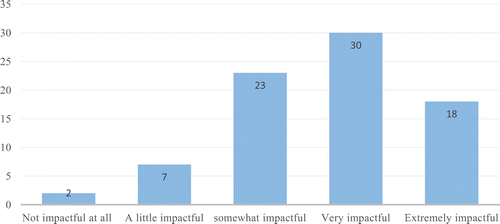
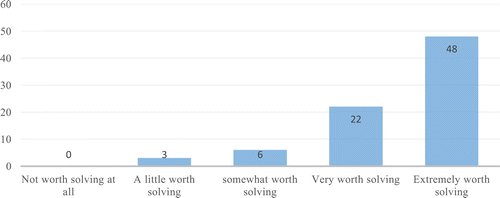
Finally, the reflection responses showed that this course helped students develop more civic-minded and proservice attitudes. They mentioned that they felt fulfillment from helping others and felt more motivated to help the community. As can be shown in Figure 2, many students thought the problem assigned to them was worth solving; 70 students believed that the problem was very or extremely worth solving. In their written responses, the students believed their solution benefited others and helped save time and money for community agencies. Additionally, they believed that solving minor issues assigned to them within the community could influence the community and potentially help address significant issues, such as those related to housing and social services.
4.4. Assessment of Professional Impact
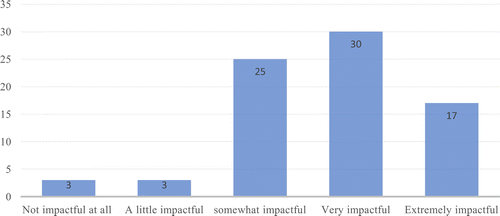
As can be seen in Figure 3, the students believed that working with real-world agencies and problems would have a positive impact on their professional life. Students (72) who thought that the project was impactful mentioned that it provided them the opportunity to work in teams and to develop their management and problem-solving skills. They also thought that it would help build their resumes.
4.5. Assessment of Impact on Community
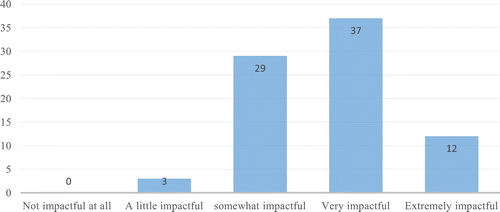
Regarding their perceived impact on the community (Figure 4), 78 students felt that their projects would be somewhat or very impactful or extremely impactful on the community. When asked to describe how it would be impactful, they described it from their community partner’s perspective, stating it would expand their service capacity, improve operational efficiency, and increase food supplies.
4.6. Student Satisfaction
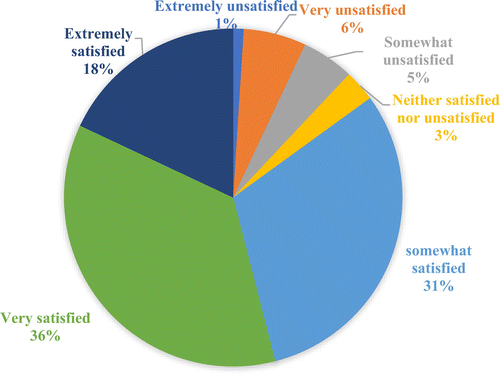
We also assessed student satisfaction with this course. The survey questions are presented in Appendix D, whereas the results are provided in Figure 5. Overall, most of the students were satisfied with this course. On a seven-point Likert scale from extremely unsatisfied to extremely satisfied, 54% felt either very or extremely satisfied; 31% were somewhat satisfied. Furthermore, 48% of students agreed or somewhat agreed with the statement “I learned more in this course than in other courses.” Twenty-two percent of students felt neutral about how much they learned in the course. Another 21% did not agree with the statement to some degree.
4.7. Agency Assessment
Agency feedback helped us assess the efficiency of the project, ensuring that the voices and expertise of the community partners were thoroughly utilized (see Appendix E). All 19 agencies reviewed each of their student groups regarding the students’ demeanor, punctuality, listening skills, comprehension of the problem and agency mission, and feasibility of their solutions. Overall, the agencies were satisfied with their experience in the program (17 agencies were extremely satisfied). For 17 student groups, the community partners strongly agreed with the statements that the students “actively listened to what you had to say and took your views, values, and opinions into consideration when developing a potential solution” and “understood your agency’s mission.” For the remaining three groups, the agencies somewhat agreed with these statements. These statements indicated that the students respected the agencies’ mission and used their expertise to inform their decisions for developing a practical solution. Eighteen student groups were accoladed for developing practical solutions that would meet agencies’ needs. Only two student groups did not produce a suitable solution for their agency from the perspective of agencies. According to the assessment of community partners, most students were respectful, showed a professional demeanor, and made sure to stay in frequent communication. The agencies also appreciated students being actively involved and engaged throughout the project; they seemed to have a good sense of purpose and made a reasonable effort. As one agency said, “The group was very dedicated to finding a realistic solution to the concern we were facing; it was obvious that they took the project very seriously and as a result developed an outstanding solution.”
5. Challenges and Areas for Improvement
Based on the reflections and feedback of both students and agencies, we identified some issues and assessed the challenges existing in the course implementation and areas for improvement for the future. First, most students complained about unexpected workload and unclear course requirements as well as the need for an in-person visit with their food pantry agencies. The solution could be to develop an information dissemination strategy, including creating an introductory course video and hosting a welcome dinner to clarify course expectations, project deliverables, and their weights in their final grades. It also would be helpful for all the students to pay a visit to a food bank at the beginning of the semester. By so doing, students could form a practical concept of how a food bank works and get a chance to meet and build a personal connection with their agency liaisons at the early stage of the project. Second, the progress of the project depended upon the responsiveness of the food pantry agency. However, there was still a lack of engagement and communication issues between students and agencies. For this, our strategic partner, the CTFB, promised to provide monetary rewards to food pantries/banks that could participate in future projects. Participants must abide by the rules and hold themselves accountable to keep participating in the project. At the end of this project, student groups should present their findings and solutions to their agencies. Third, some students were not provided with well-defined problems to solve. Students were also aware that each food pantry had different problems, and therefore, it is difficult to predefine each food pantry’s problems. They had to communicate with their agency liaisons to explore the pantry’s needs. To address this issue, we could follow a suggestion from Littlepage et al. (2012) and predefine problems in collaboration with food banks and agencies. This way, the students could invest more time and energy into investigating the problem and proposing practical solutions. Fourth, the group contract was not well-executed as anticipated. To improve it, we may need to explain the importance of peer evaluations once groups are formed and students are developing group contracts. We could use a triangulation of grades that includes formal course assessments, peer evaluations, and feedback from the agencies. This way, students could follow their group contracts better, and everyone could contribute.
Finally, from the perspective of community partners, challenges related to physical disconnect or distance between the agencies and students as all the students and agencies worked remotely from each other in different cities. Without a visit to the agencies, some operations could not be explained well as it was challenging to articulate the information. They suggested that the students physically visit the pantries, have more structured communication schedules, and start the project earlier in the semester so that students have more time to conduct research. These suggestions coincided with students’ complaints.
6. Conclusion
In this report, we describe how we designed a multidisciplinary course for the supply chain management program. We worked directly with food pantries to address disparities in food access and food security in the state of Texas to design this course. We also examined the impact of this project on students and the community. Results show that most students believed this course had a significant impact on themselves, and working with real-world agencies and problems had a positive impact on their professional life. In addition, the course was perceived to have an effect on the community. Students believed that they were able to develop and hone various technical skills, such as communication, collaboration, and problem-solving skills, that they would be able to use throughout their lives. By tackling food insecurity issues, their social responsibility was raised and civic-mindedness enhanced.
Although some challenges existed in the implementation, this multidisciplinary course has significant implications. First, it followed the five critical elements of thoughtful service, ensuring that community well-being is centered and every action taken by students is meaningful, purposeful, and person-centered. Additionally, this course can serve as a feasible model for a scalable, cost-efficient program that is not bound by location proximity. The model is especially beneficial for universities aspiring to broaden their capacity to engage and serve communities not located in the immediate area because it avoids issues with travel liability. Furthermore, this course integrated socially conscious material into the curriculum, presenting a great opportunity for students to develop civic-mindedness and a revitalized appreciation for their discipline. The empathy and compassion that some students developed for their community partners and their members can be seen as indicators that the experience overall inspired more civic-minded and proservice attitudes. Finally, this course allowed students to work directly with community partners (food pantries) to address disparities in food access and food security in the state of Texas. Student groups collaborated with agencies to learn more about their community, identified the needs, and provided practical, well-researched solutions that could improve the efficiency of their supply chain operations. Whereas we developed and implemented this course of supply chain management in the industrial distribution program, we believe that the design works well in other courses or other programs intending to work with the community to build students’ mindset and skills needed to tackle community issues. Although the design implementation may look different for different courses in other contexts, the basic features remain the same nevertheless.
Being aware of the benefits of such a service-learning course, we launched a replicated project in the spring semester 2019 for our students. A total of 82 students (18 groups) from industrial distribution and social science majors participated in this multidisciplinary project. Again, students worked with the CTFB and helped to fight hunger and food insecurity in the clients’ communities. However, it was not a full replica of the previous project. Based on the challenges encountered, we addressed the proposed issues and made several adjustments in this project structure/design, so it is more streamlined and organized. Because of the COVID-19 pandemic, this multidisciplinary project has been interrupted for two years. From the fall semester of 2021, a group of students in industrial distribution has been participating in the Houston Food Bank (HFB) project aiming to help the HFB fight hunger, improve operational efficiency, and increase community impact post-COVID.
We are especially thankful to the department heads of the department of engineering technology and industrial distribution and sociology at Texas A&M University for their staunch support for this course design and delivery. We, finally, thank the CTFB and our partner agencies for engaging with us and providing this meaningful experience. We provide other course materials such as discussion prompts (Appendix A), hunger knowledge quiz (Appendix B), peer evaluation (Appendix C), student satisfaction survey (Appendix D), agency feedback survey questions (Appendix E), and syllabus (Appendix F). Any other teaching materials are available upon reasonable request.
Appendix A. Discussion Prompts
|
| Meeting Date: |
| Group members attending: |
| Group: |
| During the conversation with the food bank and agencies: |
| 1. What have you done so far? |
| 2. Identify the problem. What is your plan or vision? |
| 3. What are the solutions that you are thinking about? |
| 4. How are you going to calculate the impact of your solutions? What good will it do for people? |
| 5. How will you measure that it is a practical solution? |
| 6. What information do you need to get from your agency to make sure that the agency can deploy the solution? |
| 7. Go over the Final Presentation rubric and make sure they are aware of what will be expected of them. |
| a. Opening – Needs to briefly show problem, solution and benefit! |
| b. Need – urgency of the situation |
| c. Project overview – high level solution description |
| d. Schedule and Team – core team, major milestones and deliverables |
| e. Impact – benefits of solution (quantify as much as possible) |
| f. Risk – What could go wrong? |
| g. Financials – cost and benefits and connect to ROI and impact |
| h. Closing Slide – Say how your solution is impactful again |
| Based on your conversation and observation: |
| 1. Does the group representative seem to possess a good amount of information regarding their project? (do they know their stuff) |
| 2. How far has the group gone in the sense of the project? Are they on the right track? Does it meet your expectation? |
| 3. Does the group appear to be engaged with/enthusiastic about the project? |
| 4. What are the challenges the group has experienced/is experiencing? |
| a. With agency (location, availability, etc.) |
| b. With group members (group dynamic, performance, etc.) |
| c. With instructors (support, guidance) |
Appendix B. State of Hunger Knowledge Quiz
|
| # | Question | Question type |
|---|---|---|
| 7 | American households classified as having very low food security typically experience hunger for a few days every single year of their lives. (False) | True/false |
| 5 | Which continent has the most hungry people? (Asia) | Multiple choice |
| 8 | Which was the hungriest state in the United States in 2017? (Mississippi) | Multiple choice |
| 9 | Food insecurity is greater in rural than metro areas. (True) | True/false |
| 6 | Roughly what percent of American citizens go hungry at some time each year because of lack of food? (15%) | Multiple choice |
| 1 | There is a food shortage in the world—there is not enough food for everyone... (False) | True/false |
| 11 | Which of the following are food programs in the United States today? (WIC, SNAP, School lunch program) | Multiple choice |
| 13 | In 2016 about 18% of children under the age of 18 were in poverty, which is the highest rate for any age group. (True) | True/false |
| 12 | Most Americans who suffer from hunger are homeless. (False) | True/false |
| 3 | Globally, hunger kills more people every year worldwide than AIDS, malaria and tuberculosis combined. (True) | True/false |
| 10 | In America, households with children report food insecurity at a much higher rate than households without children. (True) | True/false |
| 2 | Which country has the highest rate of food wastage? (USA) | Multiple choice |
| 4 | Lack of nutrition affects children’s… (physical growth, cognitive development, behavioral development) | Multiple choice |
Appendix C. Peer Evaluation
Thank you for participating in Project Hunger-Free Texas! We greatly appreciate the time and effort you have dedicated to working on this project. Now that you have presented your final solutions, we ask that you take the time to answer a few final questions about the performance of your fellow group members during the past semester. Please be as honest as possible in your evaluation, as your responses will help us to assess your peers’ work.
Please list the full names of all your team members (including yourself). Sort the list of names alphabetically (A to Z) by last name. Then, rate the degree to which each member fulfilled their responsibilities (again, include yourself). The possible ratings are as follows:
− Excellent (100): Consistently went above and beyond—tutored teammates, carried more than their fair share of the workload
− Very Good (87.5): Consistently did what they were supposed to do; very well prepared and cooperative
− Satisfactory (75): Usually did what they were supposed to do; acceptable prepared and cooperative
− Ordinary (62.5): Often did what they were supposed to do; minimally prepared and cooperative
− Marginal (50) Sometimes failed to show up or complete assignments, rarely prepared
− Deficient (37.5): Often failed to show up or complete assignments, unprepared
− Unsatisfactory (25): Consistently failed to show up or complete assignments, unprepared
− Superficial (12.5): Practically no participation− No Show (0): No participation at all
|
| Group Member | Last Name | First Name | Rating |
|---|---|---|---|
| 1 | |||
| 2 | |||
| 3 | |||
| 4 | |||
| 5 |
Next, using the scale below, please indicate the degree to which you agree or disagree with each of the following statements (1 = strongly disagree, 5 = strongly agree). These statements pertain to your experience working with each group member over the past several months. There are no right or wrong answers. Just answer as accurately as possible.

Student X met all expectations outlined in your group contract.
Student X maintained a professional demeanor during all communications with the agency.
Student X was prompt and showed up to all meetings on time.
Student X actively listened to what you had to say and took your views, values, and opinions into consideration throughout the project.
Student X carried their fair share of the workload.
Are there any other comments you would like to make regarding your experience working with this particular student?
Appendix D. Student Satisfaction Survey
|
| Question # | Original survey question (seven-point scale from extremely unsatisfied to extremely satisfied) |
|---|---|
| 1 | Overall, how satisfied are you with this service-learning course? |
| 2 | Would you recommend this class to another student? |
| 3 | Based on your experience in this group project, how difficult was it to develop a solution to an open-ended problem? |
| 4 | I learned more in this course than in other classes. |
| 5 | I worked harder in this course than in other classes. |
Appendix E. Agency Feedback Survey Questions
|
| Question # | Original survey question (seven-point scale from strongly disagree to strongly agree) |
|---|---|
| 1 | The students maintained a professional demeanor during all communications with the agency. |
| 2 | The students were prompt and showed up to all meetings on time. |
| 3 | If the students had to cancel a meeting, they gave sufficient notice before attempting to reschedule. |
| 4 | The students actively listened to what you had to say and took your views, values, and opinions into consideration when developing a potential solution. |
| 5 | The students understood your agency’s mission. |
| 6 | The students understood the scope of the problem that they were asked to address. |
| 7 | The students developed a practical solution that could potentially meet the needs of your agency. |
| 8 | Your agency is satisfied with the overall experience of participating in this project |
| Question # | Original survey question (yes or no) |
| 9 | Would you like to partner with us again next spring? Why or why not? |
Appendix F. Spring 2018 Service-Learning Project Syllabus
The purpose of this project is to explore how the concepts and information that we are learning in our class apply in the real world. Throughout the project, you should be thinking about how what you are learning in the service project reinforces, challenges, or supplements what you are learning in the rest of the course.
This semester you will collaborate with a food pantry in Texas to help them develop an evidence-based solution for a problem they are facing. The goal is to design a feasible solution that the pantry could successfully implement and that would have the greatest impact on their services (for example, allowing them to help the greatest number of people or improving their services in a way that affects the greatest number of their clients).
In order to do this project, you will join an interdisciplinary team of students in SOCI 217 and IDIS 343, and you will be assigned a food pantry. The food pantries have identified a problem that they would like TAMU students to help them solve. You will gather information on the problem together, identify possible solutions and their effects, discuss these ideas with the pantry, identify the best solution, and present your findings both in a project summary document and an oral presentation at the end of the semester.
On the last Thursday of the semester, we will host a conference where all groups will present their work. Members of the food pantries and the Central Texas Food Bank will attend these presentations as well as your classmates and professors. Using a scoring rubric that is available on the Famine to Feast course page, the Central Texas Food Bank will choose the very best projects—the ones that are feasible, creative, and will have the greatest impact. The top project will win $10,000 for their food pantry partner, and the second best project will win $5,000 for their food pantry partner!
Your projects will have a real impact on hungry people here in Texas today. The whole teaching team is very excited to work with you on this!

References
- . (2019)
Service-learning and civic engagement as the basis for engineering design education . Hassan NM, ed. Engineering Design and Innovation Methods (IntechOpen), https://doi.org/10.5772/intechopen.83699.Google Scholar - (2013) Specific competencies in humanitarian logistics education. J. Humanitarian Logist. Supply Chain Management 3(2):99–128, https://doi.org/10.1108/JHLSCM-08-2012-0019.Crossref, Google Scholar
- (2014) Promoting social change through service-learning in the curriculum. J. Effective Teaching 14(1):51–62.Google Scholar
- (1995) A service-learning curriculum for faculty. Michigan J. Community Service Learn. 2(1):112–122.Google Scholar
Butler University (2019) Five critical elements of thoughtful service. Volunteer center: resources. Accessed March 26, 2022, https://www.butler.edu/student-life/volunteer/resources/thoughtful-service-elements/.Google Scholar- (2011) Teaching problem structuring methods: Improving understanding through meaningful learning. INFORMS Trans. Ed. 12(1):20–30.Link, Google Scholar
- (2011) A meta-analysis of the impact of service-learning on students. J. Experiential Ed. 34(2):164–181, https://doi.org/10.5193/JEE34.2.164.Crossref, Google Scholar
Feeding America (2021) Hunger and Food Insecurity. Accessed September 8, 2021, https://www.feedingamerica.org/hunger-in-america/food-insecurity.Google Scholar- (2005) Pedagogy of the Oppressed (The Continuum International Publishing Group Inc., New York).Google Scholar
- (2008) Teaching problem solving techniques to MBA students through supply chain management. INFORMS Trans. Ed. 8(2):65–74.Link, Google Scholar
- (2020) An international university-industry collaboration model to develop supply chain competences. Supply Chain Management 25(4):475–487.Crossref, Google Scholar
- (2001) Logistics skills and competencies for supply chain management. J. Bus. Logist. 22(2):27–50.Crossref, Google Scholar
- (2018) Key competences of logistics and SCM professionals—The lifelong learning perspective. Supply Chain Management 23(1):50–64.Crossref, Google Scholar
- (2021) Model for project-based community engagement. Internat. J. Service Learn. Engrg. Humanitarian Engrg. Soc. Entrepreneurship 16(2):1–13.Google Scholar
- (2011) The effectiveness of service-learning: It’s not always what you think. J. Experiential Ed. 33(3):208–224.Crossref, Google Scholar
- (2012) Service learning from the supply side: Community capacity to engage students. Nonprofit Management Leadership 22(3):305–320.Crossref, Google Scholar
- (2021) Community engagement in engineering education: A systematic literature review. J. Engrg. Ed. 110(4):1049–1077, https://doi.org/10.1002/jee.20424.Crossref, Google Scholar
No Kid Hungry (2021) Facts about child hunger in America. https://www.nokidhungry.org/who-we-are/hunger-facts.Google Scholar- O’Grady CR, ed. (2000) Integrating Service Learning and Multicultural Education in Colleges and Universities, 1st ed. (Lawrence Erlbaum Associates, Inc., Mahwah, NJ).Google Scholar
- (2021) The future of work: Identifying future-ready capabilities for the industrial distribution workforce. 2021 ASEE Virtual Annual Conf. Content Access.Google Scholar
- (2015) Service‐learning in supply chain management: Benefits, challenges and best practices. Decision Sci. J. Innovative Ed. 13(1):45–70.Crossref, Google Scholar
- (1997) Logistics at large: Jumping the barriers of the logistics function. Proc. 26th Annual Transportation Logist. Ed. Conf., 1–26).Google Scholar
- (2016) Engaging Higher Education: Purpose, Platforms, and Programs for Community Engagement (Stylus Publishing, VA).Google Scholar

