Infrastructure Decision Preferences and the Influence of Social Justice Education
Abstract
Social justice considerations are critical in today’s engineering education. As an example, access to electricity will be crucial to the development of sub-Saharan Africa (SSA) by powering essential sectors and services that would yield economic growth and an improved quality of life. Because infrastructure investments are often allocated to urban areas, it is important for stakeholders to equally prioritize rural electrification in their efforts to achieve universal electrification. These stakeholders make decisions on allocating infrastructure investment based on their underlying values and preferences. It is therefore important to introduce and integrate ideas of fairness and social justice into the engineering curriculum. Our paper investigates the influence of social justice education on decision preferences among students tasked with planning electricity systems. We engaged graduate and undergraduate students in a discrete choice experiment to determine their preferences for equality. In our study, we find that an interactive social justice education module can be effective in increasing equality preferences among non–U.S.-citizen students by 22%. Among students with relatively low preferences for equality, we find that the education module was effective in increasing preference by 18% on average and up to 191%, which translated into more equitable resource allocation. As such, we show that an education intervention for stakeholders may be effective in improving equitable electrification in SSA. The preference elicitation and education module presented in this paper could be repurposed by instructors to include other contexts in their course content (e.g., money, water, housing, etc.) or to people wanting to educate decision makers about social justice.
History: This paper has been accepted for the INFORMS Transactions on Education Special Issue on Diversity, Equity and Inclusion in OR/MS Classrooms.
Funding: This work was supported by the National Science Foundation [Grant 2121730].
1. Introduction and Background
Around the world, societal inequalities in income, energy prices, housing, and energy-efficient technology availability cause local inequalities in access to adequate levels of energy services (Walker and Day 2012). For example, in sub-Saharan Africa, despite a considerable increase in the number of households with electricity access, inequalities persist in the reliability and quality of electricity supplied (Falchetta et al. 2020). These pre-existing concerns have worsened in recent years. The COVID-19 pandemic has reshaped global patterns of energy consumption, policy making, and governance, exacerbating energy vulnerabilities and injustices (Mastropietro et al. 2020, Sovacool et al. 2020).
Energy injustices are generally analyzed from the viewpoint of three key tenets: distributional, procedural, and recognition-based justice. Distributional justice recognizes the unequal allocation of benefits, ills, and responsibilities; recognition-based justice seeks fair representation and equal political rights for all individuals; and procedural justice concerns access to equitable decision-making processes that engage all stakeholders (Walker and Day 2012, Jenkins et al. 2016, Tarekegne 2020, Hernández et al. 2022). In both training and practice, all three tenets are, in some sense, interdependent and should be applied in combination (Cochran-Smith et al. 2012).
These inequalities are often inbuilt in the energy system (Sovacool et al. 2019). Such engineered systems are linked with the social systems around them: Electrification can either be associated with improvements in education, healthcare, and gender equality, among other social benefits (Mulugetta et al. 2019), or be associated with exacerbating them (Rosenberg et al. 2020). In this manner, those who plan energy systems directly control access to electricity and indirectly influence the distribution of favorable (or unfavorable) socioeconomic outcomes. Because of the urgency of these inequities, advancing knowledge and dissemination around how to better plan just energy systems must occur more foundationally within engineering curricula (Scott 2022, Westin and Joosse 2022).
Unfortunately, many disciplines within engineering education lack a well-rounded means of integrating social justice considerations (e.g., climate change, poverty, and globalization) into technical analysis (Bourn and Neal 2008, Kelly 2010, Hadgraft and Kolmos 2020, Trbušić 2020, Hayes et al. 2021). Rather, the current engineering education system seemingly promotes public disengagement, through the intentional avoidance of social and political issues and a meritocratic professional culture (Cech 2014, Barton and Tan 2020). To promote equitable decision making and the building of infrastructure that reduces inequalities, future engineers will need an improved understanding of social equity and increased practical and interpersonal skills (e.g., global awareness and social responsibility) for navigating social complexity and uncertainty with a critical perspective (Bourn and Neal 2008, Spelt et al. 2017, Phillips et al. 2019, Hirudayaraj et al. 2021, Shokouhyar et al. 2021).
Further, engineering education is far from teaching justice; in many cases, it encourages inequality through “the behavior of teachers and the nature of the classroom environments teachers” (Reygan 2019, Barton and Tan 2020, Conrad et al. 2022, Sibbett 2022). This includes prejudice inherent to instructor methods or curricula that may unintentionally spotlight the historical needs and innovations of able-bodied, wealthy, heterosexual white males (Bartolomé 1994, Kreso 2002, Gibbs and Hilburn 2021, Prempeh 2022). The degree to which a student’s attitude is “democratic,” characterized by trust, social integration, confidence, and political interest, is influenced by frequency of exposure to controversial issues, range of viewpoints encouraged, and the extent to which students openly express their opinions, among other similar factors (Ehman 1980).
As such, there is a need to change the engineering curriculum to incorporate social justice. Changing the status quo of engineering education is not unprecedented: Engineering education has continuously evolved since the inception of the profession (Tryggvason and Apelian 2011). In fact, many institutions of higher education are already integrating conversations on social justice into their engineering curricula (Campbell et al. 2012, Badenhorst et al. 2020, Tharakan 2020, Armanios et al. 2021, Oulton et al. 2021).
Researchers have studied how education interventions may make a qualitative impact on students’ awareness. In a review of studies of development education interventions, researchers found that, although many studies found interventions have had statistically significant impact on experiment participants (i.e., participants developed increased awareness of global and cultural issues, etc.), others had little to no impact (O’Flaherty and Liddy 2017). One study attempted to teach students about bias and injustices through instituting a two-day discrimination experiment in an elementary classroom. On the first day, the teacher educated the students about prejudice and discrimination and told the classroom they would experience these phenomena before the kids were split into groups. On the second day students were place into groups that were superior and inferior and allowed to participate in the discriminatory roles (Wright n.d.). This study found that the experimental class was less likely to exhibit discriminatory behavior toward a minority group than the control group. One challenge of this study is that the students knew that this was a simulation of discrimination so there is uncertainty about how the preinformation about being on the receiving end of bias impacted their interpretation of the experiment. Previously published literature on education for sustainable development analyzes the impact on student experience through qualitative reflective activities: pre- and postsurveys, questionnaires, focus groups, and observations of classroom interactions (O’Flaherty and Liddy 2017). In line with this literature, our work makes use of a pre- and postsurvey with a social justice education module to determine the impact of social justice education on the students’ preferences for equality.
Relatively few authors study the impact of social justice education on students attitudes and behaviors within engineering classes and, in large part, fail to identify specific indicators of just behavior in their respective fields, including social work, social studies and science education (Denny and Heyman 2011, Dahl 2016, Nowell and Poindexter 2019, Liu et al. 2020). A review of education interventions for reduction prejudice found that the causal effects of many widespread prejudice-reduction interventions (e.g., media campaigns and workplace diversity training) were inconclusive (Paluck and Green 2009). Although the authors did not identify causal effects for these activities, they did conclude intergroup contact and cooperation interventions were more promising than activities where participants were solely passive observers (Paluck and Green 2009). Thus, questions arise regarding the most effective methods for teaching justice-related concepts to students and prospective energy planners in ways that are directly implementable in their engineering work. Existing literature on engineering education encourages project- or problem-based learning, interdisciplinary team teaching, and active learning through student engagement (Seatter and Ceulemans 2017, Lozano et al. 2019, Chen et al. 2021). Specifically, the literature shows how pedagogical approaches where students’ ideas on a given topic (social justice, in this case) are elicited and actively developed or challenged in a psychologically safe environment have been useful (Seatter and Ceulemans 2017). For example, one study implemented social justice factors into homework assignments (Nock et al. 2025). The authors used a within-subject design, in which students were exposed to homework questions with and without social justice framing. In the earlier homework assignments, the authors found that the experimental group showed a significant decrease in learning when technical concepts were framed to include social justice, likely due to an increased cognitive load requirement. However, over the course of the semester as the students became more familiar with social justice concepts and participated in active learning activities, their learning of technical concepts became comparable to that of students who did not have the social justice components in their assignment. In our study, the social justice education module we deployed used active learning activities and homework assignments which framed engineering problems as social justice challenges to teach students about equality.
To elicit students’ preferences for equality, we used a discrete choice experiment, which is extensively used in decision-making literature to infer preferences in hypothetical situations. One study used a discrete choice experiment to assess how individuals compare electricity supply type, cost, and emissions reduction in urban parts of China (Sergi et al. 2019). Another study showed how people’s preferences change when emissions data are explicitly shown to them (Sergi et al. 2018). As such, a discrete choice experiment proved to be suitable for eliciting students’ preferences for equality when making decisions about electricity system planning.
Furthermore, our paper builds on the authors’ previous work which incorporated elicited preferences for equality into an electricity planning model (Van-Hein Sackey et al. 2023). The novelty of this paper lies in the fact that it measures the impact of social justice education (i.e., an intervention) on these elicited preferences for equality. Importantly, this paper provides more perspective and evidence to the need for social justice education in engineering curriculum.
We contribute to the engineering education and social justice literature by focusing on students in engineering courses where social justice is integrated in two distinct ways: through a more common pedagogical approach, such as lectures, and an active-learning approach, which consisted of activities, problem sets, and projects. Specifically, we ask how social justice education influences decision making and preferences for equality among students when making infrastructure investment decisions in the energy sector? To answer this question, we provide an analysis of changes in students’ preferences for equality, specifically in the context of planning energy systems, through education modules that emphasize equality, social justice, and the experiences of traditionally marginalized groups.
2. Methods
To determine the influence of social justice education on students’ preferences for equality and how that directly affects a key engineering decision (i.e., grid system design and planning), we carried out a discrete choice experiment. A discrete choice experiment is an experiment designed to infer the preferences of decision makers from their selections made in a series of choice sets (i.e., collections of options decision makers select from). In this experiment, we (1) developed a pre-education and posteducation survey to elicit students’ preferences at the beginning and end of a given course, and (2) integrated social justice modules into two technical, graduate-level engineering courses. Figure 1 outlines the methods used to integrate elicited students’ preference for equality into an electricity system planning model.
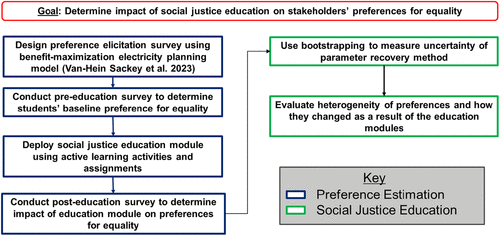
In this experiment, two different groups of students enrolled in two semester-long separate engineering courses. Social justice education was weaved into the curriculum for one course, while the other course taught a social justice education module over the course of a single lecture in the middle of the semester. We provided the students in each course with a survey to elicit their preferences for equality prior to social justice education at the beginning of the semester. The students then took the course, and completed another survey at the end of the semester to elicit their preferences and determine how they may have changed compared with the beginning of the semester.
2.1. Social Justice Education Modules
In the first course, the instructor integrated social justice considerations into the curriculum through examples and revisions to homework and exam problems. Structured classroom activities addressed social justice topics such as: (i) voter suppression; (ii) segregation of communities by the federal highway system; and (iii) algorithm bias due to a lack of diversity in engineering. Select activity topics included public transit funding, the implications of immigration policy for the construction industry, the connections between investment in water infrastructure and the Flint public health crisis, and the instructor’s own journey as a minority female engineer. The instructor reframed question descriptions in assigned problem sets into a social context, with the expectation that students independently research justice concepts, including (i) diversity in science, technology, engineering, and mathematics (STEM); (ii) mass incarceration; (iii) impacts of climate change on low-income communities; (iv) immigration; and (v) persons with disabilities. For example, one class activity adapted a game from Nock (2020) to include a power outage. Students were then asked to discuss the social implications of power outages in context of the electricity market and to evaluate how vulnerable communities would be impacted. Nearly all assignments (except the first) were completed individually. Some of the reframed homework assignments were published in Nock et al. (2025).
In the second course, the instructor discussed social justice through a lecture on utility and social welfare functions. Through the example transaction of purchasing an electric bicycle, the professor demonstrated calculations for determining individual and aggregated preferences based on the decision-makers’ utility function. The alternative that maximizes utility is selected. With this technical premise, various social welfare functions were applied in aggregating individual preferences, and the related calculations were displayed and discussed. Specifically, utilitarian (treating everyone equally) and minimum (prioritizing those who are worst-off) social functions were addressed. These technical subjects were supplemented with a discussion on equity, democracy, and optimization. In this context, it was mentioned that equity can be achieved by modeling based on the needs of the marginalized; democracy requires involving stakeholders in the process; and a system should be optimized by integrating equity considerations and examining the unconstrained model. The specific impacts of this heuristic on low-income, African American, and indigenous communities were discussed and considered in the context of environmental justice. Finally, the analytic-deliberative process was proposed as a means to achieve these dimensions. The instructor emphasized that an equitable process is stakeholder driven, with equal access and equal voices.
2.2. Demographics of Survey Participants
In the surveys, the students were asked how they would hypothetically plan an electricity system for a developing country. The participants of our experiment are 53 students, mostly engineering graduate students (94% graduate students, 6% undergraduate students). Some of the engineering graduate students may have had some level of professional engineering experience but most where unfamiliar with electricity system planning and the application of social justice in engineering. The collective composition of these students can be found in Table 1.
|

Table 1. Demographic Breakdown of Survey Respondents
| Demographic category | Fall 2021 |
|---|---|
| Male | 31 (58%) |
| Female | 21 (40%) |
| Nonbinary | 1 (2%) |
| U.S. citizen | 21 (40%) |
| Non-U.S. citizen | 32 (60%) |
| White | 11 (21%) |
| Non-White | 42 (79%) |
| Total | 53 |
We will refer to the two courses as Course 1 and Course 2. In Course 1, social justice was integrated into four homework assignments and three active learning activities. Throughout the semester, multiple topics introduced in the course had a social justice component that was addressed by the instructor and students in the course. For example, when learning about the electricity market in the United States, we facilitated an activity where students had to work in groups to decide which services or locations to prioritize for restoring electricity access in the event of a black-out. The entire class then discussed the implications of prioritizing different locations and services (e.g., hospitals versus police stations) for various communities (i.e., low versus high-income neighborhoods, locations with homeless shelters). In addition, in Course 1, the students were given homework assignments in which technical problems had social justice framing (Nock et al. 2025). We performed text analysis on the in-class reflections for Course 1 following the active learning social justice activities to determine if students tended to express the concepts of justice and equality in their work over the course of the semester. On the other hand, in Course 2, a single (1 hour, 20 minutes) lecture was used to teach students social justice using the concepts of utility maximization and social welfare functions. (Section 2.1 discusses the social justice education modules in more detail.) Thus, these two courses will be able to highlight the value of more detailed (Course 1) and simplified (Course 2) social justice education within an engineering curriculum.
2.3. Survey Design
Our survey was based on Liberia, but this location information was not revealed to students to limit pre-existing knowledge bias. The survey consisted of 36 questions, in which students had to choose between a given Map A or Map B representing two different electricity system plans for the country (Figure 2). The maps are generated using the maximize electricity access (MEA) planning tool that generated electrification options based on a decision maker’s preference for equality (Nock et al. 2020).
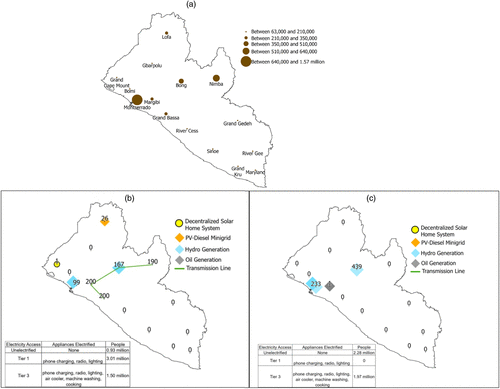
Notes. The respondent had to choose between two maps, which were generated from the MEA model using two distinct values of α. The table in the bottom-left corner of each map shows the population that would have access to Tier 1 or Tier 3 level of electricity consumption, which were included to help the respondents see the societal impact of power system investments (Nock et al. 2025).
In the introduction to the survey, we explained the difference between an electricity system plan that provides more individuals with baseline access to electricity consumption (i.e., Tier 1) and one that increases electricity consumption via usage of higher-end appliances (i.e., Tier 3) in nodes with higher population densities. Figure 2(a) shows the population density at each node in the country. Figure 2, (b) and (c), shows an example of a choice set presented to each student (Van-Hein Sackey et al. 2023). Consistent with the literature on preference elicitation, the introductory section of the survey explained key concepts about the electricity planning maps and contained knowledge check questions to ensure that students understood the choices (Fischhoff 2005). Furthermore, we included “rational check” questions in the survey, in which one map corresponded to a remarkably higher inequality aversion, α, value (i.e., it clearly dominated the other map) to ensure consistency in responses (Grayek et al. 2022).
2.4. Limitations
Our study aims to investigate the influence of social justice education on preferences for equality among decision makers when planning electricity systems. In the introduction to our survey, we asked the students to assume they were decision makers planning to build electricity supply infrastructure in a developing country. However, we did not collect data about our respondents’ specific country of origin for students who did not identify as U.S. citizens. The importance of this limitation lies in the fact that, although we can make a comparison between decision makers in the United States and those outside the United States in our study, we will not be able to make specific inferences about how our education module may affect decision makers in specific countries. As such, future iterations of this study should consider collecting such data to determine the validity of the impact of social justice education on preferences of decision-makers in different countries.
Additionally, as seen in Table 2, only one student who participated in the study identified as nonbinary. Although we recovered that student’s preference for equality, future work will need to include more participants who identify as nonbinary, or outside of the binary gender distinctions, to understand how social justice education influences their preferences for quality. There were 46 students who were enrolled (and completed both surveys) in Course 1, which had an interactive social justice education module; on the other hand, only 7 students enrolled Course 2 (and completed both surveys) that used a traditional lecture-based education module and discussed the theory of social justice as it related to engineering. Thus, although we will show the preferences for equality recovered from students in Course 2 in Section 3, we are not able to make meaningful statistical inferences from the results due to the limited sample size. As such, future work should compare different course design and carefully consider how to ensure that respondents complete the survey entirely and correctly.
|
Table 2. Description of Variables Used in Methods (Van-Hein Sackey et al. 2023)
| Symbol | Description | Units |
|---|---|---|
| a | Indicator for map A | — |
| α | Equality preference parameter | — |
| b | Indicator for map B | — |
| B | Budget | $/year |
| c | Choice outcome | — |
| C | Set of choice outcomes | — |
| CT,L | Annualized cost for low-voltage transmission line | $/km-year |
| CT,H | Annualized cost for high-voltage transmission line | $/km-year |
| CkF | Annualized fixed cost for generation technology k | $/MW-year |
| CkV | Variable cost for generation technology k | $/MW |
| di,j | Length of transmission line from node i to node j | km |
| E | Set of possible transmission edges | — |
| gi,k | Generation by technology k in node i | MWh |
| Gi,k | Capacity of generation technology k installed at node i | MW |
| pi | Population at node i | ppl |
| p | Vector of total population in all nodes i in I | — |
| ρi | Per-capita electricity consumption in node i | MWh/ppla |
| U | Utility function | — |
| xi | Electricity consumption at node i | MWh |
| x | Vector of electricity consumption in all nodes i in I | — |
a In the experiment, participants were shown per-capita electricity consumption in units of kWh/ppl in each node.
As a result, there are some limitations in our study due to the nature of the demographic breakdown and around testing our hypothesis on a student population. Globally, studies have shown that decisions in the energy sector are highly influenced by professionals with engineering graduate or undergraduate degrees (Stanek and Tompkins 1987, Geng et al. 2015, Rokicki et al. 2020). We fully acknowledge that such a sample of engineering graduate students poses significant limitations on our work given that they are not representative of African decision makers. Our contribution to the literature is in measuring the impact of social justice education on preferences of students by eliciting those preferences and integrating them into an electricity system planning model. Furthermore, given the influence of foreign stakeholders in SSA’s energy sector (e.g., the World Bank, USAID, etc.), our sample of engineering graduate students may provide some insight into the perspectives of stakeholders from developed countries when making decisions about SSA’s energy sector. Although because of financial and time constraints, we were not able to replicate this experiment for engineering graduate students in SSA, future work should prioritize sampling from decision makers in SSA. Thus, in this paper we use the term “decision makers” to refer to the sample of students who participated in this experiment and the stakeholders whose perspectives they may represent.
2.5. MEA Model
To create the survey for the discrete choice experiment, we used the MEA model (Nock et al. 2020). The MEA model is an electrification model that develops a country’s electrification plan by maximizing the utility of a given stakeholder, subject to budget and other constraints (i.e., the benefit a person derives from electricity consumption). Equation (1) shows the objective function of the MEA model, and Equation (2) constrains the objective function to a given budget. The full range of constraints, such as power flow and network constraints, and corresponding documentation can be found in Nock et al. (2020). Table 2 summarizes details the list of variables used in the model.
Maximize
In Equation (1), xi is the electricity consumption at node i in the given country, pi is the population at node i and ρi is the per-capita electricity consumption at node i. U represents the sum of the utility that a stakeholder derives from electricity consumption at each node i. We use an equality parameter, α, that ranges from zero to a limit of one to model stakeholders’ preferences for equality. In economics literature, the α term is referred to as the inequality aversion parameter with regard to income (Atkinson 1970).
Thus, in the utility function expressed in Equation (1), α represents a stakeholder’s aversion to inequality (i.e., their preference for equality). An α value closer to zero indicates a linear aversion to inequality, that is, a decision maker perceives equal value from increased electricity consumption, regardless of whether a node had a lower or higher initial level of consumption. On the other hand, an α closer to one indicates that the decision maker perceives more value from increased electricity consumption in nodes with lower initial consumption values and less value from increased electricity consumption in nodes with higher initial consumption (Nock et al. 2020).
We used the carbon emissions factors found in Table 3 to determine how total carbon emissions changed with evolving preferences for equality among decision makers and the corresponding electricity system plans. It is important to note that the students (i.e., decision makers) were not shown carbon emissions information in the survey. See Appendix A for results showing how preferences affected carbon emissions and electricity consumption in our experiment.
|
Table 3. Carbon Emission Factors for Generation Sources Used in the Maximize Electricity Access Model
| Generation source | Carbon emissions factor (gCO2eq/kWh) | Source |
|---|---|---|
| Hydro | 7 | Klein and Whalley (2015) |
| PV-diesel minigrid | 413 | Sovacool (2008), Klein and Whalley (2015) |
| Solar home system | 41 | Schloemer et al. (2014) |
| Oil | 768 | Klein and Whalley (2015) |
2.6. Parameter Recovery Method
Using the responses provided by the students in the experiment (i.e., the series of choices between Map A and Map B), we estimated each student’s preference for equality using a parameter recovery process. In our parameter recovery process, we used the binary logit model to determine the equality preference parameter value (i.e., α) that maximizes the Bernoulli likelihood. The goal of the model is to estimate the choice probability (i.e., probability of a decision-maker choosing a given Map A over Map B) that was most likely used to generate the set of choice outcomes. Equation (3) shows the objective function of the binary logit model.
In Equation (3), P(a > b) represents the choice probability of choosing Map A over Map B, which is a function of α. The term yc is the choice outcome of a given decision maker. Using this parameter recovery process, we estimated each decision maker’s preference for equality (i.e., α).
2.7. Text Aggregation of Survey Responses
Students were additionally asked to answer the question, “What is the most important factor in your decisions about which power system to build?” The responses to this question were simplified to the most representative word(s) using a text processor with the basic word cloud package in Python. The goal was to obtain a list of words that represent the priorities of the students before and after education, weighted by frequency. The initial plan was to determine one word to summarize each student’s priorities, but many students submitted responses that alluded to many considerations. For example, one student wrote, “that most of the population get access to electricity and in second place clean energy.” In such cases, two or three words were used to summarize the students’ views, such as “access,” “population,” and “clean” from the aforementioned example.
The initial level of processing involved simplifying each statement to a set of the most important words by removing punctuation; making all characters lowercase; correcting spelling errors; and removing words such as articles, prepositions, being verbs, and conjunctions. Additionally, words that are common in context were removed, such as “electricity,” “energy,” or “power.” Among the remaining words, those in a list of important words, such as “equality,” “access,” “equity,” “renewable,” and “population,” were first prioritized in the text aggregation algorithm. If these were absent, the longest words were prioritized. The majority of responses were thus analyzed. The remaining responses were analyzed based on a heuristic connecting common phrases with related priorities; for example, responses about “maximizing” the “number of people” with electricity were categorized with “access.” To minimize bias, this word sorting was conducted by a researcher who did not design the survey. If a response did not fulfill any of these criteria, as was the case for two to three responses in each data set, the most important word(s) were manually deduced. All responses were manually checked against their selected words to ensure reasonability. The aggregated list of words from all essays was sorted by frequency for analysis.
2.8. Statistical Analysis of Parameter Estimation Process
Having determined each student’s preference for equality and how that preference changed after the education module, we determined the statistical significance of the parameter estimation method and the uncertainty associated with it. To determine statistical significance, we run a hypothesis test. Because we were interested in whether a student experienced an increase in α, we chose to run a binomial sign test using the stats package in R. Our null hypothesis was that the probability of a student having an increase in α is 0.5, which suggests that the increase would be random (e.g., a coin flip).
Additionally, we tested for statistical significance of our results using binomial hypothesis testing and accounted for uncertainty of our parameter recovery process using a bootstrapping process. Bootstrapping is a process of deriving the variance of a parameter estimated by developing a simulation data set, which is created by sampling values of the input parameters with replacement (Goh et al. 2017, Xinjian 2024). In our experiment, we reconstructed each respondent’s choice data set by sampling with replacement 36 times (i.e., the number of choices each respondent made) and then repeated the process 1,000 times to quantify the uncertainty of the parameter recovery process more robustly. We used the matplotlib package in Python to perform the bootstrapping analysis.
3. Results
In this section, we present the results of determining the influence of social justice education on students’ preferences for equality. First, we analyze students’ preferences for equality and key factors they used to make decisions by course type. Second, we show how those changes in preferences impacted the overall electricity system plan and corresponding carbon emissions intensity. Third, we examine how the change in those preferences differed across demographic groups. Finally, we show the results of our statistical and uncertainty analysis.
3.1. Change in Preferences for Equality by Courses
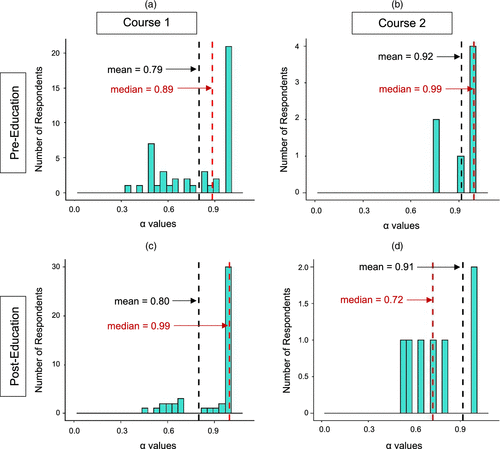
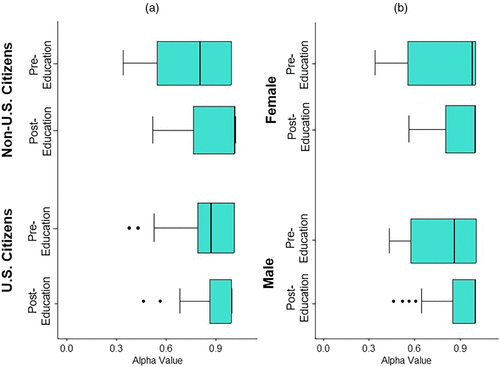
Our sample of 53 engineering students were taught different social justice education modules in one of two courses. Figure 3 shows the distribution of α values across students in the two courses in the pre-education survey and the posteducation survey. In the figure, for Course 1 (i.e., the interactive course), we see that both the mean and median α value increase from 0.79 to 0.80 and 0.89 to 0.99, respectively. However, in Course 2, we observe a decrease in both the mean and median values of α (from 0.92 to 0.91 and from 0.99 to 0.72, respectively). We surmise that this may be due to the traditional nature of the education module or due to a ceiling effect, whereby the students in Course 2 already scored quite high on α, leaving little room for increase from this initial baseline. We chose to show the median α value because of the nonnormal distribution of α. As such, the mean α value may not be as indicative of the skew of the distribution as the median value would. Although our results indicate the relative effectiveness of a more interactive education module, the low number of students surveyed in Course 2 prevents us from conclusively determining the effect of this second of the two modules. Nonetheless, it is worth noting that after the education module, preferences for equality significantly increased in Course 1. Interestingly, we observe that the minimum α value increased from 0.34 in the pre-education phase to 0.46 in the posteducation phase. This could indicate that training engineering students to consider social needs leads to some incorporation of equity considerations into the decision-making process. Given the limited sample size in Course 2, the subsequent results will focus on Course 1.
We performed the text aggregation on the responses to the question, “What was the most important factor in your decisions about which power system to build?” (See Section 2.7 for text aggregation method.) Figure 4 shows the text aggregation for the pre-education and posteducation surveys. The prevalent use of the term “access” in the pre-education survey indicates that maximizing the number of people with access was a priority for students to begin with, which may be why we observed a relatively high preference for equality in the pre-education survey. However, we observed that in the posteducation survey, the concepts of “equality” and “equity” become more dominant. As such, the aggregation suggests that students were more aware of the importance of building and equitable electricity system after the social justice education module. The impact of these different levels of preferences for equality on the electricity system is shown in Figure 5; details of which will be discussed in Section 3.3.
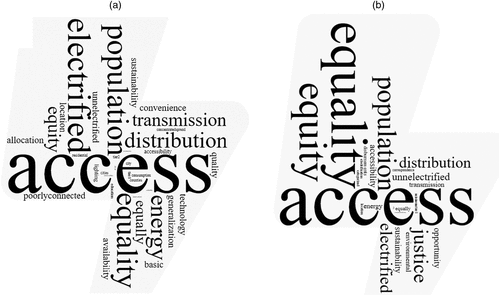
Notes. Students prioritized “access” in both the (a) pre-education survey and the (b) posteducation survey. However, equality becomes a frequent deciding factor after the social justice education module.
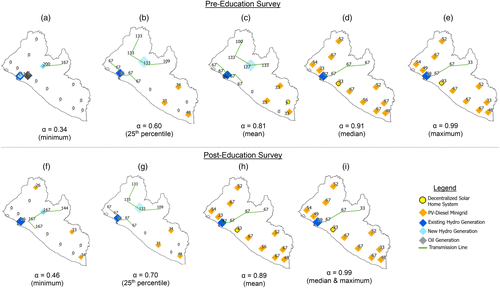
Note. The increased preference for equality between the pre-education survey and the posteducation survey resulted in an increased deployment of PV-diesel minigrids.
To determine if there was a statistically significant increase in preference for equality among the decision makers (i.e., all survey respondents in Course 1 and Course 2), we conducted a binomial hypothesis test. The null hypothesis was that there was a 50% probability that a student had an increase in the value of α recovered between the two surveys. The alternative hypothesis was that the probability of a student having an increase in α is greater than 50%. Table 4 shows the results of the hypothesis test. Given a 95% confidence interval, the p-value of 0.0201 shows that there was a statistically significant increase in individual preferences for equality following the education modules.
|
Table 4. Summary of Results of Binomial Hypothesis Test at a 95% Confidence Interval
| Parameter | Value |
|---|---|
| Number of successes | 35 |
| Total number of observations | 54 |
| 95% confidence interval | [52.7%, 100%] |
| p-value | 0.0201 |
| Sample probability of success | 64.8% |
3.2. Demographic Breakdown of Preferences
Having observed how students’ increasing preferences for equality is associated with electricity system planning, we inspected the demographic breakdown of our results to determine how identity may have influenced students’ preferences for equality. In Figure 6, we observe that median preferences for equality increased across all demographics. In Figure 6(a), we observe that generally, U.S. citizens have a higher preference for equality (median α = 0.85) compared with their noncitizen counterparts (median α = 0.77) to begin with.
Additionally, we observe that the group median preference for equality among noncitizen students increased by 22% from 0.81 to 0.99 between the pre- and posteducation surveys, whereas their U.S.-citizen counterparts experienced an increase in group median preference for equality of 6% from 0.93 to 0.99 between the pre- and posteducation surveys. As such, the results show that the social justice education module taught in Course 1 may be effective for helping non–U.S.-based decision makers understand the importance of equitable access to electricity.
Additionally, Figure 6(b) shows that as a group female students had higher preferences for equality (median α = 0.98) than their male counterparts (median α = 0.86) prior to the education module. Our decision to examine preferences for equality across gender identities stems from existing literature that shows that women have more altruistic tendencies (i.e., seeking the common good of all) than their male counterparts when making decisions in community settings (Andreoni and Vesterlund 2001, Brañas-Garza et al. 2018, Cannonier and Mocan 2018, Alós-Ferrer et al. 2022).
Additionally, we observe that the group median preference for equality among female students increased by 1% from 0.98 to 0.99 between the pre- and posteducation surveys, whereas their male counterparts experienced an increase in group median preference for equality of 15% from 0.86 to 0.99 between the pre- and posteducation surveys. As such, the results show that the social justice education module taught in Course 1 may be effective for increasing preferences for equality among male students who may initially have lower preferences for equality.
3.3. Influence of Increased Equality Preference on Electricity System Plan
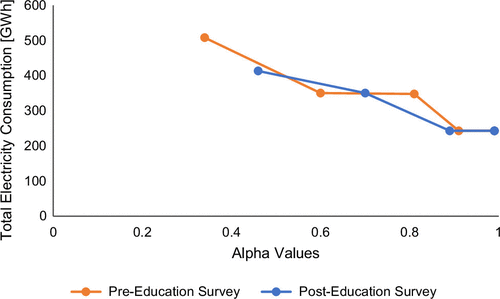
Here, we show how increased preferences for equality influenced the overall electricity system plan, focusing on power plant and transmission line investment. Figure 5 shows the electricity system plans corresponding to α values of 0.34 (minimum), 0.60 (25th percentile), 0.81 (mean), 0.91 (median), and 0.99 (maximum) for the pre-education survey and values of 0.46 (minimum), 0.70 (25th percentile), 0.89 (mean), and 0.99 (median and maximum) for the posteducation survey. We observe in Figure 5 that as preferences for equality increased, there is an increase in the deployment of PV-diesel (photovoltaic-diesel) minigrids and extension of transmission lines from urban to rural parts of the country. Because of the increased use of diesel in the minigrids, our findings suggest that the “most equal” electricity system plan may not necessarily be the “least carbon intensive” plan due to large desires for baseload and distributed technologies and the associated benefits higher level of access bring. It is also important to note that due to the piecewise nature of the MEA model, between α values of 0.6 and 0.7, the mix of electricity generation sources are the same. Figure A.2 in Appendix A shows how electricity consumption also changes as α values increase.
Note. Black lines in the boxes represent the median/50th percentile value.
3.4. Results of Bootstrapping
We used bootstrapping to show the variance of our parameter recovery method as a characterization of the uncertainty of our estimated values. Figure 7(a) shows the participants in ascending order of mean recovered from the pre-education survey, ranging from for participant F21N24 to for participant F21N49. The mean recovered from the posteducation survey is indicated by darker blue. The impact of social justice education is most clearly observed among participants with a lower preference for equality (smaller values). We observed an 18%–284% increase in equality preference for 12 participants, all with an initial . This finding suggests that our education module was most effective for decision makers with lower preferences for equality to begin with.
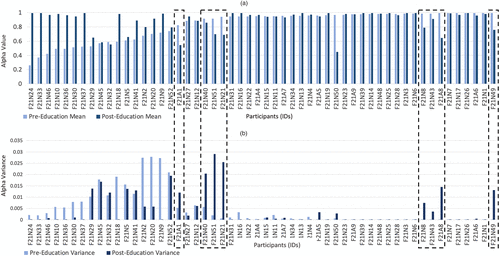
Note. The boxes highlight instances where a participant displayed a significant decrease in equality preferences after education.
For both pre- and posteducation, bootstrapping revealed the highest amount of variance in recovered value occurs at the region. Participants with strong equality preferences (with α close to zero or one) displays lower variance, and the strongest equality preferences lies in the extreme. Furthermore, the maps displayed to the participants for middle of the road equality preferences ( and ) were visually similar, which is a limitation of the MEA model due to its piecewise nature. This visual similarity leads to participants displaying an uncertainty in preferences for these maps, thus leading to higher variances. The figure also shows that about 8 of 53 observations had decreasing preferences for equality posteducation.
4. Conclusion
In this paper, we determined that an interactive social justice education module significantly increases preferences for equality among students tasked with expanding an electricity grid. Thus, our work contributes to the literature by demonstrating the impact of an education intervention within an engineering curriculum. The paper’s results call for a paradigm shift in engineering education, which traditionally focuses on traditional methods devoid of societal impacts, and electrification research, which tends to focus primarily on least-cost approaches without considering the impact of stakeholder preferences on technology deployment.
We found that as a group, female students had higher preference for equality than their male counterparts, consistent with previous research. We also found that, although non–U.S. citizen students had lower preferences for equality to begin with, the social justice education module in Course 1 was effective in increasing their preferences for equality. Given the lack of country-specific data collected in our study, future work ought to record the country of origin of each decision-maker to enable us to understand how a social justice education module may be received and may influence preferences among decision-makers in the energy sector globally.
Additionally, we adopted a method for assessing the influence of social justice education on elicited preferences for equality. Although the case study focused on electricity expansion, the preference elicitation and education module presented in this paper could be repurposed by instructors to include other contexts in their course content (e.g., money, water, housing, etc.) or to people wanting to educate decision makers about social justice.
Importantly, we showed how increasing preferences for equality would increase the carbon emissions intensity of the electricity system provided that solar-diesel mini-grids are used in the electrification of the country. This highlights the need to provide low-carbon cost-effective options for rural electrification that can support both equality and sustainability goals. Our key finding about the tradeoff between maximizing baseline access to electricity and minimizing the carbon emissions from the electricity system lends further credibility to the need for just transitions to be prioritized in developing countries because we showed that “most equal” electricity system is not necessarily the least carbon intensive depending on available technologies. Tradeoffs of these nature highlight the need for social justice concepts to be incorporated into the core of engineering education. A sound understanding of the complexities between engineering and society enables our students create a more sustainable and equitable future for us all.
We thank Baruch Fischhoff for feedback regarding the design of the discrete choice experiment and Shria Shyam for brilliant work on the literature review, text aggregation/analysis, and postsurvey data analysis.
Appendix A. Implications of Preferences on Carbon Emissions and Total Electricity Consumption
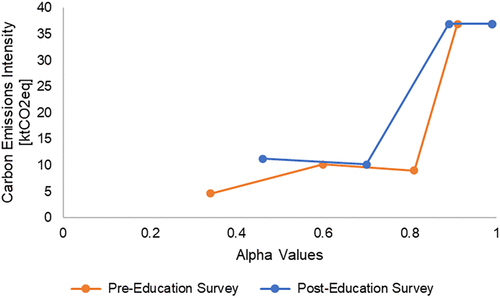
One of the considerations decision makers will have to make is considering social justice alongside other factors, such as carbon intensity of their electricity systems. As such, we examine the trend in carbon emissions and demand for electricity per the increasing preferences for equality observed in the experiment. Figure A.1 shows how the carbon emissions intensity of the electricity system changes per the increasing preferences for equality that we recovered from the decision makers. This trend is driven primarily by the increased deployment of PV-diesel minigrids at high preferences for equality. Specifically, the results in Figure A.1 show a more than three times increase in carbon intensity from 11 ktCO2eq to 37 ktCO2eq as preferences for equality increase from 0.46 to 0.99 in the posteducation phase of the experiment, and we observe an eight times increase in carbon intensity from 4 ktCO2eq to 37 ktCO2eq between the lowest preference for equality (α = 0.34) and the highest (α = 0.99) in the pre-education phase. More importantly, the generally positive trend between preferences for equality and carbon emissions intensity further shows that there are significant tradeoffs that decision makers would have to make between providing baseline access across a country and minimizing carbon emissions from the electricity system. We note that this may not be the case in a system with a large focus on deploying mini-hydro facilities. Nonetheless, our finding is of particular importance to the concept of just transitions (i.e., a gradual decarbonization of the electricity system that prioritizes the needs of end users and economic development). It shows that a rapid decarbonization of the electricity system in some developing countries may not necessarily be equitable.
Regarding the change in total demand for electricity over increasing preferences for equality, Figure A.2 shows that as our decision makers’ preferences for equality increased, total electricity consumption decreased. Specifically, in the pre-education survey, total consumption of electricity decreased by about 52% from about 510 GWh to 240 GWh, whereas it decreased by 41% in the posteducation survey from 410 GWh to 240 GWh as preferences for equality increased from 0.46 to 0.99. The decrease in consumption is primarily driven by our definition of a high preference for equality being a prioritization of consumption in nodes where electricity is nonexistent; hence, baseline access is provided across multiple nodes as preferences for equality increase (and thus decreasing overall consumption). The relevance of this finding lies in the fact that as decision makers prioritize increasing access to electricity in developing countries, rural electrification will result in an increase in low-end (also referred to as lifeline) customers. Furthermore, minigrid planners and utility companies will need to plan their energy systems and assets in expectation of providing access to these new low-consuming customers.
References
- (2022) Generous with individuals and selfish to the masses. Nature Human Behav. 6(1):88–96.Crossref, Google Scholar
- (2001) Which is the fair sex? Gender differences in altruism. Quart. J. Econom. 116(1):293–312.Crossref, Google Scholar
- (2021) Diversity, equity, and inclusion in civil and environmental engineering education: Social justice in a changing climate. Proc. ASEE Virtual Ann. Conf. (ASEE PEER, United States).Google Scholar
- (1970) On the measurement of inequality. J. Econom. Theory 2(3):244–263.Crossref, Google Scholar
- (2020) New literacies for engineering students: Critical reflective-writing practice. Canadian J. Scholarship Teaching Learn. 11(1).Google Scholar
- (1994) Beyond the methods fetish: Toward a humanizing pedagogy. Harvard Ed. Rev. 64(2):173–195.Crossref, Google Scholar
- (2020) Beyond equity as inclusion: A framework of ‘rightful presence’ for guiding justice-oriented studies in teaching and learning. Ed. Res. 49:433–440.Crossref, Google Scholar
- (2008) The global engineer incorporating global skills within UK higher education of engineers. Accessed April 15, 2023, https://engineersagainstpoverty.org/resource/the-global-engineer-incorporating-global-skills-within-uk-higher-education-of-engineers/.Google Scholar
- (2018) Gender differences in altruism on Mechanical Turk: Expectations and actual behaviour. Econom. Lett. 170(September):19–23.Crossref, Google Scholar
- (2012) Care ethics in engineering education: Undergraduate student perceptions of responsibility. Proc. Frontiers Ed. Conf. (IEEE, New York), 1–6.Google Scholar
- (2018) The impact of education on women’s preferences for gender equality: Evidence from Sierra Leone. J. Demographics Econom. 84(1):3–40.Crossref, Google Scholar
- (2014) Culture of disengagement in engineering education? Science Tech. Human Values 39(1):42–72.Crossref, Google Scholar
- (2021) Forms of implementation and challenges of PBL in engineering education: A review of literature. Eur. J. Engrg. Ed. 46(1):90–115.Crossref, Google Scholar
- (2012) Learning to teach for social justice as a cross cultural concept: Findings from three countries. Eur. J. Ed. Res. 1(2):171–198.Crossref, Google Scholar
- (2022) Civic mandates for the ‘majority’: The perception of whiteness and open classroom climate in predicting youth civic engagement. J. Soc. Stud. Res. 46(1):7–17.Crossref, Google Scholar
- (2016) The impact of social work education on social justice practice the impact of social work education on social justice practice behaviors. Accessed November 27, 2022, https://sophia.stkate.edu/msw_papers.Google Scholar
- (2011) Social justice education: Impacts on social attitudes. J. Aging Emerging Econom. 3(1):4–16.Google Scholar
- Ehman LH (1980) The American school in the political socialization process. Rev. Educational Res. 50(1):99–119.Google Scholar
- (2020) Satellite observations reveal inequalities in the progress and effectiveness of recent electrification in Sub-Saharan Africa. One Earth 2(4):364–379.Crossref, Google Scholar
- (2005)
Cognitive processes in stated preference methods . Handbook of Environmental Economics (Elsevier, Amsterdam), 937–968.Google Scholar - (2015) Education and research activities of electrical engineering in China’s university and industry. Proc. IEEE Power Energy Soc. General Meeting, 1–5.Google Scholar
- (2021) In the shadow of the base: Teaching war to the children of soldiers. J. Soc. Stud. Res. 46(3):209–222.Google Scholar
- (2017) Bootstrap ARDL on energy-growth relationship for 22 OECD countries. Appl. Econom. Lett. 24(20):1464–1467.Crossref, Google Scholar
- (2022) A procedure for eliciting women’s preferences for breast cancer screening frequency. Medical Decision Making 42(6):783–794.Crossref, Google Scholar
- (2020) Emerging learning environments in engineering education. Australasian J. Engrg. Ed. 25(1):3–16.Crossref, Google Scholar
- (2021) Defining the capable engineer: Non-technical skills that support safe decisions in uncertain, dynamic situations. Safety Sci. 141(September):1–12.Crossref, Google Scholar
- (2022) Basing ‘energy justice’ on clear terms: Assessing key terminology in pursuit of energy justice. Environment. Justice 15(3):127–138.Crossref, Google Scholar
- (2021) Soft skills for entry-level engineers: What employers want. Ed. Sci. 11(10):641.Google Scholar
- (2016) Energy justice: A conceptual review. Energy Res. Soc. Sci. 11(January):174–182.Crossref, Google Scholar
- (2010) Engineering, a civilising influence? Futures 42(10):1110–1118.Crossref, Google Scholar
- (2015) Comparing the sustainability of U.S. electricity options through multi-criteria decision analysis. Energy Policy 79(April):127–149.Crossref, Google Scholar
- Kreso A (2002) Education in Bosnia and Herzegovina: Minority inclusion and majority rules the system of education in BiH as a paradigm of political violence on education. Current Issues Comparative Education 2(1).Google Scholar
- (2020) The role of a summer field experience in fostering STEM students’ socioemotional perceptions and social justice awareness as preparation for a science teaching career. BRE 9(2).Crossref, Google Scholar
- (2019) Teaching sustainability in european higher education institutions: Assessing the connections between competences and pedagogical approaches. Sustainability (Switzerland) 11(6):1602.Google Scholar
- (2020) Emergency measures to protect energy consumers during the Covid-19 pandemic: A global review and critical analysis. Energy Res. Soc. Sci. 68(October):101678.Crossref, Google Scholar
- (2019) Energy access for sustainable development. Environ. Res. Lett. 14(2):020201.Crossref, Google Scholar
- (2020) Let’s bid!: A modular activity to promote interest in engineering economy. Engrg. Economist 65(3):1–18.Google Scholar
- (2020) Changing the policy paradigm: A benefit maximization approach to electricity planning in developing countries. Appl. Energy 264(April):114583.Crossref, Google Scholar
- (2025) Investigating how social justice framing for assessments impacts technical learning. INFORMS Trans. Ed. 25(2):136–151.Link, Google Scholar
- (2019) Holocaust education as a path to prepare preservice social studies teachers to be social justice educators. J. Soc. Stud. Res. 43(3):285–298.Crossref, Google Scholar
- (2017) The impact of development education and education for sustainable development interventions: A synthesis of the research. Environment. Ed. Res. 24(7):1031–1049.Google Scholar
- Oulton R, Gallagher TG, Anovick CK (2021) Efficacy of curricular enhancements to address social and environmental injustice in civil engineering. Paper Presented 2021 ASEE Virtual Annual Conf. Content Access, Virtual Conf.Google Scholar
- (2009) Prejudice reduction: What works? A review and assessment of research and practice. Annu. Rev. Psych. 60:339–367.Crossref, Google Scholar
- (2019) Comparing the information needs and experiences of undergraduate students and practicing engineers. J. Academic Librarianship 45(1):39–49.Crossref, Google Scholar
- (2022) Polishing the pearls of indigenous knowledge for inclusive social education in Ghana. Soc. Sci. Humanities Open 5(1):100248.Crossref, Google Scholar
- (2019) Sexual and gender diversity in schools: Belonging, in/exclusion and the African child. https://doi.org/10.18820/2519593X/pie.Google Scholar
- (2020) The importance of higher education in the EU countries in achieving the objectives of the circular economy in the energy sector. Energies 13(17):4407.Crossref, Google Scholar
- (2020) Evidence of gender inequality in energy use from a mixed-methods study in India. Natural Sustainability 3(February):1–9.Google Scholar
- (2014) Annex III: Technology-specific cost and performance parameters. Proc. Climate Change: Mitigation Climate Change: Contribution Working Group III Fifth Assessment Report Intergovernmental Panel Climate Change, 1329–1356.Google Scholar
- (2022) Planning for a just energy transition: If not now, when? Planning Theory Practice Taylor Francis J. 23(3):321–326.Crossref, Google Scholar
- (2017) Teaching sustainability in higher education: Pedagogical styles that make a difference. CJHE 47(2):47–70.Google Scholar
- (2018) The effect of providing climate and health information on support for alternative electricity portfolios. Environ. Res. Lett. 13(2):024026.Crossref, Google Scholar
- (2019) Support for emissions reductions based on immediate and long-term pollution exposure in China. Ecological Econom. 158(April):26–33.Crossref, Google Scholar
- (2021) Shared mobility in post-COVID era: New challenges and opportunities. Sustainability Cities Soc. 67(April):102714.Crossref, Google Scholar
- (2022) Critical democratic education in practice: Evidence from an experienced teacher’s classroom. J. Soc. Stud. Res. 46(1):35–52.Crossref, Google Scholar
- (2008) Valuing the greenhouse gas emissions from nuclear power: A critical survey. Energy Policy 36(8):2950–2963.Crossref, Google Scholar
- (2020) Contextualizing the Covid-19 pandemic for a carbon-constrained world: Insights for sustainability transitions, energy justice, and research methodology. Energy Res. Soc. Sci. 68(October):101701.Crossref, Google Scholar
- (2019) The whole systems energy injustice of four European low-carbon transitions. Global Environment. Change 58(September):101958.Crossref, Google Scholar
- (2017) A multidimensional approach to examine student interdisciplinary learning in science and engineering in higher education. Eur. J. Engrg. Ed. 42(6):761–774.Crossref, Google Scholar
- (1987) Power engineering education as viewed from university administration. IEEE Trans. Power Systems 2(1):226–231.Crossref, Google Scholar
- (2020) Just electrification: Imagining the justice dimensions of energy access and addressing energy poverty. Energy Res. Soc. Sci. 70(December):101639.Crossref, Google Scholar
- (2020) Disrupting engineering education: Beyond peace engineering to educating engineers for justice. Proc. Comput. Sci. 172:765–769.Crossref, Google Scholar
- (2020) Holistic education: The social reality of engineering. J. Education Culture Soc. 4(2):227–238.Crossref, Google Scholar
- (2011) Shaping Our World: Engineering Education for the 21st Century (John Wiley & Sons, Hoboken, NJ).Crossref, Google Scholar
- (2023) Incorporating elicited preferences for equality into electricity system planning modeling. Sustainability 15(23):16351.Crossref, Google Scholar
- (2012) Fuel poverty as injustice: Integrating distribution, recognition and procedure in the struggle for affordable warmth. Energy Policy 49(October):69–75.Crossref, Google Scholar
- (2022) Whose knowledge counts in the planning of urban sustainability?: Investigating handbooks for nudging and participation. Planning Theory Practice 23(3):388–405.Crossref, Google Scholar
- (n.d.) Effects of undergoing arbitrary discrimination on subsequent attitudes toward a minority group. Accessed March 10, 2024, https://libres.uncg.edu/ir/listing.aspx?id=28294.Google Scholar
- (2024) Assessing energy consumption and economic growth interrelations in Asia-Pacific: A multivariate approach with panel FMOLS and bootstrap granger causality tests. Heliyon 10(9):e30146.Crossref, Google Scholar