Practice Paper—AI-Driven Behavioral Nudges for Organizations: An Integrative System for Sustainable Resource Management
Abstract
In today’s business environment, organizations face increasing pressure to manage resources efficiently while meeting financial and sustainability goals. This paper presents a novel integrative approach that combines artificial intelligence-driven forecasting with behavioral interventions to help businesses optimize energy consumption under critical peak pricing schemes, reduce costs, and align with sustainability initiatives. We conducted a multiphase longitudinal study with large organizations leveraging neural network time-series modeling to improve peak energy demand predictions and behaviorally informed communications leveraging planning prompts to enhance compliance with curtailment recommendations. The proposed intervention reduces energy consumption during critical peaks by 42%, yielding average net annual savings of approximately $230,000 per organization. Through a nationwide rollout, we estimate that hourly peak-period carbon dioxide emissions could be reduced by approximately 6,500 tonnes, equivalent to roughly 1 million Canadian households’ daily energy consumption. The results demonstrate significant financial savings and reduced environmental impact, benefiting organizations, regulators, service providers, and society. We contribute to research on resource management, systems thinking, and nudging in an organizational context by aligning technological tools with human processes. This work offers a practical, business-oriented solution to real-world challenges, creating value for multiple stakeholders and positioning firms for long-term success in an increasingly resource-constrained world.
History: Olivier Touba served as the senior editor. This paper was accepted through the Marketing Science Practice Paper Publication Process.
Funding: This work was supported by the Natural Sciences and Engineering Research Council of Canada [Grant ALLRP 592457-2023].
Supplemental Material: The online appendix and data files are available at https://doi.org/10.1287/mksc.2024.1154.
1. Introduction
In the contemporary business environment, managing energy consumption effectively is a financial and environmental imperative. This is especially true in regions that implement demand response programs, such as critical peak pricing (CPP), which are designed to reduce energy consumption during periods of high demand (i.e., demand peaks) (Parker et al. 2019, Choi et al. 2020, Agrawal and Yücel 2022). Reducing demand peaks is essential from an energy system and environmental perspective because they often require reliance on nonsustainable backup energy sources (Torriti 2015) and can trigger grid instability and blackouts, which are increasingly common in today’s energy landscape. As a result, governments and energy providers in many regions around the world subject organizations to substantial financial penalties based on their contributions to peak energy demand through CPP, which can lead to significant increases in operational costs.
Under CPP, organizations’ energy costs include both the wholesale electricity rate and a global adjustment (GA) fee that reflects the organization’s share of peak demand. In Ontario, for instance, businesses are charged a substantial penalty based on their energy consumption during the five highest provincial demand hours in a year. To illustrate, if a firm accounts for 0.005% of usage during those peaks and provincial global adjustment costs are $10.37 billion, the firm’s CPP-related costs would be a substantial $518,500 the following year. These high costs incentivize firms to reduce energy usage during peak hours, but doing so effectively is operationally complex and often poorly executed.
Although pricing schemes, like CPP, can lead to considerable costs for firms, these demand response tools, if effectively executed, are vital. This is because global carbon emissions (reaching a record high of over 36 billion tonnes in the recent year) are a principal driver of climate change, and organizations are disproportionately responsible for carbon emissions compared with individuals and households (Faruqui et al. 2007, Bego et al. 2014, IEA 2023). Recent statistics indicate that just 100 companies have been the source of more than 70% of the world’s greenhouse gas emissions since 1988 (Griffin 2017). Yet, despite the importance and prevalence of pricing schemes aiming to reduce peak energy demand, our understanding of their effectiveness in these organizational settings and how to improve performance under them remains limited. In particular, little is known about how firms can be supported in identifying peak periods and adjusting their energy use accordingly.
In this paper, we address these gaps by empirically evaluating a novel integrative approach that combines artificial intelligence (AI)-driven forecasting with behaviorally informed communication strategies to help businesses optimize energy consumption under CPP schemes, reduce costs, and align with sustainability initiatives. To do so, we conducted a multiphase longitudinal study collaborating with an energy management firm (En-Pro) to examine how organizations respond to critical peak events. En-Pro helps organizations accurately forecast peak periods and implement effective curtailment strategies during those windows. Although some firms instead choose to manage this process internally rather than through a consultant, it involves substantial uncertainty and imposes added demands on management. Therefore, our intervention leverages both the predictive and advisory functions of consulting firms by integrating machine learning forecasts with behavioral nudging—specifically planning prompts—to improve timely and effective curtailment. The results have implications not only for firm-level efficiency, energy system stability, sustainability, and policy design, but also, they extend theory on how predictive technologies and behavioral interventions can be integrated to support coordinated action in complex organizational environments.
2. Relevant Literature
Our work relates to two key streams of literature: (i) resource management and coordination in energy contexts and (ii) behavioral insights. We review each stream and explain how our work contributes new theoretical and applied insights.
2.1. Resource Management and Demand Response
2.1.1. Household Response vs. Organizational Response.
Although CPP programs have been widely adopted as a demand response tool, much of the academic research has focused on residential or household energy use (e.g., Herter 2007, Herter et al. 2007, Herter and Wayland 2010). In these contexts, studies have shown that consumers respond to time-based pricing, real-time usage feedback, and text-based nudges designed to encourage curtailment during peak periods (Burkhardt et al. 2023, Kopalle et al. 2024). For example, even modest interventions, such as Short Message Service (SMS) alerts that notify individuals of an upcoming CPP event and the associated increase in electricity prices, can lead households to shift consumption by delaying appliance use or adjusting thermostat settings (Kopalle et al. 2024). These reductions in peak electricity not only reduce costs for consumers but also, can reduce reliance on environmentally harmful backup energy sources (Burkhardt et al. 2023).
In contrast, relatively little is known about how demand response programs perform in organizational settings, where consumption is higher and the operational constraints are complex. Organizational decisions often involve coordination across departments and are embedded within formal structures, guided by incentives and constraints. For example, although a household can delay using a dryer during a peak period, organizations face greater challenges adjusting factory production, rescheduling staff, or making changes to building systems, like heating, ventilation, and air conditioning (HVAC) or lighting (Wang and Li 2016). These actions may require more planning, approvals, and crossfunctional communication—factors that are far less salient in household settings. Moreover, engaging in appropriate curtailment actions may be perceived to have greater costs in organizations; at the same time, the benefits of such actions often are uncertain or delayed. As a result, changing organizational behavior is difficult, even with strong financial incentives. Therefore, organizations may not respond in the same way or with the same consistency as individual consumers to CPP.
Recent work has emphasized the importance of optimizing the demand-response energy programs, particularly by considering the target segment and the design of incentives (Agrawal and Yücel 2022). Programs that fail to account for the distinct needs and constraints of different users risk leaving energy savings on the table or disengaging participants. Similarly, scholars have called for research to investigate how different consumer segments might respond to demand response interventions and how communications can be better tailored to users (Kopalle et al. 2024). Yet, despite these calls, we know relatively little about how different segments respond. Our work helps to fill this gap by examining an important yet underresearched consumer segment: large organizations operating under CPP. Understanding this segment is especially critical given its disproportionate contribution to peak electricity demand and the substantial potential for system-level impact.
2.1.2. Resource Management and Systems Thinking.
Effective demand-side energy programs require the alignment of diverse actors, such as users, resource units, resource systems, and governance systems (Ostrom 2009, Baudoin and Arenas 2020). Reducing demand peaks at the energy grid level is a multistakeholder challenge that spans system-level constraints, organizational structures, and operational execution. System operators aim to prevent blackouts and reduce reliance on carbon-intensive energy sources during demand peaks (Burkhardt et al. 2023), but these goals can only be achieved if large organizations adjust their consumption in a timely and meaningful way. Consulting partners play a critical role in this ecosystem, providing forecasts and guidance to help firms identify when to act. Yet, even with expert support, organizations may not fully capitalize on curtailment opportunities, particularly when signals are frequent, timing is uncertain, or the best actions to take are unclear. Our intervention targets this execution gap by testing how predictive tools and behavioral communication can work in tandem to improve curtailment compliance in modern, data-rich contexts.
This focus aligns with broader themes in the resource management and orchestration literature, which emphasizes the dynamic coordination and deployment of firm resources to achieve performance outcomes in evolving environments (Sirmon et al. 2007, Barney et al. 2010). Although much of this research has focused on building long-term capabilities and sustaining competitive advantage, our context highlights the importance of short-term responsiveness—the ability to rapidly sense, seize, and reconfigure resources in response to time-sensitive external signals (Teece et al. 1997). The curtailment challenge reflects a need for dynamic capabilities; firms must integrate information, anticipate demand events, and adjust operational behaviors in real time. We extend this perspective by illustrating how firms can better anticipate and act on peak demand events when equipped with accurate predictive signals and decision-support messages, advancing the practical application of dynamic capabilities in sustainability contexts.
Our approach also reflects principles from sociotechnical systems (STS) theory, which underscore the importance of aligning technological tools with human processes to enable effective system performance (Cherns 1987, Clegg 2000). STS scholars have long argued that optimizing one dimension (e.g., forecasting models) is insufficient unless accompanied by complementary adaptations in work practices and decision processes. In our case, we integrate advanced machine learning forecasts with behaviorally informed communications that enhance users’ understanding of when and how to act. This combined approach improves not only predictive accuracy but also, practical uptake, which is a core challenge in sociotechnical coordination.
In doing so, our work contributes to both traditions by demonstrating how energy curtailment can be viewed not only as an optimization problem but also, as a coordination problem. We show that effective demand response requires aligning digital tools, stakeholder incentives, and organizational behavior—a perspective that advances applied knowledge in resource orchestration and STS while offering concrete, field-tested strategies for practitioners.
2.2. Behavioral Insights for Organizational Change
2.2.1. Nudging Individuals vs. Organizations.
Nudge-based behavioral interventions have attracted substantial managerial and policy interest because they often only require relatively small, simple, and low-cost changes in the choice environment to shift behavior (Thaler and Sunstein 2021; see Victor et al. 2023 for a recent overview of nudging research). These tactics have been shown to promote more sustainable behaviors (Loschelder et al. 2019, Banerjee and Picard 2023), healthier consumption decisions (Enax et al. 2016, Turnwald et al. 2019), vaccination uptake (Milkman et al. 2021), and wage reporting for social security (Zhang et al. 2023) among individual consumers. However, despite this large and growing body of work, our understanding of how such behavioral interventions function in organizational contexts remains limited, even though changing organizational behavior is critical for resolving many of the world’s most pressing challenges (United Nations Development Programme 2023).
It is not clear that behavioral tools that work for individuals will readily scale to firms. In addition to the structural barriers discussed previously, which distinguish organizations from household electricity consumers, cognitive and motivational dynamics also differ. Research shows that groups often act more rationally and deliberatively than individuals (Kugler et al. 2012). Nudges typically target individuals’ intuitive, heuristic-driven decision making, raising important questions about their effectiveness in contexts where collective, deliberative processes dominate. Even when an individual within the firm is nudged, actual behavioral change may require coordinated action or leadership support (Ford et al. 2008, Foster 2017). Moreover, the individuals charged with implementing energy curtailment within firms may not personally benefit from reduced costs and may view such actions as misaligned with their core responsibilities (Unsworth et al. 2013). As such, more work empirically testing behavioral interventions in organizational settings are needed (Mažar et al. 2021), particularly in high-stakes, operationally complex environments.
To help guide the design and interpretation of such interventions, several behavioral science frameworks have been developed to synthesize the key drivers of behavior change. One of the most influential in the domain of sustainable consumption is the SHIFT framework (White et al. 2019), identifying five levers of sustainable behavior change: social influence, habits, individual self, feelings and cognition, and tangibility. Our study aligns with several of these dimensions. For example, by incorporating planning prompts, our intervention makes sustainability tangible, leverages cognitive strategies, and aims to enhance self-efficacy. However, such frameworks have largely been applied in consumer-facing contexts, with less attention to organizational dynamics or integration with predictive tools. Given these limitations, we build on these insights and empirically extend them to the organizational context with a new integrative approach.
2.2.2. Sustained Action in Repeated Contexts.
Although most behavioral interventions focus on influencing single actions or short-term outcomes, many real-world challenges require repeated action over time. Research has begun to explore the persistence of behavior change interventions, but most studies have examined individual settings and one-time exposures (Robitaille et al. 2021b, Lasky-Fink and Rogers 2022). The distinction between immediate impact and sustained impact is especially relevant in our setting, where peak periods recur several times across a season and decisions must be made repeatedly under uncertainty and operational pressure.
One promising tool for bridging intention and action in repeated contexts (and one of the most widely studied behavioral interventions) is the planning prompt: a low-cost intervention that helps specify the when, where, and how of intended behaviors (Rogers et al. 2015). In the context of CPP, both when and how to act matter. Although accurate forecasts can tell firms when peak periods are likely to occur, message design, especially clarity and specificity, can make that timing more actionable. These prompts have been shown to reduce ambiguity, increase follow-through, and help translate abstract goals into concrete actions. However, as with most behavioral research, planning prompt studies typically focus on individuals and test the impact of a single exposure to the intervention. One exception is the work of Robitaille et al. (2021a), who show that planning prompts improved tax compliance in a firm-level context across two exposures.
Our intervention embeds planning prompts in En-Pro’s energy curtailment emails throughout the curtailment season (across all calls issued that year) to clarify both the timing of peak periods (when) and the specific steps that firms can take to reduce usage (how). These prompts are intended to overcome abstract goals, like “use less energy,” by making the actions more concrete and tangible (e.g., rescheduling equipment use and reducing HVAC load). In doing so, our study speaks directly to two open questions in this literature: (1) whether a behaviorally informed message (in this case, a planning prompt) can shift energy use in large highly motivated organizations and (2) whether such an effect can persist across multiple curtailment events. As a result, we provide rare empirical evidence on the durability of nudging in a repeated-decision environment.
2.2.3. Integrating Behavioral and Predictive Tools.
A final feature of our approach is its integration of behavioral science with real-time predictive analytics. Much of the behavioral literature has historically treated contextual conditions—such as timing—as fixed. However, in dynamic operational contexts, like CPP, knowing when to act is as important as knowing how to act. Forecasting peak demand windows accurately is essential to triggering timely organizational responses. En-Pro’s machine learning models provide these forecasts, which we then paired with planning prompt emails to support follow-through.
This approach echoes calls to combine behavioral interventions with personalization and automation (Jung et al. 2021). Although some studies have explored adaptive nudging or smart delivery systems (e.g., von Zahn et al. 2025), few have evaluated how behavioral strategies can be embedded in real-time advisory systems to improve organizations’ strategic behaviors. By aligning predictive tools with behavioral prompts, we extend the behavioral insights literature and demonstrate how AI and nudging can work in tandem to support firm-level action.
3. Multiphase Experiment
3.1. Experimental Context and Study Design
In Ontario, organizations’ energy costs entail a wholesale price and a CPP component, which is proportional to an organization’s contribution to the top five peak hours each year. As part of their CPP support services, En-Pro employs three primary strategies to help participating firms manage costs and curtail energy use during peak periods. First, upon onboarding, organizations receive personalized training on effective energy curtailment strategies. Second, En-Pro forecasts hourly provincial energy demand using inputs, such as weather conditions and historic usage patterns. Third, when a potential peak is identified, En-Pro issues curtailment alerts (i.e., emails) to organizations, recommending that they reduce consumption during a four- to five-hour window surrounding the predicted peak to ensure that the actual peak is captured.
Despite its strong track record, the partner firm faces operational challenges that limit program effectiveness. The first is technical; accurately predicting 5 peak demand hours (of 8,760 hours in a year) ex ante (i.e., before they occur and are confirmed by the government) remains complex and data intensive. Misidentifying a peak hour (i.e., issuing a false alarm) can significantly affect organizations’ trust and compliance. Similarly, missing even one correct peak hour can result in substantial financial penalties for firms, eroding long-term engagement. The second challenge is behavioral; influencing energy consumption decisions within large, often rigid, organizational structures can be difficult, as discussed earlier. The third challenge concerns both methodological and behavioral issues; for En-Pro to have a meaningful impact on participating firms’ energy performance, they need to motivate sustained (versus one-time) behavioral shifts.
To address these practical challenges and theoretical gaps, we partnered with En-Pro to design and implement a multiphase, longitudinal study spanning from January 1, 2021 to August 29, 2022. The goal was to test whether our managerial intervention integrating predictive models and behavioral interventions could improve curtailment compliance at scale. Figure 1 illustrates this novel multidisciplinary approach and highlights key contributions. The study comprises three phases.
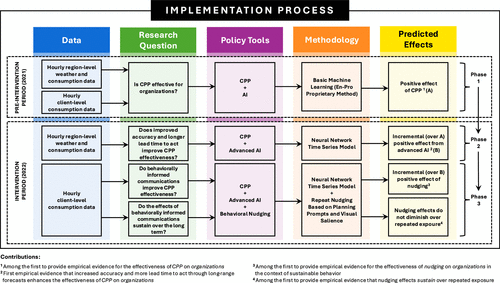
Phase 1 assesses how effective the CPP program is overall in helping organizations reduce peak energy use. This phase leverages En-Pro’s proprietary prediction method, which incorporates a simple tree-based machine learning model. We compare the curtailment response when participating firms receive curtailment alerts to a proxy measure for other organizations, which serves as a baseline for CPP effectiveness when no curtailment call alert is provided.
Phase 2 builds on this foundation by exploring whether the effectiveness of CPP can be enhanced using more advanced and dynamic AI techniques, specifically a neural network time-series (NNTS) model. This approach allows us to more accurately predict energy demand peaks up to 24 hours in advance. We hypothesize that the increased prediction accuracy and the extended forecasting window would maximize the likelihood to catch all peaks while minimizing false alarms, ultimately leading to higher compliance rates.
In phase 3, we focus on further reducing peak energy consumption through improved communications by imbedding planning prompt messaging within the curtailment emails. These messages aim to clarify both the timing and specific actions that organizations can take to reduce usage. We assess whether the planning prompts paired with improved predictions boost sustained curtailment across repeated events over one entire curtailment season. Given that the organizations in our study are highly motivated firms that have hired En-Pro to provide them with curtailment strategies and alerts and that have strong financial incentives to reduce their energy consumption because of CPP costs, it is entirely possible that a behavioral nudge would have minimal additional impact on firm behavior in this context.
Together, these phases allow us to isolate the contributions of both improved predictive accuracy and behavioral communication on organizational energy curtailment. Our findings address En-Pro’s operational needs while offering broader insight into how AI and behavioral science can be combined to support sustainable energy management in complex organizational settings.
3.2. Data
Our management intervention draws on two key data sets. The first data set includes anonymized, firm-level information from 25 of the largest organizations across nine industries, spanning 39 locations within Ontario, Canada. The data set includes hourly energy consumption at the location level between January 1, 2021 and August 29, 2022 as well as cross-sectional information on industry classification, generator ownership, zone, and the duration of contract with En-Pro. The second data set includes provincial-level hourly energy demand and temperature data from August 5, 2020 to September 25, 2022, which we use for demand forecasting to identify peak hours.
Summary statistics for both the provincial-level and firm-level data are presented in Table 1. The organizations involved are from various zones within the province and represent a diverse range of industries, spanning from education to manufacturing. They exhibit significant variation in energy consumption, ranging from 0.55 million kilowatt-hour (kWh) to 36 million kWh annually, as well as in contract duration, which varies from 18 to 304 months. Notably, 32.00% of organizations within the data set have access to generators, which we hypothesize positively influences compliance by enabling immediate and reliable reductions in primary grid demand.
|

Table 1. Descriptive Statistics
| Variable | Mean | SD | Min | Max |
|---|---|---|---|---|
| Firm Annual Energy Consumption (kWh) | 5,610,246 | 6,390,619 | 549,578 | 36,103,193 |
| Firm Contract Duration (Months) | 126.36 | 83.33 | 18.00 | 304.00 |
| Provincial Hourly Energy Demand (MW) | 15,418 | 2,352 | 10,426 | 23,823 |
| Temperature (°C) | 9.02 | 11.43 | -35.64 | 35.61 |
| Variable | Count | % | ||
|---|---|---|---|---|
| Industry | ||||
| Education | 2 | 8.00 | ||
| Financial Services | 1 | 4.00 | ||
| Food and Beverage | 5 | 20.00 | ||
| Logistics and Supply Chain | 2 | 8.00 | ||
| Manufacturing | 10 | 40.00 | ||
| Media and Entertainment | 1 | 4.00 | ||
| Packaging | 1 | 4.00 | ||
| Real Estate | 2 | 8.00 | ||
| Scientific Research and Development | 1 | 4.00 | ||
| Generator Ownership | ||||
| Yes | 8 | 32.00 | ||
| No | 17 | 68.00 | ||
| Zone | ||||
| East | 1 | 4.00 | ||
| Essa | 3 | 12.00 | ||
| Niagara | 1 | 4.00 | ||
| Ottawa | 2 | 8.00 | ||
| Southwest | 2 | 8.00 | ||
| Toronto | 13 | 52.00 | ||
| West | 3 | 12.00 | ||
Note. kWh, kilowatt-hour; MW, megawatts; SD, standard deviation.
In the subsequent sections, we delve into the three phases of our implementation process as depicted in Figure 1. For each phase, we assess the (marginal) impact of the intervention on participating firms’ energy costs and consequently, on En-Pro’s performance. We then explore the relative contribution of AI technologies and behavioral nudging to the overall success of the CPP program and organizations’ compliance. Lastly, we highlight the key achievements of this comprehensive management intervention, offering insights relevant to both theory and practice.
3.3. Phase 1: Measuring the Baseline Effectiveness of Curtailment Advice
To evaluate how organizations reduce energy use under CPP, we first assess En-Pro’s baseline performance in supporting curtailment during demand peaks. To establish this baseline, we use the demand forecasts made by En-Pro’s proprietary tree-based method using two-year historical regional weather and demand data and participating firms’ energy consumption data from 2021, the preintervention period.
3.3.1. Model-Free Evidence and Estimation Results.
We first present model-free evidence of organizations’ energy consumption behavior, contrasting situations with and without curtailment alerts with and without generators as presented in Figure 2. The results indicate a significant reduction in energy consumption during the curtail days, which is more pronounced during the hours specified within the curtailment window (typically between 14:00 and 18:00). Firms with generators exhibit a considerably larger reduction in consumption during the curtailment window and a smaller reduction in consumption outside the curtailment window relative to those firms without generators. This illustrates that generators not only enable organizations to respond more effectively but also, prevent unnecessary curtailment outside the window.
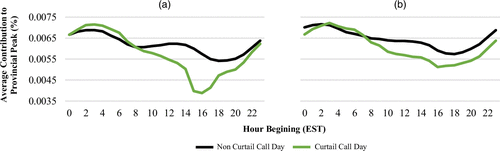
Notes. (a) Firms with generators. (b) Firms without generators. EST, eastern standard time.
To test the baseline effectiveness of En-Pro’s approach, we use a linear mixed effects model with firm-level hourly contribution to provincial demand as the dependent variable. We include two focal variables; the first (second) equals one if the hour is within (outside) the curtailment window on a curtailment day and zero otherwise. We control for generator availability using fixed effects and firm heterogeneity using random effects for firm identification. To measure moderation by generators, we include the interaction between the focal variables and generator availability. We present the results in Table 2.
|
Table 2. Impact of Curtailment Calls on Participating Firms’ Contribution to Provincial Peak Energy Demand
| Fixed effects | |||
|---|---|---|---|
| Estimates | Std. error | CI (95%) | |
| Predictors | |||
| (Intercept) | 0.00646 | 0.00169 | 0.00315 to 0.00978 |
| Curtail Call Day in Window [Yes] | −0.00121 | 0.00006 | −0.00134 to −0.00109 |
| Curtail Call Day out Window [Yes] | −0.00020 | 0.00003 | −0.00026 to −0.00014 |
| Generator [Yes] | −0.00029 | 0.00267 | −0.00553 to 0.00495 |
| Curtail Call Day in Window [Yes] × Generator [Yes] | −0.00073 | 0.00010 | −0.00093 to −0.00053 |
| Curtail Call Day out Window [Yes] × Generator [Yes] | 0.00011 | 0.00005 | 0.00001 to 0.00020 |
| Random effects | |||
| 0.000006 | |||
| 0.000060 | |||
| Intraclass correlation coefficient | 0.903589 | ||
| NID | 35 | ||
| Observations | 306,526 | ||
Note. CI, confidence interval; Std., standard.
The results support the effectiveness of CPP in reducing organizational energy use, showing that curtailment calls lead to an average reduction in peak demand contributions of 0.00121 (95% confidence interval () among firms without generators. The effect is even stronger for those with generators () as evidenced by the significant negative coefficient for the interaction term (). The effect size is substantial from a behavioral standpoint; firms with (without) generators decrease their contribution to provincial energy demand by 31.44% (18.73%) during curtail call hours. The weighted average (across those with and without generators) reduction in per-hour contribution to provincial energy demand is equivalent to 324 kWh, which is comparable with an average household’s energy consumption over 14 days (Financial Accountability Office of Ontario 2019). It is also important to note that curtailment calls exhibit an effect not only during the specified window but also, outside the specified window on curtailment days, although the effect is smaller compared with within the window. Outside curtailment windows on curtailment days, firms without generators reduce their contribution to provincial demand by 0.00020 (). The effect is also present for firms with generators, albeit to a lesser extent, as per the positive interaction ().
3.3.2. Baseline Monetary Savings Because of AI-Driven Forecasts.
We next quantify the financial value of En-Pro’s baseline performance for participating organizations. In 2021, En-Pro correctly identified four of the five peaks using its proprietary forecasting method and two-year historical hourly region-level weather and energy consumption data.
Given the sensitivity of the savings to the global adjustment and to ensure better generalizability of the findings, we take the average provincial global adjustment costs over the last seven years, $10.37 billion, and use the results in Table 2 to calculate organizational savings because of En-Pro’s AI-driven forecasts as for those without generators. Generator ownership leads to savings that are 1.6 times higher at (. Collectively, baseline AI-driven forecasts reduce annual energy costs by $122,147 per organization (weighted average across organizations with and without generators).
Next, in phases 2 and 3, we empirically evaluate our intervention to determine its effectiveness in improving curtailment compliance and monetary savings.
3.4. Phase 2: Improving Forecast Accuracy with Advanced AI
In the next phase, we aim to improve the accuracy and timeliness of peak identification using advanced AI methods (i.e., when firms should curtail energy consumption). We develop a long-range hourly forecasting model and use two-year historical weather and consumption data to predict provincial energy demand 24 hours in advance, providing organizations with sufficient lead time to act on the curtailment advice. We use two metrics to assess the performance of this model: (1) the accuracy in identifying the top five peaks and (2) the number of false positives, where a nonpeak is mistakenly identified as a peak (i.e., false alarms). Although true positives are critical for En-Pro’s success, minimizing false alarms is equally important as unnecessary curtailments entail significant operational costs and diminish long-term trust in the program.
3.4.1. Neural Network Time-Series Model.
Given the complex, nonlinear, and asymmetric relationship between temperature and energy consumption coupled with the significance of time dependencies (see Online Appendix 1), we employ an NNTS structure for long-range hourly forecasts of provincial energy demand. Neural networks, particularly those containing at least one hidden layer, are universal approximators for complex functional forms (Baesens et al. 2003). Specifically, we utilize an autoregressive neural network model consisting of an input layer with input neurons, a hidden layer with hidden neurons, and an output layer with one output neuron .
The neurons in the input layer capture dynamics through lagged hourly energy consumption along with variables, such as temperature, squared temperature, and a dummy variable for workdays. Each ith input neuron takes the value of , and these values are combined using a weighted linear combination to compute each jth hidden neuron, , where, represents the weights linking each input neuron to its corresponding hidden neuron and denotes a bias term that shifts the hidden neurons’ activation to the left or right. The hidden neurons’ outputs are then passed through a nonlinear logistic activation function, . The output from the hidden layer, , is then propagated forward through the network to compute the model’s final output, , which is the predicted energy consumption.
The model parameters (biases and , weights linking the input and hidden layers , and weights connecting the hidden and output layers ) are estimated by minimizing the least squares error. To train the neural network and determine the optimal number of hourly energy consumption lags, we estimate feed-forward neural networks that incorporate a hidden layer and lagged inputs (e.g., lagged hourly energy consumption). The Broyden–Fletcher–Goldfarb–Shanno algorithm, a quasi-Newton method, is employed to solve the nonlinear optimization problem using an iterative approach and gradient descent to minimize the loss function.
3.4.2. Model Estimation and Validation.
In the estimation of the NNTS model, we optimized hyperparameters, including the optimal number of energy consumption lags, using grid search combined with crossvalidation, selecting the model that minimized out-of-sample error. We find that the optimal lags varied between 18 and 42 hours across different regions, indicating a strong time dependency. This suggests that the previous day’s energy consumption is highly informative for predicting current consumption because of stable daily routines, practices, and behaviors among energy consumers (Torriti 2015).
We benchmark the performance of the NNTS model against five alternative models: En-Pro’s proprietary tree-based algorithm; a time-series model (Autoregressive Integrated Moving Average (ARIMA)) and a regression model with full covariates and ARIMA errors, which are widely adopted in demand forecasting across various industries (e.g., Gilbert 2005, Taylor 2008); and two machine learning models, gradient boosting and long short-term memory (LSTM), given their greater flexibility in capturing complex nonlinear relationships. All benchmark models were tuned following standard crossvalidated grid search procedures (see Online Appendix 2). Next, we discuss model performances for En-Pro’s two key performance indicators (KPIs): the accuracy of identifying the top five peaks and the number of false alarms where a nonpeak is incorrectly identified as a peak.
3.4.2.1. Accuracy of Identifying Demand Peaks.
The critical task for En-Pro is to identify five demand peaks with sufficient lead time to allow organizations to adjust their operations accordingly. We employ a 24-hour forecasting window to forecast provincial energy demand using the calibrated NNTS model based on data leading to but not including the forecast window. Any hour with energy consumption above a predetermined threshold, which we dynamically update, is then identified as an upcoming peak. Based on historical temperature and demand patterns, we start with a threshold of 20,500 megawatts (MW) and update it to 21,200 MW over the summer because of higher-than-expected provincial demand.
The long-range forecasts result in nine projected peaks in the intervention period. In Table 3, we show the dates and times of these demand peaks, their rank as determined by the government at the end of the year, and the provincial energy demand corresponding to each peak. Because Ontario only considers the top five peak hours in a year in determining the global adjustment cost, we focus on these to assess model performance. We present the average hourly prediction errors of the NNTS model and five benchmarks during the 24-hour forecast windows, including the peak, as well as the models’ ability to identify each of the top five peaks in Table 3, and we present the long-range tracking performance in Figure 3.
|
Table 3. Twenty-Four-Hour-Ahead Identification of the Top Five Peaks
| Energy peak date (time in EST) | Max demand (MW) | Rank of the peak | Neural network time series | Regression with ARIMA errors | ARIMA | Proprietary model | Gradient boosting | LSTM | ||||||||||||
|---|---|---|---|---|---|---|---|---|---|---|---|---|---|---|---|---|---|---|---|---|
| MAE | MAPE (%) | Catch peak? (%) | MAE | MAPE (%) | Catch peak? (%) | MAE | MAPE (%) | Catch peak? (%) | MAE | MAPE (%) | Catch peak? (%) | MAE | MAPE (%) | Catch peak? (%) | MAE | MAPE (%) | Catch peak? (%) | |||
| July 19, 2022 (5–6 p.m.) | 22,607 | 1 | 906 | 4.54 | Yes | 1,779 | 8.80 | No | 1,826 | 9.00 | No | 1,001 | 6.12 | Yes | 1,038 | 5.04 | Yes | 856 | 4.17 | Yes |
| June 22, 2022 (4–5 p.m.) | 21,954 | 2 | 526 | 2.78 | Yes | 1,656 | 8.10 | No | 1,707 | 8.34 | No | 1,417 | 7.95 | No | 376 | 2.20 | Yes | 599 | 3.12 | Yes |
| August 29, 2022 (4–5 p.m.) | 21,871 | 3 | 1,066 | 5.57 | Yes | 2,352 | 11.85 | No | 2,411 | 12.15 | No | 1,100 | 6.63 | Yes | 1,115 | 5.76 | No | 450 | 2.27 | Yes |
| July 20, 2022 (3–4 p.m.) | 21,850 | 4 | 236 | 1.24 | Yes | 415 | 2.10 | Yes | 401 | 2.01 | Yes | 1,229 | 6.99 | Yes | 414 | 2.19 | Yes | 925 | 4.60 | No |
| August 7, 2022 (4–5 p.m.) | 21,778 | 5 | 455 | 2.44 | Yes | 299 | 1.61 | Yes | 301 | 1.62 | Yes | 731 | 4.09 | Yes | 596 | 3.23 | Yes | 531 | 2.79 | Yes |
| Average | 638 | 3.31 | 100 | 1,300 | 6.49 | 40 | 1,329 | 6.62 | 40 | 1,096 | 6.36 | 80 | 708 | 3.69 | 80 | 672 | 3.39 | 80 | ||
| August 8, 2022 (2–3 p.m.) | 21,560 | 7 | Additional hours the NNTS model identified as potential peaks but not ranking among the top 5 at the end of the year | |||||||||||||||||
| June 16, 2022 (4–5 p.m.) | 21,500 | 8 | ||||||||||||||||||
| July 21, 2022 (4–5 p.m.) | 21,379 | 10 | ||||||||||||||||||
| July 22, 2022 (5–6 p.m.) | 21,367 | 12 | ||||||||||||||||||
Notes. The rank of a peak in a year is inversely related to the energy demand corresponding to it, and it is used by the provincial government to identify the top five peaks and distribute the global adjustment cost across organizations. The average hourly mean absolute error (MAE) is measured in megawatts (MW) across the 24 hours on each peak day, and the average mean absolute percentage error (MAPE) is measured as a percentage across the 24 hours on each peak day. Catch peak is a binary indicator equal to one if the model accurately predicts the peak on that day and zero otherwise. EST, eastern standard time.
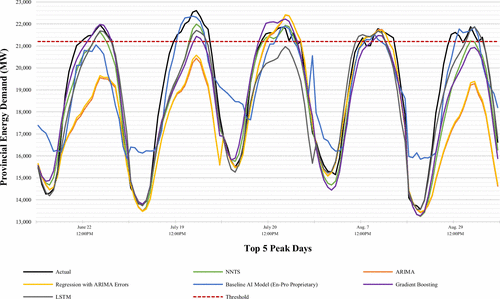
Note. ARIMA, autoregressive integrated moving average; LSTM, long short-term memory; NNTS, neural network time series; AI, artificial intelligence; MW, megawatts.
The results demonstrate that the NNTS model is substantially better than the benchmarks in terms of long-range forecast accuracy and ability to identify the top five peaks. Starting with the former, the average mean absolute percentage error of 3.31% for the NNTS model is consistently lower than those of the benchmark models, with performance improvement ranging from 2.22% (compared with LSTM) to 49.97% (compared with ARIMA). More importantly, the NNTS model catches all top five peaks 24 hours in advance followed by En-Pro’s tree-based baseline AI model, gradient boosting, and LSTM, which each catch four of five peaks.
3.4.2.2. Reduction in False Alarms.
Next, we evaluate the NNTS model’s performance by examining the quality of the curtailment advice measured by the number of notifications. In an ideal scenario, En-Pro sends only five curtailment emails per year, perfectly identifying the top five peaks that impact global adjustment costs with no false alarms. However, the uncertainty about future energy demand projections makes this a close-to-impossible task. Reducing unnecessary curtailment calls mitigates false alarms and supports continued participation in the program. We juxtapose the performances of the advanced AI prediction (NNTS model) and baseline AI prediction in Table 4.
|
Table 4. Curtailment Calls Sent and False Alarms (Pre-intervention vs. Intervention)
| Curtailment call date | Max hourly demand (MW) | Rank of day | Peak (hour ending), p.m. | Curtailment call window, p.m. | Top 5 peak hour identified? (%) |
|---|---|---|---|---|---|
| Panel A: 2021 (pre-intervention with baseline AI—En-Pro proprietary model) | |||||
| August 24, 2021 | 22,986 | 1 | 5 | 3–7 | Yes |
| August 26, 2021 | 22,740 | 2 | 3 | 3–7 | No |
| August 9, 2021 | 22,428 | 3 | 5 | 3–7 | Yes |
| August 25, 2021 | 22,360 | 4 | 5 | 3–7 | Yes |
| August 23, 2021 | 22,309 | 5 | 5 | 3–7 | Yes |
| June 28, 2021 | 22,258 | 6 | 6 | 3–7 | No |
| August 11, 2021 | 22,042 | 7 | 5 | 3–7 | No |
| August 19, 2021 | 21,788 | 9 | 5 | 3–7 | No |
| August 12, 2021 | 21,734 | 10 | 6 | 3–7 | No |
| July 6, 2021 | 21,655 | 12 | 5 | 3–7 | No |
| August 20, 2021 | 21,569 | 14 | 5 | 3–7 | No |
| June 7, 2021 | 21,340 | 17 | 5 | 3–7 | No |
| August 10, 2021 | 21,279 | 18 | 7 | 1–7 | No |
| July 15, 2021 | 20,971 | 24 | 5 | 1–6 | No |
| July 5, 2021 | 20,952 | 25 | 5 | 3–7 | No |
| July 19, 2021 | 20,849 | 27 | 4 | 3–7 | No |
| July 26, 2021 | 20,804 | 29 | 5 | 3–7 | No |
| June 8, 2021 | 20,475 | 34 | 5 | 3–7 | No |
| Average | 21,697 | 13.72 | — | — | 80 |
| Panel B: 2022 (intervention with advanced AI—NNTS) | |||||
| July 19, 2022 | 22,607 | 1 | 6 | 2–6 | Yes |
| June 22, 2022 | 21,954 | 2 | 5 | 3–7 | Yes |
| August 29, 2022 | 21,871 | 3 | 5 | 2–7 | Yes |
| July 20, 2022 | 21,850 | 4 | 4 | 2–6 | Yes |
| August 7, 2022 | 21,778 | 5 | 5 | 1–6 | Yes |
| August 8, 2022 | 21,560 | 7 | 3 | 2–6 | No |
| June 16, 2022 | 21,500 | 8 | 5 | 2–6 | No |
| July 21, 2022 | 21,379 | 10 | 5 | 2–6 | No |
| July 22, 2022 | 21,367 | 12 | 6 | 3–7 | No |
| Average | 21,763 | 5.78 | — | — | 100 |
Further supporting the use of advanced AI to improve curtailment, the NNTS model significantly improves the quality of curtailment advice, with our intervention leading to a 50% reduction in the number of curtailment calls sent (from 18 in 2021 to 9 in 2022) and leading to a 71.4% reduction in number of false alarms (from 14 to 4 between the preintervention period and the intervention period). Frequent false alarms undermine program credibility and reduce participant trust over time, and excessive curtailment calls act as a barrier to compliance, particularly because curtailing energy is costly for firms.
3.4.3. Monetary Savings Because of Advanced AI Forecasts.
We quantify the marginal financial impact of the NNTS model’s improved accuracy and extended lead time using the baseline AI (phase 1) as a reference point. Recall that the NNTS model consistently captures all five peaks with 100% accuracy compared with the 80% accuracy of the tree-based baseline model (see Table 3). Using the average total provincial global adjustment costs of billion over the last seven years, the incremental savings from the NNTS model equal and per firm for those without and with generators, respectively.1
This leads to additional annual savings of per firm (weighted average across organizations with and without generators). Note that this is a conservative estimate because it does not include the additional savings from fewer false alarms, which we account for in Section 4.1.1.
3.5. Phase 3: Enhancing Communication with Behavioral Nudging
We have shown the value of AI-driven forecasts in CPP effectiveness in phase 1 and calculated the incremental impact of better identification of peaks and reduction in false alarms using advanced AI in phase 2. Next, we investigate if En-Pro’s performance could be further improved by refining their communications using behaviorally informed emails that leverage planning prompts that specify the when, where, and how of an action (see, e.g., Jarvenpaa 1990, Corbetta and Shulman 2002, Holland et al. 2006, Nickerson and Rogers 2010, Bélanger-Gravel et al. 2013, and Rogers et al. 2015). To test our intervention’s impact on organizations’ behavior change, we design and run a longitudinal randomized field experiment during the summer of 2022 (June to August). The longitudinal nature of the experiment also permits an investigation into the sustained efficacy of the intervention over repeated exposures as evidence for sustained compliance.
3.5.1. Field Experiment Design.
In phase 3, we begin by assigning organizations into experimental and control groups, employing a matching design to ensure balance between the two groups based on key characteristics, such as industry, zone, number of locations, and whether the company operates a backup generator. The matched sample includes 25 firms, encompassing a total of 39 locations, as shown in Table 5. Organizations in the experimental and control groups were sent one of two versions of a curtailment email, which we describe in detail below. Curtailment emails notify participating firms about an anticipated energy demand peak and advise them to reduce consumption during a specified window, which is clearly highlighted in the message.
|
Table 5. Overview of Key Characteristics per Experimental Condition
| Experimental condition | Total firms | Total locations | Generators % of companies | Average annual energy use per location in 2022 (kWh) | Average contract duration (months) | No. of industries | No. of zones |
|---|---|---|---|---|---|---|---|
| Control | 12 | 16 | 33.33 | 5,012,623 | 142.2 | 6 | 5 |
| Experimental | 13 | 23 | 30.77 | 6,025,984 | 111.8 | 7 | 5 |
It is important to note that all participating firms upon enrolling with En-Pro undergo training with an advisor and receive tailored recommendations on reducing their energy consumption, particularly during peak periods when it significantly impacts costs. Consequently, no information asymmetry occurred between the control and experimental groups; the primary distinction lies in the interventions, which vary the salience of the information presented in curtailment emails. In addition, given that the participating organizations employ the support from En-Pro to reduce energy costs, all companies in the sample are expected to be highly motivated to comply when given the same curtailment advice. This likely makes our test a conservative estimate of the impact of nudging on organizations’ curtailment behaviors.
3.5.1.1. Curtailment Emails.
Using 24-hour out-of-sample predictions from the NNTS model in phase 2, En-Pro issued nine curtailment calls over 75 days, which are treated as repeated measures factors in the analysis (see panel B of Table 4). The emails were sent early in the morning on the day of the predicted demand peak to ensure that the curtailment was top of mind while still giving the firms extended lead time to act. In line with En-Pro’s typical messaging, to ensure coverage of the actual peak hour, the emails suggest curtailing energy use over a four- to five-hour period surrounding the predicted peak. Panels (a) and (b) of Figure 4 display messages for both the control group and the treatment group, respectively.
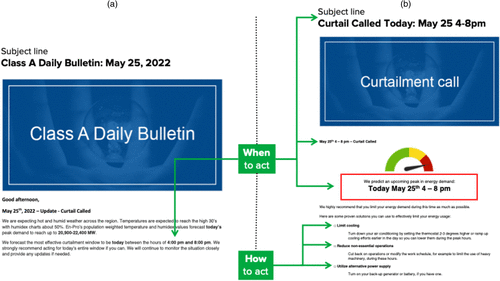
Notes. (a) Email for the control group. (b) Email for the experimental group.
In the control condition, we use a standard email template, which was previously employed by En-Pro prior to our intervention. For each curtailment call, we update the relevant weather forecast and the timing of the curtailment window while maintaining the overall design and subject line from previous years, with the subject line reading: “Class A Daily Bulletin: [date].”
In the experimental condition, we create a behaviorally informed planning prompt email template. This template is grounded in behavioral science principles aimed at enhancing follow-through by clearly specifying the when, where, and how to act (Rogers et al. 2015). Several integrated modifications to the curtailment alerts support this goal. First, we revise the subject line to be more descriptive (“Curtail Called Today: [date and time]”) to immediately convey the timing of action. Second, we simplify the email content to focus exclusively on the planning prompt information. Third, we included a bold, attention-grabbing graphic to highlight the urgency (i.e., when) and provided three specific, actionable tips to clarify how energy can be reduced. As in the control condition, only the curtailment timing is updated in each email based on the NNTS model’s forecasts. Importantly, although the prompts reiterate previously shared curtailment tips that firms received during training, they are designed to serve as timely, salient reminders rather than new information. Because of sample size limitations of the field experiment, we combine these design features into a single intervention. This necessarily bundles multiple behavioral components, meaning that the specific causal mechanism driving potential treatment effects cannot be isolated within this design.
3.5.2. Analyses and Results from the Field Experiment.
The NNTS model’s predictions trigger nine curtailment alert emails, each advising participating firms to reduce energy consumption over a four- or five-hour window (see panel B of Table 4), which covers a total of 38 hours (of a possible 8,760 hours in a year) across 39 locations. We conduct a longitudinal analysis to calculate the incremental lift for the experimental group compared with the control group after each curtailment call. This approach allows us to assess the stability of the nudging effects across repeated exposures over an entire curtailment season. We conduct a longitudinal analysis by pooling the data for each curtailment call. Although some participating organizations manage multiple locations, each location responds to curtailment calls independently. As a result, we analyze each location separately while controlling for firm-level factors in the model, leaving us with 351 observations (corresponding to nine curtailment windows across 39 locations).
3.5.2.1. Curtailment Call Effectiveness for the Experimental Group vs. the Control Group.
To estimate the impact of the planning prompt intervention on energy reduction, we use a linear mixed effects model. The outcome variable is the average hourly energy consumption during curtailment windows, and the main predictor is whether a location received the experimental email or was in the control group.
To test whether treatment effectiveness changes over repeat exposures, we include an interaction between condition and curtailment call number. We also control for any remaining temporal dependence in the data by modeling the error terms with an Autoregressive Moving Average (ARMA) structure, selecting the best order of autoregressive and moving average terms by minimizing Akaike Information Criterion (AIC).
Because baseline energy demand and curtailment responsiveness vary by factors like industry, annual energy use, generator ownership, and zone, we control for these using fixed effects. We also include a random effect for firm identification to control for unobserved heterogeneity. Generator ownership is controlled for rather than analyzed as a key moderator as only four participating organizations in each group own generators.
The findings in Table 6 reveal that the organizations that received the experimental email significantly decrease energy consumption more during curtailment hours () than organizations that received the control email. Adjusting for annual consumption, industry, generator, and zone, the additional average hourly reduction of 265.54 kWh per firm (Mcontrol = 999.12 kWh, standard error (SE) = 82.06; Mexperimental = 733.58 kWh, SE = 85.80) (see Figure 5) represents a 26.58% decrease in energy use per hour, equivalent to 11 times the average daily household consumption in Ontario (Financial Accountability Office of Ontario 2019). This outcome underscores the potential of behaviorally informed curtailment communications in large organizations.
|
Table 6. Impact of Experimental Email on Participating Firms’ Energy Consumption
| Fixed effects | |||
|---|---|---|---|
| Estimates | Std. error | CI (95%) | |
| Predictors | |||
| (Intercept) | −62.68 | 342.47 | −717.06 to 591.71 |
| Condition [Experimental] | −259.33 | 117.56 | −496.74 to −21.92 |
| Curtailment Call Number | −0.22 | 9.77 | −18.89 to 18.44 |
| Condition [Experimental] × Curtailment Call Number | −1.24 | 12.72 | −25.54 to 23.06 |
| Annual Consumption | 13.27 | 0.67 | 11.92 to 14.61 |
| Generator [Yes] | −178.72 | 142.26 | −466.01 to 108.58 |
| Industry | Too many | ||
| Zone | Too many | ||
| Random effects | |||
| σ2residual | 76,581.35 | ||
| σ2ID | 29,599.33 | ||
| Intraclass correlation coefficient | 0.278764 | ||
| NID | 39 | ||
| Observations | 351 | ||
Note. Std., standard.
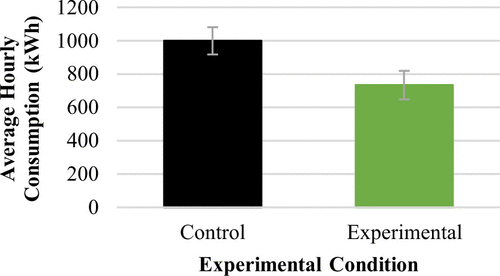
Note. Error bars are ± 1 SE.
Critically, the experimental email’s impact remained consistent across repeated curtailment events over an entire season. The lack of significant interaction between the experimental condition and the curtailment call number () indicates that the intervention sustains its effectiveness across nine emails sent over 75 days. This suggests that organizational nudging, particularly through planning prompts, can produce sustained behavioral responses, even across several exposures.
3.5.3. Robustness Checks.
We conducted several robustness checks to assess the stability of our findings. First, residual diagnostics confirm no significant autocorrelation. Second, a within-subject year-over-year analysis for experimental group organizations comparing preintervention and intervention periods shows significant improvement in curtailment performance following the intervention, mirroring the main experimental effect. Finally, several limited sample checks yield consistent estimates, reinforcing the robustness of the treatment effect (see Online Appendix 3 for full details).
3.5.4. Monetary Savings from Behavioral Nudging.
Next, we set out to understand the marginal financial impact of our behavioral intervention by quantifying the incremental savings generated by the behaviorally informed email. We use the same mixed effects model framework described in Section 3.5.2, with average hourly contribution to provincial demand during curtailment windows as the dependent variable. We then compute the difference in adjusted average hourly contribution to provincial peak demand between the control and experimental groups—controlling for annual energy consumption, industry, generator ownership, and zone. The control group contributed to peak demand, whereas the experimental group contributed . Because contribution to peak demand directly determines penalties under the CPP scheme, we translate this reduction into monetary terms. Using the seven-year average provincial global adjustment of , we estimate that the behavioral emails yield incremental annual savings of per organization.
3.5.5. What Drives the Effectiveness of the Experimental Email?
As noted earlier, our field intervention combined several behavioral design elements (e.g., simplified messaging, revised subject line, visual salience, and action-oriented prompts), which prevents us from isolating the specific causal mechanism driving the observed effects or identifying the individual contribution of each component. To better understand which features of the intervention email may have driven its effectiveness, we conducted two follow-up analyses.
First, to assess whether the revised subject line influenced email open rates—an upstream behavior that could confound downstream outcomes—we requested and obtained email engagement data from En-Pro. We analyzed these data using a binomial logistic regression with condition (experimental versus control), curtailment call number, their interaction, and fixed effects for day of the week and sender (six En-Pro consultants) as predictors. The dependent variable was whether the email was opened (1 = yes, 0 = no). Results revealed no significant difference in open rates between the experimental and control conditions (), no effect of curtailment call number (), and no interaction between condition and call number (). These conclusions are robust to model specification; results remain unchanged when excluding the day-of-the-week and sender fixed effects. These findings suggest that the revised subject line was not the primary driver of the observed treatment effect.
To further isolate the elements driving the experimental email’s effectiveness, we conducted an incentive-compatible multiphase online experiment with 291 managers recruited via Prolific Academic (Mage = 46.61; 44.7% female), all with five or more years of management experience. Participants first completed a training phase introducing critical peak pricing and energy reduction strategies followed a week later by a testing phase, in which they were randomly assigned to view either the control email or the experimental email and answer comprehension and perception questions. Full methodological details and results are provided in Online Appendix 4. The results of our follow-up experiment underscore that communicating when to act (i.e., the timing of the predicted peak) was viewed as the most critical component of CPP communications. Consistent with field results showing that the control email also supported effective curtailment behavior, participants in both email conditions were able to correctly identify the curtailment window with high accuracy (control: 95.2%; experimental: 92.4%; χ2(1) = 1.038, p = 0.308).
However, the two emails differed significantly in their communication of how to act. Participants in the experimental condition were significantly more likely to identify all three recommended curtailment actions (70.8%) compared with participants in the control group who were trained on these actions a week earlier (51.7%; χ2(1) = 11.210, p < 0.001). Moreover, the experimental email received higher ratings on clarity, perceived effectiveness, and likelihood of prompting managerial action. Together, these findings suggest that the planning prompts in the experimental email were particularly effective at making relevant actions more salient and easier to recall. Even when managers are trained in advance, key strategies may not be top of mind when a curtailment call arrives. The prompts appear to serve as a cognitive aid, facilitating action. Although these findings provide initial evidence regarding which elements of our intervention likely contributed to the experimental email’s effectiveness in the field, we note that this follow-up study involved hypothetical (albeit incentive-compatible) decisions in a separate sample. Future field research could employ a multiarm design that independently manipulates subject-line wording, graphic salience, and planning prompt content to isolate their causal contributions and potential interactions.
4. Multistakeholder Impact and Transportability
Our intervention underscores its broad value across multiple stakeholders, including En-Pro management, organizations, government/policymakers, the environment, and society.
4.1. Financial Benefits
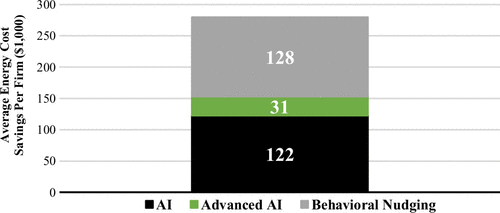
The intervention significantly improves firm outcomes by reducing energy costs and enhancing compliance with the CPP program. As discussed earlier, leveraging advanced AI-based forecasting and behavioral nudging, organizations achieve average annual savings of $280,215 per firm driven by the three phases of the intervention. We present the breakdown of these savings across the three phases in Figure 6.
4.1.1. Net Savings After Accounting for the Cost of Implementation.
However, to understand the net savings per organization, one needs to account for the costs of implementation. We account for two primary costs of curtailment: (1) generator-related costs and (2) opportunity costs for firms without generators that may restrict profit-generating activities. We present the high-level results in this section and refer interested readers to Online Appendix 5 for detailed assumptions, data sources, and step-by-step calculations, including generator capacity, capital and maintenance costs, fuel costs, and opportunity cost estimates.
For firms using generators, annual costs include capital, maintenance, and raw material expenses that vary by generator type (diesel, natural gas, or battery). For firms without generators, curtailment may involve scaling back profit-generating operations. We estimate the opportunity cost of reduced activity by dividing aggregate enterprise profit in Ontario by annual energy demand from organizations. Assuming an even distribution of generator types and that 50% of curtailment for organizations without generators stems from profit-generating activity, we estimate the average annual implementation costs at $54,390 and $43,442 per firm with and without generators, respectively.
False alarms also contribute significantly to implementation costs. In 2022, 42% of curtailment hours were attributable to false alarms (panel B of Table 4), meaning that close to half of the average annual cost for firms without generators—about $18,200—is linked to unnecessary curtailment. Similarly, for firms with generators, false alarms drive variable costs ranging from negligible amounts for battery generators to approximately $3,000 annually for diesel generators. These figures highlight the substantial financial burden of false positives, underscoring the importance of improving prediction accuracy to enhance net savings.
Net of these implementation costs, the intervention continues to deliver substantial value. Firms without generators and those with generators see annual net savings of $209,604 and $274,342, respectively, with weighted average annual net savings of $232,843 per firm.
4.1.2. Net Savings Sensitivity and Scenario Analysis.
The net savings estimates rely on several key assumptions, which we explore through sensitivity and scenario analyses. The sensitivity analysis varies one assumption at a time while holding others constant, whereas the scenario analysis examines combinations of assumptions to produce worst-case, expected, and best-case outcomes. We focus on three assumptions that most influence net savings: the value of the global adjustment, the share of curtailment drawn from profit-generating activities for firms without generators, and the distribution of generator types for those with generators.
Figure 7 summarizes the sensitivity analysis results. Net savings are most sensitive to the value of the GA because it directly affects the penalties avoided under the CPP program. When the GA is high, each kilowatt-hour of reduced consumption translates into greater avoided costs, thereby magnifying savings. Conversely, a low GA dampens the financial impact of curtailment. Our analysis demonstrates that net savings remain positive across the full historical range of GA values (from $7 billion to $14 billion), underscoring the intervention’s robustness to market and policy-driven price fluctuations. Given the ongoing volatility in provincial energy markets, this resilience is an important strength of the proposed framework.
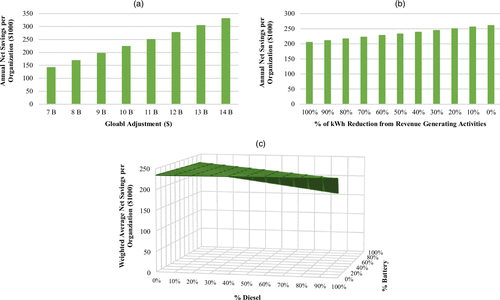
Notes. (a) Sensitivity to global adjustment. B, billion. (b) Sensitivity to opportunity cost. (c) Sensitivity to generator type.
Net savings are also influenced by how curtailment is achieved. When curtailment stems primarily from profit-reducing actions (e.g., shutting down production or sending workers home), savings decline; when achieved through operational adjustments that do not disrupt output (e.g., shifting production to off-peak hours or rescheduling maintenance), savings are 27% higher. Many firms in our sample report using such nondisruptive strategies, making full profit-reducing curtailment relatively unlikely in practice. The distribution of generator types has the smallest effect on net savings as fixed capital and maintenance costs dominate total generator costs, whereas fuel type makes only a modest difference to overall implementation costs.
Our scenario analysis shows that net savings remain positive even under highly conservative assumptions, demonstrating that the intervention delivers value across a broad range of conditions. Net savings are highest when global adjustments are high, the percentage of kilowatt-hour reduction from profit-generating activities is low, and generator mix is 100% diesel, leading to weighted average net savings of $361,911 per firm. On the other extreme, when global adjustments are low, the percentage of kilowatt-hour reduction from profit-generating activities is high, and generator mix is 100% battery, weighted average net savings reduce to $109,240 per firm.
4.2. Environmental Benefits
The energy sector is directly responsible for 41% of overall carbon dioxide (CO2) emissions, underscoring its importance in resolving the climate crisis (Bedrosyan and Foster 2014). Reducing peak energy demand is particularly critical to lowering system-level greenhouse gas emissions and supporting longer-term decarbonization goals (United Nations 2022) as peak periods often require dispatching backup generation from fossil fuel sources (Torriti 2015). In this section, we assess the environmental impact of the intervention by examining (1) firm-level reductions in energy use, (2) projected emissions reductions at provincial and national levels, and (3) the sensitivity to generator-type mix.
4.2.1. Firm-Level Reductions in Carbon Footprint.
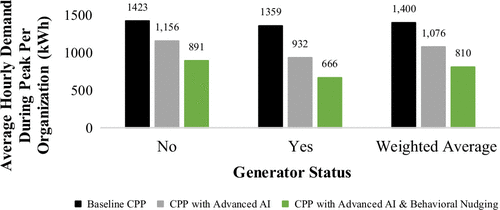
During curtailment windows, participating firms reduce their hourly energy demand by , an amount equivalent to the energy consumption of a typical Ontario household over 25 days (Financial Accountability Office of Ontario 2019). To contextualize the intervention’s impact, we compare organizations’ observed performance with a baseline scenario representing self-managing organizations that do not receive curtailment advice. Assuming that these organizations consume energy like participating firms do when no curtailment call is made, their hourly energy consumption is predicted to be 1,400 kWh during peaks (see Online Appendix 6 for detailed calculations and assumptions).
Relative to this baseline CPP effect, the intervention (i.e., CPP with advanced AI and behavioral nudging) reduces organizations’ peak-hour energy demand by 42.13% (Figure 8).
4.2.2. Scaling up the Impact on the Environment.
To estimate the broader potential impact, we project system-wide CO2 reductions if the intervention was scaled across all organizations in Ontario and Canada. We provide detailed assumptions and calculation steps in Online Appendix 7. Using publicly available national data, we first calculate the average organizational energy demand during the five annual system peaks in Ontario and Canada. We then apply the 42.13% decrease in overall consumption because of the intervention (Figure 8) to estimate the drop in the peak demand. The results show that the reductions are equivalent to the daily energy use of nearly 300,000 Ontario households and over 1 million Canadian households, respectively (Financial Accountability Office of Ontario 2019), and translate to hourly CO2 savings 1,679 tonnes in Ontario and 6,458 tonnes in Canada.
4.2.3. Environmental Impact Sensitivity and Scenario Analysis.
To assess the robustness of these results, we examine how net CO2 reductions vary under different assumptions regarding generator type (Figure 9). In the expected case, assuming an even generator mix, the intervention yields the net reductions reported above. In the worst-case scenario, where all generators are diesel based, net CO2 reductions fall to 690 tonnes per hour in Ontario and 2,652 tonnes per hour in Canada. In contrast, in the best-case scenario, where all generators are battery based, net reductions rise to 2,754 tonnes in Ontario and 10,594 tonnes in Canada. Across these scenarios, net CO2 reductions vary by up to 299%, but they remain substantial, even under conservative assumptions.
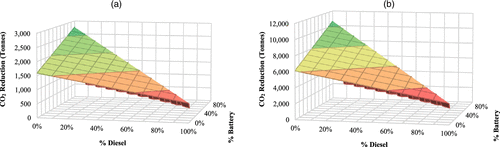
Notes. (a) Sensitivity to generator type (Ontario). (b) Sensitivity to generator type (Canada).
These findings underscore the environmental value of the intervention, and they suggest that additional gains could be realized through promoting the adoption of lower-emission generator technologies. Policy efforts that incentivize battery-based solutions through subsidies, regulatory support, or education could amplify the environmental benefits of demand-side interventions, such as the one studied here.
4.3. Transportability to Other Contexts
Although many sectors employ demand-based pricing schemes to curb peak consumption, such as CPP in electricity, drought-response pricing in water, or dynamic surcharges in logistics, the success of these programs hinges not only on the pricing mechanism itself but also, on organizations’ ability to anticipate and act on peak events. Our findings suggest that integrating advanced predictive analytics with behaviorally informed communications may play an important role in translating these pricing signals into coordinated organizational action. For instance, Sydney’s drought-response pricing increases water rates during periods of scarcity (WaterNSW 2025). Timely communications that clarify upcoming pricing changes can enable organizations to plan and reduce usage more effectively. Similarly, logistics providers, like FedEx, apply dynamic surcharges during periods of high demand (Garland 2024), which are often driven by weather, seasonality, fuel prices, and congestion (WTA 2025), factors that are well suited to neural network-based forecasting. When paired with clear behavioral guidance, accurate predictions could help firms proactively reschedule shipments or adjust capacity, reducing costs without compromising service.
Our study focuses specifically on the energy sector, one of the most significant and essential industries, employing nearly 700,000 people and accounting for 10.3% of nominal gross domestic product in Canada (Natural Resources Canada 2024). As such, the findings are significant in their own right, but equally, the broader approach that we test (pairing predictive analytics with behavioral prompts) holds promise in other organizational domains that face volatile demand and time-sensitive operational decisions. However, this possibility remains speculative. Although our findings suggest that such an integrative strategy can enhance coordinated action under CPP, whether the same approach can be adapted to contexts like water management or logistics has yet to be empirically tested. The transferability of this integrative approach may be limited in sectors where demand is less predictable, decision making is highly regulated or collective, or operational systems allow for limited flexibility for rapid adjustment. Further research is needed to assess how such an integrative approach can be tailored to different sectors and whether they yield similar benefits under varying regulatory, infrastructural, and organizational conditions.
5. Discussion and Conclusions
This study provides evidence that integrating AI-based forecasting with behavioral nudging can address complex multistakeholder resource management problems. Individually, AI models offer predictive power, whereas behavioral nudging influences human behavior and encourages more sustainable practices. Table 7 summarizes the impact of this approach, including both savings and energy consumption results across the three phases of our study. The empirical results show that the intervention reduced energy demand across the top five hourly peaks by an average of 2,949 kWh per organization, resulting in an average annual net savings of $232,843 per organization. Broader adoption is estimated to reduce hourly CO2 emissions by 1,679 tonnes in Ontario and 6,458 tonnes in Canada during critical peaks, with the potential to lead to a more even distribution of energy demand. Such changes could further reduce peak-related penalties and contribute to improved environmental outcomes. Although complete elimination of peak demand seems unlikely in the near term given factors such as population growth, rising reliance on electricity for transportation and heating, and climate-driven stress on energy systems, the results illustrate that our proposed integrative approach can decrease energy use during peak demand, providing a blueprint for more sustainable energy management.
|
Table 7. Summary of Incremental Energy Savings and Financial Returns
| Tool | Energy reduction (kWh) | Energy savings ($) | Implementation costs ($)a | Net savings ($) |
|---|---|---|---|---|
| Baseline AI | 1,297b | 122,147 | 20,833 | 101,314 |
| Advanced AI | 324c | 30,537 | 5,208 | 25,329 |
| Behavioral nudge | 1,328d | 127,531 | 21,330 | 106,200 |
| Total | 2,949 | 280,215 | 47,372 | 232,843 |
aImplementation costs are allocated in proportion to each phase’s share of the total energy reduction.
bA 324.19-kWh reduction in energy use from curtailment call × 4 correctly identified peaks.
cA 324.19-kWh reduction in energy use from curtailment call × 1 additional identified peak when using advanced AI.
dA 265.54-kWh reduction in energy use from behavioral nudge × 5 critical peaks.
The findings motivate the following actionable recommendations for policymakers and practitioners. Given that CPP is effective for organizations, Energy Market Regulators, such as the Ontario Energy Board, should incorporate critical peak pricing into their pricing structures not only for residential customers but also, for organizational customers. However, as we have demonstrated in this paper, having such pricing policies is not a sufficient condition for program success, and an infrastructure that ensures that organizations know when a critical peak is imminent and how to respond during such events is as critical. Regarding the when aspect, our results indicate that advanced predictive tools, such as neural network time-series models, provide substantial improvement in identifying peaks more accurately while minimizing false alarms, thus fostering trust in such programs. Given that system operators, such as the Independent Systems Operator in Ontario, have comprehensive, real-time access to energy demand data, they are best positioned to forecast peak demand. Once these peaks are identified, they should then be communicated to organizational energy consumers across the region. We recommend that communication comes from local distribution companies because they have a pre-existing relationship with all energy customers, placing them in a central position to deliver curtailment signals more broadly. In addition to communicating when to act, local distribution companies should ensure that customers know how to act during critical peak events. Well-designed communications that are simple, are timely, and include concrete planning prompts about how to respond can significantly enhance behavioral compliance and amplify program impact. Energy consultants, such as En-Pro, can translate these curtailment signals into operational guidance for participating organizations. Taking into account the interdependent nature of these recommendations and aligned with the literature on systems thinking, successful implementation requires integration across energy market regulators, system operators, local distribution companies, energy consultants, and commercial energy users.
Although our study offers important insights, several limitations merit attention and point to opportunities for future research. First, the participating firms were large industrial energy users that voluntarily subscribed to En-Pro’s advisory service, suggesting a level of motivation and infrastructure that may not generalize to all organizational contexts. Second, we lack detailed information on intraorganizational communication chains, such as which individuals within each firm received and acted on the curtailment emails. Understanding internal diffusion and decision-making processes could help refine targeting strategies and improve intervention design. Third, although our intervention used 24-hour advance notifications, future studies might explore how varying lead times influence effectiveness—balancing the benefits of increased planning time with potential reductions in salience or urgency. Fourth, even though our findings on generator ownership are statistically significant, the small number of generator-equipped organizations in our sample limits the precision of subgroup estimates and warrants further investigation with larger samples. Fifth, although our current data do not show systematic evidence of firms shifting their energy use to off-peak periods, we note that such long-term reallocation behaviors are plausible and worthy of future investigation. Understanding these dynamics is critical for evaluating the full environmental and economic potential of demand-side interventions like ours. Sixth, because the field intervention bundled multiple behavioral design elements (e.g., revised subject line, visual salience, and planning prompt instructions), the precise causal mechanism underlying the observed treatment effects remains unresolved. Accordingly, our field findings should be viewed as suggestive rather than definitive evidence of which specific components drive curtailment performance. Future work employing multiarm field experiments could help disentangle these elements and identify their independent and interactive contributions. In addition, although our nudge findings demonstrate stability across nine repeated curtailment events over one full season, the durability of these effects across years, under different market conditions, or as managerial personnel change remains to be evaluated. Finally, although our study provides insights into the management of scarce resources strictly using the energy sector, similar multistakeholder resource management issues arise in many industries that struggle with uneven demand over time, such as water or traffic. Whether our approach can be readily scaled to other domains is an open question. We advise academics to explore the effectiveness of this integrative approach across industries, organizations, and customers to test its generalizability. These considerations highlight both the boundaries of our current findings and the rich opportunities for continued inquiry into resource management under dynamic operational conditions.
All authors certify that they have no affiliations with or involvement in any organization or entity with any financial interest or nonfinancial interest in the subject matter or materials discussed in this manuscript. The authors want to thank the participants of the 2022 Marketing Dynamics Conference in Atlanta, Georgia, and the judging panel of the 2024 INFORMS-ISMS Gary L. Lilien Practice Prize Competition for their feedback and contributions. The authors also want to thank Deighton Jarrett, Ryan Cosgrove, Sarah Jakov, and Charles Smith for their collaboration and support as key institutional contacts at our partner organization, and to Szabi Apro for the creative visual design and compelling graphics featured in this paper.
1 and .
References
- (2022) Design of electricity demand-response programs. Management Sci. 68(10):7441–7456.Link, Google Scholar
- (2003) Using neural network rule extraction and decision tables for credit-risk evaluation. Management Sci. 49(3):312–329.Link, Google Scholar
- (2023) Thinking through norms can make them more effective. Experimental evidence on reflective climate policies in the UK. J. Behavioral Experiment. Econom. 106:102024.Crossref, Google Scholar
- (2010) Resource orchestration to create competitive advantage: Breadth, depth, and life cycle effects. J. Management 37(5):1390–1412.Google Scholar
- (2020) From raindrops to a common stream: Using the social-ecological systems framework for research on sustainable water management. Organ. Environment 33(1):126–148.Crossref, Google Scholar
- (2014) Understanding CO2 emissions from the global energy sector. Report, World Bank Group, Washington, DC.Google Scholar
- (2014) Identification of reservation capacity in critical peak pricing electricity demand response program for sustainable manufacturing systems. Internat. J. Energy Res. 38(6):728–736.Crossref, Google Scholar
- (2013) A meta-analytic review of the effect of implementation intentions on physical activity. Health Psych. Rev. 7(1):23–54.Crossref, Google Scholar
- (2023) Field experimental evidence on the effect of pricing on residential electricity conservation. Management Sci. 69(12):7784–7798.Link, Google Scholar
- (1987) Principles of sociotechnical design revisted. Human Relations 40(3):153–161.Crossref, Google Scholar
- (2020) Why have voluntary time-of-use tariffs fallen short in the residential sector? Production Oper. Management 29(3):617–642.Crossref, Google Scholar
- (2000) Sociotechnical principles for system design. Appl. Ergonomics 31(5):463–477.Crossref, Google Scholar
- (2002) Control of goal-directed and stimulus-driven attention in the brain. Nature Rev. Neuroscience 3(3):201–215.Crossref, Google Scholar
- (2016) Salient nutrition labels increase the integration of health attributes in food decision-making. Judgment Decision Making 11(5):460–471.Crossref, Google Scholar
- (2007) The power of five percent: How dynamic pricing can save $35 billion in electricity costs. Report, The Brattle Group Inc., Cambridge, MA.Google Scholar
Financial Accountability Office of Ontario (2019) Home energy spending in Ontario. Report, Financial Accountability Office of Ontario, Toronto.Google Scholar- (2008) Resistance to change: The rest of the story. Acad. Management Rev. 33(2):362–377.Crossref, Google Scholar
- (2017) Applying behavioural insights to organisations: Theoretical underpinnings. Report, Organisation for Economic Co-operation and Development, Paris.Google Scholar
- (2024) FedEx rolls out pricier surcharges, new fees for 2024 peak season. Supply Chain Dive (August 15), https://www.supplychaindive.com/news/fedex-2024-peak-season-holiday-surcharges-price/724385/.Google Scholar
- (2005) An ARIMA supply chain model. Management Sci. 51(2):305–310.Link, Google Scholar
- (2017) The carbon majors database: CDP carbon majors report 2017. Report, CDP, London.Google Scholar
- (2007) Residential implementation of critical-peak pricing of electricity. Energy Policy 35(4):2121–2130.Crossref, Google Scholar
- (2010) Residential response to critical-peak pricing of electricity: California evidence. Energy 35(4):1561–1567.Crossref, Google Scholar
- (2007) An exploratory analysis of California residential customer response to critical peak pricing of electricity. Energy 32(1):25–34.Crossref, Google Scholar
- (2006) Breaking and creating habits on the working floor: A field-experiment on the power of implementation intentions. J. Experiment. Soc. Psych. 42(6):776–783.Crossref, Google Scholar
IEA (2023) CO2 emissions in 2022. Report, International Energy Agency, Paris.Google Scholar- (1990) Graphic displays in decision making—The visual salience effect. J. Behavioral Decision Making 3(4):247–262.Crossref, Google Scholar
- (2021) Repairing a cracked mirror: The heterogeneous effect of personalized digital nudges driven by misperception. Production Oper. Management 30(8):2586–2607.Crossref, Google Scholar
- (2024) Delivering affordable clean energy to consumers. J. Acad. Marketing Sci. 52(5):1452–1474.Crossref, Google Scholar
- (2012) Are groups more rational than individuals? A review of interactive decision making in groups. Wiley Interdisciplinary Rev. Cognitive Sci. 3(4):471–482.Crossref, Google Scholar
- (2022) Signals of value drive engagement with multi-round information interventions. PLoS One 17(10):e0276072.Crossref, Google Scholar
- (2019) Dynamic norms drive sustainable consumption: Norm-based nudging helps café customers to avoid disposable to-go-cups. J. Econom. Psych. 75(Part A):102146.Crossref, Google Scholar
- (2021) Do behavioral nudges work on organizations? Harvard Bus. Rev. (February 22), https://hbr.org/2021/02/do-behavioral-nudges-work-on-organizations.Google Scholar
- (2021) A megastudy of text-based nudges encouraging patients to get vaccinated at an upcoming doctor’s appointment. Proc. Natl. Acad. Sci. USA 118(20):e2101165118.Crossref, Google Scholar
Natural Resources Canada (2024) Energy fact book 2024–2025. Report, Natural Resources Canada, Ottawa.Google Scholar- (2010) Do you have a voting plan? Implementation intentions, voter turnout, and organic plan making. Psych. Sci. 21(2):194–199.Crossref, Google Scholar
- (2009) A general framework for analyzing sustainability of social-ecological systems. Science 325(5939):419–422.Crossref, Google Scholar
- (2019) Electric power industry: Operational and public policy challenges and opportunities. Production Oper. Management 28(11):2738–2777.Crossref, Google Scholar
- (2021a) Effectiveness of planning prompts on organizations’ likelihood to file their overdue taxes: A multi‐wave field experiment. Management Sci. 67(7):4327–4340.Link, Google Scholar
- (2021b) Are repeat nudges effective? For tardy tax filers, it seems so. Behavioral Scientist (June 7), https://behavioralscientist.org/are-repeat-nudges-effective-for-tardy-tax-filers-it-seems-so/.Google Scholar
- (2015) Beyond good intentions: Prompting people to make plans improves follow-through on important tasks. Behavioral Sci. Policy 1(2):33–41.Crossref, Google Scholar
- (2007) Managing firm resources in dynamic environments to create value: Looking inside the black box. Acad. Management Rev. 32(1):273–292.Crossref, Google Scholar
- (2008) A comparison of univariate time series methods for forecasting intraday arrivals at a call center. Management Sci. 54(2):253–265.Link, Google Scholar
- (1997) Dynamic capabilities and strategic management. Strategic Management J. 18(7):509–533.Crossref, Google Scholar
- (2021) Nudge (Yale University Press, New Haven, CT).Google Scholar
- (2015) Peak Energy Demand and Demand Side Response (Routledge, London).Crossref, Google Scholar
- (2019) Increasing vegetable intake by emphasizing tasty and enjoyable attributes: A randomized controlled multisite intervention for taste-focused labeling. Psych. Sci. 30(11):1603–1615.Crossref, Google Scholar
United Nations (2022) Do you know all 17 SDGs. Accessed August 20, 2022, https://sdgs.un.org/goals.Google ScholarUnited Nations Development Programme (2023) Sustainable Development Goals: Business and the SDGS. Accessed March 2, 2023, https://www.undp.org/sdg-accelerator/business-and-sdgs.Google Scholar- (2013) Changing behaviour: Increasing the effectiveness of workplace interventions in creating pro-environmental behaviour change. J. Organ. Behav. 34(2):211–229.Crossref, Google Scholar
- (2023) Nudges and choice architecture in public policy: A bibliometric analysis. J. Behavioral Experiment. Econom. 104:102020.Crossref, Google Scholar
- (2025) Smart green nudging: Reducing product returns through digital footprints and causal machine learning. Marketing Sci. 44(4):954–969.Link, Google Scholar
- (2016) Critical peak electricity pricing for sustainable manufacturing: Modeling and case studies. Appl. Energy 175:40–53.Crossref, Google Scholar
WaterNSW (2025) Fees and charges. Accessed May 20, 2025, https://www.waternsw.com.au/customer-services/water-pricing/fees-and-charges.Google Scholar- (2019) How to SHIFT consumer behaviors to be more sustainable: A literature review and guiding framework. J. Marketing 83(3):22–49.Crossref, Google Scholar
WTA (2025) The freight contract market vs spot rate market: Which is best for my business? Accessed June 2, 2025, https://www.wtagroup.com/resources-and-insights/blogs/the-freight-contract-market-vs-spot-rate-market-which-is-best-for-my-business.Google Scholar- (2023) Nudging timely wage reporting: Field experimental evidence from the U.S. Supplemental Security Income Program. Management Sci. 69(3):1341–1353.Link, Google Scholar