Is Competition Only One Click Away? The Digital Markets Act’s Impact on Google Maps
Abstract
This paper studies the impact of the European Union (EU) Digital Markets Act (DMA) on user search behavior and traffic to online mapping services, focusing on recent changes to Google’s search results page. In January 2024, Google altered the display of location-based queries for EU users by removing clickable maps and direct links to Google Maps. We exploit this policy-induced change and implement a difference-in-differences design comparing EU and non-EU countries to assess how the removal of Google’s self-preferencing shaped search volumes and traffic patterns. Search queries for maps and Google Maps increased by more than 21%. Although the former may reflect broader interest in mapping services, the latter directly signals intent to use Google Maps. Yet, this surge in searches primarily redirected users back to Google Maps. Traffic data reveal no significant change in overall visits to www.google.com/maps on desktops or mobile devices. Instead, we observe shifts in the channels through which users access the service and in session duration. No corresponding increase in search activity or traffic is observed for Bing Maps nor for other competing mapping services. These findings indicate that the DMA had weak competitive effects, highlighting Google Maps’ dominance in a market where alternatives remain limited.
History: Catherine Tucker served as the senior editor.
Funding: The authors are grateful for the financial support provided by the Agence Nationale de la Recherche [Grant ANR-21-CE26-0018-01/HYBRID].
Supplemental Material: The online appendix and data files are available at https://doi.org/10.1287/mksc.2025.0159.
1. Introduction
In the past years, there has been increasing scrutiny and criticism of the significant market power wielded by major online companies.1 Tech giants have been accused of using their dominant positions to design and operate online sites and marketplaces in ways that favor their own products (Crémer et al. 2019). One notable example is the European Union (EU) fine against Google for abusing its market dominance by promoting its own comparison shopping service, Google Shopping, in search results (Cardoso and Ren 2017).
Online companies often counter these concerns by claiming that “competition is one click away” (Helft 2009); platform design choices do not significantly prevent users from seeking the best service or product. According to this argument, if users access their online service, it is because of superior quality, not because alternatives are hidden. However, this claim overlooks important frictions, such as switching costs (Farrell and Klemperer 2007), behavioral biases, and consumer inattention (Miller et al. 2022, Einav et al. 2025), all factors that significantly influence the adoption and continued use of online services (Allcott et al. 2025).
This paper examines the impact of a change in search result presentation on search volumes and online traffic in response to recent changes mandated by the Digital Markets Act (DMA) in the European Union. The DMA aims to increase contestability in digital markets by ensuring fairer competition and providing consumers with more choice and better services. To comply with the DMA, Google changed the design of its search page for users located in the EU beginning in January 2024. Specifically, when a user searches for a location-based query (e.g., for a place, a shop, or a restaurant), the prominently displayed map is no longer clickable, and the signet linking to Google Maps has been removed (see Figure 1 for an example). Users can still click on “directions,” which provides transport advice but does not zoom in on the map or recommend nearby businesses. This design change addresses concerns that Google was leveraging its search engine to direct users to its own mapping service, thereby stifling competition and limiting consumer choice. Yet, it has drawn criticism from European users accustomed to clicking directly on the map to locate their destination on Google Maps.2 This change effectively removes Google’s one-click advantage over competitors in the online mapping services market. Now, users must first access Google Maps, often by typing maps and Google Maps into Google Search. Although Google Maps directly signals intent to use Google’s service, the more generic maps query could, in principle, open the door to alternative mapping services.3
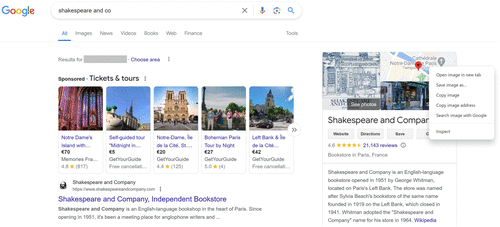
Note. The map is not clickable, and the Google Maps signet is absent.
We take advantage of the changes to Google’s search results pages induced by the DMA to assess whether the policy achieved its intended goal of increasing the contestability of mapping services. Specifically, we address the following questions. Has the DMA increased the likelihood that users discover and begin to adopt alternative mapping services? Is competition really just one click away? Leveraging the timing of the policy and its exclusive applicability to users in the EU, we employ a difference-in-differences (DiD) approach. We compare Google search volume and online traffic from EU countries with those of a set of non-EU countries, focusing on one year after January 2024 relative to the previous year.
First, we document that Google search volumes for the queries maps and Google Maps increased by more than 21% in EU countries after the DMA. Although the neutral query maps could capture some potential user discovery of competing services, the query Google Maps reflects explicit demand for Google’s own service. These results are highly robust to the choice of control groups and model specifications.
We repeat the same analysis on search volumes for queries related to alternative mapping services. Search volumes for Apple Maps, a service predominantly used by Apple device users, also increase, but the results are not robust across model specifications. Moreover, Apple Maps search volumes are orders of magnitude smaller than those for maps and Google Maps. No significant changes are observed for Bing Maps or other alternative services.
To complement our findings based on search volume, we further explore the DMA’s consequences by examining changes in actual traffic volumes to www.google.com/maps. For this analysis, we apply the same DiD approach used in the search volume analysis. The rise in search-driven access does not translate into a significant net increase in overall desktop visits; total traffic to www.google.com/maps remains unchanged. To further rule out the possibility that external factors unrelated to the DMA might be driving traffic to Google Maps during the same period, we conduct a placebo test using mobile traffic data to www.google.com/maps, which were not directly affected by the DMA in 2024. We find no statistically significant change in mobile traffic, reinforcing the interpretation that our results are because of the DMA rather than external shocks.
We also document a statistically significant increase of approximately 40% in organic search traffic to www.google.com/maps from desktop users. There is no corresponding increase in direct desktop traffic, indicating that users did not significantly adopt direct URL entry or bookmarks as alternative access methods. The increase in organic search traffic indicates that the rise in queries for maps and Google Maps more than offset the loss of traffic previously generated by clickable maps (both of which are classified as organic search traffic). This pattern is consistent with a behavioral shift; users may have stopped entering queries on Google Search that previously triggered geo-localized results (e.g., Shakespeare and Co or searches for specific shops and attractions). Instead, they now search explicitly for maps or Google Maps and access Google Maps directly to obtain the information that they need. However, because organic search traffic only accounts for less than a quarter of all EU desktop traffic to Google Maps, the overall impact on total traffic volumes remains limited. Moreover, examining user engagement metrics reveals subtle yet significant changes. Specifically, there is a 5% reduction in the average duration of visits and a 16% increase in bounce rates. These metrics indicate that although overall traffic volumes were not impacted, user interactions on Google’s mapping platform may have changed.
Finally, we analyze overall traffic volumes to www.bing.com/maps and www.google.com using the same DiD approach. We do not find robust evidence of a DMA-induced change in traffic to www.bing.com/maps; although the baseline specification suggests a modest decrease, this effect is only weakly significant and does not hold across alternative specifications. Accordingly, the DMA does not seem to have led to a meaningful increase in traffic to one of Google Maps’ major competitors. Similarly, we find minimal evidence of changes in traffic for Google’s primary domain: www.google.com.
Our study offers new empirical insights into how large online firms bias search results or use bundling strategies to integrate additional products (Prasad et al. 2010, Derdenger and Kumar 2013). Early research in this area has been primarily theoretical. Authors have explored platforms’ strategies to bias search results (Hagiu and Jullien 2011, Inderst and Ottaviani 2012, de Cornière and Taylor 2019), to bias recommendations (Bourreau and Gaudin 2022), and to favor integrated products (Carlton et al. 2010, Hagiu et al. 2022, Zennyo 2022, Anderson and Bedre-Defolie 2024). The empirical literature on self-preferencing has largely focused on Amazon’s marketplace (Gutierrez 2021, Lam 2021, Lee and Musolff 2021, Raval 2022, Farronato et al. 2023, Reimers and Waldfogel 2023), whereas our research examines Google’s search engine and its impact on search behavior and online traffic. Previous studies have highlighted how Google’s algorithm and Google News affect organic search visits to news outlets (Athey et al. 2021, Calzada et al. 2023). For instance, Chiou (2017) demonstrated that integrating Google Flights into search results reduced clicks to competing travel agencies. Similarly, through an experimental design, Kim and Luca (2019) document that users prefer when Google’s organic search results display reviews from multiple platforms rather than exclusively Google reviews. Relatedly, Allcott et al. (2025) empirically investigate the sources of Google’s search market power, finding that although switching costs play a limited role, both quality beliefs and persistent inattention significantly contribute to its dominance.
We contribute by analyzing the effects of Google’s search results changes under the Digital Market Act, which although aiming to increase user choice (for instance, by altering default options for services, like Google Maps), did not significantly alter traffic to Google Maps.4 In line with Allcott et al. (2025), our findings indicate that the DMA’s changes regarding default options alone are insufficient to significantly impact user behavior in the context of Google Maps. This suggests that a truly contestable market may require interventions that not only address choice architecture but also actively promote user awareness and engagement with alternative options.
We also contribute to the literature on online consumer search (Bronnenberg et al. 2016, Amano et al. 2022, Ursu et al. 2023, Honka et al. 2024). Previous studies have highlighted the significant impact of content aggregation, rankings, and links on search behavior and purchase decisions (Chiou and Tucker 2017, Ursu 2018, Roos et al. 2020, Harris et al. 2022, Zhang et al. 2023). The prominence of search results also affects organic traffic from search engines (Baye et al. 2016). Our research extends these insights by examining how Google’s compliance with the DMA, specifically removing its one-click advantage, impacts user behavior.
Finally, we contribute to the analysis of policies regulating digital marketplaces and their effects. Previous research has examined the General Data Protection Regulation (GDPR) and its impact on privacy and advertising (Goldfarb 2018, Johnson 2022, Johnson et al. 2023, Goldberg et al. 2024, Miller and Skiera 2024). Related to our study, Decarolis et al. (2025) found that regulatory actions in the EU, Russia, and Turkey specifically aimed at removing contractual restrictions imposed by Google on the preinstallation of competing search engines on Android devices effectively reduced Google’s market share. Our study is among the first to examine the DMA’s impact. Closest to our work, Waldfogel (2024) showed that after the EU designated Amazon as a “gatekeeper” platform in September 2023, Amazon’s product rank advantage decreased. In contrast, we focus on Google, observing how users responded to Google’s design change to comply with the DMA. Our results support the case for additional regulatory measures aimed at removing self-preferential features from Google Search, such as the “directions” button that steers users toward Google’s own navigation services. Our findings suggest that although the removal of clickable map elements reduces default-based bias, many users may still overlook alternatives and return to Google Maps through organic search. To foster meaningful adoption of competing services, further regulatory steps may be needed to enhance visibility and salience of alternative options.
The remainder of this paper is structured as follows. Section 2 details our empirical context, encompassing the regulatory background of the DMA in Section 2.1, the data sources utilized in our analysis in Section 2.2, and our identification strategy designed to isolate the effects induced by the DMA in Section 2.3. Section 3 then presents our core findings regarding search volumes. This section focuses on changes in the volume of queries for maps and Google Maps (Section 3.1) as well as queries related to competing mapping services (Section 3.2). Following this, Section 4 examines traffic data to provide further insights. We begin by exploring overall changes in both desktop and mobile traffic (Section 4.1.1). Then, we analyze shifts in the sources of desktop traffic to www.google.com/maps (Section 4.1.2). Finally, we delve into the intensive margin of Google Maps usage by analyzing session durations and bounce rates (Section 4.2). Within Section 4.3, we also present data on desktop and mobile traffic to www.google.com and www.bing.com/maps to provide a comparative perspective. Section 5 then discusses the implications of our findings for policy. Lastly, Section 6 summarizes our key results and proposes potential directions for future research in this area.
2. Context, Data, and Empirical Strategy
2.1. Regulatory Context: The DMA and Its Implementation
The Digital Markets Act in the European Union is a major regulatory initiative aimed at ensuring fair and open digital markets across the EU. The legislation, which “entered into force” on November 1, 2022, targets large online platforms designated as “gatekeepers” to curb anticompetitive practices, such as self-preferencing (Cabral et al. 2021). On September 6, 2023, the European Commission designated six large companies (Alphabet, Amazon, Apple, ByteDance, Meta, and Microsoft) as gatekeepers. These companies were given six months (until March 2024) to comply with the new obligations and prohibitions set forth in the DMA.5
The DMA calls for significant changes in the way that these platforms operate. In particular, the six gatekeepers are asked to partially redesign the way that information is presented to users in order to “ensure contestability (i.e., the reduction of entry barriers) and to ensure fairness (i.e., a balance between the rights and obligations of the gatekeepers and their business users) of EU digital markets” (De Streel et al. 2024). Alphabet has been designated as a gatekeeper for a group of online intermediation services, including Google Maps.6 This service has traditionally been seamlessly integrated into Google’s search results. Such integration has raised concerns about the contestability of the market for mapping services as it could constitute a “dark pattern” used by the company to steer users to its own services. To comply with the DMA, Google could have displayed other geolocation applications alongside Google Maps. Another alternative would have been to allow users to select their preferred mapping service through a choice screen, similar to how Google implemented a selection prompt for search engines in Google Chrome.7 For desktop searches, however, Google instead decided to remove any link, clickable map, or shortcut that would allow users to access Google Maps with a single click (see Figure 1 for an example). By contrast, for mobile searches, the maps remained clickable during 2024 and typically redirected users to the Google Maps app (if installed).8 As a result, users in the EU must now manually navigate to Google Maps or other mapping services9 when searching for a location-based query on desktop.10
We date the introduction of the “choice architecture” change in Google Search to January 2024 based on user reports from online forums. Google’s official statement regarding DMA compliance does not explicitly mention the removal of clickable Google Maps elements.11 However, discussions on Reddit and the Google Search community forum indicate that this change was progressively implemented throughout January and February 2024.12 The noticeable increase in user reports after the first week of January 2024 supports identifying this period as the onset of the broader rollout of the policy change.
This change to Google’s search interface is consistent with the principles of the DMA and eliminates Google Maps’ previous one-click advantage over other services. However, the DMA also requires gatekeepers to monitor the impact of their “choice architecture” on an ongoing basis. Gatekeepers must submit a compliance report within six months of designation and update it annually, with the steps taken to ensure compliance.
2.2. Data for Search Queries and Online Traffic
For this study, we analyze search query volume data over time, compiling weekly country-level panel data from two primary sources, Google Trends and Glimpse, spanning January 2023 to December 2024. Additionally, we collect monthly web traffic data from Semrush, covering January 2023 to December 2024.
Our data set includes 25 European Union countries affected by the DMA excluding Malta and Cyprus because of data limitations. To construct a suitable control group, we incorporate 13 European non-EU countries and all OECD (Organisation for Economic Co-operation and Development) and BRICS countries (Brazil, Russia, India, China, and South Africa) where Google and Google Maps services are available, resulting in 27 control countries. This expanded control set allows for robust comparisons across different regulatory and market environments.13
Google Trends provides insights into search behavior by analyzing the relative frequency of specific queries over time. The data are normalized to a range from 0 to 100, where 100 represents the peak popularity of the query during the selected time frame and 0 signifies insufficient data.14 To supplement Google Trends data, we utilize search volume estimates from Glimpse (https://meetglimpse.com/). Glimpse computes search volumes by applying a proprietary scaling factor to the normalized data from Google Trends, effectively converting relative interest scores into estimated query volumes.15
To ensure consistency across countries, we use a uniform set of queries, regardless of regional variations in mapping service terminology. Our data set includes six key search queries relative to online mapping services per country and per week: the general term maps along with specific queries for Google Maps and a set of major competing mapping services (Apple Maps, Bing Maps, Google Maps, Mappy, and OpenStreetMap). These competitors were selected based on their relevance in European and global markets, their visibility in online search environments, and their potential substitutability for Google Maps. Apple Maps and Bing Maps are prominent services provided by large tech firms with significant user bases. Mappy is a well-known European (particularly French) mapping service, and OpenStreetMap is a widely used open-source platform that powers many third-party navigation applications. Together, these services represent the most recognizable and accessible alternatives to Google Maps across EU countries.16
Although the term maps is generic, Figure A1 in the Online Appendix shows that users searching for it on Google are highly likely to encounter results related to Google Maps. Figure A1 in the Online Appendix presents snapshots of Google Search results for the term maps with no personalization based on search history for France, Germany, Italy, and Spain. In all cases, Google Maps always appears in the top two search results. We supplement these queries with search terms that prompt Google Search to display business listings near the user’s location: specifically, restaurant, shopping, and supermarket. This enables us to evaluate whether queries typically performed within Google Maps are instead being conducted via Google Search.
To further assess the impact of the DMA, we use a complementary data set of estimated website traffic from Semrush (https://www.semrush.com/). Semrush employs a proprietary algorithm that integrates data from multiple sources to estimate monthly website traffic volumes. In particular, the algorithm combines keyword rankings, search volumes, and estimated click-through rates to approximate organic search traffic.17 Additionally, Semrush incorporates data from paid search campaigns, social media activity, and referral traffic to provide a comprehensive overview of a website’s online visibility.18 These estimations represent monthly average volumes and do not include explicit time trends or smoothing.19
In contrast to previous EU privacy-related policies, such as the General Data Protection Regulation, which had broad implications across numerous online entities, the DMA specifically targets a limited number of large digital platforms. Accordingly, we do not expect the DMA’s implementation to significantly affect overall website traffic estimates by Semrush as only a few actors are directly subject to the DMA.
We use these data to analyze visits and other traffic metrics for Google Maps (both the main domain and the domain accessed when users click the “directions” button) as well as for www.google.com and www.bing.com/maps. This allows us to examine potential spillover effects to other Google-related domains or to potential substitutes for Google Maps.20
In our analysis, we aggregate traffic from each country by combining visits to the generic domains www.google.com/maps and www.google.com with visits to the corresponding country-specific domains (e.g., www.google.fr/maps and www.google.fr for France).21
For desktop visits, we further categorize traffic by source, including direct, organic search, referral, and other sources. Direct traffic refers to visits where users type the domain directly into the address bar or use a bookmark. Organic search traffic captures visits generated by unpaid clicks from search engines (for example, a user searching maps on Google clicking on the search result for www.google.com/maps but also clicking on the adjacent maps if available or the “directions” button). Referral traffic includes visits originating from links on other websites outside of search engines and social media (for example, an embedded Google Map on a third-party site). Finally, other sources include traffic coming from social media or minor channels not classified elsewhere.22 As the DMA changes applied to Google’s own interfaces, only organic search traffic is directly affected, whereas direct, referral, and other sources remain unaffected. Additionally, for desktop traffic, we collect information on the number of monthly visitors, the average number of pages visited per session, the average visit duration, and the average bounce rate. In Semrush Traffic Analytics, sessions begin when a user arrives at the domain and continue until they leave or are inactive for up to 60 minutes (inactivity is defined by absence of clicks).23
In Table 1, we present the average weekly search volumes for these queries in EU and non-EU countries before and after the DMA. Prior to the DMA, Google Maps and maps accounted for 91% of average weekly searches in Europe and 99% of average weekly searches in non-EU countries. These high figures suggest that searching for maps or Google Maps was the predominant method for users to access mapping services via search engines. The main difference between EU and non-EU countries before the DMA is the prevalence of queries for Mappy, a French mapping app that is especially popular in France.
|

Table 1. Google Search Volumes and Shares Before and After January 2024 for EU and Non-EU Countries
| EU | Non-EU | |||
|---|---|---|---|---|
| Search volumes | Share (%) | Search volumes | Share (%) | |
| Before DMA (January to December 2023) | ||||
| Apple Maps | 1,943 | 0.16 | 9,223 | 0.32 |
| Bing Maps | 10,780 | 0.9 | 6,804 | 0.23 |
| Google Maps | 311,485 | 26.24 | 923,512 | 32.25 |
| Mappy | 92,609 | 7.8 | 742 | 0.02 |
| Maps | 768,390 | 64.74 | 1,921,755 | 67.11 |
| OpenStreetMap | 1,609 | 0.13 | 1,148 | 0.04 |
| After DMA (January to December 2024) | ||||
| Apple Maps | 2,832 | 0.17 | 10,526 | 0.37 |
| Bing Maps | 12,526 | 0.76 | 6,025 | 0.21 |
| Google Maps | 398,166 | 24.3 | 819,681 | 29.39 |
| Mappy | 82,458 | 5.03 | 699 | 0.02 |
| Maps | 1,140,828 | 69.62 | 1,950,741 | 69.94 |
| OpenStreetMap | 1,703 | 0.1 | 1,256 | 0.04 |
Notes. The sample includes weeks from January 2023 to December 2024 for 25 EU countries and 19 non-EU countries. Cyprus and Malta were excluded from the EU group as they lack data on search volumes for all queries. Similarly, we excluded non-EU countries without complete data on search volumes. The non-EU countries included in the analysis are Australia, Brazil, Canada, Chile, Colombia, Costa Rica, India, Israel, Japan, Mexico, New Zealand, Norway, South Africa, South Korea, Serbia, Switzerland, Turkey, the United Kingdom, and the United States. Search volumes are averaged at the weekly level across the countries comprising the EU and non-EU groups.
Following the DMA, we observe some changes in the relative shares of the queries maps and Google Maps in both EU and non-EU regions. In particular, in the EU, the share of maps increased at the expense of Google Maps. Although these shifts in relative shares are notable, the most substantial effect comes from the overall growth in search volumes for maps and Google Maps within the EU; search volumes rose significantly (+27.56%) compared with a slight decline in non-EU countries (−0.03%).
To further illustrate this shift, we plot the search volumes over time for the queries maps and Google Maps in EU and non-EU countries in Figures A2 and A3 in Online Appendix A. In EU countries, we observe a sharp increase in search volumes beginning in January 2024, coinciding with the DMA-driven changes to Google Search. Before this, trends in both EU and non-EU countries followed a similar trajectory marked by a gradual decline in search volumes during the latter half of 2023, with a more pronounced reduction in the final weeks of December. However, post-January 2024, non-EU countries returned to the levels observed before the winter months of 2023, reinforcing their role as a control group for the EU. Because non-EU countries are unaffected by the DMA and because VPN (Virtual Private Network) usage for such searches is likely minimal, the risk of contamination of the control group remains low.
In Table 2, we present a similar analysis focusing on the average monthly visits to www.google.com/maps in EU and non-EU countries before and after the DMA. Table 2 includes total visits from all devices disaggregated into desktop and mobile traffic. For desktop traffic, the data are structured by source: direct (users entering the URL directly or via a bookmark), referrals (users arriving from external third-party websites outside of search engines and social media), organic search (users arriving through unpaid search engine results, including all clickable elements within Google’s search interface), and other sources (social, paid search, email, and display advertising).
|
Table 2. Online Visits for www.google.com/maps Before and After January 2024 for EU and Non-EU Countries
| EU | Non-EU | |||
|---|---|---|---|---|
| Visits (×1,000) | Share (%) | Visits (×1,000) | Share (%) | |
| Before DMA (January to December 2023) | ||||
| All devices | 6,790 | 100 | 11,997 | 100 |
| Desktop | 4,657 | 68.58 | 7,705 | 64.22 |
| Mobile | 2,133 | 31.41 | 4,292 | 35.77 |
| Direct desktop traffic | 3,264 | 70.08 | 5,630 | 73.06 |
| Referral desktop traffic | 367 | 7.88 | 929 | 12.06 |
| Organic desktop search | 963 | 20.68 | 1,067 | 13.85 |
| Other desktop sources | 62 | 1.33 | 77 | 1 |
| After DMA (January to December 2024) | ||||
| All devices | 10,324 | 100 | 18,435 | 100 |
| Desktop | 8,167 | 79.11 | 13,532 | 73.4 |
| Mobile | 2,156 | 20.88 | 4,903 | 26.59 |
| Direct desktop traffic | 5,230 | 64.04 | 9,767 | 72.17 |
| Referral desktop traffic | 664 | 8.13 | 1,698 | 12.55 |
| Organic desktop search | 2,131 | 26.09 | 1,816 | 13.42 |
| Other desktop sources | 141 | 1.72 | 249 | 1.84 |
Notes. The sample includes months from January 2023 to December 2024 for 25 EU countries and 19 non-EU countries. Cyprus and Malta were excluded from the EU group as they lack data on search volumes for all queries. Similarly, we excluded non-EU countries without complete data on search volumes. Among the non-EU countries included in the analysis are Australia, Brazil, Canada, Chile, Colombia, Costa Rica, India, Israel, Japan, Mexico, New Zealand, Norway, South Africa, South Korea, Serbia, Switzerland, Turkey, the United Kingdom, and the United States. Traffic variables are averaged at the monthly level across the countries comprising the EU and non-EU groups. The shares of desktop and mobile traffic are calculated as a proportion of the total traffic from all devices. The shares of other desktop-related traffic are calculated as a proportion of total desktop traffic.
After the DMA, we observe a substantial increase in visits to www.google.com/maps in both EU and non-EU countries (+52% in the EU and +54% in non-EU countries), primarily driven by desktop traffic. A key difference emerges in the share of desktop visits originating from organic search; in EU countries, this proportion increases, whereas in non-EU countries, it remains stable. This trend supports the hypothesis that the DMA-induced Google Search design change prompted more EU desktop users to search for maps and Google Maps, thereby increasing the share of organic search-driven visits.
To illustrate these trends, we plot the monthly time series of all desktop visits and organic search desktop visits for EU and non-EU countries in Figures A4(a) and A5(a) as well as Figures A4(b) and A5(b) in Online Appendix A, respectively. Figures A4 and A5 in Online Appendix A confirm a sharp increase in organic search and desktop visits in the EU beginning in January 2024, coinciding with DMA-related modifications. Although a similar pattern emerges in non-EU countries, the magnitude of the change is considerably smaller.
Based on this descriptive evidence, in the next subsection, we present our empirical strategy to measure the impact of the DMA by comparing search volumes and visits in EU and non-EU countries over time.
2.3. Identification Strategy
Our objective is to measure the change in the propensity to search for Google queries related to mapping services and the likelihood of visiting mapping domains as a result of the DMA. To achieve this, we treat the DMA as an exogenous shock affecting only users based in EU countries. Non-EU countries serve as a control group to account for initial differences in query rates. We employ a two-way fixed effects model within a difference-in-differences framework. Specifically, we estimate the following specification:
To test the absence of pretrends between EU and non-EU countries, we complement the specification in Equation (1) with an event-study approach. In particular, we estimate a lead-lag model in which is regressed on the interaction between the dummy and a full set of time dummies. Formally, we estimate
Unlike the GDPR (Johnson 2022), the DMA is expected to have limited spillover effects beyond the countries that it directly affects. It targets a small number of gatekeepers, such as Alphabet for online map services, and it regulates only users accessing online services from treated countries. Thus far, Alphabet has not implemented similar adjustments in non-EU nations. Although EU users can revert to the previous version of Google Search through browser extensions or VPNs, adoption of these methods appears minimal as indicated by low installation rates for such extensions. Even if a surge in the use of browser extensions or VPNs was to occur in 2024, the significant increase in searches for maps and Google Maps from the EU suggests that we may still be underestimating the short-term negative impact on EU users. These users now face either the inconvenience of additional browser extensions or the financial costs associated with VPN services.
3. The DMA’s Impact on Search Volumes
We begin our analysis by examining changes in user search volumes. This is the most direct way to capture how the DMA-induced modifications to Google’s search result pages affected the way that EU consumers formulate queries. By analyzing search volumes for maps, Google Maps, and competing services, we can document whether the new design altered the patterns of access that users initiate at the search stage.
3.1. Impact on Maps and Google Maps Queries
Table 3 reports three specifications of the DiD estimates from Equation (1) for the queries maps (columns (1)–(3) in Table 3) and Google Maps (columns (4)–(6) in Table 3). The two terms should not be interpreted in the same way; although the query maps may capture a broader interest in mapping services in general, the query Google Maps more directly reflects intent to use Google Maps specifically. Standard errors are clustered at the country level. The sample covers weekly data from January 2023 to December 2024. All specifications include country fixed effects, which control for time-invariant factors influencing search behavior at the national level, and time (week) fixed effects, which account for time-varying confounders affecting all countries similarly. The treated group consists of 25 EU countries. For each query, the three specifications differ in the composition of the control group. The specification in columns (1) and (4) in Table 3 includes all countries in the control group. The specification in columns (2) and (5) in Table 3 restricts the control group to countries in the Northern Hemisphere. The specification in columns (3) and (6) in Table 3 further limits the control group to non-EU European countries.
|
Table 3. Difference in Differences: Log of Google Search Volumes for Maps and Google Maps Queries
| (Maps) | (Google Maps) | |||||
|---|---|---|---|---|---|---|
| (1) | (2) | (3) | (4) | (5) | (6) | |
| 0.244*** | 0.233*** | 0.214*** | 0.244*** | 0.233*** | 0.212*** | |
| (0.027) | (0.030) | (0.036) | (0.028) | (0.031) | (0.036) | |
| Country FEs | ✓ | ✓ | ✓ | ✓ | ✓ | ✓ |
| Week FEs | ✓ | ✓ | ✓ | ✓ | ✓ | ✓ |
| Control countries | All | Northern Hemisphere | Only European | All | Northern Hemisphere | Only European |
| 0.997 | 0.997 | 0.997 | 0.995 | 0.995 | 0.995 | |
| N | 5,304 | 4,794 | 3,876 | 5,304 | 4,794 | 3,876 |
| Mean dependent variable | 12.795 | 12.731 | 12.511 | 12.150 | 12.116 | 11.923 |
Notes. The sample includes weekly data from January 2023 to December 2024. Columns (1)–(3) correspond to the query maps, and columns (4)–(6) correspond to the query Google Maps. For each query, we present specifications that include country and week fixed effects (FEs). The specifications differ in the composition of the control group. The first specification includes all countries in the control group. The second specification limits the control group to countries in the Northern Hemisphere. The third specification restricts the control group to European non-EU countries. In all specifications, the treated group comprises 25 EU countries. Standard errors clustered by country are in parentheses.
***.
The estimates of the average treatment effect in Equation (1) are positive and statistically significant at the 1% level across all specifications. The DMA is associated with an increase in search volume of at least 21% for both queries in EU countries compared with non-EU countries. These estimates are economically significant, indicating that a substantial number of users in the EU have searched for general mapping services and specifically, for Google Maps because of the inability to access them directly through Google Search.
Moreover, the robustness of our results across different control groups suggests that the observed effects are not driven by the specific choice of reference countries. We also note that the values in these regressions are extremely high (all above 0.99), indicating that much of the variation in search volumes is captured by country and month fixed effects along with the DiD interaction accounting for the regulatory shock in EU countries.
To validate the DiD design, we present event study plots examining the parallel trends assumption during the pretreatment period. These event studies not only help assess whether EU and non-EU countries followed similar trends before the DMA but also provide insights into which control countries best approximate the counterfactual scenario of EU countries in the absence of the DMA. We begin by studying the evolution of search volumes over time, focusing on the queries maps and Google Maps.
Figure 2 displays coefficients tracking the differences between EU and non-EU countries over time for these two queries, with January 1st, 2024 as the reference point. These event studies use European non-EU countries as the control group. In Figures B1 and B2 in Online Appendix B, we replicate the same event studies using all non-EU countries in our sample and only control countries in the Northern Hemisphere, respectively. When including all non-EU countries, pretrends appear to be affected by differing seasonal patterns between EU and non-EU regions. This seasonality is largely driven by countries in the Southern Hemisphere, where seasons are reversed relative to the Northern Hemisphere. Given that mapping services may be used more frequently during the spring and summer months when travel and outdoor activities peak, the seasonal misalignment between hemispheres likely explains these fluctuations. In contrast, when restricting the control group to countries in the Northern Hemisphere, seasonal fluctuations are noticeably reduced. The cleanest pretrends, with no visible seasonality, emerge when focusing on European non-EU countries, our preferred specification.
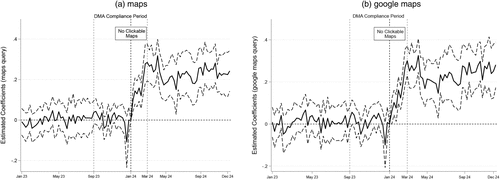
Notes. The log of Google search volumes for maps and Google maps queries is regressed on country and time fixed effects and interactions between a dummy variable indicating if a country is in the European Union and a full set of dummy variables for each snapshot. The graphs plot the estimated coefficients of these interaction terms. The coefficient for January 2024 is normalized to zero. The treated group includes 25 EU countries. The control group comprises European non-EU countries. The sample includes weekly data from January 2023 to December 2024. Panels (a) and (b) show the analyses for search volumes related to maps and Google maps, respectively. Standard errors are clustered by country and reported in the form of 95% confidence intervals.
To ensure that our results are not driven by modeling choices, we conduct several robustness exercises: alternative identification strategies using synthetic difference-in-differences (Arkhangelsky et al. 2021) and the synthetic control (Abadie and Gardeazabal 2003), a placebo test using YouTube searches, verification of results when relying solely on Google Trends data, and an alternative identification strategy using EU countries as their own counterfactual. Across all exercises, the estimated effects remain stable in both magnitude and significance, reinforcing the validity of our findings. All results and discussion are provided in Online Appendix B.
3.2. Impact on Queries of Competing Mapping Services
Using our previous identification strategy, we found that EU users reacted to the DMA-induced changes in Google Search by increasing their searches for maps and Google Maps. Because Google Maps links appear as top results when searching for maps, we can reasonably assume that most of these additional searches led EU users to Google Maps services. However, some users may also have been considering alternative mapping services.
To investigate this possibility, we estimate Equation (1) using search query data for competing mapping services: Apple Maps, Bing Maps, Mappy, and OpenStreetMap. These queries are far less common than maps and Google Maps, and for some smaller countries, search volume data are unavailable. To maximize sample size and increase statistical power, we report results using all available control groups. Table B5 in Online Appendix B suggests that among the competitors, Apple Maps is the only service showing evidence of a post-DMA increase in searches. Although the point estimate implies a large relative increase (close to 28%) for Apple Maps, this effect corresponds to only 0.175% of Google Maps’ search volume. All other competitors do not exhibit statistically significant changes.
To ensure robustness, Tables B6 and B7 in Online Appendix B explore alternative treatments of zero search volumes. In the main analysis, when the Google search volume in a week is zero, we replace the zero value with the search volume equivalent to a Google Trends value of one. When zeros are replaced with the country search volume equivalent to a Google Trends value of 0.5 (Table B6 in Online Appendix B), results remain similar to the main specification. However, when zeros are dropped with no replacement (Table B7 in Online Appendix B), the positive effect for Apple Maps weakens and is no longer statistically significant, whereas the coefficients for other services remain small and imprecisely estimated. Additionally, we conduct a synthetic difference-in-differences analysis for all competitors reported in Figure B8 and Table B8 in Online Appendix B. These results are broadly consistent with the ones in Table B5 in Online Appendix B and suggest some upward movement only for Apple Maps, but again, the evidence is not robust enough to conclude a clear positive effect.
Accordingly, these findings indicate that if any competitor experienced a post-DMA increase in searches, it is most likely Apple Maps. Still, given the sensitivity of results to model specification and the very small share of searches involved, the magnitude and economic significance of this effect remain highly uncertain.
Notably, Apple Maps was historically available only to Mac users. When these users searched for Apple Maps on Google, they could click on a website link that redirected them to the Mac application. For all non-Mac users, searching for Apple Maps on a desktop did not direct them to any website providing access to Apple’s mapping services. However, in July 2024, Apple launched a beta version of Apple Maps accessible via the web, making it available to all users.25 Despite this expansion, the beta version remains relatively unknown among non-Mac users. In December 2024, worldwide online visits to www.beta.maps.apple.com were 231,000 significantly lower than the 702 million visits to www.google.com/maps and the 13.2 million visits to www.bing.com/maps during the same period. This suggests that although some users may indeed switch to alternative mapping services when a competitive option, such as Apple Maps, is available, widespread adoption remains limited.
To explore this idea further, we focus on the case of France, the only country where one competing service, Mappy, had a higher search volume than Google Maps before the DMA. In Figure B9 in Online Appendix B, we present the time series of search volumes in France for the queries maps, Google Maps, and Mappy in 2023 and 2024. The data suggest that French users were actively using an alternative service that had gained some traction. However, as Figure B9 in Online Appendix B illustrates, the DMA did not lead to an increase in searches for Mappy; instead, search volumes for Mappy slightly declined after the DMA and were eventually surpassed by searches for Google Maps. This indicates that although the presence of a readily available alternative can play a role, it is not necessarily sufficient to drive a switch in user behavior.
Finally, we also examined whether the DMA affected broader geo-localized queries on Google Search, such as restaurant, shopping, and supermarket. Although the estimated effects were generally negative, ranging from a 1% to 4% decline in search volumes, none were statistically significant. These results suggest only weak evidence of substitution away from Google Search toward Google Maps for geo-referenced information. A full discussion of this analysis is provided in Online Appendix B.
4. The DMA’s Impact on Online Traffic
To complement our previous findings based on search volumes, we extend the analysis to traffic volumes. This enables us to assess whether and to what extent the actual usage of mapping and related services has changed following the introduction of the DMA. Although the previous section documented clear shifts in search behavior, these changes may or may not translate into differences in overall traffic. Therefore, we analyze whether the additional searches observed, particularly for generic queries such as maps, resulted in changes in traffic to Google Maps and opened the door to increased usage of competing services. We continue to apply the DiD design specified in Equation (1) and validate the robustness of our estimates by considering alternative control groups and employing other identification designs.
4.1. Impact on the Extensive Margin of Google Maps Traffic
We now examine the DMA’s effect on the extensive margin of Google Maps’ traffic. We first analyze variations in the total desktop and mobile traffic volumes to measure the overall effect of the DMA on the visits to www.google.com/maps. We then investigate changes in the sources of traffic, linking them to the previously observed shifts in search queries.
4.1.1. Total Desktop and Mobile Visits.
Ex ante assessment of the impact of the DMA on desktop traffic volumes for www.google.com/maps is not straightforward. On the one hand, the removal of the map signet and clickable maps may have discouraged some users from accessing Google Maps. On the other hand, some queries that previously triggered geo-localized results directly on Google Search (e.g., searches for shops and attractions) may now be substituted with more general maps and Google Maps queries as users increasingly rely on Google Maps for all geo-based searches, potentially increasing traffic to the platform. Determining which effect dominates is crucial for assessing the extent to which the DMA’s efforts to enhance digital market contestability are impacting Google’s bottom line.
To this end, Table 4 presents three specifications of the DiD estimates from Equation (1) for the overall volume of desktop visits (columns (1)–(3) in Table 4) and mobile visits (columns (4)–(6) in Table 4). The specifications mirror those presented in Table 3.
|
Table 4. Difference in Differences: Log of Visits to www.google.com/maps—Desktop and Mobile
| (Visits desktop) | (Visits mobile) | |||||
|---|---|---|---|---|---|---|
| (1) | (2) | (3) | (4) | (5) | (6) | |
| 0.077 | 0.122* | 0.122 | 0.031 | 0.022 | 0.094 | |
| (0.066) | (0.072) | (0.099) | (0.082) | (0.096) | (0.144) | |
| Country FEs | ✓ | ✓ | ✓ | ✓ | ✓ | ✓ |
| Month FEs | ✓ | ✓ | ✓ | ✓ | ✓ | ✓ |
| Control countries | All | Northern Hemisphere | Only European | All | Northern Hemisphere | Only European |
| 0.980 | 0.980 | 0.975 | 0.883 | 0.880 | 0.839 | |
| N | 1,248 | 1,128 | 912 | 1,248 | 1,128 | 912 |
| Mean dependent variable | 14.867 | 14.819 | 14.569 | 13.940 | 13.873 | 13.566 |
Notes. The sample includes monthly data from January 2023 to December 2024 about the online visits to the domain www.google.com/maps. Columns (1)–(3) correspond to the visits from desktop devices, and columns (4)–(6) correspond to the visits from mobile devices. For each type of visit, we present specifications that include country and month fixed effects (FEs). The specifications differ in the composition of the control group. The first specification includes all countries in the control group. The second specification limits the control group to countries in the Northern Hemisphere. The third specification restricts the control group to European non-EU countries. In all specifications, the treated group comprises 25 EU countries. Standard errors clustered by country are in parentheses.
*.
For overall desktop visits, we observe a positive effect that is statistically significant at the 10% level only in one specification (when using non-EU countries in the Northern Hemisphere as the control group). In other specifications, the effect remains positive but not statistically significant. These findings suggest that the DMA did not have any sizable effect on traffic to Google Maps, and in particular, they allow us to exclude a significant negative impact on desktop visits. Based on the results of the specification in column (3) in Table 4, the probability that the coefficient for desktop traffic is positive, meaning that desktop visits to Google Maps did not decrease because of the DMA, is 89%, and we can exclude a negative decline of more than 5% for desktop visits with a probability equal to 95.9%. This interpretation is further supported by the absence of pretrends in the event study plots shown in panel (a) of Figure 3 and in panels (a) and (b) of Figure C1 in Online Appendix C for different sets of non-EU control countries.
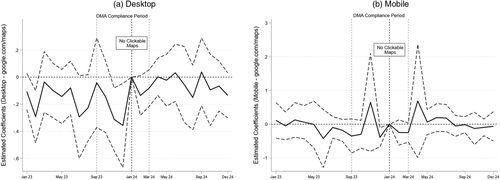
Notes. The log of all online visits for www.google.com/maps from desktop and mobile devices is regressed on country and time fixed effects and interactions between a dummy variable indicating if a country is in the European Union and a full set of dummy variables for each snapshot. The graphs plot the estimated coefficients of these interaction terms. The coefficient for January 2024 is normalized to zero. The treated group includes 25 EU countries excluding Cyprus and Malta because of data availability. The control group comprises European non-EU countries. The sample includes monthly data from January 2023 to December 2024. Panels (a) and (b) show the analyses for all online visits to www.google.com/maps from desktop and mobile devices, respectively. Standard errors are clustered by country and reported in the form of 95% confidence intervals.
To further assess the validity of our identification design and ensure that there are no other significant changes occurring in EU countries versus other non-EU countries during the DMA implementation, we conduct a placebo test using mobile visits to www.google.com/maps as the dependent variable. Given the absence of any notable changes in mobile browser access to Google Maps during the period of interest, no effect should be detectable. The estimates are reported in columns (4)–(6) in Table 4. As expected, none of the point estimates are statistically significant, regardless of the geographic zone chosen to construct the control group. Considering the associated event study plot using non-EU European countries in panel (b) of Figure 3, we interpret these null results as evidence that our desktop findings are not driven by unrelated external shocks.
4.1.2. Direct Traffic and Organic Search for Desktop Visits.
Using clickstream data from Semrush, we now assess how the DMA altered the pathways through which users arrived at Google Maps.26
Table C1 in Online Appendix C reports three specifications of the DiD estimates from Equation (1) for desktop visits originating from direct access (columns (1)–(3) in Table C1 in Online Appendix C) and from organic search (columns (4)–(6) in Table C1 in Online Appendix C), the two most relevant channels for accessing Google Maps as shown in Table 2. Again, all specifications mirror the ones presented in Table 3. The estimates presented in Table C1 in Online Appendix C indicate a statistically and economically significant increase of more than 33% in desktop visits originating from organic search after the DMA implementation. However, we do not find similar evidence of a statistically significant increase in the number of desktop visits accessing www.google.com/maps via direct access. Figure C2 in Online Appendix C confirms that the parallel trends assumption holds for both traffic channels.
As shown in Table 2, prior to the DMA, only 21% of EU desktop traffic originated from organic search, increasing to 26% after its implementation. This suggests that despite the significant estimated increase in organic search traffic, the overall impact on total desktop visits may be limited. More than 64% of traffic came from direct access, and we find no evidence of an increase in the number of visits accessing Google Maps through this channel. Figure C3 and Table C2 in Online Appendix C reports the impact of the DMA on desktop visits originating from referral links and other sources. The results indicate a small, weakly positive effect on referral traffic, but the evidence is neither robust nor consistently statistically significant.
In summary, our findings suggest that the observed increase in organic search traffic is not only consistent with a rise in explicit queries for maps or Google Maps but also reflects a shift in user search behavior. Specifically, some queries that previously triggered geo-localized results directly on Google Search (e.g., Shakespeare and Co or searches for specific shops and attractions) may now be substituted with general maps or Google Maps queries as users increasingly rely on Google Maps itself to retrieve detailed local information.
To validate our traffic-based results, we complement the baseline DiD with a range of robustness analyses. These include synthetic DiD and synthetic control, tests focusing on traffic shares rather than volumes, and a triple-differences design that leverages mobile traffic as an internal control. Across all methods, the conclusions remain consistent; the DMA had little to no effect on total desktop visits but increased organic search traffic to Google Maps. Full results and figures are presented in Online Appendix C.
4.2. Impact on the Intensive Margin of Google Maps Traffic
Having established that the DMA did not significantly alter the extensive margin of www.google.com/maps traffic as measured by desktop traffic volumes, we now turn to the intensive margin to assess whether the DMA influenced how Google Maps is used.
We measure usage through four key metrics: the number of unique visitors, the average number of pages visited per session, the average duration of each visit, and the bounce rate (i.e., the share of users who leave the site within 10 seconds). These metrics provide insights into how the removal of clickable maps may have affected user behavior and more broadly, the Google Maps ecosystem. We analyze each metric using the DiD strategy presented in Equation (1), varying the set of countries in the control group to check the robustness of our results.
4.2.1. Unique Visitors and Visited Pages.
Table C7 in Online Appendix C reports the estimates from Equation (1) for the number of unique visitors and the average number of pages visited per visit. The corresponding event study plots using European non-EU countries as a control group are presented in Figure C12 in Online Appendix C.
For both variables, we do not observe any significant effect. This result remains robust to alternative definitions of the control group, and the pretrends support the validity of our approach. We conclude that the DMA has not led to a significant decline in Google Maps usage; nearly no users have abandoned the platform, and engagement measured by the number of visited pages has remained stable. This provides further evidence that the DMA did not fundamentally alter traffic patterns on Google Maps.
4.2.2. Visit Duration and Bounce Rate.
Thus far, we have shown that overall traffic to www.google.com/maps does not appear to be significantly affected by the DMA. However, when analyzing the average time spent per visit and the share of visits lasting less than 10 seconds (bounce rate), we find notable changes. Table C8 in Online Appendix C presents the estimates from Equation (1) for these two outcomes using our usual three control groups.
We document a statistically significant decline in average visit duration of approximately 5% and a 16% increase in the bounce rate. The corresponding event study plots in Figures C13–C15 in Online Appendix C (using different non-EU countries as control groups) show that these effects appear immediately after January 2024, coinciding with the removal of clickable maps.
Moreover, all plots provide no indication of a departure from the parallel trends assumption. Using Synthetic Difference-in-Differences (SDiD) or synthetic control methods does not alter our results for either variable as shown in Table C9 in Online Appendix C. The point estimates remain qualitatively similar to those in Table C8 in Online Appendix C, although they exhibit slightly greater magnitudes and higher levels of statistical significance for the effect on bounce rates. Similarly, Figure C16 in Online Appendix C presents the event study plots for both variables using the SDiD design, once again showing that the timing of the changes aligns with the DMA intervention.
How should we interpret these shifts in on-site engagement? One possibility is that they reflect a deterioration in user experience; with the removal of clickable maps, some users are redirected through the “directions” button, which leads to a version of Google Maps (www.google.com/maps/dir) that automatically provides an itinerary from the current location to the destination. For many users, this information may be irrelevant, prompting them to leave quickly and resulting in shorter visits and higher bounce rates.
At the same time, other mechanisms could also generate these patterns without necessarily implying lower quality. First, the composition of users reaching Google Maps may have shifted. If users with different intents accessed Google Maps before and after the DMA, this change in user mix could itself lead to differences in average session duration and bounce rates. Second, time constraints could play a role; because reaching Google Maps now requires an additional step, users may spend less time within the interface simply because they have already expended time in the navigation process.
To investigate the extent to which the use of the “directions” button contributes to these outcomes, we conducted a complementary analysis of traffic to www.google.com/maps/dir. Figures C17 and C18 and Table C10 in Online Appendix C present the results. The event study for visits shows a temporary and statistically significant increase in traffic to this domain in the months immediately following the DMA.
This suggests that some users were initially experimenting with the “directions” interface. However, in the longer run (around one year after January 2024), the effects on traffic, visit duration, and bounce rate are no longer statistically significant. The point estimates nevertheless indicate that users diverted to this version of Google Maps tended to have shorter sessions and higher exit rates. Overall, these findings suggest a more nuanced interpretation; although the patterns in visit duration and bounce rates are consistent with some decline in the user experience, they may also be partly explained by short-run adjustment dynamics, changes in user composition, and modified navigation paths.
4.3. Impact on Google Maps Alternatives and Related Services
In the previous subsections, we established that users have, at most, reduced their time spent per visit on www.google.com/maps. We now examine whether the DMA has facilitated access to alternative online mapping services. We focus on the traffic of Google Maps’ alternative: www.bing.com/maps. We then analyze how traffic for Google Search has evolved following the implementation of the DMA given that Google Search and Google Maps were vertically integrated (the map shown after the search was clickable) prior to the DMA’s implementation.
4.3.1. Online Traffic for www.bing.com/Maps.
As discussed in Section 3, Bing Maps is one of the most significant competitors to Google Maps. In particular, Bing Maps is the only competitor with substantial search volumes in both EU and non-EU countries before the DMA, and it features a dedicated mapping website accessible to all users.
In response to the removal of clickable maps because of the DMA and the rise of organic search for online mapping services, some users may have turned to Bing Maps as a substitute for Google Maps. To investigate this possibility, we use total desktop and mobile traffic as dependent variables within our DiD framework based on Equation (1). The estimates are presented in Table C11 in Online Appendix C for different control groups, whereas Figure C19 in Online Appendix C presents the associated event study using European non-EU countries as a control group. We find no evidence that either mobile or desktop traffic volumes increased as a result of the DMA. In fact, there are indications that Bing Maps’ desktop traffic may have decreased.
As a robustness check, Table C12 in Online Appendix C reports estimates based on SDiD and synthetic control methods, whereas Figure C20 in Online Appendix C displays the associated event study for the SDiD approach. The estimates are qualitatively similar to those in Table C11 in Online Appendix C, and the event study plot closely mirrors the one in Figure C19 in Online Appendix C.
All of these results are consistent with the null effect observed for desktop traffic on Google Maps as well as the absence of Bing Maps in search results for the query maps within Google Search (see Figure A1 in Online Appendix A). We conclude that in the short run, the DMA has not led to a significant redirection of traffic from Google Maps to Bing Maps.
4.3.2. Online Traffic for www.google.com.
We conclude this section by analyzing the impact of the DMA on traffic volumes to www.google.com given Google’s vertical integration of aspects of Google Maps directly into Google Search. For example, when searching for a restaurant near a landmark, Google Search now shows restaurant recommendations (e.g., price range, ratings, number of reviews, type of restaurant, and address). Additionally, two new badges, “Places” and “Places Sites,” have been introduced. These badges display a list of businesses with direct links to Google Maps and a list of their reviews, respectively (see Figure C21 in Online Appendix C). This integration complicates the detection of self-preferencing as it becomes challenging to differentiate between Google Search and Google Maps. Furthermore, the DMA may have affected Google Search’s traffic by altering its appeal, such as through changes in search results that reduce the prominence of Google Shopping, Google Hotels, and Google Flights while also potentially exposing consumers to alternative search engines.
As in previous analyses, we apply the DiD methodology presented in Equation (1) using desktop and mobile traffic as outcome variables for www.google.com.
Table C13 in Online Appendix C presents the DiD estimates for three control group specifications, and Figure C22 in Online Appendix C shows the corresponding event study plots using European non-EU countries as the control group. For both desktop and mobile traffic and across different model specifications, we observe a precise null result with no pre-existing trends. This suggests that the DMA has not had a significant effect on the traffic volume to www.google.com. Table C14 in Online Appendix C provides estimates based on SDiD and synthetic control methods, with Figure C23 in Online Appendix C presenting the corresponding event study for the SDiD approach. The estimates and event study results are qualitatively similar to those in Table C13 in Online Appendix C as well as to those shown in Figure C22 in Online Appendix C.
This finding can be interpreted as evidence that the DMA has not harmed Google in the form of reduced traffic. It can also be said that the DMA has failed in the short run to direct traffic toward competitors. With regard to the online mapping market, these results suggest that the removal of clickable maps has not led to a detectable increase in traffic for www.google.com at the expense of www.google.com/maps.
5. Policy Implications
The DMA aimed to enhance contestability in digital markets by reducing self-preferencing behaviors of gatekeeper platforms. However, our findings suggest that, at least so far, the removal of clickable maps in Google Search has not led to a substantial increase in market contestability for mapping services. The persistence of Google Maps as the dominant service indicates that alternative providers have yet to benefit meaningfully from these changes, and users continue to engage primarily within Google’s ecosystem. At the same time, the DMA has imposed small but noticeable frictions on users, which translate into additional time costs when searching for location-based information. Although we refrain from providing a precise monetary estimate of these costs (because they arise not only from extra searches but also from time spent on less relevant Google Maps pages produced by the “directions” button), our results suggest that users have borne much of the adjustment burden.
Google’s modifications align with the formal requirements of the DMA, but they have not effectively provided users with new opportunities to discover and adopt alternative mapping services. Different design approaches could have been considered to stimulate competition. For instance, Google has previously introduced choice screens for Chrome users, allowing them to select their preferred search engine upon installation.27 A similar mechanism applied to mapping services explicitly presenting users with various mapping options might have been more effective in raising awareness of alternative providers and facilitating competition. Another notable development is the introduction of “Google Places,” which now integrates certain local search results that were previously displayed on Google Maps directly into Google Search (see Figure C21 in Online Appendix C). This shift raises concerns about whether the intended unbundling of services has been fully achieved. Rather than reducing Google’s control over location-based search, this redesign may have simply redistributed the prominence of its own services within a different interface.
A separate but related issue is the availability and quality of alternatives. For market contestability to be effective, competing mapping services must provide comparable geo-localized information. As of now, very few alternatives match Google Maps in terms of data coverage and usability. However, one notable development is the expansion of Apple Maps to desktop users beyond the Mac ecosystem.28 Although its market share remains small, this move represents a step toward increased competition. That said, it remains unclear whether this expansion was directly influenced by the DMA or simply part of Apple’s broader strategy.
6. Conclusion
This paper investigates the impact of changes to Google’s search results page mandated by the Digital Markets Act in the EU on user search behavior and online traffic, particularly concerning mapping services. Leveraging a difference-in-differences approach comparing EU and non-EU countries before and after the January 2024 implementation, we analyze how removing the direct clickability of map results and the Google Maps signet influenced user choices and market dynamics.
Our findings reveal a significant behavioral response to the DMA-induced design change. We document a robust and statistically significant increase of over 21% in Google search volumes for queries like maps and Google Maps within the EU. This indicates that users who are unable to access Google Maps directly via the clickable maps resorted to explicit searches to reach the service. Although most of the additional searches for maps still redirect users to Google Maps, the query itself remains neutral. From the perspective of the DMA’s contestability objective, fostering more searches of this generic kind is not necessarily a negative outcome because it at least creates opportunities for alternative services to be discovered. However, this increased search activity did not translate into a significant shift toward competing services. Although searches for Apple Maps saw a minor, statistically significant rise, volumes remained orders of magnitude smaller than those for Google Maps, and no significant increase was observed for Bing Maps or other alternatives. Crucially, overall desktop traffic to Google Maps remained stable, suggesting that the shift primarily involved users taking an extra search step to reach their preferred service rather than switching away. Furthermore, traffic analysis using Semrush data shows a statistically significant increase in organic search traffic to www.google.com/maps from desktop users, with no significant change in direct traffic. Supporting this, we did not observe any increase in traffic for www.bing.com/maps, or there was no impact on overall usage of www.google.com.
These results suggest that although the DMA’s intervention successfully altered the immediate user pathway, removing Google’s “one-click advantage” has been insufficient to significantly enhance the contestability of the online mapping market or substantially divert traffic away from Google Maps. The notion that “competition is one click away” appears challenged as frictions, like user habit, brand dominance, and potential inattention, seem to lead users back to the incumbent service even when presented with an additional search step (Allcott et al. 2025). We also note subtle changes in user engagement on Google Maps post-DMA, including a 5% reduction in average visit duration and a 16% increase in bounce rates, potentially indicating a slight deterioration in user experience because of the altered access method.
Our study provides early empirical evidence on the real-world effects of the DMA on a major digital platform, contributing to the literature on self-preferencing, online search behavior, and digital regulation. The findings underscore the potential limitations of interventions focused solely on choice architecture modifications when confronting deeply entrenched market positions. Although removing preferential placements, like clickable maps, addresses one aspect of self-preferencing, regulators might consider scrutinizing other integrated features, such as the persistent “directions” button linking to Google’s navigation, and exploring mechanisms to enhance the visibility and salience of alternative services within search results.
Future research could explore the longer-term evolution of these trends, including potential lagged effects on competitor adoption or market entry. Investigating the persistence of the observed user engagement changes and exploring the nuances behind the slight increase in Apple Maps searches could also yield valuable insights. Additionally, examining how platforms might adapt compliance strategies over time and how users respond to these evolving digital environments remains a critical area for ongoing study in the context of the DMA and digital market regulation.
The authors thank Mimansa Bairathi, Marc Bourreau, Joan Calzada, Chiara Farronato, Renaud Foucart, Daniel Garcia, Christos Genakos, Maarten Janssen, Garrett Johnson, Anastasia Leontiou, Leonardo Madio, Richard May, Gosia Majewska, Simon Martin, Klaus Miller, José Luis Moraga-Gonzalez, Martin Peitz, Liza Pronkina, Imke Reimers, Fiona Scott-Morton, Tommaso Valletti, and Christine Zulehner for insightful comments and discussions. Helpful feedback was received at the internal seminars of Télécom Paris, the University of Vienna, the University of Padua, the University of Cambridge Judge Business School, École des Mines—Paris Sciences et Lettres (PSL), the Competition and Markets Authority, and the Organisation for Economic Co-operation and Development (OECD) as well as at the Workshop on the Economics of the DMA, the Centre for Economic Policy Research (CEPR) Virtual Industrial Organization Seminar, the Center for Economic Studies and Ifo Institute for Economic Research (CESifo) Area Conference on Economics of Digitization 2024, Paris Industrial Organization Day 2024, Article 19’s Digital Markets Act Enforcement Symposium, and the 17th Digital Economics Conference in Toulouse. The authors also thank Sofia Hanna and Leonardo Hannas for their help in collecting data. All authors certify that they have no affiliations with or involvement in any organization or entity with any financial interest or nonfinancial interest in the subject matter or materials discussed in this manuscript. All errors are the authors’ own.
1 For a general discussion on the antitrust concerns about digital platforms, see Scott Morton et al. (2019), Tucker (2019), and Fletcher et al. (2023).
2 See, for example, a user discussion on Reddit regarding the inability to click on maps in search results: https://www.reddit.com/r/GoogleMaps/comments/1bc7jy7/going.to.google.maps.directly.from.google.search/.
3 Figure A1 in Online Appendix A presents snapshots of Google Search results for the term maps in France, Germany, Italy, and Spain. In all cases, Google Maps consistently appears among the top two search results. Thus, although the term maps is a neutral query, in practice it may still be difficult for users to discover and adopt alternative services through Google Search.
4 See Decarolis and Li (2023) for a broader analysis of the DMA’s impact on online search and Google’s market power.
5 In Figures 2 and 3, we refer to the period between September 2023 and March 2024 as the “DMA compliance period.”
6 Apple and Meta were not designated as gatekeepers for search or mapping services, and they did not have to adjust their related services (Apple Maps and Bing Maps) in accordance with the DMA. See https://ec.europa.eu/commission/presscorner/detail/en/ip_23_4328.
7 See https://www.ghacks.net/2023/12/09/google-chrome-to-display-choose-your-search-engine-prompt/.
8 In 2025 (outside of our analysis period), some mobile queries were also subject to similar interface changes, with clickable maps removed and search results resembling the desktop version.
9 For more information, see https://www.lemonde.fr/en/pixels/article/2024/03/06/digital-markets-act-how-the-way-you-use-google-maps-and-messenger-is-changing.html and https://www.francetvinfo.fr. Google’s official statement is at https://blog.google/around-the-globe/google-europe/new-competition-rules-come-with-trade-offs/.
10 The “directions” button is still present, and it directs users to Google Maps but only for transport advice. Users cannot directly zoom in on the area of interest or search for recommendations around that location. A series of browser extensions has been created to restore the previous design for EU users. However, judging by the number of reviews and users, these extensions do not seem to be widely installed by EU users. For an example, see https://chromewebstore.google.com/detail/google-search-maps-button/.
11 See https://blog.google/around-the-globe/google-europe/an-update-on-our-preparations-for-the-dma/.
12 The Reddit discussion about the absence of clickable maps began in early January 2024 (https://www.reddit.com/r/GoogleMaps/comments/19ahfx2). For instance, on January 19, 2024, one user noted: “It used to be that under every Google search you had a button to search it in Maps (but it does not anymore). Anyone know how to fix this? It is really annoying.” Other users responded by stating that “it started a few weeks ago, between end 2023 and beginning 2024” and that “I had this issue for months now. I always fixed it by clearing the cache, but it does not work anymore.” Similarly, posts on Google’s official support forum confirm that users started noticing the removal of clickable maps as early as January and February 2024 (https://support.google.com/websearch/thread/258720758). These discussions strongly suggest that the update was gradually introduced across different regions before March 2024.
13 The control countries are Albania, Armenia, Australia, Azerbaijan, Belarus, Bosnia, Brazil, Canada, Chile, Colombia, Costa Rica, Georgia, Iceland, India, Israel, Japan, Mexico, New Zealand, Norway, South Africa, South Korea, Serbia, Switzerland, Turkey, the United Kingdom, the United States, and Ukraine.
14 For additional details on the normalization methodology employed by Google Trends, see https://support.google.com/trends/answer/4365533. Google Trends data do not incorporate any explicit time trends or smoothing. See also Brodeur et al. (2021) and France et al. (2021) for econometric discussions and considerations.
15 The exact methodology that Glimpse employs to determine this scaling factor is not publicly documented, which may introduce some uncertainty regarding the precision of these estimates. However, all results presented in the subsequent sections remain robust when relying solely on Google Trends data without applying Glimpse’s scaling factor. Furthermore, even when using Glimpse estimates, our empirical approach includes country fixed effects, ensuring that any fixed differences in scaling across countries do not affect our main findings.
16 Apple Maps is owned by Apple Inc. Bing Maps is owned by Microsoft Corporation. Google Maps is owned by Alphabet Inc. Mappy is a French mapping service owned by RATP. OpenStreetMap is an open-source platform maintained by the OpenStreetMap Foundation.
17 For further details on how Semrush calculates organic traffic estimates, see https://www.flyingvgroup.com/seotools/semrush-estimated-traffic/.
18 See https://www.freshpies.co.uk/knowledge-base/how-does-semrush-calculate-traffic/.
19 Semrush traffic estimation methodology is discussed in detail at https://www.semrush.com/kb/162-monthly-numbers.
20 Bing Maps was selected for its extensive global search volumes compared with other competitors. Mappy’s search volumes are significant primarily in France. Apple Maps, despite having substantial search volumes, lacks a dedicated web-based mapping platform that would allow for comparable traffic analysis. Although a beta web version of Apple Maps became available in July 2024, its release postdates the DMA implementation. Moreover, Mac and iPhone users are directed to the preinstalled Apple Maps app for mapping services. OpenStreetMap is primarily used via API (Application Programming Interface) or integrated into other services and apps, and it does not provide real-time traffic data.
21 In the remainder of the paper, we refer to www.google.com/maps or www.google.com traffic, which should be understood as the sum of both country-specific and generic domains. The list of country-specific domains for both web pages can be found at https://www.w3era.com/blog/country-wise-google-domains-lists/.
22 See the Semrush glossary and documentation for traffic sources available at https://www.semrush.com/blog/organic-traffic/ and https://www.semrush.com/kb/925-glossary.
23 See the Semrush documentation on bounce rates available at https://www.semrush.com/blog/bounce-rate/.
24 For online visits, zero values are rare. To ensure that all observations remain usable in the log transformation, we simply replace these cases with one. This minimal adjustment allows us to retain all data points without introducing significant bias.
25 See https://www.apple.com/newsroom/2024/07/apple-maps-on-the-web-launches-in-beta/.
26 As discussed in Section 2.2, Semrush categorizes traffic into visits from direct access, organic search (clicking a Google Search result or the “directions” button on Google Search), referrals, and other sources. We focus on desktop traffic as Google’s DMA-related changes affected only the desktop version of Google Search in 2024.
27 For more information about this change, see https://www.google.com/chrome/choicescreen/.
28 See again https://www.apple.com/newsroom/2024/07/apple-maps-on-the-web-launches-in-beta/.
References
- (2003) The economic costs of conflict: A case study of the Basque Country. Amer. Econom. Rev. 93(1):113–132.Crossref, Google Scholar
- (2025) Sources of market power in web search: Evidence from a field experiment. NBER Working Paper No. 33410, National Bureau of Economic Research, Cambridge, MA.Google Scholar
- (2022) Flexible demand estimation with search data. CEPR Discussion Paper No. DP16933, CEPR, Paris.Google Scholar
- Hybrid platform model: Monopolistic competition and a dominant firm. RAND J. Econom. 55:684–718.Crossref, Google Scholar
- (2021) Synthetic difference-in-differences. Amer. Econom. Rev. 111(12):4088–4118.Crossref, Google Scholar
- (2021) The impact of aggregators on internet news consumption. NBER Working Paper No. 28746, National Bureau of Economic Research, Cambridge, MA.Google Scholar
- (2016) What’s in a name? Measuring prominence and its impact on organic traffic from search engines. Inform. Econom. Policy 34:44–57.Crossref, Google Scholar
- (2022) Streaming platform and strategic recommendation bias. J. Econom. Management Strategy 31(1):25–47.Crossref, Google Scholar
- (2021) COVID-19, lockdowns and well-being: Evidence from Google Trends. J. Public Econom. 193:104346.Crossref, Google Scholar
- (2016) Zooming in on choice: How do consumers search for cameras online? Marketing Sci. 35(5):693–712.Link, Google Scholar
- (2021) The EU Digital Markets Act. Technical report, Joint Research Centre, Seville, Spain.Google Scholar
- (2023) Do search engines increase concentration in media markets? CESifo working paper, CESifo, Munich, Germany.Google Scholar
- (2017) Antitrust: Commission fines Google €2.42 billion for abusing dominance as search engine by giving illegal advantage to own comparison shopping service. Eur. Commission (June 26), https://ec.europa.eu/commission/presscorner/detail/en/ip_17_1784.Google Scholar
- (2010) Why tie a product consumers do not use? Amer. Econom. J. Microeconomics 2(3):85–105.Crossref, Google Scholar
- (2017) Vertical integration and antitrust in search markets. J. Law Econom. Organ. 33(4):653–685.Crossref, Google Scholar
- (2017) Content aggregation by platforms: The case of the news media. J. Econom. Management Strategy 26(4):782–805.Crossref, Google Scholar
- (2019) Competition for the digital era. Technical report, European Union, Luxembourg.Google Scholar
- (2023) Regulating online search in the EU: From the Android case to the Digital Markets Act and Digital Services Act. Internat. J. Indust. Organ. 90:102983.Crossref, Google Scholar
- (2025) Competition and defaults in online search. Amer. Econom. J. Microeconomics 17(3):369–414. Crossref, Google Scholar
- (2019) A model of biased intermediation. RAND J. Econom. 50(4):854–882.Crossref, Google Scholar
- (2013) The dynamic effects of bundling as a product strategy. Marketing Sci. 32(6):827–859.Link, Google Scholar
- (2024) Implementing the DMA: Substantive and Procedural Principles (Centre on Regulation in Europe, Brussels).Google Scholar
- (2025) Selling subscriptions. Amer. Econom. Rev. 115(5):1650–1671. Crossref, Google Scholar
- (2007)
Coordination and lock-in: Competition with switching costs and network effects . Armstrong M, Porter R, eds. Handbook of Industrial Organization, vol. 3 (Elsevier, Amsterdam), 1967–2072.Crossref, Google Scholar - (2023) Self-preferencing at Amazon: Evidence from search rankings. AEA Papers Proc. 113:239–243.Crossref, Google Scholar
- (2023) Consumer protection for online markets and large digital platforms. Yale J. Regulation 40(3):875–914.Google Scholar
- (2021) Web trends: A valuable tool for business research. J. Bus. Res. 132:666–679.Crossref, Google Scholar
- (2024) Regulating privacy online: An economic evaluation of the GDPR. Amer. Econom. J. Econom. Policy 16(1):325–358.Crossref, Google Scholar
- (2018)
Regulation and online advertising markets . Mizik N, Hanssens DM, eds. Handbook of Marketing Analytics (Edward Elgar Publishing, Cheltenham, UK), 511–519.Crossref, Google Scholar - (2021) The welfare consequences of regulating Amazon. Working paper, University of Washington, Seattle.Google Scholar
- (2011) Why do intermediaries divert search? RAND J. Econom. 42(2):337–362.Crossref, Google Scholar
- (2022) Should platforms be allowed to sell on their own marketplaces? RAND J. Econom. 53(2):297–327.Crossref, Google Scholar
- (2022) Being in the right place: A natural field experiment on the causes of position effects in individual choice. J. Econom. Behav. Organ. 194:24–40.Crossref, Google Scholar
- (2009) Google makes a case that it isn’t so big. New York Times (June 29), https://www.nytimes.com/2009/06/29/technology/companies/29google.html.Google Scholar
- (2024) Consumer search: What can we learn from pre-purchase data? J. Retailing 100(1):114–129.Crossref, Google Scholar
- (2012) Competition through commissions and kickbacks. Amer. Econom. Rev. 102(2):780–809.Crossref, Google Scholar
- (2022) Economic research on privacy regulation: Lessons from the GDPR and beyond. NBER Working Paper No. 30705, National Bureau of Economic Research, Cambridge, MA.Google Scholar
- (2023) Privacy and market concentration: Intended and unintended consequences of the GDPR. Management Sci. 69(10):5695–5721.Link, Google Scholar
- (2019) Product quality and entering through tying: Experimental evidence. Management Sci. 65(2):596–603.Link, Google Scholar
- (2021) Platform search design and market power. Working paper, University of California, Los Angeles, Los Angeles.Google Scholar
- (2021) Entry into two-sided markets shaped by platform-guided search. Working paper, National University of Singapore, Singapore.Google Scholar
- (2024) Economic consequences of online tracking restrictions: Evidence from cookies. Internat. J. Res. Marketing 41(2):241–264.Crossref, Google Scholar
- (2022) Sophisticated consumers with inertia: Long-term implications from a large-scale field experiment. Preprint, submitted March 25, http://dx.doi.org/10.2139/ssrn.4065098.Google Scholar
- (2010) Optimal bundling of technological products with network externality. Management Sci. 56(12):2224–2236.Link, Google Scholar
- (2022) Steering in one click: Platform self-preferencing in the Amazon Buy Box. Working paper, Federal Trade Commission Location, Washington, DC.Google Scholar
- (2023) A framework for detection, measurement, and welfare analysis of platform bias. NBER Working Paper No. 31766, National Bureau of Economic Research, Cambridge, MA.Google Scholar
- (2020) The effect of links and excerpts on internet news consumption. J. Marketing Res. 57(3):395–421.Crossref, Google Scholar
- (2019) Stigler Committee on Digital Platforms: Final report. Technical report, Stigler Center for the Study of the Economy and the State, University of Chicago Booth School of Business, Chicago.Google Scholar
- (2019) Digital data, platforms and the usual [antitrust] suspects: Network effects, switching costs, essential facility. Rev. Indust. Organ. 54(4):683–694.Crossref, Google Scholar
- (2018) The power of rankings: Quantifying the effect of rankings on online consumer search and purchase decisions. Marketing Sci. 37(4):530–552.Link, Google Scholar
- (2023) Search gaps and consumer fatigue. Marketing Sci. 42(1):110–136.Link, Google Scholar
- (2024) Amazon self-preferencing in the shadow of the Digital Markets Act. NBER Working Paper No. 32299, National Bureau of Economic Research, Cambridge, MA.Google Scholar
- (2022) Platform encroachment and own-content bias. J. Indust. Econom. 70(3):684–710.Crossref, Google Scholar
- (2023) Product discovery and consumer search routes: Evidence from a mobile app. Preprint, submitted May 19, http://dx.doi.org/10.2139/ssrn.4444774.Google Scholar