Good Lessons Despite Bad Feelings: How Boundary-Spanning Teams Learn from Collaboration Failure
Abstract
To stay competitive, organizations set up boundary-spanning teams (BSTs) to learn from external partners. However, collaborating across boundaries is challenging and BSTs often face collaboration failure, defined as divergence from desired or expected collaboration goals. Given the costs associated with such failures, they usually evoke negative emotions which often lead to blaming the external partner and a collaboration breakdown, undermining joint learning from failure. This raises the question of how BSTs can learn from collaboration failure despite negative emotions. Our inductive study on drug discovery teams provides a silver lining: certain emotive-cognitive conditions can give rise to learning interactions that allow BSTs to either neutralize or transform their negative emotions into positive ones. Averting collaboration breakdown, these interactions allow BSTs to both create and integrate explicit knowledge after collaboration failure and change their collaboration dynamics in order to prevent failure in the future and improve their way of collaborating. Our study brings forward an emotive perspective on learning from collaboration failure and expands the literature on BSTs and emotions in groups. It further informs management practices on how to overcome negative emotions and beliefs so that BSTs sustain fruitful collaborations, enabling critical innovations such as treatments for diseases to be further developed.
Introduction
Boundary-spanning teams (BSTs)—teams within organizations that span organizational boundaries by collaborating with external partners1—are regularly deployed by organizations to facilitate learning and create new knowledge (Marrone 2010, Zuzul 2019, Sharma and Bansal 2020). BSTs may collaborate with external partners in the form of consortia to develop emerging technologies (e.g., Davis 2016) or research collaborations to create rigorous and relevant knowledge (e.g., Sharma and Bansal 2020). Indeed, numerous collaborations, for example, the one between AstraZeneca and their academic partners at the University of Oxford on the discovery of a COVID-19 vaccine, are instrumental to scientific progress. By providing access to knowledge, resources, and expertise beyond organizational boundaries, BSTs help focal organizations learn from external partners and solve internal problems more effectively and efficiently (Lifshitz-Assaf 2018). However, despite many benefits of collaborating with external partners, BSTs also face challenges arising from differences in work processes and goals between external partners and the focal organization (Carlile 2004, Levina 2005, Levina and Vaast 2008, Bruneel et al. 2010, He et al. 2021), or from internal resistance when attempting to integrate external ideas (Hannen et al. 2019, Grimm and Reinecke 2023). These challenges make collaboration failure—small and large divergences from expected collaboration goals (Cannon and Edmondson 2001)—an integral part of BSTs’ reality. Such failures often bear significant costs, such as lost investments (Perkmann et al. 2011), relationship damage (He et al. 2021), or missed opportunities for innovation (Zuzul 2019).
When BSTs fail to reach their intended collaboration goals, such as missing project milestones in the expected timeframe because of misalignments in experimental work processes or legal standards, they usually respond to such failure with negative emotions (Levina 2005, Lifshitz-Assaf 2018, Zuzul 2019). Driven by these negative emotions,2 BST members may use external partners as “scapegoats” for the collaboration failure (e.g., Zuzul 2019). Yet, blaming external partners for mistakes without striving to identify the root causes undermines joint learning between the BSTs and their external partners. This allocation of blame is also problematic as BSTs rarely share an authority or hierarchical structure with their external partners that coordinates work processes and binds them together (Hardy et al. 2003, Levina and Orlikowski 2009, Majchrzak et al. 2015), making BSTs vulnerable to postfailure dissolution (Zuzul 2019). Although the existing BST literature has explored instances of failure and success in collaborations (Ancona and Caldwell 1992, Levina 2005, Lifshitz-Assaf 2018, Zuzul 2019), it offers limited insights into when and how BSTs can continue to learn despite collaboration failure. Given the high costs of failed collaborations, understanding the conditions and mechanisms that enable BSTs to learn from failure, despite negative emotions, is crucial. It is only when BSTs learn from collaboration failure and continue to collaborate that investments in collaborations can yield their intended results. This challenge motivates our research question: When and how do BSTs learn from collaboration failure despite negative emotions?
To this end, we conducted a longitudinal qualitative study focusing on the industry side of industry-academia collaborations by studying eight BSTs consisting of internal scientists employed by a leading pharmaceutical company (“Pharmaco”) who collaborated with academic partners. All eight BSTs experienced collaboration failures that were comparable in terms of magnitude. We closely followed their learning interactions—defined as activities to cocreate and integrate knowledge as well as to adapt collaboration dynamics3 across organizational boundaries—in response to such failure. Drawing on interviews, focus groups, and observations, we analyzed our data informed by a grounded theory approach (Strauss and Corbin 1998) and during the analysis process also explored the literature on emotions in groups to compare emerging findings (Barsade 2002, Metiu and Rothbard 2013, Barberá-Tomás et al. 2019). As predicted by the BST literature (Levina 2005, Zuzul 2019), in three of the eight BSTs, we found that shared negative emotions generated blaming behaviors that intensified negative emotions, leading to a collaboration breakdown and hindering learning from collaboration failure. Conversely, in five of the eight BSTs, we observed that a set of cognitive-emotive conditions (boundary beliefs—subjective constructions of boundaries around BSTs—and triggered negative emotions) shaped the directing of negative emotions and learning interactions, allowing BSTs to learn despite negative emotions. In the two BSTs that held exclusive boundary beliefs—perceptions that BST members were separated from the external partners by a boundary—BST members directed shared negative emotions to their external partners and engaged in what we term coopetitive learning interactions. BST members reflected on internal reasons for collaboration failure without external partners and developed a plan for how to prioritize internal interests. BST members then coherently justified the need for these external alignments in work processes to their external partners and made the external partners adapt their work processes. Through coopetitive learning interactions, BSTs shifted from experiencing shared negative emotions toward experiencing shared emotional ambivalence.4 BSTs experienced excitement from developing a solution that maximized internal interests and from expecting that the collaboration would be successful in the future, which allowed them to continue the collaboration. However, reflecting without the external partners left the BST in the dark about the external reasons for failure, which in turn reinforced anxiety and hindered their ability to develop a richer understanding of the external partners’ work processes. In the three BSTs that held inclusive boundary beliefs—perceptions that there was no boundary between themselves and the external partners—BSTs directed shared negative emotions to the situation rather than blaming the external partners and engaged in collaborative learning interactions. As a consequence of reflecting with the external partners, justifying their new processes toward internal stakeholders beyond the BST, and finally adapting work processes both internally and externally, shared negative emotions were transformed into positive ones. In doing so, these BSTs not only safeguarded explicit collaboration outcomes in the form of scientific knowledge but also acquired tacit knowledge5 on how to improve their ways of collaborating and avoid failure in the future.
Based on these findings, we extend the literature on BSTs by offering an emotive perspective on when and how BSTs learn from collaboration failure despite negative emotions. Prior work suggested that negative emotions in collaborations harm learning and innovation (Levina 2005, Lifshitz-Assaf 2018) and can lead to breakdown of collaborations (Zuzul 2019). Our theoretical model offers novel insights into collaborative and coopetitive learning through which shared negative emotions are either transformed into shared positive ones or neutralized, in the sense that negative emotions remain but are complemented by positive emotions. Shared negative emotions can be transformed into positive emotions when BSTs (a) hold inclusive boundary beliefs, (b) channel their negative emotions around collaboration failure to the situation, and (c) engage in collaborative learning interactions. Shared negative emotions can be neutralized into ambivalent emotions when BSTs (a) hold exclusive boundary beliefs, (b) channel their negative emotions around collaboration failure to the external partners, and (c) engage in coopetitive learning interactions. In delineating these patterns, we show that the relationship between negative emotions and learning interactions in BSTs is not always detrimental as previously theorized. Second, we map the emotional change process to specific learning interactions and collaboration outcomes. We uncover a counterintuitive effect: all teams were able to secure some explicit knowledge in the form of patents or publications in response to collaboration failure and might appear successful based on these outcomes. However, the three types of learning interactions differed significantly in the changes in collaboration dynamics. Such changes included an increased understanding of the internal and external reasons for collaboration failure, and improved awareness of the external partners’ work processes, as well as continuing the relationship with the external partners. Thus, our findings inform management practice by raising decision makers’ awareness that, along with the creation of explicit knowledge, it is vital to pay attention to how collaboration failure affects collaboration dynamics. Given that collaboration failures are often unavoidable in innovation teams that operate under high uncertainty, we derive strategies on how BSTs can overcome negative emotions, continue to pursue their goals, and improve their ability to collaborate.
Beyond contributing to the BST literature, we also extend the literature on emotions in groups (Barsade 2002, Metiu and Rothbard 2013, Menges and Kilduff 2015, Barberá-Tomás et al. 2019). More precisely, our theorizing extends the existing literature on emotional ambivalence (Ashforth et al. 2014, Methot et al. 2017) in two significant ways. First, the majority of existing work on emotional ambivalence has focused on understanding the experience of ambivalence at the individual (Fong 2006, Gabriel et al. 2022) or conceptual level (Rothman and Wiesenfeld 2007, Ashforth et al. 2014, Rothman and Melwani 2017). We extend existing work by exploring ambivalence at the team level and shedding light on how it is intertwined with collaboration outcomes. Second, we uncover the role of discrete emotions in ambivalence: the combination of anxiety and excitement. Instead of the BST being paralyzed by the emotional ambivalence it experiences, our findings suggest that the future orientation of anxiety and excitement versus the past orientation of other emotions such as regret or frustration in the BST likely puts the BST in a proactive state. It thus helps explain why combinations of specific emotions underpinning emotional ambivalence are beneficial or rather harmful for learning and collaboration outcomes.
Background Literature
As we explore when and how BSTs learn from collaboration failure despite negative emotions, we discuss the literature on BSTs and on emotions in groups.
Boundary-Spanning Teams
In order to learn and innovate, firms often set up boundary-spanning teams to access external knowledge and ideas across organizational boundaries (Marrone 2010, Zuzul 2019, Sharma and Bansal 2020). This vibrant body of literature has provided substantial insights into team states and team learning interactions that enable BSTs to learn from external partners. Cognitive team states that facilitate learning across organizational boundaries include, for example, maintaining shared knowledge systems across both internal and external team members (Sharma and Bansal 2020) and psychological safety (i.e., the belief that it is safe to speak up and share failures within teams) (Edmondson 1999, Faraj and Yan 2009). Emotional team states comprise the creation of a shared subordinate identity, defined as the emotional significance of belonging to a group (Dokko et al. 2014). Interactions that have been shown to foster learning in BSTs consist of drawing on tangible boundary objects such as PowerPoints or project plans to create a shared understanding (Levina and Vaast 2005), or extracting relevant information from external partners (Ancona and Caldwell 1992). Beyond that, engaging in boundary-dismantling work that focuses on reducing boundaries to enhance the integration of external ideas (Lifshitz-Assaf 2018), as well as identifying differences in interests, while simultaneously isolating a subset of aligned interests (O’Mahony and Bechky 2008), supports learning from external partners.
Although collaborating with external partners offers great potential for joint learning across organizational boundaries, BSTs also face the risk of collaboration failure when they fail to reach their collaboration goals and the integration of external ideas does not unfold as expected (Levina 2005, Davis 2016, Zuzul 2019). Prior work suggests that during such disruptive situations, internally oriented activities, such as “boundary buffering,” where a team closes itself off from the external environment, are key to protecting the functioning of the BST (Choi 2002, Faraj and Yan 2009). BSTs are particularly prone to collaboration failure because of their interests and priorities diverging from those of external partners (O’Mahony and Bechky 2008, Levina and Orlikowski 2009, Sharma and Bansal 2020, He et al. 2021). Prior work shows that teams can experience strong negative emotions such as frustration or disappointment (Levina 2005, Lifshitz-Assaf 2018, Zuzul 2019) when confronted with such collaboration failure. For instance, researchers showed that scientists at NASA, engaging in open innovation projects across organizational boundaries, experienced frustration around the conflicting approaches involved in the open innovation initiative because of legal and procurement processes that required extra work from the internal stakeholders (Lifshitz-Assaf 2018). Similarly, another study revealed that strategists collaborating with designers to develop a web-based application became frustrated with the designers not taking sufficient ownership to create the website (Levina 2005). When failure elicits these strong negative emotions, it creates ambiguity regarding who is responsible for the collaboration failure. The most likely reaction is to attribute the cause for the collaboration failure and accompanying negative emotions to the external partners. Such blaming behaviors can lead to a breakdown of collaborations (Zuzul 2019).
However, to the best of our knowledge, no study has shed light on how such negative emotions can be addressed to allow BSTs to continue with their collaborations. If the responses to collaboration failure are purely blaming behaviors and collaboration breakdown, then critical innovations arising from external collaborations, such as treatments for rare diseases or cancer, may be delayed or entirely overlooked. Thus, unpacking when and how BSTs can learn from collaboration failure despite negative emotions is both economically and socially significant. We next turn to the literature on emotions in groups to discuss the impact of negative emotions on learning and how negative emotions can be transformed into positive emotions in clearly bounded teams.
Emotions in Groups
When it comes to experiencing failure, organizational actors tend to feel fear, anger, frustration, sadness, or disappointment (Smollan and Singh 2022). The literature on emotions in groups considers the impact of these negative emotions to be mainly harmful for learning from failure (Cannon and Edmondson 2001, 2005; Shepherd et al. 2011; Dahl and Werr 2021). When facing failure, teams’ fear of losing status and being perceived as incompetent limits their openness to share and discuss failures within their team (Cannon and Edmondson 2001). Negative emotions in teams have further been shown to enhance the risk of conflict (De Dreu et al. 2001) and decrease team communication and commitment (Barsade 2002, Liu and Maitlis 2014). Furthermore, negative emotions can block an individual’s ability to engage in collective sensemaking (Maitlis and Sonenshein 2010), paralyze the team’s ability to act (Frijda 1987), and evoke a tendency to blame others for their actions, all of which hinder adaptations (Shepherd et al. 2011). Additionally, negative emotions can drive team members apart (Toubiana and Zietsma 2017) and pose a risk to positive team states such as trust and team cohesion, which have been shown to be critical for team learning (Jehn et al. 2008, Liu and Maitlis 2014). These insights underscore the relevance of the research question: When and how do BSTs learn from collaboration failure despite negative emotions?
Prior work revealed conditions and activities that allow negative emotions in groups to be transformed into positive ones and for diverse opinions and worldviews to be reconciled (Fan and Zietsma 2017, Slavova and Metiu 2022). To achieve this transformation, the literature suggests, for instance, a combination of verbal and visual work (Barberá-Tomás et al. 2019). A study on anti-plastic-pollution entrepreneurs revealed that they managed to transform the negative feelings of target actors and motivate them to support their mission by connecting these negative feelings to a cause, increasing a sense of collective identity to fight plastic pollution, and connecting the target actors to the entrepreneurs themselves (Barberá-Tomás et al. 2019).
In this paper, we draw upon the literature on emotions in groups to interpret our findings. This compound literature offers a useful lens for explaining how negative emotions shape the way in which BSTs learn from collaboration failure for several reasons. First, instead of viewing emotions as removed or separate from cognition and team learning interactions, we consider them as closely tied to such collective processes (Emirbayer 1997, Gabriel and Griffiths 2002, Metiu and Rothbard 2013, Zietsma and Toubiana 2018, Farny et al. 2019, Zietsma et al. 2019, Zhang et al. 2023). This view allows us to explore the link between the emotive-cognitive conditions and learning interactions underpinning learning from collaboration failure. Second, given that shared boundaries toward outsiders are an important condition revealed in this literature for group emotions to benefit learning (Metiu and Rothbard 2013), it enables us to explore the role of organizational boundaries in learning from collaboration failure. Third, the literature on emotions in groups discusses the role of emotional transformation processes (Barberá-Tomás et al. 2019) and thus helps us to unpack the transformation of negative emotions into positive emotions, which has been shown to foster continued action and is therefore critical for learning from collaboration failure.
However, these insights from the literature on emotions in groups cannot be directly transferred to BSTs. First, this literature assumes that groups have clear, shared boundaries toward outsiders and a shared focus of attention is sustained (Metiu and Rothbard 2013). Yet, BSTs may perceive boundaries toward external partners differently. Hence, future work is needed on how a mutual focus of attention, which is relevant for learning, is sustained. Second, prior work suggests that negative emotions can only have positive impacts on internal group states if such emotions target the outgroup (Mackie et al. 2000, Barberá-Tomás et al. 2019). However, BSTs depend on external partners for the cocreation of knowledge, which means that aggression aimed at the outgroup (i.e., the external partners) likely impairs learning across organizational boundaries. Given that BSTs may vary in their understanding of team boundaries, and that accusations aimed at external partners will likely harm collaborations, prior work fails to explain when and how BSTs can learn despite experiencing negative emotions elicited by collaboration failure. As the literature on BSTs shows that negative emotions occur frequently around collaboration failure where BSTs diverge from their intended goals (e.g., Levina 2005, Lifshitz-Assaf 2018, Zuzul 2019), understanding when and how BSTs can recover from collaboration failure and learn despite these negative emotions is key.
Methods
We adopted a longitudinal and inductive qualitative design to explore when and how BSTs within a large pharmaceutical company (Pharmaco) learn from collaboration failure despite negative emotions. To ensure compliance with ethical standards, we received ethical approval for the study from both Pharmaco and our university’s ethics committee. Through the third author’s contacts with the company, we obtained access to the company as a research site. The first author was granted full access to the data, and experienced no constraints during interviews, observations, or collection of documents. The first author spent 65 days on site over the course of two years. Our data came from multiple sources: focus groups, interviews, documents, and observations at two Pharmaco locations (United States and Switzerland) (see Table 1).
|

Table 1. Overview of Data Sources, Project Characteristics, and Learning Interactions per BST
| BST | Data sources | DA | Collaboration experience | Fin. investments | Duration | Stage in drug discovery | Collaboration goals | Collaboration failure | Boundary belief (T1) | Emotions (T1) | Direction of negative emotions (T1) | Learning interactions (T1) | Collaboration outcomes (T2) |
|---|---|---|---|---|---|---|---|---|---|---|---|---|---|
| 1 | I = 10 | DA5 | First | Yes | 2017–2021 | Target identification/ compound finding | Internally develop new medicines for infectious diseases and cancer | Academic publication derailed internal efforts to patent, as BST internal members could not validate data in time | Exclusive external | Shared negative | External partners | Coopetitive | Continuation |
| O = 5 | |||||||||||||
| 2 | I = 7 | DA5 | First | Yes | 2019–2023 | Target identification/validation | Internally identify new targets and pathways to treat liver diseases and access human samples from academic collaborators | Inventory of human liver samples received from external academics was not properly categorized (lacked identifiers) and not tested for severe diseases such as HIV | Inclusive | Shared negative | Situation | Collaborative | Continuation |
| O = 7 | |||||||||||||
| 3 | I = 8 | DA5 | First | No | 2018–2020 | Compound finding (screening) | Internally integrate insights around testing compounds that are inhibiting protein-protein interactions | Suboptimal compound screening delayed processes, academics used incorrect thresholds (generating too-high hit numbers) | Inclusive | Shared negative | Situation | Collaborative | Continuation |
| O = 1 | |||||||||||||
| 4 | I = 9 | DA1 | Multiple | Yes | 2012–2020 | Compound finding | Internally validate chemical probes related to epigenetics | Pharmaco probe was rejected because academics had simultaneously generated same results | Exclusive internal | Shared negative | Other BST members/external partner | Conflictual | Stop |
| O = 1 | |||||||||||||
| 5 | I = 7 | DA2 | First | Yes | 2012–2020 | Target identification | Integrate related technology to help cure muscle diseases | Internal screenings to validate compounds using technology failed because sensitizer level was too high | Exclusive internal/inclusive | Shared negative | Other BST members/external partner | Conflictual | Stop |
| O = 1 | |||||||||||||
| F = 1 | |||||||||||||
| 6 | I = 8 | DA3 | First | Yes | 2012–2020 | Lead optimization | Integrate photochemical technology to scale protein-building blocks to create new compounds | Failing to internally scale external technology because internal experiments were conducted suboptimally | Exclusive internal | Shared negative | External partners | Conflictual | Stop |
| O = 3 | |||||||||||||
| F = 1 | |||||||||||||
| 7 | I = 3 | DA4 | Multiple | No | 2014–2020 | Compound characterization | Develop platform technology | Failing to internally scale technology; half of the internal experiments failed (standardized protocols from academics were incomplete) | Inclusive | Shared negative | Situation | Collaborative without justifying | Continuation |
| F = 1 | |||||||||||||
| 8 | I = 9 | DA4 | Multiple | Yes | 2014–2020 | Drug delivery | Internally integrate technology for tendon repair and regeneration | Animal studies using technology failed because of incorrect doses administered to animals | Exclusive external/inclusive | Shared negative | BST/external partners | Coopetitive to collaborative | Continuation |
| O = 5 |
Note. DA, drug area; Fin., financial; I, interview; O, observation; F, focus group.
Given the dearth of studies on our research question, and in order to explore the lived realities of our informants, we relied on an approach informed by grounded theory to collect and analyze the data (Strauss and Corbin 1998, Suddaby 2006). The comparative and iterative nature of grounded theory allowed us to explore variations across BSTs and to follow insights that emerged during the data collection and analysis process. At the beginning of the study, we focused on understanding how BSTs learn from external partners. During the data collection process, the prominent role of collaboration failure and negative emotions came to the fore. Thus, as our data collection proceeded, we started to compare our emerging findings to existing literature on emotions in groups.
Research Setting
Pharmaco is one of the top 10 global pharmaceutical companies measured by revenue. At the time of data collection, the company had more than 200 BSTs collaborating with external academics aimed at creating and integrating new knowledge for internal initiatives vis-à-vis the early stages of drug development (“drug discovery”). In these early stages, the goal is to identify new drugs to cure, treat, or prevent diseases. The focus is on detecting naturally occurring cellular or molecular structures, referred to as “targets,” that are associated with a certain disease state in humans. To identify and validate these targets, deep expertise in biology, biochemistry, technology, and chemistry is required (Hughes et al. 2011). Successfully developing a new drug takes on average 12 to 15 years and may cost in the range of US$1 to US$2 billion (Réda et al. 2020). We studied how BSTs in drug discovery learn from collaboration failure in external collaborations for two key reasons. First, these drug discovery efforts constantly face unexpected challenges, and scientists’ tasks are both complex and uncertain, making them prone to failure (He et al. 2021). Second, drug discovery is a collaborative process where drug discovery teams bear significant responsibility for how they coordinate their work, and team dynamics can carry major consequences (Ben-Menahem et al. 2016).
In line with prior work on BSTs, all BSTs were employed by the same institution (Marrone et al. 2007, Faraj and Yan 2009). Our data collection was thus focused on members from Pharmaco and not their external partners. This was critical to create a comparable organizational context to disentangle the underlying conditions and interactions in learning from collaboration failure in BSTs. Pharmaco members were integrating knowledge into the same organizational context, thereby helping to exclude alternative explanations at the organizational level. In contrast, the external partners collaborating with Pharmaco were located at different universities, each of which presented unique work contexts, making it difficult to compare their learning interactions. Focusing on Pharmaco’s side of the collaboration further enabled us to study Pharmaco members working at the interface of internal and external organizational boundaries and to explore internally and externally oriented interactions. Conversely, when an academic institution collaborates with Pharmaco, it is typical for the entire academic laboratory to be involved, leaving little need for additional knowledge integration into the internal organization.
Data Collection
We followed a theoretical sampling strategy where insights derived from the collected data guided our subsequent data collection decisions (choice of interview questions and sampling of BSTs) (Strauss and Corbin 1998). In parallel, we familiarized ourselves with relevant existing literature (Strauss and Corbin 1998, Suddaby 2006). We collected data in the following three phases.
Phase 1: Focus Groups.
Between July 2018 and January 2019, the first and second authors conducted focus groups with four BSTs from Pharmaco (N = 15 participants) to gain an overview of their external collaborations. To be able to compare the BSTs, we selected those that had recently completed collaborations with external partners (not more than one-and-a-half years prior), and which consisted of at least five members. We asked the BST about their collaboration goals, relationships with the external partners, scientific findings, and how they shared and applied the knowledge internally.
Phase 2: Interviews.
From March to May 2019, the first author conducted 11 interviews (30–75 minutes) with Pharmaco BST members participating in ongoing (N = 5) and completed (N = 6) external collaborations to further shed light on BST learning interactions. Interviews were chosen over focus groups to minimize the risk of group dynamics preventing study participants from sharing relevant information or the risk of participants lacking the requisite time to speak up. We selected BST members (a) who had at least two additional members working with them (to be able to discuss interactions at the team level) and (b) whose projects had not ended before 2015 (to ensure that they could recall their experiences). Next, we increased variance by selecting BSTs that differed along dimensions that have been shown to influence learning: team size (Ancona and Caldwell 1992, van der Vegt and Bunderson 2005) and disease areas (Booth et al. 2003).
During the interviews, the first author again asked the same questions as in the focus groups. Additionally, she asked about the development of the collaboration over time and the interviewees’ recommendations regarding which meetings she should observe and whom she should talk to. As suggested by some interviewees, she also talked to other internal stakeholders outside the BSTs who supported BSTs with their expertise (e.g., specialists) or resources (e.g., senior managers) (N = 5).
Phase 3: Observations, Interviews, and Document Collection.
From July 2019 to March 2020, the first author proceeded to follow eight teams over time to capture the temporal flow of learning interactions (Langley 1999, Cloutier and Langley 2020). She observed meetings, conducted interviews, and collected documents pertinent to the eight BSTs. These BSTs consisted of between 3 and 10 Pharmaco scientists with varied specializations (e.g., biochemistry, biology, chemistry, and technology) and company positions (e.g., directors, team members, and associates). The selection of BSTs was based on both emergent criteria from phases 1 and 2 and theory around factors that have been shown to influence learning across organizational boundaries. First, we again sampled BSTs that focused on different disease areas, as clinical success tends to vary among them (Booth et al. 2003). Second, we included BSTs with a range of levels of prior experience of working with academic partners, because having more established routines of working together may lead BSTs to learn differently than those with less experience (Bruneel et al. 2010, Gardner et al. 2012). Third, only BSTs working with external collaborators for longer than one year were included, as shorter collaborations were usually limited to information exchange and lacked the goal of joint learning (see Table 1). For most of the BSTs, the same members worked together throughout the entire collaboration. In one case, a BST member left the company (BST6).
Observations.
The first author observed meetings between BSTs and the external partners at least once for every team except for BST7. For BSTs 1, 6, and 8, she also observed internal team meetings that aimed at reflecting about their collaboration with the external partners and discussing next steps. Through these observations, the prominent role of collaboration failure and negative emotions came to the fore.
Interviews.
For all eight BSTs, the first author interviewed at least one BST member before observing meetings. Later these interviews turned out to be critical to establish a prefailure baseline of collaboration experience (T0). She asked questions similar to those asked during the interviews in phase 2. For each of these BSTs, at least two BST members were interviewed three times, shortly after the BST met with the external partners and following collaboration failure (T1), and then again one and three months later after the BST had engaged in the learning interactions (T2). In total, she conducted 61 interviews with 22 interviewees. To capture a broad range of experiences, the interviewees within the same BST differed in their roles, experiences, and functional backgrounds.
During these interviews, she asked BST members for their general lessons from the meeting that she had observed, and how they had shared and applied them. She further asked BST members to describe specific incidents that had prevented them from reaching collaboration goals and from sharing or applying their knowledge internally. When she asked about these challenges at T1, BST members shared at least one collaboration failure that was discussed at the observed meetings with the external partners. During this time, she again found that collaboration failure was prominent and triggered negative emotions. To explore this finding further (Locke et al. 2008), the first author then probed into why the interviewees believed this incident had occurred, how the BST had reacted to the collaboration failure, and what actions the BST had planned to overcome it. In the interviews during T2, the first author again probed into these incidents, asking what had happened since the last meeting, including actions that had been taken.
To facilitate the study of each BST’s emotions, beliefs, and experiences, the first author drew upon a visual elicitation technique (Ray and Smith 2012). To obtain richer and more nuanced descriptions of BST members’ experiences, she asked them to select cards from a set of 75 metaphorical images (Weidenmann and Weidenmann 2013). These cards were developed to capture a variety of visuals, ranging from nature displays to human interactions, animals, and street signs. Prior studies show that images can serve as vivid visual metaphors that trigger deep reflections. This method was instrumental in accessing deep insights into interviewees’ experiences, including their emotions and beliefs (van Maanen 1997; Clarke and Holt 2010; Cornelissen et al. 2011, 2012). During the interviews, the first author used the entire deck of 75 cards (see examples in Table 2), allowing interviewees to choose one or more cards which they felt most suitably expressed their experience in the situation under discussion. She focused on interviewees’ verbal statements about the triggered emotions, thoughts, and experiences, rather than analyzing the contents of the selected cards. She followed prior work by asking interviewees to explain their choice of cards, how their chosen cards were similar or different, and whether another image not found in the card set would have better illustrated their experience (Coulter et al. 2001, Clarke and Holt 2010). Interestingly, BST members from the same team often chose the same card, suggesting that they had similar experiences.
|
Table 2. (Color online) Examples of Selected Metaphorical Cards Related to Collaboration Failure
| Metaphorical card chosen by interviewees | Verbal explanation of the card by interviewees |
|---|---|
 | “For me, it’s competition …. [T]he first thing is to win the race. Who’s first is … first.” (BST4, T2) |
 | “The snail is a happy snail because it is outside of its house. So, he glides across and is very happy. He will inevitably move slowly, but he will move ahead …. [A]lthough we are moving slowly, it’s kind of interesting.” (BST4, T2) |
| “The snail would be good because it’s frustratingly slow.” (BST3, T2) | |
 | “You are poking [your finger] in someone’s eye, so it’s uncomfortable. It’s not what you’re supposed to do. You’re defeating the purpose of the collaboration …. The point for me is this illustration of no longer working in sync but rather working antagonistically.” (BST4, T2) |
 | “And it [the inventory] isn’t nearly as organized as we would have thought…. Really, it’s been messier than I would have liked it to be. Much messier. I really would have liked it to be better.” (BST2, T1) |
 | “I like the idea of fighting against the wind. Everyone … kind of fighting against the trouble we face, the difficulties. This kind of feeling.” (BST2, T1) |
 | “Because in teamwork we all have to be responsible. So, if we succeed, we all have to succeed together and if we fail, we all fail together …. It should be everyone’s success or everyone’s fault.” (BST2, T1) |
 | “This is just to express the hope, hope for a time when we will be able to work again on the project.” (BST2, T2) |
 | “We have to work hand-in-hand.” (BST2, T1) |
Source. Pictures: copyright Sonia Weidenmann.
Document Collection.
Throughout the study, the first author collected documents related to external collaborations including email conversations, publications, and meeting agendas. The documents enabled contextualization and triangulation of the findings from the interviews, focus groups, and observations.
Data Analysis
Our data analysis was focused on developing a theory grounded in evidence (Strauss and Corbin 1998). As we continually moved back and forth between our data and the two main literature streams that motivated our work (i.e., BSTs and emotions in groups), we developed an analytical structure that focused on BSTs’ emotions, cognitions (beliefs), learning interactions around collaboration failure, and collaboration outcomes. The interviews and observations were the primary source for the analysis, which we triangulated across different BST members’ descriptions of the same collaboration failure, and across the different time points, and by comparing the insights with the information captured in the collected documents. Data analysis began during the data collection as we became familiar with the data. To avoid the risk of our research team “going native” and becoming overly immersed (Gioia et al. 2013), the first author went into the field to collect the data, and had the leading role in developing the codes and the theoretical model. The other two authors maintained observational distance, provided feedback on the emerging codes and theoretical insights, and challenged the suggestions from the first author throughout the data analysis process. After each interview, focus group, and observation, we recorded key insights. In addition, the interviews and focus group sessions were transcribed. We also wrote memos about each BST’s goals, the trajectory of the collaboration project, and any surprising aspects.
Overall, the data analysis process proceeded in four steps and in parallel to our data collection. Even though we present the four steps in a linear manner, the process was highly iterative. In a first step, we labeled the transcripts with codes that were close to informants’ terminology, and categorized around 8,000 text segments using the qualitative data analysis program ATLAS.ti (2022). Throughout the open coding, we met regularly to discuss the theoretical insights and the labels assigned to the codes. These discussions were fundamental to sharpen the emergent insights and to develop intuitive names for the codes. Given our interest in how BSTs learn from collaboration failure despite negative emotions, the coding focused on the collaboration failures that BSTs reported, the different emotions that team members expressed in the response to collaboration failure, and the learning interactions they engaged in after collaboration failure.
The collaboration failures we observed did not represent complete breakdowns of collaboration but rather divergences from desired or expected collaboration goals. For the collaboration failures we observed, BSTs deviated from reaching their collaboration goals and collectively interpreted the failures as disrupting the flow of actions. The divergence was coded according to differences identified between the stated collaboration goals in the prefailure interviews or the collaboration agreements (T0) and reported collaboration failures at T1. The collective interpretation was coded based on multiple BST members stating that the collaboration failure was disruptive. In all BSTs, we witnessed at least one collaboration failure during the data collection phase: misalignment of working steps that blocked (a) creating patents and publishing (BSTs 1, 4, 7), (b) conducting experiments (BSTs 2, 3, 5, 8), or (c) developing or applying new external technologies (BSTs 6, 7).
Emotions in response to collaboration failure were coded according to the emotions expressed by BSTs. Following prior qualitative research on emotions in groups (Walsh and Bartunek 2011, Liu and Maitlis 2014), we coded individual emotional responses at different time points: prior to the collaboration failure occurring (T0), shortly after it occurred (T1), and one month and several months later (T2) based on the circumplex model that enabled fine-grained differentiation (Russell 1980). We included the following emotions: anxiety, anger, frustration, depression, misery, tiredness, astonishment, delight, excitement, feeling at ease, calmness, and contentment. We later added hope, as several informants expressed this emotion. Given the benefits of relying on informants’ reflections on their responses to events (Fineman 1993, Maitlis and Ozcelik 2004, Vuori and Huy 2015), we focused on informants’ statements, complementing these with nonverbal and verbal expressions of BST members’ emotions from our observational field notes. In line with prior work (Vuori and Huy 2015), we labeled emotions as shared when multiple informants expressed having experienced a similar emotion and/or shared with us that colleagues expressed the same emotions.
For the learning interactions, we began with six different learning interactions (reconstructing, aligning, reflecting, sharing, relating, justifying). We discovered that similarities emerged between the learning interactions, which were subsequently merged into three broader categories: reflecting upon reasons for collaboration failure, adapting work processes, and justifying the need for adaptations. In all these learning interactions, we consistently coded who was involved in the interactions (external partners, BST members, or other internal stakeholders) to capture whether internal, external, or both boundaries were crossed.
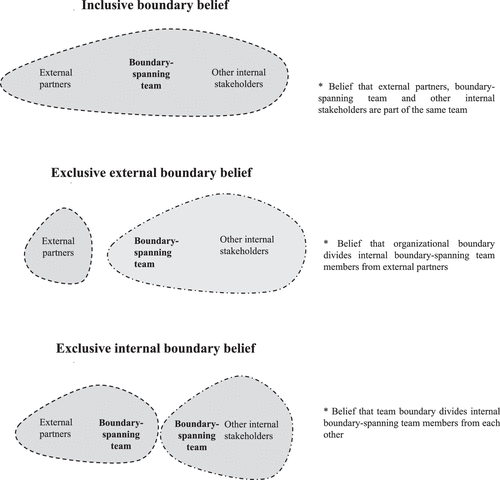
In the course of our open coding, we further realized that BST members differed in how they subjectively constructed the team boundaries. We revealed three distinct boundary beliefs among BST members. Figure 1 provides a visualization of the three beliefs.
In a second step, we used Excel tables to transform data into findings (Cloutier and Ravasi 2021) and to carefully compare the learning interactions in which the eight BSTs engaged in response to collaboration failure. In this phase, we looked for patterns and grouped together BSTs who engaged in similar learning interactions in response to collaboration failure. Initially, we distinguished among four learning pathways. Again, comparing the BSTs’ learning interactions across each pathway and discussing them among our author team, we noticed that one pathway called “targeted learning” resembled another pathway called “collaborative learning.” Thus, the eight BSTs were ultimately grouped into three types of learning interactions: collaborative, coopetitive, and conflictual.
In a third step, we focused on understanding the conditions that gave rise to the different learning interaction pathways. To this end, we compared the different cognitive-emotive conditions (boundary beliefs and shared negative emotions) across the eight BSTs. We found that inclusive boundary beliefs were associated with collaborative learning interactions and exclusive ones with coopetitive and conflictual learning interactions. Through this process, we further realized variance across the three pathways regarding the target at which the BST was directing their shared negative emotions: the situation, the external partner, or other BST members. In this phase, the author team compared emergent concepts and patterns around boundary beliefs, the target of the negative emotions, and learning interactions to the existing literatures on BSTs, learning from failure, and emotions in groups. The author team concluded that the existing literature offered limited understanding of how the transformation of emotions over time was interwoven with learning interactions and collaboration outcomes. We started to develop an empirical model which was constantly refined. For example, we iterated on whether boundary beliefs were precursors to shared emotions, or whether these cognitive-emotive conditions became salient at the same time, ultimately settling for the latter.
In a fourth step, we zoomed in on understanding the emotion transformation process and how it was linked to learning interactions and collaboration outcomes. For each BST, we compared the emotions that BSTs experienced at T1 and T2 and coded the collaboration outcomes at T2. Such collaboration outcomes included both explicit knowledge, such as patents or publications, as well as collaboration dynamics that concerned changes in how the BST collaborated with their external partners. The collaboration dynamics included (a) BSTs’ increased understanding of the (internal/external) reasons behind collaboration failure, (b) BSTs’ increased awareness of partners’ work processes to avoid collaboration failure in the future, and (c) the continuation versus discontinuation of the collaboration.
To increase the credibility of our analysis, we held discussions (N = 42) about our codes and theoretical insights with two contact persons at Pharmaco, allowing them to verify whether these were plausible based on their experiences of external collaborations (Miles and Huberman 2014). These individuals did not participate in the study and, importantly, to avoid introducing unwanted bias, agreed not to share the insights discussed with any interviewees. Furthermore, we discussed our insights with a larger group of Pharmaco informants during a symposium at one of the company’s R&D sites in August 2021. An overview of the entire coding scheme, including definitions and examples, can be found in Table 3.
|
Table 3. Overview of Coding Scheme
| Third-order codes | Second-order codes | First-order codes | Definition | Examples |
|---|---|---|---|---|
| Cognitive-emotive conditions | Emotions | Anxiety |
|
|
| Anger |
|
| ||
| Frustration |
|
| ||
| Misery |
|
| ||
| Hope |
|
| ||
| Excitement |
|
| ||
| Directing of emotions | Situation |
|
| |
| External partners |
|
| ||
| Internal BST members |
|
| ||
| Boundary beliefs | Exclusive internal boundary beliefs |
|
| |
| Exclusive external boundary beliefs |
|
| ||
| Inclusive boundary beliefs |
|
| ||
| Learning interactions | Conflictual | BST members mutually blaming each other and reflecting with neither external partners nor internal stakeholders |
|
|
| ||||
| BST engaging in divergent actions (some team members adapting across external and internal boundaries but others sticking to predefined plans) |
|
| ||
| ||||
|
| |||
| External partners adapting work processes in a delayed or inconsistent manner because of incoherent communication |
|
| ||
| Coopetitive | BST reflecting on external causes of collaboration failure with internal stakeholders only |
|
| |
| ||||
| ||||
| BST justifying need for change in actions toward external partners |
|
| ||
| ||||
| External partners adapt external work processes |
|
| ||
| Collaborative | BST reflecting on causes of collaboration failure together with external partners |
|
| |
| ||||
| BST justifying actions to internal stakeholders |
|
| ||
| ||||
| BST adapting work processes together with external partners |
|
| ||
| ||||
| Collaboration outcomes | Explicit knowledge created | Patents and publications |
|
|
| Reaching scientific milestones |
|
| ||
| Changes in collaboration dynamics | Understanding internal reasons why collaboration failure occurred, yet not exploring external reasons |
|
| |
| Understanding of internal and external reasons why collaboration failure occurred |
|
| ||
| Increased understanding of work processes of external partners to avoid failure |
|
| ||
| Continuation of relationship postfailure |
|
| ||
| Discontinuation of relationship postfailure |
|
|
Findings
In this section, we describe how the eight BSTs engaged in different types of learning interactions in response to collaboration failure. We found that in all eight BSTs, collaboration failure triggered boundary beliefs and shared negative emotions which we term as cognitive-emotive conditions. Together, these cognitive-emotive conditions shaped the directing of negative emotions in response to collaboration failure to either other internal BST members, external partners, or the situation. The directing of negative emotions gave rise to distinct learning interactions from collaboration failure: conflictual, coopetitive, and collaborative, which in turn either intensified, neutralized, or transformed negative emotions into positive ones, and evoked different collaboration outcomes (explicit knowledge and changes in collaboration dynamics). To illustrate how shared emotions evolved over time, we draw on data from three time points: prefailure (T0), during failure (T1), and postfailure after the team had engaged in specific learning interactions (T2). Throughout this section, we draw on BSTs 1, 2, and 4, each of which provided the most vivid examples of the three types of learning interactions. However, for inductively developing our theoretical model, we draw on insights from all BSTs (see Tables 1 and 3).
Conflictual Learning Interactions
Drawing on BST4, we illustrate the cognitive-emotive conditions that gave rise to conflictual learning interactions in response to collaboration failure. We observed similar learning interactions in BST5, which failed to align experimental steps, and in BST6, which failed to apply an external technology. Prior to the failure, BST4 typically experienced positive emotions. For example, two months prior to the failure, a biochemist described the collaboration as “very productive!” and shared his excitement as “I think that’s simply fantastic” (interview, BST4, biochemist, T0).
Collaboration Failure.
BST4 aimed at developing chemical probes related to epigenetics. During a meeting where BST4 met with the external partners, a finding developed by BST4 was rejected because the external partners had generated the same results in parallel. The problem was that only either the probe codeveloped by Pharmaco and the external partners or the one developed by the external partners alone could be submitted for publication. At the meeting with the external partners, six academics from different universities were present, yet only one Pharmaco chemist was. The meeting followed a strict agenda. As captured by our field notes: “The external academic spoke in a firm voice. Between presentations she did not leave any room for questions” (observation, BST4, meeting with external partners, T1). After all the scientists had presented their work, they voted on whether to accept the jointly developed probe for publication, without much discussion. With four scientists voting against, one scientist in favor, and one abstaining, the outcome benefited the external partners’ side. As a BST4 member explained on the same day as their probe was rejected: “[This was] a probe they produced in secrecy, we didn’t know we were competing against their probe!” (interview, BST4, chemist, T1).
Shared Negative Emotions in Response to Collaboration Failure.
In response to BST4 failing to publish a finding in which they had invested substantial resources, BST4 members reacted with shared negative emotions. The chemist from BST4 expressed anger and frustration when he learned that the external partners were simultaneously developing the same drug candidate: “[It] left such a bad taste in my mouth” (interview, BST4, chemist, T1). He expressed his negative emotions during the meeting between BST4 and the external partners: “The chemist’s face is flushed. He says in a very monotonous voice, which is different from his usual energetic tone, ‘all points are well-taken, but you [external partners] are using different comparisons. One should be clear about the requirements for the future. It is disappointing from our perspective; we invested a lot in this’” (observation, BST4, meeting with external partners, T1). Another BST4 member, a biochemist who had worked closely with the external partners to develop the drug candidate, reacted more composedly yet still voiced his discontent about the incident: “I think that what they [external partners] did was not the best …” (interview, BST4, biochemist, T1).
Boundary Beliefs Made Salient Through Collaboration Failure.
Within BST4, team members held different boundary beliefs. Some held an exclusive internal boundary belief whereas others held an exclusive external boundary belief (see Figure 1). An exclusive internal boundary belief means that BST members perceived that they were separated by an internal boundary that divided internal BST members from each other. For example, the biochemist from BST4 who held an exclusive internal boundary belief stated: “With the collaboration, I see internal competition. That’s the most difficult thing” (interview, BST4, biochemist, T1). When describing his experience of working in BST4, the biochemist chose the metaphorical card of a horse race, suggesting that each rider was seeking to win the game on their own, mirroring his perception that there were two internal subgroups competing with one another within the BST. He explained: “We are very easily able to kill [off] collaborations internally because of this internal fighting” (interview, BST4, biochemist, T1). Other BST4 members held an exclusive external boundary belief, which means that BST members perceived that they were separated from the external partners by a boundary that created two subgroups and that these subgroups were in direct competition. For example, a chemist from BST4 stated: “We’ve been in direct competition [with the external partners]. That has been a detriment to both parties” (interview, BST4, chemist, T1). In BST4, collaboration failure made these divergent boundary beliefs more salient and triggered an internal divide.
Directing of Shared Negative Emotions.
In response to collaboration failure, the combination of negative emotions (e.g., anger and frustration) and divergent boundary beliefs led BST4 members to direct their negative emotions toward different targets. Those members of BST4 who held an exclusive internal boundary belief directed their negative emotions around collaboration failure to other internal BST members. For example, a biochemist who held such a belief directed his negative emotions toward another internal BST4 member, as he was frustrated by his colleague’s emotions: “I will talk to him, but maybe after he’s cooled down for a few days. He is too emotional and not rational …” (interview, BST4, biochemist, T1). In contrast, a member of BST4 who held an exclusive external boundary belief blamed the external partners for developing the same chemical probe in parallel, directing his negative emotions to them: “I think the bigger issue here is not that the compound, the structure is similar. I think the bigger issue is why did we end up in a situation where we’re competing against our collaborator?” and “It left a sour tone for me, … they cannot or should not do this with partners, that’s stupid!” (interview, BST4, chemist, T1).
Conflictual Learning Interactions.
Under the above-described cognitive-emotive condition (i.e., negative emotions and exclusive internal/external boundary beliefs), BST4 engaged in what we term conflictual learning interactions. Conflictual learning includes (1) BST members mutually blaming each other or the external partners instead of reflecting on causes for collaboration failure; (2) BST members engaging in divergent actions, with some BST members sticking to predefined plans whereas others push for adaptations, leading to incoherent justification for adaptations across BST members toward external partners; and (3) external partners adapting their work processes in response to the incoherent justification in an inconsistent or delayed manner.
In the case of BST4, a chemist first wrote an email to the external partners in which he blamed them and then asked them to change their decision and accept the codeveloped probe. This chemist told us: “I basically contacted [name of external partner], who is the leader of the whole project at the [name of external institution] and I had a conversation with her. I told her we are very dissatisfied with this situation …. We were essentially in direct competition with you guys … and she totally agreed with that. That was four days after the meeting that you observed. … She was very sorry … and then she raised it at the board meeting” (interview, BST4, chemist, T1). He explained that trust toward the external partners could not be reestablished: “And while they [external partners] try to fix it, the trust is broken. And in these kinds of collaborations if the trust breaks, it’s game over” (interview, BST4, chemist, T1). He then justified the need for these external adaptations to external partners. The chemist reflected that he had not aligned his actions with any other BST4 members: “I actually didn’t consult anybody internally” (interview, BST4, chemist, T1).
Under conflictual learning interactions, actions were not aligned across BST members. In contrast to the chemist’s actions, other members stuck to predefined plans. They did not advocate for the need to adapt work processes in response to collaboration failure and told the academics that they accepted their approach. As a biochemist commented a month after the collaboration failure had occurred: “In these situations, you might be completely unhappy, and you could kill them all, but it doesn’t help. You have to accept it” (interview, BST4, biochemist, T1). Eventually, the external partners still agreed to change their decision and accept Pharmaco’s probe for publication.
Negative Emotions Intensifying and Reinforcing Exclusive Boundary Beliefs.
After having engaged in these learning interactions, BST4 members still felt miserable three months after the collaboration failure had occurred. The chemist explained: “We got the outcome that we wanted but it still leaves me with a bitter taste. I think that’s the sad thing … I really wish they [the external partners] hadn’t done that” (interview, BST4, chemist, T2). As a result of the conflictual learning interactions, not only were negative emotions reinforced, but also the exclusive boundary beliefs. When describing his experience shortly after the collaboration failure, a BST4 member who held an exclusive external boundary belief selected a metaphorical card suggesting BST4 members and their external partners were pointing fingers at each other. As he explained: “You are poking [your finger] in someone’s eye, so it’s uncomfortable. It’s not what you’re supposed to do. You’re defeating the purpose of the collaboration …. The point for me is this illustration of no longer working in sync but rather working antagonistically” (interview, BST4, chemist, T2). Similarly, the biochemist who held an exclusive internal boundary belief told us: “For me the key thing is the gardens or silos. They [internal colleagues] fight for themselves and not for the full picture. Maybe a few years back I hadn’t realized but I think it’s still going like that … sometimes it’s good if you understand it … but it’s also more frustrating” (interview, BST4, biochemist, T2).
Collaboration Outcomes: Explicit Knowledge After Collaboration Failure.
As the external partners finally accepted Pharmaco’s probe for publication, scientific knowledge was safeguarded. As a member shared: “Finally, the Pharmaco chemical probe was approved” (interview, BST4, biochemist, T2).
Collaboration Outcomes: Changes in Collaboration Dynamics.
The conflictual learning interactions resulted in BST4 members lacking a shared understanding not only of why the collaboration failure occurred, but also of the external partners’ work processes, both of which would be critical to avoid collaboration failure in the future. Because part of BST4 perceived that the external partners had secretly created a competitive situation, they refused to continue the collaboration. As one BST4 member stated: “We are finished with the project” (interview, BST4, chemist, T2). Cessation of the collaboration hindered BST4 from continuing to learn from the external partners. For example, BST4 was no longer involved in ongoing discussions with the external partners about future trends in drug discovery, which are crucial to inform key decisions in internal experiments. As one BST4 member explained: “It’s difficult to really nail what the benefit is, but it’s all these little things … which new target classes others are working on, what are other new directions also in terms of techniques … because they [external partners] really get around and are always cutting edge in these fields. … They always get a good feeling of what’s important … we don’t … see what others are doing” (interview, BST4, biochemist, T2).
Coopetitive Learning Interactions
Next, drawing on our study of BST1, we illustrate the cognitive-emotive conditions triggered through collaboration failure that gave rise to coopetitive learning interactions. We observed similar learning interactions in BST8, where the team faced collaboration failure caused by misalignments in experimental steps. Two months prior to the collaboration failure, we observed a meeting between six members from BST1 and six of their external partners. During the meeting, the expressed emotions were generally positive. As captured by our field notes: “Participants are joking and laughing with each other. People are smiling” (observation, BST1, meeting with external partners, T0). A few days after this meeting, we interviewed one of the leaders of BST1, who noted that the team was generally enthusiastic about the collaboration: “From the get-go there was quite a bit of enthusiasm” (interview, BST1, biochemist, T0).
Collaboration Failure.
BST1’s goal was to internally accelerate the discovery of new medicine to treat infectious diseases and cancer. To ensure the potential commercial success of the drug, BST1 wanted to control the process of publishing any patent or paper. However, BST1 discovered that the external partners had filed a patent and published the results without informing them. A Pharmaco lawyer summarized the collaboration failure: “They [external partners] wanted to file a lot earlier than we wanted” (observation, BST1, internal meeting, T2). Similarly, as a biochemist shared with us on the same day that the collaboration failure came to the fore: “Some of the stories are clearly of academic interest, but we do not think there is anything patentable here yet” (interview, BST1, biochemist, T1).
Shared Negative Emotions in Response to Collaboration Failure.
When BST1 discovered that the external partners had already filed a patent and published the insights, the result was shared frustration and anxiety. Many members started to question the credibility of the findings. When they met internally right after the collaboration failure occurred, the chemist expressed anxiety: “I feel like, there is something slightly fishy here” (interview, BST1, chemist, T1). Instead of expressing their negative emotions during the meeting with the external partners when they learned about the collaboration failure, BST members suppressed these emotions. However, the growing frustration remained visible among many BST members. As captured in our field notes: “The mood is more tense. When the external partners present their findings, BST1 members frown” (observation, BST1, meeting with external partners, T1). During an internal meeting, BST1 openly expressed their shared negative emotions: “[Name of BST member] says in a low voice with a frown: ‘We were all unhappy about how they [external partners] handled the filing situation.’ The other BST members are nodding. [Name of other BST member] also frowns and sighs heavily” (observation, BST1, internal meeting, T1).
Boundary Beliefs Made Salient Through Collaboration Failure.
BSTs with an exclusive external boundary belief perceived the collaboration team (BST and external partners) as consisting of two subgroups divided by a boundary (see Figure 1). This belief became salient to BST1 members when they faced collaboration failure. The following statement by a biochemist from BST1 illustrates this exclusive external boundary belief: “It’s always a little bit of a point of tension that for academia, big pharma will always move slowly, and for big pharma, academia always moves a little hush-hush” (interview, BST1, biochemist, T1). This salient exclusive boundary belief also became apparent in the meetings following the collaboration failure. For example, during an internal meeting, a biologist emphasized the differences between the external partners and Pharmaco: “There is a difference between academia and industry, it is important for us to not put the really confidential stuff in” (observation, BST1, internal meeting, T1).
Directing of Shared Negative Emotions.
Based on the belief of a division between BST members and the external partners, BST1 directed their shared negative emotions around the collaboration failure toward the external partners. For instance, a BST1 member complained that the external partners had sent them a fully drafted patent file, leaving them no time to review it: “That certainly wasn’t ideal [lowered and monotonous voice]. These documents [around patents] are hundreds of pages long, so it’s not something that you can easily try to revise and restructure” (interview, BST1, biochemist, T1). One chemist from BST1 elaborated that the pressure the external partners had placed on them to react to the patent filing created annoyance because of its timing during the winter holidays: “[W]hoever in the patent team had to be writing this thing between December 20th and January 11th might have also been annoyed. …” (interview, BST1, chemist, T2).
Coopetitive Learning Interactions.
Coopetitive learning consists of (1) BST members (without external partners) reflecting on internal reasons for collaboration failure and developing a plan for how to prioritize internal interests through adapting work processes on the external partners’ side; (2) BST members coherently justifying the need for these external alignments in work processes to the external partners; and (3), as a result of steps 1 and 2, the external partners finally adapting their work processes. First, instead of reaching out to the external partners to discuss matters around the patent and publication, BST1 decided to set up a meeting to internally reflect on the collaboration failure: “Essentially, we felt the meeting was necessary because some of the experiences that we had lately were unfortunate in terms of getting everyone on the same page” (interview, BST1, biochemist, T1).
This internal reflection allowed BST1 to develop an internal plan for aligning external work processes. One BST1 member explained: “That’s something that has come out of these discussions. There are certain differences between [name of external partner] and Pharmaco in terms of how to deal with that particular topic. And I think that’s why, going forward, … [there] will be … more Pharmaco IP [intellectual property] folks involved in the discussion. Just to make sure that there’s … a discussion ahead of time before the filing happens” (interview, BST1, biochemist, T2). BST1 shared the internally developed solution with the external partners on how to adapt the external work processes. Finally, BST1 convinced the external partners to always discuss intellectual property aspects at the beginning of future meetings. As one biochemist explained three months after the failure occurred: “Now we always have a standing point; the first thing we talk about in each meeting is [whether] anything IP related needs to be discussed” (interview, BST1, biochemist, T2). BST1 further requested that the external partners always send any potential publication through the internal review system and that Pharmaco authors be added to the publication.
Neutralizing Shared Negative Emotions and Reinforcing Exclusive External Boundary Beliefs.
Because BST1 had engaged in coopetitive learning interactions, shared negative feelings in response to the collaboration failure were neutralized, as negative emotions were complemented by positive ones. BST1 members felt ambivalent: simultaneously anxious and excited. On the one hand, by internally reflecting on the causes of failure, BST1 distanced themselves from the external partners and failed to gain an understanding of why the failure had occurred on the external partners’ side. This uncertainty increased shared anxiety. One month after the collaboration failure, the chemist, for example, continued to express the BST’s shared anxiety that the findings might not be credible: “Still, nobody thinks it’s true” (interview, BST1, chemist, T2). Three months after the failure, the chemist reemphasized this shared anxiety: “I think people are more concerned about whether the compound. … [I]s it working in a way that our collaborator thinks it’s working. I think there is starting to be a bit more doubt about that” (interview, BST1, chemist, T2). Similarly, the biochemist commented that skepticism about the findings remained: “Is it an absolutely watertight story? I am probably still not convinced” (interview, BST1, biochemist, T2).
On the other hand, developing an internal plan for aligning external work processes triggered shared excitement. As one BST1 member commented: “Now we have our own system. And now we’re actually kind of excited” (interview, BST1, chemist, T2). Another member commented that “most of the time, [the collaboration] is really energizing” (interview, BST1, biochemist, T2). The regaining of positive emotions in the form of excitement was also apparent during their meeting with the external partners one month after the collaboration failure, where the mood was more relaxed: “BST1 members make jokes. The mood is better than last time when they only discussed the publication and patent” (observation, BST1, meeting with external partners, T2). After BST1 members had developed the internal solution, one BST1 member shared with us her perception that there would always be a divide between them and the external partners: “But there are fundamental disconnects in priorities. … I think there’s always going to be tension around that” (interview, BST1, chemist, T2). She also told us that the perceived divide made her more skeptical about knowledge created by the external partners: “I feel the need to be more skeptical about all the controls there. Should we think about alternative explanations for this finding? Maybe I should take the same attitude for internal projects, but I obviously don’t” (interview, BST1, chemist, T2). This exclusive boundary belief also became apparent in the internal meetings following collaboration failure. BST1 agreed to be more strategic to ensure that they safeguarded their own interests around patenting from now on.
Collaboration Outcomes: Explicit Knowledge After Collaboration Failure.
Similar to BST4, BST1 was able to safeguard explicit knowledge. BST1 established the solution of always discussing intellectual property at the outset of each meeting with the external partners to protect knowledge. BST1 further added coauthors to the manuscript and patent. As a member of BST1 explained the capturing of scientific knowledge as an outcome of the learning activities: “So, what happened was that we added some data from our side and one of our team members is a coauthor of that patent because he helped design the molecules and how to flush out the chemical space around the hit” (interview, BST1, chemist, T2).
Collaboration Outcomes: Changes in Collaboration Dynamics.
In contrast to BST4, BST1 was also able to improve their ability to collaborate by discussing the internal reasons why the collaboration failure occurred, and by developing an internal solution to the collaboration failure. However, because BST1 members did not invite the external partners to join them in collectively reflecting on their experiences, BST1 members lacked an understanding of the collaboration failure causes on the external side. BST1 further failed to obtain contextual details from the academic side around the publication and work processes around the experiments, increasing the risk that collaboration failure could reoccur in the future and that external knowledge could not be applied internally. A BST1 member expressed that they could not internally replicate findings that were included in the academics’ publication, because they lacked understanding of the external partners’ work processes: “We don’t know why we are seeing differences …. We’ve tried this and that, but sometimes they mentioned things that didn’t work …. [T]hen maybe asking them more questions about what didn’t work would have been good to get a sense of how easy it is going to be to get this whole system going internally” (interview, BST1, chemist, T2). Nevertheless, BST1 members continued the collaboration, securing the continuous exchange of ideas with the external partners.
Collaborative Learning Interactions
In this section, we draw on our study of BST2 to illustrate the cognitive-emotive conditions that gave rise to collaborative learning interactions from collaboration failure. We observed similar learning interactions in BST3, where the team failed to align experimental steps, and in BST7, which failed to apply an external technology. Prior to the collaboration failure, the general emotions experienced in the collaboration were positive. As the chemist from BST2 explained a few months before the collaboration failure: “It’s a really interesting opportunity to have access to human samples at the rate of like 7 to 12 samples per week … it’s amazing” (interview, BST2, chemist, T0). Shortly before learning about the collaboration failure, BST2 and the external partners expressed their shared excitement about the collaboration. As captured in our field notes: “The external academic collaborating with BST2 is sitting in a relaxed posture. He smiles and says in a calm voice: ‘It [the project] is very interesting and exciting.’ BST2 members nod. A BST2 member smiles back at the academic. He answers in an enthusiastic voice: ‘This project is indeed exciting’” (observation, BST2, meeting with external partners, T0).
Collaboration Failure.
BST2’s goal was to develop novel ways to treat liver diseases. The inventory of liver samples received was not properly categorized, being marked with an identifier that was sufficient for the academics but not in line with the industry standards needed for BST2 to use the samples. As a member explained: “It [the inventory] was very far away from our best practice in terms of logic and the allocation of metadata …. We need to have a proper identifier that has an apparent ID for every sample …. [W]hen they [the samples] come in here, we need to track every sample” (interview, BST2, chemist, T1).
Shared Emotions in Response to Collaboration Failure.
When the samples arrived, BST2 members were concerned that they might be infected, and shared frustration and anxiety abounded. According to one BST2 member: “It’s really frustrating because the inventory was not catalogued in a way we think would be coherent with how we do things. Not even in our worst practice!” (interview, BST2, chemist, T1). Another BST2 member expressed a shared concern: “We were skeptical” (interview, BST2, bioengineer, T1). The bioengineer who was directly interacting with the sample was very concerned: “So, I kind of raised the alarm that we should be careful. I don’t want to take any risks because the guy who decides is not the guy who will handle the samples. The team in the US [external partners] does not know whether the sample is tested against HIV or whatever. It is a bit blurry” (interview, BST2, bioengineer, T1).
Salient Boundary Beliefs in Response to Collaboration Failure.
BST2 had an inclusive boundary belief and considered both BST2 and external partners to be part of the same team with no boundary separating them (see Figure 1). A representative quote from a BST2 member illustrates this belief: “In this constellation, when you are working in a team like this [industry-academia team], there is no such thing as, ‘you have your stuff, I have my stuff’—everyone is together. I think we have to erase those lines and consider ourselves as a team” (interview, BST2, chemist, T1). Another member from BST2 viewed the entire collaboration team, including the external partners, to be a single entity working together. He selected the metaphorical card showing two people holding hands and explained: “We have to work hand-in-hand” (interview, BST2, bioengineer, T1).
Directing of Shared Negative Emotions.
BST2 did not blame the external partners nor internal stakeholders for the collaboration failure. As one BST2 member divulged: “Nobody blames anyone because you cannot really anticipate the problem 100%” (interview, BST2, bioengineer, T1). Instead, BST2 attributed the collaboration failure to the situation. In the same vein, another BST2 member stated that all members had to take ownership of the collaboration failure: “Because in teamwork we all have to be responsible. So, if we succeed, we all have to succeed together and if we fail, we all fail together …. It should be everyone’s success or everyone’s fault” (interview, BST2, bioengineer, T1). He chose a metaphorical card of a sports team throwing team members up in the air and catching them. Rather than blaming the collaboration failure on the external partners, the collaboration failure was seen to have been caused by the situation, with both sides having to take responsibility. Not blaming the external partners also became apparent during the meeting when BST2 learned that the samples were potentially infected. During this meeting, BST2 members stayed composed and positive, as captured in our field notes: “BST2 members are smiling. The chemist says in a calm voice that he is very excited that they are nearly moving out of the operational space” (observation, BST2, meeting with external partners, T1).
Collaborative Learning Interactions.
BST2 engaged in collaborative learning interactions which include three steps: (1) jointly reflecting with the external partners on internal and external causes of collaboration failure, (2) justifying slow progress and the need for such adaptations to internal stakeholders to maintain their buy-in and support, and (3) adapting internal and external work processes together with external partners. Because the shared negative emotions around collaboration failure were directed to the situation, shared negative emotions, together with inclusive boundary beliefs, served as drivers for BSTs to jointly reflect with the external partners. BST2 engaged in these externally oriented interactions before involving other internal stakeholders beyond the BST. As a member of BST2 explained how collaboration failure had prompted intense reflections with the external partners: “This triggers many actions and discussions regarding what safety [provisions] and rules we have to follow. So that’s the current discussion we [BST2 and external partners] are having” (interview, BST2, bioengineer, T1).
BST2 then justified the slow progress and the need for the adaptations to internal stakeholders to maintain their buy-in and support for the collaboration. One BST2 member explained how he addressed key internal stakeholders’ concerns: “And the guys in the laboratory, they are like, ‘well, we were thinking that we’re going to get 1,000 samples, but we aren’t getting any. What’s happening here? It’s taking forever.’ I told them, be patient. It’s coming, it’s coming. Prepare yourselves” (interview, BST2, chemist, T1). Although collaboration failure usually delays the achievement of collaboration milestones and senior managers monitoring such milestones were not invited to the collaboration meetings, sharing detailed justification about the progress with these internal stakeholders became critical to sustain their buy-in. BST2 planned to rapidly share preliminary insights: “It’s important that we generate something relatively quickly …. [T]hose two workflows are really the ones that we can leverage early and fast, soon. That’s something we can sort of present and show to people” (interview BST2, chemist, T2).
Finally, BST2 adapted internal and external work processes jointly with the external partners. They decided to reorganize the setup of the 12-year collection of sample inventory to meet the needs of both sides. As a BST2 member explained: “The differences between our standards … [and their] standards were so huge …. [But] it’s not impossible to resolve because we are about to resolve it” (interview, BST2, chemist, T1). BST2 invested significant effort into adapting work processes internally and externally to be able to freely share information around the samples. They also jointly agreed that both sides should be given access to Pharmaco’s sample library. To grant the external partners access to the library, which was stored on a cloud infrastructure, BST2 had to again convince other internal stakeholders of the benefit of doing so. As a member of BST2 explained: “Now we have finally found two internal folks who are working with us on the cloud services, who are really good people. And they have understood that this is a real problem” (interview, BST2, chemist, T1). The external partners further agreed to prepare their samples using Pharmaco’s settings and to check the samples for potential diseases.
Transforming Shared Negative Emotions and Reinforcing Inclusive Boundary Beliefs.
As BST2 jointly reflected with the external partners on the internal and external causes of collaboration failure and adapted internal and external work processes accordingly, BST2 regained clarity, which in turn transformed their anxiety and frustration into excitement and hope. When selecting one of the metaphorical cards three months postfailure, a BST2 member explained why a snail was a suitable metaphor for his current emotions in the collaboration: “The snail is a happy snail because it is outside of its house. So, he glides across and is very happy. He will inevitably move slowly, but he will move ahead …. [A]lthough we are moving slowly, it’s kind of interesting” (interview, BST2, chemist, T2). BST2 members also felt excited by the prospect of extending the collaboration beyond the collaboration failure: “If they [external partners] could provide, for example, some more of the single cell work, because they could do that directly, that could be really valuable for us” (interview, BST2, chemist, T2). Similarly, the bioengineer in BST2 also felt hopeful and chose a metaphor of a sailing boat maintaining its course: “This is just to express the hope, hope for a time when we will be able to work again on the project” (interview, BST2, bioengineer, T2). Transforming negative emotions into positive ones in BST2 became apparent during a meeting four months postfailure. As captured in our field notes: “The chemist is smiling a lot and seems significantly happier than in the prior meeting. He shares that he is happy about the progress with the samples. The external partner says that it is a terrific data set. The bioengineer from BST2 confirms that he is happy about the tissue samples, ‘it’s good quality’” (observation, BST2, meeting with external partners, T2). The collaborative learning interactions further reinforced BST2’s inclusive boundary belief toward the external partners. One BST2 member explained his perception of the team boundary one month after the collaboration failure had occurred: “The collaboration has to be an exchange. We learn from them, and they learn from us as well; it has to be a win–win situation” (interview, BST2, bioengineer, T2).
Collaboration Outcomes: Explicit Knowledge After Collaboration Failure.
In terms of explicit knowledge created, BST2 successfully reached a milestone by devising a method to mark the liver samples appropriately, allowing them to use the external samples for internal experiments. As one member explained: “So, we got the green light to operate with the samples” (interview, BST2, bioengineer, T2).
Collaboration Outcomes: Changes in Collaboration Dynamics.
In terms of changes in collaboration dynamics, BSTs under the collaborative learning interactions were most successful in improving their ability to collaborate in the future. Reflecting jointly with the external partners and directing negative emotions to the situation allowed BST2 to increase their understanding of both the external partners’ work processes and why the collaboration failure occurred. BST2 developed an awareness of inconsistencies in standards for selecting samples, which was critical to anticipating and avoiding potential future collaboration failure. For instance, a BST2 member shared his increased understanding about the external partners’ ways of working: “So that was really interesting because they take another approach, and they have better knowledge in general pathology and these kinds of things” (interview, BST2, bioengineer, T2). Similarly, a BST2 member stated that the collaboration failure had helped BST members to understand the external partners better: “I think we’re doing all right, honestly. I don’t think that we will be a worse team after this. I think that we will know each other a little bit better” (interview, BST2, chemist, T2). BST2 members further acquired a detailed understanding of internal and external reasons for the collaboration failure, thus developing a targeted approach on how to prevent such collaboration failure in the future. As a result, BST2 was able to derive a “win-win” solution for both parties that applied to both internal and external work processes. Following the collaboration failure, BST2 decided to continue the collaboration.
An Emotive Model of Learning from Collaboration Failure
Drawing on the literature on emotions in groups (Barsade 2002, Metiu and Rothbard 2013, Barberá-Tomás et al. 2019), we elaborated on a theoretical model that explains the cognitive-emotive conditions (salient boundary beliefs and negative emotions in response to collaboration failure) and learning interactions through which negative emotions can be a source of (rather than an end to) learning in BSTs (see Figure 2 and Table 4).
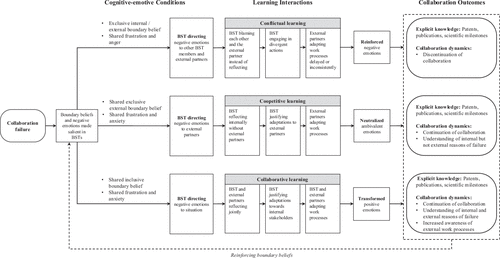
|
Table 4. Overview of Three Learning Pathways Following Collaboration Failure
| Construct | Conflictual learning path | Coopetitive learning path | Collaborative learning path | |
|---|---|---|---|---|
| Salient cognitive-emotive conditions in response to collaboration failure | Boundary beliefs | Exclusive internal vs. external boundary belief | Exclusive external boundary belief | Inclusive boundary belief |
| Triggered emotions | Frustration and anger | Shared frustration and anxiety | Shared frustration and anxiety | |
| Directing of negative emotions | BST directs negative emotions to other BST members (and external partners) | BST directs negative emotions to external partners | BST directs negative emotions to situation | |
| Learning interactions | Step 1 | BST engages in mutual blame instead of reflecting on causes of collaboration failure | BST and other internal stakeholders internally reflect without the external partners on external causes of collaboration failure. BST develops an internal plan on how to adapt external work processes | BST reflects on internal and external causes of failure and develops a plan together with external partners on how to adapt work processes |
| Step 2 | Part of BST wants to stick to predefined plans whereas part of BST wants adaptations. BST incoherently justifies adaptations toward external partners | BST coherently justifies internal plan for aligning external work processes to external partners to maximize internal interests | BST justifies slow progress and need for adaptations toward internal stakeholders to maintain their buy-in | |
| Step 3 | External partners adapt work processes inconsistently or in a delayed manner | External partners adapt work processes | Whole collaboration team (BST and external partners) adapts work processes | |
| Transformed emotions after collaboration failure | Feeling miserable and angry | Anxiety and excitement | Hope and excitement | |
| Boundary beliefs after collaboration failure | Reinforced exclusive internal and external boundary beliefs | Reinforced exclusive external boundary belief | Reinforced inclusive boundary belief | |
| Collaboration outcomes: explicit knowledge | Scientific knowledge created | Yes | Yes | Yes |
| Collaboration outcomes: changes in collaboration dynamics | Continuation of collaboration | No | Yes | Yes |
| Increased understanding of causes of collaboration failure | None | Internal reasons | External and internal reasons | |
| Increased awareness of external partners’ work processes and how to align internal and external work processes | No | No | Yes | |
We specified three types of learning pathways. Two out of the three learning pathways avoid a breakdown of collaboration and allow for improvement in collaboration dynamics in response to collaboration failure, albeit to different degrees. As depicted on the left side of the model in Figure 2, collaboration failure makes boundary beliefs salient and triggers negative emotions among BST members in all three types of learning pathways. As displayed on the top pathway, BST members with an exclusive internal boundary belief draw a boundary between themselves and other fellow BST members, which leads to suboptimal learning interactions and harms collaboration dynamics in response to collaboration failure. These BST members direct their negative emotions about collaboration failure to both other BST members and the BST’s external partners. Such directing gives rise to conflictual learning where BST members mutually blame each other and the external partners for the collaboration failure instead of reflecting on causes of collaboration failure. BST members then engage in divergent actions across boundaries (part of the BST sticks to predefined plans and work processes, whereas part of the BST pushes the external partners to adapt their work processes), which leads to inconsistent justification regarding the adaptations of work processes to the external partners. Confused by the incoherent communication, the external partners iterate between changing and sticking to predefined plans, adapting their work processes inconsistently or in a delayed manner. Because the BST members are angry and feeling miserable about the actions of other BST members and the external partners in response to collaboration failure, both negative emotions and exclusive boundary beliefs are reinforced. The reinforced shared negative emotions translate into diverse collaboration outcomes. Given the broken trust between both internal BST members and their external partners and reinforced negative emotions, the BST is unwilling to continue the collaboration, which blocks any future opportunities for joint learning across boundaries. BSTs under this pattern further lack an understanding of internal and external reasons for failure and the external partners’ work processes. However, BSTs under this pattern are still able to safeguard some explicit knowledge and might appear successful to internal stakeholders who are unaware of the suboptimal collaboration dynamics.
As displayed on the middle pathway of the model, BSTs with an exclusive boundary belief who draw a boundary between themselves and their external partners can learn from collaboration failure, albeit not to their full potential. These BSTs direct their shared negative emotions about collaboration failure to the external partners. Such directing allows BSTs to leverage their negative emotions as a motivational source to maximize internal interests around collaboration failure. This directing process gives rise to a coopetitive combination of internally and externally oriented learning interactions. As these BSTs tend to blame their external partners for collaboration failure, they engage in internally oriented learning interactions first, where they reflect on what the external partners need to change to prevent collaboration failure in the future. They then develop an internal solution based on these discussions without consulting the external partners. Subsequently, BSTs engage in externally oriented learning interactions where they justify the need for the external partners to adapt their approach. The external partners then adapt the work processes on their side. Excluding the external partners and developing an internal solution without them reinforce exclusive boundary beliefs. Together, these learning interactions ensure that shared negative emotions are being neutralized into shared ambivalent emotions. On the one hand, excluding the external partners from internal discussions around collaboration failure leaves BSTs in the dark about why it occurred, thereby increasing their anxiety that the collaboration failure may reoccur. On the other hand, by developing an internal solution that maximizes internal interests to overcome the collaboration failure, BSTs develop a sense of excitement. These shared ambivalent emotions translate into diverse collaboration outcomes. Given that BSTs’ anxiety continues to block them from openly reflecting with the external partners, they are unable to understand why the collaboration failure occurred from the external side and to acquire detailed awareness of how the external partners work, which is critical in preventing collaboration failure in the future. Yet, developing an internal solution allows BSTs to regain excitement that the collaboration will reach its intended goals and to continue the collaboration.
As displayed in the bottom pathway of the model, BSTs with an inclusive boundary belief who refrain from drawing boundaries between themselves and external partners direct their shared negative emotions to the situation. Such directing allows BSTs to focus on changing the situation, thereby leveraging their negative emotions as a motivational source for learning instead of blaming the external partners. This directing of negative emotions gives rise to collaborative learning interactions. As BSTs refrain from blaming their external partners for the collaboration failure, they engage in externally oriented learning interactions first, where they reflect with the external partners on the internal and external reasons for the collaboration failure. Second, they engage in internally oriented learning interactions by justifying the need for adaptations and slow progress to other internal stakeholders (not involved in the discussions with external partners) to sustain their buy-in and convey that the collaboration may still attain its intended goals. Ultimately, both the BST and the external partners adapt their work processes to move forward from collaboration failure. By reflecting closely with the external partners and jointly developing a solution, the BSTs reinforce their inclusive boundary beliefs. The collaborative learning interactions allow them to transform negative emotions into positive ones, which triggers diverse collaboration outcomes. By prioritizing externally oriented learning interactions and engaging in an open dialogue with external partners, BSTs regain positive emotions of hope and excitement about overcoming failure and develop a detailed understanding of the root causes (both internal and external) of the collaboration failure and the external partners’ work processes. This is the basis for BSTs to anticipate and avoid failure in the future. As actors strive to engage in positive interactions, the transformed positive emotions reinforce BSTs’ willingness to continue the collaboration. As shown in Figure 2, BSTs displaying this pattern are both able to secure explicit knowledge and most successful in terms of reaching positive changes in collaboration dynamics and thus improving their ability to effectively collaborate and avoid failure in the future.
Shifts in Boundary Beliefs
In some BSTs, we also found that boundary beliefs could be modified as a result of positive or negative feedback loops in the learning pathways (March 1991, Anderson 1999). For example, in BST8, a misalignment in the experimental procedure resulted in incorrect doses being administered to laboratory animals. Members of BST8 held different boundary beliefs. BST members who worked longer with the external partners held inclusive boundary beliefs whereas members who joined BST8 at a later point held exclusive external beliefs. As one of BST8’s members explained: “In academia they do things differently than we would do” (interview, BST8, chemical technologist, T2). Based on these exclusive external boundary beliefs, some BST8 members blamed the external partners for the failure and started to engage in coopetitive learning interactions. In contrast, a biologist who held an inclusive boundary belief recognized the potential threat of exclusive boundary beliefs for the collaboration and initiated an internal meeting to discuss the culture of collaboration. As he explained: “We are not including new people without investment. There is a different relationship to the collaborators just based on years of working together” (interview, BST8, biologist, T2). He explained that instead of working against the academics, “we [BST8 members and external partners] have to do this together” (interview, BST8, biologist, T2). Any of the new joiners’ concerns could be raised in this internal meeting, during which the biologist emphasized the benefits of the collaboration with the external partners and the risk of mistreating them and building up boundaries. One of the new joiners who held such an exclusive boundary belief told us that he appreciated the meeting: “We brainstormed [internally], we had a fruitful meeting, so we have a better understanding” (interview, BST8, chemical technologist, T2). This meeting helped BST8 to move from divergent boundary beliefs toward shared inclusive boundary beliefs, and to collectively engage in collaborative learning interactions.
Alternative Explanations and Boundary Conditions
As well as boundary beliefs, negative emotions, and the directing of negative emotions, we carefully explored a wide range of alternative explanations from the prior literature that pertain to the varied learning interactions in response to collaboration failure. These included the type of collaboration failure, preexisting relationships with external partners, prior conflicts, existence of a shared subordinate identity, resources invested, team size, project duration, drug development stage, and disease area.
For instance, a key alternative explanation for our findings is that the type of collaboration failure itself drives differences in learning interactions. This is unlikely in our case because for the three types of collaboration failures we observed, we did not identify a type of failure associated with specific learning interactions. For example, for the two BSTs engaging in coopetitive learning interactions, we found one BST faced misalignment in experimental steps, whereas the other failed to coordinate patenting or publishing. For the BSTs that engaged in conflictual learning interactions, our findings suggest that they experienced all three types of collaboration failure. For the BSTs that engaged in collaborative learning interactions, we discovered that they experienced either misalignment in experimental steps or challenges in developing or applying new external technologies. Moreover, prior conflicts could also drive an exclusive boundary belief that emerges in response to collaboration failure. We cannot fully rule out this possibility; however, it appears unlikely as prior conflicts had not been mentioned during the prefailure interviews at T0.
Beyond that, we explored whether the existing concept of identity explains our findings. In terms of identification with the BST or the wider organization, we did not find that it was associated with a specific boundary belief. For example, even under an inclusive boundary belief where prior literature would assume high identification, we found that team members from BST2 who held an inclusive boundary belief toward the external partners did not necessarily identify with BST2. For instance, the bioengineer from BST2 did not identify with all team members of BST2: “Sometimes I have the feeling we are in a cartoon, and we are like Muppets. And the boss asks us to do what they want but they don’t behave as an example” (interview, BST2, bioengineer, T2). In another real-world example, when describing our family, we might hold an inclusive boundary belief, considering all members with whom we share a bloodline to be part of the family. However, this does not automatically mean that we identify with all members. We explain this divergence by the fact that identification is a strongly emotional construct whereas boundary beliefs are subjective, cognitive constructions of a group’s boundary. Finally, rather than suboptimal learning interactions prompting the termination of the collaboration, it could alternatively be that the collaboration was deliberately discontinued for valid reasons. However, we did not observe statements across the BSTs that indicated that collaborations were deliberately terminated based on strategic reasoning. For all remaining criteria (resources invested, prior relationship, team size, project duration, drug development stage, and disease area), we did not find any associations related to learning interactions from failure (see Table 1).
Our findings should be viewed in light of respective boundary conditions and yet are generalizable to a broader range of contexts. The BSTs we studied are self-managed, multidisciplinary, and situated in a task environment that is complex and uncertain (Ben-Menahem et al. 2016, He et al. 2021). BST members are experts with specialized knowledge that is critical for fulfilling the collaboration goals. The BSTs we observed also face two unique characteristics particularly relevant to collaboration failure: they operate (a) outside a shared organizational authority or hierarchical structure (Levina and Orlikowski 2009, Majchrzak et al. 2015) and (b) at the interface of internal and external organizational boundaries. Such conditions likely hold for a variety of collaborations between partners from different institutions working on innovation-related tasks (e.g., alliances, joint ventures, research consortia). Beyond our context, numerous innovation projects involve BSTs at risk for failure: for example, the collaboration between the University of Oxford and AstraZeneca on developing a COVID-19 vaccine; between Google, IBM, and academic labs to develop new methods of solving complex problems via quantum computing; and between IBM/Memorial Sloan Kettering Cancer Center and academic institutions on using artificial intelligence (AI) for cancer treatment. BSTs carrying out these projects may face collaboration failure because of misalignments in legal frameworks (patenting, licensing, etc.), work processes, or communication. Learning from these instances will be essential for sustaining collaborations, and for achieving the societal impact that BSTs are designed to create.
Discussion
Our longitudinal qualitative study theorized when and how BSTs can learn from collaboration failure despite negative emotions. In line with prior work, we find that learning from collaboration failure is not automatic and can lead to a breakdown of collaboration, as we observed in three out of eight BSTs. However, in five of the eight BSTs, we find that a combination of cognitive-emotive conditions (boundary beliefs—subjective perception of boundaries around BSTs—and evoked negative emotions) influenced the directing of shared negative emotions and learning interactions, enabling BSTs to continue to collaborate and improve their collaboration dynamics in response to collaboration failure despite negative emotions. In the two BSTs that held exclusive boundary beliefs—perceptions that BST members were separated from the external partners by a boundary—BSTs directed shared negative emotions toward their external partners and engaged in coopetitive learning interactions. By reflecting on and adapting work processes internally, and subsequently justifying their process to external partners, shared negative emotions in the form of frustration and anxiety shifted toward experiences of shared ambivalence: feeling excited while a state of anxiety remained. Under coopetitive learning interactions, BSTs invested in developing an internal solution to overcome collaboration failure and secured explicit knowledge. However, a lack of close reflection with the external partners limited their ability to learn about the external reasons of collaboration failure. In the three BSTs that held inclusive boundary beliefs—perceptions that there was no boundary between themselves and the external partners—and directed shared negative emotions to the situation rather than attributing blame to the external partners, we observed them engaging in collaborative learning interactions. By reflecting with the external partners first, then justifying their adaptations toward internal stakeholders beyond the BST and adapting work processes on both sides, the BSTs transformed shared negative emotions of frustration and anxiety into shared positive emotions of excitement and hope. Under collaborative learning interactions, BSTs secured explicit knowledge and were most successful in achieving positive changes in collaboration dynamics. In terms of collaboration dynamics, BSTs increased their awareness on both the internal and external reasons around failure, and the work processes of the external partners, allowing them to better anticipate and prevent collaboration failure in the future. Under both learning interactions, BSTs continued the collaboration postfailure, which allowed them to continue to exchange ideas with their external partners and leverage their prior collaboration experience to achieve innovation breakthroughs. Drawing on our theoretical model, we now outline below the implications of our study for three key areas: emotions in groups, BSTs, and learning across organizational boundaries.
Ambivalent Emotions as a Source of Learning in Groups
The impact of emotions in groups on collective processes is a vibrant academic conversation (Emirbayer 1997, Gabriel and Griffiths 2002, Metiu and Rothbard 2013, Barsade and Knight 2015, Menges and Kilduff 2015, Toubiana and Zietsma 2017, Zietsma and Toubiana 2018, Farny et al. 2019, Huang et al. 2019, Zietsma et al. 2019, Zhang et al. 2023). The vast majority of studies on emotions in groups have focused on either positive or negative emotions (Metiu and Rothbard 2013, Vuori and Huy 2022). There is a growing community of scholars suggesting that the emotions that humans experience can also be ambivalent (e.g., Ashforth et al. 2014, Rothman and Melwani 2017, Rothman et al. 2017). We extend existing literature on emotional ambivalence in two significant ways. First, the majority of existing work on emotional ambivalence has focused on understanding the experience of ambivalence at the individual level (Fong 2006, Gabriel et al. 2022). With only a few exceptions exploring the impact of ambivalence on interpersonal dynamics between leaders and followers (Melwani and Rothman 2022), knowledge around the team-level dynamics of emotional ambivalence is limited to a conceptual understanding (Rothman and Wiesenfeld 2007, Ashforth et al. 2014, Rothman and Melwani 2017). Our theorizing extends existing work on ambivalence by studying teams that collaborate across organizational boundaries in an empirical setting. Existing work on the individual level suggests that ambivalent emotions can have both positive and negative outcomes for team performance (Rothman et al. 2017). On the one hand, experiencing ambivalence is uncomfortable (Ashforth et al. 2014), elicits narrow thinking, and produces behavioral inflexibility shown in the reduced ability to make decisions (Rothman et al. 2017). On the other hand, emotional ambivalence can also inspire taking multiple perspectives, lead to more adaptive behavior, and foster the ability to unlearn, which is critical for learning from collaboration failure (Rothman et al. 2017). More precisely, we shed light on the role of discrete emotions in ambivalence. The combination of anxiety and excitement includes two emotions that are targeted toward the future and thus associated with proactive tendencies. On the one hand, the BSTs’ anxiety makes them proactively set up new routines that help them to more fully control the partner in future interactions (e.g., setting up internal meetings right before or after meeting the partner or asking external partners to adjust their work process), thereby limiting open knowledge exchange with the external partners. On the other hand, their excitement triggers BSTs to continue to engage with the external partners and sustain the collaboration in the aftermath of failure. This type of ambivalence is likely different from ambivalence consisting of other specific emotions such as feeling miserable and calm, which both target the present/past and thus might be more likely to put BSTs in a state of regret or “paralysis.” Our findings therefore suggest that the future—versus past/present—orientation of emotions could differentiate team emotional ambivalence states that are beneficial for learning from collaboration failure.
Overcoming Negative Emotions in Boundary-Spanning Teams
Scholarly work on BSTs has revealed important socio-cognitive factors and learning interactions (Hardy et al. 2005, Marrone et al. 2007, Levina and Vaast 2008, Faraj and Yan 2009, Kane 2010, Dokko et al. 2014, Korschun 2015, Davis 2016, Kane and Levina 2017, Lifshitz-Assaf 2018, Sharma and Bansal 2020, He et al. 2021) that enable BSTs to learn across organizational boundaries. However, a critical factor that has been less studied is the role of emotions, which is important because collaboration failures have been shown to evoke negative emotions such as fear or frustration (Levina 2005, Lifshitz-Assaf 2018, Zuzul 2019). So, what does prior literature predict when such negative emotions arise in BSTs?
The existing BST literature presents a negative picture by suggesting that divergence from expected collaboration goals leads to blame and conflict, and ultimately harms external collaboration (Levina 2005, Lifshitz-Assaf 2018, Zuzul 2019). In line with prior work, we indeed find that some BSTs engaged in blaming behaviors, experienced collaboration breakdown (e.g., Zuzul 2019), and distanced themselves from partners by engaging in conflictual learning interactions. This is problematic because the divergent interests and complexity of the innovation process make collaboration failure in these teams common. Only when BSTs manage to overcome and learn from collaboration failure can important innovations such as novel drugs to treat diseases be achieved, which will benefit patients, organizations, and society.
So, are BSTs doomed to collapse when experiencing collaboration failure? Our study provides a silver lining, revealing the conditions and learning interactions through which BSTs can improve their collaboration dynamics and continue to collaborate despite negative emotions (see Figure 2). Unpacking these conditions, our model suggests that BSTs are most effective in learning from failure when they construe team boundaries in an inclusive manner and direct negative emotions around collaboration failure to the situation. Instead of assuming that all team members perceive an organizational boundary separating the internal and external partners (e.g., Ancona and Caldwell 1992, Faraj and Yan 2009), our theory adopts a constructivist perspective, viewing boundaries as being subjectively perceived as solid (exclusive internal and external boundary beliefs) or fluid (inclusive boundary beliefs). However, in contrast to prior work (e.g., Zuzul 2019), we find that even when BSTs hold exclusive boundary beliefs and blame the external partners for the failure, they are still able to avoid collaboration breakdown, safeguard explicit knowledge, and achieve some positive changes in collaboration dynamics through coopetitive learning interactions.
Prioritizing Externally Oriented Activities in Boundary-Spanning Teams in Response to Failure
There is also a long-standing discussion about the effective combination of externally and internally oriented learning interactions when spanning organizational boundaries (Ancona and Caldwell 1992, Marrone et al. 2007, Faraj and Yan 2009, Zobel et al. 2023). Unlike prior work that emphasizes the importance of BSTs engaging in internally oriented behaviors to protect internal team states during disruptive situations such as failure (Choi 2002, Carson et al. 2007, Faraj and Yan 2009), our findings show surprising benefits for BSTs that engage first in externally oriented activities such as reflecting on causes of failure with external partners. In so doing, BSTs develop a joint solution to failure, transforming frustration and anxiety into hope and excitement that the failure will be overcome. By engaging with rather than isolating themselves from external partners, BSTs can both create explicit knowledge as well as improve their ways of collaborating and avoid failure in the future through an increased understanding of the external partners’ work processes and why failure occurred on both sides. Crucially, BSTs that managed to gain the most from collaboration failure also engaged in internally oriented interactions after they developed a solution, thereby allowing BSTs to maintain buy-in from internal stakeholders to continue the collaboration.
Prior work on boundary buffering often focuses on protecting BSTs against operational disruptions (Faraj and Yan 2009), whereas our study captures both the creation of explicit knowledge (publications and patents) and changes in collaboration dynamics (e.g., increased understanding on how to set up work processes in the future through learning about external and internal reasons for collaboration failure). Rather than contradicting prior work on boundary buffering, our findings suggest that different team interactions may be optimal for various team objectives. Whereas boundary buffering may protect against operational disruptions, collaborative interactions where BSTs engage across external boundaries facilitate learning by enabling more open exploration of the causes of failure, reducing blaming, and facilitating the implementation of suitable solutions. This contextual difference not only explains the divergent findings but also helps establish boundary conditions for when learning interactions are most effective. With this key distinction, we enrich the literature on BSTs (e.g., Yan and Louis 1999, Faraj and Yan 2009).
The Importance of Tacit Lessons Around Failure for Interorganizational Learning
Our findings around the role of emotions when BSTs learn from collaboration failure also have important implications for the literature on organizational learning. There is a long-standing discussion regarding the factors that shape how knowledge becomes integrated across organizational boundaries (Cohen and Levinthal 1990, Van den Bosch et al. 1999, Tsai 2001, Zahra and George 2002, Ter Wal et al. 2017). This conversation centers around the impact of individual-level practices (Ter Wal et al. 2017) and organizational factors on knowledge integration across boundaries (Cohen and Levinthal 1990, Van den Bosch et al. 1999, Tsai 2001, Zahra and George 2002). We complement existing theory by showing that the target of shared negative emotions of BSTs (the situation, the external partner, and/or other internal BST members) can explain variances in the type of learning interactions BSTs engage in.
Second, there is a flourishing discussion about the interplay of knowledge creation and integration (Cohen and Levinthal 1990, Grant 1996, Zahra and George 2002, Nonaka et al. 2006, Ter Wal et al. 2017, Zahra et al. 2020). We find an indication of a nonlinear relationship between the amount of knowledge that is created in response to collaboration failure and the amount that is ultimately integrated. To explain this finding, we closely examined the differences between more explicit and tacit knowledge (e.g., Nonaka et al. 1996, Nonaka and von Krogh 2009). All three learning interaction types we identified led to the integration of explicit knowledge in response to collaboration failure. However, the positive changes in collaboration dynamics (acquired tacit knowledge) varied considerably across the learning interactions. For instance, our findings suggest that in some BSTs the negative emotions and exclusive boundary beliefs jointly led BSTs to only prioritize knowledge integration activities from external partners and to neglect the creation of tacit knowledge around external reasons of collaboration failure across boundaries (coopetitive learning interactions). However, there were also three BSTs that engaged in collaborative learning interactions balancing both processes equally when faced with failure. These BSTs first engaged in knowledge creation activities with the external partners to increase their understanding of why the failure occurred on both sides and then integrated the cocreated solution on how to overcome failure internally.
Practical Implications
This study has significant practical implications for BSTs working in external collaborations within and beyond the pharmaceutical industry. Instead of trying to impose a “feel-good” culture, we recommend acknowledging that shared negative emotions can be a potential driver for learning from collaboration failure. We find that moving toward an emotional culture (O’Neill and Rothbard 2017) where organizational members hold the belief that shared negative emotions can be functional is key. To avoid negative emotions harming how teams deal with collaboration failure, we propose the following interventions: before the collaboration starts, we suggest training managers about the difference between inclusive and exclusive boundary beliefs, and how these views shape learning. At the onset of the collaboration, we recommend that managers should let team members draw the boundaries of the team when thinking about the collaboration and afterward explain the importance of inclusive boundary beliefs.
During the collaboration, managers should closely monitor these boundary beliefs. When managers observe exclusive internal boundary beliefs, this should ring an alarm bell, as those beliefs risk harming both the creation and integration of tacit knowledge, particularly because part of these beliefs may be activated unconsciously (Barsade 2002). To counteract such exclusive boundary beliefs, internal reflection meetings with all team members are key. When faced with collaboration failure, managers should also engage in joint reflection with their team so that BST members can take control of, instead of being subconsciously guided by, their negative emotions, preventing high-potential collaborations from being discontinued. In addition, when evaluating an extension of a collaboration, decision makers should not merely assess collaboration success and learning in response to collaboration failure based on explicit knowledge, such as registered patents or publications. Instead, they should also consider the changes in collaboration dynamics that allow teams to bounce back from failure and continue to collaborate despite their experienced collaboration failure. Hence, our findings help guide managers and their teams on how to constructively react to failure, deploy financial and human resources invested in collaborations effectively, and enhance the impact of external collaborations on innovation.
Limitations and Future Research
Our study has several limitations. First, our qualitative design came at the cost of testing causal relationships. Although our longitudinal design allowed us to unearth detailed and novel BST dynamics around collaboration failure, establishing causality and capturing emotions in real time require different designs such as laboratory or field experiments. Second, our analysis largely relied on retrospective sensemaking. Although we minimized the retrospective bias by interviewing BST members shortly after the collaboration failure occurred, future research may build on video methods (Jiang et al. 2019) to capture the microdynamics of an individual’s emotions, including nonverbal cues, in real time. In our highly confidential, nondisclosure setting of drug discovery, such video materials could not be gathered. Given the importance of inclusive versus exclusive boundary beliefs for successful learning from collaboration failure, we call for future research to use broader multimodal data to unpack the mechanisms and antecedents shaping the construal of boundary beliefs. For example, even though in our study most BSTs held one shared dominant belief, there were some indications that team members with an exclusive internal boundary belief also diverged in their beliefs regarding external partners (i.e., certain BST members held inclusive boundary beliefs whereas others held exclusive boundary beliefs). Constrained by our data, we lack evidence on the reasons why BSTs develop an exclusive internal boundary belief. We call for future research to explore the myriads of reasons for such beliefs to emerge, including prior conflicts, interpersonal differences, prior training, or professional hierarchies. In addition, the construction of boundary beliefs might interact with the construal level—the level of abstraction through which one represents the failure (Trope and Liberman 2010, Crosina et al. 2024)—and we also call for future studies exploring this. Third, our study focused on BST members and did not include interviews with external partners. Thus, our study cannot shed light on the type of boundary beliefs held by the external partners, and whether these were the same as or diverged from those of the BST. Future studies would benefit from examining and comparing boundary beliefs of both sides, and how these beliefs may transform, neutralize, or reinforce shared emotions. To conclude, our study offers novel theorizing on BSTs’ effective learning interactions and collaboration outcomes when faced with collaboration failure. We unveil the interplay between negative emotions and beliefs about the team boundary and the emotional transformation process. Our findings not only contribute to the literatures on BSTs and emotions in groups but also inform the management of external collaborations to foster the creation and integration of innovative ideas across firm boundaries.
The authors thank editor Hila Lifshitz and the anonymous reviewers for their invaluable feedback and guidance throughout the review process. The authors also thank Renate Meyer, David Seidl, Batia Wiesenfeld, Natalia Levina, Pier Vittorio Mannucci, Davide Ravasi, Sigal Barsade, Katherine Kellogg, Giulia Cappellaro, Theresa Langenmayr, and Roman Bolli for their highly insightful comments on this paper. This research further benefited from helpful input by the New York University (NYU) Qualitative Research Seminar, the University of Zurich Organizational Behavior Reading Group and Business Research Seminar, the ESSEC Business School “Yes We Qual” Group, and participants at the EMONET Conference. Finally, the authors are deeply grateful to the collaborators at Pharmaco for the opportunity to research their work, their thoughtful feedback, and continuous support along the journey.
1 For clarification, BSTs are comprised of members within the same organization who work across organizational boundaries with external partners. BSTs do not include team members of external partners.
2 Consistent with Frijda (1993), we define emotions as instant and context-specific feelings evoked by an event, object, or person.
3 Collaboration dynamics refer to changes in the conditions for and processes of how teams collaborate (Majchrzak et al. 2015).
4 Emotional ambivalence refers to the simultaneous experience of inconsistent positive and negative emotions (Rothman and Wiesenfeld 2007).
5 Whereas explicit knowledge can easily be captured in models, words, illustrations, or artefacts, tacit knowledge (also referred to as implicit) is often highly personal knowledge, difficult to formalize, rooted in practices, and linked to senses or body movements (Polanyi 1966, Nonaka and Takeuchi 1995).
References
- (1992) Bridging the boundary: External activity and performance in organizational teams. Admin. Sci. Quart. 37(4):634–665.Crossref, Google Scholar
- (1999) Perspective: Complexity theory and organization science. Organ. Sci. 10(3):216–232.Link, Google Scholar
- (2014) Ambivalence in organizations: A multilevel approach. Organ. Sci. 25(5):1453–1478.Link, Google Scholar
ATLAS.ti (2022) Scientific software development. https://atlasti.com.Google Scholar- (2019) Energizing through visuals: How social entrepreneurs use emotion-symbolic work for social change. Acad. Management J. 62(6):1789–1817.Crossref, Google Scholar
- (2002) The ripple effect: Emotional contagion and its influence on group behavior. Admin. Sci. Quart. 47(4):644–675.Crossref, Google Scholar
- (2015) Group affect. Annual Rev. Organ. Psych. Organ. Behav. 2(1):21–46.Crossref, Google Scholar
- (2016) Coordinating knowledge creation in multidisciplinary teams: Evidence from early-stage drug discovery. Acad. Management J. 59(4):1308–1338.Crossref, Google Scholar
- (2003) Oncology’s trials. Nature Rev. Drug Discovery 2(8):609–610.Crossref, Google Scholar
- (2010) Investigating the factors that diminish the barriers to university-industry collaboration. Res. Policy 39(7):858–868.Crossref, Google Scholar
- (2001) Confronting failure: Antecedents and consequences of shared beliefs about failure in organizational work groups. J. Organ. Behav. 22(2):161–177.Crossref, Google Scholar
- (2005) Failing to learn and learning to fail (intelligently): How great organizations put failure to work to innovate and improve. Long Range Planning 38(3):299–319.Crossref, Google Scholar
- (2004) Transferring, translating, and transforming: An integrative framework for managing knowledge across boundaries. Organ. Sci. 15(5):555–568.Link, Google Scholar
- (2007) Shared leadership in teams: An investigation of antecedent conditions and performance. Acad. Management J. 50(5):1217–1234.Crossref, Google Scholar
- (2002) External activities and team effectiveness: Review and theoretical development. Small Group Res. 33(2):181–208.Crossref, Google Scholar
- (2010) The mature entrepreneur: A narrative approach to entrepreneurial goals. J. Management Inquiry 19(1):69–83.Crossref, Google Scholar
- (2020) What makes a process theoretical contribution? Organ. Theory 1(1):1–32.Google Scholar
- (2021) Using tables to enhance trustworthiness in qualitative research. Strategic Organ. 19(1):113–133.Crossref, Google Scholar
- (1990) Absorptive capacity: A new perspective on learning and innovation. Admin. Sci. Quart. 35(1):128–152.Crossref, Google Scholar
- (2012) Sensegiving in entrepreneurial contexts: The use of metaphors in speech and gesture to gain and sustain support for novel business ventures. Internat. Small Bus. J. 30(3):213–241.Crossref, Google Scholar
- (2011) The role of analogy and metaphor in the framing and legitimization of strategic change. Organ. Stud. 32(12):1701–1716.Crossref, Google Scholar
- (2001) Interpreting consumer perceptions of advertising: An application of the Zaltman metaphor elicitation technique. J. Advertising 30(4):1–21.Crossref, Google Scholar
- (2024) A part of, or apart from, me?: Linking dynamic founder-venture identity relationships to new venture strategy. Organ. Sci. 35(6):2198–2222.Link, Google Scholar
- (2021) Sharing errors where everyone is perfect: Culture, emotional dynamics, and error sharing in two consulting firms. Acad. Management Discoveries 7(4):509–529.Crossref, Google Scholar
- (2016) The group dynamics of interorganizational relationships: Collaborating with multiple partners in innovation ecosystems. Admin. Sci. Quart. 61(4):621–661.Crossref, Google Scholar
- (2001)
Origins and consequences of emotions in organizational teams . Payne R, Cooper C, eds. Emotions at Work: Theory, Research and Applications for Management (Wiley, Chichester, UK), 199–217.Google Scholar - (2014) One of us or one of my friends: How social identity and tie strength shape the creative generativity of boundary-spanning ties. Organ. Stud. 35(5):703–726.Crossref, Google Scholar
- (1999) Psychological safety and learning behavior in work teams. Admin. Sci. Quart. 44(2):350–383.Crossref, Google Scholar
- (1997) Manifesto for a relational sociology. Amer. J. Sociol. 103(2):281–317.Crossref, Google Scholar
- (2017) Constructing a shared governance logic: The role of emotions in enabling dually embedded agency. Acad. Management J. 60(6):2321–2351.Crossref, Google Scholar
- (2009) Boundary work in knowledge teams. J. Appl. Psych. 94(3):604–617.Crossref, Google Scholar
- (2019) Collective emotions in institutional creation work. Acad. Management J. 62(3):765–799.Crossref, Google Scholar
- (1993) Emotion in Organizations (Sage Publications, Thousand Oaks, CA).Google Scholar
- (2006) The effects of emotional ambivalence on creativity. Acad. Management J. 49(5):1016–1030.Crossref, Google Scholar
- (1987) Emotion, cognitive structure, and action tendency. Cognition Emotion 1(2):115–143.Crossref, Google Scholar
- (1993)
Moods, emotion episodes, and emotions . Lewis M, Haviland JM, eds. Handbook of Emotions (Guilford Press, New York), 381–403.Google Scholar - (2002) Emotion, learning and organizing. Learn. Organ. 9(5):214–221.Crossref, Google Scholar
- (2022) Feeling positive, negative, or both? Examining the self-regulatory benefits of emotional ambivalence. Organ. Sci. 33(6):2477–2495.Link, Google Scholar
- (2012) Dynamically integrating knowledge in teams: Transforming resources into performance. Acad. Management J. 55(4):998–1022.Crossref, Google Scholar
- (2013) Seeking qualitative rigor in inductive research: Notes on the Gioia methodology. Organ. Res. Methods 16(1):15–31.Crossref, Google Scholar
- (1996) Toward a knowledge‐based theory of the firm. Strategic Management J. 17(S2):109–122.Crossref, Google Scholar
- (2023) Collaborating on the edge of failure: Frame alignment across multiple interaction arenas in multi-stakeholder partnerships. Acad. Management J. 67(4):956–990.Crossref, Google Scholar
- (2019) Containing the not-invented-here syndrome in external knowledge absorption and open innovation: The role of indirect countermeasures. Res. Policy 48(9):103822.Crossref, Google Scholar
- (2005) Discourse and collaboration: The role of conversations and collective identity. Acad. Management Rev. 30(1):58–77.Crossref, Google Scholar
- (2003) Resources, knowledge and influence: The organizational effects of interorganizational collaboration. J. Management Stud. 40(2):321–347.Crossref, Google Scholar
- (2021) Asymmetries between partners and the success of university-industry research collaborations. Res. Policy 50(10):104356.Crossref, Google Scholar
- (2019) Which matters more? Group fear versus hope in entrepreneurial escalation of commitment. Strategic Management J. 40(11):1852–1881.Crossref, Google Scholar
- (2011) Principles of early drug discovery. British J. Pharmacology 162(6):1239–1249.Crossref, Google Scholar
- (2008) The effects of conflict types, dimensions, and emergent states on group outcomes. Group Decision Negotiation 17(6):465–495.Crossref, Google Scholar
- (2019) Can joy buy you money? The impact of the strength, duration, and phases of an entrepreneur’s peak displayed joy on funding performance. Acad. Management J. 62(6):1848–1871.Crossref, Google Scholar
- (2010) Unlocking knowledge transfer potential: Knowledge demonstrability and superordinate social identity. Organ. Sci. 21(3):643–660.Link, Google Scholar
- (2017) Am I still one of them? Bicultural immigrant managers navigating social identity threats when spanning global boundaries. J. Management Stud. 54(4):540–577.Crossref, Google Scholar
- (2015) Boundary-spanning employees and relationships with external stakeholders: A social identity approach. Acad. Management Rev. 40(4):611–629.Crossref, Google Scholar
- (1999) Strategies for theorizing from process data. Acad. Management Rev. 24(4):691–710.Crossref, Google Scholar
- (2005) Collaborating on multiparty information systems development projects: A collective reflection-in-action view. Inform. Systems Res. 16(2):109–130.Link, Google Scholar
- (2009) Understanding shifting power relations within and across organizations: A critical genre analysis. Acad. Management J. 52(4):672–703.Crossref, Google Scholar
- (2005) The emergence of boundary spanning competence in practice: Implications for implementation and use of information systems. MIS Quart. 29(2):335–363.Crossref, Google Scholar
- (2008) Innovating or doing as told? Status differences and overlapping boundaries in offshore collaboration. MIS Quart. 32(2):307–332.Crossref, Google Scholar
- (2018) Dismantling knowledge boundaries at NASA: The critical role of professional identity in open innovation. Admin. Sci. Quart. 63(4):746–782.Crossref, Google Scholar
- (2014) Emotional dynamics and strategizing processes: A study of strategic conversations in top team meetings. J. Management Stud. 51(2):202–234.Crossref, Google Scholar
- (2008) Perspective—Making doubt generative: Rethinking the role of doubt in the research process. Organ. Sci. 19(6):907–918.Link, Google Scholar
- (2000) Intergroup emotions: Explaining offensive action tendencies in an intergroup context. J. Personality Soc. Psych. 79(4):602–616.Crossref, Google Scholar
- (2004) Toxic decision processes: A study of emotion and organizational decision-making. Organ. Sci. 15(4):375–393.Link, Google Scholar
- (2010) Sensemaking in crisis and change: Inspiration and insights from Weick (1988). J. Management Stud. 47(3):551–580.Crossref, Google Scholar
- (2015) A review of interorganizational collaboration dynamics. J. Management 41(5):1338–1360.Crossref, Google Scholar
- (1991) Exploration and exploitation in organizational learning. Organ. Sci. 2(1):71–87.Link, Google Scholar
- (2010) Team boundary spanning: A multilevel review of past research and proposals for the future. J. Management 36(4):911–940.Crossref, Google Scholar
- (2007) A multilevel investigation of antecedents and consequences of team member boundary-spanning behavior. Acad. Management J. 50(6):1423–1439.Crossref, Google Scholar
- (2022) The push-and-pull of frenemies: When and why ambivalent relationships lead to helping and harming. J. Appl. Psych. 107(5):707–723.Crossref, Google Scholar
- (2015) Group emotions: Cutting the Gordian knots concerning terms, levels of analysis, and processes. Acad. Management Ann. 9(1):845–928.Crossref, Google Scholar
- (2017) The space between us: A social-functional emotions view of ambivalent and indifferent workplace relationships. J. Management 43(6):1789–1819.Crossref, Google Scholar
- (2013) Task bubbles, artifacts, shared emotion, and mutual focus of attention: A comparative study of the microprocesses of group engagement. Organ. Sci. 24(2):455–475.Link, Google Scholar
- (2014) Data Management and Analysis (Sage Publications, Thousand Oaks, CA).Google Scholar
- (1995) The Knowledge-Creating Company: How Japanese Companies Create the Dynamics of Innovation (Oxford University Press, Oxford, UK).Crossref, Google Scholar
- (2009) Tacit knowledge and knowledge conversion: Controversy and advancement in organizational knowledge creation theory. Organ. Sci. 20(3):635–652.Link, Google Scholar
- (1996) From information processing to knowledge creation: A paradigm shift in business management. Tech. Soc. 18(2):203–218.Crossref, Google Scholar
- (2006) Organizational knowledge creation theory: Evolutionary paths and future advances. Organ. Stud. 27(8):1179–1208.Crossref, Google Scholar
- (2008) Boundary organizations: Enabling collaboration among unexpected allies. Admin. Sci. Quart. 53(3):422–459.Crossref, Google Scholar
- (2017) Is love all you need? The effects of emotional culture, suppression, and work–family conflict on firefighter risk-taking and health. Acad. Management J. 60(1):78–108. Crossref, Google Scholar
- (2011) How should firms evaluate success in university-industry alliances? A performance measurement system. R&D Management 41(2):202–216.Crossref, Google Scholar
- (1966) The Tacit Dimension (Routledge & Kegan Paul, London).Google Scholar
- (2012) Using photographs to research organizations: Evidence, considerations, and application in a field study. Organ. Res. Methods 15(2):288–315.Crossref, Google Scholar
- (2020) Machine learning applications in drug development. Comput. Structural Biotechnology J. 18:241–252.Crossref, Google Scholar
- (2017) Feeling mixed, ambivalent, and in flux: The social functions of emotional complexity for leaders. Acad. Management Rev. 42(2):259–282.Crossref, Google Scholar
- (2007)
The social consequences of expressing emotional ambivalence in groups and teams . Mannix EA, Neale MA, Anderson CP, eds. Affect and Groups (Emerald Group Publishing Limited, Leeds, UK), 275–308.Google Scholar - (2017) Understanding the dual nature of ambivalence: Why and when ambivalence leads to good and bad outcomes. Acad. Management Ann. 11(1):33–72.Crossref, Google Scholar
- (1980) A circumplex model of affect. J. Personality Soc. Psych. 39(6):1161–1178.Crossref, Google Scholar
- (2020) Cocreating rigorous and relevant knowledge. Acad. Management J. 63(2):386–410.Crossref, Google Scholar
- (2011) Moving forward from project failure: Negative emotions, affective commitment, and learning from the experience. Acad. Management J. 54(6):1229–1259.Crossref, Google Scholar
- (2022) Relational work and the knowledge transfer process: Rituals in rural Ghana. Organ. Sci. 33(1):332–352.Link, Google Scholar
- (2022)
The emotions of failure in organizational life . Humphrey RH, Ashkanasy NM, Troth AC, eds. Emotions and Negativity (Emerald Publishing Limited, Leeds, UK), 13–34.Crossref, Google Scholar - (1998) Basics of Qualitative Research: Grounded Theory Procedures and Technique, 2nd ed. (Sage Publications, Thousand Oaks, CA).Google Scholar
- (2006) From the editors: What grounded theory is not. Acad. Management J. 49(4):633–642.Crossref, Google Scholar
- (2017) Making a marriage of materials: The role of gatekeepers and shepherds in the absorption of external knowledge and innovation performance. Res. Policy 46(5):1039–1054.Crossref, Google Scholar
- (2017) The message is on the wall? Emotions, social media and the dynamics of institutional complexity. Acad. Management J. 60(3):922–953.Crossref, Google Scholar
- (2010) Construal-level theory of psychological distance. Psych. Rev. 117(2):440–463.Crossref, Google Scholar
- (2001) Knowledge transfer in intraorganizational networks: Effects of network position and absorptive capacity on business unit innovation and performance. Acad. Management J. 44(5):996–1004.Crossref, Google Scholar
- (1999) Coevolution of firm absorptive capacity and knowledge environment: Organizational forms and combinative capabilities. Organ. Sci. 10(5):551–568.Link, Google Scholar
- (2005) Learning and performance in multidisciplinary teams: The importance of collective team identification. Acad. Management J. 48(3):532–547.Crossref, Google Scholar
- (1997) From meaning to method. Qualitative Health Res. 7(3):345–369.Crossref, Google Scholar
- (2015) Distributed attention and shared emotions in the innovation process: How Nokia lost the smartphone battle. Admin. Sci. Quart. 61(1):9–51.Crossref, Google Scholar
- (2022) Regulating top managers’ emotions during strategy making: Nokia’s socially distributed approach enabling radical change from mobile phones to networks in 2007–2013. Acad. Management J. 65(1):331–361.Crossref, Google Scholar
- (2011) Cheating the fates: Organizational foundings in the wake of demise. Acad. Management J. 54(5):1017–1044.Crossref, Google Scholar
- (2013) 75 Bildkarten für Trainings, Workshops und Teams (Beltz Verlag, Weinheim, Germany).Google Scholar
- (1999) The migration of organizational functions to the work unit level: Buffering, spanning, and bringing up boundaries. Human Relations 52(1):25–47. Crossref, Google Scholar
- (2002) Absorptive capacity: A review, reconceptualization, and extension. Acad. Management Rev. 27(2):185–203.Crossref, Google Scholar
- (2020) What do we know about knowledge integration: Fusing micro- and macro-organizational perspectives. Acad. Management Ann. 14(1):160–194.Crossref, Google Scholar
- (2023) Beyond the feeling individual: Insights from sociology on emotions and embeddedness. J. Management Stud. 61(5):2212–2250.Crossref, Google Scholar
- (2018) The valuable, the constitutive, and the energetic: Exploring the impact and importance of studying emotions and institutions. Organ. Stud. 39(4):427–443.Crossref, Google Scholar
- (2019) Emotions in Organization Theory (Cambridge University Press, Cambridge, UK).Crossref, Google Scholar
- (2023) A temporal perspective on boundary spanning: Engagement dynamics and implications for knowledge transfer. Organ. Sci. 35(2):474–495.Link, Google Scholar
- (2019) “Matter battles”: Cognitive representations, boundary objects, and the failure of collaboration in two smart cities. Acad. Management J. 62(3):739–764.Crossref, Google Scholar
Zoe Jonassen is an assistant professor of assessing innovation in healthcare at the School of Management, University of St. Gallen (HSG). She received her PhD from ETH Zurich and pursued her postdoc at the New York University (NYU) Stern School of Business. Her research explores the emotional dynamics in innovation processes in healthcare teams, with a particular focus on human-technology interactions.
Vivianna Fang He is an associate professor of strategy and entrepreneurship at the School of Management, University College London (UCL). She received her PhD from the George Washington University School of Business. Her research focuses on the dynamics of collaboration in innovation, encompassing contexts such as R&D partnerships, entrepreneurial teams, and online communities.
Georg von Krogh is a professor of strategic management and innovation at ETH Zurich. His long-term research program focuses on digital strategy, emerging technologies, knowledge collaboration, and organizing.