Race, Sexual Orientation, and Intersectionality in Distributive Negotiation Outcomes for Men
Abstract
Negotiations have consequences for people’s career trajectories, wealth, and well-being. Yet we still have a limited understanding of how demographic characteristics such as sexual orientation and race influence distributive negotiation outcomes, much less the intersection of multiple marginalized identities. To contribute to (1) our understanding of how identity influences negotiations and (2) research on intersectionality, we test how race (Black versus East Asian versus White) and sexual orientation (gay versus straight) influence distributive negotiation outcomes for men in a field experiment. We conducted a large-scale (n = 3,000), preregistered audit experiment involving (fictitious) buyers negotiating for cars on Craigslist. Sellers were 7.7 percentage points (22.4%) less likely to respond to gay versus straight White men. Sellers were also less polite in responses to Black and East Asian men (of any sexual orientation) than to straight White men. In a preregistered follow-up experiment (n = 500), we show that impoliteness in negotiation responses reduces positive expectations about negotiations and behavioral intentions to negotiate in the future, suggesting that differences in politeness may have consequences for racial minorities’ willingness to initiate future negotiations. Our work illuminates how identity-based biases manifest in negotiations, offers insights into theories of intersectionality, and underscores how demand-side biases can lead to supply-side differences in negotiation propensity.
Supplemental Material: The online appendix is available at https://doi.org/10.1287/orsc.2023.18464.
Existing theories of intersectionality make conflicting—and, at times, mutually exclusive—predictions as to how the intersection of race and sexual orientation influence distributive negotiation outcomes. For example, intersectional invisibility (Purdie-Vaughns and Eibach 2008) predicts that gay men of color—regardless of race—achieve better negotiation outcomes than straight men of color, whereas the model of stereotyping through associated and intersectional categories (MOSAIC) (Hall et al. 2019) predicts that this is true for Black men but not East Asian men. Having insufficient or inaccurate theories of intersectionality means we may make the wrong prescriptions to address identity-based inequities, and we risk implementing organizational policies that fail to address the needs of people with multiple marginalized identities. A policy guided by intersectional invisibility, for instance, might focus on addressing the needs of straight men of color and not gay men of color. But, by neglecting gay men of color, we may be widening existing gaps for those who are already subordinated along multiple dimensions. Thus, understanding how intersectionality plays out in distributive negotiations is critical for creating more equitable outcomes in both negotiations and organizational contexts more broadly.
To examine how race and sexual orientation influence distributive negotiation outcomes for men, we ran a preregistered, large-scale field experiment (n = 3,000). We varied the race (Black versus East Asian versus White) and sexual orientation (gay versus straight) of fictitious men interested in buying used cars on Craigslist. We measured whether sellers responded to the buyer, whether sellers engaged in negotiation, the final negotiated price, and seller politeness in the interaction. In examining the intersection of race and sexual orientation for men, we consider intersectional identities for which the four dominant theories of intersectionality make competing predictions (see Table 1 and Figure 1, panel (a)): double jeopardy (Beal 1970) predicts that gay men of color receive worse negotiation outcomes than straight men of color; intersectional invisibility (Purdie-Vaughns and Eibach 2008) predicts that gay men of color receive better negotiation outcomes than straight men of color; MOSAIC (Hall et al. 2019) predicts that gay Black men receive better negotiation outcomes than straight Black men, but gay East Asian men receive worse negotiation outcomes than straight East Asian men; and the lens-based account (Petsko et al. 2022) leaves open the possibility that gay men of color and straight men of color receive similar negotiation outcomes. We thus contribute to the negotiations literature by examining how identity influences negotiation outcomes and to theory on intersectionality by testing competing predictions (Leavitt et al. 2010).
|

Table 1. Summary of Predictions of Different Theories of Intersectionality
| Theory of intersectionality | Summary of theoretical perspective | Illustrative example of how theory applies to Black women | Predictions for negotiation outcomes (e.g., response rate) in Study 1 |
|---|---|---|---|
| Double jeopardy (Beal 1970) | The disadvantages experienced because of different minoritized identities are cumulative. These burdens can be either additive, in that each minoritized identity adds to cumulative disadvantage, or they can be interactive, such that minoritized identities multiply upon one another in unique ways. | Black women face the burdens of being both women and racial minorities, so they face both sexism and racism. Thus, Black women face more disadvantages than either White women or Black men. | 1. straight Black men > gay Black men 2. straight East Asian men > gay East Asian men |
| Intersectional invisibility (Purdie-Vaughns and Eibach 2008) | People possessing multiple marginalized identities are seen as less prototypical or are otherwise invisible as compared with people with a singular marginalized identity. Because of this lack of prototypicality, they are rendered socially invisible, which lends both advantages and disadvantages compared with more prototypical members of marginalized groups. In terms of advantages, nonprototypical members of marginalized groups are less subject to the stereotyped expectations of their identity groups. | Black women are less subject than White women to gendered expectations of communality, and they are less subject than Black men to racialized stereotypes of low status. Thus, Black women face fewer stereotyped constraints than either White women or Black men. | 1. straight Black men < gay Black men 2. straight East Asian men < gay East Asian men |
| MOSAIC (Hall et al. 2019) | When people belong to multiple marginalized identity groups, they face either diluted or amplified stereotypes depending on whether the stereotypes of the identities are concordant or inconsistent with each other. | The stereotypes of women and Black people are inconsistent with each other because Black people are stereotyped as relatively masculine. As a result, Black women face diluted stereotypes relative to Black men and White women. | 1. straight Black men < gay Black men 2. straight East Asian men > gay East Asian men |
| Lens-based account (Petsko et al. 2022) | People have a predominant lens they use when considering intersecting identities in a given context. This lens could be based on a single identity (e.g., a lens for gender or a lens for race), or it can be based on an intersectional identity (e.g., a gender–race lens). The lens in focus determines the stereotypes that people face. | If a gender lens were in focus, Black women should face similar stereotypes as White women. If a race lens were in focus, Black women should face similar stereotypes as Black men. | If race-based lens is in focus, 1. straight Black men = gay Black men 2. straight East Asian men = gay East Asian men |
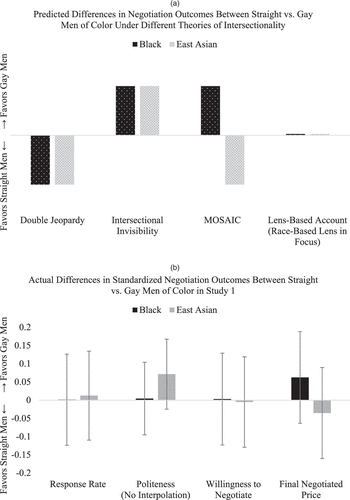
Notes. Theories make predictions about direction of differences but not relative magnitudes for different racial groups. Error bars are 95% confidence intervals.
In a follow-up preregistered experiment (n = 500), we tested the downstream impact of the findings from our field experiment. We examined how differences in politeness that we documented in the field may affect willingness to initiate future negotiations. By illustrating how a person’s experience in one negotiation—which is affected by the person’s identity—can influence their future negotiation behavior, we further underscore the importance of understanding the effects of identity on negotiation outcomes.
Our work makes several theoretical contributions. First, we contribute to the study of identity in negotiation. Given that negotiation outcomes can influence career trajectories, relationships, wealth, and well-being (Bazerman and Neale 1993, Marks and Harold 2011), scholars are interested in how identity influences negotiation outcomes to understand the persistent inequality observed in organizations and in society. Whereas there is quite a bit of attention paid to the topic of gender and negotiation (e.g., Bowles et al. 2007, Small et al. 2007, Babcock and Laschever 2009, Dannals et al. 2021), there is comparatively little work on race and sexual orientation in negotiation (cf. Desai and Gunia 2023, Leigh and Desai 2023), much less the intersection of these identities.
Examining the experiences of gay men of color is practically important and managerially relevant: in the United States alone, more than eight million workers identify as lesbian, gay, bisexual, transgender, or queer (LGBTQ+) (Sears et al. 2021), yet there is a paucity of management research focused on these identities (Anteby and Anderson 2014, Roberson et al. 2024). The little field experimental work that exists typically focuses on the experiences of gay White men (Tilcsik 2011) as opposed to gay men of color. Further, surveys show that gay people of color are disproportionately likely to experience hardships such as living in poverty or experiencing mental health issues relative to gay White people or straight people of color (Balsam et al. 2011, Cyrus 2017), underscoring why it is critical to examine the experiences of this marginalized group. Our work helps us gain a more inclusive understanding of how identity influences distributive negotiation outcomes and, more generally, a better understanding of the experiences of gay men of color in management contexts.
Second, by studying the intersection of race and sexual orientation, we contribute to research on intersectionality. Our work uses the context of distributive negotiations to provide a rigorous test of competing predictions from the four predominant theories of intersectionality in the literature—double jeopardy (Beal 1970), intersectional invisibility (Purdie-Vaughns and Eibach 2008), MOSAIC (Hall et al. 2019), and the lens-based account (Petsko et al. 2022)—allowing us to assess which theory makes the most accurate predictions in our context (Leavitt et al. 2010). In doing so, we emphasize the need for intersectionality scholarship to clarify when different theories make the same or competing predictions so that we can accurately apply intersectionality theories to the real world and to intersectional identities that are seldom studied empirically.
Third, we add to a broader understanding of how discrimination manifests in modern times and how supply-side differences in negotiation propensity may arise. Historically, research has focused on blatant forms of discrimination. However, our results regarding seller behavior toward racial minorities are more consistent with selective incivility, papercut discrimination, or everyday discrimination (Cortina 2008, Cortina et al. 2013, Block et al. 2021, Doering and Tilcsik 2025), providing insight into how discrimination plays out in consequential settings. We document that this incivility may represent one pathway through which supply-side differences in negotiation propensity could arise. Past research suggests that identity-based differences in wealth accumulation and leadership attainment may, at least in part, reflect supply-side differences in negotiation propensity or differences in the tendency for different demographic groups to initiate negotiation (Babcock and Laschever 2009, Lu 2023). Our results suggest that, rather than seeing these differences as emerging from innate group preferences, demand-side bias—in our case, racial minorities facing incivility in past negotiation experiences—may lead to supply-side differences in future negotiation propensity (Bowles et al. 2007). These insights provide a different perspective on how to address negotiation gaps: rather than simply urging racial minorities to change their behavior, organizations should consider policies that protect racial minorities from experiences of incivility.
Distributive Negotiations and Nonintersectional Identities
Negotiations can broadly be thought of as relatively more distributive—zero-sum negotiations in which the gains of one party come at the expense of the other—or relatively more integrative, in which value can be created for all parties (Neale and Northcraft 1991). The focus of our research is on distributive negotiation contexts, such as negotiating over the price of a car or negotiating a job offer for which the only issue on the table is salary. Because distributive negotiations are inherently fixed-pie, the prototypical negotiator in these contexts is typically seen as competitive and conflictual (Halevy et al. 2012, Halevy and Phillips 2015), and the prototypical effective negotiator is expected to display agentic traits, such as assertiveness and dominance (Kray and Thompson 2004). Work on economic outcomes in distributive negotiations suggests a factual basis for these beliefs: expressing anger can increase concessions from the other party (Van Kleef and Côté 2007, Sinaceur et al. 2011), whereas conveying agreeableness or warmth can backfire (Barry and Friedman 1998, Jeong et al. 2019).
The expectations of effective distributive negotiators—dominant and aggressive behavior—do not align with the expectations of people from all identity groups. For example, women are often stereotyped as warm and communal (Fiske et al. 2002) and face backlash when engaging in dominant or agentic behavior (Rudman and Glick 1999, 2001; Heilman 2001). As a result, scholars posit that women often receive worse distributive negotiation outcomes than men in part because the behaviors in which negotiators are expected to engage to better their outcomes are at odds with stereotyped expectations about women’s behavior in general (Kray and Thompson 2004, Mazei et al. 2015). Women find themselves in a double bind: when they behave consistently with gendered expectations, they may struggle to claim value for themselves in a distributive negotiation, yielding ground to more aggressive negotiators. But, when they engage in the same negotiation behaviors that men do, they may be violating others’ stereotype-based expectations. Violating expectations may lead people to treat women worse than identically behaving men, harming negotiation outcomes for women (Amanatullah and Morris 2010, Amanatullah and Tinsley 2013, Dannals et al. 2021).
Similar to White women, East Asian men are also stereotyped as less assertive and dominant (Berdahl and Min 2012, Lu et al. 2020, Lu 2024). These beliefs may emerge from the stereotype that East Asian cultures value humility and conformity rather than assertiveness and individualism (Berdahl and Min 2012, Lu et al. 2020, Lu 2024). In addition, past research shows that, in U.S. contexts, East Asians are perceived to be more feminine and that the stereotypes of East Asians overlap with the stereotypes of White women (Galinsky et al. 2013, Hall et al. 2015, Schug et al. 2015). In fact, research shows that people believe it is more desirable for East Asian men to be feminine relative to any other racial group of men and that it is less desirable for East Asian men to be masculine relative to any other racial group of men (Hudson and Ghani 2024). As a result, East Asian men may also experience backlash when engaging in typical distributive negotiation behaviors for the same reasons that White women experience backlash: because they may be violating others’ stereotype-based expectations (Berdahl and Min 2012, Ghavami and Peplau 2013, Toosi et al. 2019).
On the other hand, Black men experience discrimination in distributive negotiations (Ayres and Siegelman 1995, Hernandez et al. 2019) for different reasons than White women and East Asian men. Whereas the stereotypes of Black people are relatively more masculine and dominant (Galinsky et al. 2013, Hall et al. 2015, Schug et al. 2015), which should be concordant with the stereotypes of distributive negotiators, Black people are also stereotyped as relatively inferior and low status (Zou and Cheryan 2017, Dupree et al. 2021). Because people hold (implicit) beliefs that Black people are low status and deserve less than White people (Brown-Iannuzzi et al. 2019), when Black people defy these expectations by negotiating at all, they can face backlash (Hernandez et al. 2019). More broadly, the work on identity in negotiations suggests that, when negotiators deviate from identity-based expectations—whether that is due to being stereotyped as warm and communal or being stereotyped as undeserving—they may face backlash from their negotiation counterparts, thereby worsening their outcomes.
Competing Theories of Intersectionality
All of this research is helpful for understanding the effects of demographic identity in negotiations. But what about when people hold multiple marginalized identities? The vast majority of research focusing on gender differences in negotiation focuses on the experiences of White women, and the theorizing relies on stereotypes of White women. More recent research examines the intersectional experiences of women of color and shows that prior findings around gender and negotiation do not necessarily extend to them. For example, Leigh and Desai (2023) find that Black women often receive more favorable negotiation outcomes relative to White women because Black women are perceived as more dominant than White women. As a result, Black women are not as constrained by stereotyped expectations of communality as White women, and they do not face the same levels of backlash when engaging in distributive negotiations. Leigh and Desai (2023) also find that Black women often receive more favorable negotiation outcomes relative to Black men as Black women are ascribed more status than Black men and, therefore, do not suffer the same penalties when advocating for themselves.
Similarly, almost all research focusing on gender differences in negotiations focuses on the experiences of straight people, and the theorizing relies on stereotyped expectations of straight men and women. However, research suggests that being gay may invert people’s gender stereotypes (Kite and Deaux 1987, Madon 1997). In other words, people expect gay men to be feminine and gay women to be masculine. Research shows that the normative stereotypes of gay men and women—in other words, how people think that it is desirable for gay men and women to behave—reflect gender inversion by which some characteristics (e.g., aggressiveness) are more desirable for straight men relative to straight women but less desirable for gay men relative to gay women (Hudson and Ghani 2024). This suggests that canonical findings on gender in negotiations may not extend to gay people. For example, Desai and Gunia (2023) examine whether the penalty that straight women face in negotiations extends to gay women and whether gay men succeed in negotiations in the same ways that straight men do. In general, they find evidence consistent with gender stereotype inversions for gay people: gay women tend to perform better in negotiations than straight women, and gay men tend to fare worse in negotiations than straight men.
Together, these papers point to the importance of taking an intersectional approach to studying the role of identity in negotiation contexts as past research that considers singular identities in isolation does not always generalize when considering the intersection of multiple marginalized identities. But most research on identity in negotiations—including research on intersectionality—focuses on gender, and we cannot necessarily generalize research on gender to make predictions about the experiences of negotiators with different marginalized identities. When examining how gay versus straight or Black versus East Asian versus White men might fare in distributive negotiations, some clear predictions emerge when we consider either race or sexuality in isolation. Specifically, prior research suggests that gay White men receive worse negotiation outcomes relative to straight White men and that straight Black and East Asian men receive worse negotiation outcomes relative to straight White men. However, it is not straightforward to predict how gay Black men and gay East Asian men will fare in negotiations. Different theoretical perspectives on intersectionality yield different hypotheses, and it is not clear which will prevail.
In recent years, there has been a proliferation of theories on intersectionality, each of which could be used to make predictions about what we should expect when examining the experiences of gay men of color. Unfortunately, there has not been a concomitant proliferation of empirical tests of theories of intersectionality that delineate when each theory may apply. By examining the negotiation outcomes of gay men of color, we can test which theory of intersectionality makes the most accurate predictions. Moreover, past negotiation research examining intersectionality considers identities (e.g., Black women or gay White women) in which at least two of the theories make the same prediction, which prevents past research from being used to adjudicate between theories. Below, we outline the conflicting predictions that four different theories of intersectionality make about the experiences of gay Black men and gay East Asian men in negotiations, and these are summarized in Table 1 and Figure 1, panel (a).
Double Jeopardy
The double jeopardy hypothesis (Beal 1970) proposes that the disadvantages of different minoritized identities are cumulative. For example, racial minority women face the burdens of being both women and racial minorities, so they face both sexism and racism. These burdens can be either additive, in that each minoritized identity adds to cumulative disadvantage, or they can be interactive such that minoritized identities multiply upon one another in unique ways. Qualitative studies largely confirm that the experiences of women of color do not mirror those of White women (Williams 2014, Smith and Nkomo 2021), with women of color facing distinct challenges. Some quantitative work also finds evidence consistent with this hypothesis. For example, racial minority women report experiencing more workplace harassment than do White women or men of color (Berdahl and Moore 2006).
This theorizing suggests that gay men of color experience two forms of disadvantage: they are subject to both racism and sexual prejudice. For example, past research documents how gay people face stigma in society and that many people hold antigay sentiments (Hudson and Okhuysen 2009, Chuang et al. 2011, Coffman et al. 2017). Racism and sexual prejudice should add up (or interact) to create a unique and more extreme form of disadvantage than that faced by either straight men of color, who do not experience sexual prejudice, or gay White men, who do not experience racism. Indeed, past survey-based research finds that gay people of color often report unique experiences of oppression and have worse mental health outcomes than straight people of color or gay White people (Balsam et al. 2011, Cyrus 2017). Thus, the double jeopardy hypothesis makes the following predictions.
(A) Gay Black men receive worse distributive negotiation outcomes relative to straight Black men, and (B) gay East Asian men receive worse distributive negotiation outcomes relative to straight East Asian men.
Intersectional Invisibility
The intersectional invisibility hypothesis (Purdie-Vaughns and Eibach 2008) proposes that people possessing multiple marginalized identities are seen as less prototypical or are otherwise invisible as compared with people with a single marginalized identity. Because of androcentrism (centering the experiences of men and seeing men as prototypical) (Bailey et al. 2019), White normativity (seeing White people as the default racial group or otherwise seeing Whiteness as nonracialized) (Ward 2008, Hegarty 2017), and heterocentrism (seeing heterosexuality as the default) (Hegarty and Pratto 2001, Alt et al. 2020), people with multiple marginalized identities (e.g., Black women) are not prototypical of either marginalized group of which they are a part (e.g., Black women are not prototypical of women because of White normativity, and they are not prototypical of Black people because of androcentrism). Because of this lack of prototypicality, they are rendered socially invisible, which lends both advantages and disadvantages compared with more prototypical members of marginalized groups.
In terms of advantages, intersectional invisibility proposes that nonprototypical members of marginalized groups are less subject to the stereotyped expectations of their identity groups. For example, Black women are both less constrained than White women by stereotypes of women as caring and communal and less constrained than Black men by stereotypes of Black people as low status and low prestige. As a result, they are freer to violate the expectations that constrain White women and Black men without penalty. Indeed, empirical research shows that Black women get better negotiation outcomes than White women or Black men (Leigh and Desai 2023) and can be more agentic than either group without penalty (Livingston et al. 2012).
In terms of disadvantages, intersectional invisibility proposes that nonprototypical members are less likely to have their group-based experiences and barriers recognized and are less able to influence other in-group members. For example, Black women are less likely to be believed when claiming gender discrimination than White women, and they are less likely to be believed when claiming racial discrimination than Black men (Ponce de Leon and Rosette 2022). People are also less likely to notice and acknowledge sexual harassment when it affects women who are perceived as nonprototypical (Goh et al. 2022). Purdie-Vaughns and Eibach (2008) also discuss other illustrative cases of invisibility, including historical invisibility (e.g., because Black women are socially invisible, African American history tends to focus on African American men), cultural invisibility (e.g., because Black gay men are culturally invisible, cultural notions of coming out are largely based on White gay men’s experiences), political invisibility (e.g., organizations such as the Human Rights Campaign largely advocate for issues about which White gay men—as opposed to Black gay men—care), and legal invisibility (e.g., antidiscrimination laws in the United States tend to privilege people with single disadvantaged identities).
Applied to our context, this theory suggests that gay men of color face intersectional invisibility as being gay renders them less prototypical of the category men of color because of heterocentrism (Hegarty and Pratto 2001, Alt et al. 2020). This social invisibility should make them less constrained by the stereotypes that Black men and East Asian men face (Purdie-Vaughns and Eibach 2008). As a result, they should face less backlash for engaging in distributive negotiations than do straight Black men or straight East Asian men. In other words, the intersectional invisibility hypothesis makes the following predictions.
(A) Gay Black men receive better distributive negotiation outcomes relative to straight Black men, and (B) gay East Asian men receive better distributive negotiation outcomes relative to straight East Asian men.
MOSAIC
MOSAIC (Hall et al. 2019) considers foundational, intersectional, and associated categories to make predictions about how intersectionality operates. When comparing stereotypes of and behavior toward individuals who share one identity and not another, MOSAIC treats the shared identity as the foundational category and the nonshared identity as the intersectional category. This model posits that, when the stereotypes of intersectional categories conflict with the stereotypes of the foundational category, stereotypes become diluted. As a result, individuals face fewer negative consequences for engaging in behaviors that are stereotype-inconsistent with the foundational category. On the other hand, when stereotypes of intersectional categories are in concordance with the stereotypes of the foundational category, stereotypes become amplified. In this case, individuals face heightened negative consequences for engaging in behaviors that are stereotype-inconsistent with the foundational category.
For example, when comparing the negotiation outcomes of straight Black women to straight White women, the foundational category (i.e., the demographic category that these two groups share) is being a straight woman, and the intersectional category is race. Because stereotypes of Black people as masculine (Johnson et al. 2012, Hall et al. 2015, Schug et al. 2015) conflict with stereotypes of women as feminine, MOSAIC predicts that Black women face diluted stereotype-based expectations of the foundational category. Thus, MOSAIC predicts that Black women face fewer negative consequences for engaging in negotiations than White women, and this prediction is shown to be true in past work (Leigh and Desai 2023).
Using this model to compare the negotiation outcomes of gay Black men to straight Black men, the foundational category is being a Black man. The intersectional category is sexuality (either gay or straight). Because stereotypes of gay men as feminine (Kite and Deaux 1987, Madon 1997, Hudson and Ghani 2024) conflict with stereotypes of Black people as masculine (Johnson et al. 2012, Hall et al. 2015, Schug et al. 2015), MOSAIC predicts that gay Black men face diluted stereotype-based expectations of the foundational category. If negotiation is proscribed for Black men—because it conflicts with expectations of being low status and undeserving (Brown-Iannuzzi et al. 2019, Dupree et al. 2021)—MOSAIC predicts that gay Black men face fewer negative consequences for engaging in distributive negotiations and, therefore, receive more favorable negotiation outcomes relative to straight Black men. Indeed, some research shows that the way stereotypes interact may lead gay Black men to be treated more favorably than straight Black men (Remedios et al. 2011, Pedulla 2014, Wilson et al. 2017).
Applied to gay East Asian men versus straight East Asian men, MOSAIC predicts that gay East Asian men face amplified stereotypes because stereotypes of gay men as feminine (Kite and Deaux 1987, Madon 1997, Hudson and Ghani 2024) are in concordance with stereotypes of East Asians as feminine (Johnson et al. 2012, Hall et al. 2015, Schug et al. 2015). If negotiation is proscribed for East Asian men—because it conflicts with expectations of being unassertive and nondominant (Berdahl and Min 2012, Ghavami and Peplau 2013, Lu et al. 2020, Lu 2024)—MOSAIC predicts that gay East Asian men face heightened negative consequences and, therefore, receive worse negotiation outcomes relative to straight East Asian men. In other words, MOSAIC makes the following predictions.
(A) Gay Black men receive better distributive negotiation outcomes relative to straight Black men, and (B) gay East Asian men receive worse distributive negotiation outcomes relative to straight East Asian men.
Lens-Based Account
The lens-based account of intersectional stereotyping (Petsko and Bodenhausen 2020, Petsko et al. 2022) proposes that people have a predominant lens (e.g., a lens for gender, a lens for race, an intersectional race–gender lens) that they use when considering intersecting identities in a given social context. In other words, people stereotype and treat individuals with multiple minoritized identities (e.g., gay Black men) based on the most salient identity in a particular context (e.g., just race, just sexual orientation). For example, Petsko et al. (2022) provide evidence that the same target—for example, an older woman—in some cases has her age ignored and in other cases has her gender ignored, depending on the lens that people are using in that context.
This account suggests that either the race lens or the sexual orientation lens might predominate in our context or that people have an intersectional race–sexual orientation lens they use to interpret behavior. If the race lens were in focus, we would expect that gay and straight Black men would be treated similarly, as would gay and straight East Asian men, as race is the predominant social category that perceivers would be using, and sexuality would fade to the background. If, on the other hand, the sexual orientation lens were in focus, we would expect that gay Black men, gay East Asian men, and gay White men would be treated similarly as race would fade to the background. If intersectional lenses were in focus, then we would expect that gay Black men and straight Black men would experience different treatment as would gay East Asian men and straight East Asian men. Although this theory may be hard to falsify given that it makes multiple predictions, this is the only theory that leaves open the possibility that gay people of color may be treated similarly to straight people of color.
There are some empirical reasons to expect that the race-based lens might be in focus in our experiment. A Swedish email-based audit experiment that compared people’s propensity to offer help to Arab gay and straight men versus Swedish gay and straight men found that Arab email senders received fewer responses than Swedish senders without any effect of sexuality (Agerström et al. 2021). In other words, for the email recipients in the study, a race-based lens appeared to be in focus. If we assume that a race-based lens is also in focus in our study, the lens-based account makes the following predictions.
(A) Gay Black men receive similar distributive negotiation outcomes to straight Black men, and (B) gay East Asian men receive similar distributive negotiation outcomes to straight East Asian men.
We summarize the predictions of these four different theories of intersectionality in Table 1 and Figure 1, panel (a). Existing papers testing intersectionality theories in negotiation contexts only examine identities for which at least two of the theories make the same predictions. For example, Leigh and Desai (2023) focus on the experiences of Black women in negotiations, but intersectional invisibility and MOSAIC both make the prediction that Black women outperform White women and Black men even though these theories make conflicting predictions in our context. Similarly, Desai and Gunia (2023) focus on the experiences of gay men and women for which intersectional invisibility and MOSAIC both make the prediction that gay women outperform straight women and gay men. By focusing on gay Black men and gay East Asian men, we empirically examine social categories in which the predominant theories of intersectionality in the organizational behavior literature make competing predictions.
Field Experiment: Negotiation Audit Experiment Focused on Buying Cars
We ran a large-scale field experiment to test these competing intersectionality theories and examine how race and sexual orientation influence negotiation outcomes for men. This study used an audit design to test whether sellers differentially respond to male buyers based on race (Black versus East Asian versus White) and sexual orientation (gay versus straight).
Methods
This research was approved by the institutional review boards at the authors’ institutions and complies with all relevant ethical regulations. Anonymized data, materials, and code for our studies are available at https://osf.io/h35fr/?view_only=ed3cd847bebf476597126c6c1391e33e. This study’s preregistration can be accessed at https://aspredicted.org/FJ2_HCM.
Participants.
Following prior negotiation audit experiments (Jeong et al. 2019, Leigh and Desai 2023), we contacted people selling used cars on Craigslist. We chose car buying—a generally distributive negotiation context (Raiffa 1982, Barry and Friedman 1998)—for several reasons. First, because the goal of this work is to disentangle competing theories of intersectionality, we require a setting that makes clear and straightforward predictions that can be tested against one another. Single-issue negotiations over price—which are nearly always distributive—provide such a setting. Second, even complex, multi-issue negotiations almost always include a distributive component. Therefore, an understanding of how identity influences outcomes in a distributive context provides insight into how identity may shape more complicated negotiations. Third, focusing on distributive negotiation contexts follows the tradition of the vast majority of past field experimental research on negotiation (Ayres and Siegelman 1995; Jeong et al. 2019, 2020; Desai and Gunia 2023; Leigh and Desai 2023), which enables comparability and benchmarking to existing work.
We contacted sellers in 45 counties across the United States (see the Online Supplement for a full list of counties). Research assistants (RAs) looked for listings in each county for noncommercial cars with a list price more than $1,000 and a model year after 1990. To avoid dealerships and people selling multiple vehicles, listings were filtered to cars sold by owners, and RAs excluded any cars listed at the same location. Sellers were not contacted if the listing text alluded to an unwillingness to negotiate (e.g., “no negotiations”) or requested that interested buyers call or text only. Only sellers whose listing had been posted within the prior two weeks were contacted. We used these filters in hopes of avoiding floor effects: we did not want to artificially deflate negotiation rates by reaching out to people who clearly indicated an unwillingness to negotiate or who may have already sold their vehicle.
We preregistered a sample size of 3,000 sellers, or 500 sellers per condition. We chose 500 sellers per condition to balance statistical power with feasibility of data collection. We ended up contacting 3,057 sellers but excluded 57 sellers because of preregistered exclusion criteria or RA error, leading to a final sample size of 3,000 sellers: 7 sellers were excluded because of accusations that the buyer was not real, 2 were excluded because of bounced emails, 6 were excluded because of RAs sending the wrong information in the initial message, and 42 were excluded because of RAs contacting ineligible sellers (i.e., postings that did not meet search criteria).
Procedure.
Our audit experiment used a 3 (race of buyer: Black, East Asian, or White) × 2 (sexuality of buyer: gay or straight) factorial design. To manipulate race, we varied the names of the buyers. To manipulate sexual orientation, we varied the content of the emails used to contact sellers.
We generated names using online baby name lists to identify common racialized first names and U.S. Census data to identify common last names that are highly racially diagnostic. We pretested names to ensure that they were reliably identified as the correct gender (i.e., man) and race (i.e., either Black, East Asian, or White; all selected names were identified as the expected race and gender by at least 94% of participants; see the Online Supplement for additional details about our name selection and pretesting). We stimulus sampled six names for each racial identity group, including Terrell Willis and Denzel Bell (Black male names), Jake Zhang and Luke Wong (East Asian male names), and Scott Phillips and Cody Fisher (White male names). For each name, we created an email address in the format [email protected], for which XXXX represented a random string of two to four digits.
Each seller received an email from one of our fictitious male buyers requesting to negotiate the price of the posted car using the following email template:
Hi there,
My name is [NAME] and my [HUSBAND/WIFE] and I are interested in your [YEAR MAKE MODEL]. It seemed like a good match for what I’m looking for. Is the price negotiable, and if so, how low are you willing to go? I look forward to hearing from you.
Thanks,
[NAME]
Given that all names were reliably identified as men, varying whether the email said “husband” or “wife” was our manipulation of the sexual orientation of the buyer. We acknowledge that this is an imperfect way to manipulate sexual orientation and that there are other sexual orientations besides gay or straight. For example, a man could have a husband or wife and be bisexual or pansexual. We describe our conditions as “gay” and “straight” because, in a pretest, only 1.4% of participants listed a sexual orientation other than gay/homosexual or straight/heterosexual when shown our email stimuli and asked to guess the sexual orientation of the buyer.
If we received a response that indicated a willingness to negotiate, we sent a follow-up email offering 85% of the price (“Thank you for getting back to me. My [husband/wife] and I are willing to pay [85% of the price sent by the seller] for the vehicle. Does this price work for you?”). If we received a second response, we immediately ended the negotiation. To end the negotiation, we sent the following email: “Thank you for your response. We have decided to go with another option and will no longer be pursuing this listing.”
Measures
Response Rate.
We coded whether the seller responded within 72 hours (one if yes, zero if no). We chose this cutoff because, in pilot testing, the vast majority of responses came within 72 hours.
Politeness of the Response.
As a preregistered exploratory dependent variable (DV), we coded the politeness of the first response using the “politeness” R package (Yeomans et al. 2018). This package uses natural language processing to quantify the politeness of written text. See Online Table S12 for examples of responses we received and the algorithmically scored politeness of these responses.
Willingness to Negotiate.
RAs unaware of the experimental condition coded each response for whether the seller was willing to negotiate so that we had three RA codings of each response. This took on a value of one if the response indicated a willingness to negotiate and zero if there was no response or the response indicated no room for negotiation. Disagreements were resolved via majority rule. All RAs gave the same rating 75.5% of the time.
Final Negotiated Price (as a Percentage of the List Price).
We recorded the final offered price in the negotiation as a percentage of the original list price (e.g., if the final negotiated price was $9,000 and the original list price was $10,000, this was recorded as 90%). Nonresponses were coded as no discount (i.e., 100%), but we include robustness checks in which we instead exclude nonresponses in our Online Supplement.
Analysis Strategy.
Our preregistered analysis strategy was to run an ordinary least squares (OLS) regression (with robust standard errors for binary DVs) predicting each of the outcome variables with an indicator for assignment to the Black male buyer condition, an indicator for assignment to the East Asian male buyer condition, an indicator for assignment to the gay buyer condition, and the interactions between the indicator for buyer sexuality and each of the two indicators for buyer race. We also preregistered controlling for the original list price of the car (continuous, measured in dollars), fixed effects for the vehicle type (e.g., car, van), fixed effects for vehicle condition (e.g., fair, good), fixed effects for location (i.e., the city/county where the vehicle was being sold), fixed effects for the day of week we contacted the seller (e.g., Monday), and the number of days since the listing had been posted (continuous). We preregistered using Wald tests to recover estimates of interest. All analyses were conducted as intention to treat unless otherwise specified. We report proportions tests and t-tests in the Online Supplement, and these have essentially identical levels of statistical significance as compared with our preregistered regression strategy.
Results
For all dependent variables, we first report results by race among straight buyers (i.e., comparing straight White men to straight Black men and comparing straight White men to straight East Asian men). We then report results by sexual orientation within race (i.e., comparing straight White men to gay White men; comparing straight Black men to gay Black men; comparing straight East Asian men to gay East Asian men). When significant, we also report comparisons between straight White men and gay Black or East Asian men. Balance checks are presented in the Online Supplement and suggest that randomization was successful. In the Online Supplement, we also report results broken down by the specific name used in each email. People largely react similarly to names of the same race, suggesting that our results are not driven by reactions to one particular name.
Response Rate.
Straight White men received responses 58.5% of the time. Based on our sample size of 500 participants per cell, we had 80% power to detect response rate differences of roughly 8.5 percentage points across conditions. However, we did not find significant differences in response rates to straight buyers across race (see Figure 2). Straight White men received responses at a rate that was not significantly different than the rate at which straight Black men received responses (54.3%; regression estimate: b = −0.039, p = 0.214, 95% CI [−0.100, 0.022]; see Table 2, Model 1) and straight East Asian men received responses (57.7%; regression estimate: b = −0.0096, p = 0.756, 95% CI [−0.070, 0.051]).
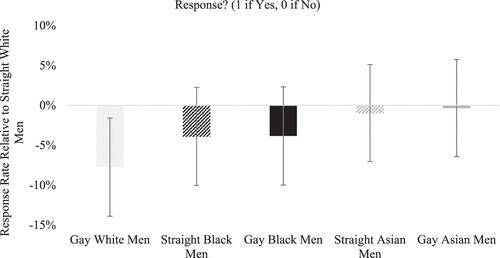
Note. Error bars are 95% confidence intervals.
|
Table 2. Regressions Estimating Effects of Buyer Identity on Outcome Variables in Field Experiment
| Dependent variable | Model 1 | Model 2 | Model 3 | Model 4 | Model 5 |
|---|---|---|---|---|---|
| Response? (one if yes, zero if no) | Politeness of first response (no interpolation) | Politeness of first response (with interpolation) | Willing to negotiate? (one if yes, zero if no) | Discount rate (1.00 is no discount) | |
| Black buyer | −0.0389 | −0.127* | −0.126* | −0.0127 | 0.00134 |
| (0.0313) | (0.0495) | (0.0512) | (0.0317) | (0.00355) | |
| Asian buyer | −0.00961 | −0.189*** | −0.105* | 0.0165 | 0.00196 |
| (0.0310) | (0.0484) | (0.0511) | (0.0316) | (0.00355) | |
| Gay buyer | −0.0774* | −0.0594 | −0.136** | −0.0432 | 0.00239 |
| (0.0314) | (0.0500) | (0.0511) | (0.0316) | (0.00355) | |
| Black × Gay buyer | 0.0780 | 0.0638 | 0.144* | 0.0447 | 0.00111 |
| (0.0444) | (0.0710) | (0.0726) | (0.0447) | (0.00504) | |
| Asian × Gay buyer | 0.0836 | 0.131 | 0.177* | 0.0407 | −0.00437 |
| (0.0438) | (0.0698) | (0.0721) | (0.0444) | (0.00501) | |
| List price | 0.00000350*** | 0.00000211 | 0.00000647*** | 0.00000354*** | 0.000000154 |
| (0.000000818) | (0.00000120) | (0.00000128) | (0.000000858) | (0.0000000888) | |
| Days since listing posted | −0.00538** | −0.00333 | −0.00704* | −0.00540** | 0.0000142 |
| (0.00172) | (0.00297) | (0.00284) | (0.00170) | (0.000197) | |
| Fixed effects for car type? | Yes | Yes | Yes | Yes | Yes |
| Fixed effects for car condition? | Yes | Yes | Yes | Yes | Yes |
| Fixed effects for county? | Yes | Yes | Yes | Yes | Yes |
| Fixed effects for day of week? | Yes | Yes | Yes | Yes | Yes |
| Constant | 0.346 | 1.016 | −0.172 | 0.254 | 0.949*** |
| (0.242) | (0.601) | (0.424) | (0.252) | (0.0295) | |
| Observations | 3,000 | 1,707 | 3,000 | 3,000 | 3,000 |
| R2 | 0.0622 | 0.0630 | 0.0612 | 0.0468 | 0.0433 |
Notes. This table reports the results of OLS regression models predicting the specified dependent variable. Model 1 predicts whether the seller responded. Models 2 and 3 predict the politeness of the first response with Model 2 not including nonresponses and Model 3 interpolating nonresponses as the least polite response observed. Model 4 predicts the willingness to negotiate expressed in the first response. Model 5 predicts the discount rate with higher numbers reflecting higher prices. All regressions include controls for the list price; the number of days between when the listing was posted and when the buyer contacted the seller; and fixed effects for the type of car, the condition of the car, the county in which the car was posted, and the day of the week the seller was contacted. For binary DVs, robust standard errors were used. Standard errors are reported in parentheses.
*, **, and *** represent significance at the 5%, 1%, and 0.1% levels, respectively.
Meanwhile, focusing on differences across sexuality, sellers were significantly less likely to respond to gay White men (50.9%) than straight White men (regression estimate: b = −0.077, p = 0.014, 95% CI [−0.139, −0.016]). On the other hand, gay Black men (55.2%) and straight Black men received responses at similar rates (regression estimate: b = 0.0006, p = 0.985, 95% CI [−0.061, 0.062]), as did gay East Asian men (57.8%) and straight East Asian men (regression estimate: b = 0.0062, p = 0.840, 95% CI [−0.054, 0.066]).
These results suggest that gay White men were less likely to receive responses than straight White men, but we did not find significant differences in response rates based on race, nor did we find differences based on sexuality for Black or East Asian men. This pattern of results is more consistent with Hypothesis 4 (and a lens-based account of intersectionality) rather than Hypotheses 1–3, given that negotiation outcomes for racial minority men were largely similar regardless of sexuality. Although it is impossible to prove a null, two pieces of evidence suggest that our results are informative. First, the fact that sexuality influenced negotiation outcomes for White men suggests that our manipulation of sexuality was successful. This difference in response rates between gay and straight White men survives an alpha correction for multiple hypothesis testing of a disjunctive test with three comparisons (Rubin 2021). Second, when running an interaction to test whether the effect of sexuality for White men is significantly different than the effect of sexuality for Black or East Asian men, we find that the interaction between being gay and being a racial minority is statistically significant for response rates (b = 0.081, p = 0.035, 95% CI [0.006, 0.156]). Thus, at the very least, our findings suggest that the effect of sexuality on negotiation outcomes operates differently for racial minority men than it does for White men.
Politeness of the Response.
Although we preregistered conducting exploratory analyses using the “politeness” R package, we did not preregister how to deal with missing data, so we conducted these analyses in three ways to show robustness. First, we did not interpolate nonresponses (i.e., we did not analyze data from people who did not respond to our initial emails). Focusing on race-based differences, we found that responses to straight Black men were significantly less polite (M = 0.586, SD = 0.575) than responses to straight White men (M = 0.704, SD = 0.612; regression estimate: b = −0.127, p = 0.011, 95% CI [−0.224, −0.030]; see Table 2, Model 2, and Figure 3). Relative to straight White men, straight East Asian men (M = 0.546, SD = 0.541) also received responses that were significantly less polite (regression estimate: b = −0.189, p < 0.001, 95% CI [−0.284, −0.094]).
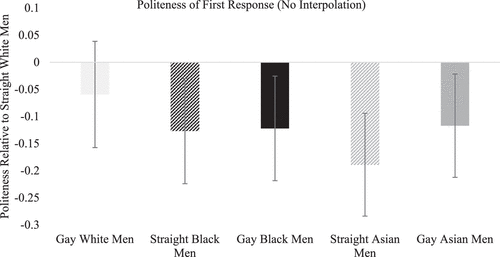
Note. Error bars are 95% confidence intervals.
On the other hand, there were no significant differences in politeness because of sexuality for buyers of any race. Gay White men (M = 0.654, SD = 0.605) received similarly polite responses as straight White men (regression estimate: b = −0.059, p = 0.235, 95% CI [−0.158, 0.039]), gay Black men (M = 0.582, SD = 0.610) received similarly polite responses as straight Black men (regression estimate: b = 0.004, p = 0.931, 95% CI [−0.094, 0.103]), and gay East Asian men (M = 0.598, SD = 0.568) received similarly polite responses as straight East Asian men (regression estimate: b = 0.071, p = 0.142, 95% CI [−0.024, 0.167]). Responses to gay Black men and gay East Asian men were also significantly less polite than responses to straight White men (regression estimates: b = −0.122, p = 0.013, 95% CI [−0.219, −0.026]; b = −0.117, p = 0.016, 95% CI [−0.213, −0.022], respectively).
Second, we interpolated nonresponses with the least polite response we received (i.e., we treated not receiving a response as equivalent to the least polite response in our data). When we focus on politeness differences across races, we find results consistent with our initial analysis strategy: sellers’ initial responses to straight Black men (M = −0.021, SD = 0.799; regression estimate: b = −0.126, p = 0.014, 95% CI [−0.226, −0.025]; see Table 2, Model 3, and Figure 4) and straight East Asian men (M = 0.010, SD = 0.770; regression estimate: b = −0.105, p = 0.039, 95% CI [−0.205, −0.005]) were significantly less polite than responses to straight White men (M = 0.107, SD = 0.865).
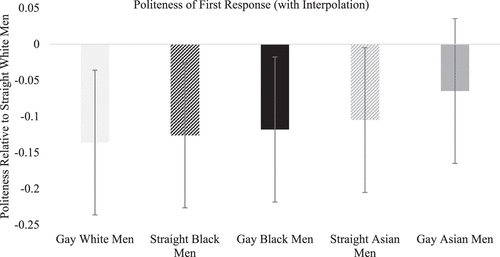
Note. Error bars are 95% confidence intervals.
Turning our attention to differences based on sexual orientation, we found that sellers were significantly less polite to gay White men (M = −0.025, SD = 0.836) than to straight White men (regression estimate: b = −0.136, p = 0.008, 95% CI [−0.236, −0.036]). Again, there were no differences in the politeness of responses sent to straight versus gay Black or East Asian men (p’s > 0.426). Gay Black men received significantly less polite responses than straight White men (M = −0.012, SD = 0.813; regression estimate: b = −0.118, p = 0.022, 95% CI [−0.218, −0.017]), but the difference between gay East Asian men and straight White men was not significant in this analysis (M = 0.036, SD = 0.803; regression estimate: b = −0.065, p = 0.205, 95% CI [−0.165, 0.035]).
Third, the results remain consistent when we interpolate nonresponses with the average level of politeness to straight White men rather than with the least polite response we received (i.e., we replicated the politeness difference between Black men and straight White men as well as between East Asian men and straight White men; see the Online Supplement).
Together, these analyses suggest that Black men and East Asian men—regardless of sexuality—received less polite negotiation responses than straight White men. We did not find consistent differences in the politeness of responses based on sexual orientation for men of any race. This pattern of results is more consistent with Hypothesis 4 than Hypotheses 1–3. Again, although null hypothesis significance testing cannot prove a null, when we run a regression predicting politeness (interpolating nonresponses as minimally polite) with the interaction between being gay and being a racial minority, we find that the effect of sexuality for White men is significantly different than the effect of sexuality for racial minority men (b = 0.161, p = 0.012, 95% CI [0.035, 0.286]). These findings once again suggest that the effect of sexuality on negotiation outcomes operates differently for racial minority men than it does for White men.
Willingness to Negotiate (Binary).
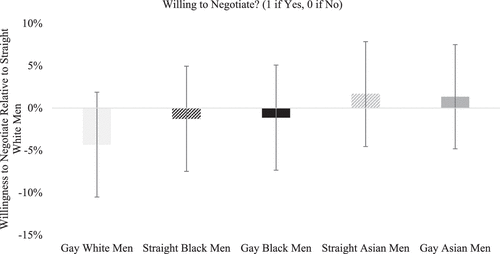
We did not find significant differences in willingness to negotiate across buyer race (see Figure 5). Straight White men received responses that indicated sellers were willing to negotiate 46.3% of the time, which was not statistically different compared with straight Black men (44.3%; regression estimate: b = −0.013, p = 0.688, 95% CI [−0.075, 0.049]; see Table 2, Model 4) or straight East Asian men (47.7%; regression estimate: b = 0.017, p = 0.601, 95% CI [−0.045, 0.078]).
Note. Error bars are 95% confidence intervals.
There were also no significant differences in willingness to negotiate between gay White men (41.5%) and straight White men (regression estimate: b = −0.043, p = 0.172, 95% CI [−0.105, 0.019]), between gay Black men (45.0%) and straight Black men (regression estimate: b = 0.001, p = 0.964, 95% CI [−0.061, 0.064]), nor between gay East Asian men (46.8%) and straight East Asian men (regression estimate: b = −0.003, p = 0.935, 95% CI [−0.064, 0.059]). Again, these results are more consistent with Hypothesis 4 than Hypotheses 1–3.
Final Negotiated Price.
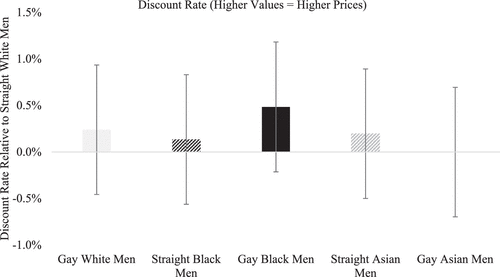
We did not find any significant differences in the final negotiated price by condition (see Figure 6). Recall that sellers who did not respond were coded as offering no discount (i.e., a final price that was 100% of the original list price), but we include robustness checks in which nonresponses are excluded in our Online Supplement. Specifically, straight White men were offered a final price that was, on average, 96.8% of the original list price, whereas straight Black men were offered 97.0% (regression estimate: b = 0.0013, p = 0.705, 95% CI [−0.0056, 0.0083]; see Table 2, Model 5), and straight East Asian men were offered 97.0% (regression estimate: b = 0.0020, p = 0.580, 95% CI [−0.0050, 0.0089]).
Note. Error bars are 95% confidence intervals.
Similarly, gay White men were offered a final price that was, on average, 97.2% of the original price, and this did not differ significantly from the price offered to straight White men (regression estimate: b = 0.0024, p = 0.501, 95% CI [−0.0046, 0.0094]). Gay Black men (97.3%) did not receive significantly different prices than straight Black men (regression estimate: b = 0.0035, p = 0.327, 95% CI [−0.0034, 0.011]), nor did gay East Asian men (96.9%) as compared with straight East Asian men (regression estimate: b = −0.0020, p = 0.576, 95% CI [−0.0089, 0.0050]).
Other Preregistered Analyses.
See the Online Supplement for additional details about other exploratory preregistered analyses.
Discussion
In real online negotiations for cars, we found that sellers were less likely to respond to gay White men than straight White men, providing empirical support for recent research suggesting that gay men receive worse negotiation outcomes than straight men (Desai and Gunia 2023). We did not find significant effects on economic outcomes (i.e., final negotiated price) based on race, suggesting that blatant discrimination may have played a less prominent role in this specific context as compared with past research on racial discrimination in negotiation (Ayres and Siegelman 1995). Rather than blatant discrimination, however, we found that sellers were less polite in negotiations with Black men and East Asian men (of any sexual orientation) as compared with straight White men, consistent with research suggesting that modern forms of discrimination may manifest as selective incivility (Cortina 2008, Cortina et al. 2013, Block et al. 2021, Doering and Tilcsik 2025). We examine the consequences of this impoliteness in a follow-up experiment and return to the lack of significant effects on economic outcomes in the general discussion.
In general, straight Black men and gay Black men received similar negotiation outcomes, as did straight East Asian men and gay East Asian men. And we found statistically significant evidence that sexual orientation has a different effect on the response rates and politeness to White men than to racial minority men, a pattern of results that is more consistent with a lens-based account of intersectional stereotyping (Petsko and Bodenhausen 2020, Petsko et al. 2022) than the double jeopardy hypothesis, intersectional invisibility hypothesis, or MOSAIC. In other words, the totality of our results were more consistent with Hypothesis 4 than Hypotheses 1–3 (see Figure 1 for a comparison between predicted differences in outcomes according to each intersectionality theory and actual differences documented in this study).
We should, of course, be careful not to overinterpret null findings; the absence of evidence is not evidence of absence. For some of our measures (e.g., response rates, politeness), it is helpful that we find significant differences between some conditions, suggesting that we are not simply underpowered to detect any meaningful effects. In addition, we found that 30% of all sellers confirmed a lower price in follow-up emails (including those who never responded; among those who responded, 53.6% confirmed a lower price in an email), suggesting that we need not worry about floor effects masking treatment effects. However, we recognize that we do not find significant differences for other measures (e.g., final negotiated price).
To put our effect sizes into context, prior field experiments on negotiation using Craigslist have reported differences in response rates between conditions ranging from 8.7 percentage points (Jeong et al. 2019) to 17.3 percentage points (Jeong et al. 2020) and sample sizes ranging from 107 participants per cell (Leigh and Desai 2023) to 387 participants per cell (Jeong et al. 2019). Based on our sample size of 500 per cell and a baseline response rate of 58.5% in the straight White man condition, we had 80% power to detect response rate differences of roughly 8.5 percentage points between conditions, suggesting that we were well powered to detect effects of the size found in prior research. However, we do not intend to claim that we have precisely estimated null effects; instead, these results should be interpreted as ruling out effect sizes that are at least as large as those found in the prior literature.
Follow-Up Online Experiment: Examining How (Im)Politeness Affects Future Negotiations
Given that sellers in our field experiment responded significantly less politely to Black and East Asian men, we wanted to explore the consequences of this incivility for those experiencing it. Specifically, experiencing incivility can negatively affect its targets in a variety of important ways (see Schilpzand et al. 2016 for a review). The goal of this experiment was to examine whether the range of politeness found in responses in our field experiment predicted negotiators’ expectations about negotiations and behavioral intentions to negotiate in the future. If incivility harms negotiation expectations and intentions (as tested in this experiment) and if different demographic groups receive responses to negotiation inquiries with different levels of incivility (as found in the field experiment), the increased incivility experienced by Black and East Asian men may make them less likely to initiate negotiations in the future.
This study’s preregistration can be accessed at https://aspredicted.org/CML_JLD.
Methods
Participants.
We recruited 500 people (44.8% identified as men, 53.6% as women, 1.6% as another gender identity; 64.6% identified as monoracial White, 13.0% as Black, 9.2% as Asian, 6.0% as Hispanic, 7.2% as multiracial or another identity) on Prolific to complete a three-minute survey for $0.60.
Procedure.
Participants were asked to imagine that they were looking to buy a car online. They saw a posting of a car that fit what they were looking for, so they sent the seller an email modeled after the emails we sent in the field experiment (“My name is [insert name] and my partner and I are interested in the car you posted online. It seems like a good match for what I’m looking for. Is the price negotiable, and if so, how low are you willing to go? I look forward to hearing from you.”).
Using the politeness package (Yeomans et al. 2018) to score the politeness of each response from our field experiment, we randomly sampled 50 actual responses across the politeness distribution. Participants were then randomly assigned to see one of these 50 responses (see the Online Supplement for the full list of responses and algorithmically determined politeness scores). This process generated a continuous, randomly assigned independent variable (algorithmically generated politeness score) that allows us to make causal inferences about responses to (im)politeness in negotiations.
After reading the response, participants responded to our measures, which were presented in randomized order. Finally, they filled out demographic questions.
Measures
Expectations About Negotiations.
We asked participants four questions taken from the expectations about negotiations scale (Small et al. 2007). Participants rated the extent to which they expected negotiations to be difficult/easy, scary/nonthreatening, agonizing/fun, and overbearing/reasonable on seven-point scales (higher values represent more pleasant expectations). We averaged participants’ ratings of each item (alpha = 0.89).
Behavioral Intention to Negotiate.
To measure participants’ behavioral intentions to negotiate in the future, we asked participants, “After this experience, how likely would you be to initiate negotiations when making large purchases in the future on a scale of 1 (extremely unlikely) to 7 (extremely likely)?”
Results and Discussion
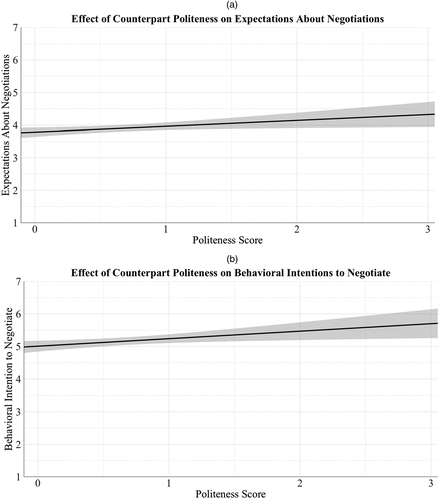
We found that the algorithmically determined politeness score was a significant positive predictor of participants’ expectations about negotiations (b = 0.180, p = 0.025, 95% CI [0.023, 0.337]; see Figure 7, panel (a)) and behavioral intentions to negotiate in the future (b = 0.230, p = 0.013, 95% CI [0.048, 0.412]; see Figure 7, panel (b)). In other words, exposure to less polite responses caused participants to feel worse about negotiations and be less likely to report being willing to negotiate large purchases in the future. These results suggest that the impoliteness in negotiations that racial minorities in our field experiment experienced can have consequences for people’s future negotiation propensity. Hence, we suggest that one potential driver of apparent supply-side differences in willingness to negotiate may in fact be demand-side differences in how people treat racial minorities during negotiations (Bowles et al. 2007).
Note. Shaded areas represent 95% confidence intervals.
General Discussion
Our preregistered field experiment (n = 3,000) examined how race and sexual orientation influence distributive negotiation outcomes for men. We found that gay White men were 22.4% (7.7 percentage points) less likely to receive responses to their queries than straight White men, suggesting that people exhibit a baseline aversion to negotiating with gay (versus straight) White men. Although we found that Black and East Asian men of both sexualities received response rates similar to straight White men, they experienced a different form of backlash: impoliteness. Specifically, sellers’ responses to inquiries from Black and East Asian men were significantly less polite than their responses to straight White men. In a preregistered follow-up study, we found that experiencing impoliteness in negotiations lowers expectations about negotiations and behavioral intentions to negotiate in the future.
Our work illuminates how identity influences distributive negotiation outcomes and contributes to a nascent understanding of the experiences of gay men in organizational contexts (Tilcsik 2011, Cech and Waidzunas 2021). We found that sellers were less likely to respond to negotiations initiated by gay White men than straight White men, consistent with recent research suggesting a negotiation penalty for gay White men (Desai and Gunia 2023). Just as differences in negotiation outcomes for women have been used to explain gender gaps in wealth and leadership attainment, our results could help explain the rainbow glass ceiling or the underrepresentation of gay men in leadership and the C-suite (Federo 2024). Our results suggest that we should not assume that men always achieve the best negotiation outcomes. Instead, we may need concerted efforts to help level the negotiation playing field for gay men. We also shed light on the experiences of gay men of color. Despite being a group that faces multiple stigmas in the workplace and in society and faces unique challenges relative to gay White men (Balsam et al. 2011, Cyrus 2017), there is a dearth of research on the negotiation experiences of gay men of color. Examining the experiences of gay men of color adds to our understanding of identity in negotiations.
Our work also contributes to scholarship on intersectionality. There are multiple proposed theories about how intersectional identities shape people’s outcomes, and these theories make conflicting predictions in some situations. By examining the negotiation experiences of gay Black men and gay East Asian men, we are able to provide an empirical test of competing theories in the context of distributive negotiations and help determine which theory makes the most accurate predictions in this high-stakes setting. Given that we find that gay Black men and gay East Asian men appear to receive similar negotiation outcomes as straight Black men and straight East Asian men, respectively, and that sexuality influences response rates and politeness significantly differently for White men than it does for racial minority men, our results are most consistent with a lens-based account of intersectional stereotyping (Petsko and Bodenhausen 2020, Petsko et al. 2022). Specifically, people seem to be using a race-based lens in distributive negotiation contexts. Our results are less consistent with the predictions taken from the double jeopardy hypothesis, intersectional invisibility hypothesis, or MOSAIC.
Testing competing theories in this manner is critical because, without a clear understanding of how intersectionality works, we may make the wrong prescriptions and design the wrong organizational policies for people with multiple marginalized identities. For example, intersectional invisibility and MOSAIC both predict that gay Black men face fewer stereotype constraints than straight Black men and, therefore, should achieve better outcomes than straight Black men. Indeed, there exists some online and laboratory-based (but no field) research that supports these hypotheses (Remedios et al. 2011, Pedulla 2014, Wilson et al. 2017). Well-intentioned managers could interpret these predictions as meaning that they can focus less attention on gay Black men in equity efforts, believing that they face fewer barriers. Our results suggest that—at least in certain contexts—this diversion of attention may be misguided as gay Black men face similar barriers and constraints as straight Black men and should not be forgotten.
Although we did not find discrimination in final negotiated prices in our audit experiment, our findings corroborate scholarship about selective incivility as a modern form of discrimination (Cortina et al. 2013, Voigt et al. 2017, Block et al. 2021). Our results suggest that blatant discrimination may be less common in current times, but biased treatment may still exist (Kroeper et al. 2019), given that sellers avoided responding to gay White men and were less polite to Black and East Asian men. Our second study also shows that the impoliteness directed at racial minority men may be consequential for future negotiation behavior. These results suggest that demand-side bias (e.g., incivility in interactions with Black and East Asian men) may drive previously identified supply-side differences in propensity to negotiate (Small et al. 2007, Lu 2023). If people from minoritized groups face more impoliteness in negotiations, these individuals may be less likely to negotiate in the future, which may harm their economic outcomes. Without considering this, policy makers may incorrectly assume that Black and East Asian men are innately less willing to negotiate. Rather than exhorting minoritized groups to negotiate more, which may risk exposing marginalized group members to even more interpersonal injustice, we may need to exert more effort to reduce the experiences of bias that minoritized groups face during negotiations or otherwise find ways to buffer them from the negative effects of incivility (Wang et al. 2025). Without tackling the demand-side bias people from minoritized groups face, we may be perpetuating a negative cycle of experiences.
Our findings around incivility also have implications for organizational policies. Our work points to the importance of collecting new forms of data (e.g., text, conversation, body language) that allow for analyses of more subtle forms of bias. Had we only collected final negotiated prices, we would have missed an important way in which people of color are differentially treated. For example, in a car dealership, it could be useful to track average prices of cars sold or average discounts given to people of different identity groups to ensure that some groups are not systematically disadvantaged in negotiations. But it may also be useful to track outcomes that are not as easily quantified such as the language that employees use toward customers to ensure that disparate treatment is not happening in these interactions. Indeed, research that analyzes body-camera footage has shown that police officers use significantly less respectful language toward Black people compared with White people (Voigt et al. 2017), and this may contribute to systematically different police–community dynamics for people of different racial groups. Thus, even if more easily quantifiable metrics such as the number of traffic stops were at parity, without examining language, we would miss disparate treatment.
Our findings have implications not just for customers being treated differently by employees but also for employees being treated differently by customers. For example, at a car dealership, racial minority salespeople may experience more incivility than White salespeople when negotiating with customers. Given that experiencing incivility can lead people to perpetuate incivility in other interactions, cause detriments to mood and self-esteem, and decrease team performance (Riskin et al. 2015, Rosen et al. 2016, Adiyaman and Meier 2022), organizations may want to design systems to buffer racial minority employees from these experiences of incivility.
Limitations and Future Directions
There are important limitations to our work. First, we only examine men’s negotiation outcomes. Future work should explore how race and sexuality influence negotiation outcomes for women and people of other gender identities. For example, the pattern of results we document here could look quite different for gay versus straight White women. Sexual orientation may have an inversion effect on stereotypes for women (Kite and Deaux 1987, Hudson and Ghani 2024), and this may benefit gay women in negotiation contexts (Desai and Gunia 2023). In addition, past research documents that Black women may have advantages in negotiations because stereotypes of Black women as agentic and assertive are less incongruous with stereotypes of successful negotiators than are stereotypes of White women (Leigh and Desai 2023). When considering the intersection of these identities, negotiators’ stereotypes of and behavior toward women may be even more complex. We also only examined Black, East Asian, and White groups; it would be useful to examine other racial identity groups, especially given research suggesting there may be negotiation differences between East Asians, Southeast Asians, and South Asians (Lu 2023).
Second, we are unable to disentangle how the identity of the seller may influence negotiation outcomes. The negotiations we study are dyadic interactions, involving both a buyer (us) and a seller. However, we do not know who the sellers are, limiting our ability to investigate how the combination of identities between the buyer and seller affects negotiation outcomes. For example, it is possible that gay sellers would not be less likely to respond to gay buyers, that Black sellers would not be less polite to Black buyers, or that East Asian sellers would not be less polite to East Asian buyers because of homophily or other in-group preferences (Mollica et al. 2003, Kleinbaum et al. 2013). Future research should examine how the combination of identities in a dyadic interaction influences negotiation outcomes for both parties.
Third, we used a standardized negotiation script, and this may have limited our ability to detect bias or discrimination in final negotiated prices. Using a standardized script offered experimental control, but given that we detected differences in how sellers respond to buyers based on identity, we may have masked our ability to understand the naturalistic dynamics of negotiation interactions. Further, using the same script across identities may have diminished the importance of supply-side effects in driving negotiation outcomes as it is possible that people from different identity groups engage in negotiation in systematically different ways.
We were also negotiating for cars, a stereotypically male domain, and this could have dampened bias that may have been evident in other negotiation domains (Bowles et al. 2022) or exacerbated bias against gay White men (Kite and Deaux 1987, Madon 1997). The negotiations were also distributive as opposed to integrative, and this may have made expectations of agency and aggression more salient. In addition, our fictitious buyers were married. Past research identifies wage premiums for married straight White men (Pollmann-Schult 2011, McDonald 2020), and this means our results could have differed if we instead examined single men. Our negotiations also all took place online, which may have mitigated discrimination, and in the United States, which limits our ability to make inferences about the effects of race and sexual orientation in other countries.
Our work illuminates the need for more research to explore the interplay between context and identity in influencing negotiation outcomes. Although our results are most consistent with the lens-based account of intersectional stereotyping (Petsko et al. 2022), this may be in part because of the model’s flexibility. According to this account, the same person may be stereotyped differently depending on which lens is in focus (e.g., a race lens, a sexual orientation lens, or an intersectional lens). Although we believe that our overall conclusion generalizes (the best supported model of intersectionality is the lens-based account), future work should examine which features of the context predict which lens is in focus—and why—to improve our understanding of intersectionality and how identity influences consequential organizational processes.
Finally, although we show that incivility influences people’s negotiation expectations and behavioral intentions to negotiate in the future, in the real world, experiences of incivility—and even what is construed as uncivil—may vary depending on identity. For example, the question “Where are you from?” may be construed differently by Asian Americans than members of other racial groups in the United States (Cheryan and Monin 2005). Incivility may also be more consequential if it is constantly experienced than if it is a relatively rare occurrence in someone’s life. Future research could explore how identity influences perceptions of incivility and how theories of intersectionality inform these perceptions and consequences, given that recent work documents that minority identities can influence responses to various organizational constraints and situations (Trzebiatowski et al. 2023, Knowlton 2025, Pink et al. 2025).
Conclusion
Our work illuminates the need for additional research on how identity influences negotiations. It is also a call for more work that attempts to disentangle when different theories of intersectionality make accurate predictions. Our work highlights the importance of both examining understudied identities (e.g., sexual orientation) and considering intersections of identities (e.g., race and sexual orientation) to test when extant theories make competing—as opposed to the same—predictions. Our results also suggest that we should not assume that apparent supply-side differences in negotiation propensity or behavior are inherently driven by supply-side factors. Instead, we may need to design organizational structures and policies to ensure that demand-side bias does not differentially affect people from different identity groups.
The authors thank Ivan Carbajal, Charles Chu, Sreedhari Desai, Jin Goh, Alex Imas, Jon Jachimowicz, Leslie John, Michael Norton, Christopher Petsko, Basima Tewfik, Ting Zhang, and seminar participants at the Tuck School of Business for feedback on this work. The authors are also extremely grateful to the many people who provided research assistance on this project, including Sanurag Basu, Isa Cuevas, Jordyn Hitzeman, Anoushka Kiyawat, Madison Rhee, Matthew Ryan, Cherie Sang, Simon Wesenberg, Marisa Wolfson, Kayla Zhang, and Xingruo Zhang, with particular thanks to Benjamin Keller, Austin Smith, and Emmet Sullivan. The authors are also grateful for the support provided by the Biehler Junior Faculty Fellowship at the University of Chicago Booth School of Business.
References
- (2022) Short-term effects of experienced and observed incivility on mood and self-esteem. Work Stress 36(2):133–146.Crossref, Google Scholar
- (2021) Intersected groups and discriminatory everyday behavior. Soc. Psych. 52(6):351–361.Crossref, Google Scholar
- (2020) The straight categorization bias: A motivated and altruistic reasoning account. J. Personality Soc. Psych. 119(6):1266–1289.Crossref, Google Scholar
- (2010) Negotiating gender roles: Gender differences in assertive negotiating are mediated by women’s fear of backlash and attenuated when negotiating on behalf of others. J. Personality Soc. Psych. 98(2):256–267.Crossref, Google Scholar
- (2013) Punishing female negotiators for asserting too much…or not enough: Exploring why advocacy moderates backlash against assertive female negotiators. Organ. Behav. Human Decision Processes 120(1):110–122.Crossref, Google Scholar
- (2014) The shifting landscape of LGBT organizational research. Res. Organ. Behav. 34:3–25.Crossref, Google Scholar
- (1995) Race and gender discrimination in bargaining for a new car. Amer. Econom. Rev. 85(3):304–321.Google Scholar
- (2009) Women Don’t Ask: Negotiation and the Gender Divide (Princeton University Press, Princeton, NJ).Google Scholar
- (2019) Is man the measure of all things? A social cognitive account of androcentrism. Personality Soc. Psych. Rev. 23(4):307–331.Crossref, Google Scholar
- (2011) Measuring multiple minority stress: The LGBT People of Color Microaggressions Scale. Cultural Diversity Ethnic Minority Psych. 17(2):163–174.Crossref, Google Scholar
- (1998) Bargainer characteristics in distributive and integrative negotiation. J. Personality Soc. Psych. 74(2):345–359.Crossref, Google Scholar
- (1993) Negotiating Rationally (Simon and Schuster, New York).Google Scholar
- (1970)
Double jeopardy: To be Black and female. Cade T, ed. The Black Woman: An Anthology (Signet, New York), 90–100.Google Scholar - (2012) Prescriptive stereotypes and workplace consequences for East Asians in North America. Cultural Diversity Ethnic Minority Psych. 18(2):141–152.Crossref, Google Scholar
- (2006) Workplace harassment: Double jeopardy for minority women. J. Appl. Psych. 91(2):426–436.Crossref, Google Scholar
- (2021) Are Americans less likely to reply to emails from Black people relative to White people? Proc. Natl. Acad. Sci. USA 118(52):e2110347118.Crossref, Google Scholar
- (2007) Social incentives for gender differences in the propensity to initiate negotiations: Sometimes it does hurt to ask. Organ. Behav. Human Decision Processes 103(1):84–103.Crossref, Google Scholar
- (2022) When gender matters in organizational negotiations. Annual Rev. Organ. Psych. Organ. Behav. 9:199–223.Crossref, Google Scholar
- (2019) Wealthy Whites and poor Blacks: Implicit associations between racial groups and wealth predict explicit opposition toward helping the poor. J. Experiment. Soc. Psych. 82:26–34.Crossref, Google Scholar
- (2021) Systemic inequalities for LGBTQ professionals in STEM. Sci. Adv. 7(3):eabe0933.Crossref, Google Scholar
- (2005) Where are you really from? Asian Americans and identity denial. J. Personality Soc. Psych. 89(5):717–730.Crossref, Google Scholar
- (2011) Taking sides: The interactive influences of institutional mechanisms on the adoption of same-sex partner health benefits by Fortune 500 corporations, 1990–2003. Organ. Sci. 22(1):190–209.Link, Google Scholar
- (2017) The size of the LGBT population and the magnitude of antigay sentiment are substantially underestimated. Management Sci. 63(10):3168–3186.Link, Google Scholar
- (2008) Unseen injustice: Incivility as modern discrimination in organizations. Acad. Management Rev. 33(1):55–75.Crossref, Google Scholar
- (2013) Selective incivility as modern discrimination in organizations: Evidence and impact. J. Management 39(6):1579–1605.Google Scholar
- (2017) Multiple minorities as multiply marginalized: Applying the minority stress theory to LGBTQ people of color. J. Gay Lesbian Mental Health 21(3):194–202.Crossref, Google Scholar
- (2021) The dynamics of gender and alternatives in negotiation. J. Appl. Psych. 106(11):1655–1672.Crossref, Google Scholar
- (2023) The interplay of gender and perceived sexual orientation at the bargaining table: A social dominance and intersectionalist perspective. Organ. Behav. Human Decision Processes 179:104279.Crossref, Google Scholar
- (2025) Location matters: Everyday gender discrimination in remote and on-site work. Organ. Sci. 36(2):547–571.Link, Google Scholar
- (2021) Race–status associations: Distinct effects of three novel measures among White and Black perceivers. J. Personality Soc. Psych. 120(3):601–625.Crossref, Google Scholar
- (2024) The rainbow glass ceiling: Breaking barriers for LGBTQ+ inclusion in board diversity. Acad. Management Perspect. 38(3):325–348.Crossref, Google Scholar
- (2002) A model of (often mixed) stereotype content: Competence and warmth respectively follow from perceived status and competition. J. Personality Soc. Psych. 82(6):878–902.Crossref, Google Scholar
- (2013) Gendered races: Implications for interracial marriage, leadership selection, and athletic participation. Psych. Sci. 24(4):498–506.Crossref, Google Scholar
- (2013) An intersectional analysis of gender and ethnic stereotypes: Testing three hypotheses. Psych. Women Quart. 37(1):113–127.Crossref, Google Scholar
- (2022) Narrow prototypes and neglected victims: Understanding perceptions of sexual harassment. J. Personality Soc. Psych. 122(5):873–893.Crossref, Google Scholar
- (2015) Conflict templates in negotiations, disputes, joint decisions, and tournaments. Soc. Psych. Personality Sci. 6(1):13–22.Crossref, Google Scholar
- (2012) Mind games: The mental representation of conflict. J. Personality Soc. Psych. 102(1):132–148.Crossref, Google Scholar
- (2015) Gender profiling: A gendered race perspective on person–position fit. Personality Soc. Psych. Bull. 41(6):853–868.Crossref, Google Scholar
- (2019) MOSAIC: A model of stereotyping through associated and intersectional categories. Acad. Management Rev. 44(3):643–672.Crossref, Google Scholar
- (2017) On the failure to notice that White people are White: Generating and testing hypotheses in the celebrity guessing game. J. Experiment. Psych. General 146(1):41–62.Crossref, Google Scholar
- (2001) The effects of social category norms and stereotypes on explanations for intergroup differences. J. Personality Soc. Psych. 80(5):723–735.Crossref, Google Scholar
- (2001) Description and prescription: How gender stereotypes prevent women’s ascent up the organizational ladder. J. Soc. Issues 57(4):657–674.Crossref, Google Scholar
- (2019) Bargaining while Black: The role of race in salary negotiations. J. Appl. Psych. 104(4):581–592.Crossref, Google Scholar
- (2009) Not with a ten-foot pole: Core stigma, stigma transfer, and improbable persistence of men’s bathhouses. Organ. Sci. 20(1):134–153.Link, Google Scholar
- (2024) Sexual orientation and race intersectionally reduce the perceived gendered nature of normative stereotypes in the United States. Psych. Women Quart. 48(1):56–79.Crossref, Google Scholar
- (2020) In generous offers I trust: The effect of first-offer value on economically vulnerable behaviors. Psych. Sci. 31(6):644–653.Crossref, Google Scholar
- (2019) Communicating with warmth in distributive negotiations is surprisingly counterproductive. Management Sci. 65(12):5813–5837.Link, Google Scholar
- (2012) Race is gendered: How covarying phenotypes and stereotypes bias sex categorization. J. Personality Soc. Psych. 102(1):116–131.Crossref, Google Scholar
- (1987) Gender belief systems: Homosexuality and the implicit inversion theory. Psych. Women Quart. 11(1):83–96.Crossref, Google Scholar
- (2013) Discretion within constraint: Homophily and structure in a formal organization. Organ. Sci. 24(5):1316–1336.Link, Google Scholar
- (2025) Trailblazing motivation and marginalized group members: Changing expectations to pave the way for others. Organ. Sci. 36(1):477–513.Link, Google Scholar
- (2004) Gender stereotypes and negotiation performance: An examination of theory and research. Res. Organ. Behav. 26:103–182.Crossref, Google Scholar
- (2019) Marriage equality: On the books and on the ground? An experimental audit study of beliefs and behavior towards same‐sex and interracial couples in the wedding industry. Anal. Soc. Issues Public Policy 19(1):50–77.Crossref, Google Scholar
- (2010) Theory pruning: Strategies to reduce our dense theoretical landscape. Organ. Res. Methods 13(4):644–667.Crossref, Google Scholar
- (2023) What’s race got to do with it? The interactive effect of race and gender on negotiation offers and outcomes. Organ. Sci. 34(2):935–958.Link, Google Scholar
- (2012) Can an agentic Black woman get ahead? The impact of race and interpersonal dominance on perceptions of female leaders. Psych. Sci. 23(4):354–358.Crossref, Google Scholar
- (2023) Asians don’t ask? Relational concerns, negotiation propensity, and starting salaries. J. Appl. Psych. 108(2):273–290.Crossref, Google Scholar
- (2024) A creativity stereotype perspective on the bamboo ceiling: Low perceived creativity explains the underrepresentation of East Asian leaders in the United States. J. Appl. Psych. 109(2):238–256.Crossref, Google Scholar
- (2020) Why East Asians but not South Asians are underrepresented in leadership positions in the United States. Proc. Natl. Acad. Sci. USA 117(9):4590–4600.Crossref, Google Scholar
- (1997) What do people believe about gay males? A study of stereotype content and strength. Sex Roles 37(9–10):663–685.Crossref, Google Scholar
- (2011) Who asks and who receives in salary negotiation. J. Organ. Behav. 32(3):371–394.Crossref, Google Scholar
- (2015) A meta-analysis on gender differences in negotiation outcomes and their moderators. Psych. Bull. 141(1):85–104.Crossref, Google Scholar
- (2020) The male marriage premium: Selection, productivity, or employer preferences? J. Marriage Family 82(5):1553–1570.Crossref, Google Scholar
- (2003) Racial homophily and its persistence in newcomers’ social networks. Organ. Sci. 14(2):123–136.Link, Google Scholar
- (1991) Behavioral negotiation theory—A framework for conceptualizing dyadic bargaining. Res. Organ. Behav. 13:147–190.Google Scholar
- (2014) The positive consequences of negative stereotypes: Race, sexual orientation, and the job application process. Soc. Psych. Quart. 77(1):75–94.Crossref, Google Scholar
- (2020) Multifarious person perception: How social perceivers manage the complexity of intersectional targets. Soc. Personality Psych. Compass 14(2):e12518.Crossref, Google Scholar
- (2022) Through the looking glass: A lens-based account of intersectional stereotyping. J. Personality Soc. Psych. 123(4):763–787.Crossref, Google Scholar
- (2025) Can stereotype reactance prompt women to compete? A field experiment. Organ. Sci. 36(5):2008–2027.Link, Google Scholar
- (2011) Marriage and earnings: Why do married men earn more than single men? Eur. Sociol. Rev. 27(2):147–163.Crossref, Google Scholar
- (2022) “Invisible” discrimination: Divergent outcomes for the nonprototypicality of black women. Acad. Management J. 65(3):784–812.Crossref, Google Scholar
- (2008) Intersectional invisibility: The distinctive advantages and disadvantages of multiple subordinate-group identities. Sex Roles 59(5–6):377–391.Crossref, Google Scholar
- (1982) The Art and Science of Negotiation (Harvard University Press, Cambridge, MA).Google Scholar
- (2011) Impressions at the intersection of ambiguous and obvious social categories: Does gay + Black = likable? J. Experiment. Soc. Psych. 47(6):1312–1315.Crossref, Google Scholar
- (2015) The impact of rudeness on medical team performance: A randomized trial. Pediatrics 136(3):487–495.Crossref, Google Scholar
- (2024) LGBTQ systems: A framework and future research agenda. J. Management 50(3):1145–1173.Google Scholar
- (2016) Who strikes back? A daily investigation of when and why incivility begets incivility. J. Appl. Psych. 101(11):1620–1634.Crossref, Google Scholar
- (2021) When to adjust alpha during multiple testing: A consideration of disjunction, conjunction, and individual testing. Synthese 199(3):10969–11000.Crossref, Google Scholar
- (1999) Feminized management and backlash toward agentic women: The hidden costs to women of a kinder, gentler image of middle managers. J. Personality Soc. Psych. 77(5):1004–1010.Crossref, Google Scholar
- (2001) Prescriptive gender stereotypes and backlash toward agentic women. J. Soc. Issues 57(4):743–762.Crossref, Google Scholar
- (2016) Workplace incivility: A review of the literature and agenda for future research. J. Organ. Behav. 37(S1):S57–S88.Crossref, Google Scholar
- (2015) Gendered race prototypes: Evidence for the non-prototypicality of Asian men and Black women. J. Experiment. Soc. Psych. 56:121–125.Crossref, Google Scholar
- (2021) LGBT People’s Experiences of Workplace Discrimination and Harassment (William Institute UCLA School of Law, Los Angeles).Google Scholar
- (2011) Hot or cold: Is communicating anger or threats more effective in negotiation? J. Appl. Psych. 96(5):1018–1032.Crossref, Google Scholar
- (2007) Who goes to the bargaining table? The influence of gender and framing on the initiation of negotiation. J. Personality Soc. Psych. 93(4):600–613.Crossref, Google Scholar
- (2021) Our Separate Ways with a New Preface and Epilogue: Black and White Women and the Struggle for Professional Identity (Harvard Business Press, Boston).Google Scholar
- (2011) Pride and prejudice: Employment discrimination against openly gay men in the United States. Amer. J. Sociol. 117(2):586–626.Crossref, Google Scholar
- (2019) Who can lean in? The intersecting role of race and gender in negotiations. Psych. Women Quart. 43(1):7–21.Crossref, Google Scholar
- (2023) Managing the double bind: Women directors’ participation tactics in the gendered boardroom. Organ. Sci. 34(2):801–827.Link, Google Scholar
- (2007) Expressing anger in conflict: When it helps and when it hurts. J. Appl. Psych. 92(6):1557–1569.Crossref, Google Scholar
- (2017) Language from police body camera footage shows racial disparities in officer respect. Proc. Natl. Acad. Sci. USA 114(25):6521–6526.Crossref, Google Scholar
- (2025) Increasing Black employees’ social identity affirmation and organizational involvement: Reducing social uncertainty through organizational and individual strategies. Organ. Sci. 36(2):809–837.Link, Google Scholar
- (2008) White normativity: The cultural dimensions of whiteness in a racially diverse LGBT organization. Sociol. Perspect. 51(3):563–586.Crossref, Google Scholar
- (2014) Double jeopardy? An empirical study with implications for the debates over implicit bias and intersectionality. Harvard J. Law Gender 37:185–242.Google Scholar
- (2017) Interactive effects of obvious and ambiguous social categories on perceptions of leadership: When double-minority status may be beneficial. Personality Soc. Psych. Bull. 43(6):888–900.Crossref, Google Scholar
- (2018) The politeness package: Detecting politeness in natural language. R Journal 10(2):489–502.Google Scholar
- (2017) Two axes of subordination: A new model of racial position. J. Personality Soc. Psych. 112(5):696–717.Crossref, Google Scholar
Edward H. Chang is an assistant professor of negotiation, organizations, and markets at Harvard Business School. He received his PhD from the University of Pennsylvania. He researches evidence-based solutions to increase diversity, equity, and inclusion in organizations.
Erika L. Kirgios is an assistant professor of behavioral science at the University of Chicago’s Booth School of Business. She received her PhD from the University of Pennsylvania. Her research is centered on understanding drivers of inequality and identifying theoretically grounded interventions to improve outcomes for members of marginalized groups in organizations.
Julian J. Zlatev is the Julie Damgard Frist and Thomas Frist III Associate Professor of Business Administration at Harvard Business School. He received his PhD from Stanford Graduate School of Business. His research interests include negotiation, trust evaluations, impression formation, and prosocial behavior.